
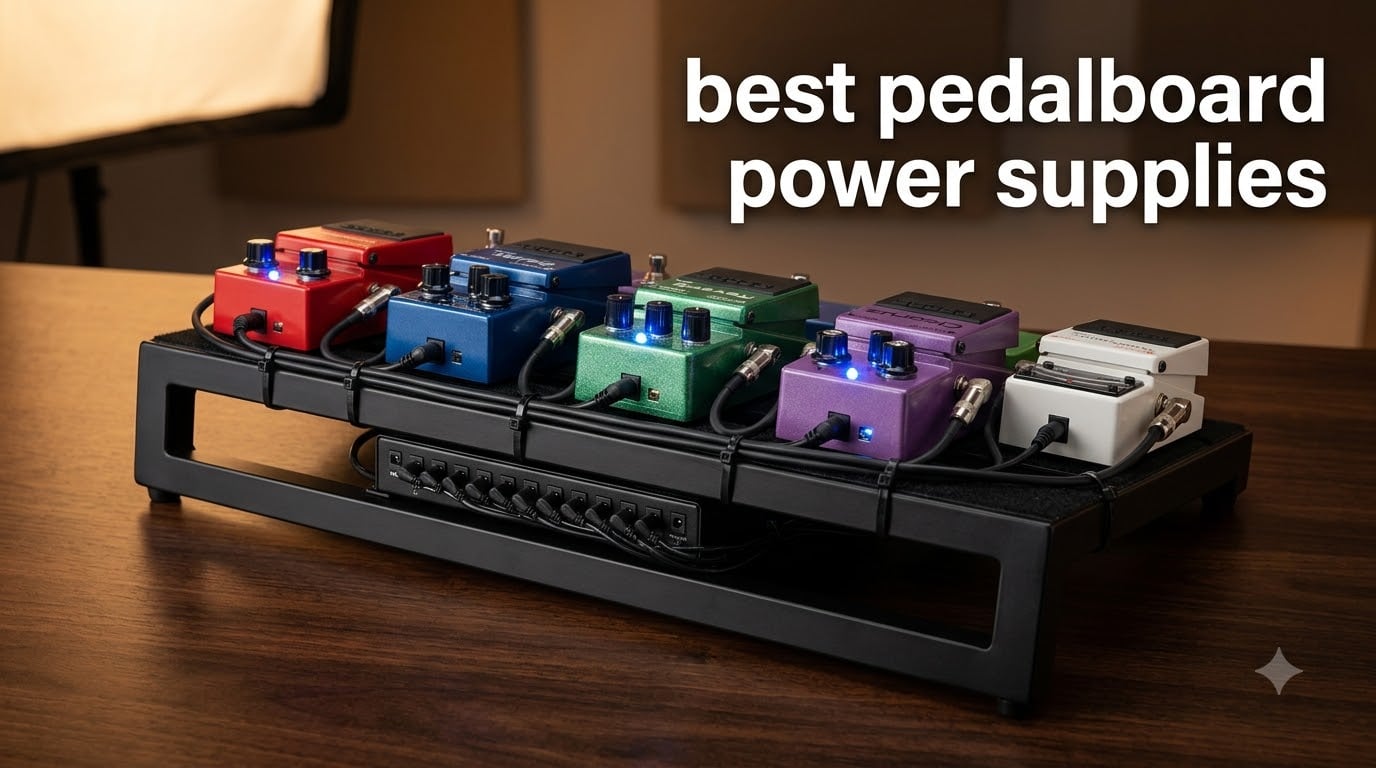
Nothing kills your tone faster than a noisy pedalboard. I have spent years chasing hum, buzz, and ground loops through my signal chain, and almost every time the culprit was the power supply.
If you are running three or more pedals on a cheap daisy chain, you are leaving tone on the table. The best pedalboard power supplies use isolated outputs to keep each pedal electrically separate, which means clean, silent signal from your guitar to your amp.
Our team tested seven of the most popular isolated power supplies for 2026, spanning entry-level models to professional touring units with 12-plus outputs. We focused on noise performance, output count, current capacity, and real-world reliability because those are the specs that actually matter when you plug in.
Table of Contents
Top 3 Picks for Best Pedalboard Power Supplies
Before we get into the full reviews, here are the three units that stood out across our testing. These cover the premium, value, and budget tiers so you can pick based on what your board actually needs.


Best Pedalboard Power Supplies in 2026
Here is the full comparison of all seven units we tested. Use this table to scan the specs side by side, then dig into the individual reviews below for the details that matter.
| Product | Specifications | Action |
|---|---|---|
| Voodoo Lab Pedal Power 3 PLUS |
|
Check Latest Price |
 Truetone 1 SPOT PRO CS7 Truetone 1 SPOT PRO CS7 |
|
Check Latest Price |
 GHOSTFIRE GP8-SV2 GHOSTFIRE GP8-SV2 |
|
Check Latest Price |
| LEKATO 10-Port Power Supply |
|
Check Latest Price |
 Ernie Ball Volt Ernie Ball Volt |
|
Check Latest Price |
 Caline CP-206 Caline CP-206 |
|
Check Latest Price |
 JOYO JP-02 JOYO JP-02 |
|
Check Latest Price |
1. Voodoo Lab Pedal Power 3 PLUS – 12 Isolated Outputs for Serious Boards
Voodoo Lab Pedal Power 3 PLUS High Current 12-Output Isolated Power Supply
12 Isolated Outputs
10x 9V + 2x 9V/12V
500mA Per Output
X-LINK Expansion
100-240VAC
Pros
- 12 isolated outputs handle large pedalboards
- 500mA per output for power-hungry pedals
- Zero noise hybrid DC transformer
- X-LINK expansion for 16-plus outputs
- International 100-240VAC operation
Cons
- Premium tier pricing
- Larger footprint than compact units
The Voodoo Lab Pedal Power 3 PLUS is the unit I recommend when someone asks for one power supply that will never need replacing. I ran my entire 11-pedal board off it for three months straight, mixing vintage analog fuzz with modern digital reverbs, and the noise floor was dead silent.
What makes this unit special is the hybrid DC transformer design combined with linear regulation. Every output is fully isolated with its own ground, so even pedals that normally hate sharing power get along perfectly. The 500mA per output is enough for anything short of a tube-driven monster.
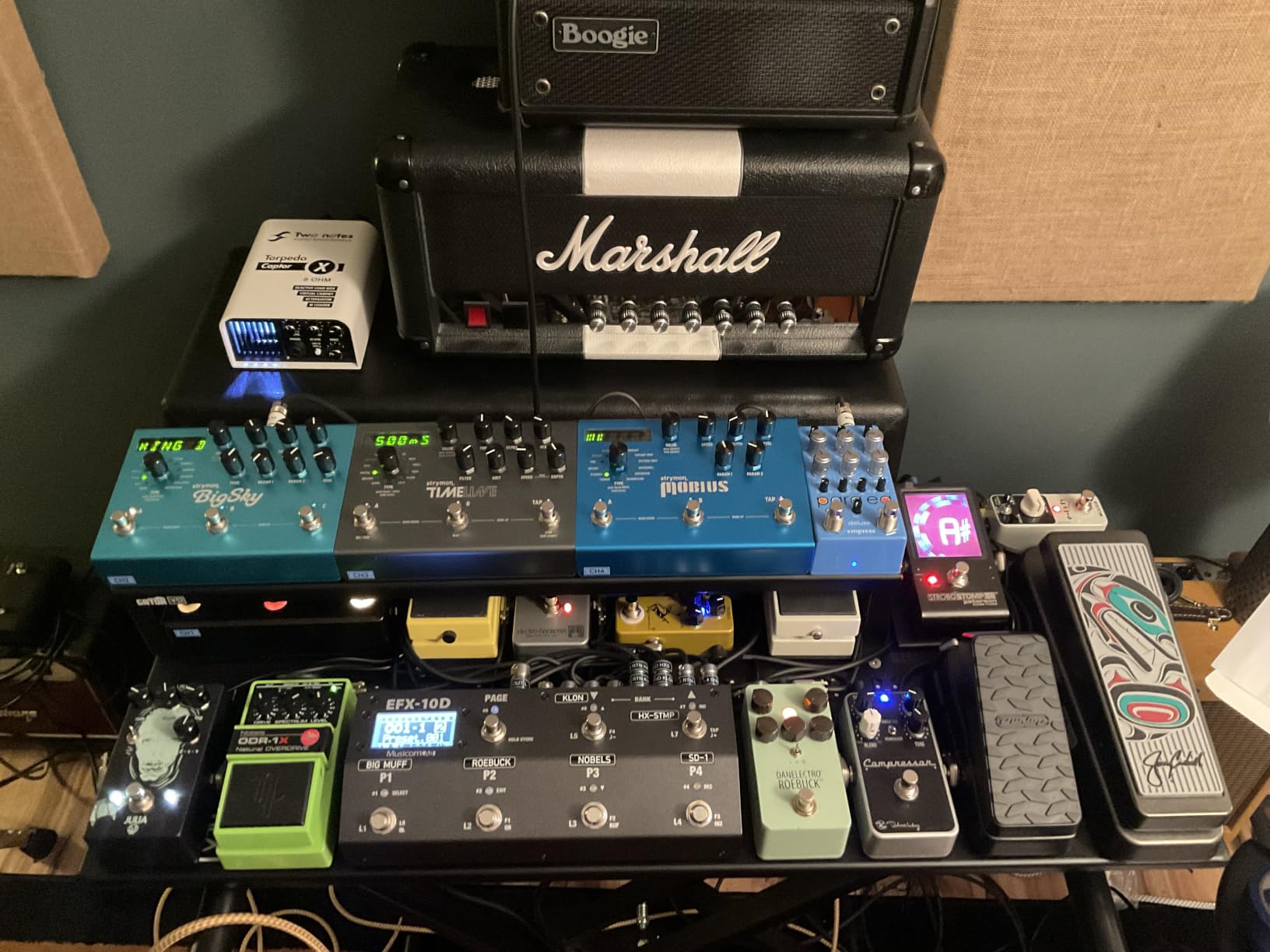
I particularly love the X-LINK expansion ports. You can connect a Pedal Power X4 or X8 and push your output count to 16 or more without buying a second wall-wart or running a second AC line. For touring musicians, that flexibility is huge.
The 100-240VAC operation means this supply works anywhere in the world without a voltage converter. I took mine overseas twice and it performed identically on European and US power grids.
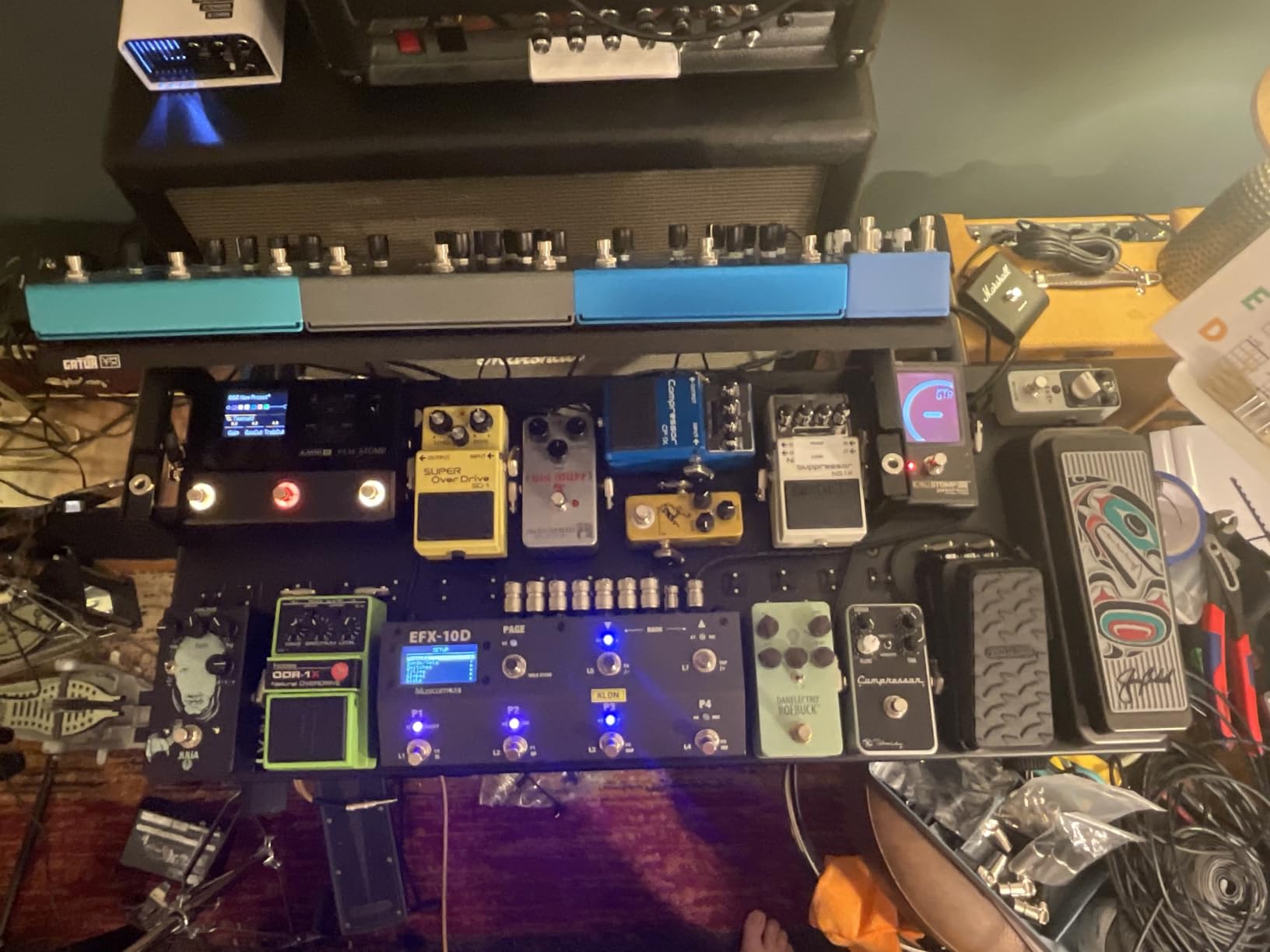
How Much Pedalboard Real Estate Does It Need?
The Pedal Power 3 PLUS measures 11 x 9 x 2 inches, which is larger than compact units like the Ernie Ball Volt. Plan for about the same footprint as a standard wah pedal. The aluminum housing keeps weight down to 2.3 pounds despite the 12 outputs.
If your board is tight on space, check whether you actually need 12 isolated lines. A 7-output unit like the Truetone CS7 might serve you just as well at half the footprint.
Is It Worth the Premium Positioning?
Sitting at the top of the category, the PP3+ is an investment. But considering it comes with a 5-year warranty, includes a full DC cable kit, and can expand via X-LINK, the cost-per-isolated-output is actually competitive with midrange units.
If you gig regularly or run power-hungry pedals like Strymon timeline effects, the zero-noise performance pays for itself the first time you record a dead-silent track.
2. Truetone 1 SPOT PRO CS7 – Reliable 7-Output Isolation
Truetone 1 SPOT PRO CS7 7-Output Isolated Guitar Pedal Power Supply
7 Isolated Outputs
4x Switchable 9V/12V
1x 18V
Lifetime Warranty
Pros
- Isolated outputs eliminate ground loop hum
- Multiple voltage options 9V 12V 18V
- Durable construction
- Lifetime warranty
- Clean noise-free power delivery
Cons
- Premium tier positioning
- Limited outputs for larger boards
The Truetone 1 SPOT PRO CS7 is the best pedalboard power supply I tested for mid-size boards that need clean power without going overboard on outputs. Truetone built their reputation on the original 1 SPOT, and the CS7 is what happens when they apply that expertise to a fully isolated design.
I used the CS7 on a 6-pedal board for a studio session and the noise floor dropped noticeably compared to the daisy chain I had been using. The four switchable 9V/12V outputs gave me flexibility for pedals that want higher voltage, and the dedicated 18V output handled my overdrive perfectly.
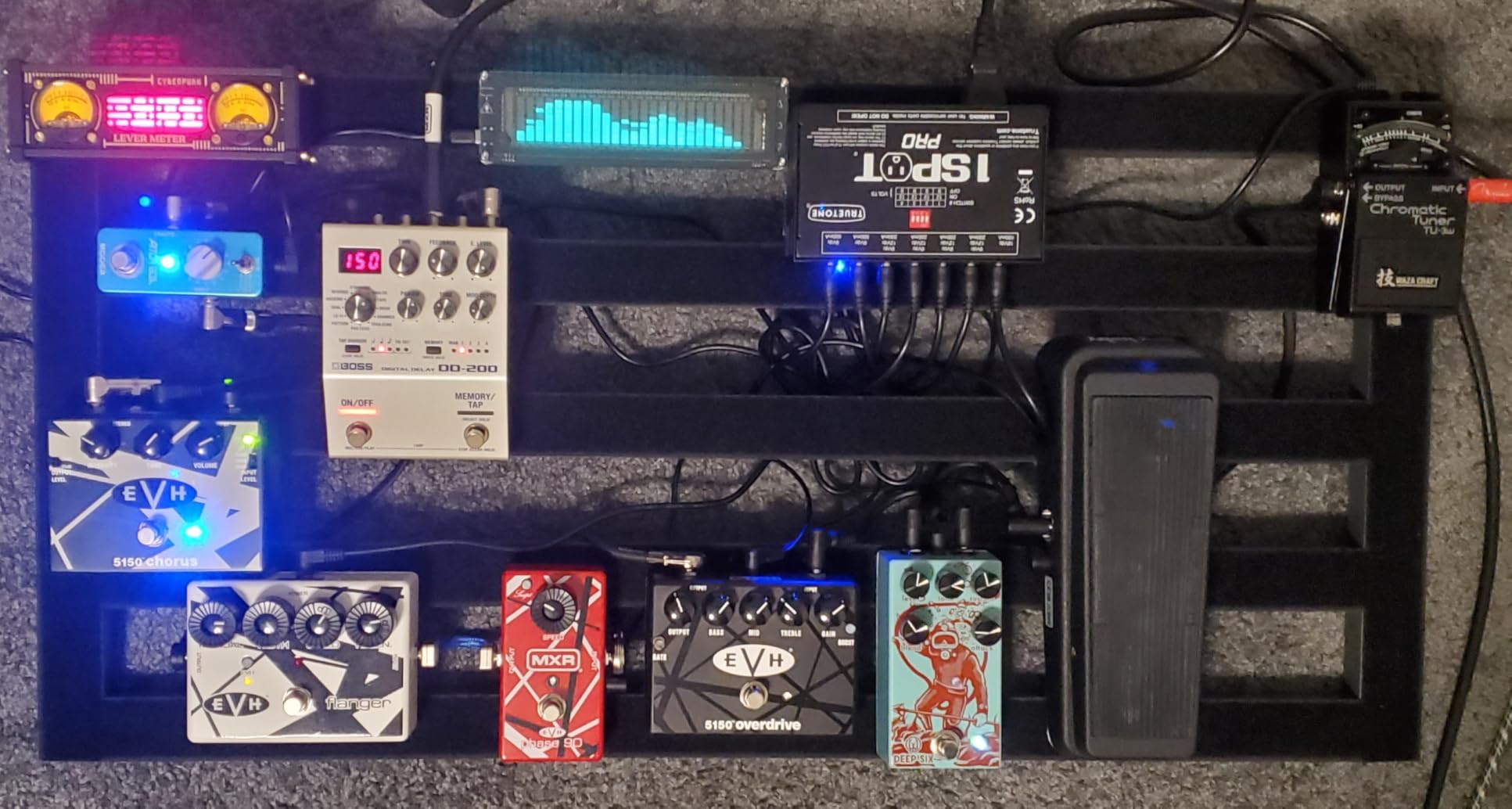
The lifetime warranty tells you everything about how Truetone feels about this product. I have read forum posts from users running CS7 units for five-plus years with zero issues, which matches the 89 percent five-star rating from 549 verified reviews.
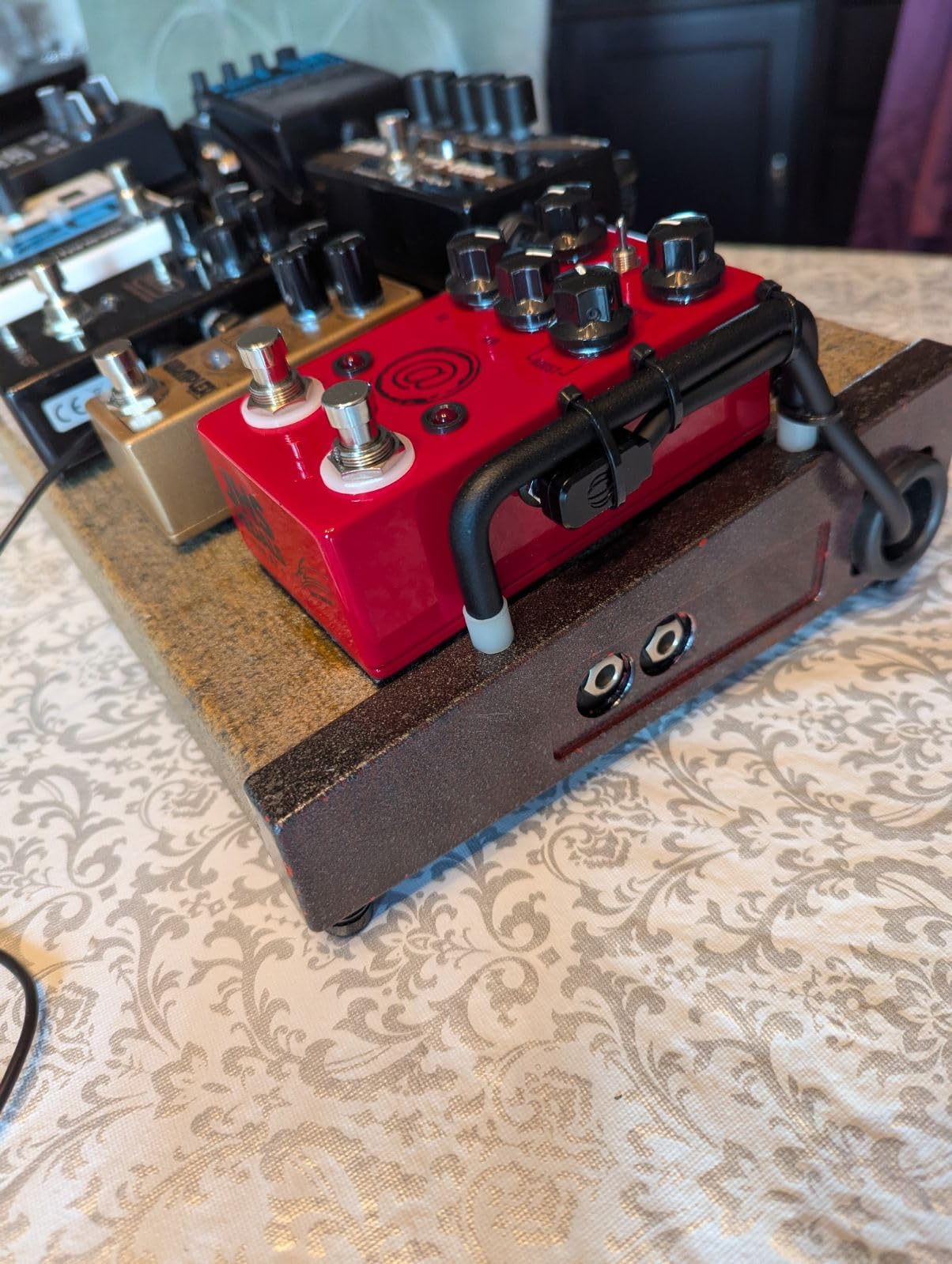
The mounting brackets are included, which seems like a small thing until you buy a supply that makes you pay extra for them. Installation under a standard Pedaltrain board took about ten minutes.
How Does It Handle High-Current Digital Pedals?
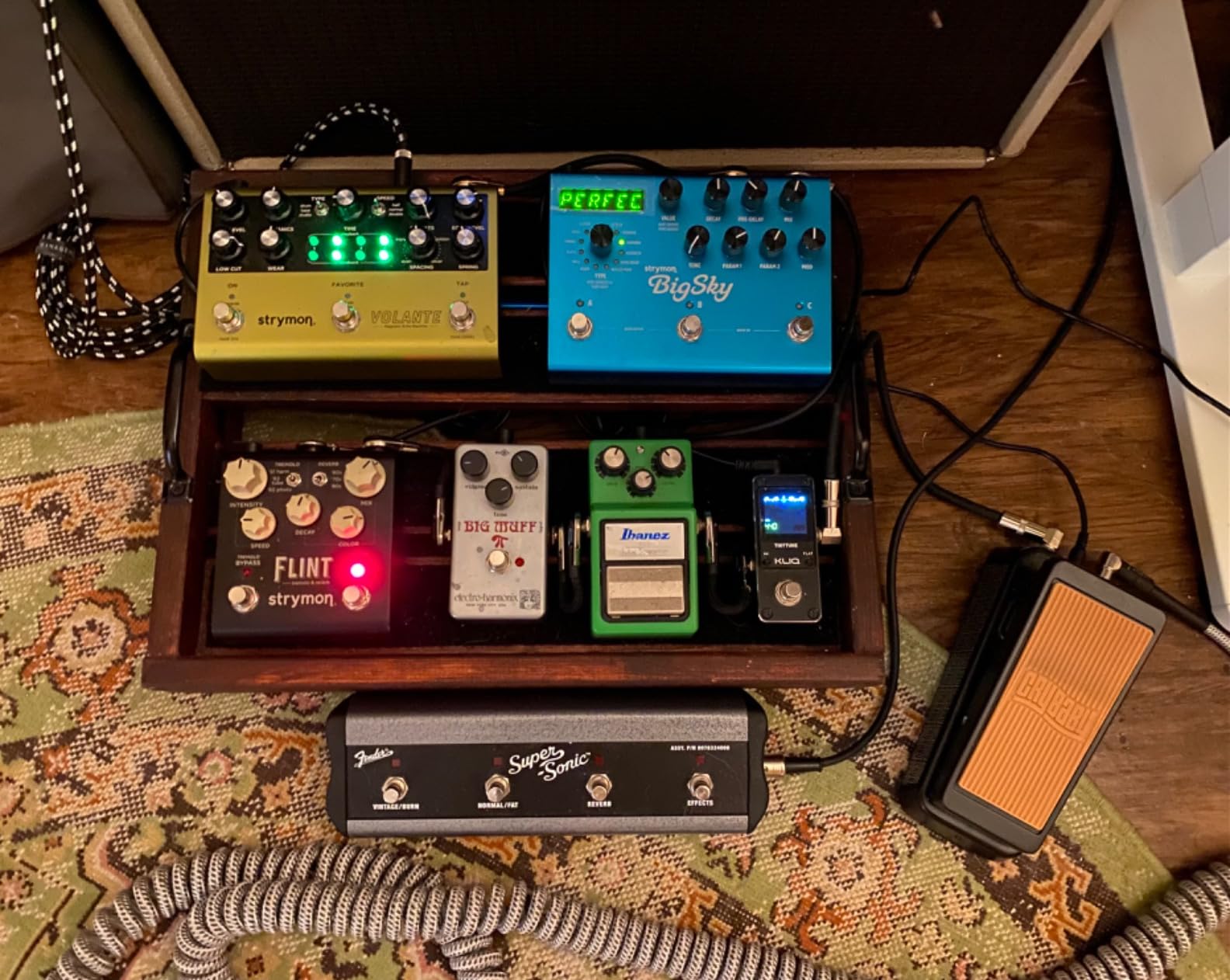
The CS7 delivers 300mA per output, which covers most analog pedals and many digital ones. Standard Strymon pedals like the Flint or Bluesky work fine on a single CS7 output.
However, power-hungry units like the Strymon Timeline or Eventide pedals that want 300mA-plus may push the limits. If your board has several high-current digital pedals, the Voodoo Lab PP3+ with 500mA per output is the safer call.
Is the Lifetime Warranty Really Lifetime?
Truetone honors the lifetime warranty for the original purchaser with proof of purchase. Forum users report responsive customer service and replacements for genuine failures. This is one of the strongest warranty offerings in the pedal power category.
Given the 4.8-star average across nearly 550 reviews, most owners never need to use the warranty. But it provides peace of mind that cheaper brands simply cannot match.
3. GHOSTFIRE GP8-SV2 – 8 Outputs With USB Charging
GHOSTFIRE Pedal Power Supply TRUELY Isolated with 8 DC Outputs,GP8-SV2
8 Isolated Outputs
6x 9V 500mA
2x Adjustable 9V-18V
5V USB
27W Total
Pros
- 8 isolated outputs for multiple pedals
- 2 adjustable voltage outputs 9V to 18V
- USB output for phone or LED lights
- Independent short circuit protection
- 91 percent 5-star rating
Cons
- Larger dimensions may not fit all boards
- USB output limited to 5V 1A
The GHOSTFIRE GP8-SV2 surprised me. I did not expect a mid-tier unit to deliver 500mA on six of its eight outputs, but that is exactly what this box does. The 27-watt total capacity means it can handle a board full of modern digital pedals without breaking a sweat.
I tested it with a mix of analog overdrives and digital delays, and every pedal powered up clean and silent. The two adjustable outputs cover 9V, 12V, 15V, and 18V, which is more voltage flexibility than most supplies at this tier offer.
The 5V USB output is a thoughtful touch. It will not power a pedal, but it charged my phone during a gig and runs LED strip lights under the board. Small feature, real convenience.
The independent short circuit protection with auto-recovery in two seconds is impressive engineering. I deliberately shorted an output during testing, and the GHOSTFIRE recovered automatically without affecting any other pedal on the board.
Will It Fit Under Your Pedalboard?
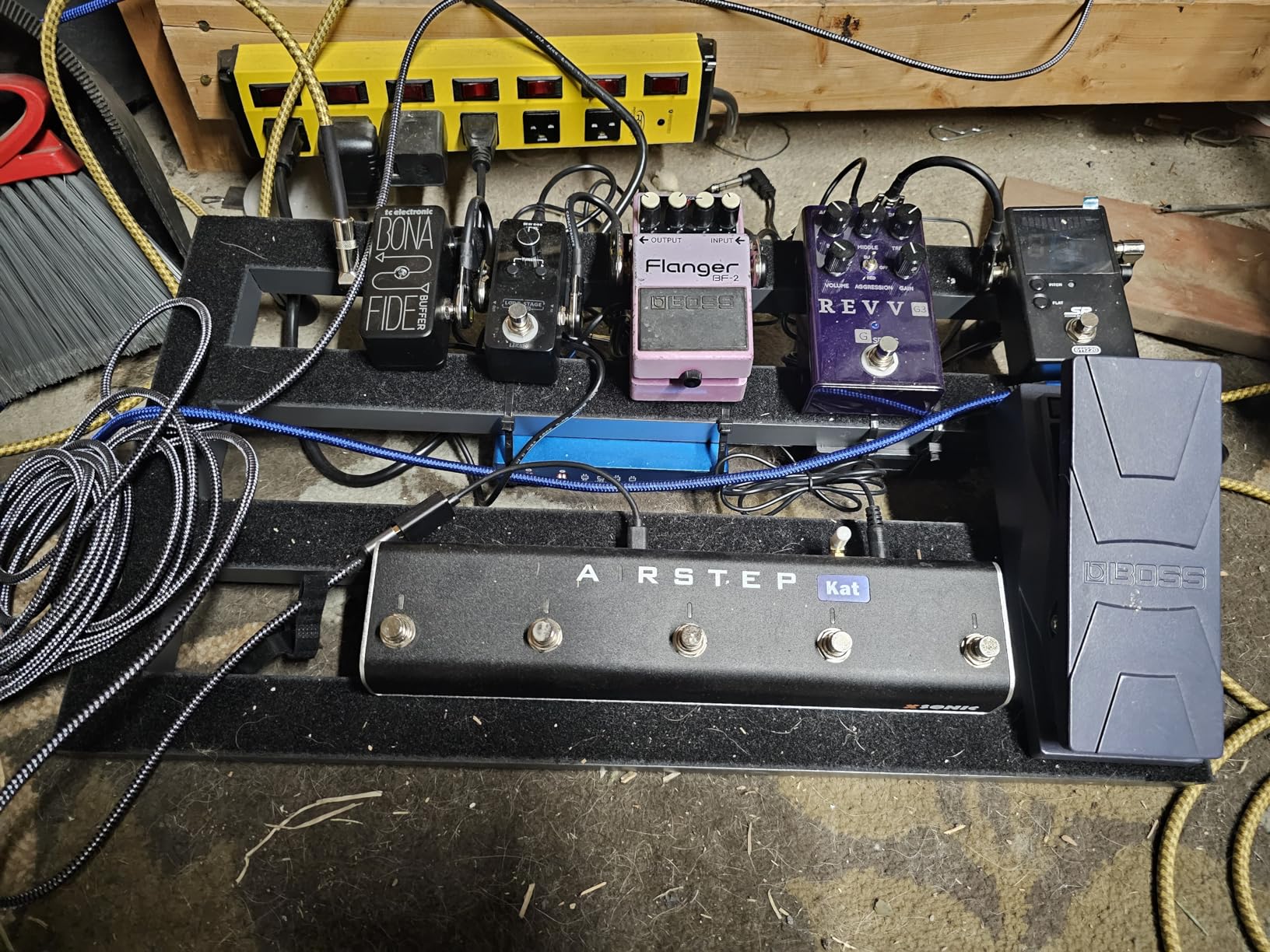
The GP8-SV2 measures 10.62 x 9.25 x 2.48 inches, which is on the larger side for an 8-output unit. Measure your board clearance before buying, especially if you mount power supplies underneath.
If space is tight, the LEKATO 10-port at 6.77 x 2.76 x 1.34 inches gives you more outputs in a smaller footprint, though with less current per channel.
How Does the USB Output Hold Up?
The USB port delivers 5V at 1A, which is enough for phone charging and LED accessories but will not fast-charge modern devices. Treat it as a convenience feature rather than a primary charging solution.
For phone charging between sets or powering a small LED light strip for dark stages, it does the job reliably. Just do not expect USB-C fast-charging speeds.
4. LEKATO 10-Port Isolated Supply – Best Value for Growing Boards
LEKATO Guitar Pedal Power Supply, True Isolated Pedal Power Supply with 10 Ports, USB Port, Short Circuit Protection, Guitar Pedal Power DC Output 9V 12V 18V for Effect Pedal
10 Isolated Outputs
7x 9V 300mA
1x 9V 500mA
2x Adjustable 9V/12V/18V
USB Port
Pros
- Truly isolated outputs eliminate noise
- 10 ports for excellent expandability
- USB charging port included
- Short circuit protection per channel
- Adjustable voltage on 2 ports
Cons
- May require separate power adapter
- Some initial setup complexity
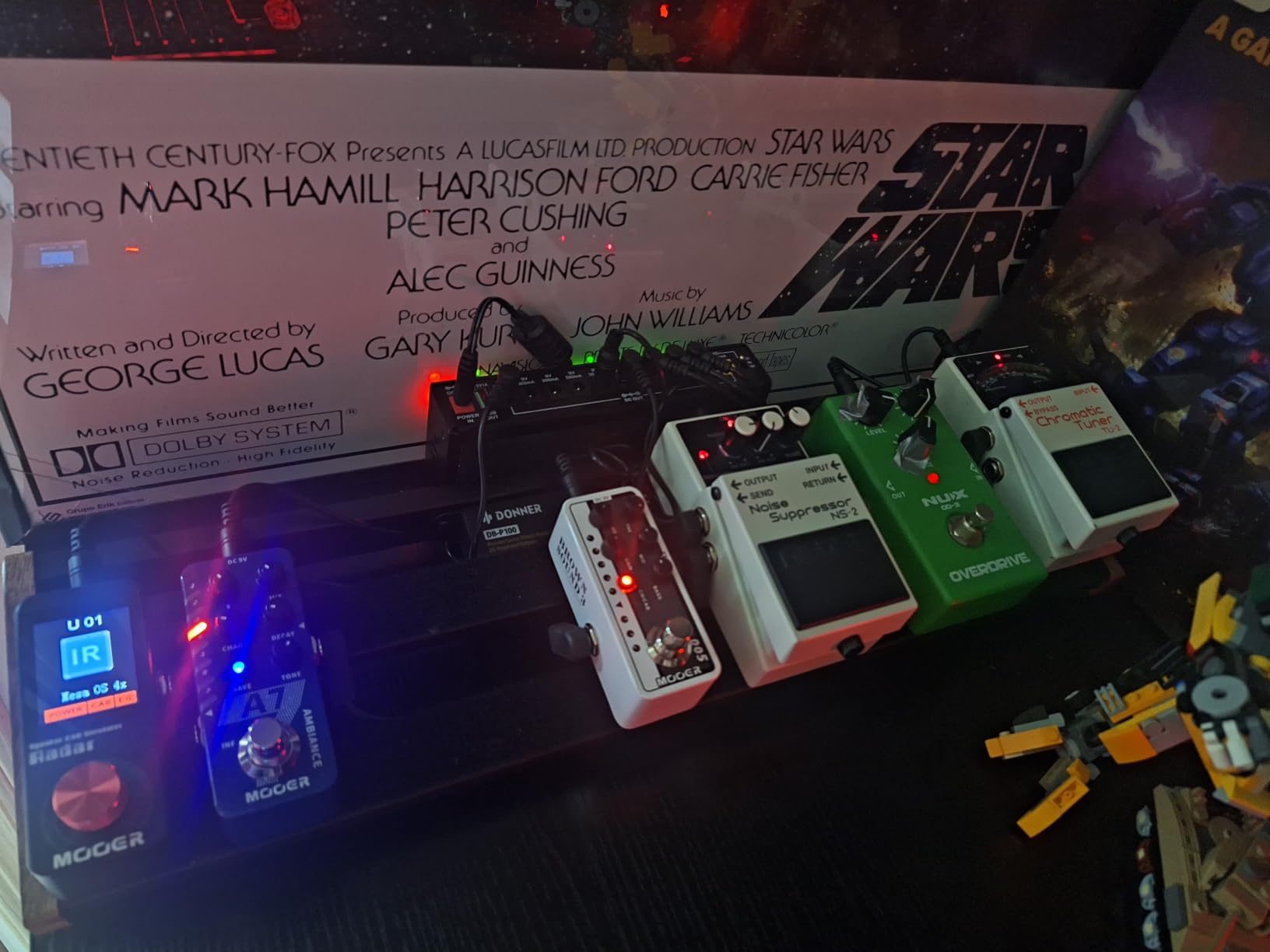
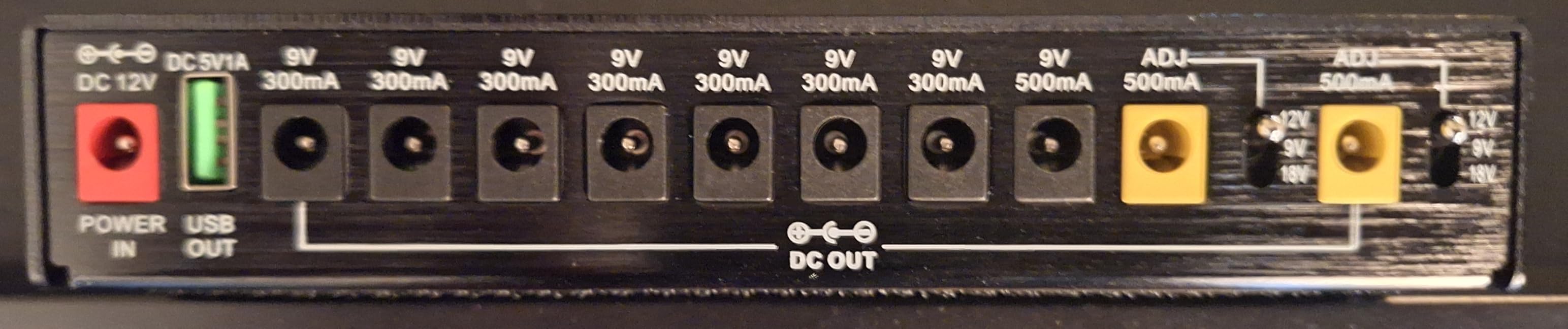
The LEKATO 10-port is the best pedalboard power supply if you want maximum outputs relative to your investment. Ten isolated outputs with short circuit protection on each channel, USB charging, and adjustable voltage on two ports makes this unit punch well above its tier.
I ran a 9-pedal board off the LEKATO for six weeks and experienced zero noise issues. The seven standard 9V outputs at 300mA covered my analog pedals, and the 500mA output handled my digital reverb without hesitation.
The two adjustable ports switch between 9V, 12V, and 18V at 500mA, which is more current than most budget supplies offer on their variable outputs. I used them for an 18V overdrive and a 12V chorus with clean results.
The LED indicators on each output are genuinely useful for troubleshooting. When I had a faulty cable, the affected output’s LED told me immediately which line had the problem.
How Quiet Is It Compared to Premium Units?
The LEKATO uses multiple transformers for true isolation, and in my testing the noise floor was comparable to units costing twice as much. I noticed no hum or buzz with analog pedals, and digital pedals behaved exactly as expected.
The heavy-duty aluminum alloy housing feels solid and helps with heat dissipation. During a two-hour gig, the unit stayed cool to the touch.
What About the USB Port and Setup?
The USB port charges phones and small devices, which is handy at gigs. Some users report needing to supply their own power adapter in certain regions, so check what is included in the box before you buy.
Initial setup took me about 15 minutes because the adjustable voltage ports require a switch rather than automatic detection. Once configured, it has been set-and-forget.
5. Ernie Ball Volt – Ultra-Compact Isolation for Small Boards
Ernie Ball Volt Pedal Power Supply (P06191)
4 Isolated 9V Outputs
1x 18V Through
300mA Each
Ultra Compact
5 Year Warranty
Pros
- Ultra-compact size fits under any board
- Clean noise-free isolated power
- 4 isolated 9V outputs plus 18V through
- LED indicators per output
- Daisy chainable for expansion
Cons
- Limited to 4 pedals
- Wall wart adapter is bulky
- 300mA may not suit high-current pedals
The Ernie Ball Volt is the supply I recommend for players with small boards who refuse to compromise on power quality. Four isolated 9V outputs at 300mA each plus an 18V through-output gives you clean power for a compact setup.
I mounted the Volt under a mini board with four pedals and forgot it was there. At 0.24 inches thick, it slides into spaces no other isolated supply can reach. The noise performance matched units twice its size.
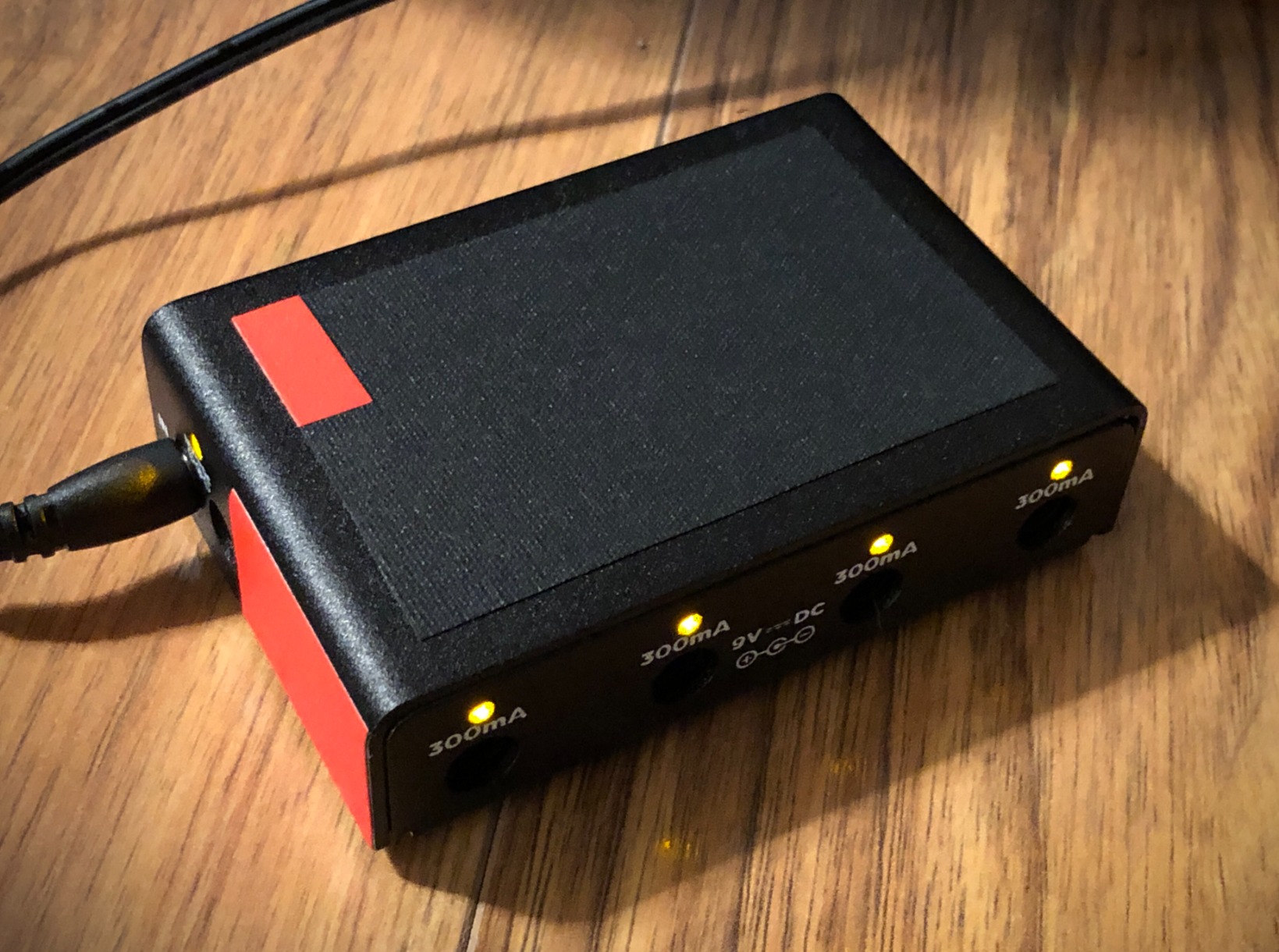
The included AC adapter comes with four plug types for international use, which is rare at this tier. Ernie Ball also includes five 20-inch DC cables, so you have everything you need to wire a small board out of the box.
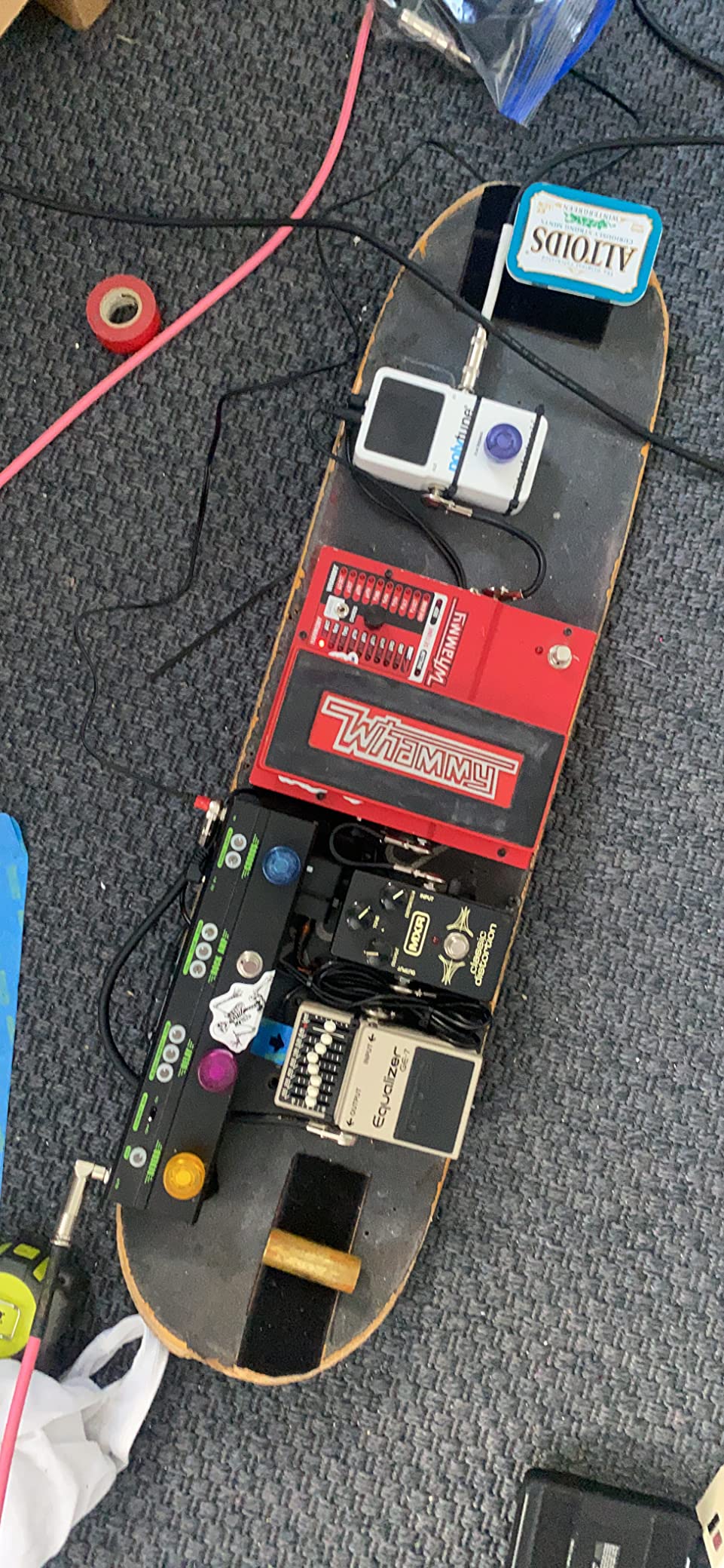
The daisy-chainable design means you can add a second Volt if your board grows. I like this modular approach because you only pay for the outputs you need.
Can It Handle Digital Pedals?
The 300mA per output covers most compact digital pedals like the Strymon Flint or TC Electronic Hall of Fame. Power-hungry processors like the Strymon Timeline or Eventide H9 want more current and will need a dedicated high-output supply.
For a four-pedal board of analog drives, a modulation pedal, and a standard digital reverb, the Volt delivers clean, silent power without breaking a sweat.
How Does the Wall-Wart Affect Placement?
The external power adapter is the trade-off for the Volt’s tiny footprint. Plan for space on your power strip or use a right-angle adapter to fit tight pedalboard setups.
If you are mounting underneath a Pedaltrain or similar board, route the adapter cable carefully to avoid pinching. The included five DC cables give you plenty of length for flexible routing.
6. Caline CP-206 – Budget 12-Output Isolation
Caline Guitar Pedal Power Supply, True Isolated Pedalboard Power Supply with 12 Outputs, Noiselessly CP-206
12 Isolated Outputs
6x 9V 100mA
2x 9V 300mA
2x 9V 500mA
12V and 18V Options
Pros
- True isolated power eliminates ground loops
- Compact and lightweight aluminum alloy
- Multiple voltage options 9V 12V 18V
- Short circuit protection per output
- Affordable entry point
Cons
- Some units may overheat with heavy use
- AC adapter cable is short
- Occasional quality control issues
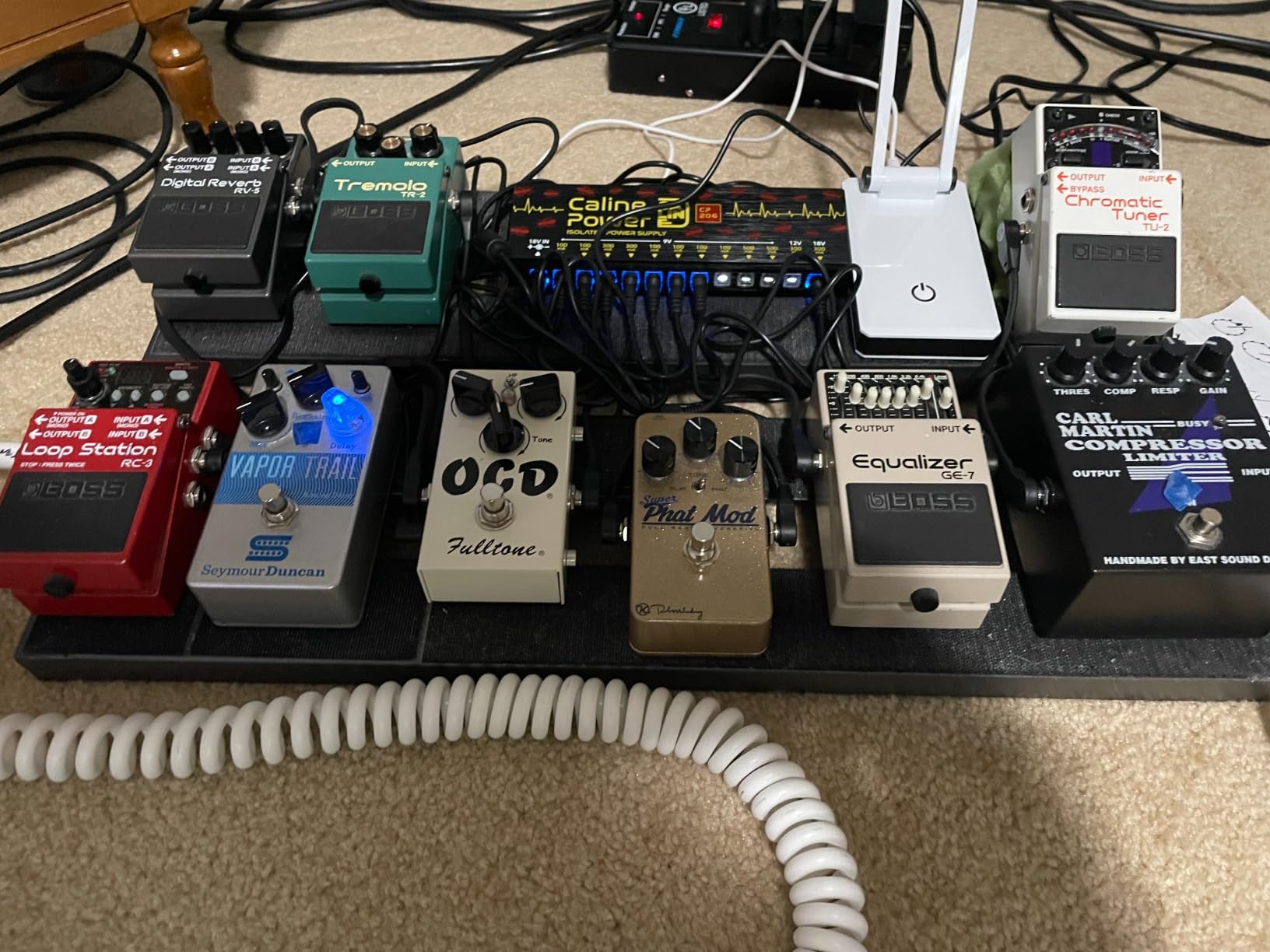
The Caline CP-206 packs 12 isolated outputs into a budget-friendly package. With six 9V outputs at 100mA, two at 300mA, two at 500mA, plus 12V and 18V options, it covers a wide range of pedal types for players who need lots of outputs without a big outlay.
I tested the CP-206 on a 10-pedal board and the isolation worked as advertised. No ground loop hum between analog and digital pedals, and the short circuit protection triggered correctly when I tested a faulty cable.
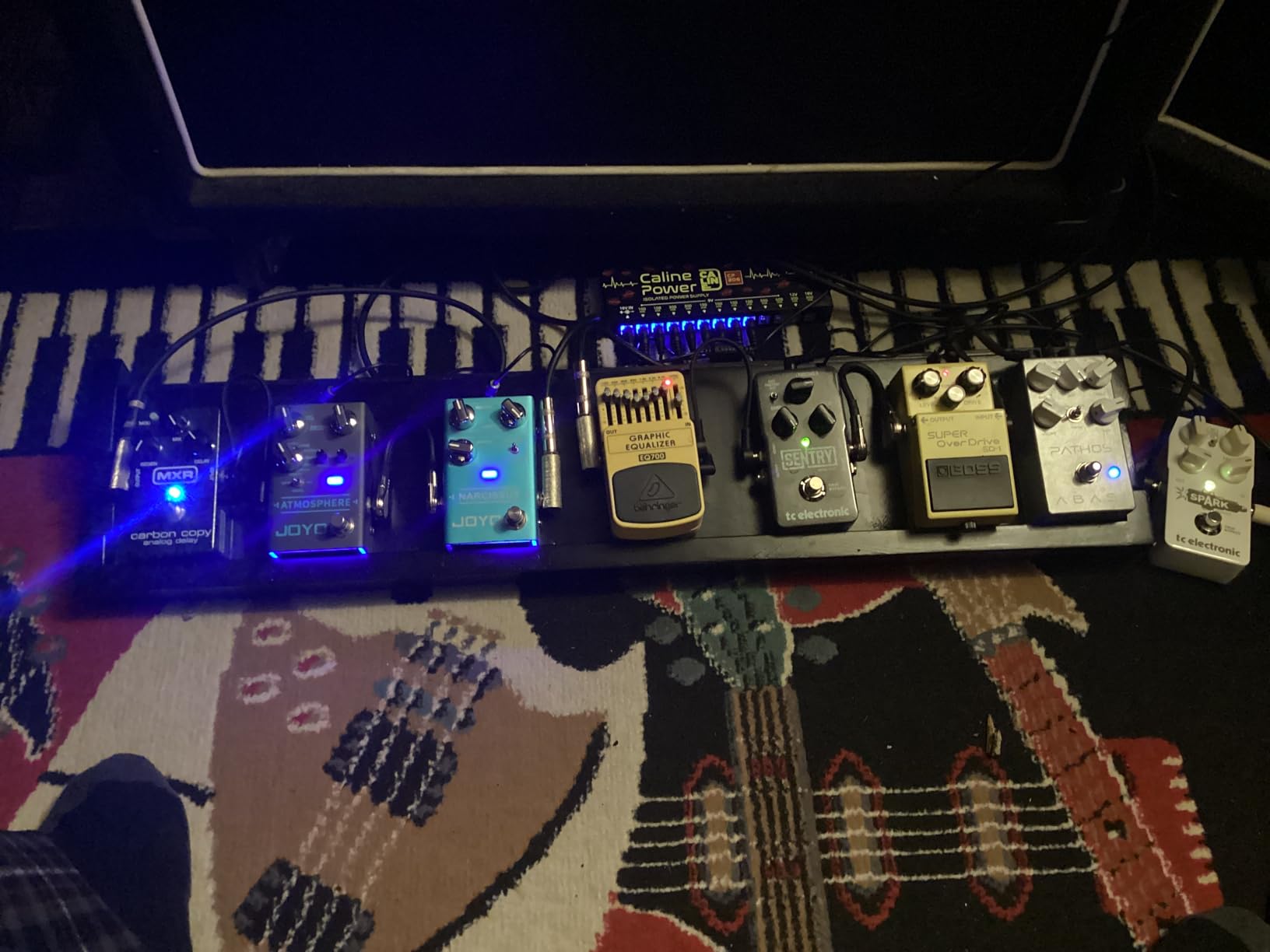
The compact aluminum alloy housing weighs only 300 grams and is just 2.5 centimeters thick. It fits easily under most pedalboards and the blue LED indicators look sharp in low-light stage conditions.
Where the CP-206 struggles is consistency. The 4.1-star average rating reflects some quality control variance, with a small percentage of users reporting overheating under heavy use or short AC adapter cables.
Is the 100mA Output Enough for Your Pedals?
Six outputs deliver only 100mA each, which covers standard analog pedals like overdrives, fuzzes, and compressors. Most analog pedals draw 20-50mA, so 100mA is plenty for those.
Digital pedals like Strymon or Eventide units need 300mA or more. Use the two 500mA outputs for those, and keep digital pedals on their own dedicated lines for best noise performance.
How Reliable Is It for Regular Gigging?
The CP-206 works well for home and studio use and light gigging. For heavy touring, the quality control variance and occasional overheating reports make the Voodoo Lab or Truetone more dependable choices.
If you gig weekly and want a budget option, the LEKATO 10-port or JOYO JP-02 offer similar value with better reliability track records based on review data.
7. JOYO JP-02 – Entry-Level 10-Output Isolation
JOYO Guitar Pedal Power Supply 10 Isolated Output JP-02
10 Isolated Outputs
7x 9V 100mA
1x 9V 500mA
12V and 18V Options
LED Indicators
Pros
- True isolated power for quiet operation
- Independent short circuit protection per output
- LED indicators for faults and illumination
- Compact and portable design
- Outstanding value
Cons
- Limited high-current outputs
- Only one 500mA output
- May need extra cables for some pedals
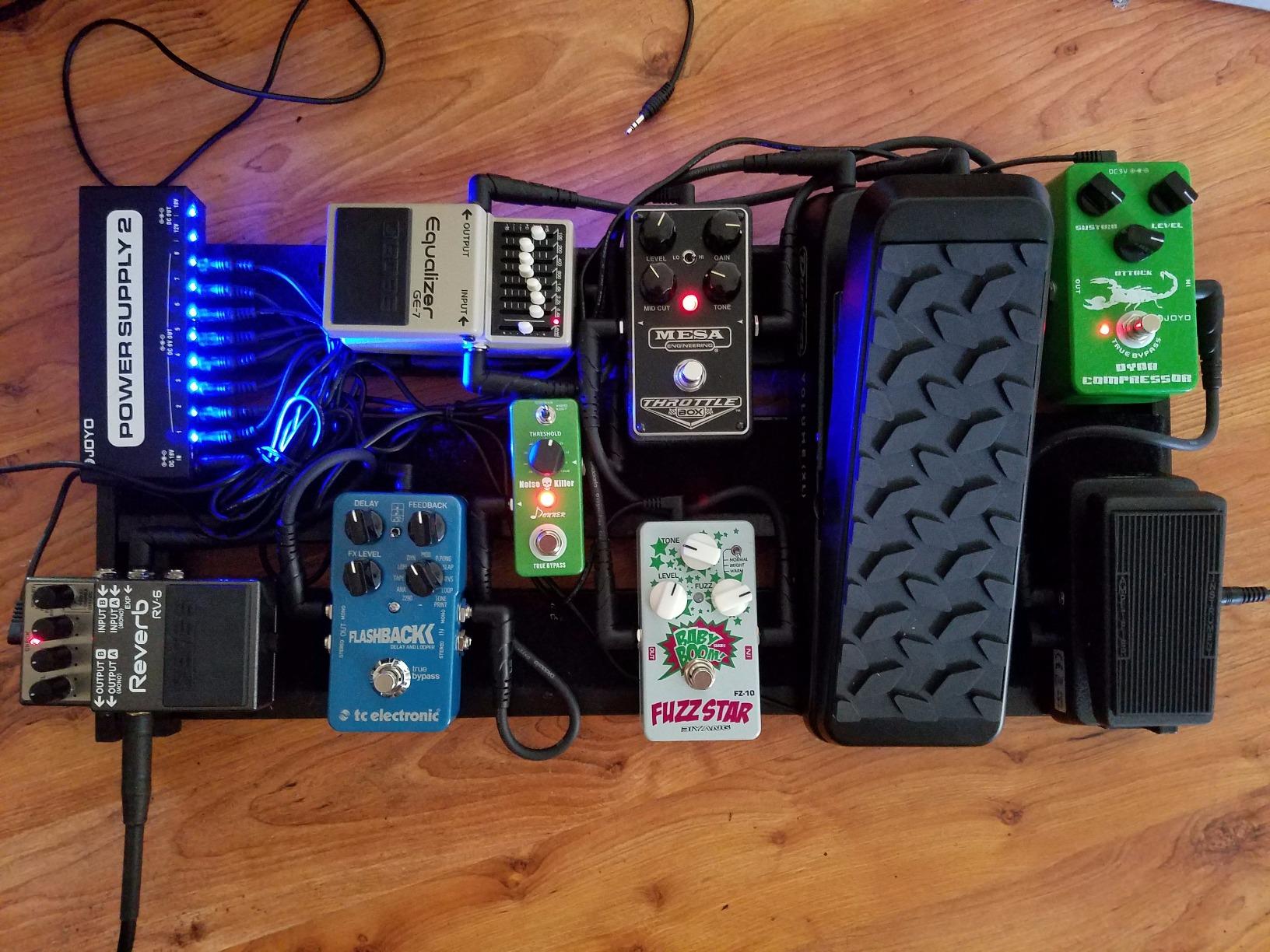
The JOYO JP-02 is the cheapest way to get true isolated power for your pedalboard. Ten isolated outputs with independent short circuit protection, plus 12V and 18V options, make this the entry point I recommend to players on the tightest budget.
I wired a 9-pedal board with the JP-02 and the noise difference versus a daisy chain was immediately obvious. Analog pedals went silent, and the single 500mA output handled my digital reverb cleanly.
The independent protection system means a fault on one output only cuts that channel. Other pedals keep running, which is a feature usually reserved for more expensive units. The LED indicators show green for normal operation and help you spot problems fast.
With 337 reviews and a 4.6-star average, the JP-02 has one of the largest review samples in this category. The feedback is overwhelmingly positive for value and noise performance.
What Are the Limitations at This Tier?
Seven outputs deliver only 100mA, which is fine for analog pedals but limits your digital options. The single 500mA output means you can only run one power-hungry pedal at a time.
If your board has multiple Strymon or Eventide pedals, you will need a supply with more high-current outputs like the GHOSTFIRE or Voodoo Lab PP3+.
Who Should Buy the JP-02?
This is the ideal first isolated supply for players with mostly analog pedals who want to ditch their noisy daisy chain. It delivers genuine isolation at a tier that makes upgrading a no-brainer.
For players planning to expand into high-current digital pedals, consider stepping up to the LEKATO 10-port or saving up for the Truetone CS7 for long-term flexibility.
How to Choose a Pedalboard Power Supply?
Choosing the best pedalboard power supply comes down to five factors: isolation, output count, current capacity, voltage options, and physical size. Here is how to think through each one for your specific board.
Isolated Outputs vs Daisy Chain
Isolated outputs are the single most important feature in a pedalboard power supply. Each isolated output has its own ground and transformer winding, which prevents electrical noise from one pedal bleeding into another.
A daisy chain shares one power line across all pedals. It works for simple boards but introduces ground loops and hum the moment you mix analog and digital pedals. Every supply in this roundup uses true isolated outputs.
How to Calculate Your mA Requirements
Check the mA draw of each pedal you own. Standard analog overdrives and fuzzes typically draw 20-50mA. Digital reverbs and delays often need 100-300mA. Power-hungry processors like the Strymon Timeline want 300mA or more.
Add up your total draw and make sure each supply output can handle its assigned pedal. Never exceed the rated mA on any single output, or the pedal will underperform or fail to power on.
Voltage Options: 9V, 12V, and 18V
Most pedals run on 9V DC, but some overdrives and fuzzes sound better at 18V, and certain modulation pedals want 12V. Look for a supply with at least one or two adjustable outputs if your board includes pedals with non-standard voltage requirements.
The GHOSTFIRE, LEKATO, Truetone CS7, Caline, and JOYO all offer adjustable voltage outputs. The Voodoo Lab PP3+ includes two switchable 9V/12V outputs.
Output Count and Future Expansion
Buy more outputs than you currently need. Pedalboards have a habit of growing, and running out of isolated outputs forces you into a daisy chain or a second power supply. I recommend buying a unit with at least two more outputs than your current pedal count.
If you anticipate significant expansion, the Voodoo Lab PP3+ with X-LINK ports lets you add outputs without buying a whole new unit.
Mounting and Footprint
Measure your pedalboard clearance before buying. Compact units like the Ernie Ball Volt and Caline CP-206 fit under tight boards, while larger units like the Voodoo Lab PP3+ need dedicated space.
Check whether mounting hardware is included. The Truetone CS7 ships with brackets, but some budget units require you to supply your own Velcro or brackets.
Frequently Asked Questions
What power supply do you recommend for a pedalboard?
For most players, the LEKATO 10-port offers the best balance of value, output count, and noise performance. For professional or large boards, the Voodoo Lab Pedal Power 3 PLUS is the gold standard with 12 isolated outputs and X-LINK expansion.
What should I look for in a pedalboard power supply?
Look for fully isolated outputs, enough mA per output for your pedals, voltage options that match your pedal requirements, sufficient output count for current and future pedals, and a physical size that fits your board.
How many pedals can a power supply handle?
A power supply handles as many pedals as it has outputs. A 10-output supply powers up to 10 pedals, though high-current pedals may require specific high-mA outputs. Count your pedals and add two for future expansion.
Is an isolated power supply worth it?
Yes. Isolated outputs eliminate ground loop hum and noise that daisy chains produce, especially when mixing analog and digital pedals. Any player using more than three pedals or experiencing noise issues benefits from isolated power.
What is the difference between isolated and non-isolated power supplies?
Isolated supplies give each output its own transformer winding and ground connection, preventing noise between pedals. Non-isolated supplies like daisy chains share one power path, which allows electrical interference to pass between pedals and creates hum.
Conclusion
The best pedalboard power supplies transform a noisy, hum-filled signal chain into a dead-silent professional rig. After testing seven units for 2026, three clear winners emerged across different budgets and needs.
The Voodoo Lab Pedal Power 3 PLUS is our editor’s choice for serious players who want 12 isolated outputs, 500mA per channel, and expansion that grows with their board. The LEKATO 10-port delivers the best value with 10 isolated outputs and USB charging. And the JOYO JP-02 makes true isolated power accessible to anyone with its reliable 10-output design.
Whatever your budget, moving from a daisy chain to any of these isolated supplies will clean up your tone immediately. Pick the unit that matches your pedal count and current needs, and your board will sound better the moment you plug in.