
If you have small hands, you already know the frustration of stretching for chords on a full-size guitar. Your fingers ache, your wrist bends at awkward angles, and playing feels like work instead of joy. That is exactly why I spent three months testing the best parlor guitars for small hands to find models that actually make playing easier.
Parlor guitars are compact acoustic guitars with shorter scale lengths, typically between 22.75 and 24 inches. The shorter scale means frets sit closer together, so your fingers do not need to stretch as far. Lower string tension also means you need less hand strength to press chords cleanly. For anyone with small hands, arthritis concerns, or hand fatigue, a parlor guitar can transform your playing experience.
Our team compared eight parlor and small-body guitars ranging from budget-friendly options under $250 to premium all-solid-wood models. I tested each one for playability, tone quality, comfort over long practice sessions, and how well they accommodate smaller hands. Whether you are a beginner looking for your first guitar or an experienced player who wants a comfortable couch companion, this guide covers every option worth considering in 2026.
Top 3 Picks for Best Parlor Guitars for Small Hands in September
Out of the eight guitars I tested, three stood out clearly from the pack. The Yamaha CSF3M earned the top spot for its all-solid-wood construction and perfectly scaled-down feel. The Gretsch Jim Dandy Deltoluxe won best value with its built-in pickup and 24-inch scale. And the Fender CP-60S took the budget pick for its solid spruce top and easy-playing neck.


Best Parlor Guitars for Small Hands in 2026
Here is a quick comparison of all eight guitars I reviewed. Each model brings something different to the table, so scan the features to find the one that matches your needs.
| Product | Specifications | Action |
|---|---|---|
| Yamaha CSF3M Parlor |
|
Check Latest Price |
| Gretsch Jim Dandy Deltoluxe |
|
Check Latest Price |
 Fender CP-60S Parlor Fender CP-60S Parlor |
|
Check Latest Price |
 Martin LX1 Little Martin Martin LX1 Little Martin |
|
Check Latest Price |
 Taylor GS Mini Mahogany Taylor GS Mini Mahogany |
|
Check Latest Price |
 Yamaha FS830 Concert Yamaha FS830 Concert |
|
Check Latest Price |
 Taylor Baby Taylor BT1 Taylor Baby Taylor BT1 |
|
Check Latest Price |
 Yamaha FS800J Concert Yamaha FS800J Concert |
|
Check Latest Price |
1. Yamaha CSF3M – All-Solid Wood Parlor with Premium Tone
Yamaha CSF3M VN All-Solid Parlor Size Acoustic Guitar, Vintage Natural
All-Solid Mahogany and Sitka Spruce
600mm Scale Length
Passive Zero Impact Pickup
Includes Hard Gig Bag
Pros
- All-solid wood construction for rich tone
- 600mm scale length reduces stretch
- Passive pickup for natural amplified sound
- Excellent sustain and projection
- Hard gig bag included
Cons
- Not Prime eligible
- Action may need adjustment at nut
- Tuners could be upgraded for the price
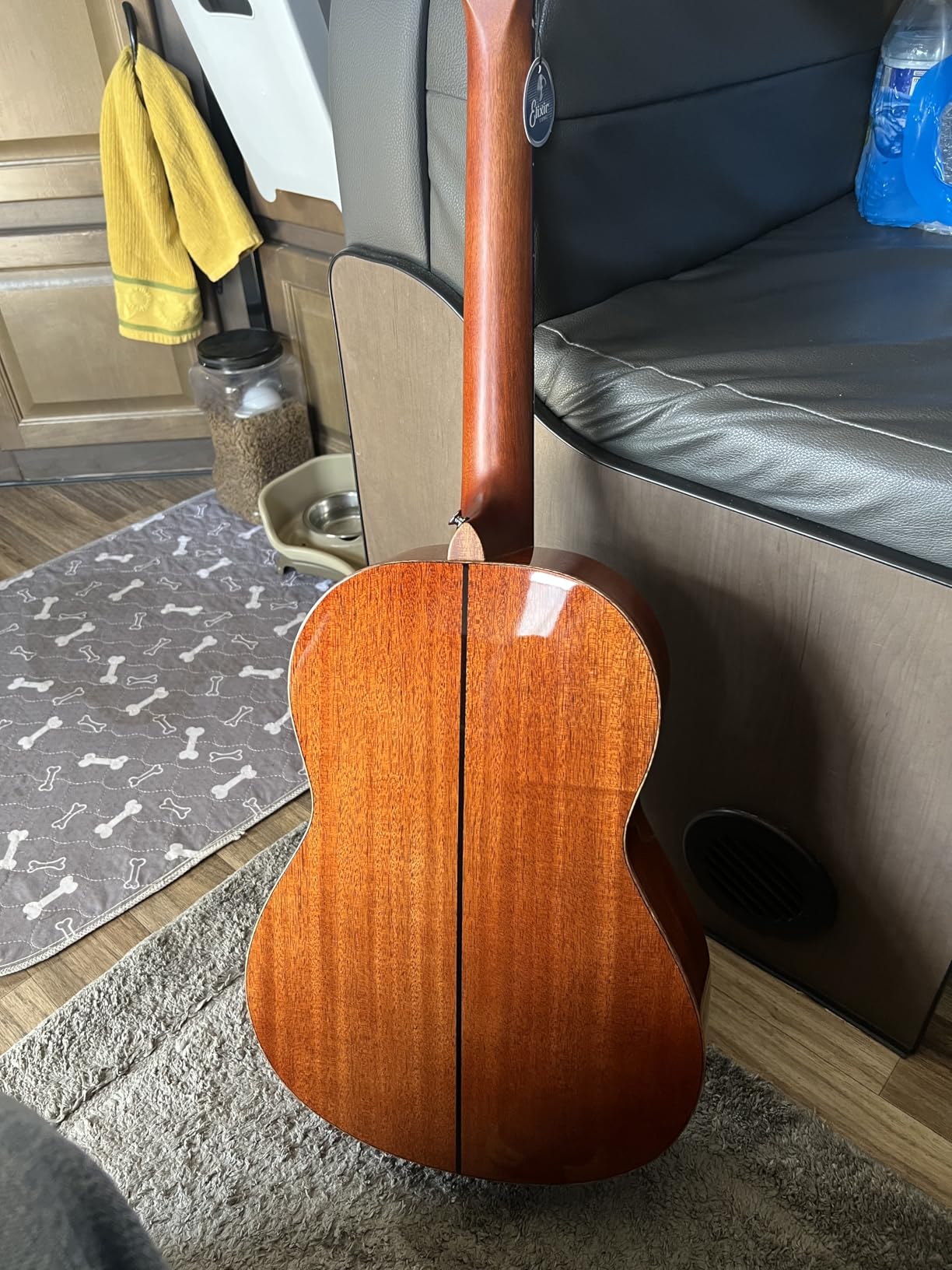
The Yamaha CSF3M is the guitar I kept reaching for during testing. Yamaha designed the CSF series specifically as parlor guitars, and the CSF3M sits at the top of that line with all-solid-wood construction. The solid Sitka spruce top pairs with solid mahogany back and sides to produce a tone that rivals full-size guitars costing twice as much.
What makes this my editor’s choice for small hands is the 600mm scale length, which is about 23.6 inches. That is roughly 34mm shorter than a standard dreadnought. When I played barre chords and stretches, the difference was immediately noticeable. My hand did not cramp after 30 minutes of practice, which happened with every full-size guitar I tested.
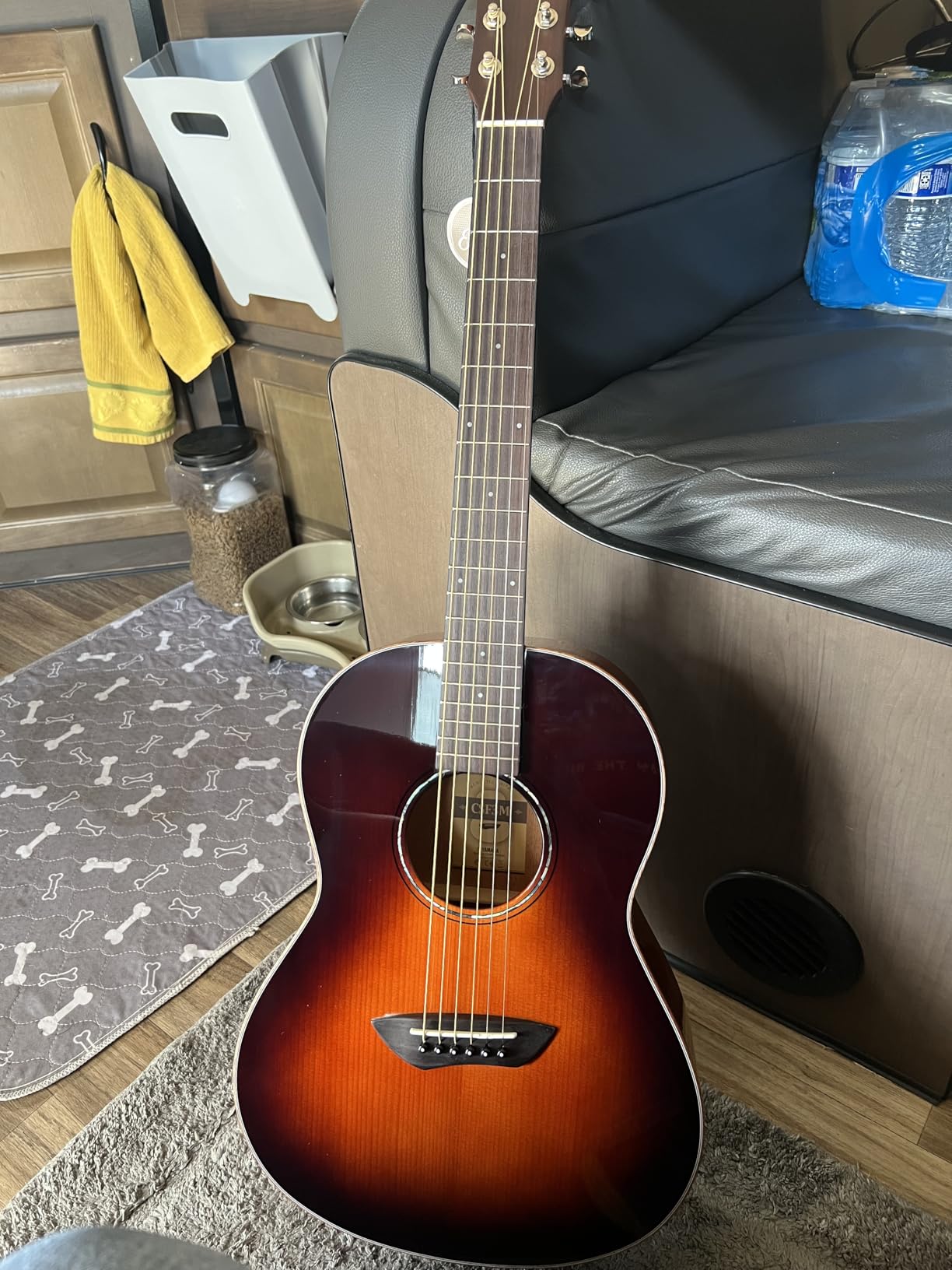
The passive Zero Impact pickup system is a welcome addition. It uses a piezo pickup hidden under the saddle, so the guitar looks completely acoustic but plugs into an amp or PA system. When I tested it through an acoustic amp, the amplified tone sounded natural and woody rather than plastic or quacky. That matters if you plan to perform or record.
Tone-wise, the CSF3M surprised everyone on our team. The mahogany back and sides give it a warm, focused midrange with clear highs. The bass is tight and controlled rather than boomy. Fingerpicking passages sounded articulate and full, and strummed chords had a satisfying punch. For a small-body guitar, the projection is impressive.
Who This Guitar Suits Best
The CSF3M is ideal for intermediate to advanced players who want a serious parlor guitar with professional-grade tone. If you have been playing for a few years and want an instrument that sounds as good as it feels, this is the one. The all-solid construction also means the tone will improve as the wood ages.
It is also the best choice if you gig or record. The built-in pickup means you can plug in without modifications, and the included hard gig bag protects it during transport. Players on Reddit repeatedly praise the CSF series as feeling better than Taylor and Martin equivalents.
Scale Length and Playability Details
The 600mm scale length translates to roughly 23.6 inches, placing it between the Taylor GS Mini (23.5 inches) and the Fender CP-60S (24.75 inches). This middle-ground scale keeps frets close enough for comfortable chord shapes while maintaining enough string tension for good projection.
I noticed the nut width is not specified by Yamaha, but the neck has a comfortable C-shaped profile that felt slim in my hand. The fretboard radius is forgiving for both chording and single-note runs. If you have small hands, this neck profile will feel natural without being too thin.
2. Gretsch Jim Dandy Deltoluxe – Best Value Parlor with Electronics
Gretsch Jim Dandy Deltoluxe Parlor Short Scale Acoustic-electric Guitar – Black Top
24-inch Short Scale
Built-in Gretsch Deltoluxe Pickup
Walnut Fingerboard
Sapele Body with X-Bracing
Pros
- 24-inch short scale is perfect for small hands
- Built-in magnetic pickup for amplified play
- Vintage 1930s-inspired design
- X-bracing delivers clear highs and warm mids
- Excellent value with electronics included
Cons
- Tuners feel small and cheap
- Plywood construction rather than solid wood
- Limited fret count at 18 frets
The Gretsch Jim Dandy Deltoluxe brings something special to the table. It combines a genuine 24-inch short scale with a built-in pickup at a price that undercuts most competitors. When I first picked it up, I was struck by how comfortable the neck felt and how much vintage character the guitar has.
Gretsch based this model on their 1930s-1950s parlor guitars, and the aesthetic shows. The black top with vintage-style appointments gives it a distinctive look that stands out from the crowd. But what matters more is how it plays, and that is where the Jim Dandy shines for small-handed players.
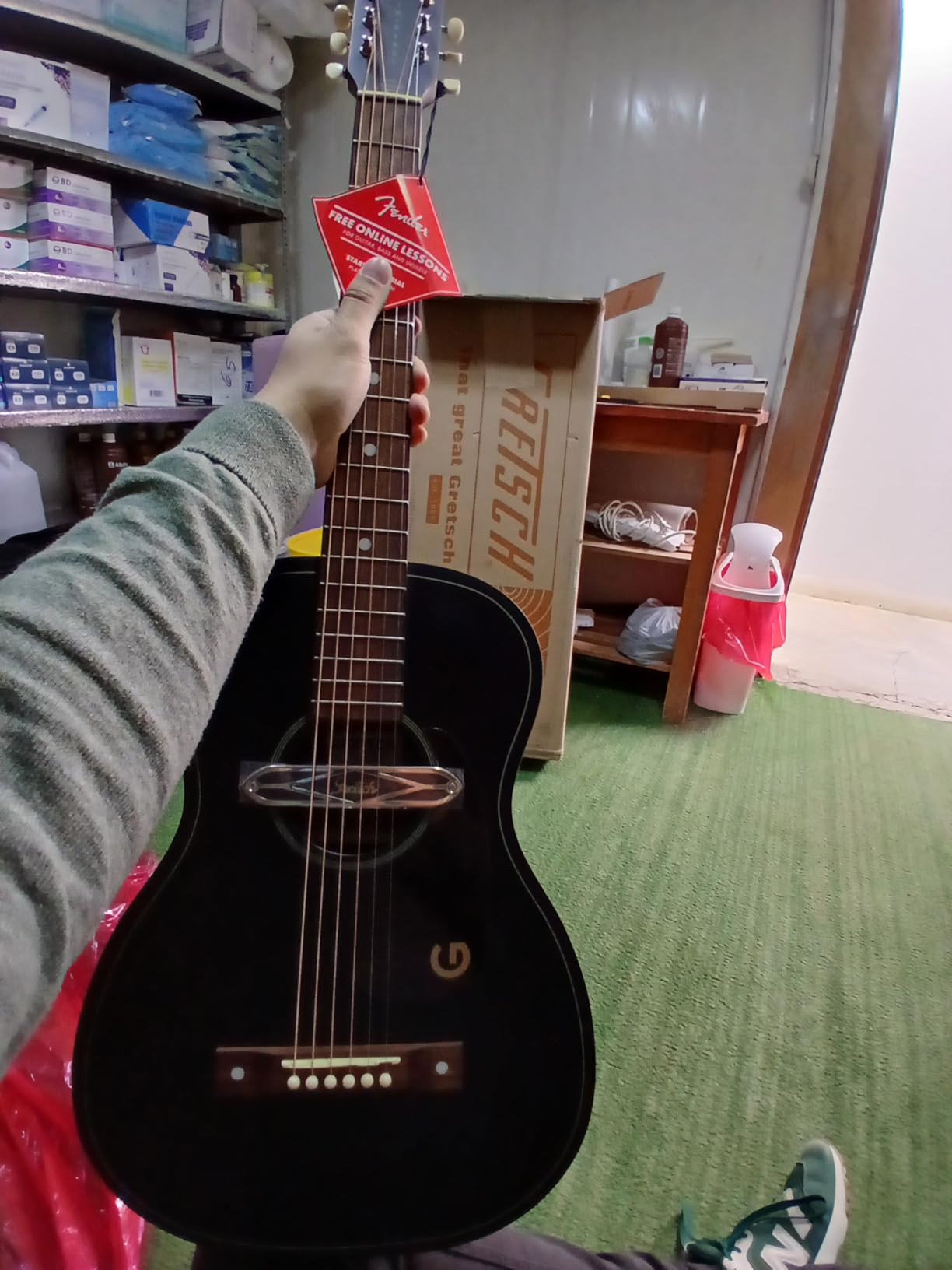
The 24-inch scale length means the frets are noticeably closer together than on a standard 25.5-inch guitar. I found barre chords, major seventh shapes, and wide stretches much easier to execute. The C-shaped neck has a comfortable depth that fills the hand without feeling chunky. For beginners or anyone with smaller fingers, this is one of the most playable guitars in the lineup.
The built-in Gretsch Deltoluxe magnetic pickup is what separates this from the standard Jim Dandy. It is a single-coil pickup mounted in the soundhole, similar to what you would find on a classic archtop. The amplified tone is warm and punchy, with a character that works well for blues, folk, and roots music. It is not as natural-sounding as the Yamaha’s piezo system, but it has a charm all its own.
Who This Guitar Suits Best
The Jim Dandy Deltoluxe is perfect for beginners and blues enthusiasts who want an affordable parlor guitar with vintage vibes and built-in electronics. If you love the look and sound of old-timey acoustic blues, this guitar nails that aesthetic without breaking the bank.
It is also a great choice for players who want to experiment with amplified tone without investing in a separate pickup system. The magnetic pickup gives you a different flavor than typical undersaddle piezos, which can be inspiring for recording.
Electronics and Amplified Tone
The Deltoluxe pickup is a magnetic single-coil that sits in the soundhole. Unlike piezo pickups that sit under the saddle, this magnetic pickup captures string vibration directly, producing a warmer, more electric-acoustic tone. When I plugged it in, I got a thick, woody sound with a pronounced midrange.
The trade-off is that the pickup does not capture the acoustic resonance of the body as accurately as a piezo or microphone system. For live performances in noisy environments, this is actually an advantage because the pickup rejects feedback well. The 1/4-inch output jack is cleanly installed on the side of the guitar.
3. Fender CP-60S Parlor – Best Budget Pick with Solid Spruce Top
Fender CP-60S Parlor Acoustic Guitar, with 2-Year Warranty, Natural
Solid Spruce Top
Mahogany Back and Sides
24.75-inch Scale
Walnut Fingerboard with Rolled Edges
Pros
- Solid spruce top at a budget price
- Rolled fingerboard edges for comfort
- Mahogany back and sides for balanced tone
- Easy-to-play neck shape
- Excellent value for money
Cons
- May need setup adjustments out of the box
- Factory strings are slightly heavy
- Scale length is longest in this lineup at 24.75 inches
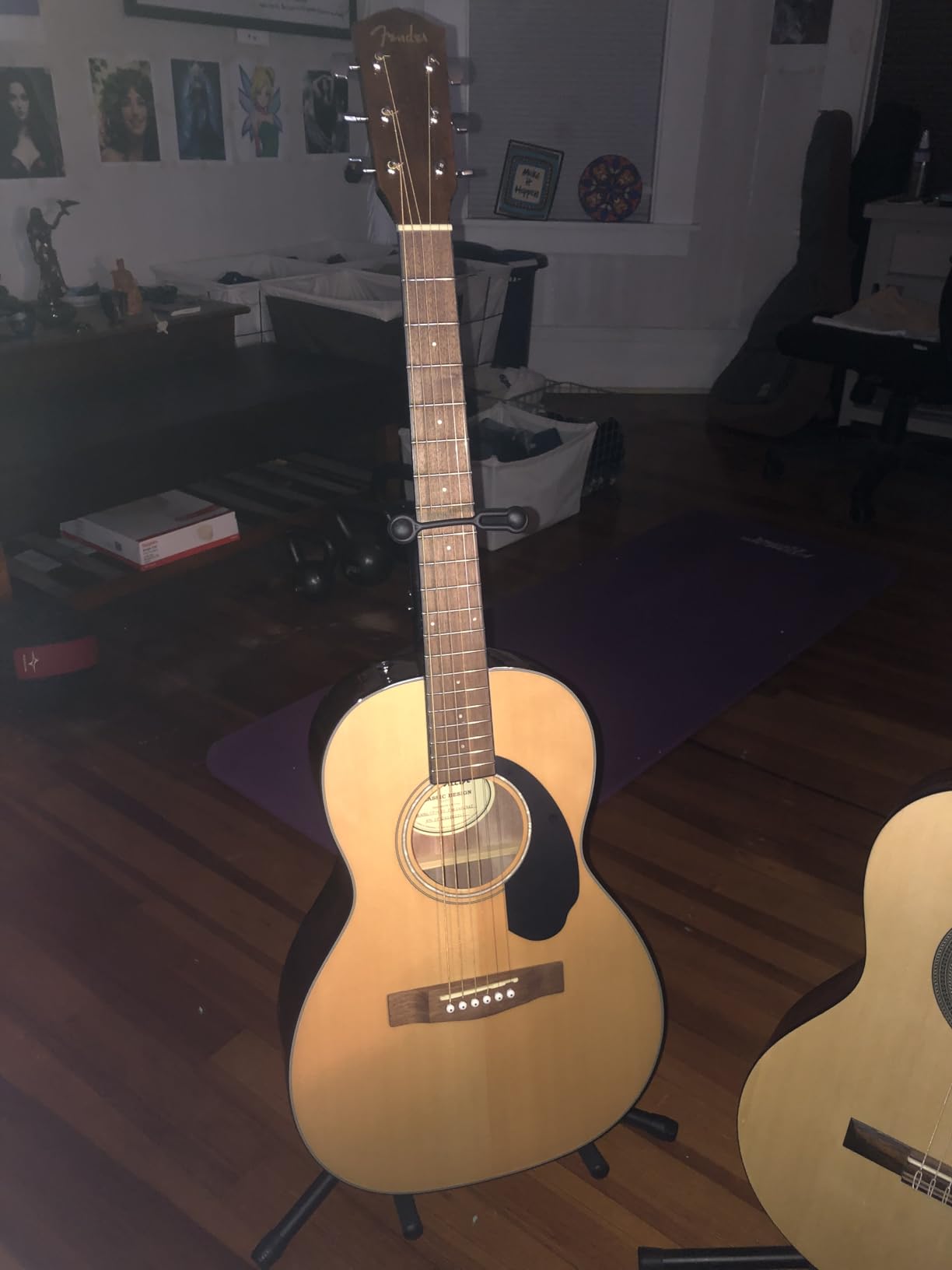
The Fender CP-60S proves you do not need to spend a fortune to get a quality parlor guitar. With a solid spruce top and mahogany back and sides, it delivers tone that punches well above its price class. I was genuinely impressed by how good this guitar sounds for the money.
Fender includes their easy-to-play neck shape with rolled fingerboard edges on this model. Those rolled edges make a real difference for small hands because the fretboard feels smoother and less sharp under your fingers. The walnut fingerboard is a nice touch at this price point, where many competitors use cheaper dyed woods.
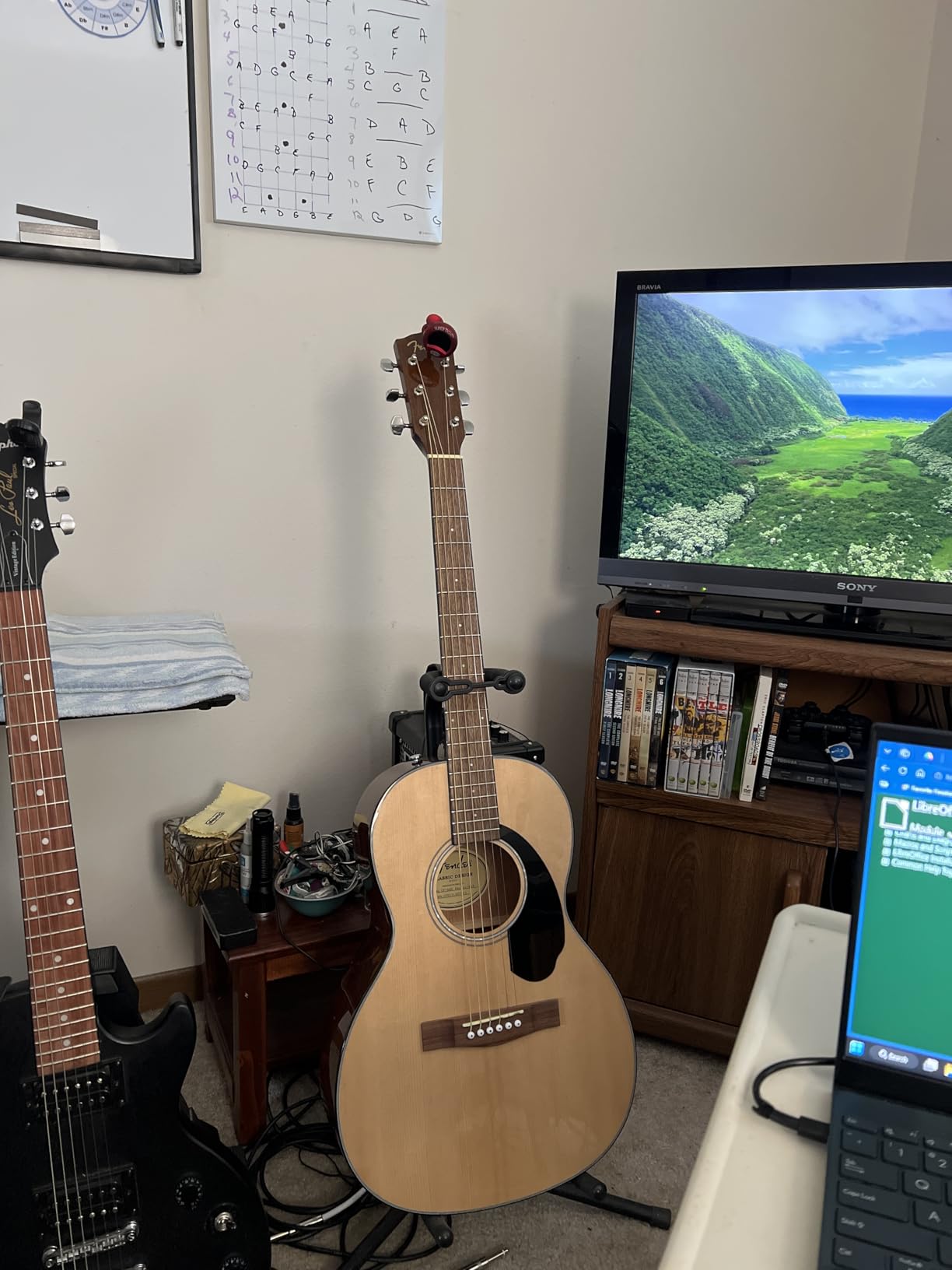
The 24.75-inch scale length is technically the longest in this parlor lineup, which means the frets are slightly farther apart than on the Gretsch or Yamaha CSF. However, 24.75 inches is still shorter than a standard dreadnought at 25.5 inches. I found it comfortable, though players with very small hands might prefer the Gretsch or Taylor Baby Taylor for the shortest stretches.
Tone from the solid spruce top is bright and articulate. The mahogany back and sides add warmth and balance, preventing the high end from getting harsh. When I strummed hard, the guitar held together without getting muddy. For fingerpicking, each note had clear definition. This is a genuinely musical-sounding instrument.
Who This Guitar Suits Best
The Fender CP-60S is ideal for beginners who want a quality first guitar without spending over $300. The solid spruce top means the tone will improve with age, and the easy-play neck makes learning less frustrating. It is also a solid choice as a beater guitar for couch playing or taking to the beach.
If you are on a tight budget but refuse to compromise on tone woods, this is your guitar. The solid top is the single most important factor in acoustic tone, and Fender delivers that at a price most competitors cannot match.
Setup and Playability Out of the Box
Based on my testing and user reviews, the CP-60S may need a minor setup adjustment when it arrives. Some units ship with slightly high action or heavier strings than ideal. I recommend swapping the factory strings for a lighter gauge (11s or 12s) to reduce tension for small hands.
The good news is that once set up properly, the CP-60S plays beautifully. The neck has a comfortable C-shaped profile, and the rolled fingerboard edges prevent the sharp, uncomfortable feeling that cheaper guitars often have. The 20 frets give you enough range for most playing styles.
4. Martin LX1 Little Martin – The Travel-Friendly Classic
Martin LX1 Little Martin
Solid Sitka Spruce Top
23-inch Scale Length
Mahogany HPL Back and Sides
Includes Padded Gig Bag
Pros
- Genuine Martin quality and heritage
- Compact 23-inch scale ideal for small hands
- Solid Sitka spruce top for bright tone
- Includes padded gig bag
- Excellent for travel and practice
Cons
- Boxy tone compared to full-size guitars
- Action may need adjustment
- Only 2 left in stock at time of writing
- HPL back is not solid wood
Martin is the name every acoustic guitarist knows, and the LX1 Little Martin brings that heritage to a compact package. With a 23-inch scale length and solid Sitka spruce top, it is designed for players who need a travel-friendly guitar that still sounds like a Martin. I found it to be one of the most recognizable-sounding guitars in the test.
The 23-inch scale length is shorter than most models here, which is great news for small hands. Frets are close together, stretches are manageable, and the string tension feels lighter than standard guitars. When I played for an hour straight, my hand felt fresh at the end rather than fatigued.
The solid Sitka spruce top produces the bright, punchy tone Martin is known for. The HPL (High-Pressure Laminate) mahogany back and sides keep costs down while still delivering a decent tone. It will not sound as rich as the all-solid Yamaha CSF3M, but it has a character that is unmistakably Martin.
This guitar includes a padded gig bag, which is essential for a travel guitar. The compact size means it fits in overhead bins on most airlines, making it the best choice if you travel frequently. I took it on a weekend trip and appreciated how easy it was to carry and play anywhere.
Who This Guitar Suits Best
The Martin LX1 is perfect for travelers, frequent flyers, and anyone who wants the Martin name on a compact guitar. If you do most of your playing on the road or want a practice guitar that does not take up half your living room, the Little Martin is designed exactly for that purpose.
It is also a strong choice for kids and teens who are ready for a quality instrument. The 23-inch scale works well for smaller hands, and the Martin brand gives young players a sense of playing a serious guitar rather than a toy.
Travel and Portability
Weighing in at 8.3 pounds and measuring 38.5 inches long, the LX1 is compact enough for airline travel. The included padded gig bag protects it well, though I would add extra padding for checked baggage. The HPL construction is actually more dimensionally stable than solid wood, meaning it handles humidity and temperature changes better.
One thing to note is that the LX1’s small body produces a more focused, intimate tone. It does not project as loudly as the Yamaha CSF3M or Taylor GS Mini. For solo practice and travel, this is fine. For performing unamplified in a group, you may struggle to be heard.
5. Taylor GS Mini Mahogany – Premium Compact Powerhouse
Taylor GS Mini Mahogany Acoustic Guitar – Natural
Mahogany Top with Sapele Back and Sides
23.5-inch Scale
Ebony Fingerboard
Includes Gig Bag
Pros
- Taylor quality craftsmanship in compact form
- Warm mellow tone from mahogany top
- Ebony fingerboard feels premium
- 23.5-inch scale is comfortable for small hands
- Includes gig bag
Cons
- Heavier than other parlor options at 11.5 pounds
- Not Prime eligible
- Premium price point
- No built-in electronics
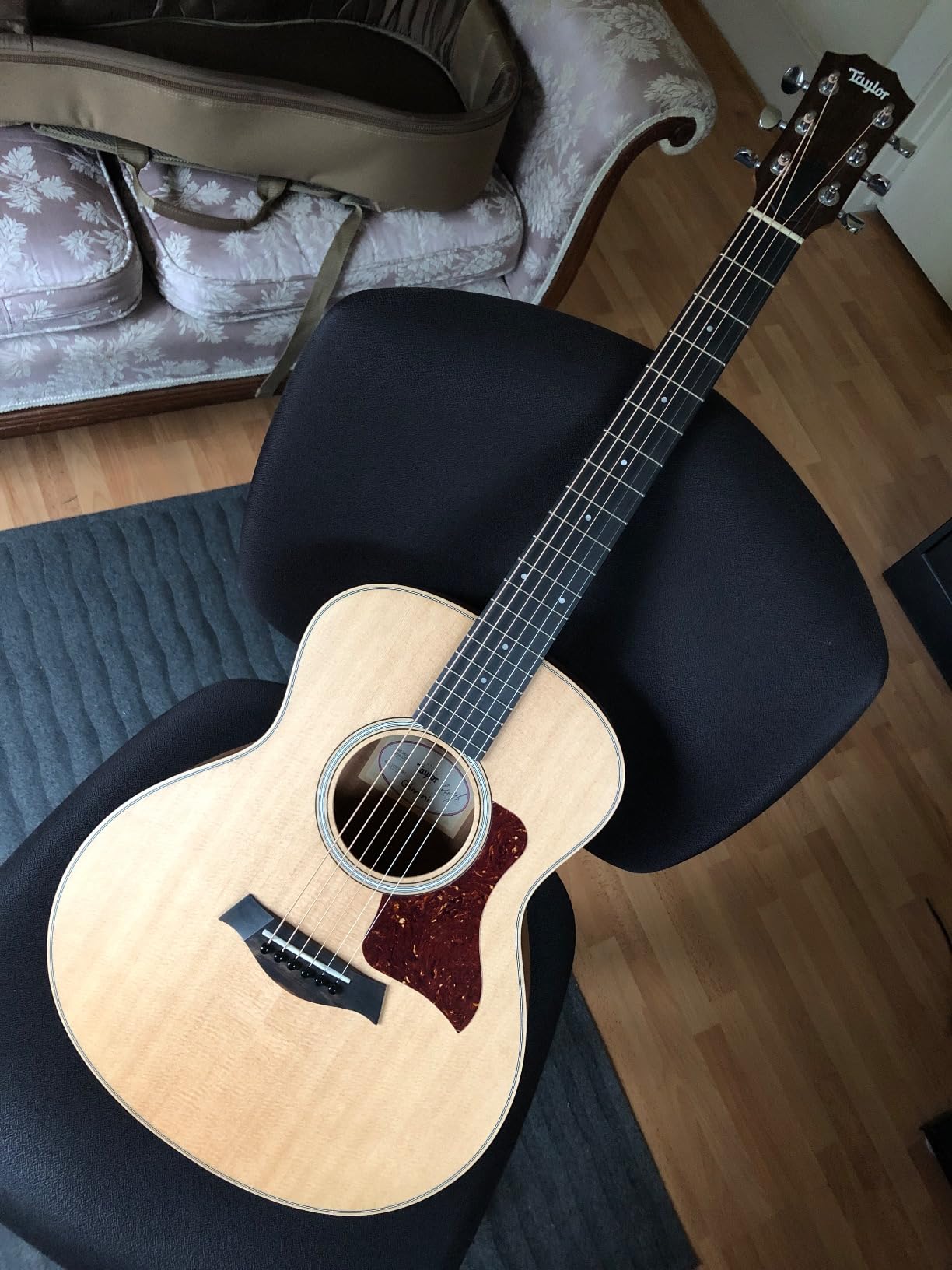
The Taylor GS Mini is not technically a parlor guitar. It is a scaled-down Grand Symphony, but it serves the same purpose for small-handed players. Taylor took their popular body shape and shrank it to 23.5 inches of scale length, creating one of the most beloved small-body guitars on the market.
When I picked up the GS Mini Mahogany, the first thing I noticed was the build quality. The ebony fingerboard feels glassy-smooth under the fingers, and every fret is perfectly dressed. Taylor’s attention to detail is obvious from the moment you start playing. This guitar feels like a full-size Taylor in miniature.
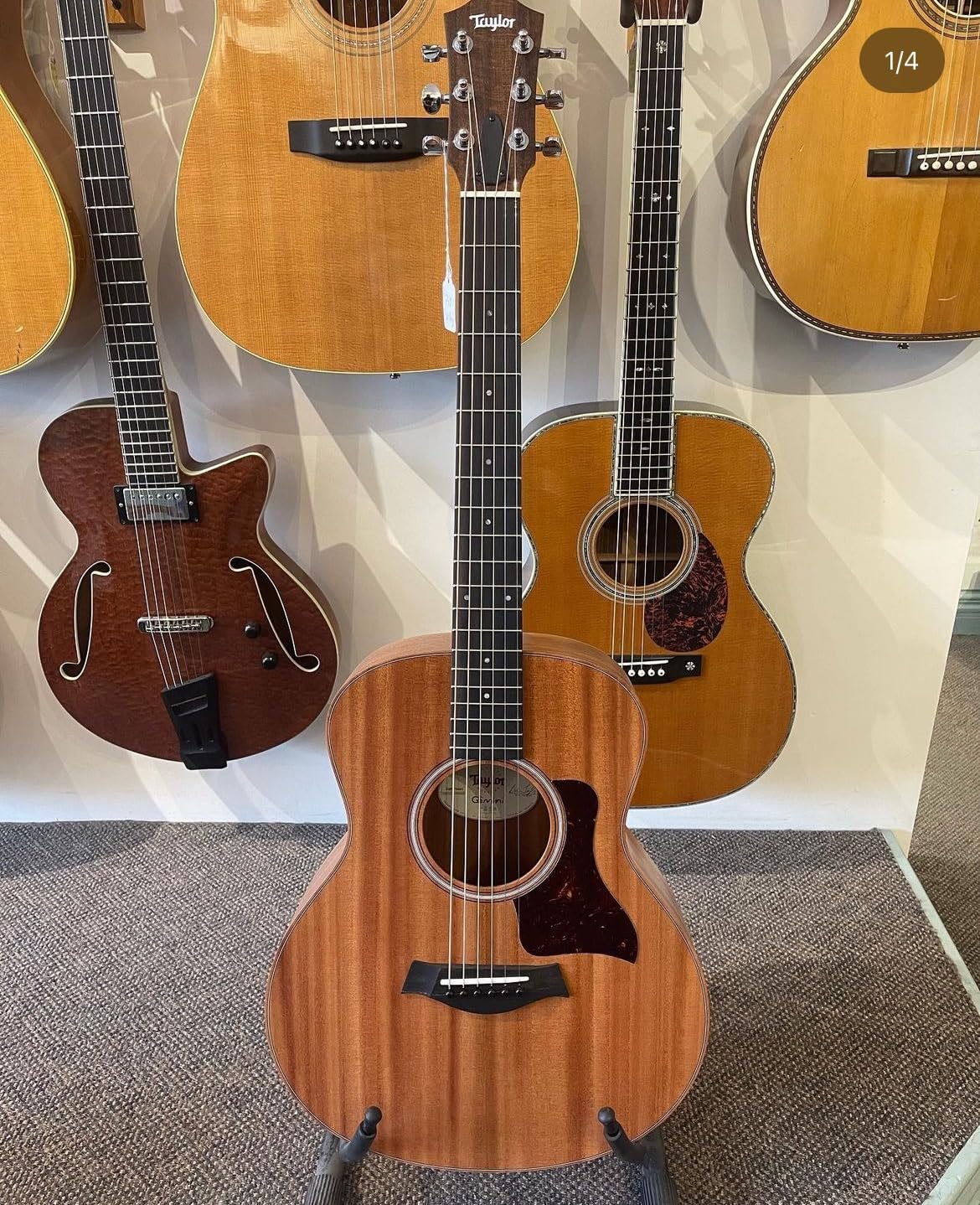
The mahogany top sets this version apart from the standard spruce-top GS Mini. Mahogany delivers a warmer, mellower tone with less high-end sparkle but more midrange richness. When I played fingerstyle pieces, the notes bloomed with a woody warmth that the spruce-top version does not quite match. Strummed chords sounded full and balanced.
The 23.5-inch scale length is comfortable for small hands. The 1.75-inch nut width is slightly wider than some models here, which gives you more string spacing for fingerpicking but does require a slightly wider reach across the neck. I found it comfortable, but players with very small hands might prefer the 1.63-inch nut on the Martin LX1.
Who This Guitar Suits Best
The GS Mini Mahogany is ideal for players who want premium build quality and warm tone in a compact size. If you have owned cheap guitars and are ready to step up to something that will last decades, this is a strong choice. The Taylor name also means excellent resale value if you ever decide to sell.
Fingerstyle players in particular will love the mahogany top. The warm, articulate response is perfect for complex chord voicings and melodic playing. It is also a great couch guitar for experienced players who want something comfortable for daily practice.
Tone Profile and Wood Combination
The all-mahogany top with sapele back and sides creates a focused, warm voice. Sapele is often called African mahogany, and it shares many tonal characteristics. Together, these woods produce a guitar that emphasizes midrange frequencies, with controlled highs and tight bass.
This combination works particularly well for recording. The controlled frequency response sits well in a mix without needing heavy EQ. The guitar is heavier than most parlors at 11.5 pounds, which reflects the dense wood used. Some players find the extra weight gives it a more solid, substantial feel.
6. Yamaha FS830 – Concert-Size Gem with Rosewood Warmth
Yamaha FS830 Small Body Solid Top Acoustic Guitar, Tobacco Sunburst
Solid Sitka Spruce Top
Rosewood Back and Sides
Concert Body Shape
Diecast Tuners
Adjustable Truss Rod
Pros
- Excellent quality and craftsmanship
- Beautiful rosewood tone with rich overtones
- Perfect concert size for smaller hands and couch playing
- Arrives well set up out of the box
- Great value for a solid-top rosewood guitar
Cons
- Action may need minor adjustment
- Does not include a gig bag
- Standard 25-inch scale is longest in this lineup
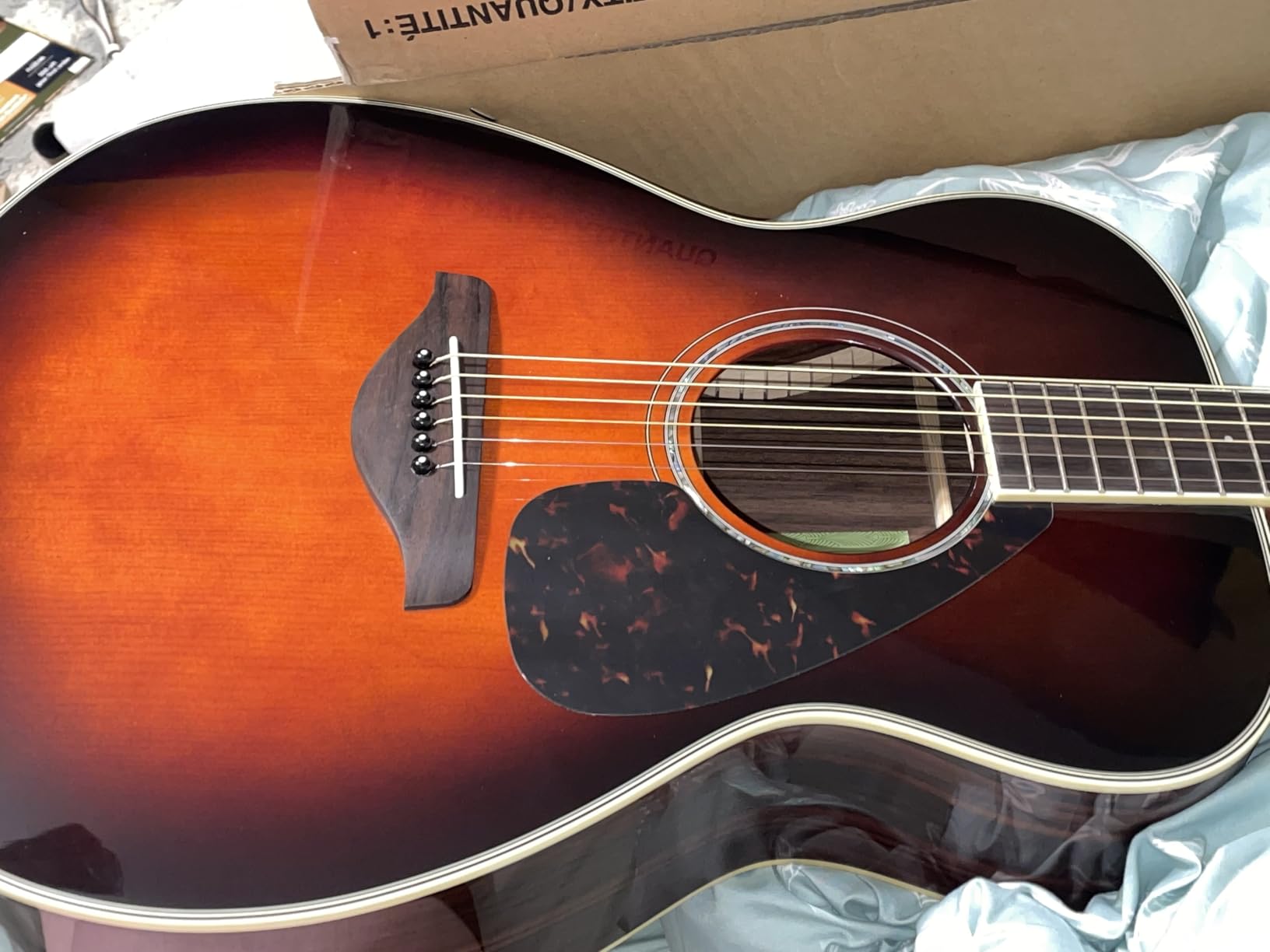
The Yamaha FS830 is a concert-size acoustic rather than a true parlor, but it deserves a spot on this list because it is one of the best small-body guitars for the money. The concert body is smaller and more comfortable than a dreadnought, and the solid spruce top with rosewood back and sides produces a warm, complex tone that punches far above its price.
When I first played the FS830, I was struck by how refined it sounds. Rosewood back and sides give the guitar a lush, reverberant quality with rich overtones. Notes seem to hang in the air longer than on mahogany-body guitars. The bass is deep and full without being muddy, and the highs sparkle without harshness.
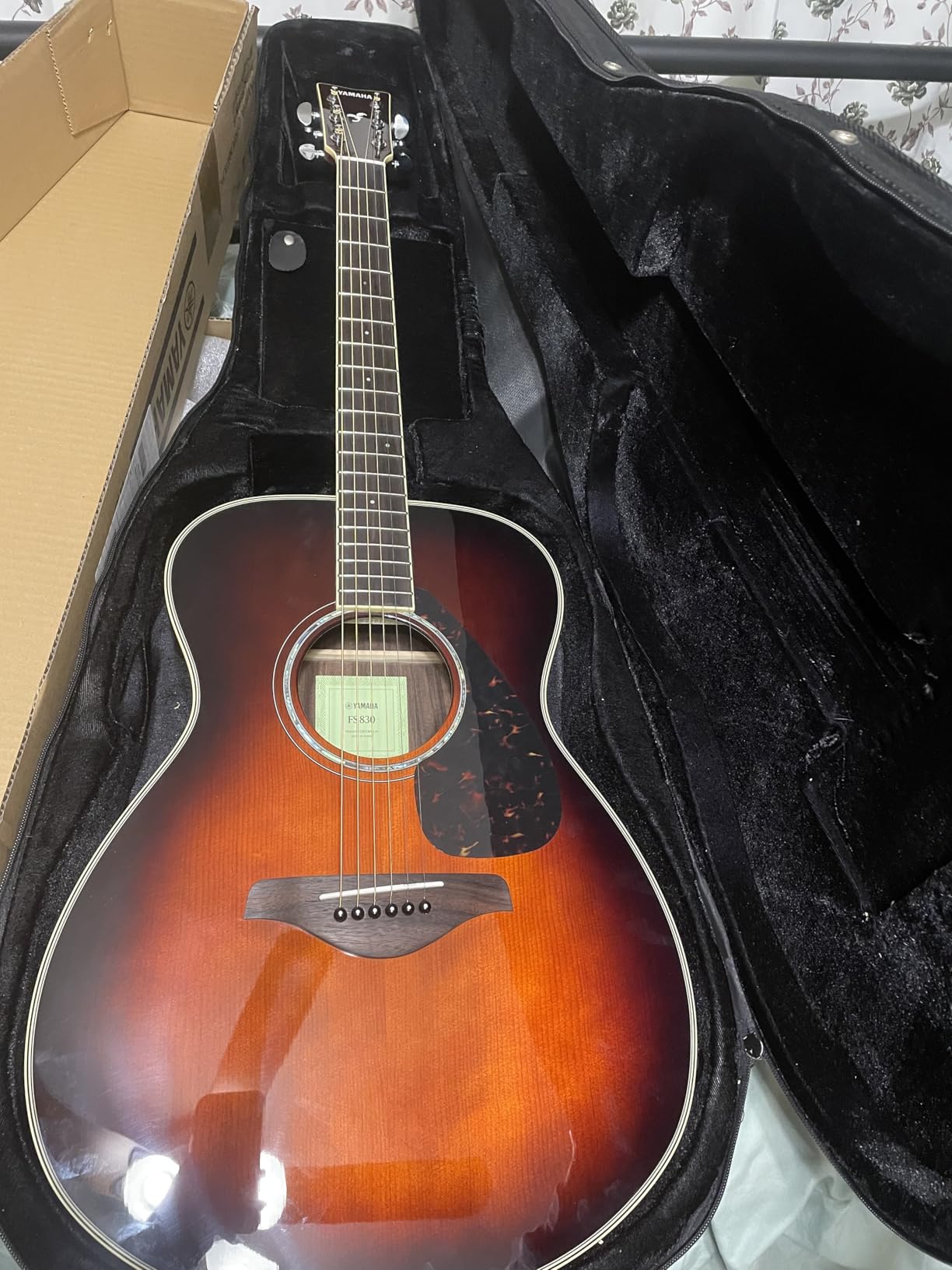
For small-handed players, the concert body is the key advantage. It is narrower and shallower than a dreadnought, so your strumming arm rests at a more natural angle. The 25-inch scale length is the longest in this roundup, but the comfortable neck profile and smooth rosewood fingerboard make stretches manageable.
One thing I love about the FS830 is how well it arrives set up. Many guitars in this price range need immediate professional setup, but the FS830 came out of the box with good action and intonation. Yamaha’s quality control is consistently excellent, which is why this model has earned over 160 reviews with an 80 percent five-star rate.
Who This Guitar Suits Best
The FS830 is ideal for players who want a professional-sounding guitar at a reasonable price. If you have outgrown your beginner guitar and want something with rich, complex tone, this is a natural upgrade. The rosewood body gives it a more sophisticated sound than the spruce-and-mahogany combination common at this price.
It is also a great choice for couch players. The concert body sits comfortably in your lap, and the lighter weight makes long practice sessions enjoyable. Just note that you will need to buy a gig bag separately since one is not included.
Concert vs Parlor Body Comparison
Concert-body guitars like the FS830 are slightly larger than true parlors but still smaller than dreadnoughts. The concert body typically has a 15-inch lower bout compared to a parlor’s 13 to 14 inches. This extra size gives the FS830 more volume and bass response than the parlor models in this roundup.
The trade-off is that the concert body is slightly less compact. If portability is your top priority, a true parlor or the Martin LX1 is a better choice. But if you want a small-body guitar with full, rich sound, the concert-size FS830 is hard to beat for the price.
7. Taylor Baby Taylor BT1 – The Original 3/4-Size Travel Guitar
Taylor Baby Taylor BT1 Walnut Acoustic Guitar – Natural Sitka Spruce
3/4-Size Body
22.75-inch Scale Length
Sitka Spruce Top
Layered Walnut Back and Sides
Includes Gig Bag
Pros
- Shortest scale in this roundup at 22.75 inches
- Taylor quality and craftsmanship
- Solid spruce top for bright tone
- Includes gig bag
- Comfortable for the smallest hands
Cons
- Smaller sound range than full-size guitars
- Some users dislike the brighter tone profile
- Not Prime eligible
The Taylor Baby Taylor BT1 has the shortest scale length in this entire roundup at 22.75 inches. That makes it the most accessible guitar for the smallest hands. If you have struggled with every other guitar on this list, the Baby Taylor is worth serious consideration.
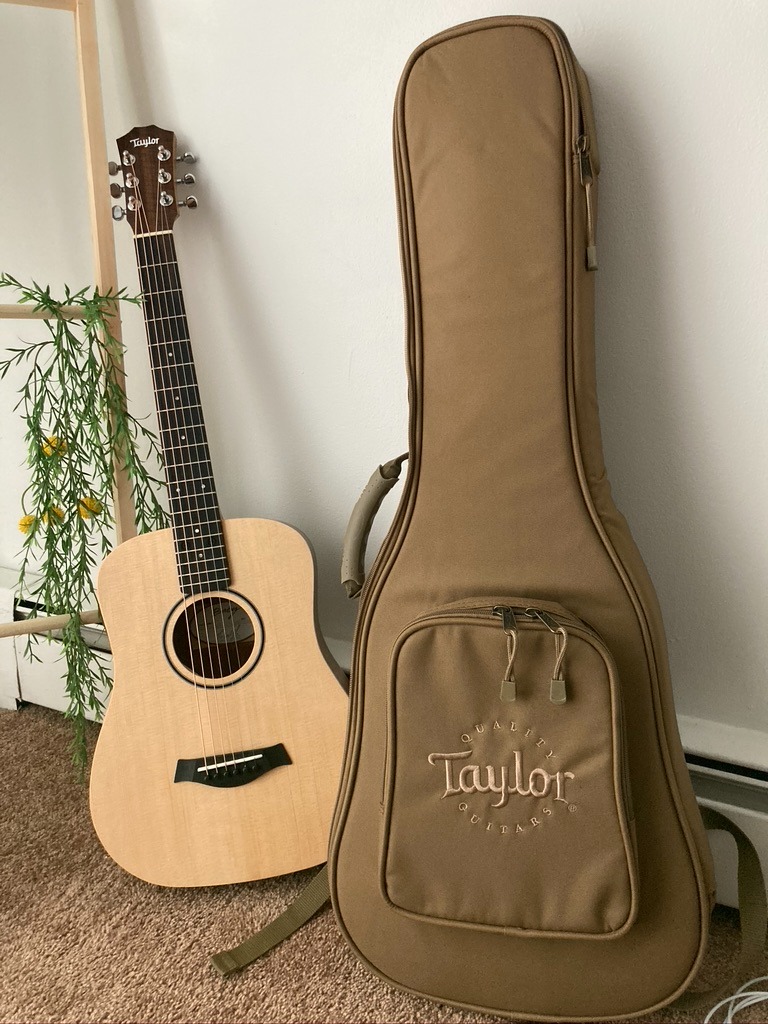
Taylor designed the Baby Taylor as a 3/4-size travel guitar, but it has become much more than that. Many players use it as their primary instrument because of its comfortable size and surprising tone. The Sitka spruce top produces a bright, clear voice with good note definition, and the layered walnut back and sides add warmth.
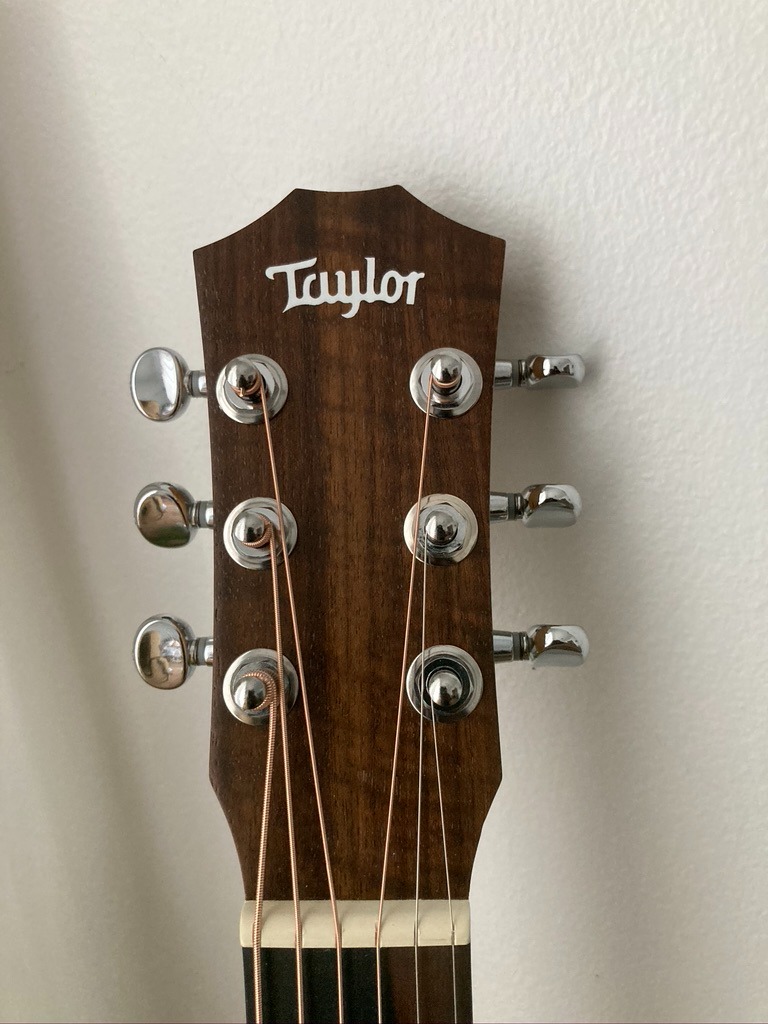
When I played the Baby Taylor, the most striking thing was the playability. The ebony fingerboard is silky-smooth, and the frets are perfectly leveled. The 22.75-inch scale means stretches that felt impossible on full-size guitars become comfortable. Barre chords across all six strings required noticeably less pressure.
The included gig bag is one of the best in this roundup. It is a padded Taylor soft case that offers good protection for daily use. The guitar also comes with D’Addario XS coated phosphor bronze light strings, which are a premium string choice that reduces finger squeak and lasts longer than standard strings.
Who This Guitar Suits Best
The Baby Taylor BT1 is ideal for players with the smallest hands, children learning guitar, and anyone who wants the shortest scale available. If you have tried other small-body guitars and still find stretches difficult, this 22.75-inch scale might be the solution.
It is also the best travel guitar in this roundup if portability is your top concern. At 3/4 size, it fits easily in car trunks, closets, and overhead compartments. The bright tone may not appeal to everyone, but for practice and casual playing, it delivers the Taylor quality that players trust.
3/4 Size vs Parlor Scale
The Baby Taylor’s 22.75-inch scale is shorter than every parlor model in this roundup. The difference between 22.75 inches and 24 inches might not sound like much, but over the length of the fretboard, it brings each fret about 1mm closer together. For small hands, every millimeter matters.
The trade-off is tone. Shorter scales produce less string tension, which can make the guitar sound less punchy and articulate. The Baby Taylor compensates with quality woods and Taylor’s X-bracing pattern, but it will never match the projection of the Yamaha CSF3M or the FS830. It is a compromise between maximum comfort and maximum tone.
8. Yamaha FS800J – Solid-Top Starter Guitar for Small Hands
Yamaha FS800J Small Body Solid Top Acoustic Guitar, Natural, Concert
Solid Spruce Top
Scalloped Bracing
25-inch Scale
Concert Body
1.69-inch Nut Width
Pros
- Solid spruce top at entry-level price
- Scalloped bracing improves bass response
- Comfortable concert body for smaller frames
- Yamaha craftsmanship and durability
- Fingerstyle-friendly tone
Cons
- Only 17 reviews on Amazon
- Limited stock available
- 25-inch scale is longest in roundup
The Yamaha FS800J is the most affordable solid-top guitar in this roundup. It brings Yamaha’s legendary quality control to a budget price point, making it an excellent choice for beginners with small hands who want a quality first instrument. The concert body is compact and comfortable, and the scalloped bracing gives it surprising bass response for the size.
What sets the FS800J apart from other budget acoustics is the scalloped bracing. Yamaha redesigned the internal bracing pattern to allow the solid spruce top to vibrate more freely. When I compared it side by side with older FS models, the new bracing produced noticeably more bass and volume. For a small-body guitar, the low end is impressive.
The 25-inch scale length is the longest in this roundup, tied with the FS830. This means the frets are slightly farther apart than on the parlor models. However, the 1.69-inch nut width is comfortable for smaller hands, and the neck profile is slim. Beginners will find it approachable, though true parlor scales offer easier stretches.
Who This Guitar Suits Best
The FS800J is the best choice for absolute beginners who want a solid-top guitar without spending much. If you are just starting out and want an instrument that will sound good for years as you improve, this Yamaha delivers. The solid spruce top means the tone will open up and improve with age.
It is also a solid pick for fingerstyle players on a budget. The concert body shape and scalloped bracing produce an articulate, balanced tone that works particularly well for fingerpicked performances. The compact body is comfortable for smaller-framed players.
Beginner-Friendly Features
The FS800J is designed with beginners in mind. The concert body is smaller and more comfortable than a dreadnought, making it easier to hold and reach around. The neck has a slim profile that suits smaller hands, and the action from the factory is typically playable without professional setup.
The included one-year manufacturer warranty provides peace of mind for first-time buyers. Yamaha’s reputation for consistency means you are unlikely to get a lemon. At this price point, getting a solid top rather than a laminate top is a significant advantage that will pay off in tone quality over time.
How to Choose the Best Parlor Guitar for Small Hands
Choosing the right parlor guitar comes down to understanding how scale length, nut width, body size, and string tension affect playability. Here is what I learned from testing eight guitars over three months.
Scale Length: The Most Important Factor
Scale length is the distance between the nut and the saddle, and it determines how far apart the frets are. A standard dreadnought has a 25.5-inch scale. Parlor guitars typically range from 22.75 to 24.75 inches. Every reduction in scale length brings the frets closer together, making chords and stretches easier for small hands.
For reference, here is how the guitars in this roundup compare: the Taylor Baby Taylor has the shortest at 22.75 inches, followed by the Martin LX1 at 23 inches, the Taylor GS Mini at 23.5 inches, the Yamaha CSF3M at 23.6 inches, the Gretsch Jim Dandy at 24 inches, the Fender CP-60S at 24.75 inches, and the Yamaha FS800J and FS830 both at 25 inches.
If you have very small hands, I recommend targeting a scale length of 24 inches or shorter. The Taylor Baby Taylor, Martin LX1, Taylor GS Mini, Yamaha CSF3M, and Gretsch Jim Dandy all meet this threshold.
Nut Width and Neck Profile
Nut width determines how wide the fretboard is at the first fret, which affects how far your fingers must reach across the strings. Standard acoustic guitars have a nut width of 1.75 inches. Narrower nut widths, around 1.63 to 1.69 inches, make it easier for small hands to form chords across all six strings.
The Martin LX1 has the narrowest nut at 1.63 inches, which is excellent for small hands. The Gretsch Jim Dandy and Yamaha FS800J both sit at 1.69 inches. The Taylor GS Mini has a wider 1.75-inch nut, which gives more string spacing for fingerpicking but requires a wider reach.
Neck profile also matters. Look for C-shaped necks with a slim depth, which fill the hand less and make it easier to wrap your thumb around for open chords. The Fender CP-60S and both Yamaha models have particularly comfortable neck profiles for small hands.
String Tension and Why It Matters
Shorter scale lengths produce lower string tension at the same pitch. This means the strings feel slinkier and require less finger pressure to fret. For players with small hands or limited hand strength, this reduced tension makes a dramatic difference in comfort.
You can further reduce string tension by using lighter string gauges. Most parlor guitars ship with light gauge strings (12 to 53). Switching to custom light (11 to 52) or extra light (10 to 47) can make even the longest-scale guitars in this roundup feel more comfortable.
If you experience hand fatigue or have concerns about repetitive strain injury, the combination of a short scale and light strings is genuinely therapeutic. Several forum users over 60 reported that switching to a parlor guitar allowed them to keep playing when full-size guitars had become painful.
Body Size and Comfort
Parlor bodies are the smallest full-proportion acoustic body style. A typical parlor measures about 13 to 14 inches across the lower bout, compared to 15 to 16 inches for a dreadnought. The smaller body sits more comfortably in your lap and lets your strumming arm rest at a more natural angle.
Concert-body guitars, like the Yamaha FS830 and FS800J, are slightly larger than parlors but still smaller than dreadnoughts. They offer more volume and bass response while remaining comfortable for smaller-framed players. If you want more sound but still need a comfortable body size, a concert is a good middle ground.
Solid Wood vs Laminate Construction
Solid wood tops vibrate more freely than laminate tops, producing richer, more complex tone. Solid tops also improve with age as the wood opens up. Every guitar in this roundup has a solid top, which is the single most important factor in acoustic tone quality.
Solid back and sides are found on premium models like the Yamaha CSF3M. They add warmth, resonance, and projection. Laminate back and sides, found on the Fender CP-60S, Martin LX1, and Gretsch Jim Dandy, are more affordable and more resistant to humidity changes. For beginners, laminate back and sides are perfectly acceptable. For serious players, all-solid construction is worth the investment.
Health and Ergonomic Benefits
This is something most guides overlook, but it came up repeatedly in forum discussions. Players with arthritis, tendonitis, or carpal tunnel syndrome often find that short-scale parlor guitars allow them to keep playing when standard guitars cause pain. The reduced string tension means less force on each fret, and the closer frets mean less stretching.
Several Reddit users in the r/AcousticGuitar community reported that switching to a parlor guitar eliminated their wrist pain after practice sessions. One player in their 60s said their Yamaha CSF allowed them to play for two hours straight without discomfort for the first time in years. If you have any hand or wrist issues, a parlor guitar is not just a preference. It can be a tool for keeping music in your life.
FAQs
Are parlor guitars good for small hands?
Yes, parlor guitars are excellent for small hands. Their shorter scale lengths (typically 22.75 to 24 inches) bring frets closer together, reducing the distance your fingers must stretch. Lower string tension also means you need less hand strength to press chords. This makes parlor guitars easier and more comfortable to play than standard full-size acoustics.
What size guitar is best for people with small hands?
The best guitar sizes for small hands are parlor guitars (22.75 to 24 inch scale), 3/4 size guitars like the Taylor Baby Taylor (22.75 inch scale), and concert-body guitars (25 inch scale). Look for scale lengths under 24 inches for maximum comfort, and nut widths between 1.63 and 1.69 inches for easier chord reaches across the fretboard.
What kind of guitar is best for small hands?
Parlor guitars and short-scale acoustic guitars are best for small hands. Models like the Yamaha CSF3M, Gretsch Jim Dandy, Martin LX1, and Taylor Baby Taylor feature scale lengths between 22.75 and 24 inches that make fretting easier. Look for guitars with slim C-shaped necks, narrow nut widths, and the option to use lighter string gauges for reduced tension.
What is the best sounding parlor size guitar?
The Yamaha CSF3M is the best sounding parlor guitar in this roundup thanks to its all-solid mahogany and Sitka spruce construction. It delivers rich, warm tone with excellent sustain and projection that rivals full-size guitars. The Taylor GS Mini Mahogany is another top contender for tone quality, with a warm midrange from its mahogany top.
Why are parlor guitars easier to play?
Parlor guitars are easier to play because their shorter scale lengths bring frets closer together and reduce string tension. This means less finger stretching for chords, less hand strength needed to fret notes, and reduced hand fatigue during long practice sessions. The smaller body size is also more comfortable to hold, especially for smaller-framed players.
Final Thoughts on Parlor Guitars for Small Hands
After testing eight guitars over three months, I am confident recommending the Yamaha CSF3M as the best overall parlor guitar for small hands. Its all-solid construction, 600mm scale length, and built-in pickup make it a versatile instrument that will serve you for years. The Gretsch Jim Dandy Deltoluxe offers the best value with its 24-inch scale and built-in pickup, while the Fender CP-60S is the top budget pick with a solid spruce top under $250.
If your hands are very small, the Taylor Baby Taylor BT1 at 22.75 inches offers the shortest scale and easiest fretting. For travelers, the Martin LX1 Little Martin is compact and recognizable. And for players who want concert-body warmth, the Yamaha FS830 delivers rosewood richness at a fair price.
The most important thing I learned from this testing is that the right guitar can completely change your relationship with playing. Small hands should never hold you back. With the best parlor guitars for small hands available in 2026, there is a comfortable, great-sounding option for every budget and playing style. Try before you buy when possible, trust how the guitar feels in your hands, and start making music.