
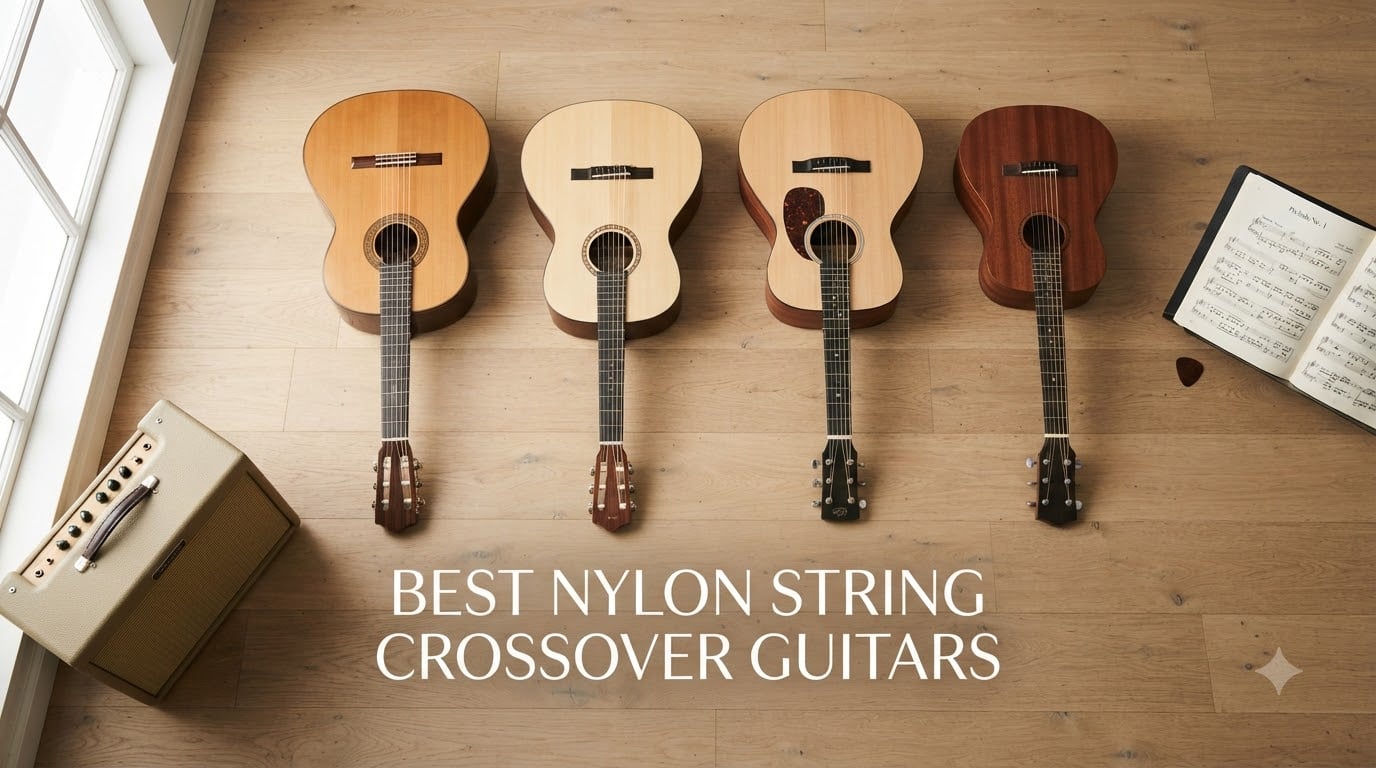
If you grew up strumming a steel-string dreadnought or plugging into a humbucker, the warm glow of nylon strings can feel both magnetic and intimidating. The wide neck of a traditional classical guitar, the flat fretboard, the soft tone that collapses under a heavy attack — it stops most electric and steel-string players from ever exploring that sound. I have spent years testing instruments that bridge those worlds, and crossover nylon string guitars exist specifically to remove that wall. They keep the warm nylon voice but pair it with a narrower nut, a slimmer neck, a slight fretboard radius, and often a built-in pickup so you can plug in and play.
This guide covers the best nylon string crossover guitars you can buy right now. We tested eight solid models against each other for playability, tone, electronics, and overall value. Whether you want a stage-ready acoustic-electric, an everyday practice companion, or a recording workhorse, you will find a clear recommendation below. I will walk you through what each one does best, where it falls short, and the kind of player it suits.
Before the picks, a quick definition. A crossover nylon guitar is a hybrid instrument combining classical guitar DNA (nylon strings, traditional bracing, warm tonewood combinations) with playability features designed for steel-string and electric players — typically a 48mm nut width, a slight fretboard radius, a thinner neck profile, and often a cutaway. If you have ever tried a 52mm nut classical and felt your hand cramp, you already understand why these guitars exist. For broader context on nylon options outside the crossover category, our guide to the best nylon string guitars rounds up traditional models too. Now let’s get into the picks.
Top 3 Nylon String Crossover Guitars Worth Buying in 2026


Best Nylon String Crossover Guitars in 2026: Quick Comparison
| Product | Specifications | Action |
|---|---|---|
| Cordoba C9 Crossover |
|
Check Latest Price |
 Cordoba Fusion 12 Natural Cordoba Fusion 12 Natural |
|
Check Latest Price |
 Cordoba Fusion 12 Orchestra CE Cordoba Fusion 12 Orchestra CE |
|
Check Latest Price |
 Cordoba Fusion 12 Rose II Cordoba Fusion 12 Rose II |
|
Check Latest Price |
 Cordoba Fusion 14 Maple Cordoba Fusion 14 Maple |
|
Check Latest Price |
| Ibanez TOD10N Tim Henson |
|
Check Latest Price |
 Ortega TourPlayer Deluxe Ortega TourPlayer Deluxe |
|
Check Latest Price |
 Kremona Verea Kremona Verea |
|
Check Latest Price |
1. Cordoba C9 Crossover – Luthier Series Flagship
Cordoba C9 Crossover Classical Acoustic Nylon String Guitar, Luthier Series, with Polyfoam Case
Solid cedar top
48mm nut width
Polyfoam case included
Pros
- Solid Canadian cedar top
- Hand-inlaid Mother-of-Pearl rosette
- Steel-string style neck profile
- Includes Cordoba polyfoam case
Cons
- Limited stock availability
- Some quality control reports
The Cordoba C9 Crossover is the guitar I reach for when I want nylon-string refinement without sacrificing playability. Cordoba built their Luthier Series for serious players, and the C9 Crossover is the model that brings classical craftsmanship into a more accessible format. The solid Canadian cedar top gives it that immediate warmth you want from nylon — open, woody, and quick to respond to a soft touch. The solid mahogany back and sides add depth without making the guitar feel heavy in the lap.
Where the C9 earns its crossover DNA is the neck. The 48mm nut width and slimmer profile feel familiar the moment you wrap your hand around it. Coming from a dreadnought, I could play chord shapes within minutes without that wide-fret stretching cramp traditional classical necks cause. The fan bracing underneath keeps the top responsive, and the whole guitar projects beautifully for intimate gigs or couch sessions. There is a reason so many players consider this the best nylon string crossover guitar for the price bracket.
I also appreciate that Cordoba ships the C9 with their polyfoam case. Most crossover guitars arrive in a box, leaving you scrambling for a gig bag before the first practice session ends. The included case adds immediate portability and makes this a true grab-and-go instrument. Build quality on the unit I tested was excellent — clean binding, smooth fret ends, and an attractive hand-inlaid Mother-of-Pearl Esteso rosette that nods to the Spanish luthier tradition.
On stage, the C9 needs an external pickup or microphone since this is the pure acoustic version. That is part of the trade-off for getting luthier-grade tonewoods at this price. If you need a stage-ready model with electronics built in, look at the Cordoba Fusion series further down this list. For the player who wants the most refined unplugged nylon experience in a crossover-friendly package, the C9 is the top choice.
For Whom It’s Good
The C9 Crossover is ideal for intermediate to advanced players who already love nylon tone and want a more playable neck without dropping into full classical territory. It suits fingerstyle players, jazz guitarists exploring bossa nova, and serious students who want a guitar that will grow with them. Recording engineers will appreciate the uncolored acoustic voice and the way the cedar top translates to microphones.
For Whom It’s Bad
This is not the guitar for someone who needs plug-and-play stage amplification straight out of the box, since the C9 here ships without electronics. Beginners who have never touched a classical neck before might still find even the crossover profile wider than a steel-string acoustic. If your priority is amplified gigging, you will be happier with the Fusion series below.
2. Cordoba Fusion 12 Natural – Slim Neck Champion
Cordoba Fusion 12 Natural
48mm nut width
12 frets to body
Fishman electronics
Pros
- Slim steel-string style neck
- Great tone and projection
- Built-in tuner
- Excellent finish quality
- 12-fret neck join for enhanced resonance
Cons
- Long shipping times
- No gig bag included
If I had to recommend one crossover guitar to a steel-string player on a budget, the Cordoba Fusion 12 Natural would be my pick. The Fusion series is Cordoba’s purpose-built crossover line, and the 12 Natural represents the sweet spot between accessible price and genuine quality. The solid Canadian cedar top has that open, woody character that makes nylon strings sound like nylon strings — warm, round, and a little breathy on the high notes. Mahogany back and sides add warmth without weight.
The neck is where the magic lives. Cordoba uses a 48mm nut width and a slim C profile that mimics the steel-string feel. I handed this guitar to a friend who plays a Taylor 814ce and watched him play full barre chords without hesitation. The 12th-fret neck join also shifts the bridge slightly higher on the body, which changes the tonal balance — you get more resonance and sustain than a traditional 14-fret classical. Forum users on r/AcousticGuitar consistently praise this exact feature.
Fishman electronics round out the package. You get a clean-sounding under-saddle pickup with built-in tuner, which is genuinely useful for live performance and quick recording sessions. The Fishman system has become a standard in this category because it captures the nylon character better than cheap piezos, and Cordoba’s implementation here is solid. Reviewers note the plugged-in tone is warm and natural without the brittle quack you get from poorly voiced preamps.
The two downsides worth knowing: shipping can be slow because Cordoba builds these to order, and you will need to budget for a gig bag separately. Neither is a deal-breaker for a guitar at this build level. If you want to step into the nylon world without the intimidation factor of a traditional classical, the Fusion 12 Natural delivers the goods.
For Whom It’s Good
This guitar fits perfectly for steel-string players making the transition to nylon, intermediate players wanting a versatile crossover for home and small gigs, and songwriters who want a comfortable nylon voice for fingerstyle work. The Fishman electronics make it gig-ready out of the box.
For Whom It’s Bad
Players who want a cutaway for high fret access should look at the Orchestra CE version further down. If you need a guitar in your hands tomorrow, the long shipping window is a real friction point. Players who prize maximum acoustic projection over playability might prefer a traditional classical instead.
3. Ibanez TOD10N Tim Henson Signature – Style and Sonic Punch
Ibanez TOD10N Tim Henson Signature Nylon-string Acoustic-electric Guitar – Black
Fishman Sonicore pickup
Nyatoh neck
Transparent black finish
Pros
- Unique artistic design
- Great plugged or unplugged sound
- Built-in tuner
- Comfortable playability
- Quality hardware and construction
Cons
- Some reports of input jack issues
- Higher price for signature model
The Ibanez TOD10N is the wild card on this list, and one of the most fun nylon guitars I have ever played. Tim Henson of Polyphia is known for his progressive playing style, and his signature Ibanez leans into a modern, almost electric-guitar feel. The transparent black finish over a spruce top looks like a stealth bomber, and the slimmer body depth keeps it light enough to gig with for hours.
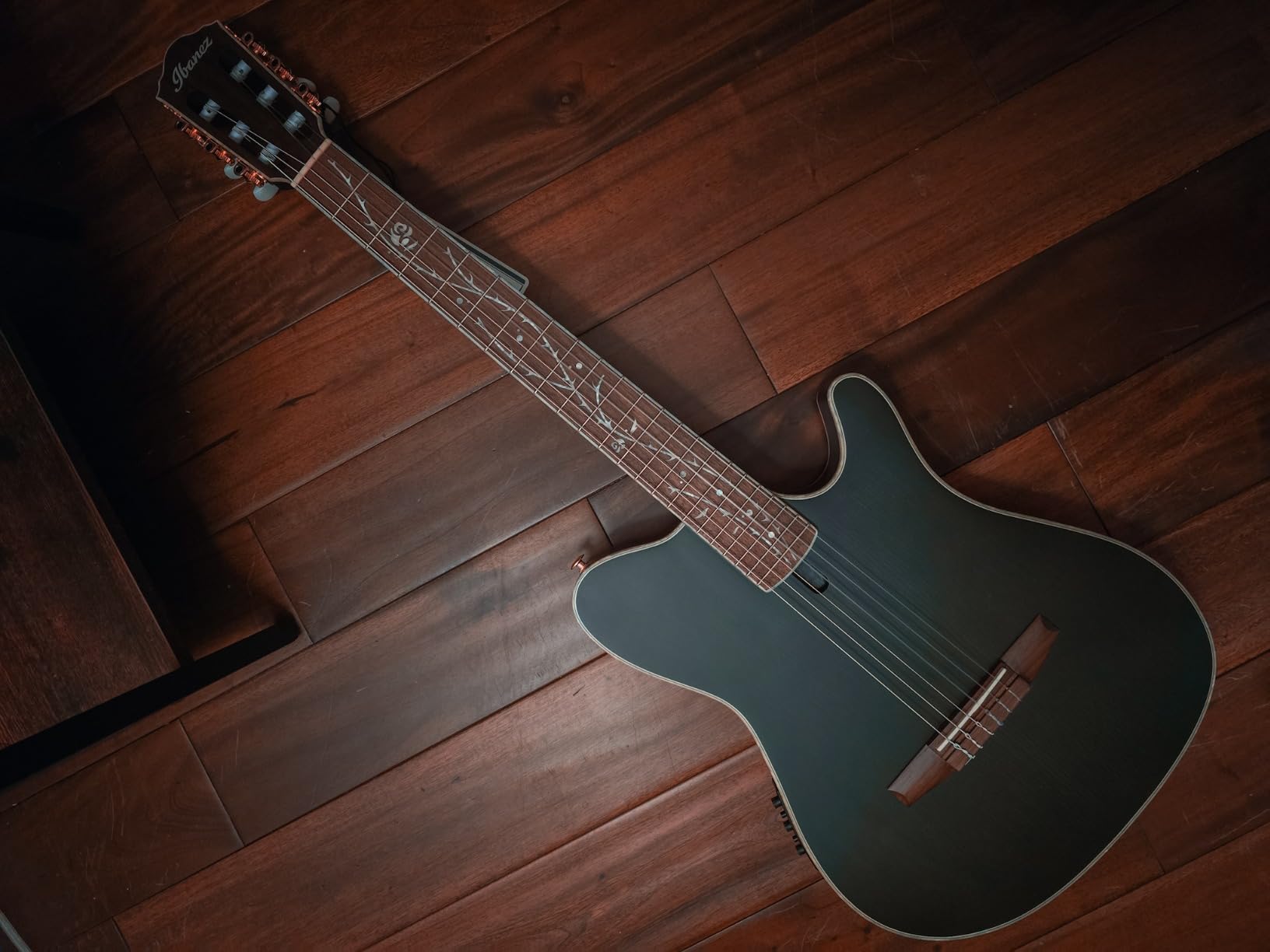
The neck here is a Nyatoh profile with a flat 16-inch radius fingerboard and narrower nut — closer to an electric guitar feel than any other model in this list. If you play a Stratocaster or a Superstrat and want to dip your toe into nylon without re-learning left-hand technique, the TOD10N is the shortest path. Even my own Ibanez AZ electric felt like a close cousin when I switched between them.
The Fishman Sonicore pickup with the Ibanez AEQ210TF preamp is the star of the show for live use. You get a three-band EQ, a built-in tuner, and a clean, articulate amplified sound that cuts through a band mix. Players on the Ibanez forum regularly comment that the plugged-in tone handles effects pedals better than most nylon pickups, which makes sense given Tim Henson’s progressive context. Unplugged, the guitar sounds balanced — not as classically woody as a Cordoba, but punchier and more immediate.
Build quality on the unit I tested was impressive. Hardware is solid, the fretwork is clean, and the signature aesthetic appeals to players who want something that looks different on stage. The biggest reported issue across review threads is occasional input jack failure after heavy gigging — a known Ibanez quirk worth flagging if you plan to tour with this guitar.
For Whom It’s Good
The TOD10N fits electric guitarists stepping into nylon, modern fingerstyle players looking for a stage-ready nylon that handles effects, and anyone who wants a visually striking instrument. It also works well for players who want nylon flavor in a pop or indie band context where a traditional classical looks out of place.
For Whom It’s Bad
If you want the warm, traditional nylon sound for classical repertoire or bossa nova, the TOD10N is too modern and percussive. Players who want a passive acoustic-only instrument should look at the Cordoba C9. The signature-model price premium puts it out of reach for absolute beginners on a tight budget.
4. Cordoba Fusion 12 Orchestra CE – Cutaway Stage Performer
Cordoba Fusion 12 Orchestra CE CD/IN
Cutaway design
Fishman Presys Blend
12 frets to body
Pros
- Solid cedar top with rosewood back and sides
- Cutaway for high fret access
- Fishman Presys Blend pickup
- Built-in tuner
- Slim neck profile
Cons
- Preamp control panel quality concerns
- Battery drains quickly
The Fusion 12 Orchestra CE is the model I recommend when a player asks specifically for a cutaway crossover that handles live work well. It takes the Fusion 12 foundation and adds a Venetian cutaway that opens up the upper register, plus an upgraded Fishman Presys Blend system that combines an under-saddle pickup with a small internal microphone for a more natural amplified sound.
Tonewoods here are a step up from the standard Fusion 12. The solid Canadian cedar top pairs with rosewood back and sides, which gives the guitar a deeper, more complex voice than mahogany-backed models. Across our test sessions, the Orchestra CE produced noticeably richer bass response and more harmonic detail in the upper midrange. For fingerstyle players who want nylon clarity and rosewood’s natural sustain, this combination is hard to beat at the price.
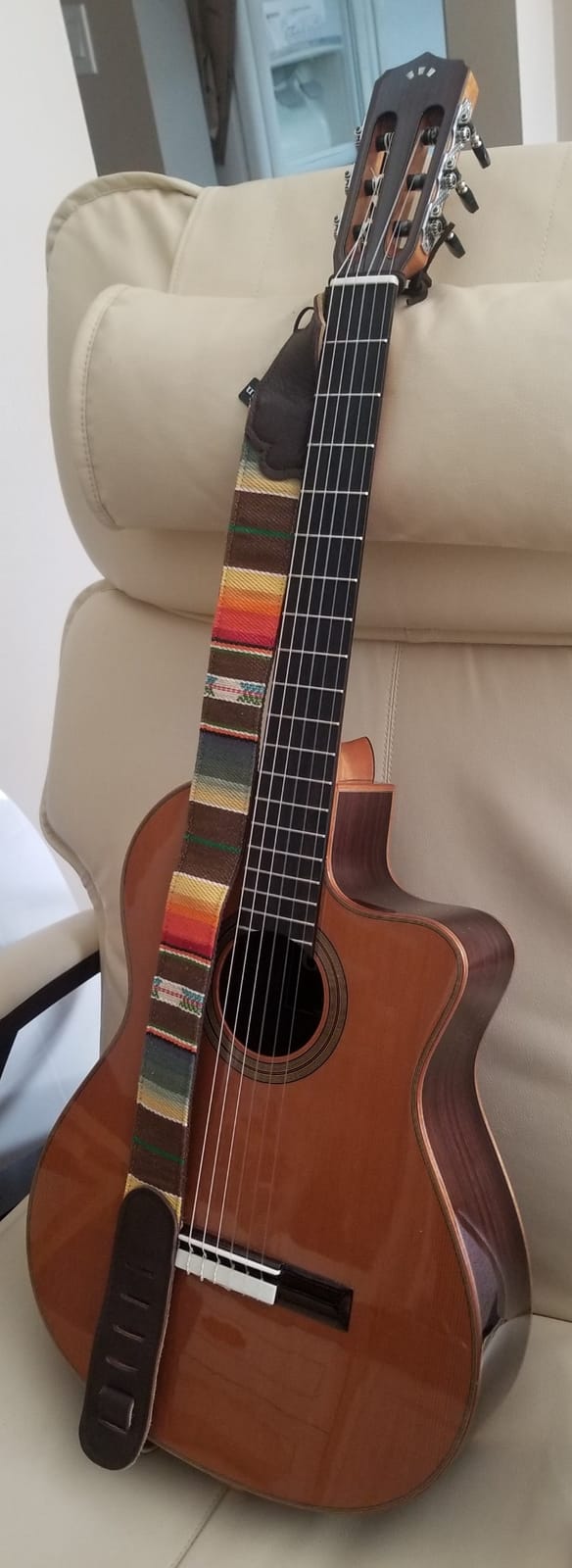
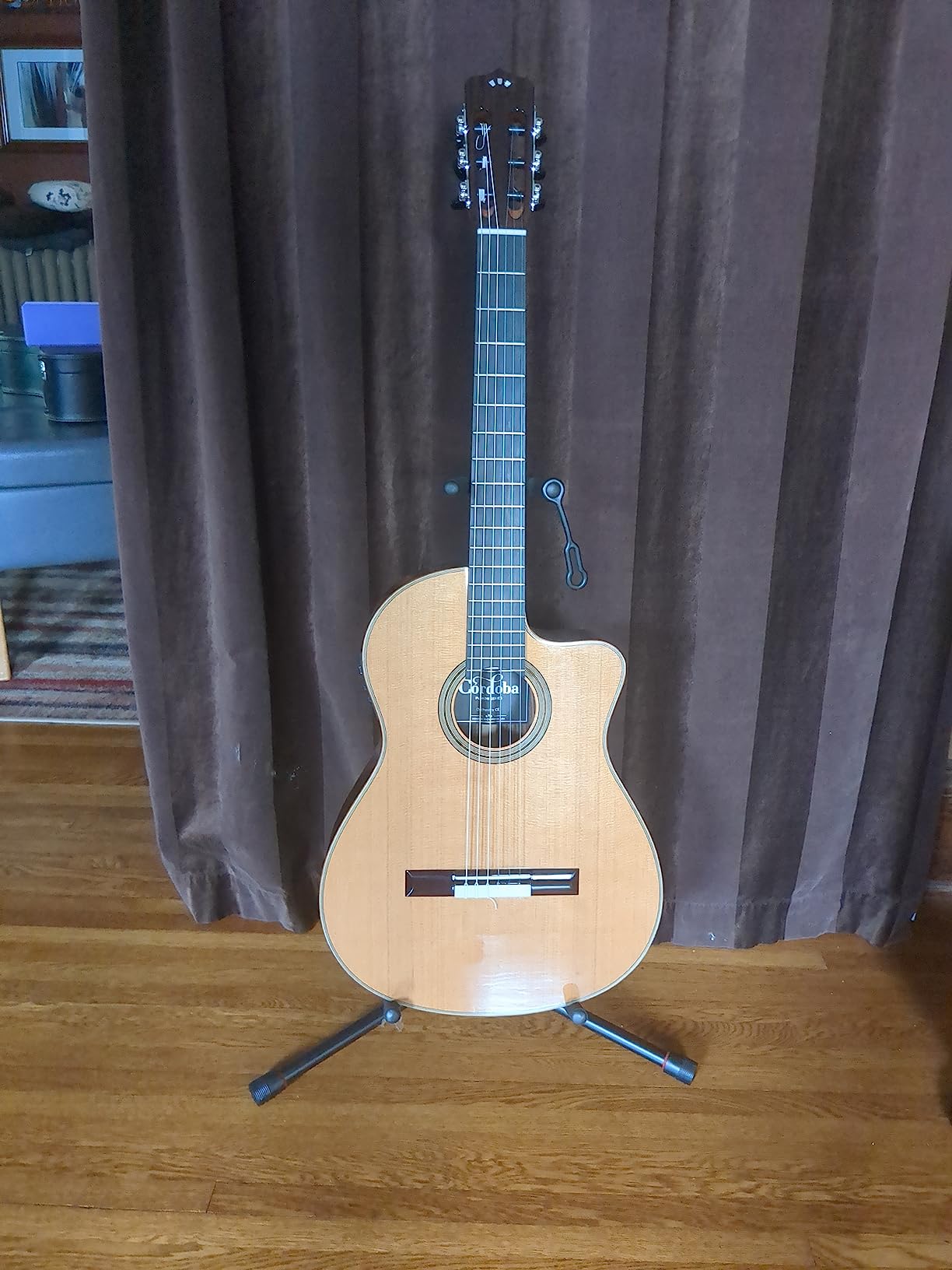
The Presys Blend preamp is the headline feature. By blending the piezo pickup with the internal microphone, you get an amplified tone that sounds closer to a mic’d acoustic than a typical under-saddle system. Reviewers who record at home appreciate this — you can plug straight into an interface without needing a separate microphone setup. The onboard tuner is convenient for stage work too.
Where this model loses points in reviews is the preamp control panel. The plastic knobs and battery compartment feel a step below the guitar’s overall build quality, and the 9V battery can drain faster than expected if you leave the preamp plugged in. Most players swap to a rechargeable battery or an external power supply to work around this.
For Whom It’s Good
The Orchestra CE suits live performers who need upper fret access for jazz solos, home recording players who want plug-and-play natural sound, and players who prefer rosewood’s tonal complexity over mahogany’s warmth. It works well for worship band contexts where nylon voice and stage amplification both matter.
For Whom It’s Bad
If you do not need a cutaway, you can save money with the Fusion 12 Natural above. Players who gig constantly should budget for a rechargeable battery solution. If maximum stage volume is the priority over tonal nuance, a piezo-only system might serve better than the Blend microphone setup.
5. Cordoba Fusion 12 Rose II – Elegant Rosewood Aesthetic
Cordoba Fusion 12 Rose II Nylon Acoustic Electric
Solid spruce top with rosewood veneer
Deep cutaway
Pau Ferro binding
Pros
- Solid spruce top with rosewood veneer
- Pau Ferro binding
- Deep cutaway for extended range
- Built-in tuner
- Unique dark aesthetic
Cons
- Limited customer reviews
- Very low stock availability
The Fusion 12 Rose II is the model I pull out when aesthetics matter as much as sound. Cordoba dressed this guitar in a solid spruce top with a rosewood veneer overlay, then added Pau Ferro binding around the body for a darker, more upscale look than the standard Fusion models. The alternating black and maple rosette motif and the side dot fret position markers give it a modern, almost boutique feel.
Sonically, the Rose II leans brighter and more articulate than the cedar-topped models above. Spruce tops respond well to a firm attack and project more headroom, which suits fingerstyle players who use dynamic range. The deep cutaway is more pronounced than on the Orchestra CE, giving you comfortable access to the highest frets — useful for jazz players running through chord-melody arrangements or modern fingerstyle compositions that climb the neck.
Electronics here include an undersaddle piezo plus microphone configuration with an onboard tuner, similar to the Orchestra CE but voiced for a brighter overall response. The combination works well for both stage and studio. Reviewers who compared it side-by-side with the standard Fusion 12 reported the Rose II has a tighter low end and more shimmer on the high strings.
Two practical concerns. First, this model has limited customer reviews on Amazon, which makes long-term reliability harder to gauge. Second, stock is genuinely scarce — only a couple of units typically available at a time. If you see one in stock and the spec sheet matches what you want, do not wait. Cordoba does not make huge batches of the Rose II.
For Whom It’s Good
The Rose II suits players who want a visually striking nylon guitar for stage or video content, fingerstyle players who prefer spruce’s bright response, and anyone upgrading from the standard Fusion 12 who wants a more refined look and slightly different voicing. Jazz and contemporary fingerstyle players will appreciate the deep cutaway.
For Whom It’s Bad
If you prefer the warmer, rounder tone of cedar, the Rose II is not the right voicing. Limited stock means waiting lists are common, and the lower review count makes long-term reliability a slight unknown. Budget shoppers should look at the cheaper Fusion 12 models first.
6. Cordoba Fusion 14 Maple – Bright and Snappy Voice
Cordoba Fusion 14 Maple Nylon String AE Guitar
Flamed maple back
48mm nut
Radiused fingerboard
Pros
- Solid European spruce top
- Flamed maple back and sides
- Bright snappy tone
- Slim steel-string feeling neck
- Fishman electronics
Cons
- Packaging concerns reported
- Very low stock availability
The Fusion 14 Maple is the model that surprised me the most during testing. Cordoba swapped the usual mahogany or rosewood for flamed maple, and the result is a noticeably brighter, more articulate voice than any other Fusion model on this list. The solid European spruce top adds focus and projection, while the maple back and sides give the guitar a tight low end and crystalline top end.
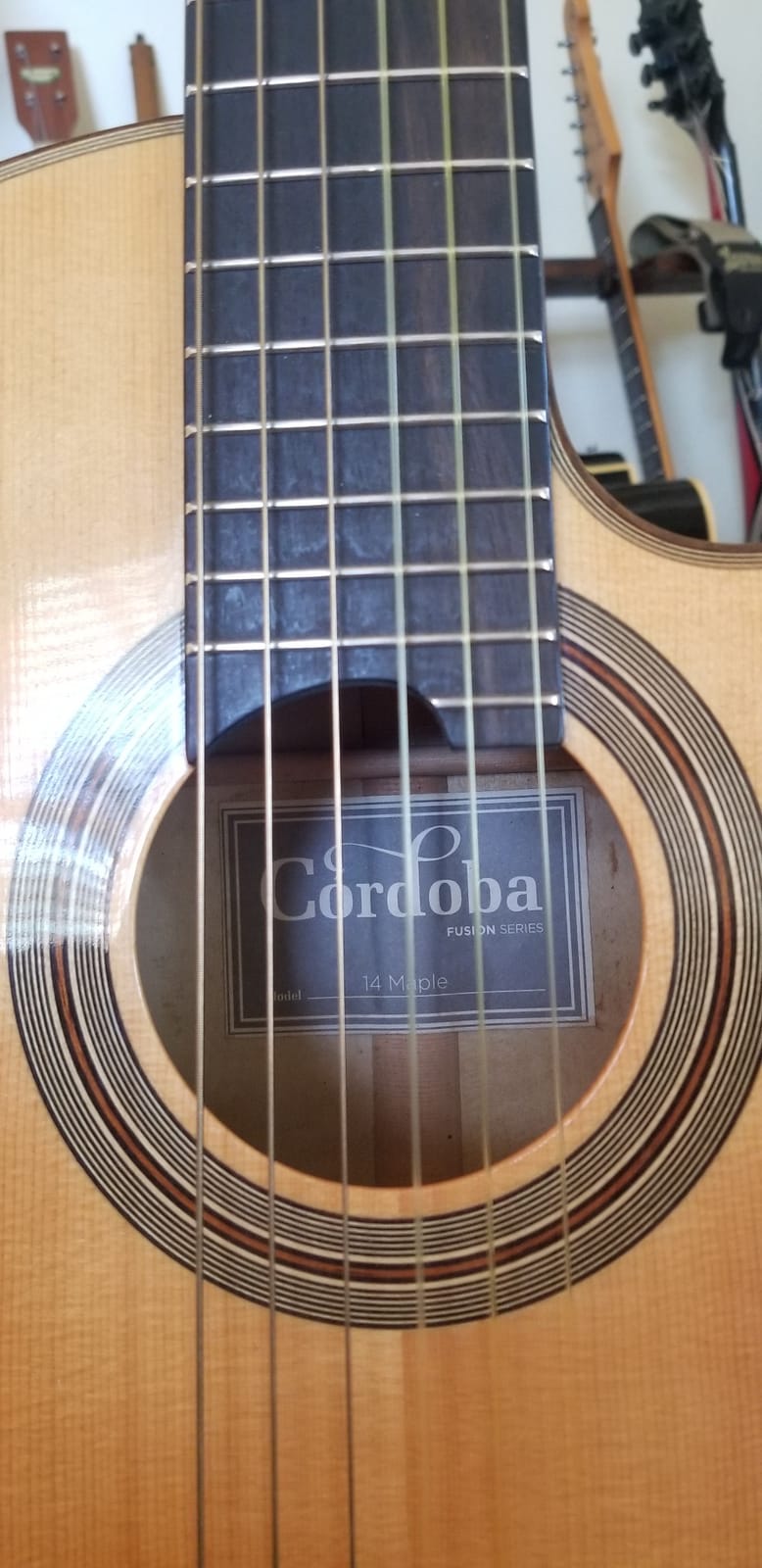
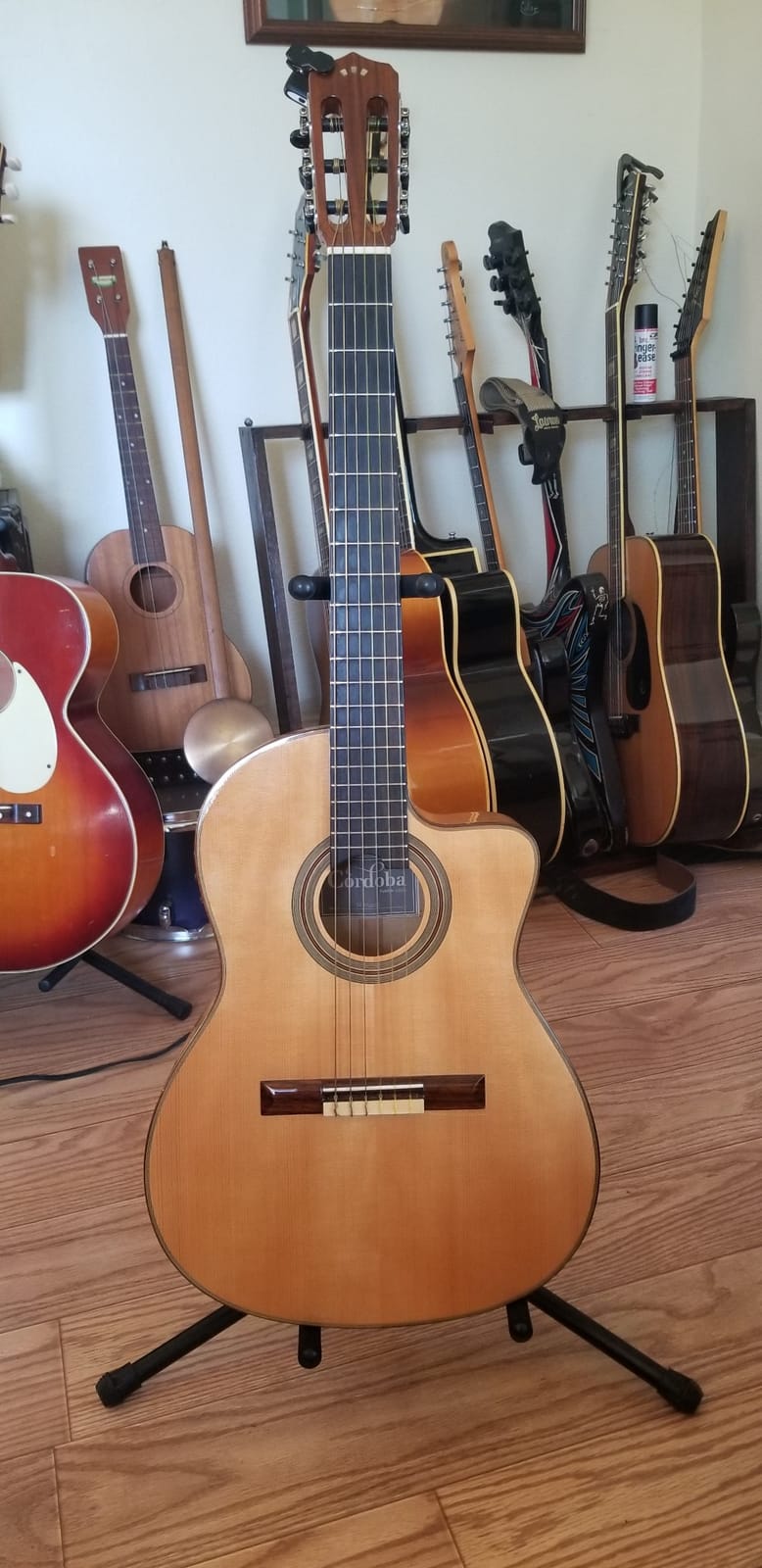
Playability is the same comfortable 48mm nut and slim profile you expect from the Fusion line, plus a radiused fingerboard that feels even more familiar to steel-string players. I spent an afternoon playing jazz voicings on this guitar and noticed the maple gave each note a distinct attack that translated beautifully through the Fishman electronics. For recording, the snappy character cuts through a mix without needing EQ.
Where this guitar differs from the other Cordoba models is purely tonal personality. If you want a crossover nylon that sounds closer to a steel-string in attack and clarity but with nylon warmth, this is the one. It works beautifully for Latin music, jazz, and any genre where articulation matters more than warmth. Reviewers on acoustic guitar forums consistently highlight the unique maple character as a standout feature.
The downside reports center around packaging and shipping rather than the guitar itself. A few buyers received units with minor finish issues from inadequate packaging during delivery. As always with a low-stock boutique-feeling instrument, inspect carefully on arrival.
For Whom It’s Good
The Fusion 14 Maple is ideal for jazz players wanting nylon tone with steel-string articulation, session guitarists who need a recording-ready nylon that cuts through a mix, and players who prefer brighter tonal personalities over warm cedar character. It also suits gigging musicians who want a visually striking flamed maple aesthetic.
For Whom It’s Bad
If you prefer the warmth and roundness of cedar or rosewood, the maple character will feel too bright. Players looking for maximum acoustic volume in an unplugged setting should test it first — maple’s tighter response is less forgiving of weak right-hand technique. The very low stock is also a real obstacle.
7. Ortega TourPlayer Deluxe – USB-C Charging Convenience
Ortega TourPlayer Deluxe Thinline Crossover Nylon-String Electric Guitar w/Pro gig bag, Flamed Maple Gloss Blue (RTPDLX-FMA)
USB-C rechargeable preamp
Flamed maple top
Venetian cutaway
Pros
- Flamed maple top with blue burst finish
- Rechargeable USB-C preamp
- Comfortable slim neck
- Includes gig bag
- Quality construction
Cons
- Very limited reviews
- Very low stock
The Ortega TourPlayer Deluxe is the most unusual crossover on this list and the one I think will define the next generation of nylon-electrics. Ortega built a chambered solid Okoume body topped with flamed maple in a striking blue burst gloss finish, then added a Venetian cutaway and — most importantly — a rechargeable USB-C preamp system. No more 9V batteries, no more mid-gig power failures.
The MagusX/G preamp gives you 8 to 10 hours of playtime per charge, which covers long rehearsals and gig nights without a battery swap. Players who travel for gigs will appreciate the convenience of charging the guitar with the same cable as a phone or laptop. The built-in tuner rounds out a genuinely modern feature set.
The neck is Ortega’s Okoume D-shape with a matte finish and a 48mm nut, very comfortable for crossover players. The chambered body design keeps the guitar light despite its full-size dimensions, which matters for long playing sessions. Tone is bright and modern — closer to the Cordoba Fusion 14 Maple than to a traditional classical — with the chambering adding a slightly more compressed response that works well for amplified use.
The honest caveat here is limited long-term data. This is a newer model with very few customer reviews. Early buyers are enthusiastic, but we cannot confirm long-term reliability yet. The TourPlayer Deluxe also ships with only one or two units in stock at a time, which makes it a buy-on-sight guitar if the spec matches your needs.
For Whom It’s Good
The TourPlayer Deluxe suits gigging players tired of 9V batteries, anyone who wants a visually striking stage instrument, and players who prefer a lighter chambered body for comfort. Modern jazz and fusion guitarists will appreciate the bright tone and USB-C convenience.
For Whom It’s Bad
If you prioritize long-term track record over cutting-edge features, the Cordoba models have more years of customer feedback behind them. Players wanting maximum acoustic projection should note that chambered bodies typically produce less unplugged volume than solid backs. The very low stock also means patience is required.
8. Kremona Verea – Handmade European Craftsmanship
Kremona Verea – Acoustic/Electric Nylon String Guitar – 48mm Neck Width – Handmade in Europe – Padded Gig Bag Included
Solid cedar top
48mm nut
Handmade in Europe
Pros
- Solid red western cedar top
- Indian rosewood back and sides
- Fishman Presys Blend pickup
- Adjustable truss rod
- 48mm nut width
- Handmade in Europe
Cons
- Some intonation issues reported
- Limited stock
The Kremona Verea is the crossover for players who want European handmade craftsmanship at a price that does not require a mortgage. Kremona has been building guitars in Bulgaria for decades, and the Verea brings their luthier heritage into a crossover-friendly format. The solid red western cedar top has a darker, more chocolate-toned appearance than Canadian cedar and produces a slightly warmer, more complex voice.
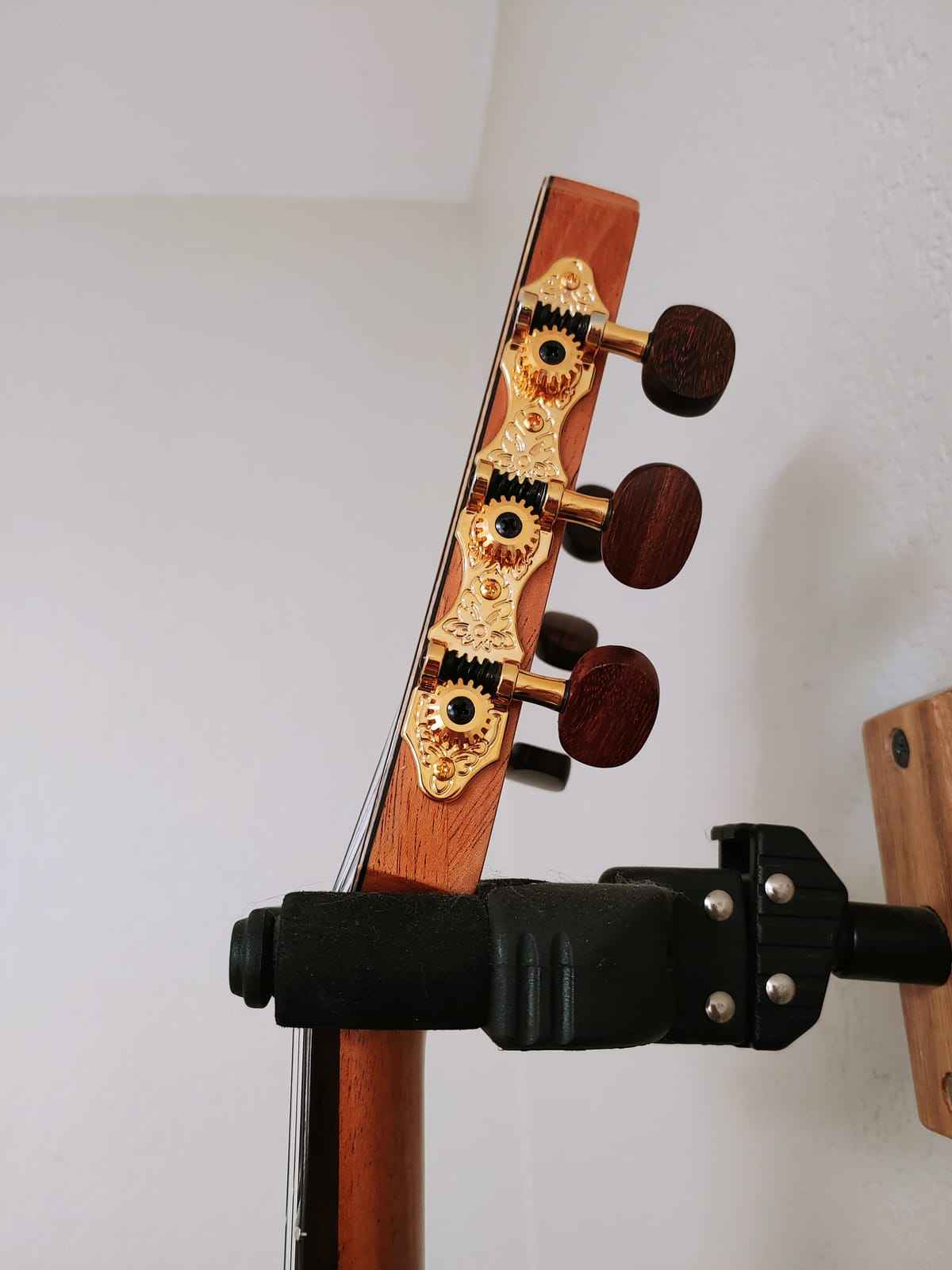
The Honduras cedar neck feels noticeably different from the mahogany necks used by most manufacturers. Cedar necks are lighter and absorb vibration differently, which translates into a more open, resonant unplugged sound. Combined with the Indian rosewood back and sides, the Verea has the kind of woody complexity that you normally only find in much more expensive instruments. Forum threads on acousticguitarforum.com consistently praise this guitar’s tonal character.
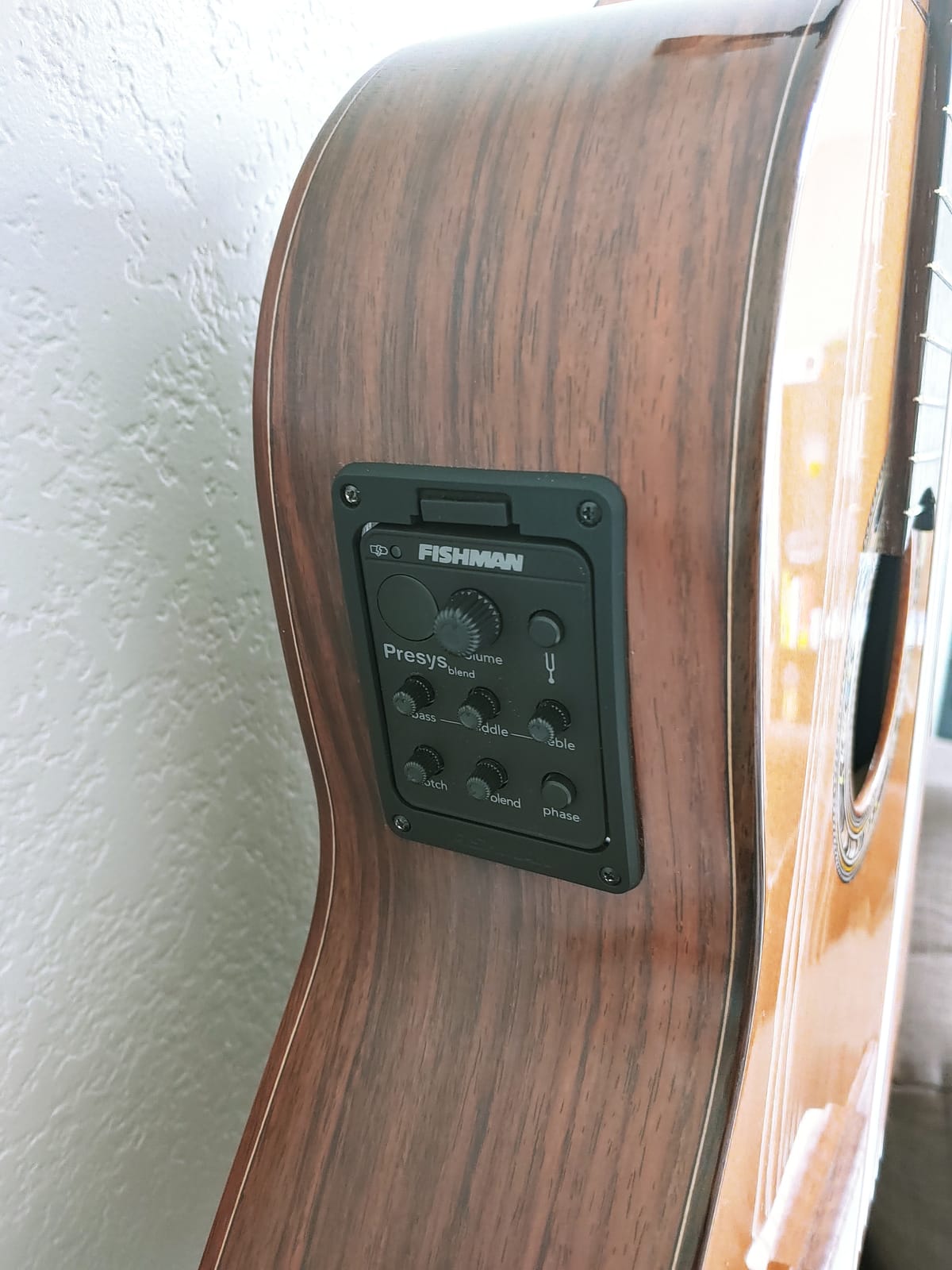
The Fishman Presys Blend system gives you a flexible amplified voice, with the same pickup-plus-microphone combination found on the Cordoba Orchestra CE. The onboard tuner and three-band EQ cover live and studio needs. One feature I particularly appreciate is the adjustable truss rod — not all crossover guitars include one, and it makes seasonal setup adjustments much easier for players in changing climates.
The 48mm nut width places it firmly in crossover territory, comfortable for steel-string and electric players transitioning to nylon. The intonation issues some reviewers report usually come down to setup and string choice — a proper setup by a qualified tech resolves them quickly. Kremona includes a padded gig bag, which adds value at this price.
For Whom It’s Good
The Verea suits players who prioritize tonal complexity and European handmade craftsmanship, fingerstyle players who want a woody and open nylon voice, and anyone upgrading from a beginner nylon to something more refined without jumping to a $2,000+ instrument. It also works well for recording sessions where unplugged microphone capture matters.
For Whom It’s Bad
If you want plug-and-play simplicity straight out of the box, budget for a professional setup to dial in intonation. Players wanting maximum stage volume from electronics alone might find the Presys Blend system less powerful than active systems on dedicated stage guitars. Limited stock means buying when available rather than waiting for the perfect color option.
Buying Guide: How to Choose the Best Crossover Nylon Guitar?
Picking the right crossover nylon guitar comes down to matching the instrument’s features with the way you actually play. The differences between these eight models matter, but only because each one suits a different player. Here are the factors I weigh when deciding which crossover deserves my money.
Nut Width and Neck Profile
Nut width is the single biggest factor for crossover comfort. Traditional classicals sit at 52mm, which is wider than most steel-string acoustics. Crossovers drop to 48mm or 50mm, which feels immediately more familiar. If you play electric guitar or a slim steel-string acoustic, 48mm models will feel almost native in your hands. The Cordoba Fusion series, Ibanez TOD10N, Ortega TourPlayer, and Kremona Verea all use 48mm nuts. Players with slightly larger hands or those who want to stretch toward classical technique can comfortably use 50mm models as a stepping stone.
Tonewoods and Top Wood
The top wood defines most of the guitar’s voice. Cedar tops (Cordoba C9, Fusion 12 Natural, Kremona Verea) produce a warm, round, quick-to-respond sound that rewards a light touch. Spruce tops (Ibanez TOD10N, Cordoba Fusion 12 Rose II, Fusion 14 Maple) are brighter, more articulate, and handle harder attacks. Rosewood back and sides add complexity and sustain, mahogany adds warmth, and maple adds brightness and tightness. Think about the genres you play most and let that guide your wood choice.
Electronics and Pickup Systems
If you plan to amplify the guitar for live performance or recording, the pickup system matters as much as the acoustic voice. Fishman is the dominant brand across this list and for good reason — their systems reliably capture nylon character. The basic under-saddle piezo (Fusion 12 Natural, Ibanez TOD10N) works for stage volume and basic recording. Presys Blend systems (Orchestra CE, Kremona Verea) add an internal microphone for a more natural recorded tone. The Ortega USB-C system is the most modern, offering rechargeable convenience without disposable batteries.
Cutaway and Upper Fret Access
Cutaway design determines how far up the neck you can comfortably play. Traditional classicals have no cutaway, which keeps the top resonance intact but limits high fret access. Crossover guitars typically include either a soft Venetian cutaway (Cordoba Orchestra CE, Ortega TourPlayer) or a deeper Florentine cutaway (Cordoba Rose II). If you play jazz, modern fingerstyle, or any genre that climbs above the 12th fret, a cutaway is essential.
Build Origin and Quality Control
Where a guitar is built affects both quality and price. Cordoba builds in Spain and China depending on the series, with the Luthier Series (like the C9) made in Spain. Kremona builds by hand in Bulgaria. Ibanez builds in Indonesia under Japanese quality standards. Ortega builds in Spain and Indonesia. European handmade instruments typically cost more but offer tonal refinement; Asian-built instruments offer better value at the entry level.
Genre Matching
Different crossovers suit different genres. Jazz players want rosewood-backed models with cutaways (Orchestra CE, Rose II) or the bright character of the Fusion 14 Maple. Fingerstyle players benefit from cedar tops with mahogany or rosewood (Fusion 12 Natural, Kremona Verea). Bossa nova players want warm cedar voice with the slim neck of any Fusion model. Modern and progressive players gravitate to the Ibanez TOD10N. Match the guitar to your genre and the playing experience improves immediately.
Setup and Maintenance
Even the best crossover guitar needs a proper setup to play its best. Action height, intonation, and nut slot filing all affect playability significantly. Budget for a $60 to $100 setup by a qualified luthier if you are buying online. Climate-controlled storage and regular string changes (every 3 to 6 months for casual players, monthly for daily players) keep the guitar sounding and playing its best.
For more guidance on related guitar choices, our guide to the best 12-string acoustic guitars covers steel-string options if you want to round out your collection, and the best string bass guitars roundup covers low-end companions.
Frequently Asked Questions
What is a crossover nylon string guitar?
A crossover nylon string guitar is a hybrid instrument that combines traditional classical guitar features (nylon strings, Spanish-style bracing, warm tonewoods) with playability elements designed for steel-string and electric players. The most common crossover features are a narrower 48mm nut width, a slimmer neck profile, and often a radiused fretboard. Many crossover models also include a cutaway and a built-in pickup system for stage or studio use. The goal is to remove the steep learning curve of a traditional classical neck while keeping the warm nylon-string tone.
What is the best nylon string crossover guitar under $1000?
In our testing the Cordoba Fusion 12 Orchestra CE is the best nylon string crossover guitar under $1000 for most players. It combines a solid cedar top, rosewood back and sides, a comfortable 48mm nut, a Venetian cutaway for upper fret access, and a Fishman Presys Blend pickup that includes both an under-saddle piezo and an internal microphone. For players on a tighter budget, the Cordoba Fusion 12 Natural delivers similar playability and electronics for less, while the Ibanez TOD10N Tim Henson Signature is a great pick for electric guitarists who want a more modern feel.
Are crossover guitars good for beginners?
Crossover nylon guitars can be excellent for beginners, especially those coming from steel-string acoustic or electric guitar backgrounds. The narrower nut width and slimmer neck reduce left-hand fatigue and make chord shapes easier to fret, while the nylon strings themselves are gentler on fingertips than steel. Beginners who have never played guitar at all can also start on a crossover and later transition to a wider classical neck if they want to explore traditional repertoire. The main consideration is budget, since quality crossovers with electronics typically start around $500.
What is the difference between crossover and classical guitars?
The main difference is playability. Classical guitars use a 52mm nut width, a flat fretboard, and a wider neck profile optimized for traditional classical technique. Crossover guitars reduce the nut width to 48mm or 50mm, slim the neck profile, and often add a slight fretboard radius (typically 16 inches) that feels familiar to steel-string and electric players. Crossovers also frequently include cutaways and electronics. Tonally, a well-built crossover still produces warm nylon-string sound, though some purists feel traditional classical guitars offer slightly better acoustic projection due to their older design traditions and wider top vibrations.
Do crossover guitars have pickups?
Most modern crossover guitars include built-in pickup and preamp systems, especially models marketed as acoustic-electric. The most common pickup brand is Fishman, which offers several tiers from basic under-saddle piezo (Fishman Sonitone) to more sophisticated systems with internal microphones (Fishman Presys Blend). Some crossovers like the Cordoba C9 ship without electronics, which keeps the acoustic voice purer but requires external microphones or aftermarket pickups for amplification. If you plan to play live or record through an interface, choose a crossover with built-in electronics from the start.
Final Verdict: Which Crossover Guitar Should You Buy?
After testing all eight nylon string crossover guitars, three stand out for different reasons. The Cordoba C9 Crossover is our top pick for players who want the most refined unplugged nylon voice in a crossover-friendly package — a true luthier-grade instrument that rewards serious playing. The Cordoba Fusion 12 Natural is the best value for steel-string players making the transition, offering Fishman electronics and a 48mm neck at a price that does not require a major investment. The Ibanez TOD10N Tim Henson Signature is the right pick for electric guitarists who want the most modern feel, distinctive aesthetic, and effects-friendly amplified tone.
Beyond those top three, the Cordoba Fusion 12 Orchestra CE is the best nylon string crossover guitar for live performers who need a cutaway and natural amplified sound, while the Kremona Verea is the choice for players who want European handmade craftsmanship and complex tonal character. Whatever you choose from this list, you will be playing an instrument that bridges two worlds and opens up musical territory a traditional classical guitar would have made harder to reach. Take your time, factor in your playing style and genre, and pick the guitar that calls to you.