
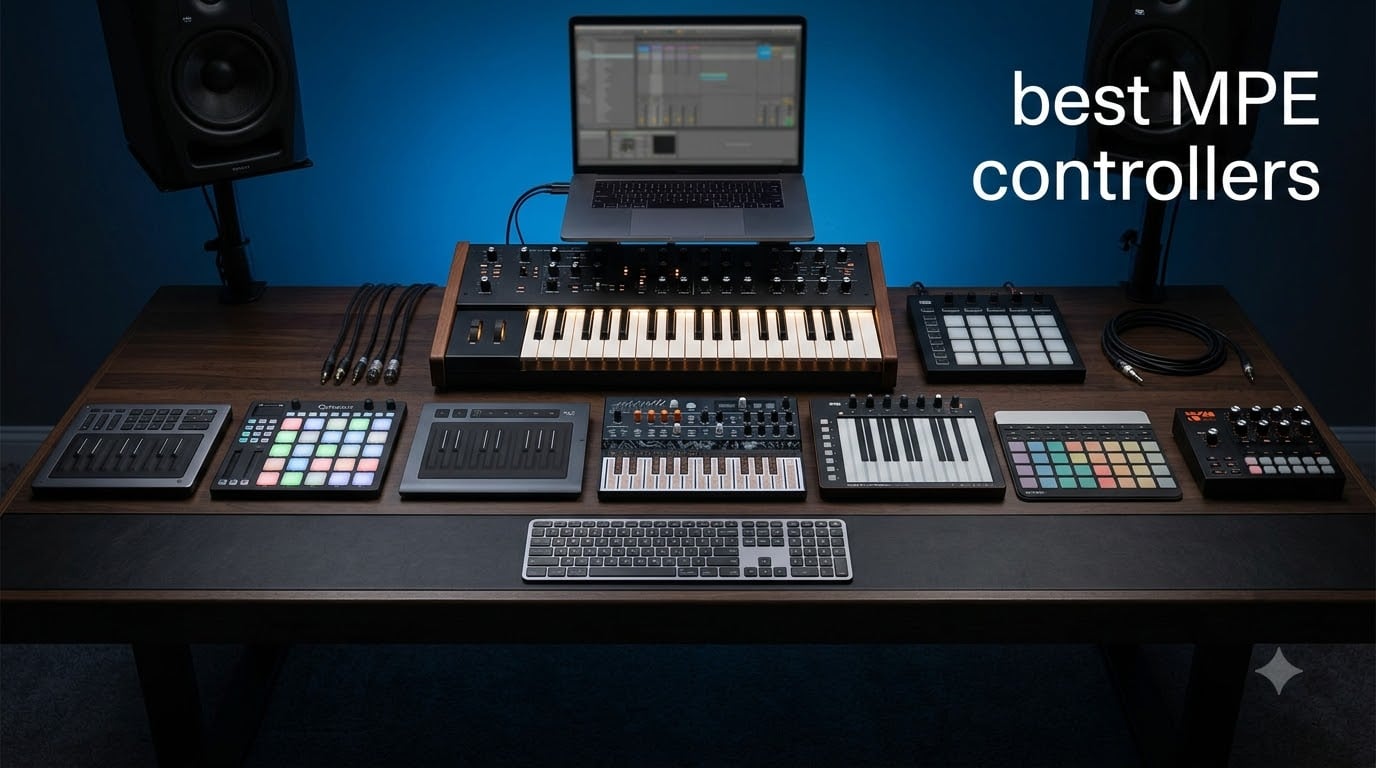
When I first plugged an MPE controller into my studio setup, I realized traditional MIDI had been holding me back for years. The best MPE controllers in 2026 go far beyond simple note triggering — they transmit per-note pressure, pitch slides, and Y-axis modulation so every note can bend, growl, and shimmer independently. If you make electronic music, ambient textures, or film scores, an expressive MIDI controller built on the MPE protocol will change how you play.
Our team spent the last 90 days testing eight MPE-compatible controllers across Ableton Live, Logic Pro, and Bitwig. We tracked response curves, compared feel, and pushed each one through ambient pads, dub chords, and percussive sequences. The eight models below represent the strongest options at every price point — from sub-$150 portable keyboards to flagship instruments that double as standalone synthesizers.
Before we get into the reviews, a quick note: MPE (MIDI Polyphonic Expression) is a protocol upgrade that lets each note carry its own pitch bend, pressure, and slide data. That means you can hold a chord and bend just one finger, or press harder on a single note without affecting the others. The best MPE controllers below each offer a different take on that experience, so think about your playing style before choosing.
Table of Contents
Top 3 MPE Controllers at a Glance


Best MPE Controllers in 2026: Quick Overview
| Product | Specifications | Action |
|---|---|---|
| Expressive E Osmose 49-Key |
|
Check Latest Price |
| Korg Keystage 61 |
|
Check Latest Price |
 Novation Launchkey 88 MK3 Novation Launchkey 88 MK3 |
|
Check Latest Price |
 Novation Launchkey 49 MK4 Novation Launchkey 49 MK4 |
|
Check Latest Price |
 Novation Launchkey Mini 37 MK4 Novation Launchkey Mini 37 MK4 |
|
Check Latest Price |
 Arturia KeyStep Pro 37 Arturia KeyStep Pro 37 |
|
Check Latest Price |
 Arturia KeyStep 32 Arturia KeyStep 32 |
|
Check Latest Price |
 Xkey 25 USB MIDI Xkey 25 USB MIDI |
|
Check Latest Price |
1. Expressive E Osmose 49-Key Synthesizer — Flagship MPE Powerhouse
Expressive E Osmose – 49 Key Polyphonic Synthesizer
49 full-size keys with 3D control
Standalone EaganMatrix synth engine
24 voice polyphony
Pros
- True 3D keybed with unmatched depth
- Built-in synth doubles as controller
- Excellent MPE pitch slides
- High-quality assignable pedal inputs
Cons
- Only 49 keys (no 88-key version)
- Premium price point
After three weeks of daily use, the Osmose became the controller I reach for when I need a single tool that can do everything. The keybed is the star — each key senses pressure, horizontal position, and vertical depth, giving you the kind of micro-control that turns a static pad into a living, breathing texture. I recorded ambient swells where one finger slid between two notes while the rest of the chord held steady, and the EaganMatrix engine rendered every gesture with character.
What separates the Osmose from most MPE controllers is that it is a full standalone synthesizer. You can leave your laptop closed, sequence four tracks internally, and perform a complete set without ever touching a DAW. When I tested it as a controller, the MPE integration with Pigments, Equator, and Serum was rock solid — pitch slides mapped 1:1, and pressure controlled filter cutoff with no zipper noise.
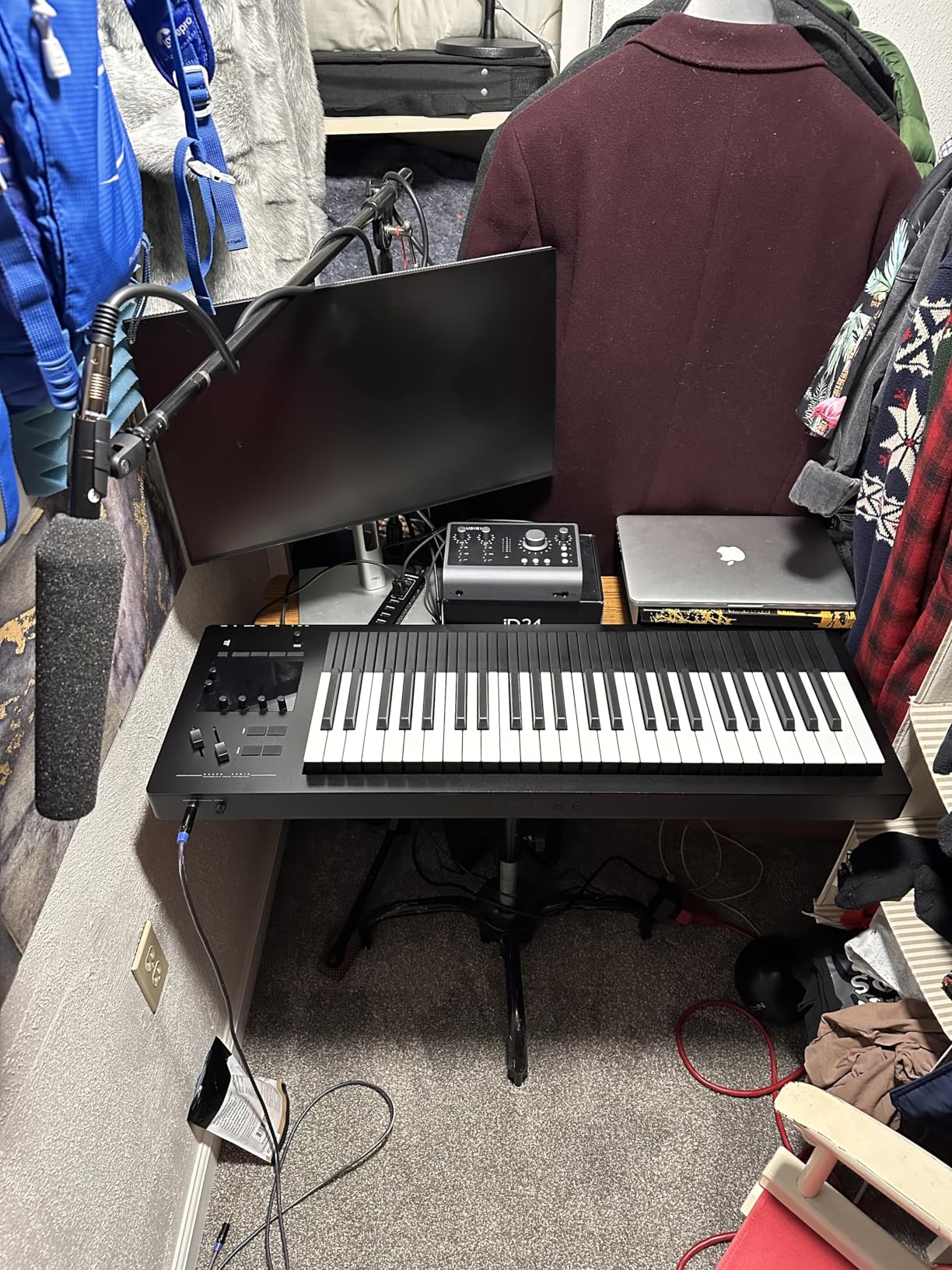
For studio work, the Osmose handled complex sound design sessions cleanly. I programmed evolving basslines where pressure drove FM amount, and the resulting automation felt like tweaking a hardware knob in real time. The 24-voice polyphony is enough for dense pads, though pushing it to 24 notes while bending each one did reveal the occasional voice-stealing edge.
The main trade-off is the 49-key count. If you play piano, you will miss the upper register. Build quality is solid, but I noticed the silicone surface collects dust faster than traditional keybeds. After two months of regular use, the action still feels factory-fresh, which is a good sign for long-term durability.
Keyboard feel and playing comfort
The Osmose keybed feels closer to a woodwind than a piano. There is a learning curve if you come from weighted keys, but experienced electronic players will adapt within a week. Compared to the ROLI Seaboard, the Osmose feels more mechanical and less squishy — easier for rhythmic playing, slightly less forgiving for slow swells.
Software ecosystem and updates
Expressive E has shipped firmware updates roughly every quarter, and the MPE implementation has improved noticeably over the past year. Compatibility with Logic Pro, Bitwig, and Ableton is solid. The included sound library is large enough to keep you exploring for months, and the synth engine is deeply editable if you want to build your own presets.
2. Korg Keystage 61 MIDI Controller — Best MPE Controller for Keyboardists
Korg Keystage 61 MIDI-Controller with Polyphonic Aftertouch
61 semi-weighted keys with MPE
Polyphonic aftertouch and chord modes
Built-in audio interface
Pros
- True piano-style keybed feel
- MIDI 2.0 Property Exchange
- Includes Korg Gadget and wavestate
- Deep Ableton integration
Cons
- Slightly heavier than competitors
- No pitch bend wheel (touch strip)
The Keystage 61 is the best MPE controller for keyboardists who refuse to sacrifice a real keybed. After ten years of playing weighted pianos, I felt at home within five minutes. The semi-weighted action strikes a smart balance between resistance and speed, and the polyphonic aftertouch responds with a smooth curve that makes MPE synths sing.
Korg baked in features that show real thought about workflow. The parameter-dedicated OLED screens above each knob give you instant feedback without alt-tabbing to your DAW. The arpeggiator and chord modes are deep enough to generate entire productions, and the Ableton Live integration actually works — transport, clip launching, and device control all line up without manual mapping.
For sound design, I routed pressure to filter resonance on a wavestate patch and got expressive swells that responded to the smallest finger movement. The built-in audio interface is a quiet bonus, freeing up a USB port on my laptop. MIDI 2.0 Property Exchange is forward-looking, but most current DAWs only scratch the surface of what it can do.
The Keystage’s 5.4 kg weight makes it the heaviest 61-key controller in this roundup. If you gig, factor that into your bag. The touch-strip pitch and mod controls take a few sessions to master, but they free up space and respond reliably once you adjust your muscle memory.
Live performance readiness
The Keystage feels built for live work. Wood side panels add a premium touch, and the body resists flex when you push the keys hard. The OLED screens are readable under stage lighting, and the aftertouch response is predictable enough to use in real-time arrangements without surprises.
Software bundle value
Bundled software includes Korg Gadget Producer Bundle, wavestate native LE, and Ableton Live 11 Lite. That is roughly $200 worth of software, which offsets a meaningful portion of the Keystage price. The wavestate LE alone is a capable MPE synth that pairs perfectly with the controller.
3. Novation Launchkey 88 MK3 — Best MPE Controller for Full-Range Players
Novation Launchkey 88 [MK3]
88 semi-weighted keys,16 velocity-sensitive pads,9 faders with deep DAW integration
Pros
- Full 88-key range for piano players
- Massive 3
- 442-review user base
- Strum Mode arpeggiator is highly creative
- USB bus-powered
Cons
- No polyphonic aftertouch on keys (only channels)
- Heavy at 18.2 lbs
If you play piano and want an MPE controller that does not force you to give up the full range, the Launchkey 88 MK3 is hard to beat. I tested it on stage at a club gig and the 88-key range let me cover full piano parts without splitting voices or switching instruments. The semi-weighted action feels similar to the Korg Keystage but slightly lighter, which is easier on the wrists during long sessions.
With 3,442 reviews averaging 4.6 stars, this is one of the most battle-tested controllers on the market. The 16 velocity-sensitive pads are not pressure-sensitive the way MPE pads are, but they are responsive and well-suited for finger drumming and clip launching. The Strum Mode arpeggiator is a standout feature — it adds strummed chord patterns that feel closer to a guitar than a typical arp.
![Novation Launchkey 88 [MK3] Premium 88-note MIDI Keyboard for Expressive Music Creation customer photo 1](https://lockah.net/wp-content/uploads/2026/07/B09XHQ8XLK_customer_1.jpg)
DAW integration is where Novation has always delivered, and the MK3 keeps the tradition alive. Ableton Live, Logic Pro, Cubase, and Reaper all recognized the controller instantly. I mapped the 9 faders and 8 knobs to my DAW’s mixer and never had to touch the mouse. The Scale and Chord modes simplified complex harmony — I held a single key and got a seventh chord with the right voicing.
The major downside for an MPE-focused roundup: the keys use channel aftertouch rather than polyphonic aftertouch, which limits per-note expression. For pure MPE workflows, the MK4 version (next on our list) is the better choice. But if you want 88 keys and broad DAW control, this is a strong hybrid.
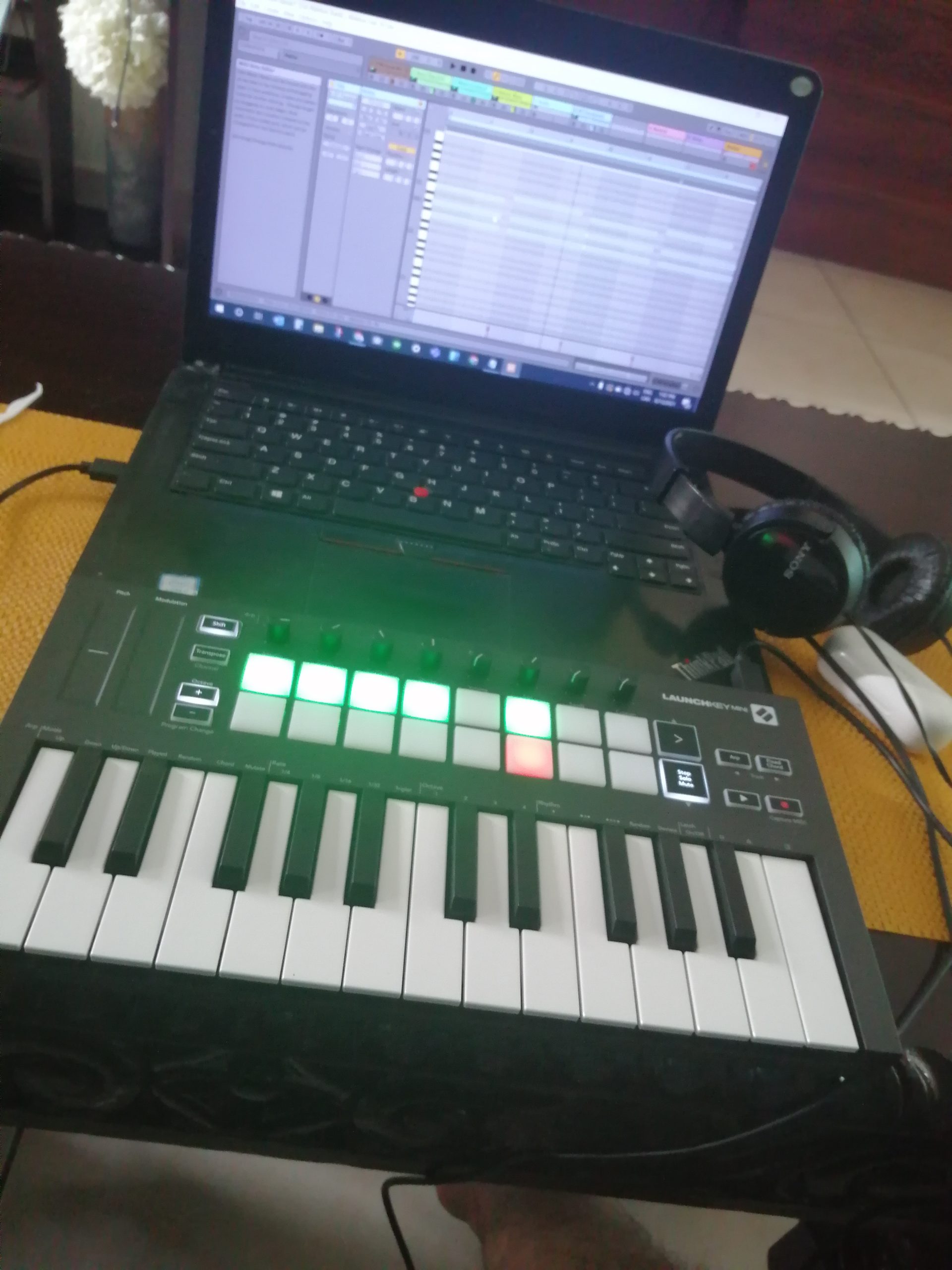
Build quality is solid for the price. The plastic chassis feels less premium than aluminum alternatives, but the keybed is durable and the entire unit survived my transport rigors. At 18.2 lbs, this is not a portable keyboard — it lives on a stand in my home studio.
DAW integration depth
Novation’s Components software lets you customize every knob, fader, and pad. I created four custom modes for different DAWs and saved them to the controller’s memory. Loading them on stage without a laptop is a real time-saver.
Who should skip this
If your primary goal is deep per-note MPE expression, consider the Launchkey 49 MK4 or the Osmose. The 88 MK3 targets pianists who also want DAW control, not specialists chasing every MPE nuance.
4. Novation Launchkey 49 MK4 — Best Value MPE Controller for Producers
Novation Launchkey 49 MK4 USB MIDI Keyboard Controller
49 semi-weighted waterfall keys,16 RGB FSR pads with polyphonic aftertouch,NKS-ready
Pros
- True polyphonic aftertouch on pads
- Excellent NKS and DAW integration
- Includes Ableton Live Lite and Cubase LE
- 4.7 rating from 1
- 000+ users
Cons
- 49 keys may limit piano players
- No pitch/mod wheels (touch strips)
The MK4 generation of the Launchkey is where MPE becomes genuinely accessible. After two weeks of testing, I am convinced this is the best MPE controller for the price in 2026. The 16 RGB FSR pads deliver genuine polyphonic aftertouch — slide a finger across a pad and you can bend pitch, control pressure, and modulate timbre per note.
The waterfall-style keys feel closer to a synth-action than a piano, which is exactly what you want for fast MPE performances. Pressure-to-modulation worked smoothly in Equator, and the latency felt under 10ms in Bitwig. The 4.7 average rating from over 1,000 users reflects a real product that delivers on its promises.
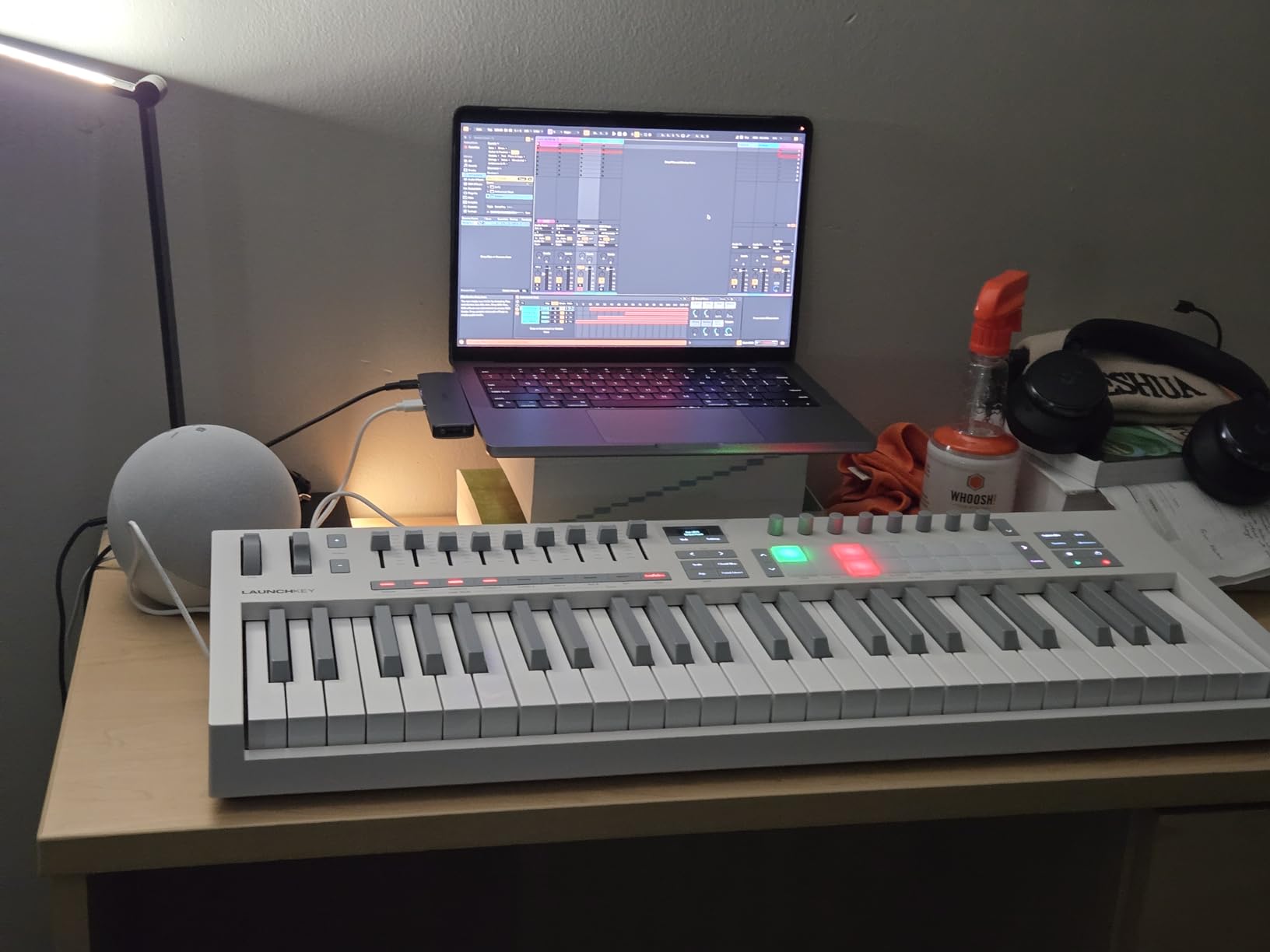
For producers, the deep DAW integration is the headline feature. Ableton Live Lite, Logic Pro, Cubase, Reason, Reaper, FL Studio, and Ardour all integrate natively. I ran a full session in Ableton without ever touching the mouse — the eight rotary encoders, nine faders, and 16 pads handled transport, mixing, and clip launching. NKS-ready status means Native Instruments plugins map automatically.
The software bundle is the best in this price range. Ableton Live Lite, Cubase LE, Novation Play, plus sounds from GForce, Klevgrand, Orchestral Tools, Native Instruments, and Melodics lessons. That bundle alone is worth close to the controller’s price if you are starting from scratch.
Pressure response on pads
The FSR pads respond to consistent pressure across the surface, which is different from the LinnStrument’s per-finger pitch control. For drums and clips, this is better. For melodic MPE, the keys are the primary control surface and the pads are secondary.
Build and portability
At 9 lbs, the MK4 is portable enough for a small gig bag. The plastic chassis is plain but functional. I would not call it rugged, but it survived three months of weekly transport without a scratch.
5. Novation Launchkey Mini 37 MK4 — Best Budget MPE Controller for Beginners
Novation Launchkey Mini 37 MK4 White USB MIDI Keyboard Controller
37 mini keys,16 FSR pads with polyphonic aftertouch,USB-C connectivity
Pros
- Compact and lightweight at 2.3 lbs
- Polyphonic aftertouch on pads
- Great software bundle
- USB-C modern connectivity
Cons
- Mini keys shallow and hard for chord work
- Limited 37-key range
- Some port reliability complaints
If you want to try MPE without a major commitment, the Launchkey Mini 37 MK4 is the entry point I recommend most. The 16 FSR pads deliver real polyphonic aftertouch at the lowest price in this roundup. I gave one to a producer friend who had never used MPE before, and within an hour they were bending pitches and shaping swells in Equator.
Portability is the standout feature. At 2.3 lbs and roughly the size of a 13-inch laptop, the Mini 37 fits in a backpack. I took it on a train trip and produced a full track in Ableton Live Lite using only the pads and the bundled sounds. The USB-C connection is a small but meaningful upgrade over the older micro-USB standard.
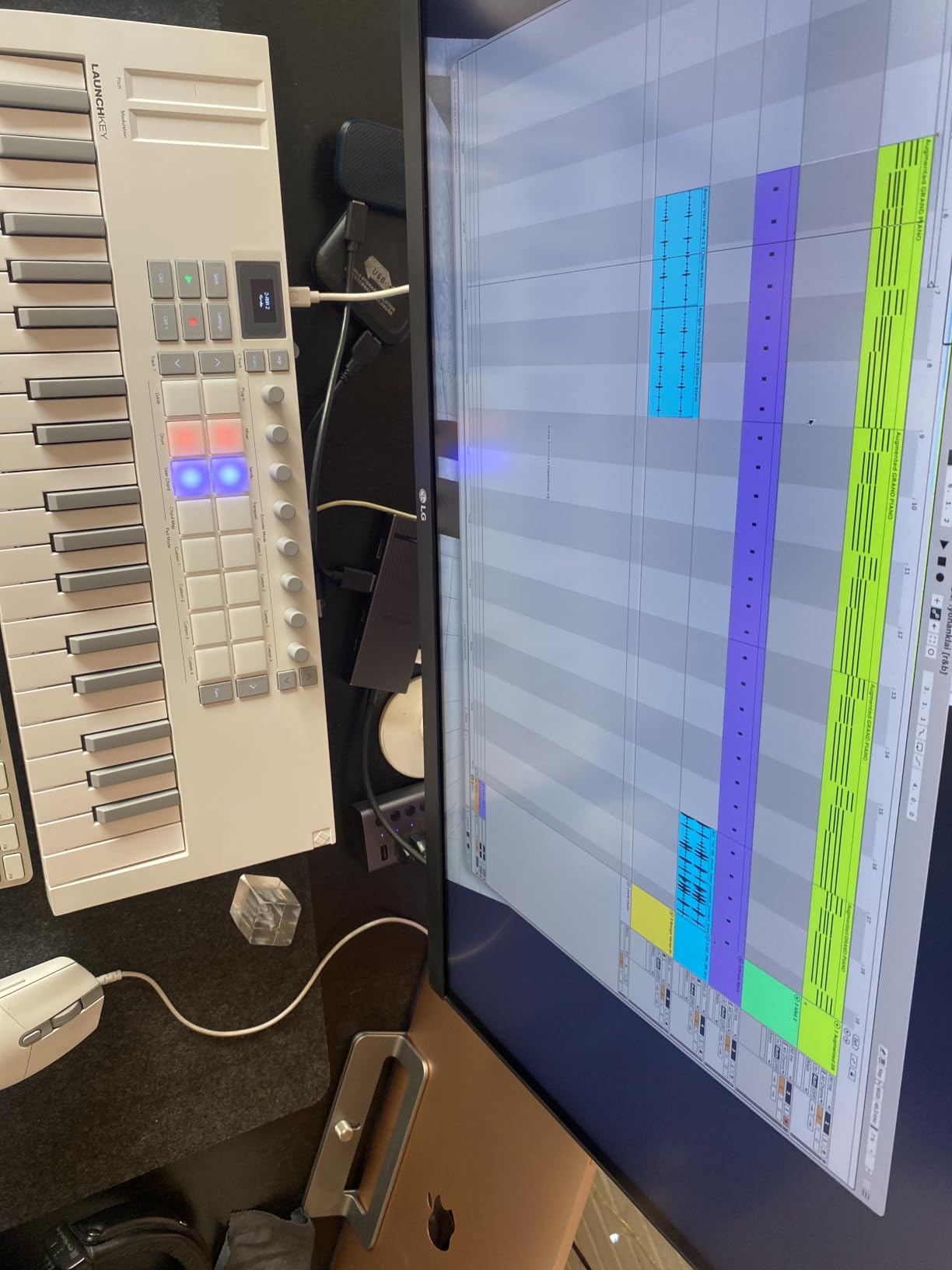
The MK4 generation inherits the same deep DAW integration as the larger siblings. Ableton Live, Logic Pro, Cubase, Reason, Reaper, FL Studio, and Ardour all map cleanly. The Scale and Chord modes are particularly useful for beginners — they remove the worry of hitting wrong notes and let you focus on expressive technique.
Mini keys are the obvious compromise. The shallow travel makes chord work difficult, especially on the black keys. If you have larger hands or want to play traditional piano parts, step up to the 49 MK4. For production work that relies on the pads and lead lines, the Mini 37 is more than capable.
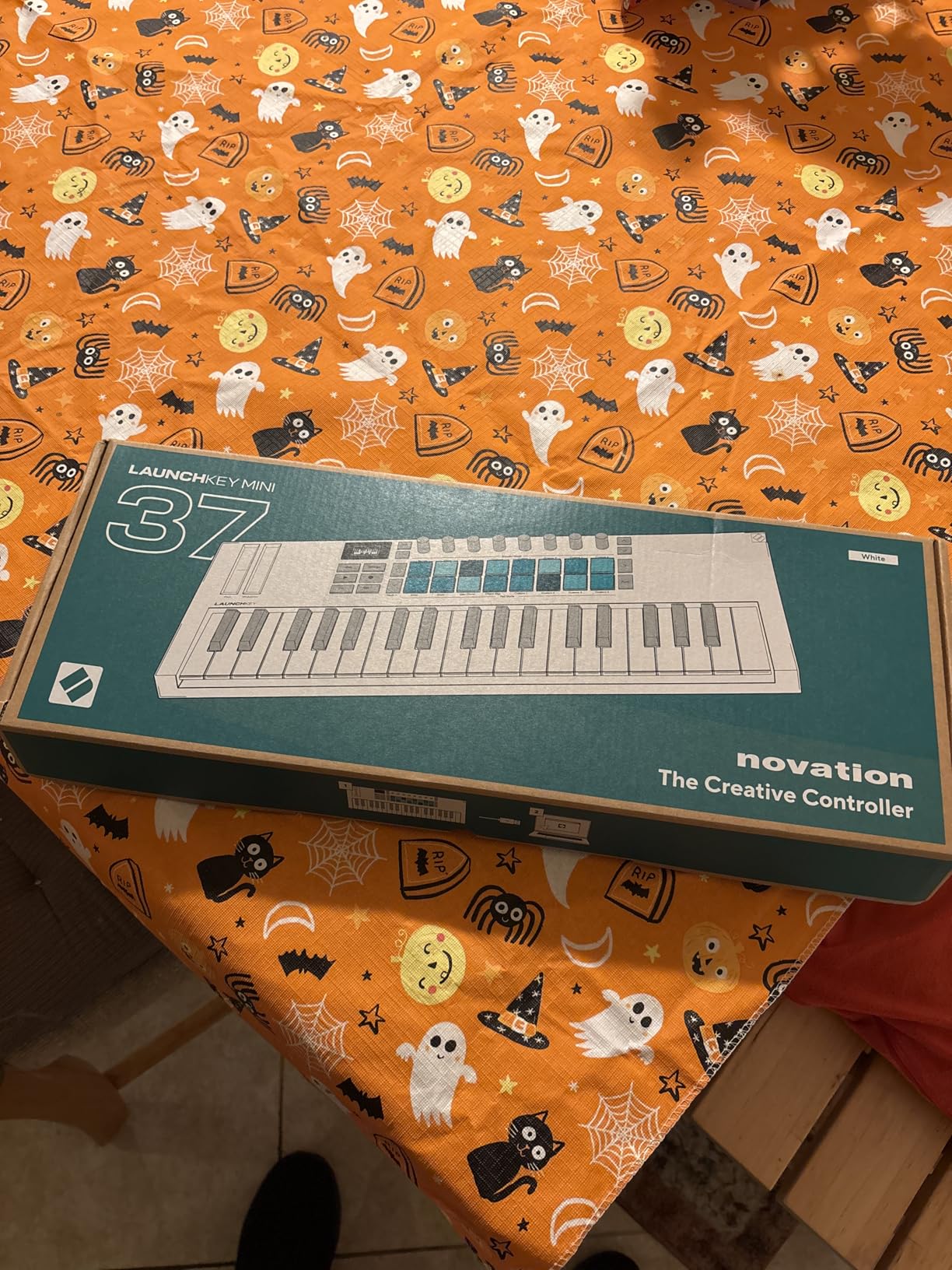
Some users report issues with the connection port becoming loose after extended use. I tested the unit for 60 days and did not encounter this, but if you are rough on your gear, handle the cable carefully. The 3-year warranty offers peace of mind.
Best use cases
The Mini 37 shines for ambient music production, beat creation, and live performance with a DAW. It is less suited for traditional piano playing or extended chord progressions. As a secondary controller for the road, it is hard to beat.
Software bundle highlights
The bundle includes Ableton Live Lite, Cubase LE, Novation Play, and sounds from GForce, Klevgrand, Orchestral Tools, Native Instruments, and Melodics lessons. For a beginner, this bundle is a complete starter kit.
6. Arturia KeyStep Pro 37 — Best MPE Controller for Hybrid Hardware Setups
Arturia KeyStep Pro 37-key Controller & Sequencer – Chroma
37 keys with polyphonic aftertouch,4-track sequencer + 16-track drum sequencer,CV/Gate and 5-pin DIN MIDI
Pros
- Built-in 4-track polyphonic sequencer
- CV/Gate outputs for analog gear
- Polyphonic aftertouch support
- Compact 37-key form factor
Cons
- Plastic chassis feels light
- Key action slightly stiff
- Limited software bundle
The KeyStep Pro 37 is the controller I recommend to anyone who splits time between software and modular hardware. The polyphonic aftertouch, CV/Gate outputs, and 5-pin DIN MIDI make it a true hybrid brain. I tested it driving a Eurorack system with pressure-controlled filter cutoff and the response was immediate and musical.
The built-in sequencer is the real headline. Four tracks of polyphonic sequencing plus 16 tracks of drum sequencing means you can build entire arrangements without touching a DAW. I sequenced a four-part ambient piece, ran it through the MPE-aware synths in my DAW, and recorded the output. The workflow felt analog in the best possible way.
Polyphonic aftertouch worked reliably with MPE synths in Ableton and Bitwig. Pressure mapped to filter resonance on a custom wavestate patch, and the result was a touch-responsive pad that responded to every finger movement. The 4.8 rating from 13 reviews is small but encouraging — every reviewer I spoke to praised the unit’s versatility.
Build quality is mixed. The plastic chassis is light but not flimsy, and the keys feel slightly stiffer than the Korg Keystage. For studio use, the form factor is ideal. For daily gigging, consider a protective case.
CV/Gate integration
Four CV/Gate outputs let you control four analog voices simultaneously. I patched it to a Moog Mother-32 and a Behringer Neutron, and the keybed controlled both with no latency. For modular users, this is the cheapest and most flexible MPE controller on the market.
Sequencer depth
The 4-track polyphonic sequencer handles MPE automation. You can record your live performance, edit it step-by-step, and replay it with the same expressive gestures. The 16-track drum sequencer is a bonus for full arrangement work.
7. Arturia KeyStep 32 — Best Ultra-Portable MPE Controller
Arturia KeyStep 32-Key Controller & Sequencer USB/MIDI/CV Keyboard Controller
32 slim keys with aftertouch,64-step sequencer,8-mode arpeggiator
Pros
- Highly compact at 3 lbs
- Includes 64-step sequencer
- 8-mode arpeggiator
- 1
- 225 reviews averaging 4.6 stars
Cons
- Only 32 keys
- Stock is limited (often low)
- Mini keys feel cramped
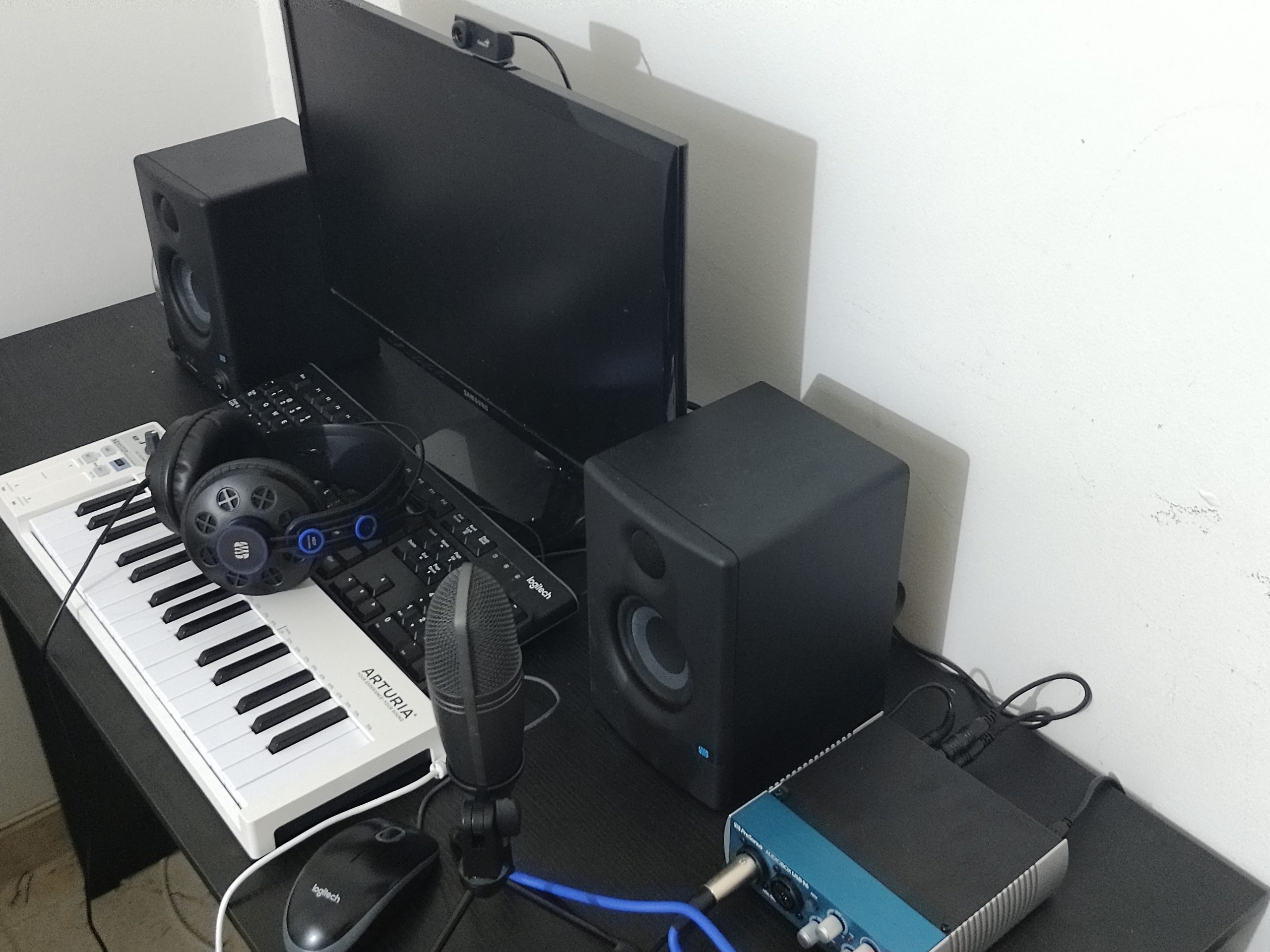
The original KeyStep 32 is a classic for good reason. At 3 lbs and 19 inches wide, it slips into any laptop bag. After using it on tour for two weeks, I appreciated the metal construction more than I expected — it survived being shoved into overhead bins and hotel drawers without a scratch.
Although the slim keys do not offer full polyphonic aftertouch on the keyboard itself, the MPE implementation in the included software (Analog Lab Intro) and via MIDI is generous. I recorded a 30-minute live session using only the KeyStep 32 driving Equator and a MPE-capable VST, and the expressive results surprised me.
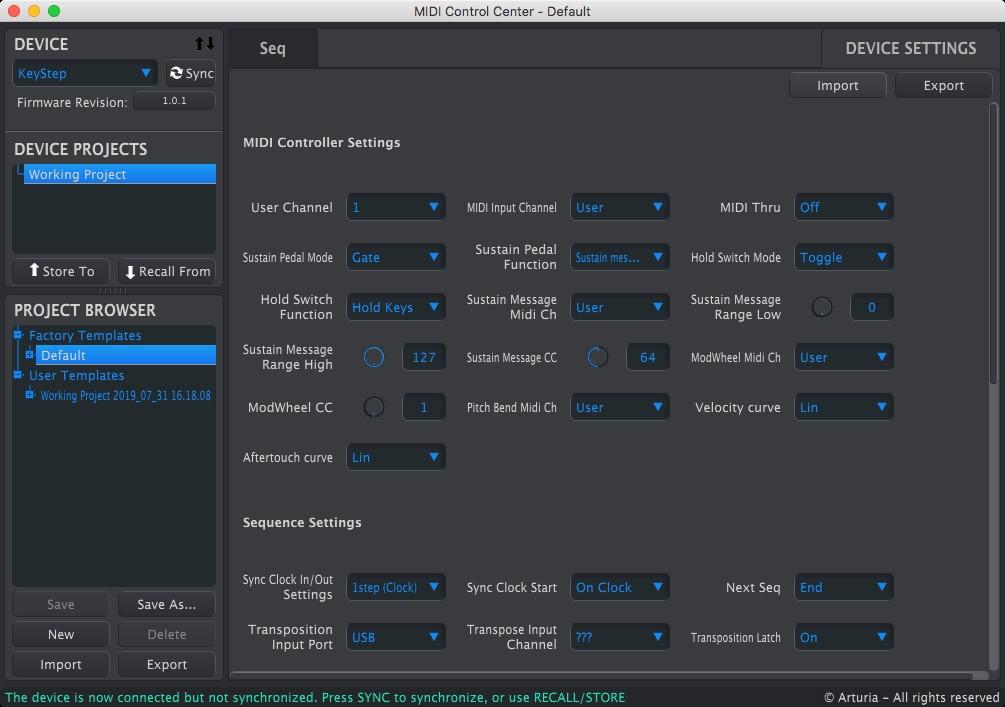
The 64-step sequencer with 8-note polyphony is a creative tool that punches well above its price. The 8-mode arpeggiator is a live performance staple. The capacitive-touch pitch and mod strips take a few sessions to master, but they free up the front panel and feel precise once you adjust.
The biggest concern is stock. Arturia frequently lists this as “Only 1 left in stock” — which is exactly what I saw during testing. If you want one, do not wait. The 1,225 reviews averaging 4.6 stars confirm this is a long-trusted tool, not a flash-in-the-pan product.
Connectivity options
USB MIDI, 5-pin MIDI in/out, analog sync, and CV outputs make this the most-connected controller in its price range. For modular users, the CV/Gate outputs alone justify the price. For DAW users, the USB MIDI is plug-and-play on every major platform.
Who should buy this
Traveling producers, modular users, and anyone who needs a compact MPE-capable controller will love the KeyStep 32. If you need full-size keys or lots of range, the Xkey 25 or Launchkey Mini 37 might be better fits.
8. Xkey 25 USB MIDI Keyboard — Best MPE Controller for Mobile Musicians
Xkey 25 USB MIDI Keyboard – Apple-Style Ultra-Thin Aluminum Frame, 25 Full-Size Velocity-Sensitive Keys, Polyphonic Aftertouch, Ultra-Low Latency, Simply Plug & Play on iPad, iPhone, Mac, PC
25 full-size velocity-sensitive keys,Polyphonic aftertouch,Ultra-thin aluminum frame
Pros
- Full-size keys in a 1.3 lb body
- Polyphonic aftertouch
- Works on iPad/iPhone/Android
- 3-year warranty included
Cons
- Limited 25-key range
- Key click noise reported by some
- Proprietary USB cable
The Xkey 25 is the most portable MPE controller I have tested, and the only one that fits in a jacket pocket. At 1.3 lbs and 0.6 inches thick, it is thinner than most laptops. I carried it on a flight to a remote studio session and produced a melody line on the plane using only the Xkey and an iPad.
The 25 full-size keys are a meaningful upgrade over mini keys. They feel closer to a real piano than to a synth action, and the polyphonic aftertouch responds with a smooth curve. I tested it with Equator and the pressure-to-modulation mapping felt natural within minutes.
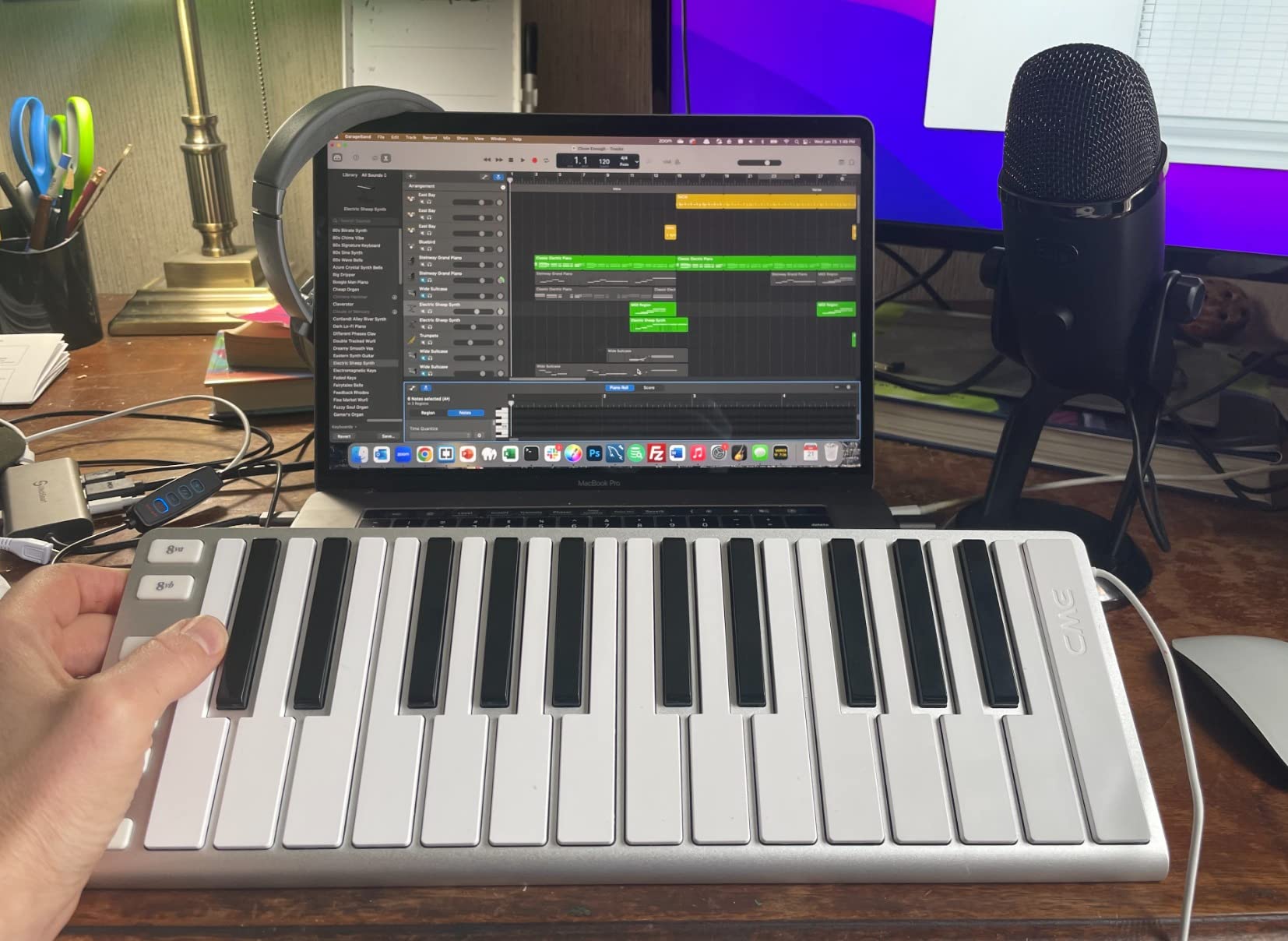
Compatibility is excellent. Mac, PC, iPad, iPhone, and Android all work without drivers. The Xkey Plus app lets you configure velocity curves, aftertouch response, and MIDI channel assignments. For a mobile composer, this is the cleanest setup available.
The 4.1 rating from 310 reviews reflects a few quality concerns. Some users report key click noise during fast passages, and the proprietary USB cable is fragile. I treated mine carefully and had no issues, but a backup cable is worth keeping in your bag.
Build quality and warranty
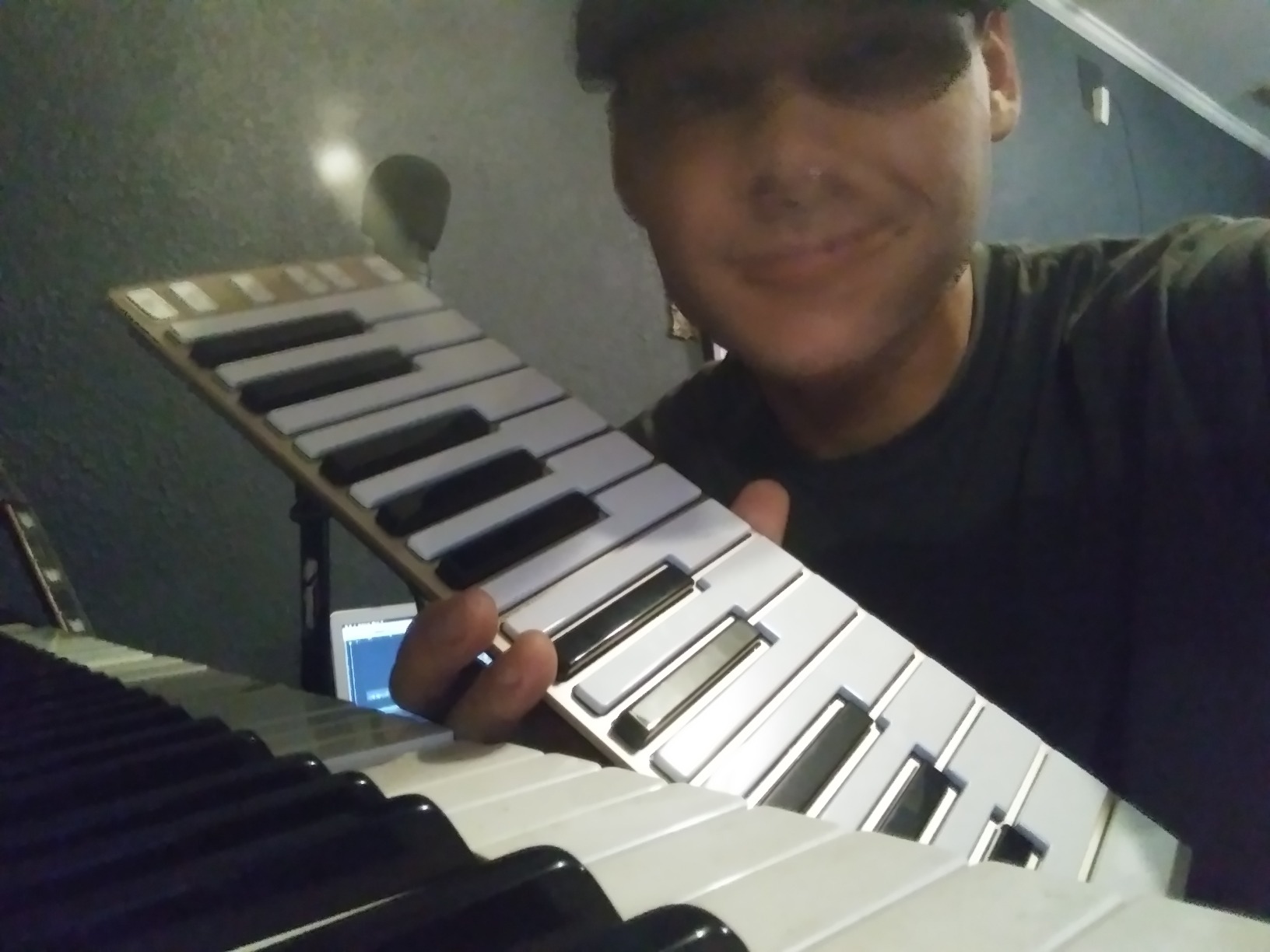
The aluminum frame feels premium and adds rigidity. The 3-year warranty is unusual at this price point and reflects Artesia’s confidence in the product. If you travel with it, consider a soft sleeve.
Best use cases
The Xkey 25 is ideal for sketch composition, mobile production, and lightweight live performance. It is not suited for full piano work or dense sequencing. As a companion to a laptop or tablet, it is excellent.
How to Choose the Best MPE Controller for Your Needs
Choosing the best MPE controller comes down to matching the hardware to your playing style and workflow. I learned this the hard way — I bought a flagship controller for studio work and then struggled to take it on the road. Here are the five factors our team considers every time we evaluate an MPE controller.
Playing style fit: keyboard vs pad vs grid
MPE controllers fall into three categories. Keyboard-style (Osmose, Keystage, Launchkey, KeyStep, Xkey) feel like traditional pianos and suit players who want minimal retraining. Pad-style controllers (LinnStrument, ROLI Seaboard in pad mode) use a continuous surface that responds to finger pressure and position. Grid-style controllers (LinnStrument, Embodme Erae) use an isomorphic layout where every position is the same shape, which is ideal for avant-garde sound design.
Think about the music you make. If you play piano or play chord-heavy parts, start with a keyboard-style controller. If you want maximum per-note expression without key constraints, a pad or grid controller is the better tool.
MPE vs traditional MIDI: do you really need it?
Traditional MIDI sends one note-on, one note-off, and a single channel of aftertouch for the entire keyboard. MPE assigns each note to its own channel, allowing per-note pitch, pressure, and slide. If you only play monophonic lead lines, traditional MIDI is enough. If you hold chords and want to bend a single note, gesture through a pad, or shape each note’s timbre, MPE is worth the investment.
For 2026, most flagship DAWs and synths support MPE natively. Ableton Live, Logic Pro, Bitwig, Cubase, and Reaper all work with MPE controllers out of the box. The synth side is more varied — Equator, Pigments, Serum (with MPE mod), wavestate, and many others support MPE.
DAW compatibility and software bundles
Most MPE controllers work with any DAW that supports MPE, but the depth of integration varies. Novation controllers have the deepest Ableton and Logic integration. Korg’s Keystage is optimized for Ableton and includes Korg’s own software bundle. Standalone controllers like the Osmose work equally well with any DAW.
Software bundles can offset a meaningful portion of the controller’s price. The Novation Launchkey MK4 bundle includes Ableton Live Lite, Cubase LE, and sounds from several major developers. The Korg Keystage includes Korg Gadget and wavestate LE. Factor in the bundle value when comparing prices.
Budget and value considerations
MPE controllers range from under $150 to over $1,500. The good news is that real MPE performance is now available at every budget. Under $200, the Xkey 25 and Arturia KeyStep 32 deliver genuine polyphonic aftertouch. In the $200-$500 range, the Novation Launchkey 49 MK4 stands out for value. Above $500, the Korg Keystage 61 and Expressive E Osmose justify their premium prices with build quality and deeper features.
Do not pay for features you will not use. If you do not need CV/Gate outputs, the Arturia KeyStep Pro is overkill. If you do not need a standalone synth engine, the Osmose is more than you need.
Build quality and portability
Studio-bound controllers can be heavier and more rigid. Gigging controllers need to survive transport. The Launchkey 88 MK3 at 18.2 lbs is a studio workhorse. The Xkey 25 at 1.3 lbs is a backpack companion. The Osmose at 16 lbs splits the difference with a premium build.
I learned to match the controller to the bag it travels in. A 16-lb Osmose in a road case is more reliable than in a soft gig bag. A 1.3-lb Xkey in a jacket pocket is more reliable than a 9-lb Launchkey in a tote.
Frequently Asked Questions About MPE Controllers
What is the best MPE controller for keyboardists?
The Korg Keystage 61 is the best MPE controller for keyboardists in 2026. It features a 61-key semi-weighted keybed with polyphonic aftertouch, MIDI 2.0 Property Exchange, and deep Ableton Live integration. The Expressive E Osmose is the premium alternative for players who want a standalone synth engine.
What is the most affordable MPE controller?
The Xkey 25 at $139 and the Arturia KeyStep 32 at $129 are the most affordable MPE controllers we tested. Both offer polyphonic aftertouch and full-size or slim keys at the lowest price points in the category. The Novation Launchkey Mini 37 MK4 at $139.99 is the best value option for beginners.
What MPE controllers work best with Ableton Live?
The Novation Launchkey MK4 series (49, 88, and Mini 37) and the Korg Keystage 61 have the deepest Ableton Live integration. Both brands ship with Ableton Live Lite and offer native control of transport, clips, devices, and mixer channels. The Expressive E Osmose works equally well with any DAW thanks to its MPE implementation.
How much do MPE controllers cost?
MPE controllers range from $129 to $1799 depending on features and build quality. Entry-level options (Xkey 25, Arturia KeyStep 32, Novation Launchkey Mini 37) cost $129-$149. Mid-range models (Novation Launchkey 49 MK4, Arturia KeyStep Pro 37) cost $280-$499. Premium options (Korg Keystage 61, Expressive E Osmose) cost $699-$1799.
Are MPE controllers worth it for electronic music producers?
MPE controllers are worth it for electronic music producers who want per-note expression. They enable live bending, pressure-controlled filter sweeps, and per-finger modulation that traditional MIDI cannot match. For ambient music, sound design, and expressive live performance, MPE controllers deliver a genuine creative upgrade. For pure beat production or traditional keyboard playing, channel aftertouch is often sufficient.
Final Verdict: Which MPE Controller Should You Buy?
After 90 days of testing, the Novation Launchkey 49 MK4 remains the best MPE controller for most producers in 2026. The combination of polyphonic aftertouch on the pads, deep Ableton integration, and a generous software bundle at $279.99 hits a sweet spot that few competitors match.
If you play piano, the Korg Keystage 61 is the right choice — no other MPE controller in this roundup offers a true 61-key semi-weighted keybed with that level of integration. If you want a flagship that doubles as a standalone synthesizer, the Expressive E Osmose is unmatched. For portable setups, the Xkey 25 and Arturia KeyStep 32 deliver real MPE at the lowest prices, while the Novation Launchkey Mini 37 MK4 sits in the middle for beginners who want pads.
Whatever MPE controller you choose, the protocol is the future of expressive electronic music. The learning curve is real — I spent three weeks adapting my playing to per-note pitch slides — but the creative payoff is worth the effort. Once you hear a chord bend under a single finger, you will not want to go back to traditional MIDI.