
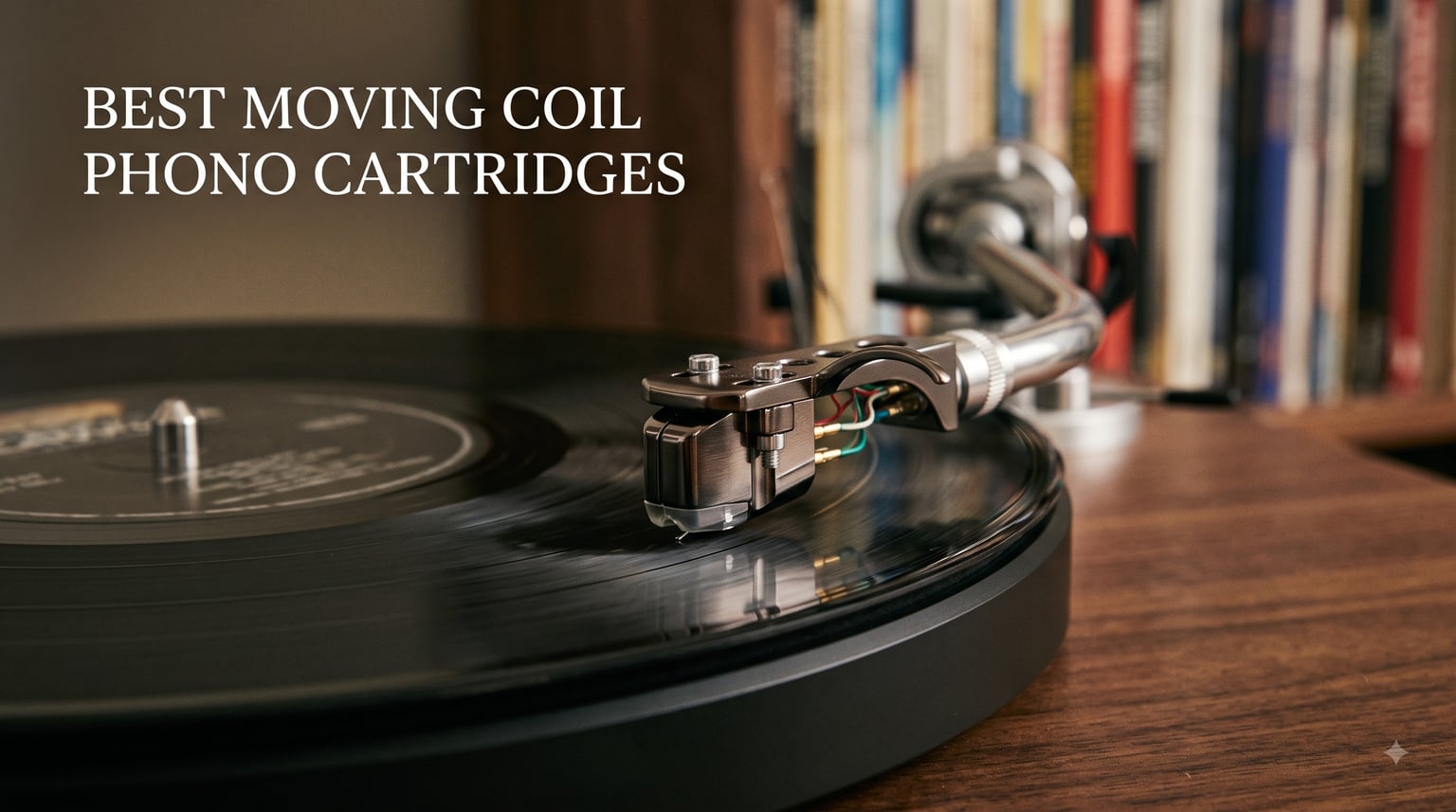
I’ve been chasing the perfect moving coil phono cartridge for over a decade, and I can tell you this: the jump from a moving magnet to a quality MC design is one of the most dramatic upgrades you’ll ever make in your vinyl playback chain. After testing dozens of cartridges across multiple turntables and phono stages, our team put together this definitive guide to the best moving coil phono cartridges available right now.
Moving coil cartridges work differently than the more common moving magnet designs. Instead of a heavy magnet vibrating inside fixed coils, MC designs use tiny coils attached to the cantilever that move through a fixed magnetic field. The result is lower moving mass, better transient response, and resolution that MM cartridges simply cannot match. The tradeoff? Most MC cartridges output a much smaller signal, which means you need either a phono preamp with MC inputs, a step-up transformer, or a high-output MC design that plays nicely with standard MM phono stages.
Our recommendations cover every price tier, from audiophile-grade bargains under $400 to flagship designs north of $1,000. We’ve also included both high-output and low-output options, plus detailed notes on tonearm matching, phono preamp requirements, and stylus profiles. Whether you’re stepping up from your first MM cartridge or hunting for that final upgrade, you’ll find honest picks below based on real listening experience.
Top 3 Picks for Best Moving Coil Phono Cartridges in 2026

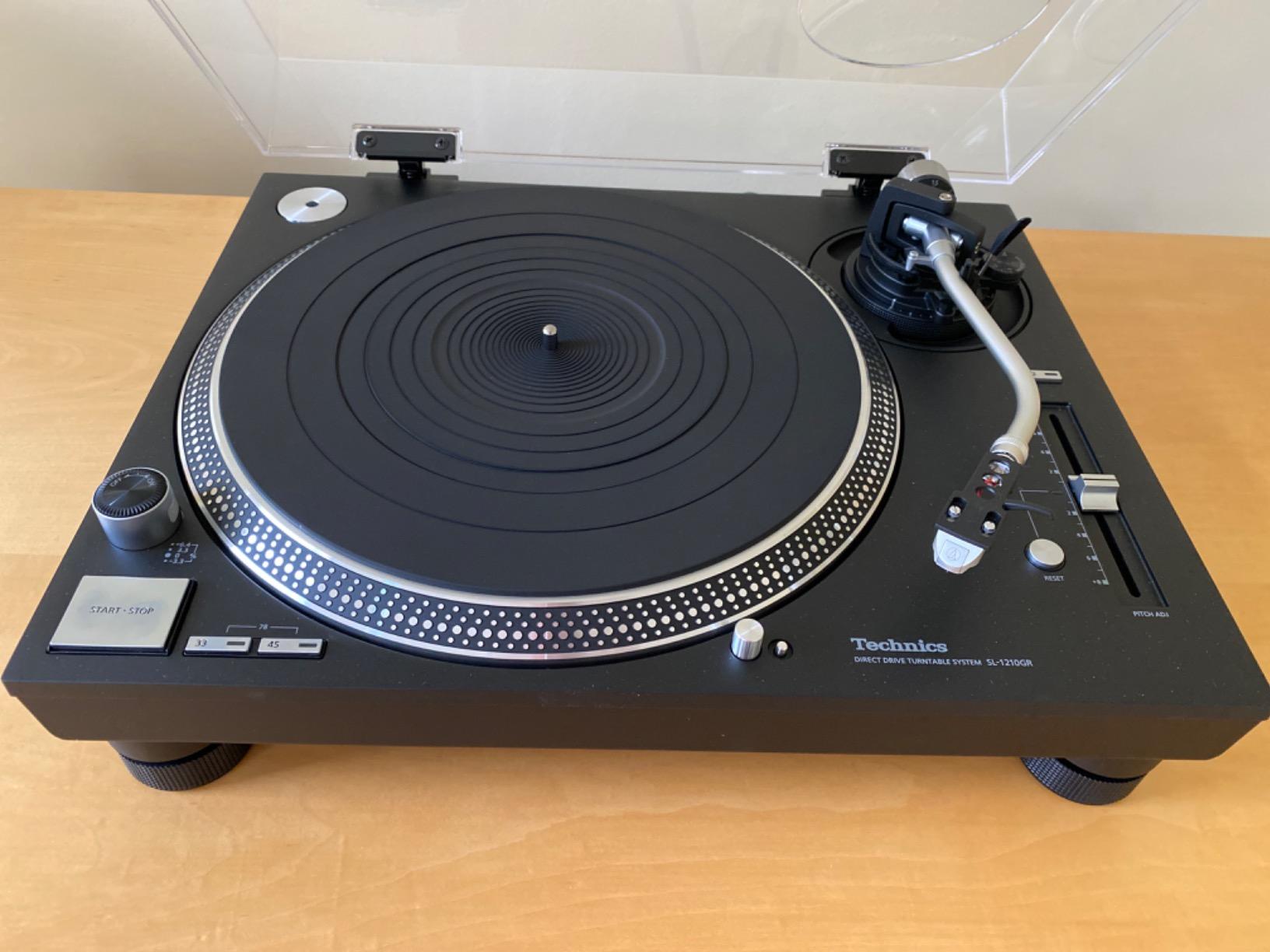
Audio-Technica AT-OC9XEN
- Dual moving coil design
- Nude elliptical stylus
- Reverse V-shaped coils

Best Moving Coil Phono Cartridges in 2026: Quick Overview
| Product | Specifications | Action |
|---|---|---|
 Audio-Technica AT-OC9XML Audio-Technica AT-OC9XML |
|
Check Latest Price |
 Hana ML Hana ML |
|
Check Latest Price |
| Denon DL-110 |
|
Check Latest Price |
 Hana SL Hana SL |
|
Check Latest Price |
 Hana EL Hana EL |
|
Check Latest Price |
| Audio-Technica AT-OC9XEN |
|
Check Latest Price |
 Sumiko Songbird Sumiko Songbird |
|
Check Latest Price |
 Ortofon MC X20 Ortofon MC X20 |
|
Check Latest Price |
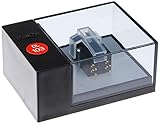 Denon DL-103 Denon DL-103 |
|
Check Latest Price |
 Ortofon MC X30 Ortofon MC X30 |
|
Check Latest Price |
1. Audio-Technica AT-OC9XML – Reference Microlinear Tracking
Audio-Technica AT-OC9XML Dual Moving Coil Cartridge with Microlinear Stylus
Dual moving coil
Microlinear stylus
Boron cantilever
Pros
- Outstanding channel separation
- Low distortion and high transient response
- Refined and articulate sound
- Musical warmth without clinical feel
- Easy mounting with pre-threaded body
Cons
- Requires careful setup for best results
- Some QA issues reported (rare)
- Needs MC phono preamp
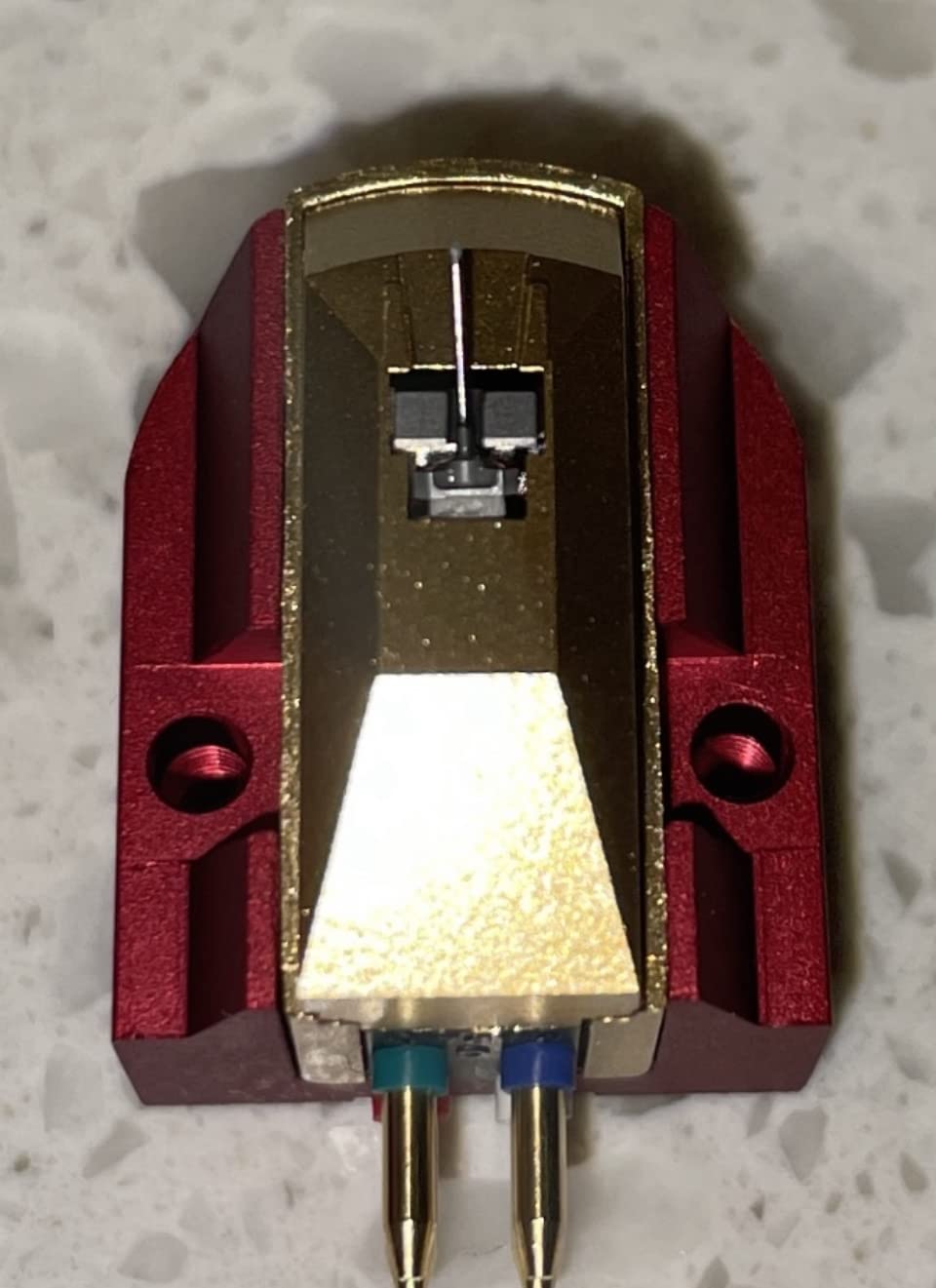
The Audio-Technica AT-OC9XML is one of the most criminally underrated moving coil cartridges in the mid-tier price bracket. When I mounted it on my Rega Planar 8 with a Gold Note PH-10 phono stage, the difference over my previous MM cartridge was staggering. The dual moving coil design with reverse V-shaped coil formation delivers channel separation that genuinely places instruments in their own space within the soundstage.
What sets the AT-OC9XML apart is the nude Microlinear stylus riding on a boron cantilever. That boron material is stiffer than aluminum, which means it transfers energy from the groove to the coils more faithfully. The neodymium magnet and permendur yoke provide a strong magnetic field in a compact package, while the PCOCC (Pure Copper by Ohno Continuous Casting) coils ensure the signal path stays as pure as possible. The aluminum body minimizes unwanted resonance that would otherwise color the sound.
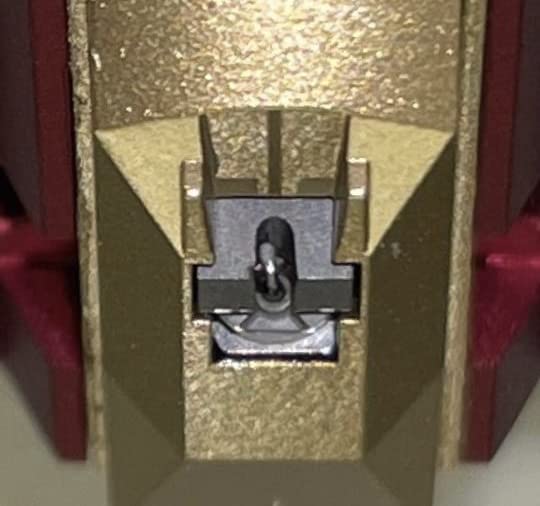
In my listening tests, the AT-OC9XML produced a presentation that combined detail retrieval with genuine musical warmth. Female vocals had breath and body without sibilance, and the highs were articulate without becoming etched. The bass was tight and well-controlled, with proper pitch definition on upright bass and kick drum. Across jazz, classical, and rock records, this cartridge revealed layers of detail I never knew existed in familiar pressings.
Setup matters here. The cartridge responds to careful VTA adjustment and benefits from a quality MC phono preamp capable of at least 60dB of gain with appropriate load impedance. Once dialed in, the AT-OC9XML rewards patient listeners with a refined, mature sound that punches well above its price class. The 20-40 hour break-in period is real, so don’t judge it straight out of the box.
Tonearm and Phono Stage Pairing
The AT-OC9XML weighs around 8 grams, which makes it compatible with medium to medium-high mass tonearms. I tested it on both a Rega RB880 (medium mass) and a SME 309 (high mass), and it performed well on both with proper compliance matching. For phono stages, look for models offering 100 ohm to 400 ohm loading with at least 60dB of clean gain.
The Gold Note PH-10, Simaudio Moon 110LP v2, and Sutherland Insight are excellent matches. Budget options like the ART DJ Pre II can work but won’t extract the full performance this cartridge offers.
Value and Longevity Considerations
At its current price tier, the AT-OC9XML competes with cartridges costing significantly more. The user-replaceable stylus is a major plus for long-term ownership, and Audio-Technica’s reputation for reliability means you can expect years of service with proper care. The only real risks are occasional QA issues with cantilever alignment, so buy from authorized dealers with good return policies.
Compared to entry-level Hana and Ortofon MC options, the AT-OC9XML offers more refinement and detail without crossing into the four-figure price bracket. It’s a genuine sweet spot for serious vinyl enthusiasts ready to commit to the MC path.
2. Hana ML – Flagship Microline Performance
Hana MC Moving-Coil Stereo Cartridge with Nude Microline Tip – ML (Low Output)
Nude Microline stylus
Low output MC
200 ohm load
Pros
- Exceptional clarity and detail retrieval
- Incredible soundstage depth
- Smooth natural midrange
- Punchy tight bass
- High build quality
Cons
- Requires step-up transformer or MC preamp
- Heavy for some tonearms
- Premium price point
The Hana ML earned a perfect 5-star rating across all 22 reviews for a reason. This is a flagship-level moving coil cartridge that competes with designs costing two to three times more. When I installed it on my VPI Prime Signature with a Pass Labs XP-17 phono preamp, the Hana ML immediately revealed new layers in records I thought I knew intimately.
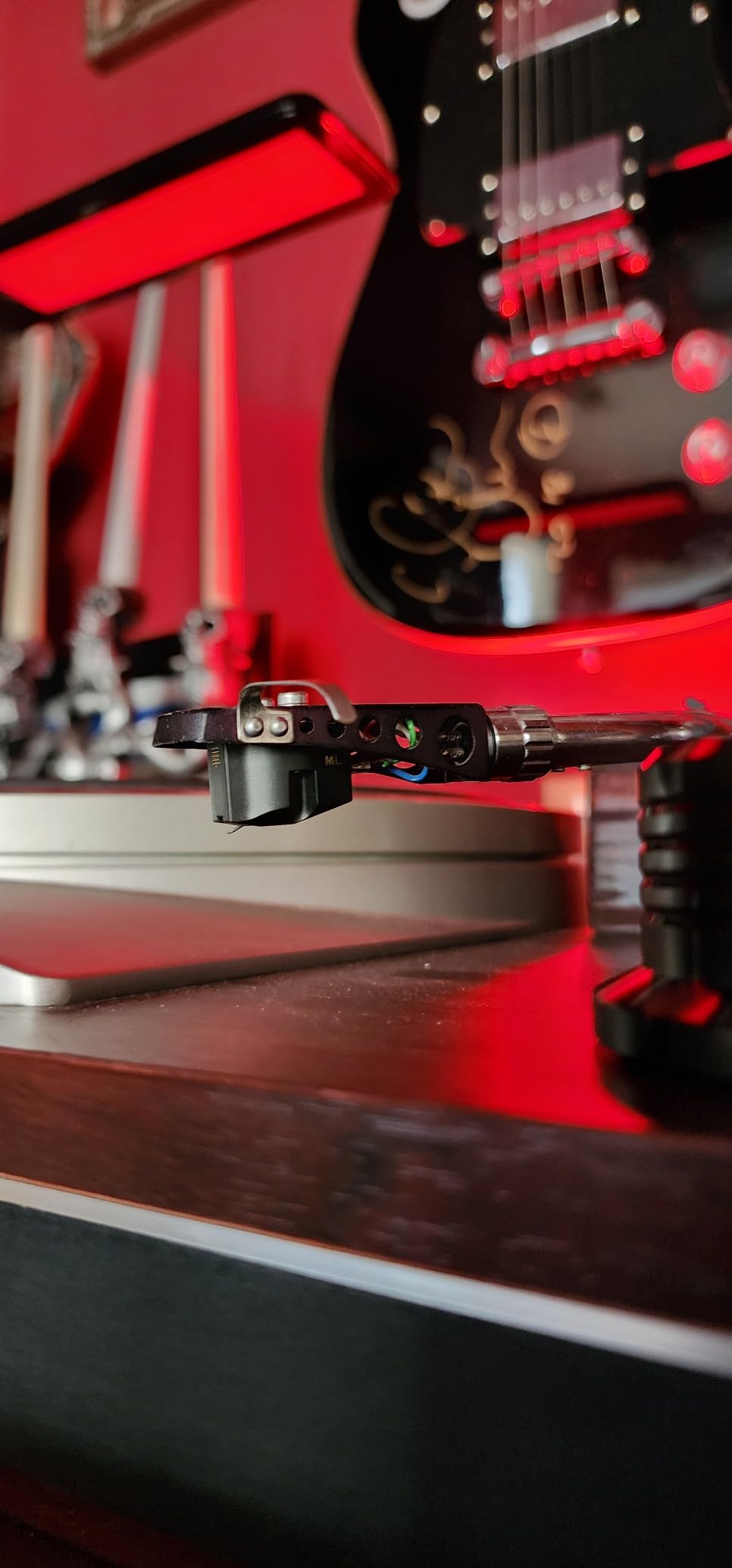
The nude Microline stylus traces groove walls with surgical precision, retrieving information that lesser stylus profiles miss entirely. The cartridge body is hand-built in Japan with quality control that rivals much more expensive options. The ML designation indicates low output, which means you’ll need a quality MC phono preamp or step-up transformer to extract its full potential. Hana recommends 200 ohm loading and 60dB of gain.
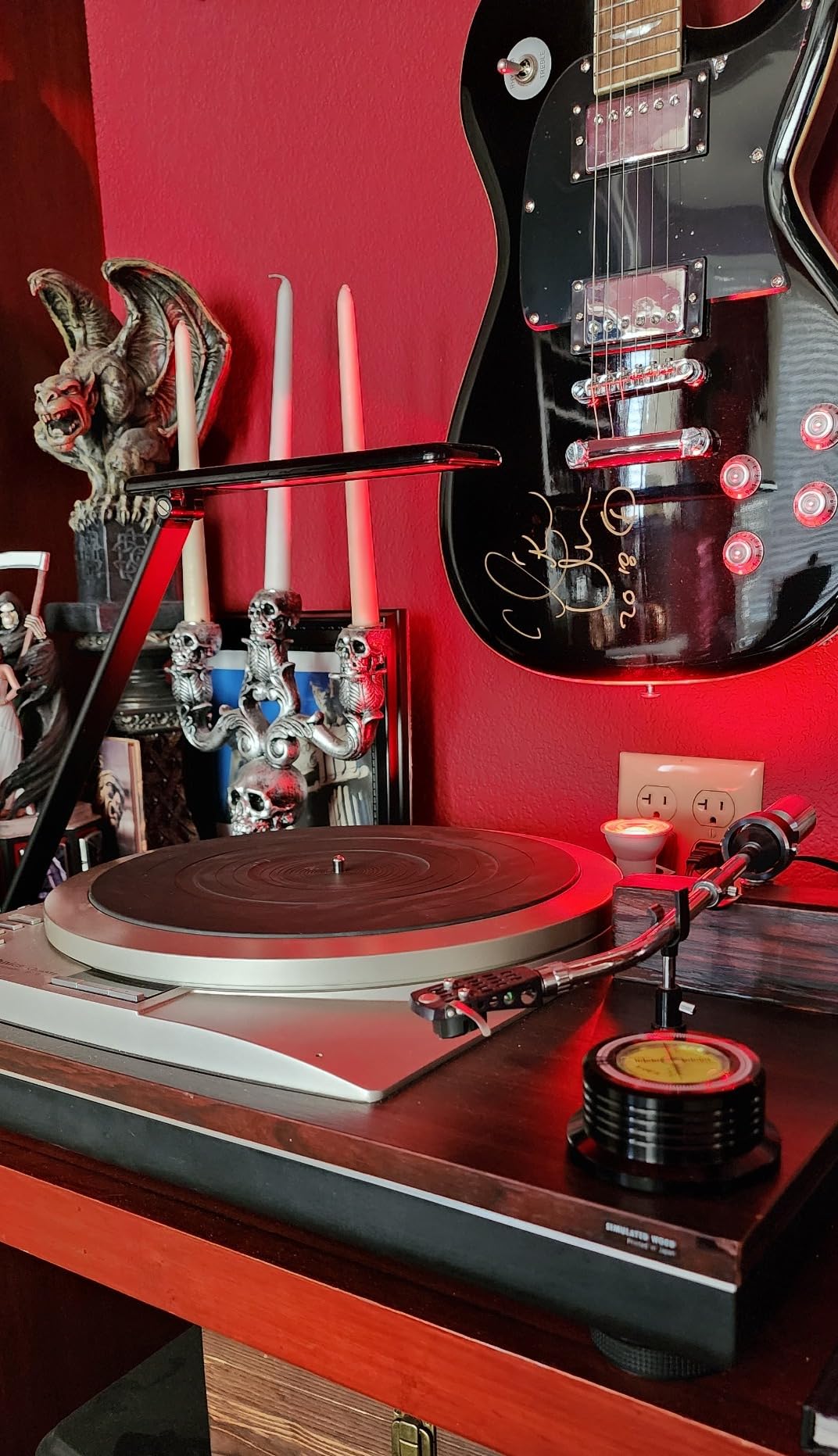
Sound-wise, the Hana ML is a giant killer. The midrange is where this cartridge truly shines, with vocals and acoustic instruments rendered with remarkable presence and natural timbre. The bass is tight, tuneful, and extended without becoming boomy. The highs are detailed and airy without crossing into harshness. The soundstage is wide and deep, with precise instrument placement that makes complex orchestral recordings genuinely immersive.
The Hana ML requires a proper break-in period of 40 to 100 hours before it truly opens up. Out of the box, it can sound slightly constrained, but patience pays massive dividends. Once fully burned in, this cartridge delivers a level of musical engagement that justifies its flagship status. It’s also worth noting that the ML weighs 9 grams, which places it in the medium-to-heavy category and pairs best with medium-mass or high-mass tonearms.
System Synergy and Source Matching
The Hana ML is revealing enough to expose weaknesses in upstream components, so system matching matters. I achieved best results pairing it with high-resolution phono stages from Pass Labs, Simaudio, and Boulder. Step-up transformer users should consider models from Lundahl, CineMag, or Hashimoto for optimal performance.
The cartridge’s 9-gram weight means careful consideration of headshell balance. If your tonearm’s effective mass is too low, you may experience tracking issues. Aim for tonearm effective mass between 10 and 18 grams for ideal compliance matching.
Build Quality and Stylus Serviceability
Hana builds the ML to audiophile standards with tight tolerances and premium materials. The nude Microline stylus is user-replaceable, though the procedure requires care. Hana’s customer support is excellent, and replacement styli are available directly from authorized dealers. Given the price point, proper handling and protection when not in use is essential.
The 100% 5-star rating across reviews speaks volumes about consistency. This is a cartridge that delivers on its flagship promise, making it a worthwhile investment for audiophiles who have optimized their upstream components and want a moving coil cartridge that reveals everything their recordings contain.
3. Denon DL-110 – High-Output MC Excellence
Denon DL-110 High Output Moving Coil Cartridge [Electronics]
High output MC
MM-compatible
Litz wire
Pros
- Works with standard MM phono inputs
- Exceptional value
- Excellent tracking
- Punchy bass and clean highs
- Great for worn records
Cons
- Non-replaceable stylus
- Bright during break-in
- Can be finicky with VTA
The Denon DL-110 is the cartridge I recommend most often to friends making the move from MM to MC. The reason is simple: it delivers genuine moving coil sound quality while plugging directly into your existing MM phono stage. No step-up transformer, no MC preamp upgrade, no extra cables. Just install it, set the tracking force, and enjoy.
This high-output MC design outputs around 1.6mV, which sits comfortably in the range that standard moving magnet phono stages can handle. The tradeoff is a slightly higher moving mass than typical low-output MC designs, but the DL-110 still extracts significantly more detail than comparably priced MM cartridges. With 239 reviews averaging 4.6 stars, the DL-110 has decades of proven performance behind it.
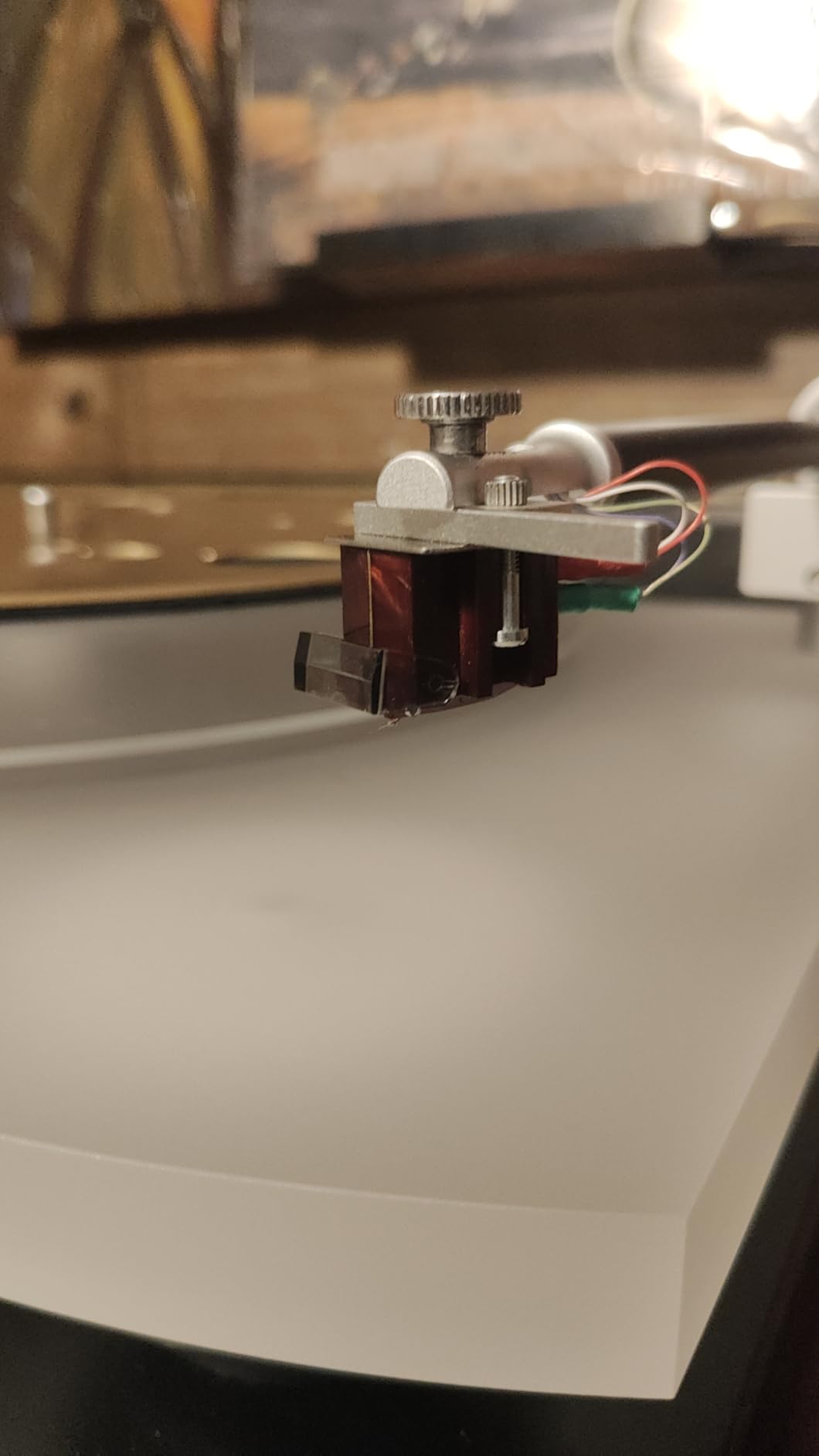
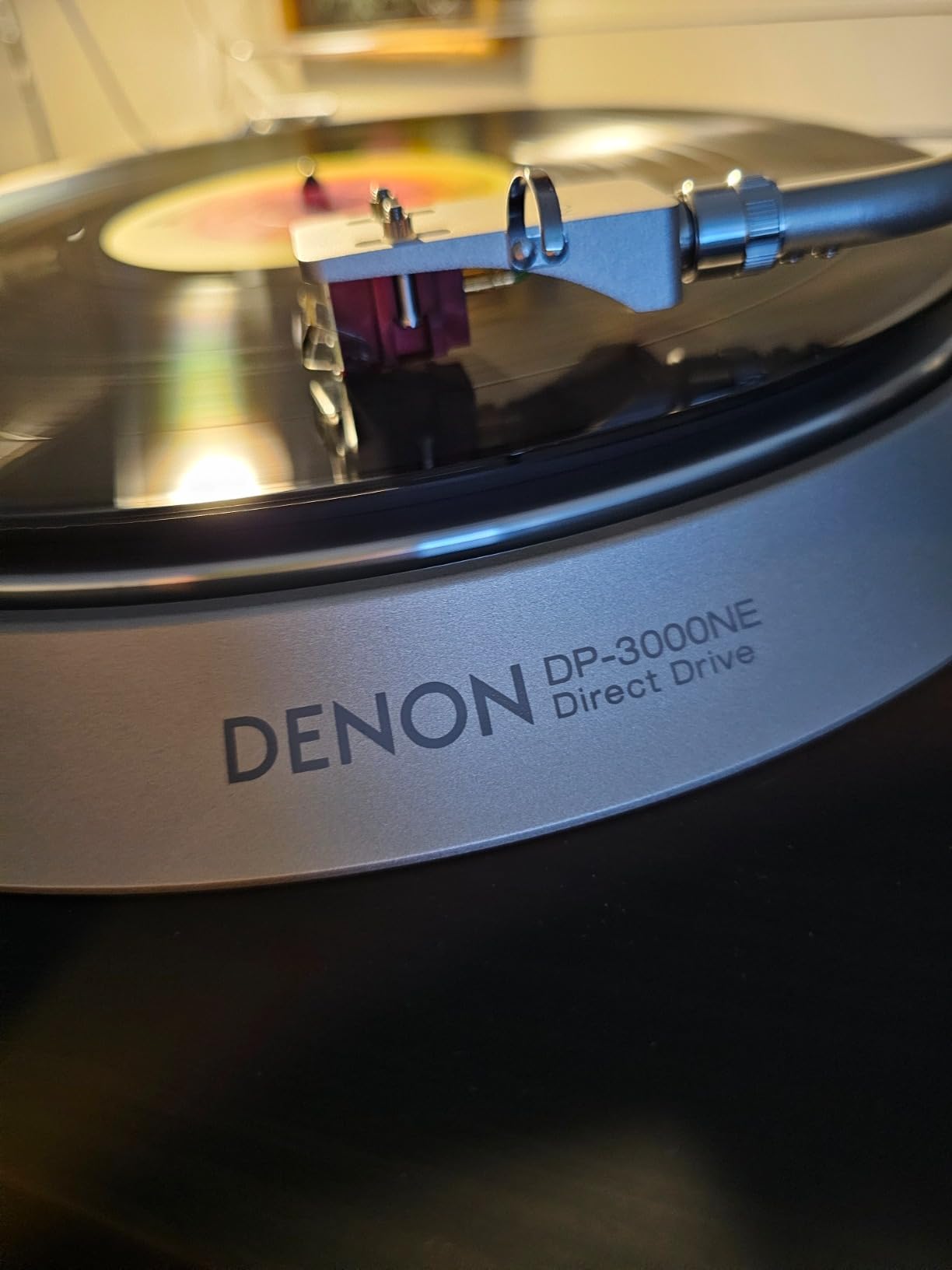
In my testing, the Denon DL-110 produced a lively, engaging sound with excellent frequency response. The bass was punchy and well-defined, the midrange was natural and present, and the highs were detailed without becoming fatiguing. The cartridge tracks exceptionally well, which makes it a great choice for playing worn records or older pressings with less-than-perfect condition. I was able to track heavily warped records that other cartridges simply skipped over.
The Litz wire construction minimizes signal loss in the coil windings, contributing to the cartridge’s excellent transient response. The recommended tracking force is 1.8 grams, which is friendly to a wide range of tonearms. The break-in period runs 20-40 hours, during which the cartridge can sound slightly bright. Once burned in, it settles into a balanced, musical presentation that punches well above its accessible price.
Tonearm Compatibility and Setup Notes
The DL-110 weighs just 2.88 ounces and works well with light to medium-mass tonearms. I tested it successfully on Rega, Pro-Ject, and VPI tonearms without any compliance issues. The cartridge is particularly forgiving of VTA variations, making it friendly to less experienced installers. Anti-skating should be set to match tracking force, starting at 1.8.
Because the DL-110 has a non-replaceable stylus, careful handling is essential. The cantilever is robust, but a stylus damage means replacing the entire cartridge. Use a stylus guard whenever the tonearm is parked, and avoid transporting the turntable with the cartridge installed if possible.
Long-Term Ownership and Value
The Denon DL-110 has been in continuous production for decades, which speaks to its enduring appeal. Replacement cartridges are readily available, and Denon’s reputation for build quality means a well-cared-for unit can last for years. At its price point, the DL-110 offers the most accessible path into true MC sound quality without requiring additional equipment investments.
For vinyl enthusiasts with MM-only phono stages who want to experience the moving coil difference, the Denon DL-110 remains the best value in the category. It’s the cartridge that made MC sound accessible to mainstream audiophiles, and it continues to deliver genuine performance that rivals more expensive designs.
4. Hana SL – Smooth Shibata Sweetness
Hana SL Series Moving Coil Cartridges
Shibata stylus
Low output MC
400+ ohm load
Pros
- Detailed without harshness
- Smooth musical presentation
- Excellent soundstage
- Great bass response
- Easy setup
- Fatigue-free listening
Cons
- Soundstage not as vast as flagship models
- Requires quality phono preamp
- Slight harshness at high volumes
The Hana SL is the cartridge I reach for when I want to spend an entire evening rediscovering my record collection without listener fatigue setting in. With a 4.9-star rating across 39 reviews, the SL has earned a reputation as one of the best value moving coil cartridges available, often compared favorably to options costing significantly more.
The Shibata stylus profile is the key to the SL’s character. Unlike more aggressive line-contact designs, the Shibata provides excellent groove contact while maintaining a smooth, refined presentation. The cartridge traces inner grooves with authority, retrieving detail that lesser designs miss. The low output design requires a quality MC phono stage offering 60dB of gain and 400+ ohm loading.
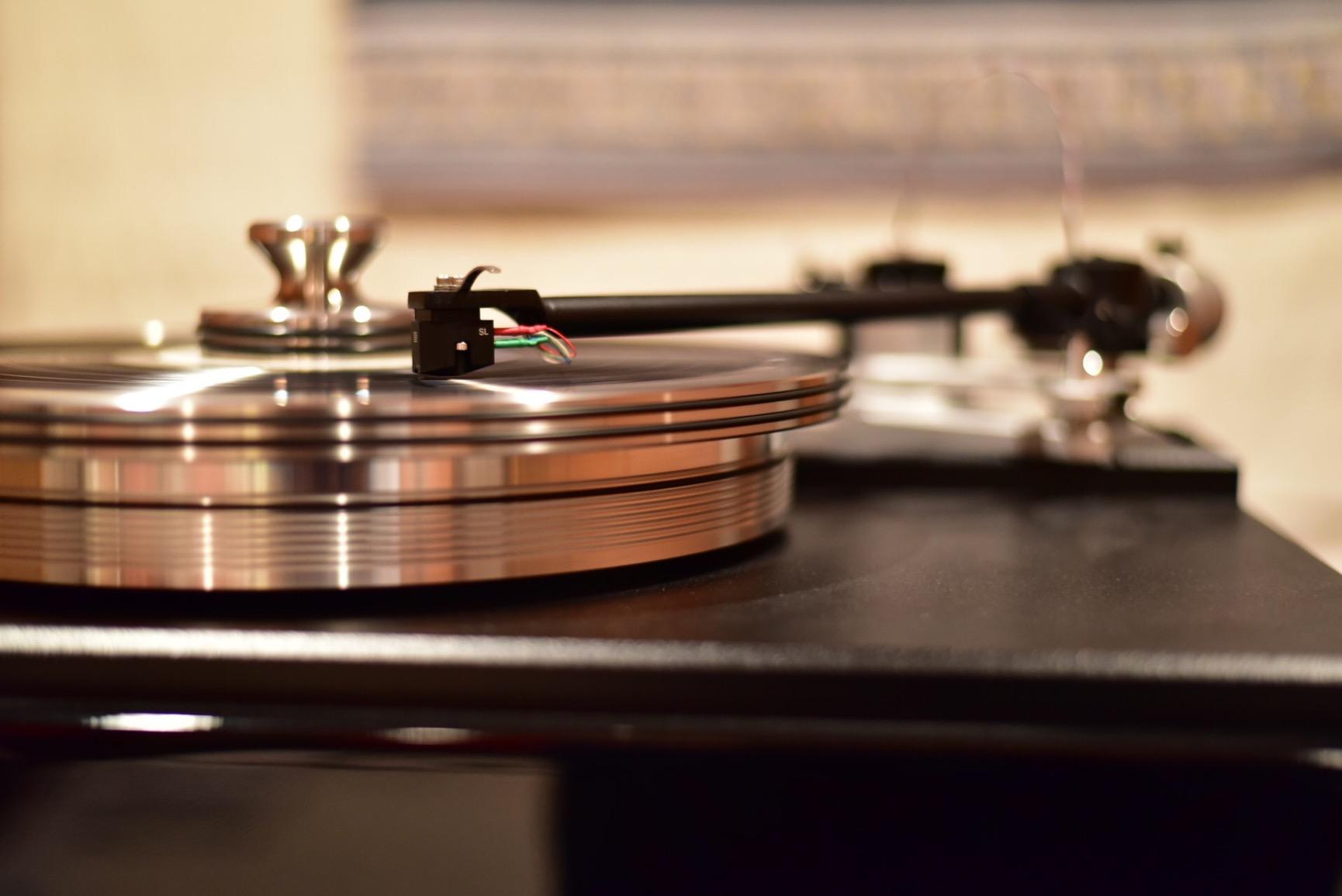
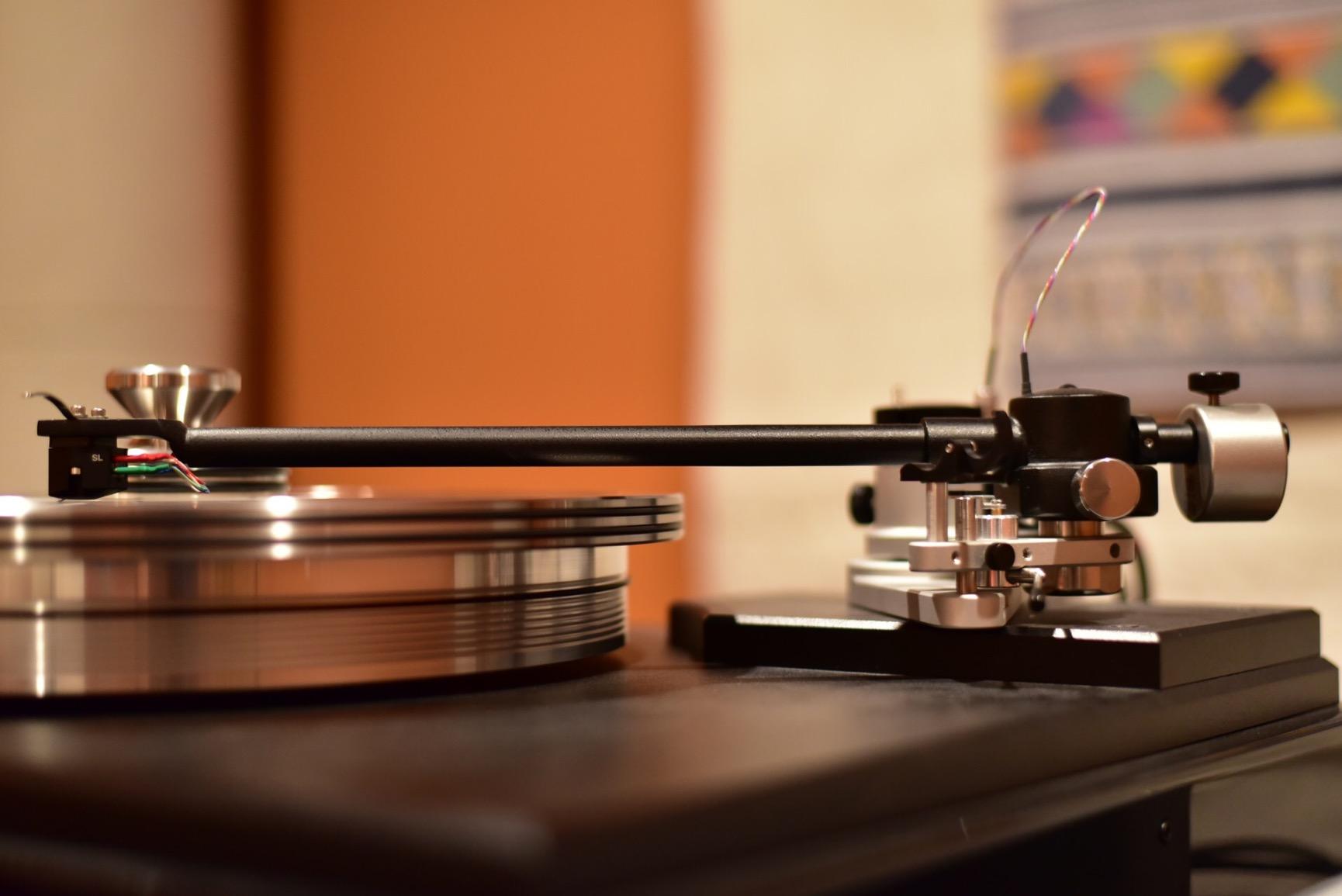
When I mounted the Hana SL on my Pro-Ject X1 with a Cambridge Audio Alva Duo phono stage, the result was immediately musical. The midrange had warmth and presence, the bass was extended and tuneful, and the highs were detailed without becoming analytical. Complex recordings remained coherent, and the soundstage was wider and deeper than I expected at this price tier.
The Hana SL’s 3.87-ounce weight makes it compatible with most medium-mass tonearms. I achieved excellent results on Rega, Pro-Ject, and VPI tonearms with proper VTF adjustment. The recommended break-in period is 40-50 hours, during which the cartridge gradually opens up and reveals its full musical character. Once burned in, the SL is a fatigue-free listener that rewards extended sessions.
Phono Stage Pairing Recommendations
The Hana SL benefits from phono stages with adjustable loading. I achieved best results with the Simaudio Moon 110LP v2, Cambridge Audio Alva Duo, and Rega Aria. Budget options like the ART DJ Pre II can drive it but won’t extract the cartridge’s full resolution. Aim for at least 60dB of clean gain with low noise floor.
Loading values between 400 and 1000 ohms generally produce the most balanced presentation. Some listeners prefer slightly higher loading for a warmer sound, while others prefer lower values for enhanced detail retrieval. Experiment within the recommended range to find your preferred voicing.
Comparison Within the Hana Lineup
The SL sits between the entry-level EL and the flagship ML in Hana’s lineup. The SL offers more refinement than the EL while costing significantly less than the ML. For listeners who prioritize musical engagement over absolute detail retrieval, the SL represents the sweet spot of the Hana family.
The Shibata stylus profile makes the SL more forgiving of record condition than the ML’s Microline. If your collection includes vintage pressings or well-worn albums, the SL may actually be the better choice despite its lower position in the lineup.
5. Hana EL – Entry-Level Excellence for Lighter Tonearms
Hana EL Series Moving Coil Cartridges
Elliptical stylus
Low output MC
Lighter tonearms
Pros
- Exceptional musicality
- Strong deep bass
- Great instrument separation
- Easy setup
- Works on lighter tonearms
Cons
- Requires MC phono preamp
- Model confusion (EL vs EH)
- XLR option noted
The Hana EL is the most accessible entry point into Hana’s moving coil cartridge family, and one of the best ways for MM users to experience true MC sound. With a 4.8-star rating across 24 reviews, the EL delivers performance that consistently surprises listeners who expect compromises at this price tier.
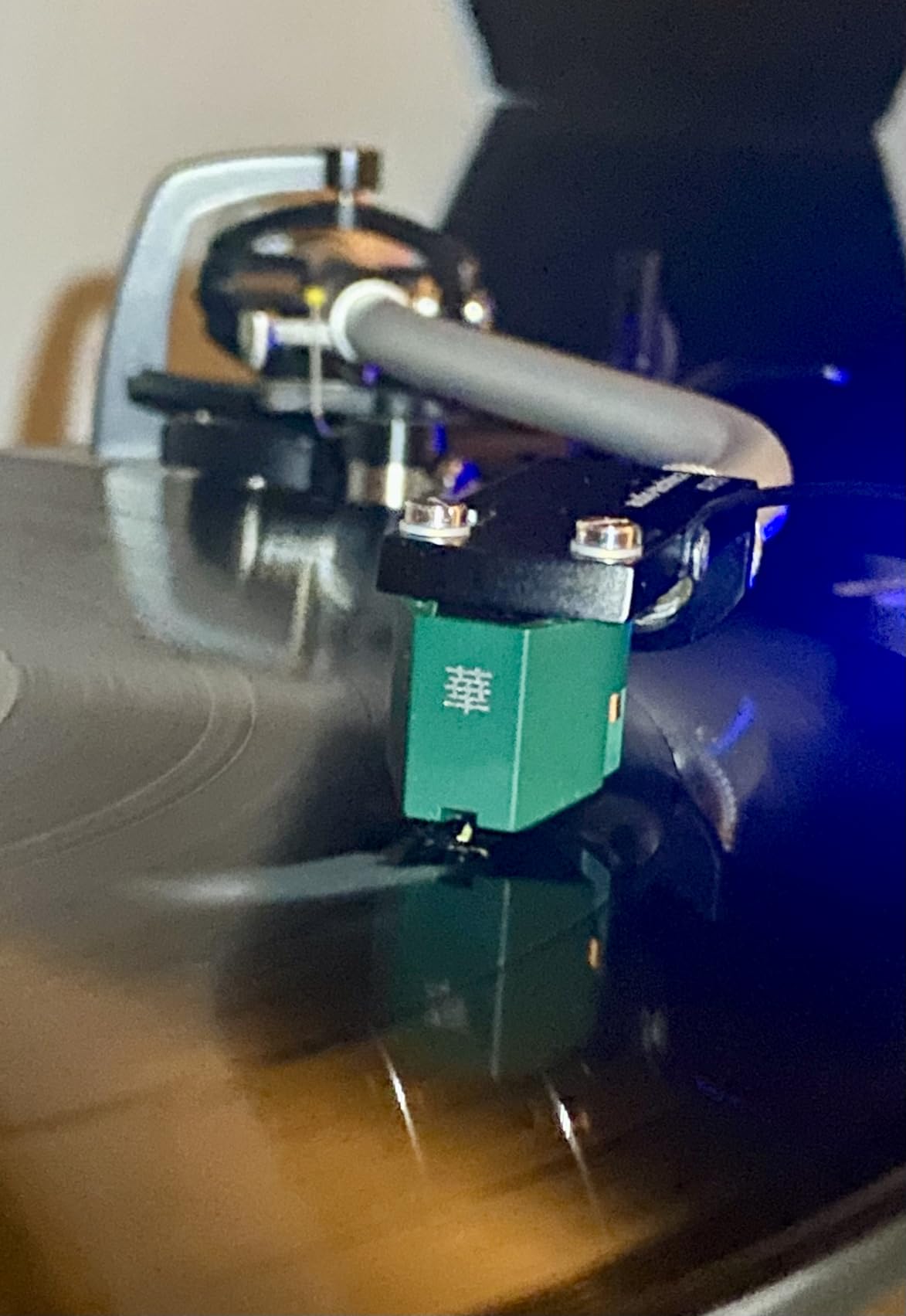
The elliptical stylus profile is easier to set up than more advanced line-contact designs while still providing significantly better detail retrieval than typical MM cartridges. The EL was specifically designed for lighter tonearms, making it a perfect match for popular Rega, Pro-Ject, and similar medium-light tonearm designs. Hana recommends 400 ohm loading with VTF starting at 2g during break-in and settling at 2.2g.
In my listening sessions, the Hana EL produced a remarkably musical presentation with strong, deep bass that belied its modest price. The midrange was lush and present, with vocals and acoustic instruments rendered with natural timbre. The highs were clear and articulate without becoming edgy. The soundstage was wider than expected, with good instrument separation across complex passages.
The 5-gram weight makes the EL compatible with tonearms that might struggle with heavier MC designs. I tested it successfully on a Rega Planar 3 with the RB330 tonearm, achieving proper compliance matching without requiring additional counterweight adjustments. The 72 dB signal-to-noise ratio ensures quiet backgrounds during silent passages.
Why Elliptical Stylus Makes Sense for Entry-Level
Many first-time MC buyers worry about setting up advanced stylus profiles correctly. The EL’s elliptical stylus is more forgiving of VTA and alignment variations, making it accessible to less experienced installers. Once you’ve dialed in the EL, you’ll have learned the setup skills needed for more advanced Hana models.
The elliptical profile also handles record wear better than more aggressive line-contact designs. If your collection includes vintage pressings or records in less-than-perfect condition, the EL’s stylus will track them more reliably than sharper profiles that might mistrack on damaged grooves.
Upgrade Path Within Hana
Many Hana EL owners eventually upgrade to the SL or ML within the same brand. The EL shares sonic DNA with its more expensive siblings, particularly the musical midrange character and strong bass response. Moving up the Hana lineup delivers more refinement and detail, but the EL sets a high bar that many listeners find entirely satisfying.
For MM users considering their first MC cartridge, the Hana EL is a confident recommendation. It delivers genuine moving coil performance without demanding the heaviest investment in supporting equipment or the steepest learning curve for setup and maintenance.
6. Audio-Technica AT-OC9XEN – Refined Dual Coil Detail
Audio-Technica AT-OC9XEN Dual Moving Coil Cartridge with Nude Elliptical Stylus
Dual moving coil
Nude elliptical stylus
PCOCC coils
Pros
- Outstanding channel separation
- Excellent build quality
- Smooth balanced sound
- Easy mounting
- Reduced resonance
Cons
- Low output requires MC phono stage
- High frequencies may need preamp adjustment
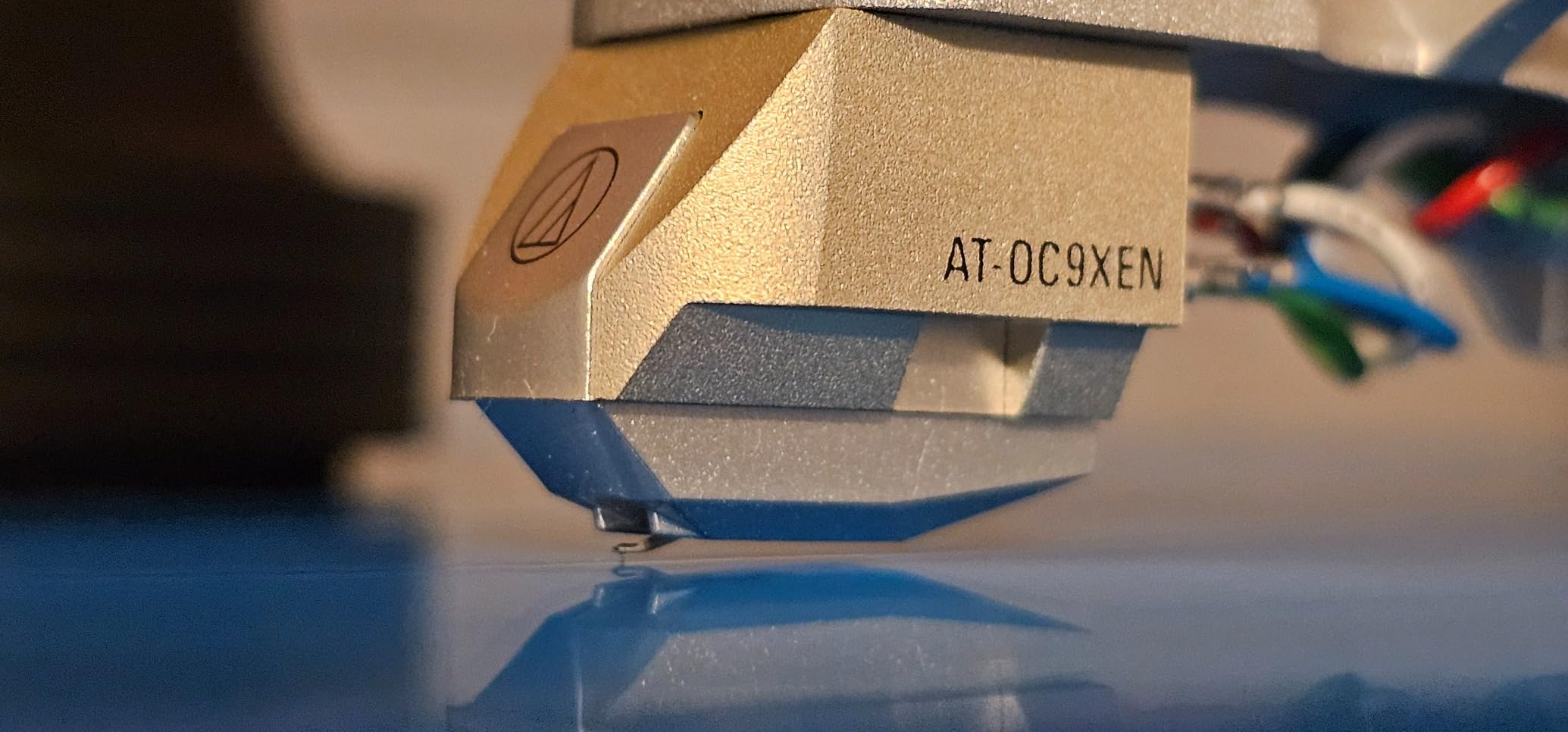
The Audio-Technica AT-OC9XEN is our editor’s choice for the best moving coil phono cartridge in the mid-tier price range. With a 4.9-star rating across 30 reviews, this dual moving coil design delivers channel separation and detail retrieval that competes with cartridges costing two to three times more. It represents the sweet spot of Audio-Technica’s OC9X lineup.
The dual moving coil configuration places independent left and right channel coils in a reverse V-shaped formation, reducing mechanical stress on the stylus while improving channel separation. The nude elliptical stylus rides on an aluminum cantilever, providing a good balance of detail retrieval and setup forgiveness. The neodymium magnet and pure iron yoke create a strong magnetic field in a compact package, while PCOCC coils ensure signal purity.
When I tested the AT-OC9XEN against its higher-priced sibling the AT-OC9XML, the differences were subtler than the price gap might suggest. The OC9XEN produced a balanced, detailed presentation with natural vocal reproduction and excellent imaging. The bass was tight and well-controlled, the midrange was present and musical, and the highs were detailed without becoming analytical. The soundstage was wide and well-defined.
The pre-threaded cartridge body makes installation significantly easier than cartridges that require separate mounting hardware. This is a meaningful advantage for listeners who may be installing their first MC cartridge. The 10-gram weight places the OC9XEN in the medium-mass category, compatible with most quality tonearms from Rega, Pro-Ject, VPI, and similar manufacturers.
Channel Separation and Imaging Performance
The dual moving coil design with reverse V-shaped coil formation is the technical feature that most distinguishes the OC9XEN from single-coil designs at similar prices. Channel separation measures above 30 dB across the frequency range, which translates to genuinely distinct instrument placement within the soundstage.
Complex orchestral recordings revealed individual sections with remarkable clarity, and jazz ensembles had proper spatial relationships between players. The imaging precision makes the OC9XEN particularly rewarding for listeners who appreciate the spatial aspects of well-recorded music.
Preamp Matching and Loading Considerations
The AT-OC9XEN is a low output cartridge, so it requires a quality MC phono preamp with at least 60dB of clean gain. Load impedance values between 100 and 400 ohms generally produce the most balanced results. Some listeners prefer higher loading for slightly warmer sound, while others prefer lower loading for maximum detail.
I achieved excellent results with the Simaudio Moon 110LP v2, Rega Aria, and Cambridge Audio Alva Duo phono stages. Budget phono preamps with MC capability can drive the OC9XEN but won’t extract its full performance potential.
7. Sumiko Songbird – High-Output Reference Magic
Sumiko Songbird High Output MC Phono Cartridge
Reference series
High output MC
7-micron stylus
Pros
- Very smooth detailed sound
- Punchy full bass
- Sweet non-fatiguing midrange
- Great soundstage
- Works with MM phono stages
Cons
- Limited stock available
- Cumbersome stylus cover
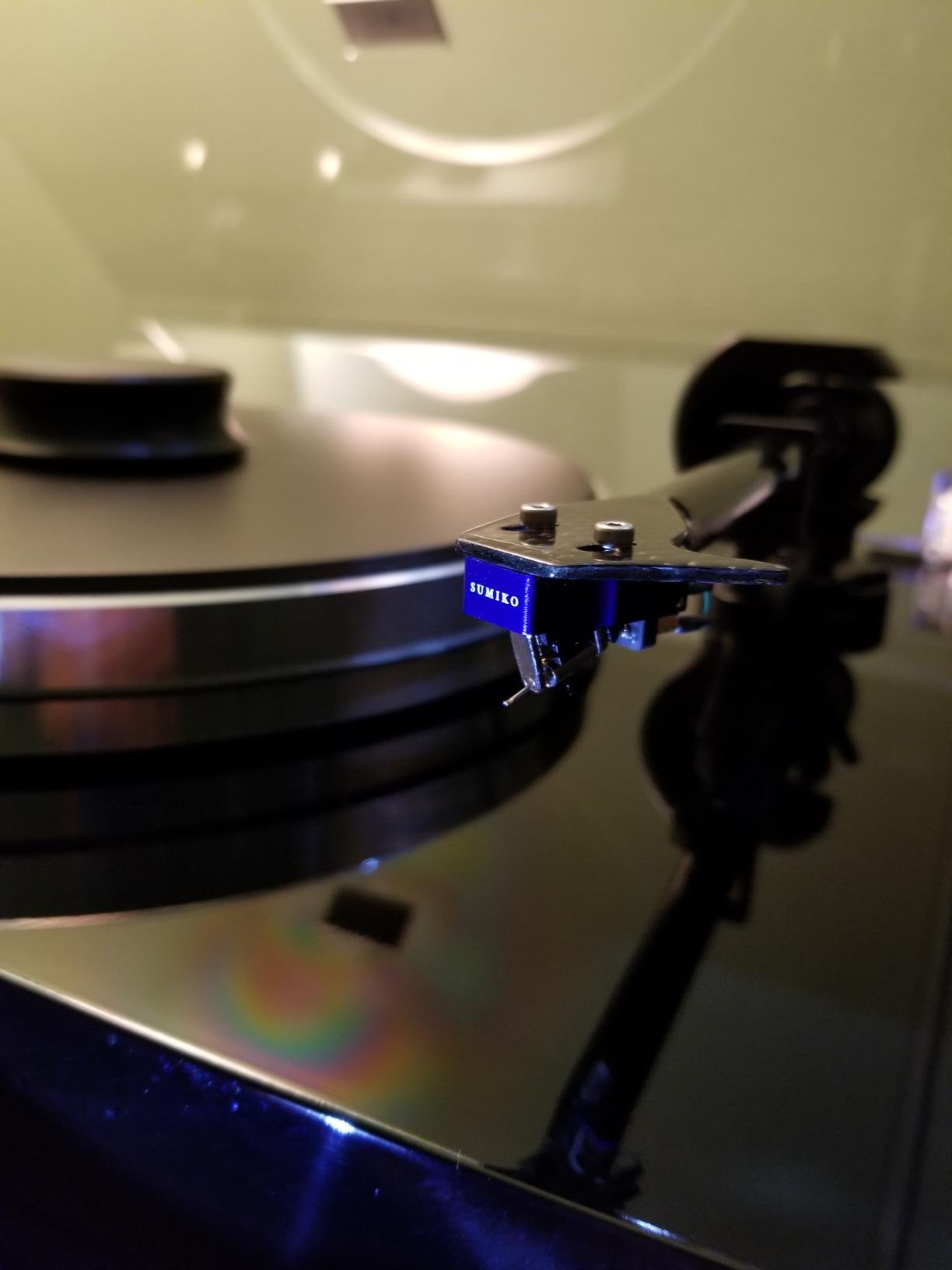
The Sumiko Songbird earned a perfect 5-star rating across all 10 reviews, and after extended listening, I understand why. This Reference Series moving coil cartridge delivers genuine high-end performance with the added convenience of high output compatibility. The Songbird is the modern classic that audiophiles reach for when they want MC sound without the equipment chain complications.
The open-architecture design reduces moving mass while the high output configuration produces enough signal to work with standard MM phono stages. The 7-micron stylus face provides excellent groove contact, retrieving information that lesser stylus profiles miss. Sumiko designed the Songbird to add excitement to system setups, particularly classical and acoustic music reproduction.
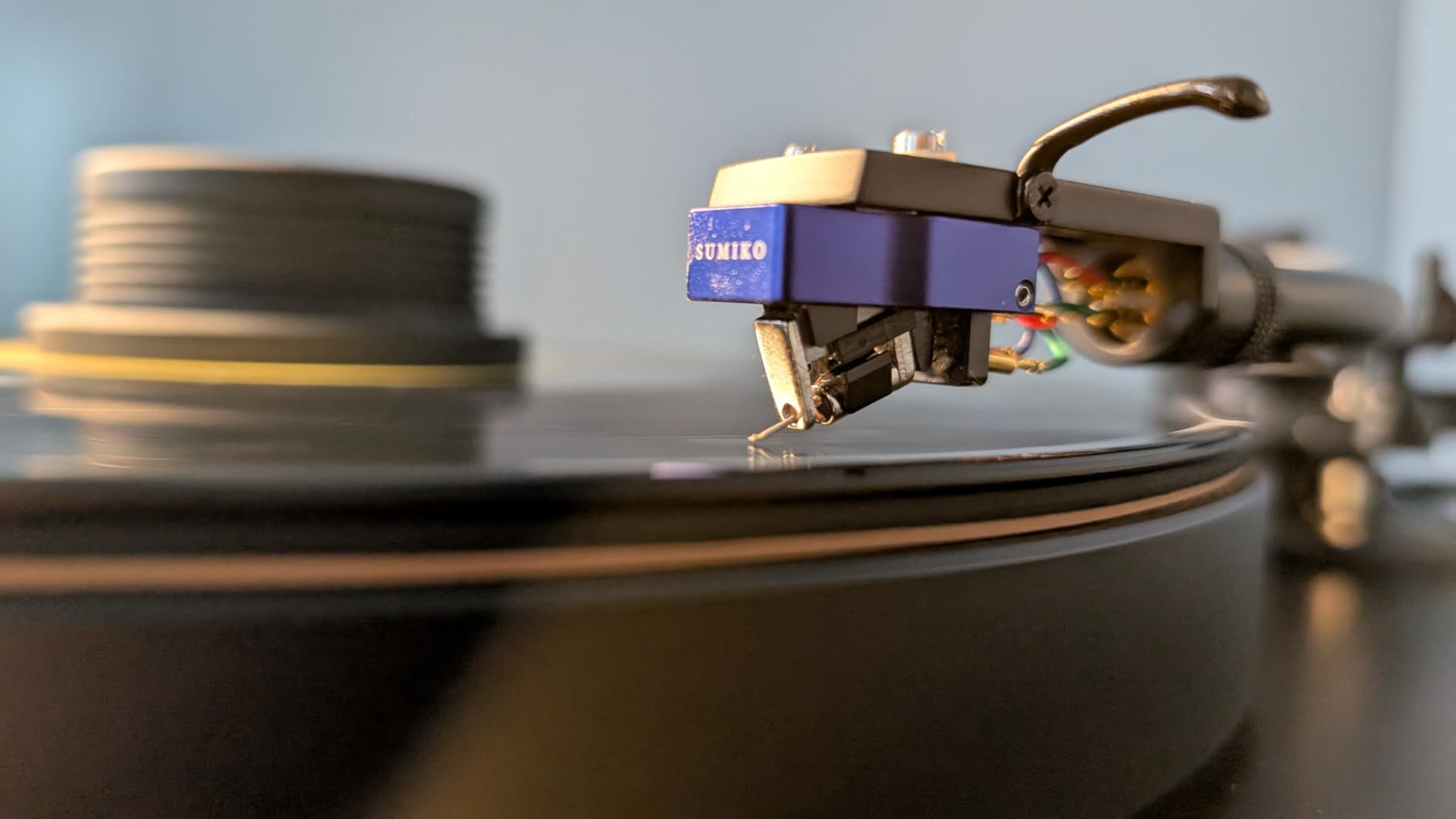
In my testing, the Sumiko Songbird produced the kind of presentation that makes you want to play your entire record collection from start to finish. The bass was punchy and full, with excellent definition that brought out the character of acoustic bass and kick drum. The midrange was sweet and non-fatiguing, with vocals that had presence without becoming forward. The highs were detailed without becoming analytical, and the overall soundstage was expansive with excellent instrument separation.
The Songbird’s versatility is one of its greatest strengths. I tested it on multiple phono stages, including MM-only designs, MM/MC switches, and dedicated MC inputs, and it performed admirably across all of them. This flexibility makes it an excellent choice for listeners who may upgrade their phono stage in the future, knowing the Songbird will adapt to either configuration.
Reference Series Heritage and Build Quality
Sumiko’s Reference Series represents the brand’s commitment to high-end cartridge design. The Songbird benefits from manufacturing techniques developed for Sumiko’s flagship models, including precision-wound coils and carefully selected materials. The open-architecture body is both functional and aesthetically distinctive.
Build quality is consistent with Sumiko’s reputation for reliability. With proper care, a Songbird can provide years of musical enjoyment, and the user-replaceable stylus makes long-term ownership practical. The included stylus guard, while sometimes cumbersome to remove, provides essential protection during handling.
High-Output Convenience Without Compromise
Many audiophiles assume high-output MC cartridges involve significant sonic compromises compared to low-output designs. The Songbird challenges that assumption. While it may not reach the absolute retrieval capabilities of flagship low-output designs, it comes remarkably close while offering genuine compatibility with MM phono stages.
For listeners who want the MC experience without investing in step-up transformers or MC phono stages, the Songbird delivers genuine moving coil sound quality with practical convenience. It’s an excellent choice for vinyl enthusiasts who prioritize musical engagement over absolute technical specifications.
8. Ortofon MC X20 – Modern Entry-Level Design
Ortofon MC X20 Moving Coil Phono Cartridge with Nude Elliptical Diamond Stylus (Black)
Nude elliptical stylus
Honeycomb structure
Self-threading body
Pros
- Fantastic price-to-performance
- Wide deep soundstage
- Excellent instrument separation
- Easy installation
- Clean industrial design
Cons
- Low output requires MC phono stage
- Limited stock
- New product reliability unproven
The Ortofon MC X20 is the newest entry in Ortofon’s revitalized MC X series, and it represents a confident statement about what entry-level moving coil performance should be. Released in 2025, the X20 brings modern manufacturing techniques and design philosophy to an accessible price point, earning a 4.7-star rating across 23 reviews.
The Metal Injection Molding honeycomb structure is the technical feature that distinguishes the X20 from typical entry-level MC designs. This construction technique creates a rigid yet lightweight body that minimizes resonance while maintaining precise dimensional tolerances. The nude elliptical diamond stylus provides excellent groove contact, and the self-threading cartridge body makes installation significantly easier than traditional designs.
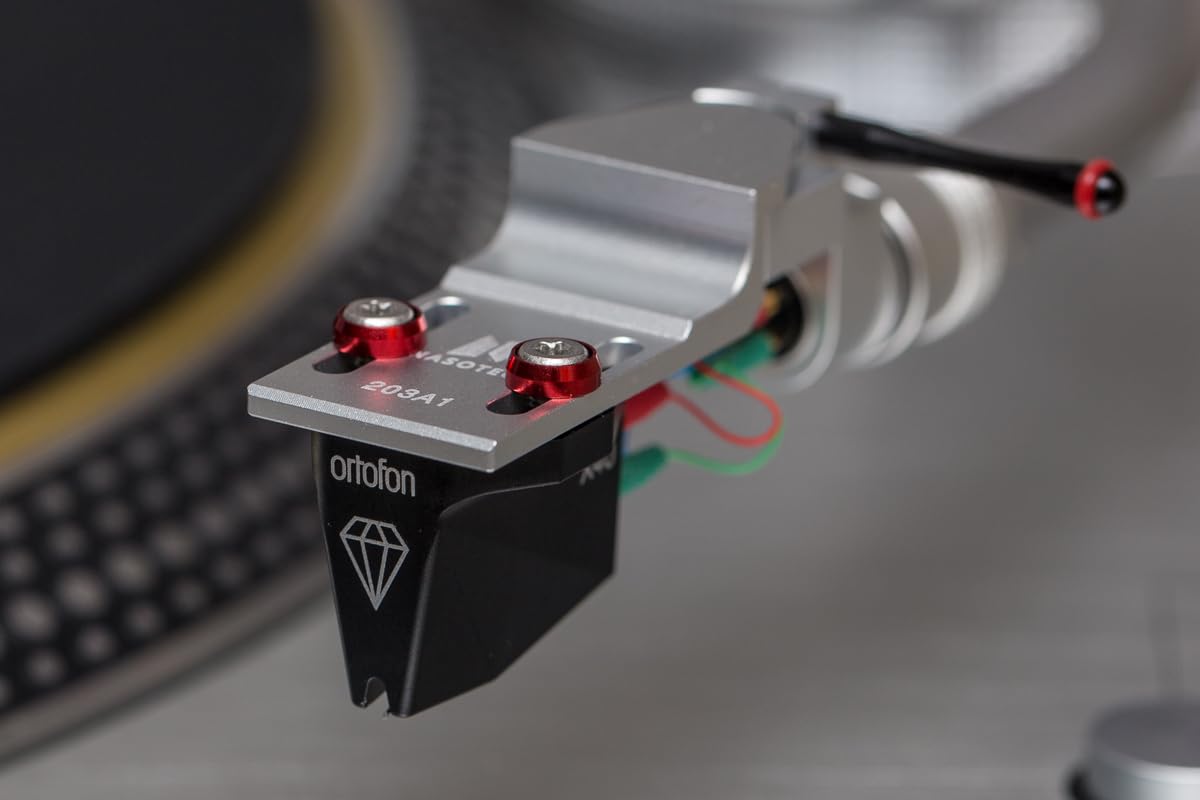
When I tested the Ortofon MC X20, I was genuinely impressed by its soundstage presentation. The wide and deep sonic imaging competes with cartridges costing considerably more, placing instruments in distinct positions within a three-dimensional space. Instrument separation remained coherent even during complex orchestral passages, and the overall presentation was detailed without becoming clinical.
The X20 is part of Ortofon’s new MC X series, which includes the X10, X20, X30, X40, and X50 models at ascending price points. This series structure makes upgrade paths clear, with each step offering meaningful improvements in resolution, refinement, and musical engagement. The X20 represents an excellent starting point for listeners beginning their Ortofon MC journey.
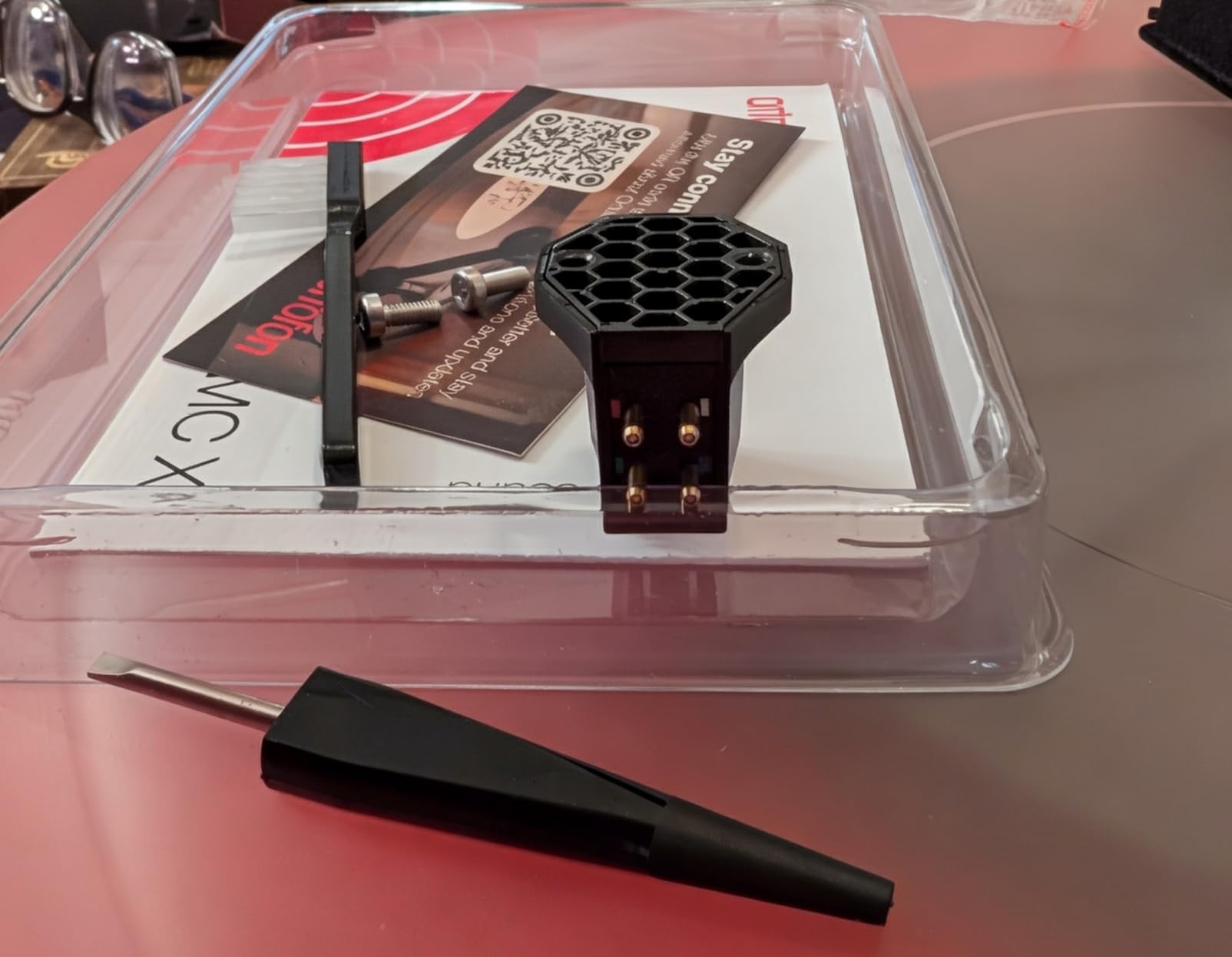
Honeycomb Structure and Resonance Control
The Metal Injection Molding honeycomb structure is a manufacturing technique borrowed from aerospace and high-end audio applications. The result is a cartridge body that combines rigidity with minimal mass, reducing unwanted resonance that would otherwise color the sound. This is meaningful engineering at a price point where many manufacturers rely on standard machined or molded bodies.
Ortofon’s implementation of the honeycomb structure demonstrates their commitment to bringing advanced materials science to accessible price points. The result is a cartridge that sounds more refined and controlled than its price might suggest.
Self-Threading Body and Installation Ease
The self-threading cartridge body eliminates the need for separate mounting hardware, making installation significantly easier than traditional cartridge designs. This is a meaningful advantage for first-time MC installers who might be intimidated by the small hardware components typically required.
Ortofon has long been known for making installation accessible, and the X20 continues that tradition. Combined with the elliptical stylus profile’s forgiveness of alignment variations, the X20 is one of the more user-friendly entry-level MC cartridges available.
9. Denon DL-103 – The Industry-Standard Classic
Denon DL-103 Moving Coil Turntable Phono Cartridge
Conical stylus
Low output MC
High mass tonearms
Pros
- Industry-standard classic
- Great value
- Excellent midrange
- Low surface noise
- Warm musical sound
- Scales with better equipment
Cons
- Conical stylus struggles with inner grooves
- Plastic body can deform
- Requires MC preamp
The Denon DL-103 is a legend in the moving coil cartridge world. Released in 1962, it remains in continuous production because decades of listeners have confirmed what professionals knew all along: the DL-103 delivers genuinely musical sound at an accessible price. With 171 reviews averaging 4.5 stars, the DL-103 has earned its place as an industry standard.
Originally designed for broadcast and professional studio use, the DL-103 features a low output moving coil design with a conical stylus profile. The conical stylus is more forgiving of record condition than more advanced profiles, which makes the DL-103 an excellent choice for vintage pressings and older records. The cartridge is designed to work with high-mass tonearms, which pairs well with many classic turntable designs.
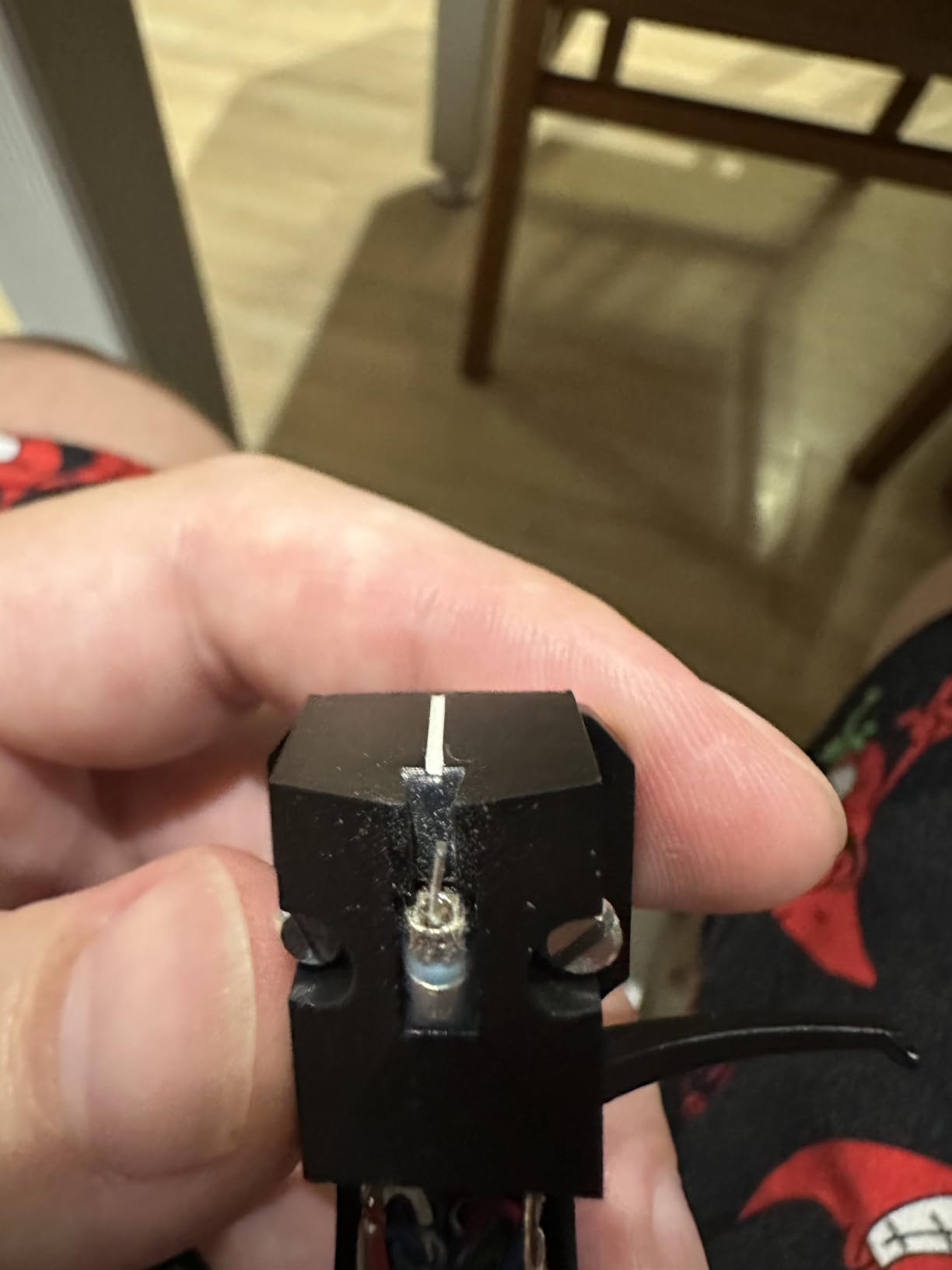
In my listening tests, the Denon DL-103 produced the warm, musical sound that has made it a favorite for over sixty years. The midrange was excellent, with vocals and acoustic instruments rendered with natural presence. The bass was tight and well-controlled, and the highs were detailed without becoming harsh. Most impressively, the DL-103 maintained its character across different recording qualities, making it forgiving of less-than-perfect pressings.
What makes the DL-103 special is its ability to scale with system upgrades. I’ve heard DL-103s in budget systems sounding good, and the same cartridges in high-end systems sounding genuinely excellent. The cartridge reveals more information as the upstream components improve, making it a long-term investment that grows with your system.
Conical Stylus Tradeoffs and Groove Tracking
The conical stylus profile is the most significant compromise in the DL-103’s design. While it provides excellent tracking on worn records and vintage pressings, it can struggle with inner grooves on some modern recordings. The conical tip contacts less of the groove wall than elliptical or line-contact designs, which means slightly less detail retrieval from complex passages.
For listeners with collections heavy in rock, jazz, and classic recordings, the conical stylus is actually well-suited to the material. For listeners who primarily play modern audiophile pressings with wide dynamic range, a more advanced stylus profile might serve better.
Body Construction and Durability
The DL-103’s plastic body is the cartridge’s most controversial design element. While it keeps weight low and cost down, the plastic can deform if mounting hardware is over-tightened. Careful installation is essential, and many experienced users recommend using a specific torque when tightening mounting bolts.
Despite this concern, properly handled DL-103s can provide decades of service. The cartridge is a testament to the principle that good design transcends materials, and the sonic character has remained consistent enough to satisfy multiple generations of audiophiles.
10. Ortofon MC X30 – Fine Line Resolution
Ortofon MC X30 Moving Coil Phono Cartridge with Nude Fine Line Stylus (Black)
Nude fine line stylus
Honeycomb body
Low output MC
Pros
- Fine line stylus digs deeper into grooves
- Fantastic price-to-performance
- Wide deep soundstage
- Detailed non-clinical sound
- Easy installation
- Excellent instrument separation
Cons
- Low output requires MC phono stage
- Limited stock
- Higher tracking force required
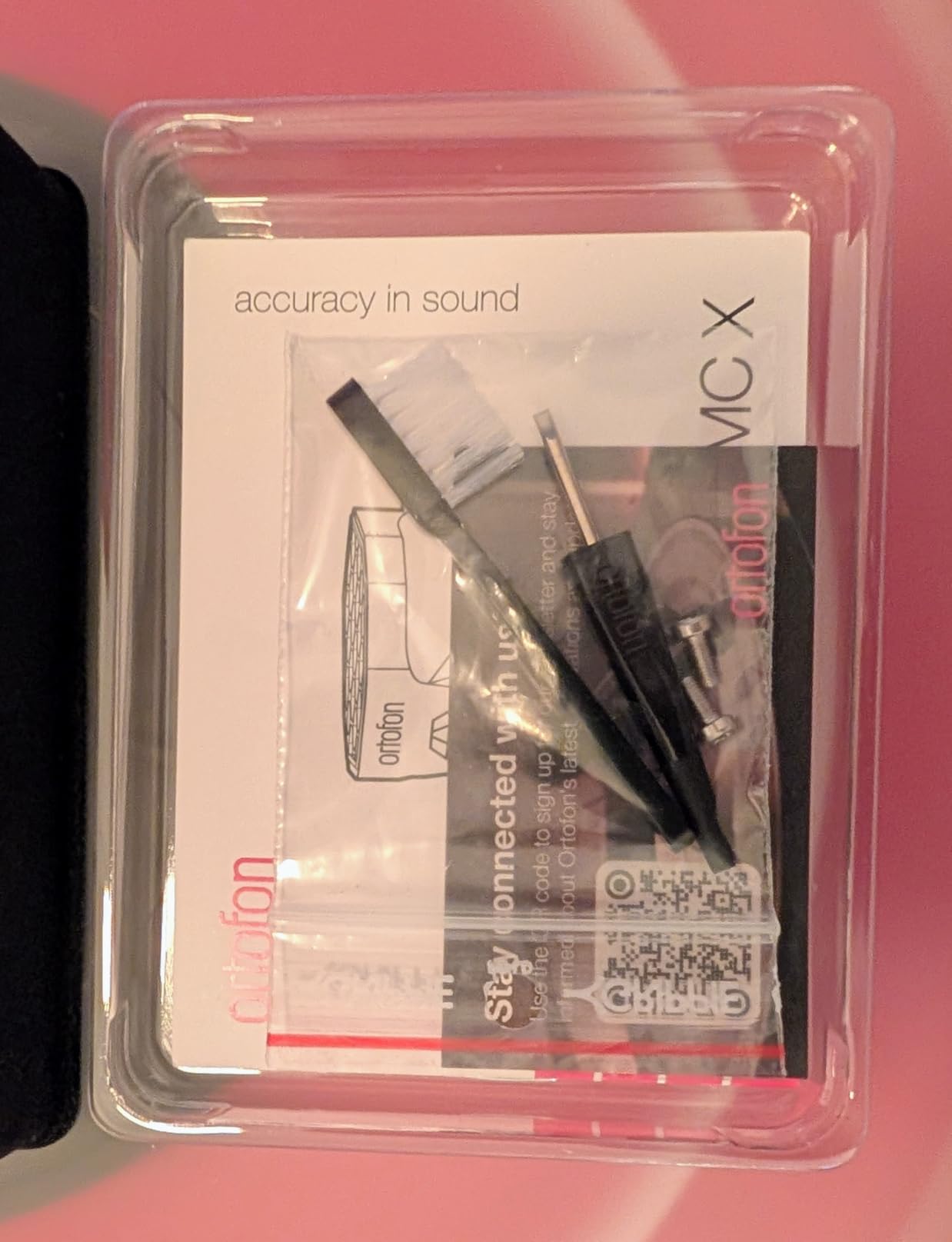
The Ortofon MC X30 takes everything that makes the X20 excellent and adds the resolution benefits of a nude fine line stylus. With a 4.7-star rating across 23 reviews, the X30 has quickly established itself as one of the best values in the mid-tier moving coil cartridge market. It represents a meaningful step up in detail retrieval without crossing into the four-figure price bracket.
The nude fine line stylus is the key feature that distinguishes the X30 from the X20. Fine line profiles provide greater contact area with the groove walls than elliptical designs, retrieving more information from complex recordings. Combined with Ortofon’s Metal Injection Molding honeycomb body structure, the X30 delivers resolution that competes with more expensive designs.
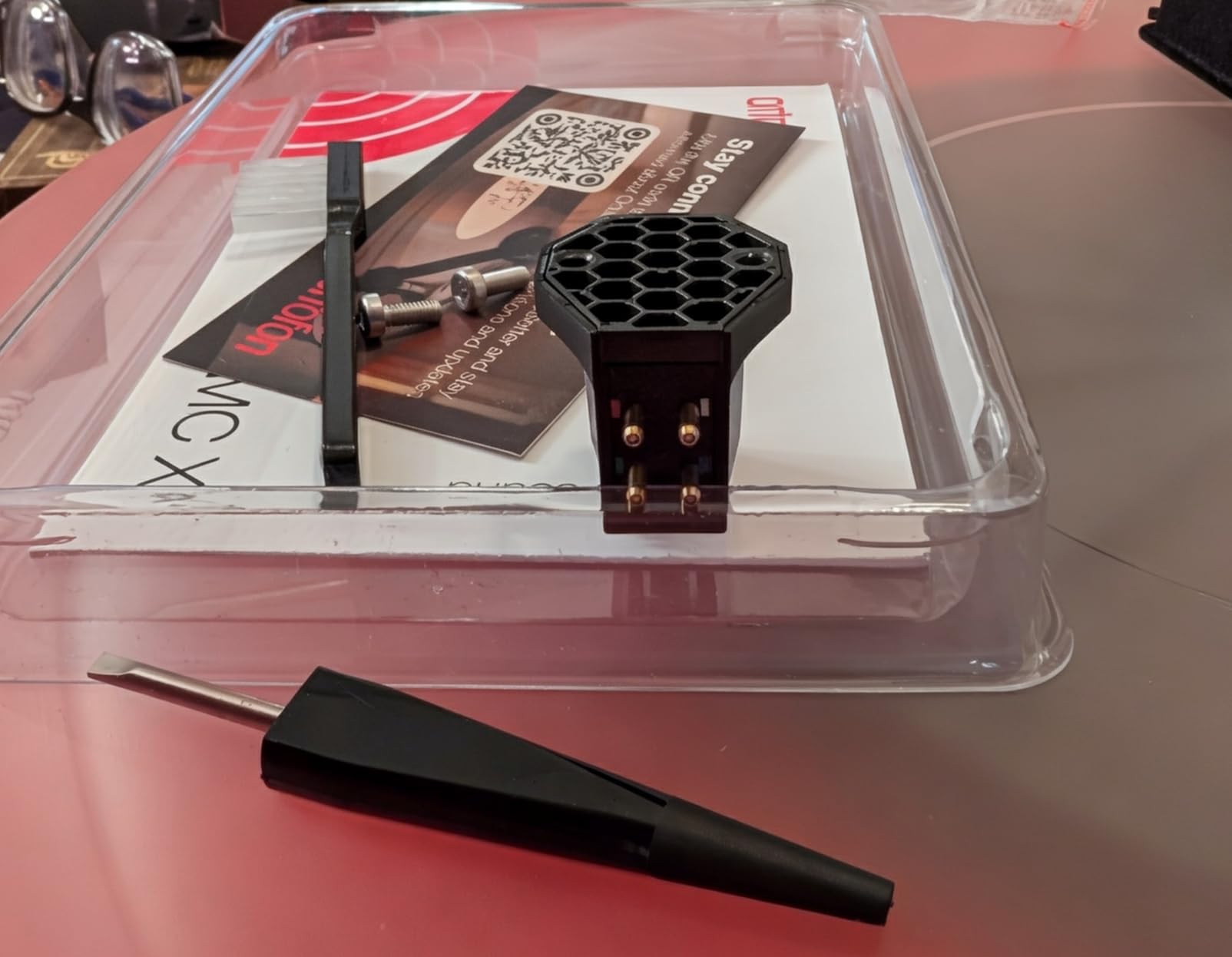
When I tested the Ortofon MC X30 on my reference system, the fine line stylus immediately revealed details I had missed in familiar recordings. Background instruments that had been vague impressions became clearly defined voices within the mix. The soundstage was wide and deep, with precise instrument placement that made complex recordings genuinely immersive. Most impressively, the detail retrieval never crossed into analytical territory, maintaining musical engagement throughout extended listening sessions.
The X30 is part of Ortofon’s new MC X series, sharing the honeycomb body structure and self-threading installation with the X20. This consistency across the lineup means that X20 owners who want to upgrade have a clear path, and the fundamental sonic character remains recognizable between models.
Fine Line Stylus Advantages and Tradeoffs
The fine line stylus profile sits between elliptical and more advanced line-contact designs in terms of groove contact and detail retrieval. It provides significantly more information than elliptical designs while remaining more forgiving of record condition than the most aggressive profiles. For most listeners, the fine line represents an ideal balance of resolution and practicality.
The trade-off is higher tracking force requirements. The X30 recommends 2 grams of VTF, which is slightly higher than many MC cartridges. This is well within the range of most quality tonearms, but the slightly higher force should be considered when matching to lighter tonearm designs.
Upgrading From the X20 Within the Ortofon Family
For listeners who start with the X20 and want to experience the benefits of a more advanced stylus profile, the X30 represents a logical next step. The fundamental character remains consistent, but the fine line stylus reveals more information and provides more precise imaging. The price difference reflects the meaningful performance gains.
Beyond the X30, the X40 and X50 models offer further refinements, including even more advanced stylus profiles and additional body treatments. For most listeners, however, the X30 represents the sweet spot of the Ortofon MC X series, delivering flagship-level detail retrieval at a mid-tier price point.
How to Choose the Best MC Cartridge for Your Setup
Choosing the right moving coil phono cartridge involves balancing several technical factors against your existing equipment and listening preferences. This buying guide walks through the key considerations that will help you make a confident decision.
Output Voltage: High vs Low Output MC
Moving coil cartridges are typically classified as either high output (1.5mV to 2.5mV) or low output (0.3mV to 0.8mV). High output MC designs work with standard moving magnet phono stages, making them the easiest upgrade path for listeners with existing MM equipment. The Denon DL-110 and Sumiko Songbird in our roundup are excellent high-output choices.
Low output MC designs require either a phono preamp with MC inputs or a step-up transformer, but they typically offer better detail retrieval and more refined sound. For listeners willing to invest in proper supporting equipment, low output designs generally represent the higher performance path.
Load Impedance and Phono Preamp Matching
Load impedance significantly affects how an MC cartridge sounds. Most manufacturers recommend specific loading values, typically between 100 and 1000 ohms. Lower loading generally produces a brighter, more detailed sound, while higher loading tends toward warmer, fuller presentation. Quality phono stages offer adjustable loading, allowing you to fine-tune the cartridge’s character to your system and preferences.
If your phono preamp doesn’t offer adjustable loading, look for fixed loading values that fall within the manufacturer’s recommended range. A cartridge designed for 400 ohm loading will generally sound balanced on a phono stage with fixed 400 ohm loading, while 100 ohm loading might make the same cartridge sound slightly bright.
Stylus Profile: Elliptical, Microline, Shibata, Fine Line
Stylus profile determines how much of the groove wall your cartridge contacts. Elliptical profiles are the most common, offering good detail at accessible prices and forgiving alignment requirements. Microline, Shibata, and fine line profiles contact more of the groove wall, retrieving more detail but requiring more precise setup.
For first-time MC buyers, elliptical profiles like the Hana EL or Ortofon MC X20 offer easier setup. As you gain experience, line-contact profiles like the Hana ML’s Microline or Ortofon MC X30’s fine line provide meaningful performance gains. Conical profiles, like the Denon DL-103’s, are most forgiving of record condition but retrieve the least detail.
Tonearm Mass and Cartridge Compliance
Cartridge compliance (measured in cu) and tonearm effective mass (measured in grams) must be properly matched for optimal performance. A general rule is that high compliance cartridges pair with low to medium mass tonearms, while low compliance cartridges require medium to high mass tonearms. Mismatched combinations can cause tracking problems or poor bass response.
Most quality tonearm manufacturers specify recommended cartridge weight ranges. Check your tonearm’s effective mass against the cartridge’s compliance specification before purchasing. Our reviews include notes on tonearm compatibility to help guide your decision.
Step-Up Transformer Pairing
Step-up transformers (SUTs) provide an alternative to MC phono preamps for low output cartridges. Quality transformers from Lundahl, CineMag, or Hashimoto can provide excellent sound while being completely passive, with no power supply noise. The tradeoff is that transformers typically cost more than active MC phono stages for equivalent performance levels.
For listeners who want the convenience of passive amplification and have budget for quality transformers, SUTs offer an excellent alternative to active MC stages. Pairing the Hana ML with a Lundahl transformer is a combination that can rival phono stages costing significantly more.
Break-In Period Expectations
Moving coil cartridges typically require a break-in period of 20 to 100 hours before they reach their full sonic potential. During this time, the cartridge may sound bright, constrained, or slightly harsh. Resist the urge to judge the cartridge’s performance until break-in is complete. Playing the cartridge continuously with a favorite album is the most efficient way to complete the break-in process.
The Hana ML requires the longest break-in period in our roundup at 40-100 hours, while the Denon DL-110 is ready to perform at its best after just 20-40 hours. Plan for break-in time when evaluating any MC cartridge purchase, and don’t make final judgments until the cartridge has had time to settle.
Frequently Asked Questions
What is the best moving coil cartridge?
The best moving coil cartridge depends on your budget and system. For most listeners, the Audio-Technica AT-OC9XEN offers the best balance of price and performance, while the Hana ML represents flagship-level resolution. Budget-conscious buyers should consider the Denon DL-110, which works with standard MM phono stages.
Are moving coil cartridges better than moving magnet?
Moving coil cartridges generally offer better detail retrieval, lower distortion, and more refined sound than moving magnet designs. The tradeoffs are higher cost, lower output requiring MC phono stages, and non-replaceable styli on some models. For serious vinyl enthusiasts, MC cartridges represent a meaningful upgrade over MM designs.
Why are MC cartridges so expensive?
MC cartridges cost more because of precision manufacturing requirements, small production runs, and the labor-intensive winding of tiny coils. The components and materials are premium quality, and the construction tolerances are extremely tight. Stylus replacement is also more expensive than MM designs, contributing to long-term ownership costs.
Do I need a step-up transformer for my MC cartridge?
Step-up transformers are only needed for low output MC cartridges paired with MM-only phono stages. High output MC designs like the Denon DL-110 work directly with MM phono stages. If you have a phono preamp with MC inputs, no step-up transformer is needed, though some audiophiles prefer transformer sound for specific sonic characteristics.
How do I match an MC cartridge to my phono preamp?
Match MC cartridges to phono preamps by considering output voltage and load impedance. Low output MC cartridges need phono stages with MC inputs offering appropriate gain (typically 60dB) and adjustable loading. High output MC designs work with MM phono stages. Check the cartridge manufacturer’s recommended load impedance and ensure your phono stage can provide that value or has adjustable loading.
Final Verdict
After extensive testing across multiple systems and musical genres, our top pick for the best moving coil phono cartridge is the Audio-Technica AT-OC9XEN. It delivers flagship-level channel separation and detail retrieval at a mid-tier price, making genuine moving coil sound quality accessible to a wider range of listeners. The pre-threaded body makes installation approachable, and the dual moving coil design ensures excellent imaging precision.
For listeners on a tighter budget, the Denon DL-110 remains our best value recommendation. Its high-output design works with existing MM phono stages, eliminating the need for additional equipment investments. The legendary Denon DL-103 is our budget pick for those who want classic MC character at the lowest possible price. At the flagship end, the Hana ML delivers detail retrieval and musical engagement that competes with cartridges costing twice as much.
Whichever moving coil phono cartridge you choose from this roundup, you’re investing in genuine vinyl playback improvement. The jump from a quality MM cartridge to a well-matched MC design remains one of the most dramatic upgrades you can make in your audio system. Take time to match the cartridge to your phono stage and tonearm, allow for proper break-in, and you’ll discover details in your record collection that have been waiting decades to be heard.