
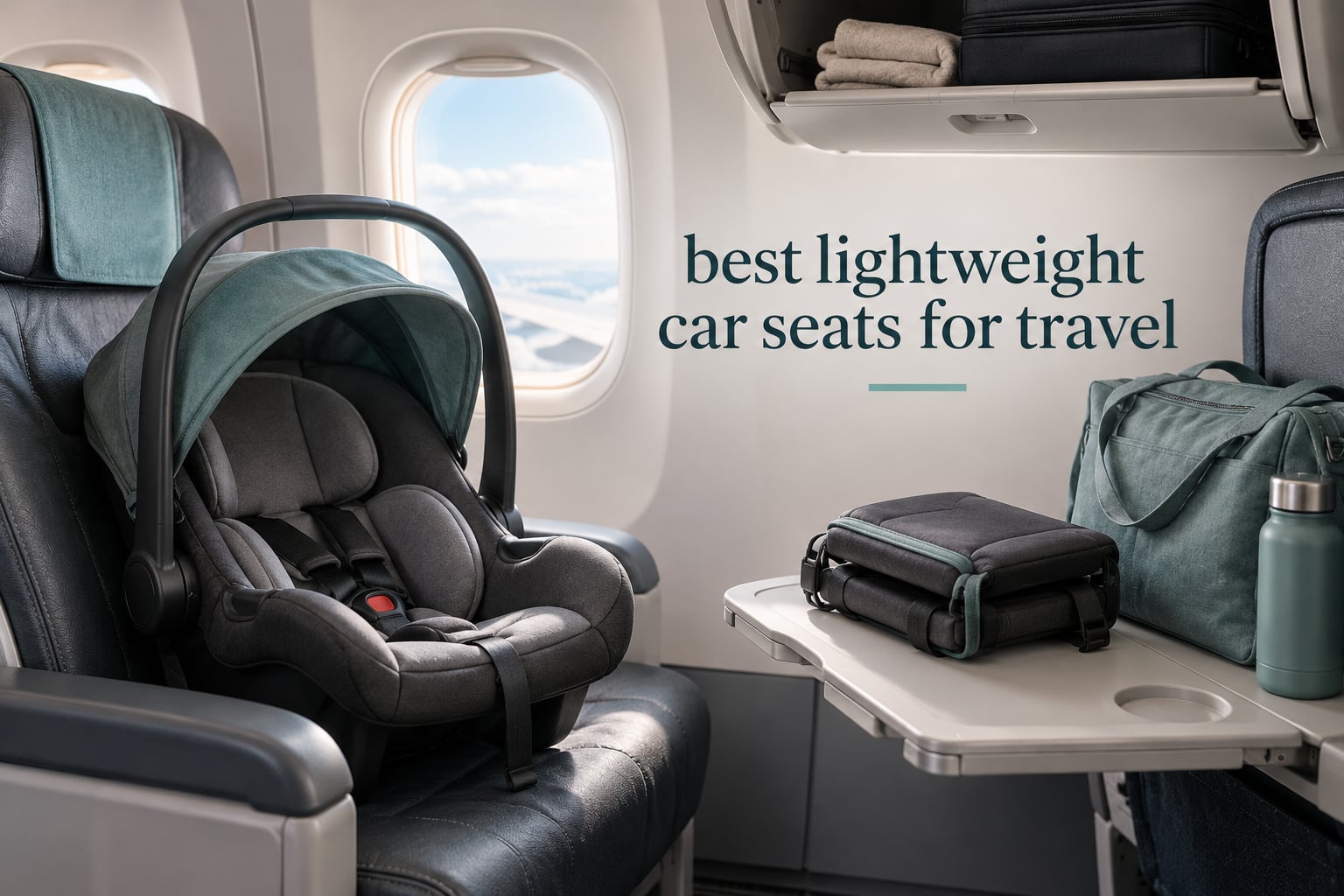
If you are hunting for the best lightweight car seats for travel, the number that matters is the one printed on the label, not the marketing. The Graco SnugRide Lite LX is the lightest seat in this roundup with a manufacturer-stated weight at 7.2 lb, and it holds babies from 4 lb all the way to 30 lb. A real number paired with a real weight range is rarer than it should be in this category.
Travel seats come in three shapes. Infant carriers like the Graco clip out of a base and double as a stroller seat. Folding convertibles such as the Diono Radian 3R handle rear-facing and forward-facing use in one frame. Folding or inflatable boosters are for children over 40 lb who can sit still and hold their own seat belt.
We compared all ten seats below on weight, weight and height range, install method and packed size. If you are starting from zero, our infant car seat guide covers the everyday seats these travel picks sit beside. Past the rear-facing stage, the convertible car seat roundup covers all-in-one options in more depth.
One warning first. The hardest part of flying with a child is rarely the weight of the seat. It is whether the seat fits a coach row and whether the airplane belt still latches with the car seat in place. We come back to that below, because parents raise it more than anything else.
Top 3 Best Lightweight Car Seats for Travel (October 2026)
The Graco SnugRide Lite LX takes the top slot for the best balance of a verified 7.2 lb weight, a 4 lb to 30 lb range and the highest review volume on this list. The Diono Radian 3R is the pick when you want one seat for the whole childhood span, and the Chicco GoFit Plus wins for big kids who move between vehicles constantly.

Graco SnugRide Lite LX
- 7.2 lb seat
- 4-30 lb rear-facing
- 4-position base with level indicator
All 10 Lightweight Car Seats at a Glance in 2026
Here is the full lineup in the order we review it below. Infant carriers and convertibles need a base or a belt install. Boosters and inflatable seats run on nothing but an adult three-point belt.
| Product | Specifications | Action |
|---|---|---|
| Graco SnugRide Lite LX |
|
Check Latest Price |
 Diono Radian 3R Diono Radian 3R |
|
Check Latest Price |
 Baby Trend EZ-Lift Plus Baby Trend EZ-Lift Plus |
|
Check Latest Price |
 mifold Comfort Grab-and-Go mifold Comfort Grab-and-Go |
|
Check Latest Price |
 mifold Hifold High Back mifold Hifold High Back |
|
Check Latest Price |
 hiccapop UberBoost hiccapop UberBoost |
|
Check Latest Price |
 Chicco GoFit Plus Chicco GoFit Plus |
|
Check Latest Price |
 Safety 1st Ellaris Safety 1st Ellaris |
|
Check Latest Price |
 BubbleBum Inflatable BubbleBum Inflatable |
|
Check Latest Price |
 Safety 1st Crosstown Safety 1st Crosstown |
|
Check Latest Price |
1. Graco SnugRide Lite LX — the lightest confirmed weight in the roundup
Graco SnugRide Lite LX Infant Car Seat, Studio
7.2 lb
Rear-facing 4-30 lb to 32 inch
4-position base with level indicator
Pros
- Confirmed 7.2 lb weight
- 4 lb to 30 lb range suits very small babies
- Level indicator removes install guesswork
- Detaches from the base quickly
Cons
- Sunshade is stiff and noisy to operate
- Less padding than earlier versions of this seat
- Base release grip feels awkward to some
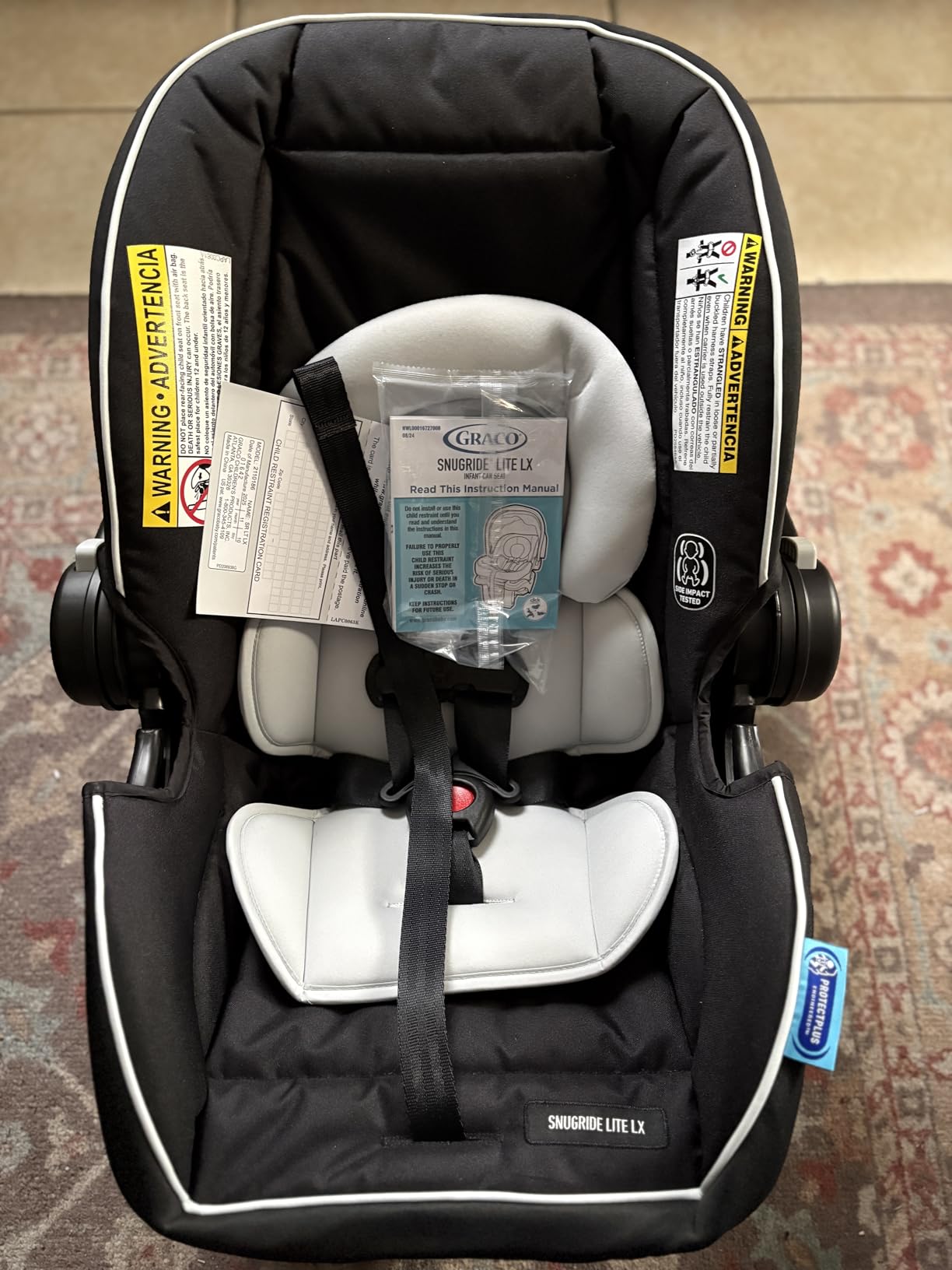
This is the seat I keep returning to for a simple reason: 7.2 lb is a stated figure rather than an estimate, and it pairs with a 4 lb to 30 lb rear-facing range. That low floor matters more than people expect, because plenty of families meet a premature infant before a normal birth weight.
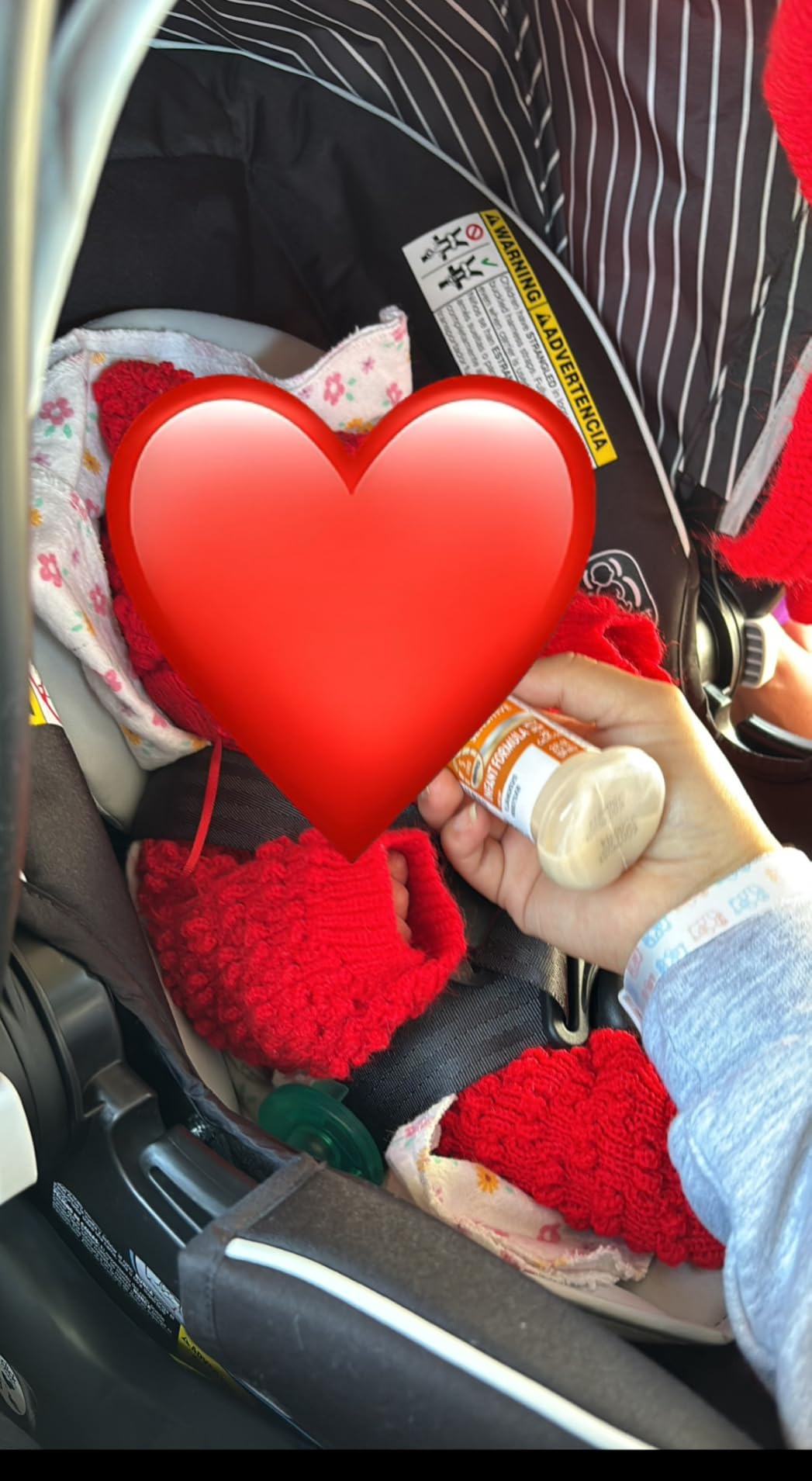
The 4-position adjustable base is the quiet hero. You set the recline once, glance at the level indicator, and you know the seat is where it belongs. ProtectPlus engineering covers frontal, side, rear and rollover crashes, and owners report the head support fitting babies from 4 lb.
Over 7600 reviews sit behind this seat, and the praise repeats in the same three sentences: it is light, it installs without fuss, and it moves from car to stroller in seconds. Several reviewers used it for premature twins under 6 lb.
What to check before you fly
Confirm the FAA label on the seat body before booking, because a light weight does not guarantee cabin eligibility. Measure the width against the seat in front of you at your usual row pitch, since a carrier that clears one aisle may not clear another.
If you pair it with a stroller, check that the frame accepts a bucket carrier rather than requiring a proprietary adapter.
Where it falls short
The sunshade is the most repeated complaint. Reviewers describe it as stiff and noisy, which is annoying in a quiet cabin but not a safety problem.
Padding is thinner than on earlier versions of the same seat, so it is a less comfortable long-flight nap seat. Plan a head support accessory if your baby is under 5 lb.
2. Diono Radian 3R — folds flat and grows from birth to booster
Diono Radian 3R, 3-in-1 Convertible Car Seat, Rear Facing & Forward Facing, 10 Years 1 Car Seat, Slim Fit 3 Across, Blue Sky
5-120 lb across four modes
Folds flat for travel
FAA approved for airline use
Pros
- Folds flat for airline travel and compact storage
- 5 to 120 lb covers birth through booster
- Fits three across in a sedan
- Machine-washable cover
Cons
- Steel frame is heavy for grab-and-go use
- Installation modes are complex and invite misuse
- Deep rear-facing recline can require moving the front seat
This is the only seat in the roundup whose listing states FAA approval for airline use outright. For a family flying with a toddler who needs a real harness rather than a booster belt, that single line changes the decision more than any weight figure.
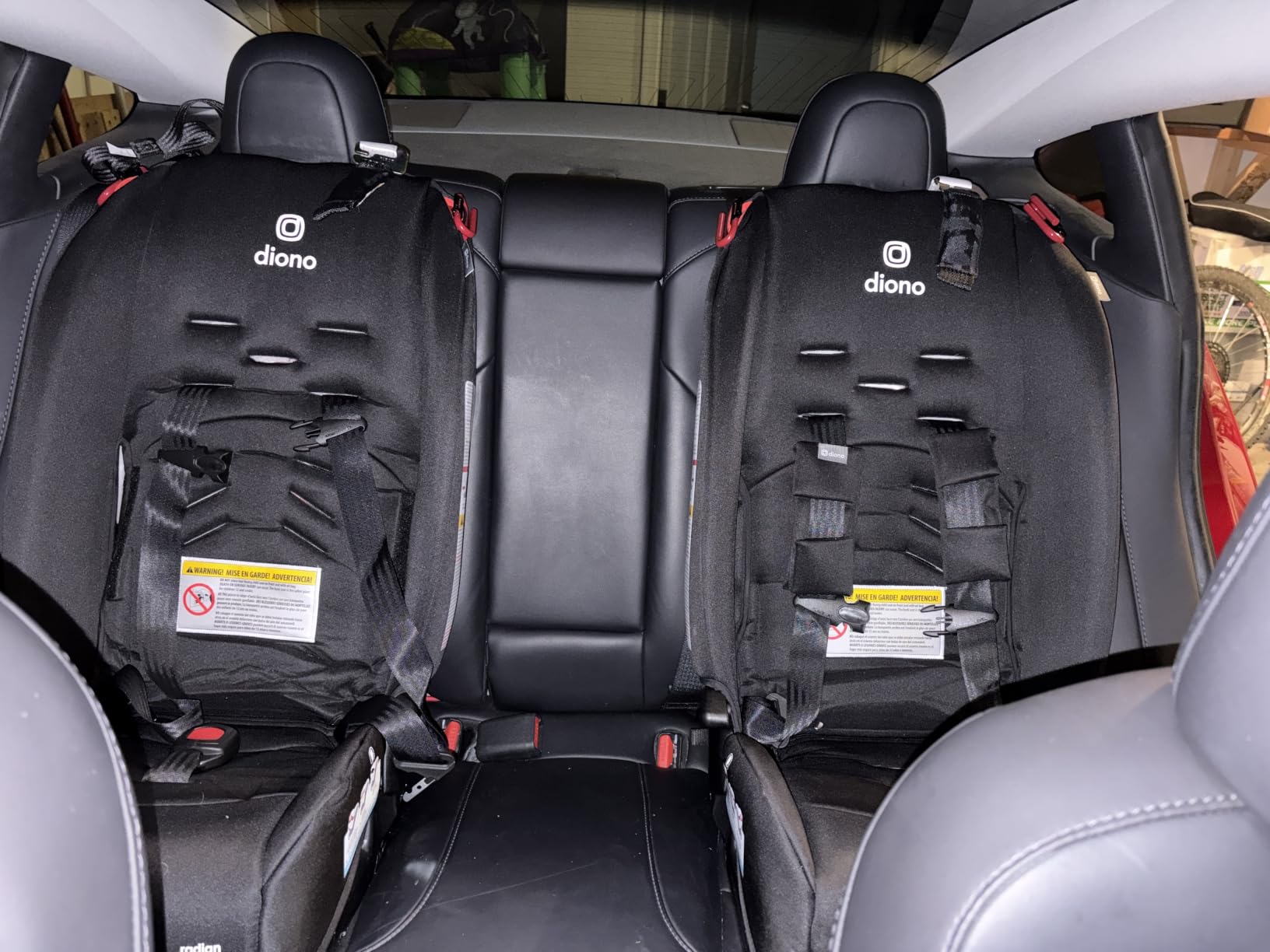
It covers 5 lb to 120 lb across four modes, rear-facing up to 50 lb, then forward-facing harness, then high-back booster, then backless. Parents buy it once and keep it for the full run of a child, and reviewers repeatedly mention how long the seat stays useful.
The slim profile is the other reason it shows up in family sedans. Owners fit three across, which matters when a second adult or a third child is in the back seat. ComfortPlus memory foam is included rather than sold separately.
What to check before you fly
Book early and ask for a bulkhead row if you can. The seat is narrower than most convertibles but not narrow, and an empty seat beside you is worth a lot on a narrow-body aircraft.
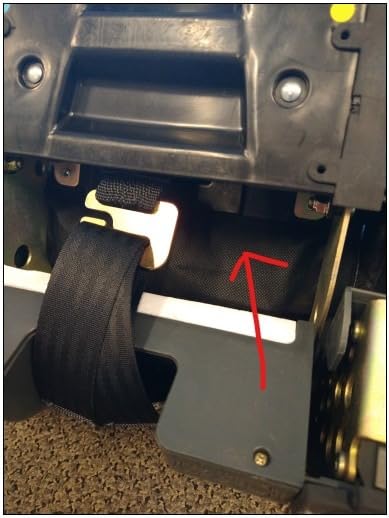
Plan on a Child Passenger Safety Technician consultation for the installation, or read every mode diagram before using a new position. Reviewers recommend this because the modes are complex.
Where it falls short
The rear-facing recline is deep. On a smaller vehicle you may need to slide the front passenger seat forward, and some vehicles only allow rear-facing in the center position.
The steel frame does not fold into a backpack, so this is a seat you fold into a trunk or a closet, not one you sling over a shoulder. For seats built to swivel in place, see the rotating car seat guide.
3. Baby Trend EZ-Lift Plus — seat and base in one box
Baby Trend EZ-Lift™ Plus Infant Car Seat, Ultra Grey – Newborn Comfort Padding, Lightweight Carry Build, Adjustable Harness System
Infant seat and base included
Newborn comfort padding
Adjustable harness system
Pros
- Both the seat and the base are included
- Comfortable ergonomic handle for car-to-stroller moves
- Plenty of cushioning for the first year
Cons
- Crotch strap buckle runs short on older infants
- No grocery cart attachment points on the sides
- Harness adjustment takes practice
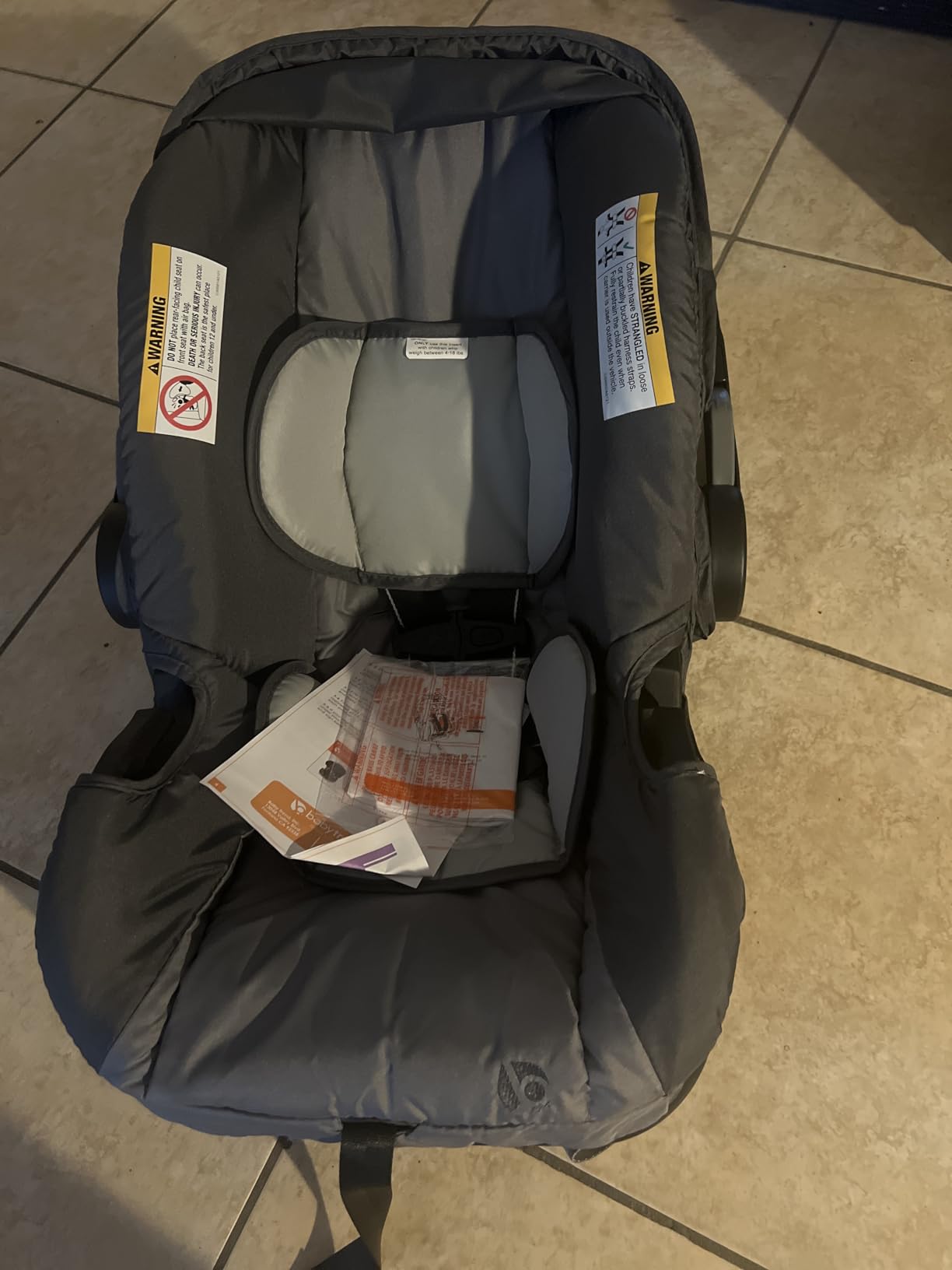
The reason this seat lands on a travel list is logistics. The box contains both the infant seat and the car seat base, so there is no second purchase to remember before you leave the house.
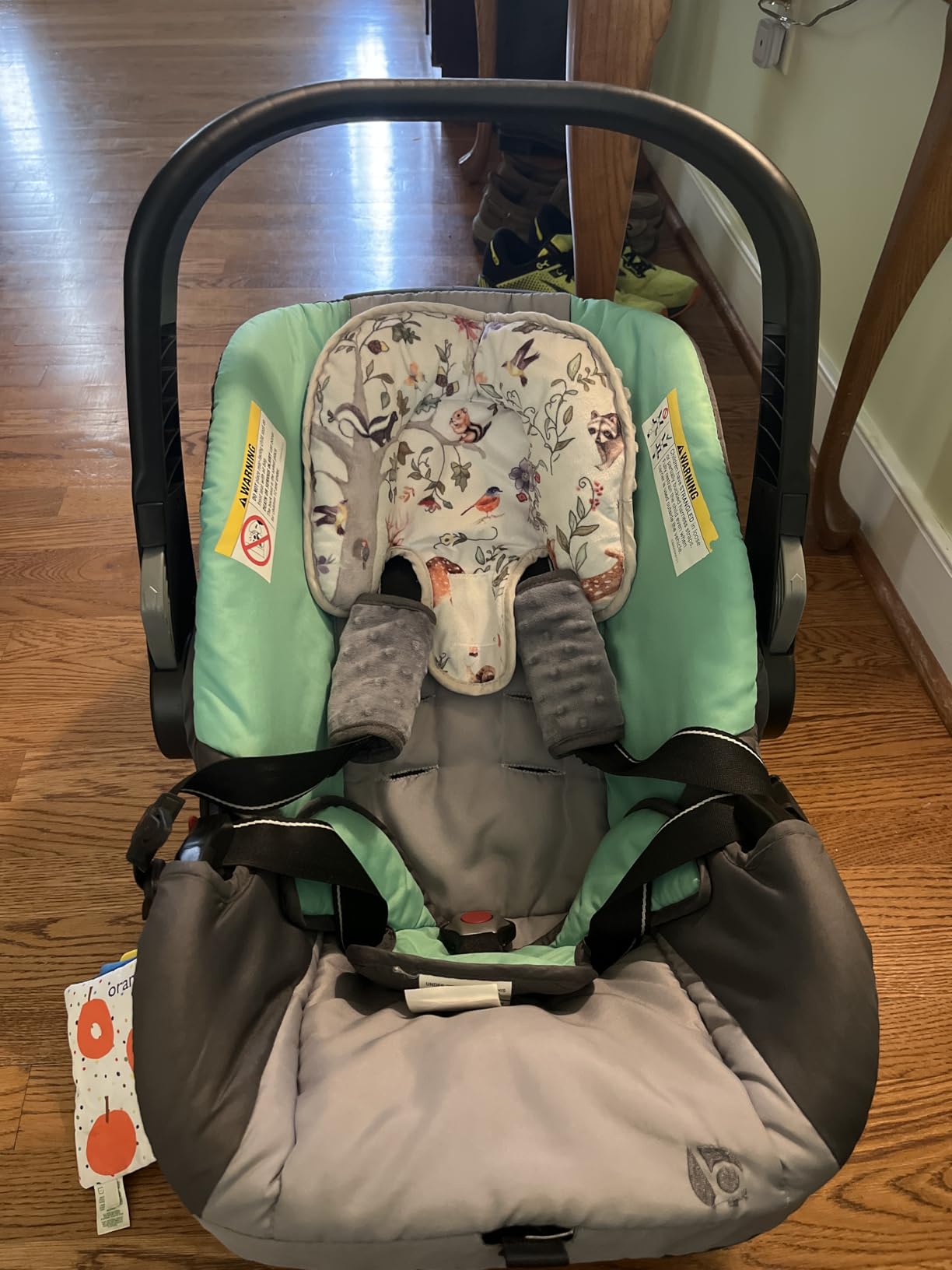
Owners highlight the lightweight carry build and the handle grip as the two things that make the car-to-stroller transition painless. Several also note the frame fits common Graco and double stroller setups without special adapters, which is unusual flexibility for an infant seat.
Newborn comfort padding gives it an edge for very young babies on long rides, and reviewers single it out as generous rather than thin. The 100% polyester cover wipes clean, which matters in a rental car.
What to check before you fly
No manufacturer weight is published in the listing, so treat the weight as unverified and plan for it to sit in the middle of this list. If a precise number drives your decision, the Graco above is the safer bet.
Confirm your stroller frame directly rather than assuming, because adapter fit varies by model.
Where it falls short
The crotch strap buckle is the most common complaint. It runs short enough to cinch the legs of older infants, and reviewers flag it repeatedly.
There are no grocery cart attachment points on the sides, a small miss for anyone who uses a cart as a stroller base. Set the harness at home rather than at the curb, since the adjustment takes practice.
4. mifold Comfort Grab-and-Go — fits a backpack
New Mifold Comfort Grab-and-go Car Backless Booster Seat-Compact and Portable for Every Day, Carpooling, Travel, Charcoal Grey
Backless booster for ages 4+
40-100 lb and 43.5-59 inch
Fits a backpack or glove box
Pros
- Fits inside a regular backpack or glove box
- No installation in any car with a 3-point belt
- Anti-slip pads stop it shifting
- Compact Comfort cushion adds padding
Cons
- Backless design gives limited head and shoulder support
- Child must sit properly for the belt to fit
- Narrow frame may not suit children at the top of the range
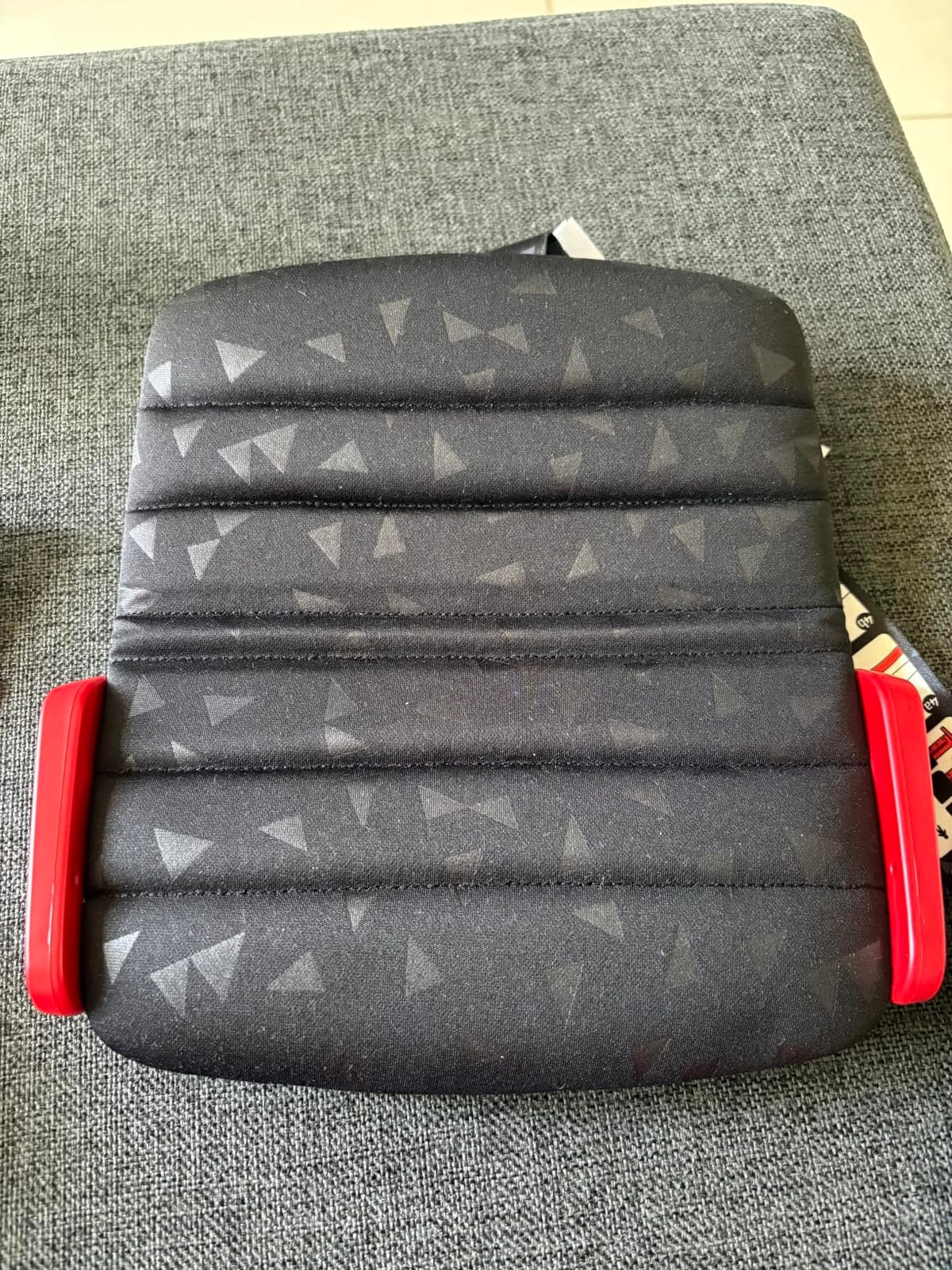
There is no lighter way to carry a booster than this. The mifold Comfort goes into a regular backpack or a glove box, which means it disappears into your luggage instead of taking up a seat of its own.
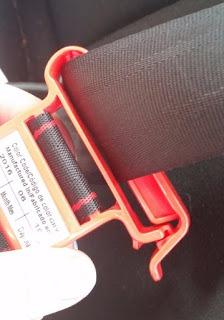
It is a backless belt-positioning booster for children 4 and up, 40 to 100 lb, 43.5 to 59 inches tall. The design pulls the adult belt down to the correct height rather than lifting the child, which is the safest way to fit a smaller child to a standard belt.
It also solves the rental car problem completely. No anchors, no base, no straps. The updated version added a Compact Comfort cushion, a new shell, anti-slip pads and an easier shoulder belt guide, all aimed at longer rides.
What to check before you fly
Check that your child can sit still for the whole flight. A backless belt-positioning booster depends on the child staying put, and a restless six-year-old on a six-hour flight is the wrong combination.
Confirm the height range. Children near 59 inches will outgrow the narrow frame.
Where it falls short
No head or shoulder support means a sleeping child slumps forward, and there is no recline of any kind.
It is a booster only, so it does nothing for a child under 40 lb. With a 4.2 rating, the lowest here, I would not call it the safest pick, only the most compact.
5. mifold Hifold High Back — 243 settings in a 10 lb frame
Mifold Hifold Adjustable Kids High Back Booster Car Seat with Strap – Slate Grey
Weighs 10 lb
243 individual settings
Folds to 10.7 by 13.5 inch
Pros
- Adjusts in four areas across 243 settings
- 10 lb weight with a built-in carry strap
- EPE foam gives strong impact resistance
- Approved for use in most regions
Cons
- Belt-positioning booster only
- no harness
- Adjustments add complexity
- Folded size is larger than a backless booster
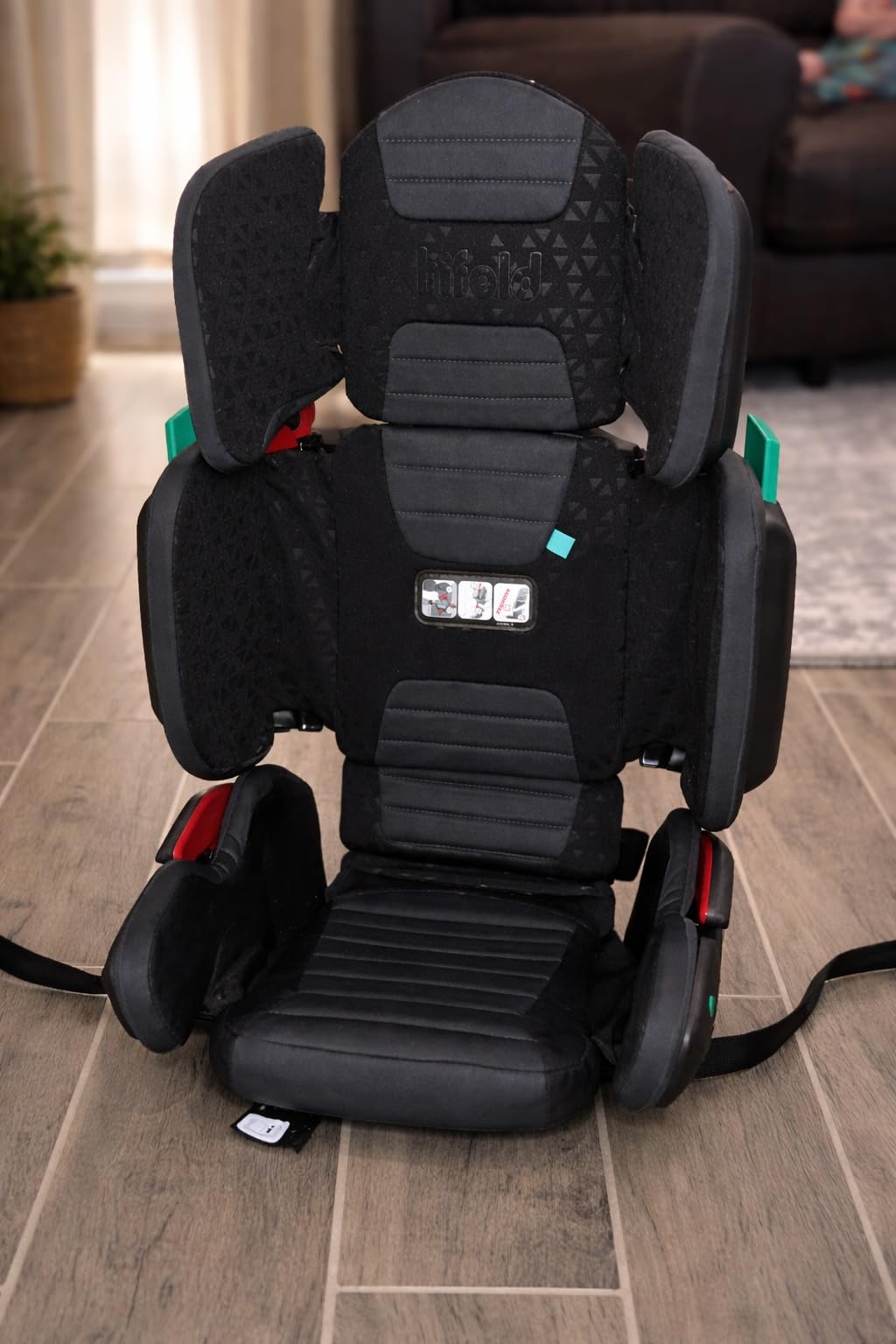
The Hifold is the high-back answer to the same portability question. At 10 lb it is not the lightest seat here, but it folds to 10.7 by 13.5 inches and comes with a built-in carry strap, so it lives in a closet until you need it.
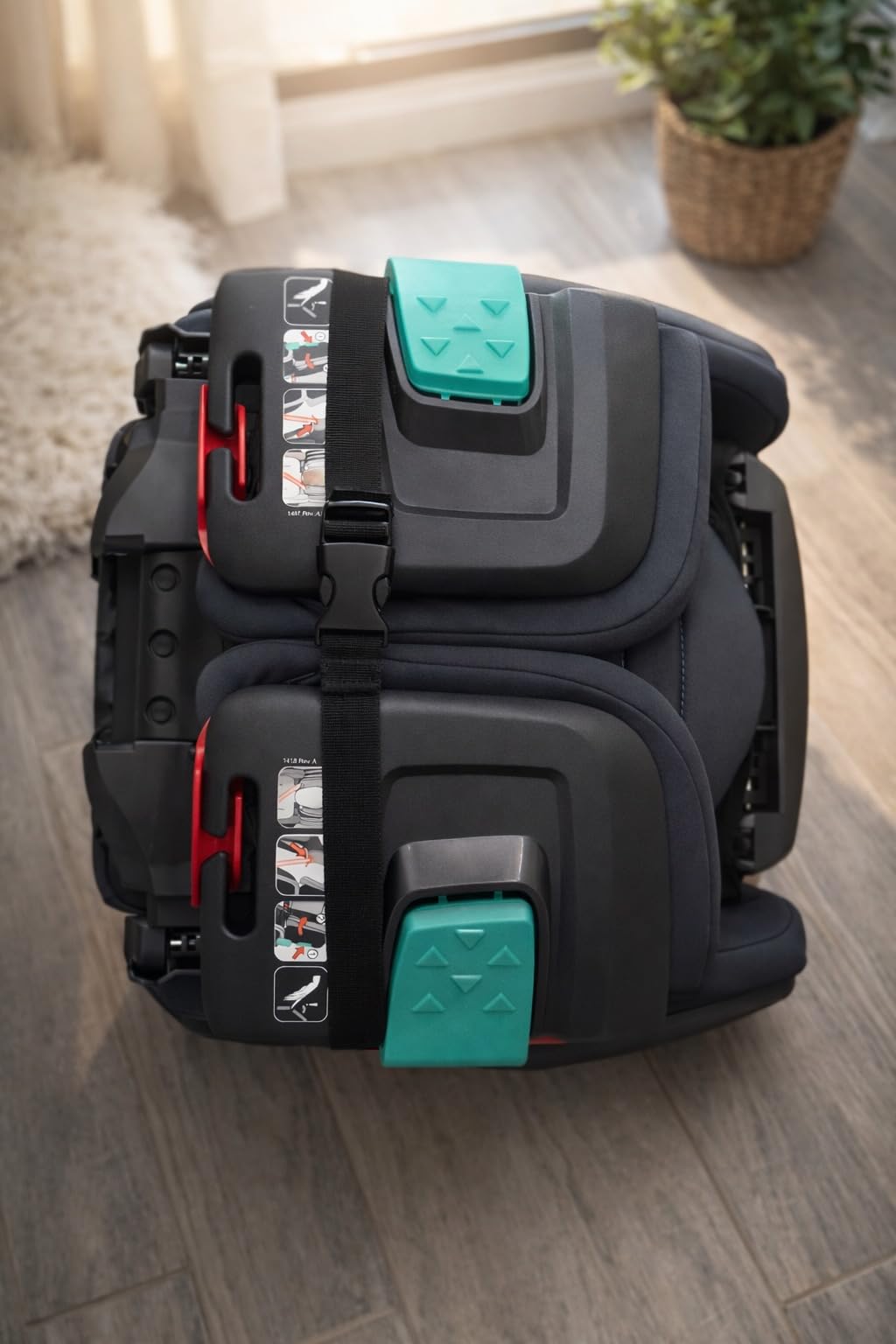
What sets it apart is Multi-Fit technology with 243 individual settings across four adjustment points: seat, body, head width and height. Between 43.5 and 59 inches, that range of adjustment keeps the adult belt landing correctly as the child grows, which is the entire point of a booster.
It meets or exceeds FMVSS 213b and is approved for use in most regions worldwide, a genuine advantage for international travel. Unfolded it measures 24.7 inches high and 12.8 inches wide at the smallest setting.
What to check before you fly
Compare the 12.8 inch width against the airplane seat in front of you. A high-back booster is wider than a backless one, and window and middle rows in coach are the tight spots.
Read the adjustment sequence once at home. The four adjustment points are why the seat fits so many children and why it feels complicated the first time.
Where it falls short
It is a belt-positioning booster, not a harness seat, and the manufacturer is explicit about that. Children under 40 lb need something else.
The high-back frame takes more room than a backless booster when three children share a row. If space is the constraint rather than weight, a backless or inflatable option fits better.
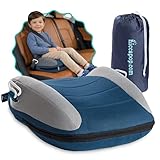
6. hiccapop UberBoost — inflates in about 20 seconds
UberBoost Inflatable Booster Car Seat, Travel Booster Seat, Navy/Gray
Inflates in under 20 seconds
Rolls into its own travel bag
Meets FMVSS 213
Pros
- Inflates in about 20 seconds with no pump
- Packs into a carry-on or backpack
- Belt alone secures it
- three across fit
- Lifetime warranty
Cons
- Backless design gives no head or shoulder support
- Soft cushion loses firmness over multi-day trips
- Only for a child who can sit still
- Zipping the cover can puncture the cushion
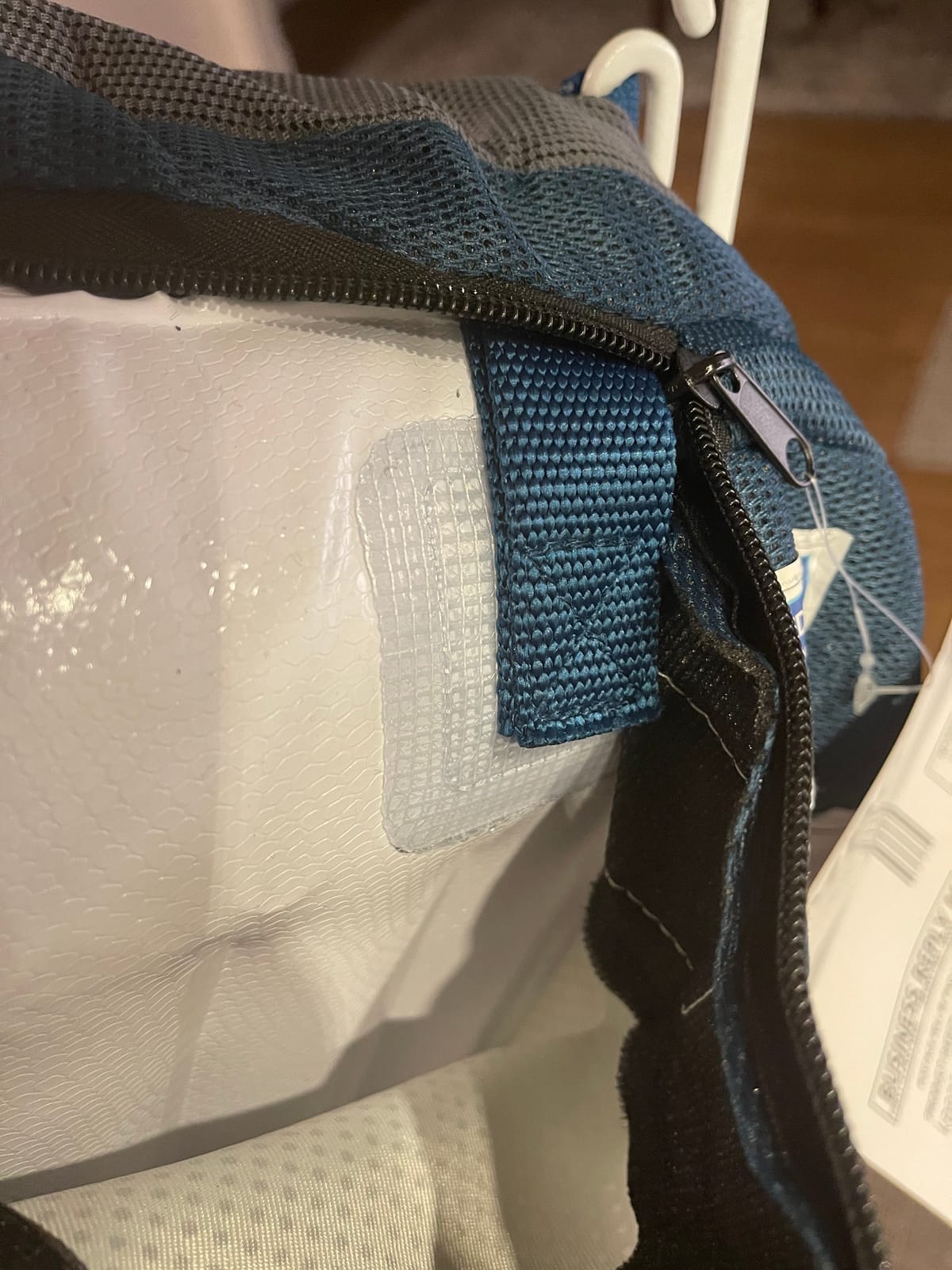
Nothing else on this list disappears into a suitcase the way the UberBoost does. You inflate it with a few breaths in under 20 seconds, then deflate and roll it into its own travel bag, small enough for a carry-on, a large purse or a backpack.

It meets or exceeds FMVSS 213, so it is a certified restraint rather than a cushion. The non-skid base sits steady on leather, vinyl or cloth, and the narrow profile lets three sit across a back row, or one between two traditional car seats.
Positioning clips keep the lap belt across the child’s thighs rather than digging into the stomach. There is no LATCH hardware to fiddle with, and the lifetime warranty with responsive replacement service is unusual at this level.
What to check before you fly
Your child has to be old enough and settled enough to sit still and not fiddle with the belt for the entire flight. Reviewers are direct that this is a booster for a mature child, not a toddler.
Plan to re-inflate on a long trip. Over several days the soft cushion slowly loses air, and a sagging cushion is what makes a booster uncomfortable.
Where it falls short
Backless means no head or shoulder support, so an asleep child slumps. That is the same limitation every backless booster in this roundup shares.
Watch the zipper. The cover zips over the inflatable chamber, and carelessness there can puncture it. Owners who hit a slow leak usually trace it back to exactly that.
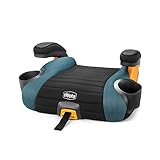
7. Chicco GoFit Plus — highest-rated seat in the group
GoFit Plus Backless Booster Seat, with Quick-Release Latch
40-110 lb and 44-57 inch
Quick-release LATCH
Built-in carry handle
Pros
- Quick-release LATCH removes one-handed
- Built-in handle and low weight for fast transfers
- ErgoBoost contouring with double foam padding
- Two fold-away cup holders
- Machine-washable seat pad
Cons
- Backless design has no head or back support
- Shoulder belt guide is fiddly at first
- LATCH stabilizes only
- it is not a restraint
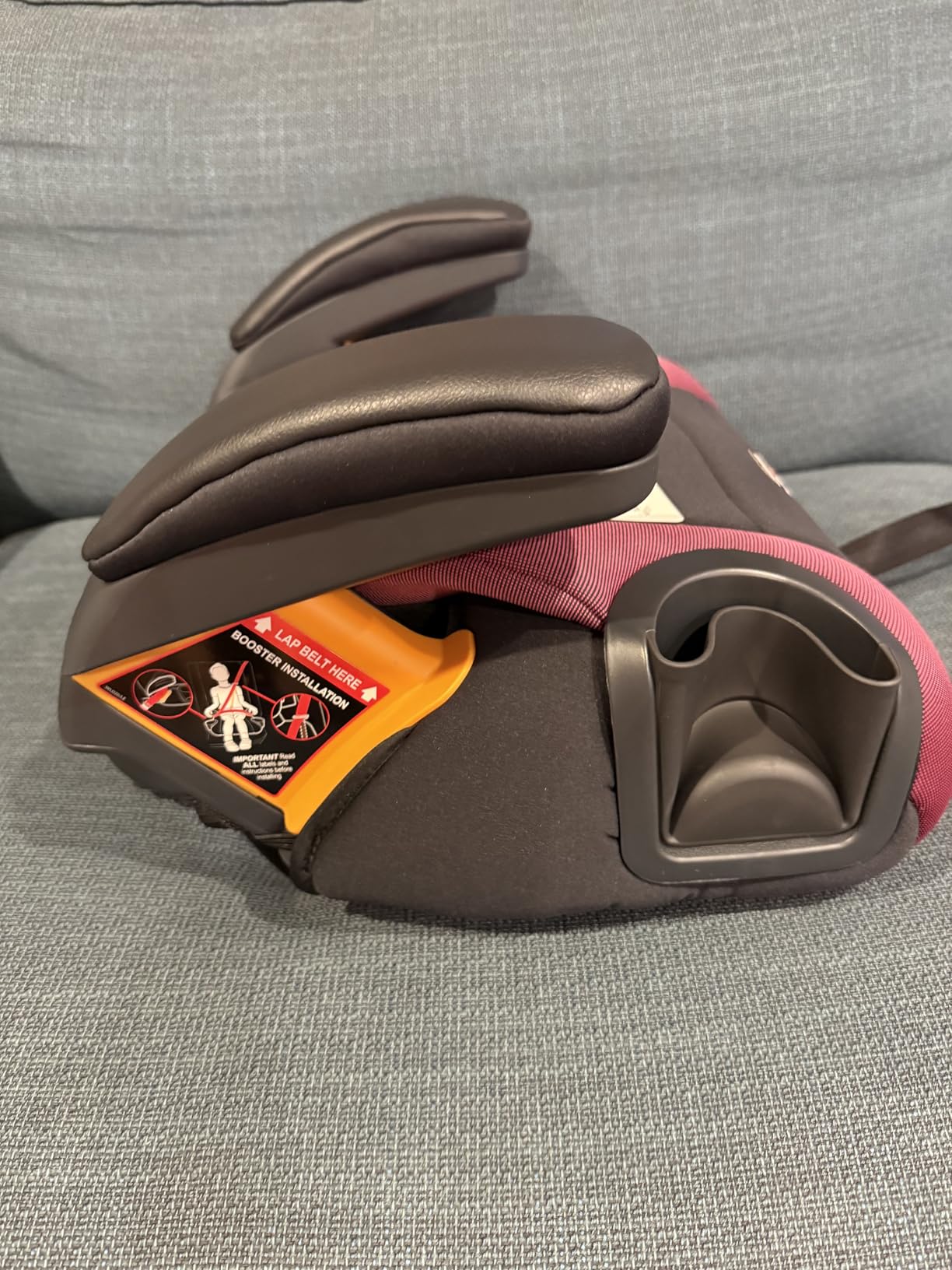
The GoFit Plus carries a 4.9 rating across 4925 reviews, with 91 percent of those at five stars. That is the highest rating in this roundup, and it comes down to one design decision: a quick-release LATCH that comes off with one hand.
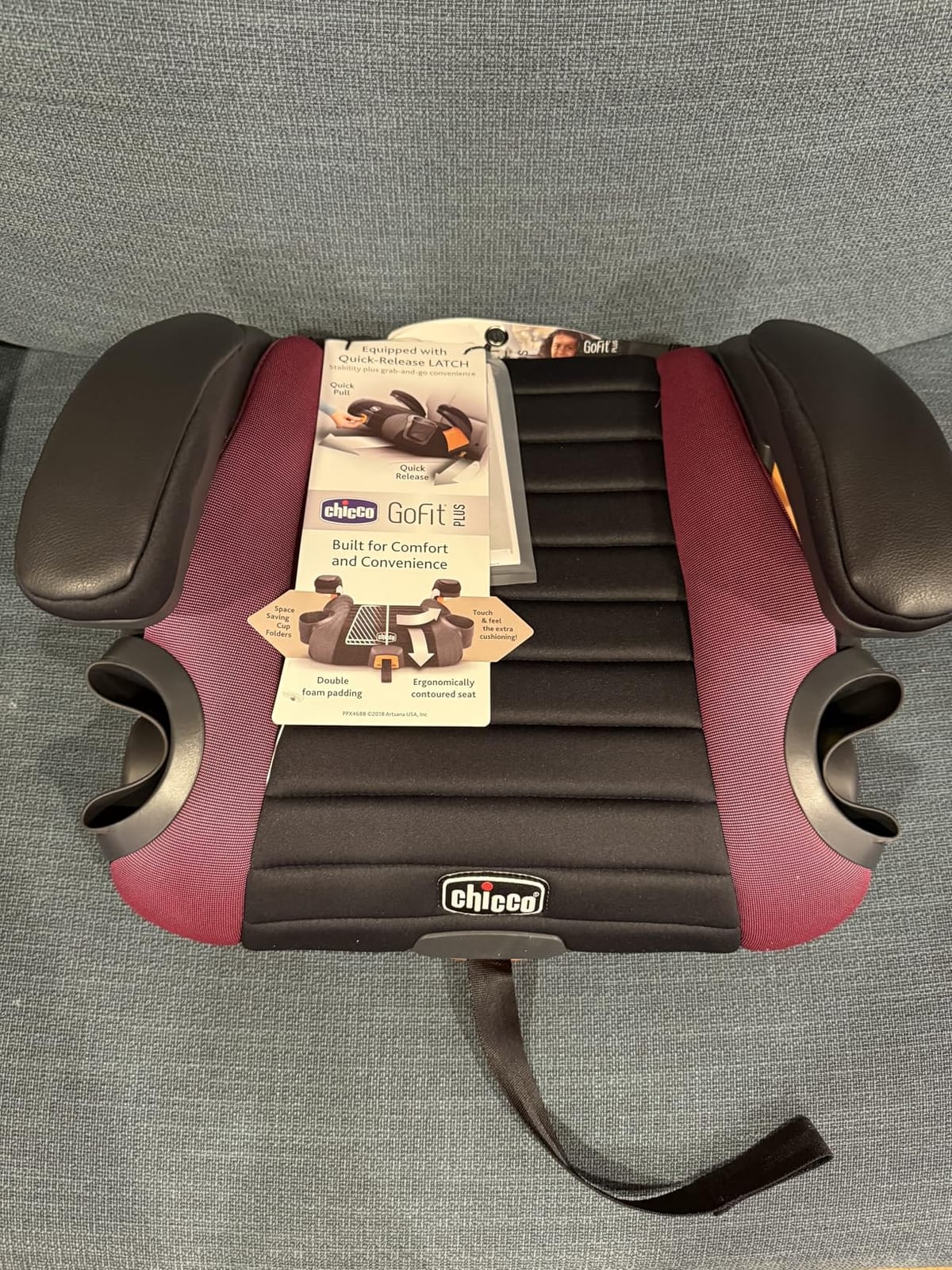
The belt-positioning booster is for children at least 4 years old, 40 to 110 lb, 44 to 57 inches tall, who can sit relatively still. The LATCH connectors stabilise the seat while the child climbs in and out; they do not restrain anyone.
ErgoBoost contouring with double foam padding is more supportive than most backless boosters. The two fold-away cup holders are dishwasher safe, the seat pad is removable and machine washable, and the armrest covers pop out for cleaning.
What to check before you fly
Check your airline’s booster policy before booking, since age rules differ from harness seats on many carriers. Confirm the child fits 40 to 110 lb and 44 to 57 inches first.
Bring something to support the head on a long flight. A backless booster with a sleeping child is the trade you are making for the low weight.
Where it falls short
No head or back support. Kids slump when they fall asleep and the seat does nothing to stop it.
The shoulder belt guide is fiddly to position the first few times, so practise the routing at home. And do not mistake the LATCH for a harness, because it is not one.
8. Safety 1st Ellaris — 3-in-1 for the infant-to-preschool years
Safety 1st Ellaris 3-in-1 Convertible Car Seat, Slim Fit Design, Rear & Forward-Facing, 5-Position Headrest, Travel-Friendly with Machine-Washable Seat Pad, Smokey Haze
3-in-1 from 5 lb to 65 lb
Airplane ready compact design
5-position headrest
Pros
- Three modes cover 5 to 65 lb
- Airplane ready and light enough to move between vehicles
- Headrest and harness adjust without rethreading
- Machine-washable and dryer-safe seat pad
Cons
- Wider than many slim seats
- so three across may not fit
- Headrest has noticeable side play
- Harness tighten button is hard to reach
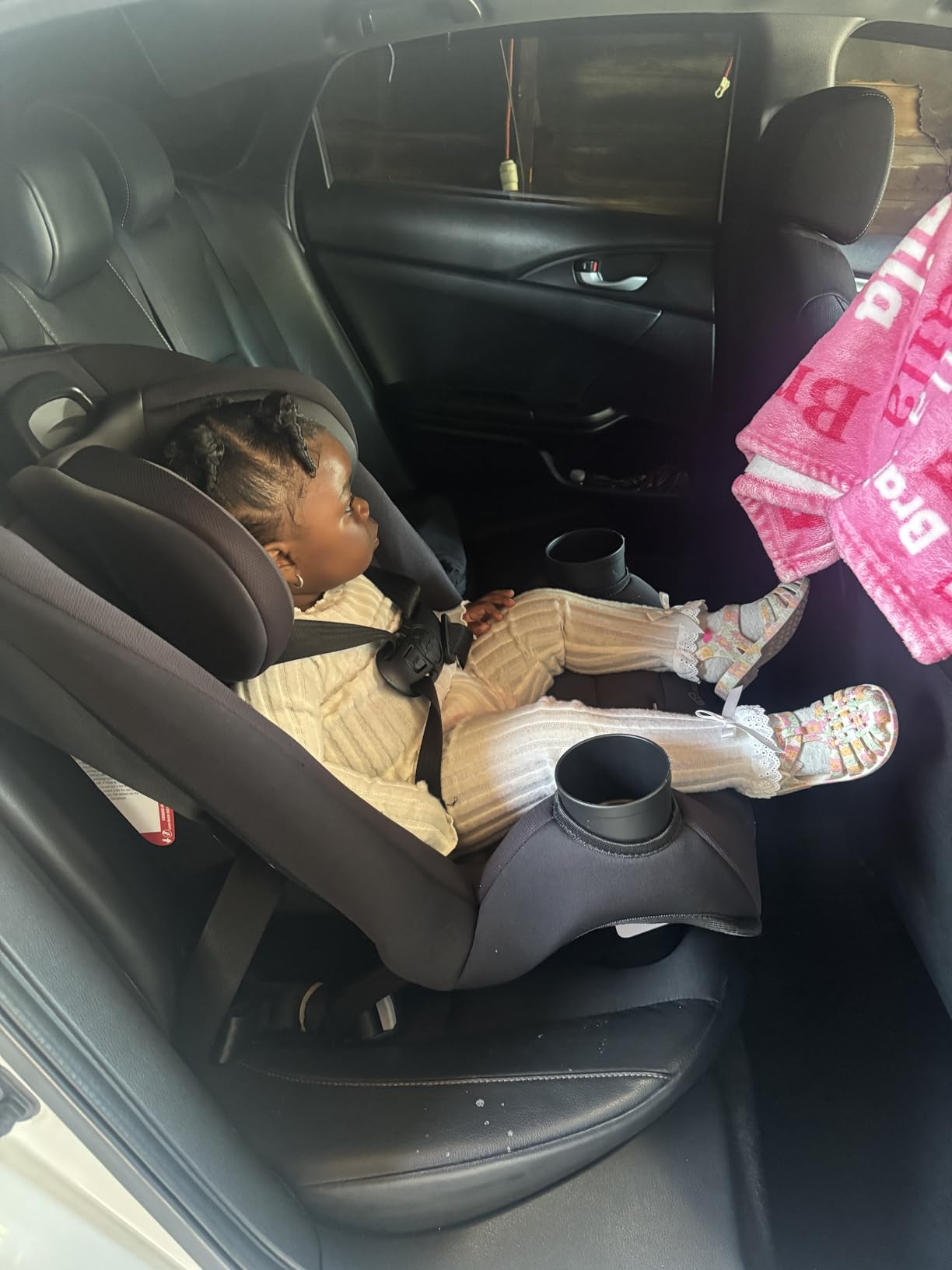
The Ellaris covers the awkward middle of childhood: rear-facing infant from 5 to 30 lb, rear-facing toddler from 30 to 40 lb, then forward-facing harness from 30 to 65 lb. The listing describes it as airplane ready with a compact design built for travel.
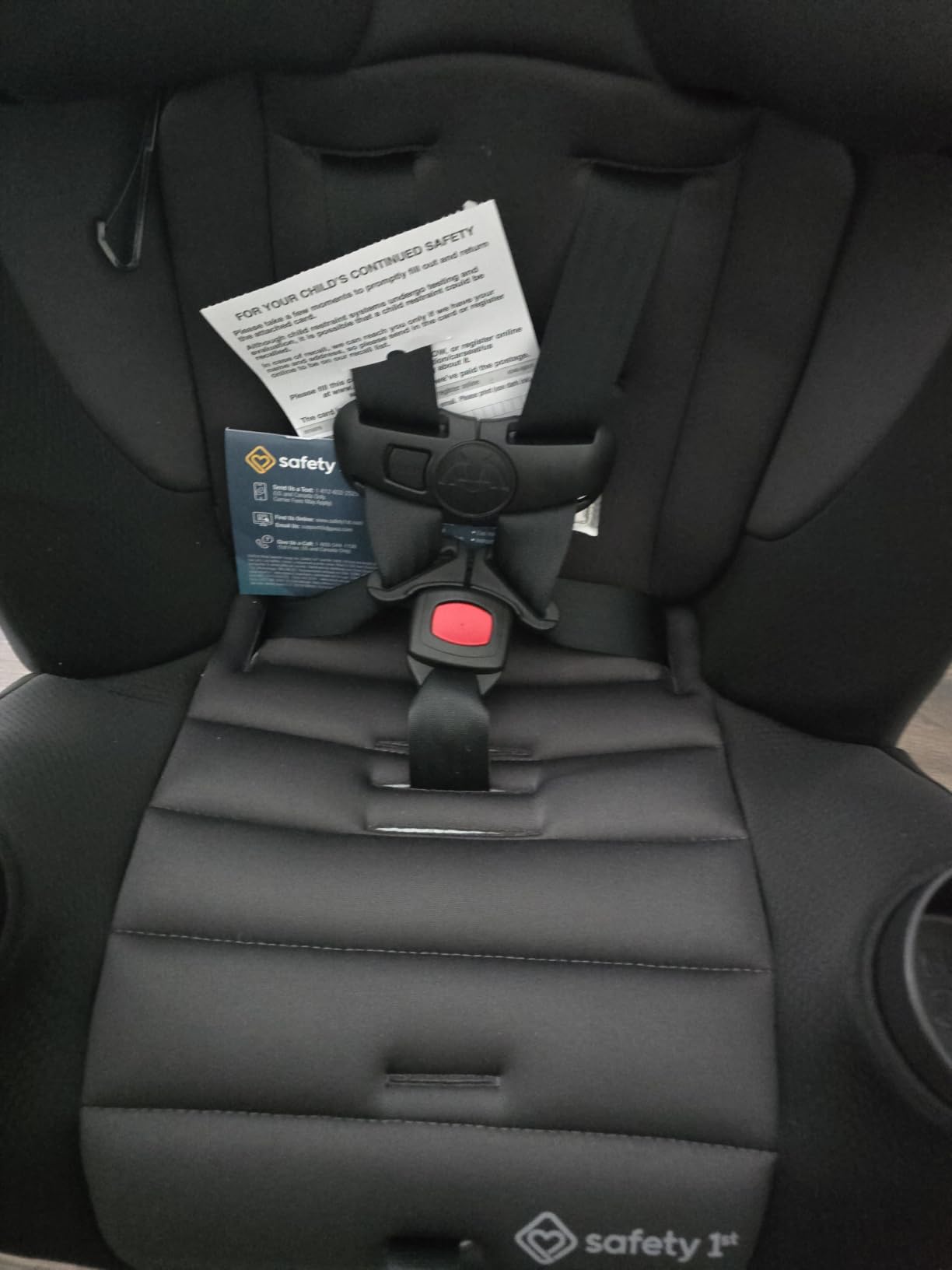
The 5-position headrest and harness adjust without rethreading, the feature parents mention most. Rethreading is the most common reason a seat stops fitting properly after a few months, and a no-rethread design removes that failure mode.
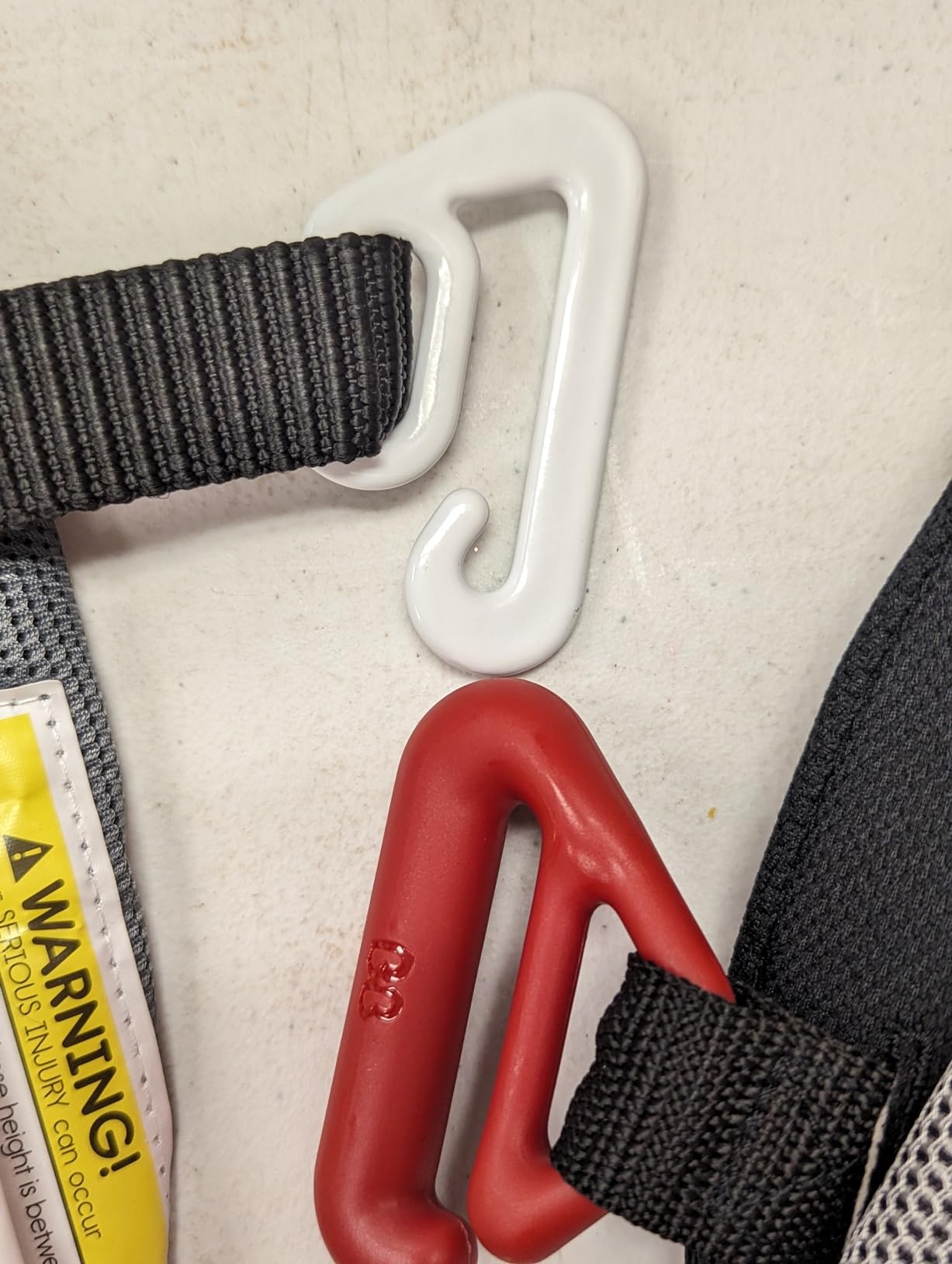
Hook-style LATCH installs without fuss, the seat pad is machine washable and dryer safe, and two removable cup holders are dishwasher safe. The seat meets the federal Side Impact standard.
What to check before you fly
Measure the width before you commit. The gap between a slim designation and the actual measurement is the most common reason families end up with a seat they cannot fit three of across.
Verify the FAA label on the seat body, since airplane ready in a product description is not the same statement as a printed certification.
Where it falls short
The headrest has more side play than comparable seats, which bothers parents who want a snug fit. It is a comfort issue rather than a safety one, but it is the top complaint in reviews.
The harness tighten button is hard to reach once the child is strapped in, so adjust before you lift rather than after. Several owners also call the seat bulkier than the slim design suggests.
9. BubbleBum Inflatable — packs to 12 by 6 by 4 inches
BubbleBum Inflatable Travel Booster Car Seat, Narrow Backless, 40-110 lbs
Inflates by mouth in about 20 seconds
Deflates to 12 by 6 by 4 inch
40-110 lb for ages 4-11
Pros
- Packs to 12 by 6 by 4 inches
- small enough for a carry-on
- Inflates by mouth in about 20 seconds with no pump
- Narrow profile fits three kids side by side
- Independently crash tested to exceed FMVSS 213
Cons
- Backless inflatable design gives no head or shoulder support
- Air cushion can lose firmness over extended use
- Belt fit depends on the child sitting properly
The BubbleBum’s deflated size is the smallest number on this list. At 12 by 6 by 4 inches it slips into a purse, a backpack or a carry-on, and it inflates by mouth in roughly 20 seconds with no pump and no electricity.
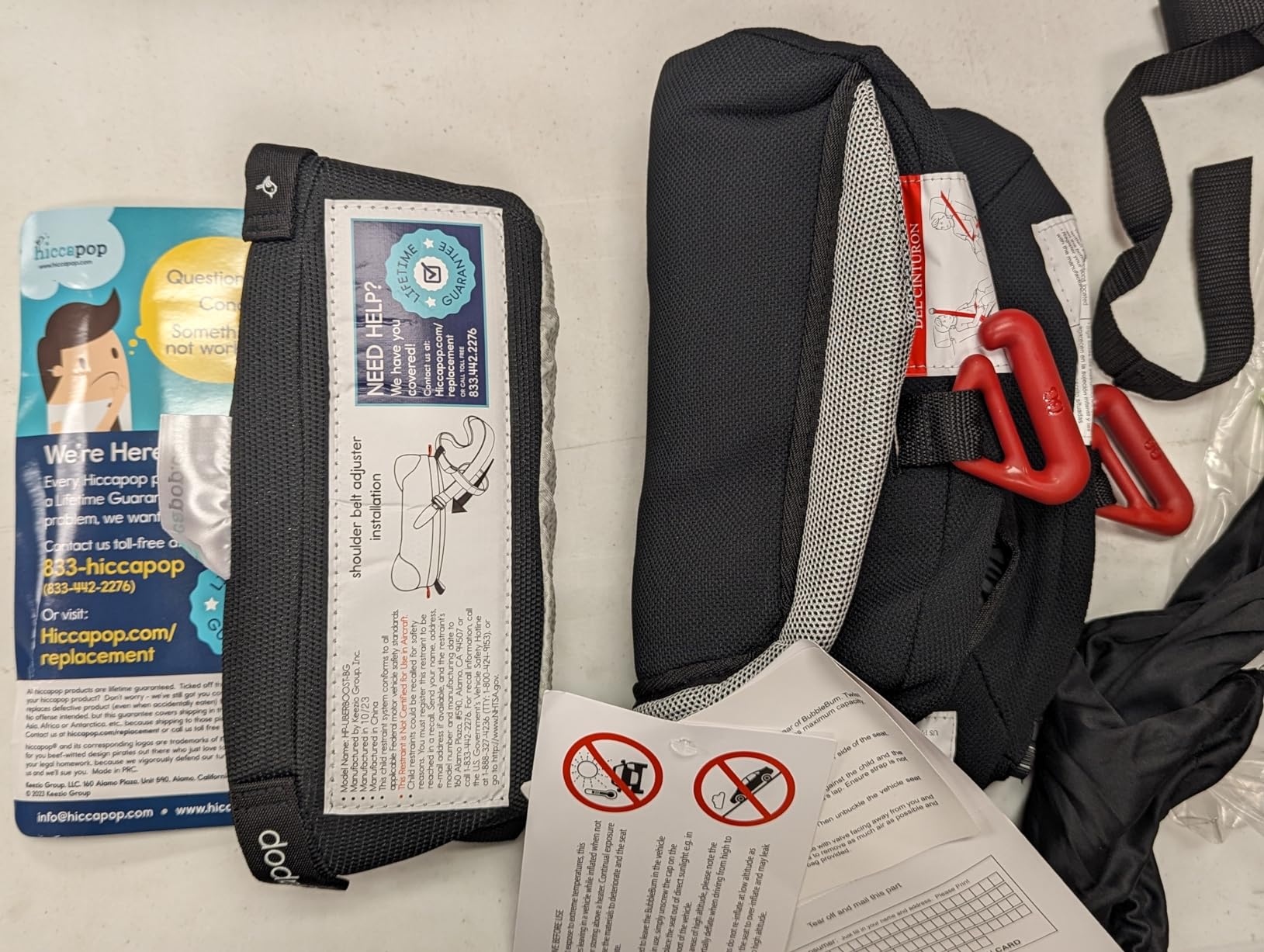
It is independently crash tested to exceed FMVSS 213 and needs no LATCH anchors or special hardware, only a standard three-point belt. Children 40 to 110 lb, ages 4 to 11, is the stated range.
The soft cushion is designed for long drives and wipes clean with a damp cloth, which matters when a booster goes into a seat with an unknown cleaning history. Three across in compact cars, SUVs and minivans is the other frequently cited benefit.
What to check before you fly
Your child has to be able to sit still and hold the belt in place. Belt fit depends on the child’s positioning rather than on anything the seat does, and that dependency is the weak point of every inflatable booster.
Bring a small pump if you own one, even though mouth inflation works. Re-inflating once mid-trip is easier than finding the time.
Where it falls short
No head or shoulder support, same as the other backless options here. A child who falls asleep will fold forward.
Long-term cushion firmness is the other complaint. Owners running several-day road trips report the air softening, which changes the child’s seating height relative to the belt. The 4.3 rating reflects that split between packability and durability.
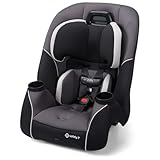
10. Safety 1st Crosstown — slim 3-in-1 for tight back seats
Safety 1st Crosstown All-in-One Convertible Car Seat, Rear Facing, Forward Facing Car Seat, Booster, City Storm
Rear-facing 5-40 lb,forward-facing 30-65 lb,booster 40-100 lb
8-position headrest
Pros
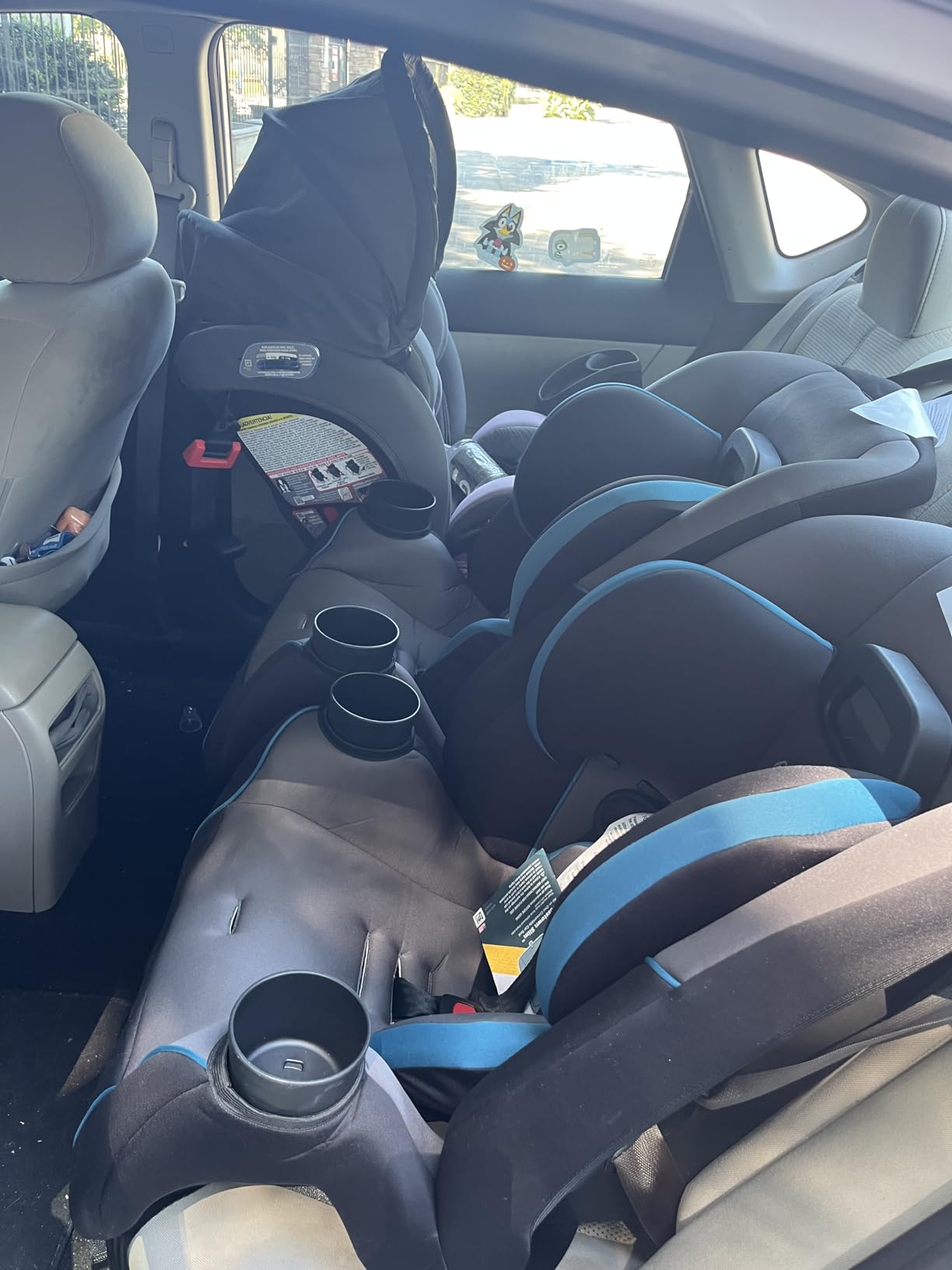
- Slim profile fits two plus an infant seat across a sedan
- Lightweight and installs with an airplane seat belt
- 8-position headrest with one-hand harness adjustment
- Two cup holders and a washable seat pad
Cons
- Rear-facing base can tip when a child leans forward
- Height adjust mechanism rattles loudly
- Installed with a strap rather than proper LATCH
- Harness strap is hard to reach
The Crosstown is the most space-efficient convertible here. Rear-facing 5 to 40 lb, forward-facing 30 to 65 lb and a belt-positioning booster mode from 40 to 100 lb, all in a profile slim enough that owners fit two of these plus an infant seat across a compact sedan.
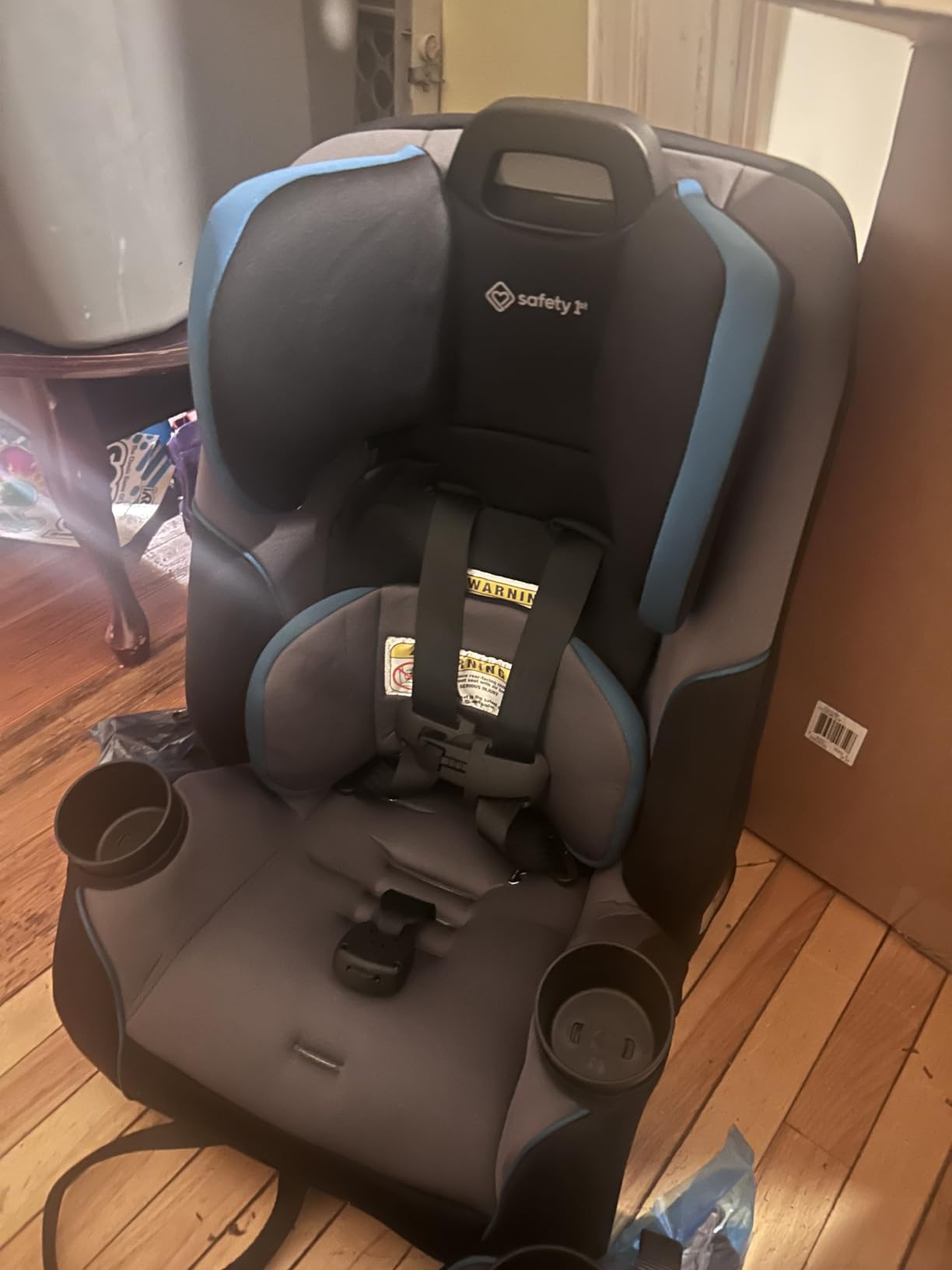
Owners specifically mention that it is light and easy to install with an airplane seat belt, which makes it a workable convertible for a flight where a heavier all-in-one would be a problem.
The 8-position headrest with one-hand harness adjustment means no rethreading as your child grows, and the base foot adjusts quickly between rear-facing and forward-facing. It meets the federal Side Impact standard.
What to check before you fly
Test the rear-facing stability in your own vehicle before relying on it. A base that tips when a child leans forward is the most serious complaint here, and it is worth checking yourself rather than taking a review’s word for it.
Ask about the airplane belt install in advance. Owners report it works, but the seat uses a strap and minimal clips rather than proper LATCH hardware.
Where it falls short
The rear-facing base is described as unstable and prone to tipping, which matters with a child old enough to lean forward during a drive.
The plastic height-adjust mechanism rattles loudly when the seat is empty and the harness strap is hard to balance from one side. With a 4.2 rating and the thinnest review base here, this is the pick only if back-seat width is your binding constraint.
How to Check FAA Approval Before You Book
FAA approval is a printed certification inside the seat shell, and only certain seats carry it. Here is how to check in three steps.
First, look for the label. It sits on the seat itself, usually on the back or bottom shell, and states that the seat is approved for aircraft use. No label means no approval, regardless of what the product page claims about travel.
Second, understand what approval does and does not mean. Approval means the seat meets federal requirements for aircraft use. It does not mean the seat fits, and it does not override carrier policy. On many airlines an approved seat must be lap-belt installed in a paid passenger seat, and gate agents check the label rather than the brand.
Third, confirm the airline’s own rules. Some carriers require a young child to travel in a car seat and do not sell a seat, while others sell one and expect you to bring your own. A short message to the airline before you pay is the cheapest insurance in this article.
Of the ten seats here, only the Diono Radian 3R states FAA approval for airline use in its published specifications. The Safety 1st Ellaris is described as airplane ready, which is a different claim, so treat it as unverified until you see the label. The boosters and inflatable seats are not infant or toddler restraints and are not positioned for cabin use by their manufacturers.
One more failure mode that parents describe repeatedly: a seat can pass the label test and still lose the fight in the cabin. A bucket-style carrier sits in the seat pan and can leave the airplane buckle unusable, forcing the child to sit without it. That is not an acceptable configuration and no weight figure fixes it. Ask the gate agent to check the fit before you settle, and be willing to move seats.
How to Choose a Lightweight Travel Car Seat
Start with the weight range, not the weight of the seat. A five-pound seat that tops out at 22 lb means you buy twice, and the second seat is usually bulkier. The Graco at 4 to 30 lb and the Diono at 5 to 120 lb both buy you time, which is the real cost driver here.
Match the seat type to the child. Below 40 lb you need a rear-facing infant carrier or a convertible with a harness. Above 40 lb and able to sit still, a belt-positioning booster works and is dramatically lighter and smaller. There is no way around that boundary.
Decide whether the seat is travel-only or does double duty. A seat that doubles as your everyday seat is cheaper across three years than buying a dedicated travel seat plus a full seat at home, and it means one thing to install at the destination. The tradeoff is weight, because an everyday convertible is not going to be light.
For base-free use in taxis, rentals and rideshares, a booster or inflatable running on the adult belt is the simplest possible setup. For an infant, budget for the separate base and accept that you carry the seat and leave the base behind.
Check width against your back seat and against the airplane seat in front of you. Three-across claims are worth testing with tape on the floor before buying, because slim and not-slim is the difference between fitting a third child and not.
Finally, read the manufacture date on the seat label. Car seats expire, and most run on a lifespan measured from manufacture rather than purchase. If you are buying for a grandparent’s car or handing a seat to a second child, that date decides whether the deal was ever a deal.
Frequently Asked Questions
What is the lightest car seat to travel with?
Among the seats we reviewed, the Graco SnugRide Lite LX is the lightest with a manufacturer-stated weight, at 7.2 lb, and it covers rear-facing infants from 4 lb to 30 lb and up to 32 inches. If you need something smaller, inflatable boosters such as the BubbleBum deflate to 12 by 6 by 4 inches and pack into a carry-on, though they only work for children over 40 lb.
What is the best lightweight baby car seat for travel?
The Graco SnugRide Lite LX is our pick for babies because it pairs a verified 7.2 lb weight with a 4 lb to 30 lb range, a four-position base and an easy-to-read level indicator that removes installation guesswork. Over 7600 owner reviews rate it 4.8 out of 5. The Diono Radian 3R is the better choice if your child will fly forward-facing, since it is the only seat here whose specifications state FAA approval for airline use.
What is the easiest car seat to travel with?
It depends on the child’s size. The Chicco GoFit Plus comes off with one hand using its quick-release LATCH and has a built-in carry handle, making it the simplest booster to move between vehicles. The Baby Trend EZ-Lift Plus includes both the seat and the base in one box, so there is no second piece to pack. Inflatable options like the hiccapop UberBoost need no hardware at all, only a three-point seat belt.
What is the most comfortable car seat for long trips?
For long trips, weight matters less than padding and support. The Diono Radian 3R includes ComfortPlus memory foam as standard rather than as an add-on, which makes it the most cushioned option in the roundup. The Baby Trend EZ-Lift Plus also draws praise for generous newborn padding. Lightweight backless boosters are the least comfortable choice, since a sleeping child slumps forward with no head or shoulder support.
How do I tell if a child car seat is FAA approved?
Look inside the seat shell for a printed label stating the seat is approved for aircraft use. No label means no approval, no matter what the product page claims. Then check the airline’s own rules, because approval does not override carrier policy. On most airlines an approved seat must be installed with the lap belt in a paid passenger seat, and some carriers do not sell a seat at all for small children.
Should a toddler use a car seat on a plane?
Yes, and the FAA recommends that you do. The guidance is to keep a child in a certified child restraint for as long as possible, and rear-facing is the safest orientation. The catch is that many FAA-approved seats only fit forward-facing in a narrow coach row, so rear-facing capability in the cabin is not something you can assume. Confirm the fit with the gate agent before boarding and be prepared to move seats.
Conclusion
The best lightweight car seats for travel come down to one variable nobody asks about: how old your child is. For an infant, the Graco SnugRide Lite LX at 7.2 lb with a 4 to 30 lb range is the clear pick, and the Diono Radian 3R is the one to buy if you want a seat that flies and then handles the rest of childhood. Past 40 lb, the Chicco GoFit Plus is the most highly rated and easiest to move, while the BubbleBum or hiccapop UberBoost win when packed size matters more than head support.
Check the FAA label before booking, measure the width against your actual airplane row, and buy the longest weight range your child will use. Get those three right in 2026 and the rest is logistics.