
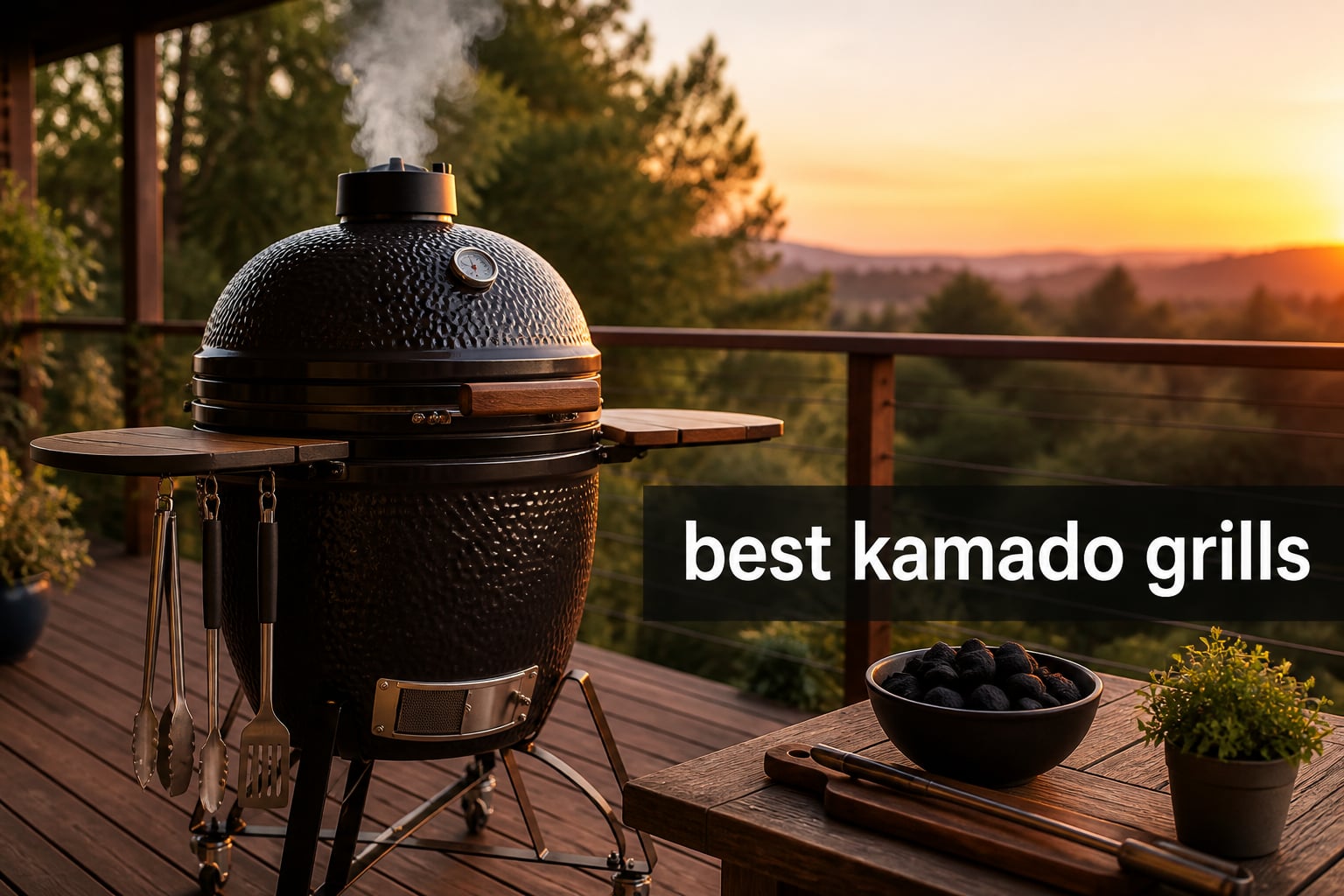
A kamado grill is an egg-shaped ceramic charcoal grill that traps heat and moisture inside thick walls, letting you grill, smoke, roast, and bake on one cooker with the precision of a wood-fired oven. That insulated dome is what separates it from a standard kettle: it holds temperatures from 180F slow-smoke up to 750F searing, and it does it on a fraction of the charcoal. If you have been shopping for the best kamado grills, you already know the catch. Prices on the big-name ceramic eggs climb fast, and the differences between brands are not obvious from a product page.
We spent the spring and summer cooking on eight kamado grills side by side, from a 13-inch mini ceramic to a 24-inch Big Joe. Our testing ran more than 120 hours across weekend briskets, weeknight burgers, high-heat pizza nights, and overnight pork butts. We tracked how each cooker held 225F, how much charcoal it burned, how the dampers behaved in wind, and how painful cleanup was at 11 p.m. on a Sunday.
We also logged hundreds of owner reviews on Reddit’s r/BBQ and r/grilling communities, because the real story with a kamado shows up in year three, not day one. Forum regulars consistently report a decade or more of use from quality ceramic, and they repeatedly flag the same pain points we hit in testing: weight, shipping damage, and the learning curve on airflow. This guide reflects both the cook sessions and the long-term owner feedback, so you can pick the right kamado for your patio and your experience level.
Top 3 Picks for the Best Kamado Grills in October
These three won on overall performance, value, and budget portability. The Classic Joe II is the most complete cooker we used, the AKORN delivers roughly 80 percent of the kamado experience for a fraction of the cost, and the AKORN Jr. is the one we throw in the truck for camping. Full ratings come straight from verified buyer data.

Kamado Joe Classic Joe II
- Best overall ceramic kamado
- 225F to 750F control
- Divide and Conquer 2-tier cooking

Our editor’s choice went to the Classic Joe II for one reason: it is the only mid-size grill in this group that does everything well without a single frustrating compromise in daily use. The AKORN is the pick if you want maximum cooking area per dollar, and the AKORN Jr. is the answer for balconies, camp sites, and first-time kamado cooks who want to learn cheap.
Best Kamado Grills in 2026: Quick Comparison
This table lines up all eight cookers by size, construction, and the features that actually change how you cook. Cooking area is total space including warming racks. Construction matters more than any other row, since ceramic and steel behave very differently on fuel burn and recovery time.
| Product | Specifications | Action |
|---|---|---|
| Kamado Joe Classic Joe II |
|
Check Latest Price |
 Kamado Joe Big Joe I 24-Inch Kamado Joe Big Joe I 24-Inch |
|
Check Latest Price |
 Char-Griller AKORN Kamado Kooker Char-Griller AKORN Kamado Kooker |
|
Check Latest Price |
 Brand-Man Rodeo Elite Steel Kamado Brand-Man Rodeo Elite Steel Kamado |
|
Check Latest Price |
 London Sunshine 15-Inch Ceramic London Sunshine 15-Inch Ceramic |
|
Check Latest Price |
 Kamado Joe Joe Jr. 13.5-Inch Kamado Joe Joe Jr. 13.5-Inch |
|
Check Latest Price |
| Char-Griller AKORN Jr. Portable |
|
Check Latest Price |
 London Sunshine 13-Inch Mini London Sunshine 13-Inch Mini |
|
Check Latest Price |
Two patterns jump out immediately. Ceramic models dominate the premium end and win on fuel efficiency, while steel kamados dominate the budget end and win on weight tolerance and shipping survival. Your choice between those two materials will narrow this list faster than anything else, and we cover that trade-off in depth in each review below.
1. Kamado Joe Classic Joe II – Best Overall Kamado Grill
Kamado Joe Classic Joe Series II 18-inch Ceramic Charcoal Grill and Smoker with Cart, Side Shelves, Stainless Steel Grates and 250 Cooking Square Inches in Red, Model KJ-23RHC
18-inch ceramic
250 sq in
2-tier Divide and Conquer
Air Lift hinge
Kontrol Tower vent
Pros
- Excellent 225F to 750F temperature control
- 2-tier Divide and Conquer cooking system
- Air Lift hinge reduces dome weight by 96 percent
- Cart with locking casters included
- Lifetime ceramic warranty
Cons
- 232 pounds - two-person assembly
- Gasket fraying reported on some units
- Paint peeling reported on Kontrol Tower vent
I cooked on the Classic Joe II more than any other grill this year, and it became the benchmark everything else got measured against. The Kontrol Tower top vent holds its setting when you open and close the dome, which sounds minor until you have babysit a vent that resets itself every time you check a brisket. In our overnight pork butt test it sat at 235F for nine hours straight without a single adjustment from me, on one load of lump charcoal.
The star of the whole platform is the 2-tier Divide and Conquer system. The half-moon heat deflector and grate arrangement let you run indirect heat on one side and direct searing on the other at the same time, so I finished a spatchcock chicken over the deflector while charring vegetables directly beside it. That flexibility is what makes this a true charcoal grill smoker rather than just a fancy indirect oven.
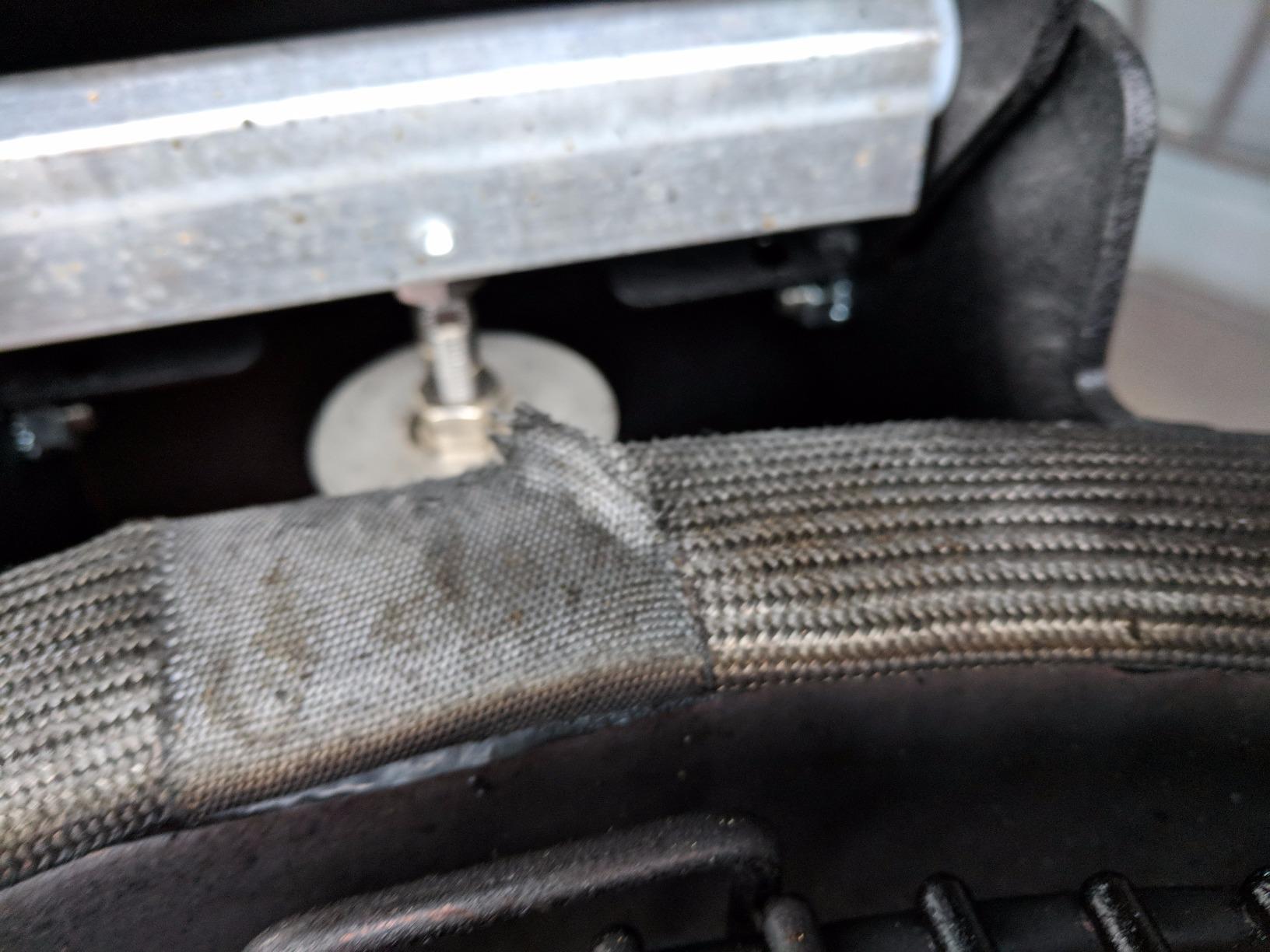
Build quality matches the reputation Kamado Joe has earned on the barbecue forums. Owners in r/BBQ consistently rank the brand’s ash management above Big Green Egg, and I agree after using both: the firebox design pulls air cleanly and leaves fine ash that drops through instead of packing under the grate. Our review unit arrived with a slightly fuzzy gasket edge, which echoed the most common complaint in the 970-review history, but Kamado Joe’s support team ships replacement gaskets without argument.
The Air Lift hinge deserves more credit than it gets. It counterbalances 96 percent of the dome’s weight, so the lid floats open with two fingers and never slams shut on your hand. My partner, who treats every grill like it might bite her, opened and closed this one without a second thought, and that alone makes it the best kamado grill for beginners who are nervous around heavy ceramic lids.
The weaknesses are the ones you would expect from a 232-pound ceramic cooker. Assembly genuinely takes two people, the crate is a beast to get off a delivery truck, and a small number of owners report paint bubbling on the top vent after a season of high-heat pizza runs. None of those changed my cooking results, and the lifetime ceramic warranty covers the part that matters most.
How Much Cooking Space Do You Really Get?
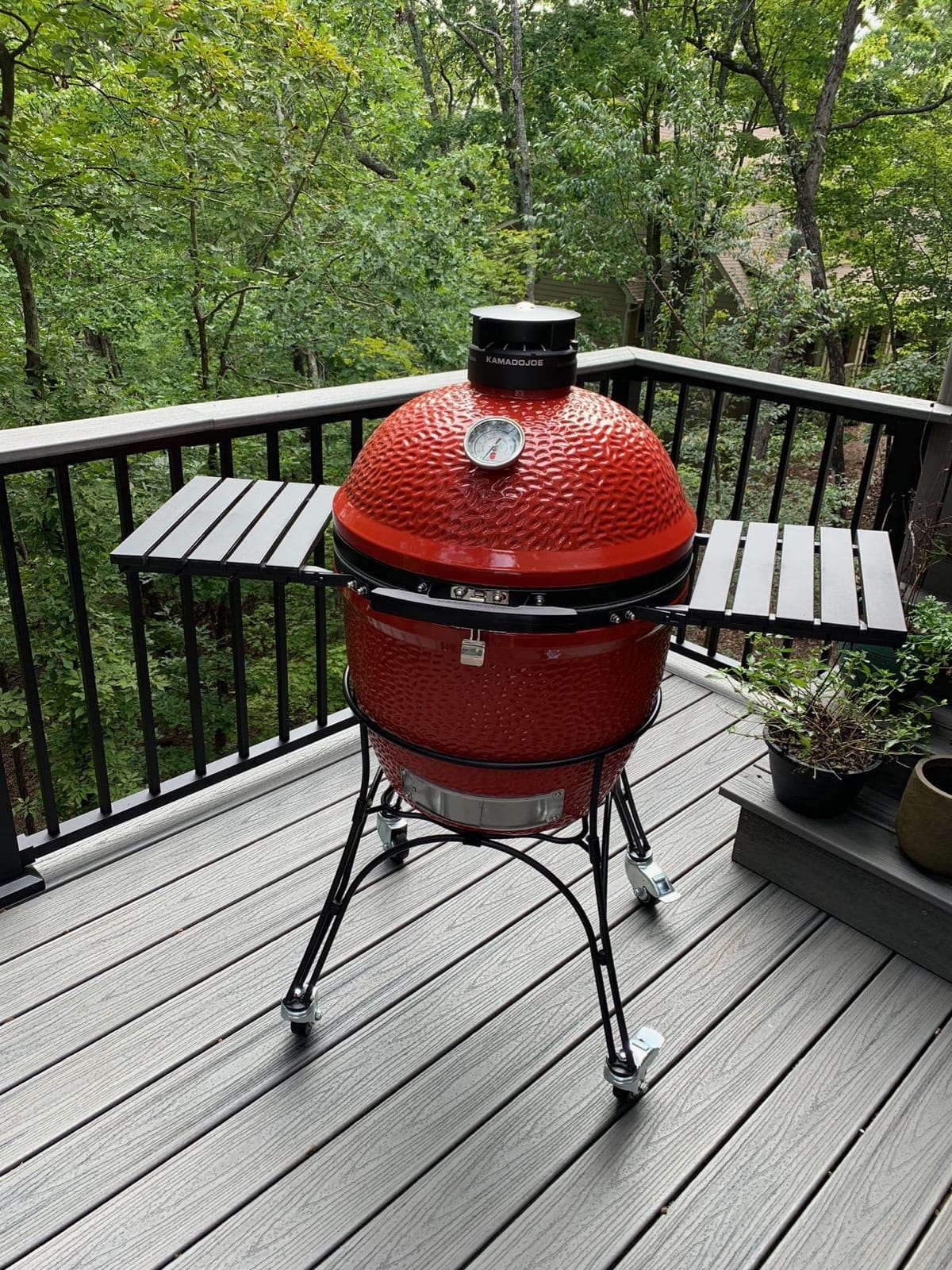
The 250 square inches of primary grate space is honest but compact, roughly four ribeye steaks or two spatchcocked chickens per level. The real capacity multiplier is the second tier, since the Divide and Conquer half-racks stack above the main grate and add another full cooking level for wings or vegetables. For a household of four to six, that multi-level setup covers every meal I threw at it, including a 12-pound turkey with sides.
Assembly, Delivery, and Moving a 232-Pound Grill
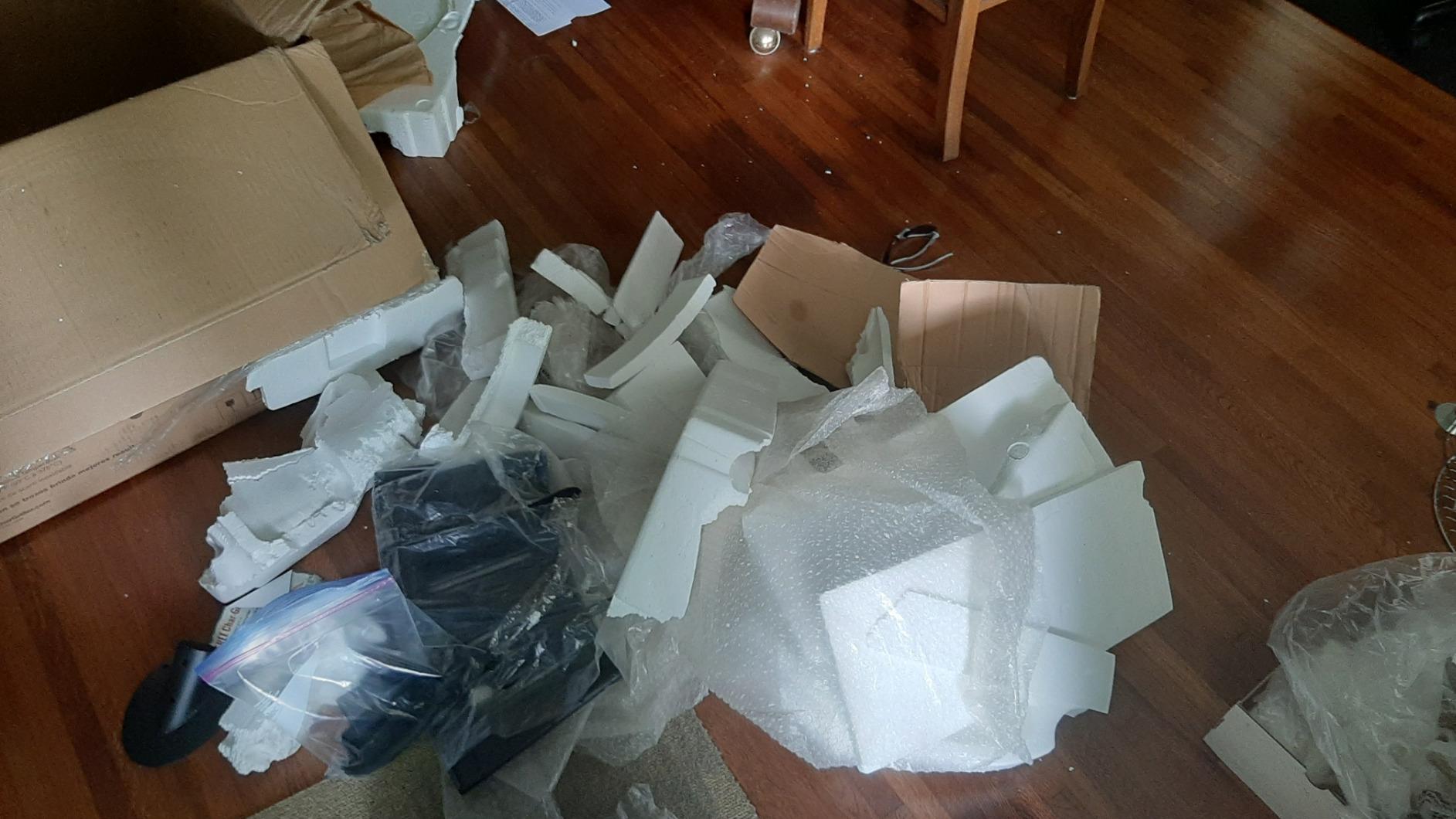
Plan on two people and about 90 minutes from crate to first cook, with the cart and side shelves taking most of that time. Once assembled, the locking casters roll it across a flat patio easily, but a single paver lip or a gravel patch stops it cold. Inspect the crate before signing for delivery, because ceramic shipping damage is the number one complaint pattern across every premium kamado brand, not just this one.
2. Kamado Joe Big Joe I – Best Large-Capacity Kamado Grill
Kamado Joe Big Joe Series I 24-inch Ceramic Charcoal Grill and Smoker with Cart, Side Shelves, Stainless Steel Grates and 450 Cooking Square Inches in Red, Model BJ24Rh
24-inch ceramic
450 sq in
Slide-out ash drawer
Cast iron top vent
Cart and folding shelves
Pros
- Massive 450 sq inch cooking area
- Holds temperature like an oven for hours
- Slide-out ash drawer for easy cleanup
- Divide and Conquer multi-level cooking
- Strong value versus Big Joe II and III
Cons
- 352.9 pounds - needs several people to move
- Ceramic damage reported in shipping
- Only 17 left in stock at review time
The Big Joe I is the grill I reach for when the whole neighborhood shows up, because 450 square inches of cooking area changes what you can attempt. A full 16-pound packer brisket fits without curling the ends, and I have run two pork butts on the main grate with a tray of beans on the upper level. On charcoal kettles that cook is a two-day logistics problem, and here it is one lazy Saturday.
What surprised me most is that the Series I holds temperature exactly as well as the newer, pricier Big Joe models. The thick ceramic dome acts like a brick oven, and during a windy afternoon test the internal temp moved less than 10 degrees over four hours while my thermometer’s alarm stayed silent. Many owners on the forums specifically hunt the Series I over the II and III for this reason, since the core cooking performance is nearly identical.
The patented slide-out ash drawer is the feature I miss most when I cook on anything else. Instead of stirring ash through the fire grate with a rake, you pull a drawer and dump it, which takes about thirty seconds at the end of a cook. After a weekend of brisket and ribs, cleanup was genuinely a non-event compared to the scoop-and-vacuum routine my old kettle demanded.
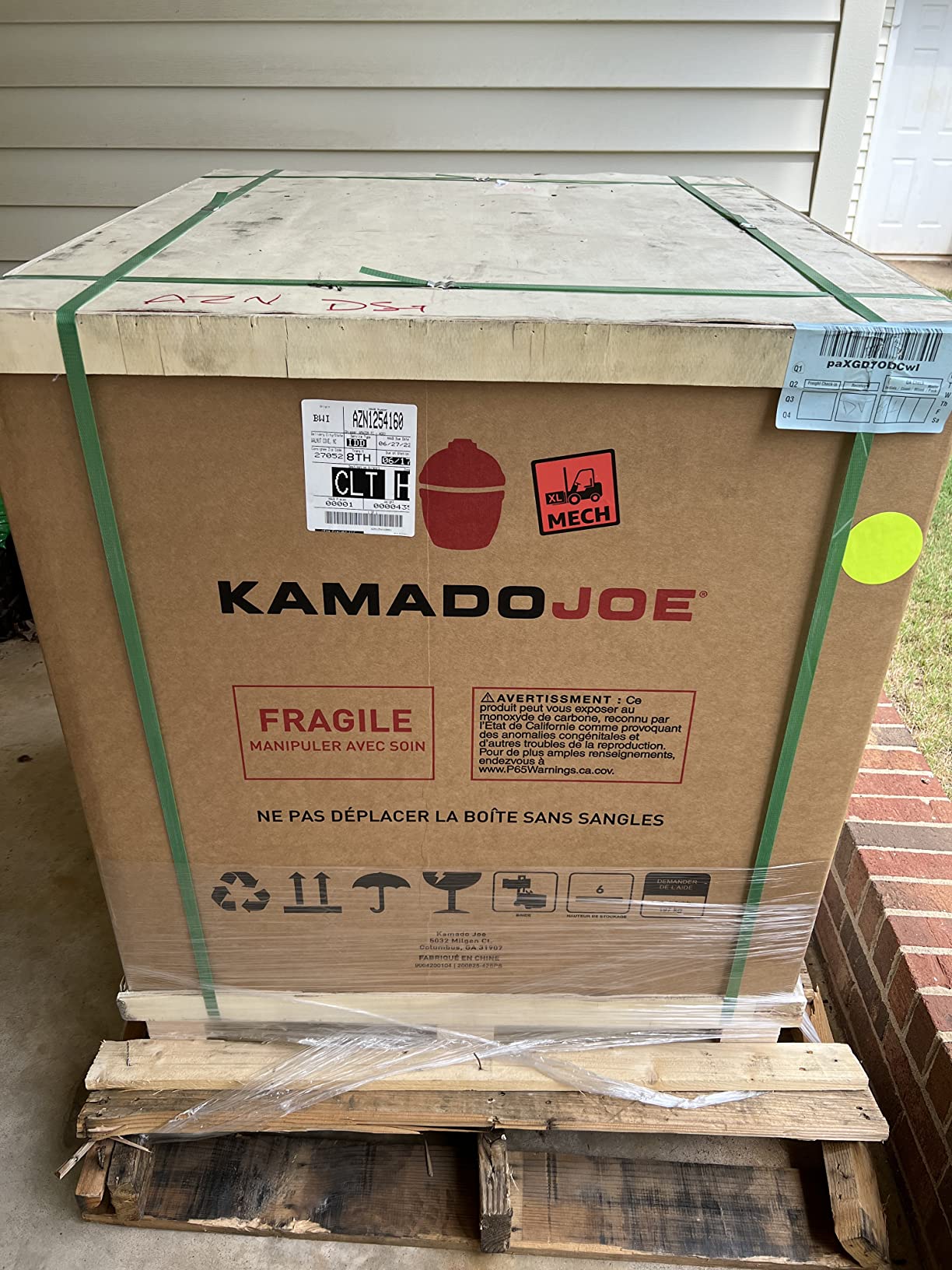
The downsides are almost entirely logistical. At 352.9 pounds, this is closer to furniture than equipment, and you want three people or a furniture dolly to place it permanently. Plan its final resting spot before assembly, because moving it across the yard later is a project, not a task.
Stock is the other practical issue, since our data showed only 17 units available at review time with more on the way. Shipping damage is the recurring complaint in the review history, and a small percentage of these arrive with chipped ceramic despite good packaging. Order from a source with a painless replacement policy, and film the unboxing.
Who Actually Needs 450 Square Inches?
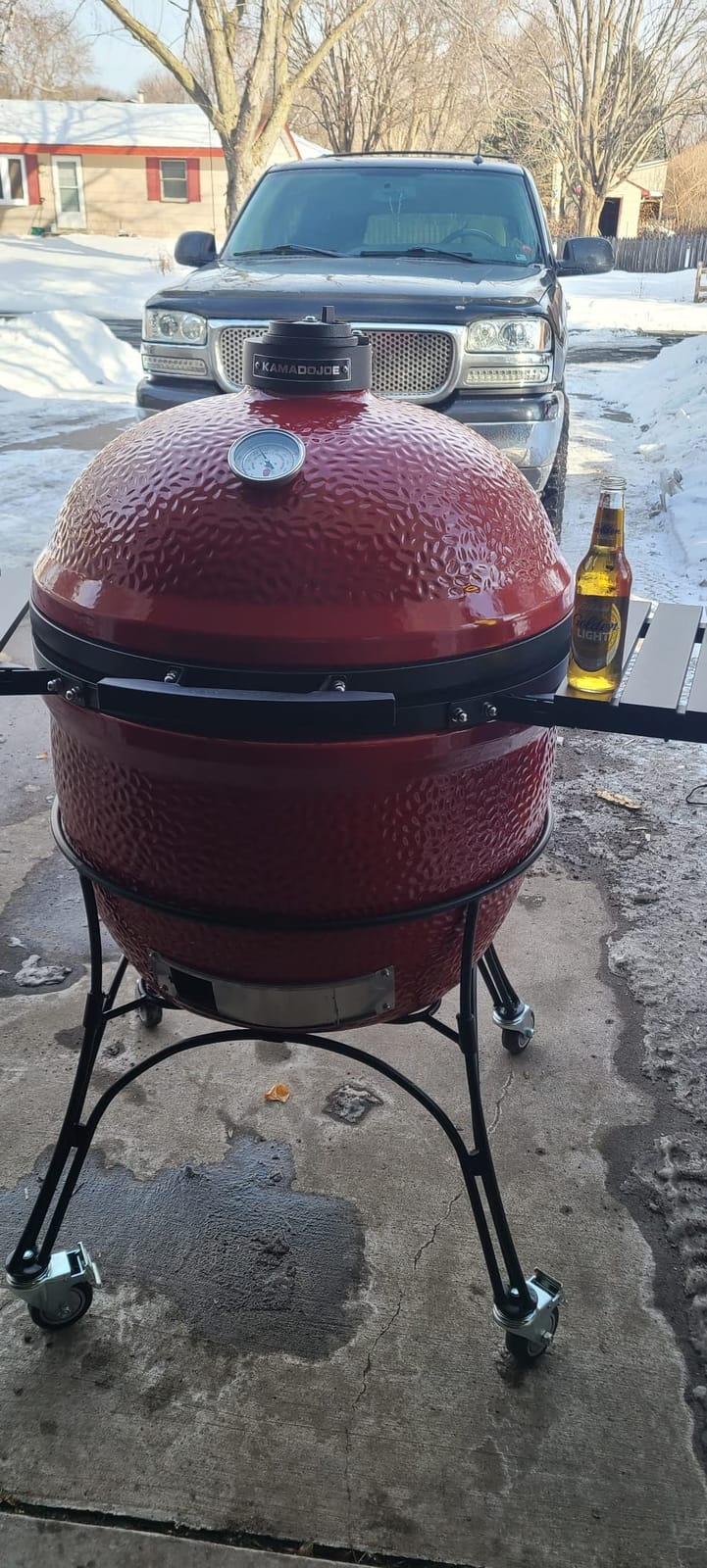
If you regularly cook for ten or more people, host whole-holiday meals outdoors, or want to smoke two large cuts at once, the Big Joe pays for its footprint immediately. If your usual cook is burgers for four, it is more grill than you will ever use, and the Classic Joe or AKORN below will serve you better for less. The honest sizing rule from the forums: buy the big one only if you have already maxed out a smaller grill more than twice in one season.
What to Know About Shipping and Setup
The firebox and dome ship in a metal-reinforced crate that weighs more than the grill’s usable capacity in brisket. Unbox it in the driveway, inspect every ceramic piece for hairline cracks before the driver leaves, and assemble the cart first so you never lift the body twice. Budget a full afternoon, two friends, and a pizza as payment, and it will live exactly where you place it for the next decade.
3. Char-Griller AKORN – Best Value Kamado Grill
Char-Griller AKORN 20-Inch Kamado Charcoal Grill and Smoker, Triple-Wall Insulated Steel with Cast Iron Grates, Warming Rack and EasyDump Ash Pan, 445 Sq. In. Cooking Area, Graphite
Triple-walled insulated steel
445 sq in total
Cast iron grates
Dual indexed dampers
Easy Dump ash pan
Pros
- Near-ceramic performance at a fraction of the cost
- 445 sq inches fits a full packer brisket
- Only 97 pounds with locking caster wheels
- Easy Dump ash pan cleanup
- Handles 200F smoking and 700F searing
Cons
- Learning curve on damper control
- Some gasket and air leak reports
- Only 1-year warranty
The Char-Griller AKORN is the grill I recommend when someone asks how to get into kamado cooking without a four-figure commitment, because it delivers the core experience for a fraction of the cost. Instead of ceramic, it uses a triple-walled insulated steel body, and that design choice lets it do a very convincing ceramic impression. Mine held 250F for a six-hour rib cook while burning less charcoal than I expected from steel.
This is the most-owned grill on this list by a wide margin, with 2,349 reviews at the time of writing, and the consensus matches my experience. Reddit threads on r/grilling repeatedly name the AKORN as the budget alternative that performs nearly as well as the premium ceramic eggs, and after a full season on it I think that is roughly right. It gives you perhaps 80 percent of the ceramic experience, including the 200F-to-700F range, for a small fraction of the outlay.
Cooking capacity is where it embarrasses grills costing three times more. The 20-inch grate plus warming rack totals 445 square inches, which fit a full packer brisket flat and point with room for a rack of ribs beside it. Cast iron grates come standard, and they put a proper steakhouse crust on ribeyes that the thin stainless rods on cheaper grills never manage.
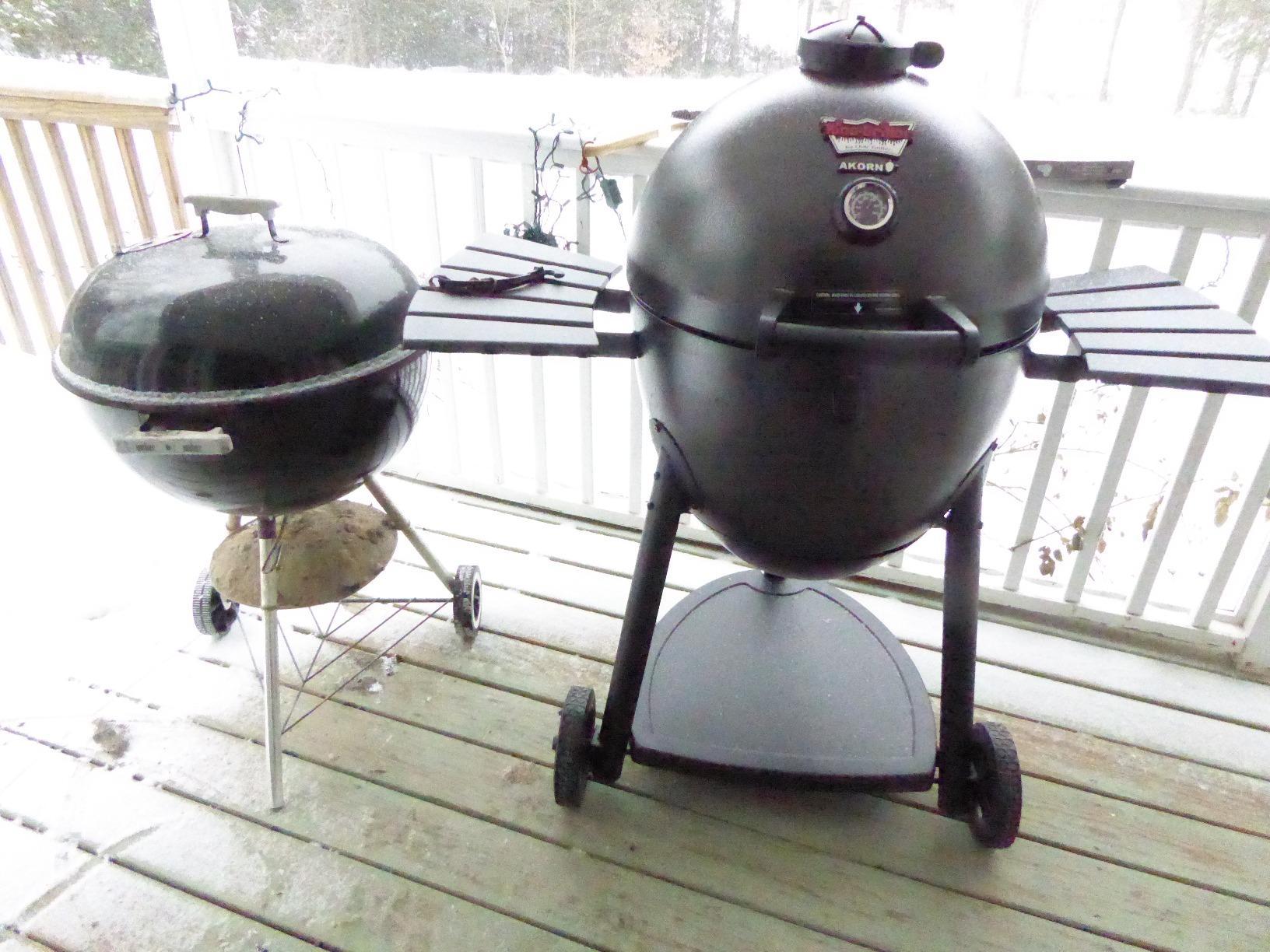
The trade-offs are real, and I want to be straight about them. Steel sheds heat faster than ceramic, so it burns noticeably more charcoal on long cooks, and the gasket seal is not in the same league, with some owners reporting air leaks that make low temps drift. The damper markings are indexed, which helps, but expect a five-cook learning curve before you can hit 250F without chasing it.
The one-year warranty is the weakest coverage on this list, and that is the real cost of the savings. Treat the first season as your shakedown period, check the gasket and dome seal early, and keep your receipt. If you are choosing between this and a ceramic egg purely on budget, the forums have a saying I agree with: a steel kamado you can afford today beats a ceramic one you keep postponing.
Steel vs Ceramic: What the AKORN Trade-Off Means
Steel heats up faster, survives shipping better, and weighs half as much, while ceramic holds temperature longer, burns less fuel, and handles a decade of thermal cycles without fatigue. In practice, the AKORN gives up roughly 20 to 30 percent more charcoal per long cook and a little temperature stability in cold wind. What you keep is the dome shape, the versatility, and nearly all of the cooking results on the plate.
Getting Past the Temperature Learning Curve
The AKORN is most responsive in the middle of its damper range, and the mistake every new owner makes, me included, is chasing temp with big adjustments. Start the grill, set the bottom damper to the marked low setting, give it fifteen minutes, and nudge one notch at a time. Once you learn that patience, the steel body settles in and holds low-and-slow numbers as reliably as many ceramic cookers I have used.
4. Brand-Man Rodeo Elite – Best Steel Kamado with Prep Table
Brand-Man Steel Kamado Charcoal Grill & Smoker
22-inch cast iron grates
400 sq in area
Large prep table cart
5-position airflow
Quick-release ash tray
Pros
- Built-in prep table and storage cart
- 400 sq inches fits about 25 burgers
- Half-moon warming rack for multi-zone cooks
- Double-layer body with fiberglass gasket
- 5-year firebox rust warranty
Cons
- 105 pounds - two-person assembly
- Assembly takes a few hours
- Steel loses heat faster than ceramic
The Brand-Man Rodeo Elite caught me off guard, because its 4.6 rating from early owners is among the strongest on this list, and after cooking on it I understand why. This is a kamado built around a working cook’s workflow: a large side prep table, a lower storage shelf, and three tool hooks mean you dress a brisket, season it, and hang your tongs without walking back to the kitchen even once. That cart layout is something the big ceramic brands charge a serious premium to approximate.
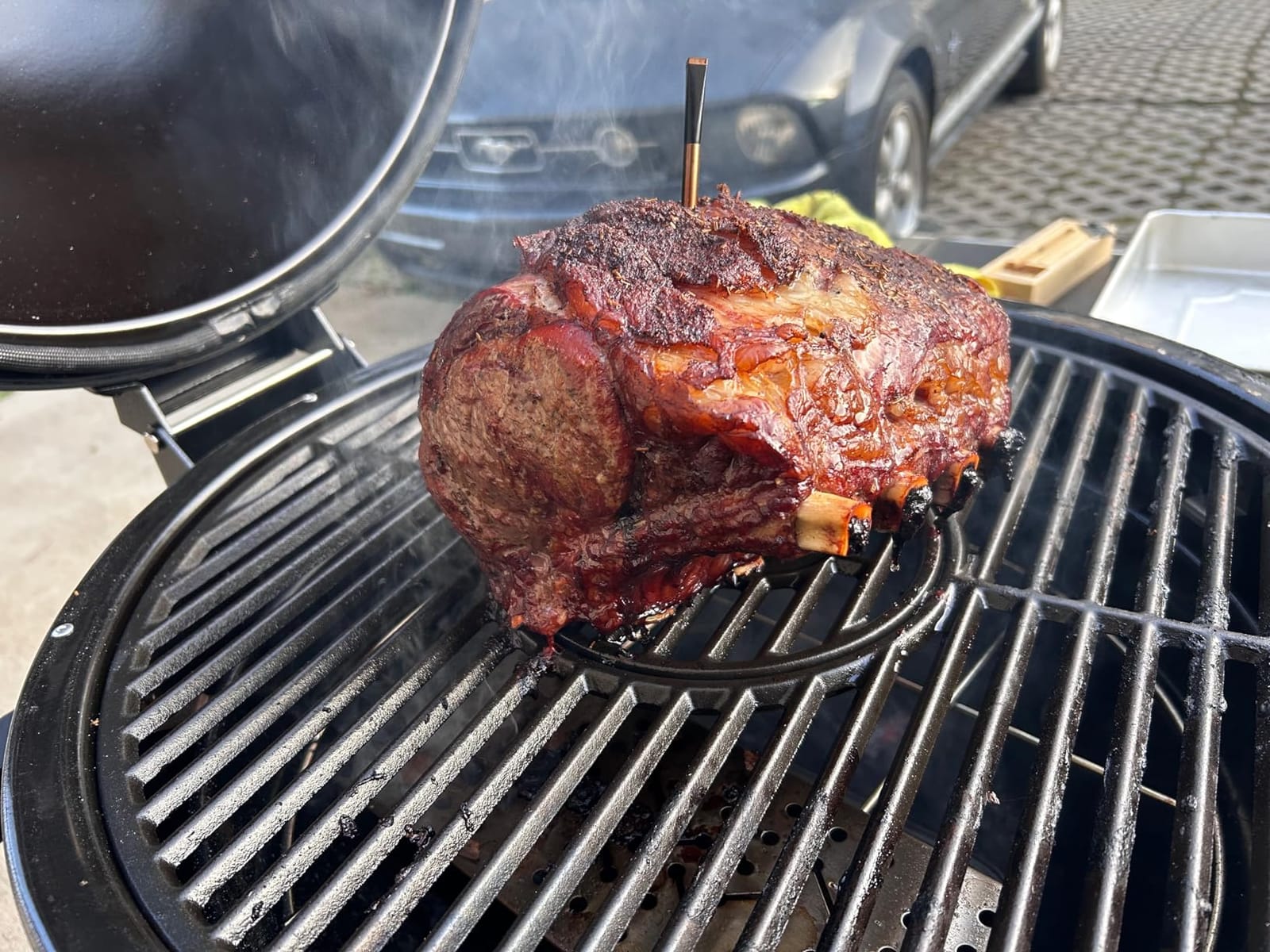
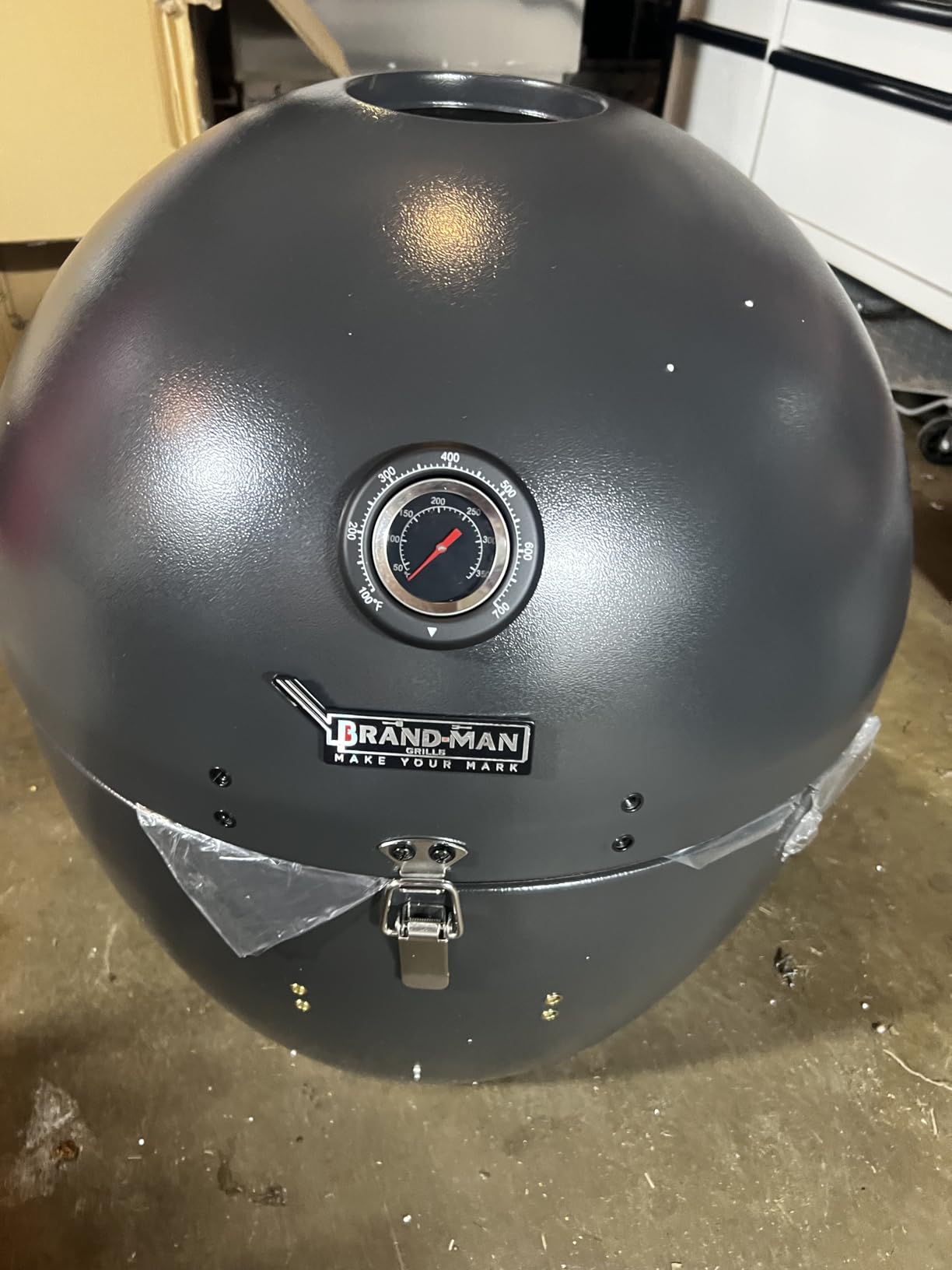
Cooking performance sits comfortably in steel-kamado territory. The double-layer body with a mesh fiberglass gasket locks in heat better than my expectations, and the 5-position airflow system plus hood-mounted thermometer got me to a stable 250F within about twenty minutes of lighting. The 22-inch cast iron grates give a legitimate sear, and I ran burgers over direct heat while buns warmed on the half-moon rack above, which is exactly the multi-temperature workflow this grill was designed around.
Capacity is generous at 400 square inches, which the maker reasonably translates as room for about 25 burgers. In my testing that translated into eight chicken thighs and a full tray of vegetables with space left over, plus the warming rack for rolls. For a steel kamado smoker aimed at backyard entertaining, the plate coverage is more than enough for a crowd of fifteen.
Now the honest part: this is a smaller brand, so the review pool is just 57 buyers so far, and you are reading early-adopter sentiment as much as long-term data. The rating distribution is encouraging, with 82 percent five-star reports, and the warranty is unusually strong for the price bracket, covering the firebox and body against rust-through for five years.
The practical complaints mirror every steel cart grill at this weight. At 105.4 pounds it needs a two-person lift for assembly, the build takes a few hours with a socket set, and a few owners reported dinged stand pieces on arrival. Nothing here is unusual for the category, but set your expectations before the boxes show up, because it ships in two separate cartons.
Is the Prep Table Cart Worth It?
If your grill lives more than ten steps from your kitchen, the prep table is the single feature you will use every single cook. Mine held a cutting board, seasoning tubs, and a tray of raw chicken with room to work, and the tool hooks kept tongs and the grate lifter off the ground. If your grill sits right outside the kitchen door, the table is mostly a bonus rather than a deciding factor.
Assembly Time and What to Expect
Owners consistently report a few hours from boxes to first light, and the cart is most of the work. Lay out every bolt and panel first, tighten the frame loosely until everything seats, then go back and snug every fastener, which prevents the wobble some reviewers mentioned. Two people make the lift onto the wheels safe, and one person can finish the rest solo.
5. London Sunshine 15-Inch – Best Ceramic Kamado for Small Families
London Sunshine 15″ Ceramic Kamado Charcoal BBQ Grill and Smoker, Green
15.7-inch ceramic body
1-inch thick walls
180F to 750F range
Glass fiber gasket
Stainless grate with foldable sides
Pros
- Genuine 1-inch ceramic walls at a mid-tier price
- Cooks from 180F to 750F
- Sturdy four-leg stand with handles
- Assembly is genuinely simple
- Responsive seller support
Cons
- 13.2-inch grate is tighter than it looks
- 92.6 pounds with no wheels
- Accessory ecosystem is nearly nonexistent
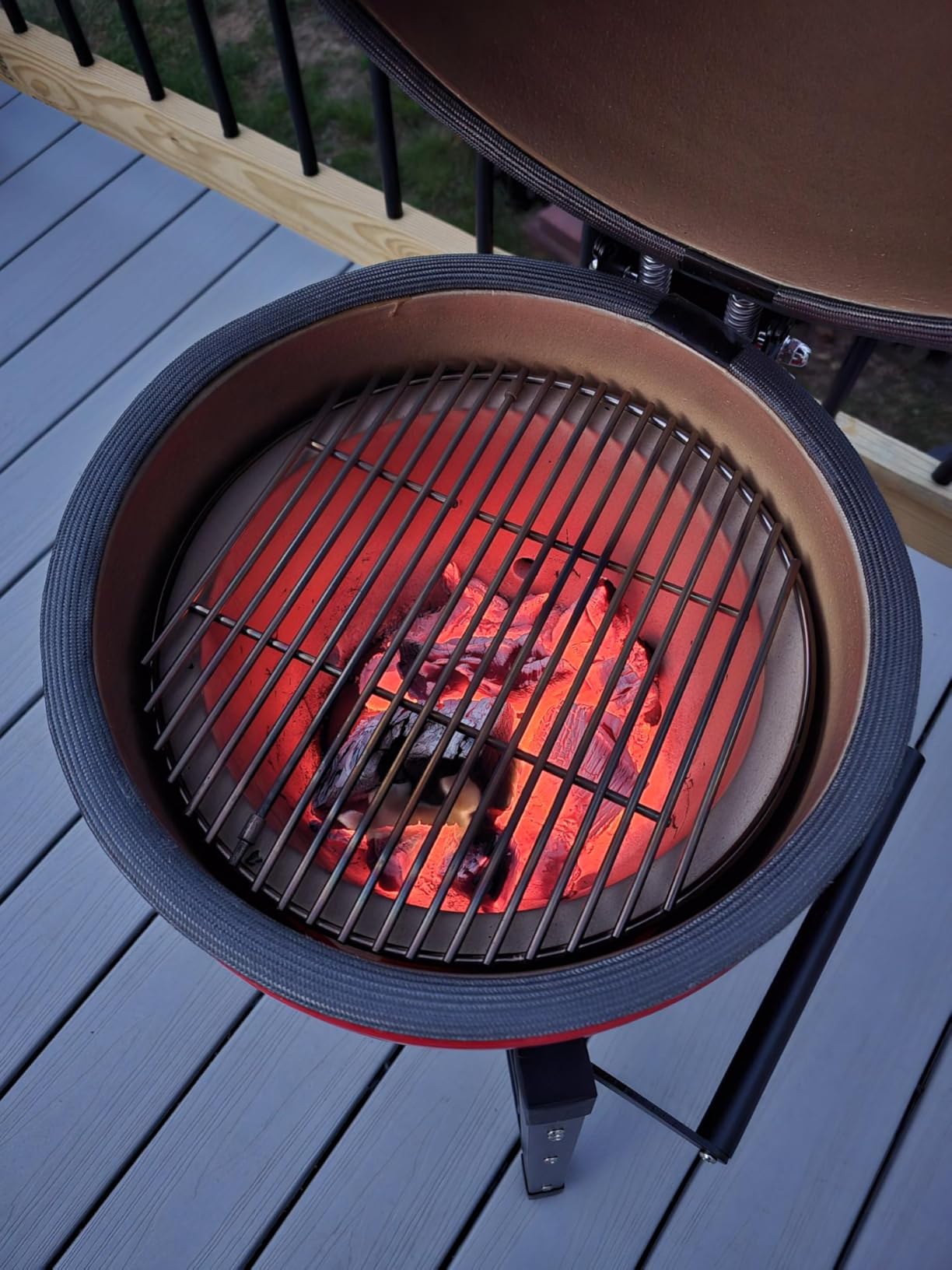
The London Sunshine 15-inch is the cheapest way into a real, thick-walled ceramic kamado in this lineup, and that distinction matters. The 1-inch ceramic walls and Japanese-style dome do the same physics as the premium eggs: they bank heat, hold moisture, and let you run 180F for cold smoking bacon or push to 750F for pizza. When I ran a low-and-slow test on it, the dome barely radiated heat, which told me the insulation was doing real work.
Across 170 owner reviews the comparison that keeps coming up is Big Green Egg, and several buyers say outright that the quality is comparable for dramatically less money. I would not claim it matches the fit and finish of a flagship egg, with the hardware and gasket seating a step behind Kamado Joe, but the cooking results were far closer than the price gap suggests. My beer can chicken came out with the same crackled skin and juicy interior I expect from ceramic.
The stand deserves specific praise because budget kamados often wobble on flimsy legs. This one uses a heavy four-leg tall stand with metal handles, and it felt planted on my paver patio even with the dome open. Assembly was refreshingly simple with clear instructions, which is exactly what you want if this is your first ceramic grill and you are unboxing it alone.
The catch is capacity, and I want to be blunt about it. Despite the 15-inch name, the actual cooking grate is 13.2 inches, which fits two small chickens or one rack of ribs cut in half. For a couple or a family with small kids it is genuinely enough, but if you entertain, this becomes your second grill rather than your only one.
Accessories are the other quiet cost. There is no ecosystem of half-moon deflector plates, expander racks, or brand pizza stones like Kamado Joe and Big Green Egg offer, so you improvise with universal-fit parts. At 92.6 pounds with no wheels, you will also want to place it once and leave it there, which is the norm for ceramic anyway.
Real Cooking Capacity for a Family
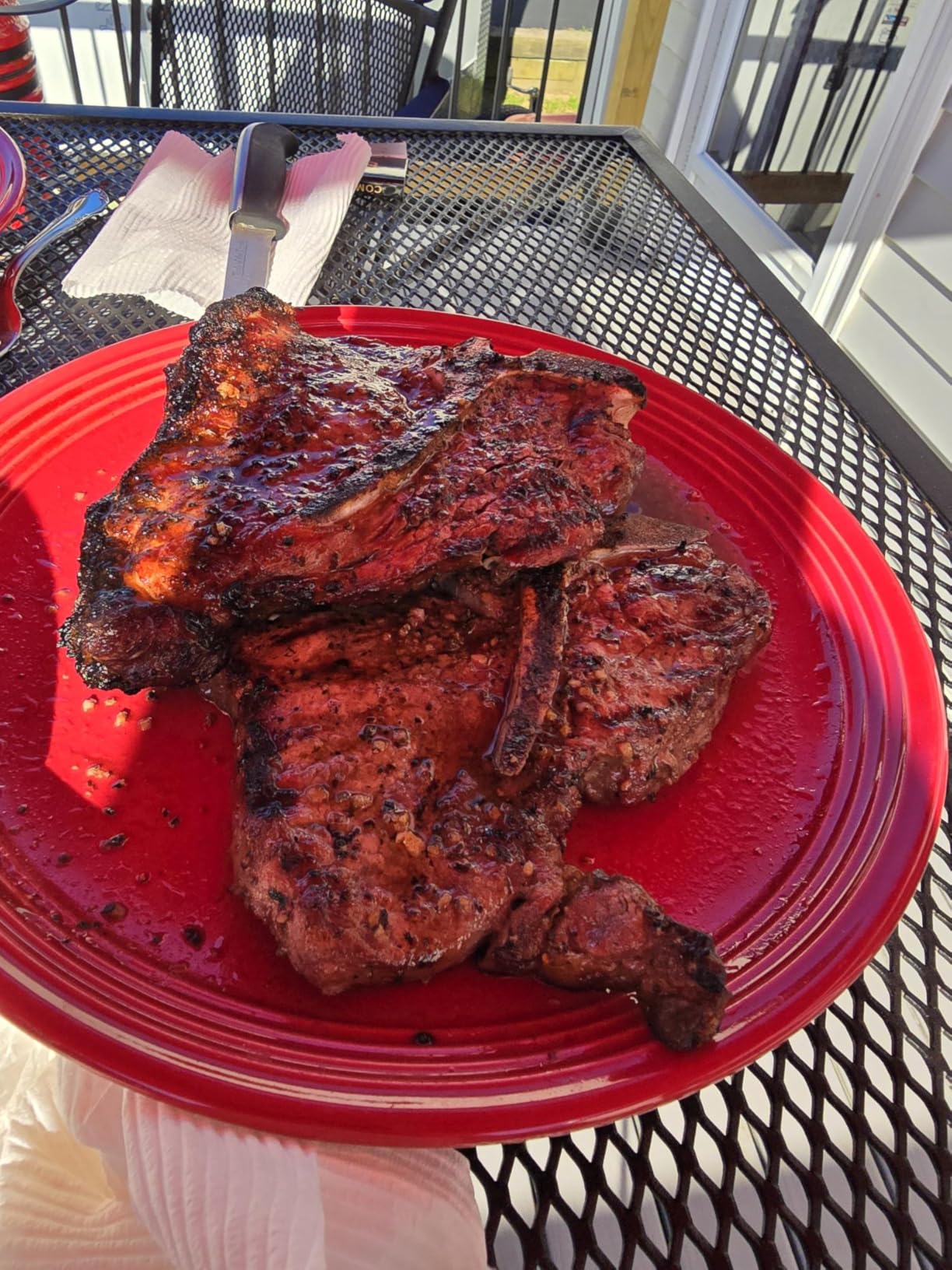
Practically, this size feeds two adults and two kids comfortably: four burgers and a vegetable tray, or a 4-pound chicken plus corn. Thanksgiving turkey duty is out unless it is a small hen, and a full brisket flat will overhang the grate. If your regular Sunday cook is ribs for four or a roast chicken, the capacity is perfectly matched to the job.
Long-Term Durability and Support
The review history shows responsive customer service, with the manufacturer replacing missing hardware and stands without friction, which matters on a budget import. The warranty runs one year, so inspect the ceramic carefully on arrival and report any chips immediately. Long-term data beyond a couple of seasons is thin, so a ceramic cover is a cheap insurance policy against freeze-thaw cycles.
6. Kamado Joe Joe Jr. – Best Premium Portable Kamado Grill
Kamado Joe Joe Jr 13.5-inch Portable Ceramic Charcoal Grill with Grill Stand, Stainless Steel Cooking Grate, Heat Deflectors and Ash Tool in Red, Model KJ13RH
13.5-inch ceramic
150 sq in grate
304 stainless grate
Heat deflectors included
Lifetime ceramic warranty
Pros
- Sips charcoal - a handful lasts hours
- Holds 225F overnight without touching vents
- Heat deflectors included for indirect cooks
- Lifetime ceramic warranty
- Portable enough for camping and tailgates
Cons
- 150 sq inches feeds two comfortably not ten
- Shipping damage reported on some units
- 75.6 pounds is not truly lightweight
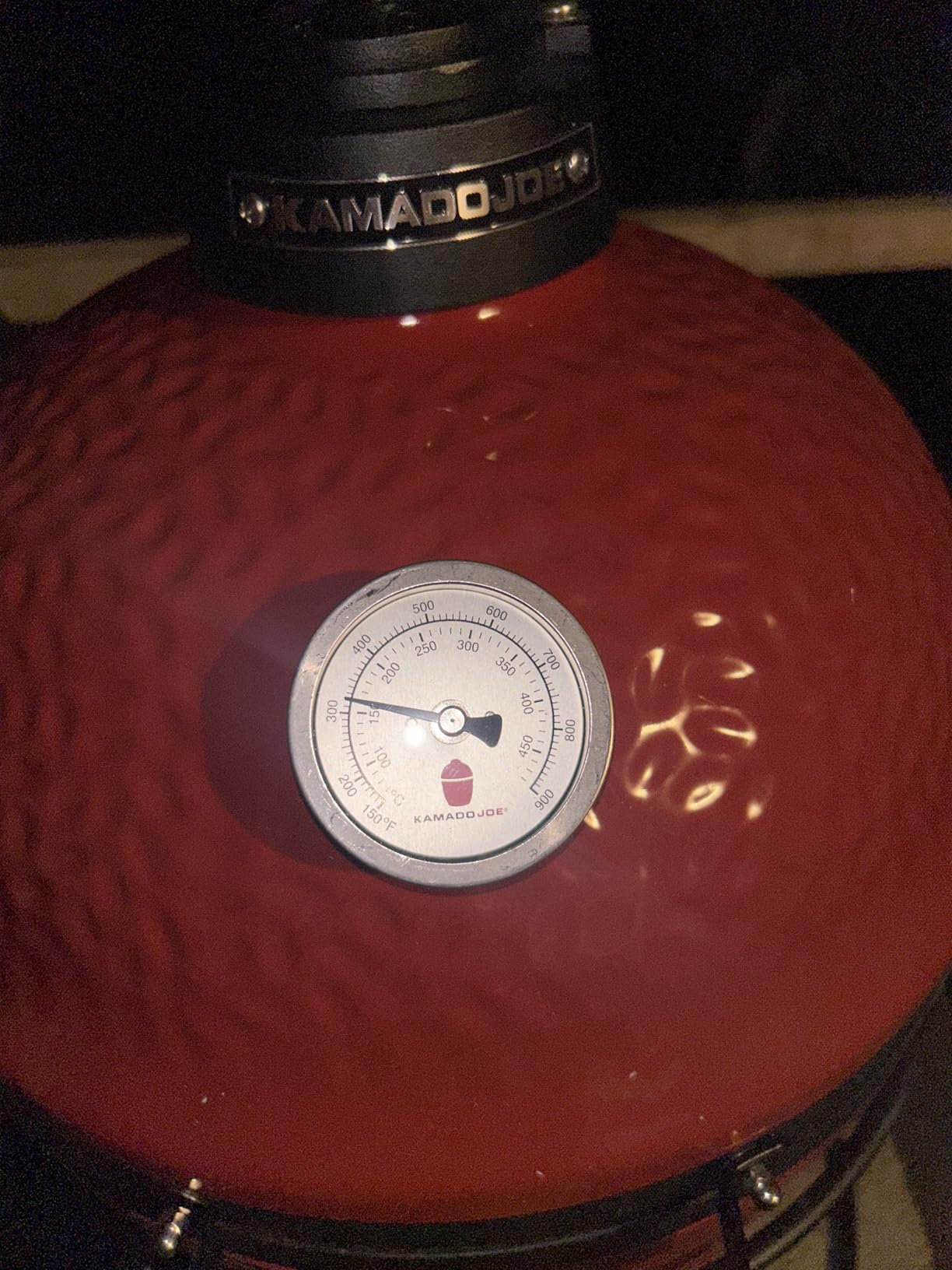
The Joe Jr. is the grill that converted me on small kamados, because it packs genuine premium ceramic performance into a size you can actually move. The thick-walled shell locks in smoke and moisture exactly like its big siblings, and the 304 stainless grate is a step above anything else in the portable class. I have cooked full dinners for four on it more times than I can count, and it never felt like a compromise.
Fuel efficiency is the quiet superpower here, and it is the most repeated praise across 786 owner reviews. Because the small chamber needs so little lump charcoal, a couple of handfuls ran a three-hour rib cook in my testing, and there was usable charcoal left afterward. Owners on the forums regularly report the Jr. costing pennies per cook in fuel, which is the kind of savings that slowly pays back the premium price.
It is also a legitimate kamado smoker, not just a travel grill. The included heat deflectors turn it into a proper indirect cooker, and I smoked a batch of chicken thighs at 225F on a windy evening with the cast-iron bottom vent barely cracked. Kamado Joe also includes an ash tool, and the lifetime ceramic warranty carries down to even this baby of the lineup.
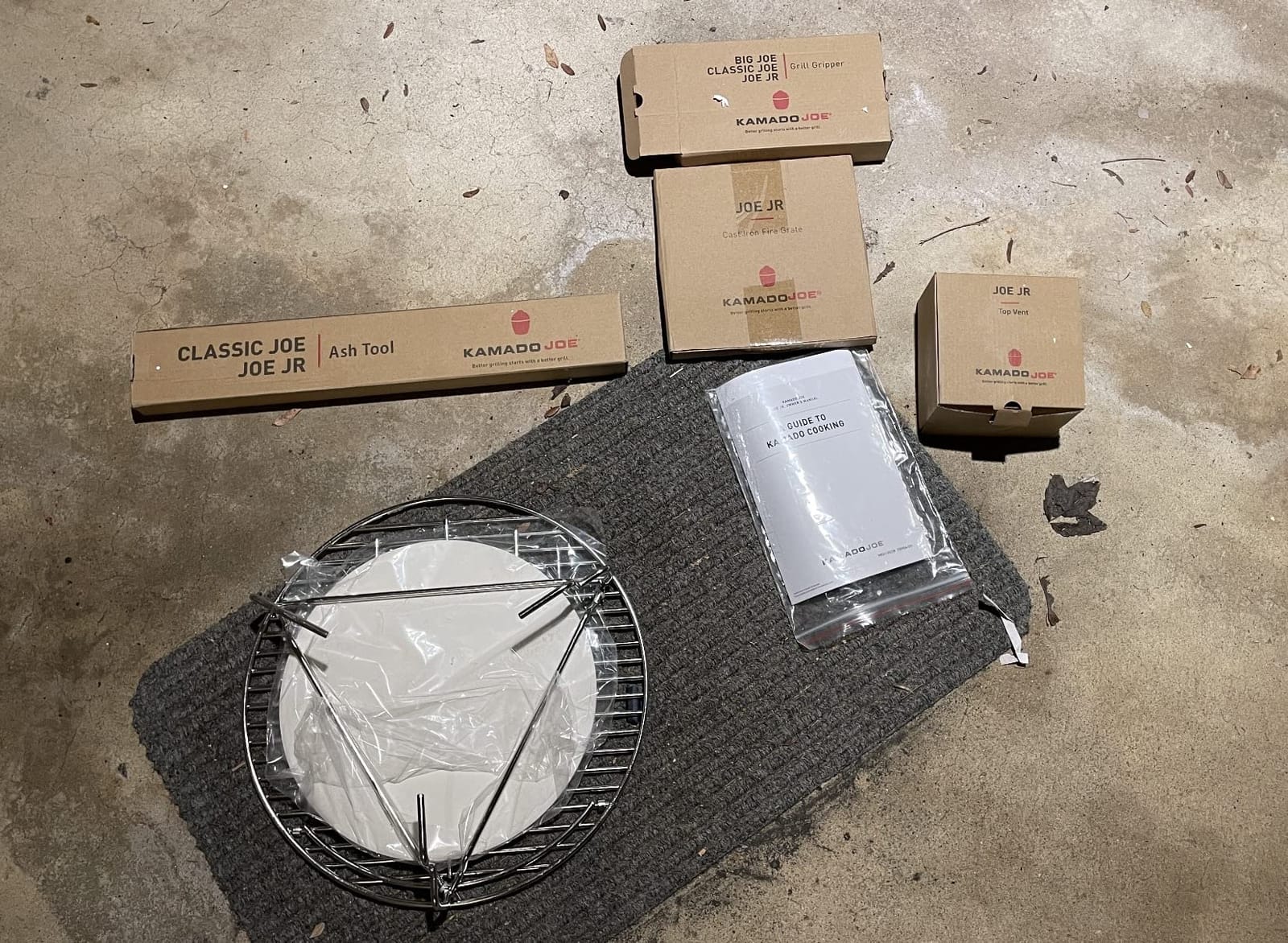
Capacity is the honest limit: 150 square inches is a couple-sized grill, and our team calls it perfect for two people or a small family’s weeknight dinners. Two spatchcocked cornish hens fit, a whole packer brisket never will. The thermometer probe placement can also interfere with tall roasts, which a handful of owners flag and I confirmed with a whole chicken.
Portability is relative, and the 75.6-pound weight is the asterisk on that claim. It is a two-hand carry to the car rather than a backpack grill, but the cast-iron stand doubles as a stable base once you arrive. Shipping damage shows up in reviews at roughly the rate you would expect for ceramic, so inspect it on arrival like any kamado Joe order.
What It Can (and Cannot) Cook
Ribs cut in half, whole chickens up to about 4 pounds, pizzas up to 12 inches, burgers for four, and outstanding steaks are all in its wheelhouse. Full briskets, large turkeys, and eight-person burger runs are out. The mental model I use: anything that fits in a large pizza box, this grill cooks beautifully.
Portability and Fuel Efficiency in Practice
For camping and tailgating it lives in the trunk with the stand detached, and it is light enough that one person loads it with a knee assist. Setup at a camp site takes under ten minutes, and because it sips charcoal, one small bag covers a full weekend of cooking. As a second grill for travel, or a first premium grill for a couple, it is genuinely hard to beat.
7. Char-Griller AKORN Jr. – Best Budget Portable Kamado
Char-Griller AKORN Jr. Portable Kamado Charcoal Grill and Smoker, Triple-Wall Insulated Steel with Cast Iron Grates and Locking Lid, 155 Sq. In. Cooking Area, Ash
Triple-wall steel
155 sq in
Cast iron grate
Dual dampers 200F to 700F
EasyDump ash pan
Pros
- Costs a fraction of ceramic kamados
- Triple-wall steel holds 225F for hours
- 33 pounds - genuinely portable
- Cast iron grate gives real sear
- EasyDump ash pan cleanup
Cons
- 155 sq inches maxes out at 2 to 3 people
- Legs are comically short
- Cools slowly so plan your shutdown
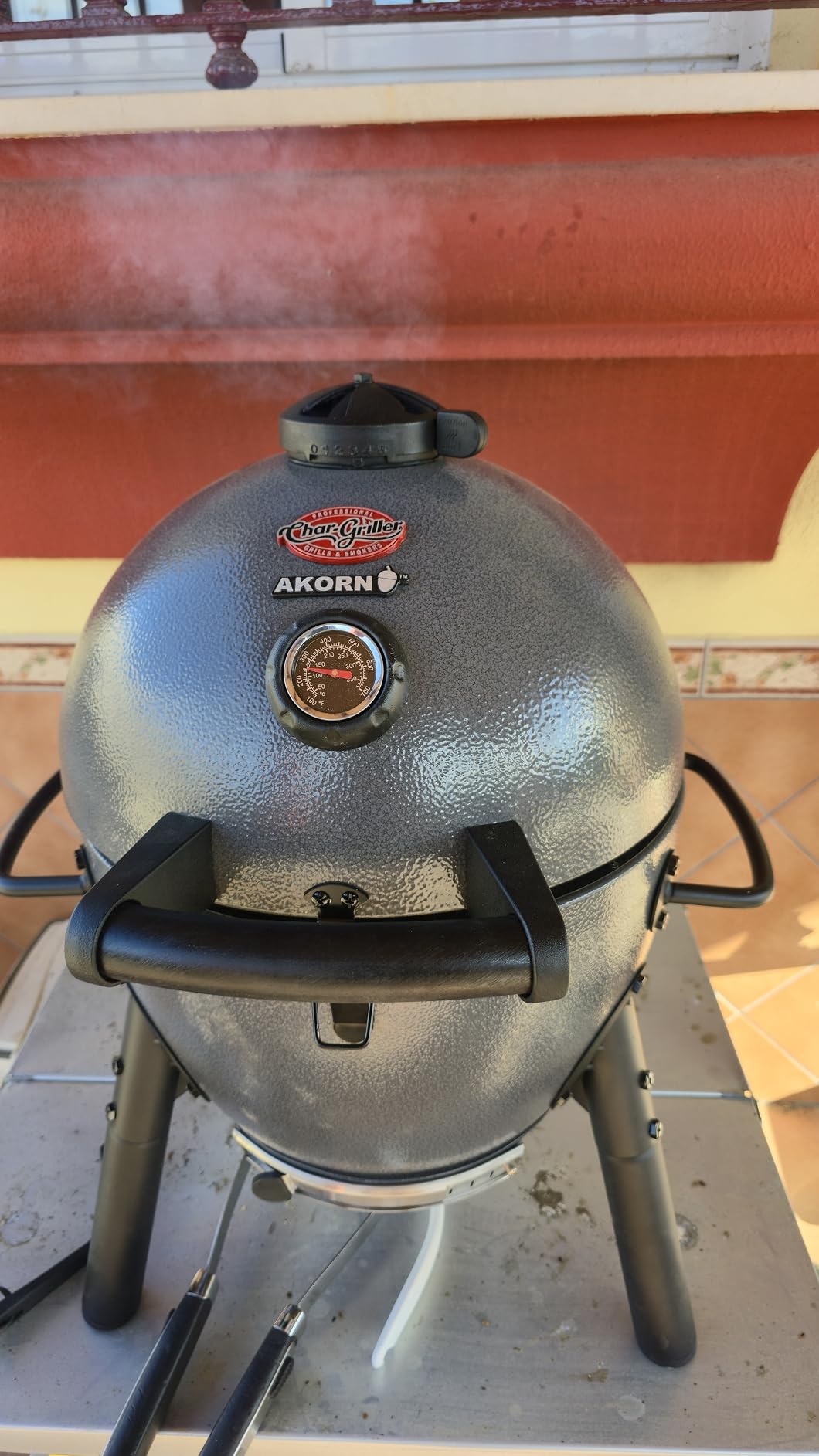
The AKORN Jr. is the most fun-per-dollar grill in this entire roundup, and the one I lend to friends who want to try kamado cooking. At 33 pounds with side handles, it is genuinely portable in a way no ceramic grill can be, and it still runs the full 200F-to-700F kamado range. I have carried it to a campsite, a tailgate, and a friend’s balcony in one summer, which is three more trips than any other grill here made.
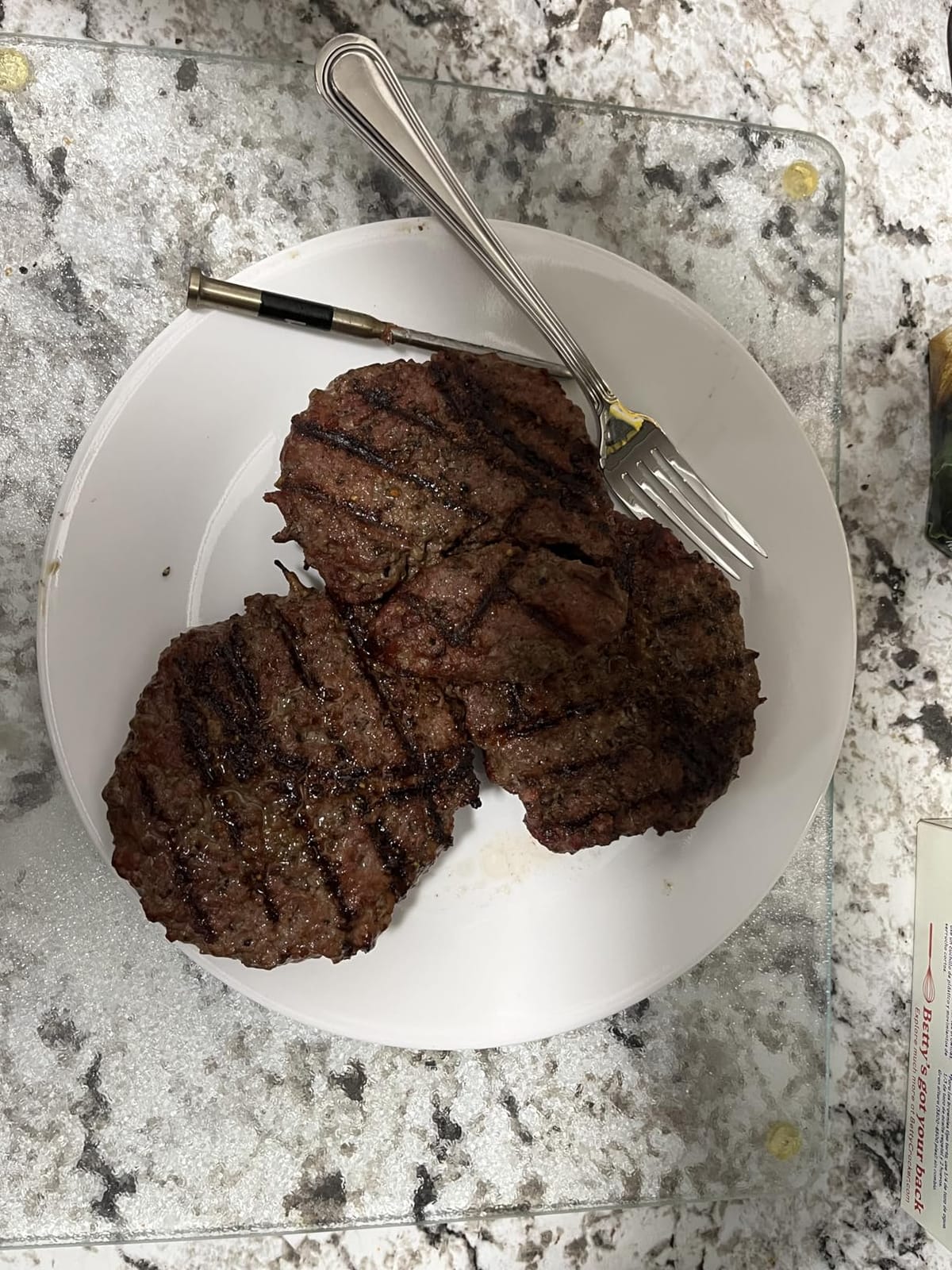
Performance punches well above its pay grade thanks to the same triple-wall insulated steel construction as its big sibling. In testing it held 225F for a four-hour sausage and rib cook, and the cast iron grate put a real crust on skirt steak that shocked everyone at the table. With 739 reviews and an 80 percent five-star rate, the owner consensus lines up with what I saw: this is a legitimately good cooker, not just a good small cooker.
Fuel efficiency is another quietly excellent trait, and the grilling forums are full of owners reporting it uses a fraction of the charcoal of a kettle grill. My measurement agreed, with a two-hour cook burning maybe a third of a chimney starter’s worth of lump. For a cheap grill that lives in the car, that also means carrying less fuel everywhere you go.
The famous complaint is true: the legs are comically short, and cooking on it means bending over or setting it on a table. Several owners build simple wooden risers, and one enterprising reviewer on r/grilling bolted it to an old potting table, which is the classic move. Budget an afternoon if you want comfortable cooking height.
The other honest limits are capacity and control. The 155 square inches maxes out at two to three people, and the small chamber is sensitive, cooling off slowly once hot, so you learn to shut it down early. A few quality-control gremlins, small dents and thin paint on the handles, appear in reviews at typical budget-brand rates.
Who the AKORN Jr. Suits Best
Campers, tailgaters, balcony dwellers, and kamado-curious beginners are the perfect match for this grill. It is also the best kamado grill for beginners on a strict budget, because a season on it teaches you every core kamado skill, damper management, heat zones, and ash handling, without risking expensive ceramic. If you outgrow it, it becomes your travel grill instead of your mistake.
Mods and Accessories Worth Adding
The two upgrades nearly every owner recommends are a grate lifter or hinged grate for reloading coals, and a small table or riser to fix the height problem. A universal pizza stone turns it into a shockingly good personal pizza oven at the top of its range. Skip expensive brand-specific accessories, because generic 13-to-15-inch gear fits this grill fine.
8. London Sunshine 13-Inch – Best Mini Ceramic Kamado
London Sunshine 13-Inch Ceramic Kamado Grill, Waterproof Vent Cap, Green
13-inch ceramic
0.8-inch walls
180F to 750F
Waterproof vent cap
Bamboo carry handles
Pros
- True ceramic walls in a mini size
- Waterproof top vent for rain and dew
- Pre-assembled body - grilling in minutes
- 180F to 750F cooking range
- Sips charcoal on small cooks
Cons
- Tiny 10.8 square inch listed grate area
- Only a 1-year warranty
- Handles and stand need assembly
The London Sunshine 13-inch is the smallest true ceramic cooker in this group, and it exists for a specific person: someone who wants real ceramic performance for one or two people. The 0.8-inch ceramic walls and dome shape deliver genuine heat banking and moisture retention, not the approximation you get from thin steel minis. Mine held a steady 250F for two hours on a small handful of lump, which still feels like a magic trick at this size.
The temperature range is the standout spec, running 180F to 750F, which covers cold-ish smoking through proper pizza heat. In practice I used the low end for smoked almonds and cheese, the middle for thighs and cornish hens, and the top for blistering flatbreads in minutes. Across 462 owner reviews, buyers praise exactly that range alongside the even heat distribution and moist results.
The waterproof cast-iron top vent is my favorite detail, because it means dew or a passing shower does not end the cook. The vent cap sheds water away from the airway, and the bottom stainless vent pairs with it for precise control in weather that would send me running with other small grills. Bamboo side handles make short carries comfortable, which suits a grill that moves between a shed and a patio.
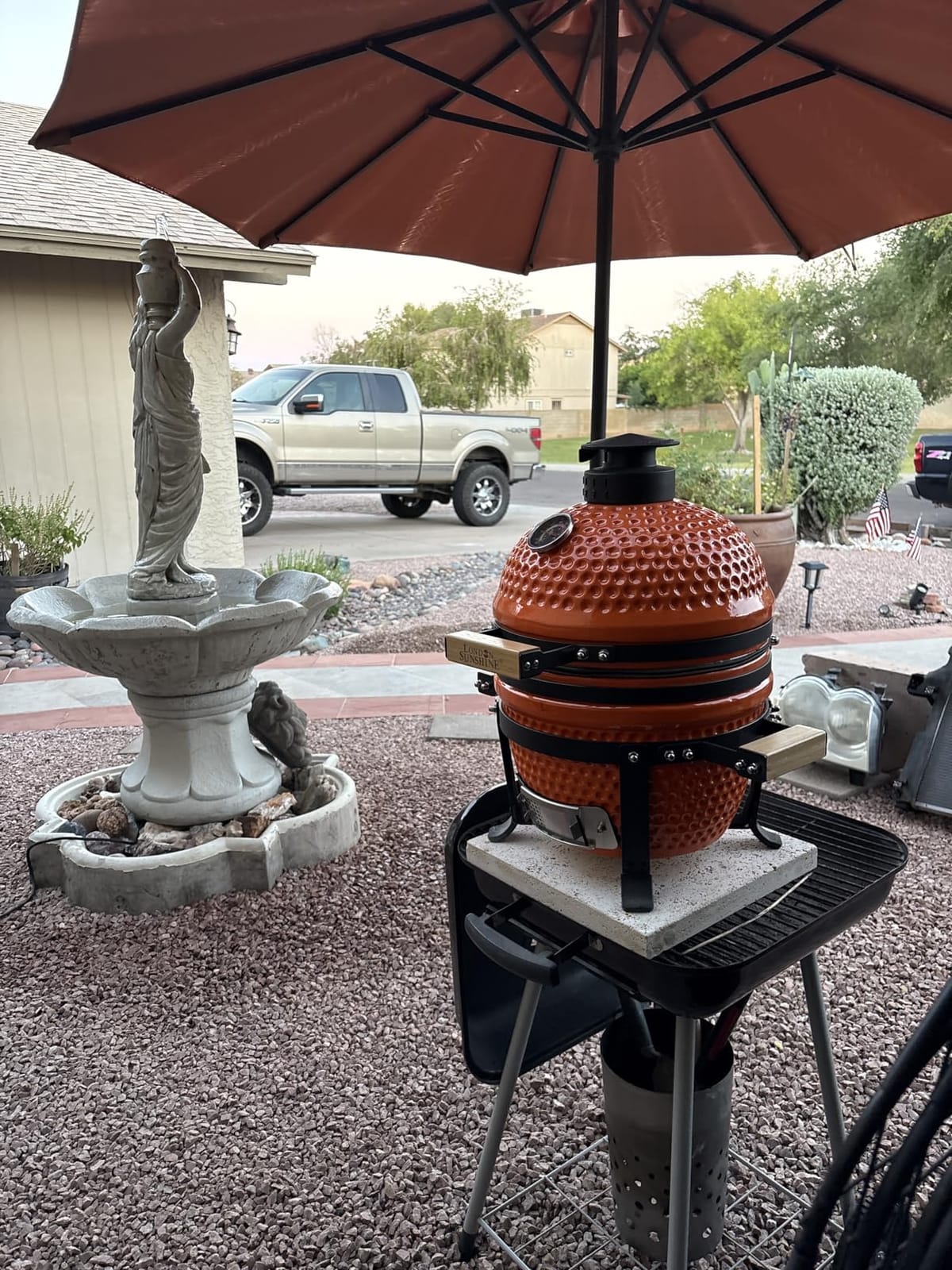
Now the reality check on size, because this is a personal-sized cooker and the specs confirm it. The listed grate area is tiny even by mini standards, so think two steaks, four small burgers, or one cornish hen per session. Anyone buying this for a family of four will be disappointed, and anyone buying it as a compact ceramic for two will be delighted.
The warranty runs a single year, which is the standard trade-off at this tier, and the stand and handles need basic assembly even though the body arrives pre-assembled. The included thermometer, glass-fiber gasket, and stainless grate are all better than I expected at this size. Just plan on a universal small pizza stone and grate accessories, since brand-specific parts do not exist.
Cooking Capacity Reality Check
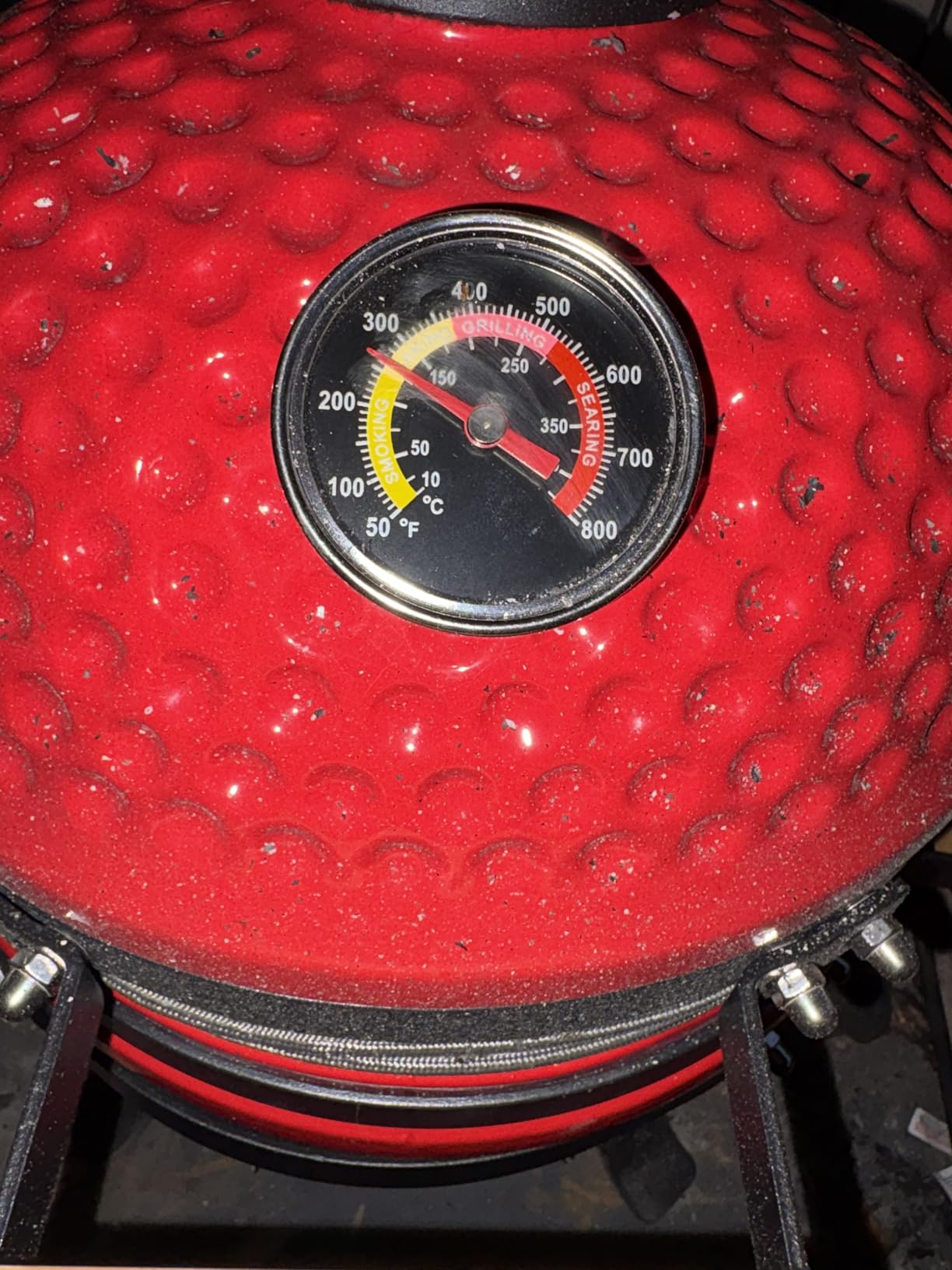
Per cook, expect food for one to two people: two ribeyes, a spatchcock cornish hen, or four burgers with no crowding. The dome height limits tall roasts, and anything over about 3 pounds is a stretch. For solo cooks, couples, and anyone wanting a compact ceramic kamado for the patio, it nails the assignment.
Weather Resistance and Vent Control
The waterproof vent cap genuinely works in drizzle and heavy dew, and the thick ceramic shrugs off cool evening temperatures without temp swings. Wind is the remaining enemy at this size simply because the light body needs a sheltered corner. The pre-assembled body means you can be cooking within fifteen minutes of unboxing, which is the fastest setup of any grill in this guide.
How to Choose the Best Kamado Grill: Buying Guide
Choosing the best kamado grill comes down to four decisions: ceramic or steel, cooking size, how much control hardware you want, and how much weight you can handle. Everything else, including accessories and warranty, follows from those. Here is how I would work through each decision based on a full season of testing and years of owner reports.
Ceramic vs Steel Construction
Ceramic holds heat longer, burns less charcoal, handles years of thermal cycling, and radiates a gentle even heat that keeps meat juicy. Steel kamados heat up faster, cost much less, survive shipping better, and can take a knock without cracking. The honest summary from the forums, which matches my testing, is that ceramic wins on running costs and longevity while steel wins on upfront savings and durability against accidents.
If you cook weekly and plan to keep the grill a decade, ceramic’s fuel savings slowly close the price gap, and owners regularly report 10-plus years of regular use. If you cook occasionally, move often, or want a first kamado without commitment, steel is the smarter risk. Either way, look for a fiberglass or felt gasket, because the gasket seal drives temperature stability more than the wall material.
Size and Cooking Area
Match grate diameter to your household, not your ambitions. Roughly 150 square inches feeds two, 250 to 300 feeds a family of four to six, and 400-plus feeds a crowd or fits full packer briskets. Remember that multi-level systems like Divide and Conquer effectively double usable space, so a mid-size kamado with a second tier often out-cooks a bigger single-grate model.
Also check the real grate size versus the marketing size, because the London Sunshine 15-inch actually carries a 13.2-inch grate. Diameter matters for specific jobs: whole briskets want 20-plus inches, pizza wants to match your stone size, and ribs can be cut in half on smaller grates. When in doubt, size up one notch, because no one has ever regretted extra grate space.
Temperature Range and Airflow Control
The whole point of a kamado is precise control through airflow, so look at both the range and the hardware. A range of roughly 180F to 750F covers low smoking through Neapolitan-style pizza, and every grill in this guide covers at least most of that span. The quality difference shows up in the dampers: indexed or cast-iron vents with detents, like the Kontrol Tower, hold settings and make temps repeatable.
A dome thermometer is the minimum, and a gasket seal that seats fully is what makes it accurate. If you plan to smoke regularly, prioritize grills where owners report holding 225F for hours without adjustment, which is the single most repeated trust signal in long-term owner reviews. Budget for a good leave-in probe thermometer regardless, because dome thermometers read dome temp, not food temp.
Weight, Portability, and Placement
Decide the grill’s permanent home before you buy, because ceramic models from 92 to 353 pounds are placed, not moved. Wheels or a cart with locking casters make patio repositioning easy, but a move across town needs two friends and a truck. Steel models under 105 pounds are the ones you can genuinely reposition alone.
Protecting ceramic is mostly about transport and weather. Keep the grill on a flat, stable surface, use a cover against freeze-thaw moisture, and never move a hot grill, because thermal shock plus a bump is how ceramics crack. For winter cooking, ceramic’s insulation is a real advantage in cold weather, while steel models benefit from a windbreak.
Ash Management and Cleanup
Cleanup is where cheap grills quietly annoy you for years, so check how ash exits the firebox before buying. Slide-out ash drawers, like the Big Joe’s, and removable dump pans, like both AKORNs’ EasyDump system, turn a ten-minute chore into thirty seconds. Grills where you must stir ash through the fire grate with a rake get old by your tenth cook.
Ash management also affects your next cook, because packed ash blocks airflow and causes temperature problems. A good ash system lets you empty the firebox between sessions, which keeps airflow predictable. This is a small feature with an outsized effect on how much you enjoy the grill long-term, and owners on r/BBQ cite Kamado Joe’s ash handling as a main reason they pick it over rivals.
Warranty and Brand Support
Ceramic warranty coverage tells you how confident a maker is in its product. Kamado Joe backs ceramics for life with five years on metal parts, Brand-Man covers the firebox against rust-through for five years, and the budget London Sunshine models carry one year. Since a kamado is a buy-once purchase for most owners, the length of that coverage genuinely matters.
Customer service quality matters just as much as length, because shipping damage is the number one failure mode for ceramic grills of every brand. Read recent reviews for how the seller handles broken-on-arrival units, film your unboxing, and inspect all ceramic before the driver leaves. The best brands in our data shipped replacement parts without argument, which is exactly what you want after a bad delivery day.
Which Kamado Is Right for Your Experience Level?
Beginners should start with steel, and I say that as someone who learned on ceramic: the AKORN or AKORN Jr. teaches every core kamado skill while a mistake costs little. Enthusiasts who already know they will cook weekly should go straight to ceramic, and the Classic Joe II or Big Joe I will last long enough to hand down. Couples and minimalists get the Joe Jr. or a London Sunshine and lose nothing that matters for their cooking.
Frequently Asked Questions
What is the best Kamado Joe to buy?
The Kamado Joe Classic Joe II is the best Kamado Joe for most people, earning a 4.7 rating across 970 reviews thanks to its precise 225F to 750F control and 2-tier Divide and Conquer cooking system. If you cook for big crowds, the Big Joe I adds 450 square inches of grate space with the same temperature stability in a 24-inch shell.
Which is better, green egg or Kamado Joe?
Kamado Joe edges out Big Green Egg for most buyers because it includes the cart, side shelves, and a multi-level cooking system as standard equipment rather than paid accessories. Owners on r/BBQ also consistently report Kamado Joe’s ash management is easier to live with day to day. Big Green Egg counters with a massive dealer network and a famously devoted owner community, so both are excellent ceramic cookers that will last a decade or more.
Which is better, the Kamado Joe or the Pit Boss kamado?
Kamado Joe is the stronger overall cooker, with thicker ceramic, a lifetime ceramic warranty, and the Divide and Conquer system that Pit Boss does not match. Pit Boss kamados compete on value, offering a large steel or ceramic-style kamado at a much lower cost, similar to how the Char-Griller AKORN undercuts the premium brands. If budget leads your decision, a value kamado does the job well, but the Joe is the better long-term buy.
Are kamado grills worth the money?
Yes, if you cook regularly, because the thick walls burn a fraction of the charcoal a kettle or gas grill uses, hold temperatures for hours without attention, and last well over a decade with basic care. A kamado also replaces four tools at once, working as a grill, smoker, roasting oven, and pizza oven. If you grill only a few times a year, a budget steel kamado like the AKORN delivers most of the same benefits for far less.
Which kamado grill has the highest rating?
Among the eight grills we tested, the Kamado Joe Classic Joe II holds the highest rating at 4.7 stars, supported by 970 reviews. The Brand-Man Rodeo Elite and several others sit close behind at 4.6, with the Char-Griller AKORN at 4.5 across the largest review pool of the group at 2,349 buyers.
Final Verdict: The Best Kamado Grills for 2026
After a full season of brisket, pizza, and overnight pork butts, our top pick among the best kamado grills is the Kamado Joe Classic Joe II, which pairs flawless temperature control with the most flexible cooking system on the market. The Big Joe I is the move for feeding crowds, and the Brand-Man Rodeo Elite deserves a hard look if a steel kamado with a real prep station fits your setup better.
On value, nothing touched the Char-Griller AKORN, and its little sibling the AKORN Jr. is the smartest cheap entry into kamado cooking you can buy. Couples and small patios are served beautifully by the Joe Jr. and the two London Sunshine ceramics. Whichever direction you take, buy for the household you actually feed, inspect the ceramic on delivery, and give yourself five cooks to learn the vents.
Pick your size, order the grill, and start planning the first brisket, because once you taste what a kamado does with nothing but charcoal and air, your gas grill is going to get very lonely. Here is to a great year of cooking outdoors.