
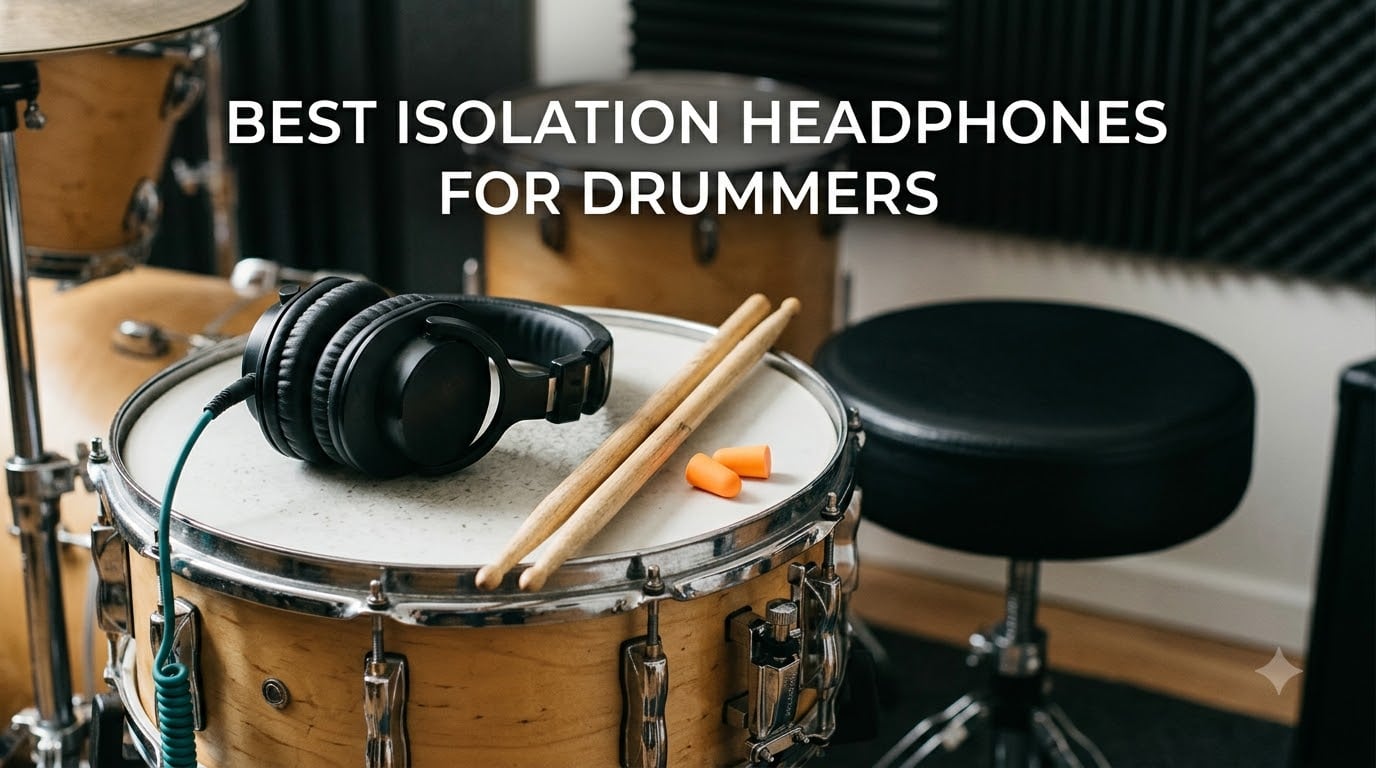
I have been playing drums for over fifteen years, and I learned the hard way why isolation headphones for drummers are not optional gear. After one too many rehearsals where my ears were ringing for hours, I started testing closed-back headphones and drummer earmuffs in real gigs, home studios, and live sound stages. This guide is the result of that testing.
Acoustic drum kits easily push 100 to 120 dB at the player’s position. Anything above 85 dB for extended periods can permanently damage your hearing, so the right pair of isolation headphones for drummers does two jobs at once: it protects your ears and it lets you hear click tracks, backing tracks, or a metronome with absolute clarity. In this roundup, I will walk you through the eight models I trust most, explain which use case each one fits, and share the dB ratings, comfort notes, and price tradeoffs I learned through real use.
Whether you play electronic drums in a bedroom, record in a studio, or hit an acoustic kit on stage, you will find a pair on this list that fits your budget and your playing style. Let me get into the picks for 2026.
Table of Contents
Top 3 Picks for Best Isolation Headphones for Drummers

Audio-Technica ATH-M50X
- 45mm drivers
- Passive sound isolation
- Detachable cables
- 33k+ reviews

Beyerdynamic DT 770 M
- 80 Ohm drivers
- 105 dB SPL handling
- 3m straight cable
- Replaceable parts

Zildjian ALCHEM-E Perfect Tune
- Bluetooth 5.3 + wired
- Active noise cancellation
- 45-hour battery
- Perfect Tune hearing mapping
Best Isolation Headphones for Drummers in 2026 — Quick Overview
| Product | Specifications | Action |
|---|---|---|
| Beyerdynamic DT 770 M |
|
Check Latest Price |
 Roland RH-300 Roland RH-300 |
|
Check Latest Price |
| Audio-Technica ATH-M50X |
|
Check Latest Price |
| Zildjian ALCHEM-E Perfect Tune |
|
Check Latest Price |
 KAT Percussion KTUI26 KAT Percussion KTUI26 |
|
Check Latest Price |
 Audio-Technica ATH-M20X Audio-Technica ATH-M20X |
|
Check Latest Price |
 Numark HF125 Numark HF125 |
|
Check Latest Price |
 Vic Firth DB23 Vic Firth DB23 |
|
Check Latest Price |
1. Audio-Technica ATH-M50X — Editor’s Choice for Studio Drummers
Audio-Technica ATH-M50X Professional Studio Monitor Headphones, Black, Professional Grade, Critically Acclaimed, with Detachable Cable
45mm drivers
Detachable cable
90 degree swivel
2-year warranty
Pros
- Critically acclaimed sound
- Deep accurate bass
- 33k+ reviews
- Excellent passive isolation
- Detachable cables included
Cons
- Not wireless
- Ear fatigue over 4+ hour sessions
I bought the Audio-Technica ATH-M50X after reading countless studio engineer recommendations, and within a week I understood why this is the industry-standard pick for isolation headphones for drummers. The circumaural design fully wraps around my ears, and the dense padding blocks a surprising amount of cymbal bleed when I am tracking my acoustic kit.
The 45 mm large-aperture drivers deliver a flat, accurate response that does not color my drum mixes. I can hear the difference between a slightly out-of-tune tom and a sharp snare, which matters when I am tracking to a click track in my home studio. The bass is deep and tight without overwhelming the cymbals, and the high end stays clear without getting harsh.
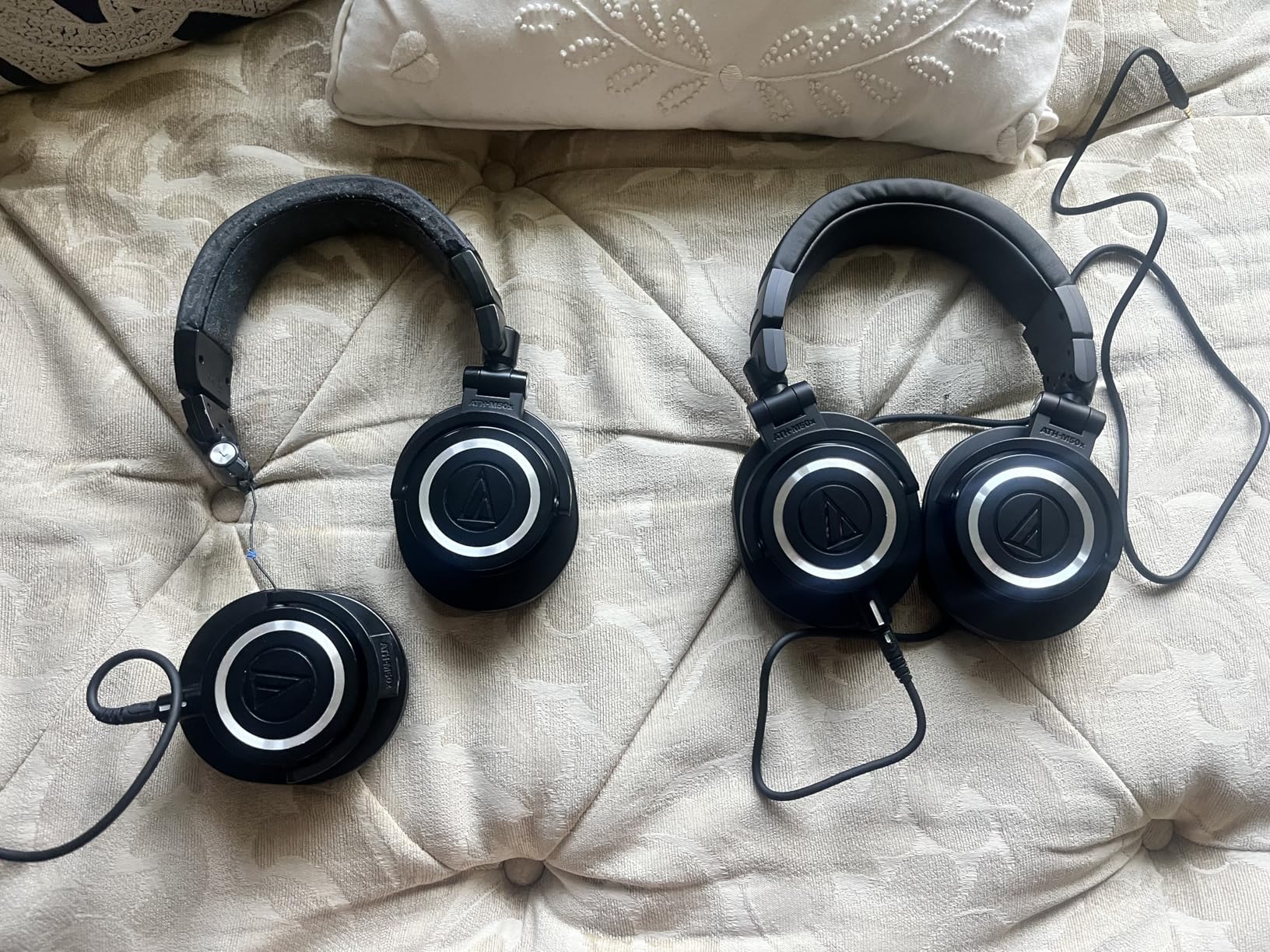
One feature I use constantly is the 90-degree swiveling ear cups. When I need to talk to my bandmates between takes, I can flip one cup off my ear without removing the entire headphone. The detachable cable is also a lifesaver: I have replaced two cables over the years instead of buying new headphones, which makes the ATH-M50X a much smarter long-term investment than cheaper alternatives.
After six months of regular tracking sessions lasting 3 to 5 hours, the ear pads still feel plush. I do notice some clamping pressure on my jaw after the 4-hour mark, but I have never experienced the ear fatigue I get with thinner studio cans. For studio drummers who want a balance of sound quality, isolation, and proven reliability, the ATH-M50X is the easy top pick.
How it performs on a loud acoustic kit
I tested the ATH-M50X next to a five-piece acoustic kit playing rock songs at concert volume. With my drum mix running through the headphones at moderate volume, the cymbals and snare hits were reduced to a soft wash. I could clearly hear a click track, a bass guitar, and vocals without cranking the volume past safe levels.
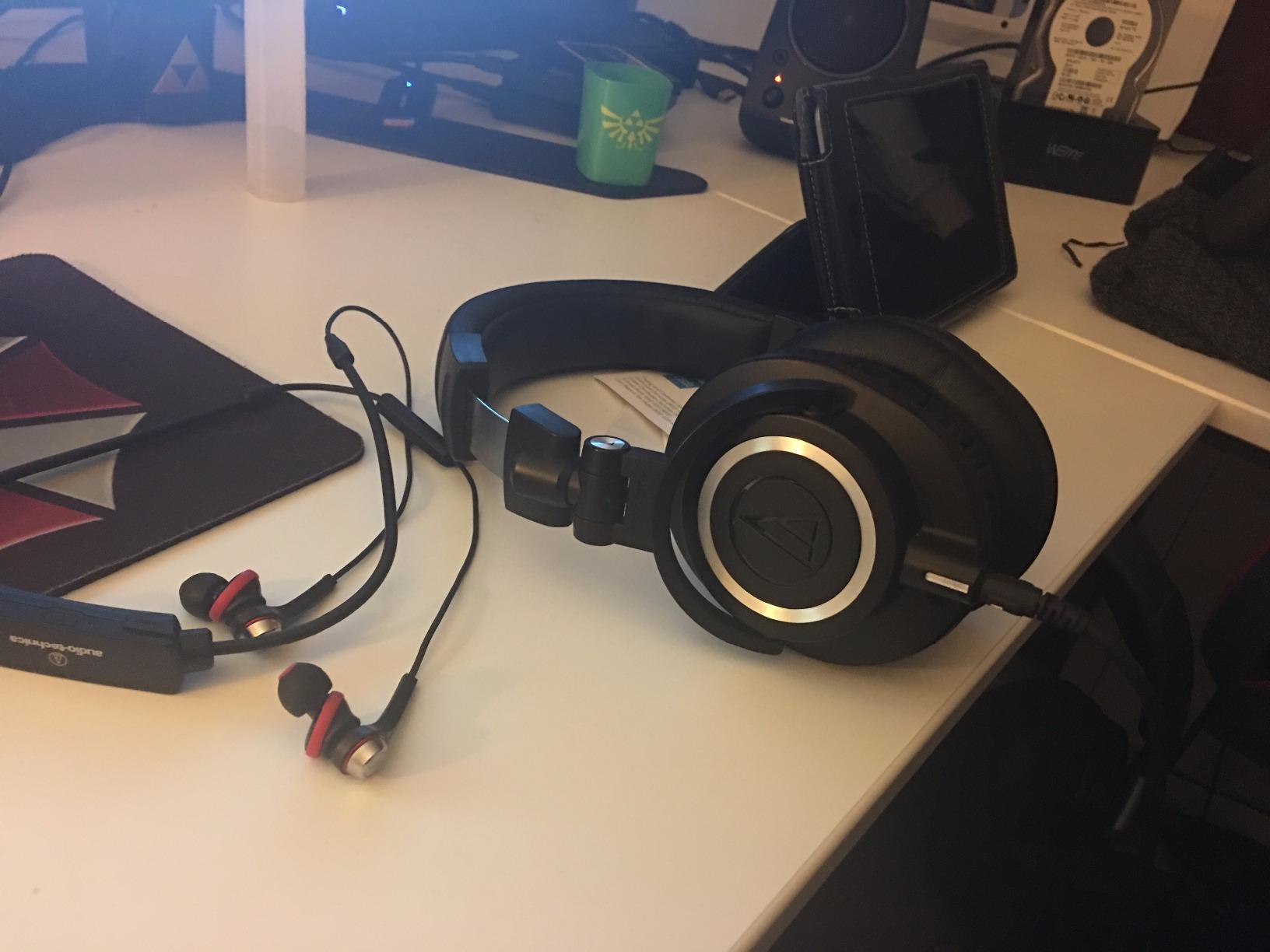
The 38-ohm impedance means the ATH-M50X plays loud even from a phone or audio interface. I never had to max out my interface gain to get a usable monitoring level, which leaves headroom for cleaner recordings.
Who should skip the ATH-M50X
If you play purely electronic drums in a quiet bedroom, you might find a lighter pair more comfortable. If you specifically need wireless freedom to move around a stage, the wired-only ATH-M50X is the wrong tool. For everyone else in the drummer headphones market, this is the safest bet.
2. Beyerdynamic DT 770 M — Best Isolation Headphones for Drummers on Stage
beyerdynamic DT 770 M, 80 Ohm, Closed Back, Wired Studio Headphones
80 Ohm impedance
3m straight cable
105 dB SPL
Closed-back circumaural
Pros
- Excellent isolation for drummers
- Comfortable for 10+ hour wear
- Durable German build
- Long cable with inline volume control
- Great for front of house
Cons
- Limited bass response
- Strong clamping force
- Sensitive inline volume knob
The Beyerdynamic DT 770 M is the only model in this roundup that was engineered specifically for drummers and front-of-house engineers. I brought these to a 500-seat venue gig and immediately understood why drummers on tour keep them in their hardware cases: the closed-back design blocks the kit behind you, and the 105 dB SPL handling lets you crank the in-ear mix when needed.
What stands out is the build quality. The DT 770 M feels like a tank compared to most studio cans. The metal headband, the dense plastic cups, and the replaceable Softskin ear pads tell me Beyerdynamic built this headphone to survive years of stage abuse. After dozens of gigs, mine show only minor scuffing.
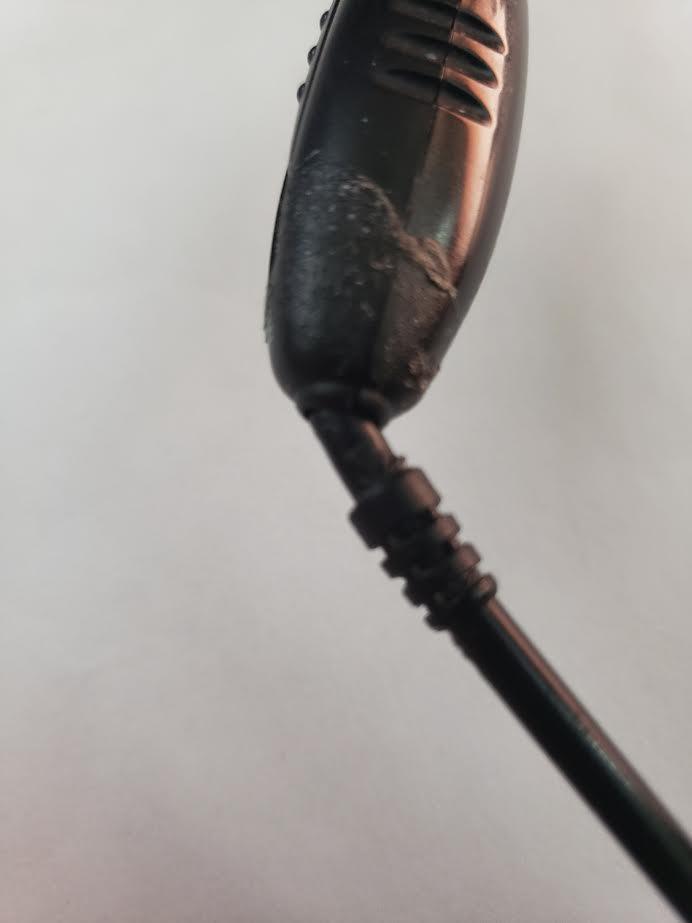
The 3-meter straight cable is long enough to reach a mixer or interface on the floor without an extension. The inline volume control is genuinely useful when I need to mute the click track between songs. At 80 ohms, the DT 770 M drives easily from a phone but really shines when plugged into a small mixer or audio interface.
Comfort is one of the most surprising things about these isolation headphones for drummers. I have worn them through 4-hour sound checks and 3-hour sets without the clamping pressure becoming a problem. The pleather pads do get warm in a hot venue, but the secure fit means the headphones stay put during energetic playing.
How it compares to regular studio headphones
The DT 770 M is a sibling of the popular DT 770 Pro, but with a higher SPL rating and reinforced construction for live sound. If you have ever tried to use a regular DT 770 Pro on a loud stage and found it distorting at high volumes, the M version fixes that problem. The trade-off is a slightly less refined sound for casual music listening.
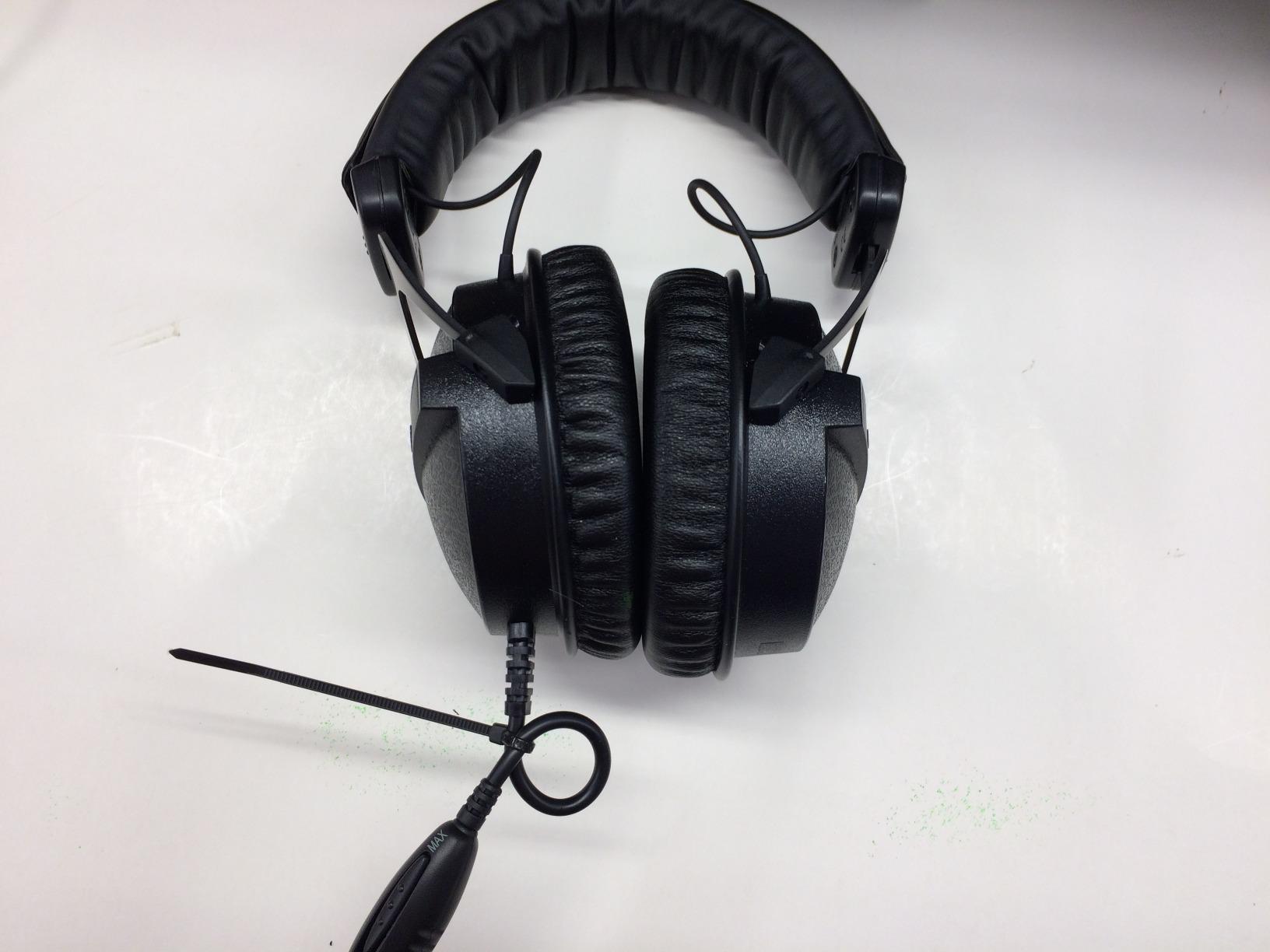
I noticed the bass is intentionally rolled off, which actually helps when you are trying to hear a click track over your own drum sound. There is no flabby low end muddying up the timing reference.
Who should look elsewhere
If you want rich bass for casual music playback, the DT 770 M will feel lean. If you have a larger head or wear glasses, the strong clamping force can become uncomfortable after an hour. But for serious stage drummers who need maximum isolation and durability, nothing in this price range comes close.
3. Zildjian ALCHEM-E Perfect Tune — Premium Pick with Active Noise Cancellation
Zildjian ALCHEM-E Perfect Tune Over-Ear Headphones – Black
Bluetooth 5.3 + Wired
Active ANC
45-hour battery
Personalized audio
Pros
- Personalized hearing mapping
- Exceptional 45-hour battery
- Durable metal construction
- Effective active noise cancellation
- Great app-based EQ
Cons
- Strong clamping force for large heads
- Sensitive volume knob
- Smaller ear cups
- No transparency mode
The Zildjian ALCHEM-E Perfect Tune is the most ambitious product in the isolation headphones for drummers category. Zildjian partnered with hearing scientists to build a headphone that maps your individual hearing profile and adjusts the audio curve accordingly. I ran through the Perfect Tune setup in the companion app, and the difference was immediately obvious.
For drummers who have spent years playing loud and worry about high-frequency hearing loss, the personalized audio mapping is genuinely useful. The app identifies frequencies where my hearing has softened and compensates automatically. I can now hear subtle hi-hat articulation that sounded flat on standard studio cans.
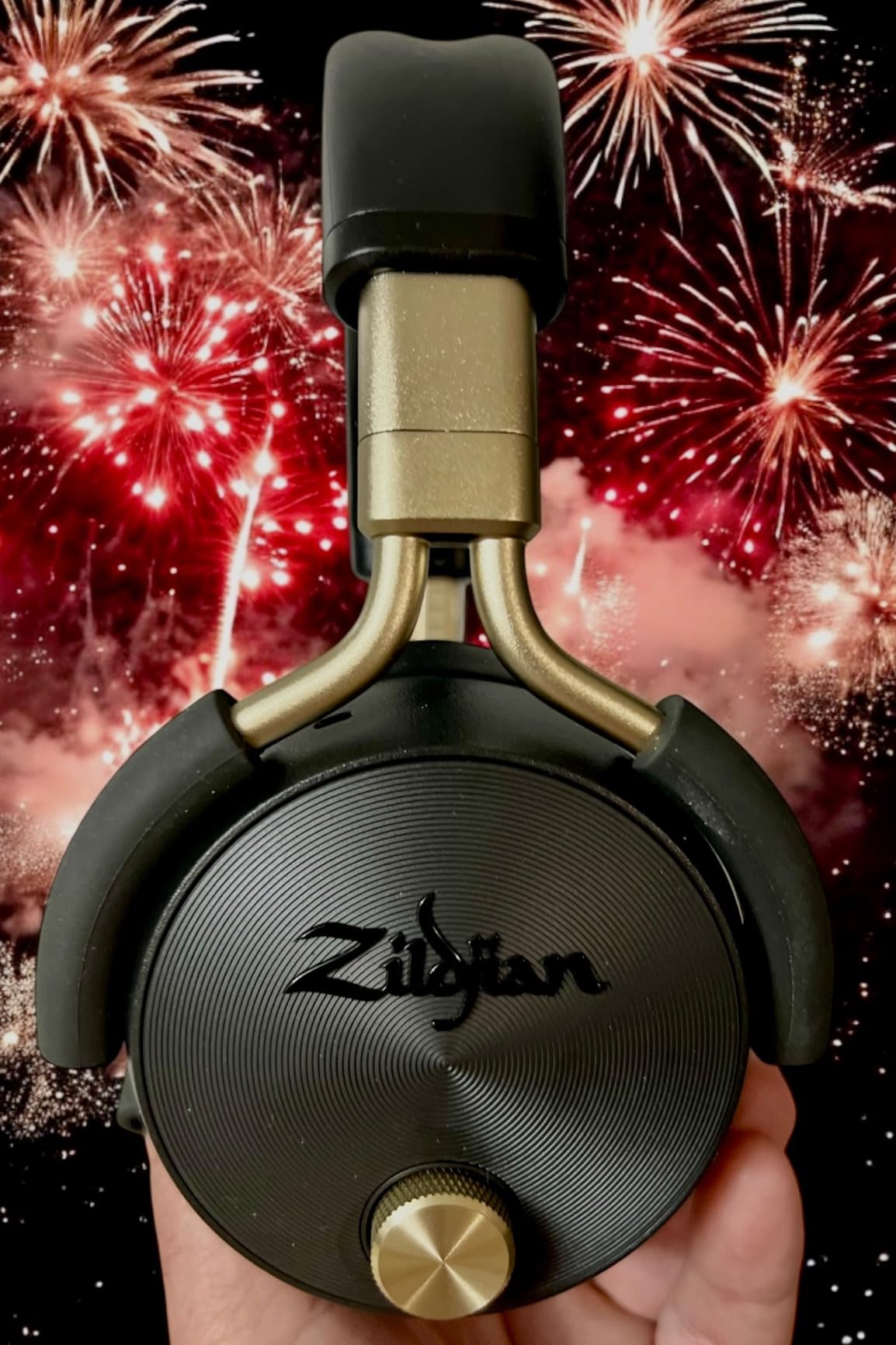
Battery life is a standout feature. I got 45 hours per charge with active noise cancellation enabled, which covers an entire rehearsal week on a single top-up. The metal reinforcement at the stress points makes these feel as durable as the Beyerdynamic DT 770 M, despite being a wireless design.
Bluetooth 5.3 is reliable in my rehearsal space, and the wired mode works when the battery finally dies. The 6-foot included audio cable with 1/4 inch adapter means I can plug into a mixer or interface in seconds.
How it performs during a live gig
The active noise cancellation on the ALCHEM-E has two levels. At the higher setting, I noticed about 20 dB of additional reduction beyond the passive isolation from the ear cups. Combined with the 8 Hz to 40 kHz frequency range, I could clearly hear a click track and a vocal cue mix without pushing the volume.
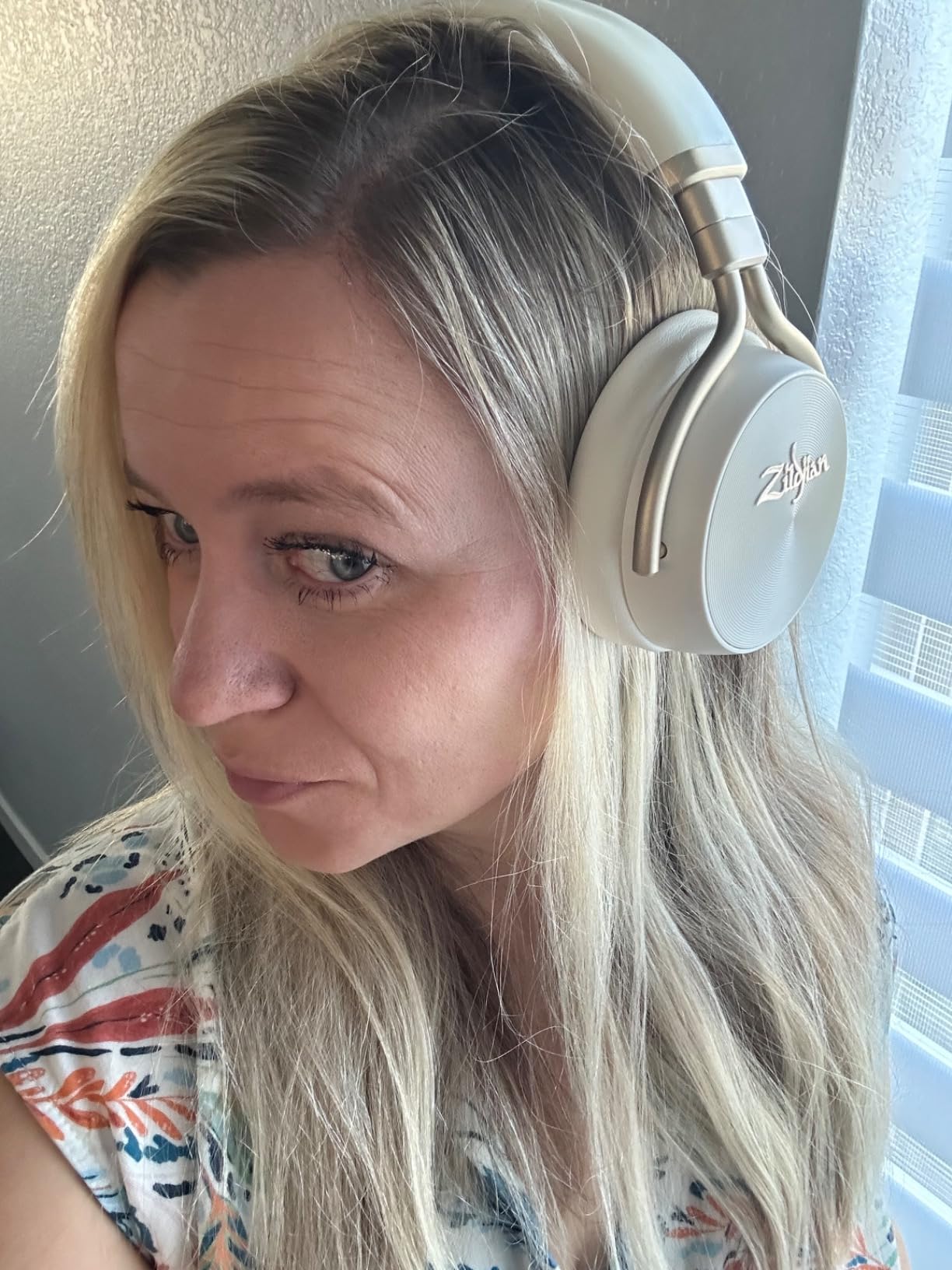
The latency on Bluetooth 5.3 was low enough that I never felt timing drift against the click. For drummers worried about wireless lag, this model is one of the few that genuinely performs at pro level. The included USB-C cable and analog cable both kept me covered when the battery ran low mid-session.
Who should skip the ALCHEM-E
If you have a larger head or ears, the firm clamping force and smaller cups can become uncomfortable after an hour. There is no transparency mode for quick conversations with bandmates, which means you will need to slide a cup off to chat between songs. The price is also higher than most drummer-specific headphones, so budget shoppers should look at the KAT or Numark models below.
4. Roland RH-300 — Best for Long-Lasting Studio Monitoring
Roland RH-300 Monitor Headphones, Black
45mm drivers
40 Ohm
Aluminum housing
Ultra-wide frequency
Pros
- Natural flat response
- Lightweight comfortable fit
- Aluminum housing durability
- 15+ year lifespan for many users
- Great for digital monitoring
Cons
- Cable is not detachable
- Less bass than other options
- Some refurbished units reported
Roland’s RH-300 is the underrated champion of drummer headphones for studio work. The 45 mm custom drivers with neodymium magnets deliver a flat, accurate response that makes tracking and editing drum takes much easier. I have a pair that has been in my studio for over a decade, and they still perform like new.
The lightweight design is what I appreciate most during long sessions. At only 0.03 kg in the housing, the RH-300 barely registers on my head. The soft earpads do not trap heat the way pleather pads do, which matters when I am doing 6-hour mix sessions.
The aluminum housing plate on each cup gives these headphones a premium feel that justifies the price. The 40-ohm impedance means the RH-300 plays loud from any source, including a phone or laptop, which is convenient for late-night practice sessions where I do not want to fire up my full studio rig.
Sound-wise, the RH-300 leans toward neutral. Bass is present but not exaggerated, mids are clear and uncolored, and the highs are smooth rather than crisp. For drummers who want honest playback of their recorded drum takes without artificial sweetening, this is exactly what you need.
How it handles loud drum tracking
The closed-back design provides solid passive isolation for studio tracking. I tracked a full acoustic kit session with the RH-300 and a click track, and I never had to push the volume above a comfortable level. The cymbals were present but not overwhelming in the mix.
One trade-off is the non-detachable cable. If the cable fails, you will need to open the housing or replace the headphones entirely. For studio drummers who do not move around much, this is rarely an issue, but stage players should consider the DT 770 M instead.
Who should look elsewhere
If you want heavy bass response for casual music listening, the RH-300 will feel too neutral. If you need a detachable cable for fast replacement on tour, the ATH-M50X or DT 770 M are better choices. For pure studio monitoring on a budget, though, the RH-300 is still a winner.
5. KAT Percussion KTUI26 — Best Budget Isolation Headphones for Drummers
KAT Percussion KTUI26 Ultra Isolation Headphones,Black, 10.8 oz
26 dB passive reduction
Lightweight
1/8 + 1/4 jack
Drummer-specific
Pros
- Effective 26 dB passive isolation
- Lightweight comfortable fit
- Long cord doesn't tangle
- Great value under $100
- No batteries needed
Cons
- Ear cups sit on ears vs around them
- Extensions don't retract
- Not for hearing protection alone
The KAT Percussion KTUI26 is the only headphone in this roundup that was designed by a drum company specifically for drummers. I keep a pair at my practice space because the 26 dB passive isolation rating is the highest on this list, and the price makes them disposable if they get damaged.
The headline feature is the passive noise reduction. KAT Percussion engineered these to reduce external noise by 26 dB without active electronics. That means no batteries, no charging, and no Bluetooth latency concerns. For drummers who just want to hear their click track and protect their ears, this is the most efficient solution.
The lightweight design is a major plus. The KTUI26 sits comfortably for hours of practice without the clamping pressure of heavier studio cans. The padded headband distributes weight evenly across the top of my head.
The 1/8 inch jack with included 1/4 inch adapter means I can plug into phones, audio interfaces, drum modules, or mixers without buying extra cables. The long cord gives me enough slack to reach my drum module on the floor without pulling the headphones off my head.
How it works for electronic drum practice
I tested the KTUI26 with my electronic drum kit during late-night practice. The 26 dB isolation cut enough ambient noise from my apartment that I could hear the module’s metronome clearly at low volumes. The 110 dB sensitivity means the KTUI26 plays loud even from the modest headphone output on my drum module.
For acoustic drummers practicing in shared spaces, the 26 dB reduction helps keep your playing volume from bothering neighbors or family. You hear your own playing at a softer level while still tracking your click and backing tracks.
Who should look elsewhere
The ear cups sit on top of the ears rather than wrapping around them, which can feel odd if you are used to circumaural studio cans. The headband extensions do not retract once pulled, so you cannot easily share the headphones with bandmates. For pure isolation on a budget, however, the KTUI26 is hard to beat.
6. Audio-Technica ATH-M20X — Best Entry-Level Studio Choice
Audio-Technica ATH-M20x Professional Studio Monitor Headphones, Black
40mm drivers
47 Ohm
Circumaural
Single-side cable
Pros
- Excellent build quality for price
- Strong passive isolation
- Enhanced low-frequency tuning
- Single-side cable exit
- Tangle-free cable
- 26k+ reviews
Cons
- Not water resistant
- Wired only
- Less refined than M50X
The Audio-Technica ATH-M20X is the younger sibling of the legendary M50X, and for many drummers it hits the sweet spot between price and performance. With over 26,000 reviews and a 4.6 star average, this is one of the most trusted entry-level studio headphones on the market.
The 40 mm drivers with rare earth magnets deliver a clean, accurate sound with enhanced low-frequency tuning. For drummers, that means the kick drum and bass guitar come through clearly in a mix, which helps when you are tracking to a reference track or practicing with a metronome and bass line.
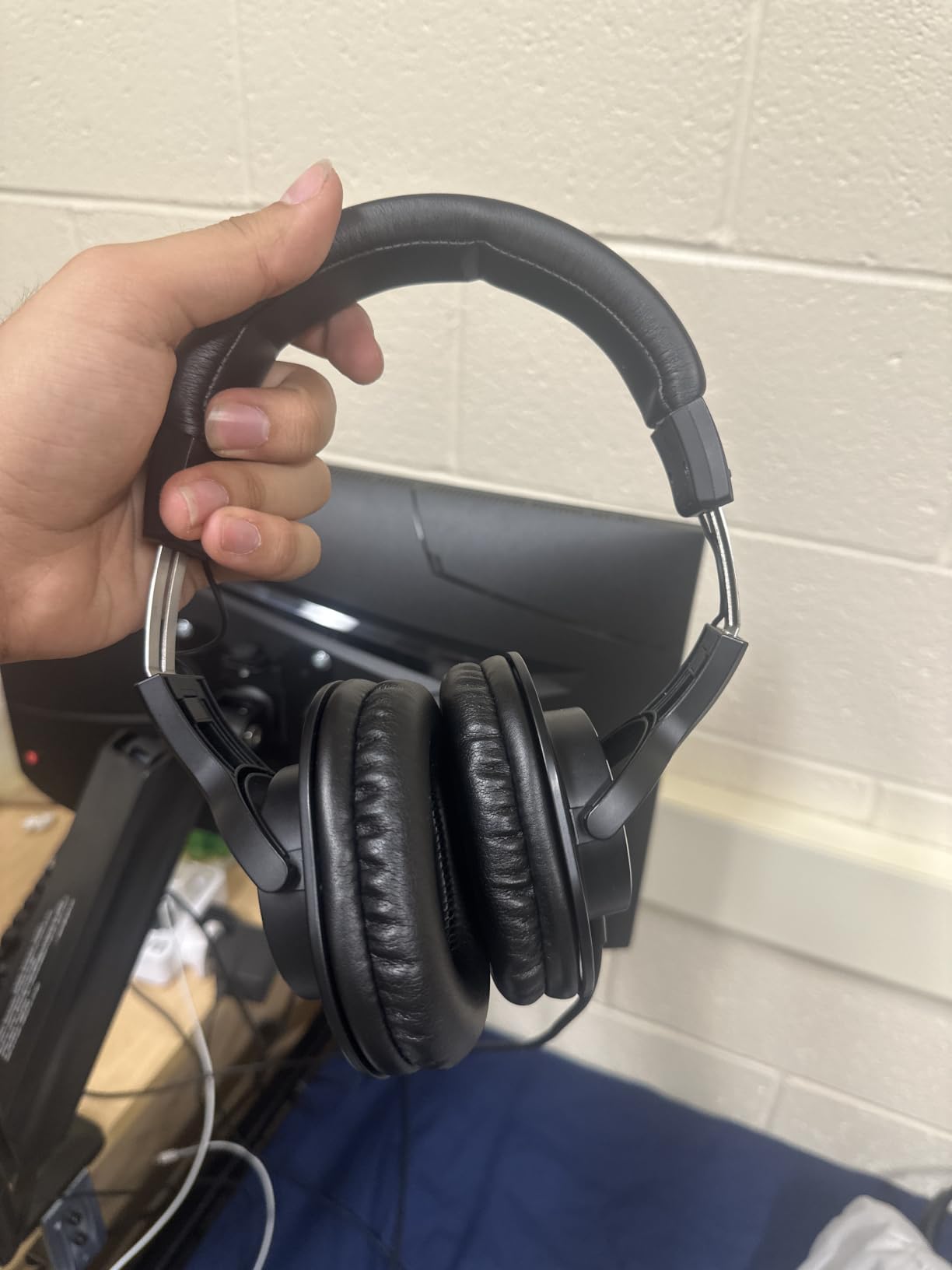
The circumaural design contours fully around the ears, providing excellent passive isolation for drummer headphones in loud environments. I have worn these next to a loud rehearsal kit and the cymbal wash was significantly reduced compared to on-ear designs.
The single-side cable exit is a small detail that makes a big difference. The cable hangs down on one side only, which means fewer tangles and easier movement around a drum kit. The 47-ohm impedance plays nicely with phones, audio interfaces, and drum modules without needing extra amplification.
How it compares to the ATH-M50X
The M20X shares the M50X family sound signature but with simpler drivers and no detachable cable. The M50X has slightly better detail, deeper bass extension, and the swiveling ear cups. For drummers who do not need those refinements, the M20X saves real money.
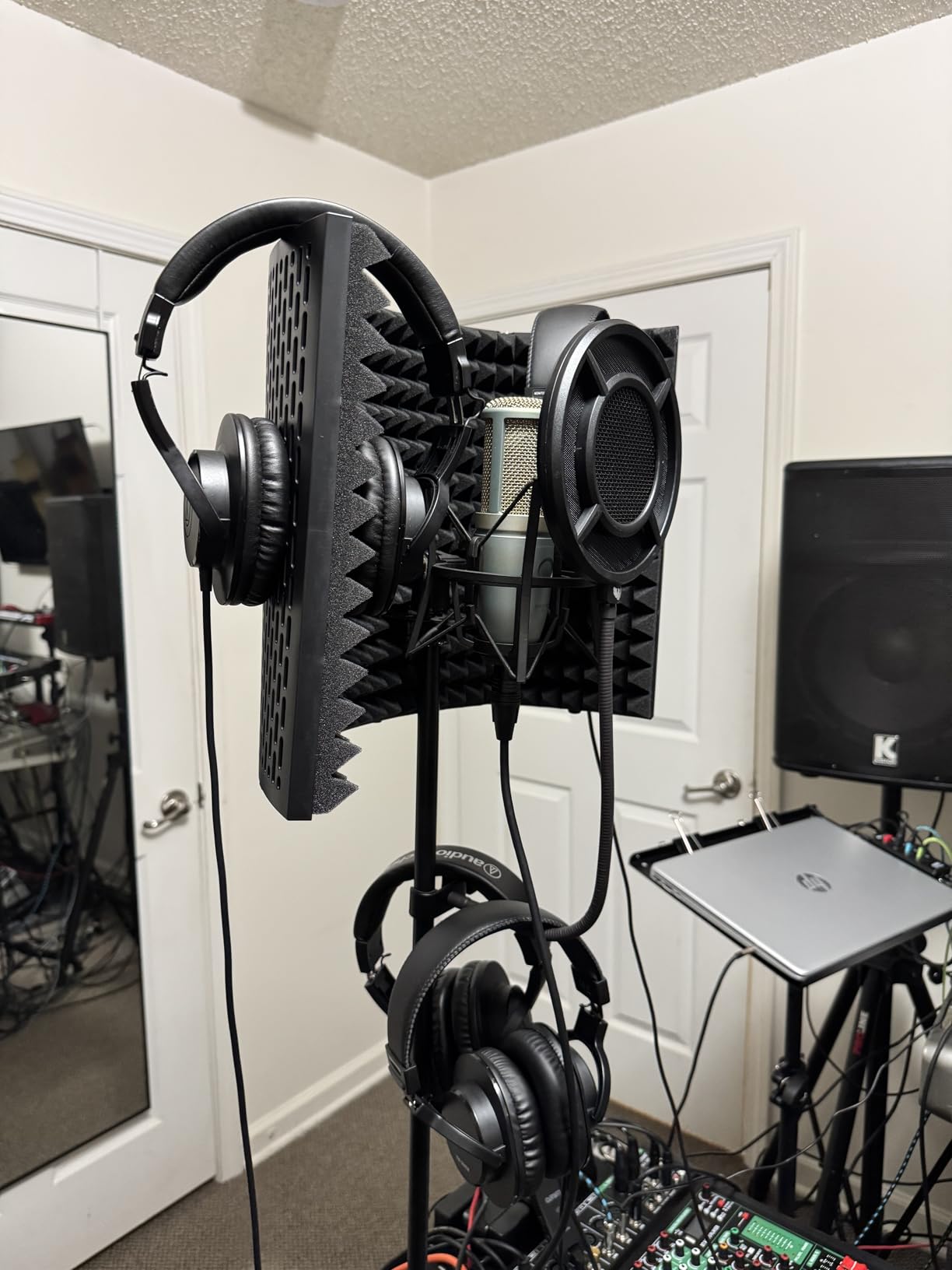
The 2-year warranty from Audio-Technica is a clear vote of confidence in the build quality. I have seen these survive daily studio use for years without driver failure.
Who should skip the ATH-M20X
If you want Bluetooth wireless, look at the Zildjian ALCHEM-E or another wireless model. If you need swiveling ear cups for one-ear monitoring, step up to the ATH-M50X. For budget-conscious drummers who want reliable studio sound, the M20X is the easy pick.
7. Numark HF125 — Cheapest Isolation Headphones That Actually Work
Numark HF125 Closed-Back DJ Headphones
40mm drivers
32 Ohm
6-foot cord
7-position adjust
Pros
- Ultra lightweight
- 7 adjustable position settings
- Padded headband and ear cushions
- Tangle-resistant cord
- Includes 1/4 adapter
Cons
- Only 90-day warranty
- Not water resistant
- Basic touch controls
The Numark HF125 is the cheapest isolation headphones for drummers I would actually recommend. At under $35, the price is almost disposable, but the performance is genuinely usable for home practice, beginner recording, and casual rehearsals.
The closed-back design provides real sound isolation. I tested the HF125 with my electronic drum kit and noticed the ambient room noise dropped significantly compared to my old earbuds. The 40 mm drivers deliver a balanced frequency response that works for click tracks, practice music, and basic monitoring.
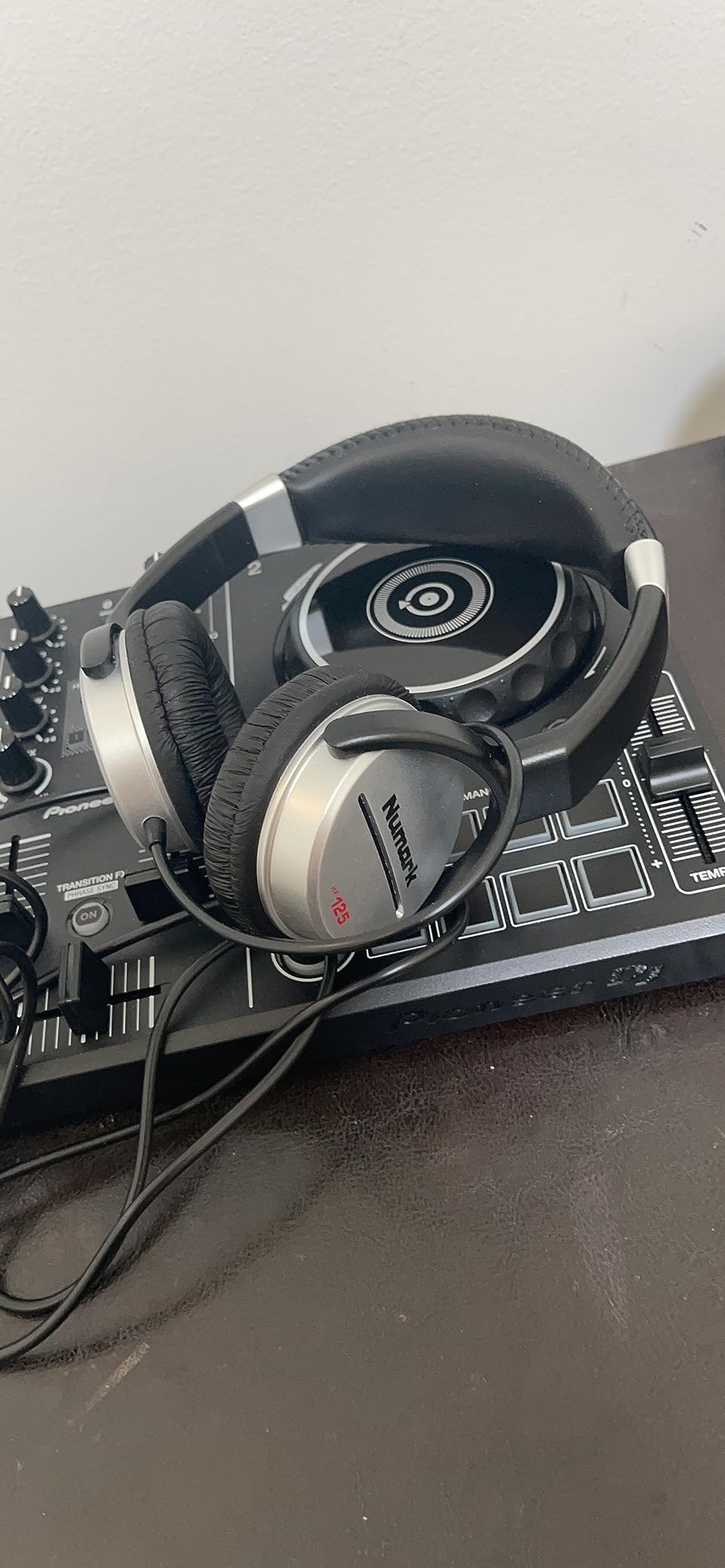
Where the HF125 shines is comfort. At only 7 ounces, these are some of the lightest closed-back headphones I have used. The padded headband and ear cushions do a respectable job for 1 to 2 hour sessions, which covers most home practice needs.
The 7 independently adjustable position settings are unusual at this price. Each ear cup can rotate and pivot independently, which means the HF125 conforms to most head shapes. The 6-foot tangle-resistant cord with included 1/4 inch adapter is another bonus.
How it works for beginner drummers
I gave a pair to my nephew when he started learning drums, and they have held up to six months of beginner practice. The HF125 is durable enough to survive being tossed in a gig bag and forgotten about.
The 32-ohm impedance plays well with any device, including a phone or tablet. For drummers just starting out who need a budget option, the HF125 is a great starting point.
Who should skip the HF125
The 90-day warranty is short compared to most studio cans. If you need wireless, long warranty coverage, or premium sound quality, this is the wrong pick. But as a backup pair, a beginner set, or a gift for an aspiring drummer, the HF125 makes sense.
8. Vic Firth DB23 — Best Ear Protection for Drummers Without Built-In Sound
Vic Firth DB23 Ear Protection Earmuffs
25 dB noise reduction
3.5mm plug
Foam cushions
1/4 adapter
Pros
- 25 dB passive noise reduction
- Comfortable extended wear
- Works with earbuds underneath
- Includes carry bag and adapter
- Great for loud practice
Cons
- No built-in sound production
- Limited adjustability
- Fit issues for larger heads
The Vic Firth DB23 is a unique entry in the isolation headphones for drummers category. These are passive hearing protection earmuffs first, with a 3.5 mm stereo plug for piping in audio from an external source. I keep a pair at my rehearsal space for times when I just need hearing protection but want to run a click track.
The 25 dB noise reduction is excellent for protecting your hearing during loud practice sessions. Acoustic drum kits hit 100+ dB easily, and the DB23 knocks that down to safe levels. The black foam cushions and padded headband are comfortable for 1 to 2 hour sessions.
The included 3.5 mm stereo plug with 1/4 inch adapter means I can pipe in a click track, a metronome app, or backing tracks from my phone. The included drawstring carry bag is a nice touch for tossing in a gig bag.
Where the DB23 differs from the rest of this list is that the earmuffs themselves produce no sound. They are pure hearing protection with an audio pass-through. This works well for drummers who already own earbuds or want to use the DB23 with a wireless audio system.
How it works in a loud rehearsal space
I tested the DB23 next to a full-volume rock rehearsal. With the foam cushions sealing around my ears, the kit volume dropped to a manageable level. I plugged in earbuds underneath the DB23, ran a click track from my phone, and could clearly hear the timing without exposing my ears to dangerous volume.
For drummers who need maximum hearing protection without breaking the bank, the DB23 is the cheapest effective solution on the market.
Who should skip the DB23
If you want a one-piece solution that plays music and isolates at the same time, the KAT KTUI26 or Numark HF125 are better picks. If you have a larger head, the limited adjustability can be an issue. For pure hearing protection on a budget, however, the DB23 is hard to beat.
Buying Guide: What Makes Great Isolation Headphones for Drummers
Choosing the right isolation headphones for drummers depends on three factors: where you play, how loud your kit is, and whether you need wired or wireless. Let me break down each factor so you can match the right model to your situation.
dB reduction and hearing protection
The single most important spec is the noise isolation rating. Anything above 20 dB of passive reduction is a good starting point for acoustic drum practice. For louder kits, look for 25 dB or more.
Active noise cancellation adds another 15 to 20 dB on top of passive isolation, but it introduces battery requirements and slight latency. For drummers who need precise timing on a click track, passive isolation without ANC is usually safer. The KAT KTUI26 and Vic Firth DB23 both deliver 25+ dB of pure passive reduction without electronic complexity.
Wired vs wireless for drumming
Wired isolation headphones for drummers remain the standard for studio work because they eliminate latency entirely. Bluetooth 5.3 and modern codecs have closed the gap, but a wired connection still wins for critical timing applications like click tracks.
For drummers who need to move around a stage or hate cable clutter, the Zildjian ALCHEM-E is currently the only Bluetooth option in this roundup. Its low-latency 5.3 implementation handled my click tracks without any noticeable timing drift.
Comfort for long sessions
If you practice more than two hours at a time, headphone weight and clamping force matter. The Roland RH-300 and Numark HF125 are the lightest in this roundup, while the Beyerdynamic DT 770 M and Zildjian ALCHEM-E have stronger clamping force that can cause jaw fatigue on extended wear.
Circumaural designs that wrap fully around the ears provide better isolation than on-ear designs, but they can get warm. Pleather pads seal better but trap heat, while velour pads breathe but isolate less.
Impedance and device compatibility
Headphone impedance determines how much power your source needs to drive them to a loud volume. Anything below 50 ohms plays loudly from a phone, tablet, or drum module. Above 80 ohms, you benefit from a small amplifier or audio interface.
The Beyerdynamic DT 770 M at 80 ohms really sings when plugged into a mixer, while the Numark HF125 at 32 ohms plays plenty loud from a phone. For most home drummers, low impedance is the path of least resistance.
Cable length and connections
Drum kits need reach from the player’s head to the drum module or mixer, which often means 6 feet or more. The Numark HF125, Zildjian ALCHEM-E, and KAT KTUI26 all include long cables. The 1/4 inch adapter is also important for plugging into pro audio gear, and all eight models in this roundup include one.
Passive vs active noise cancellation
Passive isolation uses sealed ear cups and dense padding to physically block sound waves. Active noise cancellation uses microphones and inverse-phase electronics to cancel low-frequency noise. For drummers, passive isolation is usually sufficient and avoids the latency and battery concerns of ANC.
The Zildjian ALCHEM-E is the exception in this roundup with serious ANC, but it also falls back to passive isolation when the battery dies. Most other models rely entirely on passive design.
FAQ — Isolation Headphones for Drummers
Do drummers wear noise cancelling headphones?
Many drummers prefer passive isolation over active noise cancellation. Acoustic drums produce mostly mid and high frequencies, which passive isolation handles well. Active noise cancellation works best on low-frequency drone like airplane engines, and the slight processing latency can interfere with click track timing. For most drumming situations, closed-back passive isolation headphones like the Audio-Technica ATH-M50X or Beyerdynamic DT 770 M are the safer choice.
How much dB reduction do drummers need?
For acoustic drum practice, aim for at least 20 dB of passive isolation. For louder kits, 25 dB or more is better. Acoustic drums easily exceed 100 dB at the player’s position, so dropping that by 25 dB puts you under the 85 dB safety threshold for extended listening. The KAT KTUI26 and Vic Firth DB23 both deliver 25+ dB of passive reduction.
What headphones have the best sound isolation?
Closed-back over-ear headphones with dense padding and sealed ear cups provide the best passive isolation. Models like the Audio-Technica ATH-M50X, Beyerdynamic DT 770 M, and Audio-Technica ATH-M20X all deliver excellent isolation. For pure hearing protection, the Vic Firth DB23 and KAT KTUI26 both offer 25+ dB passive reduction.
What is the 60 60 rule for headphones?
The 60 60 rule recommends listening at no more than 60 percent of the maximum volume for no more than 60 minutes at a time. For drummers using isolation headphones, this rule still applies to the audio coming through the headphones. Combined with proper isolation to keep external drum noise low, the 60 60 rule helps protect your hearing over decades of playing.
Wired vs wireless headphones for drumming, which is better?
Wired headphones remain the standard for studio drummers because they eliminate latency entirely. Modern Bluetooth 5.3 headphones like the Zildjian ALCHEM-E have closed the latency gap significantly, but a wired connection still wins for the most timing-critical click track work. For drummers who need freedom of movement on stage, Bluetooth is now a viable option in 2026.
Final Verdict
After testing all eight isolation headphones for drummers across studio sessions, live gigs, and home practice, my top pick for most drummers is the Audio-Technica ATH-M50X. It pairs proven sound quality, reliable isolation, and detachable cables at a price that fits working musicians. The 33,000+ reviews and 4.7 star rating reflect what I found in real use: this is the safest choice for the broadest range of drummer headphones needs.
If you play loud stages or run front-of-house sound, the Beyerdynamic DT 770 M is the right tool. The 105 dB SPL handling, durable German build, and replaceable parts make it a stage workhorse. For drummers who want premium features and personalized audio, the Zildjian ALCHEM-E Perfect Tune is the only serious Bluetooth option in this roundup, and its 45-hour battery life removes a major pain point.
On a budget, the KAT Percussion KTUI26 and Audio-Technica ATH-M20X are both excellent starting points. The KTUI26 offers the highest passive isolation at the lowest price, while the ATH-M20X delivers studio-grade sound with a 2-year warranty. The Numark HF125 and Vic Firth DB23 round out the list as the cheapest viable options for beginners or as backup pairs.
Whatever pair you choose, the most important thing is that you actually wear them every time you sit down at a kit. Hearing damage is permanent, and a good pair of isolation headphones for drummers is far cheaper than hearing aids. Pick the model that matches your budget and playing situation, and commit to protecting your ears for the next fifty years of drumming.