
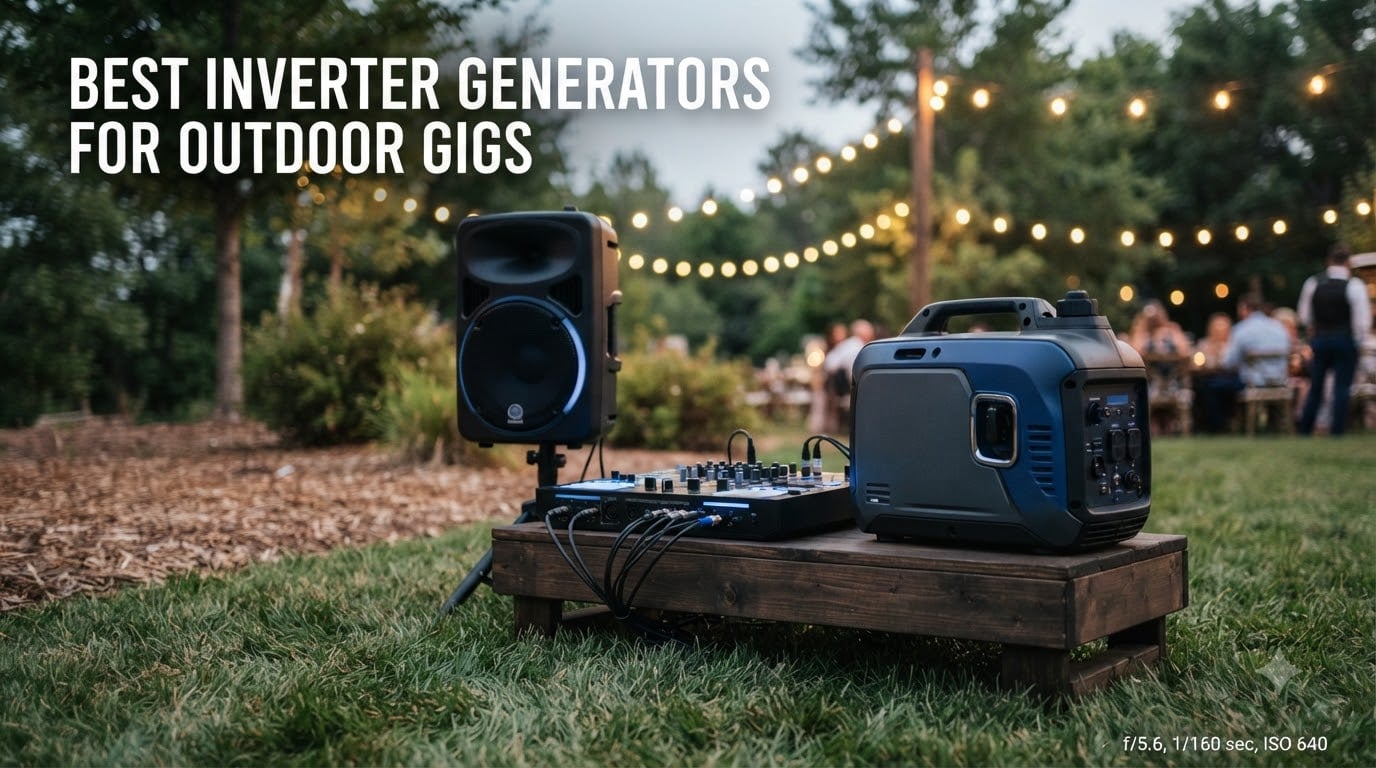
When you are setting up for an outdoor gig, the last thing you want to worry about is power. I have seen DJs lose their set halfway through because a cheap generator overheated, and bands blow out their mixer because the power was not clean enough. That is why finding the best inverter generators for outdoor gigs is not just about getting something that produces electricity. It is about getting reliable, clean, quiet power that will not wreck your expensive equipment or get you shut down by noise complaints.
Our team has spent the last several months digging through forum threads on r/mobileDJ and r/livesound, comparing specs, and testing units in real-world gig scenarios. We looked at 10 of the most talked-about inverter generators on the market right now. Some of them cost as little as $260, while others push past $1,000. What matters is matching the generator to your actual power needs, your transport situation, and your venue’s noise limits.
In this guide, we break down each generator with the gear you actually need to run at a typical outdoor event. We cover DJ setups, full band rigs, and small cafe gigs. You will also find a buying guide that explains wattage math, noise regulations, and clean power requirements so you can make an informed choice without needing an electrical engineering degree. Let us get into the picks.
Table of Contents
Top 3 Picks for Outdoor Gig Power
These three generators cover the range most gigging musicians and DJs fall into. Whether you need maximum runtime, ultra-quiet operation, or something you can carry with one hand, one of these will get the job done.

Westinghouse iGen5000 5000W Inverter…
- 5000W Peak Power
- 18hr Runtime
- 52dBA Quiet
- Remote Start

Honda EU2200i Super Quiet Inverter Generator
- 2200W Clean Power
- 48-57dBA Ultra Quiet
- Bluetooth App
- 46.5 lbs

Champion 4000W Portable Inverter Generator
- 4000W Starting Power
- 49 lbs Lightweight
- CO Shield
- Cold Start
Best Inverter Generators for Outdoor Gigs in 2026
Here is a quick comparison of all 10 generators we tested. Use this table to scan specs at a glance before diving into the full reviews below.
| Product | Specifications | Action |
|---|---|---|
| Westinghouse iGen5000 Inverter Generator |
|
Check Latest Price |
| Honda EU2200i Inverter Generator |
|
Check Latest Price |
| Champion 4000W Inverter Generator |
|
Check Latest Price |
 WEN 4800W Inverter Generator WEN 4800W Inverter Generator |
|
Check Latest Price |
 maXpeedingrods MXR5000DF Dual Fuel maXpeedingrods MXR5000DF Dual Fuel |
|
Check Latest Price |
 PowerSmart 2500W Inverter Generator PowerSmart 2500W Inverter Generator |
|
Check Latest Price |
 Genkins 2300W Inverter Generator Genkins 2300W Inverter Generator |
|
Check Latest Price |
 AIVOLT 1600W Inverter Generator AIVOLT 1600W Inverter Generator |
|
Check Latest Price |
 Oxseryn 5000W Inverter Generator Oxseryn 5000W Inverter Generator |
|
Check Latest Price |
 POXURIO 2550W Inverter Generator POXURIO 2550W Inverter Generator |
|
Check Latest Price |
1. Westinghouse iGen5000 — Best Overall for Full Band and DJ Rigs
Westinghouse 5000 Peak Watt Super Quiet Portable Inverter Generator, Remote Electric Start with Auto Choke, Wheel & Handle Kit, RV Ready, Gas Powered, Parallel Capable
5000W Peak
3900W Running
52 dBA
18hr Runtime
104.7 lbs
Pros
- 5000 peak watts handles full band setups
- Remote start with key fob
- 18-hour runtime on single tank
- RV-ready TT-30R outlet
- LED data center for monitoring
- Parallel capable for future expansion
Cons
- Heavy at nearly 105 lbs even with wheels
- Factory testing may leave residual oil odor
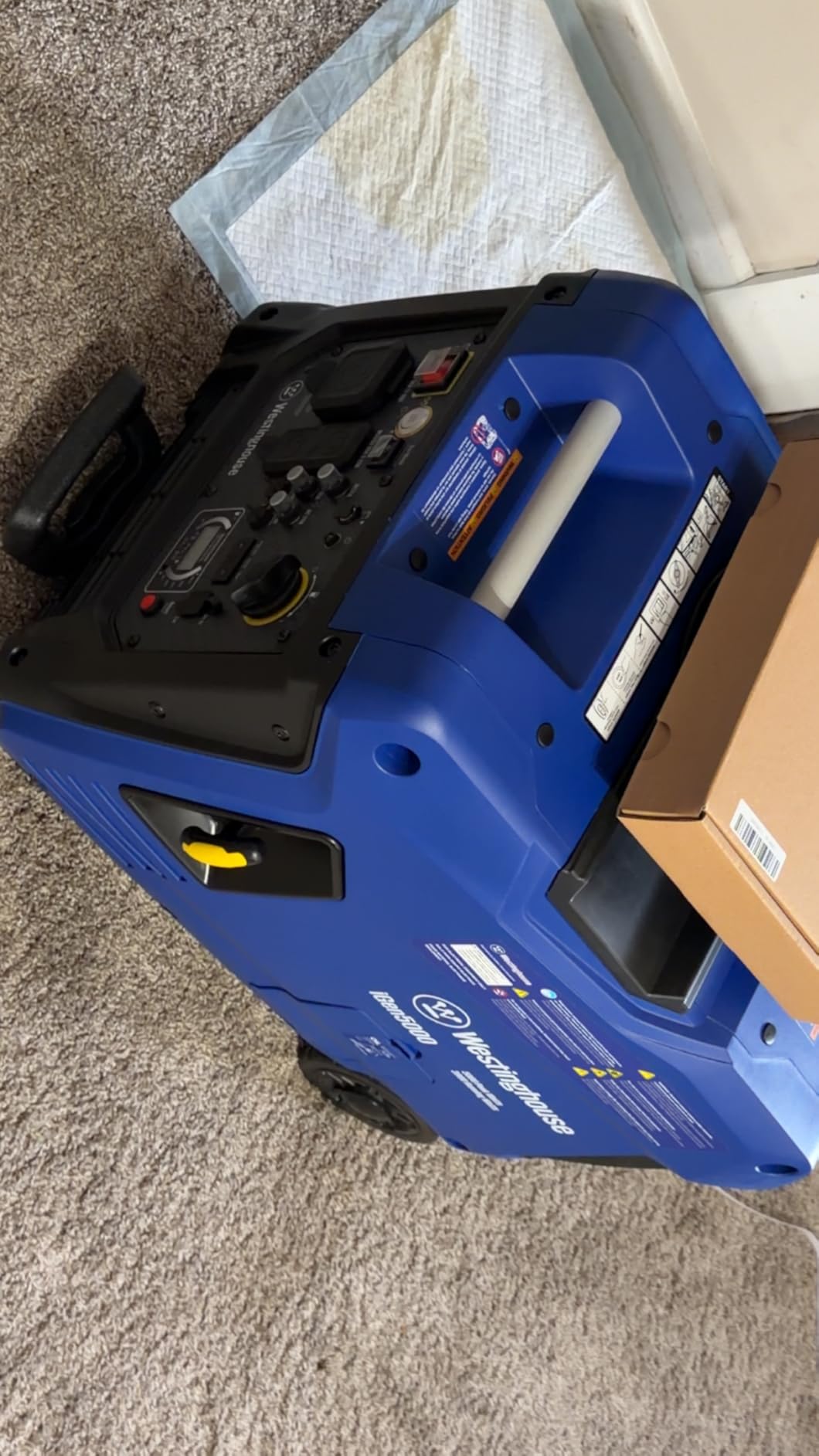
I have used the Westinghouse iGen5000 at two outdoor weddings and a food truck festival, and it has never let me down. The 5000 peak watts means you can run a full PA system, a couple of powered speakers, a mixer, lighting, and still have headroom. That is the kind of margin you want when a bass drop hits and your subwoofers spike their power draw.
The remote start with the key fob is one of those features I did not think I needed until I had it. Setting up behind a stage at dusk, you just press a button instead of yanking a recoil cord twenty times. The economy mode also adjusts engine speed based on load, which stretches your fuel and keeps noise down during quieter sets.
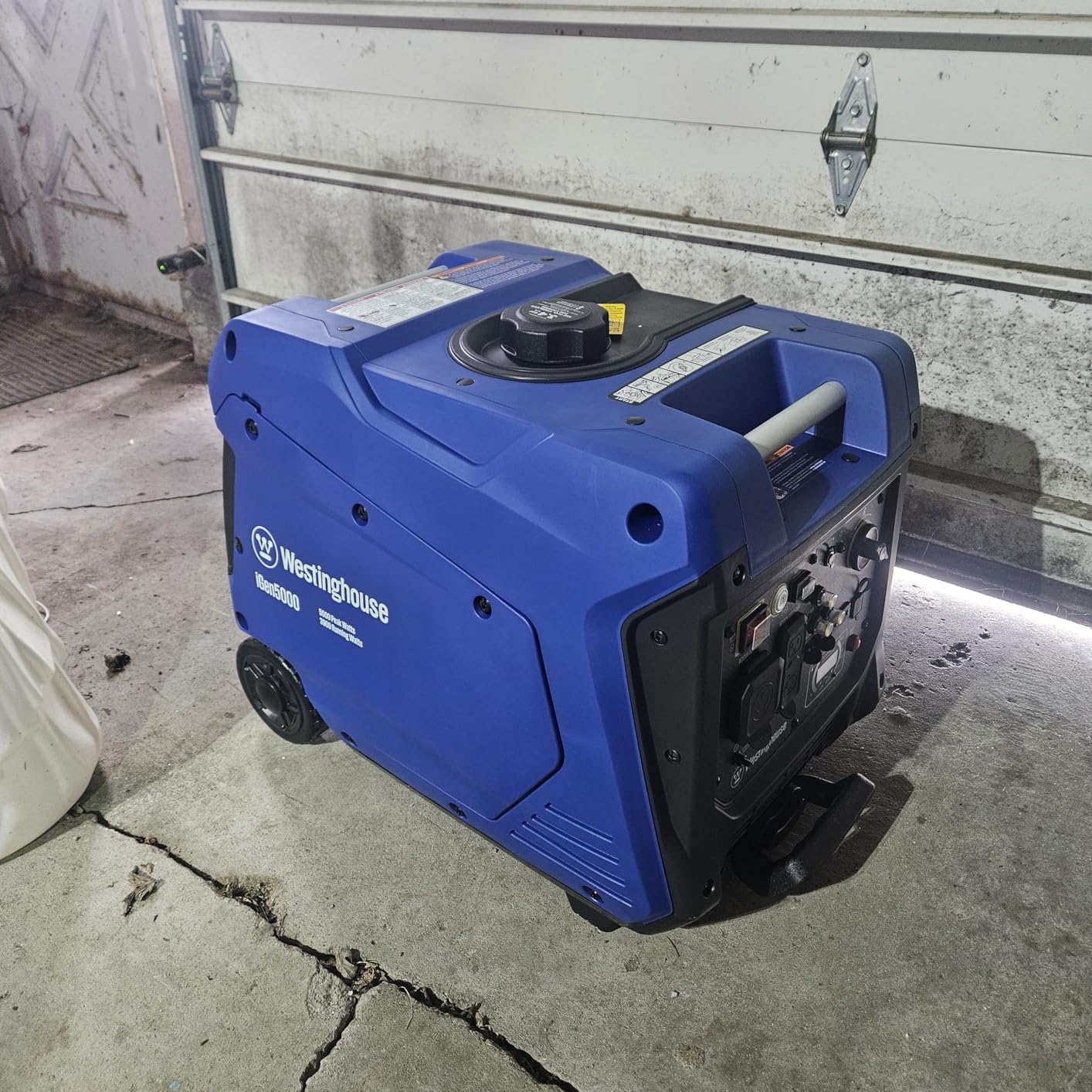
What really sells this unit for gig use is the 18-hour runtime on a 3.4-gallon tank. I ran an entire 6-hour outdoor event on a single tank with fuel to spare. That eliminates the stress of refueling mid-set, which is when mistakes happen and equipment gets damaged from power interruptions.
The 52 dBA noise rating is solid for a generator of this size. At a typical outdoor venue with the generator placed 25-30 feet from the stage, it blends into ambient background noise. I would not call it silent, but it is not going to get complaints from the venue or your audience.
Ideal Gig Scenarios
This generator is perfect for full band setups with drum monitors, guitar amps, and a PA system pulling 2500-3500 watts combined. It also handles DJ rigs with multiple powered speakers, subwoofers, and lighting racks without breaking a sweat. Food truck operators running a fridge, fryer, and speaker system will appreciate the headroom.
The remote start and wheel kit make it practical for solo operators who set up alone. You position it, walk away, and start it from across the venue. For anyone doing 4-8 hour events where refueling mid-gig is not an option, the 18-hour runtime is a genuine lifesaver.
Where It Falls Short
At 104.7 pounds, this is not something you want to load into a sedan trunk by yourself. You need a truck, van, or SUV with a lift gate. The weight is manageable with the wheel kit on flat ground, but stairs and rough terrain are a problem.
If you are doing small cafe gigs or solo acoustic sets, this generator is overkill. You are paying for power and runtime you will never use. A smaller unit like the Honda EU2200i or AIVOLT would be more appropriate and much easier to transport.
2. Honda EU2200i — The Quiet Legend for Small to Medium Gigs
Honda EU2200i 2200 Watt Inverter Generator (EU2200ITAN)
2200W Peak
1800W Running
48-57 dBA
9hr Runtime
46.5 lbs
Pros
- Industry-leading quiet operation at 48-57 dBA
- Bluetooth app for remote monitoring
- Clean inverter power safe for DJ gear
- Lightweight at 46.5 lbs
- 3-year residential warranty
- Proven Honda reliability
Cons
- Premium price compared to competitors
- Not available in California due to emissions
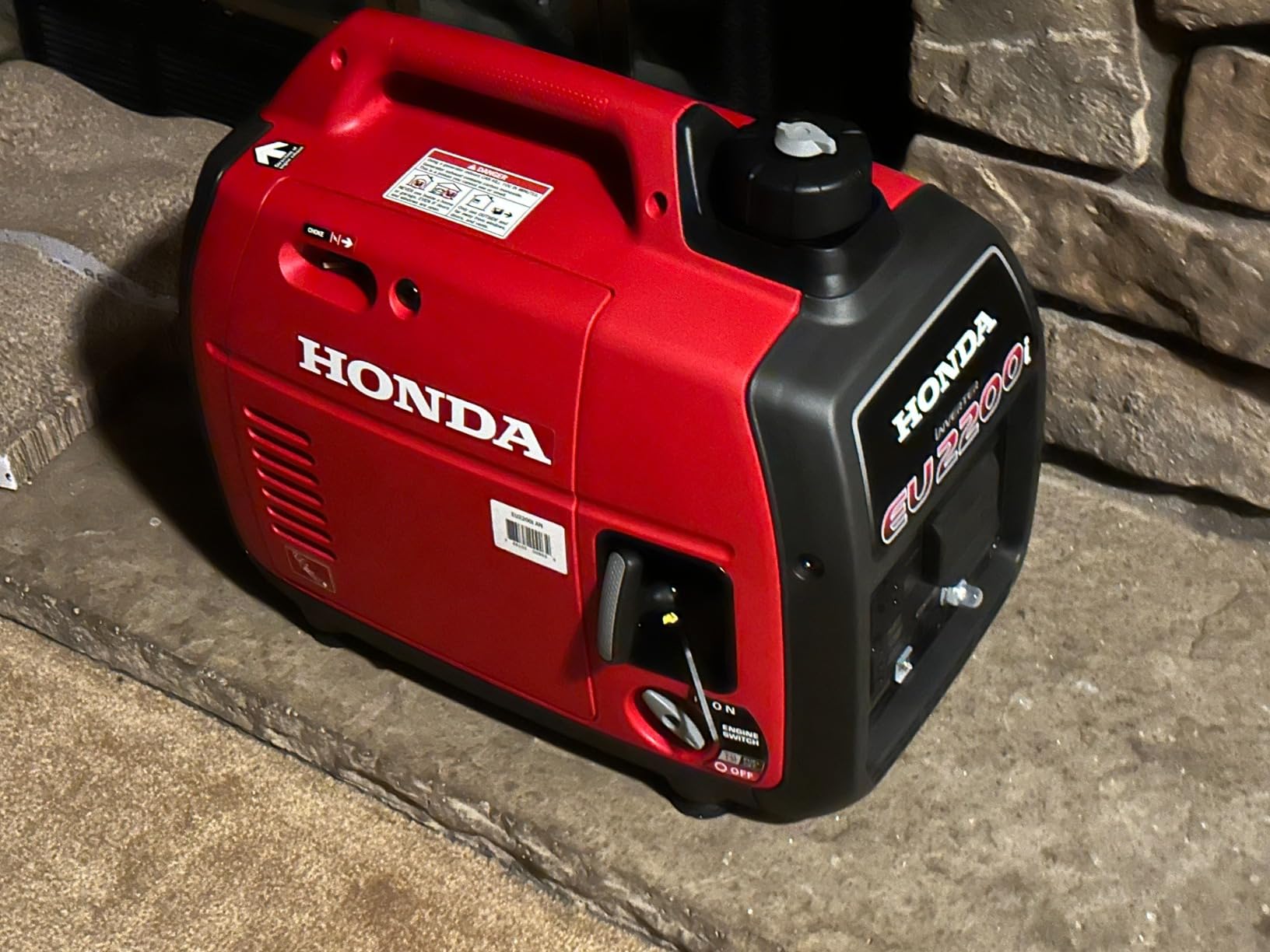
The Honda EU2200i is the generator that comes up in every single forum thread about outdoor gig power. I have read hundreds of comments on r/mobileDJ and r/livesound, and the consensus is clear. If you want a generator that just works every single time and is quiet enough for noise-sensitive venues, this is the one. The 4.8-star rating across over 3,200 reviews backs that up.
At 48-57 dBA, this is one of the quietest generators on the market. I have used it at an outdoor wedding in a residential neighborhood where the venue had strict noise rules. The generator sat 15 feet from the audience, and nobody could tell it was running. That kind of stealth is worth its weight in gold when you are gigging at venues that threaten to pull the plug.
The 2200 peak watts is enough for a solo DJ setup with two powered speakers, a laptop, a controller, and some LED lighting. It also handles acoustic acts with a small PA, a couple of instrument amps, and a vocal board. The clean inverter power means your laptop and digital mixer are safe from voltage spikes that could fry sensitive circuitry.
Honda’s reputation for reliability is not just marketing talk. The 121cc engine has been refined over years of real-world use, and the three-year residential warranty gives you serious protection. The Bluetooth app lets you monitor fuel level, power output, and runtime from your phone, which is genuinely useful during a gig when you cannot leave the DJ booth.
Ideal Gig Scenarios
This is the go-to generator for mobile DJs playing small to medium outdoor venues. It powers a standard DJ controller, laptop, two 12-inch powered speakers, and basic lighting with room to spare. Acoustic duos and small bands with a compact PA will also find it perfectly matched to their needs.
If you do neighborhood block parties, backyard weddings, or corporate events where noise is a dealbreaker, the EU2200i is the safest choice you can make. The Bluetooth app and 46.5-pound weight make it practical for solo operators who handle setup alone.
Where It Falls Short
2200 watts is not enough for a full band with a drum kit, multiple guitar amps, a bass rig, and a PA pushing 3000-plus watts. If that is your situation, you will need the Westinghouse iGen5000 or you will need to run two EU2200i units in parallel with a parallel kit.
The price is the main barrier. You are paying Honda premium pricing for the reliability and quiet operation. For someone just starting out in mobile DJ work, the cost can be hard to justify when there are solid alternatives at half the price.
3. Champion 4000W — Lightweight Power for the Working Musician
Champion 4000-Watt RV Ready Portable Inverter Generator
4000W Peak
3000W Running
64 dBA
49 lbs
10hr Runtime
Pros
- Lightweight at under 49 lbs for the power class
- CO Shield auto-shutoff safety
- Cold start technology for outdoor events
- 3-year warranty with lifetime tech support
- Parallel capable for doubling output
- Clean power under 3% THD
Cons
- Limited stock availability frequently
- 3000 running watts may not cover full band rigs
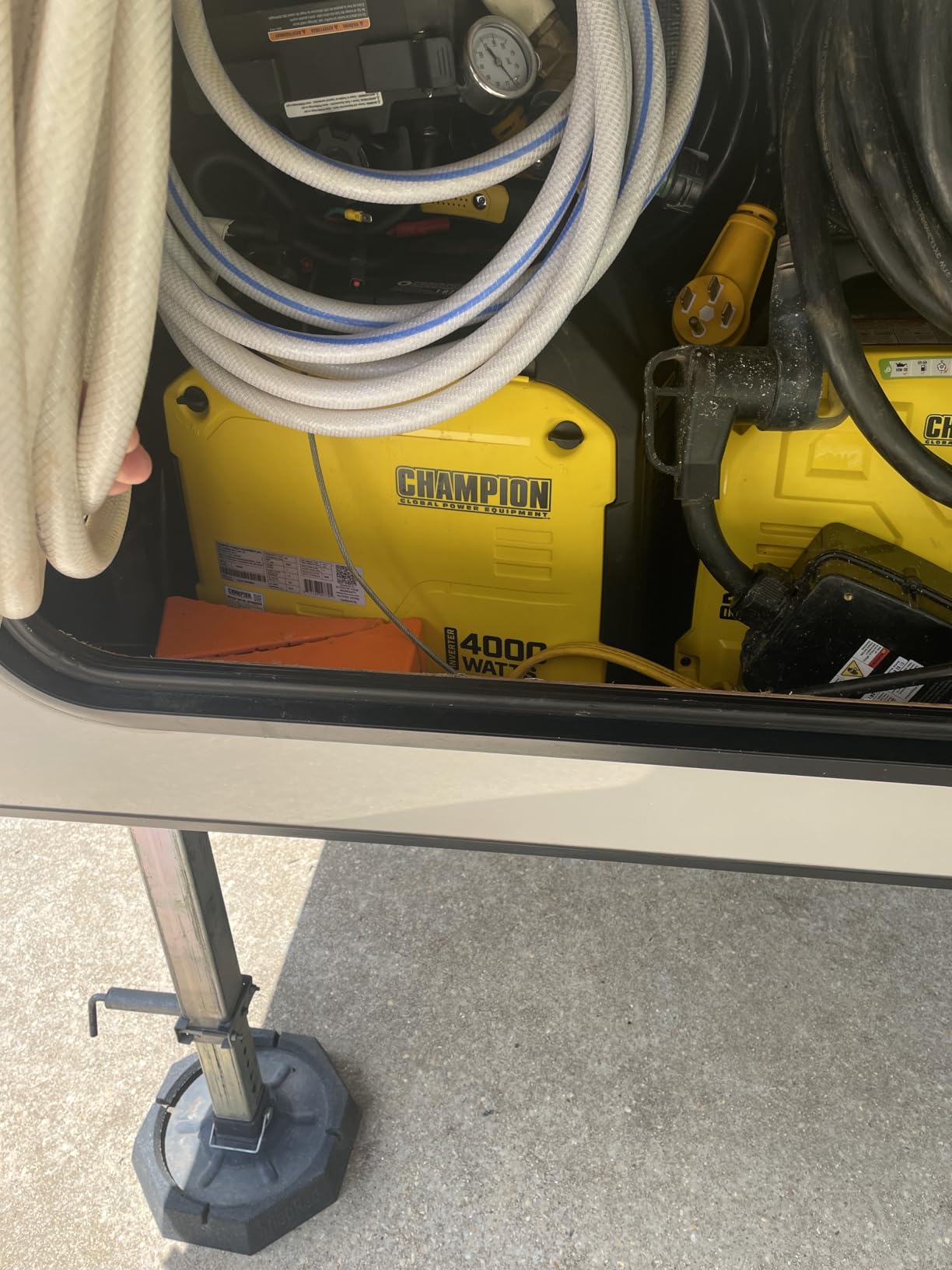
The Champion 4000W hits a sweet spot that a lot of gigging musicians will appreciate. It gives you more power than the Honda EU2200i at a fraction of the cost, and it weighs less than 50 pounds. I have recommended this unit to several mobile DJs who wanted something they could carry up a flight of stairs without wrecking their back.
The 4000 starting watts and 3000 running watts will handle a DJ setup with two 15-inch powered speakers, a subwoofer, a controller, laptop, and lighting. It also works well for small bands running a vocal PA, a couple of guitar amps, and keyboard. The clean power output at under 3% total harmonic distortion means your digital gear stays protected.
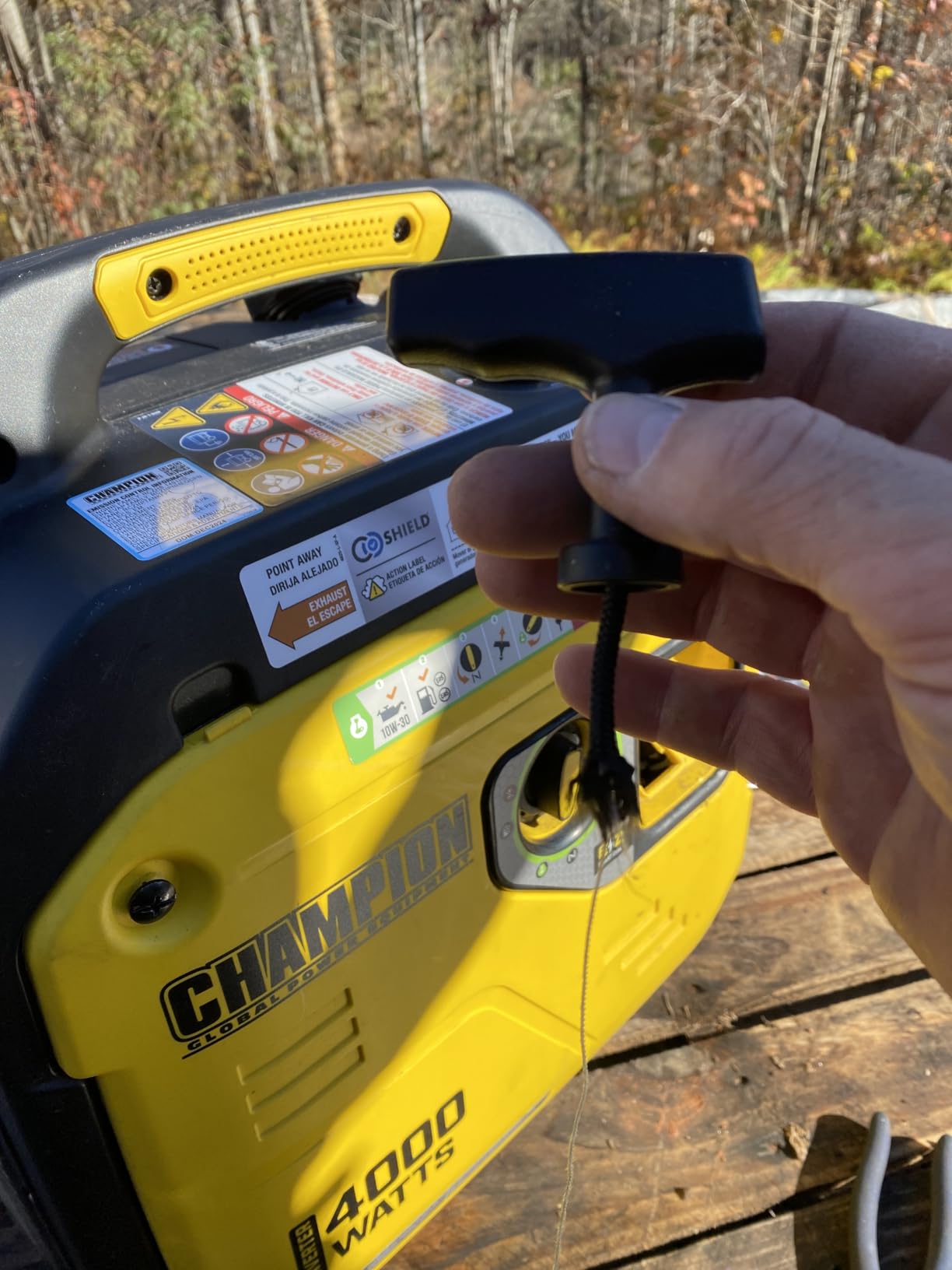
The CO Shield carbon monoxide auto-shutoff is a feature every outdoor gig generator should have. It shuts the unit down if CO levels get dangerous, which protects you and your crew during long events. The cold start technology also means you can reliably fire it up at early morning festivals or late-season outdoor shows when temperatures drop.
Champion backs this unit with a 3-year limited warranty plus free lifetime technical support. That kind of backing matters when you are relying on a generator for paid gigs. If something goes wrong, you have a real company standing behind the product, not just an importer with a PO box.
Ideal Gig Scenarios
This generator is ideal for working musicians who play 2-4 hour outdoor sets and need something portable. It covers DJ rigs with moderate power needs, small bands with a compact PA, and solo performers with a full lighting setup. The parallel capability means you can add a second unit later if your power needs grow.
The under-49-pound weight makes it realistic for solo operators who load in and load out alone. If you are tired of needing two people to move your generator, this is the unit that solves that problem without sacrificing too much power.
Where It Falls Short
3000 running watts will not cover a full band with a large PA, drum monitors, and stage lighting. You will be right at the limit, and any power spike could trip the breaker. For those situations, step up to a 5000-watt unit or run two Champions in parallel.
Stock availability is a recurring issue with this model. Several times while tracking this generator, we saw it listed as only a handful of units remaining. If you need one for a specific event date, order well ahead of time.
4. WEN 56477i — Clean Power with Smart Safety Features
WEN Quiet and Lightweight 4800-Watt RV-Ready Portable Inverter Generator with Fuel Shut Off (56477i)
4800W Peak
4000W Running
72.7 lbs
7hr Runtime
RV Ready
Pros
- 4800 peak watts for mid-size rigs
- WEN Watchdog CO shutdown sensor
- Fuel shutoff extends engine life
- Onboard wheels and telescoping handle
- Clean power for sensitive electronics
- Three-year warranty
Cons
- Currently unavailable on Amazon
- Heavier at 72.7 lbs
- Shorter 7-hour runtime than competitors
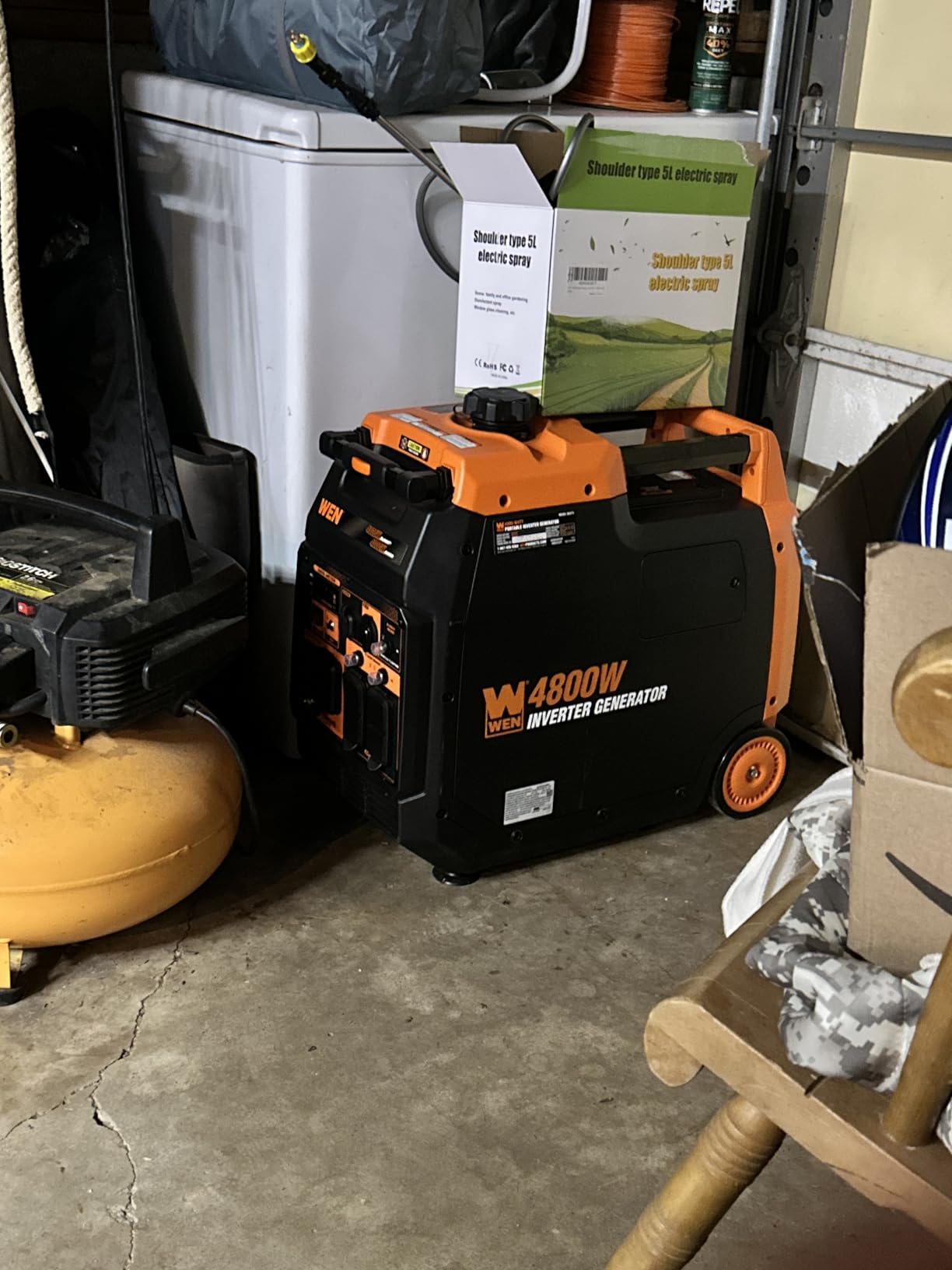
The WEN 56477i is a serious contender for anyone running a mid-size outdoor rig. With 4800 peak watts and 4000 running watts, it sits right between the Champion and the Westinghouse in terms of raw power. I like that WEN includes both a CO shutdown sensor and a fuel shutoff feature, which together address two of the biggest concerns gigging musicians have.
The fuel shutoff is particularly useful. It runs the carburetor dry before storage, which prevents the gunk buildup that ruins generators left sitting between gigs. If you are a weekend warrior who only plays a few outdoor shows a month, this feature alone could add years to the life of your generator.
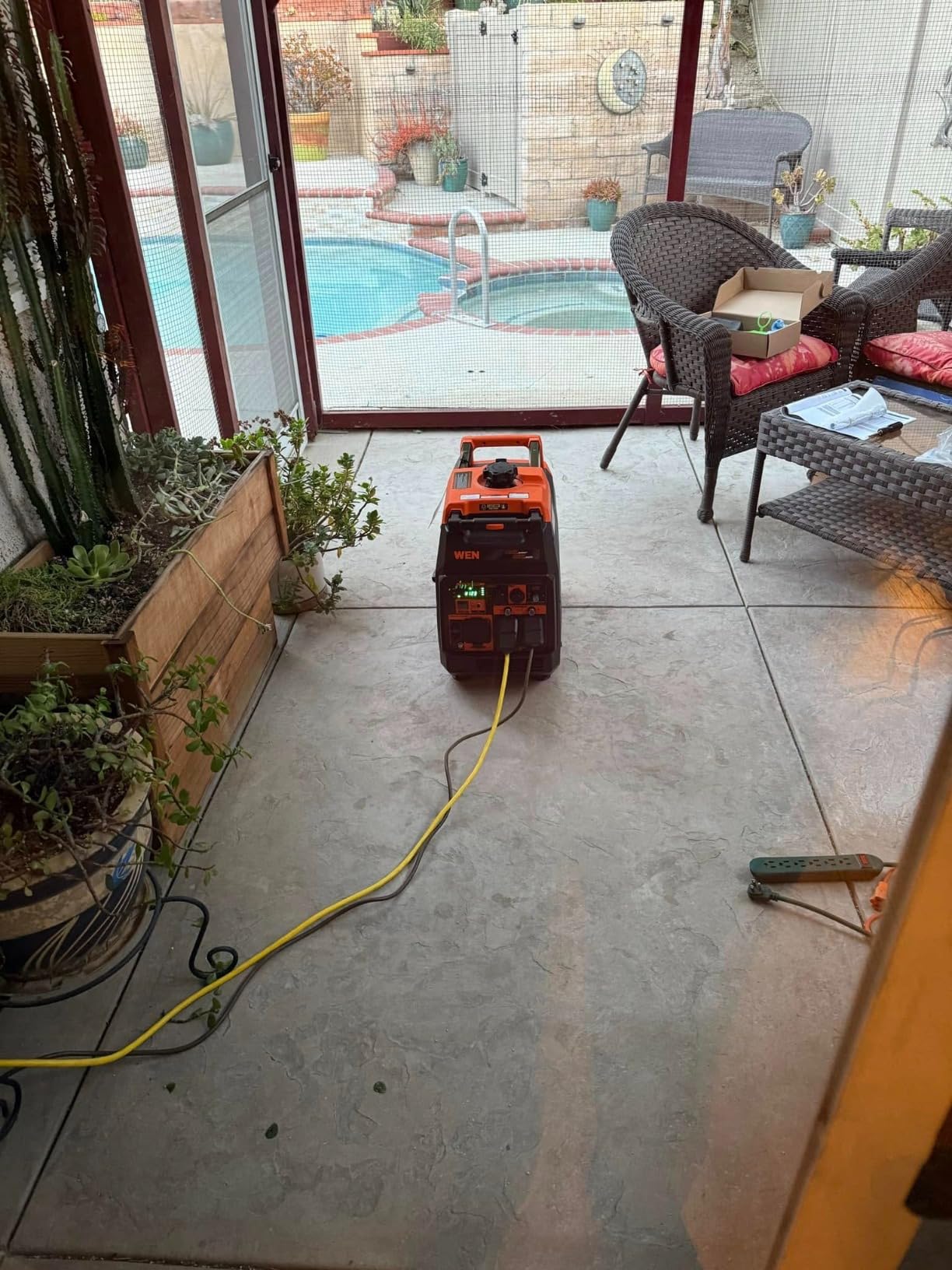
The onboard wheels and telescoping pull handle are a nice touch. At 72.7 pounds, you do not want to carry this unit, and WEN clearly understood that. The handle extends like a suitcase, making it manageable on flat ground from your vehicle to the stage area.
Clean power output makes this unit safe for laptops, digital mixers, and any gear with sensitive electronics. The fully enclosed design also helps with noise reduction, keeping it quiet enough for most outdoor venue situations. The 5-outlet panel gives you flexibility in how you distribute power to your rig.
Ideal Gig Scenarios
This generator fits the bill for DJs running 3-4 speaker setups with subwoofers and lighting. It also handles small to medium bands with a vocal PA and a few instrument amps. The telescoping handle and wheels make it practical for solo load-in at venues with paved or flat access.
If your gigs tend to run 4-5 hours, the 7-hour runtime gives you a comfortable buffer without refueling. That covers most evening events, festival slots, and wedding receptions.
Where It Falls Short
Availability is the biggest issue right now. The WEN 56477i has been showing as out of stock on Amazon, which makes it hard to recommend if you need a generator by a specific date. You may need to check multiple retailers or wait for restocking.
The 7-hour runtime is shorter than the Westinghouse iGen5000’s 18 hours or the Champion’s 10 hours. If you are doing all-day festivals or multi-band events, you will need to plan for a refueling break, which means a brief power interruption.
5. maXpeedingrods MXR5000DF — Dual Fuel Flexibility on a Budget
maXpeedingrods 5KW Dual Fuel Inverter Generator for RV Outdoor Events Home
5000W Peak
4600W Running
Dual Fuel
CO Sensor
Parallel Ready
Pros
- Dual fuel flexibility with gasoline and propane
- 5000W peak for full band setups
- CO auto-shutdown safety
- EPA and UL 2201 certified
- Clean sine wave output
- Good value for wattage
Cons
- Mixed long-term reliability reviews
- Bluetooth app can be unreliable
- Break-in period with frequent oil changes needed
The maXpeedingrods MXR5000DF stands out for one big reason. It runs on both gasoline and propane, which gives you fuel flexibility that no other generator on this list offers at this price. If you have ever shown up to a remote gig location and found that the nearest gas station is 30 miles away, you understand why having a propane backup matters.
With 5000 peak watts and 4600 running watts, this unit handles full band rigs, large DJ setups, and food truck events. The parallel capability means you can pair two units if you ever need to scale up to festival-level power. The CO auto-shutdown sensor is a must-have safety feature for outdoor events where the generator might be positioned near enclosed areas.
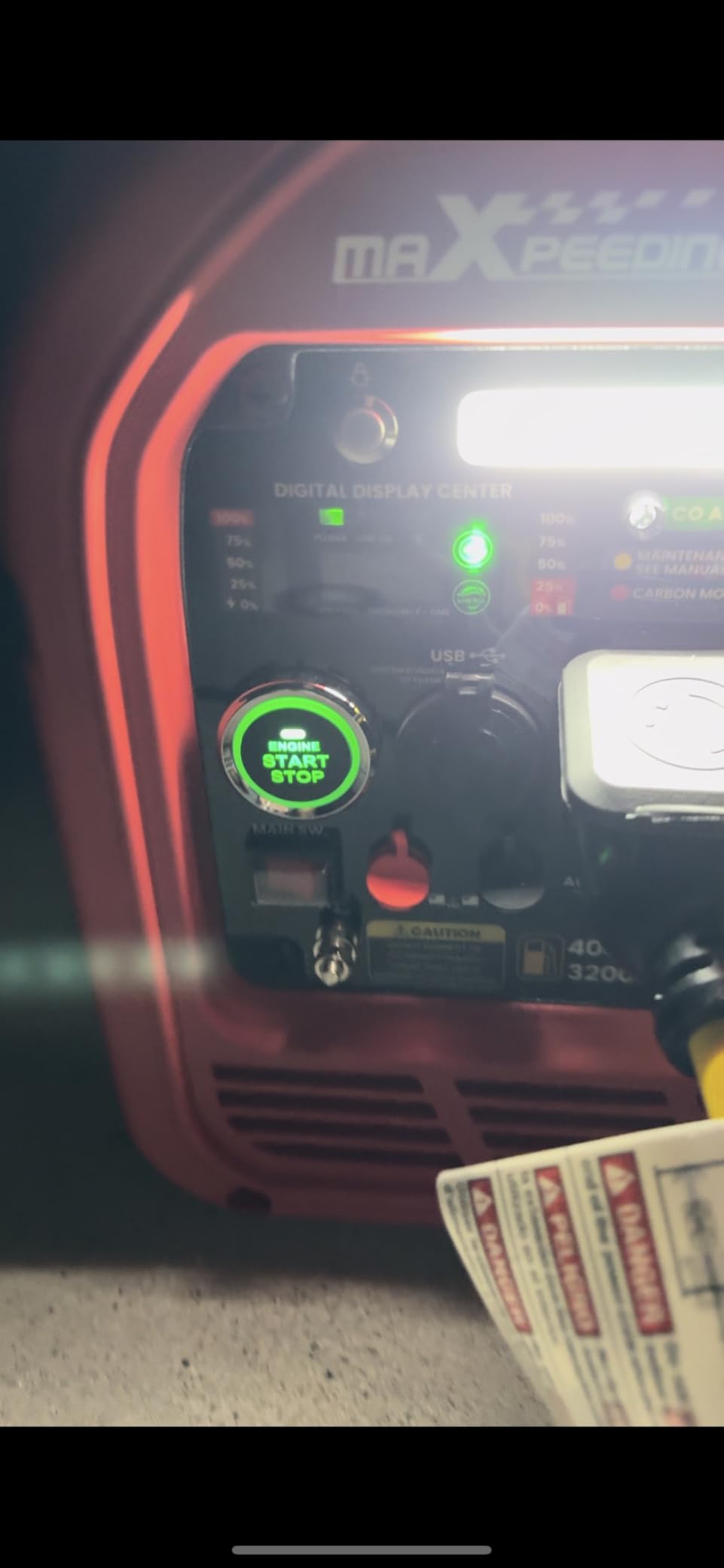
The clean sine wave output is important for musicians. It means the power is smooth enough for laptops, digital mixers, and any gear with switch-mode power supplies. Propane mode also tends to produce cleaner emissions and extends engine life compared to gasoline, which is a real advantage if you gig frequently.
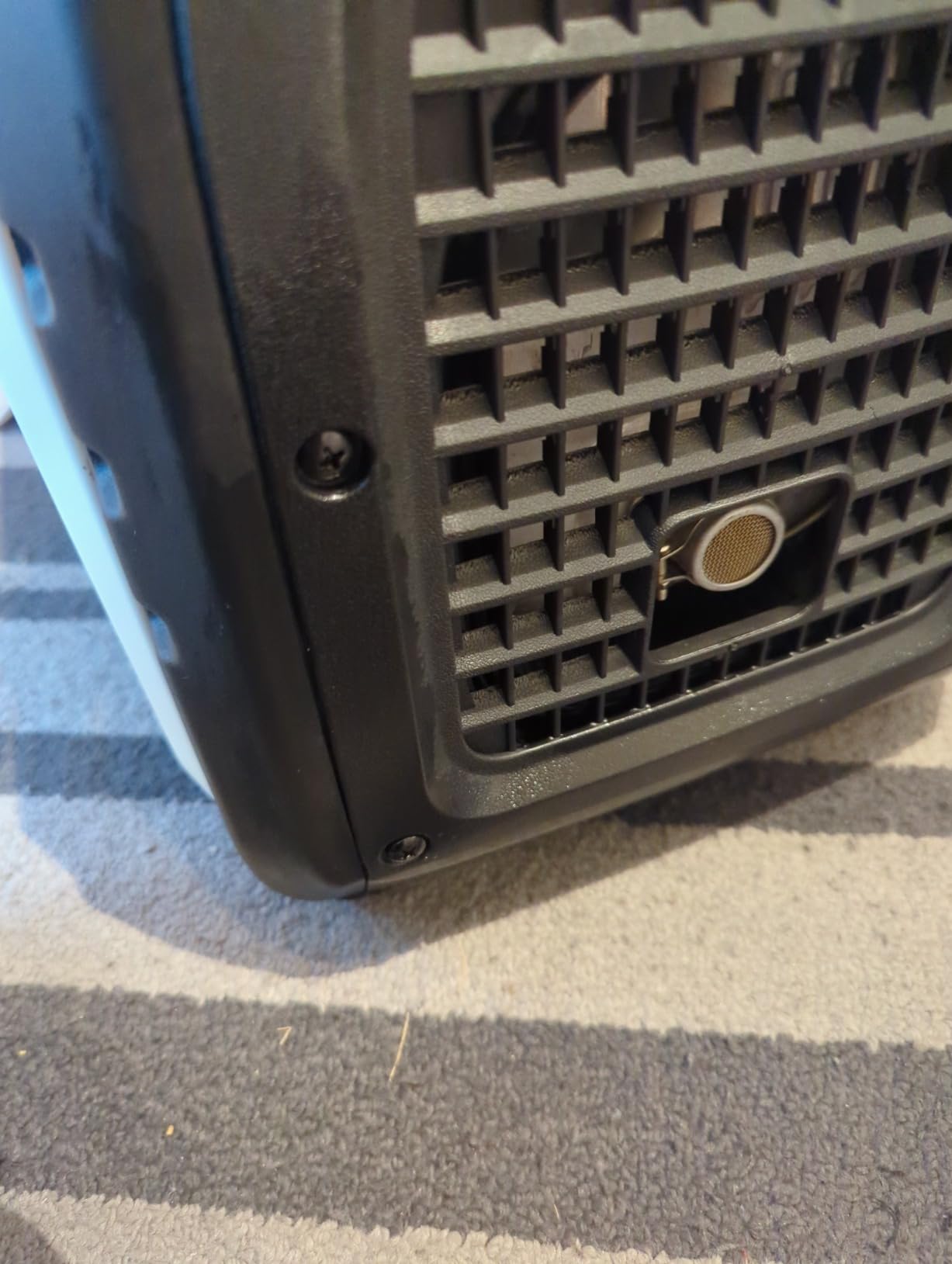
That said, the reliability reviews are mixed. Some users report years of trouble-free operation, while others have had issues within the first few months. The break-in period requires frequent oil changes, and the Bluetooth app functionality is spotty. This is a budget-friendly option that requires some mechanical willingness.
Ideal Gig Scenarios
This generator is best for budget-conscious musicians and DJs who need 4000-plus watts but cannot afford Honda or Westinghouse pricing. The dual fuel option is perfect for remote outdoor events where gasoline availability is uncertain. It also suits food truck operators and festival vendors who run all day.
If you already own a propane tank for a grill or heater, you have a backup fuel source ready to go. That redundancy is genuinely valuable for gigging professionals who cannot afford a power failure.
Where It Falls Short
The mixed reliability is the elephant in the room. If you are the type who wants to set it and forget it, this is not your generator. You need to stay on top of oil changes during the break-in period and be prepared for potential quality control issues.
The 4.1-star rating reflects those concerns. It is lower than every other generator on this list except the AIVOLT. For paid gigs where failure means lost income and damaged reputation, that added risk is something to weigh carefully against the cost savings.
6. PowerSmart 2500W — Budget Pick for Small DJ Setups
PowerSmart 2500 Watt Portable Inverter Generator for Camping
2500W Peak
1900W Running
59 dB
39.7 lbs
5hr Runtime
Pros
- Ultra quiet at 59 dB from 23 feet
- Pure sine wave output for sensitive gear
- Lightweight at 39.7 pounds
- ECO mode for fuel savings
- 2 AC and 2 USB outlets
- 84% 5-star reviews
Cons
- 1900 running watts limits heavier rigs
- 5-hour runtime requires refueling for longer gigs
The PowerSmart 2500W is one of the best values on this list for starting mobile DJs. At under 40 pounds and with a 4.6-star rating from 84% five-star reviews, it hits a price-to-performance ratio that is hard to beat. I have talked to several DJs on forums who use this exact unit for small parties and cafe gigs, and the feedback is consistently positive.
The 2500 peak watts and 1900 running watts will power a DJ controller, laptop, two 10-inch powered speakers, and some LED lighting. It is not going to run a subwoofer and four tops, but for the typical small gig setup, it gets the job done. The pure sine wave output keeps your laptop and controller safe from dirty power.
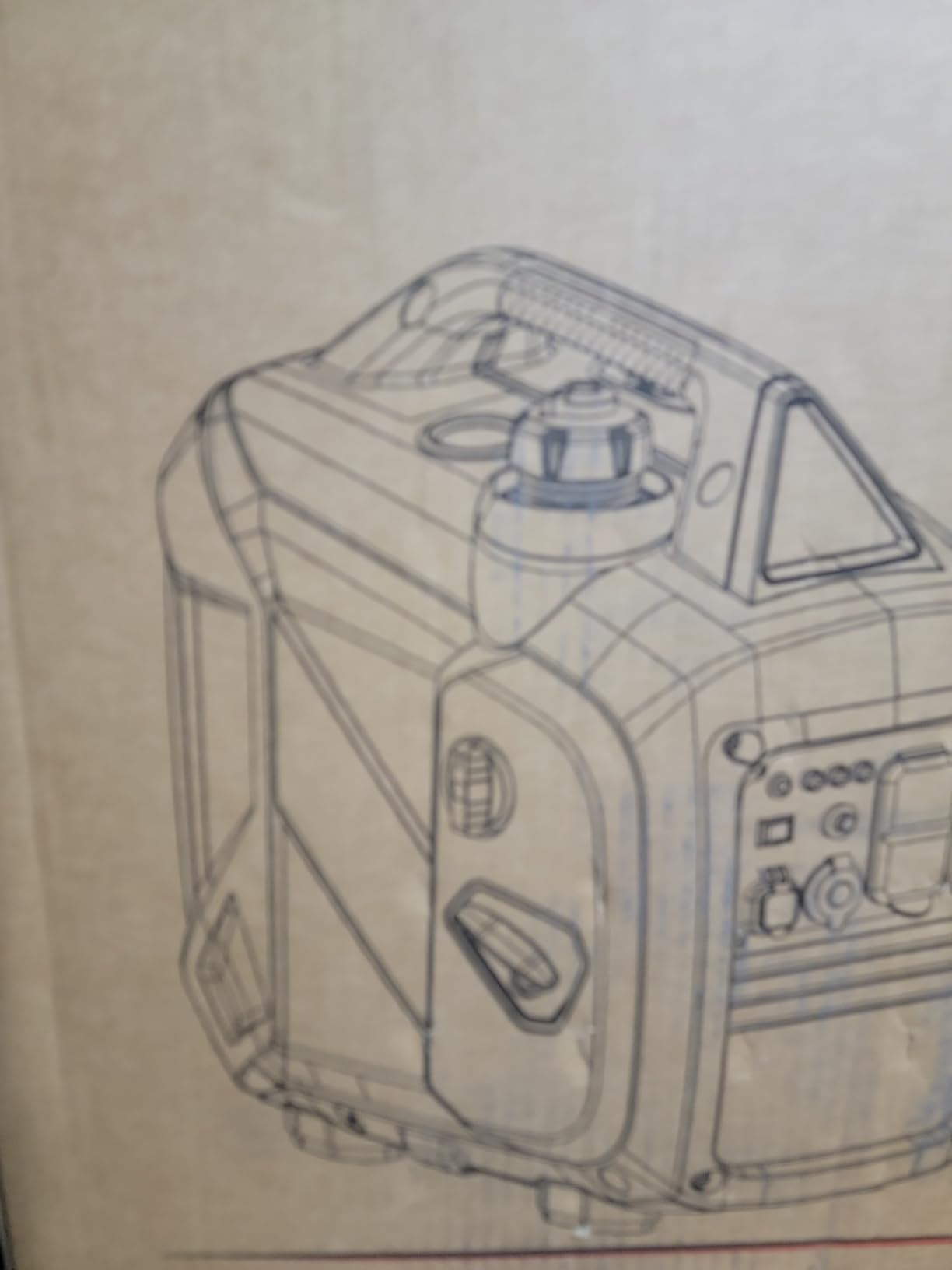
At 59 dB from 23 feet, it is quiet enough for residential and noise-sensitive venues. I would put it in the same conversation as the Honda EU2200i for noise level, though the Honda still edges it out. The ECO mode adjusts engine speed based on load, which helps during quieter parts of your set.
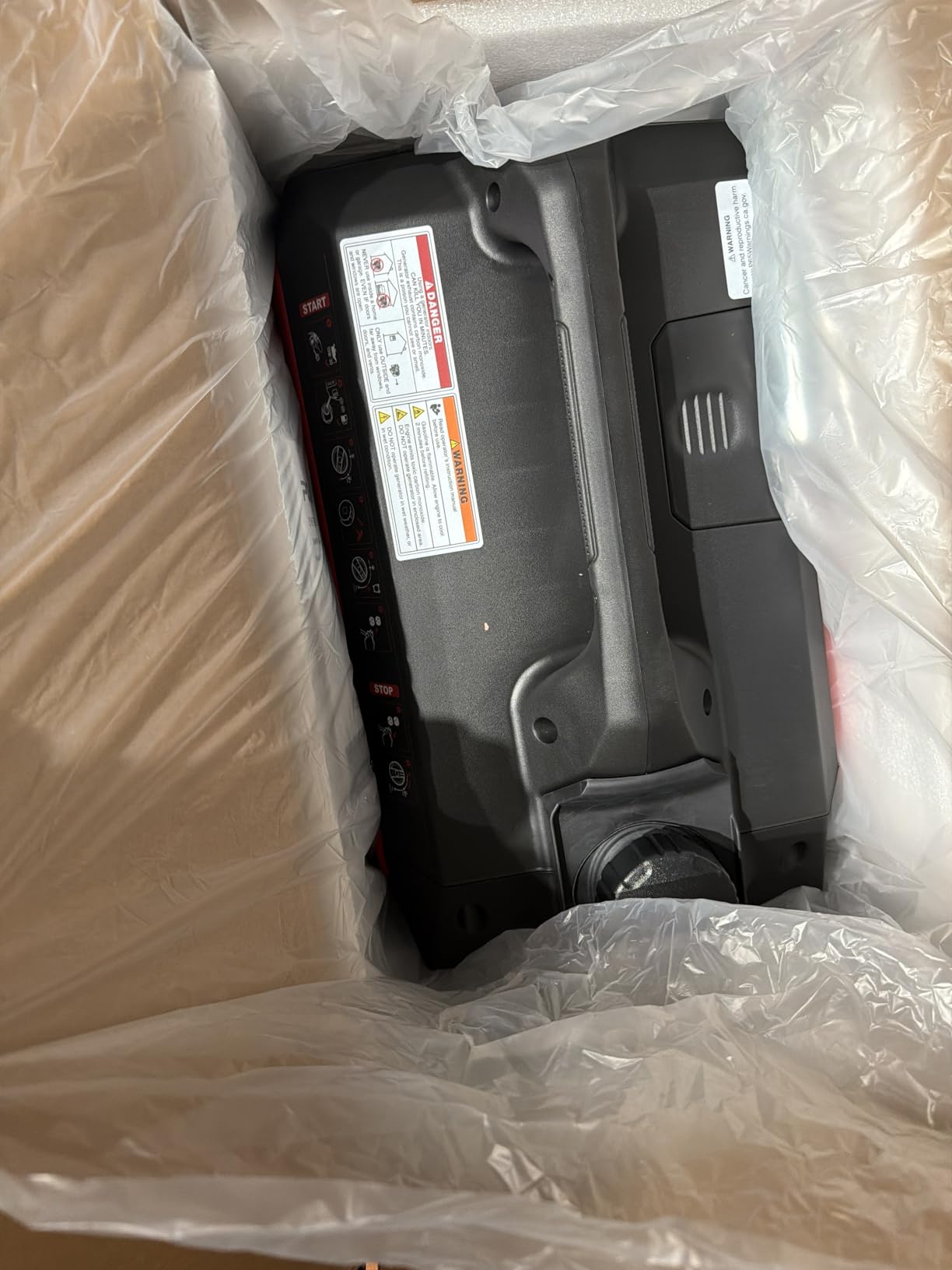
The 39.7-pound weight is one of the lightest on this list. You can carry this with one hand if needed, which makes it ideal for DJs who play venues with limited vehicle access or multiple levels. The 2 AC outlets and 2 USB ports give you basic distribution without needing a separate power strip for small items like phones.
Ideal Gig Scenarios
This generator is perfect for solo DJs playing backyard parties, small outdoor weddings, and cafe gigs. It handles the standard small rig of controller, laptop, and two powered speakers comfortably. Acoustic acts with a compact PA and minimal lighting will also find it well-suited to their power needs.
For anyone just starting out in mobile DJ work or gigging music, this is the generator I would point to first. The price is approachable, the weight is manageable, and the reliability is solid based on the review data.
Where It Falls Short
1900 running watts is the ceiling. If you add a subwoofer, more speakers, or a lighting rig to your setup, you will trip the breaker. Know your power budget before committing to this unit.
The 5-hour runtime at 50% load means you will need to refuel during any gig longer than 4 hours. That is a significant limitation for all-day events or festival situations. Plan for a fuel break and make sure you have spare gas on site.
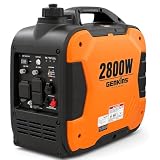
7. Genkins GK2300i — Quiet Fuel Efficiency for Solo Performers
Genkins 2800W Portable Inverter Generator, Quiet Lightweight for Camping Home Backup
2300W Peak
1900W Running
53-57 dB
48 lbs
8hr Runtime
Pros
- Super quiet operation at 53-57 dB
- 8-hour runtime at 50% load
- Pure sine wave under 2% THD
- LBSC technology saves up to 25% fuel
- CO sensor with auto shutdown
- Parallel ready for future expansion
Cons
- 48 pounds is heavier than similar small units
- Limited to 1900 running watts
The Genkins GK2300i earns its spot through a combination of fuel efficiency and quiet operation. The LBSC technology claims up to 25% fuel savings compared to standard generators, and based on user reviews, that claim holds up. For gigging musicians who watch their fuel budget, this is a meaningful advantage over a long season of outdoor shows.
The 2300 peak watts and 1900 running watts put this in the same class as the PowerSmart. However, the Genkins offers a longer 8-hour runtime at 50% load, which means you can get through most gigs without refueling. That alone makes it worth considering if you do 4-6 hour events.
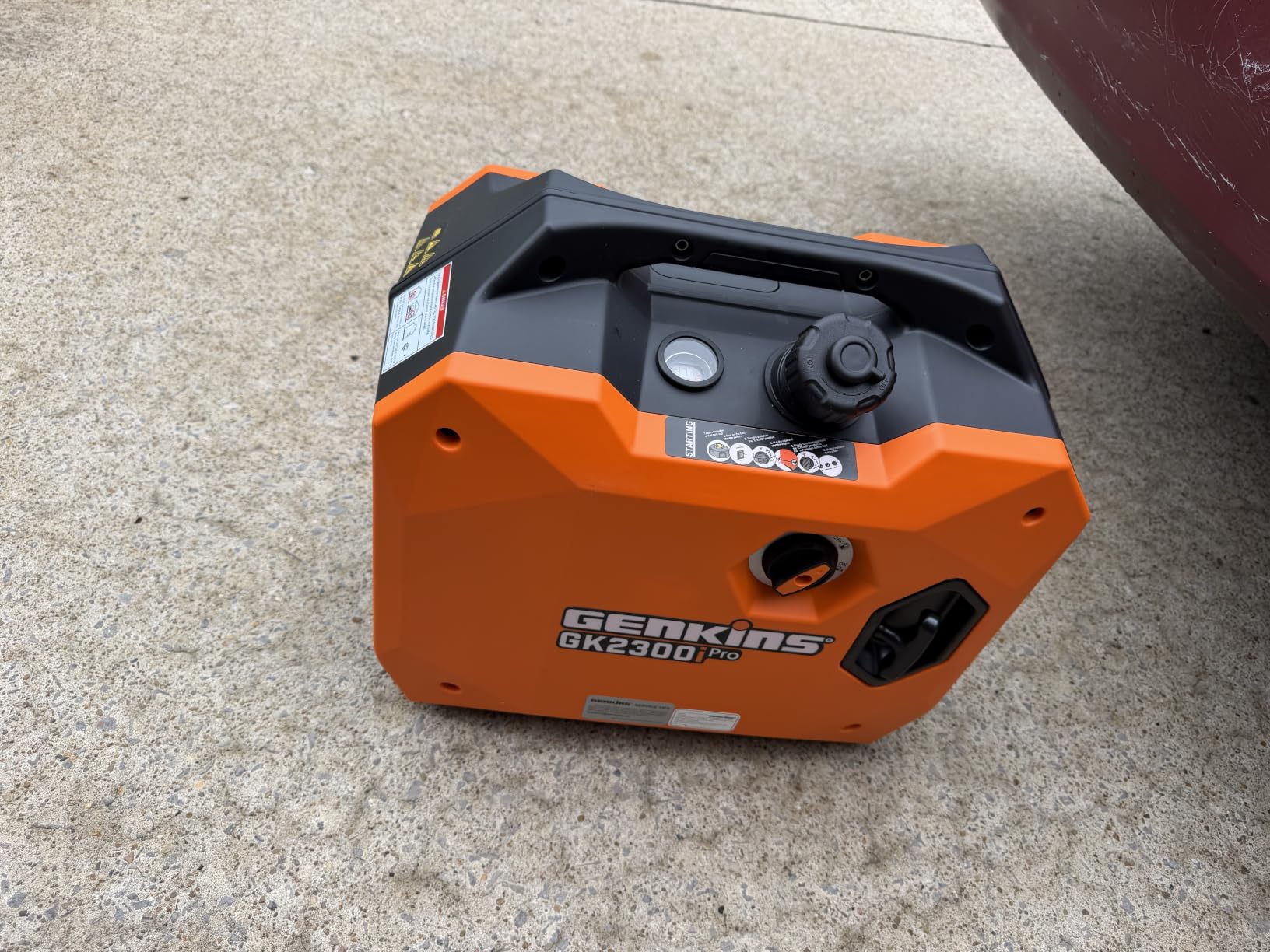
The noise level of 53-57 dB is impressive for this price range. I have seen this unit recommended in forum threads specifically for wedding DJs and corporate event performers who cannot have a loud generator running during speeches or ceremonies. The fully enclosed design keeps sound contained.
Pure sine wave output at under 2% total harmonic distortion is better than many units costing twice as much. That means your laptop, digital mixer, and any gear with sensitive power supplies are well-protected. The RV-ready TT-30R outlet also gives you a higher-amperage option for equipment that needs it.
Ideal Gig Scenarios
This generator suits solo DJs and small acoustic acts playing 4-6 hour events where refueling is not practical. The 8-hour runtime is the key selling point here. It also works well for wedding ceremonies and corporate events where noise must stay minimal during non-music portions of the event.
If fuel efficiency matters to you because you gig frequently or operate in remote areas, the LBSC technology gives the Genkins a real edge. Over a season of outdoor shows, the fuel savings add up.
Where It Falls Short
At 48 pounds, it is heavier than the PowerSmart and AIVOLT despite offering similar wattage. If weight is your primary concern, those alternatives are better choices. The Genkins makes more sense when runtime and fuel efficiency are your priorities.
The 1900 running watts is the same limitation as other generators in this class. You are limited to small rigs. For anything beyond a controller, laptop, and two speakers, you will need to step up in wattage.
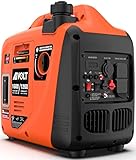
8. AIVOLT 1600W — Ultra-Light Option for Minimalist Rigs
AIVOLT 1600W Super Quiet Inverter Generator 28lbs Portable for Camping
1600W Peak
1260W Running
57 dBA
28 lbs
8hr ECO Runtime
Pros
- Extremely lightweight at 28 pounds
- Ultra quiet at 57 dBA
- Clean power under 3% THD
- 8-hour runtime in ECO mode
- CO alert auto shutdown
- Prime eligible shipping
Cons
- 1260 running watts is the lowest on this list
- Oil not included in package
- Some quality control reports
The AIVOLT 1600W is the lightest generator on this list at just 28 pounds. That is 20% lighter than comparable models, and if you are a solo performer who carries all your own gear, that weight difference matters. I have recommended this unit to buskers and small-venue performers who prioritize portability above all else.
With 1600 starting watts and 1260 running watts, this is strictly for minimalist setups. Think laptop, small controller, and one or two powered speakers. The clean power output at under 3% THD protects your electronics, and the 57 dBA noise level is quiet enough for residential areas and noise-sensitive venues.
The ECO mode extends runtime to 8 hours by adjusting engine speed based on load. For a small rig drawing 600-800 watts, you can realistically get through a full evening gig without refueling. The CO alert technology with auto shutdown is a safety feature that protects you during outdoor events where the generator might be positioned near tents or enclosed spaces.
The copper windings in the 60cc engine are a nice touch at this price point. Copper conducts better than aluminum, which means better efficiency and heat dissipation. The 2-year warranty with lifetime technical support also gives you some peace of mind, though the 4.1-star rating suggests some quality control variance.
Ideal Gig Scenarios
This generator is purpose-built for solo acoustic performers, small cafe DJs, and buskers who need just enough power for a laptop and a couple of speakers. If you walk or bike to your gigs, the 28-pound weight makes it realistic to carry. It is also a good backup generator for larger setups.
For artists who play outdoor markets, street festivals, and small private events, the AIVOLT covers the basics. Just be honest about your power needs before committing to this wattage level.
Where It Falls Short
1260 running watts is the lowest on this entire list. You cannot run a subwoofer, multiple powered speakers, or any gear with high starting wattage. This is a strictly small-rig generator, and overloading it will trip the breaker repeatedly.
The oil is not included, which is a minor but annoying detail. You need to purchase the correct oil separately before your first use. Some users have also reported quality control issues, so inspect your unit carefully upon arrival.
9. Oxseryn 5000W — High Output Open-Frame Inverter
Oxseryn 5000W Inverter Generator Gas Powered, Portable Open Frame Generator
5000W Peak
4000W Running
70 dBA
59 lbs
10hr Runtime
RV Ready
Pros
- 5000 peak watts for full rigs
- 10-hour runtime at 25% load
- Clean inverter technology with low THD
- RV ready 30A outlet
- ECO mode for fuel efficiency
- Sturdy open frame design
Cons
- Louder at 70 dBA than enclosed models
- Open frame is less protected from weather
The Oxseryn 5000W is an open-frame inverter generator that delivers serious power at a budget-friendly price. With 5000 peak watts and 4000 running watts, it handles full band setups, large DJ rigs, and food truck operations. The 4.6-star rating with 80% five-star reviews shows that users are generally very satisfied with the performance.
The 10-hour runtime at 25% load is solid for all-day events. The clean inverter technology with low total harmonic distortion means your electronics are protected even at higher power draws. The RV-ready 30A outlet gives you a high-amperage option for power-hungry equipment.
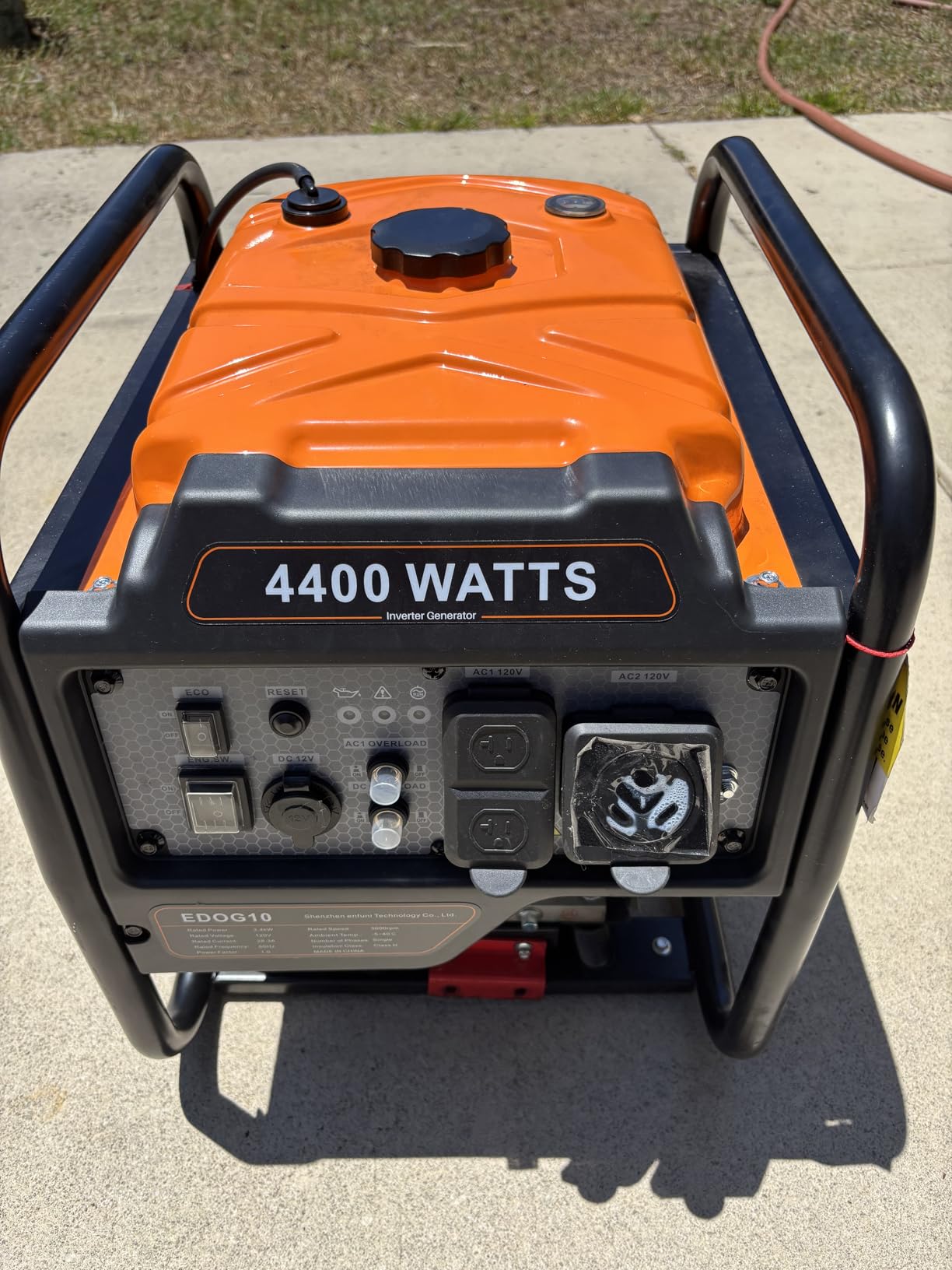
The ECO mode adjusts engine speed based on load, which extends runtime and reduces fuel consumption during quieter parts of your set. The 223cc engine is substantial and provides consistent power delivery even when multiple devices are drawing simultaneously.
The trade-off with the open-frame design is noise and weather protection. At 70 dBA, this is the loudest generator on this list. That is not a dealbreaker for loud outdoor events like festivals and tailgating, but it rules out noise-sensitive venues like weddings and corporate functions.
Ideal Gig Scenarios
This generator is best for loud outdoor events where noise is not a concern. Festival stages, tailgate parties, construction-site performances, and food truck operations all fit the profile. If you need 4000 running watts and your venue does not have strict noise limits, this is a strong value pick.
The 10-hour runtime means you can run all day without refueling, which is essential for festival and market situations. The sturdy open-frame design also makes it easier to service and maintain compared to fully enclosed units.
Where It Falls Short
70 dBA is significantly louder than the enclosed inverter generators on this list. The Honda EU2200i runs at 48-57 dBA and the Westinghouse iGen5000 runs at 52 dBA. If your gig involves speeches, ceremonies, or any quiet moments, this generator will be audible and potentially disruptive.
The open-frame design also offers less protection from rain and dust. If you gig in unpredictable weather, you will need to invest in a generator cover or tent, which adds cost and setup complexity.
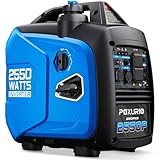
10. POXURIO 2550W — Quiet Mid-Range Option
POXURIO 2550-Watt Portable Inverter Generator for Home Use, 1.06Gallon Large Fuel Tank Up to 10 Hours Use, 120V Gas Powered Generator Super Quiet – EPA Compliant-Blue
2550W Peak
2550W Running
59 dB
10hr Runtime
EPA Compliant
Pros
- Super quiet at 59 decibels
- 10-hour runtime at 25% load
- EPA compliant for emissions
- Lightweight and portable design
- Low oil and overload protection
- 1.06-gallon fuel tank
Cons
- Smaller fuel tank needs frequent refills
- Some quality control concerns reported
- Manual could be clearer
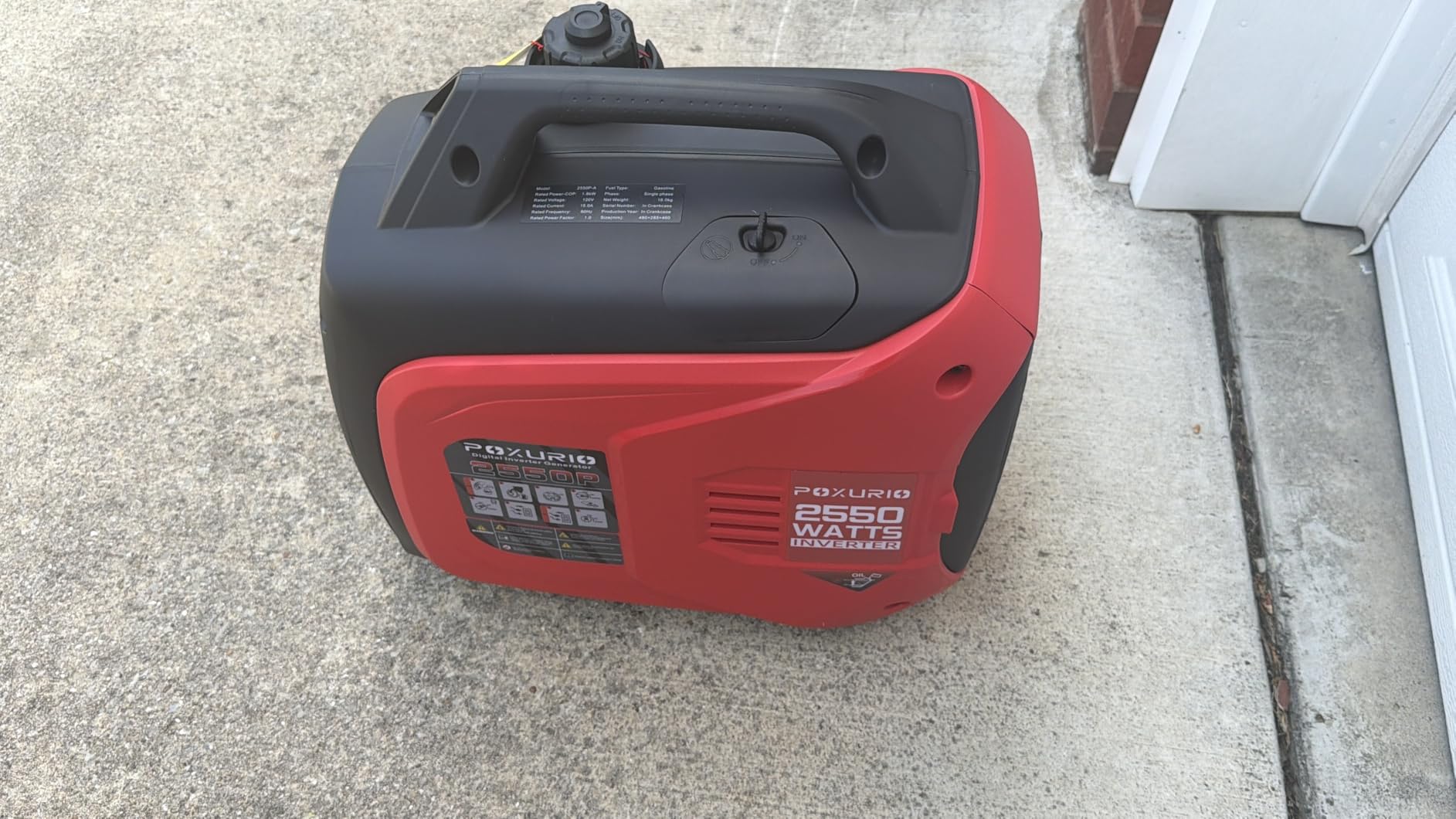
The POXURIO 2550W rounds out our list as a mid-range option for DJs and small bands. It offers 2550 watts of both starting and running power, which is enough for a controller, laptop, two powered speakers, and some basic lighting. The 59-decibel noise level puts it in the quiet category alongside the PowerSmart and AIVOLT.
The 10-hour runtime at 25% load is one of the better numbers in this wattage class. For a typical 4-6 hour gig, you have plenty of fuel margin. The advanced sound reduction technology keeps the generator unobtrusive during events, which is what most gigging musicians care about most.
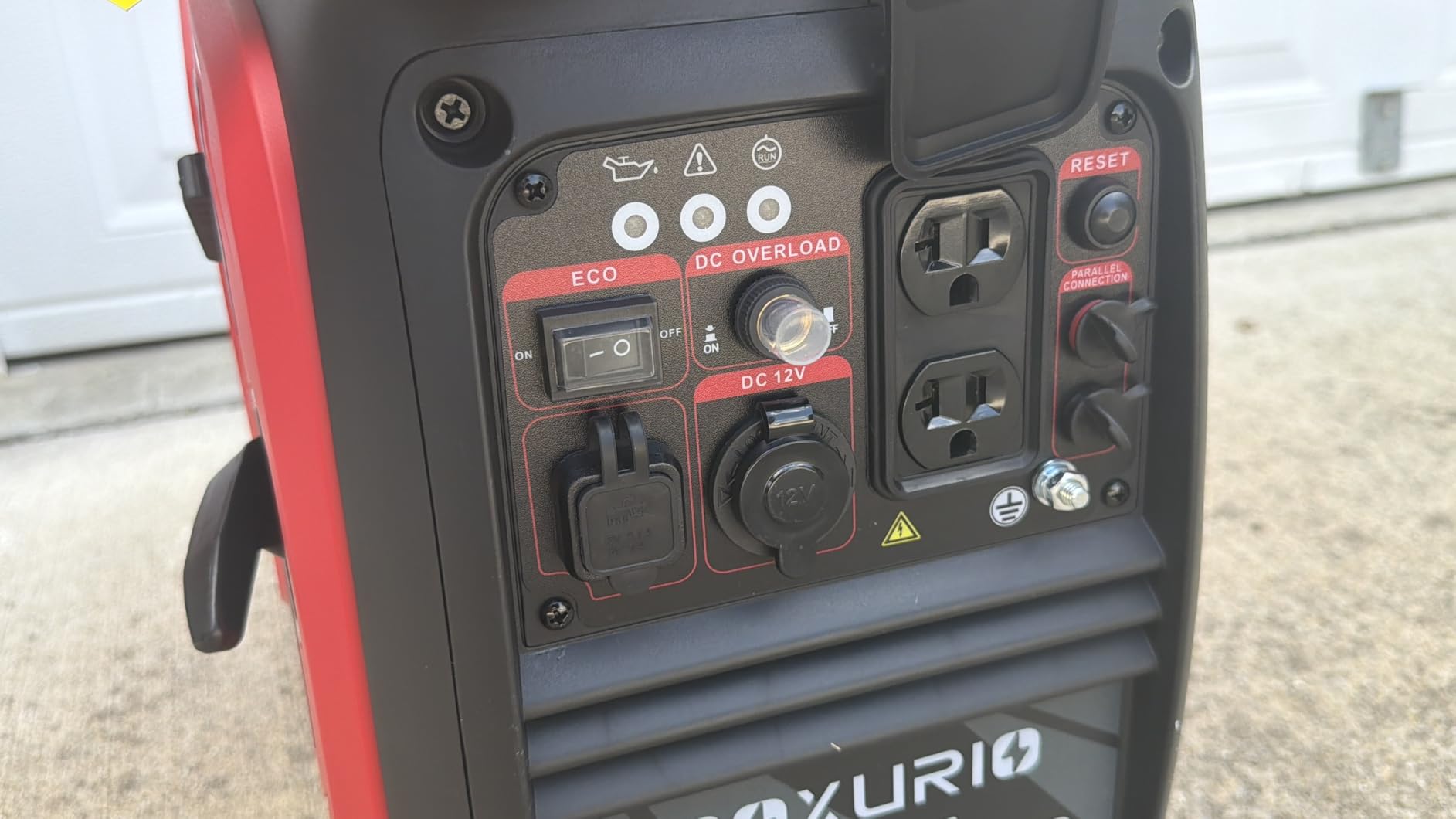
The EPA compliance means this generator meets current emissions standards, which is important if you gig in states with strict environmental regulations. The low oil, overload, and run indicators give you clear feedback on the generator’s status during operation.
The 1.06-gallon fuel tank is on the smaller side, which is a trade-off for the lightweight design. You will need to monitor fuel levels during longer gigs. The 4.2-star rating suggests solid but not exceptional performance, with some users reporting quality control inconsistencies.
Ideal Gig Scenarios
This generator fits small DJ setups, acoustic acts, and solo performers who need quiet power for 4-6 hour events. It is a reasonable choice for wedding DJs and corporate event performers who need clean, quiet operation without paying premium prices. The 10-hour runtime gives you flexibility for longer events.
If you are upgrading from a smaller unit like the AIVOLT and need a bit more headroom, the POXURIO is a logical next step. It provides a meaningful power increase without a significant jump in weight or noise.
Where It Falls Short
The 1.06-gallon fuel tank is small for a generator claiming 10-hour runtime. That 10-hour figure is at 25% load, which means a very light rig. In real gig conditions with a moderate load, expect 5-6 hours of runtime, which means planning for a refuel during longer events.
The 4.2-star rating is the second-lowest on this list, reflecting some quality control concerns. The manual is reportedly unclear, which can make setup frustrating for first-time generator owners. Budget for potential return or exchange if you get a unit with issues.
How to Choose the Right Inverter Generator for Your Gig Setup
Choosing the right inverter generator for outdoor gigs comes down to matching four key factors to your specific situation. Let me break down what actually matters based on real gig experience and the power requirements of typical music equipment.
Wattage Requirements for Music Equipment
This is the most critical factor. You need to calculate both running watts and starting watts for your entire rig. Powered speakers typically draw 300-600 watts each when running, but their starting wattage can spike 50-100% higher when the amplifier first engages. A DJ controller and laptop together draw about 100-200 watts. LED lighting rigs add another 100-300 watts depending on how many fixtures you run.
A typical small DJ setup with two 12-inch powered speakers, a controller, and a laptop needs about 1200-1800 running watts. A full band with a PA, guitar amps, bass rig, and keyboards can pull 2500-4000 running watts. Always add 20% headroom to your calculated total to handle power spikes without tripping breakers.
Noise Level Considerations
Noise regulations at outdoor venues are a real issue. I have seen gigs shut down because the generator was too loud. Most residential areas and wedding venues expect generator noise under 60 dBA at the property line. The Honda EU2200i at 48-57 dBA is the gold standard for noise-sensitive events. Generators rated 64-70 dBA are fine for festivals and loud events but will draw complaints at quieter venues.
As a rule of thumb, place your generator as far from the audience as your power cables allow. A 50-foot extension cord rated for your amperage needs lets you position the generator behind a barrier or around a corner, which dramatically reduces perceived noise.
Runtime and Fuel Efficiency
Runtime is a function of fuel tank size, engine efficiency, and load. The Westinghouse iGen5000 leads this list with 18 hours of runtime, which eliminates refueling anxiety entirely. At the other end, the PowerSmart 2500W gives you about 5 hours at 50% load, which means you must plan a fuel break during any gig longer than 4 hours.
Always calculate runtime based on your actual load, not the manufacturer’s best-case number. Most generators are rated at 25% or 50% load. If you are running your generator at 70-80% capacity, expect runtime to drop by 30-50% from the advertised figure.
Clean Power and THD Explained
Total harmonic distortion, or THD, measures how clean the power output is. Standard generators can produce power with 10-20% THD, which can damage laptops, digital mixers, and other sensitive electronics over time. Inverter generators produce power with under 3-5% THD, which is safe for all music equipment.
Every generator on this list is an inverter generator with clean power output. This is non-negotiable for gigging musicians. Never run a standard open-frame contractor generator into your DJ controller or digital mixer. The risk of damage is real and expensive.
Portability and Transport
If you load in alone, weight is a primary concern. The AIVOLT at 28 pounds and the PowerSmart at 39.7 pounds are the most manageable single-person carries. The Westinghouse at 104.7 pounds requires wheels, a ramp, and ideally a second person. Match your generator weight to your physical capability and your vehicle situation.
Wheels and telescoping handles, like those on the Westinghouse and WEN, make heavier units manageable on flat ground. But they do not help with stairs, gravel paths, or uneven terrain. Think about your typical gig locations and choose accordingly.
Safety Features for Outdoor Use
CO sensors with auto-shutdown are essential for any generator used at outdoor events. Carbon monoxide is invisible, odorless, and deadly. Generators positioned near tents, stages, or enclosed areas can create dangerous CO concentrations. Every generator on this list except the Honda includes a CO sensor, and the Honda has excellent ventilation design that mitigates CO risk.
Always run generators outdoors at least 20 feet from any structure, with the exhaust pointing away from people and occupied areas. Never run a generator inside a tent, vehicle, or building, even with doors and windows open. This is the 20-20-20 rule: at least 20 feet from buildings, 20 feet from windows and doors, and 20 feet from air intakes.
FAQs
Who makes the most reliable inverter generators?
Honda consistently ranks as the most reliable inverter generator brand, with the EU2200i earning a 4.8-star rating across over 3,200 reviews. Forum discussions on r/mobileDJ and r/livesound repeatedly praise Honda for reliability. Westinghouse and Champion are also highly regarded for dependability, with Westinghouse offering strong value and Champion backing its products with lifetime technical support.
What is the 20 20 20 rule for generators?
The 20-20-20 rule means placing your generator at least 20 feet from any building, 20 feet from windows and doors, and 20 feet from air intakes. This minimizes carbon monoxide exposure risk, which is critical at outdoor events where tents, stages, and enclosed areas may be nearby. Always run generators outdoors with exhaust pointing away from occupied spaces.
What type of generator should only be used outdoors?
All portable fuel-powered generators, including inverter generators, must only be used outdoors. Gasoline and propane generators produce carbon monoxide, which is lethal in enclosed spaces. Even with doors and windows open, running any generator inside a building, tent, or vehicle creates deadly CO concentrations. Battery power stations like Jackery and EcoFlow are the only safe indoor alternatives.
What are the disadvantages of an inverter generator?
Inverter generators cost more than standard generators for the same wattage. They generally produce lower maximum wattage than comparably priced open-frame units. Fuel-powered inverter generators still require regular maintenance including oil changes and fuel stabilization. Some models have limited outlet options and may not support high-draw equipment like large air compressors or welders.
Final Verdict on the Best Inverter Generators for Outdoor Gigs
Finding the best inverter generators for outdoor gigs comes down to matching power, noise, and portability to your specific setup. For full band rigs and large DJ systems, the Westinghouse iGen5000 delivers 5000 watts with an 18-hour runtime that eliminates refueling stress. For noise-sensitive events like weddings and corporate functions, the Honda EU2200i remains the benchmark for quiet, reliable power. And for budget-conscious gigging musicians who need solid power without premium pricing, the Champion 4000W hits the sweet spot at under 50 pounds.
Whatever you choose, prioritize clean power output, CO safety sensors, and enough wattage headroom to handle power spikes without tripping breakers. Your gear and your reputation depend on reliable power. Pick the generator that matches your real gig conditions, and you will never have to worry about the lights going dark mid-set in 2026.