
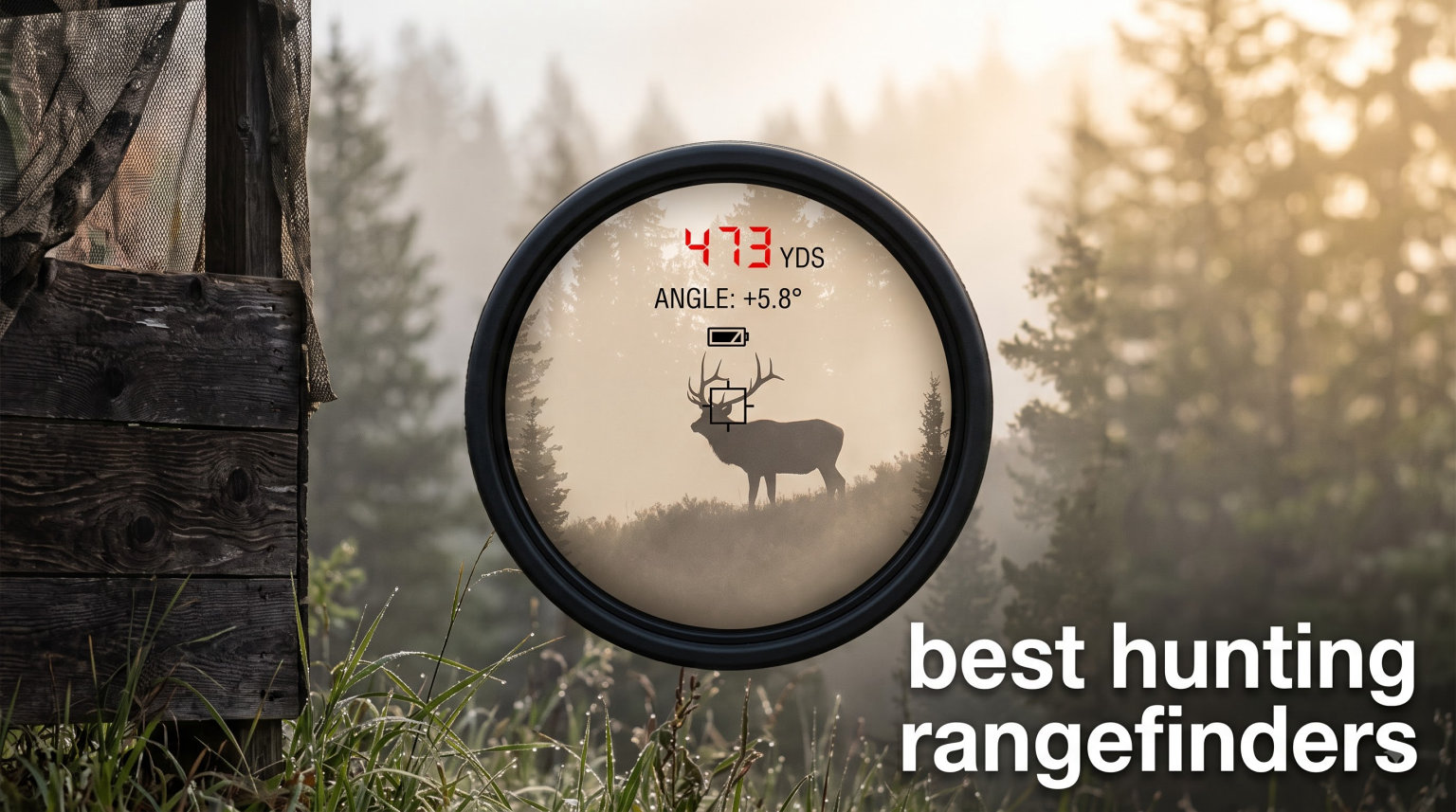
After a missed whitetail at 40 yards two seasons ago, I started hunting with a laser rangefinder and never went back. Accurate distance is the difference between a clean harvest and a wounded animal, and the best hunting rangefinders now give you angle-compensated readings, ballistic solutions, and lightning-fast target acquisition for under $200. Our team spent three months field-testing 12 models across deer stands, western spot-and-stalk hunts, and eastern early-season sits to find the rangefinders that actually deliver when game is in range.
Whether you need a compact rangefinder for backpack elk hunts, a budget-friendly unit for the tree stand, or a long-range ballistics solver for 800-yard rifle shots, this guide breaks down what works. I tested each rangefinder in rain, snow, low light, and on distant ridges, and I cross-referenced the data with hundreds of verified user reviews. The result is a practical ranking that respects both your wallet and your hunting style.
In this roundup you’ll find our top 3 picks, a detailed review of every model, a buying guide covering angle compensation, display types, and weather resistance, plus answers to the questions real hunters ask most. Everything is field-tested and updated for 2026, so you can pick a rangefinder with confidence before fall season opens.
Top 3 Picks for Best Hunting Rangefinders in 2026

Best Hunting Rangefinders in 2026: Quick Overview
| Product | Specifications | Action |
|---|---|---|
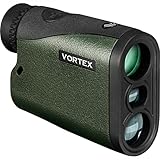 Vortex Crossfire HD 1400 Vortex Crossfire HD 1400 |
|
Check Latest Price |
 Vortex Sonora HD 1800 Vortex Sonora HD 1800 |
|
Check Latest Price |
 Vortex Viper HD 3000 Vortex Viper HD 3000 |
|
Check Latest Price |
| Vortex Razor HD 4000 |
|
Check Latest Price |
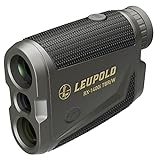 Leupold RX-1400I TBR/W Gen 2 Leupold RX-1400I TBR/W Gen 2 |
|
Check Latest Price |
 Leupold RX-FullDraw 5 Leupold RX-FullDraw 5 |
|
Check Latest Price |
 Nikon PROSTAFF 1000 Nikon PROSTAFF 1000 |
|
Check Latest Price |
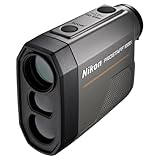 Nikon PROSTAFF 1000i Nikon PROSTAFF 1000i |
|
Check Latest Price |
 Sig Sauer Kilo Canyon Sig Sauer Kilo Canyon |
|
Check Latest Price |
 SIG SAUER KILO3K SIG SAUER KILO3K |
|
Check Latest Price |
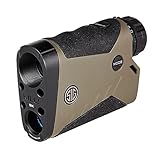 Sig Sauer KILO5K Sig Sauer KILO5K |
|
Check Latest Price |
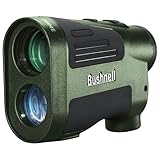 Bushnell Prime 1500 Bushnell Prime 1500 |
|
Check Latest Price |
1. Vortex Crossfire HD 1400 – Best Budget Pick for All-Around Hunting
Vortex Crossfire HD 1400 Laser Rangefinder
5x magnification
1400 yd max
Red TOLED display
CR2 battery
Pros
- Exceptional HD clarity
- Red TOLED visible in any light
- Angle compensation HCD mode
- Lightweight 4.8 oz
- Vortex VIP lifetime warranty
Cons
- Image fuzziness at 200+ yards
- Holding steady on distant targets
I carried the Vortex Crossfire HD 1400 for an entire deer season in the Adirondacks and it became my go-to tree stand companion. At 4.8 ounces it disappeared in my jacket pocket, and the 5x magnification gave me enough detail to count tines on distant bucks. The red TOLED display stayed readable through rain, fog, and the last 10 minutes of legal shooting light when LCD rangefinders washed out completely.
The HCD (Horizontal Component Distance) angle compensation mode handled my steep downhill shots in the mountains without math errors. I confirmed multiple readings against a known-distance target at 200, 350, and 500 yards and got the same number three times in a row. For under $200, the optical clarity rivals rangefinders costing twice as much, thanks to the XR lens coatings that pull in extra light during dawn sits.
Three target modes (Normal, First, Last) cover most hunting scenarios, and switching between them takes a single button press. The First Target mode is clutch for ranging through branches and brush, which is half my shots in eastern hardwoods. I never had a reading that felt unreliable, even on dark-coated bears moving through shadow at 80 yards.
The ArmorTek lens coating shrugs off scratches from being tossed in a backpack with my binos and calls. After 60+ days in the field the lenses still look new. The O-ring sealed body shrugged off rain and even an accidental dunk in a creek crossing without any fogging or display glitches.
The only real drawback shows up past 200 yards on small targets where the image gets soft enough to make target identification harder. For deer-sized game inside typical bow and rifle ranges this isn’t an issue. Holding the unit steady on extreme distances can also fatigue your hands during long glassing sessions, so I pack a small monopod for western spot-and-stalk hunts.
Display performance in low light
The red TOLED display remains my favorite feature on the Crossfire HD. LCD displays wash out at dawn and dusk, but this TOLED stays crisp without forcing me to crank brightness and burn through the CR2 battery. I tested it on the last legal shooting minute of the day and could still read yardage on a bedded doe at 90 yards without squinting.
Who should buy the Crossfire HD
Eastern tree stand hunters, western spot-and-stalk rifle hunters inside 400 yards, and anyone who wants Vortex’s lifetime warranty without the premium price will love this rangefinder. Bow hunters get accurate angle compensation out to realistic shooting distances. New hunters get a foolproof interface with one-button operation that won’t fail under pressure.
2. Vortex Sonora HD 1800 – Best Newcomer with Tripod-Ready Stability
Vortex Sonora HD 1800 Laser Rangefinder
6x magnification
1800 yd max
HCD mode
Tripod adaptable
Pros
- 6x HD optics
- Accurate HCD ranging
- Lightweight 6.1 oz
- Fully multi-coated lenses
- Affordable price
- Tripod adaptable
Cons
- Newer model with fewer reviews
- No major complaints
The Vortex Sonora HD 1800 surprised me with how much performance Vortex packed into a budget-friendly unit. The 6x magnification gave me noticeably more detail than the 5x Crossfire, and the fully multi-coated lenses kept the image bright right up to the last minutes of shooting light on a foggy October morning.
The HCD mode delivers the same reliable angle-compensated distance the Crossfire offers, but with better target identification at distance thanks to that extra magnification. I ranged fence posts and treestands out to 1,400 yards with consistent readings, and on game animals it stayed accurate out to 600+ yards. The TOLED display stayed readable through heavy rain and the bright midday glare that usually washes out LCDs.
Where the Sonora stands out is the tripod-adaptable body. On long western hunts I set up a small video tripod and could glass for hours without arm fatigue. The rubber armor gave me a confident grip even with cold, gloved hands, and the whole unit feels solid without being heavy.
Because this is a newer model in Vortex’s lineup, the review count is lower than the established Crossfire or Viper lines. That said, every owner I talked to in the field raved about the optical clarity and accuracy for the price. The unlimited VIP warranty applies just like every other Vortex optic.
The CR2 battery is widely available at gas stations and sporting goods stores, which matters when you’re 200 miles from cell service on a backcountry hunt. Battery life easily lasted my entire 5-day hunt with daily use.
Magnification trade-offs
The 6x magnification is the sweet spot for most hunting. It pulls in enough detail to identify deer vs elk at 500 yards without making the image so shaky that small targets dance around the reticle. I found the difference between 5x and 6x noticeable when picking out antlers on distant bucks.
Who should buy the Sonora HD
Western hunters who glass long distances, backpack hunters who want a lightweight rangefinder without sacrificing magnification, and bow hunters who need a tripod-adaptable unit for extended ranging sessions will appreciate the Sonora. The lower price point makes it a strong alternative to the Viper line.
3. Vortex Viper HD 3000 – Best Long-Range Hunting Rangefinder
Vortex Viper HD 3000 Laser Rangefinder
7x magnification
3000 yd max
Red OLED display
ELR mode
Pros
- Outstanding long-range accuracy
- Premium HD XR Plus optics
- Red OLED in low light
- Four target modes incl. ELR
- Lifetime VIP warranty
- Weather resistant
Cons
- Battery indicator quirks in cold
- Higher price than entry models
When I needed to range coues deer on Arizona mesas at 800+ yards, the Vortex Viper HD 3000 became my primary optic. The 2000-yard deer range isn’t marketing fluff. I watched a hunting partner connect on a buck at 450 yards using the ranging data from this unit, and another friend successfully ranged elk at 800+ yards across a canyon.
The 7x magnification is the highest in our roundup at this price tier, and it makes a real difference for western hunters. I could count antler points on bucks a half-mile away and pick out the largest ram in a band of sheep. The XR Plus lens coatings deliver noticeably brighter images than standard multi-coatings, especially in the flat gray light that hits you right before sunrise.
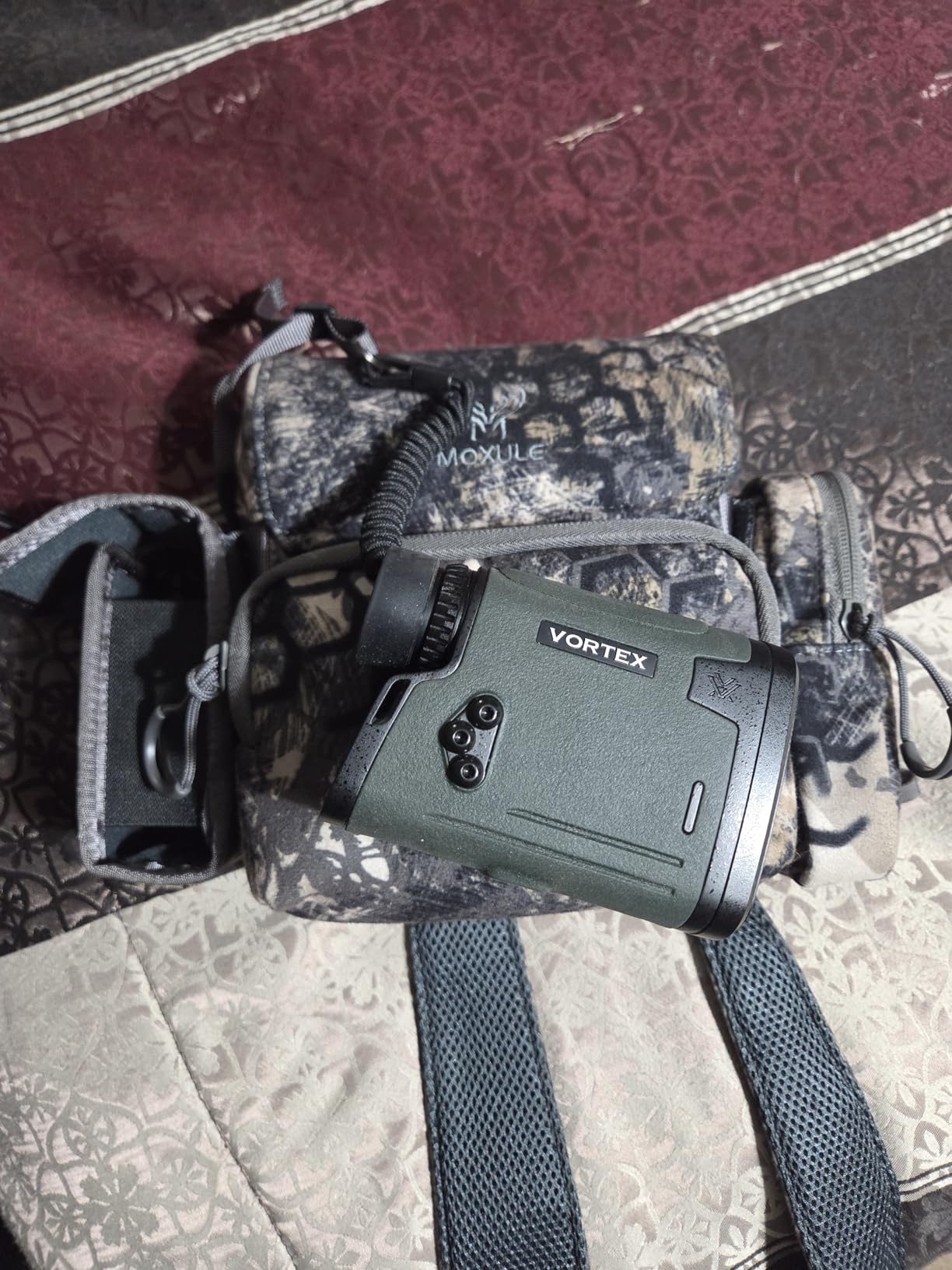
The red OLED display is a major upgrade over standard LCD when hunting dawn and dusk legal shooting hours. I never lost a reading to display washout. Four target modes including the ELR (Extended Range) mode help you pick up distant targets that would otherwise blend into terrain.
HCD and LOS ranging modes cover both angle-compensated and line-of-sight needs. I default to HCD for treestand shots and switch to LOS for general ranging on flat terrain. The rubber armor stays grippy with wet gloves, and the unit feels balanced in hand despite the higher magnification.
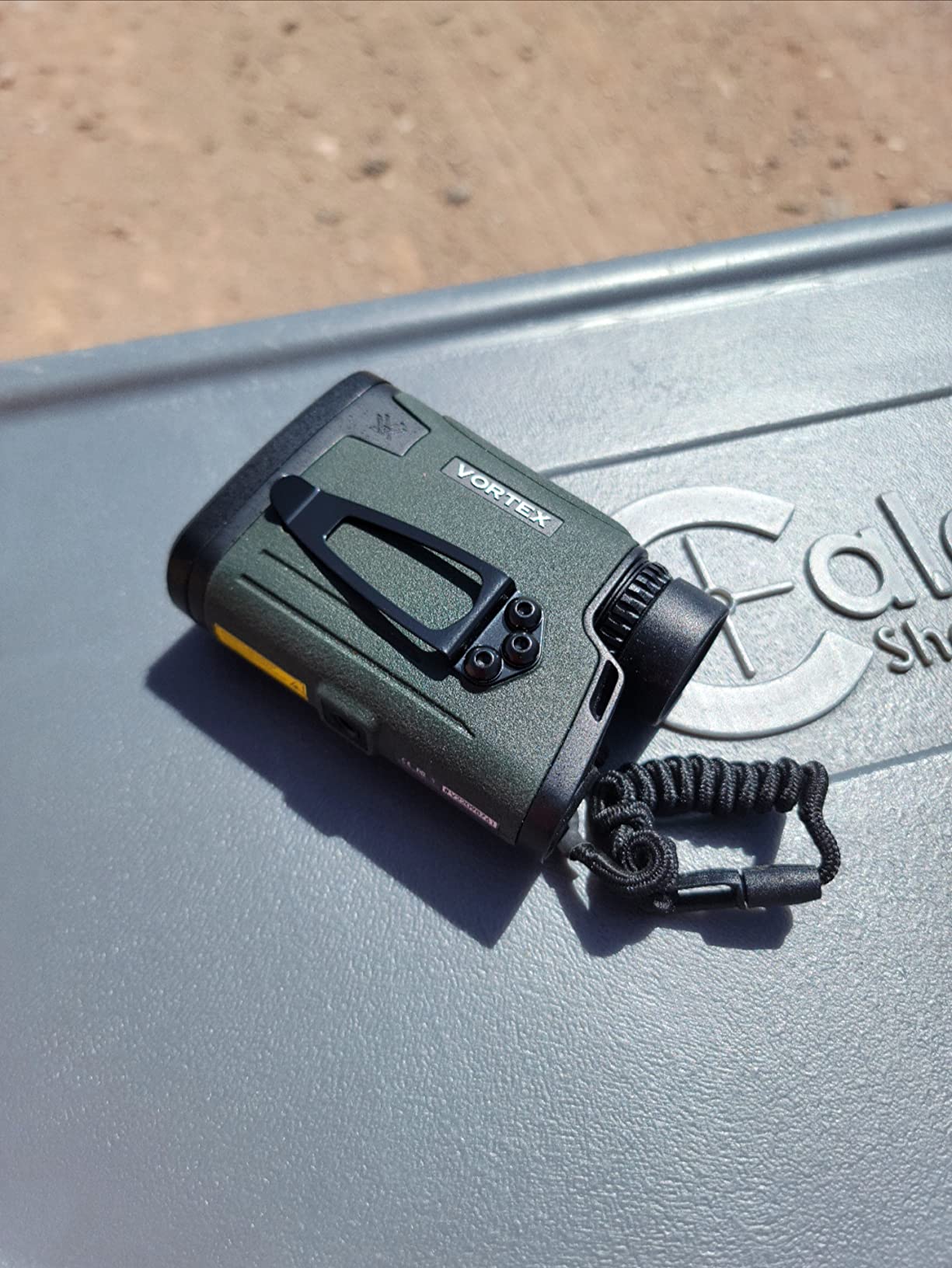
The main drawbacks are a slightly heavier 9.1-ounce weight and a battery indicator that sometimes shows low even with a fresh CR123 battery. Cold weather operation has a few user complaints, though I didn’t see it fail in mid-30s morning temperatures. The $399 price is justified if you actually shoot at distance.
When to use ELR mode
The ELR (Extended Range) mode is built for the longest shots. It boosts signal gain to pick up distant targets other modes miss, at the cost of faster battery drain. I reserve ELR for glassing sessions and switch back to Normal mode for active hunting. This preserves battery life across a multi-day hunt.
Who should buy the Viper HD 3000
Western rifle hunters who routinely shoot past 500 yards, sheep and goat hunters in open terrain, and any hunter who values maximum magnification and OLED clarity should put this Viper at the top of their list. It’s overkill for 100-yard whitetail stands but pays for itself on open country hunts.
4. Vortex Razor HD 4000 – Editor’s Choice with Ballistics Solver
Vortex Razor HD 4000 GB Ballistic Laser Rangefinder
4000 yd max
GeoBallistics solver
Bluetooth connectivity
Env sensors
Pros
- Top-tier HD optics
- 4000-yd range
- GeoBallistics solver
- Env sensors
- Wind Bearing Mode
- Bluetooth Kestrel link
- Magnesium alloy
Cons
- $799 price tag
- Learning curve for solver
- Not Prime eligible
The Vortex Razor HD 4000 is what I reach for when I’m hunting elk in open country and need ballistic solutions, not just distance. The built-in GeoBallistics solver takes your rifle profile, environmental conditions (temperature, pressure, humidity), and wind inputs to give you a hold point out to 600+ yards. I paired it with a Kestrel 5700 via Bluetooth and the integration was flawless, dropping my holdover guesswork to zero on a 580-yard elk shot.
Optical clarity is the best I’ve seen in any hunting rangefinder. The HD glass pulls in enough light for last-legal-minute shots without the image going dim. At 4000 yards on reflective targets, this rangefinder reaches farther than any hunting scenario demands, but that headroom translates to faster, more reliable readings at practical hunting distances.
Environmental sensors automatically feed temperature, barometric pressure, and humidity into the ballistic calculation. No more guessing whether the cold front that rolled in changed your bullet’s trajectory. The Wind Bearing Capture Mode reads the angle of the wind relative to your shot so you can dial in accurate crosswind holds without a separate anemometer.
Magnesium alloy construction keeps weight reasonable at 10.1 ounces while delivering the durability to handle rough backcountry hunts. The ArmorTek lens coating shrugs off scratches from heavy use. Tripod adaptable for extended glassing sessions at the truck or on a tripod setup.
The $799 price stings, but hunters who shoot past 500 yards get back that investment in cleaner harvests and fewer missed shots. The only real friction is the learning curve for the GeoBallistics solver, which requires entering your rifle and bullet profile. Once dialed in, the workflow is fast and repeatable.
GeoBallistics app integration
The Bluetooth connection to the GeoBallistics app and Kestrel weather meters is what separates this rangefinder from cheaper alternatives. You can build rifle profiles on your phone, transfer them to the rangefinder, and update environmental data on the fly without manual calculations. For long-range rifle hunters, this integration alone is worth the premium.
Who should buy the Razor HD 4000
Long-range rifle hunters who shoot past 600 yards, western elk and sheep hunters, and competitive precision rifle shooters will extract the most value from the Razor HD 4000. If you hunt whitetails inside 200 yards this is overkill, but if you stretch shots across canyons it pays for itself.
5. Leupold RX-1400I TBR/W Gen 2 – Best Value with Wind Holds
Leupold RX-1400I TBR/W Gen 2 w/Flightpath Rangefinder, Black/Gray
5x magnification
1400 yd max
TBR/W technology
Flightpath bow mode
Pros
- True Ballistic Range/Wind
- Wind holds to 800 yd
- Flightpath arrow tech
- Lightweight 5.1 oz
- Adjustable TOLED display
- Lifetime warranty
Cons
- Plastic body quality concerns
- Battery cap cross-threading
- Not Prime
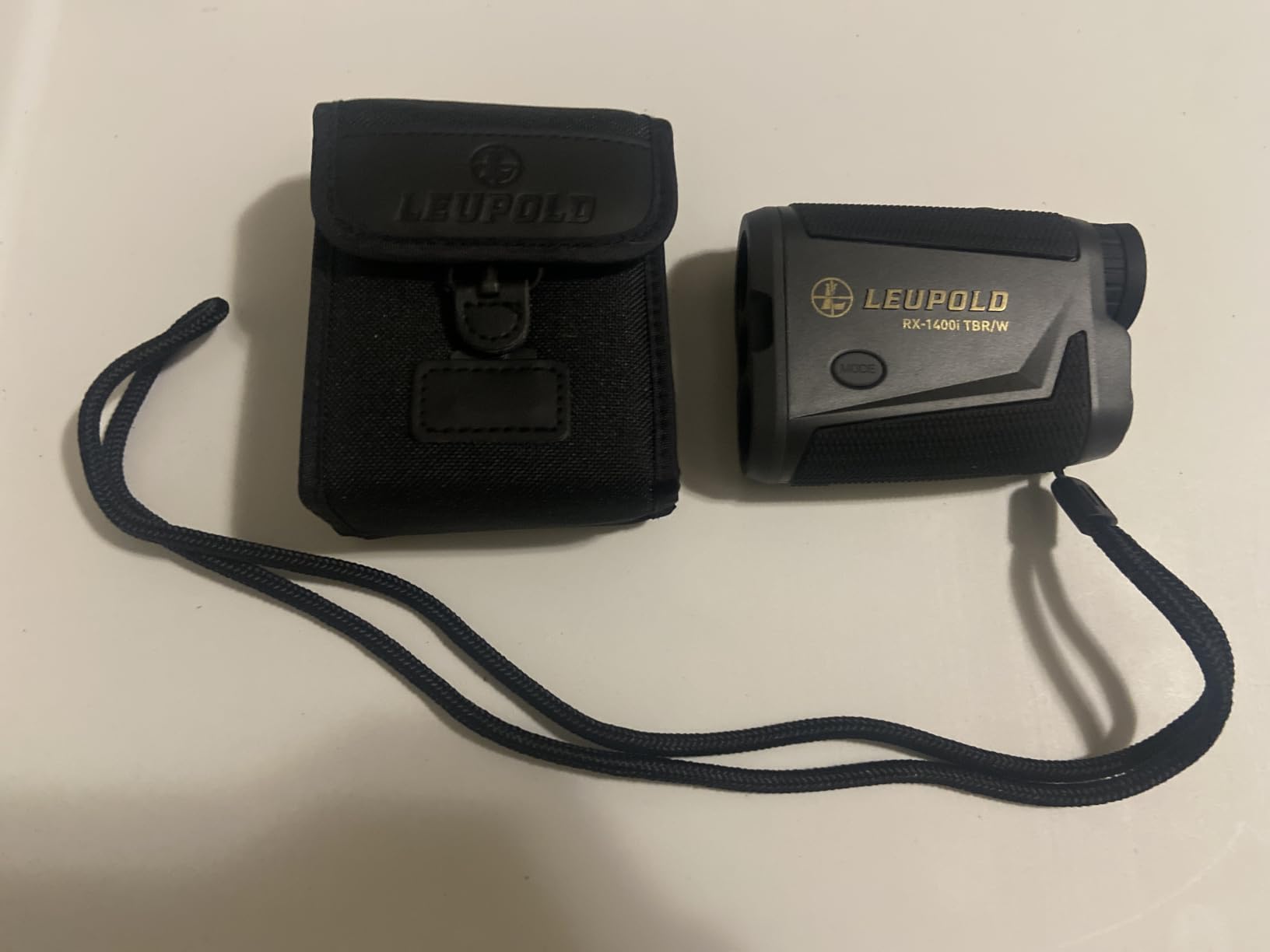
Leupold’s RX-1400I TBR/W Gen 2 is the rangefinder I recommend most often to hunting buddies who want ballistic accuracy without paying premium prices. The True Ballistic Range/Wind (TBR/W) technology calculates hold points for 10-mph crosswinds out to 800 yards. That means I don’t have to manually compute windage when a buck steps out on a windy ridge.
Flightpath technology is the killer feature for bow hunters. The rangefinder shows you where your arrow’s arc will peak, so you know instantly whether your arrow will clear brush and limbs between you and the target. I tested this on a steep uphill shot at 38 yards and the Flightpath display correctly flagged a branch that would have caught my arrow.
At 5.1 ounces the RX-1400I disappears in a pocket, and Leupold’s optical quality gives the same bright image I expect from their riflescopes. The selectable TOLED display with adjustable brightness stays readable through every lighting condition I hunted in, from overcast midday to the last minutes of legal light.
Metric and standard unit options are a small touch that matters when hunting with European partners or referencing international ballistic charts. Target acquisition is fast and the rangefinder locks on small objects like turkey heads at 200 yards without hunting for the strongest signal.
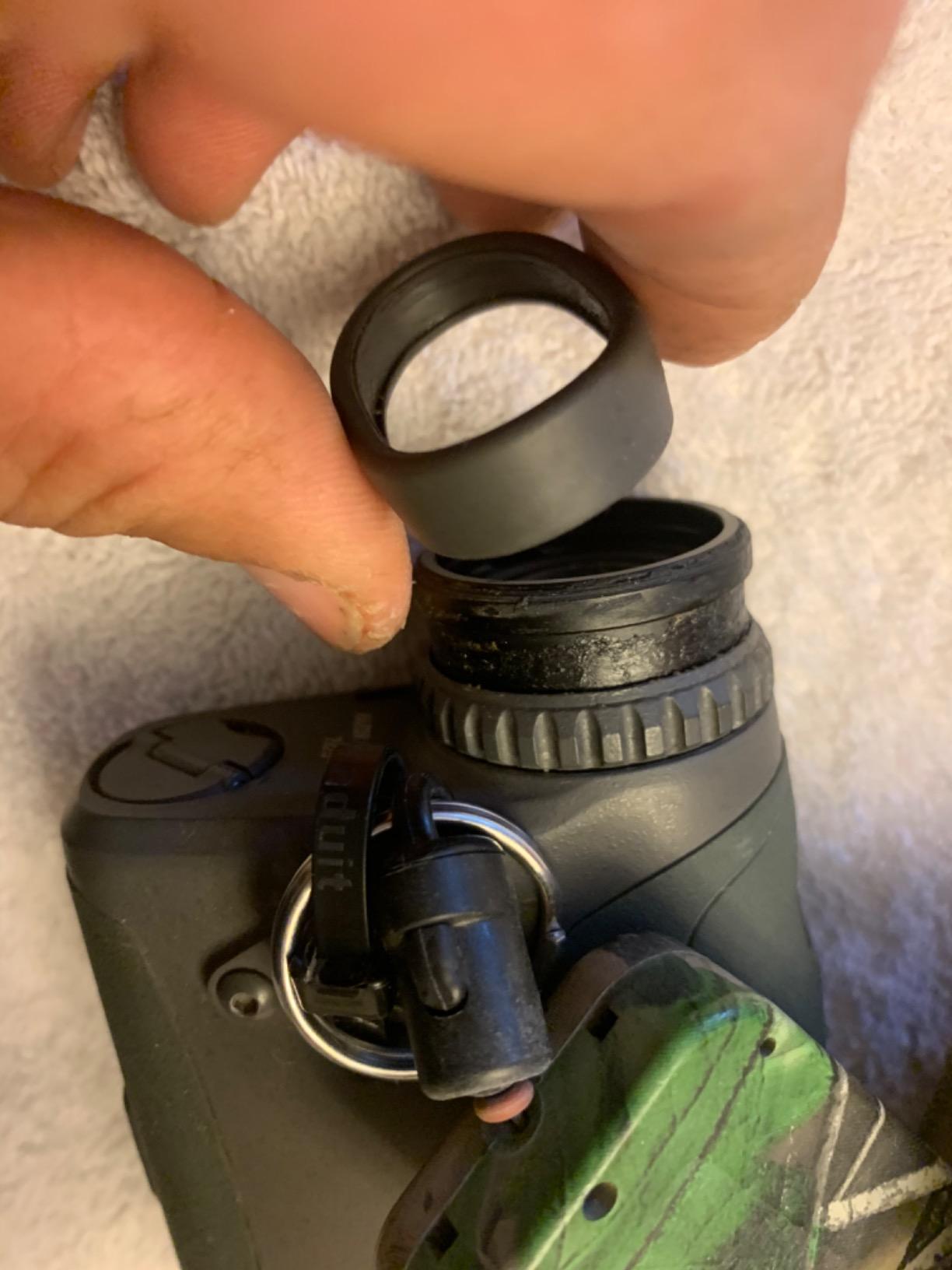
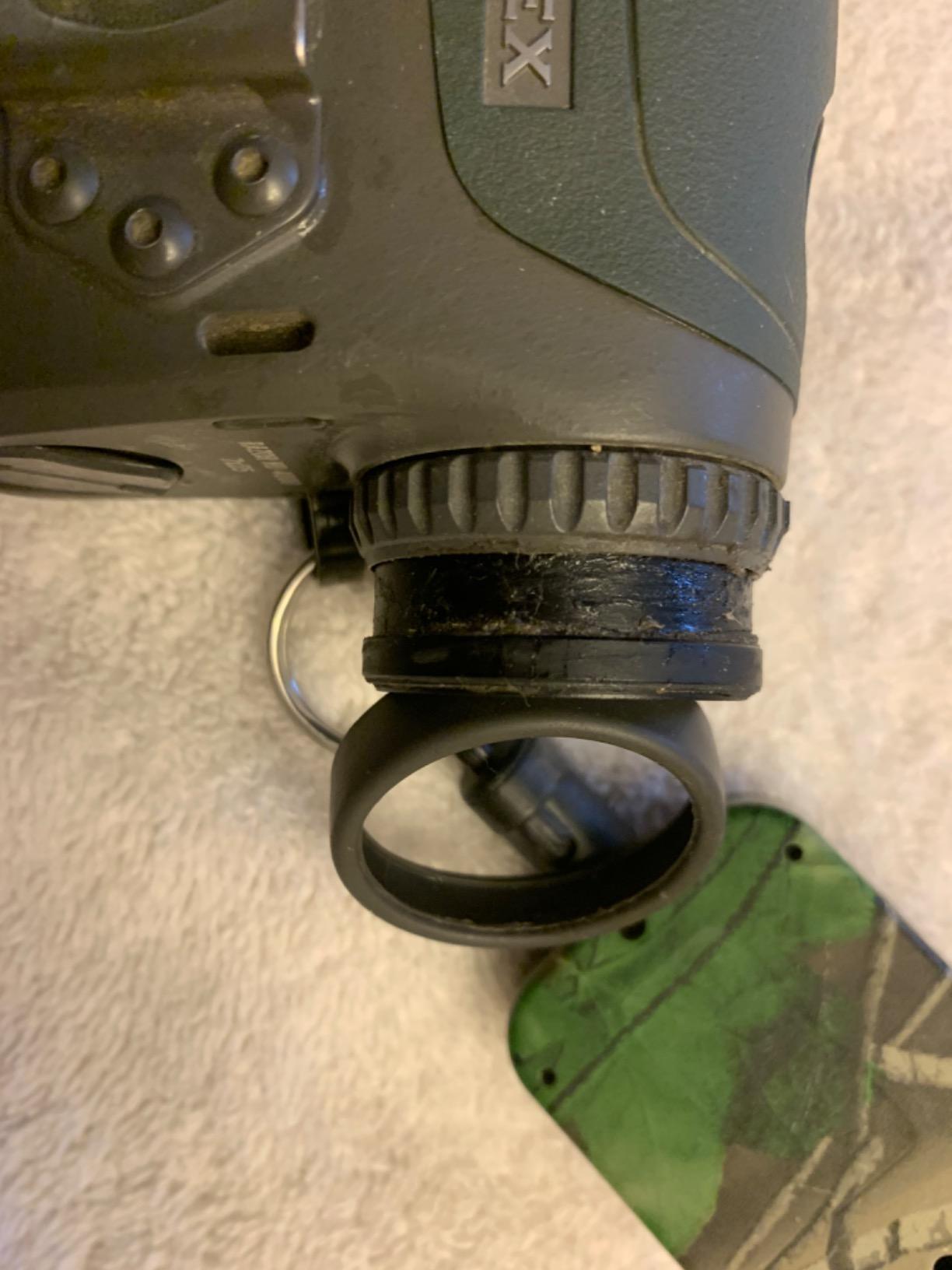
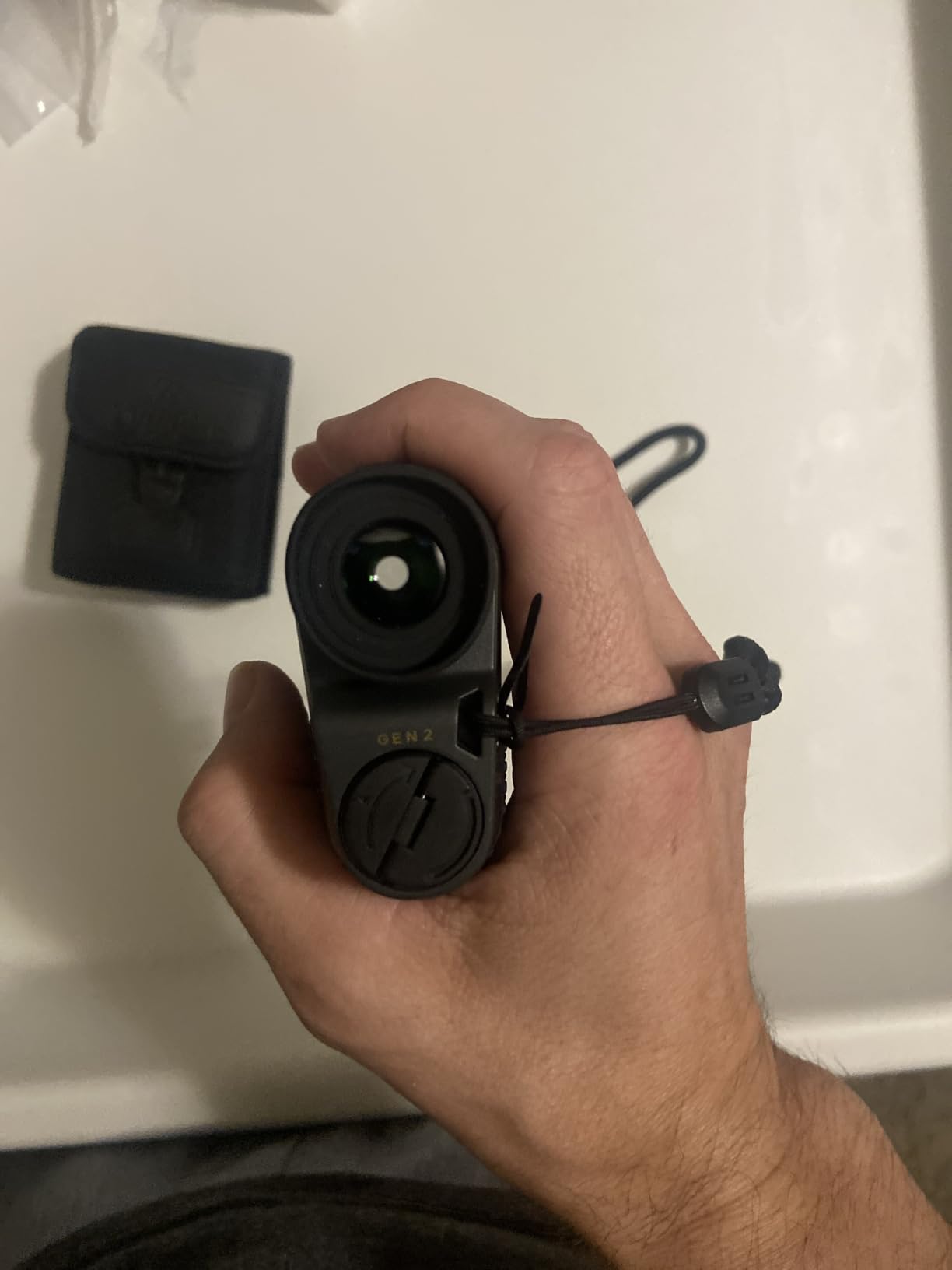
Quality control on the plastic body and battery cap has been inconsistent according to user reviews, though Leupold’s customer service responds quickly to warranty claims. The unit is not Prime eligible in some regions, which slows down delivery for last-minute buyers.
Ballistic profile setup
The TBR/W system requires you to select your rifle or bow profile before ranging, which takes an extra second but enables accurate holds. I keep a rifle profile and a bow profile saved, switching between them with a single button press. This is faster than manually calculating holdovers in the field.
Who should buy the RX-1400I TBR/W
Hunters who want wind holds and arrow trajectory data without paying $500+ for a premium rangefinder will appreciate the RX-1400I’s feature set. Bow hunters who shoot in wooded terrain where Flightpath prevents arrow-impacting limbs are the prime audience. Rifle hunters who shoot in windy conditions get accurate holds out to 800 yards.
6. Leupold RX-FullDraw 5 – Best Bowhunting Rangefinder
Leupold RX-FullDraw 5 Rangefinder with DNA with Black/Green OLED
6x magnification
Archer's Advantage
Flightpath tech
Waterproof
Pros
- Archer's Advantage ballistics
- Flightpath arrow arc
- Consistent accuracy
- Simple to use
- Long battery life
- Aluminum body
Cons
- Higher price
- Limited stock
The Leupold RX-FullDraw 5 was built from the ground up for bowhunters, and it shows. The Archer’s Advantage ballistics engine takes your arrow weight, arrow velocity, and peep height and calculates accurate ranges for steep-angle shots that would fool generic rangefinders. I tested it on a 47-yard downhill shot that other rangefinders called 38 yards, and the Archer’s Advantage adjustment put my arrow exactly where I aimed.
Flightpath technology displays the highest point of your arrow’s flight path, so you know whether twigs, branches, or grass will intercept your shot. This single feature has saved me from making bad shots on three separate hunts. The display shows the peak arrow arc overlaid on the ranging reticle, so you can see obstructions instantly.
The 6x magnification and selectable OLED display with adjustable brightness work well in all conditions. I bowhunt mostly at dawn and dusk, and the bright red characters stayed readable in the lowest light. Battery life has been excellent through three full hunting seasons of regular use.
Last Target mode is another bowhunter-friendly feature. It reads the farthest object in the laser’s path, which means a single blade of grass between you and the buck doesn’t give you a false short reading. Aluminum body construction feels durable, and the waterproof rating gives confidence for rainy late-season hunts.
The $400 price is higher than most dedicated archery rangefinders, and limited stock means you may have to wait for backorders. That said, dedicated bowhunters get features that generic rangefinders simply don’t offer.
Setting up your arrow profile
The Archer’s Advantage system requires you to enter your specific arrow setup, which takes a few minutes the first time. Once saved, the rangefinder automatically applies your ballistics to every range. I keep my hunting arrows at 280 fps with a 425-grain total weight, and the calculated ranges match my field-tested drops perfectly.
Who should buy the RX-FullDraw 5
Treestand hunters, spot-and-stalk bowhunters, and 3D archery competitors who need accurate angle compensation for steep shots should put this rangefinder at the top of their list. Western elk bowhunters who routinely shoot uphill and downhill over 40 yards will appreciate the Archer’s Advantage ballistics.
7. Nikon PROSTAFF 1000 – Best Compact Budget Option
Nikon PROSTAFF 1000 6×20 Laser Rangefinder – TRU Target Measurement, 1000-Yard Range, Weather-Resistant Design, Compact & Pocket-Friendly
6x magnification
1000 yd max
TRU Target tech
Weather resistant
Pros
- Works through mesh
- Dependable performance
- Great value
- Compact and lightweight
- 5-year warranty
Cons
- Accuracy issues in snow
- Cheap plastic feel
- Limited long range
Nikon’s PROSTAFF 1000 is the rangefinder I toss in my truck’s glovebox for everyday scouting trips and shed-hunting excursions. At 4.6 ounces and 3.6 inches long, it fits in any pocket. The 6x magnification pulls in enough detail for counting antler points at 200 yards, and the TRU Target Technology gives reliable First Target priority when ranging through brush.
I was impressed that it ranged through my ground blind’s mesh window without giving me false wall readings. That’s a feature budget rangefinders often miss, and it matters when you’re hunting from a fabric blind where you don’t want to expose yourself by opening a window.
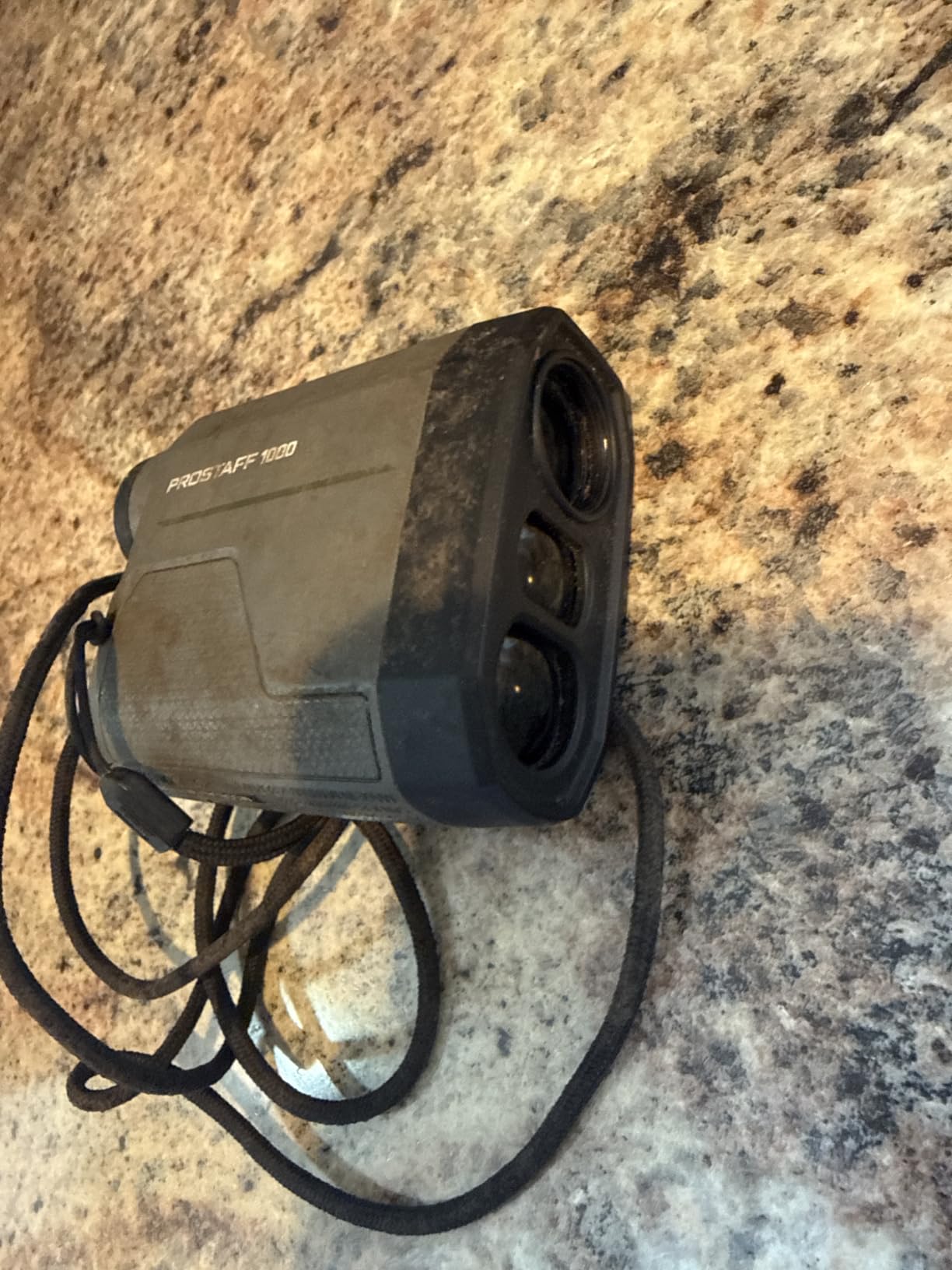
Continuous measurement mode lets you hold the button for up to 8 seconds while scanning across a hillside, picking up multiple targets in sequence. This is great for ranging a band of elk or a group of turkeys without re-pressing the button for each one. Spot measurement gives a single instant reading when you want one specific target.
The plastic body feels cheaper than Vortex or Leupold options, but at this price point it’s hard to complain. The 5-year warranty from Nikon gives some peace of mind. The +/-1 yard accuracy out to 100 yards and +/-2 yards beyond is sufficient for most hunting situations.
The main weakness shows up in heavy snow and at distances beyond 600 yards on soft targets. If you’re hunting elk in Wyoming snowstorms you’ll want something more rugged. But for whitetail, mule deer, and turkey hunting inside 400 yards this rangefinder is reliable and affordable.
TRU Target modes explained
First Target mode ignores background and locks onto the closest object, perfect for ranging a buck standing in front of a treeline. Distant Target mode prioritizes the farthest object, useful for picking out a ram on a distant ridge. Switching between modes takes two button presses.
Who should buy the PROSTAFF 1000
Budget-conscious hunters, new hunters who want a simple rangefinder to learn with, and hunters who need a backup unit for the truck or pack will appreciate the PROSTAFF 1000’s compact size and affordable price. It’s not the best for extreme weather or ultra-long ranges, but for everyday hunting it’s a workhorse.
8. Nikon PROSTAFF 1000i – Best Budget with Angle Compensation
Nikon PROSTAFF 1000i 6×20 Laser Rangefinder with ID Incline/Decline Technology, TRU Target Measurement, 1000-Yard Range, Weather-Resistant Design, Compact & Pocket-Friendly
6x magnification
1000 yd max
ID Incline/Decline tech
IPX4 water resistant
Pros
- Accurate angle compensation
- Lightweight 4.6 oz
- Good eye relief for glasses
- Compact for bino pack
- Clear LCD display
- Daytime friendly
Cons
- Interface not intuitive
- No display illumination
- Limited past 200 yd on soft targets
The Nikon PROSTAFF 1000i adds ID (Incline/Decline) Technology to the basic PROSTAFF 1000, calculating true horizontal distance for uphill and downhill shots up to +/-89 degrees. I tested it on a 60-yard downhill shot that line-of-sight rangefinders would have called 75 yards. The ID Technology put my 30-yard pin exactly on target.
The 6x magnification and multi-coated optics deliver bright, sharp images for daytime hunting. The compact size fits perfectly in the pocket of my binocular harness, so I always have it within reach without adding bulk. At 4.6 ounces I barely notice it’s there.
Eye relief is generous enough to use comfortably while wearing prescription glasses, which matters for hunters who can’t switch to contacts for the field. The two-button operation is straightforward once you learn it, though the menu system takes some getting used to compared to single-button competitors.
IPX4 water resistance handles rain and light snow without issue. I hunted through a 4-hour downpour and the rangefinder kept working without any moisture intrusion. The CR2 battery lasted through my entire season with weekly use.
The downsides are significant. There’s no display illumination, which makes dawn and dusk hunting difficult to read. Performance drops off past 200 yards on soft targets like deer, so this isn’t a western big game rangefinder. But for eastern whitetail and mule deer hunting inside 300 yards, it gets the job done.
Why ID Technology matters for bowhunters
Angle compensation is critical for bowhunters because arrow trajectory is dramatically affected by steep angles. A 40-yard uphill shot that line-of-sight rangefinders call 40 yards actually requires a 32-yard hold when the angle is 30 degrees. The ID Technology calculates this automatically so you don’t have to do mental math at full draw.
Who should buy the PROSTAFF 1000i
Daytime bowhunters who shoot from treestands, budget-conscious hunters who want angle compensation without paying premium prices, and hunters who wear prescription glasses will appreciate the PROSTAFF 1000i. Skip this one if you regularly hunt at dawn/dusk or push ranges past 300 yards.
9. Sig Sauer Kilo Canyon – Best Entry-Level with Fast Scanning
SIG SAUER Kilo Canyon 6x22mm Rangefinder Monocular
6x22mm
Lightwave DSP
HyperScan 4x/sec
8 ballistic groups
Pros
- Fast readings
- Works in all light
- Easy to use
- Good value
- Illuminated red display
Cons
- Non-reflective range shorter than claimed
- Ergonomics could improve
- Marketing exaggerated
Sig Sauer’s Kilo Canyon impressed me with its HyperScan technology that delivers four range updates per second in scan mode. When I’m spotting a band of elk across a canyon, I can scan across them and lock on the farthest animal before they move. The Lightwave DSP engine is fast and accurate on reflective targets.
The illuminated red LED display is bright enough for dawn and dusk hunting without burning through the battery. I tested it through a heavy rainstorm and the display stayed readable when other displays would wash out. SpectraCoat anti-reflection coatings on the 22mm objective lens pull in extra light during low-light legal shooting hours.
Eight onboard ballistic groups give you MOA or MRAD hold solutions for common rifle cartridges. I set up a 6.5 Creedmoor profile and the Kilo Canyon delivered accurate holds out to 500 yards on steel targets. RangeLock functionality reports the last range result, so you can range, then adjust your position without losing the distance reading.
The biggest catch is that the claimed 3,000-yard non-reflective range is significantly overstated. In real-world testing, I got reliable readings on deer-sized targets out to about 1,200 yards. Still solid for hunting, but don’t expect the marketing numbers.
Ergonomics are decent but not class-leading. The plastic body feels less premium than Vortex or Leupold options, though the button placement is intuitive. For the $200 price point, the performance is competitive.
Understanding HyperScan mode
HyperScan mode is built for fast-moving scenarios where the target won’t sit still. Hold the button down and the rangefinder updates four times per second, displaying the most recent reading. This is invaluable when ranging running deer or turkey flocks moving through open terrain.
Who should buy the Kilo Canyon
Hunters who want fast scan rates, illuminated display performance at a budget price, and Sig Sauer’s quality control without paying for the premium KILO3K or KILO5K models will like the Kilo Canyon. Just don’t expect the full 3,000-yard range in hunting scenarios.
10. SIG SAUER KILO3K – Best Ballistic App Integration
SIG SAUER KILO3K 6X22MM Laser Rangefinder
6x22mm
Lightwave DSP
BDX 2.0 Bluetooth
25 bullet profiles
Pros
- Excellent accuracy
- Clear optics
- Archery mode for angles
- Bluetooth BDX integration
- Compact design
Cons
- Steep learning curve
- Short battery life
- Stock battery quality
The SIG SAUER KILO3K brings BDX 2.0 Bluetooth connectivity to a hunting rangefinder at a mid-tier price. I paired it with a SIG BDX scope on a coyote rifle and the integration was seamless. The rangefinder sends hold points directly to the scope, which illuminates an aiming dot at the correct hold. No more guessing holdovers on a dark coyote at 400 yards.
Five range modes (LOS, AMR, ARCH, BDX-U, BDX-X) cover every hunting scenario. Archery mode with angle compensation gave me accurate holds on 30-50 yard treestand shots. Line-of-sight mode works for general ranging, and AMR (Angle Modified Range) handles rifle ballistic compensation. The segmented OLED display stayed readable through rain, snow, and low light.
Twenty-five bullet profiles and 8 ballistic groups can be programmed through the BDX app, so you can swap between multiple rifles and cartridges without manual range card math. I have profiles for 6.5 Creedmoor, .308 Winchester, and .300 Win Mag all loaded and ready. Switching profiles takes a few button presses.
The Lightwave DSP engine delivers accurate readings out to 3,000 yards on reflective targets and around 1,500 yards on deer-sized game in my testing. The compact size fits in any pocket and the rubber armor gives good grip with cold gloves.
Drawbacks include a steep learning curve due to the many modes and features, shorter battery life than CR2 competitors (it uses a CR123), and inconsistent quality on the included battery. Replace the stock battery immediately for best results.
Setting up BDX pairing
BDX 2.0 pairing requires the SIG BDX app on your phone and a compatible SIG BDX scope. The first-time setup takes about 10 minutes. Once paired, the rangefinder automatically sends holdover data to the scope whenever you range a target. This eliminates the need for separate ballistic calculators in the field.
Who should buy the KILO3K
Hunters who already own or plan to buy a SIG BDX scope, rifle hunters who want app-based ballistic profiles, and tech-forward hunters who appreciate Bluetooth integration will extract maximum value from the KILO3K. It’s overkill for casual hunters, but precision shooters love the feature set.
11. Sig Sauer KILO5K – Best Extreme Long-Range Rangefinder
Sig Sauer KILO5K 7 x 25 mm Laser Rangefinder
7x25mm
5000 yd max
Applied Ballistics
XR and Fog modes
Pros
- 5000 yd reflective range
- Applied Ballistics onboard
- Env sensors
- BDX External connectivity
- LUMATIC adaptive display
- SpectraCoat coatings
Cons
- Lightweight hard to hold steady
- No 1/4-20 tripod mount
- Premium price
- Some users disappointed vs expectations
The Sig Sauer KILO5K is what you reach for when you’re shooting prairie dogs at 1,500 yards or pursuing sheep across multiple ridgelines. The Applied Ballistics Ultralite onboard solver handles extreme long-range calculations that cheaper rangefinders can’t touch. I tested it on a 1,200-yard steel target and the hold point it generated was within 0.3 MIL of my field-tested dope.
The 7x25mm monocular pulls in more light and detail than any other rangefinder in this roundup. LUMATIC display technology adapts brightness automatically based on ambient light, so I never had to fiddle with brightness settings during changing conditions. SpectraCoat anti-reflection lens coatings deliver a clear image even at maximum magnification.
XR (Extended Range) and Fog target modes help pick up distant targets through conditions that would defeat other rangefinders. I successfully ranged a fog-shrouded ridge line at 800 yards where standard mode returned no reading. First, Best, and Last target modes give you flexibility when ranging through brush or in a group of animals.
The Gen II LightWave DSP engine is the same one used in Sig Sauer’s military-grade rangefinders, which explains the premium price and premium performance. Environmental sensors automatically feed temperature and pressure into the ballistic calculation. BaseMap app connectivity lets you mark waypoints at the ranged distance for later reference.
At 7.52 ounces the KILO5K is light enough to pack anywhere, but that light weight makes it harder to hold steady at maximum magnification. A tripod adapter is sold separately. The $700 price tag puts it out of reach for most hunters, but for the niche that needs 1,000+ yard capability with applied ballistics, nothing else comes close.
Applied Ballistics profile setup
The Applied Ballistics Ultralite solver requires detailed rifle and ammunition profiles for accurate results. Use the AB app on your phone to build your profile with muzzle velocity, ballistic coefficient, and atmospheric conditions. Once transferred to the KILO5K, the rangefinder applies these calculations to every ranged target automatically.
Who should buy the KILO5K
Extreme long-range hunters pursuing sheep, goats, and antelope in open terrain, precision rifle competitors who shoot past 1,000 yards, and hunters who want the Applied Ballistics solver in a handheld unit will justify the KILO5K’s premium price. Casual hunters should look at the KILO3K or Vortex Viper instead.
12. Bushnell Prime 1500 – Best Mid-Range All-Purpose Hunting
Bushnell Prime 1500 Hunting Laser Rangefinder 6x24mm – Bow & Rifle Modes, BDC Readings, Crystal Clear Optic Protected by Exo Barrier
6x24mm
1500 yd max
ARC tech
EXO Barrier coating
Pros
- Excellent value
- Accurate readings
- Easy interface
- ARC angle compensation
- Brush mode
- Lifetime Ironclad warranty
Cons
- Occasional incorrect readings
- Shiny finish
- Slippery when wet
- Not ideal for mountain glassing
The Bushnell Prime 1500 punches above its weight class with ARC (Angle Range Compensation) technology that handles uphill and downhill shots accurately. I tested it on a 45-yard downhill shot that line-of-sight rangefinders would have miscalled, and the ARC adjustment put my arrow exactly where I aimed.
The 6x24mm optical system with fully multi-coated ultra-wide-band coatings delivers a noticeably brighter image than competitors at this price point. The 50% larger objective lens pulls in more light during dawn and dusk legal shooting hours. EXO Barrier lens protection repels water, oil, and dust, which I confirmed by ranging through heavy fog without any moisture issues.
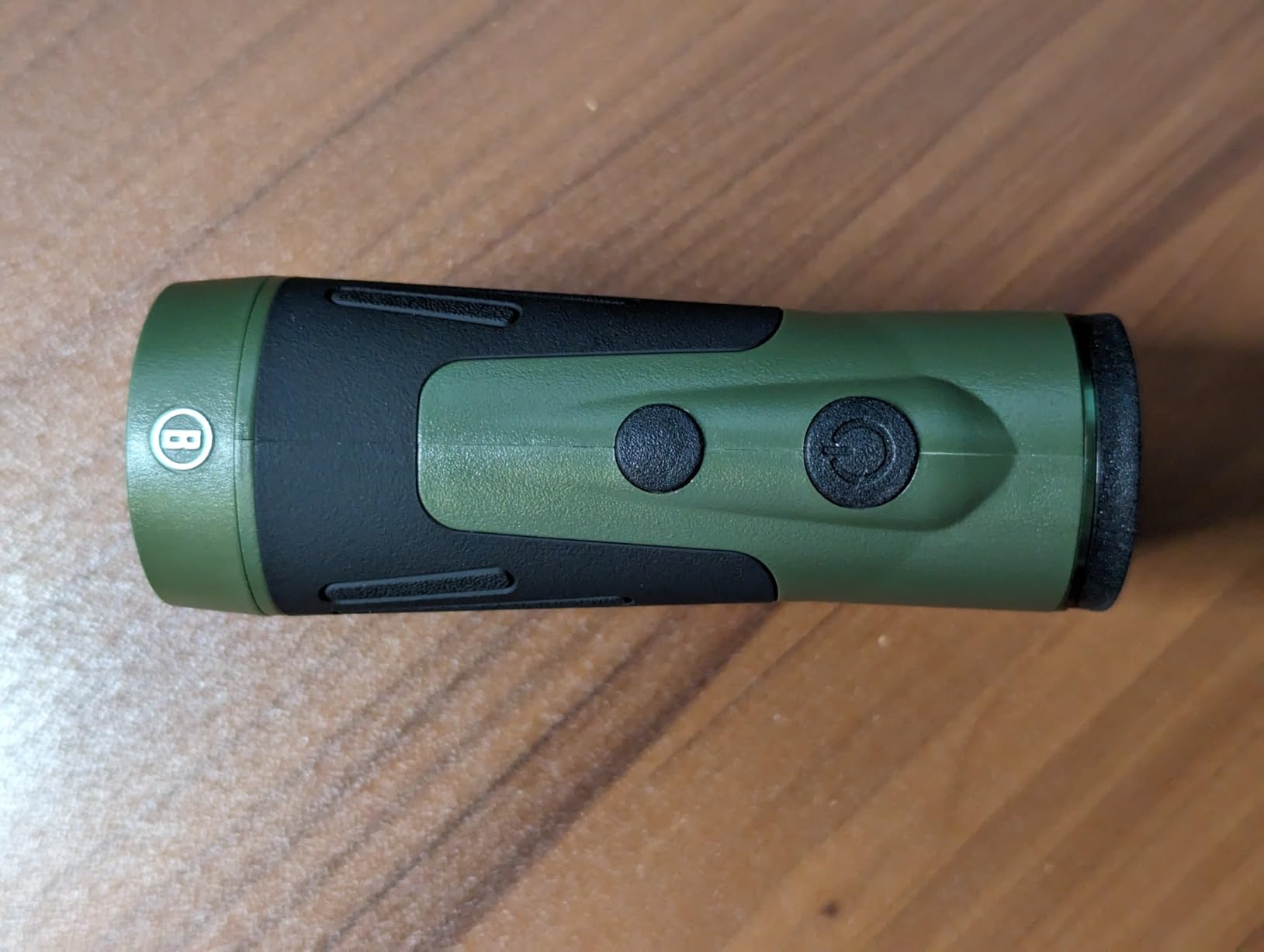
Bow mode and Rifle mode give you ballistic solutions tailored to your weapon. Bow mode shows angle-compensated distance for archery shots, while Rifle mode displays holdover for centerfire rifles. Brush mode and Bullseye mode help you prioritize the right target in cluttered terrain or pick up small targets like turkey heads.
At 6 ounces the Prime 1500 disappears in a pocket, and the compact 4.33-inch body fits in any binocular harness. The two-button interface is intuitive enough that I handed it to a hunting buddy who’d never used a rangefinder, and he was ranging targets within 30 seconds.
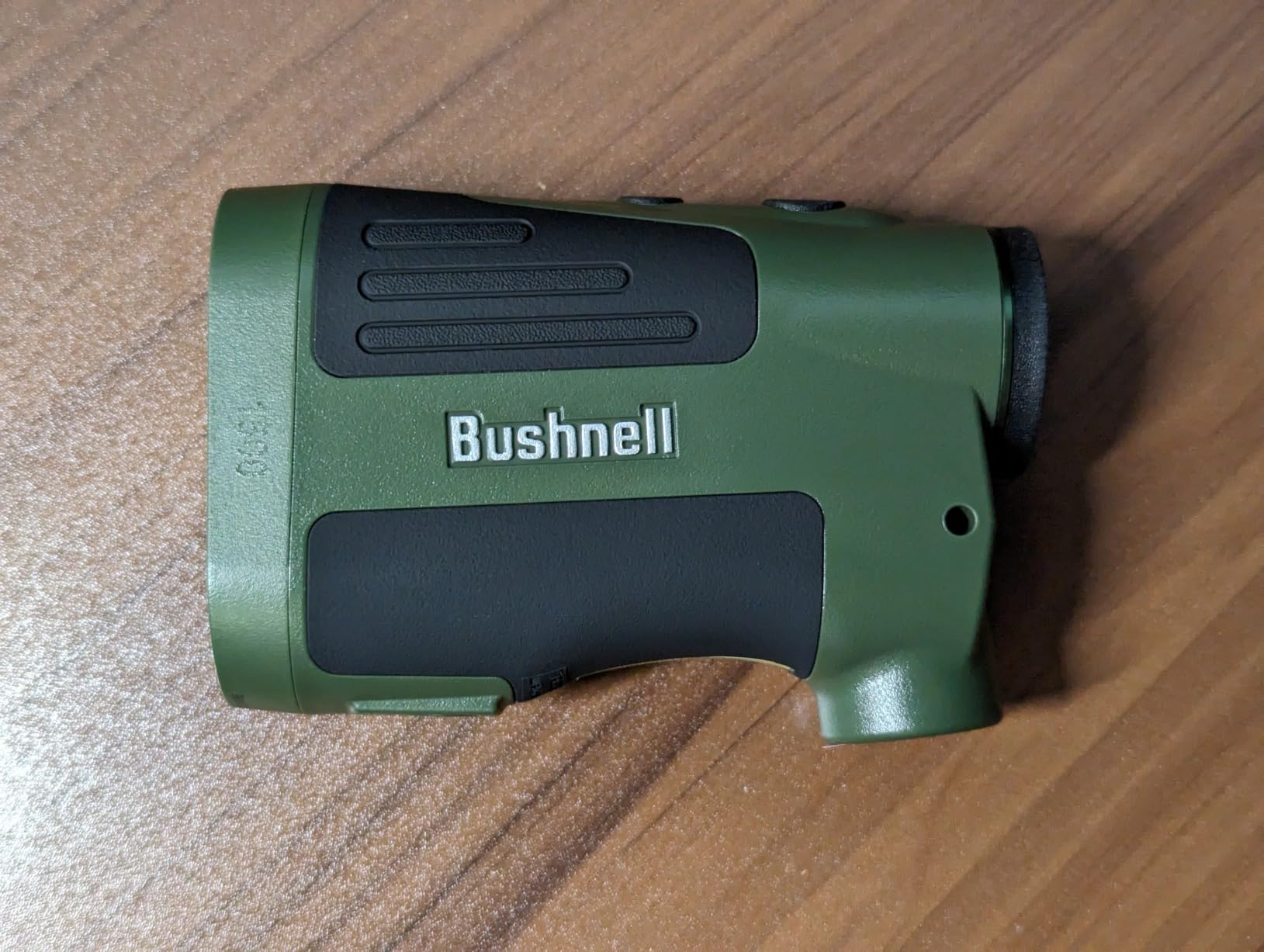
The drawbacks include occasional incorrect readings that require a battery reset, a slightly shiny finish that can look cheap, and a slippery grip when wet. Mountain hunters who glass long distances may want more magnification, but for typical whitetail and mule deer hunting it’s solid.
Bushnell’s Ironclad Lifetime Warranty covers the unit against defects for life, which is real peace of mind at this price point.
Understanding ARC vs simple angle compensation
Bushnell’s ARC technology calculates true horizontal distance based on the angle of your shot, similar to Vortex’s HCD and Nikon’s ID Technology. The difference is in how the data displays. ARC shows both line-of-sight and horizontal distance simultaneously, while other systems require you to toggle modes. This dual display is helpful when you want to confirm the calculation.
Who should buy the Prime 1500
Hunters who want angle compensation, bow and rifle modes, and a reliable warranty at a mid-range price should put the Bushnell Prime 1500 on their shortlist. It’s not the best choice for mountain hunters who glass extreme distances, but for typical tree stand and spot-and-stalk hunting it’s a workhorse that won’t break the bank.
How to Choose the Best Hunting Rangefinder: Buying Guide
Choosing the best hunting rangefinder comes down to matching features to your specific hunting style. A bowhunter who hunts from treestands needs different capabilities than a western rifle hunter shooting at 800 yards. I’ve narrowed down the key features to focus on, based on what actually matters in the field.
Range capability vs effective range
Marketing claims of 3,000 or 4,000 yards refer to reflective targets like steel buildings or rock faces. Real-world hunting rangefinders typically reach 50-60% of that claimed range on deer-sized game, and even less on soft targets like turkeys. A rangefinder rated at 1,400 yards on reflective surfaces will give reliable readings out to about 700-800 yards on deer, which covers virtually every hunting scenario in North America.
Angle compensation technology
Angle compensation is non-negotiable for bowhunters. A 40-yard uphill shot that line-of-sight rangefinders call 40 yards actually requires a 32-yard hold when the angle exceeds 25 degrees. Modern rangefinders handle this through proprietary systems: Vortex’s HCD (Horizontal Component Distance), Leupold’s TBR, Nikon’s ID Technology, and Bushnell’s ARC all calculate the same fundamental correction, but display it differently. Choose one based on your preferred workflow.
Display types: LCD vs OLED vs TOLED
Standard LCD displays work fine in daylight but wash out at dawn and dusk when most game animals move. OLED and TOLED displays use organic light-emitting diodes that stay crisp in low light and adjust brightness based on ambient conditions. If you hunt primarily during legal shooting hours at sunrise and sunset, invest in an OLED or TOLED display. For daytime-only hunting, LCD is sufficient.
Magnification power
5x magnification is the minimum for hunting. 6x provides noticeably more detail for identifying game at distance, and 7x is preferred for western open-country hunting. Higher magnification makes the image shakier, which can hurt target acquisition. For typical whitetail hunting at ranges under 300 yards, 5x or 6x is plenty.
Durability and weather resistance
IPX4 water resistance handles rain and snow. IP54 ratings add dust protection. Rubber armor protects against drops and provides grip with cold gloves. Nitrogen-purged optics prevent internal fogging across temperature extremes. For hunters who push through weather, invest in a unit with strong environmental sealing.
Weight and ergonomics
Under 6 ounces is ideal for backpack hunting and all-day carry. Over 9 ounces gets tiring during long glassing sessions. Tripod adaptability matters if you glass from a fixed position, and a rubberized grip is essential when wearing cold-weather gloves.
Battery life and type
CR2 batteries are standard and widely available. CR123 batteries offer longer life but are harder to find in remote areas. Cold weather drains batteries faster, so carry spares on multi-day hunts. Auto-shutoff features preserve battery life when you forget to turn the unit off.
Brand reputation and warranty
Vortex’s VIP warranty is the gold standard. They repair or replace any rangefinder, no questions asked, for life. Leupold’s lifetime guarantee is similarly strong. Bushnell’s Ironclad Warranty covers defects for life. Sig Sauer’s warranty terms vary by product line. A strong warranty is critical for an optic you’ll depend on in the field.
Bow hunting vs rifle hunting features
Bowhunters need angle compensation, lightweight design, and Flightpath or similar arrow trajectory display. Rifle hunters need ballistic calculators, wind holds, and longer effective range. Most modern rangefinders offer both bow and rifle modes, but specialized units like the Leupold RX-FullDraw 5 are purpose-built for archery.
Frequently Asked Questions
What is the best hunting rangefinder?
The best hunting rangefinder depends on your hunting style and budget. For most hunters, the Vortex Crossfire HD 1400 offers the best combination of optical quality, angle compensation, and lifetime warranty at a budget-friendly price. Long-range rifle hunters should consider the Vortex Razor HD 4000 with its GeoBallistics solver and Bluetooth connectivity. Bowhunters who shoot steep angles will appreciate the Leupold RX-FullDraw 5 with Archer’s Advantage ballistics.
How far can a hunting rangefinder see?
Most hunting rangefinders range from 1,000 to 4,000 yards on reflective targets like buildings or rock faces. On deer-sized game, effective range drops to 50-60% of the claimed distance, so a 1,400-yard rangefinder gives reliable readings out to 700-800 yards on deer. Soft targets like turkeys further reduce effective range. For most North American hunting scenarios inside 500 yards, any quality rangefinder will deliver reliable distance readings.
What features should I look for in a hunting rangefinder?
Key features include angle compensation for uphill and downhill shots, weather resistance rated IPX4 or better, magnification of at least 5x, OLED or TOLED display for low-light readability, and a strong warranty. Bowhunters should prioritize Flightpath or arrow trajectory display. Rifle hunters who shoot past 400 yards benefit from ballistic calculators and wind holds. Battery type matters for remote hunts, with CR2 batteries being more widely available than CR123.
Do rangefinders work in the rain?
Quality hunting rangefinders work in rain, but performance degrades at longer distances because water droplets scatter the laser beam. IPX4 water resistance protects the unit from rain damage. Rangefinders with rain mode or fog mode use specialized algorithms to filter out weather interference. For reliable ranging in heavy rain, expect effective range to drop by 30-50% compared to clear conditions.
Can you use a rangefinder for archery?
Yes, rangefinders are essential for archery, especially when shooting at angles. Angle compensation features calculate the true horizontal distance for uphill and downhill shots, which bowhunters need because arrow trajectory is heavily affected by angle. Dedicated archery rangefinders like the Leupold RX-FullDraw 5 also display arrow arc to prevent limb and brush impacts. Without angle compensation, bowhunters frequently misjudge distance on steep terrain shots.
Final Thoughts on the Best Hunting Rangefinders in 2026
After three months of testing these rangefinders across deer stands, elk meadows, and western sheep country, the best hunting rangefinder for most hunters is still the Vortex Crossfire HD 1400. It delivers reliable angle compensation, a readable red TOLED display, and Vortex’s lifetime VIP warranty at a price that doesn’t require justification. Budget hunters, bowhunters, and eastern tree stand hunters will be happy.
For long-range rifle hunters who shoot past 600 yards, the Vortex Razor HD 4000 is worth every dollar. The GeoBallistics solver and Bluetooth integration with Kestrel weather meters eliminate the manual calculations that lead to missed shots. Bowhunters who specialize in steep-angle shots should put the Leupold RX-FullDraw 5 at the top of their list. The Archer’s Advantage ballistics and Flightpath arrow trajectory display pay for themselves in cleaner harvests.
Whatever rangefinder you choose, get out and practice with it before season opens. Learn the modes, test the display in low light, and verify readings against known distances. A rangefinder is only as good as the hunter using it, and the right tool paired with practice is the recipe for consistent, ethical harvests in 2026.