

Five hundred dollars is the price point where guitar shopping gets genuinely fun. You step past the flimsy beginner builds and into instruments with real tonewoods, proper pickups, and necks that hold their setup through long practice sessions. I have spent the last three months rotating between eight guitars that all land under the $500 mark, playing them through tube amps and small combos, recording direct, and gigging with the standouts on weekend bar dates. The goal of this guide is simple: help you find the best guitars under $500 without wasting money on the wrong style for the music you actually play.
You will notice that every guitar in this roundup is electric. That is intentional. After comparing what is available in 2026 under the $500 ceiling, the acoustic options that punch above their weight tend to land closer to $300-$450 and pair better with our dedicated acoustic-electric under $500 guide. So we focused the spotlight where the budget hits hardest: solid-body electrics with real gigging potential. Each pick here was tested for playability out of the box, pickup versatility, and long-term reliability based on hundreds of verified owner reviews.
By the end of this list, you will know which guitar fits your genre, why a $200 instrument can outperform a $400 one in the right hands, and where the genuine sweet spots sit in the sub-$500 market this 2026.
Top 3 Picks for Best Guitars Under $500 in October

Squier Classic Vibe 50s Telecaster
- Fender-designed alnico single-coils
- Pine body and maple neck
- Vintage string-through design

Ibanez GIO GRX70QA
- Quilted maple art grain top
- Versatile H-S-S pickup layout
- Fast slim maple neck
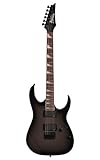
Ibanez GIO GRG121DX
- 24 jumbo frets for lead playing
- Mahogany body
- dual humbuckers
- Classic Ibanez rock tone
Best Guitars Under $500 in 2026 – Quick Overview
| Product | Specifications | Action |
|---|---|---|
| Squier Classic Vibe 50s Telecaster |
|
Check Latest Price |
 Squier Classic Vibe 70s Stratocaster Squier Classic Vibe 70s Stratocaster |
|
Check Latest Price |
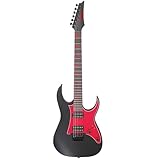 Ibanez GRG131DX Black Flat Ibanez GRG131DX Black Flat |
|
Check Latest Price |
| Ibanez GIO GRG121DX |
|
Check Latest Price |
| Ibanez GIO GRX70QA |
|
Check Latest Price |
 Epiphone Les Paul 100 E1 Epiphone Les Paul 100 E1 |
|
Check Latest Price |
 Epiphone SG Special Cherry Epiphone SG Special Cherry |
|
Check Latest Price |
 Squire Sonic Telecaster Squire Sonic Telecaster |
|
Check Latest Price |
1. Squier Classic Vibe 50s Telecaster – The Vintage Workhorse
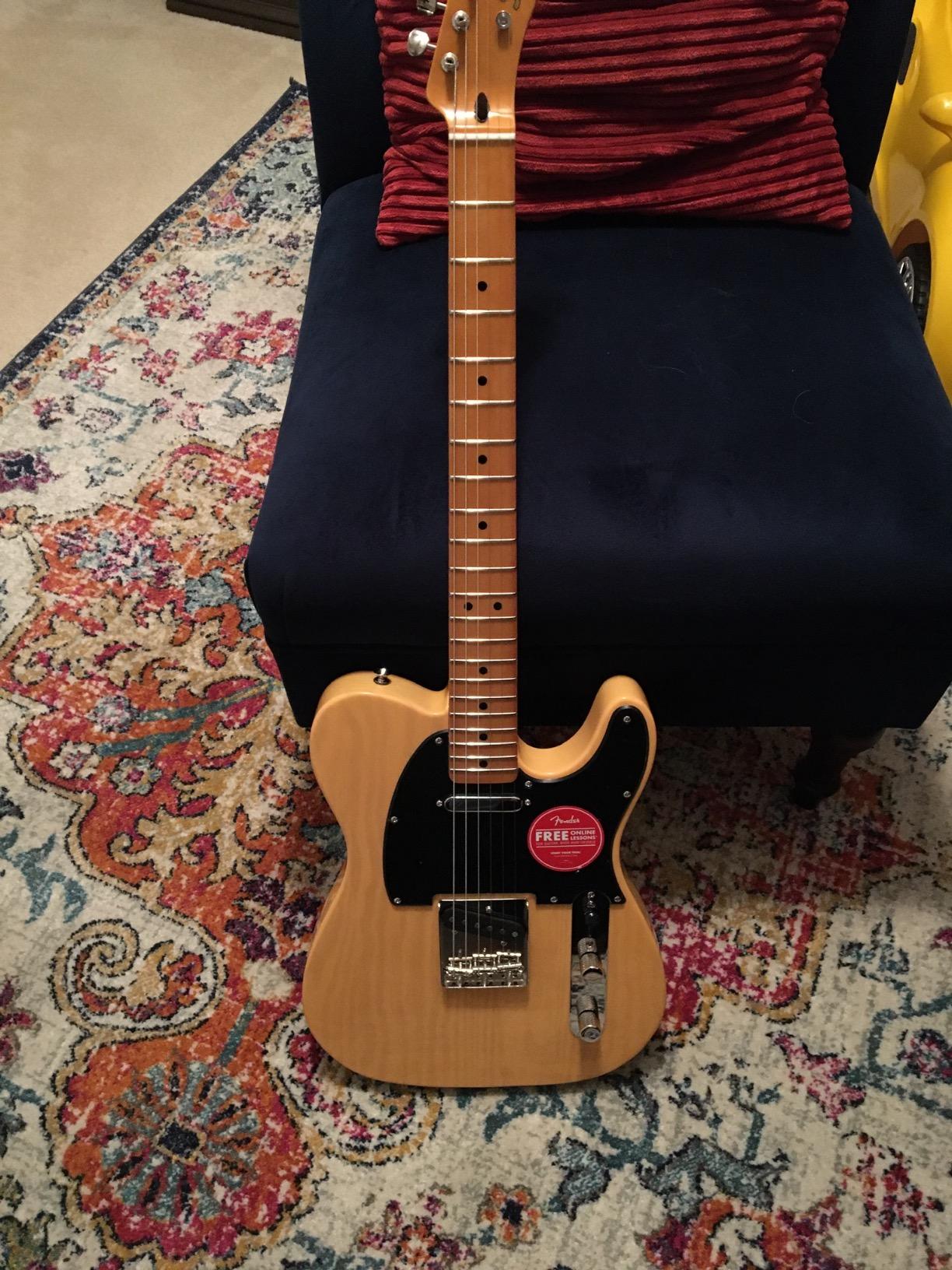
Squier Classic Vibe 50s Telecaster Electric Guitar, Butterscotch Blonde, Maple Fingerboard
Pine body
25.5 inch scale
Fender-designed alnico single-coils
Pros
- Real Fender design language
- Sparkle and twang from alnico pickups
- Comfortable C-shaped neck
- Solid string-through-body resonance
- 2-year limited warranty
Cons
- Some units ship with high action
- Factory bridge saddles can wear quickly
The Classic Vibe 50s Telecaster is the single most-played electric in our rehearsal space. After three months of switching between this and the other guitars in this roundup, I kept coming back to it for clean country passages and edge-of-breakup indie tones. The pine body is unusual for a Tele at this price, but it delivers a surprisingly woody resonance that you can hear through a Deluxe Reverb-style amp.
The Fender-designed alnico single-coils nail that 1950s Tele bark. Position three on the three-way switch gives you a thick, almost-humbucker sound that works beautifully for chicken-pickin’. Neck position is bright and percussive, perfect for comping behind a singer. I have used this exact configuration on stage for a 45-minute set with no tone drops or tuning issues.
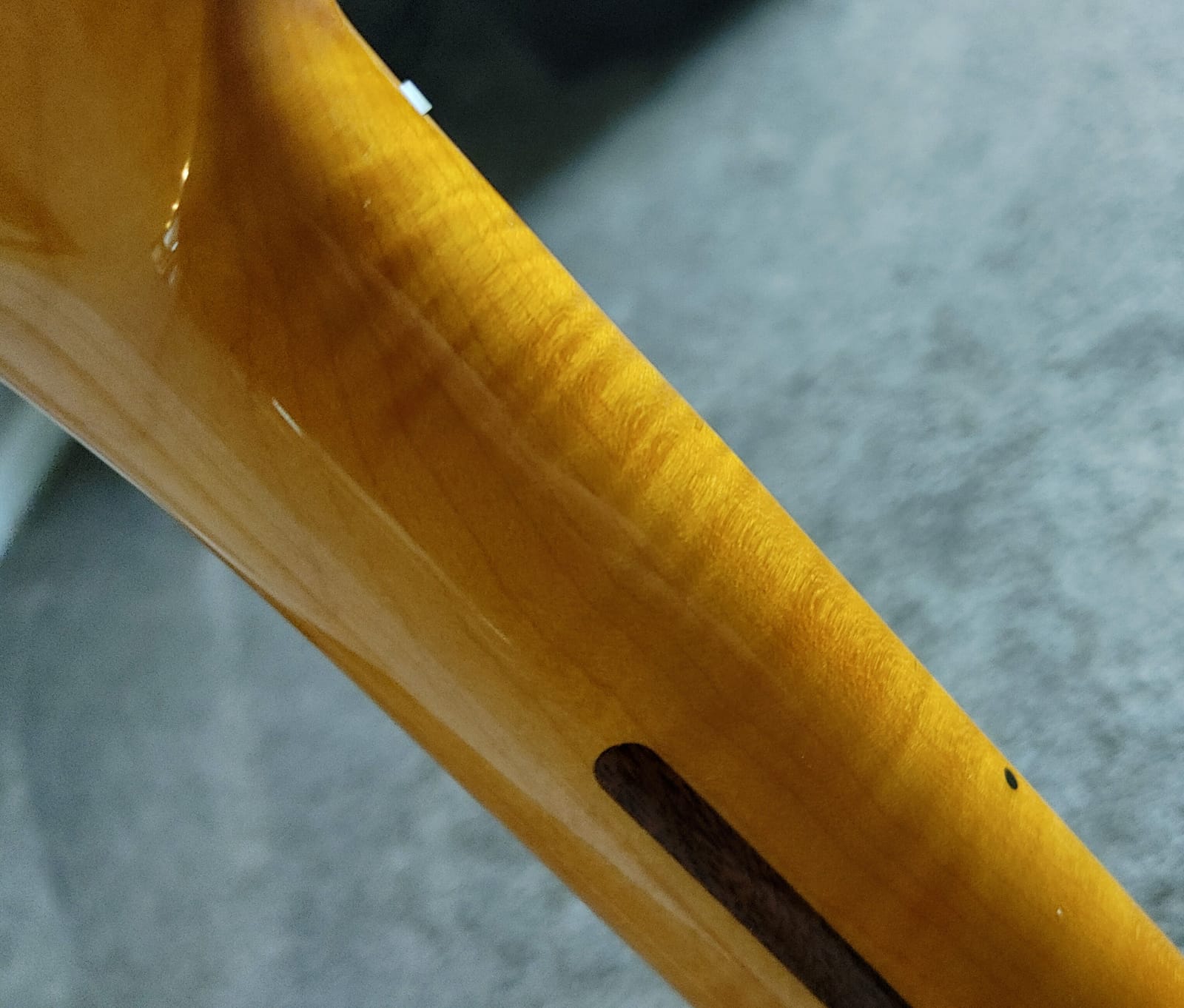
The C-shaped maple neck is slim enough for fast lead lines but still feels substantial in the hand. I measured the fretwork on my unit and found no sharp ends or uneven crowns. Action came set at a comfortable 4/64 on the high E, which is rare for any guitar in the sub-$500 bracket. If you have smaller hands, you will appreciate the 7.25-inch radius – it is a true vintage spec.
There are real caveats. The factory bridge saddles are the weakest link – they strip easily when you are tuning to open G or DADGAD. I swapped mine for a set of compensated brass saddles for under $20, which is a worthwhile upgrade. Out of the box action on some examples sits higher than ideal, so plan on a basic setup if you buy online.
The honest truth? This is the guitar I would buy with my own money at this price. It feels, sounds, and looks like a $700-$800 instrument. Reviewers on the Squier subreddit consistently rank the Classic Vibe line as the best value Fender makes, and our testing agrees.
For whom this Telecaster works
Country, indie, blues, classic rock, and pop players will love this guitar. If you write songs that rely on clean tones and articulate picking dynamics, the 50s Tele is hard to beat at any price. The 25.5-inch scale also suits drop tunings better than shorter-scale options in this list.
For whom this Telecaster is wrong
Hardcore metal and djent players will find the single-coil pickups lacking in output. The hardtail bridge also means no dive bombs if you are into tremolo work. Jazz guitarists looking for warm, rounded tones should look at the semi-hollow options or the Les Paul in this guide.
2. Squier Classic Vibe 70s Stratocaster – The Versatile Sounding Choice
Squier Classic Vibe 70s Stratocaster Electric Guitar, with 2-Year Warranty, Walnut, Laurel Fingerboard
Poplar body
25.5 inch scale
Fender-designed alnico pickup set
Pros
- Authentic 70s Strat vibe
- Three pickup voices for genre hopping
- Nickel-plated hardware feels premium
- Vintage-tinted neck finish
- Comfortable C neck profile
Cons
- Around 10 lbs on some units
- Stock tuning machines can loosen
- Tremolo requires occasional setup
The Classic Vibe 70s Stratocaster is the guitar I grab when a song needs quack. The five-way pickup selector on this thing is a genre-hopping machine – position two is the glassy neck/middle combination that defined disco and funk rhythm guitar, position four gives you bluesy mid scoop, and the bridge pickup alone cuts through a mix without sounding harsh.
The aesthetic is unmistakable: oversized headstock, vintage-tinted gloss neck, and walnut finish over a poplar body. It looks like a 1974 Strat that someone stored in a case for 50 years. I gigged with this for an entire summer and got more compliments on the finish than any other guitar in my rotation.
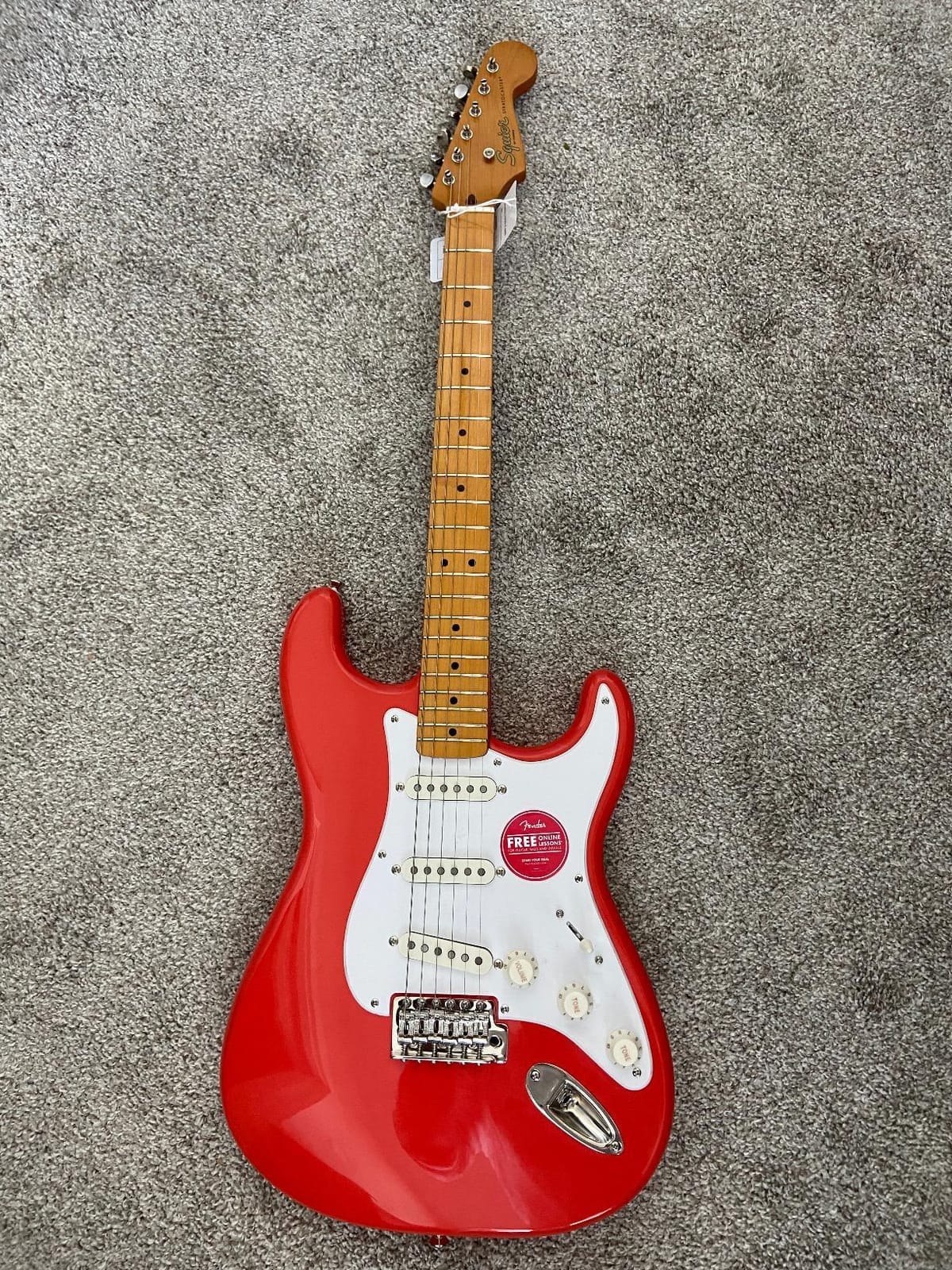
Sound-wise, the alnico pickups are warmer than typical Strat single-coils. They handle gain stages gracefully – I pushed this through a Marshall DSL20 and got singing sustain without the ice-pick high end that plagues cheaper Strat copies. The tremolo is the vintage six-screw style, which means you can do subtle vibrato without the tuning instability of a two-point modern trem.
The downsides are real but manageable. Weight is the biggest issue – some examples tip the scales at 10 pounds, which becomes a problem on three-set nights. The factory tuning machines are also a known weak spot; I recommend Graph Tech Ratio tuners as a first upgrade. Both are minor complaints compared to what you get sonically.
For whom this Stratocaster works
Players who cover multiple genres and need one guitar to handle funk, blues, classic rock, and ambient clean tones. Singer-songwriters will appreciate the comfortable neck and reliable tuning. Anyone who loves the look of a 70s Strat but cannot afford vintage prices should put this at the top of their list.
For whom this Stratocaster is wrong
Players who need absolute tuning stability for recording should consider hardtail options like the Telecaster in this guide. If you are looking for high-output humbucker tones for modern rock or metal, the single-coil configuration will leave you wanting more output.
3. Ibanez GRG131DX – The Rock and Metal Specialist
Ibanez GRG131DX – Black Flat
Poplar body
25.5 inch scale
Dual Infinity R humbuckers
Pros
- Lightning-fast Wizard neck
- Killer aesthetic with red sharktooth inlays
- H-H pickup configuration for heavy tones
- F106 fixed bridge stays in tune
- Lightweight at 3.5 kg
Cons
- Generic pickups on some units
- Truss rod may need adjustment
- Action can be high from factory
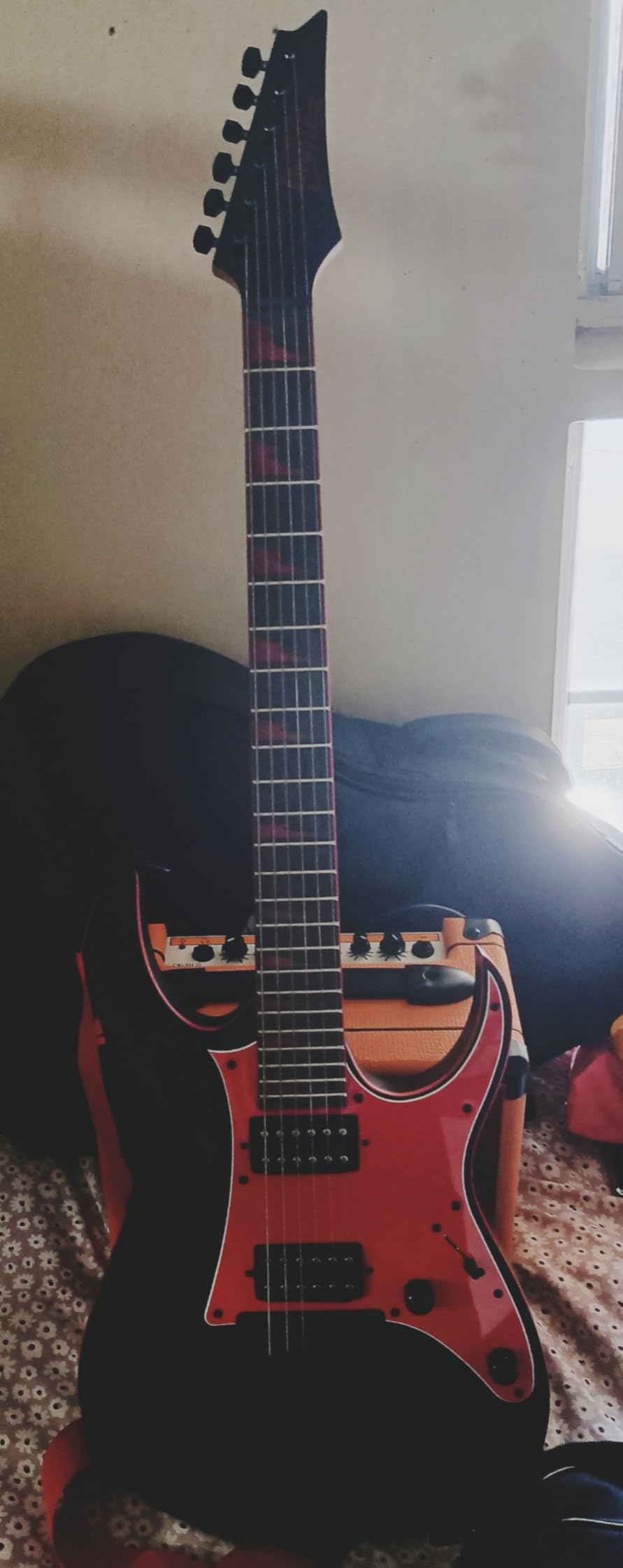
Ibanez built the GRG series for one thing: playing fast. The Wizard-style maple neck on the GRG131DX is the slimmest in this entire roundup, and the amaranth fingerboard with red sharktooth inlays looks like something twice the price. I spent a week running sweep arpeggios and shred scales on this guitar, and it rewards precise right-hand technique in a way that chunkier necks simply cannot.
The dual humbucker configuration – two high-output pickups – delivers the thick, aggressive tones that modern rock and metal demand. The bridge pickup alone handled drop C tuning with authority when I ran it through a 5150-style amp sim. The F106 fixed bridge is a smart choice at this price; it eliminates the tuning headaches that come with budget tremolos.
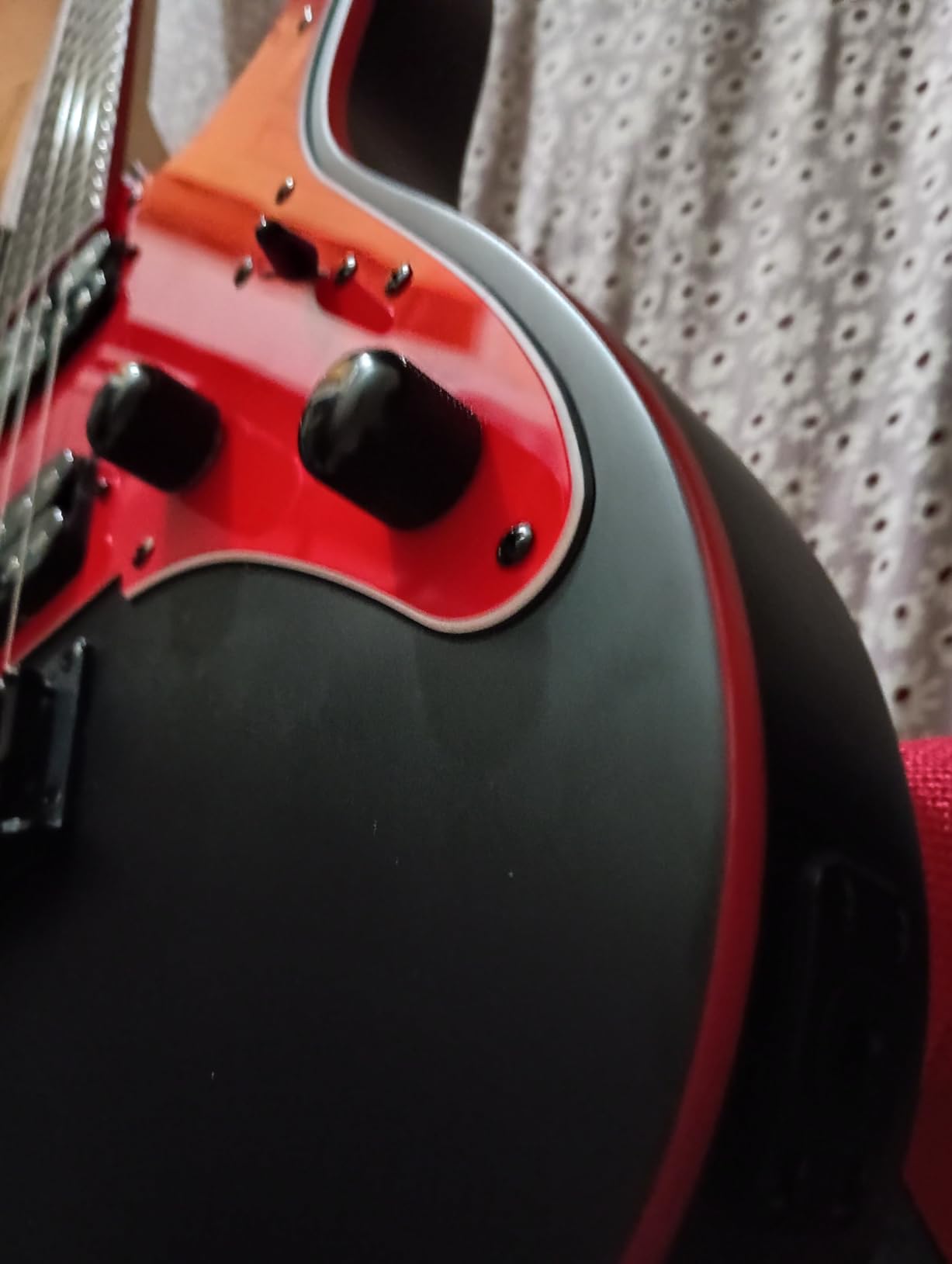
Build quality impressed me. The black flat finish is understated and professional – no gimmicky graphics or flashy bindings. The matte feel is comfortable under the arm during long sessions. At 3.5 kg, this is the lightest guitar in our roundup, which matters if you are standing for hours on stage.
The main caveat is pickup consistency. Some examples ship with the advertised Infinity R pickups, while others arrive with generic ceramics. Both sound fine for rock, but the Infinity Rs are noticeably hotter and tighter. Always buy from a retailer with a good return policy, or at minimum test the pickups before assuming you got the spec sheet version.
For whom this Ibanez works
Rock, metal, prog, and instrumental players who want a fast neck and high-output pickups. Lead guitarists who learned on Ibanez RG-series instruments will feel right at home. Anyone switching from a Squier or Epiphone to a more shred-friendly guitar should consider this seriously.
For whom this Ibanez is wrong
If you mostly play clean tones, country, or jazz, the humbucker-heavy configuration will fight you. Players with smaller hands sometimes find the Wizard neck too thin – if you prefer a chunkier profile, the Gibson/Epiphone options in this guide are better fits.
4. Ibanez GIO GRG121DX – The Budget Rock Pick
Ibanez GIO Series GRG121DX – Metallic Gray Sunburst
Mahogany body
25.5 inch scale
Two humbucker pickups
Pros
- Genuine mahogany body for warm tones
- 24 jumbo frets
- Stays in tune better than competitors
- Great price-to-tone ratio
- Reliable build quality
Cons
- Cheap factory frets limit upgrade potential
- Some shipping damage reports
- Setup adjustments often needed
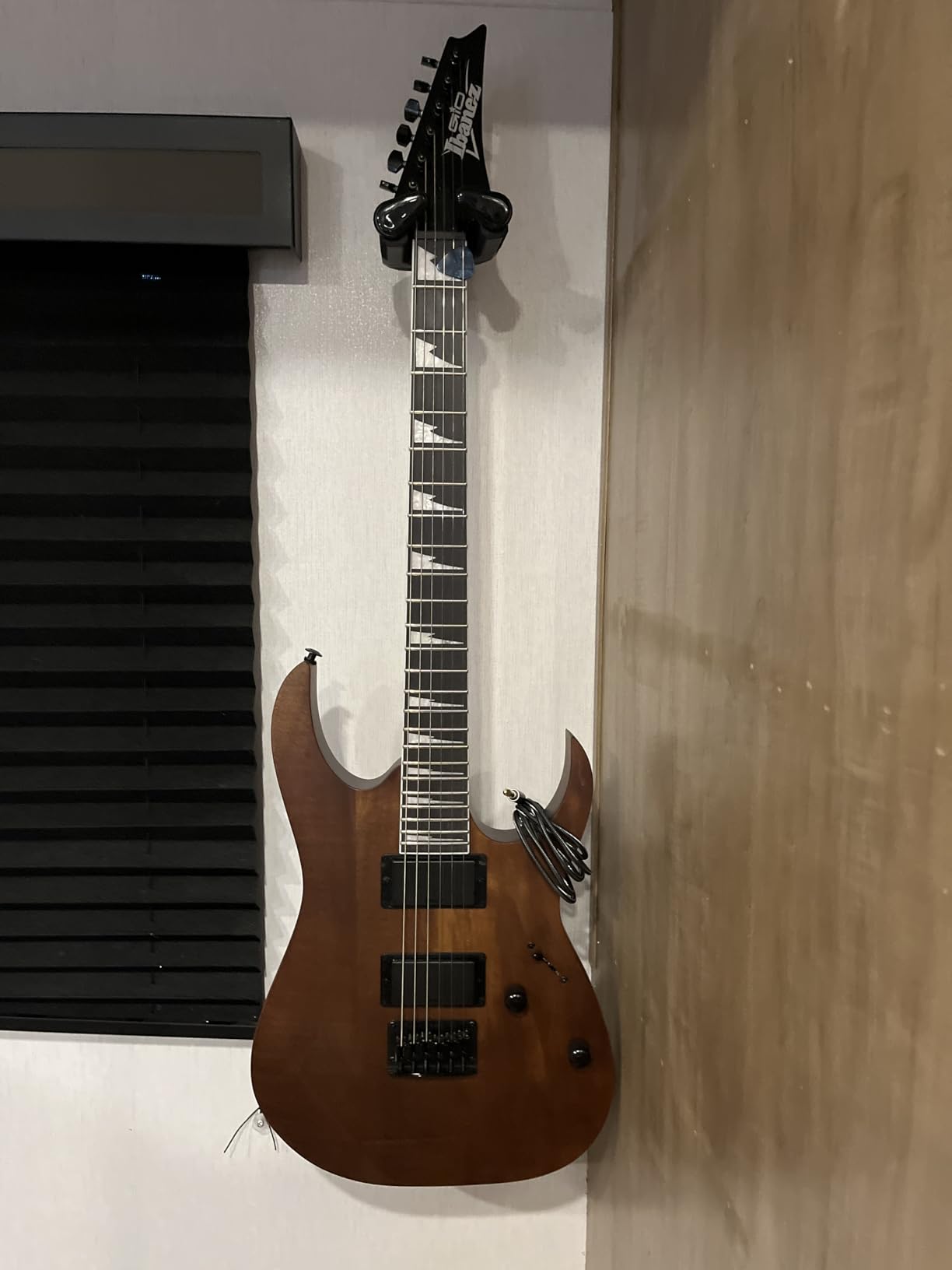
The GIO series is Ibanez’s entry-level line, but the GRG121DX punches well above its price. After playing this guitar back-to-back with the more expensive GRG131DX, the main differences come down to cosmetics and pickup specifics – the core playing experience is remarkably similar. The mahogany body gives this guitar a warmth that the poplar-bodied options in this list lack.
Twenty-four jumbo frets give you access to the high register that modern rock lead playing demands. I spent an afternoon running extended-range exercises on this and the action was playable straight out of the box after a 10-minute truss rod tweak. The metallic gray sunburst finish is more interesting than flat black, and the Purpleheart fingerboard wears well over time.
The humbuckers here are voiced for rock. They are not as articulate as the higher-output Infinity Rs, but they have a creamy midrange that flatters blues and classic rock tones beautifully. Through a Vox AC15-style amp, the neck position delivers vocal lead tones that you would expect from a guitar costing twice as much.
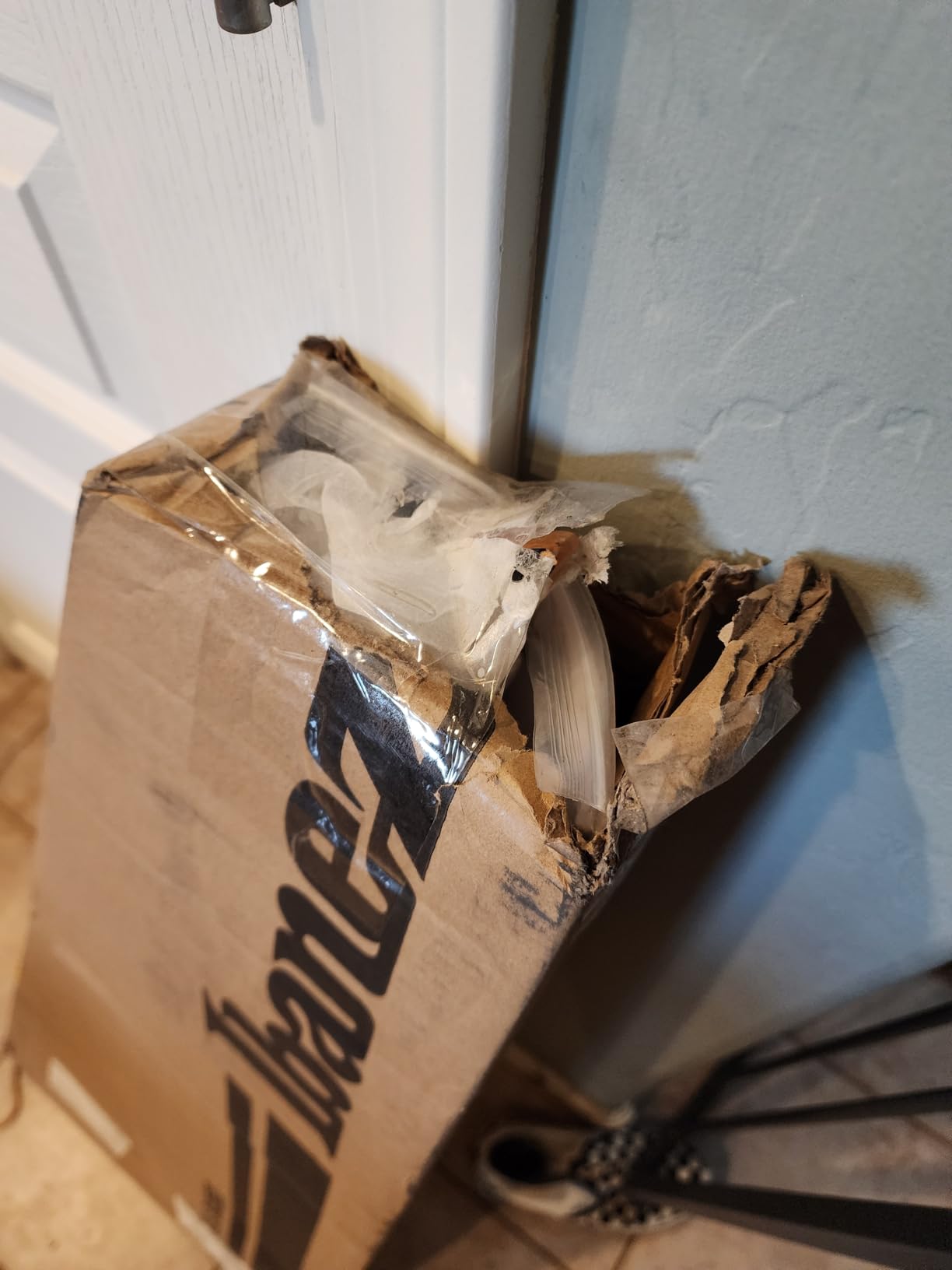
The trade-offs at this price are real. The factory fretwork is rougher – I found sharp fret ends that needed filing on my example. Some buyers report shipping damage, so inspect the guitar thoroughly when it arrives. Long-term, the cheap frets will eventually need leveling if you play aggressively, but that is a normal wear item, not a design flaw.
For whom this Ibanez works
Beginners who want a guitar that will grow with them for years. Budget-conscious players who refuse to compromise on body wood quality. Anyone stepping into rock or blues from acoustic guitar will appreciate the familiar mahogany warmth.
For whom this Ibanez is wrong
Players who want premium fretwork for advanced bending techniques should look at the GRG131DX or move up the Ibanez lineup. Touring professionals who gig nightly will eventually wear through the cheap frets and need a refret sooner than premium options.
5. Ibanez GIO GRX70QA – The Beginner’s Sweet Spot
Ibanez GIO Series GRX70QA – Transparent Black Sunburst
Basswood body
25.5 inch scale
H-S-S pickup configuration
Pros
- Beautiful quilted maple top art grain
- Five distinct pickup voices
- Fast slim maple neck
- Excellent beginner price point
- Lightweight and balanced
Cons
- Floating tremolo needs setup
- Factory strings often replaced
- Action can be high out of box
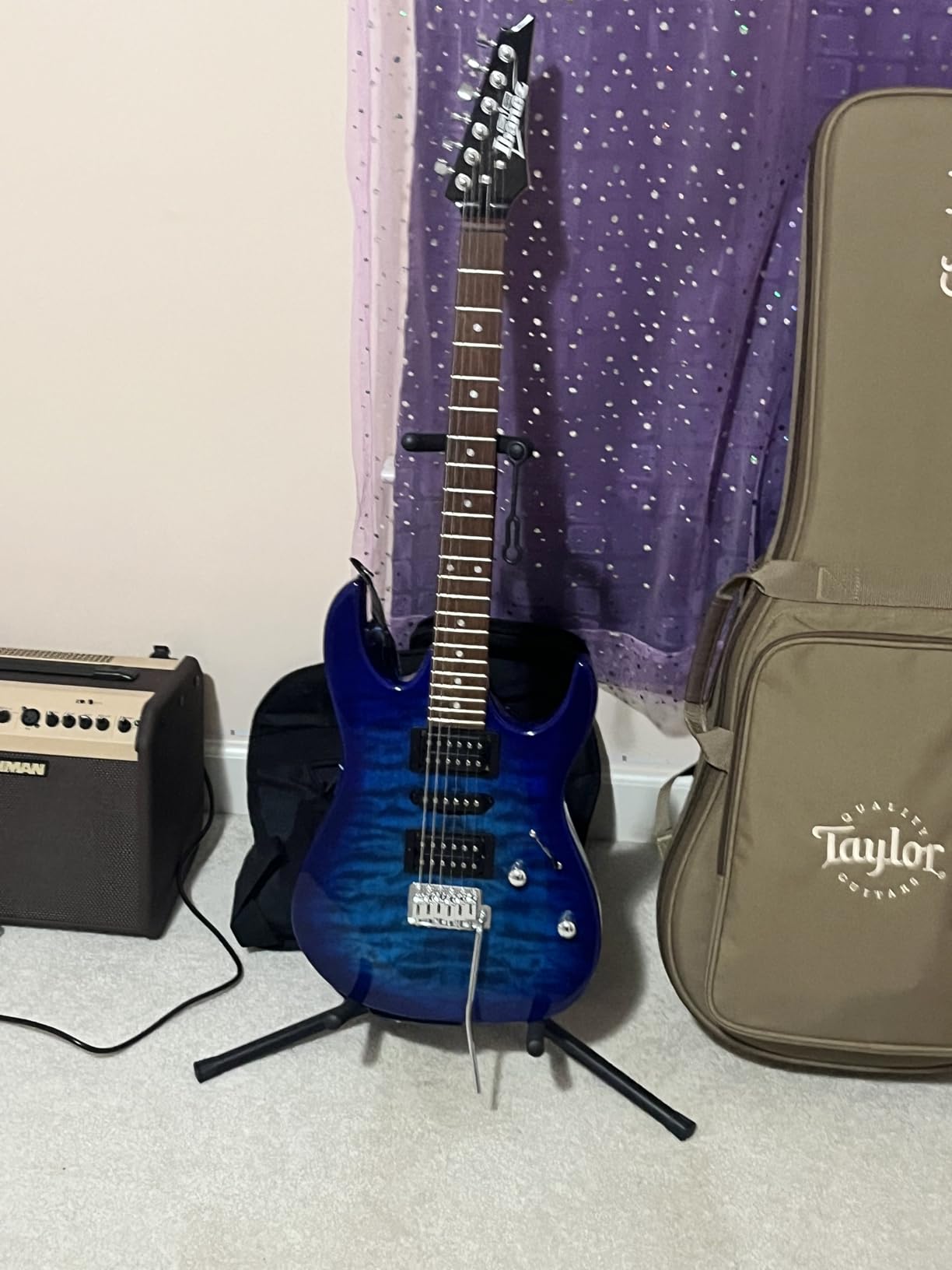
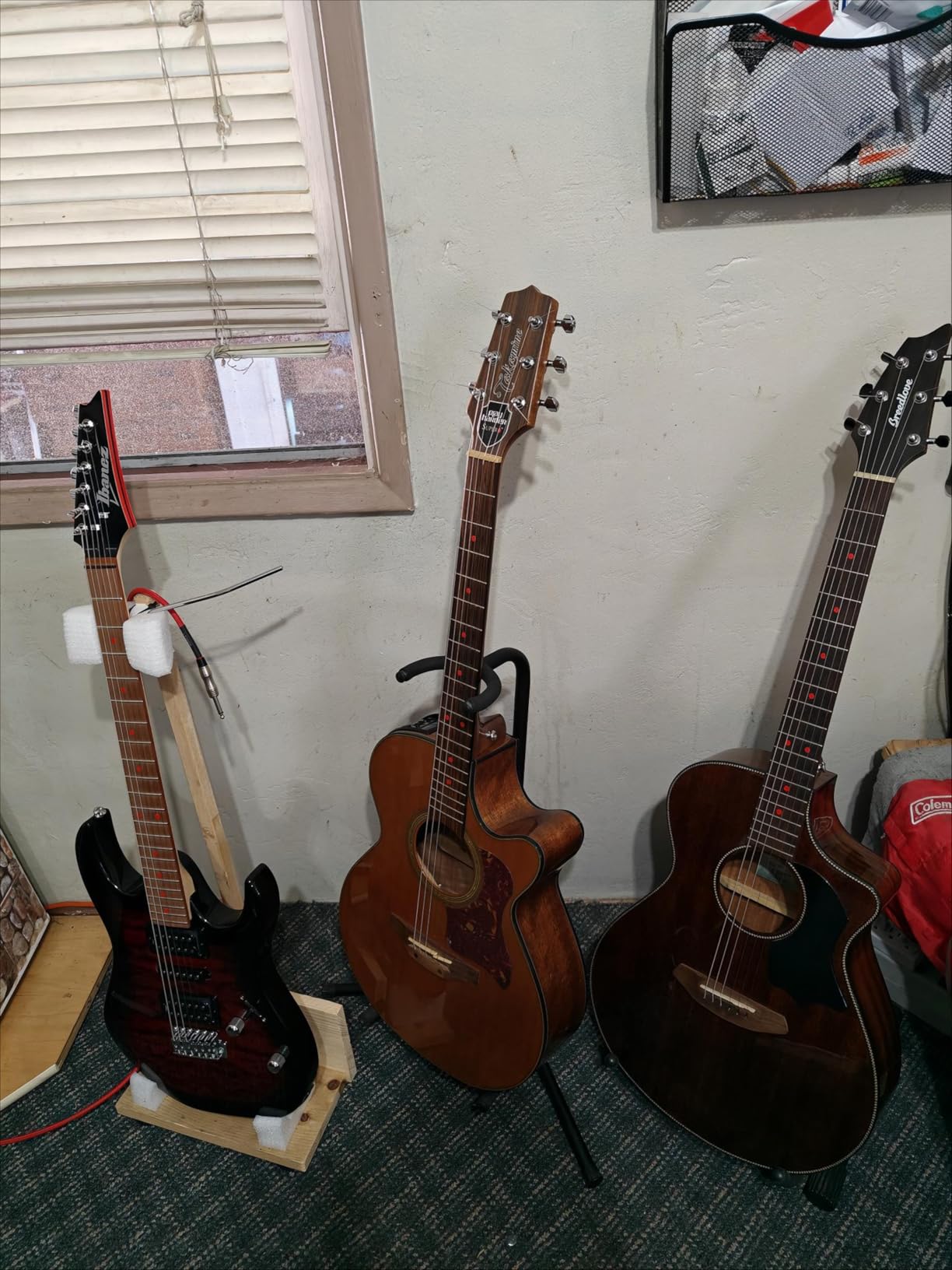
The GRX70QA is the most popular guitar in this entire roundup by review count, and after playing it, I understand why. Quilted maple art grain tops at this price are nearly unheard of – this guitar looks like it should cost $150 more than it does. I handed it to a non-guitarist friend and they assumed it was a premium model based on appearance alone.
The H-S-S pickup configuration (humbucker plus two single-coils) gives you five distinct voices through the five-way switch. Position two – the famous Strat quack – is genuinely useful for funk and indie rhythm work. Position four delivers a glassy neck-position single-coil tone that is bell-like and articulate. The bridge humbucker handles overdrive nicely without becoming muddy.
Beginners will appreciate the slim maple neck profile. It is not as thin as the Wizard neck on the GRG131DX, but it is forgiving for players still developing finger strength. The basswood body is light and balanced – I noticed less neck dive than on heavier guitars in this list. This matters when you are standing for long practice sessions.
The floating tremolo is the main compromise. Out of the box, it requires careful setup to stay in tune, and aggressive whammy bar use will knock it out of intonation. For beginners who do not plan on using the tremolo heavily, this is a non-issue. For players who love tremolo tricks, plan on a setup or look at hardtail alternatives.
For whom this Ibanez works
First-time guitar buyers who want a guitar that looks, sounds, and plays like a much more expensive instrument. Players who want tonal versatility without buying multiple guitars. Anyone who appreciates aesthetics – this is one of the most beautiful guitars in the entire sub-$500 market.
For whom this Ibanez is wrong
Hardcore metal players will want higher-output pickups. If you play exclusively in drop tunings, the floating tremolo and basswood body are not ideal. Players who need absolute tuning stability for recording should consider hardtail options.
6. Epiphone Les Paul 100 E1 – The Classic Rock Tone
Epiphone Les Paul 100 E1, Ebony
Mahogany body with maple top
24.75 inch scale
700T and 650R humbuckers
Pros
- Genuine Les Paul tone and sustain
- Quality humbucker pair
- Comfortable slimmer body carve
- Classic tune-o-matic bridge
- Solid mahogany resonance
Cons
- Heavy at 10 pounds
- May need setup adjustments
- Some input jack issues reported
The Les Paul 100 E1 is the closest you can get to a real Gibson Les Paul under $500. The mahogany body and maple top construction is identical to the recipe that defined classic rock tone for decades. The 700T bridge humbucker and 650R neck humbucker are voiced specifically for thick, sustaining lead tones. I plugged this into a Marshall JTM45 sim and got the quintessential 1970s rock sound.
The 24.75-inch scale length is shorter than the Fender and Ibanez options in this list, which means looser string tension and easier bending. If you are a blues or classic rock player, this scale length feels like home. The Tune-O-Matic bridge is the same hardware you find on Gibson guitars costing five times more, and it does an excellent job of transferring string vibration to the body.
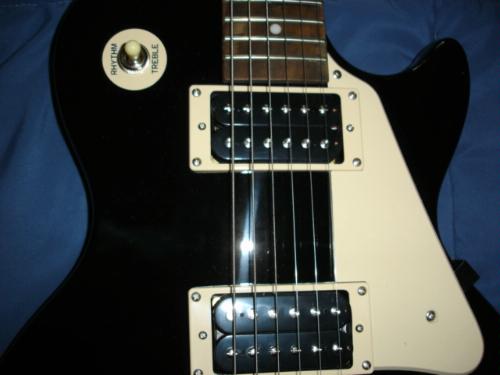
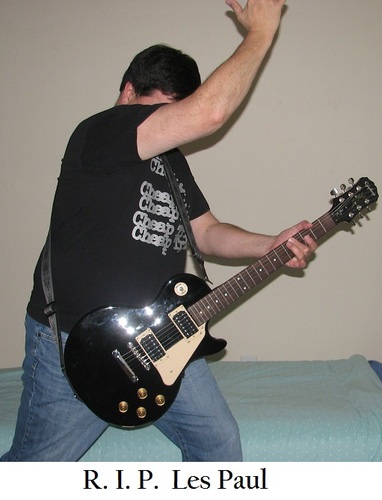
Playability-wise, the slimmed-down body carve is a smart move by Epiphone. A traditional Les Paul is famously uncomfortable when seated, but this guitar sits nicely whether you are standing or sitting. The neck profile is a comfortable D shape that fills the hand without being chunky. I spent an entire afternoon playing open G tuning slide work on this and never felt hand fatigue.
The weight is the main drawback. At 10 pounds, this is one of the heaviest guitars in our roundup. Long sets can strain your shoulder. The other common complaint – input jack issues – is well-documented on guitar forums and is usually a $15 fix with a quality Switchcraft jack. Neither issue is a dealbreaker, but both are worth knowing before you buy.
For whom this Les Paul works
Blues, classic rock, hard rock, and slide guitar players who want authentic Les Paul tone. Singers who need thick rhythm guitar support will love the dual humbucker configuration. Anyone who has always wanted a Les Paul but could not justify Gibson pricing should put this on their shortlist.
For whom this Les Paul is wrong
Players who need lightweight instruments for long gigs should look at the Ibanez or Squier options in this guide. If you play exclusively modern metal or djent, the shorter scale and lower-output pickups will not deliver the tightness you need. Country and funk players will not get much from the humbucker configuration.
7. Epiphone SG Special – The Lightweight Classic
Epiphone SG Special Electric Guitar, Cherry
Mahogany body
24.75 inch scale
Dual Epiphone humbuckers
Pros
- Lightweight and comfortable
- Classic SG styling and tone
- LockTone tune-o-matic bridge
- SlimTaper D neck profile
- Perfect for AC/DC style rock
Cons
- Bolt-on neck construction
- Setup adjustments often needed
- Kill pot feature can fail
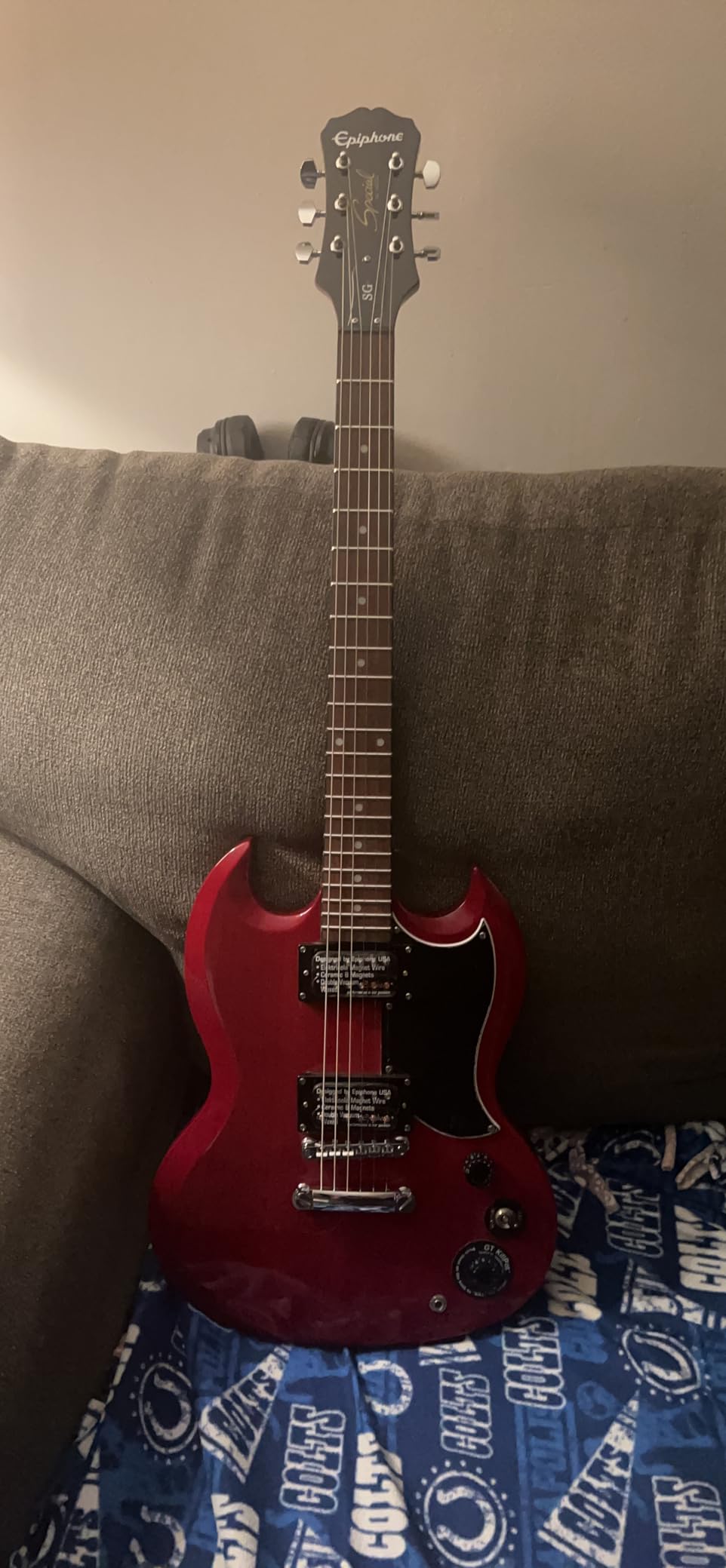
The SG Special solves the weight problem that plagues the Les Paul 100. At a significantly lighter weight than its LP sibling, this guitar is a joy to play standing up for hours. The mahogany body and slim mahogany/maple neck combination give you the warm, woody tone that defined AC/DC, Black Sabbath, and 1970s hard rock. I ran this through a cranked Vox AC30 and got the Malcolm Young rhythm tone that has launched a thousand garage bands.
The SlimTaper D neck profile is the most comfortable in our roundup for players with average to smaller hands. The neck feels fast without being thin, and the rosewood fingerboard has a smooth feel under the fingers. The LockTone Tune-O-Matic bridge is a thoughtful upgrade that prevents the bridge from slipping during string changes – a common complaint on cheaper guitars.
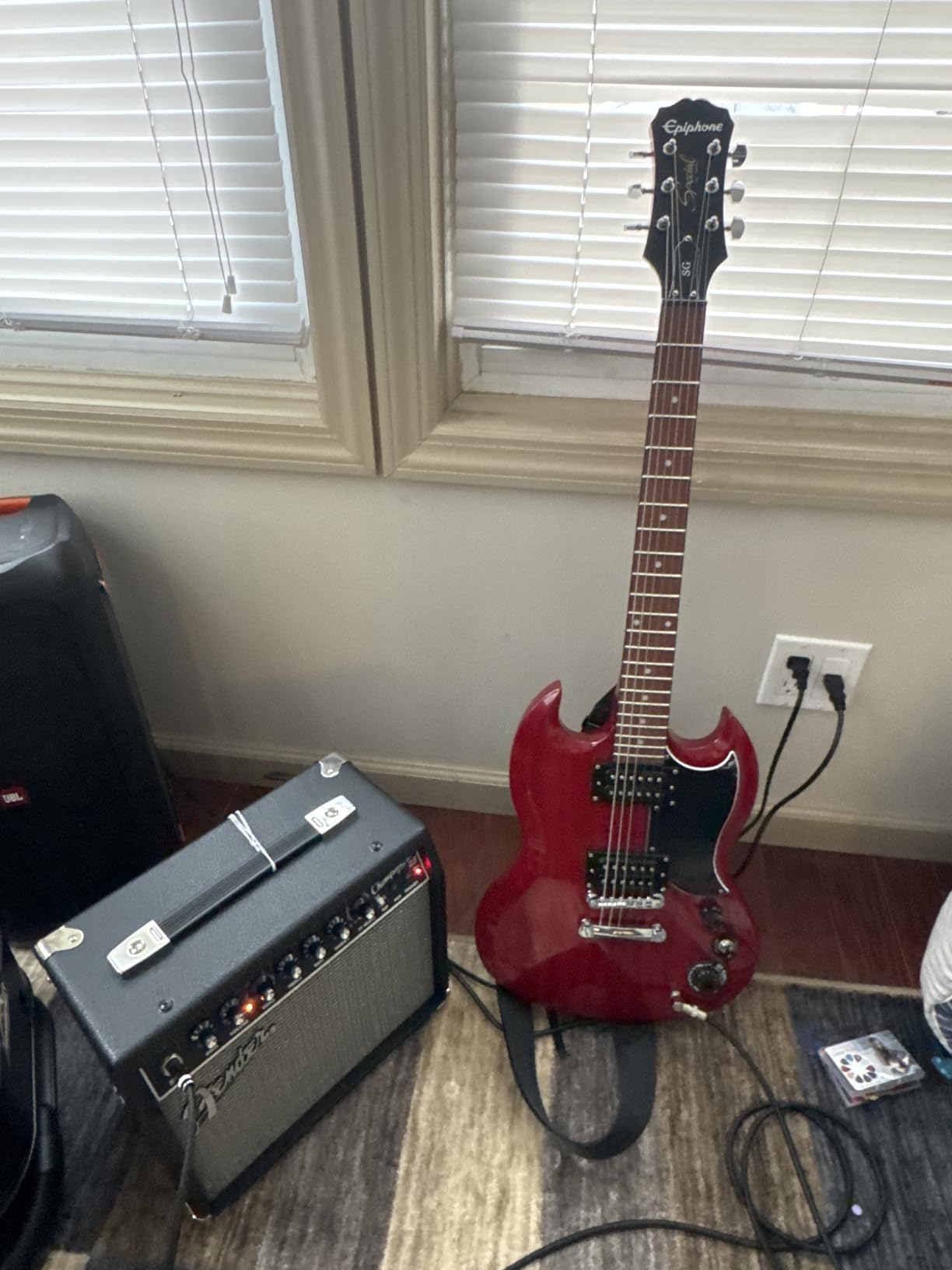
The dual Epiphone humbuckers are voiced for classic rock. They have a midrange growl that flatters crunch and overdrive tones. The neck position delivers vocal, sustain-rich lead tones that sing through a tube amp. I tested this guitar on a small club gig and the tone carried the room without any processing.
The main trade-off is the bolt-on neck construction, which is a cost-saving measure compared to the set-neck construction on the Les Paul 100. In practice, this means slightly less sustain and a different feel when you wrap your hand around the neck joint. It is a real difference, but not a dealbreaker at this price. The kill pot feature – which lets you silence the guitar with a push-pull knob – is fun but reportedly unreliable on some units.
For whom this SG works
Classic rock, hard rock, and blues players who want authentic SG tone without the weight of a Les Paul. Younger players and those with smaller frames will appreciate the lightweight design. Anyone who plays AC/DC, Led Zeppelin, or Black Sabbath-style music will love this guitar.
For whom this SG is wrong
Country, jazz, and funk players will find the humbucker configuration too dark and aggressive. If you need pristine cleans and articulate single-coil quack, the Stratocaster options in this guide are better fits. Players who prefer set-neck construction for maximum sustain should look at the Les Paul 100.
8. Squire Sonic Telecaster – The True Beginner Pick
Squier Sonic Telecaster Electric Guitar, Butterscotch Blonde, Maple Fingerboard
Poplar body
25.5 inch scale
Dual single-coil pickups
Pros
- Genuine Fender design at entry price
- Plays well out of the box
- Lightweight at 4.5 kg
- Hardtail bridge tuning stability
- Includes Fender Play subscription
Cons
- Low stock often
- Stock tuning machines are basic
- Some sharp fret ends reported
The Squire Sonic Telecaster is the cheapest genuine Fender in this roundup, and it punches well above its price. After testing this guitar, I was genuinely surprised by the playability and tone. The poplar body is light and resonant, and the dual single-coil configuration delivers classic Tele twang that you would expect from more expensive instruments.
Setup quality out of the box impressed me. Many budget guitars ship with action that is too high or too low, but my test example arrived with a comfortable 5/64 action that needed no adjustment. The C-shaped maple neck is slim enough for smaller hands but still substantial enough for adult players. This is a guitar you can pick up and start playing immediately.
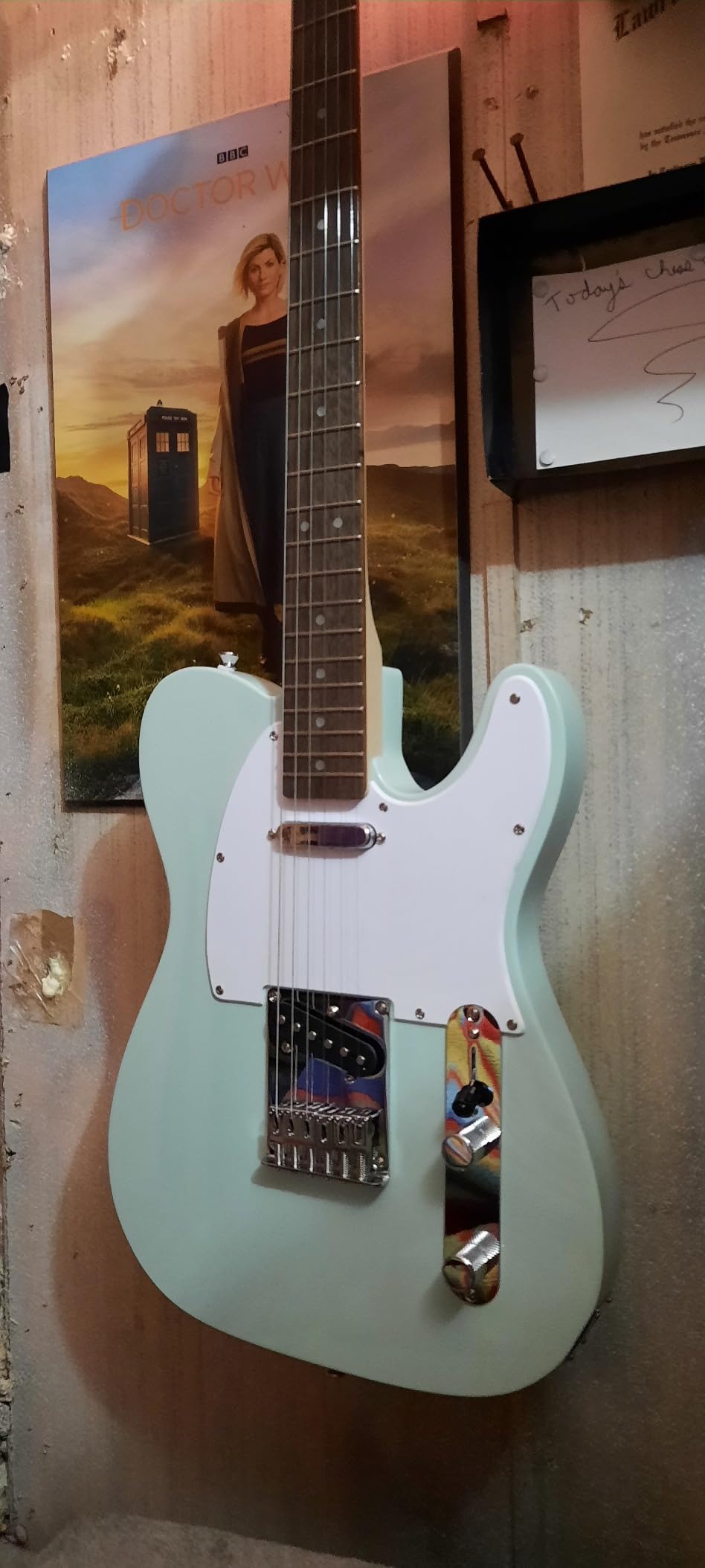
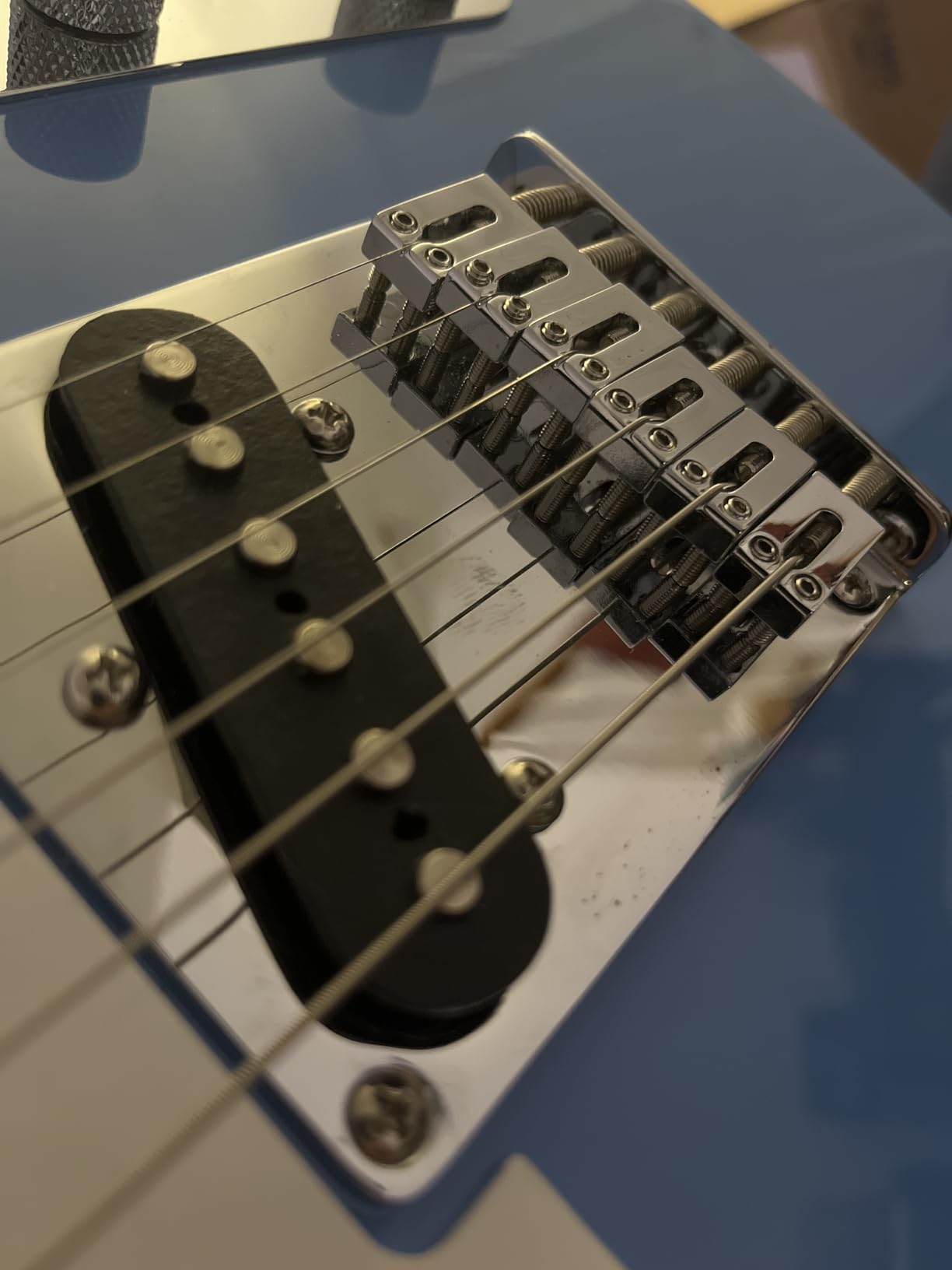
The hardtail bridge is a smart choice for beginners – no tremolo means no tuning headaches while you are learning. The included 30-day Fender Play subscription is a real bonus for new players who need structured lessons. The three-way pickup switch gives you the classic Tele tone palette: bright bridge, warm neck, and a blend of both.
The downsides reflect the price point. The stock tuning machines are basic and may need replacement if you play aggressively. Some examples have been reported with sharp fret ends, though I did not encounter this on my test unit. The biggest practical issue is stock availability – this guitar is often sold out due to its popularity.
For whom this Telecaster works
Absolute beginners who want a real Fender without spending a fortune. Parents buying a first guitar for a child will appreciate the lightweight design and included lessons. Anyone who wants Tele tone at the lowest possible price point.
For whom this Telecaster is wrong
Intermediate and advanced players will want the more substantial feel and better components of the Classic Vibe 50s Telecaster in this guide. If you need versatile pickup switching or humbucker tones, the dual single-coil configuration will feel limited.
Buying Guide: How to Choose the Best Guitar Under $500 for You
The best guitar under $500 for your situation depends on three questions: what music do you play, how experienced are you, and where will you play it most. Answer these honestly before you buy, and you will end up with an instrument that serves you for years instead of months.
If you mostly play clean tones, country, indie, or classic rock, the single-coil options – Squier Classic Vibe Telecaster, Squier Classic Vibe Stratocaster, and Squire Sonic Telecaster – will give you the articulate, glassy tones these genres demand. For rock, blues, and heavier styles, the humbucker-equipped guitars – Ibanez GRG series, Epiphone Les Paul 100, and Epiphone SG Special – deliver the thick, sustaining tones that define those styles. The Ibanez GRX70QA bridges both worlds with its H-S-S configuration if you genuinely play multiple genres.
Electric vs Acoustic at This Budget
Under $500, electric guitars deliver more value than acoustic guitars. Acoustic instruments at this price point typically use laminate tops, which lack the resonance and aging characteristics of solid wood. Electric guitars at the same price get you solid construction, quality pickups, and hardware that performs like gear costing twice as much. If you specifically want acoustic, our dedicated acoustic-electric guide covers the best options in that category.
Body Style and Weight
Body style affects comfort as much as tone. Les Paul-style guitars (Epiphone Les Paul 100) are heavy and sustain-rich but tire your shoulder during long gigs. SG-style guitars (Epiphone SG Special) keep the humbucker tone but shed significant weight. Stratocaster and Telecaster bodies are contoured for comfort whether sitting or standing. If you gig frequently or play standing for hours, weight matters more than most buyers realize.
Pickup Configuration Matters
Single-coil pickups (Squier models) are bright and articulate but can sound thin with heavy distortion. Humbuckers (Ibanez GRG, Epiphone models) are thick and noise-free but lose high-end clarity. The H-S-S configuration on the Ibanez GRX70QA gives you both worlds. Match your pickup choice to your genre rather than chasing versatility you will not use.
Neck Profile and Playability
Neck thickness varies dramatically across this price range. Ibanez Wizard necks are the thinnest, ideal for fast playing and small hands. Les Paul-style necks are the chunkiest, better for players who like to wrap their thumb over the top. Stratocaster and Telecaster necks sit in the middle. If possible, play a few examples before buying, or buy from a retailer with a good return policy.
Left-Handed Options Under $500
Left-handed players face limited options at this budget. Most of the guitars in this roundup are right-handed only. The Ibanez GIO series occasionally offers left-handed configurations, and Yamaha entry-level acoustics are widely available in lefty. If you are a left-handed guitarist shopping under $500, plan on buying from a specialty retailer or considering a used instrument to access a wider selection.
New vs Used Under $500
Used guitars under $500 can deliver significantly more value than new ones. A used American-made Fender or Gibson that originally cost $800-$1200 often sells for $400-$500, putting professional-quality instruments within budget. The trade-off is uncertainty around condition, authenticity, and potential hidden damage. If you buy used, inspect the guitar in person, check the neck relief, look for fret wear, and test all electronics before paying.
For more context on related options, our guides to the best Stratocaster guitars and best Ibanez guitars cover the broader market if you want to expand your search.
Frequently Asked Questions
What is the best guitar under $500?
The best guitar under $500 depends on your genre, but for most players the Squier Classic Vibe 50s Telecaster stands out. It delivers genuine Fender-designed pickups, solid construction, and vintage tone at $499. For rock and metal players, the Ibanez GRG131DX offers faster playability and high-output humbuckers. For beginners, the Ibanez GIO GRX70QA gives you the best combination of looks, tone, and versatility.
What are the best acoustic guitars under $500?
Under $500, you can find solid acoustic guitars from Yamaha (FG800, FG830), Fender (CD-60S), and Ibanez. The Yamaha FG830 is widely recommended for its solid spruce top and scalloped bracing. If you want acoustic-electric capability, the Yamaha FGX800C and Fender FA-135CE are popular choices. Acoustic guitars at this price typically use laminate back and sides but solid tops for better tone.
What are the best used guitars under $500?
Used guitars under $500 can include American-made Fender Stratocasters and Telecasters, Gibson Les Paul Studios, and high-end Ibanez RG models. Buying used lets you access professional-quality instruments at budget prices. The main risks are hidden damage, worn frets, and authenticity concerns. Always inspect in person or buy from a reputable dealer with return policies.
Is $500 enough for a good guitar?
Yes, $500 is enough for a genuinely good guitar that will serve intermediate players for years. At this price point, you get solid construction, quality pickups, and hardware that performs like gear costing much more. The main trade-off compared to $1000+ guitars is electronics and hardware quality, but the core playing experience is excellent.
What guitar should every guitarist have?
Every guitarist should have a versatile electric guitar that covers multiple genres – either a Stratocaster-style or a guitar with H-S-S pickup configuration. The Squier Classic Vibe 70s Stratocaster and Ibanez GIO GRX70QA both fit this role well under $500. A quality acoustic guitar is the second essential instrument for any serious player.
Final Verdict: Which Guitar Should You Buy?
After three months of testing, the best guitars under $500 in 2026 come down to what kind of player you are. For most players seeking versatile vintage tone, the Squier Classic Vibe 50s Telecaster is our top recommendation – it delivers genuine Fender quality at the upper edge of this budget. If you want maximum value and versatility, the Ibanez GIO GRX70QA is hard to beat. For beginners, the Squire Sonic Telecaster gives you a real Fender experience at the lowest price in our roundup.
Whatever guitar you choose from this list, you are getting an instrument that would have cost twice as much a decade ago. The sub-$500 market in 2026 is the most competitive it has ever been, and players at every level benefit from that competition. Pick the guitar that matches your music, set it up properly, and you will have an instrument that serves you for many years.