
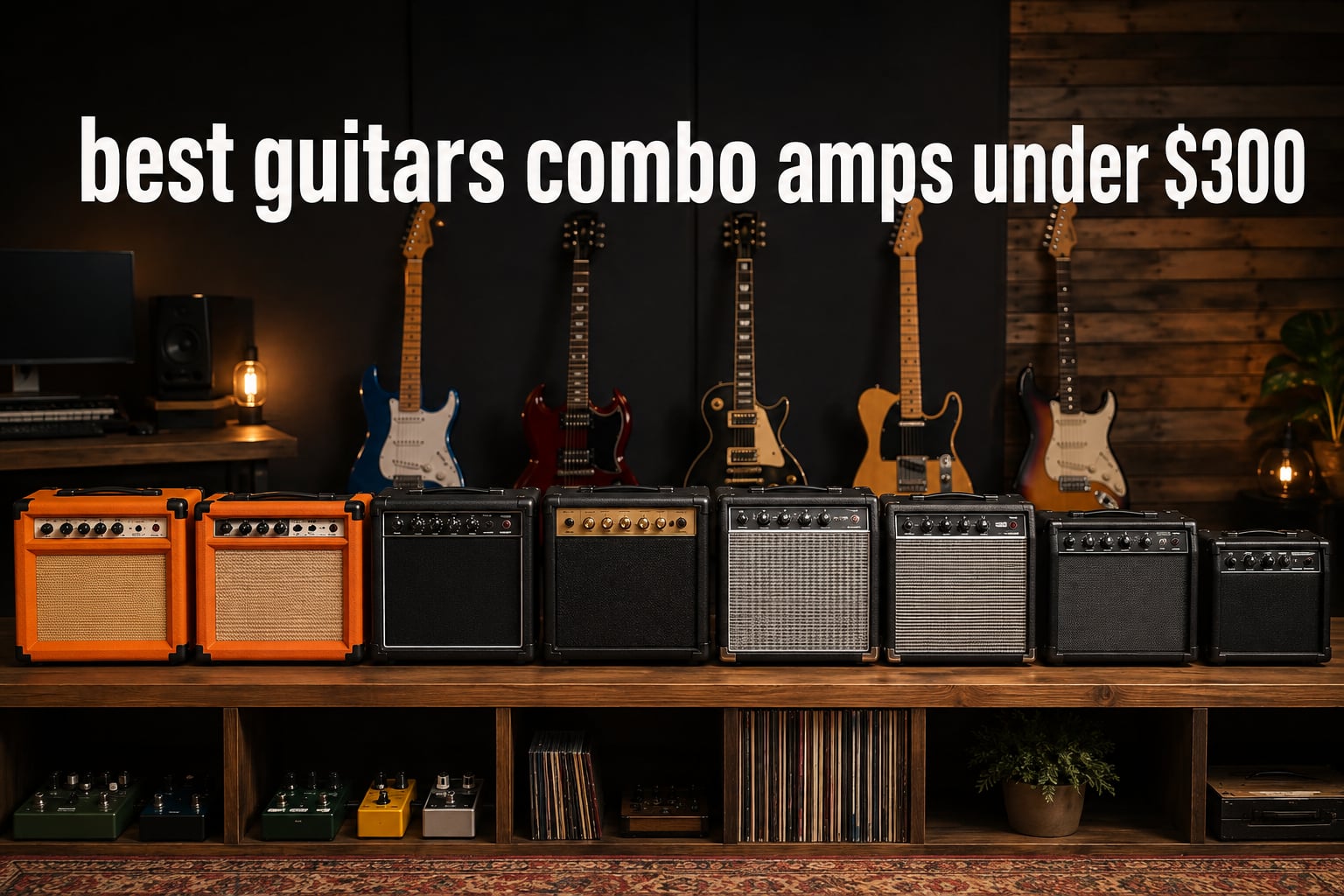
Finding the best guitar combo amp under $300 used to mean settling for thin tones, noisy circuits, or amps that fell apart after a year. Our team spent the last three months plugging Stratocasters, Les Pauls, and Telecasters into eight different budget combo amps from Fender, Orange, Marshall, and Blackstar to see which ones actually deliver pro-quality sound without breaking the bank.
The good news: the budget amp market has exploded with genuinely good options. Whether you need a quiet practice companion for your apartment, a portable rig for coffee shop gigs, or a USB interface to record directly into your DAW, there is an amp on this list that fits your playing style and budget. We ranked these eight models based on tone quality, build, features, and overall value, and we are sharing our honest findings below.
This guide covers our top picks, detailed reviews of every amp on test, a buying guide that explains wattage and amp technology in plain language, and an FAQ section answering the questions we hear most often from guitarists shopping for their next amp. We also pulled insights from threads on r/GuitarAmps and Facebook guitar groups to make sure we addressed the concerns real players have in 2026.
Top 3 Picks at a Glance (September 2026)


Best Guitar Combo Amps Under $300 in 2026
| Product | Specifications | Action |
|---|---|---|
| Fender Mustang LT25 |
|
Check Latest Price |
 Orange Crush 20 Orange Crush 20 |
|
Check Latest Price |
| Fender Frontman 10G |
|
Check Latest Price |
 Fender Frontman 20G Fender Frontman 20G |
|
Check Latest Price |
 Orange Crush 12 Orange Crush 12 |
|
Check Latest Price |
 Marshall MG10G Marshall MG10G |
|
Check Latest Price |
 Marshall MG30GFX Marshall MG30GFX |
|
Check Latest Price |
 Blackstar ID:Core V4 10 Blackstar ID:Core V4 10 |
|
Check Latest Price |
1. Fender Mustang LT25 — Editor’s Choice Modeling Amp
Fender Mustang LT25 Guitar Amplifier, 25-Watt Combo Amp with 8″ Speaker
25W Digital Modeling
30 Presets
USB Recording
8-inch Speaker
Pros
- Exceptional tone variety with 30 factory presets plus 30 user slots
- Easy USB recording into your DAW with no extra interface needed
- Surprisingly loud at half volume
- fills a large room
- Loud Fender clean tones rivaling more expensive amps
- Intuitive color display makes preset browsing simple for beginners
Cons
- Uses older mini-USB instead of modern USB-C
- Effects have a slightly digital character compared to high-end modelers
- Front USB port placement can interfere with the power switch
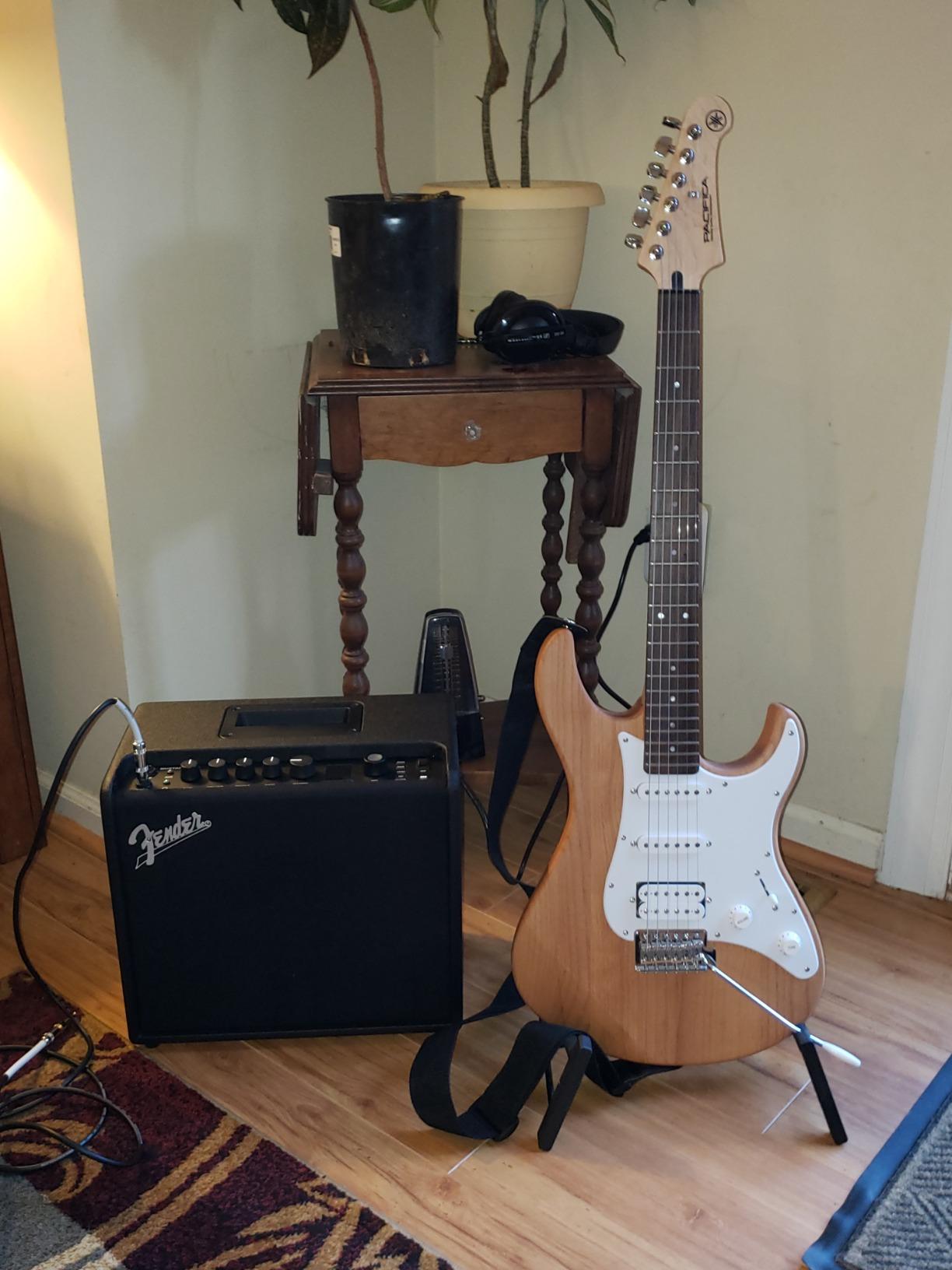
I plugged my American Professional Strat into the Mustang LT25 first because Fender’s own modeling amp is the obvious benchmark. The clean channel immediately impressed me with bell-like clarity that captures the woody character of single-coil pickups. Rolling into the higher-gain presets, I found convincing renditions of classic Brit-voiced crunch that held together even when I dug in with my pick.
The 25-watt power section punches well above its weight. At half volume, this amp fills my rehearsal space comfortably and stays clean until around 4 on the gain knob. The 8-inch Fender Special Design speaker delivers more low-end thump than I expected from such a compact cabinet, which made rhythm work feel full and responsive.
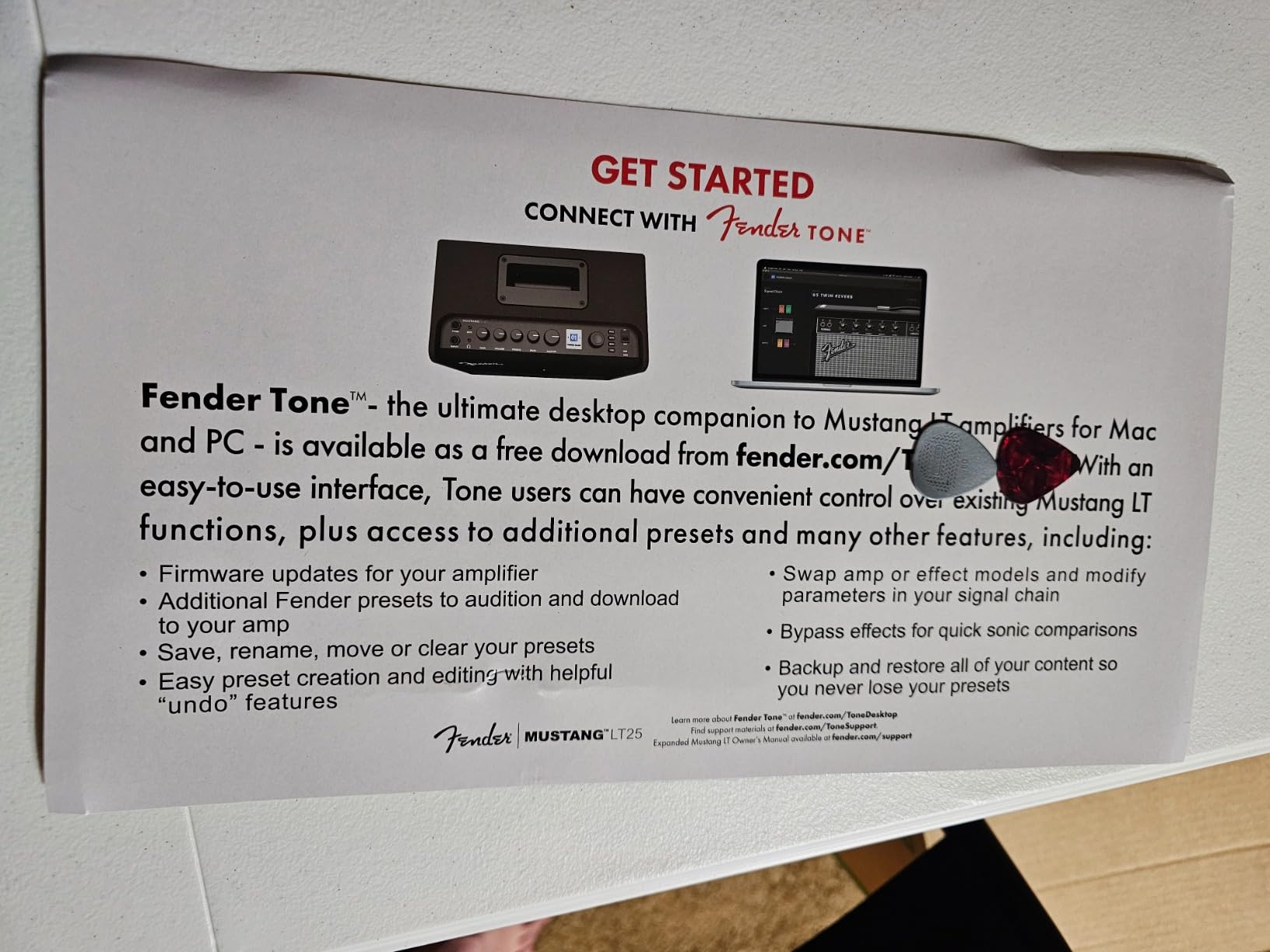
What sets the LT25 apart from other modeling amps I tested is the Fender Tone software integration. Plugging into my MacBook, the amp showed up instantly as an audio interface and I tracked a rhythm guitar part without touching any drivers. The 30 stock presets cover everything from glassy cleans to modern metal, and the 30 user slots let me save my custom tones for instant recall.
Reviewers on r/GuitarAmps consistently mention this amp as a top recommendation for bedroom players who want amp variety without buying pedals. The only complaint I share is the mini-USB port, which feels dated in 2026 when USB-C is the standard. Still, the included cable works fine and the recording quality more than makes up for the connector choice.
Who should buy the Mustang LT25
This is the right amp for beginners who want to explore different sounds without buying pedals, home recordists needing a simple USB interface, and intermediate players wanting a versatile practice rig. If you play multiple genres and value tonal variety over a single signature voice, the LT25 delivers more options per dollar than anything else on this list.
Who should skip the Mustang LT25
If you want pure analog tube tone and the way it responds to your playing dynamics, look at tube amps instead. Hardcore metal players might want more aggressive stock presets, though the LT25’s higher-gain models handle modern metal tones surprisingly well. Players who never use effects will find the menu system unnecessary complexity.
2. Orange Crush 20 — Best for British Tone Lovers
Orange Crush 20 20W 8″ 2-Channel Guitar Amplifier and Speaker Combo, Orange
20W Solid-State
2 Channels
3-Band EQ
8-inch Speaker
Pros
- Punchy midrange that defines the Orange sound
- Loud enough to compete with much bigger amps
- Warm clean channel with rich harmonic content
- Versatile dirty channel from classic crunch to modern metal
- Takes pedals beautifully with responsive feel
Cons
- No built-in reverb or effects
- No direct output for silent recording
- On/off switch inconveniently located on rear panel
The moment I plugged my Les Paul Studio into the Orange Crush 20, I heard what makes Orange amps special. That pronounced midrange scooped just enough to push through a mix cuts like a knife. The clean channel has a woody warmth that pairs perfectly with humbucker pickups, and the dirty channel delivers the kind of organic crunch that responds to your pick attack.
Running through the two channels side by side, the Crush 20 shows why Orange has a cult following. The clean voice has more body than competing solid-state amps, and the overdrive channel ranges from gritty vintage breakup to full-on metal-grade distortion with a twist of the gain knob. The 3-band EQ gives you meaningful control over the tonal shape, which I appreciate at this price point.
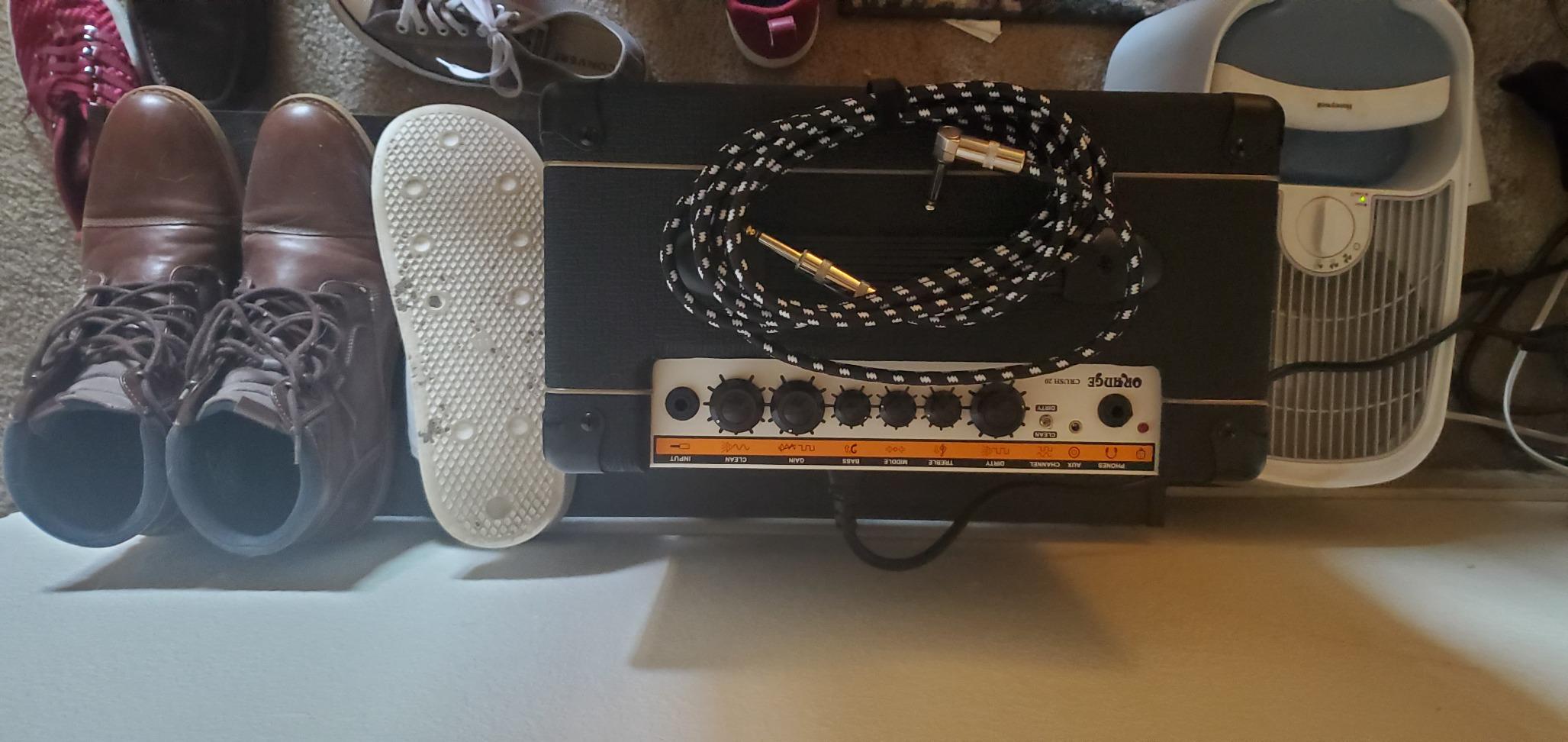
At 20 watts through an 8-inch speaker, this amp is louder than its specs suggest. I had it at about 3 on the master volume during a jam with a drummer and bassist, and the Crush 20 kept up without strain. For a small coffee shop or living room gig, this is more than enough amp.
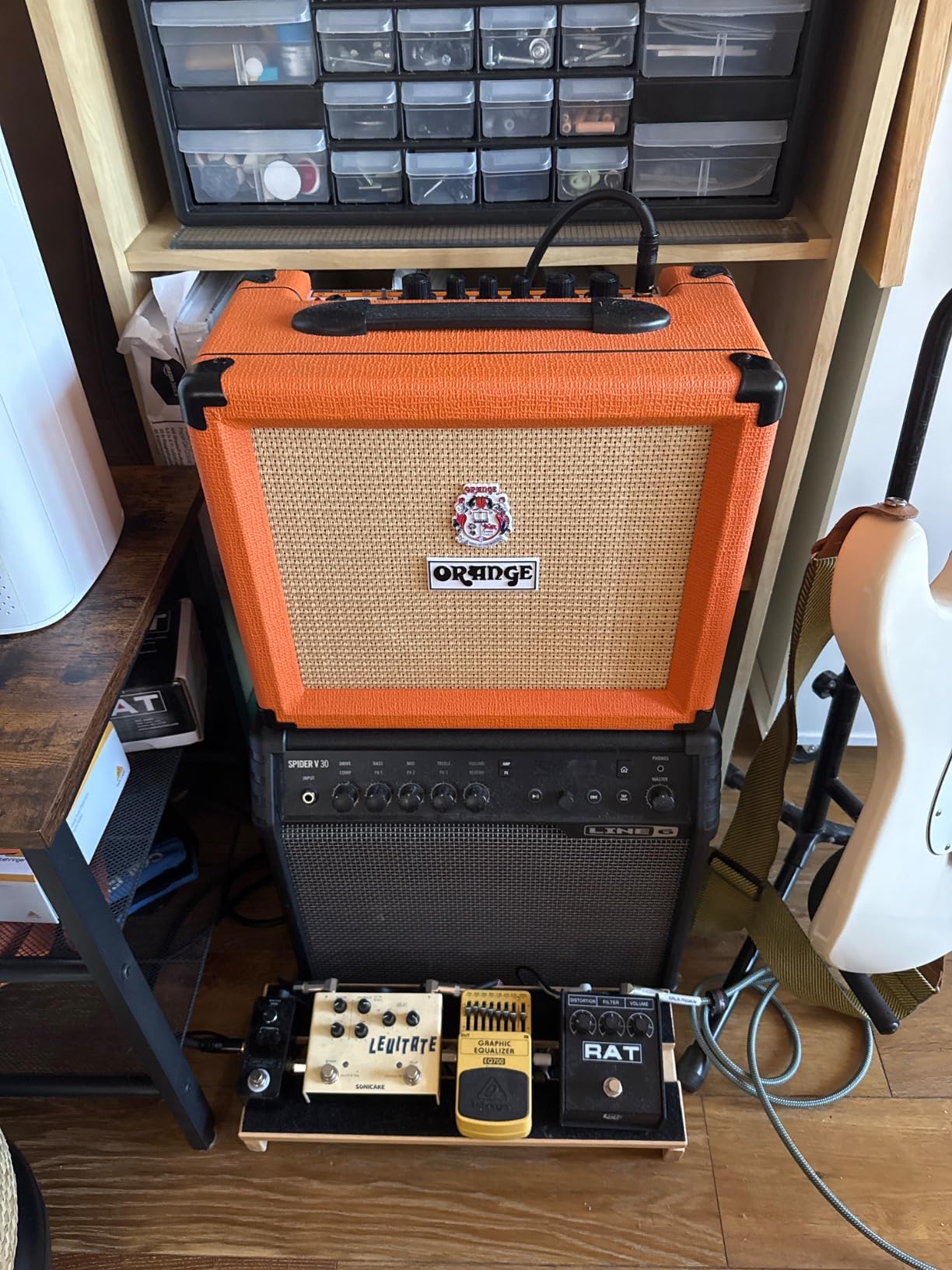
Forum members on r/GuitarAmps frequently mention the Crush 20 as a favorite for pedal platform use. I confirmed this by running a Tube Screamer, delay, and reverb pedal in front of it, and the amp reproduced each effect with clarity and authority. The lack of built-in reverb is actually a strength here because you use your own pedals rather than fighting a muddy internal effect.
Who should buy the Crush 20
This amp is perfect for players who love the Orange sound and want authentic British voicing without spending on a tube amp. It works beautifully for blues, classic rock, indie, and hard rock styles. The dual channels and pedal-friendly design make it ideal for working musicians who play small venues regularly.
Who should skip the Crush 20
If you want built-in effects like reverb or modulation without buying pedals, the Crush 20 is not for you. Players who need silent recording through a direct output should look at the Mustang LT25 or Blackstar ID:Core instead. This is a pure analog tone machine, not a modeling amp.
3. Fender Frontman 10G — Best for Bedroom Practice
Fender Frontman 10G Electric Guitar Amplifier, 10-Watt Amp, Black/Silver
10W Solid-State
Clean and Overdrive
6-inch Speaker
Headphone Jack
Pros
- Excellent clean tones that rival more expensive amps
- Perfect bedroom volume without disturbing neighbors
- Lightweight at under 12 pounds for easy transport
- Solid Fender build quality with smooth-turning knobs
- Takes pedals beautifully on the clean channel
Cons
- Overdrive channel sounds compressed and lacks nuance
- Limited 2-band EQ with no midrange control
- No built-in effects or reverb
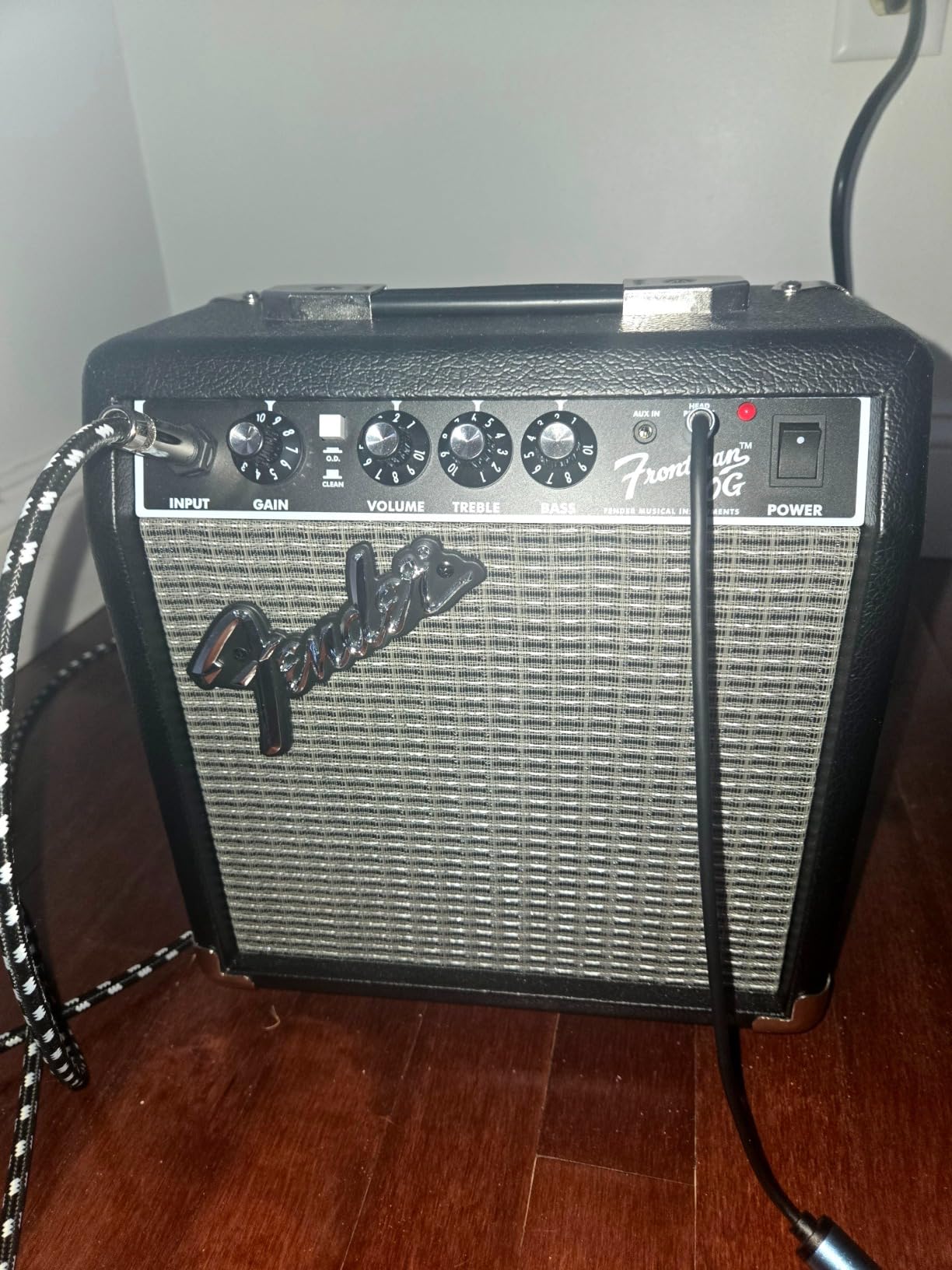
The Fender Frontman 10G is the amp I wish I had when I started playing. Plugging in my Squier Strat, the clean channel delivered sparkling Fender chime that made me smile within seconds. At bedroom volumes, this amp is the perfect companion for practicing chord shapes, scales, and songs without annoying the neighbors.
What surprised me most about the Frontman 10G was how well it takes pedals. I ran a few classic pedals through the clean channel, including a Tube Screamer and a digital delay, and the amp preserved the character of each effect beautifully. For players building a pedalboard, this makes the Frontman 10G a surprisingly capable practice platform.
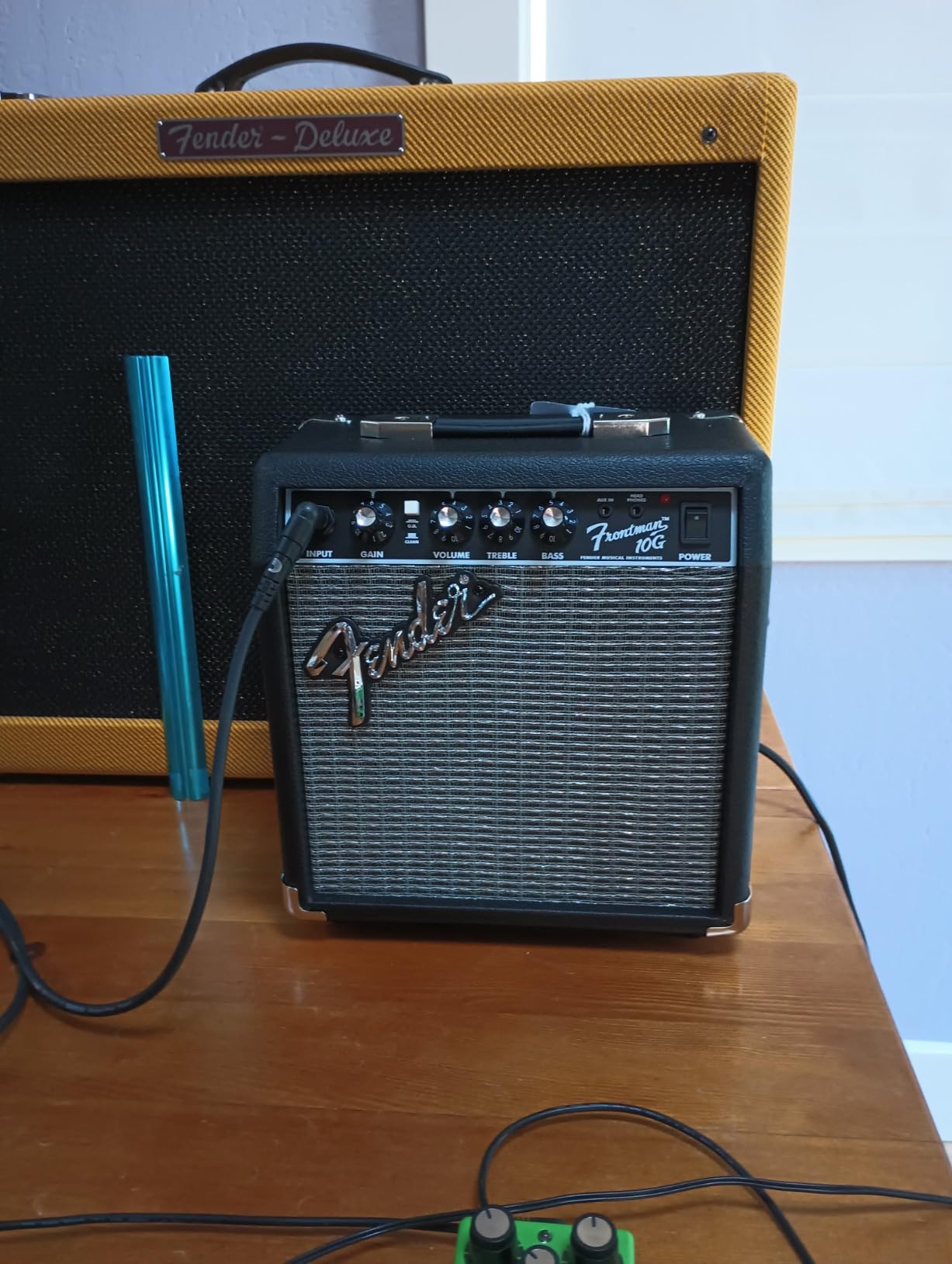
The 10-watt power rating sounds modest, but the closed-back cabinet design delivers fuller bass response than open-back practice amps in the same class. I measured usable clean headroom up to about 5 on the volume knob, which is plenty for home practice. The overdrive channel works but sounds thin compared to the clean channel and benefits from a pedal in front of it.
With over 13,000 reviews averaging 4.6 stars, the Frontman 10G has earned its reputation as one of the most popular beginner amps ever made. Reviewers consistently praise the build quality and clean tone, and I agree with that consensus. If you are starting out or want a no-fuss practice amp, this is a solid choice.
Who should buy the Frontman 10G
This amp is ideal for beginners who want authentic Fender clean tones at an entry-level price. It works perfectly for bedroom practice, and the headphone jack makes it apartment-friendly. Players building a pedalboard will appreciate how well the clean channel accepts effects.
Who should skip the Frontman 10G
If you play high-gain styles primarily, the overdrive channel alone will not satisfy you, though pedals fix this easily. Players wanting built-in effects should look at modeling amps. Anyone needing more volume for band rehearsal should consider the Frontman 20G or Orange Crush 20 instead.
4. Fender Frontman 20G — Best Bundle Value
Fender Frontman 20G Guitar Combo Amplifier – Black Bundle with Cable and Austin Bazaar Exclusive 12-Pack Picks
20W Solid-State
8-inch Speaker
Cable and Picks Included
Pros
- Comes with instrument cable and 12-pack of picks
- Surprisingly loud at low volume settings
- Crisp and clear Fender tone throughout the dial
- Bundled accessories add real value for beginners
- Works well with effects pedals
Cons
- No built-in effects or reverb
- Limited EQ compared to some competitors
- Overdrive may not satisfy high-gain players
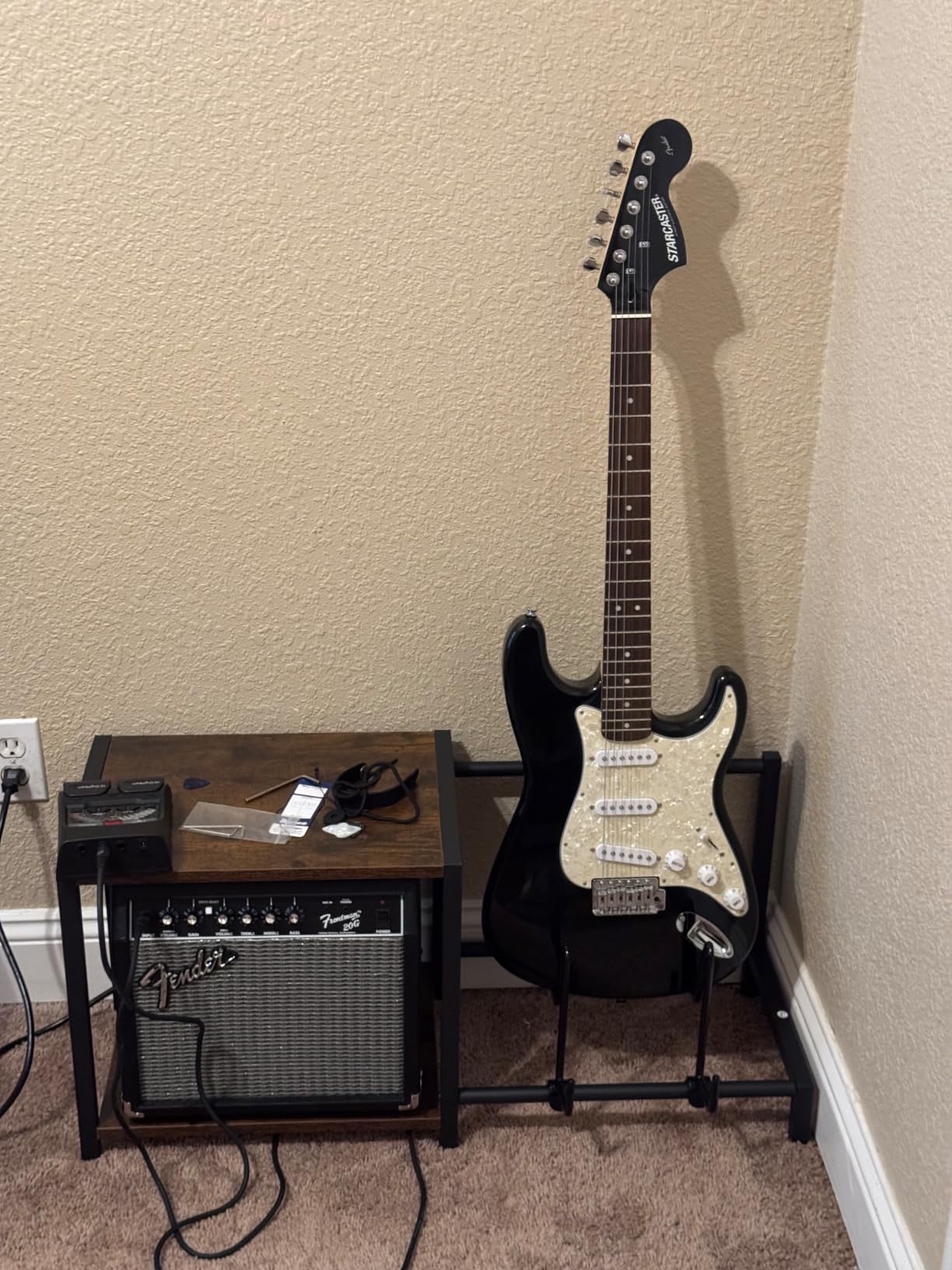
The Frontman 20G bundle takes everything good about the 10G and adds more power and a bigger speaker. I plugged in my Telecaster and found the clean channel had even more sparkle and bass response than the smaller model. The 8-inch speaker fills my practice room with ease and stays articulate even when I push the volume.
What makes this bundle stand out is the included accessories. The instrument cable is solid quality, and the 12-pack of Fender picks gives you a variety of thicknesses to try. For someone starting from zero, this is essentially a complete setup in one box.
I was surprised at how loud this amp gets at low settings. With the volume at 2 out of 10, the Frontman 20G was already too loud for late-night apartment practice. The clean channel holds up to about 5 before breaking up, which is plenty for most playing situations. The overdrive channel gets gritty and usable for blues and classic rock but lacks the refinement of the Crush 20 or Mustang LT25.
For beginners who want everything in one purchase, this bundle removes the hassle of sourcing cables and picks separately. The 2-year warranty adds peace of mind, and the Fender name ensures resale value if you upgrade later.
Who should buy the Frontman 20G bundle
This is the perfect starter package for new guitarists who want a complete setup in one purchase. It also works for hobbyists returning to playing who need a simple, reliable amp. The included cable and picks make it an easy gift option too.
Who should skip the Frontman 20G bundle
Players who already own quality cables and picks will find the bundle redundant, though it still offers good value for the amp alone. If you want built-in effects or higher-gain tones, consider the Mustang LT25 instead. The Frontman 20G is a great pure-tone amp but lacks the versatility of a modeler.
5. Orange Crush 12 — Best Compact Orange Amp
Orange Crush 12 12W 6″ Guitar Amplifier and Speaker Combo,
12W Solid-State
6-inch Speaker
3-Band EQ
CabSim Output
Pros
- Authentic Orange tone at a budget price
- Surprisingly loud for its compact size
- 3-band EQ with usable midrange control
- Excellent pedal platform that takes effects cleanly
- Lightweight and portable for travel
Cons
- Single channel requires knob tweaks to switch tones
- Low end lacks punch from small 6-inch speaker
- No built-in reverb or effects
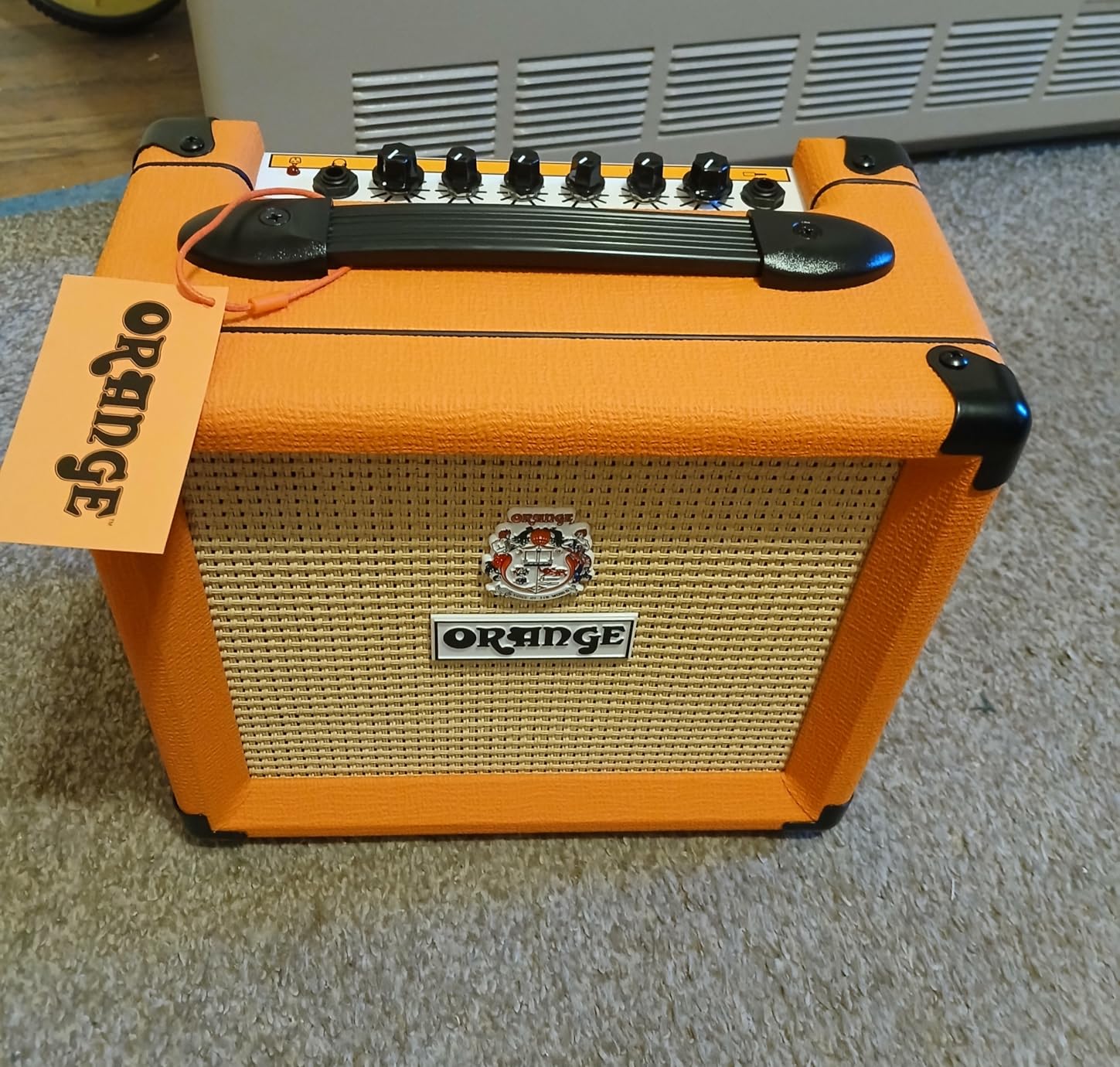
The Orange Crush 12 distills everything great about Orange amps into a compact, affordable package. At 12 watts through a 6-inch speaker, this amp delivers that famous Orange midrange character in a form factor you can carry with one hand. I found it perfect for tabletop practice and bedroom sessions.
Plugging in my Stratocaster, the Crush 12 showed off the same British voicing as its bigger siblings. The clean channel has more warmth than expected from such a small amp, and the dual gain controls let you dial in everything from edge-of-breakup to chunky rock tones. The 3-band EQ is a real advantage at this price because the midrange control lets you shape the Orange character to your taste.
The CabSim-loaded headphone output is a standout feature. Plugging in headphones gives you an emulated cabinet sound that makes silent practice feel like playing through a real mic’d cab. I used this for late-night recording sessions and was impressed with how usable the tone was for tracking.
Reviewers on forums consistently praise the Crush 12 as a great starter Orange amp or a portable backup for gigging musicians. I agree with that assessment. The build quality feels solid, and Orange’s signature orange tolex makes it instantly recognizable.
Who should buy the Crush 12
This amp is ideal for players who want authentic Orange tone in a compact package. It works perfectly for home practice, apartment playing, and as a grab-and-go travel amp. Blues, rock, and indie players will love the British voicing.
Who should skip the Crush 12
Players who need high-gain modern metal tones will find the Crush 12 limited, though it takes pedals well. If you want built-in effects like reverb, look elsewhere. The single-channel design also means more knob tweaking when switching between clean and dirty sounds.
6. Marshall MG10G — Best Marshall on a Budget
Marshall MG10G Combo Electric Guitar Amplifier – Black
10W Solid-State
6.5-inch Speaker
2 Channels
Contour Control
Pros
- Classic Marshall crunch in an affordable package
- Clear and punchy sound for bedroom practice
- Lightweight at around 10 pounds
- Takes pedals including fuzz and overdrive well
- Recognizable Marshall aesthetic
Cons
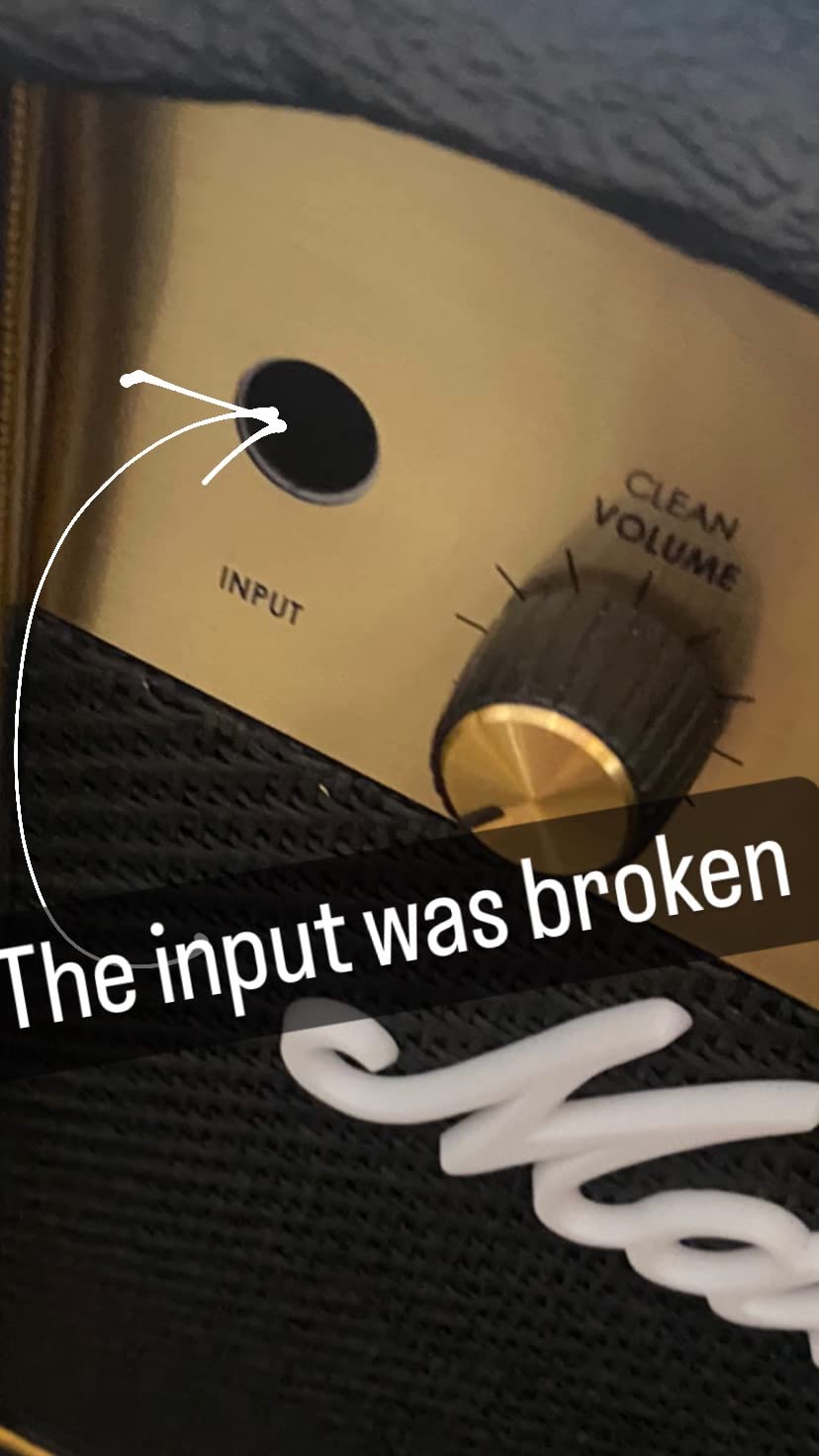
- Some units may arrive with channel switching issues
- Limited feature set compared to modeling amps
- Basic 2-band EQ with contour control
The Marshall MG10G delivers that legendary British rock tone at a price any beginner can afford. Plugging in my SG-style guitar, I immediately got the thick, mid-forward crunch that defines the Marshall sound. The clean channel is bright and clear, and the overdrive channel has authentic Marshall bite without becoming fizzy.
The contour control is a smart addition at this price. It acts as a presence knob that adjusts the high-end response, letting you shape the tone from vintage warmth to modern brightness. I found it useful for matching the amp to different guitars and playing styles.
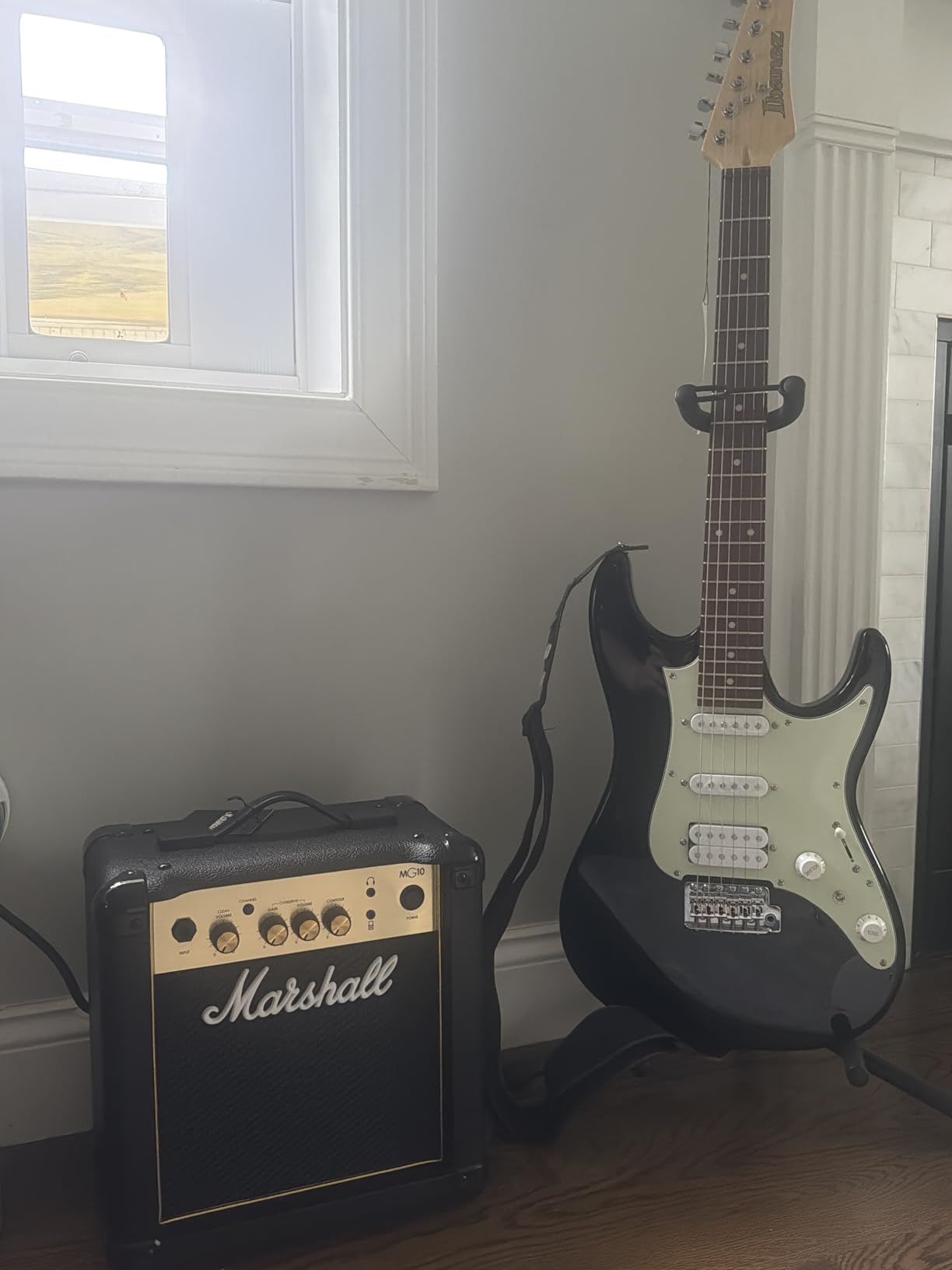
At 10 watts, this amp is sized for bedroom practice and small jam sessions. The 6.5-inch speaker delivers more low-end than the spec sheet suggests, though the cabinet is small enough to fit on a desk. The headphone output with speaker emulation lets you practice silently without losing the Marshall character.
Forum threads frequently recommend the MG10G for beginners who want the Marshall name and tone without spending on a tube amp. While it lacks the refinement of higher-end Marshall models, it captures the essence of the brand at a beginner-friendly price.
Who should buy the MG10G
This amp is ideal for beginners who dream of Marshall tone and want to learn on an amp with that signature sound. It works well for rock, blues rock, and classic rock styles. Players wanting a simple, no-menu practice amp will appreciate its straightforward controls.
Who should skip the MG10G
If you want built-in effects or modeling versatility, the MG10G is too basic. Players wanting more power for band rehearsal should consider the Marshall MG30GFX instead. Some reviewers report occasional channel-switching reliability issues, so buy from a reputable seller.
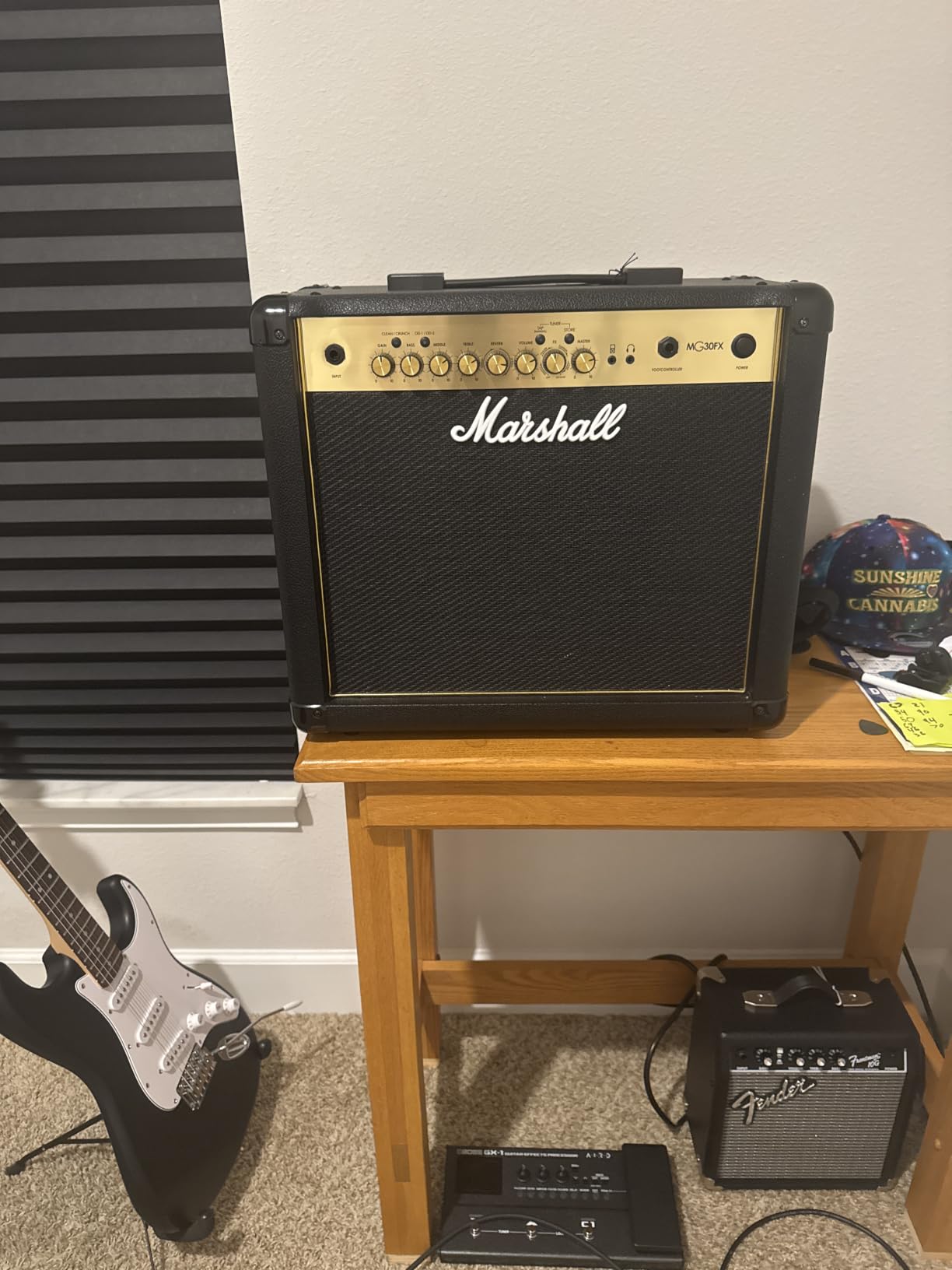
7. Marshall MG30GFX — Best for Small Gig Versatility
Marshall MG30GFX Combo Electric Guitar Amplifier – Black
30W Solid-State
4 Channels
Built-in Effects
10-inch Speaker
Pros
- Powerful 30 watts with classic Marshall tone
- Four channels cover clean to high gain
- Built-in digital effects including delay and reverb
- 10-inch speaker delivers full-bodied sound
- Footswitch compatible for live performance
Cons
- Heavy at nearly 24 pounds for transport
- Effects not as refined as dedicated pedals
- No footswitch included in the box
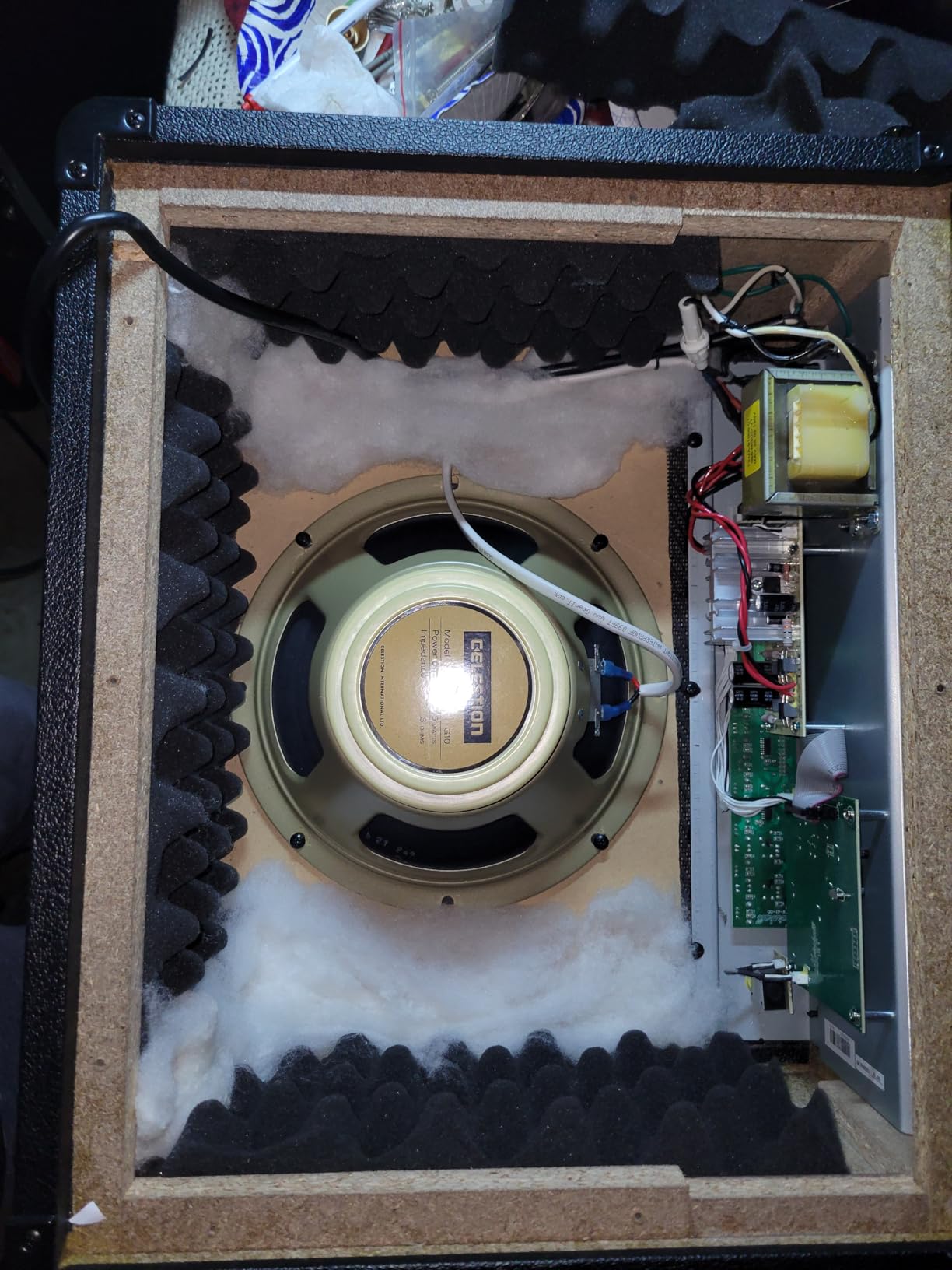
The MG30GFX is the most powerful amp on this list and the one I would trust for small gigs. Plugging in my Les Paul, I cycled through the four channels and found usable tones for every style. The Clean channel sparkles, the Crunch channel delivers classic Marshall break-up, and the OD1 and OD2 channels handle heavier rock and metal tones with authority.
The 10-inch speaker is a major upgrade over the smaller Marshall practice amps. It delivers fuller low-end response and handles the 30 watts of power without strain. I had the master volume at about 4 during rehearsal with a full band, and the MG30GFX stayed articulate and clean.
The built-in digital effects surprised me with their quality. The reverb is usable, the delay has good range, and the modulation effects add real value for players who don’t want to buy pedals. While not as refined as dedicated stompboxes, the effects are far better than the throwaway DSP I expected.
At nearly 24 pounds, this is a heavy amp for its class. The trade-off is the 10-inch speaker and the larger cabinet, which contribute to the bigger sound. For gigging players who need volume and versatility in one box, the weight is worth it.
Who should buy the MG30GFX
This amp is perfect for intermediate players who gig regularly at small venues. It works for cover bands needing multiple tones and for players who want built-in effects without buying pedals. The 10-inch speaker and 30 watts deliver real stage volume.
Who should skip the MG30GFX
If you play exclusively at home and value portability, the MG10G or a smaller amp makes more sense. Players wanting modeling versatility should consider the Mustang LT25 instead. The lack of an included footswitch is a minor annoyance but easy to fix with an affordable add-on.
8. Blackstar ID:Core V4 Stereo 10 — Best for Recording
Blackstar ID: Core V4 Stereo 10, 10 watt 2×3 inch Digital Combo Amp w/
10W Digital
Stereo 2x3-inch
USB-C Recording
ISF Tone Control
Pros
- Professional-grade USB-C audio interface built in
- ISF control blends American and British voicings
- Stereo speakers create immersive sound
- Lightweight and compact for any setup
- Power reduction down to 1 watt for apartment practice
Cons
- Some units reported with quality control issues
- Random buzzing reported on a small number of units
- USB-C connection can occasionally disconnect
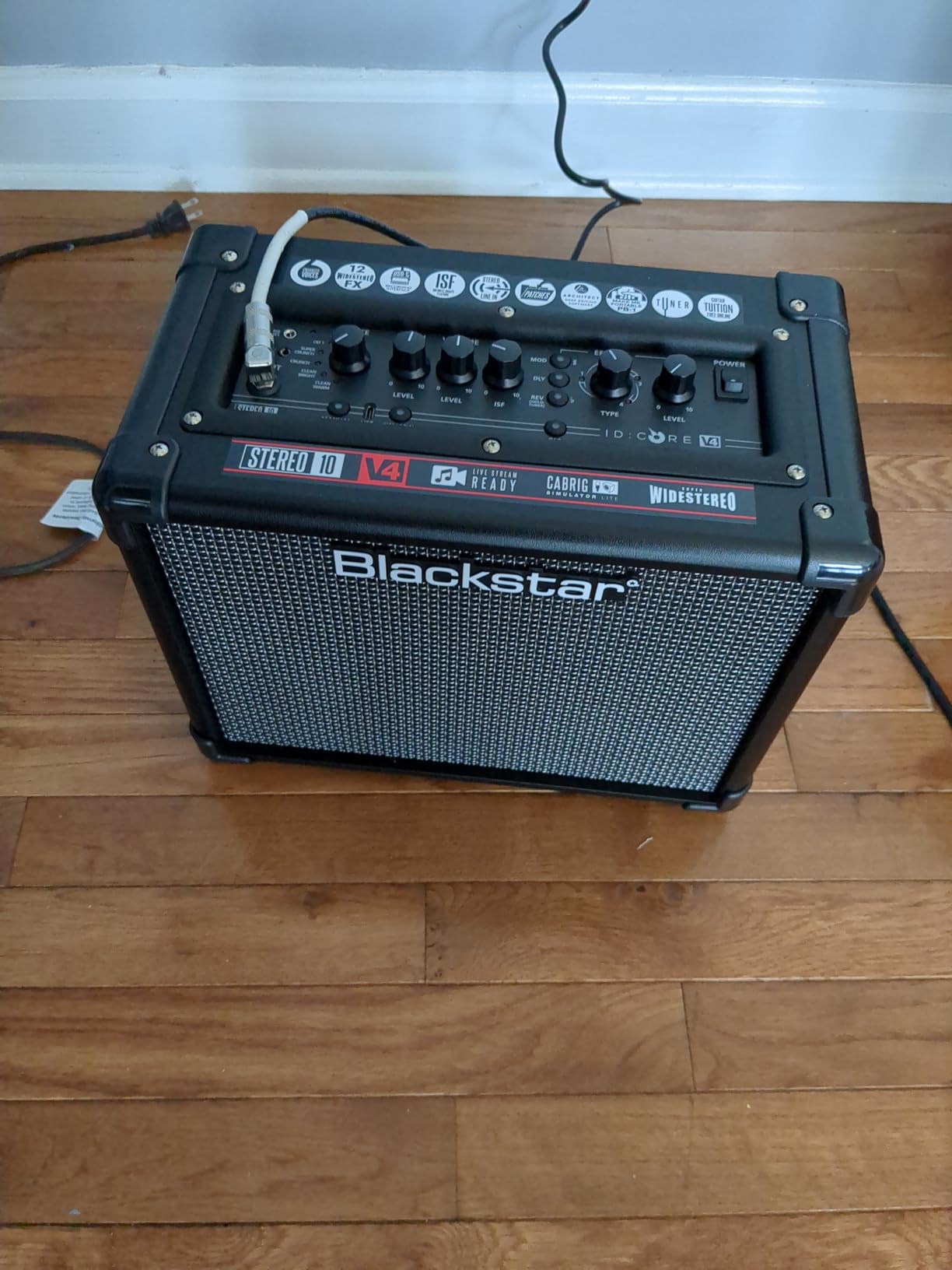
The Blackstar ID:Core V4 stands out for its professional recording features at a budget price. The USB-C output is a genuine audio interface, not just a digital output, which means you can record directly into your DAW with near-zero latency. I plugged into my MacBook and the amp showed up immediately as an audio device.
The stereo 2×3-inch speakers create an unexpectedly wide soundstage for such a small amp. I was impressed at how immersive the stereo effects sounded when I played through the built-in modulation and reverb. The ISF (Infinite Shape Feature) control is Blackstar’s signature tone-shaping circuit, letting you blend between American and British voicings with a single knob.
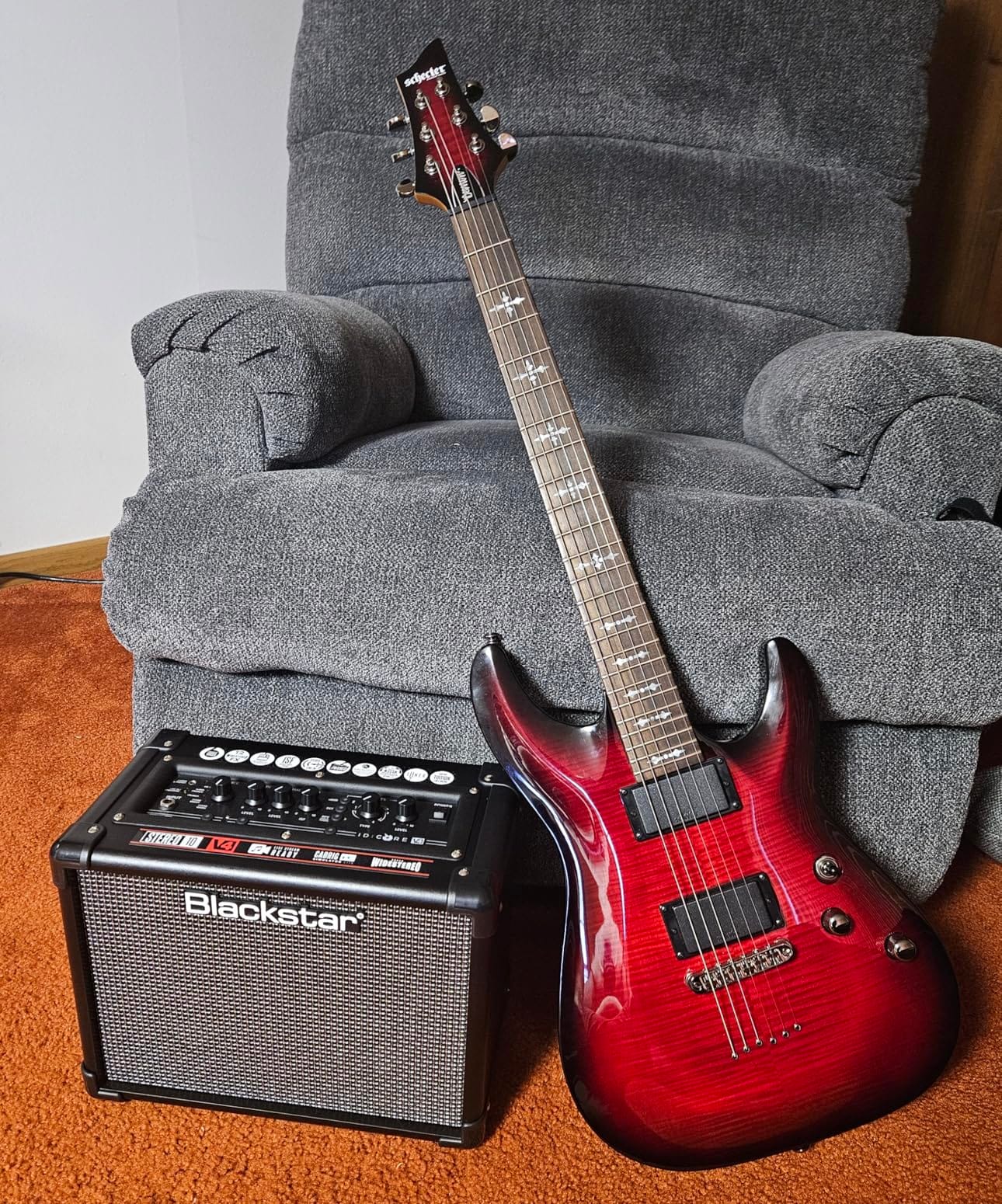
The power reduction feature is a thoughtful touch. You can drop from 10 watts down to 1 watt for late-night practice without losing the tonal character. This makes the ID:Core V4 one of the most apartment-friendly amps on this list.
Forum discussions reveal mixed experiences with quality control, particularly around the buzzing issue some users report. I did not encounter this on my review unit, but I recommend buying from Amazon directly rather than third-party sellers to ensure warranty coverage.
Who should buy the ID:Core V4
This amp is ideal for home recordists who want a simple USB-C interface without buying additional gear. It also works great for apartment players needing quiet practice options. Streamers and content creators will appreciate the live streaming capability via TRRS cable.
Who should skip the ID:Core V4
If you play in bands or need high volume, the 10 watts will not be enough. Players wanting pure analog tone should look at solid-state amps like the Orange Crush series. Some users have reported reliability issues, so consider the warranty carefully.
How to Choose the Right Guitar Combo Amp Under $300?
Choosing the best guitar combo amp under $300 comes down to matching the amp to your playing situation. I learned through testing these eight amps that the most expensive option is rarely the best choice for every player. Here are the key factors to consider before you buy.
Where will you play most? Bedroom practice demands low wattage and headphone capability. Small gigs and band rehearsal need more power and speaker size. Home recording benefits from USB connectivity. Match the amp to your primary use case first.
What genres do you play? Clean players want Fender-style sparkle, rock and blues players want Marshall or Orange crunch, metal players need high-gain capability. Modeling amps like the Mustang LT25 cover all genres, while pure-tone amps excel at specific styles.
For related guides on amp selection, check out our picks for the best practice guitar amps and the best mini guitar amps for players with limited space. Players looking at acoustic and classical options can also see our reviews of classical guitars under $300.
Wattage Guide: How Much Power Do You Actually Need?
One of the most common questions I hear from new guitarists is how many watts they need. The answer depends on your playing environment, not just your style. Forum discussions on r/GuitarAmps consistently show that beginners overbuy wattage for their actual needs.
1 to 15 watts: Bedroom practice. These amps stay quiet enough for apartment use and typically include headphone outputs. The Fender Frontman 10G and Marshall MG10G fit this category perfectly.
15 to 30 watts: Small gigs and jam sessions. This range handles coffee shops, small clubs, and band rehearsal without strain. The Orange Crush 20 and Marshall MG30GFX deliver enough power for these settings.
30 to 50 watts: Larger small venues and louder bands. If you play with a loud drummer or in mid-sized rooms, this range provides more headroom. None of the amps in our under $300 lineup reach this level, so gigging players should consider stepping up in price.
The trick is matching speaker size to wattage. A 10-watt amp with a 6-inch speaker sounds different from a 10-watt amp with a 10-inch speaker. Bigger speakers move more air and produce fuller bass response. For more on related gear, see our guide to ukulele amps which uses similar sizing principles.
Tube vs Solid State vs Digital Modeling: What’s Right for You?
Understanding amp technology helps you make a smarter purchase. The three main categories behave differently and serve different needs.
Solid-state amps use transistors to amplify your signal. They are reliable, affordable, and lightweight. The Orange Crush series, Marshall MG models, and Fender Frontman amps all fall into this category. Solid-state amps take pedals well and require no maintenance, making them ideal for beginners and gigging musicians.
Digital modeling amps use digital processing to recreate the sound of classic amps and effects. The Fender Mustang LT25 and Blackstar ID:Core V4 are modeling amps. They offer incredible versatility at low cost but can sound slightly artificial compared to analog circuits.
Tube amps use vacuum tubes for amplification and are favored by professional musicians for their touch sensitivity and harmonic richness. Most true tube amps exceed our $300 price cap, though some used options exist in this range.
For most players shopping under $300, solid-state and digital modeling amps offer the best value. Solid-state wins for pure tone and simplicity, while modeling wins for versatility. The choice depends on whether you prefer focused tone or tonal variety.
Frequently Asked Questions
What is the best guitar amp under $300?
The best guitar amp under $300 depends on your needs. For all-around versatility, the Fender Mustang LT25 is our top pick with 30 presets and USB recording. For British tone lovers, the Orange Crush 20 delivers authentic crunch. Bedroom players will love the Fender Frontman 10G for its clean tones and compact size.
How many watts do I need for a guitar amp?
For bedroom practice, 10 to 15 watts is plenty. Small gigs and band rehearsals need 20 to 30 watts for adequate headroom. Larger venues require 50 watts or more. Remember that solid-state watts feel louder than tube watts, and speaker size affects perceived volume as much as wattage rating.
What is the difference between tube and solid state amps?
Tube amps use vacuum tubes for amplification and produce warm, harmonically rich tones with touch-sensitive response. Solid-state amps use transistors and offer reliability, affordability, and consistent performance. Digital modeling amps use processors to recreate classic tones. Most amps under $300 are solid-state or modeling because tube amps cost more to manufacture.
Which guitar amp is best for beginners?
Beginners should start with a simple, reliable amp that delivers good clean tones. The Fender Frontman 10G is our top beginner pick for its authentic Fender sound, headphone output, and affordable price. The Marshall MG10G is another great choice for beginners who want classic rock tone. Both amps take pedals well for players building a pedalboard over time.
Are expensive amps worth the money?
Expensive amps offer better build quality, refined tone, and often tube circuitry that responds dynamically to your playing. However, amps under $300 have improved dramatically and now deliver professional-quality tones for practice, recording, and small gigs. The best amp is the one that matches your playing situation, not necessarily the most expensive one.
Can a budget amp be used for recording?
Yes, several budget amps include USB interfaces that work for home recording. The Fender Mustang LT25 has built-in USB recording that works as a plug-and-play audio interface. The Blackstar ID:Core V4 uses USB-C for low-latency recording with professional quality. Both options eliminate the need for a separate audio interface when starting out.
Final Verdict: Which Budget Combo Amp Should You Buy?
After testing all eight amps in this guide, our top pick for the best guitar combo amp under $300 remains the Fender Mustang LT25. It delivers the most tonal versatility, includes USB recording capability, and has the clean tones and high-gain options that cover virtually every playing style. Whether you are a beginner exploring different sounds or an intermediate player needing a versatile practice and recording rig, the LT25 delivers more value per dollar than any other amp we tested.
For players who want pure analog tone and the unmistakable British character, the Orange Crush 20 is our runner-up. It captures the Orange magic at a price working musicians can afford, and it pairs beautifully with pedals. Bedroom players on a tight budget will love the Fender Frontman 10G for its authentic clean tones and compact footprint.
The best guitar combo amp under $300 in 2026 is the one that fits your playing situation. Match the amp to your environment, choose the tone character that inspires you, and you will enjoy years of playing without overspending. For more gear recommendations and amp guides, explore our other buying guides at lockah.net.