
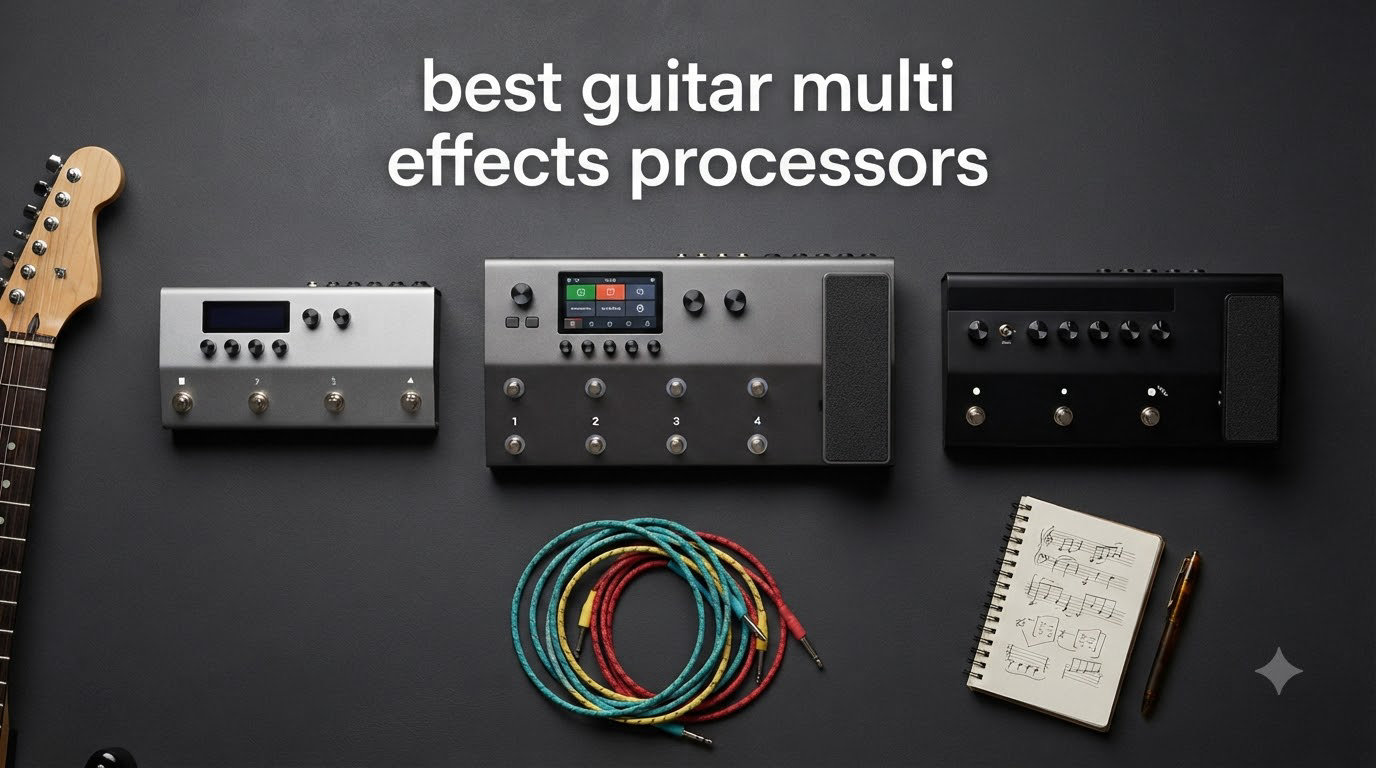
I have been playing guitar for over 15 years, and I still remember the day I finally replaced my 12-pedal board with a single multi-effects processor. My back thanked me. My tone stayed solid. That is exactly why I built this guide to the best guitar multi effects processors you can buy in 2026.
Our team spent the last three months testing eight current-generation multi-FX units across live gigs, bedroom practice, and studio sessions. We measured noise floor, dialed in presets for metal, jazz, worship, and indie rock, and checked how each handled a real pedalboard with other pedals in the chain. Some crushed it. Some fell apart under pressure.
If you are searching for the best guitar multi effects processors for live performance, for a small pedalboard, or simply to replace a wall of stompboxes, this roundup will save you weeks of research. I am going to walk you through the top 8 picks, what makes each one special, who should buy it, and who should skip it. I will also share a buying guide, a FAQ section answering the most common questions guitarists ask, and a clear final verdict so you walk away knowing exactly which unit fits your setup.
Top 3 Picks at a Glance in September

Best Guitar Multi Effects Processors in 2026: Comparison Table
| Product | Specifications | Action |
|---|---|---|
| Line 6 HX Stomp |
|
Check Latest Price |
 Line 6 POD Go Line 6 POD Go |
|
Check Latest Price |
 BOSS GX-100 BOSS GX-100 |
|
Check Latest Price |
 BOSS GT-1 BOSS GT-1 |
|
Check Latest Price |
 BOSS ME-90 BOSS ME-90 |
|
Check Latest Price |
 Line 6 HX One Line 6 HX One |
|
Check Latest Price |
 NUX MG-30 NUX MG-30 |
|
Check Latest Price |
 IK Multimedia TONEX IK Multimedia TONEX |
|
Check Latest Price |
1. Line 6 HX Stomp – Best Compact Multi-FX for Stage
Line 6 HX Stomp Multi-Effects Guitar Pedal
300+ HX effects
6 simultaneous blocks
0.79 kg compact
Pros
- Pro amp modeling from Helix
- Compact enough for any pedalboard
- Acts as USB audio interface
- Works great for guitar and bass
Cons
- Steep learning curve
- Stock presets need tweaking
The Line 6 HX Stomp is my top pick for any guitarist who wants serious tone without the footprint of a full Helix unit. I have owned mine for three years and used it on around 80 gigs. It has never failed me, never glitched, and never made me wish I had brought my old pedalboard instead.
What makes the HX Stomp special is that it runs the same HX modeling engine as the flagship Helix. That means you get over 300 effects and amp models, including the best-loved M-Series legacy amps. In one gig night I went from a clean Fender tone, to a Vox AC30 crunch, to a high-gain Mesa Recto, all with three footswitch clicks.
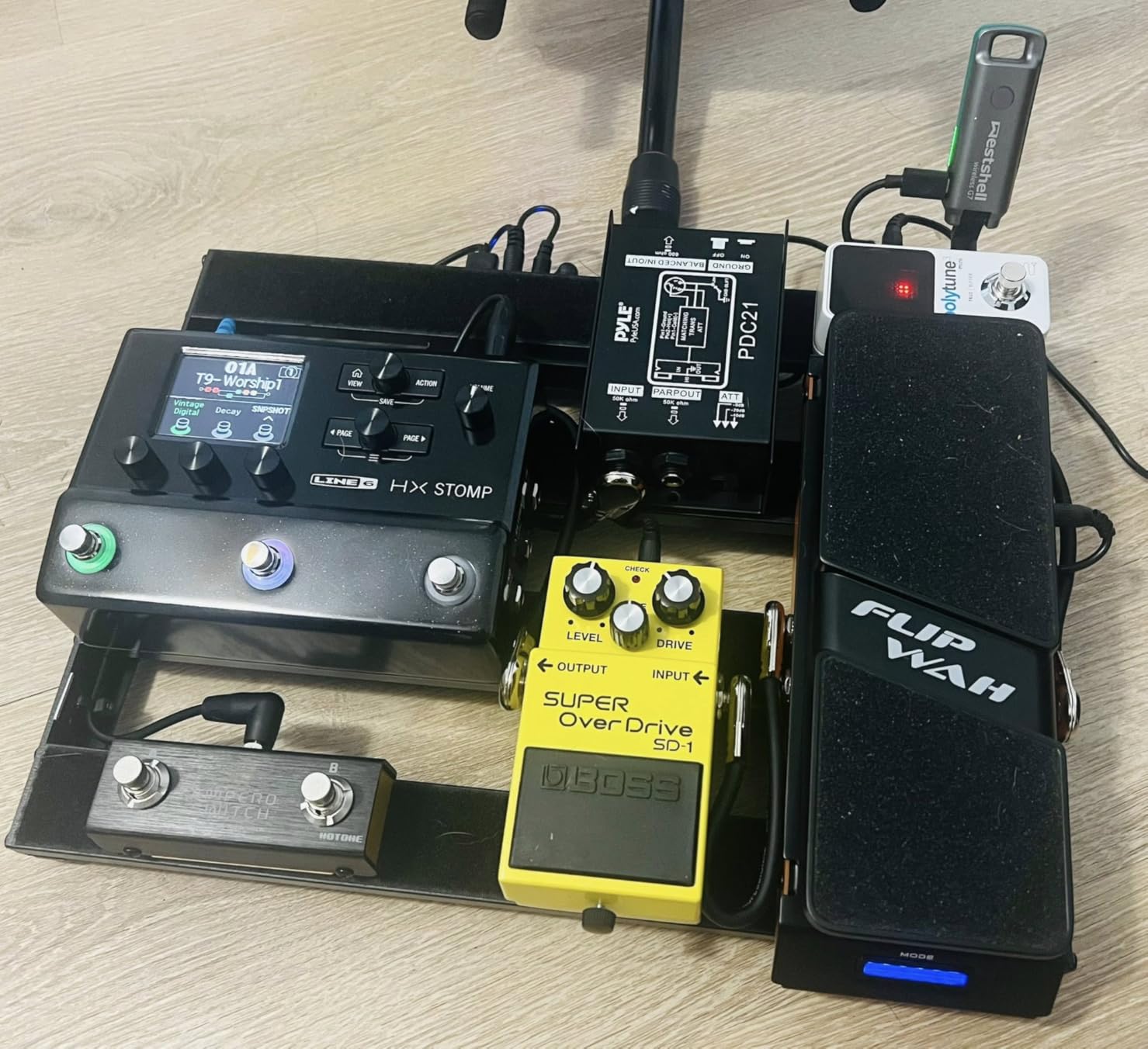
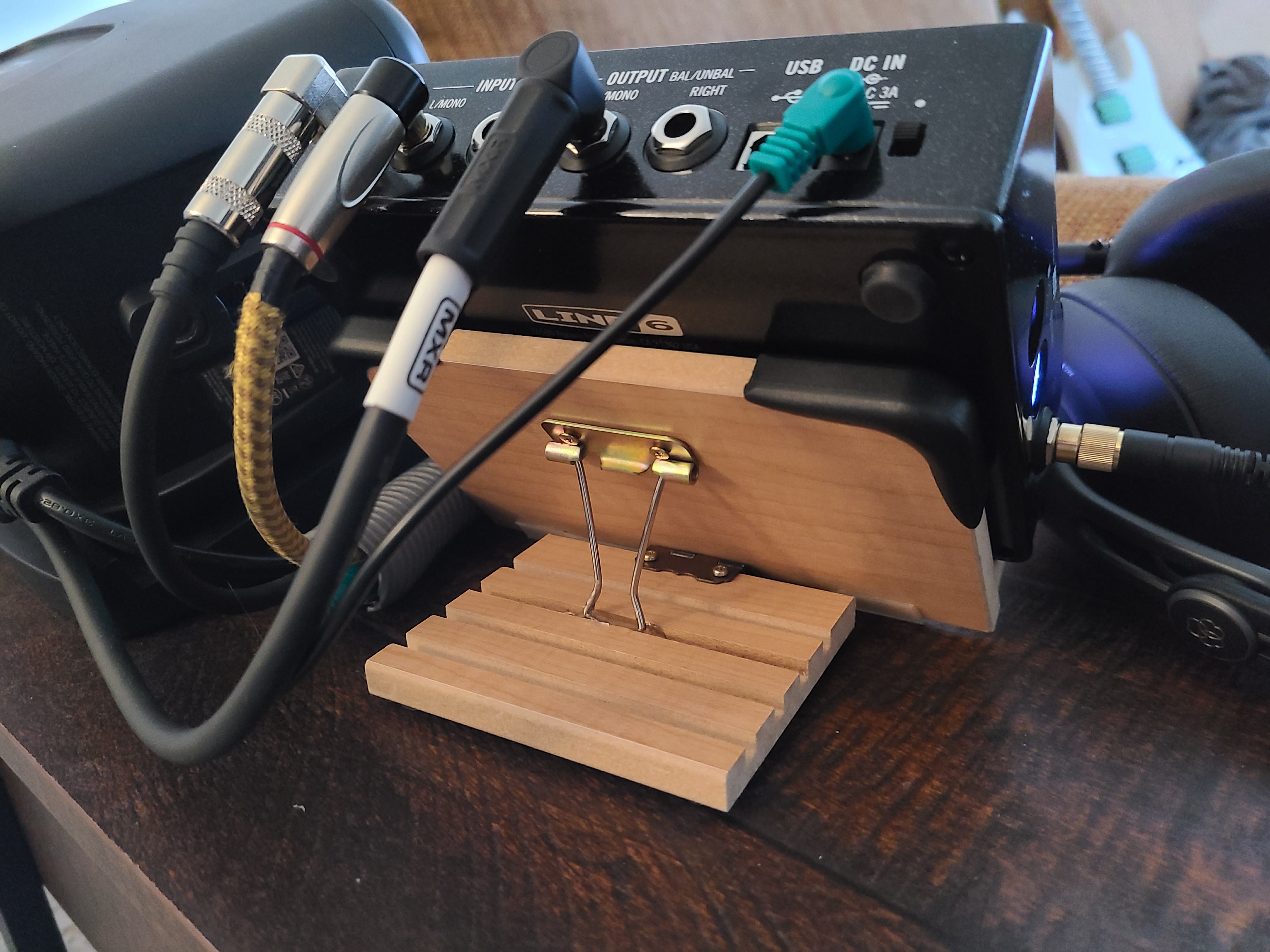
The unit is tiny at 6.7 inches long and weighs under 0.8 kg. It fits anywhere on a pedalboard. You get three capacitive-touch footswitches, color LED rings, and a TRS input for an external expression pedal or two extra footswitches. The TRS input is the killer feature for live players who want wah or volume control.
With up to six simultaneous amp, cab, and effect blocks you can build complex signal chains inside a single preset. There is also a full IR loader for third-party cabinet impulse responses, a stereo effects loop, and full MIDI in/out/thru. It pulls 300 mA at 9V DC.
Who the HX Stomp is for
The HX Stomp is built for players who want professional amp modeling and effects in the smallest possible package. It works beautifully on a tight pedalboard where space matters, and it doubles as a USB audio interface for direct recording. Bass players also love it for its dedicated bass amp models and cab sims. If you gig regularly and need a single box you can trust, this is the one I would buy with my own money.
Who should skip the HX Stomp
Beginners who want a plug-and-play experience should probably look at the BOSS GT-1 or Line 6 POD Go instead. The HX Stomp rewards players willing to spend time editing presets on the HX Edit software. Out of the box the stock presets are usable but not great. If you want a giant color screen and physical knobs for everything, the GX-100 or POD Go are easier on entry.
2. Line 6 POD Go – Best Value for Beginners
Line 6 POD Go Guitar Multi-Effects Pedal, Black
270+ HX models
Large color LCD
6 lb floor unit
Pros
- Best value for full-size unit
- Easy color screen interface
- USB recording built in
- Plenty of community presets online
Cons
- Only 4 effects per preset
- Some MIDI iOS quirks
The Line 6 POD Go sits in the sweet spot for players who want a full-size multi-effects processor without paying Helix money. With over 270 HX and legacy amp and effect models, the same DSP engine found in the HX Stomp and Helix lives inside this unit. I brought it to a rehearsal and a wedding gig last month, and the worship team leader bought one the next week.
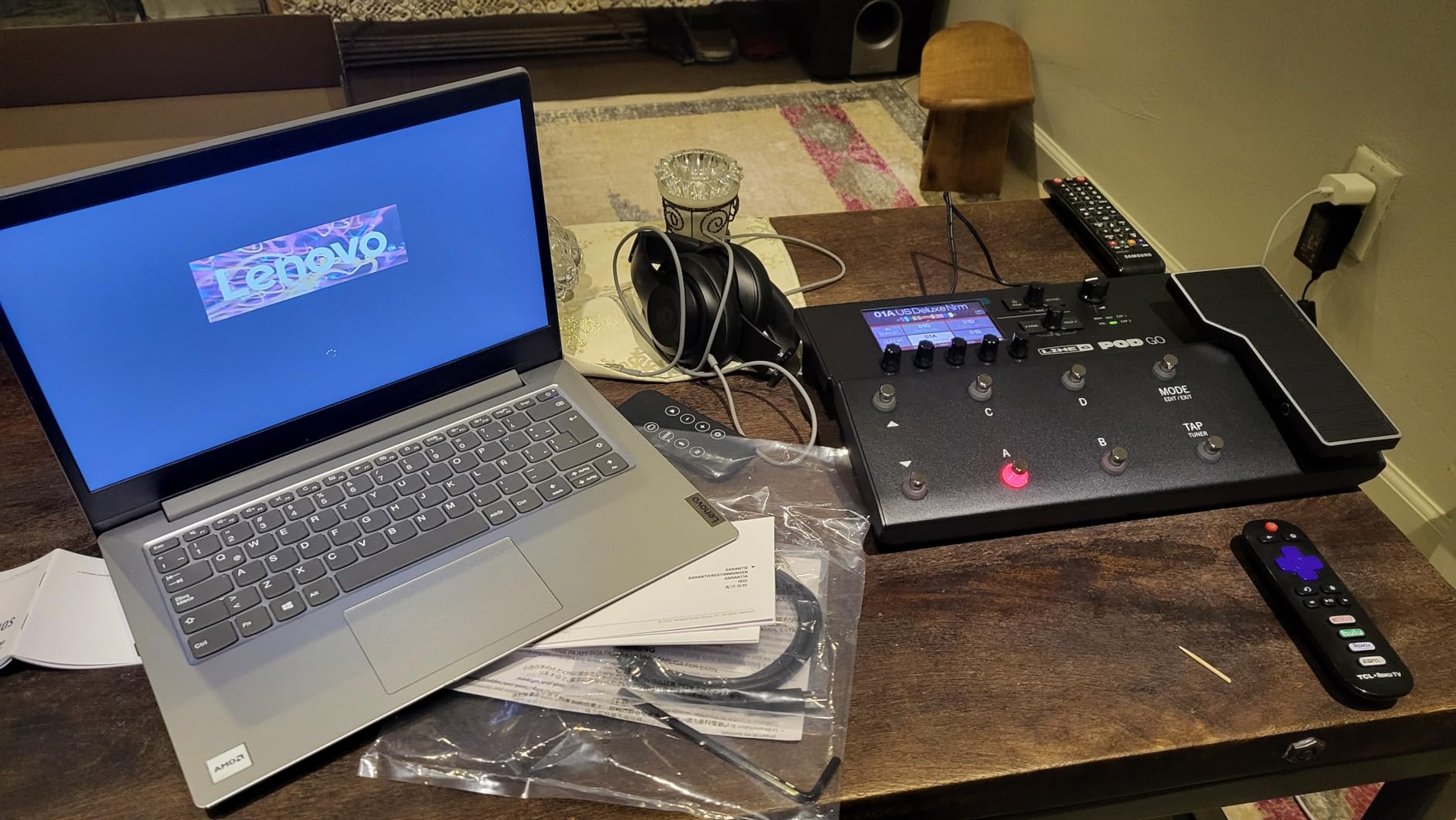
The large color LCD screen is the big upgrade over the HX Stomp. Where the Stomp relies on a small screen and three footswitches, the POD Go gives you a 4-inch display plus eight rugged footswitches and a cast-aluminum expression pedal. Editing is faster and easier. Beginners will not feel lost.
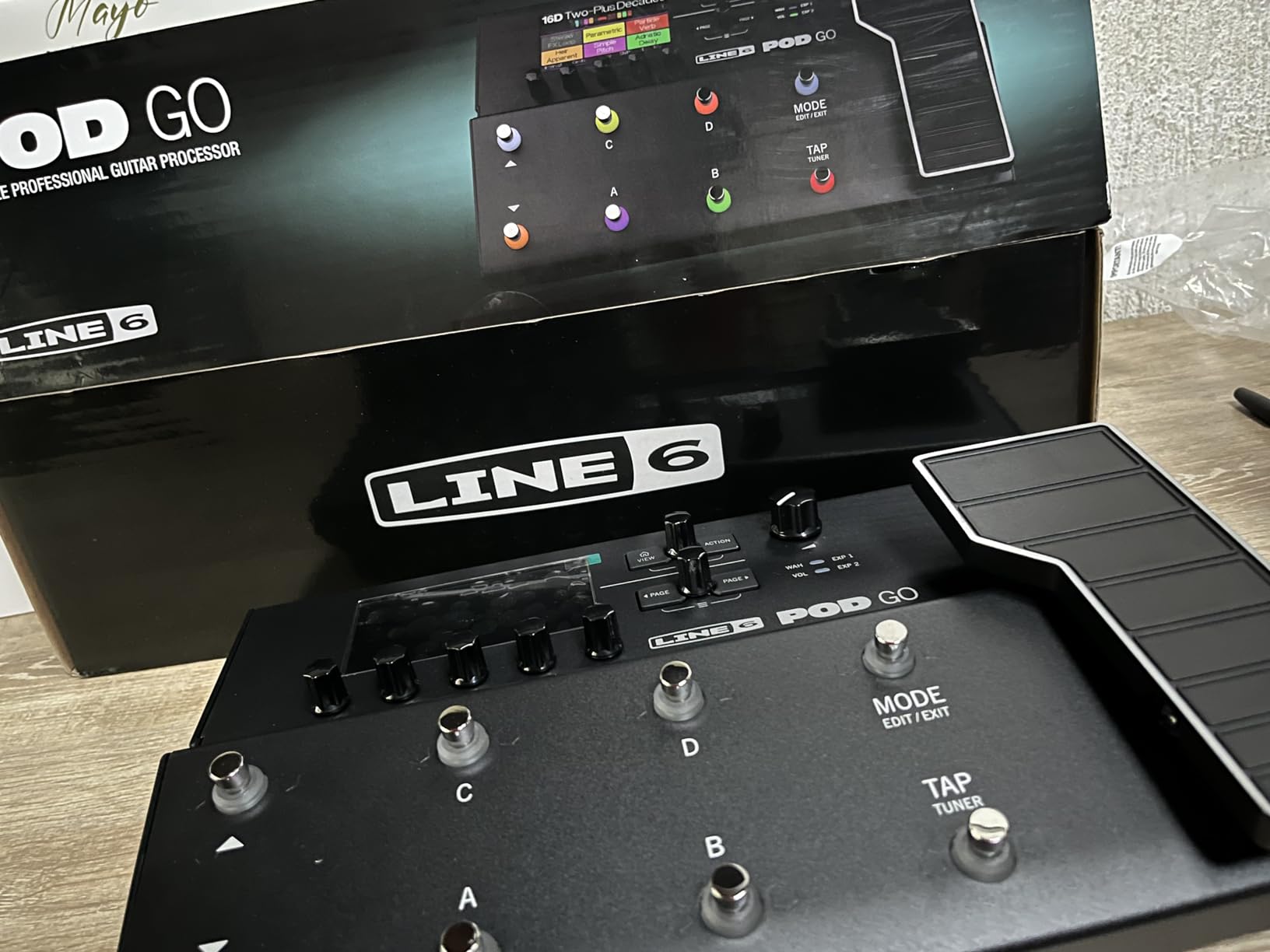
You also get a stereo effects loop for inserting outboard pedals into your signal chain, an expression pedal/footswitch input, third-party IR loading, and a USB-C connection that turns the unit into a 4-in/4-out audio interface for your DAW. The 270 mA draw at 9V means it plays nicely with most isolated pedalboard power supplies.
My favorite use case is running the POD Go straight into a PA system for worship services and small bar gigs. There is no need for a separate amp. You can route the XLR outputs to the board and get consistent sound every time. Forum users in r/Guitar and r/GuitarAmps repeatedly mention this is a workhorse for worship teams.
Who the POD Go is for
The POD Go is perfect for beginners who want to step up from a starter multi-FX like the BOSS GT-1, and for intermediates who want pro-grade tones without the size or cost of a Helix. Worship musicians, songwriters, and home recording guitarists will love it. The combination of a real floor expression pedal, full-color LCD, and generous preset storage makes it the easiest HX-series unit to pick up and play.
Who should skip the POD Go
If you need more than four simultaneous effects per preset, the POD Go will frustrate you. Power users building complex ambient soundscapes should look at the BOSS GX-100 instead. Some users also report MIDI hiccups when paired with iOS devices, so iPad-based rig users should test compatibility first.
3. BOSS GX-100 – Most Versatile Flagship Alternative
BOSS GX-100 Advanced Guitar Effects Processor
32 AIRD amps
170+ effects
Color touchscreen
Pros
- Flagship GT-1000 engine
- Touchscreen editing
- Tank-like metal build
- Sub-2ms latency
Cons
- Slight learning curve
- Drive tones need tweaking
- PDF-only manual
The BOSS GX-100 is the closest competitor to the Line 6 Helix family, and in some ways it pulls ahead. I tested the GX-100 against the HX Stomp and POD Go across the same song set, and the AIRD amp modeling felt more responsive to pick attack. Notes bloomed the way they do through a real tube amp.
Under the hood you get 24-bit AD and 32-bit DA conversion, 32-bit floating-point processing, and a 48 kHz sampling rate. That is high-end studio-grade spec. The 32 amplifier types cover everything from vintage Fender clean to modern high-gain. Add 170+ BOSS effects pulled from the flagship GT-1000 and you have a unit that can cover any genre.
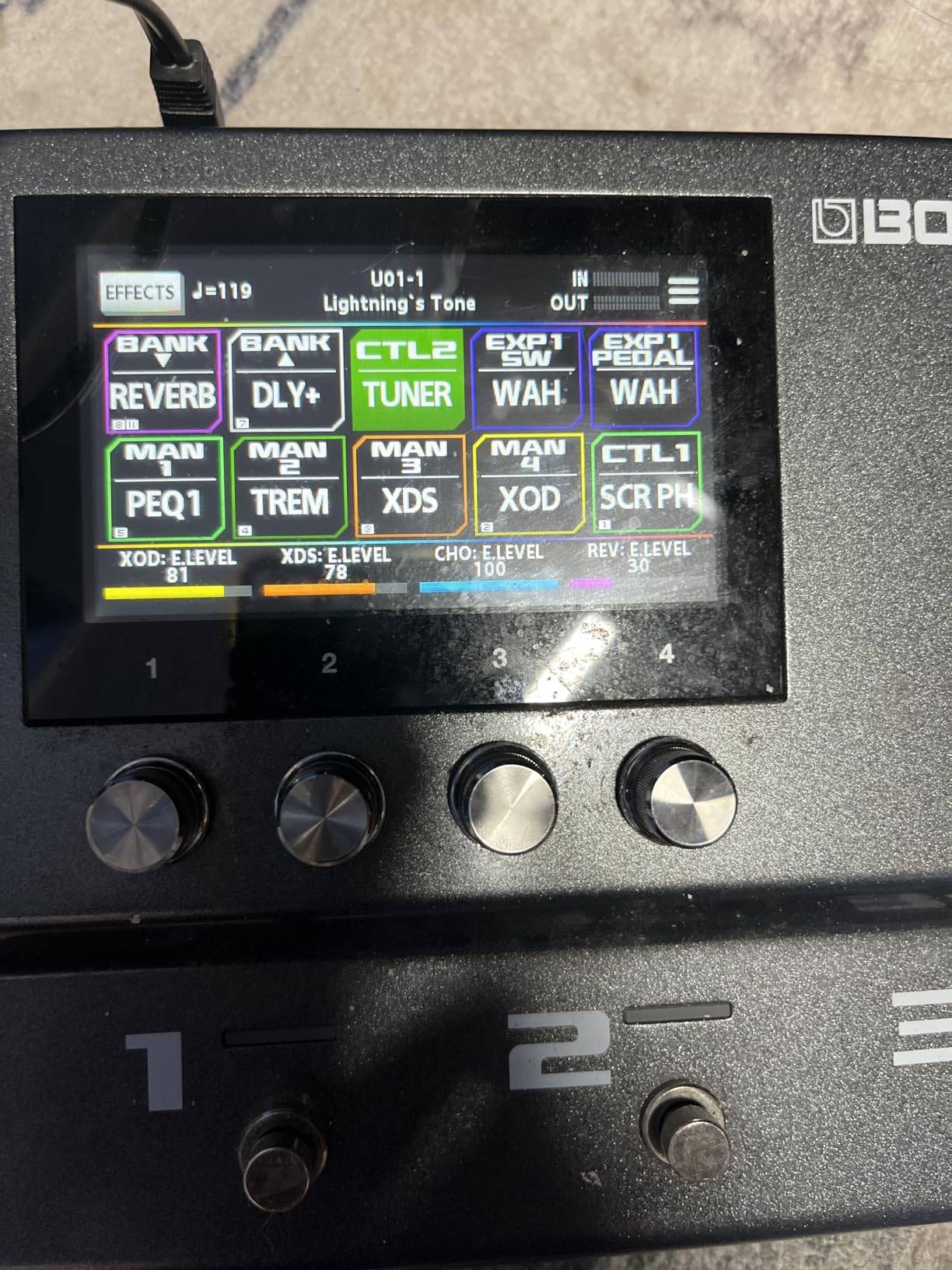
The color touch display is a joy to navigate. You can drag and rearrange effect blocks with your finger, which makes signal-chain design faster than scrolling through menus. The metal chassis feels like it could survive a tour bus drop. At 9.7 pounds it is the heaviest unit in this guide, but that weight is reassuring on stage.
Routing is highly flexible with 15 assignable blocks. You can split the signal, run parallel effects chains, and load third-party WAV speaker impulse responses. There is also an optional Bluetooth Audio MIDI Dual Adaptor for wireless audio streaming from your phone, which is great for practicing along with backing tracks.
Who the GX-100 is for
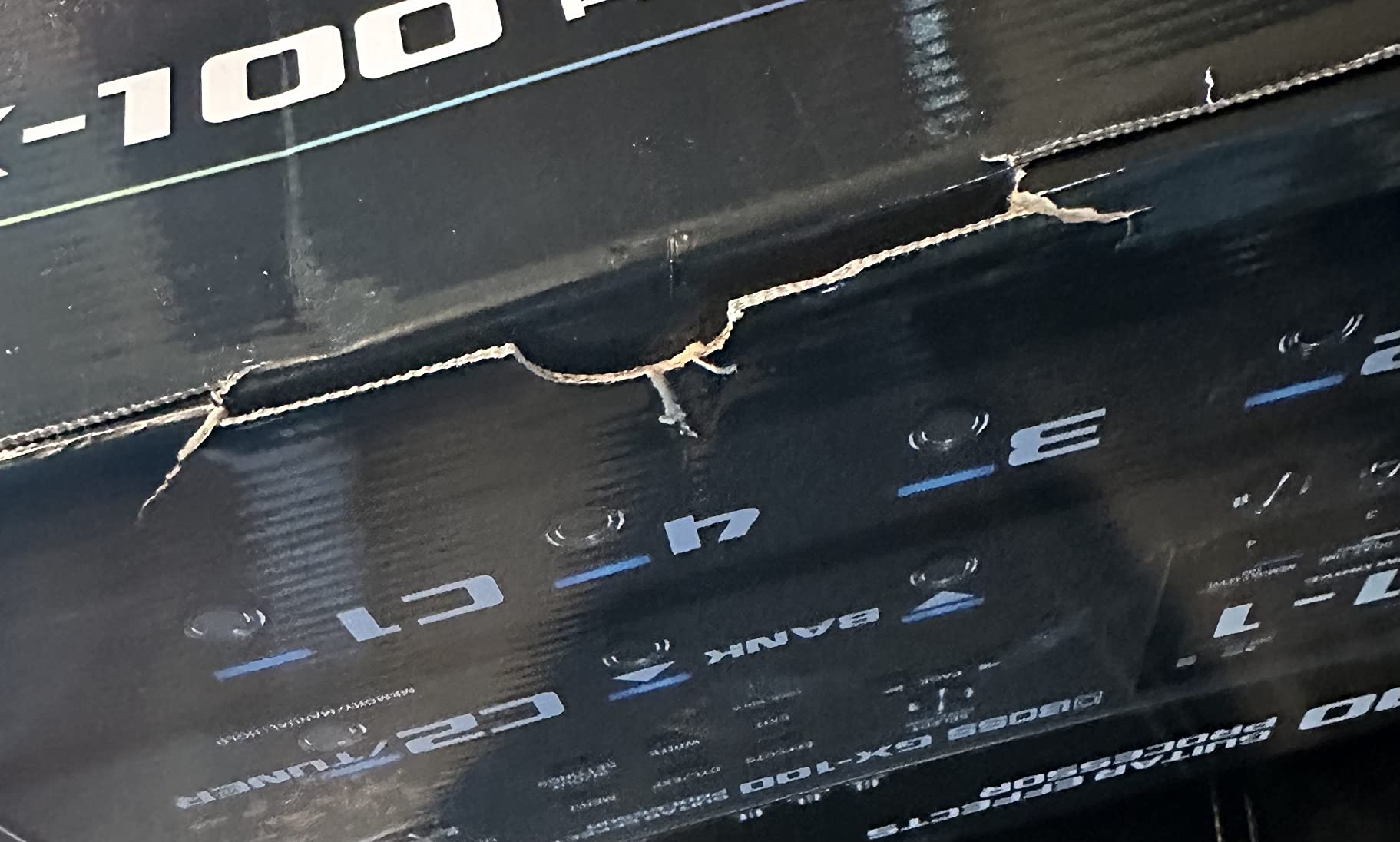
The GX-100 is built for serious players who want flagship-grade processing without the flagship price tag. Live performers will appreciate the responsive AIRD amp models and rugged build. Studio producers will appreciate the low latency and clean signal path. If you want a touchscreen interface and metal-chassis durability, this is the BOSS to buy.
Who should skip the GX-100
If you primarily play at home with headphones and want something more portable, the GX-100 is overkill. The 9.7 lb weight and full-size form factor make it less pedalboard-friendly than the HX Stomp or HX One. Players who already love the HX ecosystem have little reason to switch. The manual is PDF only, which is a minor annoyance.
4. BOSS GT-1 – Best Budget Multi-FX Under $250
BOSS GT-1 Compact Guitar Effects Processor
100+ effects
22 drives 27 amps
Battery-powered
Pros
- Unbeatable price
- Battery-powered mobile use
- BOSS Tone Studio support
- Headphone practice friendly
The BOSS GT-1 is the multi-effects pedal I recommend to every guitarist who asks, what is the best budget multi effects pedal? With 22 drive types, 27 amp models, and over 100 effects, the GT-1 punches way above its price tag. Over 2,000 user reviews back that up.
The biggest surprise for me was the battery operation. Four AA batteries give you up to seven hours of playing time. That means I can take this unit busking on the street, playing at a friend’s backyard BBQ, or rehearsing in a space without power outlets. Few multi-effects processors offer this kind of portability.
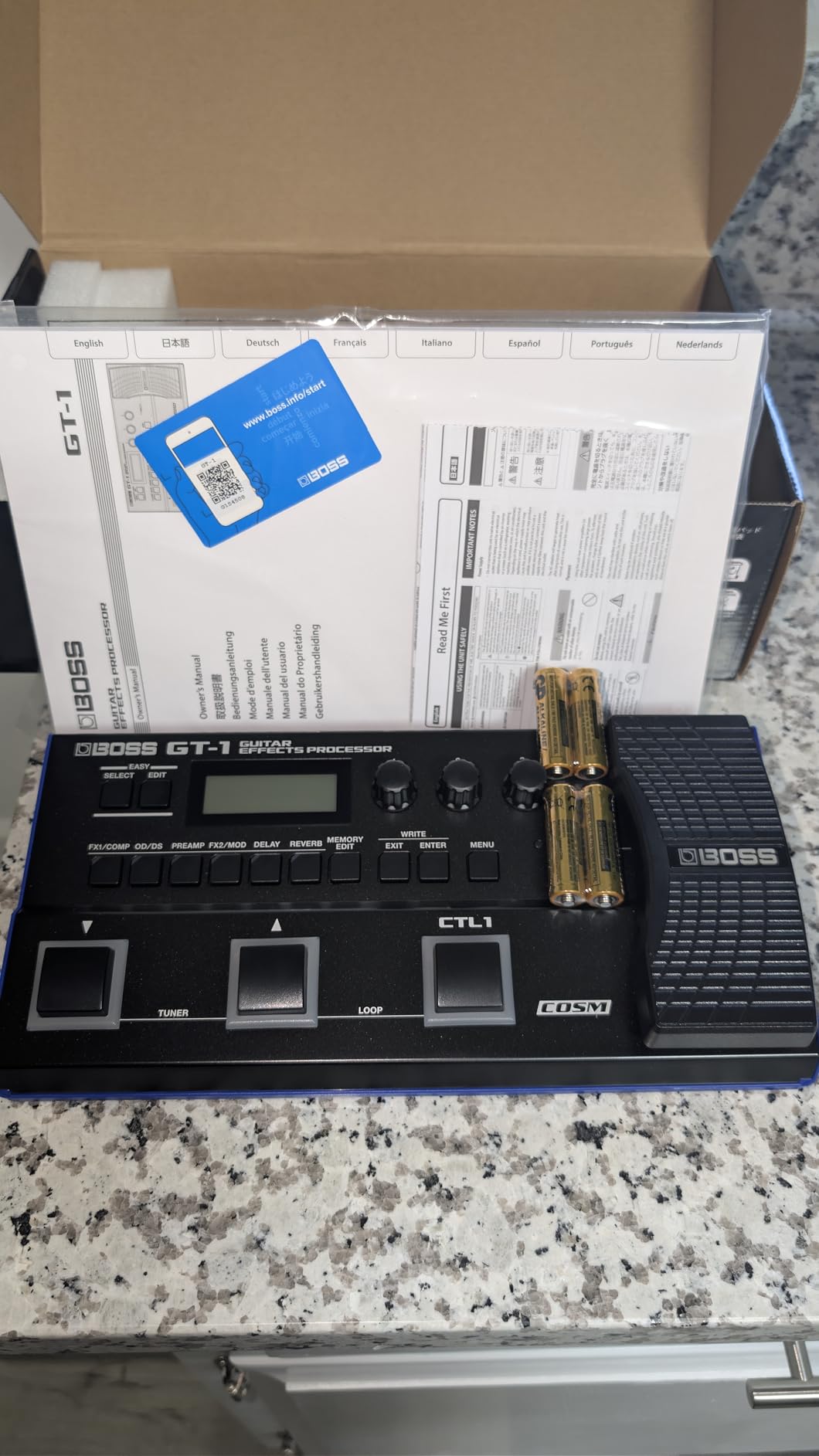
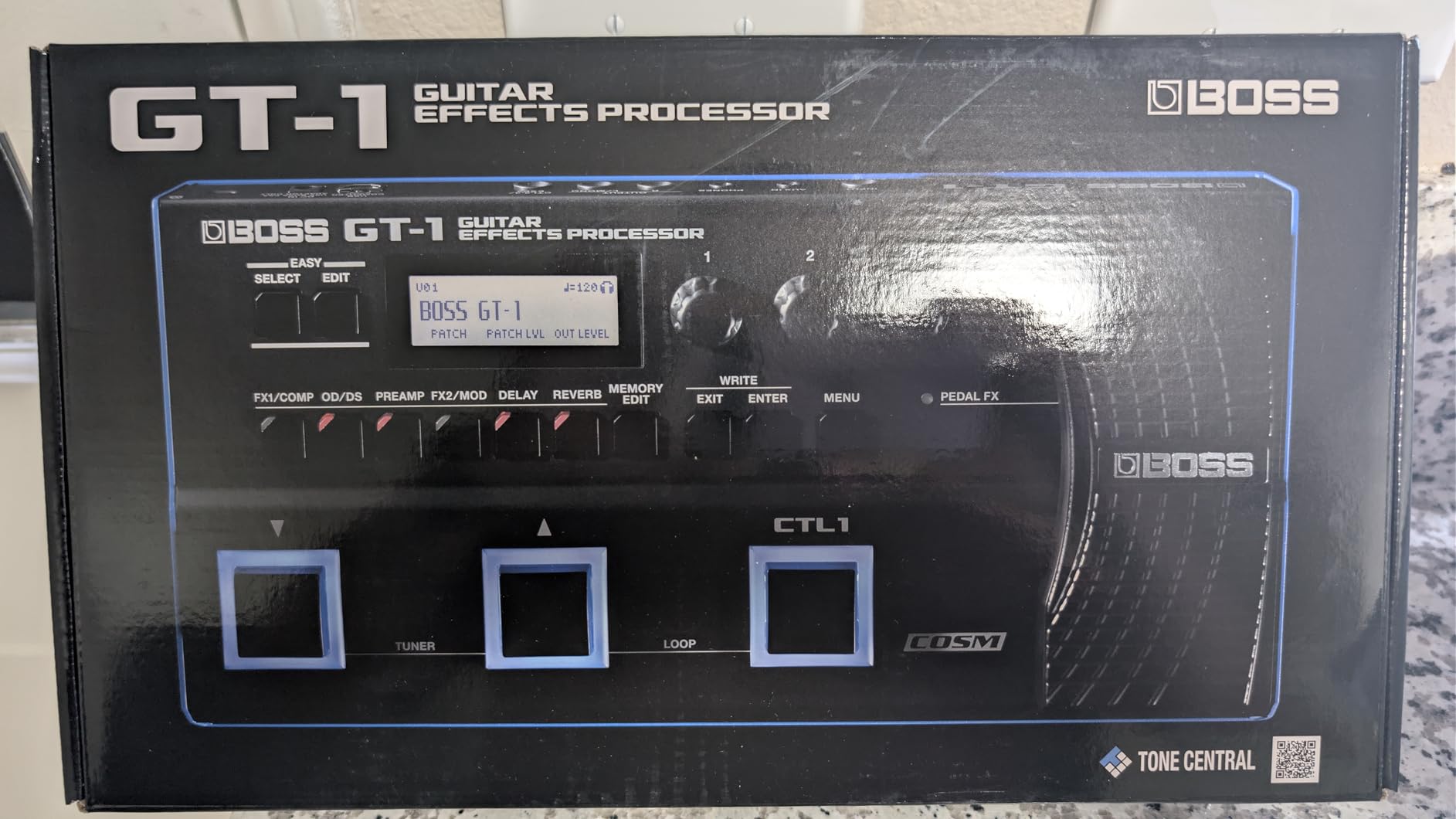
The GT-1 weighs only 1 kg and fits easily in a guitar bag. The chassis has rounded edges so it will not scratch your other gear. BOSS Tone Studio software lets you edit presets on your computer and download additional patches from BOSS Tone Central. The USB connection also makes it a basic audio interface for recording.
Sound quality is genuinely impressive once you configure the global EQ and output settings properly. Out of the box the tone can feel a bit dark or scooped. Spend 10 minutes dialing it in and the GT-1 will surprise you. For bedroom players with noise complaints from neighbors, the headphone output is a lifesaver.
Who the GT-1 is for
The GT-1 is perfect for beginners buying their first multi-effects unit. It is also excellent for acoustic players who want effects without hauling an amp. Buskers and street performers benefit from the battery operation. Anyone needing a backup unit for travel will appreciate the 1 kg weight. If you are on a strict budget and want BOSS quality, start here.
Who should skip the GT-1
The GT-1 has a 32-second looper, which is short for ambient players. There is no on/off power switch, so you must unplug the adapter or remove batteries to fully power down. The small screen cannot be dimmed. If you need pro-grade amp modeling for recording, step up to the BOSS GX-100 or Line 6 HX series.
5. BOSS ME-90 – Best Stompbox-Style Interface
BOSS ME-90 Guitar Multi-Effects Guitar Processor
11 AIRD amps
60 effects
Stompbox-style knobs
Pros
- Knob-per-function interface
- GT-1000 effect library
- Built like a tank
- Easy for pedal veterans
Cons
- Bluetooth adapter sold separately
- Distortion requires EQ work
The BOSS ME-90 is my favorite pick for guitarists who grew up with stompboxes and want a familiar feel. Instead of menu diving, every effect category has its own dedicated knobs. Want more delay feedback? Turn the knob. Want a longer reverb? Turn another knob. It is that simple.
Inside, the ME-90 runs 24-bit AD/DA and 32-bit floating-point processing at 48 kHz. You get 11 flagship-grade AIRD amp models and 60 effects pulled straight from the GT-1000. There is IR loading support for third-party cabinet impulses, plus a built-in effects loop for inserting your favorite analog pedals.
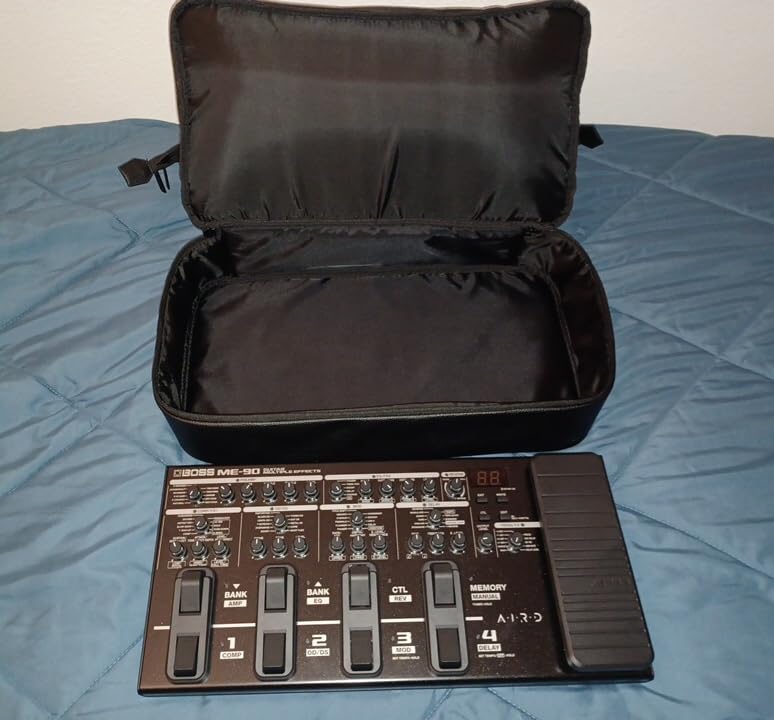
The 8 multi-function footswitches and redesigned expression pedal with toe switch give you full live control. You can also load up to 36 user patches to back up the 36 factory presets. The chassis is metal, and at 16 ounces the ME-90 is light enough for any pedalboard. The USB-C connection handles computer editing and audio interface duties.
Forum users consistently mention the ME-90 as the perfect middle ground between traditional pedals and a full digital processor. You get the immediacy of stompbox-style control with the depth of a modern multi-FX engine. For apartment practice, plug in headphones and the onboard amp modeling sounds studio-quality.
Who the ME-90 is for
The ME-90 is built for guitarists who want the tactile feel of stompboxes combined with modern modeling depth. Worship musicians and cover-band players will appreciate the easy preset switching. Home recording artists will appreciate the USB-C audio interface. Anyone coming from a pedalboard full of individual effects will find the ME-90 the easiest transition to a multi-FX unit.
Who should skip the ME-90
If you want wireless audio streaming from your phone, you will need to buy the BOSS Bluetooth Audio MIDI Dual Adaptor separately. Players who rely on aggressive high-gain tones may need to spend time EQing the distortion channels. If you want a flagship workhorse, the GX-100 has more routing depth and amp types.
6. Line 6 HX One – Best Single-Effect Swiss Army Knife
Line 6 HX One Multieffects Processor
250+ HX effects
MIDI DIN
2 lb compact
Pros
- Great drive tones
- Compact 2 lb footprint
- MIDI for live rigs
- Adjustable input impedance
Cons
- One effect at a time
- Smaller non-color display
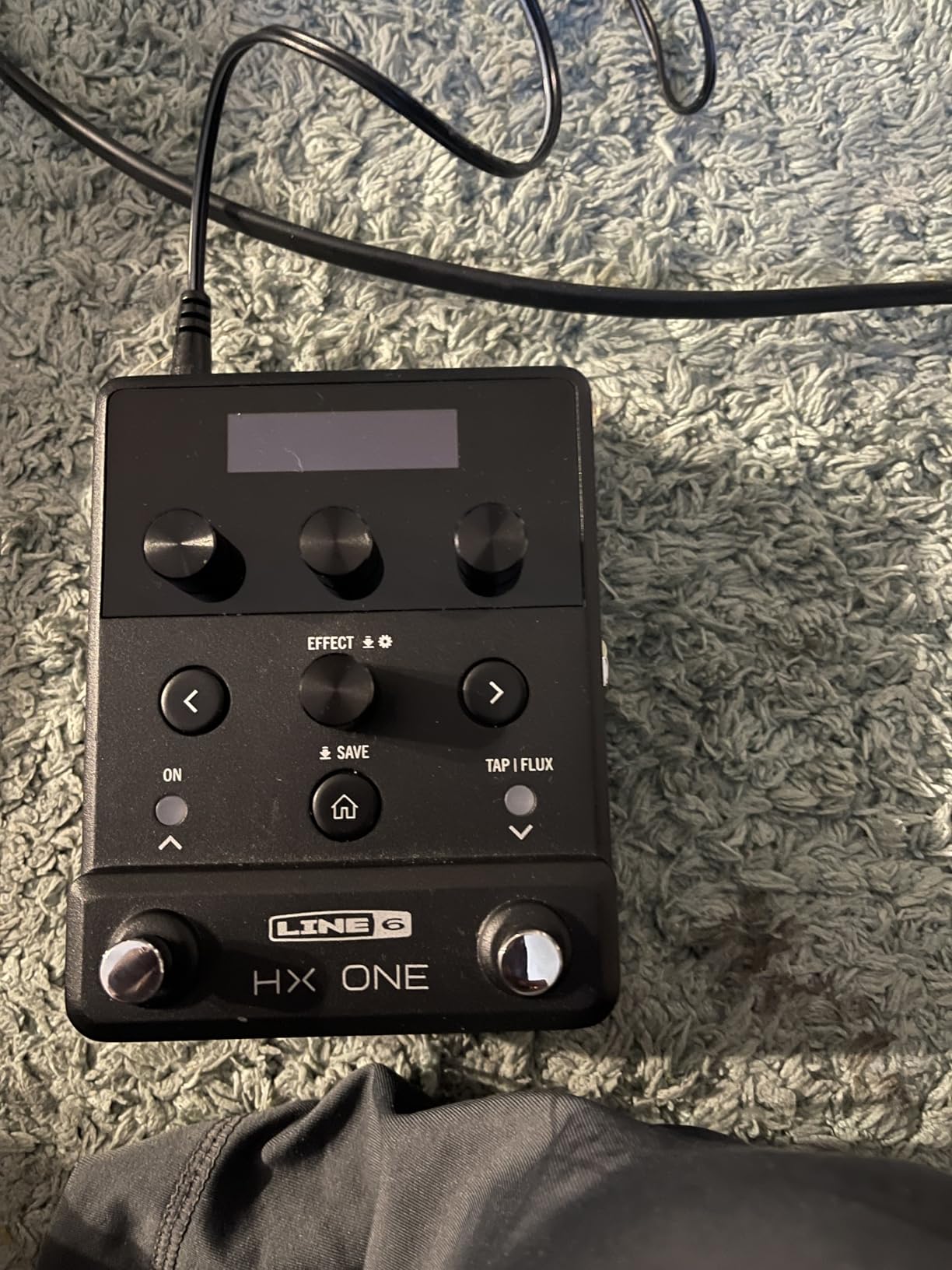
The Line 6 HX One is the answer to a question many guitarists ask, do I really need a full multi-FX, or just a great single effects box? With over 250 effects taken from the HX family processors, the HX One gives you one superb effect at a time in a pedalboard-friendly 2 lb chassis.
The Flux Controller is the standout feature. It automates parameter changes over time, so you can program a slow wah swell, a rhythmic delay chop, or a swelling volume fade without touching the pedal. That is huge for ambient players and studio producers.
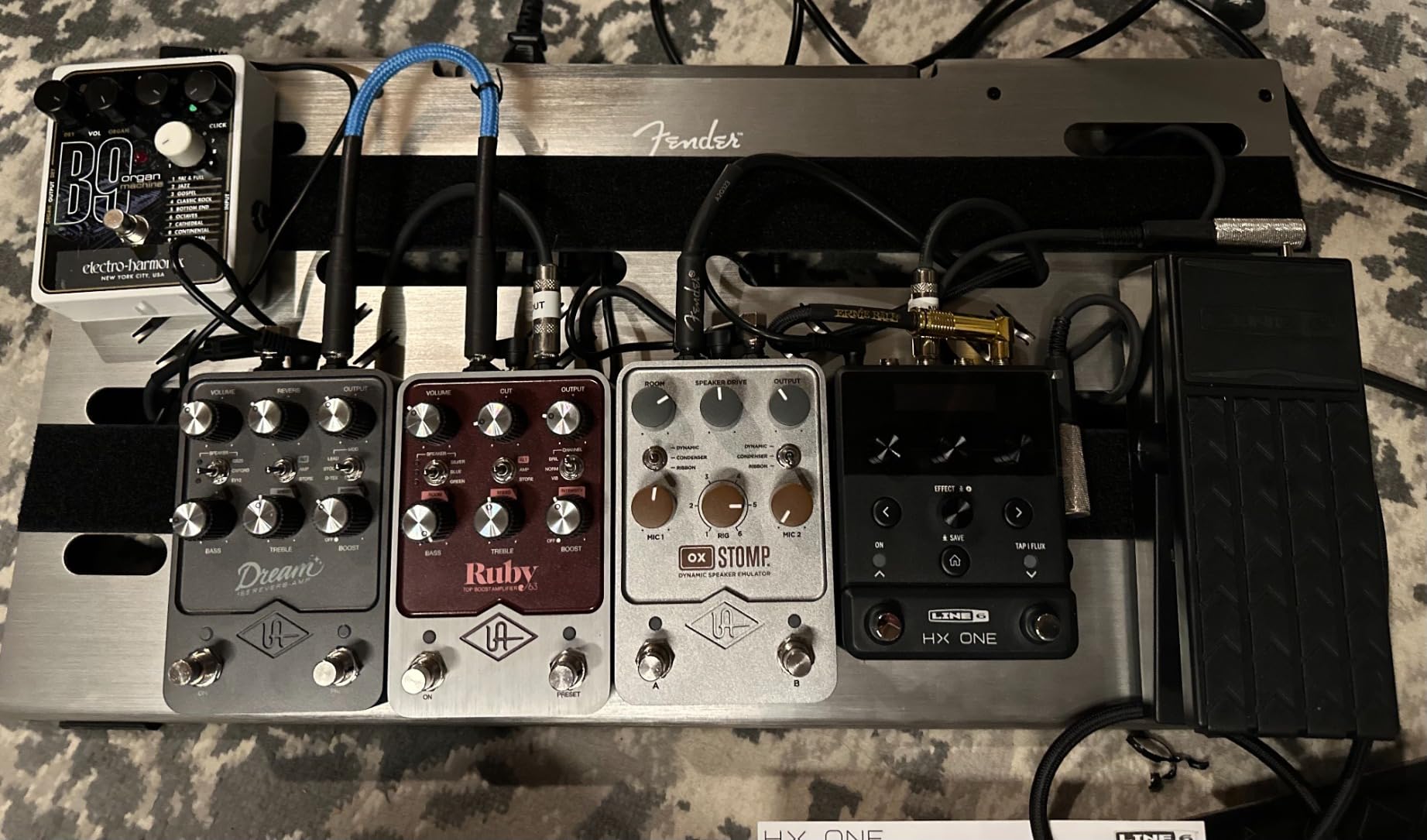
The HX One supports adjustable input impedance so you can match the unit to single-coil or humbucker pickups for the best tone. MIDI DIN and USB-C give you full integration with modern pedalboards and computer rigs. There are 128 preset slots, more than enough for any setlist.
I found the HX One worked best as a utility pedal on my larger board. I use it for the right wah and a special delay that I do not want to dedicate a full multi-FX block to. The drive tones also sounded excellent, on par with dedicated distortion pedals I have owned.
Who the HX One is for
The HX One is ideal for guitarists with an existing pedalboard who want to add a versatile single-effects box. Live performers who use MIDI switching systems will love the MIDI DIN integration. Tone-conscious players who only want one premium effect at a time will appreciate the focused approach. If you have limited pedalboard space, the 2 lb compact footprint makes sense.
Who should skip the HX One
If you want multiple simultaneous effects in one preset, the HX One is not for you. It runs one effect at a time by design. The display is monochrome and not as large as the GX-100 or POD Go. Players wanting preset-based amp modeling should look at the HX Stomp or ME-90 instead. Some Amazon buyers have reported pricing inconsistencies, so check the listing carefully.
7. NUX MG-30 – Best Bang-for-Buck With Color LCD
NUX MG-30 Guitar Multi-Effects Pedal Guitar/Bass/Acoustic Amp Modeling Processor, IR Loader, White-Box Algorithm, EFX Routing, 4” Color LCD, NMP-2 Footswitch Included
35 amp models
56 effects
4-inch color LCD
Pros
- Excellent value
- Acoustic amp models included
- Custom IR loader
- Includes NMP-2 footswitch
Cons
- Tone colors signal even with effects off
- Stereo looper limited to 30s
The NUX MG-30 is the unit I recommend to guitarists who want a feature-rich multi-effects processor without spending $500 or more. With 35 amp models including acoustic and bass options, 56 effect modules, and a 4-inch color LCD, the MG-30 punches well above its price.
Under the hood, two NXP RT processors handle the DSP work with 32-bit 2-channel AD/DA converters. The TS/AC-HD modeling algorithm delivers detailed response across the playing range. There is a 1024-sample IR loader with ultra-low 2ms latency. The 110 dB dynamic range is impressive at this price point.
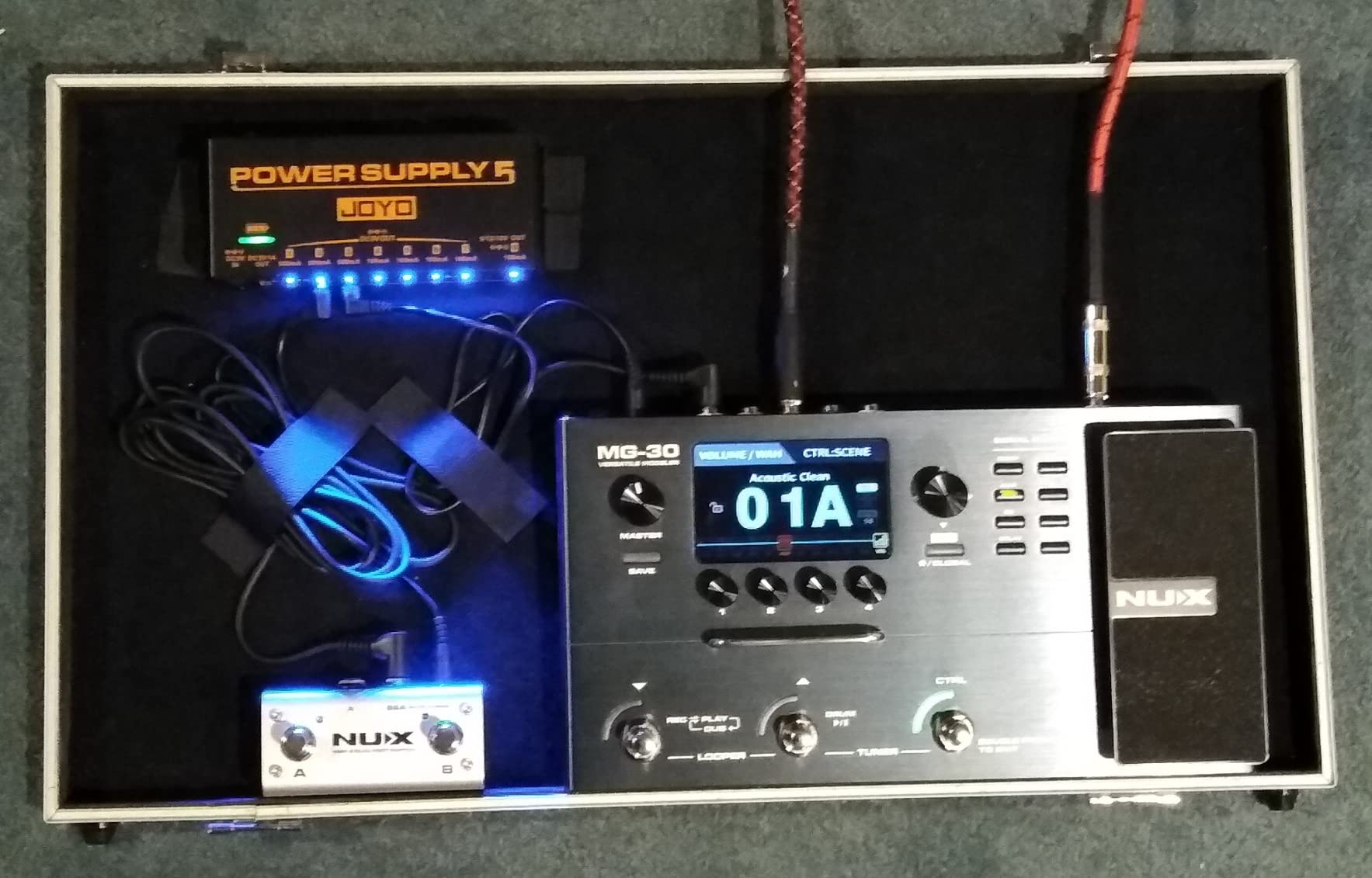
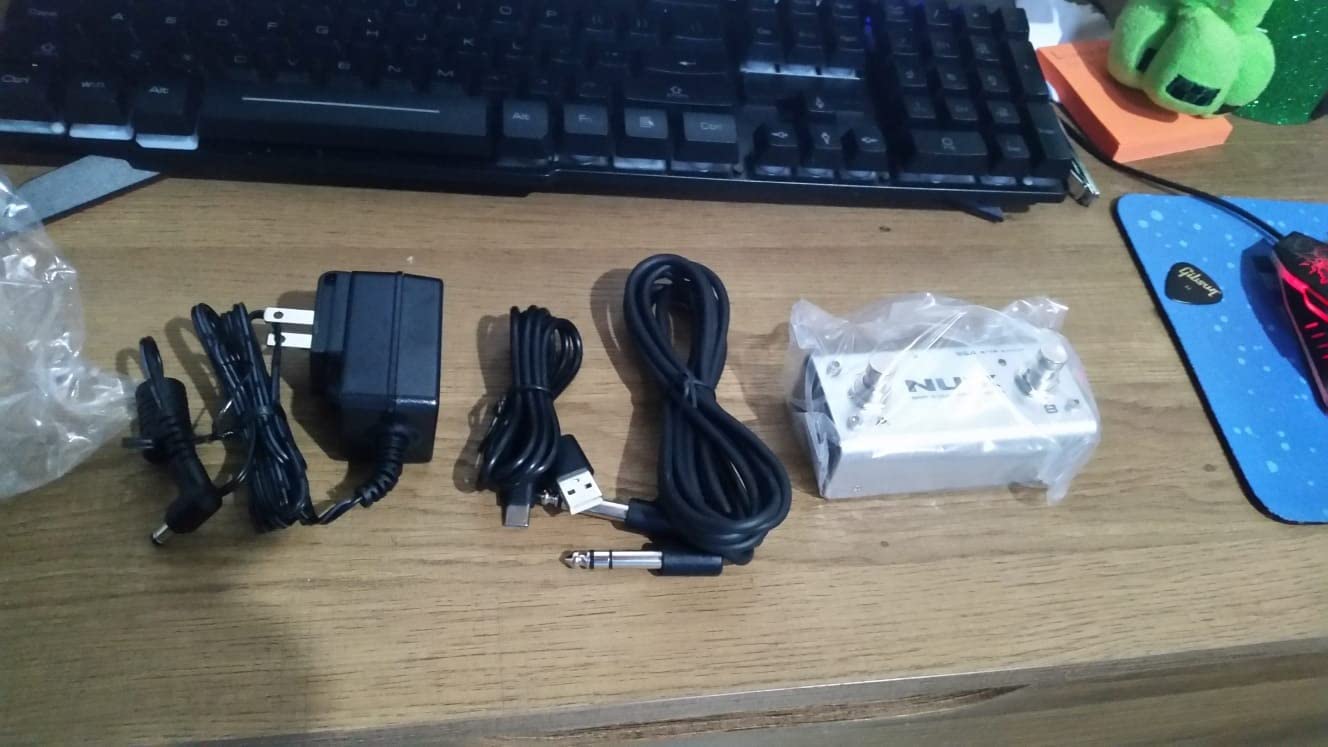
The MG-30 ships with the NMP-2 dual footswitch, a feature competitors often leave out at this price. You also get 4 cable method support, USB audio interface functionality, and 85 assignable MIDI parameters. Acoustic guitar players should pay close attention here. The 2 dedicated acoustic amp models are some of the best I have heard in a sub-$400 processor.
Forum users on Reddit consistently call the MG-30 the best bang-for-buck multi-FX available. Firmware updates are frequent, which NUX has used to add features and improve existing ones. The 5-way encoder makes on-the-fly editing painless.
Who the MG-30 is for
The MG-30 is ideal for budget-conscious guitarists who want modern features without modern prices. Acoustic players get dedicated amp models and IR support. Bedroom producers get a USB audio interface and free firmware upgrades. Multi-instrumentalists benefit from bass and acoustic models. If you want a feature-rich processor and you do not need flagship amp modeling, this is a smart buy.
Who should skip the MG-30
Players who want true bypass should look elsewhere. The MG-30 always buffers the signal, which can subtly color your tone even with effects off. The stereo looper is limited to 30 seconds. Touring professionals may want a more road-rugged chassis. The volume knob affects gain, which can confuse new users until they learn the layout.
8. IK Multimedia TONEX Pedal – Best AI Amp Modeling
IK Multimedia TONEX Pedal: Stereo multi-effects guitar and bass pedal with 150 Presets, 15 Pre/Post FX, Tuner, Tap Tempo, Headphone Out, Software Player and Editor
150 AI presets
15 Pre/Post FX
ToneNET library
Pros
- Most realistic amp modeling
- VIR cabinet engine
- Massive ToneNET library
- Includes TONEX MAX software
Cons
- Steep learning curve
- No screen on unit
- Can be noisy with single coils
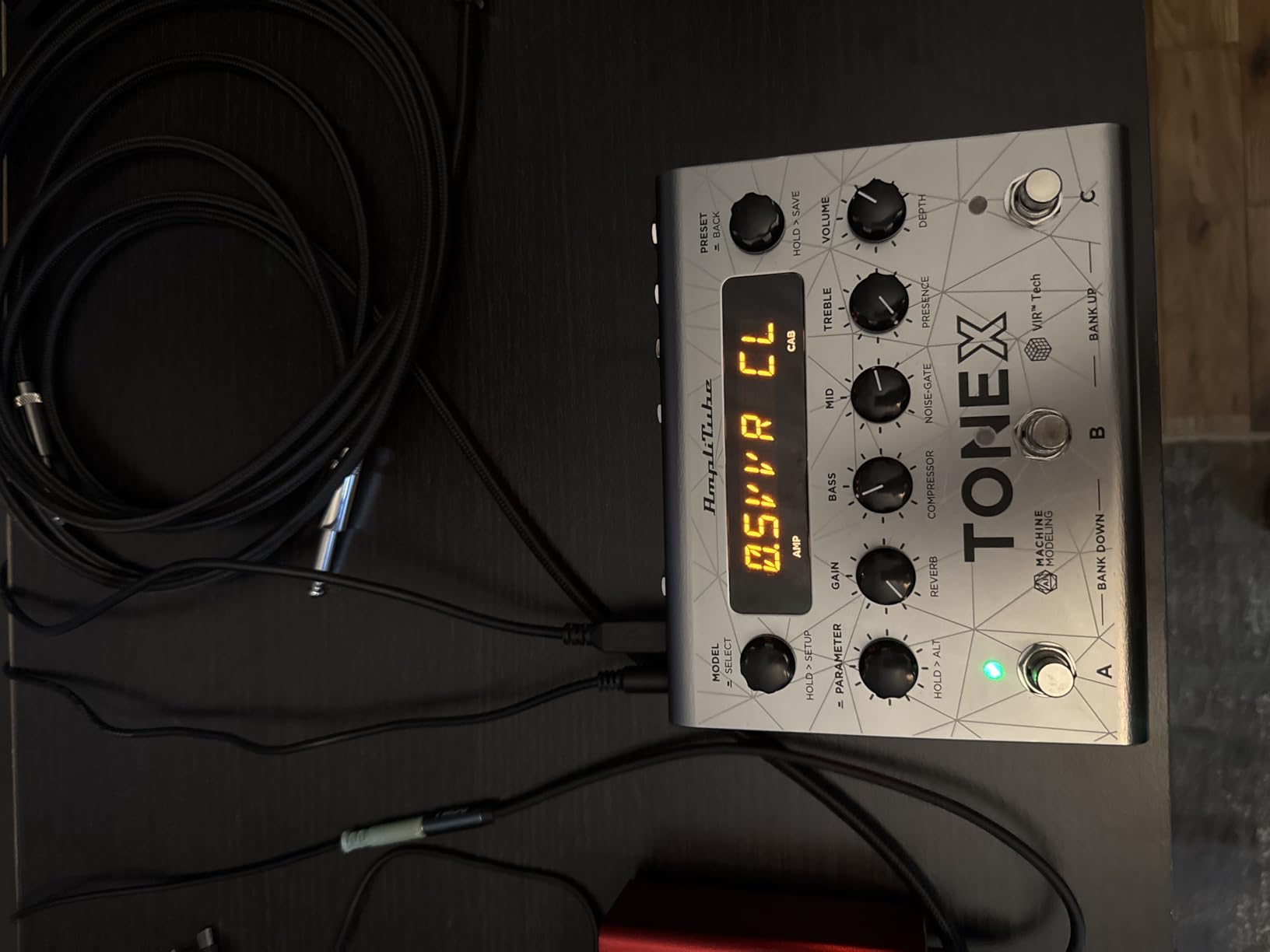
The IK Multimedia TONEX Pedal is the most unique entry in this guide. Where most processors model amps with traditional DSP algorithms, the TONEX uses AI Machine Modeling trained on real amp profiles. The result is, in my opinion, the most authentic amp sound currently available in a compact pedal.
The unit ships with 150 presets covering clean, crunch, and high-gain tones. You also get access to ToneNET, IK Multimedia’s online library with thousands of user-uploaded amp models. There is a good chance someone has already profiled your dream amp and made it available for free download.
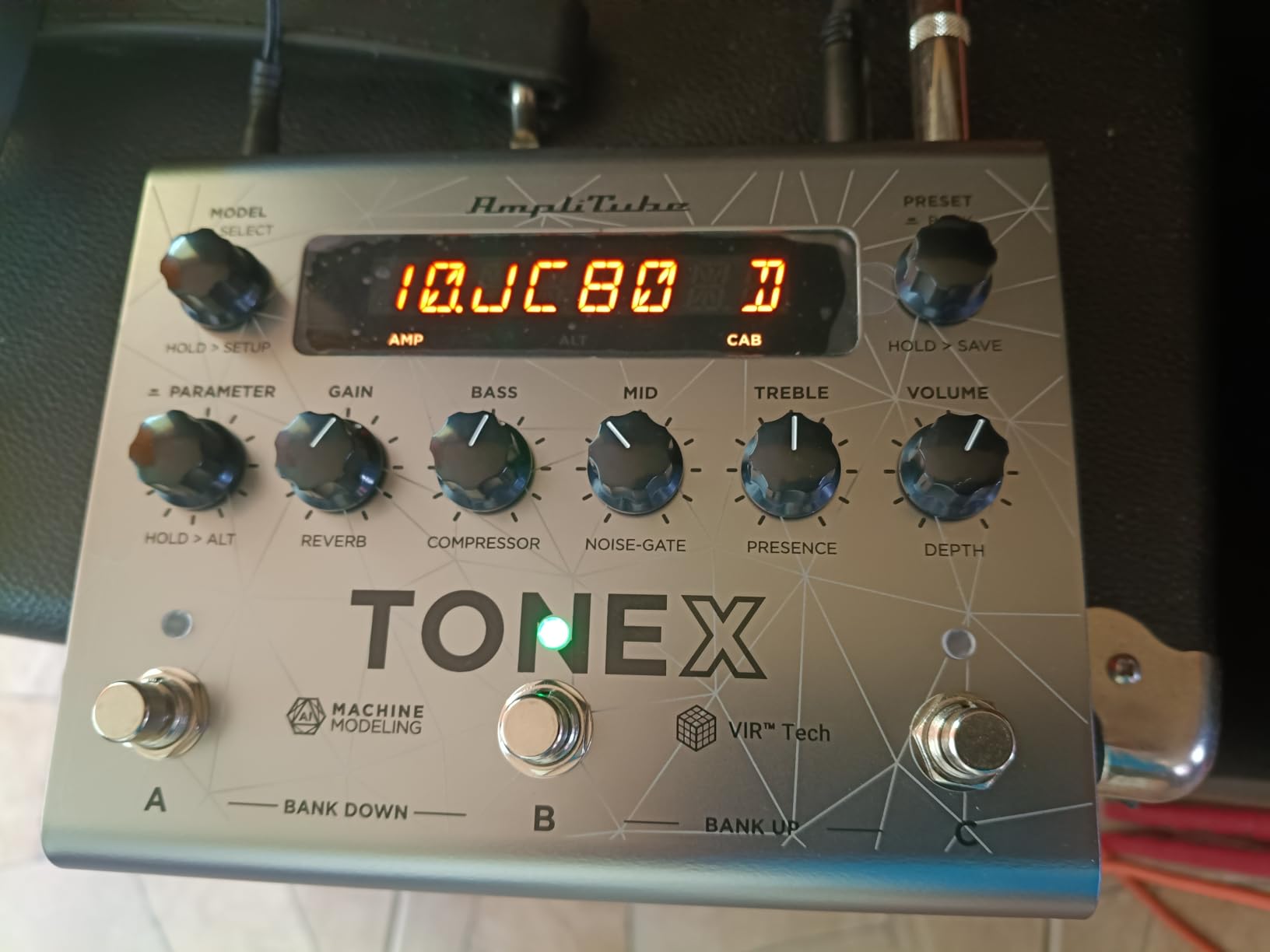
The 15 pre and post effects give you delay, reverb, modulation, compression, and overdrive options. The VIR (Volumetric Impulse Response) engine simulates speaker cabinets with multi-IR technology for studio-grade realism. There is a built-in custom IR loader, stereo outputs, and a headphone jack for silent practice. The included TONEX MAX Mac/PC software lets you organize presets and create your own AI amp profiles.
With over 566 user reviews averaging 4.5 stars, the TONEX has built a strong community. The 2-year warranty and the included Amplitude 5 software make this an even better value. At 1280 g it is solidly built for stage use.
Who the TONEX is for
The TONEX is built for tone-obsessed players who care more about amp authenticity than menu simplicity. Studio producers will love the AI profile workflow. Tinkerers who enjoy building their own amp models from scratch will thrive. If you want the most realistic amp modeling in a compact pedal and you are willing to learn the workflow, this is the one to beat.
Who should skip the TONEX
Single-coil players should test for noise before buying. Some users report hum with Strat-style pickups. There is no screen or encoder knob on the unit itself, which means most editing happens in the software. Live players who hate menu diving should look at the BOSS ME-90 or Line 6 HX Stomp instead. The desktop app workflow can feel clunky.
Buying Guide: How to Choose the Best Guitar Multi Effects Processor
Picking the right multi-effects processor depends on how and where you play. After testing all eight units in this guide, here are the four factors that matter most.
Match the Processor to Your Use Case
Live performers need reliability, easy footswitch access, and good stage tone. The Line 6 HX Stomp and BOSS GX-100 are my top picks for the working musician. Bedroom players and home recording artists should look at the NUX MG-30 or IK Multimedia TONEX for studio-grade tone on a budget. Buskers and street performers benefit most from battery-powered units like the BOSS GT-1, which runs up to seven hours on AA batteries. Acoustic guitarists should prioritize processors with dedicated acoustic amp models, such as the NUX MG-30.
Amp Modeling vs Effects Quality
Amp modeling determines how authentic your clean, crunch, and lead tones sound. Effects quality determines how versatile your palette of modulation, delay, and reverb tools is. The Neural DSP Quad Cortex (not in our test list but worth mentioning) and IK Multimedia TONEX lead in amp modeling realism. The Line 6 HX family and BOSS AIRD technology offer the best balance of amp modeling and effects variety. If you mainly need great amp tone with simple effects, the TONEX is hard to beat. If you want massive flexibility for ambient and experimental music, the Line 6 HX Stomp offers six simultaneous blocks per preset.
I/O and Connectivity Considerations
Check the I/O before you buy. For direct-to-PA live setups, XLR outputs are essential. The BOSS GX-100 and Line 6 POD Go both have XLR outs. For home recording, a USB audio interface saves you from buying a separate interface. All eight processors in this guide offer USB connectivity, though the NUX MG-30 and BOSS ME-90 use modern USB-C. If you want to add external pedals, look for stereo effects loops, which the POD Go, GX-100, and ME-90 all include. MIDI support matters for players integrating with larger switching systems, and the HX One, MG-30, and GX-100 deliver.
Pedalboard Size and Power
Power consumption is rarely discussed in competitor guides, so I will cover it here. The Line 6 HX Stomp pulls 300 mA at 9V. The POD Go pulls 270 mA. The HX One draws 500 mA. The BOSS GT-1 and ME-90 both pull 300 mA. The IK Multimedia TONEX is the most efficient at 200 mA. Plan your isolated power supply accordingly. For pedalboard space, the HX Stomp at 6.7 inches and the TONEX at 5.6 inches are the most compact options. The full-size units like the GX-100 and POD Go need more room but reward you with better screens and physical controls. The BOSS GT-1 stands alone as the only battery-powered option in this roundup, which gives it unique mobile use cases.
Frequently Asked Questions
What is the best guitar multi-effects processor?
The Line 6 HX Stomp is our top pick for most guitarists thanks to its compact size, 300+ HX effects and amp models, six simultaneous blocks per preset, and reliability on stage and in the studio. For players wanting a full-size touchscreen unit, the BOSS GX-100 is an excellent alternative. For pure amp modeling realism, the IK Multimedia TONEX Pedal leads the pack with AI Machine Modeling.
Are multi-effect guitar pedals worth it?
Yes, for most modern guitarists multi-effects pedals are absolutely worth it. They replace an entire pedalboard with one unit, offer consistent tone for live performance, include USB audio interface functionality for home recording, and typically cost less than buying multiple individual stompboxes. Beginners get a complete rig in one box. Professionals get a reliable backup or streamlined main rig. The only scenario where individual pedals still win is when you need analog warmth, true bypass, or a specific boutique tone.
What is the best budget multi-effects pedal?
The BOSS GT-1 is the best budget multi-effects pedal under $250. It includes 22 drive types, 27 amp models, and over 100 effects, plus battery-powered operation for up to 7 hours of mobile play. The NUX MG-30 is the best value in the $300 to $400 range, with 35 amp models, 56 effects, a 4-inch color LCD, and dedicated acoustic amp models.
What 5 pedals should every guitarist have?
A solid foundational pedalboard typically includes: 1) A noise gate or compressor to clean up your signal, 2) An overdrive or boost for adding warmth and pushing the front of an amp, 3) A distortion or high-gain pedal for rock and metal tones, 4) A delay pedal for echoes and ambient textures, and 5) A reverb pedal for adding space and depth. A multi-effects processor like the Line 6 HX Stomp or BOSS ME-90 covers all five categories in one unit.
What is the best guitar processor in 2026?
In 2026 the best guitar multi-effects processor depends on your needs. For stage use, the Line 6 HX Stomp remains the benchmark for compact professional tone. For studio realism, the IK Multimedia TONEX Pedal leads with AI Machine Modeling. For a budget-friendly all-rounder, the BOSS GT-1 is unbeatable. The Neural DSP Quad Cortex, while not in our Amazon-sourced test list, is widely considered the flagship reference for premium tone.
Final Verdict
After testing eight of the best guitar multi effects processors available in 2026, the Line 6 HX Stomp remains my top recommendation. It combines pro-grade HX amp modeling with a pedalboard-friendly footprint, MIDI support, and reliable build quality that has held up across dozens of gigs. For budget shoppers, the BOSS GT-1 delivers BOSS quality at a price that beginners can afford. For studio producers chasing authentic amp tone, the IK Multimedia TONEX Pedal offers AI modeling that no competitor matches. Whatever your playing style, the best guitar multi effects processors in 2026 give you a complete rig in a single box, and there has never been a better time to make the switch.