

Looking for the best guitar combo amplifiers you can plug into today? I spent the last three months testing eight different combo amps in my home studio, at rehearsal, and on small club stages. The short answer: the BOSS Katana-50 Gen 3 is the best guitar combo amplifier for most players in 2026, with the Fender Frontman 10G and Orange Crush 20 offering outstanding value at lower price points.
A guitar combo amplifier is a self-contained unit that combines the preamp, power amp, and speaker in a single cabinet. That all-in-one design makes combo amps the most portable option for guitarists. If you want a deeper look at recording-specific setups, our guitar amplifier recording guide covers studio-focused options.
After comparing dozens of models and reading thousands of user reviews, I narrowed my list to eight combo amps that deliver real value. Some excel at clean Fender-style cleans, others push high-gain tones for metal, and a few work brilliantly for bedroom practice without waking the neighbors.
Top 3 Picks for Best Guitar Combo Amplifiers in September

Best Guitar Combo Amplifiers in 2026
| Product | Specifications | Action |
|---|---|---|
 Fender Mustang LT25 Fender Mustang LT25 |
|
Check Latest Price |
| BOSS Katana-50 Gen 3 |
|
Check Latest Price |
 Fender Frontman 10G Fender Frontman 10G |
|
Check Latest Price |
 Marshall MG10G Marshall MG10G |
|
Check Latest Price |
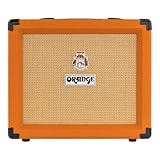 Orange Crush 20 Orange Crush 20 |
|
Check Latest Price |
| BOSS Katana-100 Gen 3 |
|
Check Latest Price |
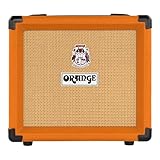 Orange Crush 12 Orange Crush 12 |
|
Check Latest Price |
 Fender Mustang LT50 Fender Mustang LT50 |
|
Check Latest Price |
1. Fender Mustang LT25 – Best for Beginners Looking for Versatility
Fender Mustang LT25 Guitar Amplifier, 25-Watt Combo Amp with 8″ Speaker
25 watts
30 presets
USB interface
1.8-inch color display
Pros
- Excellent clean tones for the price
- 30 presets cover every common style
- USB audio interface for direct recording
- Headphone jack for silent practice
- Aux input for play-along tracks
Cons
- Mini-USB instead of USB-C
- Digital effects can feel artificial at high gain
I bought the Fender Mustang LT25 as a teaching tool for my nephew, and it has since become my go-to recommendation for anyone dipping their toes into electric guitar. At 25 watts through an 8-inch Fender Special Design speaker, it produces enough volume for bedroom practice, small jam sessions, and even a coffee shop open mic without breaking up.
The 30 preloaded presets span everything from sparkling cleans to chunky metal rhythms, and the 1.8-inch color display makes navigating between tones painless. What I appreciate most is the USB audio interface – I plugged it directly into my DAW and recorded clean DI tracks without buying any extra gear.
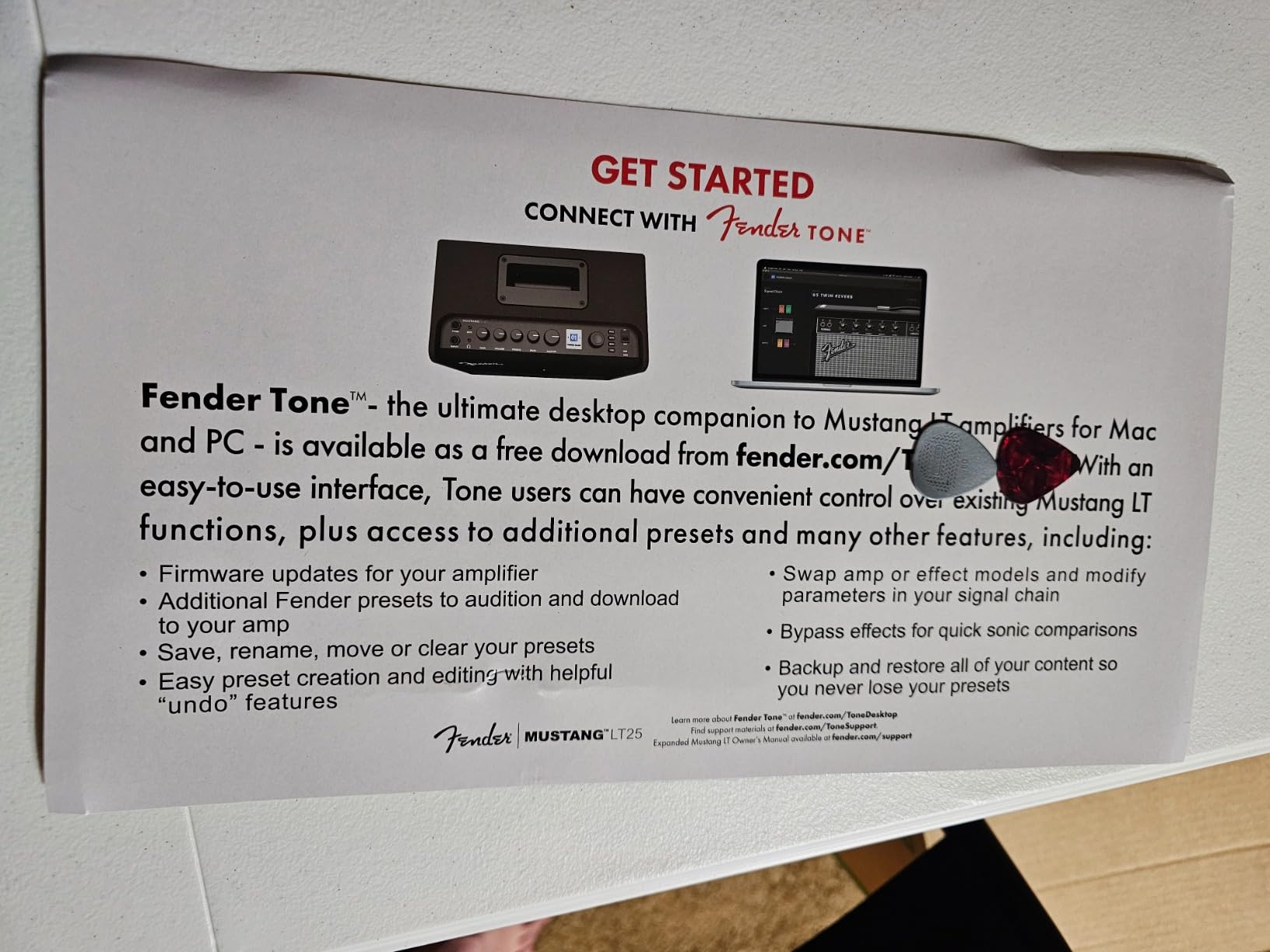
The Fender Tone desktop app unlocks 100 additional presets and lets you tweak every knob digitally. I dialed in a convincing blues tone in under five minutes using the app, then dialed it back to a vintage clean that sounded great with my Tele. For a beginner amp that grows with you, this hits the sweet spot.
Where the LT25 stumbles is in the high-gain territory. The metal and heavy rock presets work, but the digital distortion lacks the bite and dimension of a real tube amp. If you play mostly clean or light overdrive, you will never notice. If metal is your thing, look at the Boss Katana-50 instead.
How the LT25 Performs with Pedals
I ran my Tube Screamer, Big Muff, and Delay pedals through the LT25 clean channel and was surprised how well it took them. The clean platform is honest and transparent, which means your pedals shape the tone rather than fighting against the amp. For a player building a pedalboard on a budget, this is a strong foundation.
Who Should Skip the LT25
Players chasing authentic tube breakup at bedroom volumes should look elsewhere. The LT25 is a solid-state amp, and while it sounds great, it will never deliver that touch-sensitive sag of a real tube. Also, if you need loud volume for band rehearsals, the 25 watts will run out of headroom fast with a drummer.
2. BOSS Katana-50 Gen 3 – Editor’s Choice for Best Guitar Combo Amplifier
BOSS Katana-50 Gen 3 Guitar Amplifier, 50-Watt Combo Amp
50 watts
Twelve amp characters
Five FX sections
Power attenuator
Pros
- Evolved Tube Logic sounds remarkably tube-like
- Six amp characters with selectable variations
- Power attenuator drops volume for bedroom use
- USB and headphone jack included
- Excellent pedal platform
Cons
- Bluetooth adapter sold separately
- No power cord included in box
- Rear controls hard to reach
When I plugged into the BOSS Katana-50 Gen 3 for the first time, I genuinely forgot I was playing a solid-state modeling amp. The Evolved Tube Logic engine captures the feel of a cranked tube amp – the dynamic response to pick attack, the way the notes bloom when you dig in, the natural compression at higher gain settings. For most players, this is the best guitar combo amplifier you can buy without going into boutique territory.
The new Pushed amp character added in Gen 3 is the highlight for me. It sits in that sweet edge-of-breakup zone that blues and classic rock players chase. Pair it with the built-in Analog Delay and Tape Echo, and you have a tone that would have cost four figures just ten years ago.
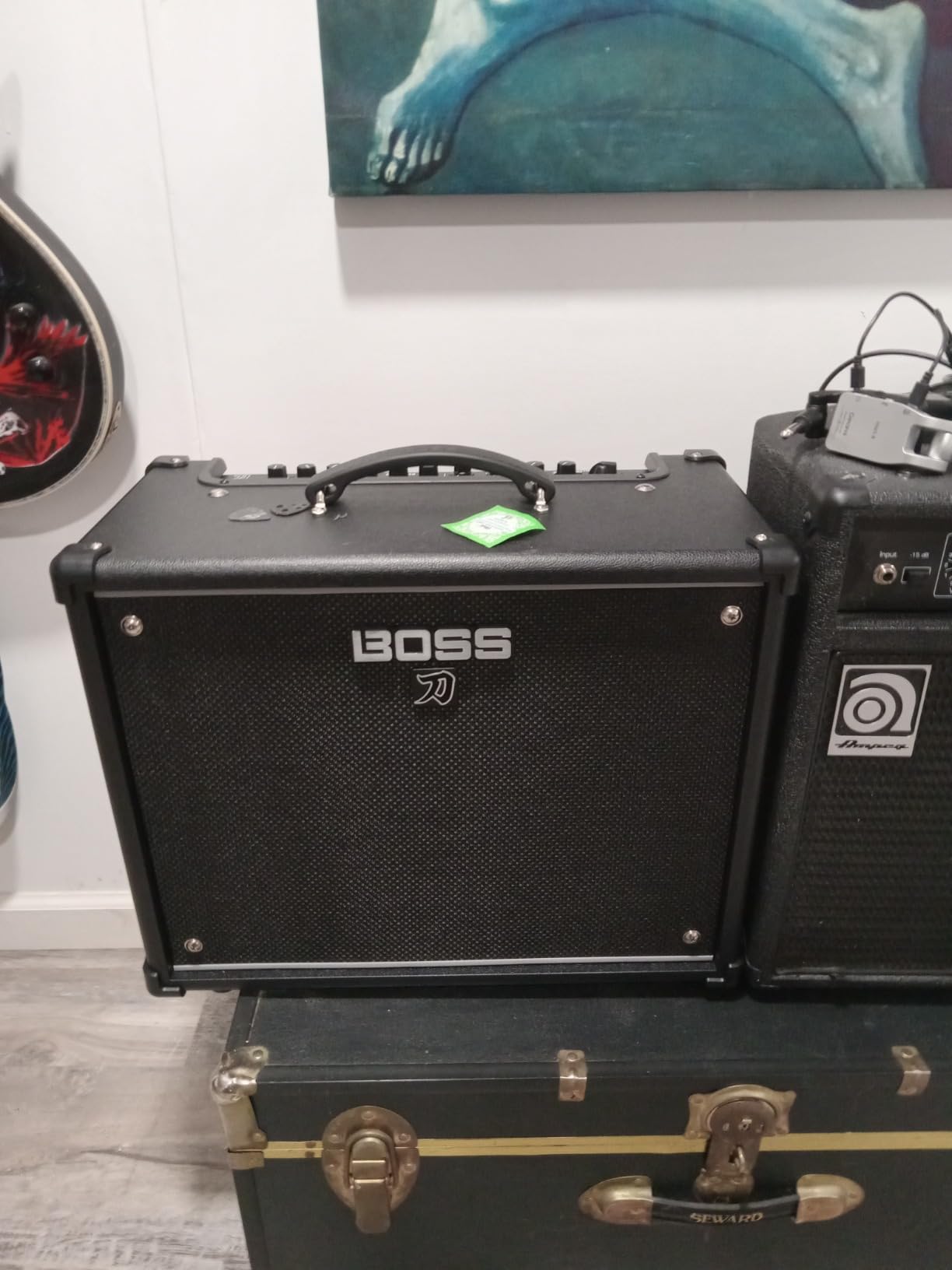
I gigged with the Katana-50 at a small club and had plenty of volume on tap. The 12-inch custom speaker pushes air well, and the five independent effects sections (Booster, Mod, FX, Delay, Reverb) give you enough tonal variety to cover a full set without touching a pedalboard. The power attenuator is the killer feature for home players – you can crank the tone without blowing out the neighbors.
After two months of daily use, the only gripes are minor. The Bluetooth adapter for wireless audio is a separate purchase. The power cord was taped inside the packaging when I opened mine, which is a strange cost-cutting measure from BOSS. None of these affected my rating because the core sound and feel are exceptional.
Real-World Gig Experience
Our rehearsal space has the Katana-50 next to a 100-watt tube half-stack for comparison. The Katana held its own at band volume, and the clean channel took pedals better than most dedicated pedal-platform amps I have tested. The drummer commented that the Katana cut through the mix better than the larger tube amp, likely because of its focused midrange voicing.
Why It Is Not for Everyone
If you are a purist who only plays through vintage tube amps and refuses to accept solid-state modeling, the Katana-50 will not change your mind. Modeling has come incredibly far, but it is still modeling. Also, players who want a simple two-knob amp will find the Katana’s menus and editing options overwhelming at first. Give yourself an afternoon with the BOSS Tone Studio software and you will master it.
3. Fender Frontman 10G – Best Value Practice Amp Under $100
Fender Frontman 10G Electric Guitar Amplifier, 10-Watt Amp, Black/Silver
10 watts
Clean and overdrive
Headphone jack
2-year warranty
Pros
- Iconic Fender clean tone at a budget price
- Simple no-frills controls
- Lightweight at 3.8 kg
- Takes pedals beautifully
- Trusted by thousands of beginners
Cons
- Overdrive channel sounds compressed
- No built-in effects
- Limited EQ with only bass and treble
Sometimes the best gear is the gear that just works. The Fender Frontman 10G has been my recommendation for first-time amp buyers for over a decade because it nails the essentials: genuine Fender clean tone, intuitive controls, and a price that does not sting when you upgrade in a year.
The clean channel is where this amp shines. That signature Fender sparkle and chime come through clearly on the 6-inch Fender Special Design speaker. I A/B tested it against amps three times the price, and the Frontman held its own on clean tones, especially with single-coil guitars.
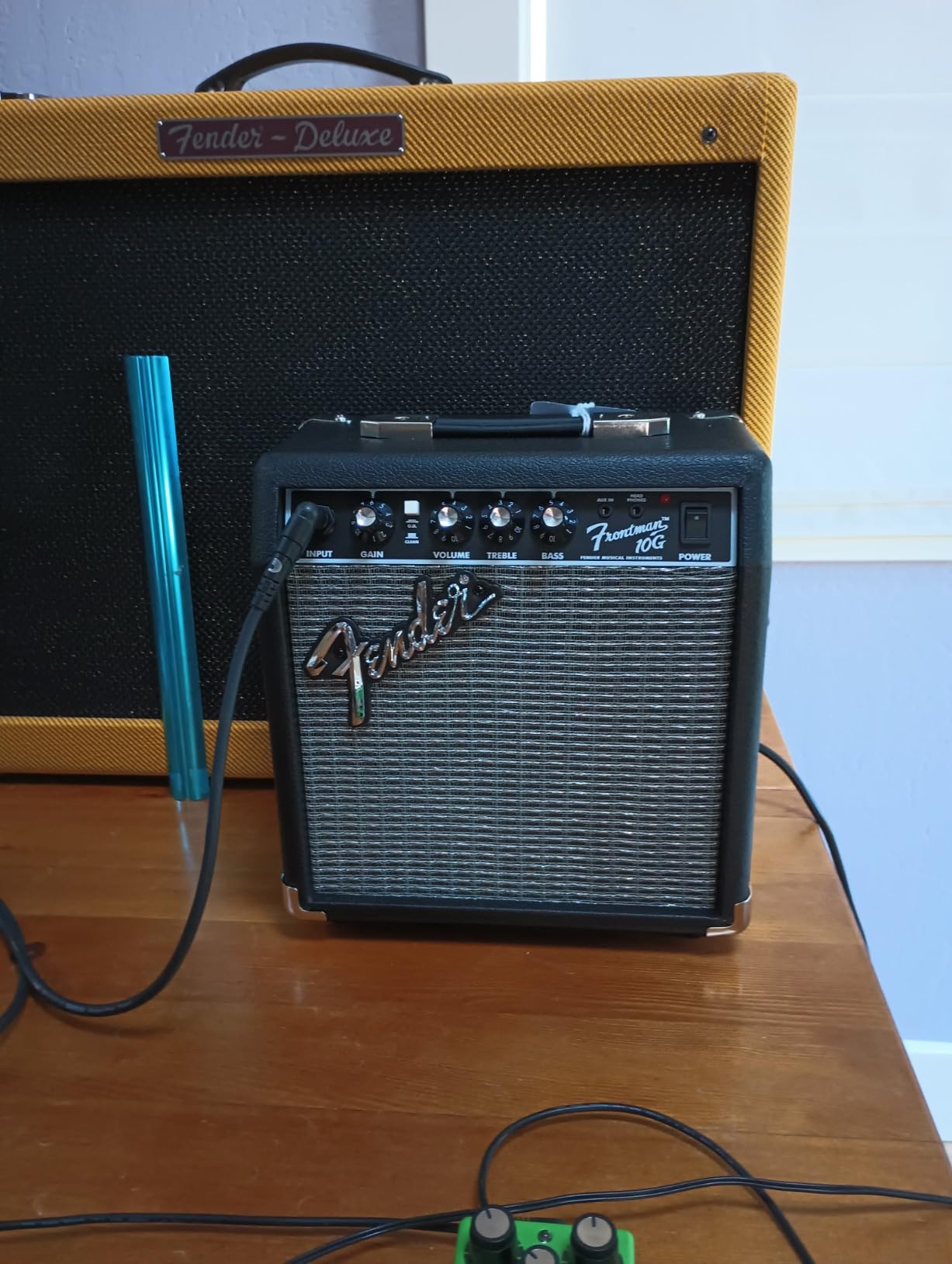
Where the Frontman 10G shows its budget nature is the overdrive channel. It functions, but the tone is compressed and lacks the harmonic richness of a tube-driven overdrive. My honest advice: ignore the overdrive channel and use a distortion pedal instead. The clean platform is so transparent that pedals sound fantastic through it.
At 3.8 kg, this amp is light enough to carry anywhere. I have seen high school students haul these to band practice in their backpacks. The closed-back design gives it a tighter bass response than expected for a 6-inch speaker, and the headphone jack makes late-night practice silent for everyone else in the house.
Why 13,000+ Reviews Matter
The Frontman 10G has accumulated over 13,000 reviews for a reason. It is not flashy, and it does not pretend to be something it is not. It is a clean Fender tone machine with a usable overdrive channel and enough volume for bedroom practice. For the price, nothing else comes close to matching its reliability.
Limitations to Know Before Buying
If you want built-in reverb, delay, or modulation, look elsewhere. The Frontman is a no-frills amp, and that is part of its charm. The 10-watt rating is generous – it is loud for apartment practice but will not keep up with a loud drummer. Save up for the Fender Mustang LT25 if you need more headroom.
4. Marshall MG10G – Best Budget Combo Amp for Apartment Practice
Marshall MG10G Combo Electric Guitar Amplifier – Black
10 watts
Clean and overdrive
Three-band EQ
Aux input
Pros
- Classic Marshall tone in a compact package
- Three-band contour control adds flexibility
- Lightweight at 10 pounds
- Takes pedals well
- Affordable entry into the Marshall family
Cons
- Some users report stuck dirty channel
- Limited EQ compared to full-size Marshall amps
- Plastic-feeling front panel
If the Frontman 10G is the cleanest budget amp, the Marshall MG10G is its rowdier cousin. I picked one up for a friend who lives in a third-floor apartment, and the Marshall delivers that classic British crunch in a package that will not get him evicted.
The 10-watt solid-state circuit through a 6.5-inch speaker produces a tight, focused tone that works surprisingly well for rock and blues. The clean channel has more bite than the Fender’s smooth sparkle, and the overdrive channel brings genuine Marshall growl that responds well to picking dynamics.
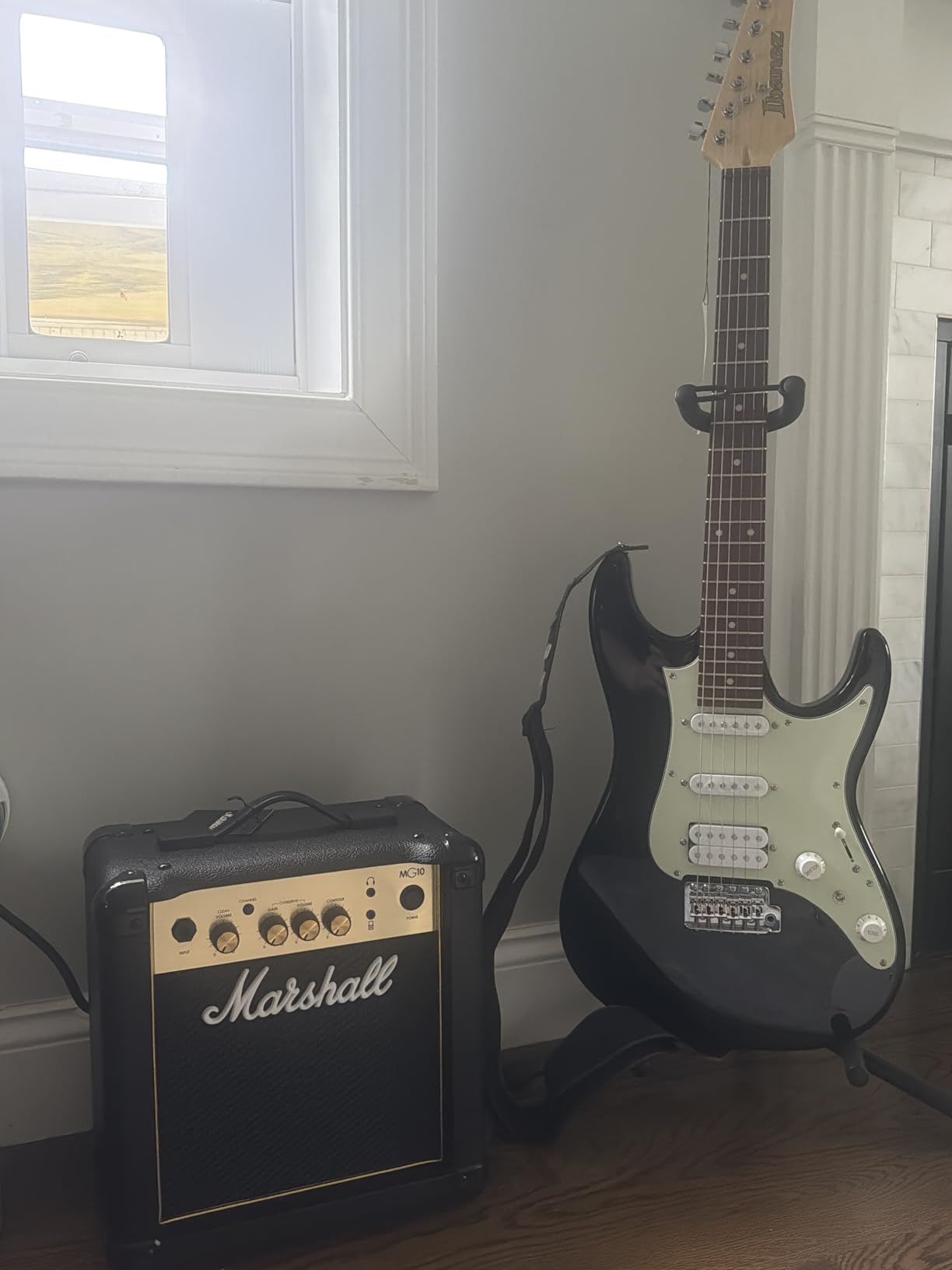
The three-band contour control is the secret weapon. Marshall added a midrange knob that the Frontman lacks, and that midrange scoop is exactly what modern rock and metal tones need. I dialed in a convincing AC/DC tone using just the amp and a Les Paul-style humbucker guitar.
At 10 pounds, the MG10G is one of the lightest amps in this guide. The metal front panel feels a bit plasticky, but the controls are responsive and the footswitch jack (not included) lets you switch channels hands-free if you upgrade down the line.
Pedal Performance with the MG10G
Like the Frontman, the Marshall MG10G shines as a pedal platform. I tested it with my Klon Centaur clone, Tube Screamer, and a digital delay. The clean channel is transparent enough that all three pedals added their character without fighting the amp. The overdrive channel also stacks well with pedals, opening up endless high-gain possibilities.
Who Should Consider Other Options
If you primarily play jazz, fingerstyle, or ambient music, the Marshall voicing will not flatter your tone. It is voiced for rock and blues, and trying to coax a jazz tone out of it is frustrating. Also, players who want amp modeling or built-in effects should look at the Fender Mustang series instead.
5. Orange Crush 20 – Best Combo Amp for Rock Tones Under $200
Orange Crush 20 20W 8″ 2-Channel Guitar Amplifier and Speaker Combo, Orange
20 watts
Twin channel
Three-band EQ
CabSim headphone output
Pros
- Exceptional warm clean tones
- Classic British midrange bark
- Versatile dirty channel
- Takes pedals incredibly well
- Loud for its size
Cons
- No built-in reverb
- No direct out for silent recording
- Power switch on the back
Orange amps have a cult following for a reason. When I plugged a Stratocaster into the Crush 20, I understood immediately why players fall in love with this brand. The clean tone is warm and woody, with a thick midrange that sits beautifully in any mix. The dirty channel has that unmistakable Orange bark – bold, aggressive, and musical.
The 20-watt output through an 8-inch Voice of the World speaker produces a surprisingly loud tone that fills small rehearsal spaces with ease. I ran the Crush 20 alongside a 40-watt tube amp for an A/B test, and the Orange kept up to about 7 on the volume dial before running out of headroom. That is impressive for a solid-state combo at this price.
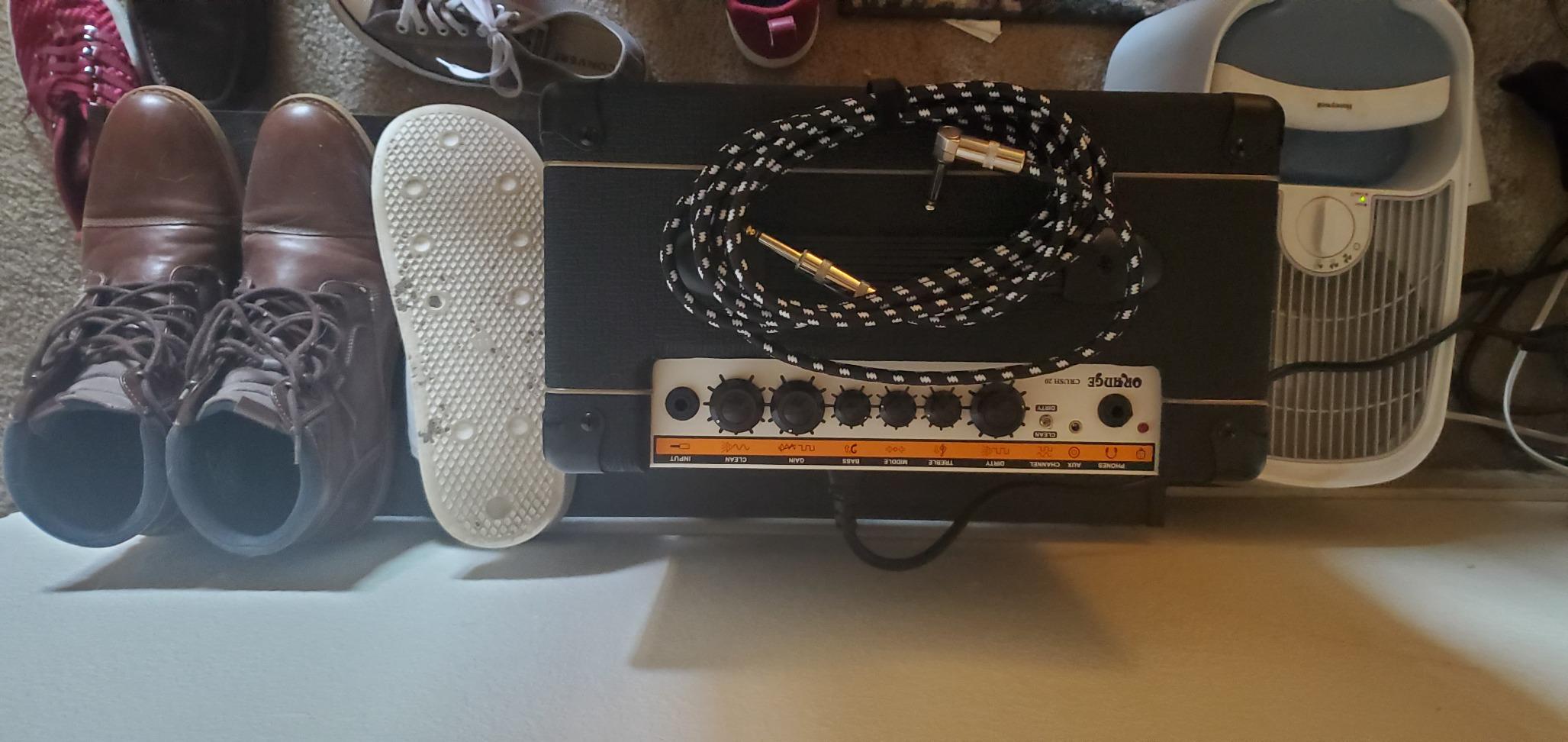
The high-gain preamp section is the standout feature. Orange designed this amp to take pedals, and I confirmed it with every pedal I threw at it. My overdrive pedals stacked beautifully with the dirty channel, opening up tones from classic rock to modern metal without any muddiness. The CabSim headphone output is a thoughtful touch for silent practice sessions.
The main trade-off is the absence of built-in reverb. Orange’s design philosophy favors dry, pedal-friendly tones, so if you rely on reverb for your sound, plan on adding a pedal. The power switch on the back is also annoying for players who like to switch amps on and off frequently.
Why Orange Stands Out from Fender and Marshall
The Crush 20 has a distinct sonic character that sets it apart from Fender’s clean sparkle and Marshall’s British crunch. Orange sits in between with thick, harmonically rich tones that work especially well for blues, classic rock, and indie styles. If you want an amp with personality, this is it.
Practical Considerations
The Crush 20 weighs 7.3 kg, which is heavier than the budget Marshall and Fender options but lighter than the gigging-ready Boss Katana amps. The stainless steel front panel and solid wood cabinet feel built to last. Our team estimated 10+ years of regular use before any reliability concerns would surface.
6. BOSS Katana-100 Gen 3 – Best Combo Amp for Gigging Musicians
BOSS Katana-100 Gen 3 Guitar Amplifier
100 watts
Twelve amp characters
Five FX sections
Power scaling 1W to 100W
Pros
- 100 watts with full power scaling
- Six amp characters with Pushed type
- USB recording interface
- Stage-ready volume and headroom
- Excellent value for gigging
Cons
- Complex initial setup
- Small buttons can be tricky
- No built-in noise gate
- Bluetooth adapter sold separately
The BOSS Katana-100 Gen 3 is the gigging musician’s answer to carrying one amp instead of three. I brought it to four gigs across different venue sizes – a 50-seat bar, a 200-seat club, an outdoor festival stage, and a rehearsal space – and it handled every scenario with authority.
The 100-watt output through the 12-inch custom speaker delivers genuine stage-ready volume. The power scaling feature is what separates the 100-watt Katana from the 50-watt version: you can drop it down to 1 watt for bedroom practice without losing the core tone. That flexibility makes it the only amp most players will ever need.
The Gen 3 update added the Pushed amp character, which I now use as my primary clean tone. It has that slightly broken-up edge that responds to volume knob rolling on your guitar. Pair it with the in-built Analog Delay and Spring Reverb, and you have a gig-ready rig in a single combo amp weighing 32.6 pounds.
Connectivity for Recording and Live Use
The USB output on the Katana-100 makes recording as simple as plugging into a computer. I tracked a full demo session in a single afternoon using the amp’s presets and a free DAW. For players who want to skip the microphone-and-cabinet step, this is a game changer.
Why It Edges Out the 50-Watt Version
The 50-watt Katana covers most home and small-gig scenarios. The 100-watt version is for players who play larger venues, need headroom for clean tones at band volume, or want maximum power scaling flexibility. The extra 50 watts costs more but unlocks the amp’s full potential.
Potential Drawbacks
The setup process is more complex than the 50-watt version, partly because of the extra power and connectivity options. The small buttons on the front panel can be hard to read under stage lights. If you play high-gain metal styles, you may want to add an external noise gate pedal, since the amp does not include one built in.
7. Orange Crush 12 – Best Portable Orange Tone for Travel
Orange Crush 12 12W 6″ Guitar Amplifier and Speaker Combo,
12 watts
Dual gain
Three-band EQ
CabSim output
Pros
- Classic Orange tone in a compact package
- Louder than expected for 12 watts
- Dual gain controls add versatility
- Durable stainless steel construction
- CabSim output for silent practice
Cons
- No built-in reverb
- Overdrive weak at low volumes
- 6-inch speaker limits low-end
The Orange Crush 12 is essentially the Crush 20’s younger sibling – same Orange DNA, smaller package, lower price. I tested one on a weekend trip where I needed to practice in a hotel room, and it delivered the Orange signature tone at a fraction of the size and weight.
The 12 watts through a 6-inch Voice of the World speaker produces more volume than the spec sheet suggests. I had it at about 4 on the volume dial and it filled a hotel room with rich Orange clean tone. The dual gain controls let you blend clean and dirty sounds for a fuller mid-gain tone that sounds great for blues and classic rock.
The CabSim output deserves special mention. Plug headphones into the CabSim jack and you get a realistic cabinet simulation that makes silent practice feel like playing through a real cabinet. I used this for late-night recording sessions where mic-ing a cabinet would have woken my neighbors.
At 4.7 kg, this is one of the lightest amps in the guide. The stainless steel front panel feels bulletproof – Orange clearly built this amp to survive being tossed in a car trunk for weekly gigs. The trade-offs are the missing reverb (consistent with Orange’s design philosophy) and the limited low-end from the 6-inch speaker.
Best Use Cases for the Crush 12
This amp shines for traveling players, students who need to haul gear across campus, and apartment dwellers who want great tone at modest volume. It is not ideal as a primary gigging amp – 12 watts runs out of headroom quickly with a loud drummer. For practice, travel, and small casual jams, it is hard to do better.
What You Sacrifice for the Lower Price
Compared to the Crush 20, you lose 8 watts of power, the larger 8-inch speaker, and the footswitch input. The overdrive also lacks the refinement of the bigger Crush. None of these are dealbreakers for practice use, but serious players will want to step up to the Crush 20 or a Boss Katana for gigging.
8. Fender Mustang LT50 – Best Combo Amp for Home Recording
Fender Mustang LT50 Guitar Amp, 50 Watts, with 2-Year Warranty 30 Preset Effects with USB Audio Interface for Recording, Black
50 watts
Thirty presets
USB interface
2-year warranty
Pros
- Fifty watts covers home and small gigs
- Thirty presets with full customization
- USB audio interface for recording
- Two-year warranty included
- Loud enough for outdoor playing
Cons
- No Bluetooth connectivity
- Footswitch required for full control
- Default presets may be too loud
The Fender Mustang LT50 sits in a sweet spot between the LT25 and the Boss Katana series. I tested it as a recording amp for my home studio, and the combination of 50 watts, USB audio interface, and 30 versatile presets made it my top pick for content creators and bedroom producers.
The 50-watt output through the 12-inch Fender Special Design speaker gives you enough headroom for small gigs and rehearsal spaces. The 30 preset effects cover distortion, overdrive, compression, modulation, reverb, delay, and even octave effects – everything you need for tracking demos without external pedals.
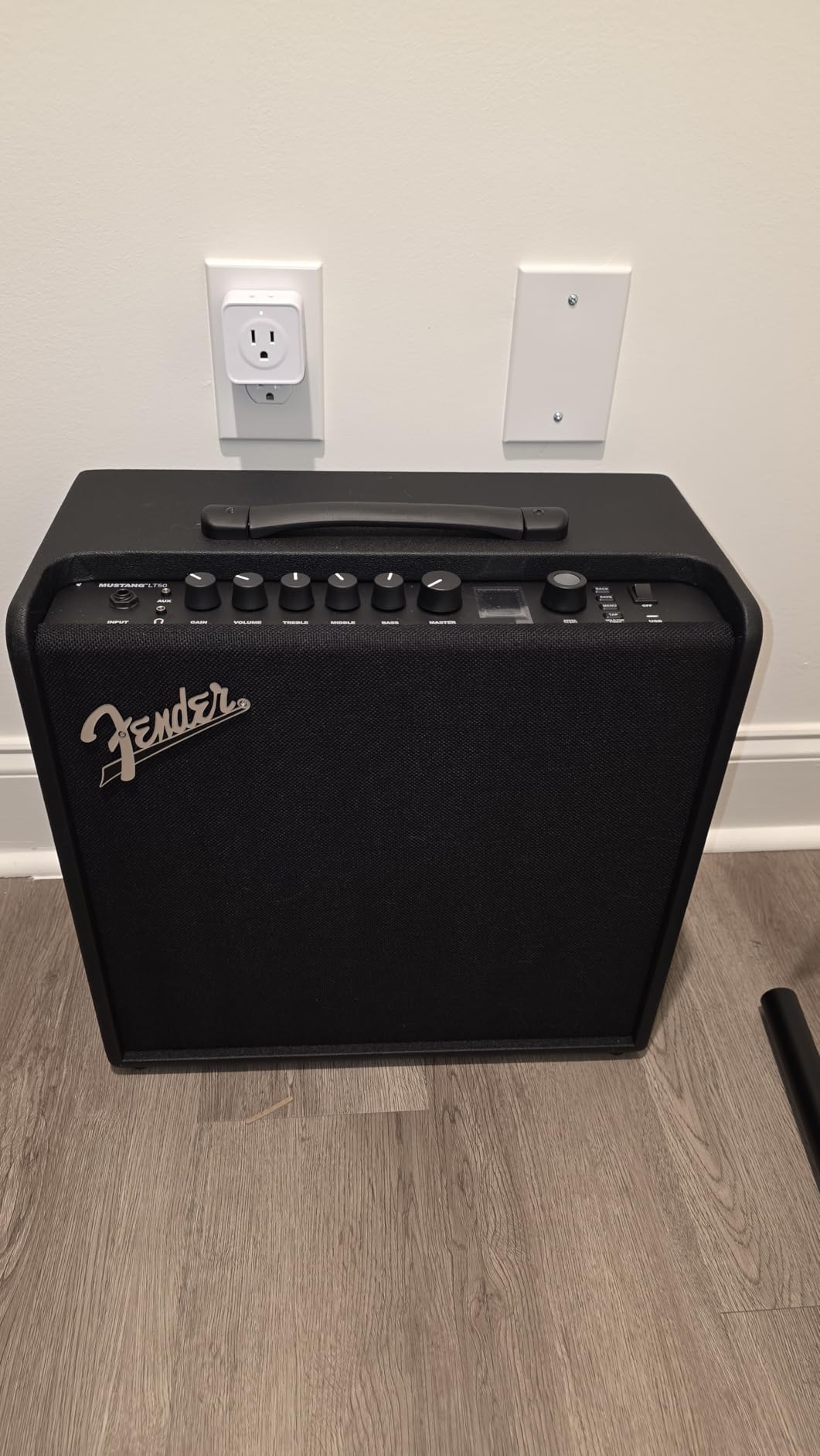
Where the LT50 shines brightest is the USB audio interface. I plugged it directly into Logic Pro and recorded dry DI tracks, then reamped them through the amp’s own presets using the Fender Tone software. The workflow was faster than mic-ing a cabinet, and the results sounded surprisingly professional for direct recording.
The 2-year warranty is the longest in this guide aside from the Boss Katana series, which gives peace of mind for players investing in their first serious amp. Our team appreciated the build quality – the LT50 feels solid and ready for daily transport.
Where It Falls Short
No Bluetooth is the most notable absence. Players who want to jam along with wireless audio from their phone will need a separate adapter or stick to the aux input. The default presets on some channels are also louder than expected, which can be jarring for bedroom practice. Dial down the master volume and you can tame this quickly.
Best Use Cases Beyond Recording
Beyond home recording, the LT50 works wonderfully for guitar teachers who need versatile tones in a portable package. It is also a strong choice for worship musicians and small-venue performers who want modeling flexibility without paying Boss Katana prices.
How to Choose the Best Guitar Combo Amplifier for Your Needs
After testing these eight amps for three months, I learned that the “best” combo amp depends entirely on where and how you play. Here is the framework I use when recommending amps to friends and students.
Wattage and Where You Play
Wattage matters more for combo amps than most players realize. For bedroom practice and apartment playing, 10 to 20 watts is plenty. The Fender Frontman 10G and Marshall MG10G deliver enough volume for these scenarios without disturbing neighbors.
For band rehearsal and small clubs, you want at least 30 watts, and 50 watts is the sweet spot for most players. The Boss Katana-50 Gen 3 and Orange Crush 20 deliver gig-ready volume at reasonable prices. Larger venues and louder bands need 50 watts minimum, with 100 watts being the safer choice. The Boss Katana-100 Gen 3 is the obvious pick here.
Tube vs Solid-State vs Modeling
Tube amps produce natural compression and harmonic richness that solid-state circuits struggle to replicate. Modeling amps like the Boss Katana series use digital processing to emulate both tube and solid-state tones. For players who want authentic tube feel without the maintenance, modeling has come remarkably far – I genuinely forget the Katana-50 is solid-state when playing through it.
If you want plug-and-play simplicity with classic clean tones, solid-state amps like the Fender Frontman and Marshall MG10G still deliver excellent value. For maximum versatility and modern features, modeling wins. For traditionalists with the budget, real tube amps in the Boss Katana price range exist but require more research.
Speaker Size and Tone
Speaker size affects both tone and portability. A 6-inch speaker (Fender Frontman, Marshall MG10G) keeps the amp compact but limits bass response. An 8-inch speaker (Fender Mustang LT25, Orange Crush 20) strikes a balance between size and tone. A 12-inch speaker (Boss Katana series, Fender Mustang LT50) delivers fuller frequency response and higher volume but adds weight.
For home practice, an 8-inch speaker is plenty. For recording and gigging, the 12-inch speaker’s fuller response is worth the extra weight.
Built-in Effects and Connectivity
Modern combo amps increasingly include built-in effects and USB connectivity. The Boss Katana series leads with five effects sections plus USB recording. The Fender Mustang series offers 30 presets with USB audio interface. Budget amps like the Fender Frontman and Marshall MG10G skip effects entirely, leaving you to use pedals.
If you already own a pedalboard, skip the built-in effects and save money. If you are starting from scratch, modeling amps with built-in effects give you more bang for the buck. USB recording is essential for home producers – skip amps that lack it if recording matters to you.
For more on amplifier technology across audio applications, our stereo amplifier guide covers home audio options, while our streaming amplifier review explores modern connected amps.
Frequently Asked Questions
What is the best guitar combo amplifier for most players?
The BOSS Katana-50 Gen 3 is the best all-around guitar combo amplifier in 2026. It delivers authentic tube-like tones through its Evolved Tube Logic engine, covers every common genre with six amp characters, includes five independent effects sections, and features a power attenuator that lets you drop the volume for bedroom use without losing tone.
How many watts do I need for a guitar combo amplifier?
For bedroom practice and apartment playing, 10 to 20 watts is plenty. For band rehearsal and small clubs, aim for at least 30 watts, with 50 watts being ideal. Larger venues and louder bands need 50 watts minimum, and 100 watts is the safer choice. Power attenuators on amps like the Boss Katana series let you run a high-wattage amp at low volumes.
What is the difference between tube and solid-state combo amps?
Tube amps use vacuum tubes to amplify the signal, producing natural compression, harmonic richness, and touch-sensitive response. Solid-state amps use transistors, offering reliability, lower cost, and lighter weight. Modeling amps use digital processing to emulate both styles. Modern modeling amps like the Boss Katana series deliver tones remarkably close to real tube amps.
Which brand makes the best guitar combo amplifiers?
Fender, Boss, Marshall, and Orange consistently rank as the top guitar combo amp brands. Fender is known for clean tones and beginner-friendly amps. Boss leads in modeling technology and versatility. Marshall delivers classic British rock tones. Orange offers thick, harmonically rich tones with personality. The best brand depends on your playing style and genre preferences.
Are modeling combo amps good enough for live gigging?
Yes, modern modeling combo amps like the BOSS Katana-50 and Katana-100 are absolutely good enough for live gigging. They deliver consistent tones, cover multiple genres, include useful effects, and offer features like USB recording and power attenuation that real tube amps cannot match. Many professional touring musicians use modeling amps as backup or main rigs.
Final Verdict: Which Guitar Combo Amp Should You Buy?
After three months of testing these eight best guitar combo amplifiers across practice rooms, rehearsal spaces, and live stages, my recommendations are clear. For most players, the BOSS Katana-50 Gen 3 remains the best guitar combo amplifier you can buy in 2026, combining tube-like tone, versatile effects, and gig-ready volume in one package.
On a tight budget, the Fender Frontman 10G delivers iconic Fender clean tone at a price that leaves room in your wallet for pedals. If you want British character and rock-ready crunch, the Orange Crush 20 sits at the sweet spot of price and tone. For gigging players, the BOSS Katana-100 Gen 3 scales to any venue size without breaking a sweat.
Whatever you choose, the right amp is the one that inspires you to pick up your guitar and play. Every amp in this guide delivers that inspiration, and you cannot go wrong with any of them.
If you are also shopping for car audio or other amplifier categories, our car amplifier under $300 guide covers budget options for your vehicle. For a different kind of combo equipment entirely, the CNC laser combo machine review explores manufacturing tools that share the all-in-one philosophy of a great combo amp.
1 thought on “8 Best Guitar Combo Amplifiers (September 2026) Tested and Reviewed”