
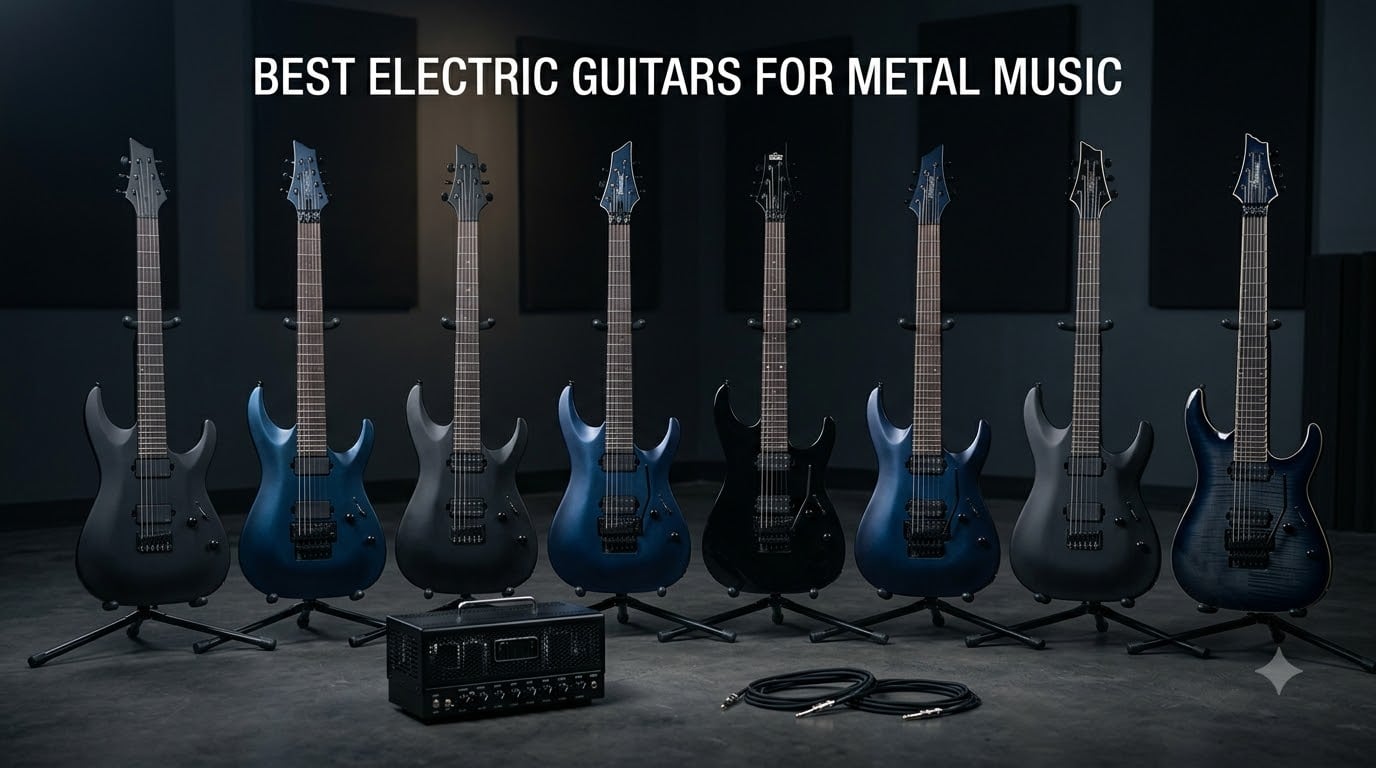
Finding the best electric guitars for metal music is easier when you start with the playing conditions rather than a brand logo. Heavy distortion, low tunings, aggressive picking, and fast lead work ask more from a guitar than a comfortable neck alone.
I compared the eight instruments in this guide on pickup output, neck speed, tuning support, bridge design, construction, and practical setup needs. The set covers six-string shred, beginner tremolo use, hardtail stability, and a seven-string path into modern metal, with clear guidance for metalcore, thrash, doom, and progressive players.
For a wider look at metal-focused instruments across more budgets, see our metal guitar roundup. If you are comparing higher-end construction, our premium electric guitar guide provides another useful reference.
Top 3 Picks for Metal in October


Jackson JS22-7 HT
- 7-string versatility
- 26.5-inch scale
- Compound-radius board
- Hardtail stability

Jackson JS32 King V
- Lead-friendly neck
- 24 jumbo frets
- Double-locking tremolo
- Two humbuckers
Best Electric Guitars for Metal Music in 2026
| Product | Specifications | Action |
|---|---|---|
| Ibanez GRX20Z |
|
Check Latest Price |
| Jackson JS22-7 HT |
|
Check Latest Price |
 Ibanez GRG131DX Ibanez GRG131DX |
|
Check Latest Price |
 WestCreek Revenge WestCreek Revenge |
|
Check Latest Price |
| Jackson JS32 King V |
|
Check Latest Price |
 Jackson JS11 Dinky Jackson JS11 Dinky |
|
Check Latest Price |
 ESP LTD KH-202 ESP LTD KH-202 |
|
Check Latest Price |
 Jackson JS32 Warrior Jackson JS32 Warrior |
|
Check Latest Price |
1. Ibanez GRX20Z – Best for Beginner Value
Ibanez GIO Series GRX20Z – Black Night
Poplar body
Maple neck
25.5-inch scale
6-string configuration
T106 tremolo
Pros
- Great beginner value
- Comfortable neck
- Two humbuckers
- Good rock and metal tone
- Solid finish
Cons
- Tremolo can affect tuning
- Factory strings are basic
The GRX20Z is the best electric guitar for a beginner who wants metal-ready features without a complicated learning curve. It combines an easy-playing maple neck with two humbuckers and a familiar six-string scale, so the basics learned here transfer to many other guitars.
I would use it for classic metal, hard rock, and simpler modern riffs. The H-H configuration keeps the signal full under gain, and the Black Night finish gives it a focused stage-ready look without demanding premium hardware.
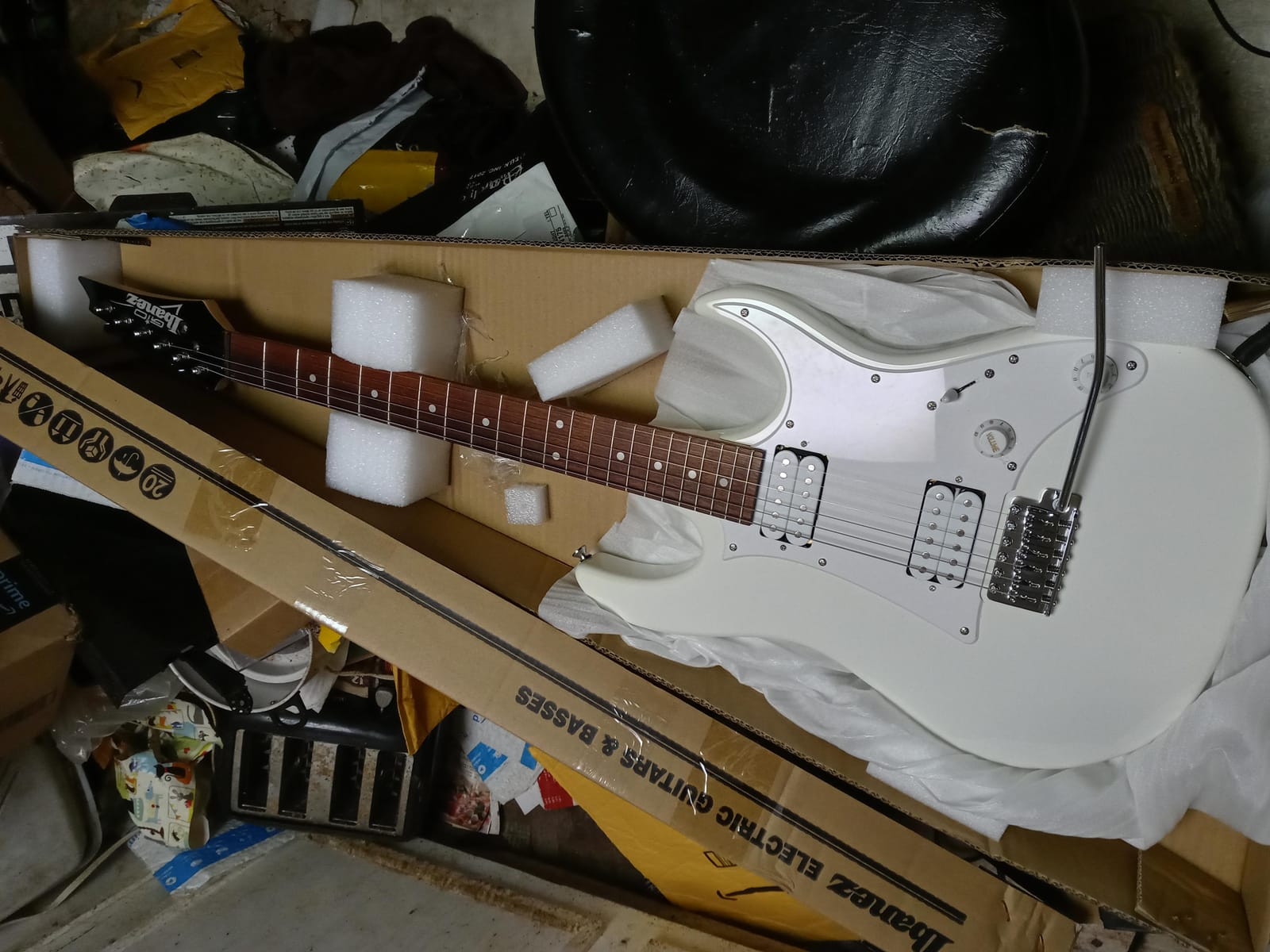
Its T106 tremolo is useful for pitch movement, but heavy palm muting can expose tuning problems if the bridge is not set up correctly. Replacing basic factory strings and learning the tremolo arm’s balance point are sensible first steps.
For whom it works best
This is the strongest all-around beginner recommendation in the eight-product comparison. It is approachable, versatile, and backed by 748 reviews with a 4.7 rating, the highest combined rating and review count in the source data.
It is not the first choice for a player who changes tuning every few minutes. A hardtail or locking tremolo would be easier to stabilize for aggressive low-register playing.
What to check before buying
Check the tremolo’s return position, tuning across the neck, and nut slots before extended practice. A clean setup makes the lower strings track more reliably and helps the pickups sound tighter.
Players who later want a more focused fixed-bridge path can compare the GRG131DX below. If a complete beginner setup is the priority, our electric-guitar advice for recording-focused players adds useful setup context, even though it is not a metal-specific list.
2. Jackson JS22-7 HT – Best for 7-String Tuning
JS Series Dinky Arch Top JS22-7 HT Satin Black
Poplar body
Maple neck
26.5-inch scale
24 jumbo frets
Hardtail bridge
Pros
- 7-string format
- 26.5-inch scale tension
- Compound-radius fingerboard
- Jackson high-output humbuckers
- Comfortable Dinky body
Cons
- Stock strings may need replacement
- Quality control can vary
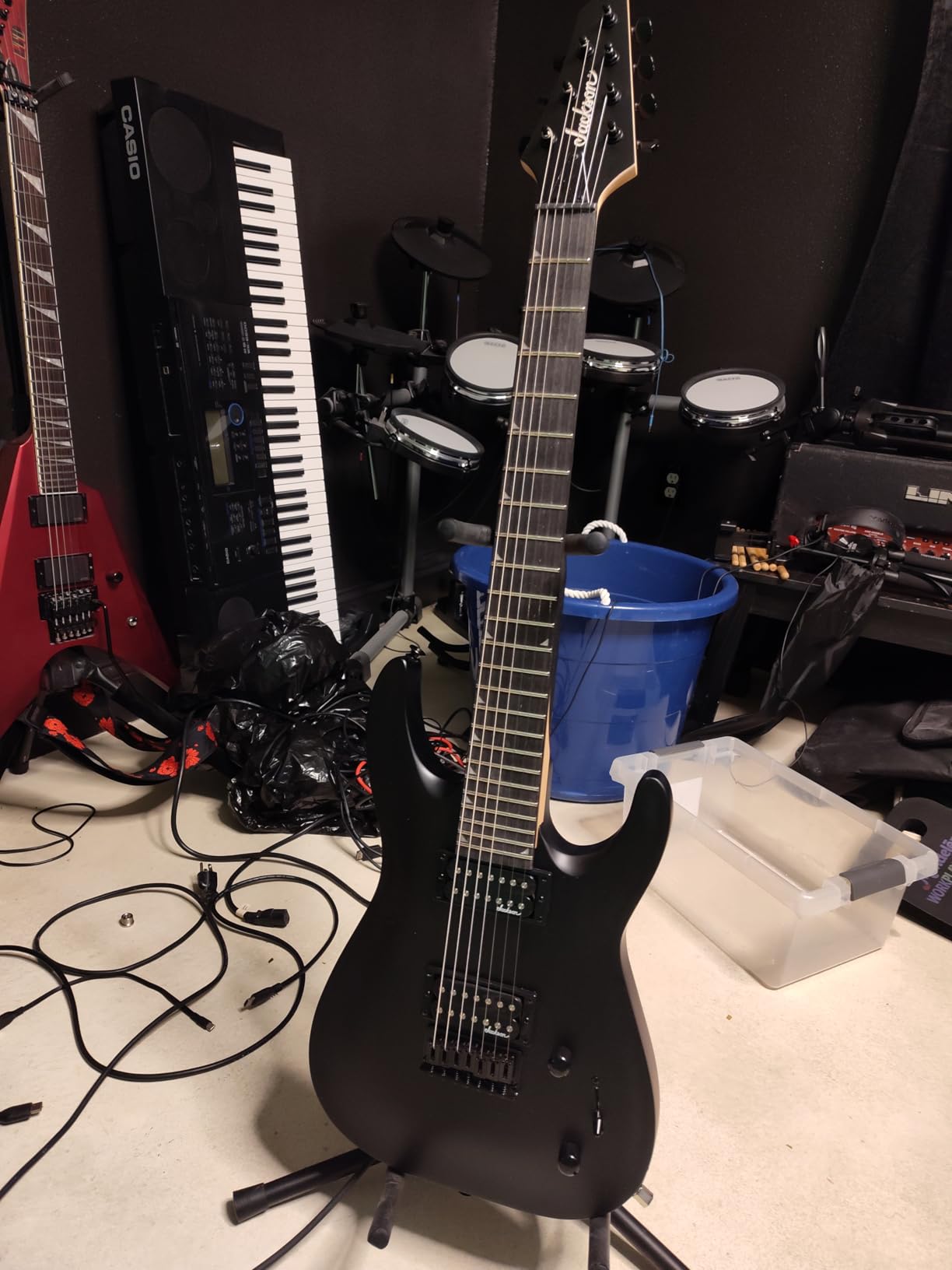
The JS22-7 HT is the most focused modern-metal instrument in this group. Its seven-string layout and 26.5-inch scale make lower tunings feel more natural, while the string-through hardtail gives riffs a firm foundation without the moving parts of a tremolo.
I would use it for drop-A work, modern metalcore, and djent-oriented parts where definition matters. The amaranth fingerboard and 12-to-16-inch compound radius support comfortable chords near the nut and faster, flatter bends higher up the neck.
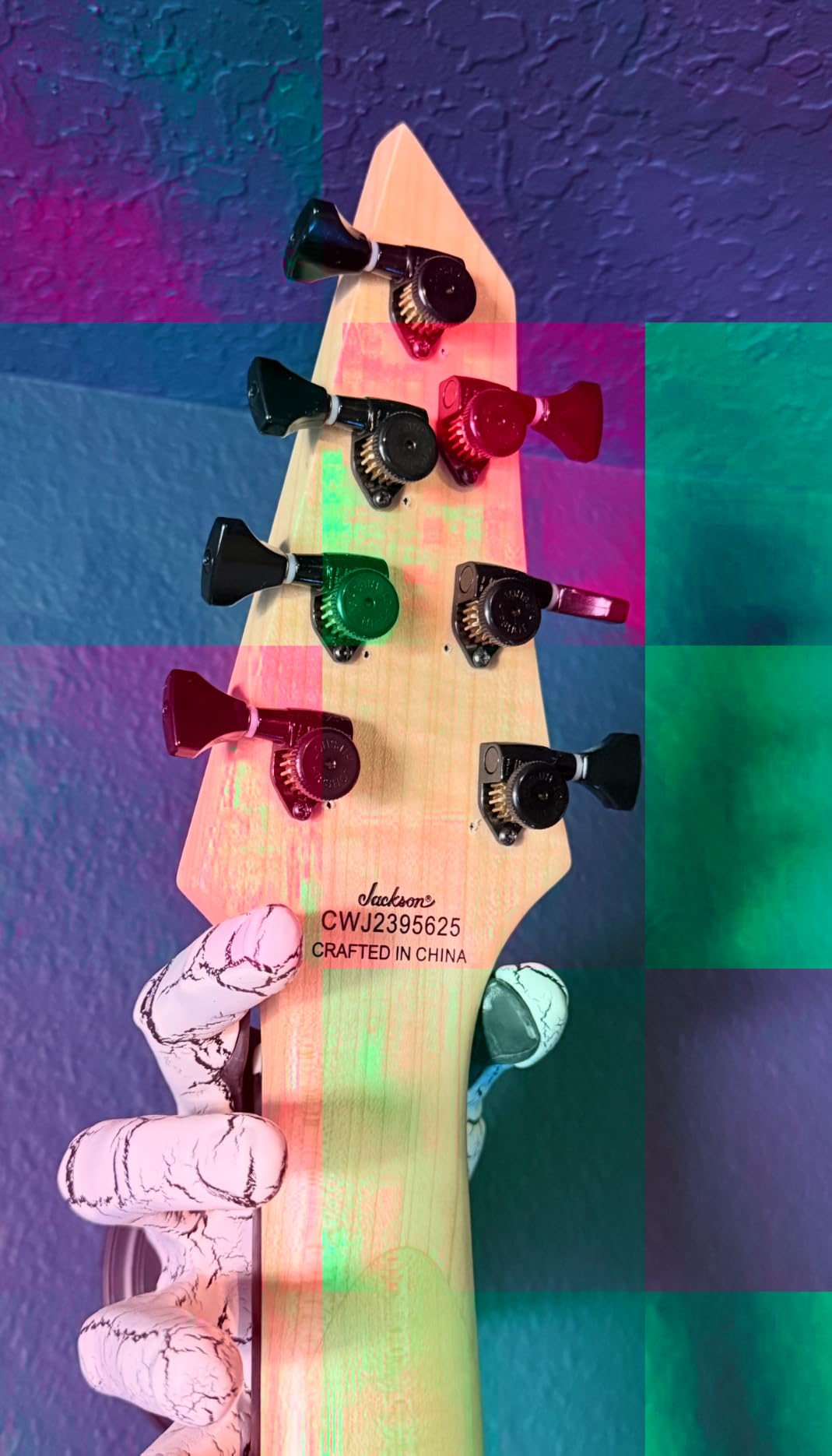
Reviewers report that the stock strings are the first likely replacement when tuning lower, and that setup quality can differ between units. Those are manageable checks for an instrument that otherwise gives a beginner or intermediate player an easy route into extended range.
For whom it works best
This is a strong fit for players who want a seven-string guitar without a complicated bridge. Its 794 reviews and 4.6 rating also make it the best-supported extended-range choice in the lineup.
It is less suited to someone who wants instant dive-bomb effects or frequent tremolo movement. The hardtail rewards stable low tunings and precise alternate picking more than whammy-bar theatrics.
What to check before buying
Confirm that the low seventh string has even tension across the fretboard and that the bridge and nut slots are clean. A proper setup helps the guitar deliver the clarity and tuning stability this style of metal needs.
For a closer look at how extended-range guitars differ from six-string models, our guide to metal guitar categories is a useful companion read.
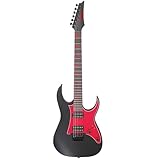
3. Ibanez GRG131DX – Best for Fast Playing
Ibanez GRG131DX – Black Flat
Poplar body
Maple neck
25.5-inch scale
24 jumbo frets
F106 fixed bridge
Pros
- Fast Wizard III neck
- 24 jumbo frets
- Fixed-bridge stability
- Infinity R humbuckers
- No neck dive
Cons
- Stock nut may need filing
- Factory setup may need adjustment
- Pickups may be basic for advanced players
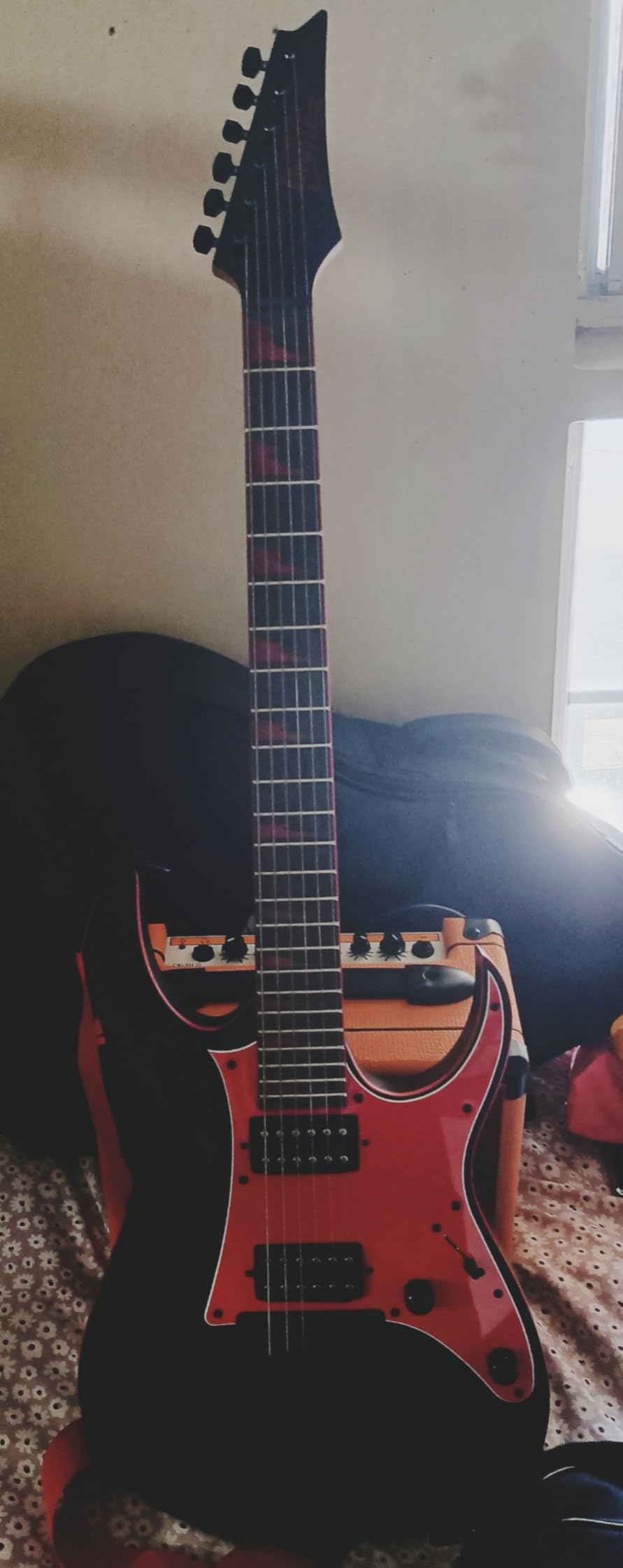
The GRG131DX gives shred-focused players a direct, uncomplicated platform. Its thin Wizard III-style profile and 24 jumbo frets make scale runs and high-register lead patterns easier to reach, while the fixed bridge keeps tuning predictable during aggressive rhythm work.
In practice, I would pair it with a clean high-gain rig and use the five-way selector to explore pickup combinations. The Infinity R humbuckers are not the last word in output or refinement, but they provide a useful starting point for rock, metal, and crossover music.
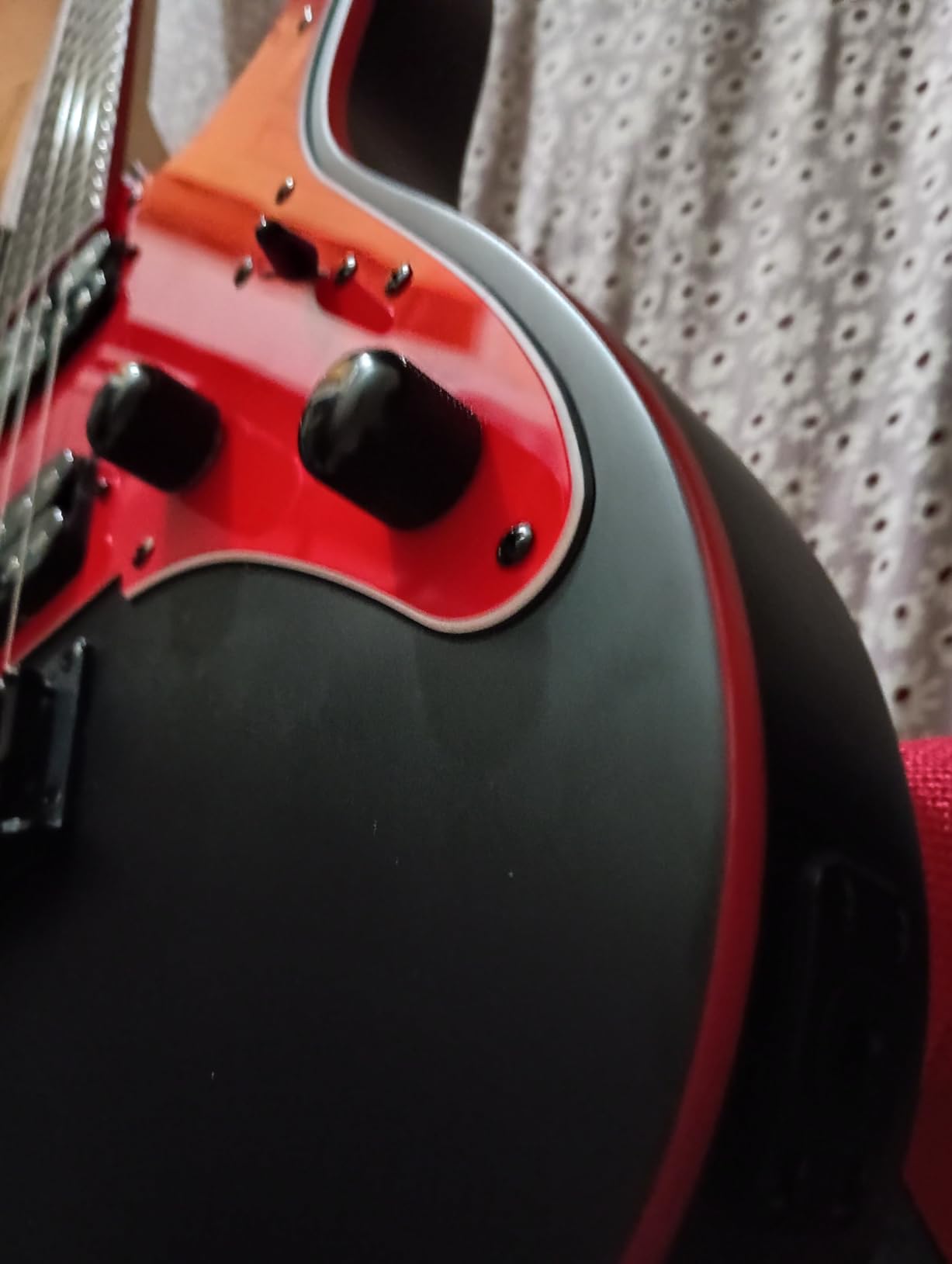
Some owners mention a factory nut that benefits from attention, along with minor setup work. Those are normal setup considerations for an entry instrument and should be checked before judging its tuning or intonation.
For whom it works best
Choose this guitar if fast lead playing and fixed-bridge reliability matter more than expressive tremolo effects. The neck shape is the main reason to pick it over a similarly priced beginner model.
It may feel narrow to players with large hands, and advanced players may eventually want different pickups. The instrument remains a sensible platform for learning technique and then upgrading one component at a time.
What to check before buying
Inspect the nut, fret ends, and pickup height. A low action without string buzz will make fast alternate picking feel more immediate and will help the fixed bridge do its job.
Compare the scale length and neck profile with the other fixed-bridge models here. Small differences in body shape can matter more to comfort than a long list of features.
4. WestCreek Revenge – Best for Explorer Style
WestCreek Revenge Solid Body Electric Guitar, Heavy Metal Guitar
Mahogany body
Maple neck
Rosewood fretboard
6-string configuration
Tune-O-Matic bridge
Pros
- Mahogany body
- Bone nut
- Aggressive humbuckers
- Rounded medium jumbo frets
- Distinctive Explorer style
Cons
- Quality control can vary
- Factory tuners may need upgrading
- Setup adjustments may be required
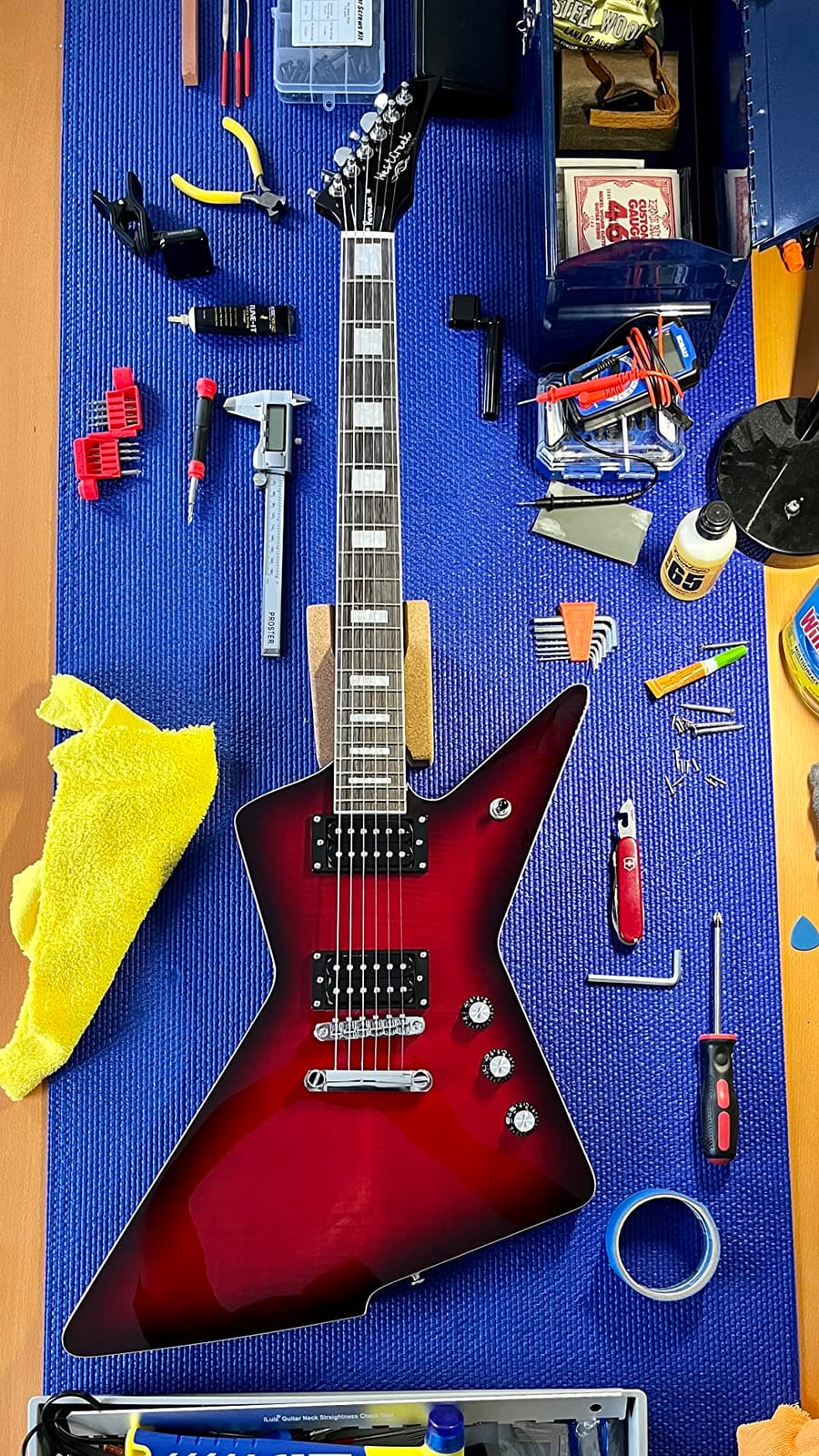
The WestCreek Revenge is an Explorer-shaped metal guitar with a mahogany body and a surprisingly practical spec list. Its two Alnico humbuckers and Tune-O-Matic bridge give the player a sturdy rhythm foundation, while the bone nut helps transfer string energy to the body.
I would recommend it to someone who wants a familiar hard-rock silhouette but does not need a tremolo. The shape is easy to recognize, and the mahogany construction adds weight and focus that suits crunchy riffs and thick power chords.
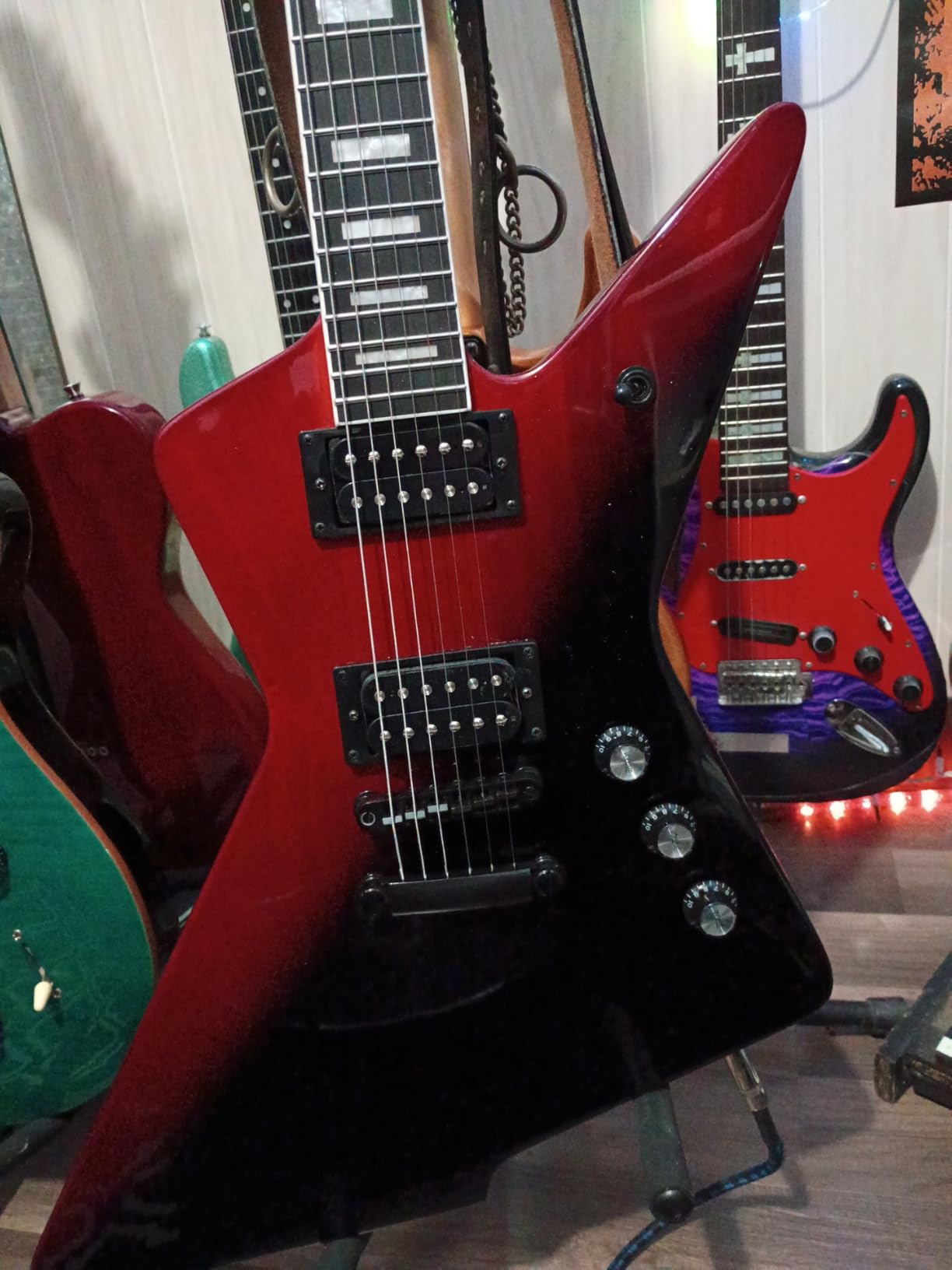
Reviewers are positive about the value and fretwork on many units, but they also report variation in quality control and tuners. A careful inspection and setup are more important here than simply trusting the striking finish.
For whom it works best
This is a good choice for a player who likes an Explorer-style instrument and mostly plays fixed-bridge riffs. It offers a different visual identity from the Jackson shapes in the list without abandoning humbuckers and straightforward controls.
It is not the best option for a player who expects premium tuning hardware immediately. The model can still be rewarding, but a little setup patience goes a long way.
What to check before buying
Check the tuning machines, bridge posts, fret ends, and neck relief. A fresh setup can address minor inconsistencies and make the guitar more comfortable for daily practice.
The unusual body shape may also affect stand and case fit. Measure your storage setup before ordering rather than assuming a standard S-type case will work.
5. Jackson JS32 King V – Best for Lead Guitar
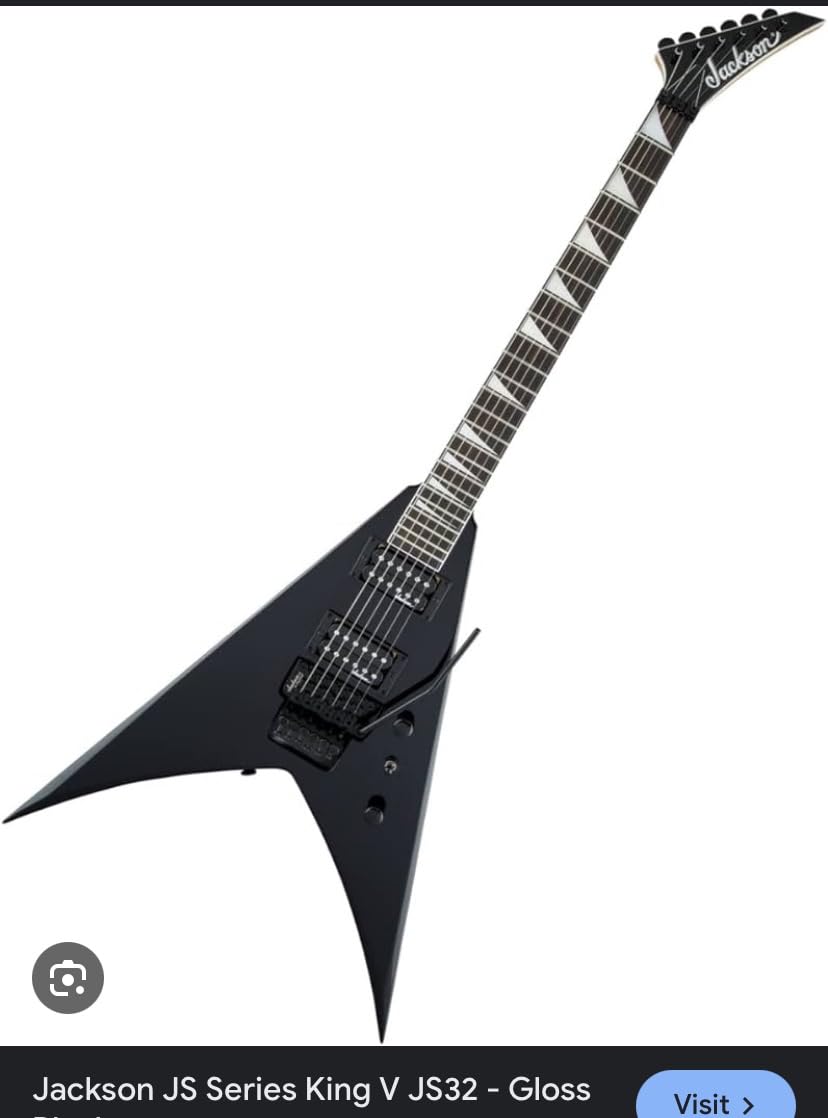
Jackson JS Series King V JS32 – Gloss Black
Poplar body
Maple neck
25.5-inch scale
24 jumbo frets
Floyd Rose licensed tremolo
Pros
- Fast shred neck
- 24 jumbo frets
- Double-locking tremolo
- High-output Jackson humbuckers
- Aggressive King V shape
Cons
- Tremolo needs maintenance
- Quality control varies
- Factory strings are basic
The JS32 King V is built for the player who wants a dramatic stage silhouette and a direct route to fast lead playing. The licensed Floyd Rose double-locking tremolo keeps pitch changes controlled once the system is balanced, and the 24 jumbo frets leave room for high lead lines.
I would use it for heavy riffs, shred solos, and controlled dive-bomb effects. Its aggressive shape and sound profile make it less subtle than a conventional S-style guitar, which is exactly the point for many metal players.

The tradeoff is maintenance. A locking tremolo requires correct string changes, spring tension, and nut clamping, so a beginner should learn those steps before attempting a full setup.
For whom it works best
Choose the King V if you want expressive tremolo movement and a neck that encourages fast playing. Its 24 jumbo frets are useful for solos that spend time above the 12th fret.
It is less convenient for someone who wants the simplest possible path into drop tuning. A fixed bridge or seven-string hardtail will usually be easier to manage at first.
What to check before buying
Check that the tremolo returns to neutral, the locking nut clamps evenly, and the fine tuners have useful range. Those checks matter more than cosmetic condition.
For context on the broader premium market, the premium electric guitar guide explains what changes when hardware and construction move up a level.
6. Jackson JS11 Dinky – Best Lightweight Entry Model
Jackson JS Series Dinky JS11 Electric Guitar (Metallic Blue)
Poplar body
Maple neck
Rosewood fretboard
24 jumbo frets
Two-point fulcrum tremolo
Pros
- Lightweight body
- Slim maple neck
- 24 jumbo frets
- Jackson humbuckers
- Comfortable beginner feel
Cons
- Tremolo is basic
- May need minor setup out of box
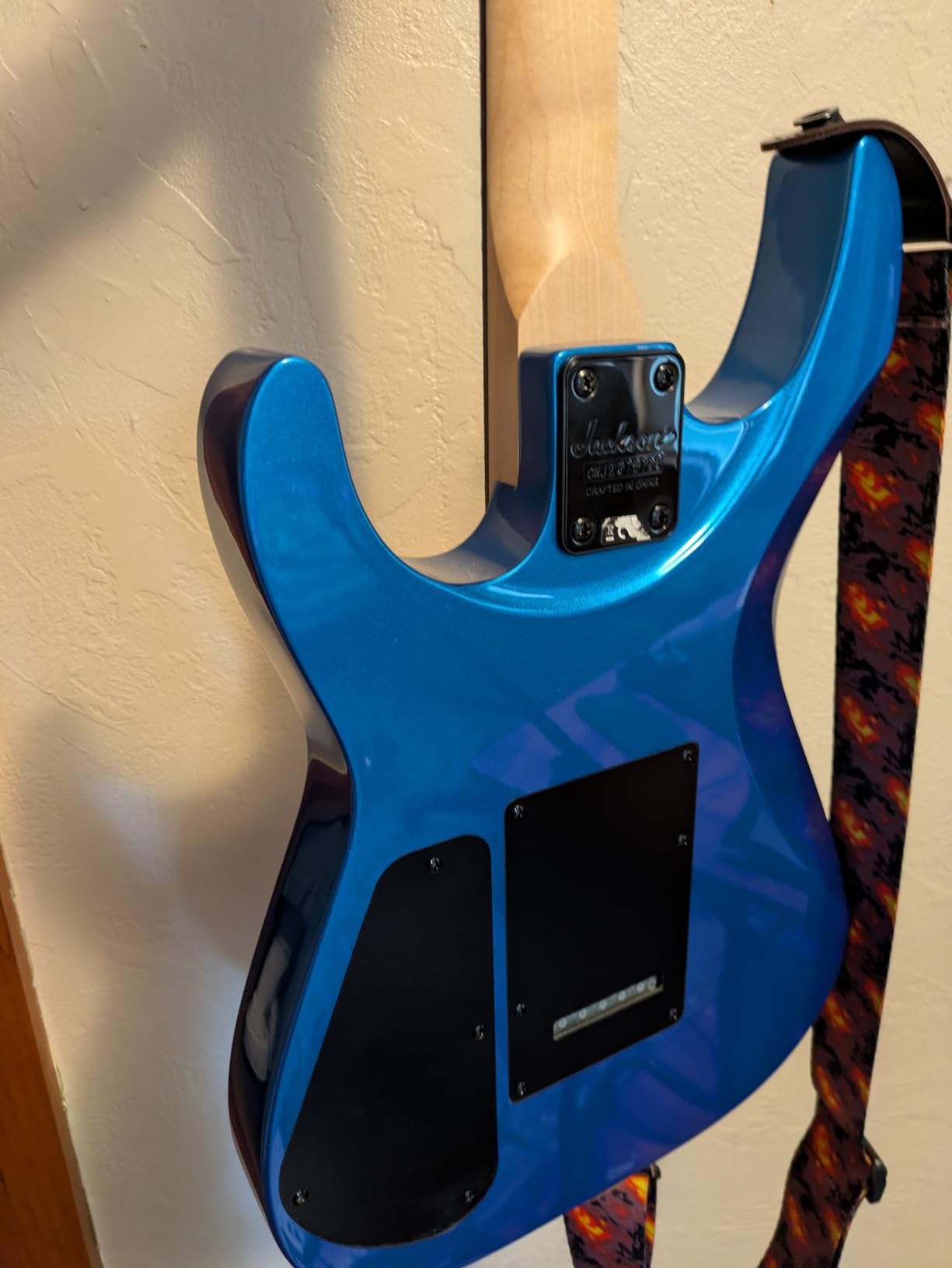
The JS11 Dinky is a practical entry guitar for someone who values a slim neck and light body over a more elaborate feature set. Its two humbuckers provide a familiar route into high-gain playing, while 24 jumbo frets support the upper register without making the body feel oversized.
I would use it for beginner practice, hard rock, and straightforward metal riffs. The metallic blue finish is a nice visual bonus, but the neck is the real decision-maker: it keeps chord changes and early scale work approachable.
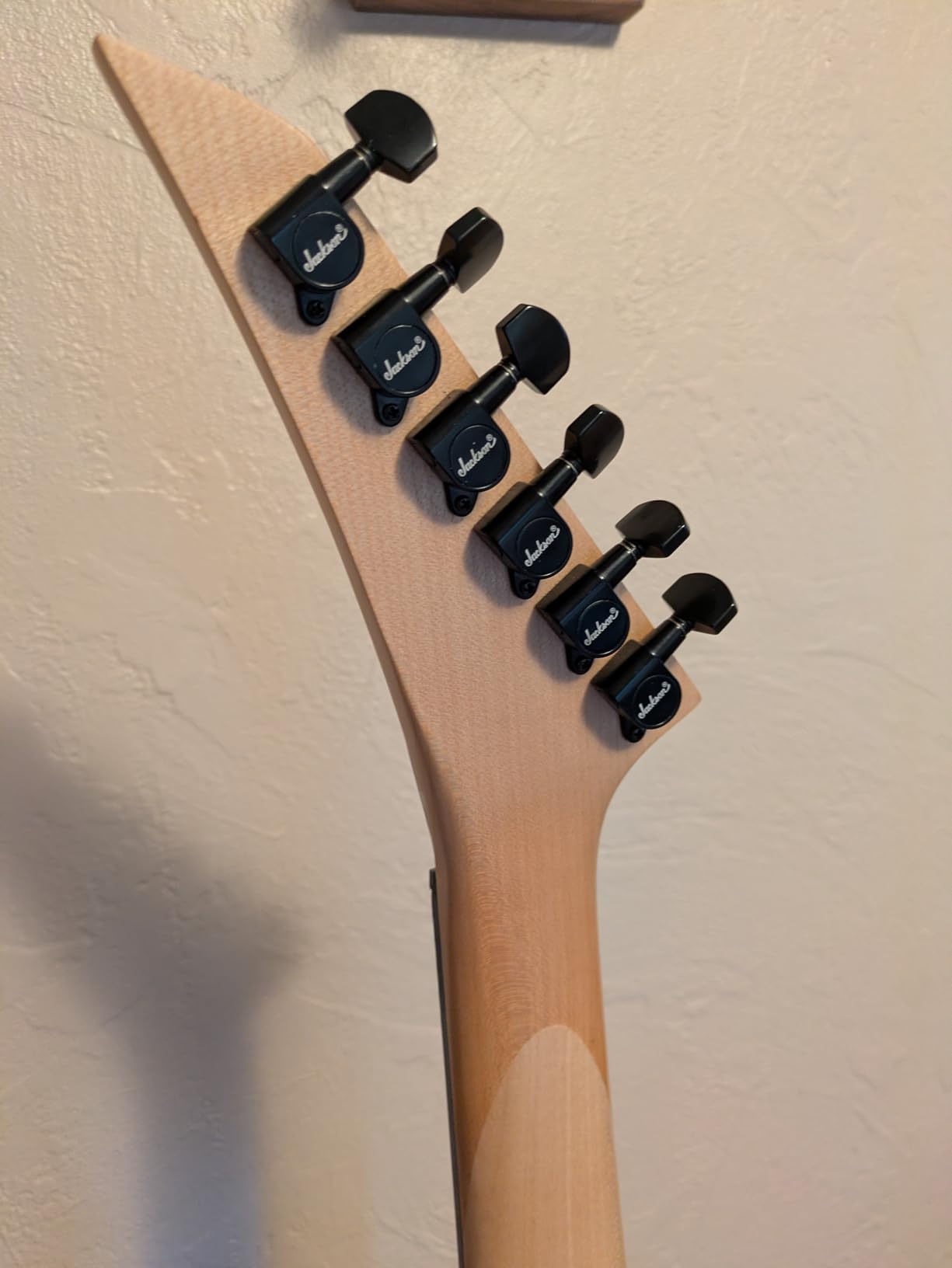
The two-point tremolo is serviceable for light effects, though it is not as sophisticated as the Floyd Rose systems later in this guide. Reviewers also mention that a minor setup can be needed, so inspect action and intonation before forming a final opinion.
For whom it works best
This is a good match for a younger player, a smaller-framed guitarist, or anyone who dislikes a heavy instrument. It gives Jackson’s recognizable feel in a relatively easy-to-carry package.
It is not the best pick for advanced tremolo technique or players who want extensive pickup customization. It is a solid first instrument with a clear upgrade path.
What to check before buying
Confirm that the neck is straight, the action is comfortable, and the tremolo arm returns smoothly. Those details determine whether a beginner spends time playing or adjusting.
A fixed-bridge alternative such as the GRG131DX may feel more stable for rhythm practice. Compare the two neck profiles before choosing between them.
7. ESP LTD KH-202 – Best for Tremolo Effects
ESP LTD Kirk Hammett KH-202 – Black
Basswood body
Maple neck
25.5-inch scale
Floyd Rose tremolo
Two humbuckers
Pros
- Floyd Rose tremolo
- Slim maple neck
- Basswood body
- Reverse headstock
- Upgrade-friendly hardware
Cons
- High factory action may need setup
- Intonation may need attention
- Stock pickups may be noisy
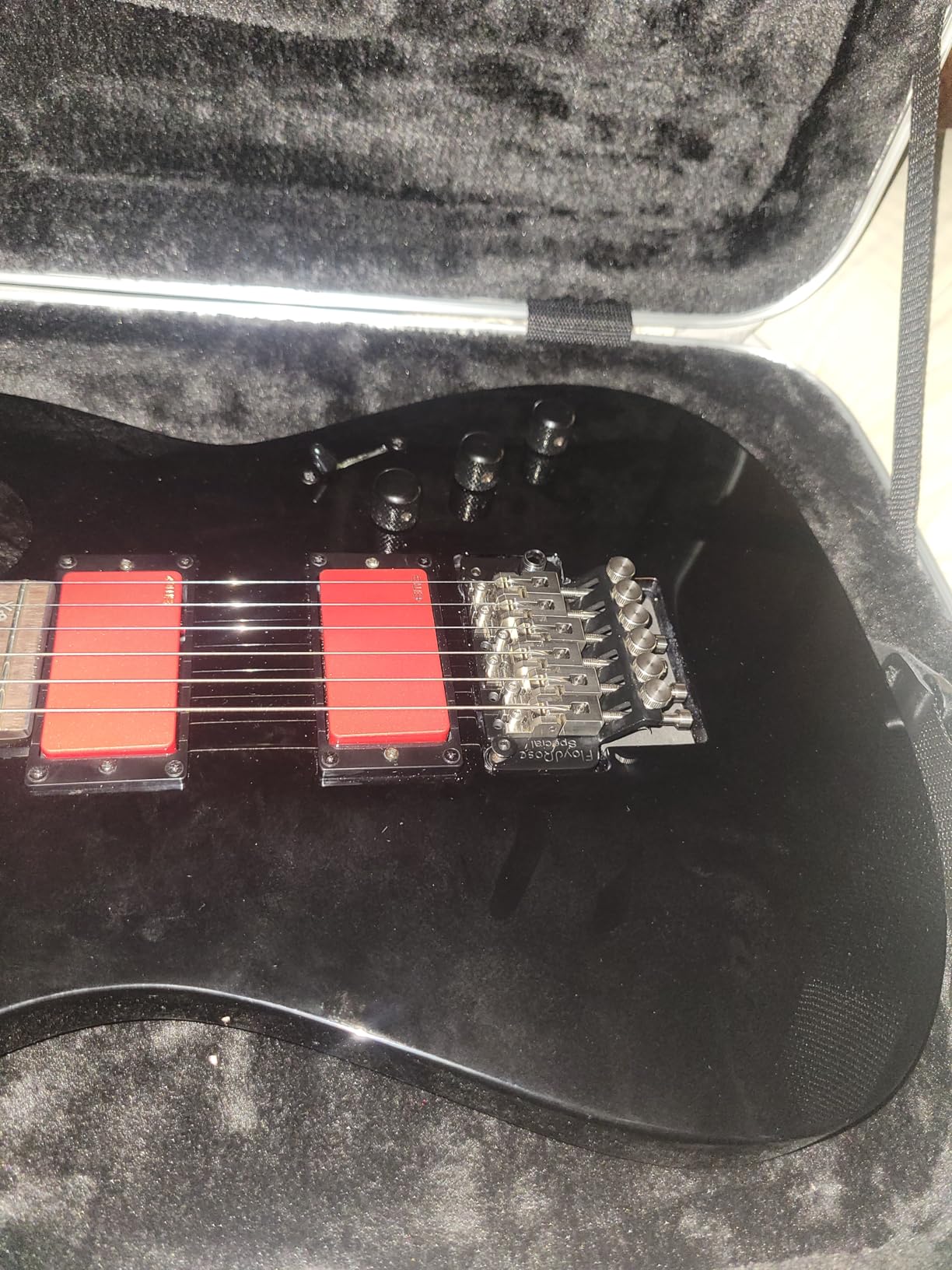
The ESP LTD KH-202 brings a Kirk Hammett-inspired shape and a Floyd Rose to a more focused metal platform. Its slim maple neck makes fast lead passages manageable, while the basswood body and dual humbuckers provide a familiar foundation for high-gain playing.
I would use it for Metallica-influenced hard rock, melodic metal, and expressive lead work. The reverse headstock and black finish give it a strong stage presence without requiring a premium-level feature list.
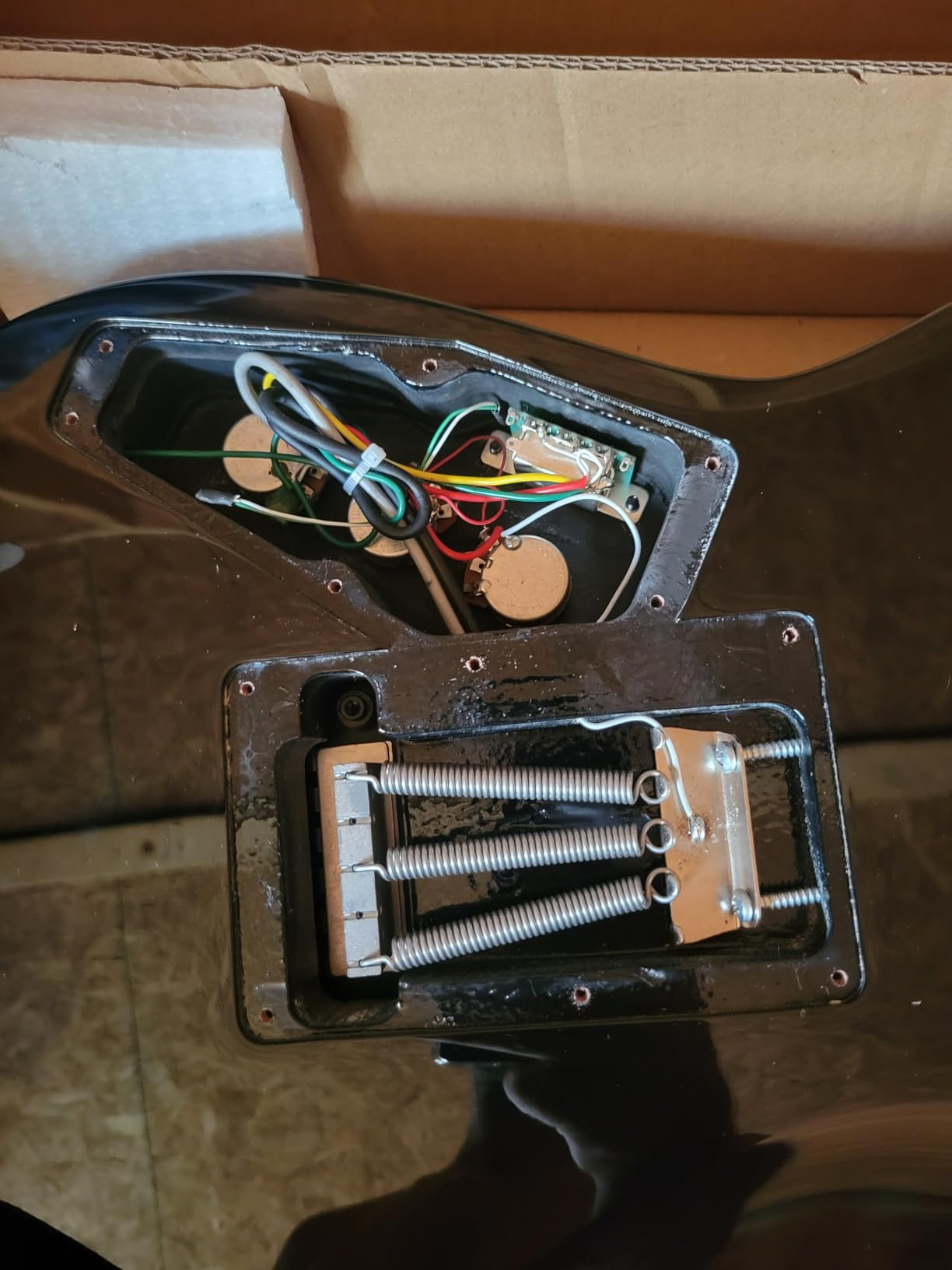
Several owners mention high action, intonation, and stock pickup noise. Those are setup and upgrade questions, not reasons to reject the core design; a proper setup can make the tremolo and fretboard feel much more predictable.
For whom it works best
This is the strongest option here for a guitarist who specifically wants a Floyd Rose and a slim neck. It also suits a Kirk Hammett or classic-metal fan who values the visual and playing cues of that design.
It is less attractive for someone who wants perfect factory setup with no inspection. Buyers should be comfortable taking it to a technician or learning the basics themselves.
What to check before buying
Measure action at the 12th fret, check intonation, and listen for excessive pickup noise before changing anything. Then decide whether the stock electronics suit the intended amp and effect chain.
Left-handed players should check variant availability directly, because the supplied product data lists right-handed and left-handed variants while identifying the analyzed model as right-handed. That small check prevents an avoidable ordering problem.
8. Jackson JS32 Warrior – Best Aggressive Style
Jackson JS32 Warrior Electric Guitar – Satin Black
Poplar body
Maple neck
Amaranth fretboard
25.5-inch scale
Licensed Floyd Rose tremolo
Pros
- Aggressive sound profile
- Licensed Floyd Rose
- High-output pickups
- Comfortable Warrior shape
- 2-year warranty
Cons
- Professional setup may be needed
- Volume knob can affect palm muting
- Unusual body shape may not fit standard stands
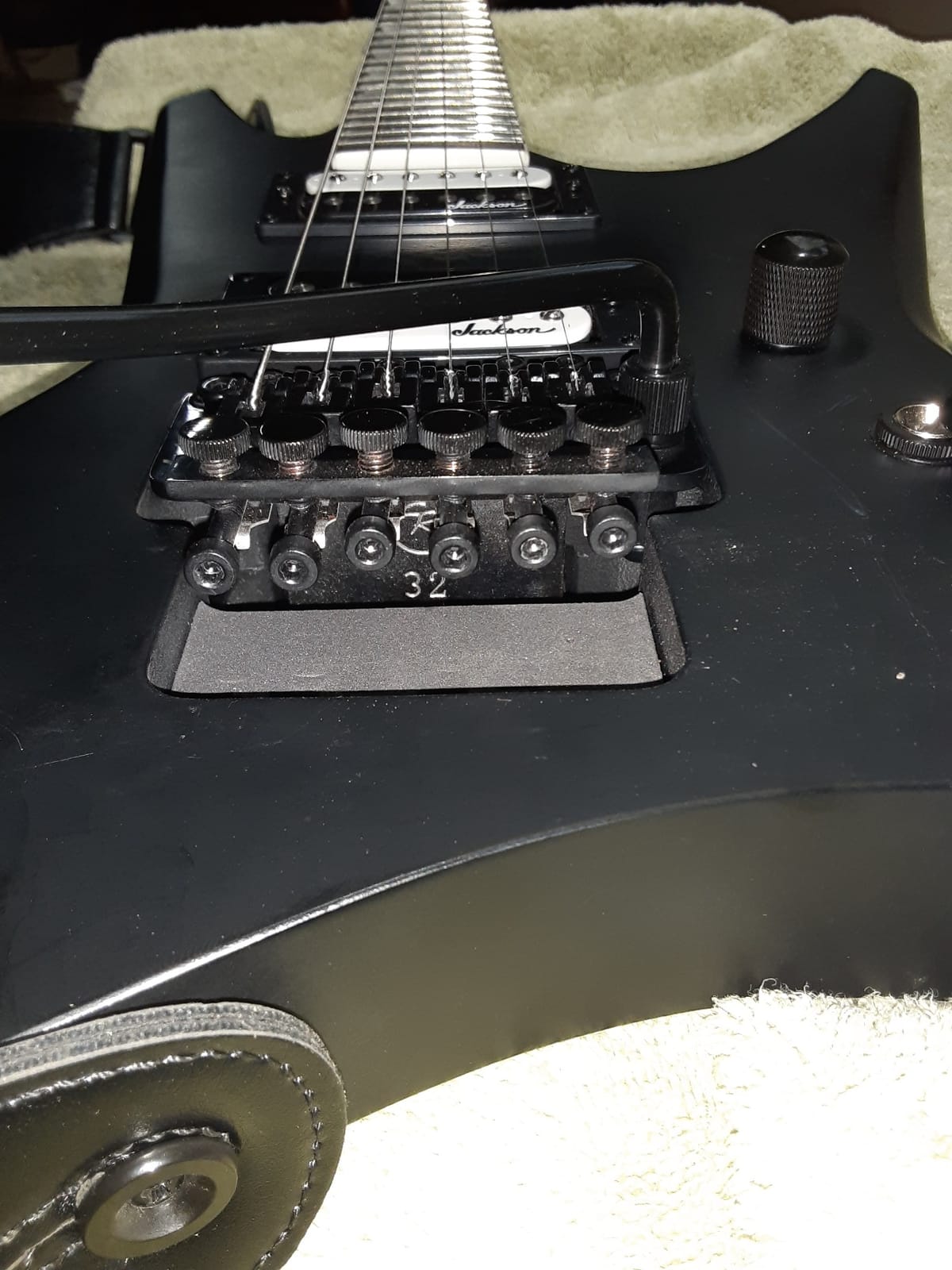
The JS32 Warrior is the most overtly aggressive-looking guitar in the comparison. Its high-output pickups and licensed Floyd Rose support heavy riffs, drop tuning, and lead work, while the broad pointed body gives the player a stable visual center on stage.
I would choose it for players who care about presence as much as tone. The unusual silhouette can be fun to play, but it also means you should check stand fit, strap comfort, and right-hand access before committing.
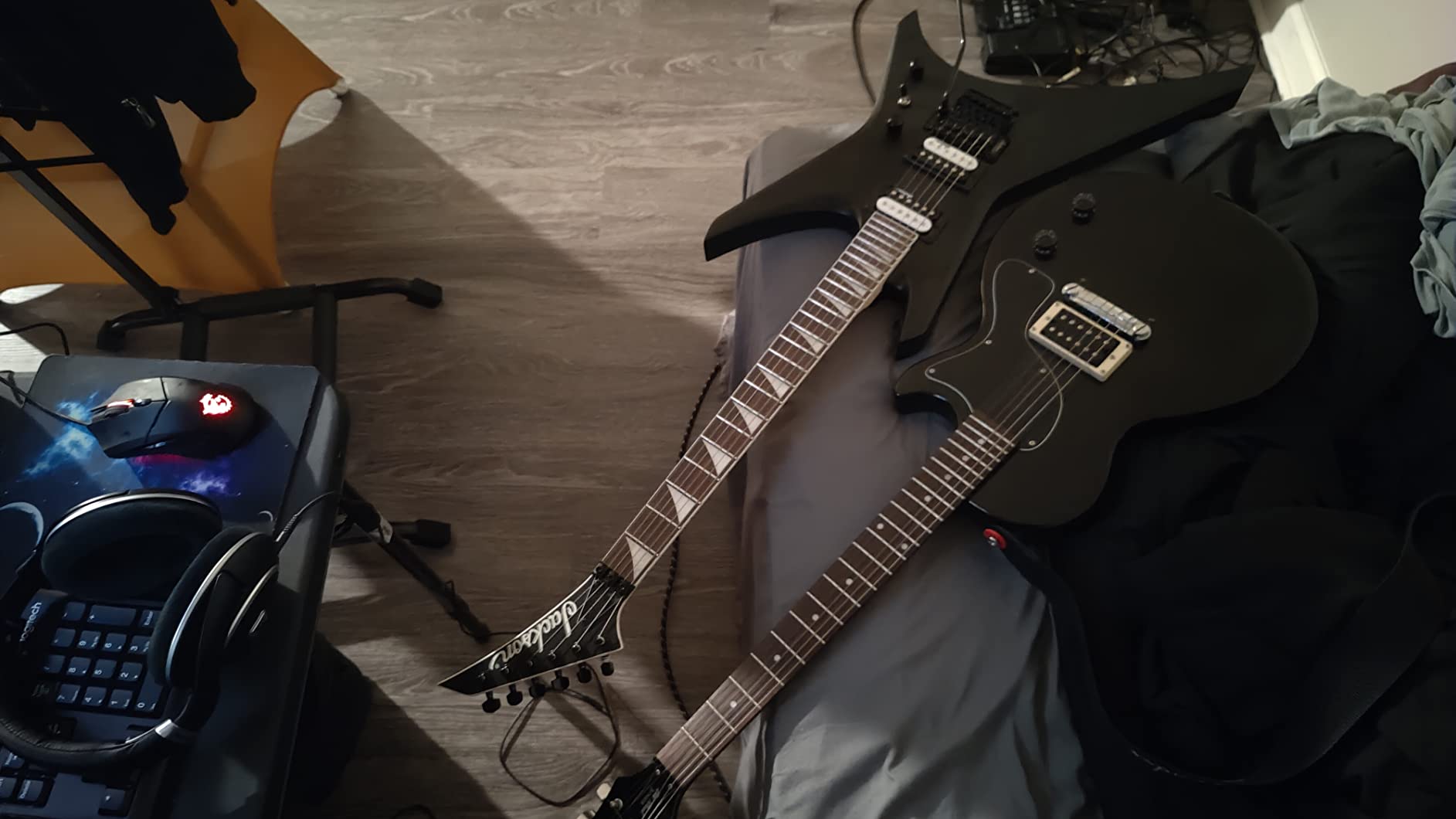
Owners report that a professional setup may be needed, and the volume control location can interfere with palm muting. Fine-tuner movement is another small maintenance consideration, so it deserves a careful setup review.
For whom it works best
This is a good fit for a guitarist who wants a Floyd Rose, aggressive styling, and a comfortable enough body for extended playing. It is especially appealing to fans of unconventional metal-guitar shapes.
It is not the most convenient choice for a player who uses a standard stand or prefers minimal controls near the picking area. A fixed bridge may be more comfortable for strict rhythm technique.
What to check before buying
Check bridge alignment, fine-tuner operation, control clearance, and neck relief. Also measure your case or stand because the Warrior body may not fit accessories designed around conventional shapes.
Our Yamaha electric guitar guide offers a useful reminder that metal suitability depends on construction, pickups, and setup rather than body shape alone.
How to Choose a Metal Guitar
The best electric guitars for metal music share a practical set of traits: humbuckers that control noise under gain, a neck that supports fast playing, and hardware that holds tuning. Body wood, bridge design, and scale length then decide how the instrument feels in a specific subgenre.
Pick the right pickup system
Humbucker pickups are the common starting point because their two-coil design rejects more hum and produces a fuller signal than a single-coil. Passive pickups offer a familiar voice, easy amplifier matching, and useful coil-split options; active pickups provide a tighter, higher-output response that can make dense metal rhythms easier to control.
The supplied product data shows the importance of this distinction. Most models here use passive humbuckers, so a clean high-gain rig and sensible EQ are more important than assuming an active pickup is mandatory.
Choose passive humbuckers for classic hard rock, thrash, and players who want straightforward amplifier interaction.
Choose active humbuckers for modern metalcore, progressive metal, and tightly focused distorted rhythm tones.
Consider coil splitting when clean rhythm parts and single-coil brightness matter, but do not mistake it for a true single-coil sound in every design.
Match scale length to tuning
Scale length changes string tension and attack. A 25.5-inch scale feels familiar and tight for standard tuning, while the 26.5-inch scale on the JS22-7 HT gives a seven-string player more useful tension in lower tunings.
For standard tuning, most players will find a 25.5-inch six-string familiar. For drop-D, a 26.5-inch scale can feel more relaxed and firm. For drop-A and below, an extended-range guitar, 27-inch or 27.5-inch scale, or multi-scale design deserves consideration.
Do not lower tuning and then expect thin factory strings to remain comfortable. A gradual string change, correct setup, and appropriate gauge make low tunings easier to play and reduce sharp fret edges.
Choose hardtail or tremolo deliberately
A hardtail is the simplest route to stable tuning and works especially well for riffs, drop tuning, and players who do not use pitch effects. A Floyd Rose or licensed double-locking tremolo is valuable for dive-bombs and precise vibrato, but it adds setup steps and requires correct string changes.
Choose a hardtail when tuning stability and easy maintenance come first. Choose a tremolo when expressive lead work is central to your style and you are willing to learn the bridge’s spring, nut, and fine-tuning system.
Think about neck shape and construction
A flat or compound-radius fingerboard becomes flatter as you move toward the bridge, making bends and fast leads easier while retaining comfortable chord grip near the nut. The JS22-7 HT’s 12-to-16-inch radius is a clear example, while the GRG131DX’s Wizard III-style neck favors quick movement.
Set maple necks and bolt-on construction can feel immediate and easy to service. Mahogany bodies and set-neck construction often add weight, sustain, and a thicker midrange character, but the final result still depends on the amp, speakers, and pickup height.
Set a realistic first-guitar path
Forum users consistently say that beginners are better served by a comfortable instrument with familiar controls than by buying an elaborate model before learning tuning and technique. The GIO, GRG, and JS11 models are sensible starting points because their six-string layouts are familiar, but any solidbody with humbuckers can play metal.
For left-handed players, verify orientation and variant details before ordering. The KH-202 is the only analyzed product whose feature list explicitly mentions left-handed variants, so do not assume every shape is offered in both orientations.
Budget for setup, not just the instrument
A fresh setup can include action adjustment, intonation, nut inspection, pickup height, and tremolo balancing. These jobs matter more than a small cosmetic difference and can turn an inexpensive guitar into a much more reliable practice instrument.
If you are choosing between a cheaper guitar with a needed setup and a more expensive one with a comfortable neck, choose the neck that lets you practice consistently. Players on Reddit frequently emphasize that purpose-built features make metal easier, but no guitar replaces a good setup, controlled gain, and deliberate practice.
Frequently Asked Questions
What is the best electric guitar for playing metal songs?
The best electric guitar for metal songs is a comfortable solidbody with humbucker pickups, a stable bridge, and a fast neck. The Ibanez GRX20Z is the strongest beginner all-rounder here, while the Jackson JS22-7 HT is better for low tunings.
Can you play metal on any electric guitar?
Yes, you can play metal on many solidbody electric guitars, especially those with humbuckers and reliable tuning hardware. A purpose-built metal guitar usually makes high-gain rhythm and fast lead playing more comfortable, but technique and amplification still matter most.
What pickups do I need in my metal guitar?
Humbucker pickups are the practical starting point for metal because they reduce hum and deliver a fuller signal under high gain. Passive humbuckers suit classic and versatile tones, while active pickups can provide tighter output for modern metal and djent.
What is the difference between active and passive pickups?
Passive pickups use magnets and coils without a powered preamp, giving a familiar response and simple amplifier pairing. Active pickups use an onboard preamp and battery, usually providing a stronger, tighter signal that can be easier to control with dense high-gain tones.
What is the best tuning for metal?
There is no single best tuning for metal. Standard tuning works for many thrash and classic styles, drop-D adds weight without a seventh string, and drop-A or lower favors the tension and range of a seven-string, 27-inch, or multi-scale guitar.
Should I choose a 7-string or 8-string guitar for metal?
Choose a 7-string guitar for metalcore, djent, and heavier drop tunings with a familiar six-string feel. Choose an 8-string when you need the lowest register for progressive or technical arrangements, but expect a wider neck, more string tension, and a bigger learning curve.
Final Verdict
The best electric guitars for metal music are the ones that remove friction from your playing. The Ibanez GRX20Z wins this roundup for its 4.7 rating, 748 reviews, comfortable neck, and straightforward beginner design. The Jackson JS22-7 HT is the better choice for low-tuned modern metal, while the Jackson JS32 King V earns its place for expressive lead work.
Start with the guitar that matches your tuning and technique, then budget for a proper setup. Use the links below each review to compare current details and choose the instrument that will keep you practicing.
1 thought on “8 Best Electric Guitars for Metal Music (October 2026) Honest Reviews”