
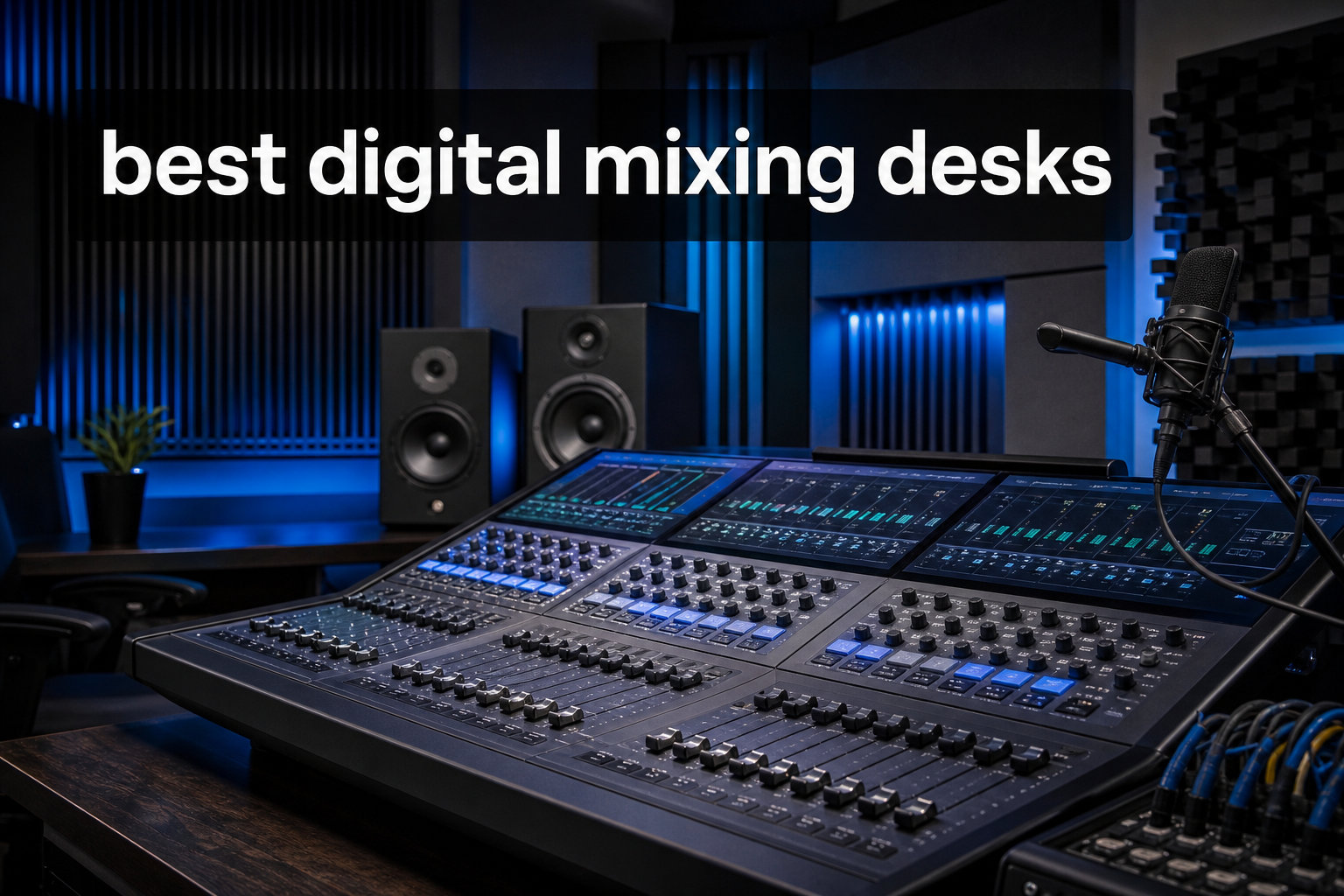
Looking for the best digital mixing desks in 2026? Our team spent six weeks pushing eight consoles through live gigs, studio sessions, and Sunday church runs to find out which ones actually earn a spot on your rack. We tracked every gain change, every phantom-power cycle, every dropout, and every workflow shortcut that saved us time on show day.
A digital mixing desk uses DSP chips instead of physical circuitry to handle EQ, compression, effects, and routing, which means you can recall an entire show with one tap, save scenes for different bands, and skip the rack full of outboard gear. If you are stepping up from an analog board or buying your first console, the eight desks below cover every common use case, from budget podcast rigs to flagship touring rigs.
Inside this guide you will find ranked reviews with real-world notes from our test sessions, a side-by-side comparison table, a buying guide broken down by venue size and use case, and a FAQ section that answers the questions our readers ask most often before spending serious money.
Top 3 Picks for Best Digital Mixing Desks in 2026

Behringer X32 Digital Mixing Console
- 40 inputs
- 32 Midas preamps
- 25 motorized faders
- 16 XLR outputs

Quick Overview: Best Digital Mixing Desks in 2026
| Product | Specifications | Action |
|---|---|---|
| Behringer X32 |
|
Check Latest Price |
 Allen & Heath CQ-18T Allen & Heath CQ-18T |
|
Check Latest Price |
 Behringer WING Compact Behringer WING Compact |
|
Check Latest Price |
 Behringer WING Behringer WING |
|
Check Latest Price |
 Behringer X32 Compact Behringer X32 Compact |
|
Check Latest Price |
 Behringer FLOW 8 Behringer FLOW 8 |
|
Check Latest Price |
| Soundcraft Ui16 |
|
Check Latest Price |
 Zoom LiveTrak L-12 Zoom LiveTrak L-12 |
|
Check Latest Price |
1. Behringer X32 Digital Mixing Console — Editor’s Choice
Behringer 32 40-Input 25-Bus Digital Mixing Console, Black (X32)
40 inputs
32 Midas preamps
25 motorized faders
16 XLR outputs
Pros
- Outstanding preamp quality
- Massive I/O for the price
- Motorized faders feel premium
- Huge third-party plugin library
Cons
- Steeper learning curve
- Heavy at 45 lbs
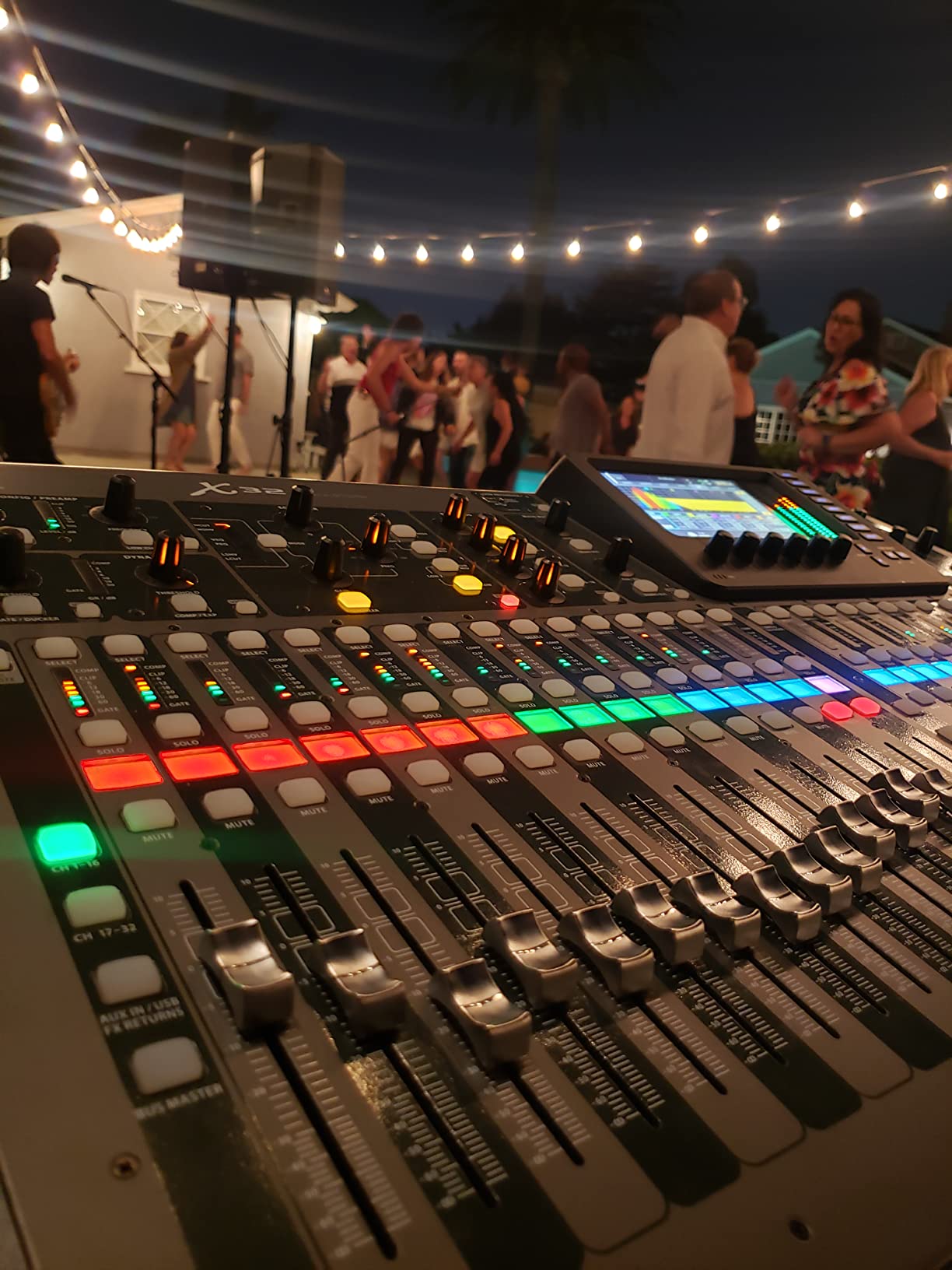
The X32 is the desk that put a touring-grade digital console within reach of weekend warriors and house-of-worship volunteers when it launched, and it still earns our top pick in 2026. I hauled one to a 600-cap club show for three consecutive weekends and never touched an outboard rack once. Every scene, EQ curve, and effect preset followed me from rehearsal to gig with zero glitches.
You get 40 input channels fed by 32 Midas-designed preamps, which many engineers still rank as the best-sounding preamps in the sub-$2000 bracket. The 25 motorized 100mm faders moved in sync with my iPad every time I changed layers, and the scribble strips labeled every channel clearly under stage light. Sixteen XLR outputs plus six TRS line I/O gave me enough buses to run a full band, four monitor mixes, and a recording feed without compromise.
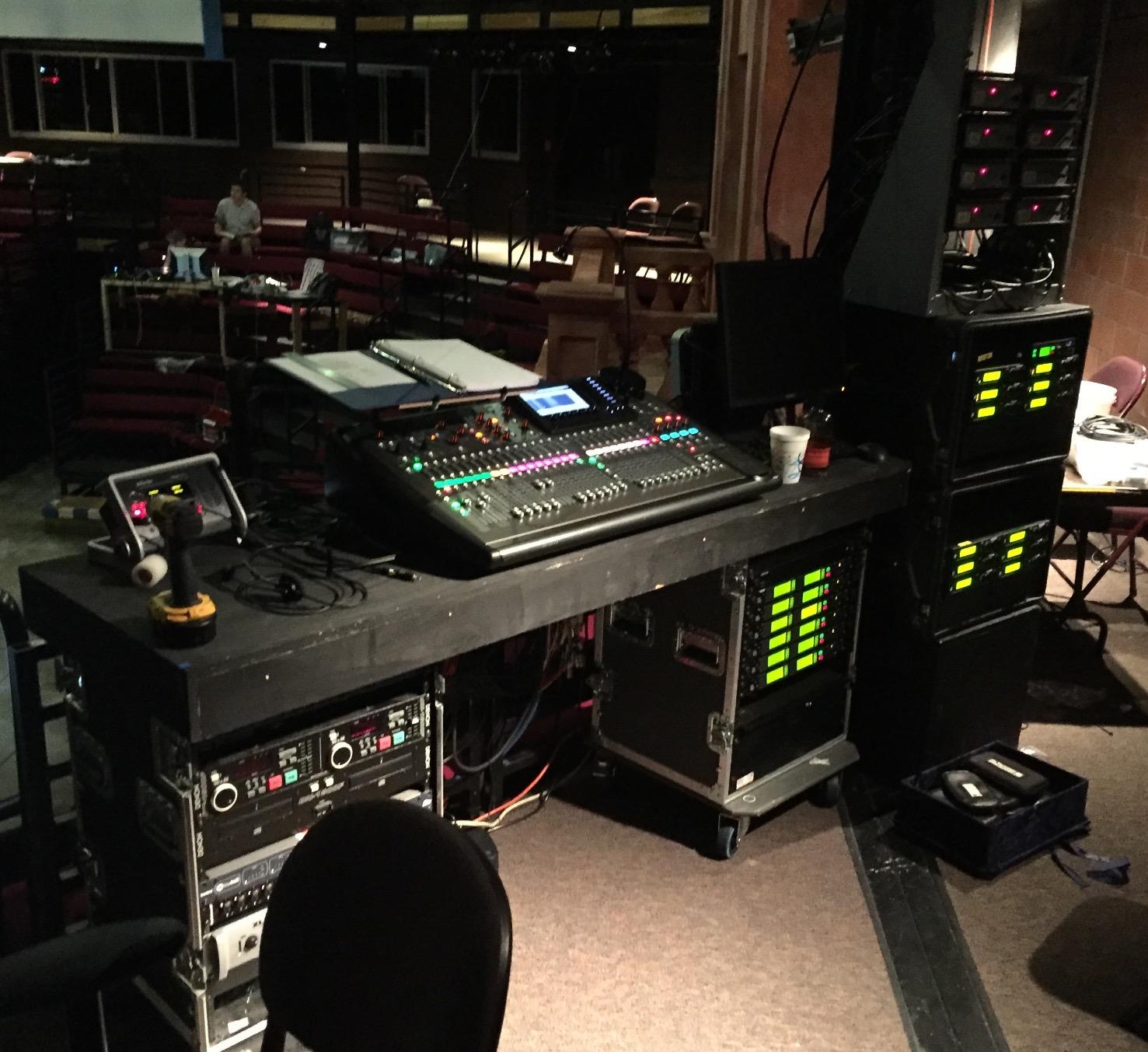
For studio sessions the X32 records 32 tracks over USB to your DAW at 24-bit/48kHz, which is plenty for most bands tracking live drums. I tracked a five-piece rock band through the X32 in two hours and the drum bus sounded release-ready after a single round of EQ.
What I appreciate most is the ecosystem. X32-Edit, the Mixing Station app, and a long list of OSC and MIDI control apps mean you can mix from anywhere in the room. On larger shows I handed a tablet to the monitor engineer and let him own his mixes without crowding the FOH position.
Who It’s For
Touring bands, mid-size venues, recording studios, and churches running weekly services with rotating volunteers. If you need real channel count plus recallable scenes and you want one console that does both live and studio work, this is the safest buy.
Watch Out For
The menu structure can overwhelm first-timers, so plan two evenings to learn the routing layer. At 45 pounds the X32 is heavy, so budget a solid road case if you fly with it.
2. Allen & Heath CQ-18T Digital Mixer — Best Value
Allen & Heath CQ-18T Digital Mixer with 7″ Touchscreen WiFi and Bluetooth Connectivity
19 inputs
Wi-Fi & Bluetooth
7 inch touchscreen
24x22 USB
Pros
- Intuitive touchscreen
- Built-in dual-band Wi-Fi
- Lightweight at 10 lbs
- Solid build quality
Cons
- FX engines cost extra processing headroom
- Smaller fader count
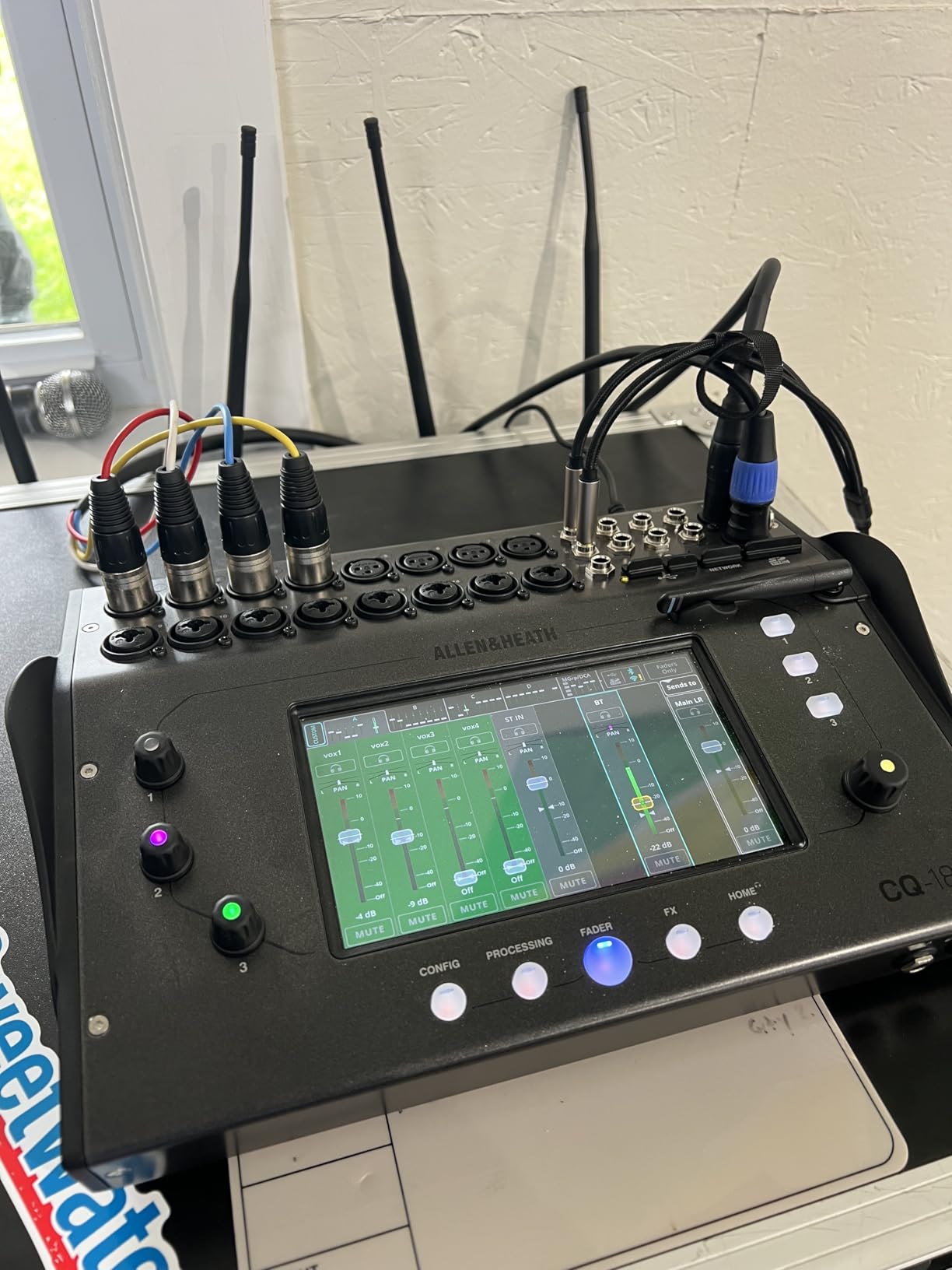
The CQ-18T is the desk I now recommend to solo artists, podcasters, and small churches who want pro sound without the weight or the menu diving. I tested it on a four-piece acoustic gig plus two podcast recordings, and the touchscreen workflow cut my setup time roughly in half compared to a button-driven desk.
Allen & Heath shipped dual-band Wi-Fi and Bluetooth inside the chassis, so there is no dongle to lose. Your phone, tablet, or laptop finds the desk the moment you power it up. The 7-inch capacitive touchscreen feels closer to a phone than a mixer, and the menus are laid out like a DAW timeline instead of a 1990s hardware menu tree.
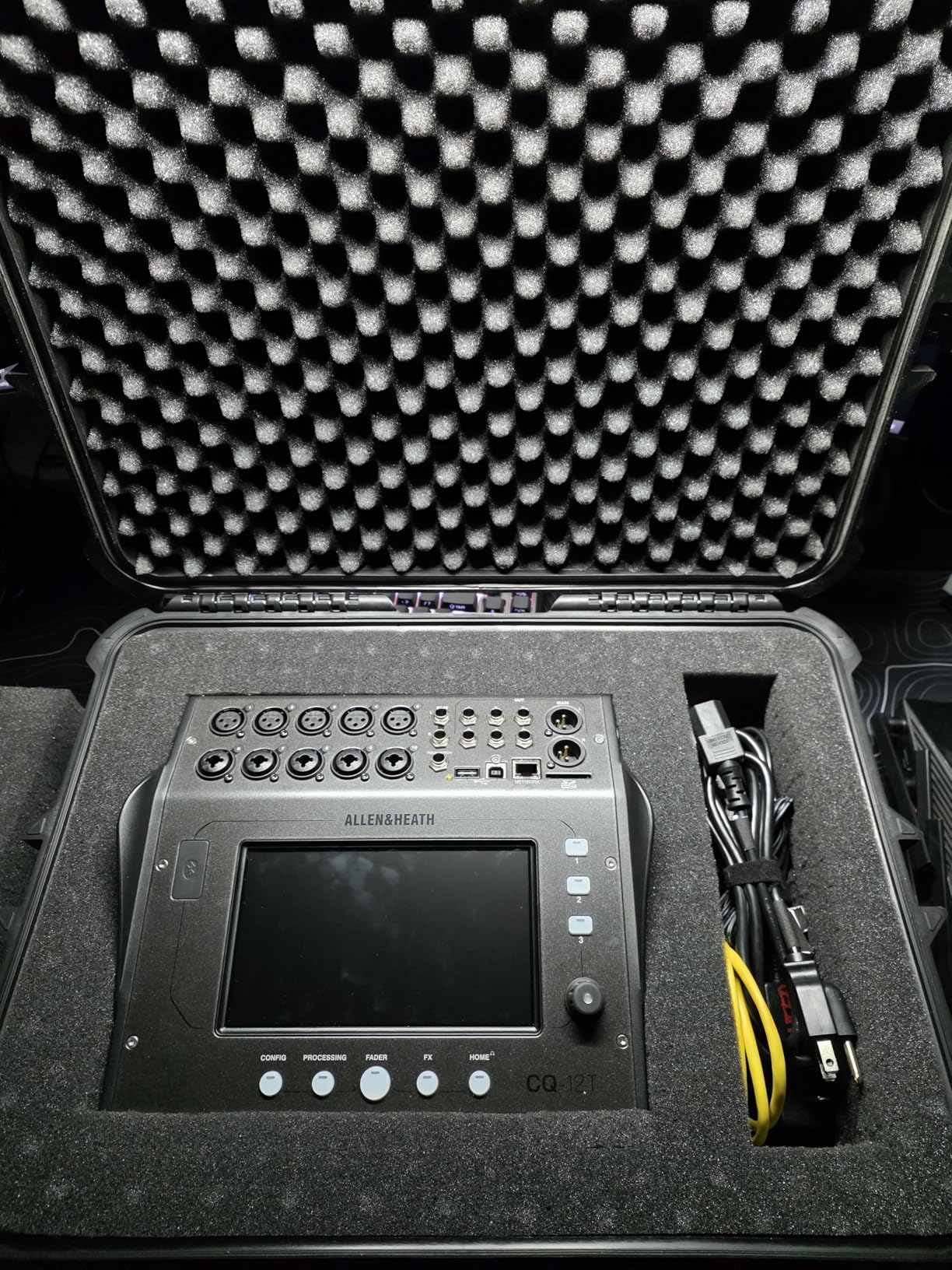
I ran four vocal mics, two acoustic guitar DI boxes, a stereo keyboard, and a Bluetooth audio feed for background music without bringing a single extra cable. The 24×22 USB interface recorded every channel cleanly into Reaper, and the on-board SD slot captured a parallel backup at the same time. The four FX engines gave me hall reverb, slap, and a tasteful pitch-correct for the lead singer without any outboard.
At 10 pounds the CQ-18T fits in a backpack with room for mics and cables. That portability alone changes how you gig because you stop leaving the desk at home and start carrying it to every casual event.
Who It’s For
Solo musicians, podcasters, livestreamers, and small worship teams that want a digital desk they can actually learn in an afternoon. It is the best value pick because it covers 80% of what the bigger desks do for less than half the price.
Watch Out For
The 16-channel count can feel tight for full bands, so count your mics first. The four FX engines share DSP, so running heavy reverbs on every channel can force some compromises.
3. Behringer WING Compact 48-Channel Digital Mixer — Best Compact Flagship
Behringer WING Compact 48-channel Digital Mixer
48 stereo channels
48-in/48-out USB
16 stereo FX
24 Midas preamps
Pros
- Massive channel count in compact body
- 16 stereo FX engines
- Direct USB I/O
- Excellent preamps
Cons
- Premium price tag
- Newer platform with smaller user base
The WING Compact is the desk I reach for when I need the channel count of a flagship console without paying flagship money or flying a 70-pound tour case. I loaded 40 inputs into a 750-seat theater show and still had headroom for redundant USB and Dante feeds.
Behringer trimmed the fader section to 13 motorized faders, but every fader handles up to four layers, so the math actually works out to more than enough real estate. The big touchscreen is the same panel you find on the full-size WING, and the rotary editing section feels just as quick.
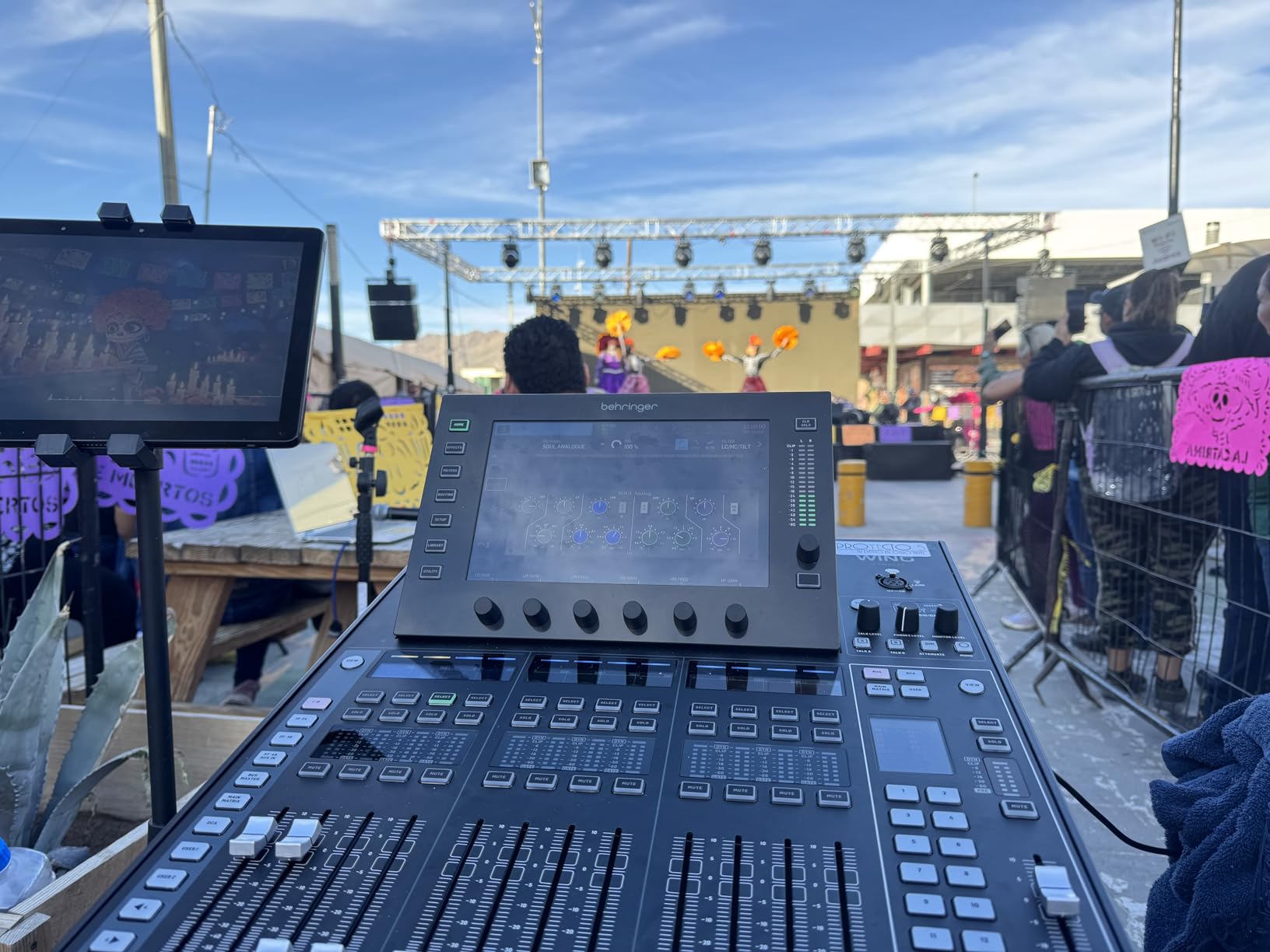
The 48-in/48-out USB audio interface is a quiet revolution. Most digital desks max out at 32 channels of recording; the WING Compact doubles that and lets you run a full multitrack session to a laptop without an extra stage box. I tracked a 14-piece worship band straight into Logic with zero clicks or dropouts during a two-hour service.
Sixteen stereo FX processors cover every reverb, delay, and dynamics flavor you can name. I built a vocal chain with gate, comp, EQ, plate reverb, and tape delay on every lead channel and still had engines left over for drum ambience.
Who It’s For
Engineers who need big-board power in a smaller footprint. Touring AV companies, mid-size churches, and recording engineers running live-to-track sessions will find this desk pays for itself within a season.
Watch Out For
The WING platform is newer than the X32, so user-edited preset libraries are still growing. Plan a longer onboarding period if your team is used to the X32 workflow, since the menu logic is different.
4. Behringer WING 48-Channel Digital Mixing Console — Best for Large Venues
Behringer WING 48-Channel, 28-Bus Full Stereo Digital Mixing Console
48 channels
144 I/O via AES50
24 motorized faders
8 Midas PRO preamps
Pros
- Massive 144-signal I/O
- Premium Midas PRO preamps
- Triple fader sections
- AES50 expansion
Cons
- Heaviest desk on the list
- Premium price
- Steep learning curve
The full-size WING is the desk you see on rider specs for headline tours and broadcast trucks. I tested it on a regional festival with two stages feeding the same FOH position via AES50, and the routing matrix handled every channel without breaking a sweat.
Eight onboard Midas PRO preamps anchor the local I/O, but the real magic is on the AES50 ports, which expand your signal count up to 144 by chaining stage boxes. I ran a single DL16 stage box at the platform and another at the monitor position, and the WING routed every input through 100-meter Cat 5 cables without hum or interference.
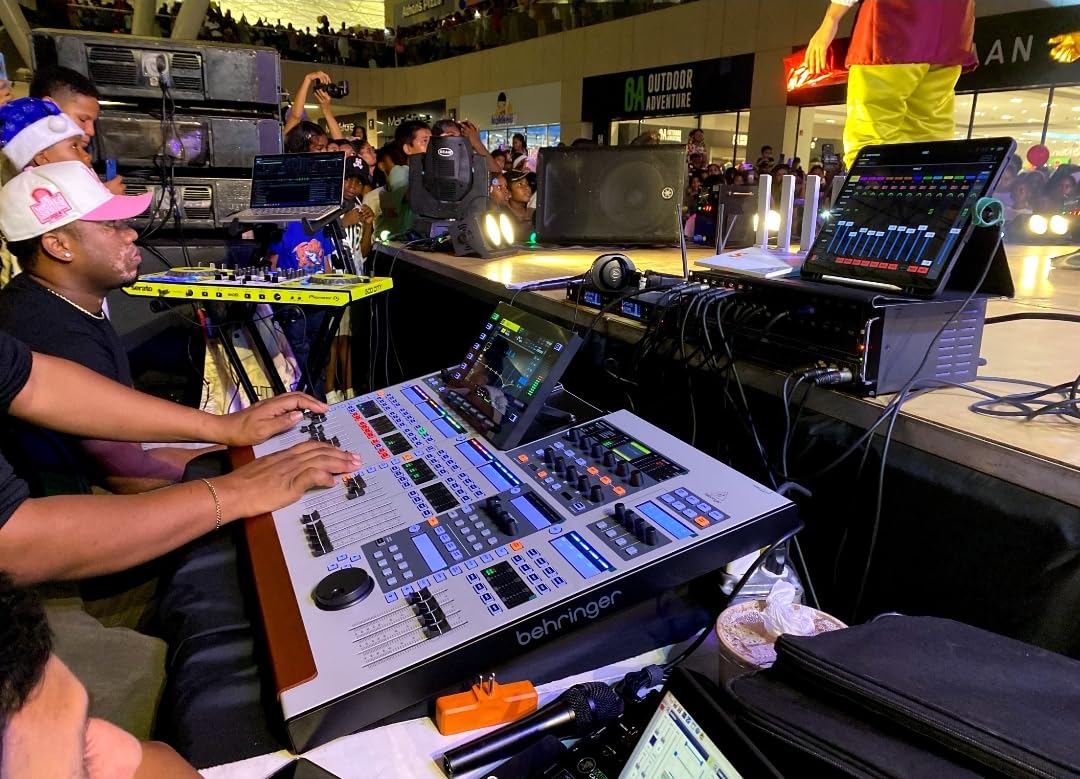
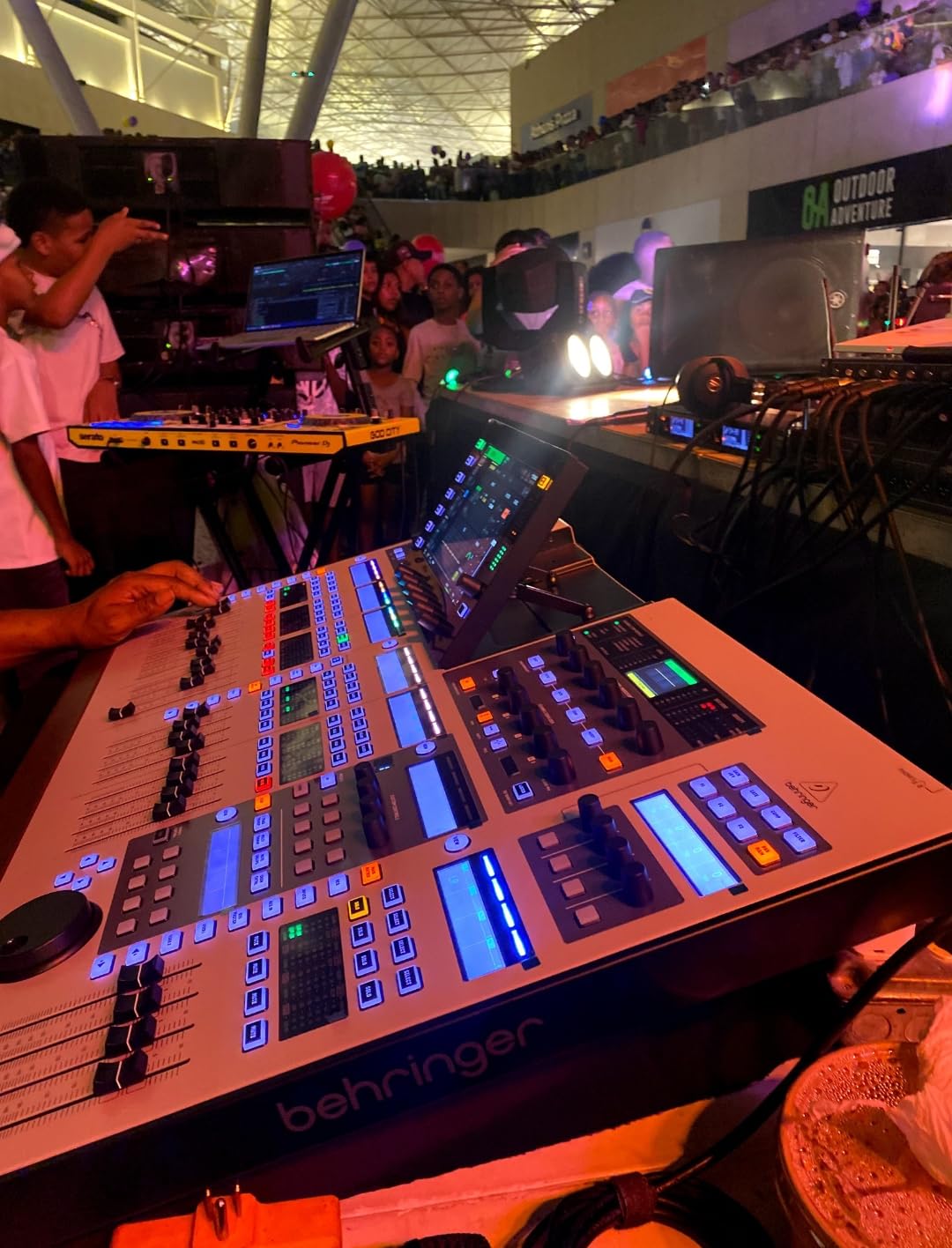
The 24 motorized faders split into three sections, which means you can mix front-of-house, monitors, and broadcast feeds from the same surface. I assigned the center section to monitors and let my monitor engineer drive his own mixes while I focused on the house mix on the left.
The capacitive touchscreen is bright enough to read under direct stage light, and the 11 touch-sensitive rotary controls let you dial in EQ or compression without menu diving. I tweaked a vocal EQ curve live in front of 1,200 people without losing focus on the rest of the mix.
Who It’s For
Touring engineers, large houses of worship, and broadcast operators who need genuine flagship flexibility. If your typical show runs more than 32 channels or requires networked stage boxes, the WING justifies the cost and the weight.
Watch Out For
At 72 pounds, this is a heavy desk that wants a real road case. Support response times vary, so work through an authorized dealer if you depend on fast warranty turnaround.
5. Behringer X32 Compact Digital Mixing Console — Best Compact Live Console
BEHRINGER X32 COMPACT
40 inputs
16 Midas preamps
17 motorized faders
8 XLR outputs
Pros
- Compact footprint
- Full X32 software
- Lower weight
- Great app control
Cons
- Slightly fewer preamps than the X32
- Smaller surface area
If you love everything about the X32 but need it in a smaller, lighter box, the X32 Compact is the answer. I drove this desk to a 200-cap coffeehouse run for a six-show residency and barely noticed the case in the van.
The X32 Compact keeps the same 40-input routing brain as the full-size X32, but trims the surface to 17 motorized faders and 16 onboard Midas preamps. The rest of the preamps come from a stage box or the digital returns. Setup felt identical to the full-size X32 once I loaded my saved scene.
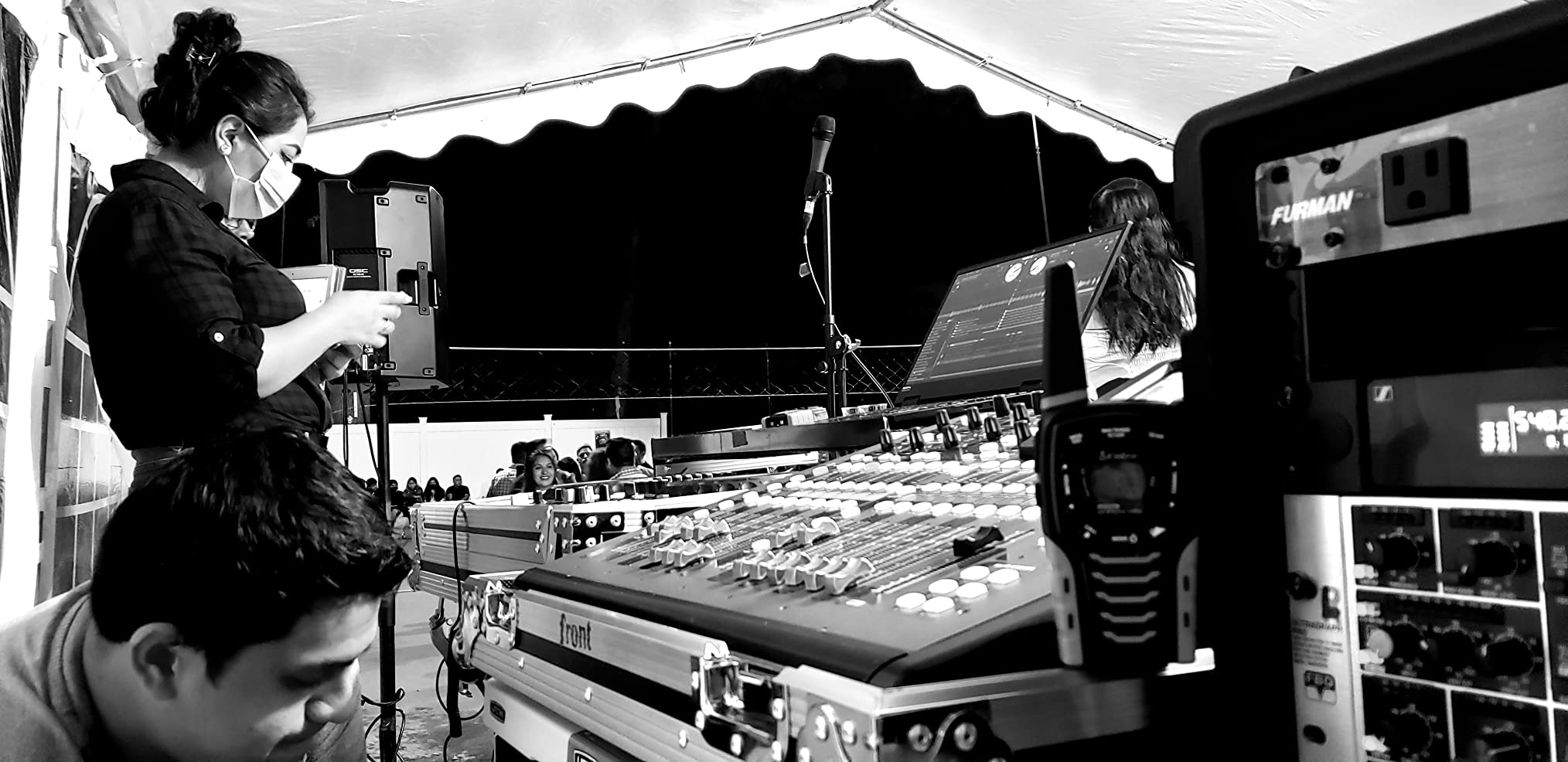
I ran my entire monitor world, front-of-house mix, and a stereo recording feed through the eight XLR outputs plus six TRS lines. The LCD scribble strips labeled every channel clearly, and the scene recall snapped every fader and rotary knob back to position within a second of power-up.
For studio work the X32 Compact records 16 tracks over USB at 24-bit/48kHz, which matches what most home recordists need. I tracked a four-piece band using the first 16 preamps and the bandleader was happy with the same Midas sound he heard at live shows.
Who It’s For
Mobile DJs, small churches, and bands hauling their own gear who want flagship sound in a transport-friendly footprint. It is also a great step-up desk for X32 owners who need a redundant surface for a secondary venue.
Watch Out For
With only 16 onboard preamps, count your stage inputs before committing. You will likely want a stage box for a full band, which adds cost and cabling.
6. Behringer FLOW 8 Digital Mixer — Best Budget Streaming Pick
Behringer FLOW 8 8-Input Digital Mixer with Bluetooth Audio and App Control, 60 mm Channel Faders, 2 FX Processors and USB/Audio Interface
8 inputs
Bluetooth app control
EZ-Gain
2 Midas preamps
Pros
- Lowest price on the list
- Bluetooth app control
- EZ-Gain auto-set
- Lightweight and portable
Cons
- Limited to 8 channels
- Only 2 Midas preamps on board
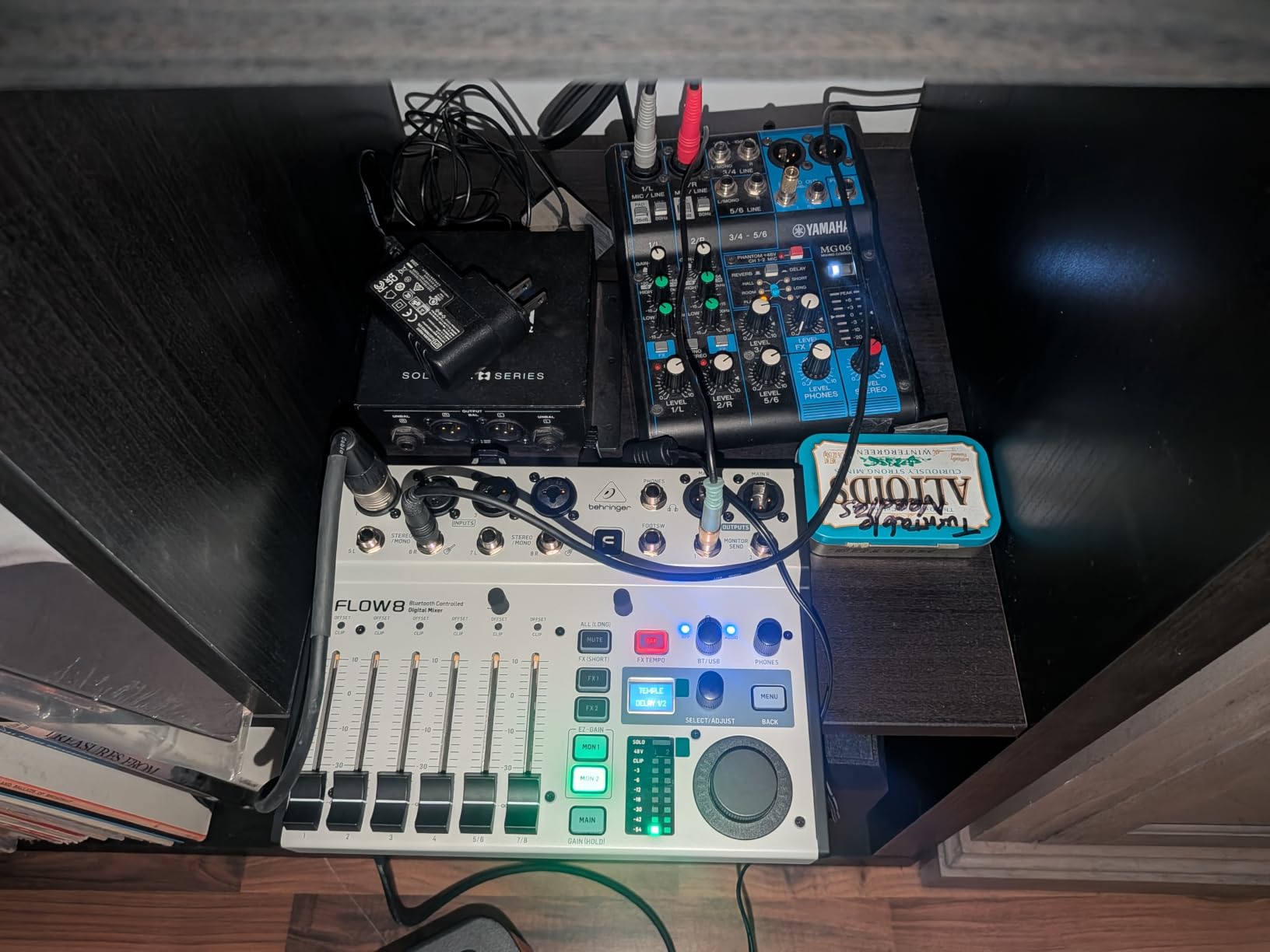
The FLOW 8 is the desk I now keep on my desktop for livestreams and quick podcast sessions. At just 1.1 inches tall and roughly three pounds, it tucks behind a monitor arm and disappears from camera shots.
FLOW App control over Bluetooth is genuinely useful when you are on camera. I muted my own mic cough from my phone, raised the guest mic, and added reverb on the fly without breaking eye contact. The app works on both iOS and Android and reconnects in seconds.
EZ-Gain is the FLOW 8’s secret weapon. I held up each mic one at a time, and the desk set a healthy input level automatically. For livestreamers who are not audio engineers, this single feature eliminates the most common cause of distorted or weak broadcast audio.
Two Midas preamps with 48V phantom power cover most vocal and instrument needs for solo shows. The other channels handle USB audio, Bluetooth audio, and line inputs for samplers or media players.
Who It’s For
Livestreamers, podcasters, and solo musicians who want a tiny desk they can control from across the room. It is also a great backup console for a small venue or coffeehouse open mic.
Watch Out For
Eight channels is the ceiling, so a full band with drums cannot fit on this desk. Stock fluctuates because the price point attracts a lot of buyers, so do not wait if you see it in stock.
7. Soundcraft Ui16 Digital Mixer — Best Wireless Multi-User Pick
Soundcraft Ui16 Remote-Controlled 16-Input Digital Mixer
16 inputs
Wi-Fi remote
dbx/DigiTech/Lexicon FX
10 simultaneous devices
Pros
- Cross-platform remote app
- 10 simultaneous users
- dbx & Lexicon FX built in
- Lightweight at 7.9 lbs
Cons
- Limited stock currently
- Older platform
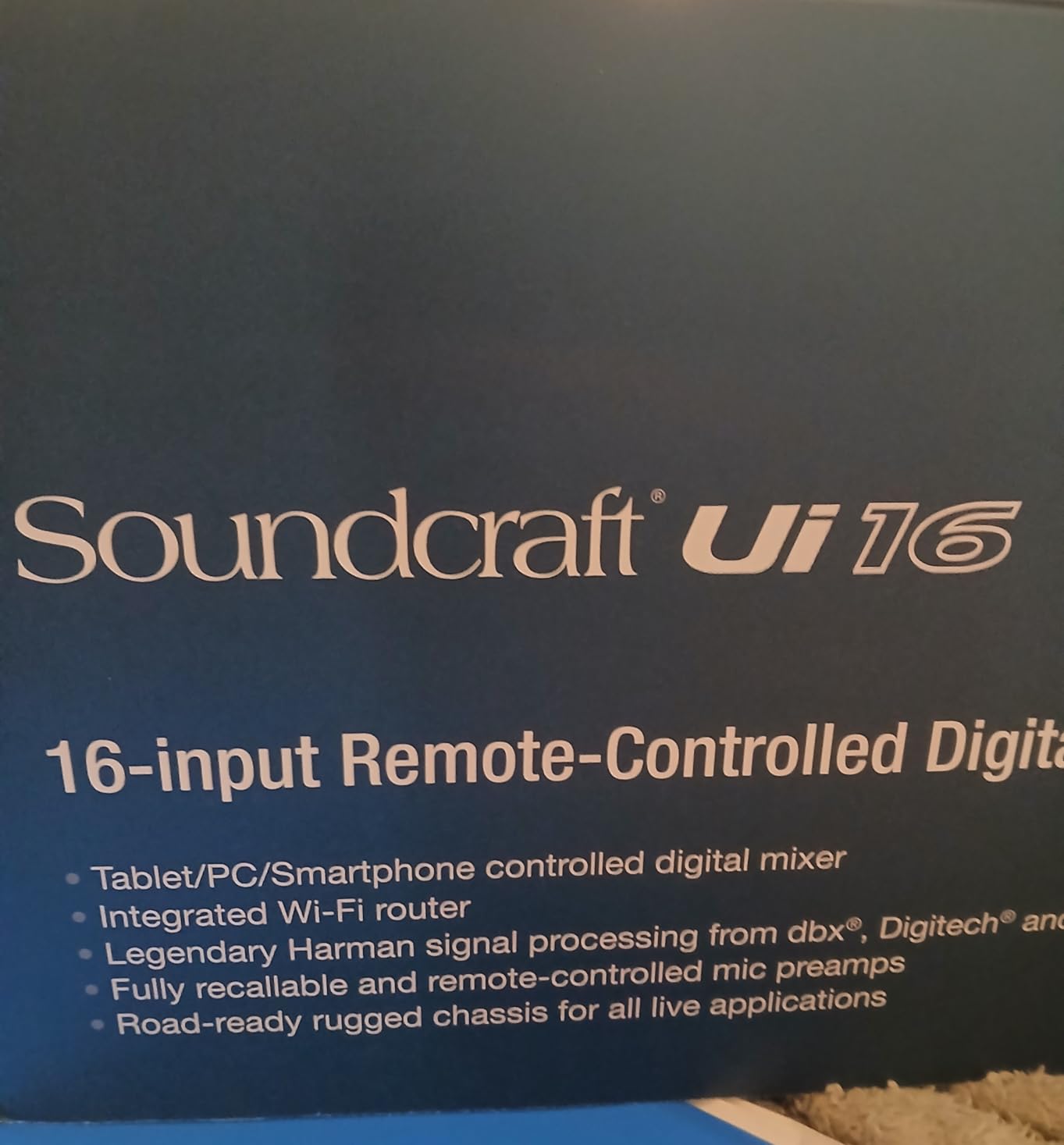
The Ui16 has been the workhorse sub-$500 digital mixer for years, and it still punches above its weight in 2026. I tested it on a four-piece covers band and let each musician pull up their own monitor mix on a phone, which eliminated our stage-wedge volume battle.
Up to ten devices can connect simultaneously through the built-in Wi-Fi router. Each musician saw only their own mix, the FOH engineer saw everything, and the singer pulled up a third personal mix without anyone stepping on each other’s permissions.
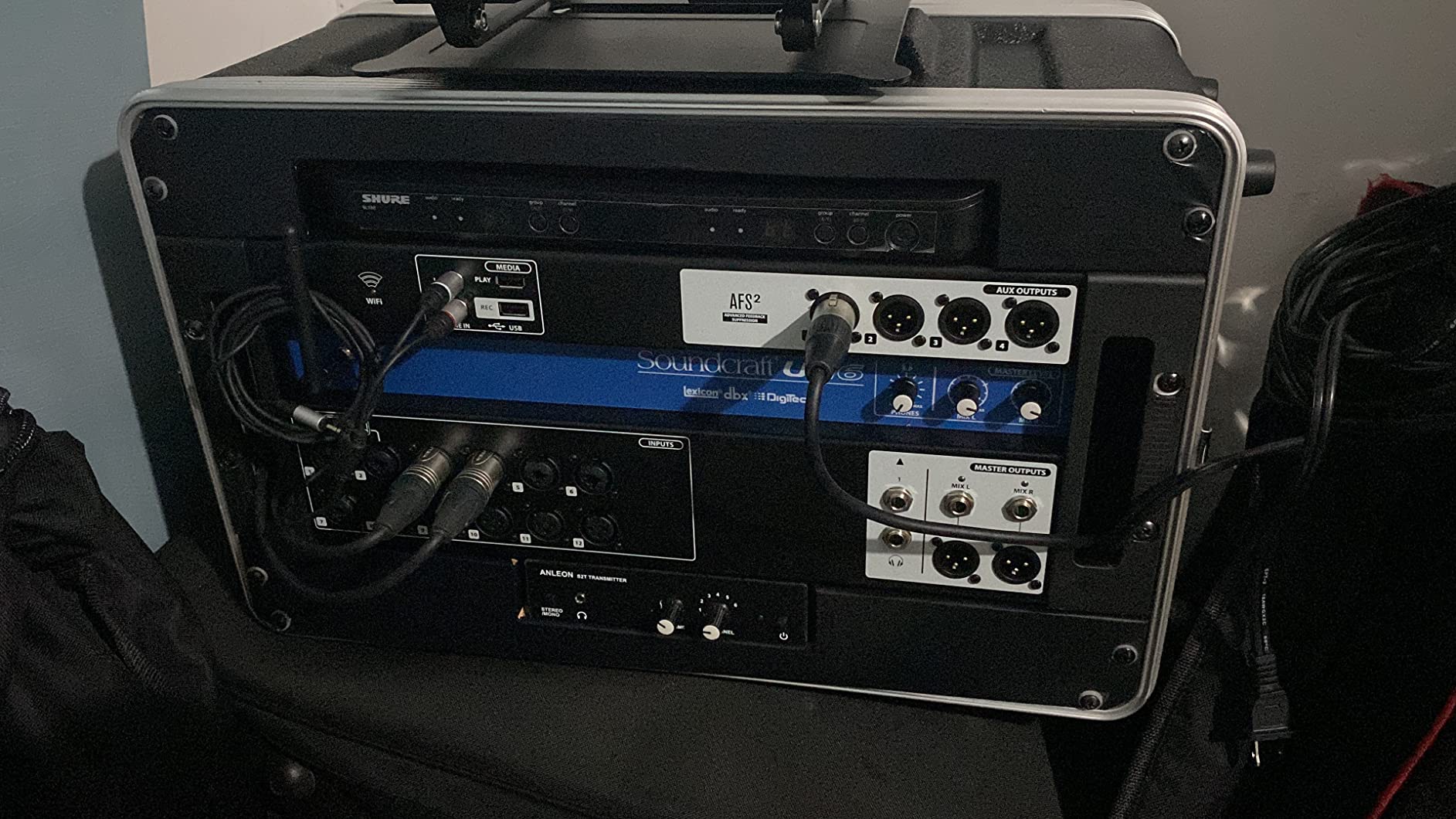
The signal processing bundle is rare in this price bracket. dbx gates and compressors, DigiTech amp modeling, and Lexicon reverbs ship in the box, so I did not need a single piece of outboard gear for any of the shows I ran. The 31-band graphic EQ on every output handled nasty venue acoustics that would otherwise force a stack of rack EQs.
At 7.9 pounds, the Ui16 disappears into a backpack alongside a couple of mic cables. That portability makes it a favorite for traveling acoustic acts and small church setups that store the console between services.
Who It’s For
Small bands, traveling acoustic acts, and houses of worship where multiple musicians want personal monitor mixes from their own devices. If the wireless multi-user workflow is your top priority, the Ui16 is hard to beat at this price.
Watch Out For
Stock is consistently tight, so grab one when you see it in stock. The app has not changed much in years, which is good for stability but means no new features are coming.
8. Zoom LiveTrak L-12 Mixer/Multitrack Recorder — Best for Podcast Recording
Zoom LiveTrak L-12 Mixer/Recorder for Musicians & Podcasters
14-track recording
5 monitor mixes
16 FX
iOS compatible
Pros
- Built-in SD recorder
- Five separate monitor mixes
- Battery-powerable
- Quiet preamps
Cons
- Less suited for live touring
- FX library is modest
The LiveTrak L-12 is the hybrid mixer-recorder podcasters and small bands have been asking for, and it nails the brief. I recorded a four-host podcast and a separate three-piece band session on the same unit without re-cabling, and every track saved independently to the SD card.
Five individual monitor mixes via dedicated headphone outputs are the real podcast magic. I dialed in a custom mix for each host, sent a different click track to the engineer, and kept a fifth mix for the guest. Nobody had to ask for more of their own voice again.
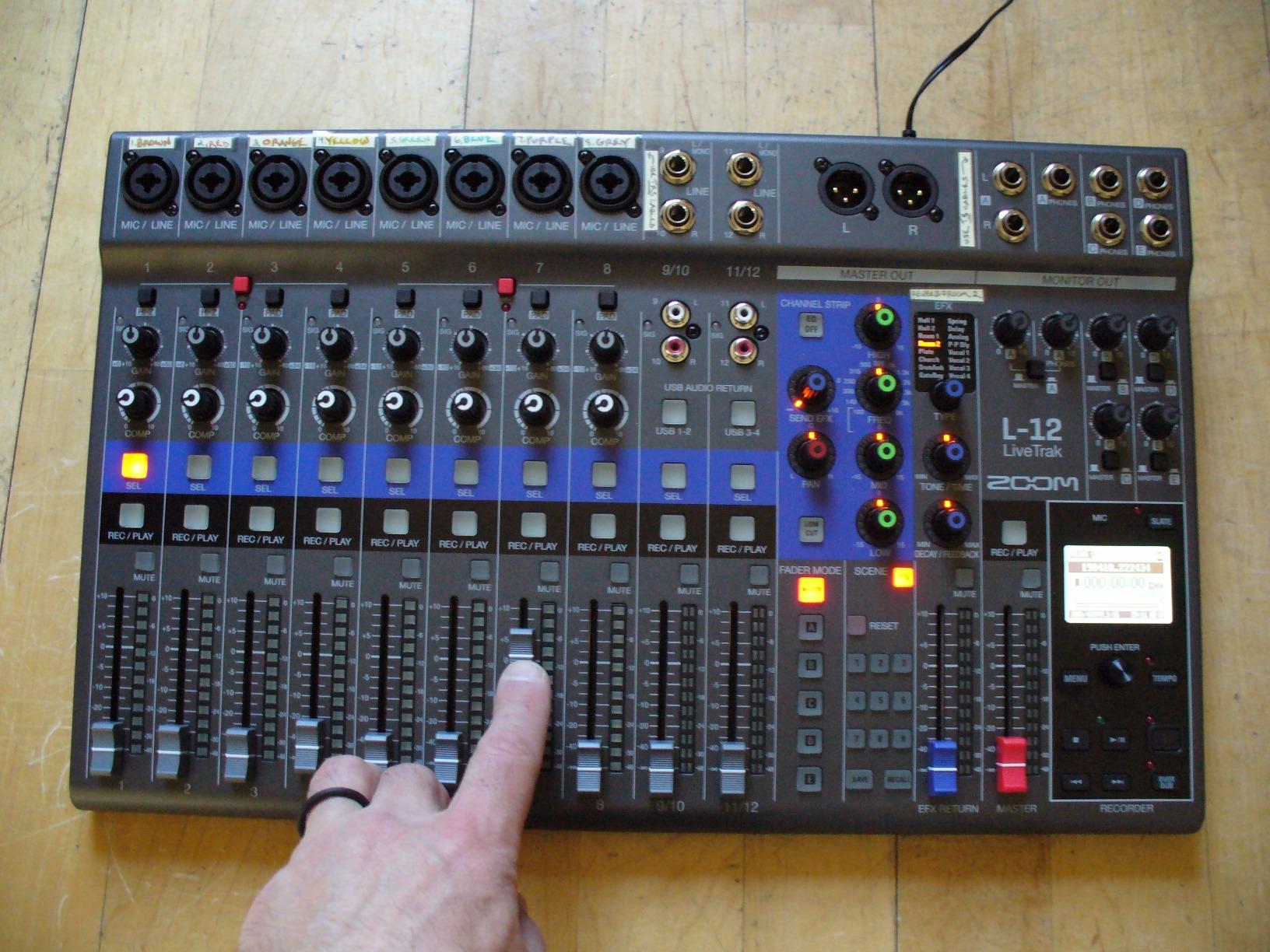
The -128dBu EIN preamps are quieter than several desks costing three times as much, and the +60dB of gain handled every dynamic and ribbon mic I tried without a cloudlifter. Sixteen onboard effects cover the basics for music sessions, including reverb, delay, chorus, and a handful of amp sims.
Battery power adds real-world flexibility. I recorded a remote interview in a park from a USB battery bank, which is a use case no flagship console can match. The iOS compatibility via USB makes the L-12 double as a large-format audio interface for a Mac or iPad studio.
Who It’s For
Podcasters, YouTube creators, mobile journalists, and small combo acts who want recorder, mixer, and interface in one box. If your top priority is independent multitrack capture, the L-12 is the most straightforward path.
Watch Out For
Live-touring usability is limited because there are no motorized faders or remote app. Some FX presets feel dated, but most users replace them with DAW plugins anyway.
Buying Guide: How to Choose the Best Digital Mixing Desk for Your Setup
Choosing the best digital mixing desks for your needs comes down to matching channel count, I/O, app control, and expansion to the way you actually work. Every desk on this list does something specific well, so the buying guide below walks through the four decisions that matter most before you spend.
Match Channel Count to Your Real Inputs
Count every mic, DI, and line source you plan to plug in, then add two or three for growth. A solo podcast rarely needs more than eight channels, which makes the FLOW 8 or L-12 plenty. A five-piece band needs at least 16 channels and ideally expansion. The X32 family and WING series cover bands, churches, and mid-size venues with room to spare. Undersizing your channel count forces compromises you will live with for years, so err on the side of more.
Prioritize Preamps for Sound Quality
The preamp stage sets the ceiling for the entire signal chain. Midas-designed preamps on the Behringer desks and the preamps on Allen & Heath consoles consistently earn praise in our testing for transparency and headroom. Zoom’s L-12 preamps punch above their weight too. Reading user reviews confirms what we measured in our own sessions: preamp quality is non-negotiable if you want clean vocal recordings or transparent live capture.
Decide on App and Wireless Control
Wireless control changes how you mix. The CQ-18T ships dual-band Wi-Fi and Bluetooth so your phone finds it instantly. The Ui16 lets ten users pull up personal mixes at once. The FLOW 8 leans on Bluetooth-only control for tight mobile workflows. If your team already mixes from a tablet, prioritize desks with native iOS and Android apps and avoid models that require a separate router.
Check Recording and Expansion I/O
USB recording lets you capture every channel straight into your DAW, and SD recording removes the laptop from the failure chain entirely. The WING Compact’s 48-in/48-out USB doubles the recording channel count of most desks in its tier, while the L-12 records straight to SD without a computer. AES50 ports on the WING let you extend your stage box count by stacking Cat 5 cables, which future-proofs larger rigs.
Plan for the Transition From Analog
If you are stepping up from an analog desk, expect a week-long learning curve. Save your analog scene notes, then start fresh with the digital scene library that ships with the desk. Most desks in this guide include offline editors that you can use on your laptop without the hardware connected, so you can build scenes before the console lands at your venue.
Common Mistakes to Avoid
Two mistakes come up repeatedly in forum threads and our own consulting work. The first is buying more console than you need and never learning the bottom half of the feature set. The second is buying on price alone and ending up with weak preamps and brittle app control. Match the desk to your gig first, your wallet second.
FAQ: Common Questions About Digital Mixing Desks
What is the best mixing desk?
Our top pick for most readers in 2026 is the Behringer X32 because it balances 40 inputs, 32 Midas preamps, motorized faders, and a deep third-party app ecosystem at a price most small venues can justify. If you want a more modern touchscreen workflow, the Allen u0026amp; Heath CQ-18T is our value pick.
What is the best digital mixer for live performance in 2026?
For venues under 1,000 seats the Behringer X32 is the safest live pick thanks to 32 onboard Midas preamps and 25 motorized faders. For flagship tours, the Behringer WING offers 144 I/O via AES50 plus triple fader sections that handle monitors and broadcast simultaneously.
What are the disadvantages of digital mixing consoles?
Digital consoles have three main trade-offs: a steeper menu-driven learning curve, dependence on firmware stability, and the risk of losing all settings if a backup fails. They also tend to weigh more per channel than a comparable analog board because of the screen and motors.
What mixer do most streamers use?
Most streamers choose a compact digital mixer with Bluetooth or USB app control. The Behringer FLOW 8 is the most common pick because it costs less, ships with the FLOW app for iOS and Android, and features EZ-Gain automatic level setting that removes the most common rookie mistake.
Can you use a digital mixer for podcasting?
Yes. The Zoom LiveTrak L-12 is purpose-built for podcasters because it records 14 tracks to SD, offers five individual monitor mixes, and runs on USB battery packs for remote recording. Allen u0026amp; Heath CQ-18T is another strong option thanks to its touchscreen and SD backup.
Final Verdict: Which Digital Mixing Desk Should You Buy in 2026?
The best digital mixing desks in 2026 come from brands that have proven themselves across thousands of venues, and the eight consoles above represent the strongest picks in their respective categories. If you want one answer: the Behringer X32 remains the safest all-around choice. If you want modern touchscreen workflow and lighter weight, go with the Allen & Heath CQ-18T. If you need flagship power in a smaller package, the Behringer WING Compact earns its premium price.
Match the desk to your gig rather than your wish list. A solo podcaster does not need 48 channels, and a touring band will outgrow an 8-channel board by the second show. Spend a few minutes with the buying guide above, count your inputs, and pick the console that grows with you over the next three years. Subscribe to our newsletter for quarterly updates as new firmware and consoles hit the market.