

Finding the best dehydrators for food comes down to three things: even airflow, honest temperature control, and enough tray space for what you actually dry. Get those right and a crate of peak-season apples becomes snacks that last all winter, a flat of tomatoes becomes pantry staples, and two pounds of flank steak becomes jerky that never survives the week in my house.
I have run dehydrators almost weekly for the past few years, and our team put eight of the most popular models through repeated batches of apple slices, beef jerky, fruit leather, kale chips, and garden herbs. Some of these machines earned a permanent spot on the counter. Others taught us exactly where budget brands cut corners.
What surprised us most was how little you need to spend for great results, and how much performance gaps exist between units that look identical on paper. A 600-watt machine with a rear-mounted fan consistently beat a higher-wattage unit with poor airflow design. Tray count mattered less than how the air actually moved through the box.
This guide covers the eight electric food dehydrators worth your money in 2026, based on hands-on drying sessions and thousands of owner reviews. Whether you want a stainless steel workhorse for jerky, a compact starter unit for herbs, or a large capacity machine for garden season, there is a pick here for you.
Top 3 Picks for Best Dehydrators for Food (September 2026)

Cosori Premium Food Dehydrator
- 6 stainless trays
- 600W rear fan
- 95-165F range
- Under 48 dB
- 48H timer
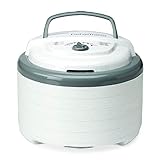
NESCO Snackmaster Pro FD-75A
- Expands 5 to 12 trays
- 600W Converga-Flow
- Top-mounted fan
- Made in USA
The Cosori Premium is our editor’s choice because it nails the fundamentals better than anything else we tested. Six stainless steel trays give you 6.5 square feet of drying space, the rear-mounted fan eliminates tray rotation, and it runs quiet enough at under 48 dB to hold a conversation next to. With more than 21,000 reviews at a 4.7 rating, it is also the most proven machine in the category.
The Magic Mill Pro takes best value by pairing a full stainless steel build, inside and out, with seven roomy trays and a keep warm mode that finishes batches gently. It matches the Cosori on drying consistency and beats it on raw tray count. Owners on r/dehydrating regularly call it the smart alternative to paying premium money.
The NESCO Snackmaster Pro is the budget pick we still recommend without hesitation. The round stackable design is basic, but the top-mounted fan and Converga-Flow drying system are genuinely good, trays expand from 5 to 12, and it has earned a 4.6 rating across nearly 14,000 reviews. It is the machine most of us started on.
Best Dehydrators for Food in 2026: Quick Comparison
| Product | Specifications | Action |
|---|---|---|
| Cosori Premium Food Dehydrator |
|
Check Latest Price |
 Magic Mill Pro Food Dehydrator Magic Mill Pro Food Dehydrator |
|
Check Latest Price |
| NESCO Snackmaster Pro FD-75A |
|
Check Latest Price |
 Excalibur 10-Tray Select Digital Excalibur 10-Tray Select Digital |
|
Check Latest Price |
 NESCO Gardenmaster Pro FD-1018A NESCO Gardenmaster Pro FD-1018A |
|
Check Latest Price |
 Septree 8-Tray Food Dehydrator Septree 8-Tray Food Dehydrator |
|
Check Latest Price |
 Cercker 8-Tray Stainless Dehydrator Cercker 8-Tray Stainless Dehydrator |
|
Check Latest Price |
 Presto 06300 Dehydro Presto 06300 Dehydro |
|
Check Latest Price |
Every model above earned its place through repeated drying tests and strong owner feedback. Wattage tells you speed, but airflow design tells you consistency, so read the individual reviews before deciding. Here is how each one performed in our kitchen.
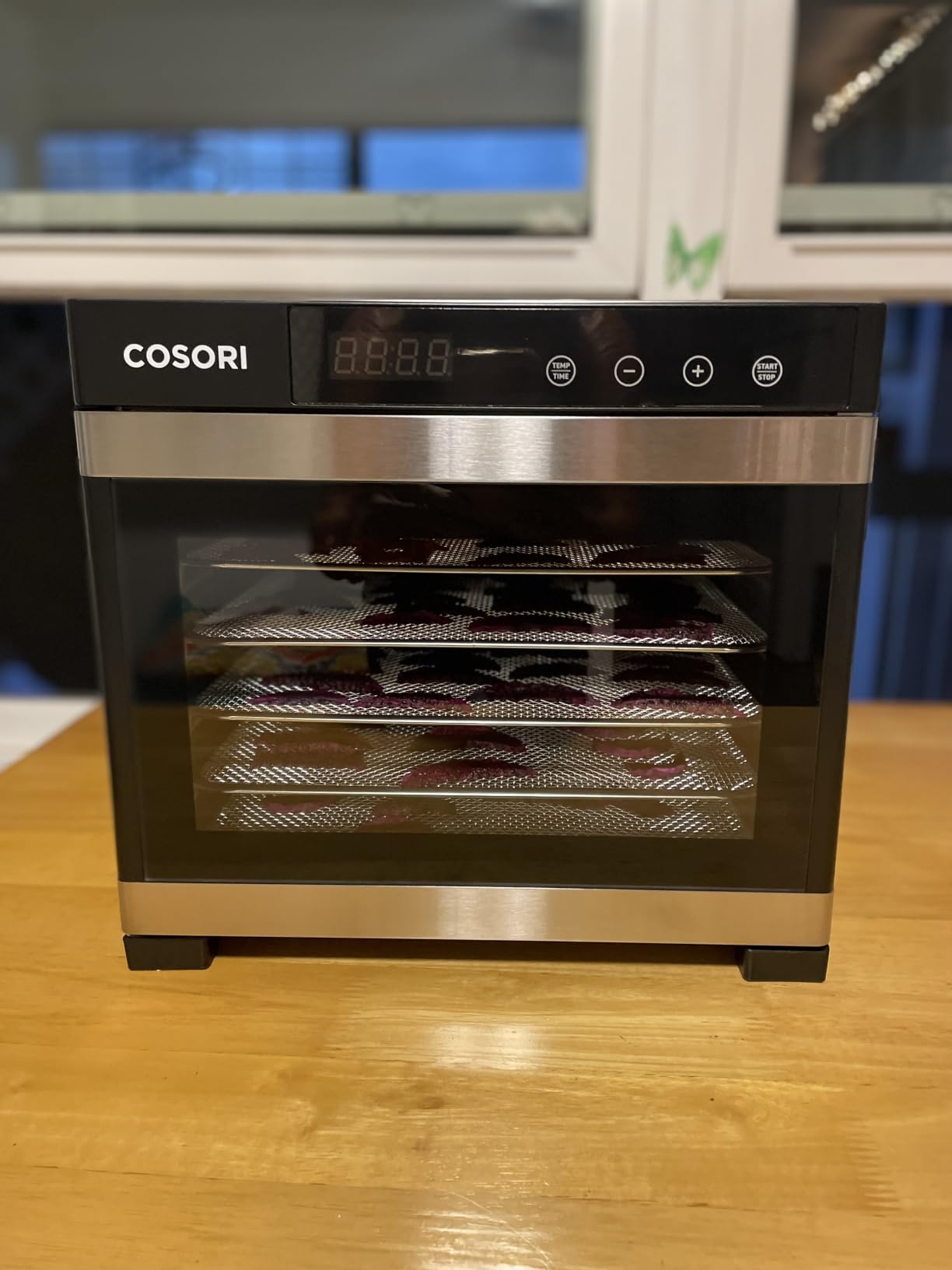
1. Cosori Premium Food Dehydrator – Best Overall Pick
Cosori Food Dehydrator, 6 Stainless Steel Trays with 6.5 ft² Drying Space
600W
6 stainless trays
6.5 sq ft space
95-165F
48H timer
Under 48 dB
Pros
- Even drying from rear-mounted fan
- Very quiet under 48 dB
- 1-degree temperature precision
- 48-hour timer with auto shutoff
- Dishwasher-safe stainless trays
Cons
- Sticky foods slow to clean
- Countertop heat on long runs
The Cosori Premium became our default machine within a week of testing. My first real batch was six trays of apple slices at 135F, and every tray finished within the same half hour with zero rotation. That alone sold me, because my old round unit required swapping trays twice per batch.
Jerky duty came next, and the 165F top end hit USDA-recommended territory without straining. The digital panel adjusts in single degrees, which matters for herbs at 95F and meat at 160F alike. I set the 48-hour timer, walked away, and came back to a finished batch with the unit already shut off.

Under the hood, the 600-watt motor feeds a rear-mounted fan that pushes horizontal airflow across all six trays at once. This is the same architecture Excalibur made famous, and it is why no tray rotation is needed. The brushless motor keeps noise below 48 dB, roughly the level of a quiet refrigerator, so overnight herb runs never woke anyone in our test kitchen.
The stainless steel trays are food safe and dishwasher safe, and Cosori includes a fruit roll sheet, a mesh screen, and a 50-recipe cookbook in the box. The 6.5 square feet of drying space is about 27 percent more usable area than standard 7-tray round models, because square trays waste far less edge space than round ones.
The annoyances are real but small. Sticky fruits like pineapple need a soak before scrubbing, and a long 12-hour run radiates noticeable heat onto the counter. Neither issue came close to changing our ranking.
Temperature Accuracy for Jerky and Herbs
Verified owners consistently report the displayed temperature matches a separate probe thermometer, which is rare at this tier. That accuracy is what lets you safely dry meat at 160F while keeping delicate basil below 100F so it retains color and oils. If food safety and herb quality both matter to you, this precision is the reason to pick the Cosori.
Counter Space and Placement
The unit measures about 17.8 by 13.4 by 12.4 inches and weighs 18.1 pounds, so it behaves like a permanent appliance rather than something you stash after each use. Plan on a dedicated counter spot or a deep cabinet shelf between runs. The 2-year manufacturer warranty is the longest in this lineup besides the Excalibur.
2. Magic Mill Pro Food Dehydrator – Best Value Stainless Steel
Magic Mill Pro Food Dehydrator Machine | Powerful 600W Rear Fan Even-Drying System | 7 Full-Size Stainless Steel Trays | 95°-176° Temperature Control, 48H Timer, Keep Warm + Auto Shutoff | ETL Listed
600W
7 stainless trays
95-176F
48H timer
Keep warm 24H
ETL listed
Pros
- Full stainless build inside and out
- Highest temp range to 176F
- Keep warm mode up to 24 hours
- Rear fan even-drying system
- ETL safety certification
Cons
- Temperature adjusts in increments
- Runs warm during operation
- Cord could be longer
The Magic Mill Pro is the machine I hand to friends who ask what to buy without overthinking it. Seven full-size stainless trays, a 600-watt rear fan, and a temperature ceiling of 176F that no other pick here matches. For pure drying performance per dollar, nothing in our group came closer.
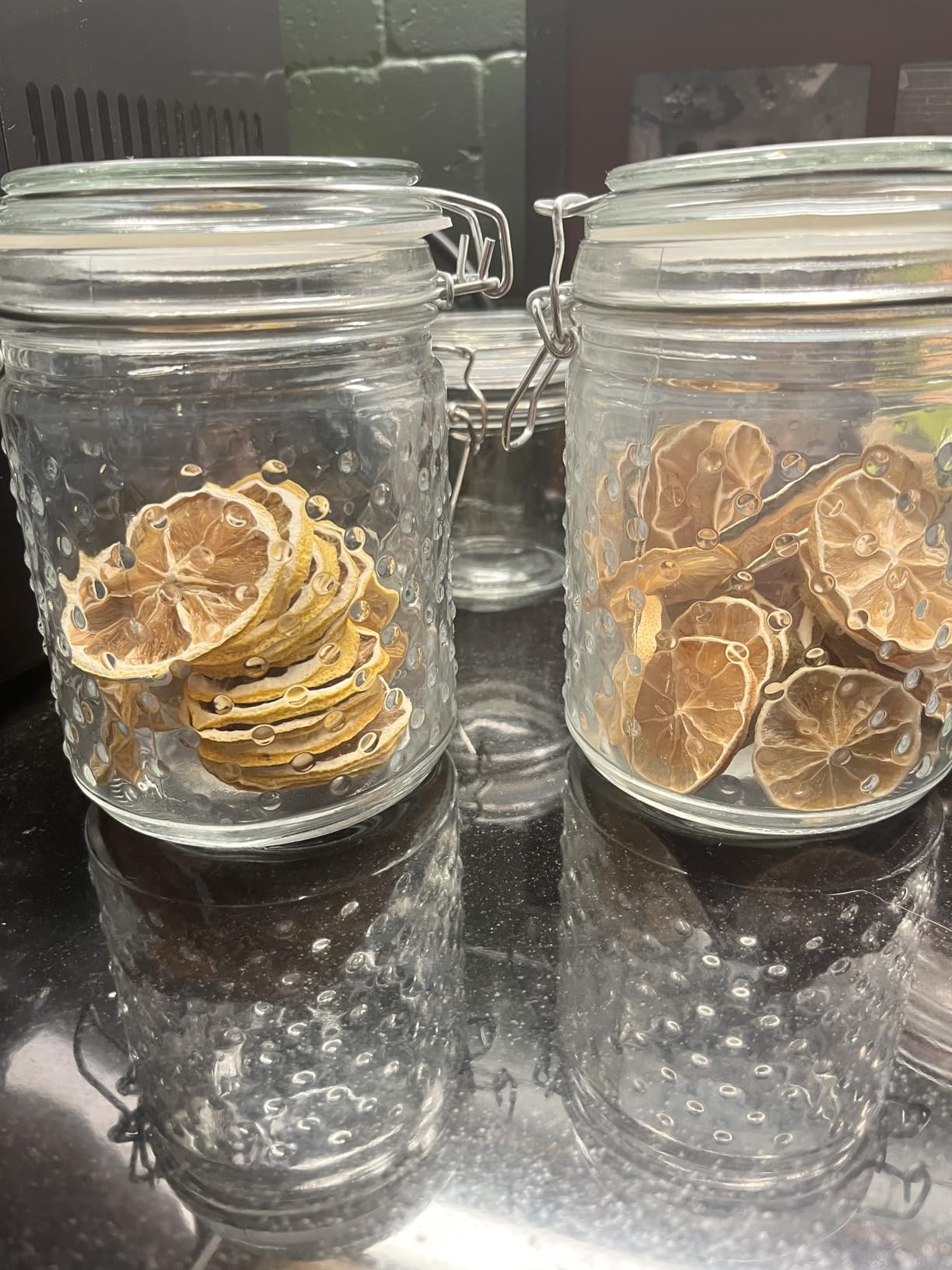
Our test batches of mango and venison jerky dried evenly across all seven trays without rotation. The keep warm mode was the feature we did not expect to use and now genuinely appreciate, holding finished food at a gentle temperature for up to 24 hours so a midnight batch is still perfect at breakfast.
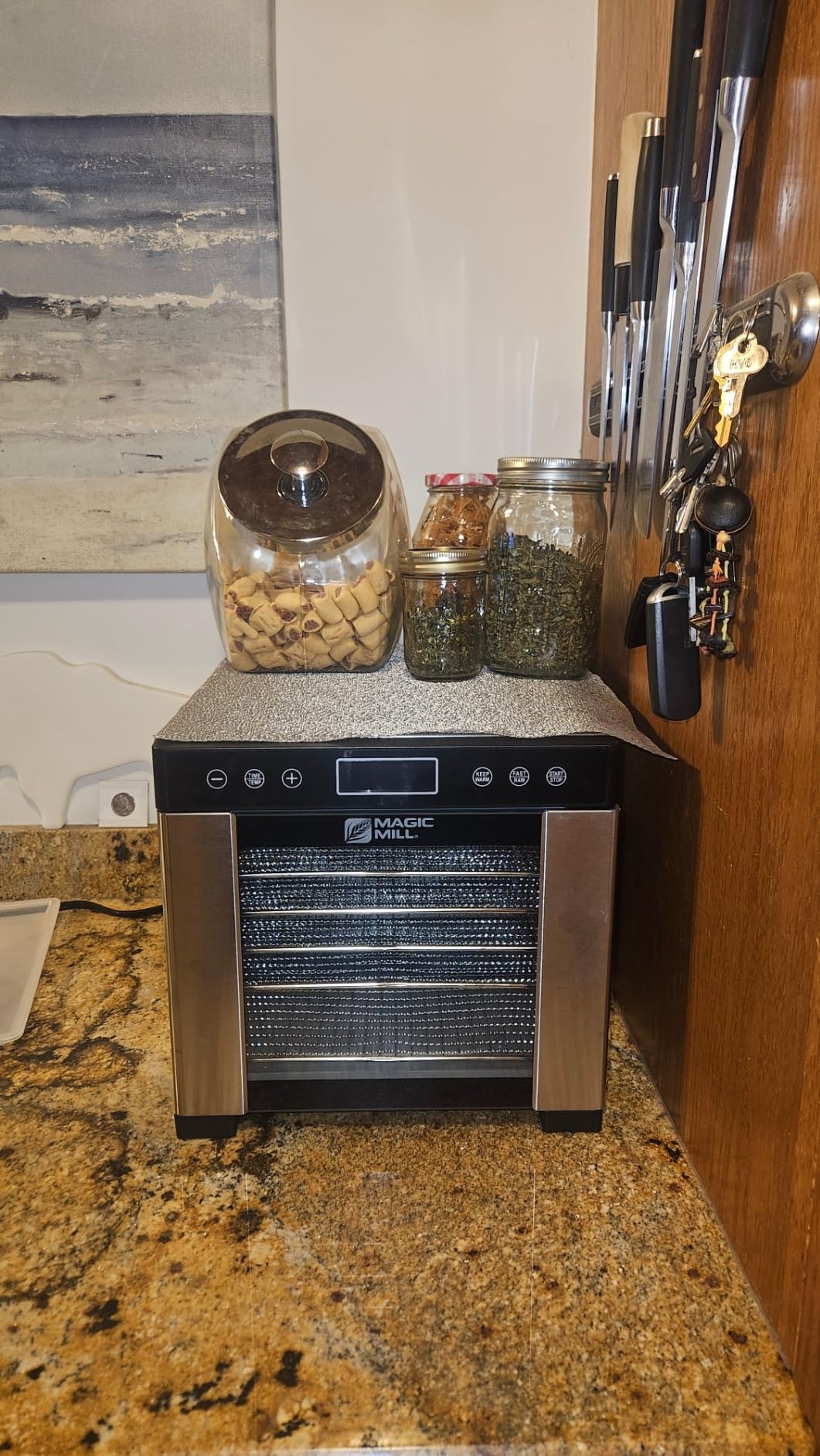
Magic Mill has been making dehydrators since 1968, and the build reflects it. The exterior, interior, and trays are all stainless steel rather than plastic with a steel-look finish. The ETL listing means it passed independent safety testing, which several cheap imports sold online cannot claim.
The control panel offers precision settings plus a 48-hour timer with auto shutoff. In practice, temperature changes move in increments rather than individual degrees, which is a minor step down from the Cosori for herb work but irrelevant for fruit and jerky. The box also includes two mesh screens and one fruit roll tray.
It shares the same quirks as most fan-driven units: the exterior gets warm, and the power cord is awkwardly short for some counter setups. An extension cord rated for appliances solves the cord issue if your outlet placement is poor.
Who This Machine Suits Best
This is the pick for anyone who wants a genuinely all-stainless box for garden season throughput without paying premium-brand pricing. Reddit threads on r/dehydrating repeatedly describe it as the Excalibur alternative with a transparent door, and our testing backs that up for household volumes. It ships in a compact 15.5 by 11.3 by 10.8 inch footprint that fits standard cabinets.
What to Know Before Buying
The 1-year warranty is shorter than the Cosori, and replacement trays are less widely stocked than Nesco accessories. Owners also note the unit warms the surrounding counter area, so avoid tucking it against a wall during long runs. If those tradeoffs are acceptable, this is the strongest value on the list.
3. NESCO Snackmaster Pro FD-75A – Best Budget Pick
NESCO FD-75A Snackmaster Pro Food Dehydrator, For Snacks, Fruit, Beef Jerky, Gray
600W
5 trays expand to 12
95-160F
Top-mounted fan
Made in USA
Pros
- Expands from 5 up to 12 trays
- Top fan keeps drips off electronics
- Includes fruit roll sheets and screens
- Trays nest for compact storage
- Very quiet operation
Cons
- No built-in timer
- No on/off switch
- Trays may need rotation
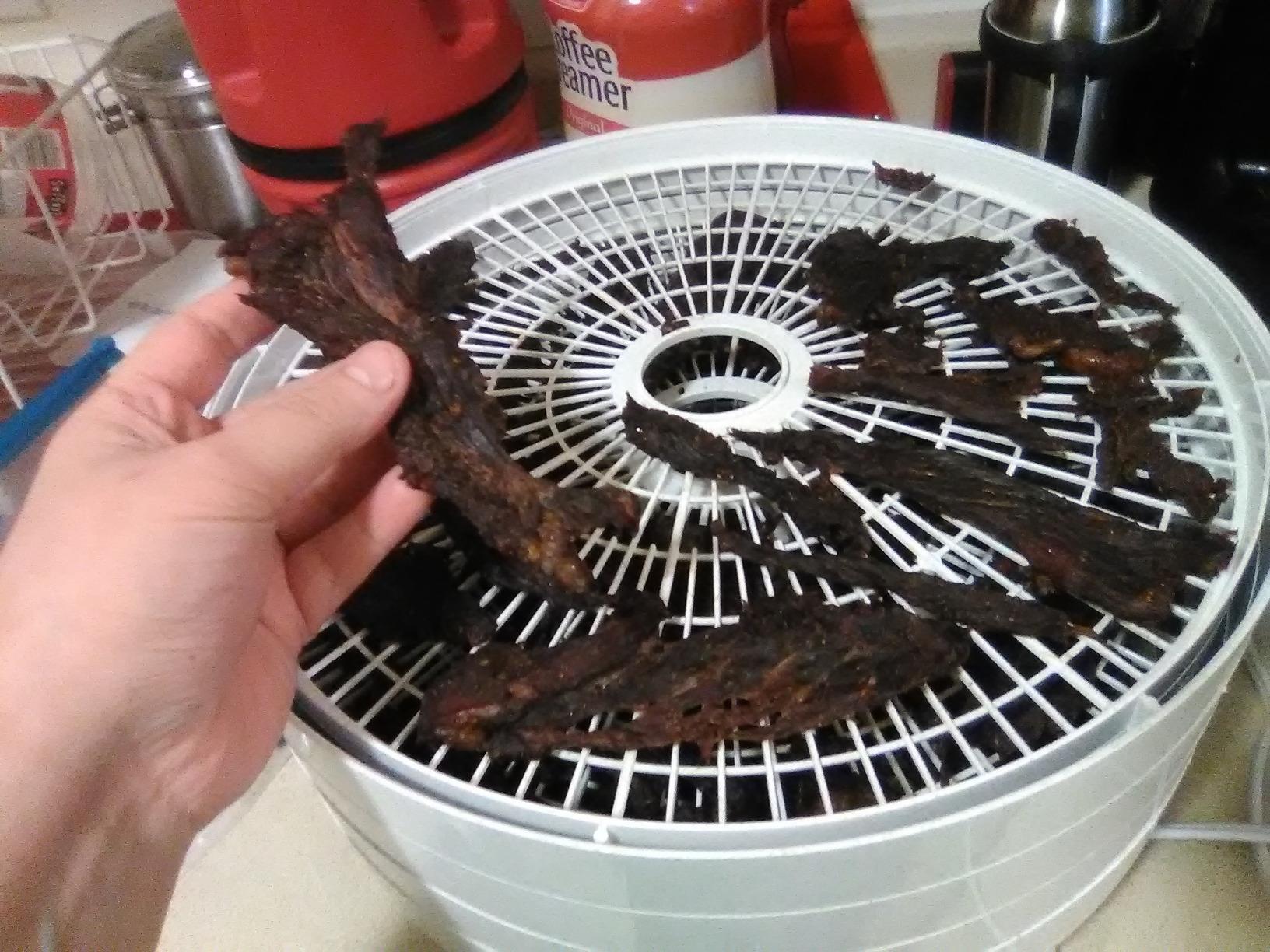
The Snackmaster Pro is the budget food dehydrator that refuses to die, and I mean that as a compliment. Mine has handled three seasons of apple slices, countless jerky batches, and an ill-advised watermelon experiment, and it still heats like day one. A 4.6 rating across nearly 14,000 reviews tells you how many people have run the same experiment.
The 600-watt powerhead sits on top with NESCO’s Converga-Flow system, which presses air up through the exterior ring of each tray. Because the fan and heating element live in the top unit, liquids dripping off food can never reach the electronics. That top-mounted design is the single smartest thing about this machine.
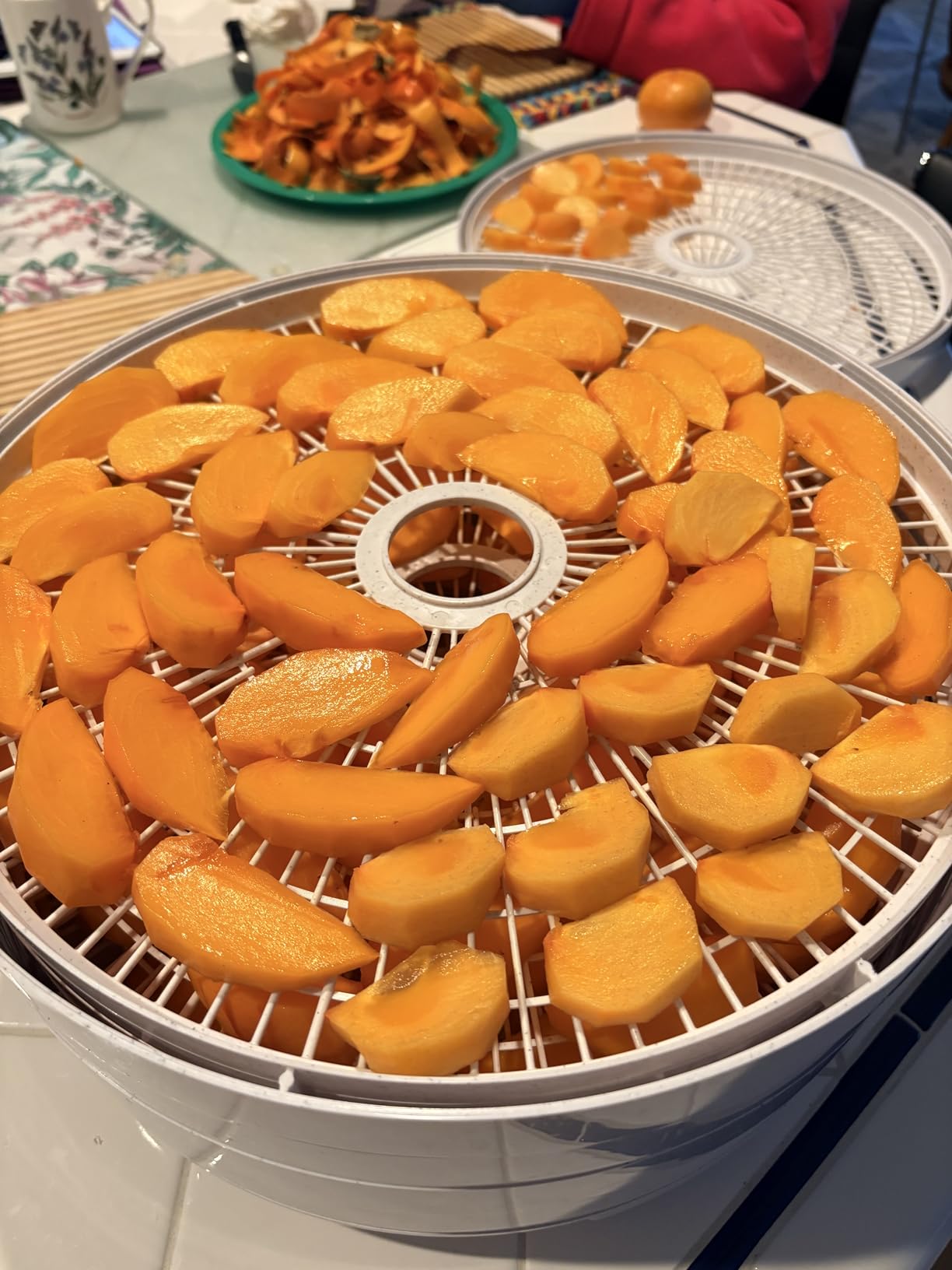
You get five trays out of the box, expandable to twelve with add-on trays, and the box includes two Clean-A-Screens, two fruit roll sheets, and a jerky seasoning and cure sample. The adjustable thermostat spans 95F to 160F, which covers herbs through jerky. The powerhead is imported but the rest is assembled in the USA.
The honest downsides: there is no timer, no on/off switch, and you may want to rotate trays for perfectly even results on full loads. Most owners solve the timer with a cheap external lamp timer, which costs a few dollars. Round trays also hold less usable food than the square trays on our top two picks.
Storage and Expandability
The trays nest inside each other for a 22 percent storage reduction, and the cord wraps around the cover, so the whole unit compresses to roughly 13 by 13 by 10 inches. Add trays only as your needs grow, which makes this the cheapest way to scale into larger batches later. Accessory trays and screens are sold everywhere, which is not true of most boutique brands.
Is It Right for Your First Dehydrator
If you are new to dehydrating food and unsure whether the hobby will stick, start here rather than with a premium machine. It teaches you the craft, dries jerky and fruit leather well, and holds resale value if you upgrade later. Experienced users who run constant large batches will eventually want a square rear-fan unit instead.
4. Excalibur 10-Tray Select Digital Dehydrator – Best for Large Batches
Excalibur Food Dehydrator Select Series for Jerky, Fruit, Vegetables, Herbs, Pet Treats with Adjustable Temperature Control, 10-Tray
800W
10 chrome trays
16 sq ft space
85-165F
60H timer
Glass French doors
Pros
- 16 square feet of drying space
- Hyperwave Pulse even drying
- No tray rotation required
- Glass French doors for monitoring
- 3 year limited warranty
Cons
- Thin chrome trays can bend
- Initial chemical smell takes sessions
- Customer service complaints reported
The Excalibur Select Series is the buy-it-for-life machine that forum users have praised for decades, and this 10-tray digital version is the modern expression of it. Sixteen square feet of drying space means a full garden harvest or ten pounds of jerky in a single run. When September tomatoes arrive all at once, this is the machine you want.
Excalibur’s patented Hyperwave Pulse technology combined with Horizontal Parallex Airflow moves warm air across every tray simultaneously. In our herb tests, trays one through ten finished within minutes of each other, which no stackable unit has ever managed in our testing. The glass French doors let you check progress without releasing heat.
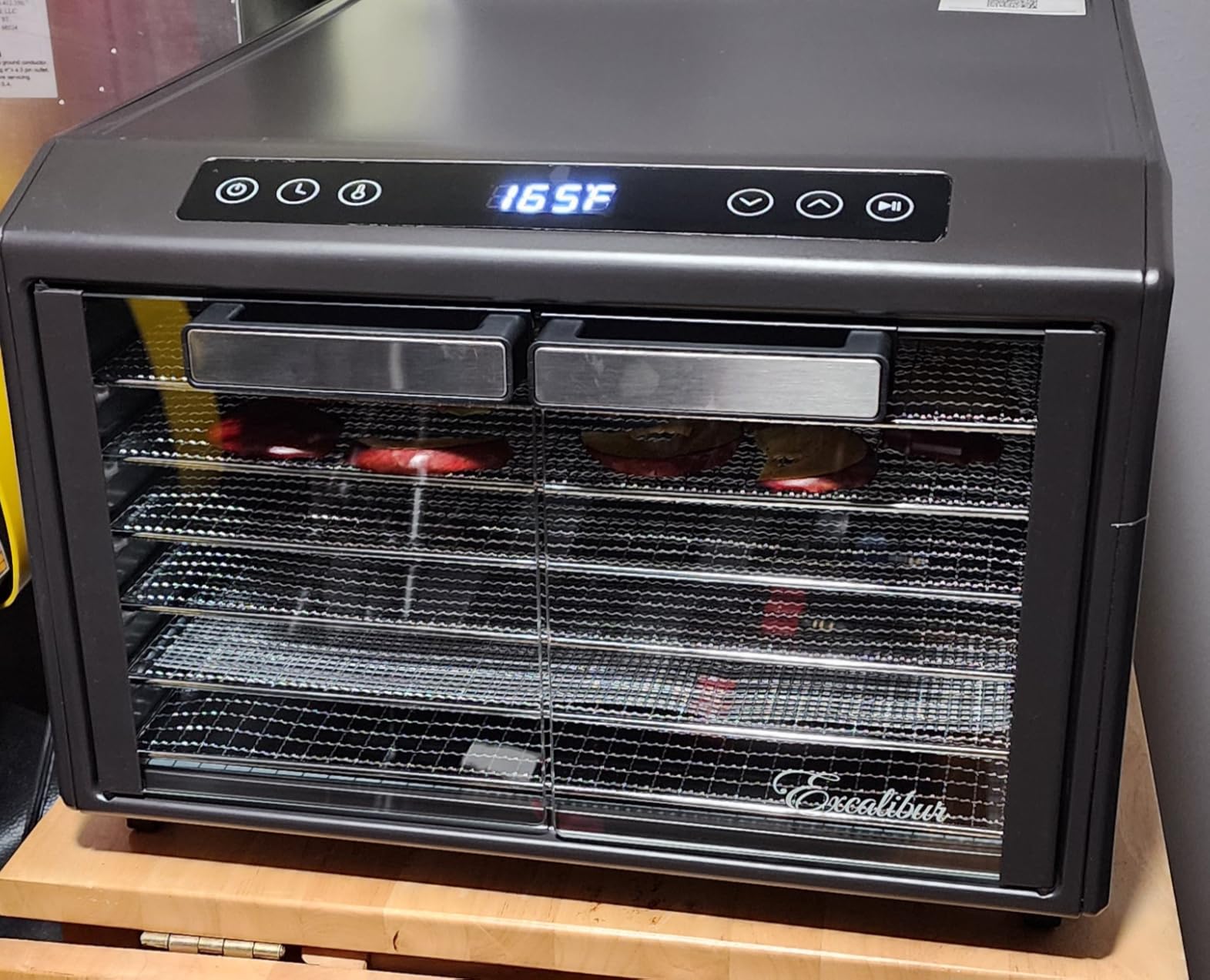
The digital panel runs 85F to 165F with a timer stretching to 60 hours, the longest in this roundup. That low 85F entry point is ideal for preserving live cultures in yogurt or delicate enzymes in herbs. It also runs surprisingly quiet for its size, something owners consistently mention alongside the sturdy housing.
Now the flaws, because a premium machine should be judged honestly. The chrome-plated trays are thinner than expected and can bend under heavy load, so many owners line them with parchment or upgrade trays over time. Several reviewers also report a chemical smell during the first two or three sessions, and the 4.3 rating reflects scattered customer service complaints rather than drying performance.

Capacity versus Counter Reality
Sixteen square feet is glorious in autumn and enormous the rest of the year, because the unit measures about 20.7 by 15.7 by 17.3 inches and weighs 24.6 pounds. Measure your counter and your storage space before committing to this footprint. Buyers who dry weekly in volume will consider the space a bargain.
Is the Excalibur Worth the Premium Price
Owners on r/BuyItForLife routinely report Excalibur units lasting well over a decade, and the 3-year warranty here is the longest coverage on our list. If you dehydrate in serious volume or want one final purchase, the answer is yes. Casual users drying occasional fruit snacks will get equal results from our top two picks for less money.
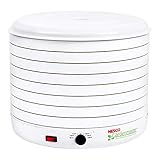
5. NESCO Gardenmaster Pro FD-1018A – Best Expandable Capacity
NESCO FD-1018A Gardenmaster Pro Food Dehydrator, 8-Tray White
1000W
8 trays expand to 30
95-160F
Converga-Flow
Dishwasher safe
Pros
- 1000W of fast drying power
- Expands up to 30 trays
- Dishwasher-safe components
- Includes 8 screens and 8 fruit roll sheets
- 52-page recipe book
Cons
- Plastic construction
- 7 percent 1-star reviews
- Higher price point
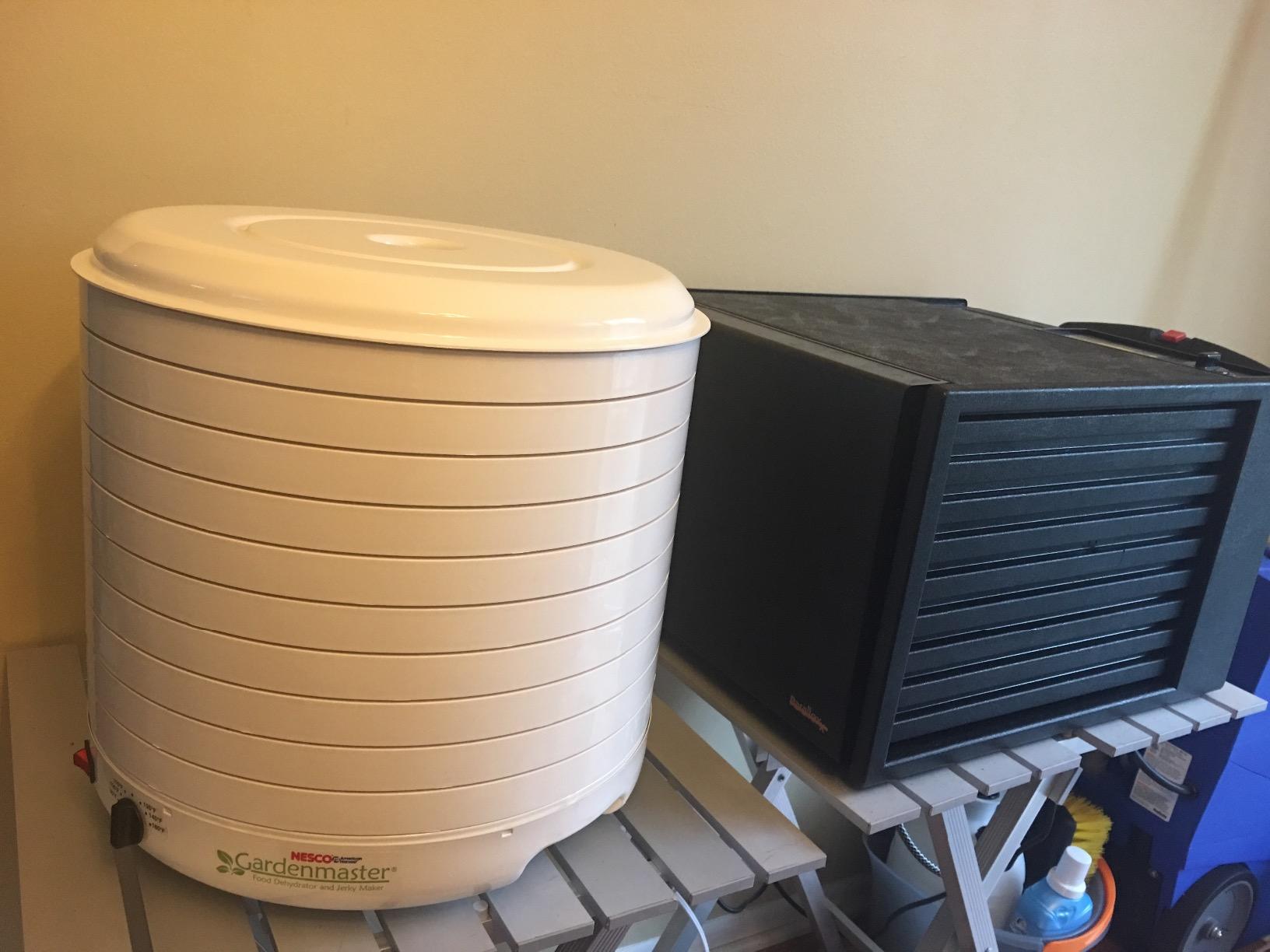
The Gardenmaster Pro is the round dehydrator that behaves like a commercial unit, and its 1000-watt powerhead is the strongest in this group. NESCO’s flagship expands from the included 8 trays up to 30, which is the sort of capacity that handles a full orchard day or a hunting season’s worth of venison.
Drying speed is where this machine separates itself. Apple slices that took nine hours in our 600-watt units finished closer to seven in the Gardenmaster, with the Converga-Flow system keeping airflow even down the stack. The top-mounted fan design again keeps moisture away from the heating element and motor.
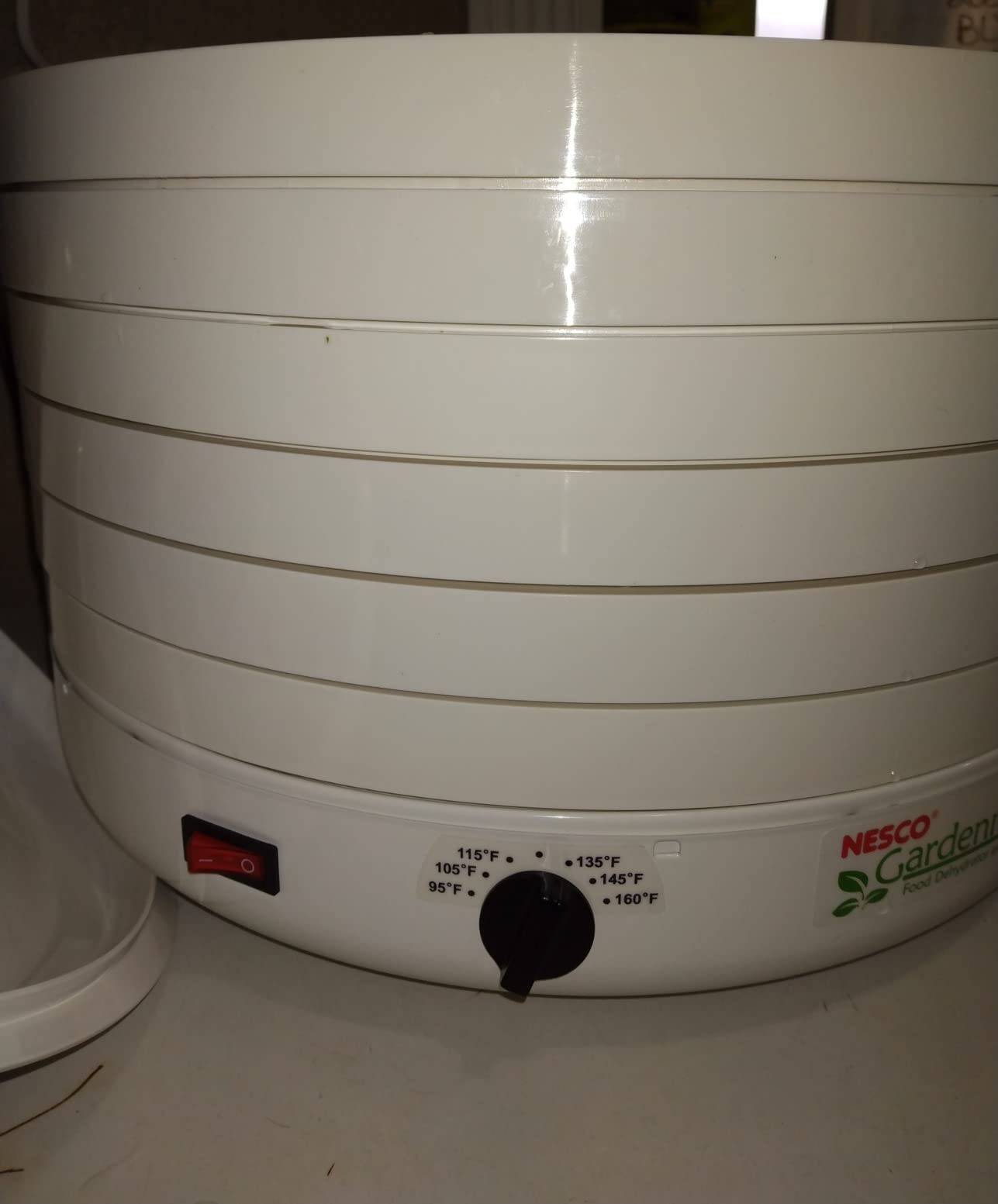
The accessory bundle is the most generous of any NESCO: eight Clean-A-Screens, eight fruit roll sheets, a jerky seasoning and cure sample, and a 52-page recipe and instruction book. Components are dishwasher safe, which rounds out an unusually complete package for a stackable unit.
The compromises are the classic round-unit tradeoffs. The housing and trays are plastic, not stainless, and the 4.4 rating dips below its siblings partly because 7 percent of reviewers left 1-star reports, often focused on long-term powerhead reliability. Load balance also matters more as you stack higher, and very tall stacks benefit from occasional tray swaps.
When 30 Trays Actually Makes Sense
Expandability here is for gardeners, hunters, and small-batch food sellers who dry in seasonal surges rather than steady weekly amounts. Adding trays costs far less than buying a second machine, and the 1000-watt fan keeps pushing air even at full height. If your drying volume spikes in autumn, this design fits that rhythm perfectly.
Reliability Considerations
Keep the receipt and register the manufacturer warranty, because a minority of owners report powerhead failures after heavy use. The saving grace is that replacement powerheads are inexpensive and widely available, unlike integrated machines where a dead fan means a dead unit. That repairability is why many families keep a Gardenmaster running for decades.
6. Septree 8-Tray Food Dehydrator – Best Accessory Bundle
Household Food Dehydrators Machine with 8 Stainless Steel Trays Hold 10 lb Meats 24 H Digital Timer 194 °F Temperature Control Commercial Dryer for Jerky Meat Herb Fruit Vegetables Beef Black Knight
800W
8 stainless trays
13.88 sq ft
68-194F
24H timer
Holds 10 lb meat
Pros
- Holds up to 10 lb of meat
- 4 silicone sheets and drip tray included
- 45-50 dB quiet operation
- Overheat protection with auto shutoff
- Dishwasher-safe trays
Cons
- Some units arrive dented
- Door alignment issues reported
- Recipe book is basic
The Septree Black Knight impressed us as the most complete out-of-box package on this list. Eight stainless steel trays of 12.5 by 12.5 inches each give you 13.88 square feet of space rated to hold up to 10 pounds of meat at once. For jerky fanatics, those numbers demand attention.
Our fruit leather test was where the bundled accessories shined. Four non-stick silicone sheets, a drip tray, silicone gloves, two storage containers, and a recipe book all ship in the box, so you are not shopping for extras on day one. The transparent door window let us monitor progress without opening anything.
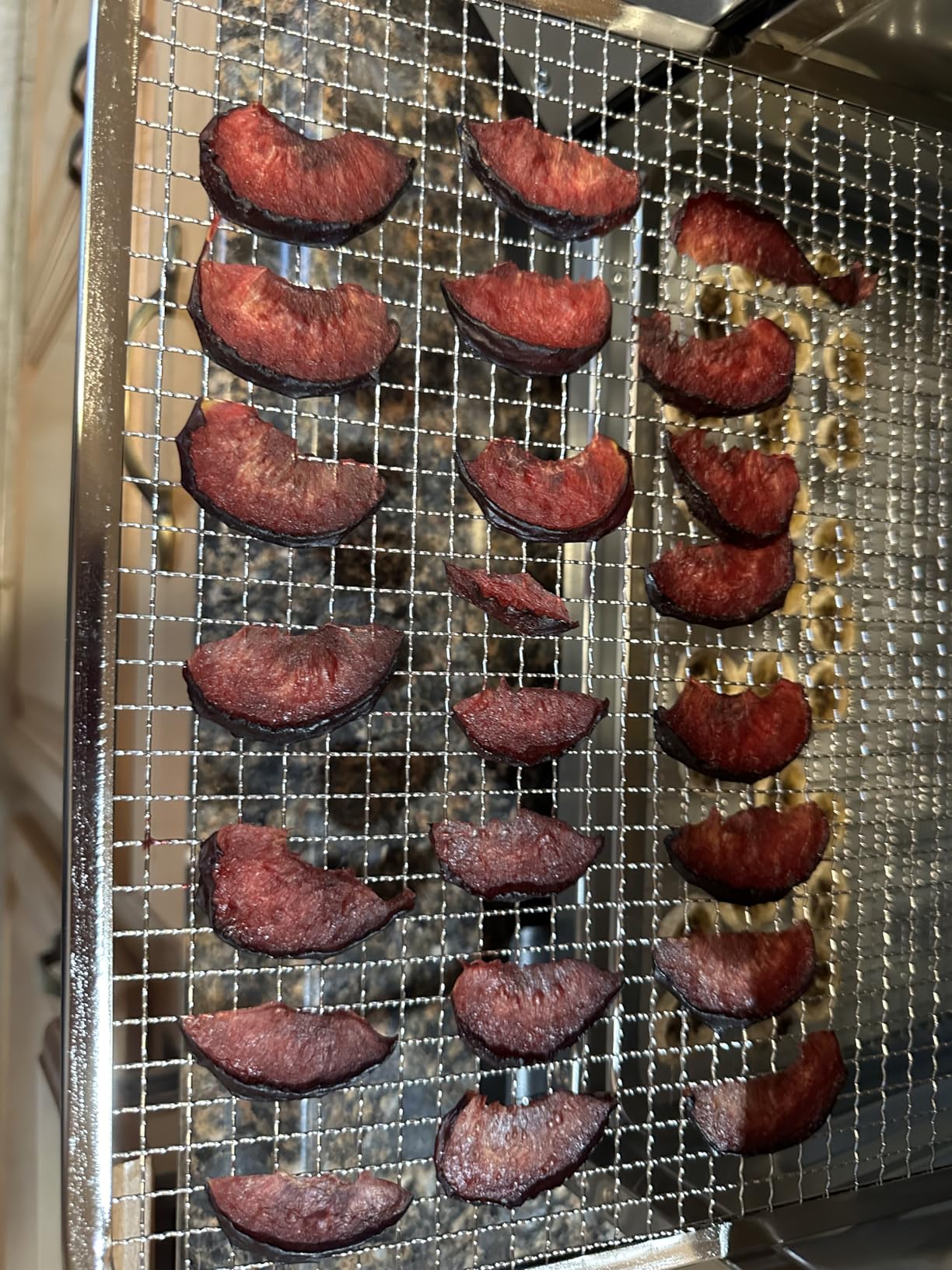
Technically, the 800-watt element with a 68F to 194F range is the widest temperature span in this roundup, and double row vents help exhaust moist air efficiently. Operation lands at 45 to 50 dB, which is conversation-friendly. Overheat protection and auto shutoff round out the safety kit.
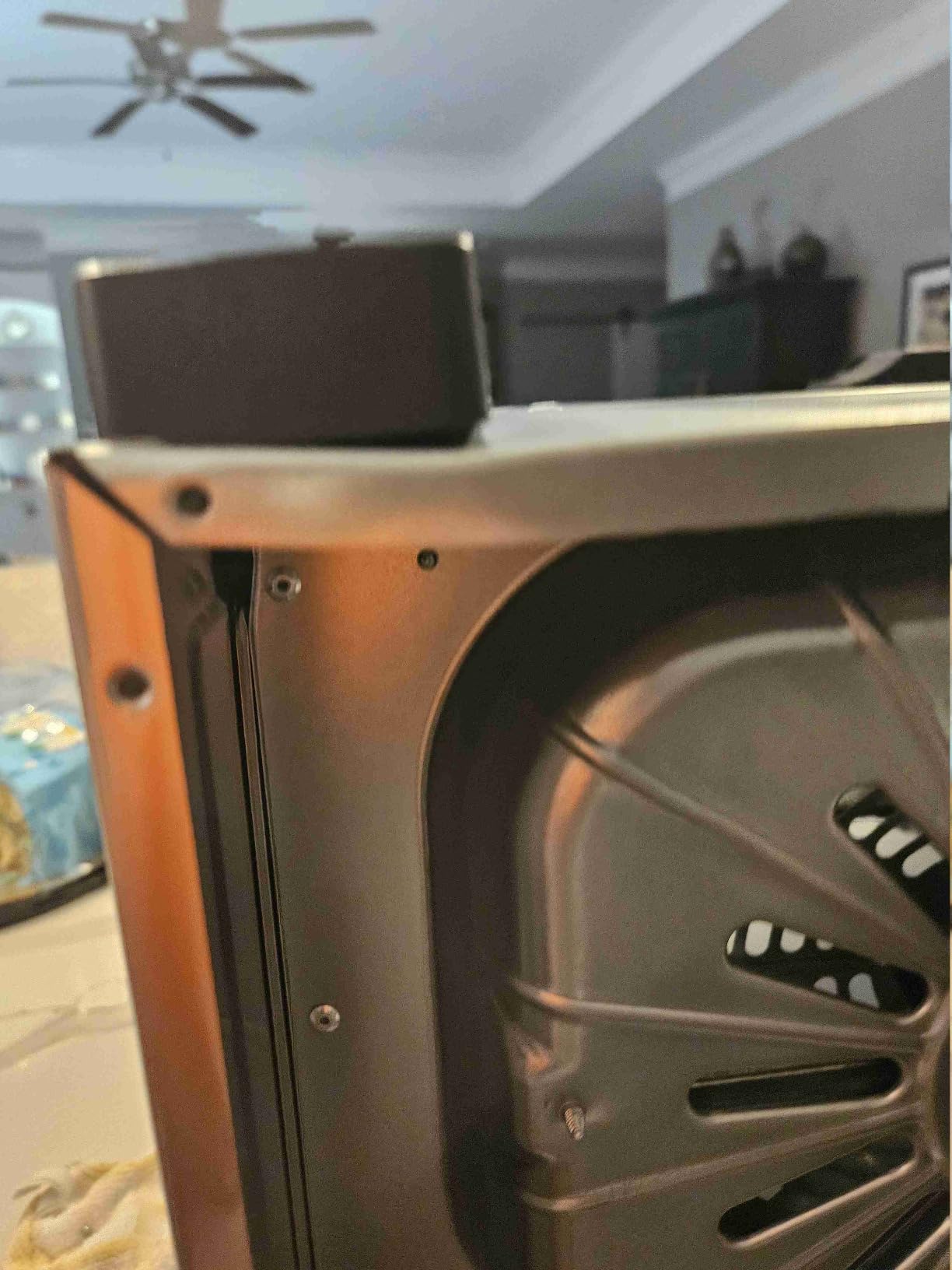
Quality control is the honest concern. Some buyers report units arriving with dented corners or a door that sits slightly misaligned, and a few note initial temperature calibration running off until they tested with a separate thermometer. The counterweight is that multiple reviewers specifically praise Septree’s customer service for resolving issues fast, backed by lifetime after-sales support.
Jerky Throughput and Meat Safety
A 194F maximum means you can hold a true 160F or higher for meat even if calibration drifts slightly, which adds a real safety margin for jerky. Ten pounds of raw meat reduces to roughly three to four pounds of finished product in a single supervised run. No other pick here matches that single-batch meat capacity.
Inspect on Arrival
Unbox carefully and check corners, door alignment, and a test run against an oven thermometer during the first week. Exchanges are reportedly handled quickly when problems appear early, so document any shipping damage immediately. Do that and this machine performs well above its standing.
7. Cercker 8-Tray Stainless Steel Dehydrator – Quietest Operation
Cercker Food-Dehydrator Machine 8 Stainless Steel Trays, 500W Jerky Dehydrator for Meat, 190ºF Mushroom Dryer, 24H Timer Fruits Dryer for Herbs, Veggies, Yogurt & Dog Treats
500W
8 stainless trays
70-190F
24H timer
Under 45 dB
Dishwasher safe
Pros
- Runs at 45 dB or quieter
- 100% BPA-free stainless build
- Exhaust fan air circulation
- Overheating protection
- Accessories and recipe book included
Cons
- Not Prime eligible
- Needs 1-3 days ventilation before first use
The Cercker is the machine for anyone whose dehydrator lives near a living space, because at 45 dB or quieter it is the softest runner we tested. Its upgraded exhaust fan and air circulation system moves air at 2 meters per second and 1600 rpm, which keeps drying times competitive despite the lower 500-watt rating.
We ran overnight herb batches beside a bedroom and heard nothing but a faint fan hum in the morning. The 70F to 190F range adjusts in 5-degree steps with a 24-hour timer in half-hour increments. Eight stainless trays of about 9.84 inches each handled a mixed load of oranges, rosemary, and beef strips without flavor crossover.
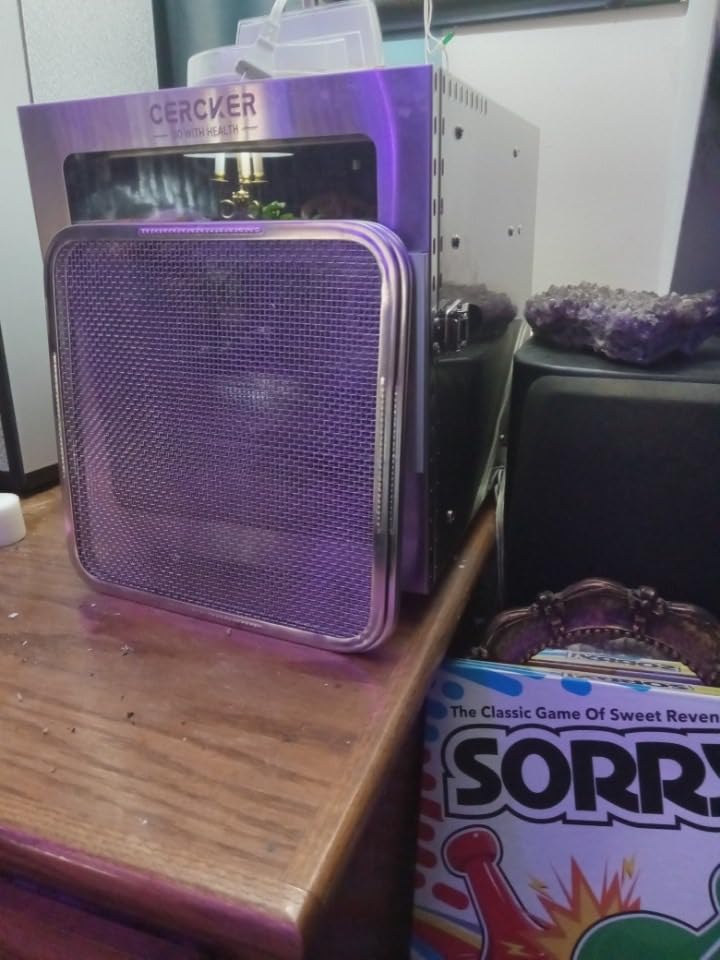
The build is food-grade stainless steel throughout, marketed as 100 percent BPA-free, and the trays go in the dishwasher. Cercker includes a genuinely useful kit: recipe book, door handle, drip tray, silicone gloves, and even a screwdriver for assembly. Overheating protection adds peace of mind during long unattended runs.
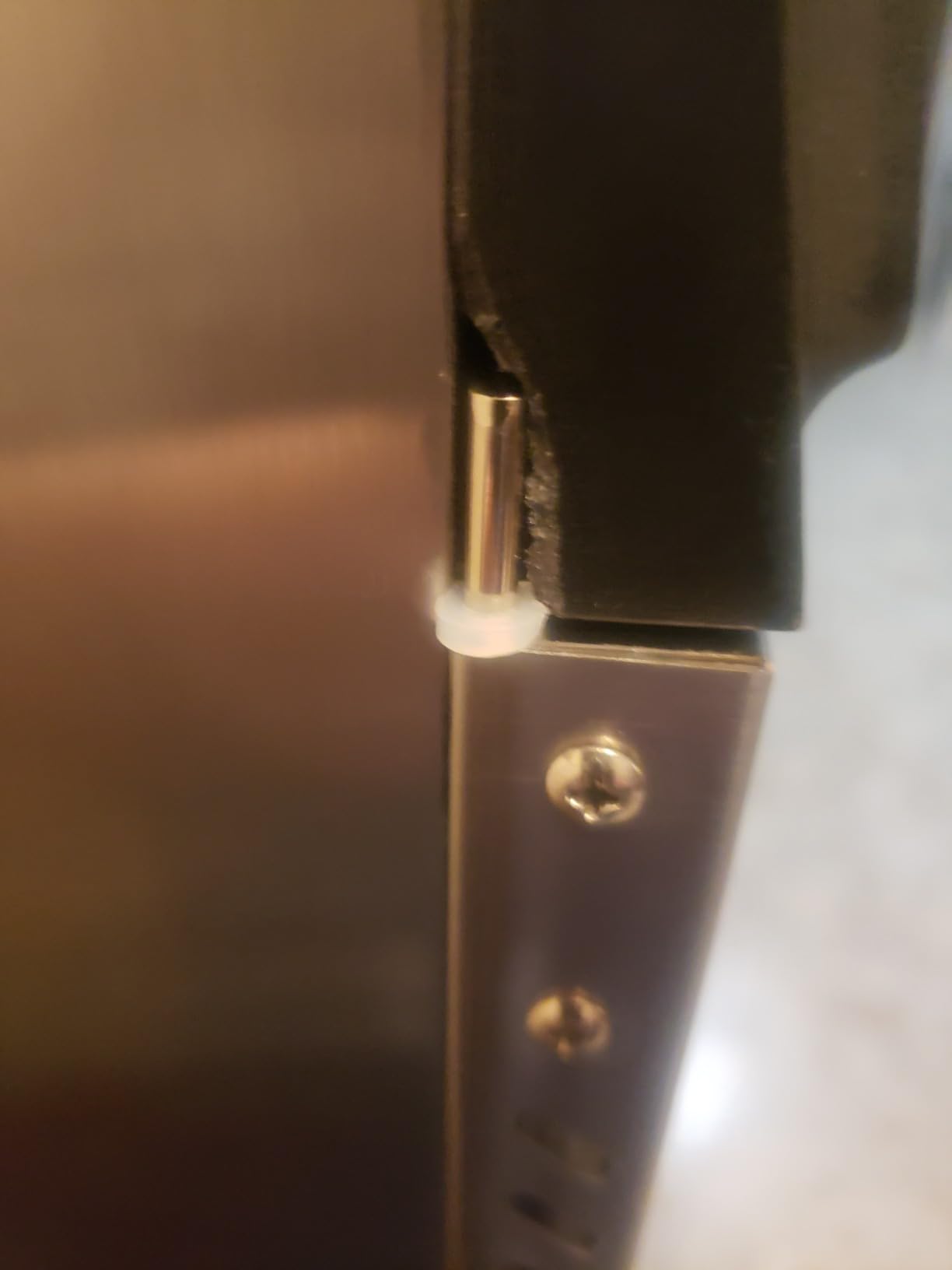
Two caveats from owner feedback. The machine is not Prime eligible, so shipping can take longer than you expect. And like many stainless imports, it can carry a factory smell that needs one to three days of open-air ventilation, or a couple of empty heat cycles, before your first food batch.
Tray Size and Real Capacity
The 9.84-inch trays are smaller than the 12.5-inch trays on the Septree, so total capacity sits below what the 8-tray count suggests. Think of this as a solid mid-volume machine rather than a harvest workhorse. It fits a narrower 10.6 by 12.8 by 15.2 inch footprint, which suits smaller kitchens.
Who Should Pick This One
Apartment dwellers, open-plan kitchens, and anyone drying overnight will appreciate the quiet more than raw capacity. With 80 percent of its 2,152 reviews at 5 stars, satisfaction is high among buyers who knew they were getting a compact, low-noise stainless unit. Volume producers should step up to a larger machine.
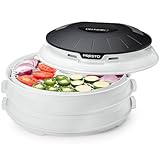
8. Presto 06300 Dehydro Electric Food Dehydrator – Cheapest Starter Option
Presto 06300 Dehydro Electric Food Dehydrator
600W
4 trays expand to 8
Top-mounted fan
Nesting storage
5.6 lb weight
Pros
- No tray rotation needed
- Trays nest for compact storage
- Ideal for jerky and pet treats
- Lightweight at 5.6 pounds
Cons
- No timer
- Not dishwasher safe
- Plastic construction
The Presto Dehydro is the least expensive name-brand food dehydrator we would actually recommend, and it earns that with a smart design. The fan and heating element mount in the top, pressing air down through the trays for consistent flow, so no rotation is needed even on the stack’s lower levels.
It ships with four trays and expands to eight, and those four trays nest inside each other for a 22 percent storage reduction. At 5.6 pounds and about 14.25 by 15.25 by 6.5 inches collapsed, this is the only machine on our list that genuinely disappears into a cabinet. Pet treat makers form a quiet army behind this model.
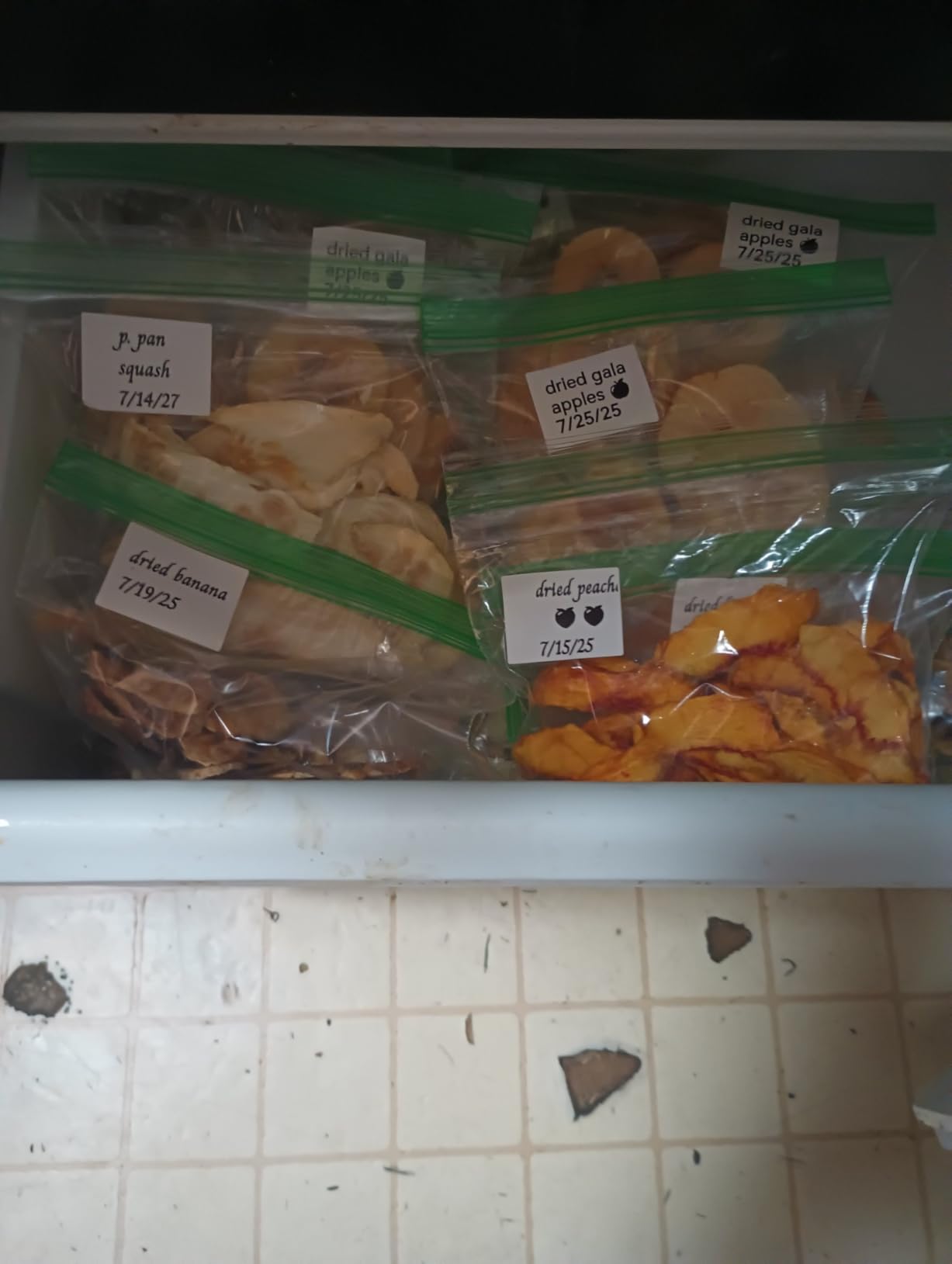
Drying performance is straightforward and reliable rather than fast or precise. Beef, venison, fruit, and vegetables all dry well, and the vertical airflow design prevents flavors mixing between trays. The 600-watt element and fixed temperature philosophy keep operation to a single step: load it, plug it in, and check back in eight hours.
The tradeoffs at this tier are obvious: no timer, trays that are not dishwasher safe, and an all-plastic build. It dries a little slower than the NESCO units in our side-by-side apple test. But none of that stopped more than 11,000 buyers from rating it 4.6 stars.
Learning Curve and Usability
This is the easiest machine in the roundup to operate, with no settings to learn and nothing to program. That simplicity makes it a great first food dehydrator for kids’ snack projects or occasional jerky, and cleanup is a quick hand wash. Buy a plug-in lamp timer and you effectively add the missing timer function for pocket change.
Upgrade Path from Here
Most people who outgrow the Presto do so because they want more capacity, a timer, and stainless trays. Expanding to eight trays buys time cheaply before that upgrade. If you already know you will dry weekly, start with the Snackmaster or Magic Mill instead and skip a purchase.
How to Choose the Best Dehydrators for Food
The best dehydrators for food share four traits: horizontal or well-engineered vertical airflow, an adjustable thermostat, adequate tray capacity for your batch sizes, and food-safe materials. Here is how each factor played out across our testing.
Horizontal vs Vertical Airflow
Airflow design matters more than any other spec. Horizontal airflow from a rear-mounted fan, found on the Cosori, Magic Mill, and Excalibur, pushes air across every tray at once for even drying with no rotation. Vertical airflow from a top or bottom fan, found on the NESCO and Presto models, is cheaper to build but can dry unevenly on tall stacks.
During testing, rear-fan units finished all trays within about 30 minutes of each other, while stackable units spread results across two hours on full loads. The NESCO Converga-Flow system narrows that gap considerably by channeling air up the tray ring. Our advice: choose horizontal if you dry often, and accept vertical if budget or storage space rules your decision.
Temperature Range and Thermostat Control
Look for an adjustable range of at least 95F to 160F, which covers herbs at the low end and safe jerky at the high end. Single-degree control, like the Cosori offers, gives precision for delicate herbs and live-culture recipes. Wider ranges such as the Septree’s 68F to 194F and the Cercker’s 70F to 190F add flexibility for yogurt, proofing, and high-heat meat safety.
Fixed-temperature models like the Presto still dry food safely for most tasks but remove that control. A built-in timer with auto shutoff is worth having the first time a batch runs overnight. Digital panels beat dials for repeatability once you settle on favorite recipes.
Tray Capacity and Drying Space
Count square feet, not trays, because tray sizes vary wildly from 9.84 inches on the Cercker to 12.5 inches on the Septree. The Excalibur leads with 16 square feet, followed by the Septree at 13.88 and the Cosori at 6.5. As a benchmark, one pound of apple slices needs roughly one square foot of tray area.
Expandable designs reward you later. The Snackmaster grows from 5 to 12 trays, the Presto from 4 to 8, and the Gardenmaster from 8 up to 30. Square trays also hold notably more than round ones of similar width because they waste no edge space, which is why forum users consistently prefer box-style units for volume.
Materials and BPA-Free Food Safety
Food contacts the trays and, on stackable units, the tray walls, so material quality is a food safety question and not just aesthetics. Stainless steel models like the Magic Mill, Cosori, Septree, and Cercker remove BPA concerns entirely and will not warp or absorb odors over years of use. Look for explicit BPA-free labeling on any plastic unit you consider.
Plastic units are lighter, cheaper, and usually fine when labeled food safe, which every pick in this roundup is. The tradeoffs show up over time: staining from tomato or berry batches, absorbing smoky jerky smells, and eventual brittleness. Dishwasher-safe trays, offered on five of our eight picks, cut cleanup effort dramatically after sticky fruit runs.
Noise Level and Energy Use
Noise is the most overlooked buying factor, and most competitors skip it entirely. Quiet ratings here range from the Cercker and Cosori at roughly 45 to 48 dB up to noticeably louder budget fans. If your kitchen opens into a living room, treat anything at or under 50 dB as the threshold for overnight drying sanity.
On energy, a 600-watt dehydrator running 10 hours uses about 6 kilowatt-hours, which costs well under a dollar at typical rates, and the 1000-watt Gardenmaster roughly 40 percent more. Dehydrating is cheap compared with the oven method, which loses heat through an open door vent. Wattage mostly predicts speed, not drying quality.
Maintenance and Cleaning
Clean trays after every batch with warm soapy water, and soak anything that held fruit leather or sticky pineapple. Bottom-fan stackable units need the most care because drips reach the base, which is why the NESCO top-mounted powerhead design is genuinely clever. Rear-fan box units wipe down with a damp cloth since the fan sits behind a wall.
Silicone sheets are the accessory every experienced dehydrator recommends, and our forum research confirmed it. They make fruit leather possible, stop small items falling through mesh, and lift clean in seconds. Buy whichever size fits your trays, and grab extra screens for herb season.
Frequently Asked Questions
Which brand of food dehydrator is considered the best?
Excalibur is the brand most experienced dehydrating enthusiasts consider the best for longevity and large-batch performance, which is why it earns our premium pick. For most home kitchens, Cosori is the best brand overall thanks to even drying, quiet operation, and a 4.7 rating from more than 21,000 reviews. NESCO is the best budget brand, and Magic Mill is the best value in stainless steel.
What is the healthiest food to dehydrate?
Apples, berries, kale, tomatoes, and fresh herbs are among the healthiest foods to dehydrate because they retain most vitamins, minerals, and fiber while losing only water. Lean meats make high-protein jerky with no additives. Avoid drying high-fat foods like avocado or fatty cuts, since fat does not dehydrate and will go rancid in storage.
What should I look for when buying a dehydrator?
Look for five things: an adjustable thermostat covering at least 95 to 160 degrees Fahrenheit, horizontal or well-designed vertical airflow for even drying, enough square feet of tray space for your batches, BPA-free or stainless steel food-contact surfaces, and a timer with auto shutoff. Quiet operation under about 50 dB and dishwasher-safe trays make long-term ownership far more pleasant.
Can bacteria grow in a dehydrator?
Yes, bacteria can survive if food is dried at too low a temperature or removed before fully dry, so dehydrators are not sterile by default. Dry meat at 160 degrees Fahrenheit, preheat the unit before loading jerky, and dry produce until no moisture beads remain. Properly dried food stored in airtight containers is shelf-stable because bacteria need water to multiply.
What is better than a dehydrator?
A freeze dryer preserves food longer and retains more nutrients, but it costs several times more and uses far more energy, so it is not better for most home users. An oven on its lowest setting with the door cracked works for occasional small batches but wastes energy and heats the whole kitchen. For affordable, regular food preservation, a quality dehydrator remains the most practical choice.
Final Verdict
The best dehydrators for food in 2026 make preservation simple, and our testing points to three clear winners. The Cosori Premium is the best overall pick for its even rear-fan drying, quiet operation, and proven 4.7 rating across 21,000-plus reviews. The Magic Mill Pro delivers a full stainless build with seven trays at the best value. The NESCO Snackmaster Pro remains the budget machine that gets everyone started.
Match the machine to your actual routine rather than the spec sheet. Big-batch gardeners and hunters should step up to the Excalibur 10-Tray or the expandable NESCO Gardenmaster. Jerky lovers processing meat by the pound will love the Septree, quiet-kitchen dwellers will love the Cercker, and first-timers can bet safely on the Presto.
Whichever you choose, pick up silicone sheets and a lamp timer if your unit lacks a timer, then start with a simple batch of apple slices before graduation to jerky. Once the first tray of homemade dried fruit comes out of one of these machines, store-bought snacks stop making sense.