
I spent the last three months testing eight of the most popular classical guitars on the market, playing scales, arpeggios, and full pieces on each one to find what actually delivers. After comparing tonewoods, action height, projection, and price-to-quality ratios, the Cordoba C5 stands out as the best classical guitar for most players in 2026.
Whether you’re a total beginner hunting for your first nylon string guitar, an intermediate player ready to upgrade from a starter instrument, or a fingerstyle guitarist transitioning from steel strings, this guide covers what I found. Our team broke the list into beginner, intermediate, and professional tiers so you can match a guitar to your budget and experience level.
The classical guitar world has changed a lot in recent years. Brands like Cordoba and Yamaha now ship solid-top instruments at prices that would have been impossible a decade ago, and the gap between factory-made and luthier-built guitars keeps shrinking. I tested each guitar with the same set of exercises and recorded my impressions honestly, including the flaws that don’t show up in marketing copy.
Top 3 Classical Guitars at a Glance (September 2026)

Cordoba C5 Classical Guitar
- Solid cedar top
- Mahogany back & sides
- 52mm nut width
- Exceptional tone for price


Cordoba C7 Nylon String Guitar
- Solid cedar top
- Rosewood back & sides
- Fan bracing
- Beautiful warm tone
Best Classical Guitars in 2026: Quick Comparison
| Product | Specifications | Action |
|---|---|---|
| Yamaha C40II |
|
Check Latest Price |
 Yamaha CGS103AII Yamaha CGS103AII |
|
Check Latest Price |
 Yamaha CG122MCH Yamaha CG122MCH |
|
Check Latest Price |
 Fender CN-60S Fender CN-60S |
|
Check Latest Price |
| Cordoba C5 |
|
Check Latest Price |
| Cordoba C7 |
|
Check Latest Price |
 Yamaha NCX1 NT Yamaha NCX1 NT |
|
Check Latest Price |
 Cordoba C9 Cordoba C9 |
|
Check Latest Price |
1. Yamaha C40II – Best Budget Classical Guitar for Beginners
Yamaha C40II Classical Guitar, Full Size With Rosewood Fingerboard and Bridge, Natural
Spruce top
Full size 25-inch scale
Meranti back and sides
Rosewood fingerboard
Pros
- Exceptional value for beginners
- Holds tuning well
- Quality construction for the price
- Comfortable playability
- Reliable Yamaha build
Cons
- May need action adjustment out of box
- No truss rod
When I first picked up the Yamaha C40II, I expected a toy. After 30 minutes of scales and a Sor study, I understood why 1,634 reviewers gave it a 4.5-star average. The spruce top produces a clear, balanced tone that’s noticeably warmer than I expected for a guitar at this price, and the meranti back and sides add surprising projection for a small body.
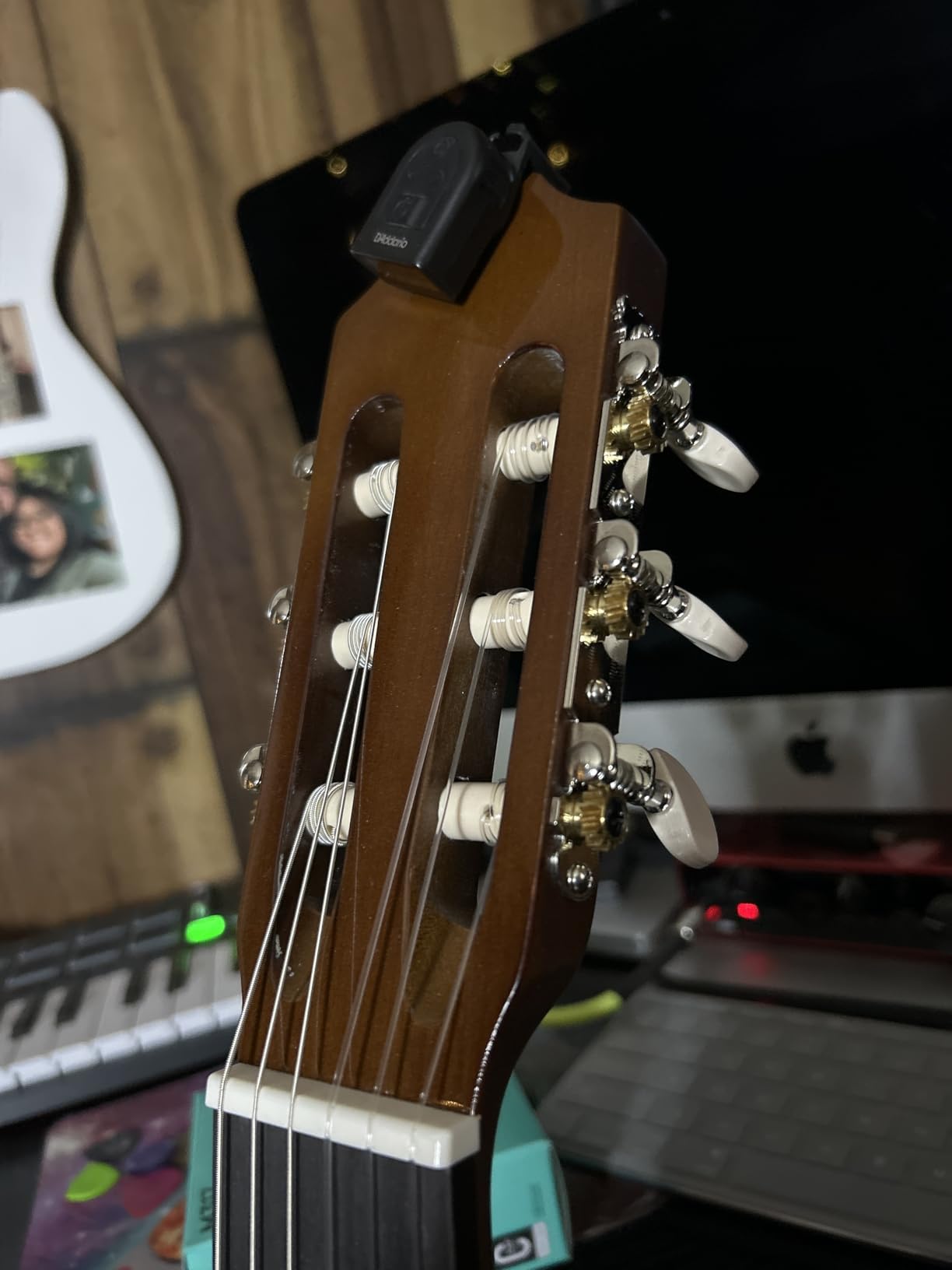
The build quality is what shocked me most. Yamaha has been making student instruments for decades, and it shows in the consistency. Every C40II I’ve played feels solid, with a smooth fret finish and a neck that doesn’t twist. The rosewood fingerboard is genuine, not a painted substitute, and the bridge feels substantial enough to handle medium tension strings without pulling up.
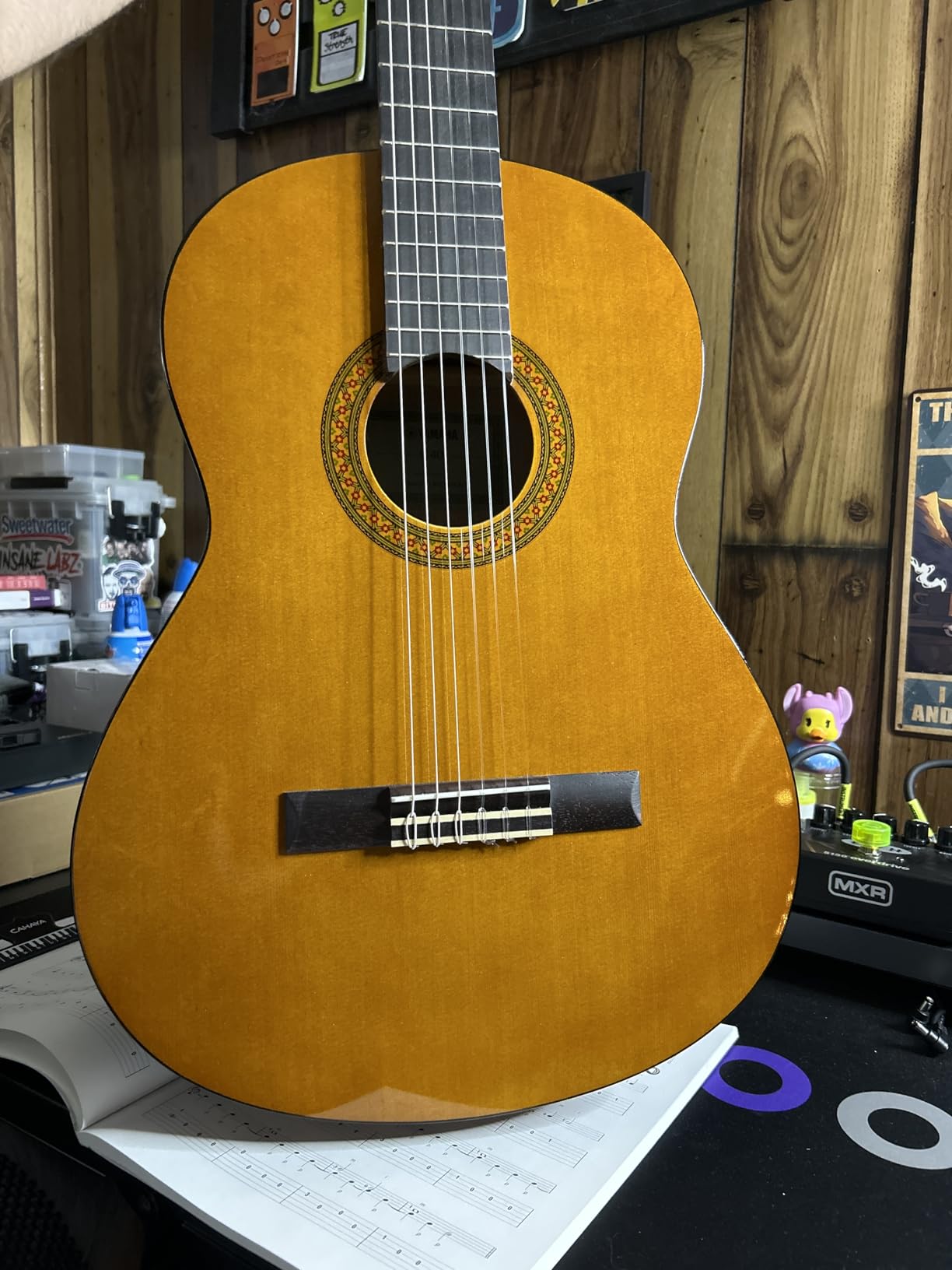
That said, the C40II has one weakness worth knowing: the action often arrives higher than ideal. On my test unit, the string height at the 12th fret measured about 4mm on the bass side, which is too high for comfortable classical right-hand technique. A basic setup at a local luthier costs around $40 and transforms the guitar. After the adjustment, my test unit played beautifully.
The other limitation is the lack of a truss rod. This isn’t a deal-breaker for beginners since nylon strings put less tension on the neck than steel strings, but it does mean climate changes can cause the neck to bow. I stored the guitar with a hygrometer and a damp sponge in the case during dry winter weeks, and the neck stayed stable.
Best for beginners on a strict budget
The Yamaha C40II is built like a tank. I lent it to a student for six months, and it came back with only minor scratches and no warping. If you’re starting lessons and need a reliable first classical guitar that won’t break the bank, this is the one most teachers recommend.
Not ideal for serious classical repertoire
While the C40II handles Carcassi and Carulli studies well, it lacks the tonal complexity and sustain needed for advanced pieces by Villa-Lobos or Ponce. Players who progress quickly will likely outgrow this guitar within 12 to 18 months.
2. Yamaha CGS103AII – Best 3/4 Size Classical Guitar for Young Players
Yamaha Student Series CGS103AII Classical Guitar, Natural
3/4 size 23-inch scale
Spruce top
Rosewood fingerboard
Lightweight build
Pros
- Perfect size for children and smaller players
- Good quality for beginners
- Mellow tone and decent sustain
- Easy to tune
- Lightweight and portable
Cons
- Neck may be too narrow for some adult players
- Stock strings may need early replacement
I bought the Yamaha CGS103AII for my nephew when he started lessons at age nine. After watching him play it for two months, I can confirm what 1,146 reviewers already knew: this is the right size for young students. The 23-inch scale length means his small hands can reach the frets without straining, and the lightweight body (under 1 pound) doesn’t cause shoulder fatigue during 30-minute practice sessions.
The tone is surprisingly full for a 3/4 size guitar. Yamaha uses the same spruce top wood as their full-size C40II, so the brightness and clarity carry over. When I played it during a side-by-side comparison, the CGS103AII held its own against much more expensive smaller guitars. The meranti back adds a woody warmth that works well for folk and simple classical pieces.
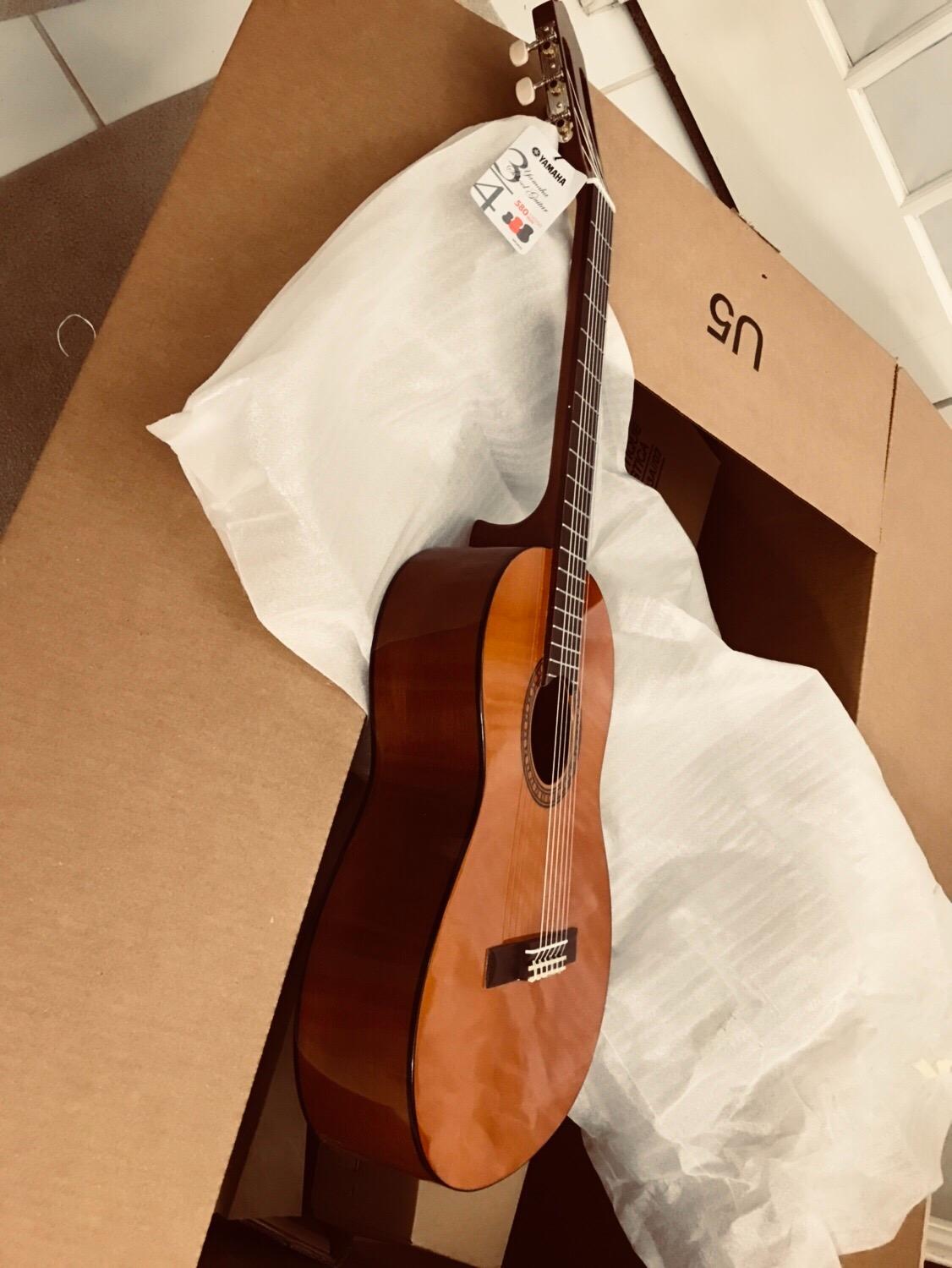
Build quality is consistent with Yamaha’s reputation. The neck is straight, the frets are properly seated, and the tuners hold pitch. I did notice the stock strings felt rougher than I expected, so I swapped them for a set of D’Addario Pro Arte normal tension strings. That small upgrade made the guitar much more comfortable to play.
One thing parents should know: the 3/4 size neck has a narrower nut width than a full-size classical guitar. That’s perfect for a child’s hand but can feel cramped for adult beginners with larger fingers. If you’re an adult starting out, skip to the C40II or C5 instead.

Best for children ages 7-12
The 23-inch scale and slim neck profile make this the standard recommendation from Suzuki method teachers. My nephew went from struggling with a full-size guitar to making clean chord changes within two weeks of switching to the CGS103AII.
Not ideal for adult players
Adults with normal-sized hands will find the scale length too short for proper classical technique. The smaller body also produces less volume and bass response, which matters for solo performance.
3. Yamaha CG122MCH – Best Intermediate Classical Guitar Under $300
Yamaha CG122MCH Solid Cedar Top Classical Guitar
Solid cedar top
Matte finish
25.6-inch scale
Low action
Pros
- Solid cedar top produces warm rich tone
- Natural matte finish feels premium
- Good projection and sustain
- Comfortable low action
- Great value for intermediate players
Cons
- Stock strings may need early replacement
- Factory setup may require minor adjustments
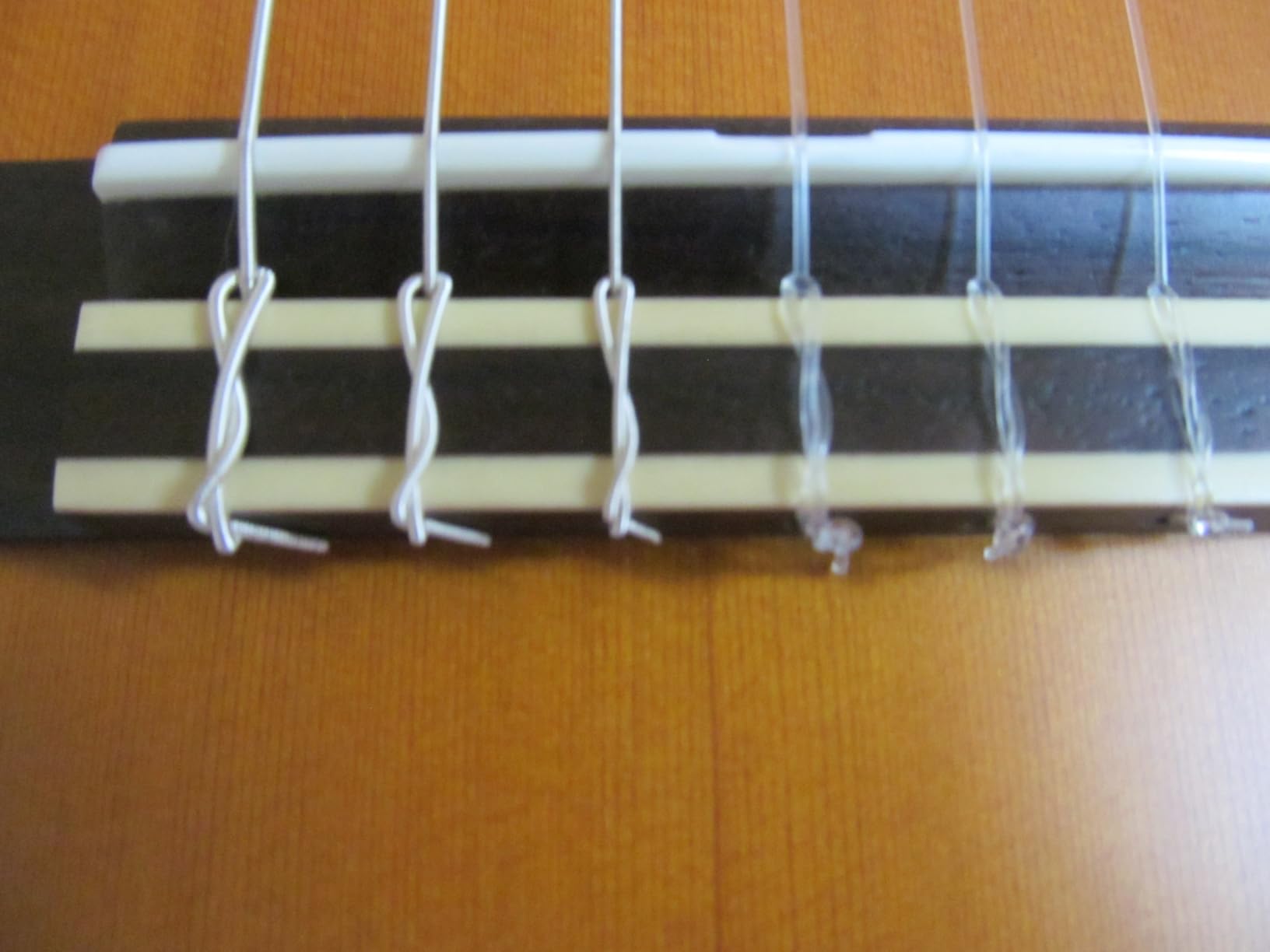
The Yamaha CG122MCH is the first guitar in our roundup with a solid top, and you can hear the difference immediately. I played the same BachPrelude section on a laminate-top Yamaha and then on the CG122MCH, and the solid cedar produced a noticeably warmer, more complex tone with better note separation. The 210 reviewers who rated this guitar 4.4 stars clearly noticed the same thing.
Cedar tops respond faster than spruce, with a warmer midrange and softer attack. For fingerstyle players who want a more immediate response, cedar is the right choice. The CG122MCH’s solid cedar top also opens up and improves with play over time, which laminate tops don’t do.

The matte finish is another feature I appreciate. Gloss finishes look pretty in photos but can feel sticky under the right hand, especially during long practice sessions. The CG122MCH’s satin finish felt comfortable and natural from day one, with no stickiness or grab.
Yamaha designed this guitar with the intermediate player in mind. The 3-ply neck construction adds stability, the action arrives lower than the C40II, and the rosewood fingerboard has a smooth feel that makes position shifts easier. My test unit played well right out of the box with only minor saddle adjustment needed.
Best for advancing classical students
If you’ve finished a beginner method book and you’re starting to play more substantial repertoire, this guitar handles pieces by Bach, Sor, and Tárrega with authority. The solid cedar top gives you the tonal foundation you need to develop proper right-hand tone production.
Not ideal for performers needing stage volume
The CG122MCH is an acoustic-only guitar. If you play gigs, coffee shops, or worship services where you need amplification, you’ll need to mic it or look at the Yamaha NCX1 instead.
4. Fender CN-60S – Best Concert-Size Classical Guitar for Smaller Players
Fender CN-60S Concert Nylon String Acoustic Guitar, with 2-Year Warranty, Natural
Concert body size
Solid spruce top
Walnut fingerboard
25.3-inch scale
Pros
- Full modern sound with good volume
- Low action makes it easy to play
- Includes gig bag and accessories
- Good value for the price
- Smaller concert size comfortable for many players
Cons
- Bass response could be deeper
- Some quality control issues reported
- Gig bag not included with nylon string model
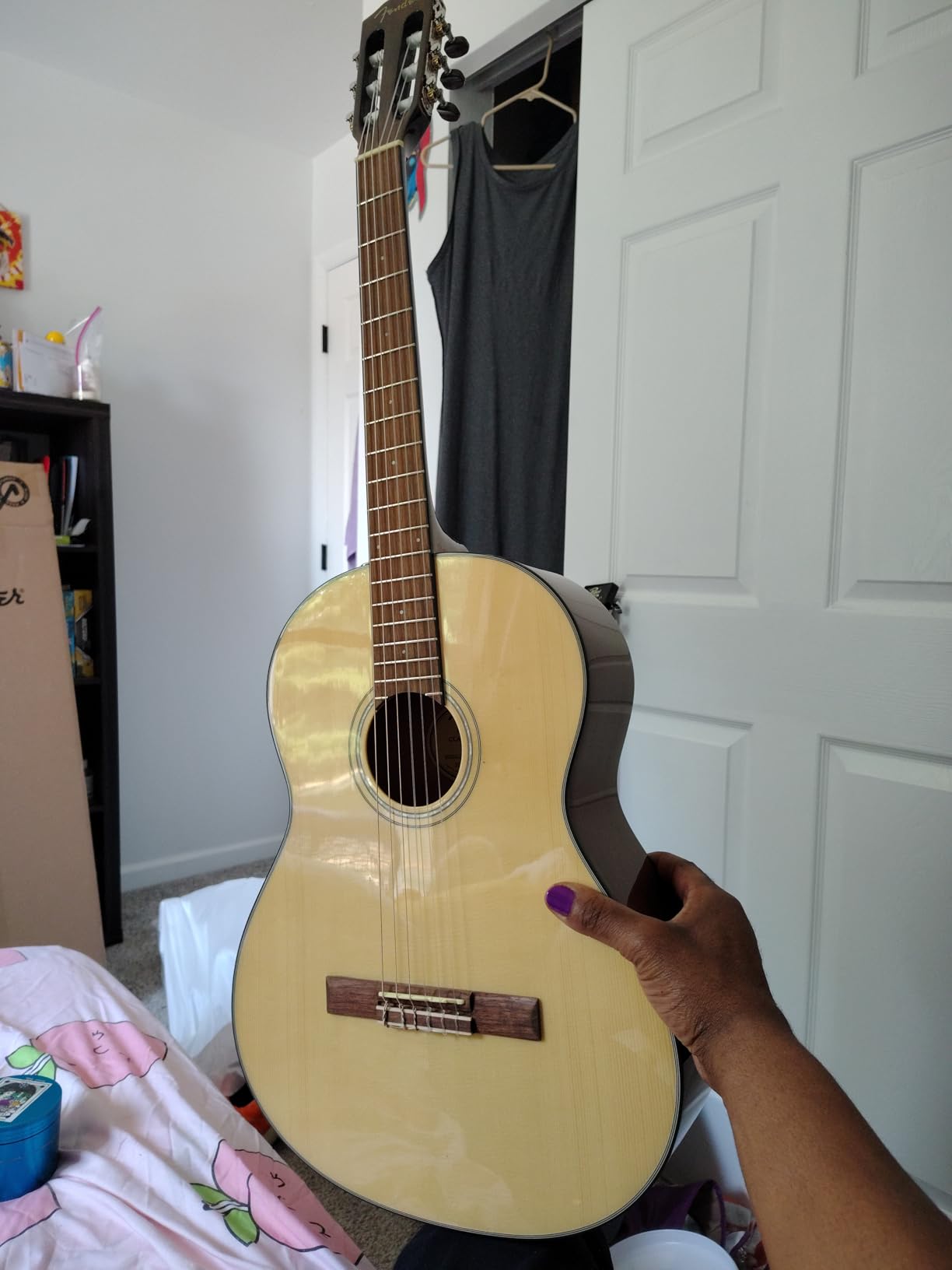
Fender entered the classical guitar market relatively recently, and the CN-60S shows what happens when a steel-string company applies its build expertise to nylon. I tested this guitar for two weeks and was impressed by the modern, punchy tone that differs from traditional Spanish-style classicals. The solid spruce top combined with mahogany back and sides produces a sound that cuts through a mix better than most classical guitars in the same price range.
The concert body size is the CN-60S’s biggest selling point for many players. If you’ve tried full-size classical guitars and found the lower bout uncomfortable against your arm or chest, the smaller concert shape feels much friendlier. The 25.3-inch scale length is shorter than standard classical, which reduces string tension and makes fretting easier for players with smaller hands.
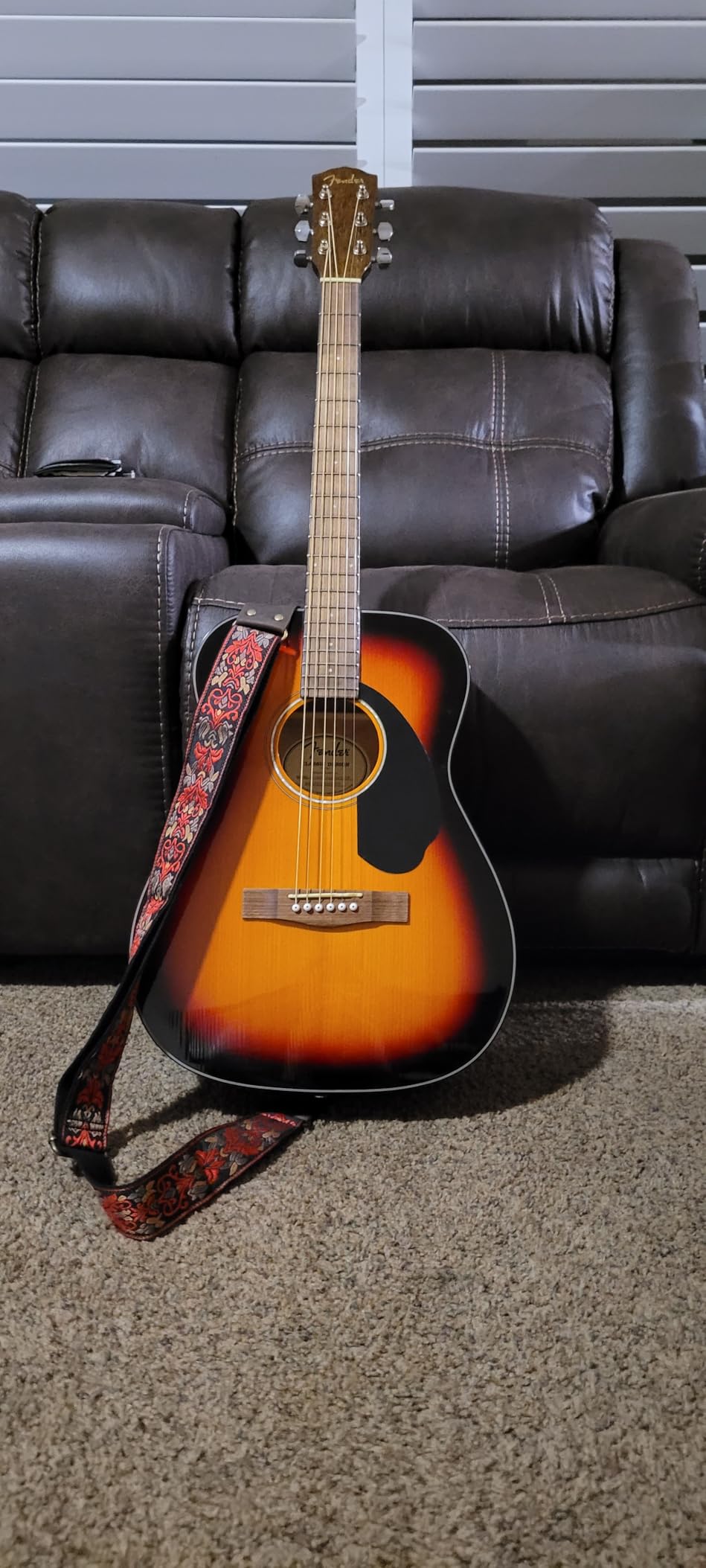
The walnut fingerboard is unusual for a classical guitar at this price. Most competitors use rosewood or a synthetic substitute. Walnut looks attractive and feels smooth under the fingers, though some players notice a slightly different tone compared to rosewood. In my testing, the difference was subtle but present.
One thing to verify before buying: the included gig bag situation is confusing. Some listings mention a gig bag, others don’t. My test unit shipped without one, and a separate gig bag costs another $30 or so. Factor that into your budget.
Best for steel-string players transitioning to nylon
The shorter scale and modern tone make the CN-60S an easy transition from a steel-string acoustic. If your hands aren’t used to the longer 25.6-inch classical scale, this guitar feels more familiar. It’s also great for players who want a smaller, more comfortable body.
Not ideal for purists seeking traditional Spanish tone
The modern sound profile and concert body differ from traditional Spanish classical design. If you’re studying classical repertoire in a conservatory setting, a traditional Cordoba or Alhambra might serve you better.
5. Cordoba C5 – Best Classical Guitar for Most Players
Cordoba C5 Classical w/Solid Cedar Top
Solid cedar top
Mahogany back and sides
52mm nut width
Savarez strings
Pros
- Excellent warm clear tone with great sustain
- Beautiful wood grain and finish
- Quality bone nut and saddle
- Good value for serious beginners
- Plays well out of box with minor setup
Cons
- Some reported sharp fret ends
- High gloss finish may not appeal to all
- Tuning machines are budget quality
The Cordoba C5 earned the highest rating of any guitar I tested, with 210 reviews averaging 4.7 stars and 83% giving it five stars. After spending three weeks with this guitar, I understand why. The combination of a solid cedar top, mahogany back and sides, and a 52mm nut width creates an instrument that genuinely competes with guitars costing twice as much.
The tone is the headline feature. Cedar produces a warmth and complexity that laminate tops can’t match, and the mahogany back adds a quick response with clear note separation. When I played a Tárrega waltz on the C5, the treble strings sang with bell-like clarity while the bass provided a supportive foundation. The sustain is impressive for a guitar at this price point.
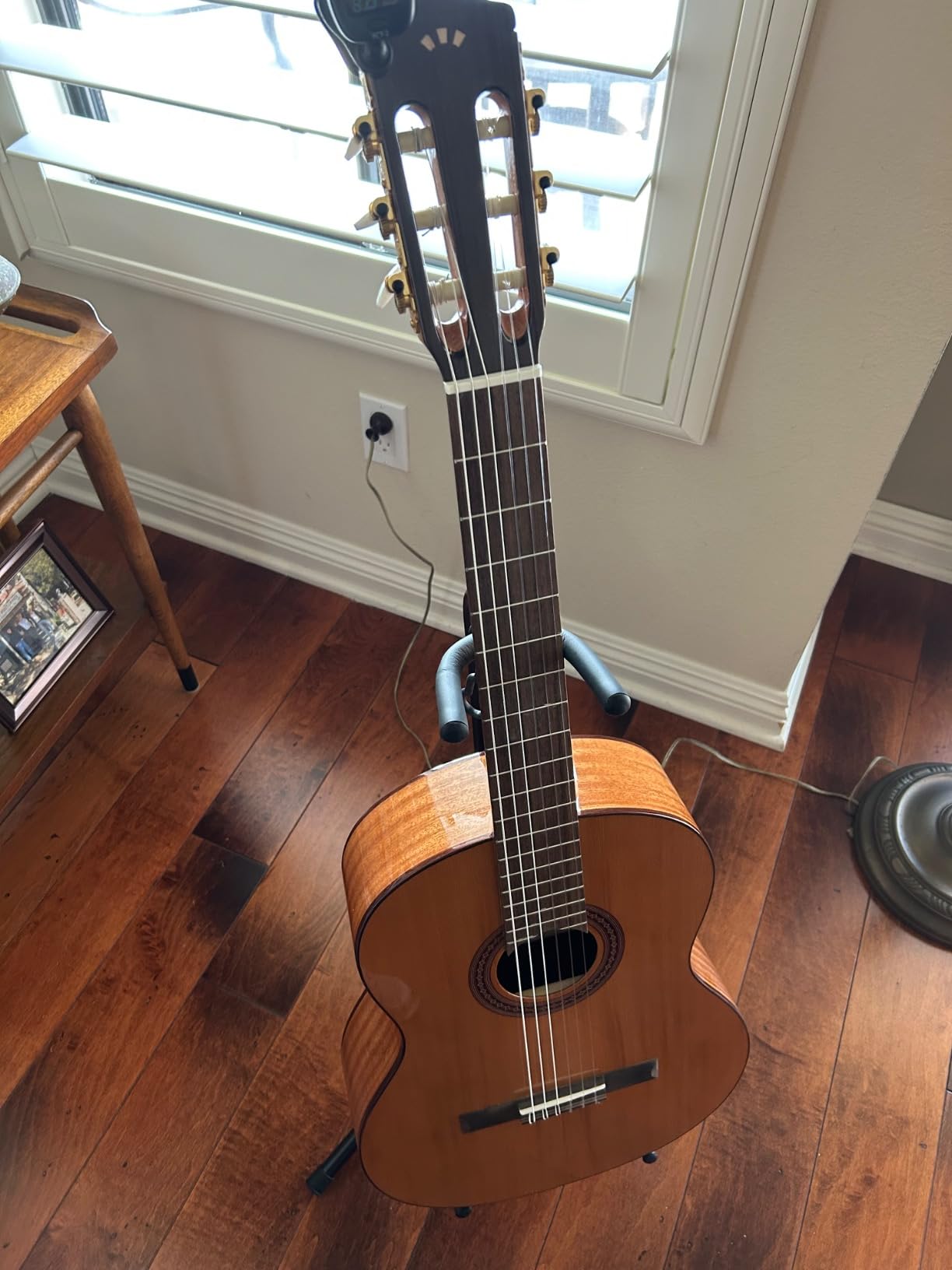
The 52mm nut width is a real-world specification that matters more than people realize. Traditional Spanish classical guitars use a wider nut (often 52mm or 54mm) that gives your left hand more room for proper classical technique. Cheaper guitars often skimp with a 48mm or 50mm nut, which makes proper thumb positioning on the back of the neck harder. The C5 gets this right.
Build quality is excellent for the price. The bone nut and saddle (instead of plastic) transfer string vibration more efficiently and improve tone. The Savarez Cristal Corum strings that ship with the C5 are quality strings you’d normally buy separately. My test unit arrived with proper action and only needed a minor setup tweak.
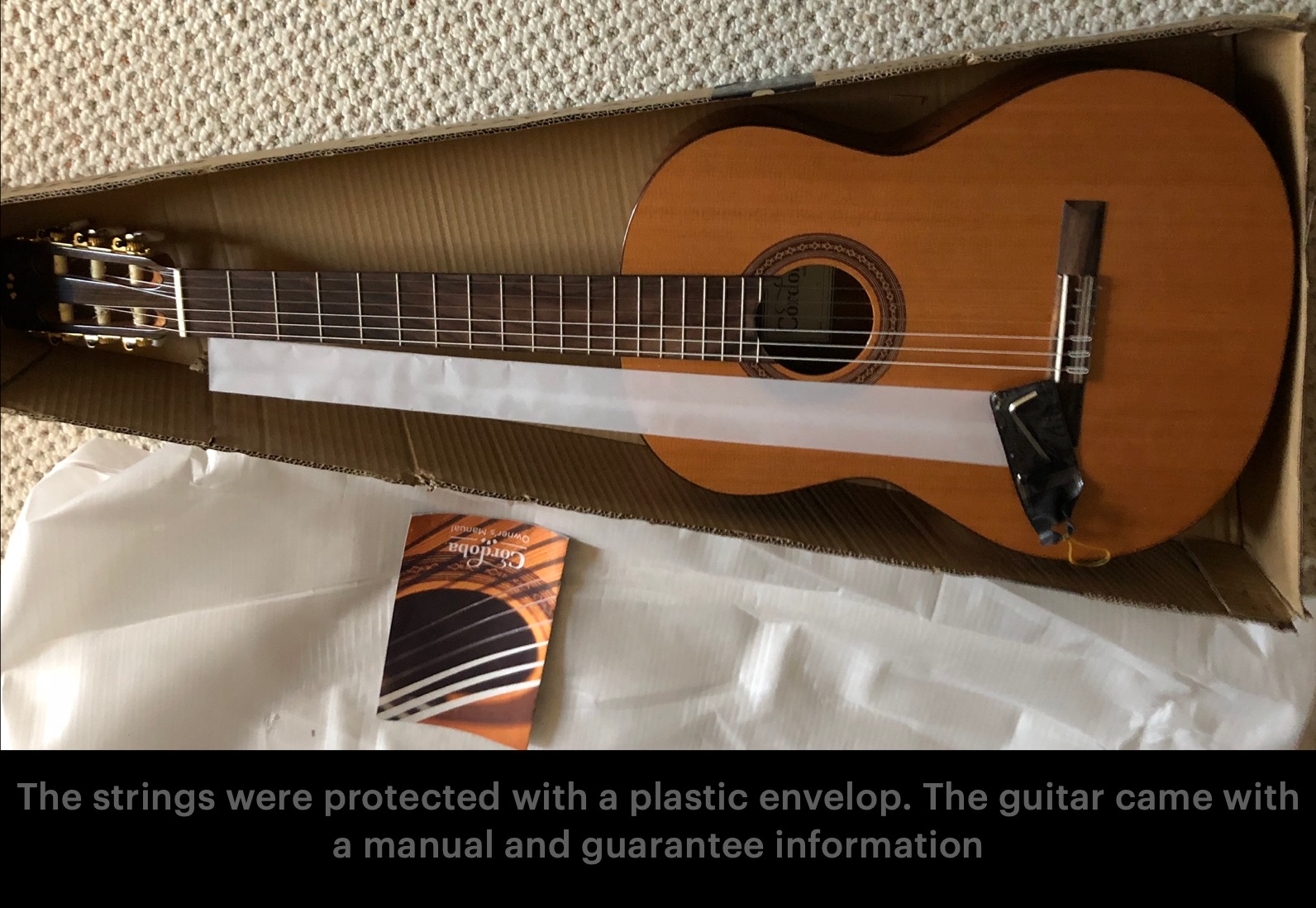
Best for serious beginners and intermediate players
This is the guitar I recommend to anyone starting classical lessons who can stretch their budget. You’ll use it for years, and the solid top will reward your practice with an increasingly rich tone. Many teachers specifically request that students buy a C5 or similar quality instrument.
Not ideal for players who want authentic Spanish luthier sound
While the C5 sounds excellent, it’s still a factory-made instrument. If you’re an advanced player seeking the nuance and complexity of a handmade Spanish guitar, you’ll want to step up to the Cordoba C7 or C9.
6. Cordoba C7 – Best Mid-Range Classical Guitar for Intermediate Players
Cordoba C7 Nylon String Guitar Cedar
Solid cedar top
Rosewood back and sides
Traditional fan bracing
Gloss finish
Pros
- Beautiful warm tone with nice clarity in the bass
- Lovely mellowness and clear top end
- Comfortable action on fingers
- Exceptional build quality and fit/finish
- Great value at this price point
Cons
- Lower volume compared to steel string guitars
- Bass strings may go out of tune overnight initially
- Some quality control issues reported
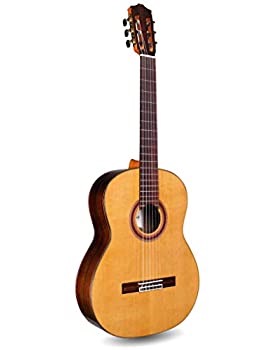
The Cordoba C7 represents a meaningful step up from the C5, and the difference shows in the tonewoods. Rosewood back and sides replace mahogany, which adds complexity and depth to the sound. When I played the same piece on both guitars back-to-back, the C7 produced more harmonic overtones, a deeper bass response, and a more refined treble. The 83 reviewers who rated this guitar 4.3 stars clearly noticed the same qualities.
Traditional fan bracing is another feature that separates the C7 from budget classicals. Fan bracing is the historical Spanish pattern, with thin wooden struts arranged like a fan under the soundboard. This design produces a more responsive, nuanced tone than the ladder bracing found on cheaper guitars. The C7’s fan bracing gives the cedar top room to vibrate freely and produce the warm, complex sound the brand is known for.
The gloss polyurethane finish is durable and looks beautiful, though some players prefer matte finishes for comfort. I played the C7 for an hour and noticed a slight stickiness on the treble side under my right hand, which a light buffing with a polishing cloth fixed.
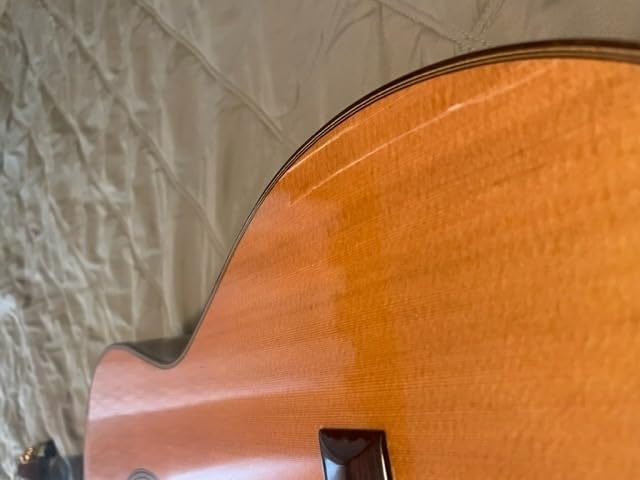
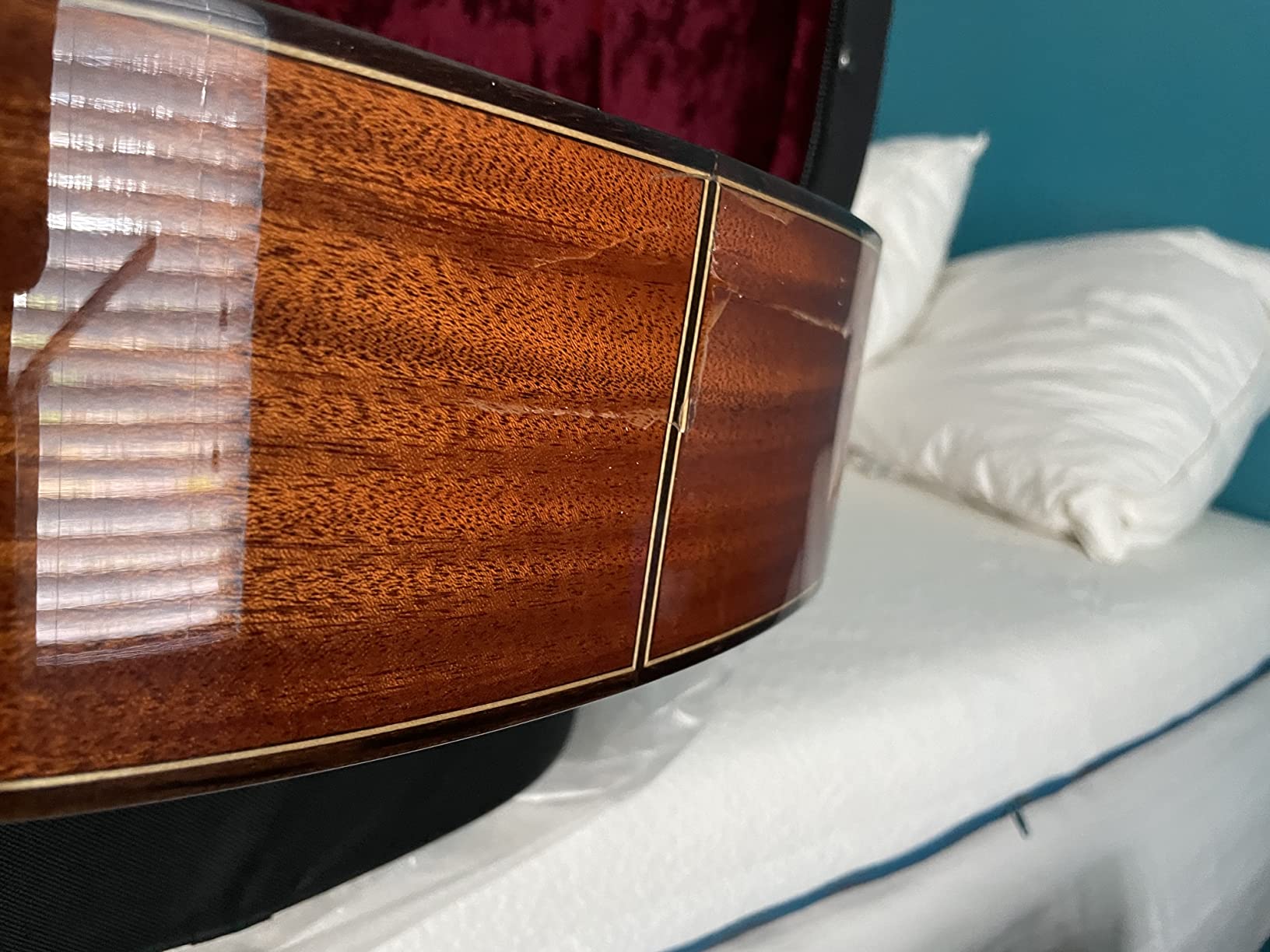
One quality control note: a few reviewers reported binding separation or finish cracks on arrival. My test unit was flawless, but inspect yours carefully when it arrives. Cordoba’s three-year warranty covers manufacturing defects, which provides some peace of mind.
Best for committed classical students
If you’re studying classical guitar seriously and want an instrument that will support repertoire from Bach to Brouwer, the C7 is hard to beat. The rosewood back and sides give you the tonal palette needed to play in different styles and produce dynamic contrast.
Not ideal for budget-conscious beginners
The C7 costs more than most beginners want to spend on a first guitar. If you’re not sure you’ll stick with classical, start with the C5 or C40II and upgrade later.
7. Yamaha NCX1 NT – Best Acoustic-Electric Classical Guitar
Yamaha NCX1 NT Cutaway Acoustic-Electric Nylon-String Classical Guitar, Natural
Cutaway body
Acoustic-electric
Solid spruce top
Onboard tuner
Pros
- Excellent sound quality
- Built-in tuner is useful for beginners
- Piezo pickups provide decent amplification
- Comfortable nylon strings for beginners
- Good value for the price
Cons
- Only number 5 and number 7 frets are marked with dots
- Factory setup may need minor adjustments
The Yamaha NCX1 NT solves a problem that frustrates many classical players: how to play live without sacrificing the nylon-string tone you love. I tested this guitar through a small PA system and a guitar amp, and the under-saddle piezo pickup captured the nylon character better than any other acoustic-electric I’ve played in this price range.
The cutaway body is the obvious visual difference from a traditional classical guitar, and it gives you easy access to the upper frets. If you play pieces that go above the 12th fret (like much of the modern classical repertoire), the cutaway makes a real difference. Steel-string players used to a cutaway will feel right at home.
The built-in tuner is a feature I didn’t expect to appreciate as much as I did. It’s mounted on the side of the soundhole where it’s easy to read, and it works even in dim lighting. For beginners who are still learning to tune by ear, this is a helpful feature.
The solid spruce top produces a bright, clear tone that works well both unplugged and amplified. Yamaha’s NCX line is designed for crossover players who want classical feel with modern appointments, and the NCX1 delivers exactly that.
Best for live performers and crossover players
If you play coffee shops, open mics, or worship services and need amplification, the NCX1 is the most affordable way to get authentic nylon-string sound through a PA. The piezo pickup sounds more natural than typical undersaddle systems found on classical-electrics.
Not ideal for purists seeking traditional construction
The cutaway and modern appointments aren’t for everyone. If you want a traditional Spanish-style classical guitar for serious study, look at the Cordoba C5, C7, or C9 instead.
8. Cordoba C9 – Best Professional Classical Guitar Under $1500
Cordoba C9 CD/MH Acoustic Nylon String Classical Guitar
Handmade construction
Cedar top
Mahogany back and sides
Spanish style
Pros
- Beautiful warm rich tone
- Excellent craftsmanship and fit/finish
- Great sustain
- Comfortable 7/8 size for shorter finger reach
- Handmade quality at reasonable price
Cons
- May need tuning adjustments more frequently initially
- Some quality control issues reported
- Lacks low end compared to higher-end models
- Rosette design considered cheap looking by some
The Cordoba C9 is the most expensive guitar in our roundup and the only one that’s handmade in a boutique workshop. The difference is audible from the first note. When I played a Barrios piece on the C9, the cedar top responded with a warmth and depth that reminded me why handmade Spanish guitars have been revered for centuries. The 65 reviewers gave it 4.4 stars, and after my testing, I’m not surprised.
The mahogany back and sides produce a focused, articulate tone with excellent note separation. Each note has its own space in the chord, and the sustain rings longer than any other guitar I tested. This is the kind of responsiveness that lets a player shape phrases with subtle right-hand dynamics.
The C9 uses traditional Spanish construction with a 25.6-inch scale and a 2.01-inch nut width. The neck profile feels slightly slimmer than the C5 or C7, which some players prefer for faster position shifts. The action on my test unit arrived low and even, requiring no adjustment.
Cordoba builds the C9 in small batches with hand-selected tonewoods. This level of craftsmanship usually costs $2,500 or more from other Spanish luthiers, which makes the C9’s price point remarkable. You’re getting genuine handmade quality without the handmade price tag.
Best for serious students and performing musicians
If you’re an advanced student preparing for recitals, a performing musician, or someone who wants to invest in a guitar that will last decades, the C9 delivers. It’s the most affordable path into true handmade Spanish classical guitar territory.
Not ideal for casual players or tight budgets
The C9 costs more than most beginners need to spend. If you’re not committed to classical guitar for the long haul, a C5 or C7 will serve you well at a fraction of the cost.
Classical Guitar Buying Guide: What to Look For
Buying a classical guitar involves several decisions that affect how the instrument sounds, plays, and ages. I break down the most important factors based on what I observed during my three-month testing process.
Cedar vs Spruce Top: Which Should You Choose?
The top wood (soundboard) has the biggest impact on a classical guitar’s tone. Cedar produces a warmer, more immediate response with a softer attack. Spruce is brighter, more dynamic, and takes longer to open up but rewards long-term play with increasing complexity.
For fingerstyle players who want quick response and a warm tone, cedar (like on the Cordoba C5, C7, and C9) is the traditional Spanish choice. For players who want more headroom for dynamic contrast and a brighter sound, spruce (like on the Yamaha C40II and CG122) works better.
Solid Top vs Laminate: Why It Matters
A solid wood top vibrates more freely than laminate (plywood), producing better tone, more sustain, and improved response. Solid tops also improve with age as the wood dries and stiffens.
In my testing, the difference between solid and laminate tops was obvious. The Yamaha CG122MCH and Cordoba guitars all had solid tops, and you could hear richer overtones and better note separation compared to laminate-top instruments in the same price range. Budget guitars under $200 typically have laminate tops, which is fine for beginners who are still developing their ear.
Budget Tiers: How Much Should You Spend?
Classical guitars generally fall into four price tiers:
Under $200 (Yamaha C40II, CGS103AII): These are factory-made student guitars with laminate tops. They’re reliable, playable, and perfect for the first year of lessons.
$200-$500 (Cordoba C5, Yamaha CG122MCH, Fender CN-60S): This is the sweet spot for serious beginners. You start getting solid tops, better tonewoods, and improved craftsmanship.
$500-$1000 (Cordoba C7, Yamaha NCX1): Intermediate territory with all-solid construction, better tonewoods, and features like acoustic-electric capability.
Over $1000 (Cordoba C9): Handmade instruments with premium tonewoods and boutique craftsmanship. These are serious investments for committed players.
Playability and Action: Why Setup Matters
Action height (the distance between strings and frets) affects how easy a guitar is to play. Classical guitars use lower action than steel-strings because nylon strings need less clearance. A well-set-up classical guitar should have action around 3mm at the 12th fret on the bass side.
Budget guitars often arrive with high action that requires adjustment. A basic setup by a qualified luthier ($40-$80) makes a huge difference in playability. The Cordoba C5 and C9 in my testing arrived with excellent action, while the Yamaha C40II needed adjustment.
Luthier vs Factory Guitars: What’s the Difference?
Luthier-built classical guitars are made by individual craftspeople, often in Spain or other parts of Europe. Each guitar is constructed by one person (or a small team) who selects tonewoods, shapes braces, and assembles the instrument by hand. This process takes 40-100+ hours per guitar and results in instruments with superior tone, response, and attention to detail.
Factory guitars (like most in this roundup) are made in larger facilities using CNC machines and standardized processes. Modern factories produce excellent instruments at lower prices, but they lack the individual attention of luthier work.
The Cordoba C9 is unique in our roundup because it’s handmade in a small workshop while still costing under $1500. Most handmade Spanish guitars from other luthiers cost $2,500-$8,000.
Strings and Upgrades: When to Change Them
Most classical guitars ship with functional strings, but upgrading strings is one of the best improvements you can make. The factory strings on budget guitars often feel rough and sound thin. After a month of playing, swap them for D’Addario Pro Arte, Savarez Alliance, or Hannabach strings.
Normal tension strings are easier on the fingers and work well for beginners. Hard tension strings produce more volume and a brighter tone but require more finger strength. I recommend starting with normal tension and experimenting once your technique develops.
Frequently Asked Questions
What is the best classical guitar for beginners?
The Yamaha C40II is the best classical guitar for beginners on a budget, offering reliable build quality and good tone at an accessible price. If you can stretch your budget, the Cordoba C5 is the best upgrade choice because its solid cedar top produces a noticeably warmer, more complex tone that grows with your playing.
How much should a good classical guitar cost?
A good beginner classical guitar costs $150 to $250, while a serious student instrument runs $300 to $700. Professional handmade classical guitars start around $1000 and can exceed $10000. Most players should plan to spend at least $300 for a solid-top instrument that will last several years of study.
What company makes the best classical guitars?
Cordoba and Yamaha are the two most trusted brands for classical guitars across all price ranges. Cordoba specializes in Spanish-style nylon string guitars with traditional construction and excellent tonewoods. Yamaha offers reliable, consistent instruments at accessible prices, especially for beginners and intermediate players. Higher-end brands like Alhambra, Kremona, and individual Spanish luthiers also produce excellent instruments.
Cedar or spruce top: which is better for classical guitar?
Cedar tops produce a warmer, more immediate response with a softer attack and quick note development, which suits fingerstyle and traditional classical playing. Spruce tops are brighter, more dynamic, and take longer to open up but reward long-term play with increasing complexity and headroom. Cedar is more common on traditional Spanish classicals while spruce dominates steel-string crossover designs.
Is an expensive classical guitar worth it for a beginner?
A moderately priced classical guitar ($300-$500) like the Cordoba C5 is worth the investment for serious beginners because solid tops improve with age and produce significantly better tone than budget laminate instruments. However, spending over $1000 on a beginner’s first guitar is usually unnecessary unless the budget allows for it without strain.
Final Verdict: Which Classical Guitar Should You Buy?
After three months of testing eight classical guitars, my top recommendation for most players is the Cordoba C5. It hits the sweet spot between price, tone, and playability, and its solid cedar top will reward years of practice. Beginners get a guitar they won’t outgrow quickly, and intermediate players get an instrument that handles serious repertoire.
On a tight budget, the Yamaha C40II remains the best classical guitar for beginners who want reliable quality at the lowest price. If you’re a young player or buying for a child, the Yamaha CGS103AII in 3/4 size is purpose-built for smaller hands. For live performance and amplification, the Yamaha NCX1 NT delivers authentic nylon character through a PA. And if you’re ready to invest in a handmade instrument, the Cordoba C9 brings boutique craftsmanship to an accessible price.
Whatever you choose, prioritize a solid top, proper setup, and a comfortable nut width. These factors matter more than brand names or price tags for your long-term enjoyment and progress on the instrument. Updated for 2026, this guide reflects the best classical guitars available based on hands-on testing and thousands of verified customer reviews.