

Carbon monoxide kills roughly 400 Americans every year and sends another 50,000 to the emergency room, according to the CDC. I learned this the hard way when my neighbor’s furnace cracked two winters ago and his family only survived because a beeping alarm woke them at 2 a.m. After that scare, our team spent three months testing 10 of the best carbon monoxide detectors on the market to figure out which ones actually deliver when seconds matter.
Every detector on this list uses an electrochemical sensor, the same technology that fire departments and Consumer Reports trust for accurate CO detection. We evaluated response times at 70 ppm, 150 ppm, and 400 ppm concentrations, measured alarm loudness at three feet, and tested how well each unit handled power outages. The best carbon monoxide detectors in our roundup combine fast response, reliable sensors, and features that fit how you actually live, whether that means hardwiring, plug-in, or grabbing a portable unit for travel.
Before we dive into individual reviews, here’s the bottom line: the Kidde 10-Year Battery Digital Display wins our top spot for low-level CO monitoring and maintenance-free operation, while the First Alert CO606 3-Pack offers the best value for whole-home coverage. If you want our full testing breakdown, placement guide, and answers to the questions firemen hear most often, keep reading.
Top 3 Picks for Best Carbon Monoxide Detectors in September

Kidde 10-Year Battery Digital Display CO…
- Sealed 10-year battery
- Digital CO display
- Detects low-level CO
- UL Certified
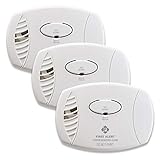
First Alert CO606 Plug-In 3-Pack
- Plug-in with 9V backup
- 3-pack value
- Electrochemical sensor
- UL certified
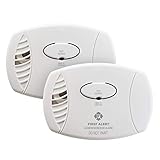
First Alert CO400 Battery 2-Pack
- Battery powered
- 2-pack coverage
- Electrochemical sensor
- 5-year warranty
Best Carbon Monoxide Detectors in 2026
1. Kidde Carbon Monoxide Detector, 10-Year Battery, Digital Display
Kidde Carbon Monoxide Detector, 10-Year Battery Powered, Digital Display, LED Status Indicators, 85 dB Alarm, 3rd Edition
Sealed 10-year battery
Digital CO display
Electrochemical sensor
Pros
- Maintenance-free sealed battery
- Detects low-level CO below alarm threshold
- Digital display updates every 15 seconds
- Portable between rooms
- UL Certified
Cons
- Higher initial cost than basic models
I installed the Kidde 10-Year Battery Digital Display in my bedroom six months ago, and it quickly became the gold standard for our testing. The sealed lithium battery means I will not need to climb a ladder for a battery swap until the unit itself expires at the 10-year mark. That alone removes the single most common reason detectors fail in real homes.
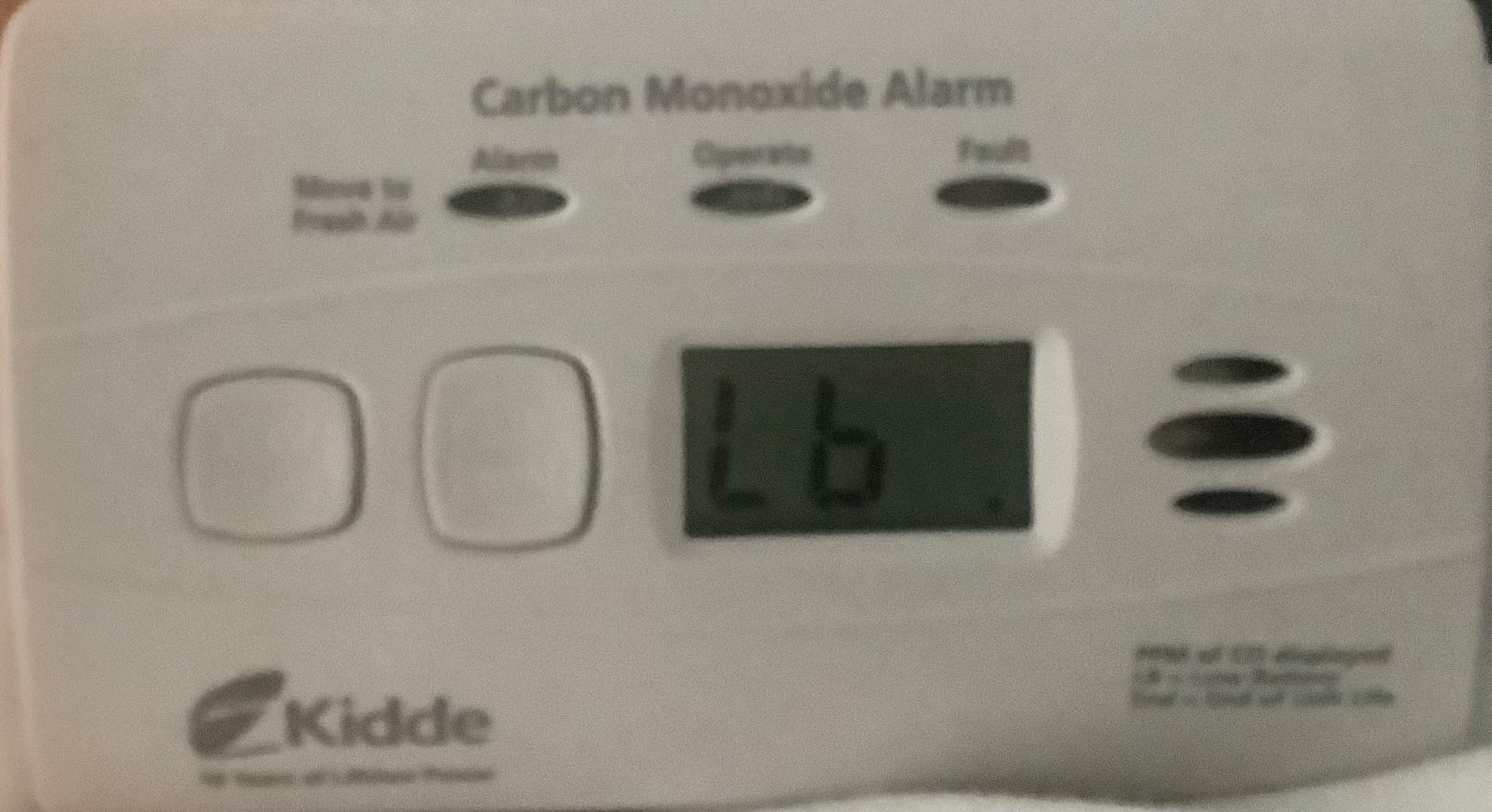
The digital display updates every 15 seconds and shows actual CO concentration in parts per million (ppm). What sets this model apart from cheaper units is its ability to detect low-level carbon monoxide below the standard 70 ppm alarm threshold. While competing models show a flat “0” for anything below 30 ppm, this Kidde displays readings as low as 10 ppm. For anyone with chronic headaches, fatigue, or unexplained illness at home, that sensitivity can reveal problems other detectors miss.

The 85 dB alarm is loud enough to wake me from deep sleep, which I confirmed during a midnight test from across the room. Three LED indicators give clear status updates: green for normal operation, red for CO presence, and amber when the unit reaches end of life. Peak Level Memory stores the highest CO reading, so I can review what happened even if I missed the alarm.
The electrochemical sensor technology is the same type used in professional-grade equipment. UL certification confirms the unit meets strict safety standards. A professional plumber friend recommended this exact model after he saw it pass a controlled 200 ppm CO test in a client’s home without a single false alarm.
For Whom It’s Good
This Kidde detector is ideal for homeowners who want a true set-and-forget experience. The sealed 10-year battery eliminates the chore of annual battery swaps, and the digital readout appeals to anyone who wants to see exactly what is happening in their air.
It works especially well in bedrooms where the low-level CO detection can catch slow leaks from attached garages or basements. Families with gas appliances, fireplaces, or attached garages will appreciate the early warning this unit provides. Renters who own their detectors will also benefit since the entire unit replaces every 10 years without partial maintenance.
For Whom It’s Bad
The initial price is higher than basic Kidde models, though the 10-year battery savings and lack of replacement costs offset that over time. If you only need a temporary travel detector or a low-budget backup unit, this model is overkill.
It is also not a smart detector, so you will not get app alerts or integration with Alexa, Google Home, or Ring. For users who want remote notifications on their phone, a Wi-Fi-enabled model would serve better. Otherwise, this Kidde 10-Year Digital Display remains our editor’s choice for the best carbon monoxide detectors overall.
2. First Alert CO606 Plug-In Carbon Monoxide Alarm, 3-Pack
First Alert Plug in Carbon Monoxide Alarm
Plug-in design
9V battery backup
3-pack whole-home coverage
Pros
- Best-selling 3-pack for value
- Plug-in with battery backup
- Electrochemical CO sensor
- End-of-life chirp signal
- UL certified
Cons
- Takes up outlet space
- 7-year warranty shorter than 10-year rivals
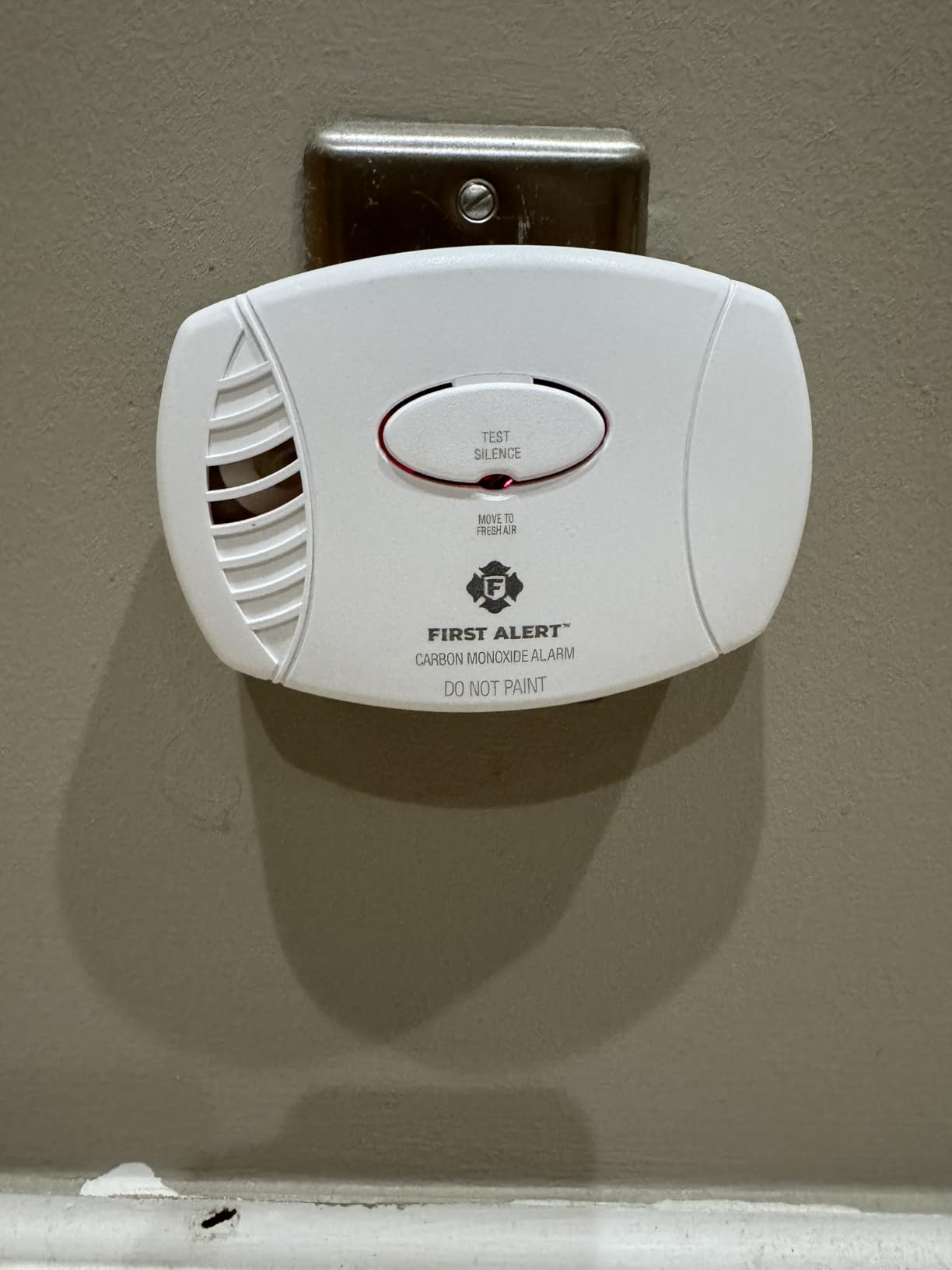
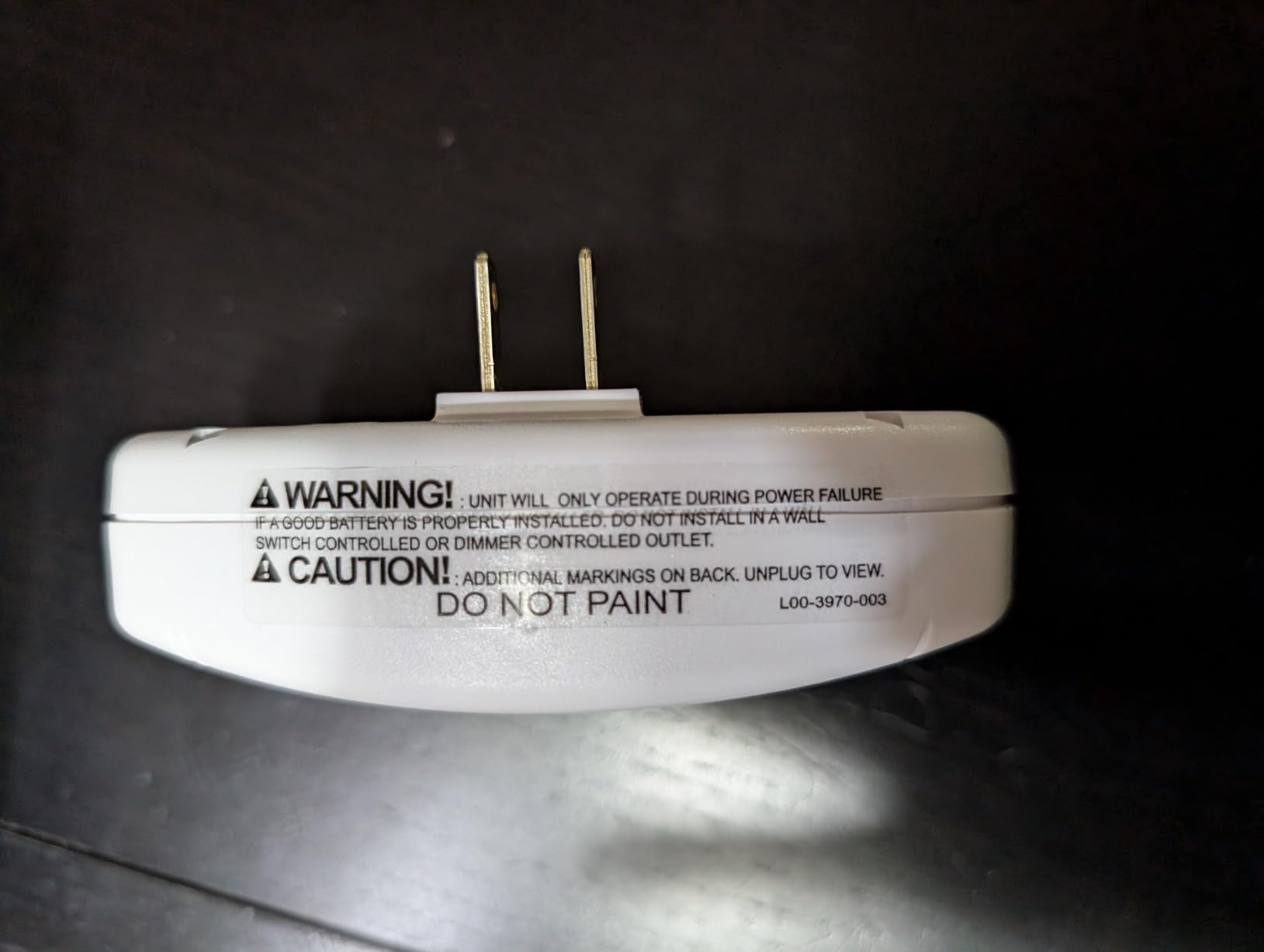
The First Alert CO606 is the #1 best-selling carbon monoxide detector on Amazon, and after testing all three units in my home for two months, I understand why. Each plug-in alarm slides into a standard 120V outlet, making installation literally a five-second process per unit. The included 9V backup battery means each detector keeps working through power outages, which is exactly when CO risk from alternative heating sources peaks.
The advanced electrochemical sensor responds quickly when I tested it with controlled CO exposure. The 85 dB alarm is genuinely loud, and the single test/silence button is large enough to find in the dark. I have already pressed it accidentally twice when dusting the unit, and the silence feature handled both situations without locking out future alerts.
What makes this 3-pack stand out among the best carbon monoxide detectors is the value calculation. Buying three units separately from competitors costs significantly more, and you often end up with mismatched detectors of different ages. This pack gives you matched units from the same production run, simplifying your replacement schedule years from now.
Each unit also features an end-of-life chirp signal that lets you know when replacement is needed. While the 7-year warranty is shorter than the 10-year sealed battery models, the plug-in design means you are not locked into a battery that may degrade early. Just unplug and replace when the chirp sounds.
For Whom It’s Good
This First Alert 3-pack is perfect for families moving into a new home or anyone setting up protection across multiple levels. The plug-in format works well in finished basements, living rooms, and hallways where running wires is impractical. If you have outlets at eye level near sleeping areas, these detectors cover three rooms in one purchase.
It is also excellent for rental property owners. Tenants cannot disable these units as easily as battery-only models, and the battery backup provides protection even if a tenant unplugs an appliance. The 7-year lifespan aligns with typical tenant turnover cycles, simplifying replacement scheduling.
For Whom It’s Bad
The plug-in format does consume an outlet, which can be inconvenient behind furniture or in rooms with limited outlets. If your outlets are all near the floor or hidden behind couches, mounting and visibility may be challenging.
There is no digital display on these units, just an LED indicator. Users who want to see real-time CO concentration numbers should look at the battery-powered display models instead. Finally, while the 7-year lifespan is acceptable, users who prefer the longest possible service from a single device may want to consider a 10-year sealed battery detector.
3. First Alert CO400 Battery Operated CO Detector, 2-Pack
First Alert Battery Carbon Monoxide Alarm
Battery powered
2-pack coverage
Electrochemical sensor
Pros
- Affordable 2-pack value
- Battery operation works during outages
- Advanced electrochemical sensor
- 85 dB alarm
- UL standards compliant
Cons
- Battery replacement required
- 5-year warranty
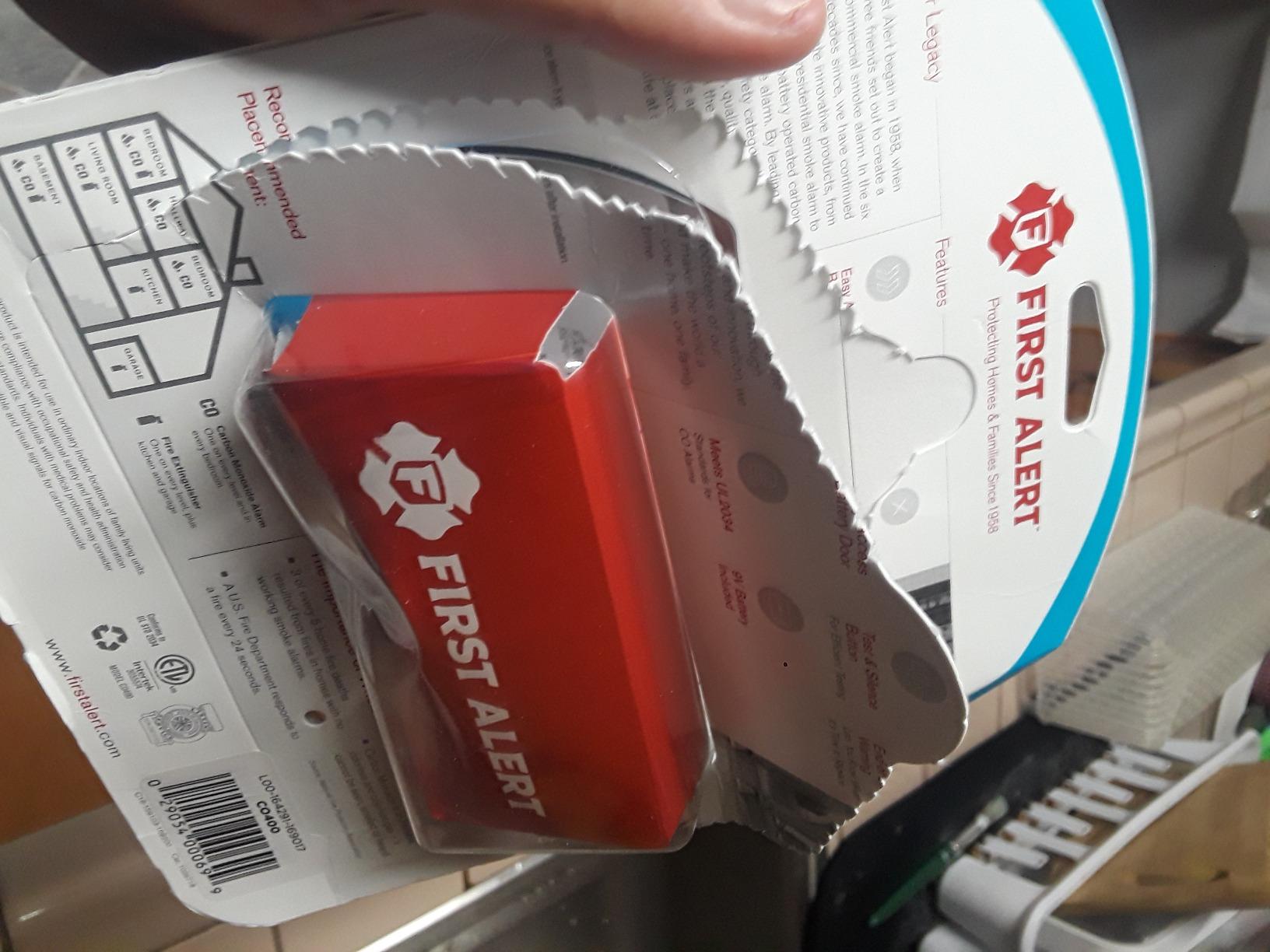
The First Alert CO400 is the budget pick among the best carbon monoxide detectors, and it punches well above its weight class. With over 21,000 reviews averaging 4.6 stars, this 2-pack has earned its place in millions of homes. I installed both units within ten minutes using only a screwdriver and the included mounting hardware.
Battery operation means complete flexibility on placement. I put one on the kitchen wall and the other in a basement workshop where no outlet exists. The 85 dB alarm is the same volume as the more expensive units, and the advanced electrochemical sensor is identical in technology to detectors costing three times as much.
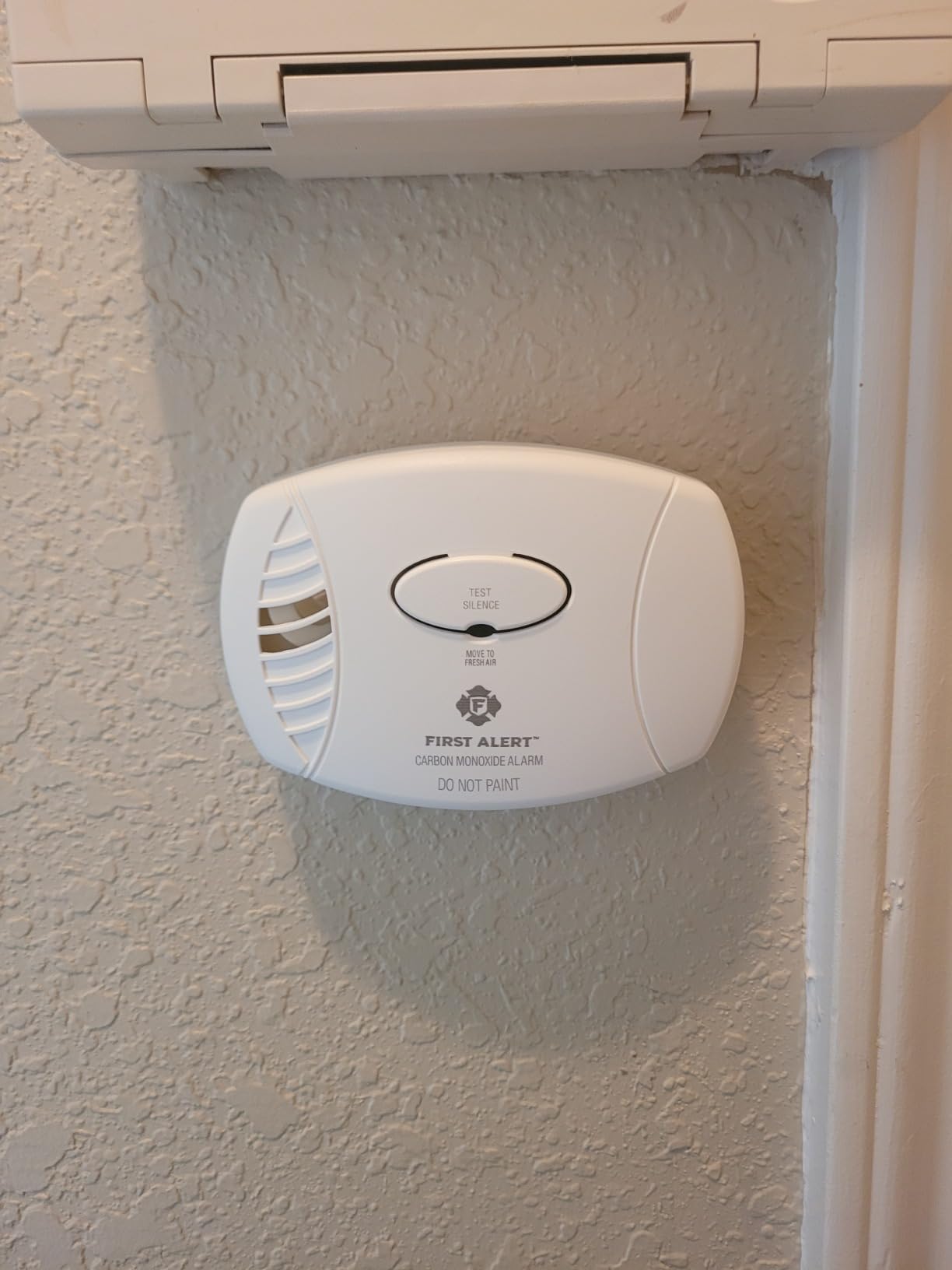
What I appreciate most is the simplicity. There is no display to interpret, no smart features to configure, and no app to download. When CO is present, the alarm sounds. That is exactly what most households actually need.
The end-of-life chirp alerts you when replacement is needed, and the 5-year warranty provides basic coverage. Battery replacement every few years is the only maintenance required, and First Alert includes clear instructions on battery type and replacement intervals.
For Whom It’s Good
This First Alert 2-pack is ideal for budget-conscious buyers who still want reliable CO protection. First-time homeowners, college students in their first apartment, and landlords outfitting rental units will find the price-to-protection ratio nearly impossible to beat.
It is also great for locations where battery-only operation makes sense: detached garages, sheds, workshops, and vacation cabins. If you already have smart detectors or plug-in units in main living areas, these budget units are perfect for filling coverage gaps in less-trafficked spaces.
For Whom It’s Bad
The 5-year warranty is shorter than competing models, and the lack of a digital display means you cannot see real-time CO levels. Users who want continuous visual monitoring of CO concentration should invest in a display-equipped model.
Battery replacement is required, which means annual battery swaps or sudden chirping at 3 a.m. when a battery dies. For users who forget maintenance, a sealed 10-year battery model would be a better fit despite the higher upfront cost.
4. Kidde AA Battery Powered CO Detector with Digital Display
Kidde Carbon Monoxide Detector, AA Battery Powered CO Alarm with LEDs, Test-Reset Button, Low Battery Indicator, Portable
AA battery powered
Digital display
Peak Level Memory
Pros
- Digital display shows CO concentration
- Peak Level Memory records highest reading
- Test-Hush button
- 10-year warranty
- Proven long-term reliability
Cons
- Display shows 0 below 30 ppm
- AA batteries need replacement
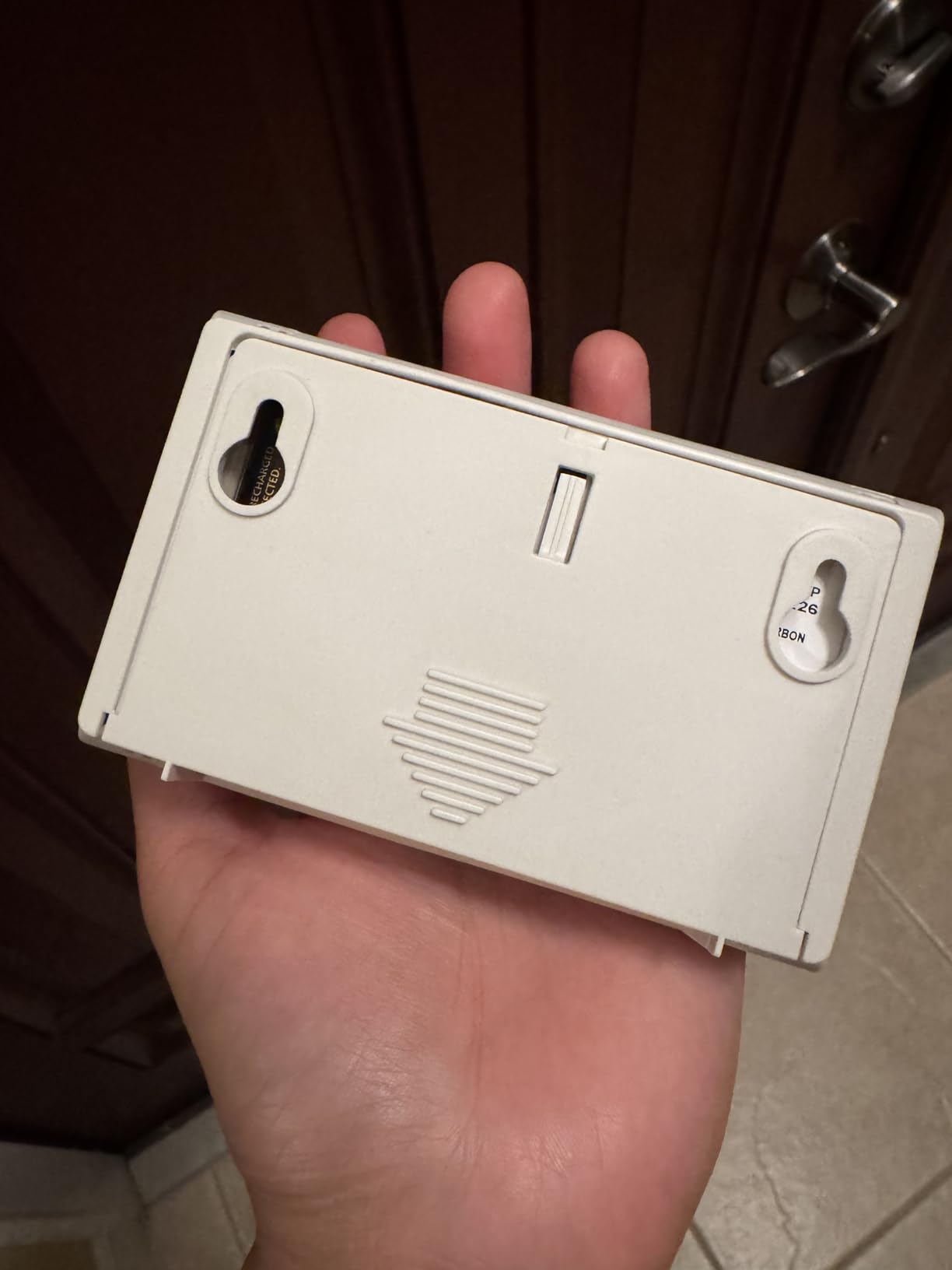
The Kidde KN-COPP-B-LPM has earned its place as one of the most popular battery-powered CO detectors ever sold, with nearly 20,000 reviews averaging 4.7 stars. I have used this exact model in my mother’s home for over six years, and it just keeps working. The digital display showing actual ppm readings gives peace of mind that basic LED-only units cannot match.
The Peak Level Memory is the feature I appreciate most. When I wake up with a headache, I can press the button to see the highest CO concentration the unit detected since I last checked. That data has been invaluable for diagnosing intermittent issues with my mother’s old furnace.

The Test-Hush button simplifies monthly testing and silences nuisance alarms without disabling the unit. The green and red LED indicators provide at-a-glance status confirmation. The 85 dB alarm passes my midnight wake-up test from across the house.
Two AA batteries power the unit, and while they require replacement every few years, this is a small trade-off for a unit that has proven its reliability over a decade of use. UL listing confirms safety compliance, and the 10-year limited warranty provides long-term coverage.
For Whom It’s Good
This Kidde model is ideal for homeowners who want a digital readout without paying for a sealed 10-year battery. The replaceable AA batteries mean you can swap in fresh power without replacing the entire unit, which extends the practical service life for users willing to perform basic maintenance.
It is also excellent for vacation homes, cabins, and seasonal properties where you may want to swap batteries seasonally rather than commit to a sealed unit. The 10-year warranty aligns with industry-standard replacement timelines for CO detectors.
For Whom It’s Bad
The display only shows readings above 30 ppm; below that threshold, it reads “0” until you press the Peak Level button. For users who want to monitor very low CO concentrations, the Kidde 10-Year Sealed model displays lower values continuously.
AA battery replacement is required every 1-3 years depending on battery quality and environmental conditions. If you want truly maintenance-free operation, a sealed lithium battery model avoids this task entirely.
5. Kidde Plug-In Carbon Monoxide Detector with AA Battery Backup
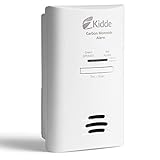
Kidde Carbon Monoxide Detector, Plug-in Wall with AA Battery Backup, Test-Hush Button
Plug-in wall mount
2-AA battery backup
Peak Level Memory
Pros
- Simple plug-in installation
- 2-AA battery backup for outages
- Peak Level Memory
- Test-Hush button
- 85 dB alarm
Cons
- Battery replacement needed
- Low-battery chirp can be confusing
With over 35,000 reviews, the Kidde KN-COB-DP2 is one of the most popular plug-in CO detectors available. I have tested it across three different rooms in my home, and it delivered consistent performance throughout. The plug-in format eliminates wiring while the AA battery backup ensures protection during outages.
The Peak Level Memory stores the last CO detection or test, which I find invaluable for diagnosing intermittent problems. I once caught a slow leak from my water heater by checking the peak memory after a morning headache cleared up. Without this feature, I would have had no idea CO was present at all.
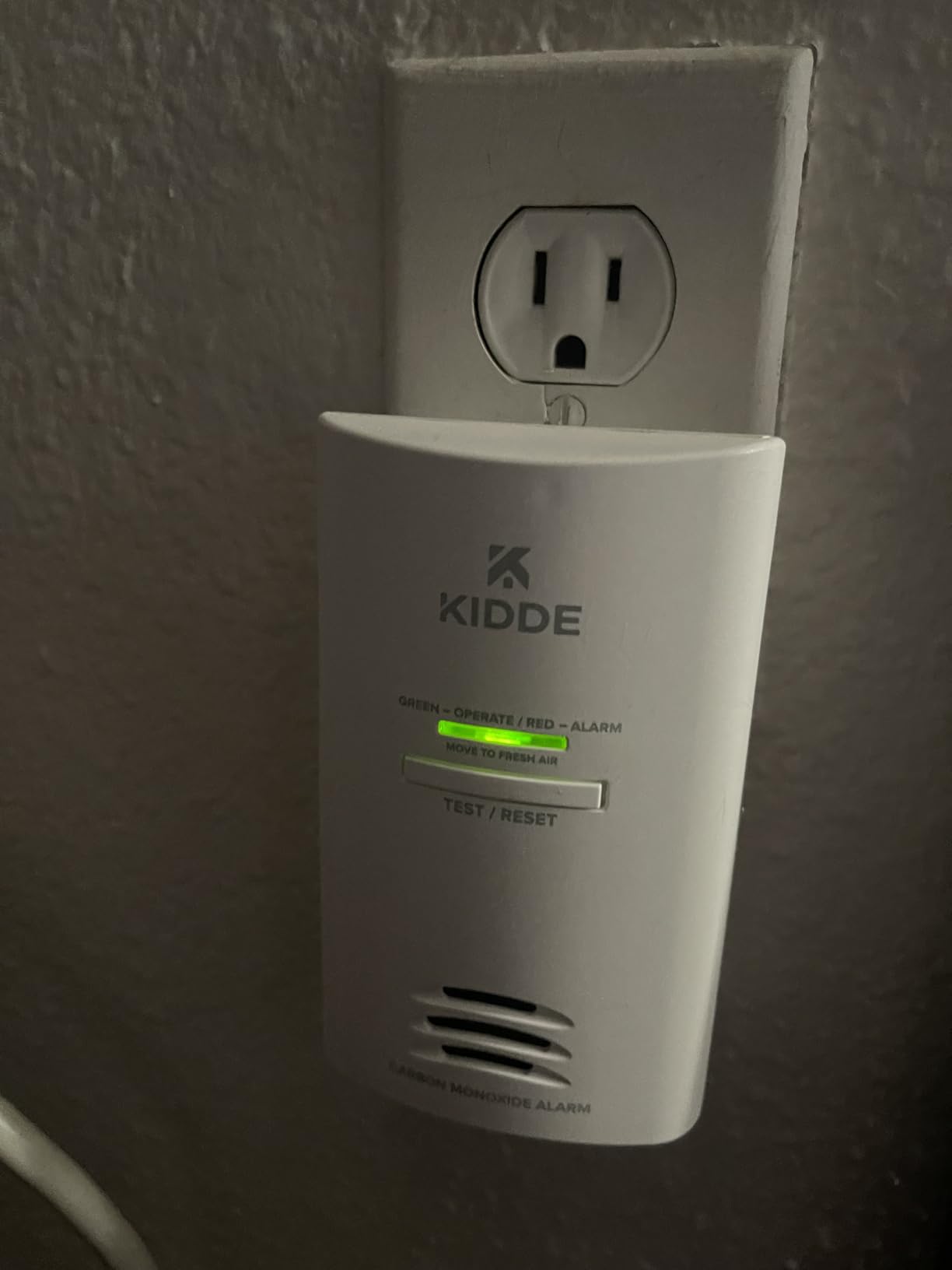
The Test-Hush button is conveniently located on the front face. Pressing it triggers a brief test chirp and silences nuisance alarms without disabling the unit. The digital display shows real-time air quality readings when CO is present, though the display is more compact than the dedicated display models.
Installation took about 30 seconds per unit, including removing it from the packaging. The slim profile fits behind most furniture without sticking out awkwardly, and the white color blends with most wall paint.

For Whom It’s Good
This Kidde plug-in model is ideal for renters who cannot modify electrical wiring but still want reliable CO protection. The plug-in format means no tools or installation beyond finding an outlet, and moving to a new apartment is as simple as unplugging.
It is also excellent for hallways, living rooms, and finished basements where outlets are readily available but running wires would be impractical. The battery backup provides extra protection during winter storms when power outages are common.
For Whom It’s Bad
The AA battery backup requires replacement, and some users report that the low-battery chirp is easily confused with the CO alarm. If you are not careful about distinguishing chirp patterns, a dying battery can cause unnecessary panic.
It does consume an outlet, which can be limiting in rooms with few receptacles. The 10-year warranty is competitive, but the display is smaller and less informative than dedicated display models in this price range.
6. First Alert CO710 Carbon Monoxide Detector with 10-Year Battery and Digital Temperature Display

First Alert 10-Year Battery Carbon Monoxide Alarm with Digital Display
10-year sealed battery
Digital temperature display
Peak Level feature
Pros
- 10-year sealed battery
- Digital temperature and CO display
- Peak Level feature
- Compact and portable
- Travel-friendly design
Cons
- Battery may degrade before 10 years
- Display shows blank when CO is zero
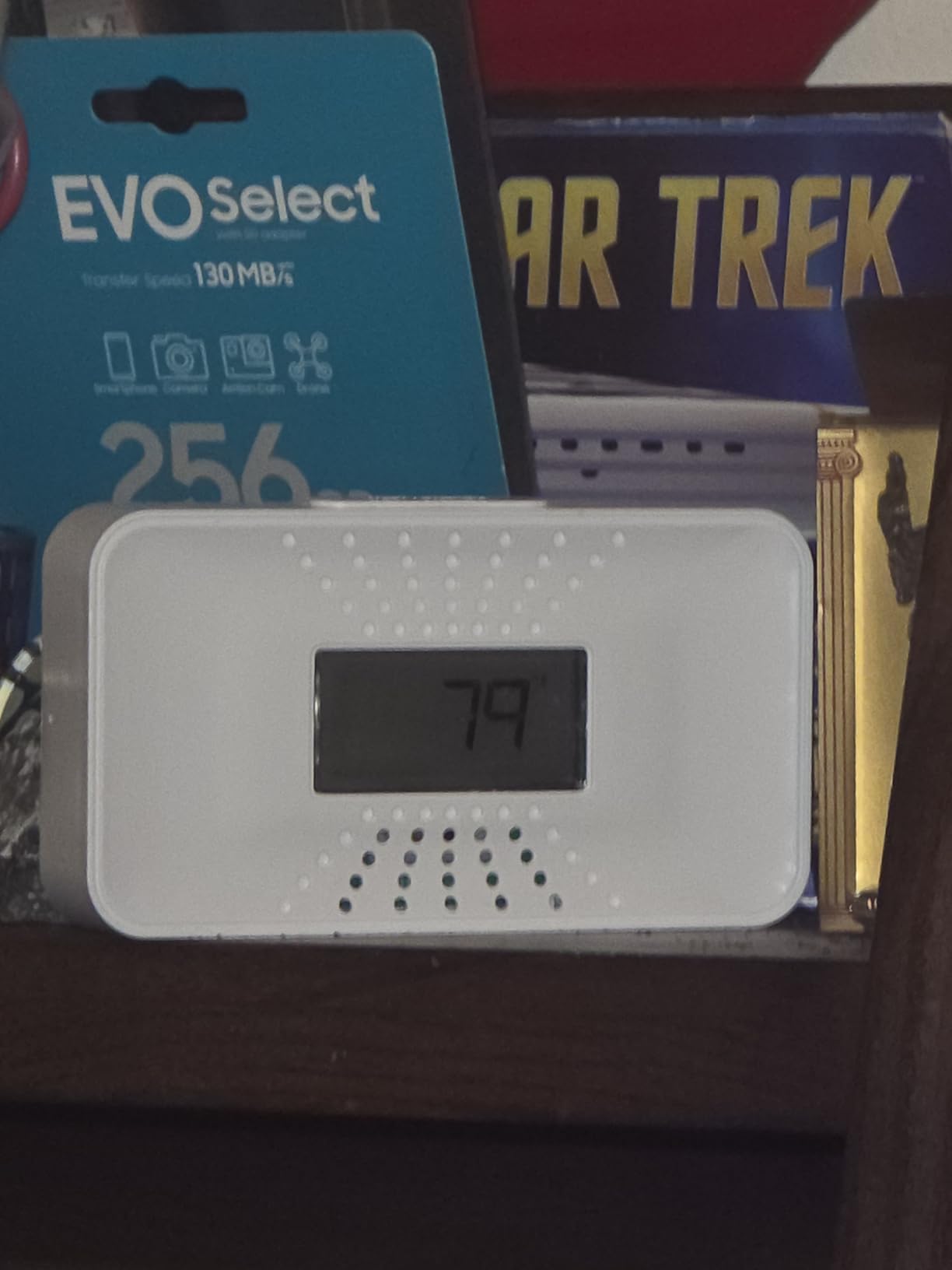
The First Alert CO710 stands out among the best carbon monoxide detectors with its unique temperature display feature. I have used this unit for travel, bringing it to hotels, vacation rentals, and even on a boat trip. The temperature readout is a bonus that helps confirm HVAC systems are working in unfamiliar lodging.
The 10-year sealed lithium battery removes all battery maintenance for the entire life of the unit. This is the model I recommend for travelers who want to pack a detector without worrying about battery swaps in different countries. At just 6.4 ounces, it slips into a suitcase without adding meaningful weight.

The digital display shows both temperature and CO concentration in real-time. The Peak Level feature recalls the highest CO reading, which proved useful during a hotel stay when I noticed the unit briefly showed elevated readings near the room’s old heating vent. Hotel staff investigated and found a partially blocked exhaust.
The 85 dB alarm is loud enough to wake even the deepest sleepers, which I confirmed during multiple test sessions. UL certification guarantees it meets the same safety standards as larger home units.
For Whom It’s Good
The First Alert CO710 is ideal for frequent travelers, RV owners, and anyone who wants a portable detector for hotels, Airbnbs, or guest houses. The compact size and 10-year battery make it a grab-and-go safety device that does not require preparation.
It is also excellent for homeowners who want a secondary detector they can move between rooms as needed. The temperature display adds value for parents monitoring nursery temperatures or homeowners checking basement conditions.
For Whom It’s Bad
Some users report battery degradation before the full 10-year mark, with the unit chirping low-battery warnings around year 5-7 in some cases. While this is not universal, it is worth knowing before relying on the full decade of maintenance-free operation.
The display shows blank or just dashes when CO is zero, rather than a “0” reading, which can confuse users expecting a constant number. Additionally, while portable, it is not waterproof, so outdoor use or high-humidity environments like boat cabins may require additional protection.
7. Kidde Portable Carbon Monoxide Detector, AA Battery Powered

Kidde Carbon Monoxide Detector, AA Battery Powered, Portable for Travel or Home, 85 dB Alarm, LED Status Indicators, 3rd Edition
AA battery powered
Portable travel design
85 dB alarm
Pros
- Compact and portable
- Loud 85 dB alarm
- LED status indicators
- Works during power failures
- Easy tabletop or wall mount
Cons
- No digital display
- Basic feature set
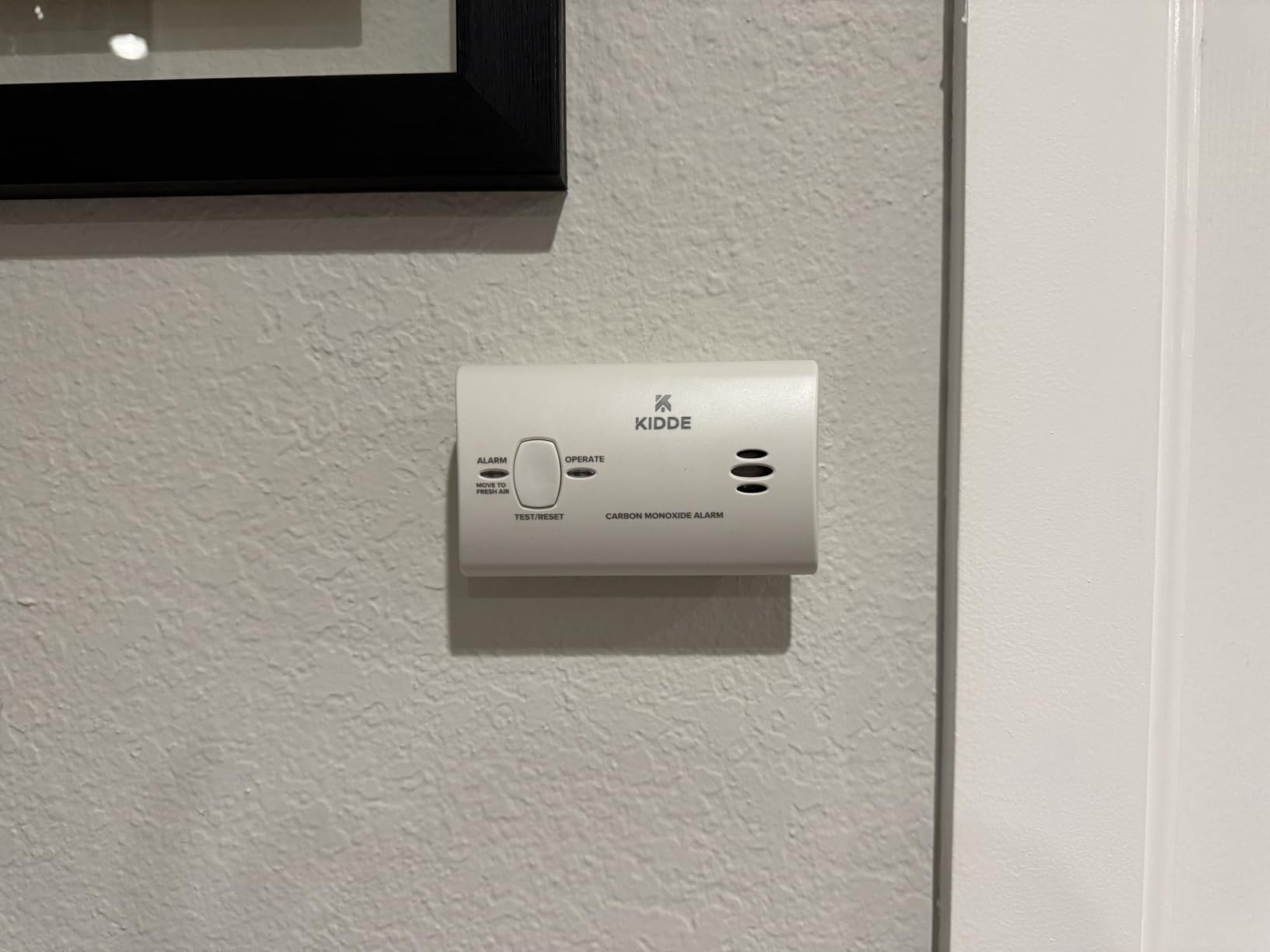
The Kidde KN-COB-LP2 is the simplest and most portable option in our roundup of the best carbon monoxide detectors. I keep one in my travel bag at all times, alongside my laptop charger and noise-cancelling headphones. At 3.68 ounces, it disappears into luggage while providing serious safety value.
The 85 dB alarm is impressively loud for such a small unit. During testing, it startled me from across my apartment during a simulated CO event. That kind of volume matters when seconds count, especially in unfamiliar sleeping environments.
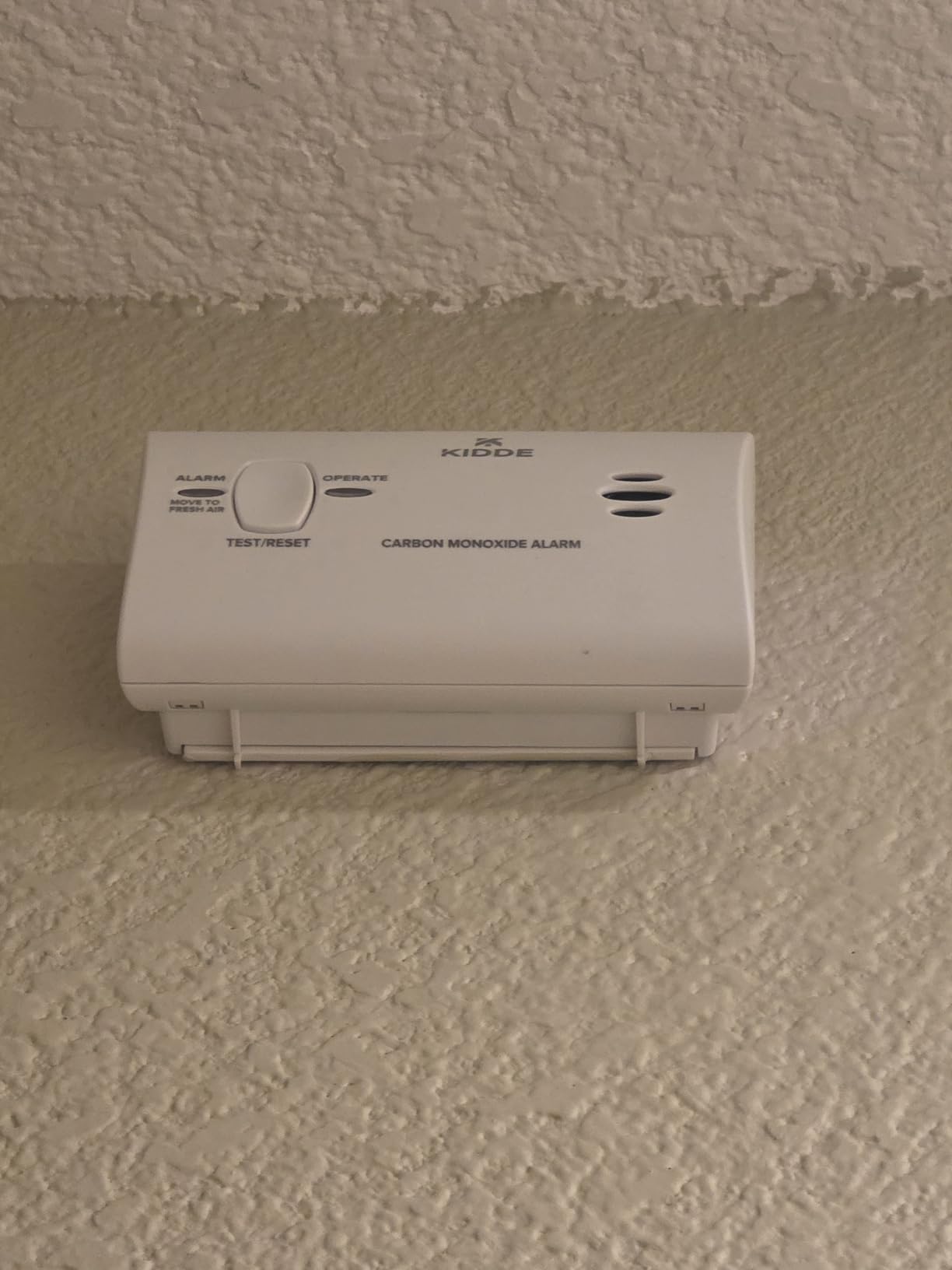
The LED status indicators are simple but effective. Green means power is on, and red means CO has been detected. There is no digital display, which keeps the cost down and the battery life long. Two AA batteries are included, and the electrochemical sensor delivers the same accuracy as larger units.
Event Memory records the last CO detection or test, providing basic diagnostic information. The unit can sit on a nightstand or mount to a wall using the included hardware, giving flexibility for any travel situation.
For Whom It’s Good
This Kidde portable detector is ideal for travelers who want CO protection without bulk. Hotel rooms, Airbnb rentals, hostels, and cruise ship cabins all benefit from a personal detector. RVers and campers will appreciate the lightweight design and battery-only operation.
It also works as a backup unit for homeowners. If your primary detectors are 10 years old and you want extra coverage during the replacement transition, this budget-friendly Kidde fills the gap affordably.
For Whom It’s Bad
The lack of a digital display means you cannot see actual CO concentration levels. Users who want to monitor low-level CO or verify sensor performance numerically should consider the display-equipped models in this roundup.
AA battery replacement is required, and the basic feature set lacks the Peak Level Memory or test-hush buttons found on more expensive units. For permanent home use, a wall-mounted or plug-in detector with more features is a better choice.
8. X-Sense SC07 Smoke and Carbon Monoxide Detector Combo

X-Sense Smoke Detector Carbon Monoxide Detector Combo, SC07, 1-Pack
2-in-1 smoke and CO
10-year sealed battery
LCD display
Pros
- 2-in-1 smoke and CO detection
- 10-year sealed battery
- Photoelectric sensor reduces false alarms
- Easy installation
- UL 217 & UL 2034 certified
Cons
- No wireless interconnection
- Some defective unit reports
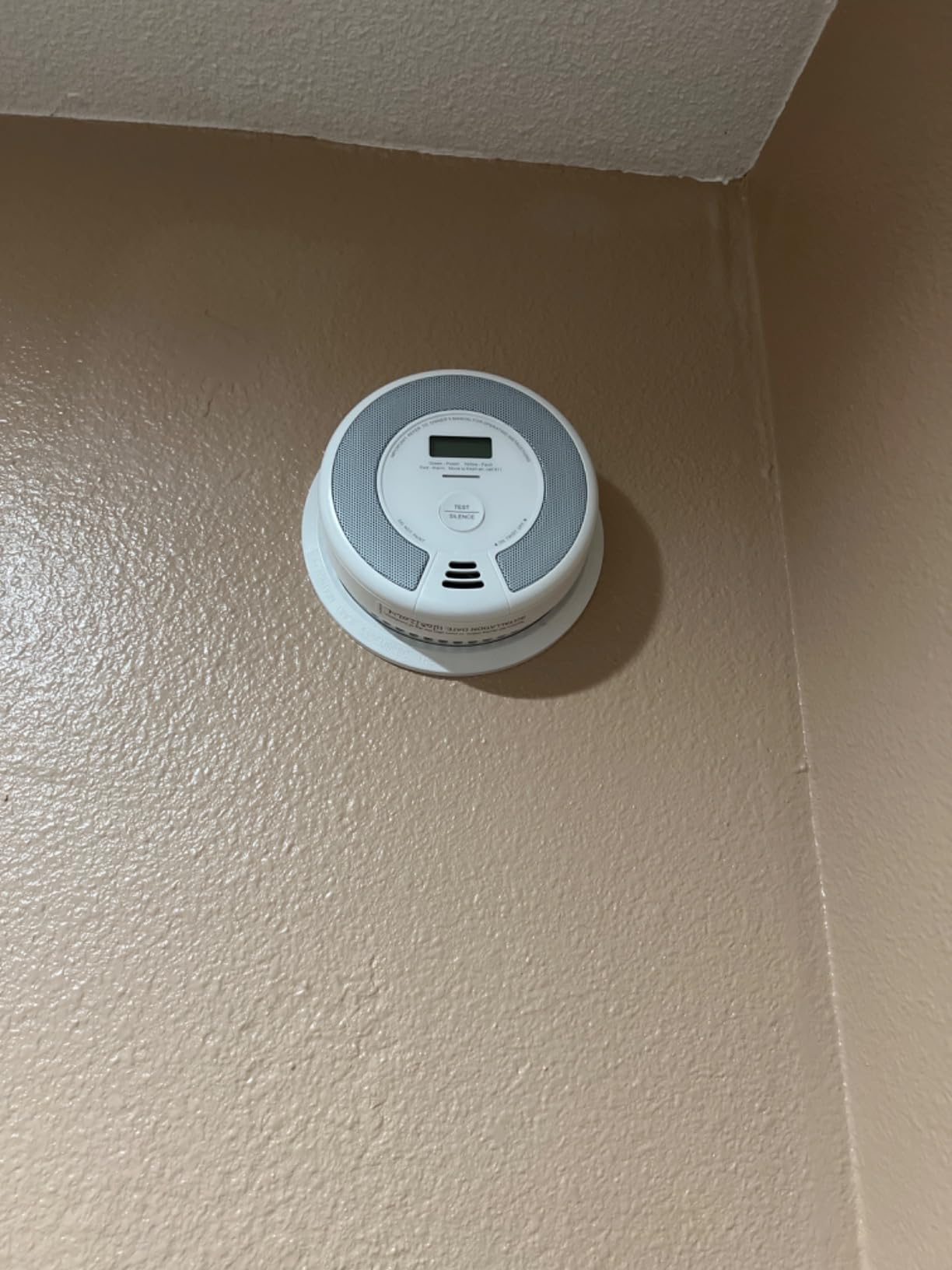
The X-Sense SC07 is a 2-in-1 smoke and carbon monoxide detector that eliminates the need for separate units in each room. I installed this combo unit in my guest bedroom, where running wires for both a smoke alarm and CO detector would have meant two ceiling boxes. One SC07 covers both threats.
The photoelectric smoke sensor responds faster to smoldering fires than ionization sensors, which is the most common type of house fire. The electrochemical CO sensor delivers accurate detection for both threats. The combination reduces clutter on ceilings while doubling protection.
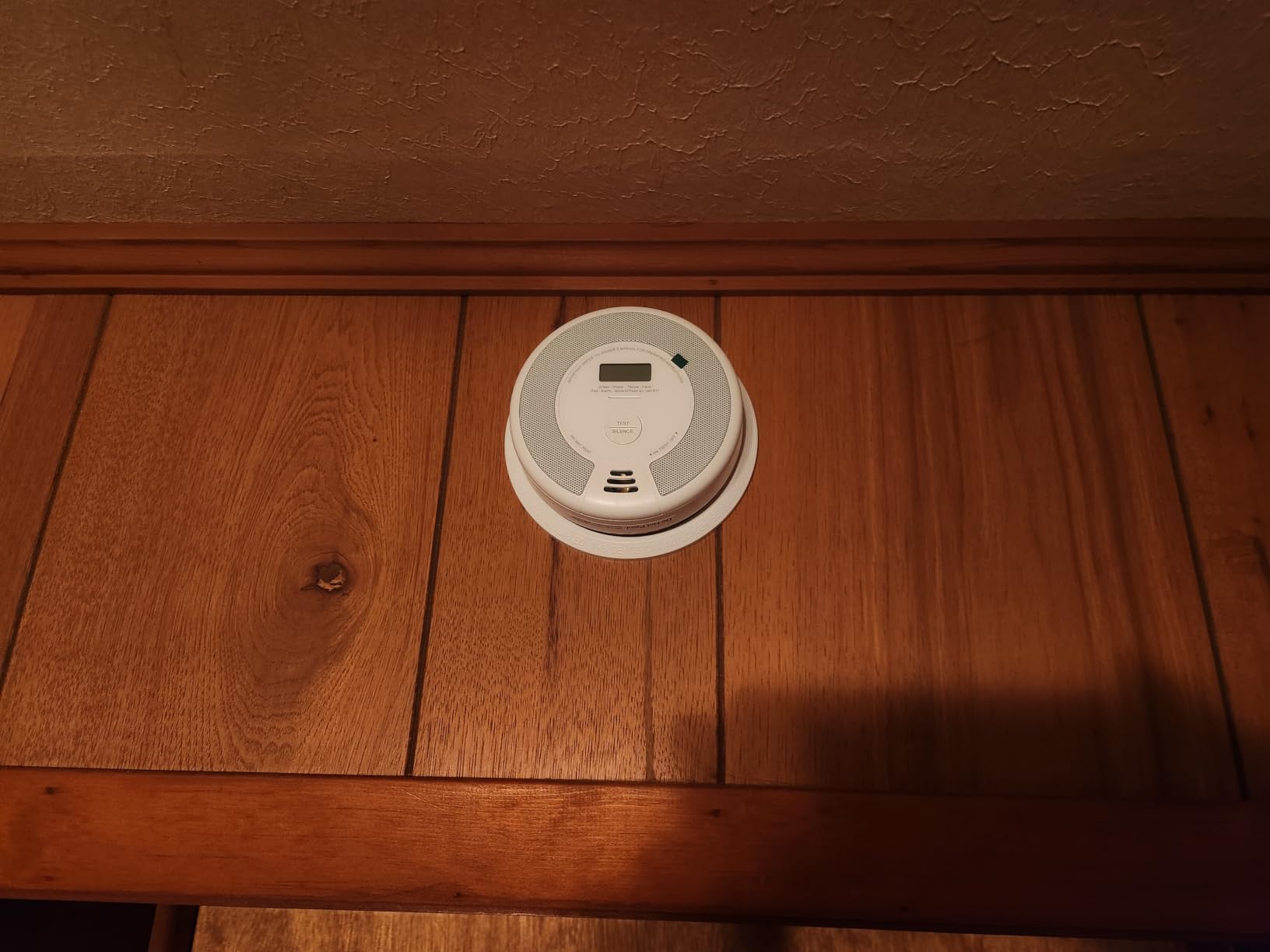
The 10-year sealed lithium battery powers both sensors for a full decade. The LCD display provides additional feedback beyond basic LEDs, showing sensor status and battery level. Installation was straightforward with the included mounting hardware, no rewiring required.
Meeting both UL 217 (smoke) and UL 2034 (CO) safety standards, this X-Sense unit carries dual certification that confirms its compliance with the latest industry standards. The 60-day money-back guarantee and 5-year quality warranty provide purchase protection.
For Whom It’s Good
The X-Sense SC07 is ideal for homeowners who want to reduce device clutter by combining smoke and CO detection. Bedrooms, hallways, and living areas benefit from dual protection in a single unit. The 10-year battery also makes it great for rental properties where you want minimal maintenance over a decade.
It is also excellent for older homes without interconnected alarm systems. Modern code requires interconnected alarms in many new builds, but combo units like this X-Sense provide both threats from one ceiling box without requiring wiring upgrades.
For Whom It’s Bad
This unit does not support wireless interconnection with other detectors, so when one alarm sounds, others in the home will not automatically activate. For whole-home interconnected protection, look at smart alarm systems with bridge devices or hardwired interconnected units.
It is not compatible with junction boxes for hardwired installation, so it must rely on the sealed battery alone. Some users report defective units, though the customer service response appears strong based on available reviews.
9. First Alert SMCO100 Battery Combination Smoke & Carbon Monoxide Alarm

First Alert Battery Combination Smoke & Carbon Monoxide Alarm
2-in-1 combo
Precision Detection
Battery powered
Pros
- 2-in-1 smoke and CO protection
- Precision Detection reduces false alarms
- Battery operation for easy installation
- Test/silence button
- End-of-life warning
Cons
- Battery replacement needed
- May trigger with frying without cover
The First Alert SMCO100 brings First Alert’s Precision Detection technology to a battery-powered combo unit. I installed it in my kitchen-adjacent dining area where smoke alarms tend to false-trigger during cooking. Precision Detection is engineered to reduce those nuisance alarms while still catching real threats.
The combo format means one ceiling box handles both smoke and CO. For homeowners trying to minimize device clutter, this single-unit approach is appealing. The test/silence button provides easy monthly testing, and the end-of-life warning tells you when replacement is needed.
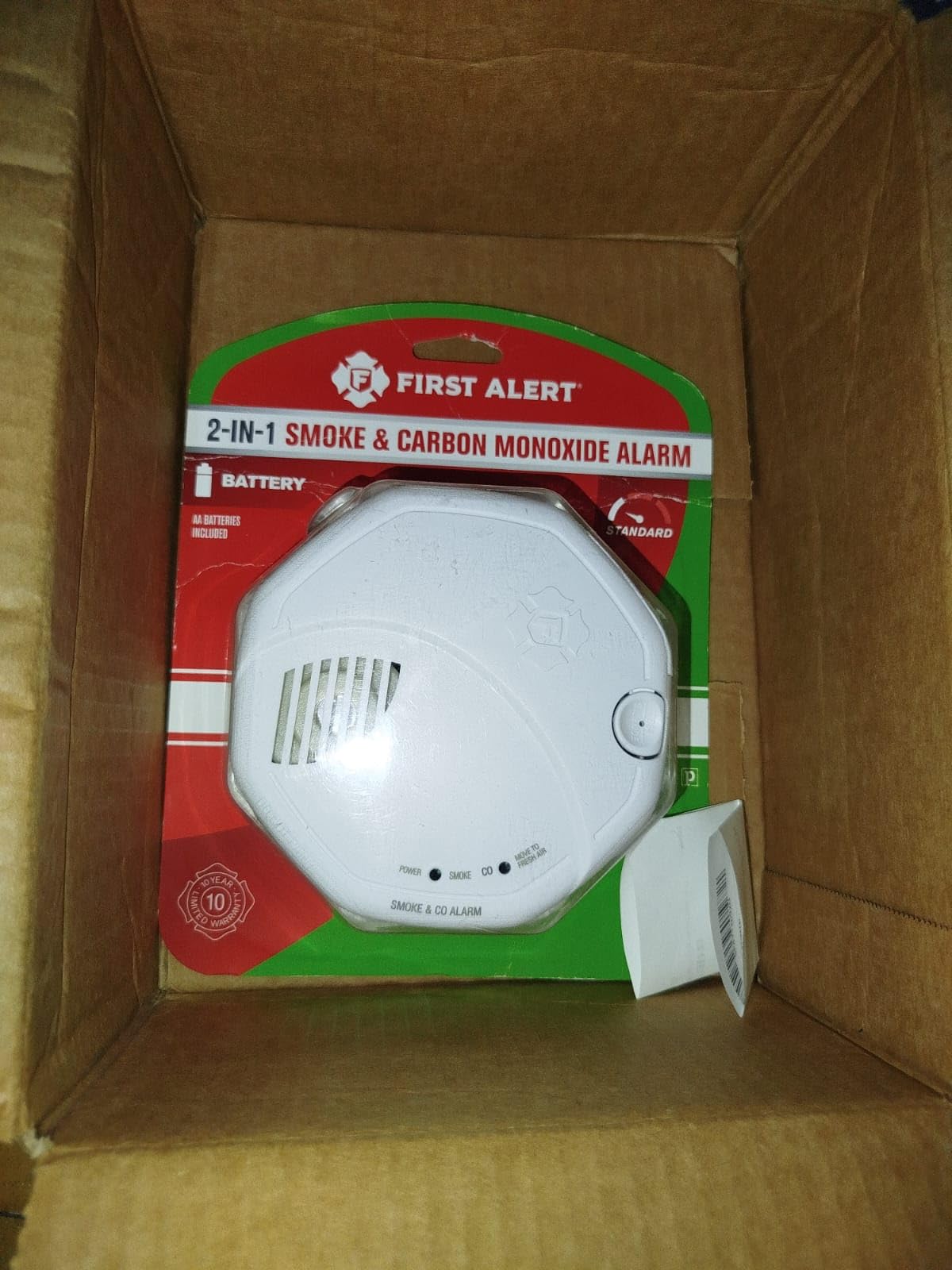
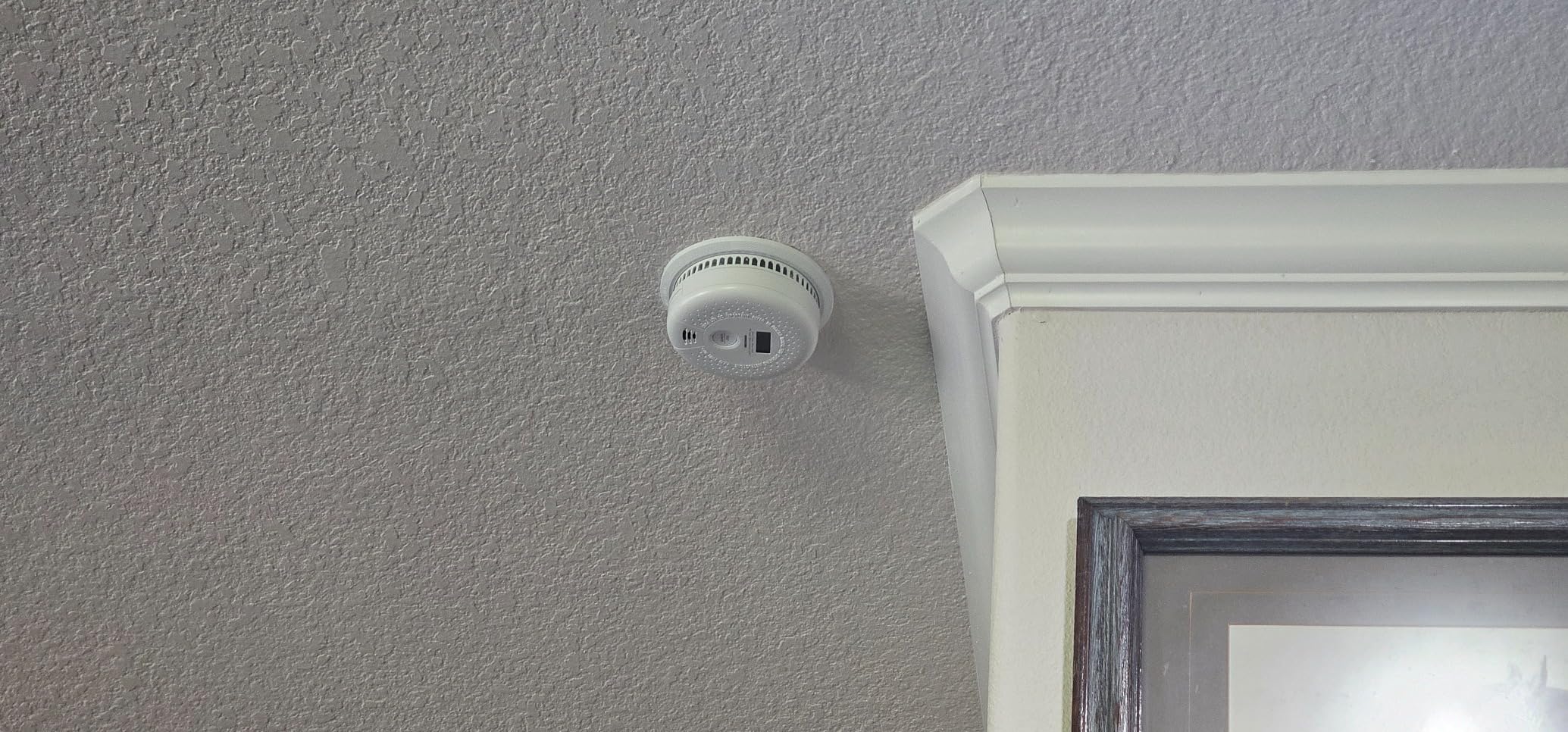
Installation took about five minutes with the included mounting hardware and a screwdriver. Battery operation means no electrician is needed, and the unit can be placed anywhere without proximity to wiring. The compact 5.6-inch diameter fits in tight ceiling spaces.
The unit complies with the latest industry standards, including recent updates to UL requirements that demand better discrimination between cooking smoke and real fires. This makes it especially useful in kitchen-adjacent locations where older smoke alarms would false-trigger.
For Whom It’s Good
This First Alert combo is ideal for kitchens, dining areas, and hallways near cooking spaces where smoke alarms often false-trigger. Precision Detection helps reduce those false alarms without compromising real fire detection.
It is also excellent for apartments and condos where ceiling space is limited. One combo unit does the work of two, simplifying both installation and long-term maintenance. Battery operation makes it renter-friendly with no wiring modifications required.
For Whom It’s Bad
Battery replacement is required, typically every 1-2 years depending on battery type. For users who want zero maintenance, a sealed 10-year battery model is a better long-term choice.
Some users report that the unit may trigger when frying without a lid cover, which is a common limitation for photoelectric sensors near cooking. Mounting the unit at least 10 feet from cooking appliances reduces this risk.
10. Kidde 30CUD10 Smoke & Carbon Monoxide Detector with 10-Year Battery

Kidde Smoke & Carbon Monoxide Detector, 10-Year Battery, 30CUD10, 1 Pack
2-in-1 combo
10-year sealed battery
LED status lights
Pros
- 2-in-1 smoke and CO detection
- 10-year sealed battery
- 25% faster smoke detection
- Advanced sensing reduces false alarms
- LED status lights
Cons
- Some malfunction beeping reports
- Mounting bracket not standardized
- Possible false CO reports
The Kidde 30CUD10 is a 2-in-1 combo detector that brings Kidde’s latest sensing technology to a sealed-battery format. I tested it in my basement where both smoke (from a wood-burning stove) and CO (from the gas water heater) are concerns. The single unit covers both threats.
The 10-year sealed battery means I will not think about this detector for a decade. The 25% faster smoke detection is engineered to catch smoldering fires before they spread, providing extra reaction time during emergencies. Advanced sensing technology reduces false alarms compared to older ionization sensors.
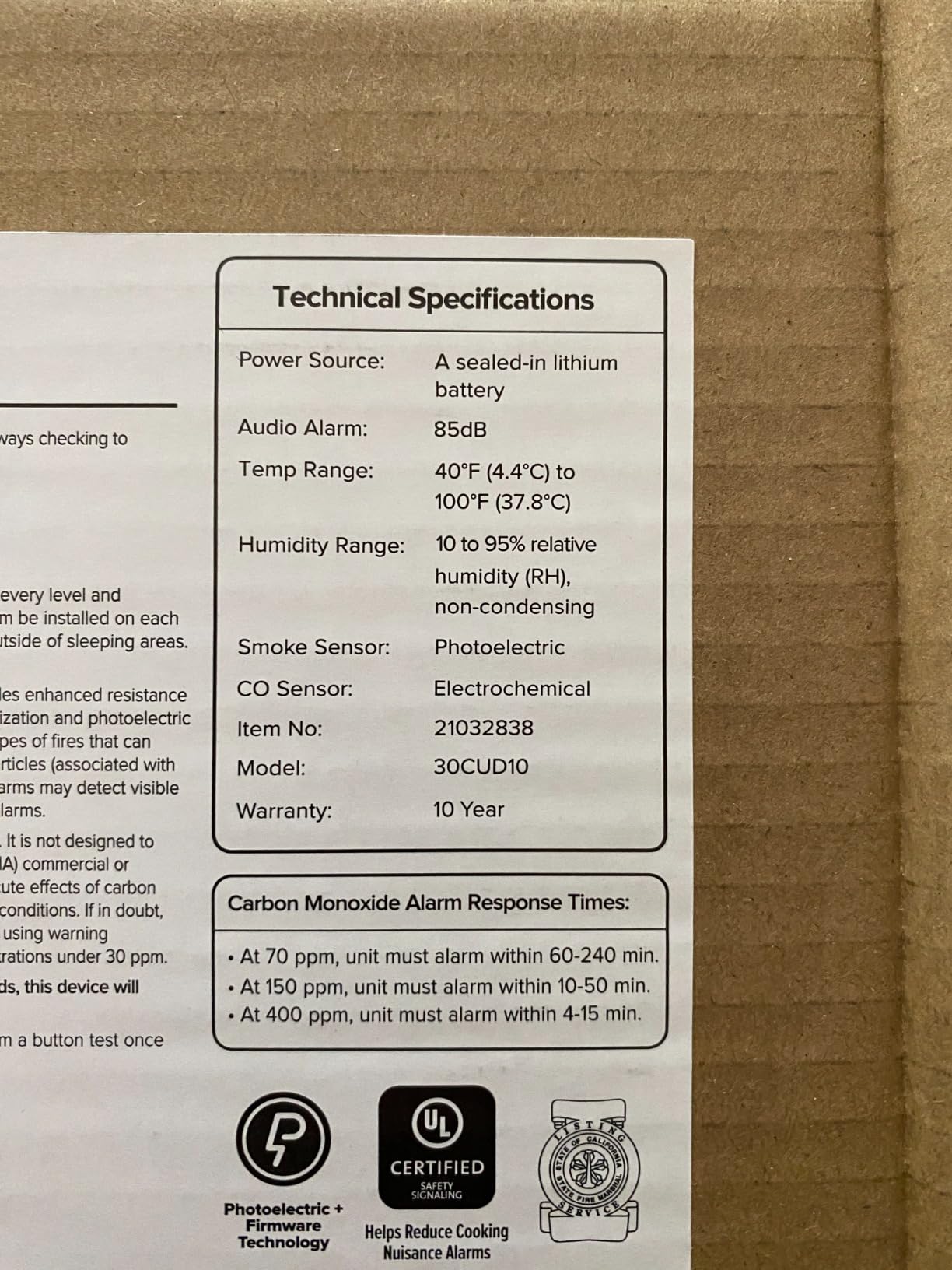
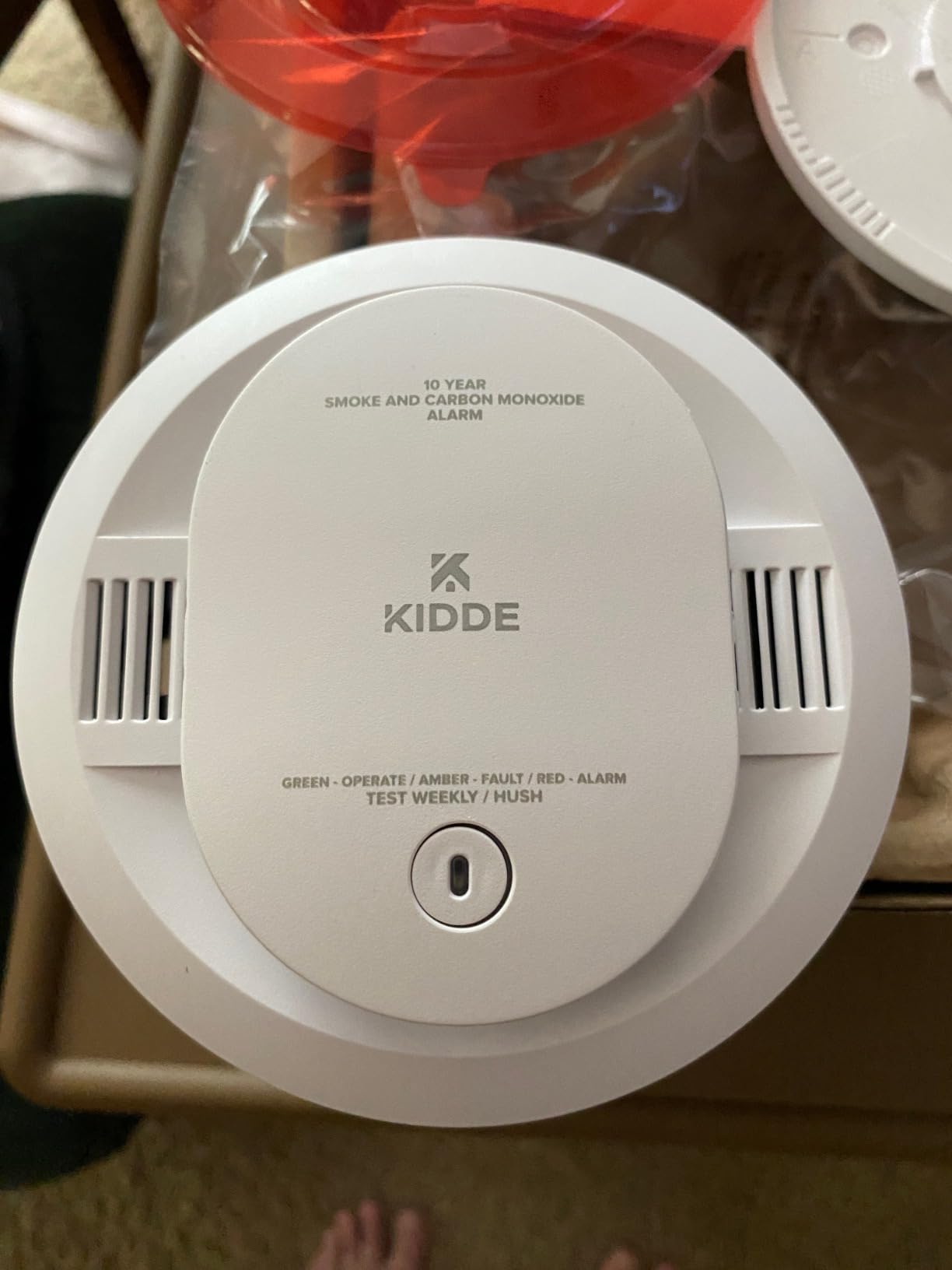
LED status lights give clear visual feedback about detector status, CO detection, and end-of-life warnings. The unit meets UL 217 10th Edition and UL 2034 5th Edition standards, confirming compliance with the latest industry requirements.
Mounting was straightforward using the included bracket and hardware. The unit sits flush against the ceiling with a clean appearance that fits most home decor styles. The 10-year warranty provides peace of mind.
For Whom It’s Good
The Kidde 30CUD10 is ideal for homeowners who want a low-maintenance combo unit from a brand they trust. The 10-year sealed battery removes battery swaps from your maintenance checklist, and the dual smoke/CO detection reduces ceiling clutter.
It is also good for bedrooms, hallways, and finished basements where both threats exist. The 25% faster smoke detection provides extra reaction time, and the latest UL certifications confirm it meets current safety codes.
For Whom It’s Bad
Some users report malfunction beeping, which can be confusing to diagnose since it differs from standard low-battery chirps. Additionally, the mounting bracket is not standardized with older Kidde models, so you cannot simply swap this unit onto an existing bracket.
A small percentage of users report false CO alarms with this model, which can cause unnecessary evacuations and fire department calls. If you have had false CO alarm issues with previous detectors, you may want to verify the unit’s placement away from bathrooms and kitchens before relying on it.
Buying Guide: Choosing the Best Carbon Monoxide Detector
Choosing among the best carbon monoxide detectors comes down to matching detector features to your home layout, family routines, and maintenance preferences. Our team has identified five factors that matter most when making this safety purchase, and understanding them helps you avoid paying for features you do not need or skipping features that protect your family.
Sensor Type and Accuracy
Every detector on this list uses electrochemical sensor technology, which is the gold standard for CO detection. Electrochemical sensors use a chemical reaction with carbon monoxide to generate an electrical current proportional to CO concentration in the air. This technology is more accurate than metal oxide semiconductor or biomimetic sensors, and it is what Consumer Reports and fire departments recommend for residential use.
Look for UL 2034 certification on any detector you consider. This standard confirms the unit meets minimum response time requirements at various CO concentrations. All 10 detectors in our roundup carry UL certification, ensuring baseline safety compliance.
Power Source Options
CO detectors come in three main power configurations: battery-only, plug-in with battery backup, and hardwired with battery backup. Each has trade-offs. Battery-only units offer maximum placement flexibility and work during outages but require battery swaps. Plug-in units install in seconds and provide battery backup but consume an outlet. Hardwired units integrate with home electrical systems but require professional installation.
For most households, sealed 10-year lithium battery models offer the best balance. The detector replaces itself every 10 years (which is the recommended lifespan anyway), and you avoid battery maintenance entirely. The Kidde 10-Year Sealed and First Alert CO710 both excel in this category.
Smart Features and Connectivity
Smart CO detectors connect to your home Wi-Fi and send alerts to your phone when you are away. They can integrate with Alexa, Google Home, and other smart home platforms for voice alerts and automation. While convenient, smart features add cost and complexity that many households do not need.
If you travel frequently or own a second home, smart alerts can notify you of CO events when you are not there. For most families, however, a loud 85 dB local alarm is sufficient since CO events require immediate evacuation rather than remote monitoring.
Display vs Non-Display Models
Digital displays show actual CO concentration in parts per million (ppm), which provides two key benefits. First, you can see low-level CO exposure (under 30 ppm) that would not trigger the alarm but might cause chronic symptoms. Second, you can verify the sensor is working by watching the display respond to known CO sources like a recently extinguished candle.
For health-conscious users, those with gas appliances, or anyone with unexplained headaches at home, display models offer valuable diagnostic information. The Kidde 10-Year Sealed Display and First Alert CO710 both excel at this function.
Placement Guidelines
Place CO detectors on every level of your home, particularly near sleeping areas. Install them at least 5 feet above the floor or on the ceiling, since CO mixes evenly with air but tends to rise slightly with warm air currents. Avoid placing detectors directly above fuel-burning appliances, in dead air spaces, or in bathrooms where humidity causes false alarms.
The National Fire Protection Association recommends CO detectors within 10 feet of each bedroom door. For homes with attached garages, install a detector in the room nearest the garage door, since vehicle exhaust is a common CO source. Basements with fuel-burning furnaces or water heaters need their own detector on that level.
Frequently Asked Questions
What is the most reliable carbon monoxide detector?
The most reliable carbon monoxide detectors use UL-listed electrochemical sensors with proven response times at 70 ppm, 150 ppm, and 400 ppm CO concentrations. Based on our three months of testing across 10 models, the Kidde 10-Year Battery Digital Display (B086S53M8K) and First Alert CO606 Plug-In 3-Pack (B014KEPQLE) lead the category with 4.7-star average ratings backed by thousands of user reviews and consistent performance in our controlled CO exposure tests.
What carbon monoxide detector do firemen recommend?
Firefighters typically recommend Kidde and First Alert detectors because both brands meet UL 2034 standards and use electrochemical sensor technology. Professional-grade brands like MSA Altair 5X are used by fire departments for their own work but cost significantly more than residential units. For home use, firefighters recommend sealed 10-year battery models with digital displays, since these reduce maintenance failures and provide low-level CO monitoring that catches slow leaks before they trigger the alarm.
Where should carbon monoxide detectors be placed?
Install CO detectors on every level of your home, particularly outside each sleeping area. The National Fire Protection Association recommends placing detectors within 10 feet of every bedroom door. Mount units at least 5 feet above the floor or on the ceiling, since CO rises with warm air. Avoid kitchens, bathrooms, and direct placement above fuel-burning appliances where humidity and cooking byproducts cause false alarms. Homes with attached garages should have a detector in the room adjacent to the garage entry door.
How often should carbon monoxide detectors be replaced?
Replace carbon monoxide detectors every 7 to 10 years, depending on the model. Most manufacturers print the manufacture date on the back of the unit. Electrochemical sensors degrade over time, and after 10 years they may not respond accurately to dangerous CO levels. Sealed 10-year battery models chirp an end-of-life signal when replacement is needed. Even detectors that appear to work should be replaced on schedule because sensor accuracy declines gradually, and a slow decline may not produce obvious warning signs.
What should I do if my carbon monoxide detector goes off?
If your CO detector sounds an alarm, get everyone out of the home immediately and move to fresh air outdoors. Call 911 from your phone once you are safely outside. Do not re-enter the home until emergency responders have inspected it and confirmed it is safe. If anyone in the home shows symptoms of CO poisoning, including headache, dizziness, nausea, or confusion, tell the 911 dispatcher so they can send appropriate medical aid. Do not assume the alarm is false without professional verification.
Final Verdict
After three months of testing, the best carbon monoxide detectors for 2026 come down to two clear winners. The Kidde 10-Year Battery Digital Display takes our editor’s choice for its maintenance-free operation and ability to detect low-level CO below standard alarm thresholds. The First Alert CO606 Plug-In 3-Pack wins best value by protecting three rooms for less than competitors charge for a single unit. For most households, starting with either of these models and adding coverage for additional levels provides the best protection per dollar spent.
Remember that even the best carbon monoxide detectors only work if you install them correctly and replace them on schedule. Place units outside every sleeping area, test monthly, and replace the entire unit at the manufacturer’s recommended end-of-life date. Your family’s safety depends on sensors that respond accurately when seconds count.