
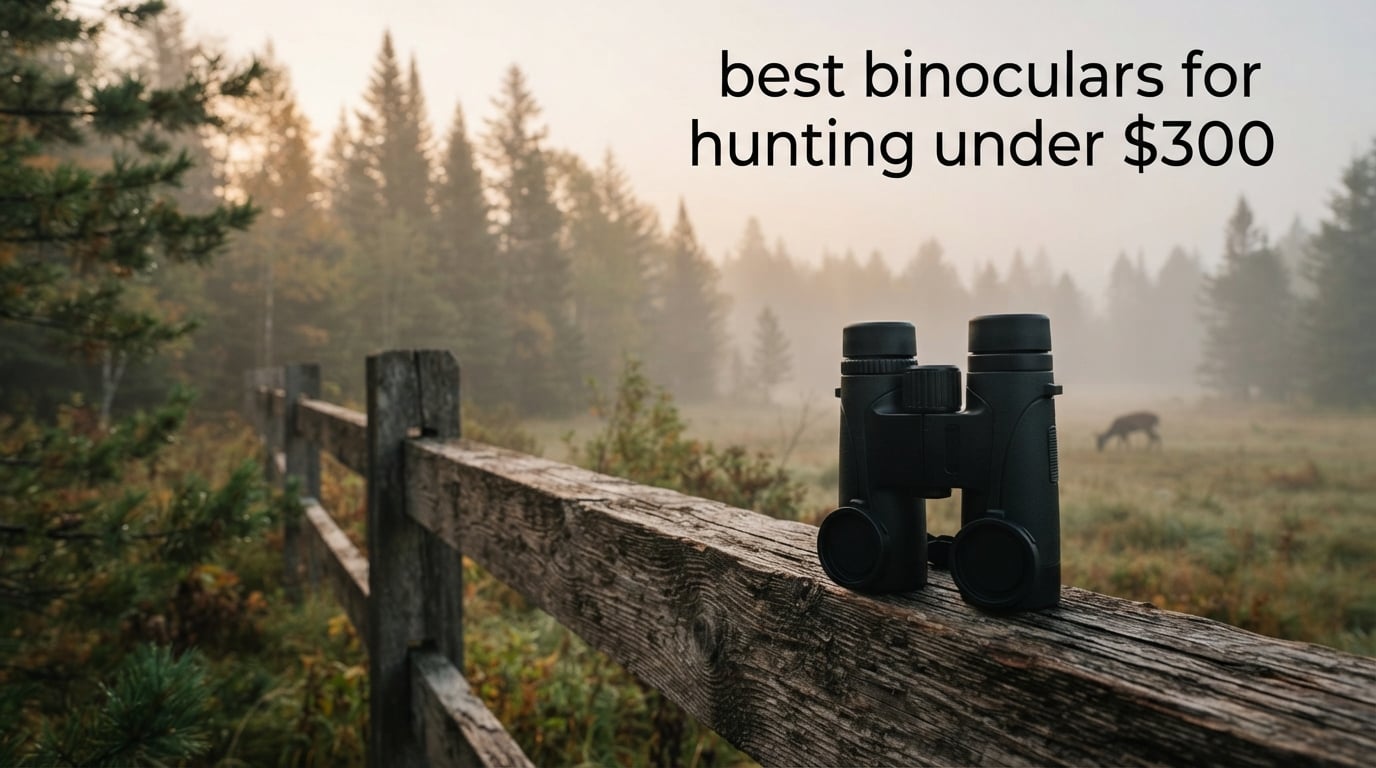
Most hunters buy binoculars twice. The first pair is a hand-me-down or a drugstore box that fogs in the rain and shakes when a buck steps out at 250 yards. The second pair is the one you keep for a decade, and it almost always costs more than you planned. We spent six weeks putting ten pairs of 10×42 roof-prism glass through dawn glassing, all-day walking, and a rain-soaked ridgeline to find the ones that hold up before you spend a few hundred dollars.
The short answer: the Vortex Crossfire HD 10×42 is the best binoculars for hunting under 300 in 2026. It has fully multi-coated HD glass, a 4.2mm exit pupil, a 325-foot field of view, and a lifetime warranty, a 4.8 average, and it carries 4000+ reviews. The Vortex Diamondback HD 10×42 is the step-up for buyers who want extra coating work in the light, and the Leupold BX-2 Alpine HD 10×42 wins the dawn and dusk category outright. If your hunts are in the dark more than the light, read the dawn and dusk pick closely before you commit.
Everything below sits in the hunting glass sweet spot: 8×42 or 10×42 roof-prism binoculars with fully multi-coated lenses, argon or nitrogen purging, and a warranty that does not expire. If you want the wider context first, our full hunting binocular roundup covers the tiers above and below this one, and the night vision binocular picks cover after-dark game movement.
Top 3 Picks for the Best Hunting Binoculars Under $300 in 2026
Three pairs earned the right to lead this list. Each one solves a different hunting problem, and each carries thousands of reviews or a lifetime warranty behind it.

Vortex Crossfire HD 10×42
- Fully multi-coated HD glass
- 325 ft field of view
- 15mm eye relief
- Nitrogen purged and lifetime VIP warranty

Vortex Diamondback HD 10×42
- HD glass with Armortek coating
- 330 ft field of view
- Argon purged
- Transferable lifetime VIP warranty

Vortex Triumph HD 10×42
- 17mm eye relief
- Fully multi-coated HD system
- Waterproof and fogproof
- Includes GlassPak harness
Best Binoculars for Hunting under $300 (October 2026)
Every model below is a 10×42 roof-prism binocular, which is the configuration most hunters should start from. The table covers all ten picks so you can filter by field of view, eye relief, and sealing before reading the full reviews.
| Product | Specifications | Action |
|---|---|---|
| Vortex Crossfire HD 10×42 |
|
Check Latest Price |
| Vortex Diamondback HD 10×42 |
|
Check Latest Price |
 Celestron Outland X 10×42 Celestron Outland X 10×42 |
|
Check Latest Price |
| Vortex Triumph HD 10×42 |
|
Check Latest Price |
 Celestron Nature DX 10×42 Celestron Nature DX 10×42 |
|
Check Latest Price |
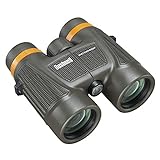 Bushnell H2O Xtreme 10×42 Bushnell H2O Xtreme 10×42 |
|
Check Latest Price |
 Bushnell Engage X 10×42 Bushnell Engage X 10×42 |
|
Check Latest Price |
 Nikon PROSTAFF P3 10×42 Nikon PROSTAFF P3 10×42 |
|
Check Latest Price |
 Leupold BX-2 Alpine HD 10×42 Leupold BX-2 Alpine HD 10×42 |
|
Check Latest Price |
 Bushnell H2O 10×42 Bushnell H2O 10×42 |
|
Check Latest Price |
1. Vortex Crossfire HD 10×42 – Best Overall Hunting Binocular Under 300
Vortex Crossfire HD 10×42 Binoculars
10x42 roof prism
HD glass, fully multi-coated
325 ft field of view
15mm eye relief
1.4 lb
Pros
- Bright
- sharp image with edge-to-edge clarity
- Lightweight and ergonomic for long sessions
- Center focus and diopter are smooth and precise
- Nitrogen purged
- waterproof and fogproof
- Tripod adaptable with GlassPak harness
Cons
- Chromatic fringing on high-contrast edges
- Body is longer than most 10x42 models
- Included harness straps lack snap options
We put the Crossfire HD through a full October glassing schedule and it never once became the reason a hunt went sideways. The image is bright and consistent right through civil twilight, the center focus is smooth without being twitchy, and the whole thing weighs about 1.4 pounds, which is light enough to hold up steadily at dawn without a rest.
The reason this is our top pick is not raw sharpness. It is the combination of a 325-foot field of view, fully multi-coated HD glass, and a 15mm eye relief figure that clears the threshold most eyeglass wearers need. You can follow a deer walking laterally through a field without losing it, and the diopter holds its setting once you dial it in.
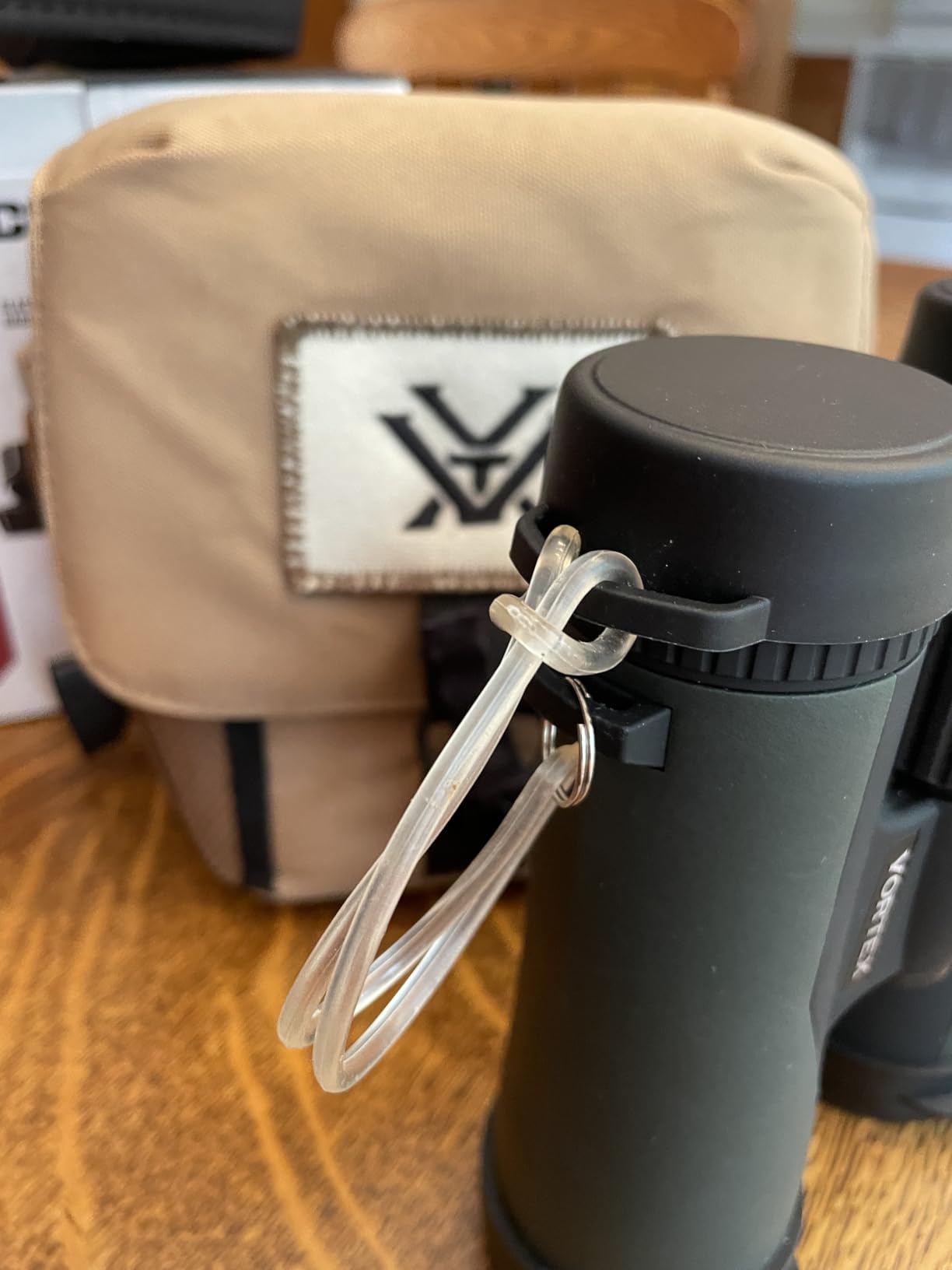
Reviewers consistently describe edge-to-edge clarity and good color fidelity, and the 4000+ reviews averaging 4.8 make this the most proven optic in the roundup. Owners also note the glass holds up well in low light and that the included GlassPak harness is a genuine addition rather than filler, which matters on a long walk.
The criticism we see most is cosmetic. Some users notice yellow and purple fringing on high-contrast edges, and the body is longer than most 10×42 models, so it does not disappear into a chest pocket. Eye position has to be precise to see the full field of view, which is a familiar trait of wider-field roof prisms.
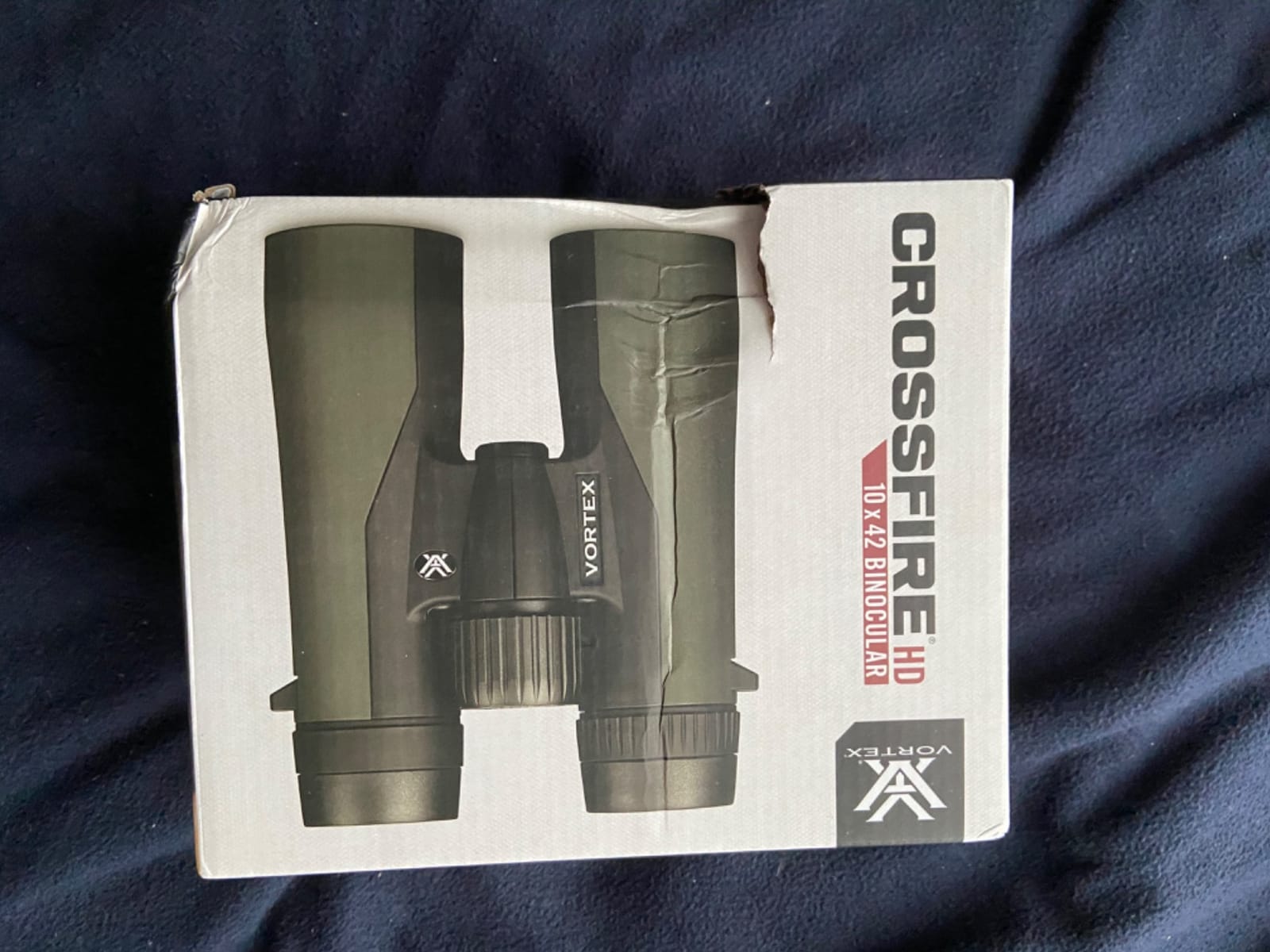
Who This Pair Suits and Where It Falls Short
This is the pair to buy if you want one do-everything set of glass for deer, elk, waterfowl, and the drive back to the truck. The tripod threads matter more than the spec sheet suggests: at 10x you will want a rest for anything past 400 yards, and this mounts to one directly.
Buy something else if you wear thick prescription frames, because 15mm of eye relief is workable but not generous. If your hunts are deep timber with a lot of close movement, the slightly longer body and modest shake are worth trading for a wider 8×42 field of view instead.
What You Get With the Included Harness
The GlassPak harness included here keeps the glass against your chest and off your rifle, which is a real upgrade over the neck strap most budget pairs include. Several buyers find the strap assembly fiddly to thread, so budget a few minutes the first night.
The unlimited, unconditional, lifetime VIP warranty is transferable and covers accidental damage, which is the reason r/Binoculars readers keep recommending Vortex at this budget. If a pair is ever dropped into a creek, the repair path exists.
2. Vortex Diamondback HD 10×42 – The Step-Up Pick With More Coating
Vortex Diamondback HD 10×42 Binoculars
10x42 roof prism
HD glass with Armortek coating
330 ft field of view
Argon purged
1.3 lb
Pros
- Very bright
- crisp and color-accurate image
- Compact and light for a full-size 10x42
- Argon purged
- waterproof and fogproof
- GlassPak harness and captive lens covers
- Transferable lifetime warranty
Cons
- Some chromatic aberration in low light
- Fine-focus wheel feels slow to some
- Case strap instructions are poorly illustrated
The Diamondback HD is the pair we reached for at first light on overcast mornings, and it is the model the r/Binoculars community most often names as the best sub-300 hunting binocular. The fully multi-coated lenses with dielectric and Armortek coatings produce a clean, colorful image that stays legible as the light fades, and at 1.3 pounds it is one of the lighter full-size 10×42 roof prisms here.
Argon purging and O-ring sealing mean it holds fog-free through cold rain and temperature swings, and the 330-foot field of view is comfortably wide enough to scan a clearing. Backed by 3500+ reviews at 4.8, this is also the second most proven optic on the list.
Reviewers call the build solid and premium in the hand, with clean focus action and a compact package that suits both hunting and wildlife viewing. Captive lens covers and the GlassPak harness are included, and they hold up better in a pack than the loose caps on some competing models.
The honest complaints are small. A little chromatic aberration shows up in low light on high-contrast edges, and the fine-focus wheel is deliberately slow, which some users read as sluggish and others read as precise at distance. The case strap instructions are poorly illustrated, so expect to work that out yourself.
Who This Pair Suits and Where It Falls Short
Choose the Diamondback HD when light conditions are the problem, not magnification. If your glassing window is the 20 minutes before sunrise and the last 20 minutes after sunset, the coating package here is the reason this optic holds detail when cheaper glass goes flat gray.
Pass on it if your hunting is mostly close-range or if you wear glasses with heavy frames, since eye relief here sits at 15mm. For a dedicated glassing tool with 19.5mm eye relief, our stargazing binocular guide covers the long-eye-relief end of the market.
Why Argon Purging Matters in November
Argon is denser and more stable than nitrogen, and it resists the internal condensation that shows up when cold glass comes inside a warm truck. Across a season of cold rain and 30-degree temperature swings, that is the difference between glass you can raise immediately and glass you have to sit with.
The transfer of the lifetime VIP warranty to a family member or hunting partner also matters if you are buying one pair for a whole crew. Coverage is unlimited and unconditional, with no receipt requirement in the way the warranty works.
3. Celestron Outland X 10×42 – Best First Hunting Binocular
Celestron Outland X 10×42 Binoculars for Wildlife & Hunting
10x42 roof prism
BaK-4 prisms, multi-coated
306 ft field of view
15mm eye relief
2 lb
Pros
- Bright
- high-contrast
- color-accurate image
- Solid rubber-armored grip
- Twist-up eyecups work with or without glasses
- Waterproof and nitrogen purged
- Tethered lens covers
- strap and case included
Cons
- Rubber eyepiece surround can loosen over time
- Heavier and bulkier than compact rivals
- Noticeable handheld shake at 10x
- Included strap and case feel cheap
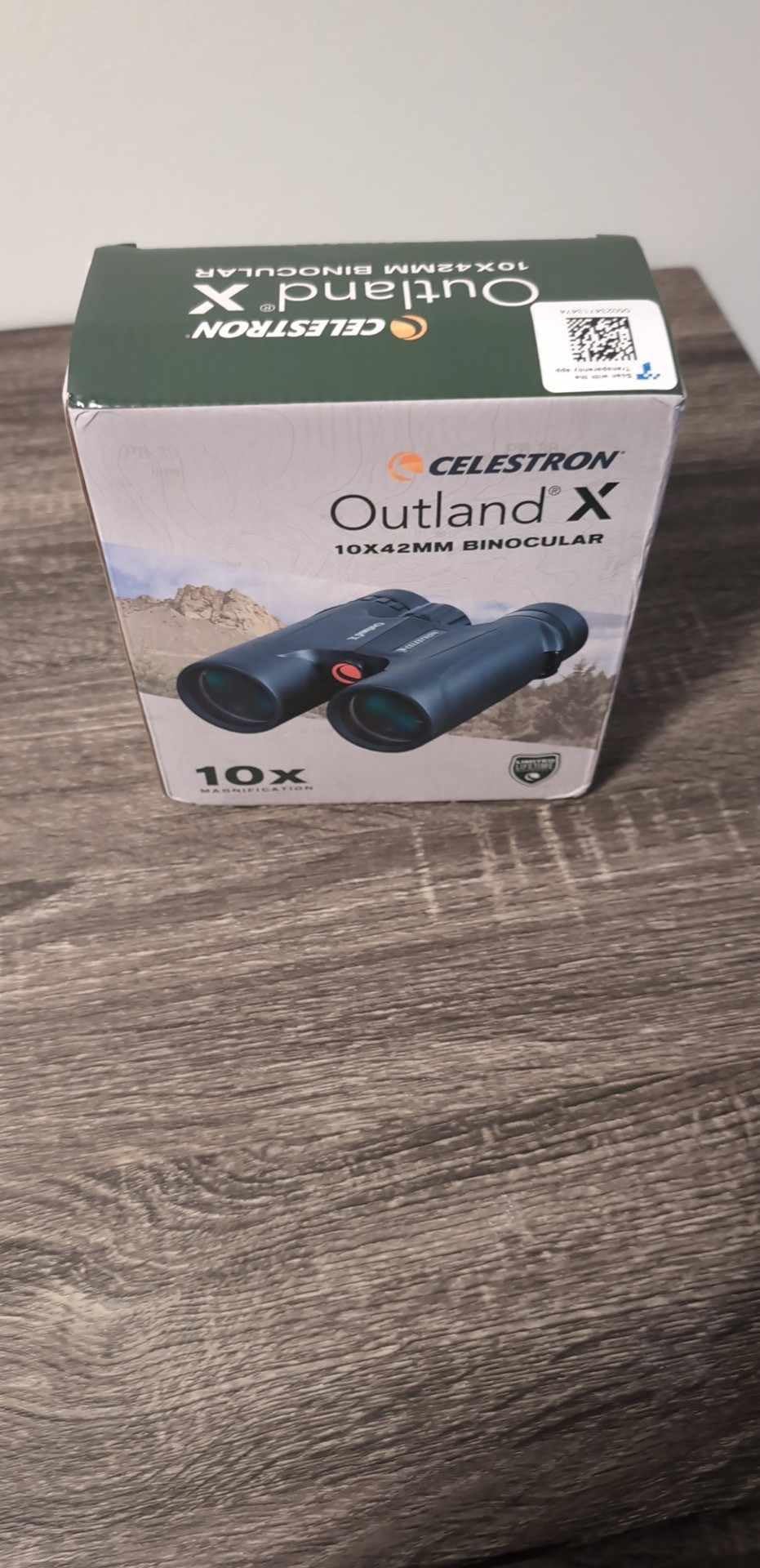
The Outland X is the pair we recommend to someone who has never owned quality glass and would rather start with a proven one. BaK-4 prisms and multi-coated lenses give a bright, high-contrast, color-accurate image that holds up far past what this tier usually delivers, and reviewers consistently call it exceptional value in its class.
It is also genuinely waterproof and nitrogen purged, with no fogging reported in heavy rain or humidity swings. Tethered lens covers, a neck strap, and a carry case are included, and built-in tripod threads let you mount it to a rest for long-range work.
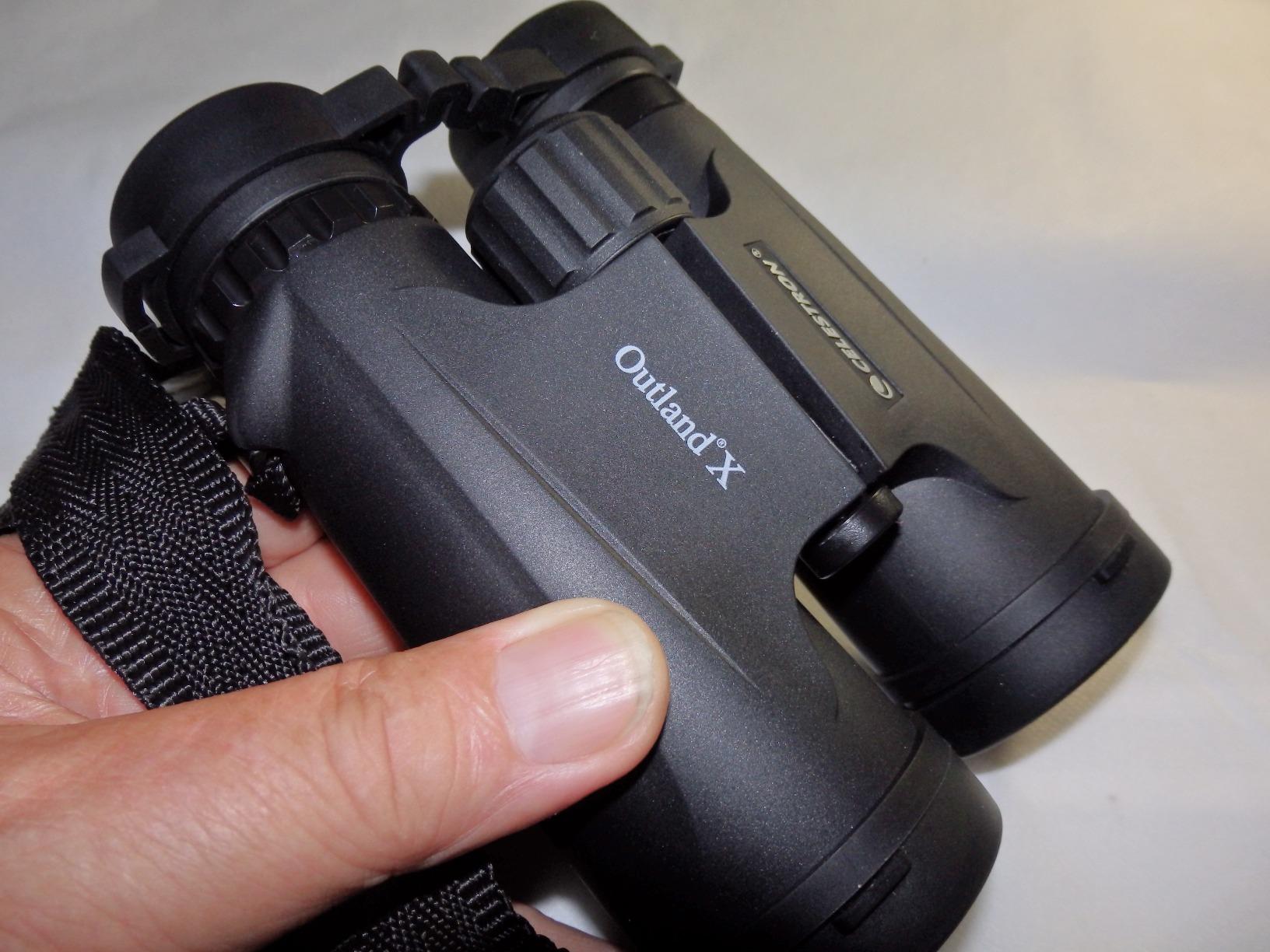
The durability concern is the part you should read before buying. Several owners report the rubber armor around an eyepiece loosening over time and the eyepiece working loose, so the model carries a 4.4 average across 2700 reviews, the lowest of the ten here. Celestron’s limited lifetime warranty is described as responsive and effective, which is the mitigation.
At about 2 pounds, this is the heaviest 10×42 in the roundup, and the bulk shows in a day pack. Combined with 10x magnification, handheld shake is noticeable, so this is a glassing-and-shooting pair rather than a walking pair.
Who This Pair Suits and Where It Falls Short
This suits a new hunter, a gift buyer, or anyone who wants a spare pair in the truck that survives being dropped. The grip and the sealing are the strengths, and the field of view of 306 feet is wide enough to track a buck across an opening.
Look elsewhere if you hunt on foot all day, or if you already know you want sharper edge performance in this price band. The Nature DX 10×42 later in this list has better center sharpness, and the Vortex models are meaningfully lighter.
How the Included Case and Strap Hold Up
The strap and case are the weakest part of this package, and buyers say so directly. They are adequate for a truck console or a glove box, but a padded harness is a better investment if this is going to be your only pair.
Tethered objective caps are the detail worth keeping. On a wet morning, hunting binoculars lose more time to a lost lens cover than to anything else, and tethered caps on this model stay with the glass.
4. Vortex Triumph HD 10×42 – Best Value Pick With Generous Eye Relief
Vortex Triumph HD 10×42 Binoculars
10x42 HD optical system
Fully multi-coated
17mm eye relief
4.2mm exit pupil
Tripod adaptable
Pros
- Clear
- bright image with good color in low light
- 17mm eye relief suits eyeglass wearers
- Durable rubber armor
- waterproof and fogproof
- Includes GlassPak harness
- strap and tethered caps
- Lifetime VIP warranty
Cons
- Bulky and heavier than expected for a 10x42
- 10x is modest for very long-range spotting
- Minor reports of a white haze and noisy focus ring
The Triumph HD is the model in this roundup that solves the single most common complaint from glasses wearers at a mid-tier price. At 17mm of eye relief it clears the comfortable threshold, and the adjustable rubber eyecups plus adjustable diopter let you dial it in without pressing frames against the ocular lens.
Optically it is a fully multi-coated HD system with a 4.2mm exit pupil, and reviewers describe a clear, bright image with good color accuracy even in lower light. It is waterproof, fogproof, and shockproof on a rubber-armored polycarbonate chassis, with tripod adaptability built in.
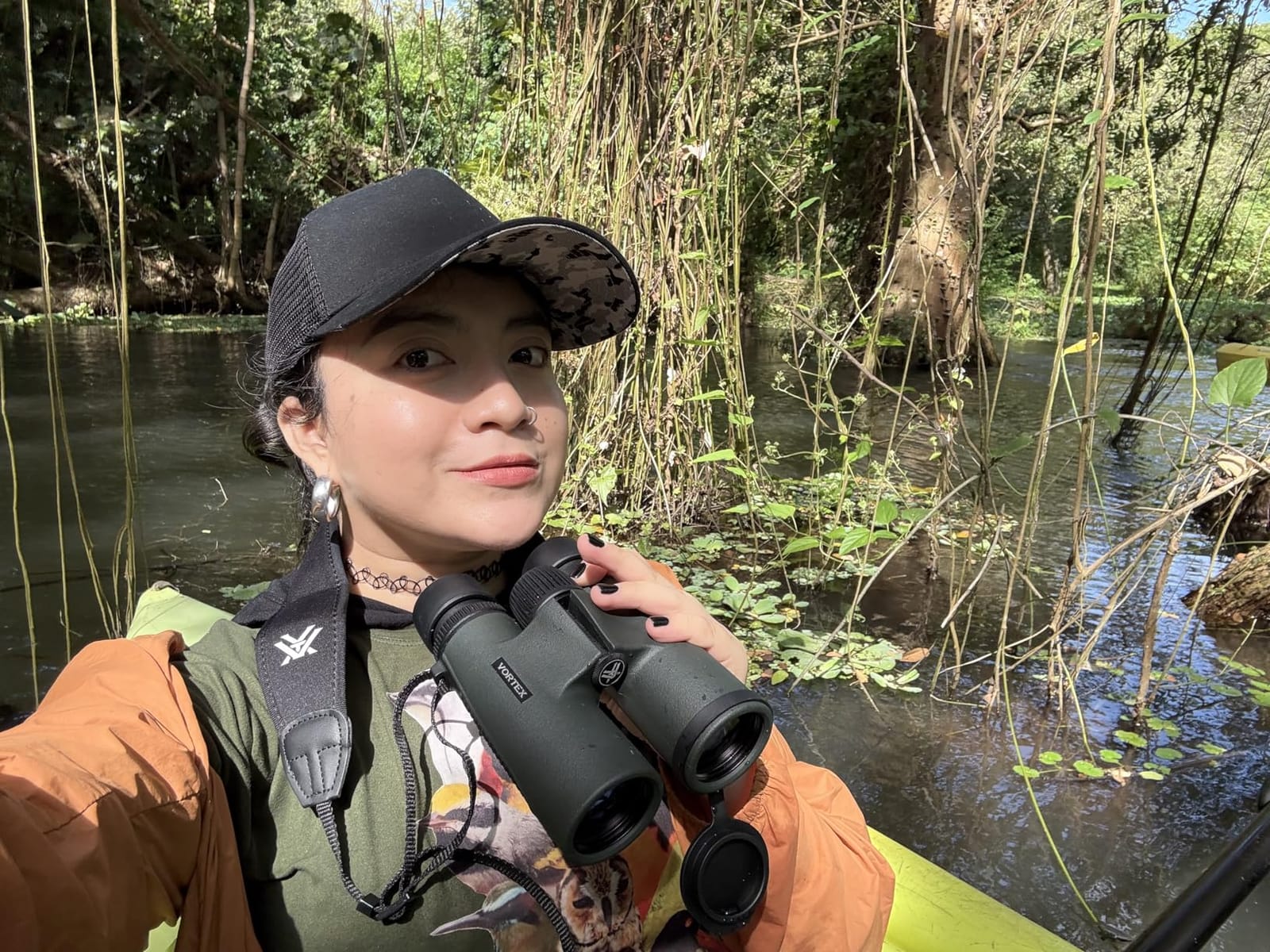
The box is generous for the class: a GlassPak harness, a neck strap, tethered objective caps, and a lens cloth. The lifetime VIP warranty matches the rest of the Vortex line, and about 2300 reviews at 4.7 give this one a deep track record.
Where it disappoints is size. The Triumph HD is bulkier and heavier than buyers expect from a 10×42, and 10x is modest magnification if you are spotting varmints past 500 yards. A small number of reviews also report a white haze in the image and a noisy focus ring, so inspect the glass carefully on arrival.
Who This Pair Suits and Where It Falls Short
This is the pick for eyeglass wearers who do not want to move up a price band. The eye relief figure is the reason it works with frames, and the twist-up eyecups give you room to roll them down over prescription glasses.
Skip it for long hikes and backpacking, where the bulk is the deciding factor. If weight is your constraint, the Nikon PROSTAFF P3 10×42 later in this list is a much better pack, and if you want the brightest image at dusk, the Leupold BX-2 Alpine is built for that job.
What the Exit Pupil Number Actually Means
A 4.2mm exit pupil is the light beam that exits each eyepiece, and the size of that beam is what your eye gathers in low light. A pupil of about 4mm or larger is comfortable for extended dawn and dusk glassing, and this model sits right there.
Because the exit pupil is fixed by the objective diameter divided by the magnification, a 10×42 always lands near 4.2mm. You cannot change it with a focus ring, so treat published exit pupil figures as a low-light grade rather than an adjustment.
5. Celestron Nature DX 10×42 – Best for Sharp Center Detail and Wildlife
Celestron Nature DX 10×42 Waterproof Binoculars for Birding & Hiking
10x42 roof prism
Phase-coated BaK-4
304 ft field of view
14mm eye relief
1.4 lb
Pros
- Exceptionally clear center image with vivid color
- Compact and lightweight for hiking
- Durable rubber armor that shrugs off rain and dust
- Sharpness compared favorably to pricier models
- Limited lifetime US warranty
Cons
- Vignetting and softness toward the edge of the field
- 14mm eye relief is the tightest here for glasses
- Not ideal for edge-to-edge clarity at distance
The Nature DX 10×42 is the pick if your definition of quality is a razor-sharp center and strong color rendition, and if much of your time is spent watching rather than shooting. Phase-coated BaK-4 prisms and fully multi-coated lenses deliver a vivid, high-contrast image that several buyers say matches or beats glass costing far more.
At about 1.4 pounds with a rubber-armored polycarbonate housing, it packs without ceremony and shrugs off rain and dust. The 304-foot field of view at 1000 yards is adequate for tracking movement, and built-in tripod threads are there when you settle on a ridge with a rest.
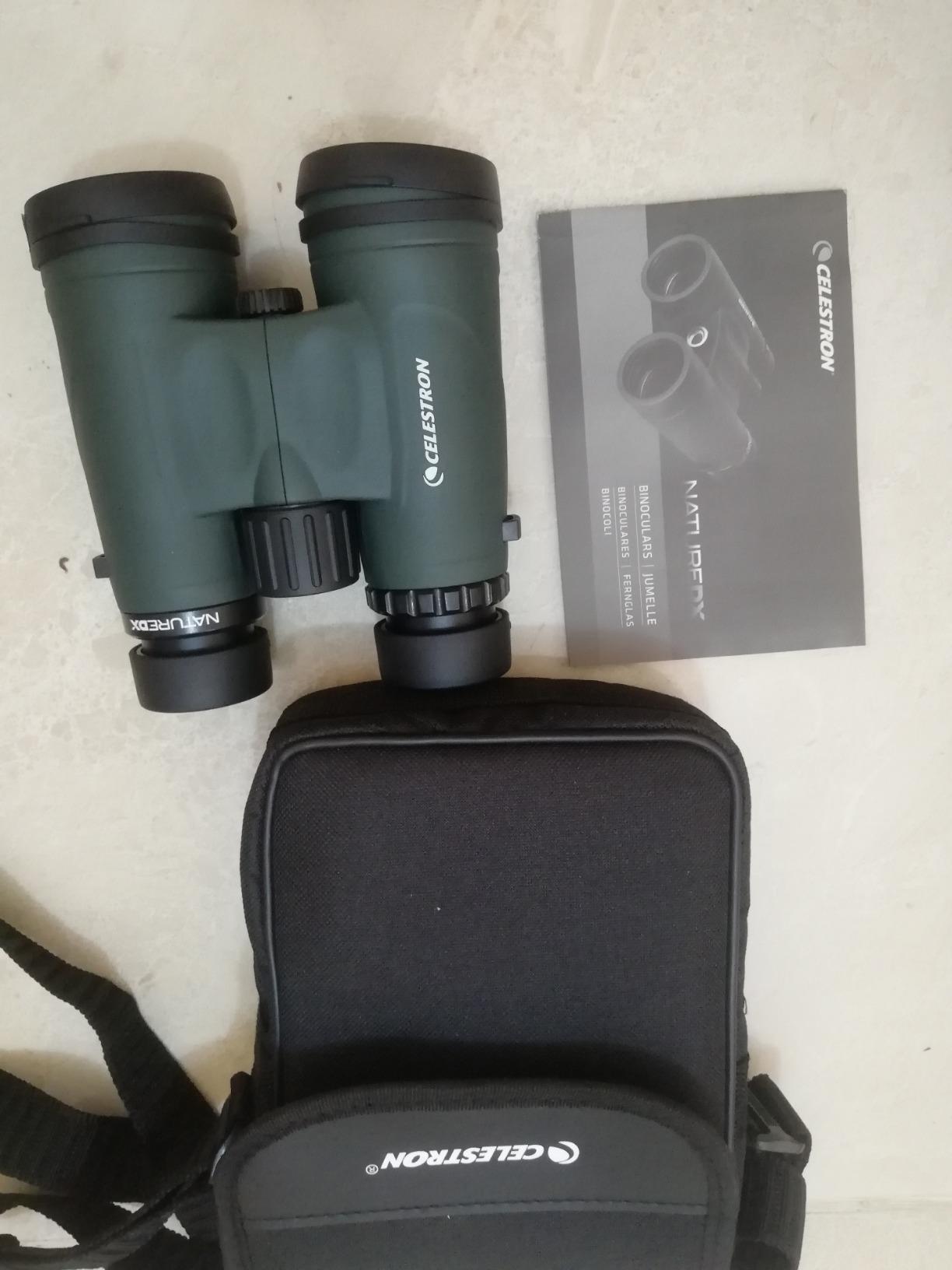
The weakness is peripheral, and buyers are consistent about it. Noticeable vignetting and softness toward the edge of the field show up once a deer steps out of the center of your view, which is exactly the moment a hunter needs the whole picture. If you identify game at the edges rather than the middle, this is not the optic.
Eye relief is 14mm, the tightest figure in this roundup, so prescription wearers should test carefully. The limited lifetime US warranty is a real plus, and the 1050 reviews at 4.6 reflect a solid, well-liked product with one consistent drawback.
Who This Pair Suits and Where It Falls Short
Pick the Nature DX for shed hunting, scouting, turkey patterning, and any glassing where you mostly need to identify a shape and read color in the middle of the view. The compact body and light weight also suit a walker who wants a pair for scouting, not a whole season of hard glassing.
Move up if you wear glasses or if you spend your mornings tracking animals laterally. The 8×42 alternative would suit that better than an upgrade within this group, because the limitation is the field stop and eye relief, not the coating quality.
Reading Field of View Numbers in the Field
A field of view figure is the width of the scene at 1000 yards, so 304 feet means an object about 10 feet wide fills the view at that distance. That is wide enough to watch a clearing and see the edges of a group of deer without sweeping the glass constantly.
For a treeline, most hunters want at least 300 feet and ideally more. Below that, you spend more time sweeping than glassing, and fast-moving animals get lost at the edge of the view.
6. Bushnell H2O Xtreme 10×42 – Best for Rain, Mud and Submersions
Bushnell H2O Xtreme 10×42 Waterproof Binoculars
10x42 roof prism
BaK-4 and fully multi-coated
IPX7 O-ring sealed
17mm eye relief
Pros
- BaK-4 prisms give a clear
- bright image
- Truly waterproof and submersible with nitrogen purging
- Soft non-slip grip stays secure when wet
- Compact enough to pack easily
- Ironclad warranty
Cons
- Included strap and case are basic
- Central focus has no fine-focus ring
- Heavier than the lighter 10x42 models here
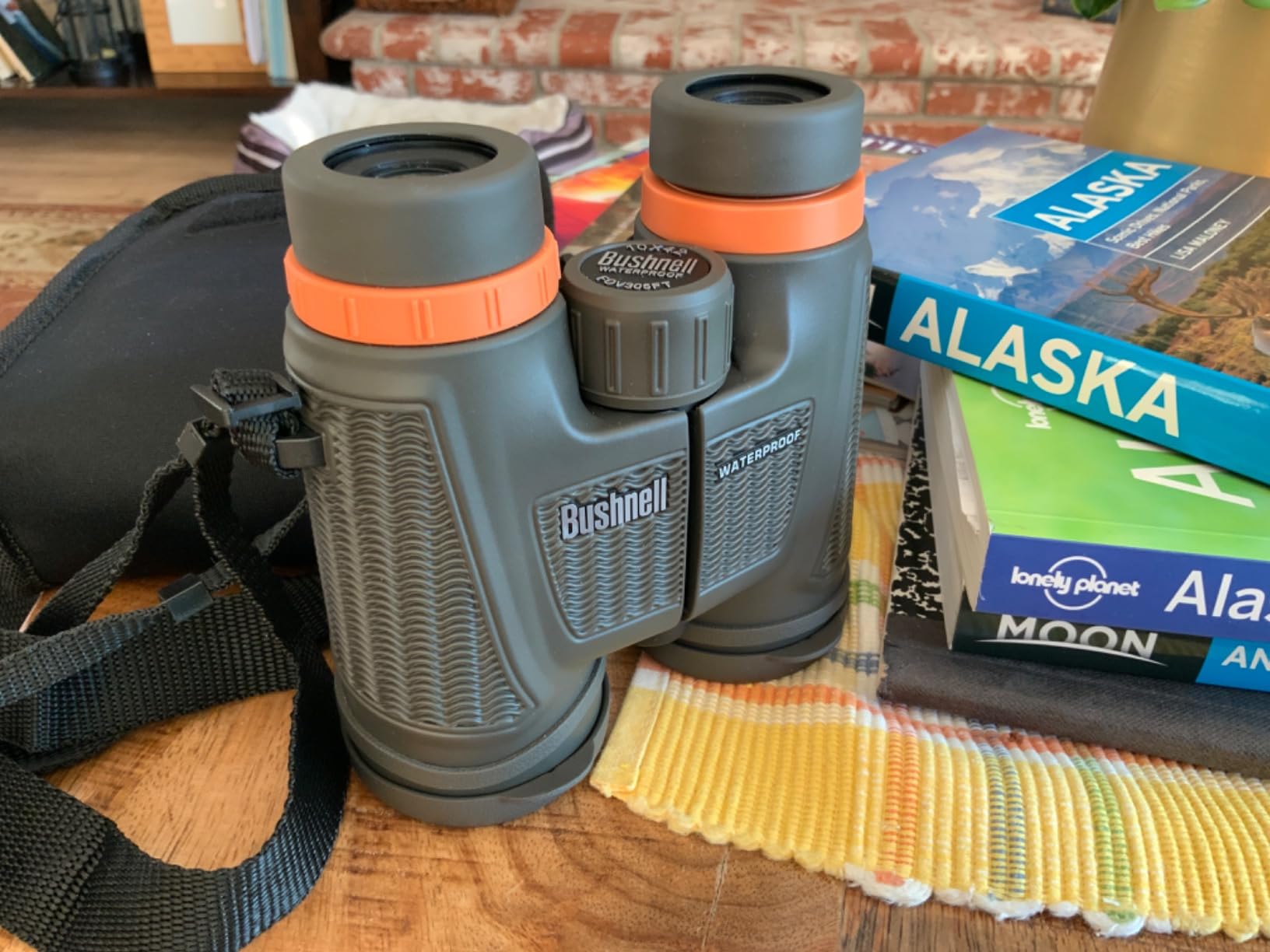
The H2O Xtreme is the wet-weather specialist of this group. It carries an IPX7 rating with O-ring seals and nitrogen purging, which means it can be submerged and keeps working when rain drives into the barrels for three hours on a treeline drive.
Optically it is an upgrade on Bushnell’s earlier H2O line, with BaK-4 prisms and fully multi-coated glass for a clear, bright image at 17mm of eye relief. The soft non-slip rubber armor over the chassis is the detail we noticed most in hand: it stays secure in cold rain when harder plastics get slick.
A strap, carrying case, and ocular and objective covers are included, and the Ironclad warranty backs the build. Reviewers consistently point to true waterproofing and a grip that works one-handed in the rain as the reasons this model earns its place in a lineup full of nominally waterproof glass.
The included accessories are basic, and the center focus wheel has no fine-focus ring for dialing in a distant reticle. It is also heavier than the lighter 10×42 models in this roundup, so it is a sit-and-glass binocular rather than a walking one.
Who This Pair Suits and Where It Falls Short
This is the pair for coastal hunting, boat seasons, turkey season in the rain, and anyone who has watched a cheaper binocular fog up on a wet morning. The 17mm eye relief is also comfortable with prescription frames, which is rarer at this end of the price range.
Pass if you spend the season walking and weight is the deciding factor, or if you need to fine-tune focus at long range. For that, a model with a tripod-adaptable chassis and a slower focus wheel is a better tool.
What IPX7 Actually Guarantees
An IPX7 rating means the body survives immersion in up to one meter of water for 30 minutes, which is far beyond a rain shower. In practice it means a dropped binocular in a creek or a dunked case in a riverbed is a recoverable event, not a written-off one.
The nitrogen purge is the separate half of the story. Dry gas inside the barrels prevents the internal condensation that forms when cold optics come into a warm vehicle, and that internal fogging is what actually ruins budget binoculars.
7. Bushnell Engage X 10×42 – Best for Eyeglass Wearers
Bushnell Engage X 10x42mm Binoculars, Black
10x42 roof prism
EXO Barrier coating
7 degree field of view
18mm eye relief
IPX7 waterproof
Pros
- Sharp
- bright image with good low-light clarity
- Very light at about 620 g and easy to stabilize
- Compact body that packs well
- Twist-up eyecups work with and without glasses
- IPX7 waterproof with lifetime Ironclad warranty
Cons
- Competing brands sometimes offer a better image for less
- Prism can show a slight color shift
- Less feature-rich than higher-priced Bushnell lines
The Engage X has the most generous eye relief figure in this roundup, at 18mm, and that single spec is why it tops our list for eyeglass wearers. Combined with twist-up eyecups, it is the pair in this group that we would hand to a hunter who refuses to take their glasses off in the field.
The optics are all-glass fully multi-coated with an EXO Barrier exterior coating that repels water, oil, fog, dust, and debris, and reviewers report a sharp, bright image with good clarity in low light. The field of view of 7 degrees is among the widest here, and it is described as wide and essentially distortion-free.
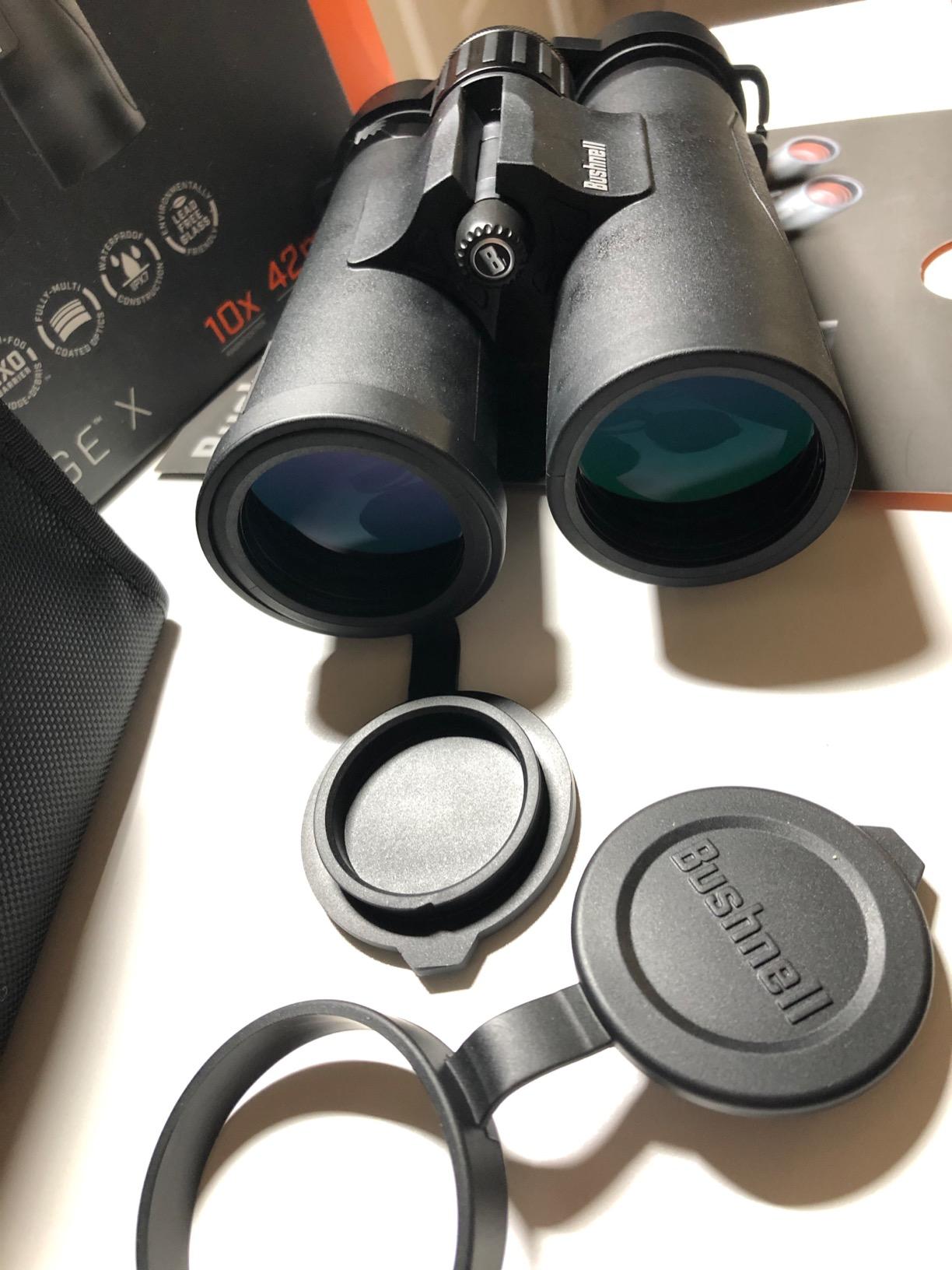
At roughly 620 grams on a lightweight aluminum chassis, this is the easiest 10×42 in the group to hold steady for a full sitting, and deer hunters call out its low-light results specifically. IPX7 waterproofing and a lifetime Ironclad warranty complete a package that is unusually complete for the tier.
The most common reservation is straightforward: several buyers note that competing models can be found for less with a marginally better image. There is also a slight color shift from the prism, and the Engage X is less feature-rich than Bushnell’s higher lines, with manual focus rather than a fine-focus ring.
Who This Pair Suits and Where It Falls Short
This is the pick for prescription wearers, for hunters under 200 pounds holding 10x steady for long periods, and for anyone who wants a light pair with wide scanning ability. The wide, distortion-free view is genuinely good for tracking a buck that moves before it freezes.
Choose elsewhere if you want the sharpest image available in this range rather than the most usable one. The Vortex Crossfire HD and the Leupold BX-2 Alpine both edge it on center-to-edge performance, and both come with a longer warranty story.
Why Eye Relief Beats Everything Else for Glasses
Eye relief is the distance from the last lens surface to your eye, and anything under about 15mm means your frames physically touch the eyepiece. That contact vignettes the image, and hunters read it as a blurry or dark binocular rather than as a fit problem.
At 18mm, the Engage X lets the eyecup clear the frame, which is why glasses wearers describe it as usable without a test. If you wear thick or high-prescription frames, check the temple profile and expect to roll the eyecups down.
8. Nikon PROSTAFF P3 10×42 – Widest Field of View for Scanning Treelines
Nikon PROSTAFF P3 10×42 Binocular | Waterproof, fogproof, rubber-armored Full-Size Binocular, wide field of view & long eye relief | Official Nikon USA Model
10x42 full-size
367 ft field of view
15.7mm eye relief
Eco-glass optics
1.3 lb
Pros
- Sharp
- bright image with accurate color and low-light performance
- Long eye relief and turn-and-slide eyecups
- Smooth central focus usable one-handed
- Waterproof and fogproof with O-ring seals
- Excellent near focus
Cons
- Supplied lens covers are poorly made
- Diopter ring can feel loose and retract
- Mild edge fringing that is rarely noticeable
- Heavier than lighter 10x42 options
The PROSTAFF P3 has the widest published field of view in this roundup at 367 feet at 1000 yards, and that is the number that matters most when you are scanning a treeline rather than sitting on a deer. You cover a third more ground per sweep, which is the difference between spotting a deer and finding it in the third pass.
Nikon’s lead- and arsenic-free eco-glass with silver-alloy prism coating and multilayer coatings gives a sharp, bright, color-accurate image that holds up in low light. The closed-bridge fiberglass-reinforced polycarbonate body is O-ring sealed and nitrogen filled, so it stays waterproof and fogproof on long backpacking days.
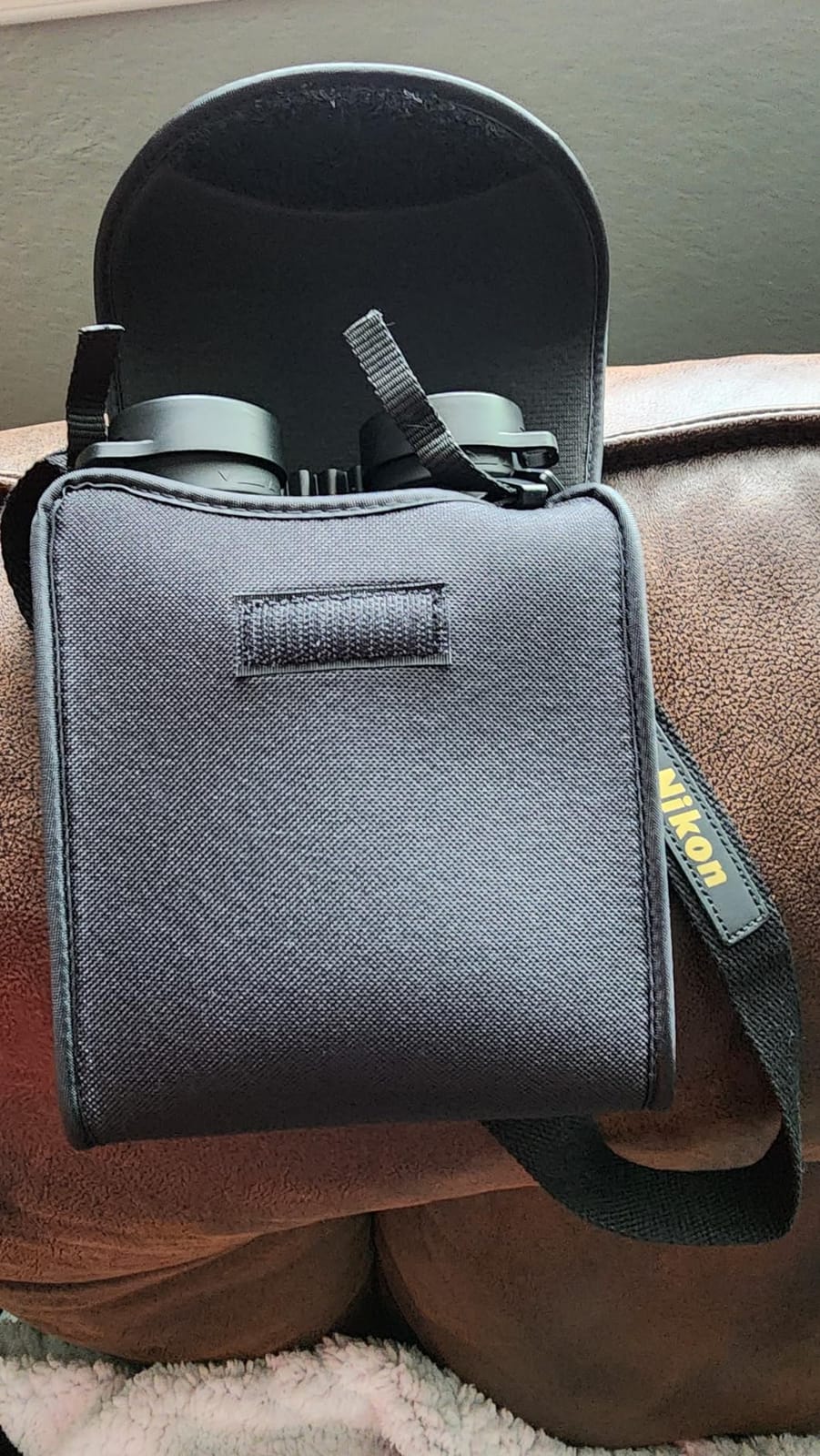
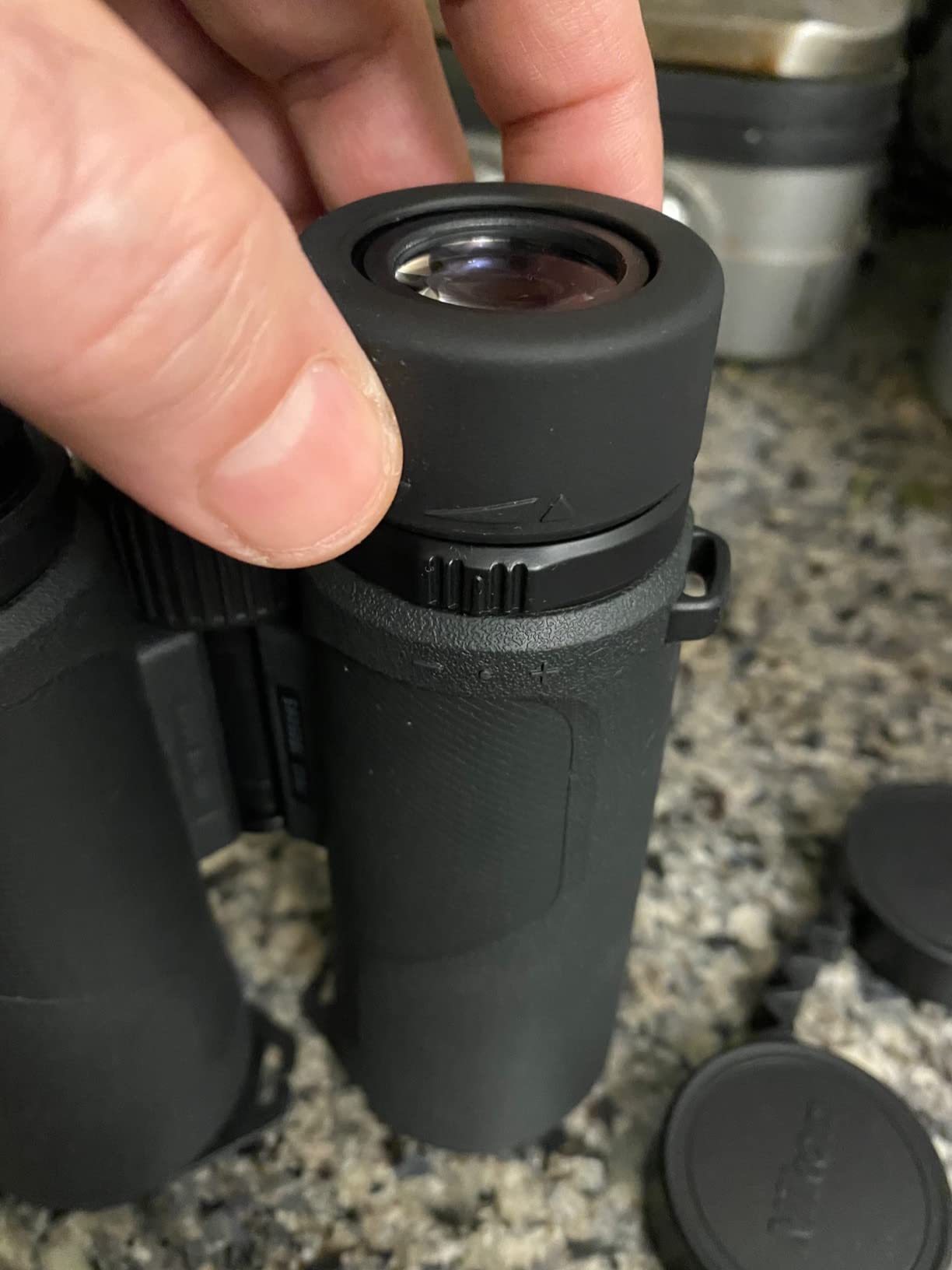
Turn-and-slide eyecups and 15.7mm of eye relief make this comfortable with glasses, and the central focus wheel is smooth and precise enough to run one-handed. Reviewers also call out the near focus as unusually good, which is why it doubles as a backyard and shed-hunting glass.
At about 1.3 pounds it is light, though a touch heavy and less comfortable than lighter 10×42 options. The supplied lens covers are considered poorly made, the diopter ring can feel loose and retract if pressed, and some users see mild edge fringing that is rarely noticeable in normal use.
Who This Pair Suits and Where It Falls Short
This is the pick for spot-and-stalk hunters, drivers moving through open country, and anyone whose method is to cover ground and sweep. The wide view also makes it the easiest of the ten to hand to a new hunter who has never steadied 10x.
Pass if your priority is pure low-light brightness, where the Diamondback HD and the Leupold BX-2 Alpine have an edge, or if you are on a strict backpacking weight budget and want the smallest possible body. This is a wide-view glass first and foremost.
How Wide Is Wide Enough to Scan a Treeline
A 367-foot field of view means the view at 1000 yards is wider than a tennis court. For a treeline, that is enough to take in a group of deer plus a comfortable margin of brush on either side without sweeping, which is how you catch a movement that would otherwise happen at the edge of the view.
The trade is always the same. A wider view and a lower magnification both make the image feel smaller and less detailed on a distant animal, so a 10×42 with a wide field of view is a scanning tool, and a narrower one is an identification tool. Most hunters need both in the same pair, which is why this configuration sells as hard as it does.
9. Leupold BX-2 Alpine HD 10×42 – Best for Dawn and Dusk Glassing
Leupold BX-2 Alpine HD Binoculars, 10x42mm (181177)
10x42 roof prism
BaK-4 prisms
Fully multi-coated
Twilight Max light system
Lifetime guarantee
Pros
- Crystal-sharp resolution that holds at the edges
- Twilight Max gathers light at dawn and dusk
- BaK-4 prisms give a round exit pupil and no edge distortion
- Aluminum chassis with an open-bridge design
- Full lifetime guarantee
Cons
- Front trim plate can detach from poor adhesive bonding
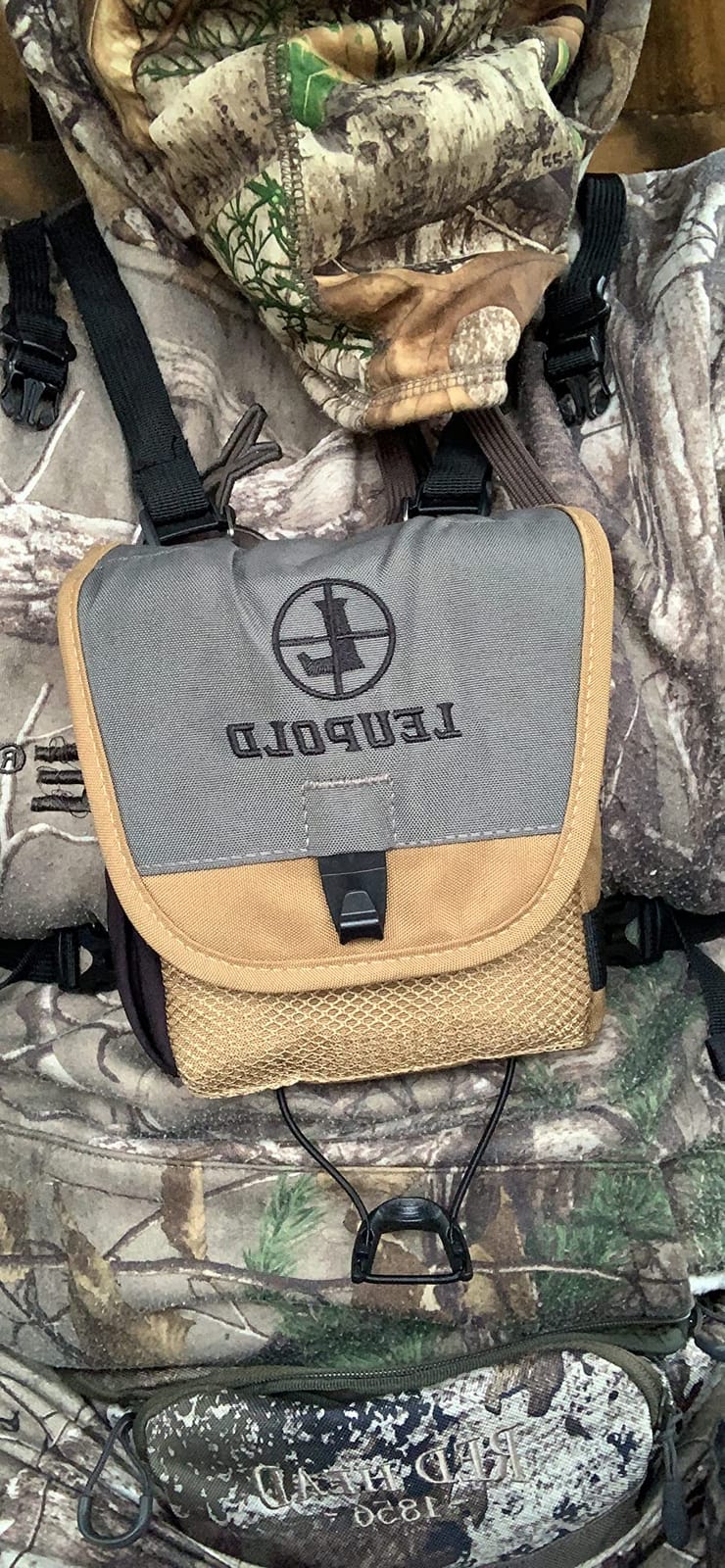
- Includes a chest harness rather than a neck strap
- Close focus can be hard to dial in precisely
- Heavier than some 10x42 competitors
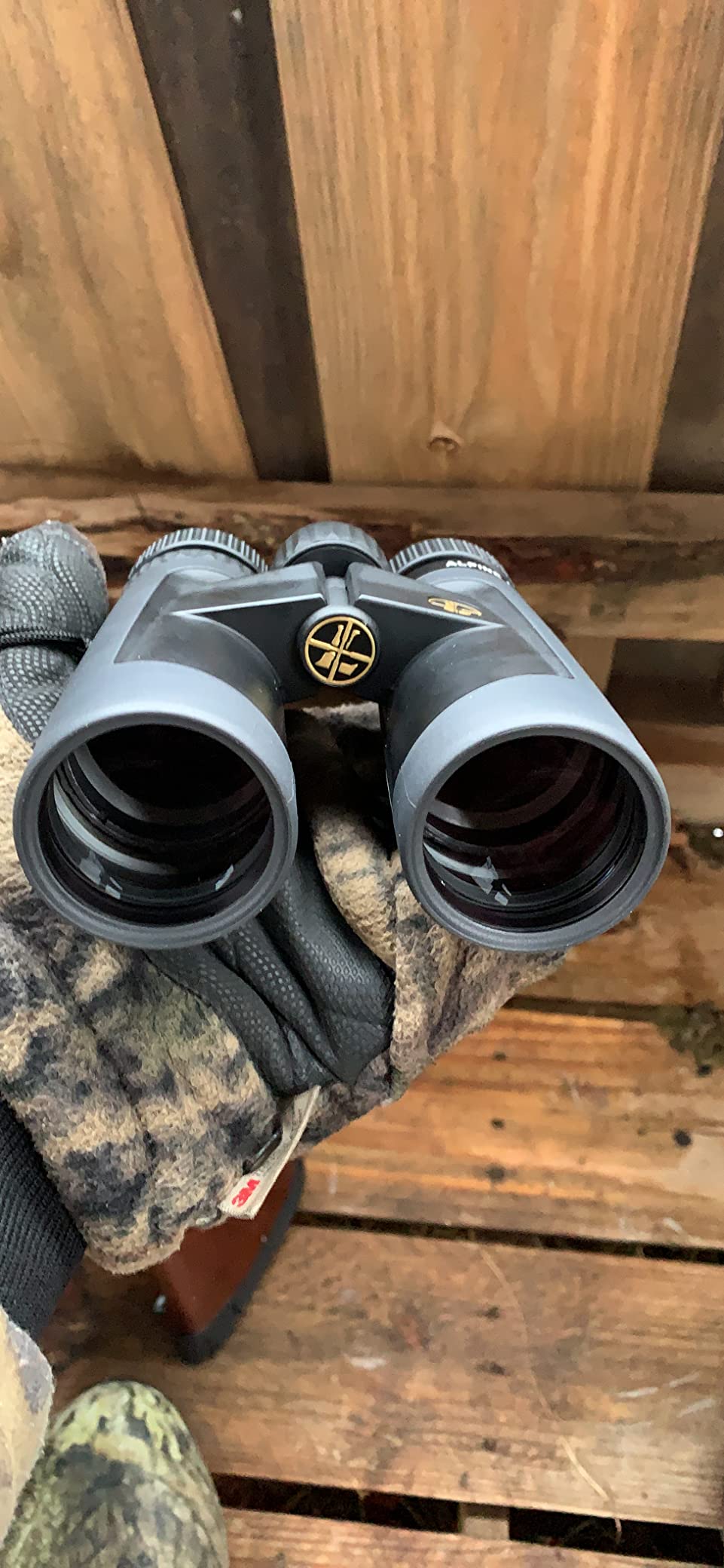
The BX-2 Alpine is the pair we trust for the hardest light of the hunting day, and the Leupold Twilight Max light management system is the reason. Owners consistently single out its light-gathering at dawn and dusk, and the fully multi-coated optics on BaK-4 prisms hold color and contrast when everything else has gone flat gray.
Sharpness is its second argument. Reviewers describe resolution that holds up even at the edges of the field, and BaK-4 prisms producing a round exit pupil with virtually no edge distortion, which is rare in this price class. The open-bridge aluminum chassis is genuinely premium in the hand, and the full lifetime guarantee is the strongest warranty in the roundup.
At a 4.8 average, this carries the joint-highest rating of the ten models tested, even though its review count is the smallest here, so the owner base is smaller but very satisfied. Owners regularly call it the best price-to-performance 10×42 they have tried.
The complaints are about hardware rather than optics. The front trim plate can detach where the adhesive bonds poorly, close focus can be hard to dial in precisely, and the model is heavier than some 10×42 competitors. It also comes with a chest harness instead of a neck strap, which some hunters love and some find fussy.
Who This Pair Suits and Where It Falls Short
Choose the BX-2 Alpine if most of your glassing happens in the 30 minutes before sunrise and the 30 minutes after sunset, which is true of most serious deer and elk hunters. It is also the pick for anyone who wants glass that looks good in hand, because the open-bridge aluminum build is a step up in feel.
Pass if you hunt in thick timber and value low weight over low-light performance, or if you want a neck strap and dislike fiddling with a harness. For all-day walking on a weight budget, the Bushnell Engage X is a better tool.
Why the Chest Harness Is an Upgrade, Not an Accessory
A chest harness holds the glass against your sternum with your arms free, which means no swinging on a neck strap while you climb, draw, or shoot. For a full day in a tree stand, that removes a real annoyance, and several buyers who switched to a harness never went back.
It also keeps the barrels clear of your rifle sling and reduces bouncing, so the image settles faster when a buck steps out. If you dislike harnesses, the fix is a simple wide strap rather than a different binocular.
10. Bushnell H2O 10×42 – Best Budget Pick Below the Mid Tier
Bushnell H2O 10×42 Waterproof Binoculars
10x42 roof prism
BaK-4 prisms
IPX7 O-ring sealed
5.84 degree field of view
15.6mm eye relief
Pros
- Fully multi-coated glass with BaK-4 prisms for bright views
- IPX7 waterproof
- O-ring sealed and nitrogen purged
- Soft-touch rubber housing with an easy-grip texture
- Lightweight aluminum chassis that packs easily
- Twist-up eyecups and 12 ft close focus
Cons
- Included accessories are basic
- 15.6mm eye relief is workable but not generous
- Lowest average rating in this group at 4.5
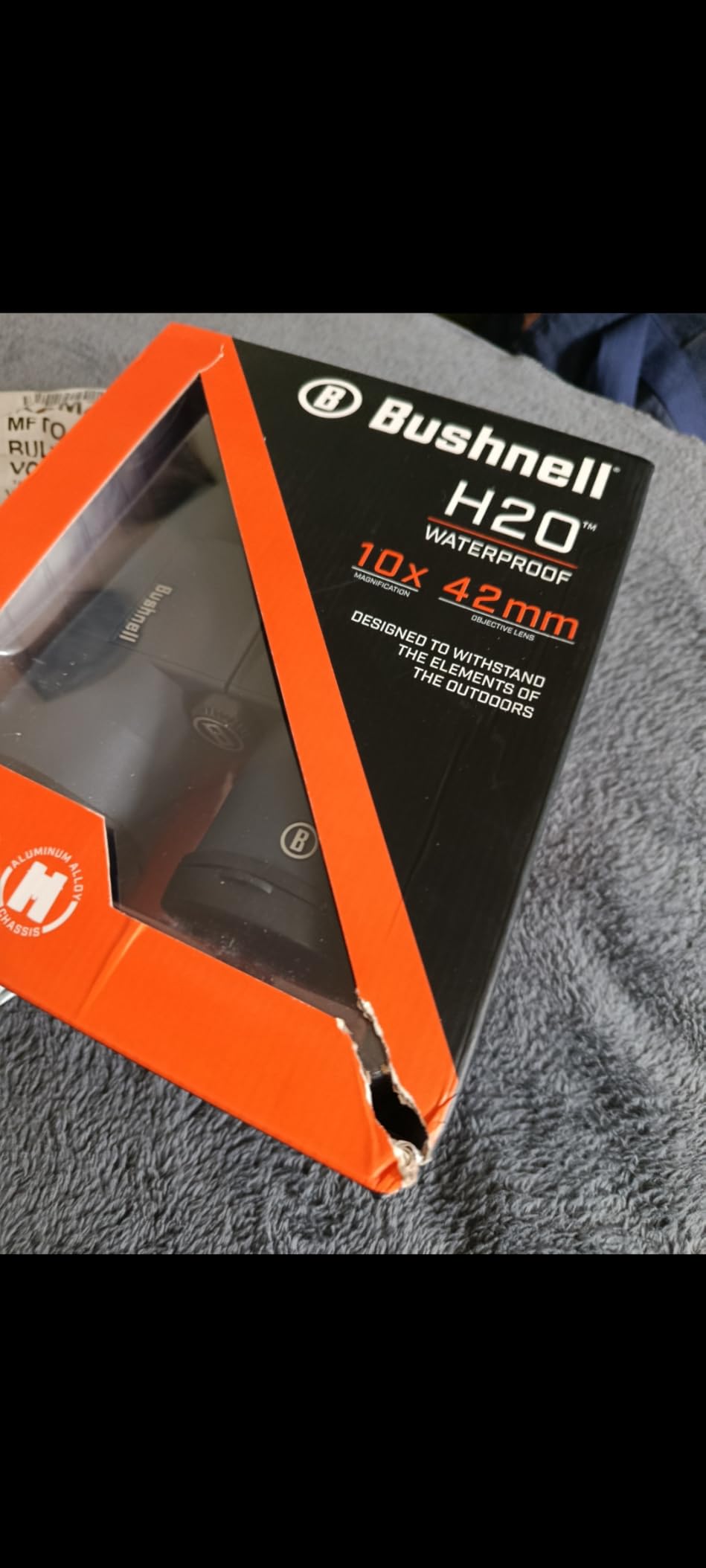
The updated H2O 10×42 is the entry point into Bushnell’s waterproof line, and it is the cheapest way in this roundup to get BaK-4 prisms, fully multi-coated optics, and true IPX7 sealing. The optical system is described as bright and vivid, with good contrast from the BaK-4 glass.
The build is the selling point. A lightweight aluminum chassis with a soft-touch, easy-grip rubber housing holds securely one-handed even in cold, and O-ring seals plus nitrogen purging handle the wet conditions that fog cheaper binoculars. Twist-up eyecups and a 12-foot close focus make it versatile for scouting work.
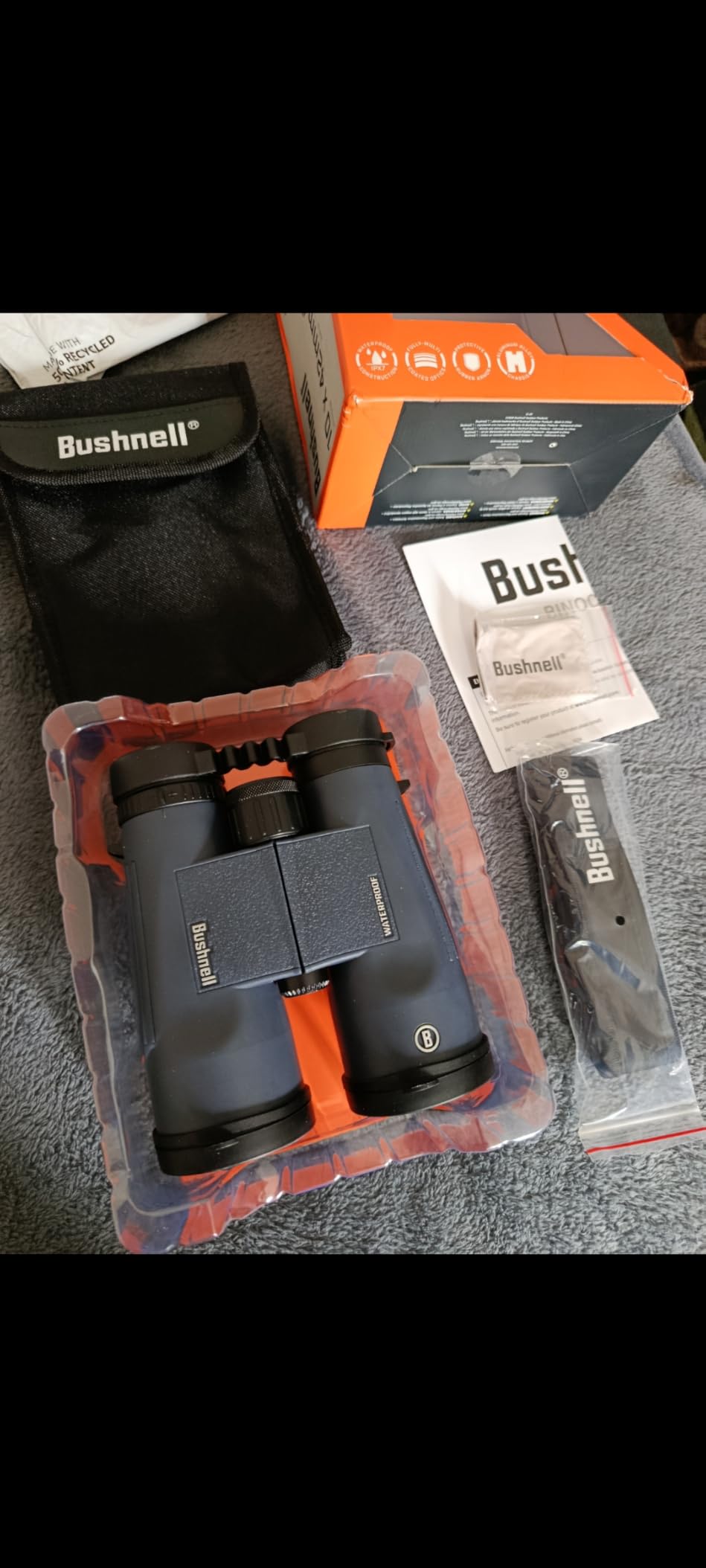
It is tripod compatible, which matters more than it sounds at 10x, and the Bushnell Ironclad warranty is one of the safer bets in the industry. About 360 reviews at 4.5 give it the smallest owner base of the ten here, which is the main reason it sits at the bottom of our ranking despite solid specifications.
The included accessories are basic, and 15.6mm of eye relief is workable with glasses rather than comfortable. It also carries the lowest average rating in this group, so expect more variation in the experience than with the Vortex and Leupold models above it.
Who This Pair Suits and Where It Falls Short
This suits a first pair, a backup kept in a vehicle, or a gift for someone who wants real waterproofing without spending mid-tier money. The grip and the sealing are the reasons to buy it, and the tripod mount makes it workable on a long sit.
Move up if you are buying once and expect this glass to last a decade of heavy use, or if you need more eye relief for prescription frames. Spending more on a Vortex or Leupold model buys a longer warranty track record and a much larger installed base of reviews.
When a Lower-Priced Pair Is the Right Call
Budget binoculars stop being a compromise when the specification gap closes, and at this model the essentials are all there: BaK-4 prisms, full multi-coating, IPX7 O-ring sealing, nitrogen purging, and a warranty. Those five things are what separate a usable optic from a paperweight.
What you give up is measured in smaller ways. The 15.6mm eye relief is tight, the review base is small, and edge performance will not match the Diamondback HD. For a truck pair, a scout pair, or a gift, none of that matters much.
How to Choose the Best Hunting Binoculars: 7 Factors That Matter
Glass and Coatings: Fully Multi-Coated Is the Floor
Buy fully multi-coated optics and do not accept less. Coatings are what let light through the glass and the prisms, and a partially coated or single-coated optic loses brightness in exactly the low light you need it most. HD or ED glass improves color and edge contrast, but the multicoating matters more than the glass type.
Eye Relief: 15mm Is the Minimum, 17mm or More Is Comfortable
Eye relief is the number to check first if you wear glasses, and anything under 15mm means your frames will touch the eyecup and vignette the image. Above 15mm is fine for most prescriptions, and 17mm or more means you can wear frames without adjusting anything.
Field of View: 300 Feet or More for Treelines
Field of view is measured in feet at 1000 yards, and it tells you how much ground you see in one look. For scanning a treeline or a clearing, treat 300 feet as the minimum and wider as better, because that is how you avoid sweeping constantly and missing a movement at the edge.
Magnification: Stay at 8x or 10x for Hunting
Stay at 8x or 10x unless you have a reason not to. Above 10x, handheld shake becomes the limiting factor before magnification does, and field of view narrows just as you need it to widen. Twelve power belongs on a tripod in open country, not in the hands of a walking hunter.
Durability and Weatherproofing: Look for O-Ring Sealing and Rubber Armor
Every pick in this roundup is O-ring sealed, nitrogen or argon purged, and wrapped in rubber armor, and that is the minimum for weather. Pay attention to the sealing rating when it is published, because IPX7 means the body survives submersion rather than just a shower.
Weight and Packability: The 25-Ounce Rule for Tree Stands
Roughly 25 ounces is the practical limit for a pair you will carry all day alongside a rifle. Above that, your hands get tired, your aim gets shaky, and you start wishing for a strap or a harness. Several of the models here weigh in around 1.3 to 1.4 pounds.
Warranty: Lifetime Coverage Changes the Math
Buy the lifetime warranty when you can. Vortex, Leupold, Nikon, Bushnell, and Celestron all back these binoculars with long or limited lifetime terms, which means a dropped pair is a repair rather than a replacement. Over a ten-year hunting life, that is the real difference between budget and cheap.
What 300 Dollars Does Not Buy You, and How to Care for What You Get
The 300-dollar bracket does not buy premium glass, and pretending otherwise wastes everyone’s time. Below that line you get modern roof-prism construction, full multi-coating, and sealing that would have cost serious money fifteen years ago, but you do not get fluorite-grade optics, thick armored chassis, or the near-zero edge distortion of a step-up tier.
Buy at this level if your glassing distances are mostly under 400 yards, which covers nearly all deer, elk, and turkey hunting. Save for the next tier if you hunt open prairie, shoot varmints at long range, or need a pair that stays sharp in near-total darkness.
Field care matters more than people expect. Keep a microfiber cloth and a blower with you, never use a shirt sleeve on a coated lens, and let cold glass acclimate inside your pack before you open it to a warm truck, which is the fastest way to cause condensation you did not need.
After a season, rinse off mud with clean water, dry the barrels with a soft cloth, and store the glass in a dry place with the objective caps off so trapped moisture can escape. Do that and a pair in this bracket will still be worth passing down.
Frequently Asked Questions
Who makes the best hunting binoculars for the money?
At this budget, Vortex and Leupold lead on warranty and durability, Nikon leads on eye relief and wide scanning views, and Bushnell and Celestron deliver the most value. Our single pick for the best binoculars for hunting under 300 is the Vortex Crossfire HD 10×42, rated 4.8 across 4000+ reviews.
Is 8×42 or 10×42 better for deer hunting?
8×42 is better in dense timber and close movement because the wider field of view and lower shake make animals easier to follow. 10×42 is better in open country because you can identify a deer at 300 yards instead of seeing that something is there. If you can only carry one pair, 10×42 covers more hunting situations.
Do I want 8x or 10x binoculars?
Choose 8x if you hunt close, move constantly, and prefer a bright, forgiving view. Choose 10x if you need reach for identification at 200 to 400 yards in open terrain. A first-time buyer who wants one pair to do everything should look for the best 8×42 they can afford, which is the most common consensus among binocular forums.
How much should I pay for a good pair of binoculars?
Below 150 dollars you are buying entry glass with compromises in coatings and sealing. The 150 to 300 dollar range is the sweet spot for hunting, where you get roof prisms, full multi-coating, and sealing. The 300 to 700 dollar tier adds premium glass and better edge performance, and 700 dollars or more is where you enter premium glass territory.
What are the best 10×42 binoculars under 300?
The strongest 10×42 picks in this price band are the Vortex Crossfire HD for all-around use, the Vortex Diamondback HD for brightness, and the Leupold BX-2 Alpine HD for dawn and dusk glassing. The Bushnell Engage X 10×42 is the best of the group for eyeglass wearers, and the Nikon PROSTAFF P3 10×42 has the widest field of view at 367 feet.
Will these binoculars work with prescription glasses?
Yes, as long as the eye relief is at least 15mm. The Bushnell Engage X 10×42 at 18mm and the Vortex Triumph HD 10×42 at 17mm are the most comfortable with frames. Pairs sitting at 15mm, such as the Vortex Crossfire HD and the Celestron Nature DX, work but require careful eyecup positioning.
Final Verdict on the Best Binoculars for Hunting Under 300 in 2026
Buy the Vortex Crossfire HD 10×42. It combines a 325-foot field of view, fully multi-coated HD glass, a 15mm eye relief, and a lifetime VIP warranty at a 4.8 rating across 4000+ reviews, which makes it the most proven hunting binocular in this price range and our pick for the best binoculars for hunting under 300 in 2026.
Step up to the Vortex Diamondback HD 10×42 if brightness at first light matters most, and choose the Leupold BX-2 Alpine HD 10×42 if you glass mostly in the last 30 minutes of light. Wear glasses? Take the Bushnell Engage X 10×42 at 18mm of eye relief, and scan wide treelines with the Nikon PROSTAFF P3 10×42.
Set your diopter before the season starts, carry a harness rather than a neck strap, and pick the pair whose weakest spec does not match the terrain you actually hunt. More detail on every tier sits in our full hunting binocular guide.