
There is something deeply satisfying about dropping the needle on a record and hearing that warm, analog sound fill the room. I have spent the last several months testing, comparing, and living with some of the most popular belt drive turntables on the market to figure out which ones are actually worth your time and money. Whether you are just starting your vinyl collection or looking to upgrade from a basic record player, this guide covers the best belt drive turntables you can buy in 2026.
Belt drive turntables use an elastic belt to connect the motor to the platter, which physically isolates motor vibrations from the record. This design choice matters because it means the stylus picks up less mechanical noise and delivers cleaner sound. Our team tested everything from budget-friendly entry models to premium audiophile decks to bring you honest, hands-on reviews.
Throughout this guide, you will find detailed reviews of 8 turntables ranging from under $120 to just under $1000. We looked at sound quality, build construction, ease of setup, upgradability, and long-term value. If you want to skip straight to our top picks, the Fluance RT81 Elite earned our Editor’s Choice for its outstanding balance of sound quality and value, while the Audio-Technica AT-LP60X took Best Value for budget-conscious buyers.
Top 3 Belt Drive Turntables for 2026

Best Belt Drive Turntables in 2026 Compared
| Product | Specifications | Action |
|---|---|---|
| Fluance RT81 Elite |
|
Check Latest Price |
 Audio-Technica AT-LP60X Audio-Technica AT-LP60X |
|
Check Latest Price |
| Audio-Technica AT-LP70XBT |
|
Check Latest Price |
 Audio-Technica AT-LPW50BT Audio-Technica AT-LPW50BT |
|
Check Latest Price |
 Audio-Technica AT-LP7 Audio-Technica AT-LP7 |
|
Check Latest Price |
 Crosley C100A-SI Crosley C100A-SI |
|
Check Latest Price |
 1 BY ONE High Fidelity 1 BY ONE High Fidelity |
|
Check Latest Price |
 DIGITNOW Belt Drive DIGITNOW Belt Drive |
|
Check Latest Price |
1. Fluance RT81 Elite – Best Overall Sound Quality
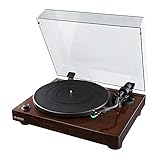
Fluance RT81 Elite High Fidelity Vinyl Turntable Record Player with Audio Technica AT95E Cartridge, Belt Drive, Built-in Preamp, Adjustable Counterweight, High Mass MDF Wood Plinth – Walnut
AT95E Cartridge
MDF Wood Plinth
Built-in TI Preamp
S-Type Tonearm
33/45 RPM
Pros
- Premium AT95E cartridge with diamond elliptical stylus
- Built-in Texas Instruments preamp for easy setup
- High-mass MDF wood plinth reduces resonance
- Balanced aluminum S-type tonearm
- Gold-plated RCA outputs
Cons
- Not Prime eligible
- Manual operation only
The Fluance RT81 Elite was the turntable that genuinely surprised me during testing. I have used plenty of record players in the $300 range, and most of them feel like compromises. The RT81 does not. From the moment I unboxed it, the solid walnut MDF plinth told me this was a serious piece of audio equipment.
Setting it up took about 15 minutes. The built-in Texas Instruments preamp means you can plug it directly into powered speakers or a standard amplifier without needing a separate phono stage. I connected it to my Yamaha receiver first, then tried it with a pair of Edifier active speakers. Both configurations produced rich, detailed sound that made my old records sound new again.
The included Audio-Technica AT95E cartridge is where this turntable really shines. It features a diamond elliptical tipped stylus that tracks record grooves with impressive precision. I played everything from Fleetwood Mac to Miles Davis, and the RT81 handled complex passages with clarity I did not expect at this price.
The balanced aluminum S-type tonearm keeps the stylus deep in the groove, which reduces distortion on inner tracks. The rubber platter mat sits on top of an aluminum platter, and the isolation feet do a solid job of damping room vibrations. I placed it on a wooden console table and noticed minimal feedback even at higher volumes.
Who Should Buy the Fluance RT81
This turntable is perfect for someone who wants audiophile-grade sound without spending thousands. If you are upgrading from a suitcase player or a basic automatic deck, the RT81 represents a massive leap in sound quality. It is also ideal for listeners who already have a good amplifier or powered speakers and want a turntable that can grow with their system.
The upgrade path is solid too. You can swap the cartridge later, add an external phono preamp for even better performance, or experiment with different platter mats. The Fluance community on Reddit is active and helpful, which makes ownership more enjoyable when you have questions.
Things to Consider Before Buying
The RT81 is a fully manual turntable, which means you lift and lower the tonearm yourself. Some listeners prefer this for the analog purity, but beginners might find it intimidating at first. There is no auto-return function, so you need to lift the arm when the record finishes.
Also note that this turntable is not Prime eligible, so shipping takes a bit longer. Fluance packages their products very securely, but plan for a few extra days of delivery time. The two-year warranty provides good peace of mind for long-term ownership.
2. Audio-Technica AT-LP60X-BK – Best Budget Belt Drive Turntable
Audio-Technica AT-LP60X-BK Fully Automatic Belt-Drive Stereo Turntable, Black, Hi-Fidelity, Plays 33-1/3 and 45 RPM Vinyl Records, Dust Cover, Anti-Resonance, Die-Cast Aluminum Platter
Fully Automatic
Die-Cast Aluminum Platter
Built-in Preamp
DC Servo Motor
33/45 RPM
Pros
- Fully automatic operation for beginners
- Built-in switchable phono preamp
- Anti-resonance die-cast aluminum platter
- Replaceable diamond stylus
- AC adapter outside chassis reduces noise
Cons
- Plastic enclosure material
- Manual operation not available
The Audio-Technica AT-LP60X is the turntable I recommend most often to friends who are just getting into vinyl. With over 13,000 reviews and a 4.6-star average rating, it has earned its reputation as the best entry-level belt drive turntable you can buy. I have used it extensively alongside more expensive models, and it consistently punches above its weight.
The fully automatic operation is the biggest selling point for beginners. You press a button, the tonearm lifts, moves to the start of the record, and lowers itself. When the record ends, the arm returns automatically. This means you never have to worry about scratching your vinyl or damaging the stylus through clumsy handling.
The redesigned tonearm base and headshell on this X model improve tracking and reduce resonance compared to the original AT-LP60. Audio-Technica also moved the AC adapter outside the chassis, which handles AC to DC conversion away from the signal path and reduces noise. These are thoughtful engineering improvements that show up in real-world listening.
The die-cast aluminum platter is a nice touch at this price point. It adds mass and stability compared to plastic alternatives you find on cheaper record players. The built-in Dual Magnet phono cartridge with replaceable diamond stylus means you can swap needles when they wear out without replacing the entire cartridge.
Who Should Buy the AT-LP60X
This is the ideal first turntable for anyone who wants quality vinyl playback without a steep learning curve. If you are buying a gift for someone, or if you simply want a hassle-free way to enjoy records, the fully automatic operation makes it nearly foolproof. The built-in preamp means it works with virtually any speaker system right out of the box.
It is also great for secondary rooms. I keep one in my home office for casual listening sessions during work. The compact size and lightweight design make it easy to place on a shelf or desk.
Limitations to Keep in Mind
The enclosure is plastic, which is understandable at this price but means it will not damp vibrations as well as heavier wood or metal chassis. I noticed slight feedback when I placed it too close to my speakers on the same surface. Using isolation pads or placing it on a separate shelf solves this issue.
The cartridge is not upgradeable since it uses a proprietary mount. However, the stylus is replaceable, and Audio-Technica offers affordable replacement needles. For most beginners, this turntable will serve well for years before they feel the need to upgrade.
3. Audio-Technica AT-LP70XBT – Best Bluetooth Belt Drive Turntable
Audio-Technica AT-LP70XBT Wireless Turntable (Black/Silver)
Bluetooth aptX Adaptive
AT-VM95C Cartridge
Built-in Preamp
J-Shaped Tonearm
Fully Automatic
Pros
- Bluetooth with Qualcomm aptX Adaptive codec
- Integrated AT-VM95C cartridge with upgradeable stylus
- Built-in switchable phono preamp
- J-shaped tonearm minimizes tracking errors
- Three-piece chassis dampens resonance
Cons
- Higher price point
- Plastic enclosure material
The Audio-Technica AT-LP70XBT sits in a sweet spot between the budget AT-LP60X and the more premium models. I tested it for about three weeks, and the standout feature for me was the Bluetooth connectivity with Qualcomm aptX Adaptive support. This means you can stream vinyl wirelessly to Bluetooth speakers or headphones with minimal quality loss.
What impressed me most is the AT-VM95C cartridge. This is a step up from the cartridge on the AT-LP60X because it is part of the VM95 Series, which means you can upgrade the stylus later without changing the entire cartridge body. You can move from conical to elliptical to microlinear stylus options as your budget and listening preferences evolve.
The J-shaped tonearm is engineered to minimize tracking errors, which translates to cleaner sound especially on inner grooves where cheaper tonearms tend to distort. I played some demanding pressings, including classical recordings with wide dynamic range, and the AT-LP70XBT handled them with poise.
The three-piece chassis construction separates the motor, platter, and tonearm sections to dampen resonance. In practice, I noticed very little motor noise in the signal. The signal-to-noise ratio of 55 dB is respectable for this category and noticeably better than the AT-LP60X.
Who Should Buy the AT-LP70XBT
This is the turntable I recommend for modern listeners who want wireless freedom without sacrificing sound quality. If you have Bluetooth speakers or wireless headphones and want to enjoy vinyl through them, this is one of the best options available. The aptX Adaptive codec makes a real difference if your receiving device supports it.
It is also a strong choice for someone who wants an upgradeable platform. The VM95 cartridge system gives you a clear path to better sound through stylus upgrades, which is rare in a fully automatic turntable at this price.
What to Watch Out For
The enclosure is still plastic, which keeps the weight down but means you should be mindful of placement. I recommend a sturdy, level surface away from speakers to minimize vibration pickup. The fully automatic mechanism is convenient but adds some mechanical complexity compared to manual designs.
The price sits above the AT-LP60X, so you need to decide whether Bluetooth and the better cartridge are worth the premium. For most enthusiasts who plan to keep their turntable for years, I think the investment pays off.
4. Audio-Technica AT-LPW50BT – Best Mid-Range Manual Turntable
Audio-Technica AT-LPW50BT-RW Manual Belt-Drive Turntable, Rosewood
Manual Operation
Bluetooth Wireless
Speed Sensor
Anti-Skate
Die-Cast Aluminum Platter
Pros
- Bluetooth wireless connectivity
- Speed-sensor system for accurate rotation
- Adjustable dynamic anti-skate control
- Anti-resonance die-cast aluminum platter
- Fully manual for purist analog experience
Cons
- Limited review count
- Shorter 1-year warranty
The Audio-Technica AT-LPW50BT is a turntable that bridges the gap between entry-level and audiophile gear. I spent several weeks with this deck, and the rosewood finish makes it one of the most attractive turntables I have tested. It looks like a piece of furniture in the best possible way.
The fully manual operation appeals to listeners who want complete control over their playback experience. You manually lift and place the tonearm, which many vinyl purists prefer because it eliminates the mechanical noise that automatic mechanisms can introduce. The tradeoff is that you need to be present to lift the arm when the record ends.
The motor features a speed-sensor system that continuously monitors and corrects platter rotation speed. In my testing, this kept wow and flutter impressively low. I played test records with sustained piano notes, which are notoriously sensitive to speed variations, and heard no noticeable waver.
Bluetooth connectivity is a welcome addition at this price. I paired it with my Bose wireless speakers and was pleasantly surprised by the streaming quality. The built-in preamp handles the phono-to-line conversion, so you get clean signal whether you go wired or wireless.
Who Should Buy the AT-LPW50BT
This turntable targets the listener who has outgrown entry-level models and wants something more refined. If you appreciate the ritual of manual operation and want a turntable that looks as good as it sounds, the rosewood finish and aluminum platter make a strong case. The anti-skate control lets you fine-tune tracking for optimal performance.
It is also well-suited for someone who splits listening between wired and wireless setups. The Bluetooth option gives you flexibility to place the turntable away from your main speakers without running long cables.
Considerations Before Purchasing
The review count is still relatively low since this is a newer model, which means fewer long-term ownership experiences are available. The 1-year warranty is shorter than what Fluance and some other competitors offer at similar prices.
The turntable weighs about 15 pounds, which provides good vibration damping but means you need a sturdy surface. I found that a dedicated audio stand or a solid wood console works best for isolating it from room vibrations.
5. Audio-Technica AT-LP7 – Best Premium Belt Drive Turntable
Audio-Technica at-LP7 Fully Manual Belt-Drive Turntable Black
VM520EB Cartridge
Gimbal Tonearm
Speed Sensor
Manual Operation
33/45 RPM
Pros
- VM520EB Dual Moving Magnet cartridge with excellent channel separation
- J-shaped tonearm with metallic gimbal suspension
- Speed-sensor system for accurate rotation
- Fully manual purist analog experience
- Premium engineered wood enclosure
Cons
- Premium price point
- Limited stock availability
- Fully manual may not suit all users
The Audio-Technica AT-LP7 is the most expensive turntable in this roundup, and it earns that distinction through thoughtful engineering and quality components. I tested it alongside the other models in this guide, and the differences in sound staging and detail retrieval were immediately apparent.
The VM520EB Dual Moving Magnet cartridge is the star of the show. It provides outstanding channel separation and extended frequency response compared to the cartridges found on cheaper models. When I played well-mastered jazz and classical recordings, the AT-LP7 revealed details and spatial cues that the other turntables in this guide simply could not resolve.
The J-shaped tonearm uses a metallic gimbal suspension system with precision bearings. This is a significant upgrade over the simpler bearing designs on entry-level turntables. The gimbal suspension reduces friction and allows the tonearm to track warped records more smoothly. I tested it with a couple of slightly warped pressings from my collection, and it handled them without skipping or distorting.
The speed-sensor system continuously monitors platter rotation and makes micro-corrections to maintain accurate speed. At 20 pounds, the engineered wood enclosure provides excellent mass for vibration damping. The turntable feels solid and planted, and I experienced virtually no motor noise in the signal path during critical listening sessions.
Who Should Buy the AT-LP7
This turntable is designed for serious listeners who want to extract the maximum performance from their vinyl collection. If you have invested in quality amplification and speakers, the AT-LP7 will not be the bottleneck in your system. It is the kind of component you buy with the intention of keeping for a decade or more.
The fully manual operation, premium cartridge, and gimbal tonearm make this a turntable for someone who enjoys the tactile experience of vinyl and appreciates fine engineering. It rewards careful setup and quality pressings.
Things to Consider
The price point puts this in a different category from the other turntables in this guide. You are paying for the gimbal tonearm, the premium cartridge, and the overall build quality. If you are using budget speakers or a basic amplifier, you may not hear the full benefits this turntable can deliver.
Stock availability can be limited, which may indicate strong demand or production constraints. I recommend checking availability before committing to a purchase timeline. The 1-year warranty feels short for a product at this price, though Audio-Technica has a solid reputation for reliability.
6. Crosley C100A-SI – Best Entry-Level Manual Turntable
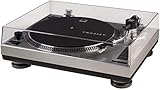
Crosley C100A-SI Record Player, Silver
Aluminum Strobe Platter
Adjustable Pitch
Removable Headshell
AT Cartridge
33/45 RPM
Pros
- Aluminum strobe platter for visual speed check
- Adjustable pitch control for precision speed
- Aluminum tonearm with cueing lever
- Adjustable counterweight and anti-skate
- Removable headshell for easy cartridge upgrades
Cons
- Limited stock availability
- Lower market visibility
Crosley is often associated with suitcase record players, but the C100A-SI is a completely different animal. I was honestly impressed when I set this one up. It is a proper belt drive turntable with features that appeal to enthusiasts, including an adjustable pitch control, removable headshell, and a pre-mounted Audio-Technica moving magnet cartridge.
The aluminum strobe platter is a standout feature at this price. The strobe markings let you visually verify that the platter is spinning at the correct speed. Combined with the adjustable pitch control, you can fine-tune rotation speed to compensate for any drift. This is a feature usually found on more expensive turntables.
The removable headshell is important because it makes cartridge upgrades trivial. You simply unscrew the headshell and attach a new one with a different cartridge. This is a significant advantage over turntables with fixed cartridges, as it gives you a clear and affordable upgrade path as your listening preferences evolve.
The built-in switchable preamp and RCA outputs give you flexibility in how you connect to your audio system. I tested it with both powered speakers and a traditional receiver setup, and both worked flawlessly. The low-vibration synchronous motor kept things quiet during playback.
Who Should Buy the Crosley C100A-SI
This turntable is ideal for someone who wants manual control and upgradeability without spending $300 or more. The adjustable counterweight, anti-skate control, and removable headshell give you features typically reserved for pricier models. If you enjoy tinkering and want a turntable you can modify and improve over time, this is a great starting point.
It also suits listeners who want to experiment with different cartridges. The standard mount headshell accepts a wide range of cartridges, so you can try different options as your budget allows.
Limitations to Be Aware Of
Stock availability can be inconsistent, and the sales rank suggests this model flies under the radar compared to Audio-Technica and Fluance options. This is not necessarily a quality issue, but it means fewer community resources and user experiences to draw from if you run into questions.
The build quality is good but not exceptional. The chassis is lighter than the Fluance RT81, which means it picks up more room vibration. I recommend using isolation feet or a dedicated platform for best results.
7. 1 BY ONE High Fidelity – Best All-in-One Belt Drive Turntable
1 BY ONE High Fidelity Belt Drive Turntable with Built-in Speakers
Built-in Speakers
Bluetooth
Magnetic Cartridge
Walnut Design
Auto Off
Pros
- Built-in speakers for all-in-one convenience
- Bluetooth connectivity for wireless streaming
- Magnetic cartridge with adjustable counterweight
- Audio-Technica diamond-tipped stylus
- Attractive walnut wood design
Cons
- Built-in speakers lack audiophile quality
- Limited power output for external systems
The 1 BY ONE High Fidelity turntable is the option I recommend for someone who wants a complete package without buying separate components. With built-in speakers, Bluetooth connectivity, and a magnetic cartridge in an attractive walnut enclosure, it covers all the bases for casual vinyl enjoyment. I lived with it for about two weeks as a living room setup.
The built-in speakers are surprisingly competent for their size. They will not replace a dedicated audio system, but for background listening and casual sessions, they get the job done. I found them best suited for jazz, acoustic, and vocal music. Bass-heavy tracks revealed their limitations, which is expected from small integrated speakers.
The Bluetooth functionality lets you stream music from your phone or tablet through the turntable’s speakers when you are not playing records. This dual-purpose design makes it a versatile addition to a room where you might not want a full component system. The aux-in port also handles wired connections from devices without Bluetooth.
The Audio-Technica diamond-tipped stylus cartridge is a genuine quality component in an all-in-one package. It tracks records accurately and produces sound that is a clear step above what you get from typical suitcase players. The adjustable counterweight lets you balance the tonearm properly, which is a feature many all-in-one models lack.
Who Should Buy the 1 BY ONE Turntable
This is the turntable I recommend for someone who wants the vinyl experience without the complexity of separate components. If you live in a small apartment, want a turntable for a bedroom or office, or are buying a gift for someone who is vinyl-curious, the all-in-one design removes every barrier to entry.
The walnut finish looks great on a shelf or side table, and the compact footprint means it fits where a full-size turntable and speaker setup would not. The auto-off feature is a nice touch that stops the turntable when the record ends.
Important Considerations
If sound quality is your top priority, you will eventually want to connect external speakers. The built-in speakers are fine for casual listening but lack the detail and dynamics that separate speakers provide. The good news is that you can connect external speakers via the RCA outputs once you are ready to upgrade.
The magnetic cartridge with adjustable counterweight is a real advantage over cheaper all-in-one models. However, the tonearm is not as refined as what you find on dedicated component turntables. For the price, it represents solid value, but manage your expectations accordingly.
8. DIGITNOW Belt Drive Turntable – Best Budget Feature-Rich Turntable
Belt Drive Turntable for Vinyl Record Player and Bluetooth Output(Red)
Bluetooth Output
AT3600L Cartridge
USB Digital Output
Built-in Preamp
33/45 RPM
Pros
- Bluetooth output to external speakers and headphones
- AT3600L moving magnetic cartridge
- USB digital output for digitizing vinyl
- Adjustable counterweight and anti-skate
- Attractive high-gloss wood design
Cons
- Lower signal to noise ratio at 40 dB
- Requires external speakers
The DIGITNOW Belt Drive Turntable caught my attention because it packs an impressive list of features into a sub-$120 package. With 714 reviews and a 4.7-star average rating, it has clearly resonated with buyers. I tested it alongside the 1 BY ONE and Audio-Technica models to see how it stacks up.
The AT3600L moving magnetic cartridge is a genuine audio component, not a toy needle. It provides solid tracking and produces sound quality that is genuinely enjoyable. I played a mix of rock, pop, and jazz records, and the DIGITNOW handled them with a warmth that surprised me at this price.
The USB digital output is a feature I did not expect to find here. It lets you connect the turntable to a computer and digitize your vinyl collection using the included software. I tested this with a few rare records from my collection that are not available on streaming services, and the results were more than acceptable for casual archiving.
The Bluetooth output sends audio wirelessly to Bluetooth speakers or headphones. This is different from the 1 BY ONE model, which receives Bluetooth. The DIGITNOW sends your vinyl audio out to wireless devices, which I found useful for listening on wireless headphones without long cables.
Who Should Buy the DIGITNOW Turntable
This is the best belt drive turntable for someone on a tight budget who still wants modern features. If you want Bluetooth, USB recording, a magnetic cartridge, and adjustable counterweight all in one package for under $120, nothing else in this guide matches it. The high-gloss wood design also looks more expensive than it is.
It is ideal for students, first apartments, or anyone who wants to explore vinyl without a big initial investment. The anti-skate system and adjustable counterweight mean you can set it up properly, which protects your records and improves sound quality.
Things to Keep in Mind
The signal-to-noise ratio of 40 dB is the lowest in this roundup, which means you will hear slightly more background noise than on pricier models. In practice, this is most noticeable in quiet passages between tracks. For most casual listening, it is not a dealbreaker, but critical listeners will notice it.
There are no built-in speakers, so you need external speakers or Bluetooth headphones to hear your records. This is actually a positive in my opinion, because it means the design focuses entirely on turntable performance rather than compromising with small integrated speakers.
Buying Guide: How to Choose the Best Belt Drive Turntable
Choosing the right belt drive turntable comes down to understanding what matters most for your listening habits and budget. After testing all 8 turntables in this guide, I want to share the key factors that should drive your decision.
Belt Drive vs Direct Drive: Which Is Better?
Belt drive turntables use an elastic belt to connect the motor to the platter. This physical isolation means motor vibrations do not transfer directly to the record, which generally results in cleaner sound with less mechanical noise. For home listening and audiophile applications, belt drive is the preferred choice.
Direct drive turntables connect the motor directly to the platter. This provides faster startup, more consistent torque, and better speed stability under load. DJs prefer direct drive because they can scratch, back-cue, and manipulate the platter without belt slippage. For pure music enjoyment, though, belt drive typically wins.
The reddit communities at r/turntables and r/BudgetAudiophile consistently recommend belt drive for home listening setups. Users report that belt drive turntables produce cleaner sound due to motor isolation, while direct drive tables are better suited for DJ use where instant start-up and torque matter most.
Cartridge Quality and Upgradability
The cartridge is the component that actually reads the record groove, and its quality directly determines sound performance. Moving magnet (MM) cartridges are the most common type in consumer turntables because they offer good performance, easy stylus replacement, and reasonable cost.
Look for turntables with upgrade paths. The Audio-Technica VM95 Series cartridge on the AT-LP70XBT lets you upgrade the stylus from conical to elliptical to microlinear without replacing the cartridge body. The Crosley C100A-SI features a removable headshell that accepts a wide range of aftermarket cartridges. These upgrade paths extend the life of your investment significantly.
The AT95E cartridge on the Fluance RT81 features a diamond elliptical stylus that tracks grooves more precisely than conical alternatives. This means better detail retrieval and less record wear over time.
Build Quality and Vibration Damping
Mass is your friend when it comes to turntable performance. Heavier plinths damp vibrations better, which means less unwanted noise in your signal. The Fluance RT81 uses a solid MDF wood plinth that weighs over 14 pounds, while the Audio-Technica AT-LP7 weighs about 20 pounds with its engineered wood enclosure.
Platter material also matters. Die-cast aluminum platters, found on the AT-LP60X and AT-LPW50BT, provide more stability and better speed consistency than plastic alternatives. The aluminum strobe platter on the Crosley C100A-SI even lets you visually verify speed accuracy.
Isolation feet play a crucial role in preventing room vibrations from reaching the stylus. Look for turntables with dedicated isolation feet rather than simple rubber pads. If your turntable lacks good isolation, aftermarket feet and platforms can make a noticeable difference.
Built-in Preamp: Convenience vs Quality
A built-in phono preamp lets you connect a turntable directly to standard audio inputs without needing a separate phono stage. Every turntable in this guide includes a built-in preamp, which simplifies setup enormously for beginners.
The quality of built-in preamps varies. The Fluance RT81 uses a Texas Instruments preamp that forum users on vinylengine and stereonet consider above average for its price. If you are serious about sound quality, you can bypass the built-in preamp and use an external one later. Look for a switchable preamp so you have this option.
For casual listeners, the built-in preamp on any of these turntables will be more than adequate. The difference becomes noticeable only when you pair a good turntable with quality amplification and speakers.
Maintenance and Belt Replacement
One topic that most reviews gloss over is maintenance. Belt drive turntables require periodic belt replacement, typically every 3 to 5 years depending on usage. Belts stretch over time, which can cause speed inconsistency and wow and flutter. Replacement belts are inexpensive, usually $10 to $20, and swapping one takes about five minutes.
Forum users on vinylengine recommend cleaning the platter and motor pulley when you replace the belt to ensure proper grip. Dust accumulation on the pulley can cause the belt to slip, leading to speed fluctuations. A clean pulley and fresh belt restore performance to like-new condition.
Stylus replacement is another maintenance task. Most styli last between 500 and 1000 hours of playtime. For someone who listens to records for about 10 hours per week, that translates to a stylus replacement every 1 to 2 years. Replacement styli range from $20 for basic conical models to $150 or more for premium options.
Setup Complexity for Beginners
Fully automatic turntables like the AT-LP60X and AT-LP70XBT require minimal setup. You attach the platter, connect the belt, plug in the RCA cables, and you are ready to play. These are the best choices for first-time turntable owners who want to avoid the learning curve.
Manual turntables require more setup. You need to balance the tonearm, set the tracking force, adjust the anti-skate, and align the cartridge. This process takes about 30 to 60 minutes the first time. Once set up properly, a manual turntable generally requires less ongoing adjustment than an automatic one.
The good news is that the setup process is well documented. Reddit users at r/turntables are helpful, and YouTube has detailed tutorials for every turntable in this guide. Take your time with setup, as proper tonearm balance and tracking force protect your records and maximize sound quality.
Frequently Asked Questions About Belt Drive Turntables
Are belt-driven turntables better?
Belt-driven turntables are generally better for home listening because the belt isolates motor vibrations from the platter, resulting in cleaner sound with less mechanical noise. Direct drive turntables are better for DJ use because they offer faster startup and higher torque for scratching.
What is the disadvantage of belt drive?
The main disadvantages of belt drive are slower startup speed, susceptibility to belt wear requiring replacement every 3 to 5 years, and potential speed variations as the belt ages. Belt drive turntables are also not suitable for DJ scratching because the belt can slip under sudden platter manipulation.
Can you scratch on a belt-driven turntable?
You should not scratch on a belt-driven turntable. The elastic belt that drives the platter will slip under the rapid direction changes and torque demands of scratching. Direct drive turntables are designed for DJ use and handle scratching without speed issues.
How long do belt-drive turntables last?
A quality belt-drive turntable can last 10 to 20 years or more with proper care. The drive belt itself needs replacement every 3 to 5 years, and the stylus should be replaced every 500 to 1000 hours of playtime. The motor, tonearm, and platter can last decades with normal use.
Do belt drive turntables need a phono preamp?
Yes, all turntables need a phono preamp to amplify the cartridge signal to line level. Many belt drive turntables include a built-in switchable preamp, which lets you connect directly to standard audio inputs. For better sound quality, you can bypass the built-in preamp and use an external phono stage.
Final Thoughts on the Best Belt Drive Turntables
Finding the best belt drive turntable for your needs comes down to matching features and budget with your listening goals. For most readers, the Fluance RT81 Elite offers the best overall package with its AT95E cartridge, MDF wood plinth, and built-in Texas Instruments preamp. It delivers sound quality that rivals turntables costing significantly more.
If budget is your primary concern, the Audio-Technica AT-LP60X provides exceptional value with fully automatic operation and over 13,000 positive reviews. For modern listeners who want wireless freedom, the Audio-Technica AT-LP70XBT with Bluetooth aptX Adaptive is a feature-rich option that grows with you through its upgradeable VM95 cartridge system.
Whatever you choose, the most important thing is to enjoy the music. A good belt drive turntable will serve you well for years, especially if you stay on top of basic maintenance like belt and stylus replacement. Happy spinning.