
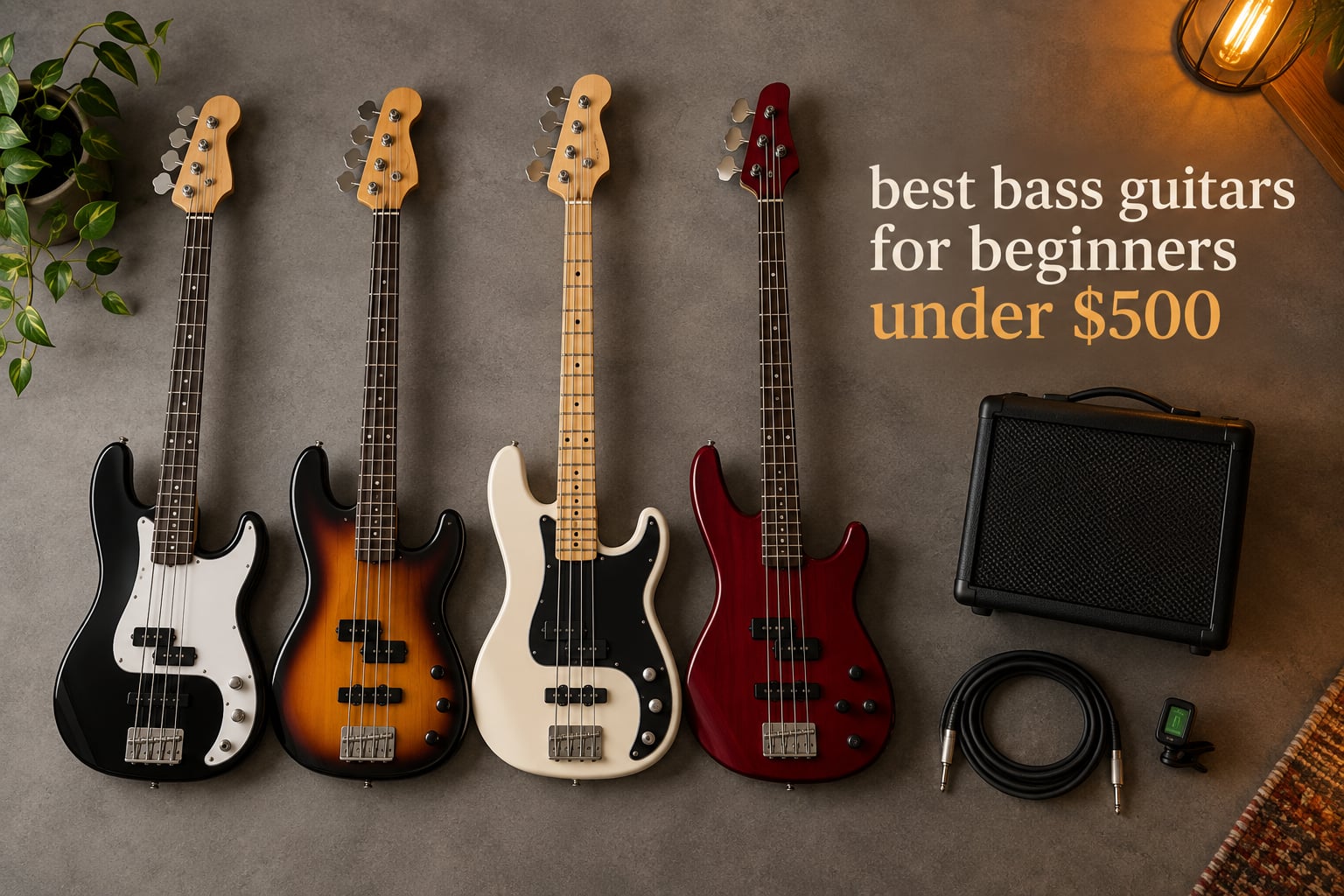
Short answer: the Yamaha TRBX174 is the best bass guitar for beginners under 500 in 2026. It is a passive 4-string with split-coil and single-coil pickups, a bolt-on maple neck and a build that holds up past the beginner stage, and it is the pick we keep coming back to after working through all twelve instruments in this guide.
Everything in this roundup sits under the same 500 ceiling, spans four-string and five-string, short scale and long scale, and includes three boxes that arrive with an amplifier inside so you can make a sound on day one. A bass guitar makes no noise on its own, which is the single most common reason beginners feel they have failed after their first week.
Over the years of putting beginners on instruments, the pattern is boring and consistent: the deciding factor is not tone, it is whether the neck is straight, the strings sit low, and the frets are level. Get those three right and almost any decent four-string will teach you everything for years. Our cheap bass guitar beginner picks cover the entry tier, while this list goes all the way to the top of the range.
If your interest leans toward a specific style, our guides on acoustic basses for beginners, Jazz Bass options and four-string basses under 500 go deeper on those formats. Readers shopping in a different market will also want our beginner bass picks for the UK.
Top 3 Picks: Bass Guitar Picks for Beginners in 2026

Yamaha TRBX174
- P/J split-coil and single
- Passive electronics
- Bolt-on maple neck
- Mahogany body
Ibanez GSR200
- Active Phat II boost
- Lightweight mahogany body
- Fast maple neck
- Dynamix pickups
Squier Debut Precision
- Split-coil P-Bass tone
- Lightweight poplar body
- C-shaped neck
- 2-year warranty
Best Every Bass Guitar in This List at a Glance
Every pick below is under the 500 ceiling. The table shows what each one is, what it comes with, and who it suits, so you can narrow the field before reading any individual write-up.
| Product | Specifications | Action |
|---|---|---|
| Yamaha TRBX174 |
|
Check Latest Price |
| Ibanez GSR200 |
|
Check Latest Price |
 Donner PB-Style Kit Donner PB-Style Kit |
|
Check Latest Price |
| Squier Debut Precision |
|
Check Latest Price |
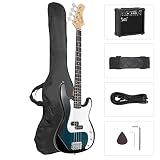 GLARRY Starter Kit GLARRY Starter Kit |
|
Check Latest Price |
 Ibanez GSR205 Ibanez GSR205 |
|
Check Latest Price |
 Ktaxon 4-String Kit Ktaxon 4-String Kit |
|
Check Latest Price |
 Ibanez GSR100EX Ibanez GSR100EX |
|
Check Latest Price |
 Squier Mini Precision Squier Mini Precision |
|
Check Latest Price |
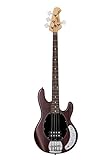 Sterling StingRay Ray4 Sterling StingRay Ray4 |
|
Check Latest Price |
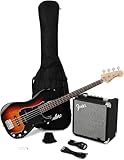 Squier Affinity PJ Pack Squier Affinity PJ Pack |
|
Check Latest Price |
 Best Choice Acoustic Bass Best Choice Acoustic Bass |
|
Check Latest Price |
How these 12 were picked
We rank on playability first, then build consistency, then whether the instrument stays interesting after the first three months. Tone ranks last on purpose, because a beginner cannot hear the difference between a split-coil and a humbucker until they have something to compare it against.
Review volume matters more than star rating at this price. A 4.5 average across 2000 owners tells you more about what a factory does consistently than a 4.8 average across 30, and forums like r/BassGuitar repeat the same warning about unbranded marketplace listings. We also weight warranty length, because a first bass is the instrument most likely to need an early adjustment.
One honest limit: we did not bench-test every individual unit. Specs, ratings and owner reports come from the manufacturer listings and thousands of verified buyer reviews, so treat a specific instrument as a sample of a batch rather than a guarantee.
1. Yamaha TRBX174 – Best Bass Guitar for Beginners Overall
Yamaha TRBX174 BL 4-String Electric Bass Guitar
Mahogany body
Bolt-on maple neck
P/J split-coil plus single
Passive 4-string
Pros
- P/J pickups cover two classic voices
- Fast bolt-on maple neck suits small hands
- Mahogany body with sonokeling fingerboard
- Passive electronics need no battery
Cons
- Fret ends can need filing out of the box
- Plastic output jack plate is a weak spot
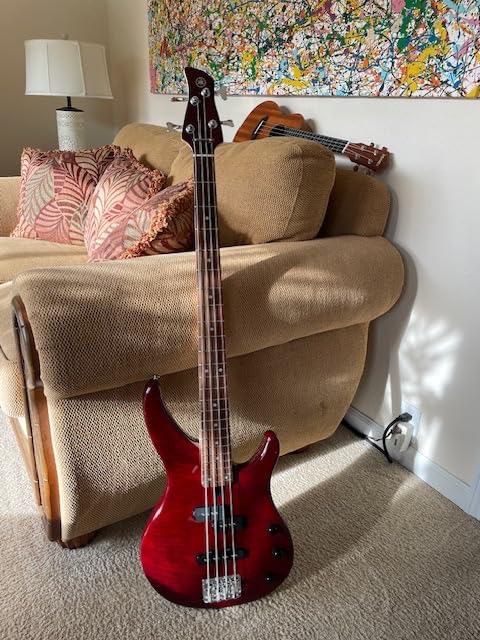
The TRBX174 is the one we hand to a first-time player without hesitating. Yamaha has built this model long enough that the production line is predictable, and 1072 owner ratings averaging 4.7 is a large enough sample to trust the consistency claim.
What makes it work is the pickup layout. You get a split-coil for the fat P-Bass thump and a single-coil for the brighter J-Bass snap, plus a deep cutaway that gets your thumb over the top frets without fighting the body. Nothing about it is exotic, and that is exactly the point.
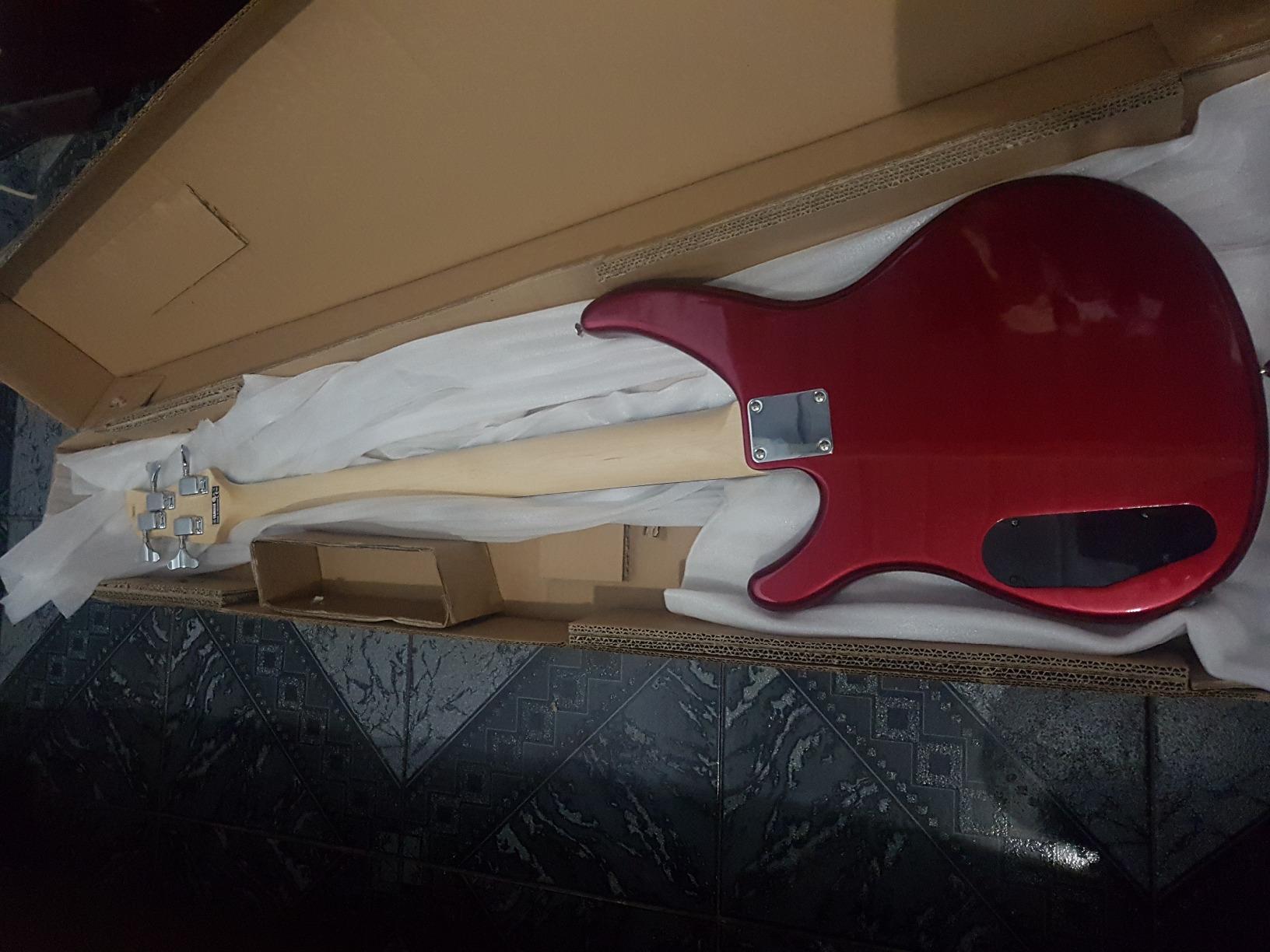
Owners do complain about two things consistently. The first is that string action arrives higher than they would like, and the second is that the supplied strings are noisy, so many of them swap to flatwounds within a month. A truss rod adjustment and a fresh set fixes both for very little money.
There is one more minor issue worth knowing: the plastic output jack plate is widely considered the weakest part on the instrument, and a metal replacement is a five-minute job if you ever need it. Weight comes in at 5.33 kg, which is substantial for a bass but well balanced for a standing player.
When this is the right first bass
Choose the TRBX174 if you want one instrument that covers most of what you will hear on records. Passive electronics mean no battery to forget before a rehearsal, and the 34-inch scale is the standard tuning everyone else uses, so lessons and tabs transfer without adjustment.
It also holds resale and upgrade value well. When a player eventually wants a five-string or an active instrument, this is an easy bass to sell or hand down to a younger student in the house.
When to pick something else
Skip it if your total budget has to cover an amplifier as well, because that leaves very little for a proper setup. It is also the wrong call for a child under about ten years old, since the full-size body and long scale will strain small hands in the first weeks.
If you specifically want the deep, scooped Precision thump with no bridge pickup in the way, the Squier Debut below is the more focused choice at a lower tier.
2. Ibanez GSR200 – Best Value Bass Guitar for Beginners
Ibanez Gio GSR200 Bass Guitar, Weathered Black
Lightweight mahogany body
Fast maple neck
Rosewood fingerboard
Active Phat II boost
Pros
- Largest owner base in this list with 2027 ratings
- Lightweight 10.4 pound body is easy on the shoulder
- Active boost gives a strong low end
- Fast neck suits guitar players
Cons
- Active electronics need a 9V battery
- Entry-grade hardware is the first thing owners upgrade
With 2027 ratings at 4.6, the GSR200 has the broadest owner base of any bass in this guide, and that is exactly why we rank it second rather than lower. When a thousand people have reported on the same instrument, the failure patterns are well documented.
The pattern is: the guitar itself is good, and the hardware that ships with it is not. Most owners replace the supplied strings and, in some cases, the tuning machines within the first year. That is a normal first-bass upgrade cycle rather than a fault.
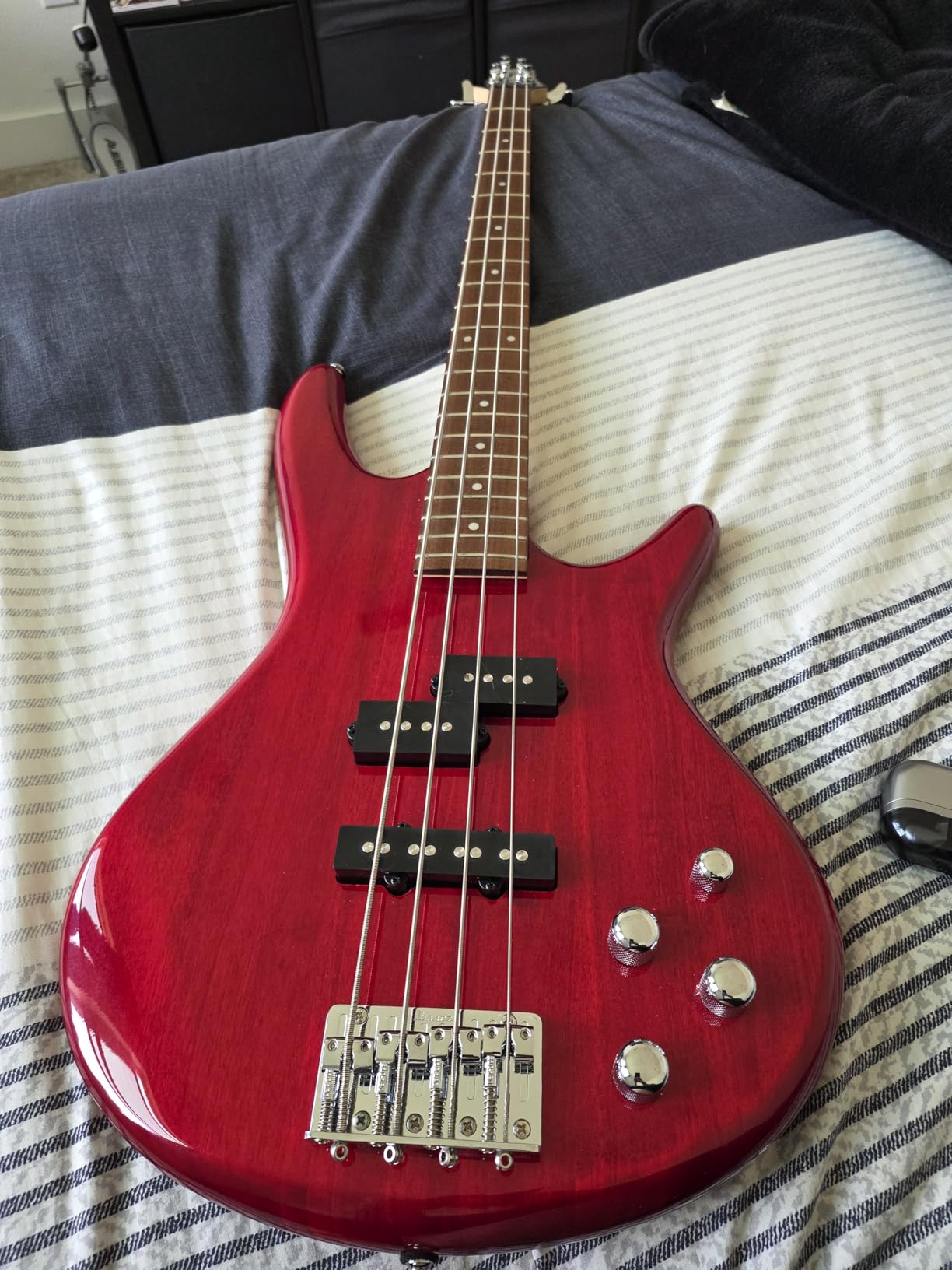
Weight is the sleeper feature. At 10.4 pounds with a carved mahogany body, this is one of the lighter full-size basses here, and on a long practice session the difference between a 10-pound instrument and a 12-pound one shows up in your shoulder before it shows up anywhere else.
The active electronics are the other talking point. Owners consistently praise the punch of the Phat II boost and note that a passive instrument needs a more flattering amplifier to sound as good. The trade is the 9V battery, which you check before every rehearsal.
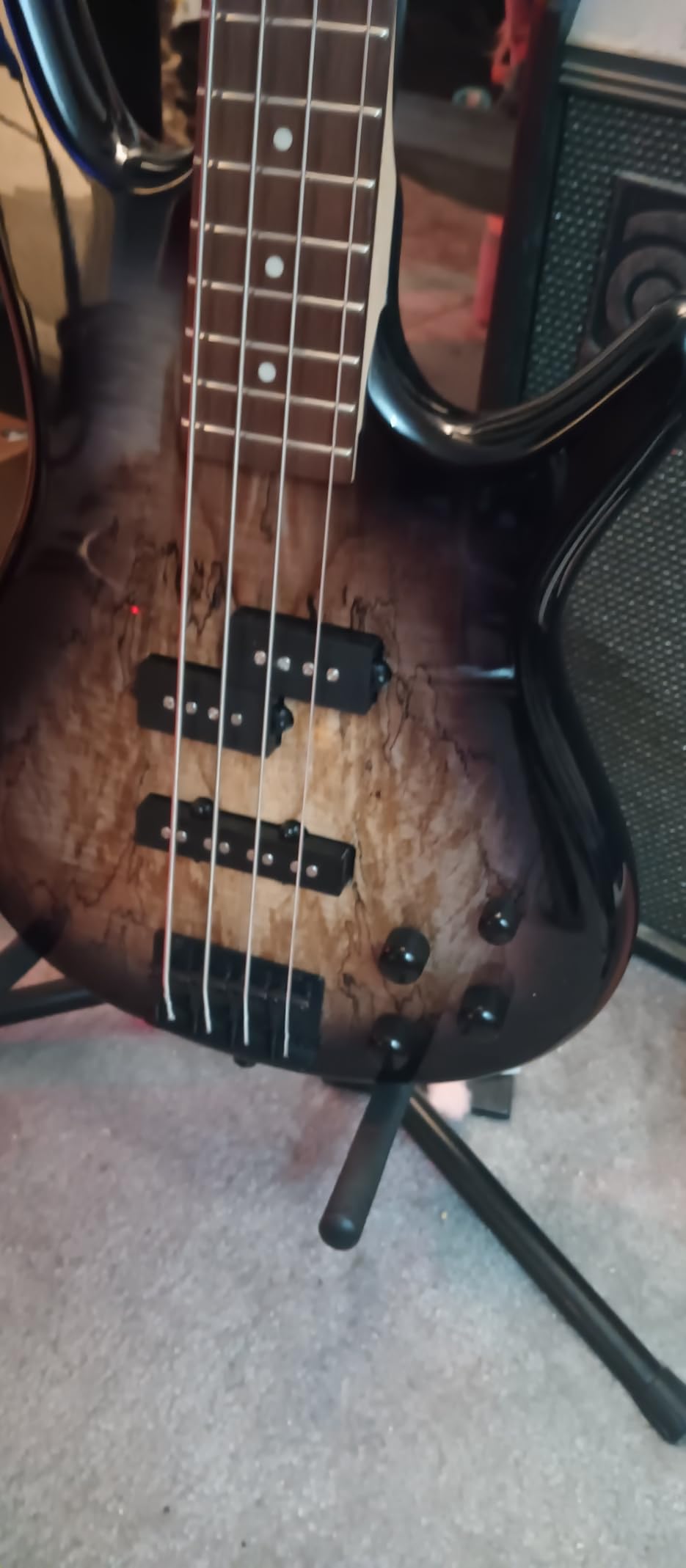
When this is the right first bass
This is the choice for a guitarist switching to bass who already has fast hands and a thin neck profile in their muscle memory. The maple neck is quick under the fingers, and the active low end means it keeps its shape in a noisy practice room.
It is also the safest buy in terms of resale and parts availability. Ibanez hardware is inexpensive and easy to source almost anywhere, so a future pickup or pot swap is trivial.
When to pick something else
Skip it if you want zero electronics to think about, or if you plan to travel constantly and do not want to carry spare batteries. Some players also find the tone too forward and characterless for acoustic-leaning material.
If your priority is a finished package rather than a bare guitar, the Donner and Ktaxon kits below include a bag, strap and cable so you are not shopping for accessories on day one.
3. Donner PB-Style Kit – Best Complete Kit Without an Amp
Donner Electric Bass 4 Strings Full-Size Guitar Kit PB-Style (Black)
Gig bag strap and cable included
Through-body 4-saddle bridge
Poplar body
Modern C maple neck
Pros
- Bag strap and cable are in the box
- Through-body bridge allows per-string setup
- Lightweight poplar body
- Modern C profile is forgiving for new hands
Cons
- Entry-grade hardware and poplar body
- Gloss finish shows fingerprints
- Neck and saddles often need setup
The Donner PB-Style is the most sensible pick on this list for anyone whose real obstacle is not the guitar but the shopping list. The gig bag, strap and cable all come in the box, so the only thing missing is sound amplification.
The hardware choices are better than the price suggests. A through-body fixed bridge with four individual saddles means a technician can set each string height and intonation separately, which is a genuine advantage over a one-piece plate bridge on cheaper kits.
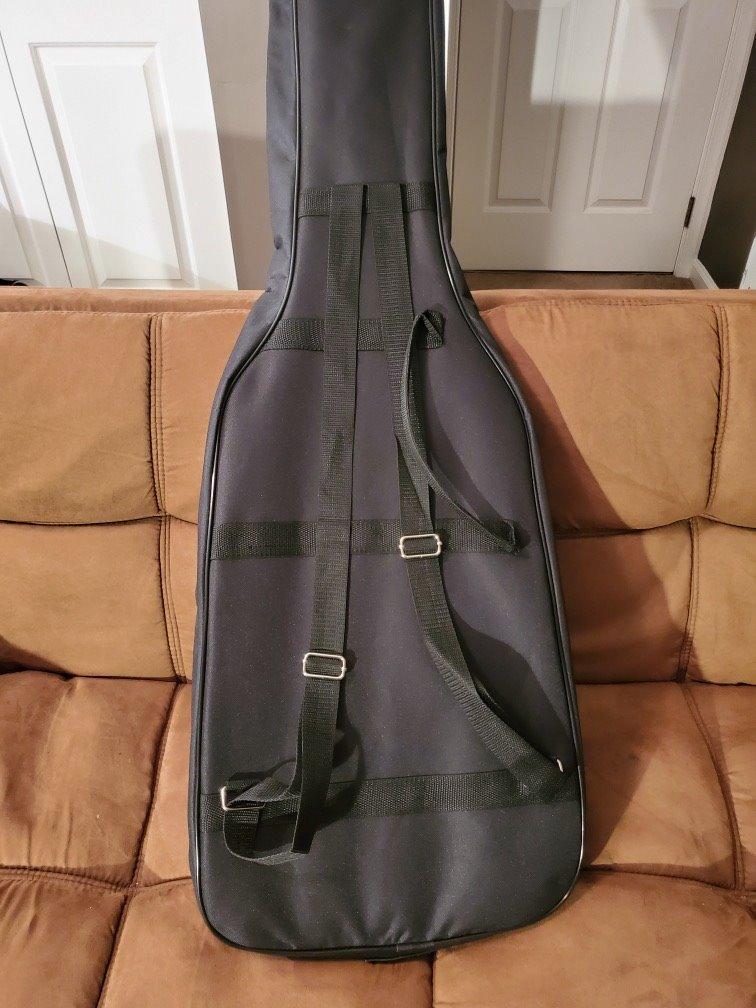
Owners rate the tone warmly for a P-style instrument: classic, warm and crisp rather than thin. What they complain about is the arrival condition, since the neck and saddle setup usually needs adjustment before it feels right under the hand.
There are 1303 ratings at 4.5, which puts this among the most proven instruments in the guide. The poplar body and basic hardware are the affordable grade, but they are a normal first step rather than a dead end.
When this is the right first bass
Pick this if you are buying for a teenager or a student and you want one affordable box that covers the guitar, the bag, the strap and the cable. It also works well as a second instrument for a family where one person already owns an amplifier.
The Modern C neck profile and Modern C shape are among the more forgiving choices for brand-new fingers, which matters more in month one than any tone decision.
When to pick something else
Do not choose it if you need a strong low end out of a small practice amplifier, or if you care about finish durability, because gloss paint shows fingerprints and small flaws quickly. Forums consistently steer beginners with a real budget toward a Yamaha or Squier for the same money range.
If you want the accessories and the amplifier in one purchase, the GLARRY and Ktaxon kits cover that instead.
4. Squier Debut Series Precision – Best Budget Bass Guitar for Beginners
Fender Squier Debut Series Precision Bass Guitar, Beginner Guitar, with 2-Year Warranty, Includes Free Lessons, 2-Color Sunburst with Matte Finish
Split-coil P-Bass tone
Thin poplar body
Laurel fingerboard
C-shaped neck
Pros
- Authentic split-coil P-Bass character
- Very light balanced body with no neck dive
- C-shaped neck suits smaller hands
- 2-year warranty plus lessons included
Cons
- Supplied strings are rough and gritty
- Treble-side fret ends can be sharp
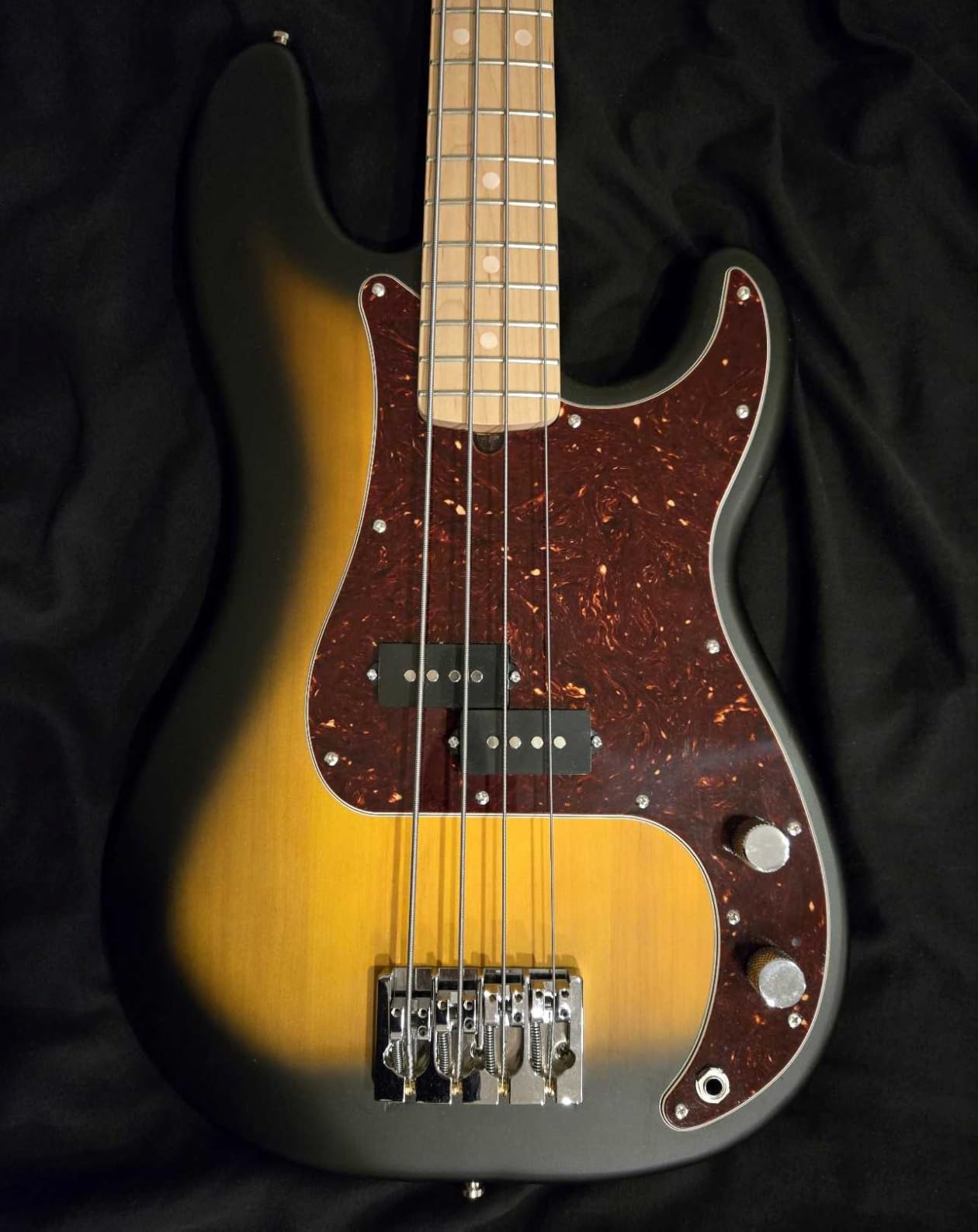
The Squier Debut Precision is the cheapest route to a genuine split-coil P-Bass sound on this list, and Squier is Fender’s own budget brand built to Fender quality-control standards rather than an imitation. That pedigree is why it sits at the top of our entry tier.
It weighs 4500 g, which is genuinely light, and the body is balanced so it does not dive forward on a strap. For a player who has never held a bass, that balance does more for early motivation than any tonal advantage.
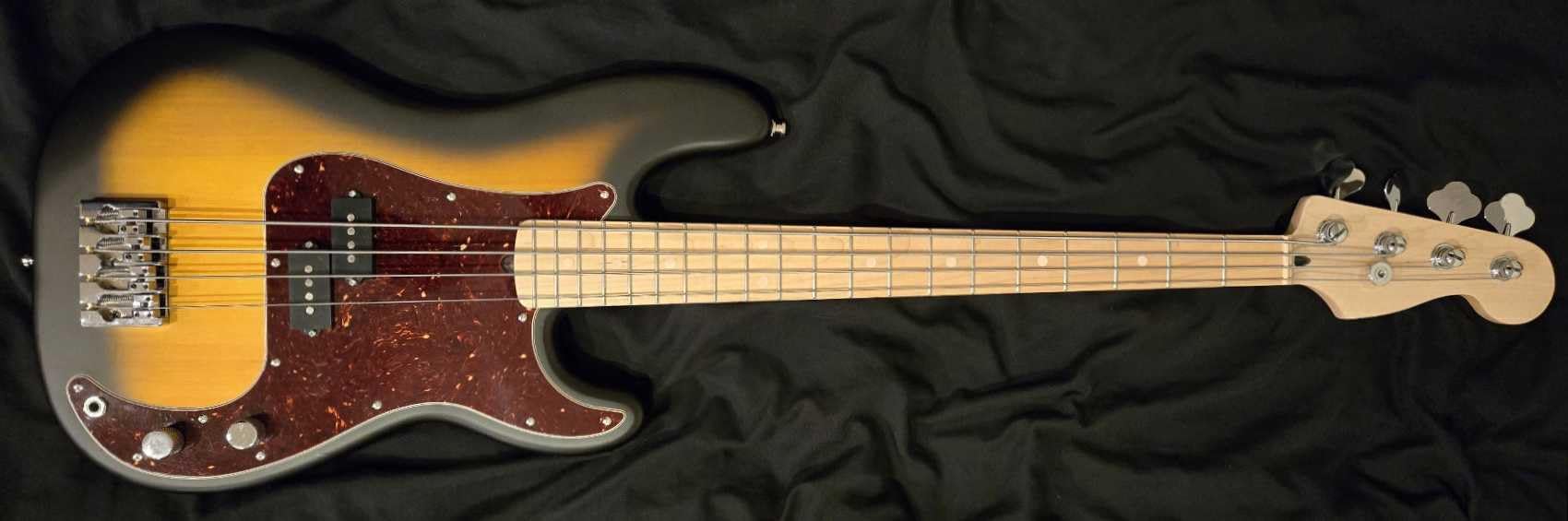
The honest complaint is the supplied strings. Owners describe them as rough, cheap and gritty, and a few also report sharp fret ends on the treble side. A fresh set of strings and a quick nut-sand takes this instrument from frustrating to genuinely good in an afternoon.
A small amount of 60 Hz hum is reported by some owners until the cavity is shielded, which is a normal budget-instrument issue and not a reason to reject it. The bundled Fender Play subscription also gives a new player structured lessons rather than random videos.
When this is the right first bass
Choose it if you want one clear bass voice, a comfortable C-shaped neck for smaller hands, and a brand that keeps its value. It is also the easiest P-Bass to recommend to someone who plans to take lessons, because the tone is the one teachers expect you to hear.
The 2-year limited warranty is longer than most competitors here, which matters on a first instrument that will be adjusted in the first month.
When to pick something else
Skip it if you want tonal variety, since a single split-coil cannot move from thump to snap without a pedal. Avoid it also if you are a large player, because the slim neck and light body can feel small once your technique develops.
If you want two pickup voices in the same instrument, look at the Ktaxon kit or the Squier Affinity PJ pack further down.
5. GLARRY Full-Size Kit – Best All-in-One Starter Package
GLARRY Full Size Electric Bass Guitar Beginner Kit 4 String Exquisite Basswood Bass with 20W AMP, Cable, Strap, Bag and Accessories (Dark Blue, 39″Right Handed)
20W amp with headphone output
Split single-coil pickup
Basswood body
Adjustable string height
Pros
- Amp bag strap cable and pick in one box
- Headphone output on the amp for quiet practice
- Lightweight body suits younger players
- Tuning has stayed stable for many owners
Cons
- Action needs adjustment and can buzz at low frets
- Build quality is basic with minor cosmetic flaws
- Included amp has limited sound
The GLARRY kit is the shortest distance between buying a bass and making a sound. The 20W amplifier has a 1/4 inch headphone output on the front panel, which matters enormously for anyone in a flat or a house with thin walls.
That headphone jack is the detail almost nobody else in this list offers. It turns an amplifier that would be unusable in an apartment into a private practice tool, and it is the reason this kit beats its price peers for apartment practice.
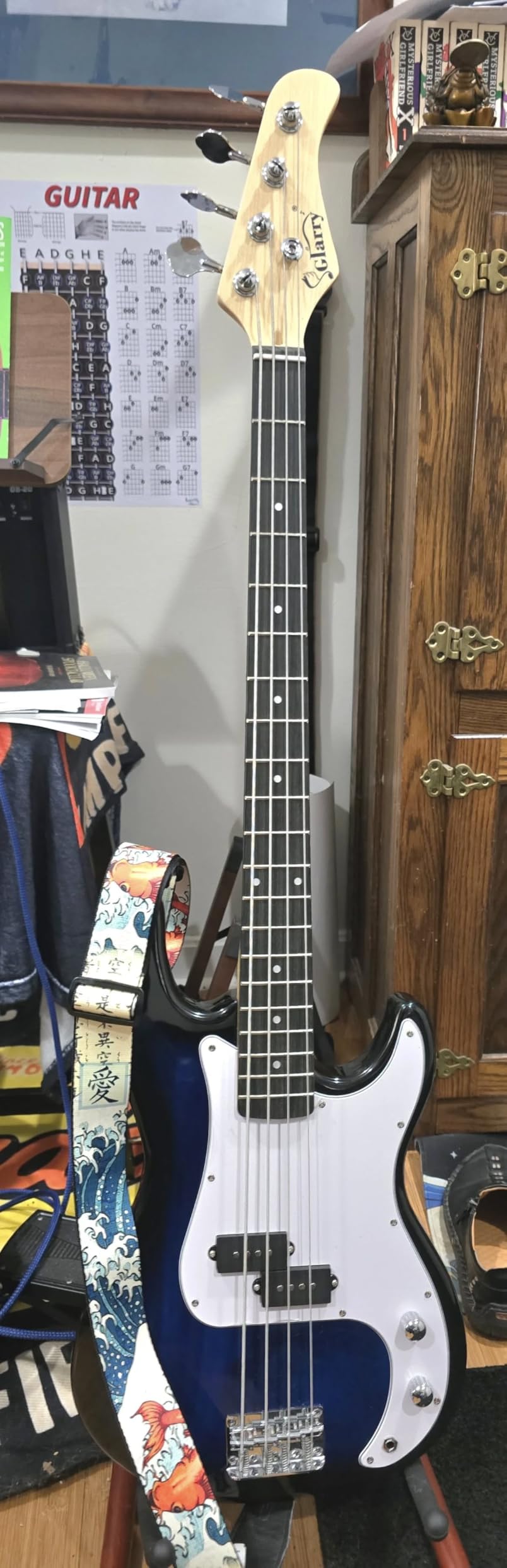
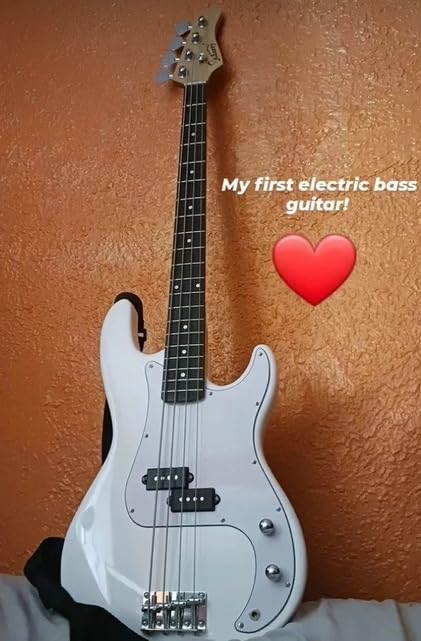
The realistic expectation setting matters here. Owners frequently describe this as a short-term starter, with several reviewers expecting beginners to outgrow it within about a year, and there are reports of peeling laminate, crooked screws and one cracked neck among the negative reviews.
Tuning stability is the quiet strength: many owners report the instrument has held tuning for over a year of use. The split single-coil pickup with two volume knobs covers warm and rock styles adequately rather than precisely.
When this is the right first bass
Pick this if the person learning is a child, if nobody in the house owns an amplifier, or if your practice space does not tolerate a loud instrument. Nothing else in this list gets a beginner making a sound straight away.
The included bag, strap, cable and pick mean the total cost of entry is genuinely one purchase, which matters for gift buyers.
When to pick something else
Do not buy it if the player is committed rather than curious, because the durability reports are the weakest in this roundup. The included strap also wears out quickly according to several owners.
If you want the same all-in-one convenience on a sturdier instrument, the Squier Affinity PJ pack uses a real Fender/Squier bass and a purpose-made Rumble 15 amplifier instead.
6. Ibanez GSR205 – Best 5-String Bass Guitar for Beginners
Ibanez GSR205BWNF GIO – Walnut Flat
5-string with 34 inch scale
Two active humbuckers
Jatoba fingerboard
Bolt-on maple neck
Pros
- Two active humbuckers cover a wide tonal range
- 34 inch scale gives real low-end headroom
- Solid Ibanez bolt-on construction
- Flat finish hides wear well
Cons
- Low B string is harder for a total beginner
- Active electronics need battery changes
- Heavier than most entry basses
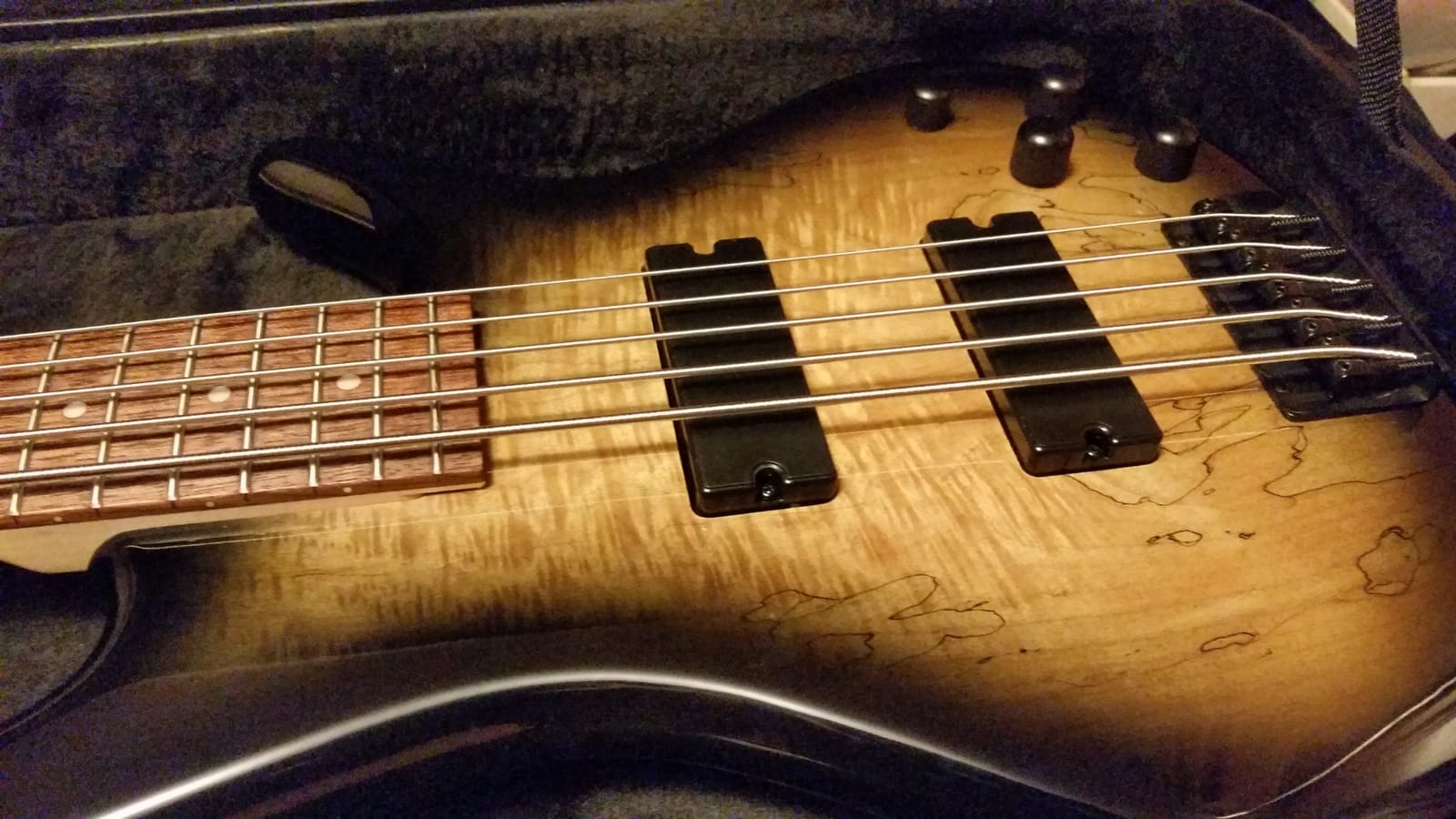
The GSR205 is the only five-string in this roundup, and it exists because plenty of players arrive already knowing which notes they want. If you play modern rock, metal or worship music, learning on a four-string means unlearning habits later.
Two active humbucking pickups give a genuinely wide range from one instrument, and the 34-inch scale is the same long scale used on the four-string versions, so the neck feel transfers directly from the Yamaha above.
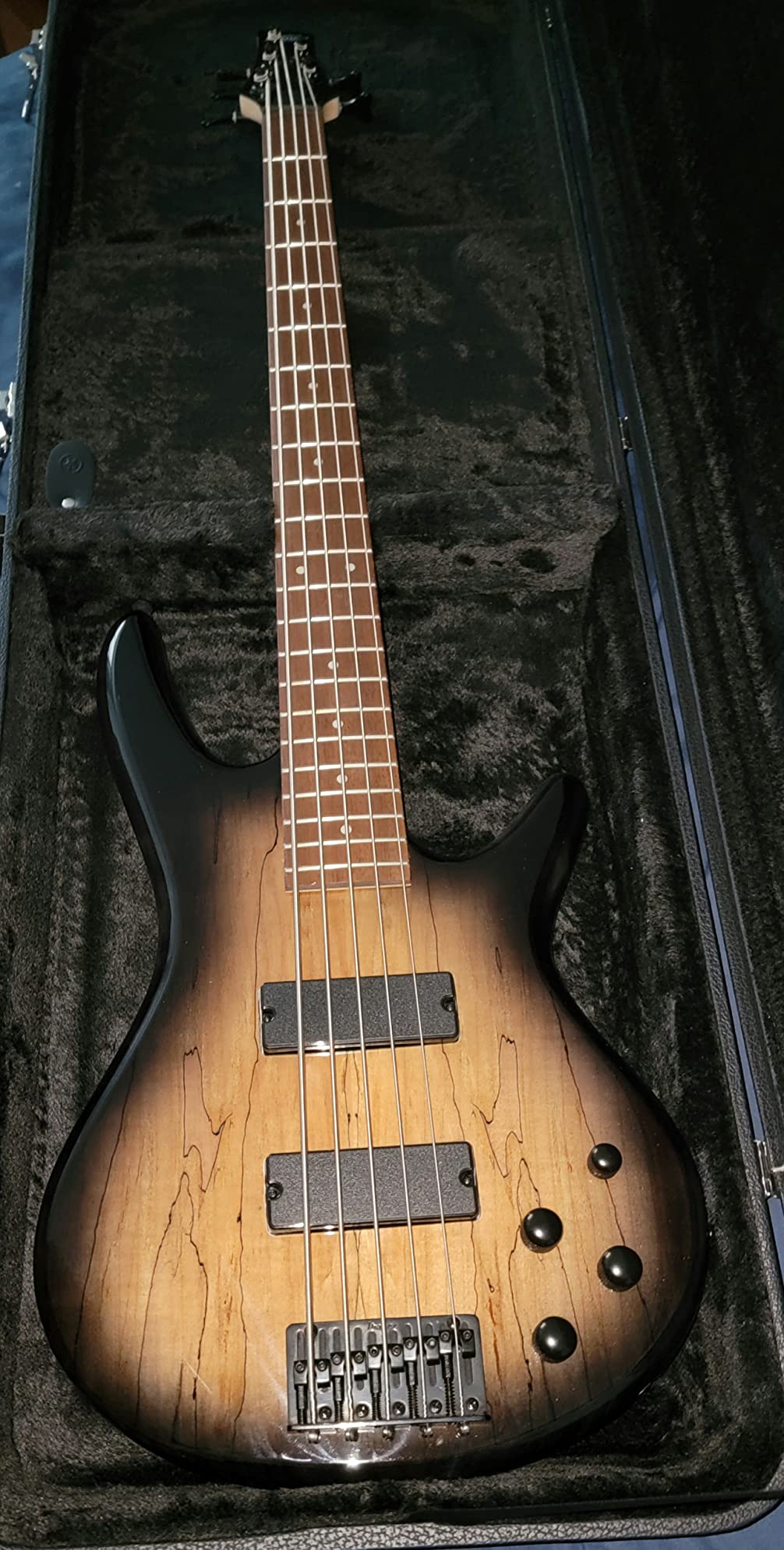
The trade-offs are real and we will not pretend otherwise. A low B string is physically harder for a new player to fret cleanly, and beginners consistently report that the fifth string adds complexity before it adds usefulness.
At 10 pounds it is also among the heavier instruments here, and the active electronics add a battery to maintain alongside everything else. None of that is a fault, it is simply more to think about on day one.
When this is the right first bass
Choose it if you already play guitar, if your music needs the low B, or if you plan to move into a band that tunes down. The mahogany body and bolt-on maple neck are proven Ibanez construction that many working players still use.
It is also a sensible bridge instrument: five-string neck shapes are typically thinner and faster, which suits players who find a four-string neck too thick.
When to pick something else
Skip it for a complete beginner with no guitar background. Learning finger placement and muting on a five-string at the same time is a lot of pressure, and most of the benefit arrives months after you would have given up.
For a first instrument, four strings and a passive split-coil will teach you more for less effort. Start there and upgrade once you are playing along with other people.
7. Ktaxon 4-String Kit – Best PJ Starter Kit with Amp
Ktaxon Electric Bass Guitar 4 String Bass Guitar Kit-Black
Amp bag strap cable included
Split coil plus single
Four-bolt neck joint
Air-dried fingerboard
Pros
- Amp and full accessory set in the box
- PJ layout with two volume and two tone knobs
- Four-bolt neck joint improves high-fret access
- Ready to play with no assembly
Cons
- Only a 30-day manufacturer warranty
- Alloy steel strings are harsh on beginner fingers
- Bundled amp is practice level only
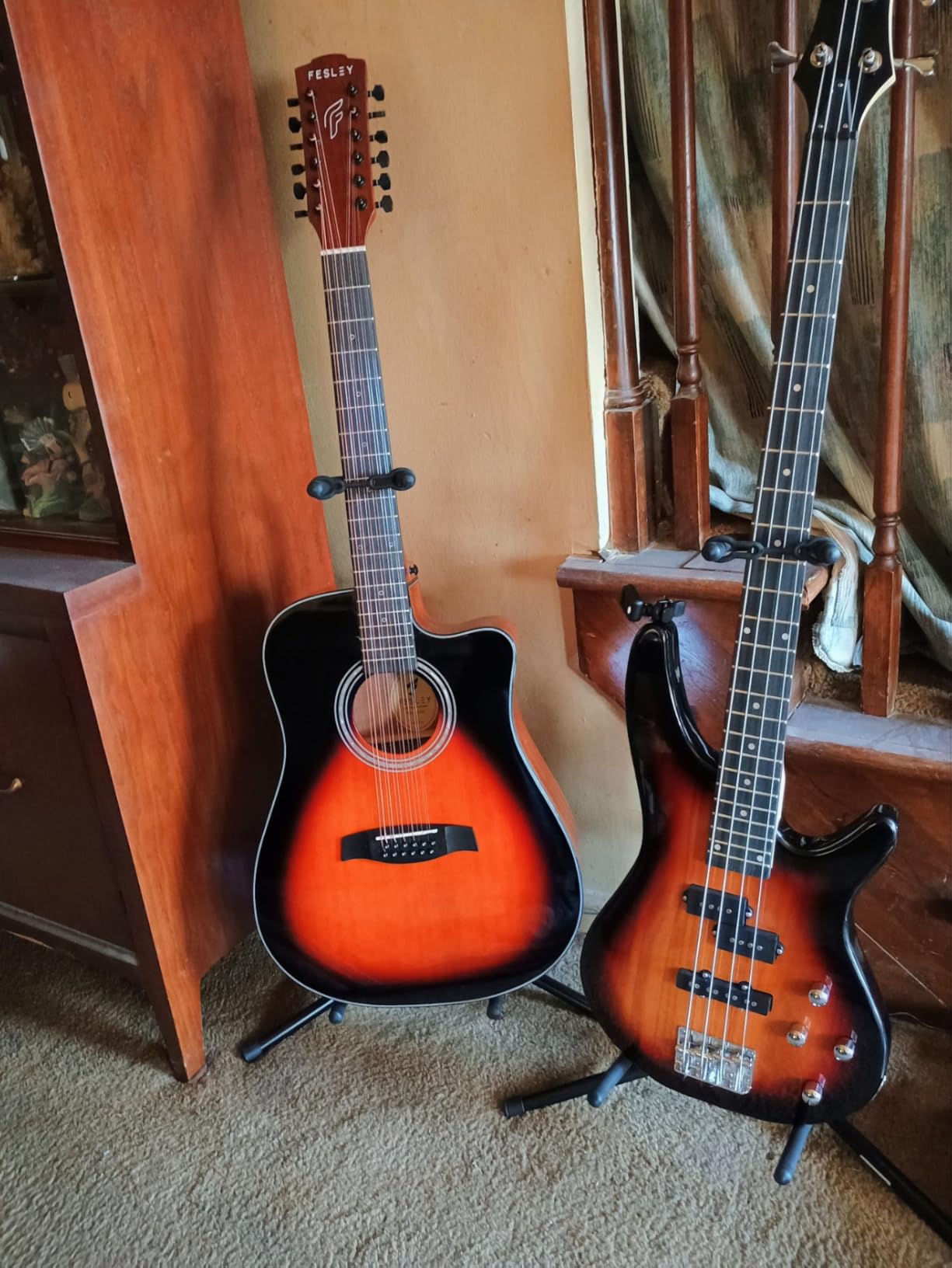
The Ktaxon kit is the answer to a specific question: what if you want the versatility of a P/J bass but you do not want to shop for an amplifier separately. The 20W amp, bag, strap, cable, tool and plectrum all ship in the box.
The pickup layout is the strongest technical feature here. A split single-coil plus a single-coil with two volume and two tone controls gives you four working combinations, which is genuinely more than the Squier Debut offers at a similar entry level.
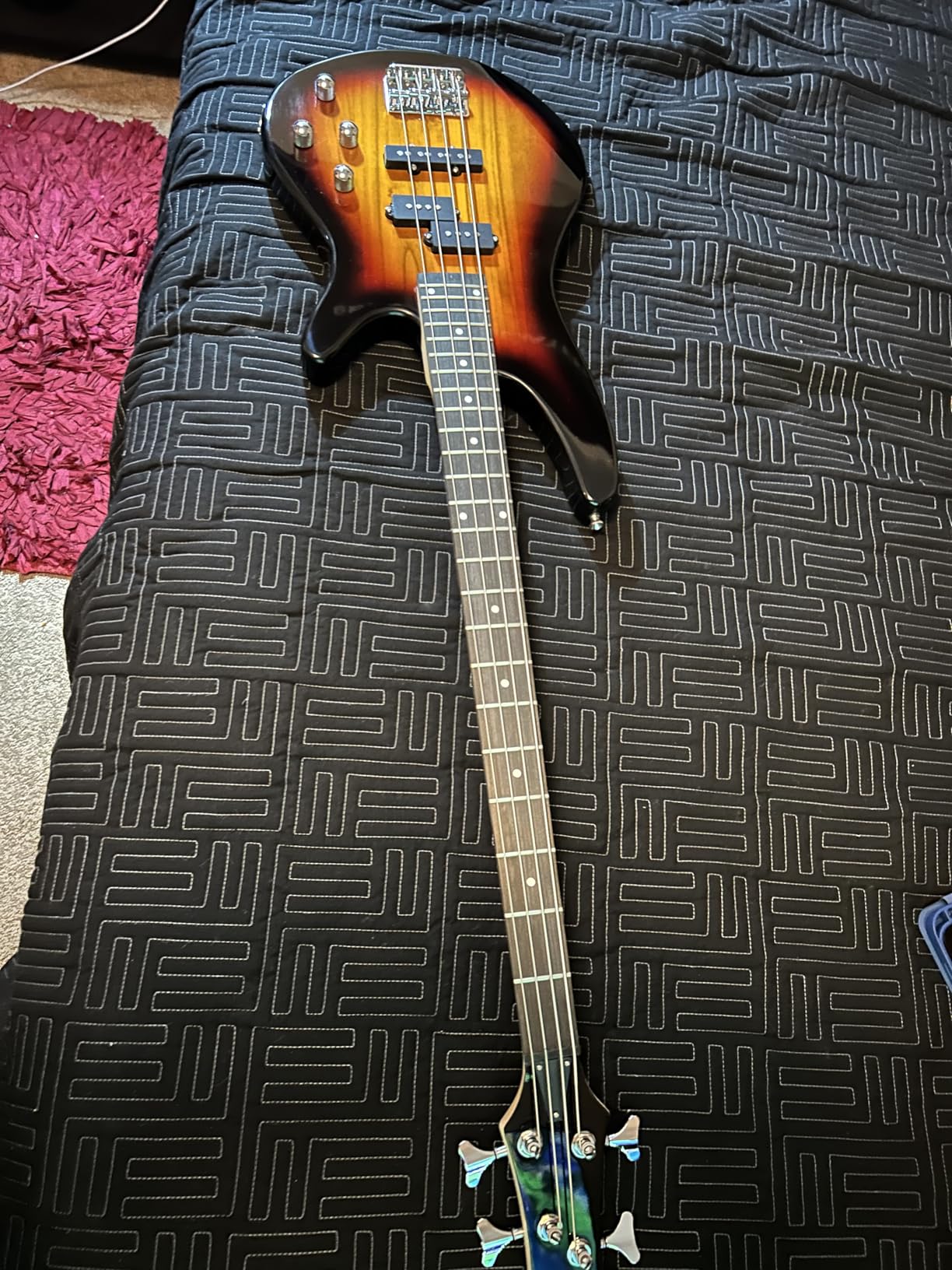
The construction details are better than the price band usually offers. There is a four-bolt neck joint for high-position access, a dual-adjustment headstock designed for intonation stability, and a naturally air-dried fingerboard that is a genuine quality upgrade over raw plywood.
The two caveats owners raise most are the 30-day manufacturer warranty, which is the shortest in this guide, and the alloy steel strings, which are harsher on soft beginner fingers than nickel-plated sets. Many owners upgrade the strings within weeks.
When this is the right first bass
Pick it when your budget covers the guitar and an amplifier but not a full set of accessories, and when you want more tone control than a single split-coil can give. Two volume and two tone knobs is closer to how most working bassists set up their rig.
It is also a good choice for a player moving from guitar to bass, because the bolt-on feel and the multi-knob control scheme are familiar.
When to pick something else
Do not choose it if warranty length matters to you, because 30 days will not cover an early setup problem. The included 20W amplifier is a practice unit, so anyone playing with a band will need something larger fairly soon.
For longer-term value, put the same money toward a Yamaha or Squier bass and a separate amplifier, where the amplifier outlives the first instrument.
8. Ibanez GSR100EX – Best Natural-Finish Single-Pickup Bass
Ibanez GSR100EX GIO – Mahogany Oil
Single humbucking pickup
Passive electronics
Natural oil poplar body
Jatoba fingerboard
Pros
- Natural oil finish looks distinctive
- Passive design means no batteries
- Durable jatoba fingerboard
- Conventional proven Ibanez GIO build
Cons
- Single pickup limits tonal variety
- Heavier than slim modern beginner basses
- Lowest review count in this roundup
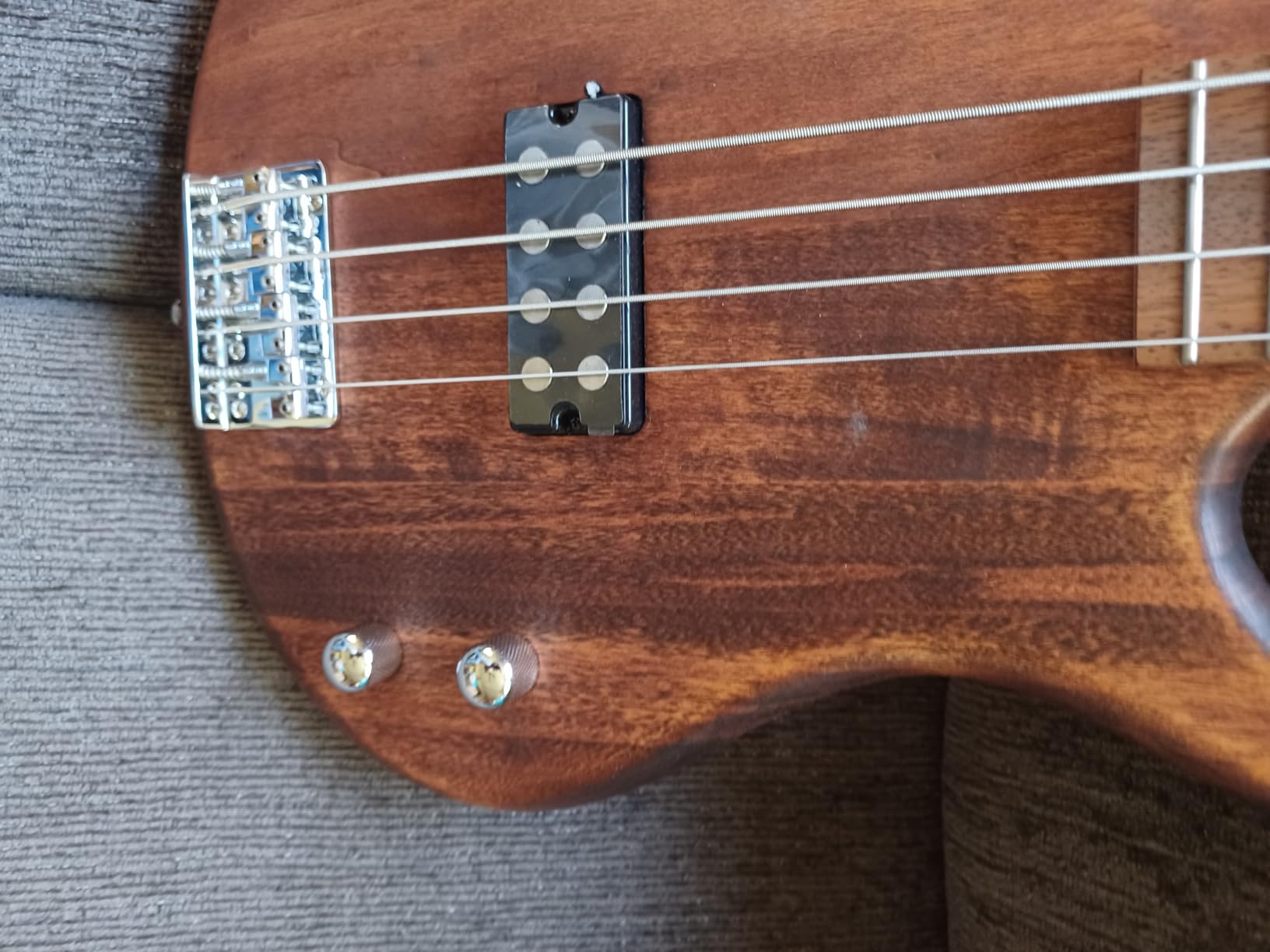
The GSR100EX is the odd one out in this list and that is why it is here. Every other four-string has two pickups or an active preamp; this one has a single humbucking pickup and nothing else to adjust, which some players find refreshingly simple.
Being passive means there is no battery compartment and no electronics to fail. For a player who wants to learn the instrument rather than the signal chain, that simplicity is a genuine advantage.
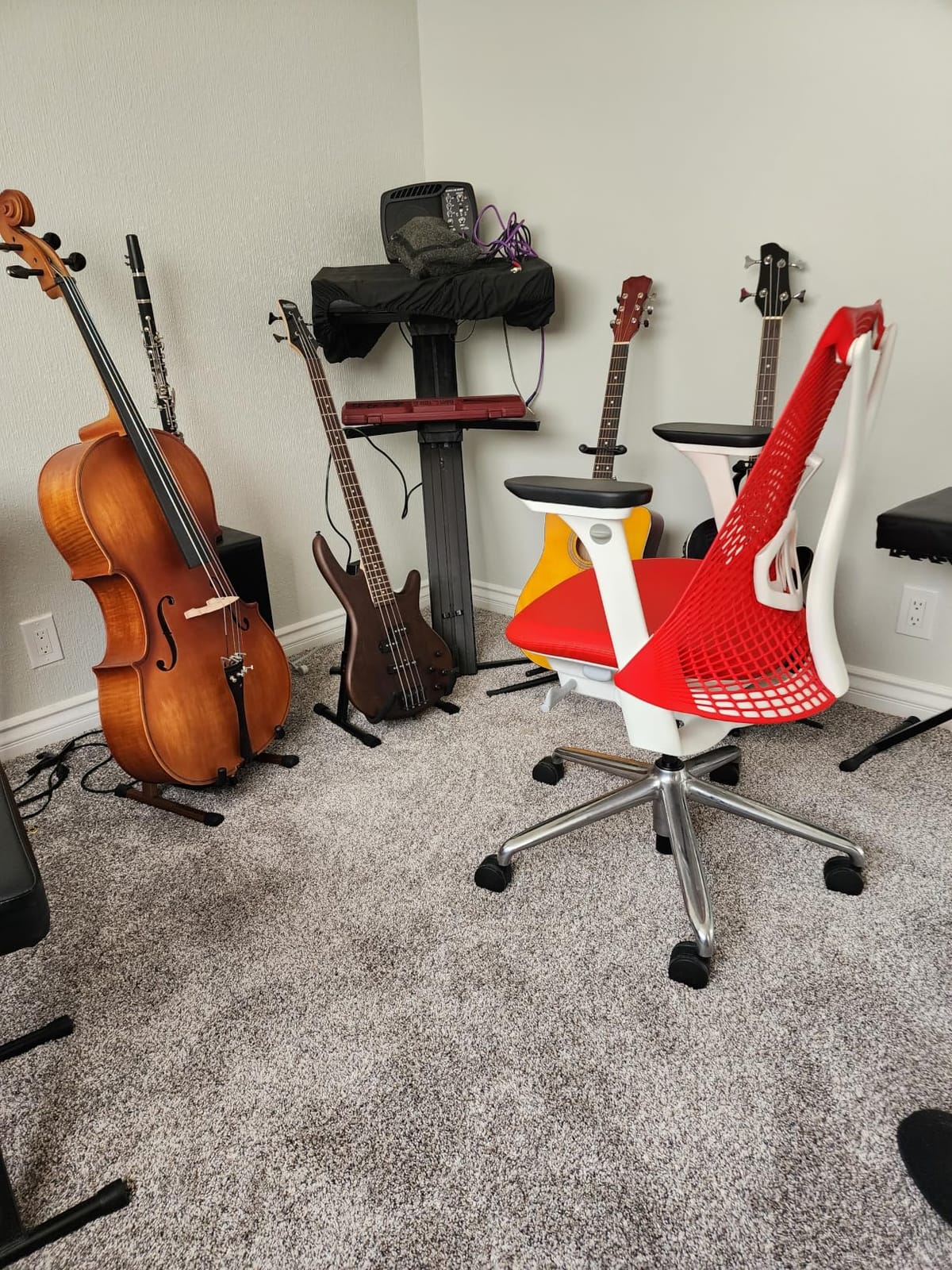
The natural oil finish over poplar is the visual signature, and owners consistently single it out as the reason they bought it. The jatoba fingerboard is a harder wood than the rosewood used on several competitors here, so it holds up well to daily contact.
The PPD4 bridge is tuned for practice and performance use, and at 10 pounds the body is substantial. The drawback is honest: one pickup means a focused, single-voice instrument rather than a versatile one, and you cannot change the character of the output without an external effect.
When this is the right first bass
Choose it if you play a style built around one clear bass note, or if you are the type of player who prefers fewer controls and a finished look over options. Passive simplicity also means it pairs with any amplifier without hunting for the right setting.
It suits players who want an instrument they do not have to think about technically while they concentrate on their fretting hand.
When to pick something else
Skip it if you want to explore tone, because there is no second pickup or onboard preamp to move through. It is also the least proven instrument here, with 236 ratings, so you get less evidence about long-term factory consistency.
For a first bass where flexibility matters, the Yamaha TRBX174 or the Ibanez GSR200 both give you two pickups to work with.
9. Squier Mini Precision – Best Short Scale Bass for Kids and Travel
Squier Mini Precision Bass, Black, Laurel Fingerboard
3/4 size short scale
Split single-coil pickup
Slim C neck
2-year warranty
Pros
- Short scale is genuinely easy for small hands
- Very light and easy to carry or store
- Fuller tone than the size suggests
- 2-year limited warranty
Cons
- Very short scale can feel cramped on a strap
- Supplied strings are a common replacement
- Small body can neck dive without a strap
The Squier Mini Precision solves a problem no other instrument in this list addresses: reach. At three-quarter size with a very short scale, a child or a player with limited reach can usually fret the first position without contorting the fretting hand.
Owners tell a recurring and moving story with this one. Several describe it as the instrument that got them back on bass after an injury, or the one that made a child’s first lessons possible, and the portability shows up in reviews as much as the sound.
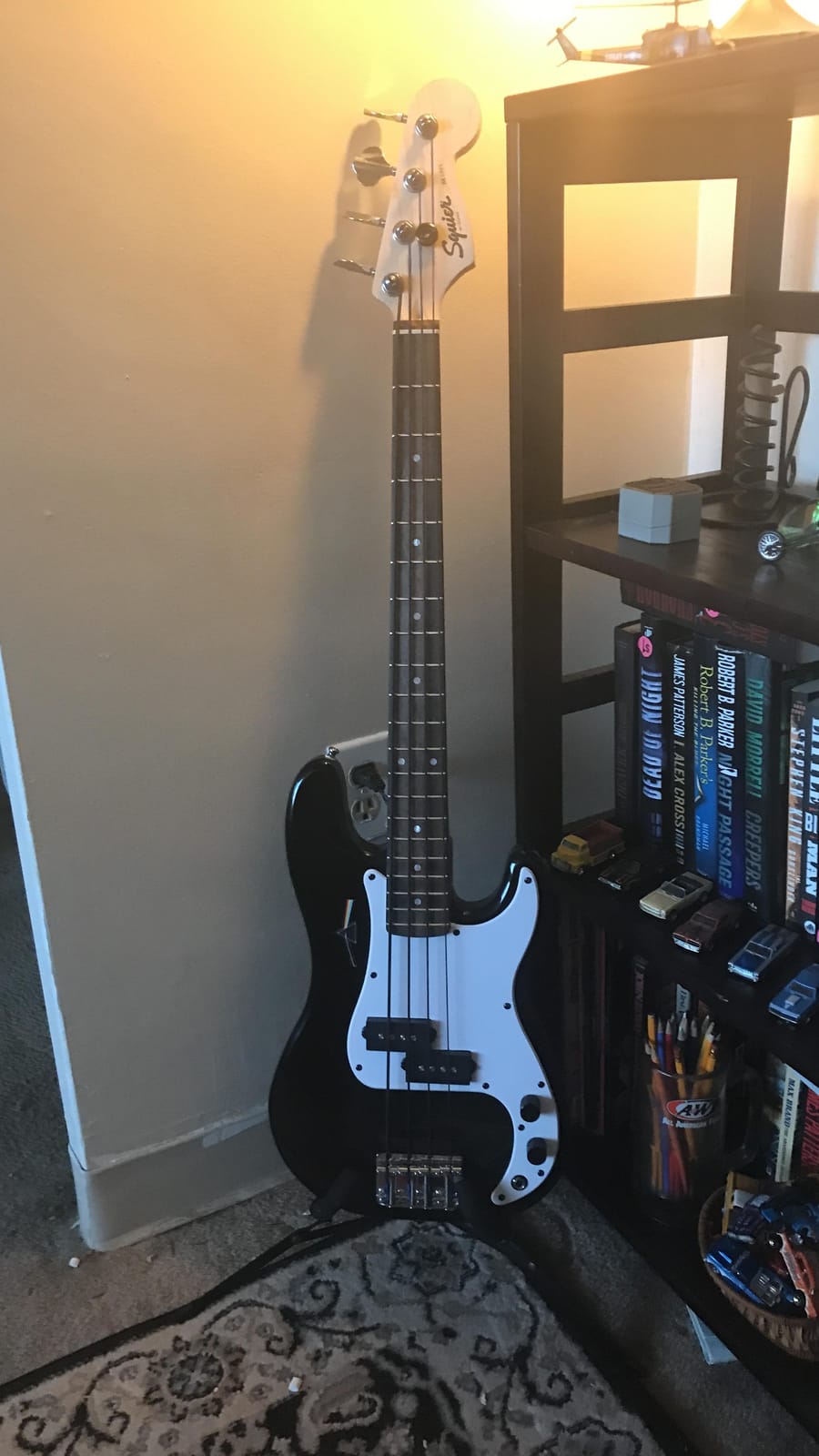
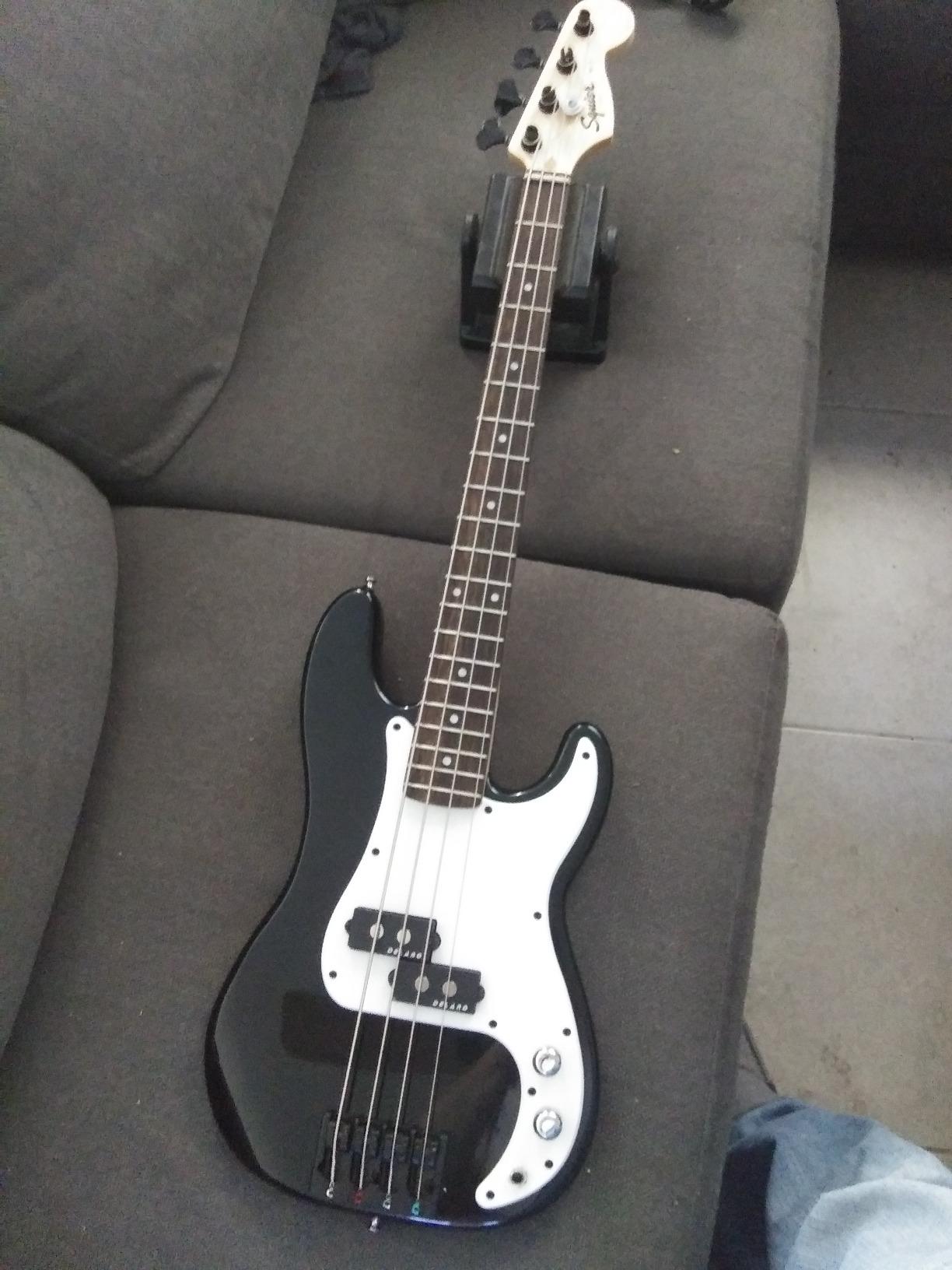
The tone is fuller than a reduced-size instrument has any right to be, and the chrome die-cast tuners hold tension well. The slim C-shaped neck and satin finish are comfortable from the first sitting.
The recurring criticism is that the very short scale plus a small body can feel cramped once you are playing more than a few notes in the first position, and the small body tends to dive forward without a strap. Supplied strings are also frequently replaced early.
When this is the right first bass
Buy it for a child under about eleven, for a player with a shoulder or wrist injury, or for anyone who travels and wants an instrument that fits in a rucksack. It is also a good backup bass for an adult who already owns a full-size one.
Because it is a genuine Squier rather than a toy-brand instrument, a child who outgrows it in a year still has a sellable or hand-down instrument.
When to pick something else
Skip it if you are an adult with a full reach, because the short scale will feel tight within weeks and you will be shopping again. The basswood and poplar body is also less resonant than a full-size solidbody.
Adults who want short scale without the size penalty should look at 30-inch instruments rather than three-quarter models.
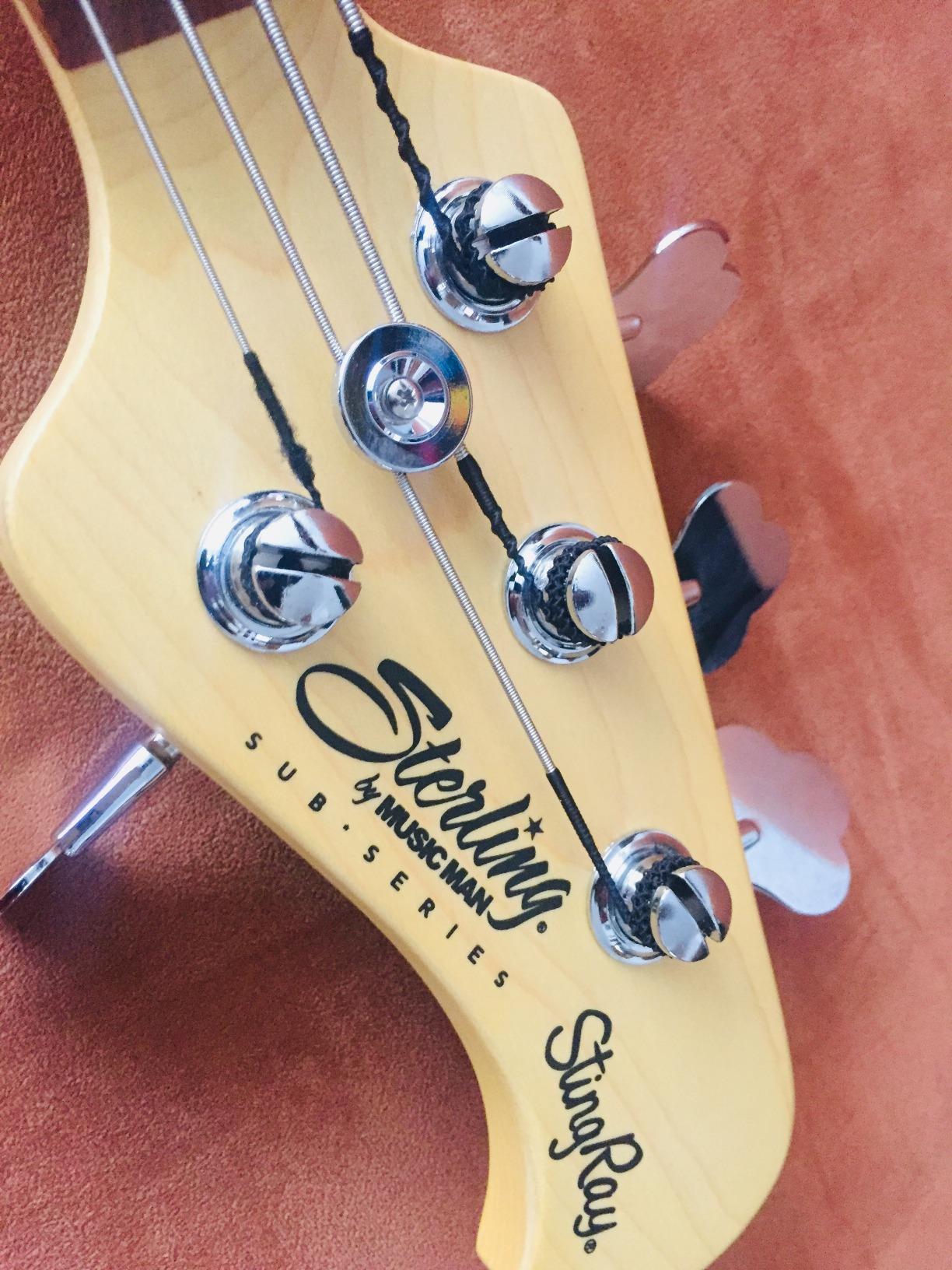
10. Sterling by Music Man StingRay Ray4 – Best Bass for Future Upgrades
Sterling by Music Man StingRay Ray4 Bass Guitar in Walnut Satin
Active 2-band preamp
Ceramic pickup
Basswood body with jatoba fingerboard
USA final setup
Pros
- Tone and clarity well above the price tier
- Build quality exceeds expectations
- Final set-up and inspection done in the USA
- Smooth unfinished neck holds tuning
Cons
- Satin finish cannot be spot-repaired
- Active electronics add a battery and a failure point
- Input jack can be finicky with right-angle plugs
The Ray4 is the top of this roundup and the only instrument here that every instrument receives a final set-up and inspection in the USA before shipping. For a first bass, that factory attention is worth more than it sounds.
Owners who know instruments describe it as a platform that can be modded indefinitely. The active 2-band preamp with volume, treble and bass controls gives real tonal range, and swapping pickups later is straightforward rather than a rewiring job.
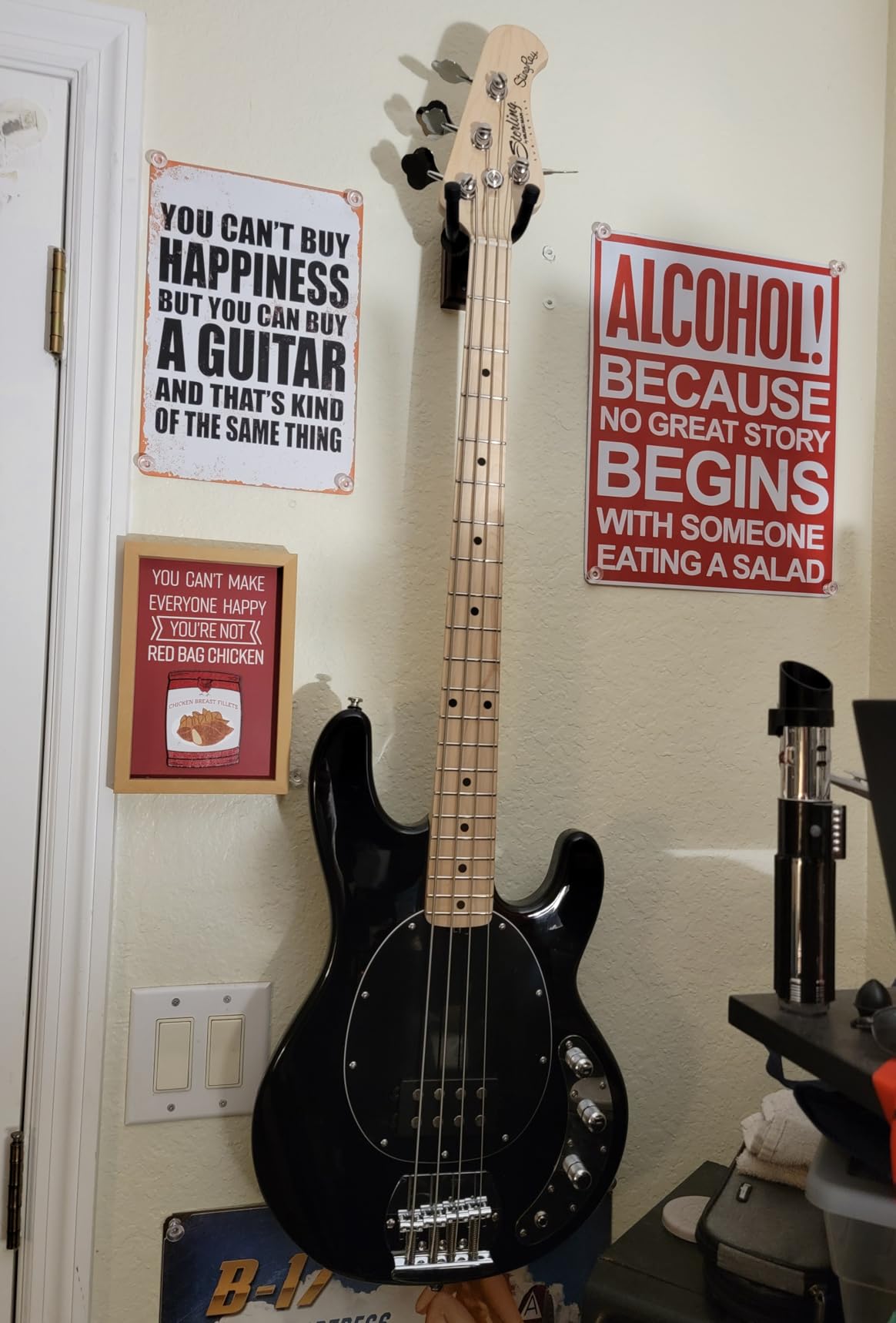
The StingRay silhouette is also the most distinctive on this list. Players coming from rock and indie often recognise the shape immediately, and several forum discussions name the Ray4 as the natural step up once a Squier-tier instrument stops feeling like enough.
Factory buzz on some examples disappears with a proper setup, and the input jack is worth checking before you rely on it unattended. At 9 pounds it sits in the middle of the weight range here.
When this is the right first bass
Choose it if you want to keep this instrument for years rather than one or two, and if you enjoy experimenting with tone. The finished setup and the jatoba fingerboard reward players who move past the first few months quickly.
It is also a strong choice for a guitarist, since the thinner profile and modern feel are closer to what you already know.
When to pick something else
Do not choose it as a first instrument for a child or a total beginner who wants to experiment without supervision. Active electronics add a battery, the satin finish cannot be spot-repaired, and some units show paint chips straight out of the box.
For a passive first bass with a single focused voice, the Ibanez GSR100EX is simpler and cheaper to maintain.
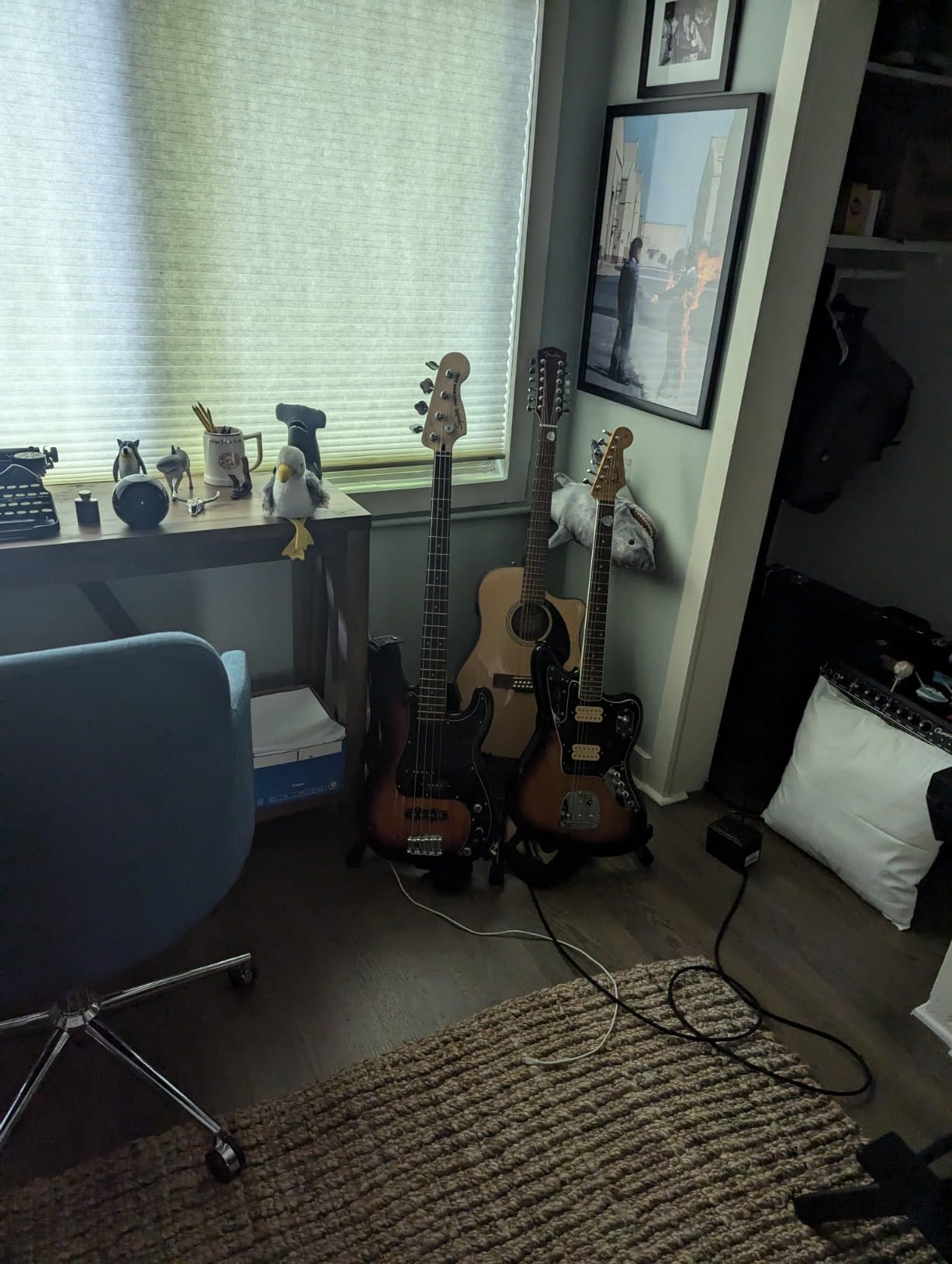
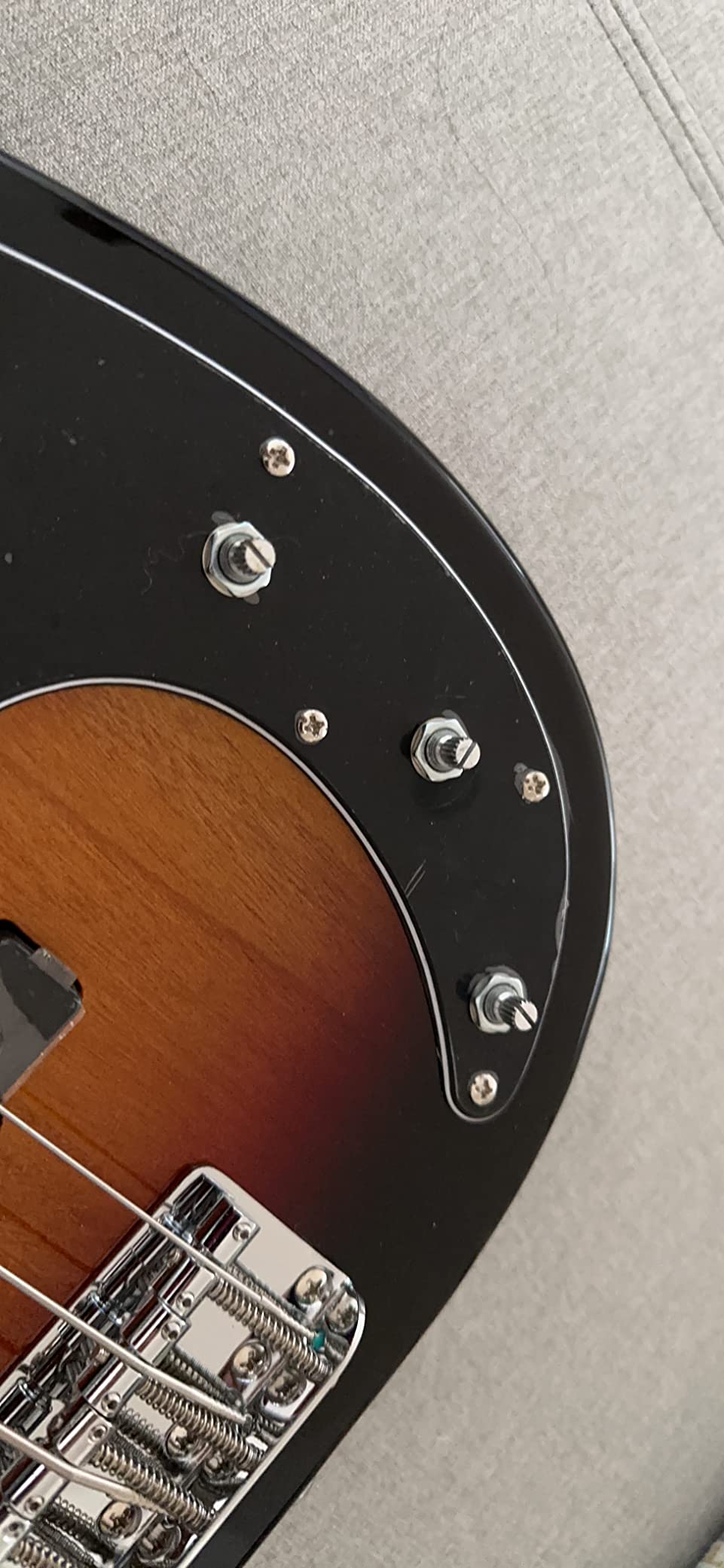
11. Squier Affinity Precision PJ Pack – Best Ready-to-Play Pack
Fender Squier Affinity Precision Bass Pack, with Amp, 3-Color Sunburst
Rumble 15 bass amp included
PJ pickup configuration
Gig bag cable and strap
2-year warranty
Pros
- Bass amp bag cable strap and lessons in one box
- PJ layout gives more range than a single split-coil
- Genuine Squier construction with a 2-year warranty
- Slim C neck keeps it light
Cons
- Bundle is heavy and bulky at 46.9 pounds
- Amp and accessories are the most basic tier
- Less flexible than buying pieces separately
This pack solves the amplifier problem with a purpose-made bass amp rather than a generic guitar practice amp. The Rumble 15 is designed for the low end, which is the difference between a bass sounding right and sounding like a guitar played one octave down.
You also get a PJ pickup configuration on the guitar itself, so a beginner has two voices to move between from the start. That is more headroom than most entry instruments in this list give you.
Everything in the box is the most basic version of that item. The gig bag, cable and strap are functional, the amp is a 15-watt practice unit, and the included Fender Play subscription runs three months rather than a full month.
The whole pack weighs 46.9 pounds including the amp and bag, which is genuinely awkward to carry up stairs. It is a single purchase rather than a portable setup, and that is the main trade.
When this is the right first bass
Pick it if you want to make a sound within an hour of the box landing and you would rather not research amplifiers. A bass amp designed for bass will teach you correct tone from the start, which a small generic guitar amp will not.
It is also a sensible gift: one box, everything needed, and a two-year warranty behind a recognised brand.
When to pick something else
Skip it if you will move the instrument between rooms regularly, because of the weight. It also ties your future to this bundle, since replacing the amp later means the original outlay is partly wasted.
Splitting the same budget across a bare Yamaha or Squier plus a separate used amplifier usually gives you a better long-term instrument.
12. Best Choice Products Acoustic Electric Bass – Best Acoustic Bass for Beginners
Best Choice Products Acoustic Electric Bass Guitar, Full Size 4 String, Fretted Bass Guitar w/Padded Gig Bag – Black
Acoustic-electric body
4-band EQ preamp
Cutaway with sound hole
Padded gig bag included
Pros
- Loud full acoustic tone works well unplugged
- 4-band EQ covers a wide range of plugged-in sounds
- Light and thin so it is easy to handle
- Backpack-style padded gig bag included
Cons
- Labelled full size but is a short scale
- Low quality strings and loose tuning machines
- 60-day warranty with return postage at buyer cost
This is the most heavily reviewed instrument in the entire roundup, with 5691 ratings, and also the most polarised. That combination is worth understanding before you buy, because the split between delighted owners and disappointed ones is unusually wide.
The reason people love it is volume. Unplugged, it makes a genuinely loud, full acoustic sound, which makes it the practical answer for practice in a room where an amplifier is not allowed or not affordable.
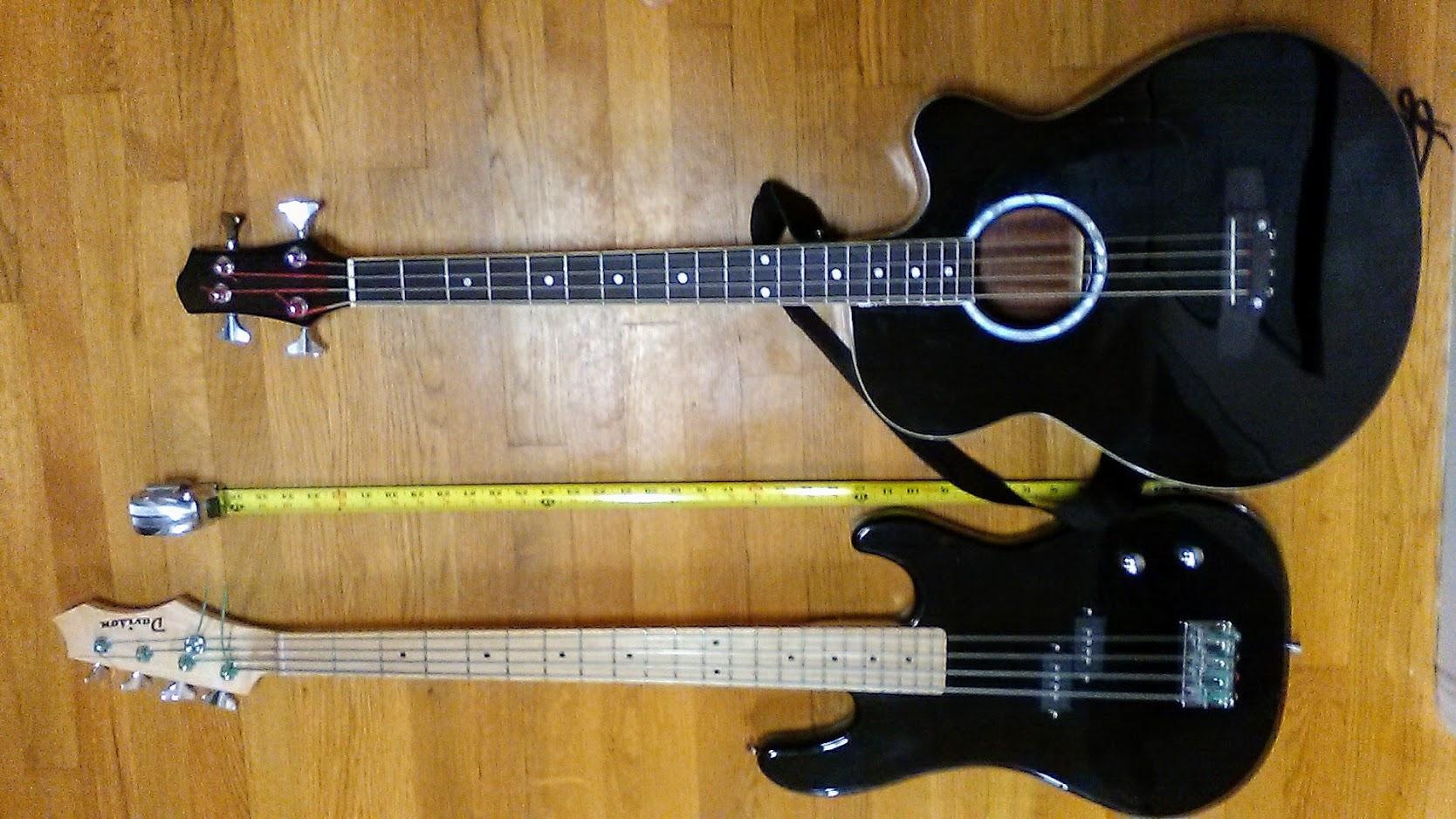
The 4-band EQ-7545R preamp gives you bass, middle, treble and presence plus volume, which is more control than several electric instruments in this list offer, and the cutaway body reaches the higher frets properly.
The problems are equally clear. It is labelled full size but the body is short scale, the supplied strings are poor, tuning machines are loose on some examples, and action is often high enough to require a truss rod and saddle adjustment before it plays well.
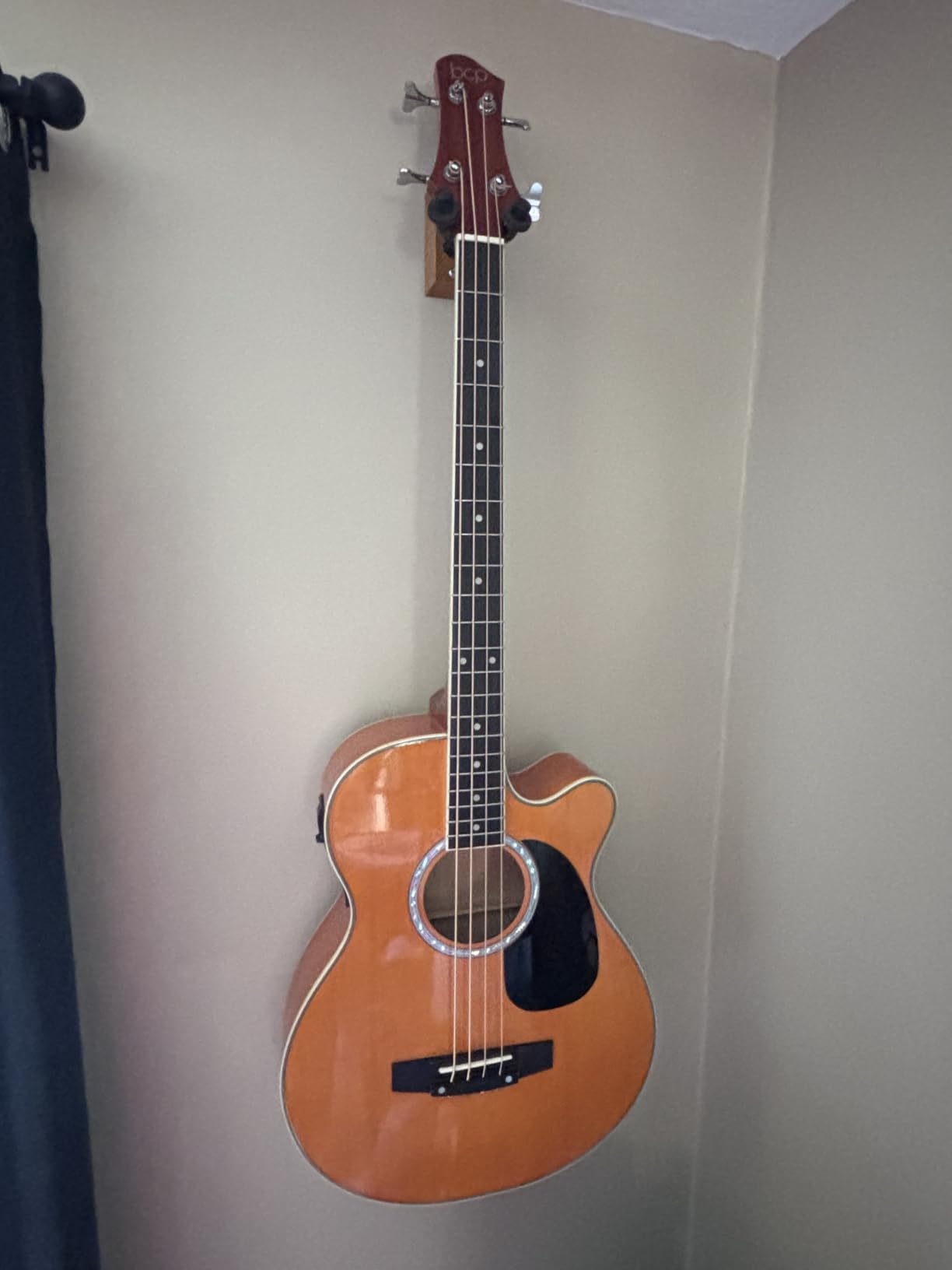
When this is the right first bass
Choose it if you want to practise quietly, play a couple of tunes unplugged, or want the lowest cost of entry on this list. The padded gig bag with backpack straps means you can carry it like a bag rather than a guitar case.
It is also a sensible second instrument for a guitarist who wants bass lines without plugging in.
When to pick something else
Do not buy it expecting solidbody build quality. The 60-day warranty, return postage at the buyer’s expense, and reports of non-functioning preamps on some examples make it the riskiest instrument here.
Budget for a technician visit or a full setup before it becomes an instrument you want to practise on. If you want one bass to grow into, choose an electric model instead.
How to Choose a Beginner Bass Guitar in 2026
Most buyers get stuck on tone, and tone is the least important decision you will make this year. You can learn every note, every rhythm and every technique on any decent four-string under 500. What you cannot unlearn is fighting an instrument that is physically uncomfortable.
Scale length and player size
Scale length is the vibrating length of the string, and it is the single biggest factor in how a bass feels. A 34-inch long scale has more room between notes and a deeper low end, but it demands more stretch. A short scale around 28.6 to 30 inches feels easier in the first position and suits smaller players.
The three-quarter Squier Mini in this list is the extreme end of short scale and is genuinely comfortable for a child, but most adults find it cramped quickly. For a first instrument, a full-size short scale at around 30 inches is the sweet spot for a player under five foot six, and a 34-inch scale suits anyone taller.
Four strings or five
Start with four strings. The extra low B on a five-string is physically harder to fret cleanly, and most beginners do not have a reason to need it yet. The argument for starting with five is only strong if you already know the parts you want to play.
There is no real quality difference between a good four-string and a good five-string at this budget; the difference is entirely about the music you intend to play.
Precision, Jazz or P/J pickups
A Precision bass has one split-coil pickup in the middle of the body, and that position gives it the fat, centred thump you hear on most rock and funk records. A Jazz bass has two single-coils, one near the neck and one near the bridge, giving a brighter, snappier voice that cuts through a band mix.
A P/J combines both in one instrument, and for a beginner that is the most useful option because you have two distinct voices to move between. The Yamaha TRBX174, the Ktaxon kit and the Squier Affinity pack all use this layout.
Passive or active electronics
Passive basses have no battery and no preamp. Their output is lower, so they need a slightly more flattering amplifier, but there is nothing to maintain. Active basses include a preamp, often with an EQ, and need a 9V battery you check before every session.
For a first instrument, passive is one less thing to go wrong. The Ibanez GSR200 and the Sterling Ray4 are the active exceptions here, and both trade a battery for a stronger, more flexible low end.
Do you need an amp?
Yes, you need something. A bass guitar is an electronic instrument and makes no useful sound without amplification. That is the number one reason beginners feel they have failed in week one, so plan for it in the budget rather than treating it as an optional extra.
You have three routes. A small bass practice amp is the standard answer and gives you a tone that shapes correctly. A headphone amp or audio interface with a 1/4 inch input is quieter and better for flats and shared walls. An acoustic-electric bass like the Best Choice model above is the third option if you want to practise unplugged.
Plan roughly half of a 500 total budget for the bass and half for amplification and a setup, and remember that a bass needs more wattage than a guitar to sound balanced through a small speaker.
The setup is half the instrument
String action, neck relief and intonation are adjusted by a technician, and this single service transforms a budget bass more effectively than adding another 100 to the instrument itself. Forums describe it as the highest-leverage spend a new player can make.
Ask for a full setup: neck relief, string height, intonation at the 12th fret, and fret-end dressing. Sharp fret ends on cheap instruments are a safety issue, not a comfort one, and filing them is part of a proper job.
Five things to check before you pay
Look down the neck from the headstock toward the bridge and check that it is straight, with no visible twist. Run a straightedge or sight along the frets and check they are level and evenly seated, with no gaps where a ruler would rock.
Check the fret ends for sharpness on both sides, and look for burrs around the nut slots. Check tuning stability by tuning it, playing for a minute, and seeing whether it drifts. Finally, lift the instrument and check the weight is evenly balanced rather than all forward on one side.
Threads on r/BassGuitar and Talkbass repeat the same advice constantly: buy a name brand with parts and warranty support, and skip unbranded marketplace packs unless you are willing to troubleshoot a neck yourself.
What to avoid on a first bass
Avoid everything-in-one-box starter packs that pair a no-name instrument with a tiny guitar amplifier. You end up with a bass that needs setup, an amp that cannot handle the low end, and no resale value if the player gives up.
Avoid overspending as well. Spending a thousand or more on a first instrument is a real risk, because beginners cannot yet hear the difference and often blame the instrument for technique problems. Under 500 with a setup and a good amplifier beats an expensive bass with nothing else.
On used buying, bring someone who plays. Beginners cannot reliably spot a twisted neck, and a 20-minute check with a player is cheaper than a replacement.
Frequently Asked Questions
What is the best affordable bass guitar for beginners?
The Yamaha TRBX174 is the best affordable bass guitar for beginners, and it sits comfortably under 500. Its passive split-coil and single-coil pickups cover two classic voices, the bolt-on maple neck suits smaller hands, and more than a thousand owner ratings back up the build consistency. Nothing else under this ceiling combines that pickup versatility with Yamaha’s build quality.
What type of bass guitar is best for beginners?
A full-size four-string with a short or standard scale, a P/J or single split-coil pickup layout and passive electronics is the right starting point. Four strings keep fingering simple, and passive means no battery to maintain. Skip five-strings and active electronics on a first instrument unless you already know the notes you need to play.
What are some good bass guitars under $500?
All twelve instruments in this guide fall under the 500 ceiling. The strongest starting points are the Yamaha TRBX174 for overall balance, the Ibanez GSR200 for value, the Squier Debut Precision for a pure P-Bass sound, the Sterling StingRay Ray4 for build quality, and the Squier Mini Precision for smaller players.
What is the best bass guitar for value for money?
The Ibanez GSR200 offers the most value in this roundup, with 2027 owner ratings at 4.6 confirming it over years of use. The body is light at 10.4 pounds, the active Phat II boost gives a strong low end, and Ibanez hardware is cheap and easy to replace. Expect to swap the supplied strings early.
Which Yamaha bass guitar is best for beginners?
The TRBX174 is the Yamaha to buy first, with a passive P/J pickup layout, a fast bolt-on maple neck and a mahogany body that suits long practice sessions. It is far enough below 500 to leave room for an amplifier and a professional setup, which a more expensive bass would not.
What is the best scale length for a bass guitar?
Around 30 inches is the most forgiving choice for a first instrument, especially for players under five foot six, because the frets sit closer together. A 34-inch long scale suits taller players and gives more low-end range, while very short scales such as the three-quarter Squier Mini feel cramped for adults.
Should a beginner get a 4-string or 5-string bass?
A four-string. The low B on a five-string is physically harder to fret cleanly, and the fifth string adds complexity before it adds usefulness for most new players. The Ibanez GSR205 is the five-string here if you already play guitar and need the low B for metal or modern worship music.
Do I need an amp to play bass guitar?
Yes, you need amplification of some kind, because a bass makes no useful sound unplugged on its own. The options are a small bass practice amp for a proper tone, a headphone amp or audio interface for quiet practice in a flat, or an acoustic-electric bass like the Best Choice model for unplugged playing.
Which Beginner Bass Should You Buy?
Buy the Yamaha TRBX174 if you want one answer and no hesitation. It is the best bass guitar for beginners under 500 in 2026 because the P/J pickup layout, the passive electronics and the bolt-on neck cover everything a first player needs without anything to maintain.
If your hands are small, take the Squier Debut Precision. If your budget has to include an amplifier, take the Squier Affinity PJ pack or the GLARRY kit. If you already play guitar, take the Ibanez GSR200. Whatever you choose, spend part of the budget on a proper setup, because that service changes a bass more than the model does.