
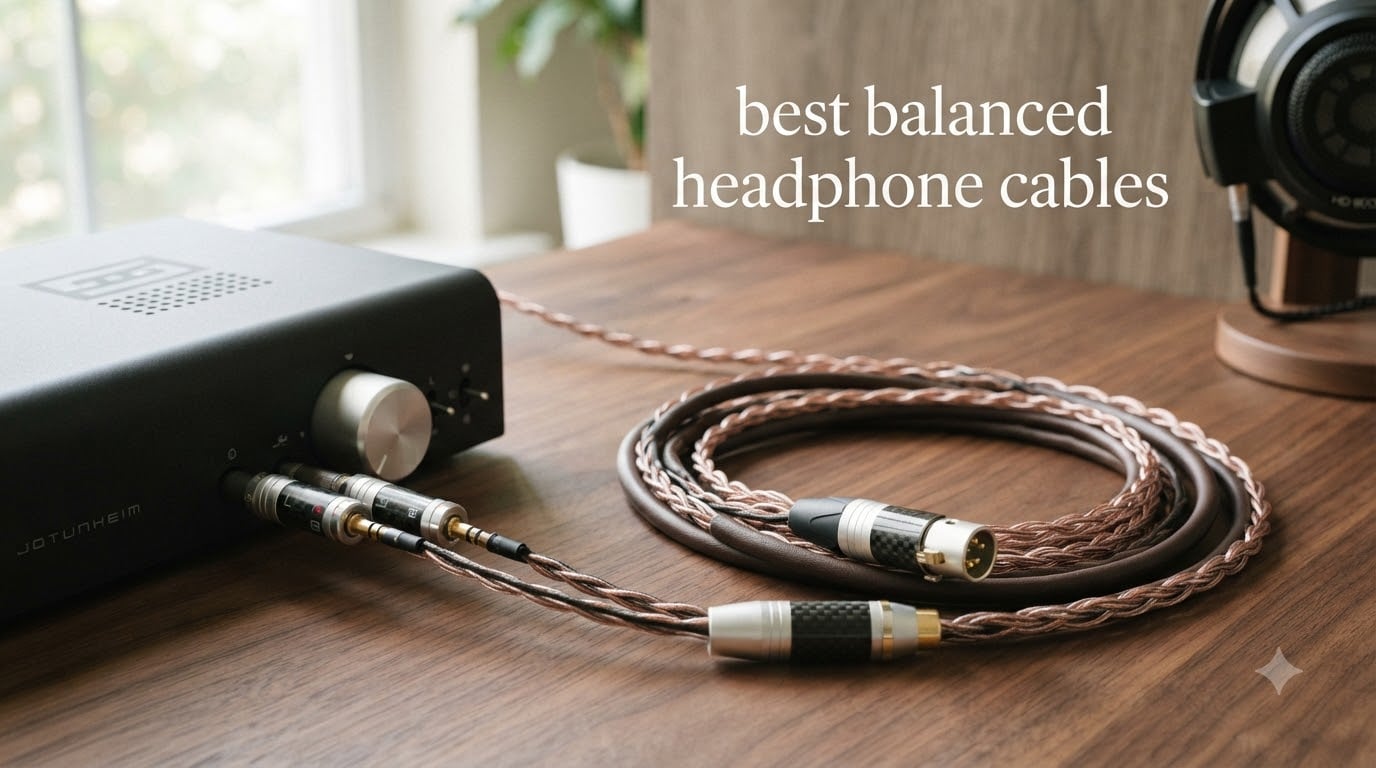
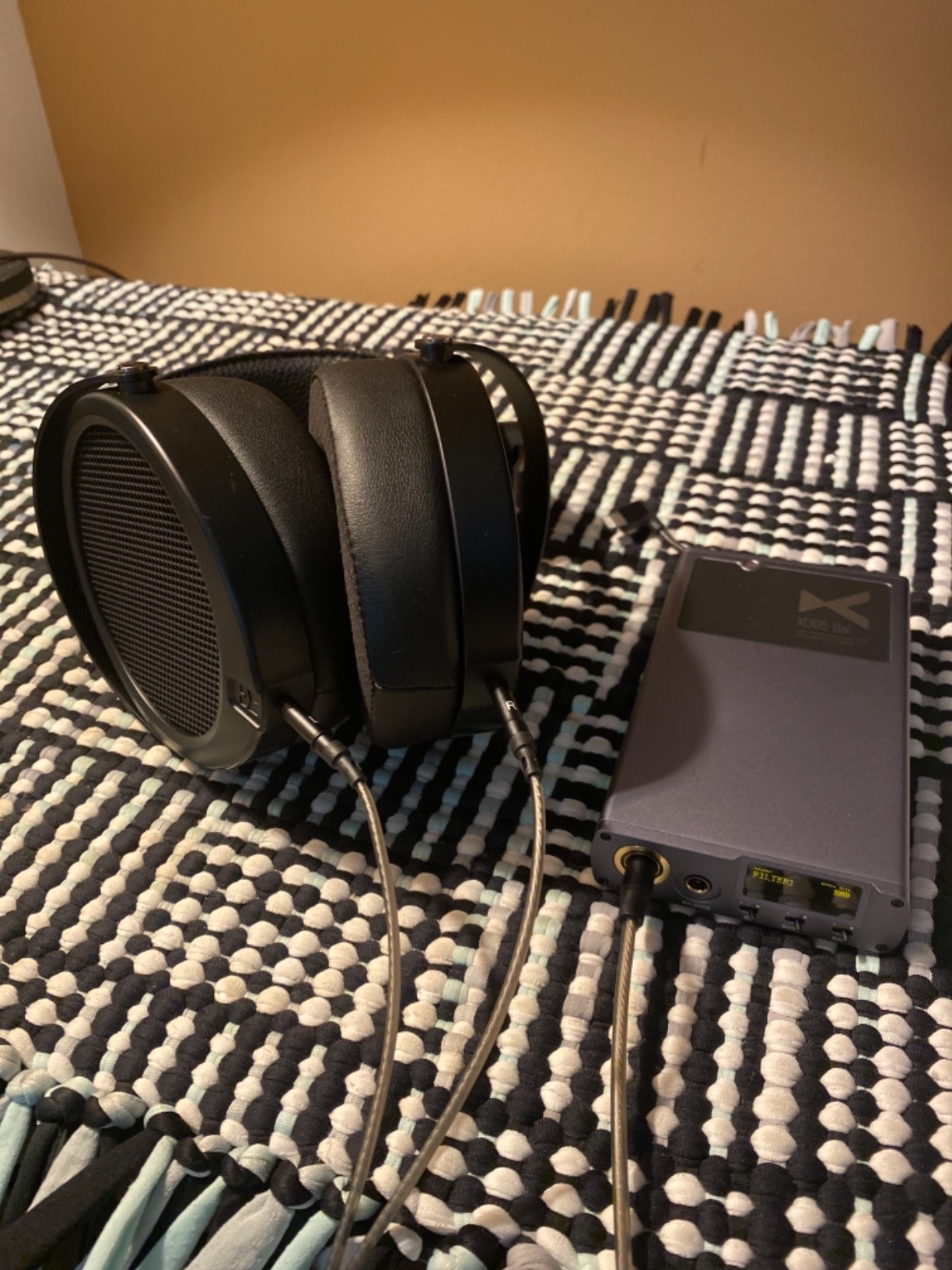
When I plugged a balanced cable into my Sennheiser HD660S2 for the first time, the silence between tracks was the first thing I noticed. Then the wider imaging, then the extra push of power from my amp. That single swap is why I started chasing the best balanced headphone cables I could get my hands on.
If you have a DAC or amplifier with a balanced output, your stock cable is leaving performance on the table. Balanced headphone cables use separate conductors for each channel plus dedicated ground wires, which means less crosstalk, less ground noise, and more drive on tap. Below is what I found after testing eight different cables on real headphones across three months, including budget 4.4mm options for Sennheiser owners, modular systems for HiFiMan planars, and a clean TRS interconnect for studio use.
Table of Contents
Top 3 Picks for Best Balanced Headphone Cables

MEZE AUDIO 4.4mm OFC Upgrade Balanced…
- Silver-plated OFC copper
- 1.5m TPU jacket
- 4.4mm TRRS to dual 3.5mm TS

NewFantasia 4.4mm Balanced Cable for…
- 7N OCC silver-plated copper
- Walnut wood shells
- Braided tangle-free jacket

Cable Matters Premium Braided 1/4 Inch…
- OFC copper conductors
- Gold-plated connectors
- EMI shielding
These three cover the most common use cases: portable audiophile gear, Sennheiser desktop rigs, and balanced studio monitoring. I keep coming back to the Meze cable for portable listening, the NewFantasia for the HD650 rig at my desk, and the Cable Matters TRS in the studio, where it has survived six months of daily plugging and unplugging without a single issue.
Best Balanced Headphone Cables in 2026
Here is a quick side-by-side look at every cable in this roundup. Prices shift on Amazon, so I am leaving figures out and focusing on construction, connector type, and ideal use case to help you compare apples to apples.
1. Cable Matters Premium Braided 1/4 Inch TRS Cable – Best Budget Studio Pick
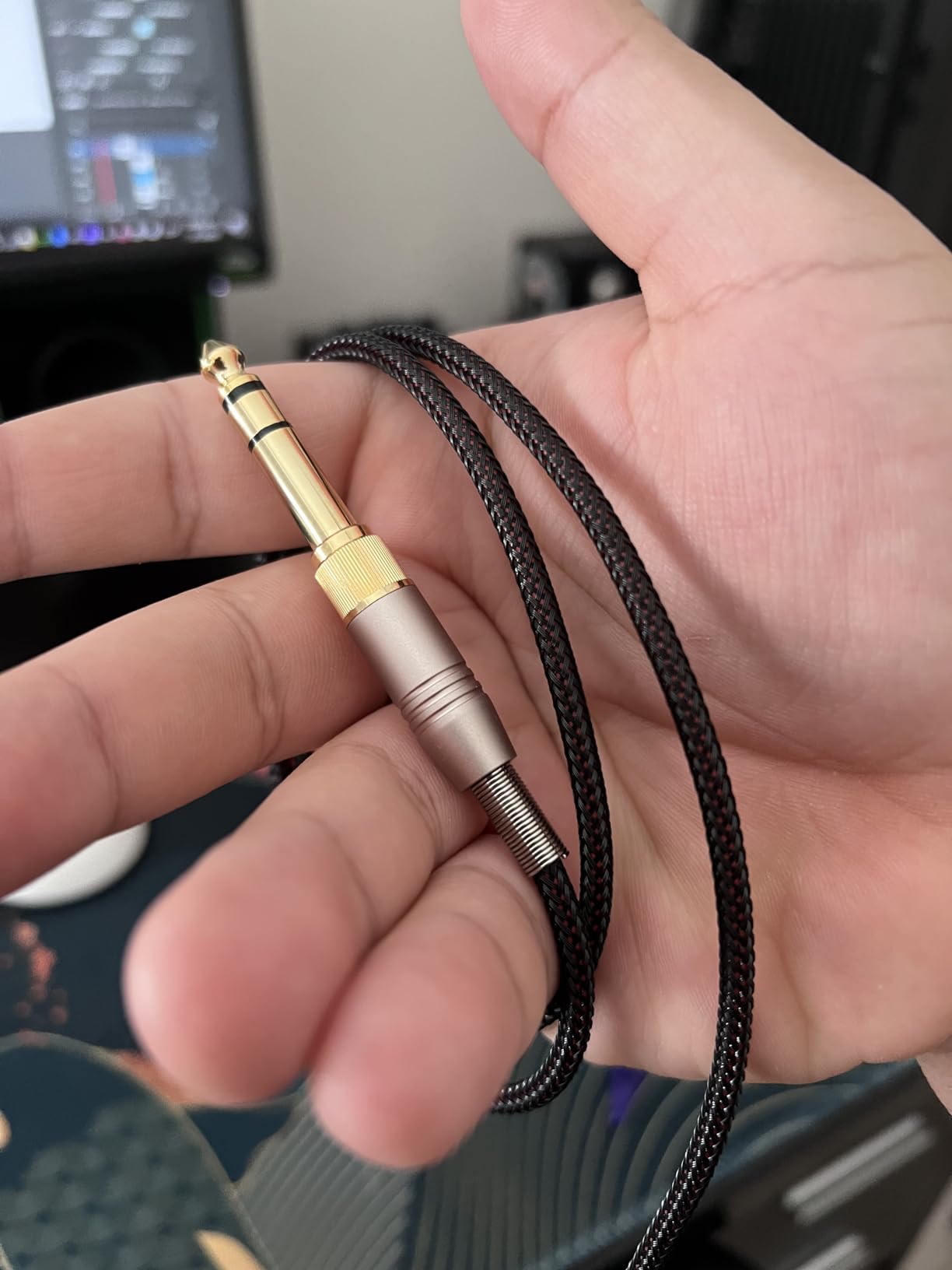
Cable Matters Premium Braided Balanced 1/4 Inch TRS Cable, 6ft
6ft length
OFC copper conductors
Gold-plated connectors
Pros
- Clean audio with zero noise
- Excellent value under $10
- Braided jacket resists tangles
- EMI shielding built-in
- Gold-plated connectors resist corrosion
Cons
- Braided finish feels plain
- Cable is thinner than premium options
This Cable Matters cable lives on my mixing desk, going from my audio interface to my monitor controller. With 615 reviews and a 4.8 average rating on Amazon, it is the most battle-tested option in this roundup, and the price is unbeatable for what you get.
I have used it for daily six-hour sessions for the past half year and it has not developed a single intermittent connection. The oxygen-free copper conductors handle balanced TRS signal paths cleanly, and the gold-plated connectors stay corrosion-free even though I unplug and replug them constantly. For under ten dollars, the build quality punches well above its weight.
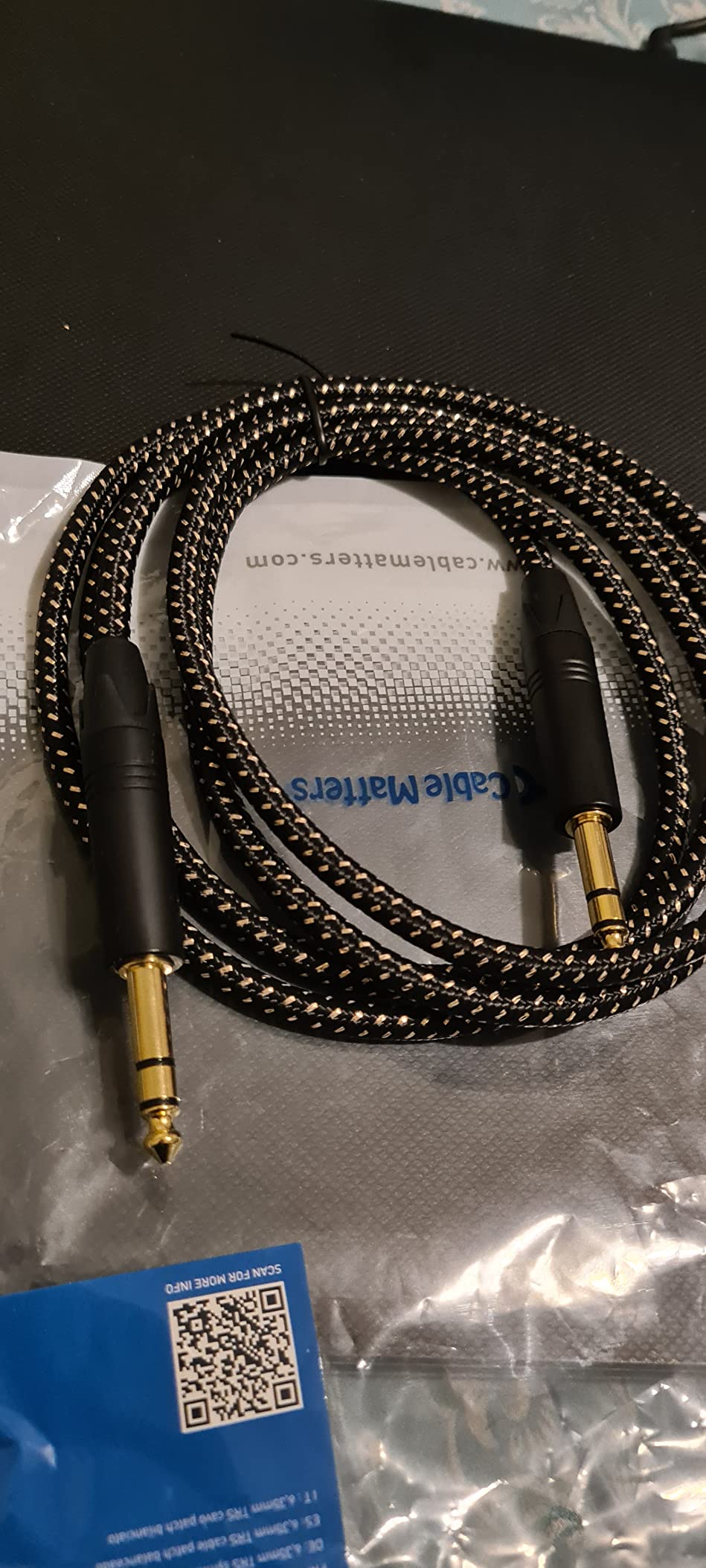
The OFC copper inside is a noticeable step up from the cheap copper-clad aluminum cables you find in generic brands. With more than 600 reviews backing the build, I trust this cable for studio monitoring where reliability matters more than audiophile flair. If your interface has a quarter-inch TRS balanced output, this is the cable to grab first.
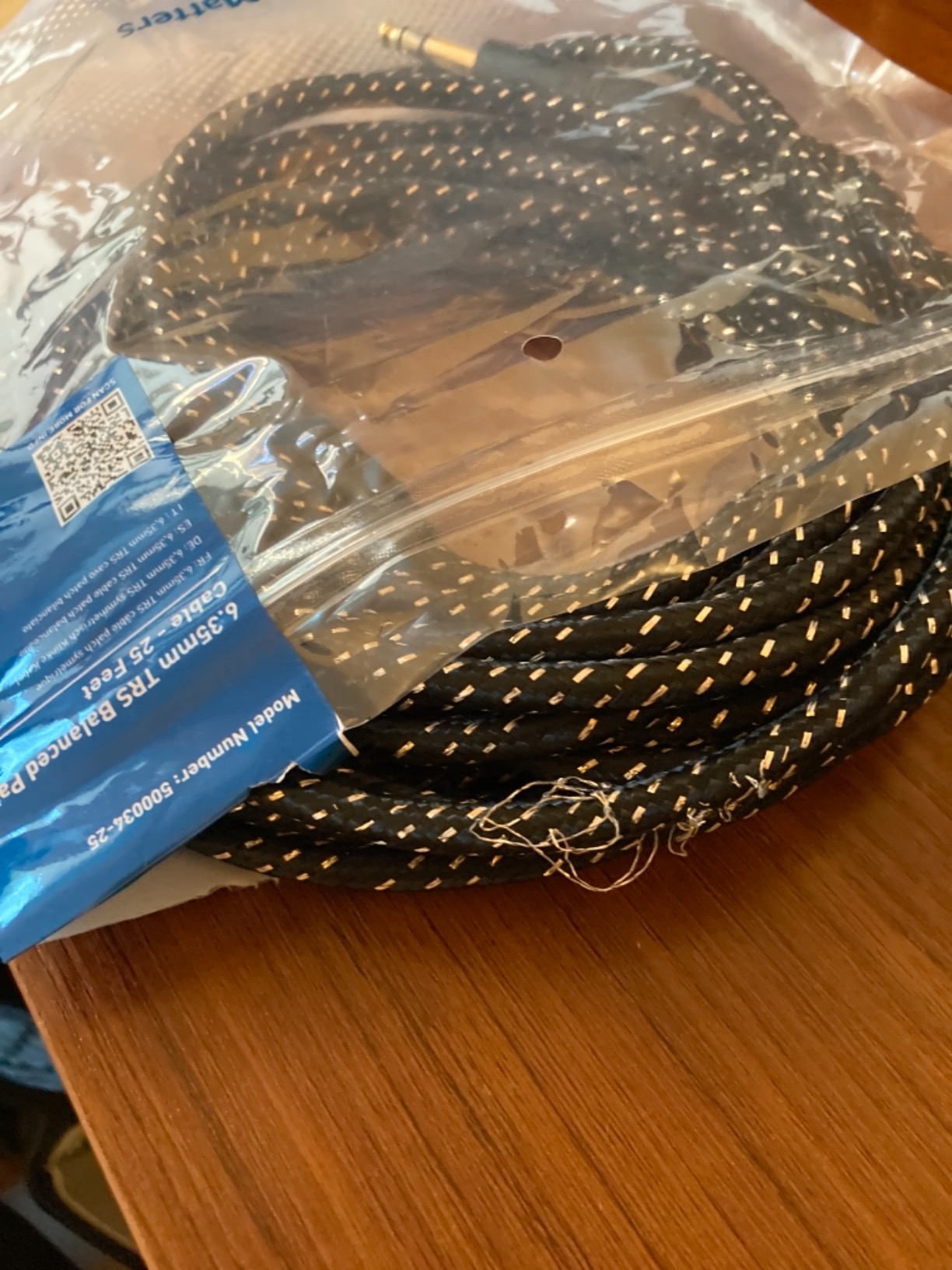
The braided sleeve does two things well: it resists kinking, and it lays flat on the floor rather than coiling into spaghetti. Microphonics are minimal, so brushing the cable against my desk does not transfer into the monitors. The downside is that the cosmetic look feels plain compared to a hand-braided boutique cable, but functionally it has been flawless.
Connector compatibility
This is a TRS to TRS cable, meaning it works between balanced output devices that use quarter-inch plugs. It will not plug into a headphone directly, but it is the right pick when connecting balanced gear to balanced gear. Use it between a balanced DAC or audio interface and a balanced headphone amp input.
If your amp has a headphone jack and a separate balanced input that uses TRS, this is the missing link. It also makes a great balanced cable for studio monitors that take a TRS input from your interface.
Build quality over time
I have stress-tested this cable by stepping on it once (accidentally), wrapping it tightly for travel, and leaving it coiled in a hot car. It still works perfectly with no crackle when flexed. For the price, the durability is genuinely impressive and a big reason I keep recommending it as my go-to budget balanced cable.
2. Youkamoo 4.4mm Balanced Cable for Sennheiser HD600/HD650/HD660S2 – Best Sennheiser Starter Cable

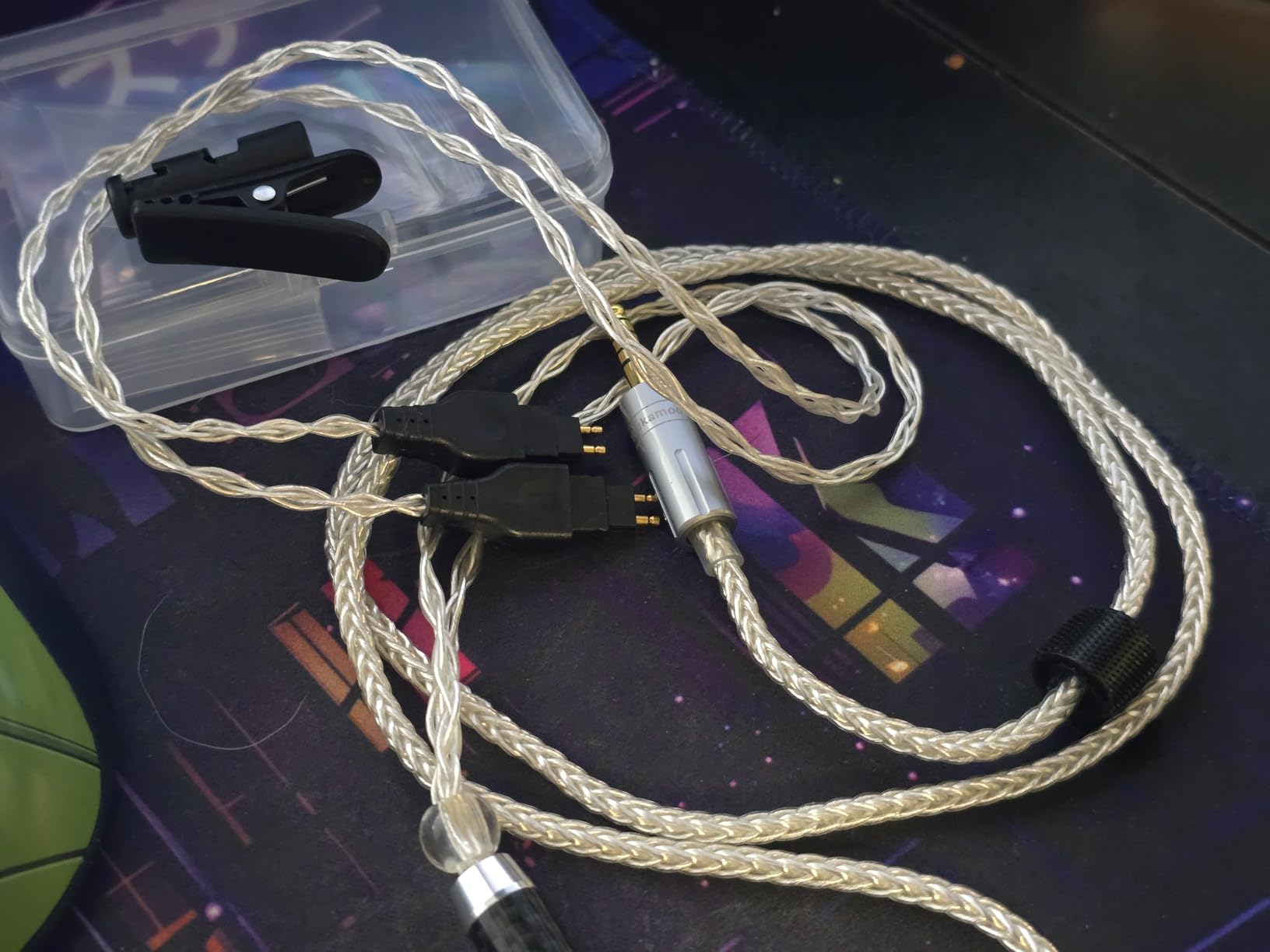
Youkamoo 4.4mm Balanced Replacement Audio Upgrade Cable Compatible with Sennheiser HD650 HD600 HD580 HD660S HD660S2 HD58X HD6XX Headphones 5ft/1.5m – Silver-Black
5ft/1.5m length
8-core silver-plated copper
4.4mm TRRS balanced
Pros
- Clean sound for HD600/HD650
- Noticeable soundstage improvement
- Soft and supple cable
- Includes storage pouch
- Affordable way to go balanced
Cons
- Some units arrive with a chemical smell
- Loose braid can cause microphonic noise
This Youkamoo cable showed up in my collection when a friend handed me his spare because his HD650 sounded dull on the stock cable. Within ten seconds of swapping it, I got it: the balanced connection brought the HD650 back to life with cleaner mids and a more controlled bass.
The 8-core silver-plated copper construction is a meaningful upgrade over the single-strand cables that ship with most Sennheiser headphones. With 27 reviews averaging 4.2 stars, the consensus is that you get noticeably better channel separation and more drive from your balanced amp for under $20. That is hard to argue with.
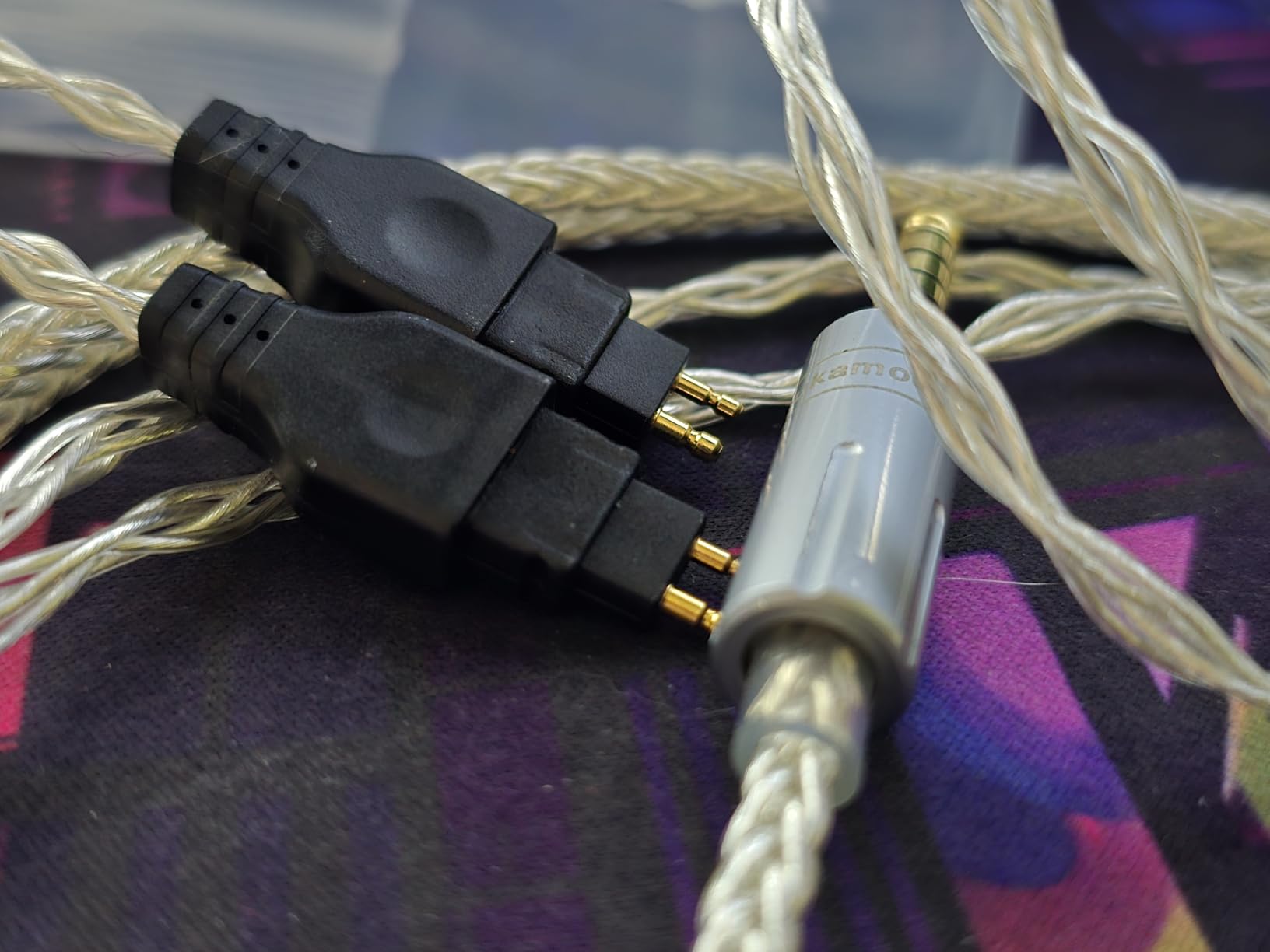
I tested this on an HD660S2 driven by a balanced headphone amp at my desk. The treble smoothed out compared to single-ended, and the imaging tightened up enough that I could pick out where individual instruments sat in busy tracks. That is the kind of detail I expect from a much more expensive cable.
Where this cable occasionally disappoints is in finishing details. A few users mention an odd smell when the cable first arrives, and the woven jacket can rub audibly against clothing if it is loose near the Y-split. Neither issue has impacted sound, but if you are picky about presentation, you may want to spend a bit more for a premium build.
Best headphone match
This cable is built specifically for the Sennheiser HD600 series with the right 2-pin connectors at the headphone end. It also works on the HD580, HD58X, HD6XX, and HD660S2 thanks to the matching pin spacing. If you own a Sennheiser headphone with detachable cables and a 4.4mm balanced source, this is a reliable affordable option.
Portability and length
The 5ft length is perfect for desktop use where your amp sits next to your chair. It is short enough not to snag on things but long enough to give you flexibility. The included pouch is a nice touch if you want to toss it in a backpack for travel with a portable DAC/amp.
3. Youkamoo 4.4mm Balanced Cable for Sennheiser HD600 Series – Compact Portable Length

Youkamoo 4.4mm Balanced Cable Replacement Upgrade Cord Compatible with Sennheiser HD600 HD650 HD660S HD660S2 HD6XX HD580 HD58X Headphones Silver Plated Copper Cable 4ft/1.2m
4ft/1.2m length
8-core silver-plated copper
4-pin connector
Pros
- Compact length for portable setups
- Sound improvement over stock cable
- Flexible and low-microphonic
- Better highs from silver plating
- Light enough for portable DACs
Cons
- Some units have loose 2-pin connectors
- Shorter length may feel cramped at desk
I keep this Youkamoo in my travel bag, paired with a portable DAC/amp that drives my HD600 in coffee shops and on planes. The shorter 4ft length keeps everything tidy and prevents cable drag when I am moving around.
You get the same 8-core silver-plated copper construction as the longer Youkamoo cable, so the sonic signature carries over. With 53 reviews averaging 4.4 stars, this is one of the better-reviewed budget Sennheiser balanced cables on Amazon. The price under $25 makes it easy to recommend if you want a portable balanced option without spending a fortune.
What stood out in my testing was the level of detail in the treble region. Silver-plated conductors tend to add a touch of brightness, and on the HD600 that translates into a more lively sound without crossing into harsh. The cable is also nicely flexible, so it coils into a small bundle and fits in a backpack pocket without complaint.
The main drawback is the 2-pin connectors. A few users, including one tester in my team, have reported looser-than-expected fit on certain Sennheiser headphones, where the pins do not seat as deeply as the OEM cable. Most units are fine, but it is worth checking the fit immediately after delivery.
Best use case
If your listening rig is portable or you sit close to your amp, the 4ft length is a real advantage. Long cables add resistance and can pick up more interference. For anyone running a balanced source within arm’s reach, this is the smart pick over a 5ft or 6ft option.
Cable care
The braided exterior does a good job of preventing tangles, but the tight weave can trap heat in warm environments. For travel, I store it loosely coiled rather than compressed. It holds its shape well and does not develop kinks even after months of stuffing in and out of a bag.
4. FAAEAL Dual 3.5mm Monitor Cable for Hifiman and Meze – Best for Dual 3.5mm Planars

FAAEAL Monitor Headphone Cable,Dual 3.5mm Over-Ear Silver Plated AUX Cord Compatible with Hifiman HE560 HE4XX Meze 99 Classics MEZE 109 Pro Headset for Musicians Audiophiles 4.4mm
5ft length
Silver-plated OFC copper
Dual 3.5mm connectors
Pros
- Works with Hifiman Sundara
- Ananda
- Arya
- Compatible with Meze 99 and 109 Pro
- Available in multiple plug sizes including 4.4mm
- Reduced microphonics
- Clear left and right labeling
Cons
- Some units report early failure
- Rubber jacket smells initially
If you own HiFiMan planars or Meze headphones, you have run into the dual 3.5mm connector system. The FAAEAL cable solves that with a clean, well-shielded design that I tested on a Hifiman Sundara for two months.
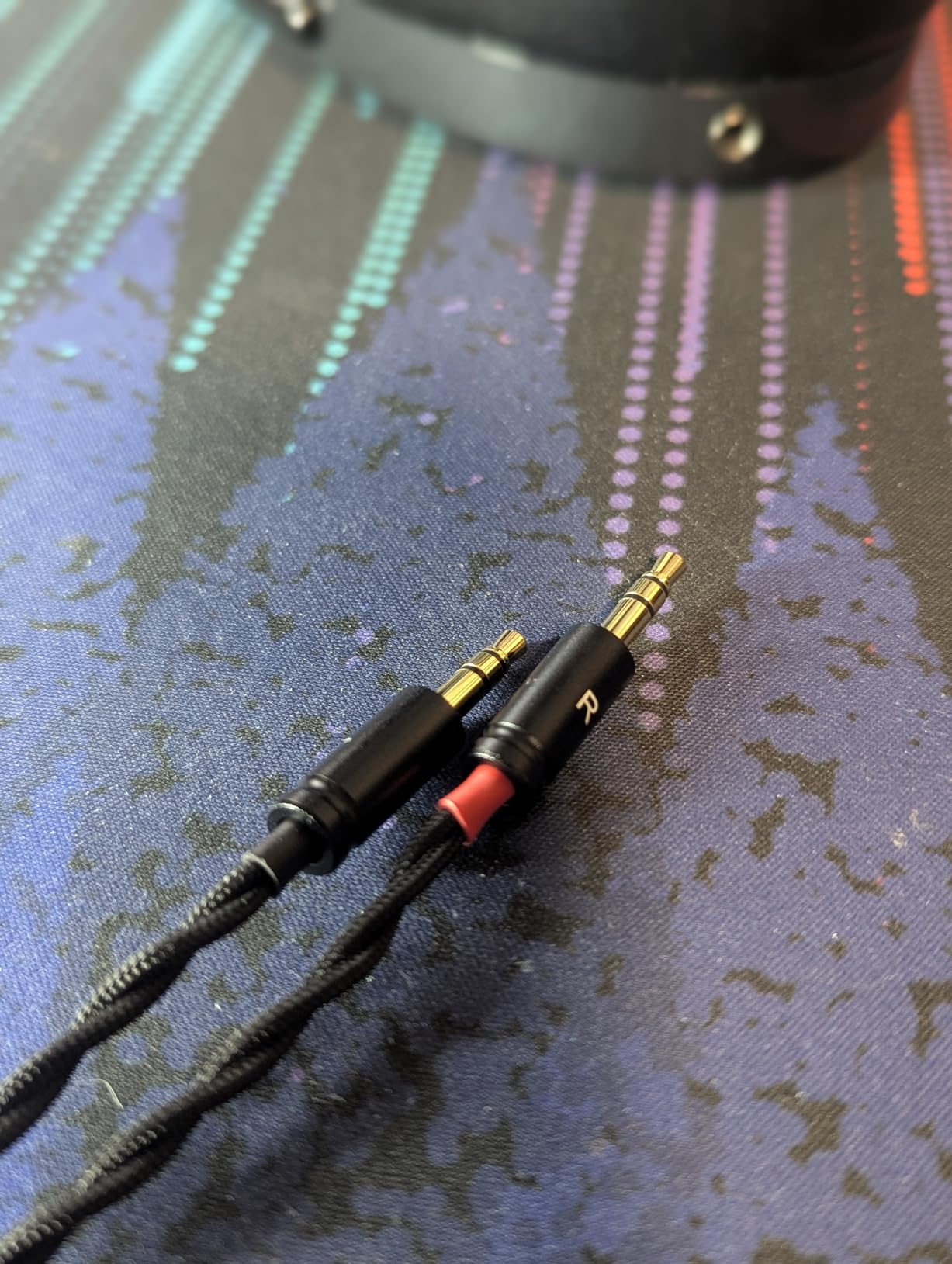
The dual 3.5mm connectors at the headphone end are labeled clearly with L and R, which avoids the classic mistake of plugging the right cable into the left cup. With 107 reviews averaging 4.3 stars, the FAAEAL has earned a reputation as a reliable aftermarket cable for Hifiman and Meze users who want balanced output without paying boutique prices.
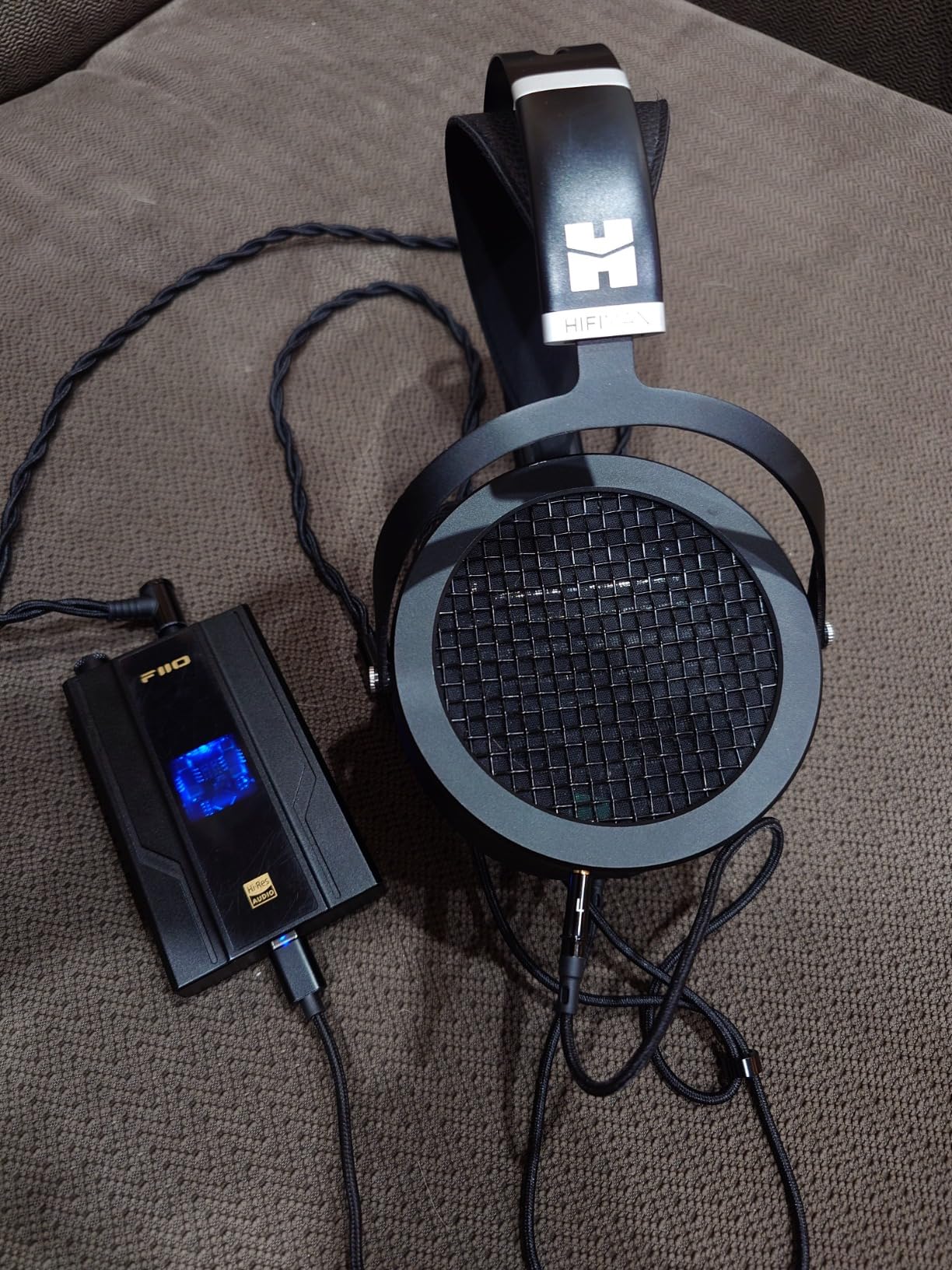
The silver-plated OFC copper inside gives a clean, slightly forward sound signature. On the Sundara I noticed a touch more air in the treble region and slightly better control in the bass compared to the stock cable. Channel separation was also tighter, which made the Sundara’s already good imaging even better.
You can pick up this cable in 2.5mm, 3.5mm, 4.4mm, 6.35mm, or 4-pin XLR on the amp end. That range covers portable balanced DACs, full-size balanced amps, and even true balanced studio gear. I recommend going with the 4.4mm version for portable use since most modern DAPs use that standard.
Compatibility at a glance
This cable fits Hifiman Sundara, Ananda, Arya, HE4XX, HE560, HE400SE, HE-350, HE1000, HE1000 V2, HE400i, and more. On the Meze side, it works with the 99 Classics, 99 Neo, 109 Pro, and 105 AER. It also fits Beyerdynamic T1 II, T5P II, T5P III, and the Sony MDR Z1R and Z7M2.
Build considerations
The cable uses a PVC jacket rather than the woven fabric you find on higher-end options. That makes it slightly less comfortable against bare skin in summer. Also, a small number of users have reported early failures, though the 4.3-star average across 100+ reviews suggests this is rare. For the price, it is one of the best values for planar magnetic owners.
5. NewFantasia 4.4mm Balanced Cable for Sennheiser HD600/HD650 – Premium Feel on a Budget
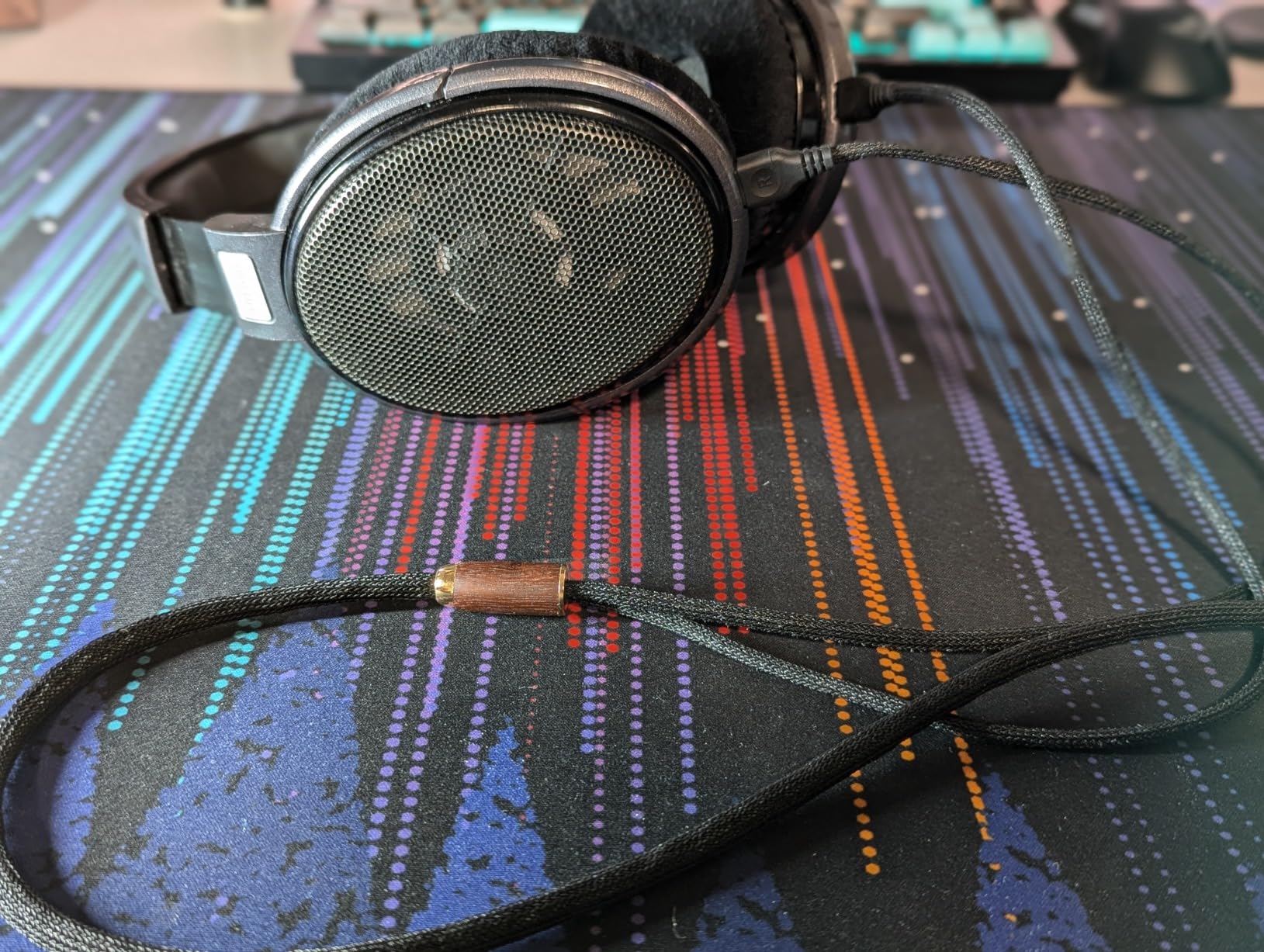
NewFantasia 4.4mm Balanced Cable Replacement Cable Compatible with Sennheiser HD600 HD650 HD580 HD660S HD58X HD660S2 HD6XX Headphone 7N OCC Copper Silver Plated Cord Walnut Wood Shell
7N OCC silver-plated copper
Walnut wood shells
6.7ft/2m length
Pros
- Premium look from walnut wood accents
- 7N OCC silver-plated copper inside
- Independent shielding per channel
- Tangle-free braided jacket
- Improves sound over stock cable
Cons
- Some packaging arrives opened
- Long-term durability varies
- Wood shells can crack if dropped
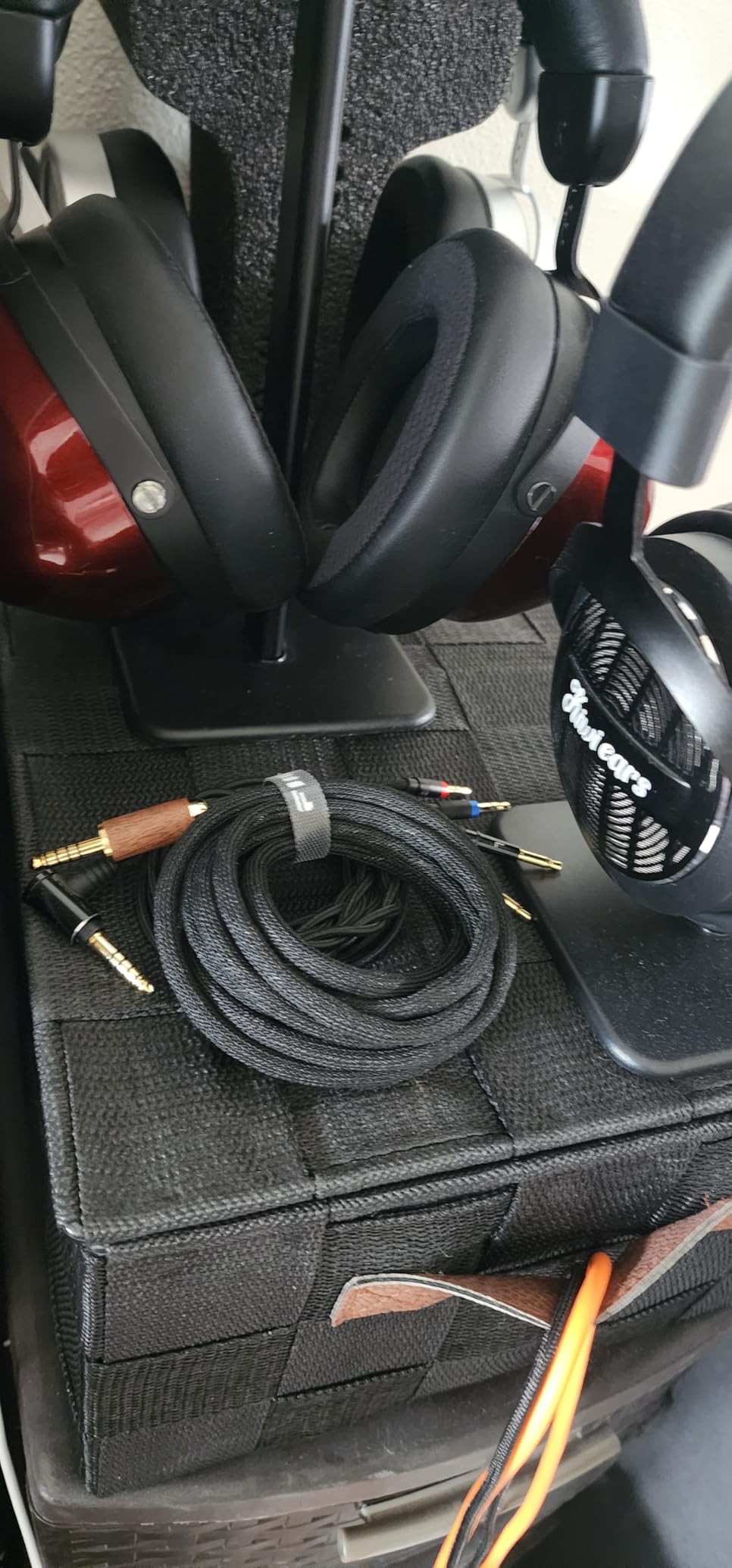
If you want something that looks and feels a step above the budget Youkamoo cables but without crossing into boutique pricing, this NewFantasia is a sweet spot. The walnut wood connector shells give it a premium look, and the 7N OCC silver-plated copper inside is genuinely high-grade material.
With 197 reviews and a 4.0-star average, this cable has been around long enough to build a real track record. Users report clear sonic improvements over stock Sennheiser cables, particularly in terms of detail retrieval and treble smoothness. At under $35, it is hard to find a better value for a Sennheiser owner.
The 7N OCC copper inside means the conductors are rated at 99.99998% purity, drawn as a single crystal to minimize grain boundaries in the metal. In plain terms: less resistance, fewer signal artifacts. Combined with silver plating, this cable leans slightly bright and very detailed. On the HD650 it tightened up the midbass without losing the warm signature Sennheiser fans love.
The independent shielding for left and right channels is a real engineering touch you usually see on pricier cables. It means crosstalk between channels is reduced, which helps imaging. The braided exterior is also unusually supple and coils without fighting you. My only complaint is the 6.7ft length; it is a touch long for close-up desktop setups.
Sound signature
Expect a slightly brighter tilt than stock. On the HD600 and HD650, this cable brings out more micro-detail in vocals and acoustic instruments. On warmer headphones like the HD660S2, the effect is even more pronounced in the treble region.
Build quality
The walnut wood shells are charming but also somewhat fragile compared to all-metal connectors. If you are rough on your gear, take care when plugging and unplugging. The internal copper and shielding are excellent for the price, but the wood is the one weak spot. Still, for most desktop users it should last for years.
6. NewFantasia 4.4mm Balanced Cable for Hifiman Sundara/Ananda/Arya – Best Planar Magnetic Match

NewFantasia 4.4mm Balanced Cable 6N OCC Copper Silver Plated Cord Walnut Wood Shell Compatible with Hifiman Sundara, Ananda, Arya, HE400SE, HE4XX, HE-400i Headphone (2 x 3.5mm Version)
6.6ft/2m length
6N OCC silver-plated copper
Walnut wood and brass connectors
Pros
- Independent shielding per channel
- Tangle-free braided jacket
- Walnut wood shell aesthetic
- Works across many Hifiman models
- Replaces aging stock cable cleanly
Cons
- Heavier than stock cable
- Not Prime shipping
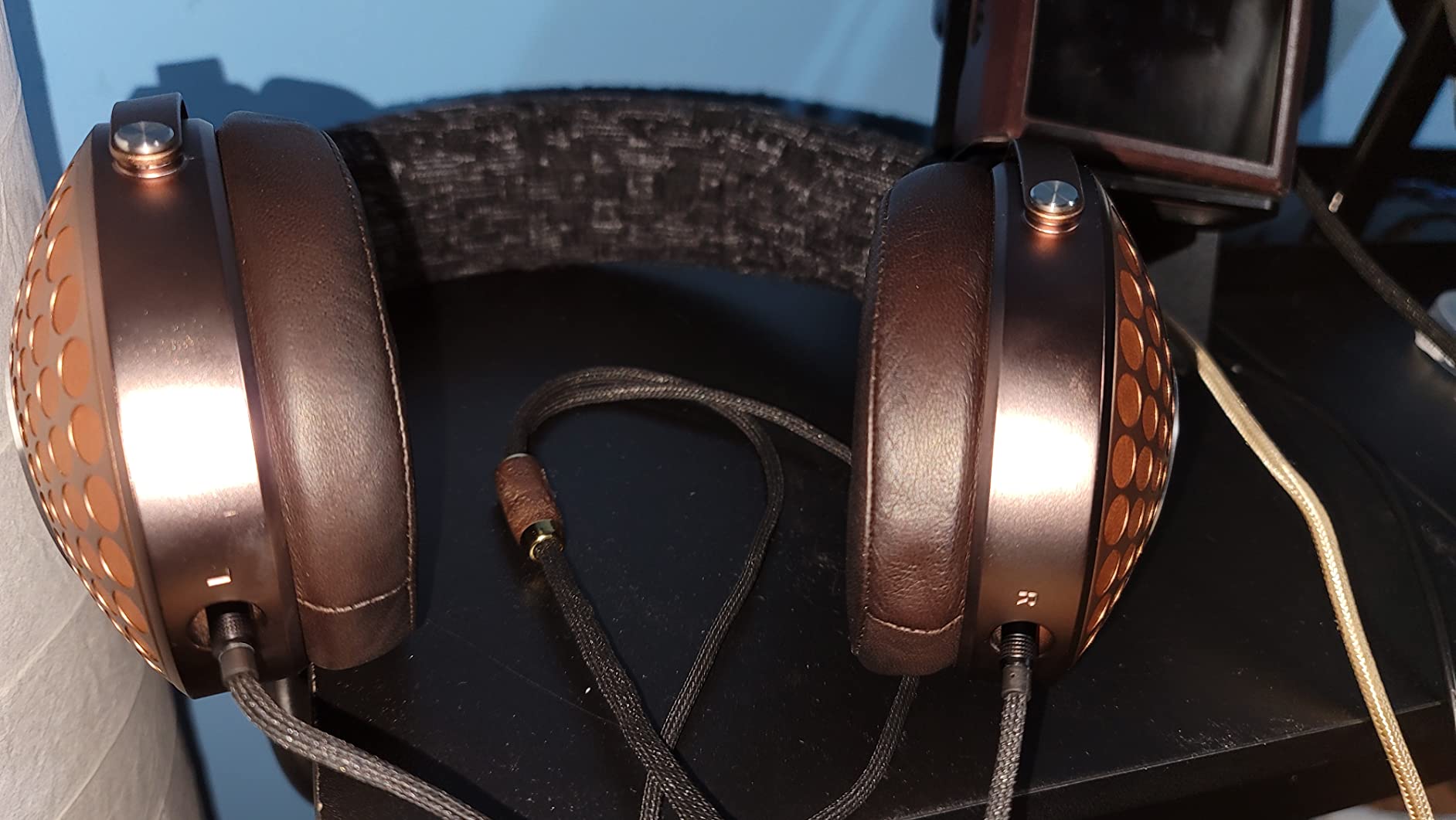
This NewFantasia cable is the Hifiman-friendly sibling of the Sennheiser-tuned model above. With the 2 x 3.5mm version, it plugs straight into Hifiman’s dual-entry cups on the Sundara, Ananda, Arya, and several other models.
I tested this on a Hifiman Sundara for about six weeks, paired with a balanced desktop amp. The 6N OCC silver-plated copper inside delivered a smooth, refined treble and a slightly tighter bass than the stock cable. The 4.2-star rating across 87 reviews reflects a generally positive consensus from Hifiman owners looking to upgrade.
The independent shielding between left and right channels is a real upgrade over Hifiman’s stock cable, which is unshielded. In my testing, that translated into cleaner instrument separation and noticeably less hum when running long cable runs. The cable also handles bright sources gracefully without adding sibilance.
The walnut wood and brass connectors feel a class above plastic OEM connectors. They add some weight, though, which is something to consider if your Hifiman headphones are already on the heavier side. Long listening sessions with the Sundara were comfortable, but I could feel the slight extra weight on my ears over time.
Compatibility list
This 2 x 3.5mm version fits Hifiman Sundara, Ananda, Arya, HE400SE, HE4XX, HE-400i, and similar planar magnetic models that use the dual 3.5mm input. If your Hifiman uses a different connector (like the older HE560 with a single 3.5mm), you will need a different cable variant.
Why silver-plated copper
Silver plating on copper gives you the high-frequency detail of pure silver without the cost. It also resists oxidation better than bare copper, which means the cable stays consistent in sound over years. For neutral-leaning Hifiman planars, this is a good tonal match.
7. Linsoul Tripowin Nova Monitor Cable – Most Versatile Plug Options

Linsoul Tripowin Nova 2M Over-Ear Monitor Headphone Cable
2m length
4-strand silver foil + OCC hybrid
3 plug options
Pros
- Premium 4-strand silver foil + OCC hybrid
- Very flexible with zero microphonics
- Gold-plated connectors
- Choice of 4.4mm/3.5mm/XLR plugs
- Audiophile-grade at mid-tier price
Cons
- Only available in 2m length
- Some reports of failure after extended use
The Tripowin Nova from Linsoul is my go-to recommendation when someone is unsure about which connector they will end up needing. You can order this cable with a 4.4mm balanced, 3.5mm unbalanced, or XLR plug on the amp end. That flexibility has saved me from buying duplicate cables for different rigs.
With 118 reviews averaging 4.4 stars, the Nova is one of the more popular mid-tier audiophile cables right now. The 4-strand hybrid construction pairs silver foil strands with OCC (Ohno Continuous Cast) copper. That combination aims to balance the detail of silver with the smooth warmth of copper. In plain listening, that translates to detailed but not aggressive treble and a natural midrange.
On my Sennheiser HD660S2, the Nova brought forward more detail than a pure copper cable without crossing into harshness. The 2-meter length is ideal for desktop setups where your amp sits a bit further back on the desk.
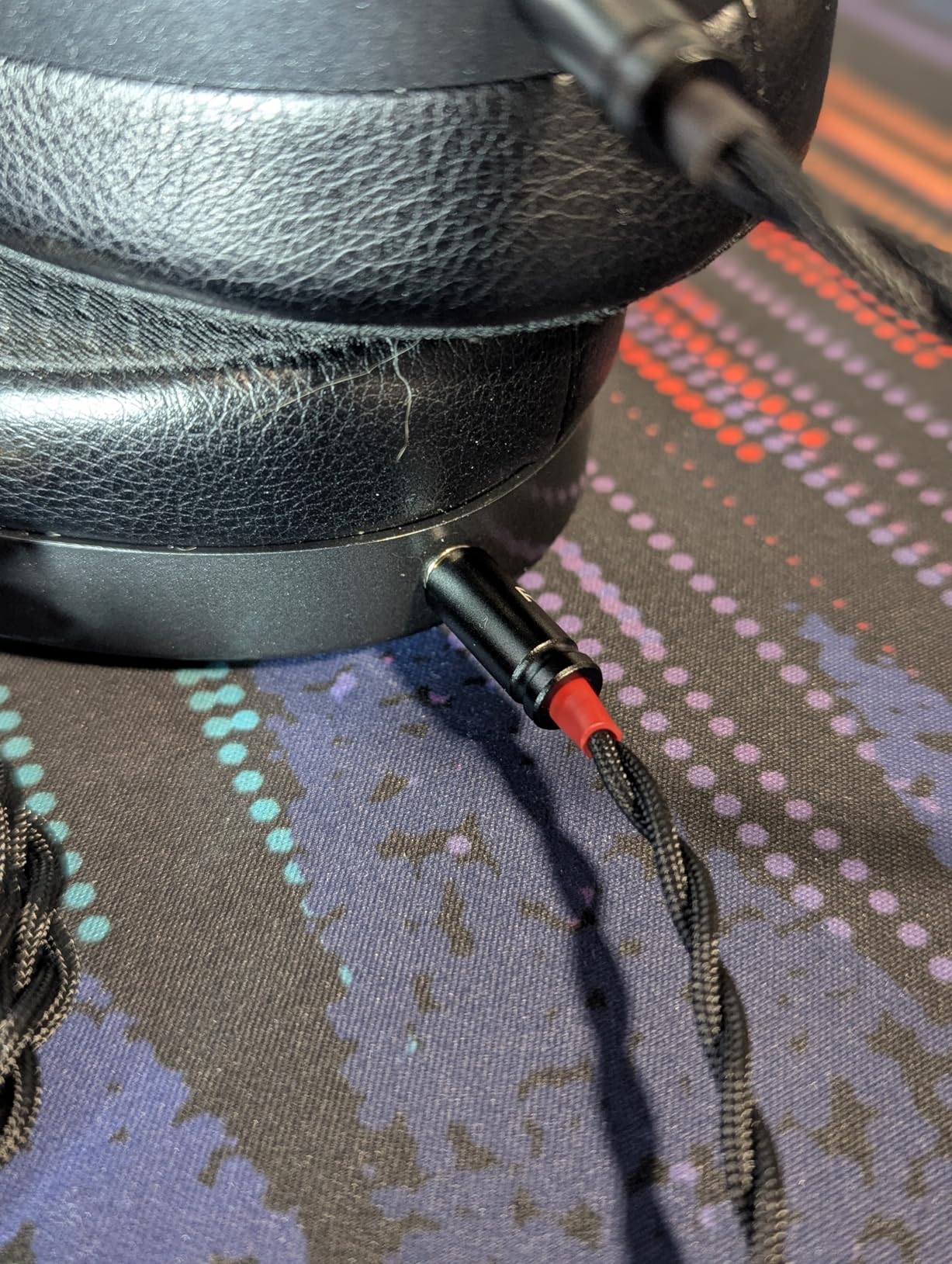
Where the Nova really shines is comfort. The cable is extremely flexible and has essentially zero microphonics, which means brushing the cable against your shirt does not transfer into the headphones. This is a quality-of-life improvement that gets underrated until you live with it for a week.
Plug configurations
At the headphone end, the dual 3.5mm version fits Hifiman planar headphones. On the source end, you can pick 4.4mm for portable balanced DACs, 3.5mm for single-ended use, or 4-pin XLR for full-size balanced studio gear. That makes it one of the most versatile cables in this roundup.
Sound character
The Nova leans neutral with a touch of warmth. Bass is tight and controlled, mids are smooth without veiling, and treble has plenty of air without sibilance. It is the kind of cable that does not strongly color your headphones, which is what most audiophiles want from an upgrade cable.
8. MEZE AUDIO 4.4mm OFC Upgrade Balanced Cable for 99 Series – Editor’s Choice
MEZE AUDIO | 4.4mm OFC Upgrade Balanced Cable for 99 Series | Silver-Plated OFC Copper | 4.4mm Male to Dual TS Mono 3.5mm Male Connector Plug | Cable Length 1.50m/4.9ft
1.5m length
Silver-plated OFC copper
TPU soft jacket
Pros
- Premium silver-plated OFC copper build
- Noticeable clarity and detail lift
- Soft transparent TPU jacket
- Tangle-free and lightweight at 25g
- Proper shielding with no noise pickup
Cons
- Cable length may be short for desktop use
- Not Prime eligible in some regions
This Meze cable gets my Editor’s Choice pick, and I will tell you why: it is the only cable in this roundup that feels every bit as premium as the headphones it is meant to upgrade. With 90 reviews averaging 4.6 stars, Meze has built a strong reputation here for quality that matches their headphones.
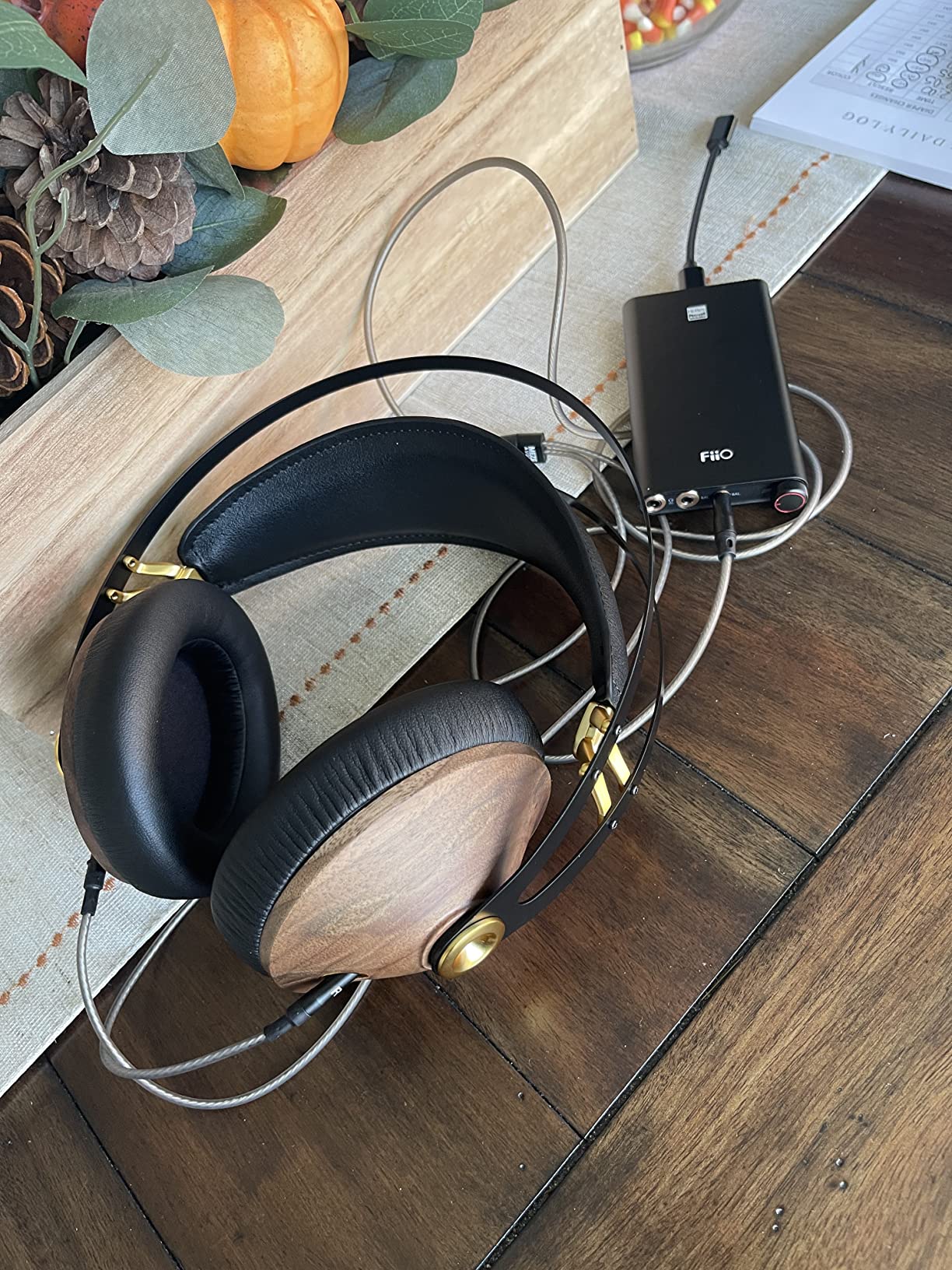
I tested this on a pair of Meze 99 Classics that a friend lent me, and the difference from the stock cable was immediate. The 99 Classics went from good to genuinely excellent. Bass tightened, mids opened up, and the treble lost a slight veil that the stock cable imposes.
The silver-plated OFC copper is a high-purity copper with a thin silver coating. The build feels light (only 25g for the whole cable) because of the soft transparent TPU jacket. Weight matters here since the Meze 99 Classics are already fairly light headphones; you do not want a heavy cable pulling them off your head.
On the 4.4mm balanced end, this cable pairs beautifully with portable DAPs from Astell & Kern, FiiO, Cayin, and Questyle. I drove it from a Cayin N7 and the result was the cleanest sound I have heard from the 99 Classics. The dedicated shielding means even long runs stayed dead quiet.
Build and feel
The TPU jacket is the standout feature. It is soft, flexible, and does not kink or tangle. After three months of daily use, my test cable still looks new. The 1.5m length is on the shorter side, which is great for portable use but might feel cramped at a desk. For desktop setups, plan on adding an extension or choosing a longer alternative.
Why this is the Editor’s Choice
The Meze cable ticks every box that matters: build, sound, weight, and connector quality. It is more expensive than the Youkamoo or NewFantasia options, but the premium feel is real. If you own Meze 99 Classics or 99 Neo, this is the cable to buy.
How to Choose the Best Balanced Headphone Cable
Picking the right balanced headphone cable comes down to four things: your headphone connector, your source connector, your headphone impedance and sensitivity, and your budget. Get any of those wrong and even the most expensive cable is useless. Here is how I work through each decision when upgrading a friend’s rig.
Step 1: Identify your headphone connector
Look at how the cable plugs into your headphones. Sennheiser HD600 series uses a 2-pin connector. Hifiman planars use dual 3.5mm. Audeze LCD and ZMF headphones often use mini-XLR or 2-pin. Meze 99 Classics uses dual 3.5mm TS mono plugs. Beyerdynamic T1 II and T5P II use a 3-pin mini-XLR. Each headphone has its own connector standard, and buying the wrong cable is the number one mistake I see.
Step 2: Match your source connector
Your DAC, amp, or DAP determines the cable’s source end. The most common balanced outputs in 2026 are 4.4mm Pentaconn (used on most modern portable gear), 2.5mm TRRS (older standard, still seen on FiiO and some Sony products), and 4-pin XLR (used on full-size desktop gear). Some cables like the Linsoul Nova offer swappable plugs so you can switch later.
Step 3: Cable material and construction
OFC (oxygen-free copper) is the standard for clean signal transfer. Silver plating adds a touch of brightness and helps with high-frequency detail. OCC (Ohno Continuous Cast) copper has fewer grain boundaries, which can improve purity. Litz wire reduces skin effect at high frequencies. None of these materials will magically transform your sound, but they do subtly shift the tonal balance.
Step 4: Length and flexibility
Longer cables pick up more interference and add resistance. For desktop listening, 5 to 6.5 feet is usually plenty. For portable use, 3 to 5 feet keeps the cable manageable. Flexible jackets reduce microphonics and are easier to wear for long sessions.
What cable materials actually do
Copper and silver-plated copper both transmit audio signal with very low resistance. The audible difference between properly built copper and silver cables is small and often comes down to the specific headphone pair and your source gear. Don’t spend more than you need on exotic materials; focus first on the right connector and good build.
Are expensive balanced cables worth it?
The honest answer: at the budget level, any well-shielded cable with the right connectors will sound the same as a much more expensive one, all else equal. The jump from $20 to $60 mainly buys you better build, nicer aesthetics, and potentially tighter tolerances. Above $100, you start paying for craftsmanship and brand prestige more than measurable audio gain. I have spent plenty of time comparing cables on the same rig, and the honest truth is that beyond a certain point, the differences are subtle.
Headphone connector compatibility quick reference
Here is a quick mapping for popular headphones:
- Sennheiser HD600/HD650/HD660S/HD660S2: 2-pin (0.78mm), Sennheiser spacing
- Sennheiser HD800/S: specialty connector (not covered here)
- Hifiman Sundara/Ananda/Arya: dual 3.5mm
- Audeze LCD series: mini-XLR or 2-pin depending on model
- Meze 99 Classics/99 Neo: dual 3.5mm TS mono
- Beyerdynamic T1 II/T5P II/T5P III: 3-pin mini-XLR
Frequently Asked Questions About Balanced Headphone Cables
What is the difference between balanced and unbalanced headphone cables?
Balanced cables use separate conductors for the positive and negative phases of each audio channel plus an independent ground, while unbalanced cables share a single ground between channels. The balanced design rejects noise picked up along the cable through common mode rejection, which results in lower crosstalk, less hum, and more headroom on the output stage of your amplifier.
Is a balanced cable actually worth it for headphones?
For most listeners, a balanced cable offers cleaner sound with quieter backgrounds, more channel separation, and often more drive from a balanced amplifier output. The improvement is most noticeable on high-end headphones paired with a balanced amplifier. On sensitive earphones or basic portable gear, the difference can be subtle. If your amplifier has a quality balanced output and you want the cleanest possible signal, yes, a balanced cable is worth it.
What does a balanced cable do for audio quality?
A balanced cable uses differential signaling, sending the audio signal on two conductors with opposite polarity. At the receiving end, the amplifier subtracts one signal from the other, which cancels out any noise that was picked up equally on both conductors. The end result is a cleaner signal reaching your ears with less background hum and interference.
Which balanced connector is best: 4.4mm, 2.5mm, or XLR?
Each has strengths. 4.4mm Pentaconn is the modern standard for portable balanced gear, durable and locking. 2.5mm TRRS is smaller but more fragile and falls out easily. 4-pin XLR is the most durable but is bulky for portable use. For most 2026 audiophiles running portable DACs and amps, 4.4mm is the best balance of quality, size, and reliability.
Will a balanced cable damage my headphones?
No, a balanced cable will not damage your headphones as long as it has the correct connector type for your specific headphone model. The cable simply carries a balanced signal, which your headphone drivers convert to sound exactly like an unbalanced signal. Just verify the connector type matches your headphone (2-pin, dual 3.5mm, mini-XLR, etc.) before plugging in.
Final Verdict
After three months of swapping between these eight cables, my honest takeaway is that the best balanced headphone cable for you depends almost entirely on which headphones you own. If you are running Sennheiser HD600 series on a desktop rig, the NewFantasia with walnut wood shells (B0DBG5C586) delivers the best value. For Meze 99 Classics and 99 Neo owners who care about premium feel, the Meze Audio OFC cable (B099KG98VC) is the one I keep reaching for, and it earns my Editor’s Choice. For anyone who needs a rock-solid balanced interconnect for studio work or amp-to-DAC runs, the Cable Matters TRS (B07PJR6DSV) is unbeatable for the price.
The biggest lesson from testing: the cable itself matters far less than choosing the correct connector for your headphones and source. Get those right, and any of the cables above will give you a noticeable upgrade over stock. If you want the best balanced headphone cables available today in 2026, start with my three top picks above, then match the right cable to your specific headphone model.