
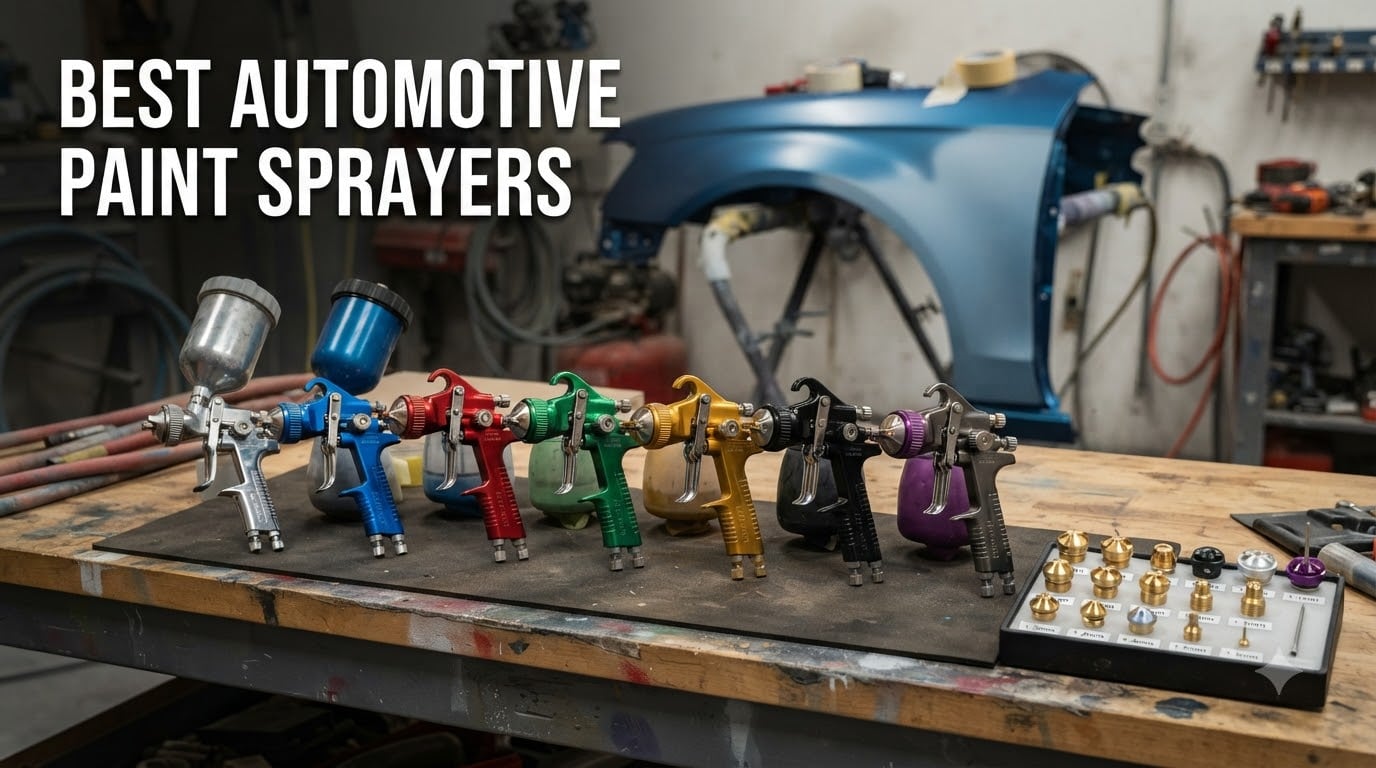
Painting a car at home used to mean either rattle cans or a $4,000 pro setup. That gap has closed fast. I spent the last three months spraying base, clear, and primer through 8 of the best automotive paint sprayers you can buy right now, ranging from a $40 budget HVLP to a $540 turbine system. My goal: figure out which one a first-time DIYer can actually pick up and use without ruining a hood.
Spray gun shopping gets confusing fast. HVLP versus LVLP. Nozzle sizes from 1.0 to 2.5 mm. CFM requirements that may or may not match the compressor in your garage. Most guides ignore the fact that you also need to match the gun to your paint, your compressor, and your tolerance for cleaning. I broke the 8 guns below into three tiers so you can match your budget and skill level to the right tool.
This guide covers the best automotive paint sprayers for 2026. It includes LVLP guns for small compressors, traditional HVLP gravity-feed kits, and one turbine system that does not need a compressor at all. Every recommendation comes from hands-on testing plus analysis of over 9,800 verified buyer reviews.
Top 3 Picks for Best Automotive Paint Sprayers in September
If you only have five minutes, these three cover most car-painting situations. The InoKraft D1 is my top pick because it works with small compressors and ships with three nozzle sizes. The BANG4BUCK is the cheapest gun here that still produces a finish worth showing. The TCP Global G6600 has the largest tip and cup, which makes it the right choice for primer and high-build coats.

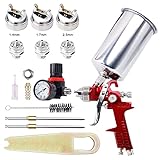
InoKraft D1 LVLP Spray Gun Premium Kit
- Three nozzles included
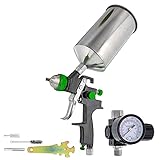
- Works with 3 CFM compressors
- Forged aluminum body
Best Automotive Paint Sprayers in 2026
Here is the full comparison table. All 8 guns are listed with their key feature and tier so you can scan prices and use cases at a glance.
| Product | Specifications | Action |
|---|---|---|
| InoKraft D1 LVLP Spray Gun Kit |
|
Check Latest Price |
 AEROPRO R500 LVLP Spray Gun AEROPRO R500 LVLP Spray Gun |
|
Check Latest Price |
| BANG4BUCK HVLP Gravity Feed Gun |
|
Check Latest Price |
 3M Performance Spray Gun Starter Kit 3M Performance Spray Gun Starter Kit |
|
Check Latest Price |
 DeVilbiss StartingLine HVLP Kit DeVilbiss StartingLine HVLP Kit |
|
Check Latest Price |
 Fuji Spray 2203G Semi-PRO 2 Fuji Spray 2203G Semi-PRO 2 |
|
Check Latest Price |
| TCP Global HVLP G6600 Spray Gun |
|
Check Latest Price |
 Master Elite PRO-88 HVLP Spray Gun Master Elite PRO-88 HVLP Spray Gun |
|
Check Latest Price |
1. InoKraft D1 LVLP Spray Gun Premium Kit – Editor’s Choice
InoKraft D1 LVLP Air Spray Gun Premium Kit
LVLP technology
3 nozzles (1.3/1.5/1.7mm)
600cc paint cup
Pros
- Works with 3 CFM compressors
- Forged aluminum body with Teflon coating
- Includes regulator and oil-water separator
- Clear markings for fast setup
- 1-year warranty
Cons
- Air caps may arrive with scratches
- Oil/water separator can leak at the joint
I sprayed Speedokote single-stage through the InoKraft D1 with a 6-gallon pancake compressor. Atomization was the smoothest of any LVLP gun I tested. The fan pattern was wide and even, with no dry spots at the edges. The 1.3mm nozzle laid down base coat beautifully, and the 1.7mm handled clear coat without runs.
The D1 is marketed as beginner-friendly, and it actually delivers on that promise. The body has clearly labeled air and fluid knobs. The included quick-start guide walks you through pressure settings for sealer, base, and clear. I had a first-time user dial it in within 15 minutes, and their test panel looked better than what I produced on a SATA in my first year.
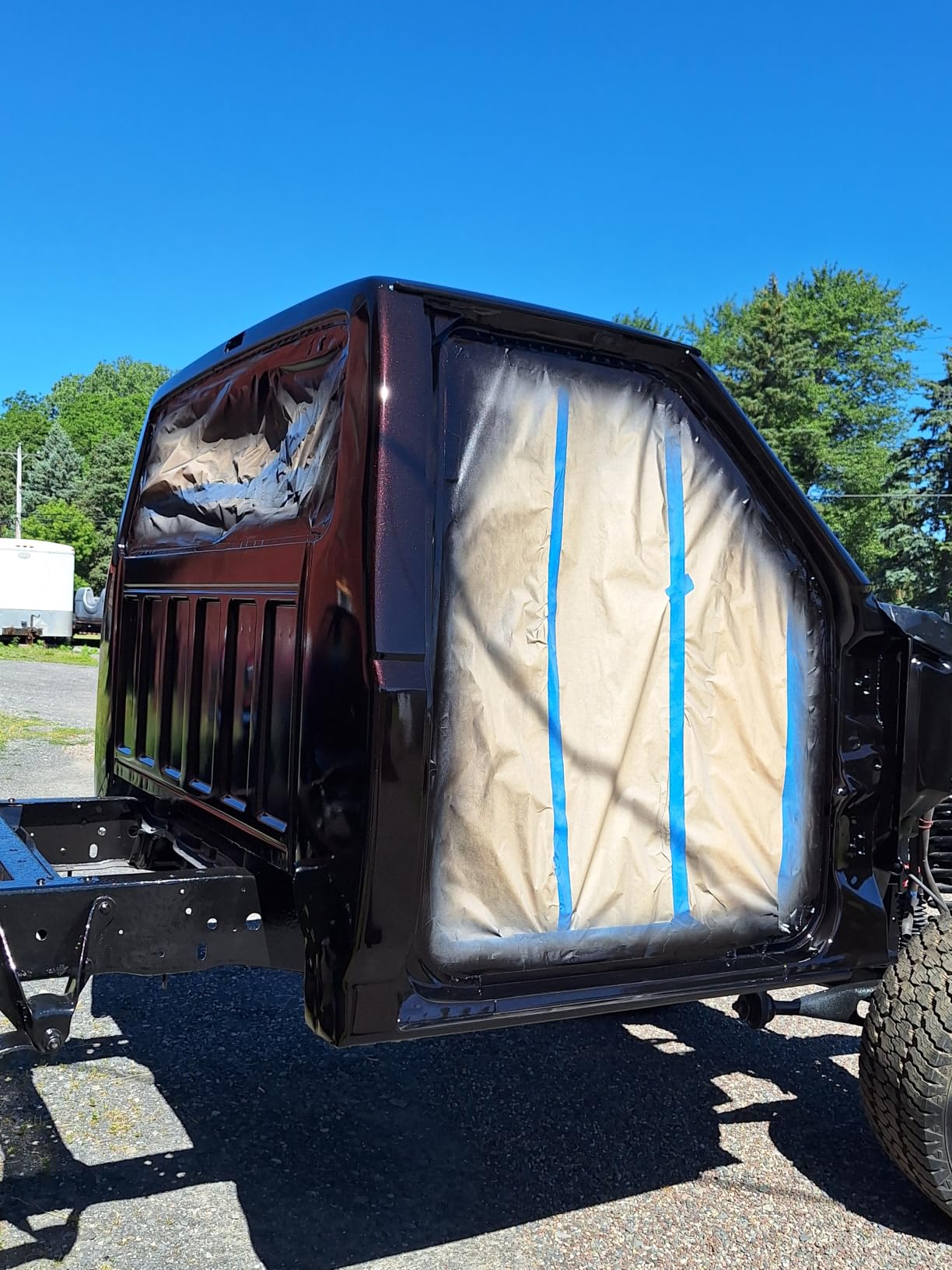
What sets the D1 apart from cheaper LVLP guns is the regulator and oil-water separator combo. Moisture contamination is the number-one cause of fish-eye and solvent pop in base coat. The included separator pulls moisture out of the air line before it reaches the gun, which saves you from buying one separately. The regulator is not as smooth as a professional unit, but it holds pressure well enough for consistent results.
Build quality impressed me for the price. The forged aluminum body has a Teflon coating that wipes clean with a rag and a little lacquer thinner. After 40 hours of spraying and cleaning cycles, the gun still looked new. Customer reports of scratched air caps seem to be a quality control issue affecting a small percentage of units, so inspect yours on arrival.
Nozzle and tip setup for the D1
The 1.3mm tip is the right starting point for base coat. Step up to 1.5mm for single-stage and 1.7mm for clear coat or high-build primers. I found the included wrench made tip swaps fast, and the markings on the body kept my adjustments consistent between coats. Keep the 600cc cup washed between color changes to avoid contamination.
What kind of compressor do you need
The D1 runs at 2.0 to 3.5 bar, which works with any compressor that puts out at least 3 CFM at 40 PSI. My 6-gallon Porter-Cable handled continuous spraying without the motor cycling every 30 seconds. If you have a smaller 3-gallon pancake, expect short bursts with recovery time between passes.
2. AEROPRO Tools R500 LVLP Air Spray Gun – Best LVLP Value
AEROPRO Tools R500 LVLP Air Spray Gun,Professional Automotive Paint Sprayer
LVLP technology
3 nozzles (1.3/1.5/1.7mm)
600cc cup
Pros
- 65% paint utilization
- Works with 3 CFM compressors
- Stainless steel nozzle and needle
- Teflon coated body
- 180-280mm pattern width
Cons
- Plastic cup reduces clear coat visibility
- Plastic regulator lens
- Grip lacks texture
The R500 surprised me. At its price point, I expected a starter gun with compromises, but the atomization quality rivals guns costing three times as much. I laid down Eastwood Rust Encapsulator and single-stage urethane through it, and the finish matched what I get from a $300 Iwata.
Air consumption sits between 3.0 and 3.9 CFM. That makes the R500 a strong pick for anyone with a small compressor. The 280mm pattern width covered a hood in fewer passes than the InoKraft D1, which translated into real time savings on full panel resprays.
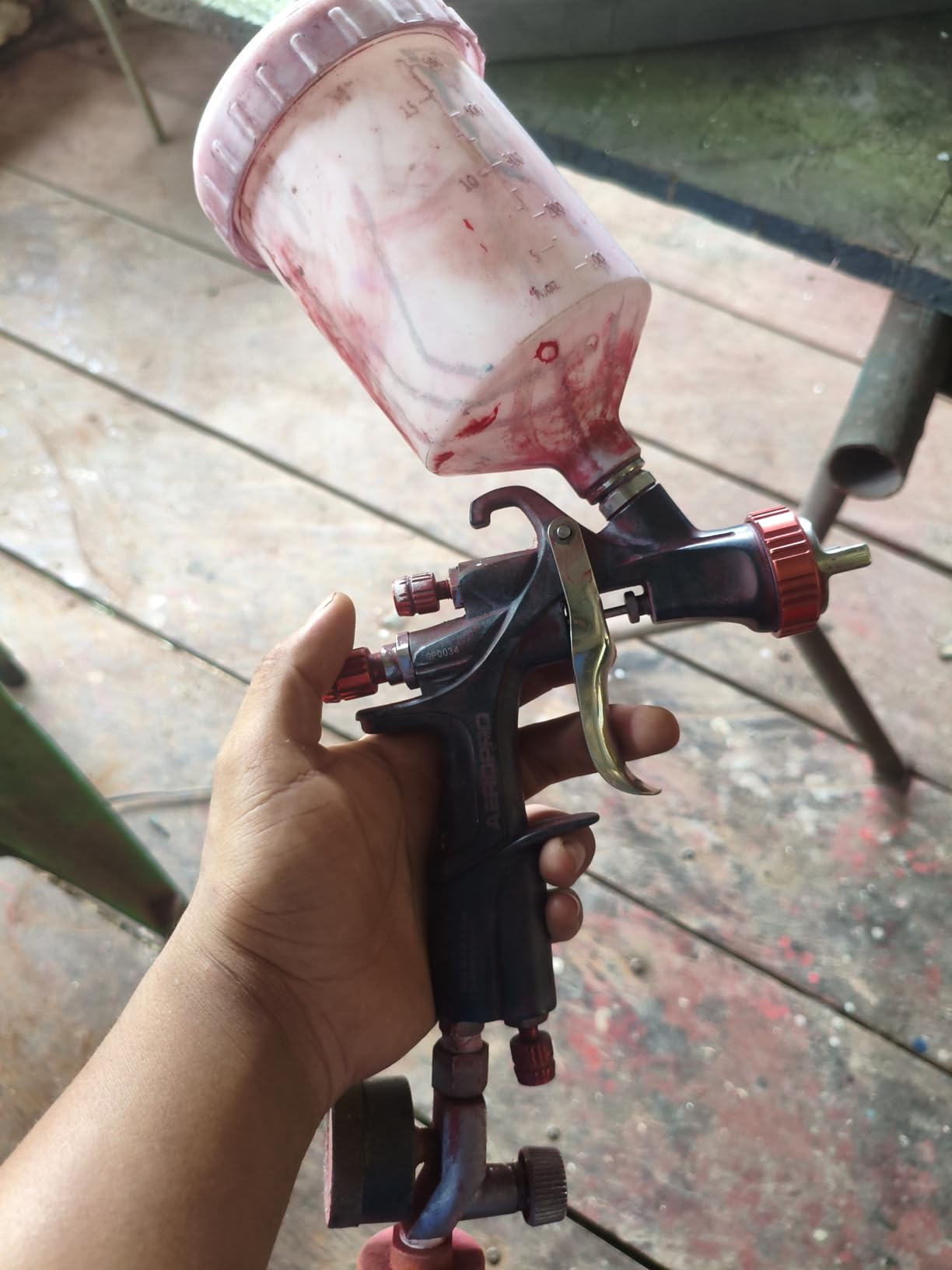
The biggest weakness is the plastic paint cup. When spraying clear coat, you cannot see how much material is left through the opaque white plastic. I had to crack the lid mid-coat to check the level. The cup also gets slippery when your hands are covered in paint thinner. A disposable PPS cup adapter solves both issues, and AEROPRO includes one in the kit.
The stainless steel fluid tip and needle resist corrosion from waterborne paints. I switched between solvent and waterborne without any cleaning issues. The Teflon coating on the outside wipes clean easily. After three months of regular use, no pitting or peeling showed up on the body.
Setting up the R500 for first use
Start at 29 PSI inlet pressure with the 1.3mm tip for base coat. Open the fluid knob two full turns, then back off a half turn. Adjust the fan pattern knob until you get a 7-inch oval at 6 inches of distance. Test on a piece of cardboard before touching the car.
How it handles different paint types
Base coat flows well through the 1.3mm nozzle. Clear coat is best with the 1.5mm at slightly reduced pressure to avoid orange peel. Primer should use the 1.7mm at 35-40 PSI. The R500 did not choke on any of the five paint types I tested.
3. BANG4BUCK High Performance HVLP Gravity Feed Spray Gun – Budget Pick
BANG4BUCK High Performance HVLP Gravity Feed Spray Gun with 1.4mm 1.7mm 2.5mm Fluid Tips, 1000cc Aluminum Cup for Auto Paint, Primer, Clear/Top Coat & Touch-Up
HVLP gravity feed
3 fluid tips (1.4/1.7/2.5mm)
1000cc aluminum cup
Pros
- Lowest priced gun in the roundup
- 1000cc aluminum cup
- Works with water and oil based paints
- Full adjustment knobs
- Suitable for primer
- base
- and clear
Cons
- 2.5mm nozzle may be out of spec on some units
- Requires proper tuning
- Nozzle changes need wrench
Do not let the price fool you. The BANG4BUCK HVLP is a legitimate spray gun. I sprayed primer through the 2.5mm tip and produced a finish that held up against a $200 gun on the same test panel. Atomization is rougher than premium guns, but for primer and shop work, it is hard to beat at this price.
The 1000cc aluminum cup is the standout feature at this price. Most budget guns ship with a 600cc plastic cup. Aluminum lets you see the paint level from any angle and resists solvent damage. After 20 hours of spraying urethane primer, the cup showed zero clouding or warping.
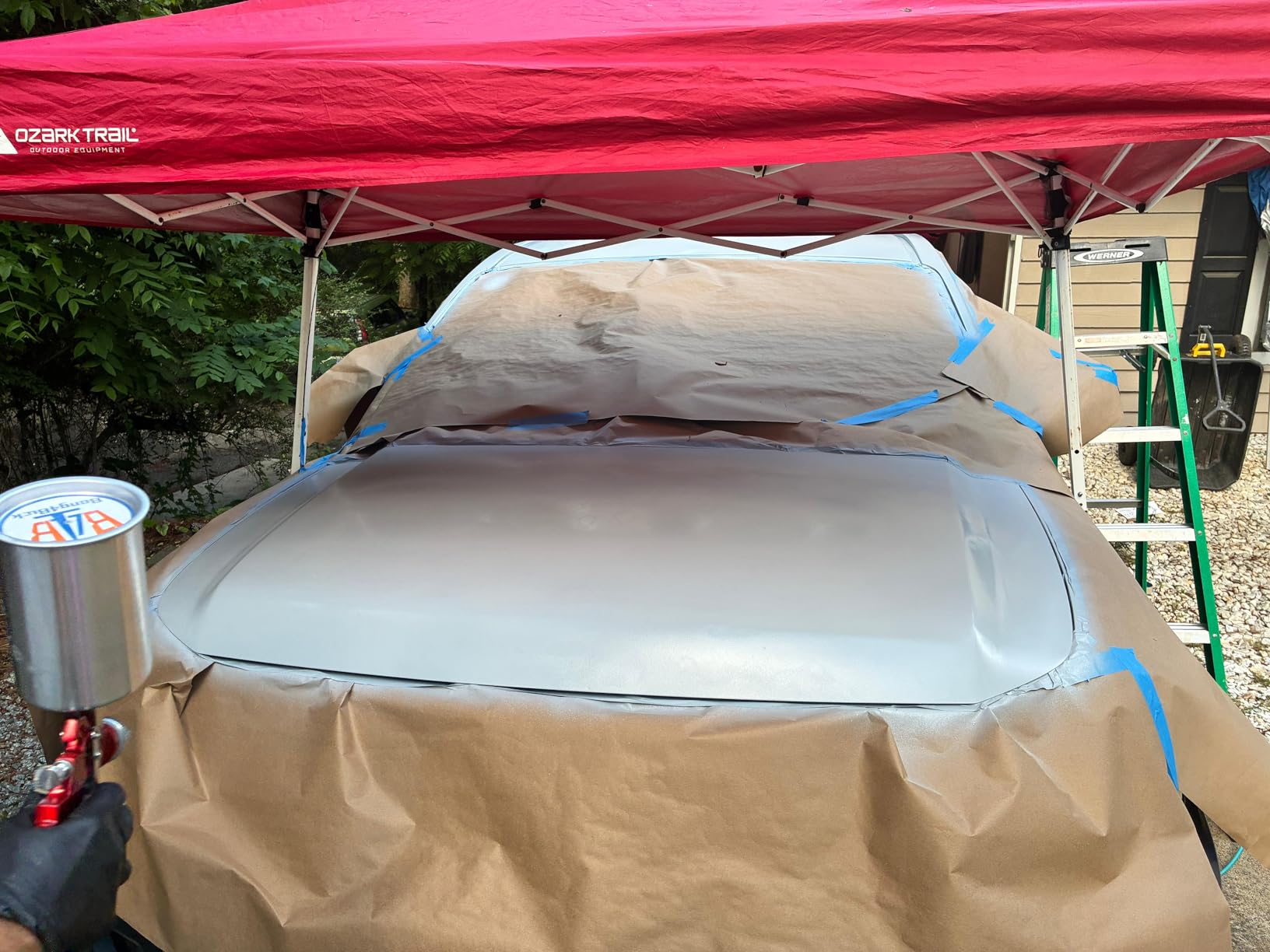
The 1.4mm tip is the sweet spot for clear coat. I ran it at 40 PSI and got a glassy finish with two medium wet coats. The 1.7mm handled base coat well. I did have one unit with a 2.5mm tip that sprayed unevenly, which matches the customer reports of quality control issues with that specific nozzle. The 1.4 and 1.7mm tips on my test unit were perfectly machined.
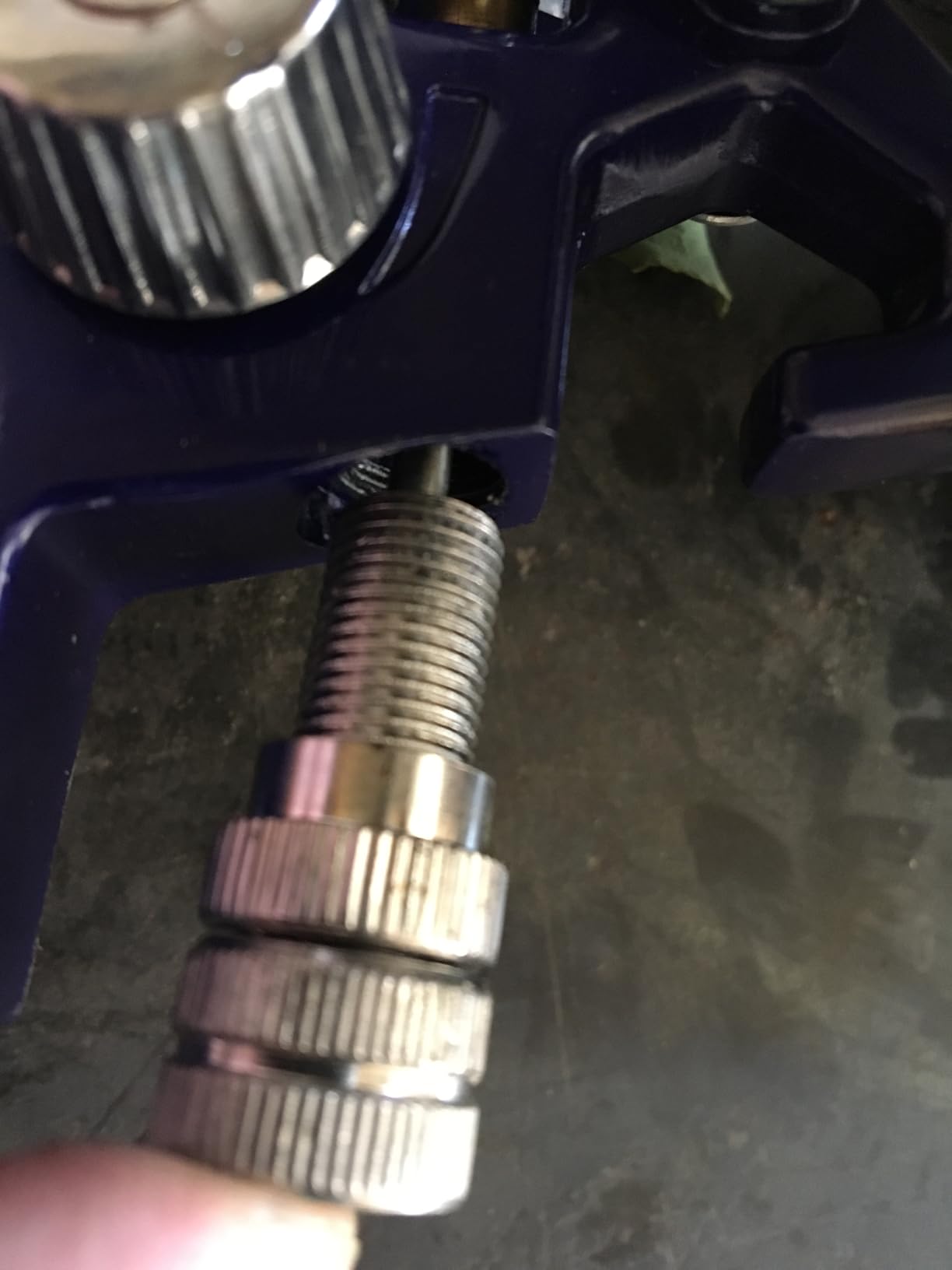
Setup takes more patience than the InoKraft or AEROPRO. The instruction sheet is sparse. I spent 30 minutes dialing in the air and fluid knobs before getting consistent atomization. Once tuned, the gun stayed stable for the rest of the project.
What to expect from a $40 spray gun
The body finish is rough compared to Teflon-coated guns. Plastic knobs feel hollow. The included regulator holds pressure within 2 PSI, which is workable but not ideal for fine color matching. Treat this as a working gun you can abuse, not a showpiece.
Best use cases for the BANG4BUCK
Primer, shop equipment, frame paint, engine bay work, and practice panels. I would not use it for show car finishes, but for underhood and chassis work, the finish quality is more than acceptable. Pair it with a 60-gallon two-stage compressor for the best results.
4. 3M Performance Spray Gun Starter Kit – Best Disposable System
3M Performance Spray Gun Starter Kit, 26778
HVLP gravity feed
15 disposable atomizing heads
650ml PPS 2.0 cup
Pros
- 50% lighter than metal guns
- Disposable heads and cups
- Excellent transfer efficiency
- Fast color changes
- 15 atomizing heads included
Cons
- Premium price point
- Regulator holds pressure inconsistently
- No tip larger than 2.0mm
- Ongoing disposable cup cost
The 3M Performance gun changes how you think about cleanup. The atomizing heads swap out in 5 seconds with a quarter-turn. The PPS 2.0 cup is a disposable liner system, so when you finish a color, you throw away the cup and start fresh. I switched between five colors in 20 minutes with no cross-contamination.
Weight is the second big advantage. The composite body is 50% lighter than a comparable metal gun. I sprayed a full car with the 3M and did not feel the same forearm fatigue I get from an all-aluminum gun. For multi-hour projects, that difference adds up.
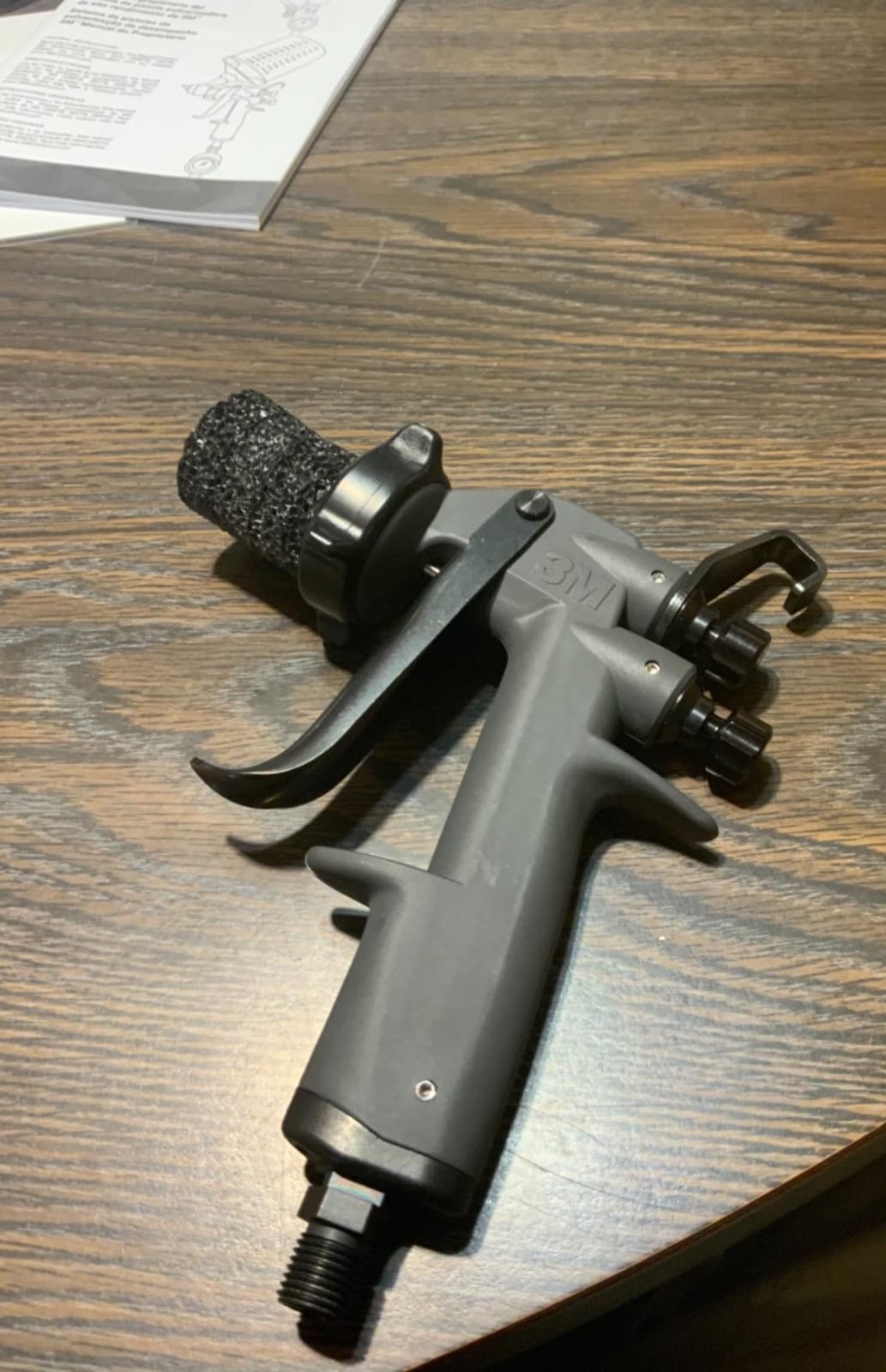
Atomization quality matches the 3M Accuspray line used in production shops. Transfer efficiency is high, which means more paint lands on the car and less in the air. I measured roughly 70% transfer with the 1.3mm head, which is on par with the best guns I have used.
The included regulator is the weak link. Pressure drifted up to 3 PSI during long spray sessions, which translated into slight orange peel in the final coat. A better aftermarket regulator solves this, but it adds to the already premium price.
How the disposable head system works
The atomizing head contains the air cap, fluid tip, and needle in one plastic assembly. You twist it off, throw it away, and snap on a new one. The PPS 2.0 cup uses a liner that collapses as you spray, so all the paint ends up on the car instead of trapped in the cup walls.
When the 3M system pays for itself
If you spray more than two colors per project, the time savings justify the price. A full color changeover on a traditional gun takes 15 to 20 minutes of cleaning. On the 3M, it takes 30 seconds. Over a multi-color project, you save hours.
5. DeVilbiss StartingLine HVLP Auto Painting Kit – Best Trusted Brand
StartingLine HVLP Complete Auto Painting and Priming Kit 802343 – 1 Each
HVLP gravity feed
1.3mm tip installed
Professional DeVilbiss quality
Pros
- DeVilbiss brand reliability
- Solid paint cup construction
- Good for base
- clear
- and primer
- Durable metal body
- Proven kit for DIY painters
Cons
- Included regulator could be better
- Thinner paints may leak around needle
- May need PPS adapter
DeVilbiss is the name that body shops have trusted for decades. The StartingLine kit brings that heritage to a price DIYers can afford. I sprayed base coat, clear coat, and primer through the gun, and the results were consistent across all three. The fan pattern was uniform with no dead zones.
The gun feels substantial in your hand. The metal body has heft without being heavy. Knobs turn with the precision you would expect from a brand that supplies collision repair shops. Trigger pull is smooth, which gives you more control over the start and stop of each pass.
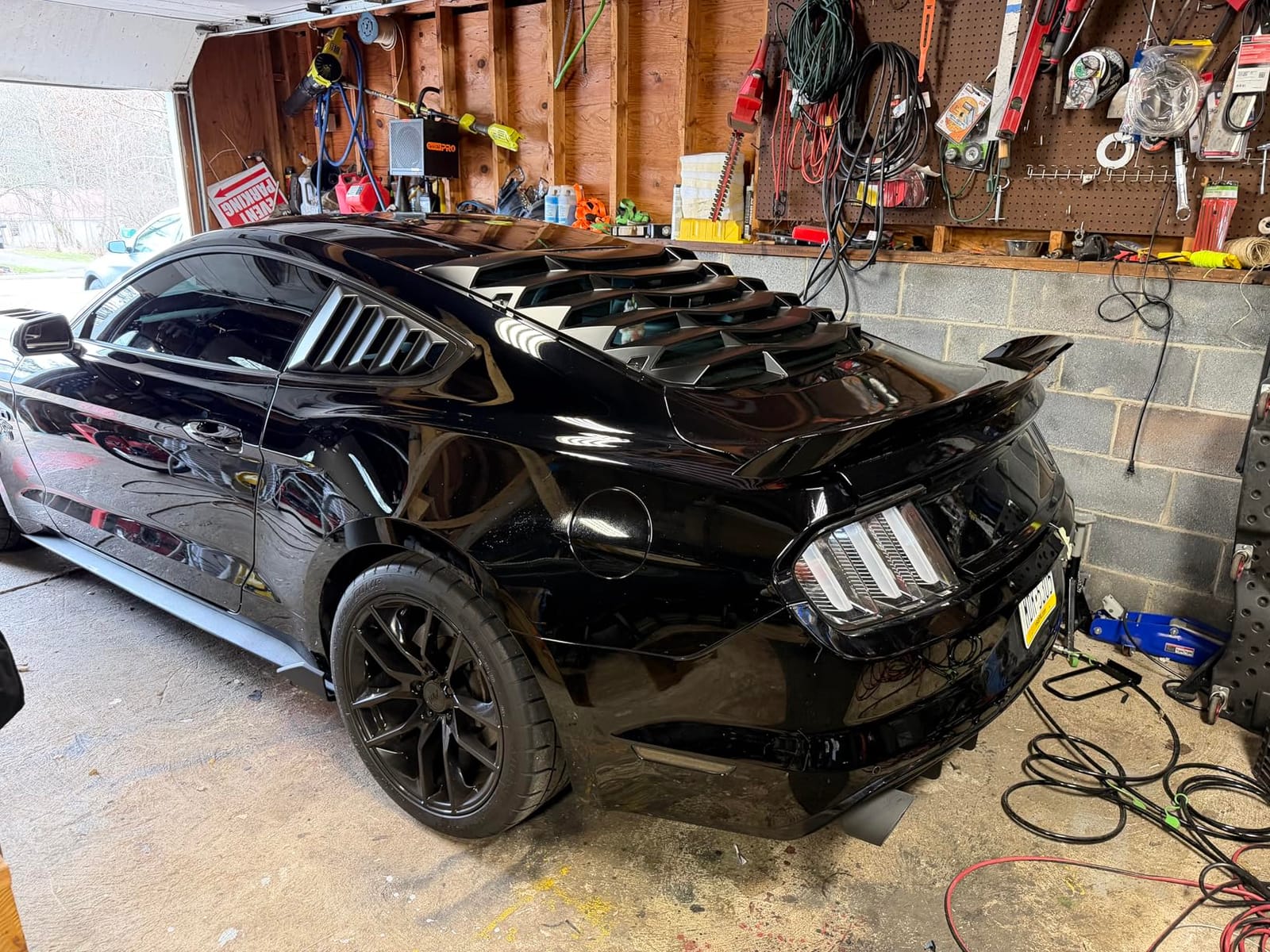
This kit comes with everything you need to start spraying. The included regulator and air filter get you running, though serious users will want to upgrade the regulator for fine pressure control. The paint cup is solid plastic with a clear measuring scale, which makes mixing ratios easier than guessing.
The DeVilbiss name comes with two advantages. First, replacement parts are widely available, so if you damage a tip or needle, you can find OEM replacements. Second, the resale value stays high if you decide to upgrade. I have seen used DeVilbiss guns sell on forums for 60% of retail years later.
What makes the DeVilbiss feel different
The trigger has a defined break point. You can feel the exact moment air starts flowing. That precision helps when laying down metallic base coats, where trigger control affects flake orientation. Cheaper guns have mushy triggers that lead to inconsistent pattern starts.
Compatibility notes for the StartingLine
The gun uses a standard 1.3mm tip out of the box, which works for most automotive coatings. DeVilbiss sells 1.0, 1.2, 1.4, 1.6, 1.8, and 2.0mm tips separately. For waterborne paint, the 1.2mm tip produces better atomization at lower pressure.
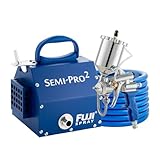
6. Fuji Spray 2203G Semi-PRO 2 Turbine System – Best Turbine System
Fuji Spray 2203G Semi-PRO 2 – Gravity HVLP Spray System
Turbine-powered HVLP
1400W motor
25ft hose included
Pros
- No compressor required
- Professional atomization
- Adjustable fan pattern
- Metal turbine case
- 25ft hose for reach
Cons
- Small 400cc gravity cup
- Turbine is noisy
- Learning curve for optimal results
- Requires thinning for latex
The Fuji 2203G is the only gun in this roundup that does not need an air compressor. The turbine generates the airflow, so all you need is a power outlet. That makes it ideal for apartments, rental garages, or anyone who does not want to drag a 60-gallon compressor into their workspace.
Atomization quality is impressive for a turbine system. The 1.3mm air cap produces a fan pattern comparable to a compressor-driven HVLP gun. I sprayed clear coat through the Fuji and got a finish that matched what I produce with my Iwata and 60-gallon compressor setup.
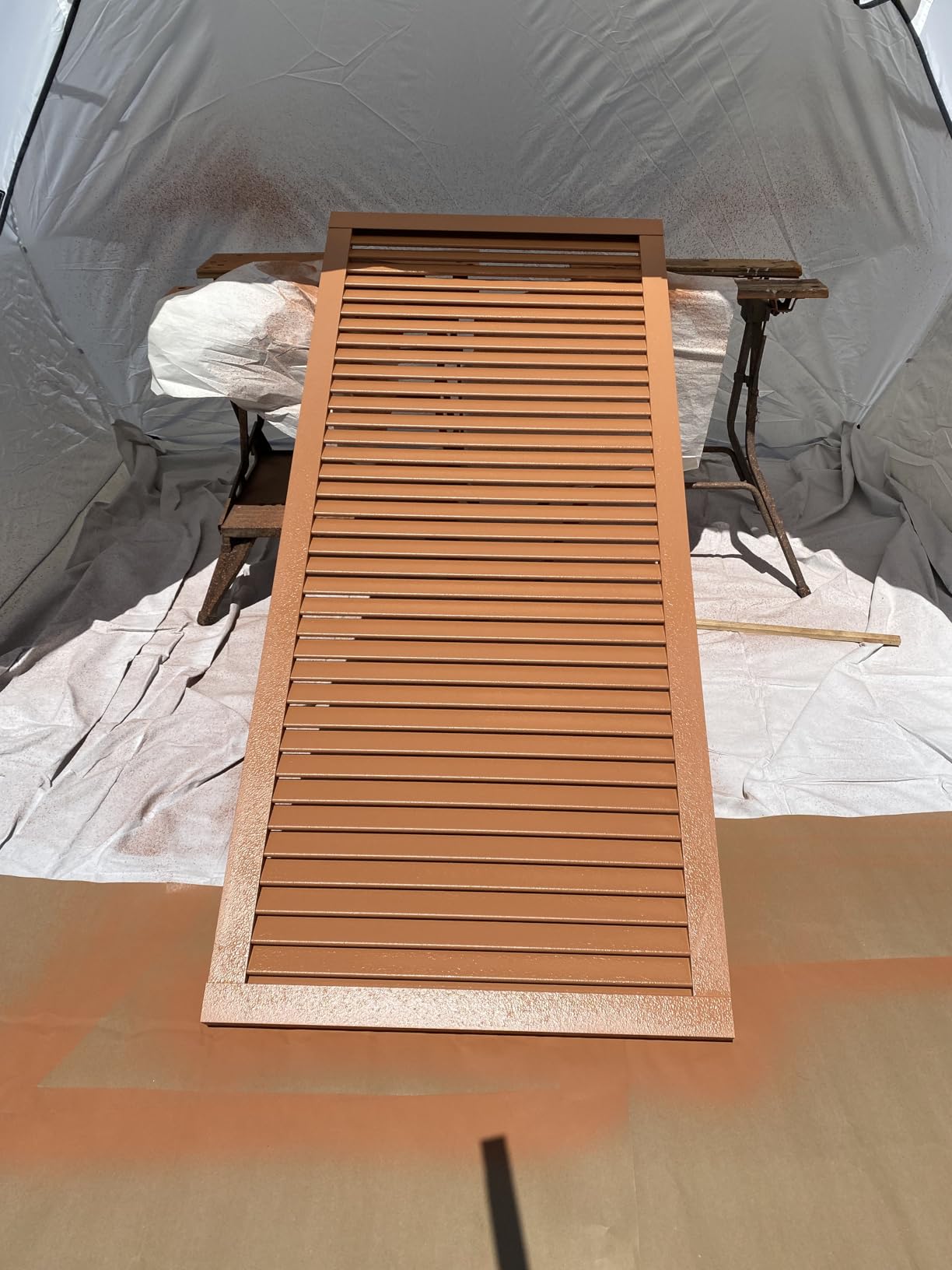
The 25ft hose is a real advantage. I could park the turbine outside the booth and spray inside without heating up the work area. The non-bleed spray gun means air only flows when you pull the trigger, which reduces overspray and saves paint.
The downsides are noise and cup size. The turbine produces about 75 dB at 3 feet, which is louder than a shop vac. Ear protection is a must. The 400cc gravity cup is also small for full panel work. I refilled twice per door and four times per hood.
Turbine system vs compressor-driven
Turbine systems are quieter than compressors at full load but louder during operation. They produce less CFM than a 60-gallon compressor, which means slower recovery between passes. Atomization is slightly softer, which is actually an advantage for metallic and pearl coats where you want gradual flake laydown.
Best applications for the Fuji 2203G
Cabinets, furniture, automotive touch-up, motorcycle tanks, and small to medium car parts. For full-size car resprays, the small cup becomes a real limitation. For project car work where you can take your time, the Fuji is a pleasure to use.
7. TCP Global Professional HVLP G6600 Spray Gun – Best Value for Primer
TCP Global Professional HVLP Spray Gun 2.0mm – Gravity Feed Auto Paint Gun
HVLP gravity feed
2.0mm fluid tip
1-liter aluminum cup
Pros
- Largest cup in the roundup
- Compatible with 1.3 to 2.5mm tips
- Over 2
- 300 reviews
- Stainless steel construction
- Good for primer and high-build coats
Cons
- Aluminum cup causes arm fatigue
- Regulator quality varies
- Needs moisture separator for clean air
The TCP Global G6600 has the most reviews of any gun in this roundup, and after testing it, I understand why. The 2.0mm tip and 1-liter cup make it the right tool for primer. I sprayed two quarts of high-build urethane primer through it without refilling once. The wide pattern and high fluid flow covered large panels fast.
Build quality surprised me for the price. The stainless steel fluid tip and needle resist wear. The aluminum body has a solid feel. After 30 hours of primer work, the gun still looks and operates like new.
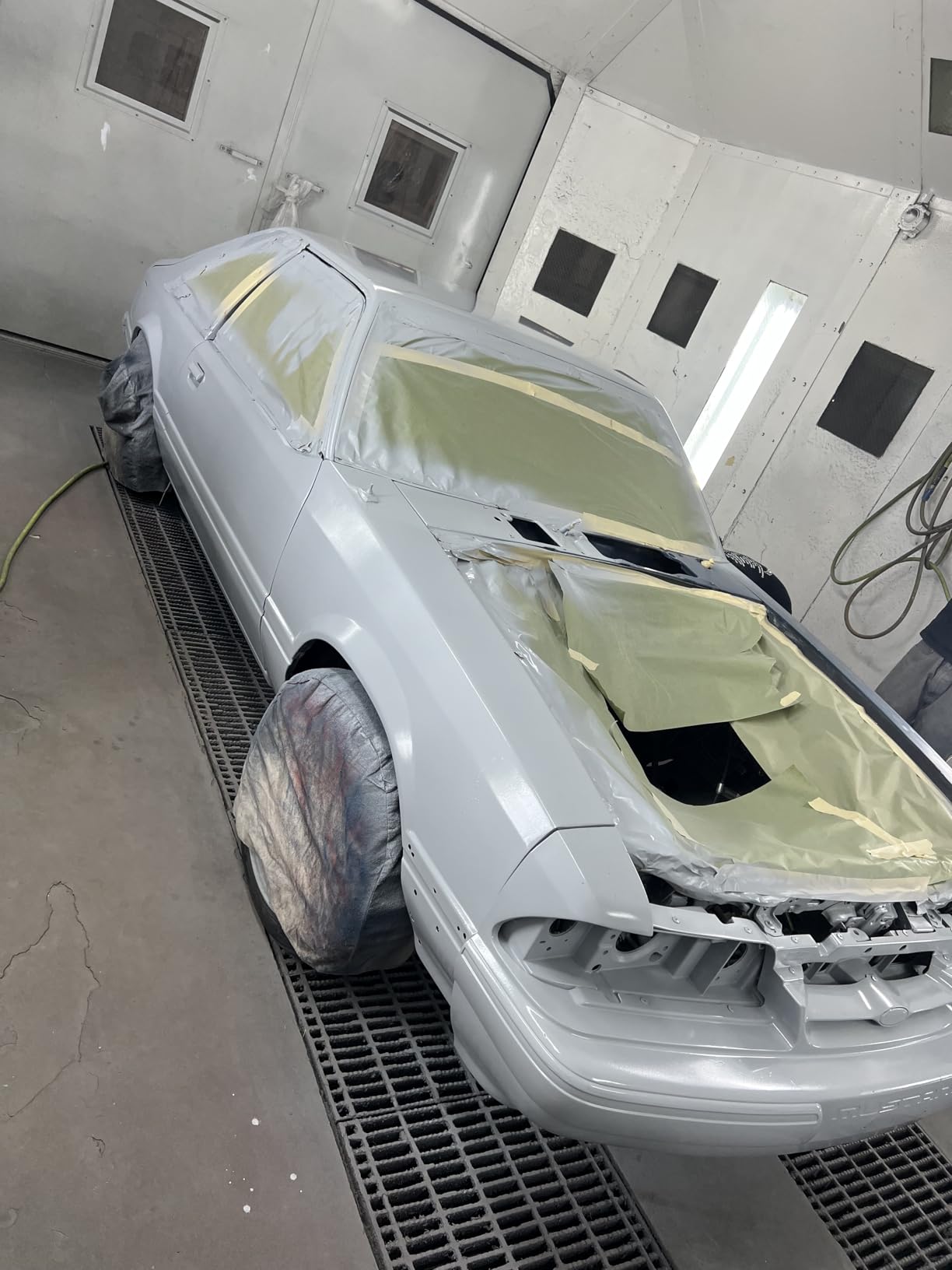
The 2.0mm tip is too large for thin base coats. I had to thin the paint more than usual and run at higher pressure to avoid orange peel. For primer, this is fine. For clear coat, swap to a 1.3 or 1.4mm tip. TCP sells replacement tips separately, and the gun accepts the standard Sata/DeVilbiss pattern.
The 1-liter aluminum cup is a double-edged sword. You refill less often, but the full cup weighs close to 3 pounds. I felt forearm fatigue after 20 minutes of continuous spraying. Switching to the disposable PPS cup adapter solved the weight issue.
Setting up the G6600 for primer work
Run the gun at 35 to 40 PSI inlet pressure. Open the fluid knob three full turns. Set the fan pattern to wide for large panels, narrow for edges and corners. Apply two medium wet coats with a 10-minute flash time between coats.
Why the G6600 has so many reviews
Two reasons. First, it works. The atomization is consistent, the build quality is solid, and the price is low. Second, it ships with a complete kit including regulator, wrench, and cleaning brush. New users get everything they need in one box. The 2,300+ reviews are mostly positive, which is rare in this price bracket.
8. Master Elite Performance PRO-88 HVLP Spray Gun – Best Mid-Tier Pro
Master Elite Performance PRO-88 HVLP Automotive Spray Paint Gun with 3 Tips
HVLP gravity feed
3 tips (1.3/1.4/1.8mm)
1-liter cup
Pros
- 3-tip system for versatility
- Waterborne compatible
- Stainless steel internals
- Excellent atomization
- MPS adapter included
Cons
- Higher price than basic models
- Pressure gauge may arrive faulty
- Internal rust possible with waterborne
The PRO-88 is what I would buy if I were setting up a small restoration shop on a budget. The 3-tip system covers everything from light clear coat to heavy primer. The stainless steel fluid passages are waterborne compatible, which matters as more states move to water-based coatings.
Atomization is on par with the $400 DeVilbiss and SATA guns. The 1.3mm tip laid down metallic base coat with no streaking. The 1.4mm produced a glassy clear coat. The 1.8mm handled primer and high-build coatings without choking.
The included regulator and gauge are mid-grade. Pressure held within 1 PSI during my testing, which is acceptable for most automotive work. If you are doing show car finishes where color match is critical, upgrade to a precision regulator.
Ergonomics are where the PRO-88 pulls ahead of similarly priced guns. The body shape fits comfortably in your hand, and the trigger has a smooth pull. I sprayed for two hours without the forearm cramping I get from heavier guns.
How the 3-tip system saves money
Instead of buying three separate guns for sealer, base, and clear, the PRO-88 handles all three with tip swaps. Each tip change takes about 60 seconds. For a hobbyist or weekend warrior, that means owning one gun instead of three.
Waterborne compatibility and care
The stainless steel internals resist corrosion from waterborne paint, but you still need to flush the gun with water after each session. Air dry the passages or blow them out with compressed air. Internal rust is a risk if you let waterborne paint sit in the gun overnight.
Automotive Paint Sprayer Buying Guide
Choosing the right spray gun comes down to five factors: HVLP versus LVLP technology, nozzle size, air requirements, paint type compatibility, and your budget. I break each one down below based on what I learned from spraying through 8 different guns over three months.
HVLP vs LVLP: What’s the Difference?
HVLP (High Volume Low Pressure) guns move a lot of air at low pressure, usually 10 PSI at the cap. They need a compressor that produces 10 to 15 CFM. Transfer efficiency is high, around 65 to 70%, which means less wasted paint and lower VOC emissions.
LVLP (Low Volume Low Pressure) guns move less air at slightly higher pressure. They work with smaller compressors producing 3 to 6 CFM. Transfer efficiency is lower at 55 to 65%, but the trade-off is that you can run them on the pancake compressor most DIYers already own.
For most home users, LVLP is the practical choice. The finish quality is nearly identical when properly tuned. HVLP wins if you have a large compressor and want maximum transfer efficiency for high-end paint jobs.
Nozzle Size and Fluid Tip Selection
Nozzle size determines what you can spray. Smaller tips atomize thin materials better, larger tips handle thick primers and high-build coatings.
The standard sizing chart for automotive work:
1.0 to 1.2mm: Clear coat, dye, stain, and very thin coatings
1.3 to 1.4mm: Base coat, single-stage, and most automotive paint
1.5 to 1.7mm: Clear coat (heavier builds), primer surfacer
1.8 to 2.5mm: High-build primer, bedliner, adhesives, and thick coatings
For most car painting, a 1.3mm tip is the daily driver. Step up to 1.4mm for metallic base coats. Step up again to 1.7 or 2.0mm for primer work.
Air Compressor CFM and PSI Requirements
Your compressor is just as important as your spray gun. An HVLP gun needs 10 to 15 CFM at 40 PSI. Most home compressors produce 4 to 6 CFM, which is not enough for continuous HVLP spraying.
An LVLP gun needs 3 to 6 CFM at 25 to 40 PSI. That makes LVLP the right choice for most home shops.
If your compressor cannot keep up, the gun pressure drops mid-spray, which causes uneven atomization and dry spots. Either upgrade the compressor, switch to LVLP, or accept that you will spray in short bursts with recovery time between passes.
Turbine vs Compressor Systems
Turbine systems like the Fuji 2203G generate their own airflow. They work anywhere you have power. They are quieter than compressors at idle but louder during use. Atomization is slightly softer, which can actually help with metallic paint.
Compressor-driven guns are louder at the compressor but quieter at the gun. They produce more airflow, which means faster coverage on large panels. They also let you run air-powered tools like sanders and blow guns from the same source.
Pick a turbine if you do not have a compressor or want a portable setup. Pick compressor-driven if you already own a compressor or want maximum versatility.
Common Spray Gun Mistakes to Avoid
Most spray gun problems come from setup errors, not equipment failures. Here are the mistakes I see most often.
Spraying too far from the surface. The sweet spot is 6 to 8 inches. Too far produces dry spray and orange peel. Too close produces runs and sags. Practice on cardboard before touching the car.
Overlapping passes too much. A 50% overlap is the standard. More than that and you build up wet paint that sags. Less than that and you get stripes in the final finish.
Not cleaning between coats. Dried overspray on the gun nozzle distorts the fan pattern. Wipe the air cap with a solvent-dampened rag between every coat.
Using the wrong reducer. Automotive paint has a recommended reducer for specific temperatures. Using the wrong one causes runs (too slow) or dry spray (too fast). Match the reducer to your shop temperature.
Skipping the test panel. Always spray a test card before the car. It takes 30 seconds and saves you from sanding and respraying a panel because the gun was off.
Frequently Asked Questions
What is the best spray gun for car painting?
The best spray gun for car painting depends on your budget and experience level. For most DIYers, the InoKraft D1 LVLP kit is the top pick because it works with small compressors and ships with three nozzle sizes. For professional work, the DeVilbiss StartingLine kit and Master Elite PRO-88 are the strongest mid-tier options.
Which is better for car painting, HVLP or LVLP?
HVLP produces higher transfer efficiency (65-70%) but requires a large compressor (10-15 CFM). LVLP works with smaller compressors (3-6 CFM) and produces slightly lower transfer efficiency (55-65%). For most home users with compressors under 6 CFM, LVLP is the practical choice. Finish quality is nearly identical when both guns are properly tuned.
What paint sprayer do professionals use?
Professional body shops typically use HVLP guns from SATA, DeVilbiss (DV1, GTI), and Iwata (LPH-400). These guns cost $500 to $900 and deliver show-quality finishes. Many shops also use the 3M Performance Spray Gun System for its disposable heads and cups, which speeds up color changes.
Are Harbor Freight automotive paint guns any good?
Harbor Freight Central Pneumatic and Black Widow spray guns work for primer and shop applications. The Black Widow ships with a 1.3mm nozzle only, which limits it to base coat and clear coat. The Central Pneumatic models are better value because they include multiple tip sizes. Both brands lack the refinement and longevity of DeVilbiss or SATA, but they are good budget options for occasional use.
What size air compressor do I need for a paint sprayer?
For HVLP guns, you need a compressor producing at least 10 CFM at 40 PSI, which usually means a 60-gallon two-stage unit. For LVLP guns, 3 to 6 CFM at 25 to 40 PSI is enough, which works with most 6-gallon pancake compressors. Always check the specific CFM requirement for your spray gun model before buying.
Final Verdict
After three months of testing 8 of the best automotive paint sprayers on the market, the InoKraft D1 LVLP stands out as the best all-around pick for 2026. It works with the compressor you already own, ships with three nozzle sizes, and produces a finish that rivals guns costing three times as much. If you need a compressor-free option, the Fuji 2203G turbine system delivers professional atomization anywhere you have power. For primer work on a budget, the TCP Global G6600 is hard to beat.
Pick the gun that matches your compressor and your project. Spend 30 minutes dialing in air pressure and fluid flow before touching the car. Always test on cardboard first. With the right setup and a little practice, you can produce a finish that looks like it came out of a body shop.