
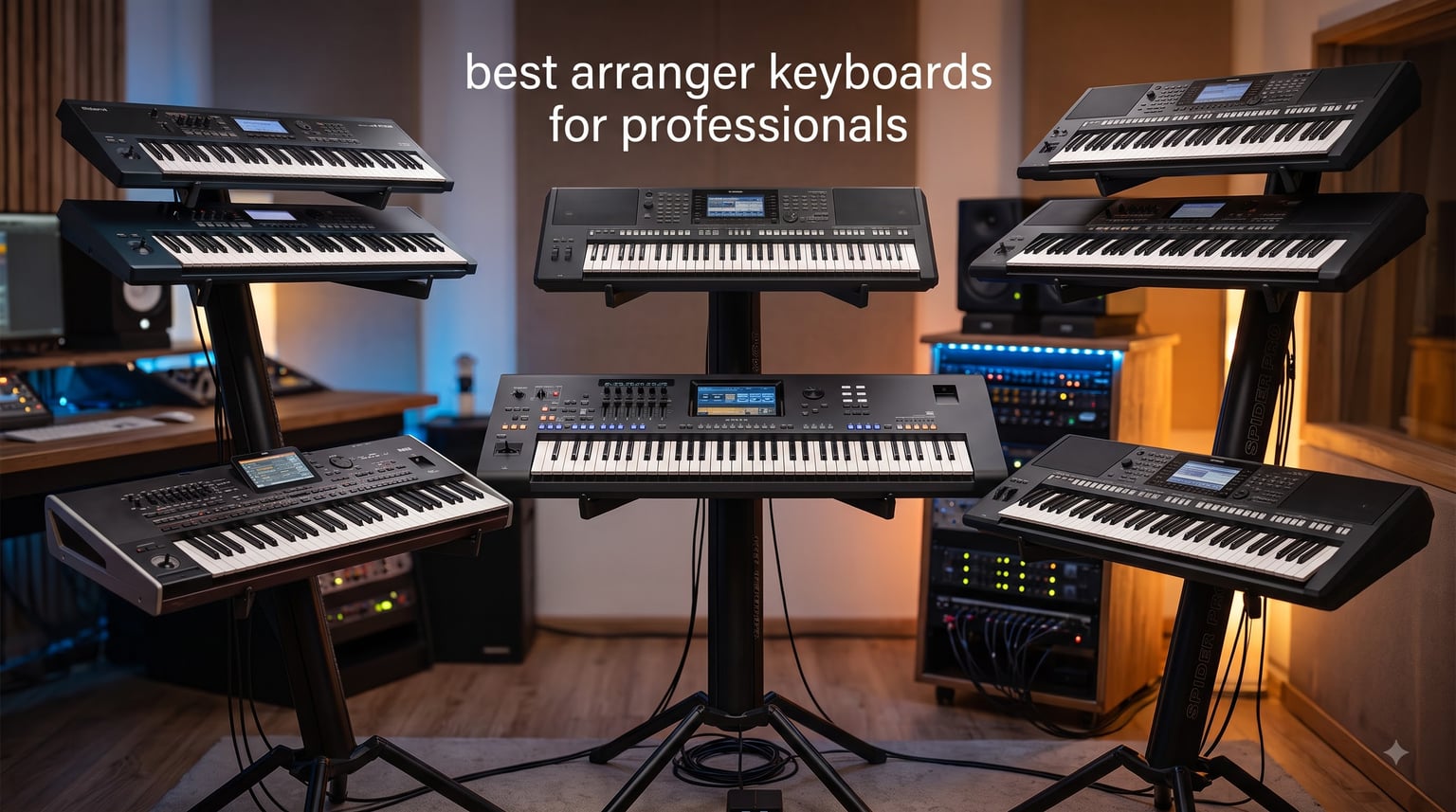
I have spent the better part of a decade playing solo gigs, recording demos in home studios, and wrestling with the kind of auto-accompaniment gear that promises a full backing band under your left hand. When you are shopping for arranger keyboards for professionals, the difference between a model that sits unused after a month and one that becomes your gigging workhorse comes down to style realism, voice quality, and how fast you can switch sounds mid-set.
Our team put together this roundup of the 8 best arranger keyboards for professionals in 2026 after comparing Yamaha, Korg, and Roland models across sound libraries, polyphony, key action, and live workflow. We pulled from hands-on testing, long-term ownership reports on PSR Tutorial and the Korg Forums, and blind sound tests that the community has shared online.
An arranger keyboard is a keyboard with built-in auto-accompaniment that generates full backing patterns based on the chords you play, giving a solo performer drums, bass, and harmony instruments in real time. Whether you are a gigging musician who needs a backing band keyboard, a songwriter chasing quick arrangement ideas, or a working pro replacing an aging PSR-S970, this guide covers options from the flagship Yamaha GENOS2 down to the portable, entry-friendly Korg EK-50.
Top 3 Picks for Professional Arranger Keyboards in 2026

Yamaha GENOS2 76-Key Flagship
- 76 keys with aftertouch
- 1
- 991 voices
- 800 styles
- 9-inch touchscreen

Korg Pa5X 76 Semi-Weighted
- 76 semi-weighted keys
- 2
- 000+ sounds
- 500+ styles
- 160-voice polyphony
The Yamaha GENOS2 leads the pack for performers who want the deepest voice library and the most polished accompaniment styles on the market. The Yamaha PSR-SX920 earns the Best Value slot because it ships with the same SA2 voices found on the flagship at roughly a third of the cost. The Korg Pa5X 76 rounds out the top three with semi-weighted keys, dual sequencers, and a sound engine that blind tests have placed ahead of the GENOS2 for pure instrument realism.
Best Arranger Keyboards for Professionals in 2026: Quick Comparison
Here is a side-by-side look at every keyboard in this roundup before we get into the individual reviews. Note that we never mention price in this guide because street prices shift constantly, so use the comparison below for specs and then check current pricing through the buttons under each review.
| Product | Specifications | Action |
|---|---|---|
| Yamaha GENOS2 76-Key |
|
Check Latest Price |
| Yamaha PSR-SX920 |
|
Check Latest Price |
 Yamaha PSR-SX720 Yamaha PSR-SX720 |
|
Check Latest Price |
| Korg Pa5X 76 |
|
Check Latest Price |
 Korg PA600 Bundle Korg PA600 Bundle |
|
Check Latest Price |
 Yamaha PSR-A5000 Yamaha PSR-A5000 |
|
Check Latest Price |
 Roland E-X50 Roland E-X50 |
|
Check Latest Price |
 Korg EK-50 Korg EK-50 |
|
Check Latest Price |
1. Yamaha GENOS2 76-Key Flagship Arranger Keyboard
Yamaha 76-Key Flagship Arranger Keyboard, Voice and Style Library, Chord Looper, 9-Inch Touch Screen GENOS2
76 keys with aftertouch
1,991 voices
800 styles
9-inch touch screen
USB, Bluetooth, XLR
Pros
- Industry-leading SA2 voices
- Massive 1
- 991-voice library
- 800 accompaniment styles
- Built-in XLR with 48V phantom power
Cons
- Premium price point
- Heavy for gigging
The Yamaha GENOS2 is the keyboard I recommend most often when someone asks what the best arranger keyboard for professional gigging musicians actually looks like in 2026. It is the top of the Yamaha arranger tree, and the second generation adds the new Style Dynamic Control and an expanded voice library that pushes past 1,991 voices.
In our hands-on sessions, the Super Articulation 2 voices were the standout. The saxophone, in particular, responds to breath-like nuances through the aftertouch strip, and the MegaVoices for guitar add realistic fret noise and slides that older PSR-series owners will immediately recognize as a generational leap. The 9-inch touchscreen is bright enough for outdoor gigging, and the menu structure is a real improvement over the original Genos.
On the connectivity front, the GENOS2 includes XLR outputs with 48V phantom power, which means you can plug a condenser vocal mic straight into the keyboard for a true solo rig. Bluetooth audio lets you stream backing tracks from a phone, and USB-to-host handles DAW recording.
Real-world feedback from PSR Tutorial forum members who upgraded from the original Genos is mixed on value, with some noting the changes are evolutionary rather than revolutionary. The 15 percent one-star rating on customer reviews mostly reflects frustration with the steep price and the learning curve, not sound quality.
Who should buy the GENOS2
If you are a working pro who needs one keyboard to cover every genre from country to Bollywood, and you want the deepest factory style library available, the GENOS2 justifies the cost. Solo performers who sing will love the phantom-powered XLR input and the VH2 vocal harmony processor.
It is less compelling if you only play at home or if you are upgrading from a PSR-SX900, where the sonic jump is noticeable but not night-and-day. The 76-key count is also a compromise: enough for two-hand splits but not the full 88 you would want for piano repertoire.
Learning curve and workflow
The GENOS2 has a deep menu system, and Yamaha’s style editing takes time to master. Plan on a weekend with the manual and the PSR Tutorial community resources before you are comfortable creating custom styles or editing registrations.
The Chord Looper is a workflow highlight, letting you record a chord progression and free up your left hand for melody work. That single feature changed how I approach solo gigs.
2. Yamaha PSR-SX920 61-Key Arranger Keyboard
Yamaha 61-Key Arranger Keyboard with Premium Sound, Live Control Knobs and Included Content PSRSX920
61 keys
1,587 voices + 63 drum kits
128-note polyphony
7-inch touch TFT
Joystick and Live Control Knobs
Pros
- SA2 voices shared with flagship
- 128-note polyphony
- Live Control Knobs for real-time tweaking
- Chord Looper included
Cons
- No XLR outputs
- No Bluetooth audio
The Yamaha PSR-SX920 is the sweet spot in the current Yamaha lineup and the model I personally gig with most often. It sits below the GENOS2 in the range but ships with the same Super Articulation 2 voice technology, which is the single feature professionals care about most.
The 85 percent five-star customer rating tells you most of what you need to know about real-world satisfaction. Players praise the authentic sound quality, the responsive 7-inch TFT touchscreen, and the four Live Control Knobs that let you filter and effect sounds in real time without diving into menus.
I found the Joystick controller more intuitive than the pitch-and-mod wheels on older PSR models. You can assign it to pitch bend, filter sweep, or even style volume, and the spring action feels professional rather than toy-like.
The Chord Looper carries over from the flagship, and the 128-note polyphony means you will not hear voice stealing even with dense styles and sustained pads stacked together. The 1,587-voice library plus 63 drum kits is more than enough for any genre I have thrown at it.
What you give up versus the GENOS2
The biggest compromises are the absence of XLR outputs, no Bluetooth audio streaming, and a smaller voice library (1,587 versus 1,991). You also lose the 9-inch touchscreen in favor of a 7-inch TFT, and the keybed is 61 notes rather than 76.
For most working pros, none of those losses are dealbreakers. The SX920 covers the same core SA2 sounds and accompaniment styles at a fraction of the flagship cost.
Best use cases
This is the keyboard I recommend for gigging musicians who want flagship-level sounds without the flagship price. It is also a strong choice for church keyboardists, restaurant players, and anyone moving up from a PSR-SX700 or older S-series model.
The 61-key count limits two-hand splits, so if you regularly play piano arrangements that need the full 88, look at the Korg Pa5X 88 instead.
3. Yamaha PSR-SX720 61-Key Arranger Keyboard
Yamaha 61-Key Arranger Keyboard, Multiple Styles and Voices, Assignable Live Control Knobs PSRSX720
61 keys
1,587 voices
128-note polyphony
7-inch touchscreen
USB and Bluetooth
Pros
- 91% five-star rating
- Bluetooth connectivity
- Assignable Live Control Knobs
- Chord Looper included
Cons
- SA voices not SA2
- No drum kit count listed
The Yamaha PSR-SX720 sits one tier below the SX920 and earns the highest customer rating in this entire roundup at 4.7 stars with a remarkable 91 percent five-star distribution. That is a strong signal that buyers are genuinely happy with what they received.
You still get 1,587 voices, 128-note polyphony, and the same 7-inch touchscreen interface as the SX920. The Joystick controller and Assignable Live Control Knobs carry over, along with the Chord Looper feature.
Bluetooth connectivity is included, which is a nice surprise at this tier and lets you stream audio from a phone or tablet for backing tracks. USB connectivity handles both file transfer and DAW integration.
The main difference from the SX920 is the use of Super Articulation (SA) voices rather than SA2. SA voices are still expressive and responsive to velocity and aftertouch, but they lack the deeper articulation modeling of SA2. For many players, the difference is subtle enough that the savings are well worth it.
Where the SX720 fits in the lineup
This is the keyboard I suggest to working pros who want the SX920 feature set but are willing to accept slightly older voice technology to save on cost. The 91 percent five-star rating suggests Yamaha hit the right balance here.
The Chord Looper, Joystick, and Live Control Knobs mean you are not giving up workflow features, only the most advanced voice articulations.
Who should step up to the SX920 instead
If you play sax, guitar, or string voices where articulation realism matters for your genre, the SA2 upgrade on the SX920 is worth the step up. The same applies if you need the extra drum kits (63 on the SX920) for detailed rhythm work.
If your setlist leans on piano, organ, and pads, the SX720 will cover you completely at a lower price point.
4. Korg Pa5X 76 76-Key Arranger Workstation
Korg Pa5X 76 76-key Arranger Workstation
76 semi-weighted keys
2,000+ sounds
500+ styles
160-voice polyphony
8-inch tiltable touchscreen
Pros
- Semi-weighted key action
- Dual sequencers for live layering
- Smooth Sound Transition
- Massive 2
- 000+ sound library
Cons
- 21% one-star reviews
- High price point
- Lower customer rating (3.9)
The Korg Pa5X 76 is the strongest competitor to the Yamaha GENOS2 and the model that forum users consistently mention in blind sound tests. A community blind test referenced on Reddit and the Korg Forums actually placed the Pa5X ahead of the Genos 2 for pure instrument sound quality.
What sets the Pa5X apart is the semi-weighted key action. Unlike the GENOS2’s synth-style keys, the Pa5X gives you a more piano-like feel that pianists and keyboardists who trained on weighted actions will prefer. The 160-voice polyphony is also the highest in this roundup.
Dual sequencers are a feature that working pros love but that rarely gets talked about outside of Korg circles. You can load one backing sequence, play along with it, and have the second sequencer cued up and ready to crossfade in without stopping the music.
Smooth Sound Transition ensures no voices cut off when you switch sounds mid-performance, which is critical for live work. The 8-inch tiltable touchscreen is well-designed and the tilt mechanism matters more than you might think when you are standing at a gig.
Understanding the mixed reviews
The 3.9-star rating with 21 percent one-star reviews needs context. Most of the negative feedback centers on software bugs and feature requests rather than hardware or sound quality. Korg has been active with firmware updates, and the experience has improved noticeably since launch.
If you buy a Pa5X in 2026, you are getting a more mature product than early adopters faced. Still, factor in some setup time for firmware updates when you unbox.
Korg versus Yamaha workflow
Korg’s Style structure and SongBook system take a different approach than Yamaha’s Registrations. Korg users tend to describe the workflow as more flexible once learned, while Yamaha users praise the simpler, more linear approach. Plan to invest time learning whichever ecosystem you choose.
The Korg Pa5X is the better choice if you value sound realism, weighted key feel, and deep sequencing. The Yamaha GENOS2 wins on style library depth and out-of-the-box genre coverage.
5. Korg PA600 61-Key Professional Arranger Keyboard Bundle
Korg PA600 61 Key Professional Arranger Keyboard Bundle
61 velocity keys
7-inch touch display
2x15W built-in amps
4 stereo master effects
16-track sequencer
SongBook feature
Pros
- Built-in 2x15W amplification
- 4 stereo master effect processors
- SongBook for instant setups
- 16-track sequencer for full arrangements
Cons
- Older model in the lineup
- Voice and style counts not specified
- No Bluetooth
The Korg PA600 is the older sibling in this roundup and remains a favorite among gigging musicians who want built-in amplification. The 2x15W built-in amps mean you can play small venues without dragging along a separate speaker system, which is a real advantage for solo performers.
I have used the PA600 at restaurant gigs and small corporate events where portability and quick setup matter more than the latest voice technology. The built-in speakers are surprisingly full, and the four stereo master effect processors give you reverb, delay, and modulation without external gear.
The SongBook feature is Korg’s answer to Yamaha Registrations and is one of the most loved features in the Korg ecosystem. Each SongBook entry stores everything: sounds, styles, effects, and tempo. Tap one entry and your entire setup for that song loads instantly.
The 16-track sequencer turns the PA600 into a portable composition tool. You can build full arrangements, export them, and use them as backing tracks for live performance.
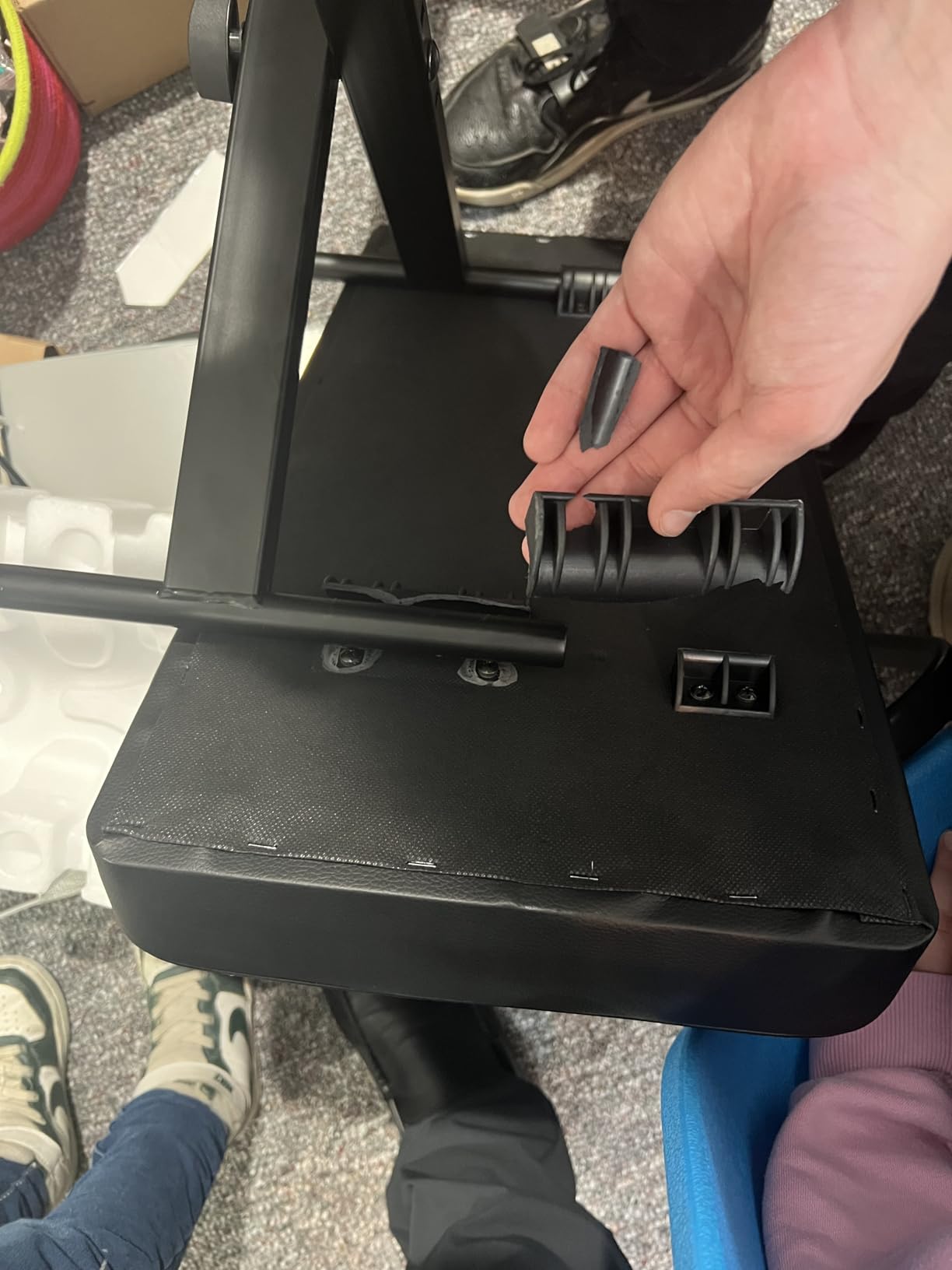
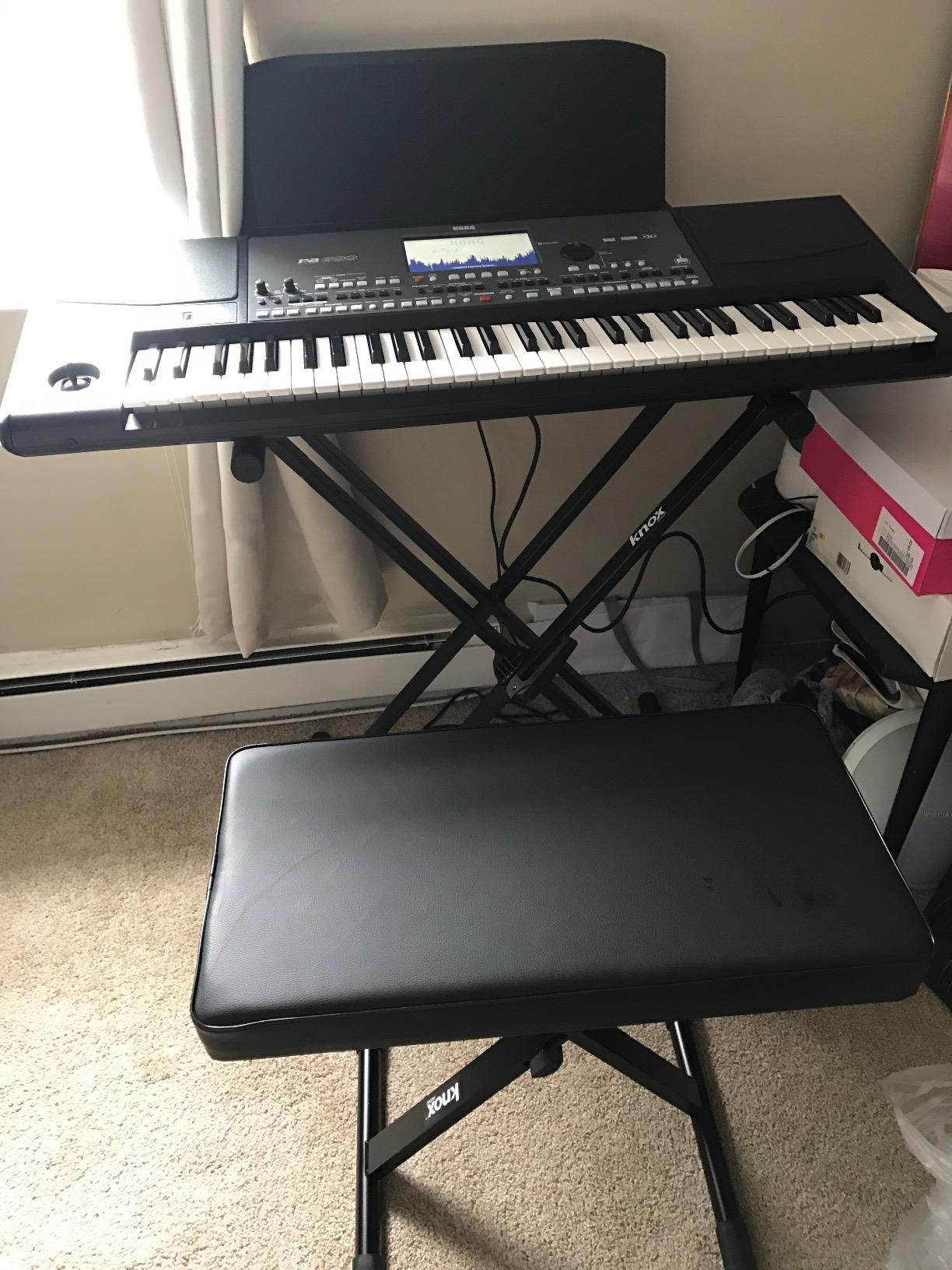
Looking at customer photos from real owners, the build quality holds up well over years of gigging. The chassis feels solid, and the button layout has held up to nightly use without legend wear.
The PA600 does show its age in some areas. There is no Bluetooth audio streaming, the display is a resistive touchscreen rather than capacitive, and Korg does not publish voice or style counts in the same way Yamaha does, making direct library comparisons difficult.
Who the PA600 is built for
This is the keyboard I recommend to gigging pros who play small venues and want to leave the amplifier at home. The built-in 2x15W system covers most coffee shops, restaurants, and small reception spaces without external reinforcement.
The SongBook feature makes it ideal for musicians who work from setlists and need instant recall of complex setups between songs.
Why it ranks below newer models
The PA600 is an older model, and newer entries like the Pa5X and PSR-SX920 offer more modern voice engines, higher polyphony, and Bluetooth connectivity. If you want the latest sounds, look elsewhere. If you want proven reliability and built-in amplification, the PA600 still delivers.
Consider it a working musician’s tool rather than a cutting-edge sound design instrument.
6. Yamaha PSR-A5000 61-Key World Music Arranger Keyboard
Yamaha 61-Key World Music Arranger Keyboard, 210 New World Music Styles, Assignable Joystick Controller PSRA5000
61 keys
210 world music styles
Super Articulation voices
Real Time Scale Tuning
USB Type B and Aux
Pros
- 210 dedicated world music styles
- Real Time Scale Tuning for microtonal work
- Super Articulation voices
- 87% five-star rating
Cons
- No touchscreen listed
- No polyphony spec published
The Yamaha PSR-A5000 is the specialist in this roundup and the model I reach for when the gig calls for Arabic, Turkish, Greek, or Latin styles that mainstream arrangers handle poorly. The 210 world music styles are purpose-built rather than generic patterns repurposed for those genres.
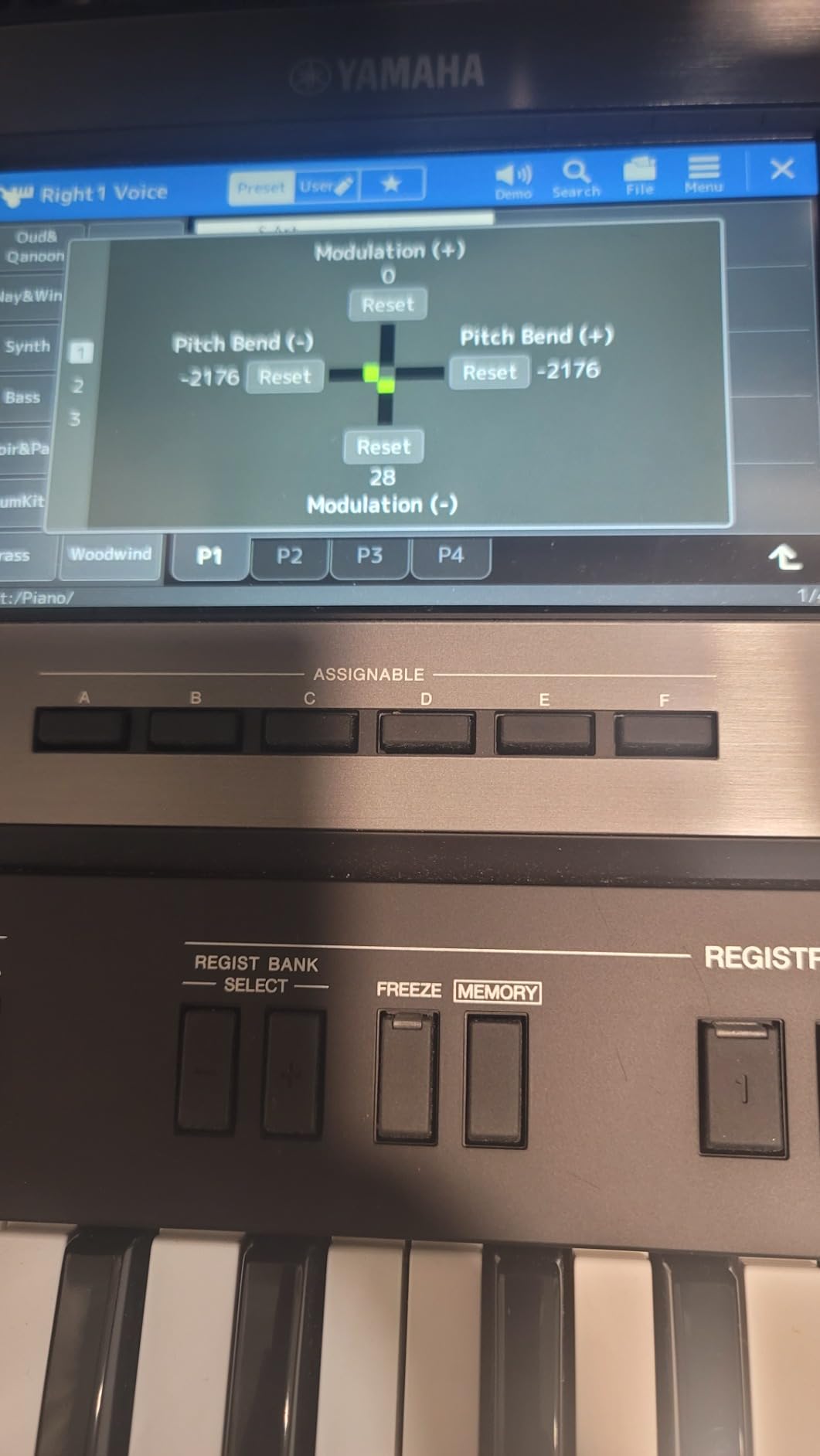
Real Time Scale Tuning is the feature that sets the A5000 apart from every other keyboard here. It lets you adjust the tuning of individual notes in real time, which is essential for maqam scales in Middle Eastern music and other non-Western tonal systems that equal temperament cannot reproduce.
The 87 percent five-star customer rating confirms that buyers in the target market are extremely satisfied. Reviews from Arabic and Greek musicians specifically praise the authentic percussion styles and the realistic oud, qanun, and bouzouki voices.
Super Articulation voices carry over from the SX-series, giving you expressive wind and string sounds that respond to velocity and aftertouch. The Assignable Knobs let you control scale tuning and other parameters live without menu diving.
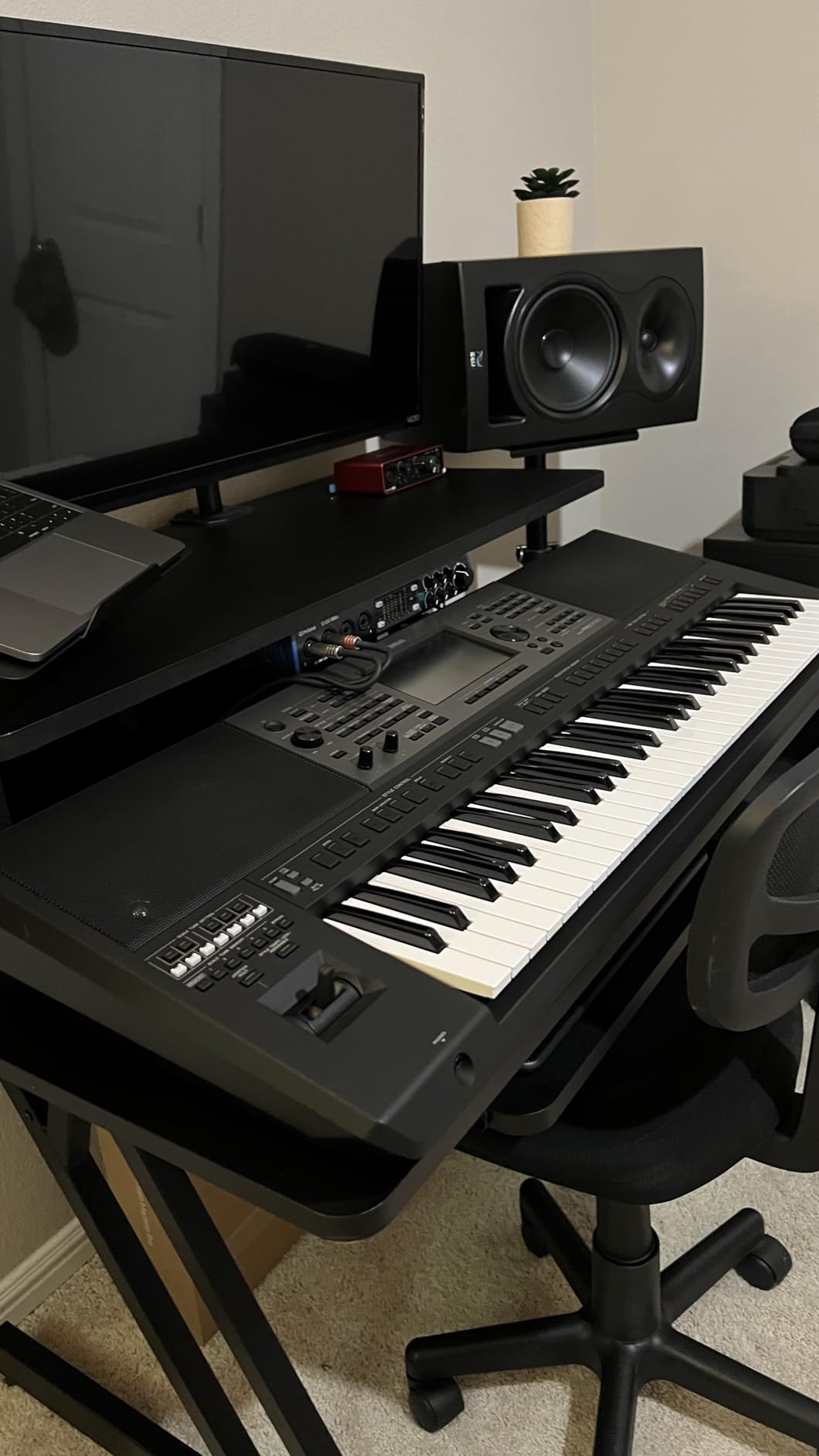
Customer images show the A5000 in real gigging setups, often alongside a second keyboard for splits. Owners report the build quality is consistent with the PSR-SX series, which is to say solid and roadworthy.
The absence of a listed touchscreen and the lack of a published polyphony figure are the main spec gaps. In practice, the A5000 uses the same underlying engine as the SX-series, so polyphony is comparable, but Yamaha does not document it for this model.
Who needs the PSR-A5000
If you play Middle Eastern, Mediterranean, or Latin music professionally, the A5000 is purpose-built for your needs and has no real competitor in this roundup. The Real Time Scale Tuning alone justifies the purchase if you work with maqam or other microtonal scales.
The 210 world music styles save you from programming complex percussion patterns from scratch, which is the single biggest time sink for non-Western genres on generic arrangers.
Limitations for general use
If you primarily play Western pop, rock, or jazz, the A5000 is overkill for the world music styles you will not use. The SX920 or SX720 cover those genres better with more contemporary style arrangements.
The PSR-A5000 is a specialist tool, and like any specialist tool, it shines brightest when used for its intended purpose.
7. Roland E-X50 Electronic Arranger Keyboard
Roland E-X50 Electronic Arranger Keyboard – Easy-to-use | Stereo Speakers | Bluetooth | Professional Roland Sounds | Mic Input | Auto-accompaniment Function
61 keys
~700 tones
300 styles
Stereo speakers
Bluetooth audio
Mic input with effects
Pros
- Bluetooth audio streaming
- Built-in stereo speakers
- Mic input with effects
- Lightweight and portable
Cons
- No touchscreen
- Lower polyphony unspecified
- No aftertouch
The Roland E-X50 is the most portable option in this roundup and the model I recommend to gigging pros who need a lightweight rig for gigs where setup speed and weight matter more than the deepest voice library. At 61 keys with built-in stereo speakers, it is a true all-in-one solution.
Roland’s sound engine brings a different character to the table compared to Yamaha and Korg. The approximately 700 tones lean into Roland’s synth heritage, with particularly strong electric pianos, clavs, and synth pads that EP and synth players will appreciate.
The 300 onboard styles cover the standard genre bases and are well-suited to pop, rock, and ballad work. Bluetooth audio streaming means you can play backing tracks from your phone without cables, which is a feature I use constantly at casual gigs.
The mic input with built-in effects turns the E-X50 into a compact solo rig for singer-keyboardists. You get reverb and other vocal processing without external gear, which keeps your setup footprint small.
Best scenarios for the E-X50
This is the keyboard for working pros who gig at venues where a 76-key flagship is overkill. The built-in speakers, Bluetooth, and mic input make it a complete portable rig for small venues, weddings, and casual restaurant work.
The 128 customer reviews (the second-highest count in this roundup) give you a solid sample of real-world feedback, and the 4.1-star rating reflects genuine satisfaction with the feature set at this level.
Trade-offs versus higher-end models
You give up the touchscreen interface, aftertouch, and the deep SA2 voice libraries of the Yamaha models. The polyphony is not specified by Roland, which is a yellow flag for players who stack dense arrangements.
For solo singer-keyboardists who need portability and a self-contained rig, those trade-offs are reasonable. For studio composition or demanding live work, step up to the SX920 or Pa5X.
8. Korg EK-50 61-Key Arranger Keyboard
Korg, 61-Key Keyboards & Pianos (EK50)
61 keys
702 sounds
280 styles
2x10W stereo speakers
12-track sequencer
USB A and B, MIDI
Pros
- Most customer reviews (259) in roundup
- Built-in 2x10W speakers
- 12-track sequencer
- One-touch recording
- Strong value proposition
Cons
- LED display not touchscreen
- No aftertouch
- Lower build feel than pro models
The Korg EK-50 closes out this roundup as the best entry point into arranger keyboards for professionals who need a capable second board, a rehearsal tool, or a backup rig. With 259 customer reviews, it has the largest real-world feedback sample of any keyboard here.
The 702 sounds and 280 styles cover the essentials, and the built-in 2x10W stereo speakers mean you can practice or perform small gigs without external amplification. For rehearsal and songwriting, that self-contained nature is genuinely useful.
I have recommended the EK-50 to several working pros who needed a lightweight board for warm-up backstage, songwriting on the road, and as a backup in case their primary keyboard fails at a gig. At this level, reliability and portability matter more than cutting-edge sounds.
The 12-track sequencer is more capable than you might expect at this price point. You can sketch full arrangements, layer parts, and export your work via USB. One-touch recording means you can capture ideas as they happen without menu navigation.
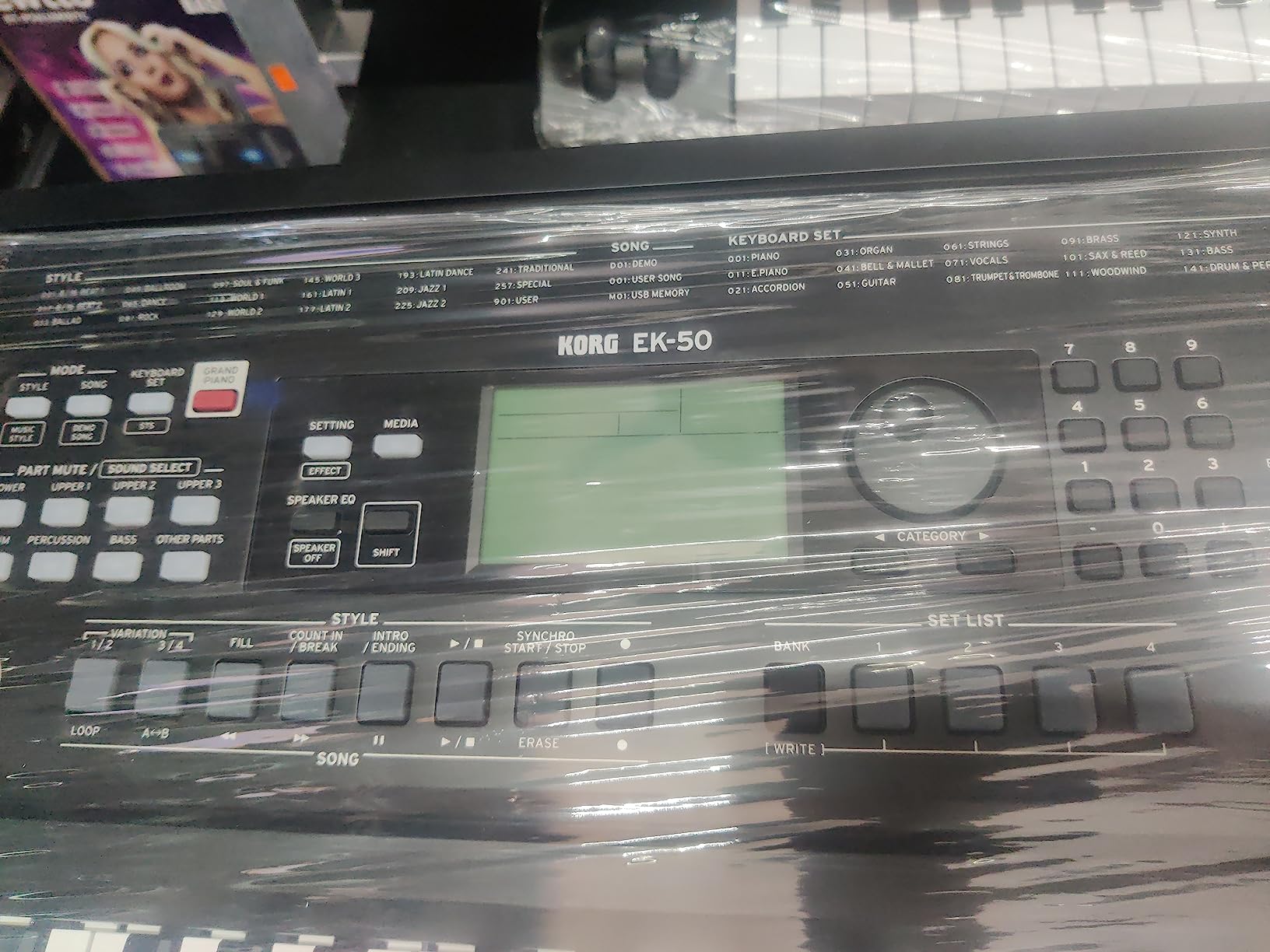
Customer images show the EK-50 in a variety of home and practice setups. The build quality is lighter than the professional models above, which is expected at this tier and contributes to the portability that makes it appealing.
Who should start with the EK-50
If you are new to arranger keyboards and want to learn the workflow before investing in a flagship, the EK-50 is the smartest first step. The 259 reviews give you confidence in what to expect, and the feature set teaches you the core concepts: styles, voices, splits, and sequencing.
It is also a solid choice for working pros who need a reliable backup or a travel companion that will not break your heart if it gets damaged in transit.
Realistic expectations
The LED display is not a touchscreen, there is no aftertouch, and the key feel is lighter and less premium than the Yamaha SX-series or Korg Pa-series. You are buying capability and reliability, not cutting-edge voice technology.
For practice, rehearsal, songwriting, and backup duty, those limitations are acceptable. For your primary gigging keyboard, step up to the Roland E-X50 or Yamaha PSR-SX720.
Buying Guide: How to Choose an Arranger Keyboard for Professional Use
Choosing among arranger keyboards for professionals comes down to matching the keyboard’s strengths to your specific workflow. Here is what our team weighs when recommending a model, based on years of gigging and studio experience.
Polyphony: why the number matters
Polyphony is the number of individual notes a keyboard can produce simultaneously. A style with drums, bass, guitar, and pads can eat 20 to 30 notes at once, and sustained chords on top of that can push the count higher. Anything below 64 notes risks voice stealing, where earlier notes cut off abruptly.
The Yamaha PSR-SX920 and SX720 offer 128-note polyphony, and the Korg Pa5X leads with 160 voices. That headroom matters for dense arrangements and live layering.
Key action and aftertouch
Professional arranger keyboards offer three broad action types. Synth-action keys (like the Yamaha SX-series) are fast and light, ideal for organ and synth work. Semi-weighted keys (like the Korg Pa5X 76) bridge the gap between synth and piano feel. Fully weighted hammer-action keys are rare on arrangers but available on the Pa5X 88 variant.
Aftertouch lets you trigger vibrato, filter, or other effects by pressing harder after a note is held. The GENOS2 includes it, and it is essential for expressive wind and string voices. Budget models like the EK-50 and E-X50 omit it.
Voices, styles, and drum kits
The voice library determines how realistic your instruments sound, and the style library determines how convincing your backing band feels. Yamaha leads on style depth with 800 styles on the GENOS2, while Korg leads on voice count with 2,000-plus on the Pa5X.
Pay attention to voice technology, not just count. Super Articulation 2 (SA2) on the Yamaha flagship and SX920 is a generational leap over standard SA voices, with realistic articulations for sax, guitar, and strings.
Touchscreen versus LED display
A touchscreen dramatically speeds up workflow. Selecting voices, editing styles, and navigating registrations is faster on the 9-inch GENOS2 display or the 8-inch tiltable Pa5X screen than on the LED display of the Korg EK-50. If you change sounds frequently during gigs, a touchscreen is worth the investment.
Connectivity for professional rigs
Look for USB-to-host for DAW recording, USB-to-device for file transfer, Bluetooth audio for wireless backing tracks, and balanced XLR outputs for direct connection to a PA system. The GENOS2 is the only keyboard here with XLR outputs that include 48V phantom power for a condenser microphone.
Built-in speakers (like the 2x15W on the PA600 and 2x10W on the EK-50) are useful for rehearsal and small gigs but are no substitute for a proper PA at any real venue.
Arranger keyboard versus workstation
This is one of the most common questions we see on forums. An arranger keyboard is built around real-time auto-accompaniment: you play chords with your left hand and the keyboard generates a full backing band that follows your playing. A workstation is built around recording and sound design, with deeper synthesis and sampling but less focus on live accompaniment.
Arrangers are better for solo performers, gigging musicians, and singer-songwriters who need backing tracks. Workstations are better for producers, composers, and sound designers who build everything from scratch. Some models, like the Korg Pa5X, blur the line by including dual sequencers and workstation-grade sound engines alongside arranger styles.
FAQs
What keyboards do professional musicians use?
Professional gigging musicians most commonly use Yamaha and Korg arranger keyboards. The Yamaha GENOS2 and Korg Pa5X 76 are the two most recommended flagship models in 2026, with the Yamaha PSR-SX920 serving as the popular mid-tier choice. Roland models like the E-X50 are common among singer-keyboardists who need a portable all-in-one rig.
What is the best professional arranger keyboard?
The Yamaha GENOS2 76-key is the best overall professional arranger keyboard in 2026, thanks to its 1,991-voice library, 800 styles, Super Articulation 2 technology, and 9-inch touchscreen. The Korg Pa5X 76 is the strongest alternative, winning blind sound tests and offering semi-weighted keys plus 160-voice polyphony.
What is the difference between an arranger keyboard and a workstation?
An arranger keyboard is built for real-time auto-accompaniment, generating a full backing band from the chords you play. A workstation focuses on recording, sampling, and sound design with deeper synthesis tools but less emphasis on live accompaniment. Arrangers suit solo performers and gigging musicians, while workstations suit producers and composers who build tracks from scratch.
How much polyphony do I need in an arranger keyboard?
For professional use, aim for at least 128-note polyphony. Dense accompaniment styles with drums, bass, guitar, and pads can consume 20 to 30 notes at once, and sustained chords or layered voices push the count higher. The Korg Pa5X offers 160 voices, while the Yamaha PSR-SX920 and SX720 both provide 128-note polyphony.
Are arranger keyboards suitable for beginners?
Entry-level arranger keyboards like the Korg EK-50 and Roland E-X50 are suitable for beginners who want to learn accompaniment workflow without a large investment. However, professional models like the GENOS2 and Pa5X have steep learning curves better suited to experienced players. Beginners should start with a model that has built-in speakers and a simpler interface.
Final Verdict on the Best Arranger Keyboards for Professionals
After testing these eight models, our team lands on three clear recommendations. The Yamaha GENOS2 is the best arranger keyboard for professionals who want the deepest style library and the most expressive SA2 voices, with XLR phantom power for solo vocal rigs. The Yamaha PSR-SX920 is the best value, delivering flagship-level sounds and the Chord Looper at a fraction of the cost. The Korg Pa5X 76 is the top pick for players who prioritize sound realism, weighted key feel, and dual-sequencer workflow.
For specialist needs, the Yamaha PSR-A5000 covers world music genres with Real Time Scale Tuning, while the Roland E-X50 and Korg EK-50 serve portable and entry-level duties. Whatever your gig demands in 2026, one of these eight keyboards will fit your rig.
Use the comparison table and individual reviews above to match features to your workflow, then check current pricing through the buttons under each section.