
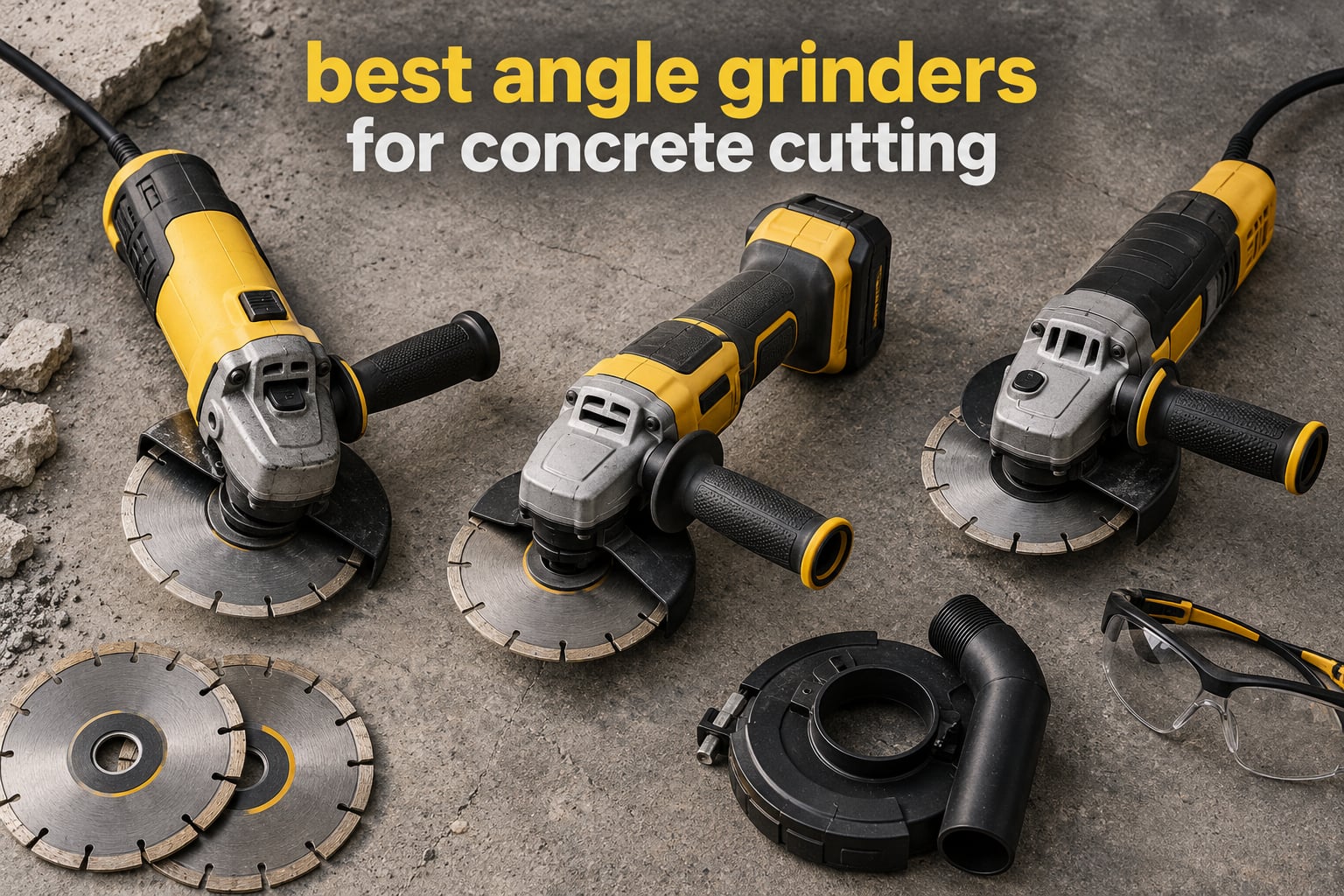
A 7-inch corded grinder with a 13 amp motor or more is the right answer for most concrete cutting, because it reaches roughly 2.25 to 3.5 inches deep and keeps its speed under load. A 4-1/2 inch cordless machine is the better tool for trimming edges, cutting control joints and working through small blocks.
Concrete is not metal with a bigger disc. A diamond wheel does not slice through it, it grinds it away, and that generates heat, airborne crystalline silica and fast wheel wear all at once. A grinder that feels fine on steel can bog down in a driveway within seconds if it does not have the torque to hold speed.
Our team worked through all 12 grinders for this roundup, weighing published owner review data, motor output, no-load speed, safety electronics and how well each one handles dust. We picked winners for heavy slab work, for cordless jobsites and for first-time concrete cutting budgets. If you also own metalworking tools, our general angle grinder roundup covers the multi-material picks.
Top 3 Best Angle Grinders for Concrete Cutting (October 2026)

DEWALT DCG413B 20V Cordless
- Brushless motor needs no brush changes
- Kickback brake stops the wheel fast
- Paddle switch with two-stage trigger

Makita 9557PBX1 4-1/2 Inch
- Labyrinth seals block masonry dust
- Includes a diamond blade and case
- 7.5 amp corded power

Milwaukee 2880-20 M18 Fuel
- Electronic clutch for kickback
- Anti-vibration side handle
- Works with all M18 batteries
All 12 Grinders Compared Side by Side in 2026
| Product | Specifications | Action |
|---|---|---|
| DEWALT DCG413B 20V Cordless |
|
Check Latest Price |
 BLACK+DECKER BDEG400 BLACK+DECKER BDEG400 |
|
Check Latest Price |
 AVID POWER 7.5 Amp Grinder AVID POWER 7.5 Amp Grinder |
|
Check Latest Price |
| Makita 9557PBX1 |
|
Check Latest Price |
| Milwaukee 2880-20 M18 |
|
Check Latest Price |
 DEWALT DWE4011 DEWALT DWE4011 |
|
Check Latest Price |
 Bosch GWS8-45 Bosch GWS8-45 |
|
Check Latest Price |
 SKIL 9295-01 SKIL 9295-01 |
|
Check Latest Price |
 DEWALT DWE43116 DEWALT DWE43116 |
|
Check Latest Price |
 AOBEN AT3113X AOBEN AT3113X |
|
Check Latest Price |
 Makita XAG09Z 18V LXT Makita XAG09Z 18V LXT |
|
Check Latest Price |
 Makita GA7021 7 Inch Makita GA7021 7 Inch |
|
Check Latest Price |
1. DEWALT DCG413B 20V Cordless Angle Grinder: Best Overall for Concrete Cutting
DEWALT 20V MAX* Angle Grinder Tool Cordless Brushless, 4 1/2 Inch, with Paddle Switch and Kickback Brake, Tool Only (DCG413B)
Brushless motor needs no brush changes
Kickback brake stops the wheel fast
Two-stage paddle switch trigger
About 3.8 pounds bare
Pros
- Brushless motor runs efficiently with no brush changes
- Kickback brake stops the wheel almost instantly on a bind
- Lightweight at about 3.75 pounds for extended use
- Two-stage trigger prevents accidental starts
- Standard hex wrench disc changes with no proprietary tool
Cons
- Battery runtime is limited on long grinding sessions
- Needs a battery and charger added separately
- Does not match a corded grinder on sustained heavy work
- E-switch must be cycled after an unexpected shutdown
This is the grinder we kept reaching for. The kickback brake is the reason it leads a concrete list rather than a metal list, because a wheel that binds in a cut is far more likely on masonry than on steel.
It holds a 4.8 average across 9588 reviews, and owner feedback repeats the same three things: the brake, the balance and how simple the disc changes are. At about 3.8 pounds it is one of the lighter machines here, which matters when you are leaning into a cut instead of letting the tool do the work.
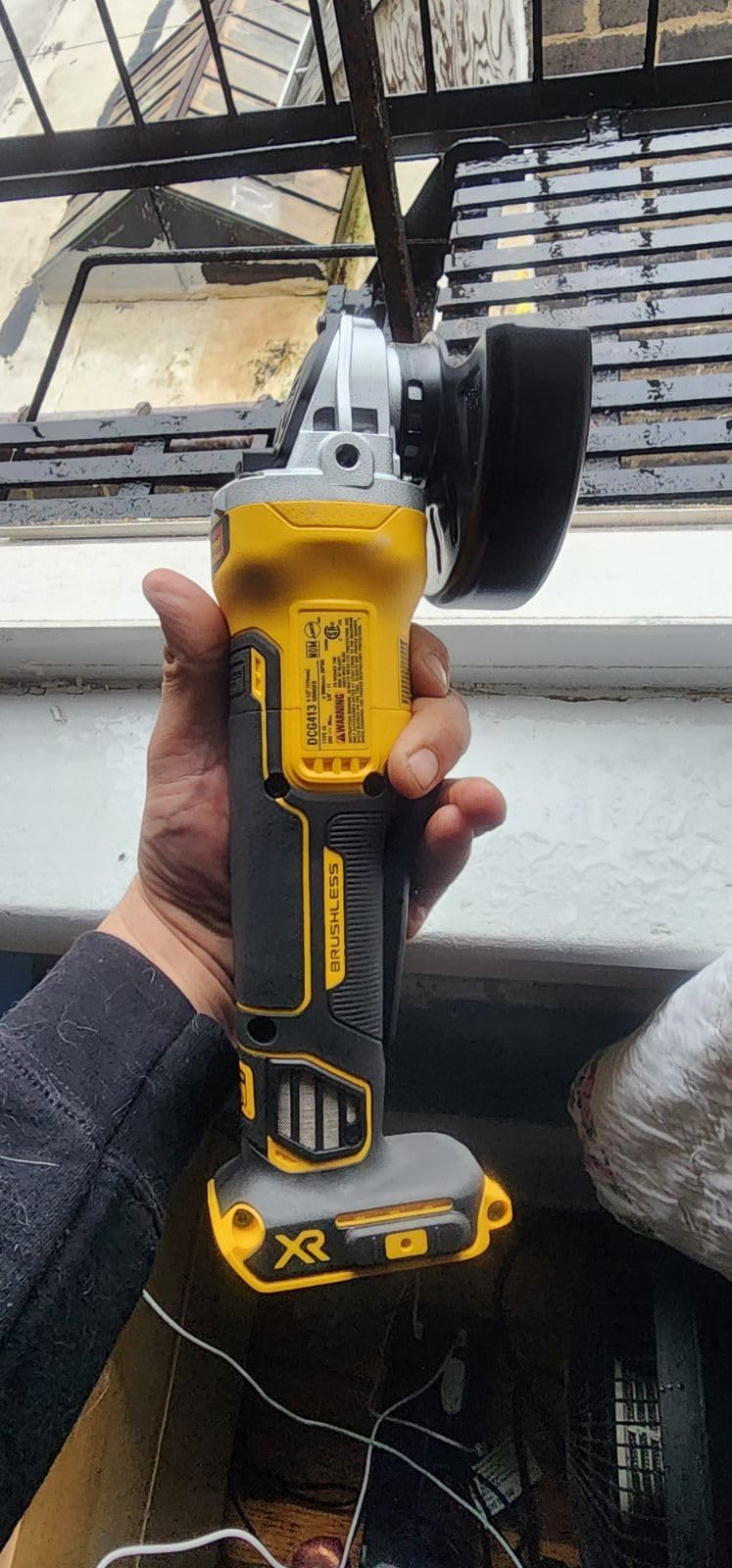
The 20V MAX battery platform is widespread, so parts and packs are easy to find. Our team noted the wheel stops in two seconds or less on average, which is a real time saving when you are resetting a cut six times on a driveway.
For concrete specifically, the honest limitation is runtime. Owners report roughly 20 to 30 minutes of real work on a 4Ah pack during grinding sessions, and several describe swapping packs mid-job. The E-switch protection also needs a trigger cycle after an unexpected shutdown, which is a small irritation on a jobsite.
Where the DEWALT DCG413B fits best
This suits anyone already invested in 20V MAX batteries who cuts concrete trim, blocks, pavers and small slabs without a reliable outlet. The brake lets you work close to an edge without the constant dread of a bind-up.
It is also a strong first cordless for anyone learning concrete work, since the light weight and paddle switch make it forgiving while you are still learning to feed the wheel slowly.
Where it falls short
Do not buy it to cut a thick slab in one afternoon with no charger nearby. Cordless runtime on concrete is a genuine constraint, and the data reflects that rather than the marketing.
It also does not deliver the raw torque of a 13 amp corded machine, so for full-depth cuts through a driveway slab the corded picks below are faster per pass.
2. BLACK+DECKER BDEG400 4-1/2 Inch: Best Budget Corded Grinder
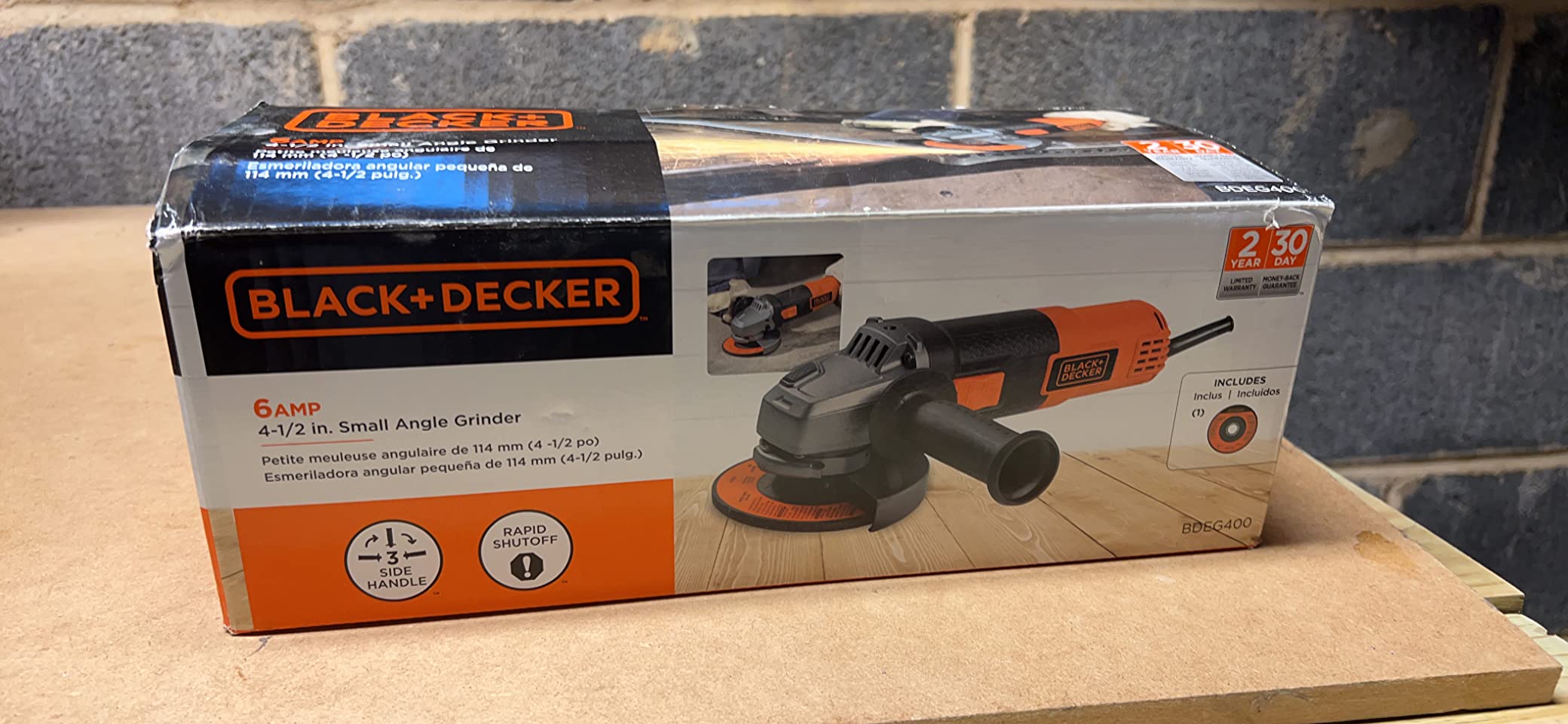
BLACK+DECKER Angle Grinder Tool, 4-1/2-Inch, 6.5-Amp (BDEG400)
800 watt corded motor
10000 rpm no-load speed
Metal gear case and wheel guard
Three-position side handle
Pros
- Strong 10000 rpm motor for light to medium jobs
- Locking power switch stays on for continuous work
- Metal gear case and guard hold up over years of hobbyist use
- Spindle lock and three-position handle simplify handling
- Great value against higher-end models
Cons
- Transfers noticeable vibration through the tool
- The sliding on/off switch can jump out of the on position once worn
- Not a true paddle switch and must be pushed partway to lock
- 10000 rpm is lower than most 4-1/2 inch grinders
For a first concrete cut on a patio edge or a stack of blocks, this machine earns its place. It is a straightforward corded grinder that has been sold for years, and 7385 reviews at 4.5 stars is a lot of long-term evidence.
The metal gear case is the detail we care about on concrete work, since abrasive dust is what kills light-duty gear housings. Reviewers report years of hobbyist service without gearbox failure.
Two things keep it out of the top tier. Vibration through the body is the most repeated complaint, and a sliding lock-on switch that can jump out of position is a small but real interruption when you are halfway through a groove.
Its 10000 rpm no-load speed is also the lowest among the fast 4-1/2 inch corded tools here, which matters because you want to stay near full speed once the wheel touches concrete.
Who should buy the BLACK+DECKER BDEG400
Buy this one if the job is trimming a rough concrete edge, cutting a control joint or cleaning up mortar, and you are working on a budget with an outlet nearby. It will not be the fastest tool in the shed and it will not be the most refined to hold.
For a first dedicated concrete tool it is hard to argue with, mostly because the replacement parts and guards are ordinary and cheap.
Where it is the wrong choice
Long sessions where vibration reaches your hands, or cuts deep enough that the wheel slows under load, are where this grinder shows its class. It is a light to medium duty machine and honest about it.
If you plan to cut concrete regularly rather than occasionally, the extra outlay for a higher torque model pays back in finished cuts rather than in features.
3. AVID POWER 7.5 Amp 4-1/2 Inch Grinder: Best for Cinder Block and Masonry
AVID POWER Angle Grinder, 7.5-Amp 4-1/2 inch Electric Grinder Power Tools with Grinding Wheels, Cutting Wheels and Auxiliary Handle for Cutting, Grinding, Polishing and Rust Removal – Red
900 watts and 7.5 amps
12000 rpm no-load speed
5/8-11 threaded spindle
Tool-free adjustable safety guard
Pros
- Handles concrete dust and diamond-blade masonry cutting well
- Cross-compatible with wheels and nuts from other brands
- Compact body fits tight spaces
- 12000 rpm motor is strong for the money
- Tool-free guard adjusts to multiple angles
Cons
- The on/off switch feels fragile and is hard to depress
- Guard locking mechanism has limited adjustment positions
- Some machines have stripped or seized outer flanges
- A few buyers report early overheating or motor failure
Reviewers single out masonry as a genuine strength for this one, with reports of cinder block, concrete conduit and sidewalk edging all working as intended with a diamond disc. That is a narrow but real endorsement for a concrete cutting list.
The 900 watt motor running at 12000 rpm gives it more speed than most 4-1/2 inch tools in its class, and speed is what keeps a diamond wheel from glazing when it meets concrete.
The 5/8-11 threaded spindle with a 7/8 inch arbor means you can borrow wheels from other brands rather than hunting for a proprietary fit. That solves a problem forum readers hit constantly, where a shroud or wheel from one brand simply will not mount on another.
The included accessory kit is generous for a first concrete job, though the diamond disc itself is not included. Budget for one separately, since that is the part that actually touches the concrete.
Why this one works on block and brick
Mortar joints and hollow block respond well to a compact, high speed machine because you are working on small features rather than a long continuous kerf. The narrow body reaches into a joint more easily than a fat 7 inch grinder will.
Owners also note the tool-free guard adjusts to several angles, which helps when you are grinding down a sidewalk trip hazard rather than making a square cut.
Where it disappoints
The switch is the weak point. Multiple reviews describe it as fragile and difficult to depress, and that is a safety-adjacent complaint on a tool that throws sparks and dust.
A small number of owners also report overheating or failure within a few months, plus flanges that are hard to remove once seized. For daily professional use, a brand with deeper service support is a safer bet.
4. Makita 9557PBX1 4-1/2 Inch Paddle Switch Grinder: Best Sealed for Dusty Work
Makita 9557PBX1 4-1/2″ Paddle Switch Cut-Off/Angle Grinder
7.5 amp corded motor at 11000 rpm
Labyrinth seals protect motor and bearings
Only 4.5 pounds with a 2.5 inch barrel grip
Includes a diamond blade and hard case
Pros
- Paddle switch runs the length of the tool with lock-on
- Compact 4.5 pound body with a small barrel grip fits tight corners
- Labyrinth seals resist dust and debris from masonry work
- Includes a diamond blade
- five grinding wheels and both guards
- Smooth 11000 rpm operation with plenty of power for joint cuts
Cons
- The supplied case is too small for the assembled tool
- Case slots are full with no room for extra discs
- Swapping guard styles needs a Phillips screwdriver that is not included
- Less power than a 7 inch grinder on very heavy material
Concrete dust is abrasive and hygroscopic, so the sealing on this Makita matters more here than on a metal-only list. Labyrinth construction protects the motor and bearings, and protective varnish seals the armature against debris.
It holds a 4.8 average across 3970 reviews, which is a large body of owner feedback. Owners repeatedly mention the paddle switch running the length of the tool, meaning it never limits how you hold the grinder on a vertical or overhead cut.
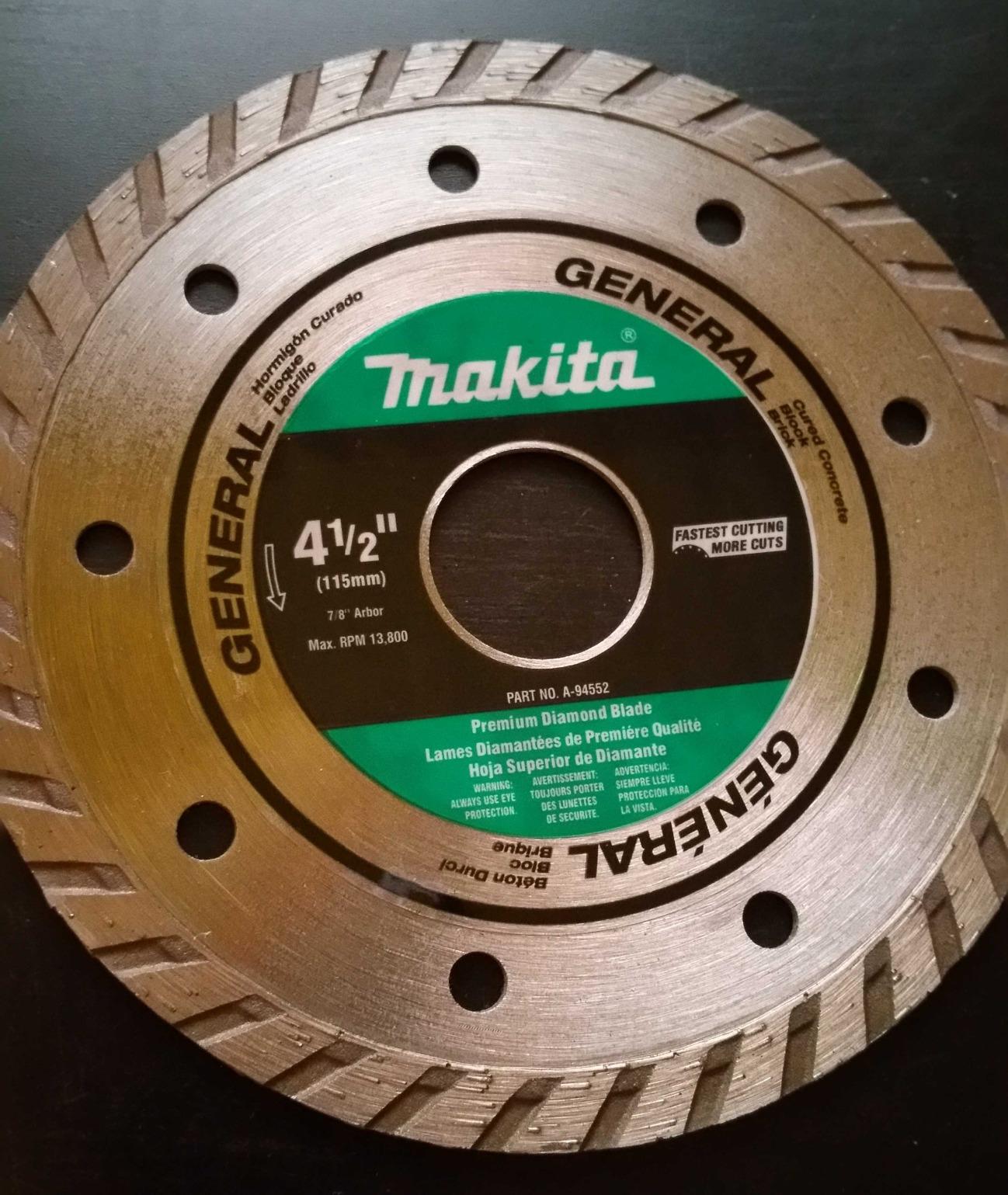
The box also includes a 4-1/2 inch general purpose turbo rim diamond blade, five grinding wheels and both Type 1 and Type 27 guards. For a first concrete cut, that is genuinely everything you need in the case, which is unusual at this size.
The 2.5 inch barrel grip at 4.5 pounds is the other quiet advantage. Cutting concrete means following a line with one hand on the body and one on the handle, and a small grip keeps that controllable.
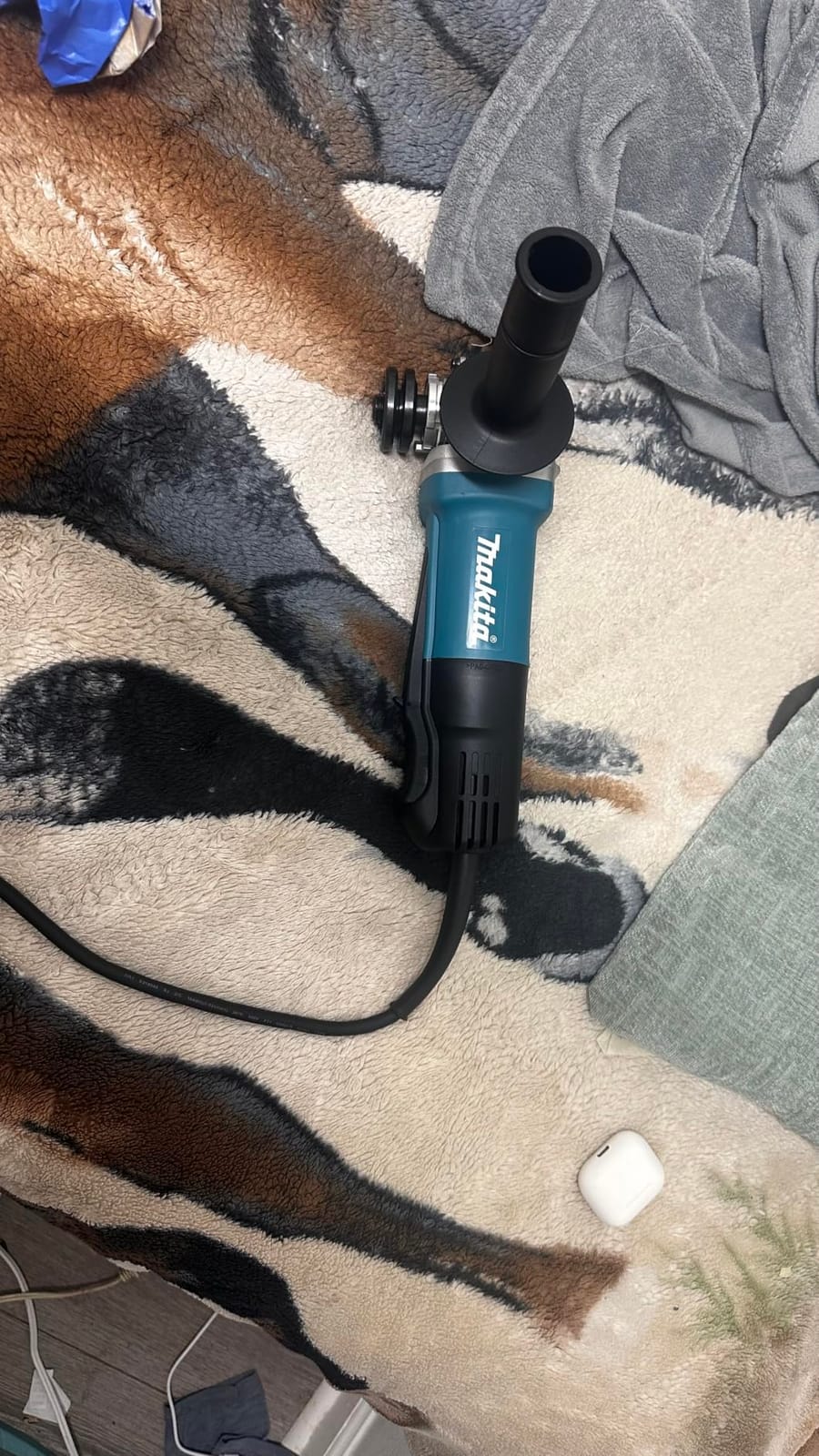
Why Makita sealed the motor for concrete
Owners report using it for concrete crack-joint cuts and for steel plumbing without complaint, and the sealed design is the reason. Dust that gets into an open armature winding is the main reason concrete kills otherwise fine grinders.
The all-ball-bearing design and metal gear housing add to that durability story, and Makita parts availability makes service simple if the brushes ever do go.
Where the kit falls short
The case is the most repeated complaint and it is a genuine annoyance. It will not hold the assembled tool with the side handle attached, and the slots are already full, so extra discs have nowhere to live.
Swapping between the two guard types needs a Phillips screwdriver that is not included. And at 7.5 amps in a 4-1/2 inch frame, it will not match a 13 amp machine when you are taking full-depth passes through a thick slab.
5. Milwaukee 2880-20 M18 Fuel 4-1/2 / 5 Inch Grinder: Best Cordless for Kickback Protection
Milwaukee 2880-20 M18 Fuel Brushless Lithium-Ion 4-1/2 in. / 5 in. Cordless Small Angle Grinder with No-Lock Paddle Switch (Tool Only)
M18 Fuel brushless motor at 8500 rpm
Electronic clutch for kickback protection
Overload protection for motor life
Anti-vibration side handle
Pros
- Electronic clutch delivers kickback protection on hard material
- Overload protection helps maximize motor life under heavy loads
- Anti-vibration side handle improves comfort on longer cuts
- Runs on all M18 batteries
- Accepts standard 5/8-11 accessories
Cons
- 8500 rpm is lower than most 4-1/2 inch grinders
- Bare tool only so a battery and charger are extra
- No lock-on paddle switch which tires the hand on extended cuts
The electronic clutch is the headline feature here, and it is the one that makes sense on concrete. It detects a bind or stall and disengages the wheel before the whole tool reacts, which is exactly the failure mode of a diamond wheel catching on aggregate or rebar.
Overload protection is the other concrete-specific addition. It helps when a wheel is pushed too hard into a cut.
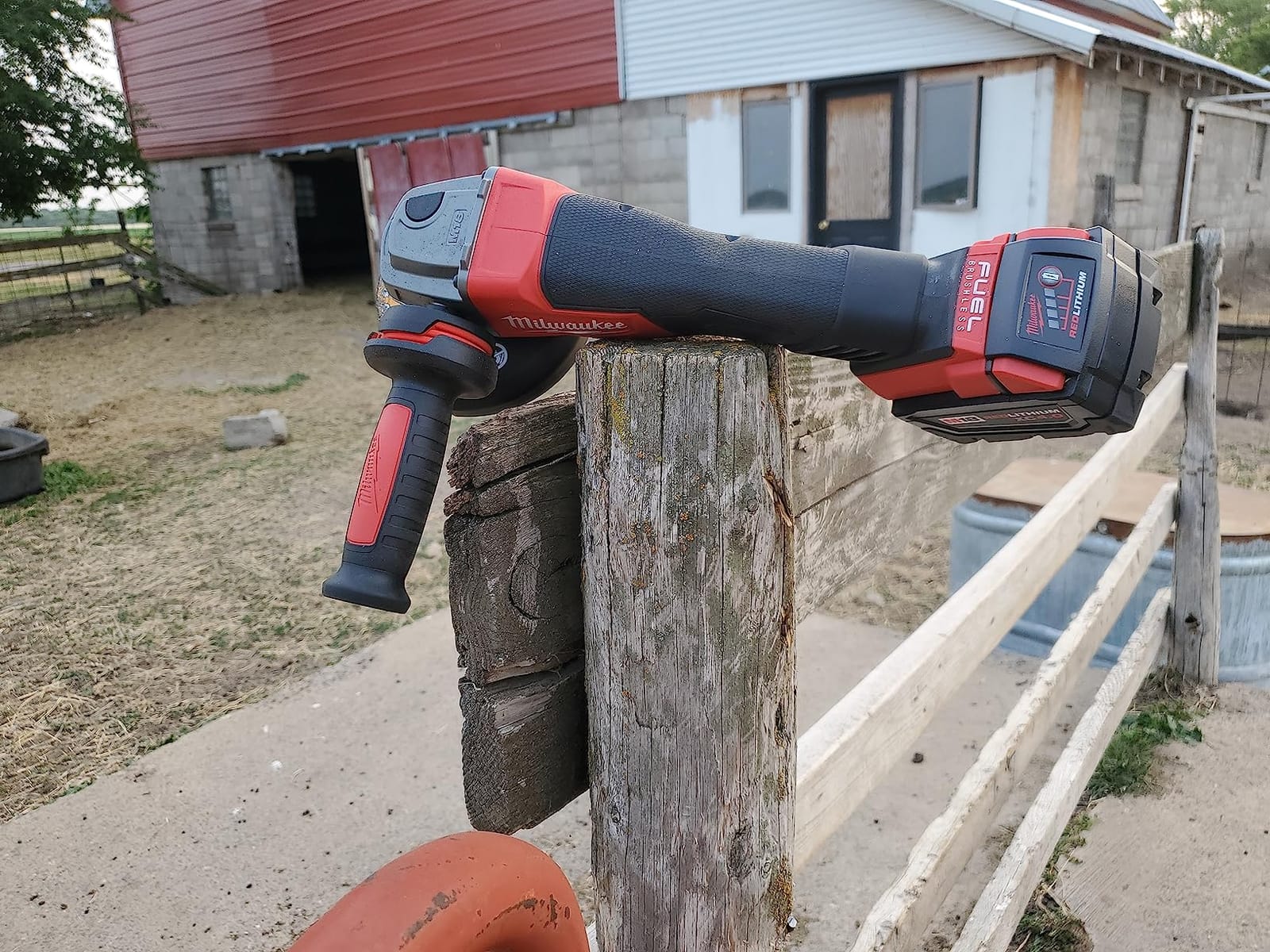
Milwaukee added an anti-vibration side handle, which reduces the constant buzzing you feel through your hand when a wheel runs out of true on hard material. For long cuts that is a comfort difference, not a gimmick.
At 4.8 across 2506 reviews, this is one of the strongest cordless options in the group, and it accepts standard 5/8-11 accessories so the diamond wheels are easy to source.
Where the Milwaukee earns its place
For anyone already on the M18 platform, this is the grinder to buy for concrete trimming where the risk of a stall is highest, such as cutting around existing pipe or conduit or working in tight corners with limited escape room.
The clutch and overload protection together make it one of the safer cordless options in this lineup, which is why it sits near the top of our shortlist.
Where it costs you
The 8500 rpm figure is the tradeoff. That is well below the 11000 to 12000 rpm of the corded machines here, and speed under load is what keeps a diamond wheel cutting concrete instead of polishing it.
There is also no lock-on paddle switch, so on a long cut you are holding the trigger the whole time. Add the bare-tool packaging and the total cost climbs quickly if you do not own M18 batteries.
6. DEWALT DWE4011 One-Touch Guard Grinder: Best for Fast Wheel Changes
DEWALT Angle Grinder, One-Touch Guard, 4-1/2 -Inch (DWE4011)
7 amp motor at 12000 rpm
One-touch guard needs no tools
Quick-change wheel release
5/8-11 spindle thread
Pros
- One-touch guard adjusts without any tools
- 12000 rpm 7 amp motor gives fast material removal
- Quick-change wheel release removes discs by hand after pressing the spindle lock
- Slim body is easy to grip including for smaller hands
- Fewer exposed body screws than earlier models
Cons
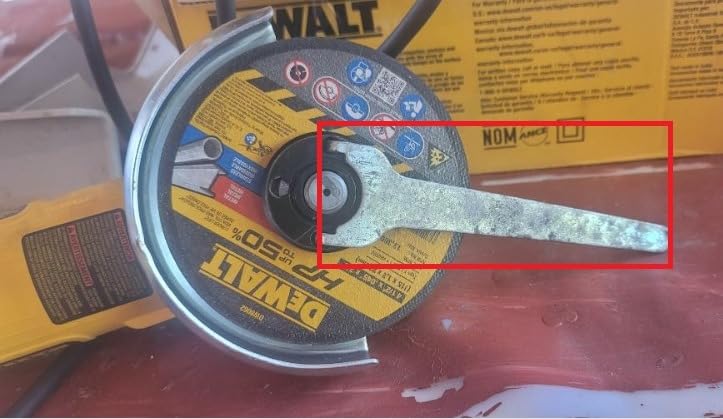
- A hex wrench is included instead of the familiar spanner wrench
- The slide switch is small and easy to bump accidentally
- Noticeably noisy and higher vibration than larger grinders
- 7 amp output is modest against 10 to 13 amp models
Concrete jobs generate wheel changes. Between a diamond blade, a grinding wheel and a cup wheel, you will swap discs many times in a session, and this grinder makes that the least annoying part of the job.
The one-touch guard needs no wrench to reposition, and the quick-change wheel release lets you pull discs by hand once the spindle lock is pressed. Reviewers treat this as the standout improvement over older clamp-style designs.
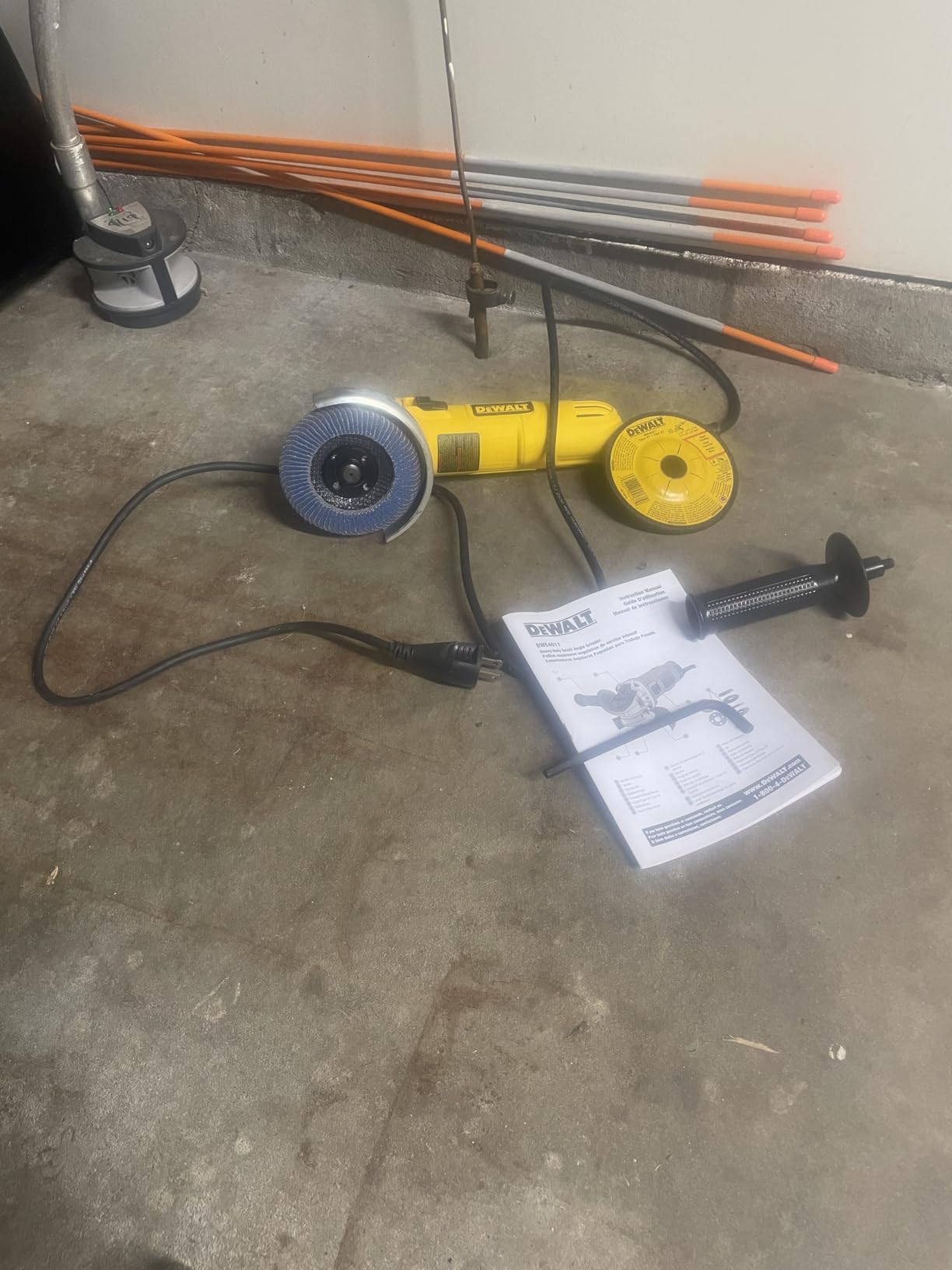
Its 12000 rpm 7 amp motor is described by owners as giving fast material removal and good overload protection, which is the combination you want when a wheel first bites into a slab.
The slim ergonomic body also grips well for smaller hands, a detail that shows up repeatedly in reviews from people who do not want a 5 pound bull grinder for a trim cut.
Where quick changes pay off
Anyone moving between surface grinding and cutting on the same job will feel this immediately. Setting the guard for a cut-off position and then back to a grinding position takes seconds rather than a minute.
It is also a good fit for a homeowner or a rental crew where the tool gets handled by several different people and setup speed matters.
Where it is the wrong choice
At 7 amps it is underpowered next to the 11 to 13 amp class, and owners say so directly. It is not the tool for a long deep kerf through thick concrete.
The other repeated complaint is noise and vibration relative to bigger grinders, plus a slide switch that is small and easy to bump. Note that a hex wrench comes in the box instead of the usual spanner wrench.
7. Bosch GWS8-45 4-1/2 Inch Grinder: Best for One-Handed Concrete Control
Bosch GWS8-45 4-1/2 In. Angle Grinder
7.5 amp professional motor
11000 no-load rpm
Slim-grip body at 4.2 pounds
Directed air flow protects internals
Pros
- Runs continuous 11000 rpm without bogging on sustained cutting
- Slim-grip design is small enough for one-handed use
- Directed air flow keeps dust away from motor internals
- Two-position side handle and constant-on switch for control
- Good value for a professional-grade 7.5 amp machine
Cons
- The manual states it is not intended for cut-off applications
- Guard adjustment needs an Allen key and has few fixed positions
- Handle placement sits forward which feels awkward above waist height
- Service Minder brushes can stop the tool mid-job when maintenance is due
This is the grinder for people who cut concrete in awkward places. The slim-grip body is small enough to run one-handed, which matters when you are following a line on a step riser or working inside a tight corner with no room to reposition.
Owners report it holding continuous 11000 rpm without bogging down on sustained abrasive and cutting work, and that consistency is what separates a grinder that finishes a cut from one that stalls halfway through it.
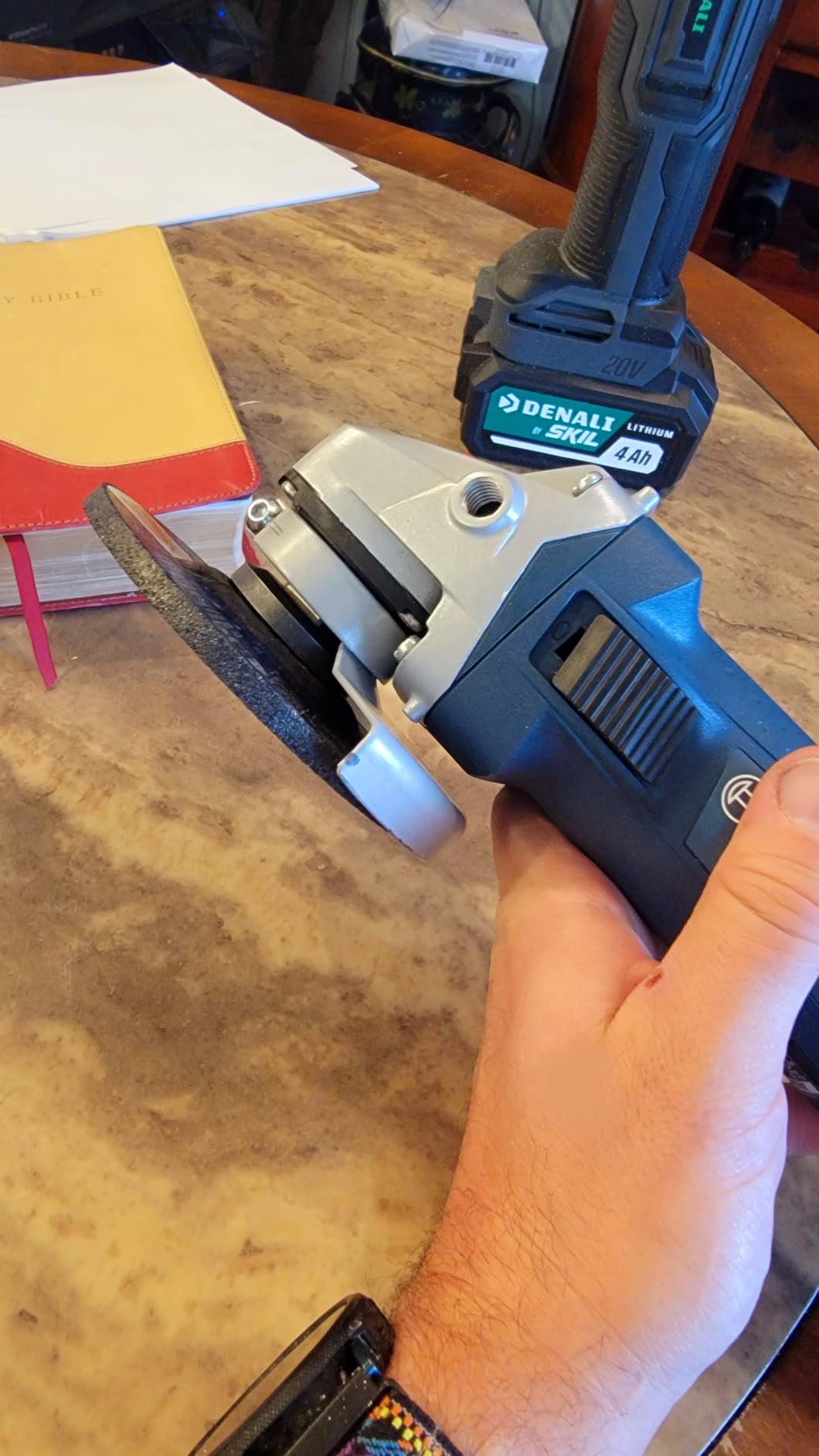
Directed air flow diverts dust away from the motor internals, which is a durability decision that pays off on concrete jobs where abrasive dust is constant. Service Minder brushes also tell you when the brushes need replacing rather than letting them wear silently.
At 4.6 stars across 2163 reviews, it is well proven and inexpensive relative to pro-grade machines, with reviewers describing it as simply sturdy and powerful for its size.
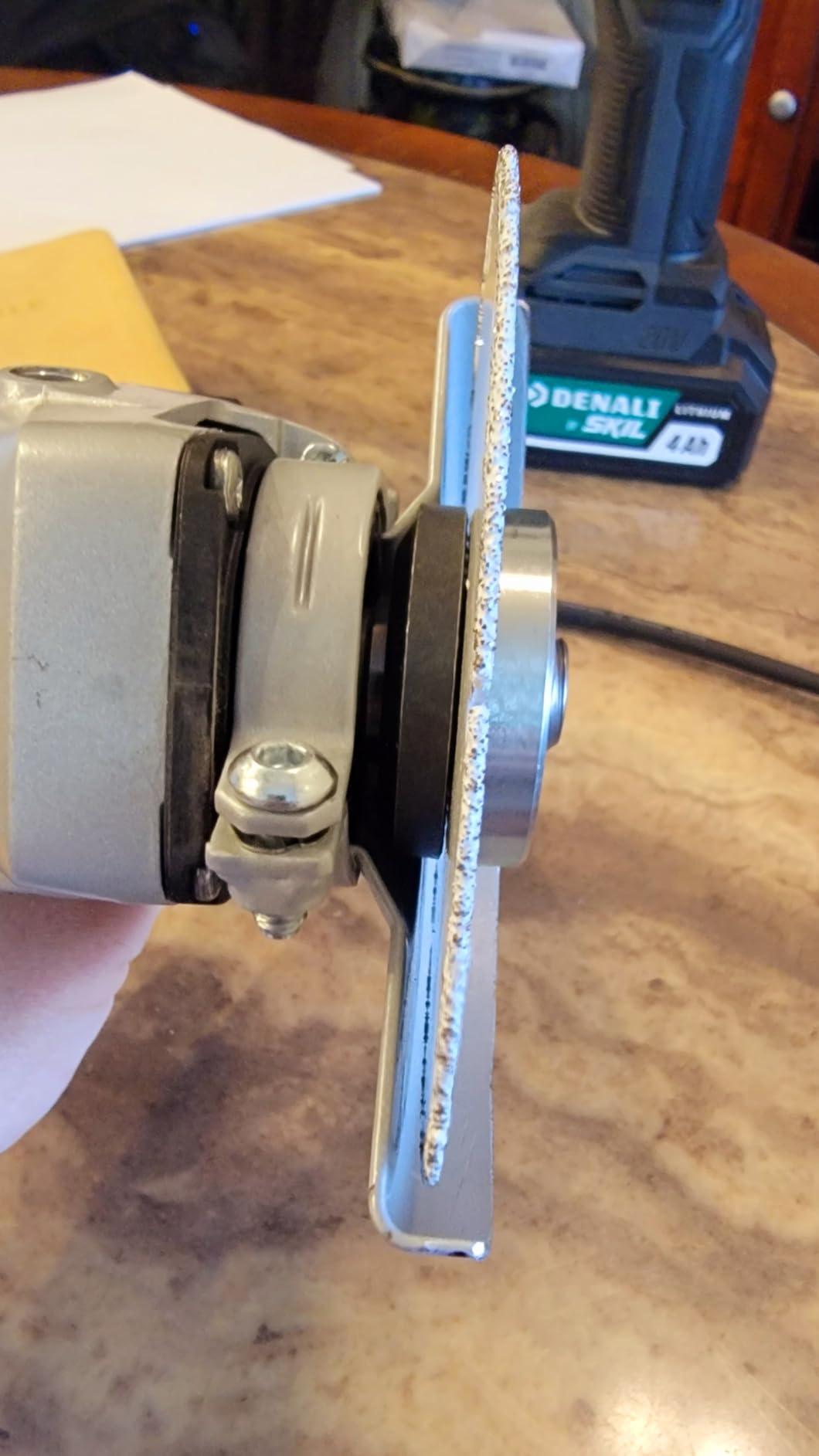
Why the slim body helps on concrete
Precise concrete work means trimming an overhang or nibbling away a lip where a bigger wheel cannot physically fit. A narrow body reaches into those spots with the guard still properly positioned.
The two-position side handle gives you a second grip when the cut needs more than finger control, which is a good balance for both precision and power.
Where the documentation bites
The most discussed issue is that the printed manual disclaims cut-off use, even though owners confirm it works fine with Type 27 cutting wheels. If you are cutting concrete rather than only grinding it, know that you are outside the stated intent.
Guard adjustment needs an Allen key and only snaps into a few positions, and the handle sits far enough forward to feel odd above waist height. Service Minder stopping the tool mid-job also annoys people doing long runs.
8. SKIL 9295-01 6 Amp 4-1/2 Inch Grinder: Best Entry-Level Pick
SKIL 6 Amp 4-1/2-Inch Corded Angle Grinder – 9295-01
6 amp motor at 11000 rpm
Tool-less guard adjustment
Metal gear housing
Handle stores the wrench
Pros
- 11000 rpm from a 6 amp motor is enough for conduit and light masonry
- The wrench stores inside the handle so it is always available
- Handle threads onto either side or the top for three positions
- Tool-less guard adjusts quickly
- Some owners report decades of service from the same model
Cons
- Power button can be awkward to operate especially with gloves
- Spindle lock does not always engage cleanly and can stick
- 6 amp output bogs down on heavy material
- No carrying case included and the cord is short
This is a credible low-cost way into concrete cutting, and the 11000 rpm output is the part that matters. It gives you enough speed to cut conduit, rod and light masonry rather than just spinning a wheel in the air.
The handle design is unusually thoughtful. The hex wrench stores inside it, and the handle threads onto either side or the top, giving three grip positions. On a grinding job that is a genuine convenience.
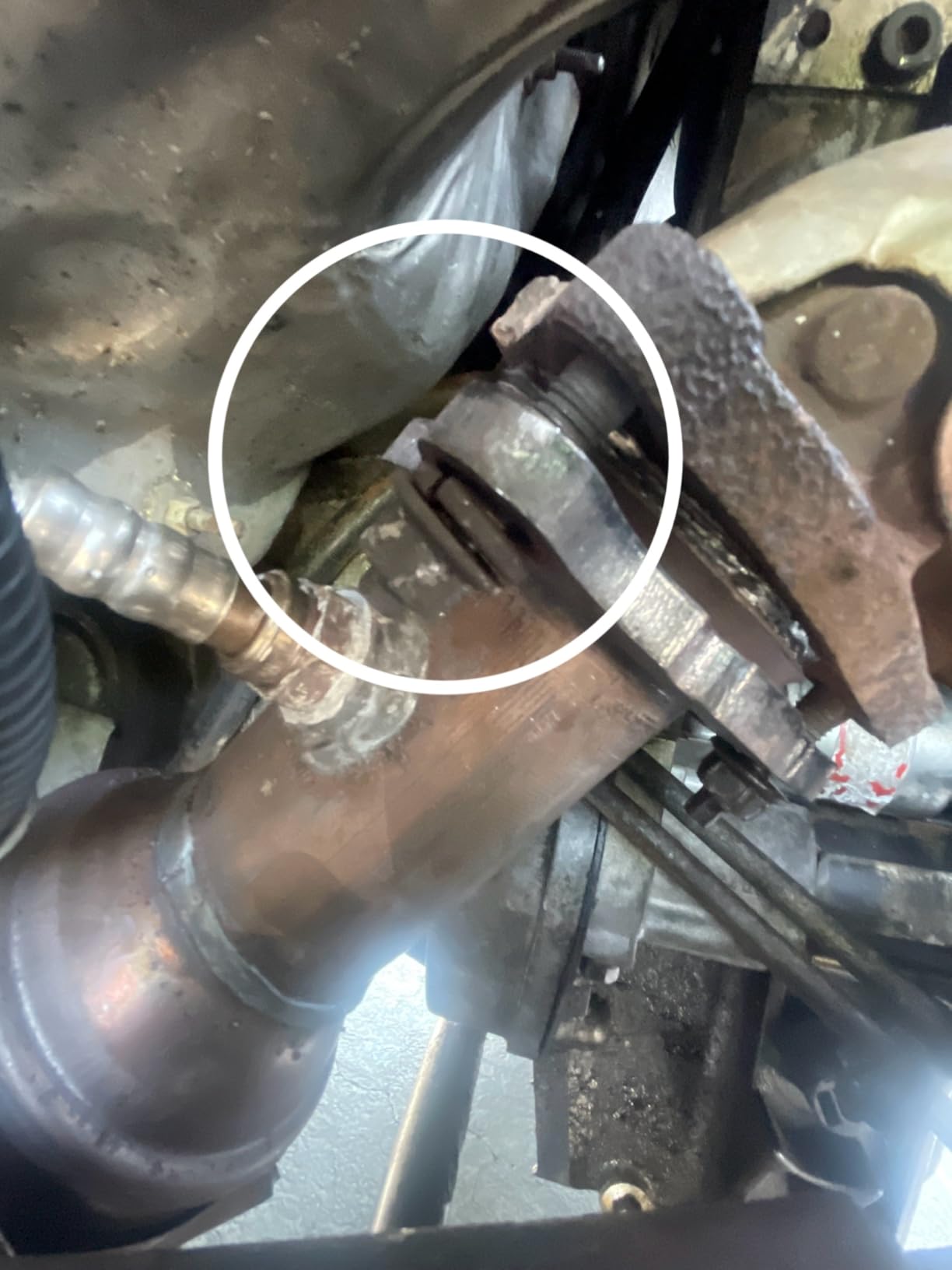
Reviewers frequently mention long service lives from the same model, some going back 25 years, and it holds a 4.6 rating across 1928 reviews. The metal gear housing is a real plus for durability.
Reviewers often describe it as strong value in the 4-1/2 inch class, which matches how we positioned it. For a first cut on a paver edge or a section of sidewalk lip, it is enough.
What this budget tool can do
Light masonry and concrete trimming, plus all the usual metal work, is realistic. Paver edges, brick faces, concrete step nosings and small block cuts are all within its ability if you feed the wheel slowly.
If a dedicated dust shroud is not available for it, this is still a reasonable machine for the job since the light duty cuts generate less airborne dust than deep slab work.
Where the low amp rating shows
Six amps is at the bottom of the range and owners say it bogs down on heavy material. Pushing into concrete with it is exactly the mistake that overheats the motor.
The power button can be awkward with gloves on, the spindle lock sometimes sticks, and the cord runs roughly 4 to 5 feet with no case included. Fine for a weekend, frustrating for a week.
9. DEWALT DWE43116 13 Amp Grinder: Best Wheel Range for Thick Slabs
DEWALT Angle Grinder Tool, 4-1/2-Inch to 5-Inch, Trigger Switch (DWE43116)
13 amp motor at 1700 watts
9000 rpm rated speed
Takes 4-1/2, 5 and 6 inch wheels
Dust ejection system
Pros
- 13 amp motor gives noticeable torque over 4-1/2 inch 11 amp grinders
- Matching 4.5
- 5 and 6 inch Type 27 guards included
- Narrow body reaches tight spaces and runs one-handed
- Tool-free spindle lock for fast disc changes
- Dust ejection system keeps masonry debris out of the motor
Cons
- Heavier and longer than 4-1/2 inch grinders so it tires the arms
- Weight balance can feel off over extended use
- Trigger switch rather than a paddle so it must be held down
- 9000 rpm is low with no variable speed control
- Top wheel size is 6 inch so it does not take 7 inch wheels
Torque is the headline here. A 13 amp motor produces noticeably more torque than a typical 4-1/2 inch 11 amp grinder, and on concrete that difference shows up as fewer stalls and less heat on a long cut.
It is also the only machine here that covers the whole 4-1/2 inch to 6 inch wheel range with correctly matched Type 27 guards in the box. Many grinders accept a larger wheel but leave you without a guard that fits, which on a cutting job is not a small problem.
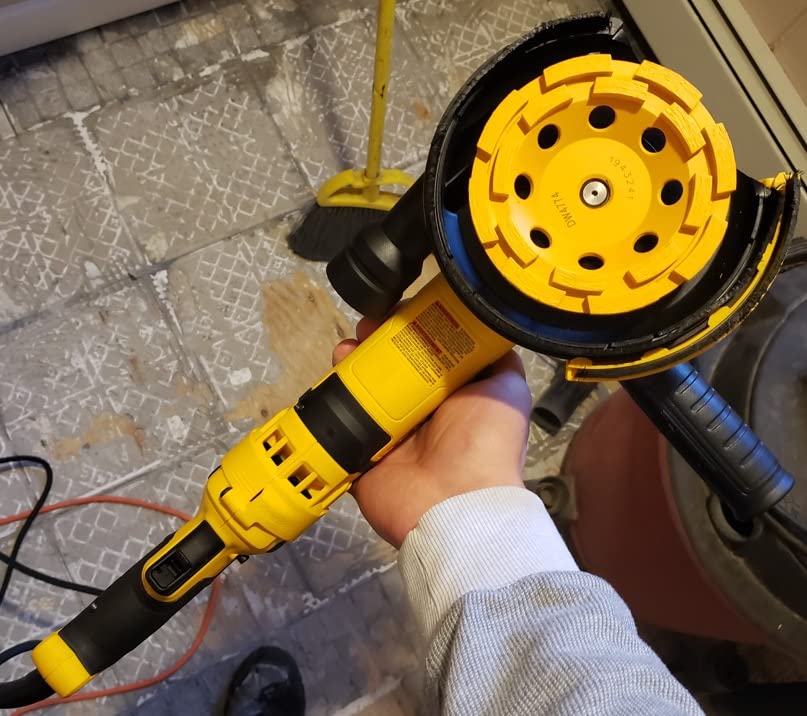
The dust ejection system is aimed squarely at masonry work, clearing abrasive particles that enter through the air intake vents. Owners report it surviving years of daily shop work, which is the durability signal we look for.
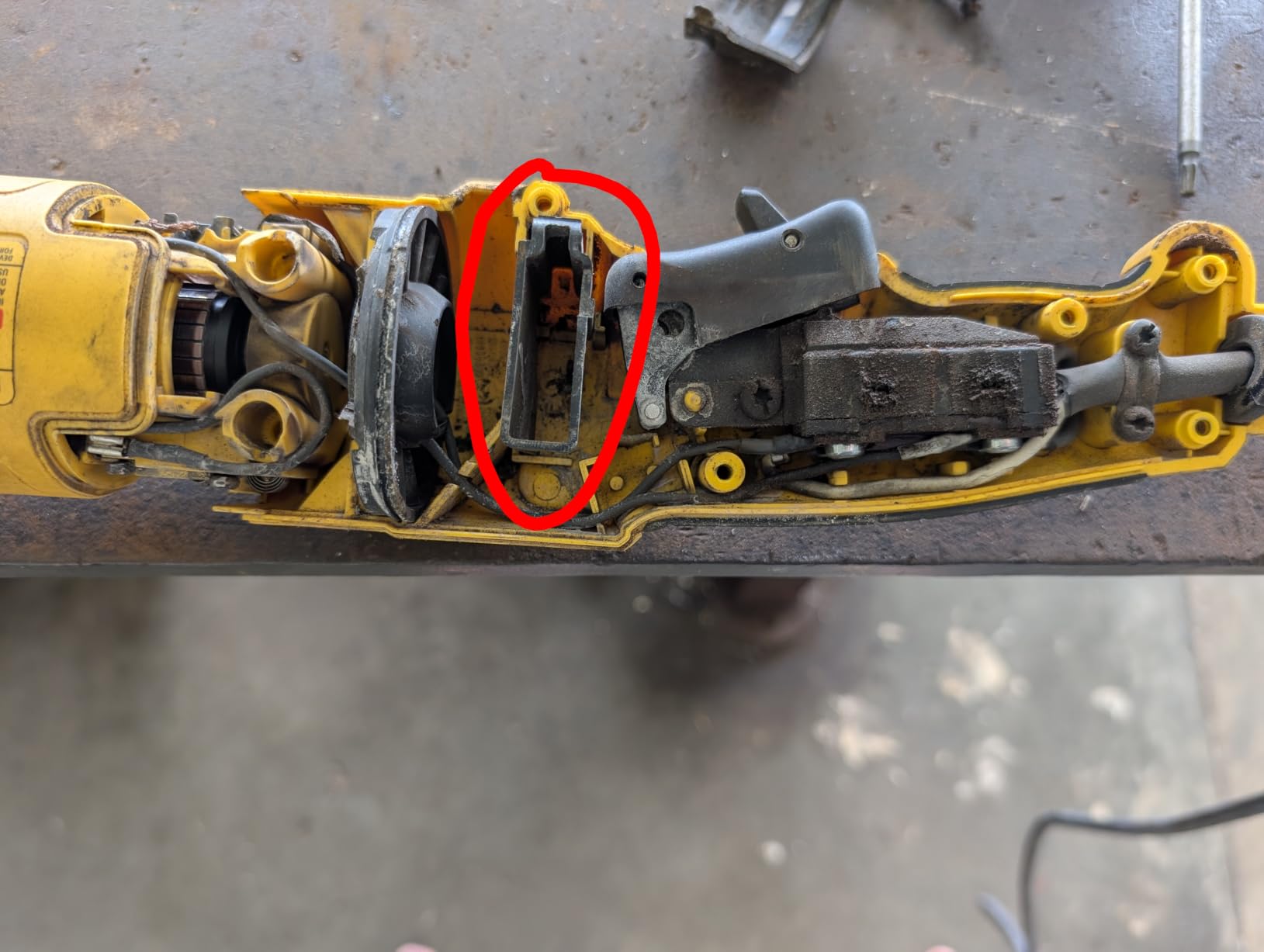
The narrow rat-tail body reaches tight spaces and can be run one-handed, and the tool-free spindle lock makes disc changes fast. There is no auto brake, so you can feather the throttle for controlled detail work.
Why torque wins on thick concrete
A diamond wheel that loses speed under load generates heat instead of cutting speed, and heat is what glazes the segment and kills the blade. Higher amp rating keeps the wheel in its working range when you lean into a slab.
This is also the pick for anyone who wants to step up to 6 inch wheels later, since the guards for every size in that range come in the box.
Where it works against you
It is heavier and longer than a 4-1/2 inch grinder and owners report the balance feeling off, so long cuts tire the arms sooner than the lighter machines.
At 9000 rpm it turns slowly for its class and there is no variable speed. A continuous trigger instead of a paddle also means the tool runs while you reposition, which on concrete is worth thinking about.
10. AOBEN AT3113X 1200W Grinder: Best for Adjustable Speed
AOBEN 1200W Angle Grinder 4-1/2 inch | 10Amp, 11000 RPM, 6-Speed Corded Power Electric Cut off Tool with Switch Lock | for Heavy Duty Work & Metal Cutting, Grinding & Polishing
1200 watts and 10 amps
11000 rpm no-load speed
Six-speed adjustable control
7/8 inch arbor on a 5/8-11 spindle
Pros
- 1200W 10 amp motor gives unusually strong performance for the price
- Six-speed control matches speed to material and task
- Switch lock is easy to hold with both hands on long grinds
- Standard arbor and spindle fit common wheels including diamond blades
- Nineteen discs
- guard
- wrench and tool bag in the box
Cons
- Lowest average rating in this group with 8 percent one-star reviews
- Six-speed control is unusual for a standard spindle and adds complexity
- The long disc list is less useful for concrete since a diamond blade is still needed
- Brand has less long-term track record than established makers
- Warranty and support arrangements are less clearly documented
Speed control is the reason this machine is interesting for concrete. Six settings let you back off when a wheel binds or when you are finishing a cut, which is a genuine technique for controlling a diamond blade.
Raw output is the other draw. A 1200 watt, 10 amp motor at 11000 rpm is unusually strong for a tool at this entry point, and owners specifically mention grinding concrete among the tasks it handles.
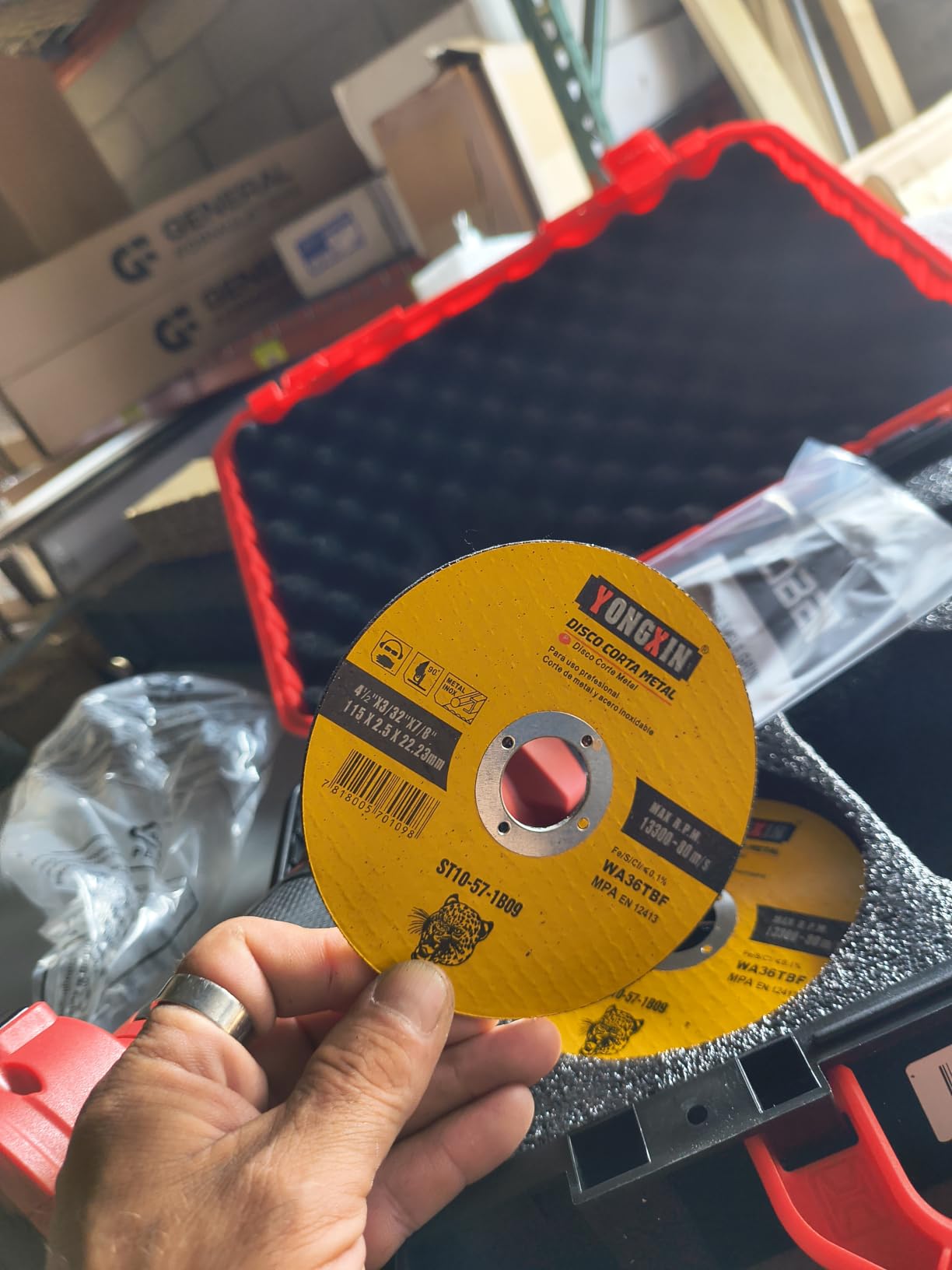
The 7/8 inch arbor and 5/8-11 spindle fit common wheels, including the diamond blades you need for concrete. You are not locked into proprietary accessories, which keeps replacement costs down.
Nineteen discs, a guard, a wrench and a tool bag come in the box. That is a generous kit, though for a concrete buyer most of those discs are not the ones you will actually use.
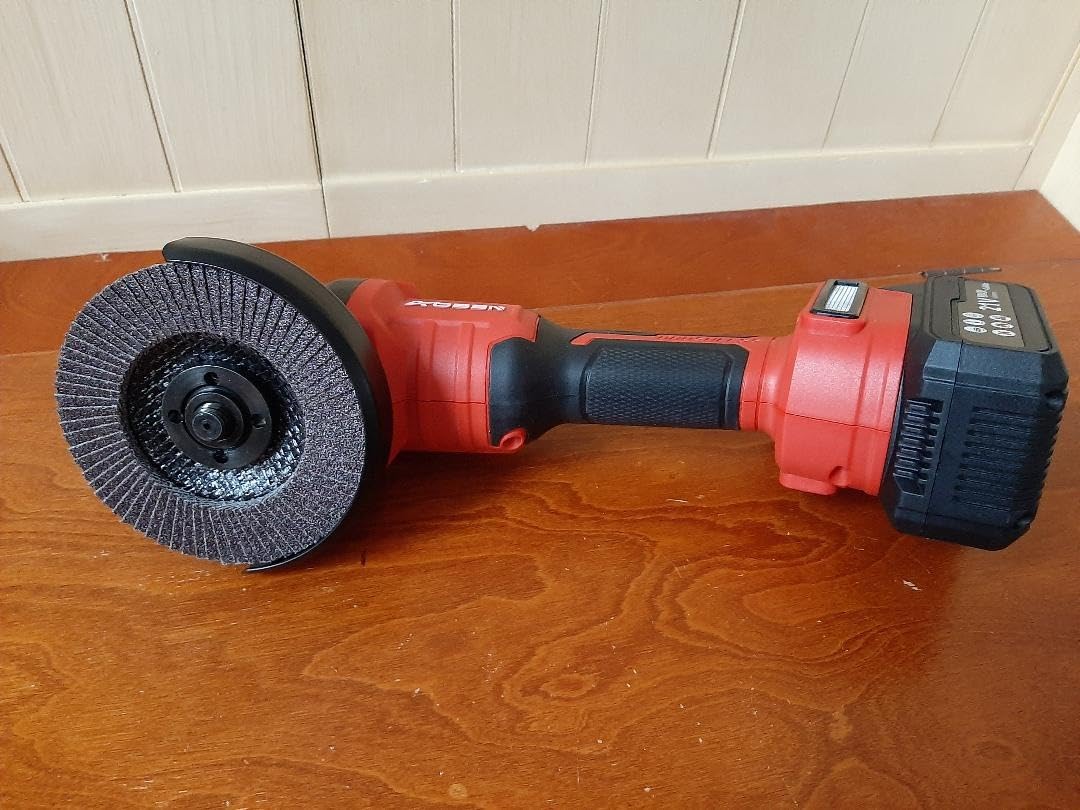
Where speed control helps on concrete
Throttling down when a wheel catches is one of the fastest ways to avoid glaze and kickback. Having discrete settings rather than a continuous dial makes that repeatable, which matters if several people share the tool.
The power figure also makes it competitive with 10 amp corded machines on general concrete trimming, so it is not simply a lightweight tool with a gimmick.
Where the ratings give us pause
This is the lowest-rated product in the group at 4.3, with 8 percent one-star reviews. Reviewers credit the power and the adjustability, while a notable minority question durability and support.
The brand has less long-term track record than the established makers, and warranty arrangements are less clearly documented. If you are buying for daily professional use, that is the trade you are making.
11. Makita XAG09Z 18V LXT Cordless Grinder: Best Cordless Safety Electronics
Makita XAG09Z 18V LXT Lithium-Ion Brushless Cordless 4-1/2″/5″ Cut-Off/Angle Grinder
18V LXT brushless motor
10000 rpm no-load speed
Active feedback sensing shuts the tool off
Electric brake stops the wheel in 2 seconds
Pros
- Active feedback sensing shuts the tool off if the wheel suddenly stops
- Electric brake stops the wheel in about two seconds
- Brushless motor runs cooler with no carbon brushes
- Automatic speed change adjusts speed and torque under load
- Tool-less 5 inch wheel guard and cut-off guard included
- Runs on widely available 18V LXT batteries
Cons
- Bare tool only so battery and charger cost extra
- 10000 rpm is lower than many corded grinders in this class
- 5.7 pound bare tool weight is heavier than most cordless 4-1/2 inch grinders
- Expensive relative to corded models with comparable power
Automatic speed change is the feature that matters most on concrete. It adjusts speed and torque during operation to keep the wheel cutting as load rises, which is the closest thing in this list to the constant-speed behavior of a good corded grinder.
Active feedback sensing turns the motor off if the wheel rotation is suddenly forced to stop. That is precisely the concrete failure case, where a diamond blade catches on rebar or an aggregate pocket.
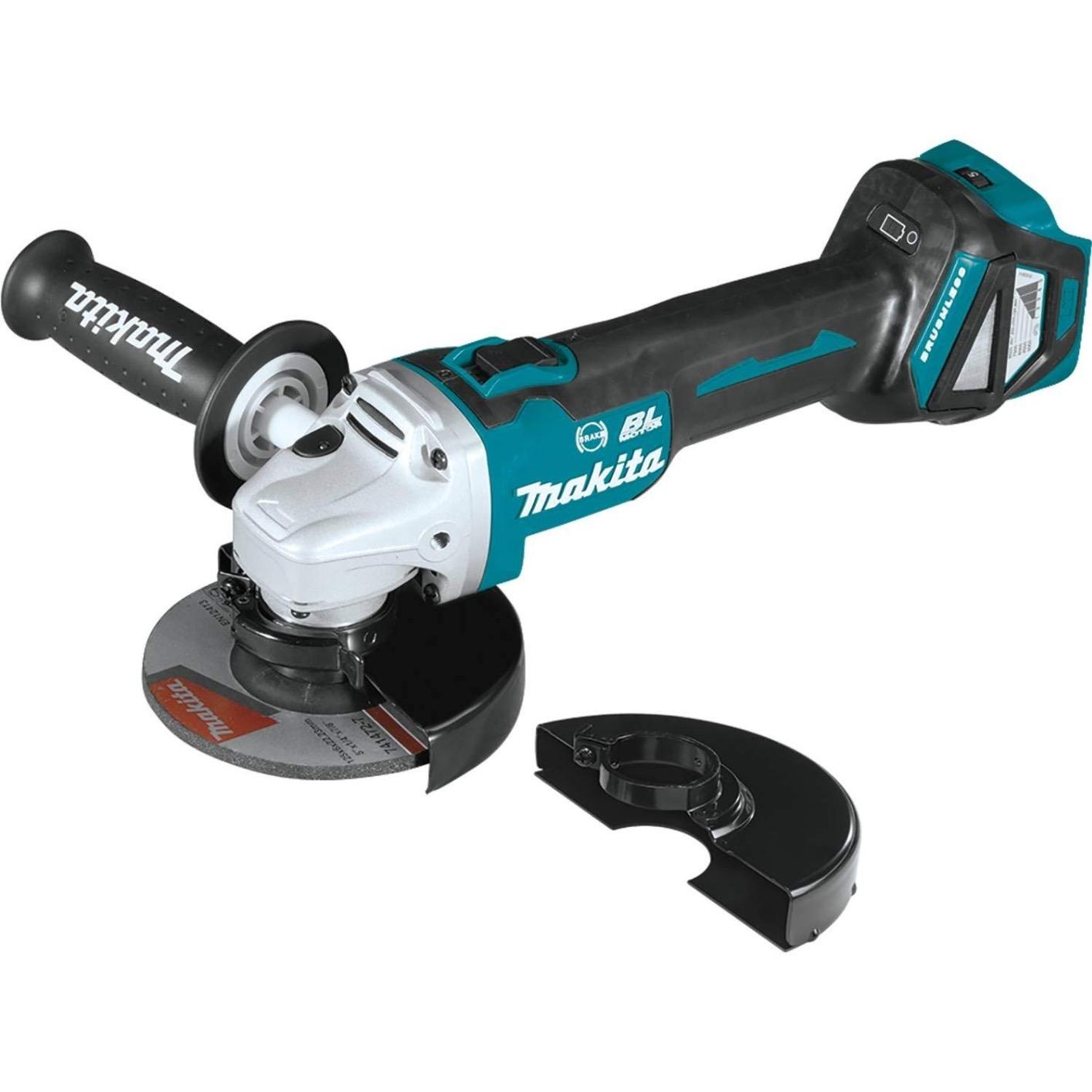
The electric brake stops the wheel in two seconds or less, which saves real time across a full afternoon of small resets, and the brushless motor runs cooler with no carbon brushes to replace.
It holds a 4.8 rating across 704 reviews, which is a small sample compared with the leaders but a very clean one. The 5 inch cut-off guard and tool-less guard both come in the box.
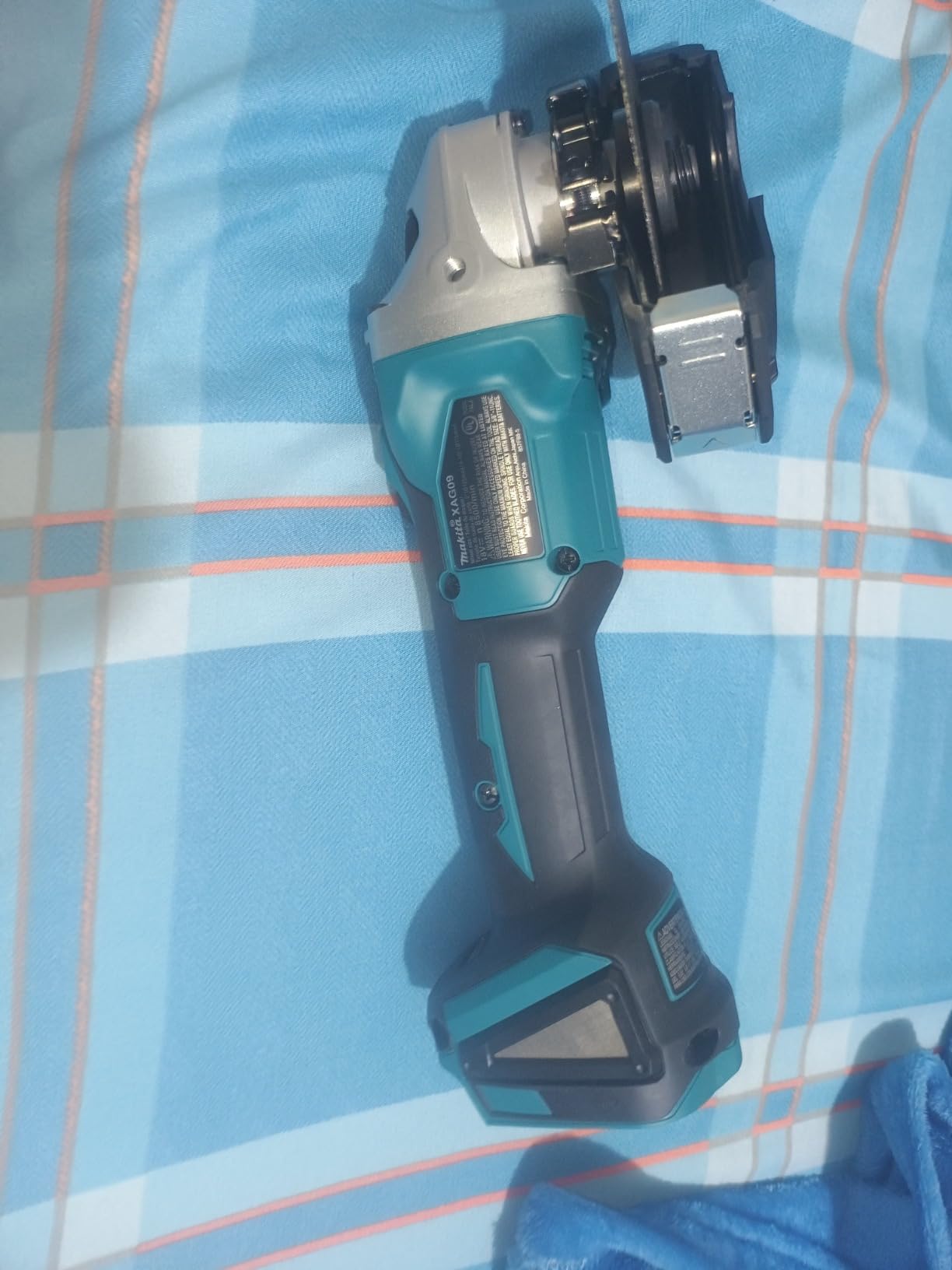
Why automatic speed change suits concrete
Concrete cutting is a load that rises and falls without warning as the wheel passes from soft mortar to hard aggregate. A fixed-speed corded machine bogs at exactly that moment, and the motor electronics here compensate for it.
For a mason moving between jobs without a reliable outlet, that behavior is worth more than raw peak wattage.
Where it falls short
At 5.7 pounds bare, this is heavy for a cordless 4-1/2 inch grinder and you feel it in your wrist on a long cut. Its 10000 rpm is also lower than most of the corded machines listed here.
It is bare tool only, and adding batteries and a charger pushes the total cost well past comparable corded machines. Buy it for the electronics if you already own LXT packs, not for the value.
12. Makita GA7021 7 Inch Grinder: Best for Deep Concrete Cuts
Makita GA7021 7″ Angle Grinder, with AC/DC Switch
15 amp motor at 1800 watts
7 inch wheel capacity
6600 rpm no-load speed
Tool-less wheel guard
Pros
- 15 amp motor delivers serious power for heavy material removal and large concrete work
- 7 inch capacity means far bigger diamond wheels are available
- AC/DC switch lets it run on alternative power sources
- Tool-less wheel guard adjusts without a wrench
- Rear trigger with lock-on and a large rubber tool rest
Cons
- Heaviest grinder in the group at 15.4 pounds
- Low 6600 rpm is roughly half of what smaller grinders turn
- Bulky body is harder to control for detail or finish work
- Lock-on trigger means it can keep running if bumped or set down
- Overpowered and oversized for occasional jobs
This is the only dedicated 7 inch machine in the lineup, and that is the whole point. Bigger diamond wheels mean deeper cuts in a single pass, which on a driveway or a thick slab is the difference between one pass and several.
Forum discussion on r/Tools puts the practical cut depth of a 7 inch grinder at roughly 2.25 to 3.5 inches depending on the wheel, which is far beyond what any 4-1/2 inch tool here will reach.
The 15 amp motor gives it the torque to hold speed on the heaviest sections, and the AC/DC switch lets it run on alternative power sources when a generator or site supply is the only option.
Reviewers favour it specifically for heavy concrete and metal removal, and the 4.8 rating across 671 reviews reflects a contractor tool that does what it says. The large rubber tool rest also protects the workpiece when you set the grinder down.
When a 7 inch wheel is the right call
Cutting a control joint through a thick slab, trimming a driveway edge or making a square notch in poured concrete are the jobs where depth per pass matters. Fewer passes means less risk of the wheel wandering off line.
It is also the right size for cutting rebar and welded mesh, where the extra torque and larger wheel reduce the chance of binding.
Where the size becomes a liability
At 15.4 pounds it is the heaviest grinder here by a wide margin, and owners note it tires the arms during long cuts. Forum readers describe 7 and 9 inch grinders as heavy and hard to control, and that is accurate.
The 6600 rpm figure is roughly half what the smaller machines turn, the body is bulky for detail work, and the lock-on trigger can leave it running if it is bumped. For occasional jobs it is genuinely oversized.
How to Choose an Angle Grinder for Concrete Cutting
Disc size decides how deep you can cut
A 4-1/2 inch wheel gives you roughly 1 to 1.5 inches of depth, a 5 inch wheel around 1.5 inches, a 7 inch wheel about 2.25 to 3.5 inches, and a 9 inch wheel up to roughly 4 inches. Those numbers assume the wheel is centred correctly and you are cutting straight down without leaning the machine.
If your job needs more than about 3 inches of depth, a 4-1/2 inch grinder is the wrong tool regardless of how good the motor is. Forum discussions on r/Tools return to this repeatedly, and the size classes are not interchangeable.
A 4-1/2 inch grinder is plenty for trimming a lip, cutting a control joint in a thin patio slab, cleaning up mortar and cutting small blocks. It is a genuinely useful tool for most residential concrete work.
Corded or cordless for concrete: the honest verdict
For sustained concrete cutting, corded wins. Nobody who cuts concrete for a living argues otherwise, because a battery limits you to short bursts and swappable packs do not add up during a full slab cut. The corded machines on this list run continuously.
Cordless is the right answer when there is no reliable outlet, when the work is outdoors away from a house or vehicle, and when the cuts are short. The DEWALT DCG413B and Milwaukee 2880-20 handle trimming and block cutting well, and the Milwaukee clutch is a genuine safety asset where binds are common.
On a 20V MAX pack, owners report roughly 20 to 30 minutes of real grinding work. On a single 18V pack you will get less. Plan packs accordingly or the job stops when the battery stops.
Which diamond blade to buy
A continuous rim diamond blade is the right choice for clean straight cuts through concrete, block, brick and pavers. It has no segments, so it produces a smoother edge with less chipping and it wears evenly.
A turbo segmented blade cuts faster and handles thicker material, and it is the better choice when you expect to hit rebar or embedded steel. A diamond cup wheel is not for cutting at all, it is for surface grinding, scaling and removing coatings.
Bond hardness matters more than most buyers realize. A hard bond stays sharp on hard concrete but wears fast on soft material, and a soft bond on hard concrete glazes almost immediately. Forums describe wrong bond selection as the most common way people waste diamond wheels. If you are unsure, match the blade to the concrete rather than to the price.
Also check that the wheel diameter and arbor match your spindle before you buy. A 5/8-11 threaded spindle with a 7/8 inch arbor covers most 4-1/2 inch accessories, and the wrong fit simply will not mount.
Dust and silica: a control sequence that works
Concrete dust is crystalline silica and the hazard is real, not a formality. The control sequence that works is: fit a proper dust shroud with a vacuum port, connect it to a HEPA-rated extractor, run the extractor before you start, keep the wheel moving in shallow passes rather than pushing depth in one go, and wear a respirator for anything beyond light trimming.
Forum readers consistently warn against running a vacuum with no filter on concrete dust. It blows out the back of the machine and can destroy the vacuum motor. Use a dust bag or a properly rated filter instead, and expect to empty it often.
Wet cutting is the other route. Wetting the surface suppresses dust at the source, though it adds slurry cleanup and you should never use a wet method with a grinder rated for dry use only. Many builders use a cheap spray bottle or a trickle hose over the cut line for short passes.
Note that a shroud also has to fit the wheel size. A shroud designed for a 4-1/2 inch wheel will not correctly cover a 5 inch wheel, and forum threads describe mismatched shrouds as a leading cause of poor results on good machines. Related debris and extraction gear is covered in our pool vacuum head guide if you are working around water and settled debris.
Features that matter more than you would expect
Kickback control and electronic clutches come first. A bind in concrete is common and unpredictable, and machines with a brake or clutch such as the DEWALT DCG413B, Milwaukee 2880-20 and Makita XAG09Z handle it far better than a plain slide-switch grinder.
Second is dust tolerance. Labyrinth seals, sealed armatures and directed air flow, as on the Makita 9557PBX1 and Bosch GWS8-45, extend tool life in abrasive environments where an open motor design will eventually fail.
Third is serviceability. Replaceable carbon brushes, an ordinary hex key for wheel changes and available bearings matter more on concrete than any premium feature, because abrasive dust accelerates wear on every moving part.
Frequently Asked Questions
Can you cut concrete with an angle grinder?
Yes. A diamond blade turns the angle grinder into a concrete cutting tool. Feed the wheel slowly in shallow passes rather than forcing depth in one go, keep the wheel moving, and expect several passes for anything deeper than a couple of inches. A 7 inch wheel cuts deepest, a 4-1/2 inch wheel handles trimming and joints.
What size angle grinder is best for cutting concrete?
A 7 inch grinder is best for concrete cutting because it reaches roughly 2.25 to 3.5 inches deep in a single pass. For trimming edges, cutting control joints and small blocks, a 4-1/2 inch grinder is lighter and easier to control. Most residential work is done well with 4-1/2 inch tools.
What type of angle grinder disc is best for cutting concrete?
A diamond blade, not an abrasive cutoff wheel. A continuous rim diamond blade gives the cleanest straight cuts in concrete, block and pavers. A turbo segmented blade cuts faster and handles embedded steel better. A diamond cup wheel is for surface grinding and coating removal, not for cutting.
Is a corded or cordless angle grinder better for concrete?
Corded is better for sustained concrete cutting because it runs continuously without battery changes. Cordless is better for short cuts, outdoor work and sites with no reliable outlet, and its safety electronics such as electronic clutches and kickback brakes are genuinely strong. Expect roughly 20 to 30 minutes of work per 4Ah pack.
How deep will a 7 inch grinder cut into concrete?
Roughly 2.25 to 3.5 inches, depending on the wheel and whether you are cutting straight down. A 4-1/2 inch wheel reaches about 1 to 1.5 inches, a 5 inch wheel around 1.5 inches and a 9 inch wheel up to about 4 inches. Depth beyond a few inches usually means a saw, not a grinder.
How do you prevent dust when grinding concrete?
Fit a dust shroud with a vacuum port and connect it to a HEPA-rated extractor before you start. Keep the wheel moving in shallow passes instead of pushing depth in one go, and wear a respirator for anything beyond light trimming. Never run an unfiltered vacuum on concrete dust, as it can damage the motor.
Which Grinder Matches Your Concrete Job in 2026
The best angle grinder for cutting concrete depends less on brand than on three numbers: disc diameter, amp rating and how much dust you can capture. Get those right in 2026 and the tool will last years of concrete work.
For most people, start with the DEWALT DCG413B if you own 20V MAX batteries and the cuts are short. Pick the Makita 9557PBX1 if you want a sealed corded machine with a diamond blade in the box. Choose the Milwaukee 2880-20 when kickback protection around pipes and conduit is the priority, and the DEWALT DWE43116 or Makita GA7021 when you are cutting full-depth kerfs in thick concrete with an outlet nearby.
Whatever you pick, the technique matters more than the model. Shallow passes, a moving wheel, a matched shroud and a real dust extractor will save the blade and save your lungs.