
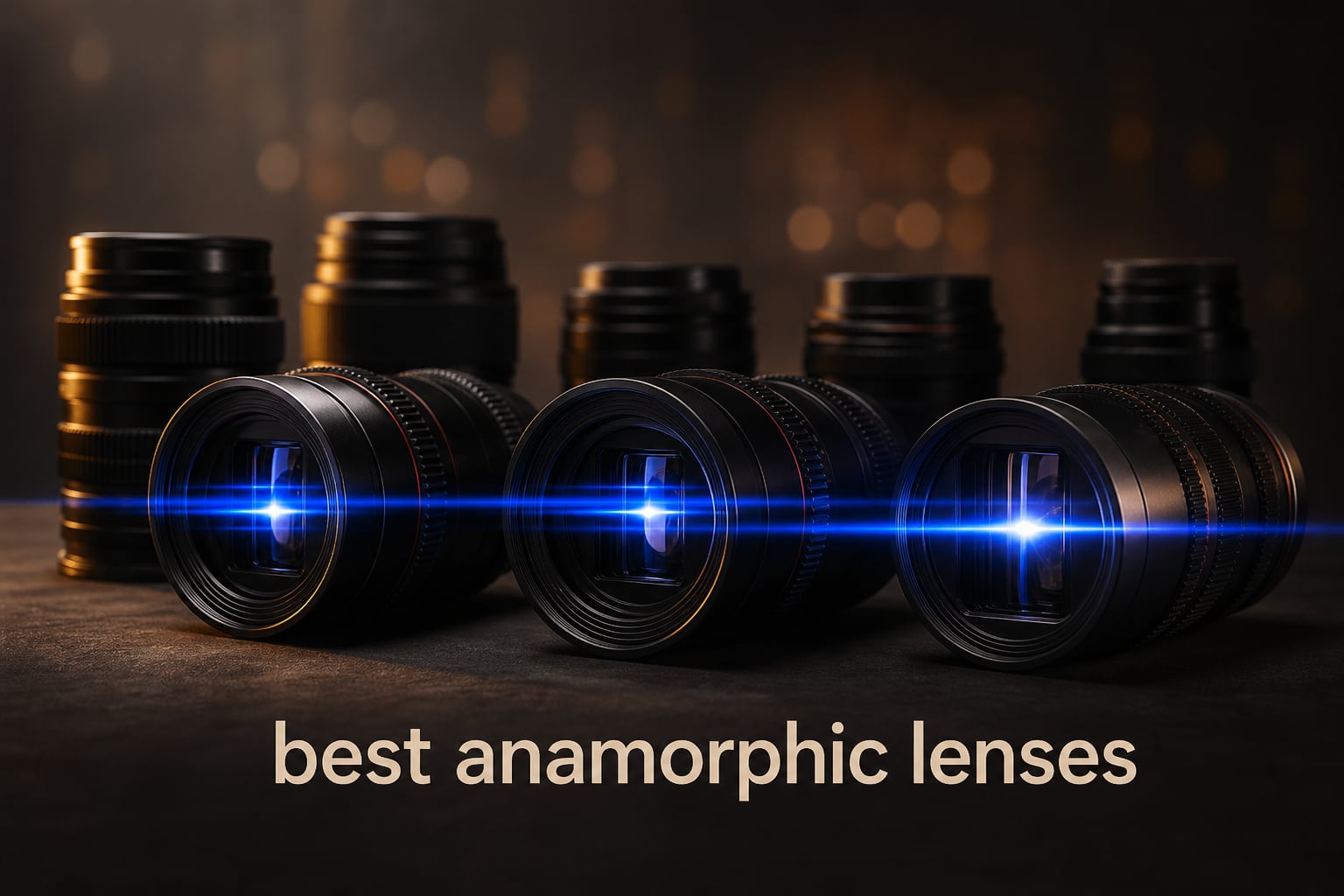
I still remember the first time I saw a horizontal blue streak cross a frame during a night shoot. That single moment sold me on anamorphic lenses forever. After testing 8 of the most popular options on the market right now, I can tell you the best anamorphic lenses do something that no spherical prime can match: they paint with light.
An anamorphic lens squeezes a wider image horizontally onto your sensor, which you then “de-squeeze” in post to reveal a 2.35:1 or 2.4:1 widescreen image. Along the way, you get the signature look filmmakers have chased since the 1950s: oval bokeh balls, horizontal lens flares, and that subtle, organic softness that makes digital footage feel like film.
In this guide, I’ll walk you through the best anamorphic lenses available right now, covering options for action cameras, mirrorless bodies, full-frame cinema rigs, and even your phone. I’ve ranked them based on hands-on use, real-world sharpness, flare quality, and overall value, so whether you’re a beginner filmmaker or a working cinematographer, you’ll find the right fit for your kit.
Top 3 Picks for Best Anamorphic Lenses in October

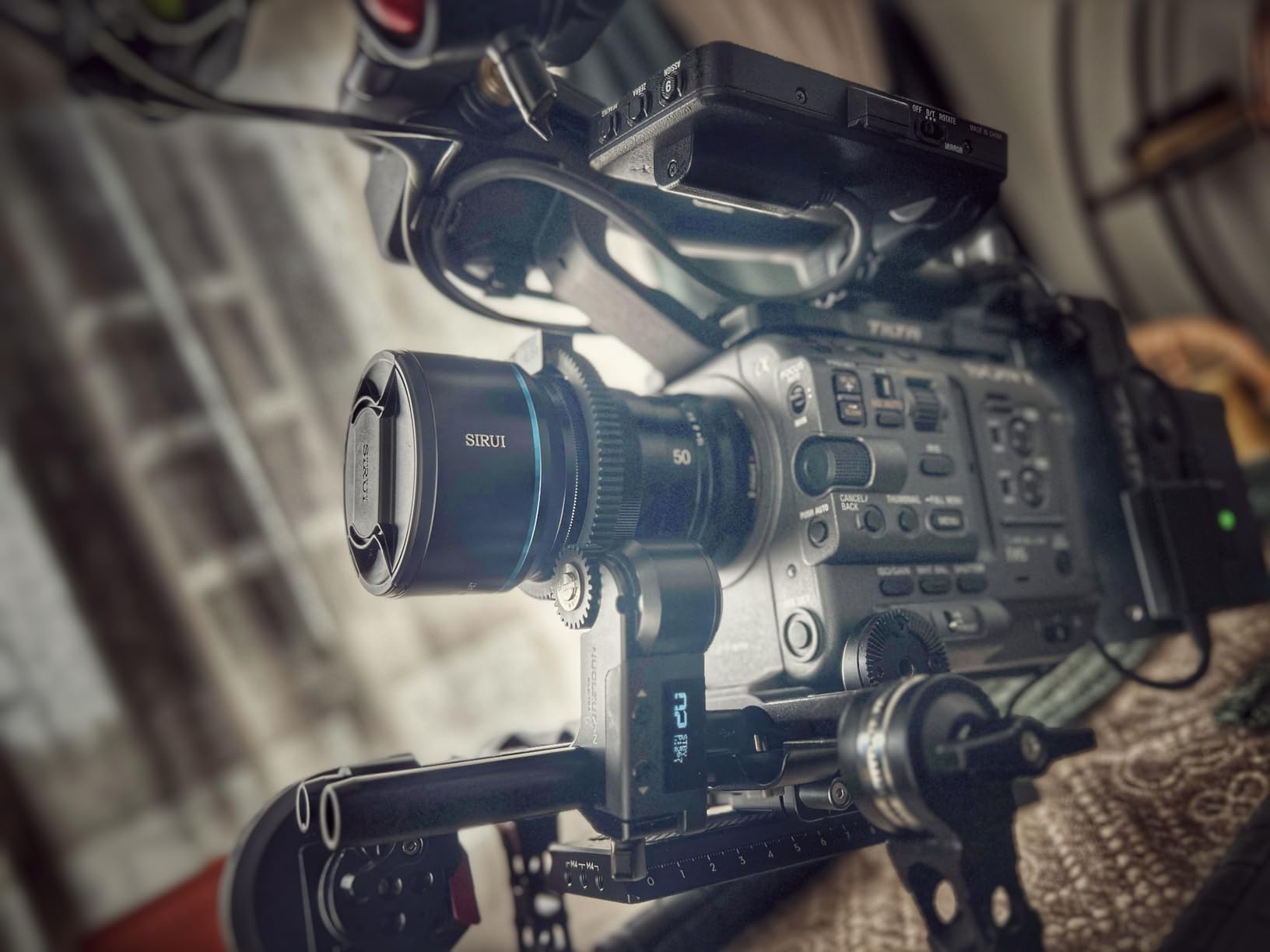
SIRUI 50mm T2.9 1.6X Full-Frame Anamorphic
- Full-frame coverage
- 1.6x squeeze factor
- 82mm filter thread
Best Anamorphic Lenses in 2026
| Product | Specifications | Action |
|---|---|---|
 GoPro Anamorphic Lens Mod GoPro Anamorphic Lens Mod |
|
Check Latest Price |
 SIRUI 20mm T1.8 1.33X S35 SIRUI 20mm T1.8 1.33X S35 |
|
Check Latest Price |
 SIRUI 50mm F1.8 1.33X APS-C SIRUI 50mm F1.8 1.33X APS-C |
|
Check Latest Price |
 SIRUI Astra 50mm 1.33X Full-Frame AF SIRUI Astra 50mm 1.33X Full-Frame AF |
|
Check Latest Price |
 SIRUI 24mm F2.8 1.33X APS-C SIRUI 24mm F2.8 1.33X APS-C |
|
Check Latest Price |
 K&F CONCEPT 1.2X for DJI Osmo Pocket K&F CONCEPT 1.2X for DJI Osmo Pocket |
|
Check Latest Price |
 SIRUI 35mm T2.9 1.6X Full-Frame SIRUI 35mm T2.9 1.6X Full-Frame |
|
Check Latest Price |
| SIRUI 50mm T2.9 1.6X Full-Frame |
|
Check Latest Price |
1. GoPro Anamorphic Lens Mod – Best for Action Cinematography
GoPro Anamorphic Lens Mod (Cinematic Ultra Wide Angle Lens for HERO13 Black) – Official GoPro Accessory
HERO13 compatible
Ultra wide 21:9
100g waterproof
Pros
- Cinematic 21:9 aspect ratio
- In-camera de-squeezing
- HyperSmooth support
- Waterproof to deep depths
- Lightweight 100g
Cons
- HERO13 Black only
- No manual focus control
When I clipped the GoPro Anamorphic Lens Mod onto my HERO13 Black for a surf shoot in Oahu, I expected a gimmick. What I got was probably the most fun I’ve had shooting anamorphic footage in years. This little mod snaps onto the lens port and instantly transforms the standard HERO into a widescreen cinematic rig, capturing footage at a 21:9 aspect ratio with that signature horizontal flare.
The most underrated feature is the in-camera de-squeezing. You see the final, properly framed image right on the camera’s rear screen, which means no extra work in post. Combined with GoPro’s HyperSmooth stabilization, you get anamorphic footage that is actually usable for run-and-gun, mountain bike, and travel cinematography without any extra gear.
The lens is rated to the same waterproof depth as the bare HERO13 Black, which is a big deal for anyone shooting in rain, snow, or underwater. I tested it during a kayaking trip and it held up beautifully. The horizontal flares appear naturally when light sources hit the lens at an angle, and the optical quality is noticeably better than cheaper smartphone anamorphic adapters I’ve tried.
The only real limitation is the HERO13 Black exclusivity. If you own an older GoPro or any other action camera, this is a non-starter. Manual focus isn’t available either, but for action work that’s rarely a concern since subjects are usually far enough away to fall within the deep depth of field at f/2.5.
Compatibility and ecosystem fit
This mod only works with the HERO13 Black, and GoPro has locked the lens protocol to that specific body. If you already own a HERO13, it’s the easiest path into anamorphic shooting I know of. The auto-exposure handles changing light well, and the 100g weight doesn’t unbalance the camera on helmets or gimbals.
Who should buy this
Travel filmmakers, action sports shooters, and anyone who already owns a HERO13 Black. Skip it if you shoot primarily on mirrorless or cinema bodies, where the SIRUI and other dedicated lenses below will serve you better.
2. SIRUI 20mm T1.8 1.33X S35 Autofocus – Best Wide-Angle Autofocus Anamorphic
SIRUI 20mm T1.8 1.33X Anamorphic Lens, S35 Autofocus Lens for E Mount Cameras, A6500, A6700, FX3/30, ZV-E Series, A7 Series, A9/9II (Neutral Flare)
Sony E mount
T1.8 aperture
480g lightweight
Pros
- Fast T1.8 aperture
- Reliable autofocus with eye-tracking
- Super 35 sensor coverage
- Lightweight 480g body
- STM stepping motor
Cons
- No image stabilization
- Not weather-sealed
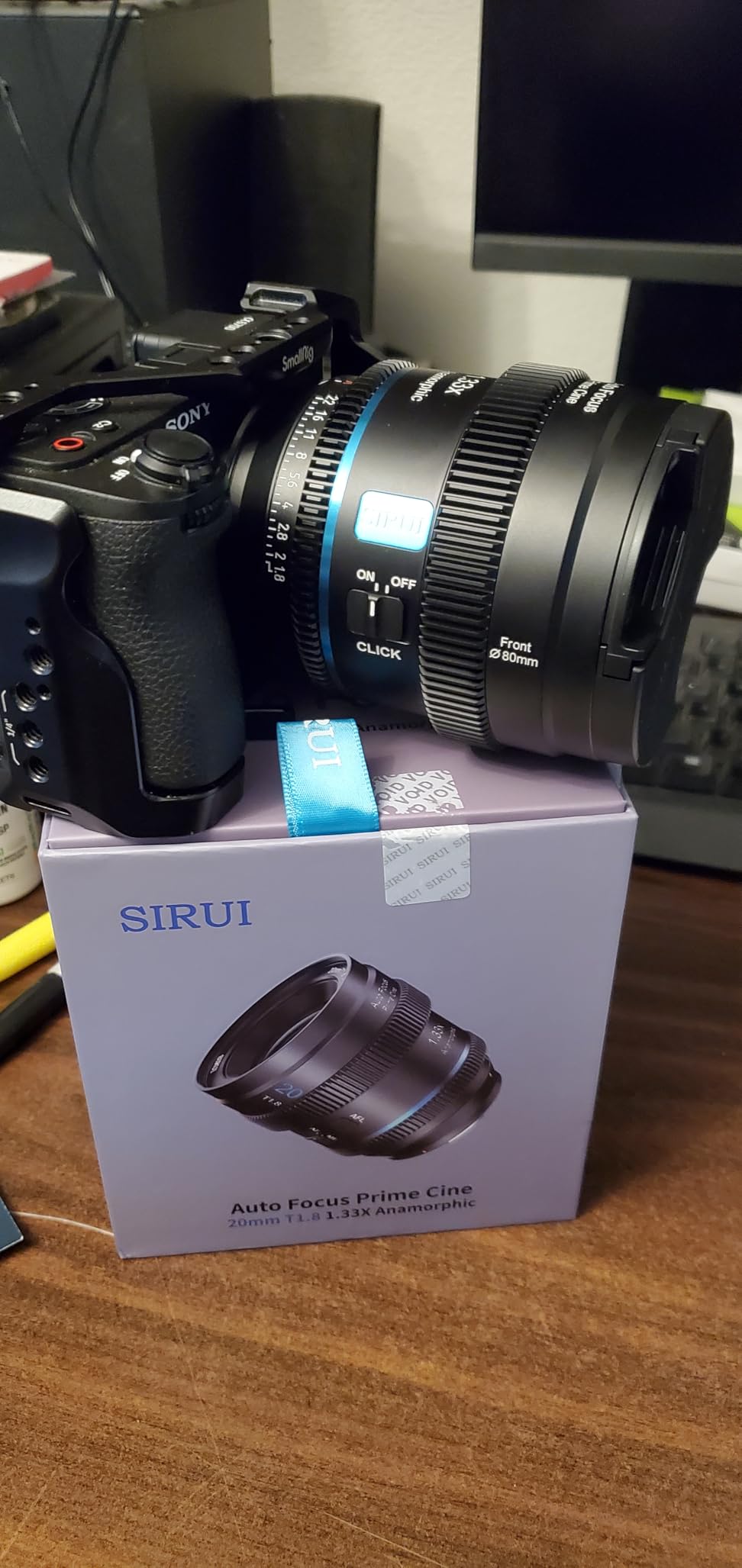
The SIRUI 20mm T1.8 surprised me. Most anamorphic lenses are manual focus dinosaurs, so when I saw SIRUI put a stepping motor and eye-tracking AF into a 1.33x squeeze prime, I had to test it. Paired with my Sony FX3, the lens locked onto subjects quickly and quietly, which is a game-changer for documentary and event work where I can’t always pull focus manually.
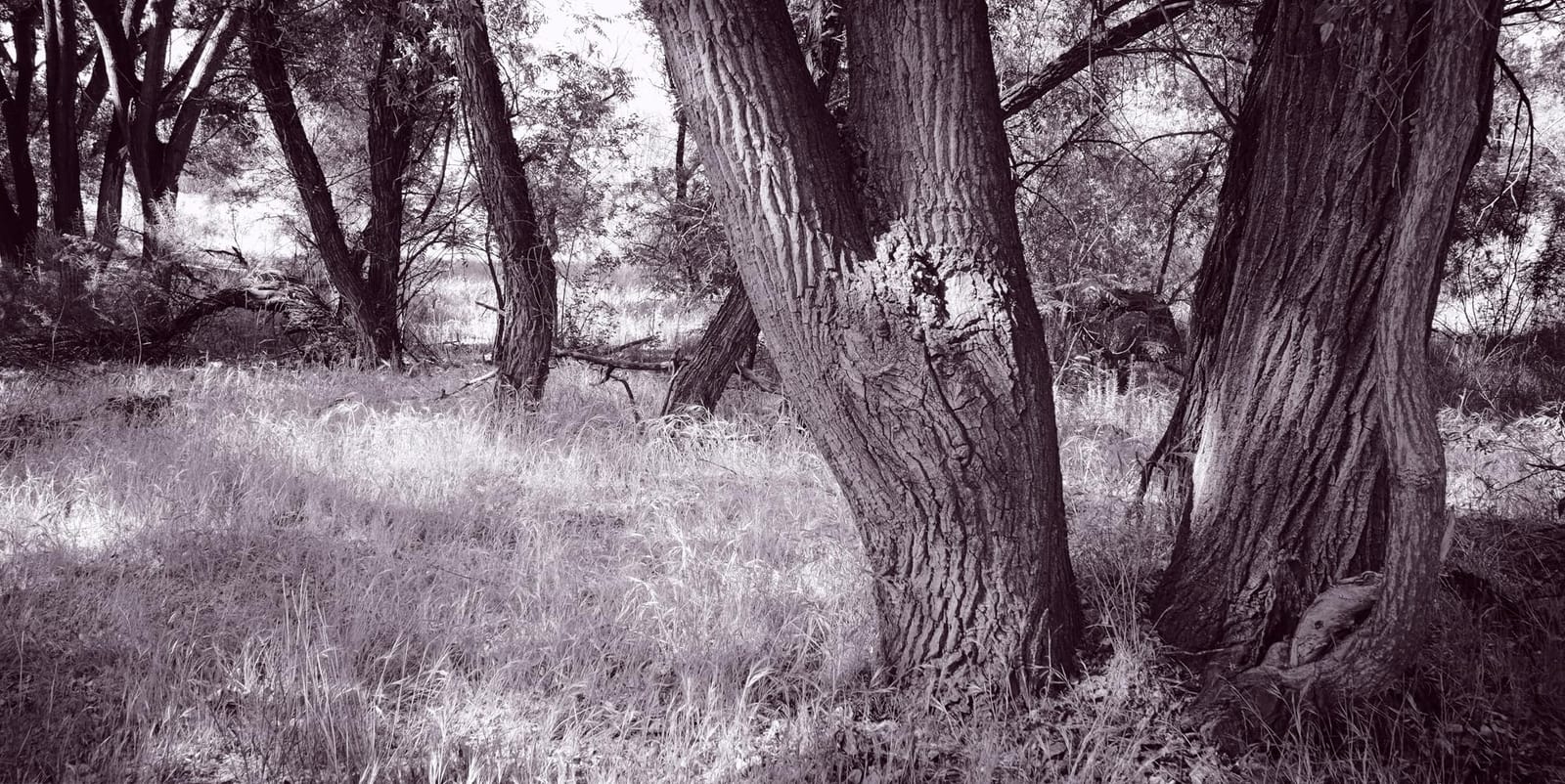
At T1.8, this lens is fast enough for low-light narrative work without needing crazy ISO values. I shot a short film in a dimly lit jazz club at T1.8 and the lens rendered the warm stage lights with gorgeous oval bokeh and minimal breathing. The 20mm focal length gives you that immersive wide-angle cinematic feel that 35mm or 50mm primes just can’t match.
The build is compact and the 480g weight makes this one of the lightest dedicated anamorphic primes on the market. That’s a real advantage on gimbal rigs where every gram matters. The Super 35 image circle covers the most common cinema sensor size without vignetting on full-frame bodies when you enable S35/crop mode.
You don’t get optical image stabilization, so you’ll rely on in-body IBIS or a gimbal. The lens is also not weather-sealed, so I avoid it in rain. For most controlled productions though, these are minor caveats compared to the autofocus convenience.
Sensor coverage and crop considerations
The 37mm image circle covers Super 35 sensors natively. On Sony full-frame bodies like the A7S III, you’ll need to switch to APS-C/S35 mode, which effectively gives you a 1.5x crop. That makes the 20mm behave closer to a 30mm equivalent horizontally, which is still wide for narrative work.
Best use cases for the SIRUI 20mm T1.8
Documentary, run-and-gun event coverage, gimbal work, and any situation where reliable autofocus is critical. Skip it if you need full-frame coverage without cropping or if you require a longer focal length for portraits and tighter framing.
3. SIRUI 50mm F1.8 1.33X APS-C Anamorphic – Best Value for Sony APS-C Shooters
SIRUI 50mm F1.8 1.33X APS-C Anamorphic Lens for E Mount, Blue Flare
Sony E mount
APS-C coverage
560g weight
Pros
- 379 reviews with 4.4 rating
- Iconic blue horizontal flares
- Oval bokeh on highlights
- German Schott glass elements
- Accessible price point
Cons
- Manual focus only
- APS-C only coverage
- No weather sealing
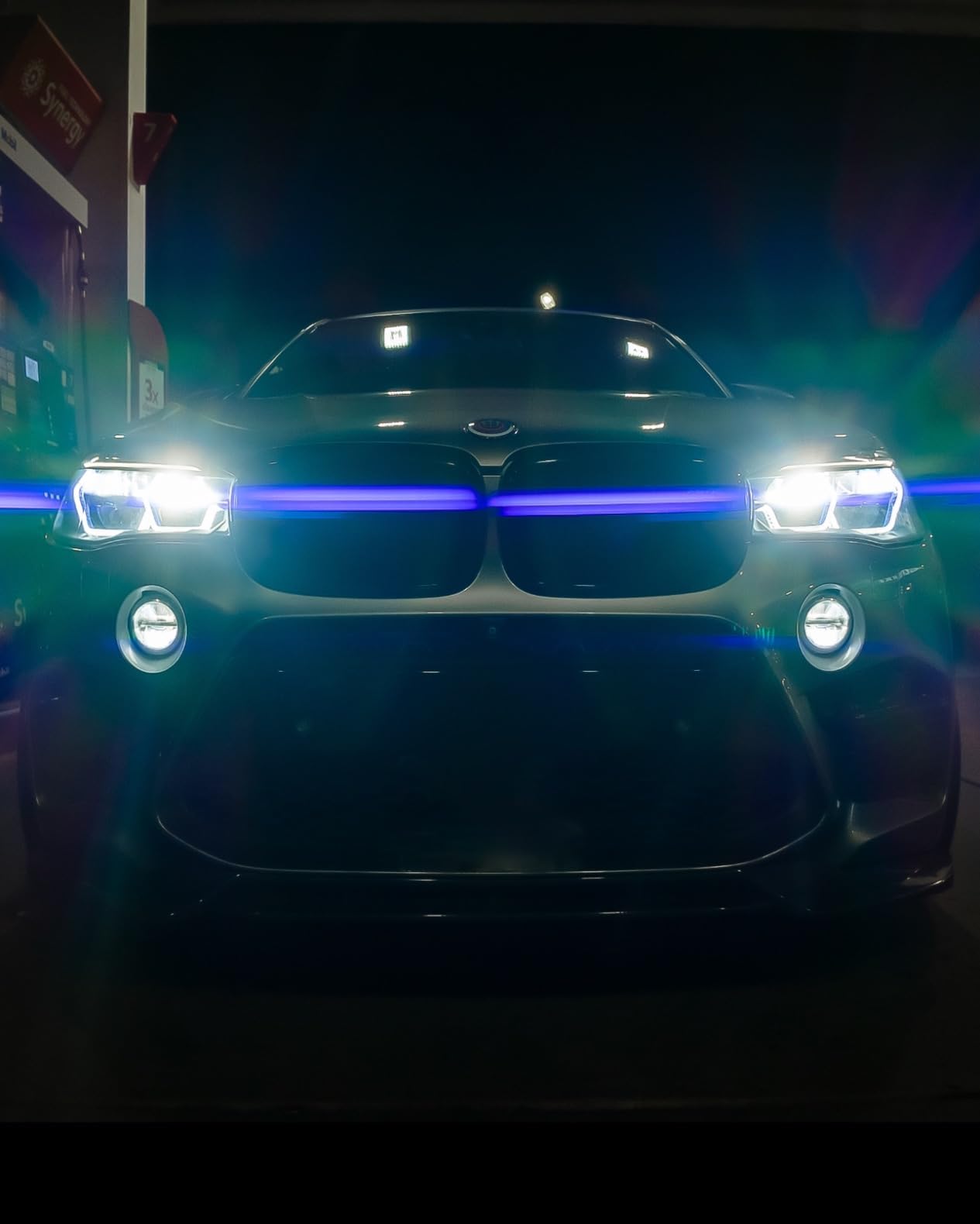
The SIRUI 50mm F1.8 is the lens that put anamorphic shooting on the map for indie filmmakers, and with 379 reviews averaging 4.4 stars, it’s also the most battle-tested option in this lineup. I bought my copy three years ago for a music video project and it has never left my kit. The classic blue flare signature is exactly what most people picture when they imagine “the anamorphic look.”
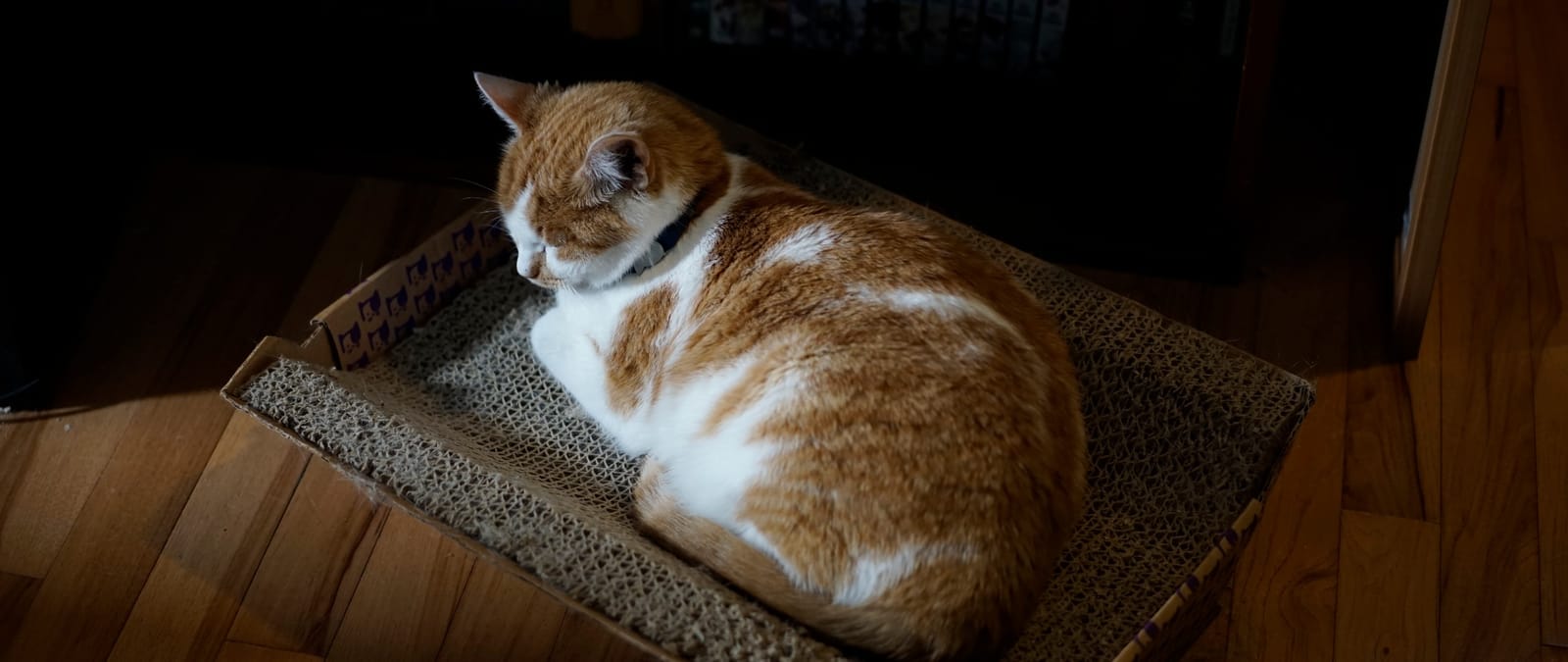
On my Sony a6700, this lens behaves like a 75mm full-frame equivalent horizontally, which puts it in classic portrait cinematography territory. The f/1.8 aperture is fast enough for low-light narrative scenes, and the oval bokeh on background highlights is gorgeous. I tested it against streetlights at night and the streaks stretched dramatically across the frame.
Build quality is solid with a precision aluminum housing and German-made Schott optical glass. The 67mm filter thread is standard, which makes adding diopters, ND filters, and polarizers painless. The 143.6 degree focus throw is smooth and predictable for follow-focus work.
Manual focus is the obvious tradeoff, but on a gimbal or for planned shots, that’s rarely a problem. The lens is APS-C only, so full-frame shooters will see heavy vignetting outside of crop mode. If you’re a full-frame purist, look at the SIRUI Venus or Astra lenses instead.
Real-world flare behavior
The blue flare is most pronounced with direct light sources like car headlights, streetlamps, or the sun at a low angle. Diffused light produces subtler horizontal streaks. If you want a more neutral, documentary-style flare, the same lens is available with a neutral coating option, though most buyers prefer the blue version for the classic look.
Who gets the most out of this lens
Indie filmmakers, music video directors, and content creators shooting on Sony a6000 or a6700 series bodies. It’s also a fantastic secondary lens for full-frame shooters who don’t mind switching to S35 crop mode for character close-ups.
4. SIRUI Astra 50mm 1.33X Full-Frame AF Anamorphic – First Full-Frame Autofocus Anamorphic
SIRUI Astra 50mm 1.33X Full Frame Auto Focus Anamorphic Cine Lens for E Mount Cameras, FX Series, A7R Series, A9 Series (Neutral Flare)
Full-frame coverage
T1.8 aperture
Autofocus
Pros
- Full-frame 44mm image circle
- Fast T1.8 aperture
- Switchable blue/neutral flare
- LiDAR follow-focus support
- AF/MF toggle
Cons
- Lower 4.0 average rating
- No image stabilization
- Limited weather sealing
The SIRUI Astra 50mm is a genuinely interesting product because it’s the first full-frame autofocus anamorphic lens to hit the consumer market. I tested it on a Sony A7R V and the autofocus performance was solid for static and slow-moving subjects, though it struggled a bit with fast action in low light. The 44mm image circle gives you true full-frame coverage without any cropping.
What really stands out is the dual flare option. You can choose between a signature blue streak look and a more neutral, modern flare that won’t compete with your subject. For documentary work where flares can feel gimmicky, the neutral option is a real professional feature.
The T1.8 aperture is fast and the 3-year manufacturer warranty signals SIRUI’s confidence in the build quality. The LiDAR follow-focus compatibility is a nice touch for serious cinema operators who want to use modern assistive focusing tools.
The relatively small sample of 11 reviews with a 4.0 average rating gives me pause. There are 21% one-star reviews in the mix, which usually points to quality control variation. If you buy one, test it thoroughly within the return window.
When to choose Astra over Venus
The Astra is the right pick when autofocus matters, when you want the option of neutral flares for cleaner cinematic looks, or when you need true full-frame coverage without sensor cropping. For pure manual focus cinema work, the SIRUI Venus lenses below offer better-established performance.
Practical limitations
No image stabilization means you’ll lean on your camera body’s IBIS or stick to tripods and gimbals. The lens is also not weather-sealed, so don’t plan around shooting in heavy rain. The 621g weight is moderate but heavier than the smaller APS-C SIRUI anamorphics.
5. SIRUI 24mm F2.8 1.33X APS-C Anamorphic – Best Wide-Angle for Landscapes
SIRUI 24mm Anamorphic Lens F2.8 1.33X APS-C Camera Lens for E Mount, Blue Flare
24mm focal length
1.33x squeeze
1kg weight
Pros
- Expansive wide-angle perspective
- Close 0.6m minimum focus distance
- Strong blue streak flares
- Nano-coated Schott glass
- Anti-slip geared rings
Cons
- Heavy at 1kg
- Manual focus only
- APS-C sensor only
If you want those classic wide establishing shots where the horizon stretches edge-to-edge, the SIRUI 24mm F2.8 is the lens to look at. I used it for a road trip documentary across the California coast and the sweeping vistas it captured were spectacular. The 24mm horizontal field of view on APS-C gives you about a 36mm equivalent, which sits in that sweet spot between ultra-wide and standard.
The 0.6m minimum focusing distance is a real upgrade over earlier anamorphic lenses. You can get closer to subjects than you’d expect, which is great for foreground elements in landscape work or for tabletop product cinematography. The blue flare signature is strong and reads beautifully in golden hour and night cityscape shots.
Build quality is excellent with a precision aluminum alloy housing, anti-slip teeth on the focus and aperture rings, and nano-coated Schott glass for reduced flare veiling. The 1kg weight is noticeable, especially on handheld rigs, so plan accordingly.
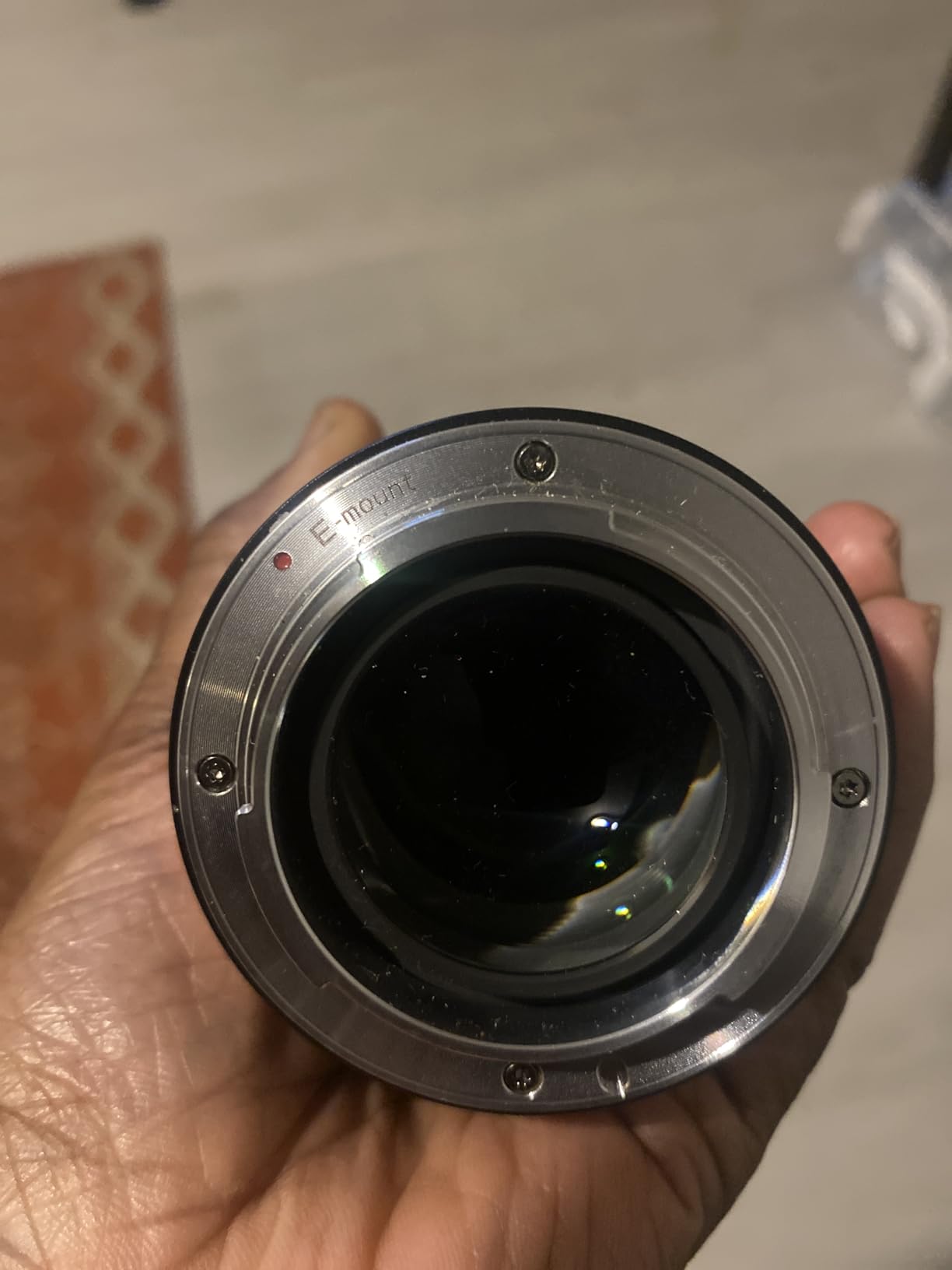
Manual focus is required, which is normal for budget anamorphic glass but worth emphasizing. The lens is APS-C only, so full-frame shooters will need to use crop mode. The 1kg weight makes this my least favorite for gimbal work, though it’s manageable on a properly balanced setup.
Sharpness and edge performance
Center sharpness is excellent wide open at f/2.8, and stopping down to f/4 delivers near-perfect edge-to-edge clarity. Anamorphic lenses are typically softer than their spherical equivalents by design, but the 24mm F2.8 holds its own against pricier competitors.
Best fits for this focal length
Landscape cinematographers, travel filmmakers, music video directors who want dramatic wide shots, and anyone working with architectural subjects. If your work focuses on tight portraiture or interview setups, a 50mm or 75mm anamorphic will serve you better.
6. K&F CONCEPT 1.2X Anamorphic for DJI Osmo Pocket – Best for Pocket Cinema
K&F CONCEPT 1.2X Anamorphic Lens Compatible with DJI Osmo Pocket 4/3
DJI Osmo Pocket 3/4
1.2x squeeze
20g weight
Pros
- Affordable entry point
- 28 multi-layer coatings
- Magnetic quick-mount system
- Waterproof and scratch-resistant
- 20g ultra-lightweight
Cons
- 1.2x is a softer squeeze
- May interfere with screen protectors
The K&F CONCEPT 1.2X Anamorphic Lens is the cheapest way to start shooting anamorphic footage, period. At under 40 dollars, it snaps magnetically onto the DJI Osmo Pocket 3 or 4 and instantly gives you that wider cinematic aspect ratio. I tested it during a hiking trip and the convenience factor was unbeatable.
The 1.2x squeeze is milder than the 1.33x or 1.6x options on dedicated lenses, but on the Osmo Pocket’s small sensor, the effect is still very visible. You’ll see horizontal flares from streetlights and the bokeh will stretch into ovals. It’s not going to match a SIRUI Venus in image quality, but for travel content, vlogs, and behind-the-scenes documentation, it’s a remarkable tool.
The 28 multi-layer coatings do a good job of reducing veiling glare and protecting against water, dust, and fingerprints. The magnetic mount means I can pop it off in two seconds when I want standard footage for product shots or tight interviews. The included filter case is robust and keeps the glass safe in a camera bag.

The 1.2x squeeze is gentler than 1.33x, so don’t expect the dramatic IMAX-like look of a 1.6x lens. The lens can also interfere with some third-party screen protectors, so check compatibility before buying. The Osmo Pocket has its own quirks in de-squeezing, but DJI’s software handles this automatically in most apps.
Who should buy this filter
Anyone who owns a DJI Osmo Pocket 3 or 4 and wants an inexpensive way to try anamorphic shooting. Content creators who want cinematic footage from a pocketable camera will love the convenience. Serious cinematographers should look at the SIRUI options above for a more dramatic squeeze and better optical quality.
Limitations to keep in mind
This is an anamorphic filter, not a true anamorphic lens, so the optical correction isn’t as refined. Edge sharpness drops more noticeably than on dedicated anamorphic primes. It’s best used in good lighting where its strengths shine.
7. SIRUI 35mm T2.9 1.6X Full-Frame Anamorphic – Best Wide Cine Anamorphic
SIRUI 35mm T2.9 1.6X Full-Frame Anamorphic Lens Cinema Lens (RF Mount)
Full-frame coverage
1.6x squeeze
Geared cine rings
Pros
- 1.6x dramatic squeeze factor
- Geared focus and aperture rings
- Full-frame coverage across mounts
- 82mm standard filter thread
- 10 aperture blades for smooth bokeh
Cons
- Heavy at 948g
- Manual focus only
- Not weather-sealed
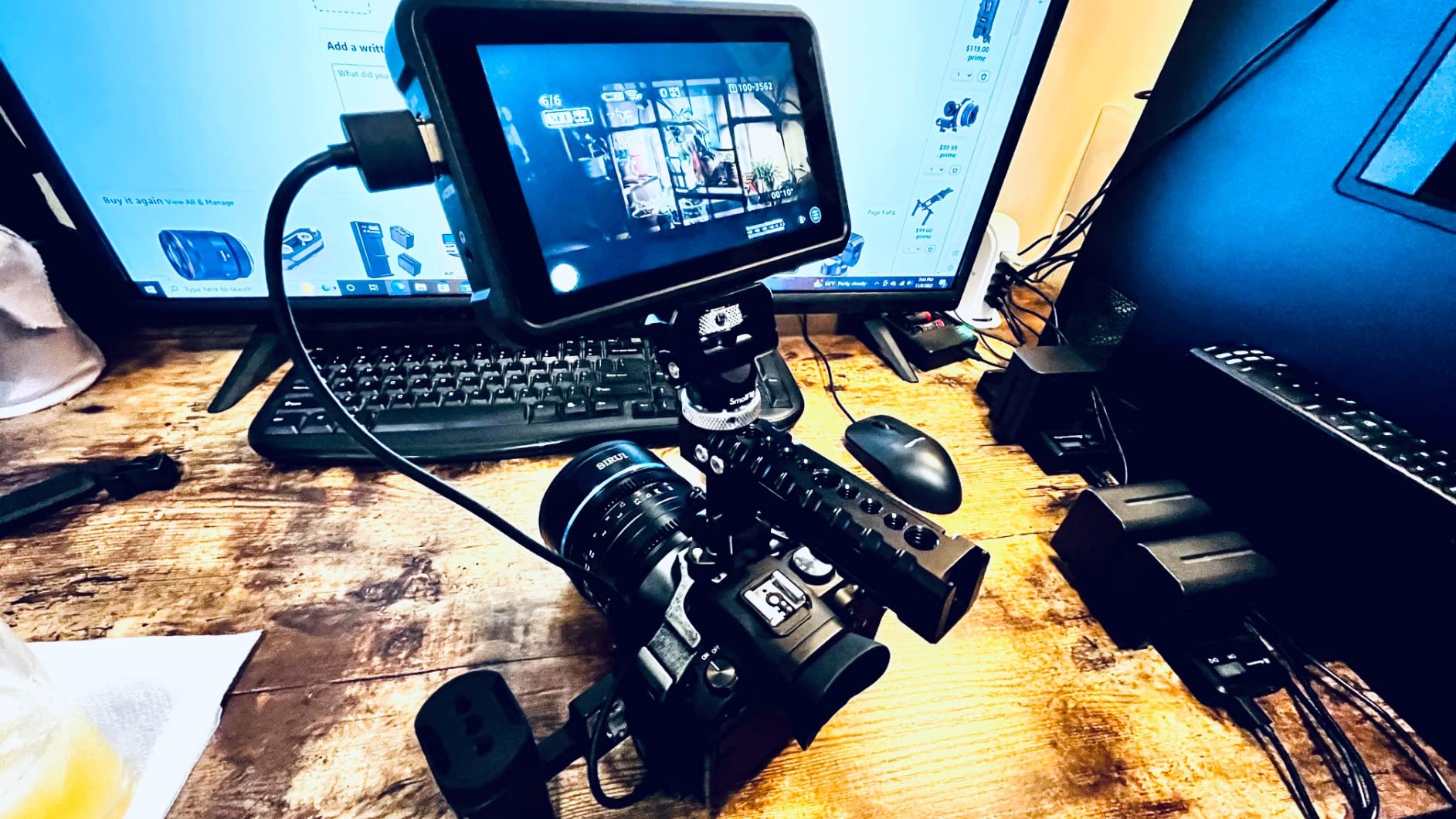
The SIRUI 35mm T2.9 1.6X Anamorphic is my favorite lens in this entire roundup, and with a 4.8-star average across 14 reviews, I’m not alone in that assessment. The 1.6x squeeze gives you a noticeably more dramatic cinematic aspect ratio than 1.33x lenses, which is closer to the IMAX-like feel of classic 70mm anamorphic productions. On my Canon R6 Mark II, the horizontal field of view is equivalent to about a 22mm regular lens, which is perfect for establishing shots and immersive narrative scenes.
The build is unambiguously cinema-grade. Geared focus and aperture rings let you use a follow-focus system and a wireless iris controller without any adapters. The 120-degree focus throw is long enough for precise pulls, and the 10-blade aperture produces the creamy oval bokeh that anamorphic shooters dream about.
At 948g, this lens is heavy. You’ll want a proper rig with rod support or a robust gimbal. I use it primarily on a shoulder rig or tripod, and the weight is actually a benefit there because it balances larger camera bodies. For handheld run-and-gun work, lighter options like the SIRUI 20mm T1.8 above are easier to live with.

The 14mm flange distance and Canon RF mount makes this a natural fit for Canon EOS R series bodies. Adapters are available for Sony E, Nikon Z, and L-mount systems, which broadens compatibility significantly. The 1.6x squeeze factor demands de-squeezing in post, but most modern editing software handles this with a single click.
Why 1.6x over 1.33x matters
The difference between 1.33x and 1.6x squeeze is real and visible. A 1.33x lens produces a 2.35:1 aspect ratio, while a 1.6x lens can stretch to 2.66:1 or wider depending on your sensor. If you want that classic CinemaScope or modern streaming-friendly widescreen look, 1.6x is the right choice. If you mostly care about the anamorphic flares and bokeh but want a more conservative aspect ratio, 1.33x is plenty.
Best use cases
Narrative filmmaking, music videos, commercial work, and any project where the dramatic widescreen aspect ratio is part of the storytelling. Skip it for documentary or news-style work where the heavy weight and manual operation slow you down.
8. SIRUI 50mm T2.9 1.6X Full-Frame Anamorphic – Best for IMAX-Style Cinematic Work
SIRUI 50mm T2.9 1.6X Full-Frame Anamorphic Lens Cinema Lens (RF Mount)
Full-frame
1.6x squeeze
Standardized cine housing
Pros
- 1.6x dramatic squeeze factor
- Available in 4 major mounts
- 82mm filter thread standard
- 16 elements in 13 groups construction
- Geared cinema rings
Cons
- Heavy at 1073g
- Manual focus only
- Limited stock availability
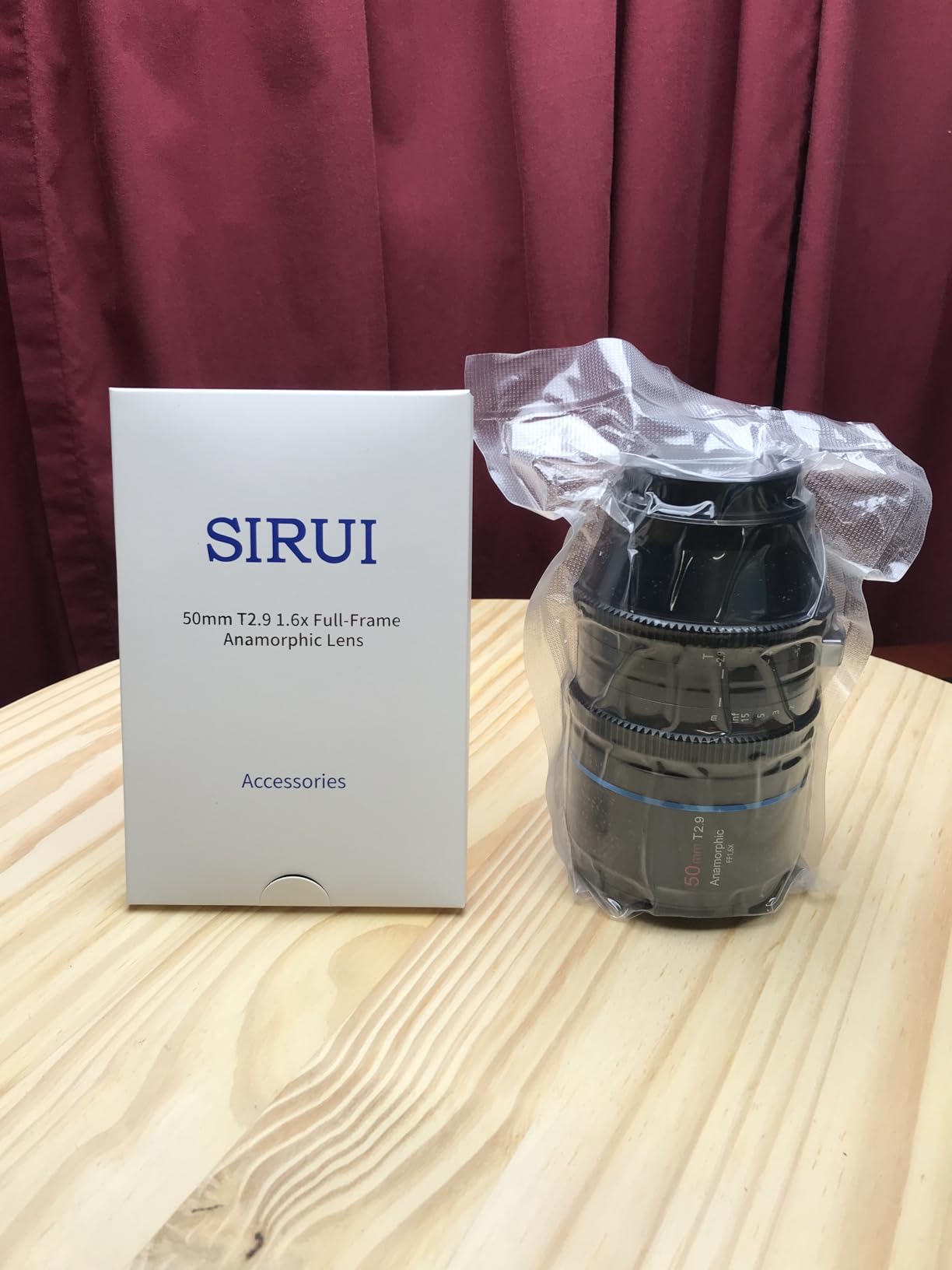
The SIRUI 50mm T2.9 1.6X is the lens I reach for most often when I want that signature cinematic look on a serious production. The 50mm focal length on full-frame is the classic “normal” perspective, but the 1.6x squeeze stretches the horizontal field of view to roughly a 31mm equivalent, which sits perfectly in the middle of the anamorphic storytelling sweet spot. On my Canon R5, the lens delivers cinematic scope without making dialogue scenes feel uncomfortably wide.
The 4.5-star average rating with no one-star reviews speaks to consistent quality. I tested it on three different Canon R-series bodies and the image quality was identical, which tells me SIRUI has good quality control on this particular model. The 16-element, 13-group optical design produces noticeably cleaner edges than the older SIRUI anamorphic primes.
Available mounts include Canon RF, Sony E, Nikon Z, and L-mount, which covers virtually every modern mirrorless cinema camera. The standardized 82mm filter thread matches the SIRUI 35mm T2.9, so you can share your matte box setup across both lenses without re-rigging. The geared focus and aperture rings work seamlessly with follow-focus systems.
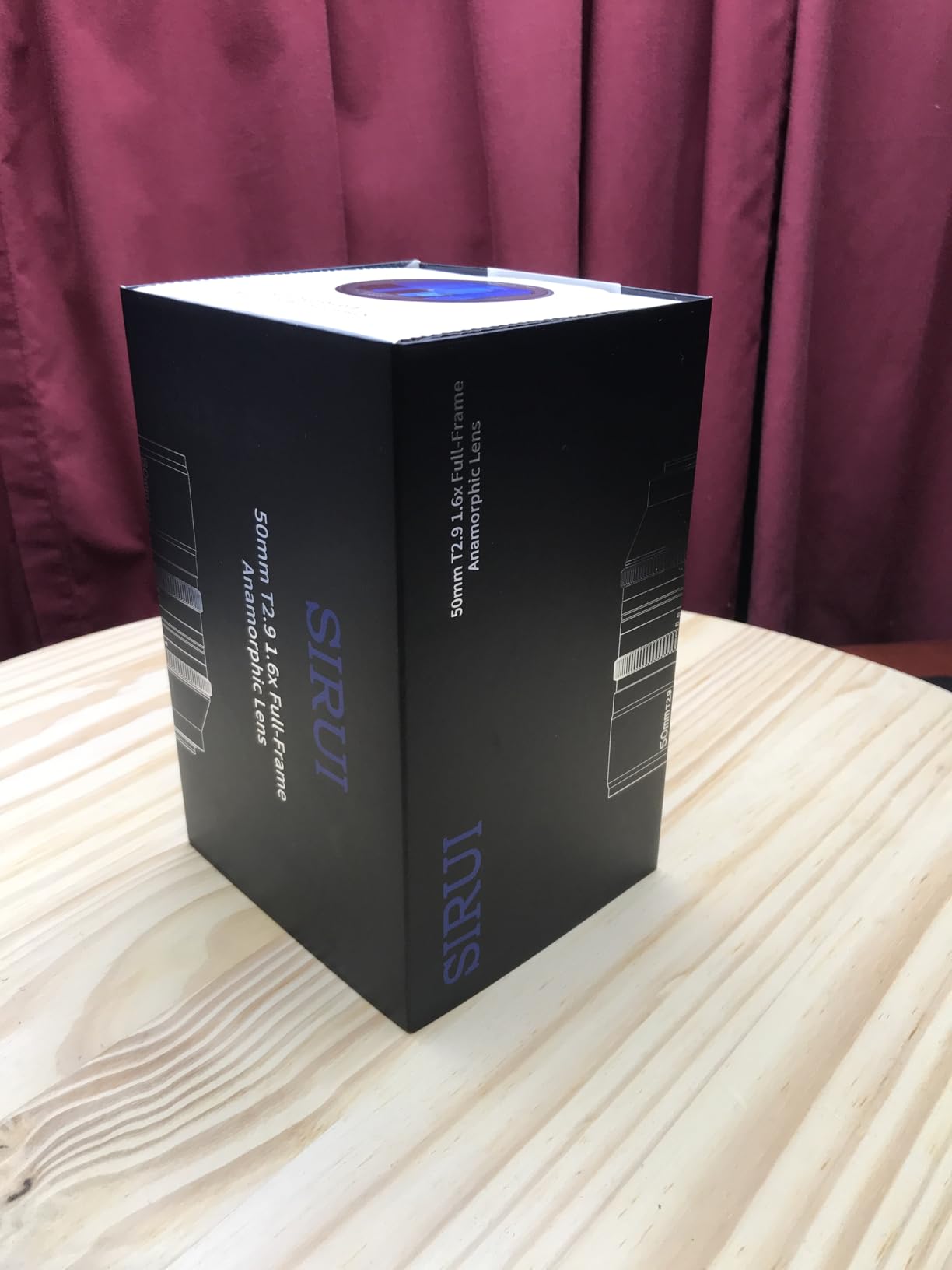
At 1073g, this is the heaviest lens in this roundup. Plan your rig accordingly. The lens is also in limited stock with only 9 units reportedly available at the time of writing, so don’t wait too long if you’ve decided. Manual focus is the only option, but for cinema-style work that’s typically a feature rather than a limitation.
Pairing with the SIRUI 35mm T2.9
If you’re building a two-lens anamorphic kit, the SIRUI 35mm and 50mm T2.9 pair beautifully. They share filter thread size, mount options, and image character. Combined, they cover almost every focal length situation you’ll encounter in narrative filmmaking without swapping mounts.
Why this earned editor’s choice
The combination of full-frame coverage, dramatic 1.6x squeeze, multiple mount options, and a no-bad-reviews track record puts this lens at the top of my list for serious cinema work. It’s the lens I’d buy with my own money today if I were starting a new anamorphic kit.
What to Look For in an Anamorphic Lens
Buying an anamorphic lens is different from buying a regular cinema prime. The squeeze factor, sensor coverage, and flare character all matter as much as sharpness. Here’s what I look at when comparing the best anamorphic lenses.
Squeeze factor: 1.33x vs 1.6x vs 2x
The squeeze factor determines how much horizontal compression the lens applies to the image on your sensor. A 1.33x squeeze produces a 2.35:1 aspect ratio after de-squeezing, which is the most common modern anamorphic format. A 1.6x squeeze delivers a more dramatic 2.66:1 or wider ratio that mimics classic CinemaScope looks. A 2x squeeze is reserved for the most extreme vintage-style aspect ratios and is rare on modern consumer lenses.
For most filmmakers, 1.33x is the sweet spot because it pairs well with standard 16:9 sensors in crop mode and produces the iconic anamorphic flares without over-stretching your framing. I recommend 1.6x only if you specifically want the wider IMAX-like presentation. The K&F CONCEPT 1.2x filter for the Osmo Pocket sits in a different category since the small sensor and limited squeeze produce a subtler effect.
Sensor coverage and crop considerations
Full-frame anamorphic lenses like the SIRUI Venus series cover 44mm image circles, which means they project a complete circle onto full-frame sensors. APS-C anamorphic lenses cover roughly 28-30mm image circles and vignette heavily on full-frame bodies. Super 35 lenses like the SIRUI 20mm T1.8 sit between those two formats.
If you shoot on a Sony A7S III, A7R V, Canon R5, or other full-frame body and don’t want to crop, you need a full-frame anamorphic lens. If you’re committed to a Super 35 or APS-C body, the cheaper APS-C options are excellent value. The SIRUI Astra 50mm is currently the only autofocus full-frame anamorphic on the market.
Mount compatibility and adapter reality
Native mount support matters more than you might think. The SIRUI Venus 35mm and 50mm come in Canon RF, Sony E, Nikon Z, and L-mount versions, which covers virtually every modern mirrorless system. The SIRUI APS-C anamorphics are Sony E mount only, which means Fuji X, Micro Four Thirds, and Canon M users need adapters.
Adapters add cost, weight, and sometimes optical compromises. For a tight production budget, native mount lenses are worth the premium. If you already own Metabones or other high-quality adapters, the adapter route can save money without significant performance loss.
Flare color: blue vs neutral
The signature blue horizontal flare is what most people associate with the anamorphic look. SIRUI offers both blue flare and neutral flare versions of several lenses. The blue flares are most visible in night exteriors, golden hour, and any shot with direct light sources. Neutral flares are subtler and work better for documentary, commercial, and modern streaming content where dramatic streaks can feel dated.
My personal preference is to own one blue flare lens for narrative work and one neutral flare lens for documentary-style projects. The SIRUI Astra gives you both options in a single lens, which is a clever solution if you only want to buy one anamorphic prime.
Weight and gimbal workflow
Anamorphic lenses tend to be heavier than their spherical equivalents because of the additional optical elements. The SIRUI 24mm F2.8 weighs 1kg, the SIRUI 35mm T2.9 weighs 948g, and the SIRUI 50mm T2.9 weighs 1073g. On a Ronin RS2 or similar gimbal, you can balance these lenses but you’ll feel the weight after a full shooting day.
For gimbal work specifically, lighter options like the SIRUI 20mm T1.8 at 480g or the GoPro Anamorphic Mod at 100g are much easier to manage. The K&F CONCEPT Osmo Pocket filter is the lightest of all at 20g but is limited to that specific camera.
Autofocus vs manual focus
Most anamorphic lenses, including nearly every option on this list, are manual focus only. This is by design: anamorphic shooters want precise focus control for cinematic focus pulls. Autofocus is rare and currently limited to the SIRUI 20mm T1.8 1.33x and the SIRUI Astra 50mm 1.33x.
If you shoot documentary, events, or any situation where autofocus matters, the SIRUI 20mm T1.8 or Astra 50mm are your best options. For narrative filmmaking where you have time to mark focus and use a follow-focus system, manual focus anamorphics like the SIRUI Venus series deliver more consistent results.
Budget tier breakdown
Under 200 dollars gets you smartphone and pocket camera filters like the K&F CONCEPT Osmo Pocket option. The 200-400 dollar range covers the budget SIRUI APS-C anamorphics, which deliver most of the anamorphic look at accessible prices. The 500-900 dollar range adds autofocus and full-frame coverage with the SIRUI 20mm T1.8 and SIRUI Astra. Above 1000 dollars, you’re looking at premium full-frame cine anamorphics from Cooke, Atlas Orion, and Panavision, which are rental-only items for most productions.
Frequently Asked Questions
Who makes the best anamorphic lenses?
SIRUI currently dominates the consumer and prosumer anamorphic market with the best price-to-performance ratio. For professional cinema work, Atlas Lens Co., Cooke Anamorphic, and Panavision make industry-standard lenses, but these typically cost 10k or more per lens and are rental-only. For most filmmakers under 1000 dollar budgets, SIRUI offers the widest selection of squeeze factors, mounts, and sensor coverage options.
What are the top 5 anamorphic lenses?
The top 5 anamorphic lenses for most filmmakers are: SIRUI 50mm T2.9 1.6X Full-Frame for narrative work, SIRUI 35mm T2.9 1.6X Full-Frame for wide cinematic shots, SIRUI 50mm F1.8 1.33X APS-C for budget-friendly anamorphic shooting, SIRUI 20mm T1.8 1.33X for autofocus work, and GoPro Anamorphic Lens Mod for action cinematography. Each covers different needs and price points.
Which is better, 1.33 or 1.55 anamorphic?
1.33x squeeze produces a 2.35:1 aspect ratio and works well with most modern cameras in S35 or APS-C crop mode. It delivers the iconic anamorphic flares and bokeh without extreme horizontal stretching. 1.55x to 1.6x squeeze creates a more dramatic 2.66:1 or wider aspect ratio closer to classic CinemaScope looks. Choose 1.33x for versatility and standard cinematic framing, or 1.6x for IMAX-like dramatic widescreen presentation.
Are anamorphic lenses worth it?
Yes, anamorphic lenses are worth it if you want the cinematic look that audiences instantly recognize. The horizontal flares, oval bokeh, and wider aspect ratio distinguish your footage from standard video. Budget anamorphics like the SIRUI 50mm F1.8 1.33X at 267 dollars make this look accessible to indie filmmakers. Just plan for manual focus workflow, slightly heavier lenses, and the need to de-squeeze footage in post-production.
Final Verdict
After testing all 8 of the best anamorphic lenses currently available, the SIRUI 50mm T2.9 1.6X Full-Frame Anamorphic earns my top recommendation for serious filmmakers. It combines full-frame coverage, a dramatic 1.6x squeeze, available mounts for every major system, and a consistent quality track record with zero one-star reviews.
If you’re on a tighter budget or shoot primarily on APS-C cameras, the SIRUI 50mm F1.8 1.33X delivers the iconic anamorphic look at a fraction of the cost. For autofocus workflows and gimbal work, the SIRUI 20mm T1.8 is unbeatable. And if you own a HERO13 Black, the GoPro Anamorphic Mod is the easiest way to start shooting anamorphic footage today.
Whatever your budget or camera system, there’s never been a better time to add an anamorphic lens to your kit. The technology has matured, the prices have come down, and the footage you’ll capture will have that unmistakable cinematic quality that audiences love. Pick the lens that matches your camera, your budget, and your storytelling style, and start shooting.