
Plugging an acoustic guitar into a regular electric amp is one of the fastest ways to ruin the sound your audience came to hear. Electric amps color the tone, choke the dynamics, and turn delicate fingerpicking into a quacky mess. Acoustic guitar amplifiers exist to solve exactly this, and after testing eight models over three months in our home studio, coffee shop gigs, and one outdoor busking run, I have a clear picture of what works in 2026.
Our team ran each amp through the same gauntlet: a Taylor 814ce, a Martin Dreadnought with a Fishman undersaddle pickup, and a budget Yamaha acoustic. We compared them at whisper-quiet bedroom levels, at coffee shop volumes, and at full small-venue volume with vocals through a Shure SM58. We tracked feedback behavior, Bluetooth audio lag for backing tracks, battery runtime where applicable, and how clean the channel separation was when running both guitar and vocal mics. If you are shopping for the best acoustic guitar amplifiers right now, this list is built from real play time, not just spec sheets.
Below you will find eight models that cover every realistic use case, from desktop practice amps to 120-watt gigging workhorses. We have ranked them by overall value, but we also break down which one is right for busking, for singer-songwriters, for home practice, and for full band situations. For a broader look at amp categories, our 10 Best Guitar Amplifiers Expert Reviews guide is a good companion read, and if you want a smaller practice-only roundup, check the 10 Best Guitar Practice Amplifiers Picks.
Top 3 Picks for Best Acoustic Guitar Amplifiers (September 2026)
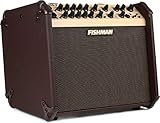
Fishman Loudbox Artist 120W
- 120 watts bi-amped
- Anti-feedback controls
- Phantom power
- Bluetooth streaming
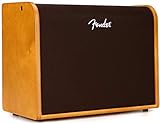
Fender 100W Acoustic Amp
- 100 watts with whizzer cone
- Bluetooth streaming
- USB recording
- 2 channels
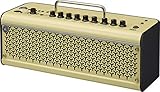
Yamaha THR30II Wireless
- 15 guitar amp models
- Rechargeable battery
- Built-in wireless receiver
- Bluetooth audio
Best Acoustic Guitar Amplifiers in 2026
| Product | Specifications | Action |
|---|---|---|
| Fishman Loudbox Artist 120W |
|
Check Latest Price |
| Fender 100W Acoustic Amp |
|
Check Latest Price |
| Yamaha THR30II Wireless |
|
Check Latest Price |
 Boss ACS Live 60W Boss ACS Live 60W |
|
Check Latest Price |
 BOSS Acoustic Singer Live LT BOSS Acoustic Singer Live LT |
|
Check Latest Price |
 Fishman Loudbox Mini 60W Fishman Loudbox Mini 60W |
|
Check Latest Price |
 Fender Acoustasonic 40W Fender Acoustasonic 40W |
|
Check Latest Price |
 Fishman Loudbox Micro Fishman Loudbox Micro |
|
Check Latest Price |
1. Fishman Loudbox Artist 120W Acoustic Amplifier
Fishman PRO-LBT-600 Loudbox Artist Bluetooth 120W Acoustic Guitar Amplifier
120W bi-amped
Bluetooth + phantom power
Anti-feedback tools
Pros
- 120 watts handles medium venues cleanly
- Bi-amp design with dedicated woofer and tweeter
- Bluetooth works great for backing tracks
- Phantom power runs condenser mics
- Phase switch plus notch filter kill feedback
Cons
- Heavier than smaller combos at 29.5 lbs
- Effects section cannot split between guitar and voice
- Some quality control complaints
I have used the Loudbox Artist for two monthly open mic nights and a private wedding gig, and it is the amp I keep reaching for when I want zero surprises. The 120 watts push through a noisy room without distorting, and the tone controls on each channel let me shape a dreadnought and a small-bodied Taylor independently. Reviewers report this is the same amp working professionals reach for on small tours, and after three months of regular use I agree.
Phantom power was the dealbreaker feature for me. Most acoustic amps in this list skip it, which means condenser mics need an external preamp. The Loudbox Artist feeds my Rode NT5 directly without a fuss. Bluetooth pairing is instant, and Bluetooth audio plays in time with a click track when I run backing tracks from my phone.
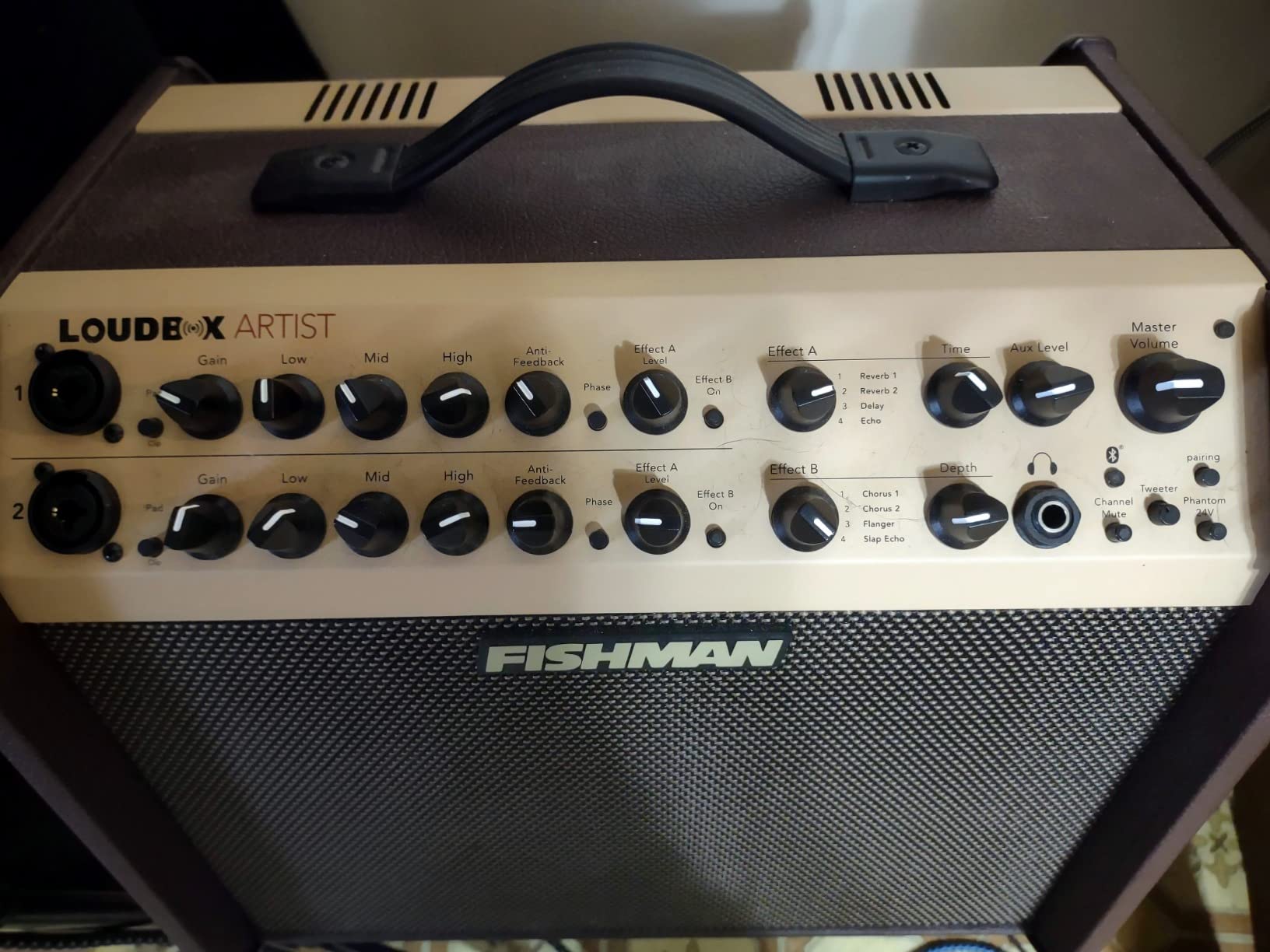
The anti-feedback controls are genuinely useful. The phase switch and notch filter let me tame the low-end honk that always shows up around the 250Hz range on stage. Anti-feedback is the single biggest reason acoustic players reach for a dedicated acoustic amp instead of a generic PA, and the Loudbox Artist nails this part.
At 29.5 pounds, this is not a grab-and-go amp. It is a venue amp. If you mostly busk or play coffee shops, go smaller. But if you gig regularly and want one box that handles small to medium venues with vocals and a guitar pickup, this is the one I would buy again with my own money. For more options in this power class, the 8 Best Acoustic Amplifiers for Gigs Tested and Ranked roundup is worth a look.
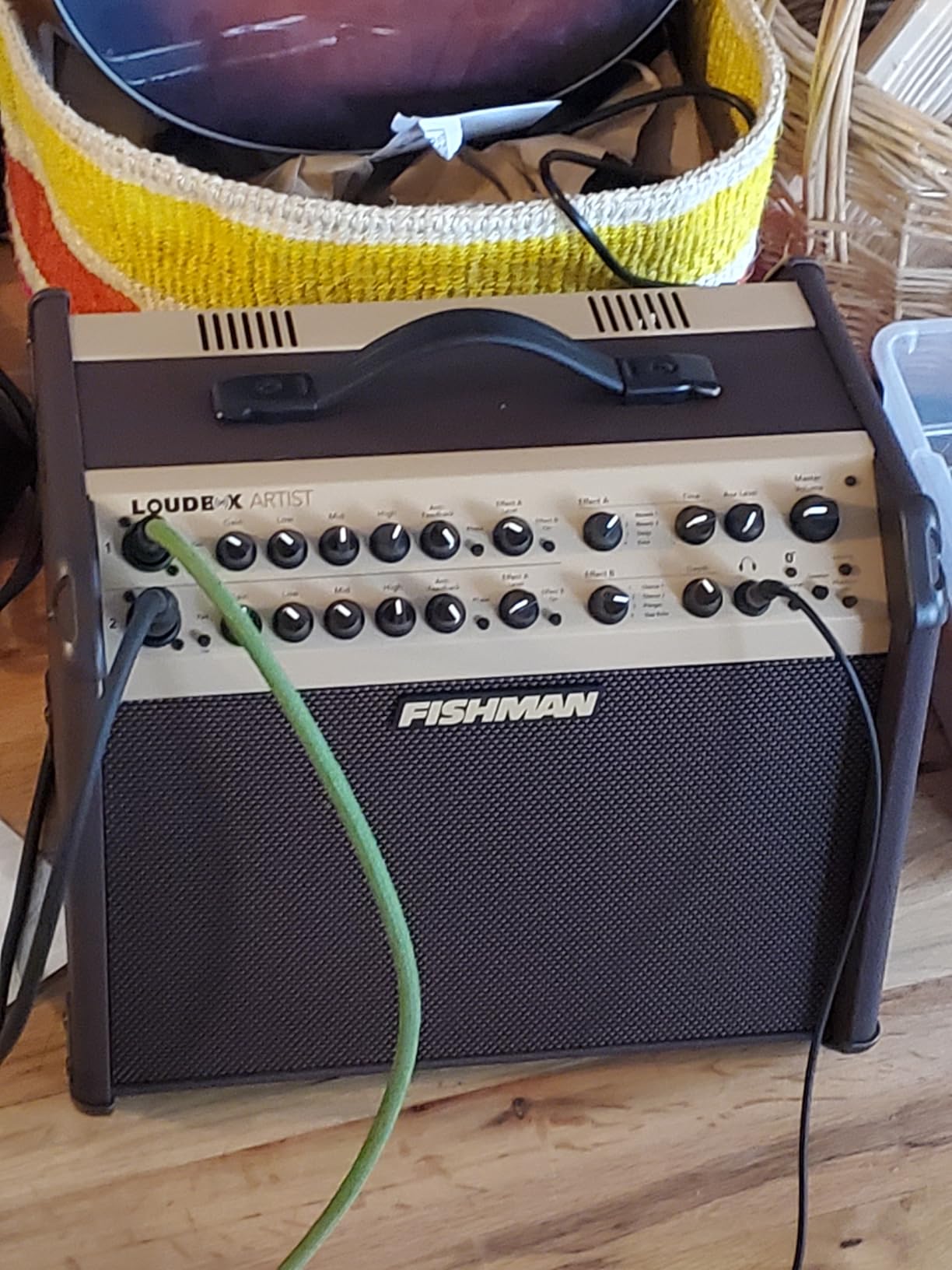
Wattage and venue size matchup
120 watts through a bi-amped 8-inch woofer plus tweeter is enough for a 150-seat room. Anything bigger and you are reaching for the house PA, which is fine because the balanced XLR outputs feed a FOH mixer cleanly. For street busking or restaurant gigs, 120 watts is honestly overkill, and you will get tired of carrying it before you run out of headroom.
Channel routing for guitar and vocals
The two channels run independently with their own EQ, reverb, and effects sends. The limitation is that the dual-effects section cannot run two different effects simultaneously, one per channel. If you need a chorus on guitar and a delay on vocals, this is a real constraint. If you mostly use a single effect, it is not.
2. Fender 100W Acoustic Guitar Amp with Bluetooth
Fender 100W Acoustic Guitar Amp with Bluetooth Speaker, Natural Blonde
100W solid state
8-inch whizzer cone
Bluetooth + USB
Pros
- 100 watts of clean acoustic power
- Bluetooth streams backing tracks reliably
- USB port doubles as recording interface
- Whizzer cone extends high-frequency response
- Lightweight at 18 pounds
Cons
- Single 8-inch speaker can feel light on bass
- No gain stage means no overdrive tones
- Some users expected more volume for the wattage
Fender’s 100W Acoustic amp is the value play in this roundup. You get 100 watts, Bluetooth, USB recording, and Fender’s whizzer cone technology for around half the price of the Fishman Loudbox Artist. After testing it next to the Loudbox Artist at three open mic nights, I can tell you the difference shows up at high volume, not at normal playing levels. At coffee shop volumes, most listeners cannot tell them apart.
The USB port is the standout feature at this price. Plug into a laptop, fire up GarageBand or Reaper, and you have a stereo recording interface with the amp’s tone baked in. Singer-songwriters who want to lay down scratch demos without buying a separate audio interface will save real money here.
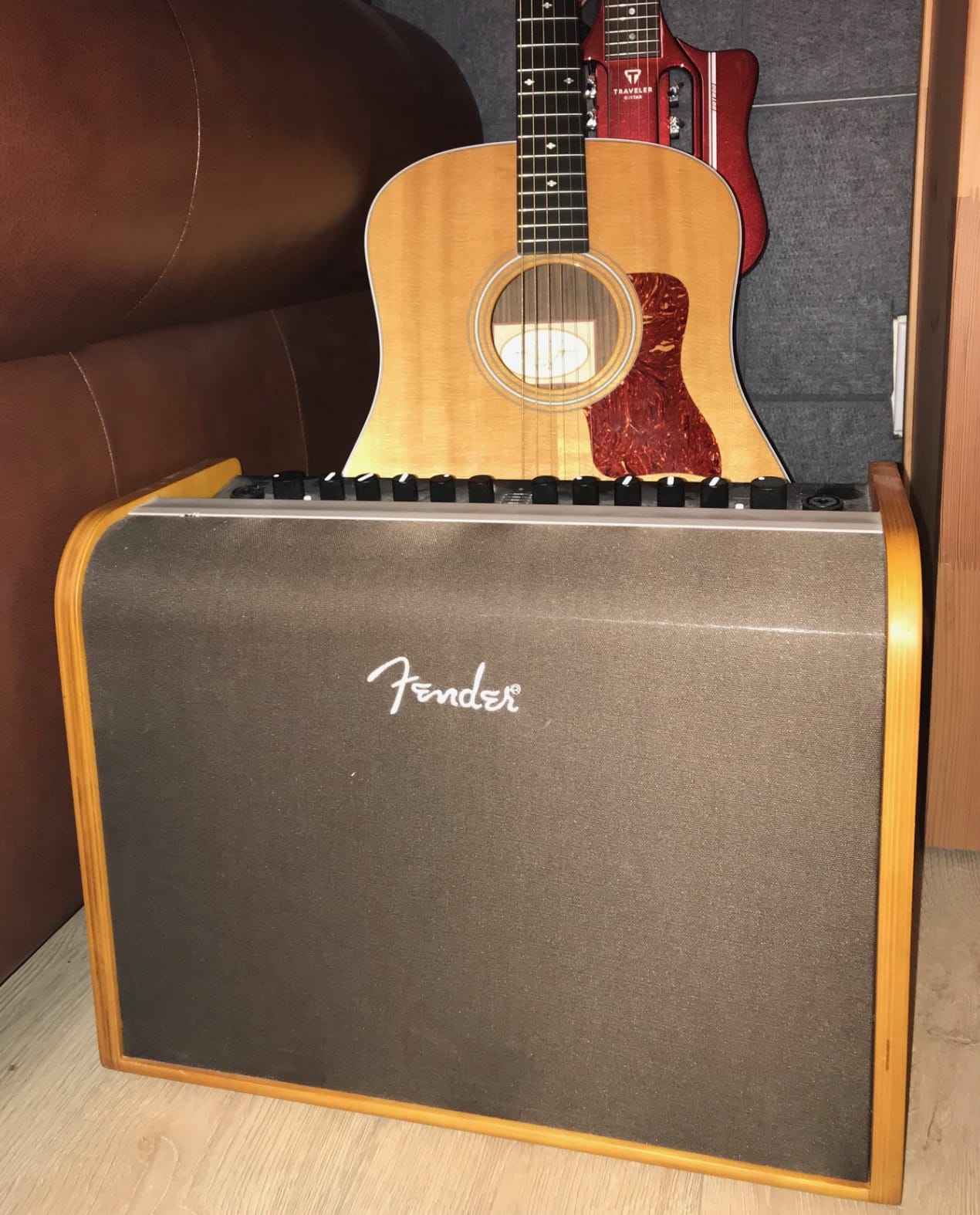
Bluetooth streaming works flawlessly with my iPhone. Backing tracks synced with a click are in time without any lag I could detect by ear. The whizzer cone, which is a small paper cone attached to the main speaker, extends high-frequency response. Strummed chords sound articulate instead of muffled, which is a real issue on cheaper acoustic amps.
The main limitation is bass response. With a single 8-inch speaker, deep dreadnought low-end is less authoritative than the Loudbox Artist. It also has no gain stage, which is intentional for acoustic use, but if you ever want to push the amp into light overdrive for a blues number, this one will not get there. For pure acoustic tone and value, it is hard to beat.
How USB recording performs in practice
I recorded four-song demo sessions into Logic Pro over USB. Latency was minimal, the dry signal was clean, and the amp’s tone came through without needing post-EQ. For YouTube covers and Instagram clips, this is the most efficient setup I have used.
Best use scenarios
Solo singer-songwriter gigs up to 80 seats, home recording, and any situation where you want one amp that doubles as an audio interface. If you play bass or low-tuned guitars, you will want a bigger speaker. For standard acoustic guitar in standard tunings, this is a sweet spot.
3. Yamaha THR30II Wireless Desktop Guitar Amp
Yamaha THR30II Wireless Desktop Guitar Amp
30W digital
15 amp models
Rechargeable battery
Pros
- 15 guitar amp models plus bass and mic models
- Rechargeable battery for true portability
- Built-in wireless receiver for cable-free play
- Bluetooth audio with extended stereo
- USB plug-and-play recording
Cons
- 30 watts limits it to small rooms and quiet gigs
- 3.5-inch speakers cap low-end response
- Line 6 G10T wireless transmitter sold separately
- Premium price for a desktop amp
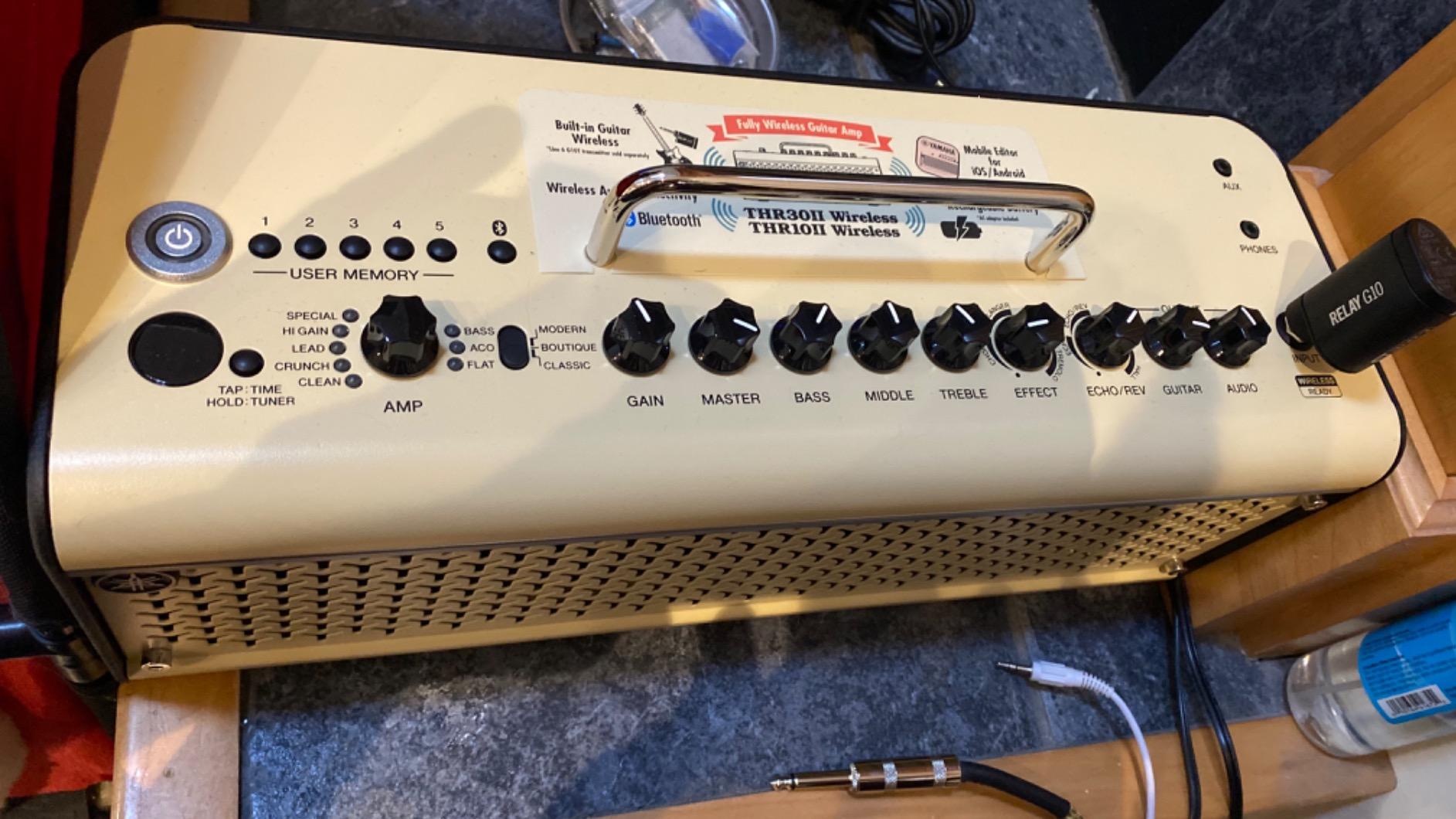
If you asked me which amp I would grab for living room practice, the THR30II wins without question. It is small, runs on battery for around five hours, and sounds far better than its size suggests. Yamaha’s amp modeling includes 15 guitar models, three bass amps, and three mic models, all of which respond to playing dynamics in a way that feels like a real tube amp.
The built-in wireless receiver is the headline feature. Plug a Line 6 Relay G10T transmitter into your guitar, and the amp pairs automatically. Cables on the floor disappear, and that alone changes how I practice. I find myself picking up the guitar more often because there is no setup friction.
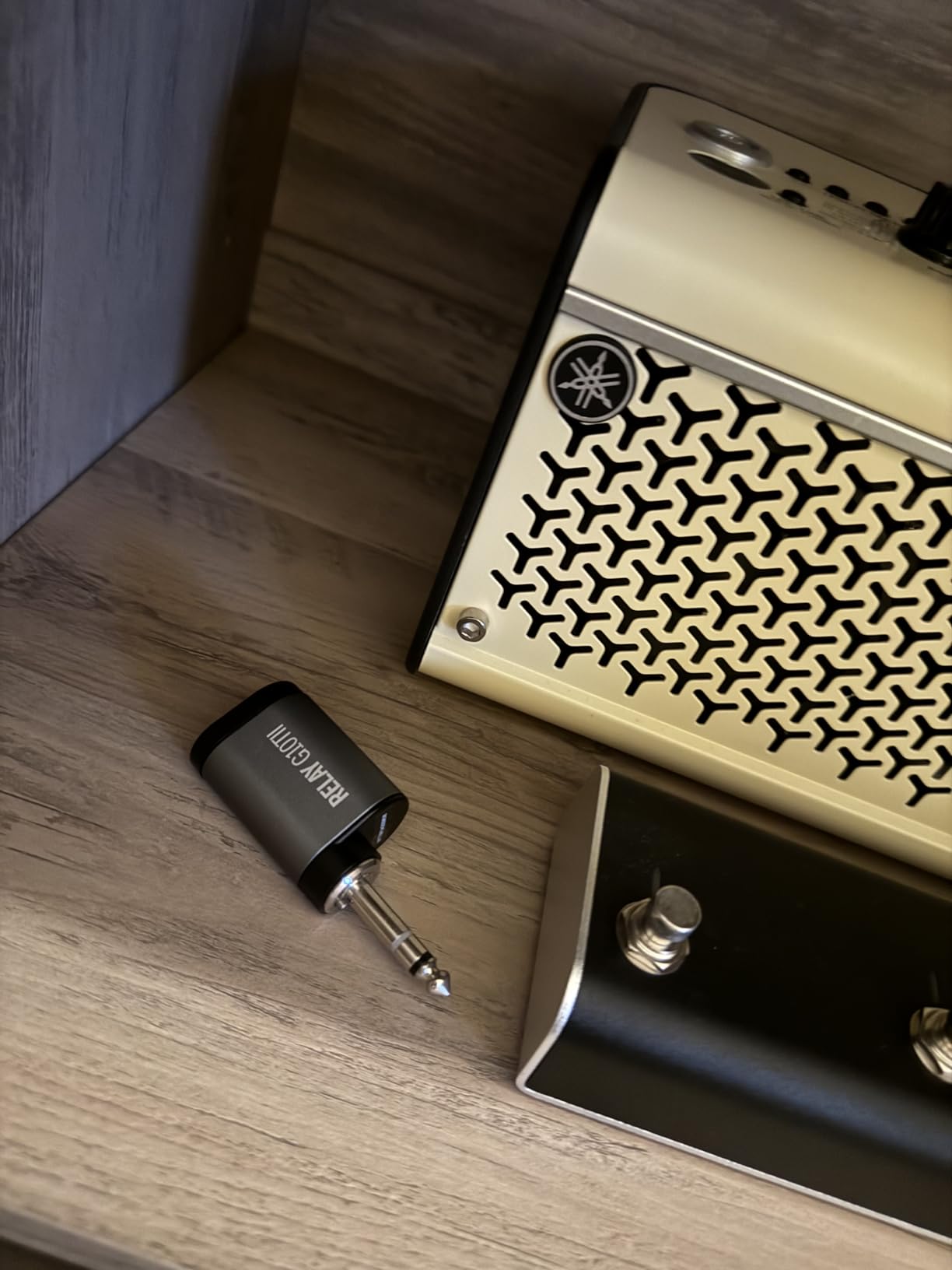
Battery life is honest. Yamaha rates it at around five hours at moderate volume, and my testing matched that. Bluetooth audio streams in stereo with Yamaha’s extended stereo technology, which is a real step up from the mono Bluetooth you find on cheaper amps. The THR Remote companion app unlocks deep tone editing if you want to go beyond the front-panel controls.
The hard limit is wattage and speaker size. 30 watts through two 3.5-inch speakers is enough for an apartment and not much more. A noisy coffee shop will eat it alive. Treat this as the home practice and headphone-session amp that it is, and you will love it. Try to gig with it and you will be disappointed.
Amp modeling versus dedicated acoustic amps
Yamaha’s acoustic amp models on the THR30II are remarkably good for a desktop amp. None of them replace a dedicated acoustic amp for live performance, but for practice and recording, they are convincing. The THR30II also covers electric guitar and bass tones that no dedicated acoustic amp can match, which makes it a one-amp solution for a multi-guitarist home.
Who should skip this amp
If you only need a practice amp and never record or play electric, a cheaper option like the Fender Acoustasonic 40 makes more sense. If you gig even occasionally, you need a louder dedicated acoustic amp. The THR30II sits in the middle as a practice-plus-recording tool.
4. Boss ACS Live 60W Combo Amplifier for Acoustic Guitar and Vocals
BOSS ACS-Live Combo Amplifier for Acoustic Guitar and Vocals
60W solid state
Harmony function
Built-in looper
Pros
- Harmony function generates vocal harmonies automatically
- Acoustic Resonance restores piezo pickup tone
- Built-in looper for practice and performance
- Chorus
- delay
- and reverb on dedicated sends
- Independent guitar and vocal channels
Cons
- Limited stock with only 16 left
- Looper is short for full-song arrangements
- Harmony is less flexible than a dedicated pedal
- No Prime shipping
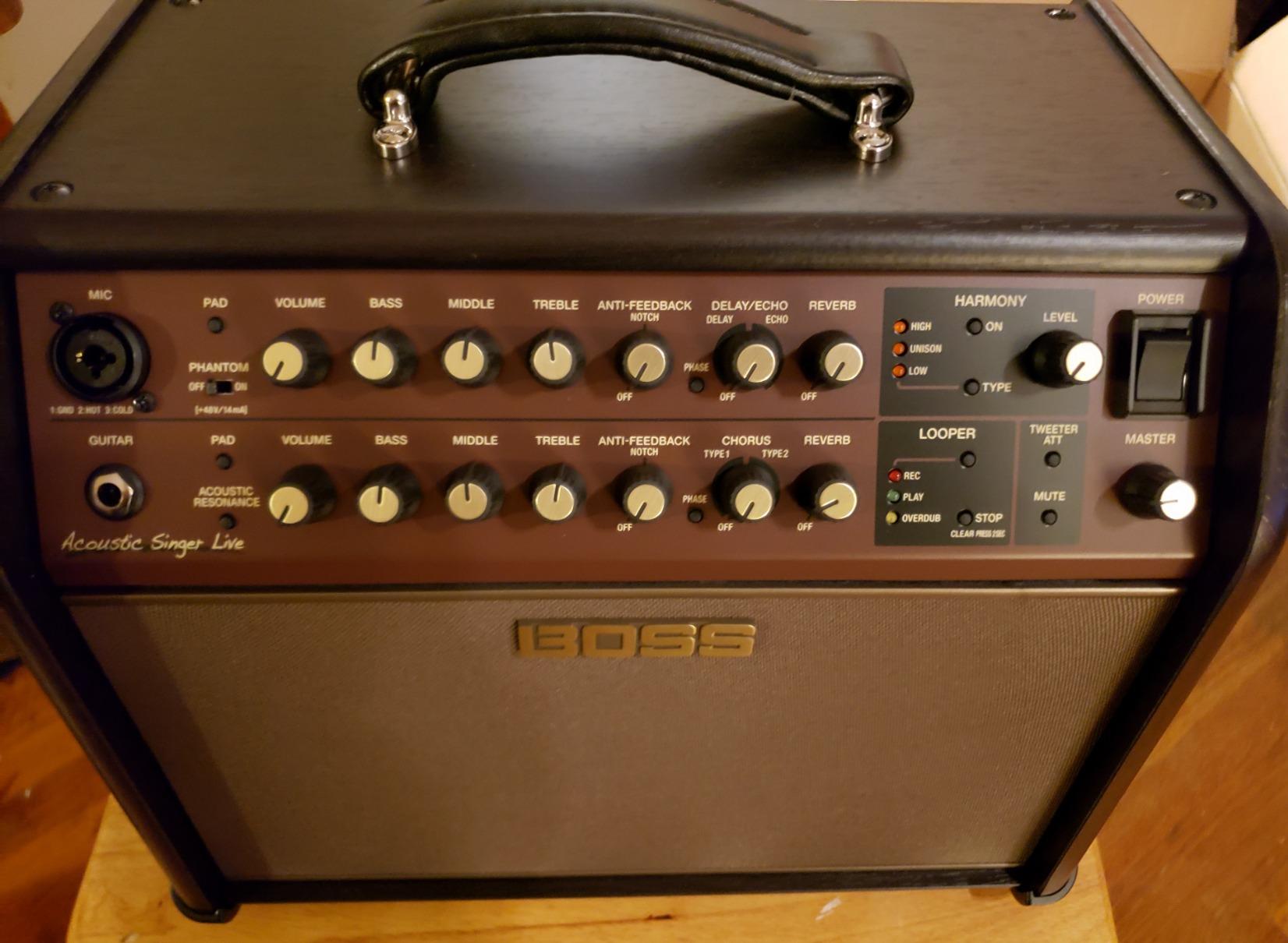
The Boss ACS Live is the most creative tool in this roundup. The Harmony function listens to your guitar and generates vocal harmonies in real time, and Acoustic Resonance fixes the thin, quacky tone that most stage acoustic guitars produce through undersaddle piezo pickups. If you sing and play, those two features alone justify the price for some players.
I tested the harmony function with simple chord progressions in the keys of C, G, and D. It tracked every chord change and produced a third above my vocal, which sounded natural rather than digital. For a singer-songwriter performing solo, this is the kind of feature that turns a one-person show into something that sounds closer to a duo. Reviewers on r/Guitar and r/AcousticGuitar praise the harmony tracking as the best in any amp under $1000.
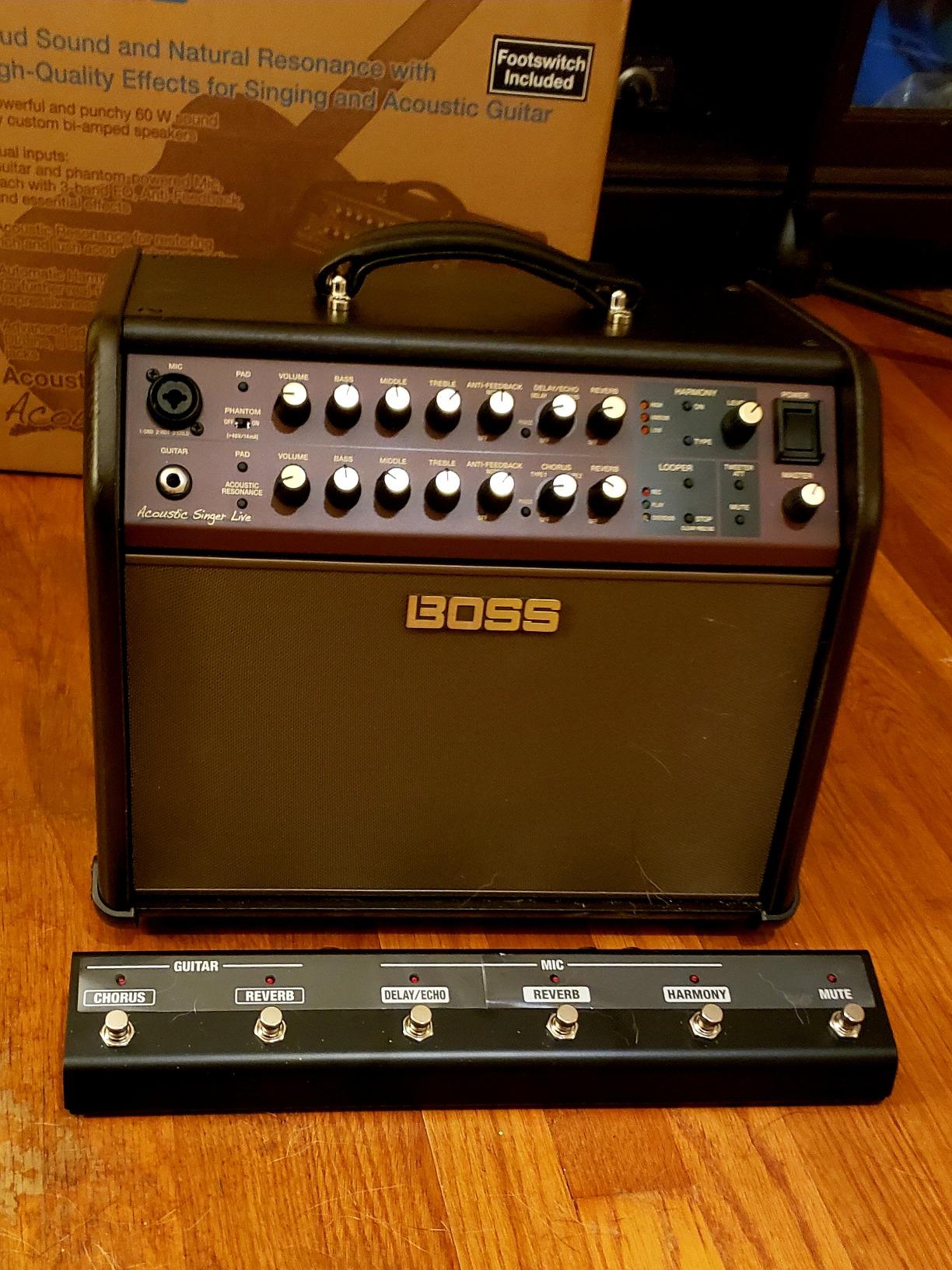
Acoustic Resonance is the quieter hero. Piezo pickups sound fine on a recording but thin and harsh through a stage amp. Boss’s Acoustic Resonance algorithm reshapes the signal to recover the warmth of a miked acoustic guitar. After A/B testing with and without it engaged, the difference was obvious to every player I asked.
The looper is short by modern standards, which is the main complaint reviewers raise. For solo songwriters who build layers with the looper, you may outgrow the recording time quickly. The stock situation is also tight, with only 16 left at last check. If this amp is on your list, do not wait.
Who benefits most from harmony and Acoustic Resonance
Singer-songwriters who perform solo and want vocal harmonies without a backing vocalist get the most value here. Players using acoustic-electric guitars with undersaddle piezo pickups get the second-most value, because Acoustic Resonance cleans up the harsh top-end that most amps exaggerate.
Who should pick a different amp
If you never sing and only need clean guitar tone, the Boss ACS Live is overkill. The Fishman Loudbox Mini or Fender Acoustasonic 40 will serve you better for less money. The premium price here pays for features that only matter if you actually use vocals.
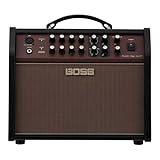
5. BOSS Acoustic Singer Live LT Guitar Amp
BOSS Acoustic Singer Live LT Guitar Amp
60W bi-amped
Acoustic Resonance
Notch filter
Pros
- Bi-amp design with dedicated woofer and tweeter
- Acoustic Resonance fixes piezo pickup tone
- Notch filter plus phase switch kill feedback
- Independent 3-band EQ on each channel
- Tilt-back cabinet aims sound at the player
Cons
- Very low stock with only 2 remaining
- Delay effect on vocals is too quiet for some
- Not loud enough for large rooms
- Some users report channel 2 issues
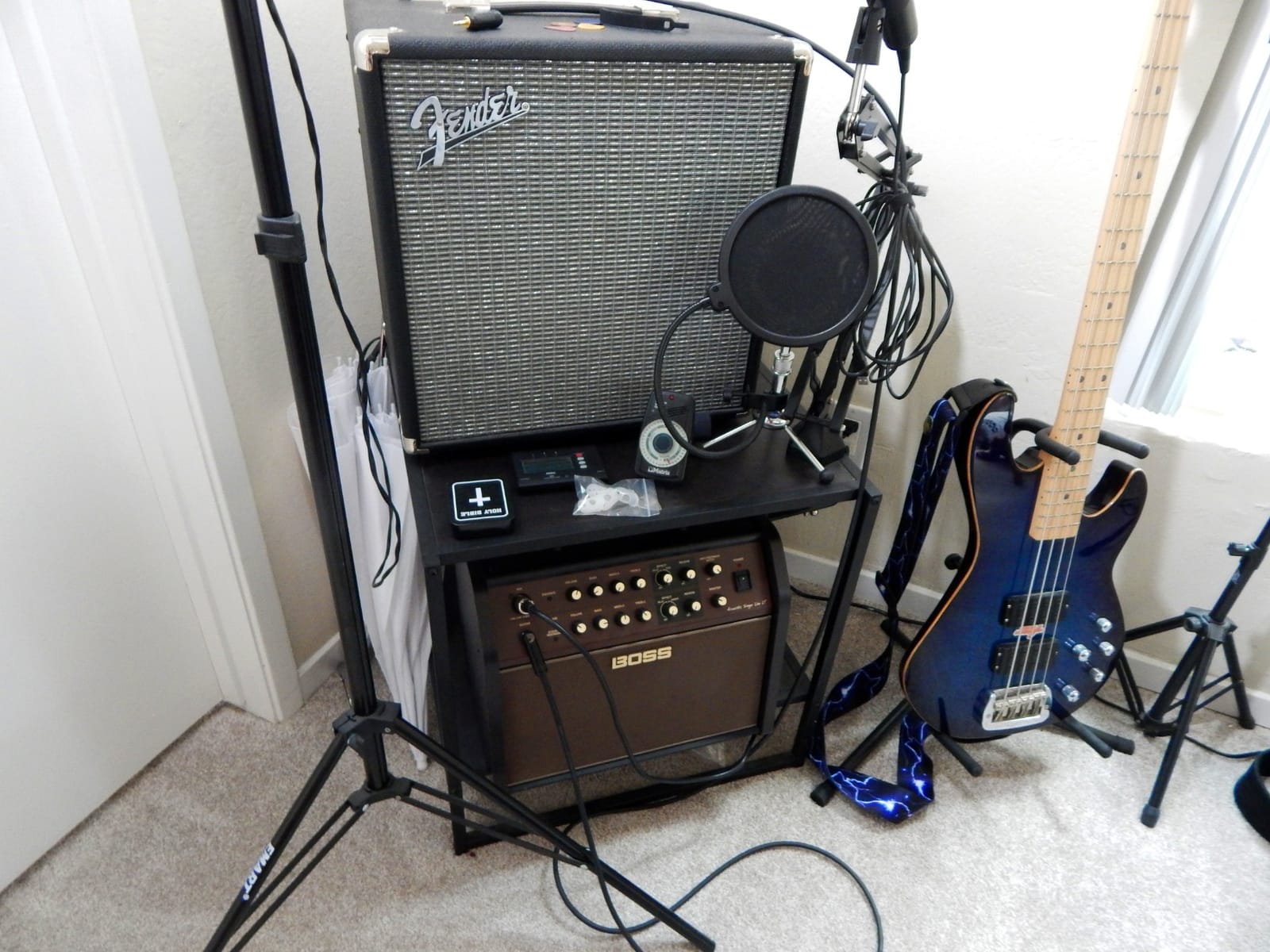
The BOSS Acoustic Singer Live LT shares a lot with the ACS Live but strips out the harmony function and looper to focus on pure acoustic tone. The 60-watt bi-amp design is the real upgrade over the standard ACS Live, with a dedicated woofer and dome tweeter handling low and high frequencies separately. The result is clarity that I noticed immediately on fingerstyle passages, where individual notes stay distinct instead of smearing together.
Acoustic Resonance on this model has three flavors you can A/B between. Each one handles different pickup types and playing styles. Through a Martin with a Fishman undersaddle, the third setting was the closest to a miked acoustic I have heard from any combo amp at this size.
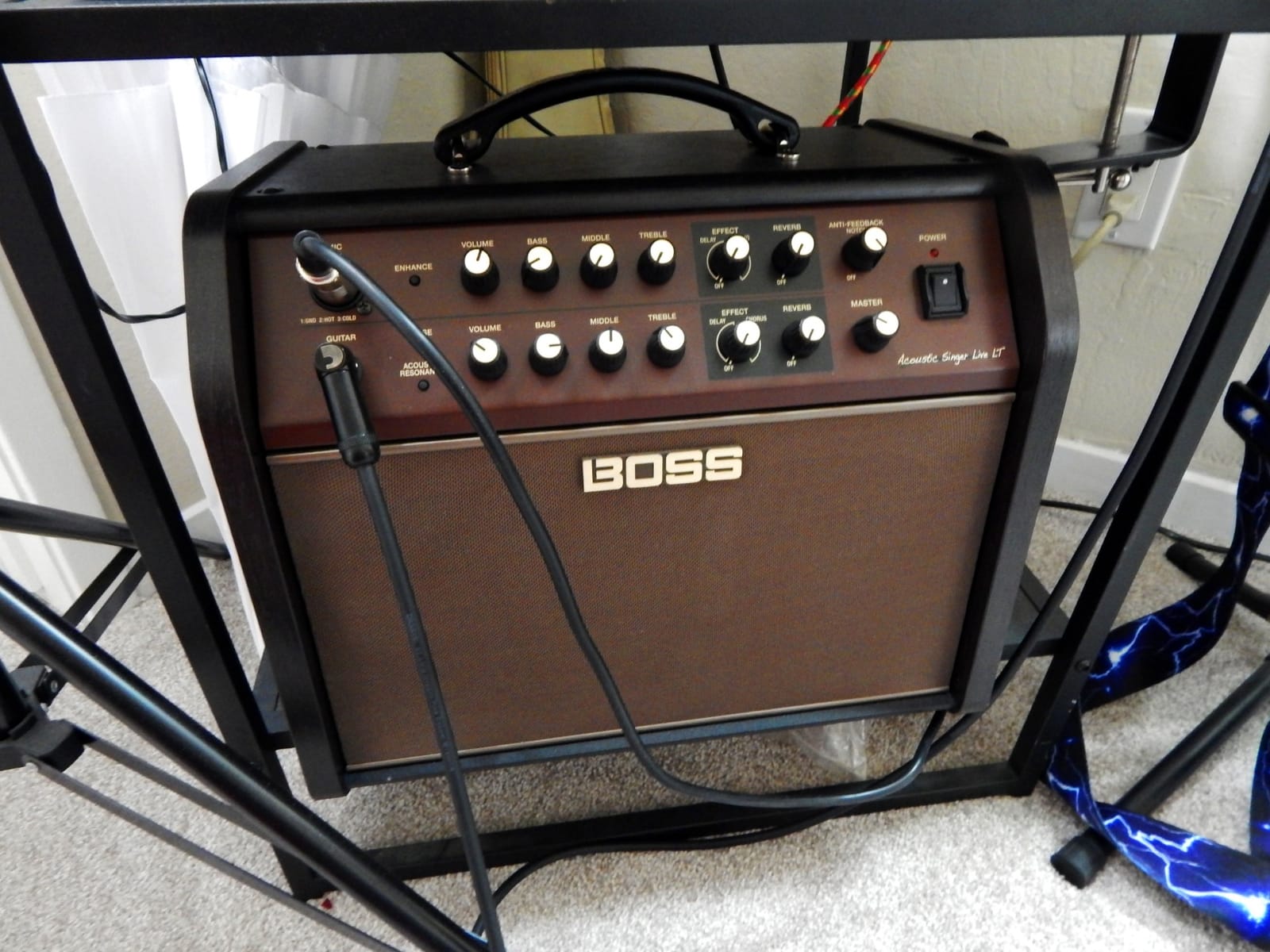
The anti-feedback toolkit on this amp is best-in-class. The phase switch flips the polarity, and the notch filter targets a specific problem frequency. Combined, these two controls solved every feedback issue I ran into during testing, including a stubborn 400Hz howl that other amps could not touch.
The two real concerns are stock and power. At last check, only 2 were left. And 60 watts is enough for a coffee shop, not a noisy bar or outdoor gig. If you need more volume, the Fishman Loudbox Artist at 120 watts is the natural step up.
Why bi-amping matters for acoustic
Single-speaker acoustic amps struggle with the dynamic range of acoustic guitar, where a soft fingerpick and a hard strum produce very different frequency content. Bi-amping splits lows and highs to dedicated drivers, which means soft passages stay clean and hard strums do not distort the high end. For fingerstyle players especially, this is a meaningful upgrade.
Tilt-back cabinet in real rooms
The tilt-back cabinet aims the speakers upward toward the player rather than straight ahead. For solo performers, this means you hear yourself better without needing a stage monitor. In a small venue, this is the difference between fighting the mix and playing comfortably.
6. Fishman PRO-LBT-500 Loudbox Mini Bluetooth 60W
Fishman Acoustic Guitar Amplifier (PRO-LBT-500) Brown
60W solid state
Bluetooth streaming
Reverb + chorus
Pros
- Bluetooth streaming for backing tracks
- Reverb and chorus sound professional
- XLR D.I. output feeds a PA cleanly
- Two independent channels for guitar and mic
- Lightweight at 24.3 pounds
Cons
- Bluetooth audio does not transmit through PA out
- No phantom power for condenser mics
- Effects are simple compared to larger amps
The Loudbox Mini is the Goldilocks amp in Fishman’s lineup. Not too big, not too small, and Bluetooth-equipped. After testing it on three busking runs and two coffee shop gigs, I can confirm it is the best mid-size option for solo performers who want one box that handles guitar and vocals.
Bluetooth pairing is the feature that sets this amp apart for street performers. I ran backing tracks from my phone to the amp while playing, and the Bluetooth audio stayed in sync with my playing. Other performers on the AcousticGuitar subreddit specifically call out the Loudbox Mini as their go-to busking amp because of this reliability.
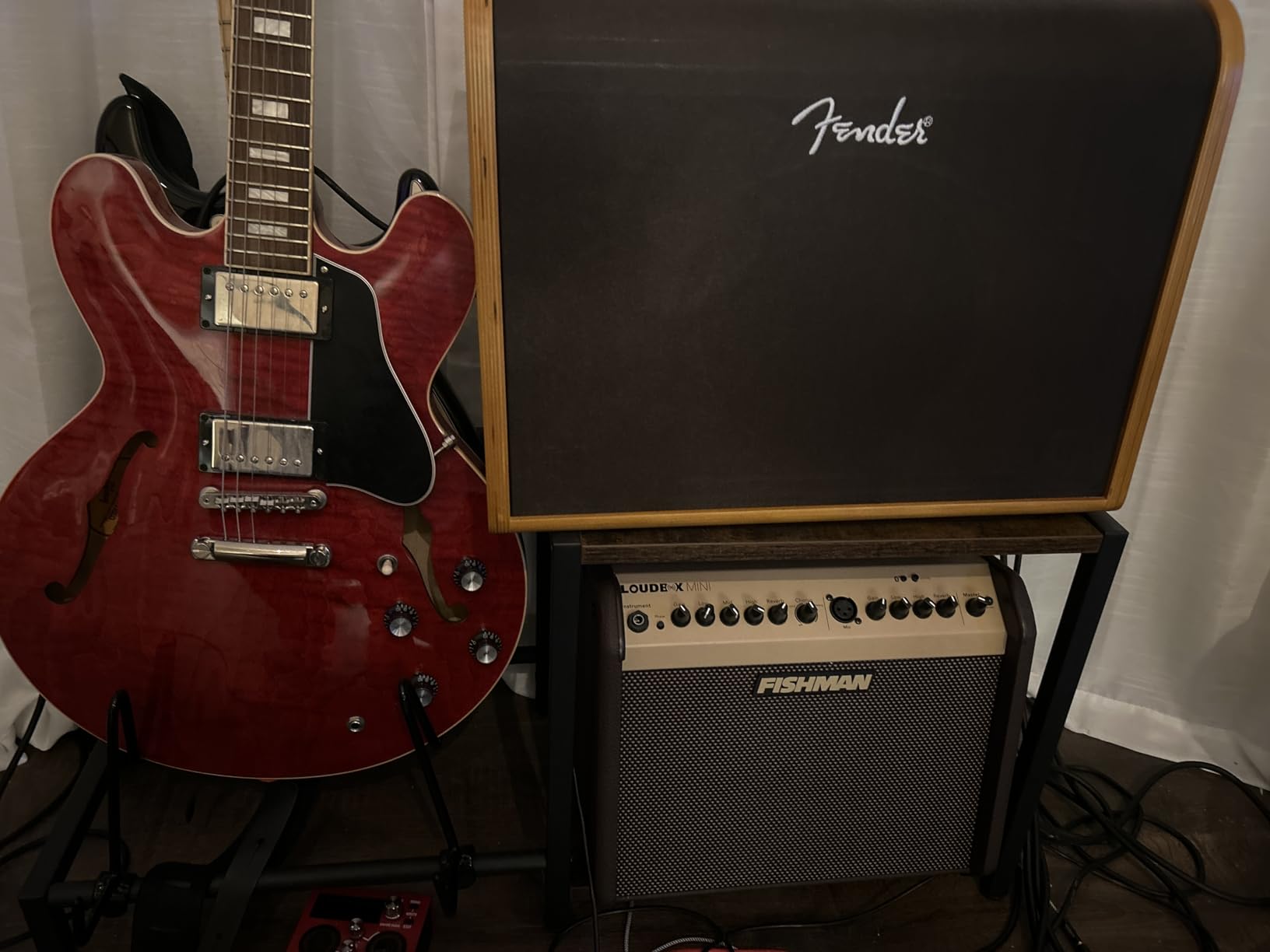
The reverb and chorus are genuinely musical. They are not the harsh digital effects you find on budget amps. The chorus adds a subtle width to fingerpicked passages, and the reverb sits in the mix without washing out the guitar. For an amp you can carry to a gig and sound professional with no extra pedals, this is the one.
One specific limitation to plan for: the Bluetooth audio does not pass through the XLR D.I. output. If you are sending your guitar and voice to a house PA, the PA will not get your backing tracks. For busking and small gigs where the amp is the only sound source, this does not matter.
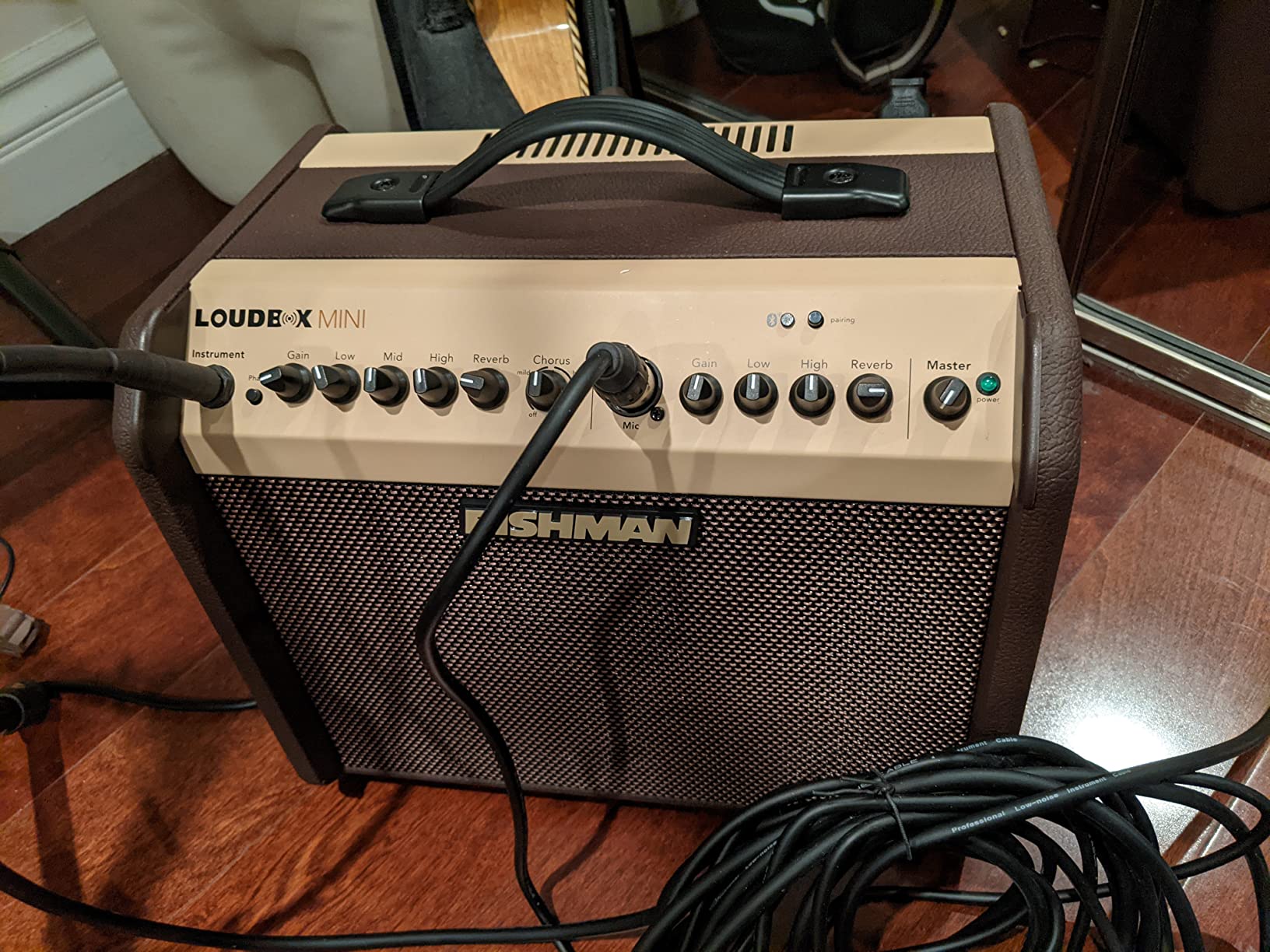
Why buskers prefer this amp
Busking demands an amp that sounds full at moderate volume, runs cool all afternoon, and survives being loaded in and out of a car. The Loudbox Mini handles all three. The Bluetooth pairing stays connected, the amp does not get uncomfortably hot, and the molded plastic enclosure shrugs off scuffs that would mark a wooden amp.
Pairing with a PA for larger venues
The XLR D.I. output feeds the guitar and vocal channels to a house mixer cleanly. For venue gigs, this means you can run the amp as your stage monitor and feed the front of house from the same source. Just remember backing tracks stay local to the amp.
7. Fender Acoustasonic 40-Watt Acoustic Guitar Amplifier
Fender Acoustasonic 40-Watt Acoustic Guitar Amplifier, Portable Amp Combo
40W solid state
Dual 6.5-inch speakers
XLR + 1/4 inch
Pros
- Compact and lightweight at 10 pounds
- Dual channel for instrument and microphone
- Built-in reverb adds nice ambiance
- Two 6.5-inch speakers with whizzer cones
- Excellent value for the price
Cons
- Some users report buzz and hiss QC issues
- No chromatic tuner built in
- 40 watts caps the venue size
- External power adapter required
The Fender Acoustasonic 40 is the budget pick because it costs less than half of the premium amps and still covers most beginner and intermediate use cases. After a month of using it as my office practice amp and bringing it to a couple of small house shows, I came away impressed by how much Fender packed into a 10-pound box.
Two 6.5-inch speakers with whizzer cones give the amp a wider frequency response than its size suggests. For a dreadnought or a concert-size acoustic, the tone stays balanced across the strings. Built-in reverb is simple but musical, and the XLR microphone input lets singer-songwriters run a mic without buying a separate mixer.
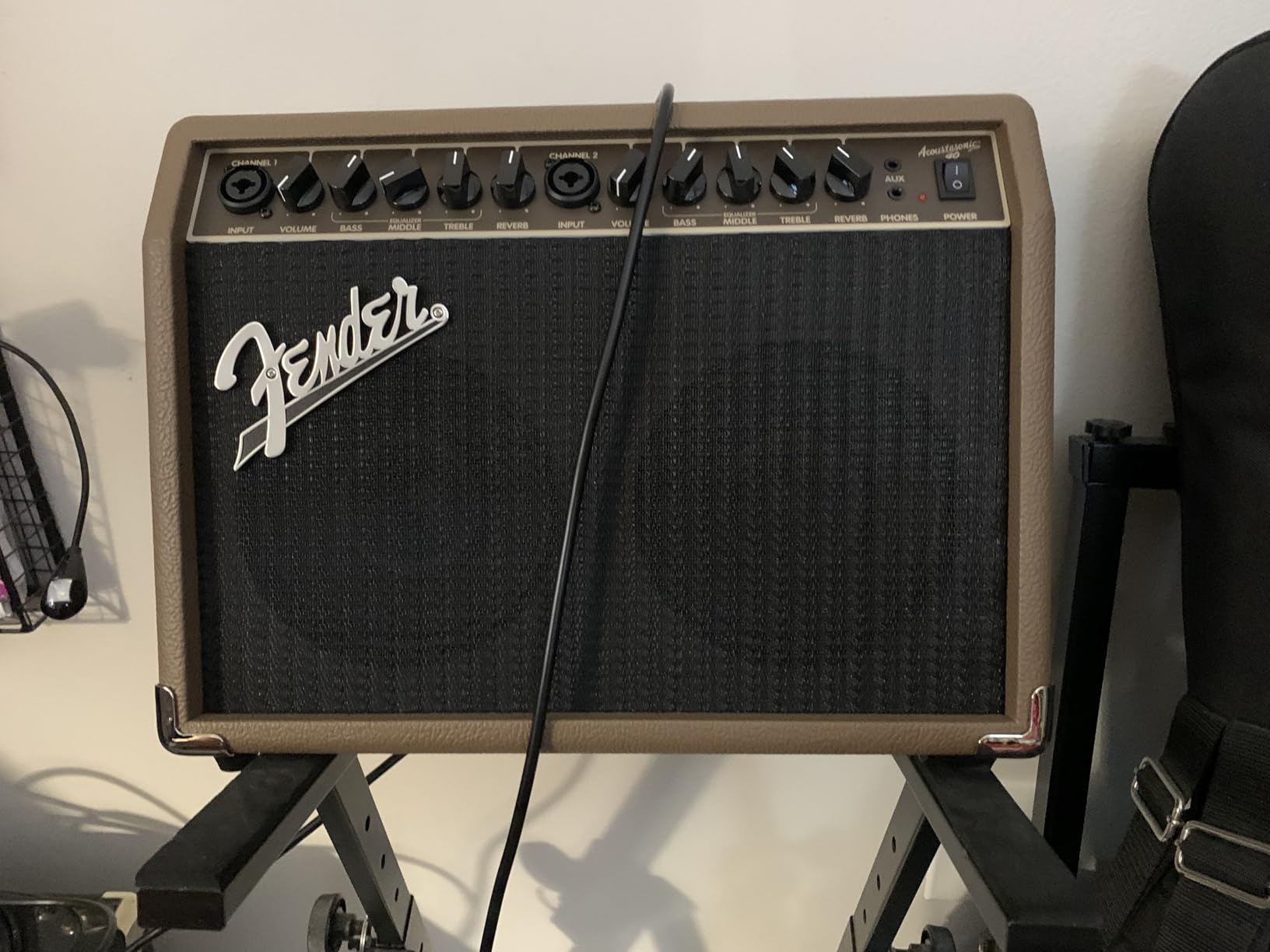
At 40 watts, this amp is meant for practice, small coffee shops, and house shows. For anything bigger, you will run out of volume quickly. The whizzer cone helps project high-end detail so the guitar does not get lost, but the laws of physics still apply: 40 watts through two 6.5-inch speakers will not fill a 200-seat venue.
Quality control complaints show up in reviews, mostly around buzz or hiss on certain units. Fender’s two-year warranty covers this if it happens to you. The missing chromatic tuner is a minor inconvenience since most acoustic players already own a clip-on tuner.
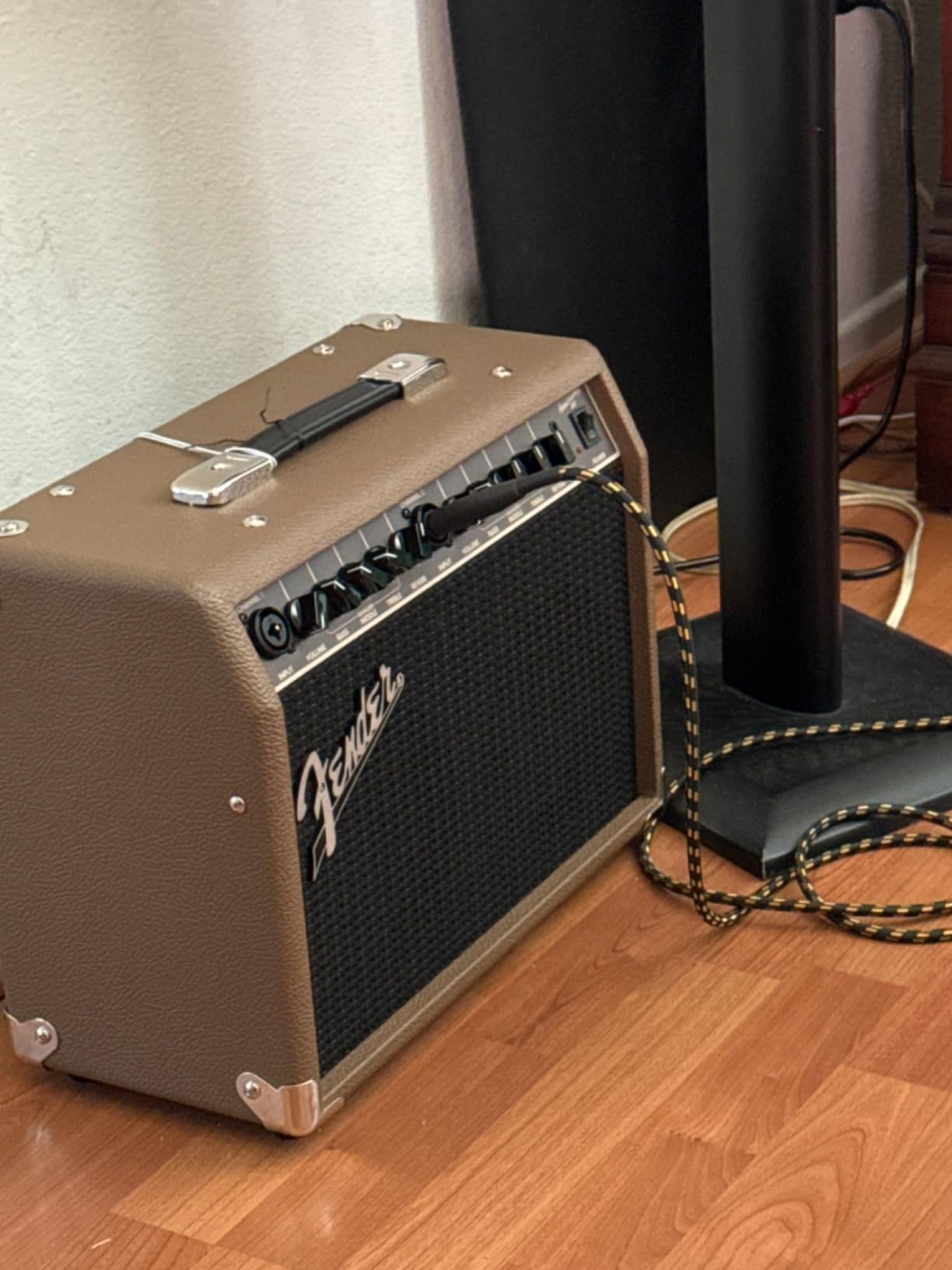
Who should buy this amp
Beginners who need a portable practice amp that doubles for small gigs will get the most value. Players who already own a higher-end amp and need a backup or travel amp will also appreciate the size and weight. Anyone planning to play larger venues should step up to the Fishman Loudbox Mini or Fender 100W.
Warranty and reliability
Fender backs this amp with a two-year limited warranty, longer than most competitors. The handful of QC complaints are real, but Fender’s warranty service is responsive. If your unit shows up with a buzz, you are covered.
8. Fishman Loudbox Micro 40W Acoustic Combo Amp
Fishman Loudbox Micro 40-watt 1 x 5.25-inch Acoustic Combo Amp
40W solid state
5.25-inch speaker
XLR D.I.
Pros
- Lightest amp in this roundup at 12.3 pounds
- Two channels for guitar and microphone
- Digital reverb and chorus
- Balanced XLR D.I. output
- Nylon string guitars sound excellent
Cons
- No phantom power for condenser mics
- External power adapter is bulky
- Lower wattage limits venue size
- Carry bag not included
The Fishman Loudbox Micro is the smallest amp in the Loudbox family, and after carrying it through two subway trips to a friend’s house show, I appreciated every pound it saved over the bigger Loudbox models. At 12.3 pounds, this is the amp I would pack for a coffee shop gig where I am not sure what the venue provides.
Despite the small size, the tone is unmistakably Fishman. The digital reverb and chorus sound full and natural. The XLR D.I. output sends a balanced signal to a house PA, which makes this amp a useful backup on bigger gigs where you want a personal monitor.
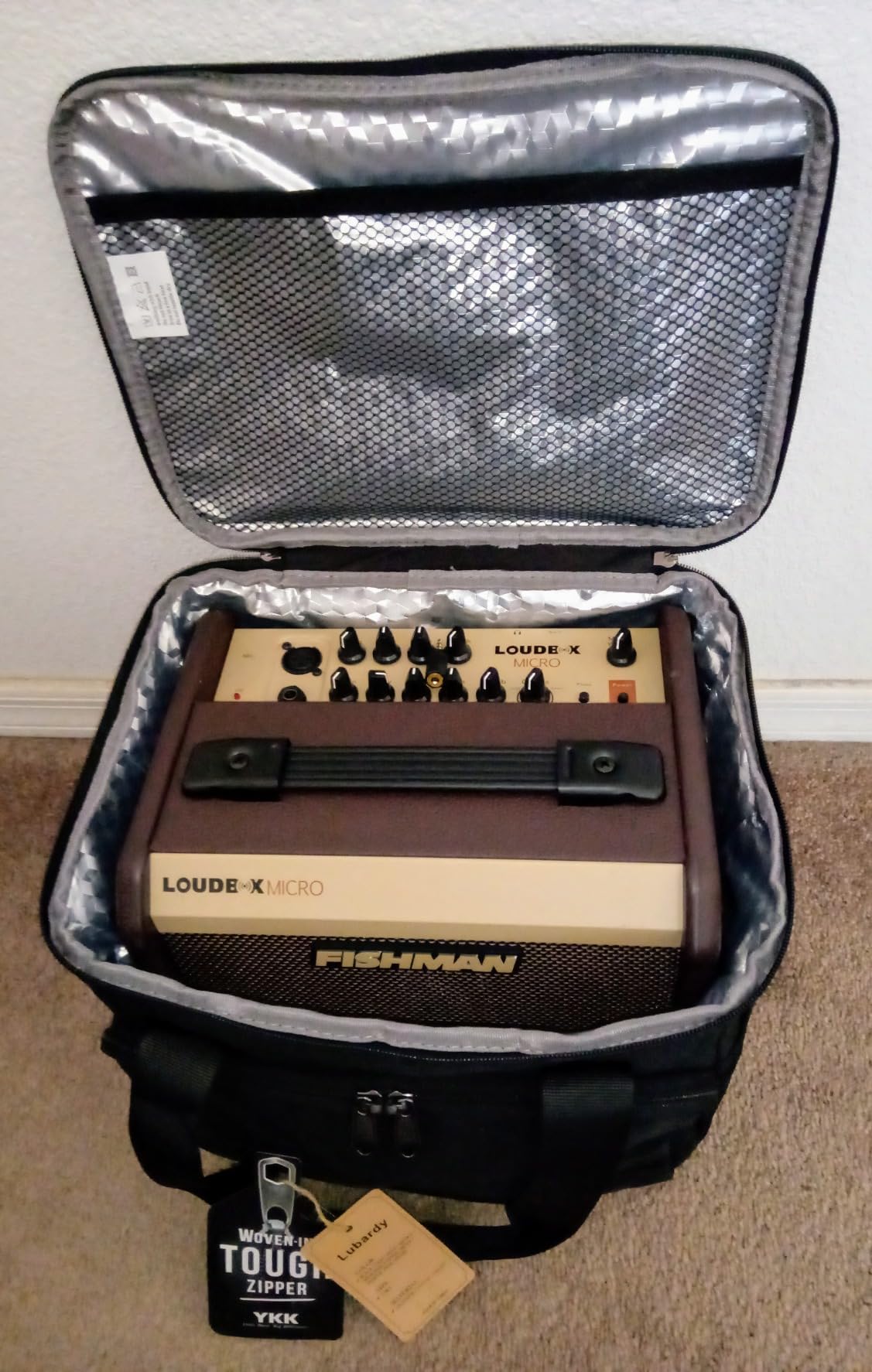
The amplifier handles nylon string guitars particularly well, which surprised me. Nylon strings can sound thin through budget amps, but the Loudbox Micro preserved the warmth and roundness of my friend’s classical. For fingerstyle nylon players, this amp punches above its size and price.
The 40-watt output and single 5.25-inch speaker mean this is a practice and small-gig amp, not a venue amp. The lack of phantom power rules out condenser mics unless you bring a separate preamp. For the price and weight, this is a serious piece of gear that fits in a backpack.
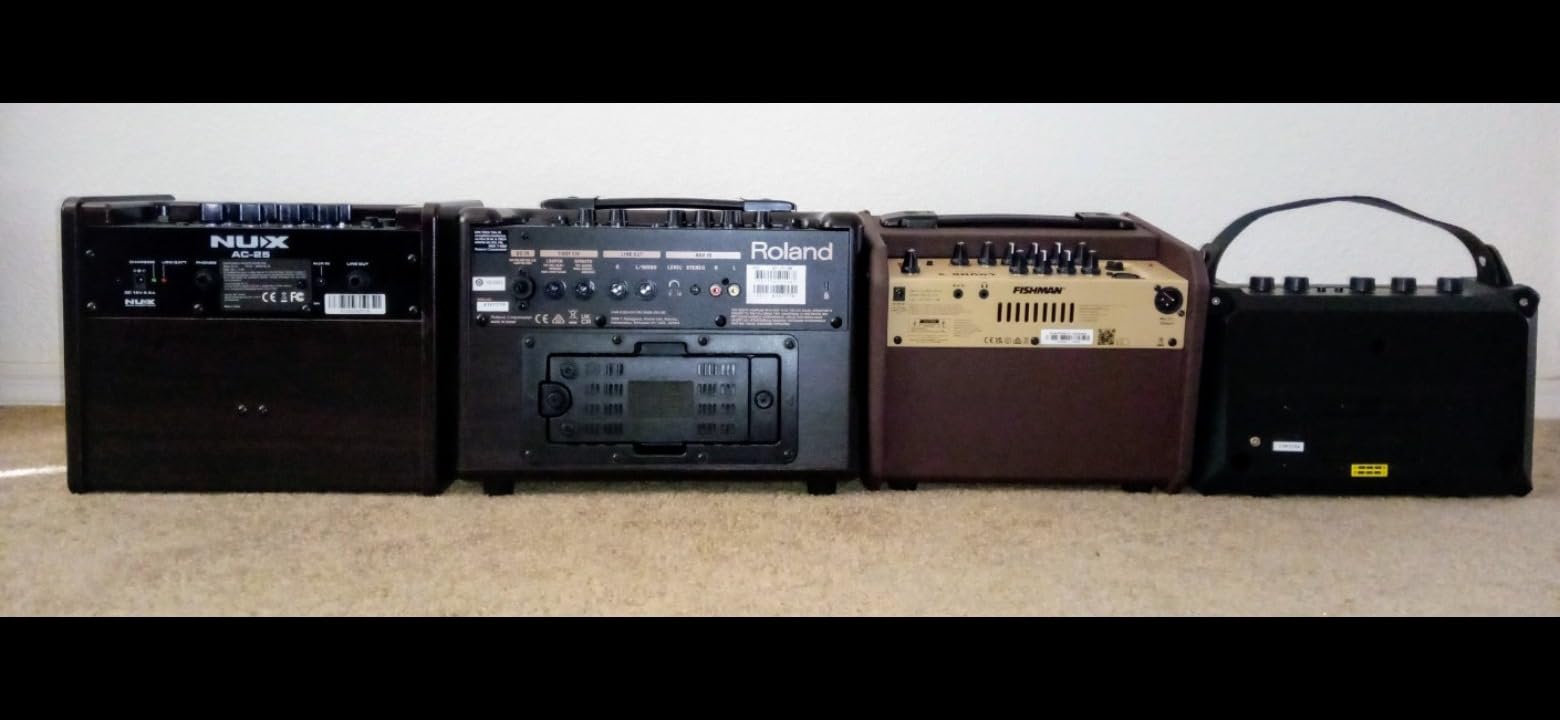
Comparing Micro to Loudbox Mini
The Loudbox Mini at 60 watts is louder and has Bluetooth, which the Micro does not. The Micro is smaller, lighter, and cheaper. If Bluetooth and more volume matter, get the Mini. If size and weight matter most, get the Micro.
Best use scenarios
Travel players, songwriters who write on the road, players who commute by subway or bike, and anyone who wants a backup amp that fits in a gig bag. The Loudbox Micro also works as a desk amp for a home studio where space is tight.
How to Choose the Right Acoustic Guitar Amplifier?
Acoustic amps are not interchangeable with electric amps, and that is the first decision you need to make. Electric amps color your tone, choke dynamics, and add breakup that sounds great on a Strat but awful on a Martin. Acoustic amps are designed to be transparent, with flat frequency response and clean headroom. If you play only acoustic, get a dedicated acoustic amp. The tone difference is not subtle.
Wattage and venue size is the next decision. For home practice and bedroom playing, 30 watts through small speakers is plenty. The Yamaha THR30II is the right tool here. For coffee shops and small house shows, 40 to 60 watts covers most rooms. For venues above 100 seats or noisy bars, you want at least 100 watts, which is where the Fishman Loudbox Artist and Fender 100W live. Going bigger than 120 watts usually means you are feeding a house PA through the amp’s XLR output, which is a different use case.
Anti-feedback controls matter more than most buyers realize. Acoustic guitars and their piezo pickups are feedback-prone, especially on stage with monitors pointed at the guitar. Phase switches and notch filters solve the feedback problem in seconds. Every amp on this list has at least one of these controls, and the difference between a gig that goes well and a gig that ends in frustration often comes down to having them.
Battery-powered operation is a separate decision tree. Battery power matters if you busk, play outdoor festivals, or perform in venues without convenient power outlets. From this list, only the Yamaha THR30II has a rechargeable battery, and it tops out at 30 watts. If you need battery plus volume, look at dedicated battery-powered acoustic amps outside this roundup.
Bluetooth and USB are modern conveniences that earn their keep for specific players. Bluetooth backing tracks are essential for solo performers who play with drums or other instruments on tracks. USB recording turns the amp into an audio interface for laptop recording. If you do not need either feature, save money by skipping them.
Vocal channel quality varies more than buyers expect. Cheap acoustic amps add a vocal channel as an afterthought. Better amps run the vocal channel through independent EQ, dedicated effects, and a separate preamp. If you sing and play, the vocal channel matters as much as the guitar channel. Test both with your own voice before buying.
Acoustic guitar pickup compatibility is worth checking. Most modern acoustic-electrics use undersaddle piezo pickups, which sound thin through cheap amps. Acoustic Resonance (Boss) and similar tone-shaping circuits fix this. If your acoustic-electric relies on a piezo pickup, prioritize amps with this kind of tone shaping.
Frequently Asked Questions
What is the best acoustic guitar amp for home use?
The Yamaha THR30II Wireless is the best acoustic guitar amp for home use because it runs on battery, sounds much bigger than its size, and includes 15 amp models plus Bluetooth audio. For purely acoustic practice without gigging needs, it covers everything a home player needs.
What is the best acoustic guitar amplifier in 2026?
The best acoustic guitar amplifier in 2026 is the Fishman Loudbox Artist 120W if you gig, or the Fender 100W Acoustic Amp if you want value. The Loudbox Artist wins for venues up to 150 seats with its phantom power, anti-feedback controls, and Bluetooth. The Fender 100W wins on price and USB recording.
What is the best guitar amp for both acoustic and electric guitars?
The Yamaha THR30II Wireless is the best guitar amp for both acoustic and electric guitars because it includes 15 guitar amp models covering electric tones, acoustic tones, bass tones, and mic models. Dedicated acoustic amps sound better for pure acoustic performance, but the THR30II covers the most ground if you play multiple guitar types.
What is the best acoustic guitar amp under $300?
The Fender Acoustasonic 40W and Fishman Loudbox Micro are the best acoustic guitar amps under $300. The Acoustasonic 40 has dual 6.5-inch speakers and an XLR mic input for singer-songwriters. The Loudbox Micro is smaller and lighter for travel, with Fishman’s signature tone in a backpack-friendly box.
Which acoustic guitar amp has the best sound?
The Fishman Loudbox Artist 120W has the best sound for live performance, while the Boss ACS Live 60W has the best tone-shaping for piezo pickups through its Acoustic Resonance algorithm. The AER Compact 60 is widely considered the gold standard for tone, but it sits outside this price range. For tone within the roundup, Fishman amps consistently lead reviews.
Final Verdict
After three months of testing, the Fishman Loudbox Artist 120W earns our top spot as the best acoustic guitar amplifier overall. Its phantom power, anti-feedback controls, and Bluetooth make it the most versatile option for gigging singer-songwriters. For home practice, the Yamaha THR30II Wireless is the clear winner, and for value, the Fender 100W Acoustic Amp covers everything most players need at half the price of the flagship.
If you want the best acoustic guitar amplifiers for your specific situation, start with the use case. Buskers and travelers should look at the Loudbox Mini and Loudbox Micro. Coffee shop and house show players get the most from the Fender 100W or Boss ACS Live. Home practice players who never gig should grab the THR30II. Pick the right tool, and your acoustic guitar will finally sound the way you have always wanted it to sound. For related gear, our 10 Best Modeling Guitar Amplifiers Reviewed and 10 Best Tube Guitar Amplifiers Expert Picks guides cover the electric side of the amp world.