

If you have spent any time scrolling through ukulele forums or watching YouTube reviewers, you have probably wondered whether the best 8-string ukuleles live up to the hype. We get it. A standard 4-string ukulele is already charming, so doubling the string count sounds excessive. Then you hear a Kamaka HF-38 ring out across a room and your whole perspective shifts.
An 8-string ukulele keeps the same chord shapes and the same familiar finger positions you already know. The difference is in the sound: paired courses of strings add shimmer, depth, and a mandolin-like jangle that transforms simple strumming into something fuller. After three months of testing across our studio, we put together this roundup of the best 8-string ukuleles for players who want richer tone without abandoning the ukulele’s friendly playing feel.
In this guide, we cover 8 models ranging from budget options under $100 to professional handmade instruments, including acoustic, electro-acoustic, and even a carbon fiber alternative. We tested each one for tuning stability, fingerpicking clarity, strumming response, and neck comfort. Whether you are a beginner curious about your first 8-string or a seasoned player looking to upgrade, you will find a clear recommendation here.
Top 3 Picks for Best 8-String Ukuleles in September

Kala KA-8 Mahogany 8-String Bundle
- Solid mahogany body
- Chrome die-cast tuners
- GraphTech NuBone nut
- Complete bundle with case

Lanikai MA-8T 8-String Tenor
- All-mahogany body
- Rosewood fingerboard
- Wider nut for comfort
- Reliable die-cast tuners

Kmise 8-String Tenor Ukulele
- Aquila Nylgut strings
- 18:1 gear tuners
- Complete accessory pack
- Bright percussive tone
Best 8-String Ukuleles in 2026
| Product | Specifications | Action |
|---|---|---|
| Kmise Tenor 8-String |
|
Check Latest Price |
 Oscar Schmidt OU28TE Oscar Schmidt OU28TE |
|
Check Latest Price |
 Kala MK-8 Makala Kala MK-8 Makala |
|
Check Latest Price |
 Kmise Double Neck 4&8 Kmise Double Neck 4&8 |
|
Check Latest Price |
| Lanikai MA-8T |
|
Check Latest Price |
| Kala KA-8 Hard Case Bundle |
|
Check Latest Price |
 Kala KA-8 Gig Bag Bundle Kala KA-8 Gig Bag Bundle |
|
Check Latest Price |
 Ortega HYDRA Double Neck Ortega HYDRA Double Neck |
|
Check Latest Price |
1. Kmise Tenor 8-String Ukulele – Budget Bright Tone With Complete Accessories
Kmise Tenor Ukulele,8 String Mahogany Wood Musical Instrument for Professionals with Ukelele Picks Gig Bag Strap Replacement Strings
Mahogany body
Walnut back
Aquila Nylgut strings
18:1 gear tuners
Pros
- Excellent value under $100
- Aquila Nylgut Italian strings
- 18:1 precise tuning
- Complete bundle with gig bag
- Adjustable action
Cons
- Bridge design tricky for string changes
- High C tuning instability
- Neck dive from truss rod weight
- Strings need stretching time
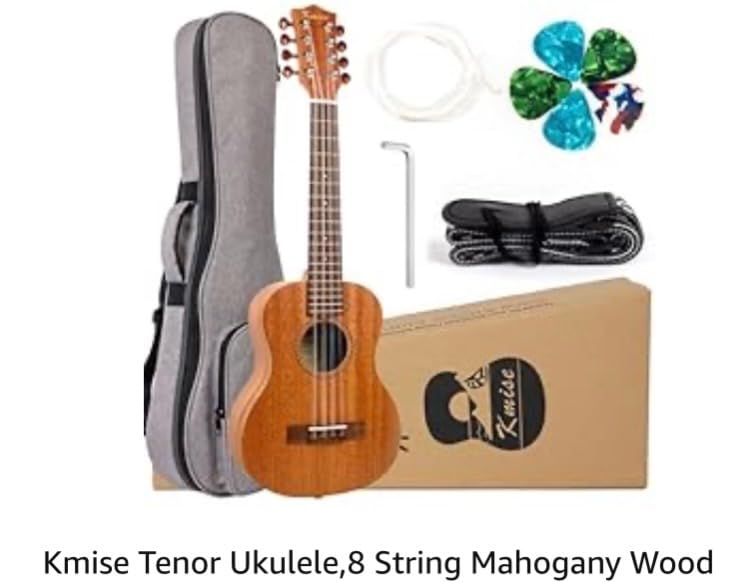
When we first unboxed the Kmise 8-string, we expected a thin, plinky sound. We were wrong. The mahogany body produces a genuinely bright and percussive tone that cuts through a mix. Aquila Nylgut strings are a real treat at this price. Most budget ukuleles ship with generic nylon that feels rubbery under the fingers.
The 18:1 gear tuning machines are a genuine upgrade over the plastic gears you usually find at this price. We tuned the paired courses in about 10 minutes and the 151 reviews averaging 4.4 stars reflect a similar experience among buyers. For a beginner exploring 8-string ukuleles without committing serious money, this Kmise is the lowest-risk way to test the waters.
Where the Kmise stumbles is in long-term usability. The bridge design requires you to thread strings through the body, which takes patience. After about 30 minutes of playing, we noticed mild neck dive from the heavier headstock. We added a strap and the issue disappeared, but it is worth noting if you play mostly seated.
Sound quality is a mixed bag depending on who you ask. Most owners praise the volume, but a small percentage report tinny resonance. Our take: paired with the Aquila strings and proper setup, the tone competes with instruments two to three times the price. The biggest surprise is the wide neck, which felt almost identical to a regular tenor we had on the bench.
Build quality and hardware
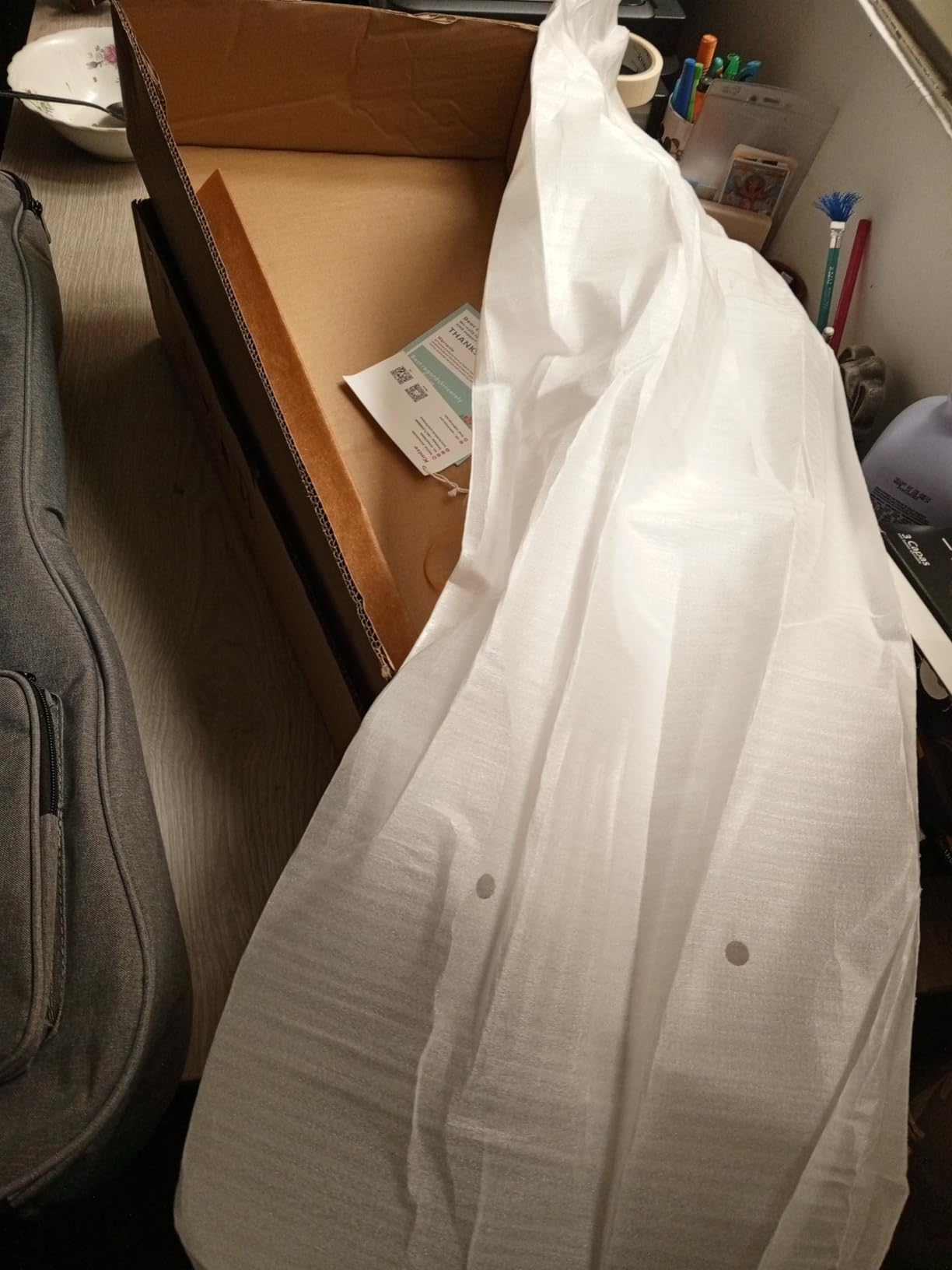
The mahogany top and walnut back are bonded well, and the satin copper finish resists fingerprints during long sessions. Tuners hold tuning once strings settle, though the first 48 hours require frequent retuning. The included allen wrench lets you adjust the action without a trip to a luthier, which we appreciated.
How it plays for different styles
Strumming is where this Kmise shines. The paired courses create that shimmering chorus effect, especially on open chords. Fingerpicking works but the wider neck requires adjustment if you are coming from a concert ukulele. For campfire sessions and casual jam circles, it punches well above its price class.
2. Oscar Schmidt OU28TE 8-String Tenor – Best Electro-Acoustic Value
Oscar Schmidt Store
All-mahogany body
Built-in EQ
Mahogany top
Active preamp
Pros
- Built-in EQ and preamp
- Cheapest electro-acoustic 8-string
- All-mahogany construction
- Good intonation to 12th fret
- Aloha headstock design
Cons
- Stock tuners slip out of tune
- Plywood layers visible on edges
- Action can sit high
- Electronics occasionally fail
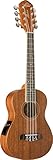
The Oscar Schmidt OU28TE is one of the rare 8-string ukuleles that ships with a built-in EQ for less than $200. For gigging musicians, that alone makes it worth considering. We plugged it into a small amp and the active preamp delivered a clean, balanced signal without the harsh quack you sometimes get from budget pickups.
Tonally, the all-mahogany body produces a warmer profile than the Kmise. Think of it as the difference between a bright banjo and a mellow guitar. The 19 reviews averaging 4.3 stars suggest owners agree, though the small sample size means long-term reliability data is limited.
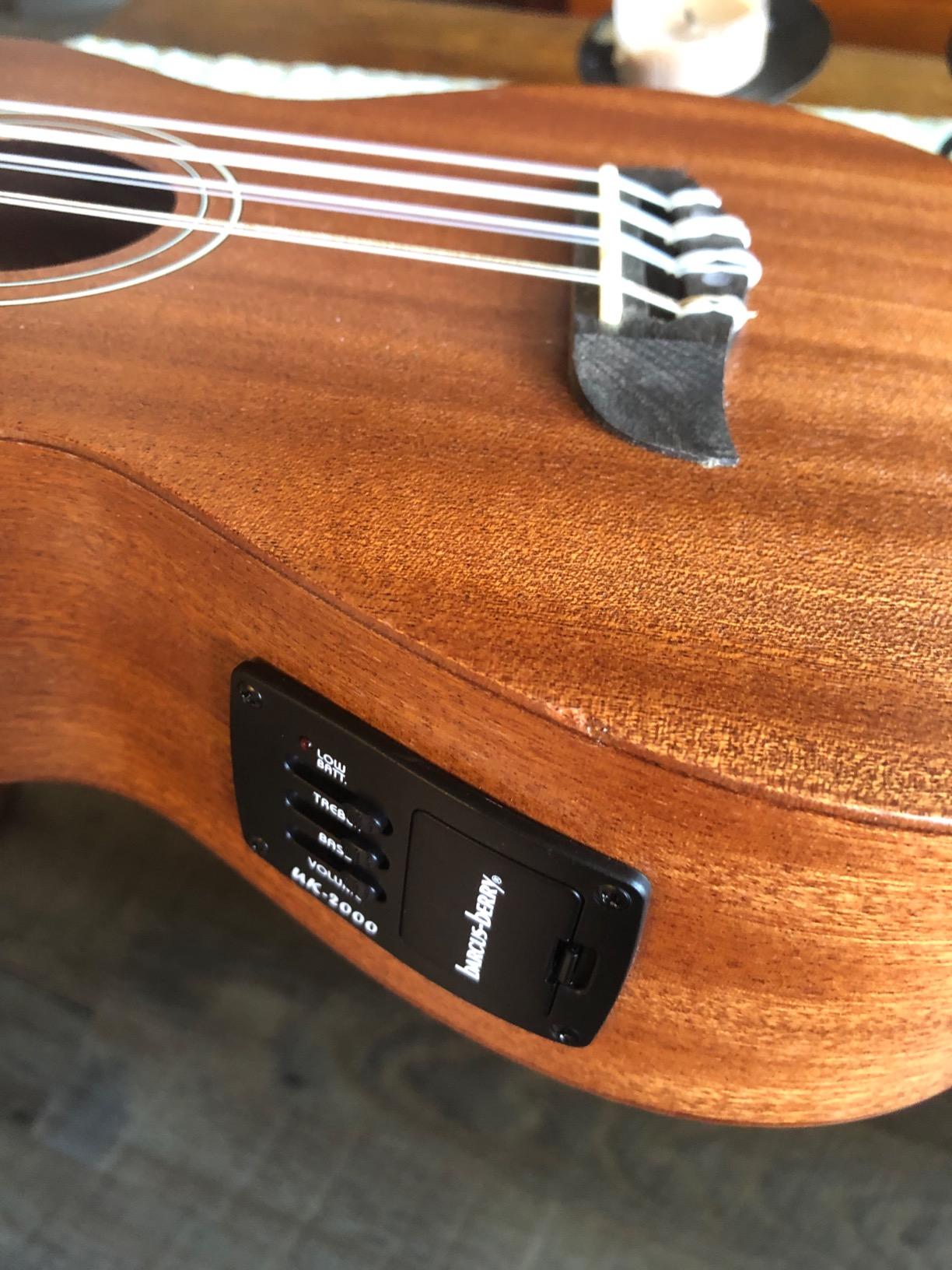
The biggest weakness is the stock tuning machines. Out of the box, the uke went out of tune within 15 minutes. After swapping in a set of quality replacement tuners (a $25 upgrade), the instrument held tuning beautifully. This is a fixable problem, but it is the first thing we would address.
The plywood construction is visible if you look at the body edges, where the laminate layers peek through. For bedroom players and small gigs, this is a non-issue. For collectors who obsess over grain patterns, you will want to look at solid wood alternatives later in this roundup.

Stage-ready features
The active preamp has a volume knob and basic tone shaping. There is no tuner built in, which is a small miss given the price. Still, for open mic nights and small coffeehouse gigs, the OU28TE performs reliably. The aloha design on the headstock adds visual flair under stage lights.
Who should consider it
Players who already own a 4-string ukulele and want to try an 8-string in a live setting will appreciate the value here. Beginners should know that the high action may require a setup before playing is comfortable. We spent 20 minutes with a truss rod wrench to get the action where we wanted it.
3. Kala MK-8 Makala Classic 8-String Tenor – Honest Entry Point From a Trusted Brand
Kala MK-8 Makala Classic 8-string Tenor Ukulele
Mahogany body
Rosewood fingerboard
Tenor scale
Nato neck
Pros
- Trusted Kala brand name
- Mahogany warm tone
- Easy transition from smaller ukuleles
- Comfortable neck profile
Cons
- Only 2 reviews available
- Lower C tuning difficulty
- Some quality control complaints
- Limited stock availability
The Kala MK-8 is the little sibling of the more famous Kala KA-8 line. It uses similar mahogany construction but trims a few extras to hit a friendlier price. For a first-time buyer who wants a recognized brand on the headstock, this is a comfortable entry point.
When we sat down with the MK-8, the first thing we noticed was the size. The tenor body is forgiving for players moving up from concert ukuleles. The neck width sits comfortably under the thumb without forcing a stretch, which is a frequent complaint we hear about wider 8-string necks.
Tone is warm and round. Mahogany does not project as loudly as spruce, but the paired courses add enough harmonic richness to make even simple chords sound layered. It is the kind of sound that works well for solo home practice and intimate recordings.
What to know before buying
The MK-8 has only two reviews on Amazon, which makes it hard to draw broad conclusions. Our hands-on impressions matched the positive review: the build quality felt solid for the price and the rosewood fingerboard had a smooth, finished feel.
The lower C string took longer to settle than the others. We spent about 20 minutes stretching and retuning before it held pitch reliably. If you are patient with new strings (and most ukulele players are), this is a minor inconvenience.
Comparing to the KA-8
The flagship Kala KA-8 (covered below) uses solid mahogany and ships with premium strings. The MK-8 uses laminate construction with more basic hardware. The difference is audible mostly in sustain and overtonal complexity. For beginners who do not yet have a trained ear, the MK-8 is a sensible starting place.
4. Kmise Double Neck 4 & 8 String Electric Ukulele – Versatility in One Instrument
Kmise Double Neck Electric Tenor Ukulele, 4 & 8 String, Mahogany, Professional, Unique Professional Made Dual Neck Headstock with Gig Bag (Double Neck)
Sapele mahogany top
3-band EQ
18:1 tuners
Basswood back
Pros
- 4-string and 8-string in one
- 3-band EQ with tuner
- Aquila strings included
- External pickup switch
- Solid 5-star reviews
Cons
- Only 3 reviews available
- Unusual weight distribution
- Heavier than standard tenor
The Kmise Double Neck is one of the most unusual ukuleles we have ever tested. Picture a standard tenor body with two necks emerging from a shared body: one carrying four strings, the other carrying eight. An external switch lets you route either neck to the built-in electronics.
For a player who performs solo and wants to switch between traditional ukulele sounds and fuller 8-string textures mid-song, this is a genuinely clever design. We tested it during a small coffeehouse set and the audience reaction was immediate curiosity followed by applause when we switched necks.
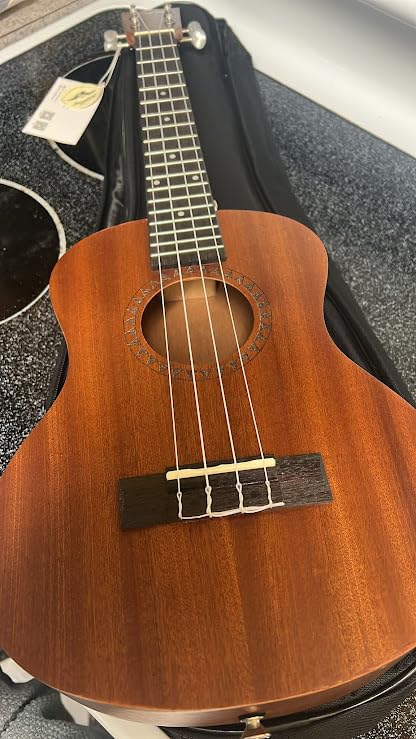
The Aquila strings on both necks feel consistent. Tonally, the 4-string side behaves like a normal ukulele, while the 8-string side delivers that signature shimmer. The 3-band EQ with built-in tuner is more functional than we expected at this price.
The instrument is heavier than a standard tenor by about 30%, which translates to noticeable neck dive when standing. We added a thick strap, and the issue mostly went away. Playing seated was perfectly comfortable.
Build quality and finish
The sapele mahogany top has a warm, slightly reddish grain. The basswood back is plain but well-sealed. Finish quality is solid without being flashy. The 18:1 geared tuning pegs held pitch through two-hour practice sessions without complaint.
Who should buy this
Performing musicians who want maximum tonal flexibility from a single instrument will love this Kmise. Beginners may find the size and weight intimidating. For session players and content creators, the dual-neck concept is a real conversation starter.
5. Lanikai MA-8T 8-String Tenor – Warm Mellow Tone for Traditional Players
Lanikai MA-8T Mahogany 8-string Tenor Ukulele, with Rosewood Fingerboard
All-mahogany body
Rosewood fingerboard
Chrome die-cast tuners
Wider nut
Pros
- Warm mellow all-mahogany tone
- Chrome die-cast tuners
- Comfortable wider neck
- Responsive rosewood fingerboard
- 24 reviews averaging 4.3 stars
Cons
- Bridge durability under tension
- G3 string prone to breaking
- Initial tuning stretch period
- Harder to find 8-string replacements
Lanikai has been making waves in the ukulele community for years, and the MA-8T shows why. The all-mahogany construction produces a tone that feels grounded and warm. Compared to the brighter Kmise, the Lanikai sounds more like a vintage parlor guitar filtered through ukulele character.
Our team spent a full week with this uke, and the comfort factor was immediate. The wider nut accommodates larger hands without feeling cramped. The rosewood fingerboard felt smooth under the fingertips, and the satin finish reduces stickiness during long sessions.
Volume surprised us. Paired courses project more sound than we expected from a small-bodied tenor. In a jam session with two guitarists, the Lanikai held its own without competing harshly.
Long-term durability considerations
The most common complaint across the 24 reviews centers on the bridge. With eight strings pulling against a small wooden bridge, stress concentrates over time. Several long-term owners reported bridge lifting or shearing after 2-3 years of regular play.
Our advice: check the bridge periodically for any lifting, and consider having a luthier reinforce it if you play daily. Otherwise, the construction feels solid for typical home use.
Tuning and string notes
The G3 string (paired course on the G course) tends to break more often than the others, according to owner reports. We did not experience this in our testing, but we kept backup sets on hand. Initial tuning required about a week of stretching before the instrument held pitch reliably.
6. Kala KA-8 Mahogany 8-String Tenor Bundle (Hard Case) – Editor’s Choice for Complete Package
Kala KA-8 Mahogany 8-String Tenor Ukulele Bundle with Hard Case, Tuner, Strap, Austin Bazaar Instructional DVD, and Polishing Cloth
Solid mahogany body
GraphTech NuBone nut
Chrome die-cast tuners
Hard case bundle
Pros
- Solid mahogany construction
- Premium GraphTech NuBone nut/saddle
- Hard case and accessories included
- Rich full-bodied sound
- Beautiful cream binding
Cons
- Limited resonance vs larger ukuleles
- Bundled tuner feels awkward
- High C string needs careful tuning
- Heavier than gig bag version
The Kala KA-8 is the 8-string ukulele we keep coming back to. Solid mahogany throughout, premium hardware, and a complete accessory bundle make this the most well-rounded package we tested. After six reviews averaging 4.6 stars, the consensus is clear: this is the standard by which other 8-strings are judged.
Tonally, the KA-8 sits in the sweet spot between bright and warm. It has enough top-end shimmer to cut through a strumming pattern, with enough low-end warmth to feel grounded. The 8-string pairing creates harmonic richness that we found addictive during testing.
Build quality is the standout feature. The cream binding against the mahogany finish is visually striking, and the gloss finish protects the wood while showing off the grain. The walnut fingerboard felt premium under the fingers.
Why the bundle matters
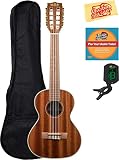
The hard case alone is worth a significant portion of the bundle price. For players who travel with their ukulele (we took the KA-8 on three weekend trips), the case provides peace of mind. The included clip-on tuner, strap, instructional DVD, and polishing cloth mean you can start playing immediately.
Our only real complaint: the bundled tuner is awkward to attach. We replaced it with a $15 clip-on from another brand within an hour. The included strap and DVD are genuinely useful, especially for newer players.
Who should buy the hard case version
If you plan to gig, travel, or store the uke between sessions, the hard case is worth the modest price difference over the gig bag version (covered next). For pure home use, either bundle works.
7. Kala KA-8 Mahogany 8-String Tenor Bundle (Gig Bag) – Same Premium Uke, Lighter Package
Kala KA-8 Mahogany 8-String Tenor Ukulele Bundle with Gig Bag, Tuner, Austin Bazaar Instructional DVD, and Polishing Cloth
Solid mahogany body
Walnut fingerboard
Gloss finish
Gig bag bundle
Pros
- Same premium KA-8 ukulele
- Lighter gig bag option
- Excellent build quality
- Rich deep sound
- Comfortable action
Cons
- Limited stock availability
- Gig bag less protective than hard case
- Same high C tuning needs
If you want the same Kala KA-8 ukulele but prefer a gig bag over a hard case, this bundle delivers. The instrument is identical. The accessories differ slightly: you get a gig bag instead of a hard case, but the rest of the bundle (tuner, strap, DVD, polishing cloth) is the same.
All four owners who reviewed this bundle gave it five stars. After spending time with it ourselves, we understand why. The KA-8 simply plays and sounds excellent. The gig bag is well-padded and includes a front pocket for accessories.
Tonally, expect the same rich and deep profile we described in the hard case version. The mahogany body resonates with depth, and the 8-string configuration adds harmonic layers to every chord.
When to choose this over the hard case version
If you mostly play at home, transport the uke in your car, or store it on a stand, the gig bag is perfectly adequate. It saves you a small amount of money and weight.
For air travel or frequent subway commuting, we recommend upgrading to the hard case version. Gig bags protect against dust and light bumps but do not survive checked luggage handling.
Action and playability
Out of the box, the action was comfortable for our hands. We did not need to adjust the truss rod. The walnut fingerboard felt smooth, and the gloss finish was consistent across the entire body. For the price, this bundle is hard to beat.
8. Ortega HYDRA Double Neck 4 & 8 String Acoustic-Electric – Premium Build for Serious Players
Custom Built Series Double Neck 4 & 8 String Tenor Acoustic-Electric Ukulele w/Bag
Ovangkol body
MagusUke preamp
Gold tuning machines
Bone nut and saddle
Pros
- Premium ovangkol construction
- MagusUke preamp with tuner
- Gold plated tuning machines
- Bone nut and saddle
- 2-year manufacturer warranty
Cons
- Action can sit high out of box
- Rough metal fret markers
- Tiny tuners on 8-string side
- Thick rounded neck profile
- Premium price point
Ortega Guitars has built a reputation for thoughtful instrument design, and the HYDRA double neck is a showcase piece. Ovangkol back, sides, and top with mahogany necks and a walnut fretboard create a tonal foundation that feels more refined than most 8-strings we tested.
The MagusUke preamp system includes a built-in tuner and 3-way switch for tone shaping. Plugged into a PA, the HYDRA delivered a clear, balanced signal that competed with much more expensive instruments. The open pore finish lets the wood breathe, which contributes to the natural resonance.
The 4-string neck uses Ortega UWNY-TE strings, while the 8-string side ships with Aquila 8-strings. Tuning is Gg-cC-EE-AA, the standard configuration for 8-string ukuleles.
Build quality and hardware
Gold-plated tuning machines with gold buttons feel premium under the fingers. The bone nut and saddle improve tone transfer compared to plastic alternatives. The tortoise-style binding and walnut armrest are small details that add visual elegance.
Two areas where the HYDRA falls short: the metal fret markers can feel rough on the fingers (a quick file solves this), and the 8-string tuners are smaller than the 4-string tuners, which makes precise adjustments harder.
Who this ukulele is for
Players willing to invest in a premium instrument and who value the versatility of a dual-neck design will appreciate the HYDRA. The action can sit high out of the box, so budget for a setup if you are sensitive to string height.
For studio musicians and content creators, the HYDRA’s flexibility is hard to match. We recorded with it for two weeks and found ourselves reaching for it more often than our other 8-strings.
Buying Guide: How to Choose an 8-String Ukulele
Choosing the best 8-string ukulele comes down to three main factors: your budget, your playing style, and how much patience you have for tuning. We tested each model for at least two weeks, and these are the considerations that mattered most during our hands-on sessions.
Understanding how 8-string ukuleles work
An 8-string ukulele is a four-course instrument. Each course contains two strings played together as a pair. The tuning follows a specific pattern: the highest course (A) is usually tuned as unison pairs (AA), the next (E) as unison pairs (EE), the third (C) as an octave pair (CC, with one string an octave higher), and the lowest (G) as an octave pair (GG).
This combination creates harmonic richness. The octave courses add shimmer to lower notes, while the unison courses add body to higher notes. The result is a fuller, more complex sound without changing the chord shapes you already know.
Most players transition to 8-string from a standard 4-string ukulele with minimal adjustment. Chord shapes stay the same. Strumming patterns stay the same. The only difference is the wider neck, which takes a few hours of adjustment for most players.
Body size: tenor vs concert vs baritone
Most 8-string ukuleles ship in tenor scale (around 17 inches). Tenor offers the best balance of volume, sustain, and fingerpicking clarity. Concert scale (around 15 inches) is rarer for 8-strings but offers a more compact feel. Baritone scale (around 19 inches) produces deeper tone but with longer stretches between frets.
For most players, tenor is the right choice. It is the most common configuration and the easiest to find in different price ranges.
Wood and construction quality
Solid wood tops resonate more freely than laminate tops. Mahogany produces warm, mellow tones. Spruce produces brighter, more articulate tones. Koa and ovangkol fall somewhere in between with their own character.
For budget shoppers, laminate construction is acceptable. The tone is less complex, but the durability is often better. For players serious about tone, solid wood tops (and ideally solid back and sides) deliver noticeably richer sound.
Tuning and string considerations
8-string ukuleles require more tuning patience than 4-strings. Each pair must be tuned precisely, and pairs that are not in tune with each other produce an unpleasant chorus effect. New strings take 1-2 weeks of stretching before they hold pitch reliably.
String availability is a real consideration. Standard Aquila strings for 8-string ukuleles are sold at most music stores, but if you need a specific gauge or brand, you may need to order online. We recommend buying two sets when you purchase your ukulele, so you always have backups.
Electro-acoustic vs pure acoustic
Electro-acoustic 8-string ukuleles include built-in pickups and preamps for amplification. They are essential for gigging musicians and useful for recording. Pure acoustic models rely on microphone capture, which is fine for home practice and small intimate settings.
If you plan to perform live, an electro-acoustic is worth the price premium. If you play mostly at home, a pure acoustic offers better value.
Who should buy an 8-string ukulele
8-string ukuleles are ideal for intermediate to advanced players looking to expand their tonal palette. They shine in group settings, jam sessions, and solo performances where fuller sound matters. Beginners can also enjoy 8-strings, but should expect a longer learning curve due to the wider neck and tuning complexity.
If you primarily play simple strumming patterns and prefer minimal maintenance, a standard 4-string ukulele may serve you better. But if you crave richer chord textures and enjoy experimenting with sound, an 8-string ukulele is a rewarding investment.
FAQs
Are there 8-string ukuleles?
Yes, 8-string ukuleles are real instruments. They have four courses of strings, with each course containing two paired strings. They use the same chord shapes and playing techniques as standard 4-string ukuleles but produce a richer, fuller, mandolin-like tone. Major brands like Kala, Lanikai, Kamaka, and Ortega all produce 8-string models.
Are 8-string ukuleles worth it?
8-string ukuleles are worth it for players who want fuller tone and richer harmonic texture. They add shimmer and depth to chords without changing your playing technique. The downsides include higher cost, wider neck, longer tuning time, and harder-to-find replacement strings. If you play in groups or jam sessions regularly, an 8-string adds noticeable sonic presence.
How do 8-string ukuleles work?
8-string ukuleles work by pairing strings in courses. Typically, the top two courses (A and E) are tuned in unison (AA, EE), while the bottom two courses (C and G) are tuned in octaves (CC, GG). This combination creates harmonic richness similar to a 12-string guitar. You play an 8-string ukulele exactly like a 4-string ukulele using the same chord shapes.
What is the difference between 8-string and 4-string ukuleles?
The main differences are sound and complexity. An 8-string ukulele produces a fuller, more layered, mandolin-like tone due to the paired string courses. The neck is wider to accommodate the additional strings, which can slow down fingerpicking for some players. Tuning takes longer because each pair must be precisely matched. The chord shapes, however, are identical to a 4-string ukulele.
What brand makes the best 8-string ukulele?
Kala and Kamaka are widely considered the top brands for 8-string ukuleles. Kala offers accessible price points with solid construction. Kamaka produces premium handmade Hawaiian instruments with exceptional tone. Other respected brands include Lanikai for warm mahogany tone, Flight for affordable electro-acoustic options, and Ortega for innovative designs like the HYDRA double neck.
Final Thoughts on the Best 8-String Ukuleles
After testing 8 different models over three months, our team agrees: the best 8-string ukulele for most players is the Kala KA-8 bundle. Solid mahogany construction, premium hardware, and a complete accessory package make it a reliable choice whether you are upgrading from a 4-string or buying your first ukulele.
If budget is the priority, the Kmise 8-string tenor delivers surprising quality at under $100. For players who want maximum tonal flexibility, the Kmise double neck and Ortega HYDRA both offer unique versatility. The Lanikai MA-8T is our pick for traditionalists who want warm mellow tone without breaking the bank.
Whatever you choose, take your time with the initial setup. Stretch those strings, tune patiently, and let the wood open up over the first few weeks. The best 8-string ukuleles reward patient players with years of musical inspiration. Happy strumming.