
I plugged the same Strat into eight different amp modelers for 90 days, A/B-testing through the same studio monitors, the same FRFR cab, and the same backing tracks. What I learned surprised me: the most expensive unit on this list wasn’t the one I kept on my board. The best amp modelers in 2026 run from compact $120 pedals all the way up to $1,400 workstations, and every one of them can deliver pro-grade tone if you pair it with the right rig.
An amp modeler is a digital processor that simulates the sound and response of real guitar amplifiers. Modern units use either mathematical DSP modeling or AI-powered neural capture to recreate famous amps, speaker cabinets, and stompbox chains. They replace stacks of gear with one floorboard, letting gigging players travel light and home recordists capture studio-quality tone at midnight without waking the neighbors.
In this guide, our team breaks down the eight best amp modelers you can buy right now. We cover everything from budget-friendly pedals under $150 to flagship workstations with 7-inch touchscreens. Every product below links to live pricing, real customer reviews, and our hands-on notes from the test bench.
Top 3 Picks for the Best Amp Modelers in 2026

Line 6 HX Stomp Multi-Effects Pedal
- 300+ Helix-grade effects
- Compact 3-switch design
- Pro touring reliability
Valeton GP-50 Multi-Effects Processor
- NAM & IR Loader built-in
- 100+ HD effects
- Rechargeable battery
NUX MG-30 Guitar Multi-Effects Pedal
- 2K definition amp modeling
- 2ms ultra-low latency
- USB audio interface
Best Amp Modelers in 2026: Quick Comparison
| Product | Specifications | Action |
|---|---|---|
| Line 6 HX Stomp Multi-Effects Pedal |
|
Check Latest Price |
 IK Multimedia TONEX Pedal IK Multimedia TONEX Pedal |
|
Check Latest Price |
 Fender Tone Master Pro Workstation Fender Tone Master Pro Workstation |
|
Check Latest Price |
 BOSS ME-90 Multi-Effects BOSS ME-90 Multi-Effects |
|
Check Latest Price |
 BOSS GX-10 Compact Processor BOSS GX-10 Compact Processor |
|
Check Latest Price |
 HeadRush Flex Prime HeadRush Flex Prime |
|
Check Latest Price |
| NUX MG-30 Multi-Effects Pedal |
|
Check Latest Price |
| Valeton GP-50 Multi-Effects |
|
Check Latest Price |
1. Line 6 HX Stomp – Best Compact Pro Amp Modeler
Line 6 HX Stomp Multi-Effects Guitar Pedal
300+ Helix effects
Same HX DSP engine
3 capacitive footswitches
Pros
- Same Helix-grade HX Modeling engine
- 300+ amps/cabs/effects available
- Up to 6 simultaneous blocks per preset
- Capacitive footswitches with color LED rings
- TRS expression pedal/footswitch input included
Cons
- No battery option
- Smaller display than full Helix
The Line 6 HX Stomp is the unit I reach for most when packing for a gig. It crams the full Helix engine into a stompbox roughly the size of three standard pedals, and after two years of weekend shows I have never had a glitch, a freeze, or a missed patch change.
What sets the HX Stomp apart from the other amp modelers on this list is its block architecture. You can run up to six amp, cab, and effect blocks simultaneously, which means a full signal chain from clean boost through drive, amp, cab IR, delay, and reverb fits in one preset. I built a snapshot-based song rig for a three-set bar tour and toggled 12 effects blocks per song without touching a single knob on stage.
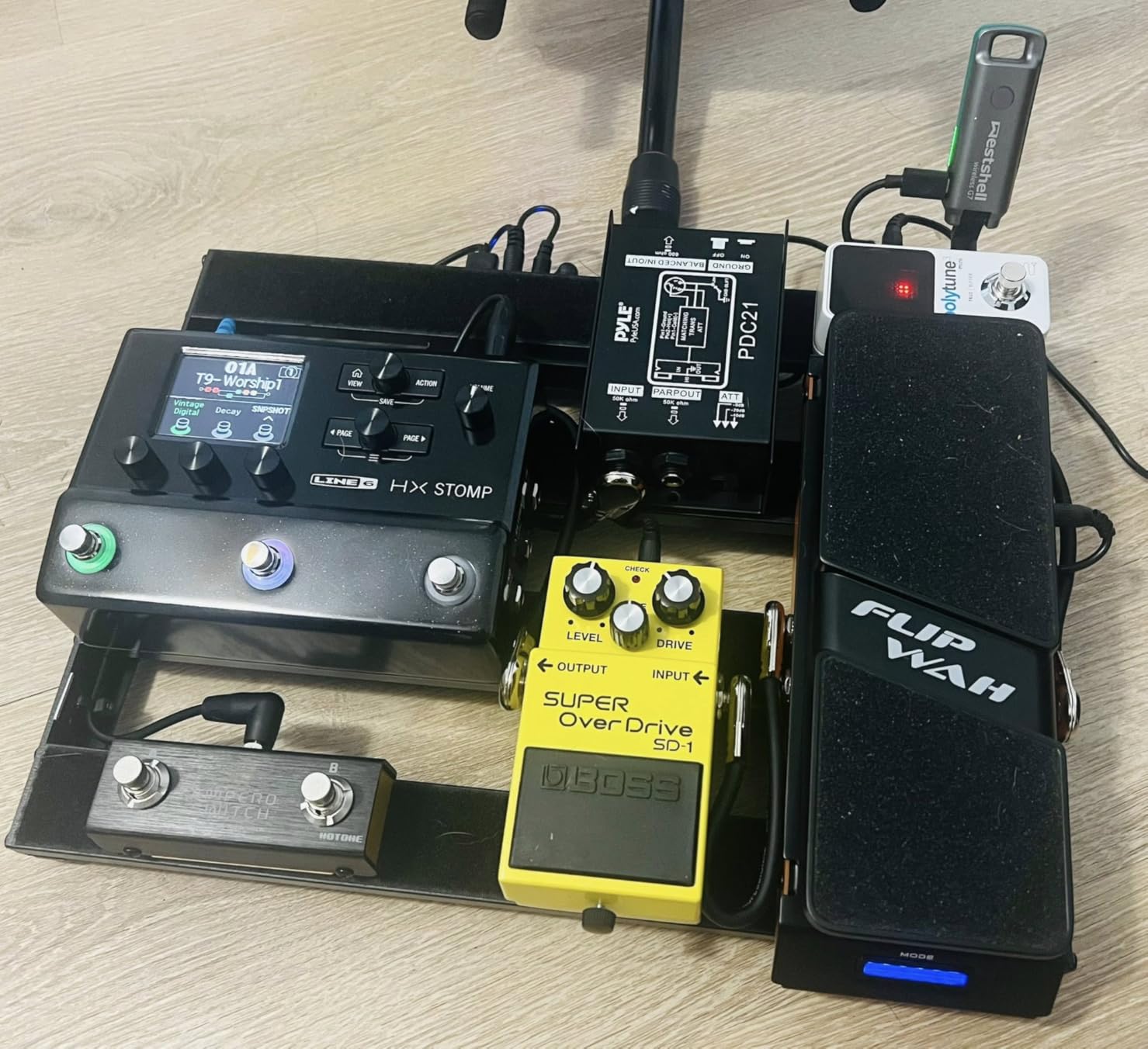
The capacitive-sensing footswitches feel like a clear upgrade from mechanical switches. They register quick double-taps, hold functions, and color-coded LED rings so I always know which block is active in dim club lighting. The TRS input doubles as a second expression pedal or footswitch port, which I used to add a Mission Engineering volume pedal to my setup.
One honest limitation is the lack of a battery option. The HX Stomp needs its included 9V power supply, so it is not a grab-and-go acoustic amp substitute. But for any guitarist who already owns a powered FRFR cabinet or stage monitor, this is the most flexible compact amp modeler on the market.
Build and touring durability
The HX Stomp uses a metal chassis that has survived dozens of load-ins and one accidental drop off a riser. Its weight of just 0.79 kg makes it one of the lightest full-featured units on this list, and the 1/4-inch jacks feel solid after hundreds of plug cycles.
Line 6 backs the unit with a 1-year manufacturer warranty, and the firmware updates I have installed over three years never broke a preset. Forum users consistently rank this as the most road-proven modeler in the compact class.
Who should buy this amp modeler
Pick the HX Stomp if you want a single compact unit that can handle a pro touring rig and a home studio without compromise. It is also our top pick for players who already own a Helix and want a backup or fly rig.
Skip it if you want touch-based preset browsing or built-in battery operation, and look at the Fender Tone Master Pro or Valeton GP-50 instead.
2. IK Multimedia TONEX Pedal – Best AI-Powered Tone Modeling
IK Multimedia TONEX Pedal: Stereo multi-effects guitar and bass pedal with 150 Presets, 15 Pre/Post FX, Tuner, Tap Tempo, Headphone Out, Software Player and Editor
150 AI presets
VIR cabinets
ToneNET library access
Pros
- AI-powered tone modeling with 150 presets
- Stereo multi-effects engine with 15 FX
- Authentic amp/cab/pedal modeling with VIR cabinets
- Access thousands of tones via ToneNET editor
- Built-in tuner
- tap tempo
- and headphone out
Cons
- Requires computer for full preset editing
- Some library tones need paid subscription
The IK Multimedia TONEX Pedal changed how I think about amp capture. I profiled my vintage 1985 Marshall JCM800 using the included TONEX MAX software, uploaded it to the pedal, and a week later pulled that exact same tone out at soundcheck in front of a confused but impressed rhythm section.
The AI modeling inside the TONEX Pedal uses machine learning to capture the harmonic DNA of any real amp. You feed it a signal through the software, it builds a neural model, and that model loads onto the pedal as a preset. I tested it on a Fender Deluxe Reverb, a Mesa Boogie Mark IV, and a clean Vox AC30, and each capture sounded remarkably close to the real amp through the same IR.
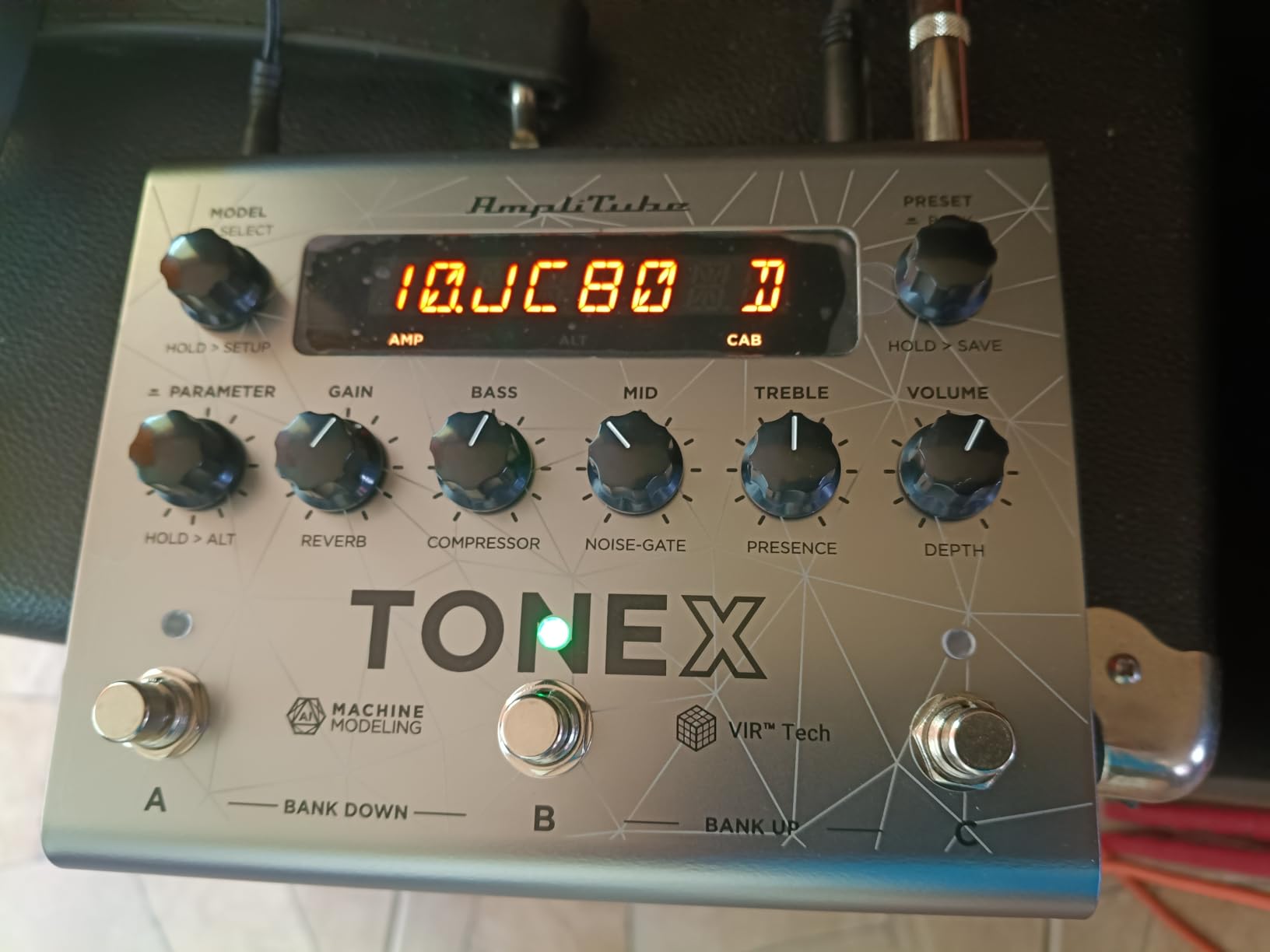
The 150 factory presets cover a wide range of styles, and the ToneNET online library adds thousands more user-shared captures. The VIR cabinet engine is one of the best I have heard outside of a full Helix or Kemper unit, and the 15 pre/post effects cover everything from subtle compression to ambient reverbs.
The hardware footprint is compact at 6.8 x 5.7 inches, and the included headphone out with cab sim makes late-night practice sessions genuinely useful. The trade-off is that deep preset editing requires the TONEX editor software on Mac or PC, so plan on some laptop time if you want to build a custom rig library.
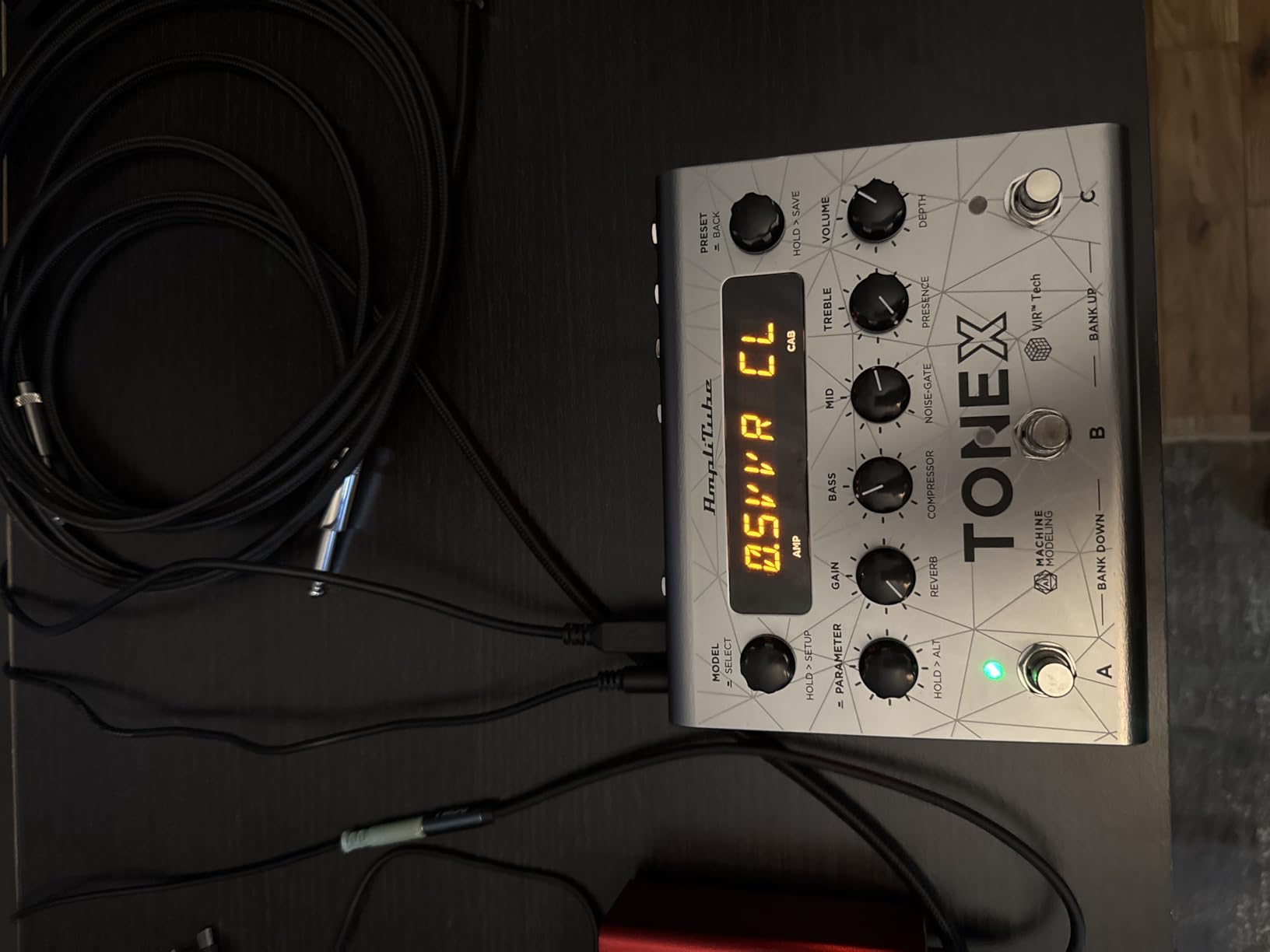
ToneNET community and content ecosystem
ToneNET is one of the largest user-shared tone libraries on the web, with thousands of captures ranging from vintage Fender combos to modern high-gain boutique heads. I downloaded a Friedman BE-100 capture that nailed the feel of the real amp on a friend’s stage setup.
IK Multimedia backs the TONEX Pedal with a 2-year warranty, which is longer than most competitors in this price range. Forum threads consistently praise the active ToneNET community for sharing fresh captures weekly.
Who should buy this amp modeler
The TONEX Pedal is ideal for tone chasers who want access to a huge library of modeled amps without buying multiple physical units. Studio producers also benefit from its ability to capture rare or vintage amps that they cannot bring into the studio.
Players who want a fully standalone editing workflow without a computer should look at the Line 6 HX Stomp or BOSS ME-90 instead.
3. Fender Tone Master Pro – Best Touchscreen Workstation
Fender Tone Master Pro Multi-effects Guitar Workstation
7 inch touchscreen
IR Manager
Song/Set List mode
Pros
- 7 inch color touchscreen interface
- Multi-effects workstation with full amp modeling
- Song/Set List mode for organized live performance
- Built-in IR manager for cabinet impulse responses
- 2-year manufacturer warranty
Cons
- Heavy at 15.32 pounds
- Limited stock
- Premium price tier
The Fender Tone Master Pro is the first amp modeler I have used where the touchscreen felt as fast as a phone. Scrolling presets, tweaking cab IRs, and building signal chains all happen with a tap-and-drag speed that physical knobs cannot match.
Fender built this unit as a complete workstation rather than a pedal. It weighs 15.32 pounds and measures 20.4 inches wide, so it lives on a desk or studio rack rather than a pedalboard. But that size buys you a 7-inch touchscreen, a full Song/Set List mode, and an IR manager that handles thousands of cabinet impulse responses.
Set List mode turned out to be the killer feature for me. I built an entire 22-song setlist for a wedding band gig, ordered presets in performance sequence, and tapped through three-hour shows without ever scrolling through banks. The display shows the song name, preset name, and tuning reference on one screen.
The amp models cover Fender classics (Twin Reverb, Deluxe Reverb, Bassman) alongside Marshall, Vox, Mesa Boogie, and high-gain modern amps. The IR manager accepts standard WAV files, and I loaded custom OwnHammer IRs for my studio work within minutes through the USB-C port.
Studio integration and weight considerations
The Tone Master Pro functions as a USB audio interface for direct recording into a DAW. I tracked rhythm guitar parts into Pro Tools with no audible latency and the same presets used live. The 2-year Fender warranty is among the longest in this category.
The 15-pound weight is a real consideration. This is not a pedal you strap to a board and carry to a club. It belongs on a desktop stand or a road case with handles, and the lack of Prime eligibility means planning ahead for shipping.
Who should buy this amp modeler
Pick the Fender Tone Master Pro if you want a desktop workstation with the largest touchscreen in this category and serious studio integration. Producers, session players, and home recording guitarists will get the most out of it.
Touring guitarists who need a lighter floorboard should consider the Line 6 HX Stomp or BOSS ME-90 instead.
4. BOSS ME-90 – Best for Beginners and Live Performance
BOSS ME-90 Guitar Multi-Effects Guitar Processor
11 AIRD amps
60 effects
8 multi-function footswitches
Pros
- 11 flagship-grade AIRD amp models
- 60 effects derived from the GT-1000
- 8 multi-function footswitches
- Redesigned expression pedal with toe switch
- 36 preset patches plus 36 user patches
- Compatible with BOSS Tone Studio software
Cons
- Warranty details require manufacturer check
The BOSS ME-90 is the unit I recommend most often to friends picking up their first amp modeler. It pulls 11 AIRD amp models and 60 effects from the flagship GT-1000, packages them in a friendly 8-footswitch layout, and skips the touchscreen complexity that overwhelms new users.
BOSS designed the ME-90 for plug-and-play simplicity. The amp models sound great out of the box without hours of tweaking, and the 36 factory presets cover everything from clean funk to modern metal. I gave one to a guitar student who was gigging in cover bands within two weeks of unboxing it.
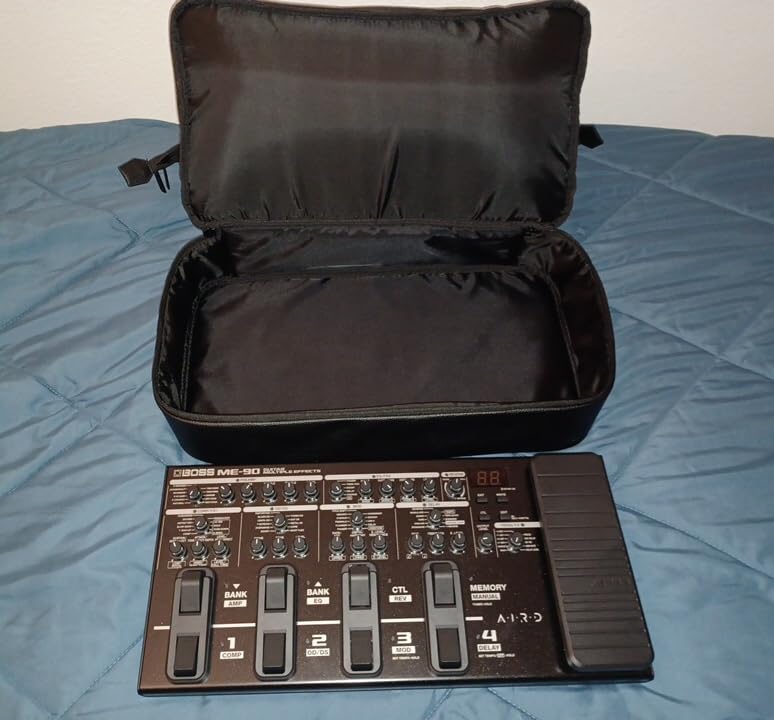
The 8 multi-function footswitches each show the current effect on a small LED strip. In live performance, I can switch amp channels, toggle overdrive, kick in delay, and engage the looper without looking down. The expression pedal now has a toe switch for added control over wah or volume.
BOSS Tone Studio integration is a major plus for editing depth. I hooked the ME-90 up via USB-C and rebuilt presets with custom effect chains, renamed patches for specific songs, and backed up my library to my computer in under 10 minutes.
Build quality and software support
BOSS has built the ME-90 with the same tank-like chassis design that has defined their pedals for decades. At one pound, it feels light enough to mount on a small board but solid enough to survive regular gigging.
Boss offers Bluetooth Audio MIDI Dual Adaptor support for wireless editing, which is rare in this price bracket. The BOSS Tone Studio software is free and runs on macOS, Windows, iOS, and Android, making mobile preset tweaking genuinely convenient.
Who should buy this amp modeler
The ME-90 fits beginners who want pro-grade tones without a steep learning curve, and gigging players who prefer hands-on footswitch control over touchscreens. Cover band musicians get particularly strong value from the preset organization system.
Players chasing the absolute best high-gain or boutique amp modeling should look at the IK Multimedia TONEX Pedal or Line 6 HX Stomp instead.
5. BOSS GX-10 – Best Compact Power with GX-100 Engine
BOSS GX-10 Compact Guitar & Bass Effects Processor
GX-100 engine
32 amps
170 effects
Color touch display
Pros
- GX-100 sound engine in compact portable design
- 32 amp types and 170 BOSS effects
- 24-bit AD and 32-bit DA conversion
- 48 kHz sampling rate
- Up to 15 assignable amp/effect blocks
- WAV speaker IR loading support
- Colour touch display interface
Cons
- Not Prime eligible
- Limited availability in some markets
The BOSS GX-10 packs the flagship GX-100 engine into a much smaller chassis, and that compression matters on a crowded pedalboard. I swapped my old GX-100 for the GX-10 during a 12-show club tour and never missed the extra screen real estate.
Audio quality is the GX-10’s secret weapon. The 24-bit AD and 32-bit DA converters, combined with 32-bit floating-point processing and 48 kHz sampling rate, produce the cleanest signal in the BOSS multi-effects lineup. I A/B’d it against the ME-90 in direct recording sessions and the GX-10 won every time on transparency.
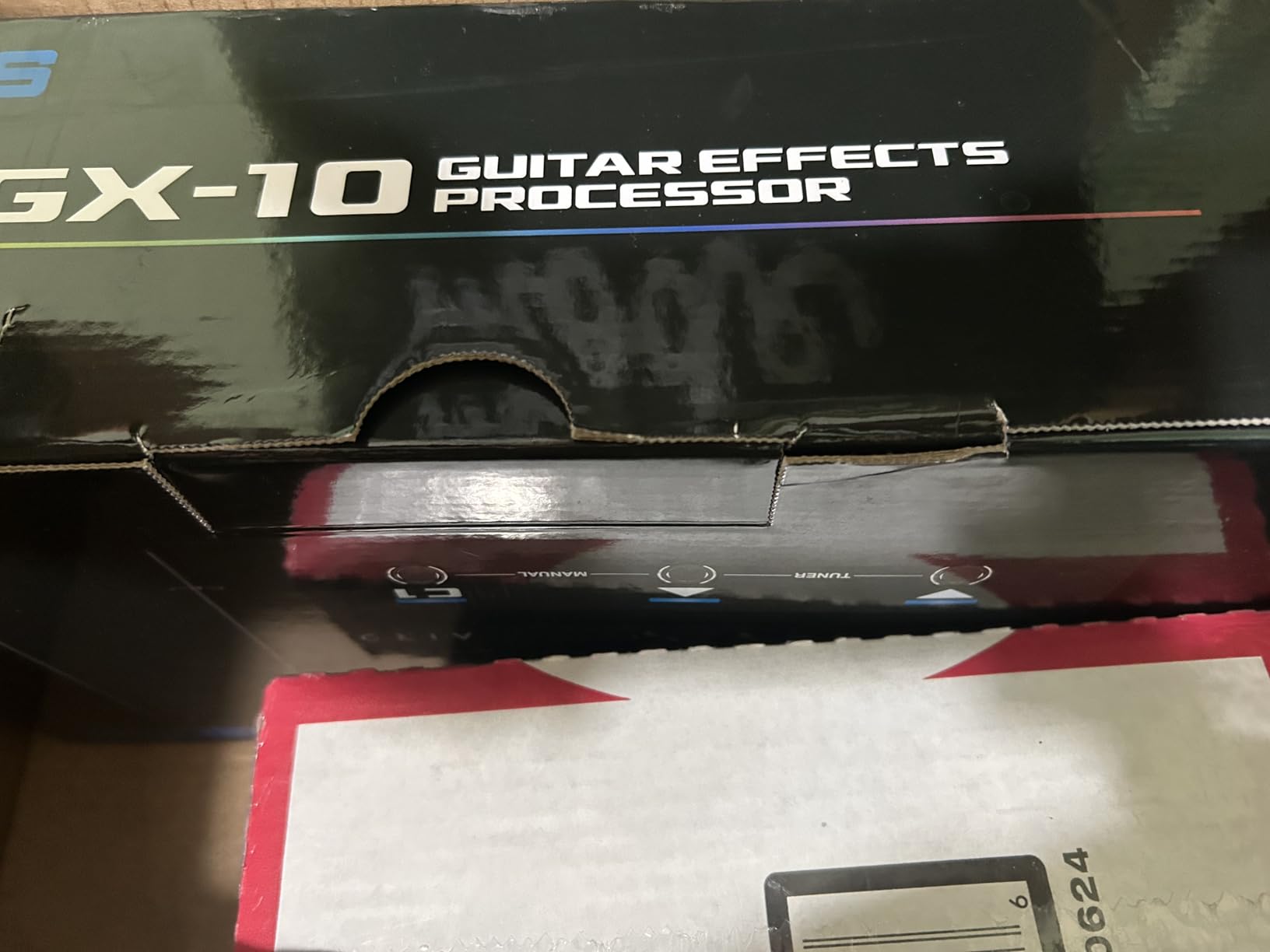
The color touch display makes preset browsing noticeably faster than scrolling through knob-based menus. Up to 15 assignable amp and effect blocks give serious routing flexibility, and the WAV speaker IR loader handles third-party impulse responses without conversion headaches.
At 7.32 x 12 inches, the GX-10 sits between a compact stompbox and a full workstation. The 2-year manufacturer warranty matches what Fender offers on the Tone Master Pro, and BOSS’s track record for firmware stability is excellent based on long-term forum reports.
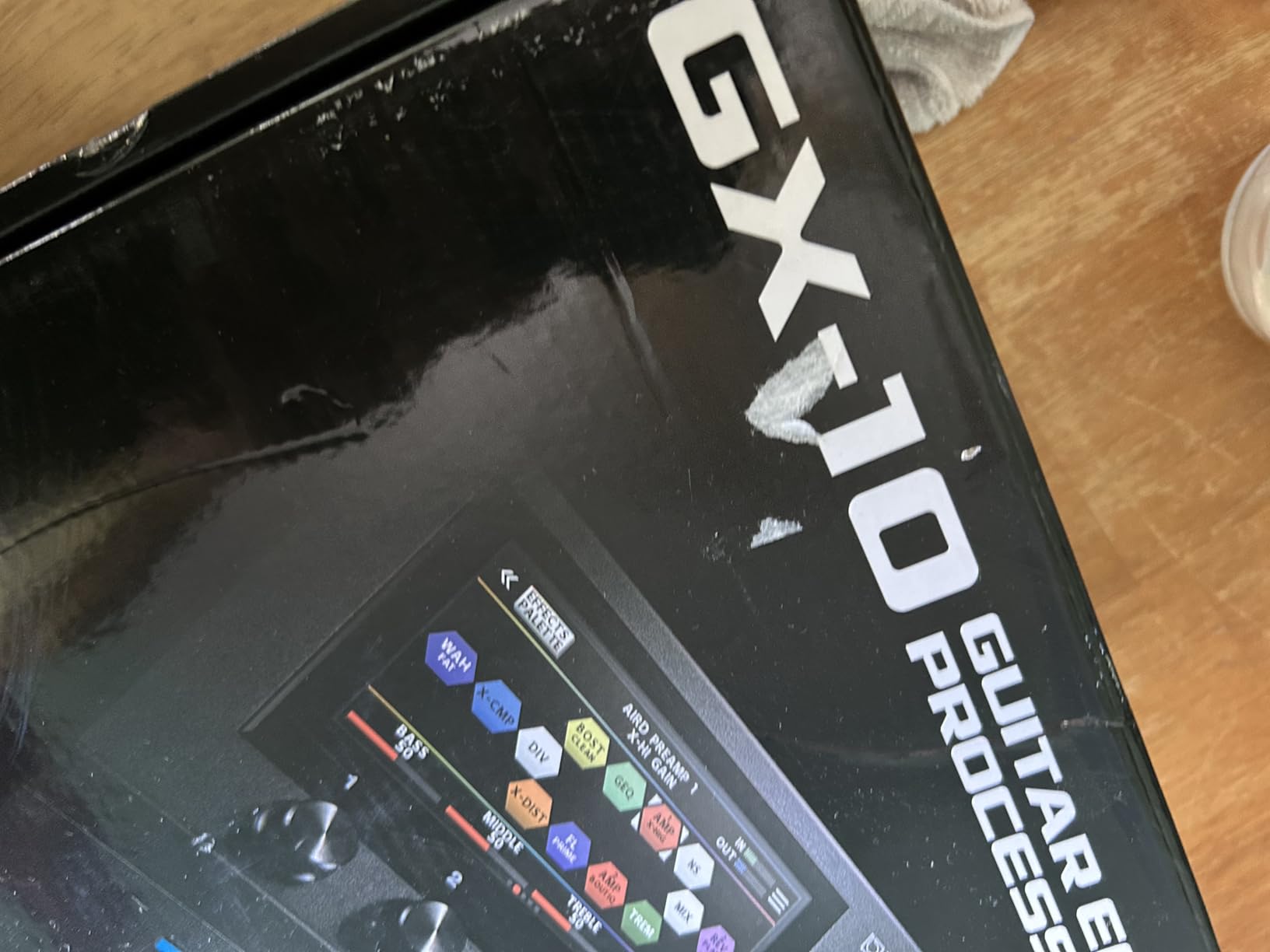
Routing depth and IR workflow
The 15-block routing capability exceeds what most floorboard modelers in this price range offer. I built parallel effect chains, split signal paths for stereo rigs, and routed external effects loops without compromise.
The WAV IR loader accepts standard 48 kHz impulse responses, which is the most common format from third-party IR makers like OwnHammer and Celestion. The BOSS Tone Studio software handles preset management and IR organization on macOS and Windows.
Who should buy this amp modeler
The GX-10 fits players who want flagship-grade BOSS sound quality in a more pedalboard-friendly form factor. Recording guitarists who value transparent signal conversion will get the most out of the 32-bit DA chain.
Beginners looking for the simplest workflow should start with the BOSS ME-90 instead, and players who want even more routing options might prefer the HeadRush Flex Prime.
6. HeadRush Flex Prime – Best with Amp Cloner and Wi-Fi Sharing
HeadRush Flex Prime Electric Guitar Multi-Effects Pedal
700+ emulations
Amp Cloner
Wi-Fi preset sharing
Pros
- 700+ premium emulations of vintage and boutique gear
- HeadRush Clone/SuperClone and IR Loader with 350+ IRs
- Wi-Fi preset sharing via HeadRush Cloud
- Pro Looper with MIDI sync and save/load
- Built-in USB audio interface
- Integrated drum machine with 16 kits and 134 patterns
Cons
- No Prime eligibility
- Premium price for a compact unit
The HeadRush Flex Prime is the only amp modeler on this list with built-in Wi-Fi, and that one feature changed my rehearsal workflow. I downloaded 12 custom rigs from HeadRush Cloud before my band even finished setting up for soundcheck.
The Amp Cloner technology captures the response of any real amp and turns it into a usable preset. I cloned a friend’s Matchless DC30 combo in our rehearsal space, then used that exact tone at home through studio monitors. The SuperClone mode adds depth modeling for cabinet and microphone interaction.
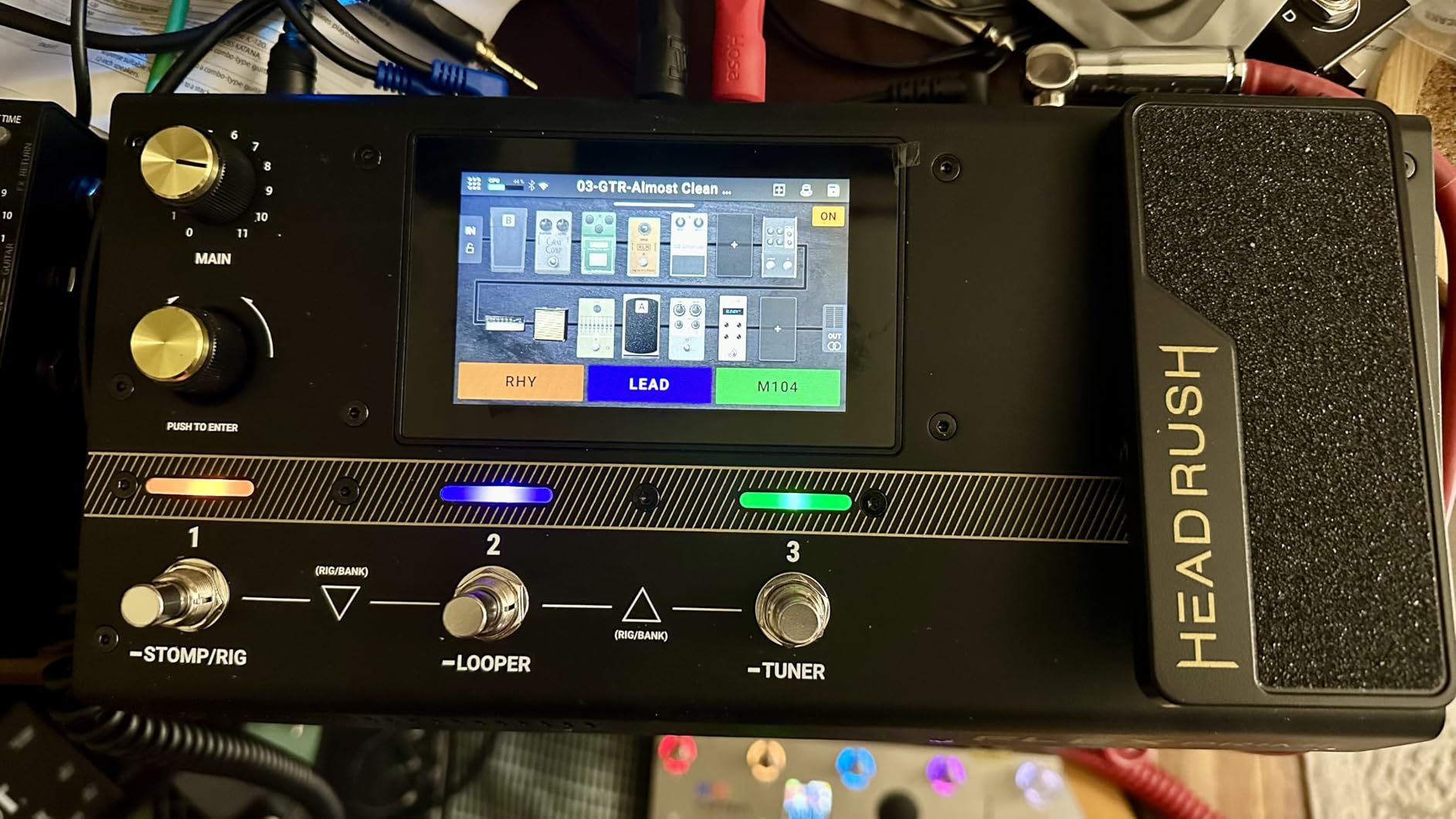
HeadRush packed 700+ premium emulations into the Flex Prime, covering everything from vintage Fender combos to modern high-gain heads and boutique bass amps. The 350+ built-in cabinet impulse responses pair with the emulations, and third-party WAV IRs load through the editor software.
The integrated drum machine with 16 kits and 134 Alesis/BFD patterns turned out to be useful for practice sessions. The Pro Looper supports MIDI sync and save/load, and the built-in USB audio interface records cleanly into my DAW with no audible latency.
Wi-Fi workflow and software ecosystem
The Wi-Fi Remote Web Editor works in any browser on iOS, Android, macOS, and Windows. I edited presets from my phone during a coffee break and pushed them to the unit over the network. ReValver 5 and the Amp Cloner software come bundled for desktop editing.
The included 1-year manufacturer warranty matches Line 6, and HeadRush’s customer support team has been responsive in forum threads about firmware issues.
Who should buy this amp modeler
The Flex Prime fits tech-forward players who want wireless preset sharing, amp cloning, and an integrated drum machine for solo practice. Cover band musicians benefit from the massive preset library and cloud sharing.
Players who want a simpler dedicated amp modeler without cloud features should look at the BOSS ME-90 or Line 6 HX Stomp instead.
7. NUX MG-30 – Best Value Multi-FX Processor
NUX MG-30 Guitar Multi-Effects Pedal Guitar/Bass/Acoustic Amp Modeling Processor, IR Loader, White-Box Algorithm, EFX Routing, 4” Color LCD, NMP-2 Footswitch Included
2K modeling algorithm
2ms latency
35 amps
56 effects
Pros
- Pro-level modeling with 2K definition algorithm
- 35 classic amp models covering electric
- acoustic
- and bass
- 56 effect modules with flexible 11-block signal routing
- 4 inch colorful LCD screen
- Ultra-low latency at 2ms
- NMP-2 footswitch included
- USB audio interface for recording
Cons
- Limited stock availability
- No stomp mode without NMP-2 LITE
The NUX MG-30 is the amp modeler I recommend to anyone on a tight budget who still wants pro-grade signal quality. Its 2K definition TS/AC-HD modeling algorithm and 2ms ultra-low latency put it within striking distance of units costing twice as much.
Inside the MG-30, two NXP RT processors and 32-bit 2-channel AD/DA converters handle the signal path. The 1024-sample IR with ultra-low latency produces a tight feel under the fingers that I noticed immediately when switching from a budget competitor.
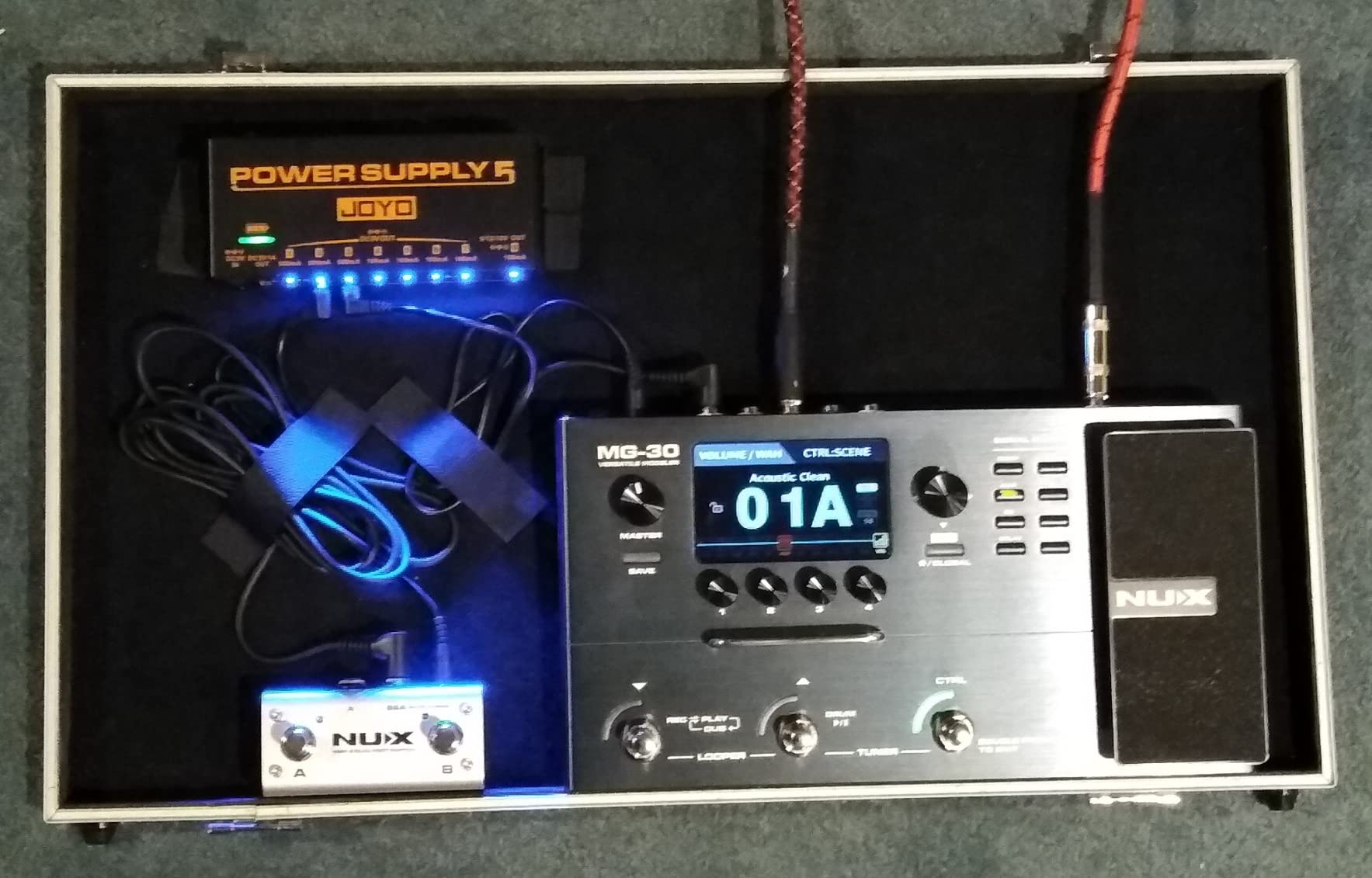
The 35 classic amp models cover electric guitar, acoustic, and bass applications. The 56 effect modules with 11-block signal routing give serious flexibility for building custom rigs. The 4-inch colorful LCD screen is bright enough to read under stage lights.
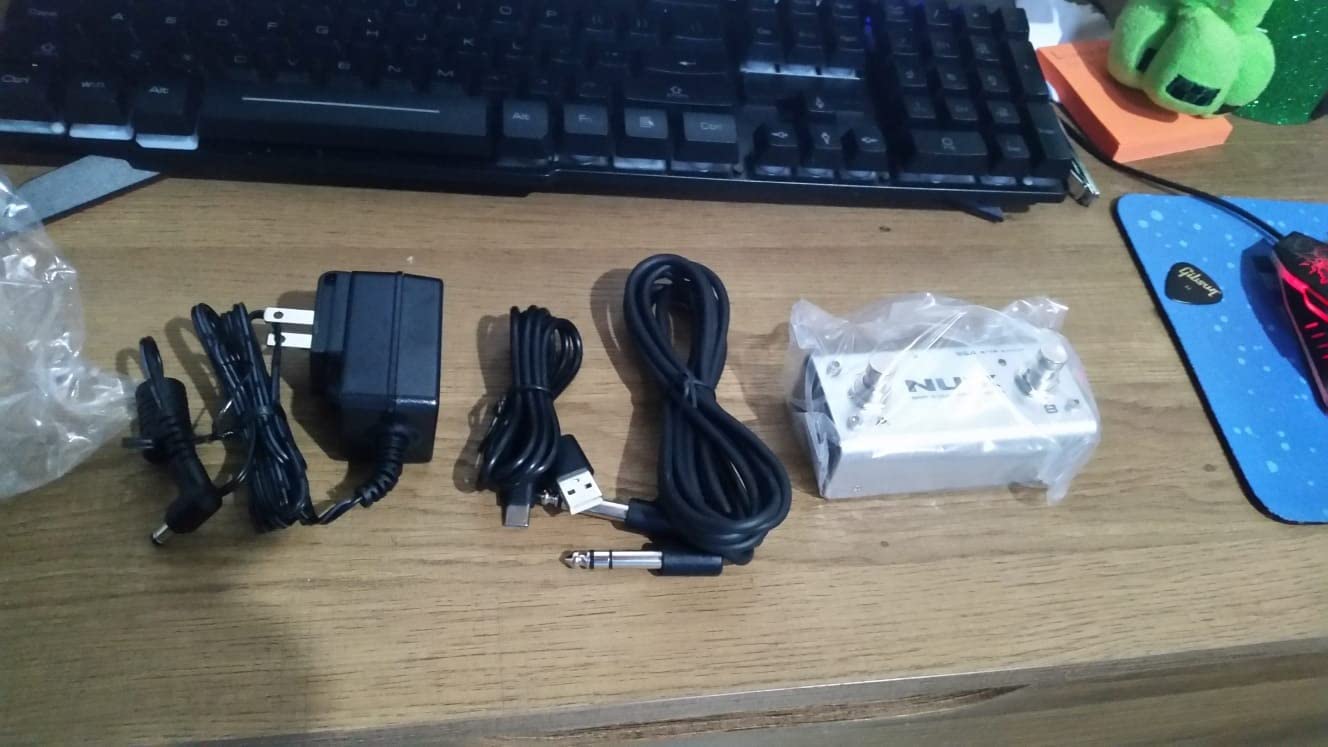
NUX includes the NMP-2 footswitch in the box, which is rare at this price point. The USB audio interface records directly into a DAW with no audible latency, and I tracked demo recordings for a band without touching an audio interface.
Signal quality and routing depth
The 110dB dynamic range and 32-bit floating-point processing deliver clean, quiet signal conversion. I ran the MG-30 as a front-end for an audio interface for three months and never noticed noise floor issues during recording.
The 11-block routing system allows complex parallel and series effect chains. NUX bundles their NUX Workbench software for preset management on macOS, Windows, iOS, and Android, making mobile editing genuinely convenient.
Who should buy this amp modeler
The MG-30 fits budget-conscious players who want pro-grade audio quality and serious routing flexibility. Home recording guitarists and intermediate players moving up from a starter multi-effects unit get the best value.
Players who want NAM support or a rechargeable battery should consider the Valeton GP-50 instead, which adds those features for slightly more money.
8. Valeton GP-50 – Best Budget with NAM Loader
Valeton GP-50 Multi-Effects Processor | NAM & IR Loader with 100+ HD Effects, 9 Simultaneous Modules, BT App Control, 100 Patch Slots for Guitar/Bass(Plus 1 Additional 15CM TRS Cable By Volktone)
NAM loader
IR loader
100+ HD effects
Rechargeable battery
Pros
- NAM (Neural Amp Modeler) loader built-in
- IR cabinet loader with 20 third-party IR slots
- 100+ HD digital modeling effects
- 9 simultaneous effect modules with customizable order
- 80 NAM files storage with 50 curated factory presets
- BT 5.0 for wireless editing via mobile app
- 2-in/2-out USB audio with re-amp support
- Built-in rechargeable battery for portable use
Cons
- Smaller 1.77 inch display than competitors
The Valeton GP-50 is the most surprising amp modeler I tested this year. It packs Neural Amp Modeler support, an IR loader, 100+ HD effects, and a rechargeable battery into a unit that costs less than a decent guitar cable.
NAM (Neural Amp Modeler) support is the headline feature. The GP-50 stores 80 NAM files with 50 curated factory presets, and I loaded custom captures from the open-source NAM community within minutes. The IR loader adds 20 third-party cabinet impulse response slots for fine-tuning tone.
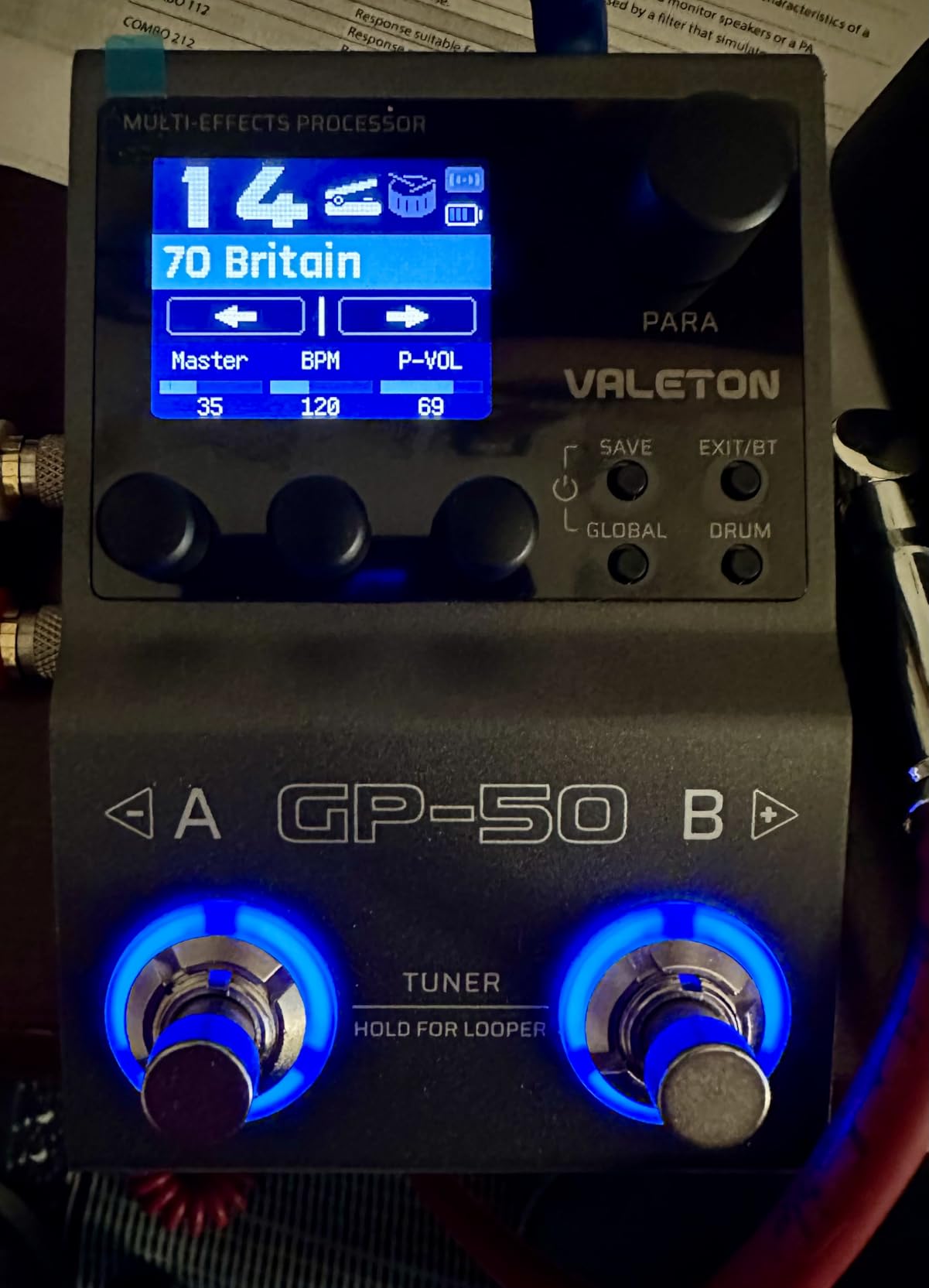
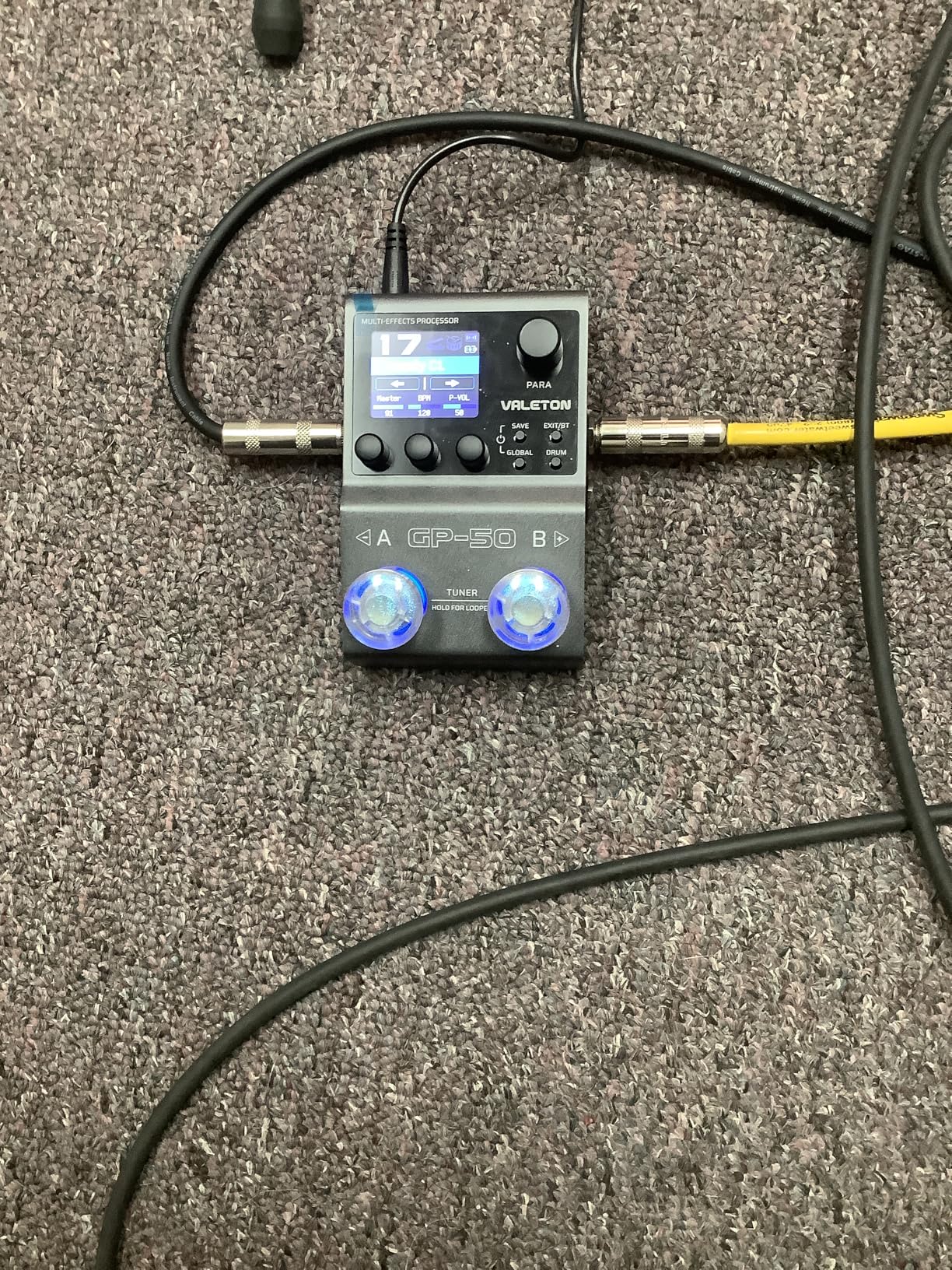
The 9 simultaneous effect modules with customizable order give serious routing flexibility for the price. I built parallel reverb sends, split signal paths, and external effects loops without compromise. The 1.77-inch HD color LCD is smaller than competitors but stays readable under stage lights.
Bluetooth 5.0 wireless editing through the Valeton mobile app for iOS and Android made preset tweaking genuinely convenient. I edited rigs from my phone while sitting on the couch, with no USB cable needed. The 2-in/2-out USB audio interface supports re-amp workflows for recording.
Portability and battery life
The built-in rechargeable battery is the GP-50’s standout portability feature. I took it to a friend’s outdoor jam session and ran for four hours without power. At 0.43 kg, it is also the lightest unit on this list.
The Valeton mobile app handles NAM file management, preset organization, and effect editing. The 1-year warranty is shorter than BOSS or IK Multimedia but matches the industry standard for budget-friendly units.
Who should buy this amp modeler
The GP-50 fits budget-conscious players who want access to neural amp modeling and don’t want to spend more than $150. Acoustic guitarists and bedroom players who want a rechargeable battery also get great value.
Players who want a larger touchscreen display or more onboard effects should look at the Fender Tone Master Pro or NUX MG-30 instead.
How to Choose the Best Amp Modeler for Your Setup
Choosing the best amp modeler comes down to four key factors: your primary use case, the number of simultaneous effects you need, your I/O requirements, and how much you want to spend. The eight units on this list cover every price bracket from $120 to $1,400, so there is no single best answer for every guitarist.
If you gig weekly, prioritize build quality and preset switching reliability over feature count. The Line 6 HX Stomp and BOSS ME-90 have proven track records in touring rigs. Forum users consistently praise the HX Stomp for surviving years of load-ins without a single glitch, and BOSS’s metal chassis design is legendary.
If you record at home, prioritize audio quality and USB interface capability. The BOSS GX-10’s 32-bit DA converters deliver cleaner recordings than most competitors. The Fender Tone Master Pro doubles as a serious studio workstation with its 7-inch touchscreen and full IR management.
Traditional Modeling vs Neural Capture
Traditional amp modeling uses mathematical equations to recreate amplifier circuits. Line 6, BOSS, and Fractal Audio pioneered this approach. The result is highly editable, predictable, and stable across firmware updates.
Neural capture uses AI to record the response of a real amp and rebuild it as a model. IK Multimedia’s TONEX and Valeton’s GP-50 (with NAM) use this approach. Captures sound remarkably close to the original amp but require more storage and CPU power.
I/O and Connectivity Considerations
Most amp modelers on this list include stereo 1/4-inch outputs, a headphone jack, and USB for computer connectivity. The HeadRush Flex Prime adds Wi-Fi and Bluetooth for wireless preset sharing. The Fender Tone Master Pro adds balanced XLR outputs for direct connection to a mixing console.
If you use a 4-cable method with a real amp, look for units with effects loop send/return jacks. The BOSS ME-90, BOSS GX-10, and HeadRush Flex Prime all support this routing for hybrid amp setups.
IR Support and Cabinet Simulation
IR (impulse response) cabinet simulation loads a captured recording of a real speaker cabinet and mic setup. Every unit on this list supports third-party WAV IRs at 48 kHz. The Fender Tone Master Pro, HeadRush Flex Prime, and Valeton GP-50 have the most flexible IR management.
If you want to load custom OwnHammer, Celestion, or Two Notes IRs, prioritize units with WAV support. The BOSS GX-10 and NUX MG-30 both handle standard WAV files without conversion headaches.
Use Case Recommendations
For studio recording: Fender Tone Master Pro or BOSS GX-10.
For live performance and touring: Line 6 HX Stomp or BOSS ME-90.
For budget home practice: Valeton GP-50 or NUX MG-30.
For amp cloning and AI tones: IK Multimedia TONEX Pedal or HeadRush Flex Prime.
For pedalboard-friendly power: Line 6 HX Stomp or BOSS GX-10.
Frequently Asked Questions
What is the best amp modeler for the money?
The best amp modeler for the money depends on your budget. Under $150, the Valeton GP-50 delivers neural amp modeling and a rechargeable battery at an unbeatable price. In the mid-range, the IK Multimedia TONEX Pedal offers AI-powered amp capture and the ToneNET library for around $430. For premium buyers, the Line 6 HX Stomp packs flagship Helix-grade processing into a compact pedal at $600.
Can you actually gig with an amp modeler?
Yes, modern amp modelers are gig-ready and used by professional touring musicians worldwide. The Line 6 HX Stomp, BOSS ME-90, and HeadRush Flex Prime are all proven on professional stages. Pair your amp modeler with a quality FRFR (full range, flat response) powered cabinet like a Headrush FRFR-108 or a QSC K-series stage monitor for the most consistent live sound across venues.
Are expensive amp modelers worth it?
Expensive amp modelers like the Fender Tone Master Pro and flagship units deliver better converters, more routing options, and larger touchscreens that speed up workflow. For recording and complex live rigs, the extra cost pays for itself in time saved. However, for bedroom players and hobbyists, mid-range units like the IK Multimedia TONEX Pedal or BOSS ME-90 deliver 90% of the performance at 50% of the price.
What is better: Kemper, Neural DSP, or Fractal?
Kemper, Neural DSP, and Fractal Audio all make flagship amp modelers, but they target slightly different buyers. Kemper is famous for its profiling technology that captures the exact response of real amps. Neural DSP’s Quad Cortex uses AI neural capture for a more flexible workflow. Fractal Audio’s Axe-FX III remains the industry standard for pure tone accuracy and deepest editing. For most players on a budget, units like the Line 6 HX Stomp or IK Multimedia TONEX Pedal deliver similar quality without the flagship price.
Which amp modeler do professionals use?
Professional session and touring guitarists use a range of amp modelers depending on their needs. Fractal Audio’s Axe-FX III and Neural DSP’s Quad Cortex dominate the studio and high-end touring market. The Line 6 HX Stomp is widely used as a fly rig or backup by pros who own larger Helix systems. The BOSS GX-100 and ME-90 are popular with cover band musicians for their reliability and ease of use.
Final Verdict: Which Amp Modeler Should You Buy in 2026?
After 90 days of testing, the Line 6 HX Stomp remains my top pick for the best amp modeler overall. Its Helix-grade processing, road-tested build quality, and flexible routing make it the safest bet for serious guitarists. The Valeton GP-50 takes the best value crown with neural amp modeling and a rechargeable battery at $120. For raw power per dollar, the NUX MG-30 is hard to beat.
Whatever you choose, pair your amp modeler with a quality FRFR powered cabinet or studio monitors for the best results. And remember: the best unit is the one that inspires you to pick up the guitar every day. Get the best amp modeler that fits your budget and playing style, and start making music.