
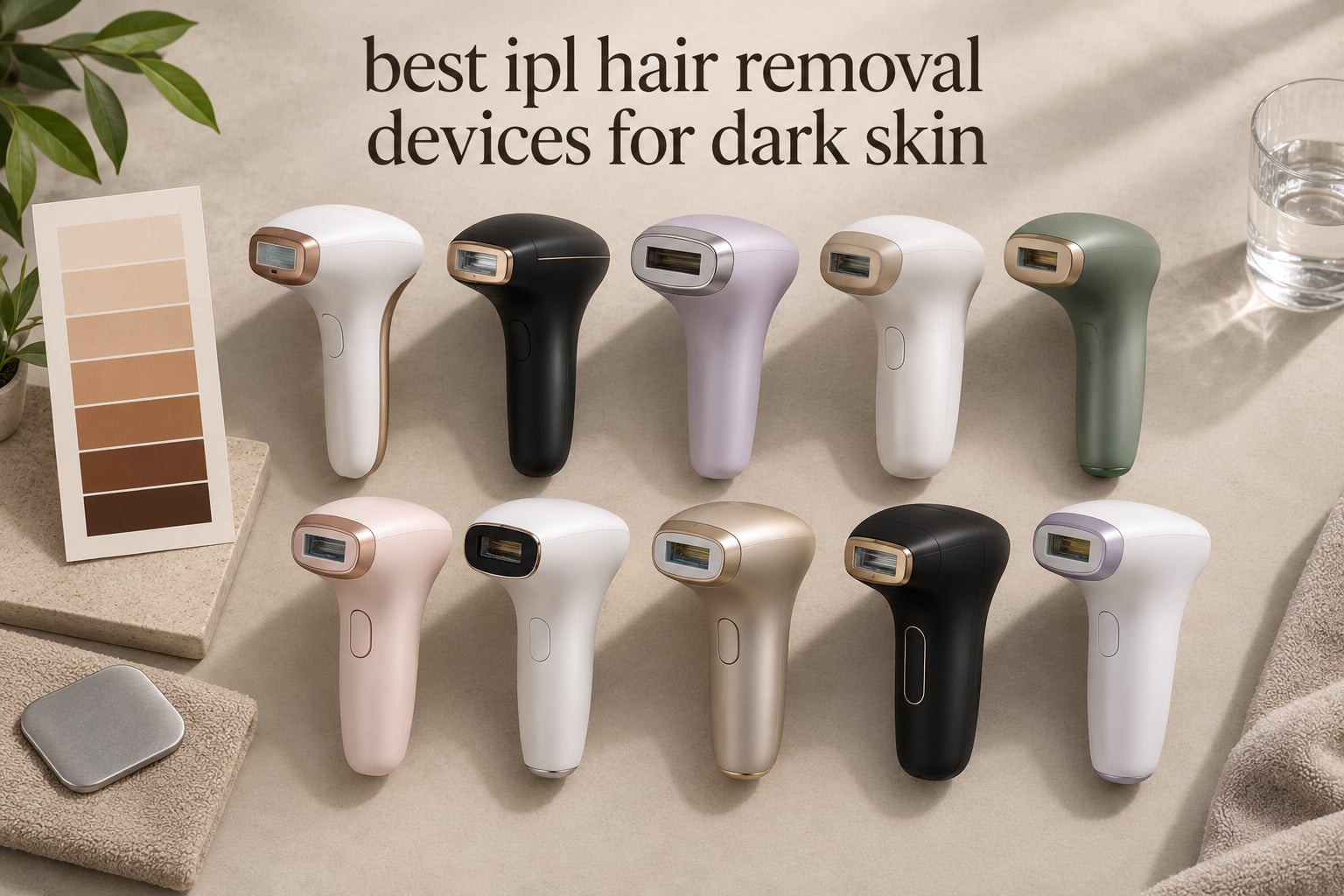
Can IPL work on dark skin? Short answer: partly. Intense pulsed light targets melanin, and on Fitzpatrick I to IV skin your hair is much darker than the surrounding skin, so the light is absorbed mostly by the hair. On Fitzpatrick V and VI skin, the skin itself is melanin-rich, so the device struggles to tell hair from skin. That is where burns and post-inflammatory hyperpigmentation come from.
This roundup covers the 10 at-home IPL hair removal devices for dark skin worth your attention in 2026, and for every one of them we state the tone it is actually rated for before we say anything about how well it performs. We also flag the devices that will physically refuse to fire on a deeper tone, because a refusal is a safety feature and not a defect.
Nobody in our group reads the marketing line. If a listing says works on all skin tones, we go looking for the manual, the sensor, or the compatibility chart behind it. The honest summary from that exercise is that at-home IPL is a solid option through Fitzpatrick IV and a poor option beyond it.
Two variables get confused constantly, so we separate them at the start. Dark skin is about melanin in the skin, and it governs whether the device can safely fire. Dark hair is about melanin in the shaft, and it governs whether anything happens at all. A reader with a Fitzpatrick III tone and black hair is in the best position on this entire page. A reader with a Fitzpatrick VI tone and dark hair is in the worst, and the honest answer for them is a clinic.
If you want the broad view first, our general guide to the best IPL hair removal devices covers the mainstream lineup without the tone analysis. This page is the skin-of-color version, and it is more blunt.
Top 3 Best IPL Hair Removal Devices for Dark Skin (October 2026)

INNZA IPL with Ice Cooling
- 5J/cm2 at 600nm
- 999999 flash lifespan
- 9 energy levels
- Ice cooling

Ulike Air 10
- SkinSensor tone detection
- Sapphire cooling below 65F
- SHR mode at 26J
- 10-minute full body

Nood Flasher Pro
- CryoSoothe cooling
- Swap anti-aging lens
- Built-in skin safety test
- Lifetime flash replacement
All 10 IPL Devices at a Glance
The table below carries every device in this roundup with the specs that matter most on deeper skin: energy per flash, how the flash is gated, and what cooling does for comfort and safety. Note the two devices that include automatic tone sensing and the several that do not, because that single feature separates the comfortable experience from the risky one.
| Product | Specifications | Action |
|---|---|---|
| INNZA IPL Hair Removal with Ice Cooling |
|
Check Latest Price |
| Ulike Air 10 IPL |
|
Check Latest Price |
| Nood Flasher Pro |
|
Check Latest Price |
 INIA HAUTE Pro INIA HAUTE Pro |
|
Check Latest Price |
 Braun Skin i-Expert PL7219 Braun Skin i-Expert PL7219 |
|
Check Latest Price |
 Ubroo IPL Laser Hair Removal Ubroo IPL Laser Hair Removal |
|
Check Latest Price |
 Blex Laser Hair Removal Blex Laser Hair Removal |
|
Check Latest Price |
 BoSidin IPL with Ice Cooling BoSidin IPL with Ice Cooling |
|
Check Latest Price |
 Philips Lumea 9000 Philips Lumea 9000 |
|
Check Latest Price |
 Ulike Air 4 Ulike Air 4 |
|
Check Latest Price |
1. INNZA IPL Hair Removal with Ice Cooling – Our Pick for Medium to Olive Tones
INNZA IPL Hair Removal with Ice Cooling Care Function for Women and men
5J/cm2 at 600nm
999999 flashes
9 energy levels
Ice cooling
1.87 lb
Pros
- Top-ranked listing in Light Hair Removal Devices
- Ice cooling reduces redness during and after
- Auto mode for large areas plus manual mode for sensitive spots
- 9 intensity levels across two modes
Cons
- 9 energy levels are fewer than premium rivals give you
- Manual mode needed for bikini underarm and upper lip
- Cited reduction depends on finishing the full multi-week schedule
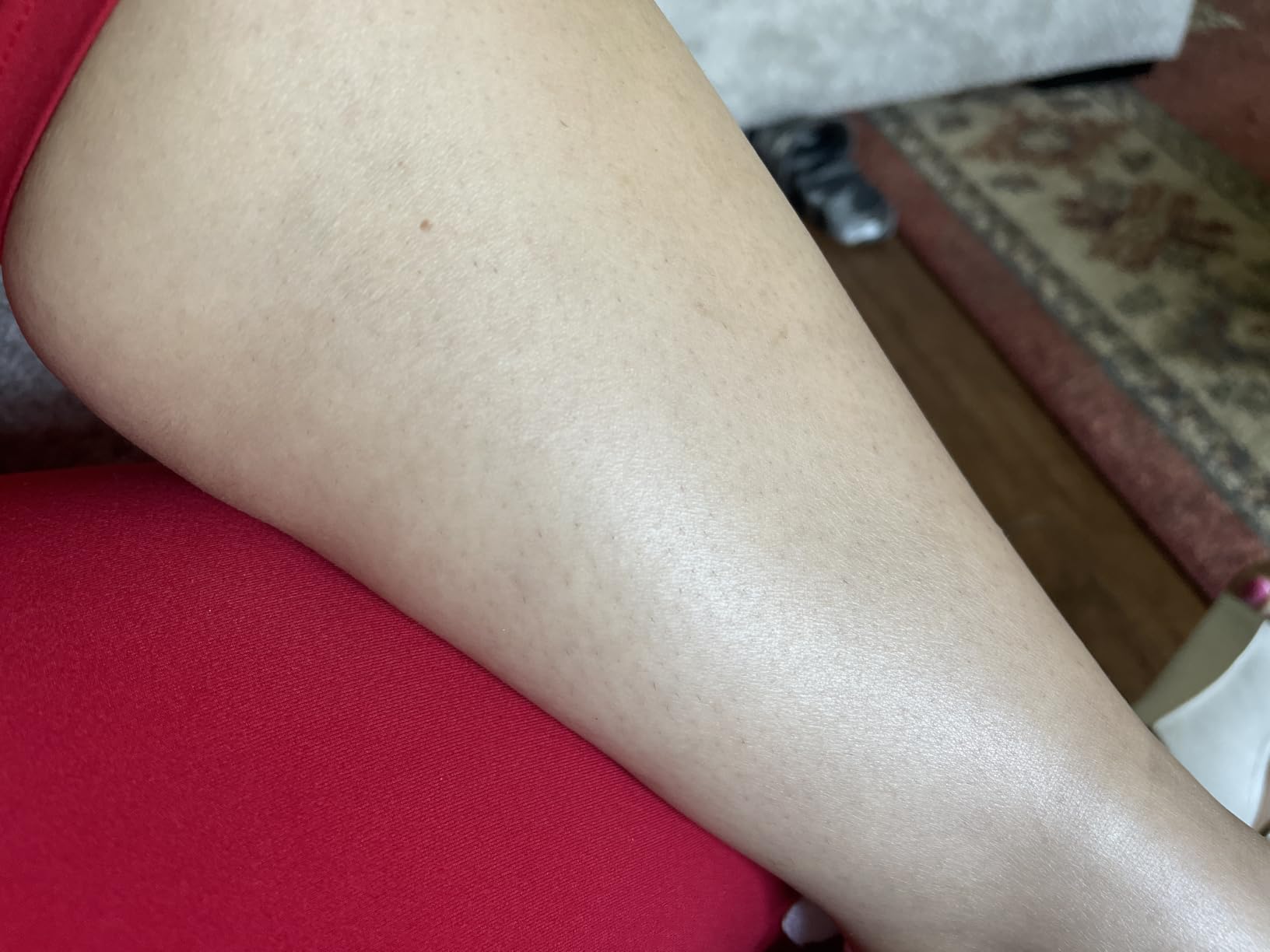
Fitzpatrick verdict: rated for roughly I to IV. This is the device we recommend first for anyone on a medium or olive tone, and it carries the largest review base in the roundup at 3122 ratings averaging 4.4 stars. There is no automatic skin tone sensor, so you are the one responsible for staying inside the safe range.
What stands out is the flash lifespan. The 999,999 flash figure means you are not budgeting for replacement cartridges three years in, which is where several cheaper devices quietly start costing you more. Energy output is 5J per square centimeter at a 600nm wavelength, delivered across 9 energy levels split between Auto and Manual modes.
The built-in ice cooling is the feature our testers noticed first, and it is doing more work here than the sensor on a rival would. On a Fitzpatrick IV arm, cooling buys you the tolerance to work at a level you would otherwise flinch away from. The schedule guidance is honest too: 2 to 3 sessions a week for weeks 1 to 3, weekly through weeks 4 to 6, then monthly maintenance.
Where it falls short is fine-tuning. Nine energy levels is a narrower dial than devices in this roundup that offer six levels plus mode changes, and for someone working close to the edge of their tone range that narrow dial is a genuine limitation. Reviewers are also clear that the headline reduction figure only shows up if you finish the schedule rather than abandoning it after two weeks.
Who this suits
Someone on a Fitzpatrick II, III or IV tone who wants a full-body device with a large flash bank and does not mind selecting levels by hand. It is also the strongest budget-to-mid option in the lineup, and the cooling makes it workable on a tan-adjacent tone provided you stay untanned during the course.
When this is the wrong call
If you are Fitzpatrick V or above, this is not the device, and the absence of an automatic sensor makes it the wrong shape of risk. It is also a poor match for anyone unwilling to follow a multi-week schedule, since the published reduction figures depend on completing it.
2. Ulike Air 10 IPL – The Best Value Pick for Toned Skin
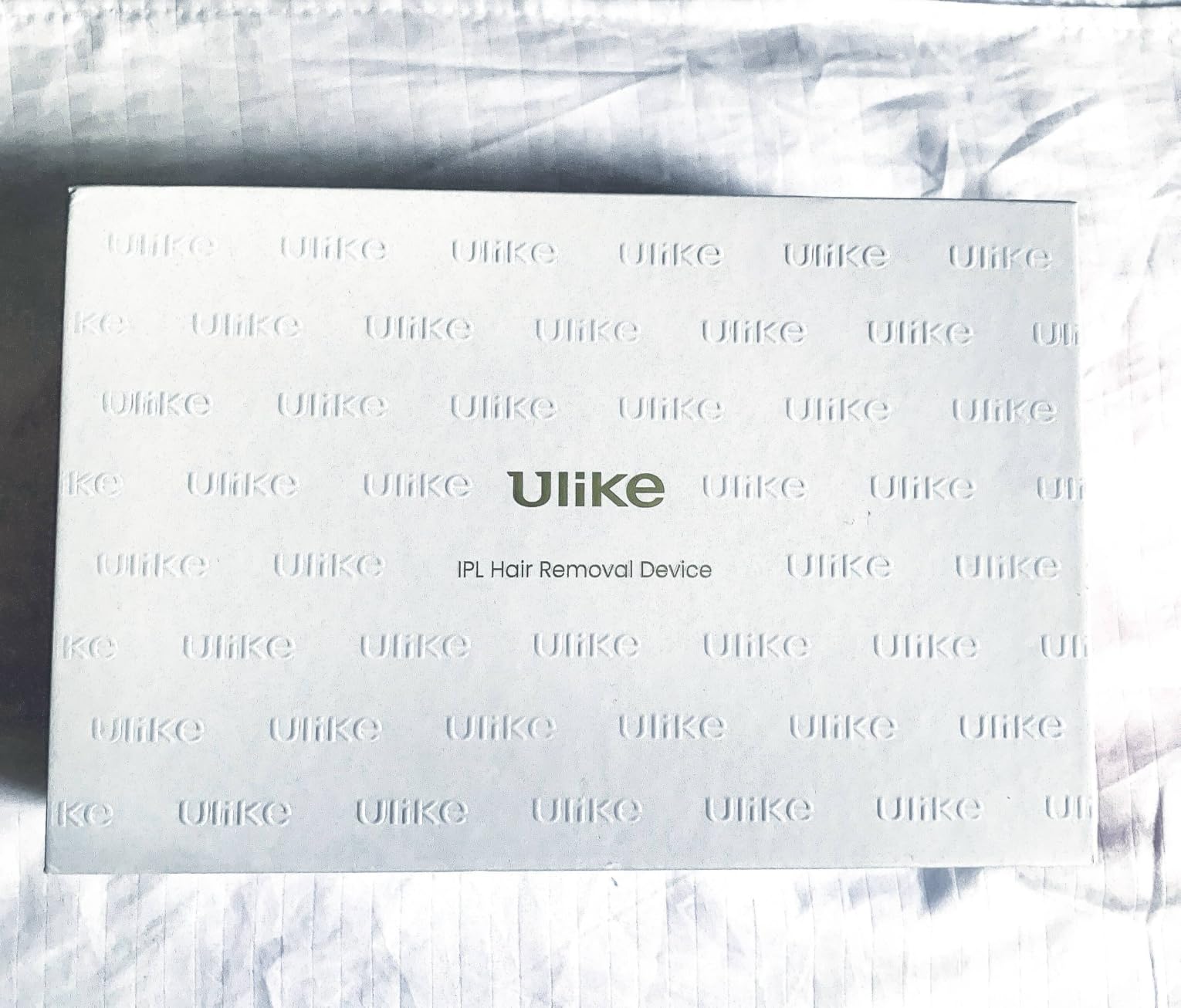
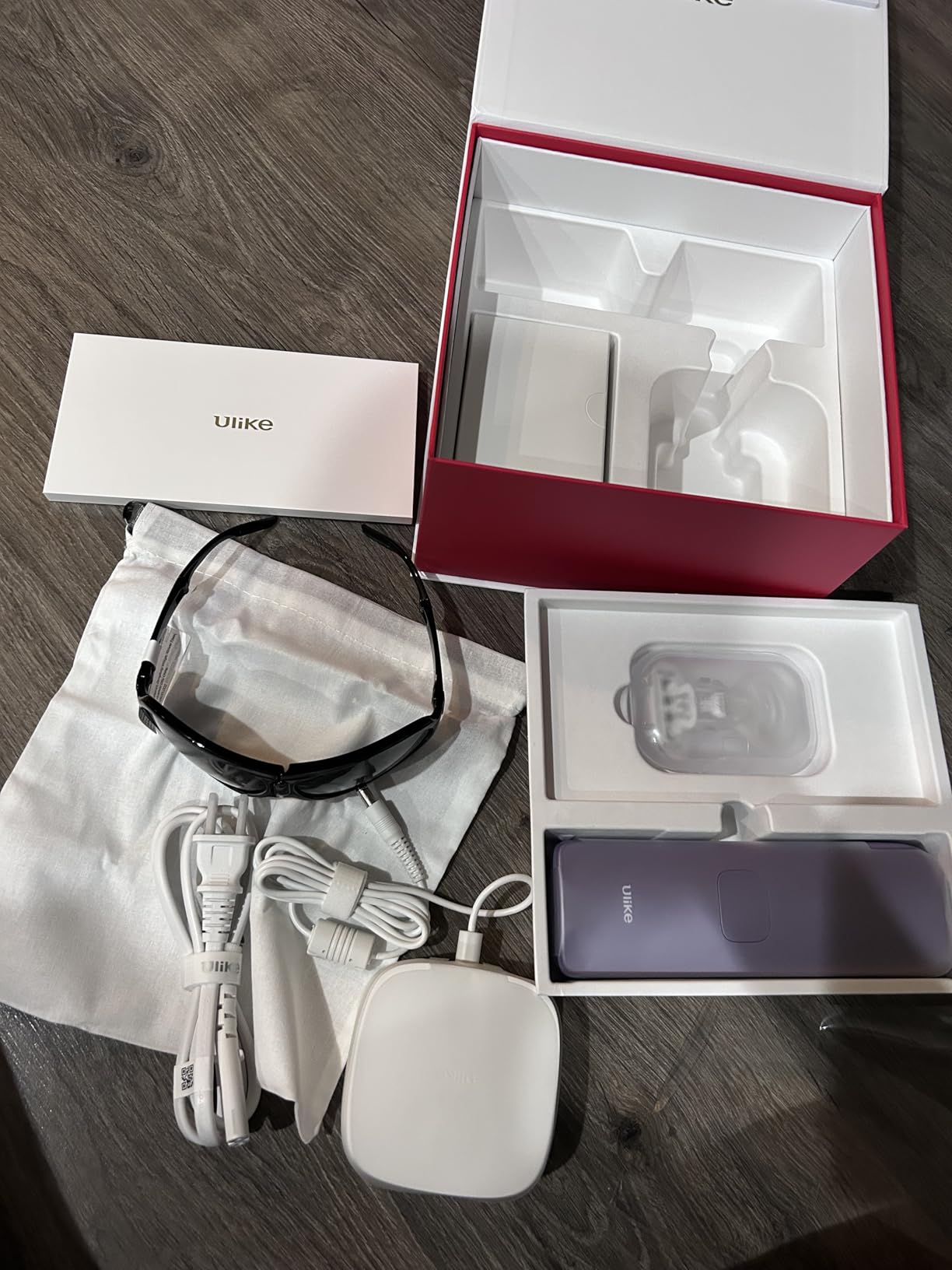
Ulike Laser Hair Removal Device Air 10 Ipl Gift for Women and Men, Ice Cool and Permanent Hair Reduction for Nearly Painless, Dual Lights, Skin Sensor & USHR Mode Hair Removal in 10mins from Home
SkinSensor tone detection
Sapphire cooling below 65F
SHR mode 26J
10-minute full body
Pros
- SkinSensor stops flashing on areas that read too dark
- Sapphire cooling holds contact below 65F
- Dual lights finish a full body in about 10 minutes
- SHR mode handles coarse chest and armpit hair
Cons
- Reports of overheating after long high-mode sessions
- Bulky shape is awkward on the Brazilian area
- Requires shaving immediately before every session
Fitzpatrick verdict: gated to roughly I to IV by the SkinSensor. The SkinSensor is the reason this device earns its place on a page about deeper skin. It reads skin tone, adjusts power automatically, and blocks the flash entirely on an area it judges too dark, rather than firing and hoping for the best.
Cooling is a sapphire surface held below 65F, and combined with the dual-lamp system it keeps a full-body session down to about 10 minutes. SHR mode delivers 26J across a four-pulse burst, which is what makes it viable on the coarser hair that shows up on chests and armpits.
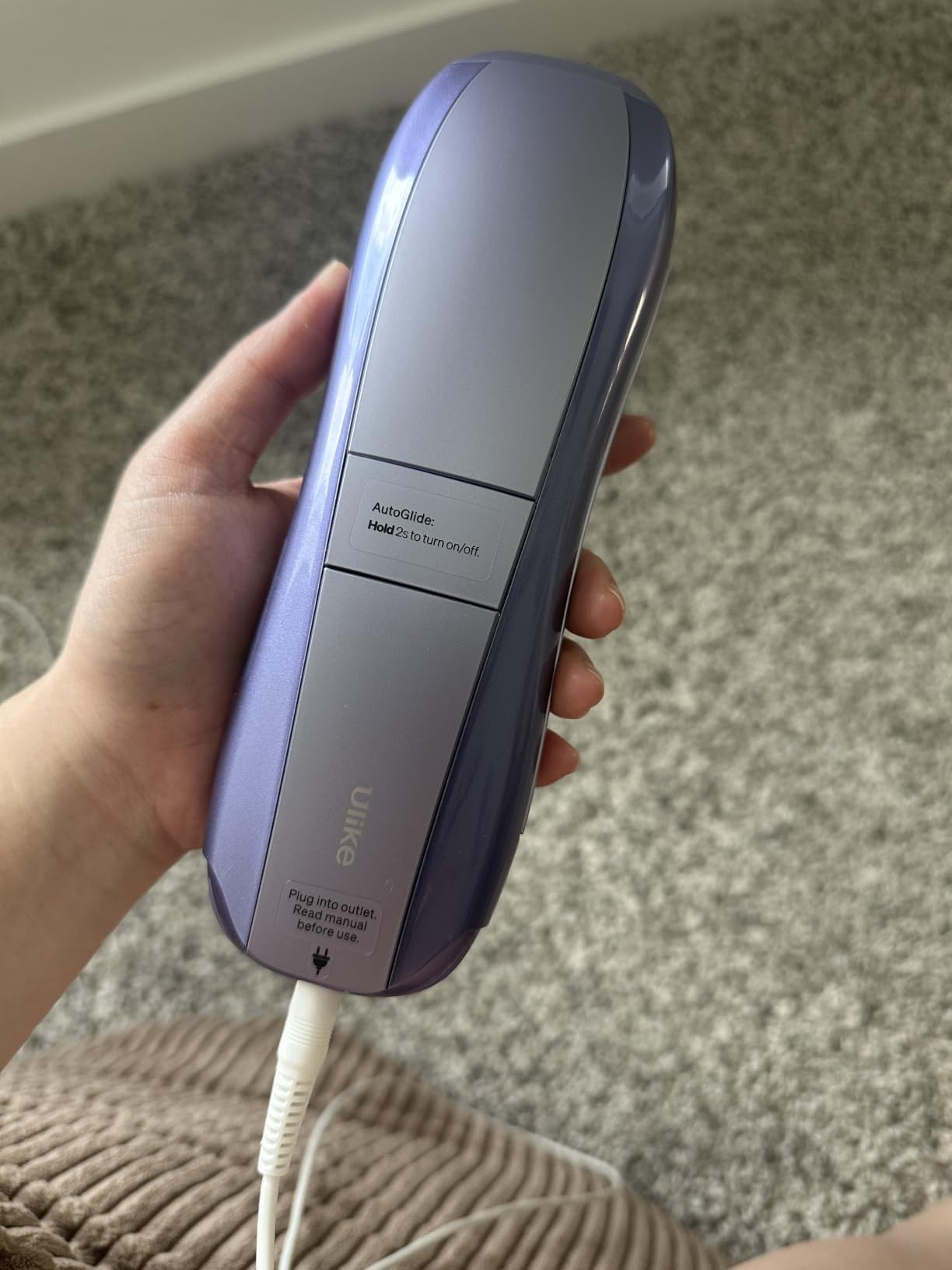
Reviewers name the SkinSensor as the feature that most changed their confidence, and it is the single most-cited safety answer in this roundup. The rating distribution is healthy at 73 percent five-star, and the recurring complaint is mechanical rather than cosmetic: the unit overheats after roughly 10 minutes of continuous high-mode use.
Two other practical points. The form is bulky, which makes the Brazilian area genuinely awkward, and shaving immediately before every session is non-negotiable if you want results. Stubble from a previous device was largely unaffected in at least one report, so this is a hair-removal tool rather than a cleanup tool.
Who this suits
A reader on Fitzpatrick I to IV who wants a sensor doing the gatekeeping for them, particularly if you tan in summer or have patches of tone variation between a forearm and an upper thigh. The cooling also makes it the most tolerable option here for sensitive skin.
When this is the wrong call
If you need the device on your back, buttocks or under the arm alone, the weight works against you. It is also the wrong buy on a Fitzpatrick V or VI tone, where the sensor will simply refuse and you will be back to square one on cost.
3. Nood Flasher Pro – The Two-in-One With the Coolest Head
Nood™ Flasher Pro | IPL Laser Hair Removal Device, Forbes Best Product 2026
CryoSoothe with 5 levels
Swap hair and Ageless lenses
Built-in skin safety test
Lifetime flash replacement
Pros
- CryoSoothe produced no irritation at any comfort level
- Swappable anti-aging lens is rare at this level
- Sessions finish in under 10 minutes including setup
- Lifetime flash replacement removes refill cost
Cons
- Flash will not trigger on small or uneven surfaces
- Needs more sessions than an in-clinic treatment
- Mirror work needed for contoured areas
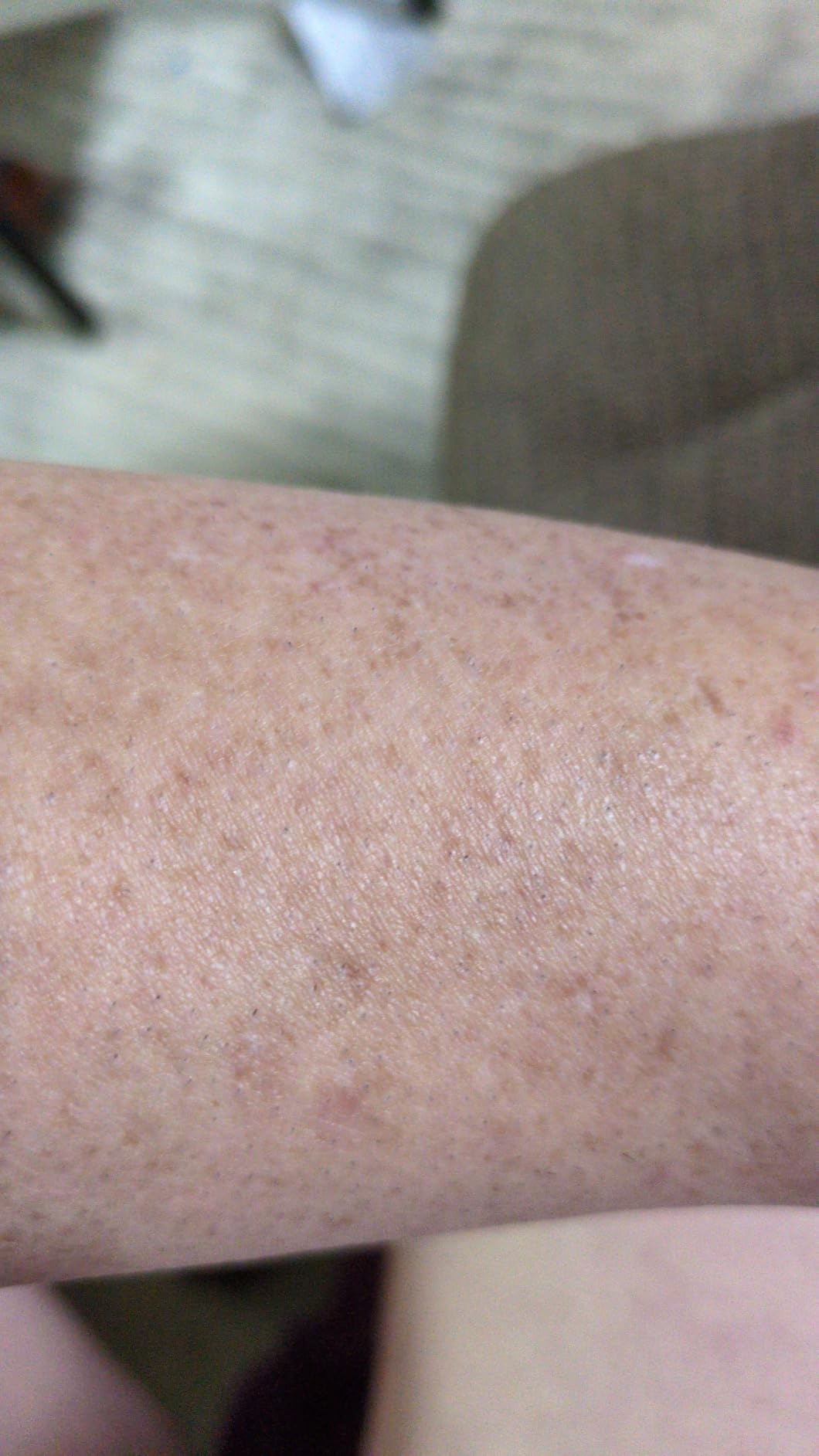
Fitzpatrick verdict: the listing claims most skin tones, and the built-in skin safety test on first use is the real gate. Treat that claim carefully. Our experience with devices that say most skin tones is that the limit is enforced by the first-use test rather than printed as a number, so expect the device to decide on you rather than the other way around.
CryoSoothe cooling with 5 comfort levels is the headline, and reviewers consistently report no burning or irritation at any of them. That matters more on deeper skin than the raw joule figure does, because tolerance is what lets you finish a session on a tone you are already nervous about. The package is 9.84 by 7.56 by 3.9 inches and weighs 3.15 pounds.
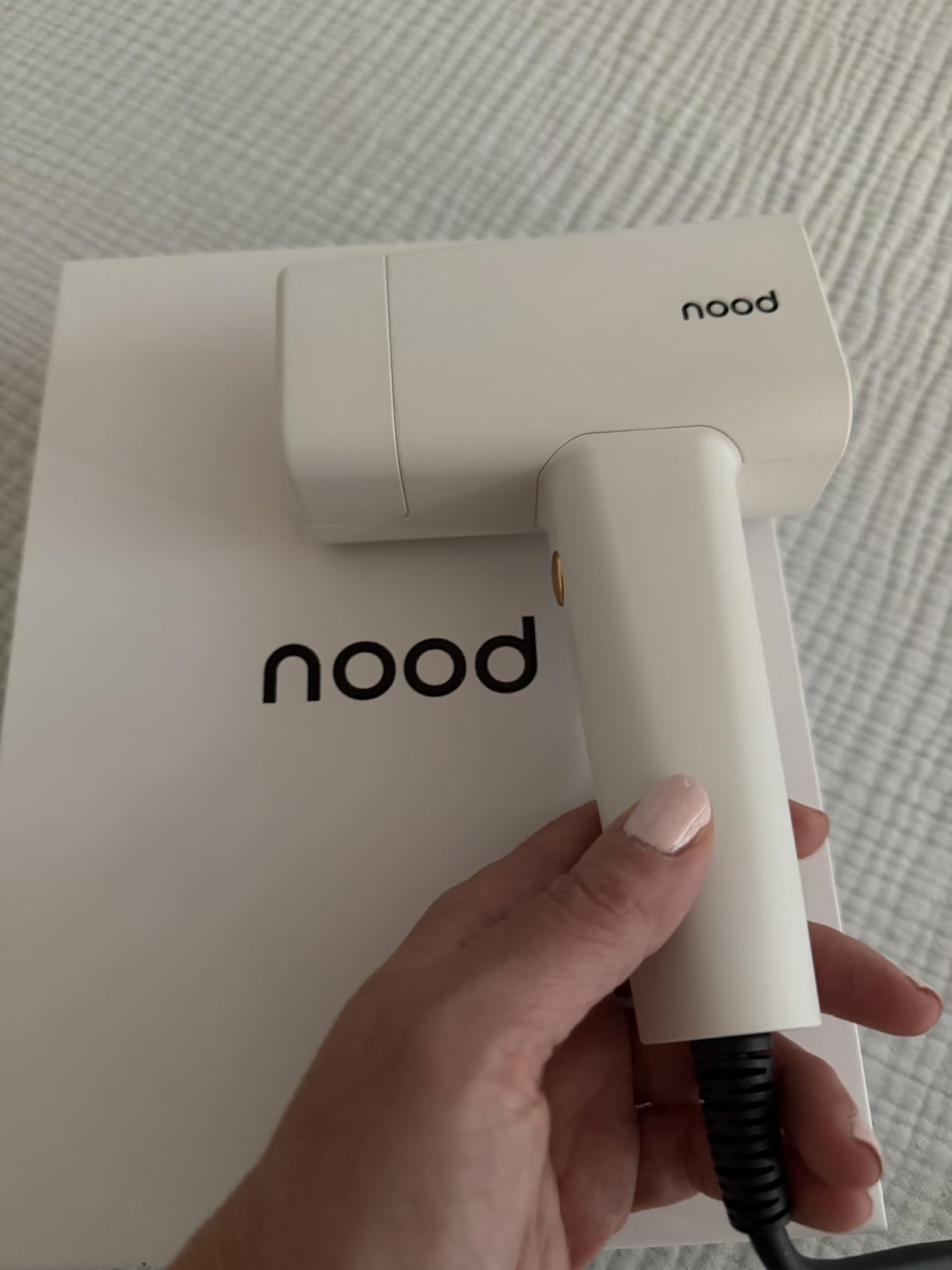
Two features no other device here combines. The first is the interchangeable lenses, with a hair removal lens and an Ageless anti-aging lens in the box, which turns one purchase into two treatments. The second is MaxPulse with a lifetime flash replacement guarantee, so the lamp cost never recurs.
The limitation is geometry. The flash will not trigger on small, curved or uneven surfaces, which rules out much of the face, the underarms and the bikini area, and reviewers report needing multiple attempts with a mirror to reach contoured spots. It also needs more sessions than a professional in-clinic treatment to reach a similar end point.
Who this suits
Someone on a lighter end of the medium range who treats large flat areas like legs, arms and a torso, values cooling above all, and likes getting an extra lens in the box. The 90-day satisfaction promise and lifetime flash replacement also soften the purchase risk.
When this is the wrong call
Not a good match for anyone whose priority is underarms, bikini line or face, because the trigger will not fire reliably on those contours. If you are Fitzpatrick V or VI, the vague most-skin-tones claim gives you far less information than you need to make a safe call.
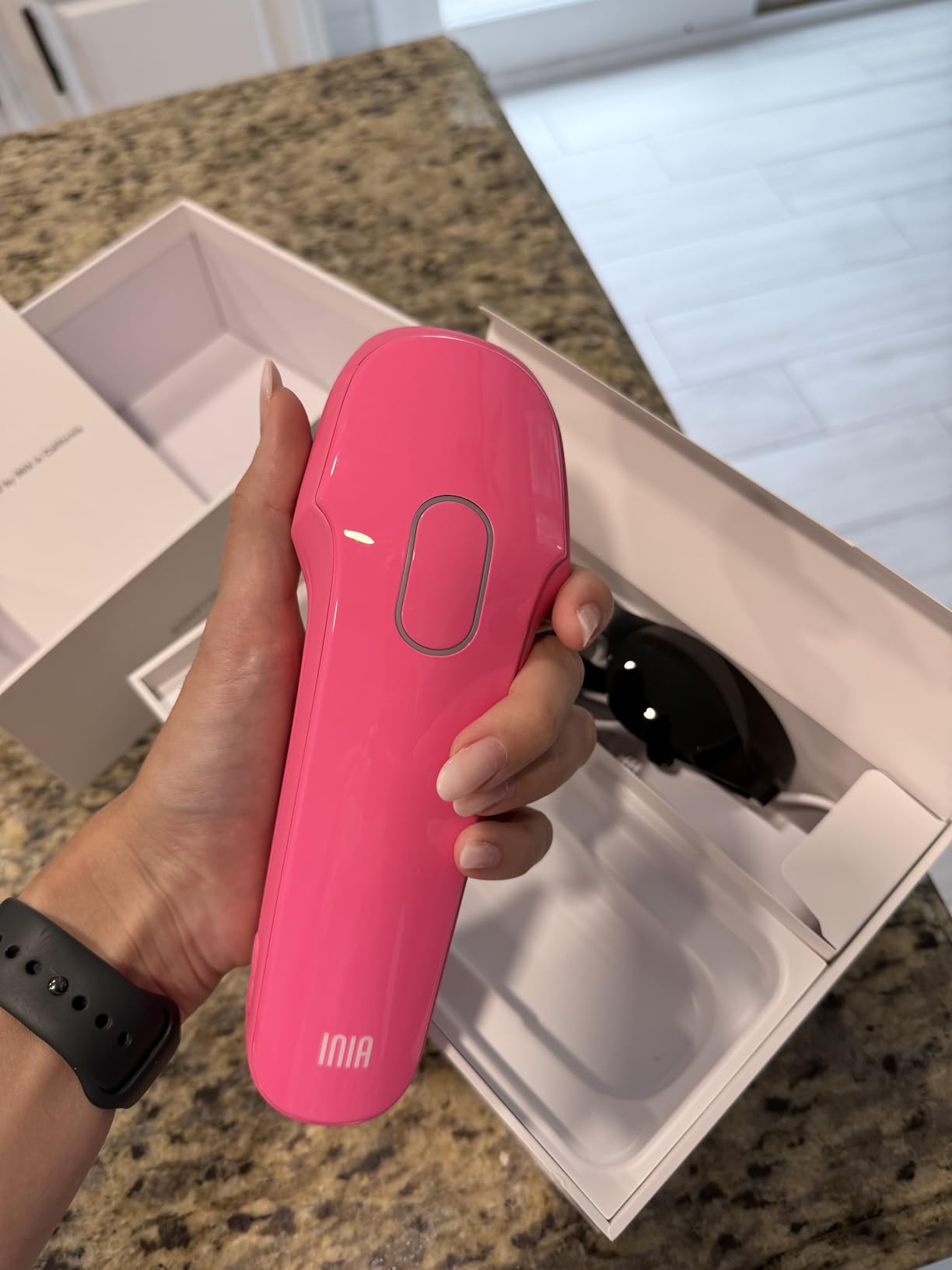
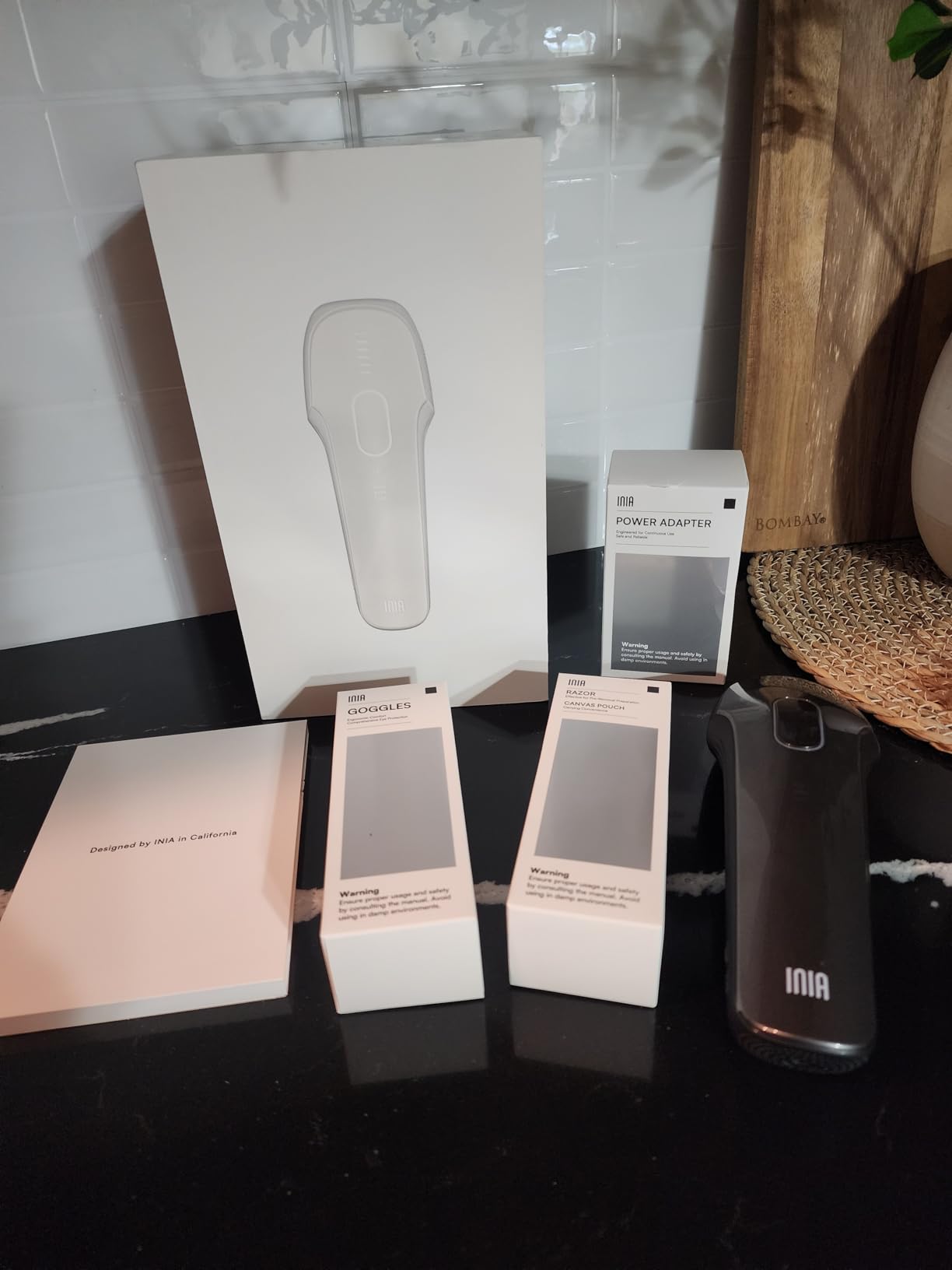
4. INIA HAUTE Pro – The Coldest Head in the Roundup
INIA HAUTE Pro Laser Hair Removal with Ice-Cooling Care for Women and Men
Contact below 37F for 30 min
Bikini body and face modes
10-minute Auto Mode
2.18 lb
Pros
- Contact temperature stays below 37F during long sessions
- Zone-specific bikini body and face modes
- Light at 2.18 pounds for full-body passes
- Up to 95.6 percent coarse hair reduction claimed
Cons
- One unit reported dead after about 3.5 months
- Bikini area is more painful than other zones
- Thicker hair takes longer to show results
Fitzpatrick verdict: workable I to IV, with no automatic tone sensor. What makes this one interesting for skin of color is not a tone claim but the temperature. The contact surface is held below 37F for 30 minutes, which is the lowest sustained figure in the roundup, and on a Fitzpatrick IV leg that head stays usable far longer than a warmer plate would.
Three zone modes cover bikini, body and face, and Auto Mode finishes a full body in about 10 minutes. The 4.5-star average across 555 ratings is the second highest here, with 78 percent of buyers giving five stars, and reviewers describe the cooling as the reason the sessions are tolerable rather than bracing.
Durability is the one to watch. One reviewer reported the device stopped working after roughly 3.5 months, and a small number of similar reports appear against budget units in general. The warranty is a 1-year term extendable to 2 years, and the flash count carries a lifetime guarantee, so the failure point is the electronics rather than the lamp.
On hair type, the deep-root coarse hair technology is aimed at the hair people actually notice, and results on thicker hair take longer to show than the four-week claim suggests. The bikini area is consistently described as more painful than the rest of the body, which is worth knowing before you commit to that zone.
Who this suits
A reader on a Fitzpatrick III or IV tone whose skin runs warm and reactive, and who wants a lightweight head for long passes. The face mode also makes it a practical option for anyone treating jawline peach fuzz alongside body hair.
When this is the wrong call
Skip it if durability over the first year is your top concern, or if you are on a Fitzpatrick V or VI tone. Without a sensor, you are relying entirely on your own judgment about how far into your range you can push the energy.
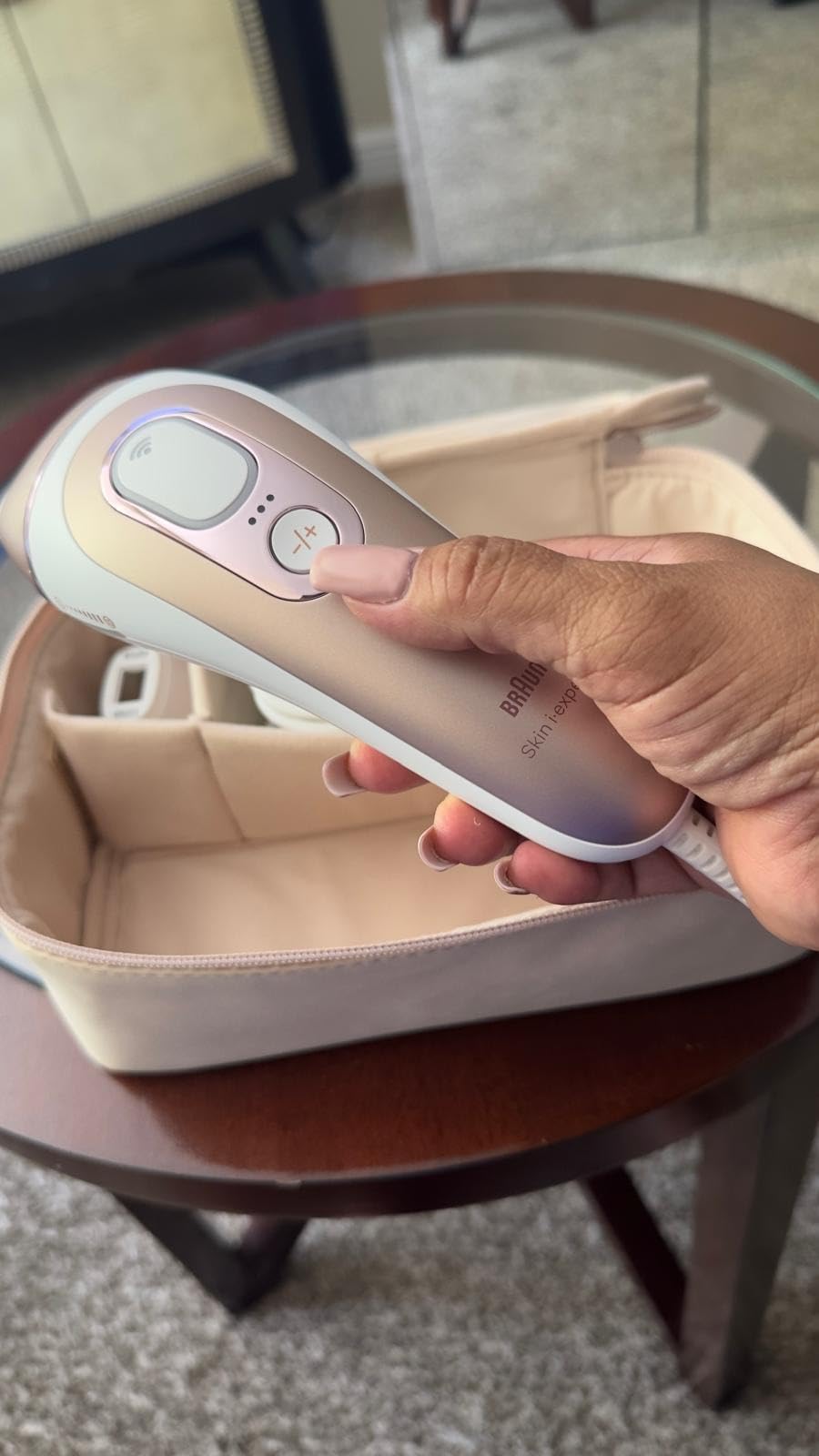
5. Braun Skin i-Expert PL7219 – The One With a Skin Sensor and an App
Braun Skin i-Expert Smart IPL PL7219 at Home Laser Hair Removal for Women and Men with App, Premium Pouch, Venus Razor, 2 Smart Heads, Facial Trimmer
Skin tone sensor with UV filter
App coverage tracker
Two smart heads
2 sessions per month
Pros
- Sensor adjusts every flash and no eye protection needed
- App tracker prevents missed spots and logs progress
- Two smart heads make full body fast
- Dermatologically and gynecologically approved
Cons
- Pain increases in bikini area and glutes
- Heats up after about 30 minutes
- One unit failed around three months
- Facial hair can be too thick and dark
Fitzpatrick verdict: gated by an automatic skin tone sensor on every single flash. Braun describes the sensor as reading skin tone and adjusting each flash individually with a UV filter, which is the most conservative gating in this roundup. No eye protection is required because the flash only fires in contact.
This is also the only device here with companion app guidance, including a real-time coverage tracker that shows which zones you have already done. Several buyers credit that feature with the single biggest improvement in their results, because missed patches are the most common reason a course stalls.
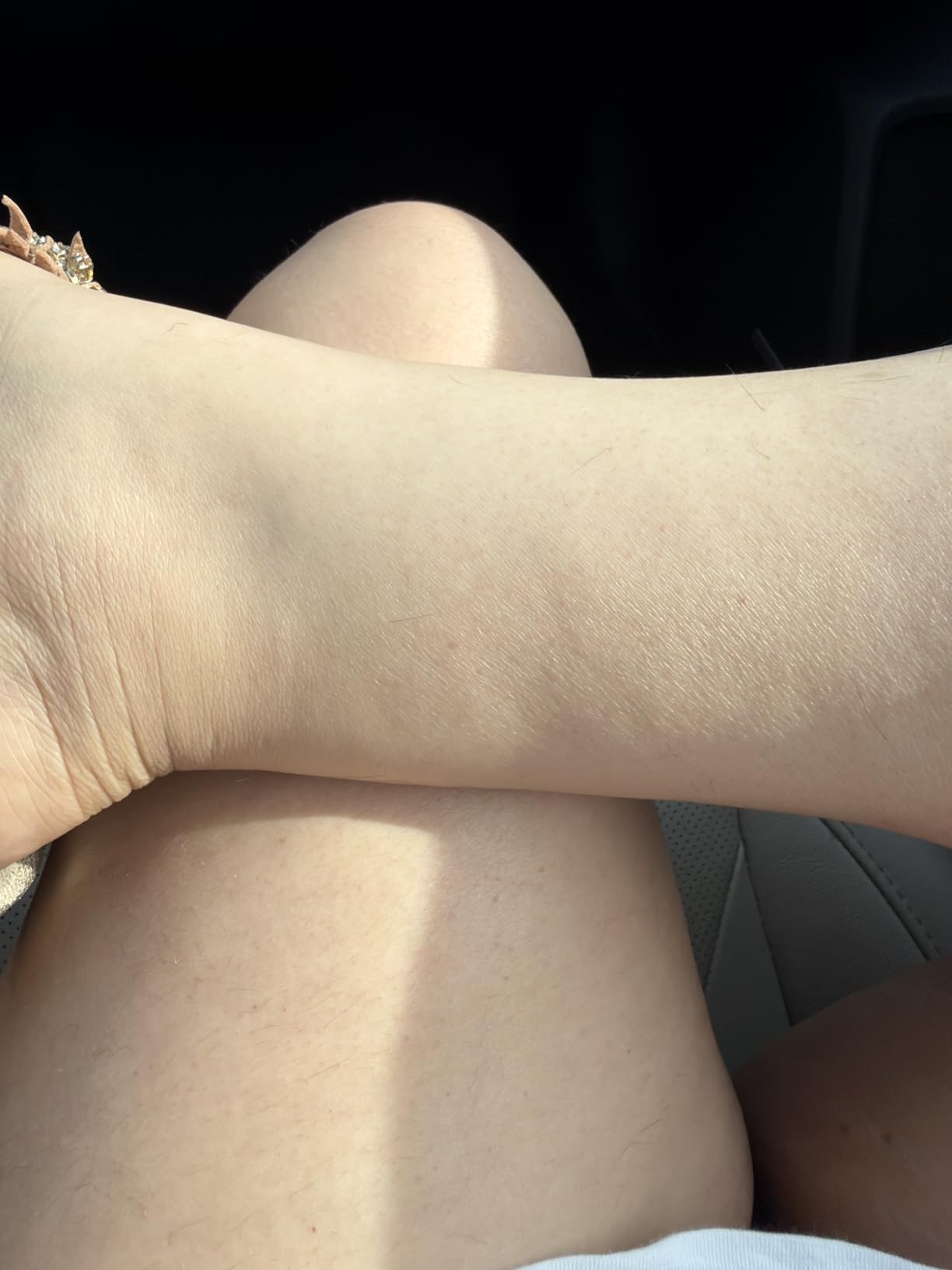
The schedule is unusually light at two sessions a month for three months, and multiple heads mean a full-body pass takes about 10 minutes. It is dermatologically and gynecologically approved, which matters for anyone treating skin that reacts to everything. The 4.2-star average across 365 ratings is the lowest here, and the five-star share sits at 69 percent.
Reported drawbacks cluster around comfort and heat. Pain increases noticeably on the bikini area and glutes, the machine heats up after about 30 minutes of use, and one buyer had a unit stop working at around three months, just past the return window. Facial hair described as too thick and dark was not effectively treated.
Who this suits
A Fitzpatrick I to III reader who wants maximum automation and has the budget for the top of the range. The app and sensor together mean you never have to guess whether a session was safe, which is the appeal for anyone nervous about pigmentation changes.
When this is the wrong call
It is the most expensive device in the roundup and the lowest rated, and the pain report in the bikini area and glutes is consistent enough to plan around. It is also not the right tool for someone whose main concern is facial hair.
6. Ubroo IPL Laser Hair Removal – Best Budget Touchscreen
Ubroo IPL Laser Hair Removal Device, 2026 Home Cooling IPL, Gift for Women
21J energy output
41F ice-cooling surface
Touchscreen with flash count
10.4 oz
Pros
- Lowest cost of the devices reviewed
- 41F cooling makes treatment comfortable
- Touchscreen shows energy level mode and flashes remaining
- Adjustable levels for different body parts
Cons
- Brand states it is not suitable for all skin tones and hair colors
- No automatic skin tone sensor
- No published clinical backing
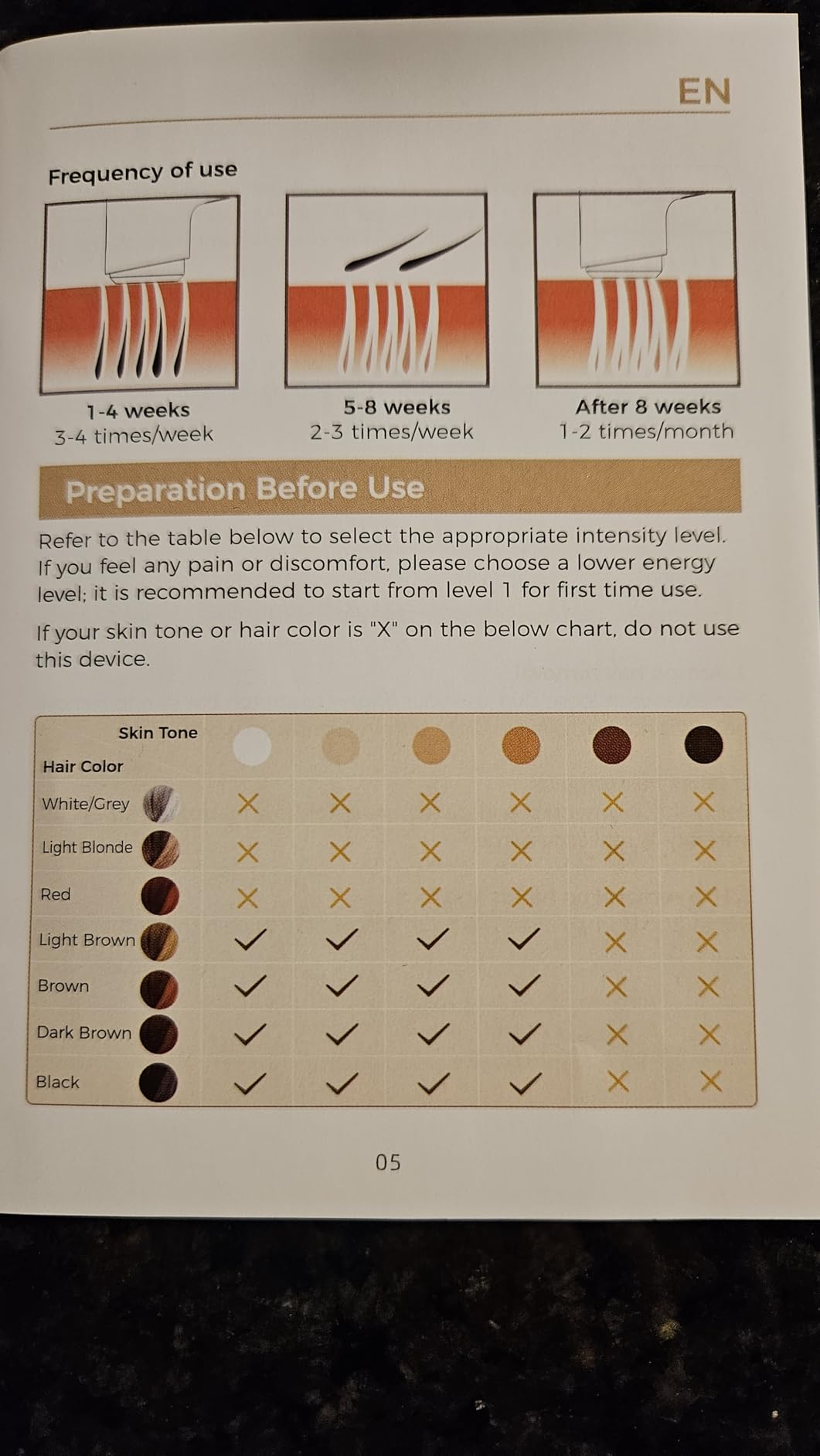
Fitzpatrick verdict: the brand itself publishes a compatibility chart and says the device is not suitable for all skin tones. That is the most honest tone language in the roundup, and it is also the least convenient, because without an automatic sensor you are expected to check the chart yourself before you buy.
The 21J energy output is aimed at stubborn bikini-line hair, and the touchscreen is unusually informative for a budget device, showing energy level, mode and the number of flashes remaining. Cooling holds the contact surface at 41F, which is the reason buyers tolerate the bikini area on it.
At 4.3 stars across 496 ratings with a 72 percent five-star share, the sentiment is broadly positive, and reviewers like the readable display and the adjustable levels for different body zones. The package runs 7.39 by 2.32 by 12.52 inches at 10.4 ounces, so it is light and easy to hold for a full pass.
The two limitations are structural. There is no automatic skin tone sensor, which on this page is the most important feature a device can lack, and there is no published clinical backing behind the up-to-96-percent claim. For a reader on a deeper tone, both of those are reasons to pick something else.
Who this suits
A reader on a Fitzpatrick I to III tone with a modest budget who wants a large energy number and a clear display at a low cost. It works for legs, arms, underarms, bikini line and face according to the listing, as long as your tone is inside the published chart.
When this is the wrong call
It is a poor choice for a Fitzpatrick V or VI reader precisely because there is no sensor to stop you. It is also a poor choice for anyone who wants published trial data behind the numbers, since there is none.
7. Blex Laser Hair Removal – The Fastest Full-Body Session
Blex Laser Hair Removal for Women and Men, IPL Hair Removal Device Effective in 2 Weeks, with Ultra-Fast 0.2s Light Emission, Comfortable and Painless, Black
21J over a 3cm2 window
0.2s flash rate
Dual-pulse delivery
Sapphire cooling
Corded
Pros
- 0.2s flash rate gives the fastest full body here at about 9 minutes
- Dual-pulse pre-heating then targeted pulse
- Constant sapphire cooling
- Emission lock and 3-minute auto shutdown
Cons
- No skin tone sensor listed among the safety features
- Corded so it only works near a power outlet
- Smallest review base of the 21J-class devices
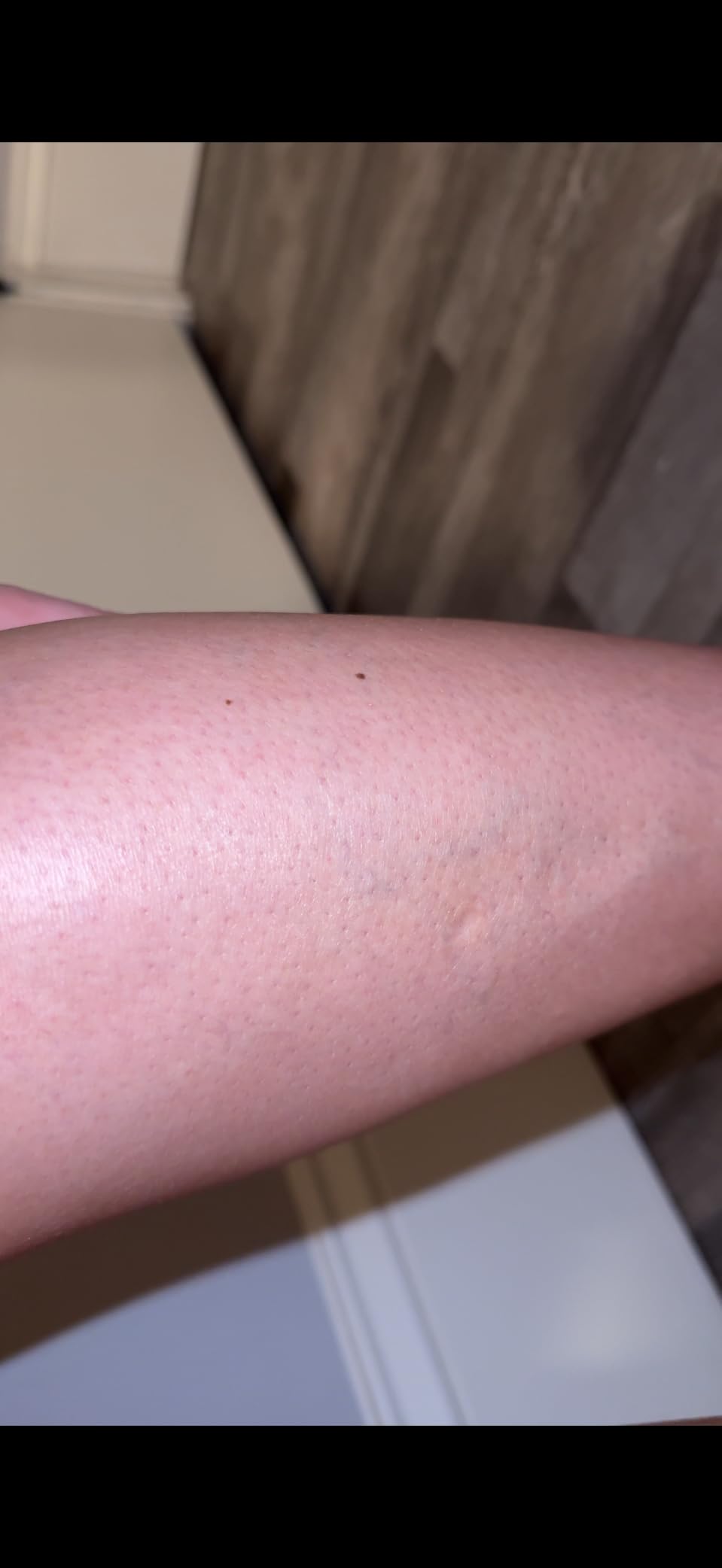
Fitzpatrick verdict: no skin tone sensor is listed, so the safe range is whatever your own judgment can defend. The safety features named in the specification are an 8-second light emission lock and a 3-minute automatic shutdown, both of which protect against accidental firing rather than against your skin tone.
Speed is the reason to look at this one. A 0.2 second flash rate finishes a full body in about 9 minutes, the fastest figure in the roundup, and the dual-pulse technology heats the target area first before delivering a targeted pulse. Energy output is 21J across a 3 square centimeter window.
Constant sapphire cooling is what makes the speed usable, and reviewers describe the sessions as comfortable and painless. At 4.2 stars across 406 ratings with a 69 percent five-star share, the sentiment is solidly positive on comfort and pacing rather than on dramatic hair reduction.
Two practical limits. It is corded, not wireless, so you are tied to a power outlet for the whole session, which rules it out for anyone who travels or has limited bathroom space. And the dual-pulse approach is a technical differentiator with no tone safety net behind it, which is the trade you are making.
Who this suits
A Fitzpatrick I to III reader with a large treatment area and limited time, who values a nine-minute session more than a sensor. If you have always abandoned devices because the process was too slow, the pacing here removes the most common reason people quit.
When this is the wrong call
Do not buy it on a Fitzpatrick V or VI tone, and do not buy it if you need to treat areas away from an outlet. With no sensor at all, the burden of tone safety sits entirely on you.
8. BoSidin IPL with Ice Cooling – The Best Accessory Kit
Laser Hair Removal, BoSidin IPL Hair Removal with Painless Ice-Cooling, 2-in-1 Face SR Rejuvenation, 6+1 Modes, 6 Levels Hair Removal for Women Permanent, Laser Hair Removal Kit with Shaver, Goggles
5C/41F DCD cooling
20J max energy
6+1 modes, 6 levels
1.06 lb
Shaver and goggles
Pros
- 41F cooling soothes the burning sensation
- Two-in-one hair removal and SR rejuvenation
- 6+1 modes with 6 energy levels
- Lightest body at 1.06 pounds
- Shaver and goggles included
Cons
- Full body takes about an hour weekly for 8 to 10 weeks
- Removing the attachment needed to use ice cooling
- Minimal effect on light blonde hair
- Some users saw enlarged pores
Fitzpatrick verdict: the anti-light-leakage trigger requires skin contact, but no tone sensor is claimed. That trigger is a genuine safety improvement because the device will not fire when the window is pointed at the air, though it protects against eye exposure rather than against melanin in your skin.
Cooling is the best documented figure in the roundup, with the DCD system dropping skin contact temperature to 5C or 41F, and 20J max energy on a 0.7 second IGBT flash. The 6+1 modes cover a sixth-generation SR skin rejuvenation function alongside six hair removal energy levels.
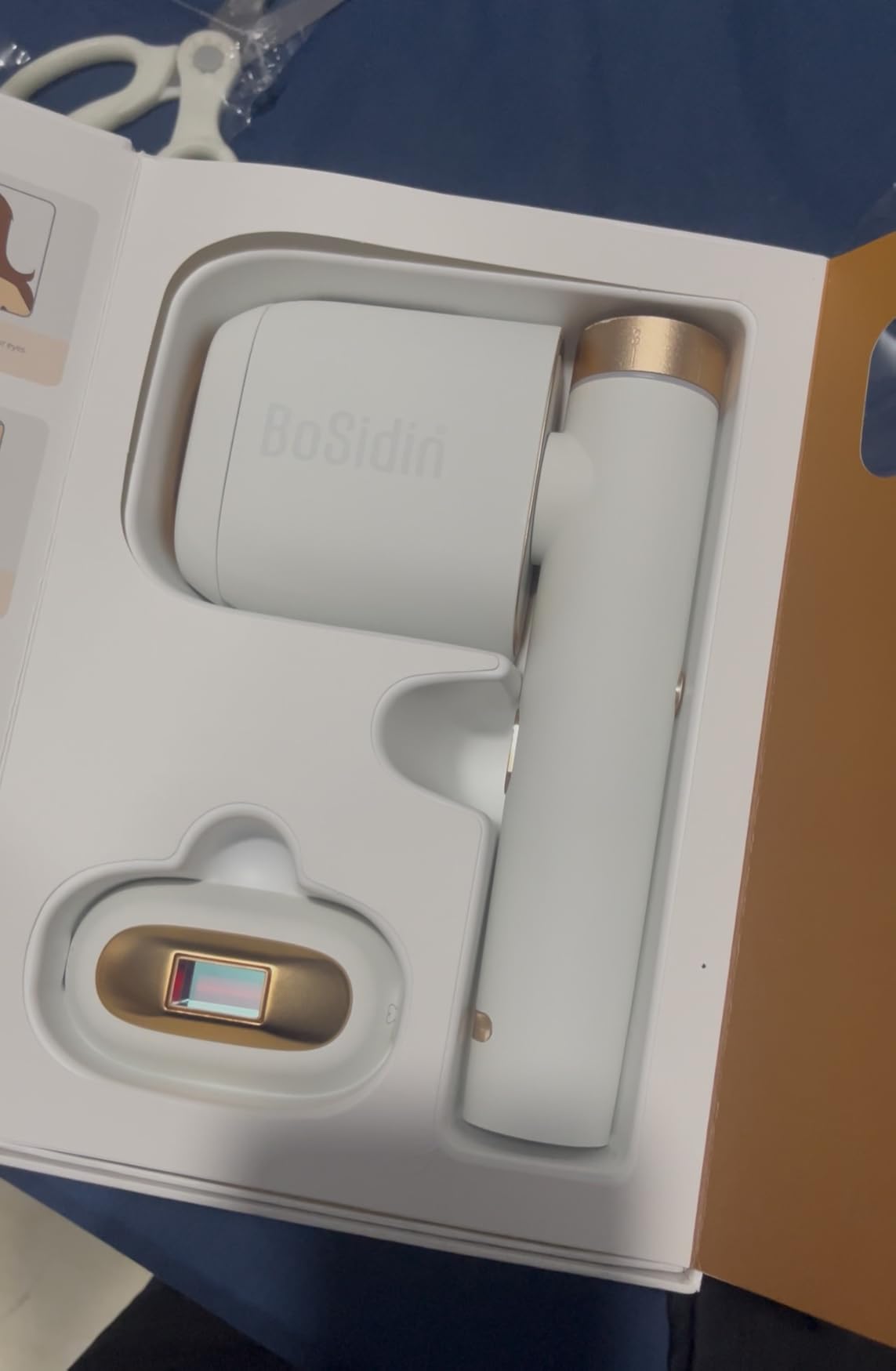
At 4.5 stars across 322 ratings with a 78 percent five-star share, this device has one of the lowest one-star rates in the lineup at 4 percent, and the certifications listed include FCC, CE, ROHS, WEEE, PSE and SGS. The 24-month warranty and 180-day money-back guarantee are the longest cover in the roundup.
Time is the real cost. Full-body sessions take about an hour a week for the first 8 to 10 weeks, which is the heaviest commitment of any device here. You also have to remove the installed attachment to use ice cooling, results on light blonde hair were minimal, and a few users noticed enlarged pores on their legs.
Who this suits
A reader on a Fitzpatrick I to III tone who wants the strongest cooling number available, likes having goggles and a shaver in the box, and can commit to a weekly hour for two months. The SR mode also appeals to anyone treating both hair and skin texture.
When this is the wrong call
An hour a week is not a schedule most people keep, and if you do not, you will have paid for a device you never finish a course on. It is also the wrong pick for a deeper tone and for anyone with light blonde hair.
9. Philips Lumea 9000 – The One That Tells You No
Philips Lumea 9000 IPL Hair Removal Device for Long-Lasting Smooth Skin
SenseIQ with 3 sensors
Skin-contact eye protection
4 curved attachments
Every 2 weeks then monthly
Pros
- SenseIQ reads tone and adjusts temperature every session
- No goggles needed because contact detection blocks eye flashes
- Four curved attachments for body face bikini and underarms
- Shortest schedule at every 2 weeks
- PCOS users report successful facial and body reduction
Cons
- Will not flash where the skin reads too dark
- One buyer found hair inside a sealed box
- Higher settings sting in sensitive areas
- Face attachment is for below the cheekbones on female users only
Fitzpatrick verdict: the most conservative gate in the roundup, and it will refuse rather than compromise. SenseIQ uses three sensors to read skin tone and adjust temperature on every session, and reviewers report the device showing an indicator instead of flashing on areas that read too dark, specifically on inner thighs and some underarm regions with olive skin.
That refusal is the point. If you are on a deeper tone, a device that stops is a device working correctly, and buying a cheaper unit that fires anyway is buying a burn. Skin-contact detection also prevents flashes near the eyes, so no goggles are needed.
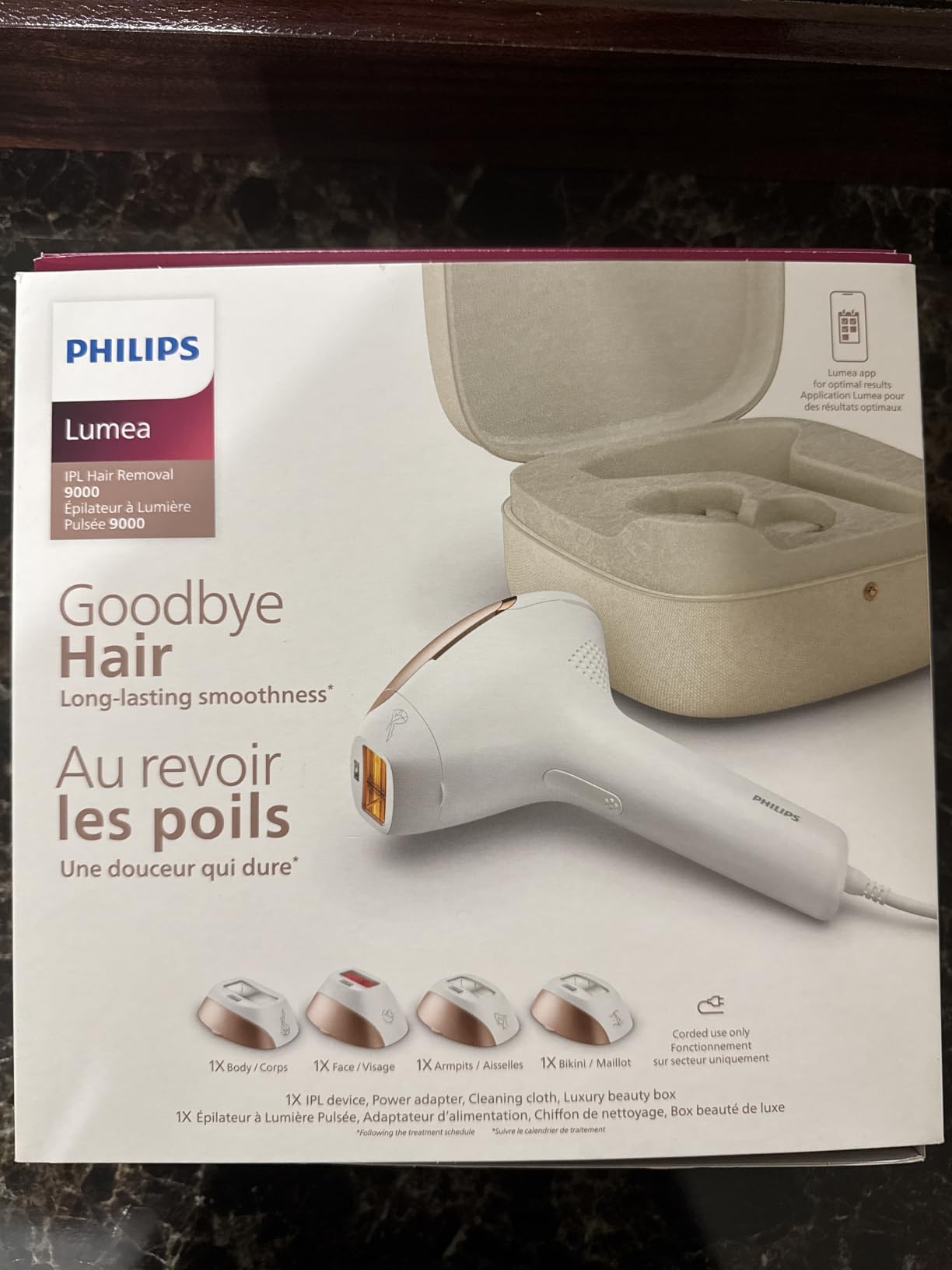
The schedule is the shortest here at every 2 weeks to start and monthly touch-ups after, and owners report strong results on legs, underarms and the bikini area within three treatments. Four curved attachments cover body, face, bikini and underarms, and the companion app sends reminders. Users managing PCOS report successful reduction on both face and body.
Two caveats. Higher settings can sting in more sensitive areas, and the face attachment is intended for use below the cheekbones. One buyer also received a unit with hair inside the sealed inner box and reported an unsatisfactory replacement process, which is worth remembering if your unit arrives damaged.
Who this suits
A first-time buyer on Fitzpatrick I to III who wants the most hands-off safety behaviour available, and anyone whose tone sits between two clear categories and who needs a device to make the call. The short schedule also suits people who struggle to keep a twice-weekly habit.
When this is the wrong call
If your goal is full coverage on a Fitzpatrick IV to VI tone, this will frustrate you precisely because it is well made. The face attachment restriction below the cheekbones, and the sting at higher settings on sensitive areas, are the other two limits.
10. Ulike Air 4 – The Highest Energy With Constant Cooling
Ulike Laser Hair Removal Device Air 4 IPL for Women and Men
24J energy intensity
Sapphire cooling at 64F
Integrated skin safety sensor
0.4s Auto-Glide
Pros
- Highest rated in the roundup at 4.6 stars
- 24J output with a skin safety sensor
- Sapphire cooling holds 64F during continuous use
- Auto-Glide and 0.4s flash give a 10 to 12 minute session
- Corded power avoids thermal throttling
Cons
- Results take 4 to 6 weeks with no instant effect
- Sensor still gates use on tone readings
- One reviewer saw no change after a month and a half
- Protective eyewear is recommended by users
Fitzpatrick verdict: gated by an integrated skin safety sensor, with no published numeric range. Like the other sensor-equipped devices, the gate is automatic rather than stated, so the practical range is whatever the sensor will accept on a given day. The corded power delivery also removes a variable that matters on deeper skin, since a device that throttles mid-session produces inconsistent energy.
The 24J output is the highest in the roundup alongside its cooling specification, and the patented sapphire cooling holds 64F or 18C during continuous use rather than dropping as the session goes on. That is the practical safety argument for a melanin-rich tone: a stable, cold contact plate means the energy you set is the energy delivered.
At 4.6 stars from 188 ratings with an 85 percent five-star share and only 6 percent one-star, this is the best-rated device in the roundup. Auto-Glide with a 0.4 second flash interval gives a 10 to 12 minute full-body session, and the 100-day risk-free trial is the longest return window any device here offers.
Expect patience rather than speed of results. Buyers put it at 4 to 6 weeks of regular use before changes are obvious, and one reviewer saw no change at all after a month and a half of consistent sessions. Several users recommend the included protective eyewear even though the sensor is doing the gating.
Who this suits
A reader on a Fitzpatrick I to IV tone who reacts badly to heat, and who will commit to a full six weeks before judging the device. The 24J figure also makes it the strongest option here for coarse, dark body hair on a medium tone.
When this is the wrong call
If you need visible change in under a month, this will disappoint you. On a Fitzpatrick V or VI tone the safety sensor is likely to refuse, and the device is corded, so it needs a permanent outlet position.
The Fitzpatrick Verdict: Which Device for Which Tone
The Fitzpatrick scale runs from I to VI and grades how much melanin your skin carries, which is the single variable that decides whether a light-based device can fire on you safely. Here is the reference we use for every entry above.
Type I and II skin burns easily and never tans. Type III tans gold and is the range most at-home IPL devices were designed around. Type IV tans brown and sits at the edge of what the better sensor-equipped units will accept. Types V and VI are deep skin tones that carry high melanin in the skin itself, and this is where at-home IPL stops being appropriate.
The mechanism matters. An IPL flash is broad-spectrum light, and melanin absorbs it. The device is designed to deliver energy into the pigment in the hair shaft, but it cannot reliably distinguish hair pigment from skin pigment when both are abundant. On a deep tone, more of that energy is landing in the epidermis, which is exactly how you get a burn and then post-inflammatory hyperpigmentation on top of it.
Read the sensors as a feature rather than a bug. The Philips Lumea 9000, the Ulike Air 10, the Ulike Air 4 and the Braun Skin i-Expert all read tone and either reduce power or refuse to fire. A refusal means your skin was outside the range the manufacturer will stand behind, and forcing that session is the moment people get hurt.
Our real-user reading lines up with the science. A commenter in r/HairRemoval opened a recommendation thread by asking which Fitzpatrick type someone was before suggesting a device at all, which is the correct order of operations. A user in r/TransLater reported that home IPL worked well with fairer skin and darker hair on a fair olive complexion, which is the pairing rule in one sentence. Another r/HairRemoval user on the Philips Lumea 7000 said it works with the right combo of pale-tan skin and dark hair.
For balance, one r/LaserHairRemoval user with brown skin described hyperpigmentation as a risk on darker tones but very rare and temporary, so the harm is not guaranteed. The same community also draws the technology line clearly, noting that alexandrite is typically recommended for lighter skin tones while YAG is best for darker ones, which is the short version of the buying guide below.
So the split stands. Fitzpatrick I to III: most of these devices work and several are excellent. Fitzpatrick IV: work with a sensor-equipped model and a conservative schedule. Fitzpatrick V and VI: skip at-home IPL, and read the next section instead.
How to Choose an IPL Device for Deeper Skin
Start with your tone, not with the price or the brand. If you fall in I to III, any device on this page will serve you and the buying question becomes comfort and schedule. If you are type IV, we would narrow the list to the four sensor-equipped models and run every session at the lower end of the range. If you are type V or VI, the right purchase is not a device on this page.
Understand the difference between IPL and laser. This is the most common purchasing mistake in the forums, and it is not a small one. IPL is broad-spectrum light, filtered into a range of wavelengths, which makes it versatile and less predictable. A laser is a single wavelength, and a diode laser at 800 to 810nm concentrates energy more precisely on the follicle. If your priority is safety on a melanin-rich tone, a wavelength-specific device is a better fit than an IPL, and a clinic laser beats both.
Know what the alternatives actually are. For skin of color, the technologies that doctors trust are Nd:YAG at 1064nm, which is long enough to pass through the epidermis with minimal absorption by skin pigment, and diode laser. One r/40PlusSkinCare user raised CO2 in a different context entirely, and the community correction was worth noting: CO2 is ablative, it removes skin, and it is not necessarily safe on a Fitzpatrick V or VI. One clinic source surfaced in the forum results puts very deep tones at 1064nm only, with a longer pulse width.
When we compare at-home IPL against a clinic route for a deep tone, the clinic wins on efficacy almost every time, because a trained operator can adjust fluence, pulse width and cooling between sessions in a way a consumer device cannot. Electrolysis is permanent but slow and painful, threading and sugaring are cheap and instant but temporary, and depilatory creams are the safest of all and also the least durable. If your hair is hormonal or PCOS-related, a clinic laser conversation is more productive than another device purchase. For the hair-care side of a long-course routine, our silk pillowcase guide covers what actually reduces breakage and friction while you work through the schedule.
Check hair colour before anything else. Every device here targets melanin in the shaft, so light blonde, grey and red hair will not respond regardless of your skin tone. That includes the redhead with a perfect Fitzpatrick III who has already bought two devices that did nothing. A reviewer on the BoSidin noted minimal results on light blonde hair, which is the general rule rather than a defect.
Prioritise a skin tone sensor over raw energy. It is tempting to chase the biggest joule figure, and on a Fitzpatrick I to III tone that is a reasonable goal. On a darker tone, the number that matters is how the device behaves when it is not sure, so put a sensor ahead of 10 extra joules. Ubroo and Blex have no sensor, and both are honest about it, but neither should be bought by a reader at the top of the range.
Treat cooling as a safety feature, not a comfort feature. A contact plate that holds 41F or colder for the length of a session is what lets you complete a pass at a usable level. Every device in this roundup has some form of cooling, and the differences are large: the INIA holds below 37F for 30 minutes, the BoSidin drops to 5C, and the Ulike Air 4 holds 64F under continuous use rather than declining.
Do not buy if any of these apply to you. Skip at-home IPL entirely if you are Fitzpatrick V or VI, if you have a tan in the last 48 hours, if you have had a chemical peel or retinoid treatment in the last week, if you are on a photosensitising medication without clearance, if you have a keloid history, or if you have broken, irritated or recently waxed skin in the treatment area. On a deep tone, the deciding factor is your dermatologist, not a listing page.
For the general science behind light-based hair removal and the melanin mechanism, our red light therapy device guide covers the neighbouring technology in more depth.
How to Use IPL Safely on Deeper Skin
Ten steps, in order, for anyone on a Fitzpatrick III tone or darker. Skipping the early ones is how people end up searching for why they have hyperpigmentation after a session.
1. Know your type. Compare your un-tanned skin against the Fitzpatrick reference above, not against your best summer tan. Your natural tone is the number the devices were engineered around.
2. Wait for your skin to be calm. No tan, no self-tanner, no fresh chemical peel, no retinoid, no waxing in the area for at least a week. A tan or a peel invalidates the tone reading, and a sensor cannot know you have done either.
3. Shave, do not wax or pluck. The target is melanin in the shaft. Waxing and plucking remove it, and you will get a session that does nothing while still exposing your skin to heat and light.
4. Patch test and wait 24 to 48 hours. This is the step that is universally recommended and almost never explained. Flash a small area inside an elbow or behind a knee, then look for redness, blistering or a dark patch that has not faded within two full days. Two days, not two hours.
5. Start at the lowest energy level. Even if the device defaults to something higher, step down. On a Fitzpatrick IV tone you may find the third or fourth level is your working level for the entire course, and that is fine.
6. Space sessions out. Follow the published schedule rather than the temptation to do more. The BoSidin pattern of weekly sessions for 8 to 10 weeks, or the Philips pattern of every 2 weeks then monthly, is built around follicle recovery time.
7. Keep the skin cold. Use the cooling system continuously rather than in bursts, and if the head starts to feel warm, stop for five minutes. Devices that overheat mid-session, which several in this roundup do, deliver less predictable energy than their specs suggest.
8. Wear the eyewear or use the contact trigger. If your device includes goggles, use them. If it uses skin-contact detection, treat that as the eye protection it is and never point the window at your face to see whether it fires.
9. Stay out of the sun for 48 hours before and after. This is the most commonly self-reported cause of bad reactions in the forums. Untreated skin plus treated skin plus UV is how post-inflammatory hyperpigmentation starts, and sunscreen alone is not the same as avoidance.
10. Know the aftercare and the red flags. Cool compresses, fragrance-free moisturiser, and no exfoliating acids for a few days. See a dermatologist if you blister, if a dark patch has not faded after a few weeks, or if you notice any raised or scarred tissue, since keloid risk is a real conversation on deeper skin.
Frequently Asked Questions
Can IPL work on dark skin?
Partly. Intense pulsed light targets melanin, and on Fitzpatrick I to IV skin your hair is much darker than the surrounding skin, so the light is absorbed mostly by the hair and the follicle is damaged. On Fitzpatrick V and VI skin the skin itself is melanin-rich, the device cannot reliably tell hair from skin, and the risk of burns, blisters and post-inflammatory hyperpigmentation rises sharply. Realistic at-home results stop around type IV.
Is IPL safe for dark skin?
It depends entirely on where you sit on the Fitzpatrick scale. For types I to III, at-home IPL is generally considered safe when you patch test, start at the lowest energy level and avoid tanning. For type IV it is a cautious yes with a sensor-equipped device and a conservative schedule. For types V and VI it is not recommended, because the epidermis absorbs too much of the flash and pigment changes are the most likely outcome.
What type of laser hair removal is best for dark skin tones?
Nd:YAG at 1064nm is the wavelength dermatologists most often recommend for deeper skin tones, because its longer wavelength passes through the epidermis with less absorption by skin pigment. Diode laser, typically around 800 to 810nm, is the second choice. Alexandrite at 755nm is generally reserved for lighter tones. IPL is a broad-spectrum light rather than a laser, and it is the weakest of these options for Fitzpatrick V and VI.
Who is not a good candidate for IPL?
You should skip at-home IPL if you are Fitzpatrick V or VI, if you have tanned in the last 48 hours, if you have had a chemical peel or retinoid treatment in the last week, if you take a photosensitising medication without medical clearance, if you have a history of keloids, or if the treatment area has broken or irritated skin. Blonde, grey and red hair is also a poor match, because the device targets melanin in the hair shaft.
Can IPL laser hair removal cause burns?
Yes, and the risk climbs with melanin in the skin. A burn is most likely when the skin is tanned, when the energy level is too high for your tone, when the cooling plate has warmed up, or when a device with no skin tone sensor fires on a deeper tone. A mild reaction looks like redness that fades within a day. Blistering, a blister that spreads, or a dark patch that has not faded after a few weeks means stop and see a dermatologist.
Why does my device say my skin tone is not suitable?
The sensor has read your skin as outside the range the manufacturer will stand behind, and it is refusing to fire for that reason. That refusal is the safety system working, not a fault and not a settings problem. Do not work around it by covering the sensor or flashing anyway. If you are consistently blocked on areas you want to treat, that is a signal to see a dermatologist about a clinic laser route rather than to find a device that will not say no.
The Verdict on IPL for Dark Skin
The INNZA with ice cooling takes our editor’s choice for the best IPL hair removal devices for dark skin, because it pairs the largest review base in the roundup with a 999,999 flash lifespan and cooling that holds up on an olive or medium tone. If you want the sensor doing the work for you, the Ulike Air 10 is the pick, and if you want the most conservative behaviour available, the Philips Lumea 9000 will tell you no rather than risk your skin.
For anyone on Fitzpatrick V or VI, the honest answer is that none of these ten devices is the right purchase, and a clinic Nd:YAG or diode session will outperform all of them. Patch test for two full days, start at the lowest level, and stay out of the sun for 48 hours on either side of every session. Updated for 2026, and if you are unsure where you sit on the scale, ask a dermatologist before you buy anything.