
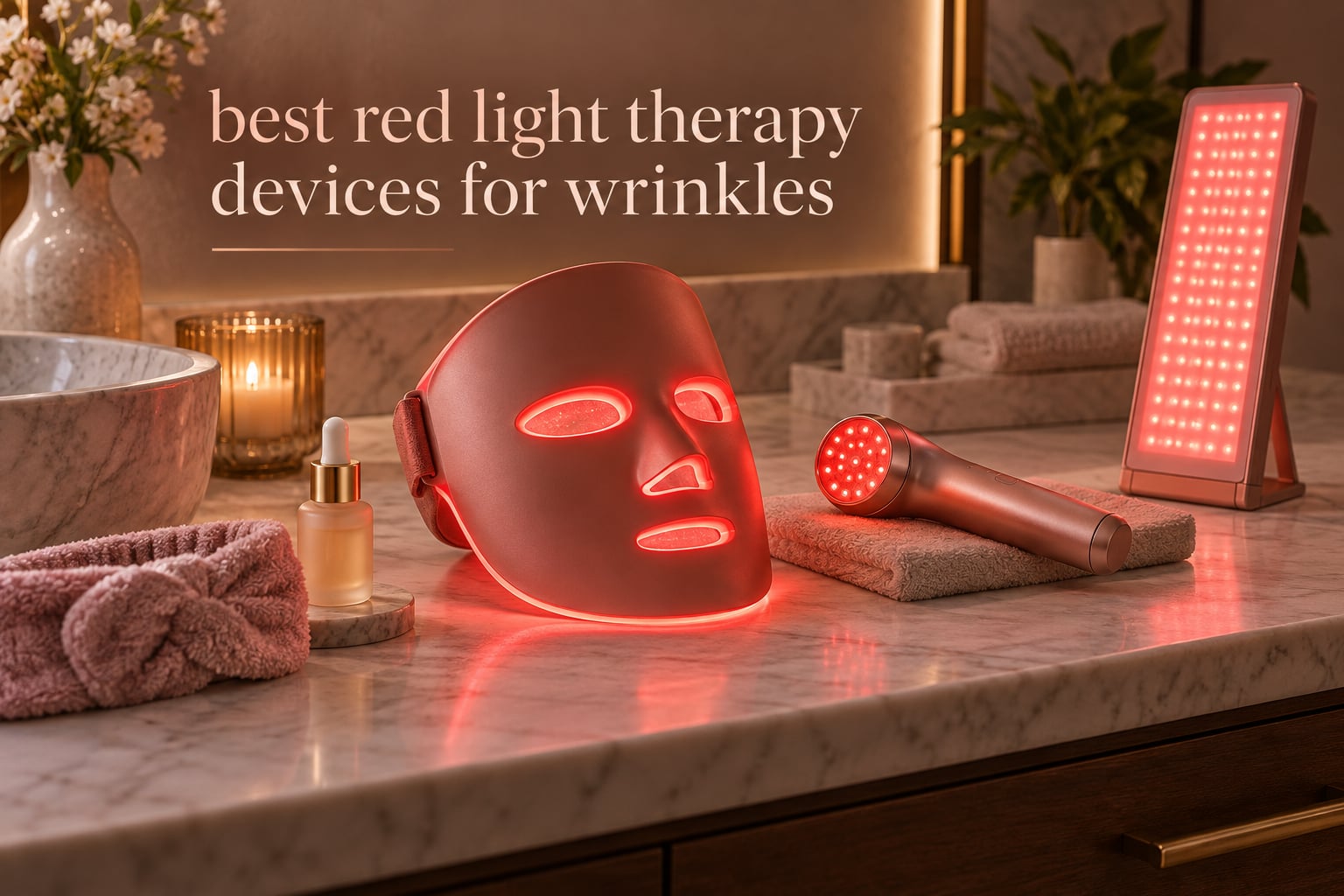
Red light therapy has moved from clinic-only gadget to a normal line item on bathroom shelves, and the number of options has gotten worse for it. Between flexible silicone masks, rigid hard-shell panels, dual-mode contact wands, handheld light wands and freestanding lamps, picking a device for wrinkles usually means picking a format first, then a brand inside that format.
Here is the honest version: red light therapy works for fine lines and firmness by stimulating collagen and elastin in the dermis, and results build over weeks of consistent sessions. It does not erase deep structural wrinkles, and it is not a substitute for injectables or a retinoid routine. What a device can do is support the collagen side of your routine; how well it does that depends heavily on wavelength, dose and whether you can realistically sit still for the session.
We compared ten red light therapy devices for wrinkles across five formats, reading published specifications, coverage geometry, session requirements and owner-reported durability rather than repeating marketing claims. Where a listing states wavelengths in nanometres we use them, and where it does not we say so instead of guessing. Every rating and review count below is the current aggregate on the retail listing.
Top 3 Best Red Light Therapy Devices for Wrinkles (October 2026)

NEWKEY 4D LED Mask
- 450 light-emitting chips
- Red 630nm plus blue 465nm
- Up to 75mW/cm2
- Automatic 10-minute shut-off
Shark CryoGlow
- Red
- blue and deep infrared
- Four timed treatments
- InstaChill cooling pads
- 6-minute anti-aging mode

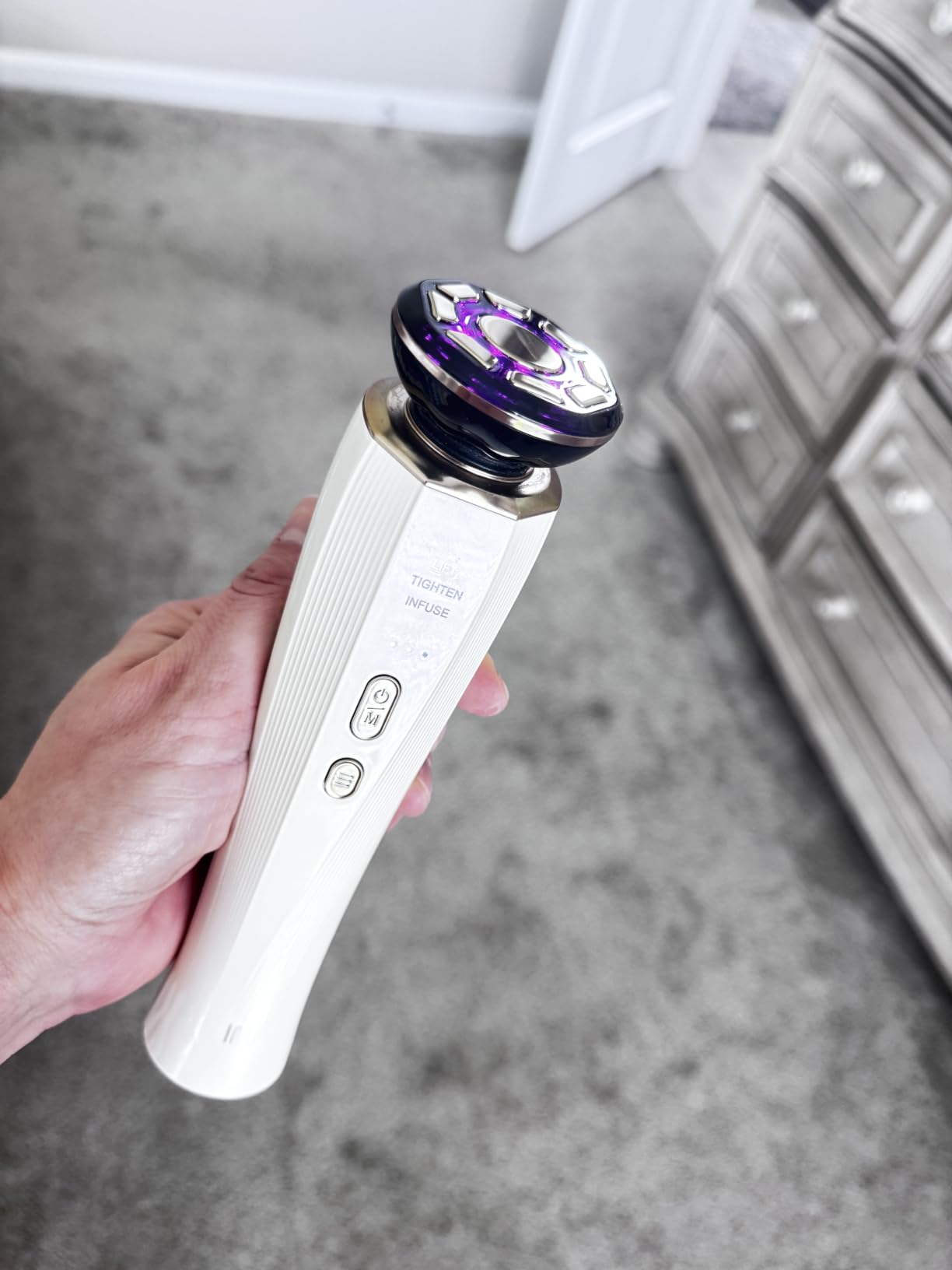
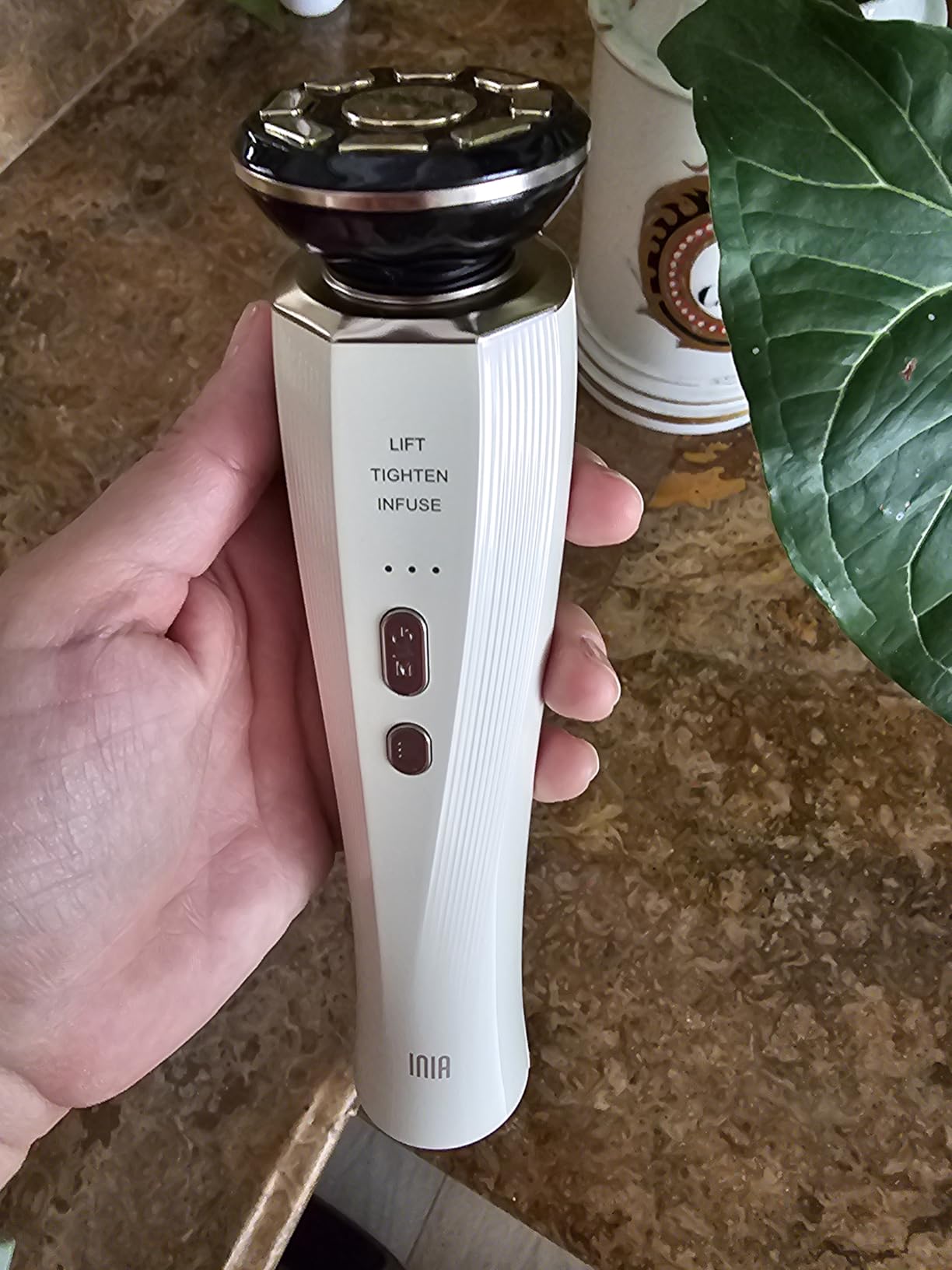
INIA FLARE 3-in-1
- LIFT
- TIGHTEN and INFUSE modes
- Red light with vibration
- Negative ion absorption mode
- Adjustable intensity
All 10 Red Light Therapy Devices Side by Side in 2026
Every device below appeared in this roundup, whatever its format. The table is the fastest way to see which category a product actually belongs to before you read the full review.
| Product | Specifications | Action |
|---|---|---|
| NEWKEY 4D LED Red Light Therapy Mask |
|
Check Latest Price |
| INIA FLARE 3-in-1 Beauty Device |
|
Check Latest Price |
 INIA Red Light Therapy Mask 850nm NIR INIA Red Light Therapy Mask 850nm NIR |
|
Check Latest Price |
 iRestore LED Face Mask iRestore LED Face Mask |
|
Check Latest Price |
| Shark CryoGlow LED Face Mask |
|
Check Latest Price |
 Solawave 4-in-1 Red Light Wand Solawave 4-in-1 Red Light Wand |
|
Check Latest Price |
 INIA GLOW 4D Wireless Mask INIA GLOW 4D Wireless Mask |
|
Check Latest Price |
 Ulike Red Light Therapy Mask Ulike Red Light Therapy Mask |
|
Check Latest Price |
 Dopsikn 7 Color Galvanic Facial Device Dopsikn 7 Color Galvanic Facial Device |
|
Check Latest Price |
 Viconor Red Light Therapy Lamp Viconor Red Light Therapy Lamp |
|
Check Latest Price |
1. NEWKEY 4D LED Red Light Therapy Mask – Best Overall Coverage
NEWKEY 4D LED Red Light Therapy Mask for Face Skin Glowing,630nm Led Light Therapy Face Mask Anti Wrinkle, Blue Light Therapy Face Mask for Acne,Home use,450 LED Chips,Birthday gift,Plug in
Red 630nm and blue 465nm
450 light-emitting chips
Up to 75mW/cm2
10-minute automatic shut-off
Pros
- Highest reviewed device in this roundup at 3605 ratings
- Contoured 4D fit holds a 5mm light distance across the face
- Dual wavelengths cover wrinkles and breakouts in one session
- Corded power means no battery decay mid-session
Cons
- Corded design pins you to one spot for the full session
- Heaviest of the three full-face rigid masks here at 2.6 pounds
- No near-infrared channel
- so less depth reach than dual-wavelength rivals
This is the mask I keep coming back to, and the reason is less about the headline numbers than the geometry. The 4D contour is moulded to facial bone structure, which holds the panel at a consistent 5mm working distance across the forehead, cheeks and jaw rather than letting it drift where the mask sags.
Light distance is the quiet variable in this category. A panel sitting 2cm from your cheek delivers a very different dose to the same panel sitting 5mm away, so a mask that maintains geometry is doing something a flat wand cannot. Owners report softer forehead creases and less pronounced nasolabial folds after roughly a month of consistent use, which matches the timeline the research suggests.
The one real compromise is the cord. It is there deliberately. Owners consistently praise reliable power delivery and no battery drop-off partway through a session, which is a fair trade for staying in one place for ten minutes.
Specs worth knowing: red 630nm and blue 465nm, 150 LEDs built from 450 light-emitting chips, stated irradiance up to 75mW/cm2, and an automatic shut-off at ten minutes. Dimensions are 9.8 x 7.8 x 5.5 inches and it weighs 2.6 pounds, which is heavier than most and noticeable if you plan to treat while sitting upright.
If you want a fuller treatment breakdown across formats, our [red light therapy device roundup](/best-red-light-therapy-devices/) covers the same category from a different angle.
Who this suits
Anyone who wants one device that handles their whole face in a single ten-minute block and does not mind sitting still. It is also the pick if you break out occasionally, since the 465nm blue channel is built in rather than an add-on.
Who should skip it
Skip it if you want to work through sessions, or if your priority is deep tissue work. There is no near-infrared channel here, so if you are targeting deeper lines or post-acne scarring, a dual-wavelength mask is a better use of the same slot.
2. INIA FLARE 3-in-1 Beauty Device – Best Budget Multi-Mode Device
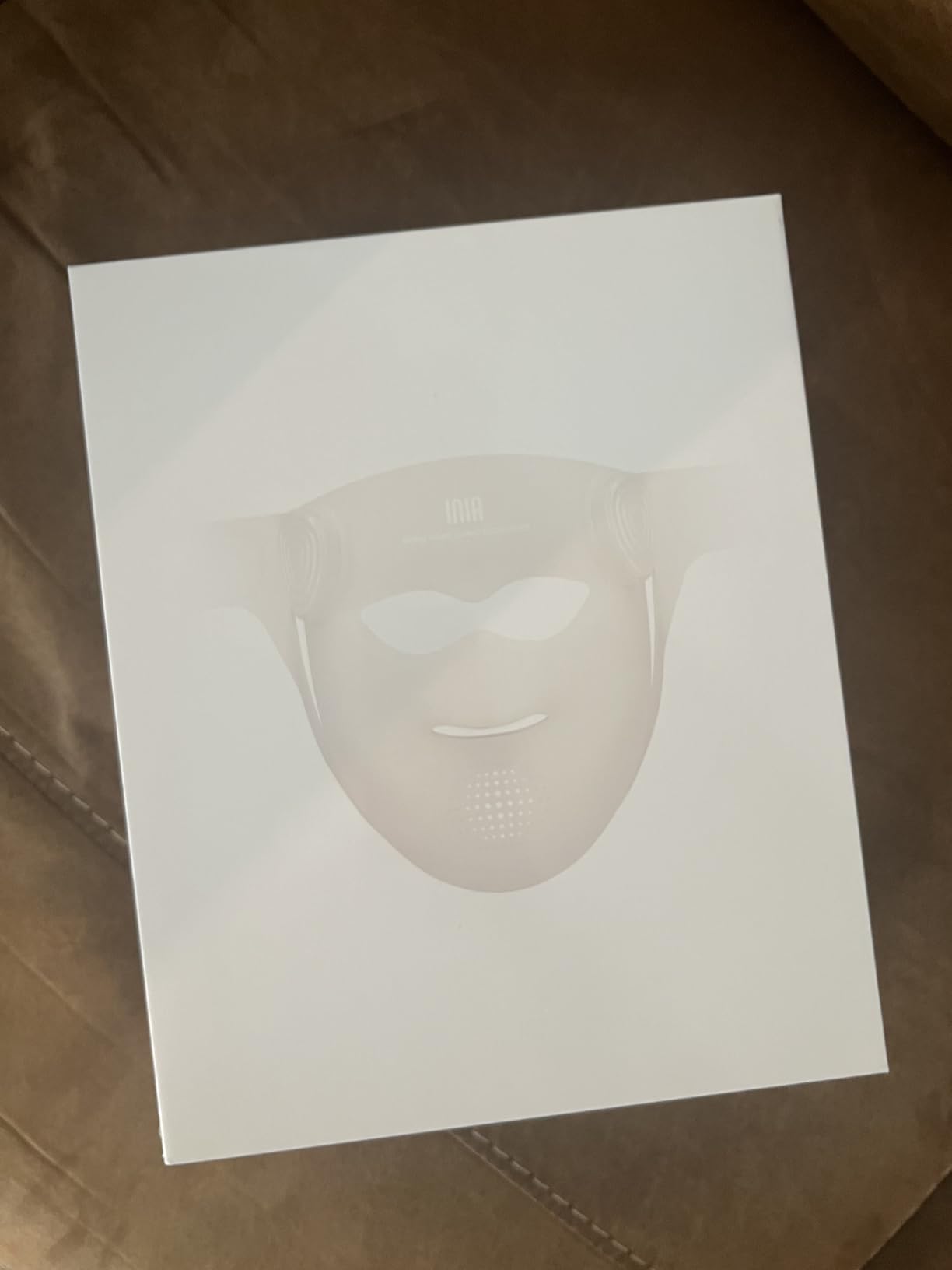
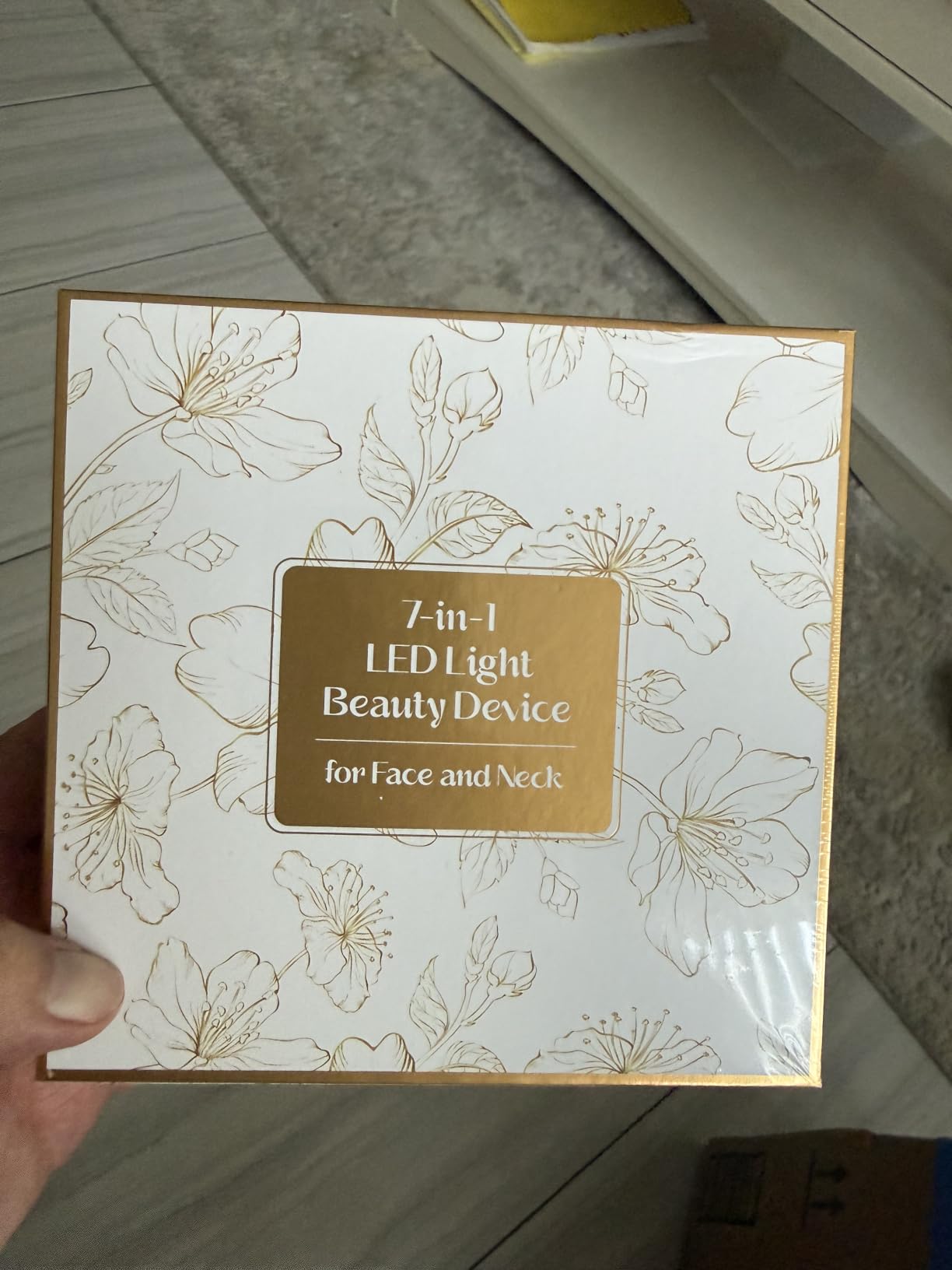
INIA FLARE 3-in-1 Red Light Therapy Beauty Device for Face & Neck White
LIFT, TIGHTEN and INFUSE modes
Articulating 3D head
Vibration plus negative ion technology
Adjustable intensity
Pros
- Three modes cover firming
- lifting and serum absorption
- Articulating head follows facial contours closely
- Vibration adds a massage effect owners enjoy
- Compact and easy to use on both face and neck
Cons
- Contact device requires hand movement across the whole face
- Colour modes are listed without nanometre wavelength values
- Included hydrating gel is needed for the best INFUSE results
The FLARE sits in a category of its own that most roundups ignore: a contact device that does several things at once instead of only emitting light. It has three named modes, LIFT, TIGHTEN and INFUSE, and each one uses a different combination of stimulation, vibration and negative ions.
TIGHTEN is the mode relevant to wrinkles, pairing vibration with the red light output. LIFT adds facial stimulation, and INFUSE is where the negative ion technology and zinc alloy electrodes come in to drive product absorption. A complimentary hydrating gel is in the box because INFUSE performs poorly on dry skin.
Be clear about the tradeoff. This is a hand device, so a full face session takes real minutes of movement rather than ten unattended ones. If your schedule cannot accommodate that, a mask is the better format for you even at a similar spend.
On specifications: the head is a 3D articulating design that conforms to facial contours, intensity is adjustable, and the unit weighs 1.32 pounds at 2.05 x 1.89 x 7.4 inches. The listing names its modes but does not publish nanometre values for the light output, so we are not going to assign figures the manufacturer has not stated.
Who this suits
People who want a device that earns its drawer space. If firming plus better serum absorption appeals more to you than a pure light dose, the mode split is genuinely useful rather than a gimmick, and 2,148 ratings reflect how many buyers think the same.
Who should skip it
Skip it if your priority is a hands-free full-face treatment or if you dislike applying gel. It is also a weaker pick for anyone who wants to see a published irradiance figure and know the dose they are receiving.
3. INIA Red Light Therapy Mask with 850nm Near-Infrared – Best Wavelength Coverage per Dollar
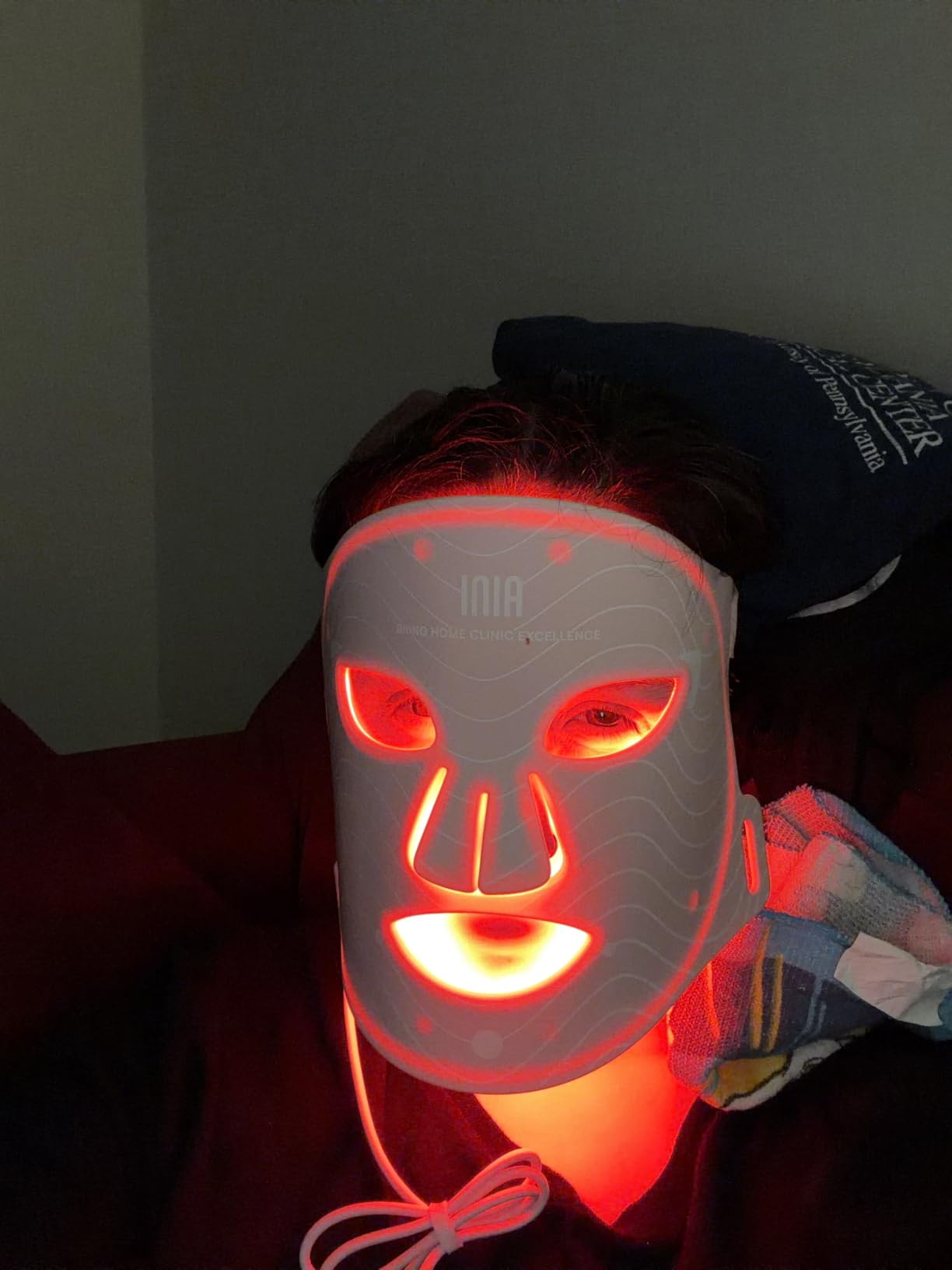
INIA Red Light Therapy Mask for Face, 850nm NIR, Red/Blue LED Light 4 Modes
630nm red plus 850nm near-infrared
220 LED chips at up to 105mW/cm2
2600mAh rechargeable controller
10, 20 or 30-minute timer
Pros
- Stated irradiance of up to 105mW/cm2 is the second highest in this roundup
- Dual wavelength with 850nm near-infrared for deeper penetration
- Rechargeable controller removes cord management entirely
- Timer is selectable at 10
- 20 or 30 minutes
Cons
- Fewer LED chips than premium 300-plus LED masks
- Reviewers report the widest spread of one-star outcomes in this group
- Four modes add complexity for a first-time buyer
For wrinkle depth, wavelength matters more than LED count, and this mask pairs 630nm red with 850nm near-infrared. The red band works nearer the surface while the near-infrared channel reaches deeper, which is the pairing most mature-skin routines are built around.
Stated output is up to 105mW/cm2 across 220 LED chips, which places it near the top of this roundup on paper. Treat that as a manufacturer figure rather than a verified measurement. Devices in this category are frequently measured below their claim by independent testers, so read the spec as an upper bound and follow the timer.
The charging case is a 2600mAh rechargeable unit that handles the mask wirelessly, which removes the tether problem that frustrates owners of corded designs. Sessions are selectable at 10, 20 or 30 minutes with automatic shut-off, and the recommended rhythm is three to seven times per week.
Four light modes cover red low, red high, blue and a red-plus-blue combination, with optional near-infrared activation on each. That is more control than most people need, and a few buyers found the one-star share in this listing higher than the rest of the field, so results clearly vary person to person.
Who this suits
Anyone who wants near-infrared depth and a cordless routine without stepping up to the premium tier. The 850nm channel is the reason this is our value pick rather than simply a cheap mask.
Who should skip it
Skip it if simplicity is the goal. Four modes plus optional near-infrared on each is more decision-making than a first-time buyer needs, and the higher one-star share suggests it is less forgiving of inconsistent routines.
4. iRestore LED Face Mask – Best for Triple Wavelength Coverage
iRestore LED Face Mask for Youthful Skin, Red Light Therapy for Face, Red, Blue & Infrared Therapy for Wrinkles, Fine Lines, Dark Spots with 360 LEDs, Skincare Device for Women & Men
Red 635nm, infrared 830nm and blue 415nm
360 LEDs
Dual-strap eye light blocking
10-minute sessions, 3-5 times weekly
Pros
- Three published wavelengths covering collagen
- tone and blemishes
- Dual straps block direct light from the eyes
- Comfortable enough to multitask during sessions
- Works with serums and moisturisers already in your routine
Cons
- Highest-priced mask in this roundup
- Ten-minute sessions three to five times a week need scheduling
- LED count does not tell you the dose at skin level
iRestore is the only mask here with all three wavelengths stated in nanometres on the listing: red at 635nm, infrared at 830nm and blue at 415nm. That transparency matters when you are trying to compare devices on paper, and it also means the blue channel is a real acne tool rather than an unquantified mode.
360 LEDs spread across a dual-strap frame. The straps are a genuine feature rather than cosmetic, because they block direct light from the eyes, which removes the main hesitation people have about wearing an LED mask indoors. Owners describe wearing it while reading or working through emails.
The protocol is ten minutes, three to five times per week. That adherence requirement is the deciding factor for a lot of people. A device that needs six sessions a week to show anything is a different commitment than one that needs four.
Physical specs: 9.25 x 8.9 x 5.16 inches at 1.81 pounds. The listing describes it as compatible with serums and moisturisers, and positions the brand as a dermatologist-recommended US manufacturer with 20+ years of research and development.
Who this suits
People who want the full wavelength spread and care more about knowing the figures than paying the lowest amount. It is the pick if you want wrinkles and blemishes addressed with one device and prefer eye light blocking built into the frame.
Who should skip it
Skip it on cost sensitivity. This is the most expensive mask in the roundup, and the wrinkle benefit over a well-built dual-wavelength mask is a refinement rather than a step change.
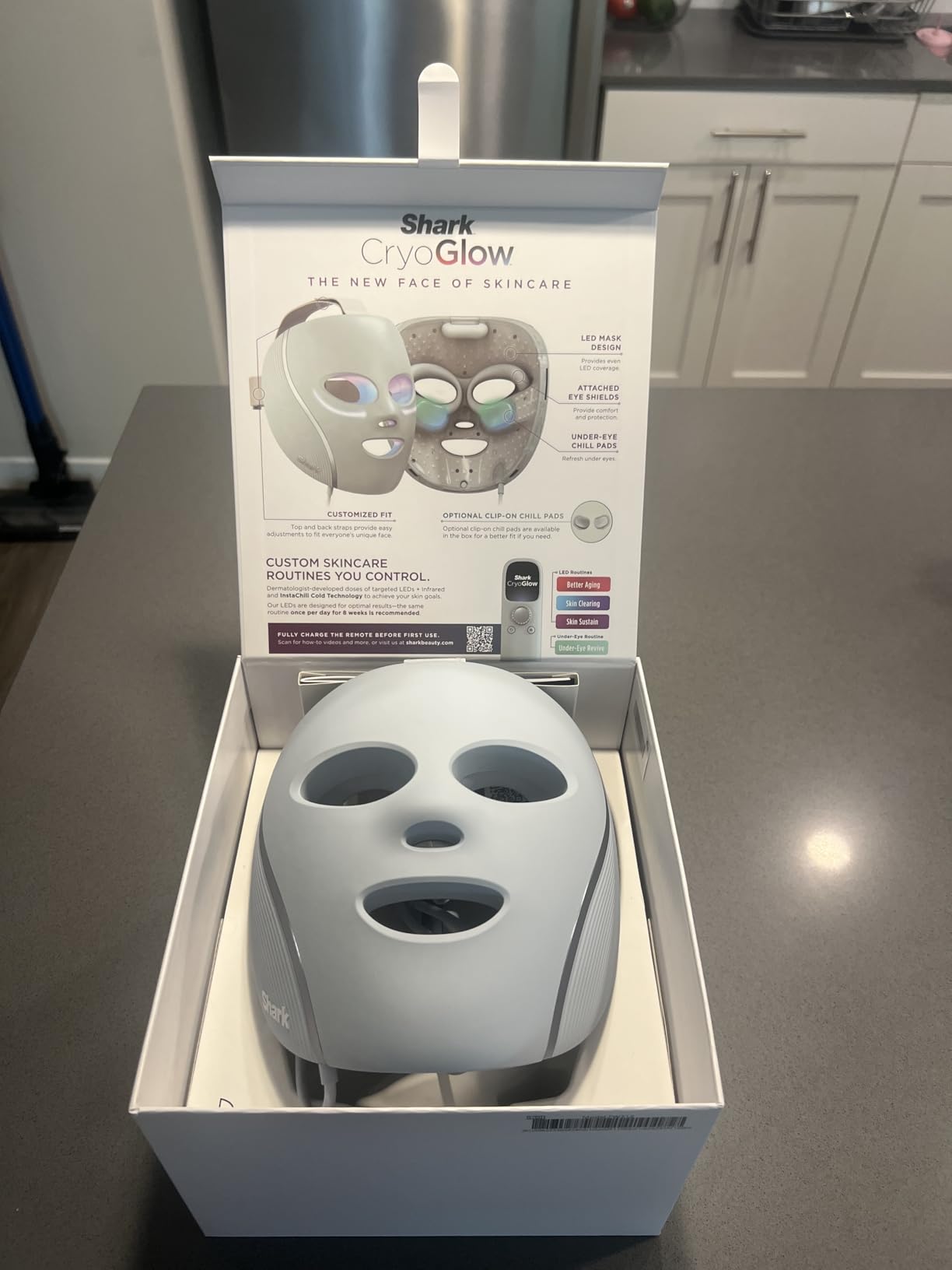
5. Shark CryoGlow LED Face Mask – Best for Under-Eye Treatment
Shark CryoGlow LED Face Mask, Red Light Therapy, Under-Eye Cooling, FW312PK
Red, blue and deep infrared LEDs
Four timed treatments
InstaChill under-eye cooling with three levels
Remote and USB-C charging
Pros
- Only mask here with temperature-controlled under-eye cooling
- Four timed treatments including a 6-minute Better Aging mode
- Listed as FDA-cleared and clinically tested on 119 participants
- Remote control means you do not sit up to start it
Cons
- Among the most expensive options in this roundup
- Short treatment times still require daily use
- Listing does not publish nanometre values for each channel
CryoGlow is the only device here that treats the under-eye area as a first-class target. The InstaChill system adds clip-on cooling pads with three chill levels, and there is a dedicated Under-Eye Revive treatment that runs 5 to 15 minutes. If crow’s feet and under-eye lines are where you are most bothered, nothing else in this roundup addresses that zone as directly.
The treatment menu is unusually well thought out. Better Aging runs six minutes on red plus infrared, Skin Clearing runs eight minutes on blue, infrared and red, and Skin Sustain is a four-minute maintenance mode. Short sessions are the most realistic format in this category for adherence, because a four-minute mode is easy to keep.
The listing states the mask is FDA-cleared and was clinically tested on 119 participants by an independent third party. That is a stronger claim than most of this category makes, and you can look up clearance claims yourself in the FDA database rather than taking a logo at face value. Note the distinction: clearance is not the same as approval, and FDA registered is not the same as cleared.
Box contents are the mask, clip-on chill pads, a remote, and a USB-C charging cable, with colour options in Blue Frost, Rose Glow and Lilac Chill. Weight is 1.49 pounds at 7.99 x 5.89 x 8.63 inches, which is lighter than most rigid masks here.
Who this suits
Anyone whose wrinkle concern sits above the cheekbone, or who wants acne support alongside firmness in the same device. The short treatment times also make it the most sustainable pick for people who struggle to keep a ten-minute habit.
Who should skip it
Skip it if budget is the constraint, since it sits near the top of the price range. Also skip it if you specifically want published nanometre figures for each channel before buying, because the listing describes red, blue and deep infrared without quoting wavelengths.
6. Solawave 4-in-1 Red Light Wand – Best for Spot Treatment
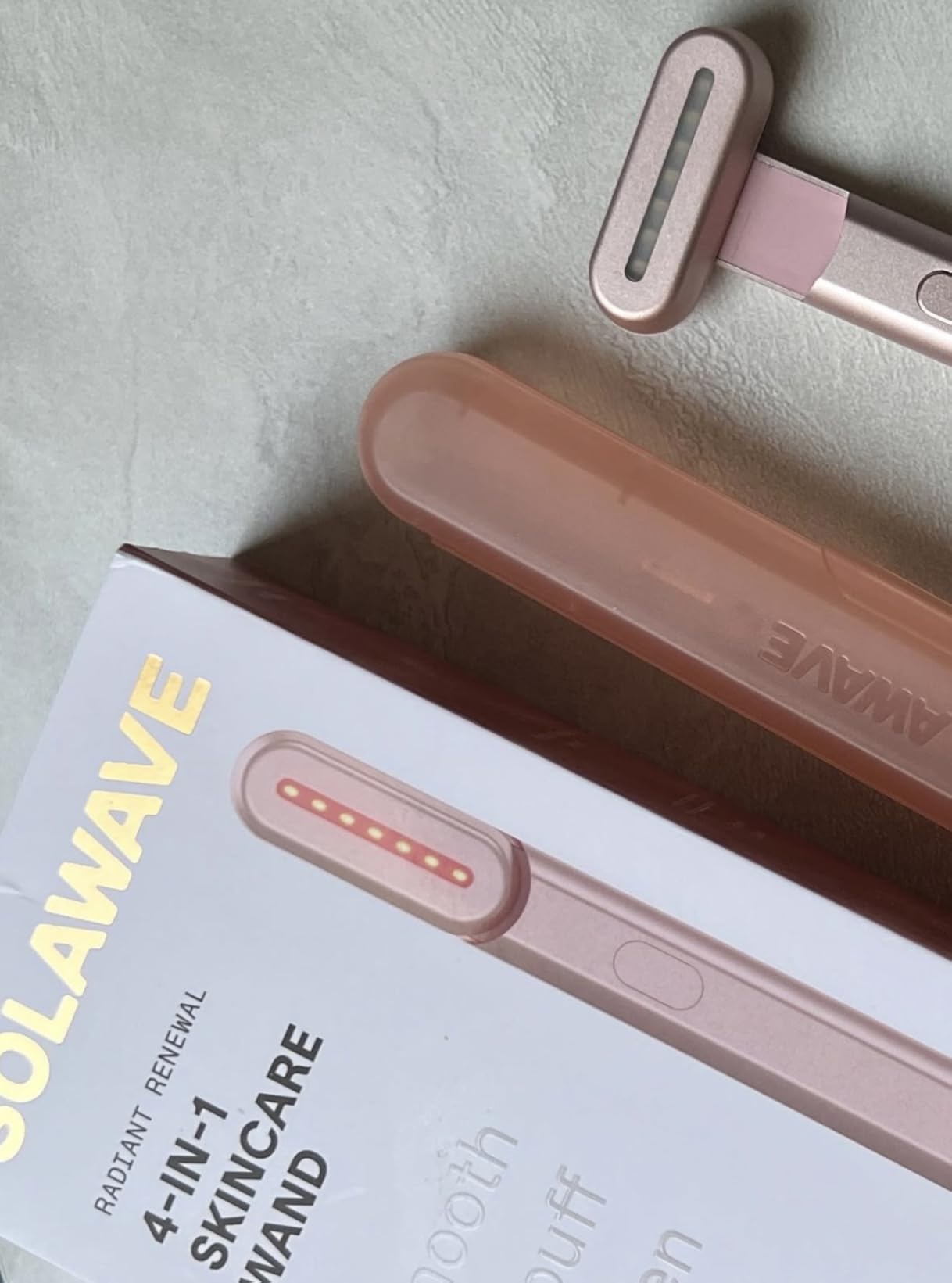
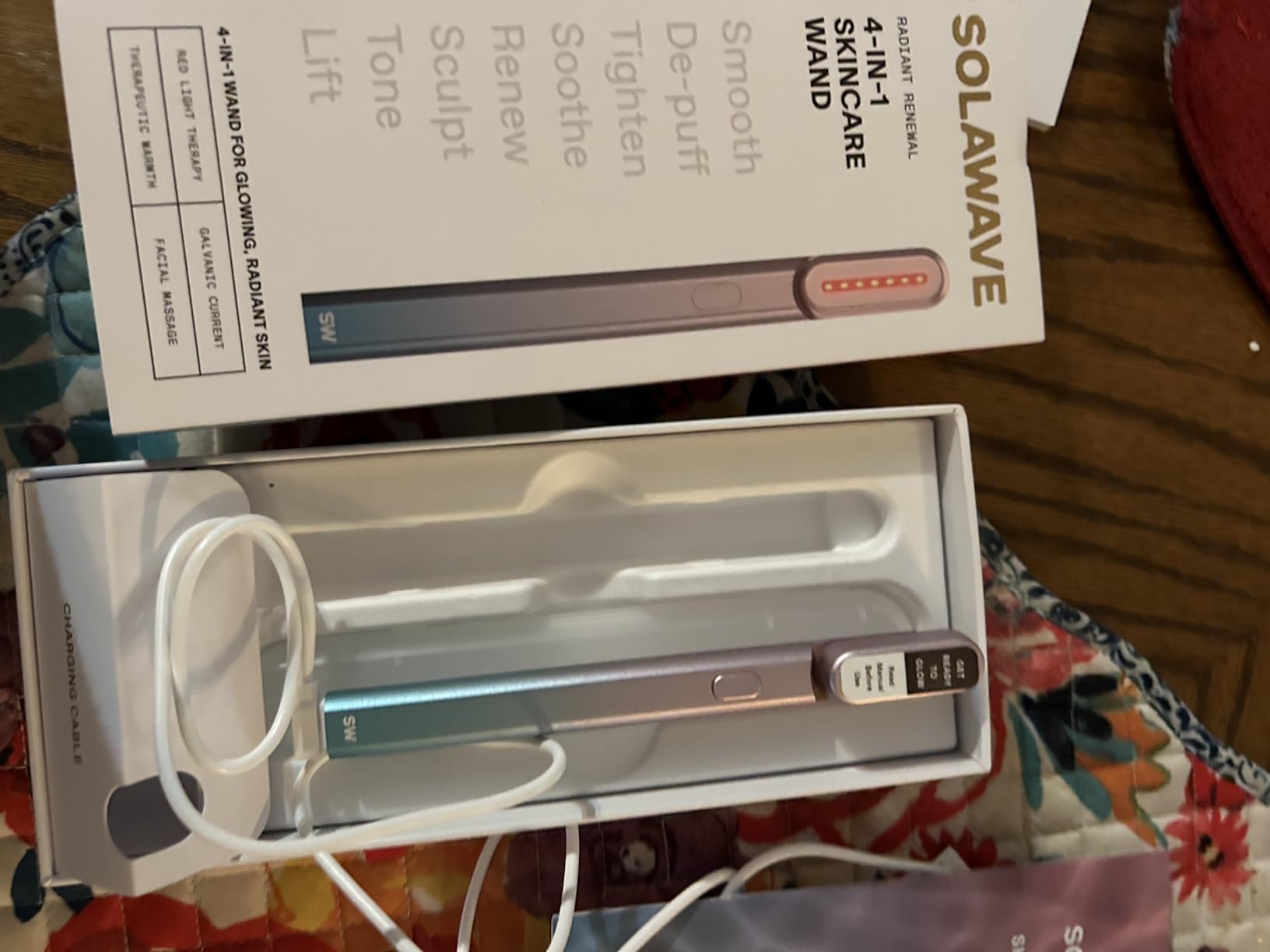
Solawave 4-in-1 Red Light Therapy Wand for Face & Neck (Rose Gold)
FDA-cleared red 630nm light
Galvanic current, warmth and massage combined
3 minutes per area daily
8.46 x 3.54 x 1.26 inches
Pros
- Only handheld here with an FDA clearance claim for wrinkle reduction
- Four functions in one body including galvanic current
- Portable and easy to slot into an evening routine
- Works on face
- neck and hands
Cons
- Small treatment head means longer sessions than a mask
- Recurring reports of power or battery failure after several months
- Galvanic mode requires cleaning the wand after each use
The wand answer is about efficiency of attention, not efficiency of light. You sit for ten minutes with a mask and stop thinking about it. With a wand you are moving a small head across your face in three-minute intervals, and that attention requirement is the single biggest reason people abandon handheld devices.
What Solawave does well is combine four things in one body: red light at 630nm, galvanic current to drive serum absorption, therapeutic warmth for puffiness, and facial massage. Owners frequently report visible lifting and smoothing from a single use, which is likely a combination of massage and temporary hydration rather than a collagen change in one session.
The listing states FDA-cleared red light for reducing the look of fine lines and wrinkles. Check that claim in the FDA clearance database yourself, and remember that a clearance means substantially equivalent to a predicate device, not that the FDA reviewed your wrinkles.
Durability is the real concern. Reviewers report a recurring theme of units failing after several months or a single recharge, which is common for small battery-driven handsets. Budget for that possibility rather than treating it as an anomaly.
Size is 8.46 x 3.54 x 1.26 inches at 13.93 ounces, and the protocol is three minutes per area daily. Colour options include Rose Gold, Charcoal and a blue-pink ombre.
Who this suits
People who travel, or who want to target one zone rather than the whole face. It is also the strongest pick here if galvanic current and serum absorption matter to you as much as light exposure.
Who should skip it
Skip it if you will not maintain a moving routine three minutes at a time, and skip it if durability worries you more than portability. For full-face coverage it is simply slower than any mask on this list.
7. INIA GLOW 4D Wireless Mask – Best for Wireless Sessions
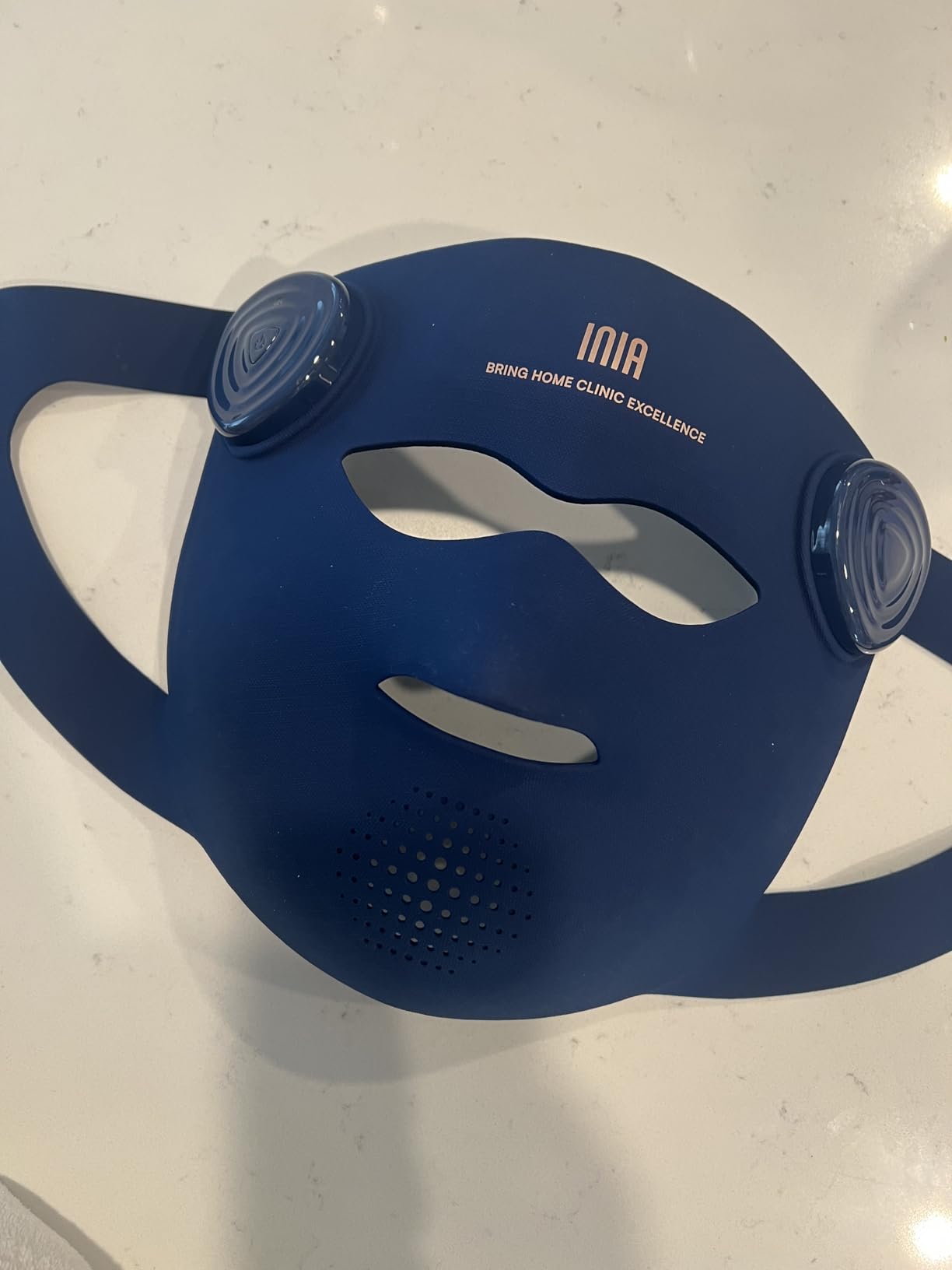
INIA GLOW 4D Wireless Red Light Therapy Mask for Face, Dual NIR, 320 LEDs
320 LEDs on flexible silicone
Dual near-infrared channels
Four modes including amber and combo
Magnetic cooling gel pad for puffy eyes
Pros
- Flexible medical-grade silicone follows the face rather than floating above it
- Fully wireless
- so you can move around during sessions
- Dual near-infrared channels for elasticity and fine lines
- Owners report battery holds up through a week of near-daily use
Cons
- No built-in timer
- so you need an alarm
- Heavier than most masks and can sag when worn upright
- Only one strap position for adjusting the lower fit
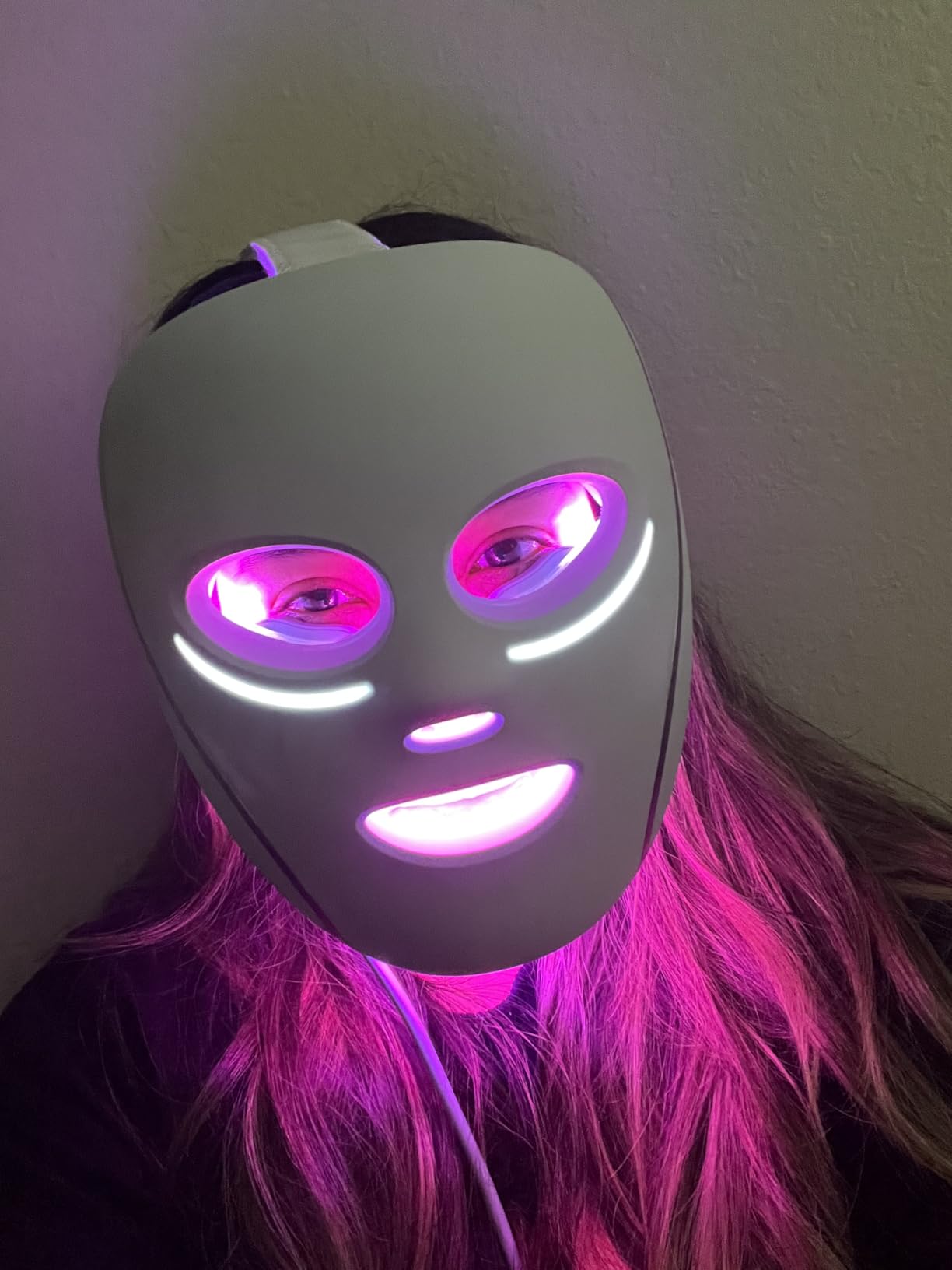
This is the flexible silicone option in a roundup otherwise dominated by rigid shells, and that difference is more than cosmetic. Silicone follows the contour of the face, which keeps the LED array closer to the skin and more consistent across the cheekbones than a hard plastic frame.
Coverage is full face across forehead, cheeks, chin and jawline using 320 LEDs, with dual near-infrared channels operating at multiple skin levels. Four modes cover red, blue, amber and a combination, and there are magnetic cooling gel pads for puffy eyes that attach and detach.
Being fully wireless is the practical win. You can stand up, move around and get on with your evening rather than sitting tethered. Owners report the battery holding up through roughly a week of near-daily use before a charge.
The specification gaps are worth naming. There is no built-in timer, so you need a phone alarm to end the session. There is a single strap position for adjusting the lower fit. At 1.9 pounds it is heavier than most, and some owners report it sagging when worn upright. Long-term reviewers describe cumulative smoothing and tone improvements over two to three months of consistent use.
Who this suits
Anyone who wants a flexible fit and true wireless freedom, and who can live with setting a timer on their phone. It is the pick for people who abandoned a wired mask because sitting still for ten minutes was the problem.
Who should skip it
Skip it if you want the device to manage its own timing, or if you dislike adding an alarm to the routine. The weight also matters if you plan to wear it upright rather than reclined.
8. Ulike Red Light Therapy Mask – Best for 8-Minute Sessions
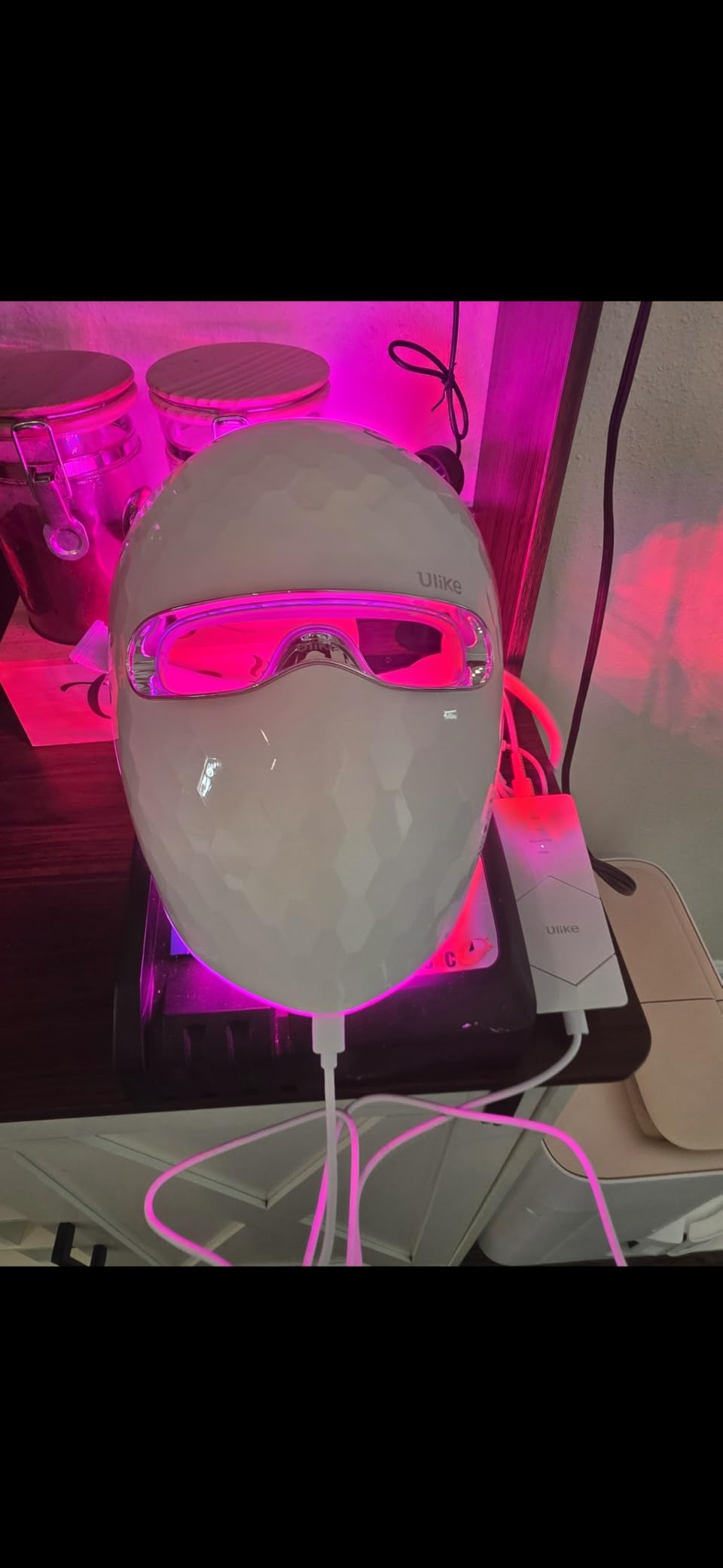
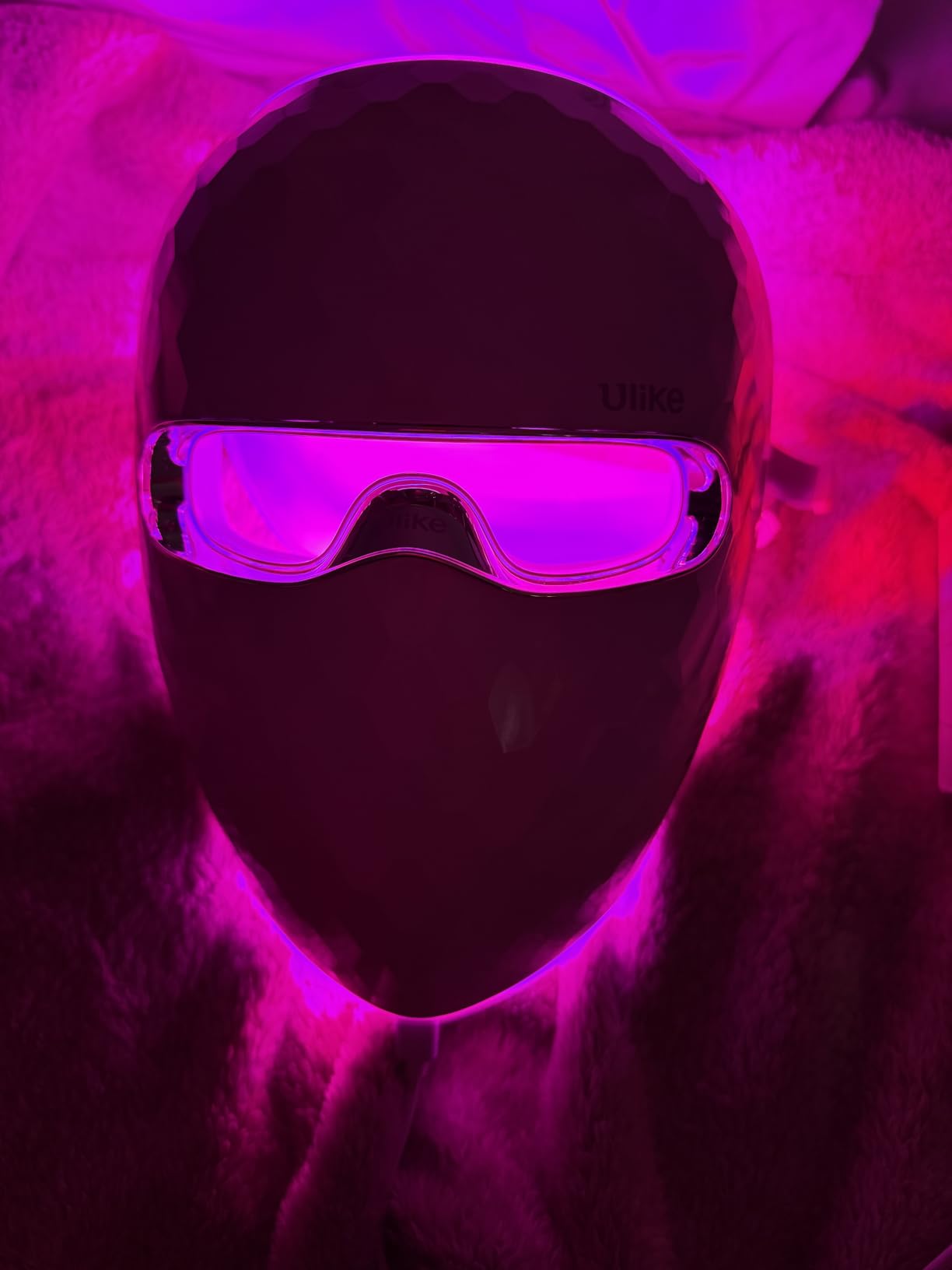
Ulike Red Light Therapy Mask for Face,360° full face coverage
272 light beads with one-slot four-light technology
360 degree full face coverage
Silicone eye mask for protection
Four modes including firming
Pros
- Shortest stated daily commitment at 8 minutes
- 360 degree geometry aimed at even coverage
- Contoured woven straps and a silicone eye mask for comfort
- Highest five-star share of any mask in this roundup
Cons
- Remote control must be charged or the mask may not operate correctly
- Heaviest unit here at 2.73 pounds
- Colour modes are named without published nanometre values
The pitch that actually matters here is adherence. If the mode runs eight minutes a day, you are far more likely to still be using it in month three than with a thirty-minute protocol. Most people in this category do not fail because the light was wrong, they fail because the routine was too long.
The design argument is coverage geometry. A 360 degree arrangement with a 1cm gap from the skin is intended to spread light evenly rather than concentrate it in hotspots, and the listing claims that arrangement raises irradiance by 77.4% compared with direct exposure. Treat that as a manufacturer comparison against its own baseline, not an independent measurement.
Four modes cover glow, firming, rejuvenation and clarifying, built on one-slot four-light technology across 272 light beads. A silicone eye mask provides eye protection, and the 4D ergonomic frame uses contoured woven straps for a secure fit.
Two caveats sit in the listing itself. The remote control requires a full charge before use, and at 2.73 pounds this is the heaviest mask we tested, which is noticeable for a full-face device. The five-star share of 80% is the highest in this roundup, though the review count of 485 is lower than most rivals here.
Who this suits
People with limited schedule headroom and strong adherence. If you have abandoned light devices before because the session was too long, an eight-minute mode is the feature that changes the outcome.
Who should skip it
Skip it if weight bothers you during a face treatment, or if you want published wavelengths to compare. It is also a heavier commitment given the lower review volume.
9. Dopsikn 7 Color Galvanic Facial Device – Budget Pick
Dopsikn 7 Color Galvanic Machines – Red Light Therapy for Face and Neck, Face Massager Tool for Wrinkles, Double Chin, Vibrating Facial Massager with Thermals, White
Seven colour modes with micro-current
113F heating and gentle vibration
Skin contact sensor
5-10 minute sessions, face and neck
Pros
- Smallest and lightest device in this roundup at 6.74 ounces
- Travel-friendly and easy to slip into a bag
- Seven modes plus micro-current give a lot of function per gram
- Contact sensor only activates when the head touches skin
Cons
- Small treatment area means long sessions for a full face
- Owners report more improvement in tone and puffiness than in wrinkles
- Recurring reports of shortened battery life and early hardware failure
This is the entry point, and it is worth being straight about what it is. Seven colour modes, micro-current galvanic technology, 113F heating and gentle vibration in a device weighing 6.74 ounces. It is the easiest thing on this list to actually keep with you.
The skin contact sensor is a nice piece of engineering. The device only activates when the sensing pieces touch skin, which stops it running in mid-air, a real problem with cheaper galvanic tools. The recommended protocol is five to ten minutes once or twice daily.
The honest limitation is coverage. This treats a small area at a time, so a full face session takes considerably longer than a mask. Owners also report that visible improvement shows up more in skin tone and puffiness than in wrinkles, which is what you would expect from a device whose primary effects are warmth and micro-current.
There is a durability thread in the reviews worth weighing: shortened battery life and hardware that stops responding after a few weeks appear repeatedly. At this price point that risk is easier to absorb, but it is the main reason this is not our primary pick despite its rating.
Who this suits
Travellers, people testing whether light devices suit them at all, and anyone who wants warmth and micro-current for puffiness rather than a serious collagen programme. It also pairs well with a mask if you only use it on the neck and jaw on the go.
Who should skip it
Skip it as your primary wrinkle device. If wrinkles are the goal rather than puffiness and tone, a mask with published wavelengths will serve you better for the same commitment.
10. Viconor Red Light Therapy Lamp – Best for Face and Body
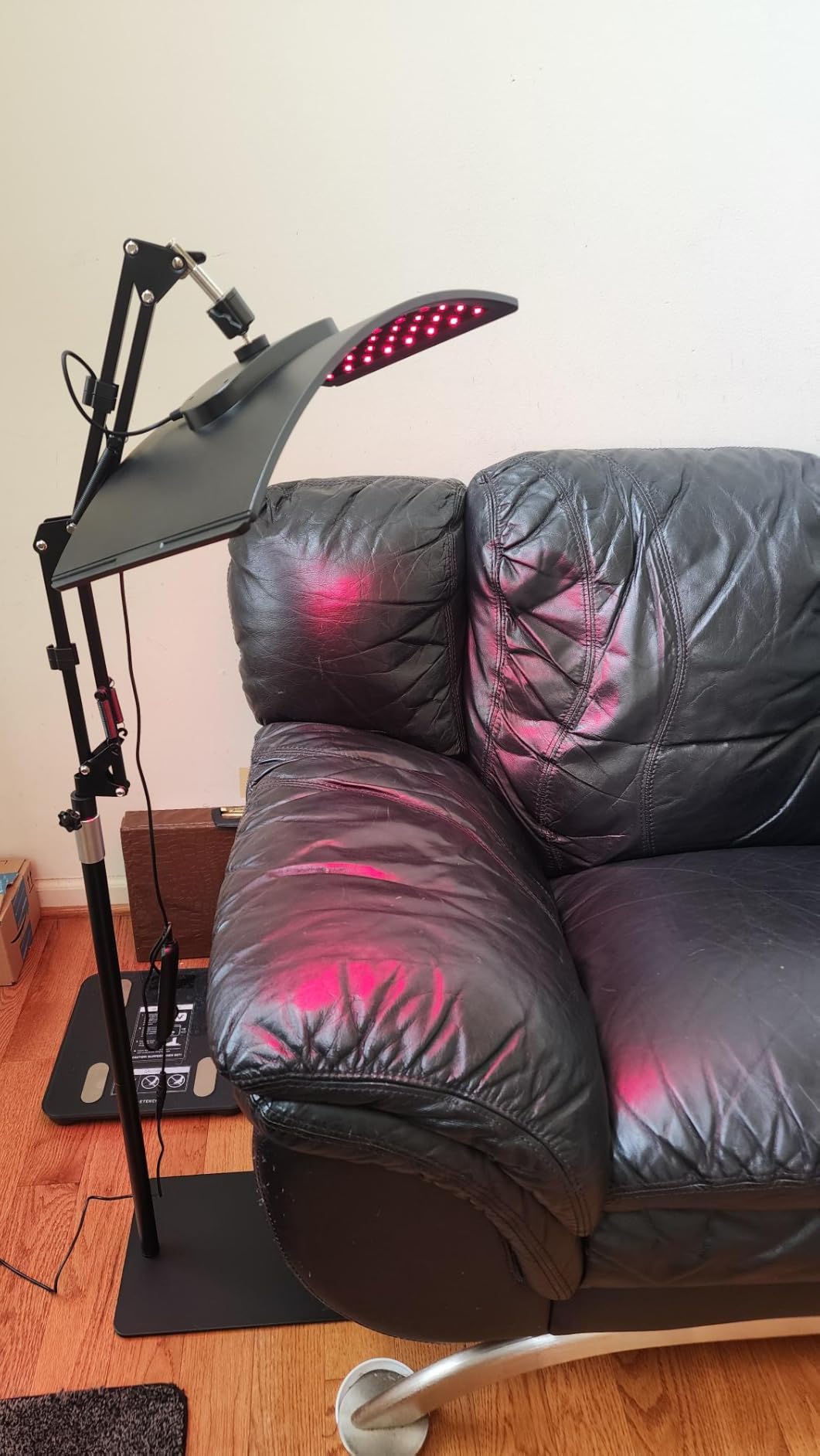
Viconor Red Light Therapy for Face and Body, Red Infrared Light Therapy Lamp with Stand Led 660nm & 850nm Infrared Light Device for Body
120 LEDs pairing 660nm red with 850nm infrared
Curved panel surface
180 degree adjustable stand
Remote with brightness and timer
Pros
- Highest average rating in this roundup at 4.6
- Curved panel focuses output across a larger area than a handheld
- Stand adjusts 180 degrees so you can treat while seated
- Remote changes brightness and timer without moving
- Protective glasses included in the box
Cons
- Not portable at 7.08 pounds and requires a power outlet
- Freestanding unit can be knocked over if bumped
- Panel assembly and power cable seating draw some complaints
The lamp is the format that solves the neck and decollete problem. A mask covers the face and stops; a wand takes twenty minutes to reach the same area above the collarbone. This panel covers face, neck, shoulders and back in one pass because you are adjusting a stand rather than moving your arm.
The light output is properly specified: each of the 120 LEDs pairs one 660nm red diode with two 850nm infrared diodes, which gives you the red-plus-near-infrared pairing that most wrinkle routines are built around. The curved panel surface is intended to focus and concentrate that output onto the target rather than scattering it.
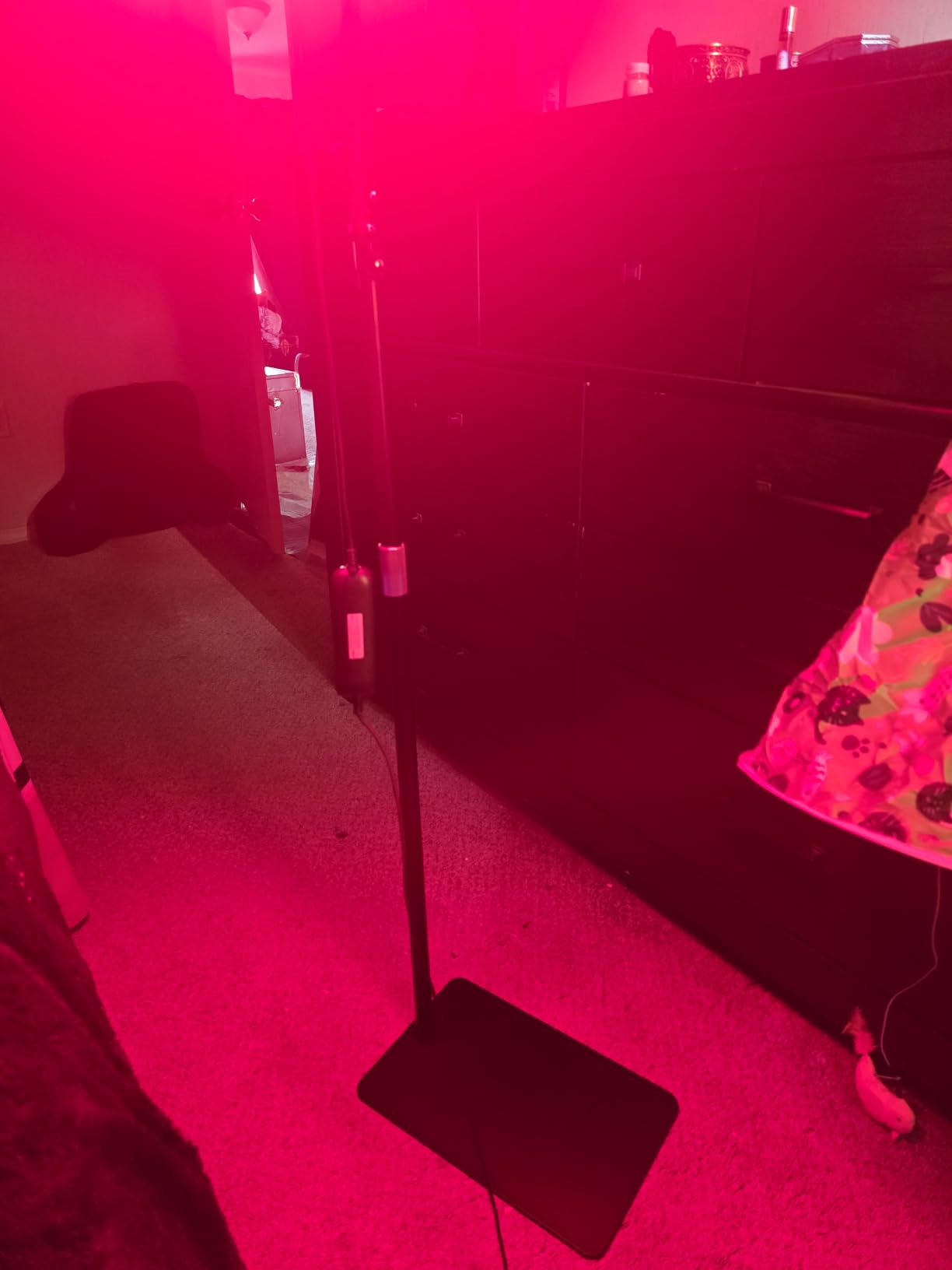
The stand adjusts 180 degrees in angle and height, and the unit can also hang on a wall hook, so you can treat sitting down rather than holding a position. A remote handles brightness and timer adjustment, and the recommended use is 15 to 30 minutes daily.
What you give up is portability. At 7.08 pounds with a 1.8m power cord, this is a fixture, not a travel device. Owners note that the freestanding unit can be knocked over if bumped and that the stand can feel wobbly depending on setup, with a small cluster of assembly and cable complaints in the reviews.
If you are still narrowing down the panel format specifically, our [red light therapy panel comparison](/best-red-light-therapy-panels/) goes deeper on that category.
Who this suits
People who want to treat the neck and decollete as well as the face, or who want one device for face and body use. It is also the highest rated product in this roundup, with 4.6 across 901 ratings and 83% five-star feedback.
Who should skip it
Skip it if you travel or have no room for a stand and an outlet. And if your only target is crow’s feet, you will spend a lot of session time on areas you do not care about.
What Actually Reduces Wrinkles
Red light therapy works by photobiomodulation, which is the clinical term for light-driven cellular stimulation. Specific wavelengths energise cells in the dermis, particularly mitochondria, which supports increased collagen and elastin production over repeated sessions. Wrinkles are partly a collagen story, and this is the one at-home treatment that targets that mechanism directly.
Wavelength decides depth. Red light at 630 to 660nm acts nearer the surface. Near-infrared at 830 to 850nm penetrates deeper into tissue, which is why dual-wavelength devices are usually the better pick for mature skin with lines that have depth. Blue light at 415nm works in the epidermis and mainly addresses acne, adding a benefit rather than a wrinkle one.
Your realistic timeline looks like this. In weeks one and two, most people notice warmth, temporary plumpness and slightly more even tone. By weeks three to six, fine lines around the eyes and forehead often look softer. Between weeks seven and twelve, firmness and elasticity changes become the more noticeable result. Photographs taken for before-and-after comparison flatter devices in this category, because lighting, pose, expression and editing all change appearance independently of the treatment.
What it will not do is remove deep structural folds that have been set by years of movement and volume loss. If your concern is a line that remains visible when your face is completely relaxed, that is a filler conversation with a clinician, not a device conversation.
Which Format Should You Buy
Start with how many zones you want to treat and how much attention you can realistically give the session. Those two answers narrow the format immediately, and the rest is brand.
Choose a full-face rigid mask if you want hands-free coverage and will sit still. A flexible silicone mask if comfort and freedom of movement matter more than a built-in timer. A contact device like the INIA FLARE if firming and serum absorption matter as much as light. A handheld wand if you travel or want to spot-treat the neck and jaw. A freestanding panel if you want the neck, decollete and body in the same session.
The session math is the part most listings hide. A mask delivers a full-face dose in roughly ten unattended minutes. A wand covers the same ground in three-minute attended blocks across multiple zones, which is closer to twenty minutes of actual work per day. Neither is better; they cost different amounts of attention, and the one matching your attention budget is the one you will still be using in month three.
How to Choose a Red Light Therapy Device
You can evaluate any device on a spec sheet in about a minute if you check four things. Wavelength in nanometres: if the listing does not state it, you cannot compare the device to anything. Irradiance in mW per square centimetre, always read together with the measurement distance because output falls off fast. Session length and how often per week the manufacturer expects you to use it. And fit, since a mask that floats away from the face delivers a different dose to the cheek than one that holds a fixed distance.
Treat irradiance claims carefully. Most are measured with a solar meter at a favourable angle, and independent testing in this category has repeatedly found devices measuring well below their published figures. Read the number as a ceiling, not a promise.
Regulatory language is where shoppers get misled most often. FDA cleared means the device was found substantially equivalent to a predicate device, which is not the same as FDA approved. FDA registered only means the manufacturer is listed as an establishment, and it carries no evidence of effectiveness at all. If a brand shows a real 510(k) number, look it up in the FDA clearance database before you buy.
Two smaller signals are worth weighting. Warranty length tells you whether a maker stands behind the device for a year or two rather than a 30-day return window. And session length tells you more about results than price does, because the most common reason a light device ends up unused is a routine that never fitted into the day.
Safety and Who Should Not Use One
Red and near-infrared light at consumer device power is generally considered low risk, and daily use is normal in the protocols these manufacturers publish. That does not mean it suits everyone.
Do not use any of these devices if you have an active eye condition, and do not look into the light. Devices that block eye exposure, such as the iRestore dual-strap design or the Ulike silicone eye mask, remove the most common source of hesitation.
Talk to a clinician first if you have melasma or post-inflammatory hyperpigmentation, since heat and light can aggravate both. The same applies if you have a history of photosensitivity, are pregnant, take photosensitive medication, or have a skin condition currently being treated. If you are on a prescription retinoid or antibiotic that increases light sensitivity, ask your prescriber rather than assuming the devices are interchangeable with topical routines.
Redness and mild warmth during a session are normal. Sharp pain, blistering or persistent redness are not, and mean you stop and speak to someone qualified.
Pairing Red Light With Your Skincare Routine
The simple rule is to use light on clean, dry skin, then apply everything else afterwards. Light plus serum applied beforehand is a popular pairing and many devices are designed for it, but starting with clean dry skin removes a variable while you are establishing your routine.
Retinoids and exfoliating acids are not contraindicated with red light therapy, but keep them separate rather than simultaneous. Use the device, then follow with your retinoid on the nights you use a retinoid. On nights you are introducing a strong acid, skip the device.
If you have hyperpigmentation and want to be careful, near-infrared modes are the more conservative choice because heat is a bigger irritant than red light at these power levels. Keep the frequency modest while your skin adjusts rather than doubling sessions in week one.
What Owners Actually Report
Community discussion on red light devices is consistent about three things, and none of them come from the brands. Value devices do work, with owners regularly recommending inexpensive handheld panels over expensive masks. Consistency beats intensity, because the complaint that appears most often is not that a device failed to perform but that it got abandoned once the routine stopped fitting. And results are gradual, which matches the timeline in the science section above.
The skepticism is aimed at marketing, not at the mechanism. The most common objection in those threads is about unclear specification language and meaningless FDA registered badges, which is exactly what the format and regulatory sections here are built to address.
Frequently Asked Questions
Does red light therapy actually work to reduce wrinkles?
Red light therapy supports fine lines and firmness by stimulating collagen and elastin production in the dermis, and results build over weeks of consistent sessions. It does not erase deep structural wrinkles and is not a substitute for injectables or a retinoid routine.
What is the highest rated red light therapy device?
The Viconor red light therapy lamp carries the highest average rating in this roundup at 4.6 across 901 ratings. Star ratings are a weak selection signal in this category though, because they measure satisfaction and not light output at skin level.
Which LED light is best for mature skin?
A pairing of 630 to 660nm red light with 830 to 850nm near-infrared is the standard choice for mature skin, because the two bands work at different depths in the tissue. Blue light at 415nm adds acne support but no direct wrinkle benefit.
Will red light therapy tighten saggy skin?
Modest support for firmness and elasticity is realistic, usually appearing between weeks seven and twelve of consistent use. Meaningful lifting of significant laxity is not a realistic expectation and should be discussed with a clinician instead.
Should I buy a red light wand, a mask or a panel?
Buy a mask for hands-free full-face coverage, a wand for travel and spot treatment, and a panel if you also want to treat the neck, decollete and body. Pick the format matching how much attention you can give the session, because adherence matters more than output.
Can I use red light therapy with retinol or retinoids?
Yes, but keep them separate rather than simultaneous. Use the device on clean dry skin, then apply your retinoid afterwards, and skip the device on nights when you are introducing a strong exfoliating acid.
Conclusion
The NEWKEY 4D LED Red Light Therapy Mask is our overall pick among the best red light therapy devices for wrinkles, because consistent 5mm light distance across the whole face matters more for a consistent dose than any single headline spec. Choose the Shark CryoGlow if your wrinkles sit above the cheekbone and you want short, sustainable sessions. Choose the INIA mask with 850nm near-infrared if deeper penetration is the priority, and the Viconor lamp if the neck and decollete are part of the job.
Whichever you pick, the deciding factor is whether you will still be using it in three months. Pick the format that fits your attention budget, check the clearance claim yourself, and give any device at least eight to twelve weeks before you judge it. This roundup was updated for 2026, and we will revisit it as new devices clear the FDA.