
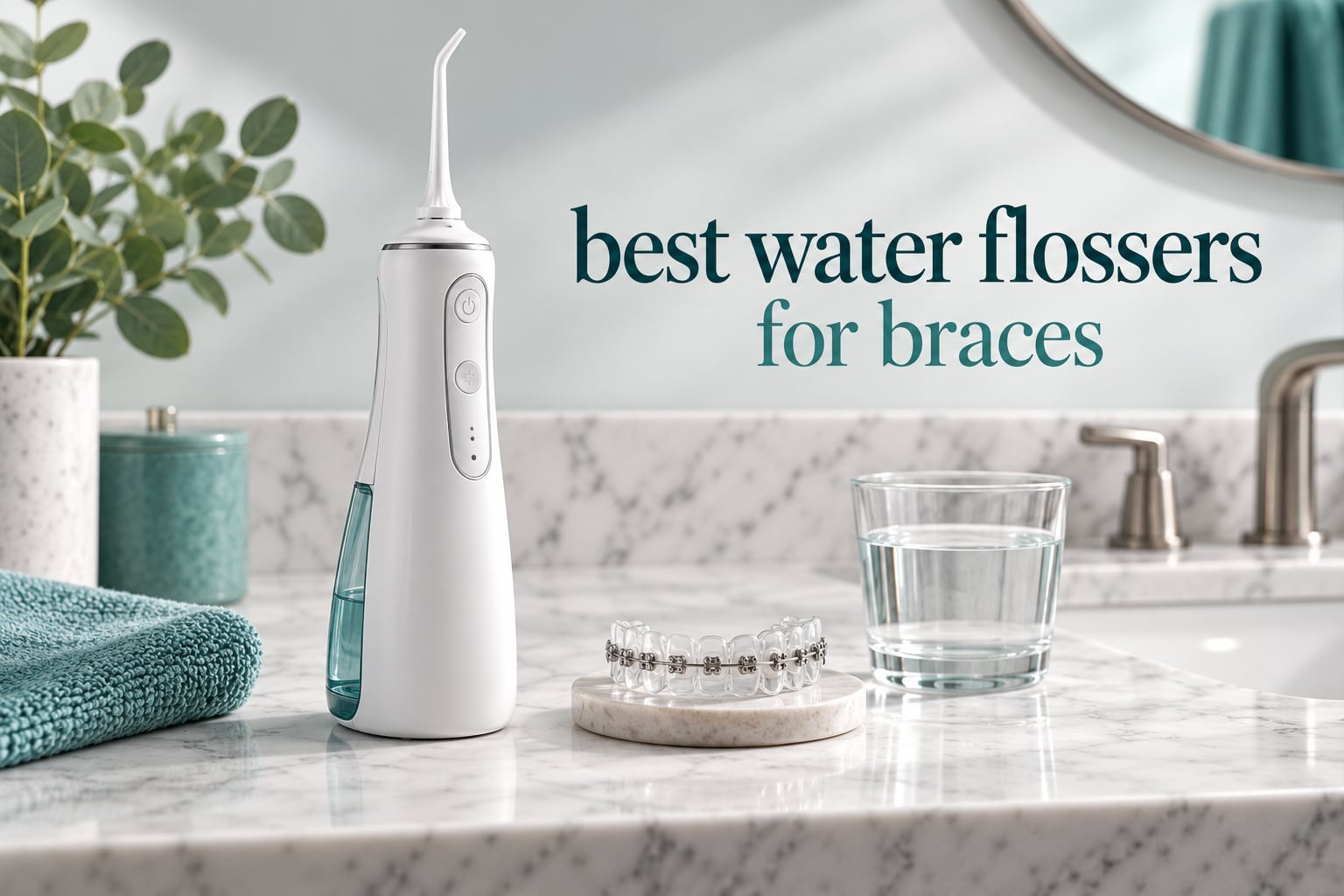
The best water flosser for braces is the Waterpik Aquarius countertop unit, and the deciding feature is not the brand name. It is the orthodontic tip: a slim tapered brush head that seats into the corner of a bracket and slides under the archwire. Any flosser without one is cleaning around your braces, not through them.
Yes, a water flosser is genuinely good for braces. A pulsating stream of pressurized water breaks up the biofilm that forms on bracket edges and flushes debris from under archwires and along the gumline, three places a toothbrush and a floss threader both struggle to reach daily.
Waterpik’s own clinical testing claims the orthodontic tip is up to three times as effective at removing plaque around braces as brushing and string floss, which is a manufacturer figure rather than an independent one, but the mechanism is easy to verify at the sink.
That matters because every bracket is a new overhang. Plaque collects faster on the ledge under a bracket and around the wire than it does on a flat enamel surface, and plaque sitting there for weeks chemically strips calcium out of the enamel in a process called decalcification.
The result is the permanent white spots people worry about when braces come off.
Across an eighteen-month treatment, small daily wins compound, and the days you skip are the days that cost you.
We spent several weeks putting ten oral irrigators through bracket cleaning routines, checking reservoir size against a full arch, low-pressure comfort on tender gums, and how each unit behaves after an adjustment appointment.
This guide covers the ten best water flossers for braces in 2026, from countertop units you plug in permanently to cordless ones that live in a school bag. If you want the broader picture on irrigators without braces in the equation, our general water flosser roundup covers the same category from a non-orthodontic angle.
Top 3 Water Flossers for Braces in 2026

Waterpik Aquarius WP-660
- Orthodontic tip included
- 10 pressure settings
- 22 oz reservoir
- 90+ seconds per fill


Nicwell F5025
- Orthodontic tip included
- 4 modes and 11 levels
- IPX7 waterproof
- 30-day battery
Best Water Flossers for Braces at a Glance
| Product | Specifications | Action |
|---|---|---|
| Waterpik Aquarius WP-660 |
|
Check Latest Price |
 Waterpik Cordless Advanced WP-580 Waterpik Cordless Advanced WP-580 |
|
Check Latest Price |
| COSLUS C20 |
|
Check Latest Price |
| Nicwell F5025 |
|
Check Latest Price |
 H2ofloss HF-6 H2ofloss HF-6 |
|
Check Latest Price |
 Bitvae C5 Bitvae C5 |
|
Check Latest Price |
 Aquasonic ASFLOSGRN Aquasonic ASFLOSGRN |
|
Check Latest Price |
 Oralfree F5025 Oralfree F5025 |
|
Check Latest Price |
 Nicefeel FC1599 Nicefeel FC1599 |
|
Check Latest Price |
 COSLUS C30 COSLUS C30 |
|
Check Latest Price |
1. Waterpik Aquarius WP-660 – Best Overall for Braces
Waterpik Aquarius Countertop Water Flosser with 10 Settings, 7 Tips, White
Orthodontic tip included
10 pressure settings
22 oz reservoir
90+ seconds per fill
Pros
- Orthodontic tip included in the box
- 10 settings plus a massage mode for sore days
- 22 oz reservoir finishes a full arch in one fill
- Built-in pacer pauses at 30 seconds and 1 minute
- ADA Seal of Acceptance
- 3-year limited warranty
Cons
- Takes noticeable counter space
- Learning curve with splashing before technique settles
- Only two tips store on the unit despite seven being included
- 120V North America plug only
The Aquarius is the unit I keep coming back to for full braces. The orthodontic tip is in the box, which sounds like a small thing until you realise how many rivals include a standard jet and sell the right tip separately a week later.
Ten pressure settings plus a separate massage mode means the low end stays genuinely usable when your gums are raw the day after an adjustment, and the top end is strong enough to flush hardened plaque out of a bracket corner.
Reservoir size is the underrated part. Twenty-two ounces gives 90-plus seconds of continuous flow, which is enough for a whole arch with no pause to refill, and the tank lifts out and goes in the top rack of the dishwasher.
That matters more than it sounds, because a mid-session refill is exactly where a two-minute routine dies. Reviewers consistently report dentist or hygienist comments about improved gum lines within a couple of months, and a 3-year warranty sits behind the whole thing.
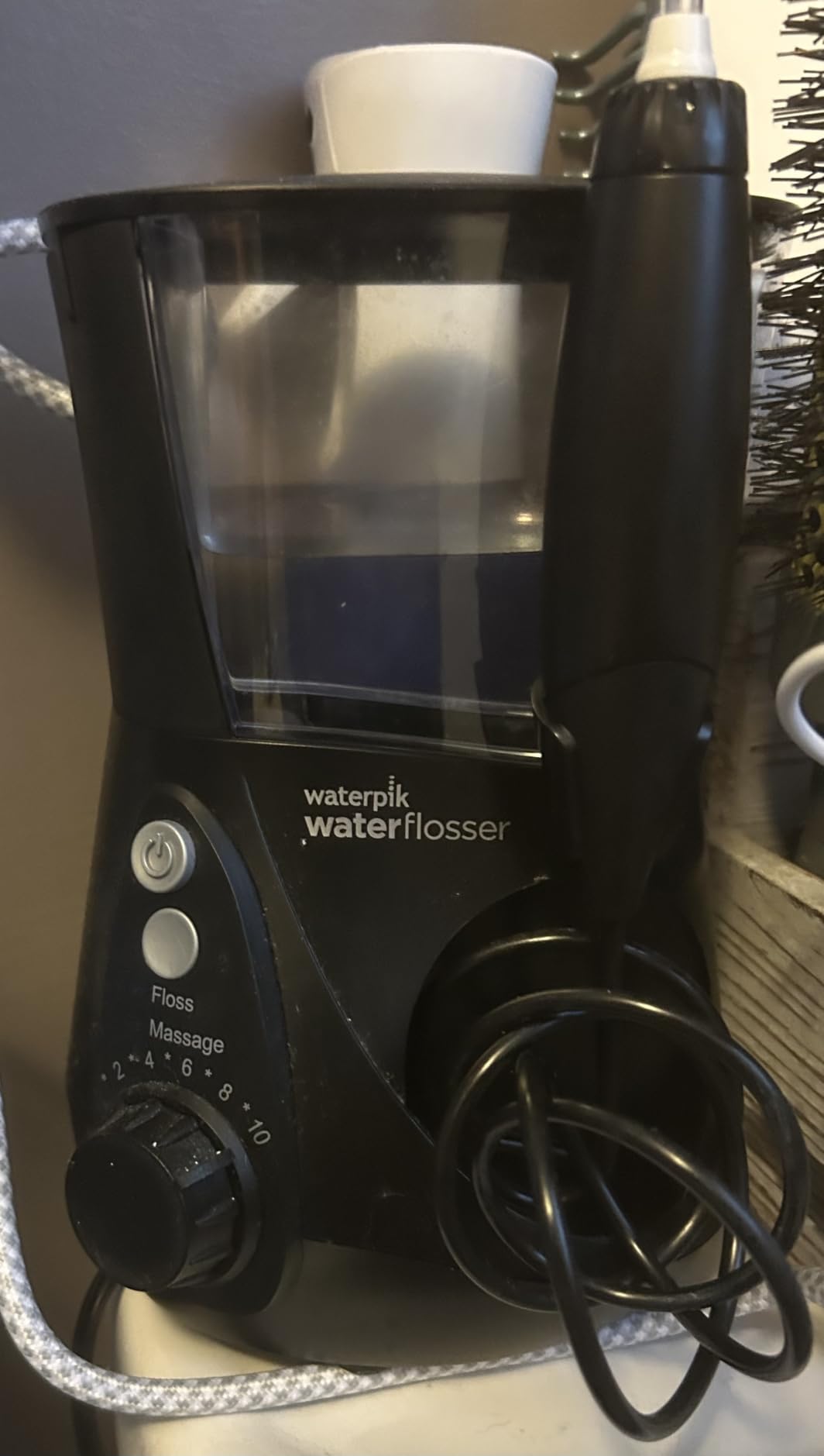
The compromises are physical rather than functional. At 3.8 by 4.7 by 10.3 inches it holds a real footprint on a bathroom counter, and for the first few sessions you will get wet.
Leaning over the sink with your lips mostly closed and pausing at each bracket fixes it within days, but it is not instant. The handle power switch is also fiddly in a wet hand, and only two of the seven included tips have a place on the unit itself.
Is the Aquarius worth the counter space if two people have braces?
Yes, and the seven-tip bundle is the reason. Households running two orthodontic routines at once can dedicate tips per person and per device, which is where a single-nozzle budget unit forces compromises.
The 360-degree tip rotation also helps when you are reaching past the mirror at lower front teeth, an angle most people find awkward with any irrigator.
Where the Aquarius falls short
It is loud. In a shared bathroom, a dorm, or an early start before anyone else is up, the motor is audible through a wall, which is the complaint that appears most often in reviews. It also runs on 120V North American power only, so it is not the pick for frequent international travel.
2. Waterpik Cordless Advanced WP-580 – Best Cordless for Braces
Waterpik Cordless Advanced Portable Water Flosser, Rechargeable, White
7 oz removable reservoir
3 pressure settings
Up to 4 weeks per charge
Waterproof for shower use
Pros
- Truly portable with global voltage compatibility
- Up to four weeks of use per charge with a magnetic USB charger
- Waterproof so shower sessions are possible
- Rotating tip reaches lower back molars
- Micro-fiber travel bag and tip case included
Cons
- 7 oz tank gives only about 45 seconds per fill
- Wall adapter not included
- Three settings and four tips are fewer than the countertop model
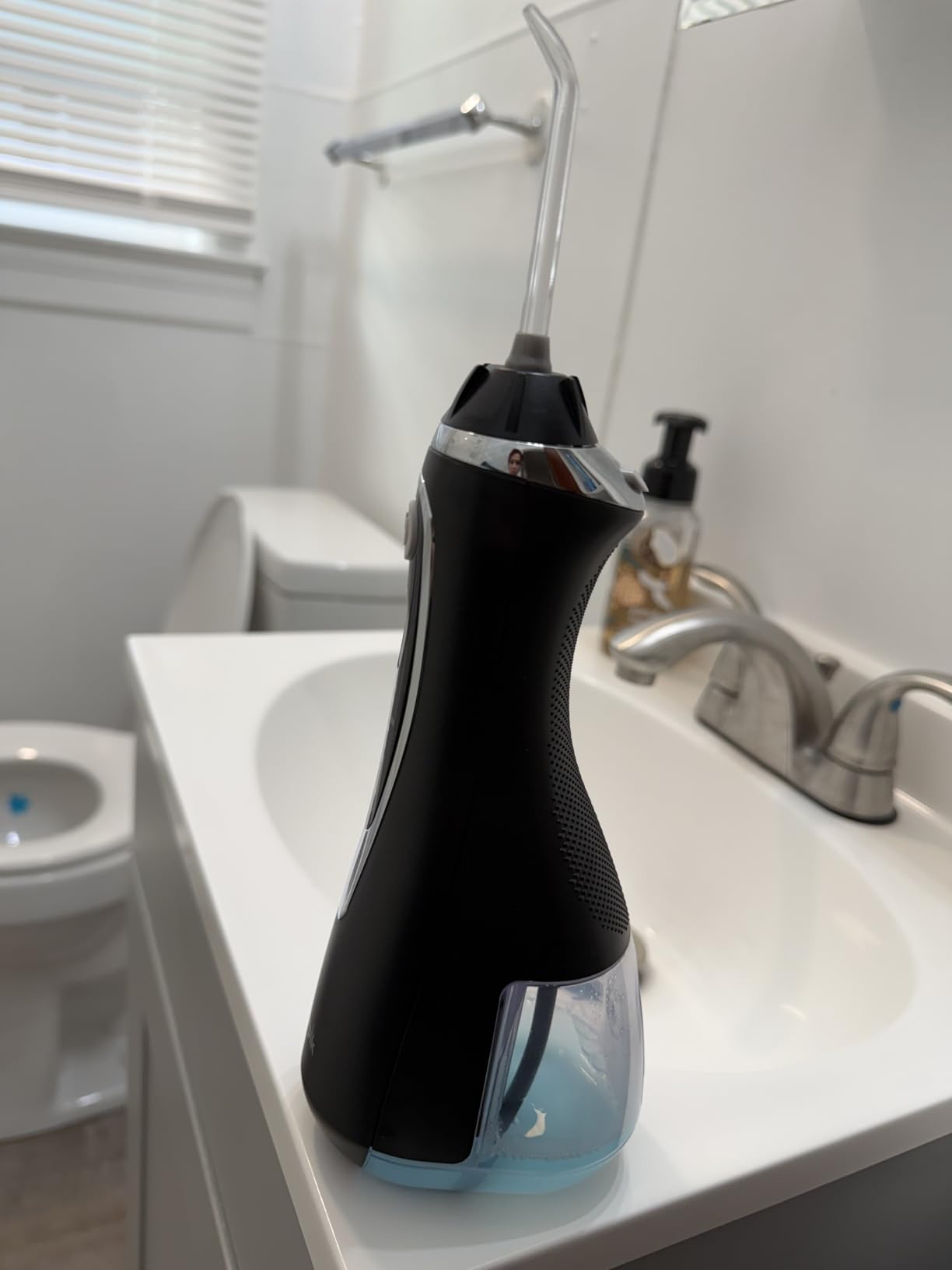
This is the cordless pick if you want a Waterpik you can genuinely travel with. Battery endurance is the headline: the manufacturer claims up to four weeks of use per charge, and the magnetic USB charger makes topping it up a two-minute job.
Voltage compatibility across regions, a travel bag, a tip storage case and a water plug all come in the box, so nothing gets lost in a suitcase. Shower use is fair game because the body is waterproof, which turns the device into a habit rather than a chore.
With braces, the three pressure settings cover gentle to firm and the 360-degree rotating tip makes the back molars reachable without contorting.
Reviewers treat the cleaning performance as equal to the countertop models for routine use. Where the compromise sits is capacity: seven ounces gives roughly 45 seconds of floss time, so a full arch usually means one refill, and sore days need the lowest setting because there is no fine gradation between levels.
Does a 45-second reservoir work for a full braces session?
It works, but plan for it. Filling the tank, running a full arch, refilling once, and finishing takes about two and a half minutes rather than two, and a mid-session refill in a shared bathroom is mildly annoying.
What you get in exchange is a device that lives in a backpack instead of on a counter, and for a teenager with braces who does the cleaning away from home, that trade usually wins.
Where the cordless Advanced falls short
Three pressure settings is thin compared with most of the cordless models below. If your gums are frequently tender after adjustments, a model with eight to eleven gradations gives you a better starting point.
Reviewers also flag the missing wall adapter, so plan on charging from a laptop or an existing USB brick. The 4.2 average across a very large review base reflects consistent performance with a few firm detractors over reservoir size.
3. COSLUS C20 – Most Versatile for Braces
COSLUS ADA Accepted C20 Water Dental Flosser Pick, Professional Set Black
ADA Scientific Council accepted
1400-1800 pulses per minute
300ml extra-large tank
30 days per 3-hour charge
Pros
- ADA Scientific Council acceptance on the 15-day gum claim
- 1400-1800 pulses per minute at real power
- 300ml tank is roughly double older cordless models
- Three modes let sensitive gums start gentle
- IPX7 waterproof and 30-day battery
- Five interchangeable tips
Cons
- Charging uses a proprietary connector
- Port cover is detachable and easily lost
- Lowest setting can still feel aggressive on very sensitive gums
- Power trails a full-size countertop unit
The C20 ranks at the top of the Power Dental Flossers category for a reason: it delivers genuine pressure at a budget-friendly tier. The 1400 to 1800 pulses per minute and the 0.3mm dual-thread stream clear food from bracket edges convincingly.
It is the only model here carrying ADA Scientific Council acceptance, which is a stronger filter than brand reputation for anyone wondering whether an irrigator does more than rinse.
Capacity is its quiet strength. The 300ml tank is far larger than the compact cordless models here, so a full arch finishes in one fill, and the battery is claimed at 30 days from a three-hour charge.
With braces, the three operation modes let you start at the gentle end after an adjustment and work up as the gums settle. Reviewers also report dental hygienists recommending it to patients.
Is the C20 strong enough for hardened plaque around brackets?
For most wearers, yes.
The pulse rate sits in the same band as units costing considerably more, and reviewers report clearing debris from archwires and tight molar contacts on a regular basis.
It does not reach the sustained pressure of a plugged-in countertop machine on the top setting, so if you have heavy buildup or very tight contacts, the Aquarius above is the safer recommendation.
Where the C20 falls short
The charging connector is proprietary rather than a standard USB cable, and the port cover is a separate piece that owners report losing.
That combination makes it a poor choice as a travel-only device unless you keep the cable with the unit. Sensitive gums can also find the lowest setting too strong, which is odd on a product marketed for them, and a small number of owners report failures inside two years.
4. Nicwell F5025 – Best for Shared Bathrooms With Braces
Nicwell Water Dental Flosser for Teeth – 4 Modes & 11 Pressure Settings Cordless Portable Oral Irrigator, IPX7 Waterproof Rechargeable with 5 Tips for Braces Cleaning, Travel, Deep Teeth Cleaning
4 modes and 11 pressure levels
Orthodontic tip included
Smart memory of last setting
IPX7 waterproof under 1 lb
Pros
- Broad pressure range with 4 modes and 11 levels
- Orthodontic tip shaped for brackets is included
- Smart memory recalls your last setting automatically
- One charge runs about 30 days with USB-C charging
- IPX7 waterproof and a quiet motor
- Five tips including a tongue scraper
Cons
- Soft and pulse modes can feel underpowered for heavy plaque
- Tank needs careful reseating to avoid leaks
The Nicwell is the pick for anyone whose gums react badly to pressure. Four modes and eleven levels is one of the broadest pressure ranges on this list, and the smart memory function restores your last setting each time you switch it on, which removes the small daily negotiation of guessing where you left it.
After an adjustment appointment, dropping to level one and climbing back over a few days is exactly the protocol your orthodontist would suggest.
The orthodontic tip is included and shaped to seat around brackets and into tight spots, and all tips rotate 360 degrees. Weight stays under a pound, the body is IPX7 waterproof for shower sessions, and the included USB-C cable works with any phone charger or power bank, so there is no proprietary connector to lose.
Reviews highlight the quiet motor as much as anything, which makes it a good fit for a shared bathroom.
Do the softer modes work well enough once you are used to them?
Yes for maintenance, less so for a heavy buildup. The gentle modes are tuned to avoid irritating tender gums, which means they will not strip weeks of hardened plaque on the first pass.
A practical approach is to run the low setting daily between appointments and reserve a higher level for the days after your orthodontist tells you the wires have been changed.
Where the Nicwell falls short
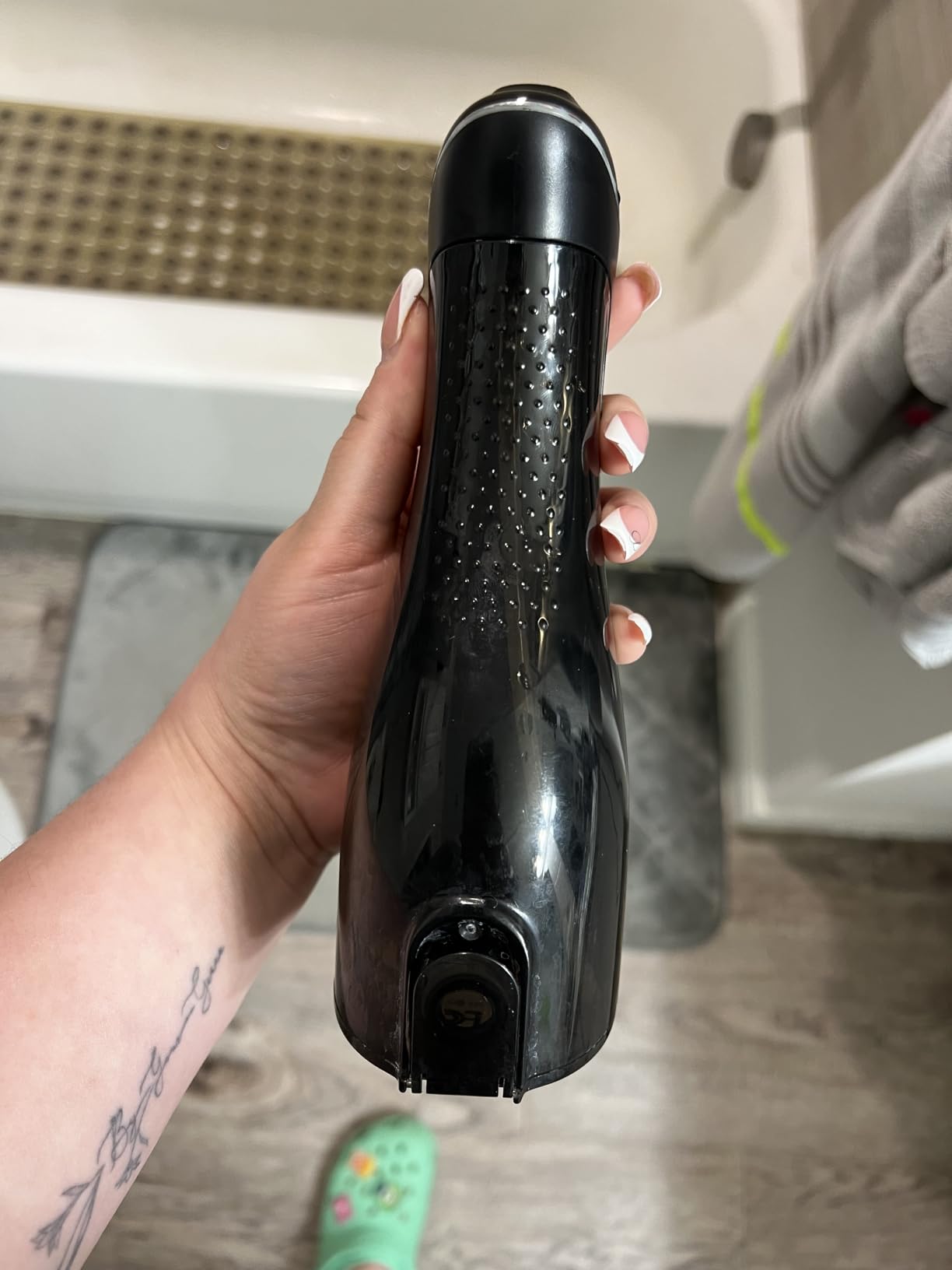
The detachable tank needs careful reseating. If it is not pushed home properly, you get a leak over the sink, and that single detail accounts for most of the negative feedback.
There is also no adapter included with the USB-C cable. Everything else about this unit holds up unusually well for the money.
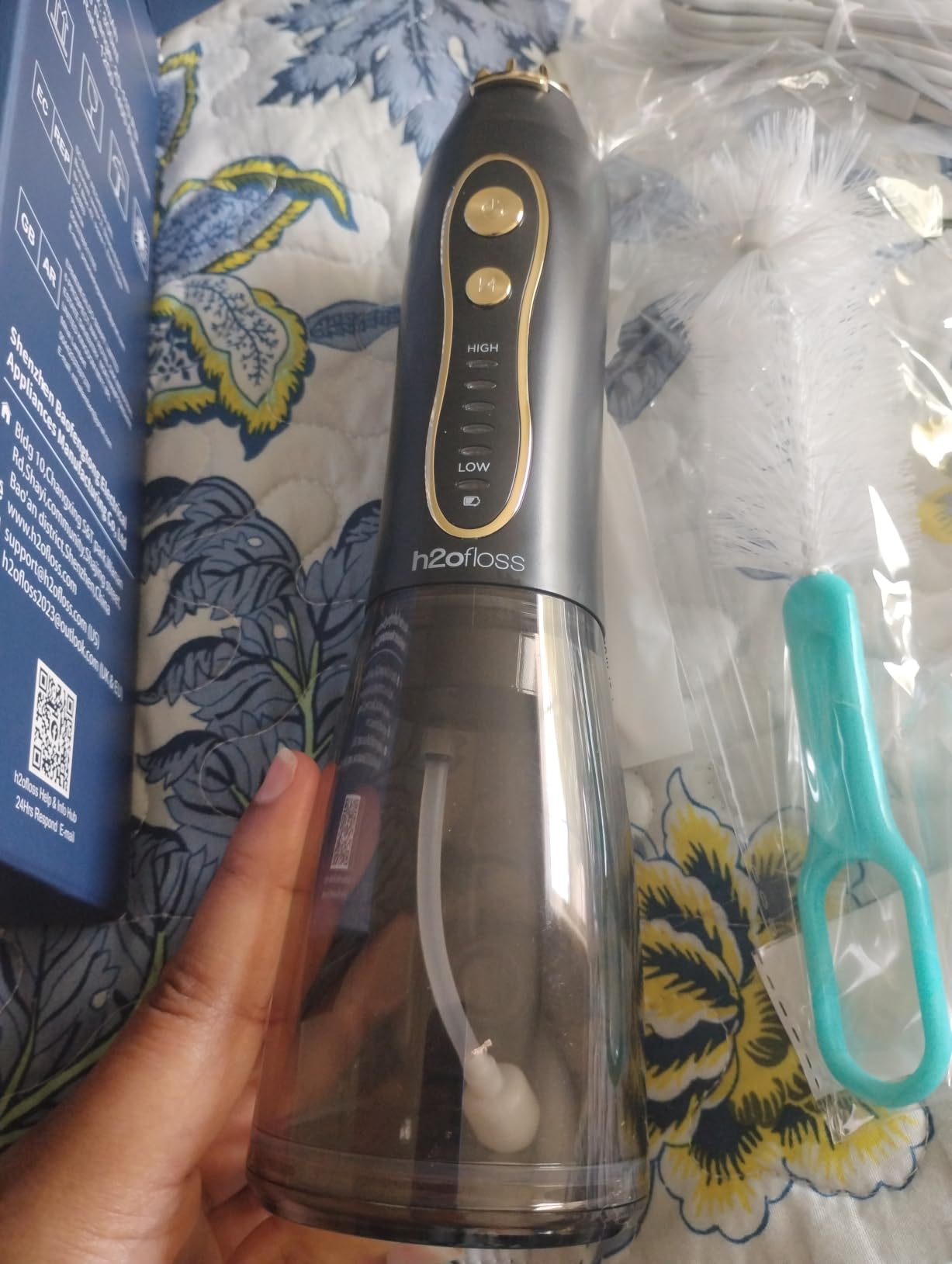
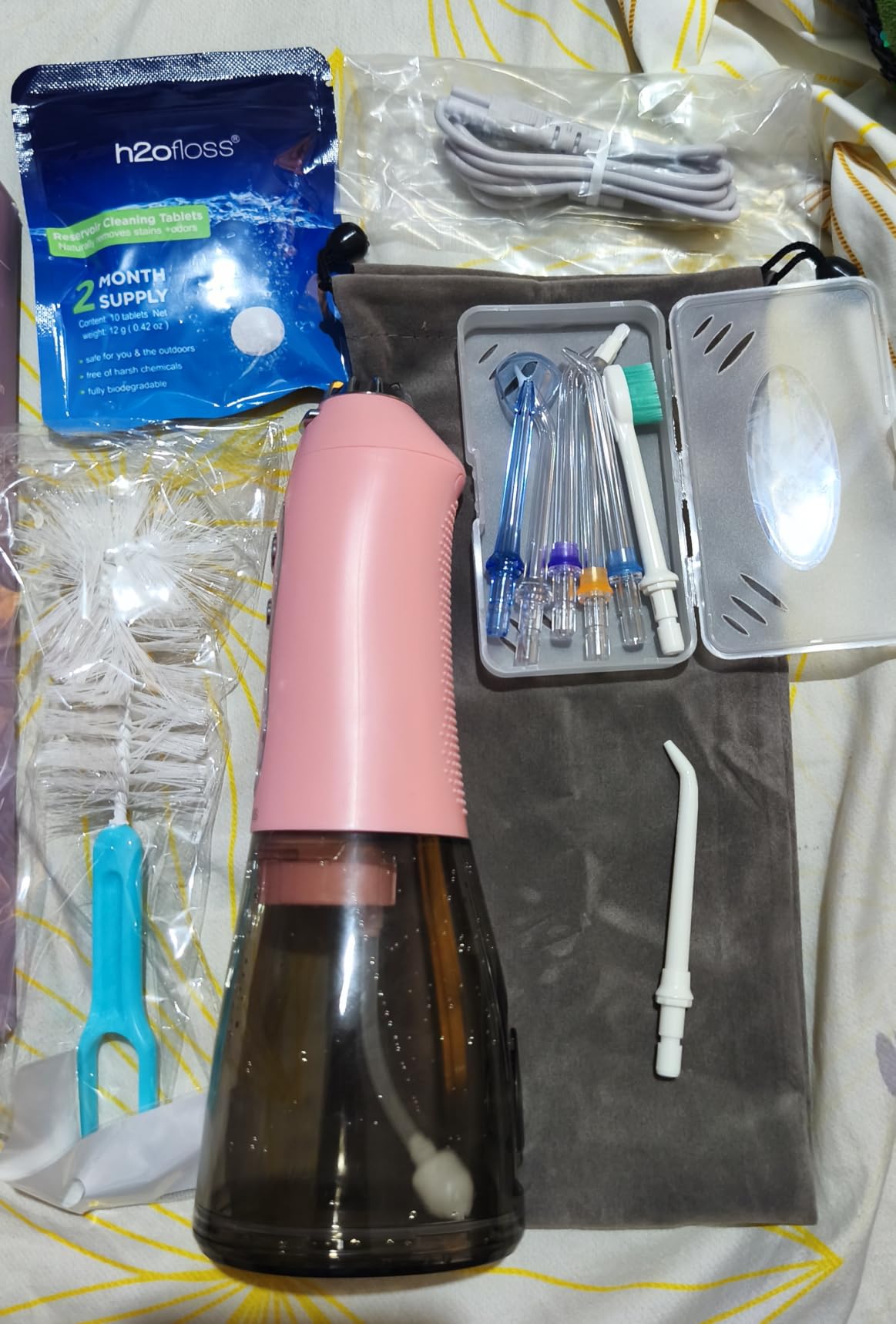
5. H2ofloss HF-6 – Best for Travel With Braces
H2ofloss Water Dental Flosser Teeth Pick -Portable Oral Irrigator with 5 Modes, Rechargeable IPX7 Waterproof Orthodontic Teeth Cleaner Pick Cordless for Home Travel-300ml Water Tank
300ml tank with gravity ball drain
5 modes and 1300 pulses per minute
2500mAh battery, up to 30 days
IPX7 waterproof
Pros
- Gravity ball drains the tank completely at any angle
- 300ml tank with up to 30 days of battery per charge
- Five modes with 1300 pulses per minute
- IPX7 rated with dual sealing
- Six interchangeable jet tips with 360 degree rotation
- 24 months of after-sales support
Cons
- Charging cable switched to a proprietary connector
- 1300 pulses per minute trails the strongest units
- Some owners report failures within a year or two
The H2ofloss solves a problem most devices here ignore: water sitting in the tube. A gravity ball at the end of the intake line pulls the tank empty no matter which way the unit is lying, so you can pack it in a case without arriving with a damp reservoir.
It is a small engineering decision with an outsized effect on whether you are willing to use the thing on a trip. Five modes and 1300 pulses per minute give enough force to work around brackets and under wires, with a gentle massage setting for sore days, and six interchangeable jet tips with 360-degree rotation cover a shared-bathroom scenario.
The 2500mAh battery is claimed at up to 30 days per charge, and the IPX7 sealing means it survives a wet counter. Support is listed at 24 months with a stated 24-hour email response time.
Is 1300 pulses per minute enough for braces?
For routine daily cleaning, yes. The figure sits slightly below the 1400 to 1800 range of the leaders here, and you will feel that in how quickly heavy debris moves.
If you are someone who snacks constantly and gets build-up fast, pair it with a mid-range setting on your adjustment days and you will not notice the gap.
Where the H2ofloss falls short
The charging cable was changed to a proprietary connector, which quietly undoes some of the travel advantage. Reliability reports are mixed too, with a minority of owners describing battery or unit failures inside a year or two. If you want a travel device that will survive years of trips, the Nicwell above with standard USB-C is a safer bet.
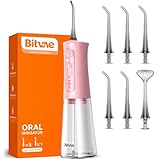
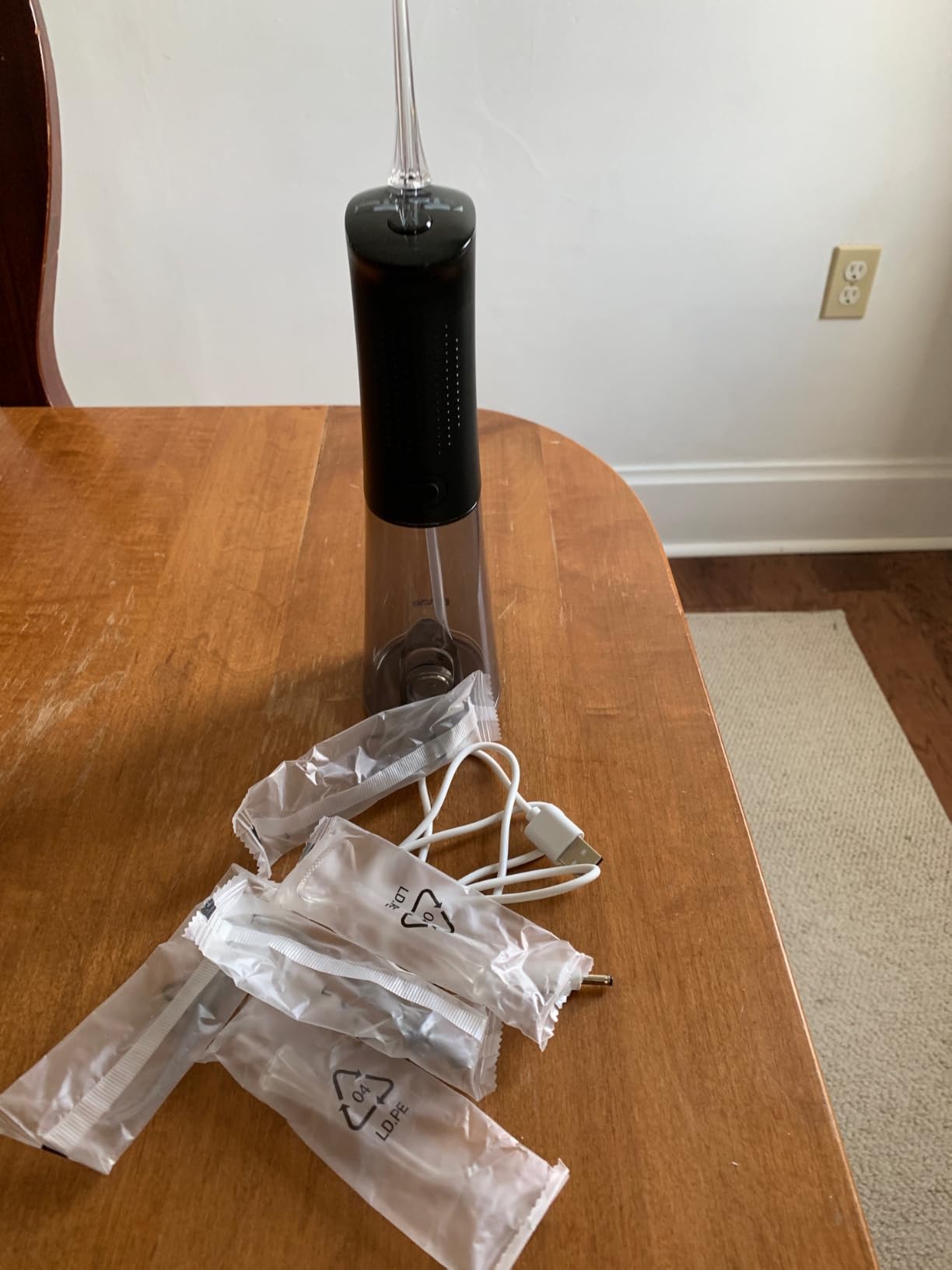
6. Bitvae C5 – Best for Multi-User Households
Bitvae Water Dental Flosser Teeth Picks, Cordless Portable Oral Irrigator, Powerful and Rechargeable Oral Irrigator, Brace Care, IPX7 Waterproof Water Dental Picks for Cleaning, Quartz Pink
3 modes and 5 intensity levels
260ml wide-mouth detachable tank
40 days per 4-hour charge
6 tips included
Pros
- Strong focused pulse reviewers credit with clearing wire and brackets
- 260ml wide-mouth tank finishes a full circuit without refilling
- Detachable wide-mouth reservoir is easy to fill and to dry out
- 40-day battery from a four-hour charge
- IPX7 waterproof so shower use avoids sink splatter
- Six tips give roughly two years of spares
Cons
- Pressure is high enough that shower-only use is realistic
- Awkward to handle while actively spraying
- No travel bag and thin packaging on spare nozzles
- Some owners report the motor stopping after extended use
The Bitvae is the one to buy when braces are a family condition. Six tips in the box work out to roughly two years of spares, so multiple wearers or multiple devices can each have a dedicated head without anyone sharing a nozzle.
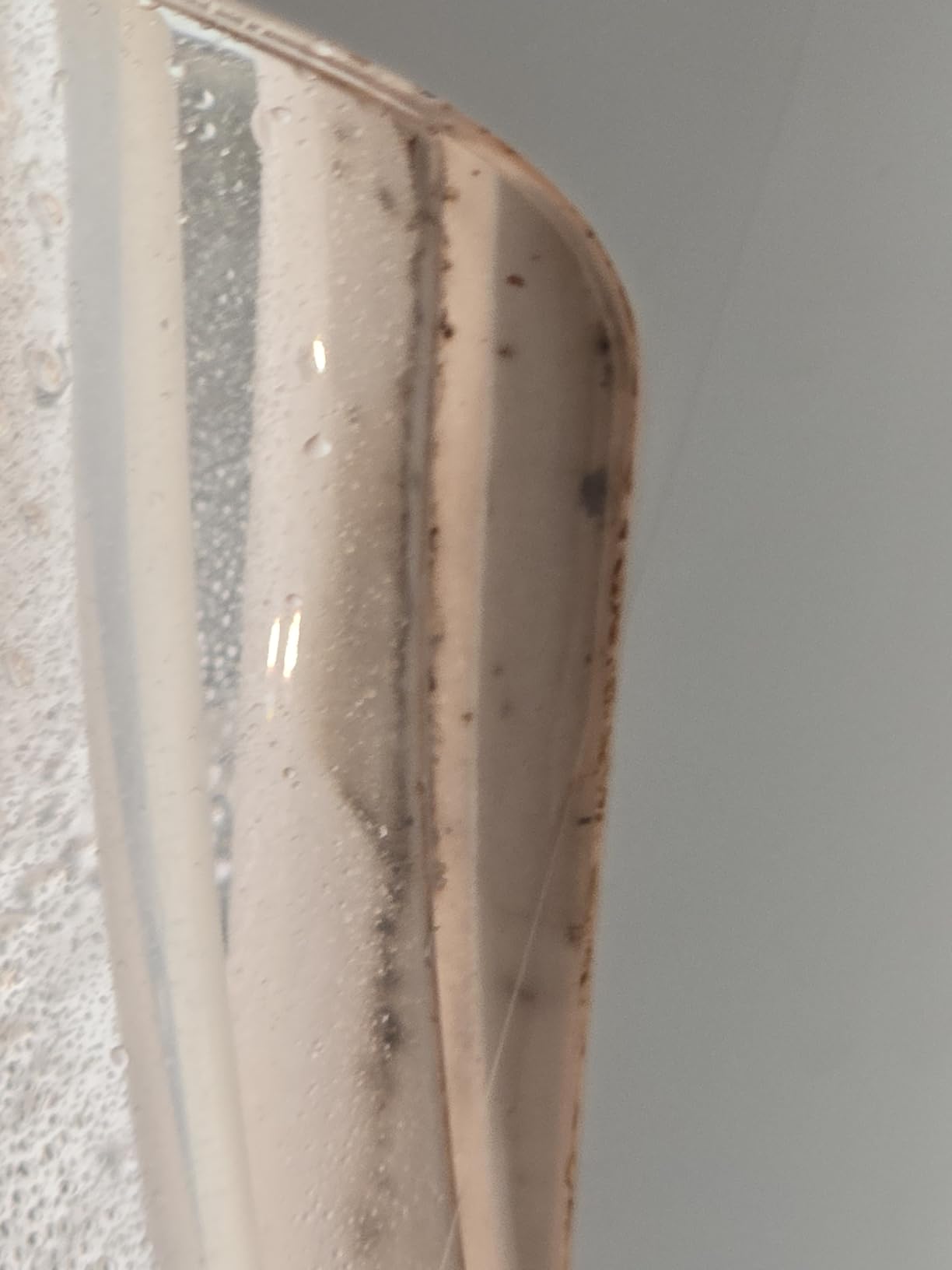
The wide-mouth detachable tank is by far the easiest to wash out and air-dry properly. A wet reservoir you cannot reach into is how a water flosser turns into a bacteria problem.
Cleaning performance is the other draw. Reviewers repeatedly describe the pulse as strong enough to blast debris out of orthodontic wire and tight molar contacts, and several mention switching from a costlier established brand without losing performance.
Three modes and five levels give a gentler starting point than the pulse output suggests. The 40-day battery claim means it can sit on a shelf for weeks between family uses without going flat.
Is the Bitvae practical outside the shower?
Only barely. Owners are blunt that the pressure output makes this a shower-only device, because a sink-cleaning session ends with you mopping the counter. If your sink is the only option, pick the Aquarius or the Nicwell instead. For a garage, basement, or ensuite where a wet floor is acceptable, the trade is worth it.
Where the Bitvae falls short
Handling is awkward while it is actively spraying, which is a real problem on lower front teeth where you need a steady aim.
The spare nozzles come in thin packaging and there is no travel bag included, minor but irritating. A handful of owners also report the motor stopping after extended use, so treat the tips bundle as partly a hedge against needing replacements.
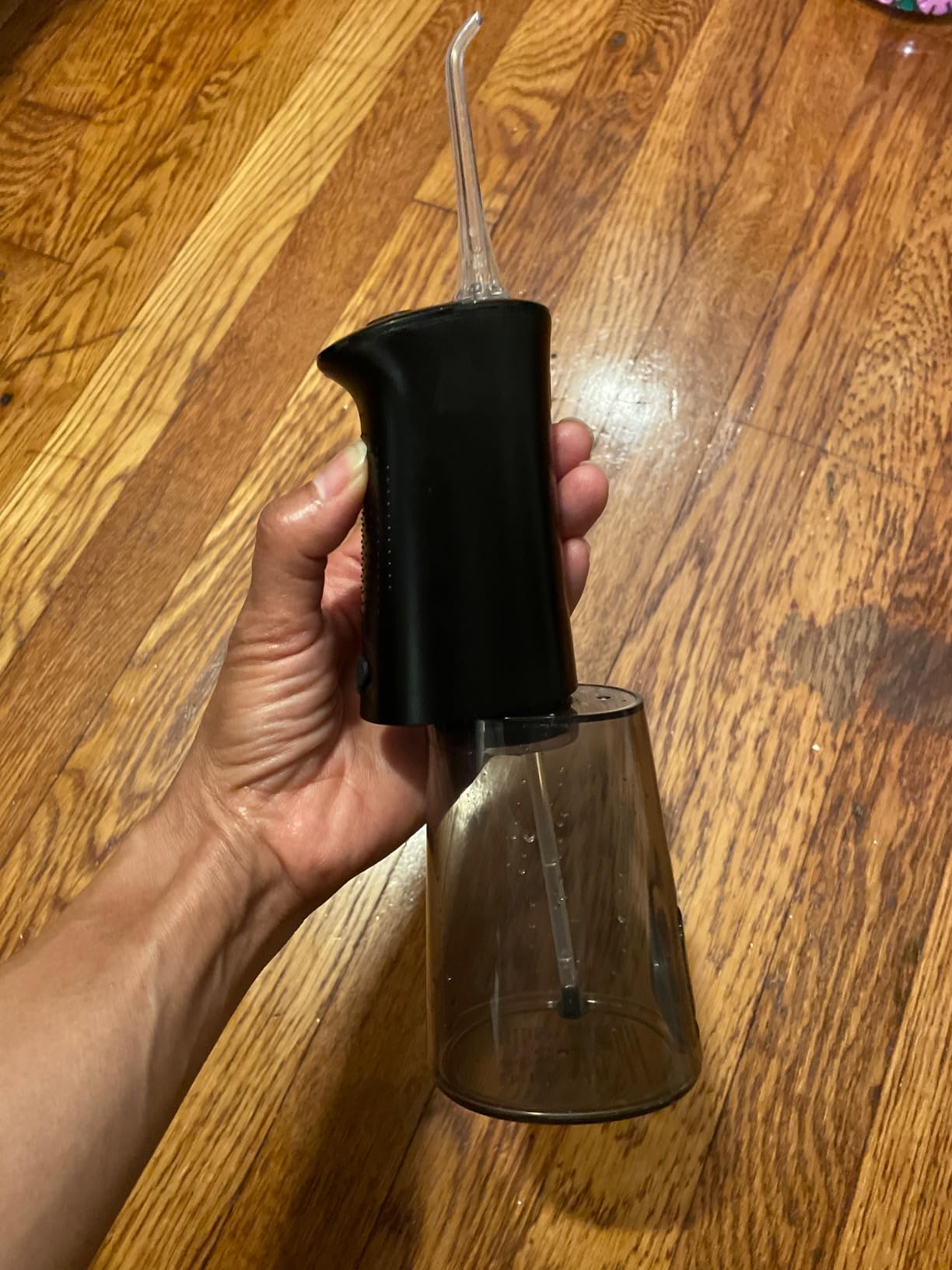
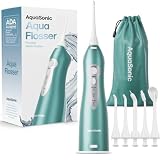
7. Aquasonic ASFLOSGRN – Best for Sensitive Gums
AquaSonic Aqua Flosser Water Flosser, ADA Accepted, Mint Green Metallic
Orthodontic and periodontal tips included
3 modes with adjustable pressure
Dual 110V and 220V for travel
Compact 8 inch body
Pros
- Orthodontic and periodontal tips included in the box
- Gentlest setting is comfortable on inflamed gums
- Dual voltage and a travel bag for international trips
- Long battery life from a single overnight charge
- Compact footprint for a small bathroom
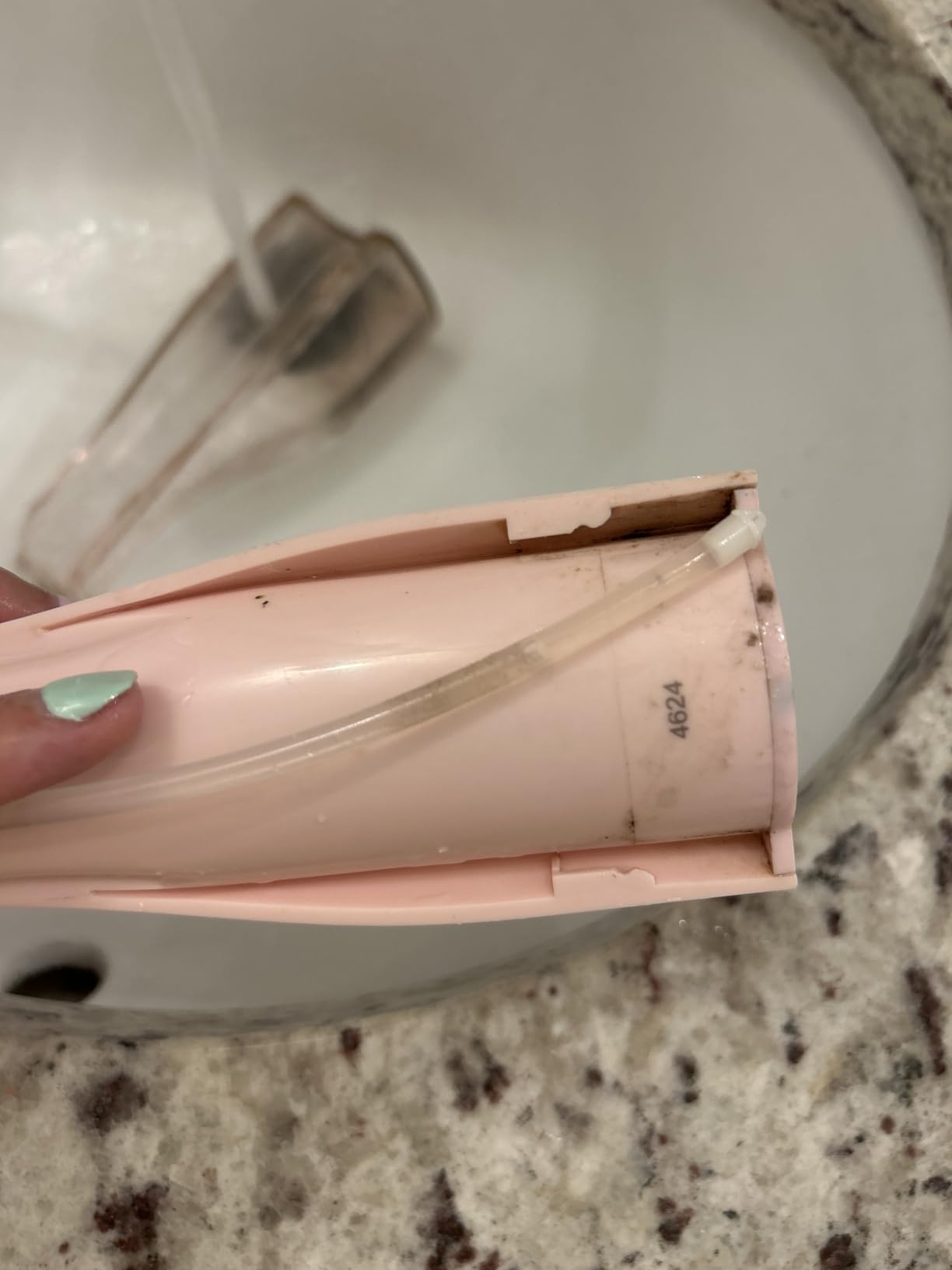
- Does not develop mould when emptied after use
Cons
- Small tank needs refilling mid-session
- Jet tip can pop off if the device is switched on while unseated
- Charging port sits beside the fill opening
- Modes cannot be changed after power-on without wasting water
The Aquasonic is the gentlest starting point here, and that is the point of it. The lowest setting is comfortable enough for gums that bleed in the first weeks of braces, which is the biggest reason people abandon a water flosser.
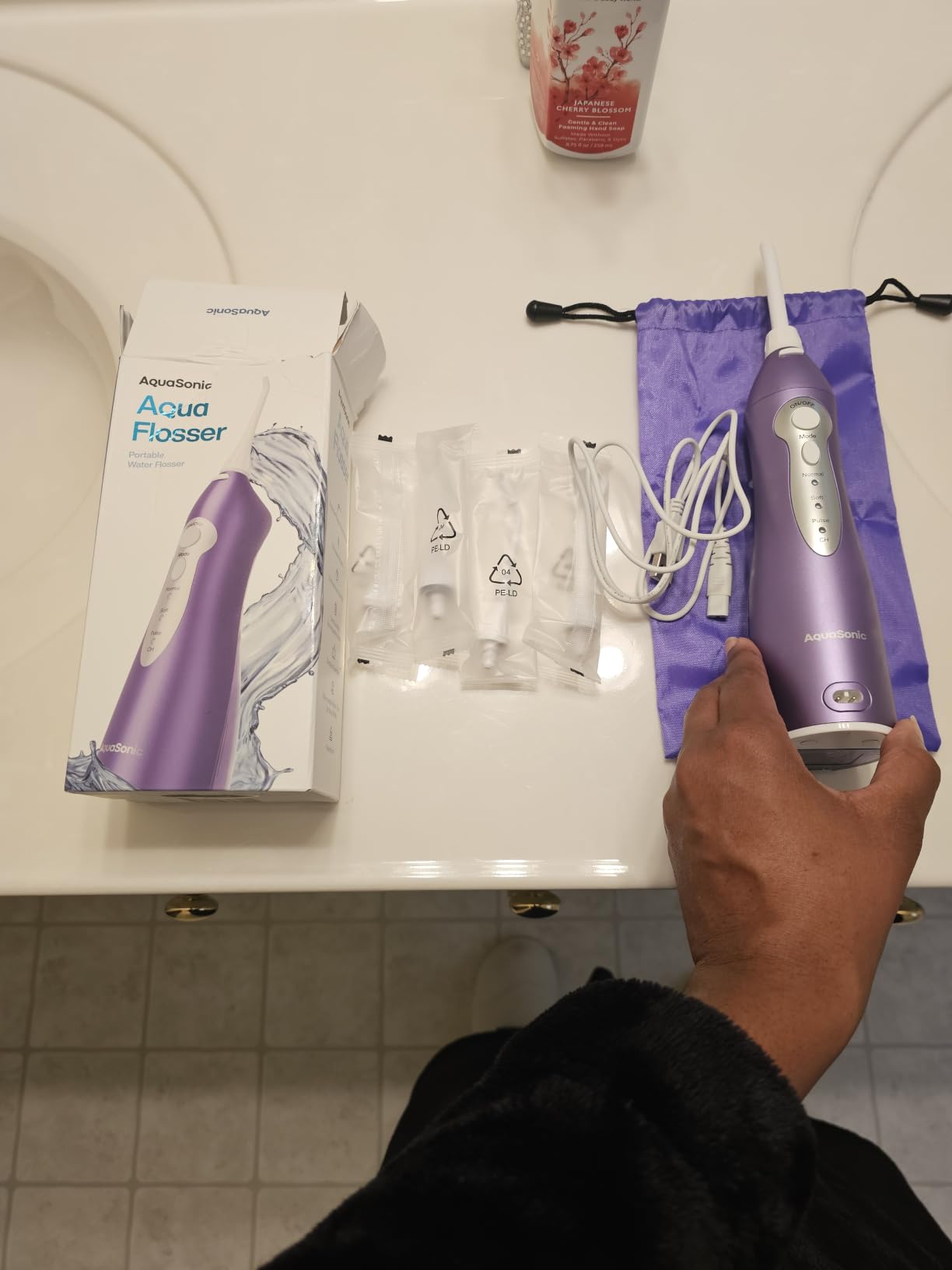
It includes both an orthodontic tip and a periodontal tip, so you have the right head for brackets and for the gum margin without a second purchase, and the 360-degree rotating tips cover the awkward inner surfaces behind the lower front teeth.
Battery life is confirmed in reviews at roughly a month from a single overnight charge, and dual 110V and 220V voltage plus the included travel bag suit international orthodontics. The compact body fits a small bathroom, and several owners note that emptying the tank after use prevents the mould problems they had with other units.
Does a small tank matter much for a braces routine?
It does more than expected. One refill partway through is the point where a two-minute habit becomes a negotiation, and with brackets you need more passes than on clean teeth. If the tank in your shortlisted unit runs under 250ml, check the full session before you commit rather than trusting the fill level in the marketing photos.
Where the Aquasonic falls short
Two design choices will test your patience. The jet tip can detach if you switch the device on before it is firmly seated, and modes cannot be changed once it is running without wasting water through the nozzle.
The charging port sitting beside the fill opening also looks like a leak risk even when it is not. None of these are dangerous, and all three are avoidable with a slower approach at the start.
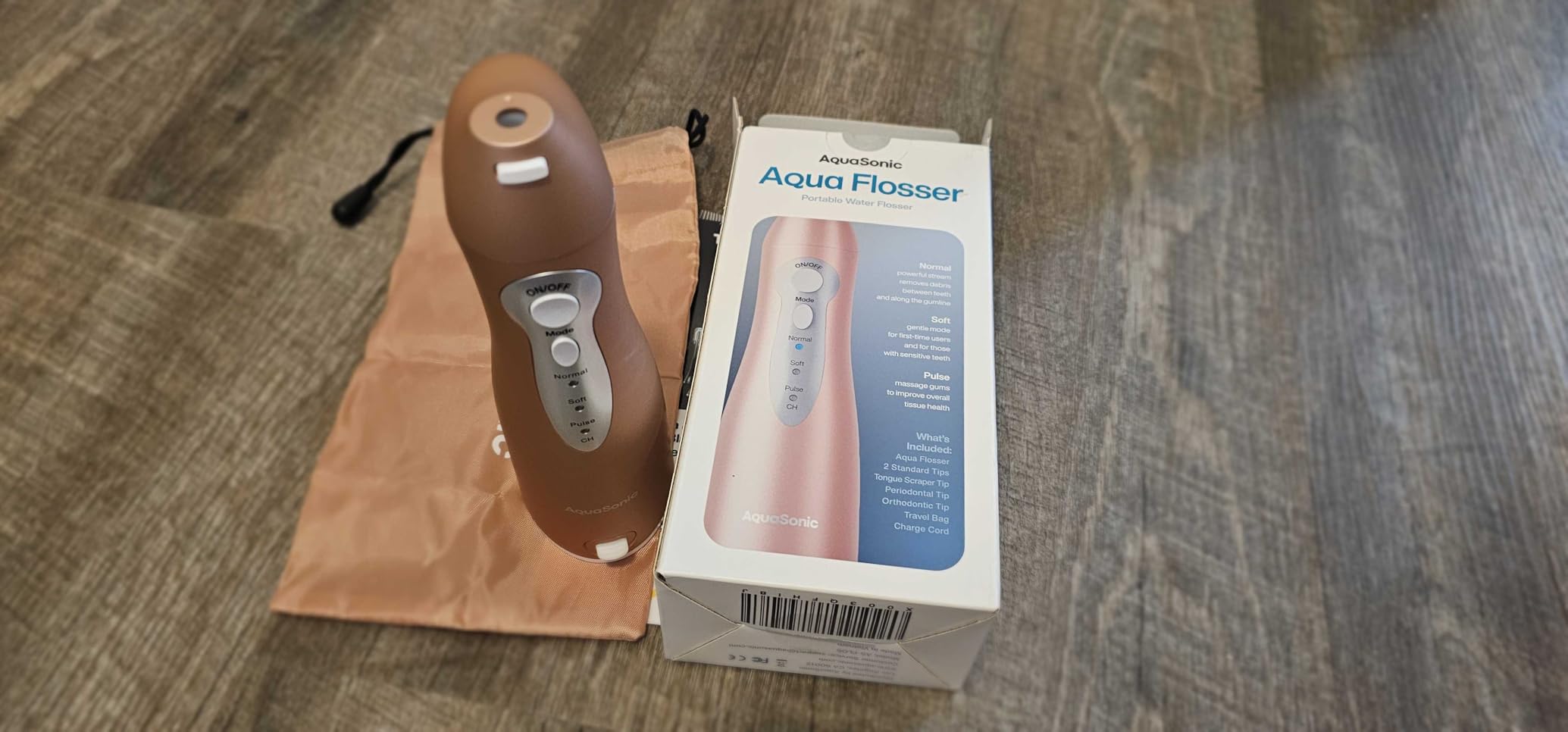
8. Oralfree F5025 – Best for First-Time Flossers
Oralfree Water flosser Teeth Picks – Dental Braces Cordless Oral Irrigator Portable Rechargeable Travel Irrigation Cleaner IPX7 Waterproof Electric Professional Flossing Teeth Cleaning for Home
30-110 PSI across 4 modes
Soft mode recommended for first use
5 rotating jet tips
IPX7 waterproof
Pros
- Soft mode is genuinely gentle for beginners
- 1400-1800 pulses per minute at 30-110 PSI
- Quiet soft hum suits early mornings
- IPX7 rated with double sealing rings
- Five swappable tips with 360 degree rotation
- An orthodontic treatment coordinator recommends it to patients
Cons
- Tank empties fast and needs refilling two or three times per clean
- Charging port sits next to the fill opening
- Proprietary cable and no wall adapter included
- Feels clumsy for the first few uses
The Oralfree is the recommendation I make to anyone who tells me they will never floss again after two sore weeks. It has a dedicated soft mode that is the lowest setting on the dial rather than a compromise somewhere in the middle, so you can start the day your brackets go on without flinching.
The motor runs as a quiet hum that will not wake a house at six in the morning. Cleaning power of 1400 to 1800 pulses per minute across a 30 to 110 PSI range is enough to shift food from between brackets and off the wire.
Reviewers include an orthodontic treatment coordinator who recommends the unit to her own patients, which tells you something about how an orthodontic practice views it.
IPX7 waterproofing with double sealing rings means shower use is fine and leak complaints are rare, and five swappable 360-degree tips cover a family. The honest caveat is that beginners describe it as clumsy for the first few uses before the wrist angle settles.
Can a total beginner get a clean around brackets on day one?
With the soft mode, yes. You are rinsing away loose food and stimulating the gumline rather than stripping plaque, and that is exactly what should be happening on day one. Most people move up a setting every few days as the gums settle.
What to avoid is starting on maximum pressure to finish faster, which is the most common mistake new owners make.
Where the Oralfree falls short
The tank is the main problem. It empties fast enough that a full mouth takes two or three refills, and with brackets you want as few interruptions as possible.
The proprietary charging cable with no adapter included adds friction, and the charging port placement next to the fill opening makes the top of the unit fiddly to work with when it is wet.
9. Nicefeel FC1599 – Best for Long Sessions and Deep Cleaning
Nicefeel Water Dental Flosser Teeth Pick – Fast Charge Cordless Teeth Cleaner, 3 Modes Portable Oral Irrigator, IPX7 Waterproof Electric Water Dental Flosser for Tonsil Stone, 300ML Tank
20-115 PSI across 3 modes
300ml wide-mouth tank,120 seconds per fill
Up to 40 days per charge
IPX7 waterproof
Pros
- 300ml tank gives up to 120 seconds of uninterrupted flossing
- Pressure range of 20-115 PSI with 1500 pulses
- Tank twists off at the base for thorough cleaning and drying
- Up to 40 days of use per full charge
- Textured non-slip handle with IPX7 waterproofing
- Five tips and a travel pouch included
Cons
- Bulky in-hand reservoir is hard to aim at inner teeth
- Modes are difficult to switch while running
- Soft and pulse settings feel weak beside normal
- Easy to knock over and the tip can snap at the base
- Standing water in the tank develops a plasticiser taste
Capacity is the headline for this one. The 300ml wide-mouth tank delivers up to 120 seconds of uninterrupted flossing per fill, the longest session in this group, and it twists off at the base so you can wash and dry it properly rather than hoping.
For a wearer’s arch with a lot of brackets, that removes the refill break entirely, which is where most routines fall apart. Pressure runs from 20 to 115 PSI across three modes with 1500 pulses.
Battery endurance is claimed at up to 40 days per full charge, the body is IPX7 waterproof, and the textured handle stays grippable when wet. The listing also carries 18 months of replacement service with lifetime technical support.
Is the 120-second reservoir worth the bulk?
It depends on how much counter and hand space you have.
The reservoir is noticeably bulky in the hand, which makes precise aiming at the inner surfaces of your lower front teeth harder than on a slimmer unit. If you have the space and you tend to do one long thorough session rather than two quick ones, the uninterrupted flow is a real upgrade.
Where the Nicefeel falls short
That same bulk is the main complaint, along with modes being difficult to change while the unit is running, which is genuinely annoying with brackets because you want to vary pressure as you move along the arch.
Several owners report knocking it off the counter, which snaps the tip at the base and can leave a fragment inside the body. Leave water standing for a day and the tank picks up a plasticiser taste, so empty it after every session.
10. COSLUS C30 – Best DIY Pressure Control
COSLUS C30 Water Dental Flosser, Upgraded DIY Mode, Black, 1Pcs
4 modes with 8 DIY levels and memory
30-150 PSI
300ml tank,90 seconds per fill
3-hour charge, about 60 uses
Pros
- Eight custom DIY levels with a memory function
- 300ml detachable tank gives about 90 seconds per fill
- 1400-1800 dual-pulse streams across a 30-150 PSI range
- Four nozzles including one for lifting debris from around braces
- IPX7 waterproof and light enough for a work bag
- 3-hour charge covers about 60 uses
Cons
- Wall adapter not included
- High mode count adds complexity at first
- Some owners report failures after extended use
- 8 DIY levels require a week to get used to
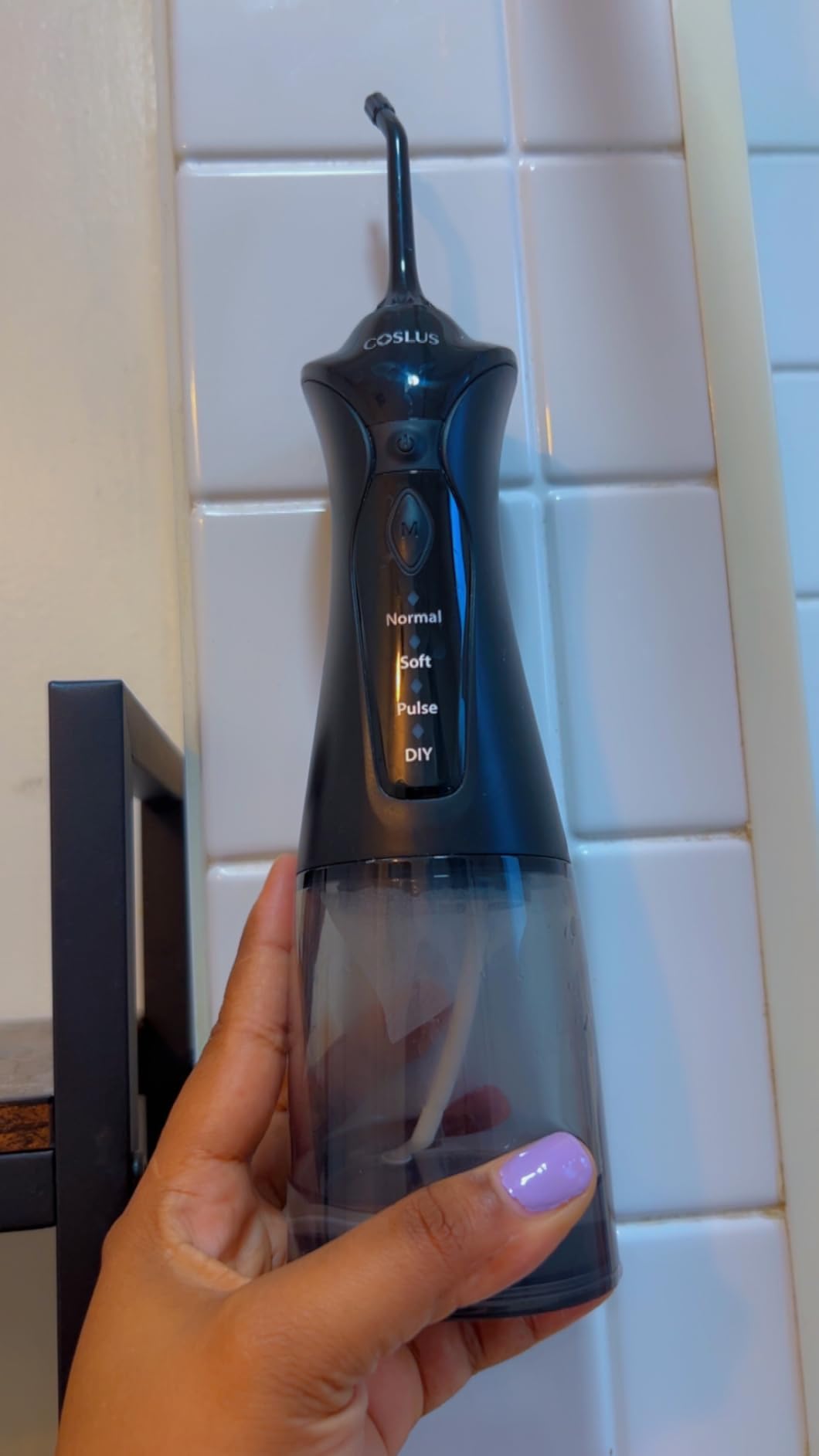
The C30 takes pressure control further than most other devices here. Four modes, eight custom DIY levels and a memory function mean you can dial in a precise setting for a normal cleaning day, save it, and return to the same one tomorrow without guessing.
For braces, where pressure needs to change week to week rather than day to day, that granularity is the feature that actually gets used. It is why this model suits people whose gums are permanently on edge.
The rest of the package is strong too: a 300ml detachable wide-mouth tank giving about 90 seconds of cleaning per fill, and dual-pulse streams at 1400 to 1800 per minute across a wide 30 to 150 PSI range.
Four nozzles include one designed to lift debris from around brackets, and IPX7 waterproofing plus a light body make it easy to pack in a work bag. Three hours of charging covers roughly 60 uses.
Is more pressure control actually better for braces?
Usually yes, because the useful range is the low end, not the high end. Three fixed settings force a compromise between a normal day and a tender day. Eleven gradations let you sit at level one after an adjustment and climb back over two weeks without ever choosing between a stream that stings and one that does nothing.
So if your gums are tender most days rather than just after a tightening, the extra settings earn their place.
Where the COSLUS C30 falls short
The mode count is a real learning curve. Owners report it feels fiddly until the memory function takes over, so give it a week. No wall adapter is included, only a USB cable.
A minority of owners also describe units failing after extended use. If you want one setting and no decisions, the Nicwell above is simpler.
Countertop vs Cordless Water Flosser for Braces
If you only get one thing right about your water flosser for braces, make it this decision. Braces wearers consistently frame the choice as format rather than brand, and this instinct is correct.
A mid-range cordless unit used every single day will beat a premium countertop model that lives on a counter and gets used twice a week.
Power, capacity and noise: a countertop model has the loudest motor in this group and the largest tank. The Aquarius runs ten pressure settings and gives 90-plus seconds per fill, which means a whole arch with no pause, and the stream is strong enough to move hardened plaque out of a bracket base.
The cost is permanent counter space and a wall plug you cannot take on a trip.
Cordless units win on location, which turns out to matter more than raw pressure. A device that lives in a shower caddy or a backpack gets used. IPX7 waterproof bodies across most of this list mean you can clean while showering and avoid the sink entirely, and batteries now run weeks rather than days.
The reservoir sizes on the better cordless models have closed most of the gap with countertop tanks. The longest single session in this group belongs to the Nicefeel FC1599 at up to 120 seconds per fill, so even the biggest cordless tank only edges past the 90-plus seconds of the Aquarius.
The clear decision rule: adults with a dedicated bathroom and full-arch cleaning needs should take the countertop route for power and tank size. Teens, dorm rooms, shared bathrooms, and anyone travelling for orthodontics should take cordless. If noise is the deciding factor for you, note that quiet is a cordless trait here rather than a countertop one.
How to Use a Water Flosser With Braces
Technique does more for results than the model you buy.
A perfect flosser used badly outperforms a good one used well, and most disappointing results come from the same five mistakes.
Fill the tank with lukewarm water, not hot. Hot water that is comfortable on your tongue can scald tender gums, and cold water causes the nozzle to mist.
Most orthodontists recommend warm rather than hot for that reason, and adding a mild flavour concentrate is optional rather than necessary.
Start on the lowest setting and climb gradually. Give yourself three or four days on level one after brackets go on or after an adjustment, then increase one step every couple of days. A water flosser cannot damage brackets or loosen archwires, and sore gums are the number one reason people stop.
Too much pressure against an inflamed gum margin is what causes the soreness, so treat the low end of the dial as a real setting rather than a test to get past.
Lean over the sink, close your lips most of the way, and let the nozzle do the work. Trace along the gumline just below the bracket bases, pausing one to two seconds at every bracket so the pulse has time to dislodge what is sitting there.
Then run the stream along the top of the archwire and underneath it, which is where food lodges most often. Aim from slightly different angles as you go, because a single fixed angle misses surfaces.
Use the irrigator before you brush, not after. Water loosens plaque and pushes it into suspension, and brushing afterwards carries it away instead of pushing it back against the enamel. This ordering alone accounts for a large share of the improvement people report at their next cleaning.
Empty the tank and let it air-dry. A reservoir that stays wet for days grows biofilm and picks up off-tastes, and on cordless models the intake tube is the worst offender.
A quick tip with the cap off and the body upside down on a towel takes ten seconds and prevents the most common hygiene complaint owners report about every category of water flosser.
The five mistakes worth naming outright: starting on maximum pressure, skipping the orthodontic tip in favour of the standard jet, treating an irrigator as a full replacement for floss at tight tooth contacts, and never drying the reservoir.
A fifth is skipping sessions for the two or three days after every adjustment because your gums hurt. Fix those and you are ahead of most people using an irrigator with braces.
Is a Water Flosser Enough if You Have Braces?
No, and any roundup that tells you otherwise is selling you something. A water flosser is exceptional at flushing the areas a brush cannot reach, which with braces is most of the problem area. It is not able to scrape the tight contact points between teeth where neighbouring enamel touches, because water cannot create the friction that floss or interdental brushes create.
Keep a floss threader in the drawer for the contacts under the archwire and between the back teeth, where the teeth are crowded and the irrigator will not reach. You need far less of it than before because the irrigator handles the brackets and gumline every day. Do not skip it entirely, and your orthodontist will tell you the same thing.
Think of it this way: the water flosser handles ninety percent of the surface area around your brackets, and floss handles the remaining ten percent that decays fastest. Both together are what keeps white spots off your enamel at the end of treatment.
Once your braces come off, the same device moves to retainer and clear aligner cleaning, which is where it earns its keep for years afterward.
What to Look for in the Best Water Flosser for Braces
Start with the orthodontic tip, and confirm whether it is in the box. This single check eliminates more disappointing purchases than any other. A tapered brush head that seats into bracket corners and slides under archwire is the difference between irrigating your braces and rinsing past them.
Pressure range matters more than peak power. Look for a genuinely low setting for the days after an adjustment, and enough gradations between that low setting and your normal one to climb back gradually. Three fixed settings force you to choose between a painful stream and a useless one, which is why models with eight to eleven levels get recommended by people with sensitive gums.
Reservoir capacity sets whether your session has an interruption. Twenty-two ounces or 300ml lets you finish a whole arch in one fill. Anything under 250ml on a cordless unit usually means a refill partway through, and a refill is where a two-minute habit starts to slip.
Check the ADA Seal of Acceptance or ADA Scientific Council acceptance where it exists. Waterpik is the first water flosser brand to earn the ADA Seal and is commonly the name handed out in dental offices, while the COSLUS C20 carries Scientific Council acceptance.
Work out the total cost, not just the device, because orthodontic tips are designed to be replaced roughly every three months and a proprietary tip carries a premium indefinitely.
A wide reservoir that empties and dries cleanly also matters, since a tank you cannot reach into will not stay sanitary. Ask your orthodontist before you buy: they know your bracket setup and how much your gum tissue tends to bleed, and a short question at your next appointment is worth more than any spec sheet.
Frequently Asked Questions
Is a water flosser good for braces?
Yes. A pulsating stream of pressurized water breaks up plaque biofilm on bracket edges and flushes debris from under archwires and along the gumline, which is where brushing and a floss threader both struggle daily. The orthodontic tip, a slim tapered brush head, is what makes it work, because it seats into the corner of a bracket and slides under the wire.
What are the best flossers for braces?
The Waterpik Aquarius countertop unit is the best overall pick for braces thanks to an included orthodontic tip, ten pressure settings and a 22 oz reservoir that finishes a full arch in one fill. The COSLUS C20 is the best budget option, the Waterpik Cordless Advanced is the best portable unit, and the Nicwell F5025 offers a broad pressure range at eleven levels.
What brand of water flosser do dentists recommend?
Waterpik is the volume leader, the first water flosser brand to earn the ADA Seal of Acceptance, and the name most often handed out in dental offices. Rather than trusting brand reputation alone, use the ADA Seal of Acceptance or ADA Scientific Council acceptance as your filter, and confirm that an orthodontic tip is included or compatible before you buy.
Which Waterpik tip is best for braces?
The Orthodontic Tip, which has a small tapered brush designed to seat at bracket corners and pass under archwire. It is designed to be replaced roughly every three months, so check whether your model ships with one and what replacement tips cost, since proprietary tips add a recurring cost that affects which model is cheapest over time.
Which is better for me, a countertop water flosser or a cordless water flosser?
Choose a countertop unit if you have a dedicated bathroom, want the highest pressure range, and prefer one tank fill to finish a whole arch. Choose cordless if you share a bathroom, want to use it in the shower, travel with it, or are a teen cleaning away from home. Most cordless models here are IPX7 waterproof with batteries measured in weeks, so the gap is smaller than it used to be.
Do you still need to floss if you have braces and a water flosser?
Yes, for the tight contact points between teeth where enamel touches. Water cannot create the friction needed to scrape those surfaces, which is what floss and interdental brushes do. You will need far less floss than before because the irrigator handles the brackets and gumline daily, but you should not replace it entirely.
Can a water flosser loosen my brackets or damage my archwire?
No. Water pressure cannot detach a bracket bonded to enamel or move an archwire. What excessive pressure can do is irritate an already inflamed gum margin, which causes soreness and makes people abandon the device. Start on the lowest setting for three or four days after braces go on or after an adjustment, then increase gradually.
Final Verdict for Braces Wearers in 2026
The Waterpik Aquarius remains the best water flosser for braces in 2026 because the orthodontic tip is in the box, the pressure range covers both sore days and heavy build-up, and one tank fill finishes a whole arch. Buy it if you have counter space and a bathroom you do not share.
If you share a bathroom, want to shower with the device, or need it to travel, the COSLUS C20 gives the most capability for the money and the Nicwell F5025 gives you a broad pressure range, a quiet motor, and an included orthodontic tip.
Whichever you choose, use it before you brush, start on the lowest setting after every adjustment, and keep a floss threader for the tight contacts. That combination does more for your enamel than any single device on this list.