
A home skin analyzer is a handheld or phone-connected device that measures visible surface skin metrics, mainly hydration, oil and sebum level, and sometimes pores, redness, pigmentation and UV damage. Some use capacitance or bioelectrical impedance probes against the skin. Higher-end models photograph your face under normal, UV and polarized light and let software estimate what it sees. None of them is a medical device, and none of them can tell you what is happening inside your skin.
That last point matters more than anything else on this page. Published buyer-guide research citing a 2026 analysis of consumer skin analyzers puts accuracy at roughly 42-58% below a dermatologist’s assessment. That is not a reason to skip these devices. It is a reason to use them for the one thing they genuinely do well, which is keeping you honest about a routine you have started. People who test under identical conditions every week report real behavior change. People who test when they remember report noise and quit.
We compared eight devices for the best skin analyzer devices for home use, weighing measurement type, screen and lens quality, battery and portability, memory and setup friction, and the volume of owner feedback behind each one. The honest result is that this category splits in two: a small group of probe-based meters that give you a number, and a larger group of visual magnifiers that give you a closer look. We have kept them in that order rather than pretending a 200X lens can measure hydration.
Top 3 Best Skin Analyzer Devices for Home Use (October 2026)

FATUXZ Nano Mist Analyzer
- LCD oil and moisture meter
- Nano mist in about 10 seconds
- 30ml tank
- 2000mAh USB rechargeable

SHQYMBLT Moisture Tester
- Bioelectric impedance probe
- Backlit LCD
- Stores last 5 readings
- 3 to 4 second test

Lv. life Scalp Analyzer
- 50X and 200X lenses
- 5-inch HD display
- Freeze frame and zoom
- Rechargeable universal voltage
All 8 Skin Analyzer Devices Side by Side in 2026
| Product | Specifications | Action |
|---|---|---|
| FATUXZ Nano Mist Sprayer with Skin Analyzer |
|
Check Latest Price |
| SHQYMBLT Digital Facial Moisture Tester |
|
Check Latest Price |
| Lv. life LCD Scalp and Skin Analyzer |
|
Check Latest Price |
 Yhaofu Scalp Analysis Machine Yhaofu Scalp Analysis Machine |
|
Check Latest Price |
 Pewoaoa Professional Skin Hair Analyzer Pewoaoa Professional Skin Hair Analyzer |
|
Check Latest Price |
 IBOOLO DE-3100 Polarized Dermatoscope IBOOLO DE-3100 Polarized Dermatoscope |
|
Check Latest Price |
 PMUBEAUTY Smart Skin Analyzer PMUBEAUTY Smart Skin Analyzer |
|
Check Latest Price |
 foreverLily 11 Inch Scalp Analysis Machine foreverLily 11 Inch Scalp Analysis Machine |
|
Check Latest Price |
1. FATUXZ Nano Mist Sprayer with Skin Analyzer – Best Overall
FATUXZ Handy Nano Mist Sprayer with Skin Analyzer Moisture Tester
LCD oil and moisture meter
Nano mist in about 10 seconds
30ml tank
2000mAh rechargeable
Pros
- Only device here that measures and then does something useful with the reading
- 1569 reviews of long-term ownership
- Compact at 1.97 x 1.57 x 5.12 inches
- Fine even cool mist within about 10 seconds
Cons
- Slide switch is fiddly to move on and off
- Drips after use and will not stand upright
- Clogs on toner or thicker mixtures
The reason this lands at number one is not the meter. It is the review count. Across 1569 ratings, this is the only device in our set with a real population of people describing months of use rather than first impressions, and that feedback is unusually consistent about what works and what does not. The analyzer half of it puts an oil and moisture reading on a small LCD screen. That reading will not match a clinic, but it moves when you change what you are using, which is exactly what you need for a trend.
Then there is the atomizer, which uses nano ultrasonic technology to split water into a fine cool fog. Owners describe the mist as even and quick to start, and several mention that after a reading drops, a few passes of mist followed by a heavier moisturizer is the routine they have landed on. The 30ml tank is small and the 2000mAh battery means you are topping it up rather than filling it once.
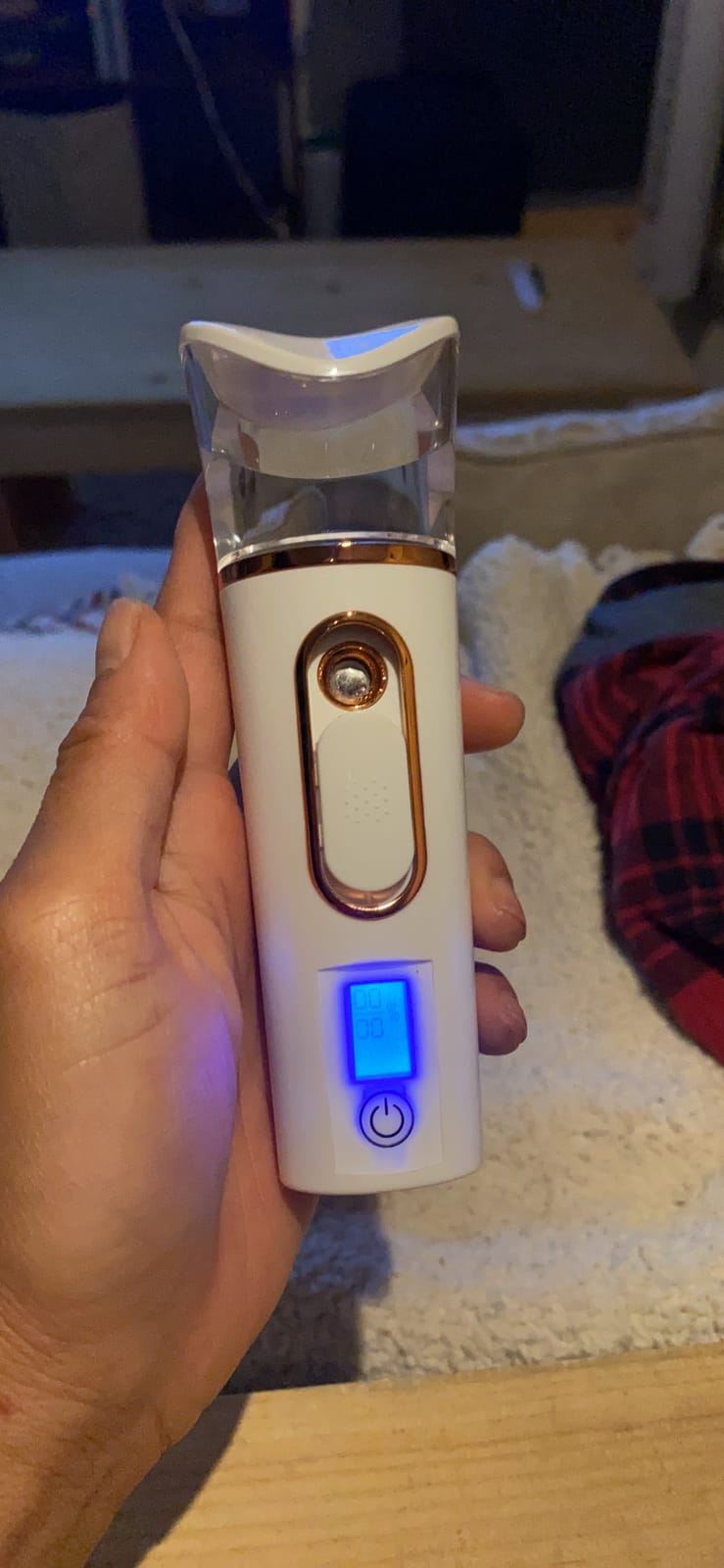
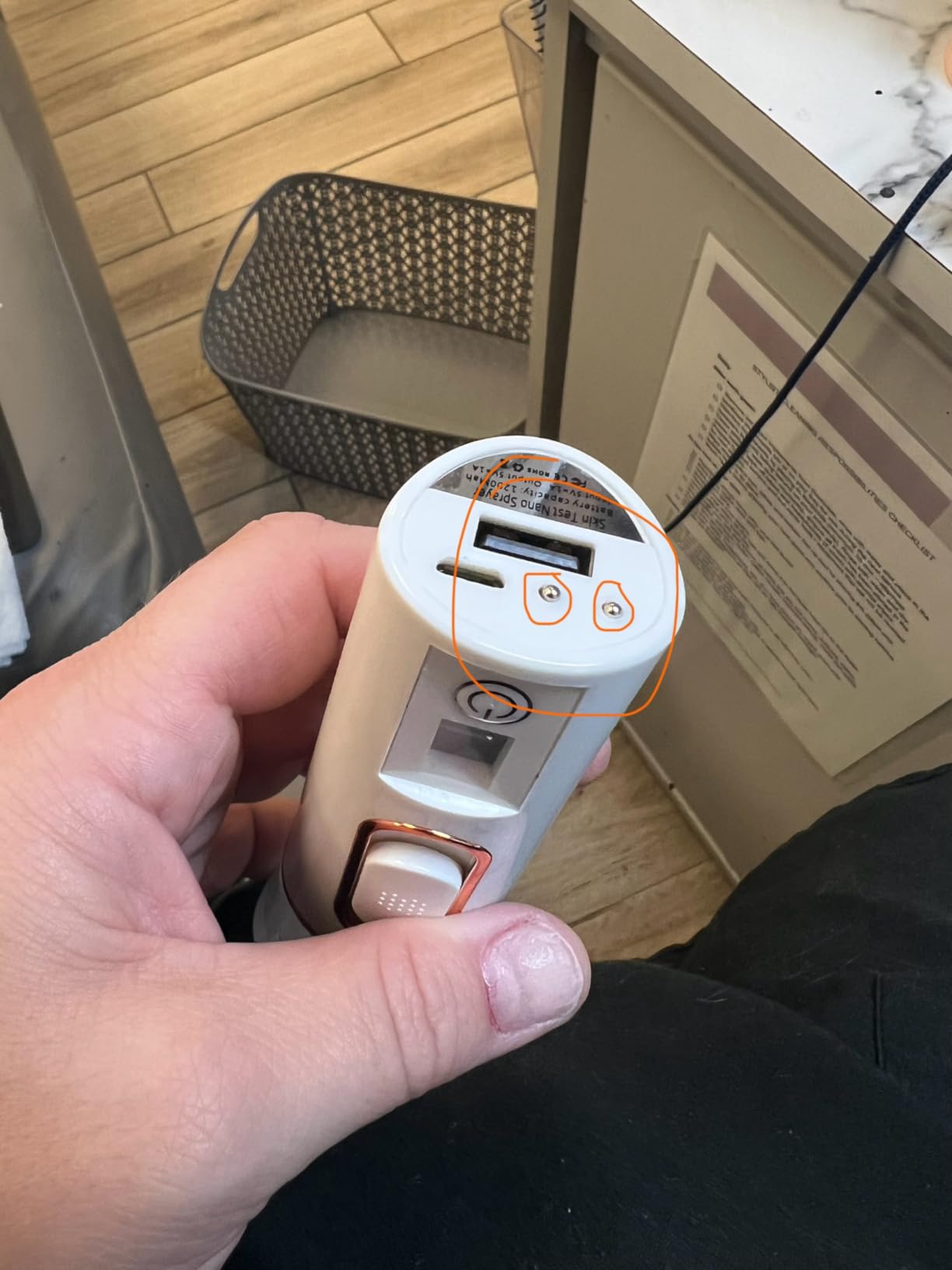
Now the honesty part. The slide switch is genuinely awkward to operate, and this is the single most repeated complaint in the reviews. The unit also drips after use and will not stand upright, so it has to be laid on its side, which is mildly annoying on a bathroom counter. Only plain water sprays reliably; fill it with toner or a thicker hydrating mixture and you will get clogging and uneven output. Buyers expecting a warm facial steamer are disappointed, because this is a cool mist and nothing else.
A minority of owners report units that stopped working after a few weeks. That is not a rounding error in a device this size and this price, so treat it as a known risk rather than a surprise.
What you get from the reading, and what you do not
Use it to compare, never to grade. The screen gives you an oil figure and a moisture figure, and their value comes entirely from comparing the same spot before and after a product change over several days. If your moisture number sits low on one day and high the next, check whether you tested before or after moisturizing, and whether you had just cleansed. A device this compact uses a small probe, and contact pressure and product residue move the number as much as your skin does.
Who should skip it and who should buy it
Skip it if you want a moisture reading with a proper history behind it, because this unit has no memory function and no way to look back at last Tuesday. Also skip it if you want warm steam or want to fill it with an essence. Buy it if you have never measured before, want a low-commitment way to start paying attention, and will actually use the mister half. For owners of general home equipment our sauna heater reviews make the same point about entry devices: the one you will use beats the one with the longest spec sheet.
2. SHQYMBLT Portable Digital Facial Moisture Tester – Best Value
SHQYMBLT Portable digital facial moisture tester skin analyzer facial hydration corneometer skin hydration meter water oil tester for face skin care with backlight LCD display gifts for girls women
Bioelectric impedance analysis
Backlit LCD
Stores 5 readings
3-4 second test
Pros
- Only device here that stores a short history of readings
- Tests in 3 to 4 seconds with a beep
- Backlit LCD is easy to read in a dim bathroom
- Light at 1.45 ounces and 3.17 inches long
Cons
- Readings are not always repeatable on the same spot
- Instructions are thin and the unit is fiddly to operate
- Build quality reads as inexpensive
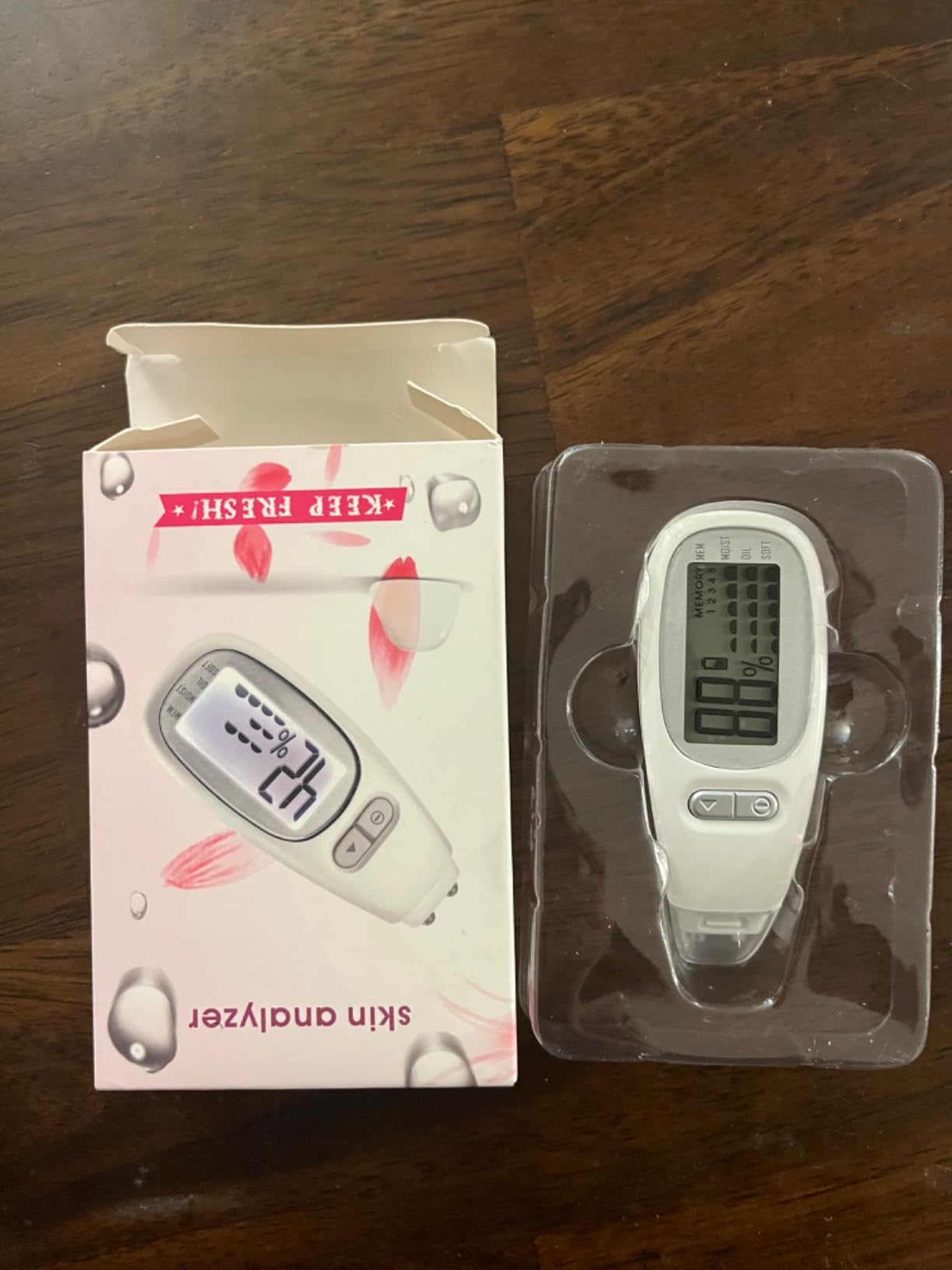
This is the purest measurement tool in the group and the simplest way to get a number you can look back on. It uses bioelectric impedance analysis, which works by measuring how the skin’s surface stores charge at two metal probe points, and reports moisture, oil and softness on a large backlit LCD. Testing takes three to four seconds and ends with a beep. If probe contact is poor the screen shows an error, which is a genuinely useful feature because contact is the main source of bad readings.
The memory function is what separates it from a novelty. Press record and it keeps the last five measurement sets, so you can hold a reading, apply a moisturizer, wait, and test again without writing anything down. Several owners describe exactly that workflow as the reason they kept it. At 1.45 ounces and just over three inches long it is also the easiest device here to keep in a travel bag.
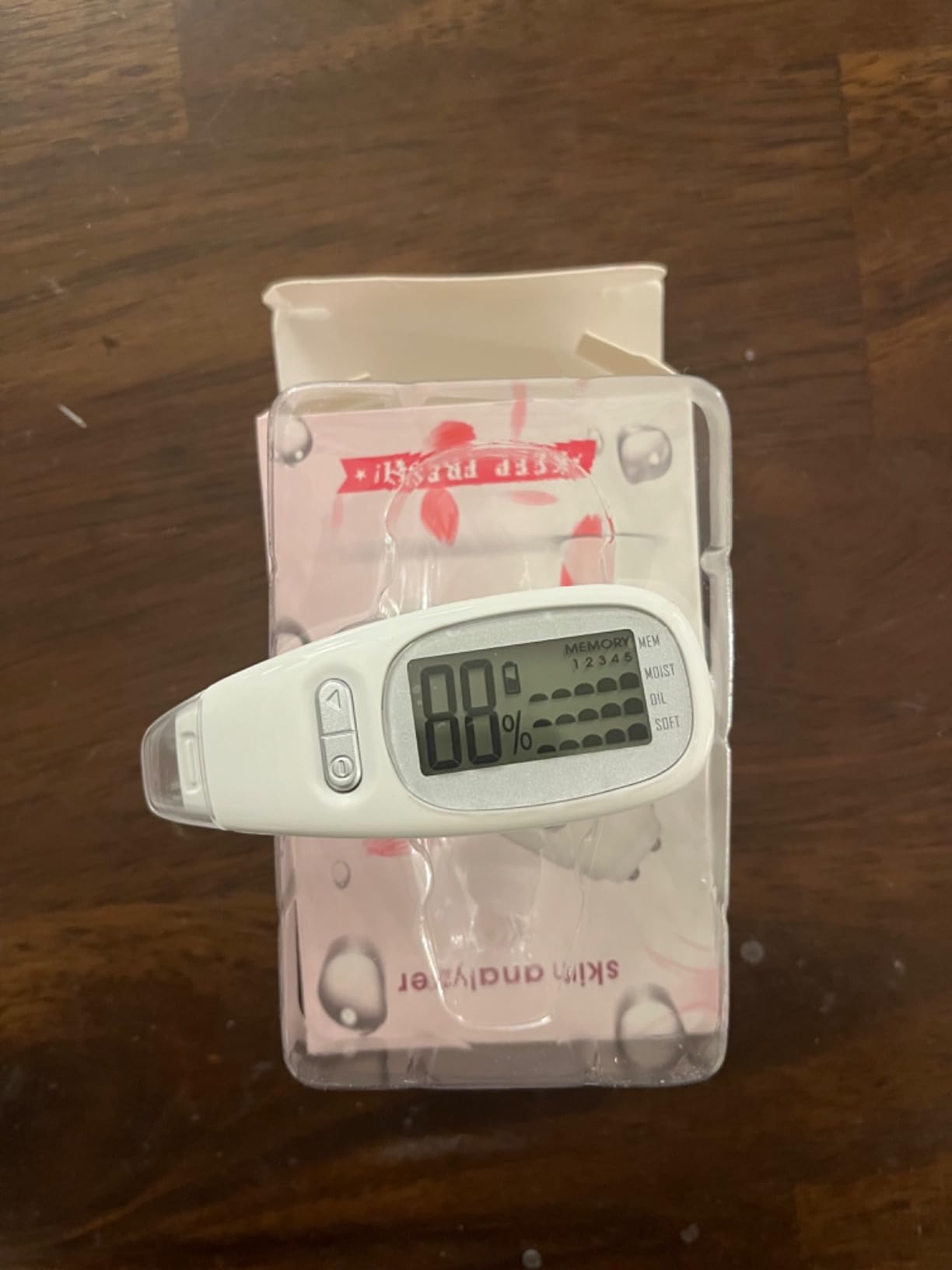
The criticism that appears most often is consistency. Reviewers report that readings on the same area are not always repeatable, and that is the core limitation of cheap impedance probes. Probe pressure matters, contact area matters, and a bit of product left on the skin will skew everything. Budget a moment to learn consistent technique before you trust a trend.
The instructions are also a real weakness. Owners describe them as unclear, and the operating sequence is not obvious from the device itself: remove the front cover, wake the unit, place both probes on the skin, then press test. None of the ratings suggest anyone was taught this, and none suggest they regretted buying it, but a bad first measurement is an easy way to lose faith in the whole category.
How to get repeatable numbers from a five-reading memory
Test the same spot every time. Pick one point on your inner forearm or one point on your cheek and do not wander. Press both probes down with the same gentle, even contact and hold until the beep rather than lifting early. Wait ten minutes after cleansing and twenty minutes after a moisturizer, because surface water and occlusive products both inflate the reading.
Where this fits against the more expensive options
This is the device to buy if you want measurement and nothing else, and if you refuse to hand over facial photos to a vendor app. It has no camera, no account and no subscription, which removes the privacy question entirely. Skip it if you need pore-level imagery, a scalp view or more than five saved readings. Against a dedicated app dashboard it wins on setup speed, because there is no app to install and nothing to configure before the first measurement.
3. Lv. life LCD Rechargeable Scalp and Skin Analyzer – Best for Hair Follicle Detail
LCD Rechargeable Scalp & Skin Analyzer with 50X/200X Lenses
50X skin lens and 200X scalp lens
5-inch HD LCD
Freeze frame and zoom
100-240V rechargeable
Pros
- 50X and 200X lenses cover skin and scalp in one device
- 5-inch HD screen with usable zoom controls
- Supports 100-240V so it works on more outlets
- Also inspects nails beards and small objects
Cons
- Several buyers say it only magnifies without measuring anything
- Some units reportedly failed to work at all
- Build quality is perceived as cheap
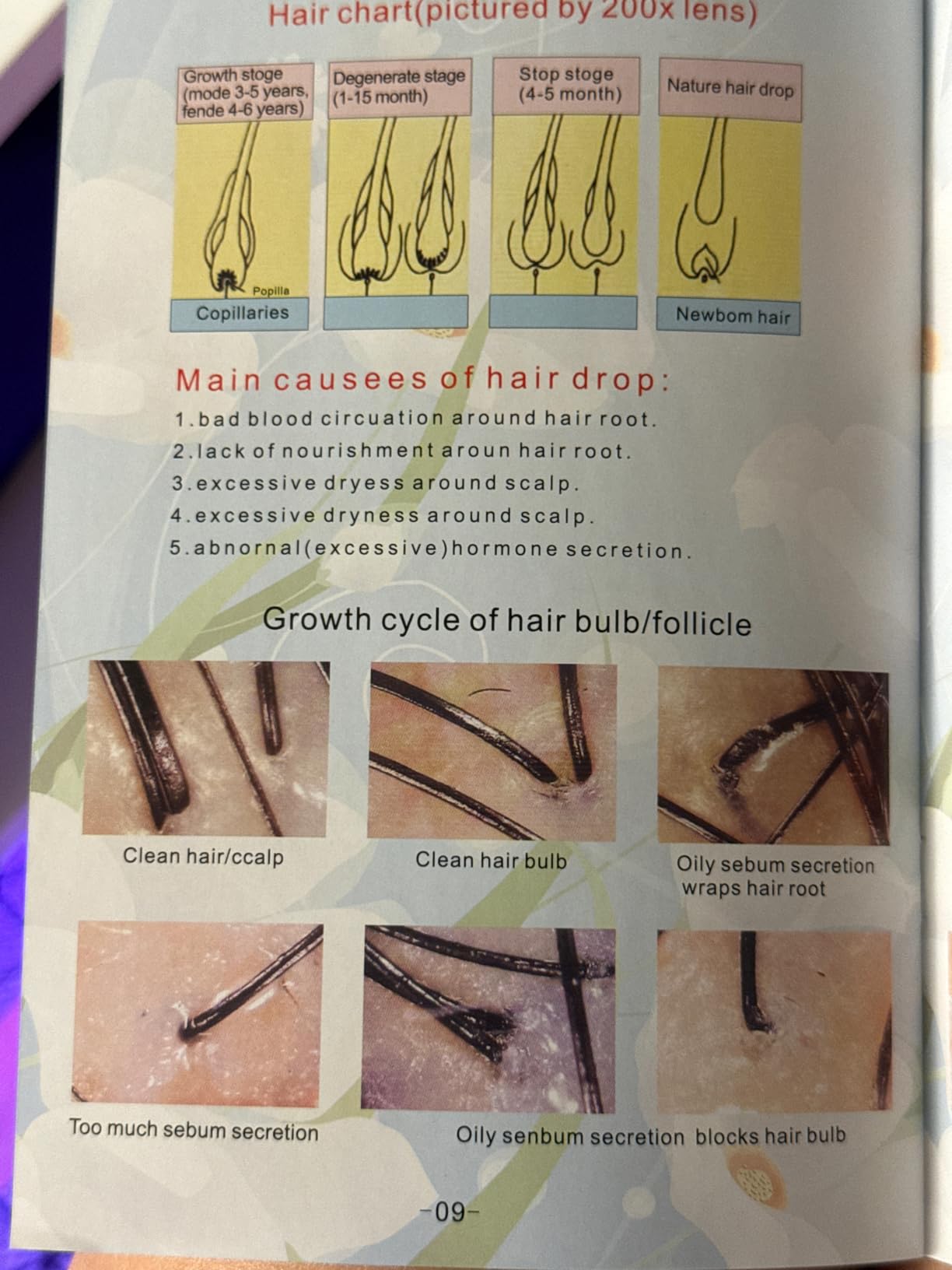
This one crosses a lot of boxes that the probe meters do not touch. It comes with two lenses, a 50X macro lens for skin texture, pores, blackheads and marks, and a 200X macro lens for hair and scalp. The 5-inch high-definition display has freeze-frame and zoom controls, which means you can hold a still image and look properly instead of chasing a moving target. For anyone working on scalp density, this is far more informative than a moisture number.
The charging design is a genuine convenience for home use. It is rechargeable and supports 100-240V with a US plug, so there is no adapter hunt and no battery to die mid-session. It is also lighter and more portable than the larger desk units in this list, which matters if you want it on a bathroom shelf rather than a salon trolley. Owners working with hair follicles specifically describe it as helping them judge scalp condition and oil more precisely.
The honest limitation is the one several reviewers state plainly: this magnifies and it does not measure. There is no hydration figure, no sebum number, nothing to track over time. It is a good visual tool and a poor trend tool, and buying it expecting a moisture reading will disappoint you.
There is also a small reliability tail. A handful of owners report units that failed outright, and the general impression of the build is cheap. Let the light warm up before judging image quality, because reviewers note the picture needs time to stabilize and a cold reading will look worse than the lens deserves.
When magnification is the right tool and measurement is not
Reach for a magnifier when the question is visual. Are these pores congested, is there a blackhead forming, does this part of my scalp look inflamed compared with six weeks ago, are these marks fading. Reach for a probe when the question is numeric. Is my hydration actually improving, is my oil shifting through the afternoon, did that serum do anything measurable.
Who this suits and who it will frustrate
This suits people whose interest is scalp and hair rather than facial hydration, and anyone who wants to document a mole or mark’s appearance over months without going to a clinic. It will frustrate anyone who wants to compare numbers or export a report, because there is no export and no history. Photographic documentation is a reasonable substitute for a trend, provided you use the same phone angle and the same lighting each time.
4. Yhaofu Scalp Analysis Machine – Best for Scalp Monitoring
Yhaofu Scalp Analysis Machine, 5 Inch LCD Screen Skin Hair Analyzer
50X skin lens and 200X hair lens
5-inch LCD
Rechargeable
Weighs 2.12 pounds
Pros
- Clear and readable screen that is easy to operate
- Lightweight 2.12 pounds and rechargeable for home or travel
- Sharp detailed images of both scalp and skin
- Users find it a practical alternative to clinic visits
- Responsive customer service for replacements
Cons
- Zoom lenses can fail to attach to the magnifier handle
- One buyer received an open-box unit
- Interpreting images needs some skin and scalp knowledge
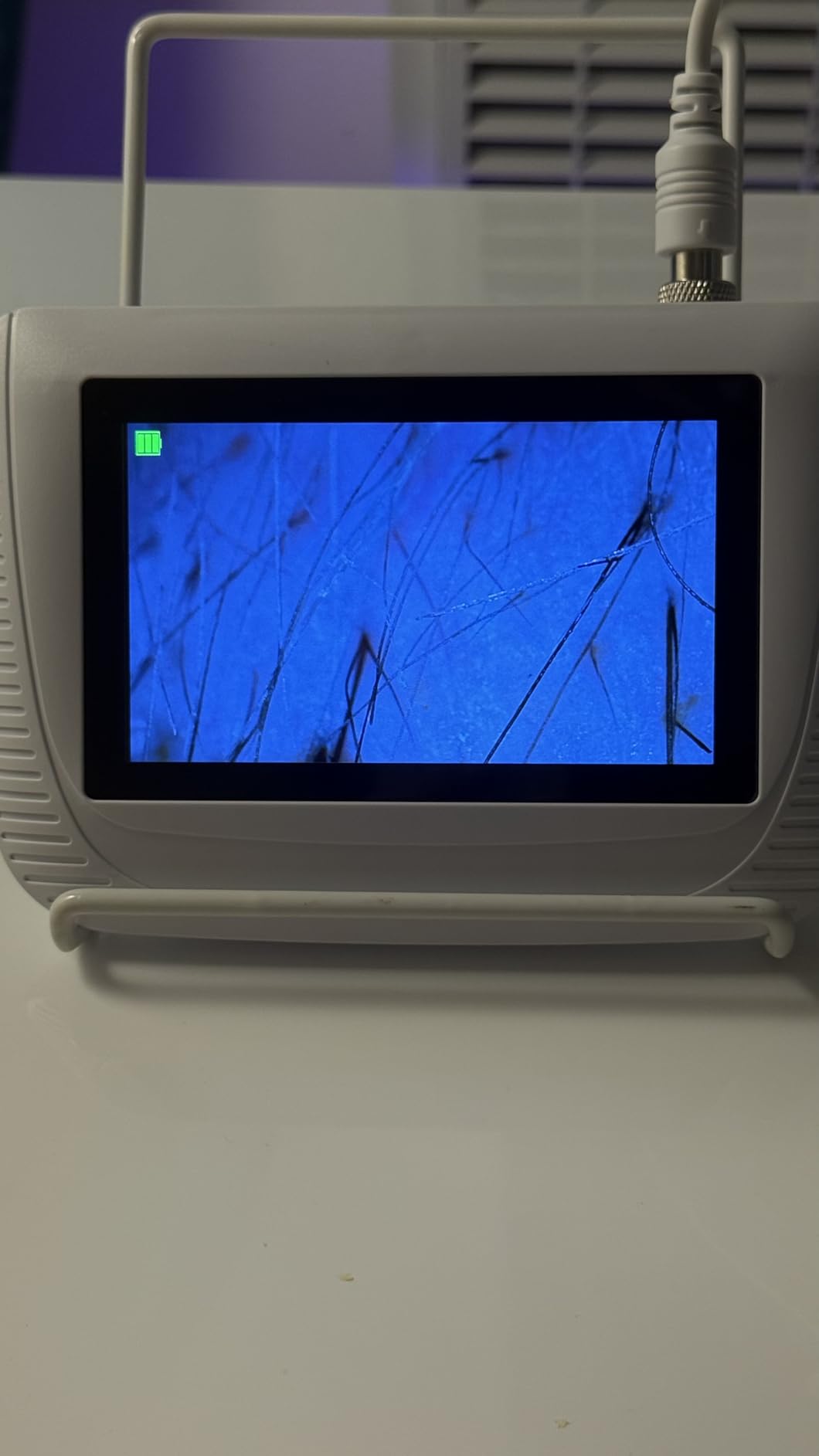
This is the strongest all-round imaging unit here, and at 4.6 stars it carries the highest rating among the devices with a meaningful volume of feedback. The screen is described consistently as clear and easy to operate, and the image quality is sharp for both scalp and skin. Like the previous pick it uses a 50X lens for skin and a 200X lens for hair, with freeze-frame and screen zoom on a 5-inch LCD.
What owners actually report doing with it is monitoring. Several describe using it to watch conditions such as alopecia without repeated clinic appointments, which is a reasonable use for a purely visual device. At 2.12 pounds with a rechargeable battery it moves between a home shelf, a bag and a trip without much thought.
The most repeated mechanical complaint is the lens attachment. Buyers report the secondary zoom lenses failing to lock onto the magnifier handle, which is annoying when you are mid-session. If you buy this, check the lens lock the day it arrives rather than discovering it in three weeks.
There are also isolated fulfilment problems. One buyer received an open-box unit with hair on the screen sticker, and some report that listing images differ from the packaging they got. Check the box on arrival. Finally, the honest caveat: reading what you are looking at takes some background. A magnified image of a scalp is not an interpretation of a scalp, and this device does not supply one.
What to record when you use an imaging analyzer at home
Pick three landmarks rather than scanning the whole head. The parting line, the crown and one temple gives you a consistent frame every time. Photograph each one with your phone at the same distance in the same light, because the device itself cannot export images. Then note anything that changed in shape, colour or scale, which is the part worth paying attention to.
Where this loses to the alternatives
It loses to smaller and cheaper units on portability and to the dermatoscope on optical quality for pigmentation work. It loses to the probe meters if what you want is a number that responds to a new moisturizer. If your concern is specifically scalp condition over months, this is the one we would pick, because the combination of a readable screen, decent magnification and a body light enough to move is hard to find elsewhere in this bracket.
5. Pewoaoa Professional Skin Hair Analyzer – Best for Pore-Level Detail
Pewoaoa Professional Skin Hair Analyzer, Skin Scalp Analysis Machine
50X skin lens and 200X follicle lens
5-inch LCD with LED source
Real-time imaging
One-year warranty
Pros
- Dual lens covers both skin and hair follicles
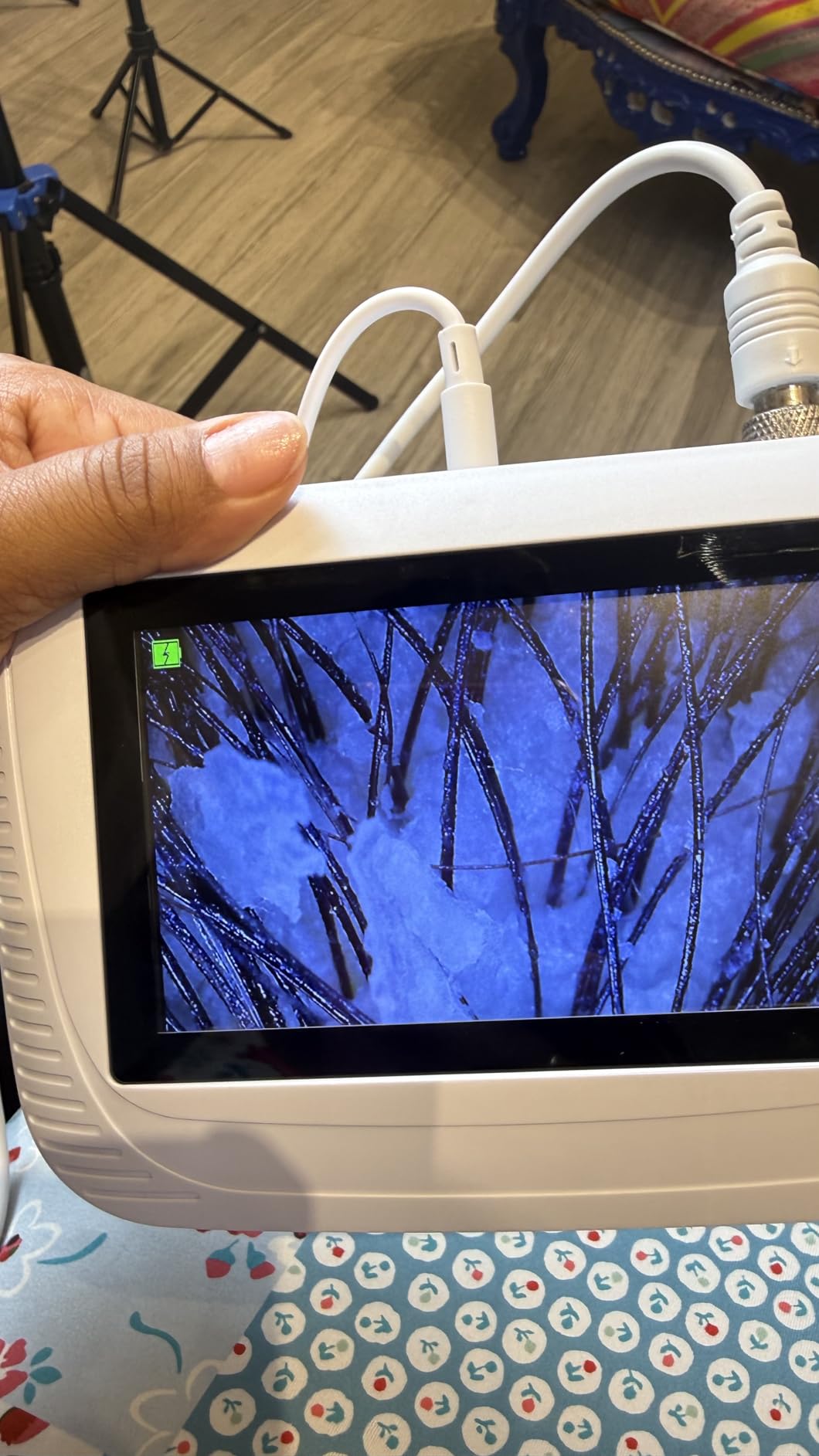
- Real-time high-definition imaging at pore level
- Shows pores and latent dandruff clearly
- Lightweight rechargeable body
- Backed by a one-year warranty
Cons
- Small review base leaves long-term durability undocumented
- Magnification is visual only with no clinical diagnosis
- Interpreting the imagery requires some guidance
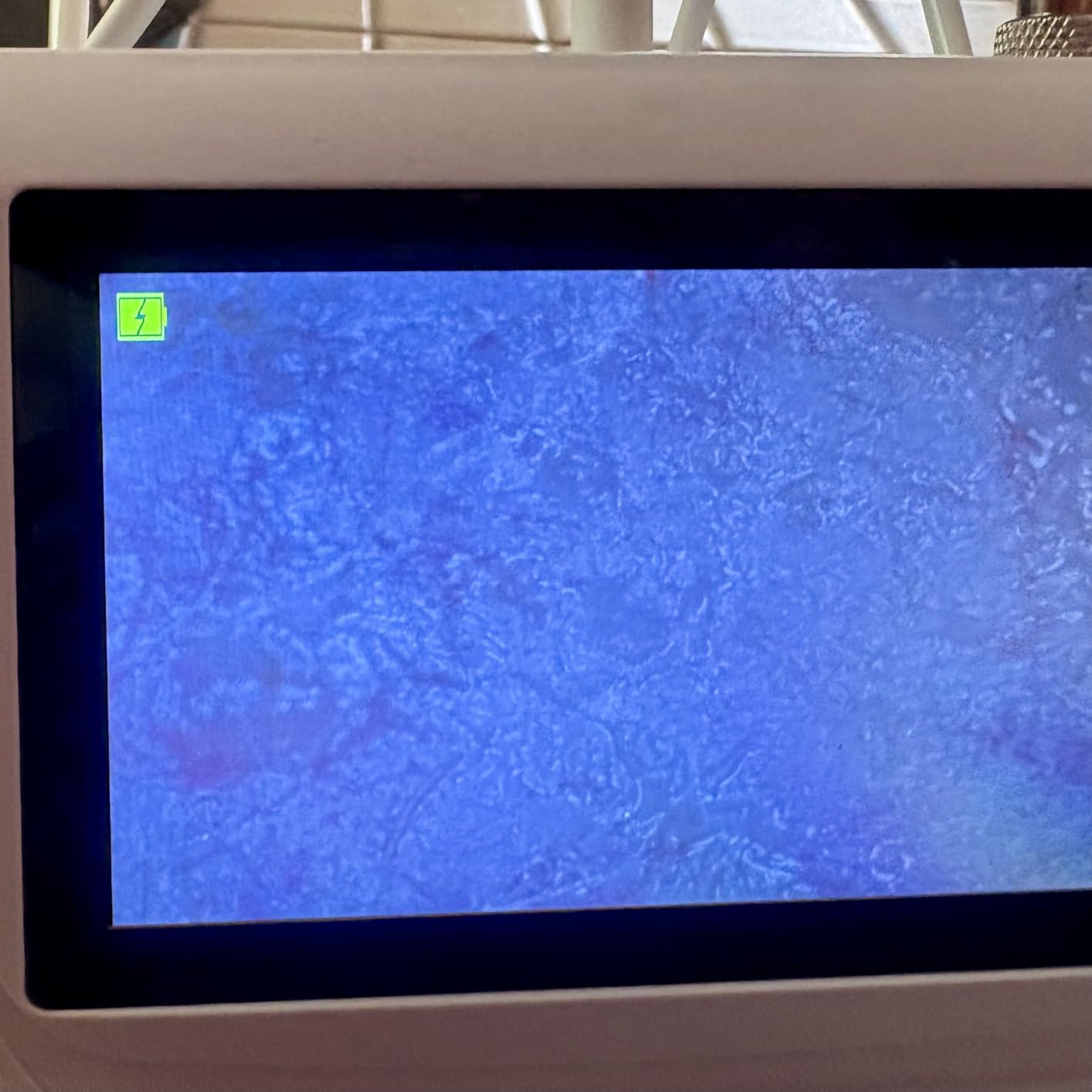
This is the one with the strongest warranty in the group, a full year, and the only one that states it alongside e-manual support from the manufacturer. On paper it is well specified: a 50X skin lens, a 200X hair follicle lens, an LED light source, real-time high-definition imaging on a 5-inch LCD and a rechargeable lightweight body. Reviewers single out the pore-level detail and the visibility of closed pores and latent dandruff as the standout features.
Two variants are listed, a standard 5-inch and an 11-inch, which is worth checking before you order since the screen size changes how usable it is on a bathroom counter. The 200X lens is aimed at scalp oil buildup, hair elasticity and follicle monitoring, so this covers both halves of the head-and-hair question rather than forcing you to choose.
The weakness here is evidence, not build. With 28 reviews there is simply not a long enough record to tell you how this unit holds up over two or three years, and the reviewers themselves acknowledge that long-term durability is undocumented. The rating is strong at 4.5 stars with 84% of ratings at five stars, but a small base deserves proportionally less weight than the FATUXZ review count does.
Second, the same limitation applies as to every magnifier here. It shows you pores, it does not explain them, and the reviews note that making sense of the imagery takes some guidance. A one-year warranty softens the risk, and the LED source is a real practical advantage for low-light use.
When pore-level imagery actually changes a routine
Pore images are most useful as a before-and-after record rather than a verdict. Photograph the same nose area under the same lighting before you start a new treatment and again at four and eight weeks. Texture and congestion change slowly, and a magnified image is the only way most people will ever notice, because you do not see your own pores at that scale without a device.
Who should look elsewhere
Look elsewhere if you want a number, because this measures nothing. Look elsewhere if you want to photograph deep pigmentation with genuine optical control, because that is a dermatoscope job and this is a digital microscope. Buy it if you want one device that handles face and scalp, want a manufacturer warranty behind it, and are willing to treat the images as evidence to review rather than a diagnosis to act on.
6. IBOOLO DE-3100 Dermatoscope – Best for Pigmentation and Vascular Detail
IBOOLO DE-3100 Dermatoscope, 10x Magnify Skin Analyzer Machine Polarized Dermatoscope
10x glass optics
Polarized and non-polarized light
Cross polarization
Magnetic phone attachment
Pros
- First-class glass optics with sharp edge-to-edge magnification
- Cross polarization removes surface glare to reveal vessels and dermal pigment
- Polarized and non-polarized modes give two levels of color control
- Magnetically attaches to a phone and captures in about 5 seconds
- Carrying case and universal phone clip included
Cons
- Only 10x magnification against 50X-200X units
- Depends on a smartphone that is not included
- Interpreting dermoscopic images still needs training or a professional
This is the odd one out and it is the most optically serious device here. It is a dermatoscope, not a digital microscope, and that distinction matters. At 10x with first-class glass optics designed to minimize spherical and chromatic aberration, it sits far closer to the way a clinician views skin than the higher-magnification novelty units, even though 10x looks unimpressive next to 200x.
Cross polarization is the feature that earns its place. By cancelling surface reflection, it reveals vascular structures and dermal pigment that a normal image flattens out. It also offers polarized and non-polarized modes for two levels of color spectrum control, which lets you toggle between what the surface looks like and what is sitting underneath. It attaches magnetically to a phone and is ready to capture in about five seconds, and the package includes a USB Type-C cable, universal lens clip, carrying case, cleaning cloth and manual.
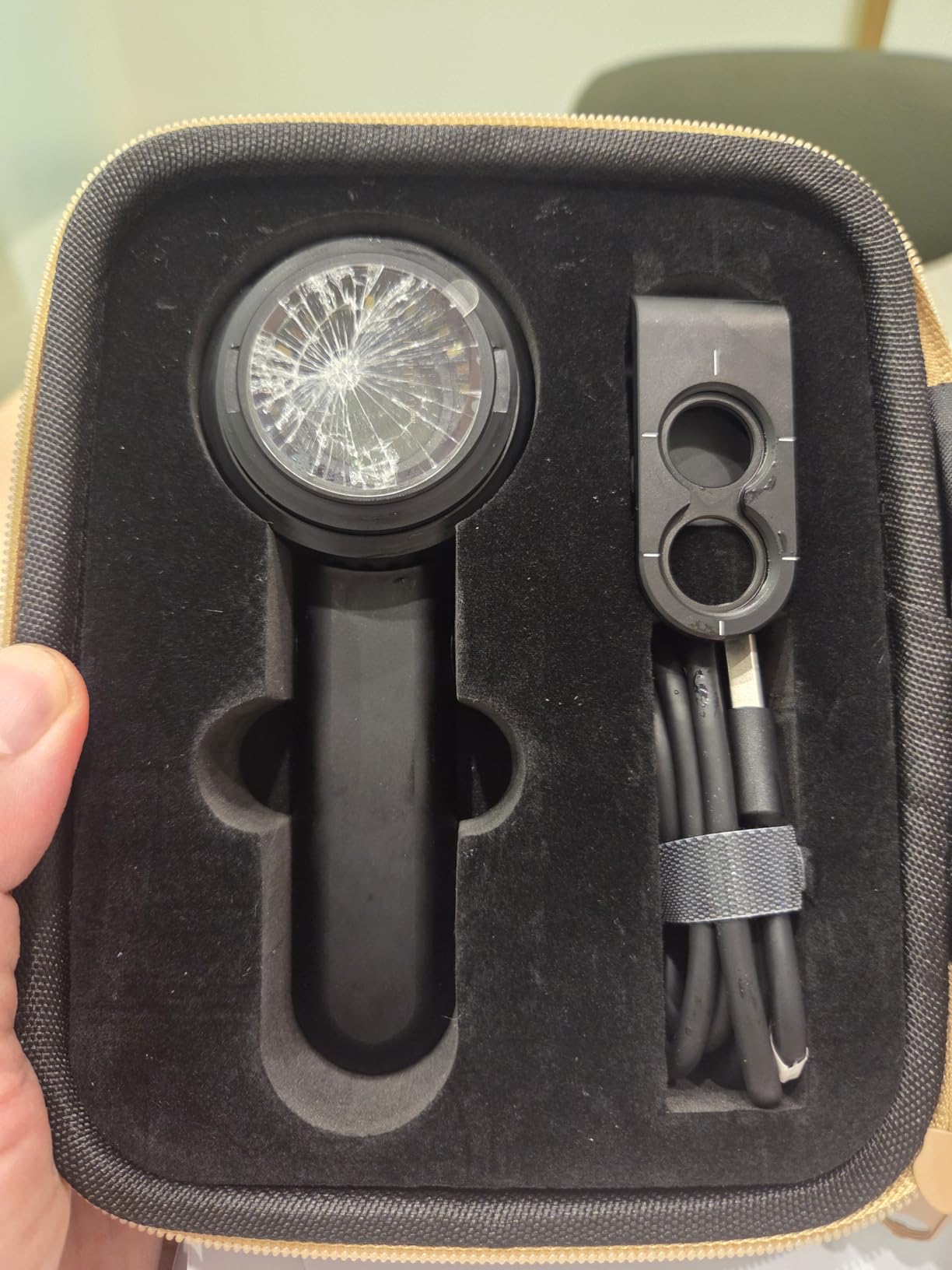
The catch is that this is a phone accessory. You need your own smartphone, and you need an app to stitch frames and check focus, though the capture step itself is quick. Reviewers describe the value as the optical clarity and what cross polarization reveals, while being clear that it is a phone-mounted dermatoscope rather than a standalone analyzer with its own screen.
At 0.59 kg it is heavier than the pocket meters but far smaller than the desk units, and the universal lens clip means it works with any phone. We would still add this to our home testing shelf as the tool we reach for when the question is specifically about a pigmented spot rather than about hydration.
Why lower magnification can be the better choice
Magnification beyond roughly 50x on a consumer digital microscope shows you surface texture, hairs and oil, but it does not add diagnostic value. Dermoscopy works at low magnification with controlled, polarized light because that is what makes pigment and vessel patterns visible. Higher power on an uncalibrated LED simply enlarges pixels.
Who should not buy it
Skip it if you are not comfortable reviewing images on a phone screen, or if you want a trend dashboard. Do not buy it hoping it will tell you whether a mole is dangerous, because no home device can, and the reviews themselves note that interpreting dermoscopic images requires training or a professional. It is a documentation tool that produces better photographs than a naked-eye selfie, and for a changing spot that is worth more than it sounds.
7. PMUBEAUTY Smart Skin Analyzer – Best for Skin Tone Checks
Smart Skin Analyzer, Portable Skin Color Tester for Facial Beauty Care
Fitzpatrick grade in about 2 seconds
Type I to V scale
One-button operation
Pros
- Grades skin tone in about 2 seconds
- Beauty professionals report results matching their experience
- Small and light at 3.21 ounces for client kits
- Useful safety check before laser or IPL treatment
- Suggests power levels for treatment devices
Cons
- Sealed battery with no replacement option or charging port
- Only about five colour steps on the indicator
- Some buyers are unsure the readings are reliable
Everything else on this page is trying to tell you about hydration, oil or texture. This one answers a much narrower question, and a useful one: where do you sit on the Fitzpatrick scale. It determines your skin tone grade in about two seconds, running an indicator from type I to type V, covering white, ivory, beige, light brown and medium brown. Press the button while holding the sensor to the skin and read the result.
The practical value is pre-treatment safety. It is designed to be used alongside laser and IPL devices to check whether an area is suitable for treatment and to suggest a power level. If you own at-home IPL or laser hair removal, or are considering it, this is a cheap way to know your grade before you dial anything up. Test twice to confirm, as the instructions suggest, because a two-second reading deserves a second opinion.
There is one significant limitation for anyone with deeper skin. The indicator only has about five colour steps and runs out at type V, so a reading off the end of the scale is the signal that you are type VI or beyond rather than a failure. If you are in that group, this device tells you nothing useful, and that is a real gap rather than a quibble.
The sealed battery is the other one. There is no replacement option and no charging port, so the day it dies the device is finished. On the reliability question, beauty professionals who bought it for client work report accurate results matching their experience, while a minority of consumer buyers are simply unsure. At 21 reviews the evidence base is thin in both directions.
What it is worth for someone who does not own an IPL device
Not much. Fitzpatrick grading is a clinical and treatment-planning tool, not a skin health tool, and it tells you nothing about hydration, oil or pores. It does not need an app, which is refreshing, but it also does not build a picture of your skin over time. The honest use case is a pre-treatment check for someone about to use a light-based device on their own skin.
How to use it, and when to ignore it
Clean and dry skin, press firmly and hold the button, read the indicator, then test a second time in the same spot and compare. If the two readings disagree, test a third time. Treat an off-scale reading as out of range rather than as a grade. And if you are considering a light-based treatment and your grade sits high on the scale, ask a dermatologist first, because this device is not the safeguard it might appear to be.
8. foreverLily 11 Inch Scalp Analysis Machine – Best for Big Screen Viewing
11″ HD Scalp Analysis Machine with 50X/200X Hair Scalp Analyzer
11-inch HD screen
200X and 50X lit lenses
Live image with freeze-frame
No app download
Pros
- Largest screen in the set at 11 inches with clear sharp images
- Both lenses have integrated lights for low-light use
- No app download or complicated setup
- Included analysis card covering 20+ skin and scalp concerns
- Sturdy carry box with handle
Cons
- Freeze-frame reduces image quality and blurs the picture
- Images cannot be exported or uploaded
- Insights are more entertaining than useful without training
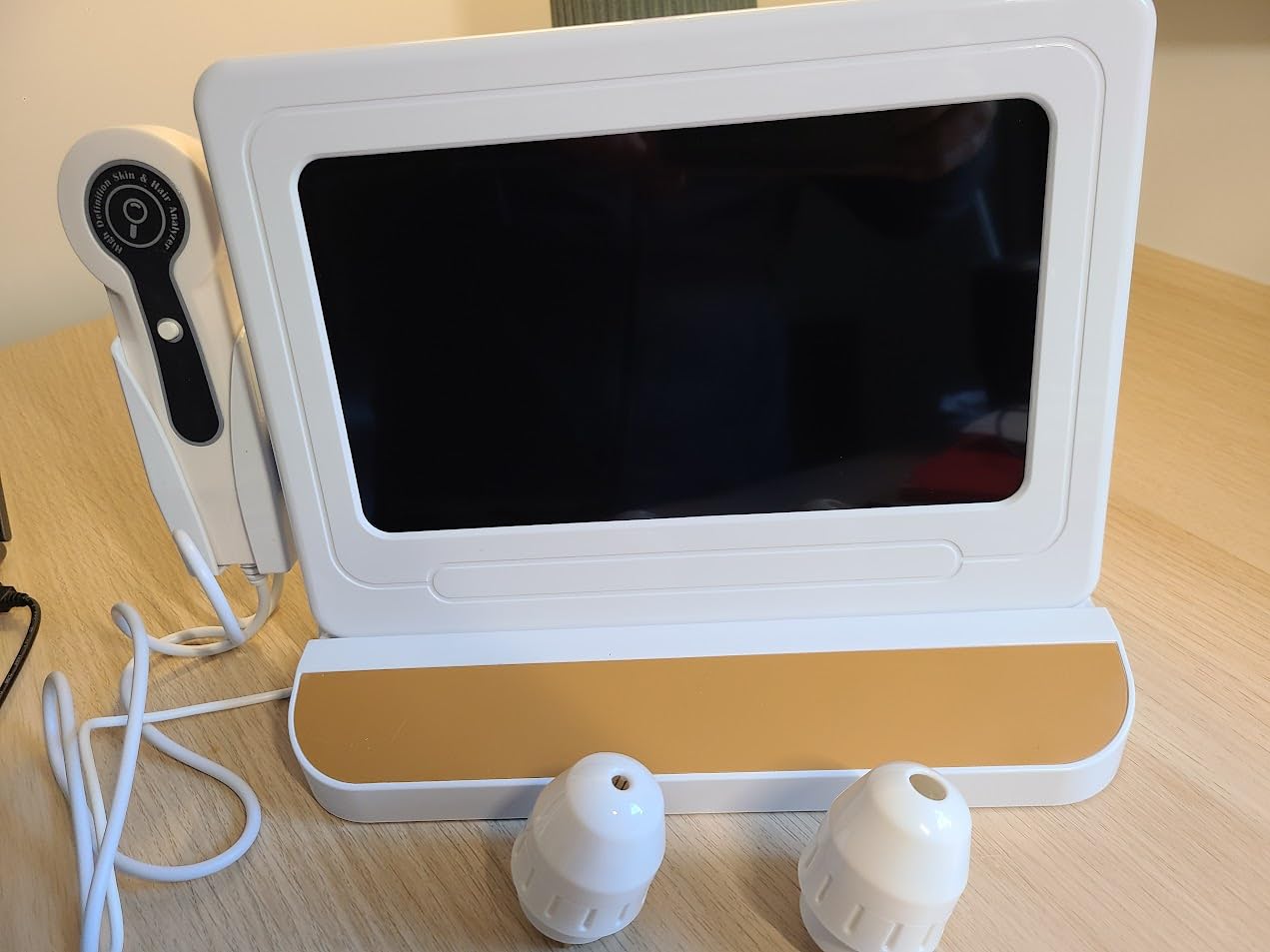
This unit carries the highest star rating in our set at 4.8, with 84% of ratings at five stars and no one-star ratings at all. What it does differently is screen size and zero friction. The 11-inch high-definition display is more than double most of the units here, which sounds excessive until you are trying to show someone a follicle at 200x and can see it without leaning in.
Setup is the other strength. There is no app to download, no account and no pairing, you power it on and start scanning. Both the 200X and 50X lenses have integrated lights, so low-light use is genuinely workable rather than an instruction to move to a window. The included Skin and Scalp Analysis Card explains more than twenty common concerns, which does more for a first-time user than any amount of screen real estate.
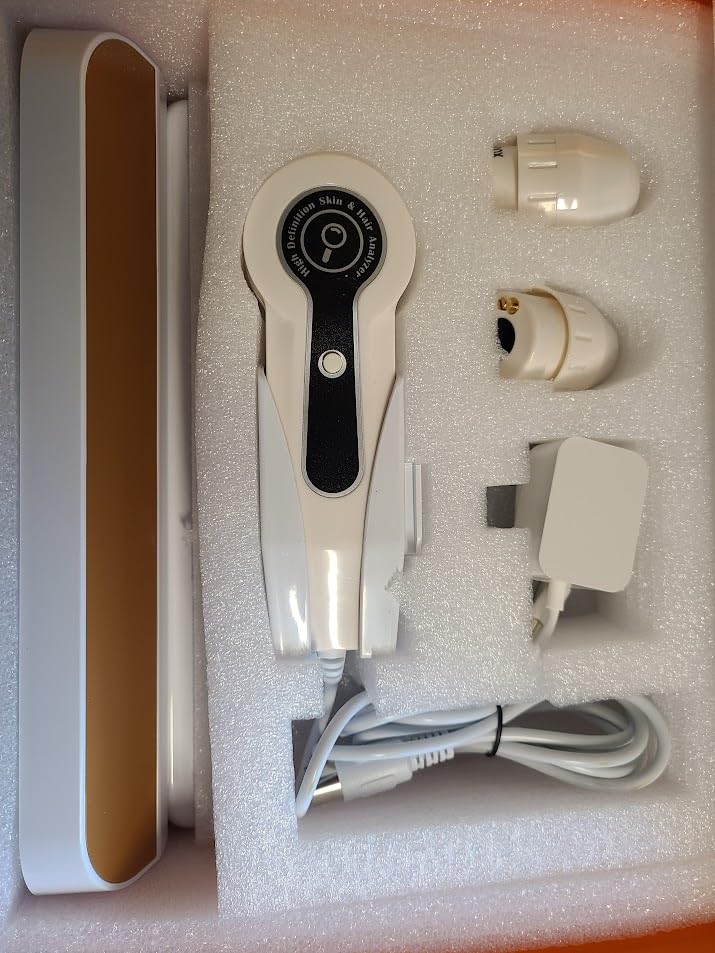
The criticisms are specific and worth weighing. The freeze-frame function reduces image quality and makes the picture blurrier, which is an odd choice on an otherwise strong imaging unit and directly undercuts the freeze-frame idea. Images cannot be exported or uploaded, so any photograph you keep has to be taken with your phone. There is also no dedicated holder for the spare magnification head, which owners report going missing.
And the honest caveat from the reviews themselves: without training in skin or scalp health, the insights are more entertaining than useful. That is the fairest summary of every imaging device here. At 4.54 pounds with a carry box with a handle, this is a home setup rather than a travel one.
Is an 11-inch screen worth it at home
For one person, no. The extra size mostly matters when you are showing someone else, or when you want someone else to hold the device while you look. For a household where one person monitors their scalp and another person wants to see what they are seeing, the large screen and the carry box make more sense than they otherwise would. The included analysis card is also more useful for a beginner than the resolution difference.
Where this ranks against the other imaging units
Against the smaller LCD units it wins on screen size, lens lighting and setup simplicity, and loses on the freeze-frame quirk and the lack of image export. Against the dermatoscope it wins on convenience and loses on optical discipline for pigmentation work. With 17 reviews it also has the smallest evidence base in the group, so treat the 4.8 rating as encouraging rather than proven. Our rule across all eight devices is that a large star count and a small one are both warnings about something, just different things.
How to Choose a Skin Analyzer Device
Start by deciding which question you are actually asking, because the category splits cleanly in two and the wrong half is pure waste of money. If you want to know whether your moisturizer is working, you want a probe-based meter that gives you hydration and oil numbers you can compare over time. If you want to see a pore, a follicle or a pigmented spot up close, you want imaging, and you should accept that you will be interpreting the picture yourself. Several owners on r/AsianBeauty threads make exactly this point, treating these devices as a behavioural tool rather than a measurement instrument.
Next, look at what the device actually measures versus what it shows. A device listing oil and moisture readings gives you a number you can track. A device describing skin quality, health status or condition analysis on a screen is showing you an image and applying a label. Neither is wrong, but they are not substitutes and they should not be priced as if one were the other.
Then consider whether the reading scale is stable. Devices reporting on their own arbitrary scales are fine for tracking your own trend and useless for comparing you against anyone else, including against a reading from a different device you might buy later. If you care about comparisons, look for a device with memory or export. If you only care about your own progress over a month, a simple unit like the SHQYMBLT is enough.
Finally, think about friction, because friction kills consistency and consistency is the whole value proposition. Devices that need an app, an account, a phone or a pairing step get used twice. The foreverLily scores well here precisely because it asks you to power it on and scan, and the FATUXZ scores well because it does something useful with the result. Our general advice on entry-level home kit is consistent with what we found across our guitar amp reviews for home use: buy the one you will actually reach for, not the one with the longest feature list.
One last category question. If you are considering app-connected or camera-based analyzers rather than a dedicated handheld device, weigh the privacy trade-off before you start. Any device that photographs your face and uploads it to a vendor dashboard is sending facial images to a third party with a retention policy you have not read. The probe meters and magnifiers on this page never take a photo of you, and that is a genuine advantage of the category as it stands.
What Home Skin Analyzers Cannot Detect
No device on this page can diagnose melanoma, and no home device should ever be the reason you wait longer to have a changing mole looked at. A dermatoscope produces a better photograph of a spot than a naked-eye selfie does, but interpreting dermoscopic images requires training that a consumer does not have and a clinical judgement that no app replicates. This is the fear sitting underneath most searches on this topic, and the honest answer is that this category cannot address it.
These devices also cannot measure anything below the stratum corneum, which is the outermost layer of the epidermis. Hydration, oil and surface texture are surface phenomena. They cannot tell you about dermal hydration, collagen density, inflammation beneath the skin, bacterial load, hormone-driven acne drivers or anything systemic.
They cannot measure transepidermal water loss, the clinical gold standard for barrier function, because that requires a closed-chamber probe that a consumer device does not have. When a listing says barrier health, read it as a hydration proxy rather than a barrier measurement.
And the product recommendations most of these devices generate are not clinically grounded. The same research that put consumer-device accuracy at 42-58% found that the large majority of automatically generated product recommendations were not clinically appropriate for the user. Treat the product suggestions as suggestions from a catalogue, not from an expert.
Seek a dermatologist rather than a device if a spot changes size, shape, colour or elevation, if it bleeds or does not heal, if you have a sore that will not clear, or if you want a proper skin cancer screening. Nothing on this list makes that call for you, and a reading that looks reassuring is not evidence that nothing is wrong.
How to Test Your Skin at Home for Consistent Results
Consistency is what separates a useful trend from a random number, and it costs almost nothing to maintain. Our protocol, based on what consistent users in the research actually did differently, runs in five steps.
Fix the time. Test in the morning before skincare and before water, or in the evening after washing and before moisturizer. Pick one and never vary it. Oil readings in particular swing across a single day.
Fix the spot. Choose one point on the inner forearm or one on the cheek. Do not scan around comparing areas, because different zones have genuinely different baseline hydration and you will misread the difference as a change.
Fix the conditions. Wait ten minutes after cleansing, because water sitting on the surface inflates a capacitance reading. Wait twenty minutes after applying anything, because occlusive products trap water and sebum readings are skewed by whatever you just used.
Test three times, ignore the first. Press probes down with the same even contact each time. If your three readings on identical skin are far apart, the device is too noisy for you and the trend will be fiction. Do not average a bad reading into your log, log it and move on.
Log the variables, not just the number. Humidity, whether you exercised, whether you slept, what you applied the night before. In a compiled eight-week study of consistent users cited in buyer-guide research, average hydration rose by 22%, UV spot intensity fell by 14% and sebum dropped by 12% among people who tested on a schedule, while casual users saw significantly less. The habit is doing the work, not the device.
Then interpret the percentages with reasonable bands rather than chasing a perfect score. Broadly, below 30% reads dry, 30-40% is dehydrated, 40-55% is a healthy range and above 55% is highly hydrated, and oily or combination skin types will sit lower than dry types naturally. Shift your expectations by skin type rather than assuming a dry-skinned reading of 45% is better than an oily one at 40%.
Frequently Asked Questions
What is the best tool for analyzing the skin?
For home use, a handheld probe-based moisture and oil meter is the most useful tool, because it gives you a number you can compare week to week. A magnifier or dermatoscope is better if your question is visual, such as what a pore or a pigmented spot looks like up close. Most people are best served by a simple probe meter first.
What is the best device for skin analysis?
Among the eight devices we compared, the FATUXZ Nano Mist Sprayer with Skin Analyzer is our top pick, because it pairs a working oil and moisture meter with a working atomizer and has by far the largest base of long-term owner feedback. If you want pure measurement with no second function, the SHQYMBLT bioelectric impedance tester is the better and cheaper choice.
Are skin analysis machines worth it?
They are worth it as a consistency and motivation tool, not as a diagnostic instrument. People who test the same spot at the same time of day, week after week, report real behaviour change and visible trends. People who test casually get noise, and the numbers will convince them the device is a gimmick because it is telling them the truth about their own testing.
Are skin analyzers accurate?
Not to clinical standards. Published buyer-guide research citing a 2026 analysis puts consumer skin analyzers at roughly 42-58% accuracy against dermatologist evaluation. That number matters less for trend tracking than people expect, provided you control your conditions, and it matters enormously if you are using a reading to decide whether a lesion is safe.
Do skin analyzers diagnose skin cancer?
No. None of these devices diagnose skin cancer, and none of the automatically generated product recommendations have been shown to be clinically appropriate. A dermatoscope gives you a clearer photograph of a spot, but reading it requires training and clinical judgement. If a mole changes size, shape, colour or elevation, or bleeds or will not heal, see a dermatologist.
Can ChatGPT do skin analysis?
No, not in any clinical sense. Uploading a photo to an AI chat tool gives you an opinion generated from a text description of an image, with no measurement, no calibration and no validation. It is fine for keeping a written routine journal and useless for anything you would make a health decision on.
What is the most effective non-invasive skin tightening device?
Skin analyzers measure and magnify. They do not tighten anything, so that question belongs to a different category, namely radio frequency and microcurrent devices. Evidence for at-home results is limited and inconsistent, and the more powerful professional machines work by heating tissue, so talk to a dermatologist before spending heavily.
How often should I test my skin?
Once or twice a week is enough to see a trend and low enough to stay consistent. Test at the same time of day, on the same spot, with the same wait after cleansing or applying products. Daily testing mostly adds noise from weather, exercise and routine changes that you would then have to interpret.
Final Verdict on the Best Skin Analyzer Devices for Home Use
The FATUXZ Nano Mist Sprayer with Skin Analyzer is our pick for the best skin analyzer devices for home use in 2026, and the reason is durability of ownership rather than any single specification. It is the only device here with 1569 ratings behind it, it measures oil and moisture, and it does something useful with what it finds. If you would rather have a pure number and no second function, the SHQYMBLT impedance tester gives you a measurement and keeps the last five readings for less money and with no camera involved.
Buy imaging only if your question is visual, and treat everything that comes out of it as a photograph rather than a finding. And whatever you buy, test on a schedule or do not bother, because these devices reward consistency and punish everything else. For anything that changes shape, colour and bleeds, skip the device entirely and see a dermatologist.