
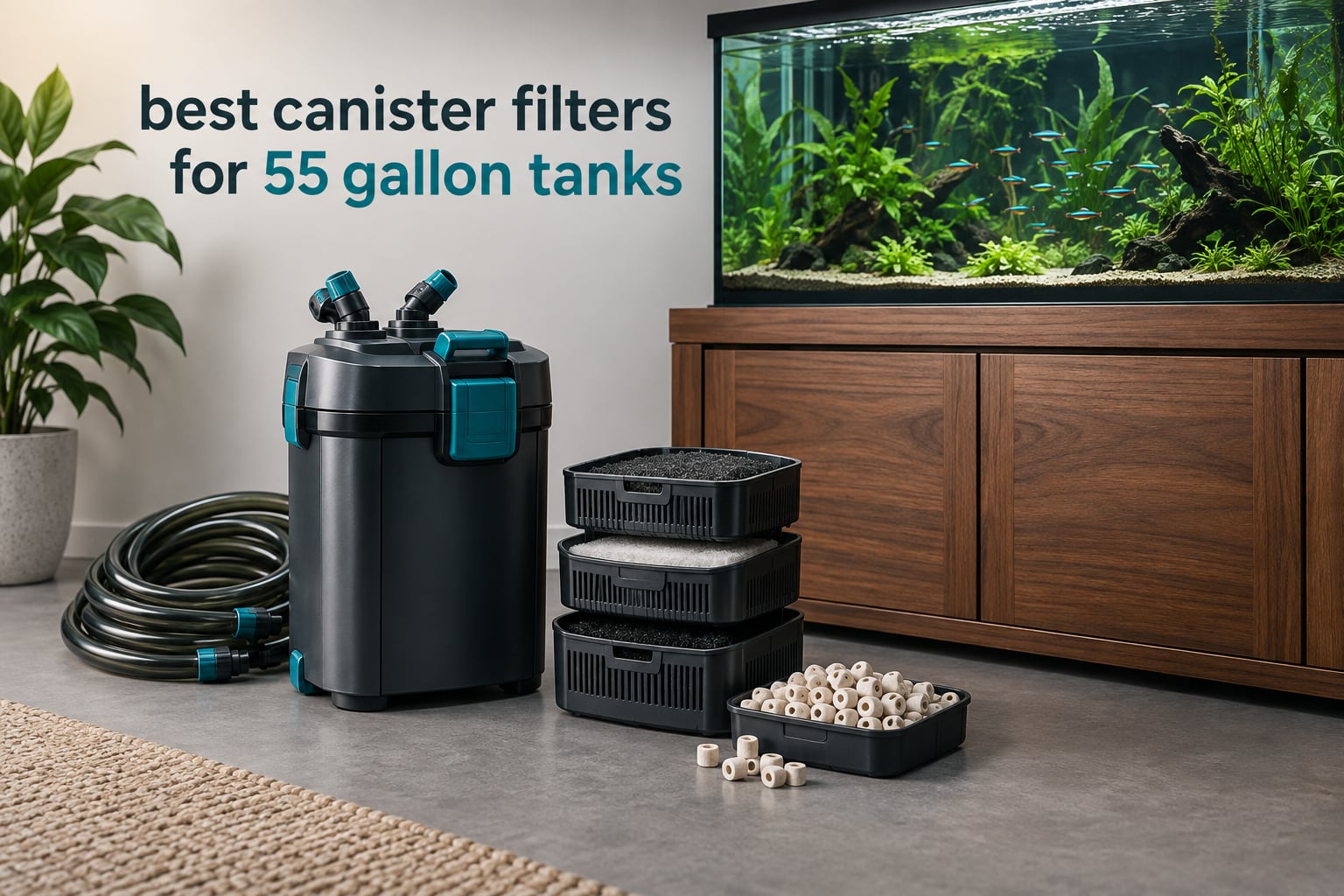
Short answer: the Fluval 307 Performance is the right canister filter for a standard 55 gallon aquarium, and the Penn-Plax Cascade 700 is the better value if you want media in the box. Both are rated above 55 gallons, which is exactly what you want.
Most canister buying guides cover 10 to 400 gallons and leave the sizing math to you. We scoped this one to a single tank size. A 55 gallon tank holds about 208 litres, the water volume is always less than the box rating once gravel and decor are in, and the pump output printed on the canister is measured with zero head height. None of those three facts point in the same direction, so buying on the biggest number is the most common way people end up with an under-performing filter.
Our team worked through ten canisters rated from 40 gallons to 97 gallons, cross-checked every flow and dimension figure against the manufacturer listings, and ranked them against what a 55 gallon actually needs. If you are still choosing the tank, start with our guide to the best 55 gallon fish tanks first.
Three questions decide the rest of this article: how heavy is your bioload, how much lift can your cabinet handle, and how much noise can you tolerate in the room the tank sits in. Get those three straight and the model choice takes about five minutes.
Top 3 Best Canister Filters for 55 Gallon Tanks (October 2026)
The 307 wins on fit, the Cascade 700 wins on value, and the 407 wins if your fish produce more waste than a typical community tank.

Fluval 307 Performance
- Rated to 70 gallons
- eTEC high-efficiency pump
- EZ-Lift center-handle media baskets
- Ultra-quiet running

Penn-Plax Cascade 700
- 185 GPH rated flow
- Rated to 65 gallons
- Two stackable media baskets
- Complete media kit included

Fluval 407 Performance
- Rated to 100 gallons
- eTEC high-efficiency pump
- EZ-Lift media baskets
- Strong outlet pressure
One note before the full list. The Cascade 700 has more owner reviews than any other filter here, and the 307 and 407 sit within a few dozen ratings of each other, which tells you those two are the models with the longest, best-documented service record at this size.
All 10 Canister Filters Compared for a 55 Gallon Tank
Every model below is in the running. The table is ordered as the reviews appear, not ranked by price.
| Product | Specifications | Action |
|---|---|---|
| Fluval 307 Performance |
|
Check Latest Price |
| Penn-Plax Cascade 700 |
|
Check Latest Price |
| Fluval 407 Performance |
|
Check Latest Price |
 Aqueon QuietFlow Aqueon QuietFlow |
|
Check Latest Price |
 Marineland Magniflow 250 Marineland Magniflow 250 |
|
Check Latest Price |
 Marineland Magnum 290 Marineland Magnum 290 |
|
Check Latest Price |
 SunSun Hw-302 Pro SunSun Hw-302 Pro |
|
Check Latest Price |
 Eheim Classic 2215 Eheim Classic 2215 |
|
Check Latest Price |
 Fluval FX2 Fluval FX2 |
|
Check Latest Price |
 Eheim eXperience 150 Eheim eXperience 150 |
|
Check Latest Price |
1. Fluval 307 Performance – Best Overall for a 55 Gallon Tank
Fluval 307 Perfomance Canister Filter for Aquariums up to 70 Gallons
Rated to 70 gallons
eTEC pump
6 lb body
9.45 x 7.09 x 16.54 in
Pros
- Very quiet pump thanks to eTEC motor technology
- Strong steady flow and pressure for 45 to 70 gallon tanks
- EZ-Lift baskets make media changes fast and clean
- Energy use comparable to an LED bulb
Cons
- Media baskets are a separate purchase
- Can emit a bubbly hum in very quiet rooms
- Housing design is dated next to FX-series models
I recommend the 307 for a standard 55 gallon community tank because the headroom it carries is exactly the headroom a 55 gallon needs. It is rated to 70 gallons, which gives you room for a heavier fish load later without buying again.
The pump is the eTEC design, and the manufacturer states the precision-crafted version runs up to 25 percent quieter than the previous generation. Owners running it on 55 gallon tanks report clear water within hours to a few days of setup. The outlet pressure stays steady rather than pulsing, which is what keeps plant leaves and slow surface skimming moving.
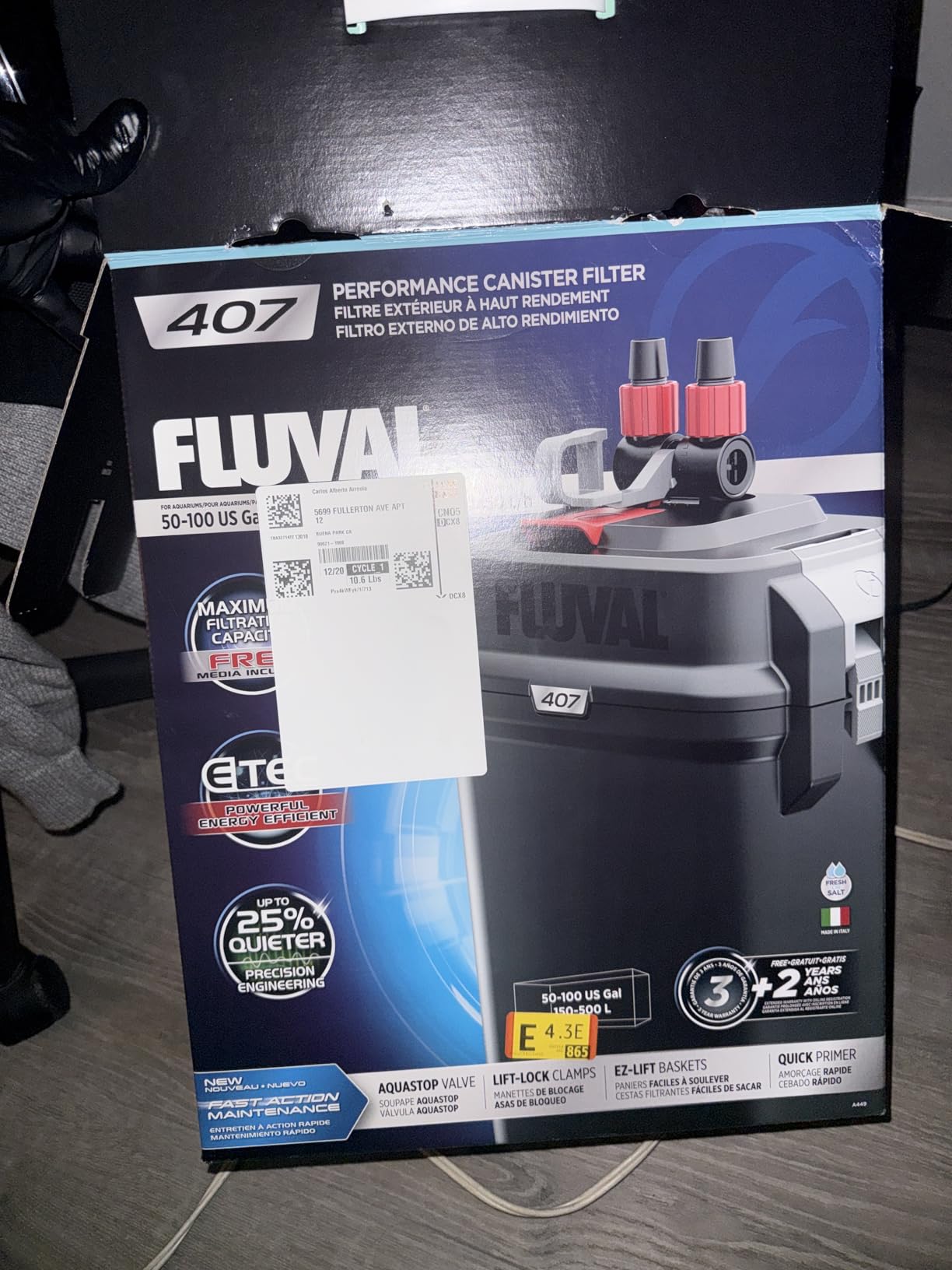
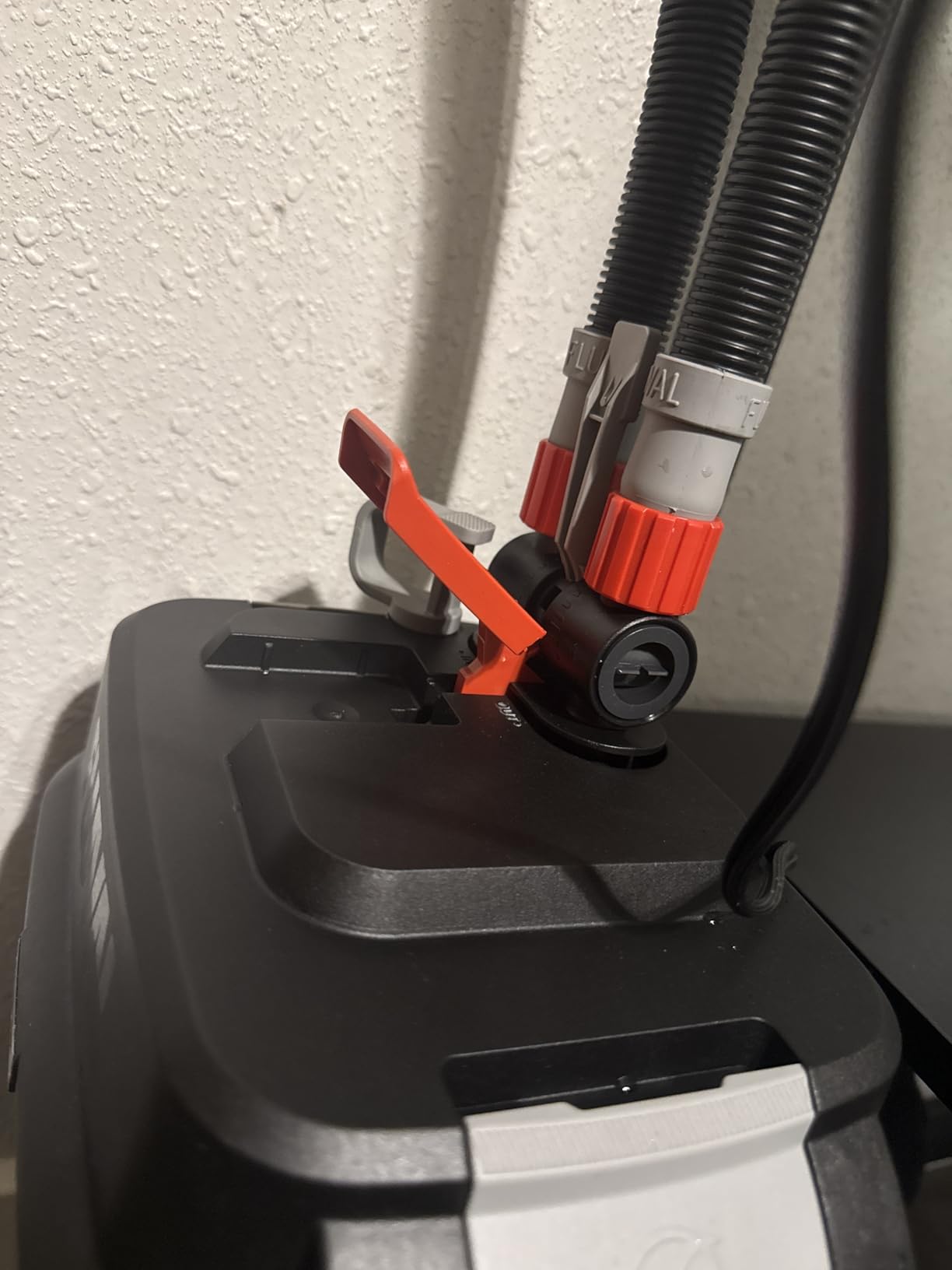
Media handling is where the 07 Series still stands out. The EZ-Lift baskets have a center handle, so you lift the whole stack out with one finger instead of fishing individual trays out of a wet canister.
The honest drawback is cost. Baskets, pads, and carbon are sold separately, and replacement media adds a running cost that filters with a full media kit in the box do not carry. A few owners also report a bubbly hum that becomes noticeable in a very quiet bedroom at night, and the housing is visibly older in design than the FX models.
What the 307 handles better than the alternatives
It holds a stable bacterial colony well because the basket stack keeps mechanical, biological, and chemical layers separated with no bypass. Long-horizon owners describe the pump as dependable over years rather than months, and parts for the 07 Series are easy to source if something does fail.
If you want the same family of engineering in a body that suits a taller cabinet, our full canister filter guide covers the larger models in the same lineup.
Where the 307 falls short
It is the wrong pick for a tank of cichlids, goldfish, or discus, because 70 gallons of rated capacity is close to the line once waste production climbs. It is also the wrong pick if your stand is low and the pump already sounds louder than you expected at low volume, and it is not the most affordable route into a canister.
Check the cabinet before you order. At 16.54 inches tall and 6 pounds, it fits most 55 gallon stands, but a shallow custom cabinet is the one place this one gets returned.
2. Penn-Plax Cascade 700 – Best Value Complete Kit
Penn-Plax Cascade 700 Canister Filter – 185 GPH for Tanks Up to 65 Gallons
185 GPH rated flow
Up to 65 gallons
10 lb body
15 x 11 x 15 in
Pros
- Complete kit includes floss pads bio-sponge and carbon
- Large stackable baskets give generous media volume
- 360 degree rotating valve taps ease cabinet routing
- Works for freshwater saltwater and turtle habitats
Cons
- Spray bar creates strong surface agitation
- Pump head lacks modern self-priming features
- Replacement media is a proprietary pad style
The Cascade 700 is the value pick because it arrives complete. The box includes two poly fiber floss pads, a coarse bio-sponge, an activated carbon bag, a spray bar, hose clamps, and alignment clamps, so a new keeper can fill the baskets and prime the filter on day one.
Flow is listed at 185 GPH for tanks up to 65 gallons, and the two large stackable baskets with built-in handles give a media volume that suits a 55 gallon well. Owners report the tank clearing quickly, and the review record on this one is the deepest in the group.
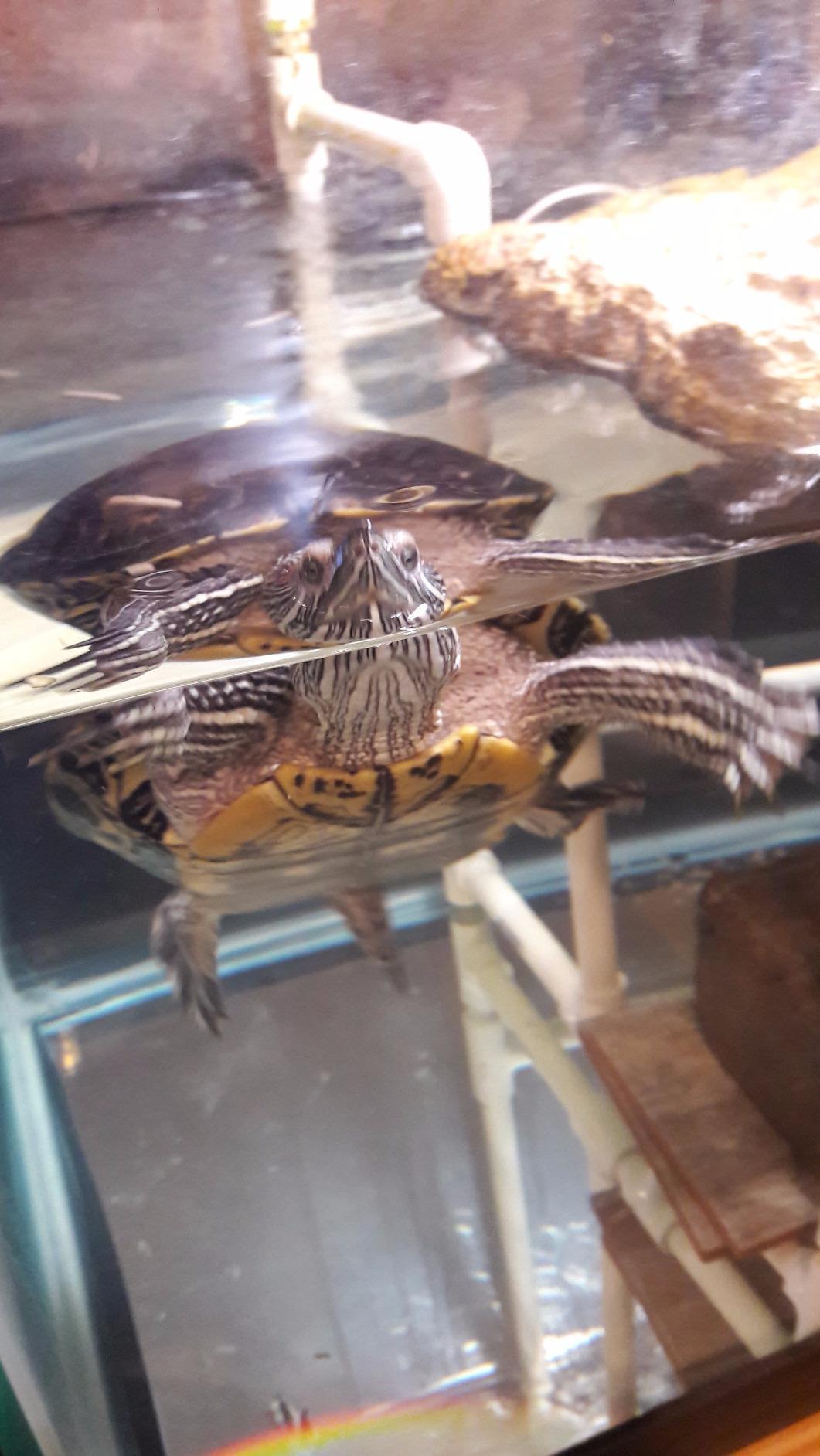
The detail that saves installation time is the dual 360 degree rotating valve taps. Inside a tight cabinet where the canister sits at an angle, you can turn the intake and outlet to follow the hoses instead of fighting them. The push-button primer starts it without a manual suction, and the 25W draw is modest.
Two things to weigh. The spray bar return produces a strong surface agitation that some planted keepers dial back with the valve, and the internal pump head is an older design without the self-priming behavior of newer premium filters. Replacement media is a proprietary pad rather than a standard cut-to-fit sheet, which keeps the media bill higher over the years.
Where the Cascade 700 earns its place
It suits a 55 gallon that is being set up rather than upgraded, because the full media kit removes the main media expense right at the start. It also works for a turtle habitat, which is a bioload most hobbyists underestimate and which this filter’s flow and media volume handle comfortably.
The 65 gallon rating leaves less headroom than the Fluval 307, so it works best on a moderate load. If you are planning to move to messy eaters later, read the bioload section below before settling here.
Where the Cascade 700 falls short
Noise is its most common complaint. Owners in quiet rooms report more hum than on the premium-brand units, and the tip-proof base and 10 pound weight are fine in a full-size stand but tight in a small one.
It is also the filter where the headroom point is easiest to miss. At 65 gallons on a tank whose real water volume is closer to 45 gallons, the margin is thinner than it looks.
3. Fluval 407 Performance – Best for Messy Eaters
Fluval 407 Performance Canister Filter – For Aquariums Up To 100 Gallons
Rated to 100 gallons
eTEC pump
9.7 lb body
7.09 x 9.45 x 19.29 in
Pros
- Very strong flow keeps a 55 gallon tank crystal clear
- Runs near-silently with strong outlet pressure
- Media stack cannot be reassembled incorrectly
- Easy to set up in about 30 minutes
Cons
- Some buyers report repeated motor head failures
- Replacement media stages are relatively expensive
- Included carbon pouches are smaller than standard
The 407 is the model I point messy-eater keepers toward. It is rated to 100 gallons, so on a 55 gallon it carries enough surplus capacity that cichlid, goldfish, and discus bioloads do not push it past its working range.
Flow and pressure are its strongest qualities. Owners running it on 55 gallon tanks describe near-silent running with a strong outlet that keeps the whole water column moving, which is exactly what a tank that never quite gets clear needs. Setup takes about half an hour, and the basket design means the stack can only go back in one way.
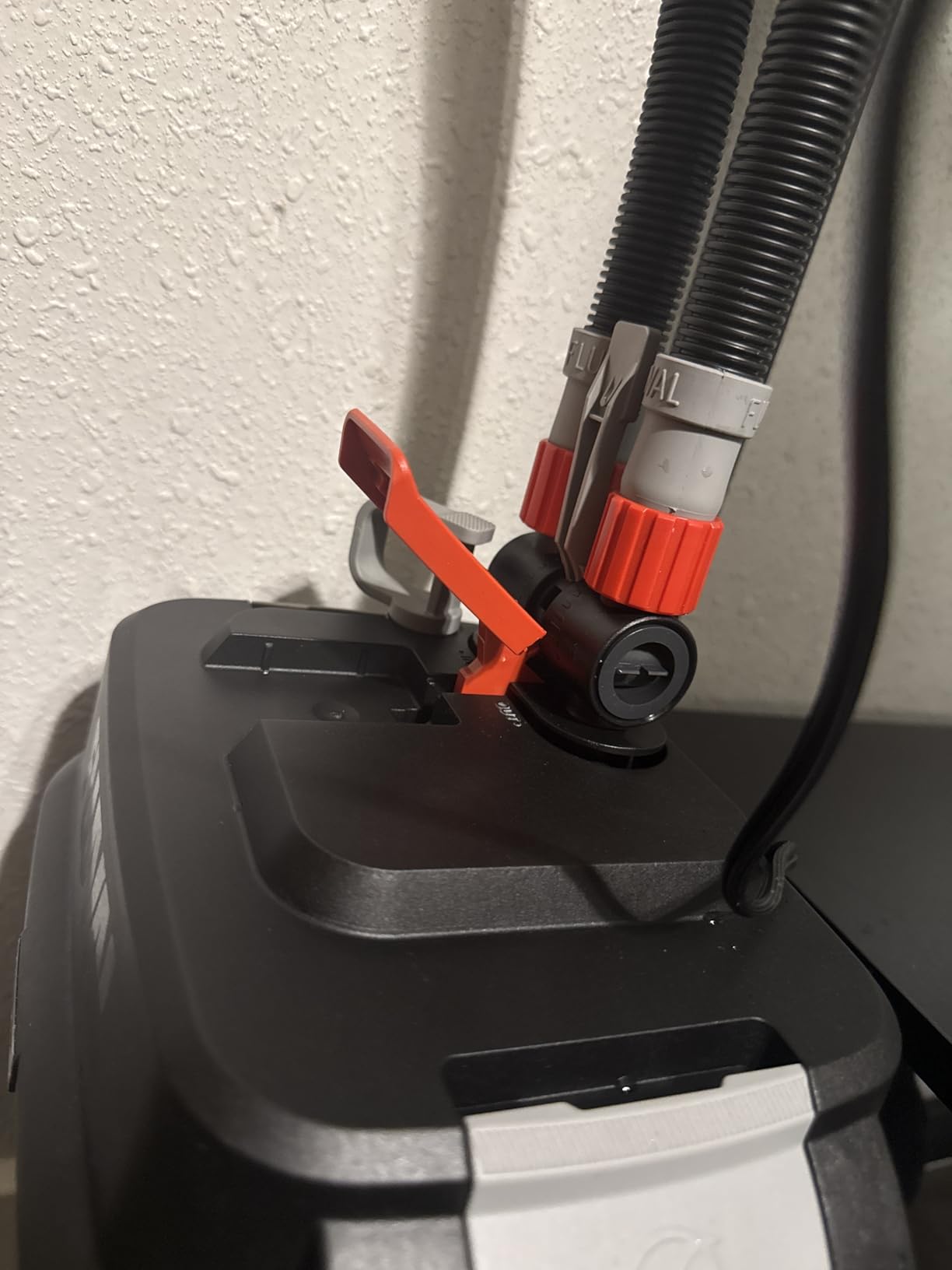
The eTEC motor is the same family as the 307, and the manufacturer states the precision-crafted pump runs up to 25 percent quieter than the previous generation. At 19.29 inches tall and 9.7 pounds, this is one of the tallest bodies in the group, so cabinet height genuinely needs checking before you order.
The real caveat is durability of the motor head. Some buyers report repeated 407 motor head failures attributed to the impeller cover disengaging under pressure, and that is the single most prominent negative theme in the reviews. The remaining complaints are minor: expensive replacement media, carbon pouches in the box that are smaller than the standard Fluval size, and an occasional low hum.
When the extra capacity pays for itself
On African or South American cichlids, goldfish, or any tank where you are topping up the population, the 100 gallon rating absorbs the load that would push a 65 gallon filter past its limits. It is also a good choice if you want a stronger return for a heavily planted 55 with demanding species.
Buy a single unit and size it correctly, because a motor head failure under a heavy load is the problem you are trying to avoid. It is also the model where that complaint matters most, since the filter sits under a tank with a heavy load depending on it.
When it is the wrong choice
If your tank is a lightly loaded community setup, the 407 is more pump than you need and you will pay for capacity you never use. The 19.29 inch height is the other reason to think twice, since many 55 gallon stands have a shelf height that leaves little room above the canister.
4. Aqueon QuietFlow – Rated Exactly for 55 Gallons
Aqueon QuietFlow Canister Aquarium Filter up to 55 Gallons
Rated to 55 gallons
Three return options
14.55 lb body
8.5 x 7.5 x 17.25 in
Pros
- Specifically sized and rated for 55 gallon tanks
- Three return options match flow to the livestock
- Large media capacity across several basket stages
- Quick disconnect valves and pump locking heads
- Complete media set in the box
Cons
- Heavy 14.55 pound body and 17.25 inch height
- Polishing unit needs extra rim or shelf space
- Cartridges and polishing media are a monthly cost
The QuietFlow is the only filter in this roundup the manufacturer rates to exactly 55 gallons, which makes it the cleanest match for a standard setup where the fish load is not going to change much.
Filtration is three stage, covering biological, chemical, and mechanical. Owners on 55 gallon tanks report clean, clear water and appreciate the choice of three returns: a spray bar, a water director, and a hang-on-back polishing unit that mounts on the rim. That polishing stage uses standard Aqueon replacement cartridges.
Quick disconnect valves and pump locking heads make both installation and cleaning straightforward, which is a genuine advantage when the canister is under a stand. The box includes carbon, coarse foam, bio-balls, and bio-ceramic rings, so the media stack is complete out of the packaging.
The trade-offs are weight and running cost. At 14.55 pounds this is one of the two heaviest bodies in the group, and the cartridge and polishing media cadence is a recurring cost that filters with reusable baskets do not charge. The rim-mounted polishing unit also needs shelf or rim space of its own.
Why a filter rated to exactly 55 gallons can still be right
When your tank is a lightly to moderately loaded community setup and the stand is a standard full-size cabinet, matching the rating to the tank is defensible. The three return options let you dial the pattern to the fish, which matters more than raw flow on a calm tank.
The choice of returns is the underrated feature here. A water director on a tank with long finned or slow fish reduces stress that a fixed spray bar would cause.
Why it is a poor match for other setups
Move up a size if the tank will hold cichlids, goldfish, or a high population count, because the 55 gallon rating leaves no headroom at all. The 14.55 pound weight is awkward in a shallow cabinet, and the monthly cartridge cost is the one running bill on this filter that never goes away.
5. Marineland Magniflow 250 – Best for a Deep Media Stack
Marineland Magniflow 250 GPH Canister Aquarium Filter
250 GPH
Up to 60 gallons
12.56 lb body
14 x 9.5 x 15.75 in
Pros
- 250 GPH gives real headroom on a 55 gallon
- Stack N' Flo trays keep media in separated layers
- Quick prime button makes startup simple
- Broad media kit included with the filter
- Works in freshwater and saltwater
Cons
- Bulky 12.56 pound body needs a full cabinet footprint
- Prime button and pump head run noisier than premium units
- Rite-Size S consumables add ongoing cost
The Magniflow 250 is the pick when you intend to run a serious media stack. The Stack N’ Flo trays force water through separated mechanical, chemical, and biological layers rather than letting it find a path around them, and that separation is what keeps fine debris from blinding bio media.
Flow is 250 GPH, which on a 55 gallon is comfortable headroom, and the manufacturer rates it for tanks up to 60 gallons. The quick prime button fills the chamber for a self-priming startup, and the watertight lid lifts fully for media removal.
The included media package is generous: filter foam, premium activated carbon bags, bio-filter balls, ceramic filter rings, and polishing pads are all in the box. Owners running 40 to 60 gallon tanks report steady clear water, and the tray design makes it easy to see each layer at a glance when the lid is off.
What you give up is size and quietness. At 12.56 pounds and 14 by 9.5 by 15.75 inches, it needs a full cabinet footprint. Reviewers single out the prime button and pump head as noticeably noisier than the premium-brand pumps, and Rite-Size S consumables are a steady recurring cost.
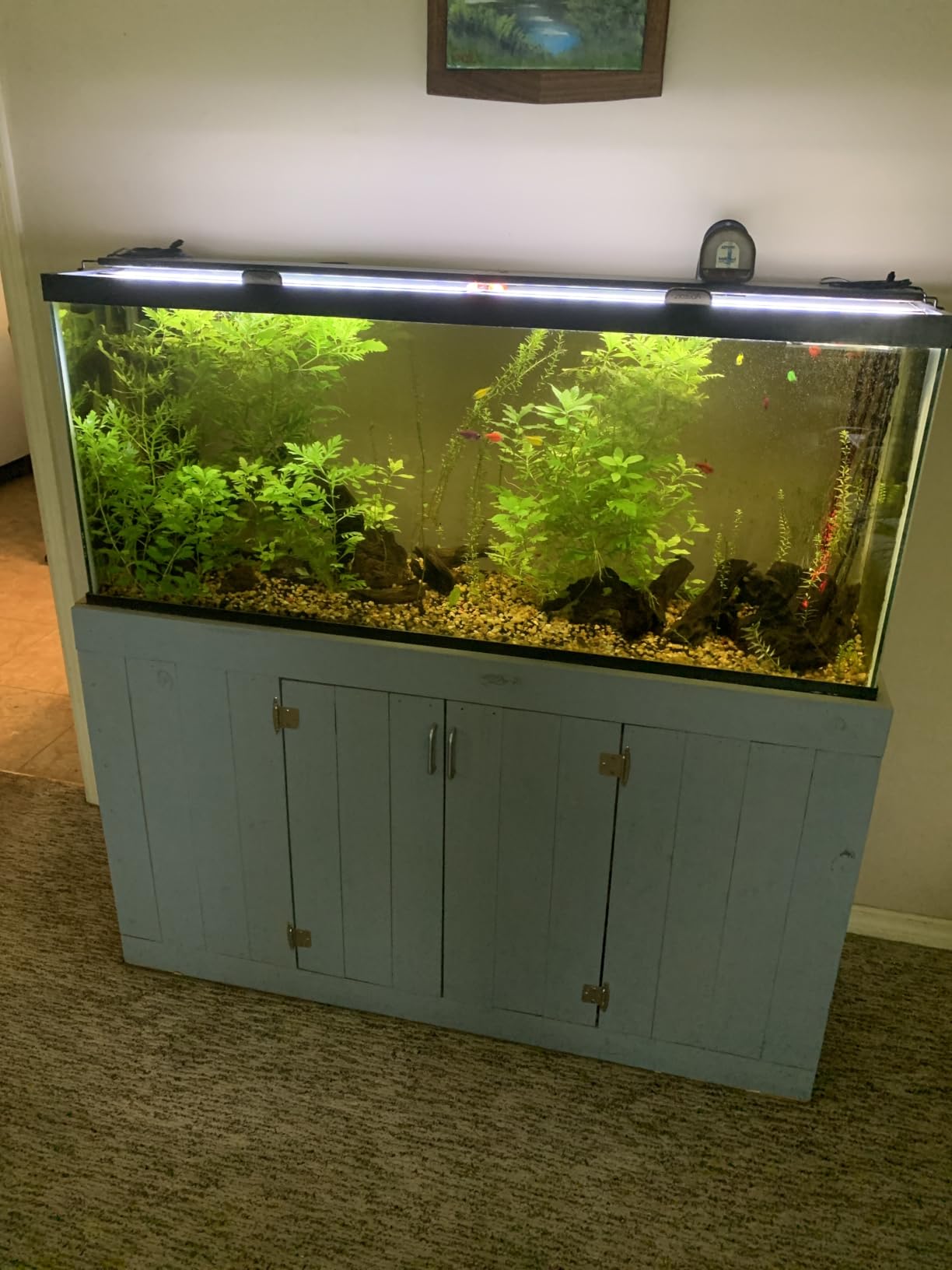
What makes the tray layout worth the size
If you run carbon alongside a large bio load, or you want to inspect each stage without dismantling everything, the separated trays are the reason to pick this over a similar-size canister. A 250 GPH figure also survives the head-height loss that a 55 gallon stand imposes better than a 185 GPH unit does.
It handles both freshwater and saltwater, so it works for a fish-only marine tank too, provided you add protein skimming for a reef system. Our skimmer guide covers that side.
Where it falls down
Noise is the deciding factor in a bedroom. If the tank is a few feet from where you sleep, the pump head is the audible one on this filter and no amount of media tuning changes that. The bulk also rules it out for shallow stands.
6. Marineland Magnum 290 – Compact Body With High Flow
Marineland Magnum 290 GPH Polishing Canister Aquarium Filter
290 GPH
Up to 97 gallons
2.91 lb body
7.5 x 3.5 x 9.88 in
Pros
- Compact 2.91 pound body suits a tight cabinet
- 290 GPH throughput
- Submerged internal motor needs no priming step
- Two refillable chambers accept custom media
- Included micron cartridge visibly polishes the water
Cons
- Internal design limits return direction options
- Micron cartridge must be replaced regularly
- Only two media chambers versus four-basket designs
The Magnum 290 solves a specific problem: you want strong flow in a body that stays out of the way. At 2.91 pounds and 9.88 inches tall, it is a much smaller body than the hose-fed canisters here, and it still moves 290 GPH.
Startup is where the internal design wins. The motor is submerged inside the canister, so there is no priming step at all. You fill the body, plug it in, and it runs. That single design decision removes the most common early frustration people report with external-pump canisters.
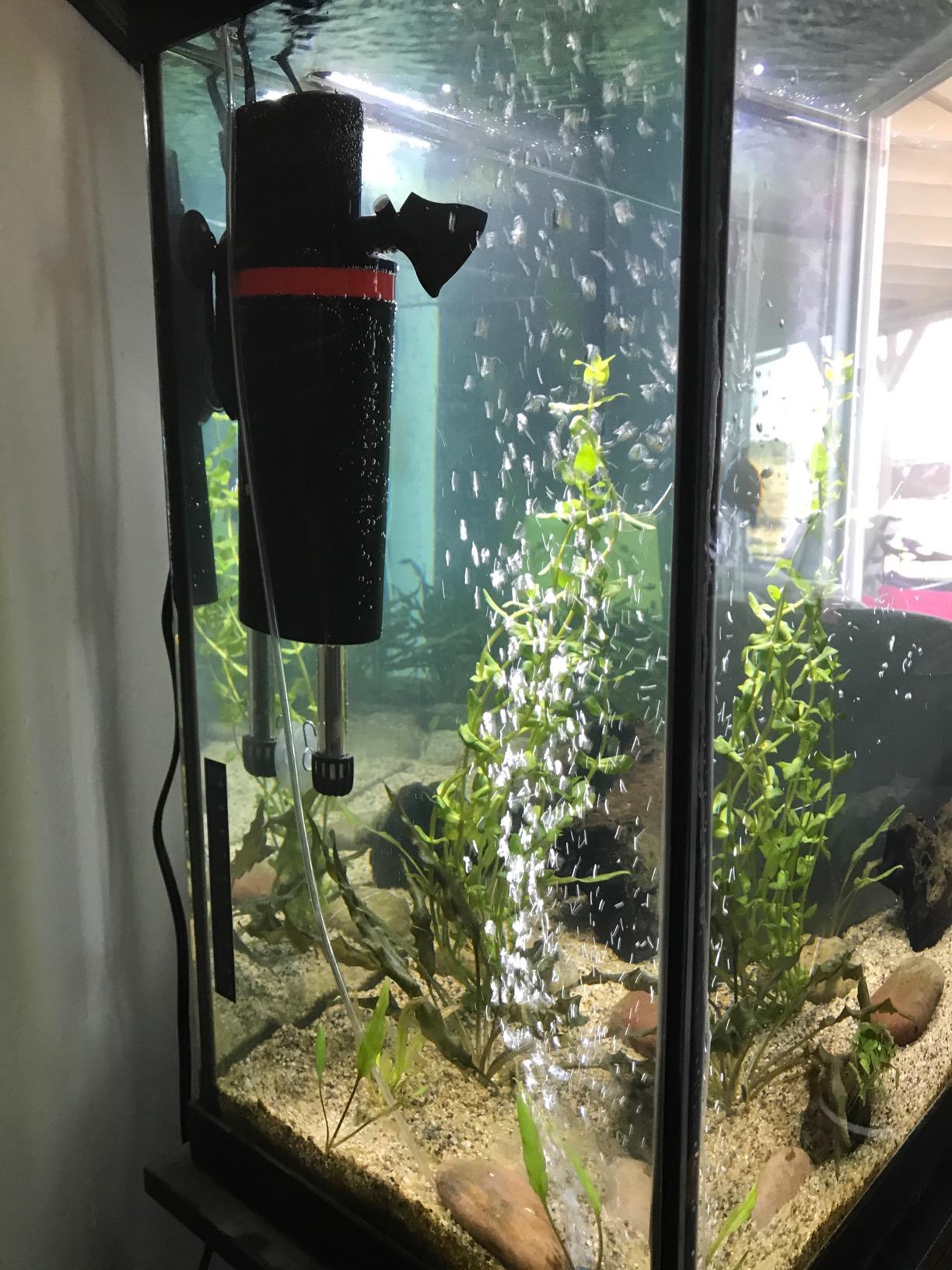
Filtration is continuous three stage, with two refillable chambers for carbon or any custom media, and the included micron cartridge does the polishing. Owners highlight the combination of high flow, a small footprint, and instant startup as the reason the value ratio works.
Because the plumbing is internal rather than external, the return direction options are limited compared with a hose-fed canister. The micron cartridge is a recurring replacement, and two chambers is less flexible than four true baskets. At 2.91 pounds it needs rubber padding or isolation if the stand transmits vibration.
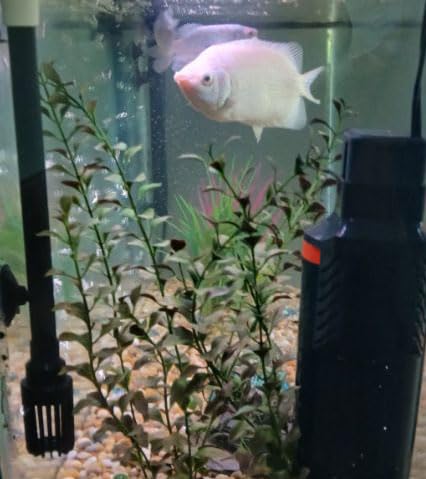
Where the compact internal design wins
Shallow stands, small custom cabinets, and setups where you want flow without a plumbing footprint are the reason this filter exists. For a 55 gallon that is crowded but space-constrained, 290 GPH of throughput in a 2.91 pound body is hard to argue with.
The two refillable chambers also suit a simple setup: coarse mechanical in one, bio media in the other. Add carbon only when the water actually needs it.
Where it does not suit you
If you want to dial the return pattern to the tank, the internal design takes that option away. On a planted 55 where you need to aim flow around hardscape, a hose-fed canister with a spray bar or director gives you more control than this does.
7. SunSun Hw-302 Pro – Best Budget Canister
SunSun Hw302 265GPH Pro Canister Filter Kit
265 GPH (1000 L/hr)
Up to 75 gallons
12 lb body
9 x 9 x 15.5 in
Pros
- Strong 265 GPH flow in a single simple package
- Pro kit bundles 1 lb carbon and 1 lb ceramic rings
- Three removable baskets make layering easy
- Turnover is ample for a heavily loaded 55 gallon
Cons
- Hose and fitting quality is thinner than premium brands
- Pump head runs louder under load
- Supplied tubing often needs trimming and re-clamping
The Hw-302 Pro is the budget route into a real canister, and the Pro kit is unusually generous for the money. You get the canister, three white filter pads, three media baskets, a pound of premium carbon, a pound of ceramic rings, and a set of bio-balls.
Flow is 265 GPH, or 1000 litres per hour, and the manufacturer rates it for aquariums up to 75 gallons. On a 55 gallon that is more turnover than most setups need even with a heavy load, and the three removable baskets make custom media layering straightforward.
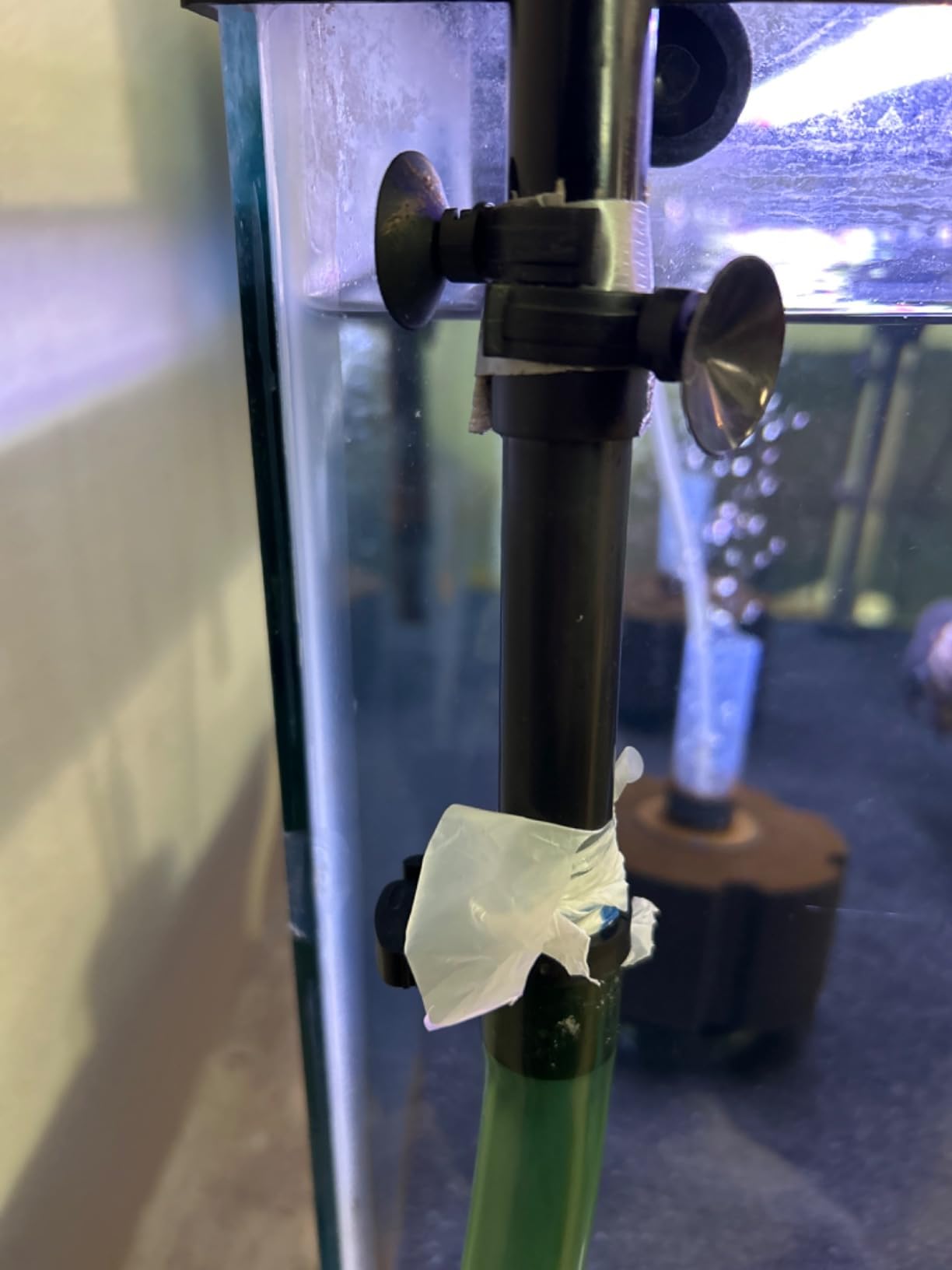
Reviewers consistently point at value as the reason to buy. The compromise is build quality in the wet path: hoses and fittings are thinner than premium-brand equivalents, and the supplied tubing frequently needs to be cut and re-clamped to fit a stand cabinet before first use.
Noise under load is the other repeated drawback. Owners comparing it against Fluval or Eheim units notice the pump head is louder once the media is packed in, and English documentation is sparse enough that setup can take longer than the price would suggest.
When the budget pick makes sense
If the tank is a first canister, a quarantine or hospital setup, or a grow tank where you will replace media often, the Hw-302 Pro delivers flow and media volume that premium models charge several times over. The bundled media alone covers the first year of a light setup.
At 12 pounds and 9 by 9 by 15.5 inches it needs a real cabinet footprint, so plan for space as well as money.
When to spend more instead
Skip it for a bedroom, where pump noise is the main thing you will notice every night. Also skip it if you want the fittings to stay put without adjustment, because re-cutting tubing and re-clamping hoses is a one-time job that many owners simply did not expect.
8. Eheim Classic 2215 – Best for Long-Term Ownership
EHEIM Classic Canister Filter 2215, Classic 350 – PetOverstock
40 66 and 92 gallon ratings
6.07 lb body
11 x 7.28 x 14.57 in
Pros
- Exceptionally quiet pump often described as inaudible in a living room
- Long service life reported by multiple owners
- Large media volume for a compact body
- Mechanical valves allow servicing without re-priming
Cons
- Instructions are widely criticized as incomplete
- No priming button so the first prime is manual
- No removable media baskets so media sits loose
The Eheim Classic is the oldest design here, and that is exactly why it is the pick for anyone who wants a filter that stays for a decade. Long-term owners report years of problem-free running with only gaskets and impellers replaced along the way.
Quietness is the headline. Owners describe the pump as inaudible in a living room, and clear water typically appears within 48 hours of setup. The body is compact at 6.07 pounds and comes with Eheim Mech and Substrat Pro media plus valves, a spray bar, and an inlet pipe.
The permo-elastic silicon sealing ring sits fixed on the pump head, which is the detail behind the longevity reputation. The mechanical inlet and outlet valves let you service the filter without draining and re-priming it, and the media volume supports a stable colony despite the compact body.
The ergonomic complaints are real, though. Instructions are widely criticized as incomprehensible and incomplete, there is no priming button so the first prime needs a manual suction, and media sits loose in the canister rather than in removable baskets, which makes cleaning messier. The hose arrives as one length you cut yourself, and some models are listed as 110V/120V versions, which matters outside North America.
Why longevity beats convenience here
A filter that runs quietly for years with gasket and impeller swaps is a different proposition from one with modern baskets and a shorter service life. Parts availability is the other half of the argument, and it is a reason we rate this model as the durability pick in our filter testing and long-term notes.
The model is available in 40, 66, and 92 gallon ratings. On a 55 gallon tank the 66 gallon version is the one to look at.
Where the design has not moved on
Loose media and a manual first prime are the two things that feel dated next to the EZ-Lift baskets or four-basket designs in this list. If you dislike fiddling with loose media, choose a basket design instead.
9. Fluval FX2 – Best for a Heavily Planted 55
Fluval FX2 High Performance Canister Aquarium Filter
475 GPH
Smart Pump
14.45 lb body
13.4 x 13.4 x 16.5 in
Pros
- Highest flow output here at 475 GPH with Smart Pump self-optimization
- True self-starting with no priming step
- Four removable baskets eliminate bypass
- Base drain valve simplifies water changes
- Compact 16.5 inch height for the flow rating
Cons
- Very heavy body at 14.45 pounds
- 475 GPH far exceeds a 55 gallon need so outflow must be throttled
- FX2 baskets and cartridges add premium media cost
The FX2 moves more water than any other canister on this list, and for a heavily planted 55 gallon that matters. Plant mass competes with fish waste for filtration capacity, and the extra circulation and the gallon of media volume are the headroom a dense planting needs.
The Smart Pump microchip continuously monitors and optimizes performance, and the filter is genuinely self-starting. You add water, plug it in, and trapped air is auto-evacuated every 12 hours. That removes both the priming button and the manual suction from the setup entirely.
Four removable baskets hold up to 1 US gallon of media and are designed to prevent bypass, which is the structural difference from stacked trays in a loose canister. The unidirectional impeller has fewer mechanical joints, and the unit is 16.5 inches tall, which is 15 percent smaller than the FX4 despite the higher flow.
The base utility valve is the feature we did not expect to care about and now recommend. It drains the canister directly, so you can run a water change out of the filter itself.
The reservations are weight at 14.45 pounds, premium basket and cartridge cost, and the fact that 475 GPH on a 55 gallon means you will throttle the outflow.
What the four-basket layout actually does
Baskets that cannot reassemble incorrectly and cannot be bypassed keep each media layer doing its job. On a planted tank where you alternate carbon seasonally, that means you can pull one basket out without disturbing the bio media above it, which protects the colony.
The rubber feet also reduce vibration, and a unidirectional impeller is one of the reasons this much flow stays quiet. Both matter more than they sound like they should.
When it is over-specified
On a lightly planted community 55, this much flow is surplus and you will spend money on capacity you throttle away. At 407 reviews this is also the least documented filter here, so long-term reliability data is thinner than for the 07 Series models beside it.
10. Eheim eXperience 150 – Compact Option With a Voltage Catch
Eheim external aquarium filter eXperience 150, voltage: 230 volts, 150 litres.
150 litre capacity
230V 50Hz
2.2 lb body
Item weight 1.0 kg
Pros
- Very quiet operation
- Compact housing for its throughput
- Easy to maintain with adjustable outlet tap
- Gasket and impeller spares widely available
Cons
- 230V 50Hz unit is a mismatch on 60 Hz mains
- Listing specs are sparse with no GPH figure
- Green inlet and outlet pipes often replaced with lily pipes
The eXperience 150 carries a 4.6 average rating from its owners, and reviewers consistently describe it as very quiet. They also find it easy to maintain and compact for the throughput it delivers.
There is one catch, and it is electrical. This listing is a 230 volt, 50 Hz version rated at 150 litres, roughly 40 US gallons. Buyers on 60 Hz mains should not buy this specific unit without checking frequency compatibility first, because running 50 Hz hardware on 60 Hz mains is reported to shorten motor life.
Outlet flow is adjustable via the supplied tap, and the two-component housing keeps the footprint small. Spare parts, including gasket rings and the impeller, are widely available, which is the same repairability argument that makes the Classic 2215 the longevity pick.
The rating is the other limit. At 150 litres, roughly 40 US gallons, this is a filter for a smaller aquarium than the one this article is about. On a 55 gallon it is undersized. We still include it because a number of people buying for a 55 gallon end up here, and on a smaller tank the 2.2 pound body is a genuine advantage in a tight cabinet. The listing detail is minimal, and the stated dimensions look implausible, so do not plan your install from them.
Who should actually consider it
If you need a spare unit for a fry or quarantine tank, or a filter that runs quietly and stores compactly, the 4.6 rating and the availability of gaskets and impellers are the reasons to like it. Buyers also commonly swap the green plastic pipes for lily pipes, which improves the return pattern.
The rating is high partly because the unit is simple and the motor is quiet, and partly because the pool of owners is small at 274 reviews.
Why we would not choose it for a 55 gallon
It is rated well below the tank size, which leaves no headroom for a heavy bioload, and the voltage specification is a genuine risk outside Europe. For a 55 gallon primary filter, the 307 or the Cascade 700 are the right buys.
It earns its place on a smaller tank or a secondary setup, not as the primary filter for the one this guide is about.
What Size Canister Filter Do I Need for a 55 Gallon Tank?
You need a canister rated to 70 to 100 gallons with at least 200 GPH of filter circulation at the tank. A 55 gallon tank needs roughly four turnovers an hour, which is about 220 GPH of water moving through the filter, and maker-listed circulation runs well below the pump output printed on the box.
Here is how we worked that out. Pump output is measured at zero head height with an empty hose. The manufacturer’s circulation figure is the honest number because it already accounts for losses through the media stack and the plumbing. On Fluval maker pages the listed circulation lands at roughly 61 to 64 percent of the listed pump output across the mid-size models, so a canister that advertises 475 GPH moves closer to 300 GPH of real circulation.
Head height makes it worse. The filter sits on the floor of the cabinet and the tank rim is typically 30 inches or more above it, and each foot of lift cuts real flow by 30 to 40 percent. A tall stand can remove a fifth of the flow you sized for, which is why the 407 outperforms its rating on a high stand.
How to size a canister filter for a 55 gallon tank
Five steps, in order:
1. Read the maker’s listed circulation figure, not the pump output on the box. If only pump output is published, assume roughly two-thirds of it is real circulation.
2. Subtract the head-height loss. Measure from the canister lid to the tank rim and multiply by the 30 to 40 percent per foot penalty before comparing figures.
3. Multiply by your bioload tier. A lightly loaded community tank needs the 200 GPH floor. Cichlids, goldfish, or a heavily planted tank need a unit rated to 70 to 100 gallons.
4. Check media volume against the tank, not against the pump. Under-media a filter with a strong pump and it will clog and lose flow within months.
5. Measure the cabinet. The 407 is 19.29 inches tall and the FX2 is 16.5 inches. If either does not clear the shelf, it does not fit.
Bioload Tiers: When to Move Up a Model
Flow numbers only matter once you assign a tier to the tank. A lightly loaded community tank of tetras and Corydoras produces very little waste, and a filter with real headroom keeps the water clear with media that is barely working.
Messy eaters change the math. African cichlids, South American cichlids, discus, and goldfish all produce far more waste per fish, and their owners keep adding fish to a tank that was already at capacity. In that case step up one model rather than filtering harder, which mostly produces more flow without more biological capacity.
Planted tanks sit in between. Plant mass absorbs nitrogen, which is a genuine biological contribution, but root feeders and heavy root feeders still generate enough waste to justify the extra media volume of a 407 or an FX2. A dense planted 55 with demanding species is the case where over-sizing pays for itself.
The practical rule: if you are asking whether the filter is big enough, the answer is usually one model up. Under-sizing shows up as cloudy water that never resolves and algae you cannot get ahead of.
Canister vs HOB vs Sponge for a 55 Gallon Tank
A canister beats a hang-on-back on media volume, quietness, and appearance, and loses on price and simplicity. A sponge filter wins on cost and gentleness for shrimp and fry but cannot handle the flow a 55 gallon with a normal bioload needs.
Media volume is the decisive difference. A HOB holds a fraction of what a canister’s basket stack holds, which means a HOB on a 55 gallon needs frequent cartridge changes and produces more shear at the intake. That shear is why shrimp and small fish get drawn toward a HOB intake, and it is the most common reason people switch to a canister in the first place.
Noise is the second difference. Canister pumps run inside a closed cabinet, so the noise you hear in the room is mostly hose gurgle and cabinet resonance rather than the motor itself. A HOB motor hangs in the open above the waterline where every vibration is audible.
A sponge filter is a special case. Two sponges on air driven pumps give excellent biological filtration and zero shear, but the turnover is not enough for a 55 gallon. Our canister and filter comparison covers where each type fits across tank sizes.
One Big Filter or Two Small Ones?
Two smaller canisters can beat one oversized canister on an overpopulated 55 gallon, because you can service one while the other keeps the bacterial colony online. That is the practical argument, and it is the one hobbyists raise most often when they ask whether one filter is enough.
Add the circulation figures, not the pump outputs, when you compare two units against one. A pair of mid-size 07 Series canisters running in parallel give you combined circulation and two independent media stacks, which is a meaningful upgrade on a tank that is over its comfortable fish count.
The argument against is cabinet space and cost. Two canisters mean two intakes, two returns, and a larger footprint, and on a 55 gallon stand the plumbing gets busy fast. For most people, one correctly sized filter is the better trade.
Media Stack Order: What Goes in Each Basket
Order matters more than brand. Each stage has to be sealed from the next, because a gap lets fine debris bypass the mechanical layer and clog the biological media, which is how filters lose their rated flow.
1. Coarse pre-filter sponge in the first basket. This is what you clean every three to four weeks, and it exists to keep the rest of the stack clean.
2. Finer white foam or floss pad next, which catches what the coarse sponge passes.
3. Biological media in the middle baskets, where flow is already clean. Keep the colony in a consistent position so you never strip it by accident.
4. Chemical media last, in a removable bag, so you can pull it without disturbing the bio media. Carbon goes here, and only when the water needs it.
On a 55 gallon, the volume to spend on is biological media. That is the part of the stack you never replace, only rinse, and the part that determines whether the tank stays clear.
Who Makes the Best Canister Filters?
Fluval is the strongest canister brand for most 55 gallon setups, with OASE Indoor Aquatics and EHEIM the closest alternatives and SunSun the budget option. Here is the short list with the reason each earns the mention:
Fluval – the 07 Series and FX line cover every size bracket, the media baskets are the easiest to work with here, and parts are the simplest to source.
OASE Indoor Aquatics – wins on quick-release pre-filters and an integrated heater chamber, at a higher entry point.
EHEIM – wins on repairability and service life, with gaskets and impellers available for decades, at the cost of modern basket design.
SICCE – a long-running maker of solid mid-size canisters with good value for the flow.
Penn-Plax – the Cascade line is the best complete kit, with media and hardware in the box.
Marineland – good staged media trays and strong flow, less refined pump housings.
Aqueon – the QuietFlow is a clean 55 gallon match with three return options and quick disconnects.
SunSun – the budget pick, with strong flow and a generous media kit for a fraction of what the premium models cost.
Installation, Priming, and the First Month
Most canister problems in the first week come from install details, not from the filter. The hoses that ship with canisters are deliberately stiff to prevent kinking, and forcing them into a cabinet connector is what cracks the fitting. Reviewers report the usual result, which is leaking at the intake connection and bubbles shooting from the outflow.
On day one:
1. Soak the stiff hoses in hot water for ten minutes before connecting them, or run warm water through them until they bend without resistance.
2. Cut and soften the rigid intake pipe at the lid, then notch the tank lid if the pipe sits tight against the frame.
3. Fit a sponge on the intake if you keep shrimp or small fish, and a rubber isolating pad under the canister to stop cabinet resonance.
4. Prime the filter according to its design. The push-button and self-priming models fill from the top; the manual models need a suction on the discharge hose.
5. Run it dry for a few minutes with the tank topped up, then check every connection and every valve for drips before you walk away.
Plan a large water change in the first twenty-four hours, because new media arrives with fines that will otherwise cloud the water. Keep the canister light on carbon for the first two weeks while the bacteria establish, then increase it if the water stays clear.
Maintenance Schedule That Protects Your Flow Rate
A canister that is serviced on a schedule keeps its rated flow. One that is ignored for a year clogs with fines and runs well below its listed circulation, which is what makes owners conclude the filter was undersized.
Every three to four weeks, rinse the coarse pre-filter and the fine foam in water removed from the tank. Never rinse biological media under the tap. Chlorinated tap water kills the bacterial colony you spent months building, and the resulting bacteria bloom is the most common aquarium emergency that nobody sees coming.
Replace carbon every two months rather than leaving it until it looks exhausted, because spent carbon strips trace organics and the water clarity improves noticeably the week you change it. Deep clean the impeller twice a year, and check that the impeller cover and its O-ring are seated properly while the canister is open.
Regrease the O-rings at the same time. It is the single cheapest lifespan measure on this list, because a dried O-ring is what turns a routine service into a leak. Using a canister vac on the substrate while the filter runs keeps the fine detritus out of the media in the first place, and our canister vacuum guide covers that routine.
Frequently Asked Questions
What size canister filter do I need for a 55 gallon tank?
A canister rated to 70 to 100 gallons with at least 200 GPH of manufacturer-listed filter circulation. A 55 gallon tank needs roughly four turnovers an hour, about 220 GPH, and maker-listed circulation runs well below the pump output printed on the box. Subtract 30 to 40 percent for each foot of lift from the cabinet to the tank rim.
Who makes the best canister filters?
Fluval covers the most size brackets with the best-designed media baskets and the easiest parts availability. OASE Indoor Aquatics leads on quick-release pre-filters and an integrated heater chamber. EHEIM leads on repairability and service life. SICCE, Penn-Plax, Marineland, Aqueon, and SunSun each cover a distinct price or size niche, with SunSun the budget option.
Do I need a Fluval 307 or a Fluval 407 for a 55 gallon tank?
The 307, rated to 70 gallons, is right for a standard community tank or a moderately stocked setup. The 407, rated to 100 gallons, is the choice for cichlids, goldfish, discus, or any tank where the fish load is high or rising. Check cabinet height on the 407 first, because it stands 19.29 inches tall.
Are canister filters better for fish tanks than HOB filters?
Yes, for a 55 gallon. A canister holds far more media, which means fewer cartridge changes and a bigger biological colony, and its pump runs inside a closed cabinet so the room noise is lower. A HOB is cheaper and simpler, but its small media volume and above-water motor make it noisier and rougher on shrimp and small fish.
Is Oase better than Fluval for a 55 gallon tank?
OASE wins on the quick-release pre-filter and the integrated heater chamber, which is useful in a planted setup. Fluval wins on price, media basket design, and how easy parts are to find. For a standard 55 gallon, the Fluval 07 Series is the stronger default; OASE is the premium pick when the pre-filter convenience matters most.
Which is better, Eheim or Fluval?
EHEIM wins on repairability and service life, with gaskets and impellers available for decades, and long-term owners report years of quiet running. Fluval wins on modern media basket design and the self-priming pump behaviour of the FX line. The Eheim Classic 2215 is the longevity pick; the Fluval 307 is the best all-round fit for a 55 gallon.
Can I run two canister filters on one 55 gallon tank?
Yes, and for an overpopulated 55 gallon two mid-size canisters in parallel can beat one oversized unit, because you can service one while the other keeps the bacterial colony online. Compare the two circulation figures rather than the two pump outputs, and remember that two canisters need two intakes, two returns, and a larger cabinet footprint.
How often should I clean a 55 gallon canister filter?
Rinse the coarse pre-filter and fine foam every three to four weeks in water taken from the tank. Replace carbon every two months, deep clean the impeller twice a year, and regrease the O-rings while the canister is open. Never wash biological media in chlorinated tap water, because that kills the bacterial colony.
Final Verdict: The Best Canister Filters for 55 Gallon Tanks in 2026
The best canister filter for a 55 gallon tank in 2026 is the Fluval 307. It is rated to 70 gallons, the center-handle media baskets are easy to lift out on this list, the pump is quiet enough for a living room, and the ownership record behind it is the deepest. For a cichlid, goldfish, or heavily planted 55, step up to the Fluval 407, which is rated to 100 gallons and absorbs a heavy load without complaint.
If you would rather not buy replacement media to get started, the Penn-Plax Cascade 700 arrives complete with floss pads, bio-sponge, carbon, and all the fittings at 185 GPH. If you are setting a first canister on a tight budget, the SunSun Hw-302 Pro bundles a pound each of carbon and ceramic rings with 265 GPH of flow. Check your cabinet height before any of them, soak the stiff hoses in hot water, and never rinse biological media under the tap.