
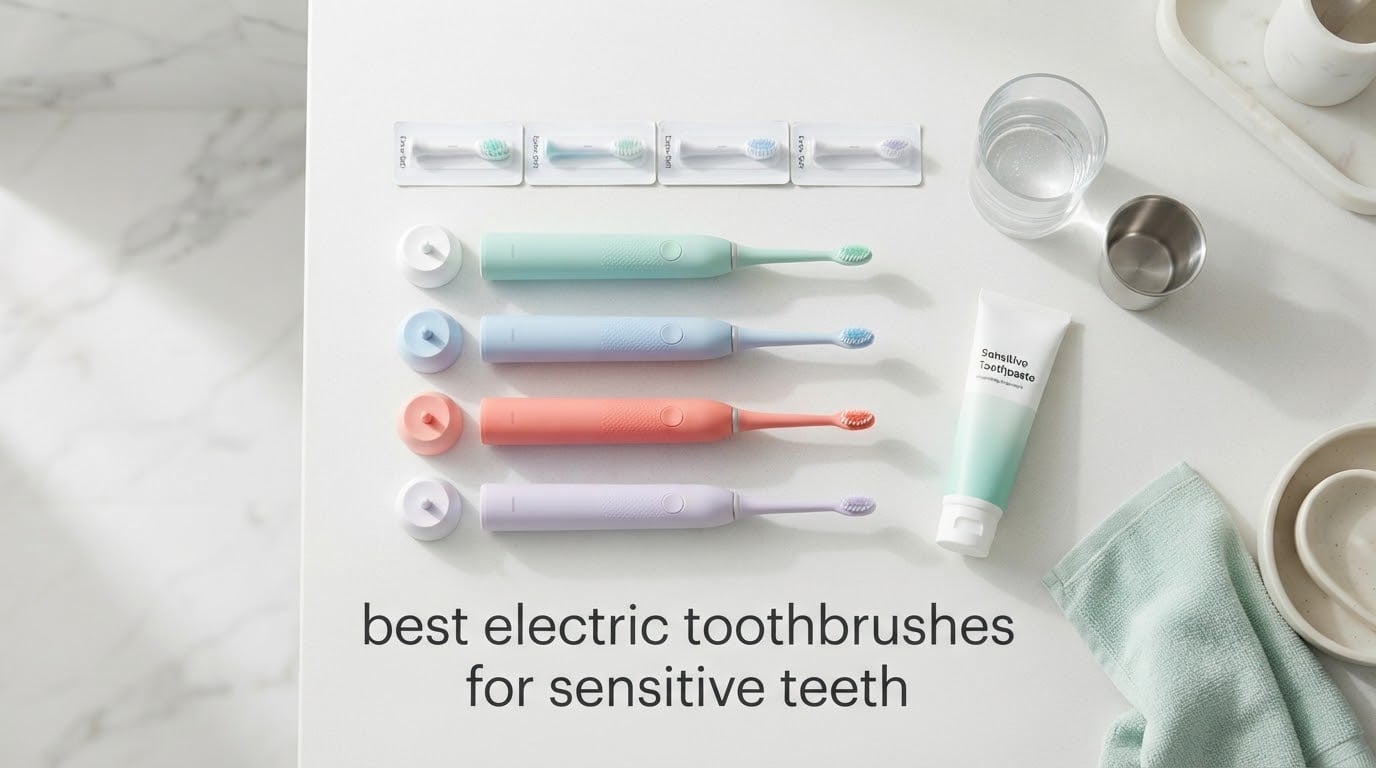
Short answer: the Oral-B Pro 1000 is the best electric toothbrush for sensitive teeth in 2026 because its round head works tooth by tooth, its Sensi mode drops the power, and its pressure control cuts the pulsation when you press too hard. The Philips Sonicare 5300 is the better all-rounder if you want a wider choice of intensity levels and a two-week battery.
Sensitive teeth and electric brushing are not opposites. What causes the sting is usually force, not vibration, and a brush with a pressure sensor plus a genuine low-intensity mode lets you get a full two-minute clean without the abrasion that wears enamel and pushes gums back. Get those three things right and most people stop noticing the difference within a couple of weeks.
We compared 12 brushes that carry at least two of the three features that matter here: a pressure sensor, a dedicated sensitive mode, and a soft or tapered head. Each one below gets a review, a best-for callout, and an honest list of drawbacks drawn from what buyers actually report. If you want the broader picture first, our general electric toothbrush guide covers cleaning power and battery life in more depth.
Top 3 Picks for Best Electric Toothbrushes for Sensitive Teeth (October 2026)
Why Your Teeth Hurt, and What That Means for Your Brush
Before buying anything, it helps to know what is actually causing the pain, because a better brush fixes only one of the four common causes.
Gum recession exposes the root surface, which is softer than enamel and thinner, so it reacts sharply to temperature and to pressure. This is the case where a per-tooth oscillating head beats a sweeping sonic head, because each tooth gets its own short rotation rather than one long drag across the gum edge.
Exposed dentin from worn enamel behaves the same way. Enamel erosion from acid drinks leaves a rounded, yellowish surface and a brush that is too firm will keep thinning it. A cavity or a cracked tooth produces a sharp, localised pain that no brush setting will touch.
Recession and dentin exposure respond well to a softer head and lower power. A cavity does not, and neither does a tooth that has been recently scaled, filled or bonded at a new margin. Several dental forum threads on this topic reach the same conclusion: the discomfort people blame on a new electric brush usually has a cavity or inflamed gums behind it.
The practical test is simple. If the pain fades within a second or two of easing off, you are looking at force or temperature sensitivity and a better brush will help. If the pain lingers, repeats in the same spot, or wakes you at night, book a dental check before changing toothbrushes.
Best Electric Toothbrushes for Sensitive Teeth (October 2026)
Every brush below earns its place on at least two of the three sensitivity features. The Key Features column is the short version of the full review that follows.
| Product | Specifications | Action |
|---|---|---|
 Oral-B Pro 1000 Oral-B Pro 1000 |
|
Check Latest Price |
 Aquasonic Black Series Aquasonic Black Series |
|
Check Latest Price |
 Philips Sonicare 5300 Philips Sonicare 5300 |
|
Check Latest Price |
 Oral-B iO3 Oral-B iO3 |
|
Check Latest Price |
 Philips Sonicare 4100 Philips Sonicare 4100 |
|
Check Latest Price |
 SURI Pro SURI Pro |
|
Check Latest Price |
 Oral-B iO Limited Oral-B iO Limited |
|
Check Latest Price |
 JTF J40 JTF J40 |
|
Check Latest Price |
 Colgate Total Adult Colgate Total Adult |
|
Check Latest Price |
 GUM Sonic Powered GUM Sonic Powered |
|
Check Latest Price |
 EZZI Sonic EZZI Sonic |
|
Check Latest Price |
 PRO-SYS VarioSonic Plus+ PRO-SYS VarioSonic Plus+ |
|
Check Latest Price |
1. Oral-B Pro 1000 – Best Overall for Sensitive Teeth
Oral-B Pro 1000 Rechargeable Electric Toothbrush, Black
Round oscillating head
Gum Pressure Control
3 modes
4-5 days per charge
Pros
- Round head cleans tooth by tooth along the gumline
- Pressure control cuts pulsation when you press too hard
- 30-second quadrant timer builds good technique
- Interchangeable heads let you pick a gentle option
- Charge lasts roughly 4-5 days
Cons
- Audibly loud while running
- Some units report only one active speed
- Charger and handle crevices need frequent cleaning
- Replacement heads add ongoing cost
Of everything we put through this list, the Pro 1000 is the one we hand to people who are nervous about going electric. The small round head does the work tooth by tooth rather than sweeping across three or four at once, and that geometry is the reason it feels manageable on tender gums.
It also has the two safety features that matter most here. Sensi mode runs at a lower intensity, and the pressure control system stops the brush pulsing when you lean on it too hard, which is the exact habit that produces recession in the first place.
Buyers with sensitive gums report no irritation from it, and the review base is large enough that the picture is consistent: strong plaque removal, a head size that suits crowded mouths, and helpful timing prompts. One owner describes twelve years of service before needing a replacement.
The criticisms are operational rather than clinical. The motor is loud, a minority of units ship with only one speed active despite three advertised modes, and the proprietary charger is awkward to travel with.
Who the Pro 1000 suits
It suits first-time electric brushers, anyone with mild to moderate sensitivity, and anyone who travels light. The handle is thin, the price of the body is modest, and the head ecosystem is enormous, so a soft or gentle-care head is always easy to source.
It also suits people with braces or dental work, because the round head copes with brackets better than most long sonic heads.
Where it falls short
The noise is real and some sensitive users find that a constant buzz adds to the discomfort they are trying to avoid. Anyone who wants a visible confirmation that they are not pressing too hard will find that lacking, because this model gives no colour readout.
Battery life is measured in days rather than weeks, so it needs regular top-ups. It is also not the model to buy if the word that describes your teeth is severe.
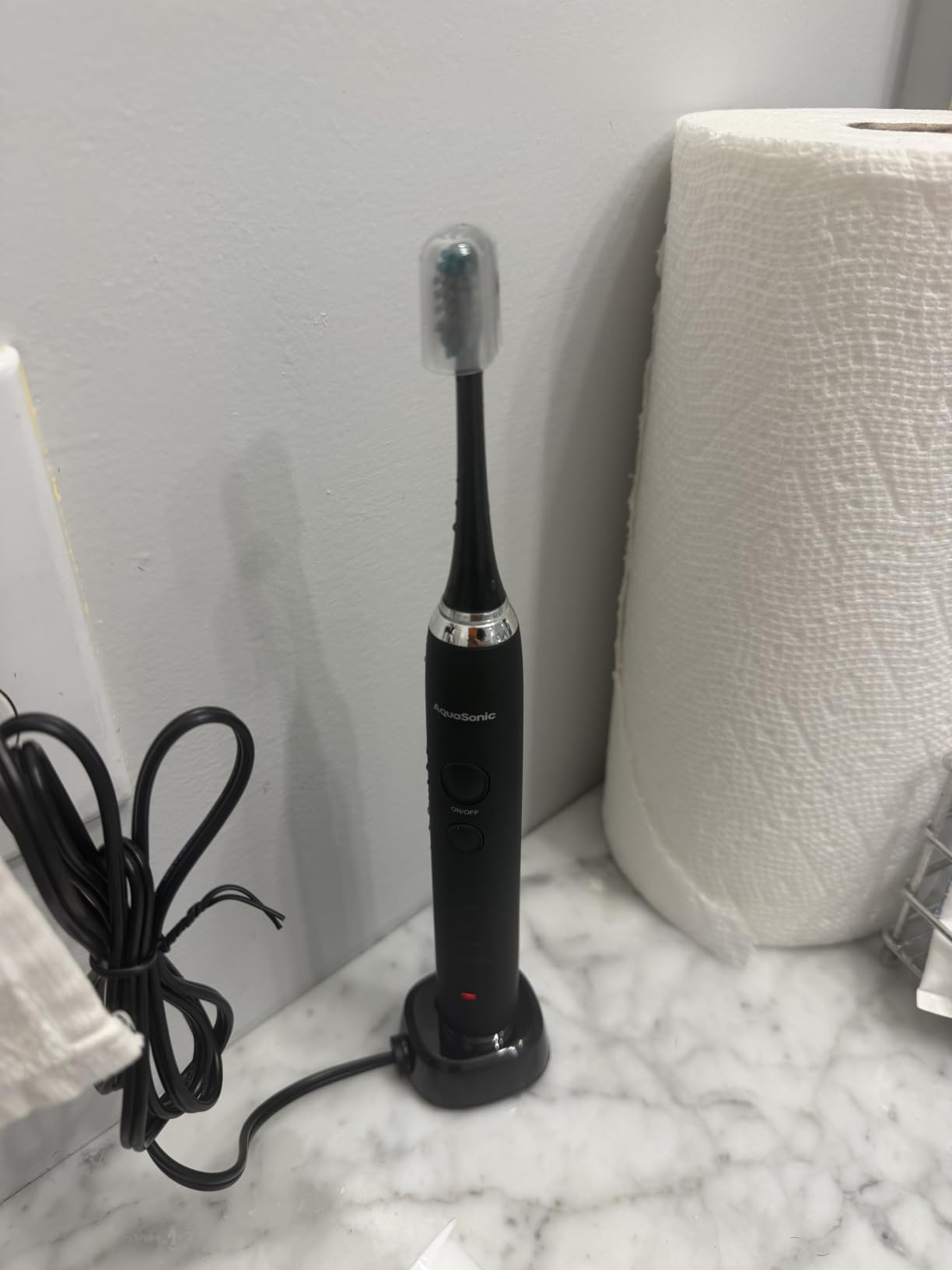
2. Aquasonic Black Series – Most Versatile for Sensitive Teeth
Aquasonic Black Series Ultra Whitening Toothbrush – ADA Accepted Electric Toothbrush- 8 Brush Heads & Travel Case – 40,000 VPM Electric Motor & Wireless Charging – 4 Modes w Smart Timer
40,000 VPM motor
4 modes
8 heads plus travel case
IPX7
Pros
- Largest box contents in the roundup with 8 heads
- Strong but comfortable 40000 VPM clean
- Gentle mode used by tender-gum owners
- ADA Seal of Acceptance
- Small head angles into back teeth
Cons
- Battery drains faster than older Sonicare models
- Low-battery warning is easy to miss
- Vibration feels startling at first
- Some buyers report first-year motor failure
This is the brush that most often surprises people in the gentle category. The motor runs at 40,000 vibrations per minute, which sounds aggressive until you try it, and several long-term Sonicare owners report that the clean is equal to or better than brushes costing several times more.
For sensitive teeth the relevant detail is the mode set. Four modes are included, and owners with tender gums consistently use the gentle option. The small head is another plus, angling into back teeth and tight spots without the dragging motion a long head produces.
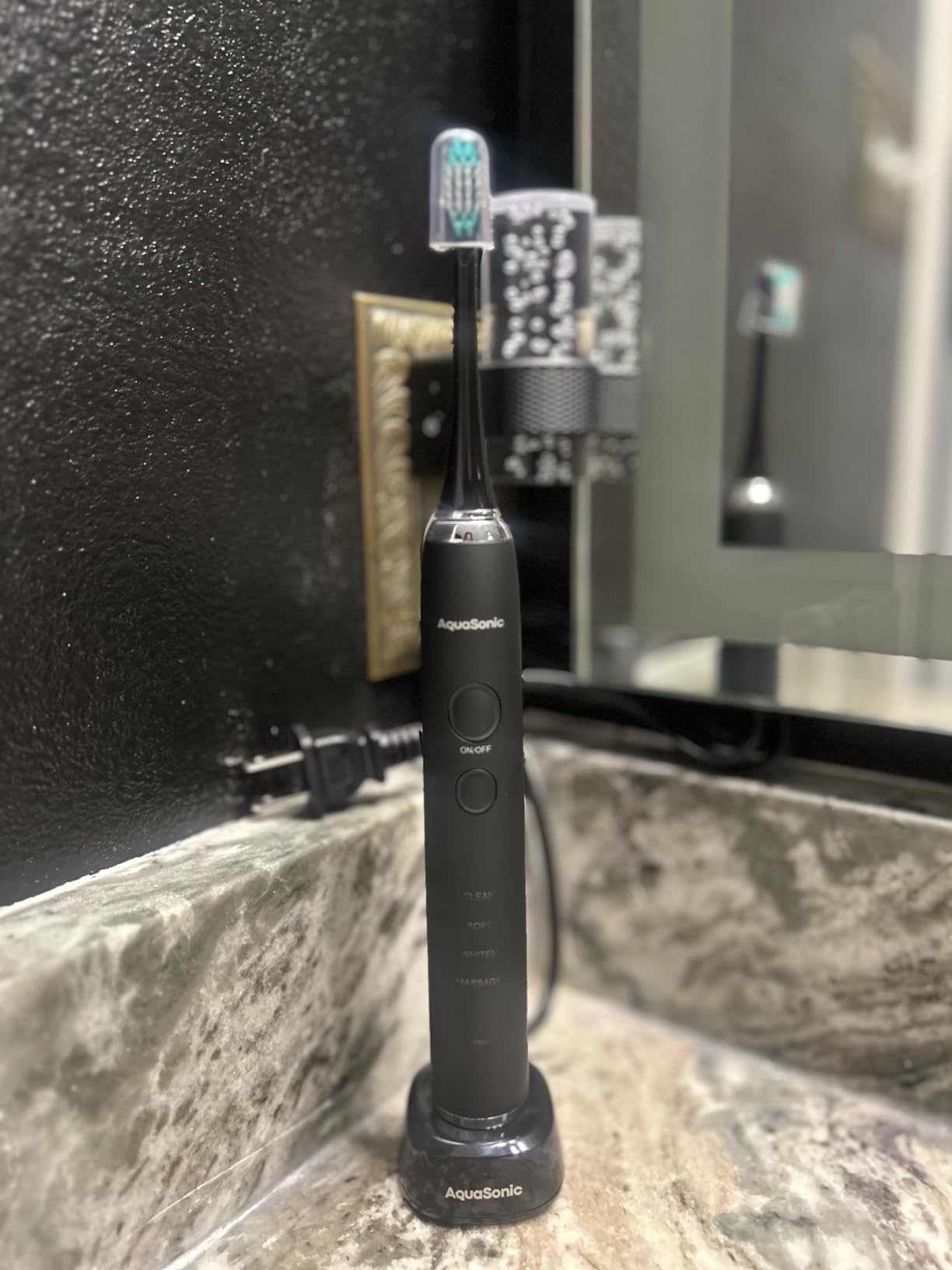
Box contents are genuinely the largest here: eight DuPont heads plus a hard shell travel case, which covers roughly two and a half years of replacements on a single purchase. It is also the only brush in this list carrying the ADA Council on Scientific Affairs Seal of Acceptance.
What you give up is polish. The low-battery warning is a small light at the base that a hand or a toothbrush holder easily covers, and the vibration can feel startling during the first few sessions.
Who the Aquasonic suits
It suits households that want to cover a bathroom, a travel bag and a guest toothbrush without buying three products. Eight heads and a case make it the practical choice for sharing, and the wireless charging base keeps the counter tidy.
It also suits anyone who wants a strong clean but not a premium body. You give up the app, the plastic head tracking and the quieter motor, none of which matter much for a gentle two minutes twice a day.
Where it falls short
Battery life is the main gripe, since owners say it needs more frequent charging than older Sonicare models despite the generous claim of up to four weeks. The vibration takes a few uses to get used to if your teeth are currently tender.
A small number of reviews report a motor that failed within the first year, though customer service is repeatedly praised for fast replacement. Treat it as a brush you may replace, not one you hand down.
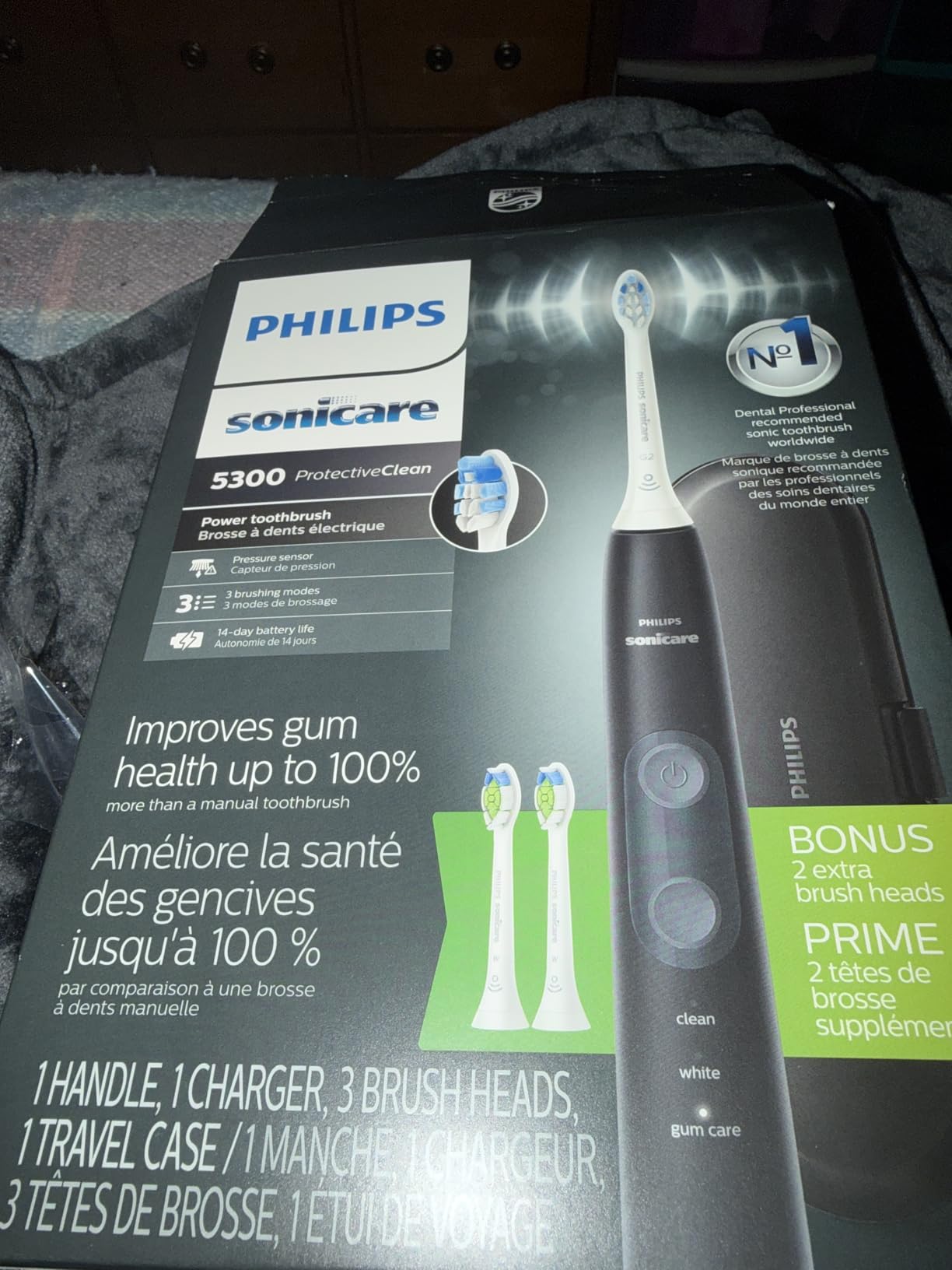
3. Philips Sonicare 5300 – Best Value Pick with Three Dedicated Modes
Philips Sonicare 5300 Rechargeable Electric Toothbrush, 3 Brush Head, Black
Pressure sensor
Clean, White and Gum Care modes
BrushSync reminders
2 weeks per charge
Pros
- Pressure sensor halts vibration when you press too hard
- Gum Care mode singled out as valuable for tender gums
- Weeks-long battery life
- Three heads included so replacements are covered
- Solid waterproof build with a weighty feel
Cons
- Slow charging
- over eight hours from low to full
- Handle is slightly bulky
- Travel case holds no charger
- Audible prompts feel excessive to some
If your sensitivity comes with a specific weak spot rather than a general ache, the mode set is what matters most, and this is the mid-priced brush with three genuinely different ones: Clean, White and Gum Care.
Owners are clear that the pressure sensor plus the dedicated Gum Care mode are the decisive pair. Several credit the sensor with ending gum irritation they had lived with for years, and reviewers switching from manual brushing report a step change in gum comfort.
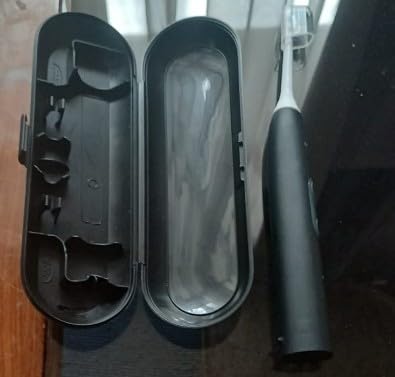
The box covers a year of replacements with one Optimal Gum Care head and two DiamondClean heads, plus a travel case and charger. Battery life of up to two weeks removes charging from your routine entirely, which matters if you travel.
The dominant complaint is charging speed, with owners noting more than eight hours from the low-battery warning to full. The handle also feels bulky at first, and the beeping prompts annoy some people, though both sensor and reminder can be switched off.
Who the Sonicare 5300 suits
It suits people who know where their sensitivity is. If the problem is a specific gumline or a section of lower teeth, a mode dedicated to that area beats a single gentle setting, and this is the cheapest way to get one.
It also suits people who already like the Sonicare shape and want a three-head box without moving to the top of the range. Multiple owners mention dental hygiene feedback confirming less plaque.
Where it falls short
Slow charging is the practical drawback, and the review file specifically flags it as the leading negative. The travel case holds the handle and a head but not the charger, so the unit is less self-contained on long trips.
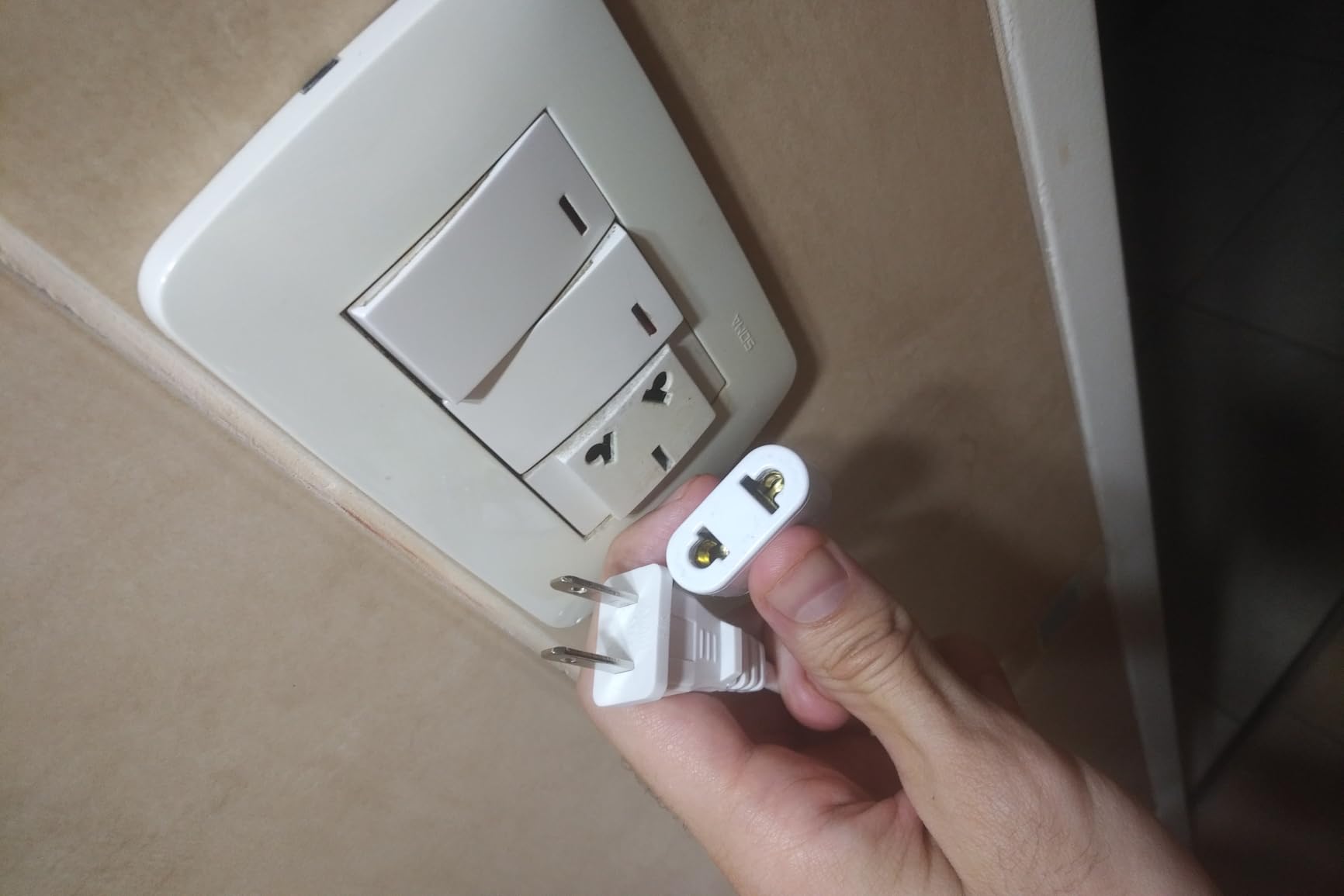
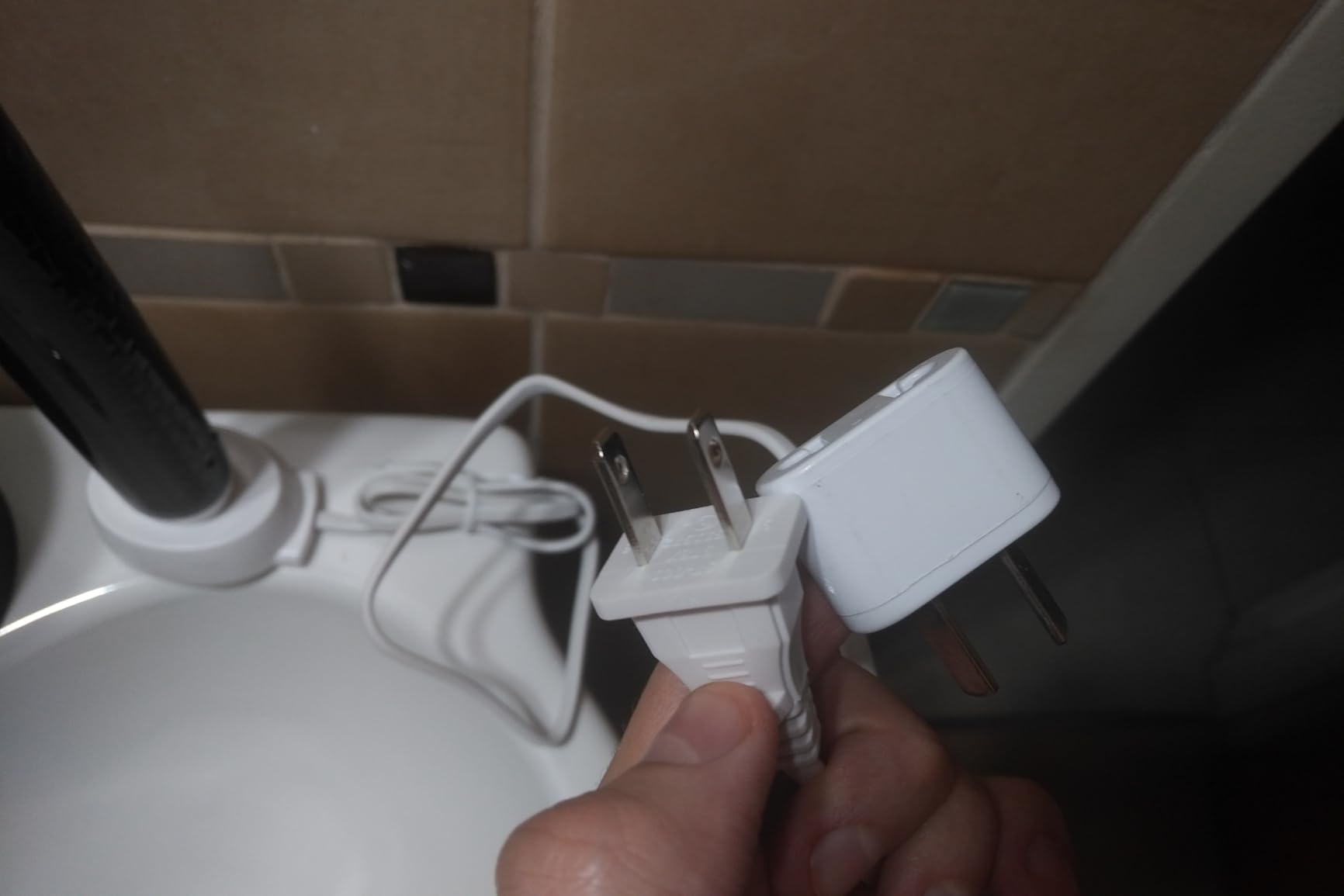
It ships with a US two-prong plug only, which matters for anyone buying internationally. The handle bulk is a matter of taste rather than a fault.
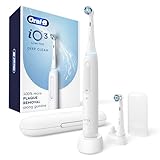
4. Oral-B iO3 – Best for Visual Pressure Feedback
Oral-B Rechargeable Electric Toothbrush, iO3 Limited Deep Clean, 3 Cleaning Modes, Visual Pressure Sensor to Protect Gums, 2 Brush Heads, Travel Case, White
Colour-coded pressure sensor
Sensitive mode
LightRing timer
2 heads
Pros
- Green and red readout removes guesswork about pressure
- Denser round head cleans better than manual brushing
- Sensitive mode available for tender teeth
- Quieter and smoother than the Pro 1000
- Two heads plus two cases included
Cons
- Bluetooth app frequently fails to sync
- Charging dock weakens over time
- Some units stopped working within a year
- Refresh heads cost more over the brush life
- Highest one-star share among the Oral-B models here
Pressure feedback comes in different forms, and this is the one where you actually see it. A light ring on the handle shows green at the right pressure and red when you are leaning, which removes the guesswork that trips up people who cannot feel the difference themselves.
That matters more for sensitive teeth than any other single feature. Users report the colour change is the moment they learn to lighten their touch, and the LightRing timer handles the duration side of good technique in the same visual language.
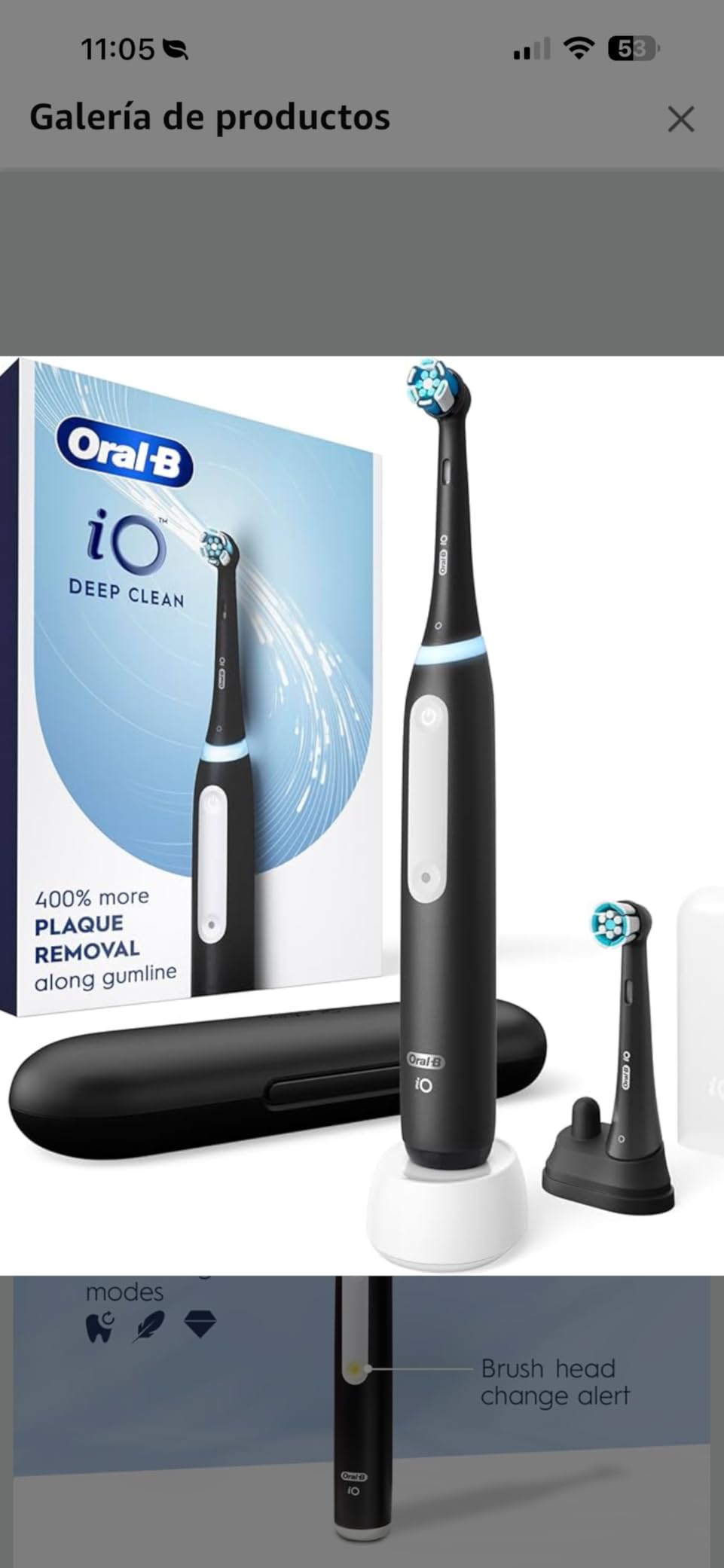
The cleaning side is strong too. The dense round head hugs tooth surfaces, three modes cover Daily Clean, Sensitive and Whitening, and owners upgrading from a cheaper brush report a dentist-like level of cleanliness and fewer plaque build-up visits.
It is also the most divisive of the Oral-B models here. A meaningful minority of reviews focus on reliability: app pairing problems, a charging base that loses power after about a year, and complete failure inside twelve months.
Who the iO3 suits
It suits people who need to be told, not told off. If you cannot feel when you are pressing too hard, a light you can see from the corner of your eye is worth more than a subtle vibration pulse.
It also suits anyone moving up from a manual brush or an entry-level model and wanting a visible cleanliness check. The head ecosystem is the same wide one used across the Oral-B range.
Where it falls short
The app is the most common complaint and should be treated as optional. Owners report frequent sync failures, and while it is irrelevant to brushing itself, it adds friction to a product you use twice a day.
Reliability reports are the reason this does not take the top spot: a small group report units stopping within a year, and the charging dock weakening over time. The 10% one-star share is the highest among the Oral-B models in this roundup.
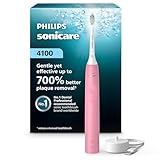
5. Philips Sonicare 4100 – Best for Receding Gums on a Budget
Philips Sonicare 4100 Rechargeable Electric Toothbrush, Deep Pink
Pulsing pressure sensor
Two power levels
EasyStart ramp
14 days per charge
Pros
- Pressure sensor stops over-brushing
- cited by buyers with recession
- Weeks-long battery life with rare charging
- Slim handle with no water-trapping crevices
- Two power levels and the lower one suits sensitive teeth
Cons
- No wall power adaptor included
- Brush heads are relatively pricey to replace
- Some report weaker power and a dead battery at 18 months
- Feels light and hollow next to older Sonicare models
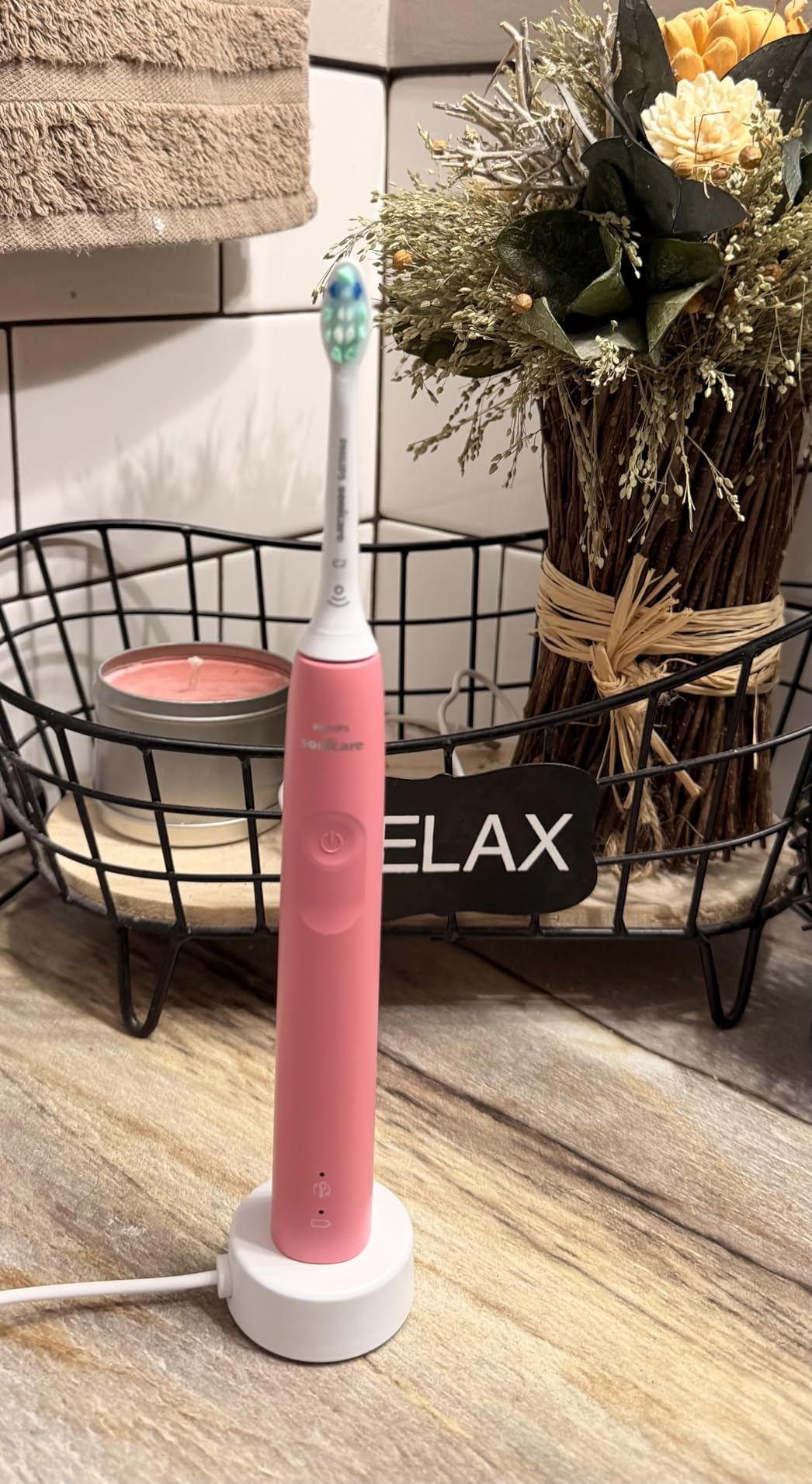
For receding gums, the specific thing buyers praise is the pressure sensor pulsing the handle when they press too hard. Several owners mention having caused recession with a manual brush and treating this as the correction.
The second reason to like it is the two power levels. The lower setting is reported as gentler, and combined with EasyStart, which ramps power gradually across the first uses, it makes this an easy transition for anyone whose teeth hurt when they start.
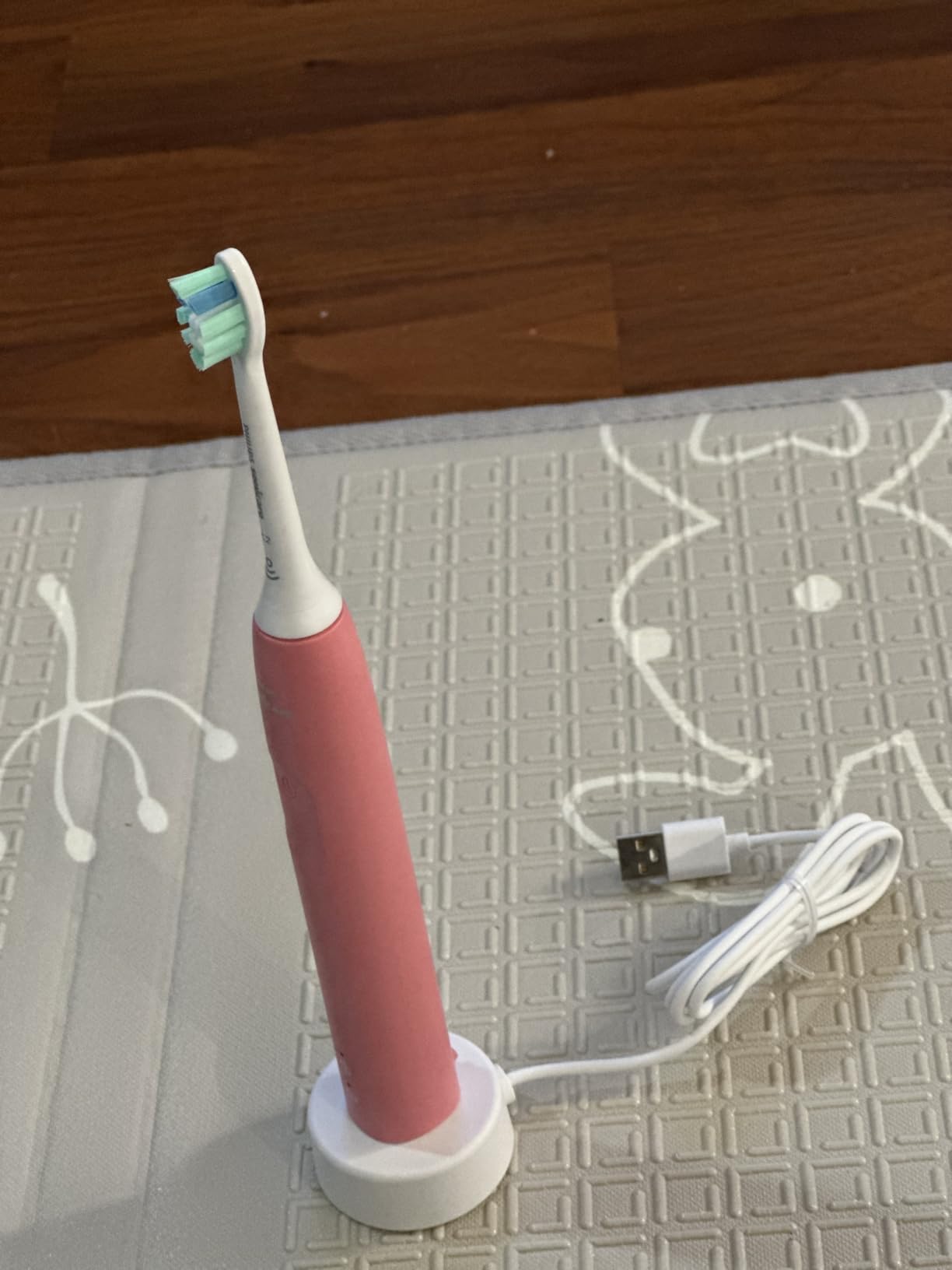
Battery life is the quiet hero. Owners frequently charge only once or twice a month, the C2 head uses soft flexible stain-removal bristles, and SmarTimer with QuadPacer gives clear 30-second prompts without a wall adaptor to worry about.
The negatives cluster on durability and refinement. A small set of reviews report a dead battery around the eighteen-month mark, the handle feels light and hollow next to older Sonicare bodies, and replacement heads cost more than they should.
Who the Sonicare 4100 suits
It suits people with recession who want a sonic sweep plus a hard stop on force. The slim handle also fits small or crowded mouths better than most, which is a real advantage if your recession exposed sensitive root surfaces in tight spaces.
It suits anyone who hates charging. A lithium battery measured in weeks removes the charger from the bathroom counter for most households.
Where it falls short
A USB charger is supplied but no wall adaptor, so you need a socket that suits it. Some buyers moving down from a pricier Sonicare report weaker brush power than they were used to.
It is also the lighter, less solid-feeling of the two Sonicare models here, and the head replacement cost is the higher of the pair. Buyers who want a heavier handle in hand should look at the 5300 instead.
6. SURI Pro – Best for Plant-Based Heads and Long Battery Life
SURI Pro Sonic Electric Toothbrush | Over 4+ Weeks Battery | Pressure Sensor | Aluminium Body | 2-Minute Timer | Plant-Based Head | Green
Pressure sensor
Over one month battery
USB-C charging
Recyclable head
Pros
- Pressure sensor and cleaning profile aimed at receding gums
- Clinically tested to reduce gum inflammation in about 15 days
- Month-plus battery with fast USB-C recharging
- Plant-based recyclable head with castor-oil bristles
- Slim anodised aluminium body feels solid
Cons
- Replacement heads cost more than generic refills
- Written customer feedback on this listing is thin
- Far fewer ratings than the mainstream Oral-B and Sonicare models
- Medium-soft bristles are not the gentlest option here
The SURI takes a different route to gentleness. Rather than a very soft head, it uses a dentist-designed cleaning profile paired with a pressure sensor, and the company reports clinical testing showing reduced gum inflammation in about fifteen days.
That is a slower argument than an obvious soft bristle, and it depends on you trusting the profile rather than reading the label. The head uses medium-soft castor-oil bristles on a cornstarch body, which is gentler than a standard nylon head but not the softest in this roundup.
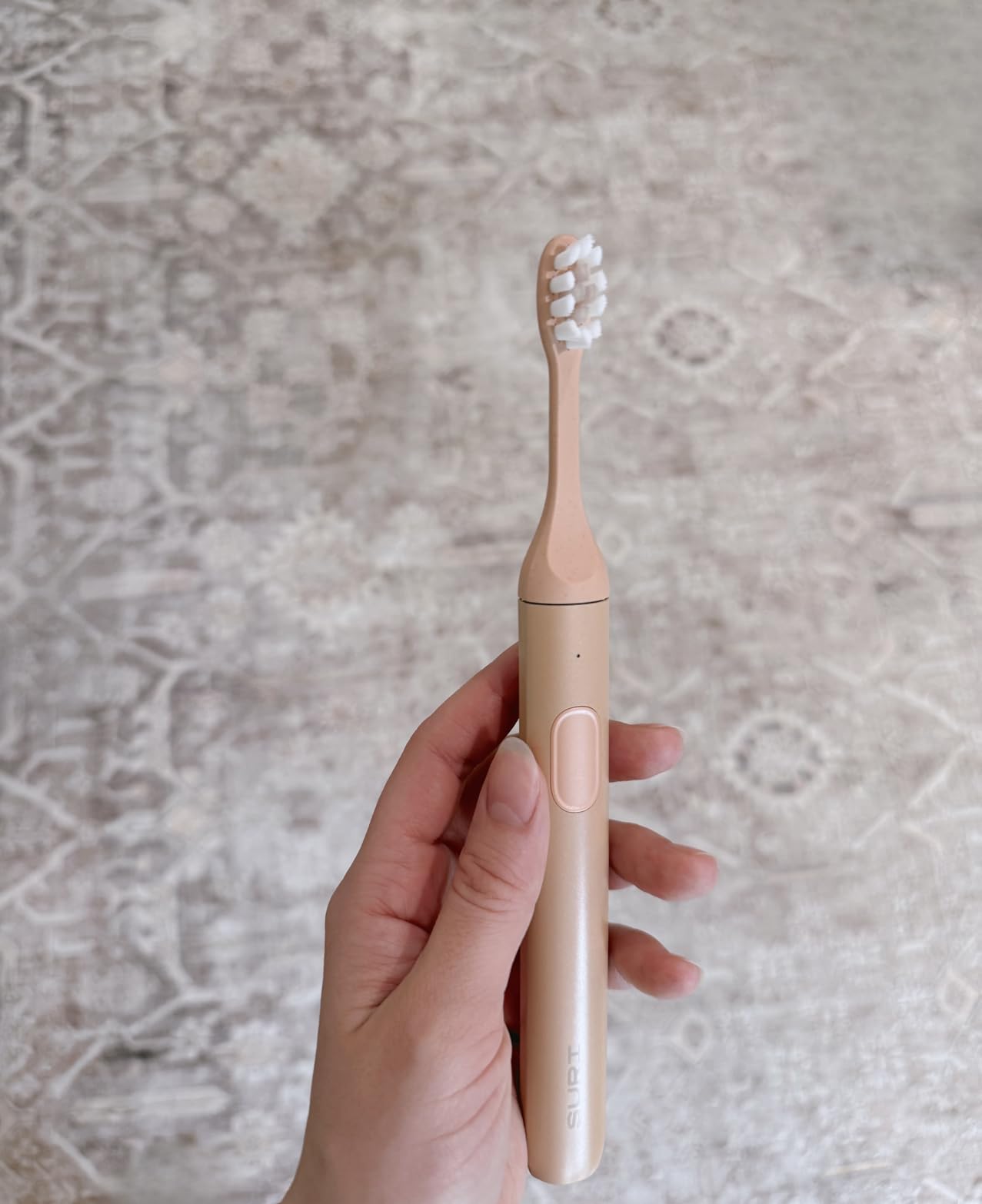
What is hard to argue with is the battery. Over a month per charge with USB-C recharging removes charging from the equation almost entirely, and the anodised aluminium body has a weight and balance that feel closer to a premium tool than a bathroom appliance.
Be aware of the evidence base here. The rating for this listing is 4.4 across 2232 ratings with 74% five-star, but the research returned no written customer reviews, so the case rests on the feature set and rating distribution rather than owner accounts.
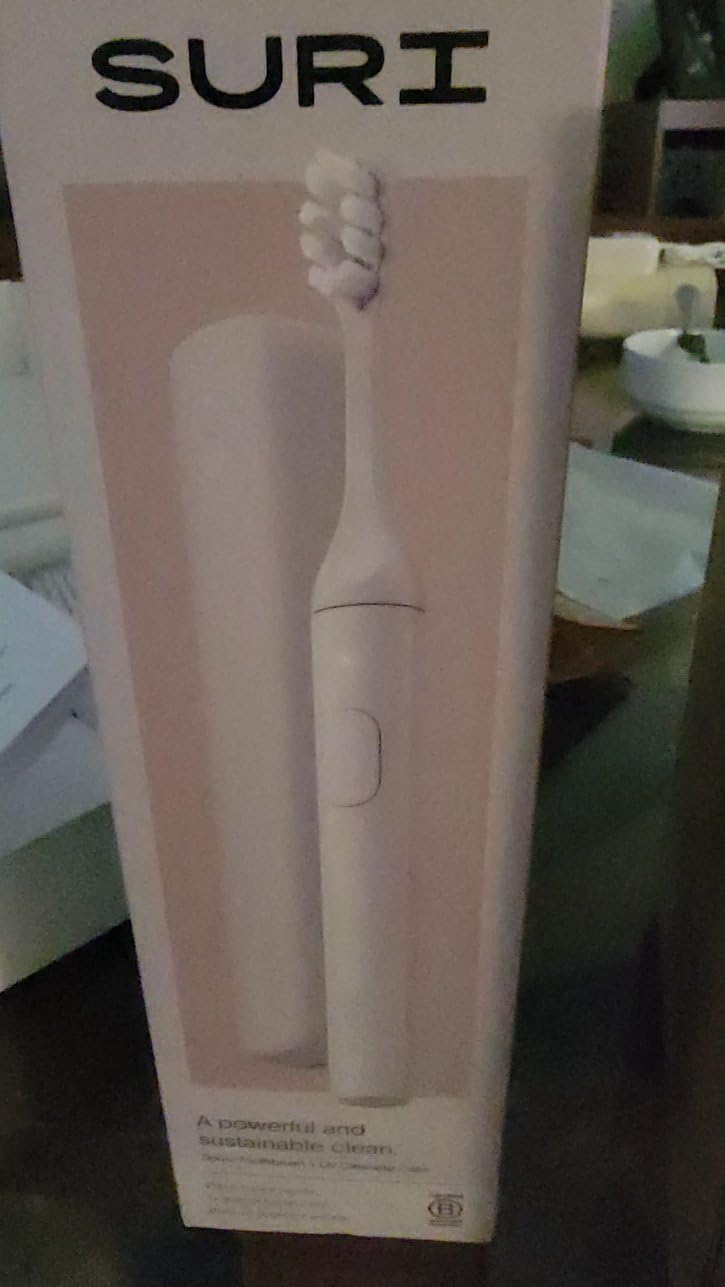
Who the SURI suits
It suits buyers who want a plastic-light refill. The head is recyclable and plant-based, which matters if you replace heads every few months and would rather not add to the waste stream each time.
It also suits anyone who travels constantly or simply hates plugging things in. A month per charge is the longest genuine runtime in this list among the brushes we can verify.
Where it falls short
Those replacement heads cost more than generic refills, and a brand-specific head is a recurring cost for as long as you own the handle. The bristles are medium-soft rather than ultra-soft, so severe sensitivity may want something gentler.
The honest caveat is the thin written feedback. With 2232 ratings but no review text returned, you are buying a well-specified product with a smaller track record than the Oral-B and Sonicare models here.
7. Oral-B iO Limited – Best for First-Time Electric Brushers
Oral-B Rechargeable Electric Toothbrush, iO Limited Simple Clean, 3 Cleaning Modes, Automatic Pressure Sensor to Protect Gums, Travel Case, White
Starts in super-sensitive mode
Automatic pressure sensor
3 ascending settings
Travel case
Pros
- Powers on in super-sensitive mode
- the easiest route to electric brushing
- Automatic sensor slows the brush and signals red at high pressure
- Three ascending settings: super-sensitive
- gentle
- daily clean
- One-touch button and quiet operation
- Two-minute timer with 30-second zone alerts
Cons
- Simpler pressure readout than the iO3
- Only a single brush head typically supplied
- Written customer feedback on this listing is thin
The design brief here is obvious and welcome: it starts on the super-sensitive setting. If your teeth hurt the moment you switch to electric, being handed a brush that begins at its lowest intensity removes the most common reason people give up in week one.
From there you step up. Three ascending settings cover super-sensitive, gentle and daily clean, so the plan is a gradual climb rather than a jump, and the automatic pressure sensor slows the motor and signals red when you press too hard.
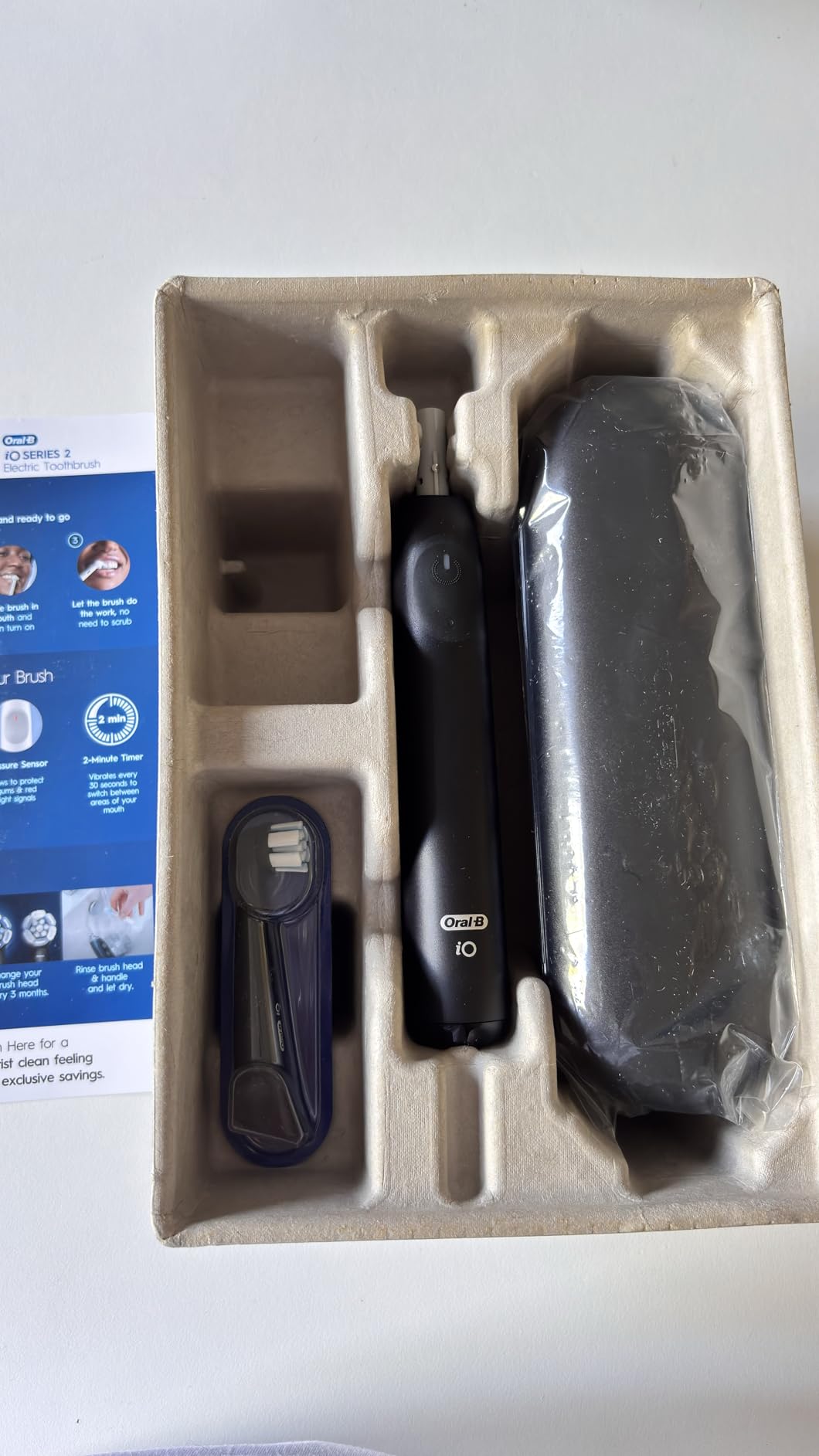
Everything else is designed for the transition. A one-touch button and quiet operation make it feel closer to a manual brush, the two-minute timer with 30-second zone alerts builds technique quickly, and a travel case is included.
It runs on the same iO head ecosystem, so Ultimate Clean, Gentle Care and Radiant White replacements all fit. As with the SURI, the written evidence is thinner: 2129 ratings at 4.3 stars, with no review text returned.
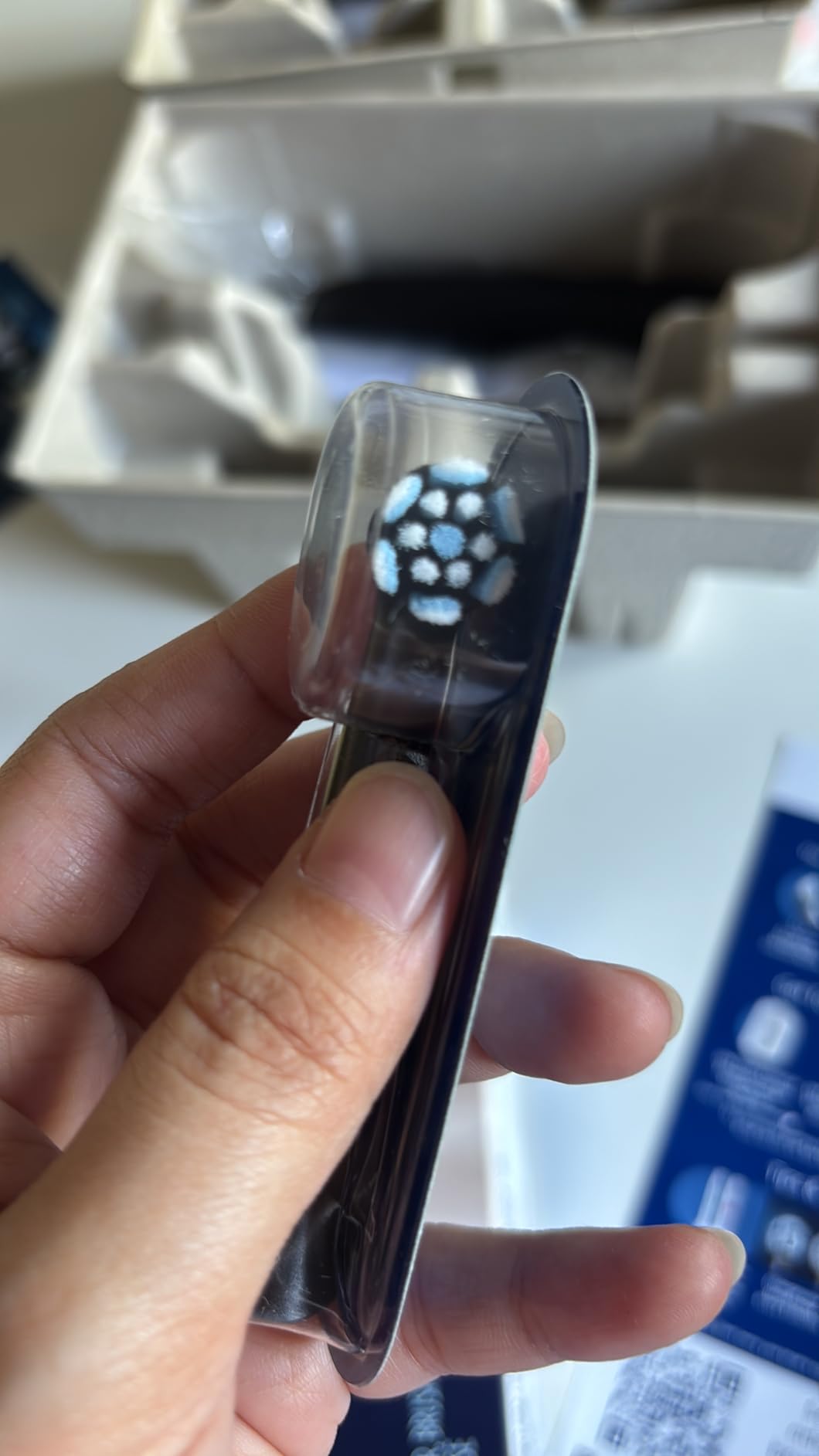
Who the iO Limited suits
It suits people who have never used an electric brush and are worried about the first thirty seconds. Starting at the lowest setting and stepping up over a fortnight is the gentlest possible on-ramp, and the one-touch button helps if a fiddly control is itself a barrier.
It suits people who want a visible pressure signal but do not want to pay for the fuller iO package or deal with an app.
Where it falls short
The pressure readout is less detailed than the iO3, so it tells you to ease off without giving you as much visual detail. Only one brush head is typically supplied, which means a second order sooner than with three-head kits.
Quiet operation is genuinely useful but the motor is not the smoothest of the three Oral-B models here. Anyone already comfortable with a power brush will find the iO3 a more satisfying tool.
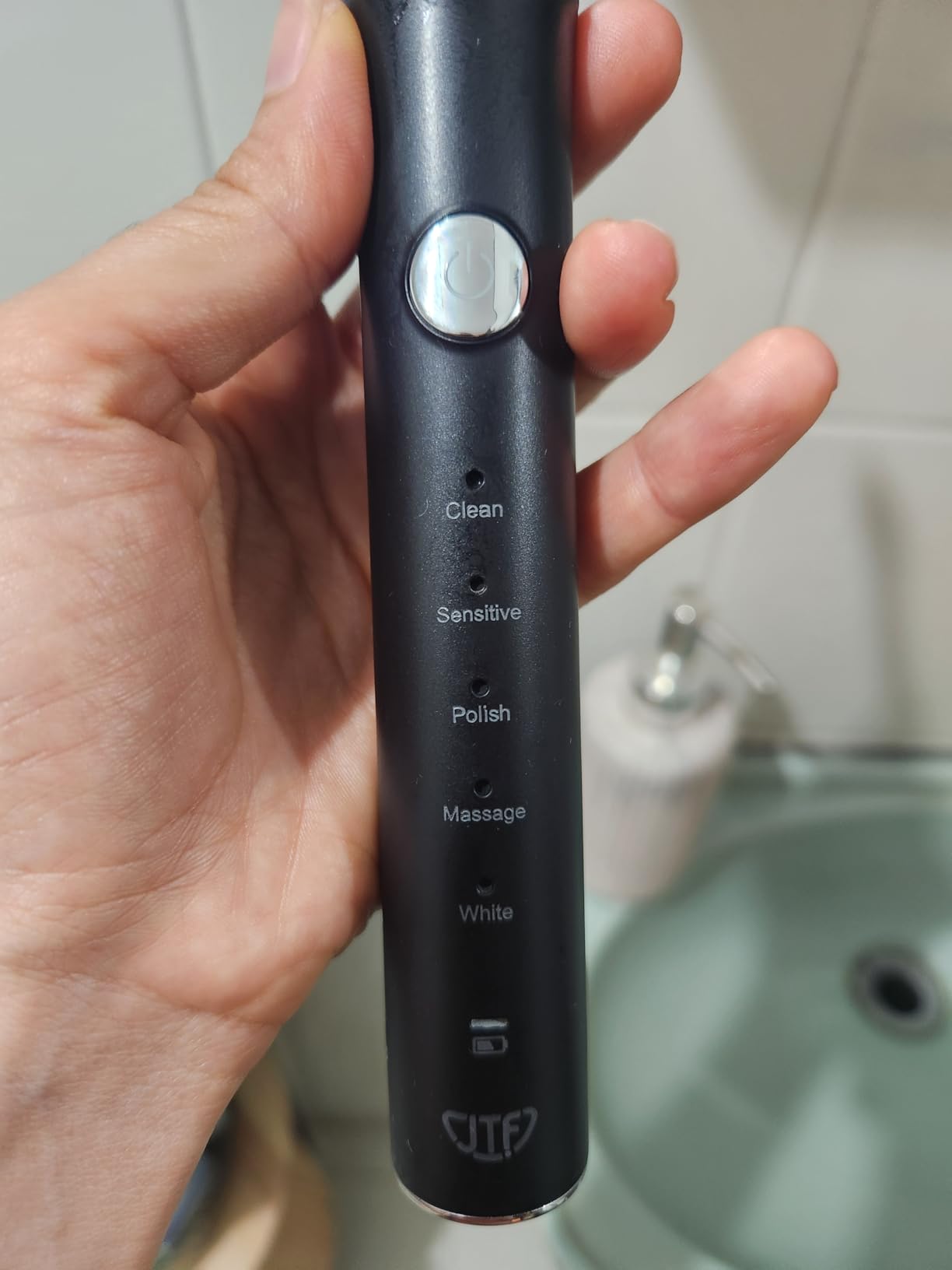
8. JTF J40 Sonic – Best for Families Sharing One Handle
JTF Sonic Electric Toothbrush for Adults and Kids: 5 Modes for Sensitive Teeth & Braces – with 8 Brush Heads, 45-Day Runtime & Smart Timer, Portable Rechargeable Toothbrush for Travel, Home & School
5 modes including sensitive
8 W-shaped heads
45-day battery
IPX7
Pros
- Owners report it cleans as well as a much costlier Sonicare
- Eight heads cover around two years for a whole household
- 45-day battery
- rarely charged on a twice-daily routine
- Small head reaches crowded areas well
- Light and comfortable for children's hands
Cons
- Some units fail to power on after about a month
- Two-minute timer sometimes does not function
- Water ingress reported around the power button
- One owner found the bristles too soft
The case for this brush is quantity. Eight W-shaped heads are included, and with a mode set covering gum care, braces, dentures, whitening and daily cleaning, it is built for a household where more than one person uses electric.
For sensitive teeth specifically, the dedicated sensitive mode and a mode memory function that recalls your last setting reduce the daily friction. The 45-day runtime means the battery is effectively a non-issue, and the IPX7 handle suits a bathroom shared by adults and children.
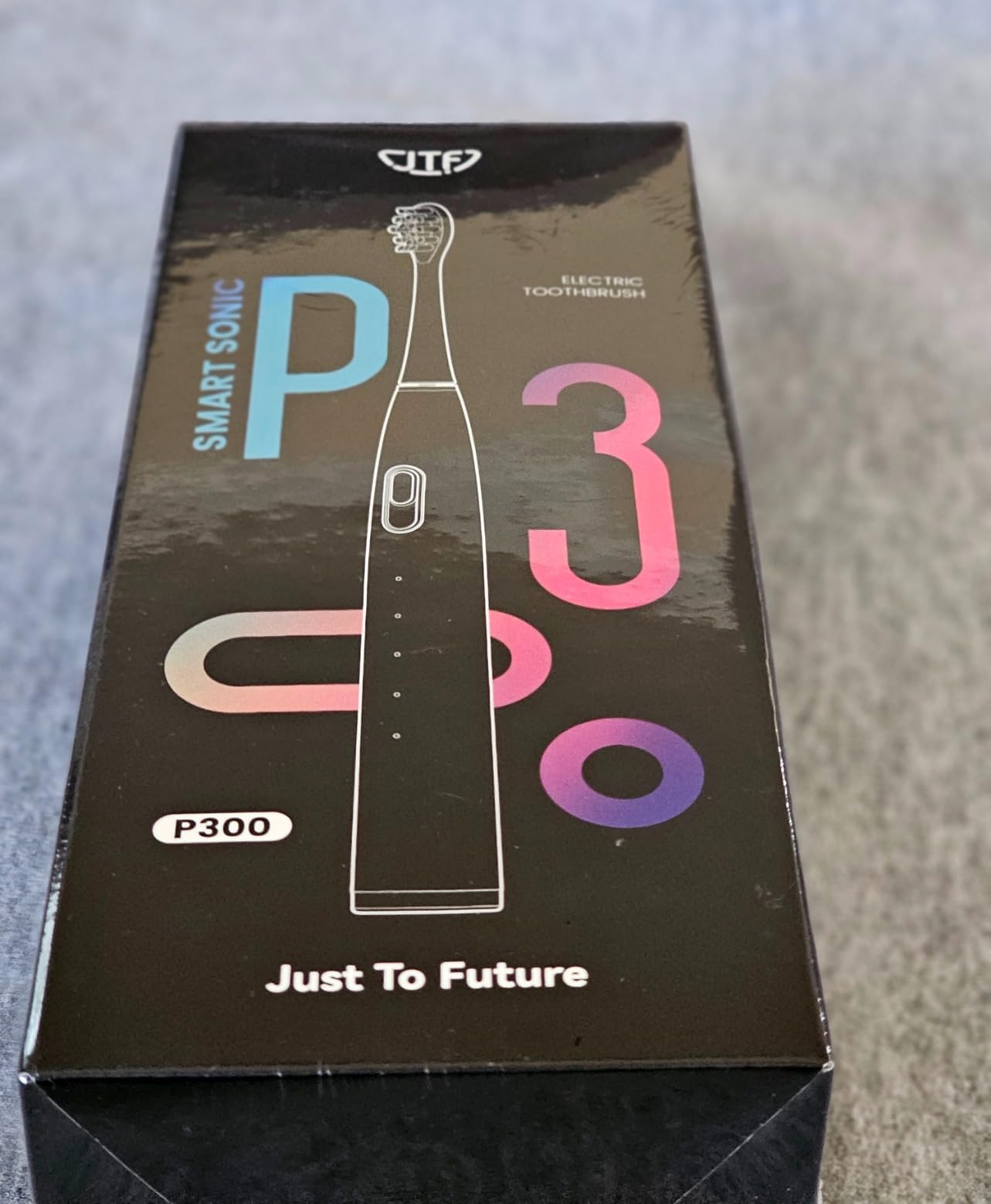
Buyers replacing a failing premium Sonicare report the cleaning is comparable, and the small head is praised for reaching tight, crowded areas. Several note the brush is light enough for a child’s grip, which is a genuine consideration for family use.
The recurring negative is durability of this generation. Several owners report the motor or battery dying within a month, one German reviewer describes the power button contact oxidising from water, and the two-minute timer is reported as unreliable on some units.
Who the JTF J40 suits
It suits a family covering several bathrooms, a travel bag and a guest toothbrush. The eight-head bundle means most households will not need to buy refills for roughly two years, and mode memory stops each person re-selecting their setting.
It suits buyers moving from a failing premium sonic brush who want a comparable clean without the premium body, and it suits children and older adults who benefit from a light handle.
Where it falls short
Reliability is the honest concern here. A cluster of reviews reports units that stop powering on after about a month, and the water ingress reports around the power button mean it is not the brush for a splashy bathroom.
Timer faults and one owner finding the bristles too soft are minor by comparison, but they add to a picture of a brush that performs well and is built to a lesser standard. A longer warranty would change that read.
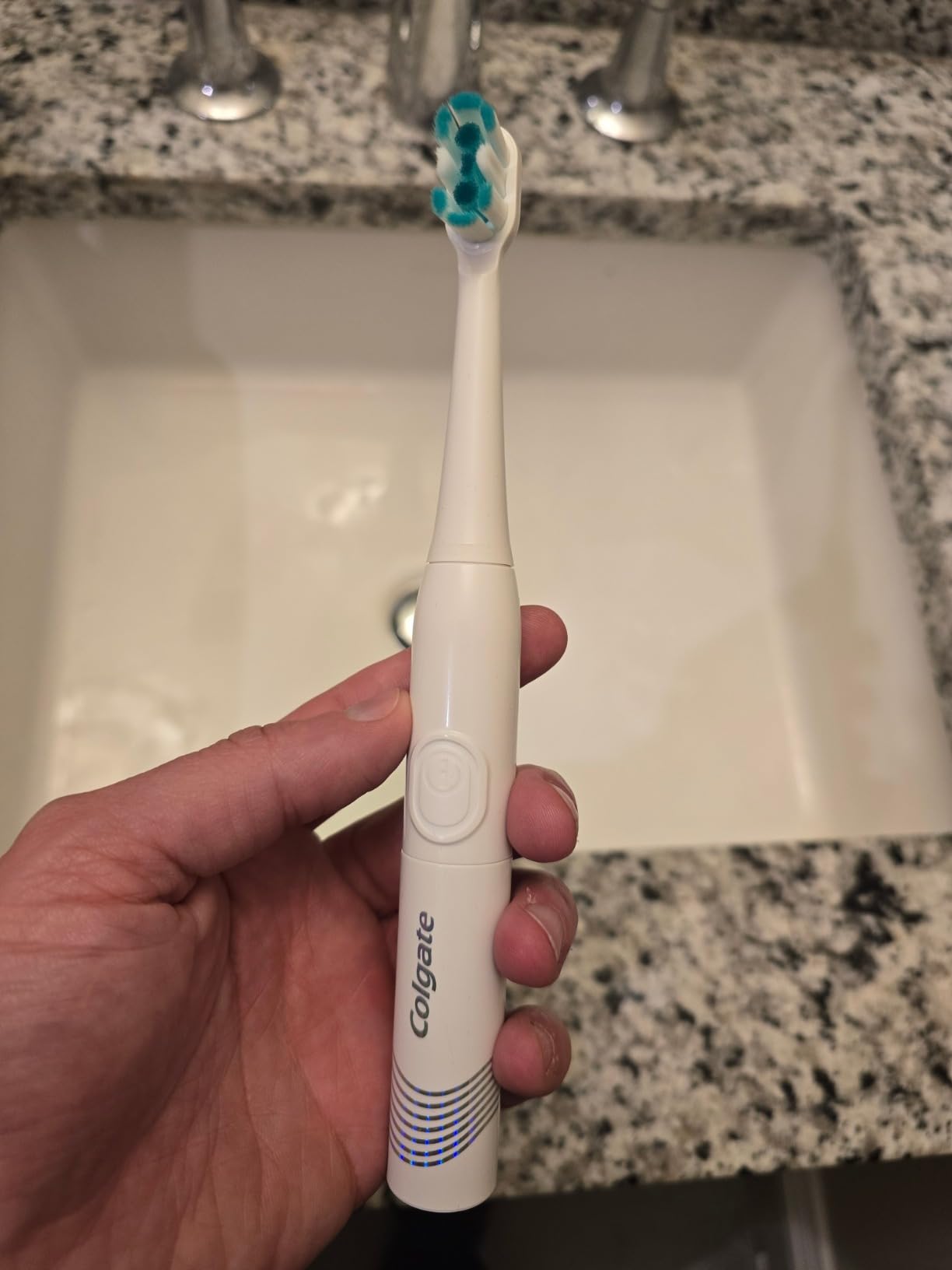
9. Colgate Total Adult – Best Battery-Operated Pick for Travel
Colgate Total Adult Battery Powered Electric Toothbrush, White, Soft
Sensitive and Regular modes
2-minute timer
Soft tapered Floss-Tip bristles
AAA powered
Pros
- Batteries included
- usable straight from the box with no dock
- Soft tapered bristles feel gentle on sore gums
- Dedicated Sensitive mode alongside Regular
- Built-in two-minute timer
- Light at 1.97 ounces and compact for a toiletry bag
Cons
- Vibration can feel unpleasant if you expected a rotating action
- No head cover included
- Smaller rating base than the premium picks
- Replacement heads bought separately
Two AAA batteries and no charging dock make this the least fuss of any brush here. It works out of the box, weighs under two ounces, and the two-minute timer enforces the recommended duration without an app or a charging routine.
For sensitive teeth, the pairing of a dedicated Sensitive mode with soft tapered Floss-Tip bristles is the right shape of answer. Owners consistently call out those bristles as kind to sore, tender gums, and the head is sized to reach back molars comfortably.

Buyers frame it as a low-cost upgrade from a manual brush rather than a flagship. Several bought it as a travel or secondary brush, which is a sensible role for a two-battery device that never needs a socket.
The main criticism is the sensation. It vibrates rather than rotates, which some buyers who were hoping for an Oral-B-style action find off-putting. There is also no head cover in the box, which matters for travel hygiene, and the 890-rating base is small.
Who the Colgate suits
It suits anyone who wants to try electric without committing to a rechargeable handle. There is no charging base to lose, no app, and no battery anxiety, and the sensitive mode gives you somewhere to start immediately.
It suits travellers and anyone who wants a second bathroom brush. The integrated tongue cleaner is a small extra that makes it a more complete daily tool than it looks.
Where it falls short
There is no pressure sensor here, so you are relying on feel alone. For mild sensitivity that is workable, but for moderate to severe sensitivity you lose the safety net that makes most of the other picks manageable.
Missing head cover and vibration-only action are the other two drawbacks. If you need force control, choose a brush with a sensor even if it costs more.
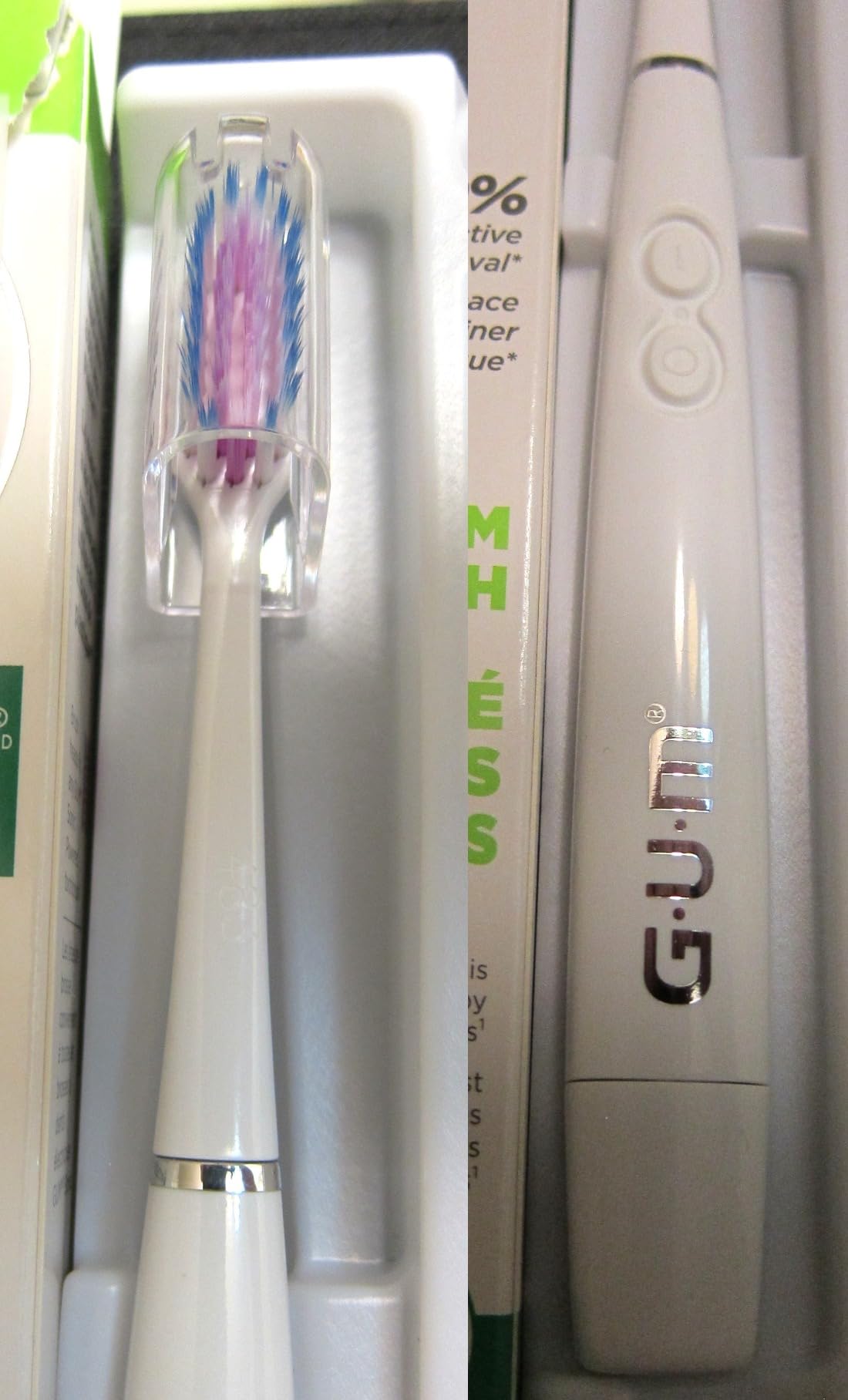
10. GUM Sonic Powered – Best for Implants and Dental Work
GUM Sonic Powered Toothbrush, White, 1 Handle + 2 Refills
Very soft bi-level tapered bristles
12,000 sonic vibrations
AAA battery
Travel cap
Pros
- Very soft bristles that reviewers say are kind to tooth and gum tissue
- Slim narrow handle fits small or crowded mouths well
- 12000 vibrations clean effectively
- Single AAA battery outlasts the brush
- Travel cap and near manual-sized form factor
- Two refill heads included and recommended by hygienists
Cons
- On/off button sits nearly flush and is hard to find by feel
- Vibrates more than some competing battery brushes
- Soft bristles may be too gentle for those wanting more scrubbing
- Smallest rating base in the roundup at 361
This is the brush dental offices tend to name. Multiple owners report an implant practice or hygienist recommending it, which explains why so many people use it as a second brush alongside a Sonicare rather than as a replacement.
The bristles are the reason. They are very soft and bi-level tapered, reaching below the gumline without the scratchy feel that makes people with implants wince, and 12,000 sonic vibrations clean effectively despite the modest figure.
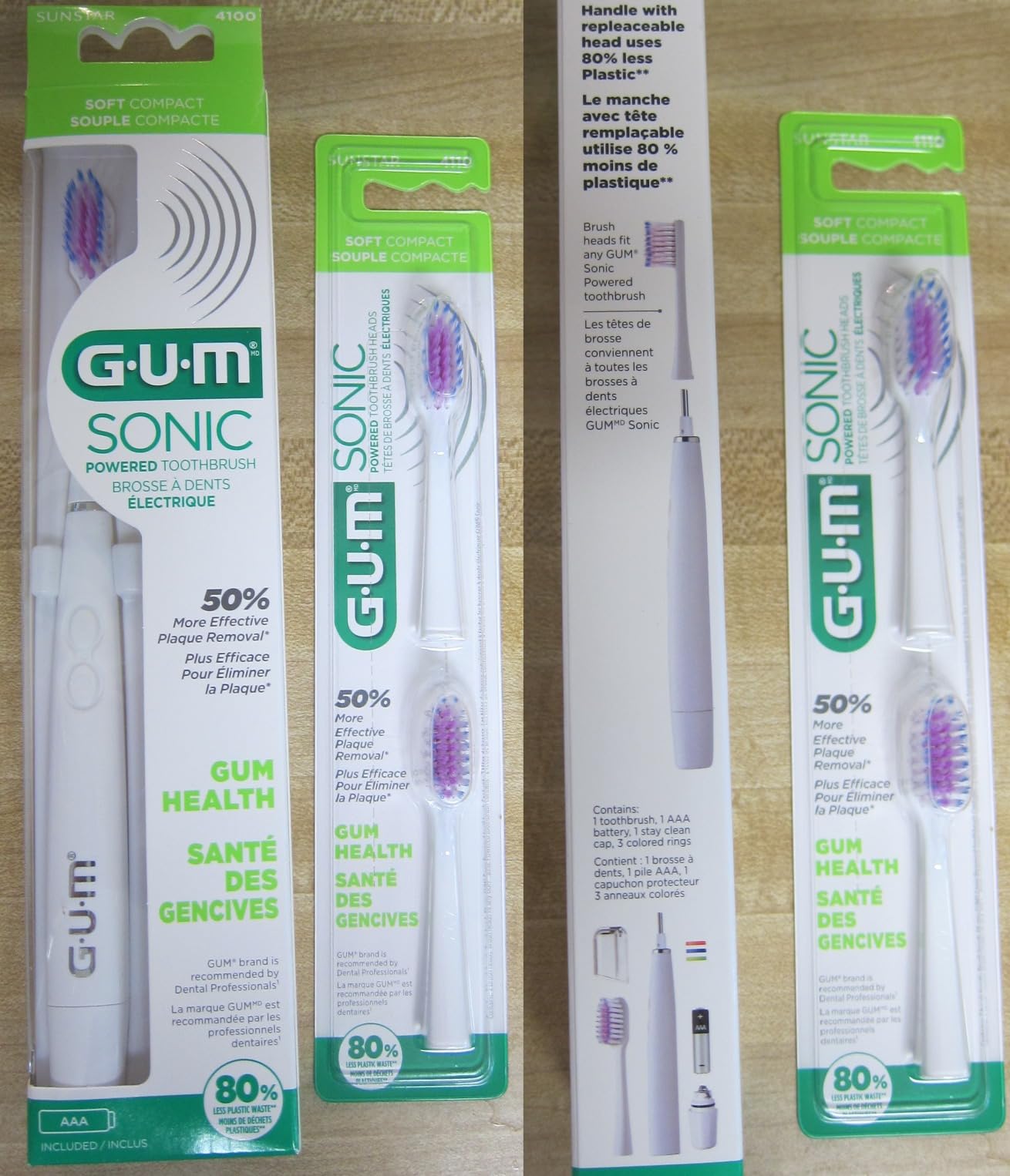
The handle is slim and narrow at 3.21 ounces, which fits a small or crowded mouth better than most electric brushes, and it runs on a single AAA battery that outlasts the brush itself. A travel cap is included and the whole unit is close to manual-brush size.
Its rating of 4.6 across 361 ratings is the highest average in this roundup, with 82% five-star, though that is the smallest review base here and a small sample tells you less about long-term reliability.
Who the GUM suits
It suits anyone with implants, crowns or post-surgical healing who has been told to brush gently. It also suits a crowded mouth, since the narrow handle is a genuine advantage if a round head feels bulky to you.
It suits anyone who wants a travel or second brush that needs no charger. The near manual size means it can live in a work bag or a gym bag permanently.
Where it falls short
There is no pressure sensor, so nothing stops you pressing too hard. For a user whose sensitivity is caused by force rather than exposed dentin, that is a real gap.
The near-flush power button is hard to locate by feel, and a few users find the vibration intense enough to be ticklish. The very soft bristles may be too gentle if you want more scrubbing power than a periodontal patient needs.
11. EZZI Sonic – Best for the Softest Bristles Tested
EZZI Sonic Electric Toothbrush | Ultra Soft Tapered Bristles | 60-Day Rechargeable Battery | 42,000 Vibrations/Min | for Adults, Sensitive Teeth, Receding Gum Disease, Whitening, Braces, Travel
42,000 vibrations per minute
Ultra-soft tapered bamboo bristles
1500mAh battery
2 heads
Pros
- Exceptionally soft fine tapered bristles preferred by Sonicare owners
- Needle-point bristles reach between teeth standard heads miss
- 42000 VPM cleans thoroughly while staying gentle
- Two heads and a USB-A charger puck included
- Two-minute timer with 30-second quadrant pacer
Cons
- Replacement heads reportedly no longer sold with no compatible alternative
- No visual pressure indicator so over-brushing goes unnoticed
- Battery life falls well short of the advertised figure for some units
- Head is stiff to remove and reattach
- Heads are uncoloured in a multi-user household
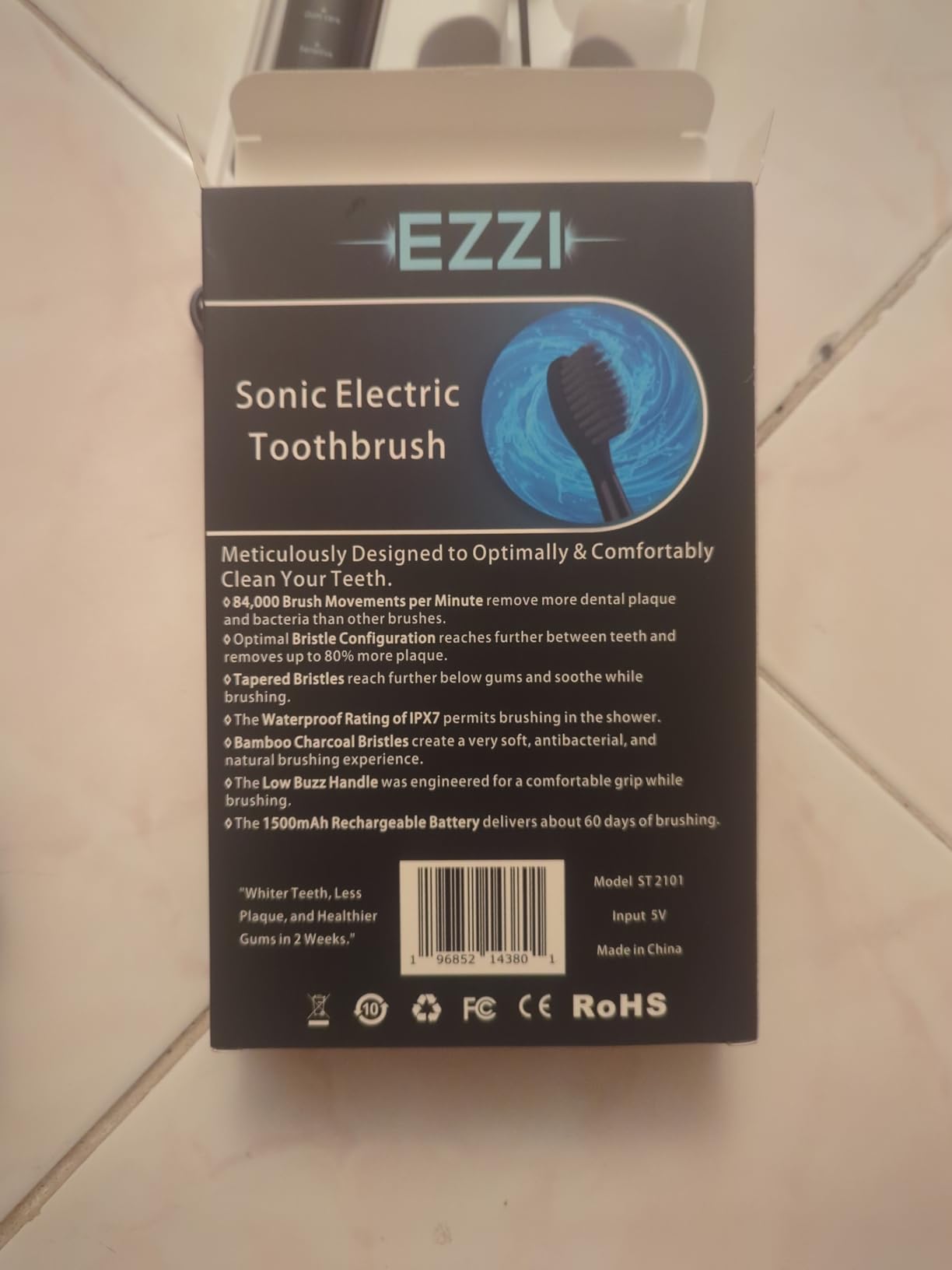
If your sensitivity is a bristle problem rather than a force problem, this is the brush to look at. The head carries long tapered charcoal-infused bamboo bristles at multiple heights, and several long-term Sonicare owners single it out as gentler than what they were using.
The tapering matters more than the power figure. Bristles narrow to a needle point and reach below the gumline and between teeth where standard heads cannot, which is how a 42,000 vibration motor stays comfortable on recession.
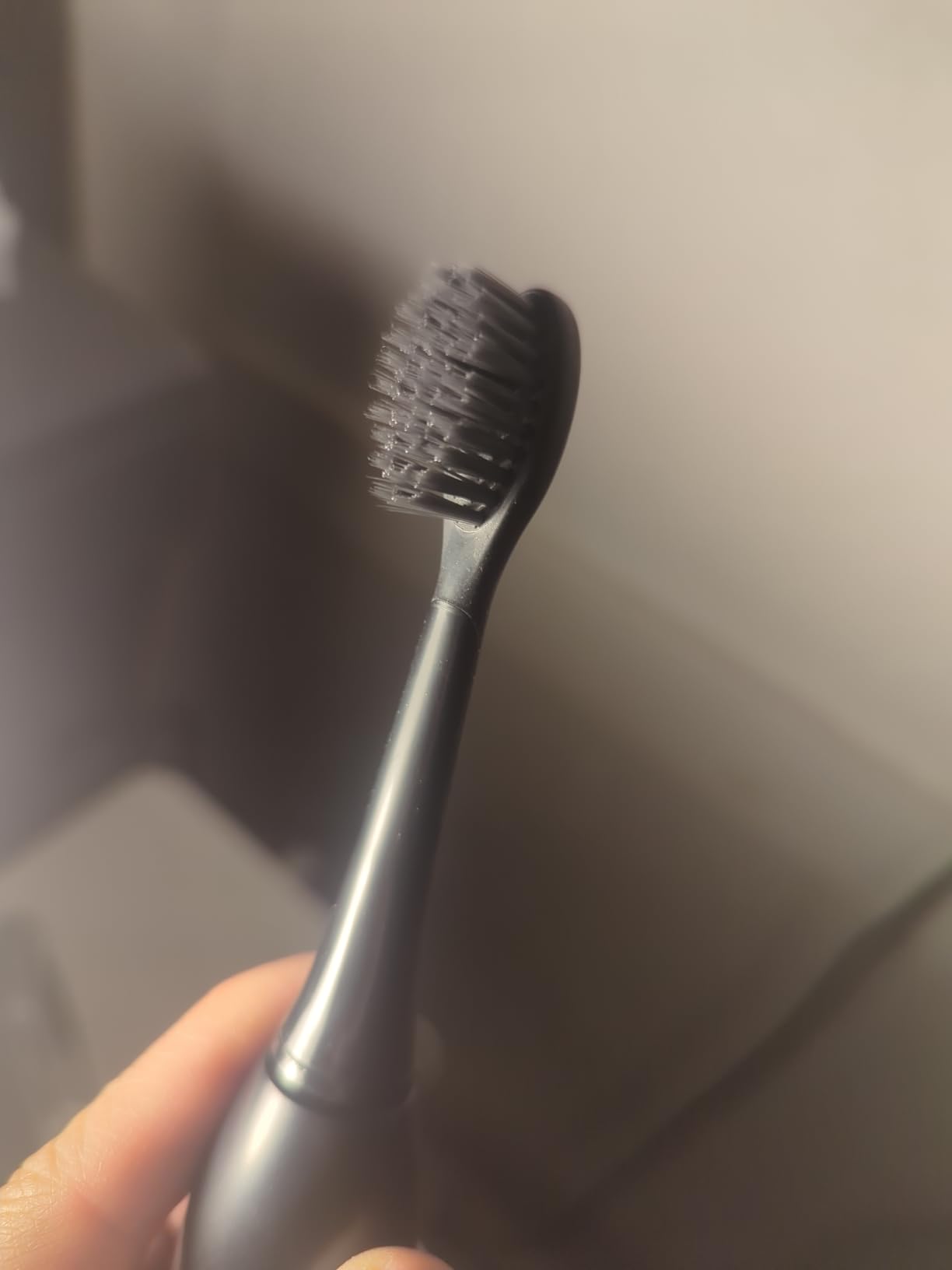
It is listed for sensitive teeth, gum recession, whitening and braces, and at least one dentist has recommended it, so the gentleness is not just marketing copy. A two-minute timer with 30-second quadrant pacers helps with the technique side.
The serious drawback is head availability. A reviewer owning three units found the replacement heads discontinued with no compatible substitute, and there is no pressure indicator at all, so over-brushing can go unnoticed. Battery life also fell well short of the advertised figure for some owners.
Who the EZZI suits
It suits people with recession who have already found that sonicare-style heads feel harsh no matter how low they set the intensity. The head design is the single best argument for it, and owners moving from those brushes report no regret.
It also suits anyone who brushes at low pressure anyway and wants strong cleaning from a soft head rather than a soft head with weak power.
Where it falls short
The head situation is a genuine problem. If replacements cannot be sourced, the brush becomes disposable regardless of how well it performs, and that should rule it out for anyone planning to keep a brush for years.
No pressure indicator, stiff head fitting and battery life falling short of the advertised figure round out a list of build and reliability issues. It is also the lowest-rated of the twelve here at 4.1.
12. PRO-SYS VarioSonic Plus+ – Best for Severe Sensitivity
PRO-SYS® VarioSonic Plus+ Sensitive Kit Professional Electric Toothbrush for Sensitive Teeth, Rechargeable with Pressure Sensor and Timer, Customizable Intensity Powered Toothbrush with Travel Case
5 intensity levels
Intuitive pressure sensor
Sensitive kit heads
Travel case
Pros
- Customizable intensity across five levels lets you dial down the vibration
- Feather-soft head praised by owners with severe sensitivity and recession
- Pressure sensor plus quadrant pauses encourage gentle thorough brushing
- Quieter motor than an Oral-B which some owners found less irritating
- Multiple head softness levels let you step up as sensitivity improves
Cons
- Battery failing to hold charge within one to two years
- Some units switch off mid-brush
- Replacement charger not sold separately
- Supplied charger has no wall plug
- Only offered in black
- The tougher included heads are too firm for sensitive users
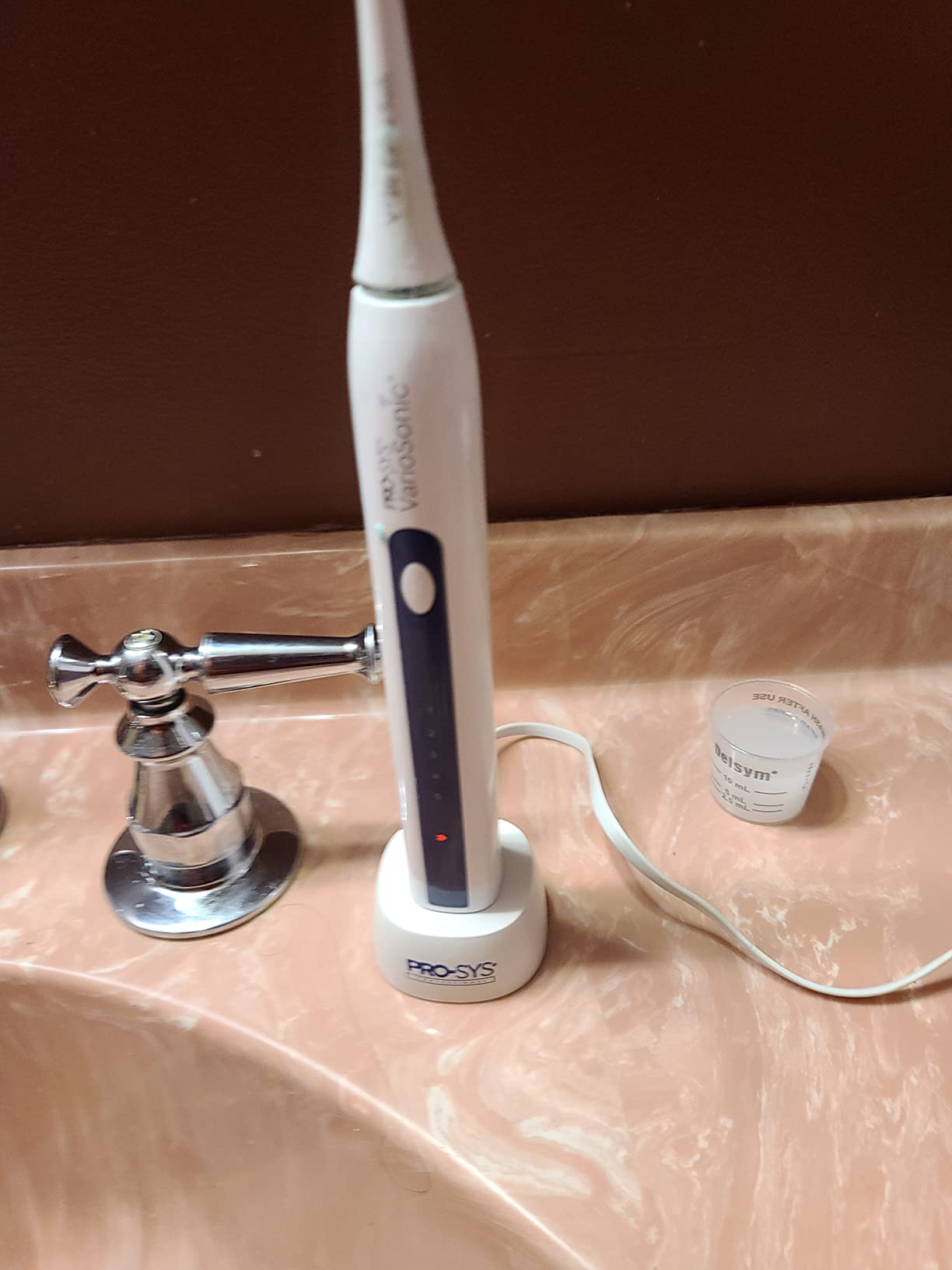
This is the specialist pick, and the reviews make that clear. Multiple owners bought it because sensitivity or gum recession had made their previous brush unusable, and several report brushing thoroughly without pain for the first time in years.
What makes it different is granularity. Five brushing modes with customisable intensity give you a much finer dial than the typical two or three settings, and the Sensitive Kit ships heads of varying bristle softness so you can step up as your teeth improve.
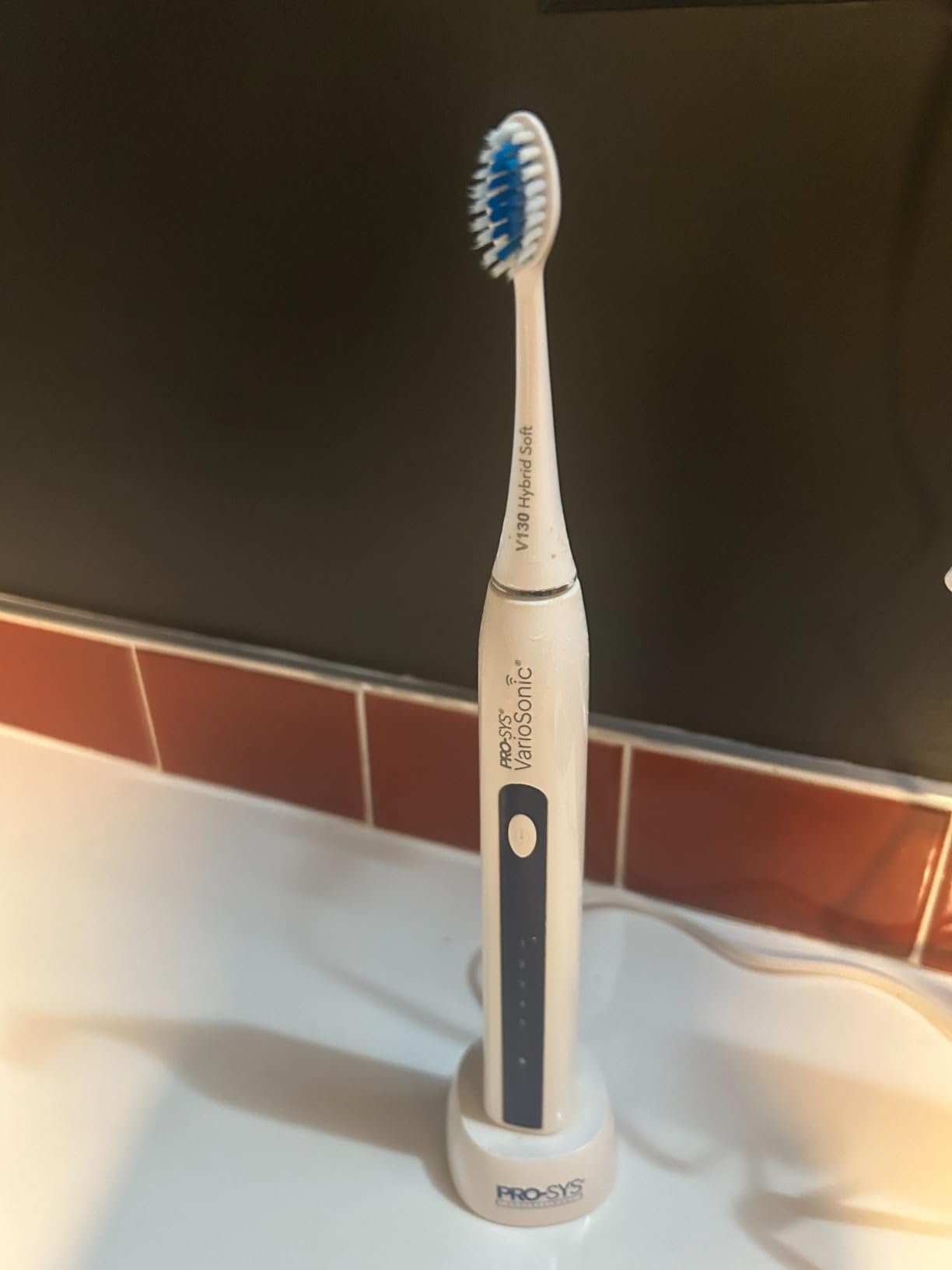
The pressure sensor and two-minute timer with 30-second quadrant pauses work together to slow you down, and the motor is quieter than an Oral-B, which several owners specifically found less irritating. Some bought it on a dentist’s recommendation.
Battery reliability is the overriding concern. Several reviews describe a unit that stopped holding charge or cut out mid-brush after a year, no replacement charger is sold separately, and the supplied charger has no wall plug.
Who the PRO-SYS suits
It suits people with severe sensitivity who have already tried a soft head and a sensitive mode on a mainstream brush and still cannot get through two minutes. Five intensity levels give room to work with that the two-level designs do not.
It also suits anyone whose dentist recommended it, and anyone who finds motor noise contributes to their discomfort.
Where it falls short
The battery complaints are consistent enough to weigh heavily. A unit that cuts out mid-brush mid-week is a poor companion for someone who has been told to brush twice a day for the foreseeable future, and the charger is a single point of failure.
Only black is offered, the tougher heads in the kit are too firm for the people most likely to buy it, and at 181 ratings this is the thinnest evidence base in the roundup. Judge it on the intensity range, not the reviews.
How to Choose an Electric Toothbrush for Sensitive Teeth
Sensitivity buyers get sold on brush strokes per minute, which is the least useful number on the spec sheet. Here is what actually changes how a brush feels, in the order we would weigh it.
Pressure sensor feedback types make more difference than the mode count
A pressure sensor measures how hard you are pressing and tells you to ease off in one of four ways. A light or colour ring shows red and is the easiest to catch, because you can see it without concentrating. A vibration or pulse in the handle is noticeable but easy to ignore once you stop expecting it. A motor slowdown is the most physical, since the brushing sensation itself changes. A sensor that simply cuts power is the least informative of all.
Forum threads on this topic settle on a consistent point: a blinking light is easy to miss, and a motor slowdown is easier to notice. If you cannot feel the difference between too much force and enough force, buy the model with visible colour feedback rather than the cheapest model with a sensor at all.
Sensitive mode versus super sensitive mode
A sensitive mode is a real low-intensity setting that reduces the oscillation or vibration amplitude. A super-sensitive mode is a lower rung still, usually paired with a soft start so the brush ramps up over the first few seconds. Several Oral-B models here ship with both, which is why the iO Limited powers on already at the gentlest setting.
Check whether the mode is user-selectable or fixed, and whether it can be reached without cycling through a menu. On a brush you use half-asleep, fewer button presses matter more than the settings list.
Bristle grades and head shape are the second lever
Soft, extra-soft and ultra-soft are real grades, and the EZZI and GUM brushes in this list sit at the gentler end. The other lever is head shape. A small round head rotates per tooth and is easier on receded gums than a long head that sweeps across several at once, which is the main reason the Oral-B models rank well for recession.
Whichever brush you pick, buying a soft head matters as much as the handle. Pair the electric brush with a potassium nitrate or stannous fluoride desensitizing toothpaste, and the combination addresses the sensitivity rather than just avoiding it.
Sonic versus oscillating for tender gums
Neither style is automatically gentler. Sonic brushes sweep fluid between teeth and along the gumline, which some people find ticklish but which handles wider spacing well. Oscillating-rotating-pulsating brushes work tooth by tooth in a small circle, which tends to feel more controllable on exposed roots. Per-tooth coverage is usually the better answer for severe sensitivity; the sweeping action is better for crowded teeth and braces.
Replacement heads set the real running cost
Look at head price before you look at handle features, because a brush you keep for three years needs roughly a dozen replacements. The Aquasonic and JTF bundles include eight heads each, which removes that cost for around two years. The Oral-B and Philips ecosystems carry higher per-head pricing, and the SURI plant-based heads sit at the top of the range.
A useful rule: divide the head price by the advertised months per head, then compare against the battery interval. A cheap handle with expensive proprietary heads costs more over three years than a mid-priced one with a refill-friendly system.
A two-week acclimation plan for sensitive teeth
Week one is about contact, not cleaning. Use the lowest intensity setting and an extra-soft head, brush for 30 seconds in the morning only, and let your teeth adjust. If the pressure sensor triggers constantly, go lighter still. Most discomfort people blame on the brush is the brush plus too much force, and this is where you break the habit.
Week two adds duration. Build toward the full two minutes using the quadrant timer, and switch to normal intensity only once the sensitive setting feels comfortable. If you are still uncomfortable at the end of week two, drop to a softer head rather than a gentler handle, and pair it with a desensitizing toothpaste.
If pain persists beyond that window, stop escalating and see a dentist. Sensitivity that does not settle is usually a cavity, a cracked tooth, a failing restoration or inflamed gums, and no brush setting fixes any of those. Dental hygienists note that people who avoid brushing because it hurts accumulate more plaque, so a low-intensity mode is a better answer than going back to manual.
Frequently Asked Questions
What is the best gentle electric toothbrush for sensitive teeth?
The Oral-B Pro 1000 leads our 2026 roundup because its small round head cleans one tooth at a time, its Sensi mode lowers the intensity, and its pressure control cuts the pulsation when you press too hard. The Philips Sonicare 5300 is the alternative if you want a dedicated Gum Care mode and a battery measured in weeks. Both pair a pressure sensor with soft heads.
What electric toothbrush is best for very sensitive gums?
For very sensitive gums, choose a brush with two levels of low intensity rather than one. The Oral-B iO Limited powers on in super-sensitive mode and steps up through three ascending settings, while the PRO-SYS VarioSonic Plus+ offers five intensity levels and a Sensitive Kit with several bristle grades. Either way, pair the handle with an extra-soft head rather than relying on the mode alone.
Can an electric toothbrush cause tooth sensitivity?
Yes, but usually through force rather than vibration. Leaning on a brush is the single most common cause of enamel abrasion and gum recession, and both expose dentin that then reacts to pressure and temperature. A brush with a pressure sensor and a low-intensity mode prevents that. Persistent localised pain is more likely a cavity or cracked tooth than anything the brush is doing.
Do dentists prefer Oral-B or Sonicare?
Neither brand is universally preferred, and the honest answer depends on your mouth. Oral-B round heads suit per-tooth control and receding gums, which many dentists recommend for patients with sensitivity. Sonicare sonic sweeps suit wider spacing and braces. Ask your hygienist which head shape suits your specific weak spot, then pick a brush with a pressure sensor and a genuine sensitive mode.
How long does tooth sensitivity last after switching to an electric toothbrush?
For most people, the adjustment period runs one to two weeks. Start on the lowest intensity with an extra-soft head, brush for 30 seconds daily at first, then build toward two minutes over the second week. Sensitivity that eases within a second or two of lightening your touch is force-related and should settle. Pain that lingers or repeats in the same spot needs a dental check.
What is the #1 dentist recommended electric toothbrush?
There is no single dentist-recommended model, but the most frequently named picks in clinical settings are the Oral-B round-head models for per-tooth control and the GUM Sonic Powered brush for post-implant or post-surgery use, which several owners bought after a hygienist suggested it. Whatever your dentist names, confirm it has a pressure sensor and a soft head option before buying.
The Bottom Line on Brushing Electric With Sensitive Teeth
The best electric toothbrushes for sensitive teeth in 2026 all share the same three ingredients: a pressure sensor you will actually notice, a real low-intensity mode, and a soft head you buy as an extra. The Oral-B Pro 1000 is our pick because it combines all three in the most forgiving geometry, with the Sonicare 5300 behind it for anyone who wants a dedicated gum mode and a long battery.
Start on the gentlest setting, give it two weeks, and pair it with a desensitizing toothpaste. If the pain does not settle, that is a dental question rather than a shopping one.