
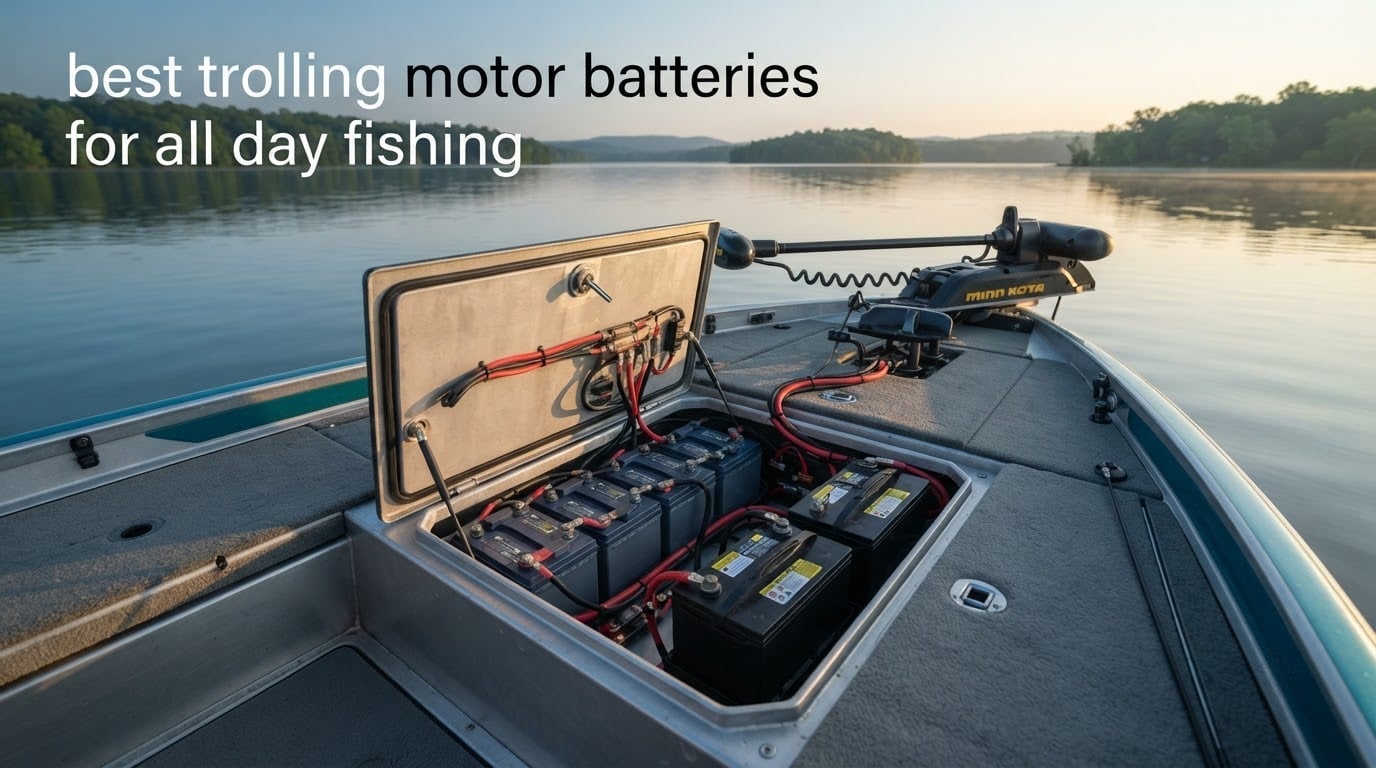
The angler sitting at the top of the ramp at 6:15 in the morning with a fully charged bank and a 55lb motor has two options: read the spec sheet on the box, or do the arithmetic. The box says 100 amp-hours. The motor pulls somewhere around 10 amps. That division is the whole game, and it is the question behind almost every question in this roundup of the best trolling motor batteries for all day fishing.
We spent weeks reading review data on ten deep-cycle marine batteries, comparing rated capacity against real amp draw, weighing Group 24 cases against Group 31 lead, and cross-checking the results against what anglers actually say on r/boating, bassresource.com, and The Hull Truth. What follows is a roundup built around runtime and weight rather than marketing adjectives, because those are the two numbers that decide whether you fish until dark or start the engine and go home.
Before we get into the batteries themselves, it is worth noting that the motor is only half the system. If your thrust rating and your bank are mismatched, no battery on this list will rescue the trip. Our trolling motor comparison breaks down thrust ratings and boat types, and it is worth reading before you commit to a bank size.
Top 3 Picks: Trolling Motor Batteries for All-Day Fishing in 2026
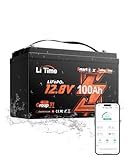
LiTime 12V 100Ah LiFePO4
- 1280Wh in a 22.2 lb case
- Bluetooth state-of-charge app
- IP65 sealed
- 5-year warranty

Redodo 36V 50Ah LiFePO4
- Single-box 36V bank for 100-120lb thrust
- 1920Wh in Group 31
- 33.1 lbs
- White shell stays cool

SUPER EMPOWER 12V 100Ah
- Group 24 drop-in at 21.6 lbs
- 100A integrated BMS
- 1280Wh capacity
- 5-year warranty
Best Trolling Motor Batteries at a Glance in October
Every battery below is a deep-cycle marine unit. The column that matters most for an all day on the water is the second one: rated amp-hours, because that number divided by your motor’s average draw gives you the hours you actually get.
| Product | Specifications | Action |
|---|---|---|
| LiTime 12V 100Ah LiFePO4 |
|
Check Latest Price |
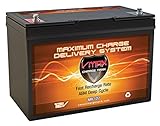 VMAX MR127 12V 100Ah AGM VMAX MR127 12V 100Ah AGM |
|
Check Latest Price |
| Redodo 36V 50Ah LiFePO4 |
|
Check Latest Price |
| SUPER EMPOWER 12V 100Ah |
|
Check Latest Price |
 DC HOUSE 12V 100Ah Bluetooth DC HOUSE 12V 100Ah Bluetooth |
|
Check Latest Price |
 VEMDIA 12V 100Ah Group 31 VEMDIA 12V 100Ah Group 31 |
|
Check Latest Price |
 LGECOLFP 24V 50Ah LGECOLFP 24V 50Ah |
|
Check Latest Price |
 HeyFuture 12V 100Ah Bluetooth HeyFuture 12V 100Ah Bluetooth |
|
Check Latest Price |
 BUKNUWO 12V 100Ah Bluetooth BUKNUWO 12V 100Ah Bluetooth |
|
Check Latest Price |
 LiTime 24V 50Ah Bluetooth LiTime 24V 50Ah Bluetooth |
|
Check Latest Price |
How Much Battery Do You Actually Need for All-Day Fishing?
Runtime is rated amp-hours divided by the average amps your motor pulls. A 100Ah battery feeding a motor drawing roughly 10 amps gives you about 10 hours in theory, and closer to 8 in practice once you account for voltage drop, cold cells, and the fact that you are not running a constant throttle all day.
That answer to the most-searched question in this category is short enough to repeat: 100Ah divided by 10 amps equals about 10 hours for a 55lb motor on a 12V system, and 50Ah would give you about 5.
Work through the tiers and the picture gets clearer. A 50Ah lithium pack runs a 55lb motor at 10 amps for roughly 5 hours, which covers a half day of casting and slow paddling but not a full bottom-fishing rotation. A 75Ah pack gets you to about 7.5 hours. A 100Ah pack reaches roughly 10 hours, which is the number most tournament anglers treat as their floor for a full day. A 120Ah pack buys you about 12 hours and is the point at which weight starts to matter more than capacity.
An angler on r/boating put it plainly when arguing that a smaller bank was plenty: “a 50ah lithium battery is enough for all day, full day of bottom fishing.” That is defensible on a small lake with a 36lb motor, where average draw might be 6 amps rather than 10. Scale the same battery to a 70lb motor in 15mph wind and the math changes completely.
The second correction most anglers miss is depth of discharge. A lead-acid battery rated at 100Ah gives you about 50Ah of usable power, because pulling a flooded or AGM cell below about 50 percent permanently shortens its life. A LiFePO4 battery rated at 100Ah realistically gives you 90Ah or more. That is why the same battery that runs a 12V system for five hours in AGM will run for ten in lithium.
A useful forum nuance: anglers on The Hull Truth and in-depthoutdoors point out that at realistic 5-to-10 hour discharge rates, the lithium advantage narrows to roughly 20 percent better rather than double. The 2x figure is real, but only when you are comparing against deeply discharged lead-acid. If your AGM pack is running three-hour days, lithium buys you roughly three extra hours, not six.
Reserve capacity is the safety margin most people forget. Experts on The Hull Truth recommend leaving headroom so you can run electronics and get home, and a r/boating thread asked almost the same thing in different words. Treat 80 percent of rated capacity as your real budget and the rest as your get-home reserve.
12V, 24V, or 36V: Choosing Your System Voltage
Match the bank to the motor, and match the motor to the boat. The mapping is straightforward: 30 to 55lb of thrust runs on 12V, 60 to 80lb needs 24V, and 100lb and above requires 36V. A 36V motor will not run on a 24V bank, and it will not run on 24V usefully either.
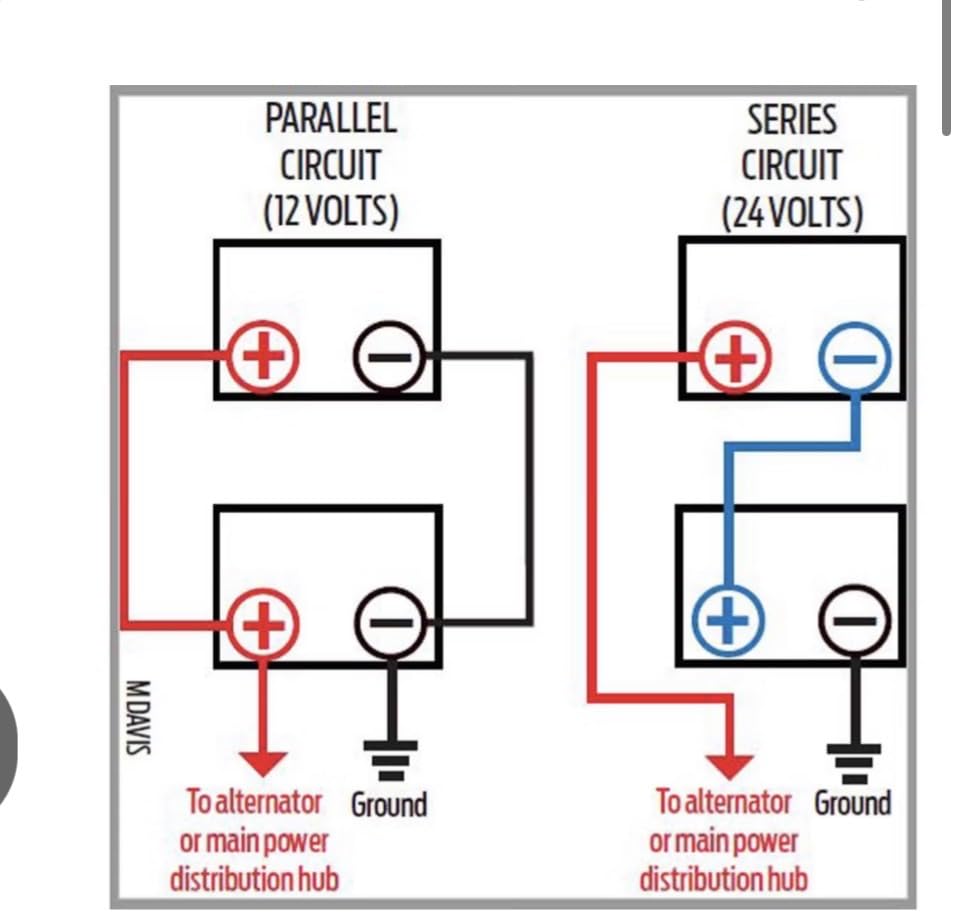
For a 24V system you have two wiring options. The first is two 12V batteries in series, which is what most marine electricians still recommend because a failed unit only takes out half the bank. The second is a single 24V pack, which cuts wiring to one circuit and removes one connection point that can corrode. Our bow mount trolling motor guide covers the motor side of that decision.
Bank weight is where the chemistry argument becomes physical. A 24V 100Ah LiFePO4 setup weighs about what a single 12V 75Ah lead-acid deep cycle weighs, which is roughly 50 pounds, and iFish threads make that same comparison repeatedly. Translate that into a jon boat, a bass boat, or a kayak rigged for fishing from a kayak, and the weight saving is the difference between a bank you can lift with one arm and one you have to plan your loading around.
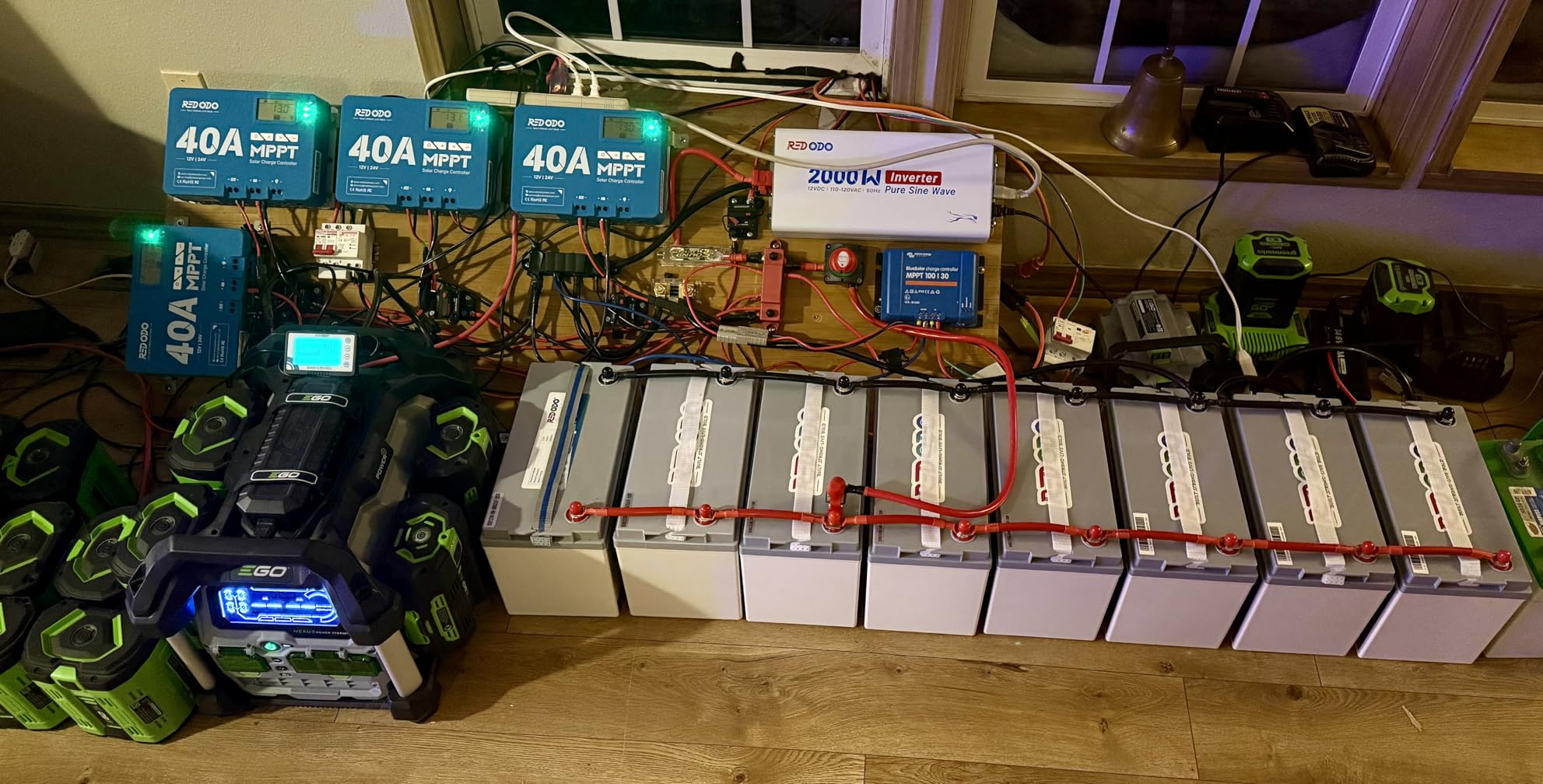
A 36V bank is three 12V batteries in series, so “36V 100Ah” describes the combined capacity of the three, not each one. Runtime still comes from total amp-hours divided by motor draw. A single 36V pack like the Redodo below does the same job as three 12V lead-acid batteries with a fraction of the wiring, which matters on a boat where every cable is a potential failure point.
One more thing on voltage: a trolling bank should be physically separate from your starting battery. Anglers on r/boats ask whether they need to keep an AGM alongside lithium for engine starting, and the answer is yes if you have an outboard, because a deep-cycle lithium pack is not built to deliver cranking amps. A transom mount setup on a skiff is exactly the case where this matters.
1. LiTime 12V 100Ah LiFePO4 – Best All-Rounder for a Full Day
Litime 12V 100Ah Trolling Motor LiFePO4 Battery for Marine, Boat, Yacht
12.8V 100Ah LiFePO4
1280Wh
22.2 lbs
5-year warranty
Pros
- Half the weight of the AGM it replaces
- All 100Ah usable versus about 50 percent from lead-acid
- Bluetooth app shows state of charge and controls discharge
- IP65 sealed and salt resistant
- Terminal hardware and wrench included
Cons
- Some units arrive needing a lithium charger to wake the BMS
- App needs repeated sign-in for some users
- Not built for engine starting
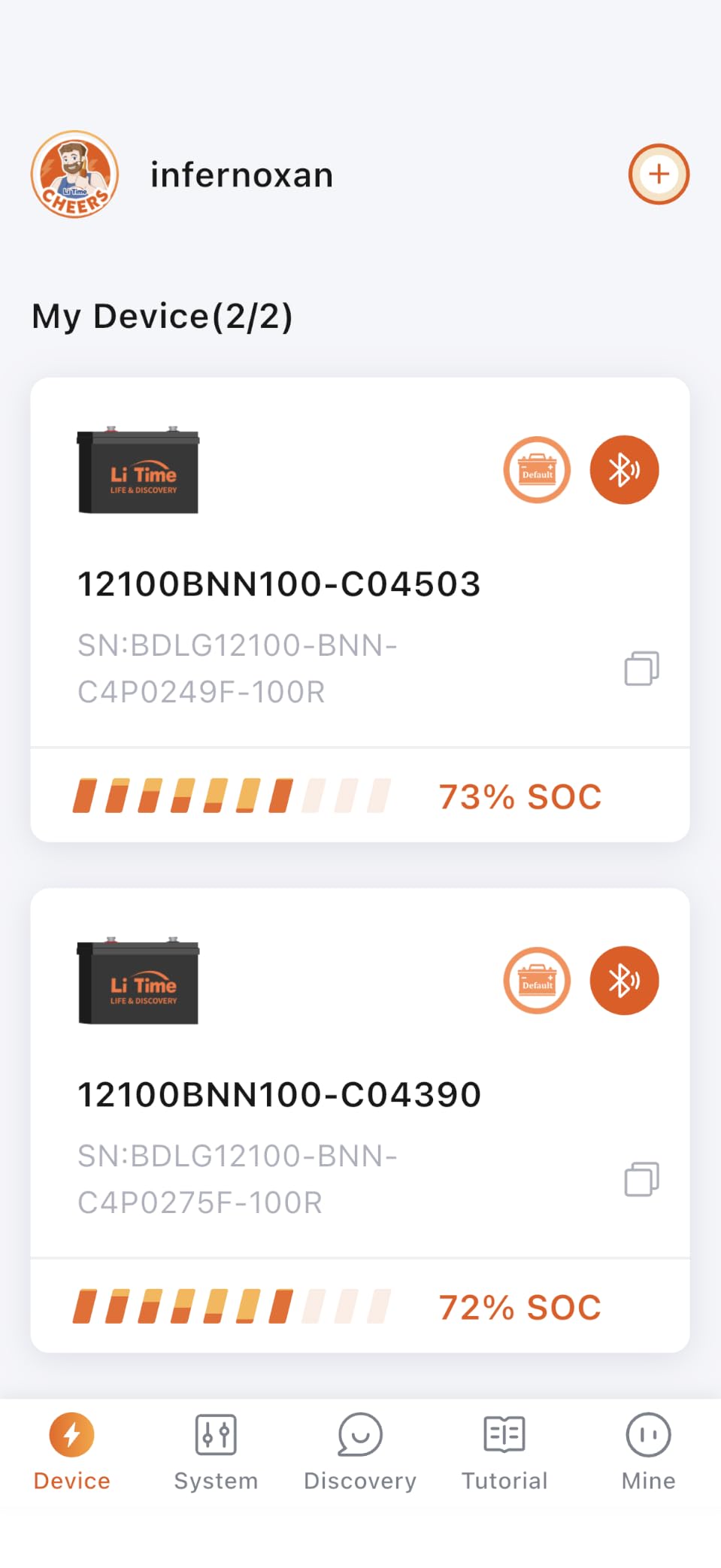
This is the battery we would put in a 16-foot bass boat on a 55lb Minn Kota, and it is the reason this roundup is lithium-forward. It weighs 22.2 pounds, which is less than a third of what the equivalent AGM Group 27 carries, and it is rated at 4000 deep cycles at 100 percent depth of discharge with 6000 at 80 percent and up to 15000 at 60 percent.
Owners report completing long all-day trolling sessions in wind with well over 70 percent charge still showing. That lines up with the math: 100Ah of usable capacity against a 10-amp draw is about 10 hours, and most anglers are not running full throttle for all of it.
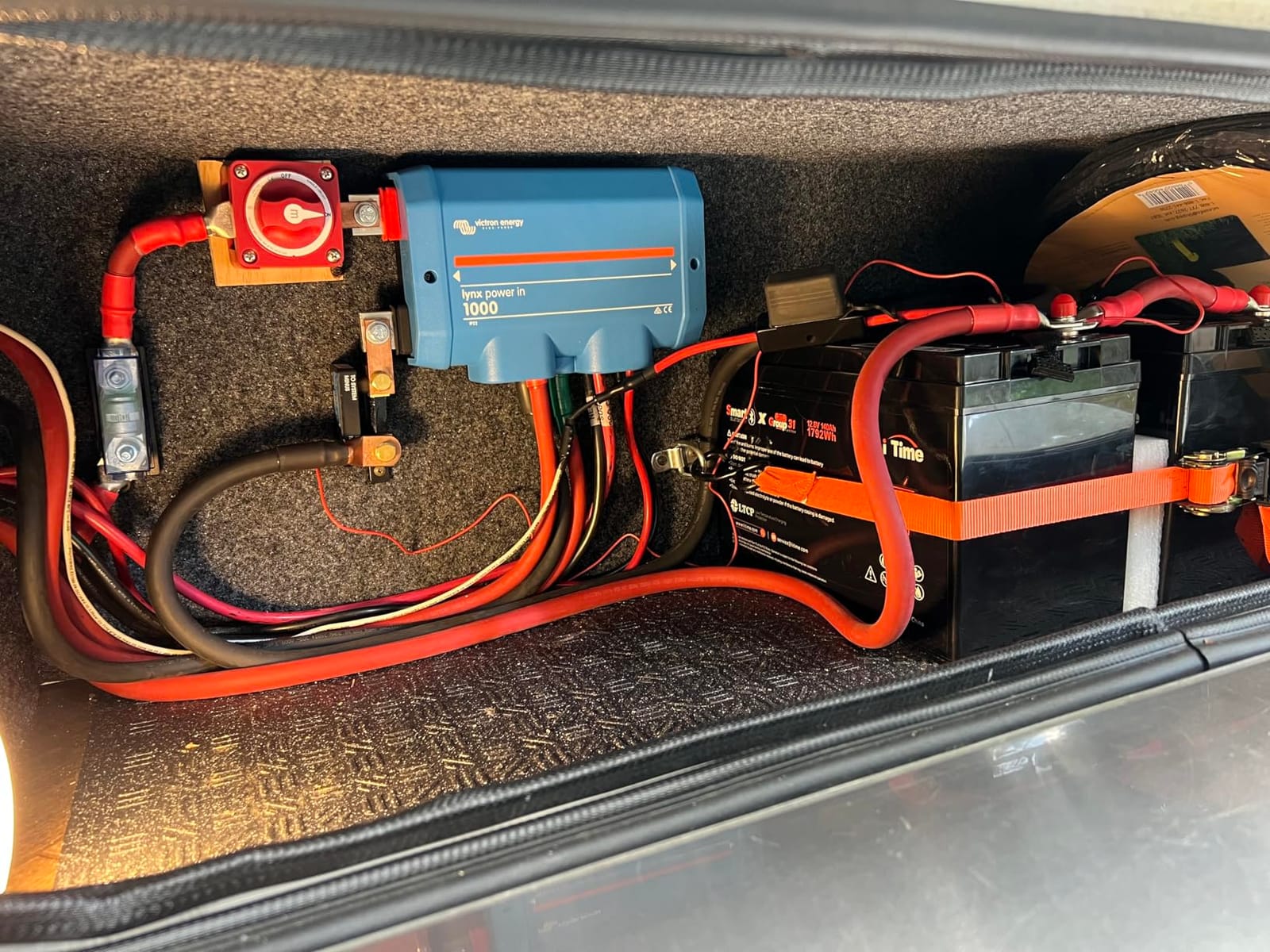
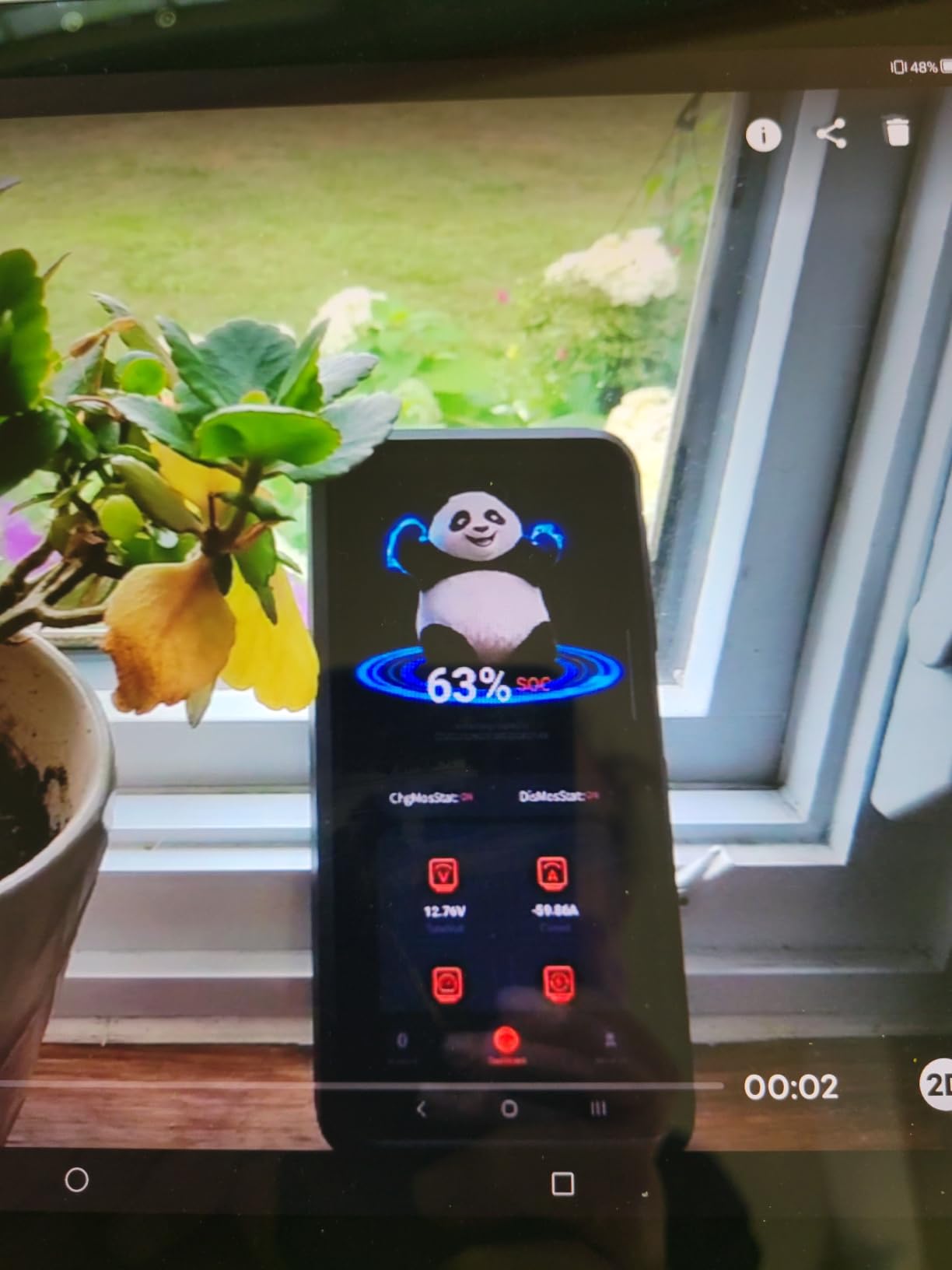
The Bluetooth app is the feature that changes daily behavior rather than just spec-sheet bragging rights. Because lithium holds a flat voltage curve, the motor will not warn you the way a lead-acid pack does as it sags. The app gives you a real state-of-charge readout and lets you cut discharge depth from the phone, which is how you stop yourself from hitting 10 percent on a spot that is two miles from the ramp.
It is also expandable. LiTime rates this cell at 1280Wh and supports configurations up to 4P4S, or 51.2V 400Ah and 20.48kWh, so a single unit can become the base of a much larger house bank later.
How long does a 100Ah LiFePO4 battery run a 55lb trolling motor?
Roughly 8 to 10 hours at an average draw of 10 amps, and that is the honest answer rather than the 10 hours the division suggests. Real hours depend on wind, current, how long you hold full throttle, and how cold the cells are at dawn. Budget 80 percent of rated capacity as usable and keep the remainder as your reserve.
If you fish 8-to-12 hour days on a 12V setup in the 30-to-55lb thrust range, this is the pack to build around. It is also the safest of the lithium options here for cold water, since charging halts below 32F and discharge below -4F rather than letting the cells get damaged.
Is switching from AGM to this LiFePO4 pack worth it?
For most anglers, yes, and the reason is that a failing AGM bank fails early. On a Facebook fishing group, anglers described getting two years out of a set of Duracell AGMs and watching them fade before the season ended. When your lead-acid pack is giving you 50Ah of usable power, a 100Ah lithium pack effectively doubles your day.
Two caveats before you commit. You need a dedicated LiFePO4 charger, and you should not expect it to start an engine. Anglers who switch mid-life usually end up keeping a separate starting battery, which is exactly the setup people ask about on r/boats.
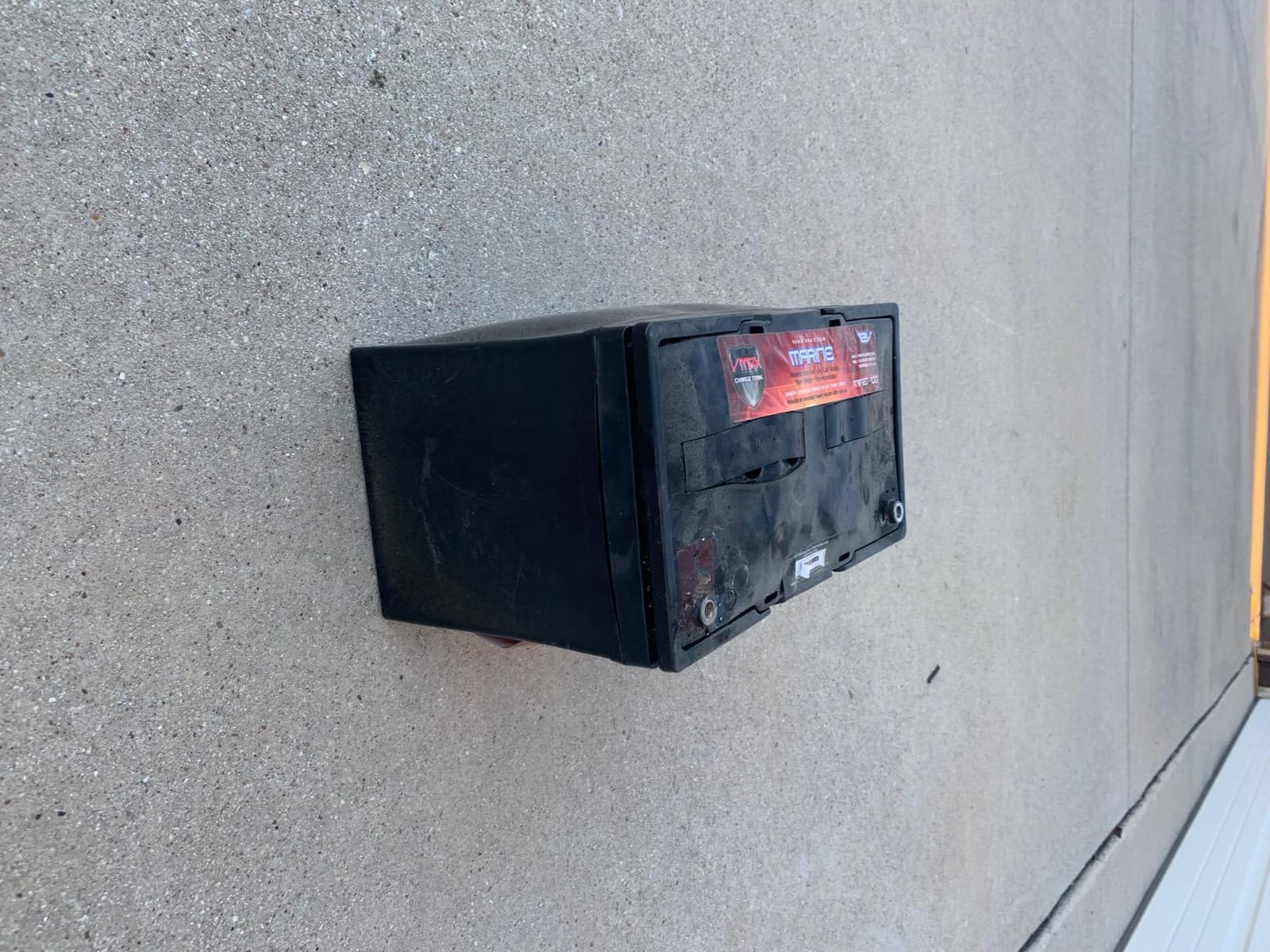
2. VMAX MR127 12V 100Ah AGM – The Proven Lead-Acid Choice
VMAX MR127 12 Volt 100Ah AGM Deep Cycle Maintenance Free Battery compatible with boats and 40-100lb, minnkota, cobra, sevylor and other trolling motor (GROUP 27 Marine Deep Cycle AGM Battery)
12V 100Ah AGM
Group 27 marine
68 lbs
1-year warranty
Pros
- Runs 55-86lb thrust motors for full multi-hour days
- Spill-free sealed AGM design with carrying handles
- Proven multi-year longevity
- Can be paired in series for 24V systems
Cons
- Heaviest unit in this roundup at about 68 lbs
- Lead-acid uses roughly half its rated capacity
- Draining it fully can block some smart chargers
If you want proven, conventional, and you have a boat with a battery box built for a Group 27, this is still a legitimate answer. The MR127 is a sealed AGM deep-cycle unit rated 12V 100Ah, compatible with 40-to-100lb Minn Kota, Cobra, and Sevylor motors, and it uses a high-porosity glass mat electrolyte suspension with lead-tin alloy grids built for cyclic service.
Long-term owners report dependable multi-hour runtime with high-thrust motors, and some describe coming back from a full day with 90 to 95 percent of rated charge on the pack. That number looks implausible for lead-acid until you realize most anglers are running a 55lb motor at 8 amps, not a 90lb motor at 25.
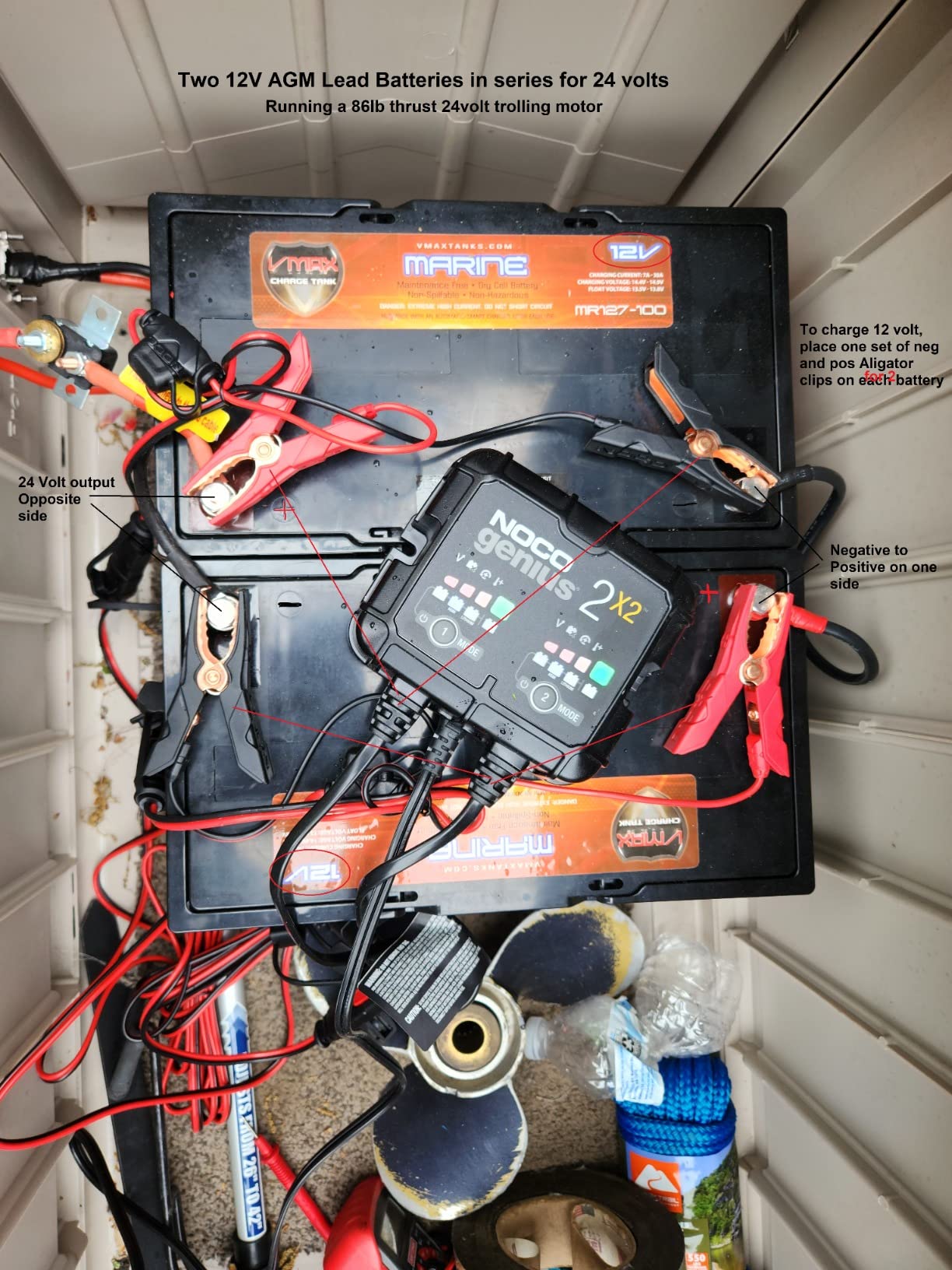
Where it loses to lithium is physics. At 68 pounds, this is the heaviest battery in the group by a wide margin, and on a jon boat or a small flats skiff that is a real penalty on every launch and every haul. Add a second one for a 24V system and you are moving 136 pounds.
The other honest limitation is the 50 percent depth-of-discharge rule. Plan the day around 50Ah of usable power, not 100, and avoid running it flat. Reviewers specifically note that fully depleting the pack can prevent some temperature-compensated smart chargers from restarting a charge cycle, which means a dead battery can stay dead until you do something about it.
Who should still buy a 100Ah AGM instead of lithium?
Anyone who already has a multi-charger setup, buys batteries locally rather than online, or genuinely cannot replace their charger. The fly-fishing crowd makes this case constantly in budget-first terms, recommending a mid-size deep cycle from a big-box store for smaller boats, and for a one-season rental skiff that logic holds.
It also holds if you are on a trailer with a very small battery compartment, because the 68 pounds is not a dealbreaker on a boat that lives on a lift. Just size your days around 50Ah of usable power.
How does the AGM runtime compare with a 100Ah lithium pack?
About half, under the same conditions. Both are rated 100Ah, but the AGM realistically delivers around 50Ah before you risk damaging it, while the lithium delivers 90Ah or more. At a 10-amp draw that is roughly 5 hours against 9 to 10.
The trade is capacity for mass. You get 45 pounds less battery and roughly double the usable hours, and that comparison is the single strongest argument for moving to lithium if your boat can carry it.
3. Redodo 36V 50Ah LiFePO4 – Best Single-Box 36V Bank
Redodo 36V 50Ah Trolling Motor LiFePO4 Battery, Group 31
38.4V 50Ah LiFePO4
1920Wh in Group 31
33.1 lbs
5-year warranty
Pros
- Covers a full 8-hour day in wind using a fraction of capacity
- Replaces three 12V lead-acid batteries with far less wiring
- 33 lbs for a complete 36V bank
- White shell runs cooler than black cases in direct sun
Cons
- Bluetooth app needs email registration and drops sessions
- Some units need a LiFePO4 charger to bring the BMS online
- Long recharge time once fully drained
This is the answer for a big bass boat running a 100-to-120lb thrust motor where three 12V batteries in series is the alternative. The Redodo puts 38.4V and 50Ah into a single Group 31 footprint weighing 33.1 pounds, delivering 1920Wh at an energy density of 58.7Wh per pound.
Owners describe covering a full 8-hour tournament day in 15mph winds while using only about 20 percent of rated capacity. That figure makes sense once you look at the discharge ratings: 50 amps continuous, 250 amps peak, and 60 amps sustained for 30 minutes, with the pack holding above 38.4V through most of the discharge curve.
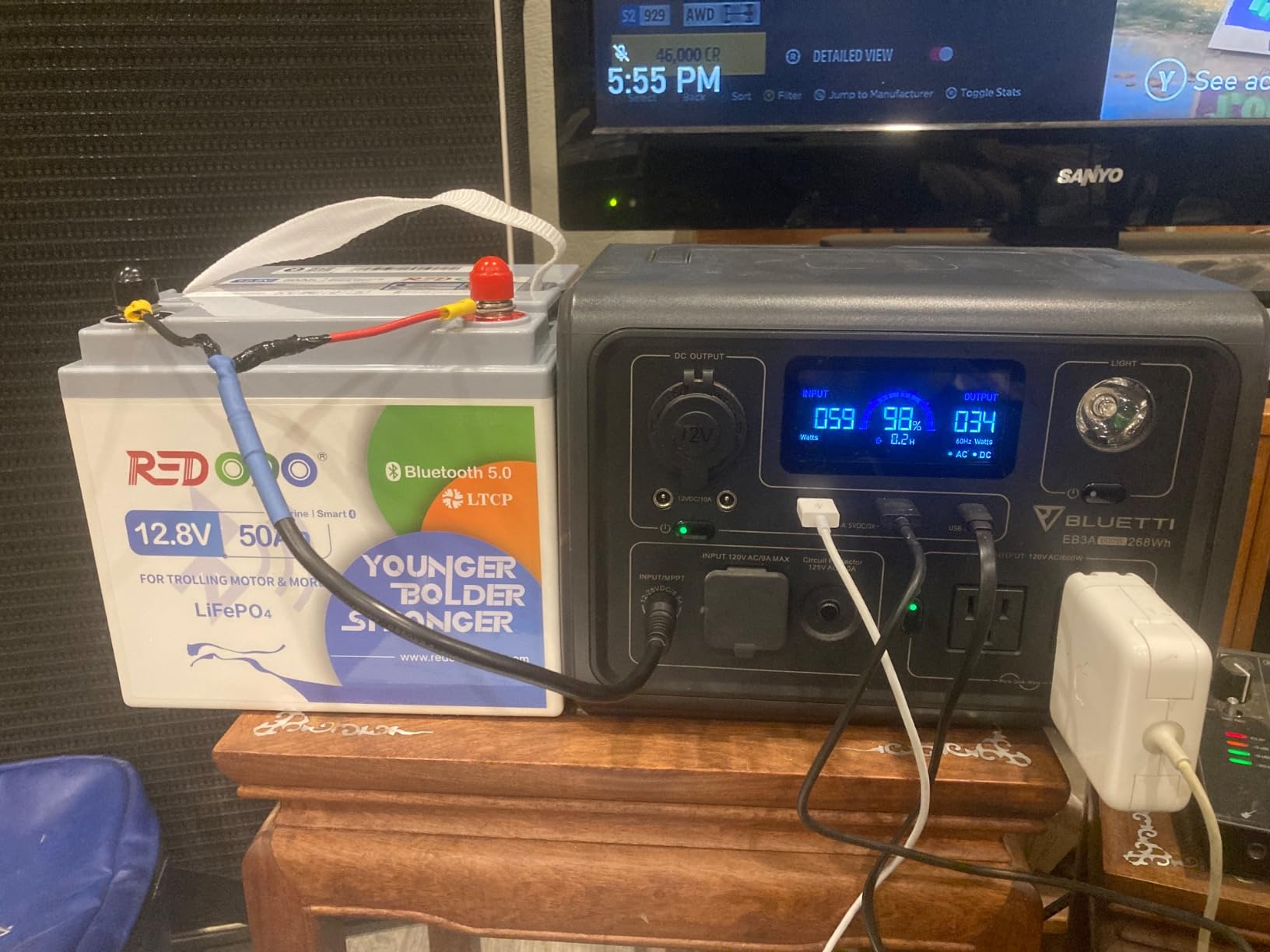
Two design details are worth calling out. The case is white, and that is a deliberate thermal decision, because a lighter shell absorbs less heat in direct sun on a hot flats day. And the unit is rated for 4000-plus cycles with a 10-year lifespan under an IP65 housing with a 32F low-temperature charging cut-off. Up to four units can be combined into a 7.68kWh system.
The weak spot is the app, and it is the most repeated complaint in reviews. Owners describe it as clunky, requiring email registration and frequently not remembering the battery between sessions. Some also report capacity shortfalls and frustration with the warranty testing process, though Redodo’s support has generally replaced faulty units quickly.
Will a 36V trolling motor run on a 24V bank?
No. A 36V motor needs a 36V bank, and feeding it 24V reduces thrust dramatically and triggers a low-voltage fault or protection cutoff on most modern units. Voltage matching is not a preference on these motors.
Conversely, a 24V motor will run on a 36V bank only if the motor’s controller has an input range that includes it, and most do not. Buy the bank that matches the label on your motor head.
Is one 36V pack better than three 12V batteries in series?
Yes on weight, space, and wiring complexity. One 33-pound case replaces three 12V batteries, which in a comparable AGM Group 27 configuration would total well over 150 pounds. You also eliminate two inter-battery cables, which are corrosion sites.
Series wiring has one advantage worth knowing: if one unit fails, you still have half a bank. A single 36V pack that goes down leaves you paddling. That is a reliability argument, and for tournament anglers running far from a ramp it is the reason some still wire three batteries in series.
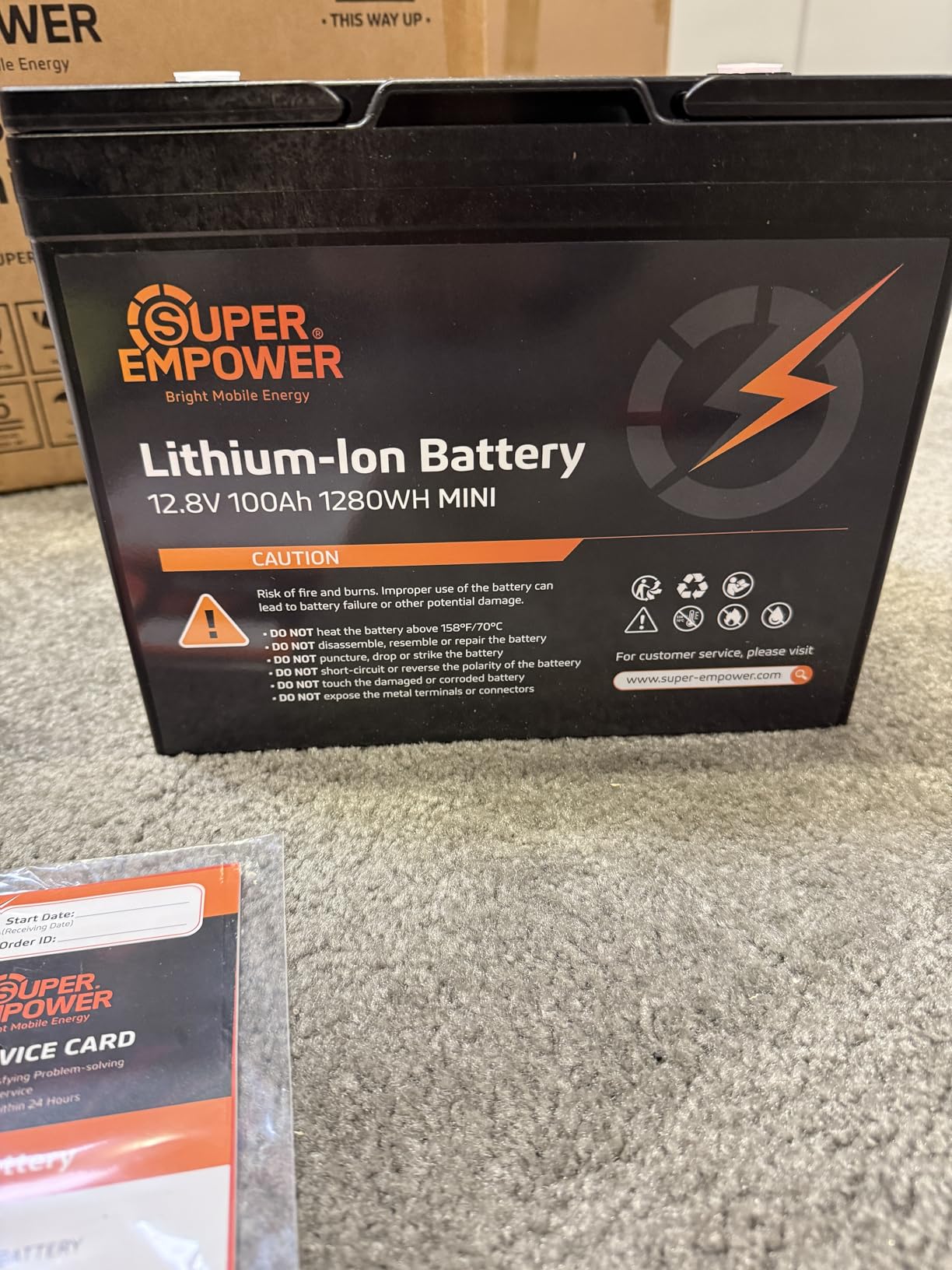
4. SUPER EMPOWER 12V 100Ah LiFePO4 – Best Value Group 24 Drop-In
12V 100Ah LiFePO4 Battery, Group 24 Deep Cycle for RVs & Trolling Motors
12.8V 100Ah LiFePO4
1280Wh
21.6 lbs
5-year warranty
Pros
- Compact Group 24 footprint at only 21.6 lbs
- 100A BMS with full protection suite
- Low-temperature charging protection
- Scales to 20.48kWh for larger banks
- 5-year warranty with support responding within 24 hours
Cons
- Requires a dedicated LiFePO4 charger
- Not suitable for engine starting or cranking
This is the pick if your battery box is sized for a Group 24 and you do not want to modify anything. At 21.6 pounds and 10.24 by 6.49 by 8.98 inches with M8 terminals, it is a true drop-in replacement for lead-acid, AGM, or SLA in that footprint, and it carries 1280Wh with a 100A integrated BMS built from Grade A LiFePO4 cells.
The specification that stands out for marine anglers is the cold-weather behavior. Charging is disabled below 32F, discharge stops at -4F, and charging resumes once the pack is back above 41F. For anyone fishing northern water in October, that protection is the difference between a battery that survives the season and one that does not.
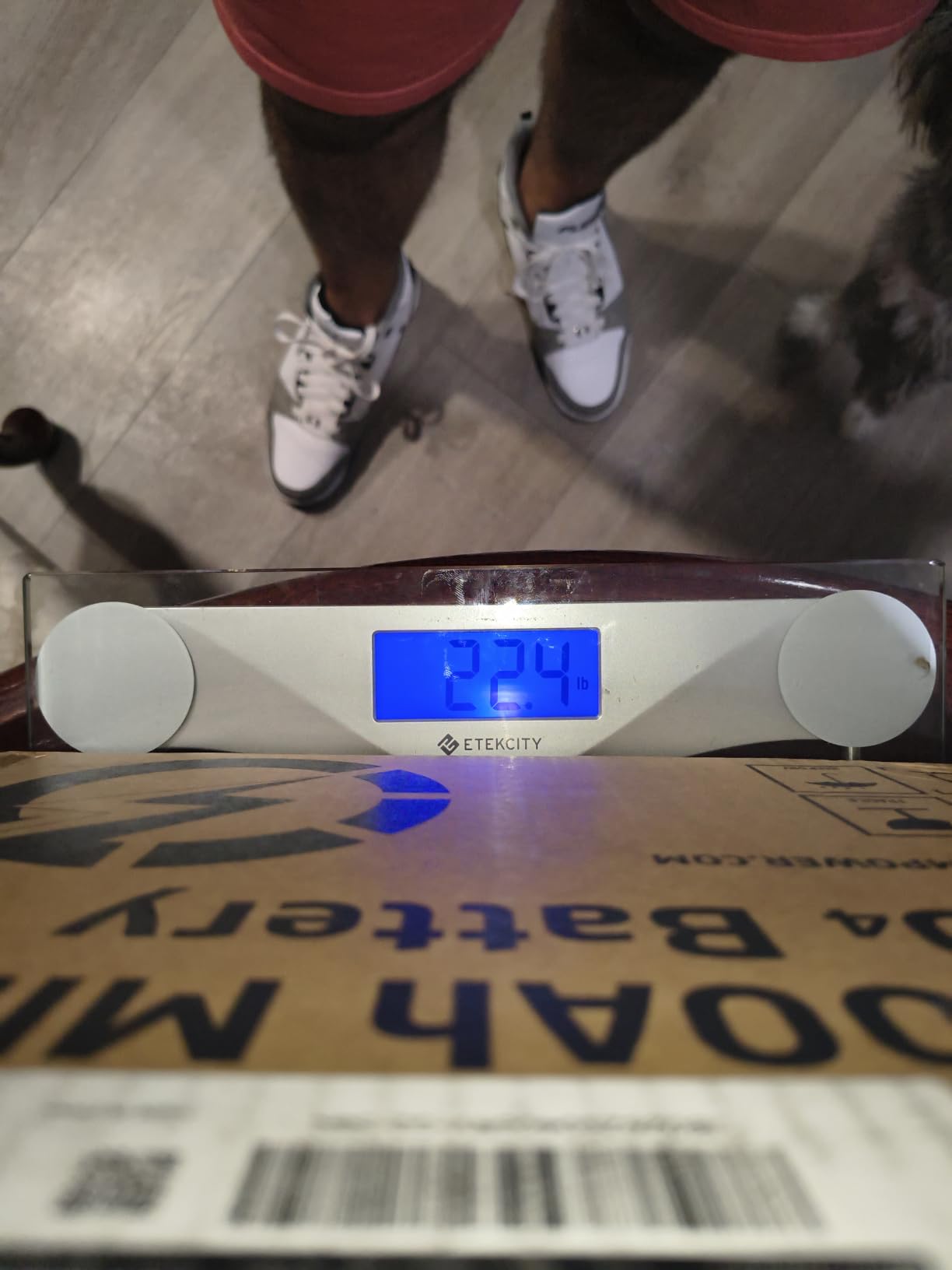
Reviewers consistently like the combination of a true Group 24 case, light weight, and a well-specified 100A BMS. The recurring guidance in the reviews is that a LiFePO4-specific charger is mandatory, whether that is a 14.4-to-14.6V CC/CV unit or an MPPT or PWM controller set to lithium mode, and that the pack is an energy storage device rather than a starting battery.
Expansion is straightforward as well. It can be built up to 4S4P, or 51.2V 400Ah and 20.48kWh, so a single unit can be the start of a much larger house bank if your boat ever needs one.
Will this Group 24 lithium fit where my old AGM sat?
Yes. It is built to BCI Group 24 dimensions with M8 terminals specifically as a drop-in for lead-acid, AGM, and SLA, so the wiring and the box stay as they are. Measure anyway, because Group 24 cases vary slightly between manufacturers.
If your existing battery is a Group 27, this is a step down in footprint and you will have empty space, which is fine on a deck but tight in an enclosed compartment. Our deep-cycle marine battery guide covers the case-size differences in more detail.
What charger do I need for this LiFePO4 pack?
A LiFePO4-specific charger, and nothing else. A 14.4-to-14.6V CC/CV unit works, as does an MPPT or PWM controller in lithium mode. Running a lead-acid profile against lithium cells is the most common self-inflicted failure in this whole category.
Budget for the charger as part of the purchase rather than an accessory. Anglers on fishing forums make the same point in different words, and switching chemistries in a boat that already has a marine charger on it usually means buying new hardware.
5. DC HOUSE 12V 100Ah Bluetooth – Best for Fault Alerts and Per-Cell Data
DC HOUSE 12V 100Ah Bluetooth LiFePO4 Trolling Motor Lithium Battery
12.8V 100Ah LiFePO4
Bluetooth 5.1
23.8 lbs
3-year warranty
Pros
- Bluetooth 5.1 app reports accurate per-cell data
- Push notifications when a fault appears
- Aggressive low-temperature cut-off at 19.4F
- Group 24 sizing fits most standard boxes
- Light enough to handle one-handed
Cons
- Only a 3-year warranty
- Slightly taller than standard Group 24
- 4P4S expansion not allowed
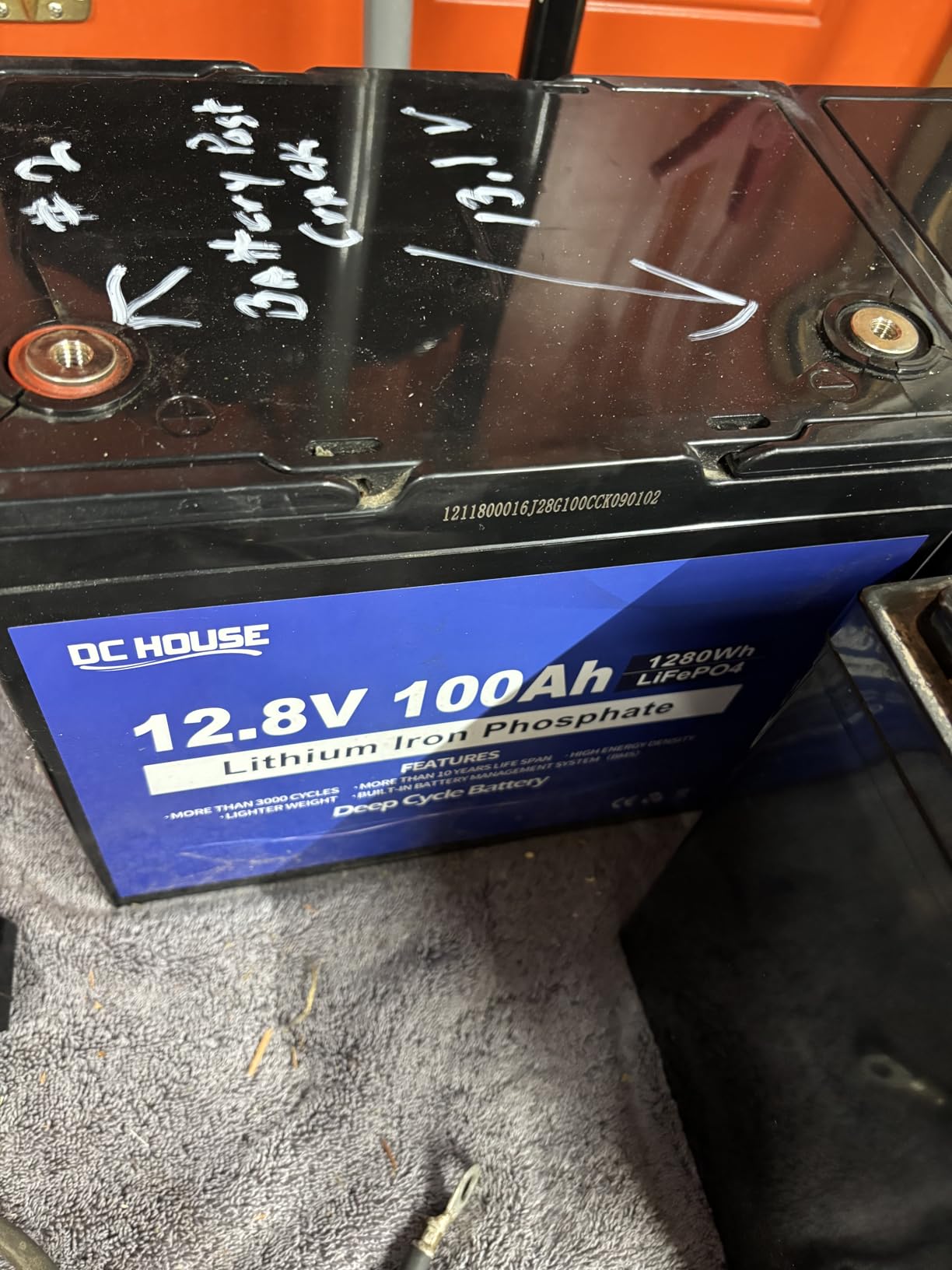
Where the LiTime app shows you a number, the DC HOUSE app shows you the number and the reason. Bluetooth 5.1 with a 5-to-10m range feeds cell-level state of charge, voltage, and current data to the DC HOUSE app, along with a dedicated fault display page and push notifications when something goes wrong.
For multi-day trips and cold water, that granularity is worth more than it sounds. The low-temp protection here is the most aggressive in the roundup, with charging stopping below 19.4F, discharge stopping below -4F, and automatic resume at 32F, which is meaningfully better than the standard 32F charging cut-off on most packs.
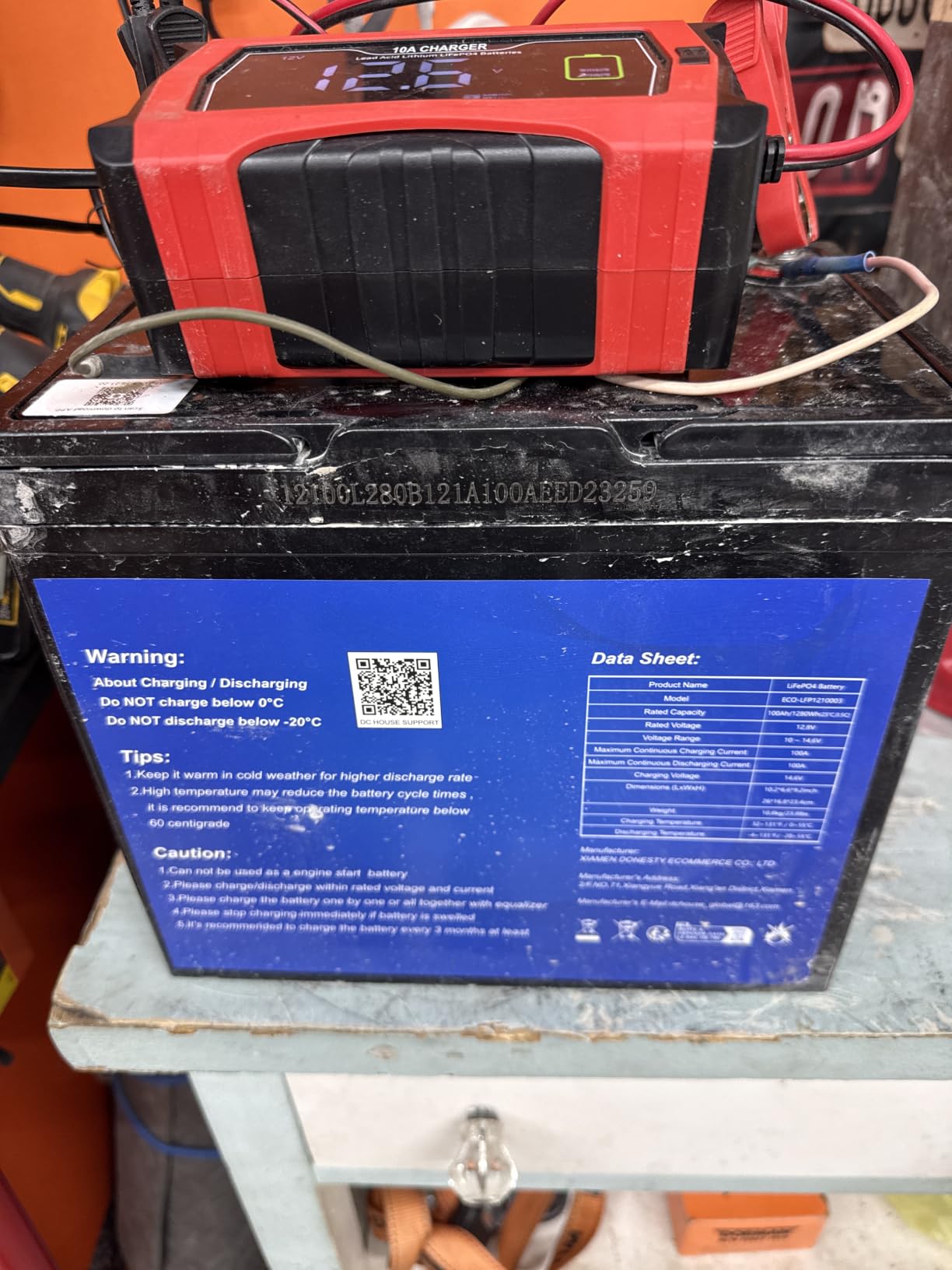
Cells are UL and UN38.3 certified, the company claims up to 15000 cycles and a 10-year service life, and the case measures 6.6 by 10.2 by 9.2 inches. Note the height: at 9.2 inches this is about 0.32 inches taller than a standard Group 24, and in a tight battery box with a lid that also has to clear a hold-down, that extra fraction of an inch decides whether the lid closes.
The 3-year warranty is the weakest point here relative to the five-year terms on most rivals, and 4P4S configurations are not allowed, which caps expansion at eight batteries. Neither is disqualifying; both are worth knowing before you plan a build.
Is Bluetooth battery monitoring actually worth having?
On a single 12V setup fishing a lake you know well, it is a convenience. On a multi-day trip or a 24V or 36V bank, it is close to essential, because that is where a weak cell shows up first and where you have no other way to see it before the bank sags.
Fishers running multi-day trips list the absence of state-of-charge monitoring as a dealbreaker for a reason. If that describes your use, this pack’s fault page and push notifications are the best of the group.
Will it physically fit my battery box?
Almost certainly, with one caveat. The footprint is Group 24 at 10.2 by 6.6 inches, but the height is 9.2 inches versus a standard Group 24. Bring a tape measure and check the clearance under your hold-down bar, because the warranty is 3 years rather than 5 and you do not want to be fighting the lid every launch.
6. VEMDIA 12V 100Ah Group 31 – Most Versatile for a Lightweight 12V Bank
12V 100Ah LiFePO4 Lithium Battery Group 31 Deep Cycle for RV Trolling Motor
12.8V 100Ah LiFePO4
1280Wh
24 lbs
2-year warranty
Pros
- Lowest cost per amp-hour in this 12V 100Ah group
- True Group 31 drop-in at 24 lbs
- 15000-plus rated cycles at 60 percent depth of discharge
- Full charge in about 5 hours on a 20A LiFePO4 charger
Cons
- Shortest warranty here at 2 years
- Higher internal resistance at 120 milliohms
- Screw terminals rather than common M8 hardware
The VEMDIA gets you a genuine Group 31 LiFePO4 case weighing 24 pounds with 1280Wh of capacity, and it is the cheapest way in this list to a light 12V 100Ah pack. Reviewers consistently describe it as the budget pick, with solid runtime and a case size that fits standard marine battery boxes.
Cycle claims are strong on paper: 15,000-plus at 60 percent depth of discharge, 8,000-plus at 80 percent, and 4,000-plus at 100 percent, with a stable LiFePO4 chemistry rated as having no thermal runaway risk. It also holds about 70 percent of the weight of a comparable lead-acid unit, which matters on a smaller boat.
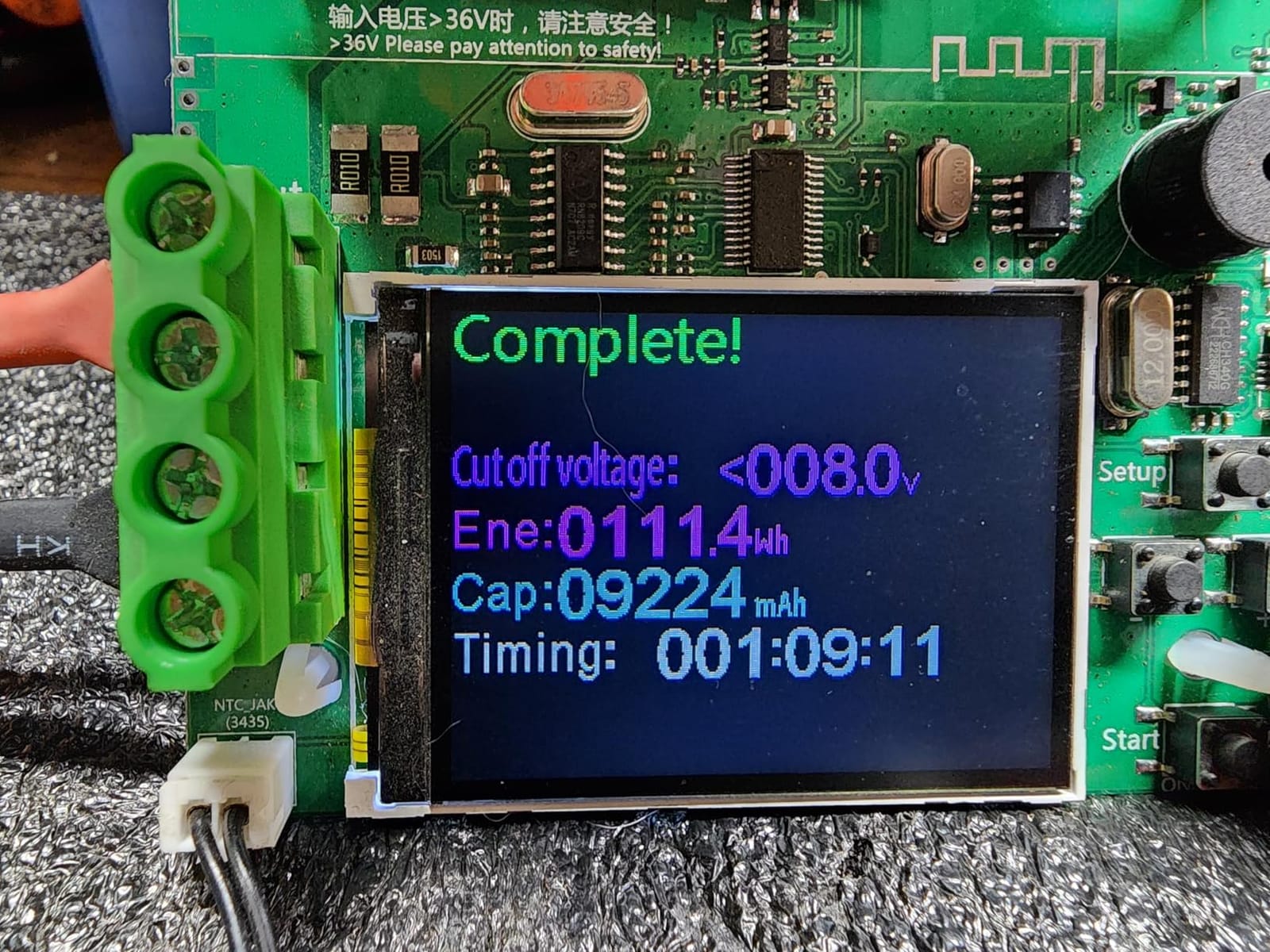
Charging is the underrated feature. With a 14.6V 20A LiFePO4 charger, it reaches full charge in about 5 hours, and its 100A smart BMS handles the protection suite. The discharge operating range is -4F to 140F with a low-temperature charging cut-off at 32F, and it expands to 4S4P up to 51.2V 400Ah.
What holds the rating back is consistency rather than capability. Twelve percent of reviews are one-star, which is more than most of the lithium packs here, and reviewers cite the 120 milliohm internal resistance as high relative to premium 12V 100Ah units. Screw terminals instead of the M8 hardware common on rivals is a small thing, but it means different cables on a mixed bank.
Is a 2-year warranty a reason to skip this battery?
Not by itself. Two years is enough to see whether the pack holds up, and if it survives two seasons most owners will keep going. It is a real risk on a 10-year service-life claim though, and it is the main reason this pack sits below the SUPER EMPOWER in our ranking rather than above it.
If you keep your batteries three seasons or less, this is a reasonable trade. If you are buying once for the foreseeable future, the five-year terms elsewhere are worth the difference.
Will screw terminals work with my existing battery cables?
Usually, but plan on new lugs. M8 hardware is the near-universal standard on modern LiFePO4 packs, and if your current cables are fitted with M8 ring terminals you will need to re-terminate them for this pack’s screw posts.
That is a 10-minute job with a proper crimper and about a pound of copper lugs. It is also a reasonable reason to buy a matched set rather than mixing a VEMDIA with M8-equipped units in the same boat.
7. LGECOLFP 24V 50Ah – Best Lightweight 24V Pack on a Small Footprint
24V 50Ah Trolling Motor Lithium Battery,Built-in 50A BMS,1280W Power Output,Deep Cycle Group LiFePO4 Battery Perfect for Trolling Motor, Marine, RV, Fishing Finder, Solar and Off Grid
25.6V 50Ah LiFePO4
Group 24 case
50A BMS
12-month warranty
Pros
- Very light relative to a pair of 12V lead-acid batteries
- 50A BMS handles high-thrust 24V motors
- Fast solar charging and quick recharge
- Group 24 footprint fits standard boxes
Cons
- Shortest coverage here at 12 months plus a 3-month return window
- Some units failed within a few trips with no remedy
- One unit arrived with a faulty cell group
This is a 24V pack for anglers running 70-to-100lb thrust who care most about the footprint. The 25.6V 50Ah unit sits in an IP65 ABS housing sized to Group 24 BCI standards at 10.24 by 6.6 by 8.3 inches, and the 24V architecture cuts wiring cost and space compared with wiring two 12V batteries in series.
Discharge capability is 50 amps continuous and 60 amps sustained for 30 minutes through a built-in 50A BMS, with a 4000-plus cycle design life and an energy density of 66.7Wh per pound. That is a high figure, and it is why owners describe a dramatic improvement over the lead-acid pack they replaced.
Owners like the fast solar charging, which pairs well with a panel mounted on the console, and the fact that the Group 24 case drops into a standard battery box. One buyer reported a polarity issue that seller support resolved quickly.
The warranty is the problem, and it is not a small one. Coverage is 12 months with a 3-month free return window, the shortest of all ten products here, and reviewers specifically report a battery that failed after only a handful of trips with the seller declining a replacement past the return window. Some units also arrived with a faulty cell group. On a pack this light and this capable, that is a meaningful risk profile.
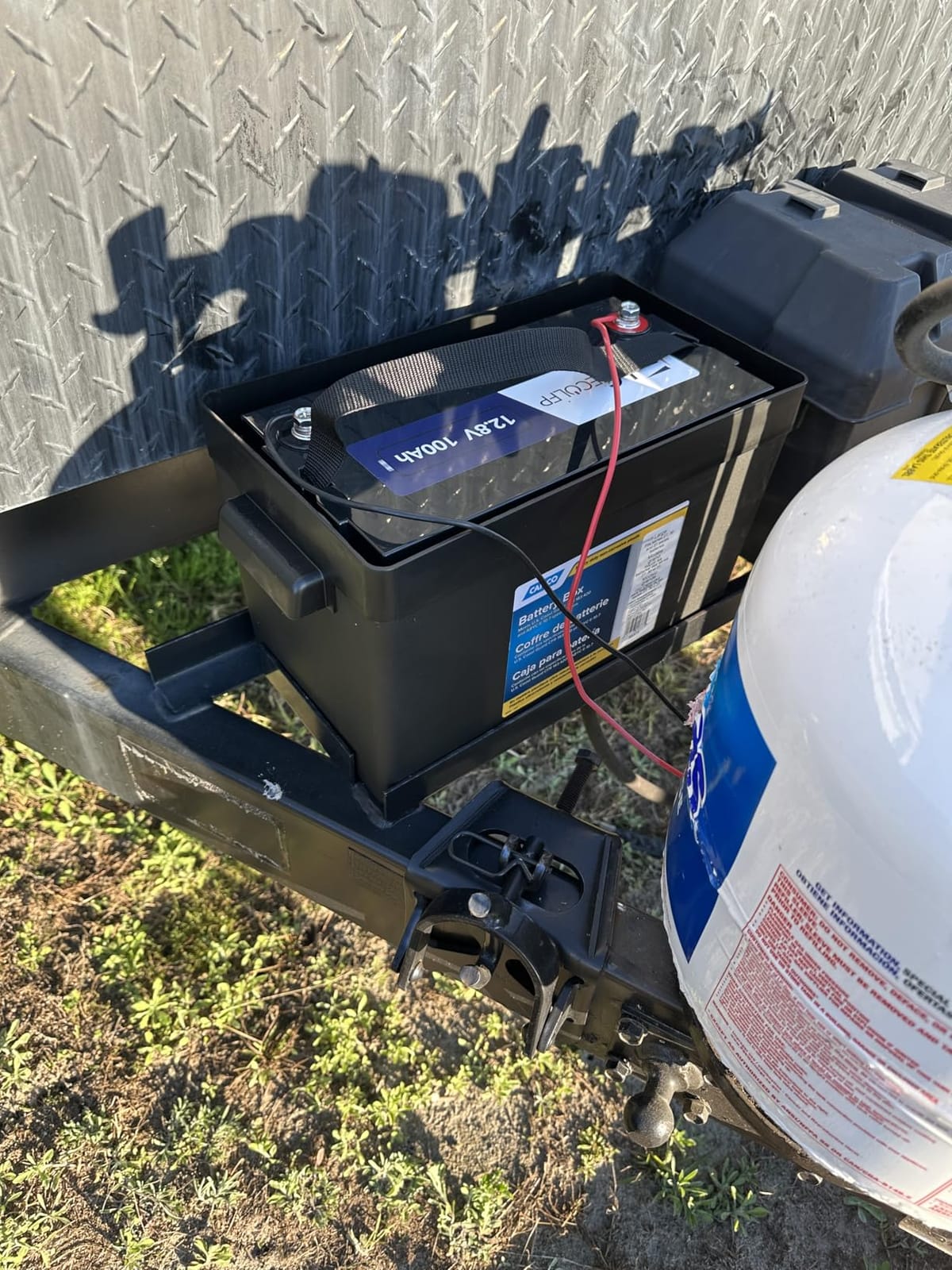
Is a 24V 50Ah pack enough for a full day on 70-100lb thrust?
On a moderate day, yes. 50Ah against a 25-amp average draw on a 70lb motor gives about 2 hours, but on a 24V system your motor draw in amps is roughly half what the same thrust draws on 12V, so realistic draws of 12 to 15 amps put you at 3 to 4 hours. That is a half day, and it is not a tournament-length day.
For full-day fishing on a 24V system, look at the LiTime 24V 50Ah further down with its 5-year service term and a larger review base, or run two 24V packs in parallel if your charger can handle it.
Is a 12-month warranty enough to risk on a trolling battery?
For a boat you will use for one or two seasons, you can absorb it. For a battery you expect to last a decade, no. The failure reports on this pack cluster in the first few trips, which means a short warranty is the wrong structure for a product sold on a 4000-cycle design life.
We would buy this pack only with a clear understanding that the first season is the test, and a willingness to replace it if the cells disappoint.
8. HeyFuture 12V 100Ah Bluetooth – Best Group 24 Fit with a Real BMS
HeyFuture 12V 100Ah Bluetooth LiFePO4 Battery for Rv, Trolling Motors, Boat
12.8V 100Ah LiFePO4
1280Wh
21.5 lbs
5-year warranty
Pros
- Runtime on a 36lb motor in a 12ft boat stayed above 85 percent
- Exceptionally light at 21.5 lbs
- JBD 100A smart BMS with welded busbars and temperature sensing
- App toggles charging and discharging and shows cell balance
Cons
- Unbranded cells mean true capacity is unverified
- No internal fuse so an external fuse is required
- App interface is poor and pairing is unreliable
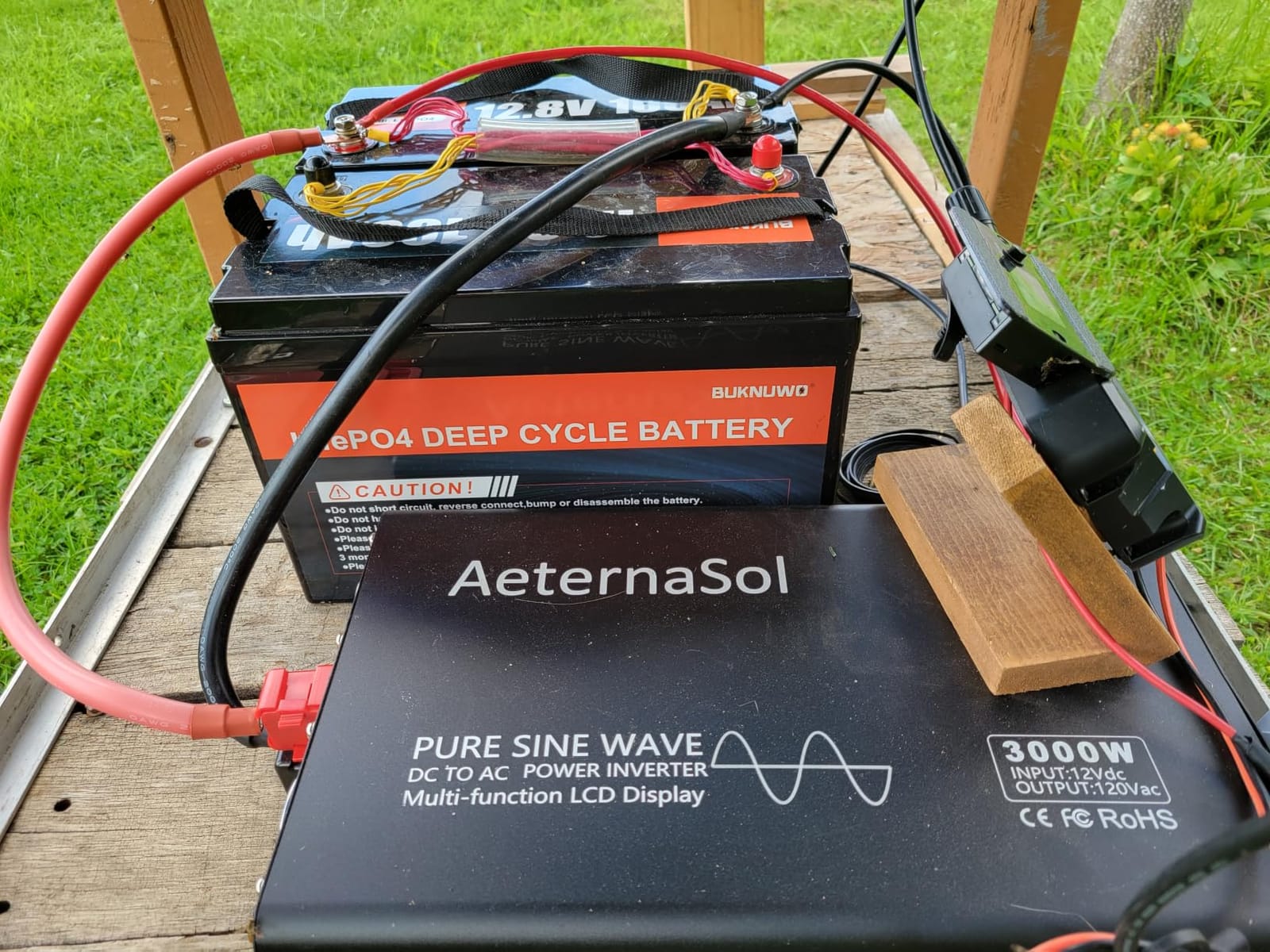
At 21.5 pounds, this is the lightest 12V 100Ah pack in the roundup, and the one that gets the most specific praise from people actually using it on a trolling motor. One owner reports runtime on a 36lb thrust motor in a 12-foot boat that never dropped below 85 percent even at full throttle, which is a small-boat angler describing exactly the kind of day this roundup is about.
What separates it technically is the battery management system. It uses a JBD 100A smart BMS with welded busbars and temperature sensing, and the app lets you toggle charging and discharging and inspect cell balance. Reviewers who know what they are looking at confirm the busbars are real rather than cosmetic.
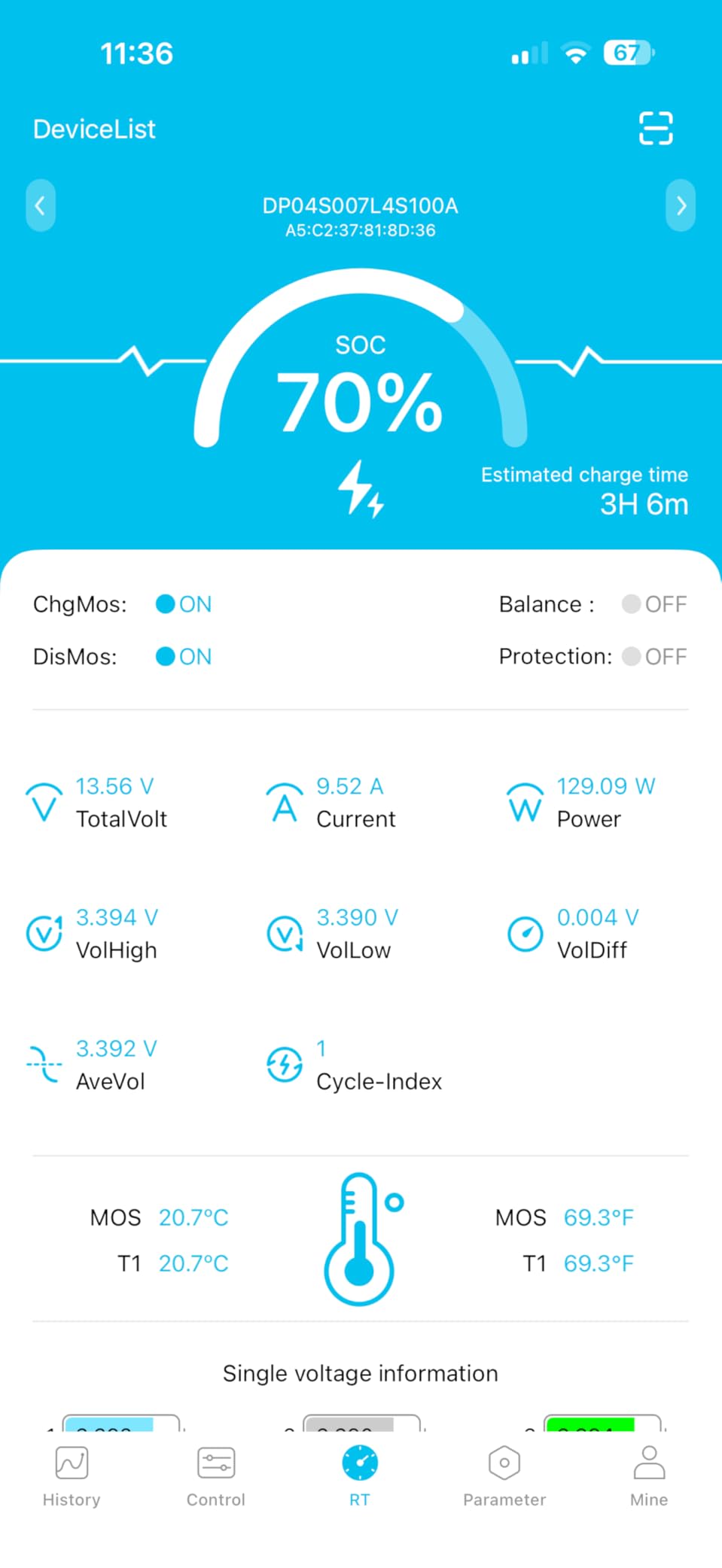
The case is Group 24 standard at 10.24 by 6.61 by 8.3 inches with M8 terminals, a drop-in for lead-acid, AGM, or SLA, and it expands to 4S or 4P up to 48V 400Ah. The casing is shock-resistant for rough water, and low-temperature cut-off is built in.
The technical criticism is worth reading before you buy. The cells are unbranded, so true capacity and cycle life are unverified, and there is no internal fuse, which means an external fuse is required regardless of how the battery is installed. The 4S2P layout also prevents the BMS from monitoring each 50Ah cell individually, and some packs arrive at low voltage with cells that do not reach full charge.
Do I need to install an external fuse with this battery?
Yes. There is no internal fuse in this pack, so a properly rated marine fuse on the positive lead is not optional. This is standard practice on any lithium install anyway, and most quality installers will specify one regardless of the battery you choose.
It is worth adding to your checklist if you are comparing this to a pack with internal fusing, but it is a small task rather than a reason to rule the battery out.
Is a Group 24 case too small for a full day of trolling?
The footprint does not limit runtime; the 1280Wh of capacity does. At 100Ah rated against a 10-amp draw, you get roughly 9 to 10 hours, which is a full day on a 12V setup. Group 24 is smaller than Group 31, so if your compartment is generous, a Group 31 pack gives you more mounting room and better cooling rather than more capacity.
For a small boat or a tight compartment, Group 24 at 21.5 pounds is the right shape of answer, and the 5-year warranty is a genuine advantage over several cheaper packs.
9. BUKNUWO 12V 100Ah Bluetooth – Most Telemetry per Amp-Hour
BUKNUWO 12V 100Ah LiFePO4 Lithium Battery with Bluetooth,15000+ Cycles Lithium Battery for Trolling Motor, Off-Grid,Boat,RV, Marine, Solar (12.8V 100Ah-Bluetooth)
12.8V 100Ah LiFePO4
1.28kWh
22 lbs
5-year warranty
Pros
- App shows SOC
- current
- wattage
- cycle count and temperature together
- Bluetooth range reached 200ft in clear line of sight
- Under 5 percent monthly self-discharge
- Support shipped a free LiFePO4 charger and a replacement
Cons
- One review reports about half the charge draining while sitting idle for two days
- Cell imbalance on a 150Ah variant stopped charging at 13.66V
- App refresh rate is inconsistent and pairing is unreliable
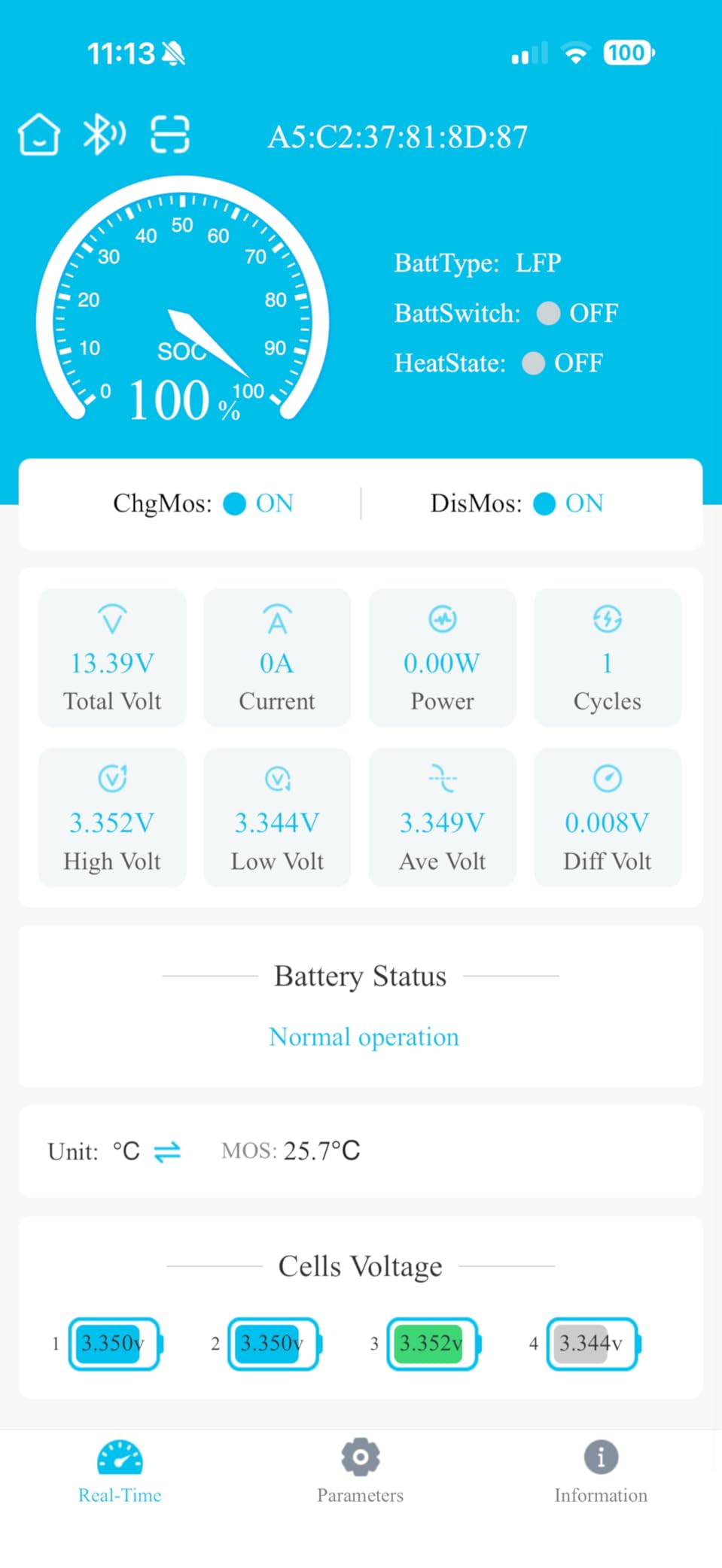
The BUKNUWO puts more information on one screen than anything else in this roundup. The Bluetooth 5.0 app works within about 33 feet and shows state of charge, voltage, current, power, temperature, cycle count, and protection status simultaneously, and one owner measured a 200-foot range in a clear line of sight. The 100A BMS reports discharge from -20C to 60C and charging from 0C to 45C.
Capacity is 1.28kWh with up to 95 percent usable versus roughly 50 percent for lead-acid, and the cycle claims are 4000 at 100 percent depth of discharge, 6000 at 80 percent, and 15000 at 60 percent. Self-discharge is under 5 percent monthly, the case is ABS with dustproof and light waterproof protection, and it weighs 22 pounds.
Support has been a genuine strength. Owners report support shipping a free LiFePO4 charger along with a replacement battery to resolve an issue, which matters for a brand you may not have heard of before.
It is also the lowest-rated pick here at 4.2, driven mainly by reliability reports. Twelve percent of reviews are one-star, the highest share in the group, and the specific complaints are concrete: one owner reported roughly half the charge draining over two days sitting idle, and a cell imbalance on a 150Ah variant caused charging to stop at 13.66V. The app also refreshes inconsistently and sometimes fails to connect on the first attempt.
Does the app actually show useful information for fishing?
Yes, more than most. Seeing cycle count and temperature alongside state of charge tells you whether a battery that feels flat is actually cold, depleted, or developing a problem, and the temperature reading is genuinely useful on a cold October morning when a lithium pack is underperforming.
The caveat is reliability of the connection rather than the data. Reviews describe an app that syncs slowly and sometimes needs a second attempt, so treat it as a diagnostic tool rather than something to stare at continuously.
Should I worry about self-discharge and cell imbalance?
Self-discharge under 5 percent monthly is a good number, and the one idle-drain report is an outlier rather than a pattern. Cell imbalance is the one to watch, because a pack that stops charging well below 14V is a pack with a weak cell, and the BMS cutting charge at 13.66V is the protection working as designed.
If that happens, stop topping it off and get support involved rather than forcing the charge. A 5-year warranty helps here, and it is a large part of why this pack is still worth considering despite the lower average rating.
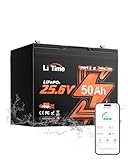
10. LiTime 24V 50Ah Bluetooth – Best Multi-Day 24V Setup
LiTime 24V 50Ah Bluetooth Lithium Trolling Motor Battery for Marine
25.6V 50Ah LiFePO4
Group 24 at 21 lbs
50A BMS
5-year service
Pros
- Owners report two full days of fishing with 70 percent charge remaining
- Single pack replaces two heavy 12V batteries and simplifies wiring
- Weighs 21 lbs and handles one-handed
- Bluetooth 5.0 monitoring with discharge control
Cons
- Requires a dedicated LiFePO4 charger which is not included
- 50A BMS is the lowest current rating among the 24V options
- One owner reported a pack that stopped accepting charge
For a 24V setup running 70-to-100lb thrust, this is the most complete package on the list: 25.6V 50Ah in a Group 24 footprint at 10.24 by 6.61 by 8.3 inches, weighing 21 pounds, with Bluetooth 5.0 monitoring, a 50A BMS, and a 5-year service term. It is the OEM equivalent of two 12V 100Ah batteries in one case.
Owners running Minn Kota Ulterra setups report two full days of fishing with 70 percent charge remaining, which is the strongest single runtime claim in this roundup and the one that most directly answers the question of whether a 24V bank survives an all day on the water.
Protections are thorough: TVS surge protection, shock resistance for wet marine conditions, a 50A BMS with more than 20 protections, 4000-plus cycles at 100 percent depth of discharge, 6000 at 80 percent, and 15000 at 60 percent. Discharge stops below -4F and charging below 32F, and it expands to 4P2S up to 10.24kWh.
Two things to plan for. The dedicated LiFePO4 charger is not included, and the 50A BMS is the lowest current rating among the 24V options in this roundup, so it suits a 24V motor that is not constantly at full boost. One owner also reported a pack that stopped accepting charge after about a year, which LiTime’s support resolved with an immediate replacement and free overnight shipping.
How long does a 24V 50Ah battery last on a 70-100lb motor?
On a typical day, 5 to 7 hours, which comes out of a 50Ah bank against a draw of roughly 8 to 12 amps on a 24V system. The 24V architecture is the reason a moderate bank lasts so long, since the motor draws fewer amps to produce the same thrust.
Owners report considerably more, and one describes two full days with 70 percent remaining. The difference is wind, current, and how much time you spend at high throttle, which is exactly why we recommend a 30 percent reserve rather than running to zero.
Is a single 24V pack better than two 12V batteries in series?
For weight and simplicity, clearly. One 21-pound case replaces two batteries that in lead-acid would total well over 100 pounds, and the wiring drops to a single positive and a single negative run. The Group 24 footprint is the real win, because it fits standard battery boxes.
The counterargument is redundancy. With two in series, a failure leaves you with 12V and reduced thrust rather than nothing. With one pack, a failure means you call it a day. For tournament anglers running far from a ramp, that trade is worth thinking through.
LiFePO4 vs AGM vs Lead-Acid: Which Chemistry Should You Buy?
Buy LiFePO4 unless you have a specific reason not to. That is not a slogan, it is the arithmetic: lithium gives you roughly twice the usable capacity of lead-acid, about a third of the weight, three to five times the cycle life, faster charging, and a built-in battery management system with Bluetooth monitoring on most of the packs here.
The cycle life gap is the one that decides the long term. AGM is generally good for a few hundred deep cycles before it degrades, which matches the forum reports of lead-acid sets lasting two seasons. The LiFePO4 packs in this roundup are rated from 4000 cycles at full depth of discharge up to 15000 at 60 percent. Over a decade of fishing, that is the difference between replacing your bank three times and replacing it once.
Weight is the second argument and the one anglers argue about most. A 100Ah AGM Group 27 weighs about 68 pounds. The 12V 100Ah lithium packs here weigh 21.5 to 24 pounds. For a 24V system where you need two batteries, that is the difference between 136 pounds of lead and 43 pounds of lithium, and it is why people planning a jon boat install keep quoting the weight of a 24V 100Ah LiFePO4 setup against a single 12V 75Ah lead-acid deep cycle.
Now the honest caveat, because the 2x claim has limits. Anglers on The Hull Truth and in-depthoutdoors point out that at realistic 5-to-10 hour discharge rates the lithium advantage narrows to roughly 20 percent better, not double. The full 2x shows up when you compare lithium’s 95 percent usable capacity against a lead-acid pack that has been aged and sulfated. Fresh AGM is much closer than the marketing suggests, and an AGM run on three-hour days will last for years.
Wet cell flooded lead-acid is the cheapest option and the worst on a boat. It needs water top-ups, vents gas, needs to be upright, and loses capacity fast when left discharged. Gel is sealed like AGM but charges more slowly and is more sensitive to overcharge. AGM is the only lead-acid variant we would put on a boat today, and lithium beats it on every axis except upfront cost and charger compatibility.
Cost per season is where lithium starts to look obvious. Even at several times the upfront price of an AGM set, divide by the service life and the per-season cost usually lands lower, and that calculation gets better the more you fish. Someone fishing 50-plus days a year is the clearest case for going lithium; someone fishing 10 days a year on a rental boat is the clearest case for not bothering.
How to Choose the Right Trolling Motor Battery
Start with your motor’s thrust rating, because it dictates voltage, and voltage dictates the whole bank. 30 to 55lb runs on 12V. 60 to 80lb needs 24V. 100lb and above needs 36V. Everything else follows from that number, and no battery compensates for a mismatched system.
Next, size the capacity against your actual day. Multiply your typical motor draw by the hours you fish, then compare that to the usable capacity, which is roughly 90 percent of rated for lithium and roughly 50 percent for AGM. Add a 20 to 30 percent reserve for electronics and getting home. If you fish 10 hours at an average 10 amps, you want about 125Ah of usable capacity, which means a 100Ah lithium pack used conservatively or a 100Ah AGM run well within its comfort zone.
Then check weight against your boat. A kayak or a small jon boat has a hard weight limit that is not a preference, and a 68-pound AGM is a different proposition there than a 22-pound lithium pack. If your boat is rigged for fishing from a kayak, the weight question answers itself.
Look for a real battery management system. Every lithium pack here has one, but they are not equal. A 100A BMS with a reputable controller, welded busbars, and temperature sensing gives you better protection than a token BMS, and Bluetooth monitoring that reports cell-level data is worth paying for on multi-day trips.
Check the low-temperature charging cutoff. The standard is 32F, and packs like the DC HOUSE and SUPER EMPOWER go further, disabling charge well below freezing and resuming only when the cells are warm again. Given when most anglers buy batteries, this matters.
Then weigh warranty length as a proxy for manufacturer confidence. Terms in this group range from 12 months to 5 years, and that spread usually tracks build quality and cell sourcing. A 5-year warranty on a pack with Grade A cells is a reasonable signal; a 12-month warranty on a 4000-cycle design life is a warning.
Finally, budget for the charger. A LiFePO4 pack needs a LiFePO4 profile, either a 14.4-to-14.6V CC/CV charger or an MPPT or PWM controller in lithium mode. If your boat already has a multi-chemistry marine charger, verify it profiles lithium before you buy. Our deep-cycle marine battery guide covers charger selection in more depth.
One last decision axis: how many batteries. A single 24V or 36V pack simplifies wiring and saves space, while two 12V batteries in series give you redundancy if one fails. Tournament anglers far from a ramp often keep the series setup for that reason alone, and it is a question that comes up repeatedly across every boating forum we read.
Charging, Maintenance, and Offseason Storage
Lithium simplifies maintenance to the point where almost nothing is required. There is no water to top up, no venting, and no equalization cycle. What you do need is the right charger, and that is the one thing that damages LiFePO4 packs most often. Use a 14.4-to-14.6V CC/CV charger, or an MPPT or PWM controller set to lithium mode, and do not run a lead-acid profile against lithium cells.
Charge in the cold is the seasonal issue. Most packs in this roundup disable charging below 32F because charging lithium cells at freezing temperatures plates lithium metal on the anode, which permanently reduces capacity. A few include heating or more aggressive cut-offs, and a couple of brands offer a self-heating variant. If you store the boat outside in winter, bring the battery to about 40 to 50 percent and keep it in a temperature-controlled space.
Do not run lithium flat. The BMS will protect the cells, but repeated deep discharges below 20 percent shorten life even when the protection works. Plan trips using 80 percent of rated capacity and keep the rest for electronics and the run home.
Lead-acid has its own failure mode: sulfation. It happens when a battery sits partially discharged for months, when sulfate crystals form on the plates and reduce capacity permanently. If you are keeping an AGM bank, keep it charged and cycle it. If you are switching to lithium, you sidestep the problem entirely, which is part of why the older packs fade before anglers expect.
Do not overcharge AGM. Overcharging boils the electrolyte, it percolates through the plate separators, and it can crack the case. This is why temperature-compensated smart chargers matter on lead-acid, and why fully draining a pack can leave a charger unable to restart a charge cycle.
Charge while you fish if you run long days or long distances. A panel mounted on the console feeding an MPPT controller is the cleanest option with LiFePO4, and owners running 24V setups report fast solar charging on the packs in this roundup. A dual-bank smart charger keeps the starting battery separate from the trolling bank while both stay topped up, which is the standard setup on a boat with an outboard.
Finally, do not toss your old lead-acid. Lead is a recyclable material, and any retailer or recycling facility will take an old AGM or flooded battery. Take it in when the new bank goes in.
Frequently Asked Questions
How long will a 100Ah battery run a 55lb trolling motor?
About 10 hours in theory and 8 in practice. A 100Ah battery at an average 10-amp draw divides down to roughly 10 hours, but voltage drop, cold cells, and throttle use bring real-world results closer to 8. With LiFePO4 you get nearly all 100Ah, while the same rating in AGM yields about 50 usable Ah, or roughly 5 hours.
What is the best battery to run a trolling motor?
A LiFePO4 deep-cycle battery in the 100Ah class, in a bank that matches your motor’s voltage: 12V for 30-55lb thrust, 24V for 60-80lb, and 36V for 100lb or more. That combination gives you the most usable amp-hours per pound. Match capacity to your day and keep a starting battery separate for the outboard.
Are lithium batteries bad for Minn Kota trolling motors?
No, lithium is fully compatible with modern Minn Kota motors. Two caveats: lithium voltage sags less than lead-acid, so some older analog controllers behave slightly differently, and you should use a LiFePO4-compatible charger with a 14.4-to-14.6V charge profile. Never drop below 20 percent state of charge.
What is the longest-lasting trolling motor battery?
LiFePO4 wins on calendar life. The packs in this roundup are rated from 4000 deep cycles at full depth of discharge up to 15000 at 60 percent, compared with a few hundred for AGM, which usually means two to three seasons before an AGM bank fades. Real-world service depends far more on charging discipline than on brand.
How long will a 36V 100AH battery last on a trolling motor?
A 36V 100Ah describes a bank of three 12V batteries, so runtime comes from the combined 100Ah divided by the motor’s average draw. At 25 amps that is about 4 hours, and at 15 amps about 6.5 hours. Voltage alone does not extend runtime, because a 36V motor drawing 15 amps consumes the same watt-hours as a 12V motor drawing 45.
Are LiFePO4 batteries good for trolling motors?
They are the best fit for most anglers for five reasons. Roughly half the weight of lead-acid, about twice the usable capacity since lead-acid should not be discharged past 50 percent, three to five times the cycle life, faster charging, and a built-in BMS with Bluetooth monitoring on most models. The one real caveat is that charging must be disabled below 32F unless the pack has low-temperature heating.
Will a 36V trolling motor run on 24v?
No. A 36V motor needs a 36V bank. Running it on 24V cuts thrust sharply and, on most modern units, triggers a low-voltage fault or protection cutoff. Match the bank to the label on the motor head rather than trying to make a higher or lower voltage work.
What is the best battery size for a 24v trolling motor?
For a 24V system fishing a full 8-to-10 hour day with a 60-to-80lb motor pulling roughly 12 to 15 amps, you want 100Ah of usable capacity. That means a 24V 50Ah or 100Ah LiFePO4 pack, or two 12V 50Ah-to-100Ah units in series. Add 20 to 30 percent reserve for electronics and the run home.
Which Trolling Motor Battery Should You Buy?
For most anglers on a 12V setup running a 30-to-55lb motor, the LiTime 12V 100Ah LiFePO4 is our pick and the reason we ranked it first. It pairs the highest rating in the group with by far the largest review base, weighs 22.2 pounds, has Bluetooth monitoring, and carries a 5-year warranty. It is the least risky way to move to lithium.
For a 24V boat running 70-to-100lb thrust, the LiTime 24V 50Ah handles multi-day runtime in a 21-pound Group 24 case, with a 5-year service term. For a large bass boat on a 36V system, the Redodo 36V 50Ah replaces three 12V batteries with one 33-pound unit and far less wiring.
If your budget is the deciding factor, the SUPER EMPOWER 12V 100Ah gives you a true Group 24 drop-in at 21.6 pounds with a 5-year warranty, and the VEMDIA 12V 100Ah costs less again if you accept a 2-year term. If you are staying with lead-acid for charger reasons, the VMAX MR127 remains a proven Group 27 AGM, just plan the day around 50Ah of usable power.
Whatever you buy, do the division before you buy it. Rated amp-hours divided by your motor’s average draw is the number that decides whether you fish until dark. That is how we chose the best trolling motor batteries for all day fishing in 2026, and it is the only number in this entire category that does not lie.