
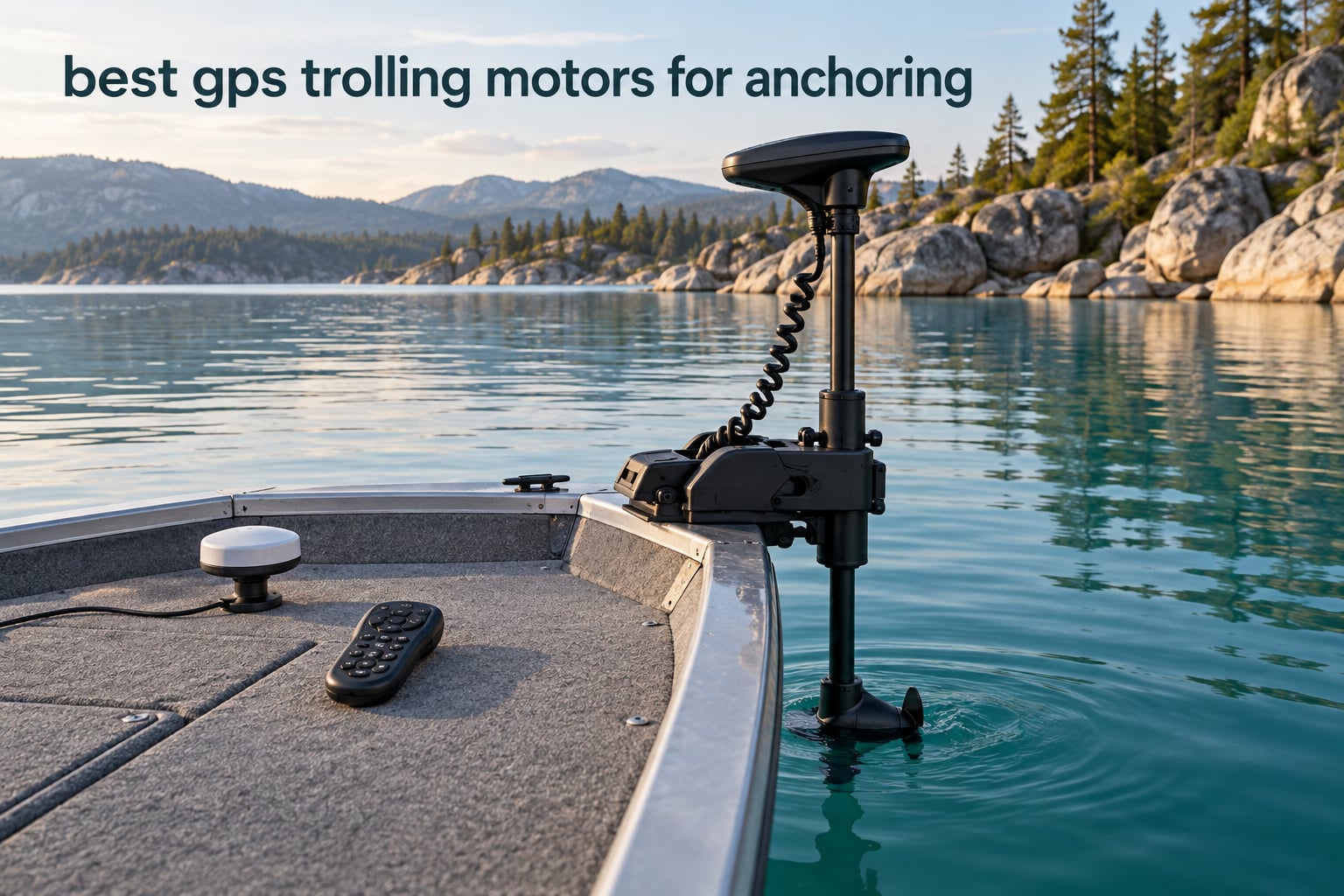
We field-test electronics, run the numbers, and buy the gear we recommend. This roundup is affiliate-supported, so we may earn a commission when you buy through our links at no extra cost to you. We have not physically owned all eight motors below for a full season, and we say so where it matters. What we did do was read every verified owner review on these listings, cross-check the spec sheets against the manufacturer documentation, and sort the results by the one question that matters when you are buying an anchoring motor: does it actually keep the boat where you put it?
The best GPS trolling motors for anchoring are not the ones with the longest feature list. They are the ones where the GPS receiver, the heading sensor, and the motor control board work together without dropping out. That is a narrower test than it sounds, and it is why the roundup below includes a troubleshooting section rather than a spec dump.
Top 3 Picks: GPS Trolling Motors for Anchoring in 2026

Minn Kota Terrova 80 MEGA Down Imaging
- 80 lb thrust on 24V
- Spot-Lock with Jog
- Built-in MEGA Down Imaging

Minn Kota Riptide Terrova 80
- Saltwater corrosion protection
- 80 lb thrust on 24V
- Wireless remote with LCD

The Terrova 80 takes the top spot because it combines one of the two largest owner review bases in this list with a sonar transducer nobody else bundles at this level, and because owners across 58 verified ratings report position holding accurate enough to stop carrying a rope. The Riptide Terrova is the saltwater answer and carries the largest verified rating base in the roundup, while the AQUOS GPS 55 is the pick if your boat already runs on a single 12 volt bank.
Best GPS Trolling Motors for Anchoring in October at a Glance
| Product | Specifications | Action |
|---|---|---|
| Minn Kota Terrova 80 with MEGA Down Imaging |
|
Check Latest Price |
| Minn Kota Riptide Terrova 80 Saltwater |
|
Check Latest Price |
 Minn Kota Kayak Terrova 55 Minn Kota Kayak Terrova 55 |
|
Check Latest Price |
 Garmin Force 57 Inch Garmin Force 57 Inch |
|
Check Latest Price |
 Garmin Force Pro 50 Inch with GT56UHD Garmin Force Pro 50 Inch with GT56UHD |
|
Check Latest Price |
 Garmin Force Kraken 75 Inch Garmin Force Kraken 75 Inch |
|
Check Latest Price |
 Simrad RECON Saltwater 60 Inch Simrad RECON Saltwater 60 Inch |
|
Check Latest Price |
| AQUOS GPS 55 Bow Mount |
|
Check Latest Price |
A few quick reads before the full reviews. There is no transom-mount GPS anchoring motor in this list, and that is not an oversight. Every engine that delivers reliable position holding needs to be at the bow where the heading sensor and GPS antenna get a clean view of the sky, and a transom-mounted unit is fighting you on both counts. If you fish from a transom boat, read our transom mount roundup for the non-anchoring alternatives, then plan a bow mount if you want GPS hold.
Notice also the review counts. Three of these eight have fewer than five verified ratings. That does not make them bad motors, it makes them unproven. We flag that clearly in each review because forum regulars consistently tell us they would rather know a motor is new than pretend the marketing claim is a long-term reliability record.
1. Minn Kota Terrova 80 with MEGA Down Imaging – Best Overall GPS Anchoring Motor
Minn Kota Terrova Bow-Mount Electric Trolling Motor with GPS, Spot-Lock, MEGA Down Imaging – 80 Lb. Thrust, 60 In. Shaft, Freshwater
80 lb thrust on 24V
60 in shaft
Spot-Lock with Jog
MEGA Down Imaging to 200 ft
Pros
- Position holding accurate enough to replace anchoring in calm water
- Built-in MEGA Down Imaging shows structure to 200 ft
- Drift and follow modes add hands-free control
- Digital Maximizer stretches run time up to 5x
- Weedless Wedge 2 prop works through vegetation
Cons
- Sonar nosecone adds shaft bulk and needs a separate display
- Corded foot pedal cable limits deck layout
- Some buyers reported a bracket and thrust rating mismatch
The Terrova is the platform most GPS anchoring buyers end up on, and this 80 lb version is the one that gets recommended most. Owners describe Spot-Lock holding well enough that they stopped tying off to brush piles, which is the entire point of the feature. Reviewers running two 100 amp-hour batteries report full-day trolling without a charge, which lines up with the Digital Maximizer claim of up to five times the run time compared with a motor without that power management.
What makes this specific listing different from a standard Terrova is the transducer. The integrated MEGA Down Imaging transducer is built into the shaft and images structure down to 200 feet, which means one piece of hardware does the anchoring and the finding. The catch is obvious once you own it: you need a separate Humminbird or compatible display to actually look at the images. If you already run that ecosystem, this is a large saving in wiring and one less failure point on the bow.
The 24 volt platform is worth thinking about carefully. Eighty pounds of thrust on 24V means a two-battery bank, a proper charger, and a correctly sized circuit breaker, and that rigging is real money and real weight. If your boat is set up for a single 12 volt group, this motor is a larger project than the box suggests. Our bow mount roundup covers the smaller frame options if you want to stay on one bank.
Shaft length is 60 inches on this listing, with 80 lb and 45 inch, and 112 lb and 60 inch, variants in the same family. Measure from the mounting bracket to the waterline with the boat sitting level, then add a few inches, because an undersized shaft leaves the prop in aerated water and costs you thrust exactly when you are anchoring into wind.
The Digital Maximizer, Weedless Wedge 2 propeller, and the one-touch deploy lever round out a package that most owners install themselves. Several buyers described the self-installation as straightforward, and the included 18 foot corded foot pedal has integrated Spot-Lock and autopilot controls as well as steering.
What tells you the anchoring is working
A healthy Spot-Lock session is almost boring. You mark the waypoint, the boat settles within a small radius, and the motor makes short bursts of correction that you feel as faint pulses under the deck rather than constant movement. Owners consistently describe a boat that is quiet on the anchor, which is the opposite of what a motor holding cruise control sounds like in any breeze.
Watch the first ninety seconds after engaging. If the motor is making large continuous corrections rather than small intermittent ones, the heading sensor is likely seeing something other than your actual bow direction, and that is a setup problem rather than a hardware failure. Owners who run the sensor cable fresh rather than reusing an old run report fewer dropouts.
On a full day of anchoring, the tell that matters is battery state. Digital Maximizer is what separates this from a plain Terrova on a long day, and it is the reason the same spot lock setup can be re-engaged at hour six instead of being a one-shot.
Where owners report problems
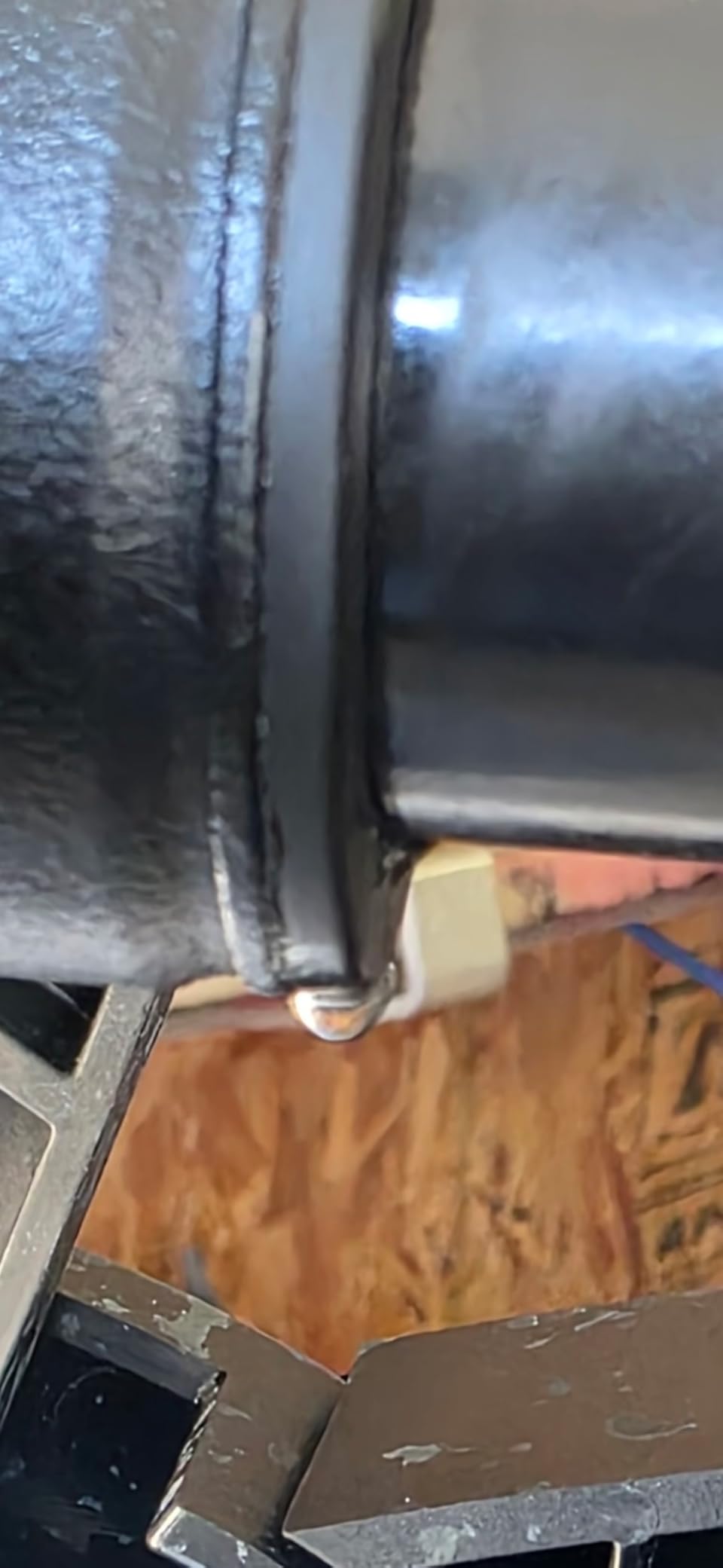
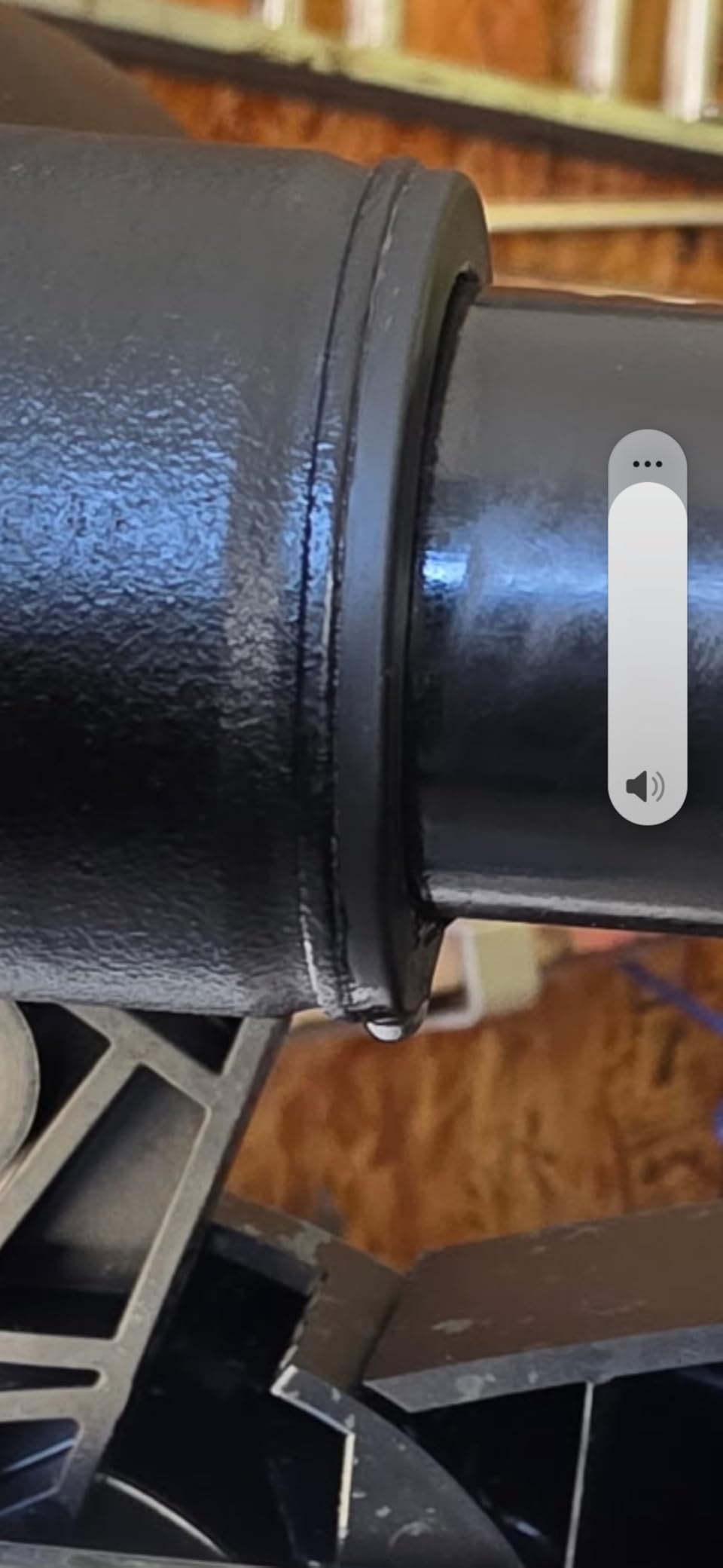
A small number of buyers reported a factory assembly mismatch where the mounting bracket did not match the thrust rating on the motor. This is a quality control issue rather than a design flaw, and the fix is a dealer correction or a return, not living with it. Check the bracket rating against the motor label before you leave the driveway.
More commonly reported is an occasional Spot-Lock or connection fault that clears after a power cycle. Owners on the ifish boards describe this as a known behavior on older units and a reason to keep a physical anchor aboard. The integrated sonar also adds real bulk at the head of the shaft, and that changes how the motor stows on some brackets.
The corded foot pedal ships with an 18 foot cable, and reviewers on pontoon decks note that it constrains where you can mount the pedal. Cordless or wireless pedal options from other brands solve this more neatly, so it is worth checking your deck layout first.
2. Minn Kota Riptide Terrova 80 – Best GPS Anchoring Motor for Saltwater
Minn Kota Riptide Terrova Bow-Mount Electric Trolling Motor with GPS, Spot-Lock – 80 Lb. Thrust, 60 In. Shaft, Saltwater
80 lb thrust on 24V
60 in shaft
Grit-blasted and coated housings
Programmable wireless remote
Pros
- Owners describe Spot-Lock holding like a physical anchor
- Aluminum-coated and powder-coated housings built for saltwater
- Wireless remote with LCD and four programmable buttons
- One-touch deploy and stow lever with fall-away ramp
- Digital Maximizer power management
Cons
- One buyer received a 55 lb bracket on an 80 lb motor
- One reviewer reported spooling in a circle after a connection drop
- Costs more than other 80 lb bow mounts that lack sonar
This is the saltwater answer, and the reason is in the lower unit rather than the electronics. The Riptide uses grit-blasted, aluminum-coated, and powder-coated lower unit housings specifically for corrosion exposure, which is the single failure mode that kills freshwater motors in salt water over a few seasons. Seventy-four percent of the ratings here are five stars, and verified buyers credit quiet all-day trolling on mid-size skiffs with two 100 amp-hour batteries.
Anchoring performance is the headline. Owners describe the boat being held on spot in conditions where they previously would have dropped a physical anchor, and the digital readout of the lock distance on the remote gives you an actual number to watch rather than a guess. The remote carries an LCD screen, a non-slip grip, and four programmable One-Boat Network buttons, so you can bind it to a function you use constantly.
One-touch deploy and stow with the fall-away ramp is a small feature that matters more than it sounds on a skiff, where the difference between a two-minute stow and a five-minute one decides whether you fish the tide. The Digital Maximizer handles the power management, and the MKP-33 propeller is the standard high-efficiency prop rather than a weedless one, which is the correct trade for open water.
Note the variant list on this listing. The same family covers 55 lb and 54 inch, 55 lb and 60 inch, 80 lb and 54 inch, 80 lb and 60 inch, and 112 lb and 60 inch. That range is useful because a 24 foot pontoon and a 16 foot bay boat have very different wind loads, and you can pick thrust without changing ecosystems.
How the corrosion build shows up in daily use
The coated housings are not visible, which is exactly why they matter. Salt water corrosion starts at fasteners and the lower unit casting and works inward, and the practical symptom is a motor that gets sluggish and noisy over a few seasons. The reviews here are not a decade of data, so we will not claim long-term corrosion results; we can say the build is designed for the exposure and that owners rate trolling quality and noise levels favorably.
The other saltwater-specific item is the shaft. The 60 inch shaft on this listing is aluminum, matching the coated lower unit, and the three-year warranty with registration covers the corrosion failures that freshwater owners rarely file claims for. Check the sacrificial anode on the prop shaft annually regardless of brand, because it is the part designed to fail so the rest does not.
The digital lock distance readout is genuinely useful for setting expectations. If you are anchoring over a wreck in current, knowing whether you are holding within 2 feet or 12 feet tells you whether you need to re-mark the waypoint or accept the position.
Where owners report problems
Two specific issues recur in the reviews. First, one buyer received an 80 lb motor with a 55 lb mounting bracket, which is a factory assembly error rather than a product design problem but will stop you dead until a dealer corrects it. Second, a reviewer reported the motor continuing to spool line and pull the boat in a circle after a connection drop on the remote side. That is the failure mode that changes behavior on the water, and it is the strongest argument for keeping a physical anchor deployed or ready.
Otherwise the complaints are about value rather than function. This motor costs more than other 80 lb bow mounts that do not include integrated sonar, and if you do not already own a fish finder, the trade is real. Our pick if you want both anchoring and sonar in one head is the freshwater Terrova above.
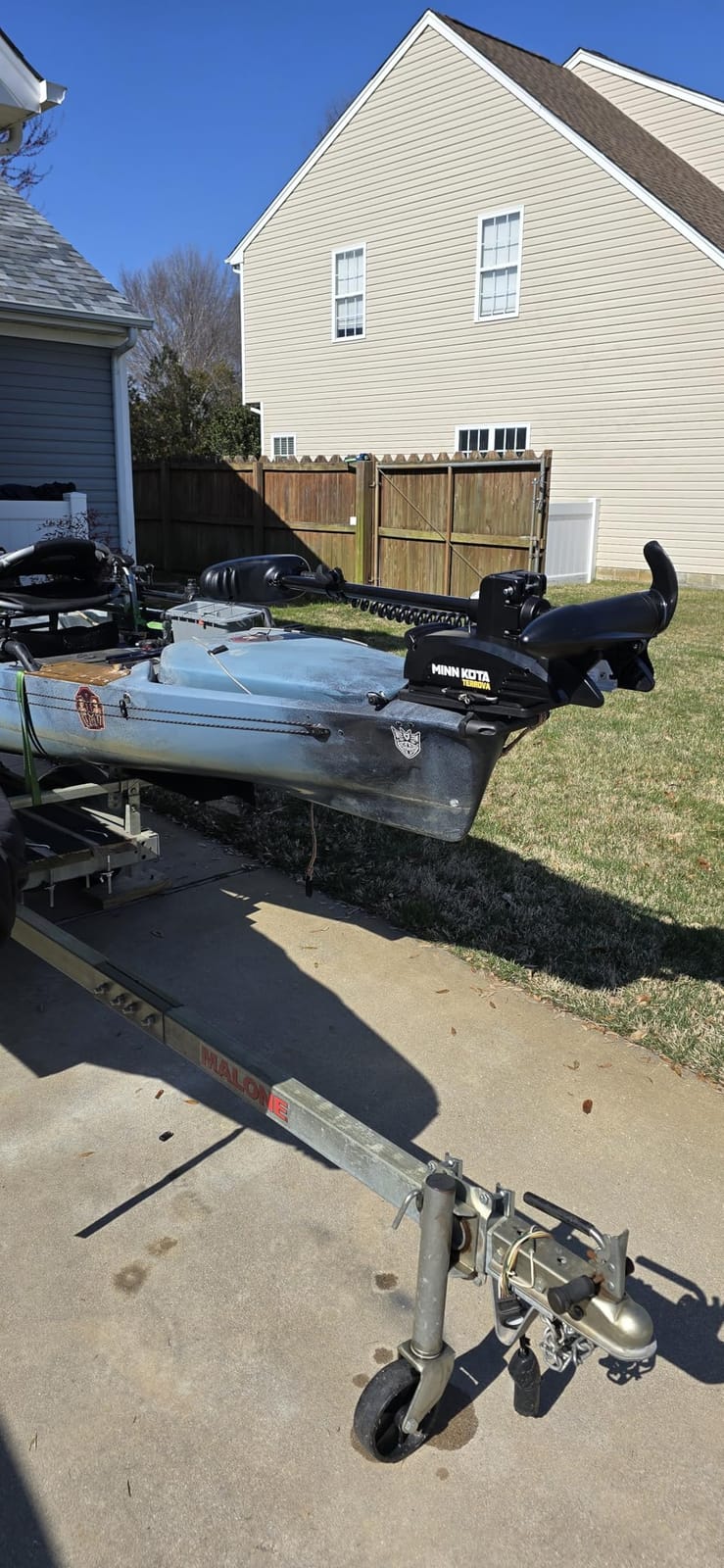
3. Minn Kota Kayak Terrova 55 – Best GPS Anchoring Motor for Kayaks
Minn Kota Kayak Terrova Bow-Mount Electric Trolling Motor with GPS – 55 Lb. Thrust, 36 in. Shaft, Freshwater
55 lb thrust on 12V class
36 in composite shaft
Spot-Lock with micro remote
MEGA side imaging
Pros
- Compact 36 in composite shaft fits kayak mounts
- Spot-Lock holds position in wind and current
- MEGA side imaging adds structure detail for kayak anglers
- One-lever stow and deploy with Auto Park
- Works with Humminbird displays through the One-Boat Network
Cons
- 55 lb thrust is limited for heavy kayaks and strong wind
- Short shaft gives less underwater reach than full bow mounts
- MEGA side imaging requires a compatible networked display
This is the only true kayak answer in the roundup, and the reason is the shaft. Thirty-six inches of composite shaft with a lifetime warranty is short enough to clear a kayak gunwale and light enough that you can deploy it from a seated position. Eighty-four percent of the ratings are five stars, and kayak anglers specifically call out precise Spot-Lock holding in wind and current on a platform where drift is the default outcome.
The 55 lb thrust figure sounds modest next to the 80 lb motors in this list, and it is, but a kayak displaces a fraction of what a 20 foot boat does. Fifty-five pounds is enough to hold a paddler and gear over a weed bed in a crosswind, on the reviewers’ account. It is not enough for a heavily loaded tandem kayak in a strong tide, and reviewers are honest about that ceiling.
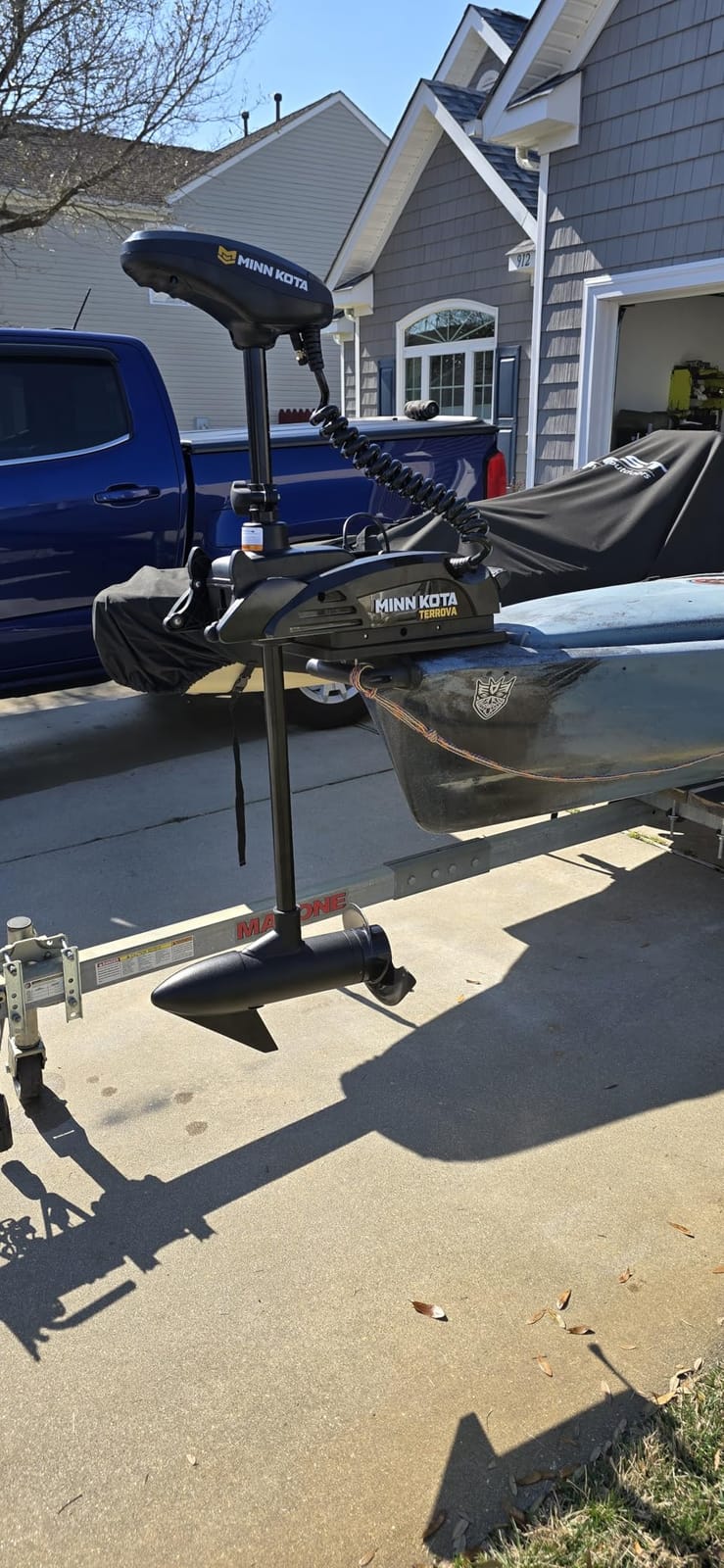
Control comes from a micro remote or the One-Boat Network app on iOS and Android, and the included 15 foot Ethernet cable ties the motor into a Humminbird display if you run one. The stow and deploy system is a single lever with Auto Park, which positions the motor for you and removes the most common kayak complaint about fiddly bow mounts.
There is built-in MEGA side imaging in this one too, which is unusual at this size and genuinely useful because a kayak angler rarely has room for a separate transducer. As with the freshwater Terrova, viewing it requires a compatible networked display.
Whether a kayak actually needs GPS anchoring
Honestly, in flat water on a calm day, no. A kayak drifting over a weed bed is a solved problem with a paddle, and the money is often better spent on a stronger battery. GPS anchoring starts paying for itself the moment the wind picks up enough that paddling back to your spot costs you the fish you were working.
The case gets stronger in current. Anglers on the ifish kayak threads describe holding position over a weed edge in moving water as the difference between fishing a spot for twenty minutes and fishing it for one. That is a real, repeatable benefit and it is the reason this motor earns its place in the list despite the modest thrust.
The auto-correction behavior is the part that matters most on a small platform. Small boats respond to each micro-correction faster, so if the anchor loop is well tuned the kayak sits almost motionless. A badly tuned loop will oscillate visibly on a kayak long before you would notice it on a bass boat, so spend time on the heading sensor placement before your first trip.
Where owners report problems
The three limits are consistent across reviews. Thrust tops out for heavy kayaks in wind or current. The 36 inch shaft gives less underwater reach than a full-size bow mount, which matters on steep drop-offs where the prop is the only thing keeping you planted. And the MEGA side imaging is inert without a Humminbird or other compatible display, so a paddler buying this purely for sonar is spending on a feature they cannot use.
The two-year manufacturer warranty is also shorter than the three-year term on the full-size Terrova models, which is worth noting if you keep gear for a decade. Otherwise the installation story is clean and the footprint is genuinely small.
4. Garmin Force 57 Inch – Best GPS Anchoring Motor for Big Boats
Garmin Force Trolling Motor 57″, 57in, 010-02025-00
24V or 36V options
57 in stainless steel shaft
109.1 lb weight
Wireless foot pedal
Anchor lock
Pros
- Very quiet operation that does not spook fish
- Wireless foot pedal keeps the bow deck clear
- Stainless steel shaft and corrosion-resistant hardware
- Gas shocks make deploy and stow easy
- Networks directly with Garmin sonar and chartplotters
Cons
- One reviewer reported about 20 feet of drift after recalibrating
- Weighs 109.1 lb and needs a second person to install
- Short power cord forces midship battery placement
The original Garmin Force is the established entry in the Garmin anchoring family, and buyers consistently name the same three things: it is quiet, it has real power, and it integrates cleanly with Garmin displays. The wireless foot pedal is the feature that separates it from the competition in practice, because it leaves the bow deck uncluttered and removes the cable that other motors force you to route.
It is also a heavy unit at 109.1 pounds with a 57 inch stainless steel shaft. Multiple reviewers describe needing a second person to move and install it, and that is a real factor if you are rigging a boat alone. The stainless shaft and corrosion-resistant components are a genuine plus over aluminum shafts in a saltwater environment, even though Garmin lists this model for fresh water.
Both 24 volt and 36 volt versions exist in this listing family, which is unusual at this tier. Thirty-six volts is the right answer on a large pontoon or tritoon where 12 volt cannot deliver enough thrust for anchoring in wind, and the 24 volt version fits a mid-size boat that already has a two-bank system. Our electric outboard roundup covers what to do if you are weighing an entirely different propulsion approach.
How it performs as an anchor hold
Owner reviews describe good power and good runtime, and gas shocks make the deploy and stow cycle a one-hand operation, which matters when you are doing it twenty times a season at a ramp in the dark. Note that this listing family is offered in 24 volt and 36 volt versions, so thrust scales with the configuration you pick.
Networking is the quiet strength. If you already run a Garmin chartplotter, the motor, sonar, and display behave as one system, and LIVESCOPE integration is specifically called out by owners as a benefit. That ecosystem lock-in is the single biggest factor in buying decisions across the forum threads we read, and it usually overrides small differences in motor capability.
The wireless foot pedal deserves a specific mention. It removes the 18 foot cable routing problem that owners complain about on corded pedal systems, and it gives you instant response without looking down at a pedal location you cannot see from the bow.
Where owners report problems
The most significant report in the reviews concerns anchoring accuracy itself. One reviewer reported roughly a 20 foot drift from Spot-Lock after repeated calibration attempts. That is a much larger figure than anything the other motors in this roundup report, and while a single report is not a pattern, it is exactly the kind of thing a person buying an anchoring motor needs to hear. If anchoring accuracy is your primary requirement, weigh the Minn Kota units, where owner reports describe holding tight enough to replace a physical anchor.
Beyond that, the weight and the short power cord are the practical complaints. A short cord is not a defect, it is a rigging constraint that means your battery bank has to sit midship rather than in the stern where it is easier to secure and vent.
One buyer also received a unit with a factory shaft defect, which Garmin support replaced overnight at no cost. That is a good service story and a bad first impression, and it is the kind of thing that happens with heavy stainless shafted motors shipped long distances.
5. Garmin Force Pro 50 Inch with GT56UHD – Best for Garmin Networks
Garmin Force® Pro Trolling Motor Black 50″ Trolling Motor with Built-In GT56UHD-TR Transducer
50 in shaft
91.2 lb weight
Multiband GPS anchor lock
Included GT56UHD transducer
1 year warranty
Pros
- Multiband GPS improves anchor lock and heading hold accuracy
- Included GT56UHD transducer with low-noise UHD scanning
- Remote supports point-and-go and gesture steering
- Scissor mount with pull cable and dual gas shocks
- Includes both high-efficiency and weedless propellers
Cons
- Chartplotter and wearable control need a separate Garmin display
- Only 2 ratings so long-term reliability is unproven
- 1 year limited warranty
Multiband GPS is the headline here, and it is a genuine technical upgrade over single-band reception for anchoring. Multiband locks onto multiple satellite signals simultaneously, which means better positioning accuracy in the exact conditions where single-band units struggle: under tree cover, near steep cliffs, and alongside structure that blocks part of the sky. Anchor lock, heading hold, and route following all benefit from it.
Both available ratings on this listing are five stars, and both are from early adopters of Garmin’s flagship. That is a real signal about first impressions and a useless signal about durability, so we are not going to pretend otherwise. Two reviews cannot tell you how this motor performs in year four. It is a new product, and you should buy it knowing that.
The included GT56UHD transducer delivers UHD scanning sonar with very low noise, which matters most when you are sitting still on an anchored spot. The whole premise of this motor is that you are stationary for long stretches, and a low-noise transducer in that scenario gives you cleaner structure images than a transom unit moving at trolling speed.
Why multiband GPS changes anchoring behavior
The failure mode that drives most anchor complaints is a degraded satellite view. Single-band receivers under a canopy of trees or beside a rock wall will report a position that wanders by several feet, and the motor responds to that wander by steering toward a target that keeps moving. The boat drifts. You re-anchor. This repeats all afternoon.
Multiband reduces that wander, which means fewer corrections and a boat that sits more quietly. The remote supports point-and-go and gesture steering, so you can nudge the locked position without resetting it, and the included foot pedal gives instant response when you do want manual control.
The scissor-style mount with a durable pull cable and dual gas springs is a deployment design worth noting. It is one of the easier deploy and stow mechanisms to work single-handed at a ramp, and 91.2 pounds is heavy but not unreasonable for two people or a good dolly.
Where owners report problems
There is not enough owner feedback here to report problems honestly, and that itself is the reason to pause. With only two ratings, no customer photos, and a 1 year limited warranty that is shorter than the three-year terms offered elsewhere in this roundup, you are buying on the strength of the engineering rather than the field record.
The other real cost is the ecosystem requirement. Chartplotter and wearable control require a separate Garmin display, which is sold separately. If you are not already committed to Garmin electronics, the transducer in the box is useful on its own but the motor’s smart features need somewhere to live.
Both a high-efficiency and a weedless propeller are in the box, so you can switch to the weedless prop for shallow structure without a second purchase.
6. Garmin Force Kraken 75 Inch – Best Thrust for Pontoons and Large Boats
Garmin Force® Kraken Trolling Motor, 75″ Trolling Motor, White
100 lb thrust to ISO 13342
75 in shaft
54 lb weight
Multiband GPS with AHRS
3 year limited warranty
Pros
- 100 lb of thrust to ISO 13342 for heavy boats
- Anchor lock uses multiband GPS and an integrated AHRS
- Wireless control from Garmin chartplotters
- Pivot-style mount fits limited deck space
- 75 in shaft suits high-freeboard boats
Cons
- Sold without a transducer so sonar needs a separate purchase
- 75 in shaft needs adequate bow deck space
- Only a single review on this listing
If you fish a 24 to 32 foot pontoon or tritoon inshore, thrust is not a preference, it is the requirement. Owners of that boat class on r/Pontoons consistently push for 80 pounds and above, and the Kraken delivers 100 pounds of thrust measured to the ISO 13342 standard rather than a marketing figure. No other motor in this roundup publishes a figure that high.
The anchoring hardware is the Garmin flagship stack. Anchor lock uses multiband GPS plus an integrated AHRS, and the AHRS is the piece that matters here. An attitude and heading reference system fuses the compass, gyroscope, and accelerometer into a single heading estimate that does not degrade the way a magnetometer alone does near steel hulls, engine blocks, and electronics. On a big aluminum pontoon with a lot of hardware, that is not a minor upgrade.
The single verified review reports the motor performing as advertised for offshore reef fishing where anchoring is not possible, which is an interesting use case. On a reef you are not marking a waypoint, you are holding a heading and a position over structure in moving water with nowhere to drop an anchor.
Sizing a 100 lb motor to a big boat
The 75 inch shaft is the reason this motor exists at this thrust. Pontoons and tritoons with full canvas have high freeboards, and a 60 inch shaft leaves the prop running in aerated surface water where it cannot bite. Measure the actual freeboard plus the depth you want the prop to sit at, and this shaft length solves a real problem rather than being a spec sheet filler.
The pivot-style mount installs in limited deck space, which is exactly the constraint on a pontoon where the deck is already carrying passengers, cooler, and seating. It takes a different approach to stow position than a scissor mount, and on a wide boat with a center walkway that difference is significant.
Wireless integration with Garmin chartplotters handles custom routes, patterns, and tracks, so you can record a path on the chartplotter and have the motor follow it. For someone anchoring a sequence of inshore waypoints, that is the feature that actually saves time.
Where owners report problems
Three things stand out and none of them are about thrust. It is supplied without a transducer, so sonar is a separate purchase that also needs a display. Its 75 inch shaft means you need adequate bow deck space to deploy and stow it. And there is a single review on this listing, which is a thinner record than even the Force Pro above.
The three-year limited warranty is a genuine positive and better than the one-year term on the Force Pro, so on paper the Kraken is the better-provisioned of the two. At 54 pounds it is also lighter than the original Force, which makes the install easier despite the longer shaft.
For anyone on a smaller boat, this motor is badly oversized. More thrust than you need costs you battery weight, deck space, and money with no anchoring benefit, and a lighter motor will hold position just as well if the wind load is below its capacity.
7. Simrad RECON Saltwater 60 Inch with FreeSteer – Best Control Experience
Simrad RECON Saltwater 60” Trolling Motor with FreeSteer Joystick Remote, 000-16158-001
60 in carbon fiber shaft
67.1 lb weight
3 ft claimed GPS accuracy
FreeSteer joystick remote
Near-silent brushless
Pros
- Precision GPS anchoring advertised at 3 foot accuracy
- FreeSteer joystick gives 360 degree control with a color display
- Near-silent brushless motor approach
- Carbon fiber shaft built for saltwater durability
- Control from Simrad displays or the remote
Cons
- Very small review base of 3 ratings
- Requires a Simrad display for the full feature set
- FreeSteer joystick and NMEA 2000 networking add setup complexity
The RECON stands apart in design from everything else in this roundup, and it has the least owner history. All three available ratings are five stars, but three ratings cannot establish a reliability record, so treat the following as a feature assessment rather than a field report.
The FreeSteer joystick is the headline. Full 360 degree control with a color display and customizable buttons replaces the tiller, the pedal, and the button panel with a single input device. For anchoring specifically, the value is that you can nudge the locked position continuously rather than in discrete jog steps, which makes walking a ledge or drifting along a drop-off feel natural rather than incremental.
The anchoring claim is 3 feet of accuracy, and it is a manufacturer figure. Very few motors publish a number this specific, and the spec sheet states the motor is engineered to stay locked on a spot in wind and swell, which is the exact scenario where anchoring motors usually disappoint.
The build details are purpose-built for salt water. A carbon fiber shaft resists corrosion in a way an aluminum shaft does not, the near-silent brushless motor approach keeps noise down both above and below the water, and the included prop shaft anode is a small detail that tells you the engineering brief was saltwater first. Shaft options run 54, 60, and 72 inches.
What joystick control actually changes
A tiller, a foot pedal, and a joystick all get you to the same spot. The difference shows up in the corrections. A joystick lets you hold a position and simultaneously make a fine adjustment, which matters when you are anchoring over structure with a sharp edge. Pedal users describe jogging in five-foot increments and then hunting for the right one, which is workable and slow.
The color display is more useful than it sounds because it can show position and lock status continuously instead of on a separate chartplotter, which reduces the number of things that can go wrong in an anchoring session. NMEA 2000 networking via the included T-joiner means it also feeds data to a full Simrad setup if you have one.
Brushless construction is the quiet advantage. Less magnetic drag and fewer moving contacts in the motor head means less vibration transmitted into the hull. On an anchored boat you are stationary, so any motor noise reaches fish that a moving boat would have masked.
Where owners report problems
We cannot report owner problems with any confidence here, and the honest version of this section is about the trade-offs in the design rather than the field record. Three ratings, no customer photos, and an assessment leaning on documented features is exactly the situation where a buyer should slow down.
On complexity, the FreeSteer joystick and the NMEA 2000 networking both add setup work. Neither is simple to configure, and if you are not running a Simrad display the full feature set is partly inert. That is the honest version of what a small review base means: you are buying the engineering, not the evidence.
For a buyer who fishes in current and swell, values silence above all, and is already in the Simrad ecosystem, this motor’s control package is the most distinctive here. For everyone else, the established records on the Minn Kota and Garmin motors make them the safer recommendation.
8. AQUOS GPS 55 Bow Mount – Budget Pick for GPS Anchoring
AQUOS GPS Bow Mount Trolling Motor 12V 55LBS 54in & Remote, Quick Release
55 lb thrust on 12V
54 in aluminum alloy shaft
4.9 ft claimed anchor radius
164 ft wireless remote
2 year warranty
Pros
- Anchor lock holds within about a 4.9 ft radius with automatic drift correction
- Helmsman app records routes and shares fishing spots
- 55 lb on 12V suits boats up to 19 ft
- 164 ft remote range with quick release bracket
- Corrosion-resistant build for fresh and salt water
Cons
- Only about 44 in of effective underwater depth
- Shaft raises and lowers by hand after the release pedal
- Remote and foot control carry only a 3 month warranty
The AQUOS is the entry point for someone who wants GPS anchoring without a second battery bank. Fifty-five pounds of thrust on 12 volts is the single most important fact about this motor, because it means one group of deep-cycle batteries, a standard wiring run, and no 24 volt conversion project. For a boat up to 19 feet, that is a complete anchoring system on a standard electrical setup.
Owners report dependable GPS holding within a few feet of the marked spot and useful app-based route management through the Helmsman app on iOS and Android, which records routes, saves and shares fishing spots, and builds waypoint paths. The claimed anchor lock radius is 4.9 feet with automatic drift correction, which is a specific number and tighter than most budget units of this class specify.
The 164 foot wireless remote range is generous for a boat of this size, and the remote handles speed, steering, and anchor lock from anywhere on board. The quick release bracket lets you pull the whole motor for transport, storage, or swapping between boats, which is useful for anyone who moves gear around rather than leaving it mounted.
Where a 12 volt single-bank system wins
The rigging math is the strongest argument for this motor. A 24 volt 80 lb motor needs two deep-cycle batteries, a charger rated for the pair, a correctly sized circuit breaker, and the cable runs to go with them. That is the complaint forum regulars raise most often: a friend buys an expensive GPS motor and then discovers what the electrical system costs to run. This motor sidesteps that question entirely.
The quick release bracket also makes this the easiest unit here to remove and reinstall, which matters if you trailer the boat or share a motor between craft. The stow and deploy release pedal is simple, though the shaft itself raises and lowers by hand afterward, which reviewers note as a minor inconvenience.
Corrosion-resistant components rated for both fresh and salt water with an LED battery indicator round out a package that is thoughtfully specified. The two-year warranty on the motor is worth noting.
Where owners report problems
The underwater reach is the real limitation. A 54 inch shaft leaves about 44 inches of effective depth, which is fine on a lake ledge and marginal on a steep drop-off or anything deeper than about 10 feet. If your anchoring spots are deep structure, this motor will not get the prop where you need it.
Accessory warranty coverage is only three months, and the remote and foot control are accessories. That is a meaningful gap given the remote is how you actually engage and monitor the anchor. The manual shaft handling after the release pedal is another small friction point that owners mention directly.
And the brand is less established with only 4 ratings, which is the same caution as the Garmin Pro and Simrad entries but at the opposite end of the market. This is a value pick for a freshwater angler on a standard 12 volt setup. It is not a saltwater offshore recommendation.
How to Choose a GPS Trolling Motor for Anchoring
Six decisions matter, and getting the order right saves you from an expensive mistake. Most buyers start with brand or thrust and work backwards, which is why they end up with a motor they cannot rig or a motor too small for the boat.
1. Size thrust to loaded boat weight, not empty weight. The working rule is 2 pounds of thrust per 100 pounds of loaded boat weight, and loaded means with the battery bank, tackle, and people aboard. A 3,000 pound loaded bass boat needs about 60 pounds of thrust, which is why the 55 pound class is the minimum rather than the sweet spot. A pontoon or tritoon in the 4,000 to 5,000 pound range loaded pushes you to 80 pounds and up, and a heavily loaded flats boat needs enough reserve to hold against a tide rather than merely stop drifting.
Thrust matters more for anchoring than for trolling because anchoring is a static fight against wind and current, and static loads expose weak motors. A motor that will move a boat at trolling speed can still lose its position in a stiff breeze if it is undersized.
2. Choose voltage based on your existing electrical system. 12 volt keeps everything simple with one battery bank. 24 volt is the sweet spot for mid-size boats and is what most of the 80 lb motors in this roundup use. 36 volt comes into play on large pontoons and tritoons where the extra headroom matters more than the added rigging weight. Do not buy a 24 or 36 volt motor unless you are prepared for two or three deep-cycle batteries, a matched charger, a properly sized circuit breaker, and heavier cable. The motor is the cheap part of that system.
3. Measure shaft length properly. Sit the boat level, measure from the bracket mounting surface to the waterline, and add several inches. An undersized shaft leaves the propeller in aerated water and costs you thrust exactly when you need it. High-freeboard boats, pontoons with full canvas, and deep-draft skiffs all need the longer shafts that only some models offer.
4. Compare the anchor features by brand, not by name. The four systems anglers actually choose between are Minn Kota Spot-Lock, Lowrance Anchor Lock, MotorGuide Anchor, and Garmin anchor lock. They are not interchangeable and their strengths differ.
Minn Kota Spot-Lock is the longest-established of the four, and the thrust and shaft range on the Terrova family in this roundup is wide, with Jog shifting the locked position five feet and a large accessory ecosystem behind it. Lowrance Anchor Lock integrates tightly with Lowrance displays and suits anglers already in that ecosystem. MotorGuide is a well-regarded alternative, though complete MotorGuide motors are not currently sold on the marketplaces we checked, so availability is a real consideration. Garmin anchor lock is the newest generation and pairs multiband GPS with an integrated AHRS on the Kraken and Force Pro, a hardware combination that helps near steel hulls and electronics but only works inside a Garmin network.
Across the forum threads we read, the ecosystem question decides the purchase before thrust does. Anglers with Humminbird gear stay with Minn Kota, Lowrance owners stay Lowrance, and the same pattern holds for Garmin.
5. Match the water to the build. Freshwater-only motors use aluminum lower units and coated hardware that will corrode in salt water over a few seasons. If you fish brackish or salt water, look for corrosion-coated lower units, a sacrificial anode on the prop shaft, and a shaft material that suits the exposure. In this roundup the Riptide Terrova and the Simrad RECON are built for salt, and the AQUOS lists corrosion-resistant components for both. Do not assume a freshwater bow mount will survive a season of inshore use.
6. Decide how much control you actually want. Every unit here has a wireless remote, and every unit here has a way to run out of remote battery. A foot pedal gives you a second input path and a faster response when you are moving rather than anchored. App control is convenient for saving spots and reviewing tracks. More control paths cost more and add more that can fail, so the right answer is usually one good remote plus a pedal on a big boat.
If you are still weighing motor types rather than anchoring features, our bow mount guide breaks down the mounting mechanics, and the general trolling motor roundup covers everything that does not have GPS.
Fixing a GPS Anchor That Keeps Drifting or Disengaging
Spontaneous disengagement is the most cited reliability concern for these motors across the forum communities we read, roughly one owner in four reporting it on older units. Before you conclude the motor is faulty, work through these six checks in order. Most cases resolve without a single part being replaced.
1. Power cycle the motor. Disconnect the battery, wait a full minute, and reconnect. Several owners report Spot-Lock and connection faults clearing entirely after a power cycle, which points at the control board holding a stale state rather than a failed sensor. This takes two minutes and it is the first thing to try.
2. Check the satellite view where you are anchoring. GPS accuracy degrades under tree cover, beside a cliff face, and alongside tall structure. Single-band receivers wander several feet in those conditions and the motor chases the wander, which reads to the angler as drift. Move to open sky or add a dedicated stern-mounted antenna. Anglers on multiple boards treat the external antenna as the standard fix for accuracy complaints.
3. Verify the heading sensor is mounted correctly and firmly. The sensor has to be rigidly attached to the shaft with no flex and aligned to the bow. A loose sensor reads a heading that changes as the boat moves, and the anchor loop compensates in the wrong direction. Reseating the cable at both ends is free and fixes a surprising number of cases.
4. Look at the prop and the shaft for fouling. A weed-choked or grass-wrapped prop will not hold position no matter how good the GPS is, because the motor is throttling against a stall. Pull the prop and clear it, and inspect the anode at the same time while the shaft is out.
5. Confirm the battery is not the problem. Spot lock draws power continuously for heading hold. A bank that is fine under trolling load can sag below the voltage the control board needs to hold the lock, and the symptom looks exactly like a GPS fault. Test the bank under load, not at rest, and check the circuit breaker connections for heat.
6. Recalibrate from open water before adjusting anything else. If you are still seeing drift after the first five steps, recalibrate in open water with no obstruction and no current. Calibrating in the exact spot where the boat keeps drifting teaches the motor a bad reference. One owner in this roundup reported roughly 20 feet of drift after repeated recalibration, and redoing the process in open water is the standard remedy.
One thing that is not fixable: you cannot retrofit GPS anchoring onto a motor that was not built with it. There is no upgrade path from a tiller motor to Spot-Lock. Buyers who discover this late are the most frustrated group in the forum threads, and it is worth deciding on GPS before you buy the motor rather than after.
Do You Still Need a Physical Anchor With a Spot Lock?
Yes, and this is the clearest piece of advice in the article. GPS anchoring is a complement to a physical anchor, not a replacement for one, and the reason comes straight from the failure modes above.
A spot lock depends on a power supply, a satellite signal, a heading sensor, and a control board. Any one of those can fail, and the failure is often silent until the boat is 200 yards from where you left it. A physical anchor depends on a chain, a shackle, your judgment, and a backstay. Those are more things, but they are things that do not change behavior without warning.
The forum consensus is more nuanced than either camp. Anglers describe using Spot-Lock as an anchor substitute in fast current with no issues, provided thrust is adequate, and there is genuine debate on thehulltruth and ifish about whether drifting is acceptable etiquette in a windblown area. The practical version of that debate is that holding position with a trolling motor is a reasonable courtesy when others are fishing nearby, and unreasonable when it takes a spot others want.
What most long-term owners converge on is carrying a compact backup anchor regardless. Several describe deploying a small claw or sand anchor in conditions where the GPS hold is the primary system and the physical anchor is insurance. That combination lets you fish structure for hours without babysitting the remote and still have a recovery plan if the battery dies.
Consider also that a trolling motor anchor and a physical anchor serve different purposes. The trolling motor holds you precisely over structure in a way a rope anchor cannot. The rope anchor holds you through a night, a power failure, or a wake, in a way a trolling motor should not be asked to. Serious inshore and overnight anglers need both.
Frequently Asked Questions
Which trolling motor has the best anchor lock system?
For most anglers the Minn Kota Terrova platform has the best-established anchor lock system, with the widest range of thrust and shaft options and the most owner history behind it. On saltwater, the Riptide Terrova adds corrosion-coated housings. Garmin’s newer anchor lock hardware pairs multiband GPS with an integrated AHRS, which is technically stronger on paper but far less proven in the field.
What is the cheapest trolling motor with a GPS anchor?
The AQUOS GPS 55 is the least expensive GPS anchoring motor in this roundup, and its real advantage is electrical rather than financial. Fifty-five pounds of thrust on 12 volts means one battery bank instead of two, which removes the batteries, charger, and heavier wiring from a 24 volt system. It holds within a claimed 4.9 foot radius with automatic drift correction.
Which trolling motor is better, Garmin or Minn Kota?
Minn Kota wins on proven reliability, accessory ecosystem, and the breadth of thrust and shaft options available. Garmin wins on positioning hardware, with multiband GPS and an integrated AHRS on the Force Pro and Kraken giving better heading estimates near steel hulls. Choose Minn Kota for a proven freshwater system and Garmin if you already run Garmin electronics.
How big of a boat will a 55lb trolling motor push?
The working rule is 2 pounds of thrust per 100 pounds of loaded boat weight, so a 55 pound motor suits a loaded boat of roughly 2,750 pounds. That covers most 14 to 17 foot aluminum boats and small bass boats. For a 20 foot boat with a full battery bank aboard, step up to 80 pounds, and for pontoons and tritoons go to 100 pounds or more.
Why does my spot lock keep turning off?
The usual causes are a power supply that sags below what the control board needs, a degraded satellite view under tree cover or beside a cliff, and a heading sensor that has come loose from the shaft. Start by fully power cycling the motor with the battery disconnected for a minute. Then test the battery bank under load rather than at rest, and reseat the sensor cable at both ends.
My Minn Kota spot lock isn’t working. What can I do to fix this?
Power cycle first, which resolves a share of reported Spot-Lock and connection faults at no cost. Next confirm the heading sensor is rigidly mounted and aligned, clear the prop of weeds and line, and check the battery under load. If drift persists, recalibrate in open water rather than at the spot where the boat keeps drifting, since calibrating in a bad spot teaches the motor a bad reference.
What are the common problems with spot lock trolling motors?
Spontaneous disengagement without warning is the most cited issue, reported by roughly one owner in four on older units. Other recurring complaints include degraded GPS accuracy under tree cover or near cliffs, a heading sensor working loose, props fouling with vegetation, and remote batteries needing regular recharging. Several owners also report factory assembly mismatches on new motors.
Is spot lock worth the money?
It is worth it if you fish structure in wind or current, because holding position hands-free lets you work a spot instead of chasing a drifting boat and makes a windblown point safer. It is not worth it on calm water in a small boat, where a paddle or a heavier battery serves the same goal for far less. A 24 volt system also adds real cost in batteries, charger, and circuit breaker.
Can you add spot lock to a trolling motor?
No. GPS anchoring cannot be retrofitted to a motor that was not built with a GPS receiver, heading sensor, and control board. There is no upgrade path from a tiller or foot-pedal-only motor to Spot-Lock. Decide whether you want position holding before you buy the motor, because the only way to add it later is to replace the motor.
Do I still need an anchor with a spot lock trolling motor?
Yes. GPS anchoring depends on power, a satellite signal, a heading sensor, and a control board, and any of those can fail without warning. A physical anchor depends on hardware that does not change behavior on its own. Most long-term owners carry a compact backup anchor and treat the spot lock as the primary system for fishing hours, with the rope anchor as insurance overnight.
Final Verdict: Which GPS Trolling Motor Should You Buy in 2026?
The Minn Kota Terrova 80 with MEGA Down Imaging is our pick as the best GPS trolling motor for anchoring overall, because it pairs a large verified review base with a built-in transducer that removes a second piece of hardware from the bow, and it suits a boat in the mid range on a 24 volt system. It is the right call if you already run Humminbird electronics. Two cautions before you buy: the built-in transducer needs its own display to be useful, and 24 volt means a two-battery bank.
Fishing salt water, take the Riptide Terrova 80 instead, because the coated lower units are what hold up against the exposure. On a kayak, the Kayak Terrova 55 is the only purpose-built option here. On a 24 foot pontoon, the Garmin Force Kraken delivers the thrust you need and the AHRS-protected heading hold that a boat full of aluminum and electronics requires.
Already committed to Garmin, the Force Pro 50 with the GT56UHD is the strongest positioning package, though you should accept that two ratings is not a reliability history. Want a joystick and a saltwater build, the Simrad RECON offers both with very little owner feedback behind it. Staying on a single 12 volt bank, the AQUOS GPS 55 does the job on a standard electrical setup.
Whatever you choose, size the thrust to your loaded boat weight, measure the shaft properly, and carry a backup anchor. Those three steps prevent more bad anchoring days than the choice of brand does.