
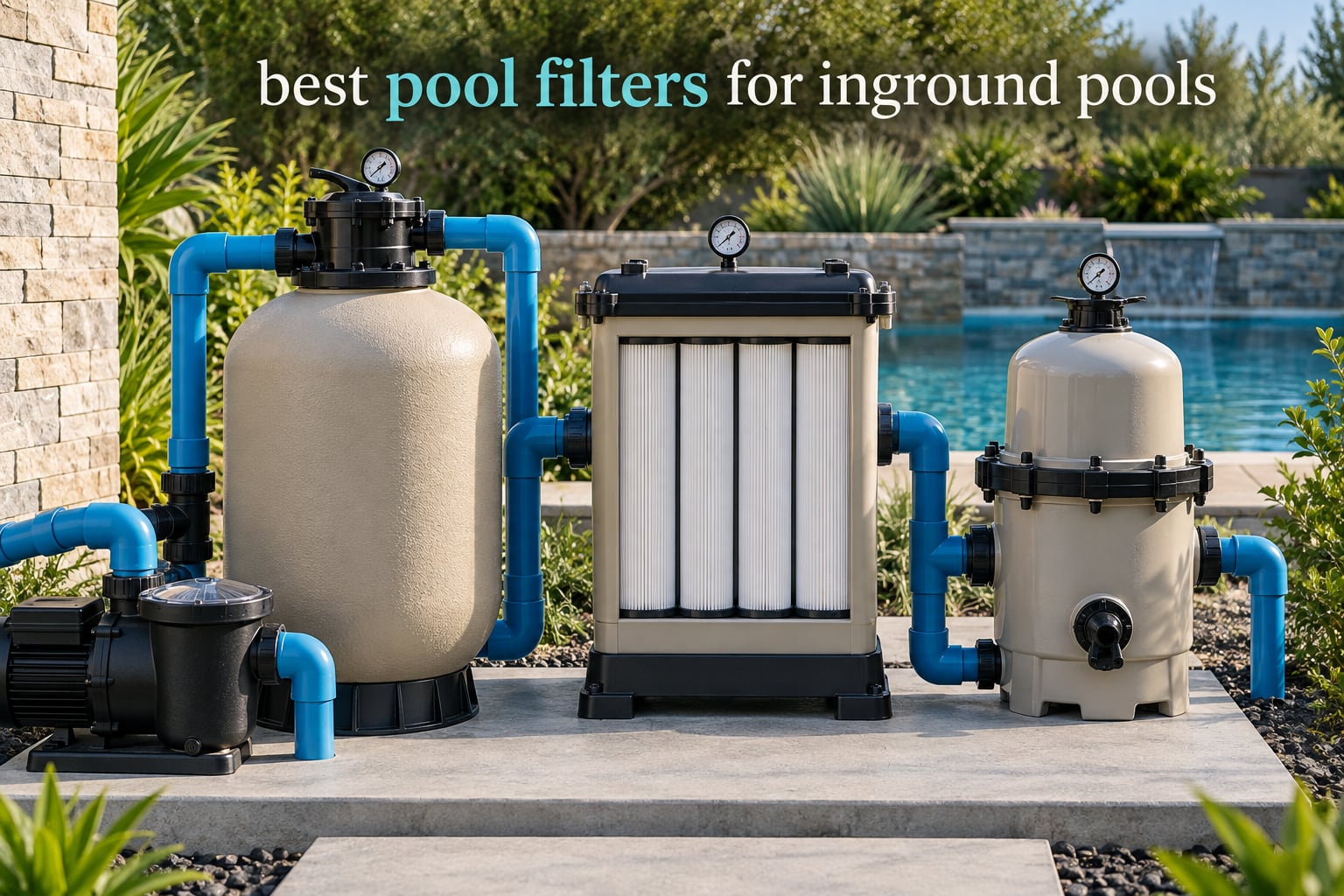
An inground pool filter is the piece of equipment that decides how clear your water stays, how much water you throw away each year, and how often you spend a Saturday afternoon doing pool work. There are three real options for an inground pool filter: sand, pleated cartridge, and diatomaceous earth. Sand is the cheapest to run and the easiest to backwash. Cartridge captures the finest particles of the two mainstream types and wastes no water. Diatomaceous earth traps the smallest particles of the three but costs more in consumables and handling.
That is the honest version of this roundup, and the ten filters below are where it gets practical. We compared top-mount and side-mount sand tanks, quad-element cartridge systems, fiberglass and polymeric housings, and DE grids from both major manufacturers. Every pick below is a complete, real filter you can plumb into an inground pool, and we note the plumbing gotchas that trip people up during a swap.
If you are still narrowing the field by media type, our cartridge filter guide for inground pools goes deeper on pleated element setups. This roundup covers all three media types side by side, updated for 2026.
Top 3 Picks for Inground Pool Filters in 2026
Our three fastest-recommendation filters cover the three realistic paths. The sand tank is the safest default, the cartridge system is the one owners report happiest with over multiple seasons, and the DE unit is for people who want the finest particle capture.

XtremepowerUS 22 Inch Sand Filter
- Rated for pools up to 37200 gallons
- 7-position multiport valve
- Umbrella-fold self-cleaning laterals

Pentair Clean and Clear Plus 320 Sq Ft
- Fiberglass tank resists UV cracking
- Handles pools up to 57600 gallons
- 320 sq ft cartridge area

Hayward SwimClear 425 Sq Ft Cartridge
- Quad polyester element cluster
- Season-long filter cycles
- No backwashing required
Those three are not interchangeable, though. The sand tank wins on cost per year of ownership and on tolerance of a less-than-perfect installation. The Pentair fiberglass cartridge wins on tank longevity. The Hayward SwimClear wins on the number of cartridge elements working in parallel, which is what pushes real filter cycles out to a full season.
Best Pool Filters for Inground Pools in October
All ten filters below fit a plumbed-in inground pool installation. Micron figures are manufacturer or measured figures, not estimates, and each row lists what actually matters when you are matching a filter to a pump and a pool volume.
| Product | Specifications | Action |
|---|---|---|
| XtremepowerUS 22 Inch Sand Filter |
|
Check Latest Price |
| Pentair Clean and Clear Plus 320 Sq Ft |
|
Check Latest Price |
| Hayward SwimClear 425 Sq Ft Cartridge |
|
Check Latest Price |
 VEVOR 325 Sq Ft Cartridge Tank VEVOR 325 Sq Ft Cartridge Tank |
|
Check Latest Price |
 XtremepowerUS 425 Sq Ft Four Element Cartridge XtremepowerUS 425 Sq Ft Four Element Cartridge |
|
Check Latest Price |
 Hayward Perflex DE Filter Hayward Perflex DE Filter |
|
Check Latest Price |
 Hayward ProGrid 36 Sq Ft DE Filter Hayward ProGrid 36 Sq Ft DE Filter |
|
Check Latest Price |
 Pentair Triton II 24 Inch Side Mount Sand Pentair Triton II 24 Inch Side Mount Sand |
|
Check Latest Price |
 Pentair FNS Plus 48 Sq Ft DE Filter Pentair FNS Plus 48 Sq Ft DE Filter |
|
Check Latest Price |
 Dohenys 200 Sq Ft Cartridge Filter Dohenys 200 Sq Ft Cartridge Filter |
|
Check Latest Price |
Two products here are worth flagging before you read further. The Pentair Triton II and the Pentair FNS Plus both arrive without a multiport valve, so budget for that before you plan the plumbing run. Everything else is closer to a complete install.
1. XtremepowerUS 22 Inch Sand Filter – the roomy default sand tank
XtremepowerUS 22″ Sand Filter Swimming Pool Sand Filter for Inground/Above Ground Filter Media System Top-Mount Up to 37,200 Gallons with Stand
Capacity: up to 37200 gallons
Weight: 32.2 lbs
Size: 22 x 22 x 37.5 inch
Valve: 7-position multiport
Pros
- Umbrella-fold laterals spread flow evenly for consistent backwashing
- 7-position valve includes rinse and winterizing modes
- Handles pools up to 37200 gallons
- Compact housing rated for outdoor use year round
- Same tank family offered in 16/19/22/24 inch diameters
Cons
- Pump and media both sold separately
- Tank takes 250 lbs of sand that you load yourself
- 12 percent of ratings are one-star
This is the filter we kept coming back to while assembling this list, mostly because of the review volume behind it. At more than 1600 ratings it carries the largest owner feedback base among the sand options here, and that matters when you are trusting a plastic tank to hold pressure for a decade. Buyers describe solid filtration for the money and a straightforward top-mount installation that fits into a normal inground equipment pad.
The engineering detail that stands out is the umbrella-fold lateral system. Instead of a handful of small suction laterals that can channel water unevenly, this design spreads collection across the base of the tank, which is what keeps a backwash cycle from scouring a channel into your sand bed. The 7-position valve also gives you a dedicated rinse position, which is a small thing that makes a big difference when you are chasing a cloudy return after a heavy rain.
The one real weakness is that it arrives as a bare tank. No pump, no sand, and the filter base and manual are the only included pieces beyond the multiport valve. That is normal for this category, but first-time owners routinely underestimate the loading step: the tank takes 250 lbs of media, and you want to load it with the right grade rather than whatever is cheapest. Our sand filter media guide covers grade selection.
Buyer feedback splits on durability, with a measurable minority reporting valve or tank issues. About 12 percent of ratings are one-star, and fit and plumbing configuration are the most common friction points mentioned. Check your existing port spacing before you order, because a top-mount tank on a pad plumbed for a side-mount layout can mean moving pipe.
What it handles well
Large inground pools up to roughly 37000 gallons, and any setup where a variable speed pump needs enough restriction to actually run at its rated flow. The seven valve positions give you winterizing and closed modes, so you can drain and isolate the tank without disassembling anything.
It also holds up well in regions with high dust load, because a sand bed shrugs off particulate that would clog a cartridge within a week. If you have never backwashed a filter before, this is the format to learn on.
Where it falls short
It discharges water every time you backwash, and in a drought-restricted area that volume adds up. Filters rated at 20 to 40 microns also leave finer particles behind, so a sand setup will not match the clarity of a well-maintained DE system.
The tank is plastic, which is lighter and cheaper than fiberglass but is the component most likely to be the first thing to crack after many seasons of pressure cycling. Budget for the sand and pump as separate line items.
2. Pentair Clean and Clear Plus 320 Sq Ft – the fiberglass tank that outlasts plastic
Pentair EC-160340 Clean & Clear Plus 320 sq. ft. Cartridge Pool Filter
Area: 320 sq ft
Weight: 65.9 lbs
Size: 45 x 28 x 28 inch
Material: fiberglass
Pros
- Highest average rating in this roundup
- Fiberglass tank resists the UV cracking that damages plastic housings
- Often installs in under an hour on existing 2 inch PVC
- 2 inch unions included in the box
- Pairs cleanly with Pentair variable speed pumps
Cons
- Pump-to-filter fittings not included
- Occasional chipped or cracked fiberglass foot in transit
At 4.6 stars from 139 ratings, this Pentair has the highest average rating of the ten filters we looked at, and the feedback behind that number is unusually consistent. Buyers describe it as a total system upgrade, frequently alongside a Pentair pump, and the clarity improvement after installation comes up over and over.
The tank material is the reason. Fiberglass will not UV-crawl and chalk the way a polymeric tank eventually does, and it tolerates thermal cycling and chemical splash without the stress cracking that shows up in plastic housings after several seasons. The 320 square feet of cartridge area handles pools up to 57600 gallons, which covers essentially any residential inground pool with a full turnover in a normal afternoon of pump run time.
Installation is genuinely quick if your pad is already plumbed with 2 inch PVC. The tank and pressure gauge are included and the 2 inch unions save a trip to the supply house, which is why owners report finishing in under an hour. Pump-to-filter fittings are not included, so confirm the diameter of your pump discharge before the day of install.
The one recurring shipping complaint is transit damage: some buyers receive a unit with a chipped or cracked fiberglass foot, which is a support question rather than a design flaw. A one year limited warranty covers the tank. If your old filter is a bullet-style cartridge housing, note that this is a full-size square tank, not a drop-in for that footprint.
What it handles well
Long service life in full sun, which is the difference between fiberglass and a plastic tank on a pool that runs twelve months a year. It also suits anyone who wants cartridge convenience without giving up a large filtration area on a residential volume.
Because it holds no DE powder and no backwash cycle, water waste is effectively zero. For a pool on a well or in a restricted area, that is a permanent operational saving rather than a one-time purchase decision.
Where it falls short
You still buy replacement cartridges on a schedule, and this is a full residential tank rather than a compact unit, so footprint on a small pad is a consideration. Fittings are excluded, and the tank is heavy at nearly 66 pounds before the elements go in.
With 139 ratings the feedback pool is smaller than some of the budget options here, so the long-term durability picture is well described but not decades deep.
3. Hayward SwimClear 425 Sq Ft – the longest run between cleanings
Hayward SwimClear Cartridge Pool Filter, 425 Sq Ft Heavy Duty Capacity
Area: 425 sq ft
Weight: 83 lbs
Media: quad polyester cluster
Model: W3C4030
Pros
- Water clarity reported across multiple full seasons
- 425 sq ft spread across four polyester elements
- No backwashing at all
- High-capacity manual air relief valve with quarter-turn release
- 525 sq ft variant available
Cons
- 2 inch ports often require replumbing from 1.5 inch setups
- Port positions differ from older filters
- Replacement cartridges are a recurring cost
This is the filter owners describe most calmly. The pattern in the reviews is clarity that holds through multiple full seasons, with several people saying they never swapped the elements in a year’s worth of use. At 425 square feet across a quad cluster of polyester elements, the surface area is what makes that possible, since dirty elements load faster than a single large pleat.
For an inground pool the practical win is the elimination of backwashing. There is no water discharge, no sand bed to replace every few years, and no DE powder to handle. A cartridge rinse with a garden hose and a mild acid solution is the entire cleaning routine. Owners also like that the tank footprint matches a standard sand filter, which simplifies a replacement where the pad is already tight.
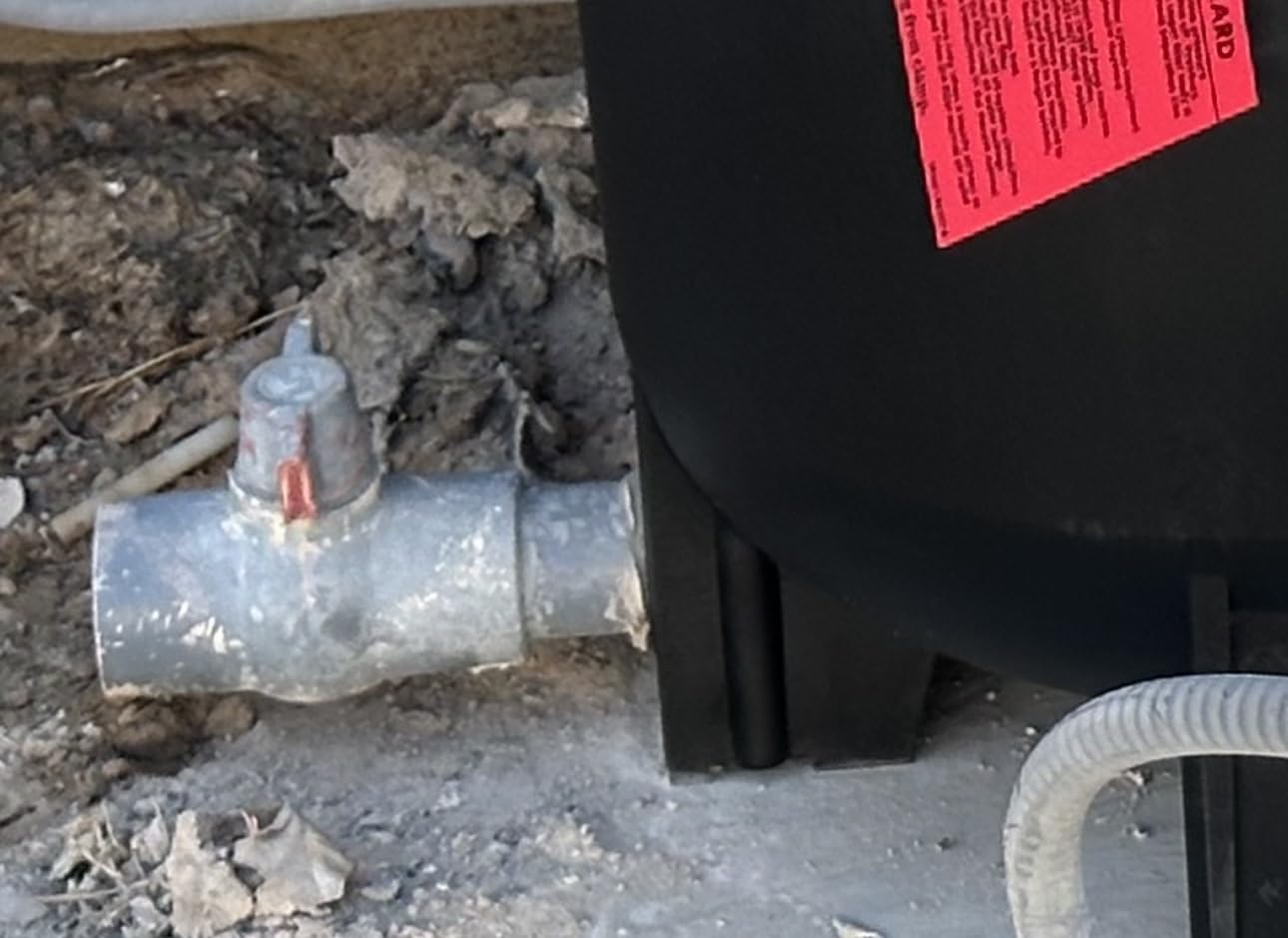
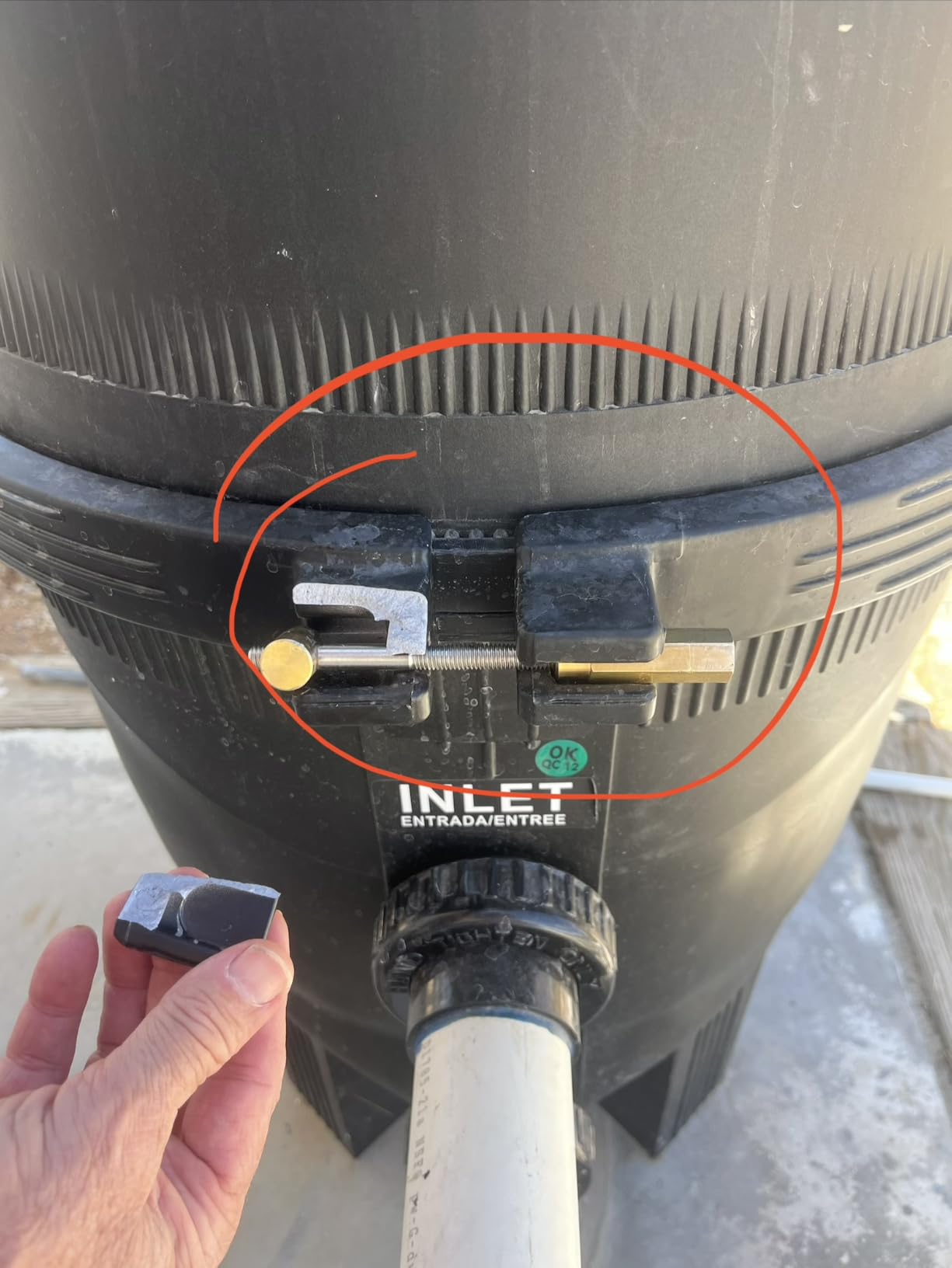
Installation is the deciding factor for many buyers, and it is where this filter asks the most of you. The 2 inch ports frequently mean re-plumbing from a legacy 1.5 inch sand or DE setup, and the inlet and outlet sit at different heights than on older filters, so existing pipe runs may not line up. The single-piece tamper-proof flange clamp gives fast internal access once it is installed.
Two smaller notes from the feedback. The bottom drain plug gets difficult to remove as the tank ages, so a stuck plug is a foreseeable service item rather than a surprise. And at 83 pounds, the tank is heavy enough that the W3C4030 model is a two-person lift on most pads.
What it handles well
Pools in dusty or high-debris environments are the one case where a cartridge still makes sense, because 425 square feet gives you a lot of runway before the elements need attention. It also works well as the low-maintenance half of a two-filter setup, where you swap between a cartridge and a DE or sand tank seasonally.
The quarter-turn air relief valve is a small design touch that matters, because bleeding trapped air quickly is the difference between a five-minute restart and a fifteen-minute troubleshooting session.
Where it falls short
Plumbing conversions are the main cost of ownership here, both in parts and in labor. In areas with heavy wind-driven dust, owners switching from sand frequently report shorter element life than they expected.
Element replacement is a permanent recurring expense, and if you are not comfortable opening the clamp, that is a service call rather than a weekend job. It also does not address the fine-particle problem the way a DE system does.
4. VEVOR 325 Sq Ft Cartridge Tank – large area with tool-free assembly
VEVOR 2026 PRO Cartridge Pool Filter Tank & Element for Above Ground & Inground Pools, Large 320-325Sq. Ft Cleaner System Compatible W/Pumps 2 to 2.5 HP| Up to 11769 GPH for Pools Up to 94150 Gallons
Area: 325 sq ft
Weight: 68.3 lbs
Core: 50-micron pleated
Model: GL320
Pros
- Large filtration area for the tank size
- Arrives fully assembled for quick swaps
- Standard 2 inch unions that are widely available
- Pressure gauge and relief valve included
- Tool-free three-step assembly
Cons
- Element end seals are less precise than name-brand filters
- Replacement elements are not interchangeable with Pentair or Hayward
- Customer service and parts availability draw repeated complaints
The VEVOR shows up repeatedly in the feedback as a value upgrade, with owners replacing aging Pentair or sand filters and reporting clearer water within days. The draw is straightforward: 325 square feet of pleated area in a die-cast polypropylene and fiberglass composite housing, with no backwash cycle attached to it.
It arrives fully assembled, which makes a same-footprint swap a short job rather than a build. The three-step tool-free assembly and standard 2 inch unions mean you are not hunting for specialty parts, and the included pressure gauge plus automatic relief valve let you monitor the system the way a name-brand setup would. Buyers report the gaskets sealing tight with a little lubricant and no blowback in most tanks.
Two quality flags come up. First, the cartridge seals at the top and bottom of each element are described as less precise than those in Hayward or Pentair filters, and some buyers believe that can let debris push back into the pool as elements load up. Second, the replacement elements are proprietary, so this is a long-term parts commitment rather than a filter you can service with any cartridge on the shelf.
The support record is the other common complaint, with customer service and replacement parts availability criticized repeatedly. Some buyers also report a thinner build than US-manufactured competitors. Rated for 2 to 2.5 HP pumps, it is sized up to 94150 gallons, so it is generously proportioned for residential inground use.
What it handles well
Large residential pools that need a lot of filter area without a large tank. The 325 square feet figure in this footprint class cuts pump run time noticeably, and it lets a variable speed pump back down the flow.
It is also a straightforward option for hot tubs and spas, since the same housing takes smaller element sets. The included gauge and relief valve make it easy to run a proper backpressure habit from day one.
Where it falls short
50-micron media is coarser than the 10 to 15 micron element range some manufacturers use, so final clarity is good rather than exceptional. Element end sealing is the part we would watch most closely over the first year.
Buying into a proprietary element line means you should confirm replacement availability before the tank goes in, because the alternatives are not interchangeable with the two major brands.
5. XtremepowerUS 425 Sq Ft Four Element Cartridge – high flow with a durability caveat
XtremepowerUS 425 Sq. Ft. Swimming Pool Cartridge Filter, 4-Element High Flow Filter System for In-Ground & Above Ground Pools & Spas, 2-Inch Ports, Heavy-Duty Pool Water Filtration
Area: 425 sq ft across four cartridges
Weight: 70.4 lbs
Size: 24 x 24 x 39.5 inch
Flow: 150 GPM rating
Pros
- Traps particles down to 10-15 microns
- 150 GPM rating on 2 inch ports
- 8 hour turnover of 72000 gallons
- Easy-open locking ring for element access
- Rinses clean without backwashing
Cons
- Manifold is thin plastic that has stress-cracked
- Multiple reports of tank splitting and flooding
- Replacement union parts are hard to source
On filtration performance this one is excellent. Four cartridges give 425 square feet of area, the media is rated to catch particles down to 10 to 15 microns, and the 2 inch ports carry a 150 GPM flow rating, the only published throughput figure in this roundup. Owners report that the large area cut pump run time roughly in half for many setups, and that automatic pool vacuums started performing better once clarity improved.
The specification sheet is thorough for a unit at this tier. The UV-resistant reinforced polymer tank is rated for high operating pressures, the easy-open locking ring gives quick access to the elements, and the turnover math is stated plainly: eight hours for 72000 gallons, ten hours for 90000 gallons. The replacement cartridge is a separate SKU, so keep the model number handy before you need it.
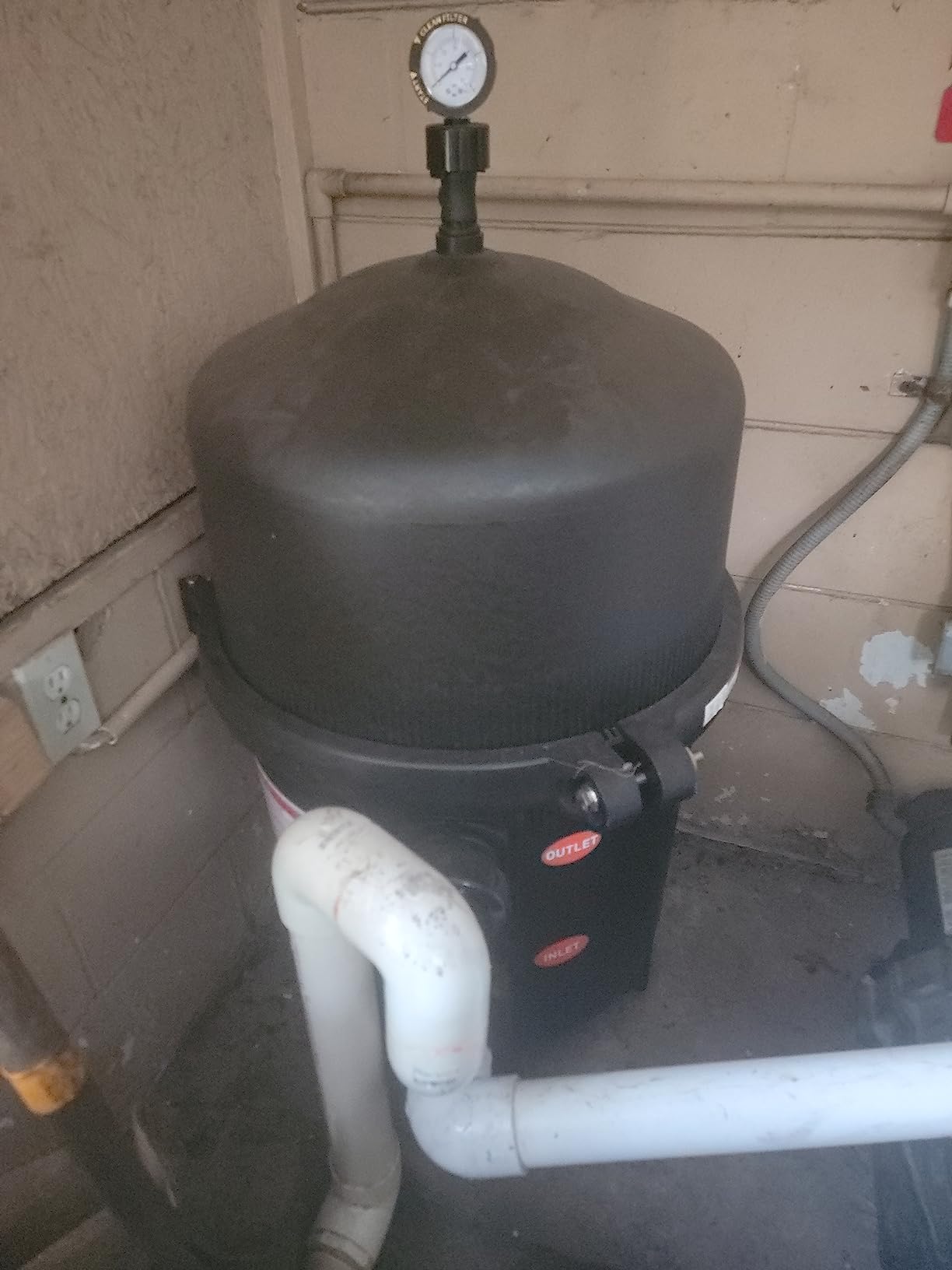
Durability is where this product splits its owners. The feedback ranges from flawless multi-season performance in South Florida to complete tank rupture, and the thin plastic manifold has stress-cracked for some people under normal filter pressure. Those flood reports are the reason we placed this one below the fiberglass Pentair despite the stronger specifications.
Parts availability is the other recurring gap. Replacement union parts are hard to source and not offered by the seller, and post-purchase support appears limited to a short window after purchase. If you install this, keep the unions from the original build rather than assuming a replacement is easy to find later.
What it handles well
Pools that need to run their pump fewer hours per day, since the 425 square feet of area and 150 GPM rating give you real headroom. The 10 to 15 micron capture is finer than most cartridge systems, which helps in areas with pollen or fine dust.
If your pool is on a variable speed pump, the flow rating means you can dial the pump down and still keep up with turnover, saving energy without sacrificing clarity.
Where it falls short
Tank and manifold integrity are the honest concern, and the reports of yard flooding are not minor. This is a case where the specification sheet is better than the long-term record, which we would pick only with a clear understanding of the risk.
It also arrives without a vacuum valve port on some builds, and a high-flow system with an under-validated tank is a combination we would rather see proven over several seasons.
6. Hayward Perflex DE Filter – the easiest DE upgrade path
Hayward Perflex Diatomaceous Earth DE Swimming Pool Filter, Faster Cleaning
Model: W3EC40AC
Weight: 26 lbs
Size: 16 x 16 x 26.5 inch
Material: ABS plastic
Pros
- Patented Flex-Tube system reuses DE powder between cleanings
- Clamp lid is far simpler to service than bolt-ring Hayward filters
- Compact 16 inch footprint fits tight equipment pads
- Drops into older EC40 style filter plumbing
- Doubles as a hot tub or spa filter
Cons
- Lid clamp is a recurring failure point under pump pressure
- Replacement clamp brackets are costly relative to the filter
- Small element limits turnover on larger pools
The Perflex is the DE option to look at if you are upgrading from an older EC40 style Hayward filter. Owners consistently report a straightforward drop-in replacement, and the single-clamp lid makes servicing dramatically simpler than the bolt-down ring on the legacy models it replaces. The compact 16 inch footprint also matters on a crowded pad, and at 26 pounds it is among the easiest tanks in this roundup to lift.
The patented Flex-Tube system is the real technical story. Rather than discarding the whole DE bed each cleaning, it reuses the powder and dirt mixture to form fresh cleaning surfaces, which stretches each charge of DE powder further and cuts the number of times you handle the powder. Extended-cycle DE filtration also targets the smallest particles on the first pass, and owners frequently compare the clarity to their old cartridge setup and find it noticeably better.
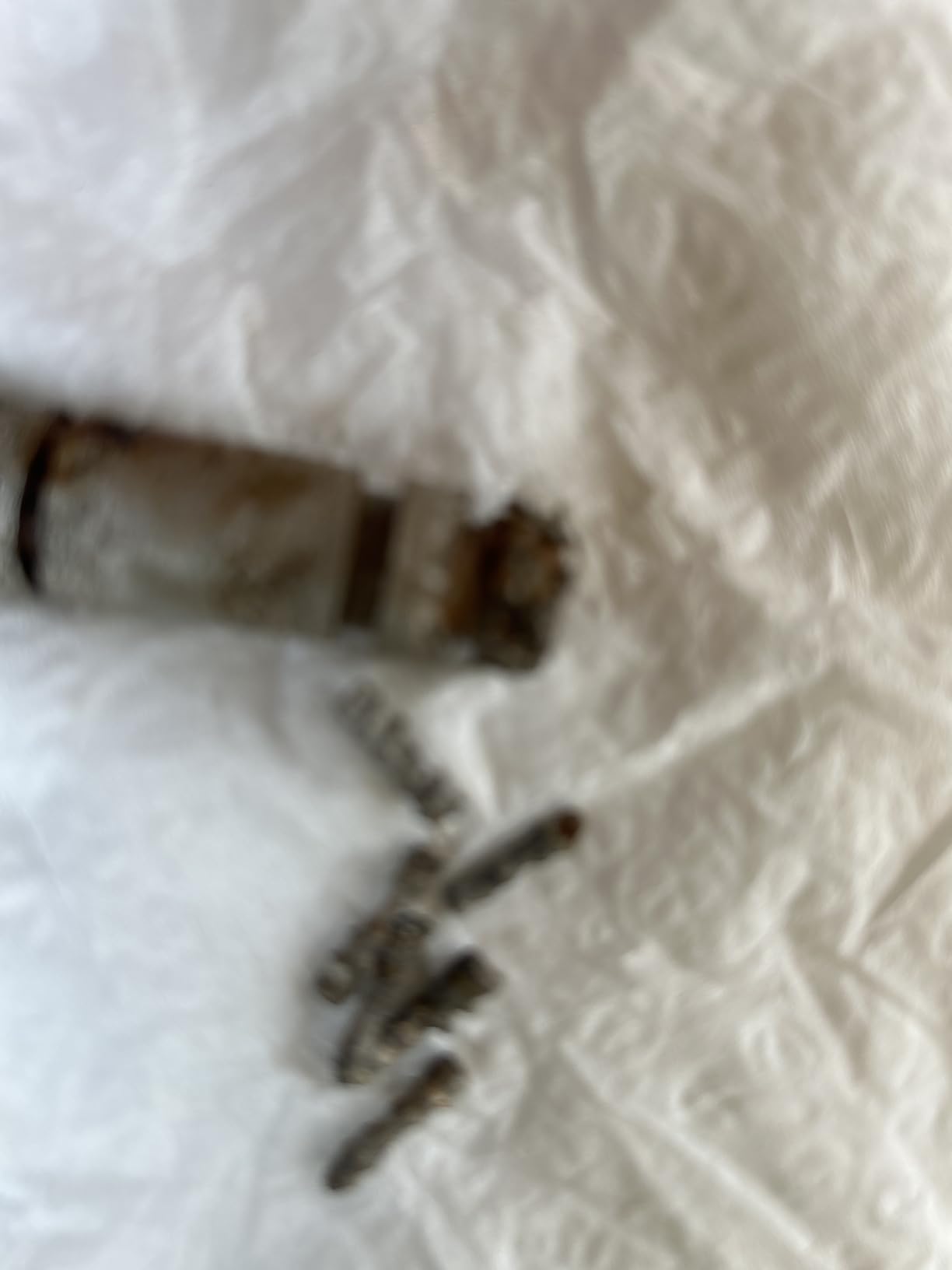
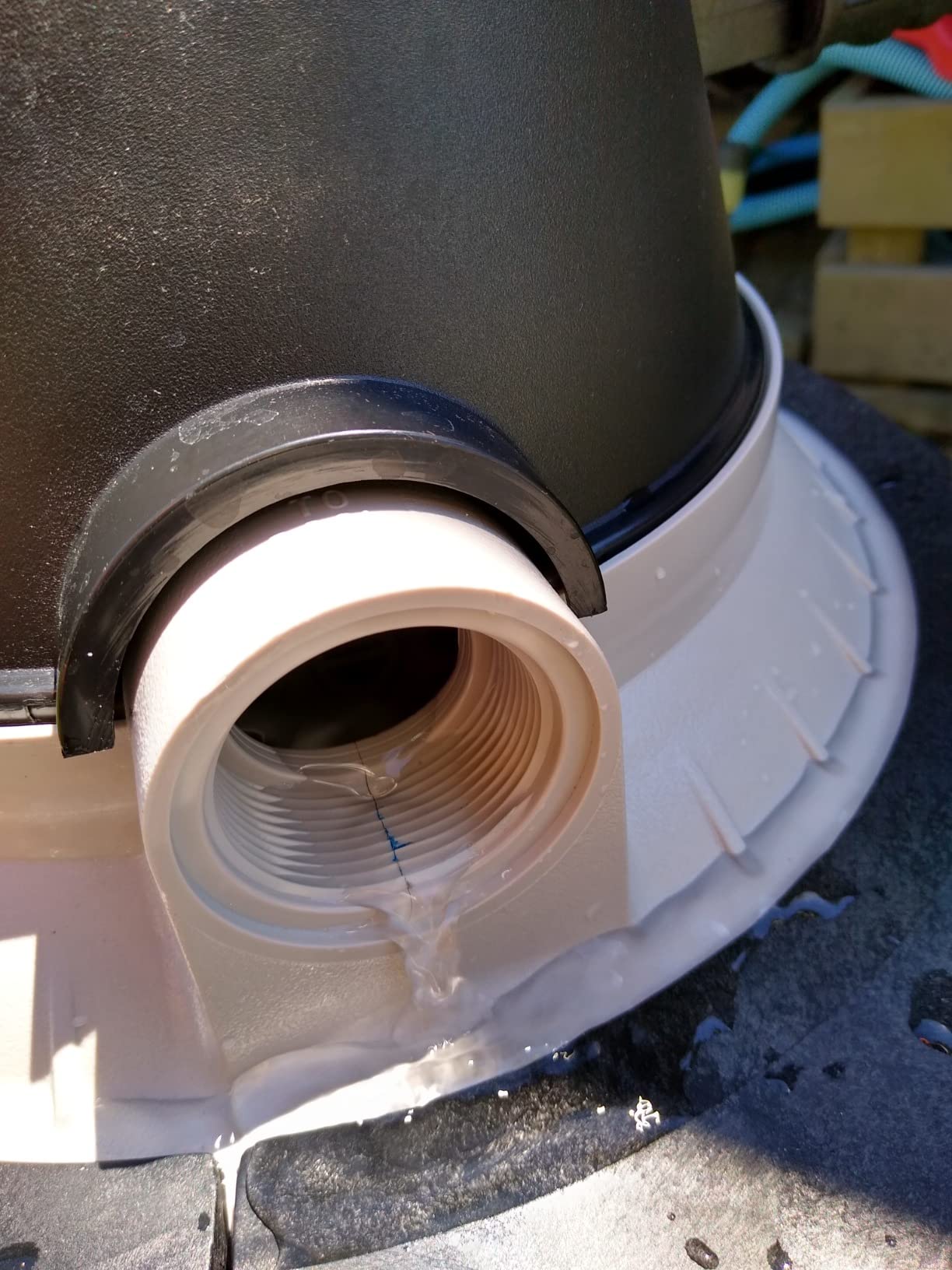
The dominant complaint is clamp durability, with several multi-season leak reports and one account of the bracket failing on startup. The clamp assembly is the part to watch, and replacement brackets are expensive relative to the filter itself. Owners who keep an eye on the bolts and washers during each service tend to get more out of it.
Size is the other limit. This is a single-element DE unit, so on a larger inground pool you will be running it hard to keep up with turnover. The same housing works as a hot tub or spa filter, which is a useful fallback if you ever want a dedicated spa loop.
What it handles well
Replacing an aging bolt-ring Hayward DE filter, because the clamp service design and the compact body make the swap fast and the maintenance far less awkward. It also suits a smaller inground pool or a combined pool and spa system.
If clarity is your priority and you dislike backwashing, DE at this price point is the cheapest route into fine filtration, provided the pool is not oversized for the element.
Where it falls short
DE powder is a consumable, and handling it means wearing a mask and working outdoors, which is a legitimate hesitation for some owners. Clamp failure under pump pressure is the specific durability risk to plan for.
On a large inground pool the small element area means shorter cleaning intervals and more backwash water, which partly erases the efficiency advantage of the Flex-Tube system.
7. Hayward ProGrid 36 Sq Ft DE Filter – top-down backwashing for larger pools
Hayward ProGrid Diatomaceous Earth DE Pool Filter for InGround Pools
Model: W3DE3620
Area: 36 sq ft
Weight: 66 lbs
Size: 24 x 24 x 34.5 inch
Pros
- 36 sq ft of grid area for strong cleaning capacity
- Glass-reinforced copolymer tank resists corrosion
- Top-down backwashing improves wash efficiency
- Clamp assembly makes grid removal straightforward
- Built for inground pools and spas
Cons
- DE grids must be replaced periodically
- Costs more than entry-level DE units such as the Hayward Perflex
- Smaller review base than the leading cartridge options
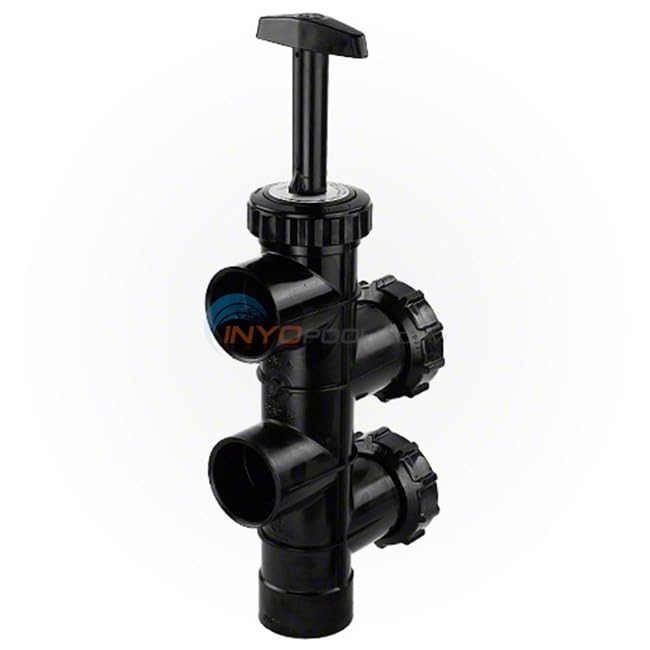
Where the Perflex is the compact single-element choice, the ProGrid is the inground specialist. Thirty-six square feet of high-impact grid elements give it substantially more cleaning capacity, and the glass-reinforced copolymer tank is rated corrosion-free, which is the right material for a permanently plumbed tank in a wet environment.
The top-down backwashing design is the feature owners notice. Because water exits at the top of the tank rather than the bottom, each cycle lifts and resettles the DE bed more completely, which means a cleaner element on the next filtration pass. The clamp assembly keeps grid removal simple, so routine service does not mean unbolting a ring.
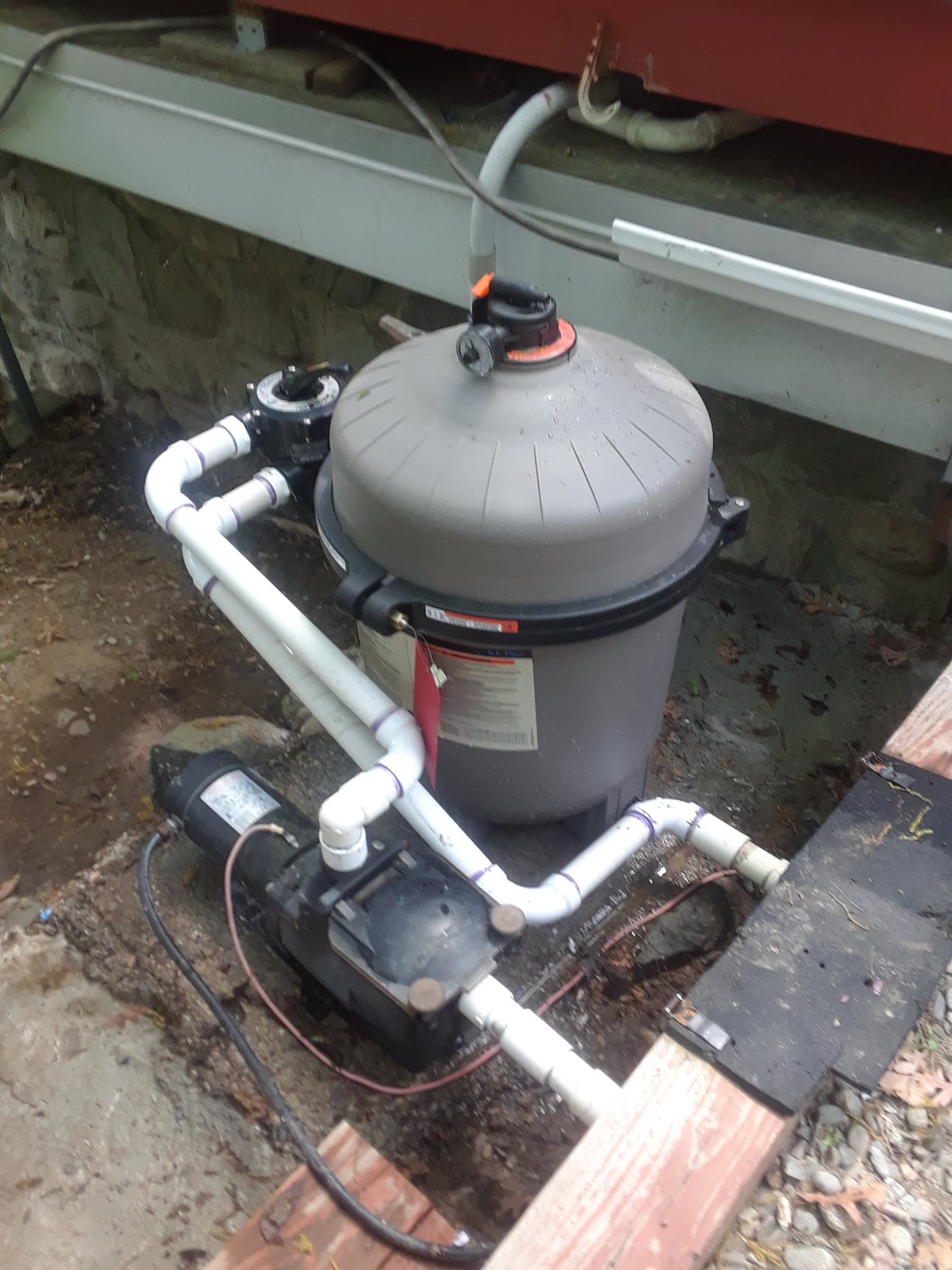
At 66 pounds and 24 inches square, this is a full-size tank and you will feel it during a service. Buyers rate the build quality and cleaning capacity highly, and with 106 ratings the feedback is solid though not as deep as the leading cartridge options in this roundup.
The tradeoff is the ongoing grid replacement cost, which is the standard DE running expense and the main reason many owners migrate away from DE after a few seasons. It also costs more than an entry-level DE unit such as the Hayward Perflex, so you are paying for capacity and for the top-down cycle.
What it handles well
Larger inground pools where a single small DE element would need constant attention. The 36 square feet of grid area gives you longer cycles between cleanings and less backwash water over a season.
Spas attached to the same equipment pad work well with this unit, since the up-flow grid design handles the smaller volumes without starving for flow.
Where it falls short
The DE grid is a consumable that eventually has to be replaced, and the powder handling routine is part of the ongoing commitment. Some owners simply do not want to work with DE powder in their yard.
Compared with a cartridge setup of similar capacity, it still discharges water on every cycle, and it costs more up front than the entry-level DE alternatives.
8. Pentair Triton II 24 Inch Side Mount Sand Filter – built to be serviced
Pentair TR60 Triton II 24 inch Side Mount In Ground Pool Sand Filter (EC-140264)
Model: EC-140264
Tank: 24 inch side-mount
Weight: 40 lbs
Valve: sold separately
Pros
- 24 inch side-mount tank sized for typical inground installs
- Swing-away diffuser gives direct access to the sand bed
- Threaded internal parts simplify future service
- Pressure gauge and air relief valve in the closure
- Works with several standard Pentair multiport valves
Cons
- Multiport backwash valve sold separately
- Sand media purchased and loaded separately
- Side-mount footprint is wider than top-mount units
The Triton II is the traditional choice for anyone who plans to keep the filter for a long time and does not want to replace the whole tank eventually. Every internal part is threaded rather than glued, and the swing-away diffuser lifts out to give direct access to the sand bed and the internals without dismantling the assembly.
The closure carries an easy-to-read pressure gauge and an integrated air relief valve, so you can bleed air and check backpressure from one spot. The tank is also compatible with several standard Pentair multi-port valves, which matters for owners who already have one on the pad and want to keep it.
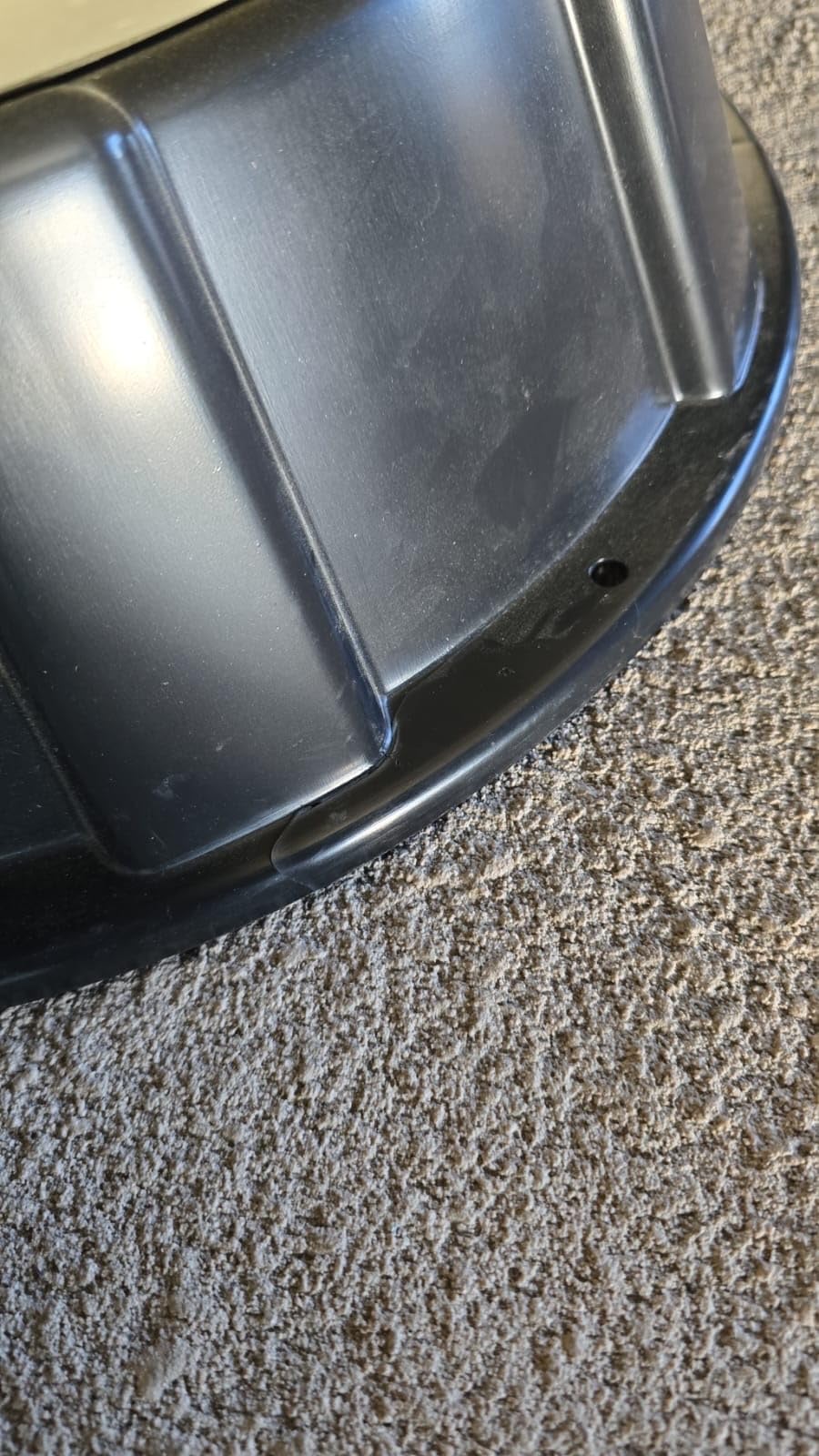
The important planning note is that this is a tank, not a system. The multiport backwash valve is sold separately, and so is the sand. Compatible valves are listed by part number, so check what you already own before ordering anything else. The side-mount layout also takes more horizontal space than a top-mount unit, which can matter on a narrow pad.
With 85 ratings the feedback base here is moderate, and at 4.2 stars it sits in the middle of the group. That is a fair reflection of what it is: a durable, serviceable, unremarkable tank that you configure to fit your existing plumbing.
What it handles well
Installations where a side-mount layout already exists, since that is what the tank is designed around. The threaded internals and swing-away diffuser also suit owners who expect to do their own maintenance for many seasons.
It is a good match for a Pentair variable speed pump, because the sand bed provides steady backpressure and the tank handles a full-size residential volume without straining.
Where it falls short
You are buying two additional components to make it a working filter, so plan the parts list before the install day. The horizontal footprint is larger than a top-mount equivalent on a cramped pad.
Sand still means backwash water and a media replacement every few years, and a 20 to 40 micron bed will not produce the clarity of a cartridge or DE system.
9. Pentair FNS Plus 48 Sq Ft DE Filter – the biggest DE area in the group
Pentair FNS Plus 48 Sq. Ft. DE Pool Filter (EC-180008)
Model: EC-180008
Area: 48 sq ft
Weight: 74 lbs
Size: 21.99 x 22 x 41 inch
Pros
- 48 sq ft of DE area extends time between cleanings
- Service-Ease grid pack comes off with a single nut
- Chemical-resistant fiberglass-reinforced polypropylene tank
- Dual air relief design limits air locks
- Direct replacement for older 48 sq ft Pentair DE filters
Cons
- Multiport valve sold separately
- Some tanks arrive with a pin-hole leak or crack in the dome
- Occasional factory-broken manifold grid cap
Forty-eight square feet is more DE area than the 36 square feet in the Hayward ProGrid, and that difference is the argument for this filter. More area means a longer interval between cleanings on a big residential pool, which cuts both the labor and the backwash water over a season. The Service-Ease grid pack releases with a single nut, so routine servicing is the least involved of any DE unit in this roundup.
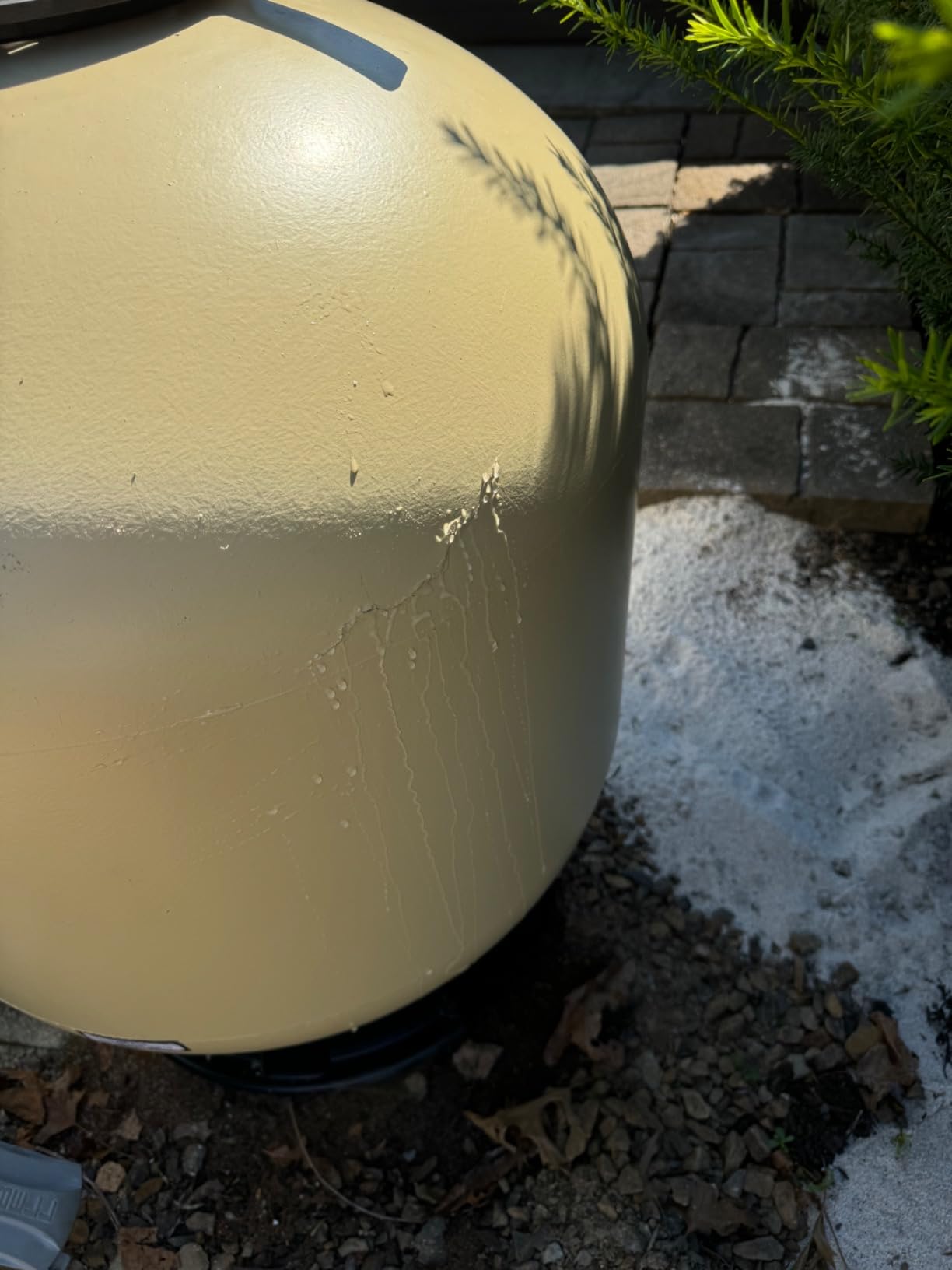
The tank is chemical-resistant fiberglass-reinforced polypropylene, and the dual air relief design, an integrated internal relief plus a high flow manual valve, is specifically aimed at keeping air locks out of the loop. That matters on a deep inground plumb where air pockets are common. The almond-colored finish is a small touch that blends better into a landscaped yard than a bright white tank.
Owners also report that Pentair customer service resolves damaged parts quickly, which matters when a fiberglass-reinforced component arrives damaged. This is a direct replacement for older 48 square foot Pentair DE filters, so existing plumbing and valve positions are more likely to line up.
The honest limitation is the review volume. At 37 ratings this is the smallest sample in the group, so the 4.4 score is encouraging but not deeply validated. The recurring negatives are all out-of-box defects, including pin-hole leaks or cracks in the dome and a broken manifold grid cap on some tanks. Inspect the dome and the grid cap the day it arrives. The valve is sold separately, as it is on most Pentair tanks.
What it handles well
Large inground pools that run on a chlorine generator or other high-chemistry setup, since the chemical-resistant tank is built for that load. It is also the natural choice for owners replacing an existing 48 square foot Pentair DE filter.
If reducing DE cleaning frequency is the goal rather than reducing backwash volume, this is the filter that gets you there without moving to a larger tank.
Where it falls short
The valve is sold separately, so it is not a complete install. Out-of-box quality control is inconsistent enough that you should plan to inspect it immediately and have a return path ready.
DE powder remains a recurring consumable, and 74 pounds of tank plus grids is a substantial lift for anyone servicing alone. The small review base also means less long-term evidence than the cartridge options offer.
10. Dohenys 200 Sq Ft Cartridge Filter – the simple bullet filter swap
Doheny’s Pool Pro Cartridge Filters for In-Ground Pools | 200 Sq. Ft. Filter for Pools Up to 72,000 Gallons | Cost-Effective Replacement for Bullet Cartridge Filters | Easy Swap-Out Design
Area: 200 sq ft
Weight: 28 lbs
Pool size: up to 72000 gallons
Connection: 2 inch, adapts to 1.5 inch
Pros
- Low-cost complete cartridge filter
- Pools up to 72000 gallons
- Light at 28 pounds for easy handling
- Glass-reinforced corrosion-resistant co-polymer tank
- 2 inch female connection adaptable to 1.5 inch
Cons
- Smallest review base in the roundup
- Long-term durability is less well documented
- Cartridge availability for this brand is less certain than Hayward or Pentair
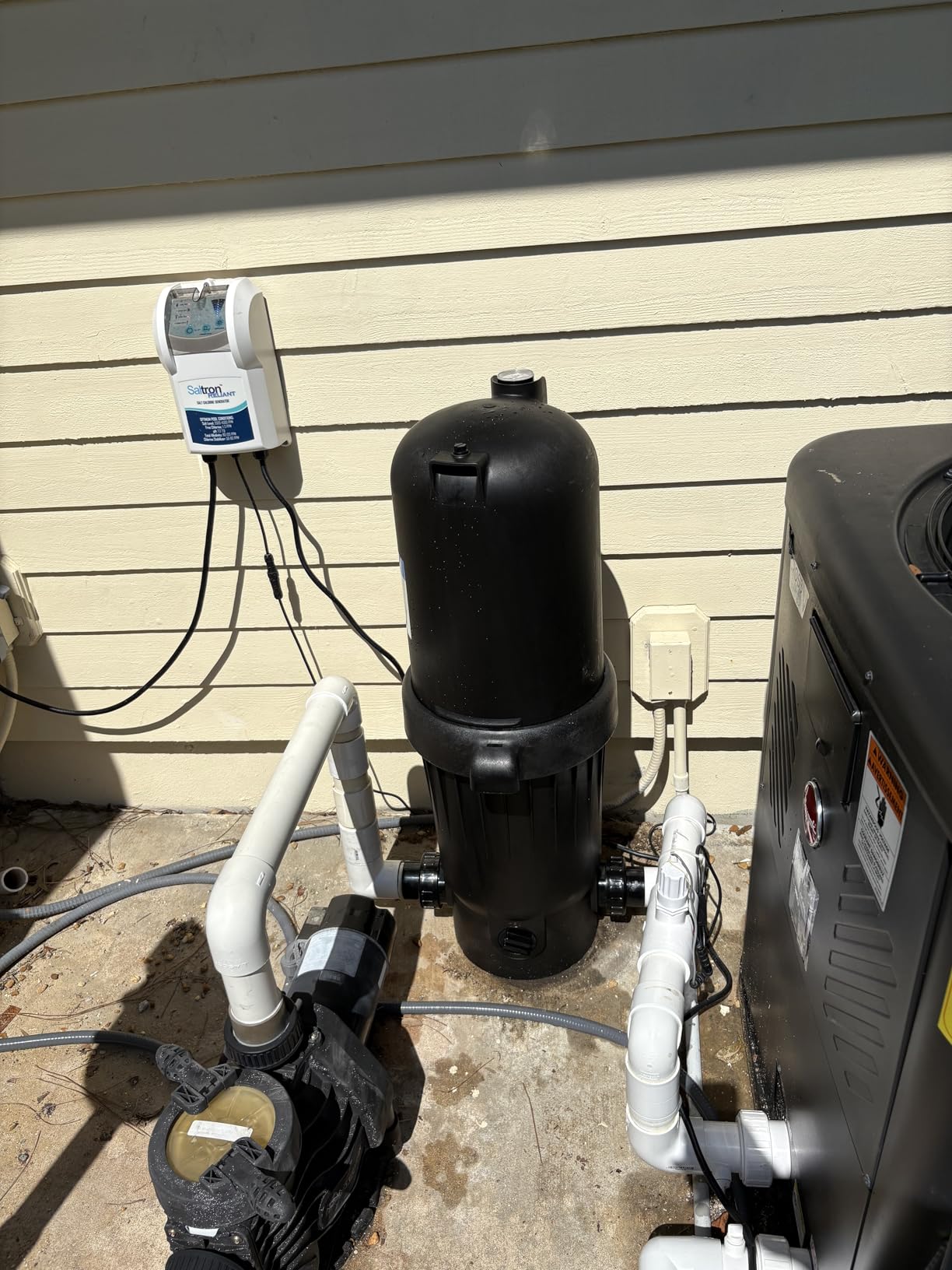
This one exists to solve a specific problem: replacing an expensive bullet-style cartridge filter without paying bullet-filter money. The tank is built with an approximately 14 inch bottom circumference so it drops into the footprint of a comparable cartridge filter, and the expanding tank design is meant to raise flow rates as the element loads up.
At 28 pounds it is one of the lighter units here, which is a genuine advantage when you are working alone on an equipment pad. The 2 inch female connection adapts down to 1.5 inch plumbing, so it covers older installations without new fittings, and the glass-reinforced co-polymer body handles an inground environment without corrosion concerns.
The 200 square feet of area handles pools up to 72000 gallons, so the capacity is not the weak point. The weak point is evidence: with 33 ratings, this is the smallest feedback pool in the roundup, and it sits at the low end of the group at 4.0 stars. Buyers rate it as a cost-effective option rather than a premium one.
Before you commit, confirm replacement cartridge availability for this brand. Buyers note that ongoing element supply is less certain than for Hayward or Pentair, and for a cartridge filter that availability question matters more than it does for a sand tank you can refill with any bag of #20 silica.
What it handles well
Replacing a bullet cartridge filter in place, where the 14 inch bottom circumference and adaptable connection do most of the work. It is also a sensible second filter for a pool running two loops, or a spa filter for a smaller vessel.
If you are comfortable with a thinner brand track record and want a low-cost complete cartridge unit, this is the pick that fits.
Where it falls short
Long-term durability is not well documented, and 4.0 stars is tied for the lowest average here. Replacement element availability is the practical risk to check first.
The 200 square feet area is smaller than the 320 and 425 square feet options above, so on a large pool it will load faster and need rinsing more often.
How to Choose the Right Filter for Your Inground Pool
Start with the number that actually decides the purchase: filter area or flow rating matched to your pool volume. Media type matters for maintenance and water waste, but an undersized filter of the right type will disappoint you every week of the season. Get the sizing right first, then choose the type that matches how much work you want to do.
Sand, cartridge, or DE: what each one actually filters
Sand filters capture particles roughly between 20 and 40 microns. That is coarse compared with the alternatives, but the media is cheap, the tank is forgiving, and backwashing is a two-minute hose job. Cartridge filters land in the 10 to 20 micron range with many manufacturers quoting 10 to 15 microns for pleated polyester, and they hold a lot of surface area per cubic foot, which is why the big quad systems hold a full season.
Diatomaceous earth filters are the finest of the three at roughly 1 to 3 microns, because the powder forms a very fine bed against grid elements. That clarity comes with a consumable, a backwash cycle, and a handling routine that involves a mask. The VEVOR unit in this roundup uses a 50-micron core, which is a fair reminder that cartridge is a family, not a single spec.
Sizing: match filter area to gallons, not the other way around
Two turnover figures govern this. One turnover is the point where every gallon in the pool has passed through the filter once, and a full system should manage that in eight hours or less. Two turnovers per day is the usual target for clear water. Divide your pool volume by eight to get the hourly flow you need, then size the filter to deliver that flow at the head loss your pump can live with.
For cartridge and DE, the more useful number is filter area. A 425 square foot cartridge handles roughly 72000 gallons in an eight-hour turnover, which is the arithmetic the manufacturers use and the same reason the quad systems give you season-long cycles. The 320 square foot Pentair is rated to 57600 gallons, and the 200 square foot Dohenys unit is rated to 72000 gallons, which shows why a single gallon number does not tell the whole story. The media type changes how much area you need.
For a 30000 gallon pool, you are looking at a target of roughly 3750 gallons per hour for a single turnover in eight hours, and something in the 250 to 350 square foot class for cartridge media. Sand tanks are usually picked by diameter instead, and a 22 or 24 inch tank is the usual residential choice. The 24 inch side-mount Pentair in this roundup is sized for exactly that class of installation.
Valve and mounting style
A multiport valve is the control center of a sand or DE filter, and the number of positions tells you how much the manufacturer expects you to do. The XtremepowerUS tank offers seven positions including a dedicated rinse and a closed position. Most Pentair and Hayward multiport valves give you filter, backwash, rinse, recirculate, closed, and winterizing modes, which is the full working set.
Side-mount versus top-mount is the second decision, and pool owners on forums consistently prefer side-mount for maintenance access, since a side-mount valve sits at waist height instead of on top of the tank. The tradeoff is footprint, because a side-mount layout takes more horizontal space. Top-mount units are cheaper and more common, but you are lifting the valve handle over your head on a wet pad.
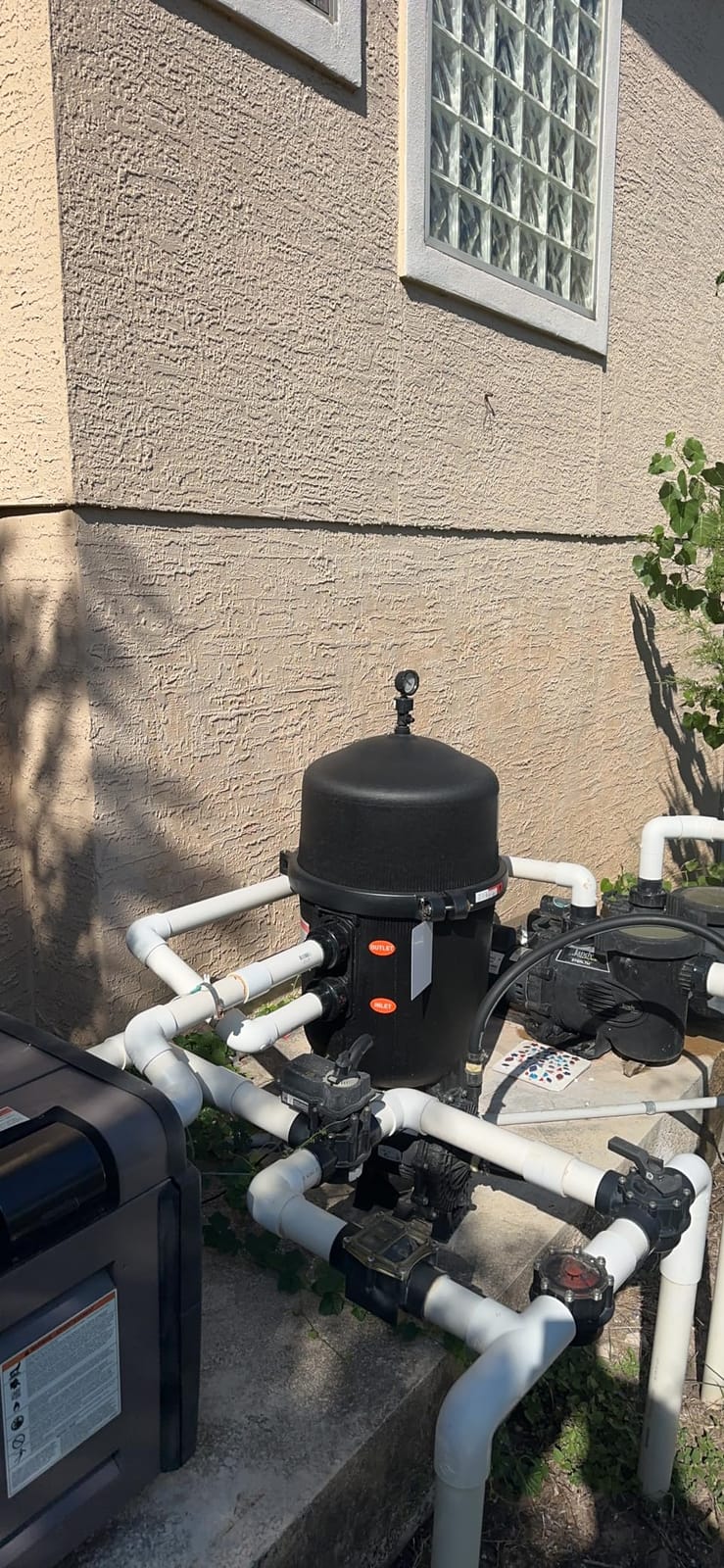
Check the port sizes before you buy anything. A 1.5 inch legacy setup that feeds a 2 inch port filter means new unions and possibly a short pipe run, and the Hayward SwimClear in particular sits at different port heights than many older filters. Owners who measured first reported the smoothest installs across every category we looked at.
Tank material and long-term durability
Polymeric tanks are lighter, cheaper, and adequate for most installations. Fiberglass tanks cost more and weigh more, and they resist the UV degradation that eventually turns a plastic housing chalky and brittle. The Pentair Clean and Clear Plus in this roundup is the clearest example of that difference, and its 4.6 rating reflects how rarely buyers report tank problems on it.
Glass-reinforced copolymer sits in between, and the Hayward ProGrid uses it for a tank rated corrosion-free. Where we would be most cautious is thin-walled plastic manifolds on high-flow systems, since that is where stress cracking reports cluster.
Media choice inside the tank
Sand media is graded, and #20 silica is the standard for residential pools. Zeosand and glass media are the alternative products owners ask about most, and the honest answer is that the debate is less settled than the marketing. Forum users regularly push back on claims that glass media is a dramatic upgrade, and the practical differences show up in backwash frequency and media cost rather than in final clarity.
If you want to move beyond sand, the cartridge route is simpler: no media to buy, no backwash water, and cleaning with a hose. On a pool where you are trying to save water, that is the argument that decides it. If you are sticking with a DE system, plan the powder purchases as part of your annual budget rather than a surprise.
Maintenance, water waste, and winterizing
Sand and DE filters backwash, and each cycle sends water to the drain. Cartridge filters never do, which is why the shift from sand to cartridge is the most common recommendation across pool forums when owners want to cut water loss. The cost of that choice is manual rinsing, roughly once a season in most climates and more often in dusty areas.
Winterizing is where filter type changes the checklist. Sand filters use the winterizing valve position to drain the tank, and cartridge filters need to be drained as well with the elements easy to reach. Before closing up, clean the element or backwash the tank thoroughly, remove and store the cartridges or grid pack if you have freeze concerns, and leave the lines blowing out. Our concrete pool vacuum guide covers the rest of the closing checklist.
Hayward versus Pentair
Both manufacturers cover all three media types, and the difference is less about filtration and more about parts and serviceability. Hayward tends to lead on cartridge housing design, and owners on forums frequently single out Hayward cartridge housings as better engineered than the Pentair equivalents. Pentair is generally credited with the strongest DE lineup, which is a common thread in owner recommendations when fine filtration is the priority.
Pentair tanks frequently sell without a valve attached, as you will see with the Triton II and the FNS Plus in this roundup, so Pentair purchases need a parts budget. Hayward models more often arrive as a closer to complete assembly. For long-term ownership, the practical question is which brand your local pool store carries parts for, because a ten-year-old tank with no available clamp or union is a problem regardless of who made it.
Saltwater pools and other special cases
Saltwater systems are harder on metal and on some plastics than chlorine-only pools, and a fiberglass or glass-reinforced copolymer tank is the safer choice there. The Pentair Clean and Clear Plus and the Hayward ProGrid both fit that description. If you use a chlorine generator, expect to service chemical-resistant components on a shorter cycle than you would with tablet chlorine.
Dusty and high-wind locations are the case where cartridge buyers get the worst of it, and forum advice is consistent: do not run a cartridge as your only filter if your yard generates constant particulate. In those environments, a sand filter as the primary with a cartridge seasonal supplement gives you the water conservation benefit without the clogging problem.
Frequently Asked Questions
Which pool filter brands are considered the best?
Hayward and Pentair are the two brands most pool owners trust, and both cover sand, cartridge, and DE. Hayward is often preferred for cartridge housing design, while Pentair is frequently recommended for DE systems. The best brand for your pool is really the one your local pool store stocks parts for, since parts availability matters more over a decade than the badge on the tank.
Which brand of pool filters is better, Hayward or Pentair?
It depends on the media type. Hayward tends to lead on cartridge housing design and ships closer to a complete assembly, while Pentair is widely credited with the best DE lineup but often sells tanks without a multiport valve attached. Choose based on parts availability in your area and the filter you already have plumbing for.
What is the best DE filter for an inground pool?
The Hayward ProGrid at 36 square feet is the best DE option here for a typical inground pool, with a glass-reinforced copolymer tank and top-down backwashing that lifts and resettles the bed more completely. If you want fewer cleanings rather than lower cost, the Pentair FNS Plus carries 48 square feet and releases its grid pack with a single nut.
What is the highest rated water filter system?
Among the ten filters in this roundup, the Pentair Clean and Clear Plus 320 square foot cartridge holds the highest average rating at 4.6 stars from 139 ratings, followed by the Hayward SwimClear 425 square foot at 4.5 stars from 244 ratings. Ratings reflect owner satisfaction with the whole install, not filtration performance alone.
What is the best type of pool filter for an inground pool?
Sand is the best default for an inground pool because it is inexpensive, forgiving, and easy to backwash. Cartridge is best if you want to conserve water and get the cleanest water without discharging anything. Diatomaceous earth is best for the finest particle capture, but it costs more in consumables and powder handling. A variable speed pump pairs best with a cartridge system for low energy use.
What size pool filter do I need for a 30000 gallon pool?
Divide 30000 gallons by eight hours to get the hourly flow for a single turnover, which is about 3750 gallons per hour. For cartridge media, that points to the 250 to 350 square foot class, so the Pentair Clean and Clear Plus at 320 square feet fits comfortably. For sand, a 22 or 24 inch tank is the usual residential match for that volume.
Conclusion
The best pool filters for inground pools come down to one honest question: how much water and how much work are you willing to trade for clarity. The XtremepowerUS 22 inch sand tank is the safest first filter and carries the deepest owner feedback here. The Pentair Clean and Clear Plus holds the highest rating thanks to a fiberglass tank that will outlast plastic. The Hayward SwimClear 425 is the pick if you want season-long cycles and zero backwash water.
Measure your port sizes and your pool volume before ordering anything, check that the replacement media is available in your area, and match the filter area to an eight-hour turnover. Get those three right and the rest of the decision is straightforward.