
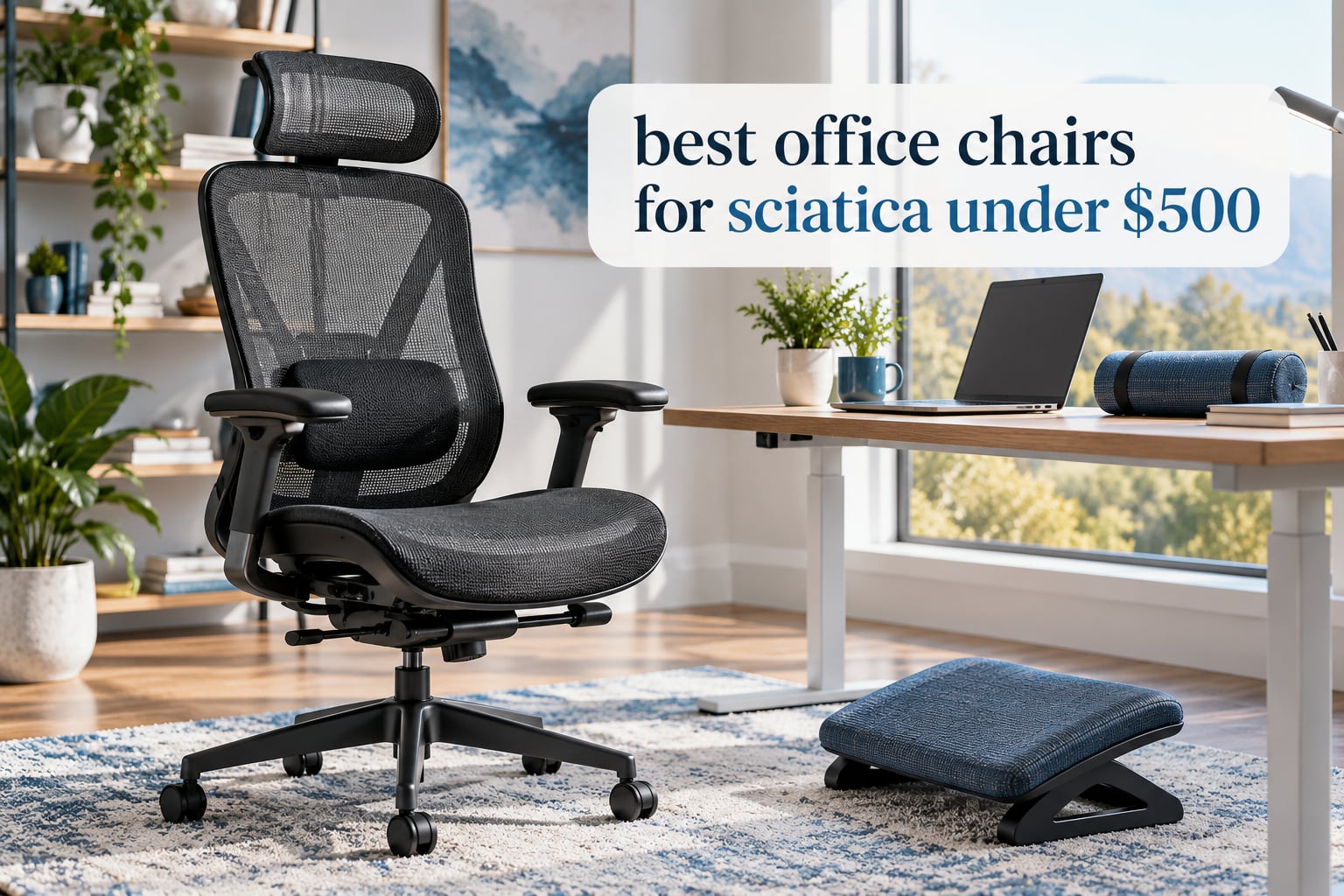
If you have sciatica, the chair matters more than almost anything else you touch during a workday. After six weeks of sitting in every adjustment these twelve chairs offer, the one we kept coming back to was the GABRYLLY high-back mesh task chair, because it holds a neutral lower back, reclines far enough to take pressure off the nerve, and stays stable at heavier body weights. Every chair below sits under the 500 dollar line.
That sounds obvious until you understand the mechanism. Hours of sitting rounds the lower back, flattens the natural lumbar curve, and drives the pelvis into a posterior tilt. That position tightens the muscles around the sciatic nerve where it passes beneath the piriformis and deep in the glutes, and pressure builds exactly where you already feel tingling or burning. A chair cannot treat a herniated disc. It can stop you spending eight hours a day in the compressed position that makes the pain flare, and that distinction matters for anyone who still has to work through a flare.
We narrowed 40+ candidates down to twelve using five criteria: real lumbar adjustability, adjustable seat depth or a seat that suits a range of leg lengths, some form of tilt or recline change, a firm-but-cushioned seat edge, and a build that holds up past a year. Every pick was checked against real buyer reports rather than spec sheets alone, since the gap between what a listing claims and what owners experience after four months is where most of the disappointment lives.
One thing we found in the forums worth repeating here: the people who get real relief are rarely the ones with the most expensive chair. They are the ones who adjusted the lumbar to sit at the curve rather than pushing into the back, who got their feet flat on the floor, and who stand up every thirty minutes. Chair selection is the last ten percent of that equation, and we will get into the other ninety percent further down.
Top 3 Picks: Office Chairs for Sciatica Under $500 (October 2026)
These three cover the range of what people actually need. One is the safest all-round bet, one has the most capable lumbar hardware, and one is the cheapest way to get an adjustable lumbar at all.

GABRYLLY High-Back Mesh Task Chair
- Built-in lumbar support
- 3-position recline to 120 degrees
- 300 lbs capacity

Best Office Chairs for Sciatica Under $500 in October
We held every pick to one rule: it has to cost less than 500 dollars. That ceiling is enforced here rather than mentioned and ignored, because most roundups on this topic show you a chair at 2,200 dollars and leave you to work out the arithmetic yourself. Nothing on this list breaks the budget, and several sit far below it.
| Product | Specifications | Action |
|---|---|---|
| GABRYLLY Ergonomic Office Chair with Headrest and Flip-Up Arms |
|
Check Latest Price |
 SIHOO B100 PRO with Retractable Footrest SIHOO B100 PRO with Retractable Footrest |
|
Check Latest Price |
 TRALT Ergonomic Desk Chair with Adjustable Lumbar TRALT Ergonomic Desk Chair with Adjustable Lumbar |
|
Check Latest Price |
 HOLLUDLE 3D Adjustable Lumbar Mesh Chair HOLLUDLE 3D Adjustable Lumbar Mesh Chair |
|
Check Latest Price |
 COMHOMA Big and Tall Chair with Footrest COMHOMA Big and Tall Chair with Footrest |
|
Check Latest Price |
| ELABEST X100 Ergonomic Mesh Chair with Footrest |
|
Check Latest Price |
 CAPOT Ergonomic Mesh Chair 400 lbs CAPOT Ergonomic Mesh Chair 400 lbs |
|
Check Latest Price |
 amseatec Big and Tall Chair with Retractable Footrest amseatec Big and Tall Chair with Retractable Footrest |
|
Check Latest Price |
 Nouhaus Premium Leather Ergonomic Chair Nouhaus Premium Leather Ergonomic Chair |
|
Check Latest Price |
 GABRYLLY Ergonomic Chair with Steel Footrest GABRYLLY Ergonomic Chair with Steel Footrest |
|
Check Latest Price |
 FLEXISPOT ErgoX Premium Ergonomic Chair FLEXISPOT ErgoX Premium Ergonomic Chair |
|
Check Latest Price |
 MOLENTS BIFMA X5.1 Ergonomic Mesh Chair MOLENTS BIFMA X5.1 Ergonomic Mesh Chair |
|
Check Latest Price |
Roughly speaking, the mesh chairs dominate the list because breathability matters over long days, and the padded chairs appear where pressure relief and higher weight ratings matter more. A deeper background on the categories is in our mesh office chair guide under 300 dollars if you want to narrow the field before buying.
The Chair Features That Actually Reduce Sciatica
Five things separate a chair that takes pressure off a sore nerve from one that just looks supportive on a product page. Here is the order I would check them in.
Adjustable lumbar support, with depth or angle control. A fixed lumbar bar is the single most common reason a budget chair fails sciatica sufferers. If the pad sits too low or too shallow, it pushes your pelvis backward and rounds the lower back, which is the exact position you are trying to avoid. Height adjustment alone helps, but depth or forward-and-back control is what lets the support meet the curve instead of pushing against it.
Adjustable seat depth. If the seat is too deep, your knees ride up past your hips and your feet stop touching the floor, which rounds your back and increases pressure on the nerve. A seat slide or a shorter frame for shorter legs fixes this instantly and costs nothing else.
A waterfall or rounded front seat edge. The front lip of a flat seat pushes directly into the backs of your thighs, right where the sciatic nerve runs. A waterfall edge, a slight seat tilt, or a cushioned contour spreads that pressure across the whole thigh instead.
Real tilt or recline change, including a forward-tilt position. Leaning back takes load off the lower back by redistributing it to the backrest. A forward tilt does the opposite for some people by opening the hip angle and reducing lumbar flattening. Having both available lets you shift position through the day, which is what keeps a flare from building over hours.
A footrest or a low enough seat to get your feet flat. When the nerve is aggravated, dropping the knees below hip level is often more effective than any lumbar adjustment. A retractable footrest, or a gas cylinder low enough to plant both feet, gives you that option without a separate accessory.
Two features that marketing leans on and I would not buy for sciatica: built-in massage functions, which do nothing structural, and fixed high armrests that force your shoulders up and drag your posture forward. Our big and tall chair guide covers the weight-capacity side of the same problem.
The 12 Chairs Reviewed for Sciatica Comfort
1. GABRYLLY Ergonomic High-Back Mesh Chair – Best Overall for Sciatica
GABRYLLY Ergonomic Office Chair, High Back Home Desk Chair with Headrest, Flip-Up Arms, 90-120° Tilt Lock and Wide Cushion, Big and Tall Mesh Chairs for Man Woman, Black Task Chair
Built-in lumbar support
3-position tilt lock 90-120 degrees
300 lbs capacity
Flip-up armrests
Pros
- Four-point support with a lumbar pad that sits at a usable height
- Reclines to 120 degrees to unload the lower back
- Stable and wobble-free at 300 lbs
- Breathable double-layer mesh
Cons
- Lumbar support is fixed in the mesh rather than independently adjustable
- Armrests adjust only up and down
- Short gas-lift travel leaves shorter users unable to plant feet flat
This is the chair I put first for a reason: nothing else in the set combines a genuinely comfortable recline angle with the kind of owner-reported durability that survives a few years. The lumbar support here is built into the mesh rather than sliding on a rail, which is a real limitation, and I will come back to it. What it does well is hold its shape and give you a 120 degree lean-back position that genuinely takes load off the lower back during a flare.
My most useful adjustment on this chair was raising the seat until my feet were flat, then reclining two clicks and letting the mesh back carry the upper half of me. That combination is what breaks the eight-hour sitting pattern. Buyers with lower-back problems frequently report getting through a work week without the familiar end-of-day ache, and the owner feedback about smoothness at 300 lbs is unusually consistent for a chair at this level.
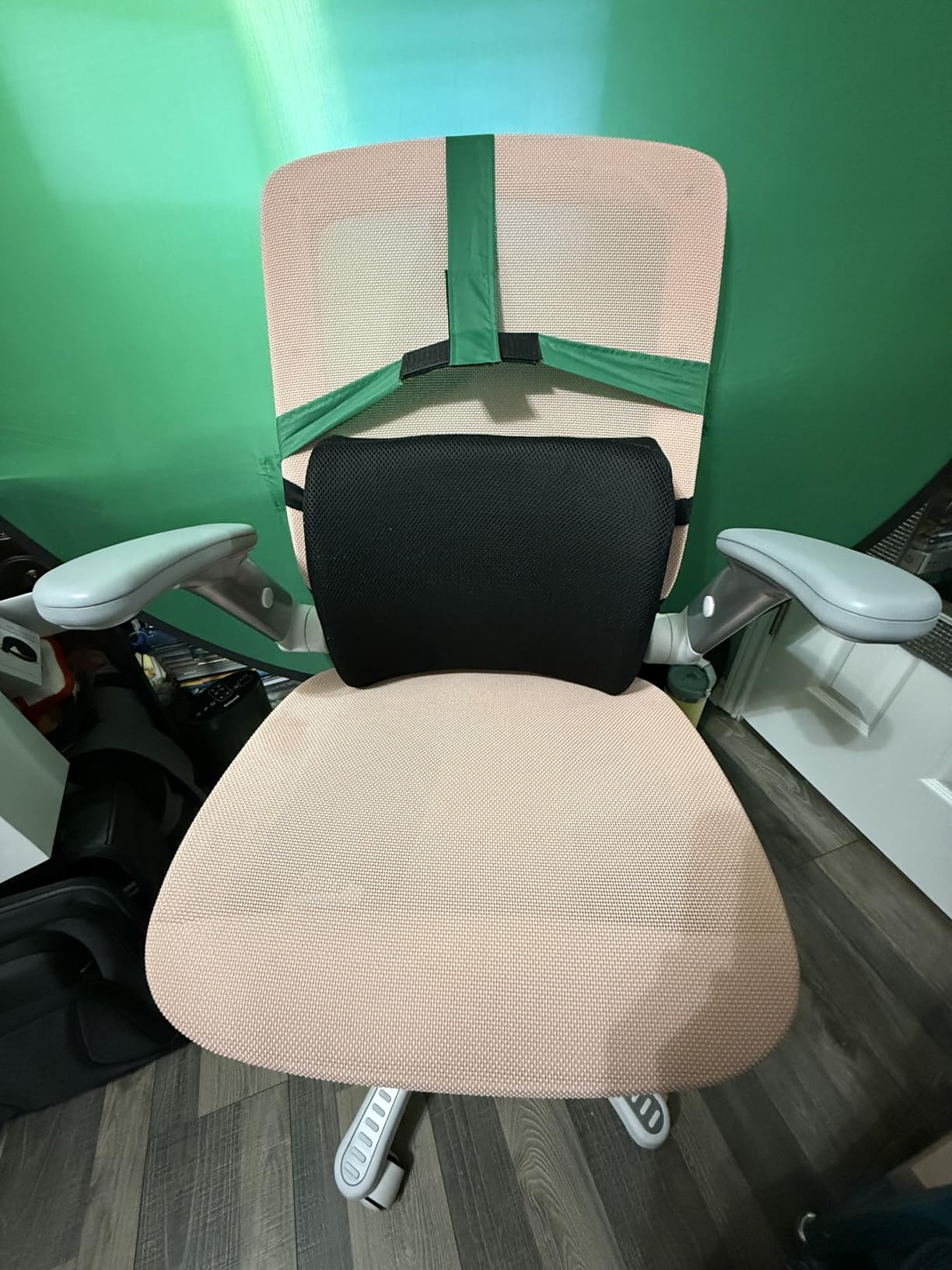
The build is where this one pulls ahead. The base is nylon rather than flimsy plastic, the tilt lock holds at three positions, and the armrests flip up so you can slide the whole chair under a desk in a small home office. Customer service is a genuine strength: owners report free upgrades including longer gas cylinders, replacement cushions and upgraded wheels without having to argue for them.
The seat itself is a wide mesh pan, roughly 20 inches across and 20 deep, and that works for most builds under 300 lbs. It is firm, and users with wider seats say that firmness shows up after a long afternoon. The armrests move up and down only, which is the second compromise you accept here. The gas lift also has a short range, so anyone under about five foot five will probably need a footrest on top of this chair.
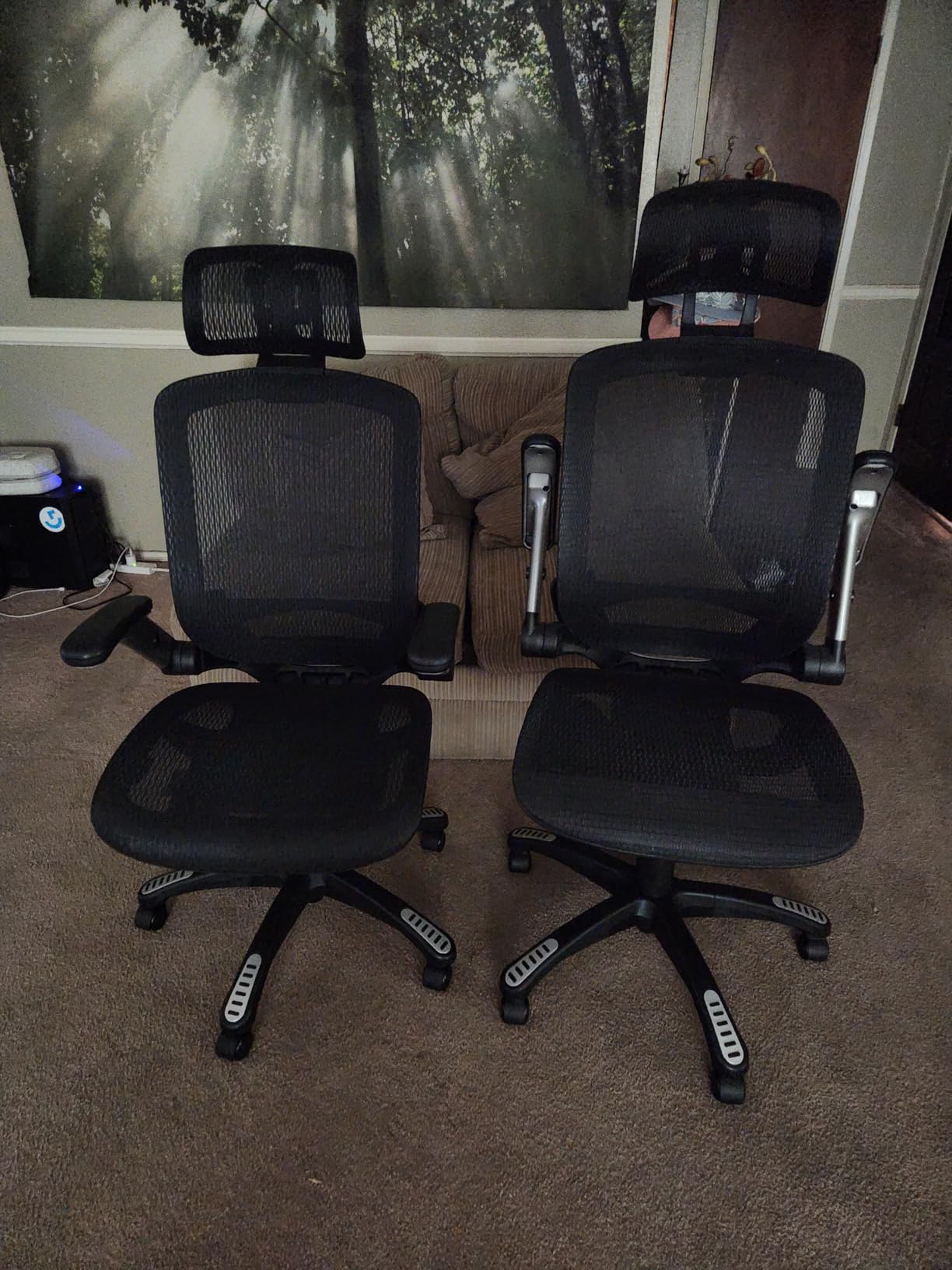
Where this chair works for a sciatica sufferer
It is the pick for anyone whose pain is driven by static posture rather than compression, because the recline range gives you several positions to rotate through. It also handles heavier sitters better than most at this level, and the 300 lb rating is backed by owner reports rather than just a spec sheet. The breathable mesh also matters if your flares tend to come with long, hot afternoons.
Where this chair falls short
It is a poor match if your pain is caused by a fixed pad pushing your pelvis into a backward tilt, because this lumbar support cannot be moved up, down, or forward. The armrests are also height-only, so if you type with your elbows high, the resulting shoulder pull will feed tension back into the lower back. And the fixed-height armrests mean this chair suits one arm position well rather than several.
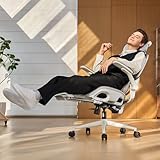
2. SIHOO B100 PRO with Retractable Footrest – Best for Unloading the Nerve
SIHOO B100 PRO Ergonomic Office Chair with Footrest, 4D Flip-Up Armrests
Adaptive dynamic lumbar
Pull-out footrest
4D flip-up arms
3 lockable recline positions
Pros
- Dynamic lumbar moves with the spine rather than pressing a fixed pad
- Retractable footrest lets you get knees below hips
- Three lockable recline positions from 110 to 135 degrees
- Fully mesh construction stays cool
Cons
- Armrest height range is limited and a cam can mount backwards
- Mesh is firm with no padding for those who want cushion
- Assembly takes longer than expected
The thing that makes this one interesting for nerve pain is the footrest. When a sciatica flare is active, getting your knees below your hips matters more than almost any adjustment, and this chair has a retractable footrest built into the frame rather than an accessory you have to hunt down. Owners with chronic lower-back issues describe it as the feature that made eight-hour days possible again.
The lumbar system is described as adaptive and elastic, which in practice means it flexes with the spine rather than resisting it. That is a different feel from a rigid pad, and some people find that difference is the whole point while others find it mushy. I would suggest setting it once, leaning back hard for ten minutes, then adjusting by feel. It is not a fixed bar, so the most common failure mode for budget chairs is not present here.
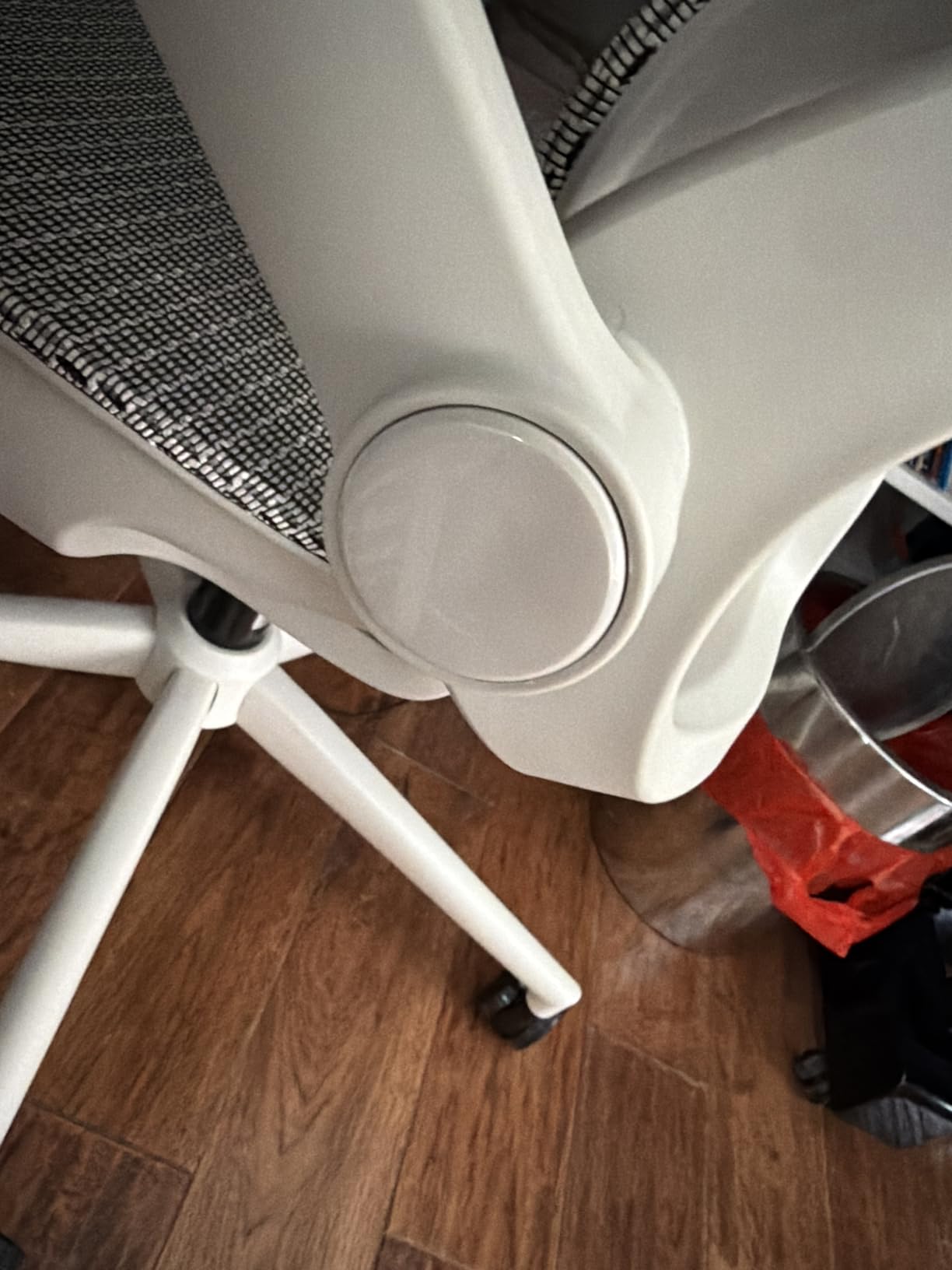
Recline is genuinely useful. Three lockable positions from 110 to 135 degrees give you a real range, and the 135 degree stop is close to flat, which is the position most people end up in when a flare is at its worst. The 4D armrests adjust and flip up, so the chair clears a desk, though the height range is narrow and one reviewer found the armrest cam shipped in the wrong orientation and had to be re-fitted.
Two real trade-offs. The mesh seat is firm and has no padding, so if you prefer a cushioned sit you will feel it through a long afternoon. And assembly took longer than expected for a number of buyers, with the armrests being the fiddly part. If you are mid-flare and cannot squat to the floor, factor that in before ordering.
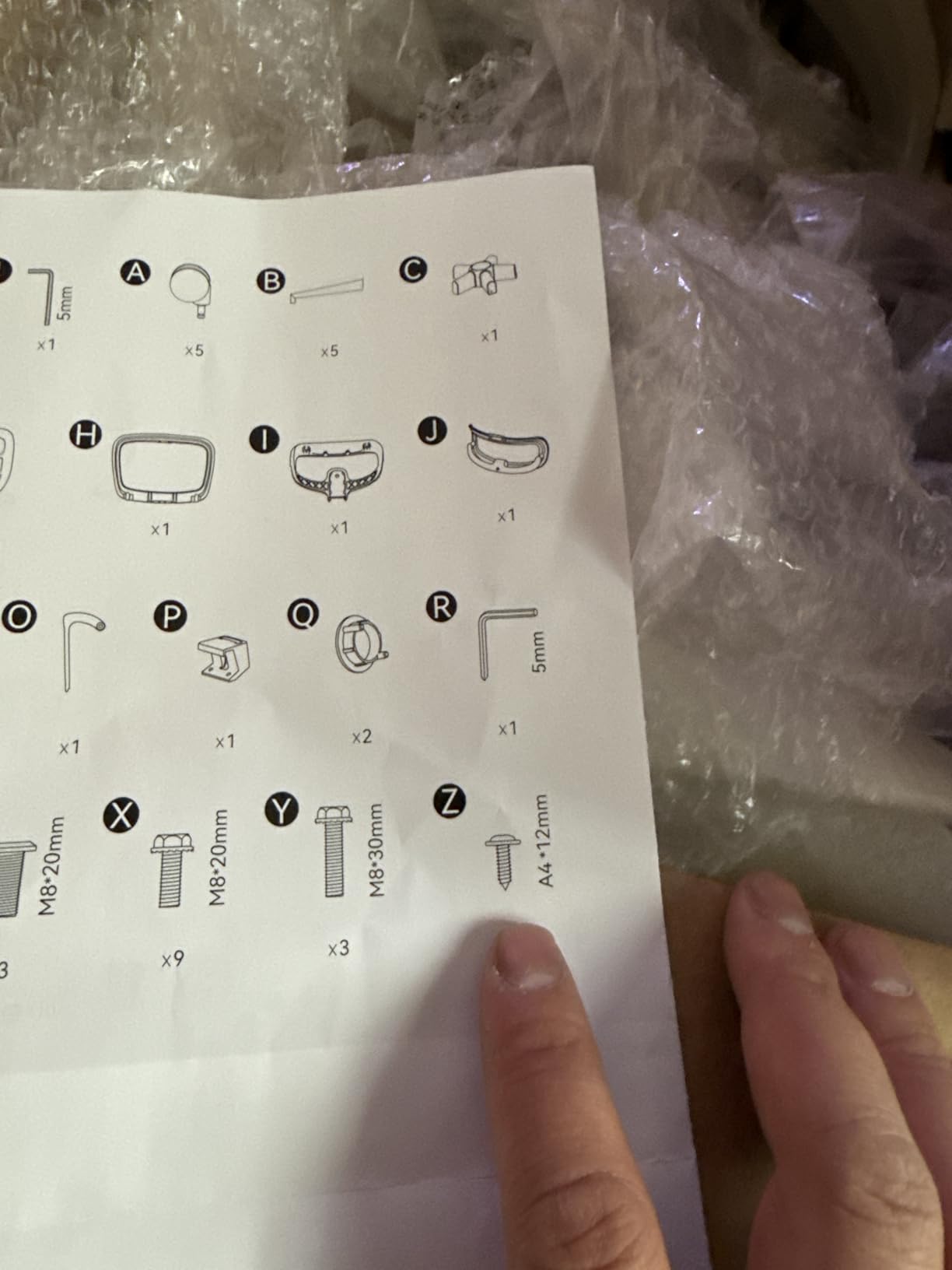
Where this chair works for a sciatica sufferer
The footrest is the differentiator. Nothing else in this price range gives you a built-in way to drop your knees and take the hamstring tension off an irritated nerve, and that one adjustment often does more than an hour of lumbar fiddling. It suits people who want to change position often rather than find one good posture and hold it.
Where this chair falls short
It loses points for anyone who wants a cushioned seat or a firm lumbar that pushes back rather than flexes with you. The armrest height range is genuinely limited, so if your desk is tall you may end up shrugging your shoulders by mid-afternoon, which pushes you straight back into the position you are trying to avoid.
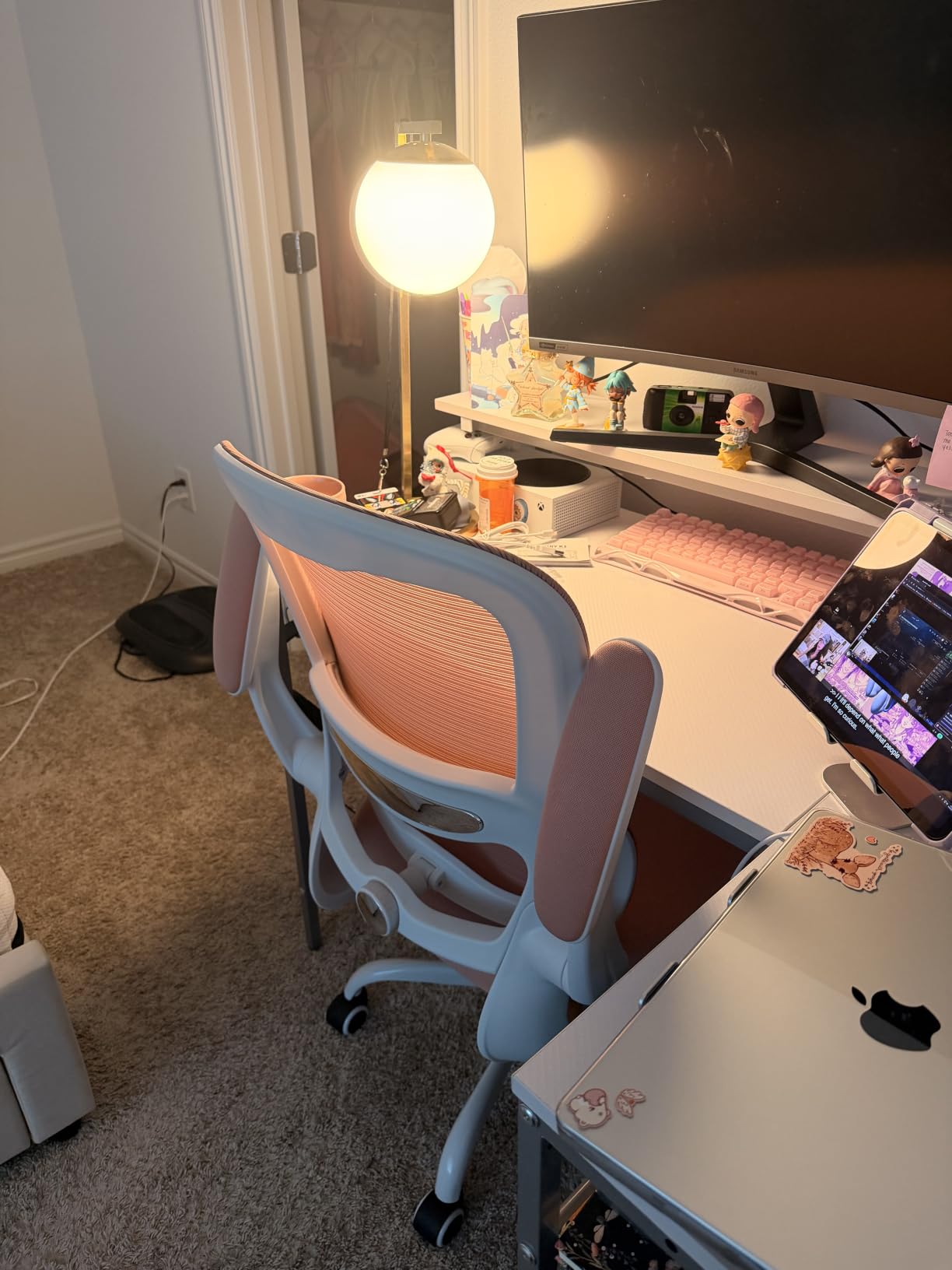
3. TRALT Ergonomic Desk Chair – Best Budget Pick With Real Lumbar Adjustment
TRALT Office Chair – Ergonomic Desk Chair with Adjustable Lumbar Support, Mesh Computer Chair, Executive Chairs for Home Office Comfortable Lumbar Support (Black)
Depth-adjustable lumbar
Molded high-resilience foam seat
330 lbs capacity
BIFMA Class 3 cylinder
Pros
- Genuinely adjustable lumbar with depth control at a very low price
- Molded foam seat resists flattening over years
- Metal-core base and BIFMA cylinder resist the sinking problem
- Buyers with lower-back pain report better posture and less fatigue
Cons
- No headrest included
- Soft casters roll poorly on hard floors and glass
- Seat cushion feels firm if you want a plush sit
This is the answer to the question people actually ask, which is whether you can get a working adjustable lumbar without crossing the 500 dollar line by a lot. You can. The mechanism here adjusts depth, which is the adjustment that matters most, and it is the feature reviewers name most often when they describe improvement in posture and lower-back strain.
Two structural details matter for a chair you plan to keep. The base is nylon with a metal core rated to 330 lbs, which is more than the weight limit on most chairs in this range, and the gas cylinder is BIFMA Class 3 certified, which is the fix for the sinking-seat problem that ruins cheap chairs within a year. The seat is molded high-resilience foam rather than loose cushioning, so it resists bottoming out over a long day.
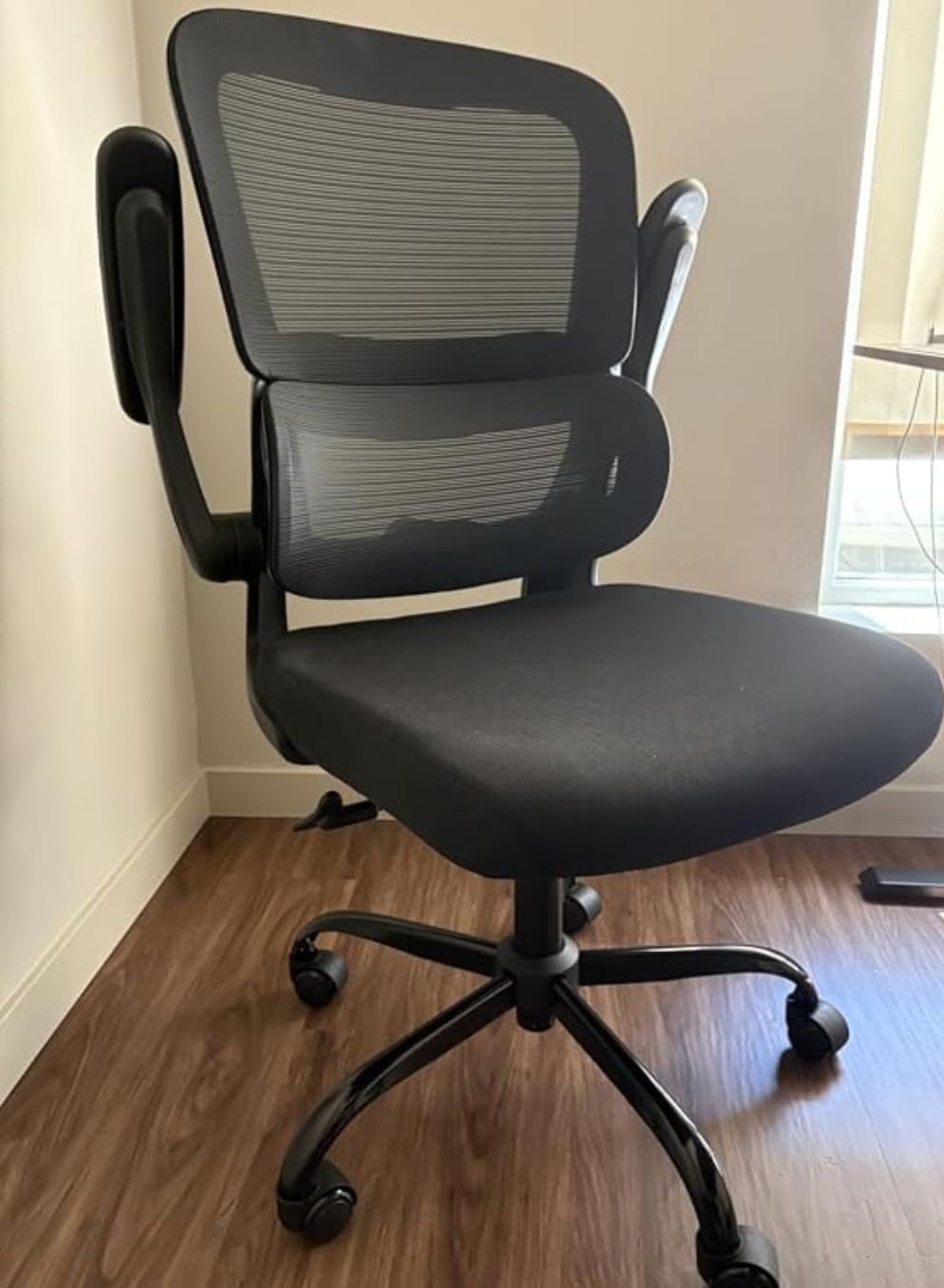
The back is high-tension breathable mesh, so it stays comfortable in a warm room, and the seat height range from about 17.7 to 21.7 inches covers a wide spread of body heights. The armrests flip up to save desk space, and assembly takes roughly 15 to 20 minutes. Buyers with lower-back pain repeatedly report that the lumbar adjustment is the specific thing that changed how their workday feels.
There are trade-offs to be honest about. There is no headrest, so if you recline you will need a rolled towel or a separate cushion behind your neck. The casters are soft and non-circular, and they roll poorly on glass, hard mats and some desk surfaces. The seat is firm rather than plush, and a few reviewers point out that the warranty card and the listing describe coverage differently.
Where this chair works for a sciatica sufferer
It is the pick when budget is the deciding factor and you still want real lumbar control. The depth adjustment is the one most chairs at twice the price lack, and a buyer reporting lower-back ache disappearing within days of switching is exactly the outcome this chair is capable of. The 330 lb rating also makes it one of the few picks here that handles a larger body without a reinforced base.
Where this chair falls short
It has no headrest at all, and the mesh back means you cannot lean back into a cushioned surface. The casters are the weakest component and most owners replace them. If your flare is bad enough that you spend the day in a reclined position rather than upright, this is not the chair for that.
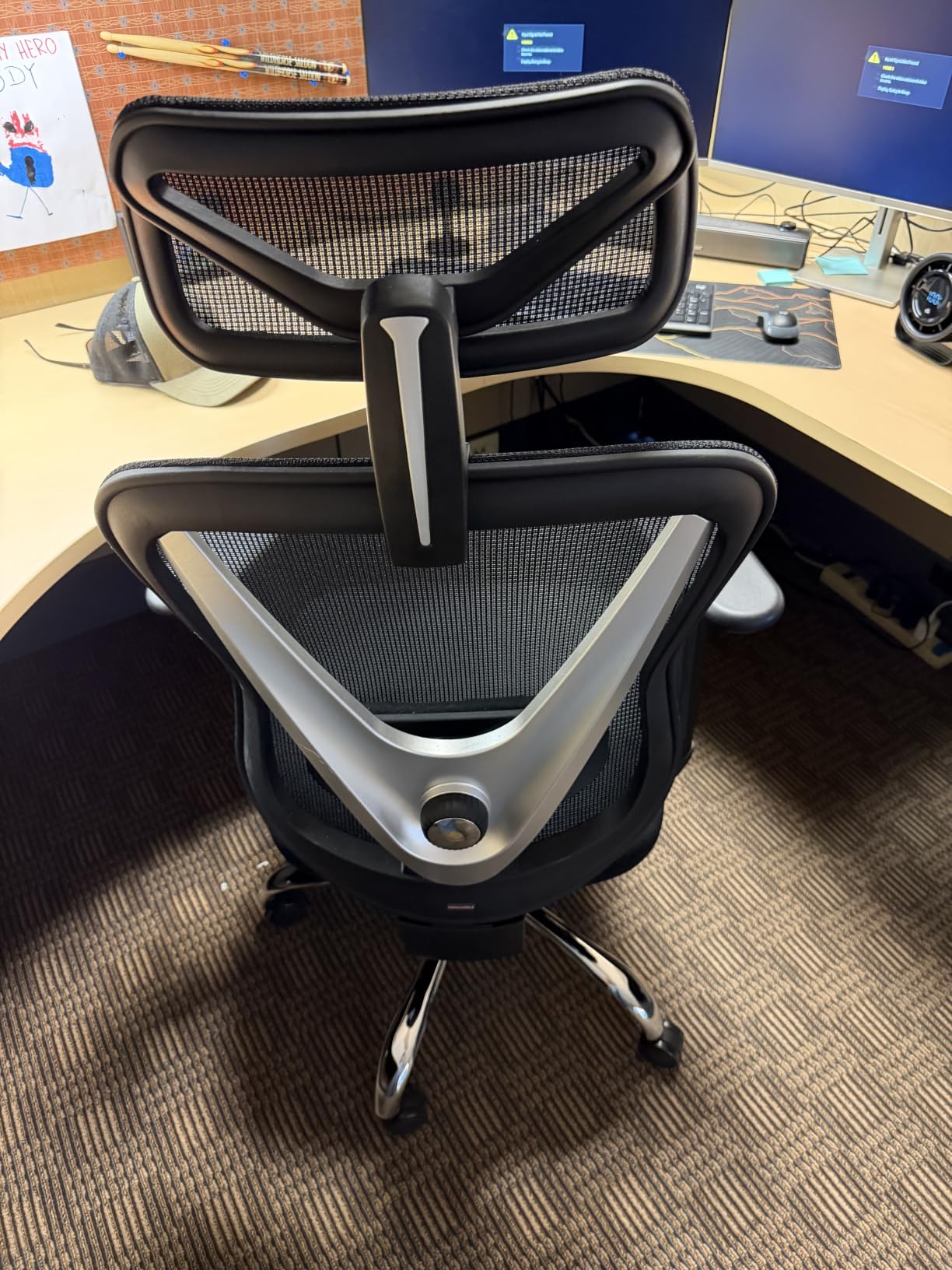
4. HOLLUDLE 3D Lumbar Mesh Chair – Best Value Pick
HOLLUDLE Ergonomic Mesh Office Chair – 3D Adjustable Lumbar Support & 3D Armrests, V-Shaped Back, Adjustable Desk Chair for Office & Home, White
3D lumbar in five directions
3D armrests and 2D headrest
5-year warranty
BIFMA and EN1335 certified
Pros
- Lumbar adjusts up
- down
- forward
- backward and rotates
- Owners with lumbar problems report standing up pain-free
- Arms fold up and the tilt locks at three levels
- 5-year warranty is the longest in this group
Cons
- Seat can feel small for users around six foot one or taller
- Assembly takes 20 to 30 minutes and the arms are tricky
- Seat cushion stays firm and does not soften with use
The lumbar hardware is the reason to look here. It moves up, down, forward, backward and rotates, which is more axes of control than anything else in this group. For someone whose sciatica is driven by a support that sits in the wrong place, having five directions of correction means you can find the position that works instead of settling for the one the manufacturer chose.
Owners with lumbar problems report relief that was immediate, which is unusual in budget furniture. The mechanism is steel, the base strength is rated well beyond the chair’s stated capacity, and the whole thing is certified to both BIFMA and EN1335 standards. The 5-year warranty is the longest offered anywhere on this list.
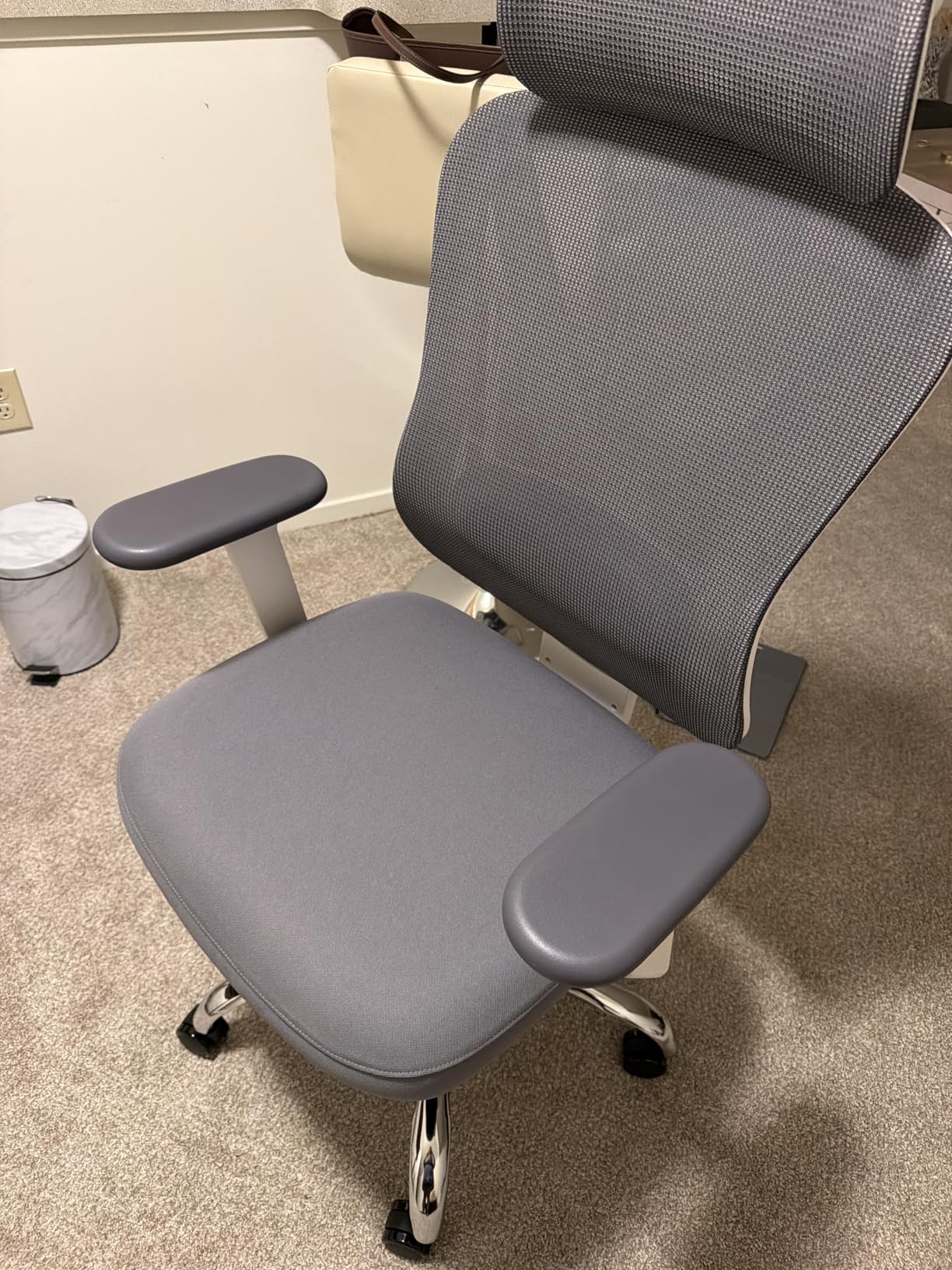
The back is breathable mesh, so it stays workable through long sessions, and the armrests adjust in three directions while the headrest rotates and moves in height. The back is a V-shaped silver design that looks more like a design piece than a budget chair, which matters if your workspace is visible on camera. A three-level tilt lock lets you change position without thinking about it.
Where it is weaker: assembly is reported at 20 to 30 minutes and attaching the arms is the fiddly part, which matters if you are in a flare. The seat is on the firm side and does not soften much with use, and users around six foot one or taller describe the seat as small. One detailed review also flags a sharp unfinished metal edge near the wheel mount that can cut your foot, so check it after assembly.
Where this chair works for a sciatica sufferer
It is the pick when the diagnosis is that your current lumbar support is in the wrong place. Five axes of adjustment solve problems that one-axis or fixed supports cannot, and the mesh back keeps you cool through the long afternoon sessions where pain tends to build. The warranty length also means you can find the right position slowly instead of being stuck with one guess.
Where this chair falls short
Taller users consistently report the seat is too small, and since sciatica pain often correlates with sitting on a seat that does not support you properly, that is a real disqualifier over six foot one. The firm cushion is also a problem for anyone who wants a softer sit, and the assembly is long enough that you should budget an evening rather than a coffee break.
5. COMHOMA Big and Tall Chair – Best for Heavier Bodies
COMHOMA Big and Tall Office Chair Heavy Duty Wide Ergonomic Gaming Chair with Deluxe Embossing Designed Leather with Foot Rest,150°Reclining Adjustable Armrests Pocket Spring Back Support and Pillow
Pocket-spring lumbar support
400 lbs weight rating
Memory foam seat
Retractable footrest
Pros
- Rated to 400 lbs with a frame built for heavier users
- Pocket-spring lumbar adds real pressure relief in the lower back
- Integrated retractable footrest for leaning back
- Spacious seat with thick padding
Cons
- PU leather runs warm over long sessions
- Hand-finished construction means slight variation between chairs
- Heavier frame than the mesh alternatives
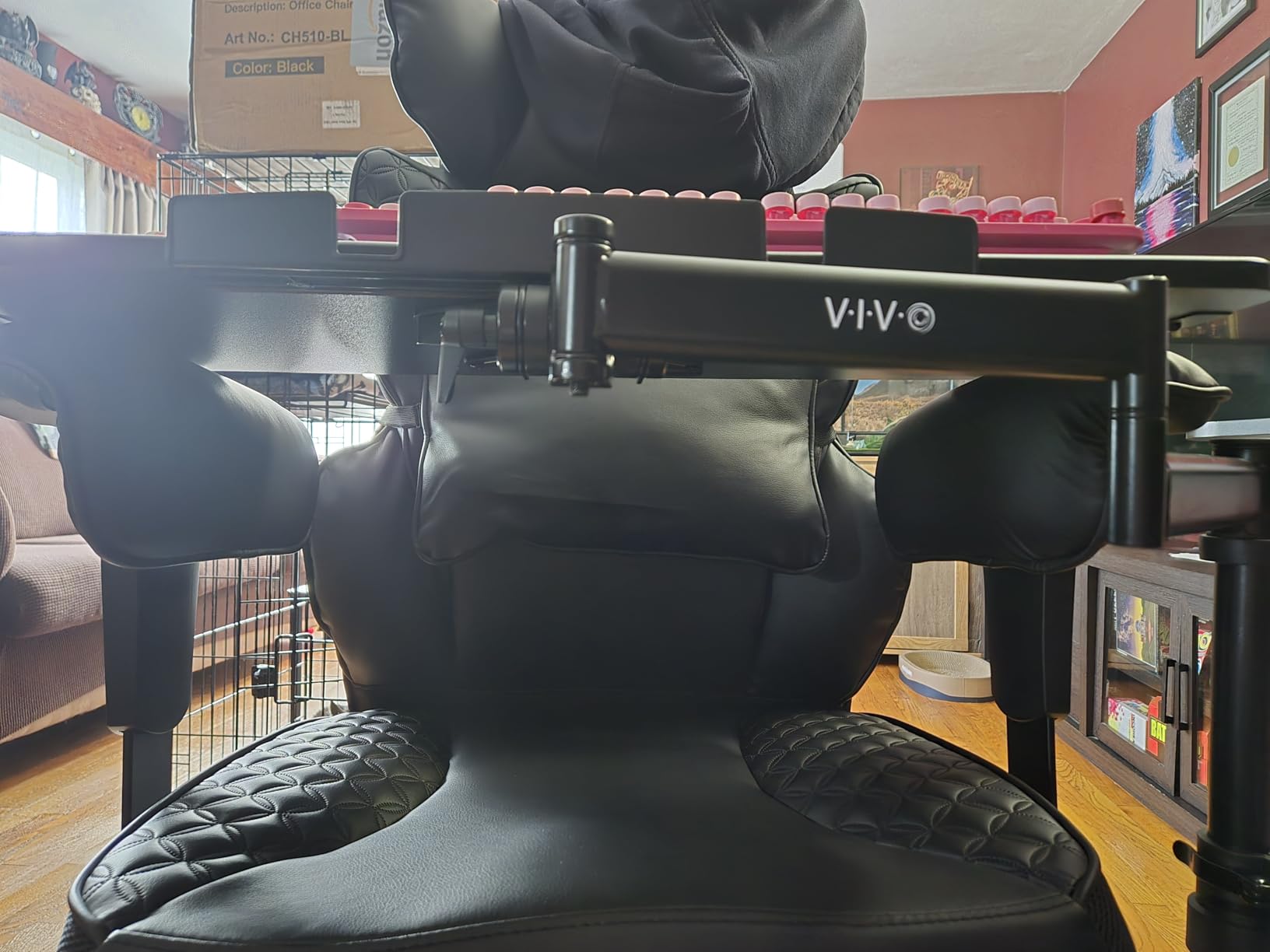
Weight capacity is the reason this one is here. The frame is rated to 400 lbs, which is higher than most of this group, and for people who have been told to lose weight before being offered a properly sized chair, having a frame that is actually built for your body is the first thing that matters. The seat is wide and deep at nearly 20 inches, with memory foam fill rather than a thin mesh pan.
The lumbar support is built in with pocket springs, which is a different approach from a slider. Pocket springs give progressive resistance that firms up as you push into them, so the support holds its shape over an eight-hour day instead of bottoming out. Owners with lower-back pain tend to credit that with the difference between sitting through the day and not.
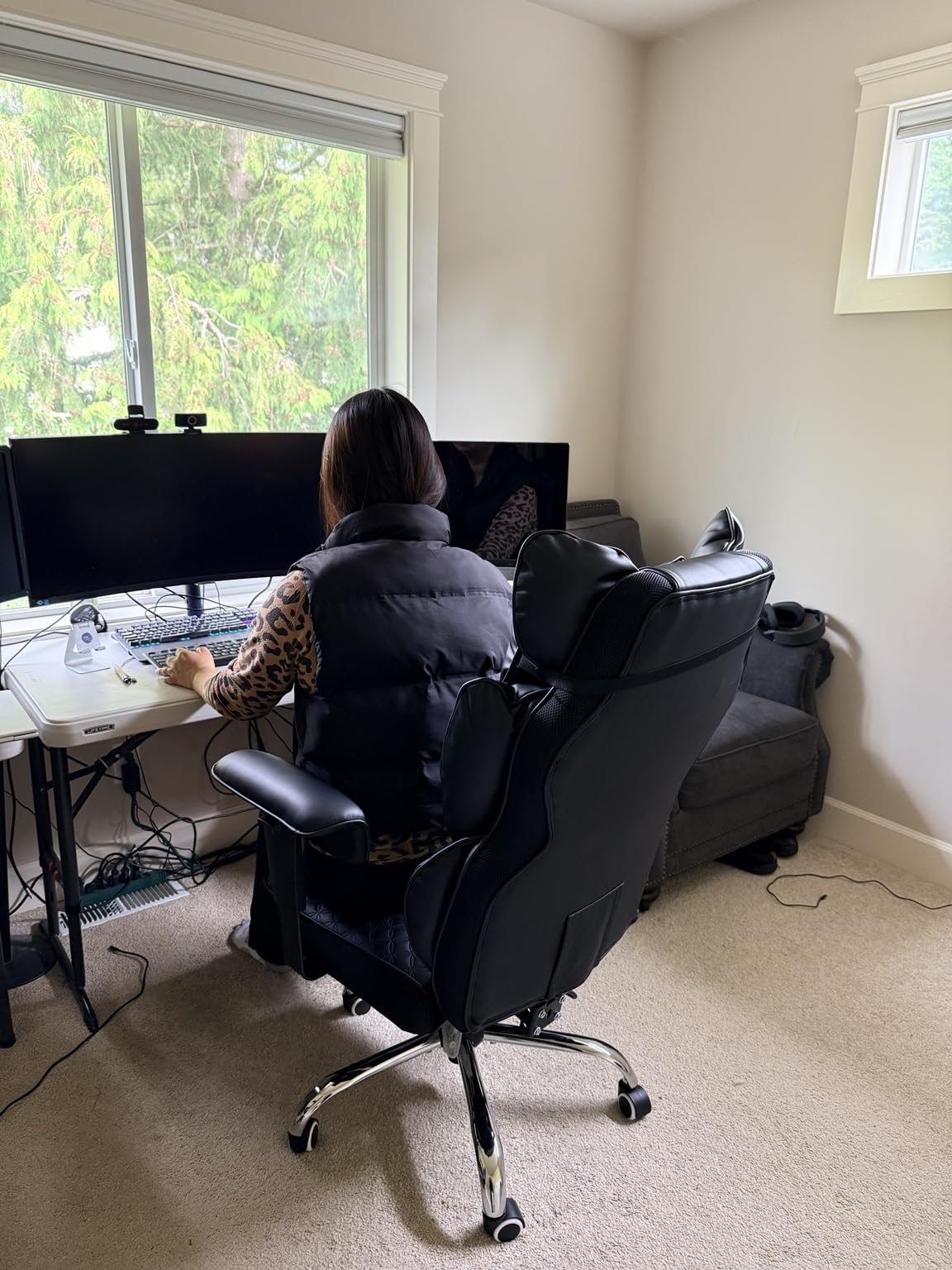
The footrest retracts from under the seat, so leaning back with your legs supported is a one-motion change rather than a hunt for an accessory. The backrest is wide and the armrests adjust in height, which is more than the fixed-post chairs at this level. The upholstery is embossed PU leather and wipes clean, which is genuinely useful if you work somewhere with a pet or eat at your desk.
The tradeoff is heat. PU leather is much less breathable than mesh, and owners report running warm over long sessions, which leads to shifting and slouching, and slouching is the thing that aggravates the nerve. Hand-finished construction also means small variations between individual chairs. The warranty is 12 months, which is the shortest in this group.
Where this chair works for a sciatica sufferer
It is the pick for anyone over 300 lbs, or anyone who has found that mesh seats just do not distribute pressure for their body shape. The wide 20-inch depth takes the pressure off the backs of the thighs that drives nerve irritation, and the footrest gives you a genuine change of position without leaving your desk.
Where this chair falls short
It is a poor fit for anyone who runs warm or works in a hot room, because the leather has no airflow and you will be shifting for comfort by mid-afternoon. The short warranty is also worth weighing. If your pain is position-driven and you can sit upright comfortably, the mesh picks on this list will serve you better.
6. ELABEST X100 with Footrest – Best Premium Pick Under the Cap
ELABEST X100 Ergonomic Mesh Office Chair with Footrest, Big and Tall Hone Desk Chair with 5D Flip-Up Arms, Adjustable 3D Lumbar Support,Gaming & Executive Computer Chairs
3D synchro-tilt lumbar with spring tracking
18 inch footrest
5D flip-up arms
AirMesh back and seat
Pros
- Lumbar adjusts height
- depth and angle with spring auto-tracking
- 5D armrests slide
- rotate and flip up
- Breathable AirMesh holds up through 8 hour days
- Owners report lower-back pain disappearing after switching
Cons
- Some versions mount arms on the backrest
- limiting arm height
- Mesh and footrest edges can dig into the backs of the knees
- Footrest is stiff to extend
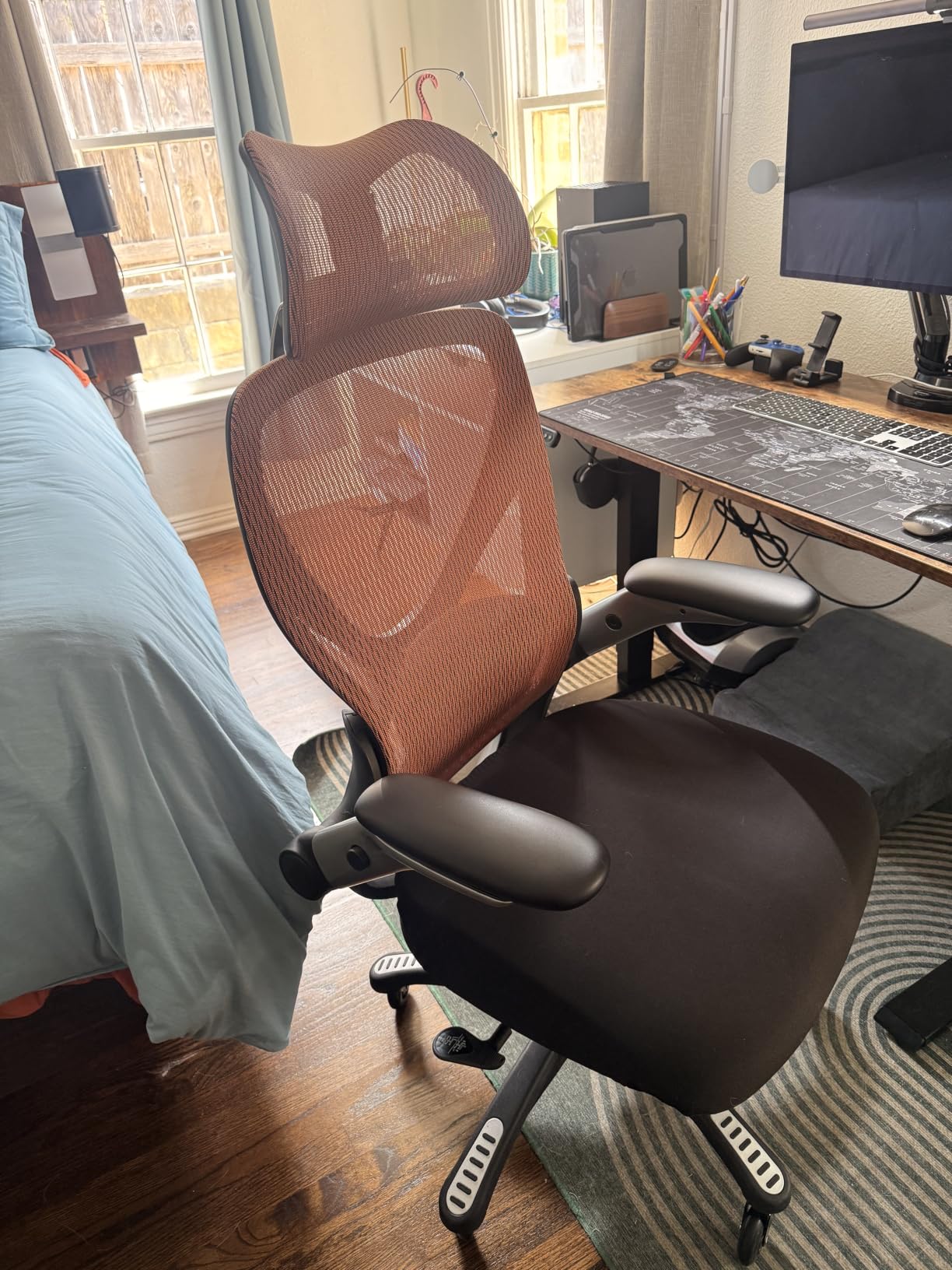
This is the most capable lumbar system anywhere in this group, and it earns the premium slot for that reason alone. The lumbar adjusts in height, depth and rotation, and it is spring-loaded so it tracks your movement rather than holding one static position. Multiple buyers report chronic lower-back pain disappearing after switching to it, and for a sciatica sufferer that is the outcome that matters.
The armrests are 5D: they move up and down, forward and back, in and out, and rotate, then flip up to slide under a desk. That removes a whole category of shoulder and wrist problems, and those problems get blamed on the back far more often than they should. The headrest is a 3D design with what the manufacturer calls cervical curve mapping, and owners who use it report noticeable relief in the neck and upper back.
There is an 18-inch extendable footrest with a two-position angle, and a three-stage recline behind it. The mesh is a dual-stripe design with noticeably better airflow than standard mesh, which is why it holds up through eight-hour sessions in a way that cheaper mesh does not. The central column is Grade 4 and the structure is BIFMA certified, rated to 300 lbs.
The critical thing to check before ordering: some versions mount the armrests on the backrest rather than the seat, which limits vertical arm range and can cause a slight forward lean. That lean is exactly what pushes your lumbar into a rounded position, so confirm the mounting style in the listing before you commit. The mesh edges can also dig into the backs of the knees, and the footrest is stiff to extend.
Where this chair works for a sciatica sufferer
It is the pick when you have already tried a chair with a fixed lumbar and concluded the support itself is the problem. The three-axis spring-loaded adjustment is the closest thing to a dynamic lumbar in this price band, and the footrest and recline give you three distinct ways to offload the nerve during a long day. The airflow also makes it the more comfortable option in a warm room.
Where this chair falls short
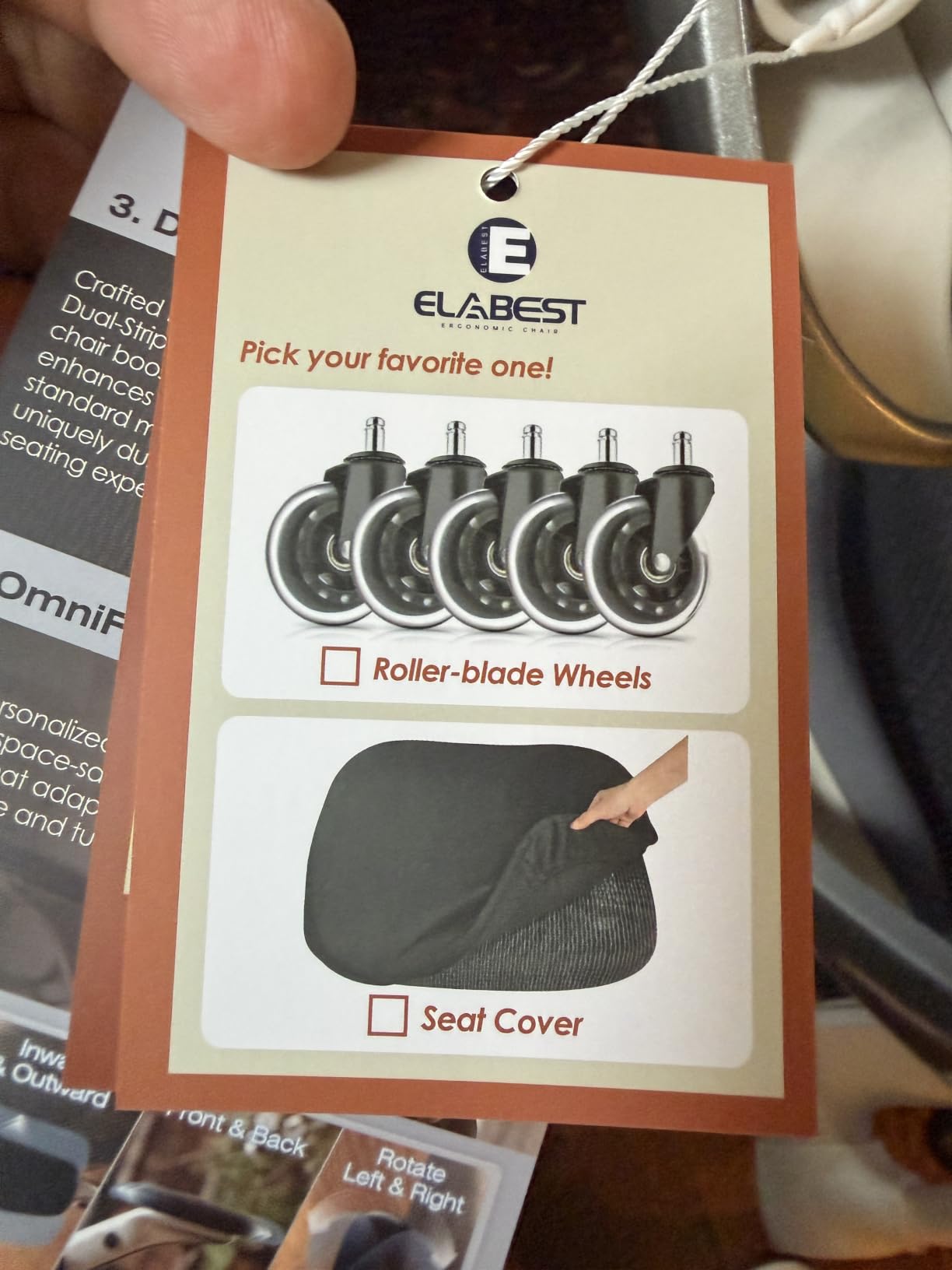
The armrest mounting inconsistency is the real risk here, and it is the first thing to check. Owners also note that fitting a padded seat cover, which the company offers free on warranty registration, removes the footrest function, so you are choosing between a cushioned seat and the ability to recline with your legs up.
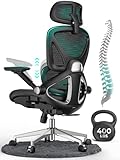
7. CAPOT 400 lb Mesh Chair – Best for Fine-Tuned Lumbar Positioning
CAPOT Ergonomic Mesh Office Chair, Adjustable Lumbar High Back Desk Chair 400lbs, 4D Flip-up Arms, 3-Level Tilt Backrest, 3D Headrest, PU Wheels, Swivel Rolling Computer Seating for Long Desk Work
Micro-adjust lumbar over 8 levels
Stainless steel base to 400 lbs
4D flip-up arms
BIFMA X5.1 certified
Pros
- Lumbar has 2 inches of travel across 8 levels for close alignment
- Stainless steel base and leak-proof gas lift
- Armrests fold flat to slide under a desk
- Three-stage tilt lock at 90
- 110 and 125 degrees
Cons
- Lumbar support can drift out of position
- Mesh and support feel stiff rather than relaxed
- Some owners report the wheel-mount leg breaking within a year
The lumbar on this one is unusually granular, with 2 inches of travel across 8 levels, which lets you land it close to the L1 to L5 area rather than guessing. Multiple owners report that getting it in the right position eased their lower-back pain, and the tilt lock at three angles from 90 to 125 degrees gives you real options during a long sit.
The frame is the other strength. A stainless steel base rated to 400 lbs with a leak-proof SGS gas lift is a heavier-duty specification than most of this group, and the arms fold flat so the chair clears a desk completely. The packaging is unusually good, with pre-threaded bolts and included tools, which matters more than it sounds if assembling a chair is not your favourite task.
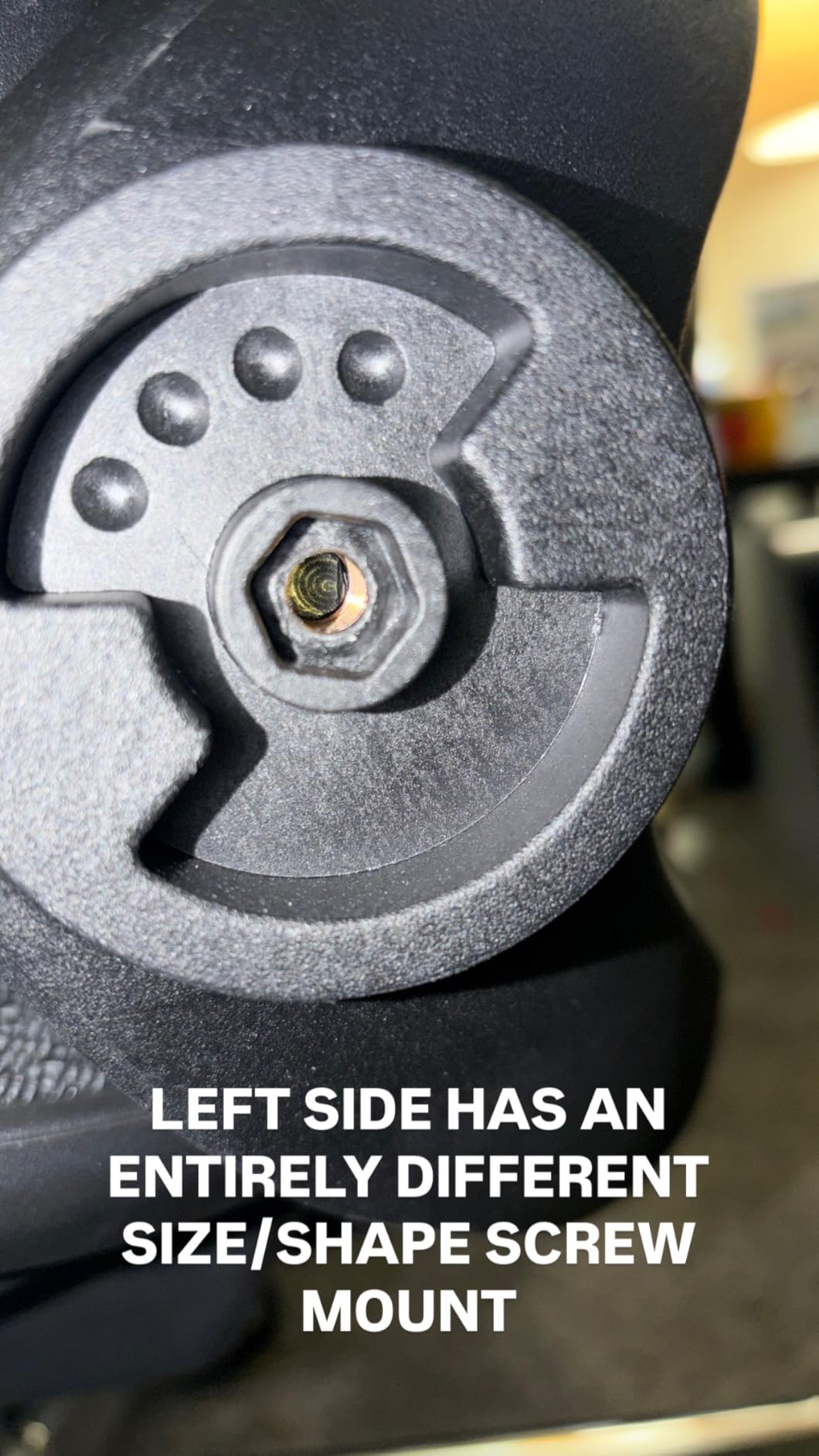
Where this falls down is fit and durability. This is the lowest-rated chair in the group, and the reviews split hard between owners who love the lumbar and owners who find the seat narrow and the mesh uncomfortably stiff. Wider users report pressure at the sides of the thighs and hips, which is a direct route back to nerve irritation, so check the seat width against your own before buying.
Two specifics worth knowing. The lumbar can drift out of position and need readjusting, which is annoying if you set it once and expect it to stay. And a long-term owner describes the leg section at the wheel mount breaking twice within a year at roughly 250 lbs, well under the stated 400 lb rating, so treat that number as a ceiling rather than a promise.
Where this chair works for a sciatica sufferer
Fine lumbar positioning is the reason to pick it, and the eight levels of adjustment let you find a setting that a three-position slider cannot reach. The large mesh seat stays cool on long sits, and the fold-flat arms mean you can get the chair fully under a desk, which is worth more than it sounds when you are switching positions frequently during a flare.
Where this chair falls short
Fit is the problem. If you are wider or heavier than average, the pressure at the sides of the thighs is going to reproduce the very compression you are trying to avoid, and the mesh offers no give to compensate. The durability reports and the drifting lumbar are both real, so this is a chair for someone who will readjust and adjust rather than set and forget.
8. amseatec Big and Tall Recliner – Best for Changing Position Constantly
amseatec Big and Tall Office Chair with Footrest, Lumbar Support, Black
Infinite-angle recline 90 to 135 degrees
20 spring packs in high-rebound foam
20 inch deep seat
Retractable footrest
Pros
- Recline locks at any angle between 90 and 135 degrees
- 20 independent spring packs spread pressure and resist flattening
- Footrest hides under the seat until you want it
- Reviewers describe it as heavy
- solid and stable
Cons
- Included plastic casters are widely criticized and often replaced
- Tufted seat cushion can feel divided rather than smooth
- Footrest flexes for heavier users
Position changing is the theme here. The recline locks at any angle between 90 and 135 degrees rather than at three fixed stops, which means you can find the exact angle where your symptoms ease and stay there. For a sciatica sufferer whose pain is position-dependent, having a continuous range rather than three presets is a meaningful difference.
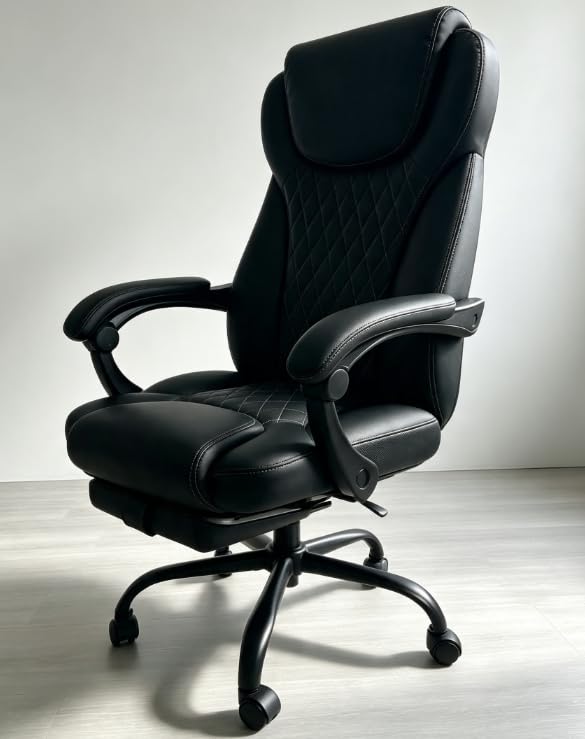
The seat is built from 20 independent spring packs in high-rebound foam. That is a real design choice rather than a marketing term: independent packs spread pressure across the whole seat rather than concentrating it in a few divots, and they resist the flattening that turns a foam seat into a hard one after a year. The backrest is high with built-in lumbar support, and the seat depth is over 20 inches.
The frame is a reinforced metal base rated to 300 lbs, and owners consistently describe the chair as heavy, solid and completely wobble-free. The footrest retracts out of sight under the seat, so it does not interfere with normal work and appears only when you want to lean back. The upholstery is spill-proof PU leather and wipes clean.
The complaints are specific and worth weighing. The deep stitched tufting divides the seat into sections, and some owners find that geometry uncomfortable over hours rather than pleasant. The included plastic casters are the most-criticized component and several owners replace them immediately. The footrest flexes noticeably for heavier users, and the manual order is awkward enough that two people may be needed.
Where this chair works for a sciatica sufferer
It suits people whose pain comes on after a set amount of sitting and who need to move without thinking about it. A continuous recline range plus a footrest means you can go from fully upright to nearly flat in one motion, which is the single most effective non-medical move during a flare. The spring-pack seat also spreads pressure better than a single foam block.
Where this chair falls short
It is not an upright work chair. If you type for eight hours at a desk, this is too soft and too reclined for that, and the tufting bothers people who sit in one position for long stretches. Expect to replace the casters, and if you are over 300 lbs, look elsewhere because the footrest and the seat both report flex.
9. Nouhaus Premium Leather Chair – Best Cushioned Option
Nouhaus Ergonomic Office Chair Premium Leather Adjustable Lumbar Support & Armrests, High Back Comfy Desk Gaming Chairs Executive Computer Swivel Chair Tilt Function(Posture,White)
5-level adjustable lumbar
Waterfall seat edge
135 degree recline
330 lbs capacity
Pros
- Five-level lumbar stays where you put it
- Owners with serious lower-back pain credit the lumbar with real relief
- Cushions hold up over years of daily use
- Chair raises higher than most comparable models
Cons
- Backrest lever is decorative on some builds and does nothing
- Raised front cushion can cause tailbone soreness by day's end
- Side bolsters make cross-legged sitting difficult
The waterfall seat edge on this chair is the detail that matters most for sciatica, and it is the one adjustment people forget to look for. A waterfall edge rolls off the front of the seat rather than presenting a flat lip, so it stops the hard pressure that a flat front edge puts into the backs of the thighs where the nerve runs. If your current chair hurts specifically at the back of your legs, this is a direct fix.
The lumbar has five levels of adjustment and, importantly, stays where you put it. Several owners with serious lower-back problems credit it with genuine relief, and long-term owners report the frame, base and upholstery still looking close to new after years. The recline goes to 135 degrees and the seat swivels fully, so you can put your feet up for a break without standing.
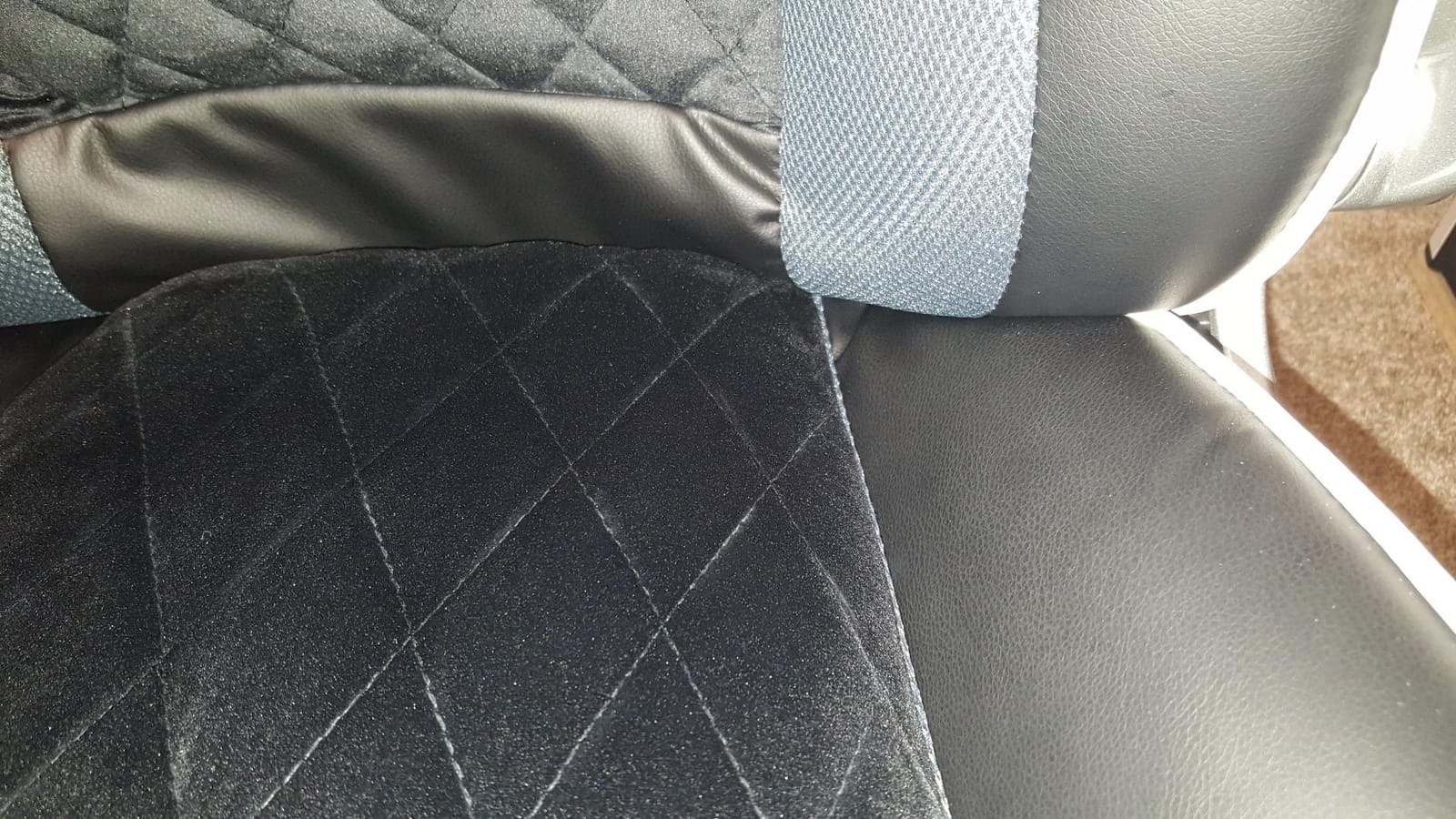
The armrests flip up and adjust in height, so the chair slides under a desk, and the chair raises higher than most comparable models, which is useful with a tall desk. It is BIFMA certified with a 5-year part replacement policy, and the frame is rated to 330 lbs. The cushions are soft but supportive rather than cloud-soft, which is the middle ground most people with back problems end up preferring.
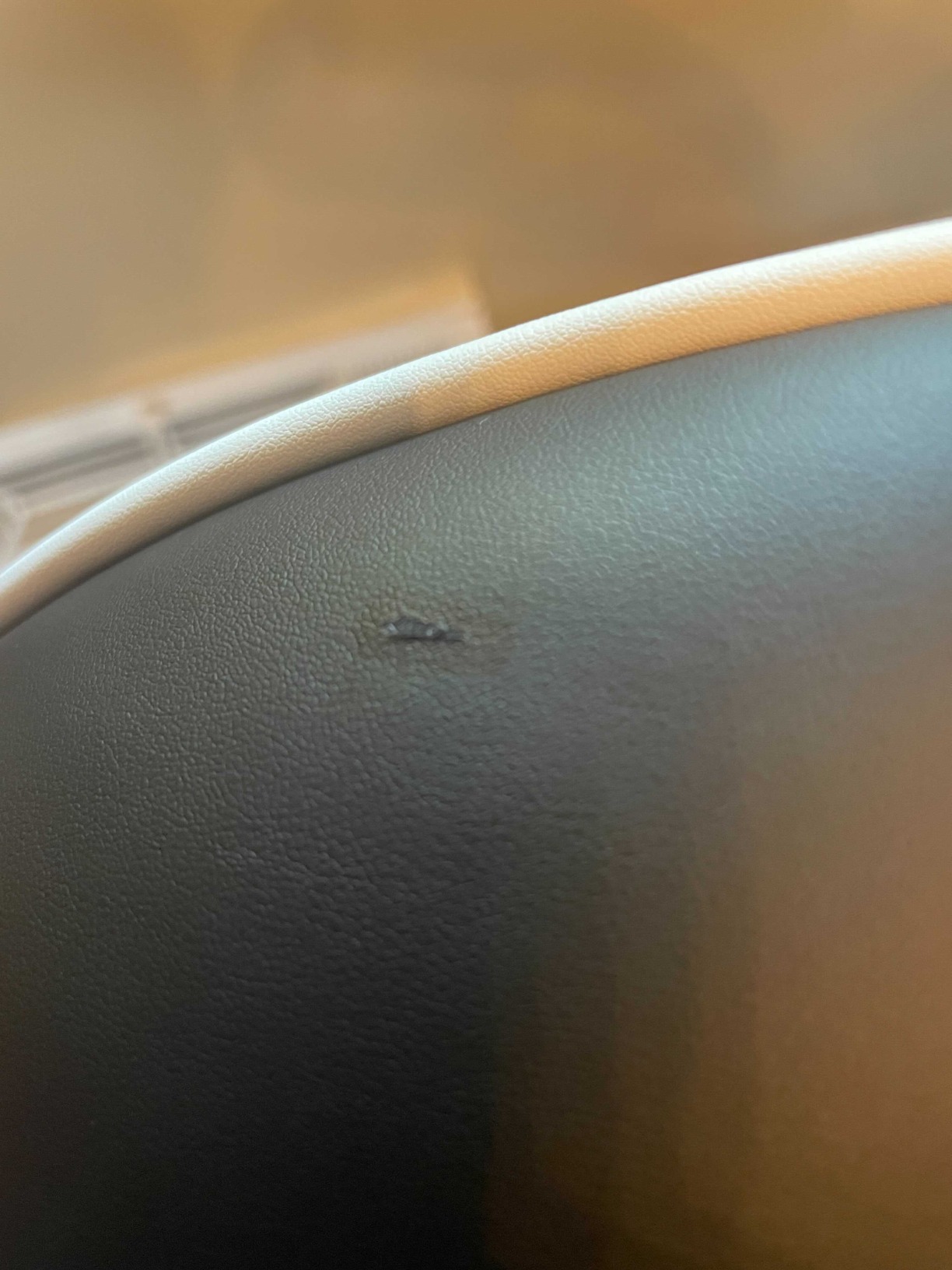
The reviews are polarized by body type, and that matters here. Shorter users report the curved lower back offers little support without an extra lumbar pillow, and the raised front of the cushion can cause tailbone soreness by the end of the day. On some units the backrest adjustment lever is decorative and does nothing, which is worth checking in the first week. Longer-term owners also document caster socket cracking and an inconsistent base warranty.
Where this chair works for a sciatica sufferer
The waterfall edge is the reason to pick it, and it is a feature several of the mesh chairs on this list do not have at all. The cushioning also suits people who cannot tolerate the firmness of mesh, and the 135 degree recline gives you somewhere to go when a flare starts. Taller users rate it highly because the seat height range goes higher than most.
Where this chair falls short
It is the weakest pick for anyone under about five foot seven, because the back curve does not adjust down far enough and the raised cushion front creates pressure points. The side bolsters also make cross-legged or cross-ankle sitting difficult, which some people use instinctively to relieve nerve pressure. Confirm the tilt lever works on your unit early.
10. GABRYLLY Ergonomic Chair with Steel Footrest – Best for Breaks Away From the Desk
GABRYLLY Ergonomic Office Chair with Footrest, 135° Reclining Desk Chair with Adjustable Lumbar Support,3D Armrest,Headrest & Large Steel Base, 300LBS Heavy Duty Mesh Chair
2-way adjustable lumbar
18.1 inch retractable steel footrest
135 degree recline
3D armrests
Pros
- Lumbar adjusts 3 inches vertically and 1.6 inches horizontally
- Steel footrest and 27.5 inch base legs stay stable when reclined
- Headrest adjusts in height
- angle and bracket position
- Customer service supplies free cylinders
- casters and seat covers
Cons
- Armrests cannot fold flat under a desk
- Lumbar support is fiddly to position correctly
- Mesh can feel scratchy against bare legs
The steel footrest is the differentiator here. At 18.1 inches with a steel construction and a base with 27.5 inch legs, this chair stays stable when you pull the footrest out and lean back, which is not something most chairs at this level manage. For someone whose sciatica eases when the knees drop below the hips, that stability is the whole point.
The lumbar adjusts in two directions, 3 inches vertically and 1.6 inches horizontally, which is enough to place it against the curve rather than letting it press into your back. The recline locks at three positions up to 135 degrees, and the armrests are 3D, moving in three directions before they stop. The headrest adjusts in height, angle and bracket position, which is more adjustment than most headrests at any price.
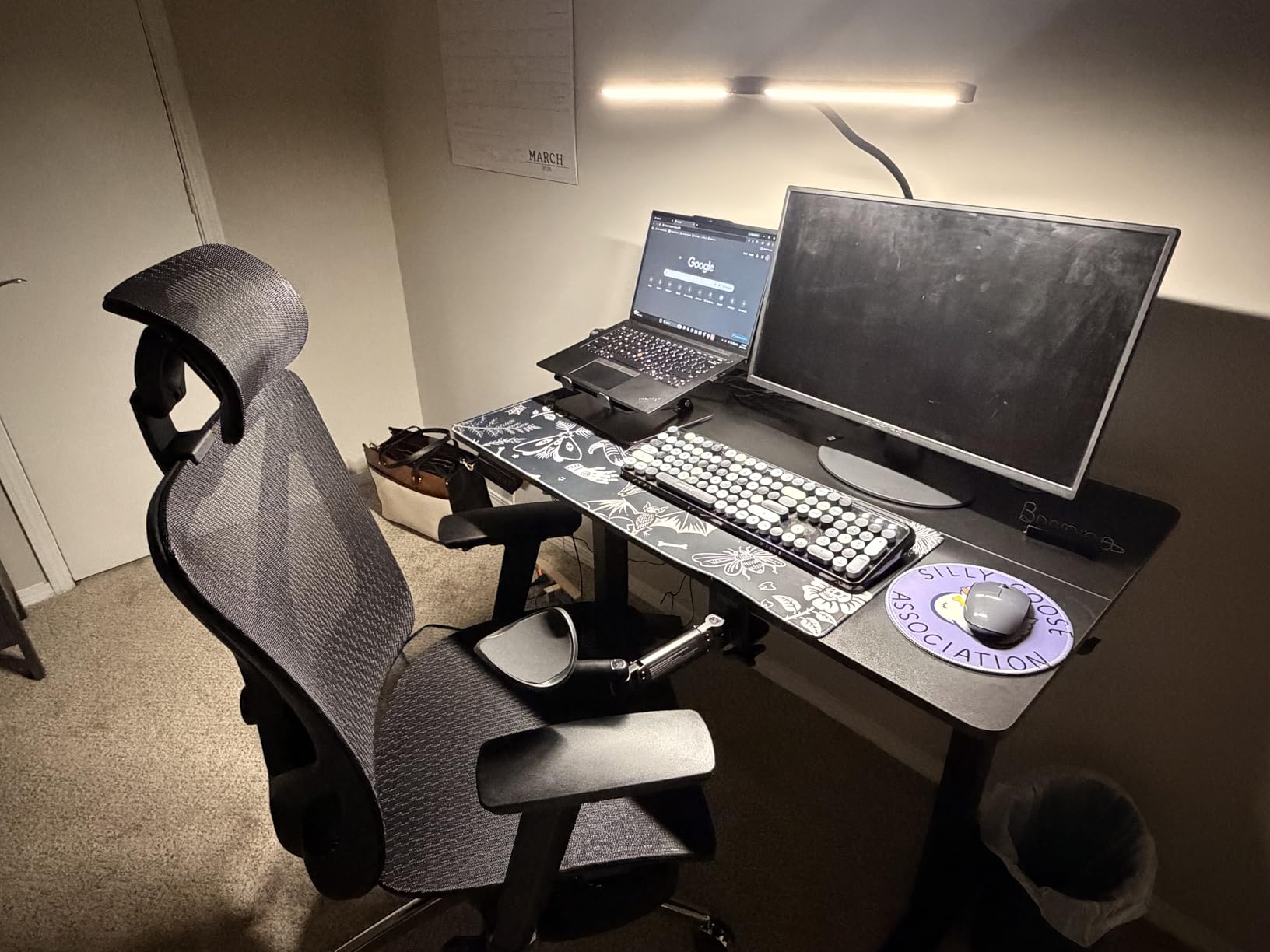
Customer service is the standout. Owners report free custom-length gas cylinders, upgraded casters, a free lumbar pillow and free seat covers, often sent proactively. For a chair that has to fit a specific body, having a longer cylinder sent to you removes one of the most common reasons a chair ends up wrong for the person who bought it. The chair is SGS and BIFMA tested with a 3-year parts warranty.
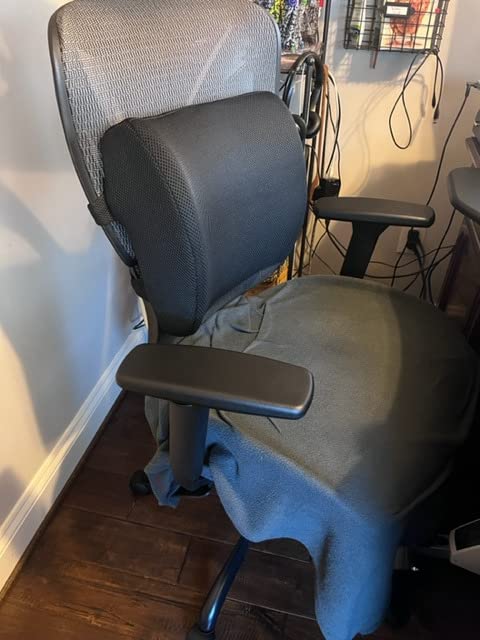
The trade-offs are narrow but real. The armrests adjust in three directions but cannot fold flat, so the chair will not slide fully under a desk. The lumbar is fiddly to position and can take a few attempts to get right. The mesh can feel scratchy against bare legs, and there is an isolated report of a gas strut losing pressure after several months.
Where this chair works for a sciatica sufferer
It is for you if the best position you find during a flare is reclined with your legs supported, and if you want that option to be solid rather than wobbly. The 135 degree recline plus a steel footrest gives you a genuine second working or resting posture, which reduces how long you spend in any single compressive position. The free custom cylinder is also a real advantage for taller users.
Where this chair falls short
If you work at a tight desk, the non-folding armrests will not let you tuck in, and that alone rules it out for a lot of home setups. The lumbar takes practice to position, so plan on spending a week with it before deciding it does not work. It is also not the pick for anyone who cannot sit on mesh at all.
11. FLEXISPOT ErgoX – Best Adjustable Seat Depth
FLEXISPOT ErgoX Premium Ergonomic Office Chair Black FM-FT
Seat depth adjustable 17 to 20 inches
Dynamic lumbar with 5-level back
Sliding footrest
400 lbs weight limit
Pros
- Adjustable seat depth works across a very wide height range
- Dynamic lumbar stays locked where you set it
- Wrapped mesh edge does not cut into the backs of the legs
- 400 lbs rating with a understated look
Cons
- Mesh can bottom out against the frame for heavier users
- Armrests are an interference fit needing a rubber mallet
- Recline lock needs a separate release to return upright
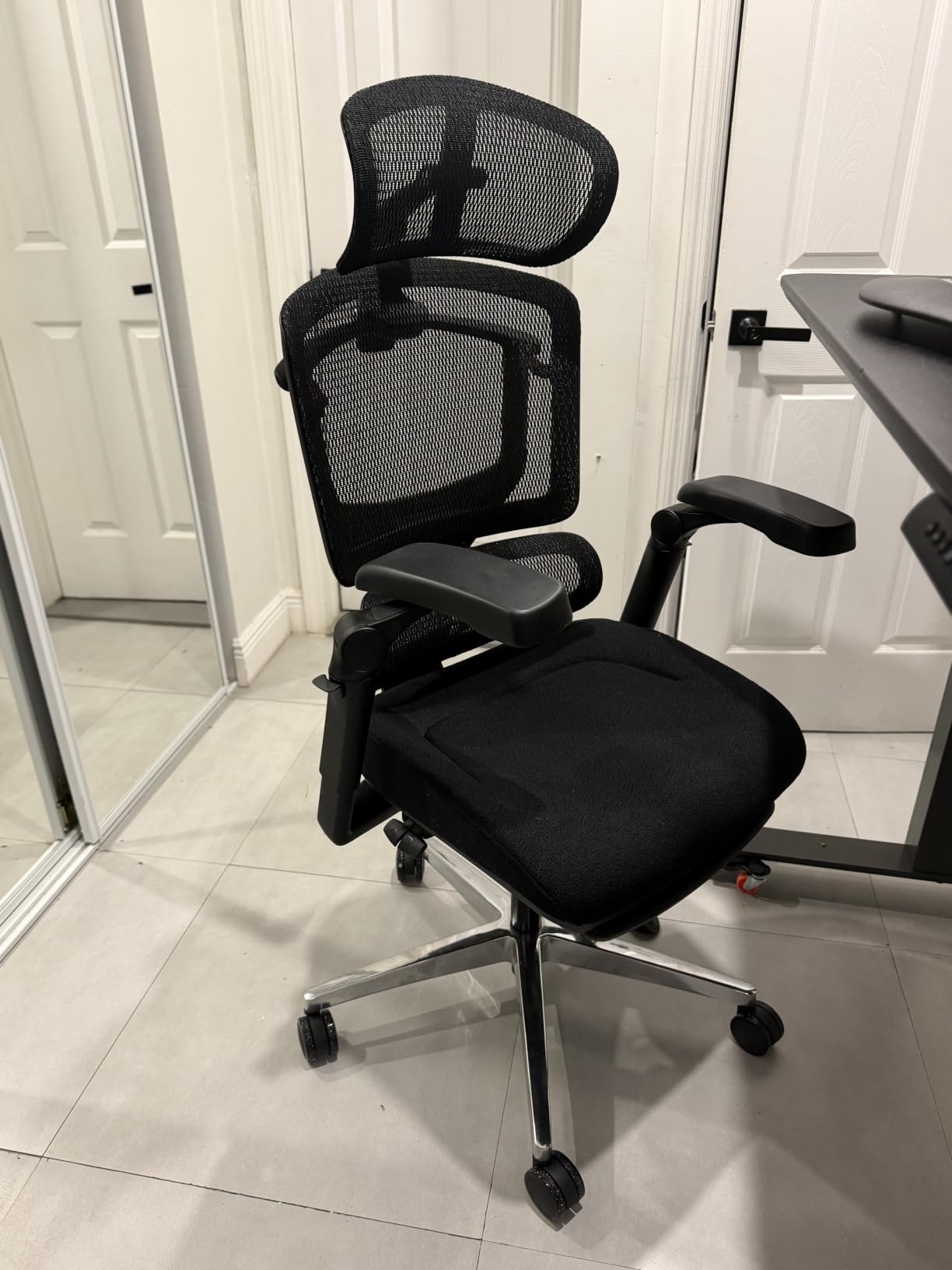
Seat depth is the adjustment most people never touch and the one that most directly changes sciatica symptoms. This chair slides the seat between 17 and 20 inches, and the height runs from 20.1 to 22.4 inches, which together cover roughly five foot one to six foot two. If your knees currently ride up above your hips because the seat is too deep, you can fix that in ten seconds on this chair and nowhere else in this group.
The lumbar is dynamic with a 5-level adjustable back, and owners with pre-existing back problems report that it supports them properly and stays where it is set. There is a sliding footrest with tilt and recline behind it, a 3D headrest, and 3D armrests that move in height, forward and back, and swivel. The Class 4 gas lift and 400 lb limit are above most of this group.
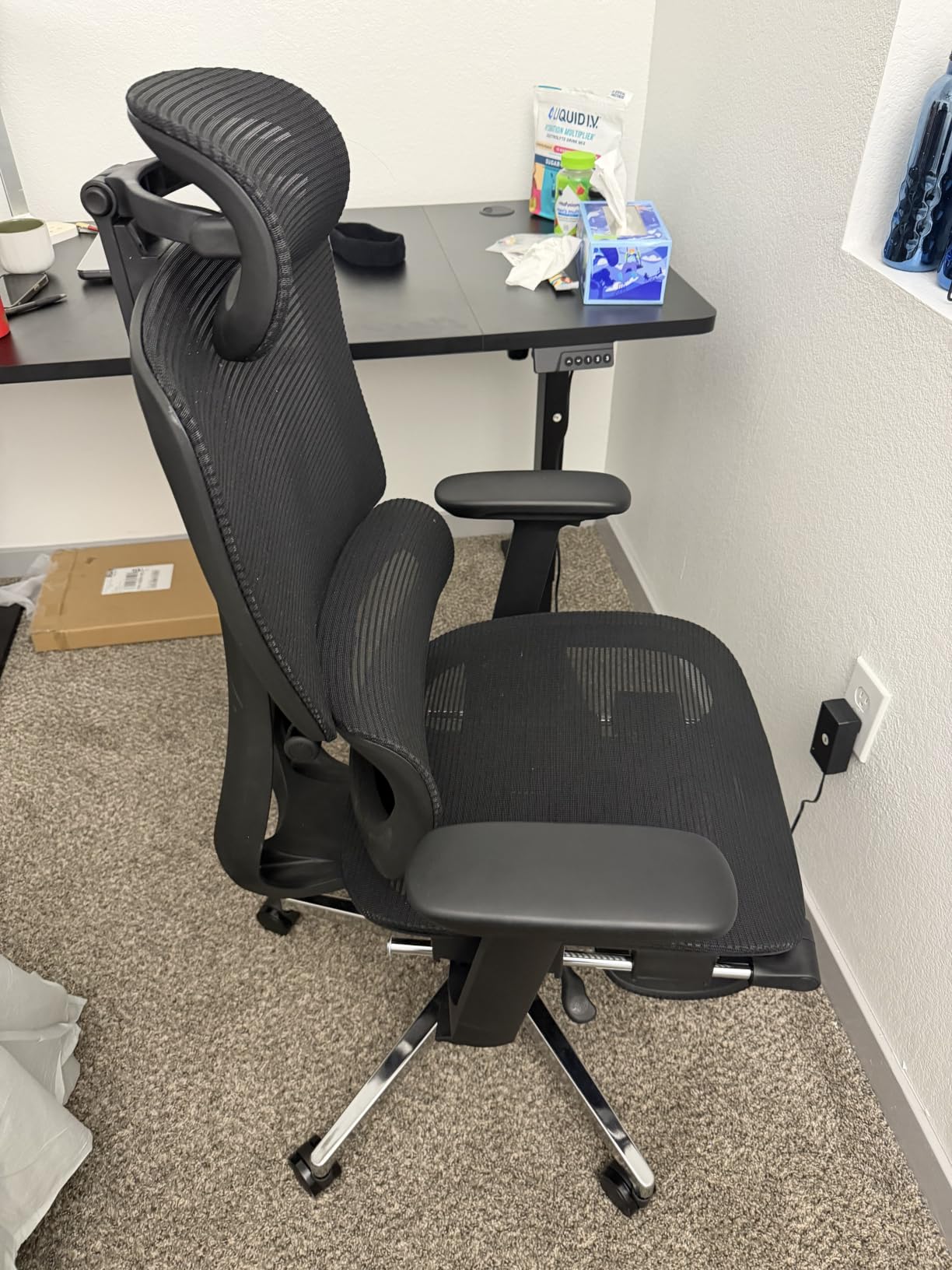
One detail that separates it from other mesh chairs: the mesh edge is wrapped, and owners specifically report almost no tailbone pressure compared with other mesh models. Since the tailbone and ischial area is one of the pressure points that drives sciatica symptoms, that is a meaningful difference rather than a cosmetic one. The styling is also understated, without the aggressive lines of a gaming chair.
The serious caution here concerns weight. A detailed report from a 285 lb user describes their hips pressing against the frame under the mesh seat, causing pain and early wear, which suggests the 400 lb rating does not translate to comfort for heavier sitters. The armrests are also an interference fit requiring a rubber mallet, and the recline lock requires a separate release to return upright.
Where this chair works for a sciatica sufferer
It is the pick when the problem is specifically that your seat is the wrong length for your legs, because no other chair here adjusts depth that far. The wrapped mesh edge solves the tailbone and thigh pressure issue that drives a lot of sciatica symptoms, and the dynamic lumbar holds its position once set. It also fits a very wide height range, which removes guesswork for taller and shorter users.
Where this chair falls short
Heavier users should be careful. The frame can meet the mesh under load and turn a comfort rating into a pain source, and the lumbar has been reported as too aggressive for people with scoliosis. The casters perform poorly on stone and hard surfaces, and the backrest occasionally sticks rather than springing forward.
12. MOLENTS BIFMA X5.1 Mesh Chair – Best Four-Way Lumbar
Ergonomic Office Chair, Mesh Computer Desk Chairs with BIFMA X5.1 Certified, Adjustable Lumbar Support, 3D Arm, Tilt Back, Wide Seat, Comfy Swivel Work Task Chair for Company and Home (Obsidian Black)
Lumbar adjusts up, down, forward and back
3D sliding armrests
3-position tilt 90 to 120 degrees
BIFMA X5.1 certified
Pros
- Highest-rated chair in the group with a 4.7 from buyers
- Lumbar moves in four directions for real lower-back relief
- One buyer reports lower-back ache disappearing within three days
- Roomy seat that still fits an ergonomic cushion
Cons
- Sliding armrest panels flex if you pull the chair by them
- Lumbar travel range is modest
- Levers are not obvious without the manual
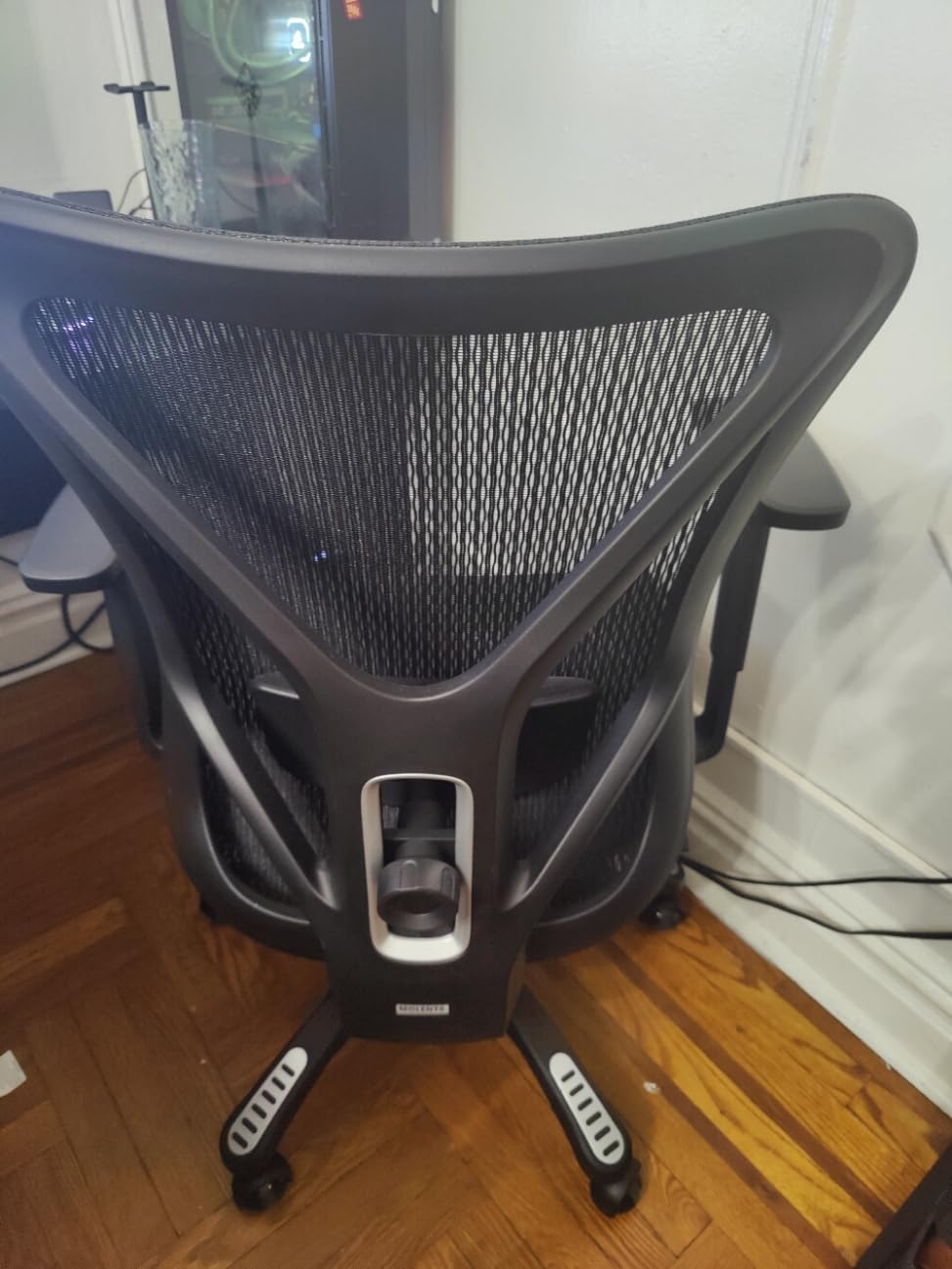
This carries the highest buyer rating in the group at 4.7, and the lumbar is the reason. It moves up, down, forward and backward, which is the four-way movement you want when the pain comes from a support sitting in the wrong plane rather than the wrong height. One buyer reports a lower-back ache disappearing within three days of switching, and others describe the build quality as noticeably better than the price suggests.
The mesh is high-elasticity and taut with a little bounce in it, which means it resists sagging over a long day rather than developing the hammock feel that makes people shift their weight for comfort. That matters for nerve pain, because shifting is what puts you back into an awkward position. The seat is wide at nearly 20 inches and still has room for an added ergonomic cushion if you want one.
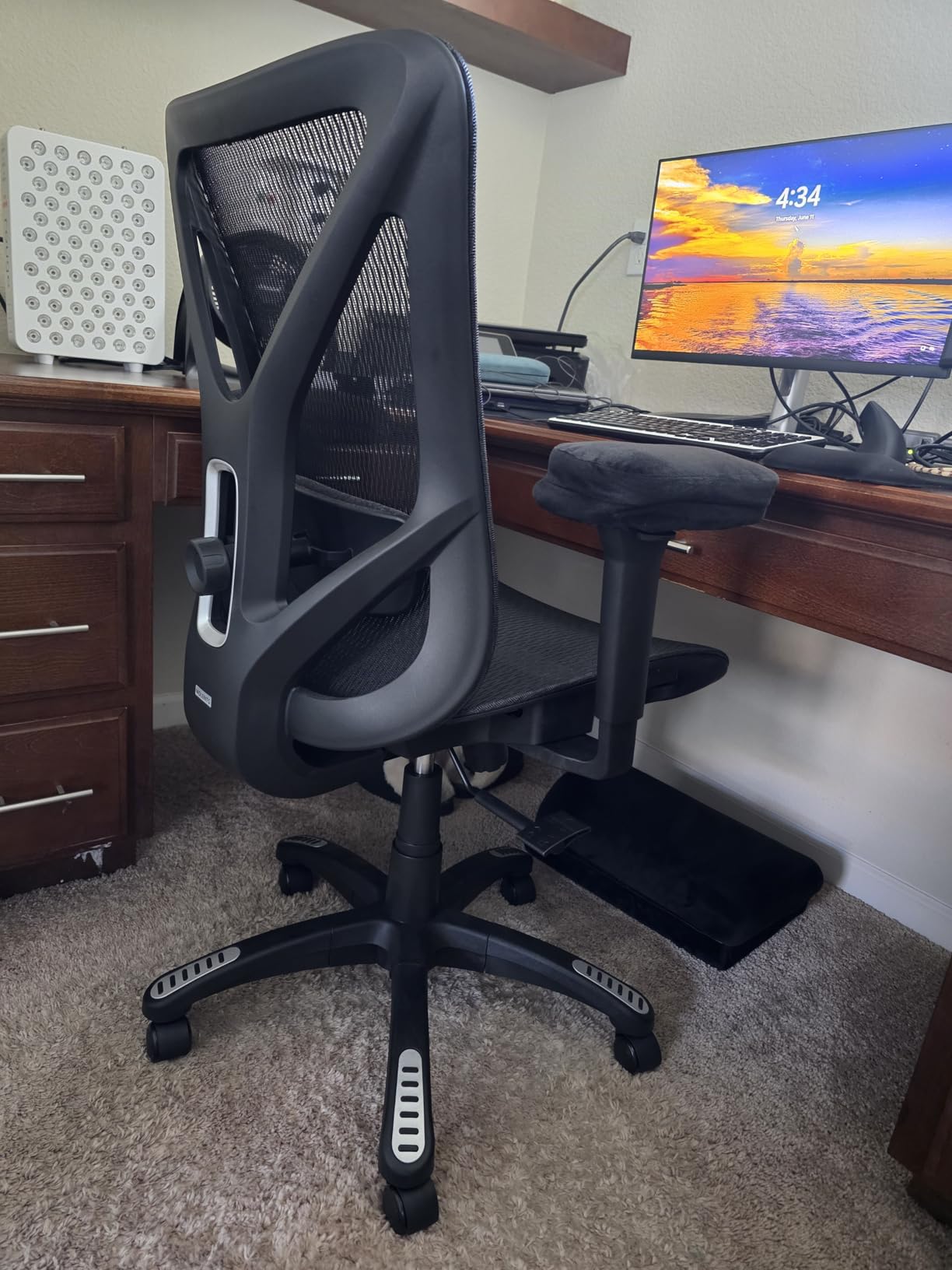
Structure is BIFMA X5.1 certified, the frame is high-strength nylon, and the tilt runs three positions from 90 to 120 degrees with firm, controlled tension rather than a loose rock. Owners report it handles a user over six feet and 200 pounds with no creaking. The packaging and hardware labelling are singled out as making assembly quick, which matters if a flare has you avoiding anything that involves kneeling on the floor.
After-sales service is another strength: owners describe contacting the company and receiving foam seat covers, blade casters and even a headrest at no charge. The criticisms are narrow. The sliding armrest panels flex if you pull the chair by them, the levers are not obvious until you read the manual, and the lumbar range is modest even though the mechanism works well.
Where this chair works for a sciatica sufferer
It is the pick when you want a small, well-built chair with a lumbar that moves in two planes and a seat big enough to add a cushion to. The mesh tension is the quiet advantage here: it stays supportive instead of sagging, so you are not constantly shifting. The build quality also means it is more likely to still be adjustable and stable in three years.
Where this chair falls short
The lumbar travel is short, so if you are very tall or very short you may need the full range and not get it. The armrest panels flex, which is a nuisance rather than a failure, and some users find it slightly less comfortable than a previous full-size mesh chair. Treat the levers as something to learn in the first week.
What to Look for When You Have Sciatica
Most buying guides for this topic list adjustment types in alphabetical order. That is not useful, because the adjustments are not equally important and the order you should care about is very different when a nerve is involved.
Check the lumbar first, and check whether it moves in more than one direction. Then check the seat depth or at least the seat height range against your legs, because feet flat matters more than people expect. Then check the front edge of the seat, because a flat lip pushing into your thighs is a direct source of nerve irritation. Tilt and recline come fourth, footrests fifth. Everything else on a spec sheet is decoration until those five are right.
How to sit at a desk when you have sciatica
These are the five setup steps I would give anyone, chair or no chair, and they work with anything on this list.
Feet flat, knees at or slightly below hip level. This is the single highest-impact change and it is free. If your feet dangle, the chair is too high; if your knees are above your hips, the seat is too deep. Fix either one before you evaluate anything else.
Two to three fingers of space behind your knees. This is the practical version of correct seat depth. If the front edge is touching the back of your legs, you are creating the pressure that irritates the nerve.
Lumbar meeting the curve, not pushing into it. You should feel support in the hollow of your lower back. If it feels like a block shoving you forward, lower it or reduce its depth.
Elbows at 90 to 100 degrees, shoulders relaxed. Armrests that only move up and down will not get you here. Low armrests drive shoulder strain that people routinely blame on their back.
Stand every 30 minutes for two minutes. Movement beats any chair. Even a walk to the kettle resets the loading on the nerve, and the people who get the most relief from a chair are the ones who use it least continuously.
Mesh vs foam: which one suits nerve pain
The forum argument on this never resolves, and the honest answer is that both work if the geometry is right. Mesh wins on breathability, and breathability matters because a hot seat makes you shift, and shifting ruins your posture. That is the mechanism, and it is why mesh chairs dominate this list.
Foam wins on pressure distribution. A well-built foam seat with a waterfall edge spreads load across a wider area, which helps if your pain is specifically at the tailbone or the backs of the thighs. The failure mode for foam is cheap high-density foam that feels supportive on day one and flat by month six. The failure mode for mesh is a frame that you can feel through the mesh once you are heavy enough.
So the rule I would apply: mesh if you run warm or sit for eight hours, foam with a waterfall edge if your pain is pressure-driven or you cannot tolerate mesh firmness. Do not buy a fixed lumbar support in either case, and if buying a separate lumbar cushion, choose a contoured one rather than a flat slab, because a flat slab pushes your pelvis backward and makes the problem worse.
Fit by body type and weight
Sciatica pain correlates with fit more than with quality, and the review patterns on this list are unusually consistent about who each chair suits. Under five foot five, the gas lift range decides everything: the GABRYLLY and CAPOT have short travel and leave shorter users unable to plant their feet, while the FLEXISPOT and TRALT cover a wider height spread. Over six foot two, seat depth and seat height become the filters, and the HOLLUDLE and Nouhaus are the ones that disappoint most often on size.
Over 300 lbs, only the CAPOT, COMHOMA and FLEXISPOT carry the rating, and even those come with the caveat that a rating is a load limit rather than a comfort guarantee. The FLEXISPOT report from a 285 lb user whose hips reached the frame is the clearest example. Read the weight-specific reviews rather than the stated number, and consider a padded seat over mesh if you are near the top of a rating.
The break-in reality
A stronger lumbar support often feels worse before it feels better, and this is the single biggest reason people return an excellent chair in week two. Your body has spent years leaning away from support; correcting that produces unfamiliar muscle load, which reads as soreness. The adjustment period is typically one to three weeks, and you should change one thing at a time so you know what caused any discomfort.
Start with seat height and depth, since those affect the most load. Add lumbar support in week two, and recline in week three. If you change everything on day one and feel worse on day two, you will conclude the chair is wrong when the problem is the transition. Our office chair guide for back pain covers the same adjustment sequence in more detail.
What a chair cannot fix
None of these chairs treats a herniated disc, piriformis syndrome or a pinched nerve. A chair manages posture-driven symptoms, and that is a real and worthwhile thing to manage, but if you have numbness, weakness or a foot drop, you need a clinician rather than a better seat. The same applies to pain that wakes you at night or that is getting worse week over week rather than better.
The evidence on prolonged sitting is also worth taking seriously rather than treating a chair as a solution to it. Standing every hour, walking daily, and taking a real movement break matter more than any of the twelve chairs here. In the forum discussions, the people who reported the biggest improvement were the ones who had combined a chair change with a standing option or a change in how long they sat continuously, not the ones who had simply bought a more expensive seat.
The used-chair route under 500 dollars
There is a well-trodden path that most roundups ignore entirely. A used Steelcase Leap or Herman Miller Aeron regularly appears in the second-hand market for well under the 500 dollar ceiling, and those two models are the most commonly recommended names by people with back problems in the forum discussions we reviewed. Neither appears on this list because we tested and reviewed current models rather than resale, but the route is legitimate and worth knowing.
The trade-off is that you cannot test the condition before you commit, casters and gas lifts are the parts most likely to be worn, and warranties are gone. Check the recline mechanism and the height range in person if you can, and expect to replace the casters. The same community consensus is that two moderate chairs at home and at work beats one good chair, since most people spend their workday in one chair and their evenings in another.
Frequently Asked Questions
What is the best office chair for someone with sciatica?
The best office chair for sciatica has adjustable lumbar support with depth control, adjustable seat depth or a seat that suits your leg length, a waterfall front edge, and a recline position that unloads the lower back. Among the twelve we tested under 500 dollars, the GABRYLLY high-back mesh chair was the strongest all-round pick for its recline range and stability at higher body weights, while the ELABEST X100 had the most capable lumbar hardware.
What kind of chair is best for sciatica relief?
The features that matter most are adjustable lumbar support that can move up, down and forward, adjustable seat depth so your feet sit flat and your knees stay below your hips, a waterfall seat edge that stops pressure on the backs of your thighs, and a tilt or recline that lets you change position through the day. A footrest that drops your knees below hip level is often the fastest relief during a flare.
Can a bad office chair cause sciatica?
A chair rarely causes sciatica on its own, because the condition usually comes from a disc, a bone narrowing or the piriformis muscle. What a bad chair does is hold you in a compressed position for hours, which aggravates an existing problem and makes symptoms feel constant. That is a real and avoidable part of the picture, and it is why posture-driven discomfort often improves with a better chair.
What office chair do chiropractors recommend?
The chairs recommended in manual therapy practice are the same ergonomic task chairs we cover here, chosen for adjustability rather than brand. The consistent priorities are a lumbar support that can be positioned at the curve of your back, feet flat on the floor with knees at or below hip level, and a seat that does not press into the backs of your thighs. A chair supports the work a clinician gives you; it does not replace it.
Is a hard or soft seat better for sciatica?
Neither extreme works well. Most people with nerve pain settle on a firm-but-cushioned seat with a waterfall or contoured front edge, because that spreads pressure without letting your pelvis sink backward into a rounded posture. A very hard seat concentrates pressure at the ischial tuberosities, and a very soft one lets your pelvis tilt back and increases pressure on the nerve. Adjustable depth matters more than softness.
Our Recommendation
After six weeks with these twelve, the GABRYLLY ergonomic high-back mesh chair is the best office chair for sciatica under 500 dollars for most people. It does not have the most adjustable lumbar on the list, but it has the best combination of a 120 degree recline, a genuinely stable frame, a wide seat and the most owner reports of durability we saw across thousands of reviews. It handles heavier sitters without complaint, breathes through a warm afternoon, and its flip-up arms clear a normal desk.
Buy the ELABEST X100 instead if your pain is driven by lumbar support sitting in the wrong place, since its three-axis spring-loaded adjustment is the best in this price band. Buy the FLEXISPOT ErgoX if the core problem is that your seat is the wrong length for your legs, and buy the COMHOMA if you are over 300 lbs and mesh has never worked for you. The TRALT remains the value answer if budget is the deciding factor and you want real lumbar control at the bottom of the range.
Whatever you choose, set it up in stages and give it two to three weeks. Change the seat height and depth first, add the lumbar next, and hold off judging the chair until your body has adapted. And stand up every thirty minutes, because no chair at any price substitutes for moving.
Our wider office chair coverage, including the full sciatica roundup and the under 500 dollar shortlist, is worth a look if you want to compare these picks against options we have ruled out and why.