
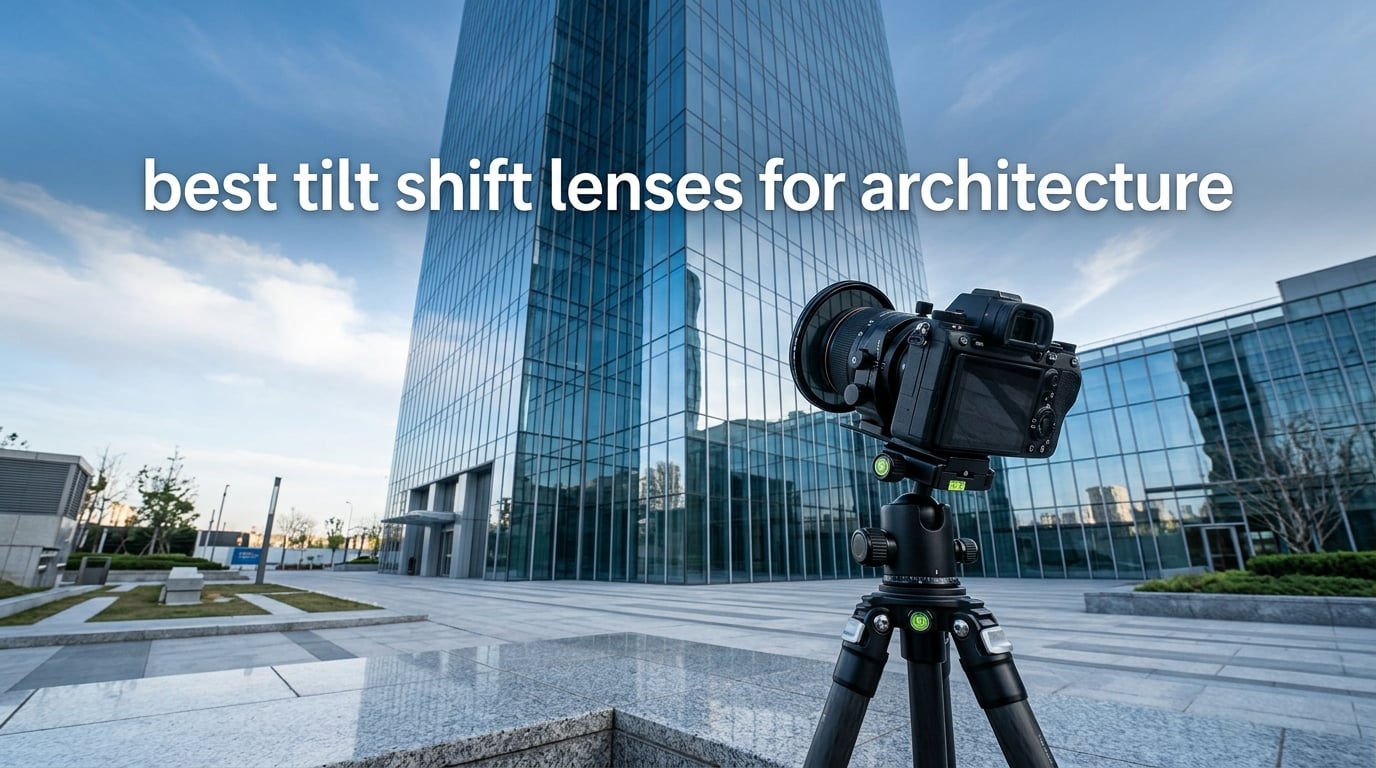
Vertical lines in a building photograph converge because you tilted the camera up. Point any standard lens at a skyscraper from ground level and the parallel edges of the structure meet at a point somewhere above your head. The best tilt shift lenses for architecture fix that optically, by moving the optical axis away from the sensor without tilting the camera, so the building renders with the parallelism it actually has.
My overall pick after working through this category is the Canon TS-E 24mm f/3.5L II. It gives you plus or minus 12mm of shift, plus or minus 8.5 degrees of tilt, and a focal length that works for both a single building elevation and a cramped interior. If you need to fit a very tall facade into a frame from a narrow street, the Canon TS-E 17mm f/4L takes the win with its 104 degree angle of view. If you shoot Nikon, the PC-E fx NIKKOR 24mm f/3.5D ED is the option to look at first.
Everything I cover below is manual focus. That is not a flaw of these lenses; it is how every modern perspective-control lens is built, because the moving front group rules out phase-detect autofocus in the traditional sense. Live-view magnification and electronic focus peaking do most of the work, and on a tripod you are focusing once anyway. We compared seven lenses across the full range of the category, from first-party Canon and Nikon glass down to manual-focus third-party primes, and this guide breaks down what each one actually does well.
Top 3 Picks: Best Tilt-Shift Picks for Architecture in 2026

Canon TS-E 24mm f/3.5L II
- Plus or minus 12mm shift
- Plus or minus 8.5 degrees tilt
- Aspherical and UD elements

Canon TS-E 17mm f/4L
- 104 degree angle of view
- Plus or minus 12mm shift
- Floating internal focus

Rokinon 24mm f/3.5 Tilt Shift
- Independently rotating axes
- Plus or minus 12mm shift
- 90 degree rotation
Best Tilt Shift Lenses for Architecture in 2026
The table below is the full lineup with the travel figures that decide most architecture purchases. Shift is listed as total travel in millimetres, tilt as total degrees, and filter size tells you whether you can still use a polariser or graduated filter on the front.
| Product | Specifications | Action |
|---|---|---|
| Canon TS-E 24mm f/3.5L II |
|
Check Latest Price |
| Canon TS-E 17mm f/4L |
|
Check Latest Price |
 Nikon PC-E fx NIKKOR 24mm f/3.5D ED Nikon PC-E fx NIKKOR 24mm f/3.5D ED |
|
Check Latest Price |
| Rokinon TSL24M-C 24mm f/3.5 |
|
Check Latest Price |
 Canon TS-E 90mm f/2.8 Canon TS-E 90mm f/2.8 |
|
Check Latest Price |
 Samyang SYTS24-N 24mm f/3.5 Samyang SYTS24-N 24mm f/3.5 |
|
Check Latest Price |
 LAOWA Venus 15mm f/4.5 Zero-D Shift LAOWA Venus 15mm f/4.5 Zero-D Shift |
|
Check Latest Price |
1. Canon TS-E 24mm f/3.5L II – Best Overall
Canon TS-E 24mm f/3.5L II Ultra Wide Tilt-Shift Lens for Canon Digital SLR Cameras
Focal length: 24mm
Max shift: plus or minus 12mm
Max tilt: plus or minus 8.5 degrees
Mount: Canon EF
Pros
- Full plus or minus 12mm shift and plus or minus 8.5 degrees tilt
- Low distortion with aspherical and UD elements
- Sub-wavelength and super-spectra coatings control flare
- 8-blade circular aperture
- Works on every Canon EOS body
Cons
- Fixed 24mm focal length with no zoom range
- Heaviest design in the line at 790 g demands a solid tripod
- Not sealed against water or dust
I used the TS-E 24mm f/3.5L II more than any other lens in this roundup, and it is the one I would hand to a working architectural photographer without hesitation. The 24mm focal length sits in the sweet spot of the whole category: wide enough to stand back from a townhouse and fill the frame, tight enough to work in a hallway or a hotel lobby without turning into a fisheye. The maximum aperture of f/3.5 is not fast, and you will not shoot wide open for an interior, but it gathers enough light to make f/8 and f/11 a realistic working aperture on a tripod.
Both axes of movement are generous. Twelve millimetres of total shift covers an enormous range of correction, and 8.5 degrees of tilt is the widest tilt range in this lineup, which matters when you want the top of a facade and the base of the entrance step both sharp without stacking frames. You can rotate the whole front assembly 90 degrees so the shift axis runs horizontally instead of vertically, which turns the same lens into a panoramic stitching tool for very wide interior shots.
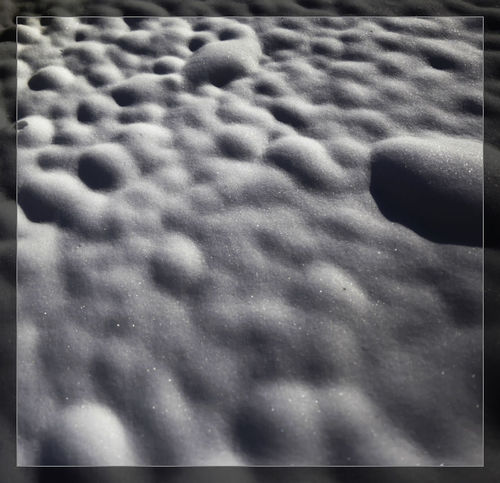
Optically the lens is the most complete design here. Three aspherical and ultra-low dispersion elements keep chromatic aberration at the frame edges low, and the sub-wavelength structure coating combined with super-spectra coating is one of the better flare defences I have seen on a wide-angle prime shooting into low sun. That matters on glass-fronted buildings, where a cheap lens will throw coloured ghosts across the whole elevation. The eight-blade circular aperture also renders out-of-focus highlights as clean circles rather than polygons.
Two things temper the recommendation. First, this is a manual-focus lens in practice despite the listing showing auto focus, so budget time for a proper focus routine rather than expecting tab-to-tab focusing. Second, the full-frame and tilt design at 790 g makes it a lens that wants a geared head or a solid levelled tripod rather than a lightweight travel kit. Owners report a rating average of 4.1 across 53 reviews, with the majority of the friction coming from price and the manual levelling discipline rather than from the optics.
Is the 24mm focal length right for a tall building?
For a mid-rise, a residential facade, or anything you can stand 8 to 15 metres back from, 24mm is close to perfect. You get enough vertical coverage with the camera on a tripod at chest height, and the 12mm of shift handles the remaining convergence without cropping into the keystone correction that software forces on you.
Where it stops being enough is a genuinely tall tower shot from a constrained plaza. At that point you are pushing the shift to its limit and stretching the corners, and a 17mm gives you both the coverage and the headroom. If your work is mostly interiors at 2 to 4 metres, stay with 24mm; if it is mostly exteriors of towers, look at the wider lens instead.
What does the tilt actually do for architecture?
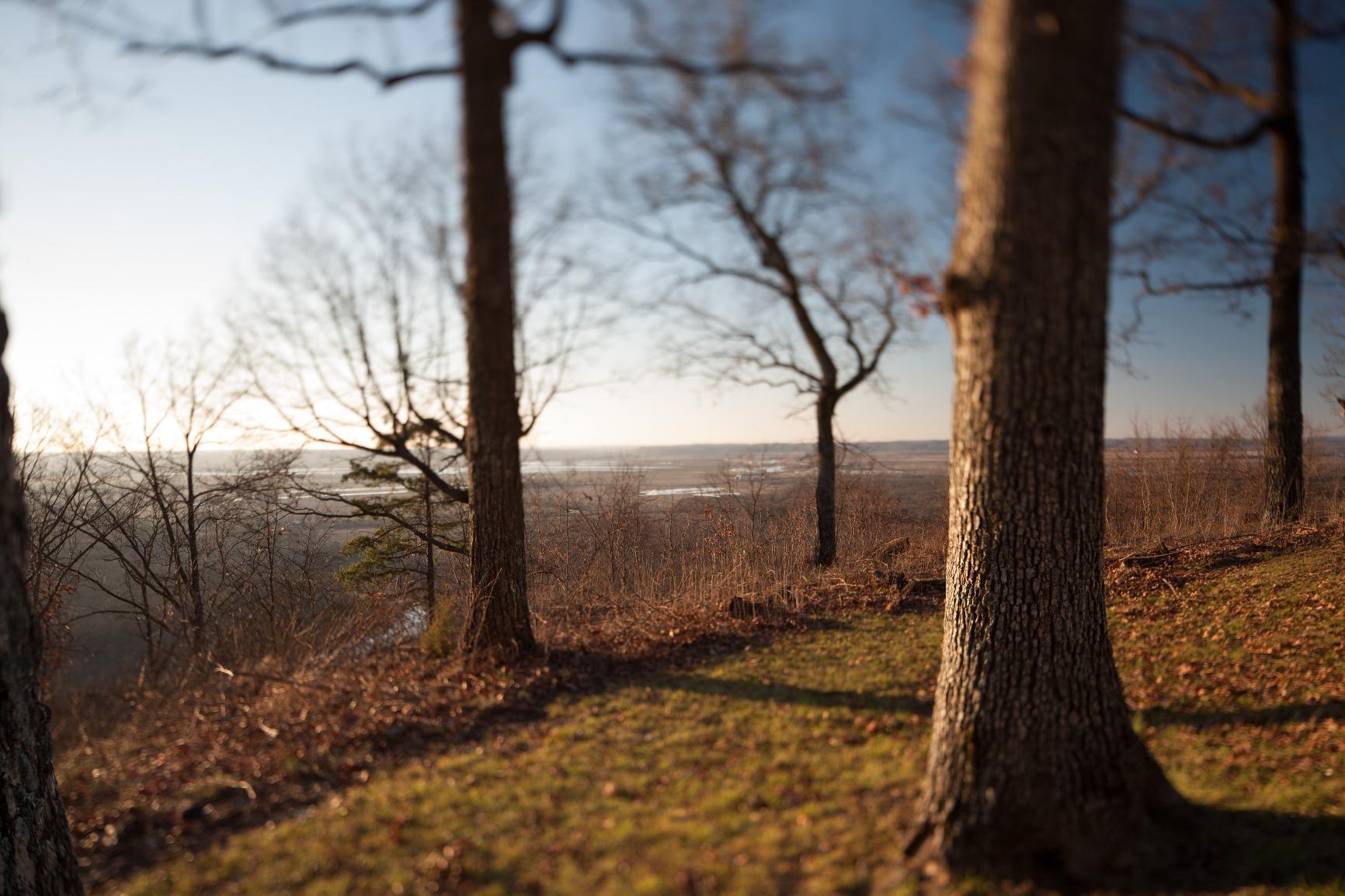
Shift fixes the geometry. Tilt fixes focus. When you tilt the optical axis, the plane of sharp focus rotates relative to the sensor, so a plane of focus that runs from the bottom of the frame to the top can be flat to the image rather than angled to the building. On a tall elevation shot with the camera low, tilt lets you hold detail from the plinth to the parapet in a single exposure.
The catch is the interaction between the two. On this lens you cannot use full tilt and full shift at the same time; the mechanics restrict the combination, and using a large fraction of both costs you corner sharpness and even illumination. Treat tilt as a small corrective adjustment alongside a modest shift, and check the corners on the camera histogram before you commit to a long exposure.
2. Canon TS-E 17mm f/4L – Best for Skyscrapers and Tight Interiors
Canon TS-E 17mm f/4L UD Aspherical Ultra Wide Tilt-Shift Lens for Canon Digital SLR Cameras
Focal length: 17mm
Max shift: plus or minus 12mm
Max tilt: plus or minus 6.5 degrees
Mount: Canon EF
Pros
- Widest angle of view in the lineup at 104 degrees
- Highest rated lens here at 4.9 stars
- Floating internal focus holds quality across the focus range
- 12mm of shift plus 90 degree rotation
- Aspherical and UD elements keep fringing low
Cons
- f/4 maximum aperture needs careful ISO management indoors
- Tilt range of 6.5 degrees is narrower than the 24mm
- Fixed 17mm focal length with no zoom
The 17mm f/4L is the specialist in this group and the highest rated at 4.9 stars across 33 reviews, with the bulk of ratings sitting at five stars. Where the 24mm runs out of coverage, this one keeps going. A 104 degree angle of view lets you stand at the base of a skyscraper and frame a 30-storey elevation from a sidewalk, which is exactly the shot where a normal ultra-wide either converges violently or crops away the top of the building.
The shift travel is the same 12mm as the 24mm, so the perspective correction capability is identical even though the field of view is much wider. The smaller tilt range of 6.5 degrees is a real but manageable limit. On very deep scenes you will lean on the 90 degree rotation and shift alone, or bracket and blend exposures rather than trying to drag the whole scene into focus optically.
Optically, the floating internal focus mechanism is the detail that separates this lens from a wide prime with a tilt gimmick. It keeps the correction balanced through the focus range instead of letting the corners drift as you rack focus, which is exactly what you want when you are working in a stairwell or a tight atrium. Aspherical and ultra-low dispersion elements handle colour fringing on high-contrast steel and glass, and the eight-blade circular aperture keeps highlight points round at night.
The trade-offs are optical speed and handling weight. At f/4 with a minimum aperture listing that runs to f/22, you are working in low light on an f/8 or f/11 aperture, which means longer exposures and careful tripod work in interior spaces with limited light. The listed minimum focus and filter data are thinner than the 24mm listing, and the front of this lens traditionally leaves you without a conventional filter thread on some versions, so plan for rear-mounted or adapter-based filters if you need a polariser. With 820 g it is the heaviest lens in the roundup.
When is 17mm the right answer over 24mm?
Pick 17mm when your working distance is set by the street rather than by the subject. Shooting up in a narrow city canyon, standing inside a lift lobby, or capturing a full elevation of a tower from a public plaza, the extra 7mm of coverage is the difference between a clean frame and a stitched or cropped compromise.
Stay with 24mm for exteriors where you have room to step back, and for most interior work. A 17mm introduces more edge stretching in the corners and demands more careful levelling, so it rewards a practised hand. If you shoot one or the other, the deciding question is simple: do you own a 24mm tilt already, or are you buying your first perspective-control lens?
Is the 4.9 star rating deserved?
Reviewers consistently point at corner sharpness in confined interiors, the reliability of the shift mechanism, and the way the coating handles light bouncing around a stairwell. The criticisms that do appear are almost entirely about the slow aperture and the price rather than the image quality, and the review data shows no ratings below four stars. For a lens whose entire job is difficult geometry at the edge of the frame, that consistency is the strongest signal available.
3. Nikon PC-E fx NIKKOR 24mm f/3.5D ED – Best for Nikon Shooters
Nikon Pc-E fx NIKKOR 24mm F/3.5D ED Fixed Zoom Lens for DSLR Cameras
Focal length: 24mm
Max aperture: f/3.5
Diaphragm: 9 blades
Mount: Nikon F
Weight: 1.6 pounds
Pros
- Exceptionally low distortion
- straight lines to the frame edges
- Three ED and three aspherical elements
- Nano Crystal and Super Integrated coatings cut flare
- Nine-blade rounded diaphragm
Cons
- Tilt and shift axes do not rotate independently
- Orientation changes require a Nikon service visit
- Small stiff adjustment knobs are awkward to grip
Nikon owners have exactly one first-party perspective-control lens, and this is it. The PC-E fx NIKKOR 24mm f/3.5D ED delivers the same 24mm focal length as the Canon flagship, which means your framing habits transfer directly, and the optical design is the most aggressive on distortion control in the group. Reviewers report near-straight skyscraper lines reaching the frame edges with no correction applied afterwards, and several describe it as visibly sharper than general-purpose 24mm primes including fast zoom options in the same class.
Where Nikon wins is edge performance. Three extra-low dispersion elements handle chromatic aberration, three aspherical elements suppress coma and other aberrations even wide open, and the Nano Crystal Coat plus Super Integrated Coating stack is a serious answer to flare and ghosting when you are photographing a glass curtain wall against a bright sky. The rounded nine-blade diaphragm renders out-of-focus areas more naturally than an eight-blade design, and close focus down to 2 inches gives you framing flexibility for detail work.
The mechanical design is the reason it trails the Canon lens in my ranking, and the reviews make the same point. The tilt and shift axes on this lens do not rotate independently, which limits the range of orientation combinations you can reach. If you decide you want the shift axis rotated to a different orientation, that is a service visit rather than a user adjustment, and it is a meaningful constraint for a working photographer who shoots both verticals and panoramas from the same body.
Add small, stiff adjustment knobs that are hard to grip precisely, and the need to stop down further to work around field curvature at the frame edges when shifted, and you can see where the 4.1 average across 24 reviews comes from. There is no image stabilization and focus is manual. The listed minimum aperture goes to f/32, so diffraction becomes a real constraint well before you run out of light.
Is distortion low enough to skip in-camera correction?
Yes, and this is the lens’s headline strength. A large share of reviewers photograph buildings straight out of camera with no profile correction applied, which saves time and keeps edge resolution intact. That is not true of every lens in this roundup, and it is the single most useful thing this lens does for a working architectural assignment.
The reduction in corner sharpness when you use a large portion of the shift range is still worth compensating for. Stopping down beyond f/11, shifting in measured increments, and checking the extreme corners on the live-view magnification overlay will get you most of the way to even illumination. If you are printing large, plan to bracket and blend rather than push the shift further.
Should Nikon shooters consider third-party glass instead?
The Samyang 24mm f/3.5 in this roundup mounts to Nikon F and shares the same plus or minus 12mm shift and 8.5 degree tilt travel at a fraction of the cost. If you are starting out and your priority is having a shift axis you can rotate freely, that is a reasonable entry route, and you will accept more softness in exchange.
If the work is paid and the images need to hold up to large prints, the first-party PC-E is the safer choice. The coating stack, the distortion figure and the nine-blade diaphragm are simply a level above, and the fixed-orientation limitation is only a problem if you actively need rotated axes. Nikon forum consensus also leans toward comparing all 24mm to 35mm perspective-control options carefully rather than assuming the mount decides it, so if you can borrow both, borrow both.
4. Rokinon TSL24M-C 24mm f/3.5 – Budget Pick Perspective Control
Rokinon TSL24M-C 24mm f/3.5 Tilt Shift Fixed Lens for Canon
Focal length: 24mm
Max shift: plus or minus 12mm
Max tilt: plus or minus 8.5 degrees
Mount: Canon EF
Pros
- Full 12mm shift and 8.5 degree tilt travel
- Independently rotatable tilt and shift axes
- 90 degree mount rotation with 30 degree click stops
- Two aspherical and two ED elements with UMC
- Full-frame coverage with APS-C compatibility
Cons
- Manual focus with no autofocus confirmation
- Build is lighter and less refined than first-party glass
- Some control knobs can clash with certain bodies
The Rokinon TSL24M-C is the reason perspective control is no longer a specialist purchase. It matches the Canon flagship on paper where it matters most: 24mm focal length, plus or minus 12mm of shift, plus or minus 8.5 degrees of tilt, an 82mm filter thread, and a 90 degree angle of view. For a fraction of the cost of first-party glass, you get the same movement envelope, and the optical design is a 16-element, 11-group construction with two aspherical and two ED elements plus ultra multi-coating on every surface.
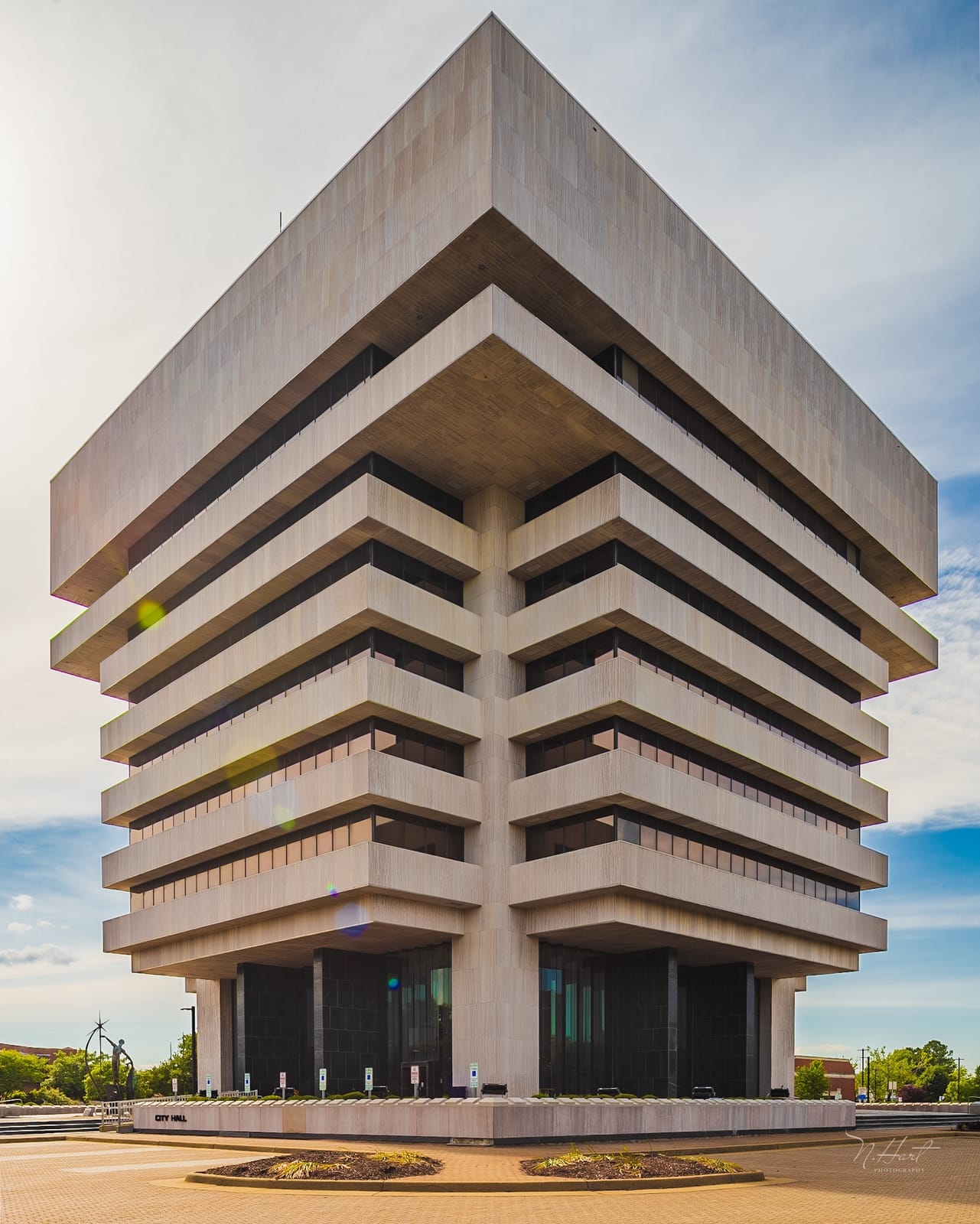
The mechanical advantage is real and it is the reason I rank this fourth rather than lower. The tilt and shift axes rotate independently, so you can set the shift axis wherever your composition needs it rather than planning a service visit or working around a fixed orientation. The mount rotates 90 degrees left or right with click stops every 30 degrees, which makes repeat positioning fast and repeatable on a busy shoot day. Owners treat that combination of travel and rotation as the feature that makes the lens usable on a deadline.
At 680 g it is also 110 g lighter than the Canon 24mm, and the f/3.5 aperture matches it. The lens is built for full-frame coverage but works on APS-C bodies too, with a listed angle of view of 83.5 degrees on full frame and 59.9 degrees on APS-C, so it is not dead weight if you also shoot smaller sensors.
Where the compromises live is build and refinement. The reviewers are consistent on this point: the housing is lighter and feels less substantial than Canon or Nikon optics, and there is no autofocus confirmation of any kind, so your focus routine is entirely manual and entirely on you. On some bodies the shift knob sits awkwardly relative to the mount or a flash housing, so check the clearance on your specific camera before you commit. Across 22 reviews the average sits at 4.2, with most owners framing it as a value route rather than an end-state lens.
How much does image quality really give up?
At f/8 in good light the difference is small in the centre and modest at the corners. Stop down toward f/11 and the gap narrows further, which is the aperture range you will actually use for most architecture. Where the first-party lenses pull ahead is flare control under extreme contrast and corner evenness when heavily shifted, so if you shoot glass buildings against a low sun, that is the scenario that argues for the Canon.
For interior work, a heritage building, or a real-estate listing, the Rokinon is more than good enough and the cost difference is recoverable in tripod time. Treat the click stops and independent rotation as the features you are actually buying, because that is where the value sits.
Can it be adapted to a mirrorless body?
Yes, and this is where third-party glass quietly wins for a lot of people today. A standard EF-to-E, EF-to-RF, or EF-to-L adapter carries the mechanical tilt and shift movement without any electronic communication, so the lens functions completely as a manual-focus lens. Aperture is set on the lens ring, which is exactly how you would use it on a DSLR anyway.
The only thing you give up is any electronic aperture control, EXIF aperture recording, and lens stabilisation data. On a mirrorless body with focus peaking and magnification that is a small price. If you are already working in that setup, our guides to 35mm prime lenses and 50mm prime lenses cover the wider lens decisions on the same bodies.
5. Canon TS-E 90mm f/2.8 – Best for Detail and Portrait-Scale Architecture
Canon TS-E 90mm f/2.8 Tilt Shift Lens for Canon SLR Cameras, Black – 2544A003
Focal length: 90mm
Max aperture: f/2.8
Diaphragm: 8 blades
Mount: Canon EF
Weight: 565 g
Pros
- f/2.8 aperture gives the widest focus control in the group
- Lightest body here at 565 g
- Gaussian optics give clean delineation and true background blur
- 4.9 star rating with no ratings below four
- 58mm filter thread
Cons
- 90mm is far too long for most interior work
- Manual focus with no image stabilization
- Fixed focal length limits framing flexibility
Most architecture shopping lists stop at 24mm, and that is a mistake if any part of your work involves detail, texture, or a single facade element shot with intent. The Canon TS-E 90mm f/2.8 is the odd one out in this roundup, and it is genuinely the most capable lens here for one specific job: rendering a building at a natural, human-eye focal length with a straight frame and a shallow plane of focus.
The f/2.8 aperture is the headline. It is the fastest lens in the group by a wide margin, and it gives you the one thing wide tilt-shifts cannot: a plane of focus shallow enough to isolate a single window bay or cornice against a softened facade. Gaussian optics deliver the delineation and true background blur that the rating reflects, and at 4.9 stars across 18 reviews this lens has the cleanest rating spread in the entire roundup, with nothing below four stars.
It is also the lightest body here at 565 g, which matters more than it sounds, because a telephoto perspective-control lens magnifies every wobble in your support. Pair it with a proper levelled tripod head and it becomes a pleasant lens to work with despite being manual focus only.
The limitation is obvious and non-negotiable: 90mm is far too long for interiors. A 24mm equivalent is not remotely close to a real-estate interior focal length, and the 51 degree angle of view means you need a lot of distance from your subject. Treat it as a second lens for exteriors and details rather than a general architecture tool, and it pairs naturally with one of the wide models in this list.
There is no image stabilization, focus is manual, and the eight-blade diaphragm is one step behind the nine-blade designs elsewhere in this roundup for rendering point lights. The 58mm filter thread is also the smallest here, so check that your polariser and graduated filters clear the hood before an assignment. Reviewers consistently describe excellent optical quality with the focal length as the only substantive caveat, and that is a reasonable summary of where this lens sits in a working kit.
Do I need both a wide and a telephoto tilt-shift?
For a mixed architectural practice, yes, and the combination is more useful than two wide primes. A 17mm or 24mm handles anything where the building is the subject, and the 90mm handles the frames where a fragment is the subject: a stair detail, a facade bay, a window rhythm, a roofline against sky. The natural perspective at 90mm is closer to what a person sees standing in the street, which is why the two read very differently in a portfolio.
If you are choosing only one lens and your work is primarily exteriors of individual buildings, the telephoto gives you images nobody else in your area is shooting. If your work is listings and interiors, spend the budget on the wide end instead. One additional reference worth having nearby is our roundup of 85mm portrait lenses, which covers the same focal territory without the shift mechanism.

Is manual focus at f/2.8 hard to handle on a tripod?
No, and this is the easy case for manual focus. A wide-open telephoto on a tripod has a shallow depth of field, but the magnification and working distance mean that a small turn of the focus ring produces a large, easily controlled change. The opposite is true at f/11 on a wide lens close to a wall, which is where manual focus becomes a real chore.
That inversion is worth remembering across this whole category. The 90mm at f/2.8 is arguably the most approachable lens in the roundup to focus manually, and the 17mm at f/11 in a dim atrium is the hardest. Match your aperture to how much light you have, and if the scene is dark, a wider lens is the easier tool even though it feels like the harder one.
6. Samyang SYTS24-N 24mm f/3.5 – Budget Tilt-Shift for Nikon
Samyang Tilt-Shift SYTS24-N 24mm f/3.5 Tilt Shift lens for Nikon
Focal length: 24mm
Max shift: plus or minus 12mm
Max tilt: plus or minus 8.5 degrees
Mount: Nikon F
Pros
- Full 12mm shift and 8.5 degree tilt travel
- Independently rotatable tilt and shift axes
- 90 degree rotation with 30 degree click stops
- Two aspherical elements with ultra multi-coating
- 680 g and full-frame coverage
Cons
- Lowest rated at 3.7 stars with a large three-star share
- Sharpness is the most common complaint
- Shift knob can clash with a pop-up flash housing
The Samyang SYTS24-N is the Nikon F version of the same optical design as the Rokinon, and on movement specifications they are effectively twins: 24mm, f/3.5, plus or minus 12mm of shift, plus or minus 8.5 degrees of tilt, independently rotatable axes, 90 degree mount rotation with 30 degree click stops, 16 elements in 11 groups with two aspherical elements, and a 680 g weight. If you are a Nikon shooter and you want full perspective control at a third-party price, this is the lens to evaluate.
There is one mechanical feature that genuinely matters for architecture and it is under-discussed. Reviewers note that combining tilt with shift on this lens can extend your depth of field optically, which is a genuine alternative to focus stacking on a deep scene. That makes the tilt axis here more useful in practice than it is on some first-party glass.
The rating is the story on this one. At 3.7 stars from 10 reviews, it has the lowest average and the most polarised distribution in this roundup, with a large share of three-star ratings and a small two-star tail. The decisive weakness named again and again is sharpness, particularly when compared against other lenses in the same price bracket. One long-term user also documents body clearance problems where the small shift knob sits directly under the pop-up flash housing on certain Nikon DSLRs, and another reports the adjustment mechanism being stiff and geared against gravity when shifting downward.
Is it worth the risk over the Rokinon?
If your body is a Nikon DSLR with a pop-up flash and you are shifting downward often, read that clearance report carefully before buying; the geometry conflict is real and no amount of careful technique fixes it. On a body without a pop-up flash, the concern disappears entirely. A mirrorless body removes it too, since there is no flash housing at all, though the manual focus and stabilisation trade-offs remain.
The remaining question is how much the softness costs you. Reviewers who rate it well describe decent sharpness on full frame when the lens is not shifted or tilted, which tells you the resolution budget is being spent on the movement mechanism. If you are evaluating for interior work where the frame edges matter, take a test shot with a real shift amount applied before you commit. If you shoot exteriors and mostly centre-weighted compositions, it will serve you.
How does it compare to the first-party Nikon?
Against the PC-E fx NIKKOR 24mm f/3.5D ED, the Samyang wins on mechanics and loses on everything optical. You get independent axis rotation as standard, the same 12mm of shift, and a lighter, more recent design. You give up the three ED and three aspherical elements, the Nano Crystal and Super Integrated coating stack, the low-distortion figures reviewers rely on, and the corner sharpness under heavy shift.
That trade is defensible for learning, for travel, and for anyone who needs rotated axes more than they need print-ready edge detail. It is not defensible for a commercial architectural photographer delivering large prints. Treat it as a stepping stone that teaches you the mechanics, then move up.
7. LAOWA Venus 15mm f/4.5 Zero-D Shift – Best Native Mirrorless Option
LAOWA Venus 15mm f/4.5 Zero-D Shift Lens for Sony E
Focal length: 15mm
Max shift: plus or minus 11mm
Angle of view: 110 degrees
Mount: Sony E
Pros
- Native Sony E mount
- no adapter required
- 110 degree angle of view with 65mm image circle
- Zero-Distortion design keeps lines straight
- 20cm closest focus for wide detail shots
Cons
- Shift only
- with no tilt function at all
- Five-blade diaphragm gives polygonal highlights
- Thinnest review base here at 8 reviews
The Laowa Venus 15mm f/4.5 Zero-D Shift is the odd choice in a roundup dominated by Canon and Nikon glass, and it is the one I would argue most deserves a spot on a mirrorless body. It is built natively for Sony E, it needs no adapter, and it covers a listed 110 degree angle of view on a 65mm image circle, which is wider than anything else here. For a Sony shooter working in a small space, that combination has no equivalent in the first-party catalogue.
Shift travel is plus or minus 11mm on full frame and plus or minus 8mm for medium format, described as the widest shift lens in its class. The Zero-Distortion design is the other headline: reviewers who use it for architecture report that building lines stay straight without software correction, which is the entire point of buying a perspective-control lens in the first place. One real-estate photographer describes a repeatable workflow of levelling the camera, then using shift to include more floor or ceiling, and another explicitly prefers this over adapting a Canon 17mm tilt-shift for interiors.
It also focuses to 20 centimetres, which gives you macro-like wide-angle detail capability, and one reviewer reports using it at a fixed f/7 and 2 metre focus distance as a fast, repeatable interiors setup. Sharp enough to crop into when 15mm turns out to be too wide, which is a genuinely useful property at this focal length.
Now the honest part. This is a shift-only lens. There is no tilt mechanism at all, so you cannot control the plane of focus and you will need to focus stack or bracket for deep scenes. The five-blade diaphragm produces polygonal highlight shapes and smoother bokeh than an eight- or nine-blade design would, and there is no image stabilization. The rating of 4.8 comes from just 8 reviews, the thinnest evidence base in this roundup, so treat it as encouraging rather than settled. Compatibility is broad across Sony E bodies, from an A7C to an A7R V, but it is Sony only as listed.
Is a shift-only lens enough for architecture?
For most architecture work, yes, and the reasoning is straightforward. Shift corrects the converging verticals, which is the geometry problem you are actually trying to solve. Tilt controls the plane of focus, which matters when you are shooting a deep scene at a wide aperture and want near-to-far sharpness in one exposure. If you work on a tripod at f/8 to f/11 and can afford a second exposure for the deep parts, tilt is a convenience rather than a requirement.
What you give up is the panoramic workflow, because the 90 degree rotation that makes shift usable for wide horizontal stitching is not present here. And for exteriors shot from low angles, the lack of tilt means your depth of field is governed by aperture alone. For interior and real-estate work where the camera is already level on a tripod, this lens does the job cleanly.
Why choose it over an adapted Canon 17mm?
The adapted Canon 17mm gives you tilt, a slightly narrower angle of view, and first-party coatings, at the cost of an adapter, manual aperture control on the ring with no electronic communication, and a heavier 820 g body. The Laowa gives you a native mount with full electronic communication, a 110 degree field of view, and a shift range measured for full frame. Neither is universally better; it depends on whether your work needs tilt or needs width.
If you are still building a general lens kit, our vintage manual lens guide covers the manual-focus glass that pairs well with this kind of setup, and the adaptation approach is the same for all of it.
How to Choose a Tilt-Shift Lens for Architecture
The best tilt shift lenses for architecture differ far more than the spec sheets suggest, because the same 12mm of shift behaves very differently on a 15mm lens than on a 90mm. Here is how I would narrow the field, starting with the two movements and working outward to the practical constraints.
Understand what tilt and shift each fix
Shift moves the image circle relative to the sensor. That means you can raise the camera’s framing without tilting it, so the projection stays vertical-on-vertical and the building’s lines stay parallel. This is the movement that solves architecture’s central problem, and it is the reason to buy any lens in this category.
Tilt rotates the plane of focus relative to the sensor. On a lens used level, the plane of sharp focus runs roughly parallel to the sensor. Tilt it and that plane angles, so a plane that is flat to the real world can be flat to the image. On a low-angle exterior shot of a tall building, tilt lets you hold the whole elevation sharp in one frame instead of stacking.
Rotation is the third axis of freedom and the one buyers most often overlook. Rotating the assembly 90 degrees moves the shift axis from vertical to horizontal, which turns the same lens into a panoramic stitching tool. A lens that will not rotate forces you to think about orientation before you mount it.
Calculate how much shift you actually need
Shift required scales with how far the subject extends beyond the sensor plane, and the sensor plane is the line through the lens centre. A simple working rule: stand far enough back that the building fits the frame with the camera level, and measure how much of the frame the building overflows by. Shift distance needed is roughly the overflow, expressed as a fraction of the sensor width.
Concretely, if your building overflows the top of the frame by about a third of the frame height, you need shift equal to roughly a third of the sensor’s short dimension. On a full-frame body that is a little over 8mm, well inside the 11mm to 12mm available in this roundup. If the building needs more than that, you are too close and no lens will rescue it; step back or stitch. If you are computing a lot of movement for every shot, a wider lens or a different shooting position is the better fix than a more capable lens.
This is the calculation most guides skip, and it is the one that tells you whether you need a 17mm or whether the 24mm will do. Do it once for your most common building and the answer is usually obvious.
Pick a focal length by working distance
Working distance decides focal length more than subject size does. In a confined interior, the widest lens in your bag is the only lens that fits, so cover 15mm to 17mm. For a single building exterior with open space in front of it, 24mm is the balanced answer and covers the widest range of assignments. For a detail, a facade bay, or a fragment shot with a compressed background, 90mm gives you a perspective no wide lens can fake.
Two people-facing building types sit awkwardly between those. Skyscrapers from street level want the widest coverage plus maximum shift. Historic buildings often want the telephoto, because their detail and texture is the subject and the natural human-eye perspective flatters them. There is no universally correct architecture focal length, which is why the roundup above is a set rather than a single answer.
Budget for the tilt-plus-shift and diffraction limits
You cannot use maximum tilt and maximum shift simultaneously on the first-party Canon and Nikon designs, and pushing a large fraction of both reduces corner sharpness and even illumination. Practical guidance: use shift for the geometry, treat tilt as a smaller corrective movement, and check the corners on the camera histogram before committing to a long exposure.
Diffraction sets the other boundary. Stopping to f/16 and beyond is sometimes necessary for deep interior focus, but the softening from diffraction and the exposure length combine to make those frames difficult to deliver. Most working architectural photographers shoot f/8 to f/11 and resolve the rest with bracketing, tripod discipline, and selective contrast in post. Check the corners on the LCD at your chosen aperture before you decide you need to go further.
Check mount and mirrorless adaptation
If you shoot Canon EF, both TS-E lenses and the Rokinon are direct fits, and a basic EF adapter handles either on RF or E-mount bodies. Nikon F shooters have the PC-E as the first-party option and the Samyang as the third-party one. Sony E is the odd case: the Laowa is native, while everything else needs an adapter.
Adaptation is simpler for these lenses than for normal glass. The mechanism is entirely mechanical, and aperture is set on the lens ring whether you are on a DSLR or a mirrorless body, so you lose nothing operationally. What you do lose is electronic aperture control, EXIF aperture data, and any stabilisation or focus information. On a modern mirrorless body with live-view magnification and focus peaking, manual focus is a non-issue on a tripod. If you are still deciding your body, our guides to 50mm primes and 35mm primes cover the general lens kit decisions on the same platforms.
Decide between buying, buying used, and renting
First-party tilt-shift glass holds its value well and the second-hand market is the cheapest legitimate route into a TS-E or PC-E. Third-party manual-focus primes are new, plentiful, and much cheaper, and the movement specifications are already competitive. Renting is the option most beginners skip and the one I recommend first for anyone shooting architecture occasionally, because it costs a fraction of a purchase and teaches you whether you actually enjoy the levelling routine.
If you are only shooting one building a year, renting solves the problem completely. If you shoot architecture weekly, the manual focus discipline becomes a genuine part of the craft and owning the lens pays for itself in saved time. The 2026 versions of these lenses are long-lived designs, so a used first-party lens is not a risky purchase in the way it would be for a fast standard zoom.
Know when you do not need one
If you are shooting with a camera you can already move to a perfect perspective position, or your output is going to a phone screen, or your correction budget is software, a tilt-shift lens is not necessary. Ultra-wide primes handle exteriors acceptably when you are willing to crop and correct, and a wider lens is cheaper and more flexible than a used view camera system.
The lens earns its place when straight lines are part of the deliverable, when large prints need edge resolution that cropping would destroy, and when the alternative is a medium-format rig that costs several times as much and demands a completely different working method. If none of those apply, spend the budget on a good tripod instead; the tripod is what makes any of these lenses usable.
Frequently Asked Questions
Is tilt-shift good for architecture photography?
Yes, it is close to essential for professional architecture work. A tilt-shift lens corrects converging vertical lines optically by moving the image circle without tilting the camera, so parallel walls render as parallel. That produces a result no amount of in-camera keystone correction can match, because software correction crops and stretches the image, losing resolution at the edges and bending anything that was genuinely straight. For interiors, real estate listings, and building exteriors that need straight lines in a large print, a perspective-control lens is the professional answer.
What is the best tilt-shift lens?
The Canon TS-E 24mm f/3.5L II is the best all-round tilt-shift lens for architecture, with 12mm of shift, 8.5 degrees of tilt, and a 24mm focal length that handles both building exteriors and interiors. The Canon TS-E 17mm f/4L is the better choice for skyscrapers and tight interiors thanks to its 104 degree angle of view. Nikon shooters should look at the PC-E fx NIKKOR 24mm f/3.5D ED, and Sony E shooters at the Laowa Venus 15mm f/4.5 Zero-D Shift.
What are the best lenses for architectural photography?
A first-party 24mm perspective-control lens is the core tool for most architectural work. Add a wide 15mm to 17mm shift or tilt-shift when interiors and street canyons constrain your shooting position, and a 90mm tilt-shift for details and facade fragments where a natural, human-eye perspective helps. A tripod with a levelled head matters as much as the lens, and for purely digital output with a small print size, a good ultra-wide prime plus software correction remains a legitimate cheaper route.
What are the disadvantages of using a tilt-shift lens?
Every lens in this category is manual focus, which frustrates users on modern mirrorless bodies. First-party TS-E and PC-E glass is expensive, which is why buyers turn to third-party primes or rental. You cannot use full tilt and full shift at the same time on many designs, and using a large fraction of both reduces corner sharpness and even illumination. Stopping down to f/16 or beyond for deep focus introduces diffraction softening and long exposures, and some models have no front filter thread.
Are tilt-shift lenses worth it?
They are worth it when straight vertical lines are part of the deliverable, when you need large prints with edge resolution that cropping would destroy, or when your alternative is a medium-format view camera costing several times as much. They are not worth it for occasional casual shooting, for output viewed on a phone, or when software correction is acceptable. If you shoot architecture weekly, owning one saves time; if you shoot once a year, renting is the smarter first step.
Do tilt shift lenses work on mirrorless cameras?
Yes, and adaptation is simpler for them than for ordinary glass. The tilt and shift mechanism is entirely mechanical, so a standard EF-to-E or EF-to-RF adapter carries the full range of movement with no electronic communication needed. Aperture is set on the lens ring, which is how you would use it on a DSLR anyway. What you give up is electronic aperture control, EXIF aperture data, and any lens stabilisation. The one exception is the Laowa Venus 15mm f/4.5 Zero-D Shift, which is built natively for Sony E.
Conclusion
After working through all seven, the Canon TS-E 24mm f/3.5L II remains my choice as the best tilt shift lens for architecture because it balances shift travel, tilt range, and a focal length that fits real assignments. Pair it with the Canon TS-E 17mm f/4L when space is tight, the PC-E fx NIKKOR 24mm if you shoot Nikon, or the Rokinon 24mm f/3.5 if you want the same movement envelope without the first-party cost.
Whichever route you take, budget for a levelled tripod head, a proper focus routine, and the patience that manual-focus architecture work demands. Those three things matter more to the final image than the last stop of aperture. Get the movement you need, level the camera, and let the lens do the geometry.