
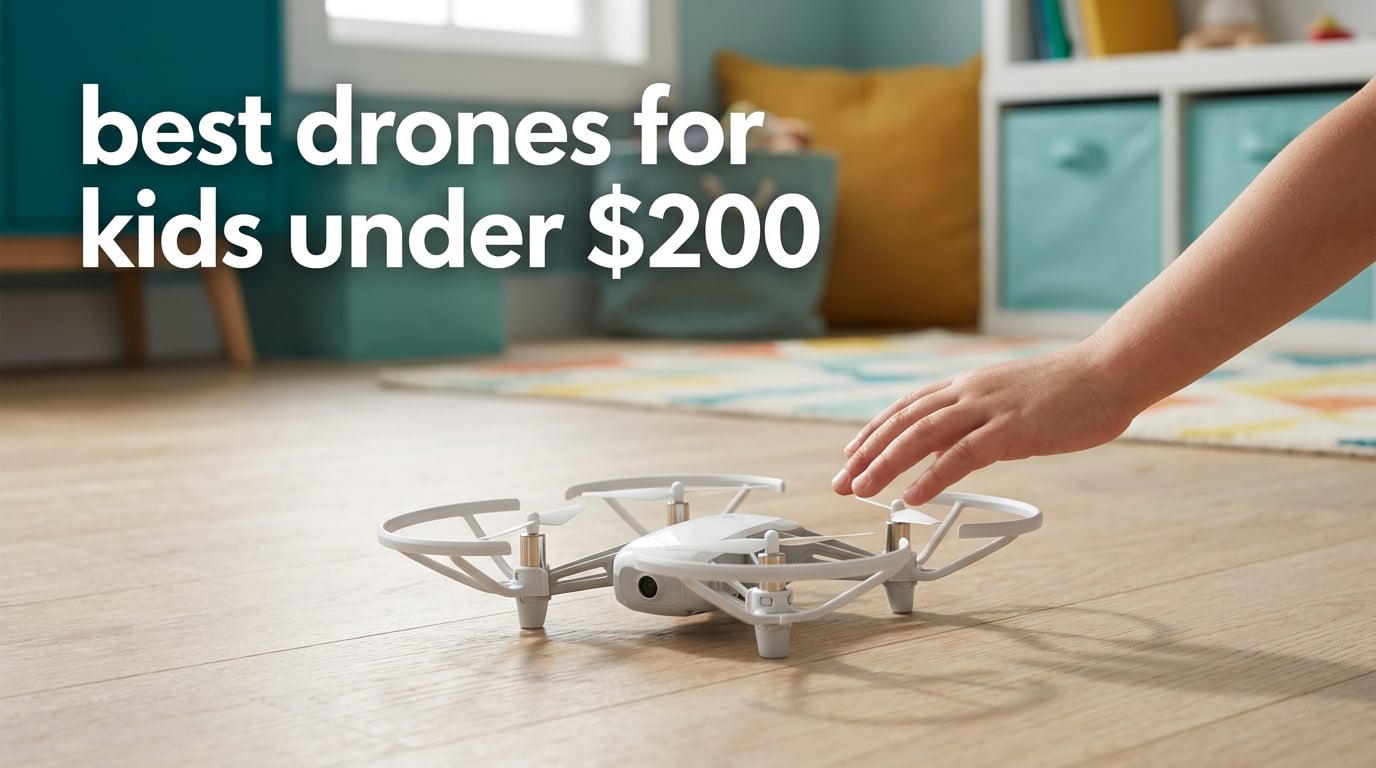
If you are shopping for a child’s first drone and you have decided to hold the line at two hundred dollars, you are in a better position than most parents. The category is crowded with listings that promise far more than they deliver, and the guidance pages that rank kid drones usually ignore the budget constraint entirely.
We spent weeks reading specification sheets, customer reviews and forum threads to put together this list. Every model below sits under the two hundred dollar ceiling, and every one of them comes with fully guarded propellers, because that guard is the single feature that decides whether a first drone is fun or frightening.
Quick answer: the Holy Stone HS210 is the best drone for kids overall, with three batteries and protected propellers. The DEERC D20 is the best value if you want a camera, the HASAKEE Q9s is the best pick for evening flights thanks to its LED glow modes, the Holy Stone HS190 suits ages 5 to 7, and the SYMA X100 offers the safest indoor setup with obstacle avoidance. If you want a wider background on picking a first drone, our complete kids’ drone guide covers the basics.
Top 3 Picks: Best Kids Drone Picks Under the Two Hundred Dollar Ceiling in 2026

Holy Stone HS210
- Three batteries for about 21 minutes
- Full propeller guard
- Altitude hold and headless mode
- 50 g palm-sized body
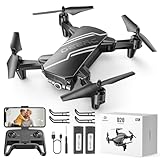
DEERC D20
- 1080P HD FPV camera
- Two batteries for about 20 minutes
- Altitude hold and one key start
- Voice control and waypoints

Holy Stone HS190
- Folds into the controller
- 35 g featherweight frame
- Altitude hold and headless mode
- Propeller guards and emergency stop
Best Drones for Kids Under $200 in 2026
All ten models below fall under the two hundred dollar ceiling. Prices shift constantly, so use the table to compare features, then check the current listing before you buy.
| Product | Specifications | Action |
|---|---|---|
| Holy Stone HS210 |
|
Check Latest Price |
| DEERC D20 |
|
Check Latest Price |
| Holy Stone HS190 |
|
Check Latest Price |
 Force1 Scoot Force1 Scoot |
|
Check Latest Price |
 HASAKEE Q9s HASAKEE Q9s |
|
Check Latest Price |
 AVIALOGIC Mini Drone AVIALOGIC Mini Drone |
|
Check Latest Price |
 Swifsen Mini Drone Swifsen Mini Drone |
|
Check Latest Price |
 SYMA X100 SYMA X100 |
|
Check Latest Price |
 Veeniix V995 Veeniix V995 |
|
Check Latest Price |
 Helatt LED Drone Helatt LED Drone |
|
Check Latest Price |
1. Holy Stone HS210: Best Drone for Kids Overall
Holy Stone Mini Drone for Kids and Beginners RC Nano Quadcopter Indoor Small Helicopter Plane with Auto Hovering, 3D Flips, Headless Mode and 3 Batteries, Great Gift Toy for Boys and Girls, HS210 Blue
50 g
3 batteries for about 21 min total
160 ft range
Auto hover, headless mode, 360 flips
Pros
- Altitude hold and headless mode make it genuinely easy for first-time pilots
- Three batteries extend total flight time to about 21 minutes
- Full propeller guard protects small hands and survives crashes
- Palm-sized and quiet for indoor practice
- Three speed modes let kids build up
Cons
- Each battery lasts only about 5 to 7 minutes
- Battery connector is small and finicky
- Drifts in wind and indoor air currents
The HS210 is the model we keep coming back to, because three batteries in the box solves the problem that ruins most first drones. With roughly seven minutes per pack, a child gets several short sessions before anyone reaches for the charger, and a short session is exactly what an attention span can handle.
At 50 g and 3.15 inches across, it is small enough for a living room with the furniture pushed back. The frame stays calm on a low speed setting thanks to altitude hold, and headless mode means a child who rotates mid-flight does not suddenly push the stick the wrong way.
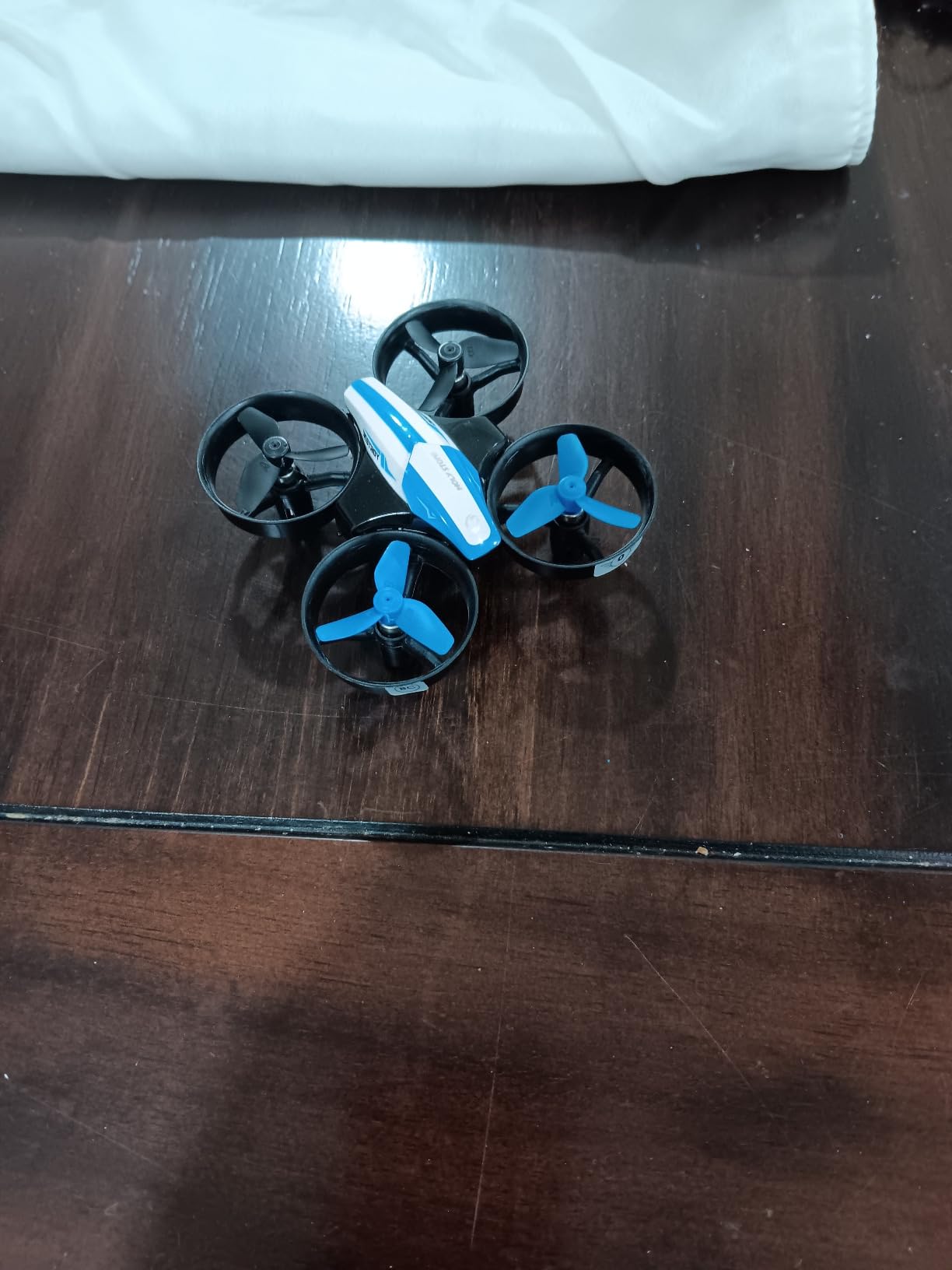
The specification sheet lists a 1080p video capture resolution and a 250 mAh lithium polymer battery, with a maximum range of 160 feet. Owners report that in practice the per-battery figure lands closer to five to seven minutes, so treat 21 minutes as the total across all three packs rather than a single flight.
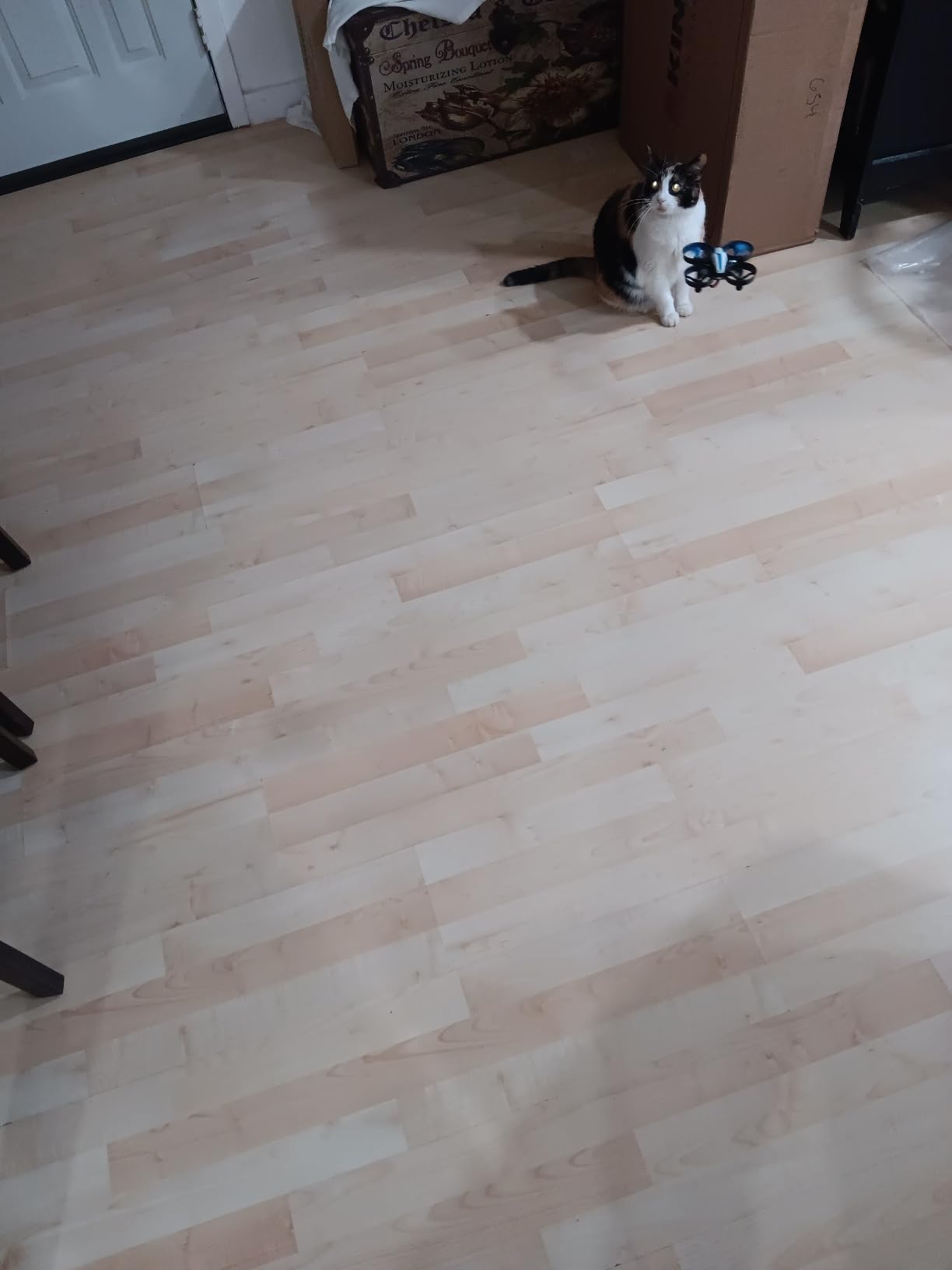
Two limitations are worth knowing before you buy. The battery connector is small and awkward for small hands, and the infrared control link will not work outdoors in direct sunlight, which makes this an indoor and shaded-yard drone rather than a park drone.
Who it suits
This suits a child roughly 7 to 10 who is a complete beginner and has a space to practise indoors. Three batteries means less parent supervision time spent watching a charging cable, which is a real advantage for a birthday present.
It also works as a first trainer before a larger camera drone, a step several owners who later moved up to DJI models describe approving.
Who should skip it
Skip it if your child wants to shoot video of anything beyond a living room. The stated camera resolution is not matched by the on-board hardware at this size, and the sunlight limit rules out open outdoor flying.
A minority of owners report units failing after a few weeks. The remedy is the same one the forums recommend: order a spare set of propellers and a spare guard with the drone so a first failure does not end the hobby.
2. DEERC D20: Best Value if You Want a Camera
DEERC D20 Mini Drone for Kids with 1080P HD FPV Camera Remote Control Toys Gifts for Boys Girls with Altitude Hold, Headless Mode, One Key Start Speed Adjustment, 3D Flips 2 Batteries, Black
69 g
2 batteries for about 20 min total
720p live FPV feed
2.4 GHz link, 98 ft image transmission
Pros
- Real-time FPV video on a phone app at this price tier is unusual
- Two modular batteries give about 20 minutes of total flight
- One key start and land plus altitude hold simplify takeoffs
- Gesture photo and video capture
- Voice control and waypoint flight add variety
Cons
- FPV video quality and range are modest with noticeable lag
- Stated 2000 mAh capacity does not translate into long flights
- Wi-Fi app setup can be fiddly for younger children
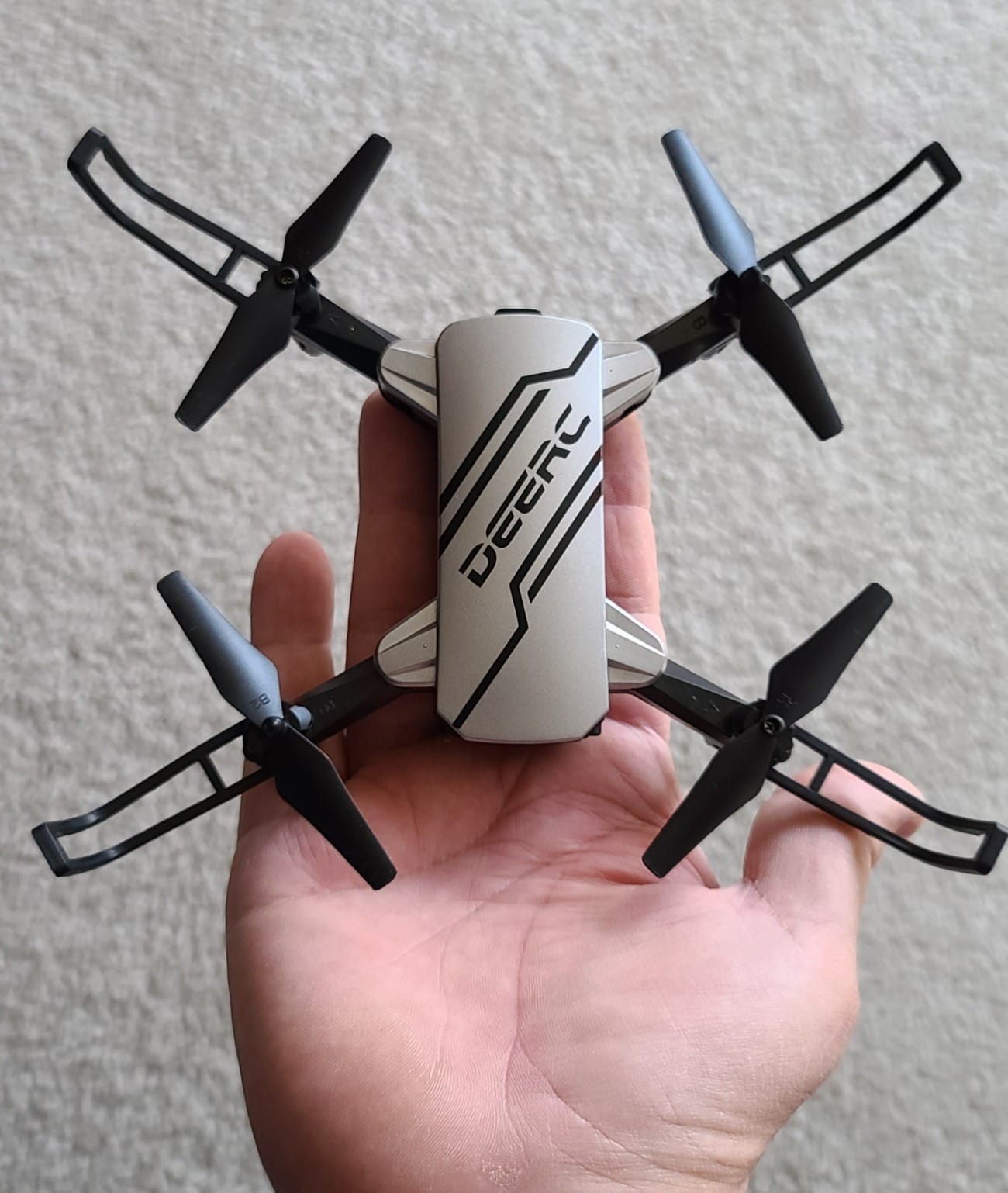
The D20 is the pick when the excitement of a drone comes from seeing what the camera sees. It carries the highest review count in this roundup, close to nineteen and a half thousand, and that volume is why we trust its behaviour more than most.
The live feed runs on a Wi-Fi app rather than goggles, so a child watches a phone screen while flying. That keeps the cost down, and it also means the child learns to fly while looking up, which is closer to real piloting than watching a screen.
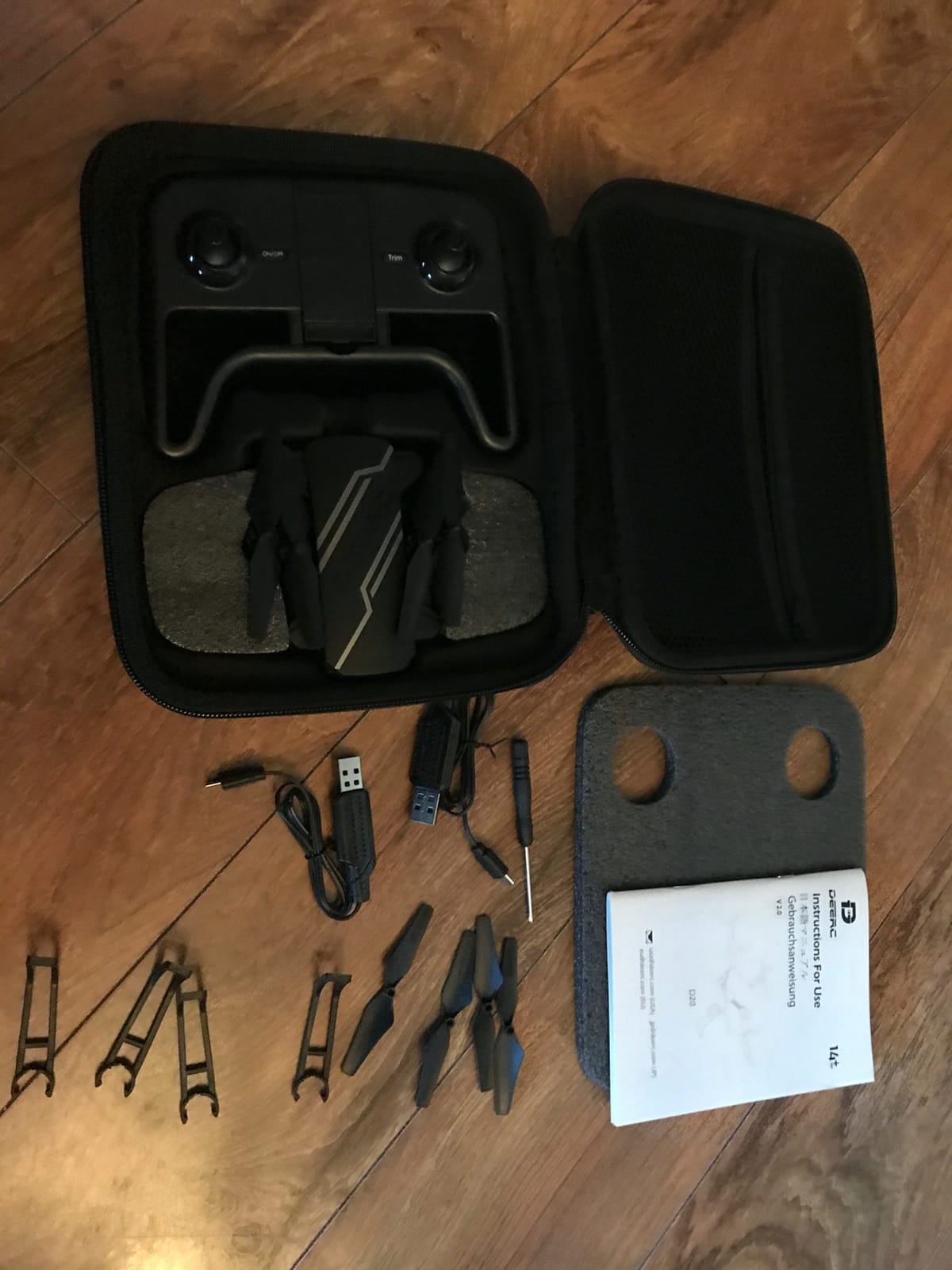
Technical details list a 1280×720 video output, a 2.4 GHz radio link and up to 98 feet of image transmission. The 2000 mAh battery rating sounds impressive on paper, and owners still report a combined total nearer 20 minutes across the two included packs.
Expect lag in the video and a modest transmission distance. The lowest-rated reviews describe motors and batteries failing after a few weeks, which is the common pattern for this price class rather than something specific to this model.
Who it suits
This suits a child around 10 or older who is ready for a camera and can handle an app on a phone. Gesture capture gives a satisfying result quickly, which keeps a first flight feeling like success.
It is also a reasonable second drone after a no-camera trainer, because the child already understands line-of-sight control before the screen appears.
Who should skip it
Skip it for a child under about 8 who will not sit through Wi-Fi pairing without losing interest. The app setup is the weak point, and it can eat a whole session.
Do not buy it expecting real FPV flying. The live feed is a phone preview with lag, not the goggles experience, and the 98 foot transmission limit is short for outdoor work.
3. Holy Stone HS190: Best for Ages 5 to 7
Holy Stone HS190 Foldable Mini Nano RC Drone for Kids Gift Portable Pocket Quadcopter with Altitude Hold 3D Flips and Headless Mode Easy to Fly for Beginners
35 g
Folds into the controller
1 battery
Altitude hold, headless mode, emergency stop
Pros
- Folds into the controller so it fits in a pocket or small bag
- Very light at 35 g so walls and furniture take little damage
- One key takeoff and landing plus altitude hold and headless mode
- Propeller guards and emergency stop add safety
- Three speed modes for different skill levels
Cons
- Only one battery included
- No camera on this listing
- Short flight time relative to larger models
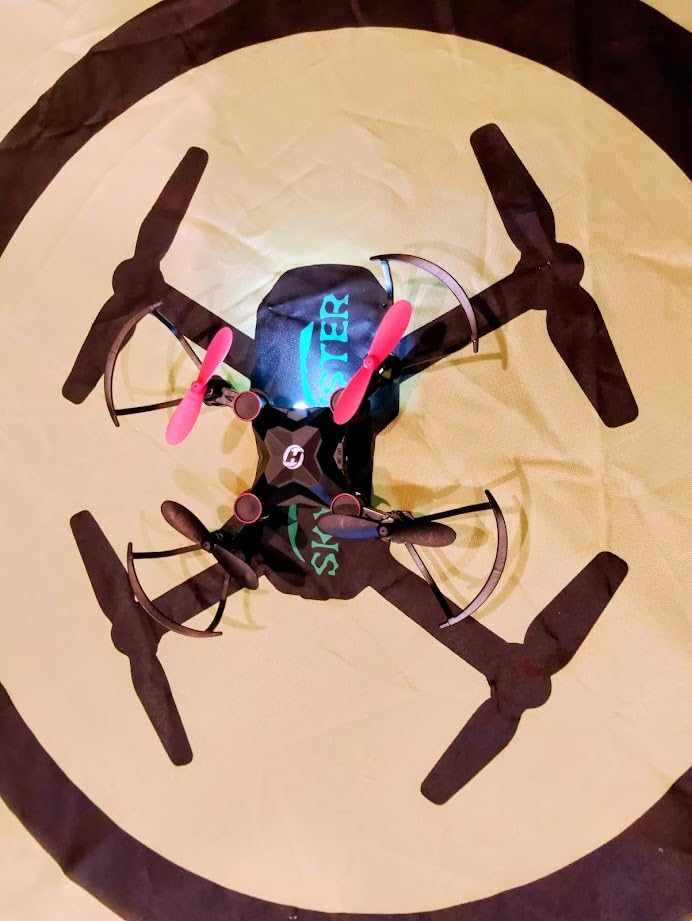
At 35 g the HS190 is among the two lightest quadcopters in this list, and that weight is the point. A child can drop this against a wall or a sofa without much consequence, which removes the anxiety that stops many first flights before they begin.
It folds into the controller, so the whole set fits in a coat pocket. For a family that travels, or for a child who wants the drone at a friend’s house, that packability matters more than any camera would.
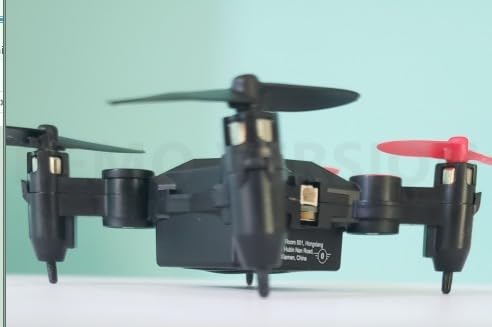
Flight assists are the standard beginner set: altitude hold, headless mode, one-click takeoff and landing, 360-degree flips and three speed modes. Propeller guards and an emergency stop button are listed in the box contents, along with a spare propeller spanner and screwdriver.
Only one battery is included, and the box also carries no camera. Owners mention the short session length as the most common reservation, which is the honest trade for the lowest weight in the roundup.
Who it suits
This suits a first-time flyer aged 5 to 7 with a large clear room and an adult within arm’s reach. The folding design also makes it a good travel toy for a car trip.
Forums often suggest a no-camera mini drone as a better first purchase than a camera drone, because the child learns to control the aircraft rather than watch a screen. That is exactly what this model does.
Who should skip it
Skip it if your child will be frustrated by a single short session and no recordings to show afterwards. One battery means charging between flights.
Also skip it for older children who want something that looks substantial. At this size and weight, a teen tends to outgrow it within a few weeks.
4. Force1 Scoot: Best for Toddlers and Hand-Guided Play
Force1 Scoot Hand Operated Drone for Kids or Adults – Hands Free Motion Sensor Mini Drones, Easy LED Indoor Rechargeable UFO Toy Flying Orb Ball Drone Toys for Boys and Girls (Blue)
Hand operated
No remote control
About 8 min flight per charge
4-way obstacle sensing, LED lights
Pros
- No remote needed
- so toddlers as young as three can play with it
- Webbed shell keeps fingers away from the propellers
- Vivid LEDs cast patterns on the ceiling in a dark room
- Toss to launch and catch style play is immediately intuitive
- Force1 customer service is repeatedly praised
Cons
- Shell slats are wide enough that small fingers can still reach the props
- A single strand of hair can jam the rotors
- About 7 to 8 minutes of flight with an hour-long recharge
The Scoot works differently from everything else here. There is no controller. Your child reaches into the webbed shell, tosses it, and it flies until it finds a surface, then repeats. That single design choice removes the hardest part of learning to fly a drone.
It is also the simplest route into the hobby, which is why forum threads about first drones keep recommending this style for the youngest children. The shell is designed to protect small hands and furniture, and the LED lighting projects patterns on a dark ceiling, which is the whole point of the toy.
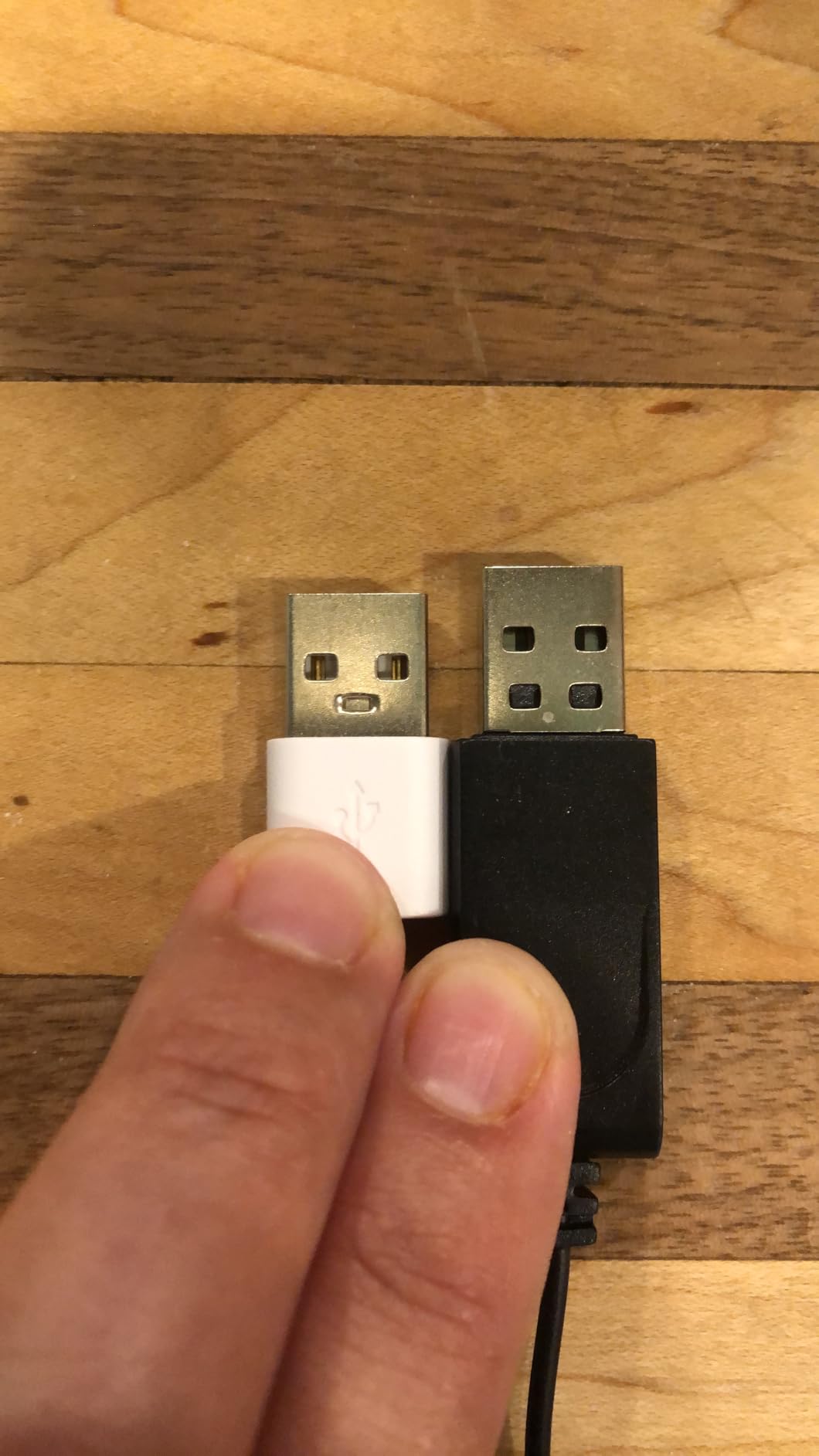
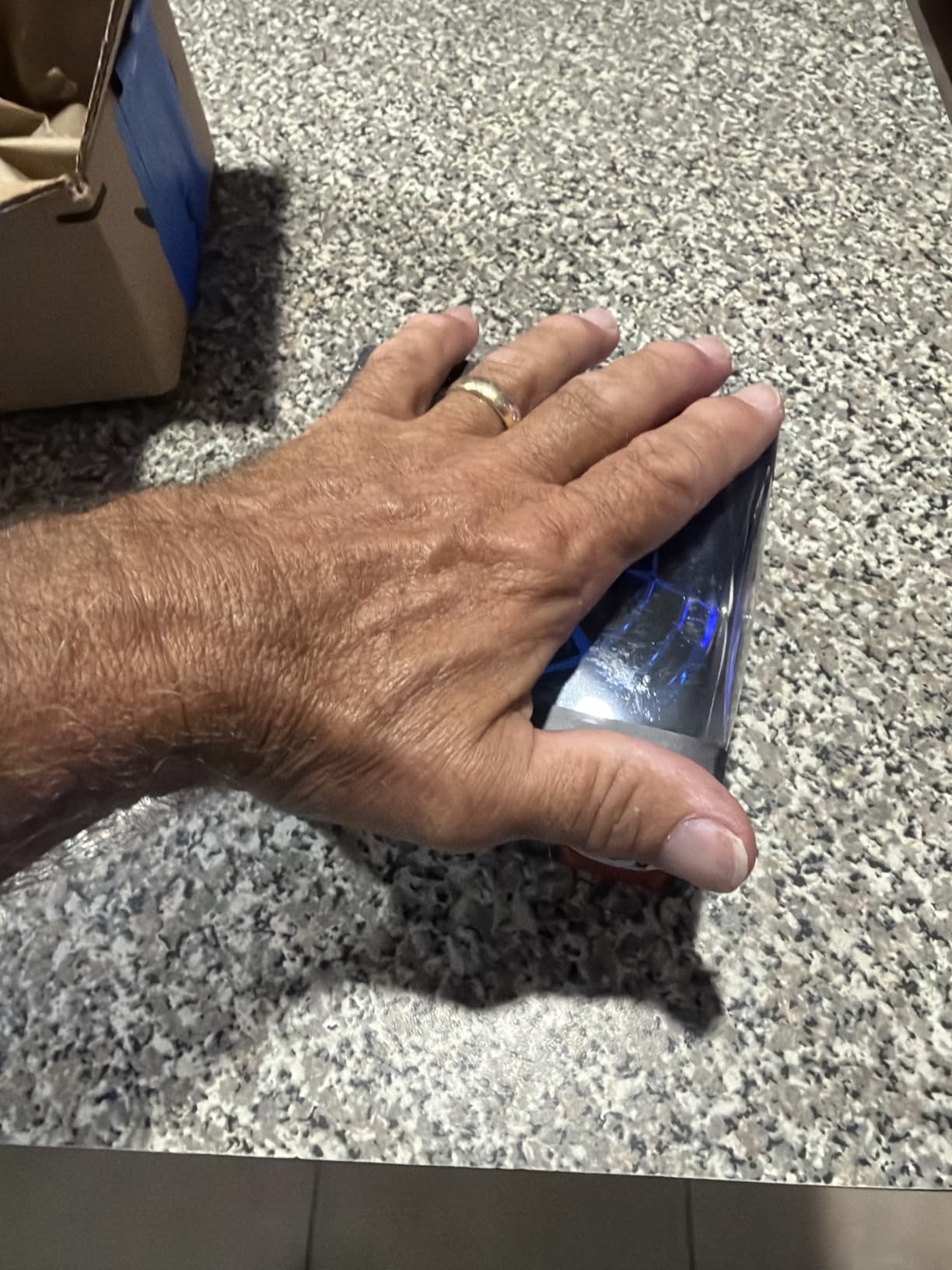
Technical details list a 4.7 inch body, a 1.12 ounce weight, a 90 day warranty and up to 8 minutes of flight after a 50 minute charge. It is a US-certified STEM toy and the listing recommends ages 8 and up even though the hand-operated format suits younger children.
Owners flag that the shell slats are wide enough for small fingers to reach the propellers, and that a strand of hair can jam the rotors. Tie long hair back before play, and expect a recalibration now and then.
Who it suits
This suits a toddler or a child under 6 who is not ready for a two-stick controller. It is also the easiest first drone to supervise indoors because there is nothing to crash into furniture deliberately.
Force1 support is repeatedly mentioned in reviews as fast and willing to send replacements, which matters when a toy gets handled roughly.
Who should skip it
Skip it for a school-age child who wants to learn real stick control. Hand-guided flight teaches none of the spatial reasoning that a controller-based drone builds.
The charge-to-fly ratio is poor. One hour of charging buys about 8 minutes of play, so plan sessions around that rather than expecting an afternoon of flying.
5. HASAKEE Q9s: Best for Evening Flights
Q9s Drones for Kids,RC Drone with Altitude Hold and Headless Mode,Quadcopter with Blue&Green Light,Propeller Full Protect,2 Batteries and Remote Control,Easy to fly Kids Gifts Toys for Boys and Girls
6.9 inch ABS frame
2 UL-certified 500mAh batteries
720p output
Four full propeller guards, 3 speed settings
Pros
- Bright neon blue and green LEDs with three glow modes for evening flights
- Four sturdy propeller guards and tough ABS body survive many crashes
- Altitude hold and headless mode suit first-time young pilots
- Two 500mAh batteries roughly double playtime
- Owners with larger drones rate it as a cheap indoor trainer
Cons
- About 6 to 7 minutes per battery with an hour-long charge
- Very light build is carried away by a light breeze
- Propellers can catch and pull out long hair
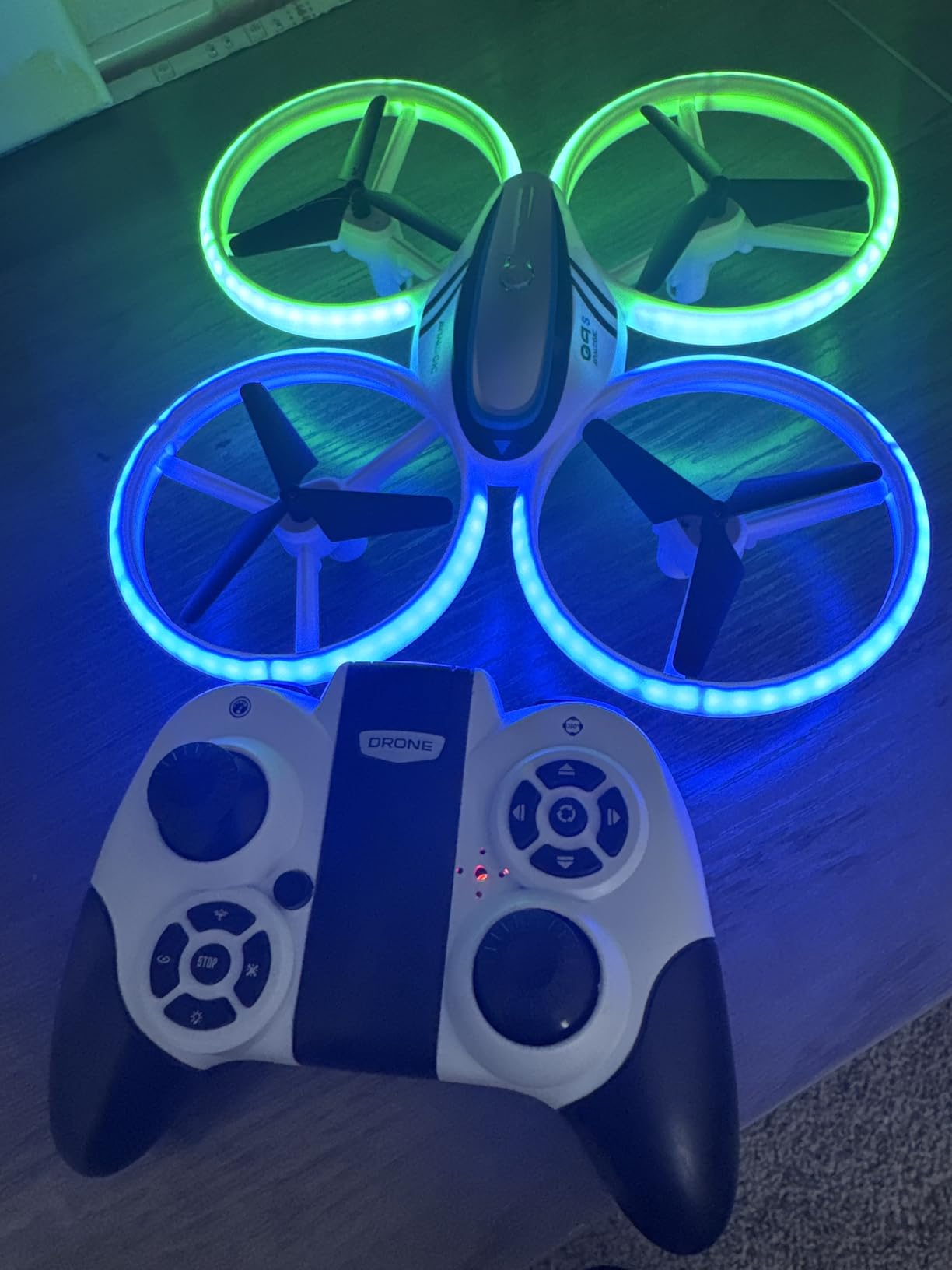
The Q9s earns its place because of its lights. Blue and green neon LEDs with three glow modes turn an ordinary evening into something a child wants to show other people, and the 4.3 rating sits at the top of this roundup alongside two other models.
It is also one of the tougher builds on the list, with an ABS body and four full guards rather than a partial cage. Owners describe it surviving repeated crashes as an indoor trainer flown by adults who own larger drones, and that durability is what you are really paying for.
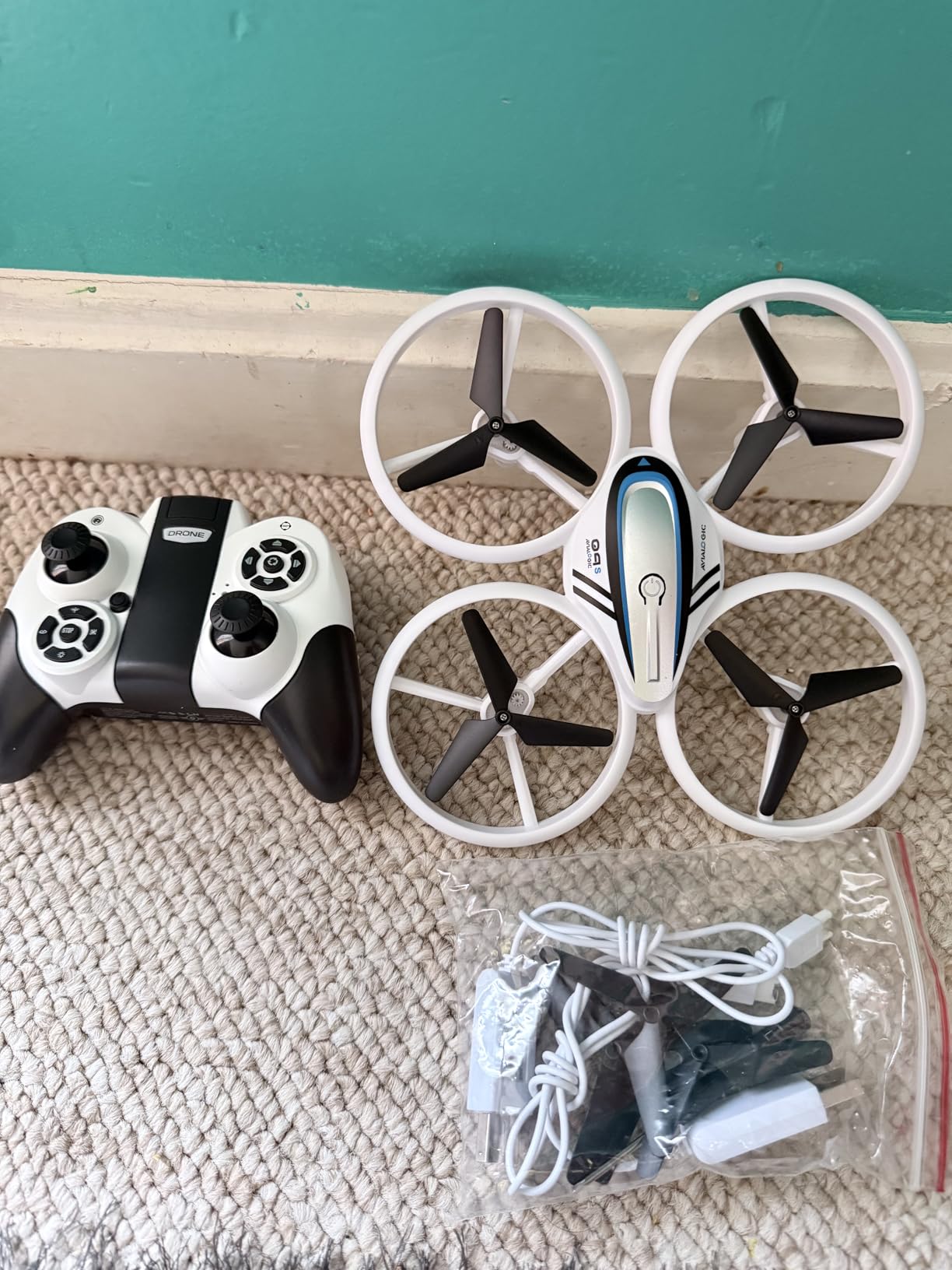
The spec sheet lists a 6.9 inch ABS body, a stated range of 0.03 miles, 720p video output and two UL-certified 500mAh batteries. Special features include 360-degree flips, auto rotation, three speed settings and four protective guards.
Flight time is about 6 to 7 minutes per battery with an hour-long recharge, so the two packs give roughly 13 minutes plus charging time. The build is light enough that even a light outdoor breeze carries it away.
Who it suits
This suits a child around 8 to 12 who wants the drama of a lit-up aircraft at dusk. Three speed modes and headless mode make it easy to graduate to faster flight as confidence grows.
It works well as an indoor trainer too, since the guard structure is described as sturdy enough for many bumps.
Who should skip it
Skip it if hair is not tied back before play, because reviewers specifically warn about propellers catching and pulling it out. That is a genuine injury risk with this class of quadcopter.
Skip it for outdoor-only use. Wind sensitivity and thermals from indoor vents both push this off course, so it belongs in a clear room or a still evening.
6. AVIALOGIC Mini Drone: Best With a Camera and a Carrying Case
AVIALOGIC Mini Drone with Camera for Kids, Remote Control Helicopter Toys Gifts for Boys Girls, FPV RC Quadcopter with 1080P HD Live Video Camera, Altitude Hold, Gravity Control, 2 Batteries, Black
320 g takeoff weight
2 UL-certified 550mAh batteries
1920x1080 output
Carrying case included
Pros
- 1080P HD camera with a manually adjustable 90 degree angle
- Live FPV feed works well with a phone and the remote has a phone holder
- Two 550mAh batteries support 18 to 21 minutes of flight
- Comes with a carrying case that owners single out as a bonus
- Altitude hold
- gravity control and headless mode ease learning
Cons
- Propeller guards are thin rails that can detach after a bump
- Hard to control in windy conditions
- Heavier and bulkier than the smaller nano drones
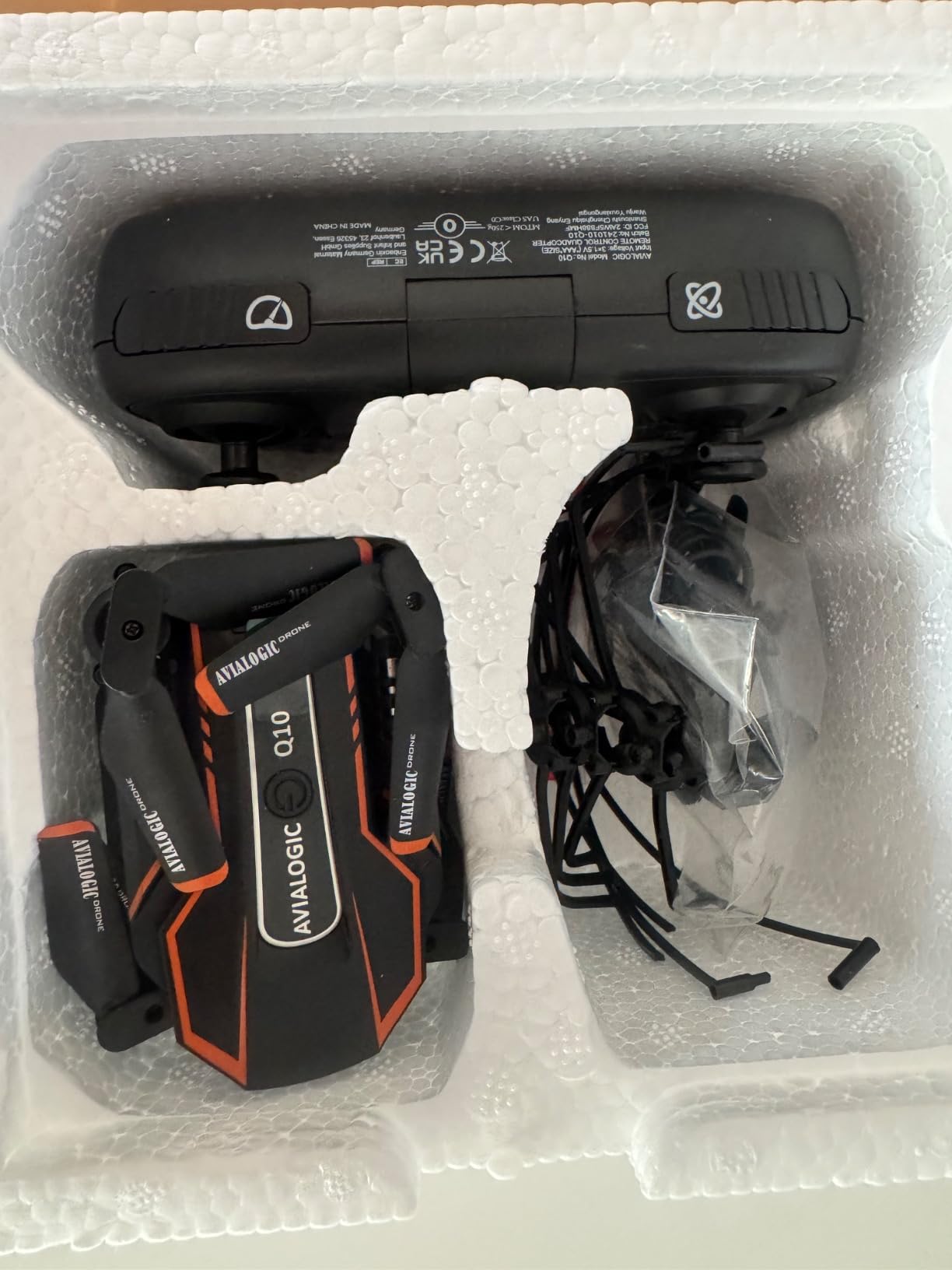
This is the pick for a child who wants to bring footage home rather than just fly. The camera angle adjusts manually through 90 degrees, the remote carries a phone holder, and the case makes the whole set easy to pack for a trip.
Two UL-certified 550mAh batteries deliver 18 to 21 minutes combined, which is at the upper end of what this price class produces. Owners report it holding together through repeated crashes by children, and the case is what makes it easy to carry between rooms and to a grandparent’s house.
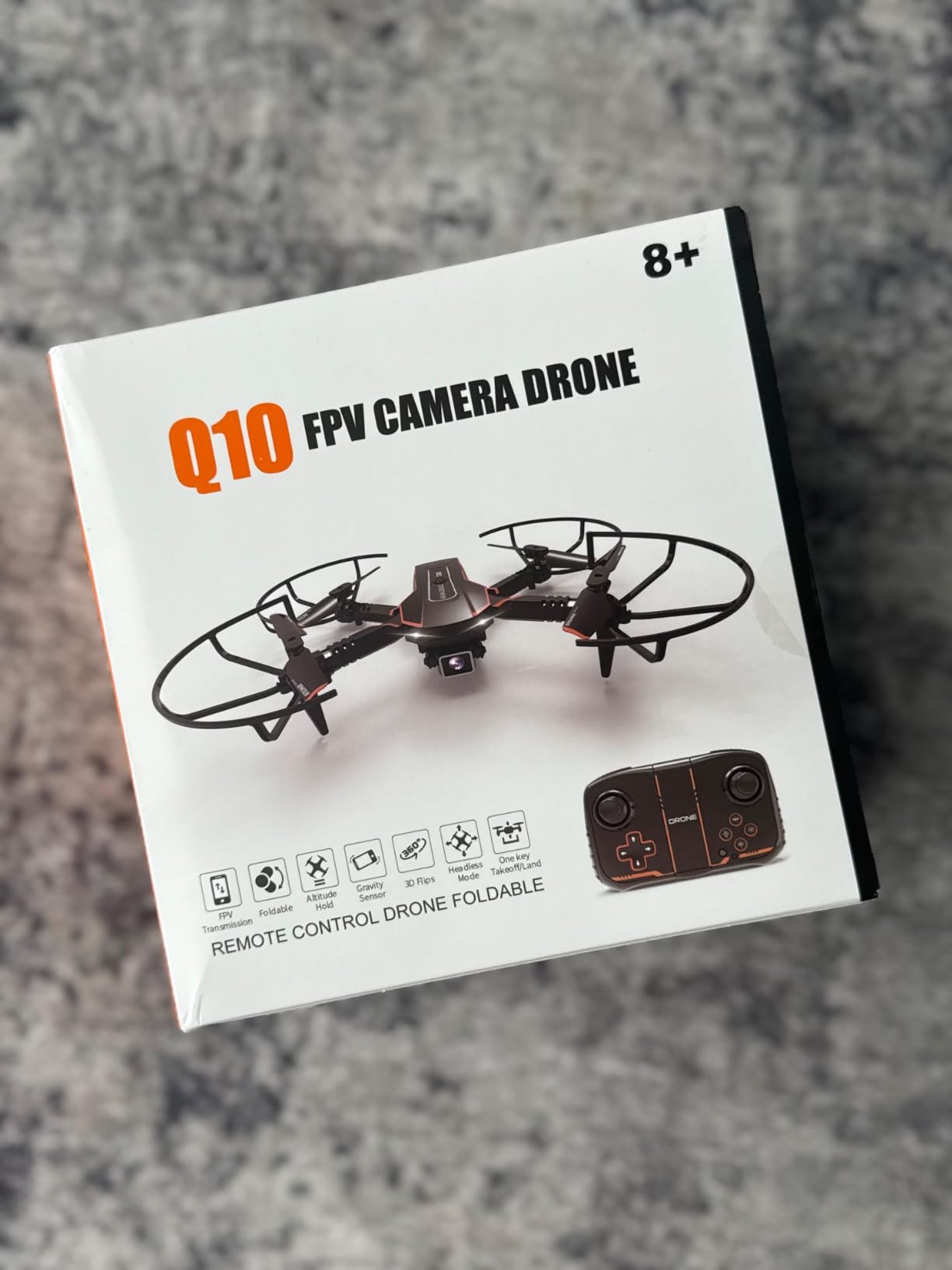
Technical details list a 1920×1080 video output, Wi-Fi control, 2.4 GHz remote technology and three control modes: remote controller, app and voice. It measures 8.2 by 7.6 inches and carries a takeoff weight of 320 g.
That 320 g takeoff weight is worth flagging for a different reason. It is the one model here that sits above the 250 gram threshold, which changes the US registration rules described in the safety section below.
Who it suits
This suits a child 10 or older who is ready for the camera side of the hobby. The carrying case and the phone holder on the remote are the details that make it simple to carry between rooms and to pack for a trip.
It also suits anyone who wants a usable 1080p camera without leaving the two hundred dollar ceiling, which is difficult in this category.
Who should skip it
Skip it if your child will fly near furniture or people. The guards here are thin rails rather than a full cage, and owners report them detaching after a bump.
Skip it outdoors in any wind. At this weight and size it drifts badly, and the remote connection is reported to drop out occasionally.
7. Swifsen Mini Drone: Best Guard Coverage From Above
Swifsen Drones for Kids with Camera,Rc Drone Indoor Small Helicopter,Birthday Gifts for Boys and Girls Beginners Friendly,Mini Quadcopter Toy With 2 Batteries,Propeller Protect,Altitude Hold
13.1 oz weight
2 upgraded modular batteries
720p output
About 60 ft recommended distance
Pros
- Upper protective cover blocks finger access from above
- Upgraded modular batteries avoid cable failure of earlier generations
- Two batteries provide about 15 minutes of flight
- Throw-to-launch and 3D flips add play value
- Headless mode and one-click takeoff simplify learning
Cons
- Recommended flight distance is only about 60 feet
- 720p footage is basic compared with 1080P rivals
- Requires an initial calibration before first takeoff
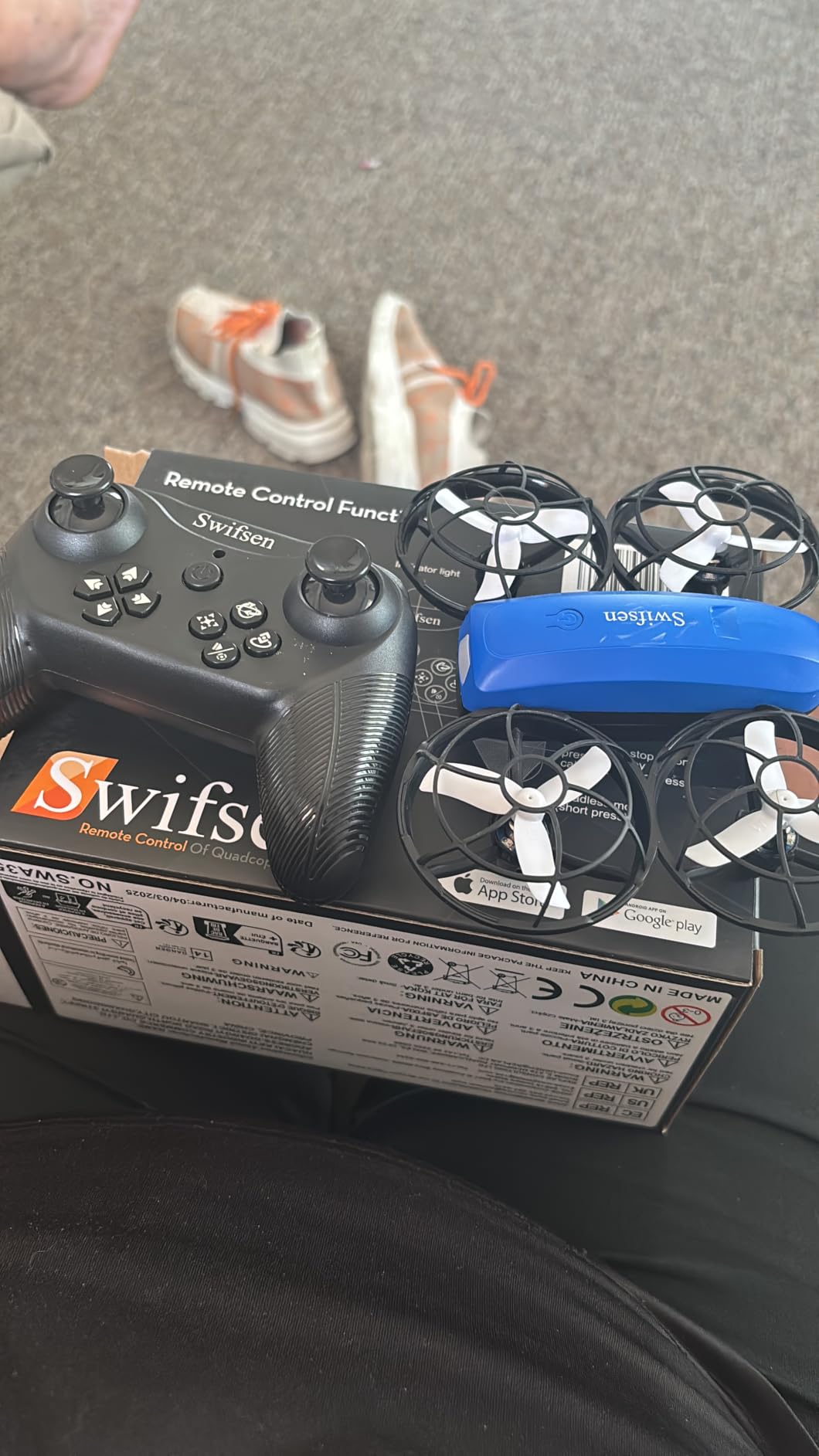
Several guards on this list are rings around the propellers. The Swifsen adds an upper cover across the top of the frame, which blocks the reach-down path a child’s hand takes when it falls from above. That single design choice is the reason to look at this model.
It also uses upgraded modular batteries rather than the cable-attached packs that cause failures on older budget drones. Two packs give about 15 minutes, which is respectable for the class.
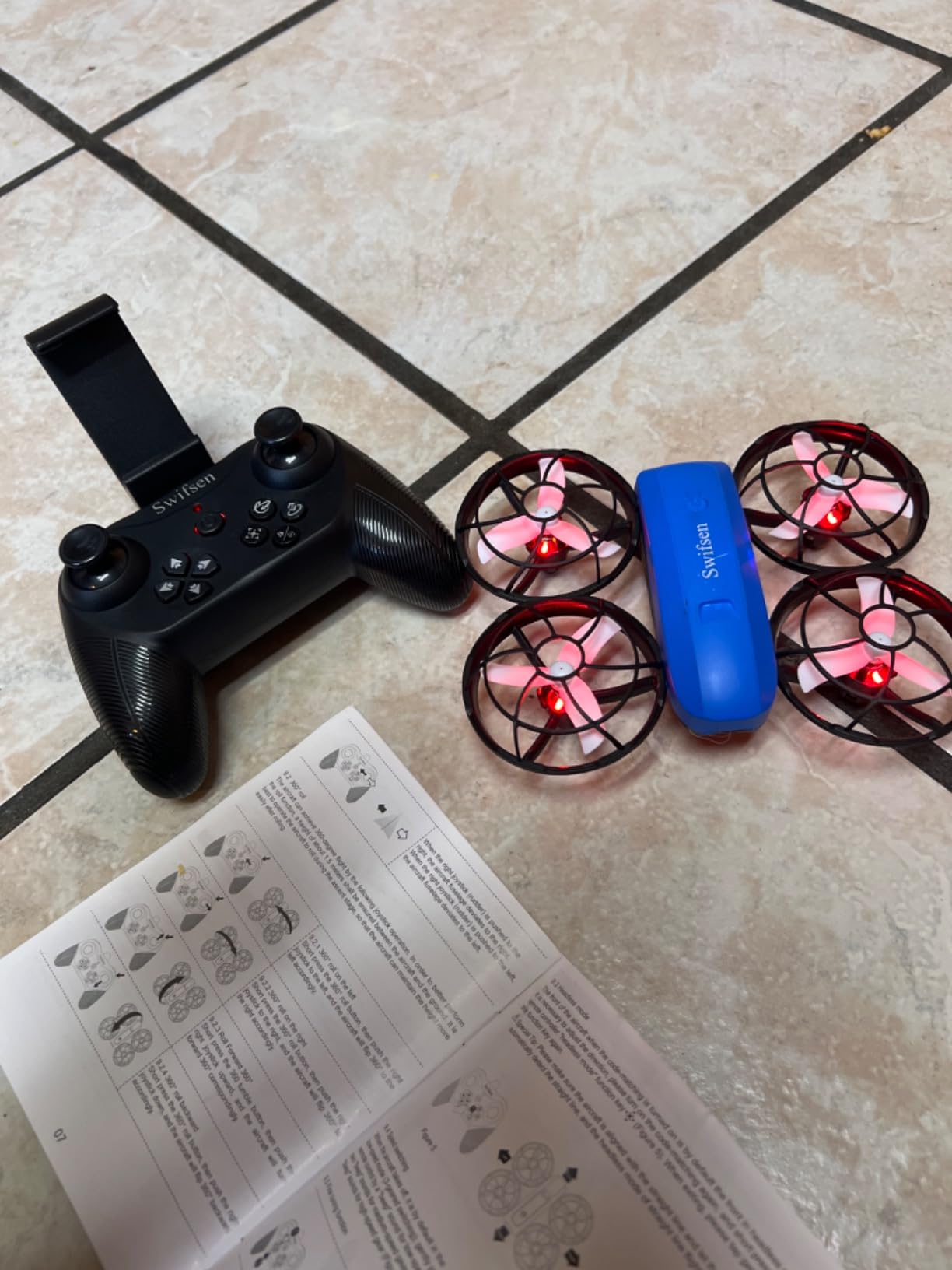
The listing measures 6 by 5 by 1.5 inches, weighs 13.1 ounces and lists a 720p video output with a maximum range of 60 feet. Headless mode, altitude hold and one-click takeoff after calibration are all included, along with multi-coloured lights and a throw-to-launch mode.
The 60 foot recommended distance is really an instruction to stay close. Owners report that after a collision the aircraft can fly off course until it is recalibrated, which is worth explaining to a child before the first flight rather than after it.
Who it suits
This suits a nervous beginner, or a child with a habit of grabbing at things while flying. The upper cover answers the most common parental worry about propellers.
The modular battery design also suits anyone planning to fly more than once a week, since you can swap packs instead of waiting on a charge.
Who should skip it
Skip it if you want usable video. The 720p output is basic next to the 1080P rivals in this list, and the 60 foot limit makes outdoor footage awkward.
The review base is around one thousand, so long-term reliability is less well documented than for the Holy Stone and DEERC models. That is the main reason it sits below them in our ranking despite a solid rating.
8. SYMA X100: Best Guard and Obstacle Avoidance Combination
SYMA X100 Indoor Drone for Kids 8-12, Obstacle Avoidance, Full Guard
58 g ABS body
Enclosed propeller cage
2 batteries, up to 20 min
4-way infrared sensing to about 12 in
Pros
- Four-way infrared obstacle avoidance is unusual at this price and reassures parents
- Fully enclosed propeller guard blocks contact with the spinning blades
- Two batteries deliver close to the promised 20 minutes and charge quickly
- Two speed modes starting in slow mode suit younger children
- Owners report it still working after repeated indoor crashes
Cons
- The guard cage can crack after a handful of bumps
- Too hard to control outdoors
- Indoor only design limits where it can be flown
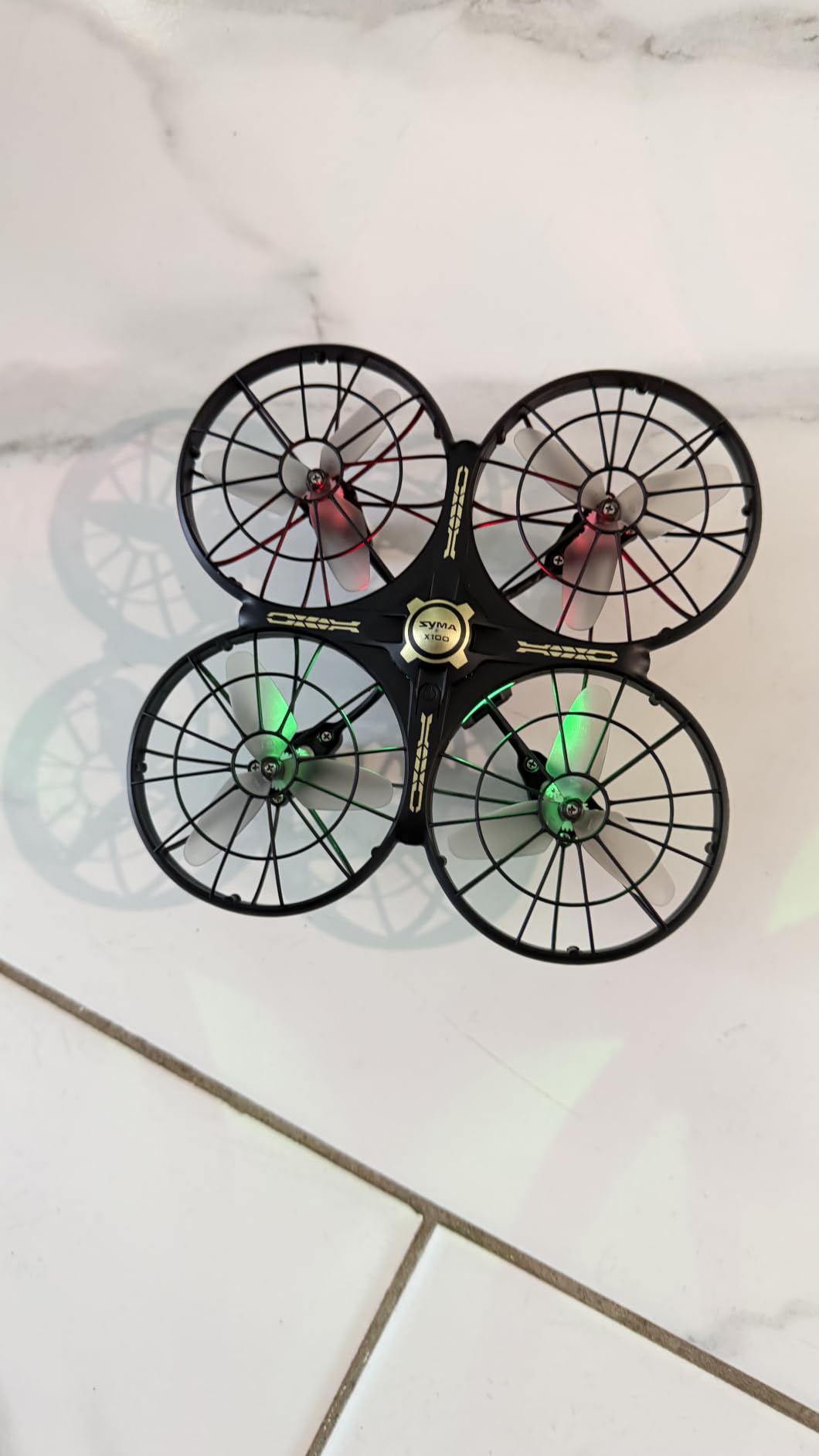
The X100 has the most complete safety package in the roundup. It pairs a fully enclosed propeller cage with four-way infrared sensors that detect obstacles within roughly 12 inches, and for a child learning in a room full of furniture that combination is close to ideal.
There is also a 180-degree flip-to-stop safety behaviour. When the aircraft flips upside down, it stops rather than grinding the motors, which protects both the drone and the floor.
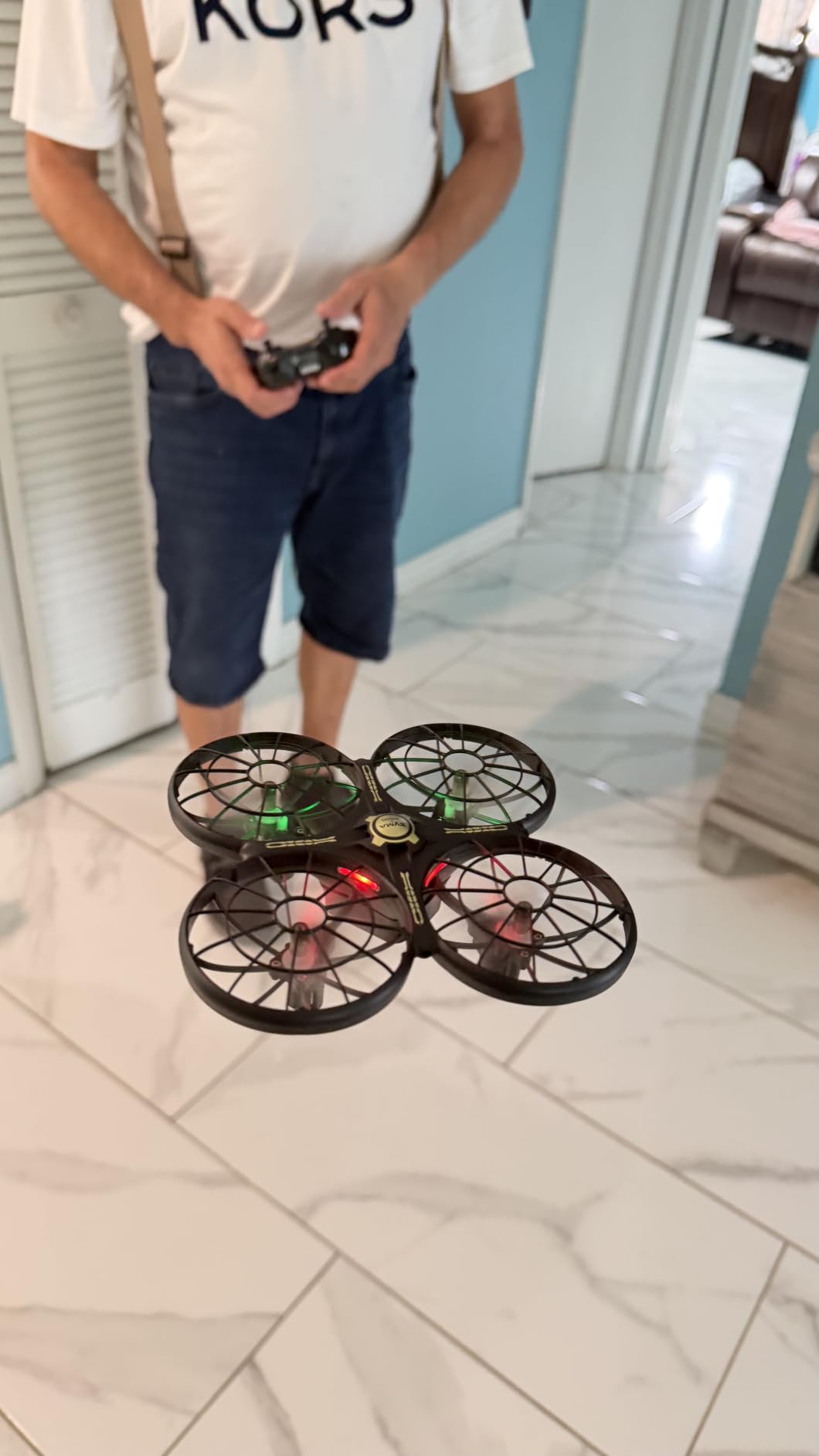
It weighs 58 g, measures 5.16 by 5.16 by 1.77 inches and lists a 700 mAh lithium ion battery. Two rechargeable batteries deliver up to 20 minutes, and one-key takeoff and landing, altitude hold, headless mode and two speed modes are all standard.
Owners rate it highly for holding up to repeated indoor crashes. The recurring complaint is that the guard cage itself is not as impact-proof as the design implies, so it still needs a careful flying space.
Who it suits
This suits a child aged 8 to 12 flying indoors who wants the maximum protection for hands and furniture. The slow speed mode is a genuine help for a younger pilot learning stick control.
It is also the pick for a household where the drone will be used in a busy room, because the sensors reduce the number of collisions in the first place.
Who should skip it
Skip it for outdoor flying. Owners describe it as too hard to control outside, and the design is built around indoor use.
Its review base is under nine hundred, so it carries less reliability history than the higher-volume picks. A handful of owners also report units failing within days.
9. Veeniix V995: Best Lightweight Indoor Pick
Veeniix V995 Red Mini Drone for Kids and Beginners
22.3 g
3 batteries, up to 21 min
Altitude hold and headless mode
Full protective guard
Pros
- Very light at 22.3 g
- among the safest indoor options here
- Three batteries for up to 21 minutes of flight
- Altitude hold and one-key takeoff and landing simplify learning
- Headless mode removes orientation confusion for young pilots
- Full protective guard shields small fingers from the propellers
Cons
- Manufacturer advises fully charging the battery before playing
- Outdoor flying only in calm conditions
- Compact frame may feel less substantial to older children
The V995 is a no-frills drone that still ships with three batteries, a combination only the HS210 matches in this roundup. Twenty-one minutes of total flight is among the highest figures produced by a budget quadcopter.
The V995 has the lowest takeoff weight of any drone in this roundup, which makes it the safest indoor option for a very young child. At 22.3 g it is gentle on furniture and on hands.
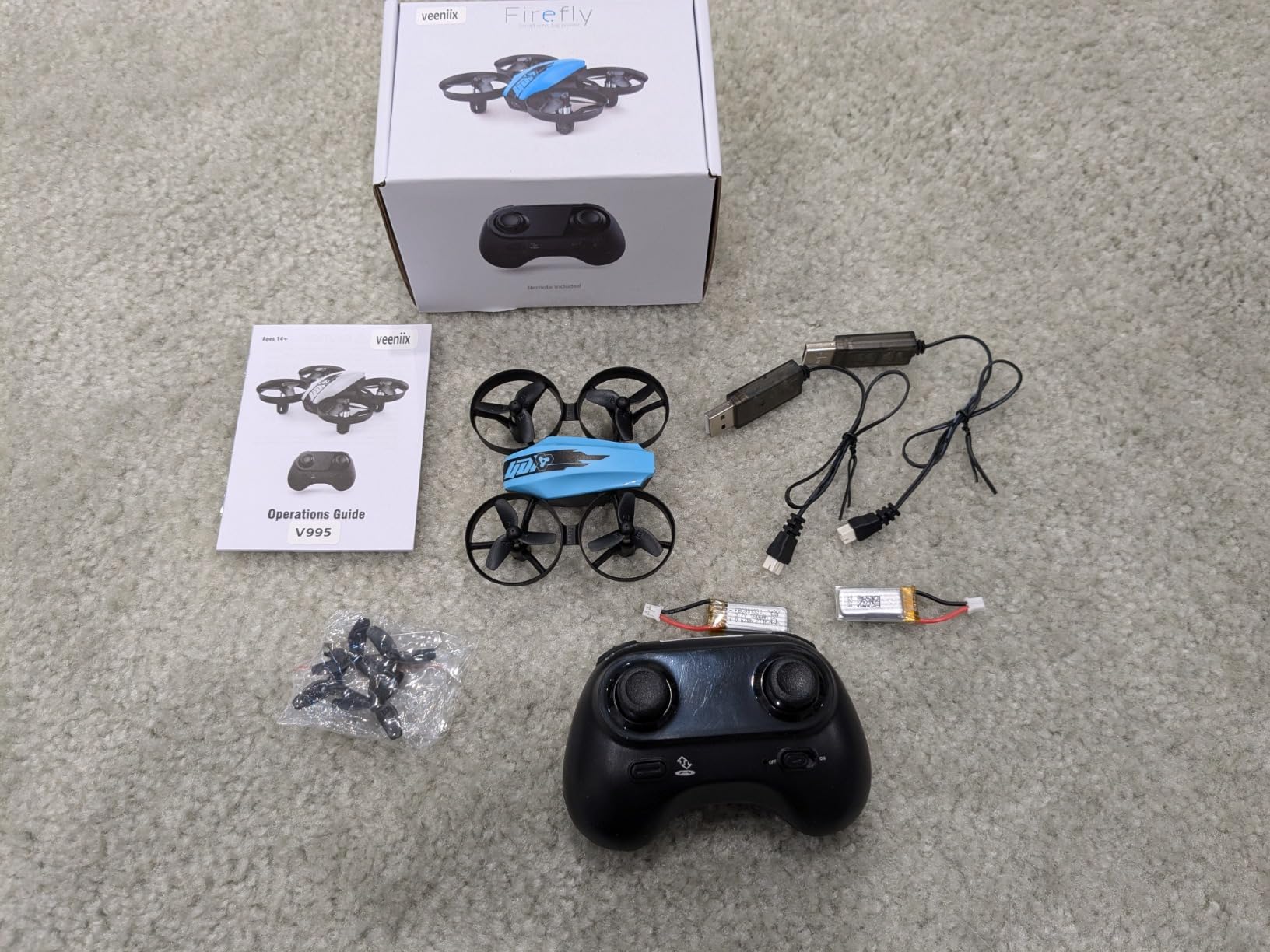
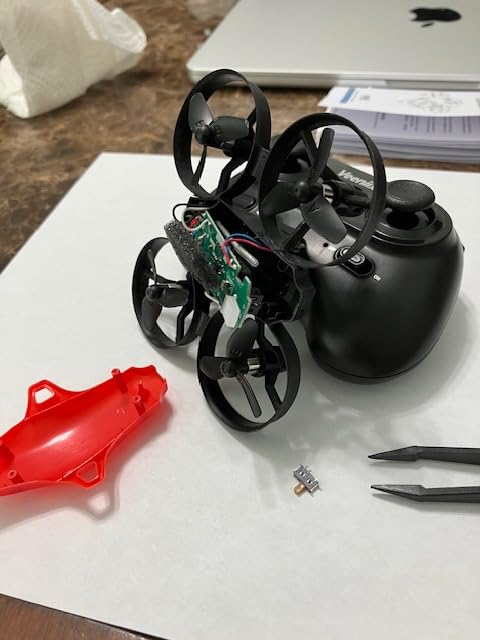
Altitude hold, one-key takeoff and landing and headless mode are all present, wrapped in a full protective guard. The listed features are uncomplicated, with no camera and no app requirement, which keeps setup to almost nothing.
The manufacturer advises charging the battery fully before play. Adjustable speeds and outdoor use are only suitable in calm conditions, so treat this as an indoor drone with occasional outdoor use.
Who it suits
This suits a first-time pilot who wants more flight time than a single-battery model allows and does not care about a camera. Three packs mean the drone is ready whenever the child is, and the spec sheet lists toss to launch, 3D flips, auto rotation and circle flight so there is plenty to learn indoors.
It is a good match for a small flat and a patient adult, since there is nothing to set up before the first flight.
Who should skip it
Skip it if your child is around 12 or older and wants something that feels substantial. The compact frame reads as a toy to older children, and the review base of a few hundred leaves long-term reliability poorly documented.
It also has no camera at all, so it will not satisfy a child who wants to record anything.
10. Helatt LED Drone: Best Gift-Ready Pick with LED Modes
Drones for Kids and Beginners with LED Lights 2 Batteries One Key Start
8 oz ABS body
2 quick-swap 500mAh batteries
About 16 min combined
5 LED light modes
Pros
- Five LED light modes make evening and indoor flights visually striking
- Quick-swap battery design changes batteries in seconds
- Two 500mAh batteries give up to 16 minutes of combined flight
- One-key takeoff and landing plus altitude hold are praised as easy to learn
- Arrives in a gift box
- which suits birthdays and holidays
Cons
- One review reported that neither included battery would charge
- Camera specifications listed were inconsistent with what some buyers received
- Remote controller batteries are not included
The Helatt is the newest and least reviewed model here, with a rating that matches the HASAKEE and SYMA but a review base under two hundred. We include it because the quick-swap battery design and the gift box make it a practical present, not because the long-term record is strong.
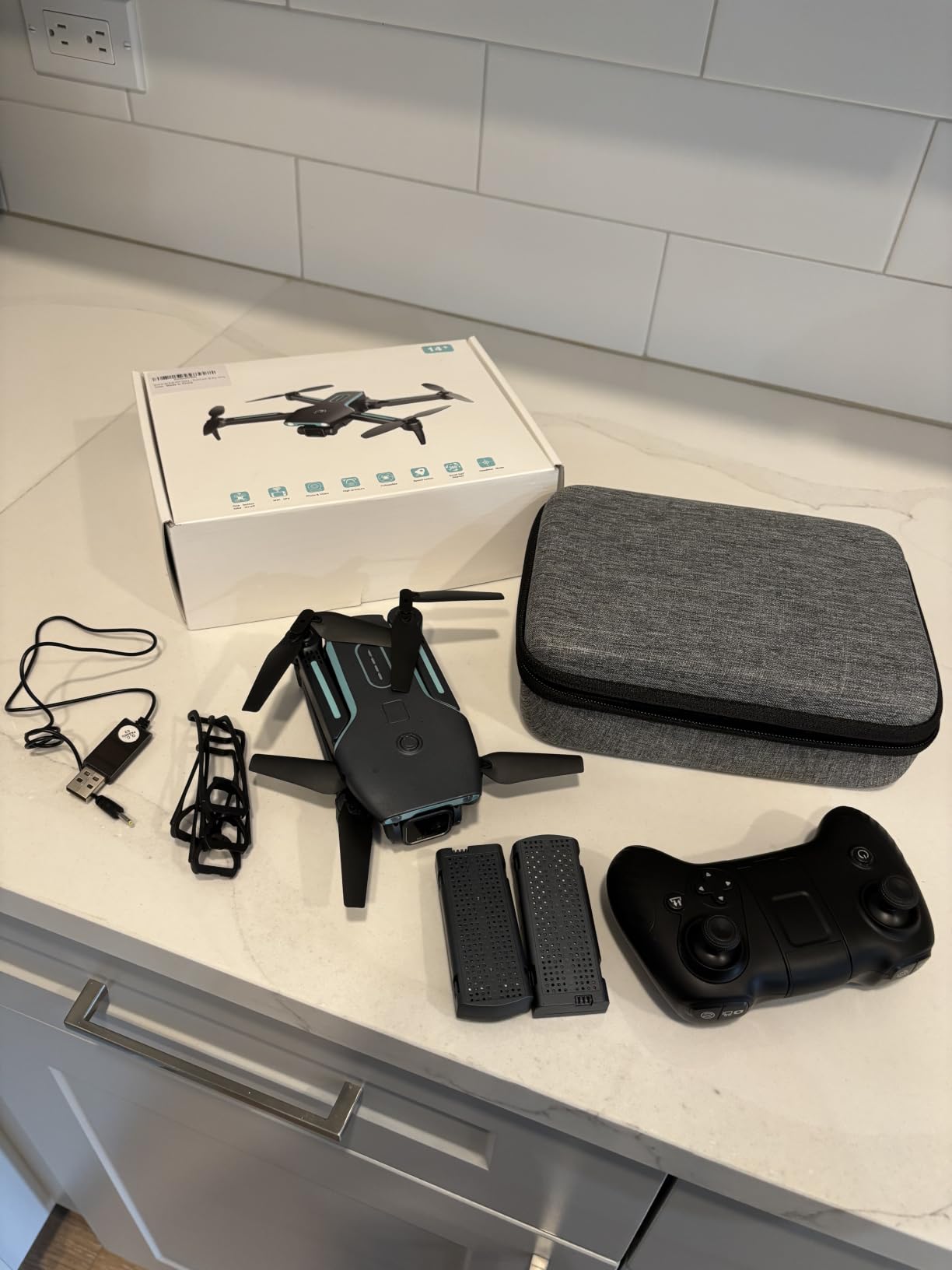
Five LED light modes are the headline feature and they are genuinely striking in a dark room. One-key takeoff and landing, altitude hold and headless mode cover the beginner assists, with two speed modes and 360-degree flips for variety.
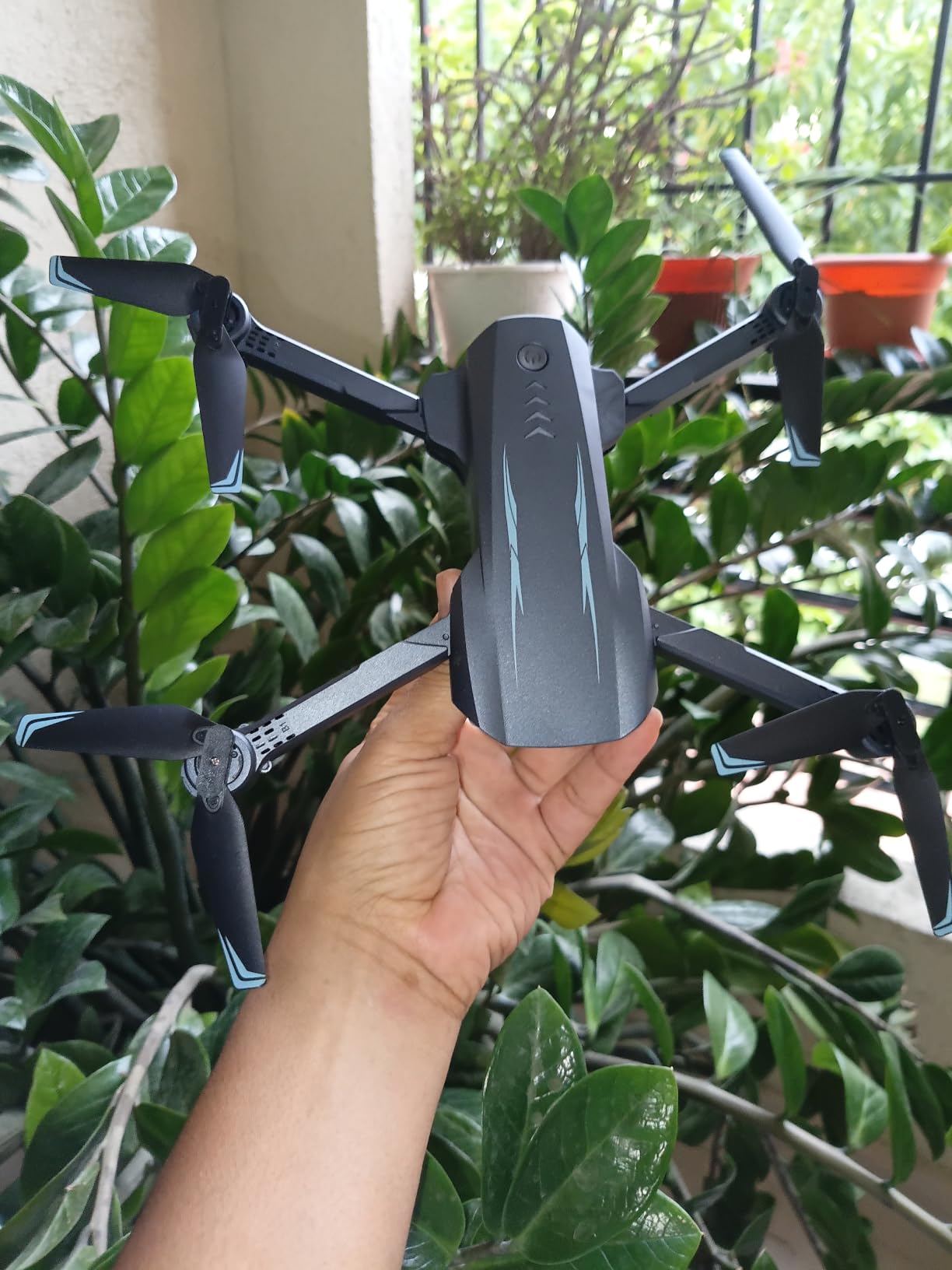
Technical details list an ABS body weighing 8 ounces, two 500mAh lithium ion batteries for up to 16 minutes combined, a stated range of 133 feet and a five color light system. The box contents include the drone, remote controller, USB cable, two batteries and four spare propellers.
Two cautions. One owner reported that neither included battery would charge, which is an isolated report but an expensive one for a gift. Remote controller batteries are also not included, so add a pack of AA cells to the order.
Who it suits
This suits a parent buying a birthday or holiday present who wants something that arrives ready to play. The gift box and quick-swap batteries remove the fiddly parts of unboxing.
It also suits a child who likes evening flying more than photography, since the lights are the main event.
Who should skip it
Skip it if you need a well documented reliability record. With under two hundred reviews, there is not enough long-term history to lean on, and listing details have already proved inconsistent for some buyers.
Skip it if you want video. The listed camera specifications have been reported as not matching what arrived, so treat any footage claims with caution.
Which Drone Fits Your Child’s Age
Age decides the priority more than price. A five-year-old needs a light frame and forgiving controls; a fourteen-year-old can handle a phone app and a camera.
Ages 5 to 7: the Force1 Scoot if play is hand-guided, or the Holy Stone HS190 for stick control at 35 g. Both are light enough that furniture damage is not a concern.
Ages 8 to 10: the Holy Stone HS210 for three batteries and easy hovering, the SYMA X100 for the safest indoor setup, or the HASAKEE Q9s if evening flights are the goal.
Ages 11 to 13: the DEERC D20 or the AVIALOGIC for a camera and live view, ideally flown first indoors so the pilot learns stick control before the screen appears.
Ages 14 to 17: any of the camera models, used within the visual line of sight rules and with an adult handling registration questions. Simulator practice comes before manual or FPV modes at this budget.
A rule of thumb from the forums: wind, not the pilot, causes most first outdoor crashes. Start indoors every time.
Safety and US Drone Rules Parents Need to Know
Propeller guards are the first line of defence. Every pick here has a full guard, cage or shell. Guards still come loose after bumps on some models, so replace them after a hard landing rather than flying with a loose guard.
Tie long hair back. Reviewers on several models in this roundup report propellers catching and pulling hair. That is the most preventable injury in the hobby.
Fly indoors first. Choose a large clear room with soft furnishings, and close doors so outdoor airflow does not push the aircraft around. Most of the drift complaints we found came from indoor vents and thermals.
Know the 250 gram rule precisely. A recreational drone weighing less than 250 grams does not need to be registered, but the adult flying it still has to pass the FAA TRUST test, keep the aircraft within visual line of sight, and follow local park rules. Registration exemption covers recreation only. Nine models here fall under 250 g; the AVIALOGIC at 320 g does not, so its owner must register it.
Keep it in sight. Visual line of sight means you can see the aircraft at all times. Distant open fields and flying above a treeline both break that rule, regardless of how the drone performs.
What It Really Costs to Own One of These
The purchase price is rarely the whole cost, and no competitor in this category budgets for it.
Extra batteries. Two-pack and three-pack models come with enough for a session, but a second set doubles the flight time per charge cycle. This is the add-on parents report regretting not buying sooner.
Spare propellers. Blades chip and bend in the first crashes. The HS210 and HS190 include spares in the box; the others do not.
Replacement propeller guards. Forum advice is consistent: order a spare guard set with the drone, because guards crack or detach on several models in this roundup.
Controller batteries. The Helatt does not include them, and most other models use AA cells.
Memory card. If your child wants to keep footage, a small microSD card is cheaper than discovering the internal storage is full after a birthday party.
A further cost is the quiet one: bundle contents differ between brand stores and third-party marketplace listings. Buyers report receiving fewer batteries than the listing described, so check the box contents carefully on arrival.
How to Spot a Low-Rating Marketplace Listing
Shopping carousels for this keyword are crowded with generic listings rated between three and three and a half stars, and parents distrust the whole category for that reason. A few checks separate a supported model from a disposable one.
Look for a review count in the thousands. A model with two hundred reviews tells you almost nothing about how it survives month three.
Check that the brand is findable. Holy Stone, DEERC, Force1, SYMA and HASAKEE all publish replacement parts and support channels. Generic marketplace names usually do not.
Read the one and two star reviews, not the five star ones. Failures after weeks show up there and nowhere else.
Compare the box contents between sellers. Battery counts and included propellers change listing to listing.
Treat claimed resolution sceptically. Marketing figures on sub-fifty dollar drones rarely match the hardware, as several owners reported for the models here.
Frequently Asked Questions
What is the best drone for kids under two hundred dollars?
The Holy Stone HS210 is our top pick. It ships with three batteries for roughly 21 minutes of total flight, a full propeller guard, altitude hold and headless mode, and it weighs only 50 g. The DEERC D20 is the alternative if a camera and live phone view matter more than battery count.
What is the cheapest drone for kids that is actually usable?
The Force1 Scoot is the lowest-cost option and the only one on this list with no remote control. It flies about 8 minutes after a 50 minute charge, so it suits toddlers and indoor play rather than learning stick control. Among stick-control models, the Holy Stone HS190 is the lightest and folds into its controller.
What is the best drone for kids that is easy to fly?
Look for altitude hold, headless mode and one-key takeoff and landing. Altitude hold fixes the height so a child only pushes a stick forward or sideways, headless mode removes orientation confusion, and one-key start removes the hardest part of takeoff. Every model in this roundup has at least two of the three.
Should a 10 year old have a drone?
Yes, with adult supervision and a flying space. At 10 a child can handle a two-stick controller, headless mode and speed modes, so the Holy Stone HS210 or SYMA X100 is a reasonable step up from a hand-guided toy. Registration questions for outdoor flying fall to the adult, not the child.
Do kids drones need FAA registration?
A recreational drone under 250 grams is exempt from registration, but the adult flying it still must pass the FAA TRUST course and keep the aircraft within visual line of sight. The exemption covers recreation only. Nine of the ten models here fall under that threshold; the 320 g AVIALOGIC does not and must be registered.
How long do kids drone batteries really last?
Plan for well under the headline figure. Reviewers across this roundup report 5 to 8 minutes per pack against claims of 20 or more minutes, which is the total across all included batteries. That is why models that include two or three packs feel so much better to own than single-battery drones.
Our Default Recommendation for 2026
If you buy only one drone from this guide, make it the Holy Stone HS210. Three batteries remove the charging bottleneck that frustrates most first-time owners, the full propeller guard and 50 g weight make indoor practice safe, and headless mode with altitude hold lets a child actually control it within minutes of unboxing.
Move up to the DEERC D20 or the AVIALOGIC once your child asks for footage, and consider the SYMA X100 if indoor safety is the priority. For the best drones for kids under a two hundred dollar budget in 2026, the difference between a good first drone and a frustrating one is battery count and guard coverage, not camera resolution.