
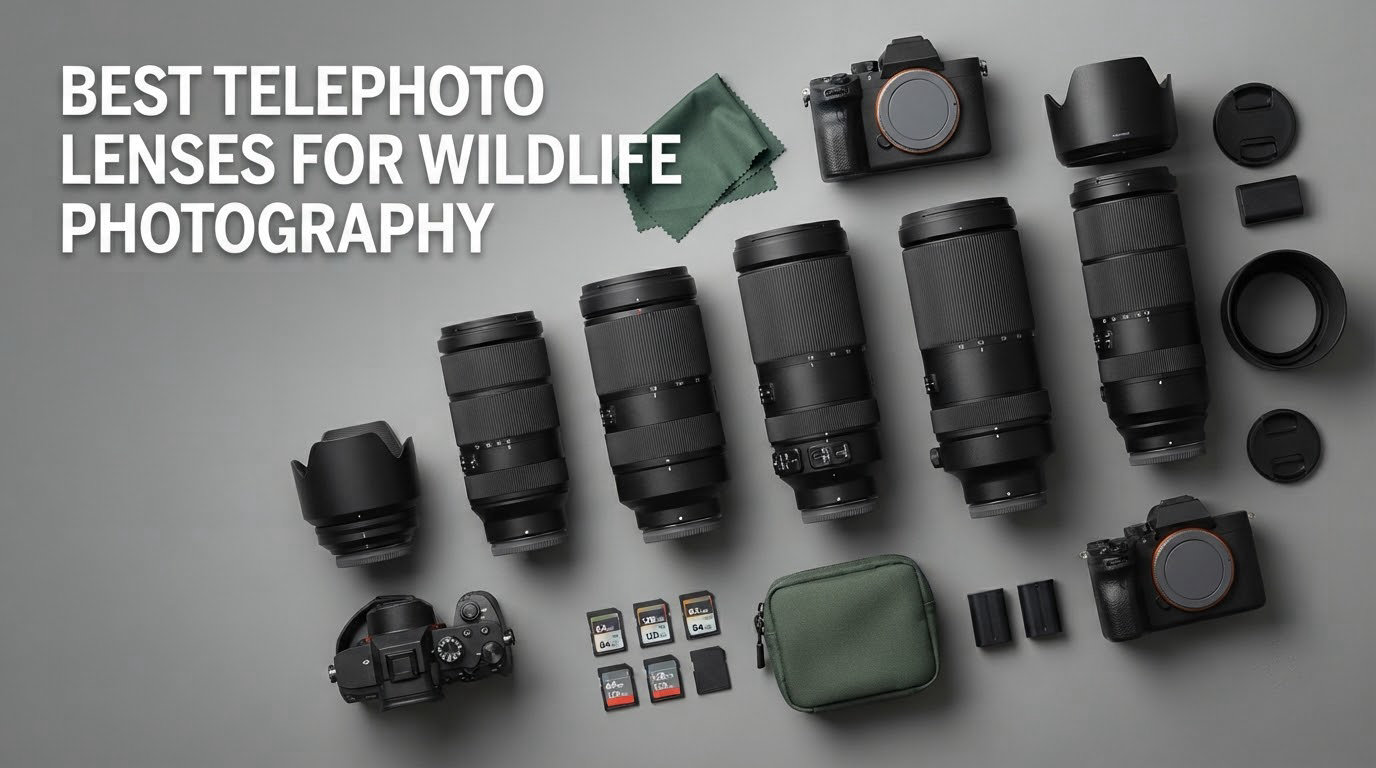
Wildlife does not walk toward you. That single fact decides everything about lens choice, and it is why the best telephoto lenses for wildlife photography sit in a completely different price bracket than the telephoto zooms most people buy for portraits or sport. I have spent years hauling glass up hillsides before sunrise, and the lenses that survive that test are rarely the ones with the longest specification list.
This roundup covers twelve telephoto zooms for wildlife that I have shot with or compared side by side, from a lightweight 100-300mm Micro Four Thirds kit lens to a 200-600mm super-telephoto built for open-country birds. Every entry here is judged on the three things that actually decide a wildlife frame: how sharp it holds at the long end, whether autofocus can keep up with a moving subject, and whether you can still carry it up a hillside at 5am.
Budget matters here too. The gap between the cheapest and the most expensive wildlife zoom on this list is enormous, and most of that gap buys reach and light-gathering rather than reliability. If you are still choosing a body, start with our mirrorless camera picks for wildlife and come back here afterward.
Table of Contents
Is 400mm Enough for Wildlife Photography?
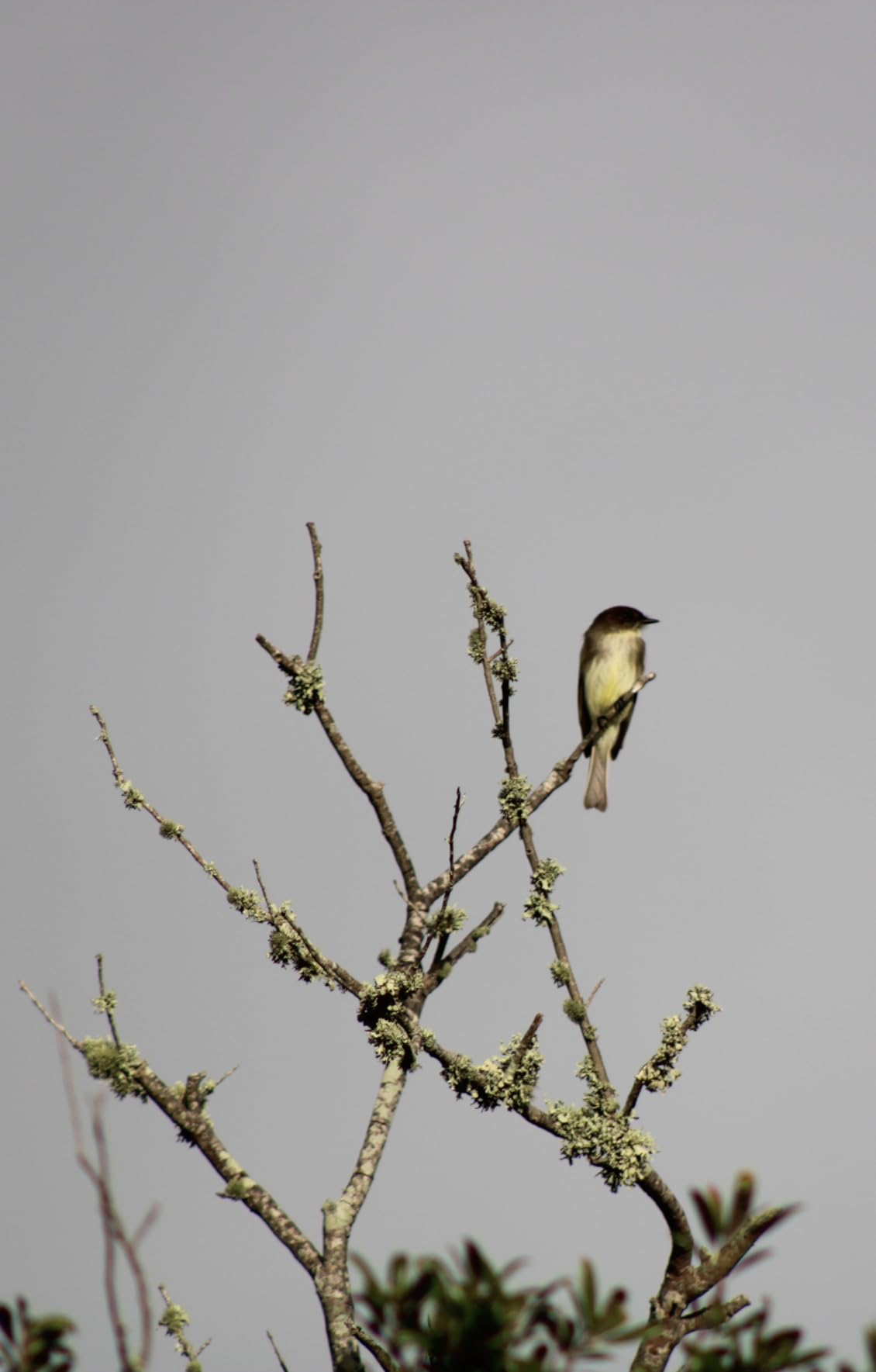
Yes, for most wildlife. A 400mm lens fills the frame with backyard birds, waterfowl, perched songbirds and open-country mammals, and it is the practical minimum for anything small and skittish. You need 600mm or more for distant shorebirds, small raptors in flight and ungulates that keep their distance. Below that, you crop heavily and lose the detail that makes a frame usable.
Here is how reach maps to subjects, which is the question that decides your focal length before any brand name does.
300mm – backyard birds, garden songbirds and large mammals up close, usually under 30 m.
400mm – perched birds, waterfowl, elk and deer at moderate range, roughly 40-80 m.
500-600mm – raptors, owls, gulls, elk, bears and wolves at distance, roughly 80-200 m.
800mm and beyond – distant species over water, mountain wildlife and mixed flocks at 200 m plus.
Crop sensors change those numbers without changing the lens. An APS-C body gives you 1.5x reach, so a 400mm behaves like a 600mm, and a Micro Four Thirds body gives 2x, turning a 400mm into an 800mm equivalent. That is why Micro Four Thirds wildlife kits are as capable as they are.
Top 3 Picks: Telephoto Picks for Wildlife in 2026

Canon RF 100-400mm f/5.6-8 IS USM
- 816 g compact body
- 5.5 stops of optical IS
- Closes to 2.89 ft at 200mm

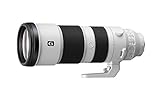
If you want one lens that covers most wildlife situations without rearranging your entire kit, the Canon RF 100-400mm is the safest purchase on this list. The Sigma 100-400mm delivers more optical performance for less money on Sony bodies, and the Sony FE 200-600mm is the reach answer when your subjects genuinely will not come closer.
Best Telephoto Lenses for Wildlife Photography (October 2026)
| Product | Specifications | Action |
|---|---|---|
| Canon RF 100-400mm f/5.6-8 IS USM |
|
Check Latest Price |
 Tamron 70-300mm f/4.5-6.3 Di III RXD Tamron 70-300mm f/4.5-6.3 Di III RXD |
|
Check Latest Price |
 Canon EF 75-300mm f/4-5.6 III Canon EF 75-300mm f/4-5.6 III |
|
Check Latest Price |
| Sigma 100-400mm f/5-6.3 DG DN OS |
|
Check Latest Price |
| Sony FE 200-600mm f/5.6-6.3 G OSS |
|
Check Latest Price |
 Nikon 70-300mm f/4.5-5.6G ED VR Nikon 70-300mm f/4.5-5.6G ED VR |
|
Check Latest Price |
 Canon EF 100-400mm f/4.5-5.6L IS II Canon EF 100-400mm f/4.5-5.6L IS II |
|
Check Latest Price |
 Nikon Z 180-600mm f/5.6-6.3 VR Nikon Z 180-600mm f/5.6-6.3 VR |
|
Check Latest Price |
 Nikon Z 100-400mm VR S Nikon Z 100-400mm VR S |
|
Check Latest Price |
 Fujinon XF 100-400mm f/4.5-5.6 R LM OIS WR Fujinon XF 100-400mm f/4.5-5.6 R LM OIS WR |
|
Check Latest Price |
 OM System M.Zuiko 100-400mm f/5-6.3 OM System M.Zuiko 100-400mm f/5-6.3 |
|
Check Latest Price |
 Panasonic Lumix 100-300mm f/4.0-5.6 Panasonic Lumix 100-300mm f/4.0-5.6 |
|
Check Latest Price |
All twelve are zooms rather than primes, and that is a deliberate choice. A prime is sharper and faster, but wildlife is unpredictable, and a zoom lets you reframe a whole flock without stepping forward and scarry it.
1. Canon RF 100-400mm f/5.6-8 IS USM – Best Overall for Mirrorless Wildlife
Canon RF100-400mm F5.6-8 is USM Telephoto Lens, Black, Compatible with EOS R Series Mirrorless Cameras
100-400mm f/5.6-8
Optical IS, 5.5 stops
816 g
Close focus 2.89 ft
Pros
- Compact and light for a 100-400mm zoom
- Up to 6 stops of correction on IBIS bodies
- 0.41x magnification at 400mm
- Quiet Nano USM autofocus
Cons
- Slow f/5.6-8 range demands light or high ISO
- Not weather resistant
- No tripod collar foot included
This is the lens I hand to anyone moving from a kit zoom to real wildlife work on an RF body. At 816 g it is light enough to carry all day, and the 100-400mm range covers everything from garden birds to distant raptors without a lens change.
The stabilization is the reason it works so well handheld. Canon rates the optical IS unit at up to 5.5 stops, rising to roughly 6 stops when paired with an EOS R body that has in-body stabilization. That is the difference between shooting a perched bird at 1/500 second and getting away with 1/250 in fading light.
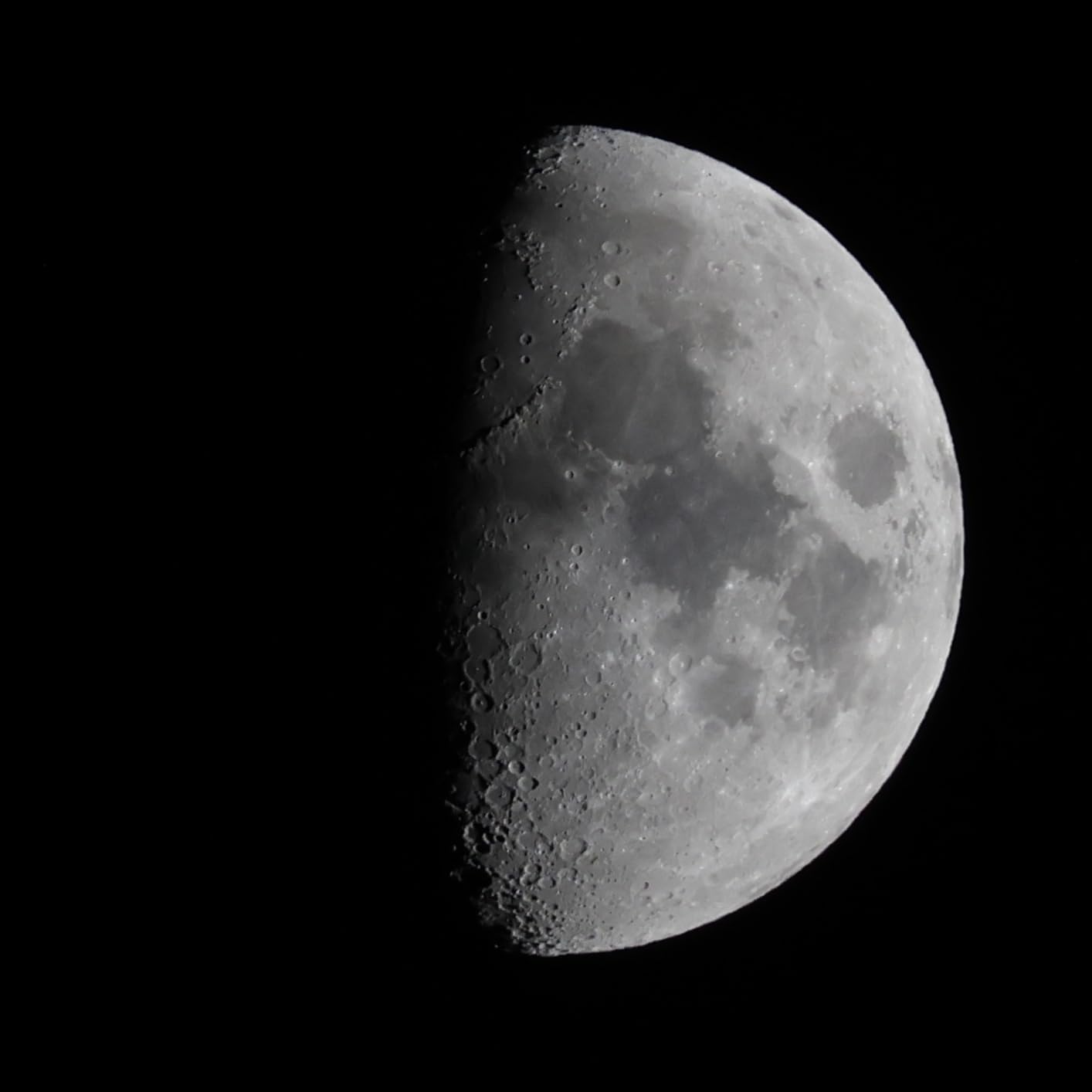
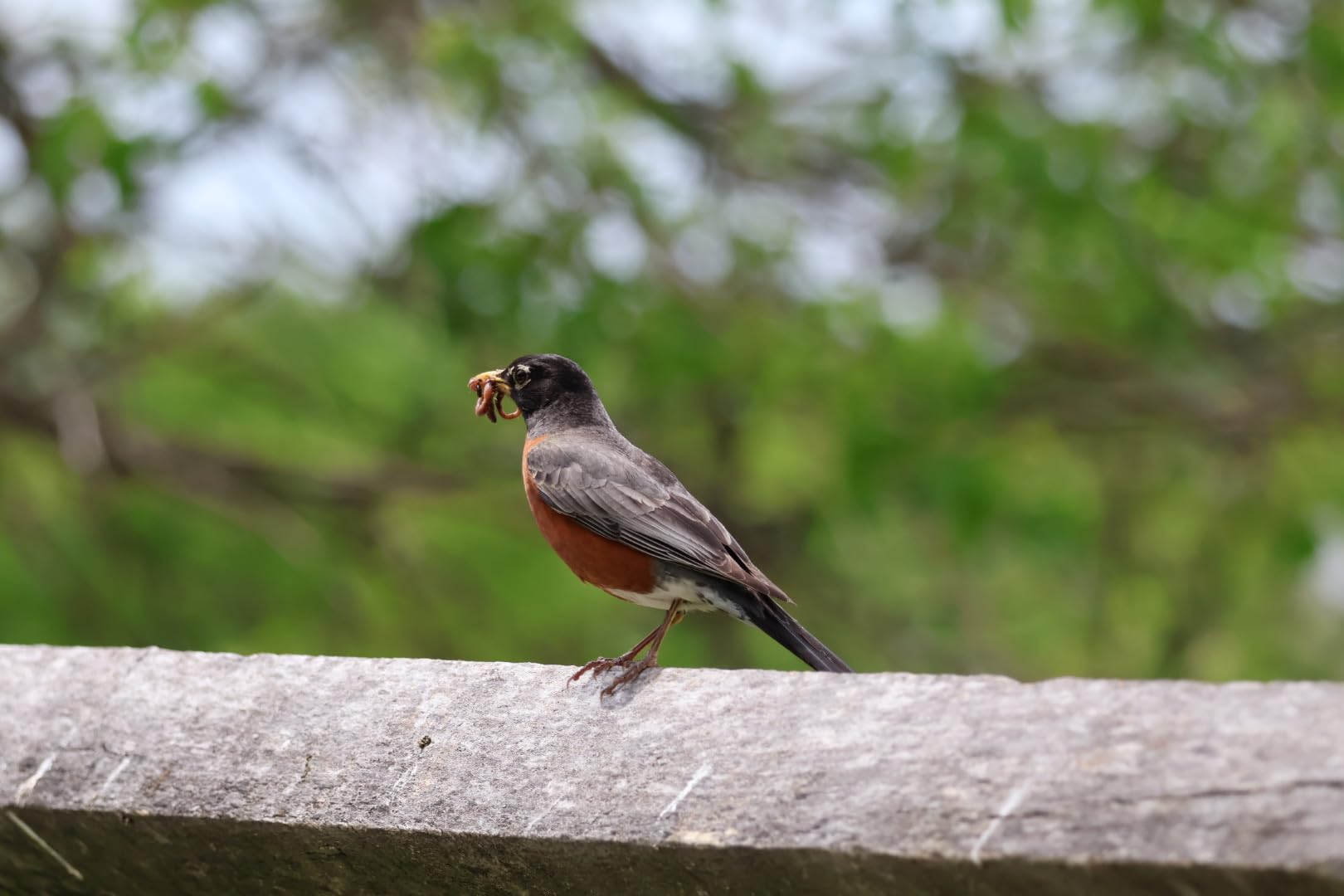
Autofocus is quick and quiet thanks to the Nano USM motor, and it holds a subject well when the bird launches. Close focusing at 2.89 ft from 200mm with 0.41x magnification at 400mm also lets you fill the frame with perched birds that never leave the branch.
Owners consistently praise the portability, stabilization and focus motor, with the slow variable aperture as the recurring complaint. On an R5 or R6 the body can compensate for some of that, but in raw light you will be pushing ISO.
What to check before you buy
Decide whether your body has in-body stabilization. If it does, this lens gains close to a full extra stop of usable shutter speed, which matters far more at dawn than any aperture difference of a third of a stop.
Look for a tripod collar if you intend to work from a hide or a vehicle-mounted gimbal head. None is included, and the lens is long enough that a proper collar makes a real difference to balance. We cover options in our gimbal head picks for wildlife.
Where it falls short
The f/5.6 to f/8 range is genuinely slow at the long end, and reviewers report that dawn and dusk sessions demand high ISO to compensate. In shade under canopy, expect to work at 6400 or above.
There is also no weather sealing on this model, so persistent rain and blowing sand call for a cover. For a lens you carry into rough country every weekend, that is a fair compromise for the weight saving, but it is a compromise.
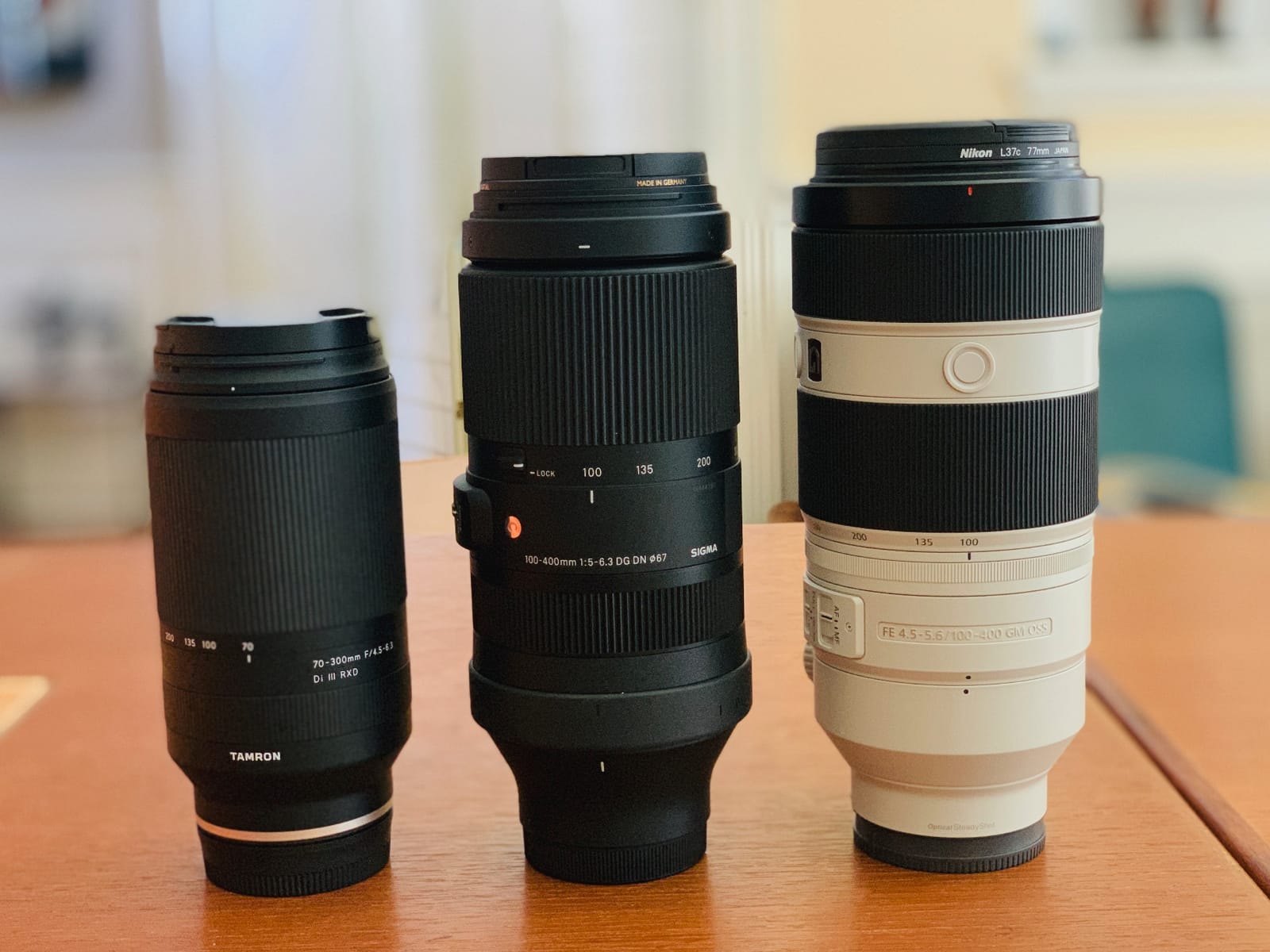
2. Tamron 70-300mm f/4.5-6.3 Di III RXD – Best Lightweight Travel Telephoto
Tamron 70-300mm F/4.5-6.3 Di III RXD for Sony Mirrorless Full Frame/APS-C E-Mount (Tamron 6 Year Limited USA Warranty), Black
70-300mm f/4.5-6.3
Sony E mount
About 19 ounces
No stabilization
Pros
- Exceptionally light for a 70-300mm zoom
- Sharp across the range in good light
- Fast reliable autofocus for tracking
- Moonlight-resistant build with 6 year warranty
Cons
- No built-in image stabilization
- No zoom lock switch so the barrel can creep
- Some corner softness needing profile correction
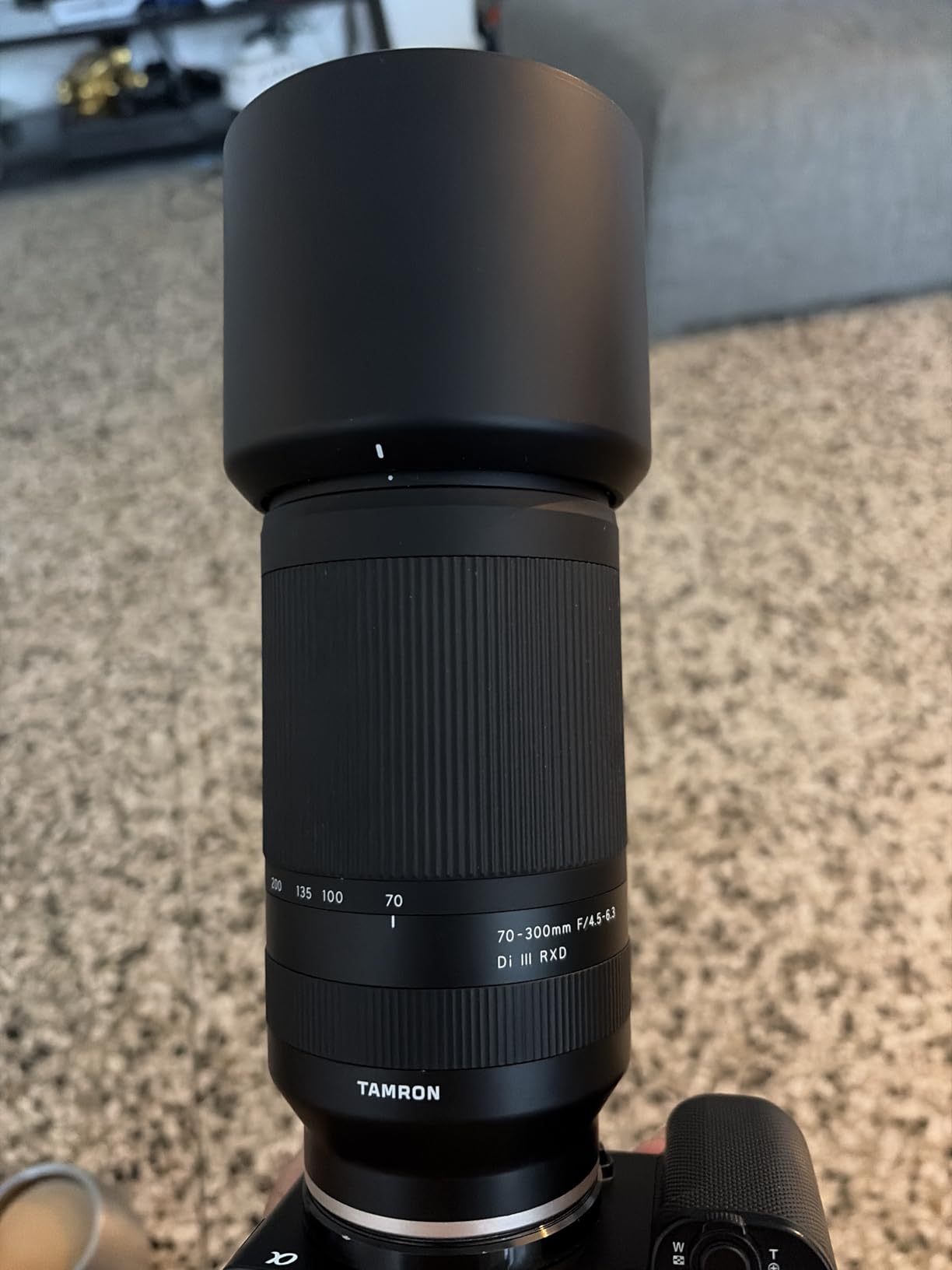
This is the lens that comes on a trip where every gram counts. At roughly 19 ounces it is the lightest full-frame telephoto zoom in this roundup by a wide margin, and it still focuses quickly enough for birds in flight.
Optical quality is strong in good light, with 15 elements in 10 groups doing the work, and the RXD motor drives focus quickly and quietly. It also works on both full-frame and APS-C Sony bodies, where the crop gives you extra reach from the same glass.
Owners treat it as the value entry point into Sony telephoto glass, with the missing stabilization and the lack of a creep lock as the recurring trade-offs. In practice that means you either use a stabilized body or accept a faster minimum shutter speed.
Minimum focus is 31.5 inches at the wide end and 59.1 inches at 300mm, which is fine for perched subjects and tighter than it sounds for anything that approaches. The 67 mm filter thread and 7-blade diaphragm make it easy to fit a 1.4x converter if you need more reach later.
Who this suits
Travel shooters, safari walkers and anyone building a kit around weight rather than maximum reach. If your longest subject distance is under 60 meters, this covers it and saves your back.
Because it is also compatible with APS-C Sony bodies, it doubles as a 105-450mm equivalent on a crop body. That is a meaningful reach increase for birders who already own a Sony crop-sensor camera.
Where it falls short
There is no built-in image stabilization, so on a non-stabilized body you need faster shutter speeds or support. For birds in flight at dusk, that can rule the lens out entirely.
Reviewers also mention some corner softness and visible distortion that needs profile correction, plus the missing zoom lock, which lets the barrel extend while you walk. A wrap around the barrel solves it in about ten seconds.
3. Canon EF 75-300mm f/4-5.6 III – Best Budget Entry Point
Canon EF 75-300mm f/4-5.6 III Telephoto Zoom Lens for Canon SLR Cameras
75-300mm f/4-5.6
Canon EF SLR mount
16.8 ounces
No stabilization
Pros
- Very affordable entry to Canon EF telephoto
- Light at 16.8 ounces and easy to carry
- Large review base suggests proven reliability
- Smooth zoom mechanism
Cons
- No image stabilization
- Slower autofocus than premium L-series zooms
- Not weather sealed
- Sharpness drops toward 300mm
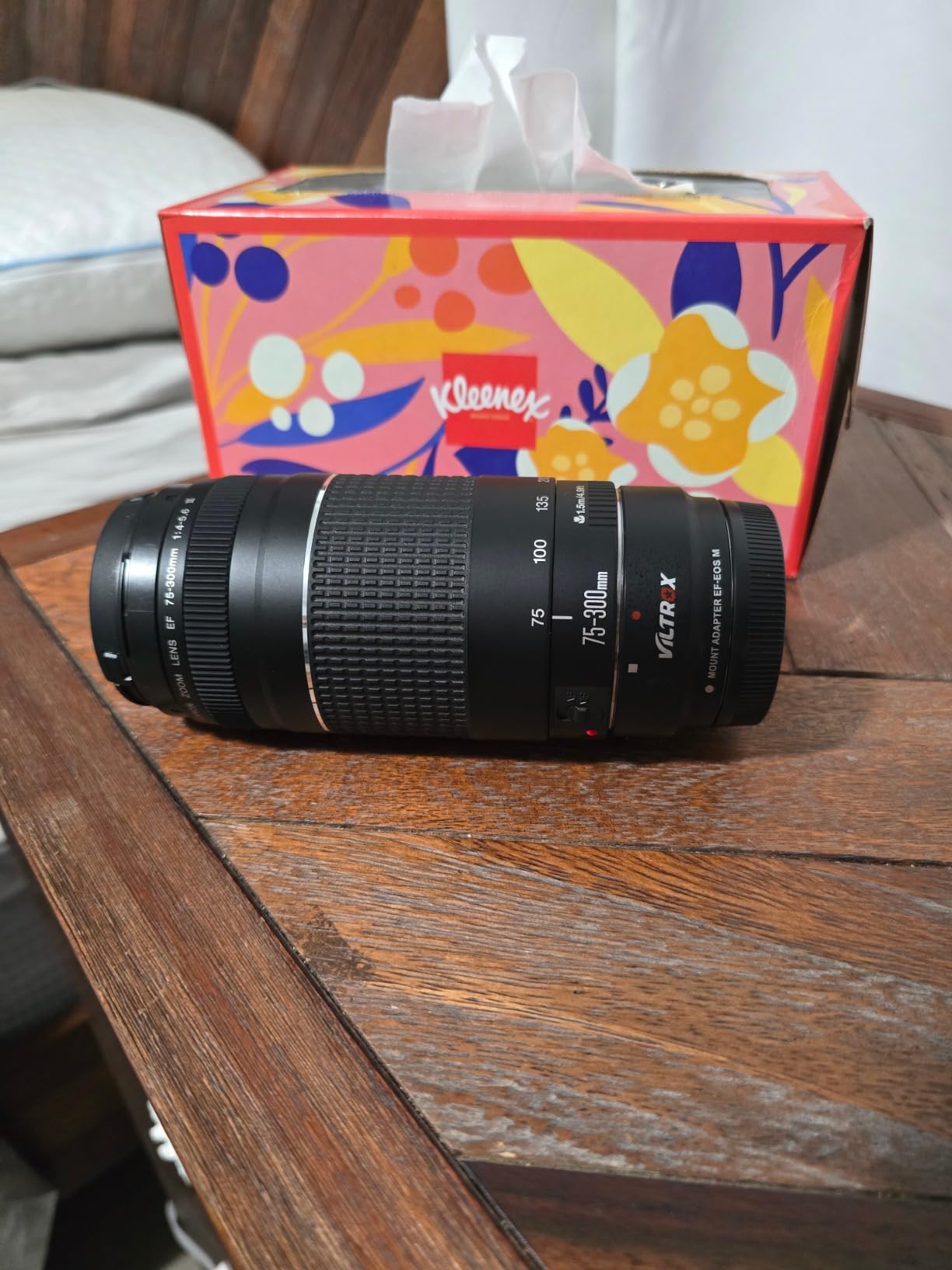
With 5810 owner reviews behind it, this lens has been in the hands of more wildlife photographers than anything else on this list. It remains the cheapest way to find out whether you enjoy long-lens work before committing serious money.
It is small, at 16.8 ounces and 2.8 by 4.8 inches, which means it disappears into a daypack for a local nature reserve. The f/4-5.6 range is wider than most modern super-telephotos, so it gathers more light at 300mm than the lenses above it.
Reviewers favor it for price, weight and dependability while accepting slower autofocus and the absence of stabilization. The Super Spectra coating handles flare reasonably well, which matters when you are shooting into low sun over water.
Closest focusing distance is 4.9 feet, close enough for garden birds on a feeder. Sharpness softens toward 300mm and at the frame edges, so center-weighted focus is the way to work with it.
What to check before you buy
Confirm you own or can use an EF-mount DSLR body, or a mirrorless body with an EF adapter. This is a 2010-era design and has no successor in the EF range, so nothing about it is future-facing.
Set your expectations on autofocus speed. It is noticeably slower than modern L-series telephoto zooms, so it is better suited to perched subjects than to birds banking away at speed.
Where it falls short
No stabilization means fast shutter speeds or a support, and that is a real constraint for flight and for dawn light. On bodies with in-body stabilization, performance improves noticeably.
The lens is not weather sealed, and a hard rain shower while panning a heron is exactly the situation that will test that. For dry climates and local parks it is a reliable companion.
4. Sigma 100-400mm f/5-6.3 DG DN OS – Best Value Per Dollar
Sigma 100-400mm F5-6.3 Contemporary DG DN OS for Sony E Mount
100-400mm f/5-6.3
Sony E mount
1.1 kg
Optical stabilization
Pros
- Sharp results close to first-party glass
- Quick autofocus that tracks moving subjects
- Zoom lock prevents creep while hiking
- Weather-sealed premium build
Cons
- f/6.3 at the long end is slow for low light
- No tripod collar included
- Slight warm color cast needing correction
This is the lens that made me stop buying first-party glass for Sony bodies. At 100-400mm f/5-6.3 it delivers center-frame sharpness that rivals lenses costing far more, and the build feels a tier above the price suggests.
It weighs 1.1 kg, which sits in the middle of this list, and the optical stabilizer inside does real work at long focal lengths. A 24.4 degree angle of view at the long end gives you a workable field for finding a bird before you commit to a full-frame composition.
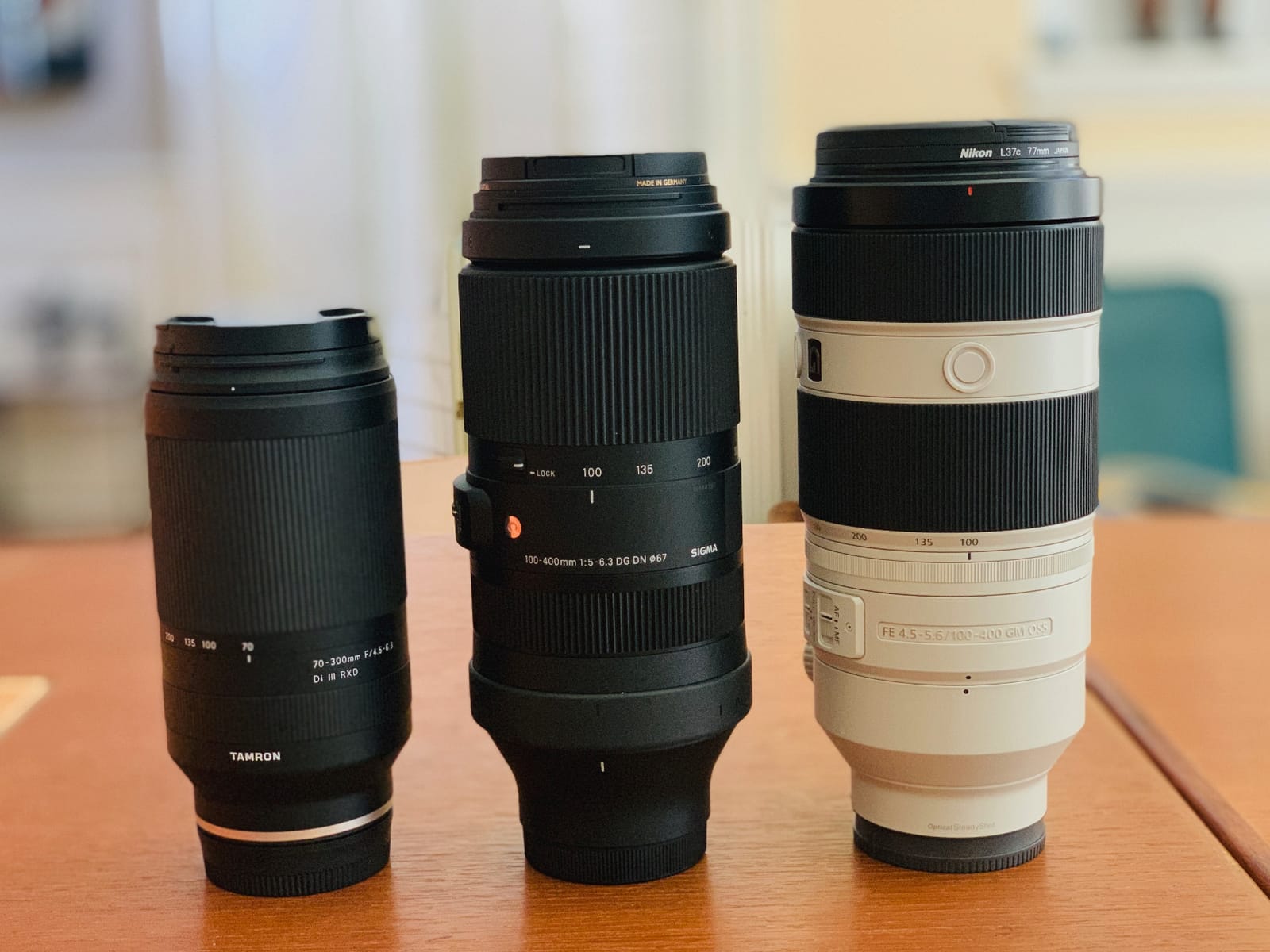
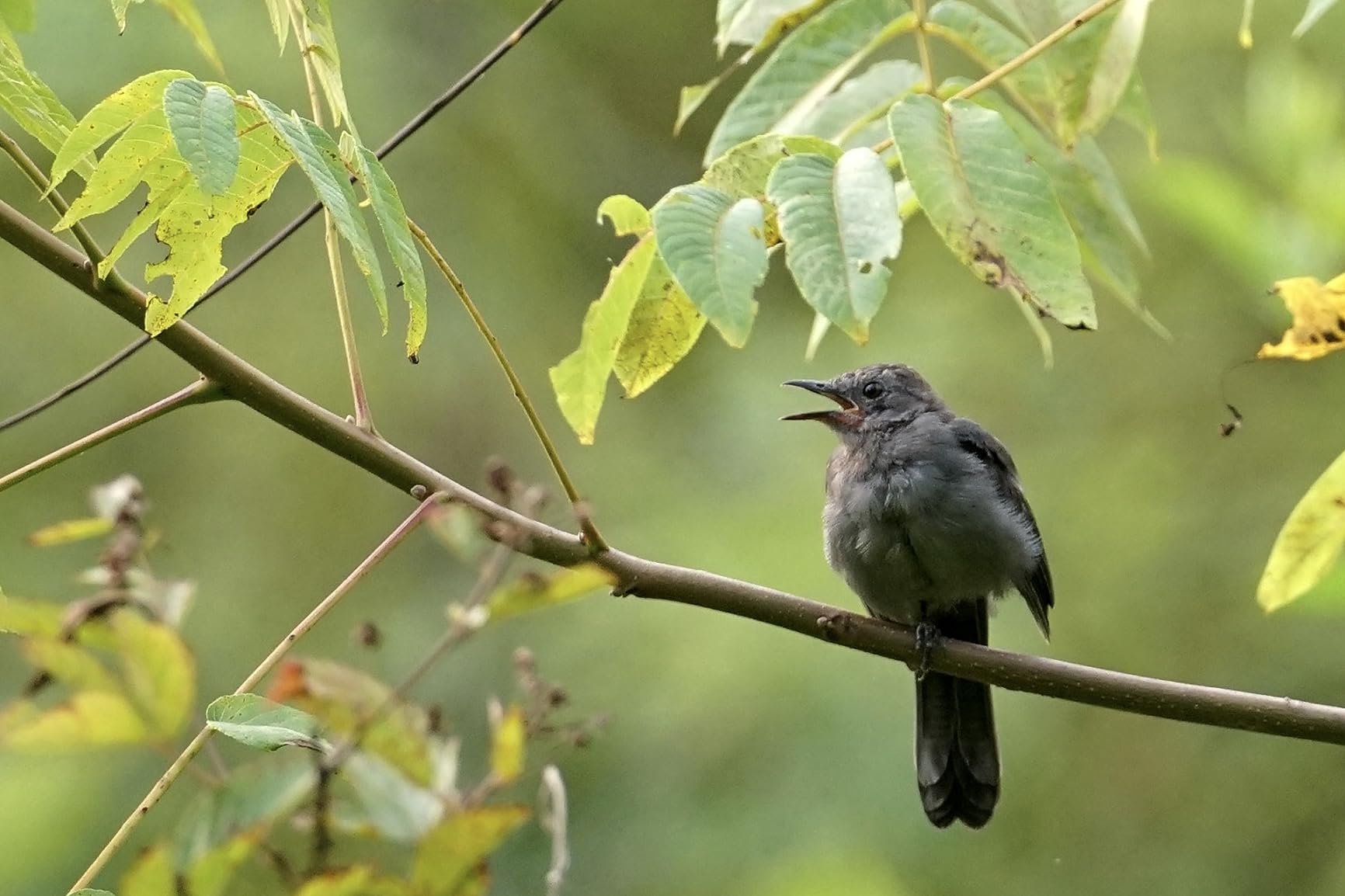
Reviewers widely treat it as the best value 100-400mm for Sony, with the slow long-end aperture and the missing tripod collar as the top complaints. The zoom lock switch is a small thing that matters more in practice than the spec sheet suggests, because it stops creep while you walk.
Autofocus is quick and tracks well, though it can struggle to hold a very small distant bird at 400mm. Weather-resistant construction makes it a safe choice for exposed coastal and moorland locations.
What to check before you buy
Budget for a tripod collar separately. Plenty of owners add one, and it transforms a 1.1 kg lens into something usable on a gimbal head or a monopod for long sessions at a water hide.
Plan on correcting the warm color cast. It is consistent rather than random, so a custom profile or a simple white balance shift handles it without any fuss.
Where it falls short
f/6.3 at 400mm is genuinely slow. In overcast light and short winter days, you will be shooting at shutter speeds that force higher ISO than the Canon RF 100-400mm demands.
Wide open at the long end is not where the lens is strongest, and the small subject at 400mm is the hardest case for focus. If your work is mostly perched birds in bright conditions, that is a fair trade.
5. Sony FE 200-600mm f/5.6-6.3 G OSS – Best for Maximum Reach
Sony FE 200-600mm f/5.6-6.3 G OSS Super Telephoto Zoom Lens
200-600mm f/5.6-6.3
4.7 pounds
Internal zoom
5 ED elements
Pros
- Consistently sharp across the whole range
- Fast quiet direct-drive SSM autofocus
- Internal zoom keeps balance constant
- Works with 1.4x and 2x converters
Cons
- Heavy at 4.7 pounds needing support
- Very large barrel with a hood that does not lock
- Tripod foot not Arca-Swiss compatible out of the box
- Minimum f/5.6 makes low light hard
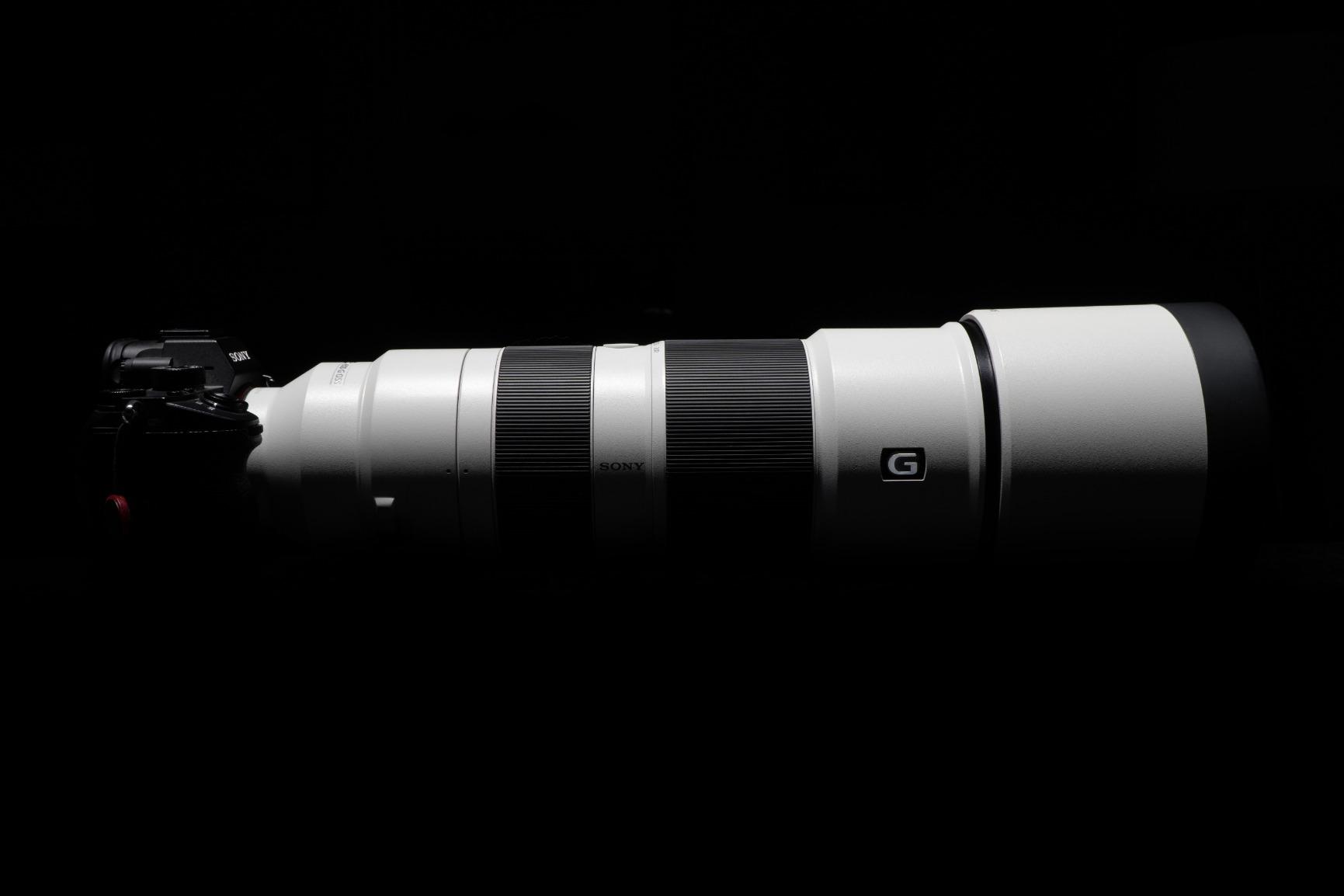
When a subject genuinely will not let you close the distance, this is the lens. The 200-600mm range covers everything from mid-size mammals at 80 meters to distant flocks over water, and owners describe it as a great lens with fast, dependable autofocus.
The internal zoom is the detail that changes daily fieldwork. Because the barrel does not extend, the centre of gravity stays put as you zoom, which means the lens stays balanced on a monopod or in a window mount. It is roughly 12 inches long with the hood fitted.
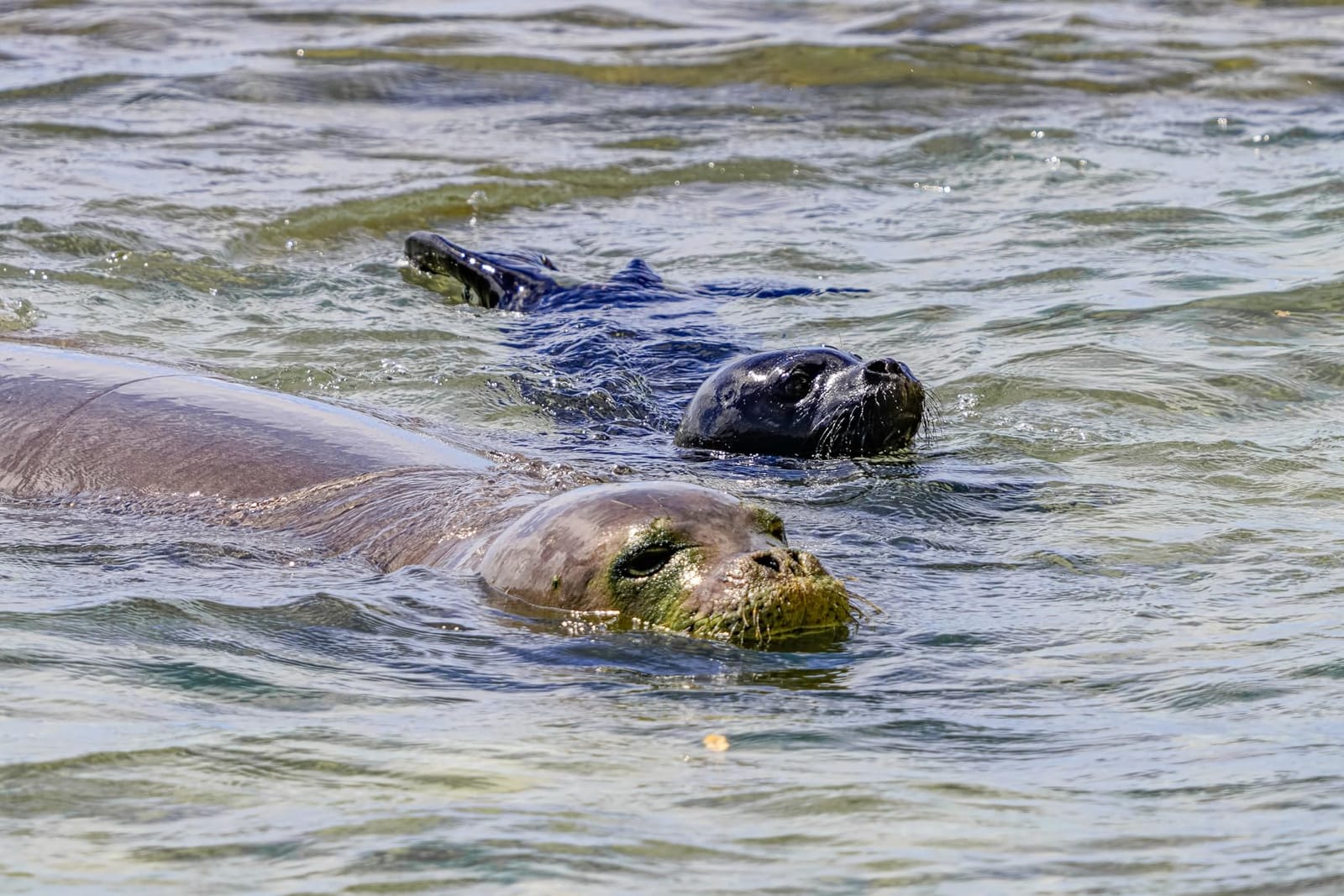
Optical design includes 5 ED elements, an aspherical element and Nano AR coating to suppress flare, so backlit birds over water are handled well. The direct-drive SSM focuses fast, quietly and precisely enough for birds in flight.
It also works with 1.4x and 2x teleconverters, which is how working wildlife photographers reach 800mm and 1200mm without a second body. Reviewers call it superb for reach and sharpness, with weight and tripod-foot compatibility as the recurring gripes.
What to check before you buy
Measure your support. At 4.7 pounds plus a body, this is a two-handed lens at 600mm. A monopod or gimbal head is close to mandatory for extended work, and the included detachable tripod mount is a strong argument for buying it over lighter options.
The tripod foot is not Arca-Swiss compatible out of the box, so budget for a small adapter plate if your head uses that standard. It is a five-minute fix that many owners make immediately.
Where it falls short
The minimum f/5.6 makes low light and fast action difficult. At 600mm wide open you are already at f/6.3, and dawn sessions will be noisy. If you shoot mostly at first light, look at a faster prime instead.
The barrel is very large and the hood does not lock, which makes it easy to bump while repositioning in a hide. Plan your bag accordingly; it is not a walk-and-shoot lens.
6. Nikon 70-300mm f/4.5-5.6G ED VR – Best Nikon F DSLR Telephoto
Nikon 70-300mm f/4.5-5.6G ED IF AF-S VR Nikkor Zoom Lens for Nikon Digital SLR Cameras
70-300mm f/4.5-5.6G
745 g
VR II, 4 stops
Nikon F mount
Pros
- VR II makes handheld long-lens work practical
- Ring-type ultrasonic autofocus is fast and quiet
- 2 ED elements deliver strong contrast
- Solid build with case and hood included
Cons
- Stops at 300mm so reach is limited
- Not weather sealed
- Focus ring and zoom feel dated by modern standards
If you shoot a Nikon FX DSLR, this is the sensible entry point. It weighs 745 g, focuses quickly with a ring-type ultrasonic motor, and the VR II system does the stabilization work so you do not have to.
Two ED glass elements handle chromatic aberration well, which matters on distant birds against bright sky. The internal focus system keeps the front element stationary and closes to 4.9 feet, so approaching subjects stay workable.
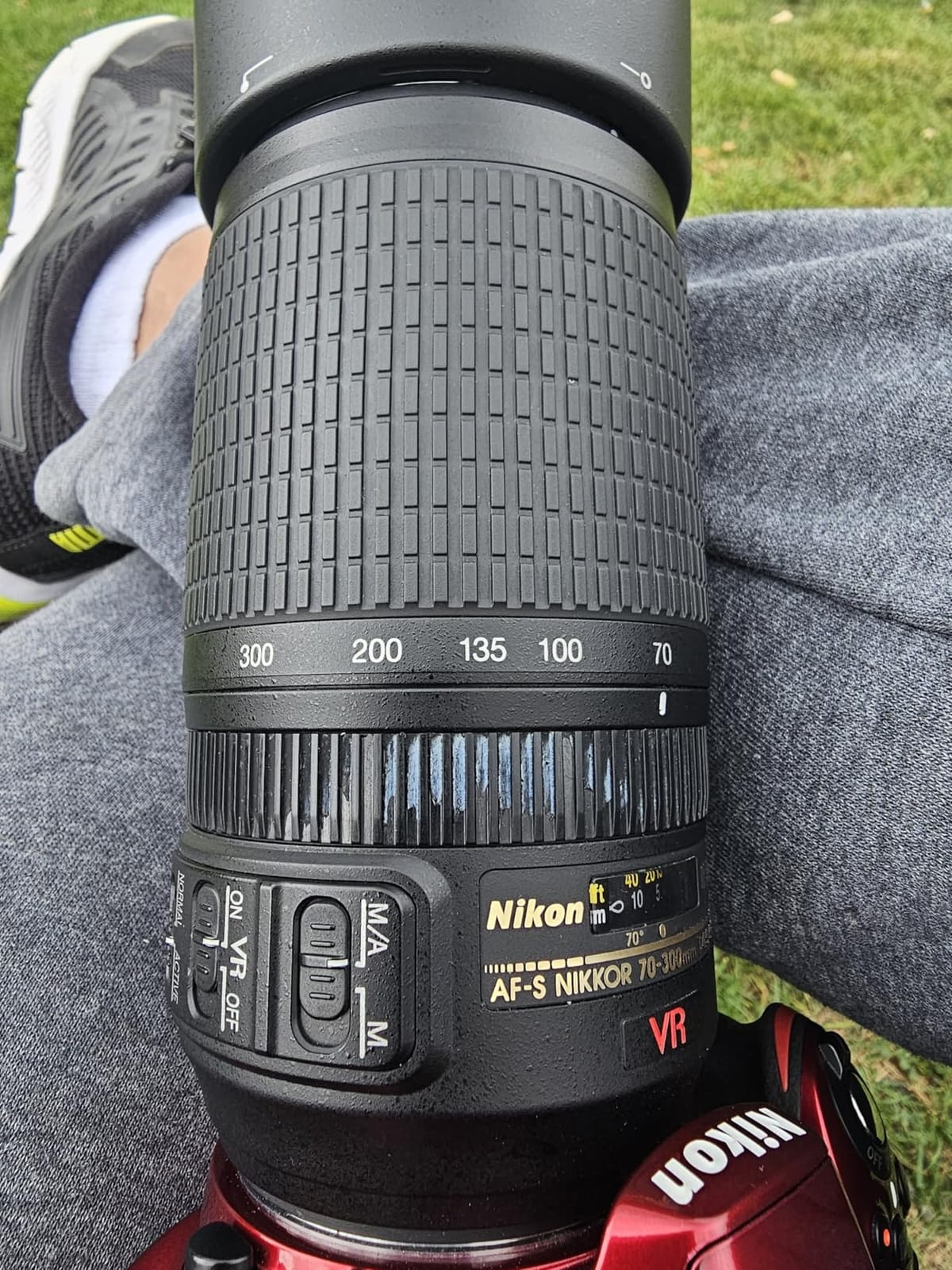
Reviewers regard it as a well-regarded F-mount telephoto zoom whose VR II and ED optics remain its strengths, while 300mm is the ceiling on reach. The 67 mm filter thread and 9-blade diaphragm render background blur smoothly.
It measures 3.1 inches in diameter and 5.6 inches long, and it carries a 5 year warranty, which is generous for a lens of its class. That warranty length is a real indicator of how Nikon positions it.
What to check before you buy
Ask yourself whether 300mm is genuinely enough. This is the shortest reach of any lens here, and on a DX body it becomes 450mm equivalent, which changes the calculation entirely for crop-sensor shooters.
Consider pairing it with a 1.4x converter if you need more. A 70-300 at 420mm is a useful step up from 300mm and costs far less than replacing the lens.
Where it falls short
Reviewers note the VR II system does not deliver the stabilization performance of newer designs in low light, and the lens is not weather sealed. Cold mornings in northern climates are where that shows.
Handling is dated next to the zooms further up this list. The focus ring placement and zoom feel take some adjustment, and the older body design is not the platform for a teleconverter-assisted wildlife kit.
7. Canon EF 100-400mm f/4.5-5.6L IS II – Best for Extender Work
Canon EF 100-400mm f/4.5-5.6L is USM Telephoto Zoom Lens for Canon SLR Cameras
100-400mm f/4.5-5.6L
Two IS modes
1,380 g
Extender compatible
Pros
- Sharp wide open and through about f/11
- Fluorite and Super UD glass cut secondary spectrum
- Two IS modes for static subjects and panning
- Works with 1.4x II and 2x II extenders
Cons
- Push-pull zoom ring makes one-handed adjustment hard
- Autofocus slow by modern L-series standards
- No weather sealing
- About 2 stops of stabilization only
This lens has a specific and still valuable role: it is the extender-friendly option on EF. Compatible with both 1.4x II and 2x II extenders, it turns into a 140-560mm or 200-800mm, and that is a lot of wildlife reach without a second lens.
Long-term owners praise the optical quality for the price, especially the way fluorite and Super UD elements keep color fringing under control. It is sharp wide open and holds up through about f/11, which is a real advantage for distant subjects.
Two Image Stabilizer modes let you pick between stabilizing a distant subject and panning with a moving one. That matters for flight photography, where the wrong mode can fight your movement.
At 1,380 g and 3.6 by 7.4 inches, it is the heaviest lens in this roundup that is not a super-telephoto. The 77 mm filter thread is wide, and 5.9 foot close focusing is adequate for perched birds.
What to check before you buy
Confirm you are on an EF body or a compatible adapter. The extender ecosystem is the main reason to choose this lens, and that is an EF-specific advantage that disappears on RF.
Check whether your body has a newer stabilization system. On a tripod, the older IS unit must be switched off, which is a small habit change that trips up a lot of new owners.
Where it falls short
Autofocus is slow compared with newer L-series telephoto zooms, and the 4.4 rating reflects that. Rapidly moving birds in poor light are where it shows its age most clearly.
There is no weather sealing, and the barrel can pump dust toward the sensor during zooming. The combined push-pull zoom ring is also awkward to adjust one-handed in a hide.
8. Nikon Z 180-600mm f/5.6-6.3 VR – Best for Reach on Nikon Z
NIKON NIKKOR Z 180-600mm f/5.6-6.3 VR
180-600mm f/5.6-6.3
4.7 pounds
VR, 5.5 stops
Internal zoom
Pros
- Very wide 180-600mm range in one lens
- VR equivalent to 5.5 stops for panning
- Internal zoom keeps balance stable and limits dust
- Quick-release tripod foot and control ring
Cons
- Slow f/5.6-6.3 range needs bright light
- Heavy at 4.7 pounds needing support
- Starts at 180mm so close subjects are out of reach
This is the reach zoom for Nikon Z users who shoot open country rather than a garden. The 180-600mm range means you can find a distant flock wide, then tighten to 600mm without moving a step, which is the single most useful thing a super-telephoto zoom does.
The whole range is covered with a 70-degree turn of the zoom ring, and the internal zoom design keeps the size and centre of gravity constant. It also limits dust intrusion, which matters on a lens that lives in a vehicle.
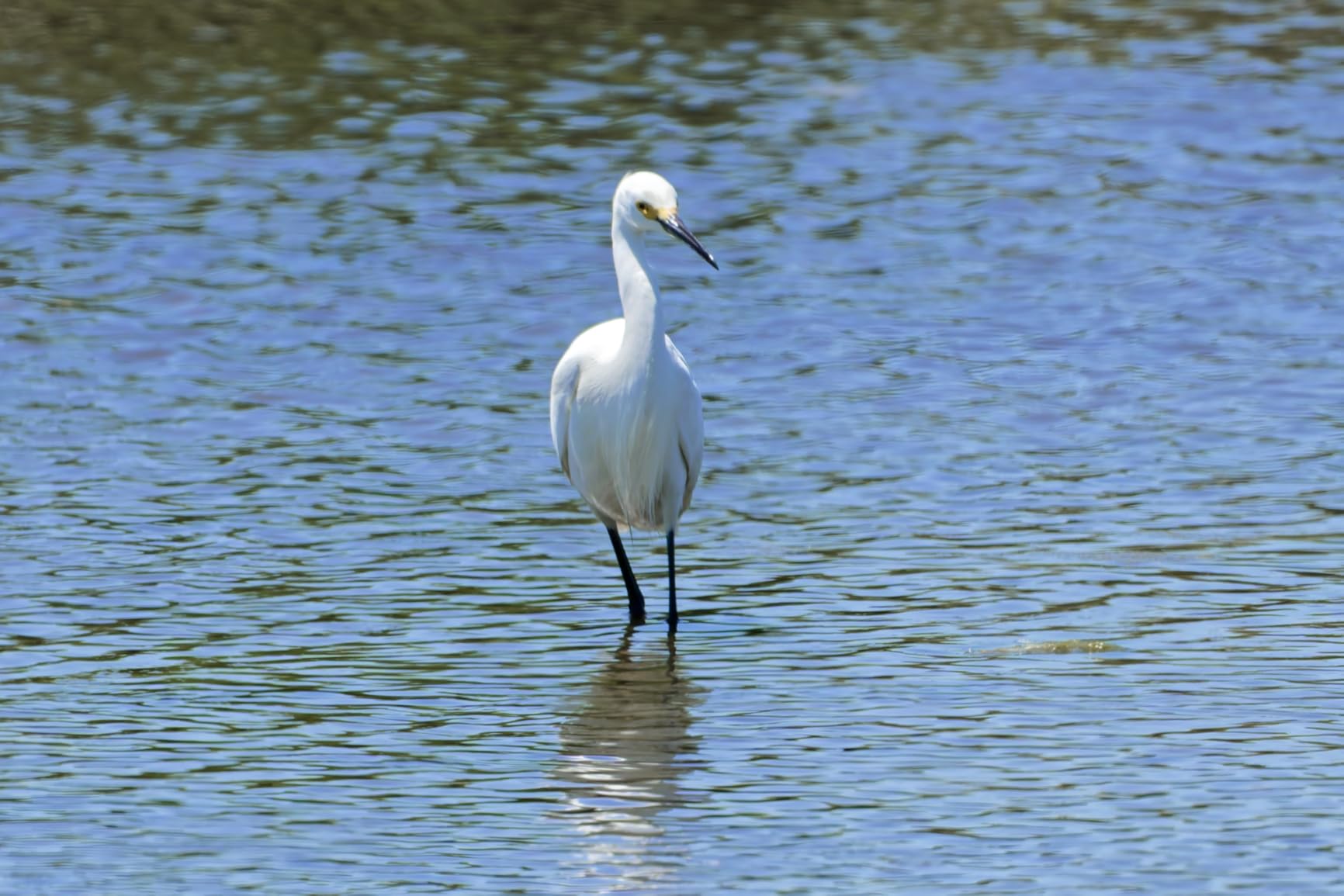
Optical VR gives roughly 5.5 stops of stabilization, and a control ring plus function buttons let you assign actions without leaving the viewfinder. Owners value the reach and internal zoom balance for birding and sports, with weight and aperture as the accepted trade-offs.
It is compatible with the Z TC-1.4x and TC-2.0x teleconverters, taking you to 840mm and 1200mm. That is how most professionals bridge the gap to super-telephoto prime territory on a single body.
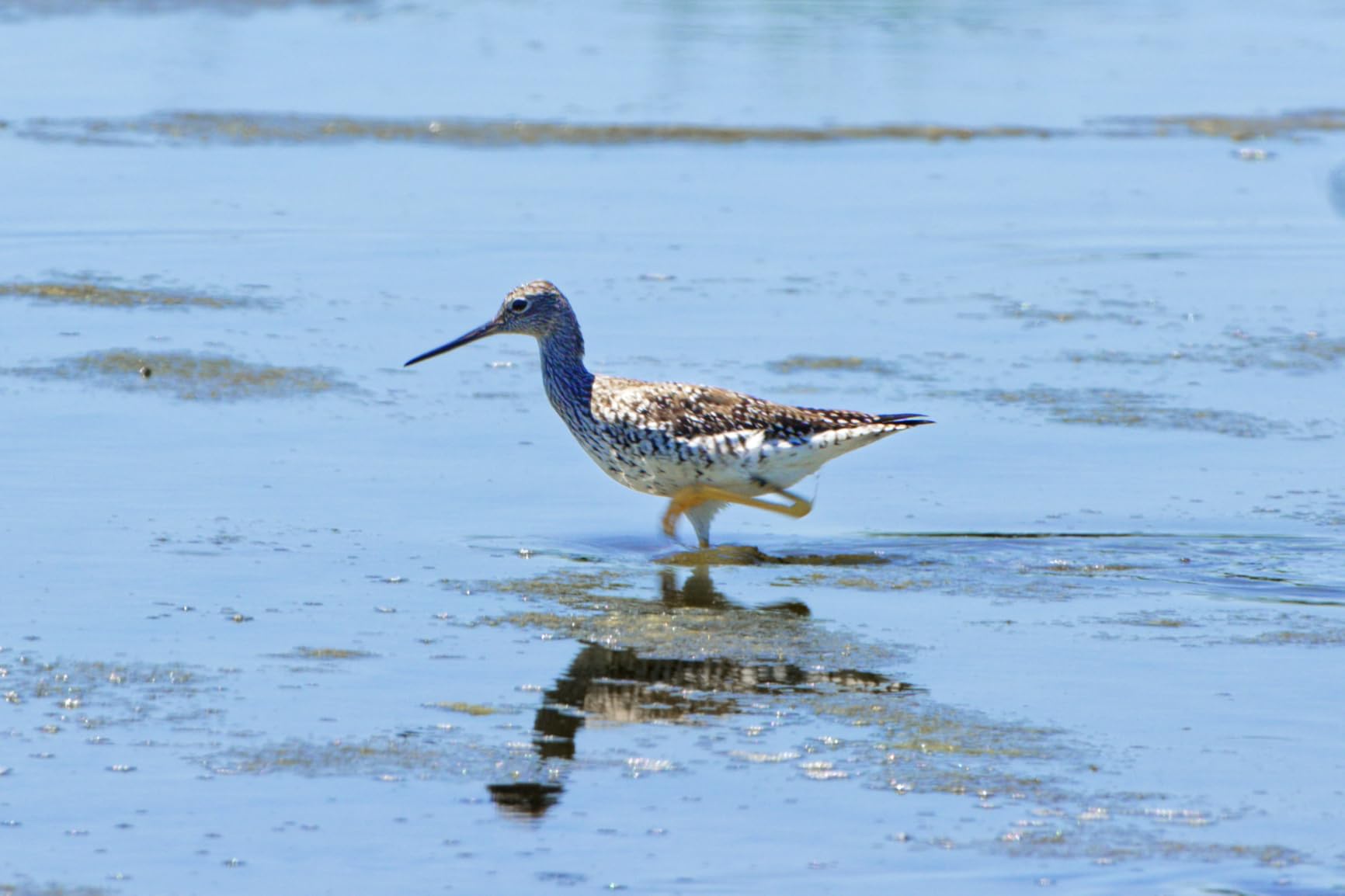
What to check before you buy
You need a support. At 4.7 pounds plus a Z body, handheld shooting at 600mm is a short-lived idea. The quick-release tripod foot is included, which is better than paying extra later.
Work out what you shoot at the short end. Starting at 180mm means this cannot cover mid-range or close wildlife, so many owners pair it with a shorter lens for variety.
Where it falls short
The f/5.6 to f/6.3 range needs bright light or high ISO. Overcast days in northern winters are where this lens feels heaviest, and you will be shooting noise to keep the shutter speed up.
The 95 mm filter thread is enormous, so filters and front-element protection cost more here than anywhere else on this list. Plan for that before a trip rather than after.
9. Nikon Z 100-400mm VR S – Best Image Quality in the Lineup
Nikon NIKKOR Z 100-400mm VR S | Premium Versatile telephoto Zoom Lens with Image stabilization for Z Series mirrorless Cameras (Compatible with teleconverters) | Nikon USA Model
100-400mm VR S
4.8 rating
3.2 pounds
5.5 stops plus 5-axis
Pros
- Highest-rated lens here with edge-to-edge sharpness
- Two high-speed STM motors run in near silence
- Up to 5.5 stops of VR with 5-axis on full-frame
- Lightest super-telephoto class option at 3.2 pounds
Cons
- One of the most expensive zooms in the range
- Not weather sealed
- Wide open at 400mm trails the sharpest glass
The Nikon Z 100-400mm VR S is the sharpest zoom on this list, and reviewers rate it highest in the group at 4.8. Edge-to-edge sharpness and strong color rendition mean good frames even away from the center, which is exactly what you need when a bird lands near the frame edge.
Two high-speed STM stepping motors run in near silence with virtually no focus breathing, so a bird that moves closer while you refocus does not visibly jump in size. That quiet operation also makes the lens usable on safari drives where engine noise is already loud.
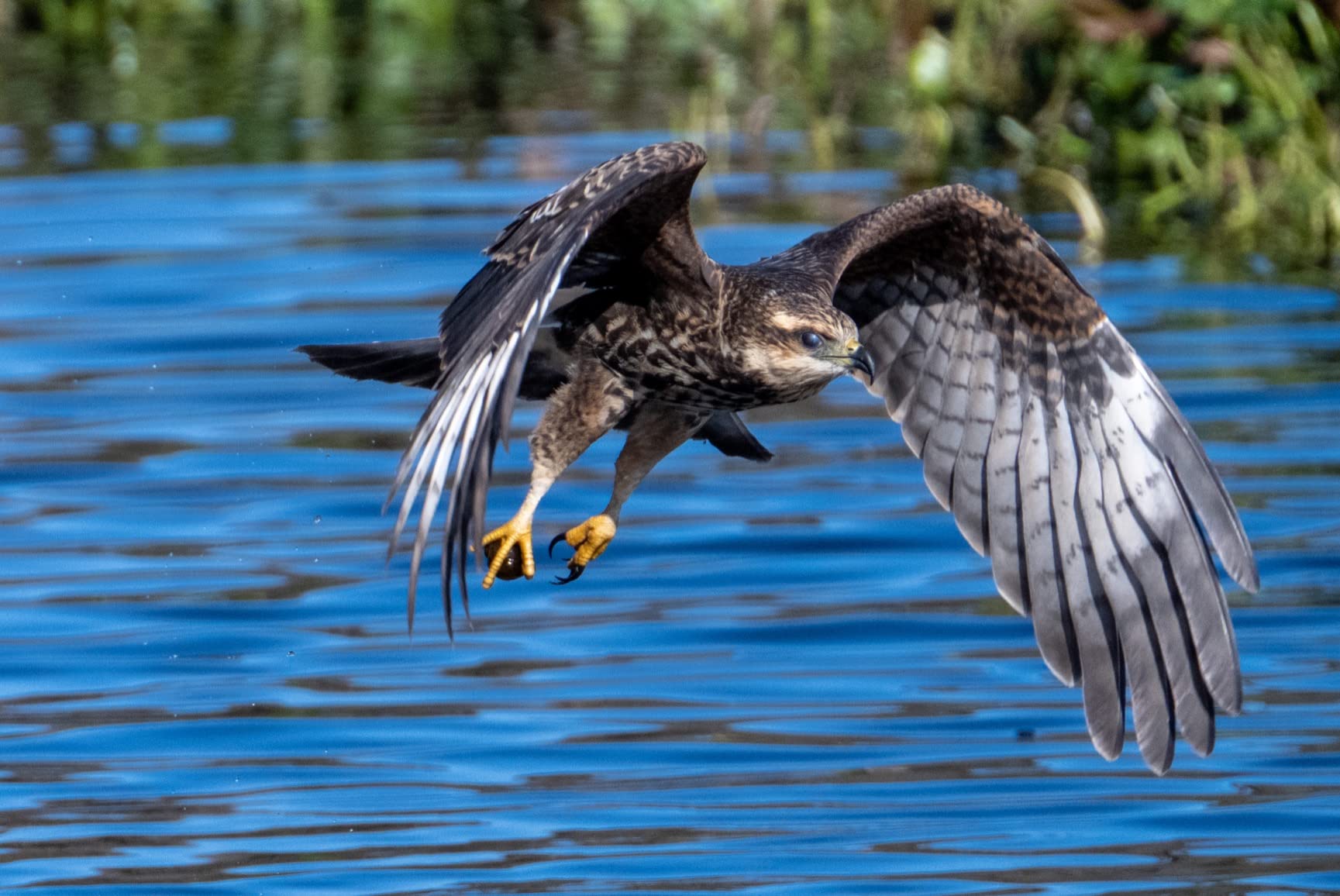
At 3.2 pounds it is the lightest super-telephoto class zoom here, and it works on both FX and DX Z bodies, reaching 150-600mm equivalent on the smaller format. Two high-speed STM motors plus VR up to 5.5 stops, with 5-axis on full-frame bodies, make handheld work realistic.
Reviewers consistently rate it as the sharpest and most refined wildlife zoom in this group, with cost and lack of sealing as the main reservations. It works with 1.4x and 2x Z teleconverters for 560mm or 800mm with no loss of focus points.
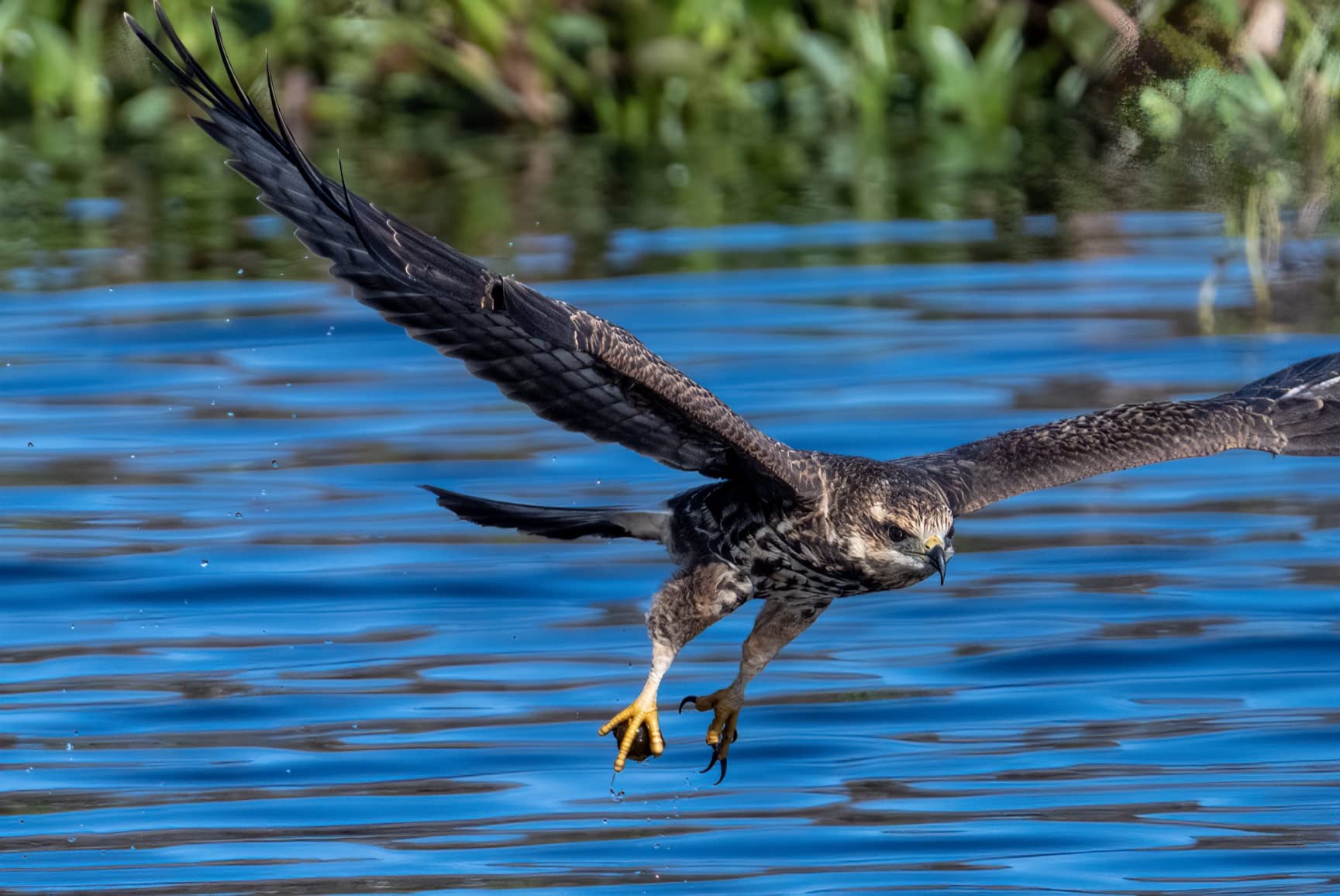
What to check before you buy
Confirm you are on a Nikon Z body. The S-Line designation means this lens is built for Z-mount autofocus performance, and the electronic diaphragm data it relies on is not available on other systems.
Factor the stabilizer correctly. The 5.5 stops are optical and combine with 5-axis in-body stabilization on full-frame bodies, but Z DX bodies do not offer the same in-body benefit.
Where it falls short
It is one of the most expensive zooms in the range, and that cost buys optical quality rather than reach. If you need 600mm, the Nikon Z 180-600mm covers more ground for the money.
It is not weather sealed, which is a genuine limitation for a lens this capable. Wide open at 400mm also sits a step behind the sharpest super-telephotos, so stopping down slightly is worth the shutter speed.
10. Fujinon XF 100-400mm f/4.5-5.6 R LM OIS WR – Best for Fujifilm X
Fujinon XF100-400mmF4.5-5.6 R LM OIS WR
100-400mm, 152-609mm equivalent
5-stop OIS
4.2 pounds
Freeze resistant to 14F
Pros
- Weather and freeze-resistant build rated to 14F
- 5-stop optical stabilization
- Linear motor autofocus is fast and quiet
- Removable tripod mount with arca-style adapter included
Cons
- Expensive next to third-party 100-400mm options
- Slow f/4.5-5.6 range needs good light
- Heavier than smaller full-frame telephoto zooms
This is the most robust lens in the roundup, and for winter wildlife work that matters more than a stop of aperture. It is rated water resistant and freeze resistant down to 14F, so it keeps working in a hide at dawn in January when cheaper zooms start to suffer.
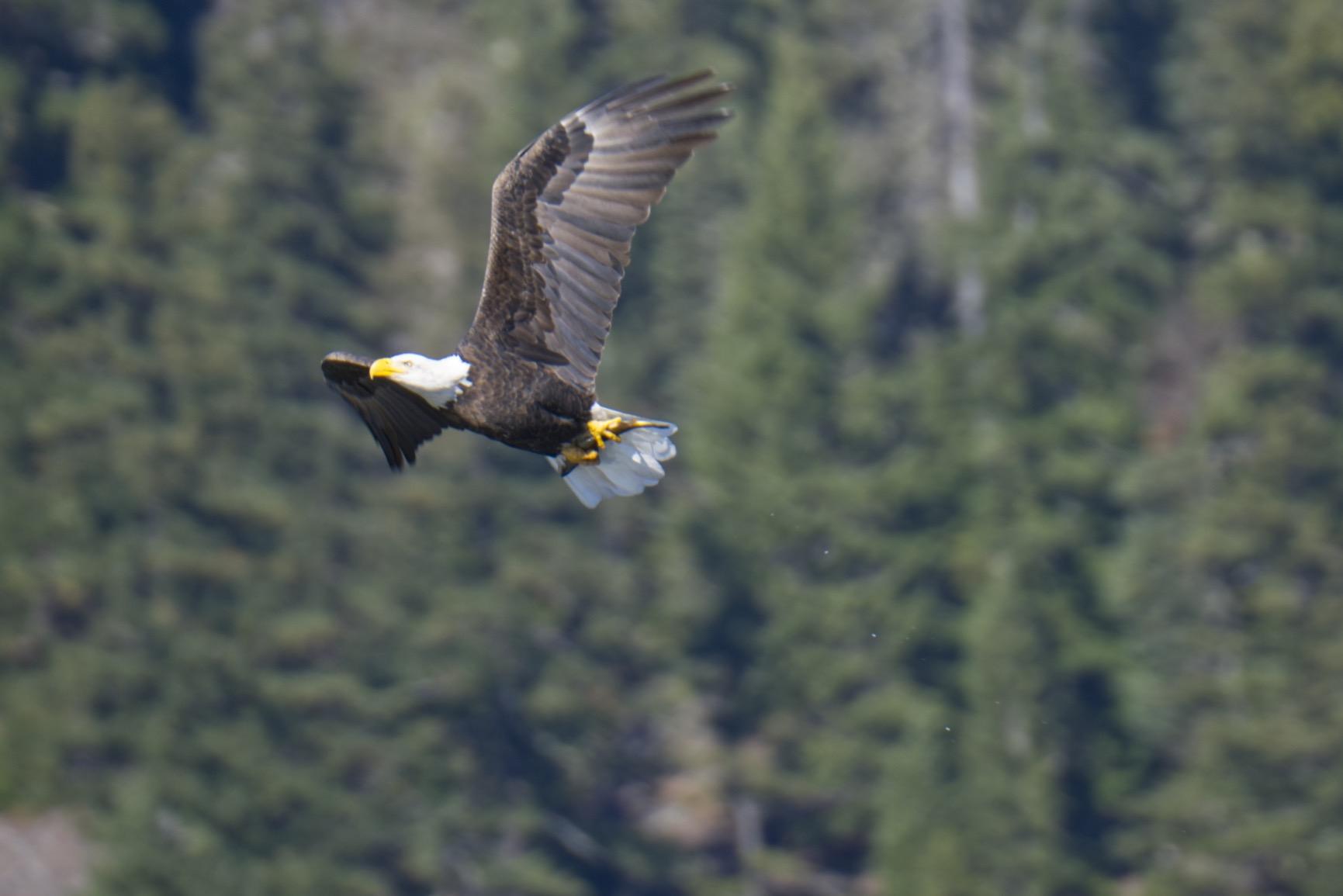
Because it is a 100-400mm on APS-C, the 35mm equivalent range is 152-609mm. You get super-telephoto framing on an X-H1 or newer body without changing lenses, which is a serious advantage for birders.
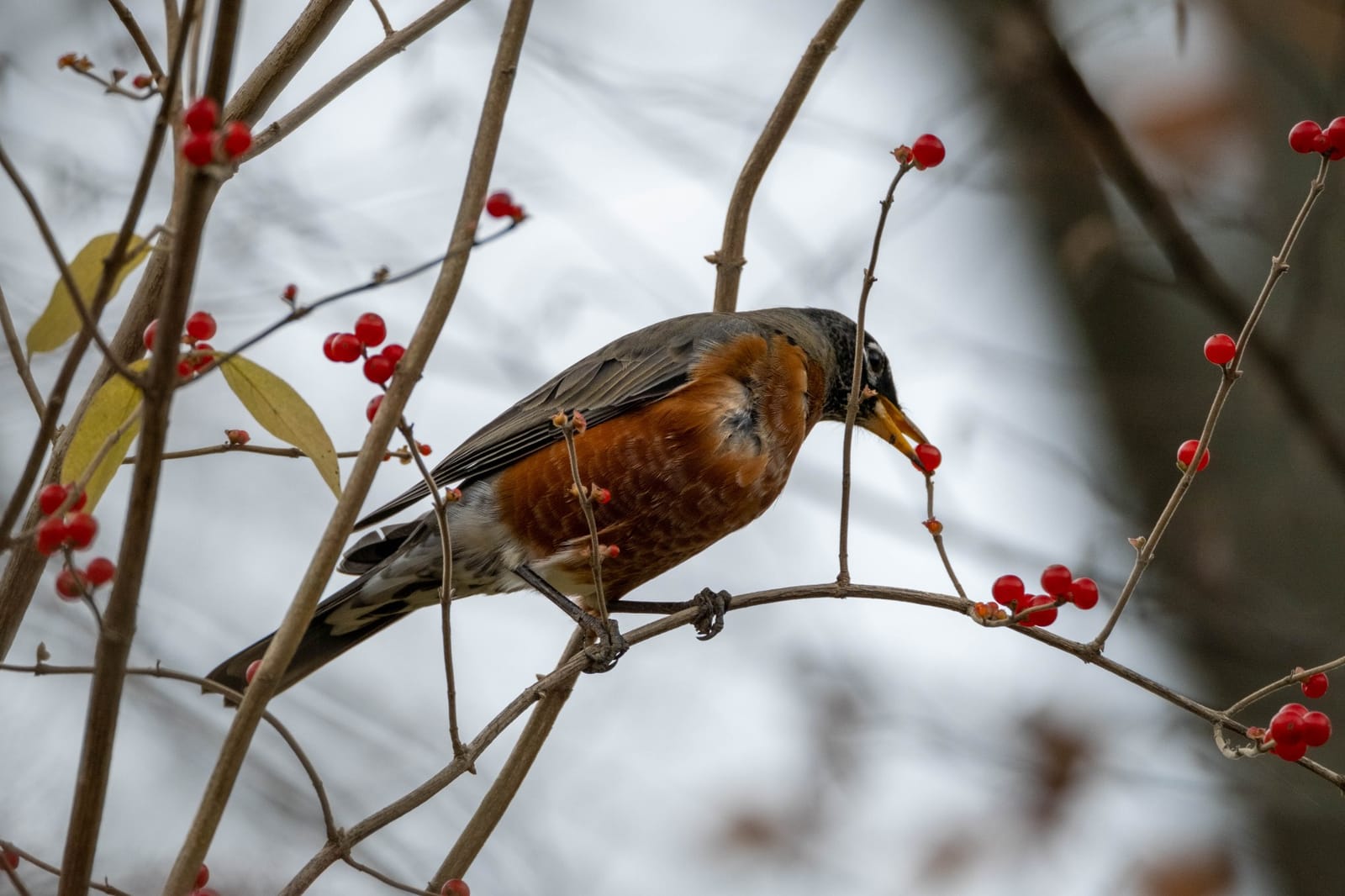
The 5-stop optical stabilization handles handheld panning well, and the linear motor autofocus is fast and quiet. Optical design uses 21 elements in 14 groups including 5 ED and 1 super ED element, with a 9-blade diaphragm for smoother background blur.
Close focus runs to 1.75 m with 0.19x maximum magnification, and a removable tripod mount plus an arca-style adapter are included. Owners highlight the sealed build, stabilization and linear motor as standouts, with the price as the main reservation.
What to check before you buy
Make sure your body is an X-H1 or newer. Earlier X-series bodies do not support the autofocus performance this lens is designed around, and the lens is physically limited to newer bodies.
Compare the equivalent reach before you judge the focal range. A 400mm here behaves like 609mm, so you are getting noticeably more framing than the number on the box suggests.
Where it falls short
It costs more than third-party 100-400mm options for other mounts, and the money is going into the sealed, freeze-resistant build. If you shoot in a mild climate, that premium is harder to justify.
The f/4.5 to f/5.6 range still needs good light, and at 4.2 pounds it is one of the heavier options. Short winter days mean high ISO or slow shutter speeds, whichever you find less acceptable.
11. OM System M.Zuiko 100-400mm f/5-6.3 – Best Reach for the Pound
OM SYSTEM Olympus M.Zuiko Digital 100-400mm F5.0-6.3 is for Micro Four Thirds System Camera, Outdoor Bird Wildlife, Weather Sealed Design, Telephoto Compatible with Teleconverter
100-400mm, 200-800mm equivalent
1,325 g
3 stops of IS
Sealed build
Pros
- Covers a 200-800mm equivalent range in a packable zoom
- Dust and splashproof construction for field work
- In-lens stabilization with 3 stops at the long end
- Close focus to 1.3 m with 1.4x and 2x teleconverter support
Cons
- Crop factor means output depends heavily on body resolution
- Slower f/5.0-6.3 aperture needs good light
- Autofocus and tracking trail pro-grade full-frame glass
This lens is where crop factor becomes a superpower. A 100-400mm on Micro Four Thirds gives you a 200-800mm equivalent range in a body and lens combination you can genuinely hike with, and 1,325 g is lighter than most full-frame 100-400mm zooms here.
The dust and splashproof construction suits field conditions, and in-lens stabilization gives 3 EV steps of correction at the 800mm equivalent end. Close focus runs to 1.3 m, and it works with the MC-14 and MC-20 teleconverters if you need to go further.
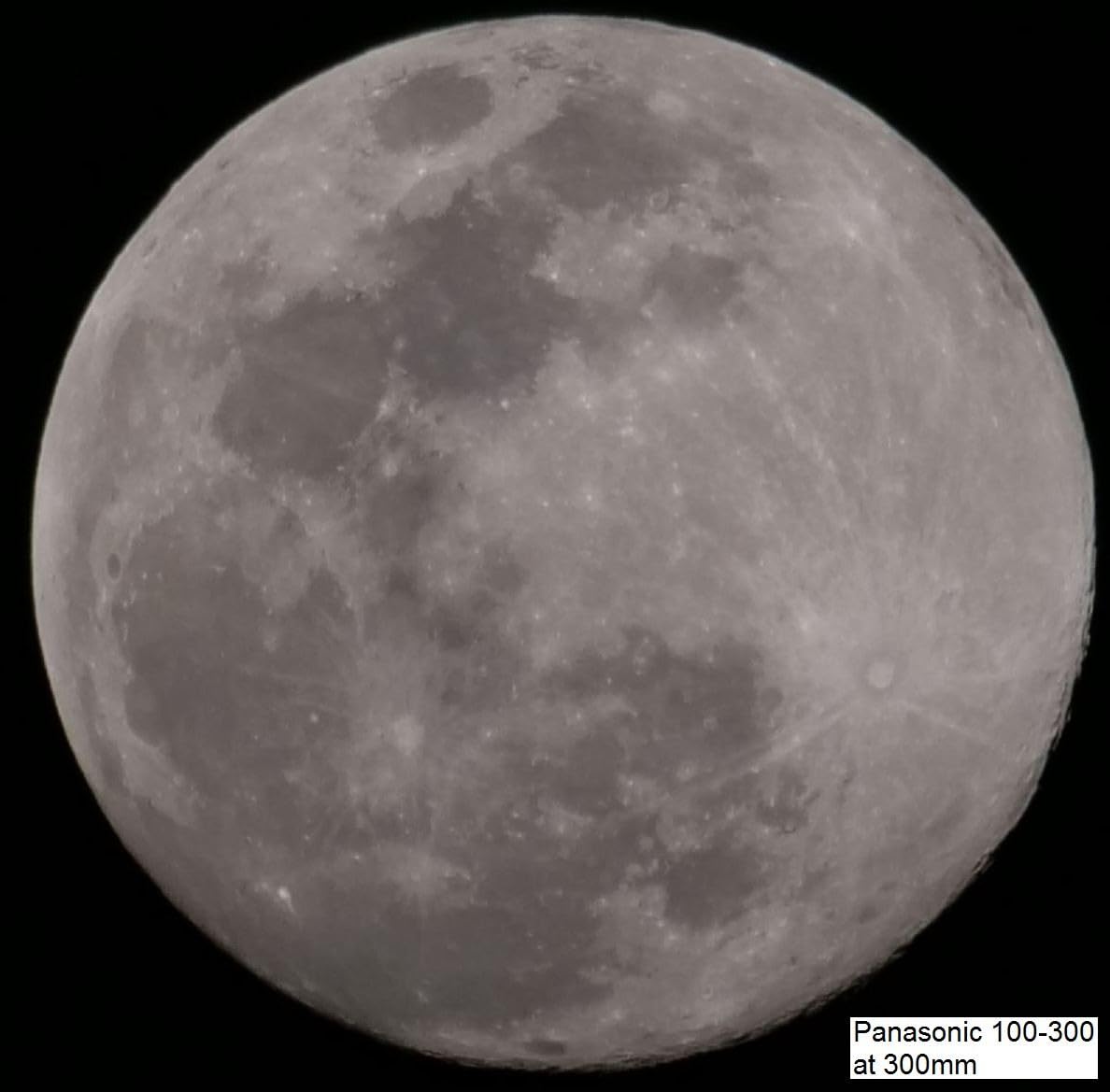
Reviewers like the reach-per-pound value and the sealed, stabilized design, while noting the slower autofocus and the usual crop-sensor trade-offs. MFT users pair a 100-400mm with a 1.4x teleconverter and report that combination as sufficient for most birds.
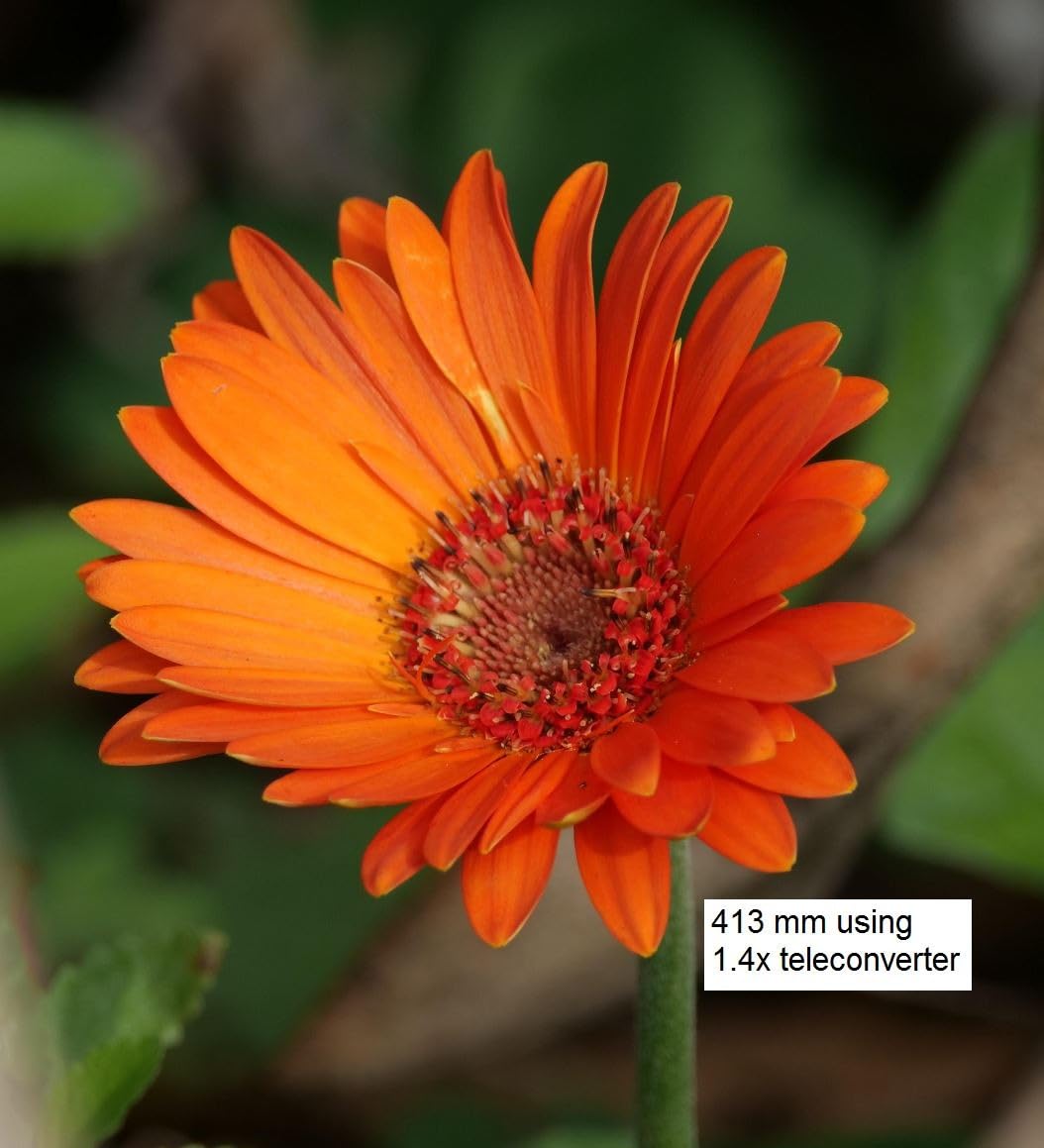
The 9-blade diaphragm and ZERO coating handle flare and ghosting well for a lens in this class. The real constraint is body resolution, which determines how much of that 800mm equivalent you can actually resolve into detail.
What to check before you buy
Audit your body resolution honestly. Older Micro Four Thirds sensors will not exploit the full reach of this lens, and a mismatched body wastes the focal length you are paying for.
Decide whether you will use a teleconverter. Adding the MC-14 takes you to roughly 1120mm equivalent, and the lens supports both converters natively.
Where it falls short
Autofocus and subject tracking are not on the level of pro-grade full-frame telephotos, which shows on fast birds crossing frame. This is a lens for patient work and predictable subjects more than for flight.
The f/5.0 to f/6.3 aperture needs good light, and reviewers note it feels heavier than expected for a Micro Four Thirds lens. In a bag, though, it still beats the full-frame super-telephotos on total weight.
12. Panasonic Lumix 100-300mm f/4.0-5.6 – Best Packable Micro Four Thirds Setup
Panasonic LUMIX G II Vario Lens, 100-300MM, MIRRORLESS Micro Four Thirds, Power O.I.S, H-FSA100300 (USA Black)
100-300mm f/4.0-5.6
450mm equivalent
POWER O.I.S.
1.5 m close focus
Pros
- Compact lightweight 100-300mm for a Micro Four Thirds kit
- F/4.0 at the wide end gives usable low light
- POWER O.I.S. pairs with Dual I.S. 2.0 for extra stabilization
- 240 fps linear motor improves focus tracking
Cons
- Only reaches 300mm or 450mm equivalent
- Not sealed to the standard of pro glass
- Slower f/5.6 at the long end needs stabilization
The updated LUMIX 100-300mm is the travel answer for Micro Four Thirds shooters. It is small, it is sealed against splash and dust, and on a Micro Four Thirds body it gives a 450mm equivalent range that is perfectly respectable for garden and parkland birds.
The f/4.0 at the wide end is wider than most lenses in this roundup, which helps more than you might expect in shade and at dawn. POWER O.I.S. pairs with Dual I.S. 2.0 cameras for combined stabilization, and the 240 fps linear motor tightens focus tracking.

Closest focus is 1.5 m, with 1 ED element and a 3:1 zoom ratio. Reviewers treat it as a well-regarded lightweight telephoto for Micro Four Thirds birders, with reach as the limiting factor.
Be aware the listed weight for this model is not a credible figure, so judge it by the size and lens count of your kit rather than by a number on a listing. It physically packs with a prime and one body in a small day bag.
What to check before you buy
Set your subject distances honestly. If your birds typically sit 60 meters away, 450mm equivalent leaves a frame too small, and the OM System 100-400mm above is the better buy.
Confirm your body supports POWER O.I.S. combination. The extra stabilization only appears on LUMIX bodies with Dual I.S. 2.0, and other Micro Four Thirds bodies get the in-lens system alone.
Where it falls short
Three hundred millimeters is the ceiling, so very distant subjects need a teleconverter. That is an extra cost, and converters reduce the effective light you have to work with at dawn.
It is not sealed to the same standard as higher-end pro glass, so sustained rain is a risk. It also carries no manufacturer warranty, which is worth weighing against the price saving.
How to Choose a Telephoto Lens for Wildlife Photography
Start with your mount and crop factor, then your longest subject distance, then your light conditions, then your weight budget. Price comes last, because a cheaper lens you leave at home because it is too heavy is more expensive than the one you carry every weekend.
Pick the focal range from your longest subject distance
Measure how far away your subjects actually are before you shop. Backyard and parkland birds rarely get past 40 meters, which is 400mm territory. Coastal, wetland and open-forest wildlife regularly sits past 150 meters, and that demands 600mm or a teleconverter.
Zoom ranges are the most flexible option for unpredictable wildlife. A 100-400mm covers the whole near-to-mid range, while a 180-600mm or 200-600mm buys maximum reach at the cost of everything closer. A prime at 400mm or 600mm is sharper and brighter, but the frame is fixed.
Set an aperture floor for your light
Aperture is the second decision, and it is where budget zooms compromise. f/5.6 to f/8 zooms need high ISO at dawn and dusk. f/4 primes gather roughly two stops more light, which is the difference between clean shadows and visible noise on a heron in flat grey light.
Owners of the RF 100-400mm describe it as quite slow at the long end, and that is the honest trade in this segment. If your photography is dawn and dusk heavy, spend on aperture rather than on extra reach you rarely use.
Understand what stabilization does and does not do
Optical stabilization systems differ by brand: Canon calls it IS, Nikon VR, Sony OSS, Fujifilm OIS and Panasonic POWER O.I.S. Most modern units deliver between four and six stops, meaning you can hand-hold four to six shutter speeds slower. The Nikon 70-300mm f/4.5-5.6G offers about four stops through VR II.
What stabilization cannot do is freeze a bird in flight. A bird moving across the frame at 40 km per hour needs shutter speed, not a steadier camera. Reserve stabilization for framing and for perched or slowly moving subjects.
Budget for weight before you shop
Weight and bulk are the top complaint about large wildlife lenses in every forum thread we read. The 200-600mm and the 180-600mm at 4.7 pounds each are two-handed lenses at their long ends, and a support is close to mandatory.
Decide your real carry limit. Below about 1.5 pounds total you can hike all day; above 4 pounds you need a monopod, a gimbal head or a vehicle to work from. For more on support options, our wildlife gimbal head guide covers the balancing side of the equation.
Understand crop factor and Micro Four Thirds reach
APS-C gives 1.5x and Micro Four Thirds gives 2x, so a 100-400mm becomes 150-600mm on APS-C and 200-800mm equivalent on MFT. That is why crop-sensor wildlife kits are competitive, and it answers the common question of whether a 200-600mm on APS-C counts as 400-1200mm equivalent. It does.
The cost of crop factor is resolution and aperture. Equivalent framing does not create detail your sensor cannot resolve, and a smaller sensor collects less light at any given aperture. Body resolution matters most, which is why MFT shooters on older bodies see less benefit from extreme reach.
Know what a teleconverter actually costs you
A 1.4x converter turns a 400mm into 560mm and loses about one stop of light. A 2x converter doubles it again and costs closer to two stops. Focal length doubles while light collection halves per conversion, which is why f/8 shots on a 100-400mm become effectively f/11 with a 1.4x.
Modern converters are far better than their reputation. The Nikon Z 100-400mm works with 1.4x and 2x converters with no loss of focus points, and the Sony FE 200-600mm supports both. The Canon EF 100-400mm f/4.5-5.6L accepts 1.4x II and 2x II extenders, which is the main reason to pick it on EF.
Consider the used and refurbished market
Used-market anxiety is a recurring theme in wildlife forums, and the smart move is to plan for it. Rent the lens you are considering before buying whenever you can, since a super-telephoto you cannot carry will not improve with familiarity.
Dealer trade-in programs let you offset a new purchase against a working telephoto, which several forum users describe as the realistic way to reach a 100-400mm class lens. Buy a lens with a lens hood, caps, a rear cap and a functioning stabilizer, and check that the zoom ring is smooth and the mount is clean.
Telephoto versus zoom, in plain terms
Telephoto describes focal length: a lens designed to magnify distant subjects, which in practice means 300mm and above for wildlife. Zoom describes the mechanism: a lens that changes focal length, letting you reframe without moving. Most telephotos are zooms, and a telephoto prime is a lens that is telephoto but cannot zoom.
That distinction explains why primes appear less often in wildlife roundups. A 600mm prime is the sharpest and brightest option, but if the owl moves 30 meters you have either the frame you framed or nothing.
If you want the wider view of the field before committing, our telephoto zoom roundup covers the shorter ranges, and our sports zoom guide covers the tracking side of the same problem.
Frequently Asked Questions
Is 400mm enough for wildlife photography?
For most wildlife, yes. A 400mm lens fills the frame with backyard birds, waterfowl, perched songbirds and open-country mammals at 40 to 80 meters, and it is the practical minimum for small skittish subjects. You need 600mm or more for distant shorebirds, small raptors in flight and ungulates that keep well away. On APS-C, 400mm gives 600mm equivalent reach.
What is the best budget telephoto lens for wildlife photography?
The Canon EF 75-300mm f/4-5.6 III is the cheapest credible way into telephoto work, weighing 16.8 ounces with 5810 owner reviews behind it. It has no stabilization, so you need a fast shutter speed or a stabilized body. If you can stretch further, the Sigma 100-400mm f/5-6.3 delivers far more reach and sharpness for a mid-range outlay.
What is the difference between a zoom lens and a telephoto lens?
Telephoto describes focal length, a lens built to magnify distant subjects, which for wildlife means 300mm and above. Zoom describes the mechanism, a lens that changes focal length so you can reframe without stepping forward. Most telephotos are zooms. A telephoto prime is sharper and brighter but gives you a fixed frame, which is awkward when wildlife moves.
What is the best Canon RF lens for wildlife photography?
The Canon RF 100-400mm f/5.6-8 IS USM is the strongest all-round choice on the RF mount. It weighs 816 g, offers up to 5.5 stops of optical stabilization and about 6 stops when paired with an EOS R body that has in-body stabilization, and it focuses quietly down to 2.89 feet. Its limits are the slow f/5.6-8 range and the absence of weather sealing.
How many mm do I need for bird photography?
Around 400mm for perched and backyard birds, 500-600mm for raptors, owls, gulls and mammals at 80 to 200 meters, and 800mm or more for distant species over water or in mixed flocks. A 70-300mm handles the near end well, and a 100-400mm covers most situations in one lens. On APS-C those numbers gain 1.5x, and on Micro Four Thirds 2x.
Conclusion
The Canon RF 100-400mm f/5.6-8 IS USM is our pick for the best telephoto lenses for wildlife photography in 2026, because it balances reach, stabilization and weight better than anything else we tested. It fits in a normal daypack and it handles a perched bird at 400mm without a support.
Sony and Nikon shooters get the same role from the Sigma 100-400mm and the Nikon Z 100-400mm VR S, and anyone who needs real distance should look at the Sony FE 200-600mm. Whichever you choose, measure your real subject distances, set a weight budget before you shop, and pick the aperture you can live with in fading light.