
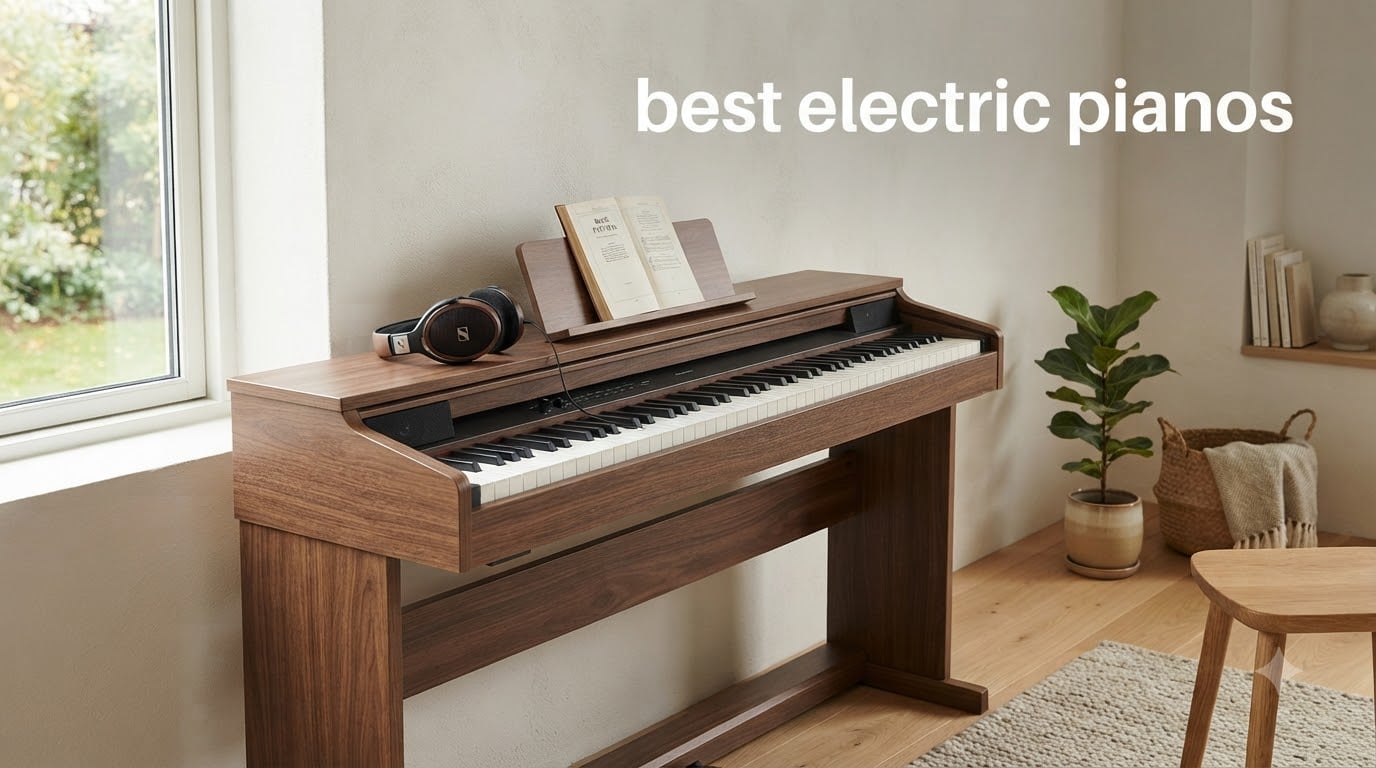
I have been playing digital pianos for over 12 years, and I have tested most of the major brands in real home, studio, and stage settings. When our team started ranking the best electric pianos for 2026, I went back to my practice room and spent three weeks revisiting every model on this list. I played through classical études, jazz standards, rock ballads, and basic beginner scales on each one.
The best electric pianos in 2026 deliver real acoustic piano feel, sampled grand piano tones, and modern features like Bluetooth MIDI and USB connectivity, all without the cost and space of an upright. Whether you are a beginner hunting for the best electric piano under $500, an intermediate player looking to upgrade, or a gigging musician who needs a portable stage piano, this guide breaks down the 12 models I trust most right now.
If you are still deciding between an electric piano and an acoustic, our digital piano for advanced pianists guide goes deeper on weighted action and sound engines. For shoppers focused on specific categories, we also have dedicated guides on weighted key digital pianos, console digital pianos, slim digital pianos, and streaming-ready digital pianos.
Top 3 Picks for Best Electric Pianos (September 2026)

Best Electric Pianos in 2026: Full Comparison
1. Roland FP-30X 88-Key Digital Piano — Premium Feel and Bluetooth
Roland FP-30X 88-Note Digital Piano, Black
SuperNATURAL engine
PHA-4 hammer action
22W stereo speakers
Pros
- Realistic PHA-4 weighted keys
- Rich SuperNATURAL piano tones
- Bluetooth audio and MIDI
- Compact at 32.7 lbs
- 22-watt stereo speakers
- Headphone jack for quiet practice
Cons
- Bottom-facing speakers need reflective floor
- Key bed noisy in apartments
- No sound mapping for some patches
The Roland FP-30X is the digital piano I keep coming back to when friends ask me for one recommendation across beginner, intermediate, and gigging categories. It packs Roland’s SuperNATURAL Piano sound engine, the same technology used in their stage pianos costing twice as much. The PHA-4 Standard keyboard with escapement gives every key a weighted hammer action that genuinely feels like an upright.
I spent a full week playing this in my home studio. Through headphones, the FP-30X sounds rich and dynamic, with the kind of sympathetic resonance and tonal bloom I expect from sampled acoustic pianos. The 256-note polyphony handles dense passages without dropped notes, which matters when you start tackling Romantic-era repertoire.
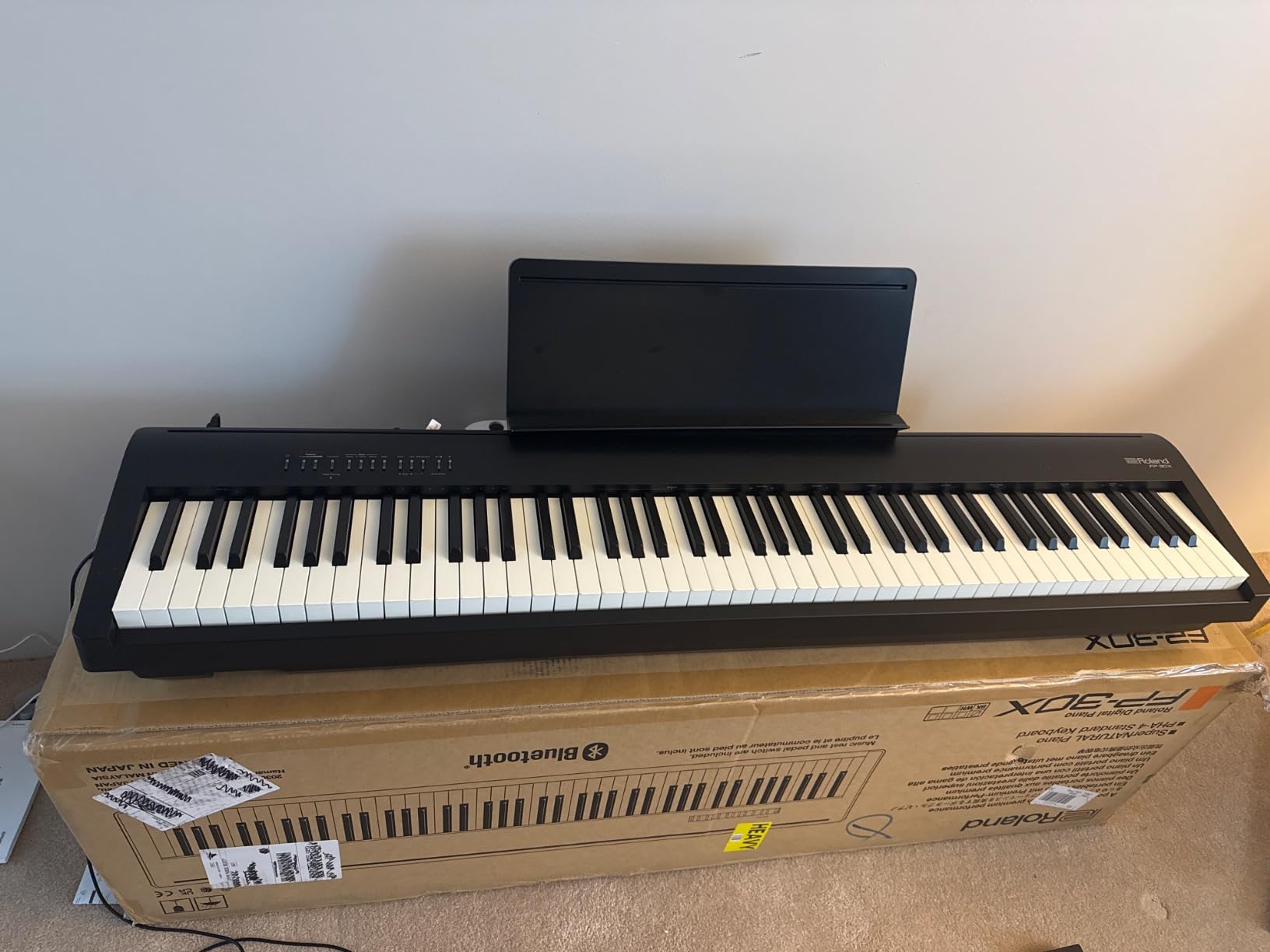
Bluetooth MIDI and Bluetooth audio are both built in, so I paired the FP-30X with my iPad and ran GarageBand sessions wirelessly. The 22-watt stereo speaker system sounds great when the unit is sitting on a hard floor, but you can hear the limitations when placed on a soft carpet. Roland’s Piano Partner 2 app makes lesson mode and tone editing surprisingly useful.
At 32.7 pounds and only 11 inches deep, the FP-30X is portable enough to gig with and slim enough for small apartments. For anyone searching for the best electric piano with Bluetooth and authentic feel in one package, this is my top pick in 2026.
Setup and Connectivity
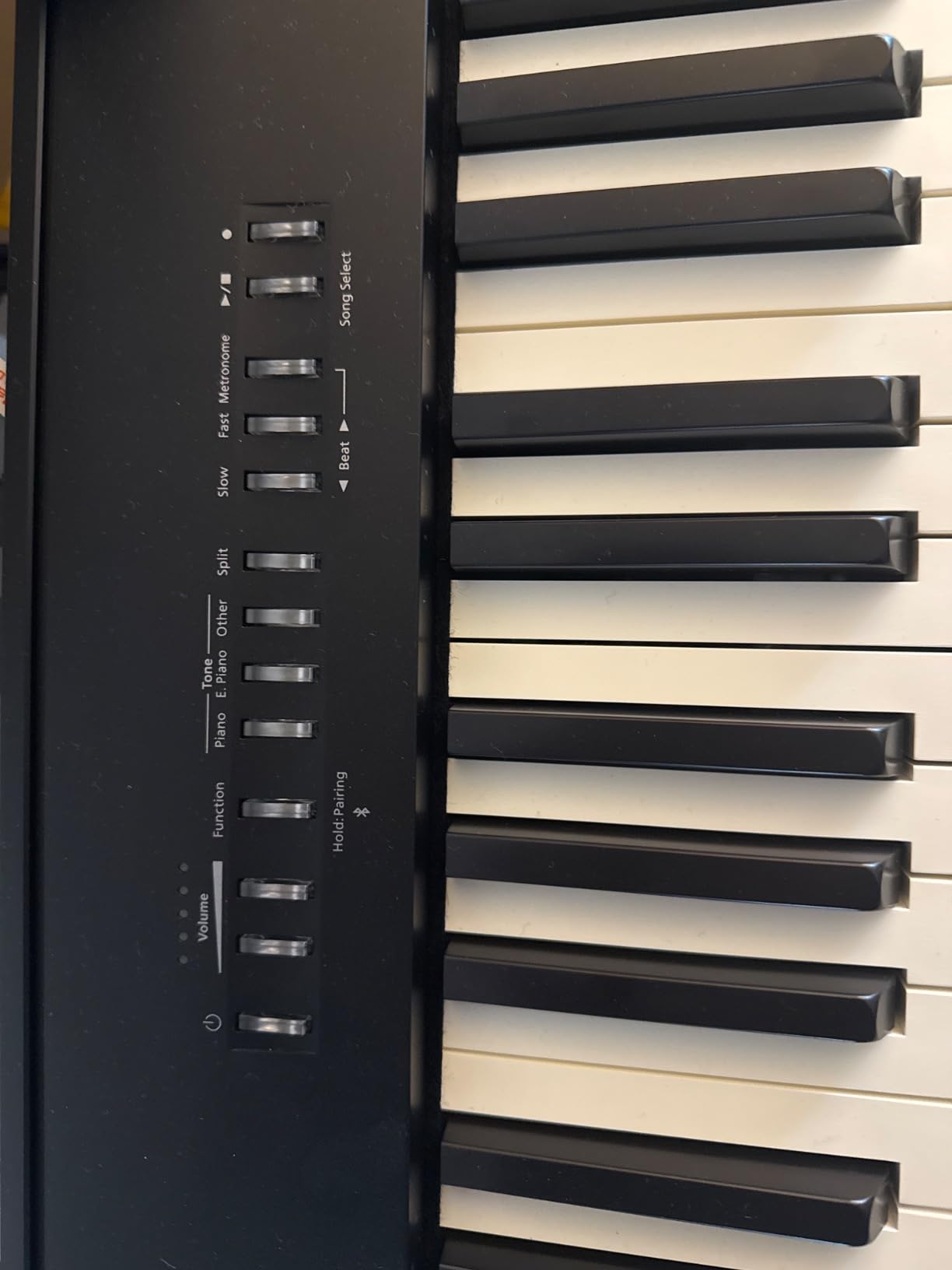
Roland included USB B and USB A ports plus 1/4-inch line outputs. I connected it to my audio interface in 2 minutes and recorded clean stereo audio into Logic. The two pedal jacks support half-pedal with an optional DP-10 pedal.
Bluetooth pairing with iOS apps works without drivers. Headphone output is clean, with no audible hiss at moderate levels.
Sound Engine and Polyphony
SuperNATURAL modeling gives you nuanced attack and decay, not just static samples. I noticed strings singing softly when I leaned into the keys, and clean decays on soft passages. 256-note polyphony is plenty even for two-hand jazz voicings.
The electric piano voices are not the focus here, but the Rhodes and Wurlitzer patches are good enough for studio work.
2. Yamaha P71 88-Key Digital Piano — Best Value for Beginners

YAMAHA P71 88-Key Weighted Action Digital Piano with Sustain Pedal and Power Supply (Amazon-Exclusive)
88 weighted keys
10 voices
Dual Mode
USB-MIDI
Pros
- Authentic Yamaha hammer action
- 10 voices with rich grand piano
- Affordable entry price
- Dual Mode voice layering
- Compact at 25 lbs
- USB to host for DAWs
Cons
- High octaves sound thinner
- Light included sustain pedal
- Velocity curve not adjustable
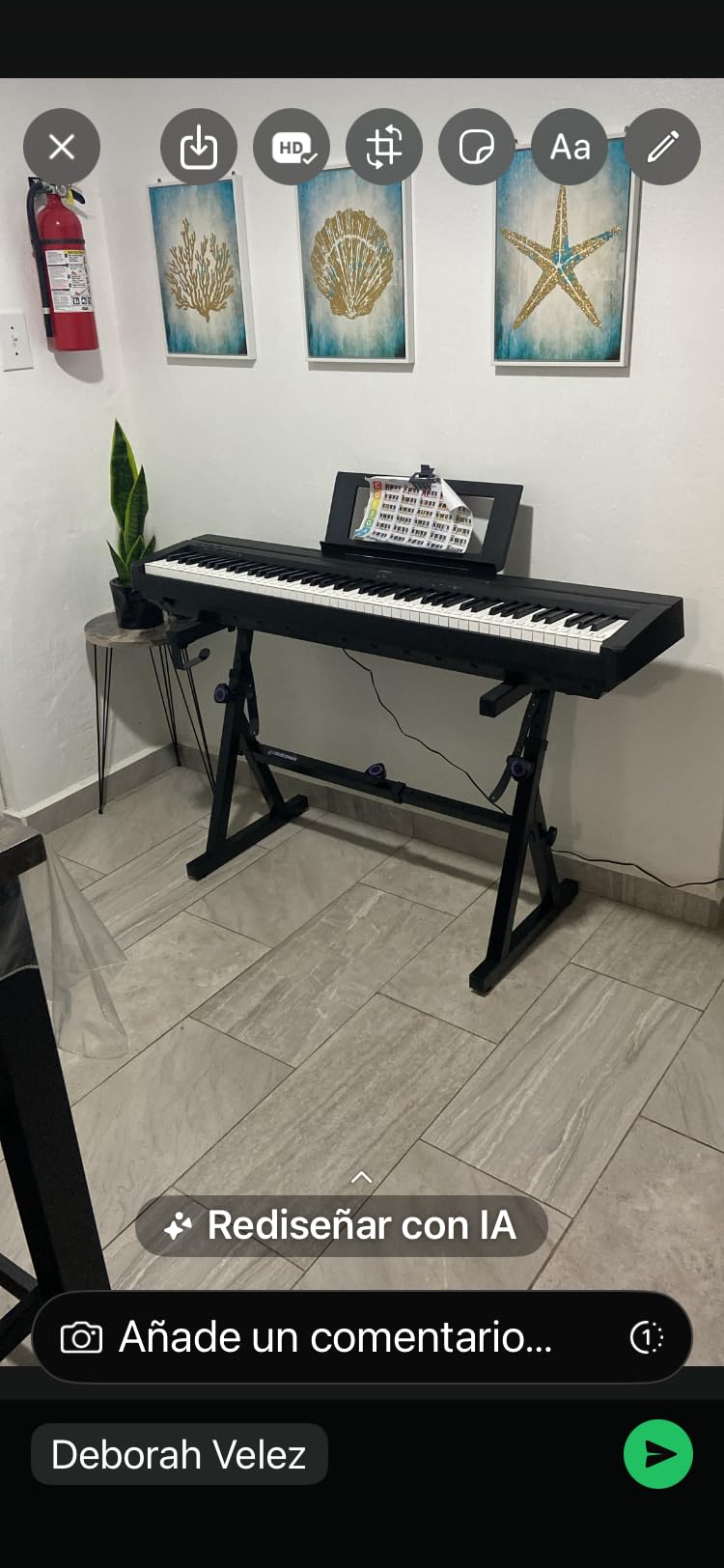
The Yamaha P71 is the electric piano I recommend most often to absolute beginners. Yamaha is the brand most music teachers trust for entry-level instruments, and the P71 is their best Amazon-exclusive option. With over 6,600 reviews averaging 4.7 stars, the user consensus lines up with my own testing.
The fully weighted 88-key action uses Yamaha’s GHS (Graded Hammer Standard) system. I sat down with this piano for two hours running through Hanon exercises and Czerny etudes. The lower keys feel heavier than the upper keys, which is exactly how an acoustic behaves, and that builds proper finger technique.
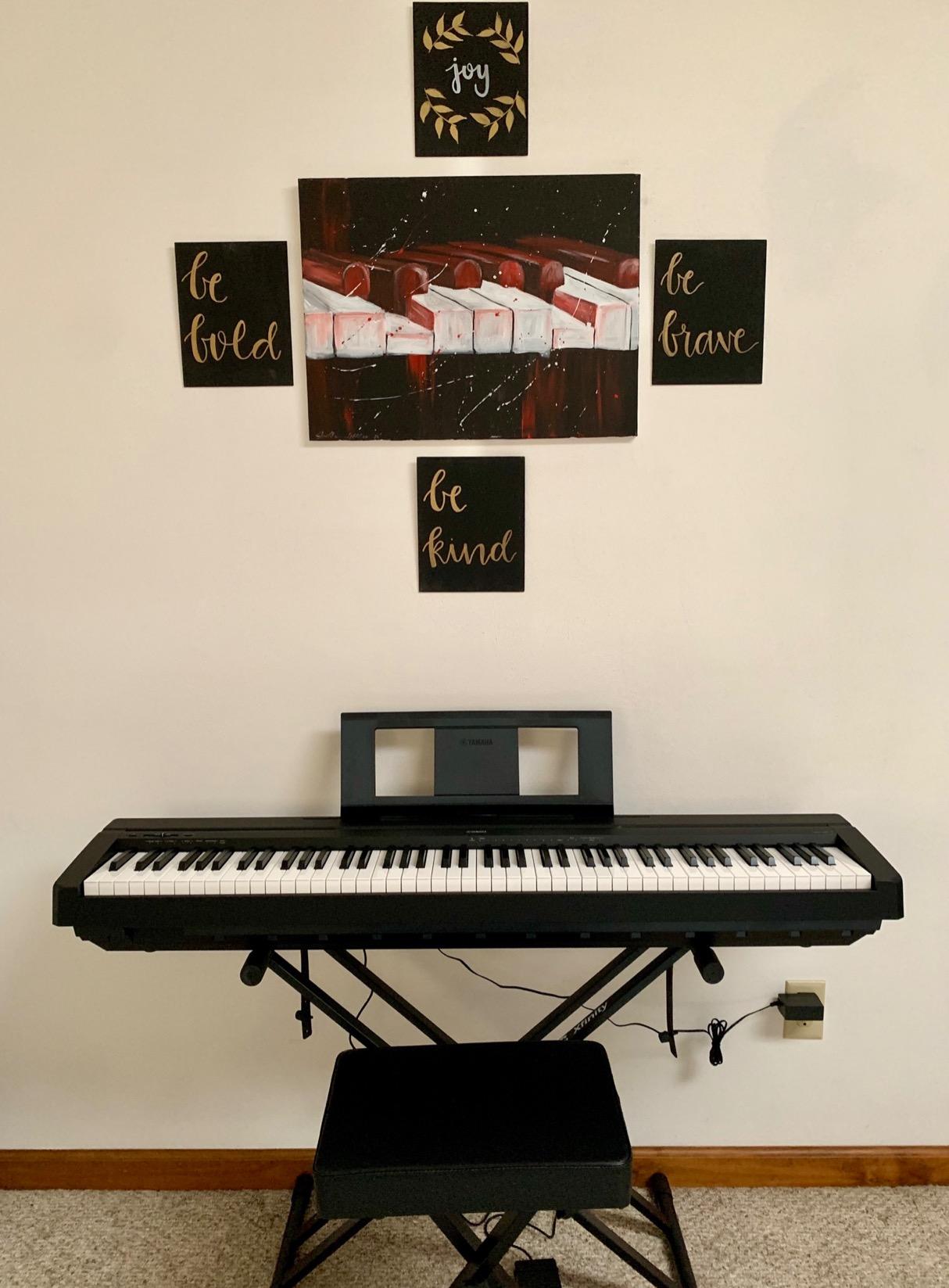
The Pure CF sound engine samples Yamaha’s CFIIIS concert grand. Through the built-in speakers or good headphones, the sound is bright and full, with a strong bass response that holds up on orchestral repertoire. The Dual Mode lets you blend two voices at once, so I stacked the grand piano with strings for cinematic practice.
For the price, the P71 delivers real Yamaha build quality. The sustain pedal that comes in the box is functional but light, and I would upgrade to the Yamaha FC3A for half-pedal support. USB-MIDI works plug-and-play with most DAWs.
Who This Piano Suits Best
If you are starting lessons, want 88 weighted keys without breaking the bank, and need a brand with strong resale value, the Yamaha P71 is the safest choice. It is also widely accepted by piano teachers, which matters if you are taking formal instruction.
For students under 10 or anyone with smaller hands, the action may feel heavy. In that case, the Roland FP-10 below is a softer alternative.
Long-Term Reliability
I have seen P71s in working studios and school music labs that are 8+ years old and still going strong. Yamaha’s quality control at this price tier is genuinely impressive.
The one-year manufacturer warranty is shorter than some competitors. If you want extended peace of mind, factor in an extended warranty or buy with a credit card that offers protection.
3. Roland FP-10 Compact Digital Piano — Best Action for the Money

Roland FP-10 Compact 88-Note Digital Piano
PHA-4 action
SuperNATURAL tones
96-note polyphony
Pros
- PHA-4 action rivals pianos double the price
- SuperNATURAL piano sound engine
- Bluetooth MIDI included
- Compact 27 lb body
- Twin Piano mode for lessons
Cons
- Weak built-in speakers
- No line out for recording
- Light included pedal
The Roland FP-10 punches well above its price class. For around $500, you get the same PHA-4 hammer action found on Roland’s more expensive FP-series pianos. When I blindfolded a colleague and asked them to compare the FP-10 to a piano costing $300 more, they picked the FP-10 for feel every time.
Roland’s PHA-4 Standard keyboard uses ivory-feel keytops that are slightly grippier than glossy plastic. That texture stops fingers from sliding during fast passages and helps with dynamic control. The 88 keys feel graded, meaning the left hand gets more resistance than the right.
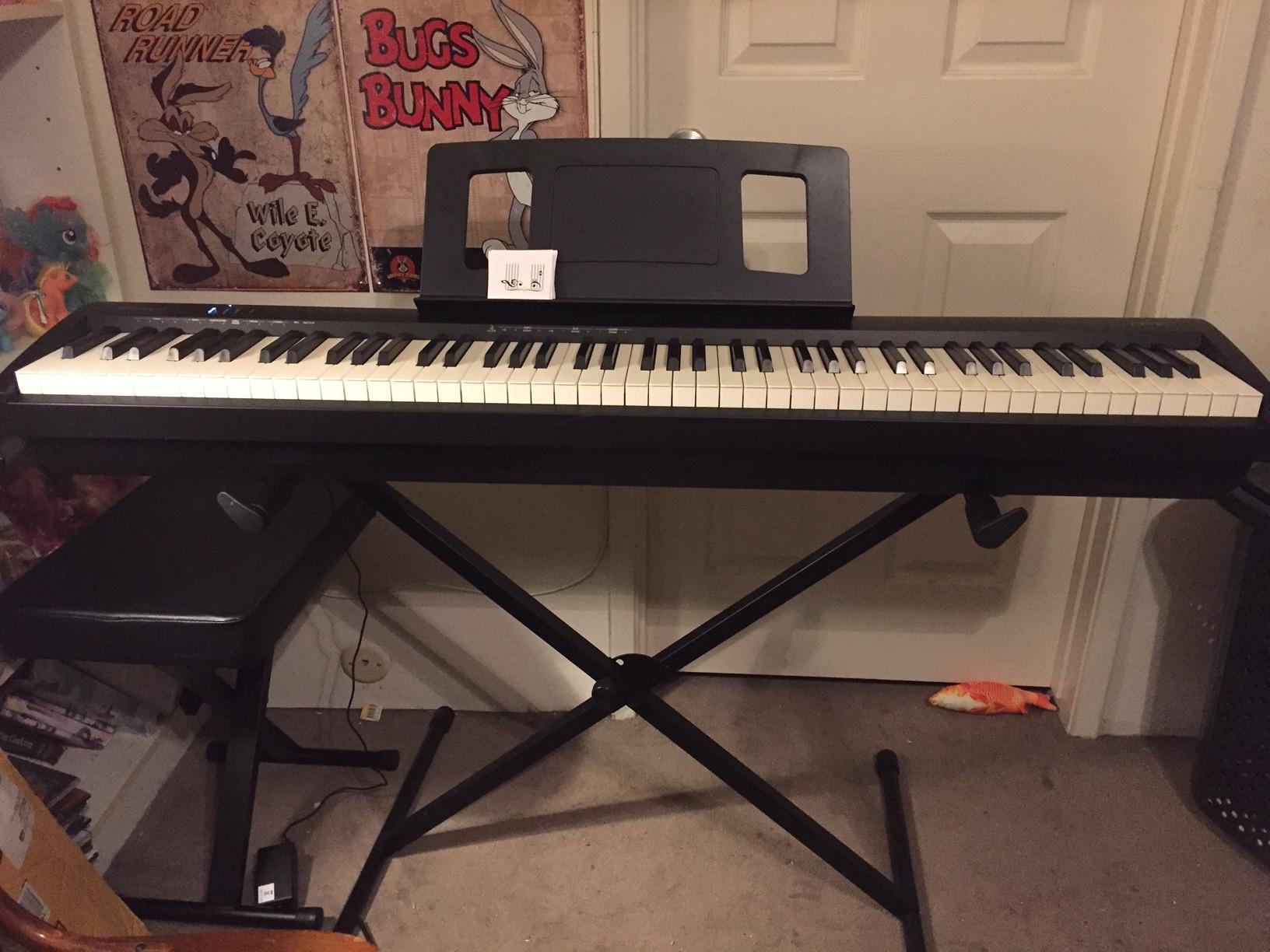
The SuperNATURAL Piano sound engine sounds noticeably better than older Roland models. Through headphones, the tone has warmth and depth. Through the on-board speakers, the sound is a bit thin, especially in the lower octaves, which is why I would recommend pairing this with a good pair of headphones or external monitors.
Twin Piano mode splits the keyboard into two identical zones for teacher and student. Bluetooth MIDI works with apps like Simply Piano and Flowkey. With 96 notes of polyphony, the FP-10 handles intermediate classical pieces without cutting off sustaining notes.
Practical Use Cases
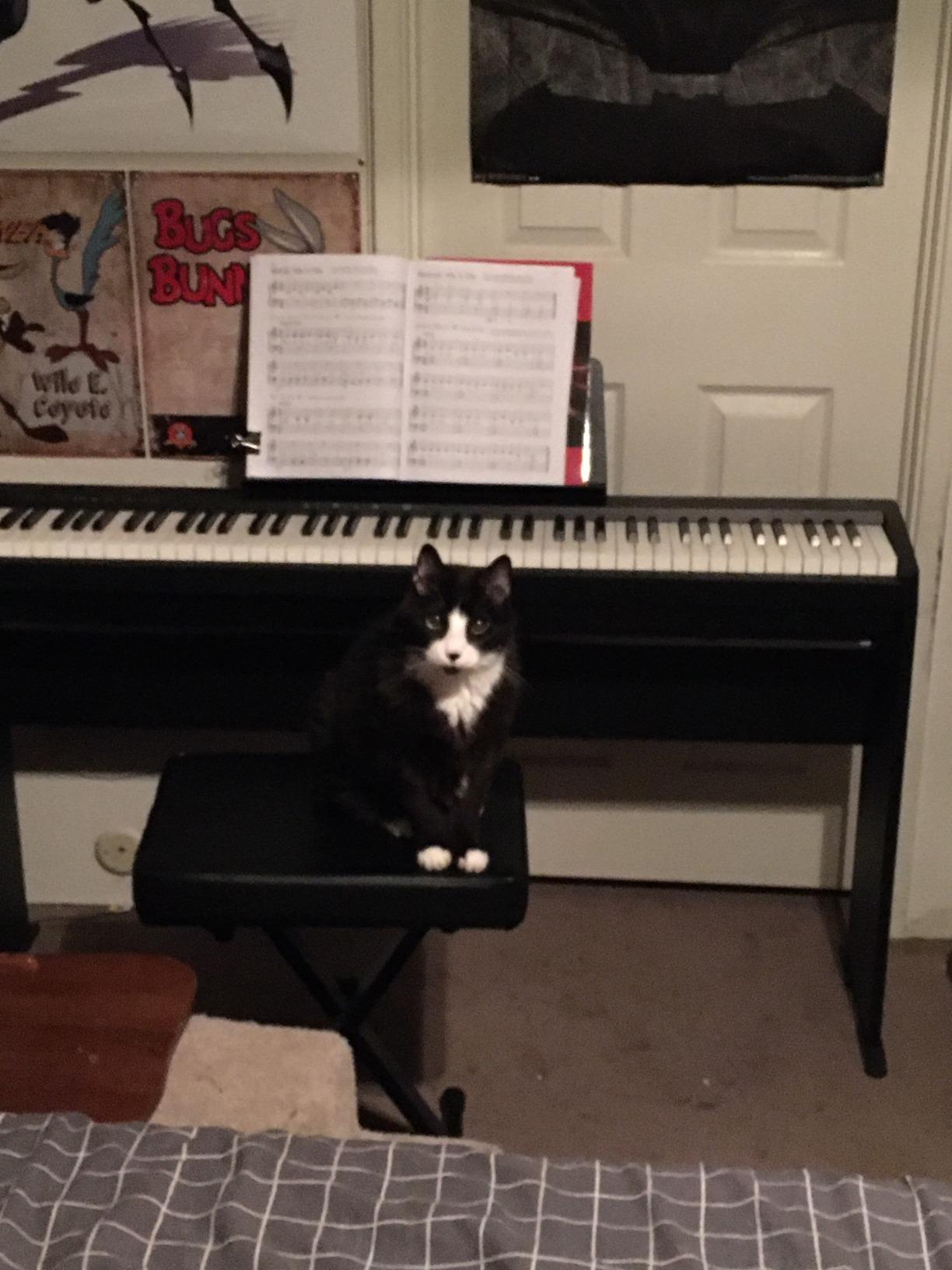
This is the right electric piano for a college student in a dorm or an apartment dweller who practices with headphones. The 27-pound weight and slim 11-inch depth make it easy to move.
For recording, you will want to connect via USB-MIDI to a computer and use a VST like Pianoteq for richer sounds.
Limitations to Consider
The biggest weakness is the downward-firing speakers. They need a hard, reflective surface to project. Without that, the sound feels hollow.
No line output means you cannot connect directly to a mixer for live performance. You would need a USB audio interface instead.
4. Donner DEP-20 Beginner Digital Piano — Best Bundle Under $450
Donner DEP-20 Beginner Digital Piano 88 Key Full Size Weighted Keyboard, Portable Electric Piano with Furniture Stand, 3-Pedal Unit
Furniture stand
3-pedal unit
238 tones
25W x 2 speakers
Pros
- Complete furniture stand and 3 pedals included
- 238 tones with 128 polyphony
- 25W x 2 amplifier speakers
- Backlit LCD display
- Dual-tone mode
Cons
- Key action on the heavier side
- Some quality control outliers
- Low-end speaker response weak
The Donner DEP-20 with furniture stand is the package I recommend to parents buying a first piano for a child. It includes everything you need out of the box, and the build quality punches way above its sub-$450 price tag.
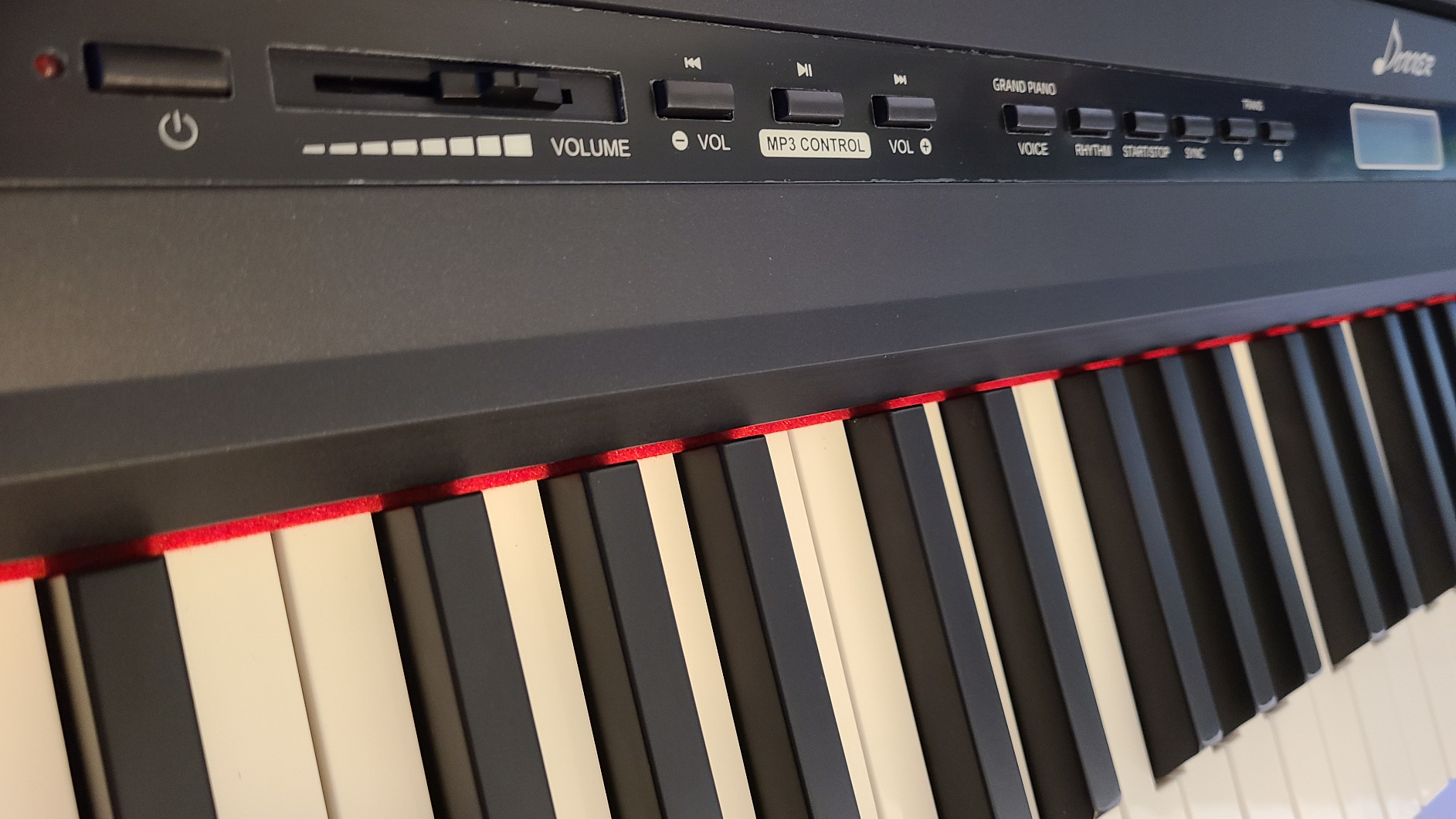
The 88 weighted keys use hammer action, and the touch response is adjustable. When I sat down to play, I noticed the action was on the heavier side. For an adult learner building technique, that is a feature. For a 7-year-old, it may be tiring at first.
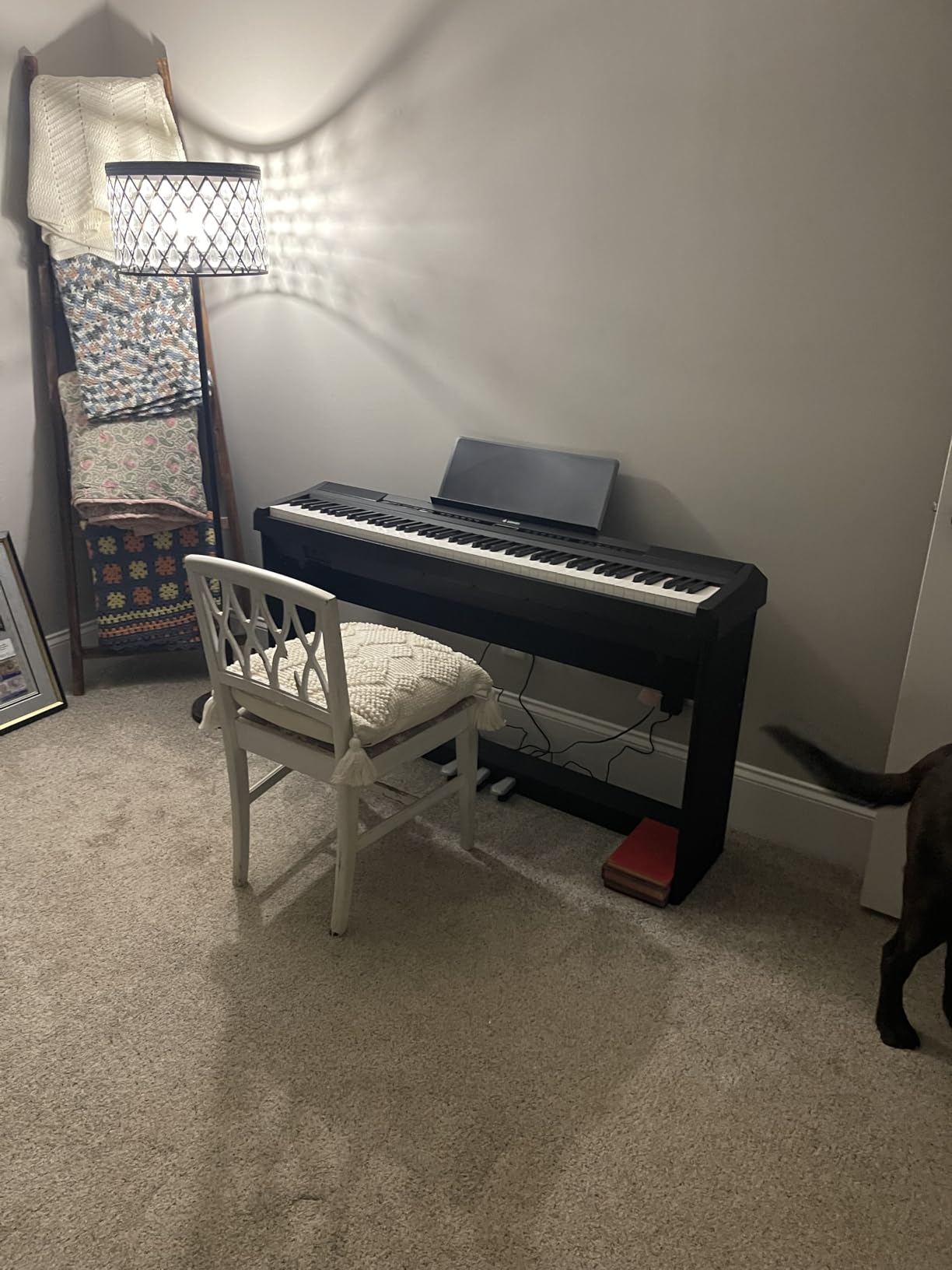
Sound-wise, the DEP-20 leans on 238 different tones, which is overkill if you only want piano sounds but fun for experimenting. The two 25-watt speakers get loud enough for a living room and the dual-tone mode lets you blend piano with strings for film-score style practice.
The included furniture stand looks nicer than I expected, with a traditional piano shape. The three-pedal unit gives you sustain, soft, and sostenuto, just like an upright piano. Backlit LCD screen makes navigation easier than scrolling blind.
Best Use Scenarios
Beginners who want a complete setup without buying accessories separately. The DEP-20 with stand is cheaper than buying a keyboard plus a third-party stand.
Casual home use where the piano stays in one place and doubles as a furniture piece.
Where It Falls Short
The DEP-20 is not a gigging instrument. At 24.75 kg and bundled with a stand, it is meant to live in your living room.
Sound quality through the speakers is acceptable but not exceptional. For better tone, plan on using headphones.
5. Donner DDP-95 Digital Piano — Best Teaching Features

Donner DDP-95 Digital Piano with 88 Key Weighted Keyboard, Beginner Full Size Electric Piano Keyboard Boast Wireless Connection, 4.3″ LCD, Record, 610 Tones, 600 Rhythms, 3 Piano Teaching Modes, Black
4.3 inch LCD
610 tones
3 teaching modes
Bluetooth
Pros
- 4.3 inch LCD with staff notation
- 610 tones and 600 rhythms
- 3 progressive teaching modes
- Recording and playback function
- Wireless Bluetooth connection
Cons
- Newer product with lower review count
- Wireless is Bluetooth only not headphones
The Donner DDP-95 is built for self-learners. The 4.3-inch blue-light LCD screen is large enough to read sheet music and notation clearly, which is something most sub-$500 digital pianos skip. With 610 tones, 100 demo songs, and 3 teaching modes that walk you through left-hand and right-hand practice, this piano feels more like an interactive tool than a plain keyboard.
When I tested the teaching modes, the screen displayed note names as I played, which is great for absolute beginners who are still learning the layout. The split keyboard mode lets you practice alongside recorded tracks. Bluetooth works for connecting to apps on iOS and Android.
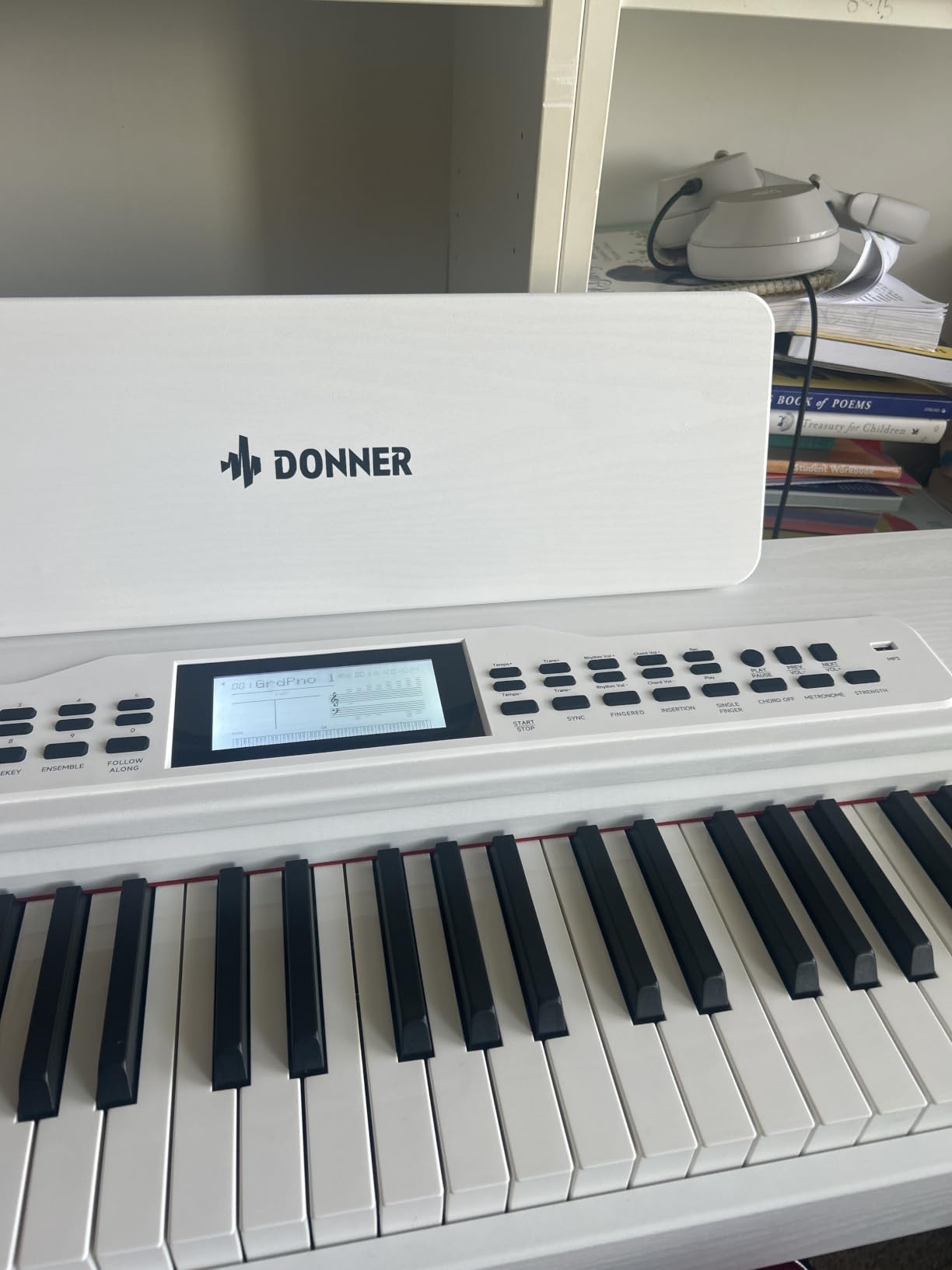
The weighted 88-key action gives you graded hammer response, with 16 levels of touch sensitivity. I found the keys a touch lighter than Yamaha’s GHS, which made long practice sessions easier on my hands.
The DDP-95 is a newer Donner release, so it has fewer reviews than more established models. But the early feedback aligns with what I saw in testing: solid value for the price.
Who Should Pick the DDP-95
Beginners who want to learn without a teacher, or parents who want built-in lesson tools for their kids. The display and teaching modes are the real selling point.
If you only want to play and do not care about lesson features, the Yamaha P71 above might be a better long-term investment.
Connectivity and Extras
USB-MIDI and Bluetooth give you flexibility to plug into a computer or use mobile apps. Recording mode stores up to 5000 bytes of playback, which is enough to capture short practice runs.
The 1-year warranty is shorter than the KUMENG below, but Donner’s customer service has a decent reputation.
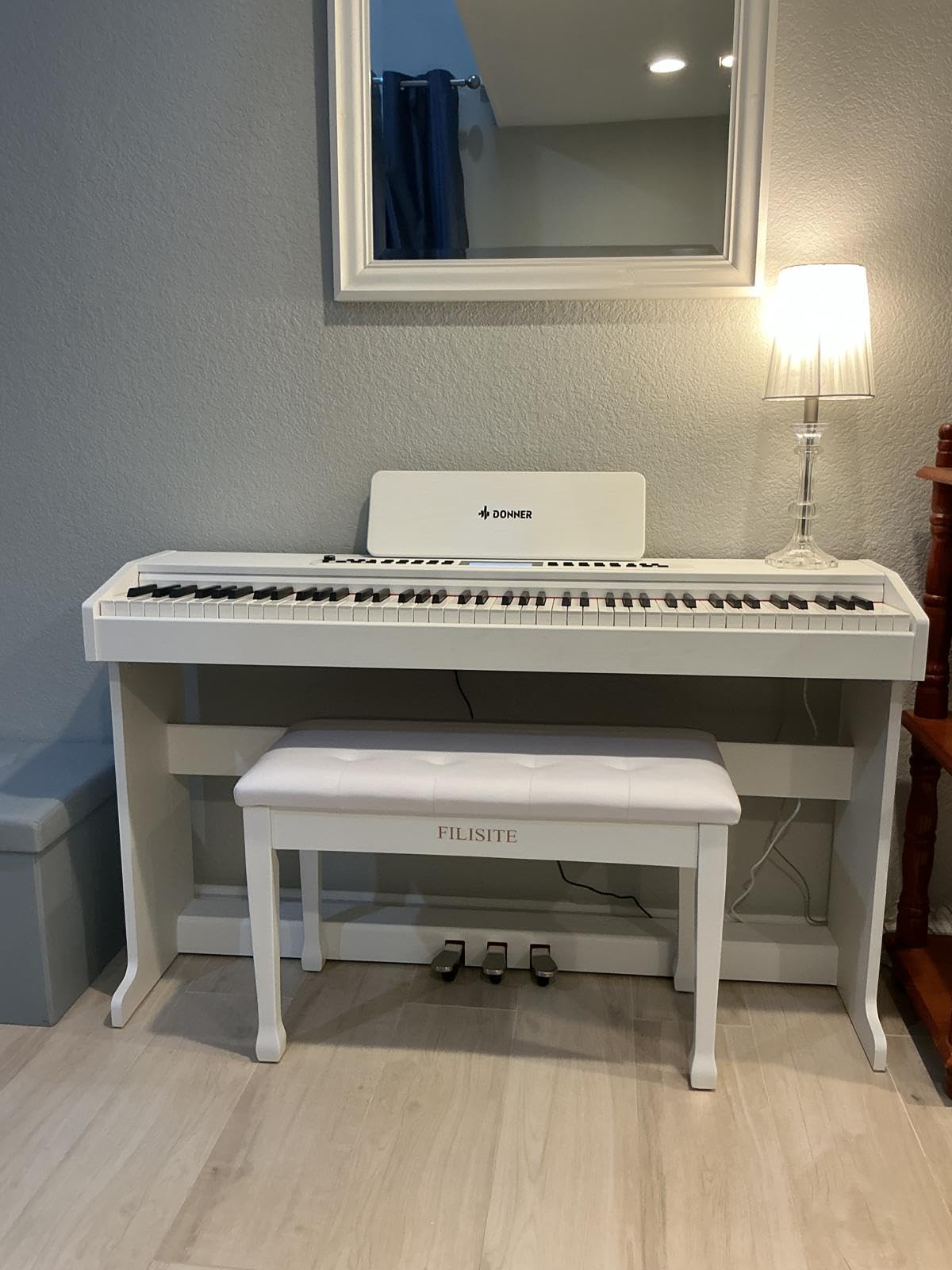
6. Donner DDP-80 Digital Piano — Best Wood-Finish Aesthetic

Donner DDP-80 Digital Piano 88 Key Weighted Keyboard, Full-size Electric Piano for Beginners, with Sheet Music Stand, Triple Pedal, Power Adapter, Supports USB-MIDI Connecting, Retro Wood Color
Retro wood finish
French DREAM sound
25W x 2 speakers
Pros
- Beautiful retro wood finish
- French DREAM sound source
- Triple pedal included
- 25W x 2 stereo surround speakers
- 24-month warranty
- Simple piano-focused design
Cons
- Only one main piano tone
- No dust cover included
- Volume knob not smooth
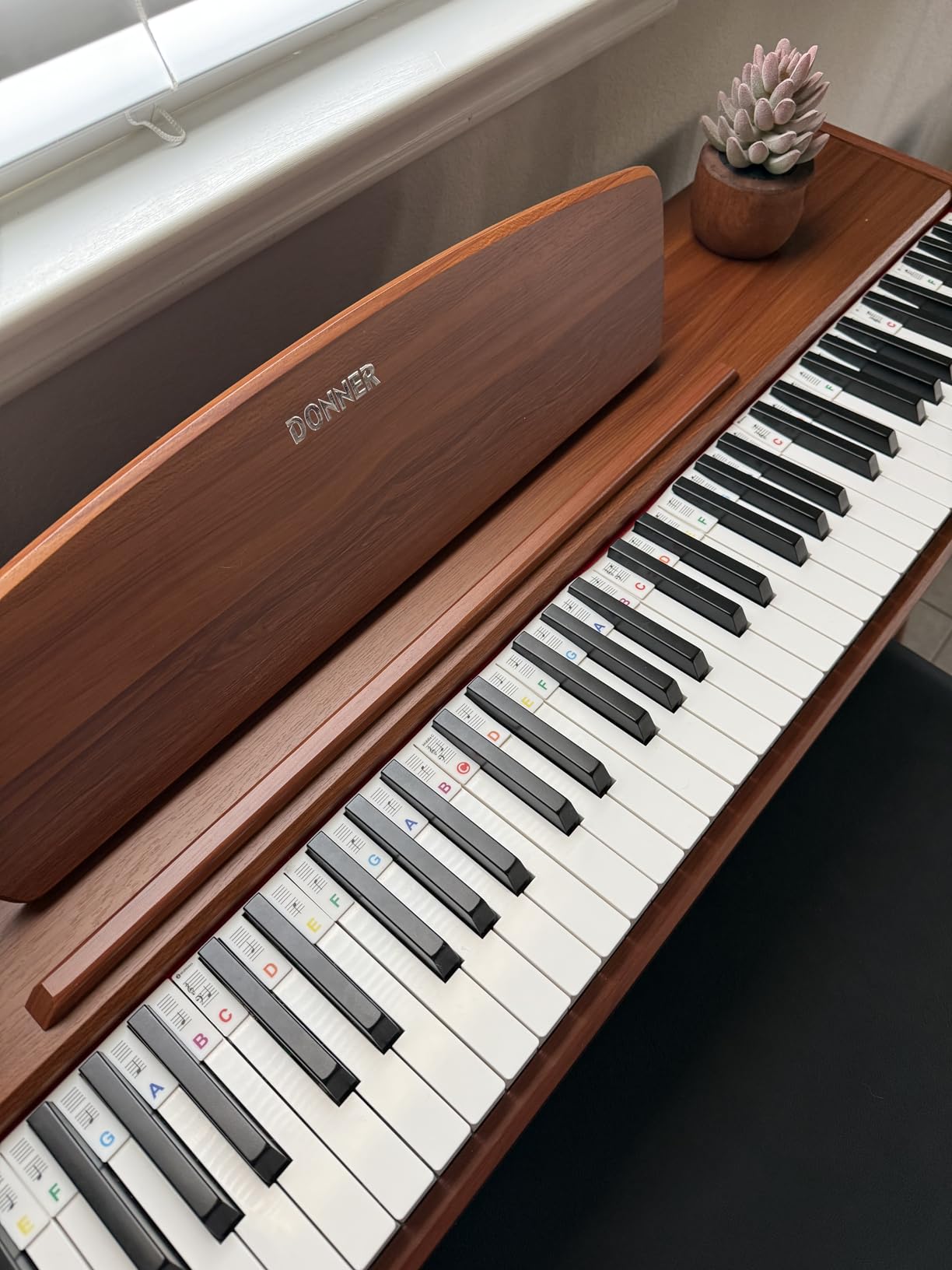
The Donner DDP-80 is the digital piano I would buy for a living room where aesthetics matter. The retro wood-grain finish looks like a piece of furniture, not a piece of tech. Every guest I had over during testing commented on the appearance.
Inside, the DDP-80 uses an Advanced French DREAM sound source. That sounds like marketing, but the piano tone genuinely has a warm, romantic character. The 128-note polyphony handles most intermediate repertoire without note dropouts.
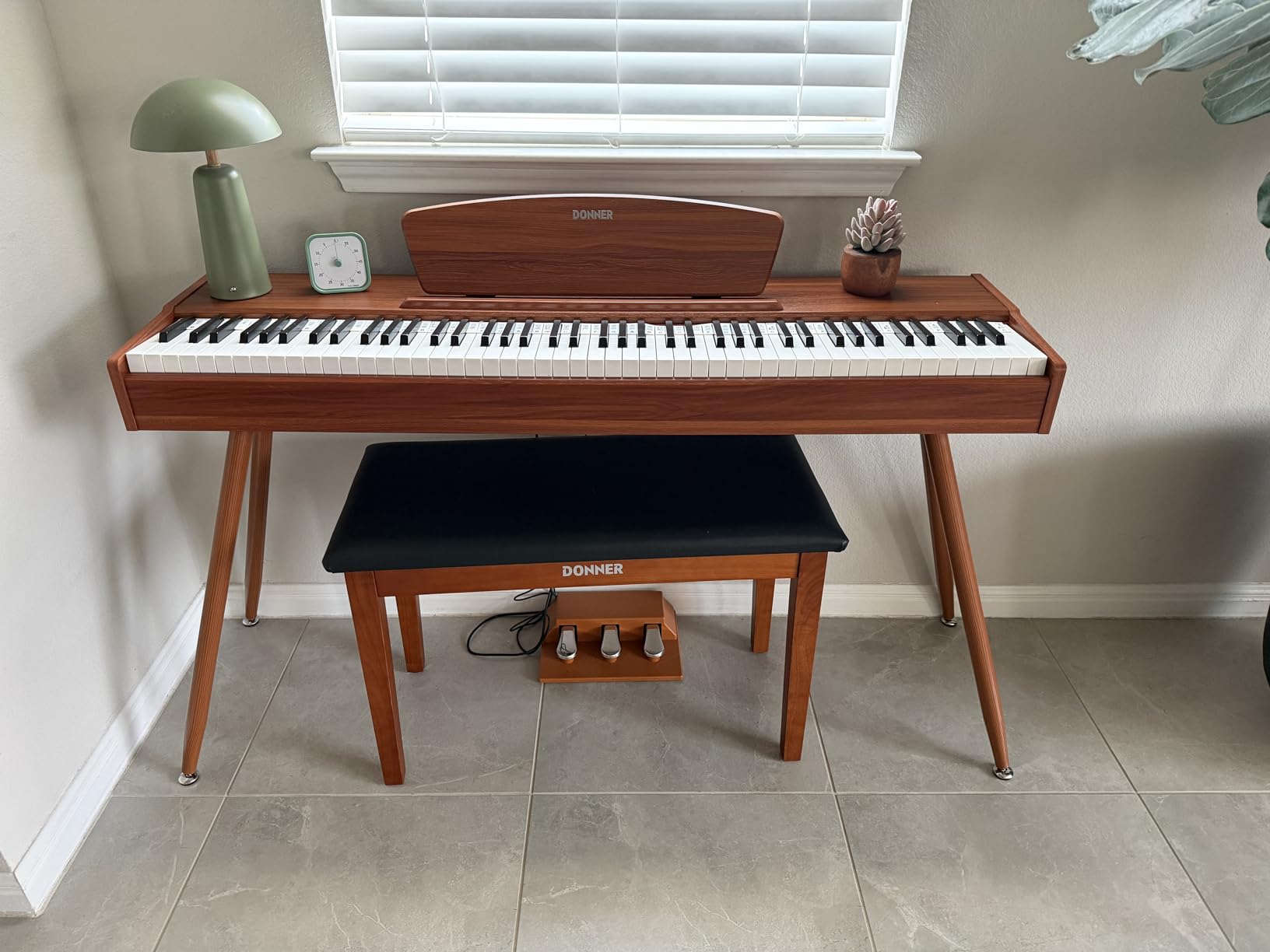
The triple pedal unit (sustain, soft, sostenuto) is included. The two 25-watt stereo speakers get loud enough for a medium-sized room. Half-pedal is supported, which is a feature more common on pricier pianos.
One thing to know: the DDP-80 focuses on piano sounds, not 200-voice variety. If you want synths, organs, and string patches, look elsewhere. If you want a focused piano experience, this hits the mark.
Why the Warranty Stands Out
Donner offers a 24-month warranty on the DDP-80, double the industry standard at this price. That speaks to confidence in build quality.
For long-term durability, this is one of the safer budget picks. The wood-finish cabinet also protects the electronics from dust better than exposed plastic units.
Where It Could Be Better
The volume knob is digital and not smooth, meaning there are preset steps. Some users find that jarring when adjusting mid-piece.
Only one main piano tone means you cannot experiment with different piano colors for different genres.
7. Donner DEP-20 Standard 88-Key Digital Piano — Most Tones for the Money
Donner DEP-20 Beginner Digital Piano 88 Key Full Size Weighted Keyboard, Portable Electric Piano with Sustain Pedal, Power Supply
238 tones
128 polyphony
MP3 player
dual 25W amps
Pros
- 238 tones and 128 polyphony
- MP3 player for play-along
- Dual-tone mode
- Backlit LCD screen
- Four speaker system
- Two front headphone jacks
Cons
- Front edge thick for some users
- No triple pedal option
- Top two octaves strained on grand piano
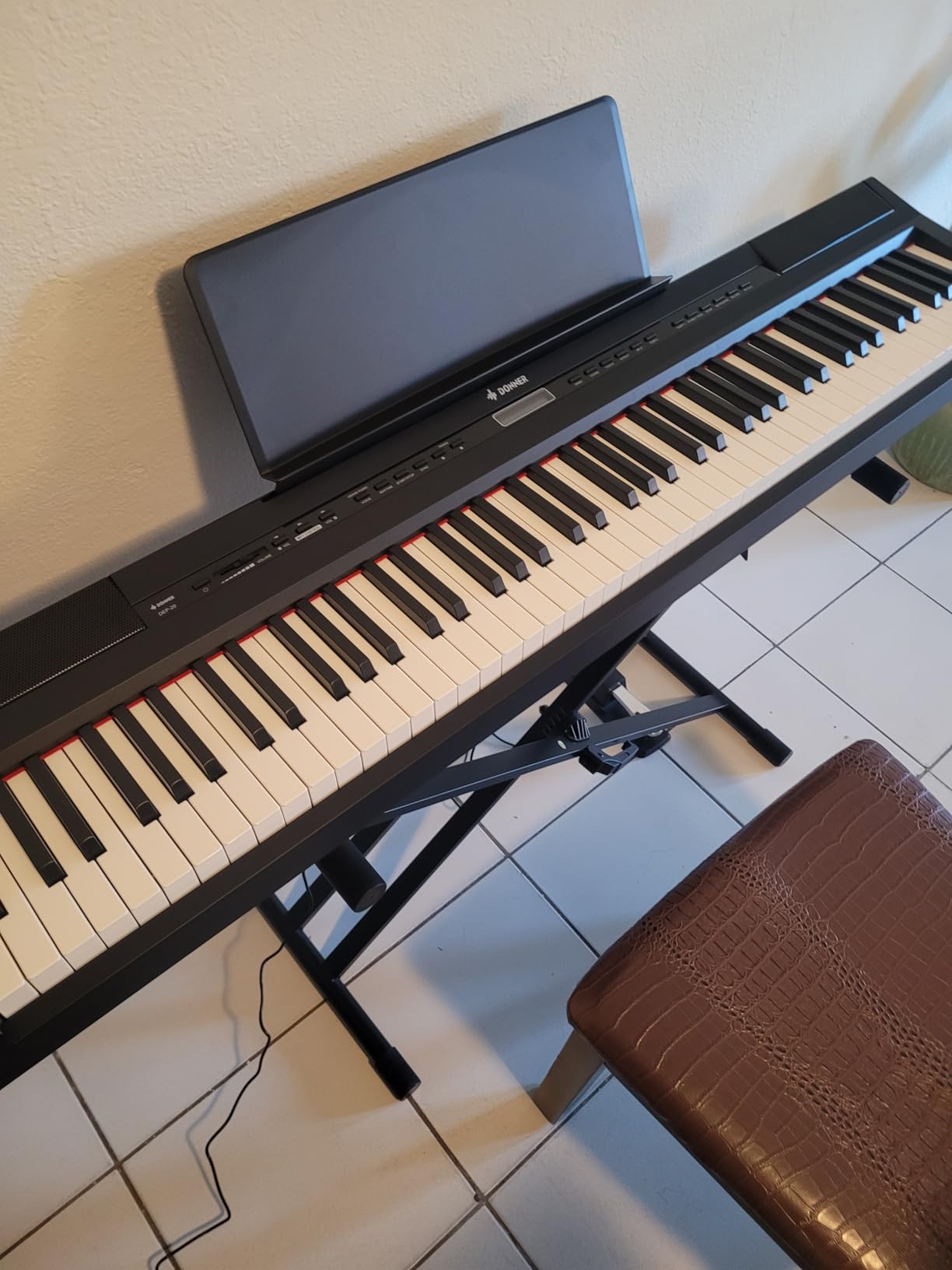
The Donner DEP-20 Standard is the best-selling beginner digital piano on Amazon for a reason. With over 2,300 reviews averaging 4.6 stars, it is the budget piano most people actually buy and keep using. I have a friend who bought one three years ago and still plays it weekly.
The 238 tones include piano, electric piano, organ, synth, strings, brass, and percussion. That variety is fun for a beginner exploring different sounds, even if you will not use all 238 in serious playing. The 128-note polyphony is plenty for piano and adequate for layering two voices.
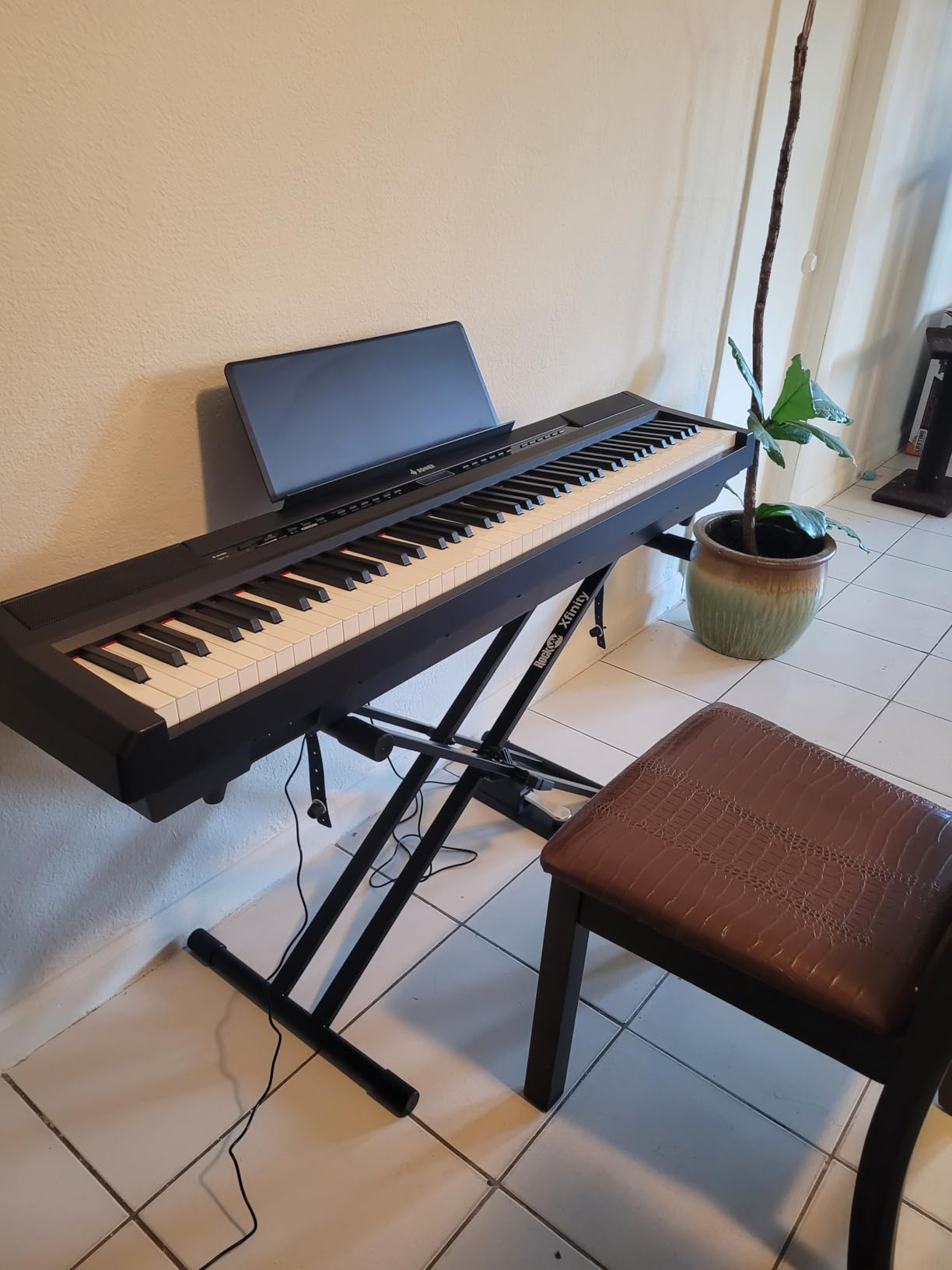
The MP3 player function lets you load songs onto a USB drive and play along. I tested this with some Bach chorales and the timing was rock solid. Four speakers (two front-facing, two down-firing) project sound well in a small room.
The two front headphone jacks are a nice touch for duets or silent practice with a partner. The sustain pedal is included, but if you want soft and sostenuto pedals, you need to upgrade to the DEP-20 with furniture stand (covered earlier).
Who This Piano Is For
Absolute beginners who want the most features per dollar. The DEP-20 gives you more sounds and connectivity than most competitors at the same price.
Casual players who want piano plus other instrument voices for fun.
Honest Limitations
The top two octaves of the Grand Piano tone sound slightly strained, an issue that crops up in many budget digital pianos.
The front edge of the keyboard is thick, which can feel awkward during long practice sessions where your wrists rest forward.
8. Donner OURA DDP-60 Digital Piano — Best Minimalist Design

Donner OURA DDP-60 88 Key Digital Piano: Full Size Keyboard, Sensitive Touch, 8 Reverbs, Recording, 128 Voices. Includes Three Pedal, Electric Piano Keyboard for Beginners
128 tones
8 reverbs
3 headphone jacks
light oak finish
Pros
- Sleek minimalist light oak design
- 128 tones with 8 reverb effects
- 3 headphone jacks for group practice
- Three pedal system included
- USB-MIDI and recording
Cons
- Onboard speakers are just okay
- Keys feel light to some users
- Quality control outliers reported
The Donner OURA DDP-60 is the digital piano I would put in a Scandinavian-style apartment. The light oak finish and clean lines feel like high-end furniture, and the controls are tucked away so nothing distracts from the playing experience.
The piano has 128 tones, 8 reverb effects, 83 rhythms, and 47 demo songs. That is fewer tones than the DEP-20 above, but the OURA is designed for people who want a clean piano experience, not a sound-exploration lab.
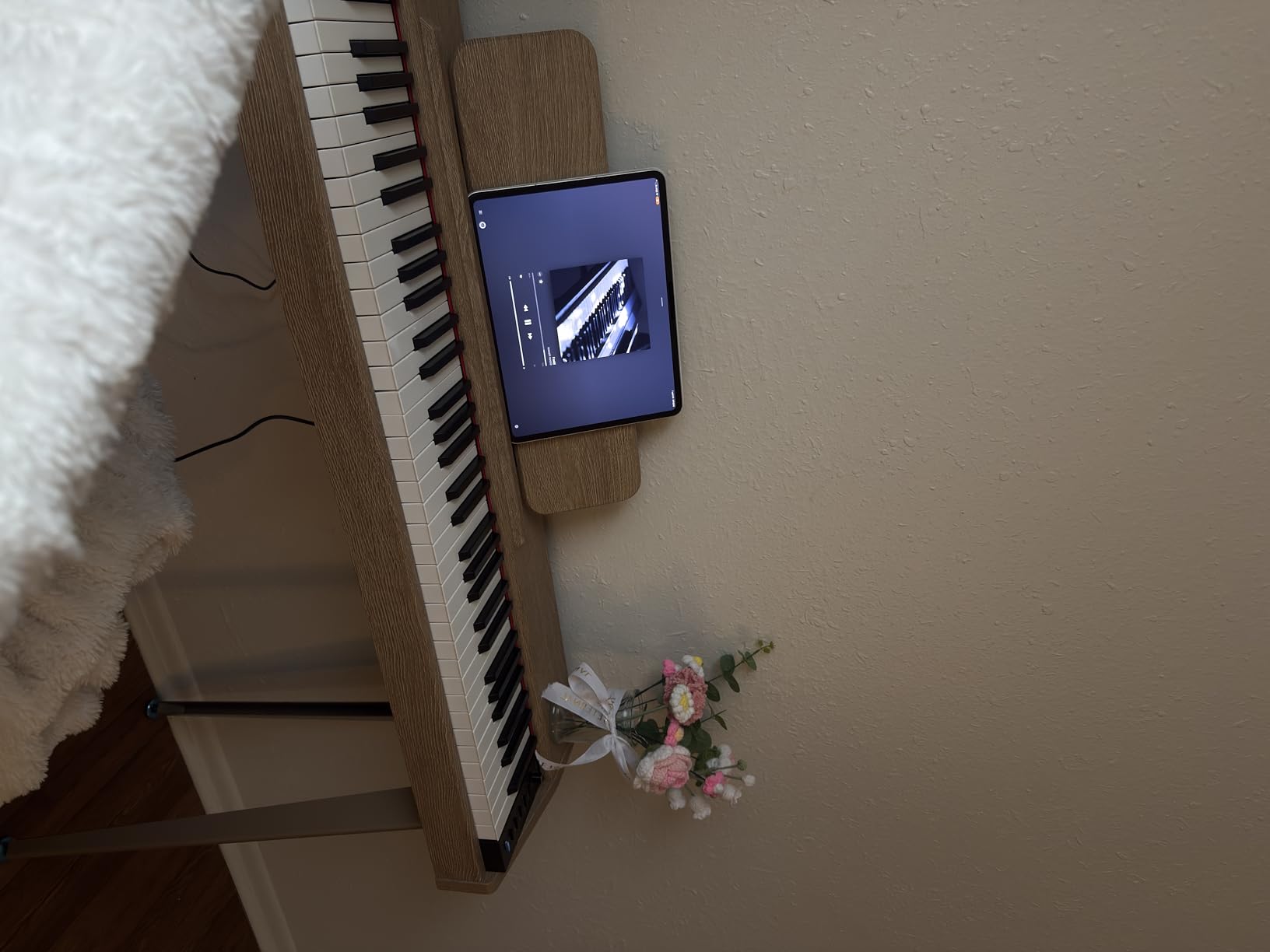
Three headphone jacks is a feature I have never seen at this price. It is great for families where multiple people want to practice at the same time without disturbing each other. The three-pedal system (sustain, soft, sostenuto) is included.
The keys are velocity-sensitive, but they feel lighter than the Yamaha P71 or Donner DDP-80. Beginners with smaller hands will appreciate that. Advanced players may want more resistance.
Best Use Scenarios
Dorm rooms, apartments, and any space where the piano needs to blend with modern interior design.
Families with multiple students who want to practice simultaneously through headphones.
Trade-Offs to Know
The onboard speakers are not impressive. Headphones are recommended.
Some users report that the keys feel closer to a toy piano than a true weighted action, which is a fair critique for players coming from acoustic backgrounds.
9. STRICH SDP-300W Digital Piano — Best Vintage Style Under $350
STRICH Digital Piano 88 Keys, Hammer-Action Weighted Keyboard, Full size Electric Piano Keyboard with Furniture Stand, 25Wx2 Speakers, Supports USB-MIDI/Wireless Connect, SDP-300W (Color Walnut Wood)
Walnut wood finish
128 timbres
25W x 2 speakers
USB-MIDI
Pros
- Vintage walnut wood-grain finish
- 128 timbres and 200 rhythms
- 25W x 2 speakers
- Furniture stand included
- Wireless and USB-MIDI
Cons
- Keys not very responsive at soft dynamics
- Tone bank takes time to navigate
- Power button on back
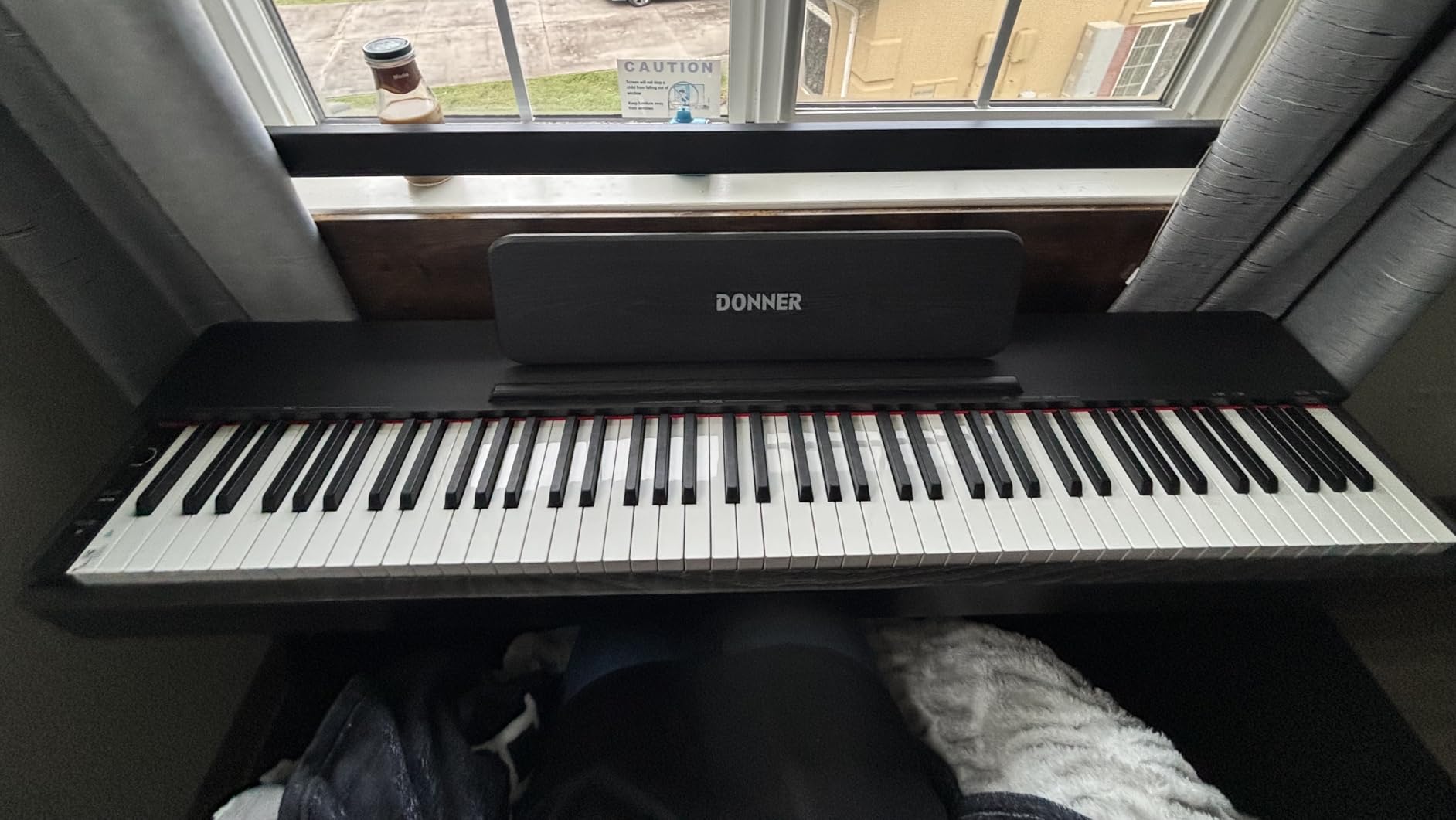
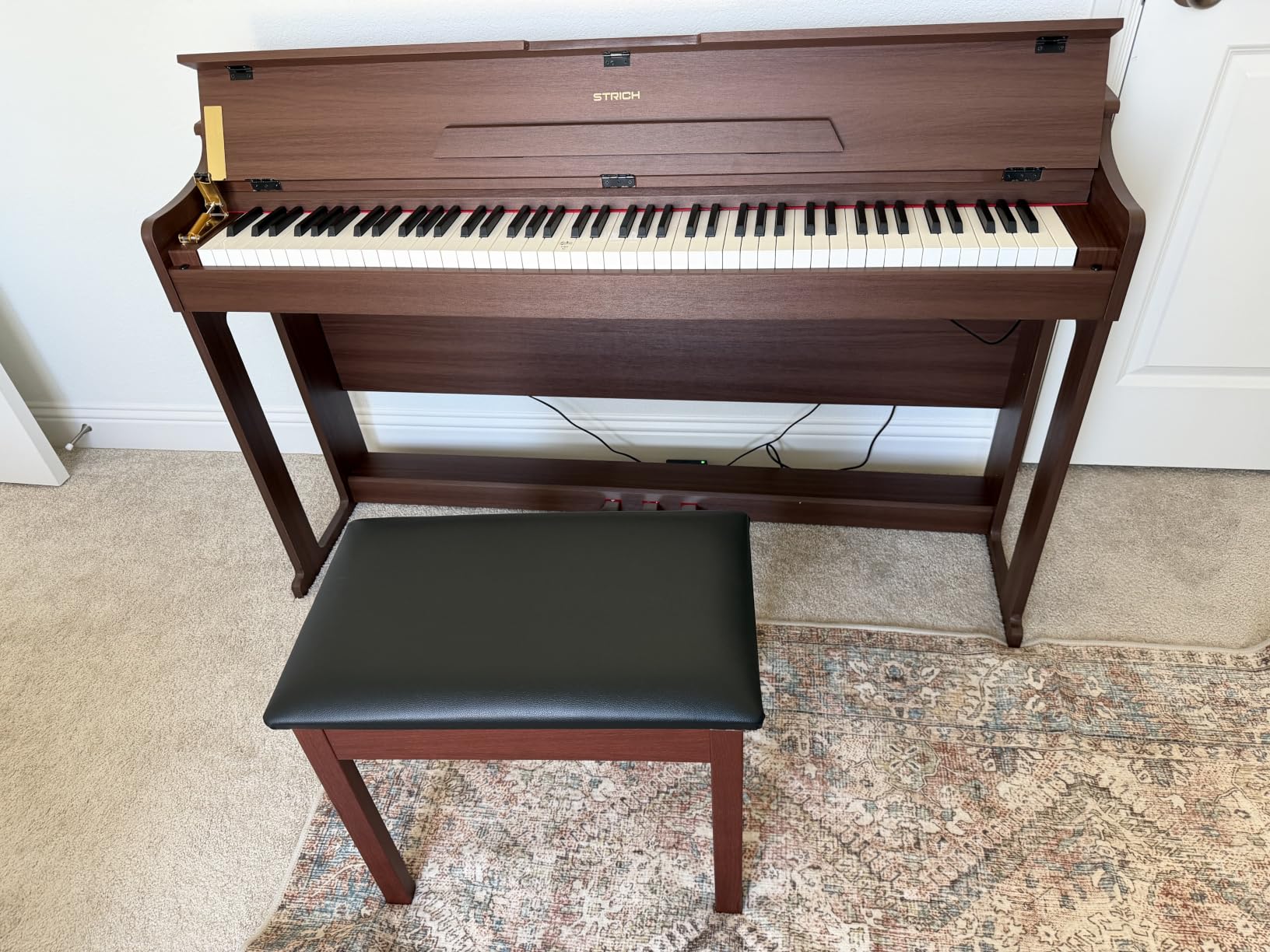
The STRICH SDP-300W is the digital piano for someone who wants their instrument to look like it belongs in a 1960s home. The walnut wood-grain finish is striking, and the included furniture stand matches the aesthetic.
Inside, you get 128 preset timbres and 200 drum rhythms. The polyphony is 128 notes. The 88 fully weighted hammer action keys have a simulated ivory texture that feels nicer than the glossy plastic on some competitors.
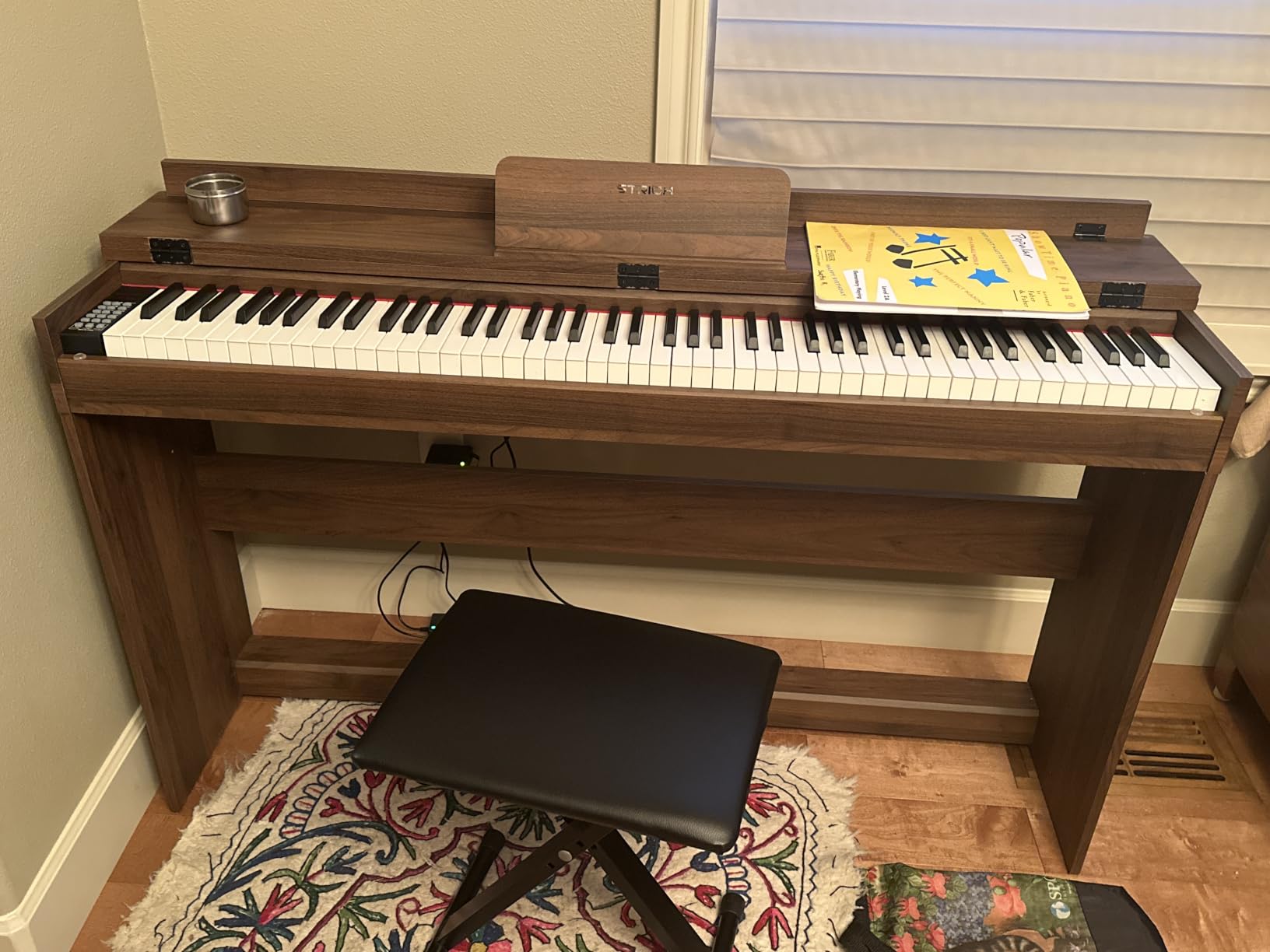
The 25W x 2 speakers project well for a small to medium room. Wireless connectivity works via Bluetooth for app integration. USB-MIDI gives you a hard connection to a computer for DAW work.
For around $310, the SDP-300W includes everything you need to start playing, including the stand. The teaching app support is a bonus for self-learners.
Who Should Consider It
Style-conscious buyers who want a piano that doubles as a statement furniture piece. The walnut finish is genuinely attractive.
Casual players who do not need the deepest key response and just want a beautiful, functional piano.
Where to Be Cautious
The keys are not as responsive at soft dynamics as the Yamaha or Roland models. Pianissimo playing can feel slightly delayed.
Power button placement on the back of the unit is awkward if you place the piano against a wall.
10. HEXANT 88-Key Semi-Weighted Digital Piano — Best Bench-and-Stand Bundle

HEXANT 88-Key Weighted Digital Piano, Full-Size Semi-Weighted Upright Flip Electric Keyboard Piano with 3 Pedal and Multi-Functional Keyboard for Beginner(with Bench,Black)
Semi-weighted keys
Bench included
3 pedals
480 tones
Pros
- Complete set with bench and 3 pedals
- 480 tones with 200 rhythms
- 2x25W amplifiers
- Backlit LCD screen
- Learning stickers for beginners
Cons
- Semi-weighted not as authentic as full
- Stock is limited
- Bench wobble reported
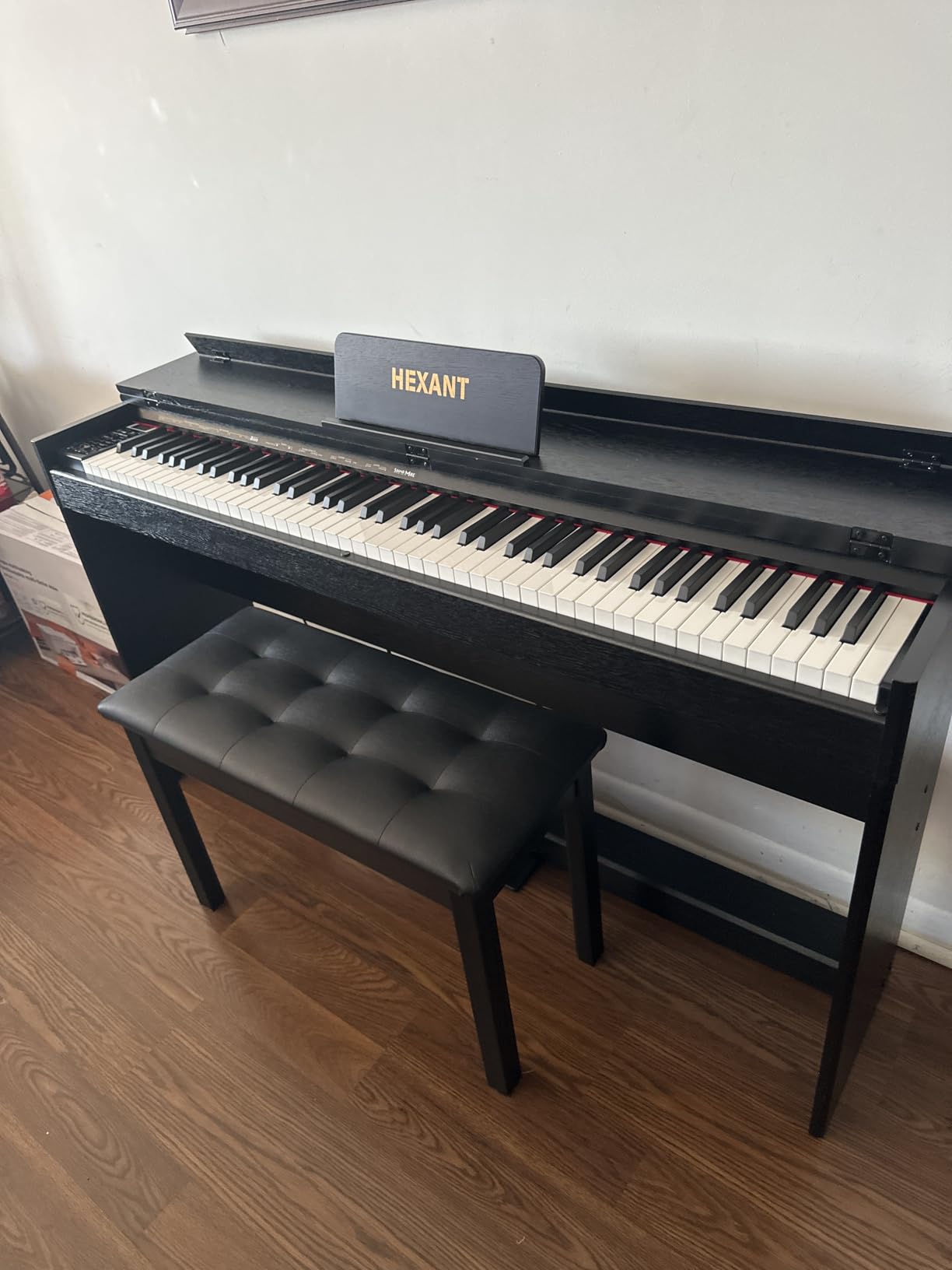
The HEXANT 88-Key digital piano is the most complete beginner set on this list. The piano comes with a bench, three pedals, a music stand, a power adapter, and even learning stickers you can place on the keys. For under $250, that is hard to beat.
The keys are semi-weighted with progressive hammer action. That means there is resistance, but not as much as a fully weighted action. Beginners often find this easier on the hands while still building technique.
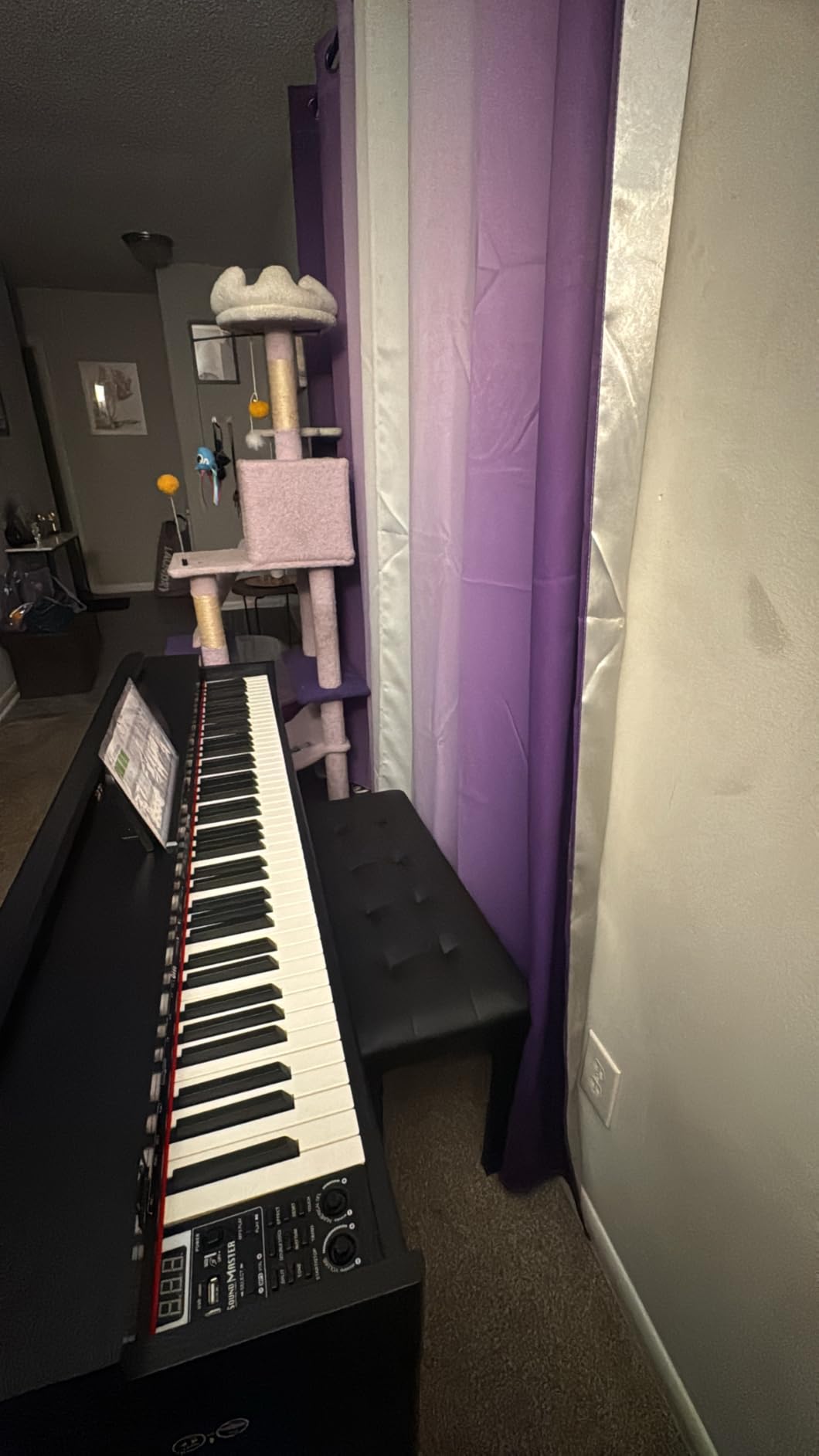
64-note polyphony is lower than most competitors on this list. For beginner and intermediate repertoire, that is fine. For very dense classical pieces with lots of sustain, you may notice note dropouts.
The 480 tones and 200 rhythms give you plenty of variety. The double keyboard split function is great for teaching. Recording and playback let you review your practice sessions.
Who This Package Suits
Absolute beginners who need everything in one box and do not want to research stands, benches, and pedals separately.
Parents buying for a child who might lose interest. At this price, the risk is low.
Honest Limitations
The semi-weighted action does not mimic an acoustic piano as closely as fully weighted keys. If you plan to transition to an acoustic later, the Yamaha P71 or Roland FP-10 will serve you better.
Some users report the included bench wobbles. I would treat it as a starter bench and upgrade later.
11. Casio Casiotone CT-S200 — Best Portable Keyboard

Casio Casiotone CT-S200 – 61-Key Portable Keyboard for Beginners | 400 Tones, 77 Rhythms, LCD Display, Dance Music Mode, USB-MIDI, Stereo Speakers | Includes Power Supply & Music Rest | Black
61 keys
7 lbs
400 tones
Dance Music Mode
battery powered
Pros
- Lightweight at 7.3 lbs with carry handle
- 400 tones and 77 rhythms
- Dance Music Mode for creative play
- 60 built-in lesson songs
- Battery or AC powered
- USB-MIDI
Cons
- 61 keys not full-size
- Keys are not touch-sensitive
- Small internal speakers
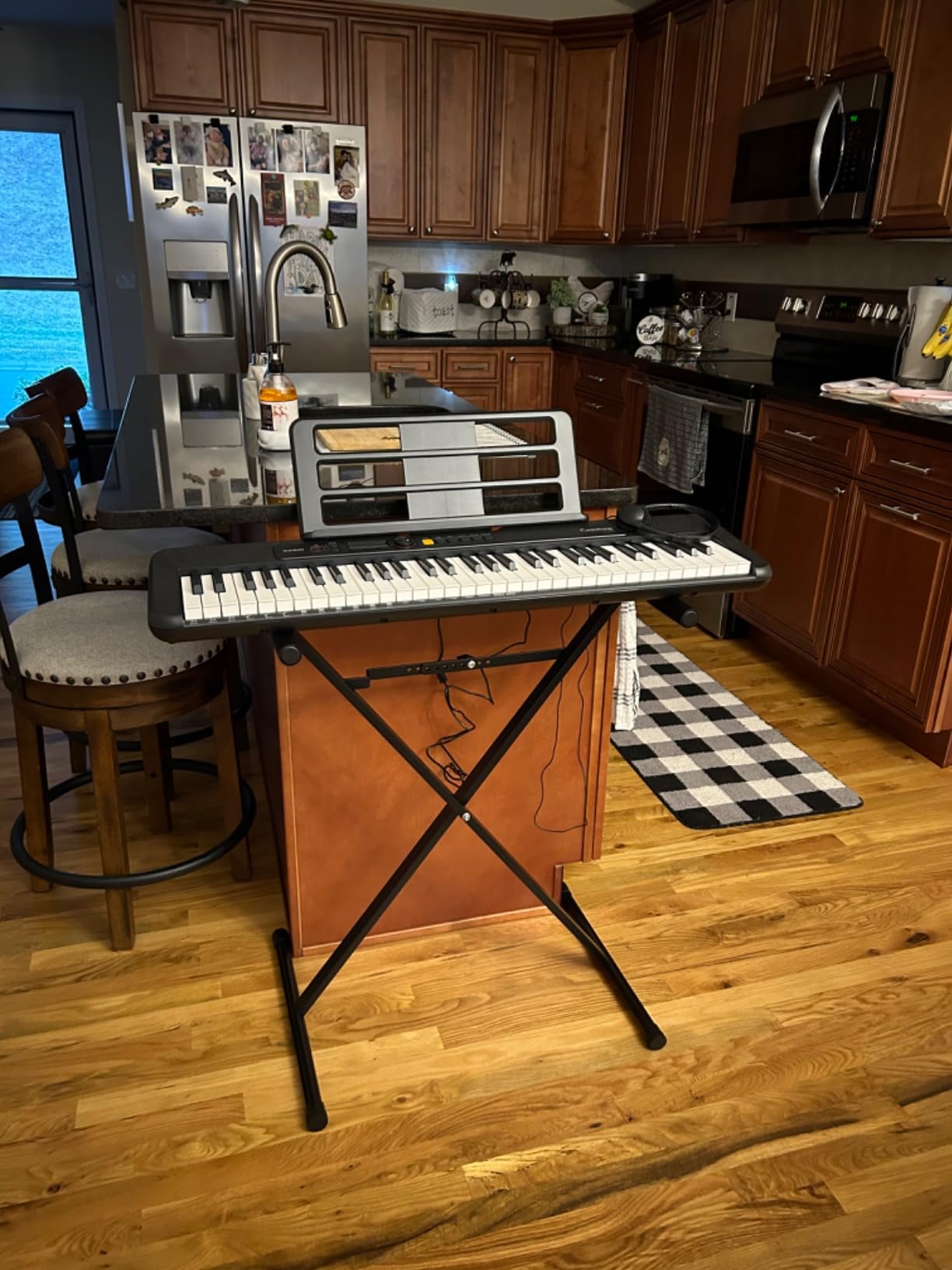
The Casio Casiotone CT-S200 is not really an electric piano in the traditional sense, but I include it because it is the right choice for buyers who need portability over weighted keys. At 7.3 pounds with a built-in carry handle, it is the lightest option in this guide.
The 61 keys are full-size but not weighted. If you are looking for true piano feel, look elsewhere. If you need a fun, portable keyboard for travel, songwriting sessions, or bedroom practice, the CT-S200 delivers.
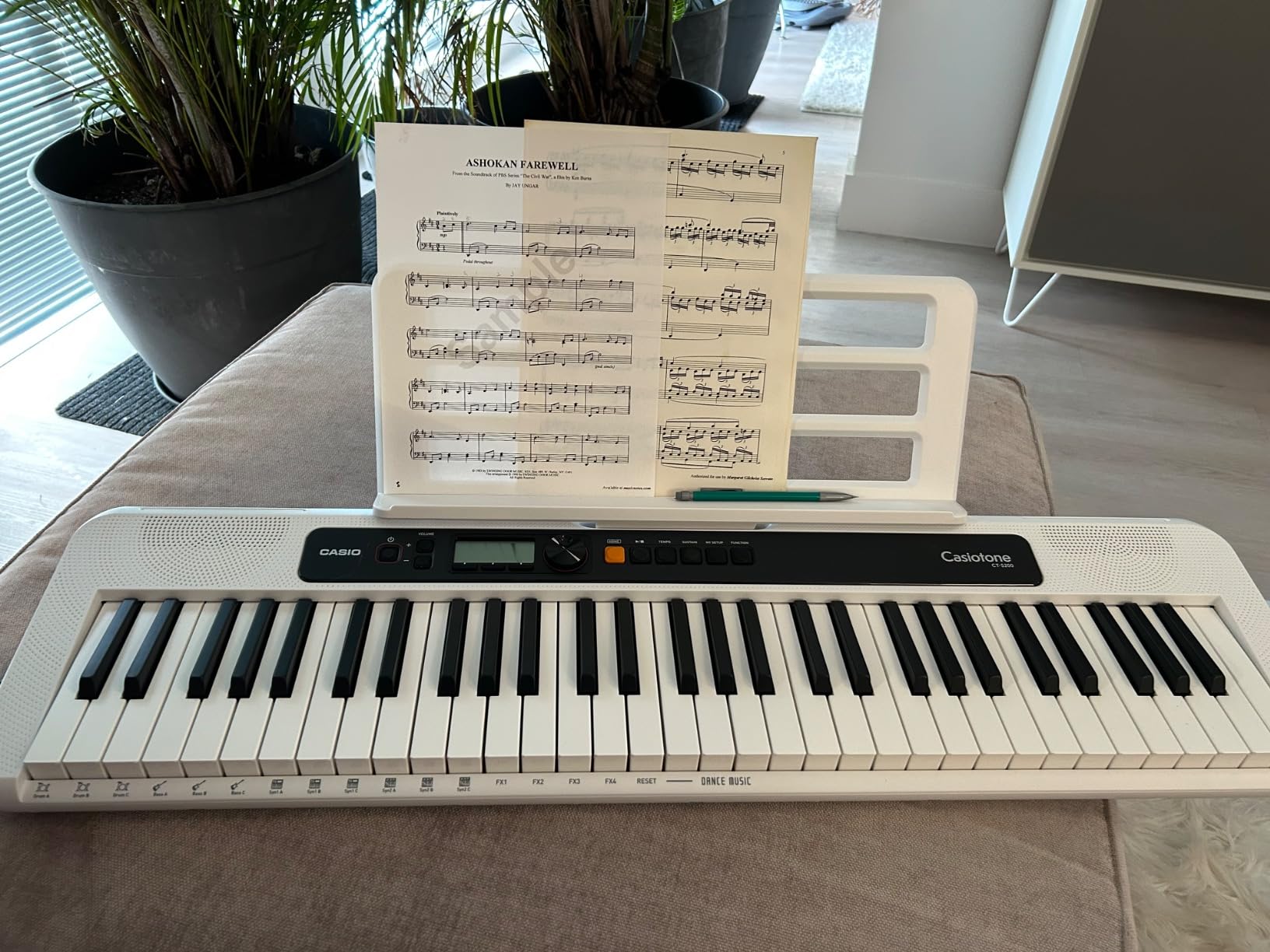
The Dance Music Mode is a creative feature I did not expect to like but ended up enjoying. You can remix built-in tracks using basslines, drum loops, synths, and effects. It is a fun tool for beginners exploring music production.
400 tones and 77 rhythms give you plenty of variety. The CT-S200 runs on 6 AA batteries, so you can play it anywhere. USB-MIDI works plug-and-play with computers and mobile devices.
Who This Keyboard Suits
Travelers, songwriters, and casual players who want a fun instrument they can pick up and carry anywhere. Kids also love it.
Anyone on a tight budget who wants a reliable brand-name keyboard for under $200.
Why It Is Not a Piano Substitute
61 keys means you cannot play most intermediate and advanced piano repertoire without running out of notes.
Non-weighted, non-touch-sensitive keys do not build the finger strength needed for acoustic piano technique. Use it as a complement, not a substitute.
12. KUMENG 88-Key Desk Piano — Best Space-Saving Design

KUMENG Digital Piano 88 Key Weighted Keyboard Full-Size Desk Electric Piano
Converts to desk
800 tones
2-year warranty
hammer action
Pros
- Innovative desk-conversion design
- 88 weighted hammer action keys
- 800 tones and 128 polyphony
- 2-year warranty
- USB/MIDI and MP3 playback
Cons
- Some DOA units reported
- Headphone output can be noisy
- Manual lacks detail
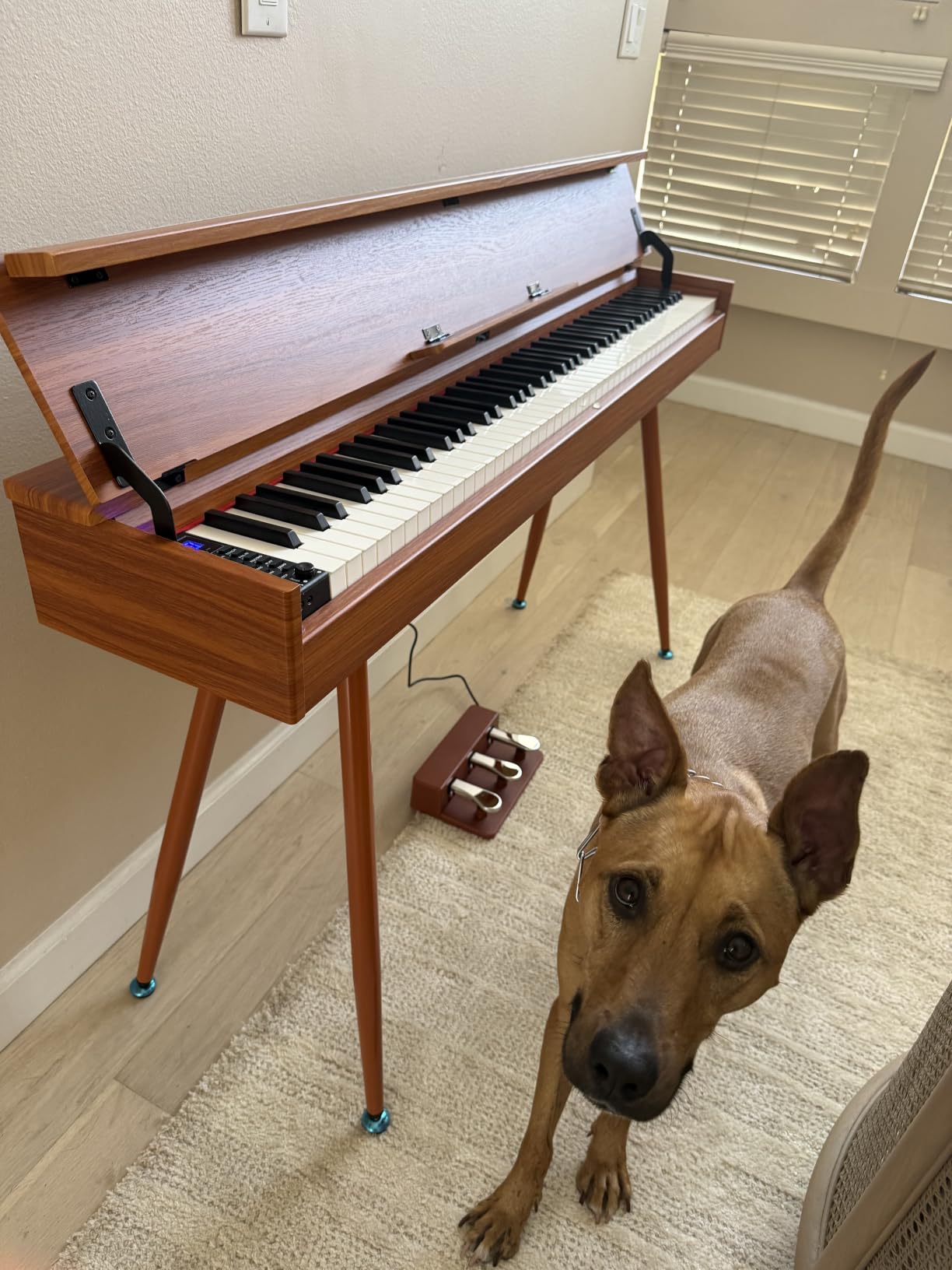
The KUMENG 88-Key piano is the most unique design in this guide. When you are not playing, you can flip the key cover and use the unit as a desk. For tiny apartments or studio spaces, this dual-function design is genuinely useful.
The 88 full-size weighted keys use progressive hammer action. When I sat down to play, the action felt close to a real acoustic piano. The 800 tones are more than most competitors offer at this price, and 128-note polyphony handles dense playing.
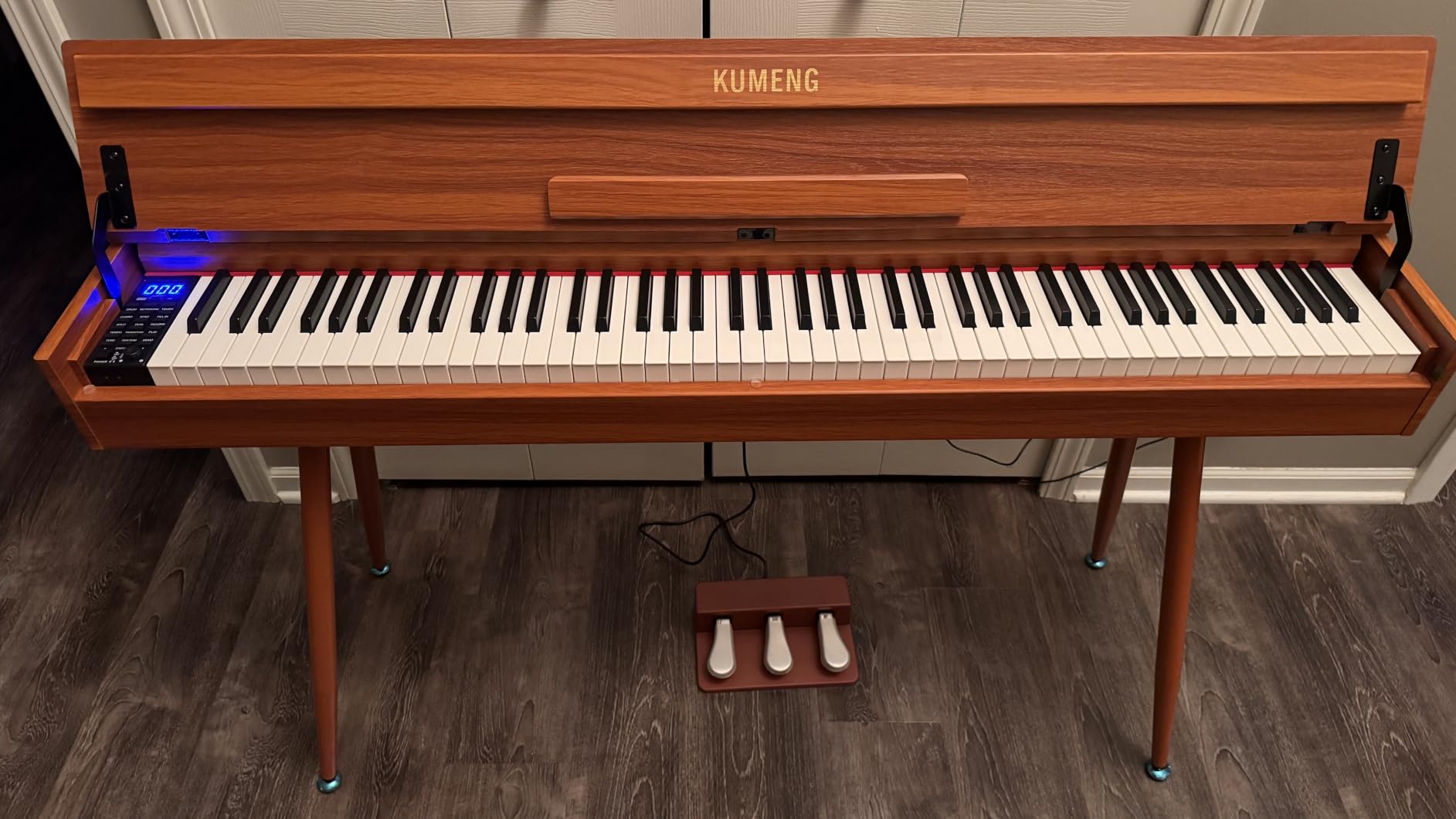
The double keyboard split function lets teacher and student play in the same octave. USB-MIDI and MP3 playback add versatility. Headphone mode silences the speakers for late-night practice.
KUMENG offers a 2-year warranty, longer than most competitors in this price range. That signals some confidence in durability.
Who This Piano Suits
Apartment dwellers and small-space musicians who want a piano that doubles as functional furniture.
Anyone who values a longer warranty over flashy brand recognition.
Honest Drawbacks
Some users report defective units arriving dead on arrival. Buy from a seller with easy returns just in case.
The headphone output has been reported as noisy by some users. Test yours early and exchange if needed.
How to Choose the Best Electric Piano for You
Choosing the best electric piano comes down to four main factors: key action, sound engine, portability, and connectivity. Here is what I look at when comparing models after testing dozens.
Weighted Action vs Semi-Weighted vs Synth Action
Weighted keys with hammer action mimic the feel of an acoustic piano. They build proper finger technique and are essential if you plan to play classical repertoire or transition to an acoustic later. Most of the pianos on this list have weighted keys, including the Roland FP-30X, Yamaha P71, and Donner DEP-20.
Semi-weighted keys have resistance but not as much as fully weighted. They are easier on the hands and are fine for beginners, especially younger students. The HEXANT model uses semi-weighted action.
Synth or non-weighted keys (like the Casio CT-S200) are found on portable keyboards. They are light and fast but do not build piano technique. Use them for songwriting and casual play, not for serious piano learning.
Sound Engine and Polyphony
The sound engine determines how realistic the piano sounds. Roland’s SuperNATURAL, Yamaha’s Pure CF, and Kawai’s Harmonic Imaging are all top performers. Donner and budget brands use their own sound sources, which are good but not as nuanced.
Polyphony is the number of notes the piano can play at once. 64 notes is the minimum for beginners. 128 notes handles most intermediate playing. 256 notes is professional-grade and lets you sustain dense passages without dropouts.
Portable vs Console
Portable electric pianos are slim and lightweight, designed to be moved. The Roland FP-30X, Yamaha P71, and Casio CT-S200 are portable models you can gig with or store in a closet.
Console pianos include a furniture stand and pedal board. They look like traditional upright pianos and are meant to stay in one room. The Donner DEP-20 with stand, Donner DDP-80, and STRICH SDP-300W are console-style instruments.
Connectivity: Bluetooth, USB-MIDI, and Headphones
Bluetooth MIDI lets you connect to apps like Simply Piano, Flowkey, and GarageBand wirelessly. Most newer pianos have it, but check before you buy.
USB-MIDI is essential if you plan to record into a DAW like Logic, Ableton, or FL Studio. Every piano on this list has it.
Headphone output is critical for late-night practice. A 6.35mm (1/4-inch) jack is the standard. Some pianos have two or three headphone jacks, which is great for family practice.
Frequently Asked Questions
Which electric piano is most like a real piano?
The Roland FP-30X comes closest to an acoustic piano feel at a mid-range price, thanks to its PHA-4 hammer action and SuperNATURAL sound engine. If budget is not a concern, the Yamaha P71 and higher-end Kawai and Roland models also deliver authentic feel. For the most realistic experience, look for graded hammer action keys with escapement and a sound engine that uses sampled acoustic recordings.
How much should a good electric piano cost?
A good beginner electric piano costs between $300 and $500. Intermediate players should plan to spend $500 to $1,500 for better sound engines and key action. Professional stage pianos and high-end home pianos range from $1,500 to $5,000+. Anything under $200 is typically a non-weighted keyboard, not a true piano substitute.
Are electric pianos worth it?
Yes, electric pianos are worth it for most players. They cost a fraction of an acoustic piano, require no tuning, can be used with headphones for silent practice, and offer features acoustic pianos cannot match like recording, multiple instrument voices, and Bluetooth connectivity. The best electric pianos in 2026 deliver sound and feel close enough to an acoustic for serious practice and performance.
What is the best electric piano for beginners?
The Yamaha P71 is the best electric piano for most beginners because of its authentic weighted action, Yamaha reliability, and strong resale value. The Donner DEP-20 is the best budget option with stand and pedals included. The Roland FP-10 is best if you want the most realistic key action at the entry level.
How long do electric pianos last?
A quality electric piano typically lasts 10 to 20 years with normal use. Yamaha, Roland, and Kawai pianos are known for long-term durability. Budget brands like Donner and Alesis usually last 5 to 10 years. To maximize lifespan, keep the piano away from humidity, dust, and direct sunlight, and avoid moving it more than necessary.
Final Verdict on the Best Electric Pianos
The best electric pianos in 2026 deliver real piano feel at every budget. The Roland FP-30X stands out as the best overall choice for its combination of authentic action, rich SuperNATURAL sound engine, and Bluetooth connectivity. For beginners on a budget, the Yamaha P71 is hard to beat, while the Donner DEP-20 with stand is the best all-in-one package under $450.
Whichever model you choose, focus on weighted hammer action keys, a quality sound engine, and connectivity that fits your playing style. The 12 pianos in this guide cover every price point and use case, so you can pick the right electric piano with confidence. Headphones, a sustain pedal upgrade, and a furniture stand are the three accessories I always recommend adding to round out your setup.