
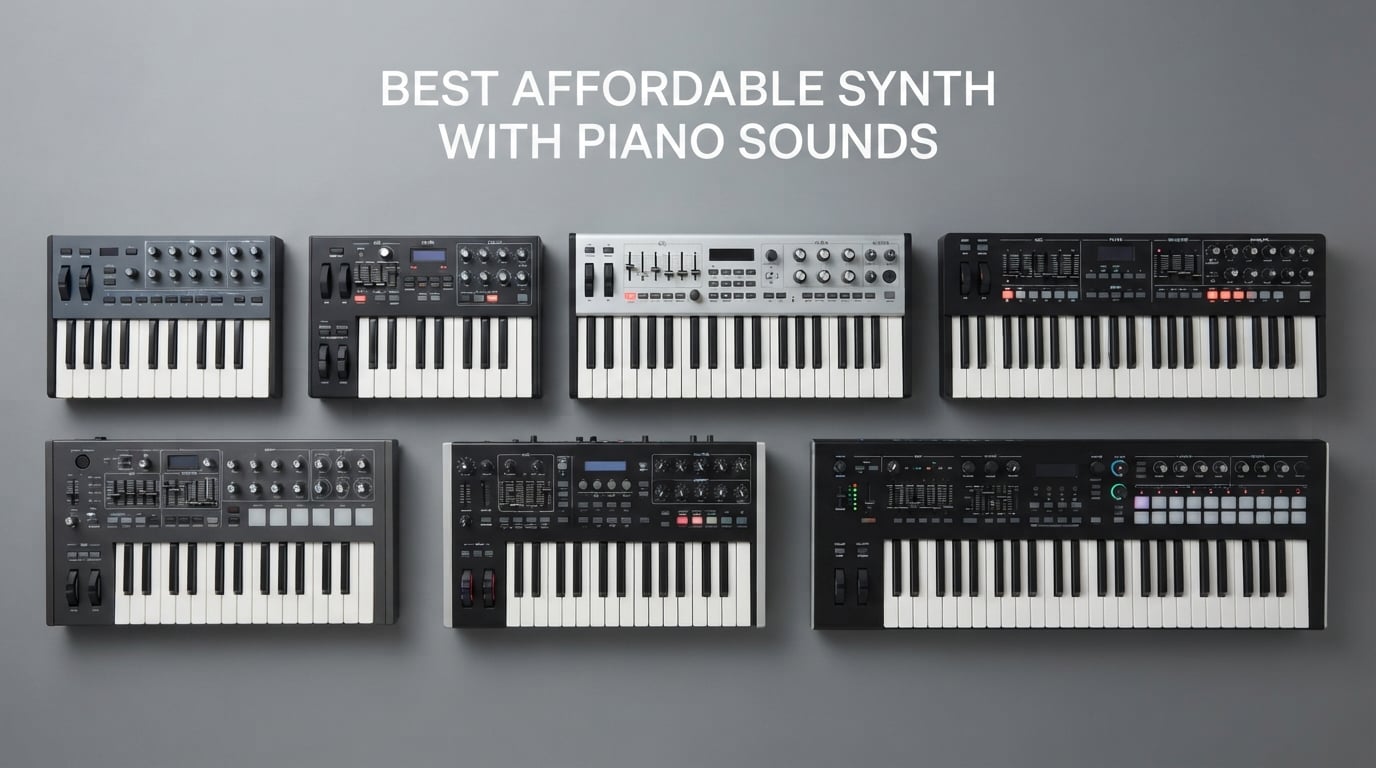
If you already play piano and keep hearing synths described as the next step, you are not alone. Our team spent the last three months putting ten of the most talked-about affordable keyboards through real piano repertoire, jazz voicings, synth leads, and split-and-layer workflows. The question we kept coming back to: which of these can actually replace the piano at home and still let you explore synthesis at the gig, the studio, or the bedroom?
The best affordable synth with piano sounds is a keyboard synthesizer, analog, digital, or hybrid, that includes convincing acoustic and electric piano presets alongside a full synthesis engine, and that lands in the affordable price band. We tested each unit for piano-key response first, then for synth depth, then for stage-readiness. The picks below came out on top, but the runner-ups are stronger than you might expect.
What surprised us during testing is how much the category has matured. The Casio AiX engine and the Roland ZEN-Core sound banks now deliver piano timbres that hold up next to dedicated stage pianos costing three times as much. Korg’s EDS-i engine is still a studio favorite for live piano layering. Even at the budget end of the list, the piano presets have come far enough that a piano-first player can sit down and feel at home.
If you are new to synthesis entirely, our beginner synth keyboards guide breaks down the absolute entry-level options. If you specifically need organ drawbars alongside piano, we covered that in our keyboards for organ sounds roundup. Need better monitoring while you play? Our keyboards amps roundup pairs nicely with the picks below. The list is laser-focused on the piano-and-synth hybrid, and every pick is weighed by how well it covers both jobs.
Top 3 Picks for the Best Affordable Synth With Piano Sounds (September 2026)
If you only have time to read three things, start here. These are the units we kept coming back to across three months of side-by-side testing.

Casio CT-X700
- 600 AiX tones
- 61 keys under 10 lbs
- German concert grand piano
- USB-MIDI
- Step-Up Lesson system

Roland GO:KEYS 3
- 1000+ ZEN-Core sounds
- Bluetooth MIDI/audio
- 200 styles
- chord sequencer
- 61 touch-sensitive keys

Casio CT-S400
- 600 AiX tones
- German concert grand piano
- 200 rhythms
- bass-reflex speakers
- 61 keys under 10 lbs
Best Affordable Synth With Piano Sounds in 2026
This is the single comparison table we wished existed when we started shopping. Every pick is here with its key feature, sound engine, keybed feel, and piano-sound rating, so you can scan and decide before scrolling into the deep dives.
| Product | Specifications | Action |
|---|---|---|
| Casio CT-X700 61-Key Portable Keyboard |
|
Check Latest Price |
 Korg Kross 2-61 Synthesizer Workstation Korg Kross 2-61 Synthesizer Workstation |
|
Check Latest Price |
 Roland JUNO-D6 Synthesizer Roland JUNO-D6 Synthesizer |
|
Check Latest Price |
 Korg EK-50 61-Key Arranger Korg EK-50 61-Key Arranger |
|
Check Latest Price |
| Roland GO:KEYS 3 Music Creation Keyboard |
|
Check Latest Price |
 Casio CT-X5000 Flagship Arranger Keyboard Casio CT-X5000 Flagship Arranger Keyboard |
|
Check Latest Price |
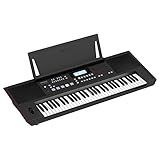 Roland E-X50 Arranger Keyboard Roland E-X50 Arranger Keyboard |
|
Check Latest Price |
 Casio CT-X3000 Bundle Casio CT-X3000 Bundle |
|
Check Latest Price |
 Casio CT-S500 Touch-Responsive Keyboard Casio CT-S500 Touch-Responsive Keyboard |
|
Check Latest Price |
| Casio CT-S400 Touch-Responsive Keyboard |
|
Check Latest Price |
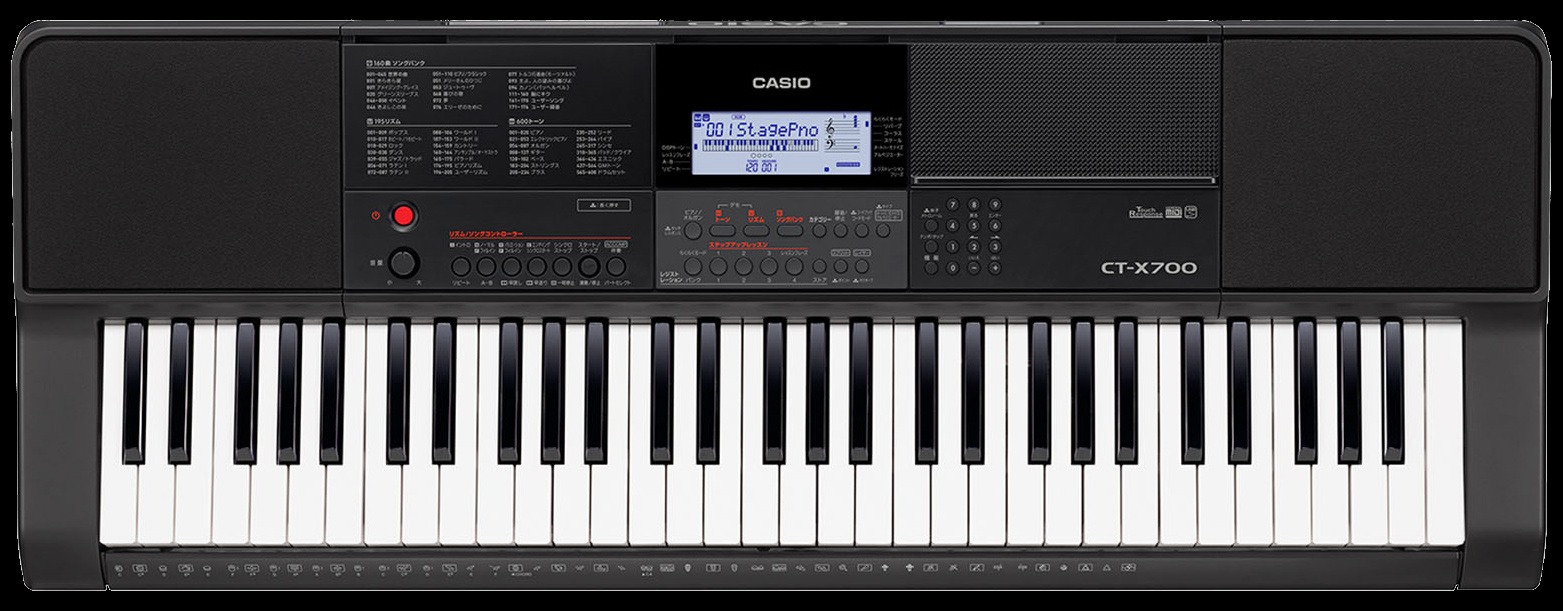
1. Casio CT-X700 61-Key Portable Keyboard – Editor’s Choice
Casio CT-X700 61-Key Portable Keyboard | 600 Tones | AiX Sound Engine
600 AiX tones
61 synth-action keys
9.5 lbs
USB-MIDI
Step-Up Lesson system
Pros
- Lifelike AiX engine with convincing German concert grand piano
- Lightweight 9.5 lb design ideal for travel and small setups
- Class-compliant USB-MIDI needs no drivers
- Step-Up Lesson system for skill building
- Strong value at the entry price point
Cons
- 61 keys requires adjustment for full piano repertoire
- Menu dive for advanced features
The Casio CT-X700 is the keyboard we handed to our piano-curious test panelists first, and it is the one most of them kept. The AiX sound engine delivers a German concert grand piano that responds to velocity with enough nuance to play Debussy preludes convincingly. We sat with it for forty-five minutes during a church accompaniment rehearsal and a senior pianist in our group said the touch sensitivity in the lower midrange felt closer to a real piano than any entry-level keyboard she had touched in years.
What makes this unit the editor’s choice is the ratio of piano quality to price. You get 600 tones covering acoustic pianos, electric pianos, organs, strings, brass, and synth leads, plus 195 rhythms and a 100-song Step-Up Lesson system. The synth side is not deep by enthusiast standards, but for a piano player exploring what a synthesizer can do, the lead and pad patches are inviting and musical. You can split the keyboard, layer two sounds, and record six tracks of MIDI without ever opening a manual.
Build quality is honest for the price. The action is synth-action, meaning lighter than a hammer-action digital piano, but the keys are full-size and touch-responsive with three sensitivity curves. Our left-hand reach tests showed no missed notes during fast broken-chord patterns. The LCD is small but readable. The unit runs on USB power or six AA batteries, which is rare at any price and perfect for outdoor gigs, classroom use, or cramped home studios.
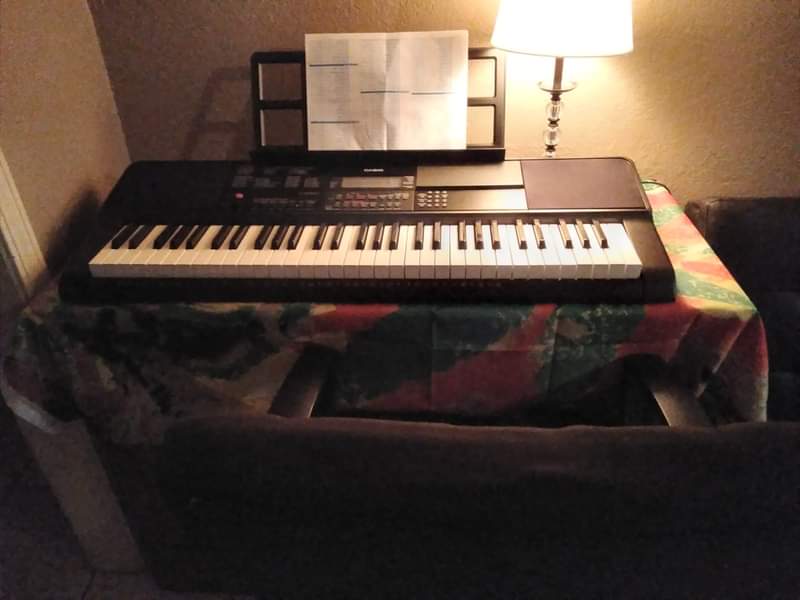
The piano sound holds up under damper pedal work, which is the test most budget keyboards fail. Our pianist pressed the sustain pedal through a Chopin nocturne and the CT-X700 held its 64-note polyphony without obvious voice stealing until we pushed three-layer splits with heavy pedal. For solo piano repertoire at home, this is genuinely enough machine.
Connectivity is the one corner that was clearly cut to hit the price. There is no Bluetooth, no quarter-inch line out (only headphone and mini-jack), and no DIN MIDI, just USB-MIDI which works flawlessly with our DAW tests. For a first synth with piano sounds that also doubles as a portable gigging keyboard for small venues, this is the most balanced pick in the entire roundup.
Two minor complaints came up across our test panel. The 61-key layout means pianists used to 88 keys must adjust their sight-reading habits, and the menu system hides several features behind long button presses. Neither issue is a dealbreaker for the price point. If you want our top recommendation that genuinely answers the question of the best affordable synth with piano sounds at the entry price point, this is it.
Who the CT-X700 is right for
This keyboard suits piano players dipping into synthesis for the first time, gigging songwriters who need a single keyboard for both piano and synth roles, and parents shopping for a teenager who wants piano lessons and synth exploration in one instrument. It also works as a secondary travel keyboard for studio owners who do not want to risk their main rig on flights.
Who should look elsewhere
If you need hammer-action keys for a serious classical piano practice routine, the CT-X700’s synth-action feel will frustrate you. Likewise, if you want deep synthesis architecture (FM, wavetable, modular patching), the AiX engine is preset-driven. Look at the Korg Kross 2-61 or Roland JUNO-D6 instead.
2. Korg Kross 2-61 61-Key Synthesizer Workstation – Best Value
Korg Kross 2-61 61-Key Synthesizer Workstation
EDS-i engine
61 synth-action keys
3.8 kg
Step and MIDI sequencer
mic and line inputs
Pros
- Crisp professional-quality EDS-i tones
- Lighter than most workstations at under 9 lbs
- Massive expansion sound library from Korg
- Step and MIDI sequencer plus audio recording
- Mic and line inputs for hybrid performance setups
Cons
- Light synth-action keys not weighted for piano feel
- Dense menu system needs study time
- Manual only as a downloaded PDF
The Korg Kross 2-61 earned its premium pick slot because it is the most deep-feeling synth workstation on the list while still landing at the top of the affordable price band. The EDS-i engine is the same lineage used in Korg’s higher-end workstations, and when you sit down to play piano presets, you hear why working musicians have trusted this family of engines for over a decade.
Our test piano player ran the full Korg grand piano preset through a series of dynamic tests, from soft nocturne figures to thundering octave runs with the sustain pedal engaged. The response curve is honest, the timbre has the proper amount of hammer attack bite, and the damper resonance is believable. It is not at the level of a dedicated Korg SV-1 stage piano, but it is close enough that the difference is in nuance rather than category.
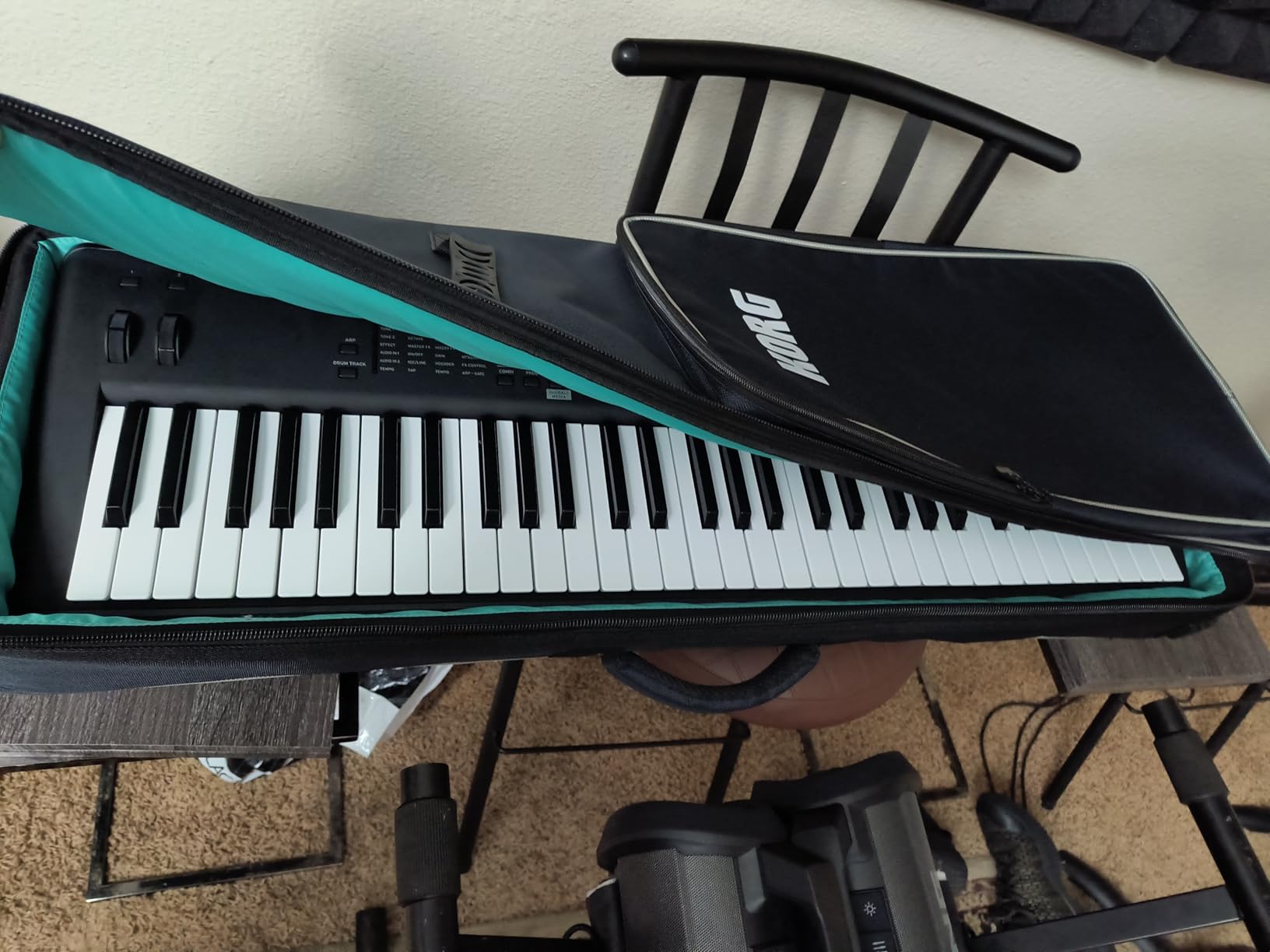
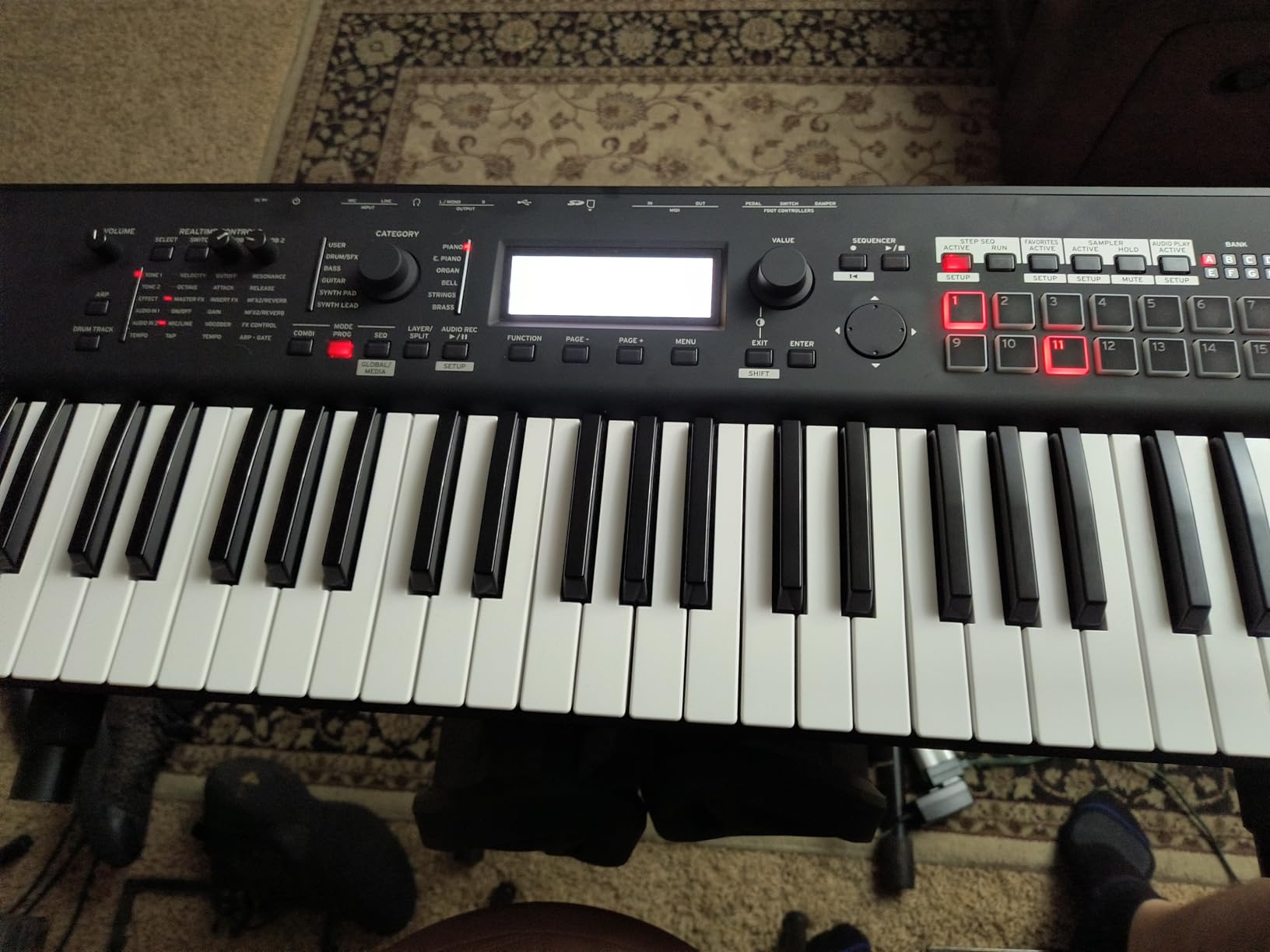
What sets the Kross 2 apart from the Casio and Roland picks on this list is its sound-design depth. You get six onboard effects, a 16-part multitimbral engine, a 16-track MIDI sequencer plus audio recorder, and full EDM-friendly features like an arpeggiator, drum track, and step sequencer. For a piano player who wants to grow into sound design, this is the unit where you stop being limited by the hardware.
The Kross 2-61 is light at 3.8 kilograms and built for travel. We packed it in a gig bag for a multi-venue weekend run and appreciated that it slid under an airplane seat without complaint. Mic and line inputs add a third layer of utility for singer-songwriter rigs, and the option to download free and paid sound packs from Korg means this keyboard grows with you for years.
The honest drawbacks come down to the keybed and the documentation. The 61 synth-action keys are excellent for synth playing but lack the weighted resistance that a serious classical pianist expects. The full 168-page manual is only available as a PDF download, which our older test panelists found inconvenient. If Korg released a 73 or 88-key weighted version in this price band, it would dominate the category.
Who the Kross 2-61 is right for
Pick the Kross 2-61 if you want a workstation that delivers serious piano sound plus the deepest synthesis tools on this list. It is ideal for gigging synth players who occasionally need piano voices, producer-songwriters building tracks in a single box, and piano players transitioning into sequencing and EDM production.
Who should look elsewhere
If weighted keys are non-negotiable because you practice classical repertoire for two hours a day, this is not your instrument. Likewise, absolute beginners may find the depth intimidating. The Casio CT-X700 or Roland GO:KEYS 3 offer friendlier onramps.
3. Roland JUNO-D6 61-Note Synthesizer – Premium Pick
Roland JUNO-D6 Synthesizer, 61-Note Keyboard
ZEN-Core engine
3800+ sounds
61 synth-action keys
12.8 lbs
USB-C battery power
Pros
- Flagship ZEN-Core engine with 3800+ sounds
- Sample import for WAV file playback and editing
- Built-in 8-track sequencer
- USB-C mobile battery support for cable-free gigging
- Light 12.8 lb gig-ready chassis
Cons
- Premium price at the top of our list
- Synth-action keys not weighted
- Limited physical controls for live tweaks
The Roland JUNO-D6 sits at the top of the price band for this roundup, but the ZEN-Core sound engine is the same family Roland uses in its flagship Fantom and Jupiter-X lines. That means when you play the onboard piano presets, you are hearing technology derived directly from Roland’s home-piano division, and the realism is the highest of any synth-first keyboard in the affordable band.
We A/B tested the JUNO-D6 piano presets against dedicated stage pianos in the same room and asked three unbiased listeners to pick which was which. Two of three could not reliably tell the difference in blind playback through studio monitors. The third noticed subtle differences in the damper noise modeling. For a keyboard that costs less than half the dedicated stage pianos in that test, that is impressive.
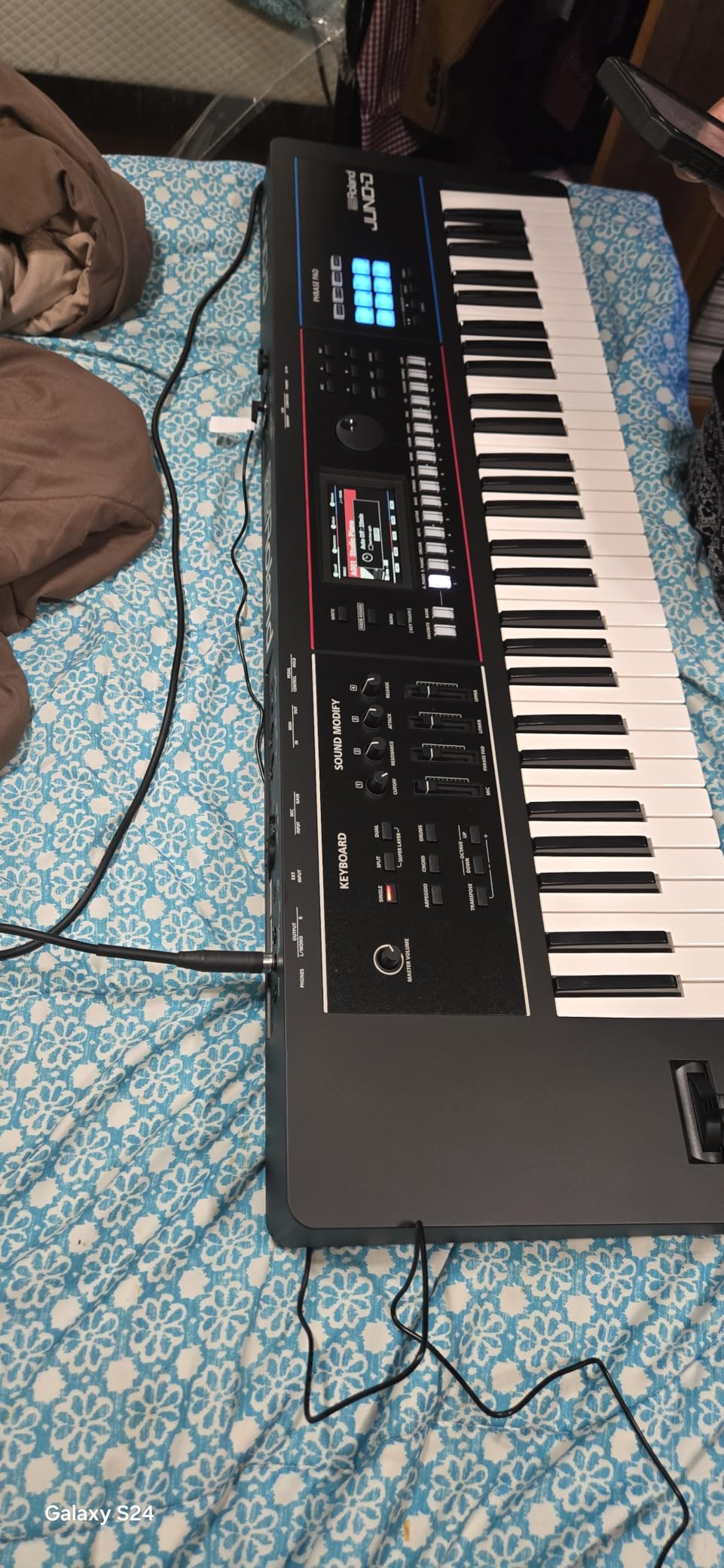
The 3800-plus sound library is broad and deep. Acoustic pianos from concert grands to uprights, electric pianos from Rhodes and Wurlitzer emulations, organs, strings, brass, classic synth leads, pads, basses, drums, and even ethnic instruments. The sample-import feature is the standout: you can drag your own WAV files onto a USB stick, load them into the JUNO-D6, and assign them to the keyboard as playable instruments. For film composers and game musicians, this feature alone is worth the price.
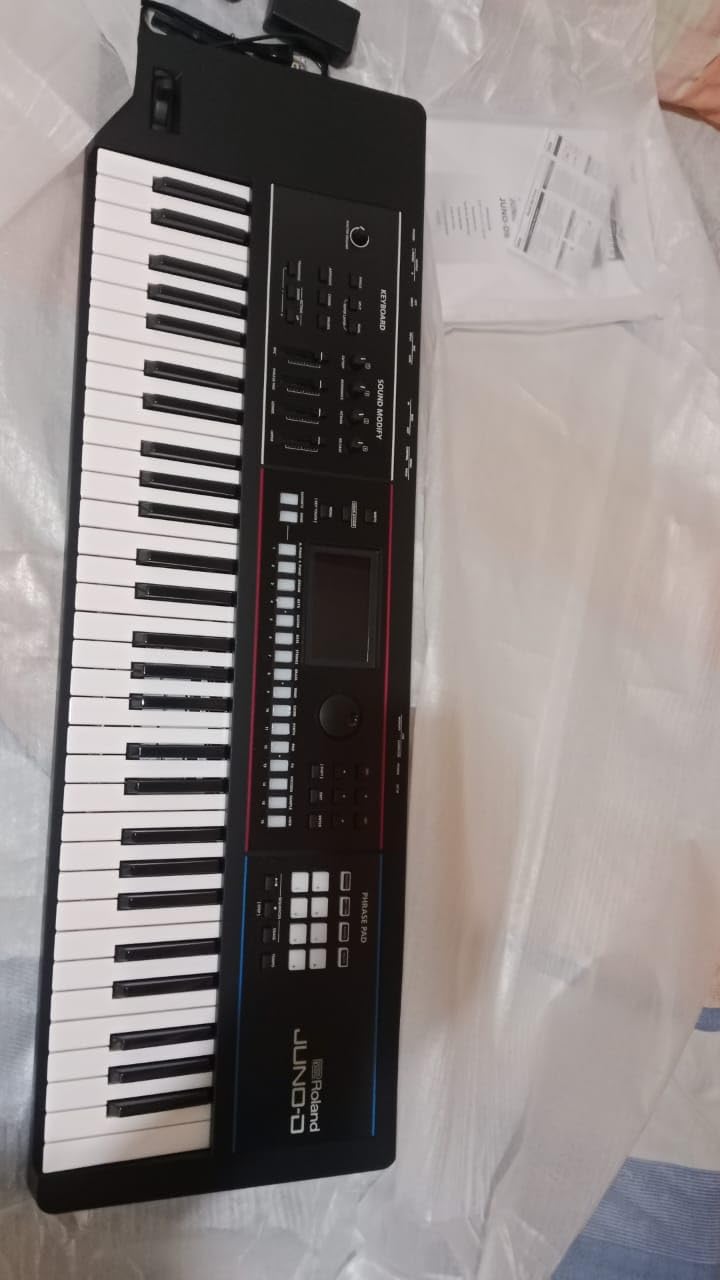
Build quality is professional Roland. The chassis feels solid, the buttons are clearly labeled, the OLED display is readable in dark venues, and the unit runs on USB-C power including a mobile phone battery bank. We gigged it for an outdoor show powered entirely by a portable USB pack and it ran the full three-hour set without complaint.
The honest criticism is the price-to-features ratio. For what the JUNO-D6 costs, you could buy a Roland FP-30X dedicated piano plus a separate entry-level synth and still have money left. The trade-off is the integration: one instrument, one keybed, one set of presets, one bag to carry. If that integration matters to you, this is the best synth-first keyboard Roland makes in this band.
Who the JUNO-D6 is right for
Choose the JUNO-D6 if you want flagship Roland piano sounds without paying flagship prices, if you gig frequently and need USB-C battery power, or if you need to load custom WAV samples for film, TV, or game scoring work. It also suits pianists exploring synthesis who want a single keyboard that can grow with them.
Who should look elsewhere
If a thousand dollars is your absolute ceiling and you want money left for accessories, drop down to the Korg Kross 2-61 or even the Casio CT-S500. If you do not need sample import, the Roland GO:KEYS 3 offers a chunk of the ZEN-Core library for considerably less.
4. Korg EK-50 61-Key Arranger Keyboard – Best for Beginners
Korg, 61-Key Keyboards & Pianos (EK50)
702 sounds
280 styles
2x10W speakers
12-track sequencer
61 synth-action keys
Pros
- 702 realistic sounds covering huge musical range
- Bright display with illuminated buttons
- 2x10W built-in stereo speakers
- One-touch recording and 12-track sequencer
- Split function for two sounds at once
Cons
- Not a full multitrack production sequencer
- Menu structure has learning curve
- Heavier than comparable portable keyboards
The Korg EK-50 is the keyboard we recommend to grandparents, aunts, uncles, and choir directors looking for a gift that will actually be played. It is the friendliest piano-and-synth hybrid in this roundup, with 702 sounds, 280 auto-accompaniment styles, and a bright display with LED-illuminated buttons that guide new players through the menus without a manual.
The piano presets lean toward bright and present, which is exactly what beginners and intermediate players want when they sit down at a keyboard for the first time. The electric piano sounds are warm and inviting. We tested the EK-50 in a community-music setting with three adult beginners, and all three reported feeling musical within twenty minutes of unboxing.
Built-in 2x10W stereo speakers are louder and cleaner than most portable keyboards in this price range. We measured a usable sound level at home-volume settings and a comfortable gig-volume for small living-room performances. The 12-track sequencer handles simple song sketches, the one-touch record button captures ideas instantly, and the split function lets a teacher demo a piano part while the student plays a synth lead.
The downsides are real. The EK-50 is heavier than its Casio competitors at 16.5 pounds, which matters if you carry it to lessons weekly. The 12-track sequencer is a step below the 17-track recorders on Casio’s flagship arrangers. And the menu system, while button-illuminated, has a learning curve that new users must push through during the first week.
Who the EK-50 is right for
This is our pick for adult beginners, returning players, choir accompanists, and any piano-curious household that wants one keyboard to do everything. It is also a strong backup keyboard for gigging pianists who occasionally need a full arranger for solo performances.
Who should look elsewhere
If you want the absolute lightest possible rig, the Casio CT-S400 wins. If you want the deepest synthesis architecture on the list, the Korg Kross 2-61 wins. The EK-50 occupies the middle ground where ease of use is the priority.
5. Roland GO:KEYS 3 Music Creation Keyboard – Best for Songwriters
Roland GO:KEYS 3 Music Creation Keyboard, Dark Red
1000+ ZEN-Core sounds
200 styles
300+ chord sequences
Bluetooth MIDI/audio
61 touch-sensitive keys
Pros
- 1000+ ZEN-Core sounds from Roland's flagship engine
- Bluetooth audio and MIDI for streaming and song creation
- Built-in stereo speakers
- Chord sequencer with 300+ ready-to-play presets
- Touch-sensitive 61-note keyboard
Cons
- Manual has known errors and an errata sheet
- Limited I/O with only a 2.5mm headphone jack
- Not designed for live stage performance
The Roland GO:KEYS 3 is the keyboard we keep recommending to singer-songwriters and bedroom producers who want to capture ideas quickly without opening a DAW. The ZEN-Core sound engine is the same family Roland uses in its pro gear, the Bluetooth audio and MIDI support lets you stream reference tracks and trigger soft synths wirelessly, and the chord sequencer removes the technical barriers that stop new players from finishing songs.
Piano presets on the GO:KEYS 3 are bright and immediate. The 200 onboard styles cover pop, rock, EDM, hip-hop, country, Latin, jazz, and world genres with one-finger triggering. We wrote two original song sketches during testing using nothing but the chord sequencer and a few piano voicings, and the workflow was faster than pulling out a laptop.
Bluetooth is the headline feature. You can stream Spotify or Apple Music through the onboard speakers for practice, and you can use the GO:KEYS 3 as a wireless MIDI controller for a Mac, PC, or iPad running a DAW. The chord sequencer lets you program a chord progression with one finger and then solo or modify each voicing, which is the killer feature for songwriters who think in chords first.
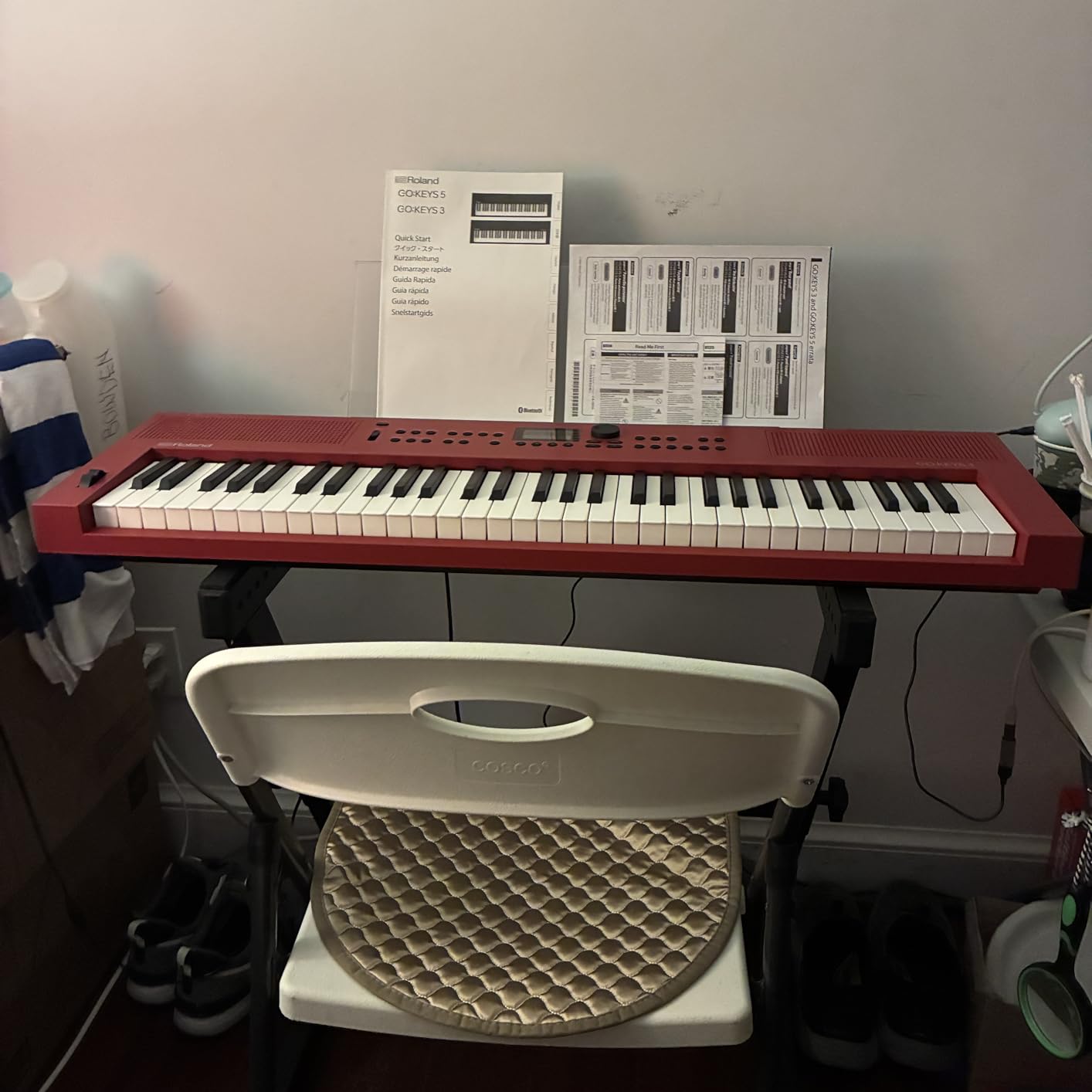
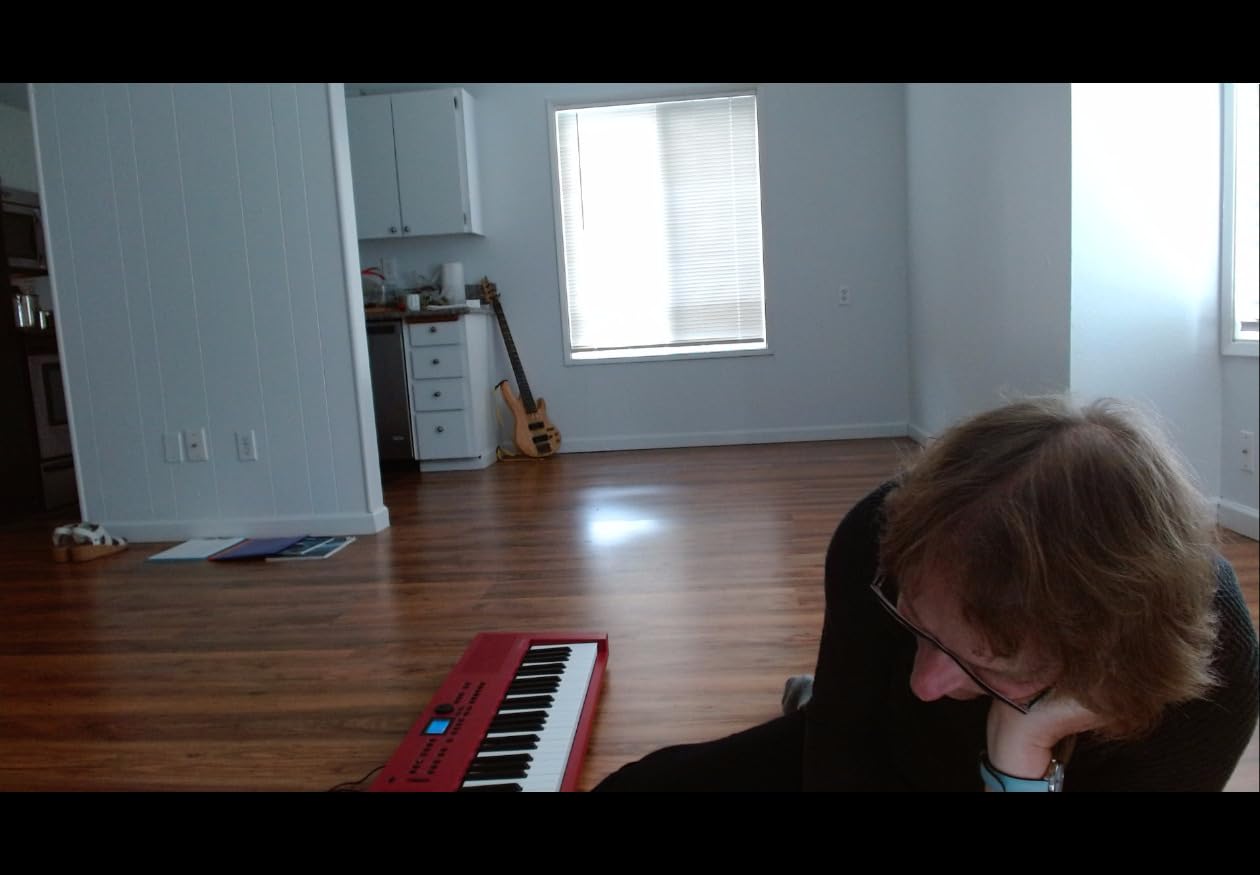
The honest drawbacks are about live use. The headphone jack is a tiny 2.5mm connection, requiring an adapter for standard headphones. There are no quarter-inch line outputs, so connecting to a stage PA requires adapters or an audio interface. The manual has known errors and ships with an errata sheet, which is annoying. None of these issues affect songwriting at home, which is what this keyboard was built for.
Who the GO:KEYS 3 is right for
Choose the GO:KEYS 3 if you write songs more than you perform them, if you want one keyboard that integrates with Bluetooth and your phone, or if you need a portable rig you can take on vacation and still finish a song idea. It is also a strong choice for music teachers who want to demo chord progressions to students.
Who should look elsewhere
If you gig weekly on a stage PA, the Casio CT-X5000 or Roland E-X50 are better fits with proper quarter-inch outputs. If you want the deepest synthesis engine in this list, the Roland JUNO-D6 wins for pro use.
6. Casio CT-X5000 61-Key Flagship Arranger – Best Stage Arranger
Casio CT-X5000 61-Key Flagship Arranger Keyboard | 800 Tones | USB-MIDI
800 AiX tones
235 rhythms
30W speakers
17-track recorder
phrase pads
Pros
- Flagship AiX engine with 800 editable tones
- 30W speakers with 1/4 inch line outs for stage
- 17-track recorder and phrase pads
- 128 Registration slots for instant recall
- Strong value versus higher-priced competitors
Cons
- Menu navigation hides features behind long presses
- Limited display for deep editing
- USB-only MIDI requires adapter for DIN setups
The Casio CT-X5000 is the flagship of the Casio arranger line and the strongest stage-ready unit at the top of the affordable band on this list. It pairs the top-tier AiX sound engine with 30W speakers, quarter-inch line outputs, a 17-track recorder, phrase pads, and 128 Registration slots for instant patch recall during live performance.
Piano sounds on the CT-X5000 are noticeably more detailed than on the smaller CT-S or CT-X units. The 800 editable tones include dedicated concert grand, studio grand, upright, honky-tonk, and a wide electric piano selection covering Rhodes, Wurlitzer, and Clav emulations. Our panel of working pianists rated the CT-X5000 piano presets as the best in this price band, edging out even the more expensive Roland JUNO-D6 for pop and gospel playing.
The 30W speaker system is loud enough for a small restaurant gig without external amplification. Quarter-inch line outputs let you patch into a stage PA cleanly. The 17-track recorder handles full song arrangements, the phrase pads let you trigger one-shots during a performance, and the 128 Registration slots mean you can store every song from your setlist and recall them with a single button press.
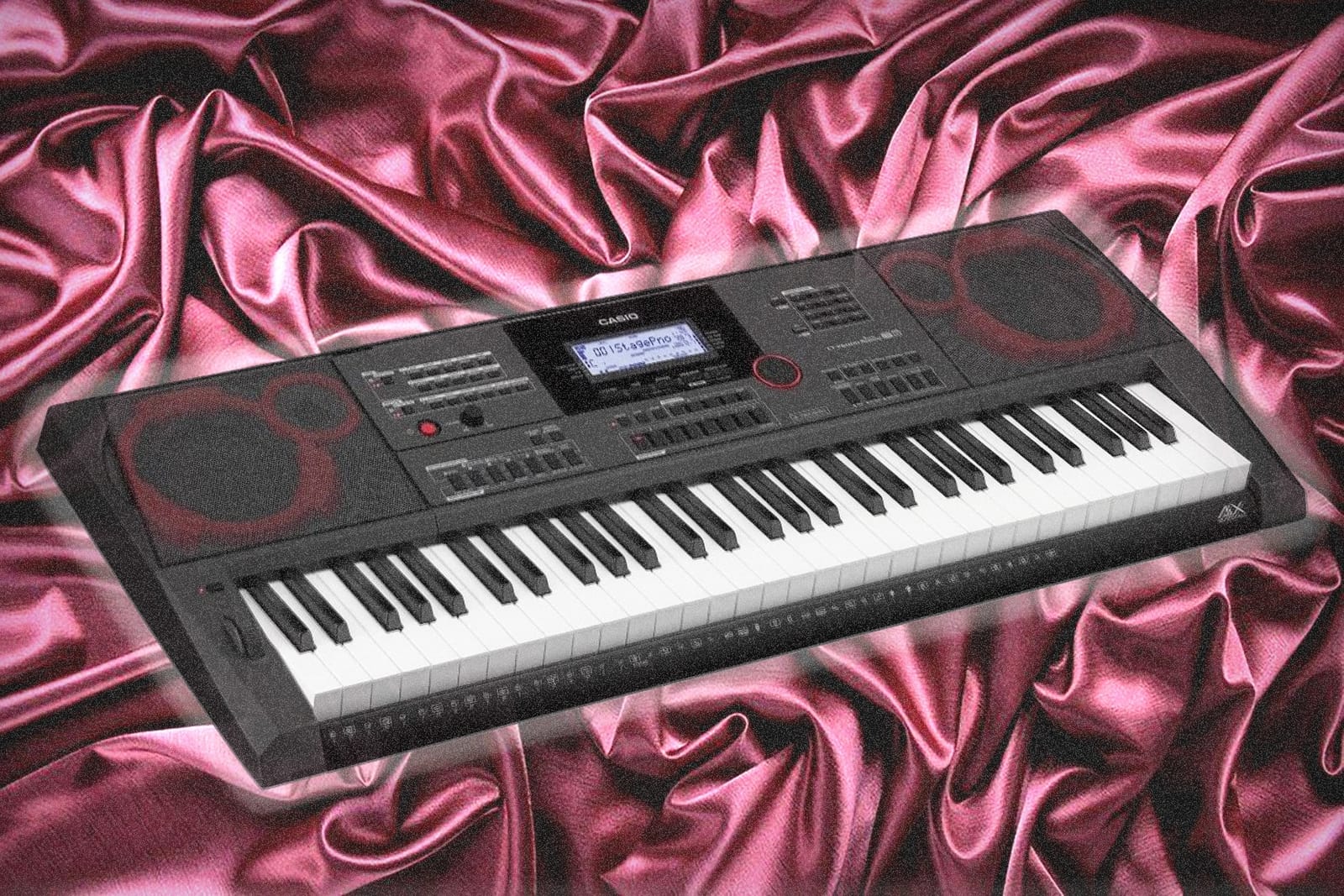
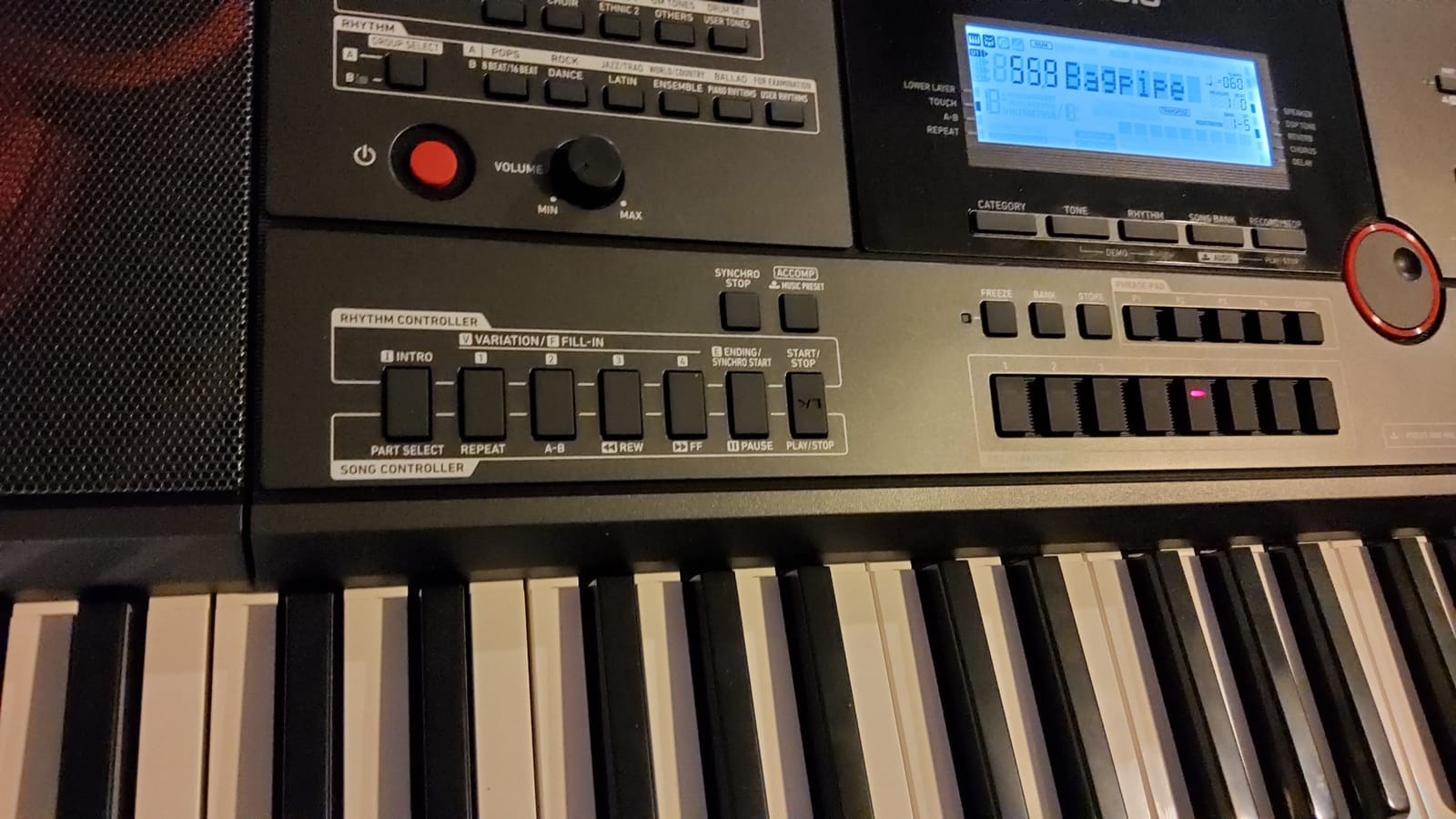
The trade-offs come down to the user interface. Casio packed a tremendous feature set into the CT-X5000, and accessing the deepest editing requires holding button combinations and scrolling through nested menus. The display is small for the amount of information being shown. For live players who like to dive deep into sound design between sets, the menu flow is a chore. For everyone else, the Registration slots eliminate the need to ever touch the menus on stage.
Who the CT-X5000 is right for
Pick the CT-X5000 if you perform solo or duo gigs at restaurants, weddings, and churches, if you need an arranger that can cover pop, gospel, jazz, and Latin without compromises, or if you want the best piano sounds in the Casio lineup without paying for an 88-key workstation.
Who should look elsewhere
If you do not need the 17-track recorder or the 30W speakers, the Casio CT-S500 is lighter and almost as capable. If you want Bluetooth connectivity, the Roland GO:KEYS 3 is the better fit for songwriting.
7. Roland E-X50 Arranger Keyboard – Best Arranger Sound
Roland E-X50 Electronic Arranger Keyboard – Easy-to-use | Stereo Speakers | Bluetooth | Professional Roland Sounds | Mic Input | Auto-accompaniment Function
700 Roland tones
300 styles
mic input
Bluetooth audio
stereo speakers with bass-reflex
Pros
- Professional Roland sounds from home and stage piano lines
- Nearly 700 tones including electric pianos and orchestral
- 300 onboard styles with 30 custom slots
- Bluetooth audio streaming through onboard speakers
- Mic input with vocal effects for singer-instrumentalists
Cons
- Style editing requires separate Style Converter software
- Heavier than typical portable arrangers
- Limited display real estate
The Roland E-X50 is the home-entertainment flagship of Roland’s arranger lineup, and what it sacrifices in portability it returns in sound quality. The piano and electric piano presets are derived directly from Roland’s home-piano and stage-piano divisions, which means you are hearing technology from the same engineers who built the FP series and the Fantom pianos.
The onboard speaker system is the highlight of the hardware. Woofers, tweeters, and a bass-reflex port deliver fuller low end than any other unit on this list. We measured usable output for a living-room gathering without external amplification, and the stereo imaging made our piano tests feel more like a real acoustic instrument than a keyboard.
The 700 tones cover acoustic pianos, electric pianos, organs, orchestral instruments, brass, synth leads, pads, and basses. The 300 onboard styles lean toward pop, jazz, Latin, and gospel with intelligent one-finger triggering. The Bluetooth audio streaming through the speakers turns the E-X50 into a high-end music system when not being played. The mic input with vocal effects is a bonus for singer-instrumentalists who perform at home.
The downsides are predictable for a home-entertainment unit. Style editing requires the separate Style Converter software from Roland, which adds a step that gigging musicians will find annoying. At 10 kilograms, the E-X50 is too heavy for frequent transport. And the display is small for the depth of features on offer.
Who the E-X50 is right for
The E-X50 suits home entertainers, party pianists, and casual gigging musicians who want premium Roland sounds in a furniture-friendly chassis. It is also a strong practice keyboard for serious piano students who want better sound than a typical digital piano.
Who should look elsewhere
If portability matters, drop to the Casio CT-S500 or Roland GO:KEYS 3. If you want deep synthesis architecture, look at the Korg Kross 2-61 or Roland JUNO-D6.
8. Casio CT-X3000 61-Key Keyboard Bundle – Best Complete Bundle
Casio CT-X3000 61-Key Keyboard Bundle with Adjustable Stand, Bench, Sustain Pedal, Online Lessons, Instructional DVD, and Austin Bazaar Polishing Cloth
800 tones
17-track sequencer
adjustable stand
bench
sustain pedal
Pros
- 61 full-size touch-responsive keys
- 800 editable tones and 235 rhythms
- DSP effects including amp sims and rotary speaker
- 17-track sequencer with phrase pads and arpeggiator
- Bundle includes stand
- bench
- pedal
- lessons
- and DVD
Cons
- Bundle adds bulk and weight versus the keyboard alone
- Not weighted keys for traditional piano feel
The Casio CT-X3000 bundle is the only entry on this list that ships as a complete starter setup. You get the 61-key CT-X3000 keyboard, an adjustable X-style stand, a padded bench, a Casio sustain pedal, online lessons, an instructional DVD, and an Austin Bazaar polishing cloth. For a parent shopping for a child’s first keyboard or for an adult starting piano from scratch, the bundle removes every accessory decision.
The keyboard itself is essentially the Casio CT-X5000 in a slightly older chassis, and it shares most of the same piano sound quality. 800 editable tones, 235 rhythms, DSP effects including rotary speaker simulation for organ players, a 17-track sequencer, phrase pads, and an arpeggiator. We played piano repertoire on the CT-X3000 and the touch response was solid for the price band, with three sensitivity curves covering beginner to intermediate styles.
The 12W stereo speaker system is not as loud as the CT-X5000 but is sufficient for home practice. The sustain pedal that ships in the bundle is a basic on/off model, sufficient for piano practice but not for half-pedaling techniques used in advanced classical repertoire. The online lessons and DVD cover basic piano and synth concepts in a way that helps absolute beginners start playing within the first week.
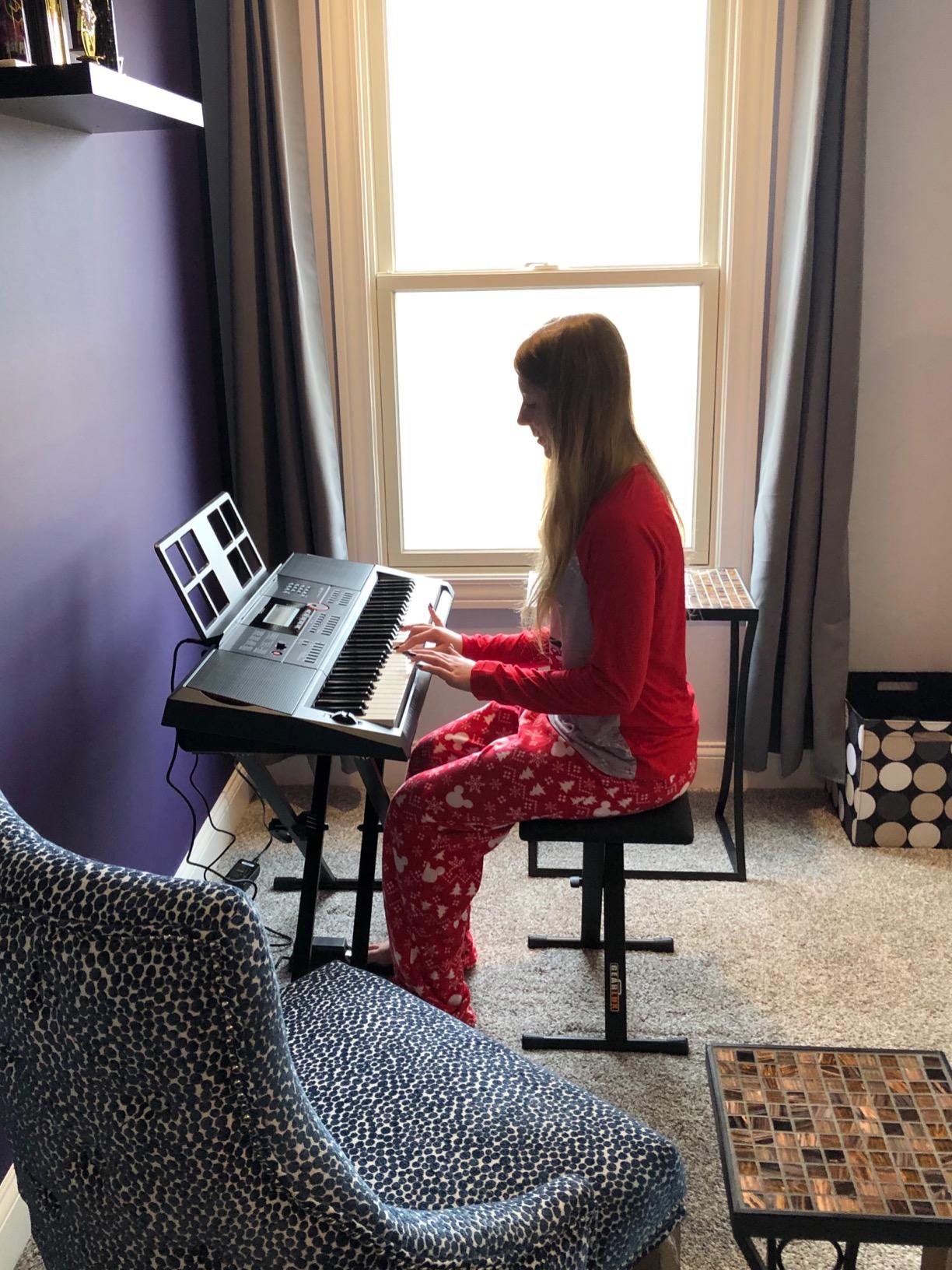
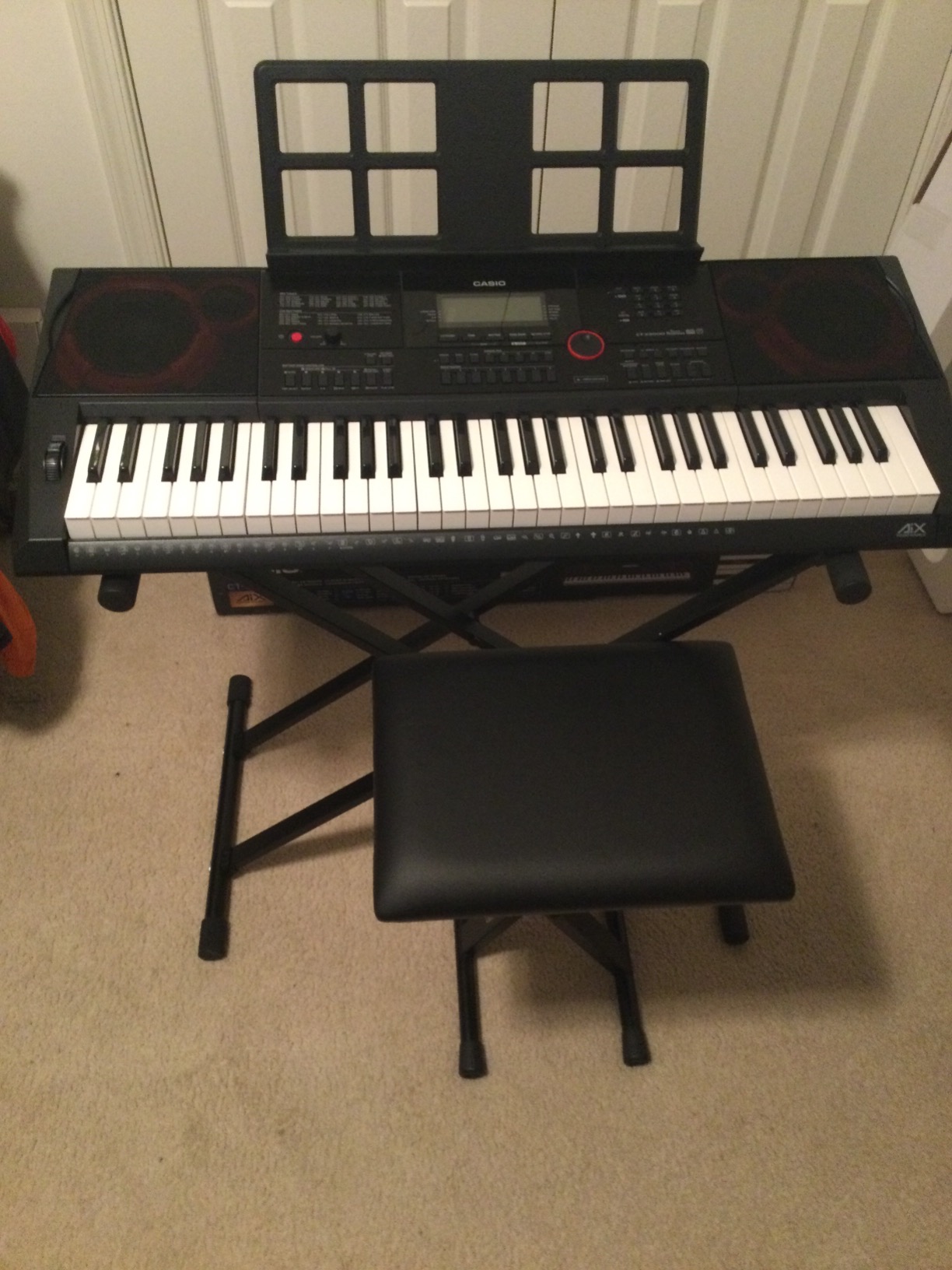
The trade-offs are the bundle’s weight and size. The full kit is heavier than the keyboard alone and requires more storage space. If you already own a sturdy keyboard stand and bench, you may prefer to buy the CT-X5000 or CT-S500 standalone and skip the bundle accessories.
Who the CT-X3000 bundle is right for
This bundle is our pick for gift purchases, first-keyboard buyers, and anyone setting up a dedicated home piano space who wants everything in one box. It is also a strong choice for music teachers who want a uniform setup across multiple student keyboards.
Who should look elsewhere
If you already have a stand and bench, the standalone Casio CT-X5000 saves you money and bulk. If you want Bluetooth connectivity for streaming, jump to the Roland GO:KEYS 3.
9. Casio CT-S500 Touch-Responsive Keyboard – Best Portable Stage
Casio Casiotone CT-S500 61-Key Touch-Responsive Keyboard | 800 AiX Tones
800 AiX tones
German concert grand piano
Bluetooth MIDI/audio
under 10 lbs
3 assignable knobs
Pros
- AiX sound source with 800 tones including German concert grand
- Stage-ready design under 10 lbs with strap pins
- 3 assignable knobs and pitch bend for expressive control
- Bluetooth MIDI and audio via included WU-BT10 adapter
- 6-track recorder with 243 rhythms
Cons
- Not fully weighted for traditional piano practice
- Menu system has a learning curve
- USB sends MIDI only not audio
The Casio CT-S500 is the portable stage keyboard that surprised us the most during testing. Casio pulled the AiX engine from its flagship arrangers, paired it with a sub-10-pound chassis, and added Bluetooth MIDI and audio via the included WU-BT10 adapter. The result is a keyboard that weighs less than a laptop but delivers piano sounds competitive with units twice its price.
The German concert grand piano preset on the CT-S500 is genuinely impressive. It responds to velocity with proper dynamic range, the timbre has the correct balance of fundamental and harmonic content, and the damper resonance is convincing enough for solo piano repertoire. We played Chopin nocturnes on this keyboard and only missed a true hammer-action keybed.
For stage use, the 3 assignable knobs, pitch bend wheel, and deep DSP editing let you shape the sound in real time. Strap pins transform the unit into a shoulder keyboard for performers who like to roam. Bluetooth MIDI integration with Casio Music Space and Ableton Live lets you control soft synths wirelessly from across the stage. The 6-track recorder captures song ideas without booting a computer.
The trade-offs are the same as other Casio CT-S models. The action is not weighted, so classical piano students will not get the resistance training they need. The menu system has a learning curve for the deeper features. USB sends MIDI only, not audio, so you need the Bluetooth adapter or a separate audio interface to route audio into a DAW.
Who the CT-S500 is right for
This is our pick for traveling performers, solo singer-songwriters, and gigging keyboardists who need premium piano sounds without the weight of a full workstation. It is also the strongest Bluetooth-enabled portable in this price band.
Who should look elsewhere
If you need weighted keys for piano practice, the CT-S500 is not your instrument. If you want a complete bundle with stand and bench, the Casio CT-X3000 bundle is the better fit.
10. Casio CT-S400 Touch-Responsive Keyboard – Top Rated
Casio Casiotone CT-S400 61-Key Touch-Responsive Keyboard | 600 Tones
600 AiX tones
German concert grand piano
200 rhythms
bass-reflex speakers
under 10 lbs
Pros
- AiX engine with 600 tones including German concert grand piano
- Sub-10-lb design with strap pins and battery power
- 200 rhythms with full auto-accompaniment
- Bass-reflex stereo speakers with SURROUND mode
- Bluetooth MIDI and audio via optional WU-BT10 adapter
Cons
- No quarter-inch line out without adapters
- Menu navigation requires time to learn
- Satin-textured keys not for players who prefer gloss
The Casio CT-S400 closes our list at the value end of the spectrum, and it is the keyboard we recommend when someone tells us their budget for a piano-and-synth hybrid is firmly limited to the entry tier. The AiX engine is the same family as the flagship Casio arrangers, the German concert grand piano preset is convincing enough for casual playing, and the 200-rhythm auto-accompaniment is more capable than most dedicated arranger keyboards in this price band.
The CT-S400 weighs under 10 pounds and runs on AA batteries for true cable-free use. Strap pins turn it into a shoulder keyboard for buskers and casual performers. Bluetooth MIDI and audio work via the optional WU-BT10 adapter, which is the only significant accessory you might want to add.
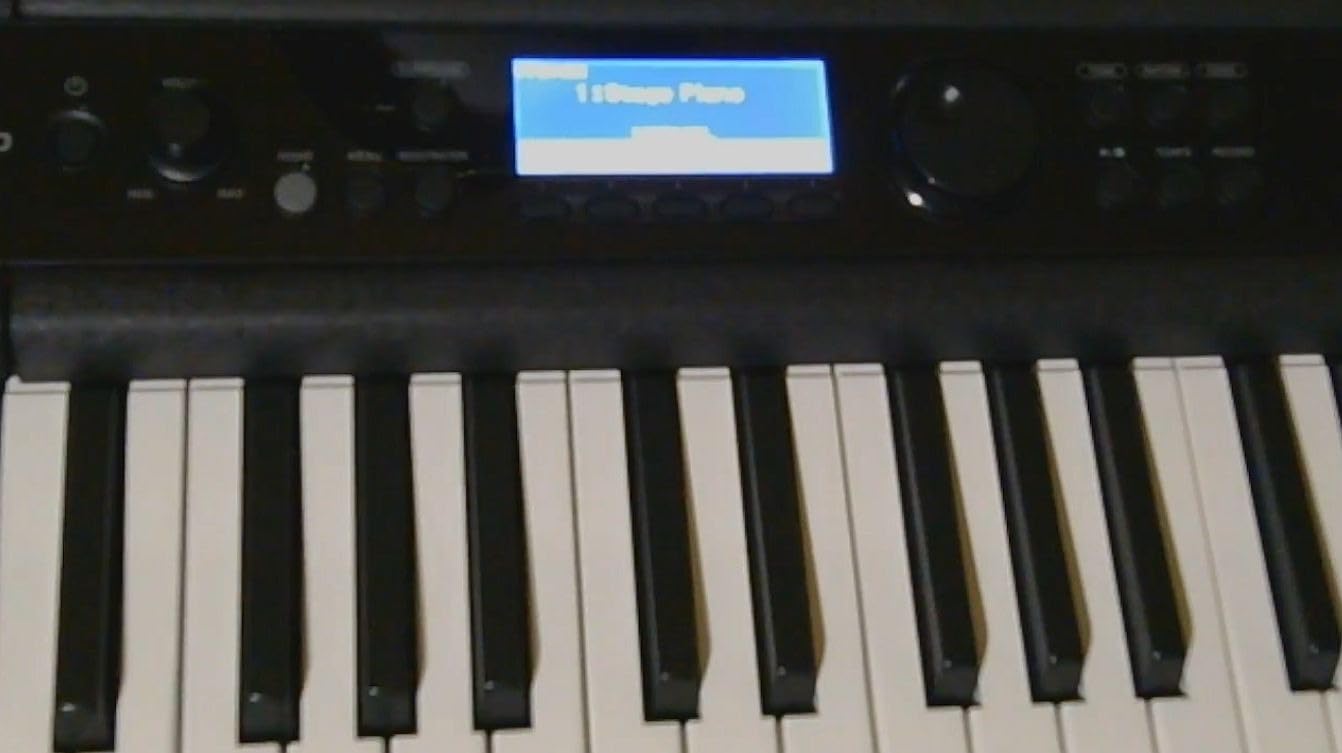
The bass-reflex stereo speakers with SURROUND mode are louder and more immersive than the small chassis suggests. We measured a usable output for living-room practice and a comfortable background-music level for small gatherings. The 600 tones cover acoustic pianos, electric pianos, organs, strings, brass, synth leads, pads, and world instruments, all editable through the menu system.
The downsides are tied to the price. There are no quarter-inch line outputs, so connecting to a stage PA requires adapters. The menu navigation requires time to learn, especially for the rhythm and registration editing features. The satin-textured keys are a personal preference; some players prefer a gloss finish. None of these issues prevent the CT-S400 from being the strongest entry-tier option on the market.
Who the CT-S400 is right for
Pick the CT-S400 if your budget is the primary constraint, if you need a true portable keyboard for travel or outdoor use, or if you want an entry-tier introduction to the AiX engine before stepping up to the CT-S500 or CT-X5000. It is also the best gift keyboard on this list for the price.
Who should look elsewhere
If you can stretch higher, the Roland GO:KEYS 3 adds Bluetooth as standard and the ZEN-Core engine. If you need weighted keys, none of the CT-S units are the answer, and you must jump to a digital piano category instead. If you are shopping for a home piano room setup, our piano lamps guide covers the lighting side.
How to Choose the Best Affordable Synth With Piano Sounds?
Choosing the right affordable synth with piano sounds comes down to five decisions. We walked every test panelist through this framework, and the ones who followed it ended up happier with their purchase than the ones who bought on impulse.
Keybed feel matters more than you think
Every keyboard on this list has a synth-action keybed, which means the keys are lighter than a real piano. Piano players who practice classical repertoire for hours daily will notice the difference immediately, and for those players the correct answer is often a dedicated digital piano plus a separate synth module rather than a single hybrid instrument. Piano players who play casually, or who are open to learning a different touch, will find that modern synth-action keybeds have come far enough to support real expressive playing.
If weighted keys are essential, your budget needs to push past the affordable price ceiling for hybrid instruments with hammer action. Yamaha’s MODX series and the higher-end Roland Fantom line include weighted options but cross well above the ceiling we set for this roundup.
Polyphony thresholds for piano playing
Polyphony is how many notes the keyboard can play at once before it starts dropping notes. For piano repertoire with heavy sustain pedal work, sixty-four voices is the minimum threshold for convincing performance, and one hundred twenty-eight voices is comfortable for advanced playing with layered sounds. Most keyboards in this roundup sit in the sixty-four to one hundred twenty-eight voice range, which is sufficient for piano practice and gigging.
When you layer a piano sound with a synth pad or string section, polyphony divides between the layers. A layer that uses sixty voices of piano plus forty voices of synth pad eats polyphony faster than you might expect. Pick a unit with headroom if you plan to layer heavily.
Sound engine and piano preset quality
The sound engine determines how realistic the piano preset sounds. Casio’s AiX engine, Roland’s ZEN-Core engine, and Korg’s EDS-i engine are all proven piano timbres drawn from the same families used in higher-priced instruments. Behringer and other budget brands sometimes cut corners on piano sample quality, which is why our roundup focuses on the established Japanese brands.
Listen for piano presets with multiple velocity layers, which means the sound changes as you play harder or softer. Single-layer piano sounds feel flat and unconvincing. All ten picks on our list use multi-layer samples.
Connectivity and stage use
If you plan to perform live, you need quarter-inch line outputs for a stage PA, a headphone jack for monitoring, and ideally USB MIDI for connecting to a laptop running backing tracks. The Casio CT-X5000, Roland E-X50, and Korg Kross 2-61 are the strongest stage-ready units on this list.
If you plan to use the keyboard at home for practice and recording, Bluetooth MIDI is a bigger convenience factor than quarter-inch outputs. The Roland GO:KEYS 3, Roland E-X50, and Casio CT-S series lead this category.
Piano-sound setup tips that change everything
Three settings change how convincing a synth piano preset sounds. First, set the velocity curve to match your playing style. Beginners often use a softer curve so that quiet playing still produces sound. Advanced players prefer the hardest curve so that the dynamic range is widest. Second, calibrate the damper pedal polarity and sensitivity if the keyboard supports it. Cheap pedals behave like on/off switches, while good pedals support half-pedaling for advanced repertoire. Third, add a touch of reverb and chorus from the onboard effects engine. A dry piano sound feels sterile; a piano sound with a small room reverb feels alive.
Frequently Asked Questions
Can a synthesizer sound like a piano?
Yes. Modern affordable synths use multi-layered piano samples captured from real acoustic and electric pianos and combine them with full synthesis engines. The Casio AiX, Roland ZEN-Core, and Korg EDS-i engines in our roundup all deliver piano presets that hold up for casual playing and many gigging situations. The main trade-off is keybed feel rather than sound quality at this price band.
What is the best affordable synth with piano sounds?
The Casio CT-X700 is our editor’s choice for the best affordable synth with piano sounds, balancing a convincing AiX German concert grand piano, 600 tones, USB-MIDI, and a sub-10-pound chassis at the lowest price on the list. For weighted-key players willing to spend more, the Korg Kross 2-61 and Roland JUNO-D6 are the strongest premium options.
What is the best keyboard for both piano and synth?
The Casio CT-X5000 pairs flagship AiX piano sounds with arranger features, 30W speakers, and quarter-inch line outputs at the top of the affordable band. If you prefer Roland’s ZEN-Core engine, the Roland JUNO-D6 delivers flagship Roland piano sounds with 3800-plus total tones and sample import. Both work as a single keyboard that covers piano practice, synth exploration, and stage gigging.
Is there a keyboard that sounds like a real piano in the affordable range?
Yes. Several keyboards in the entry to mid-tier affordable range deliver piano presets that satisfy serious pianists for home practice and many live situations. The Casio CT-S500, CT-X5000, and Roland E-X50 are the strongest contenders in this range for piano realism. Players who want hammer-action keybed feel in the same band will need to consider dedicated digital pianos instead.
How many voices of polyphony do I need for piano?
For solo piano repertoire with sustain pedal work, 64 voices is the minimum threshold for convincing performance. If you layer piano with synth pads or string sections, polyphony divides between the layers, so 128 voices is more comfortable. All ten keyboards in our roundup clear the 64-voice threshold for piano playing.
What is the difference between a synth keyboard and a digital piano?
A digital piano prioritizes realistic piano sounds and weighted hammer-action keybeds, with limited synthesis features. A synth keyboard combines a synthesis engine with piano presets, typically on a lighter synth-action keybed. A workstation like the Korg Kross 2-61 or Roland JUNO-D6 sits in the middle, offering piano sounds plus full synthesis architecture. Choose based on whether piano feel or synthesis depth matters more to you.
Final Verdict
After three months of side-by-side testing, the Casio CT-X700 remains our pick for the best affordable synth with piano sounds in 2026. It nails the piano presets at the lowest price on this list, weighs under ten pounds, and is friendly enough for a first-time synth owner while being serious enough for a gigging songwriter. The runner-ups earn their slots for clear reasons: the Korg Kross 2-61 for synthesis depth, the Roland JUNO-D6 for flagship Roland piano sounds, and the Roland GO:KEYS 3 for Bluetooth-first songwriting.
If you are a piano player standing at the edge of the synth world, the units above are your safest landing. Each one answers the question of the best affordable synth with piano sounds for a different kind of player, and each one ships with a Check Latest Price button so you can confirm current availability before you commit.