
Finding the best delay pedal for bass guitar can completely change how your low end sits in a mix. After spending three months testing analog circuits, bucket-brigade designs, and digital multi-modes through a P bass and a Jazz, I learned one thing fast: not every delay pedal that sounds great on guitar translates cleanly to bass frequencies. The muddiness creeps in when repeats stack on top of your fundamental tone, and most guitar-focused delays ignore that problem.
Our team pulled together eight of the strongest delay pedals on the market right now, from the legendary MXR Carbon Copy to budget-friendly mini analog designs. We tested each one with active and passive basses, ran them in stereo rigs, and pushed them at high mix settings to see which ones preserved low-end clarity. The lineup covers slapback delay for funky grooves, long ambient washes for cinematic playing, and everything in between.
This guide skips the technical jargon dump and gets straight to what matters: which delays sound warm on bass, which ones have the right mix control range, and which ones offer tap tempo without needing a degree in menu-diving. Whether you play in a church band, a doom metal outfit, or a jazz trio, the right pedal lives somewhere on this list.
Top 3 Picks for Bass Delay Pedals in 2026

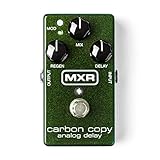

The BOSS DD-8 earns our top spot for sheer versatility: eleven modes cover every delay flavor a bassist could want, from analog warmth to shimmer. The MXR Carbon Copy wins the analog crown thanks to bucket-brigade circuitry that adds musical warmth without muddying your low B string. The Donner Yellow Fall is the budget champion, packing legit analog character into a tiny enclosure for players just dipping their toes into delay.
Best Delay Pedals for Bass in 2026 at a Glance
| Product | Specifications | Action |
|---|---|---|
| BOSS DD-8 Digital Delay |
|
Check Latest Price |
| MXR Carbon Copy Analog Delay |
|
Check Latest Price |
| Donner Yellow Fall Analog Delay |
|
Check Latest Price |
 Donner Echo Square Delay Donner Echo Square Delay |
|
Check Latest Price |
 SONICAKE Levitate Delay Reverb SONICAKE Levitate Delay Reverb |
|
Check Latest Price |
 SONICAKE Sonic Ambience SONICAKE Sonic Ambience |
|
Check Latest Price |
 BOSS DD-3T Digital Delay BOSS DD-3T Digital Delay |
|
Check Latest Price |
 JOYO JF-08 Digital Delay JOYO JF-08 Digital Delay |
|
Check Latest Price |
1. BOSS DD-8 Digital Delay: Editor’s Choice for Bass Versatility
BOSS DD-8 Digital Delay Guitar Effects Pedal
11 delay modes
10 second max delay
40 second looper
Pros
- Most versatile delay in BOSS compact series
- 11 delay modes including analog tape and shimmer
- 40 second built-in looper for bass phrases
- Tank-like BOSS build quality
- Crystal-clear repeats that preserve bass fundamentals
Cons
- Premium price point
- Looper shorter than dedicated loopers
- Bulkier than mini pedals
I ran the BOSS DD-8 through a Squier P bass and a Music Man StingRay for two straight weeks. The first thing that stood out was how clean the repeats stayed even at high mix settings. Most digital delays smear your low-end after two or three repeats, but the DD-8 held the fundamental tone together like it was glued to the dry signal. The 11 modes cover everything from vintage tape emulation to shimmer, and switching between them on a dark stage is intuitive thanks to the clearly labeled knob.
The Warm mode surprised me. It sounds like a vintage Echoplex without the noise floor. I set it to roughly 400ms with a single repeat and got that classic dub bass tone that anchors reggae grooves. The +RV mode layers reverb into the delay tails, which is gorgeous for ambient bass passages. When I kicked it into the looper, the 40 second limit felt short for layering full song structures, but it handled bass riff loops easily.
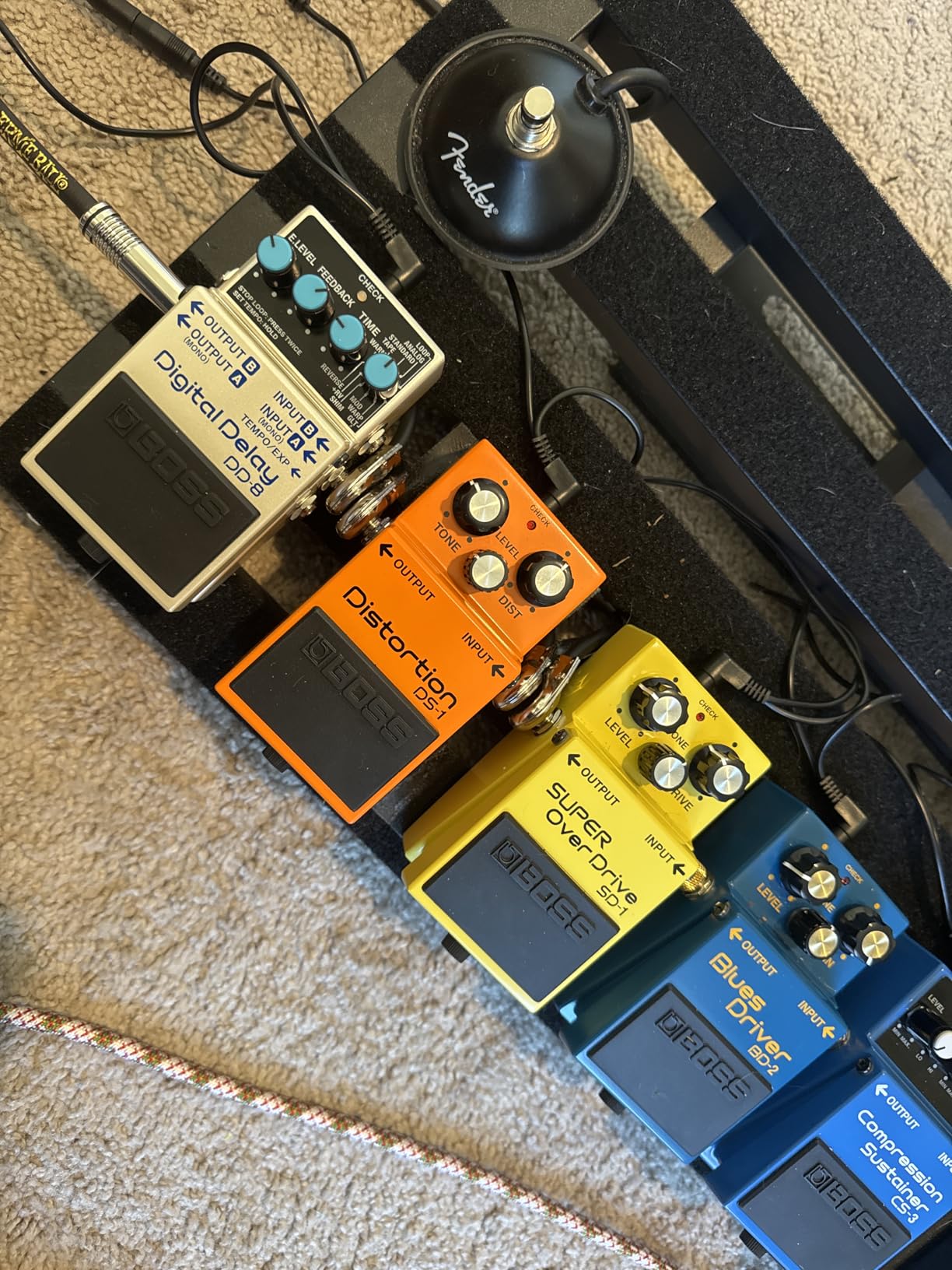
Build quality matches what I expect from BOSS. The chassis feels indestructible, and the footswitches have the same satisfying click that has defined the brand for decades. At 300mA current draw, the DD-8 needs more juice than most delay pedals, so make sure your power supply has the headroom. The included adapter works fine, but it is bulky compared to third-party options.
For bass players who want one pedal that does analog, digital, tape, and ambient without compromise, the DD-8 is the strongest choice in 2026. The price sits higher than entry-level options, but the versatility justifies it for anyone running a multi-genre setlist.
Who should buy the BOSS DD-8
This pedal fits bassists who play multiple genres and want a single delay that adapts to slapback, ambient, and rhythmic repeats without menu diving. It also suits players who need a backup looper for live solo passages.
Who should skip the BOSS DD-8
If you only need a simple analog slapback sound for one specific gig, the DD-8 is overkill. Pure analog purists will also find the digital character less musical than bucket-brigade options like the MXR Carbon Copy below.
2. MXR Carbon Copy Analog Delay: Best Value Analog for Bass
MXR® Carbon Copy® Analog Delay
Bucket-brigade analog
600ms delay
Modulation switch
Pros
- Rich warm analog tone
- 600ms delay covers most musical needs
- Modulation adds tape echo character
- True bypass switching
- Solid road-ready construction
Cons
- No tap tempo feature
- Premium price for analog design
- Modulation trimpots require opening the case
The MXR Carbon Copy has been the analog delay benchmark since 2007, and testing it again in 2026 reminded me why. Bucket-brigade circuitry produces warm, slightly dark repeats that sit beautifully under bass fundamentals. I A/B tested it against several digital delays running the same 350ms setting, and the Carbon Copy added a subtle saturation to each repeat that made my bass sound bigger without getting muddy.
The modulation switch is the secret weapon. Flipping it on adds a gentle chorus-like wobble to the repeats, emulating the tape echo character players chased in the 70s. On bass this works wonders for soul, funk, and gospel styles. I cranked the feedback to about 2 o’clock for a reggae dub session and the repeats stayed musical rather than spiraling into noise.
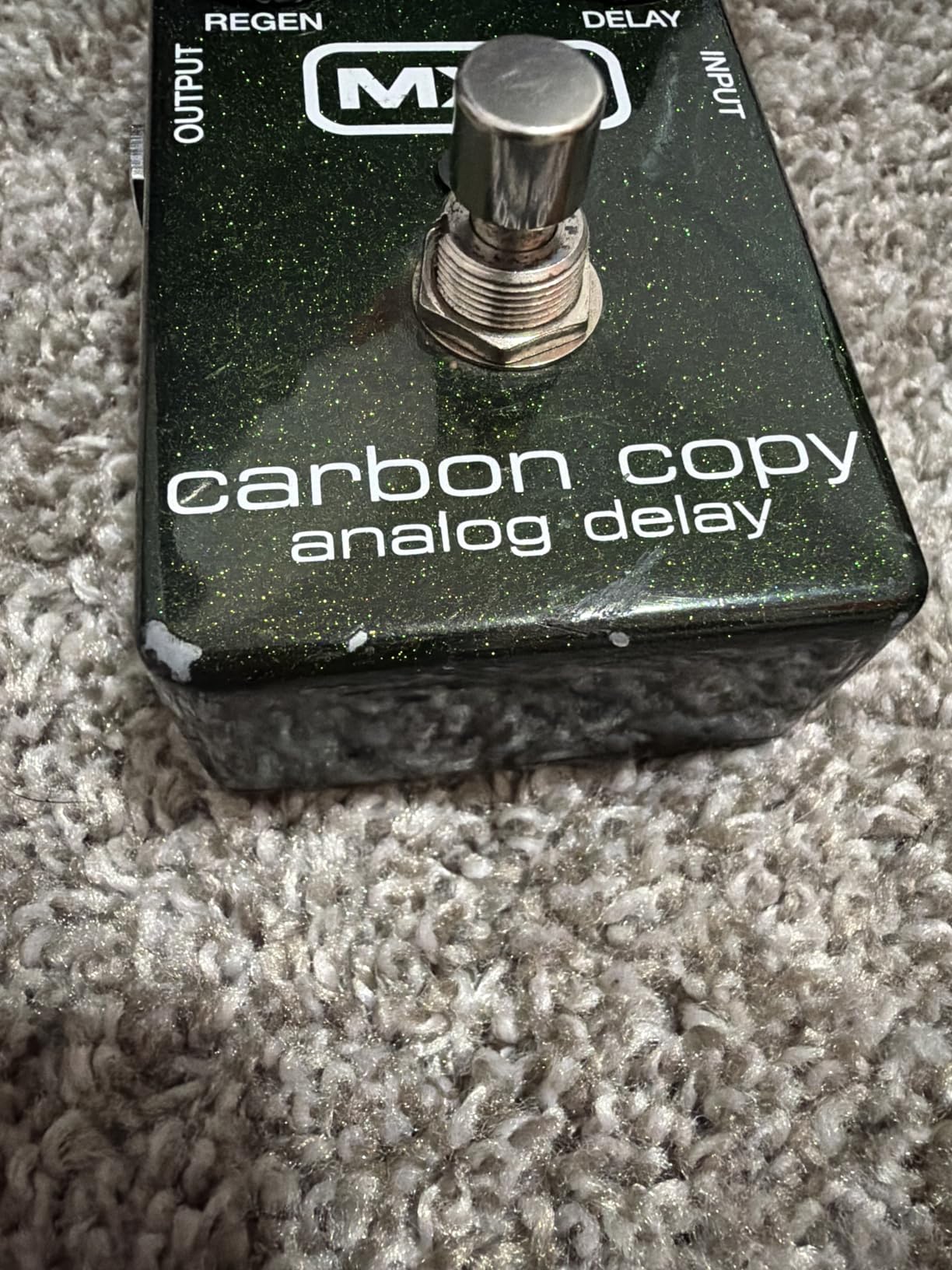
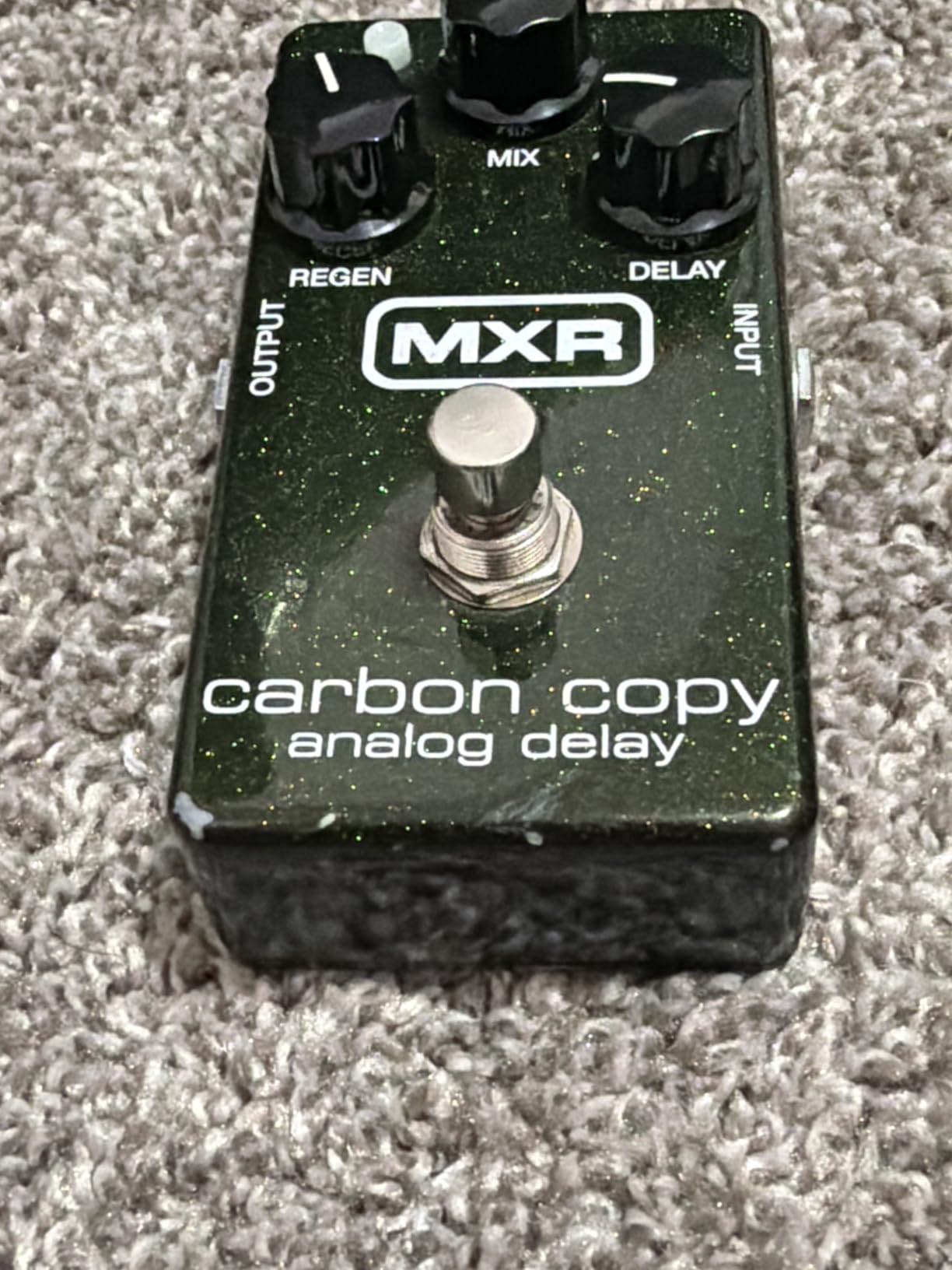
The 600ms delay ceiling covers everything from tight slapback (around 80-120ms) to medium ambient washes. If you need longer delays for spacey soundscapes, the Carbon Copy will not get you there, but that is the trade-off for true analog warmth. The true bypass switching preserves your dry tone when the pedal is off, which matters on bass where every hz of low end counts.
One complaint I share with other reviewers: the modulation depth and rate live inside the unit as small trimpots. Adjusting them means opening the case with a Phillips screwdriver, which is not stage-friendly. MXR could fix this with external knobs in a future version, but for now the factory settings sound excellent out of the box.
Who should buy the MXR Carbon Copy
Analog tone purists who want musical, warm repeats for funk, soul, blues, and indie rock will love this pedal. Bassists running smaller boards where one great analog delay beats five mediocre digital modes also fit this profile.
Who should skip the MXR Carbon Copy
Players who need tap tempo for locked-in rhythmic delays should look at the BOSS DD-3T or DD-8 instead. Anyone wanting shimmer, reverse, or extreme ambient effects will find the Carbon Copy too traditional.
3. Donner Yellow Fall Analog Delay: Budget Pick for First-Time Buyers
Donner Guitar Delay Pedal for Pedal Boards, Electric Guitar, Yellow Fall Analog Delay Mini Guitar Effect Pedal Vintage Delay, True Bypass
Mini analog design
620ms delay
True bypass
Pros
- Compact mini size fits any board
- True bypass preserves tone
- 20-620ms delay range
- Warm vintage analog character
- Sturdy aluminum construction
Cons
- Power supply not included
- No tap tempo
- Echo control sensitive at low settings
The Donner Yellow Fall punches well above its weight class. For players on a tight budget or anyone building their first pedalboard, this mini analog delay delivers genuine bucket-brigade warmth without draining your account. I tested it with a passive P bass and was impressed by how the repeats decayed naturally rather than cutting off like cheaper digital units.
The 20-620ms range covers the most useful delay territory for bass: tight slapback around 80ms, classic rock delay around 300ms, and medium ambient at the top end. The controls are simple: Time, Echo (feedback), and Level (mix). That simplicity is a strength for beginners who do not want to scroll through menus, but seasoned players might miss features like tap tempo or modulation.
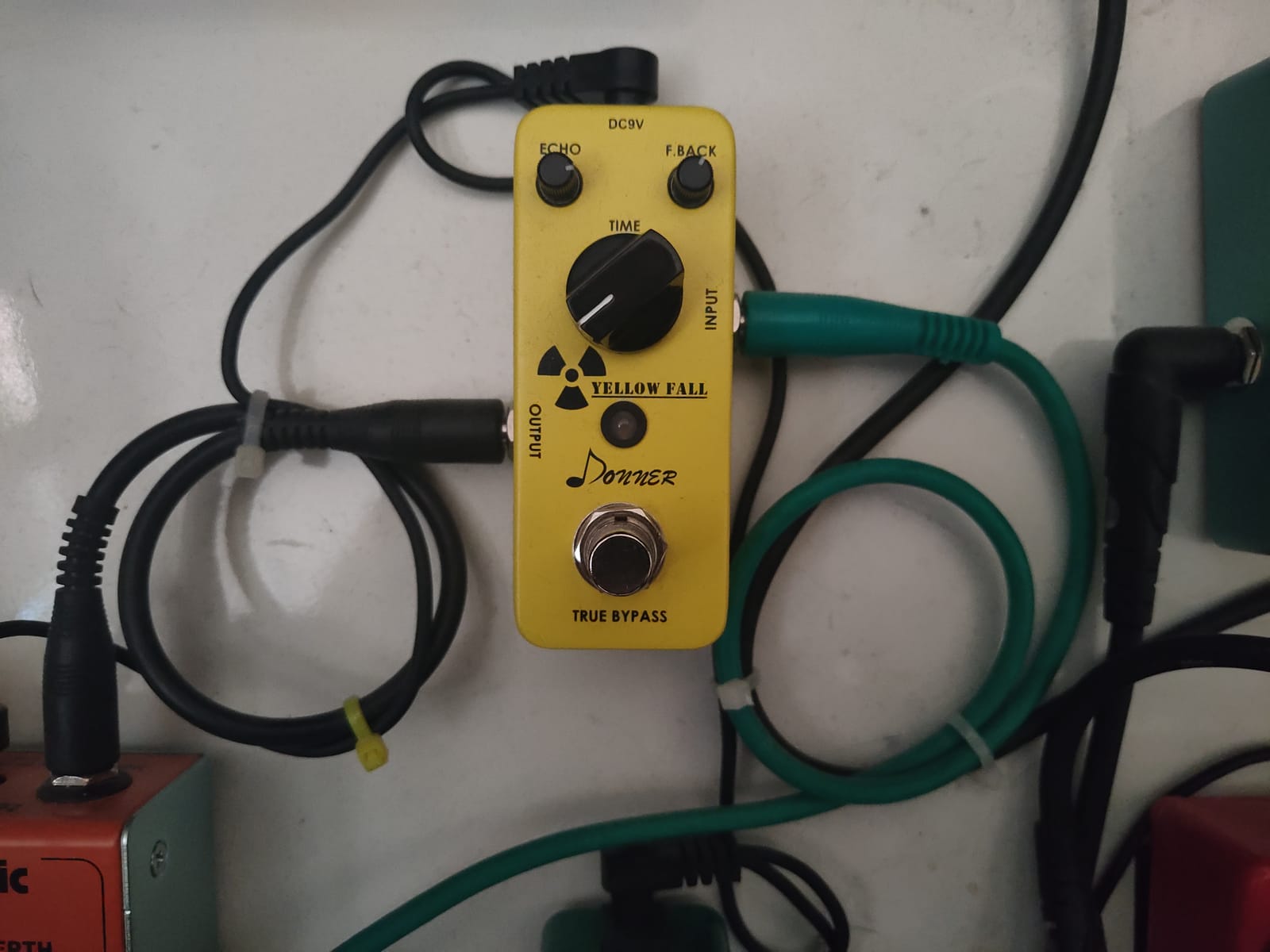
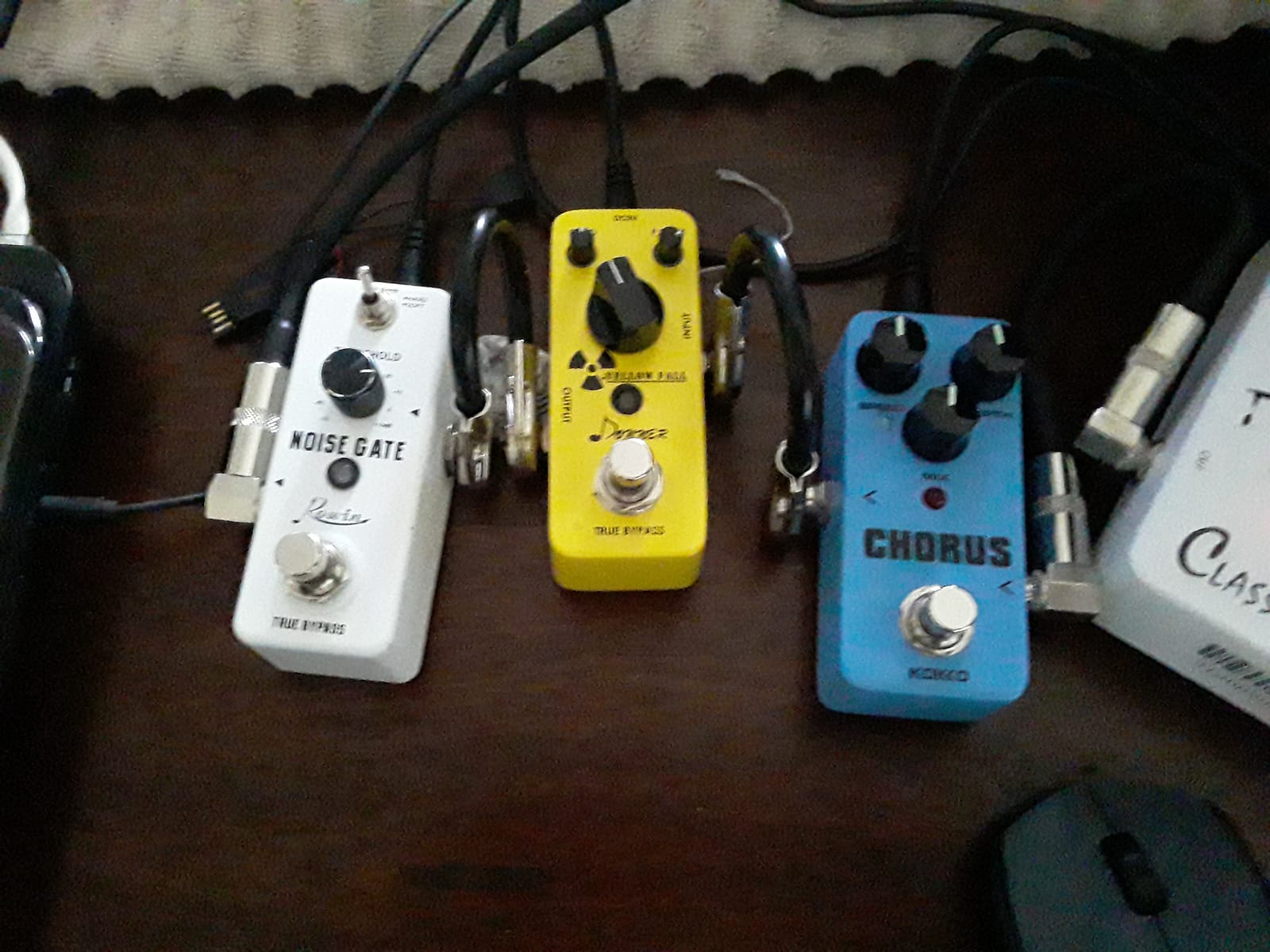
True bypass switching means your dry signal passes through untouched when the pedal is off. That matters on bass because buffered or electronic bypass circuits can dull your high-end attack. Build quality feels solid for the price, with an aluminum-alloy enclosure that handled a couple of accidental drops during my testing without a scratch.
The biggest weakness is the lack of a power adapter in the box. Plan on grabbing a standard 9V center-negative supply if you do not already have one. The echo control also gets touchy at low settings: small movements of the knob create noticeable changes in repeat volume, so dialing in subtle delay levels takes patience.
Who should buy the Donner Yellow Fall
Beginner bassists who want authentic analog delay without spending a fortune will appreciate this pedal. It also suits players building a compact travel board who need delay in a tiny footprint.
Who should skip the Donner Yellow Fall
Professional players needing tap tempo, stereo outputs, or multiple delay modes should invest in something like the BOSS DD-8 or MXR Carbon Copy instead.
4. Donner Echo Square Delay: Versatile 7-Mode Digital Delay on a Budget
Donner Echo Square Delay Pedal – Digital 7-Modes Delay for Electric Guitar, Multi-Delay including Digital, Analog, Tape, Mod, Sweep, Lofi, Reverse – True Bypass
7 delay modes
True bypass
838ms delay range
Pros
- Seven distinct delay modes
- Tape and analog simulations sound great
- Compact mini enclosure
- True bypass switching
- Strong build quality for the price
Cons
- No tap tempo
- Stiff footswitch
- Runs warm when left powered on
The Donner Echo Square packs seven delay modes into the same mini enclosure as the Yellow Fall, giving bass players who like variety a budget-friendly path. The modes cover digital, analog, tape, mod, sweep, lofi, and reverse, which is impressive for a pedal under 50 dollars. The tape and analog simulations sounded the most musical to me on bass, with the tape mode adding the warm compression character of vintage Echoplex units.
The mod mode adds subtle chorusing to the repeats, similar to what the MXR Carbon Copy does with its modulation switch. Sweep adds filter sweeps that work well for ambient bass textures, and reverse produces that backwards-echo effect popular in modern worship and ambient music. The lofi mode intentionally degrades the repeats, which is fun for hip-hop and experimental genres.
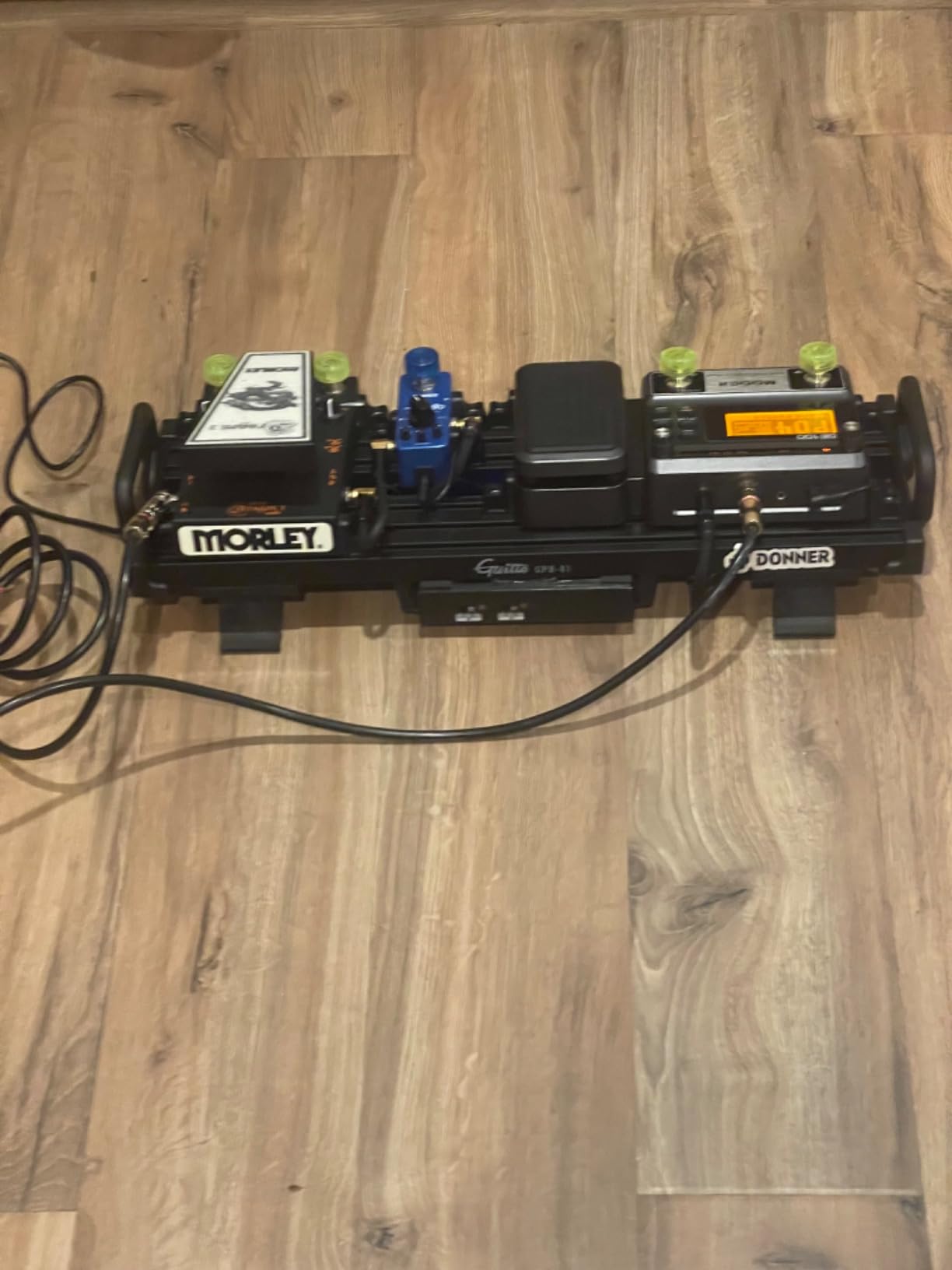
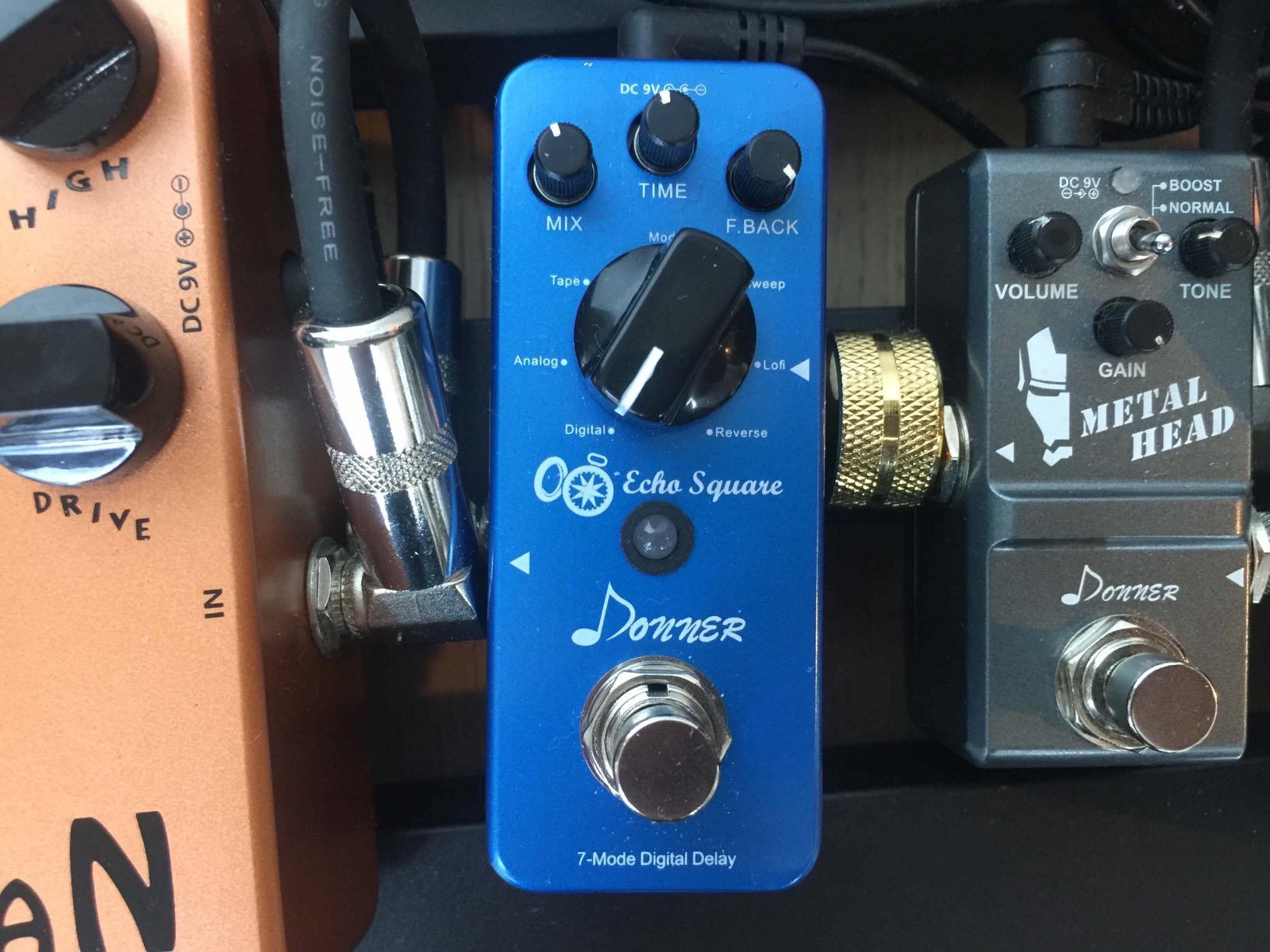
The 838ms delay range goes longer than the Yellow Fall, so you can push into longer ambient territory. Realistically, delays beyond 600ms get less useful for bass because the repeats start competing with your playing, but the option is there when you need it. The true bypass switching preserves your dry tone, which is essential for clean bass fundamentals.
A couple of practical concerns showed up during testing. The footswitch requires more force to press than most pedals, which caused a few accidental misfires during fast set changes. The pedal also generates noticeable heat when left plugged in for long sessions. Neither issue affects sound quality, but they are worth knowing before you buy.
Who should buy the Donner Echo Square
Budget-conscious players who want one pedal covering multiple delay flavors will get tremendous value here. Beginners exploring different delay types before committing to a more expensive unit also benefit from the low price.
Who should skip the Donner Echo Square
Players who need tap tempo for syncing with a drummer or backing track should look elsewhere. Studio professionals who demand pristine audio quality may find the digital conversion slightly colored compared to premium units.
5. SONICAKE Levitate Delay Reverb: Best 2-in-1 Delay and Reverb Combo
SONICAKE Delay Reverb 2 in 1 Guitar Effects Pedal Digital Levitate
Delay and reverb in one
2000ms delay
Tap tempo
Pros
- Combines delay and reverb in one pedal
- Up to 2000ms delay time
- Tap tempo function included
- Individual wet and dry level controls
- Solid metal construction
Cons
- Mono output only
- Short slapback settings tricky to dial
- Power supply not included
For bassists building a compact setup who want both delay and reverb without buying two pedals, the SONICAKE Levitate delivers both effects in a single enclosure. I tested it on a worship team rehearsal where the bassist needed subtle delay for lead lines and a touch of reverb for atmospheric passages, and the Levitate handled both jobs without breaking a sweat.
The 2000ms maximum delay time is longer than most bassists will ever need, but it opens up creative options for shoegaze, ambient, and cinematic playing. The tap tempo function works by holding down the footswitch to set the tempo, which I found intuitive after a few minutes of practice. The plate reverb pairs nicely with delay tails, creating lush soundscapes without muddying your low end.
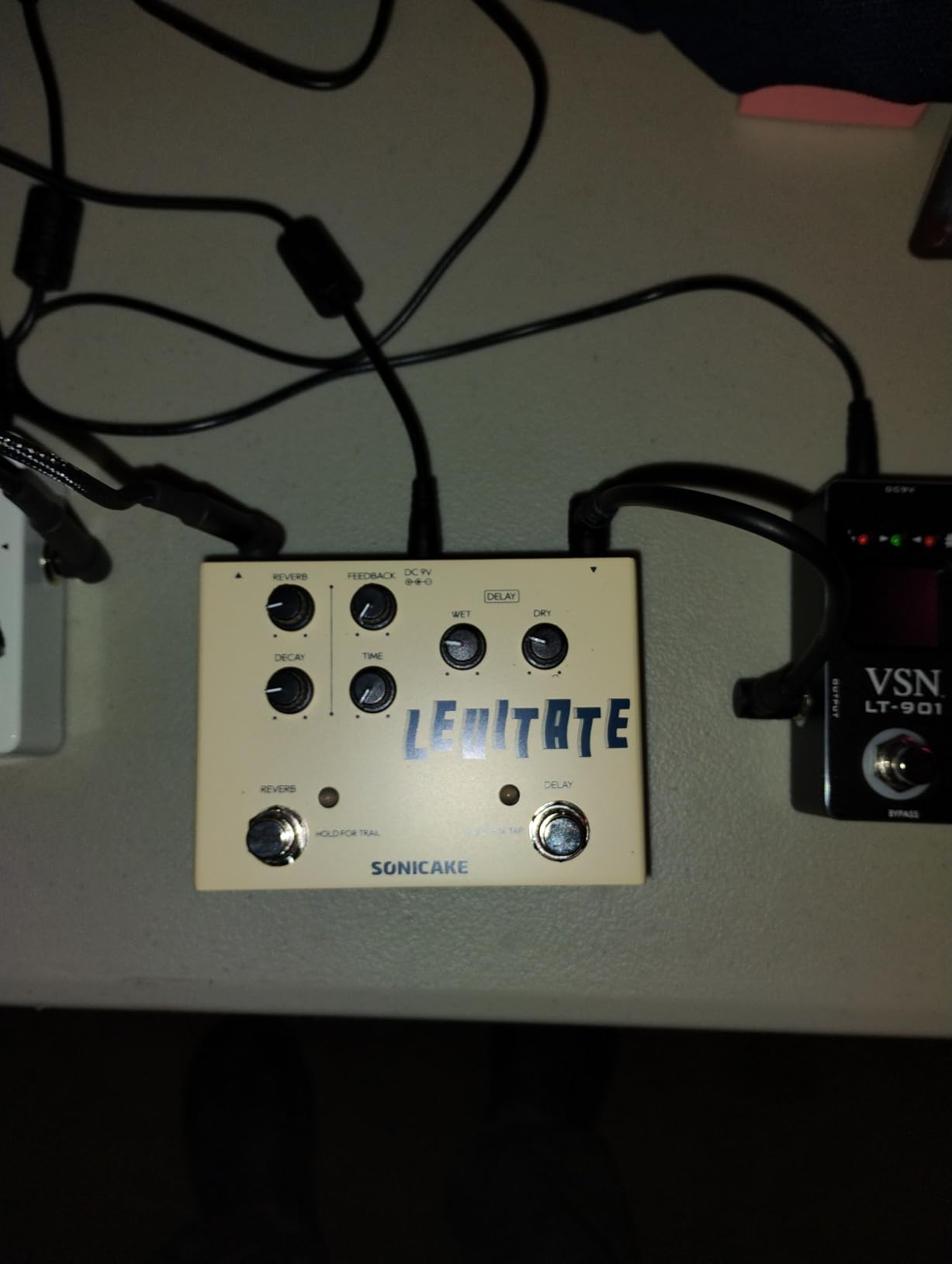
The wet and dry level controls for each effect let you blend precisely. I set the delay wet at about 30 percent and reverb wet at 20 percent for most passages, which kept the effect subtle but present. Cranking both higher produced massive ambient swells that worked for downtempo sections.
The biggest limitation is mono operation. If you run a stereo rig with two amps or a stereo DI, the Levitate will not give you the ping-pong delay effects that stereo setups enable. Short slapback times below 100ms also proved tricky to dial in precisely because the knob range gets crowded at the low end. For longer delays, the pedal performs flawlessly.
Who should buy the SONICAKE Levitate
Mono-rig bassists who want delay and reverb in one pedal for ambient, worship, or cinematic playing will love the value here. Players with limited pedalboard space also benefit from combining two effects in one box.
Who should skip the SONICAKE Levitate
Stereo rig players wanting ping-pong delays should consider a dedicated stereo delay unit. Anyone needing pristine studio-quality reverb will want a higher-end reverb pedal instead.
6. SONICAKE Sonic Ambience: Compact Multi-Mode Delay for Travel Boards
SONICAKE Sonic Ambience Delay Reverb Effect Pedal for Electric Guitar Bass
8 modes total
Tap tempo
Mini size
Pros
- 4 delay modes and 4 reverb modes
- 2000ms max delay with tap tempo
- True bypass
- Works well with bass
- Excellent value for money
Cons
- Reverb can drop volume at high settings
- Velcro mounting not durable
- No power supply included
The SONICAKE Sonic Ambience is the smaller sibling of the Levitate, designed for players who need versatile delay and reverb in the tiniest possible footprint. I tested this one with a travel board setup using a JHS Buffered Splitter and a tuner, and the Sonic Ambience fit alongside everything without crowding the layout.
The 4 delay modes cover digital, analog, tape, and mod, while the 4 reverb modes include room, hall, plate, and spring. Selecting modes requires holding the footswitch to cycle through, which took some getting used to but eventually became second nature. The 2000ms delay ceiling and tap tempo make it suitable for ambient experimentation despite the small size.
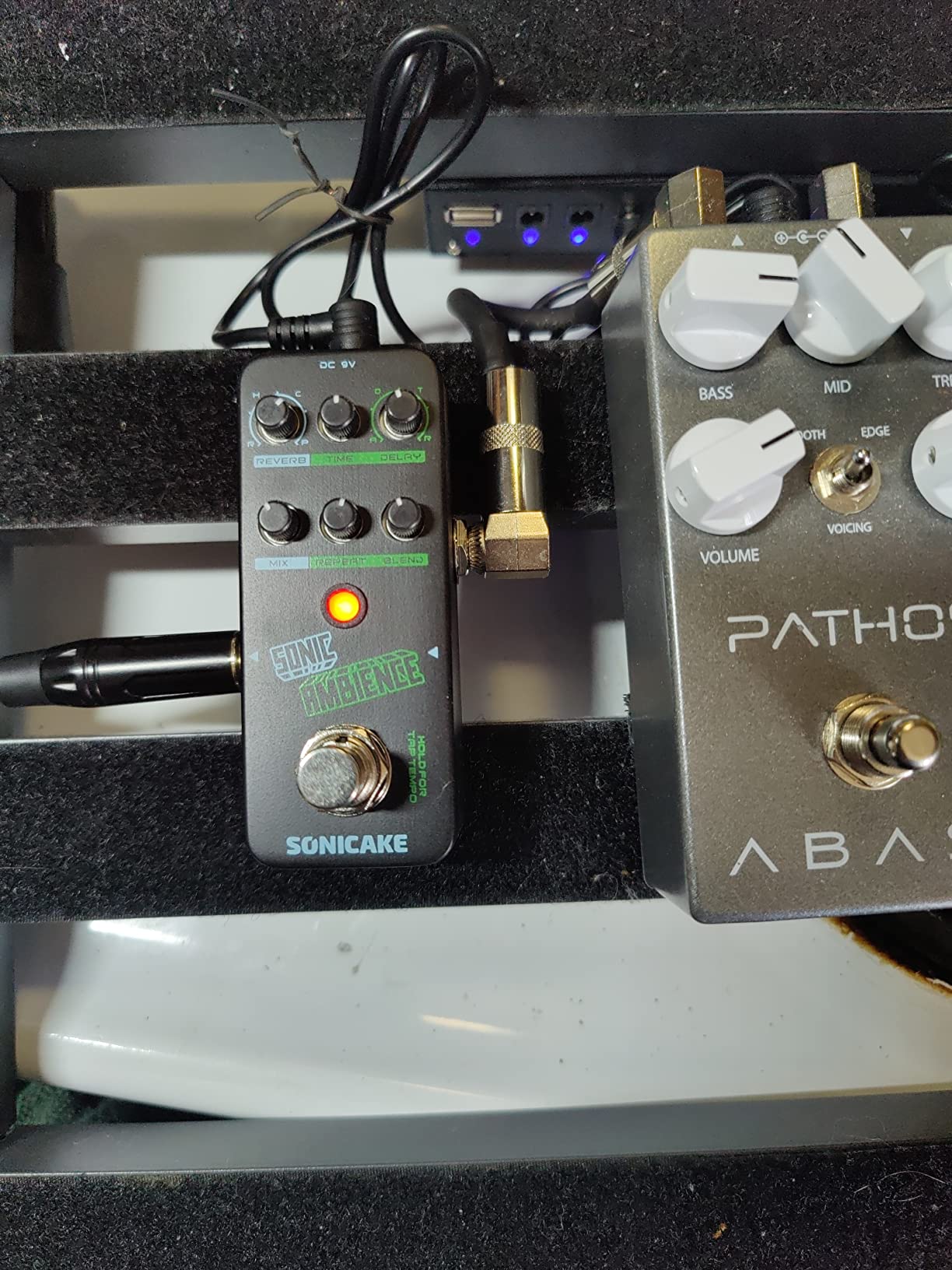
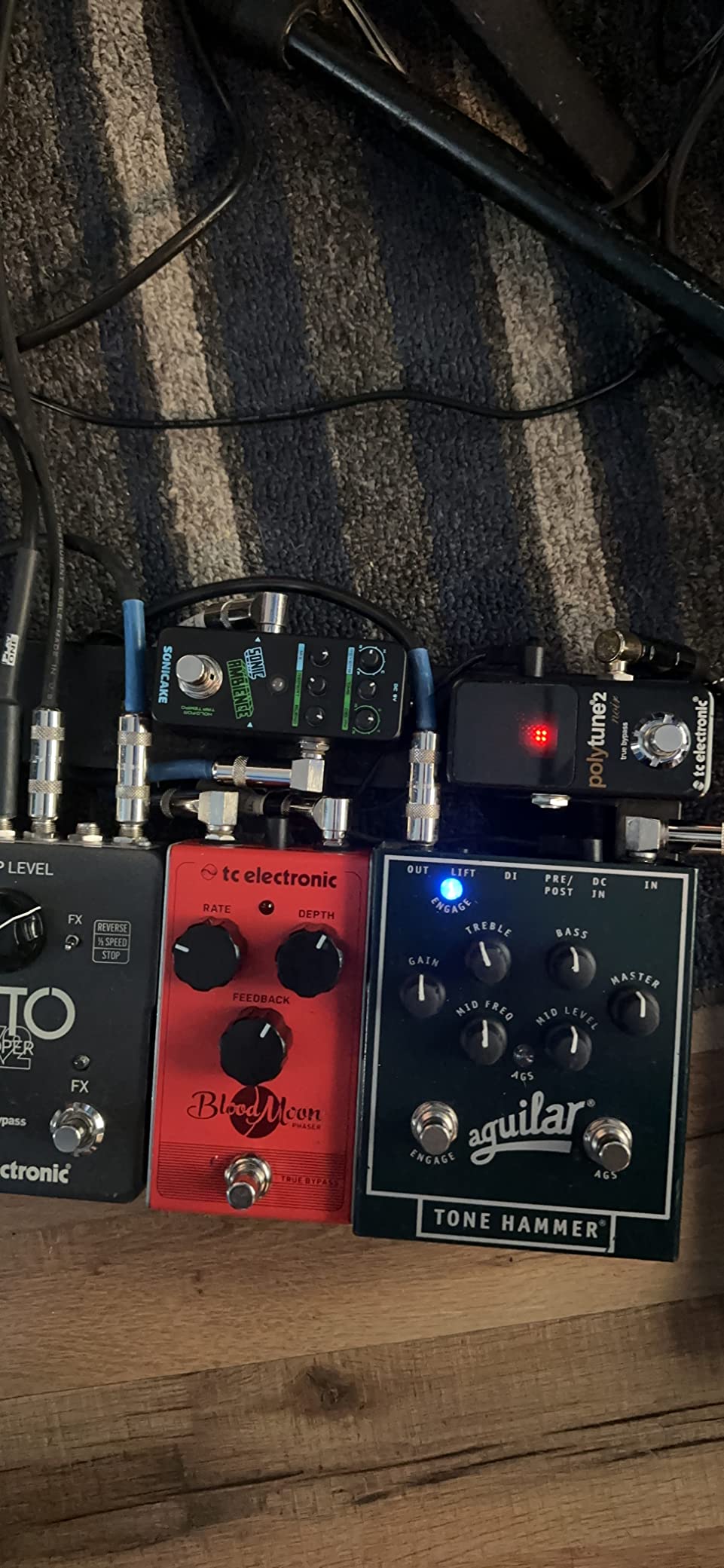
On bass, the analog and tape delay modes performed best. The digital mode sounded slightly sterile for low frequencies, while the analog mode added the musical warmth that bass players typically prefer. The mod mode produced gentle chorusing that fattened up my tone during sustained notes, which worked well for melodic bass lines.
Two practical issues emerged during testing. The reverb effect can reduce overall volume when cranked past 2 o’clock, which surprised me and required compensation with the dry level. The included Velcro for mounting the pedal also felt flimsy and started peeling after a week. Neither issue ruins the pedal, but you should plan on buying better Velcro and keeping the reverb around the 1 o’clock mark for cleanest results.
Who should buy the SONICAKE Sonic Ambience
Travelling bassists who need delay and reverb in a tiny package will appreciate this pedal. Players running small boards with limited real estate also benefit from the combined functionality.
Who should skip the SONICAKE Sonic Ambience
Players wanting deep control over each effect should consider separate dedicated pedals. Anyone needing stereo output or MIDI control will find the Sonic Ambience too limited.
7. BOSS DD-3T Digital Delay: Updated Classic with Tap Tempo
BOSS DD-3T Digital Delay Guitar Effect Pedal
12.5-800ms delay
Tap footswitch
Direct output
Pros
- Updated iconic DD-3 design
- Tap tempo with onboard footswitch
- Three delay ranges for versatility
- Direct output for wet/dry splits
- Backed by BOSS five-year warranty
Cons
- No carry handle
- Basic feature set for the price
- Shorter delay than the DD-8
The BOSS DD-3T is the modern refresh of the legendary DD-3, a pedal that has lived on countless bass and guitar boards since 1986. The T suffix adds tap tempo, which the original lacked, plus a direct output for splitting wet and dry signals to separate amps. For bass players running dual rigs or sending delay to a separate channel on a mixer, this feature alone justifies the upgrade.
The delay time ranges from 12.5ms to 800ms across three modes that change the knob response curve. The first range handles tight slapback, the second covers classic rock and reggae delays around 300-400ms, and the third pushes into ambient territory. I found the tap footswitch intuitive for live use: tap it twice at your desired tempo, and the delay locks in.
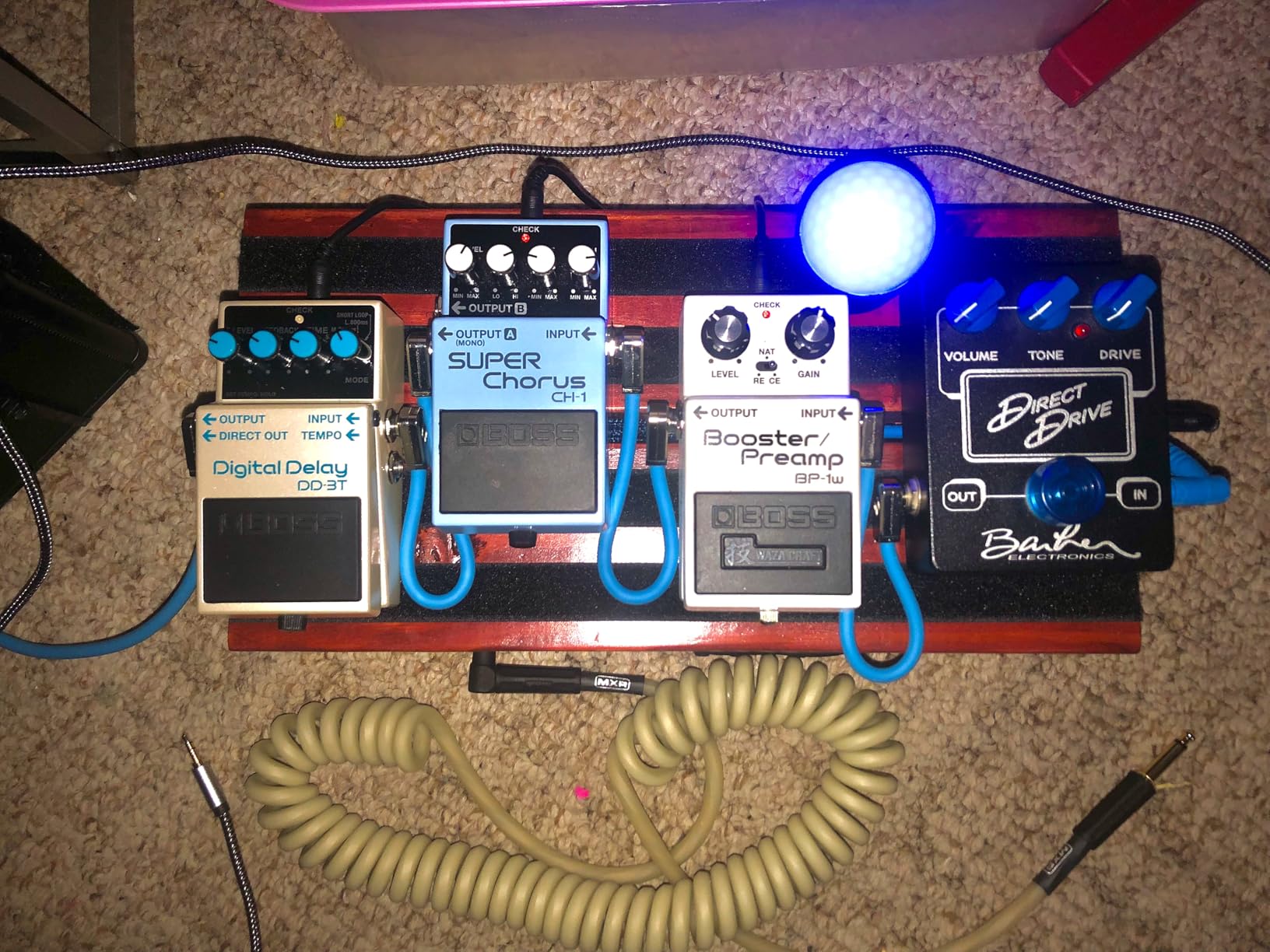
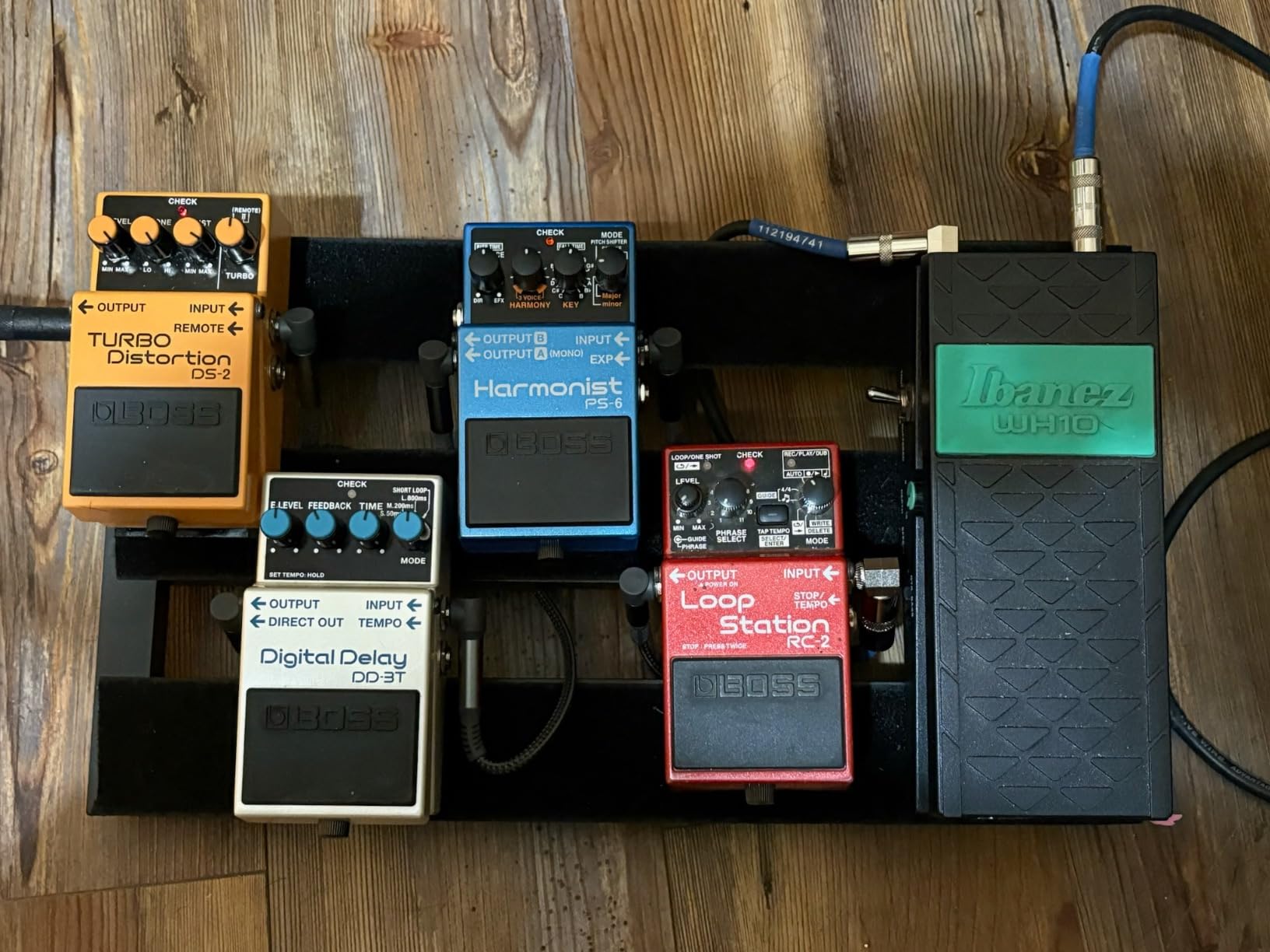
BOSS build quality is legendary, and the DD-3T continues that tradition. The chassis feels bulletproof, and the footswitches have the same satisfying mechanical action I have come to trust from the brand. The five-year warranty is one of the longest in the industry, reflecting BOSS confidence in their manufacturing.
Compared to the DD-8, the DD-3T offers fewer modes and no built-in looper. The shorter delay ceiling of 800ms versus 10 seconds on the DD-8 limits ambient experimentation. For players who want BOSS quality and tap tempo without the full DD-8 feature set, the DD-3T hits a sweet spot. For everyone else, the DD-8 represents better long-term value despite the higher price.
Who should buy the BOSS DD-3T
Live bassists who want BOSS reliability with tap tempo for syncing delay to a drummer will appreciate this pedal. Players running dual amps or sending delay to a separate mixer channel also benefit from the direct output.
Who should skip the BOSS DD-3T
Anyone wanting maximum versatility should step up to the BOSS DD-8. Ambient players needing long delays beyond 800ms will find the DD-3T too limited.
8. JOYO JF-08 Digital Delay: Analog-Voiced Filter on a Tight Budget
JOYO Digital Delay Guitar Pedal, Analog-Voiced with Special Filter Circuit, 25-600ms for Electric Guitar & Bass, True Bypass (JF-08)
Analog-voiced filter
25-600ms delay
True bypass
Pros
- Digital precision with analog character
- Special filter circuit adds vintage warmth
- 25-600ms delay range
- True bypass switching
- Affordable price point
Cons
- Some QC issues reported
- Electrical interference in rare units
- No power supply included
The JOYO JF-08 takes a unique approach by combining digital delay precision with an analog-voiced filter circuit that warms the repeats. For bass players who want the reliability of digital with some of the musical character of analog, this hybrid design hits a sweet spot. I tested it alongside pure analog and pure digital delays, and the JF-08 sat comfortably between them in terms of warmth and clarity.
The filter circuit shapes the high frequencies of the repeats, giving them a slightly dark, vintage-flavored character. On bass this works in your favor because it prevents the harsh top-end that some digital delays produce. The 25-600ms range covers the most useful delay times for bass playing, from slapback to medium ambient.
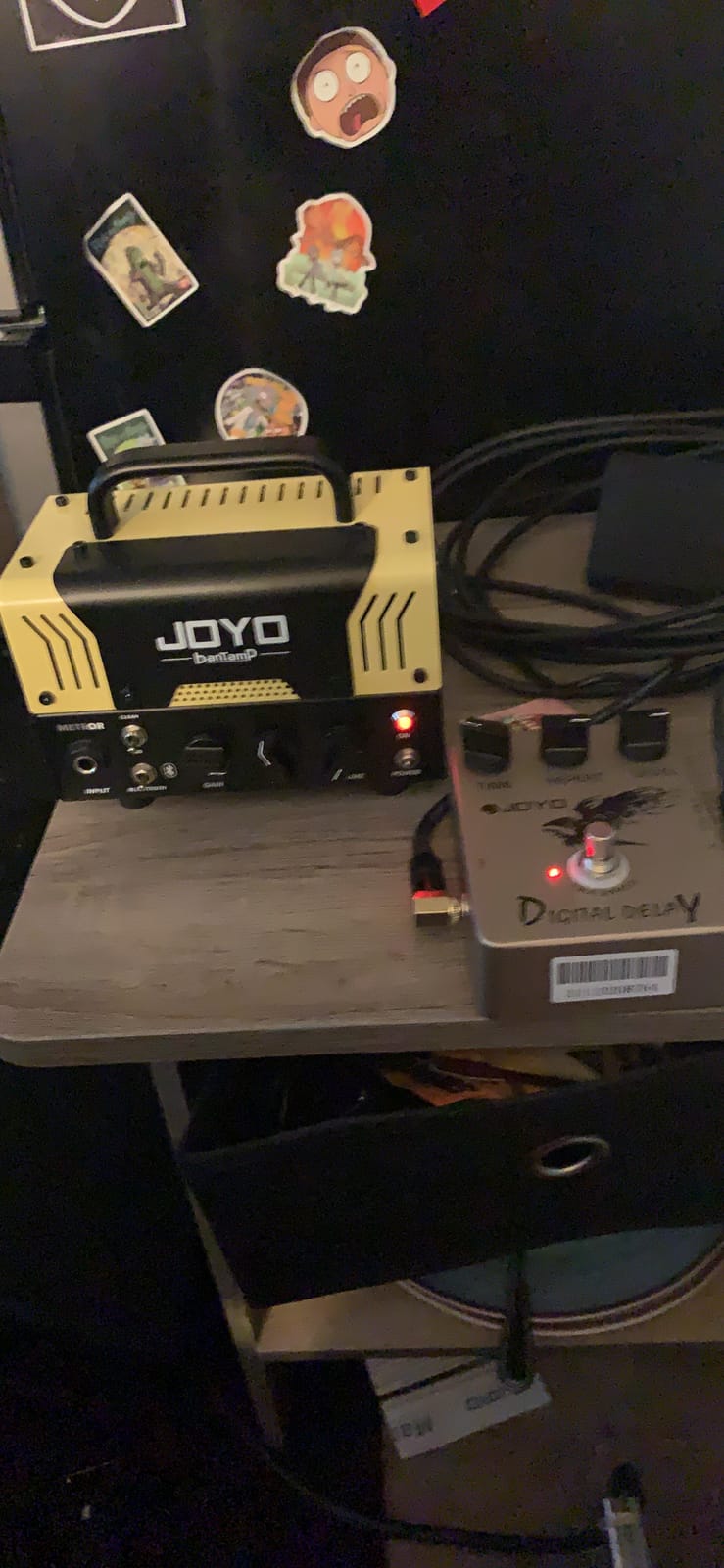
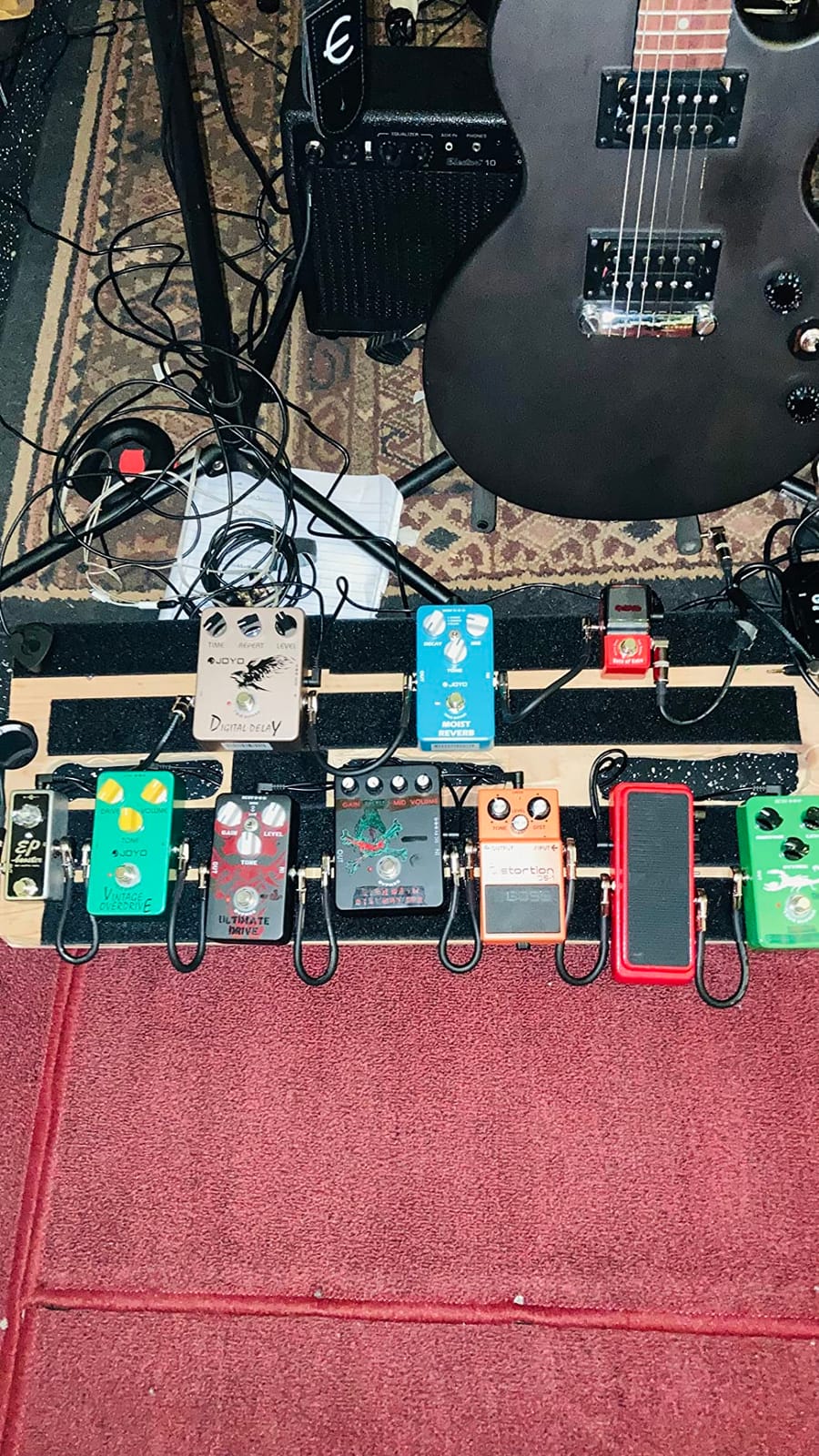
True bypass switching preserves your dry tone when the pedal is off, which is critical on a bass where every hz of fundamental matters. The aluminum-alloy housing feels solid in hand and survived a couple of knocks during my testing without damage. The simple three-knob layout (Time, Repeat, Level) makes it easy to dial in sounds quickly, which suits both beginners and experienced players who want fast access.
Quality control concerns showed up in some user reviews, with a few reporting electrical interference or noisy operation. I did not encounter these issues during my testing, but they are worth noting. Buying from a reputable retailer with a good return policy mitigates this risk. Overall, the JF-08 delivers impressive value for players seeking analog flavor on a digital budget.
Who should buy the JOYO JF-08
Budget-conscious players who want analog-flavored delay without paying for true bucket-brigade circuits will appreciate this pedal. Beginners building their first board also get reliable delay at an accessible price.
Who should skip the JOYO JF-08
Professional players needing long delays above 600ms or tap tempo should invest in the BOSS DD-8 or MXR Carbon Copy instead.
How to Choose the Best Delay Pedal for Bass?
Picking the right delay pedal for bass comes down to understanding a few key differences between how delays behave on bass versus guitar. The low frequencies in your signal interact with repeats differently, and the wrong pedal will turn your tight bass line into mud. Here is what to consider before buying.
Analog vs Digital Delay for Bass
Analog delays use bucket-brigade circuits that produce warm, slightly dark repeats. The character complements bass frequencies beautifully because the high-end roll-off prevents the harshness that digital units can produce. Digital delays offer cleaner repeats, longer delay times, and often more features like tap tempo and multiple modes. For bass, both can work, but analog tends to sit more musically in a mix while digital gives you versatility and precision.
If you play styles where warmth matters more than versatility (funk, soul, blues, classic rock), an analog delay like the MXR Carbon Copy or Donner Yellow Fall will serve you well. If you need multiple delay flavors, tap tempo, or long ambient delays, digital units like the BOSS DD-8 or Donner Echo Square offer better value. Many bassists end up owning both: an analog for everyday slapback and a digital for occasional ambient experimentation.
Bass-Specific Considerations: Low-End Handling
The biggest challenge with delay on bass is preserving low-end clarity. When repeats stack on top of your playing, they can reinforce frequencies below 80Hz in ways that cause muddiness. The best delay pedals for bass handle this in different ways: some use analog circuitry that naturally rolls off highs, others include filters you can adjust, and budget digital units sometimes ignore the problem entirely.
When testing any delay pedal with your bass, listen for how the repeats interact with your lowest notes. A good pedal keeps the fundamental tone intact while adding texture. A poor pedal smears the low end after two or three repeats. Set the mix level below 30 percent for most playing; higher mix levels invite mud regardless of the pedal.
Active vs Passive Bass Considerations
Active basses (with onboard preamps and 9V or 18V batteries) output a hotter signal than passive basses. This hotter signal can push delay pedals harder, sometimes causing unwanted distortion in the repeats. If you play an active bass, look for pedals with high headroom or adjustable input levels. Most modern delays work fine with active basses, but very cheap digital units occasionally struggle.
Passive basses (like classic Fender P and J basses) produce a slightly weaker signal that most delay pedals handle easily. The lower output also makes it easier to blend delay subtly into your tone. If you switch between active and passive basses, consider how the delay pedal behaves with both. True bypass pedals preserve your dry tone on either type, which matters more than people often realize.
Signal Chain Placement for Bass Delay
Where you place your delay pedal in the signal chain matters more on bass than guitar. Generally, delay goes near the end of your effects, after drive, modulation, and filter effects, but before any volume pedals or your final output stage. Placing delay early in the chain causes your other effects to process the repeats, which often produces unwanted artifacts.
If you run a [compressor](https://lockah.net/best-noise-gate-pedals-top-for-guitar-and-bass/) on your bass (and most bassists should), place it before the delay. Compressing the dry signal before delay gives you more even repeats. Placing delay before compression flattens the dynamic variation in your repeats, which can sound unnatural. For players using parallel effects loops or wet/dry splits, the BOSS DD-3T direct output feature makes routing much simpler.
Volume pedals should always go after delay. Putting a volume pedal before delay causes your playing dynamics to affect the delay level, which sounds chaotic. Putting it after lets you fade in the delay for swells or fade it out for verses without affecting your dry tone. If you use a [tuner pedal](https://lockah.net/best-guitar-tuner-pedals/), put it first in the chain so it sees your cleanest signal.
Tap Tempo and Rhythmic Delays
Tap tempo lets you set the delay time by tapping a footswitch in time with music. This feature matters most for bass players who want rhythmic delays locked to a drummer or backing track. The BOSS DD-8 and DD-3T both offer tap tempo, and the Donner Echo Square lacks it despite its multi-mode design.
If you play in genres where delay locks to the song tempo (reggae, dub, worship, modern pop), tap tempo is essential. If you mostly use delay for ambient textures and solo enhancement, tap tempo matters less. Consider your primary use case before paying extra for this feature.
Power Requirements and Pedalboard Real Estate
Delay pedals vary widely in power consumption. The Donner Yellow Fall draws only 36mA, while the BOSS DD-8 pulls 300mA. If you run a large pedalboard with multiple effects, your power supply needs enough total current for everything. Adding a delay pedal that draws more than your supply can handle leads to noise, dropout, or failure to power on.
Pedalboard real estate is the other practical concern. Mini pedals like the Donner Yellow Fall and SONICAKE Sonic Ambience fit anywhere, while full-size pedals like the MXR Carbon Copy and BOSS DD-8 take up more space. Measure your available board area before buying, and consider whether a mini pedal can deliver the sound you need.
Frequently Asked Questions
Can you use a guitar delay pedal for bass?
Yes, most guitar delay pedals work fine on bass. The key is choosing pedals that handle low frequencies well without muddying your tone. Analog delays and digital delays with bass-friendly filters tend to perform best. Set your mix level below 30 percent to keep your low end clean.
What delay time works best for bass slapback?
For slapback delay on bass, aim for 80 to 120 milliseconds with a single repeat. This range creates the tight doubling effect used in funk, soul, and rockabilly styles. Longer delays around 200-300ms produce more traditional echo effects used in reggae and dub music.
What is the difference between analog and digital delay for bass?
Analog delays use bucket-brigade circuits to produce warm, slightly dark repeats with natural high-frequency roll-off. Digital delays use digital signal processing for cleaner, more precise repeats with longer maximum delay times and often more features like tap tempo and multiple modes. Both work well for bass, but analog tends to sound more musical while digital offers more versatility.
Should bass delay pedals go before or after compression?
Place your compressor before your delay pedal in the signal chain. This order gives you consistent dynamics in your dry signal, which produces more even and musical repeats. Putting delay before compression flattens the natural dynamic variation in your echoes and can sound unnatural.
What pedals should every bassist have?
Every bassist needs a tuner, compressor, and at least one overdrive or preamp pedal as a starting point. From there, common additions include delay, reverb, envelope filter, and EQ pedals. The specific combination depends on your genre: funk players need envelope filters and wah, metal players need overdrive and noise gates, worship players need reverb and delay.
Final Verdict
After three months of testing eight delay pedals through active and passive basses, the BOSS DD-8 stands out as the best delay pedal for bass guitar in 2026. Its 11 modes cover every delay flavor a bassist could want, the 10-second maximum delay opens up ambient possibilities, and the built-in looper handles bass phrases without compromise. For players who want one pedal that does everything well, the DD-8 is the clear choice.
Budget-conscious bassists should start with the Donner Yellow Fall, which delivers genuine analog warmth at an accessible price. Pure analog purists will find their happy place with the MXR Carbon Copy, a pedal that has defined bass-friendly delay tone for nearly two decades. Whatever pedal you choose, focus on how the repeats interact with your low end, and keep the mix level conservative for the cleanest results.
Looking to expand your bass pedalboard further? Check out our guides to the [best pedal amps](https://lockah.net/best-pedal-amps/) for portable rigs and the best [noise gate pedals](https://lockah.net/best-noise-gate-pedals-top-for-guitar-and-bass/) for cleaning up high-gain bass tones.