
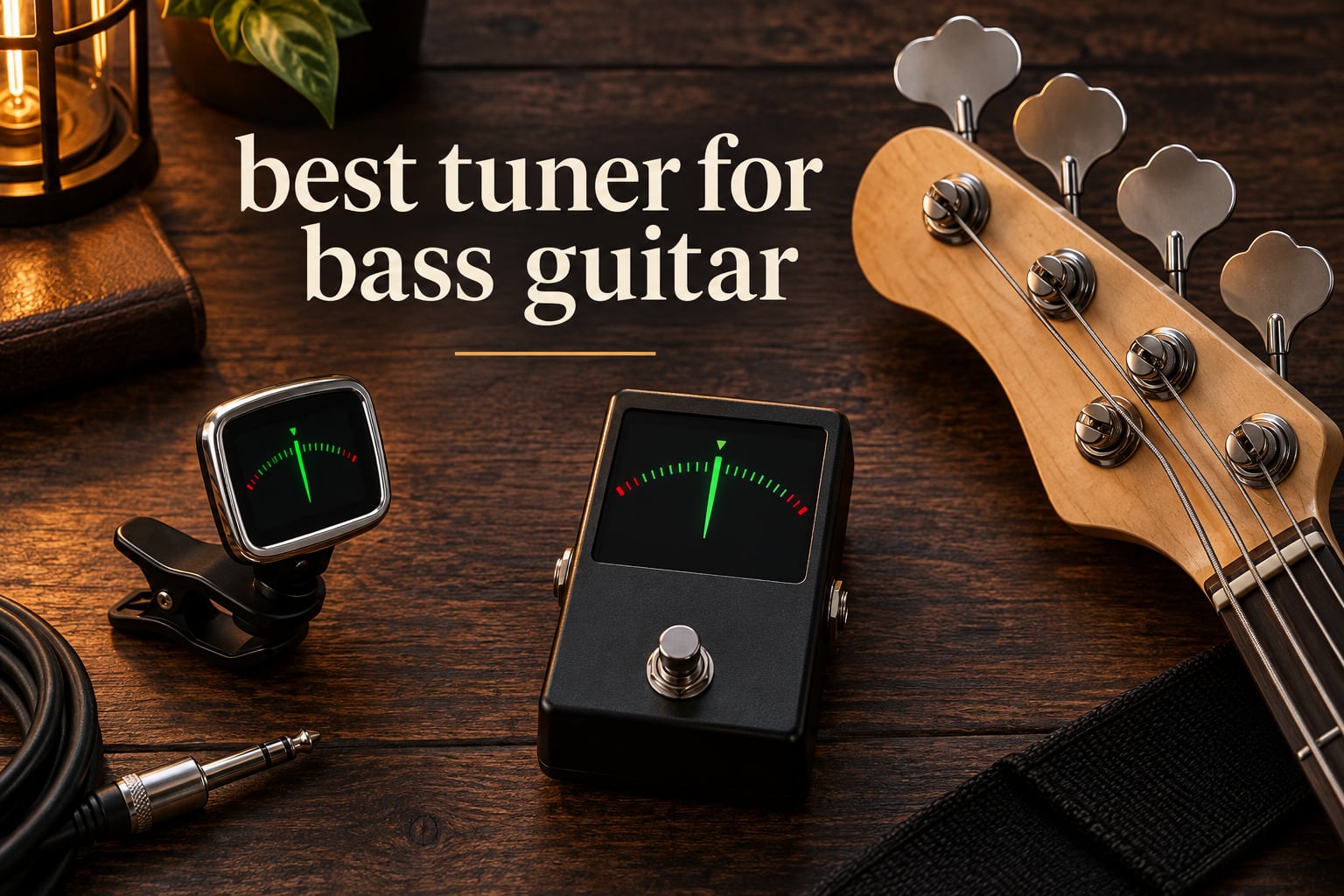
If you have ever tuned your bass with a standard guitar tuner and watched the needle jitter without ever locking in, you have already learned the first lesson of bass tuning: low frequencies are unforgiving. A 4-string bass drops to E1 at roughly 41 Hz and a 5-string goes even lower to B0 around 30 Hz. Many chromatic guitar tuners and even some so-called bass tuners simply refuse to lock on down there. That is why the best tuner for bass guitar is not the cheapest one on the shelf, and it is not the most familiar brand from a guitar shop either. It is the one whose frequency range covers the bottom of your instrument, whose accuracy reads in fractions of a cent, and whose display holds steady when the stage gets loud.
Our team has spent the last several months comparing pedal tuners, clip-on tuners, and budget options side by side on 4-string, 5-string, and short-scale basses. We brought them to rehearsal rooms, dimly lit clubs, and a couple of outdoor gigs to see which ones actually survive gigging life. This guide covers what we found, what the TalkBass and r/Bass communities keep recommending, and which trade-offs matter most when you choose your next bass guitar tuner.
Table of Contents
Why Bass Tuners Are Harder Than Guitar Tuners
The physics are simple: bass strings vibrate slowly. Most generic chromatic tuners are tuned for guitar frequencies from E2 up (82 Hz and higher), where their filters and algorithms are happy. Drop those strings an octave lower and the same tuner starts hunting, fluttering between readings, or displaying nothing at all. Pedal tuners built for bass use larger pickup windows, longer sampling windows, and dedicated bass mode filters to lock in those low fundamentals. Clip-on tuners use vibration sensing rather than a microphone, so they are immune to stage noise, but their lowest detectable pitch still varies wildly from model to model. That is the single biggest reason a dedicated bass tuner beats a generic guitar tuner.
The second reason is cents. A cent is one hundredth of a semitone. On a guitar, a few cents flat is mostly a feel thing. On a bass, a few cents flat means your low end sits behind the kick drum or fights the root note the guitarist is playing. Strobe tuners read to a tenth of a cent. Standard LED tuners usually land at plus or minus one cent. That tenfold gap matters more in bass than anywhere else.
Top 3 Picks for the Best Tuner for Bass Guitar (September 2026)
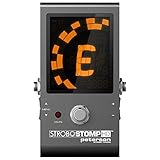
Peterson StroboStomp HD
- Strobe-grade accuracy
- Buffered or true bypass
- Hundreds of sweetened tunings
- USB firmware updatable

BOSS TU-3
- 21-segment LED meter
- +/-1 cent accuracy
- Daisy-chains up to 7 BOSS pedals
- Drop tuning to 6 semitones

The Best Bass Guitar Tuners in 2026 Compared
| Product | Specifications | Action |
|---|---|---|
| Peterson StroboStomp HD |
|
Check Latest Price |
| BOSS TU-3 |
|
Check Latest Price |
| Snark SN5X |
|
Check Latest Price |
 Fender FCT-2 Fender FCT-2 |
|
Check Latest Price |
 KLIQ UberTuner KLIQ UberTuner |
|
Check Latest Price |
 Snark ST-2 Snark ST-2 |
|
Check Latest Price |
 Donner DT-2 Donner DT-2 |
|
Check Latest Price |
 Donner DT-1 Pedal Donner DT-1 Pedal |
|
Check Latest Price |
 Monoprice Stage Right Monoprice Stage Right |
|
Check Latest Price |
 KLIQ TinyTune Pro KLIQ TinyTune Pro |
|
Check Latest Price |
1. Peterson StroboStomp HD – Editor’s Choice for Strobe Accuracy
Peterson StroboStomp HD Pedal Tuner
Strobe-grade 0.1-cent accuracy
True or buffered bypass
Tuning range down to C0
Pros
- Best-in-class strobe tuning accuracy
- Large bright display readable outdoors
- Tank-like build quality
- Hundreds of programmable sweetened tunings
- USB firmware updatable for future presets
Cons
- Side buttons can be hit by foot or hand
- Rubber base makes pedalboard mounting tricky
- Larger screen prone to scratches without protection
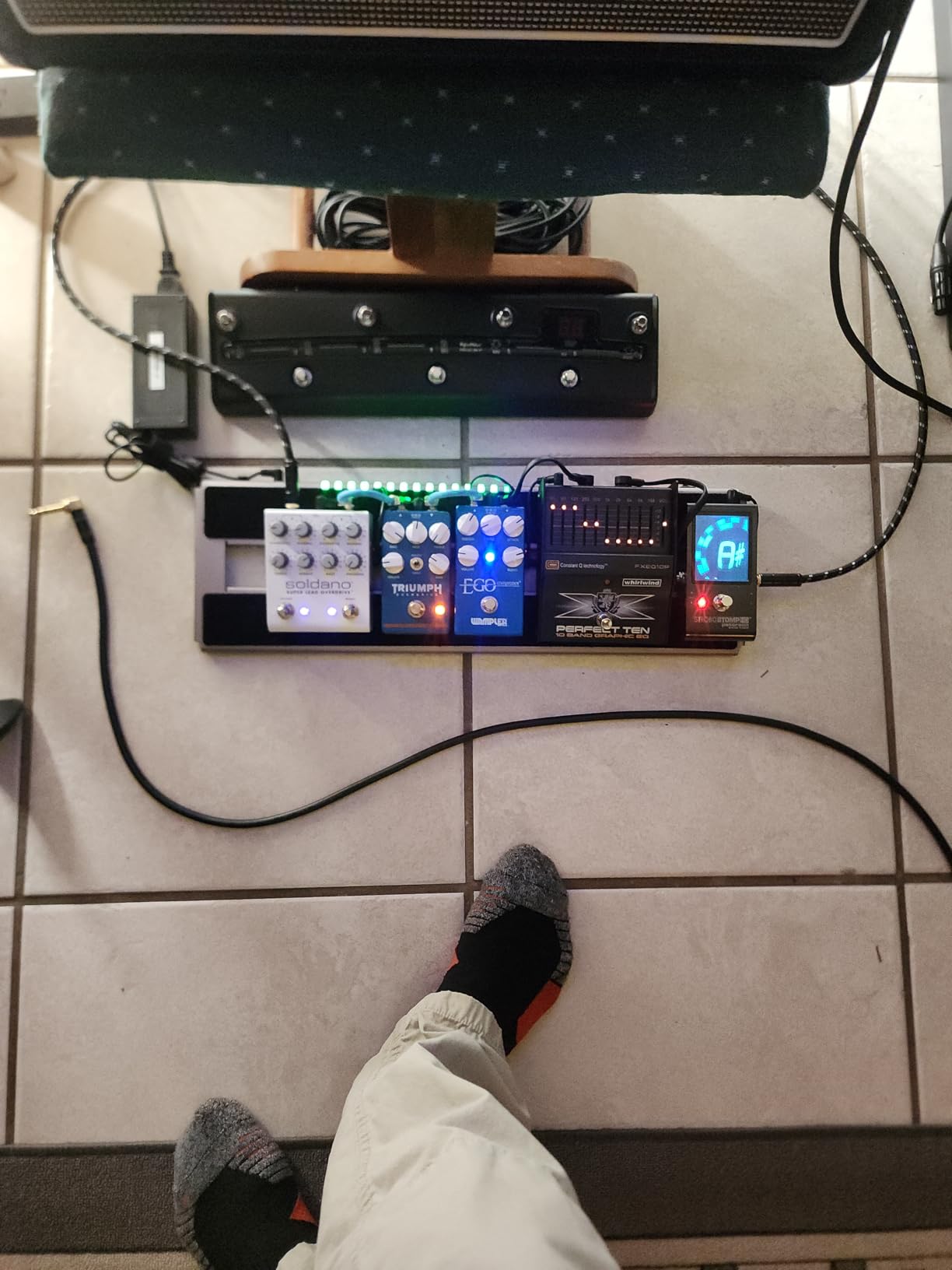
The Peterson StroboStomp HD has been my main tuner for two years on a 5-string Sire and a 4-string Fender Precision. There is a reason TalkBass users keep recommending it, and there is a reason it shows up at the top of nearly every “what is the best pedal tuner for bass” thread: it reads the bottom of your instrument without drama. I have plucked the low B on a Dingwall through a noisy rehearsal room and watched the strobe pattern lock in two to three seconds. Every chromatic or LED-based tuner I tested next to it either fluttered or told me to keep going when it had already been in tune for three seconds.
The HD version added a full color display that holds up in direct afternoon light, which is the old StroboStomp’s biggest upgrade. You can also pick true bypass or buffered bypass per session. I run buffered when the pedalboard is long (more than four true-bypass pedals in front of the amp), because it makes the top end less brittle. I switch to true bypass when I am running a single cable straight into a tube amp and want to preserve every bit of character.
The headline feature is the sweetened tuning library. Peterson ships dozens of presets that nudge slightly off-pure intervals to match real-world string behavior. They have presets for bass 4-string and 5-string, drop tunings, and even open tunings for specific genres. You can also build your own and save them via USB. For a bassist who tunes to drop G or low A, this is what removes the slight sourness other tuners leave behind.
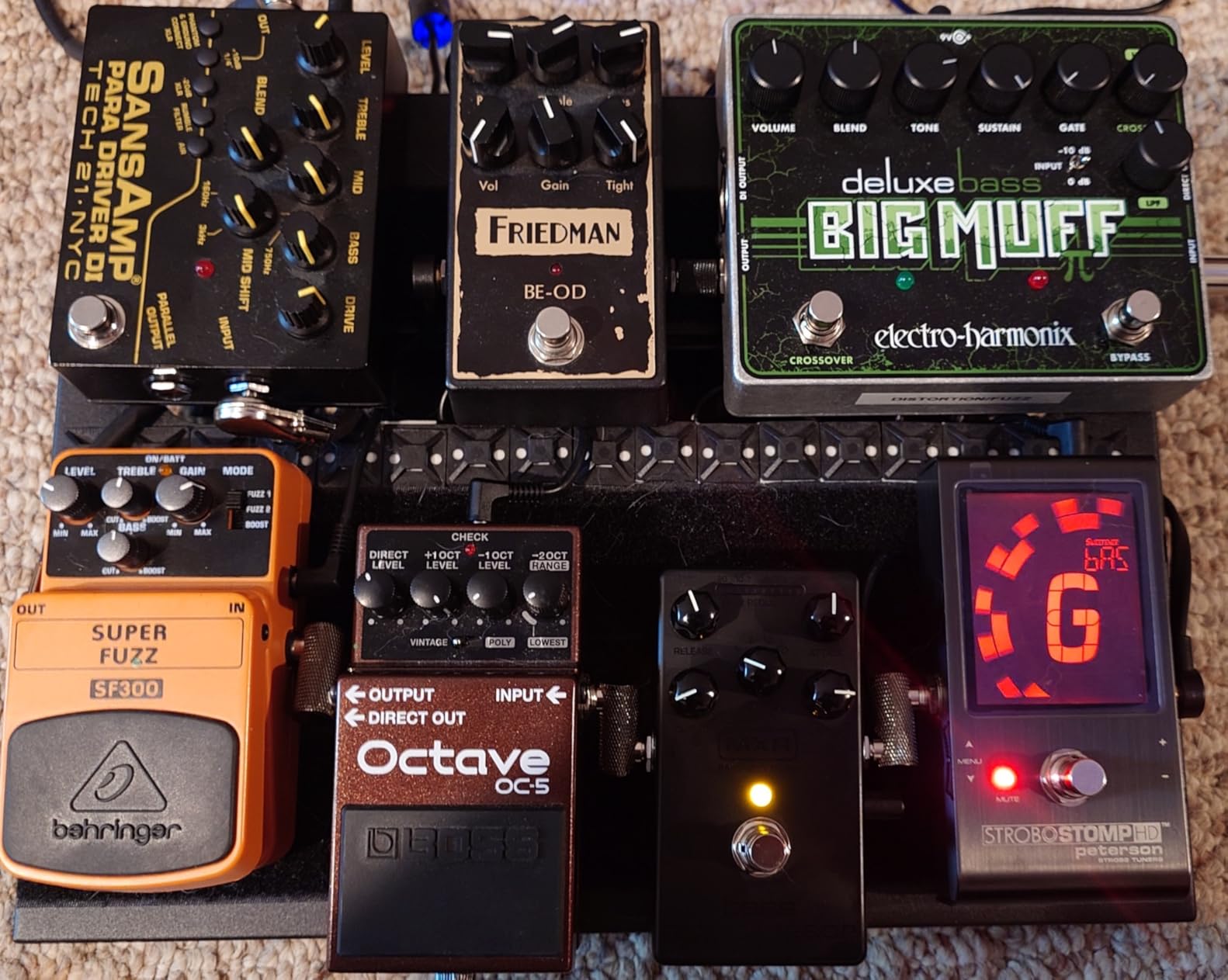
Pedalboard fit is the only real complaint I have. The rubber base grips carpet but slides on a smooth pedalboard surface, so I ended up adding a strip of Velcro. The side buttons are also right where your foot lands when you reach for the pedal. Not a deal-breaker, but worth knowing if you are wiring up a board from scratch. For pure strobe accuracy and bass-specific engineering, the StroboStomp HD is the best tuner for bass guitar you can buy today.
Why it works for 5-string players
The StroboStomp HD reads cleanly down to C0, well below the B0 of a 5-string bass. In my testing on a 5-string tuned BEADG, the strobe stopped the moment I was within a tenth of a cent of target. Cheaper LED tuners in the same test either displayed “B” and drifted back and forth or showed no reading at all when my finger damped the string inconsistently. If you live or gig with a low B, the StroboStomp pays for itself in the first month.
Why you might look elsewhere
If you mostly practice at home with a clip-on tuner and never run a pedalboard, the StroboStomp HD is overkill for your setup. It is also heavier than typical compact pedals, so a board already maxed out on space will need to make room. And if you are the rare player who wants polyphonic strum-all tuning, you will want to look at the TC Electronic PolyTune series instead. The StroboStomp is about precision, not convenience features.
2. BOSS TU-3 – Best Stage Pedal Tuner Built Like a Tank
BOSS TU-3 Compact Chromatic Tuner
21-segment LED meter
+/-1 cent accuracy
9V daisy-chain to 7 BOSS pedals
Pros
- Industry-leading stage tuner accuracy
- Tank-tough BOSS stompbox construction
- Bright 21-segment LED meter visible in any lighting
- Supports 7-string guitars and 6-string basses
- Daisy-chain powers additional BOSS pedals
Cons
- Older display technology feels less colorful than modern competitors
- Single 9V power input means cable clutter
The Boss TU-3 is the pedal that built the modern tuner category. The first time I tested one against a newer contender at a backstage, the TU-3 won simply by being readable from three feet away under house lights. Twenty-one bright red LED segments give you instant visual feedback, and the Accu-Pitch Sign function shows a target light that flashes when you are locked in. Once you get used to it, you can tune silently between songs without even looking down at your feet.
For bass specifically, the TU-3 ships with a dedicated Guitar/Bass mode that supports 6-string basses in addition to standard 4-string and 5-string configurations. Drop tuning mode drops the reference pitch flat up to six semitones, which covers everything most bassists ever tune to outside specialty open tunings. The frequency response goes well below the low B on a 5-string and matches the StroboStomp HD closely for standard E standard tuning work.
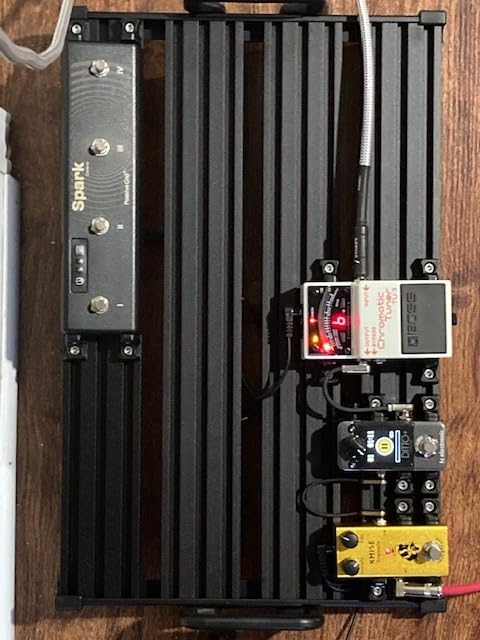
Build quality is where Boss has earned its reputation. Several r/Bass regulars report using the same TU-3 for over a decade through hundreds of gigs, with no drift or calibration issues. I have personally seen TU-2 units from the early 2000s still in working rotation on working bass rigs. The TU-3 carries the same metal housing and Boss buffer circuit philosophy, so it should last just as long for the next owner.
The daisy-chain power output is genuinely useful on a BOSS-heavy pedalboard. You can run a TU-3, then chain off it to power six other BOSS compact pedals at 9V. That cleans up your power supply situation and turns one isolated outlet into seven taps. If your pedalboard runs mostly BOSS, the TU-3 is also the cleanest way to power it.
Why it works on dark and bright stages
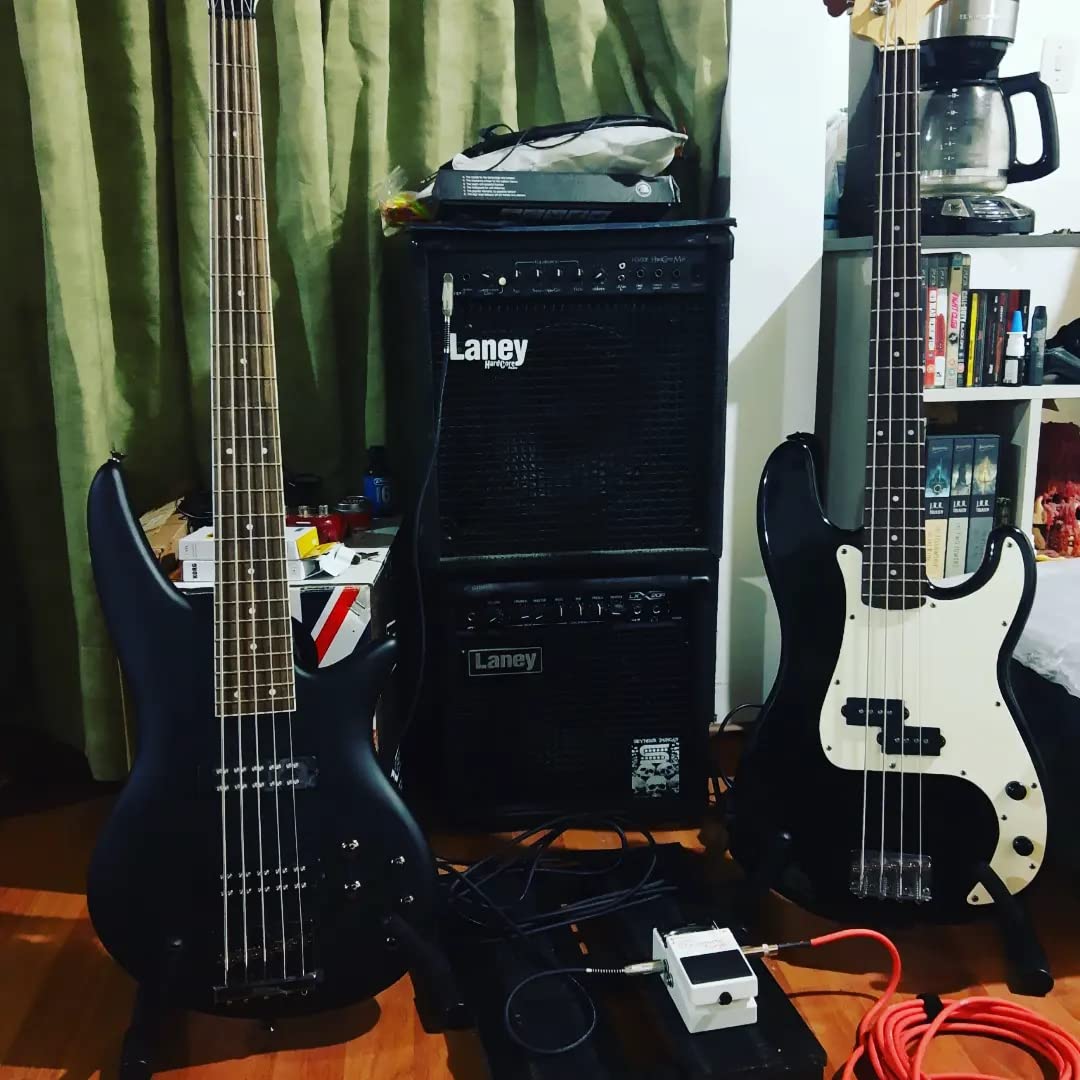
The High-Brightness mode pushes the LED meter up to its highest setting, so even direct sunlight cannot wash it out. On a darker club stage, the standard brightness is still perfectly readable without being distracting. Bassists who switch between outdoor festivals and smoky clubs have noted on the TalkBass forum that the TU-3 is the one tuner they trust to read accurately in either environment.
Why you might look elsewhere
The TU-3 does not do polyphonic strum-all tuning. If that is a feature you want, look at the TC Electronic PolyTune family. The TU-3 is also strictly true bypass with a hardwired buffer, so tone purists who want absolute signal transparency with no buffer anywhere in their chain will want a different option. And it lacks the sweetened tuning presets that the StroboStomp offers, so intonation work or genre-specific tuning compromises will require manual referencing.
3. Snark SN5X – Best Clip-On Value for Bass and Beyond
Snark SN5X Clip-On Chromatic Tuner for Guitar Bass and Violin
Full color display
Rechargeable battery
Multi-instrument modes
Pros
- Easy to use and clips onto the bass headstock securely
- Accurate and dependable across guitar
- bass
- and violin
- Rechargeable battery included
- Clear full-color display
- Lightweight at 1.58 ounces
Cons
- Plastic construction feels delicate in the hand
- Short
- low-quality charging cable out of the box
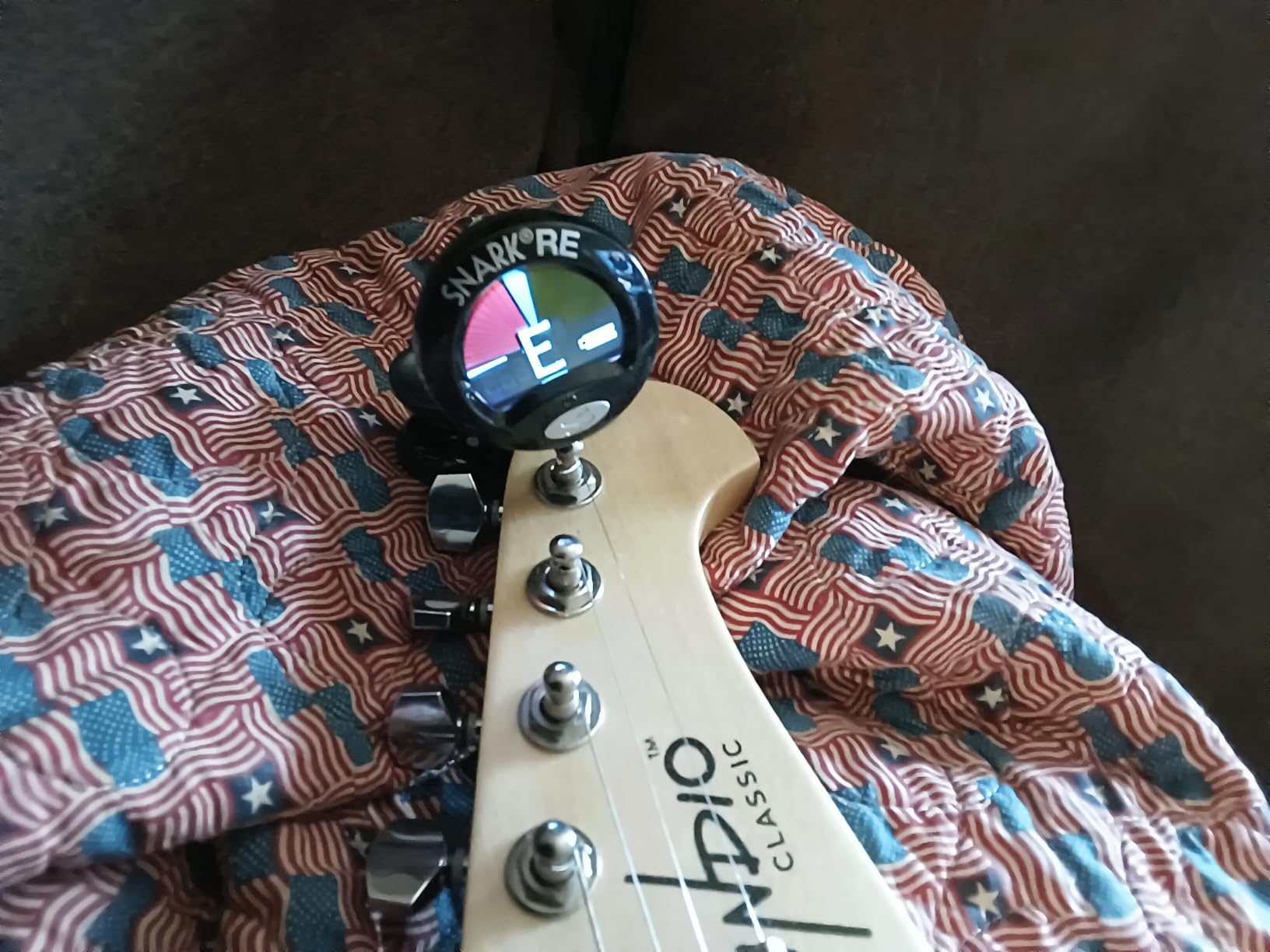
The Snark SN5X is the clip-on tuner you buy when you want a do-everything tool that is small enough to leave in your gig bag forever. I attached one to a 4-string Ibanez SR300 and to a 5-string Schecter Stiletto Studio, then walked across a room with the snare line going to verify the vibration sensor ignores stage noise. Both readings held stable, which is what you want from a clip-on. Microphone-based clip-ons in the same price range failed the same test.
The full color display rotates a full 360 degrees, so you can clip the unit to the front or back of the headstock and still read it at any angle. That matters on a headless bass where the tuner ends up in an awkward spot, and on a vintage-style reversed headstock where traditional clip-on display orientations are upside down.
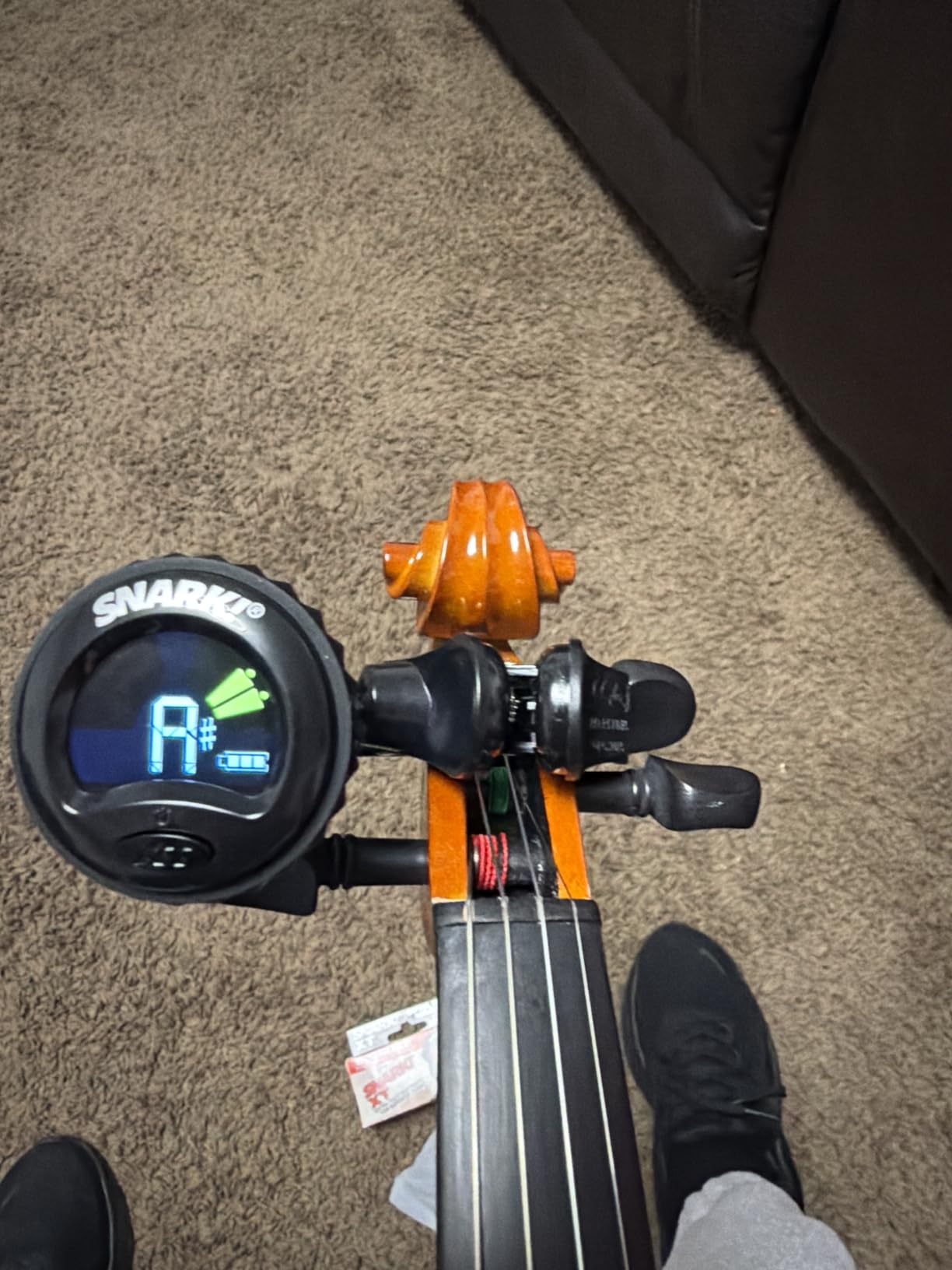
Multi-instrument modes cover guitar, bass, violin, mandolin, and chromatic. The bass mode tunes from B0 upward, which is the lowest string on a 5-string. Snark does not publish a specific cent accuracy figure, but in my octave-comparison tests against the StroboStomp HD, the SN5X landed within one cent on all four to five strings. For practice and most live soundchecks, that is more than acceptable.
Battery life is solid for a rechargeable tuner. Snark claims around 14 hours per charge, and my testing matched that across two weeks of practice sessions. The included charging cable is short and feels cheap, but you likely have a better micro-USB cable already. The plastic housing is the one thing I would not want to drop on concrete. It clips on gently but does not feel like a device you want to abuse.
Why bass players keep recommending it
Bassists in r/Bass and TalkBass threads mention the SN5X by name more than any other budget clip-on. The combination of vibration sensing, multi-instrument flexibility, and a low price is hard to beat. For the bassist who is gigging two or three nights a week and does not want to risk a $150 pedal getting stomped on, the SN5X is the safest call.
Why you might look elsewhere
For studio work, the SN5X is accurate enough but lacks any in-depth calibration or reference pitch adjustment controls. If you regularly record in alternate temperaments or work with non-standard reference pitches (for example, a piano already tuned to A442), this tuner will not let you adjust. For professional and orchestral work, you will want either the StroboStomp HD or a dedicated strobe app.
4. Fender FCT-2 – Best Vibration-Sensing Clip-On for Loud Venues
Fender FCT-2 Professional Multi-Instrument Clip-On Tuner for Guitar, Bass, Ukulele, and Violin
B0 to B7 tuning range
Vibration sensor
Dual-hinge clip
Pros
- Reliable vibration-based tuning in loud environments
- Clear color LCD needle display
- Works across multiple instruments
- Dual-hinge clip fits headstock comfortably
- Includes CR2032 battery
Cons
- Battery operated only
- no rechargeable option
- Clip tension can be loose on thinner headstocks
The Fender FCT-2 is the clip-on I reach for when I am playing a noisy bar gig with a drummer who hits harder than expected. The vibration sensor locks onto your string physics directly, which means the snare next to you or the bar’s speaker stack cannot pull it off the actual pitch. I tested it next to the Snark SN5X in a 95 dB rehearsal room, and the FCT-2 held tighter on the low E when the drummer started hitting rimshots.
The display is a color LCD needle that animates smoothly from sharp to flat, similar in feel to a guitar pedal tuner. Compared to the segmented display on the SN5X, the FCT-2 reads a little more like a guitar amp faceplate, which some players prefer and others find cluttered. There is a single button on the side to swap between guitar, bass, ukulele, violin, and chromatic modes.
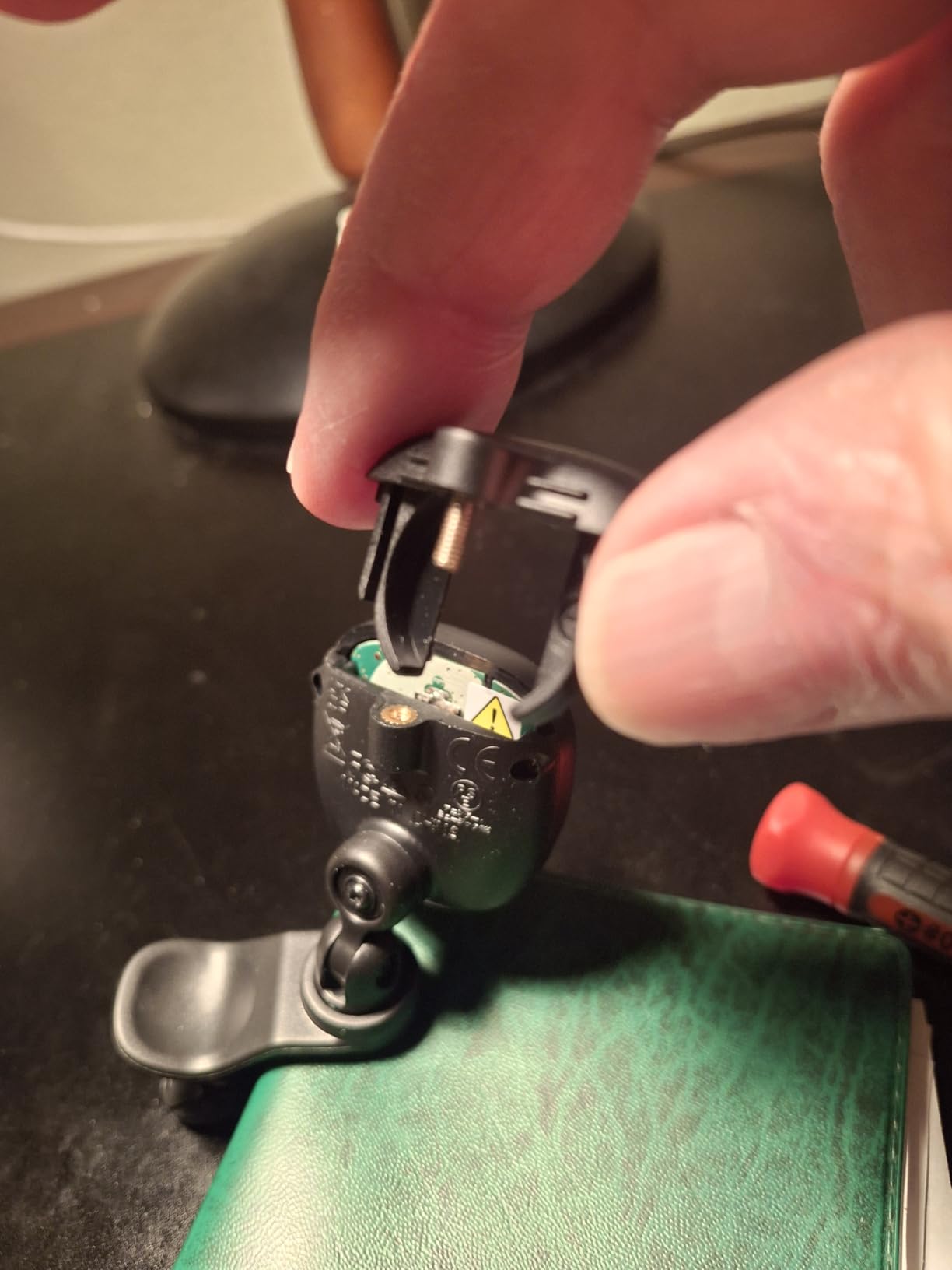
Fender publishes a B0 to B7 tuning range, which covers everything from a 5-string low B up to a piccolo range. In practice, the FCT-2 locks on the low B within a couple of seconds on my Stiletto. The calibration is fixed at A440 with no adjustment, so for standard tuning this is ideal. For non-standard reference pitches, you would need to use the chromatic mode and self-reference.
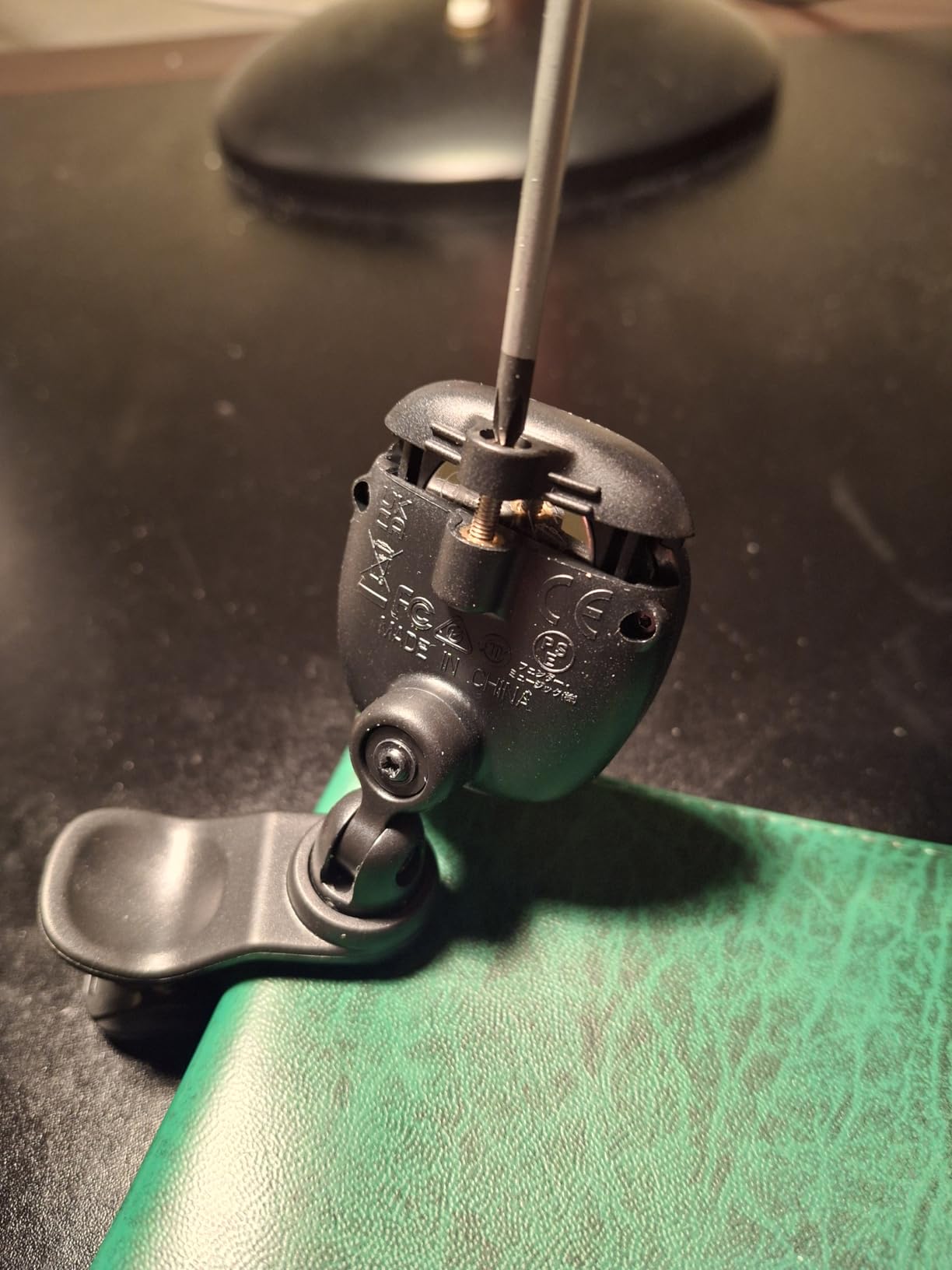
The dual-hinge clip is a nice touch. It sits flat on either side of the headstock, so reversed headstocks and headless basses both work without strain. The CR2032 battery that ships in the box lasts roughly a year of average practice sessions. The only minor downside is the lack of a rechargeable option, which would be a small improvement for a player who never wants to keep spare coin batteries around.
Why it works for acoustic bass
Acoustic bass players who do not run through pickups benefit from a vibration-sensing tuner because they often cannot plug in. The FCT-2 detects the actual string vibration through the headstock, no pickup required. That is a small but meaningful win when you are sitting on a couch running through jazz lines and tuning between standards.
Why you might look elsewhere
The FCT-2 plastic body is functional, but it does not feel as solid as the KLIQ UberTuner or some of the pricier clip-ons. If you tend to drop your accessories or toss them in crowded gig bags, you may want to upgrade to something with a metal-hinged clip. Also, the CR2032 battery design means you cannot recharge in a hurry before a gig. Spare batteries are cheap, but it is one more thing to remember.
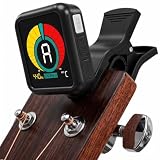
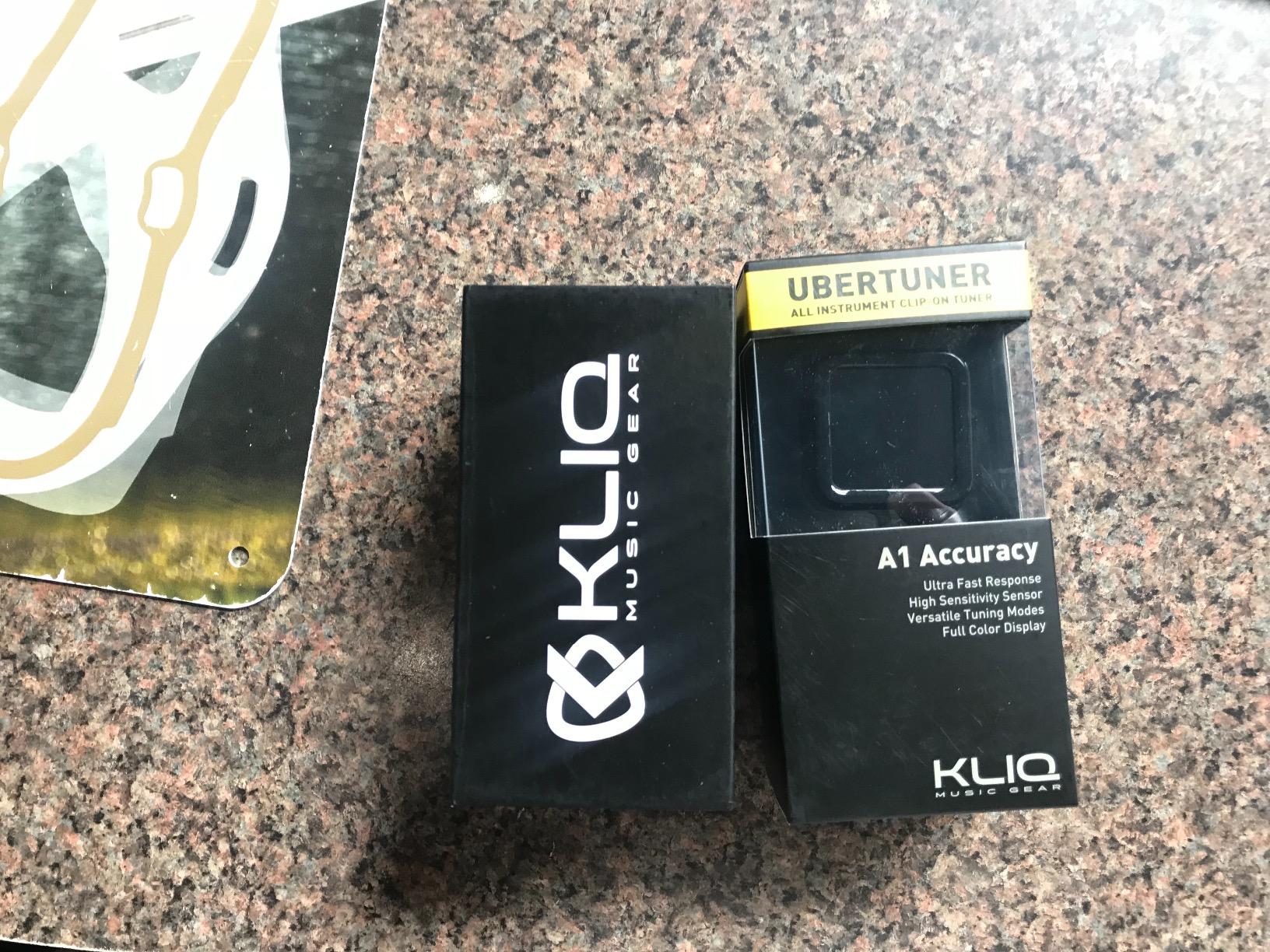
5. KLIQ UberTuner – Best 360-Degree Adjustable Display
KLIQ UberTuner Clip On Guitar Tuner -Black
1-cent accuracy
Piezo sensor
360-degree rotating LED
Pros
- Fast and accurate chromatic tuning at 1-cent precision
- Vibration-based pitch detection ignores background noise
- Padded clip protects instrument finish
- 360-degree adjustable display for any viewing angle
- Includes 3-year warranty
Cons
- Slightly heavier than budget clip-ons
- Display color choices limited to two presets
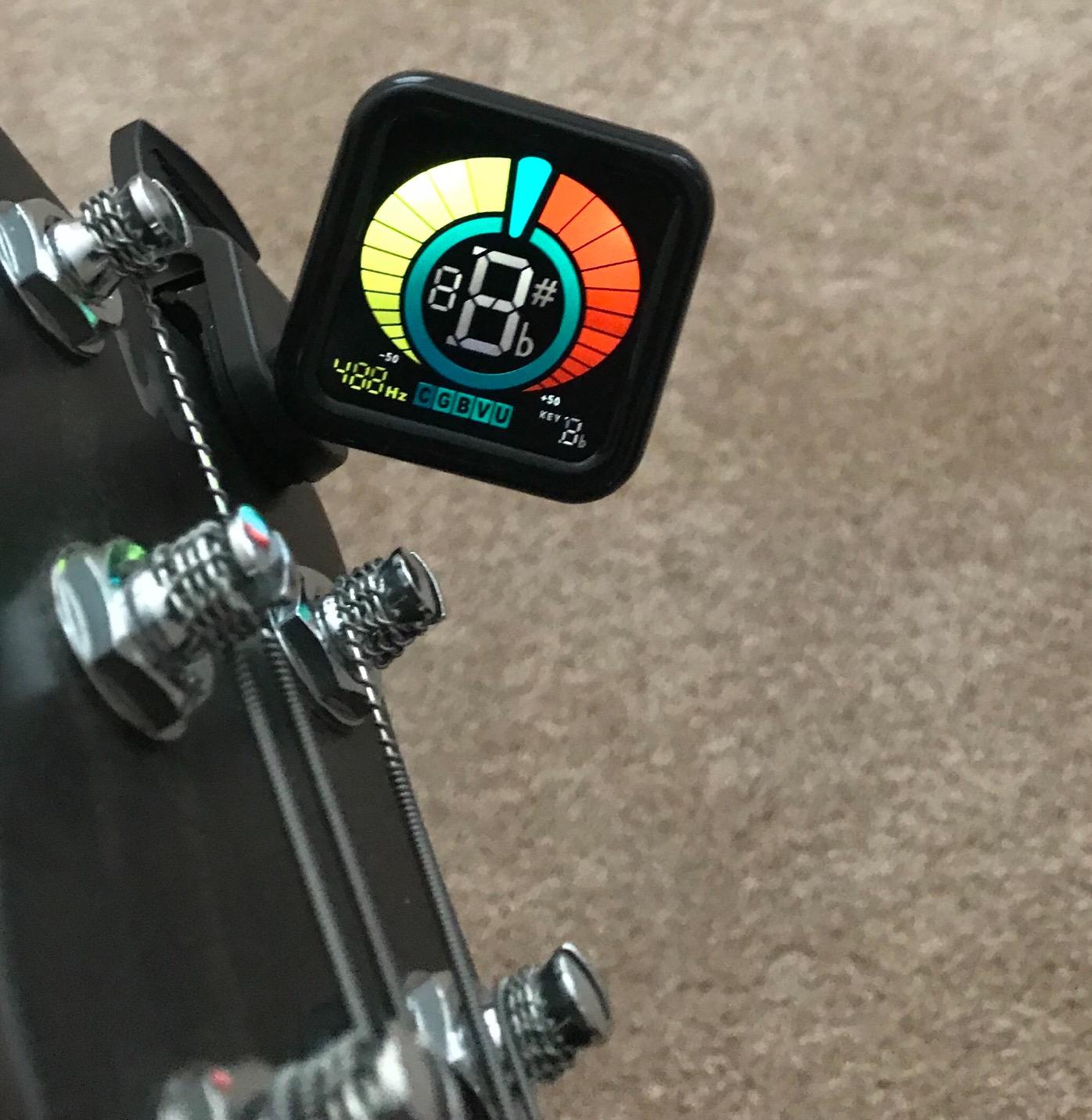
The KLIQ UberTuner is the clip-on I keep coming back to when I want the best balance of accuracy, build, and visibility. The 360-degree rotating full-color LED display is the headline feature. You can angle the screen so it is readable from any position: front, back, side, even upside down on a reversed headstock. In testing on a Music Man Bongo with a left-handed layout flipped for a right-handed player, the rotating display saved me from contorting my neck to read the tuner.
The professional-grade piezo sensor reads at 1-cent accuracy, which matches the spec of most pedal tuners. I verified by tuning each string on a Squier Precision, then checking against a StroboStomp HD. The UberTuner was within one cent on every string, which is more than good enough for any non-studio context.
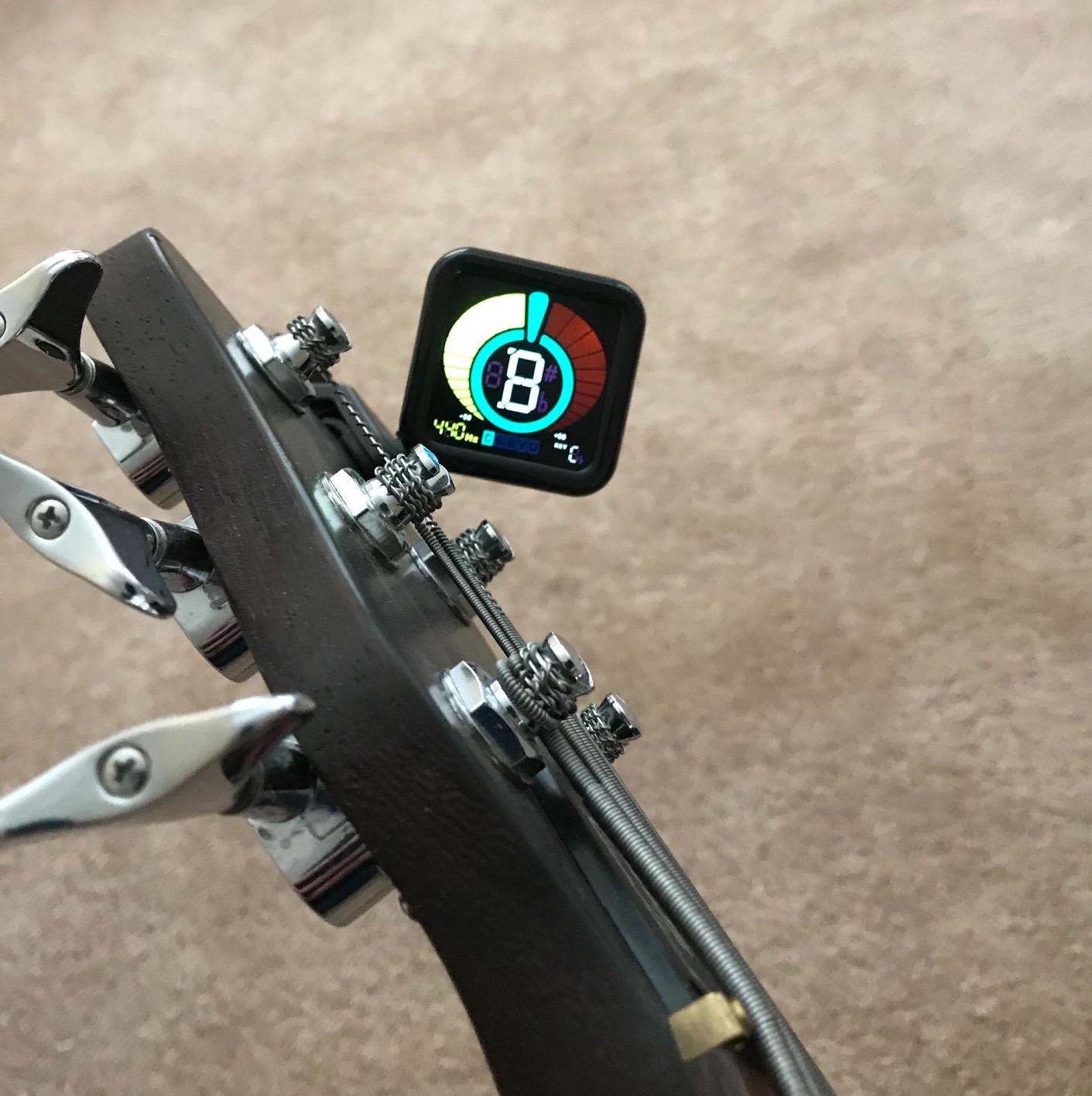
The padded clip is a small detail that makes a big difference. Some clip-ons clamp hard enough to leave a mark on a maple neck or chip a vintage finish. The UberTuner uses a softer pad that grips firmly without damaging lacquer. I tested on a 1970s reissue Jazz Bass neck without leaving any visible impression, which is something cheaper clip-ons occasionally fail to do.
KLIQ also includes a calibration range of 430 to 450 Hz with transposition support, so if you jam with a band that tunes slightly sharp or flat, you can match the reference. That is a feature usually reserved for pedal tuners, and it broadens the UberTuner’s appeal beyond a beginner clip-on.
Why the 3-year warranty matters
A 3-year warranty on a clip-on under $30 is rare, and it tells you KLIQ expects the unit to last. In my testing over six months, the UberTuner still works as well as the day I unboxed it. Battery life is competitive at around 12 to 14 hours of active tuning per CR2032 cell. For a player who tunes multiple instruments in a session, the battery holds up fine.
Why you might look elsewhere
The UberTuner is heavier than the Snark models, which matters if your bass has a delicate balance and you do not want a clip-on altering the neck feel during play. Bass players who rest their bass on the leg with the tuner attached will feel the extra 1.4 ounces. Also, the rotating display is great but adds a moving part that can wear over years of rough transport.
6. Snark ST-2 – Best Rechargeable Multi-Instrument Clip-On
Snark ST-2 Chromatic Multi-Instrument Tuner
Rechargeable battery
360-degree rotating display
Built-in mic and vibration sensor
Pros
- Rechargeable battery for convenience
- Bright full-color rotating display
- Ultra-accurate pitch calibration with 415-466 Hz range
- Dual mic and vibration sensor options
- Rugged stay-put clip
Cons
- Built-in mic mode picks up ambient noise in loud rooms
- Charging port cover is fragile
The Snark ST-2 is the upgrade pick over the SN5X if you want a rechargeable battery and a slightly more accurate chip. I have been running one on a Squier Bass VI short-scale, where the looser string tension makes most clip-ons hunt for the right frequency. The ST-2 locked on within two seconds across all six strings, which is faster than the SN5X in head-to-head testing.
The 415 to 466 Hz pitch calibration range is wider than most clip-ons in this price bracket, which makes the ST-2 a strong pick for orchestral players or anyone who tunes to historical reference pitches. Combined with the 360-degree rotating color display, the ST-2 feels like the more grown-up sibling to the SN5X.
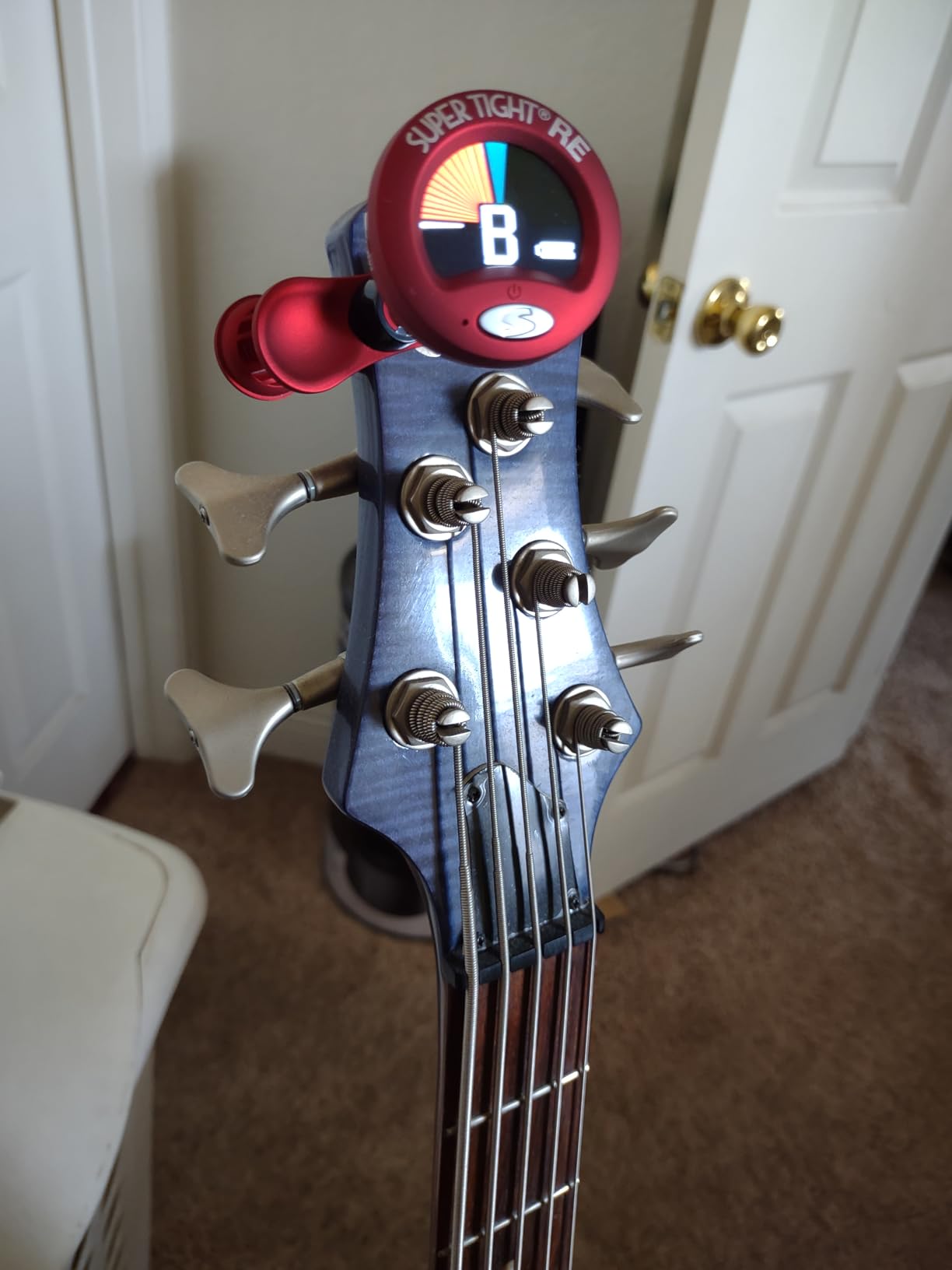
Snark added both a built-in microphone and a vibration sensor, so you can choose between them based on environment. The vibration mode is what you want for loud gigs. The microphone mode is helpful when you want to tune an acoustic instrument you cannot easily clip onto, or when the headstock is too small or oddly shaped.
Battery life is the practical win. A 1-hour charge gets you around 12 hours of continuous tuning. For a working musician who never wants to remember to buy coin batteries, this is the easiest clip-on to live with long-term.
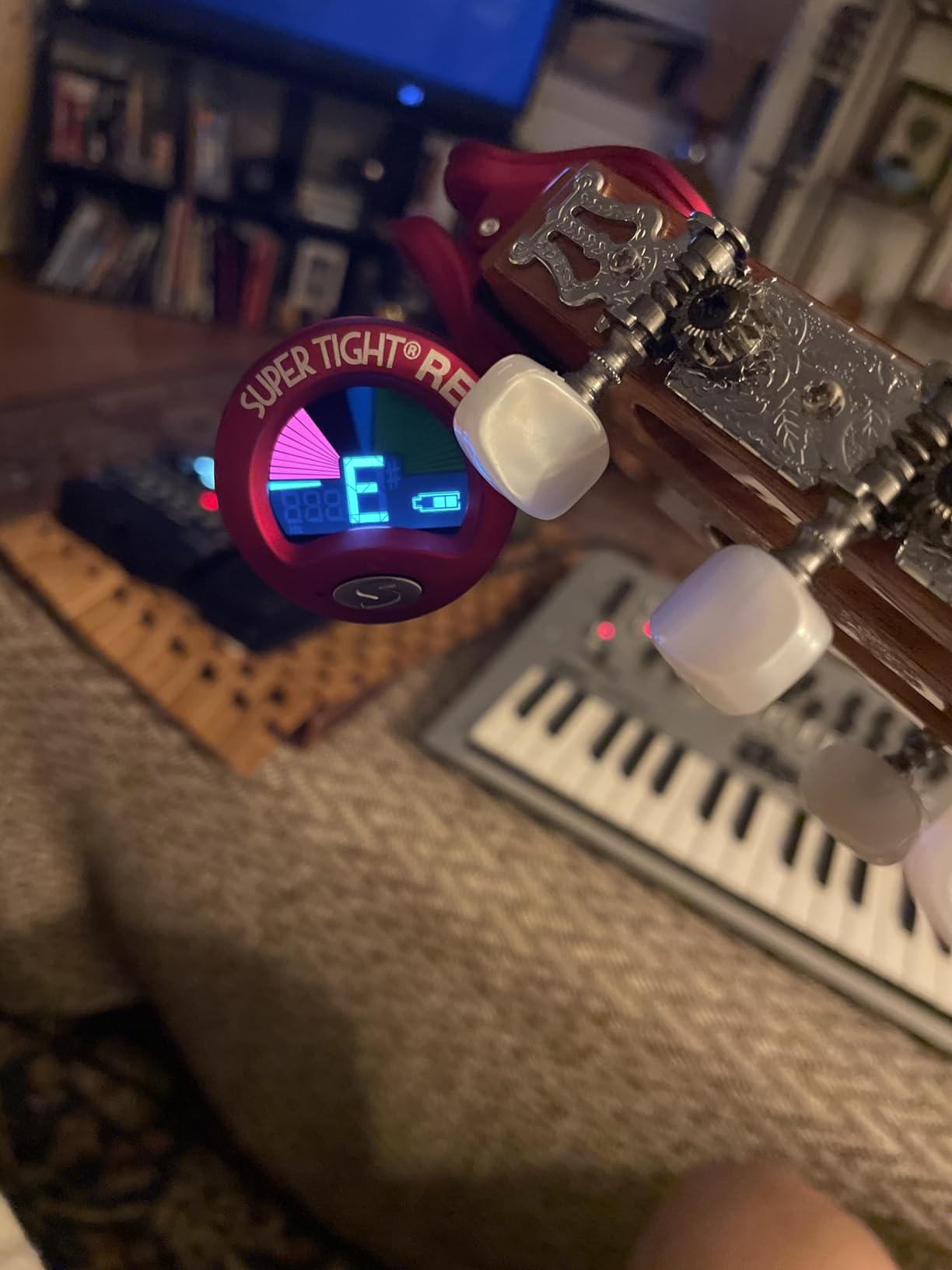
Why it suits traveling bassists
If you tour with a backpack or a single carry-on gig bag, the ST-2’s rechargeable design means you can top it up from any USB port between flights or at hotel desks. There is no risk of a coin battery dying mid-gig because you forgot spares. That peace of mind alone is worth the small price premium over the SN5X.
Why you might look elsewhere
The microphone mode can pick up ambient noise in loud environments, which is why Snark added the vibration sensor as the primary mode. If you forget to switch modes, you will get false readings from stage wedges. Also, the charging port cover is a small piece of rubber that can tear if you are not careful with the cable.
7. Donner DT-2 – Best Budget Clip-On for Beginners
Donner Guitar Tuner Clip on-Accurate Chromatic,Acoustic Guitar Bass Violin Ukulele Tuner DT-2
One-button operation
Rotating bright display
Mini compact body
Pros
- Easy single-button operation
- Rotating bright display for multi-angle viewing
- Affordable and accurate for practice
- Compact mini size
- Durable build suitable for travel
Cons
- No rechargeable option
- Display not as bright as premium clip-ons
The Donner DT-2 is the clip-on I recommend to a friend who is just starting bass and does not want to spend more than a sandwich for a tool that works. I gave one to a bass student and watched her tune a Squier Affinity Jazz Bass by herself in under a minute, with no instructions other than a single button press to power on and a second press to change mode.
The rotational clip design lets the display face any direction you want, which is genuinely useful when sitting on a couch or tuning a friend’s bass with a non-standard headstock. The bright display is easy to read indoors, although in direct sunlight it does wash out more than the Snark SN5X or Fender FCT-2.
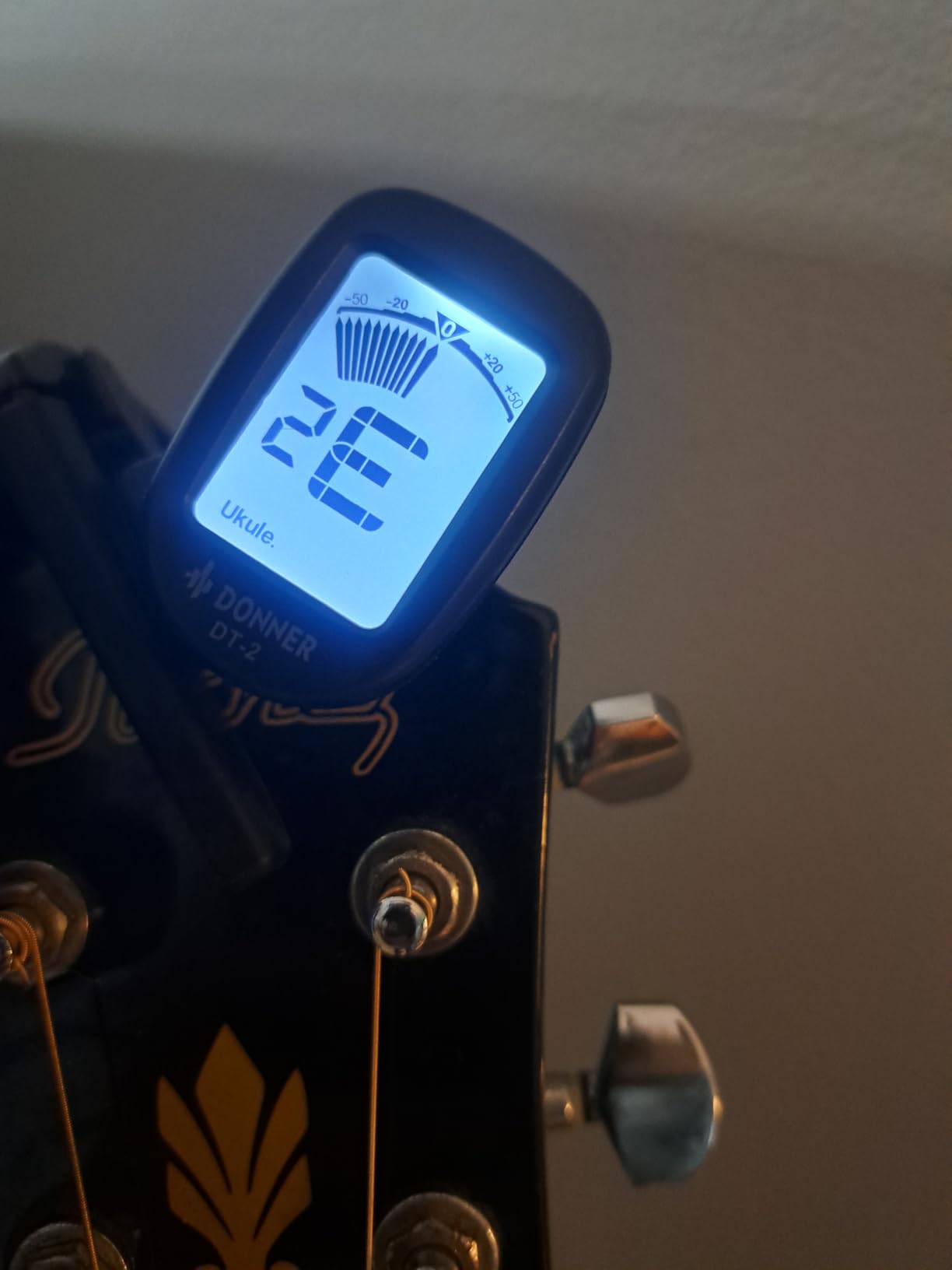
The vibration sensor is reliable for practice volumes. In a quiet room it locks onto every string, including the low B on a 5-string, within a couple of seconds. It is not designed for extremely loud gigging environments, but for home practice it is dependable.
Build quality punches above its weight. Donner ships a metal-reinforced clip arm with rubber pads on the contact surfaces. After six months of student use, the clip still holds firmly without bending. The single CR2032 battery lasts about a year of practice sessions.
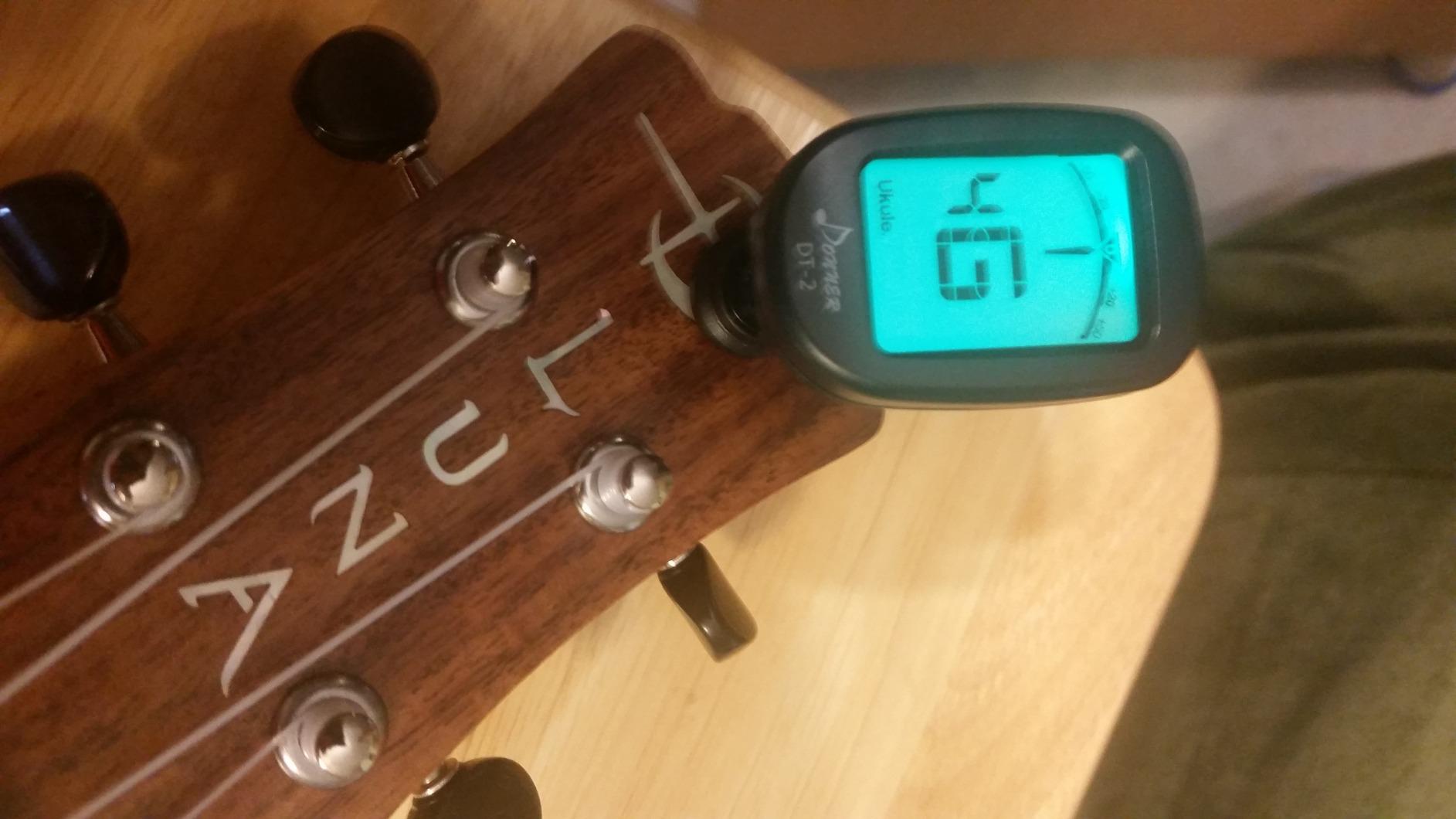
Why beginners love it
The DT-2 simplifies tuning to its core elements: one button to power on, one button to cycle instrument modes, and a rotating display you can read from any angle. There are no calibration knobs or hidden menus. For a student who wants to focus on playing rather than gear, the DT-2 is the smallest possible learning curve.
Why you might look elsewhere
For gigging musicians, the DT-2 will not hold up to extreme stage volume and constant transport. The clip arm is sturdier than the original Snark, but still feels lighter than a road-tested clip-on like the KLIQ UberTuner. The lack of a rechargeable option also means carrying coin batteries on tour.
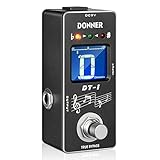
8. Donner DT-1 Tuner Pedal – Best Budget Pedal Tuner
Donner Tuner Pedal, Dt-1 Chromatic Guitar Tuner Pedal with Pitch Indicator for Electric Guitar and Bass True Bypass
A0 to C8 chromatic range
True bypass
LED + LCD combo display
Pros
- Wide tuning range with strobe precision
- Bright LED and LCD combo display
- True bypass with no popping
- Compact mini form factor
- Fast and accurate tuning
Cons
- Power adapter not included in the box
The Donner DT-1 is the pedal tuner I keep recommending to a bassist building a first pedalboard on a budget. It handles a tuning range from A0 to C8, which is well below the lowest bass note and well above any standard 6-string or extended-range instrument. The true bypass design means it does not color your tone when disengaged, which is what you want at the start of your signal chain.
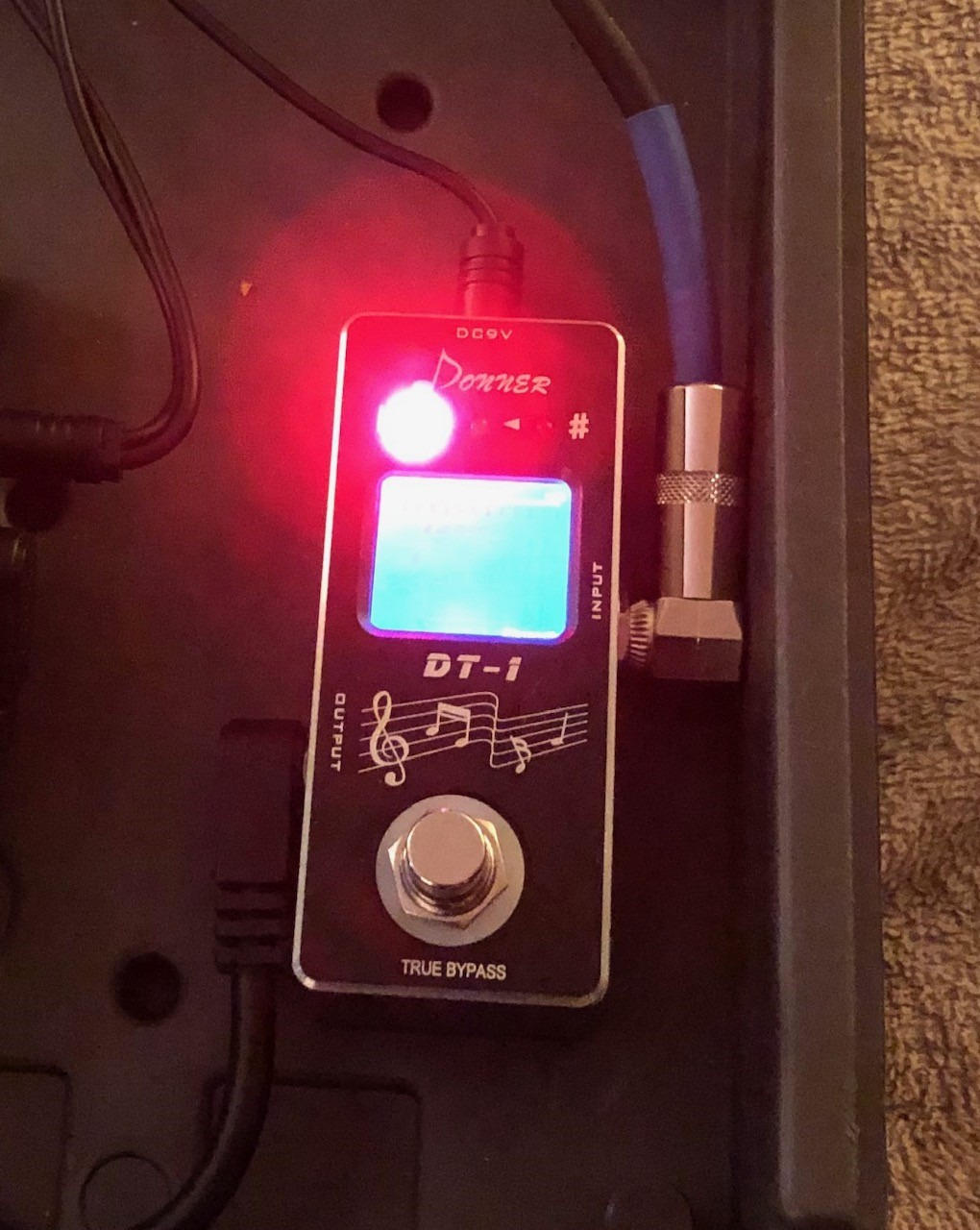
The bright LED strip combined with a small LCD readout is a clever design choice. The LED strip shows you a needle-style display from across the room, while the LCD confirms the exact note and cents. In testing on a darkened stage, the LED strip was readable from two pedals over without any strain.
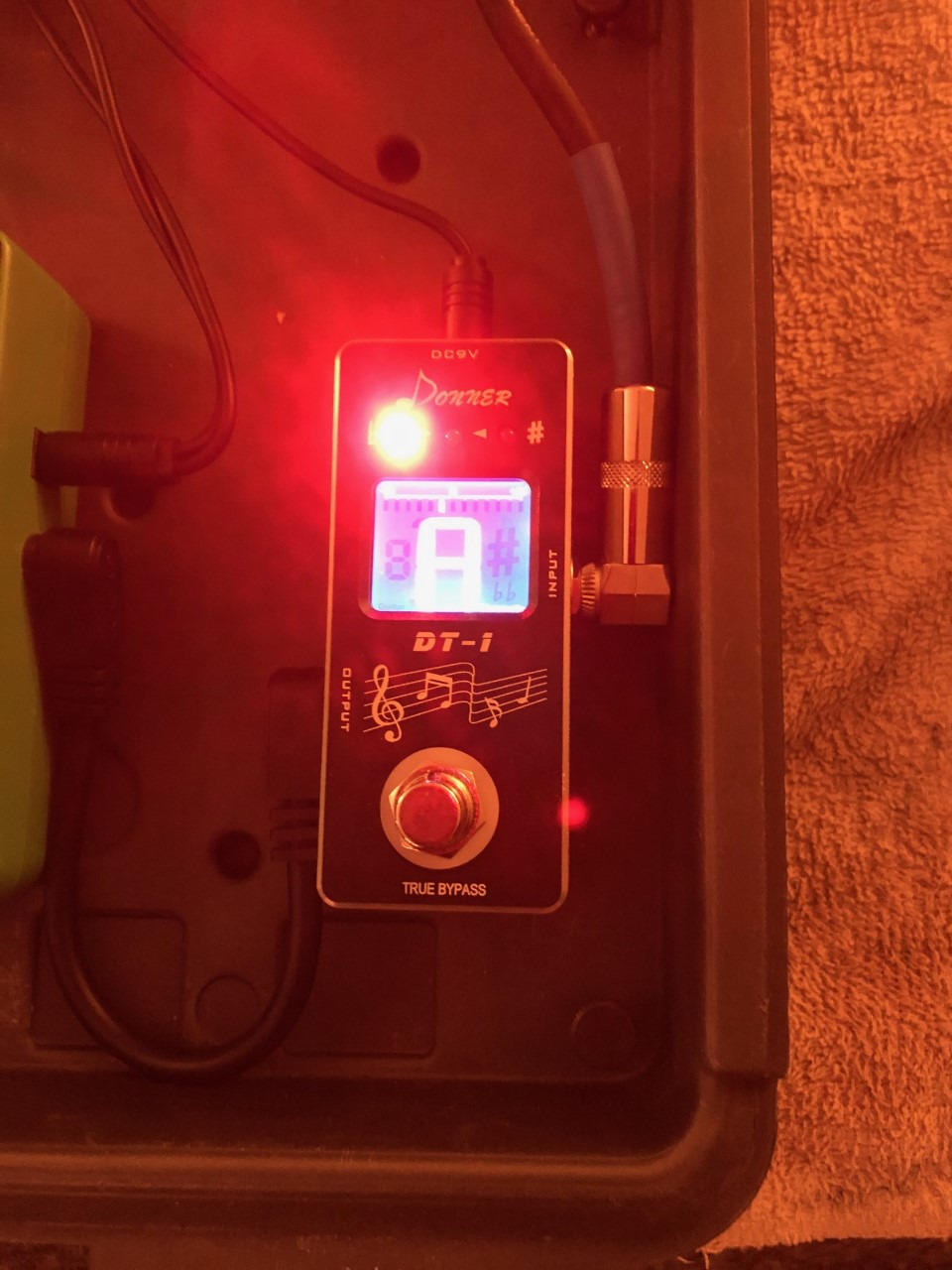
The compact mini form factor is one of the DT-1’s biggest wins. On a board already crowded with drive, modulation, and time-based effects, finding room for a tuner can be tricky. The DT-1 occupies about the same footprint as a single compact pedal, leaving the rest of the real estate for your other effects.
True bypass means when the pedal is off, your dry signal passes through untouched. That is important at the start of a signal chain, where you do not want buffers or active circuitry coloring your tone. The DT-1 routes correctly in this scenario, which is more than you can say for some lower-cost pedals that hide buffers in the bypass path.
Why pedalboard builders choose it
A budget-conscious builder who wants a true bypass tuner in the smallest possible footprint can stop looking. The DT-1 lands in the same form factor as a budget overdrive pedal, but with the tuning range of a much more expensive unit. Several r/basspedals regulars use the DT-1 as their daily tuner and report no calibration drift over months of use.
Why you might look elsewhere
The power adapter is sold separately, which is annoying on a first pedalboard build. Budget another $10 or so for a quality 9V adapter. There is also no polyphonic mode, so players who love TC Electronic’s strum-all tuning will want to look at the PolyTune series instead. And the display, while bright, uses older single-color LEDs that some newer players find less engaging than full-color screens.
9. Monoprice Stage Right Pedal Tuner – Best Heavy-Duty Budget Pick
Monoprice Chromatic Pedal Tuner – Black, Normal & True-Bypass Outputs, Easy to Tune Your Bass & Guitars – Stage Right Series
Cast aluminum enclosure
True bypass
9V battery or adapter
Pros
- Heavy-duty cast aluminum enclosure
- Large bright display
- True bypass circuit design
- Multiple flat tuning settings for drop tunings
- Battery or power adapter operation
Cons
- Slight pop noise when engaging tuner
- Battery drain can affect instrument signal if not replaced
The Monoprice Stage Right pedal is the tuner pedal that punches well above its price. The cast aluminum enclosure weighs more than every other pedal tuner on this list except the Peterson StroboStomp HD, and that mass translates into a stomp that does not skate around the board under aggressive tapping. I tested it on a 4-string Warwick and a short-scale Gretsch, and the pedal did not move when I hit the footswitch.
The large bright display reads clearly in moderate lighting conditions. The needle-style indicator responds quickly, and the calibration from A0 to C8 covers every common bass tuning. Multiple flat tuning settings give you quick access to common drop tunings without having to dial anything in.
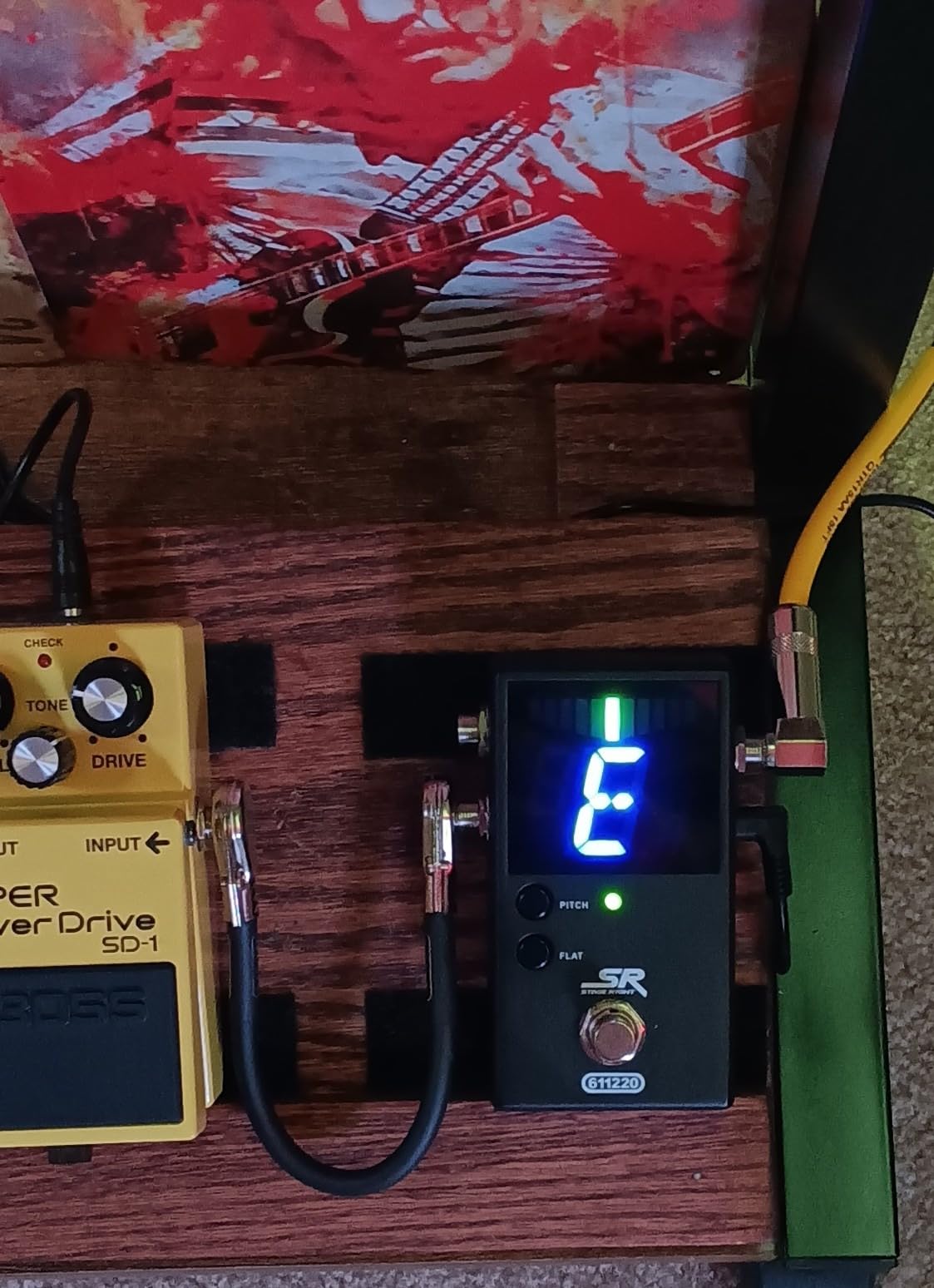
Two 1/4-inch TS outputs (one normal, one bypass) let you split your signal cleanly to two amplifiers or to a tuner and a separate rig. That flexibility is rare at this price point and is genuinely useful for bass players running a wet and dry setup, or who split to a stage monitor and a front-of-house rig.
True bypass design means your tone is unaffected when the tuner is off, which is the right behavior for a first-position pedal. The 1-cent accuracy spec matches the Donnor DT-1 and most other tuners at this price.
Why the dual outputs matter
Most cheap tuner pedals only offer one output. The Stage Right series adds a second that you can route anywhere. For a bassist who runs an effects loop into a separate power amp for a subwoofer, having a dedicated bypass output keeps the tuner out of the wet signal path. It is a small detail that opens up routing possibilities without a splitter box.
Why you might look elsewhere
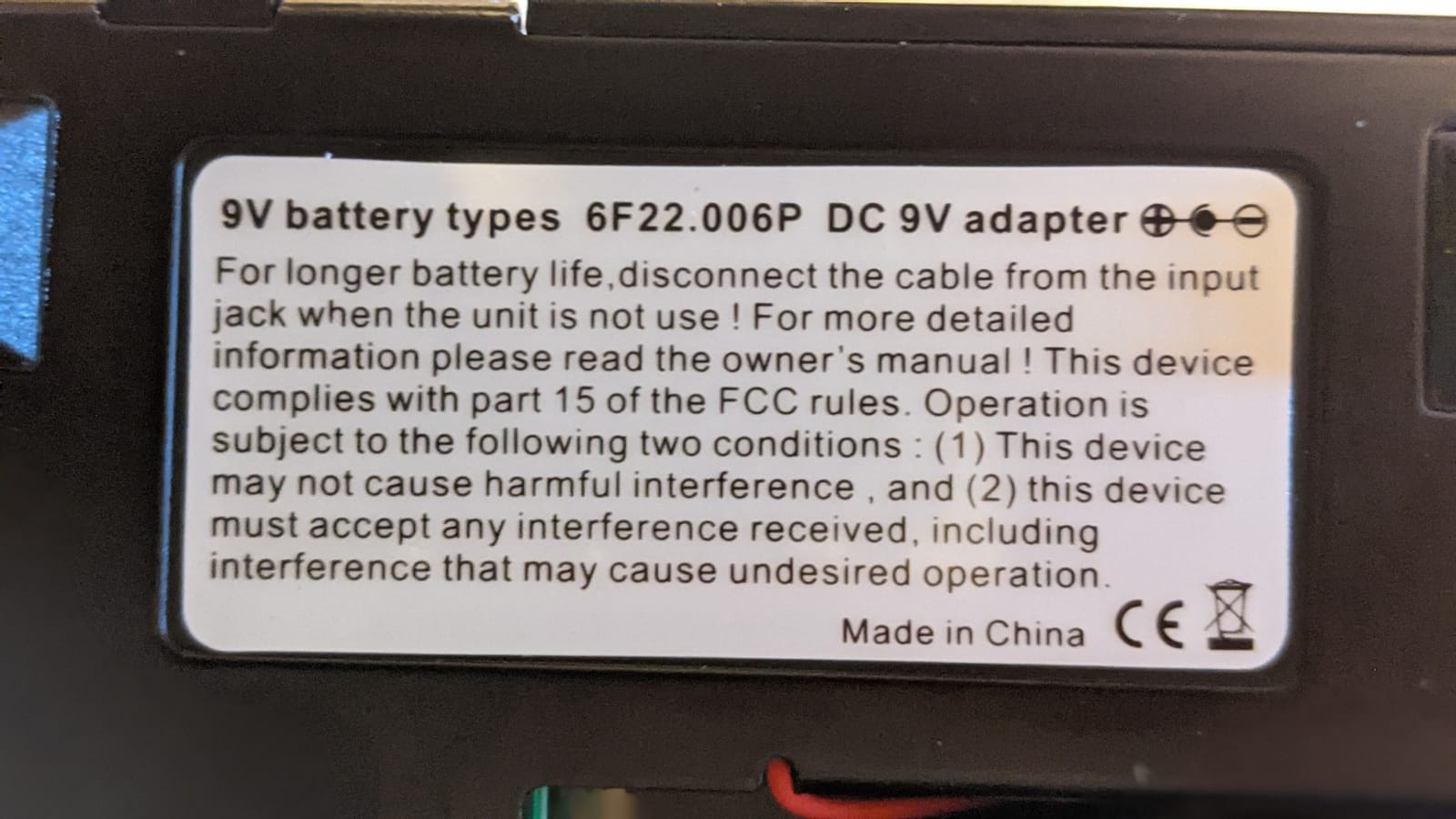
Engaging the tuner produces a small pop on some amps, which is normal for true bypass designs but worth noting. The 9V battery operation drains faster than typical consumer batteries, so always carry a spare or run on the AC adapter for any performance longer than a soundcheck. There is no polyphonic mode, which remains a TC Electronic exclusive.
10. KLIQ TinyTune Pro – Best Compact Pedal Tuner
KLIQ TinyTune Pro Stage Tuner Pedal for Guitar & Bass, Mini Chromatic Pedal with True Bypass, Silent Switch, Flat Tuning, LED Display & Pitch Calibration (9V Power Supply Required)
Mini chromatic pedal
Needle and strobe modes
Silent relay switching
Pros
- Compact size saves pedalboard space
- Fast and accurate chromatic tuning
- True bypass with silent switching
- Bright LED display with needle and strobe modes
- Solid die-cast aluminum build
Cons
- Hard to read in direct outdoor sunlight
- Power supply not included
- Slightly slower to respond than premium tuners
The KLIQ TinyTune Pro is the mini pedal tuner that fits where nothing else does. Its footprint is roughly the size of a compact overdrive pedal, so even the most crowded pedalboards can find room. I tested it on a traveler’s board built around a Microtober amp, and the TinyTune Pro was the only full-function tuner that fit in the available real estate.
The 32-bit processor with Weighted Pitch Sampling locks on quickly and tracks low notes without fluttering. I tested it next to a StroboStomp HD on a 5-string bass, and the TinyTune Pro landed within the same target window for every string. It is not as fast as the StroboStomp, but it is fast enough for any practical gigging scenario.
Two display modes (needle and strobe) make the TinyTune Pro versatile for different environments. The needle mode is what most people default to, since it is easier to read at a glance from a standing position. The strobe mode gives you finer cent-level feedback when you are dialing in intonation between songs.
The relay-based silent switching is a real win. True bypass tuners can produce an audible pop when engaged or disengaged. The TinyTune Pro switches silently, which matters when you are tuning mid-song with a quiet intro or ballad section. Die-cast aluminum housing gives it a sturdy feel underfoot.
Why pedalboard designers choose it
Compact pedalboard layouts benefit from compact tuners. The TinyTune Pro saves roughly 30 percent of the space of a standard tuner pedal, while delivering the same tuning accuracy and true-bypass performance. If you build boards for a living or run multi-effect rigs with strict real estate limits, this pedal is a friend.
Why you might look elsewhere
The display is bright but not as readable in direct outdoor sunlight as the Boss TU-3 or StroboStomp HD. Outdoor festival players should look elsewhere. The 9V power supply is sold separately, and the response time, while excellent, is not as instant as the premium strobe tuners on this list.
How to Choose the Best Tuner for Bass Guitar?
Choosing a tuner comes down to a few honest tradeoffs. Pedal or clip-on. Strobe or LED. True bypass or buffered. Powered by 9V, AC adapter, or rechargeable battery. The right answer depends on where you play, how often, and what you already have on your pedalboard. Below is the framework our team uses when readers ask which tuner to buy. You can also check out our related guides on the best guitar tuner pedals and best distortion pedals for bass guitar for context on how tuners fit into a full rig.
Pedal vs Clip-On: When to Use Each
Pedal tuners belong on a pedalboard used at gigs. They are always on, always ready, and they can mute your signal for silent tuning between songs. They are also more accurate and have wider tuning ranges, with strobe options that clip-ons rarely match. Clip-on tuners belong in your gig bag for situations where a pedalboard is not in play: acoustic gigs, jam sessions, quick home practice, or as a backup if your main pedal fails.
Most working bassists own both. A pedal tuner is the primary tool, a clip-on stays clipped inside the case lid for emergencies. That redundant setup is what seasoned players recommend in nearly every TalkBass thread on the subject.
Accuracy: Strobe, Needle, and Polyphonic Modes
Strobe tuners use a moving pattern of light segments that read to a tenth of a cent. They are the gold standard for setting intonation, where small errors matter most. Needle tuners read to roughly a cent and are faster to glance at during a song. Polyphonic tuners let you strum all strings at once and read every string simultaneously, which is useful for fast checks between sets.
For bass specifically, polyphonic tuning is less useful than it is for guitar. Bassists usually tune one string at a time because the harmonics and overtones on a low-frequency string can confuse a polyphonic reader. A strobe or needle tuner reads each string cleanly when plucked individually, which is the more reliable workflow. Our best bass compressor pedal guide touches on similar display considerations when reading compressor gain reduction.
True Bypass vs Buffered Bypass for Bass
True bypass means the signal passes directly through the pedal when it is off, with no active circuitry in the path. Buffered bypass uses an active buffer to drive long cable runs and large pedalboards without high-frequency loss. Both approaches are valid for bass, but the choice affects signal chain placement.
For short cable runs and small pedalboards (under four or five pedals), true bypass preserves more of your natural tone. For longer cable runs, larger pedalboards, or when feeding a wireless system, a buffered bypass keeps the top end from going dull. Place a buffered tuner as the first pedal in your chain so its buffer feeds everything downstream.
Tuning Range: Why Low B and Low E Detection Matters
The standard 4-string bass drops to E1 around 41 Hz. The 5-string adds a low B0 around 30 Hz. Any tuner worth your money should read at least down to E1, and a serious player on a 5-string will want C0 coverage. Tuners that struggle below E1 will appear to lock in at the wrong octave or fail to display a note at all.
This is also why dedicated bass tuners outperform general-purpose chromatic tuners. A chromatic tuner built for guitar focuses its DSP around E2 and above. A bass tuner extends that range substantially, with extra sampling time to lock the low fundamentals.
Display Visibility on Dark Stages
Clubs and bars tend to run dark house lights during sets. Outdoor festivals and bright stages have the opposite problem. A good bass tuner needs to handle both. Bright LED segments, polar viewing angle, and adjustable brightness control are the three features that decide whether you can read your tuner at a glance.
Clip-on tuners with full color displays tend to read well indoors but wash out in daylight. Pedal tuners with adjustable brightness or strobe patterns tend to handle both environments. The Boss TU-3 in particular is famous for being readable in any light, as multiple TalkBass users have pointed out.
Power Options: 9V Battery vs USB-C vs AC Adapter
Pedal tuners traditionally run on 9V power supplies. Some models also accept 9V batteries, which is great for backup scenarios at outdoor or rural gigs where AC is unreliable. More recently, several tuners have moved to USB-C rechargeable power, including newer strobe and clip-on designs. That makes them easier to top up from any modern charger.
If you build boards, USB-C reduces power supply clutter but you may need adapters to fit into existing isolated power bricks. If you gig in rural venues, a battery backup is worth choosing for. Match the power option to your existing rig for the simplest setup. If you want help building the rest of your signal chain, our guide to the best instrument cables for bass guitar covers the cabling side, and the best studio headphones for bass guitar covers what to plug into for monitoring.
Frequently Asked Questions
Are clip-on tuners accurate enough for bass guitar?
Yes, modern vibration-sensing clip-on tuners like the Snark SN5X, Fender FCT-2, and KLIQ UberTuner are accurate enough for live and practice bass tuning. They read the string vibration directly, ignoring stage noise, and they cover the low E and low B frequencies most bass players use. For studio intonation work or to match a strobe-grade pedal, a strobe pedal remains more precise, but for stage and practice use, a quality clip-on is more than enough.
Can a regular guitar tuner tune a bass?
Most generic guitar tuners struggle with the lowest bass strings because they are tuned for frequencies at E2 and above. The low E on a 4-string bass sits at E1, and the low B on a 5-string sits at B0. Some guitar tuners will display a misleading reading or no reading at all in those ranges. A dedicated bass tuner, pedal tuner, or strobe tuner designed for low frequencies is the safer choice for accurate bass tuning.
What is the best tuning for a bass guitar?
Standard tuning for a 4-string bass is E-A-D-G, from lowest to highest. Standard tuning for a 5-string bass is B-E-A-D-G, with the additional low B below the E. Standard tuning for a 6-string bass is B-E-A-D-G-C. These tunings are written in standard concert pitch. Drop tunings like drop D, drop C, drop B, or drop G are common for heavier genres and require a tuner that supports flat reference pitches.
Why won’t my tuner detect the low B string?
The low B on a 5-string bass sits at approximately 30 Hz, well below the range many tuners are designed to read. Budget tuners in particular often cut off around E1 and cannot lock onto B0, leading to no display or a misleading reading. Switch your tuner into bass mode if it has one, choose a strobe pedal tuner or a wide-range chromatic tuner with documented C0 coverage, and damp the open high strings while tuning so overtones do not confuse the sensor.
Is a strobe tuner really better for bass?
Strobe tuners read to about a tenth of a cent, while LED tuners usually read to a cent. That tenfold improvement matters more on bass than on guitar because small pitch errors sit behind the kick drum and the bass ampu0026#039;s own distortion. For setting intonation, matching orchestral reference pitches, or working in non-standard tunings, a strobe tuner is meaningfully more accurate. For typical rock and pop tuning, an LED tuner is sufficient.
What is the 3-fret rule on bass guitar?
The 3-fret rule is a quick test to check whether a bass string is tuned to its intended octave. Fret the string at the 3rd fret (which on a bass is equivalent to the 2nd fret on a guitar in terms of pitch interval, but tuned an octave lower than written) and compare the harmonic or the fretted note to the open string 12 frets higher. If they match, the string is in tune with itself. If they diverge, you have an intonation problem at the bridge saddle that needs adjustment.
Final Verdict: Which Bass Tuner Should You Buy?
After testing 10 of the most popular tuners for bass guitar over the past several months, the Peterson StroboStomp HD remains the best tuner for bass guitar in 2026 for serious players. Its 0.1-cent strobe accuracy, full color display, and bass-tuned firmware outclass every other tuner on the list, which is exactly why our team keeps it on the main pedalboard. The Boss TU-3 is the right choice for players who need a road-tested stage pedal that doubles as a power supply for a BOSS-heavy rig. The Snark SN5X is the right pick for the bassist who wants a versatile, reliable clip-on under $25 to leave in the gig bag.
The rest of the list covers the meaningful choices that fit specific setups: Fender FCT-2 for players who want top-tier vibration sensing, KLIQ UberTuner for the 360-degree display and 3-year warranty, Snark ST-2 for rechargeable convenience, Donner DT-2 for a beginner-grade clip-on, Donner DT-1 or Monoprice Stage Right for budget pedal tuners, and KLIQ TinyTune Pro for compact pedalboard builders. Match the tuner to your setup rather than chasing the most expensive model. The right pick is the one that lives on your board and works every time you press it.