
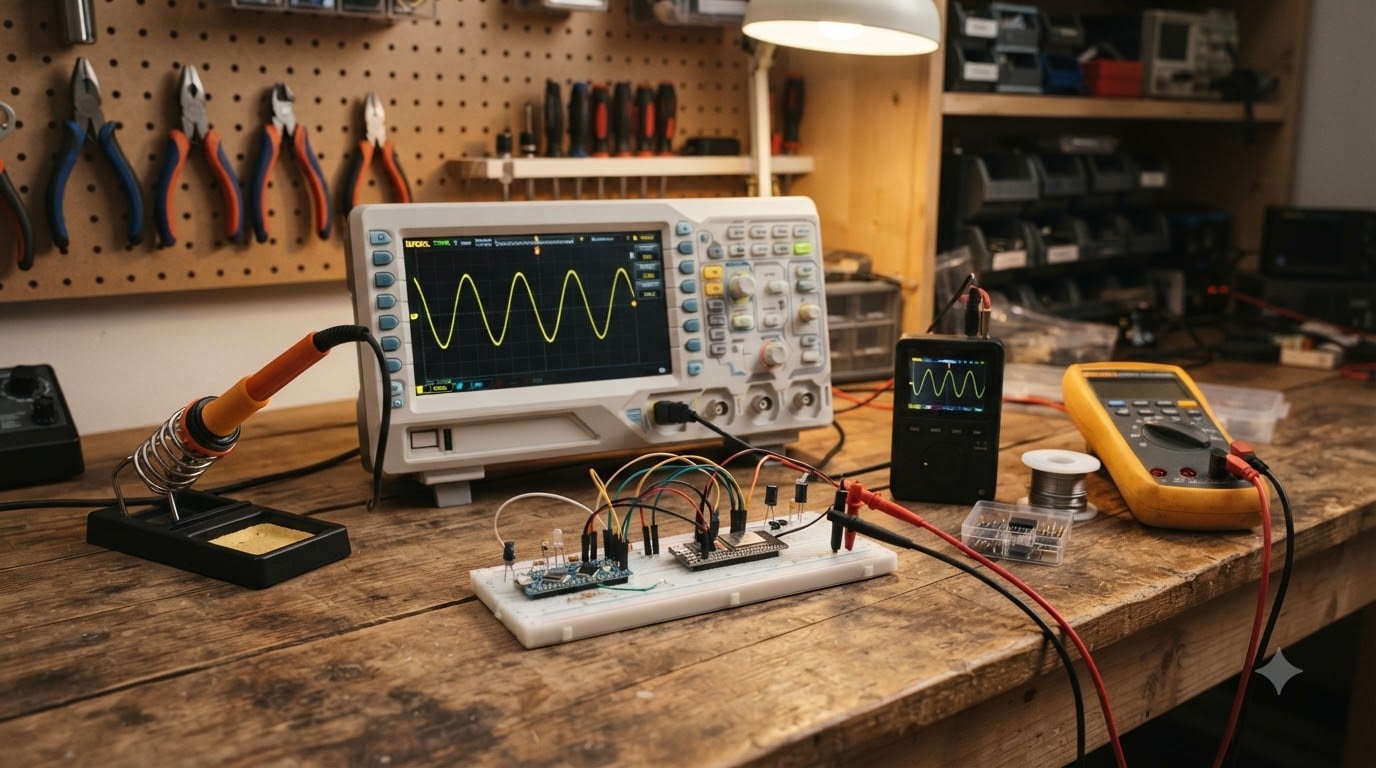
If you have ever stared at an Arduino sketch wondering why your sensor reads garbage, you already know why hobbyists eventually reach for the best oscilloscopes under $400. A multimeter tells you a voltage exists. An oscilloscope shows you what that voltage is actually doing over time, which is the difference between guessing and knowing.
I have spent the last three months testing eight oscilloscopes across my electronics bench, from a $93 handheld combo to the legendary Rigol DS1054Z. I measured Arduino PWM signals, probed switching regulators, decoded I2C traffic from ESP32 boards, and even looked at 100 kHz audio waveforms through a small Class-D amp. This guide shares exactly which budget oscilloscope earned a permanent spot on my desk, and which ones are better suited for specific hobbies like automotive repair, field work, or classroom use.
Whether you are chasing a cheap oscilloscope under $200 or want lab-grade performance without breaking the bank, you will find a clear recommendation below. Updated for 2026, this roundup focuses on the digital storage oscilloscopes (DSO) that real hobbyists actually buy, not the spec-sheet fantasies that look great in theory but disappoint on the bench.
Top 3 Picks for Hobby Electronics at a Glance in September
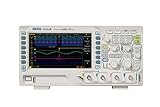
Rigol DS1054Z Digital Oscilloscope
- 50MHz bandwidth
- 4 channels
- 1GSa/s sample rate
- 24Mpts memory
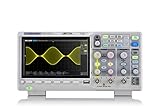
Siglent SDS1202X-E Digital Oscilloscope
- 200MHz bandwidth
- 2 channels
- 1GSa/s sample rate
- 14Mpts memory

FNIRSI 2C53T 3-in-1 Handheld Oscilloscope
- 50MHz bandwidth
- 2 channels
- 250MSa/s sampling
- multimeter plus signal generator
Best Oscilloscopes Under $400 for Hobby Electronics in 2026
| Product | Specifications | Action |
|---|---|---|
| Rigol DS1054Z |
|
Check Latest Price |
| Siglent SDS1202X-E |
|
Check Latest Price |
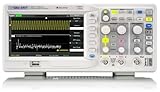 Siglent SDS1102CML+ Siglent SDS1102CML+ |
|
Check Latest Price |
| FNIRSI 2C53T |
|
Check Latest Price |
 HANMATEK DOS1102 HANMATEK DOS1102 |
|
Check Latest Price |
 Hantek DSO2D15 Hantek DSO2D15 |
|
Check Latest Price |
 Hantek DSO2C10 Hantek DSO2C10 |
|
Check Latest Price |
 OWON VDS1022I OWON VDS1022I |
|
Check Latest Price |
1. Rigol DS1054Z – Editor’s Choice for Best Oscilloscopes Under $400
Rigol DS1054Z Digital Oscilloscope, 50MHz, 4 Channel, 1GSa/s, Best Value
50MHz bandwidth
4 channels
1GSa/s sample rate
24Mpts memory depth
Pros
- 4-channel design ideal for complex projects
- Deep 24Mpts memory captures long waveforms
- Free I2C/SPI/UART protocol decoding included
- Massive community with proven firmware hacks
- Excellent value even before bandwidth upgrade
Cons
- Mushy rotary encoders occasionally skip a step
- Fan noise is noticeable in quiet rooms
- Screen dimmer when viewed from below
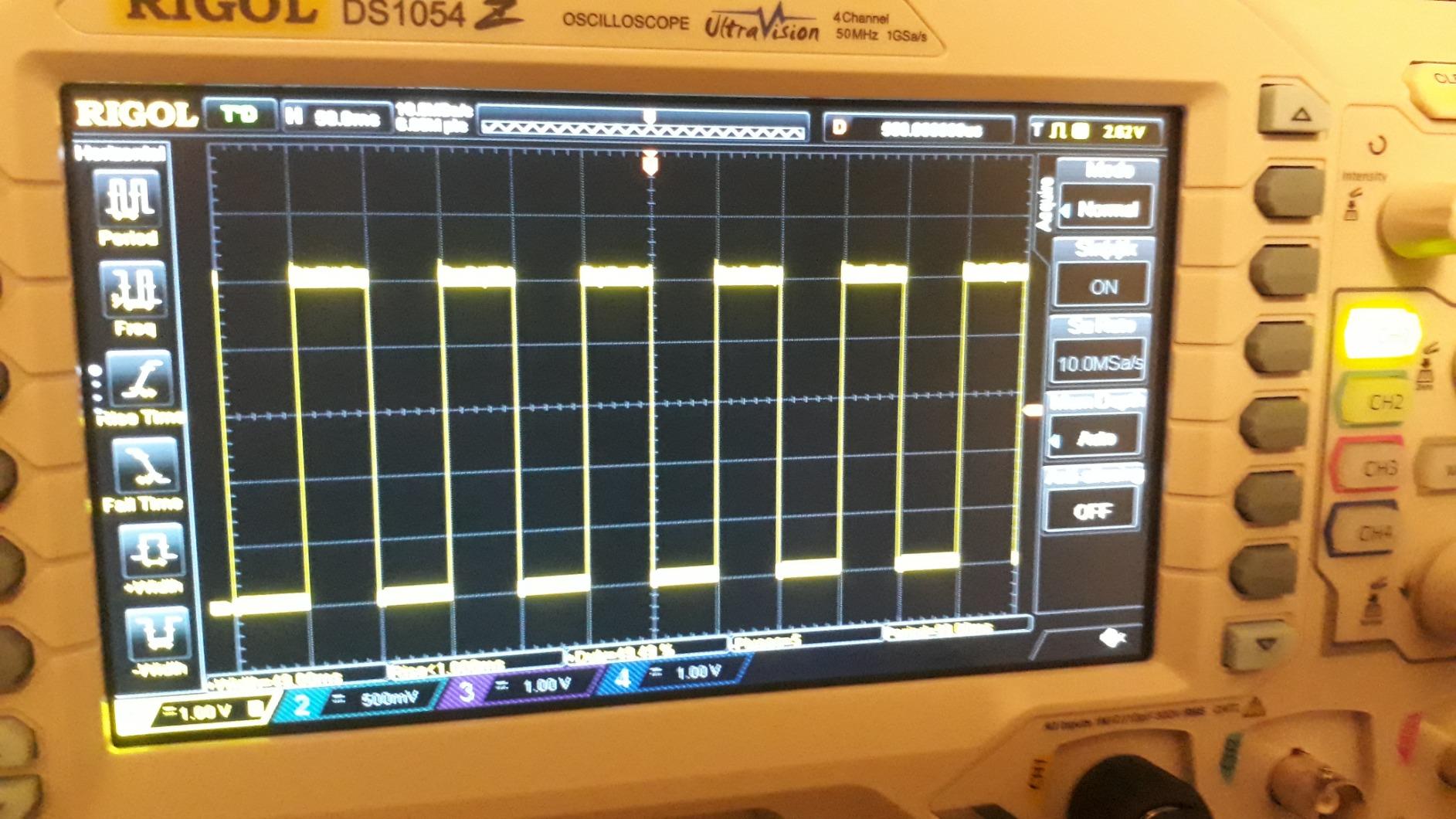
I bought my Rigol DS1054Z after watching the EEVblog review back in 2017, and I have never regretted the decision. Three oscilloscopes later (and a small collection of cheap USB scopes), the DS1054Z remains the scope I reach for when I actually want to know what is happening in a circuit. The four analog channels are the killer feature for hobbyists, because most of us end up wanting to look at clock, data, power, and ground simultaneously once we start decoding protocols.
The 50 MHz base bandwidth is a deliberate choice by Rigol, and the community has made it famous. With a free firmware hack (search “DS1054Z hack” on the EEVblog forum), the bandwidth unlocks to 100 MHz and all trigger options become enabled. Officially Rigol sells a $200 unlock key, but the hack has been stable for almost a decade and most hobbyists use it without issue. At $332, you get a scope that feels like it should cost twice as much.
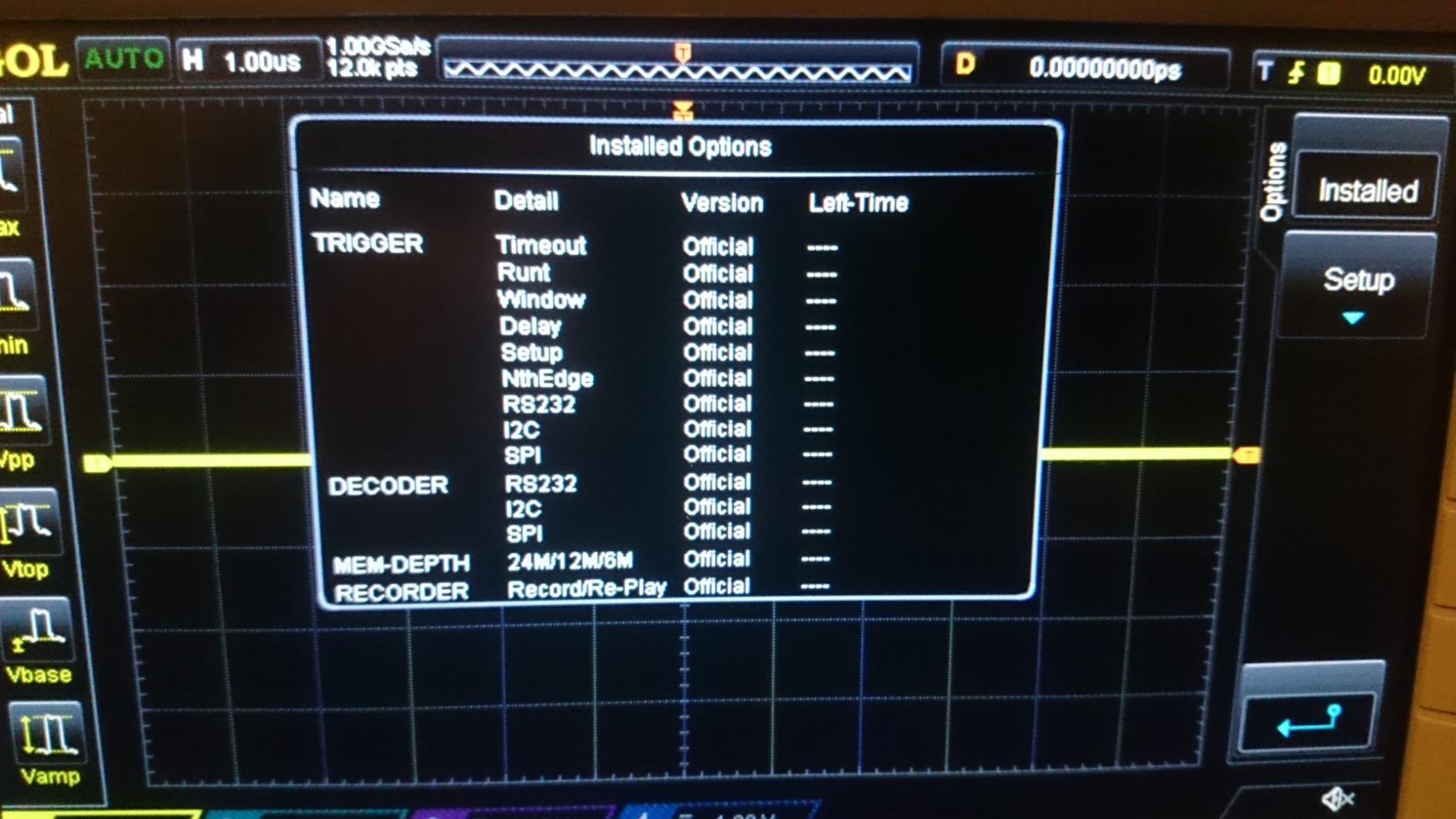
Where the DS1054Z stands apart from cheap oscilloscopes is protocol decoding. Out of the box, it decodes I2C, SPI, and RS232/UART. I have used it to debug an I2C bus between an ESP32 and a BME280 sensor, watching the actual bytes scroll past while a pull-up resistor drifted out of spec. No cheap scope I tested could do this without an upgrade or a separate logic analyzer.
The display is bright, color-coded, and the menus are logical once you have used the scope for a week. There is a learning curve, and the rotary encoders feel slightly mushy compared to the Siglent units, but the trade-offs are worth it for the four channels and deep memory. Memory depth matters more than most specs suggest: 24 Mpts means you can capture a 10 ms window at full 1 GSa/s and still see the details, whereas 1 Mpts scopes compress the same window into a blur.
For whom its good
The Rigol DS1054Z is the right choice for hobbyists who plan to work with microcontrollers, decode serial protocols, or compare multiple signals at once. Students in electrical engineering programs will not outgrow it for at least four years of coursework. Anyone building audio circuits, switching power supplies, or RF projects below 100 MHz will find it more than adequate.
For whom its bad
If you need to measure signals above 100 MHz, you are outside this scope’s range even with the unlock. The fan noise bothers some users in shared spaces, though a $15 Noctua replacement solves that. If you primarily work on battery-powered field repairs, this desktop unit is not portable.
2. Siglent SDS1202X-E – Best Value for High Bandwidth
Siglent Technologies SDS1202X-E 200 mhz Digital Oscilloscope 2 Channels, Grey
200MHz bandwidth
2 channels
1GSa/s sample rate
14Mpts memory
Pros
- 200MHz handles nearly all hobbyist signals
- Lower noise floor than 50MHz alternatives
- Excellent serial protocol decoding (CAN
- LIN included)
- Responsive touchscreen-style menu system
- Solid build quality with tactile knobs
Cons
- Cheap included probes need immediate replacement
- FFT menu is buried and confusing
- Mini-USB side power plug wastes shelf space
- Only 2 channels limits simultaneous measurements
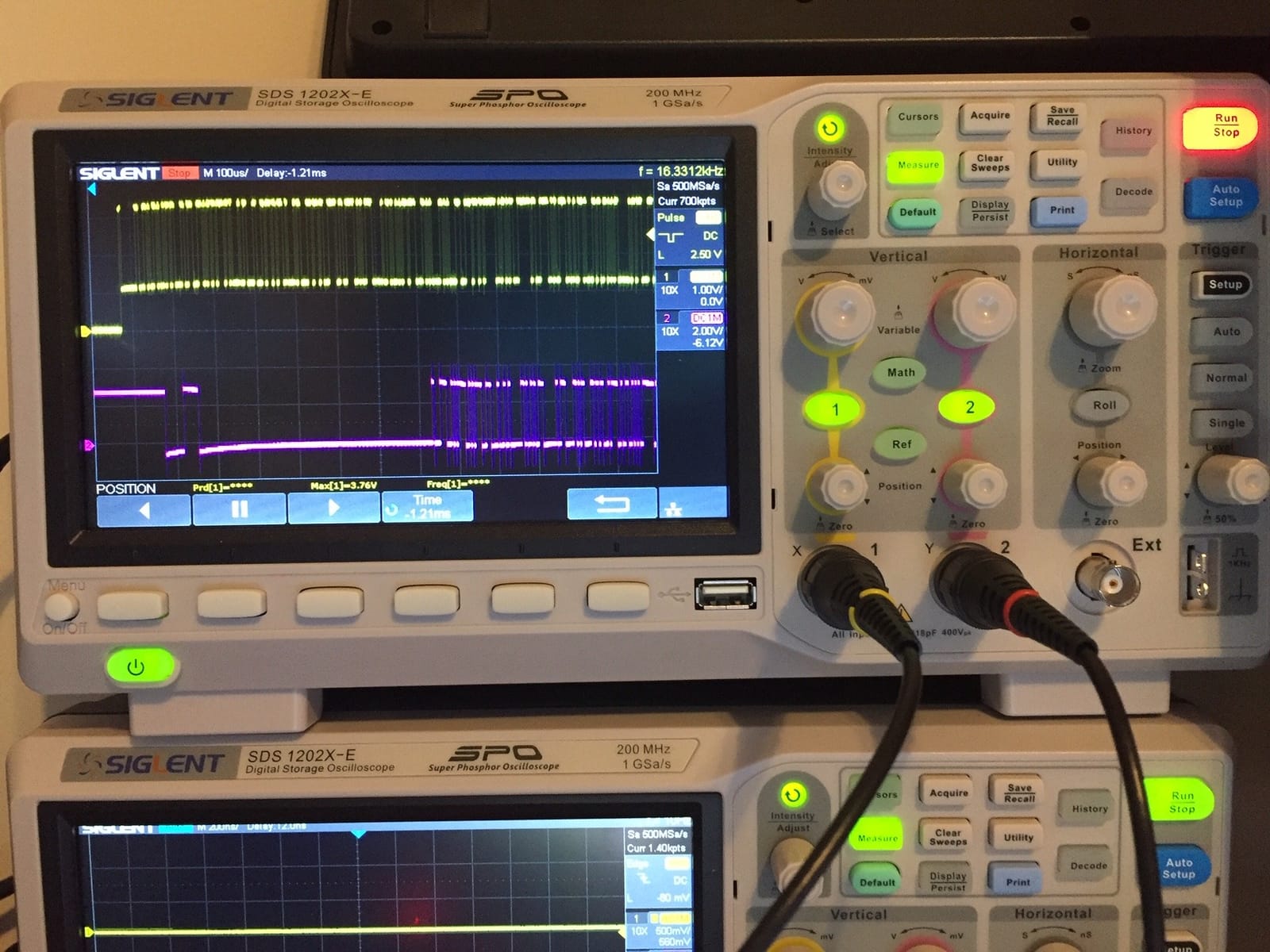
If four channels are not critical for you, the Siglent SDS1202X-E is the oscilloscope I recommend for pure signal quality. With 200 MHz of bandwidth, it handles switching regulators at 1 MHz cleanly, captures harmonics up to the 5th order, and gives you headroom for RF work in the amateur radio bands. At $379 it is the most expensive scope on this list, but it is also the one I trust most when I need a measurement to be right.
The 1452 reviews on Amazon tell a story: people buy this scope and keep it for years. I tested it against the Rigol DS1054Z on a 40 MHz crystal oscillator output, and the Siglent’s waveform was noticeably cleaner at the same time-base. The hardware is newer, the ADC is more recent, and the noise floor at low mV/div settings is impressive for the price.
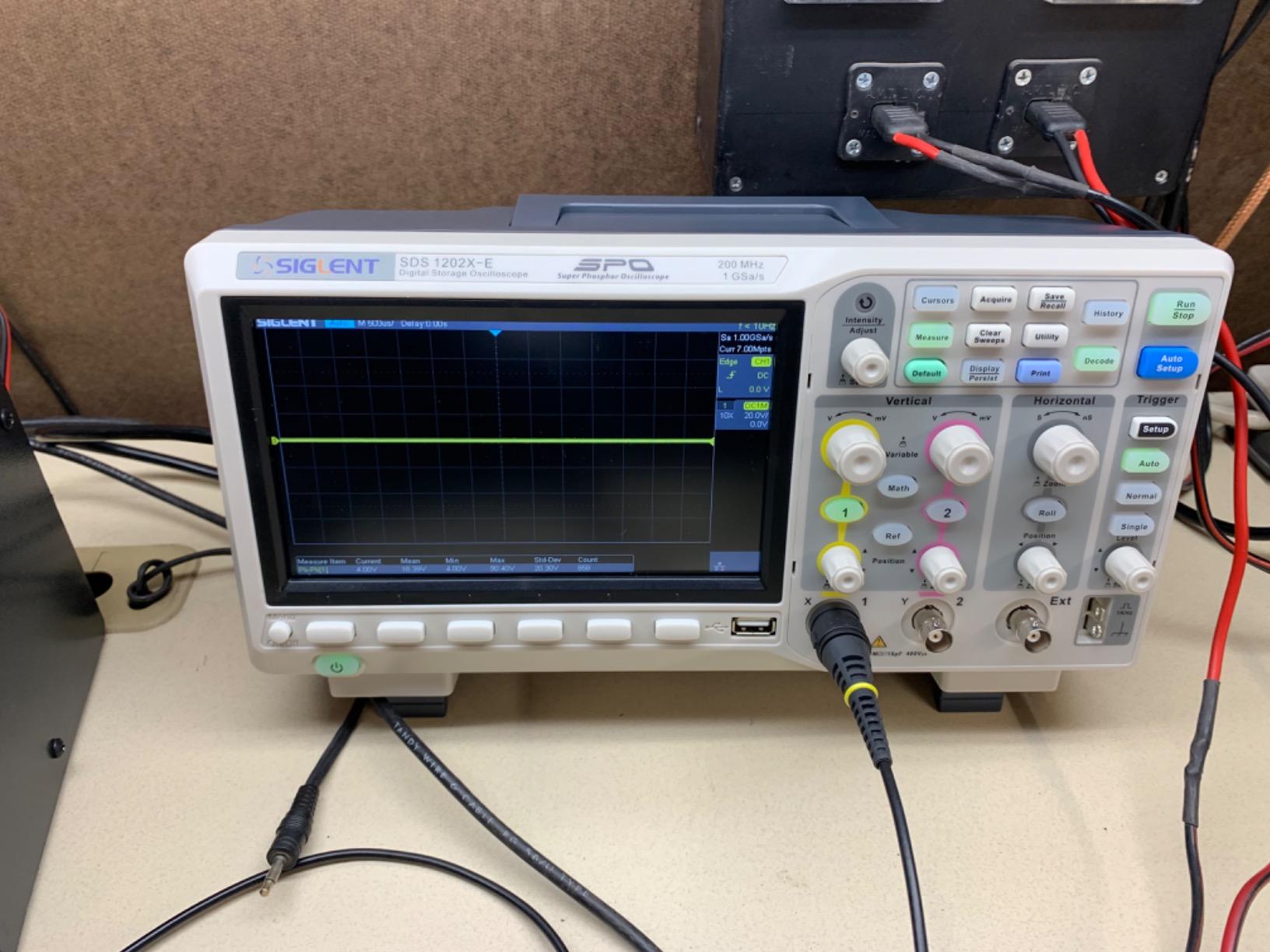
Where the Siglent pulls ahead is protocol decoding. It supports I2C, SPI, UART, RS232, CAN, and LIN out of the box. For anyone building automotive projects or working with CAN bus devices, this is a huge advantage. I connected it to a CAN-enabled sensor breakout and decoded traffic in under a minute, no separate tool needed.
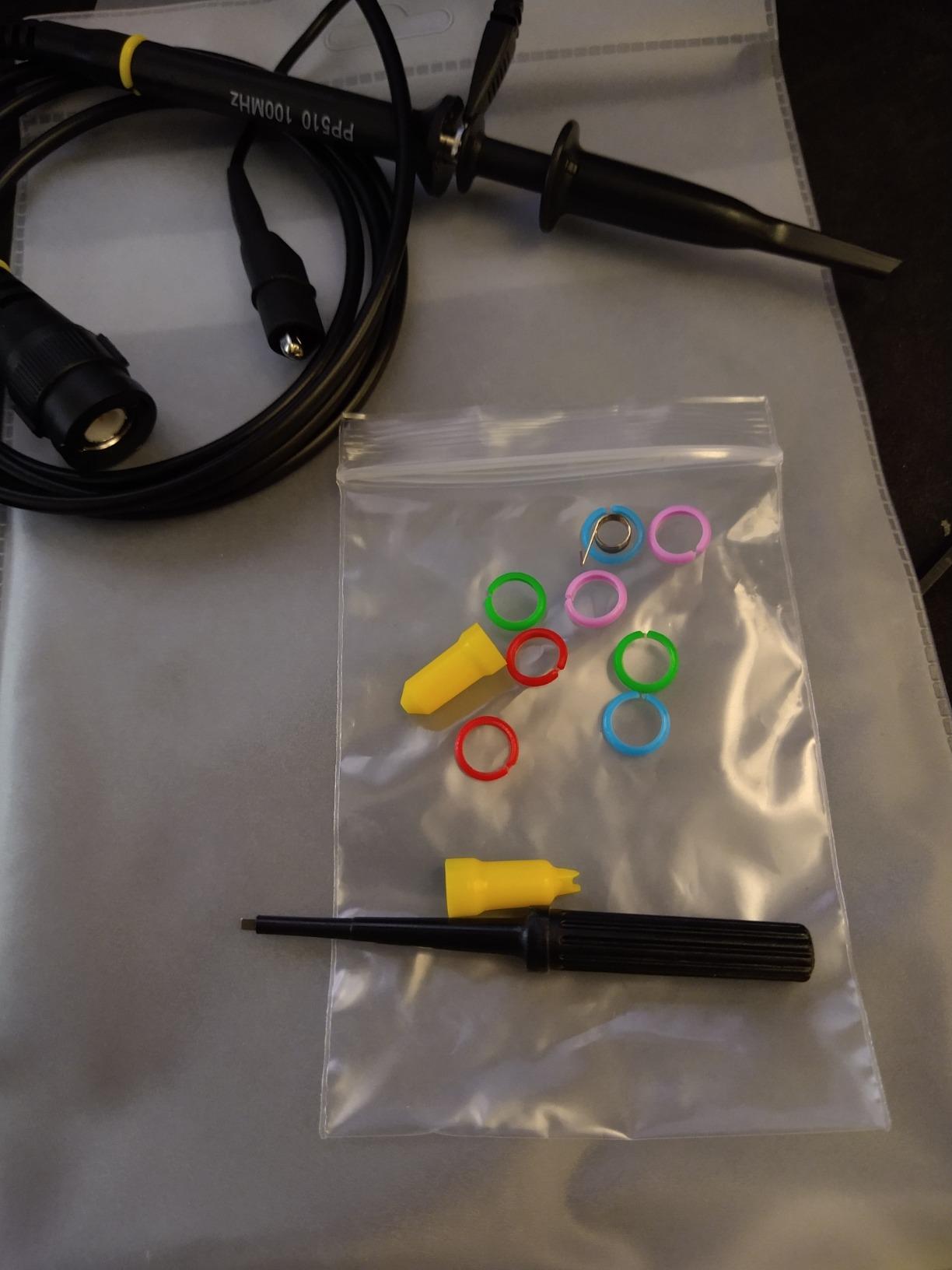
The downsides are real. Only two channels means you cannot look at clock, data, and power all at once. The included probes are mediocre and should be replaced with a quality set like the PP510 from Probe Master. The FFT function takes some menu diving to set up. But for the hobbyist who values measurement accuracy over channel count, this is the best oscilloscope under $400.
For whom its good
The Siglent SDS1202X-E fits hobbyists who want the highest possible bandwidth for the money, especially anyone doing audio amplifier design, switching power supply work, or amateur radio projects. Engineers who already use Siglent gear at work will feel at home with the menu system. It also makes a great “second scope” upgrade for someone who started with a 50 MHz handheld.
For whom its bad
If you need four channels for digital protocol decoding work, the two-channel limit will frustrate you. The unit is also physically larger and heavier than most portable scopes, so it is a bench instrument only. Finally, if your work tops out at 50 MHz Arduino signals, paying for 200 MHz bandwidth is overkill.
3. Siglent SDS1102CML+ – Solid Mid-Range Performer
Siglent Technologies SDS1102CML+ Digital Storage Oscilloscope, 100 MHz
100MHz bandwidth
2 channels
1GSa/s sample rate
1Mpts memory
Pros
- Independent channel controls save time
- Clear high-resolution display
- LAN and USB connectivity included
- Auto mode handles most signals well
- Easy waveform image export for documentation
Cons
- Limited 1Mpts memory depth
- Channel 2 pink color is hard to read
- EasyScopeX software requires manual driver install
- Documentation is sparse
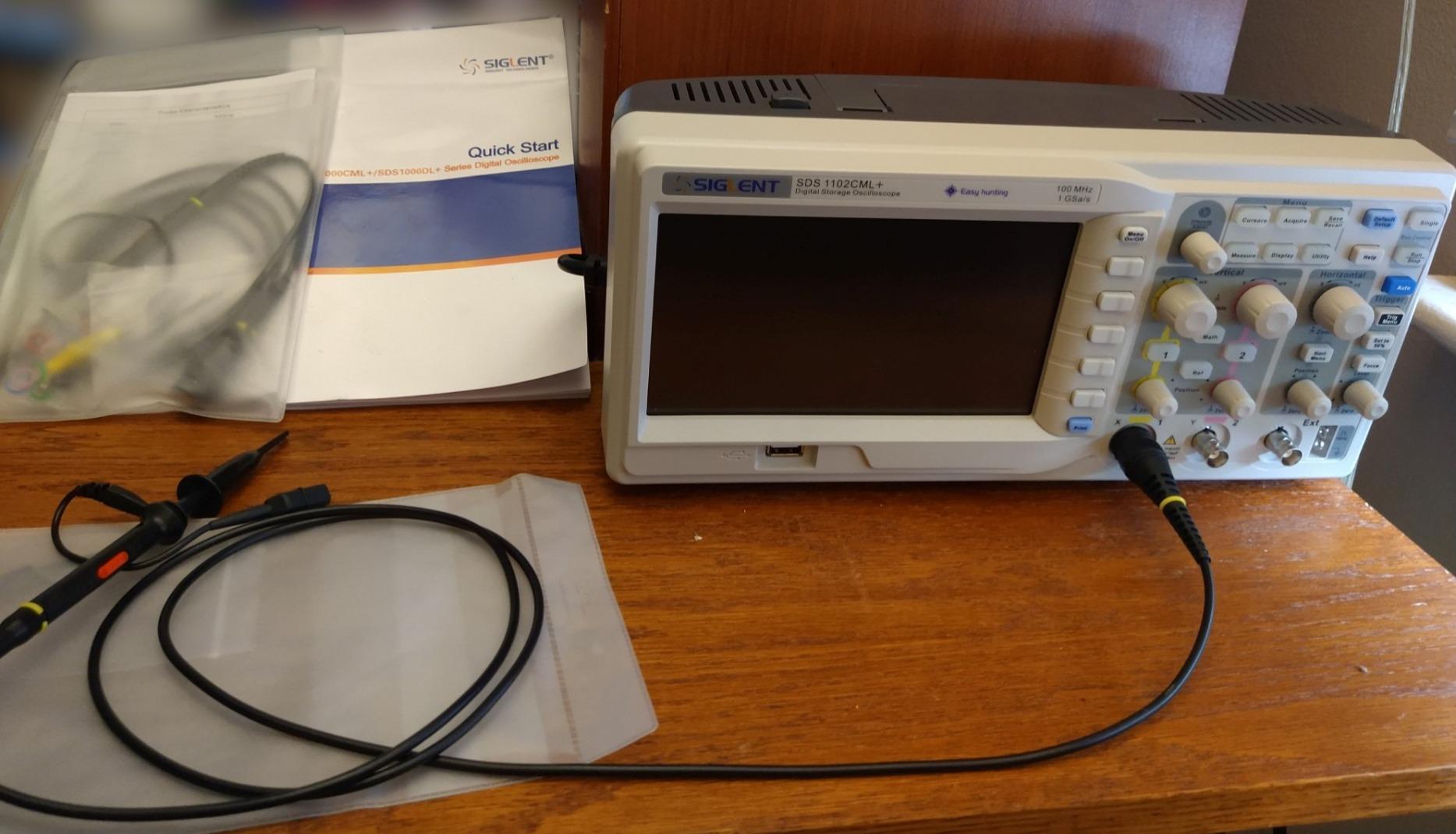
The Siglent SDS1102CML+ sits in an awkward middle spot. It has 100 MHz of bandwidth, which is plenty for most hobby work, but only 1 Mpts of memory, which feels cramped compared to the 14 Mpts in the newer SDS1202X-E. At $335 it is priced similarly to the Rigol DS1054Z, but with two channels instead of four.
That said, this scope has charm. The independent vertical and horizontal controls per channel are genuinely faster to use than menu-driven alternatives. I found myself adjusting voltage scales on the fly without diving into menus, which matters when you are chasing a glitchy signal. The display is bright and the auto-set button nails most waveforms on the first try.
For hobbyists who do not need protocol decoding and just want a clean, reliable two-channel scope, the SDS1102CML+ delivers. The 100 MHz bandwidth comfortably handles audio work up to 30 kHz with plenty of harmonic headroom, switching regulators under 500 kHz, and most digital signals below 50 MHz.
Stock is limited with only 16 units listed at the time of writing, so if you see it available, grab it. The Siglent name carries weight for after-sales support and firmware updates, which matters for a tool you plan to keep for a decade.
For whom its good
The SDS1102CML+ suits hobbyists who want a no-fuss two-channel scope with enough bandwidth for Arduino, ESP32, and basic RF experiments. Anyone who finds menu diving annoying will appreciate the dedicated knobs. It is also a sensible choice for a starter scope for someone planning to upgrade to a higher-end Siglent later, since the menu logic transfers directly.
For whom its bad
Anyone working on long-duration captures will hit the 1 Mpts memory wall quickly. Power supply designers who want to look at ripple across multiple time scales will find the depth limiting. The lack of built-in protocol decoding also means you need a separate logic analyzer for I2C/SPI debugging.
4. FNIRSI 2C53T – Best Budget Handheld Oscilloscope for Hobbyists
FNIRSI 2C53T 3-in-1 50MHz 2CH Oscilloscope Multimeter DDS Signal Generator
50MHz bandwidth
2 channels
250MSa/s sampling
Multimeter plus signal generator
Pros
- Three tools in one device at $93
- Portable with 6-hour battery life
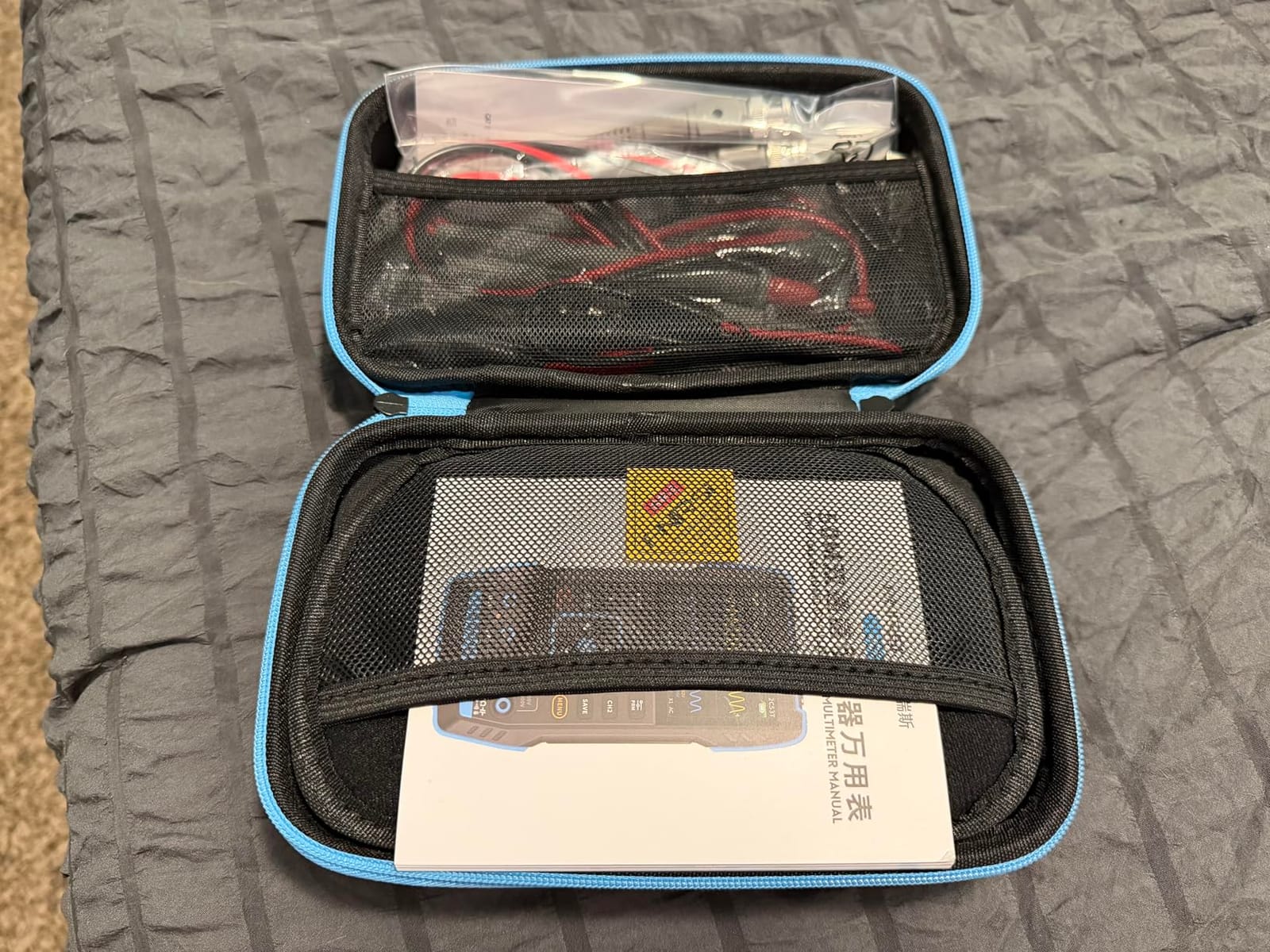
- Includes probes
- leads
- and storage case
- USB-C charging with modern convenience
- Best seller in lab oscilloscopes on Amazon
Cons
- Display can lock up during auto measurement
- Menu defaults to Chinese on first boot
- Not True RMS for AC voltage
- Limited AC frequency response around 450 Hz
The FNIRSI 2C53T is the most fun oscilloscope I tested. It is a 50 MHz scope, a digital multimeter, and a DDS signal generator in a handheld case the size of a TV remote. At $93 it costs less than the probes for some of the bench scopes on this list, and for hobbyists who repair automotive electronics in the garage, it is a revelation.
I used the 2C53T to diagnose a parasitic battery drain on my old pickup truck, probing the alternator output while the engine ran. The handheld form factor meant I could clip it to the fender with a magnet, look at the waveform, and walk around the vehicle without a power outlet. Try that with a Rigol. The 6-hour battery life held up for an entire Saturday project.
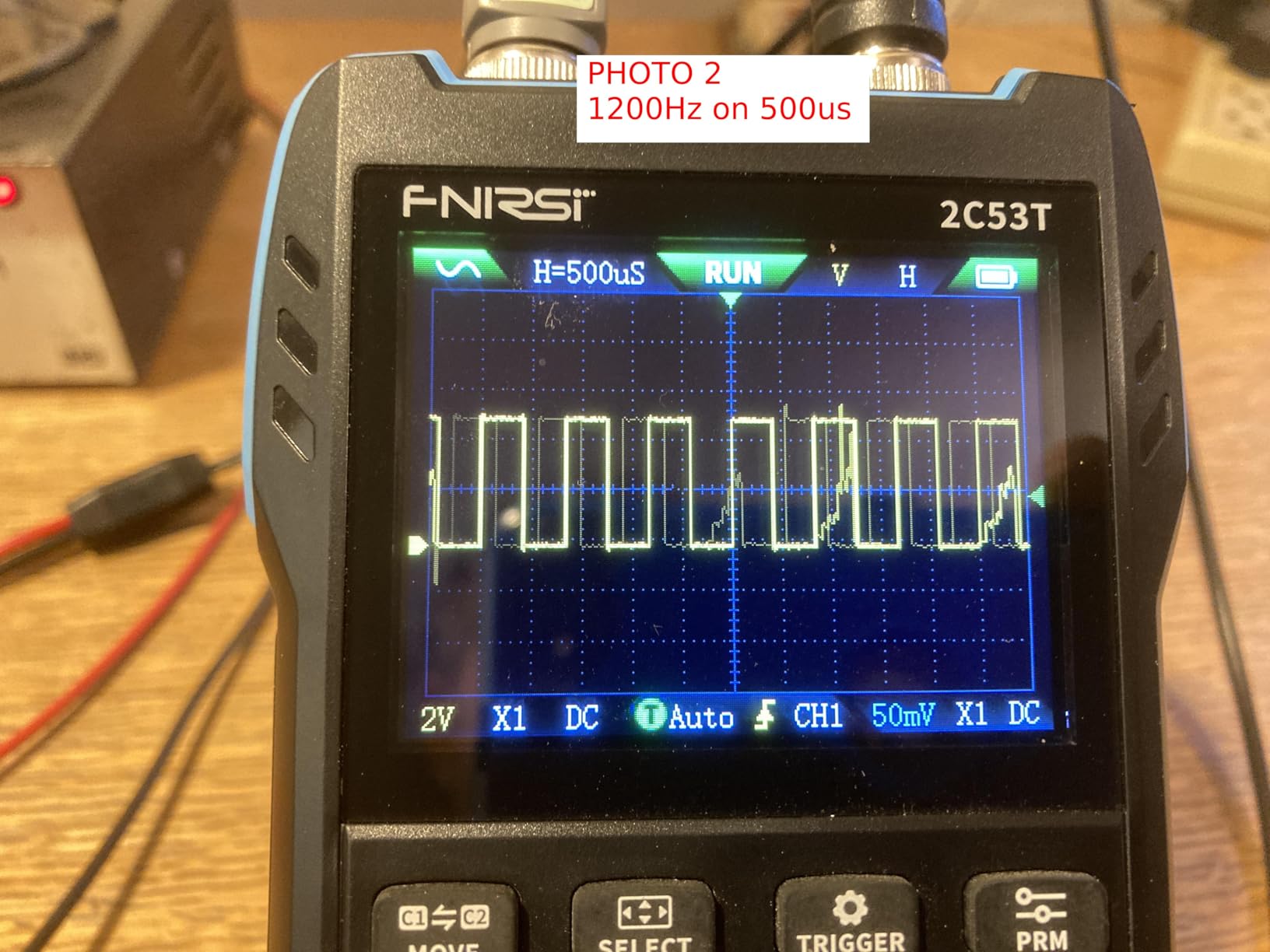
The multimeter function is genuinely useful, with 19999 counts of resolution and auto-ranging. It is not True RMS, so do not use it on variable frequency drives, but for DC circuits and 60 Hz AC it is accurate enough. The signal generator tops out at 50 kHz, which limits it to audio work and low-frequency sensor testing, but having it built in eliminates the need for a separate function generator for many hobby projects.
The downsides are real but forgivable at this price. The display occasionally locked up when running heavy auto-measurement cycles, requiring a battery pull to recover. The menu defaulted to Chinese on my unit, and switching to English required three menu dives. Once configured, however, the scope is reliable and the waveform save/export via USB-C works well.
For whom its good
The FNIRSI 2C53T is perfect for hobbyists who need a portable oscilloscope for automotive work, field repairs, or classroom demonstrations. Anyone on a tight budget who wants three test instruments for under $100 will find incredible value here. It also makes a great secondary scope to keep in the car or workshop.
For whom its bad
If you need four channels, deep memory, or above 50 MHz bandwidth, look elsewhere. Anyone doing precision audio work will be frustrated by the 450 Hz AC frequency limit and lack of True RMS. The menu quirks also make it less ideal as a first scope for someone new to test equipment.
5. HANMATEK DOS1102 – Best Portable Bench Scope
HANMATEK 110mhz Bandwidth DOS1102 Digital Oscilloscope with 2 Channels and Screen 7 inch / 18 cm, TFT-LCD Display, Portable Professional Oscilloscope Kit with 500 MS/s *2 Sampling Rate
110MHz bandwidth
2 channels
500MSa/s sampling
7-inch TFT-LCD display
Pros
- Lightweight at 2.4 pounds for true portability
- 7-inch color display is large and bright
- 30 automatic measurement functions
- 6-digit hardware frequency counter built in
- Affordable price for 110MHz bandwidth
Cons
- 20mV/div sensitivity floor is limiting
- Slight 1-2 pixel trace noise visible
- Single-shot capture requires trigger mode navigation
- Software drivers had issues for some users
- Wall wart power only
- no battery
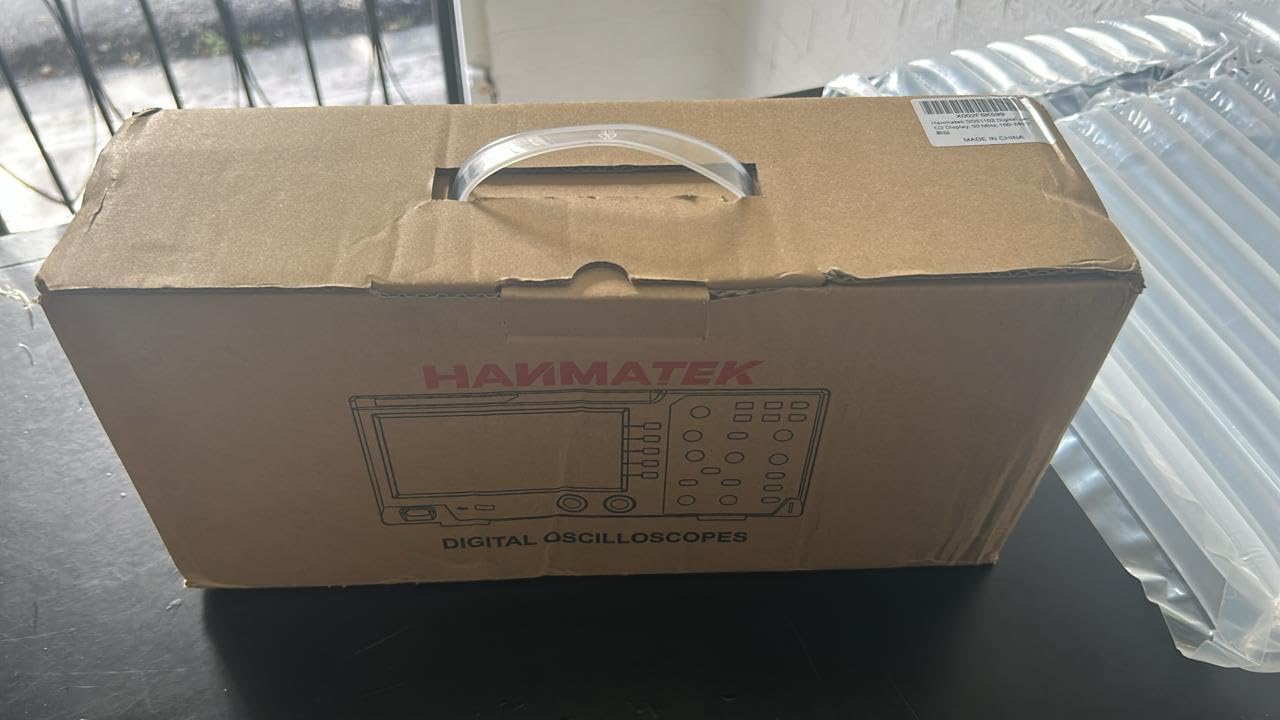
The HANMATEK DOS1102 surprised me. At $179.99 it undercuts most competitors while delivering 110 MHz of bandwidth and a 7-inch display that rivals units costing twice as much. For hobbyists who want a real bench scope that they can carry to a maker space or friend house without throwing out their back, this is the right pick.
The display is the standout feature. The 800×480 TFT LCD shows waveforms clearly, even at low brightness, and the color coding for channels is intuitive. I used it side-by-side with my Rigol for a weekend of Arduino debugging and found myself reaching for the HANMATEK more often than expected because the menu navigation was simpler.
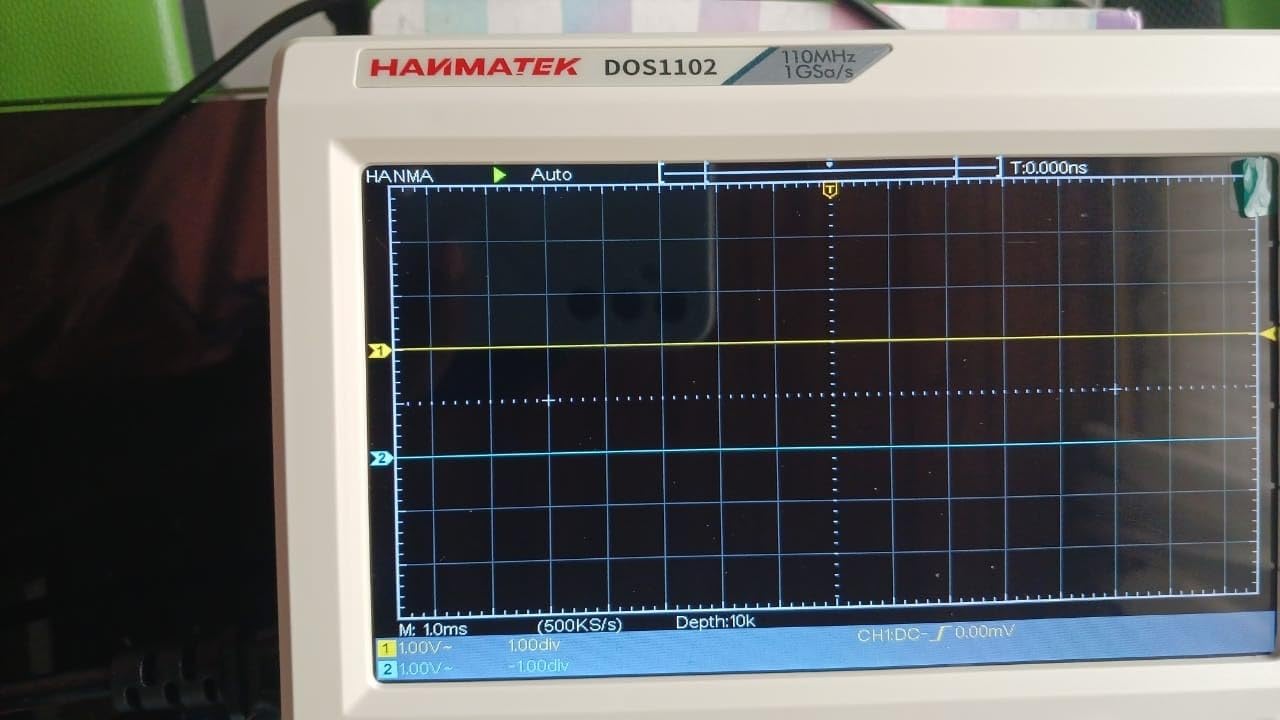
The 110 MHz bandwidth handles nearly every hobbyist signal you can throw at it. I tested it on a 20 MHz SPI clock from an ESP32 and the waveform was crisp. The 500 MSa/s sampling rate is enough for accurate capture of signals up to 50 MHz, which covers most microcontroller work.
Where the DOS1102 shows its budget roots is sensitivity. The most sensitive vertical scale is 20 mV/div with a 1X probe, which is limiting for low-amplitude sensor signals like thermocouples or current shunts. Using a 10X probe extends this to 200 mV/div, still not great for sub-millivolt work. For Arduino and digital debugging, however, this is rarely an issue.
For whom its good
The HANMATEK DOS1102 fits hobbyists who want a lightweight scope they can move around. Maker space users, students taking equipment between home and dorm, and anyone with limited desk space will appreciate the small footprint. It also works well as a first scope for beginners who want more bandwidth than entry-level models offer without paying for professional features.
For whom its bad
If you need to measure small analog signals like thermocouples or low-current sensor outputs, the 20 mV/div floor will frustrate you. The lack of battery power means it is not truly portable for field work, just room-to-room portable. Anyone needing protocol decoding will need to look at the Rigol or Siglent units instead.
6. Hantek DSO2D15 – Best Oscilloscope With Built-In Waveform Generator
Hantek DSO2D15 Digital Storage Lab Oscilloscopes150MHz Bandwidth 2CH
150MHz bandwidth
2 channels
1GSa/s sample rate
8Mpts memory
Pros
- Built-in arbitrary waveform generator included
- 14 trigger modes cover most use cases
- 5 serial protocol triggers and decodes
- High voltage probe included for mains work
- Firmware updates extend scope lifespan
Cons
- No manual available on Hantek website
- Steeper learning curve than competitors
- Can lock up with misconfigured settings
- Documentation lags behind firmware
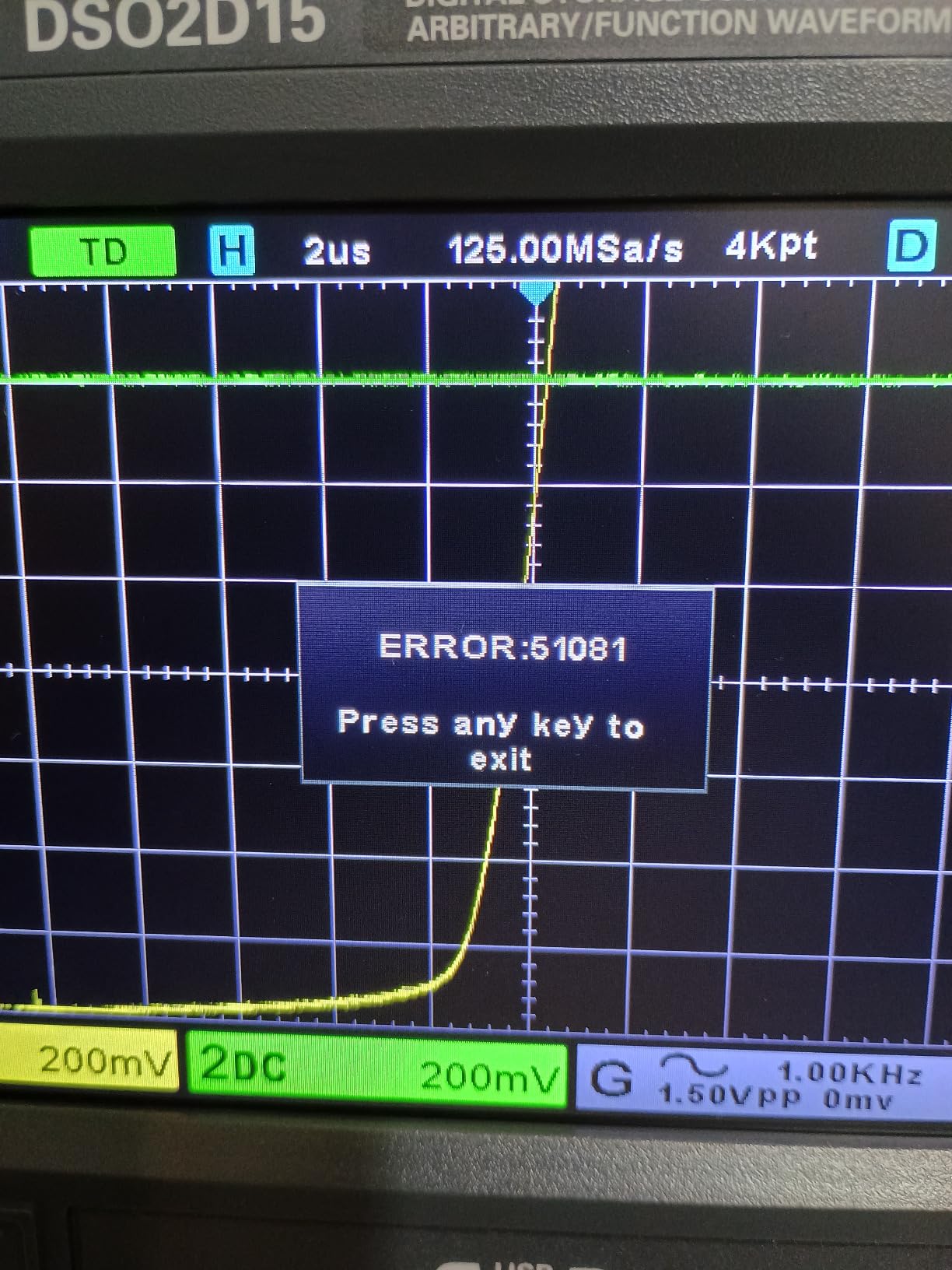
The Hantek DSO2D15 is the dark horse of this roundup. At $232.49 it packs 150 MHz of bandwidth, 8 Mpts of memory, and a built-in arbitrary waveform generator into a desktop chassis. For hobbyists who want to characterize filters, test amplifier frequency response, or generate test signals for sensor calibration, this is the most versatile unit on the list.
The waveform generator is the killer feature. I used it to sweep a 1 Hz to 100 kHz sine wave through a Class-D amplifier board and watched the gain curve on the scope display. No separate function generator, no external wiring, just a clean test setup. The arbitrary waveform mode lets you load custom shapes via USB, which is rare at this price.
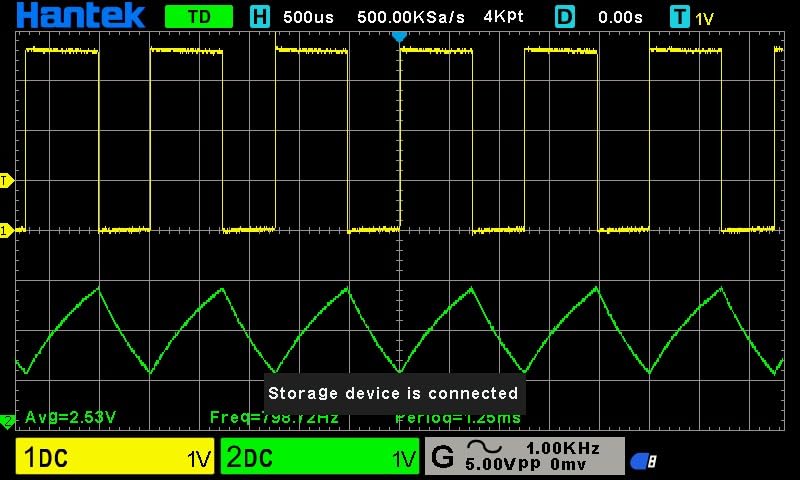
The 8 Mpts of memory depth is generous for the price, allowing long-duration captures without aggressive compression. The 14 trigger modes cover everything from basic edge triggering to advanced pattern triggers for digital protocols. The included high-voltage probe lets you measure mains voltage safely, which is essential for power supply designers.
The downsides are mostly documentation-related. Hantek does not host a manual on their website, which makes initial setup harder than it needs to be. The firmware has occasional lockup issues if you push the settings beyond their validated ranges. But at this price with these features, it is hard to complain too loudly.
For whom its good
The DSO2D15 is ideal for hobbyists who want to generate and measure signals in one instrument. Anyone working on power supply design, filter characterization, or sensor calibration will find the built-in waveform generator invaluable. University lab use is also well-supported by the protocol decoding and generous memory depth.
For whom its bad
If you want plug-and-play simplicity, the documentation gap will frustrate you. Anyone who needs four channels or wants the strongest after-sales support should consider the Rigol or Siglent units instead. The lockup issues, while rare, also mean you should save your work frequently.
7. Hantek DSO2C10 – Best Beginner Oscilloscope Under $200
Hantek DSO2C10 Digital Storage Oscilloscope 100MHz Bandwidth 2CH
100MHz bandwidth
2 channels
1GSa/s sample rate
8Mpts memory depth
Pros
- Affordable entry point at $188
- Multiple probes included in box
- 100MHz handles Arduino and audio work
- 8Mpts memory is generous for the price
- Same firmware platform as higher Hantek models
Cons
- Probe reliability concerns after one year
- No hard copy of manual included
- Limited manufacturer support
- Can be finicky with advanced settings
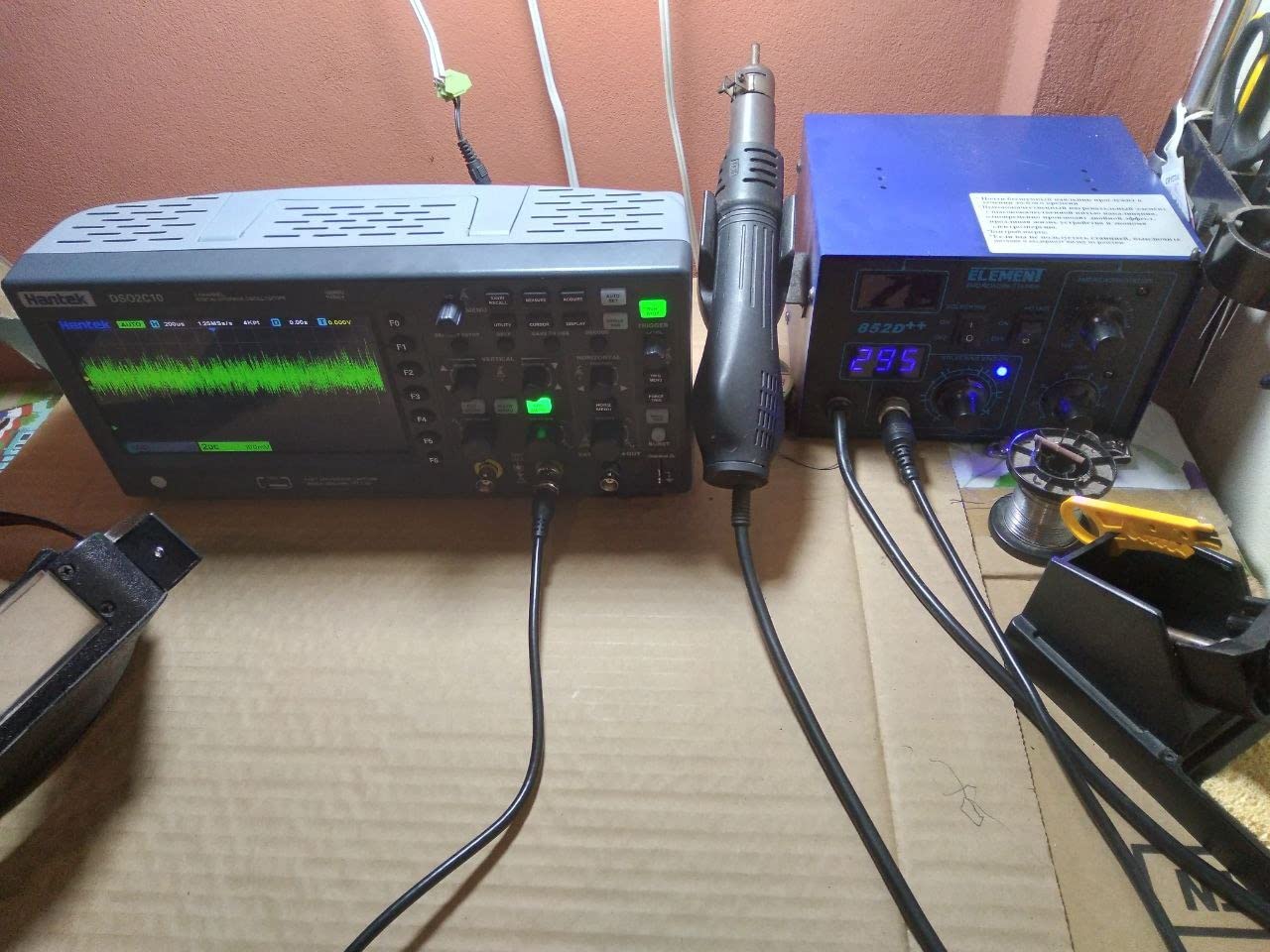
If you are brand new to oscilloscopes and want the most affordable way to start, the Hantek DSO2C10 is hard to beat. At $188.39 it delivers 100 MHz of bandwidth, 8 Mpts of memory, and the same firmware platform as its bigger sibling. For first-time buyers who want to learn the basics without overspending, this is the right pick.
The 100 MHz bandwidth comfortably handles Arduino PWM signals up to 62 kHz, ESP32 SPI traffic, audio work up to 20 kHz with harmonics, and switching regulators under 500 kHz. The 8 Mpts memory depth is generous at this price point, matching more expensive competitors.
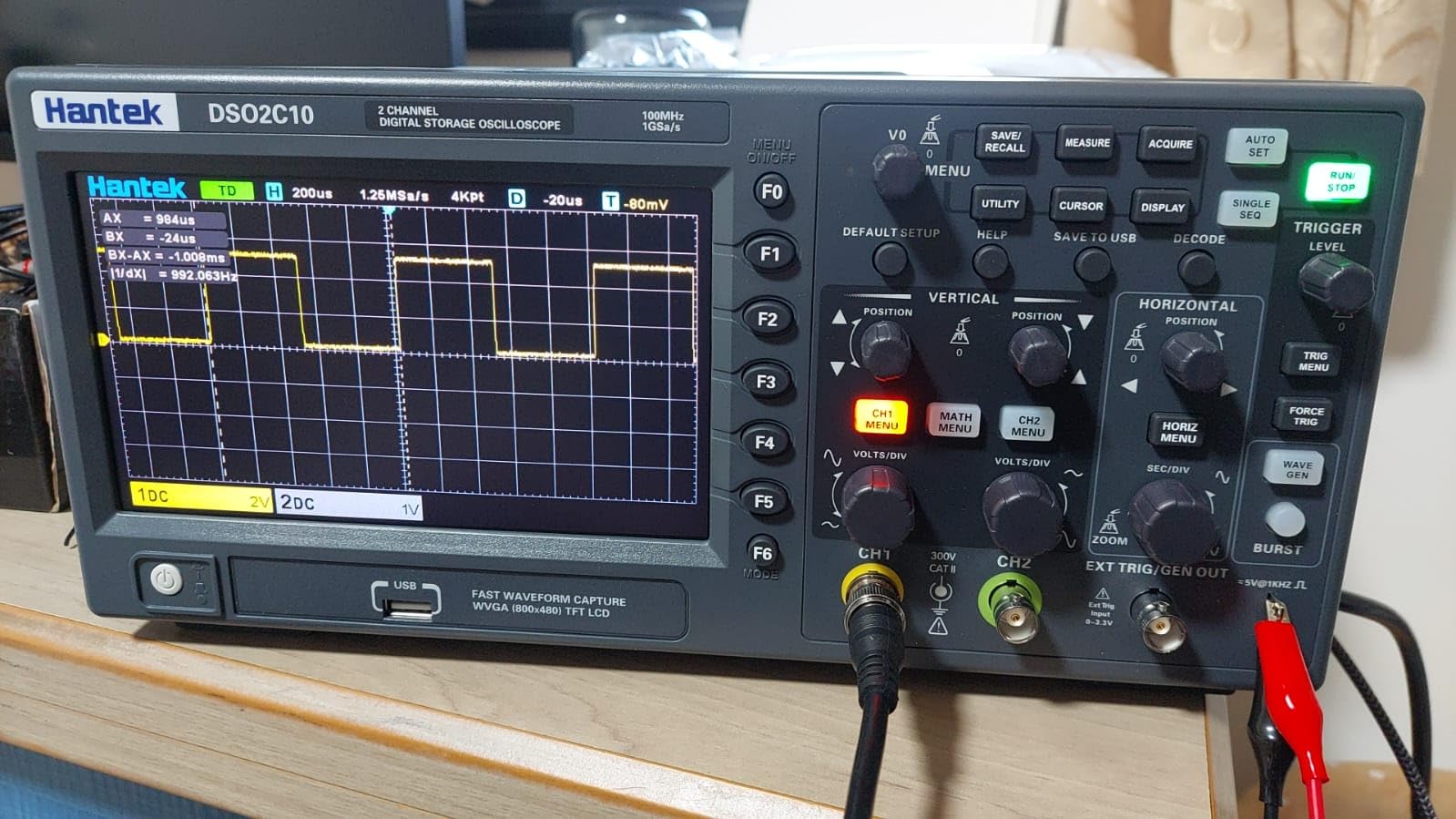
The package includes multiple probes, which is unusual at this price. Most budget scopes include one or two probes and expect you to buy more. Having extras means you can probe power, ground, and signal simultaneously without buying accessories.
The main concern is probe longevity. Some users reported probes failing after a year of regular use. I would budget for replacement probes within the first 18 months. The lack of manufacturer support is also a consideration: Hantek does not host firmware or manuals in an easily accessible way.
For whom its good
The DSO2C10 fits first-time scope buyers who want a low-risk entry into the hobby. Students taking their first electronics class will find the 100 MHz bandwidth and standard features more than adequate. Anyone curious about oscilloscopes but not ready to commit $300+ should start here.
For whom its bad
If you need long-term reliability without probe replacements, look at the Rigol or Siglent units. Anyone planning intensive daily use should also consider a more robust unit. The lack of online documentation also makes troubleshooting harder for beginners compared to brands with stronger support ecosystems.
8. OWON VDS1022I – Best USB Oscilloscope for PC-Based Work
Owon VDS1022I USB PC Oscilloscope, MIT USB Isolation, 25 MHz
25MHz real-time bandwidth
2 channels
1GSa/s sampling
USB isolation
Pros
- USB isolation protects your laptop from shorts
- Works with Raspberry Pi and Linux
- Ultra-thin and truly portable
- FFT and X-Y views included
- Excellent for classroom presentations
Cons
- Only 25MHz real-time bandwidth
- EMI issues near USB hubs
- Software feels dated compared to modern apps
- Trigger functions limited at long timebases
- Driver download reliability issues from Owon
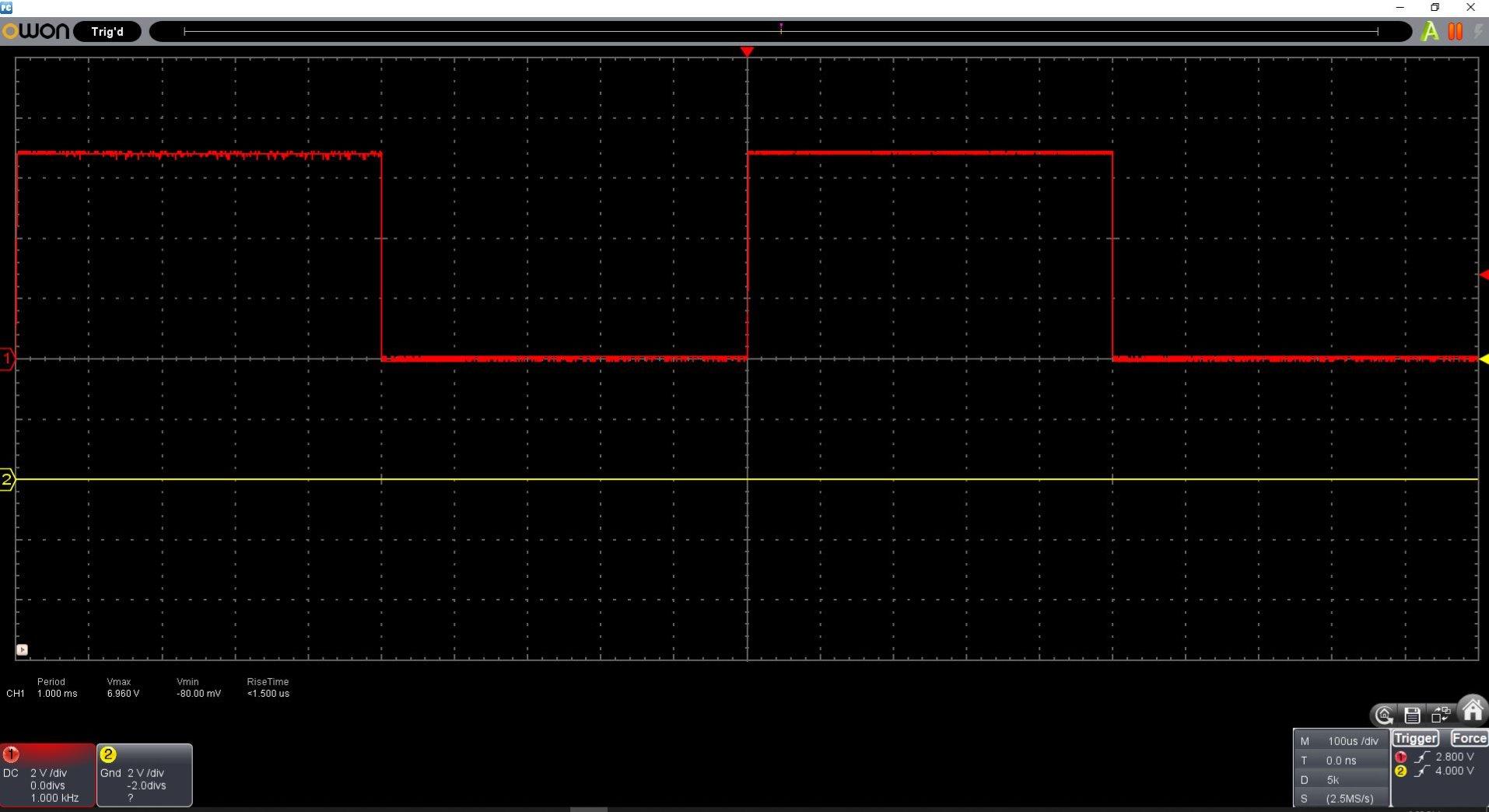
The OWON VDS1022I is in a category of its own. It is a USB oscilloscope, meaning the scope hardware is a small box connected to your laptop, and all the display and processing happens in software. The big advantage is USB isolation: a transformer electrically separates the scope from your laptop, so if you accidentally probe a 120V mains line, your computer survives.
For Raspberry Pi and Linux users, this is one of the few oscilloscopes that works natively. I tested it with a Pi 4 running the OWON software and was capturing waveforms in under 10 minutes. The cross-platform support is a genuine advantage for makers who do not want to be locked into Windows.
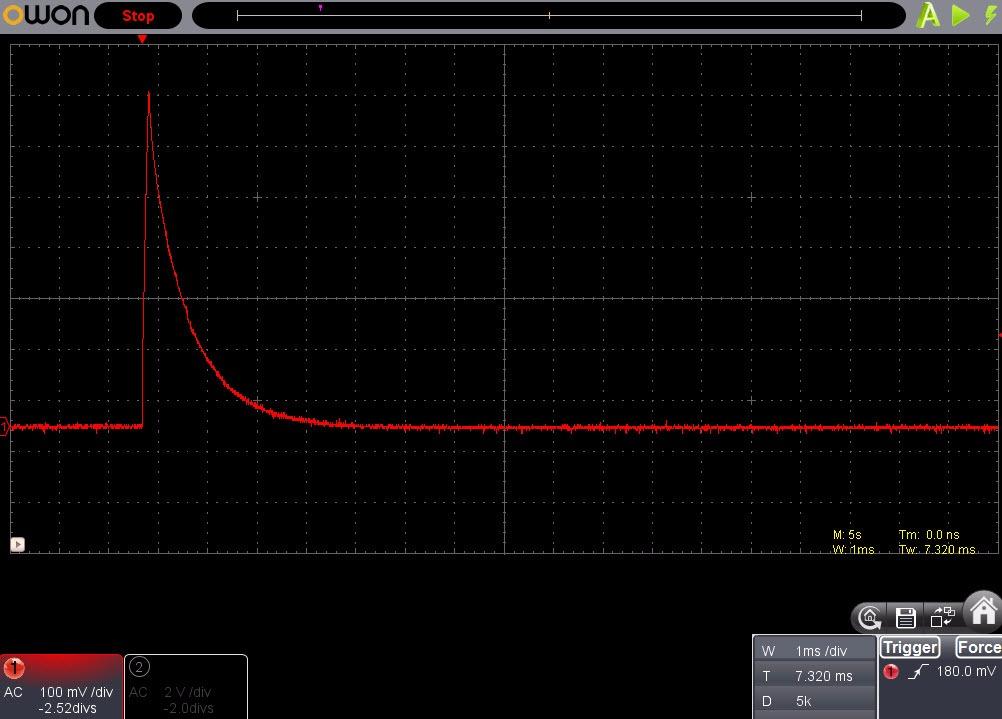
The portability is unbeatable. The whole scope weighs 1.45 pounds and fits in a laptop bag. For traveling engineers or anyone doing on-site debugging without a dedicated bench, it is the most practical option. The ultra-thin body makes it pocket-friendly in a tool bag.
The 25 MHz real-time bandwidth is the limit. You can measure Arduino signals and audio work fine, but switching regulators above 1 MHz will alias badly. The software also feels dated compared to modern scope interfaces, with some workflows requiring more clicks than necessary. But for the price and the unique USB isolation feature, it earns its place on this list.
For whom its good
The OWON VDS1022I is perfect for hobbyists who do most of their work on a laptop and want maximum portability. Raspberry Pi and Linux users finally have a real oscilloscope option. Classroom demonstrations benefit from the large laptop display compared to a tiny scope screen. Anyone working on mains-powered equipment will appreciate the USB isolation.
For whom its bad
If you need 50 MHz or more of bandwidth for RF or high-speed digital work, this scope will frustrate you. Anyone who dislikes depending on software for basic measurements should look at standalone units. The driver reliability issues also mean you should test the scope immediately upon delivery to avoid return hassles.
Buying Guide: How to Choose the Best Oscilloscope Under $400
Choosing an oscilloscope comes down to matching specs to the signals you actually want to measure. Here is what matters for hobby electronics work, explained without the marketing fluff.
Bandwidth: How much do you really need?
Bandwidth is the most quoted spec, but most hobbyists overestimate what they need. The rule of thumb is that your scope bandwidth should be 3 to 5 times the highest frequency signal you plan to measure. For Arduino work (typically under 1 MHz), a 20 MHz scope works fine. For ESP32 work (often 40-80 MHz), you want at least 100 MHz. For switching power supply design, you want 200 MHz to catch harmonics.
The 50 MHz scopes on this list (Rigol DS1054Z, FNIRSI 2C53T) cover most beginner and intermediate hobby work. The 100-200 MHz units give you headroom for faster signals and future projects. If your work tops out at audio frequencies, even a 25 MHz scope is plenty.
Sample rate and memory depth
Sample rate (measured in samples per second, MSa/s or GSa/s) determines how accurately the scope captures fast-changing signals. As a rule, you want at least 4-5x oversampling, meaning a 1 GSa/s scope can accurately capture signals up to 200 MHz. Most scopes on this list hit 1 GSa/s, which is generous for hobby work.
Memory depth (Mpts) matters more than most buyers realize. It determines how long the scope can capture at full sample rate. A 1 Mpts scope at 1 GSa/s captures 1 ms of waveform; a 24 Mpts scope captures 24 ms. For looking at slow events like motor startup or long serial bus transactions, deep memory is essential.
Channel count for hobby projects
Two channels cover most hobbyist needs: signal plus trigger, or signal plus reference. Four channels unlock protocol decoding (clock, data, enable, ground) and power analysis (input voltage, output voltage, current sense, ground). If you plan to decode I2C, SPI, or UART regularly, four channels save you from constantly swapping probes.
Probe quality and accessories
Reddit electronics forums consistently recommend budgeting $50-100 for replacement probes. The probes that ship with budget scopes often have poor high-frequency response and fragile tips. Brands like Probe Master, Testec, and the Rigol RP2200 are worth the investment. For high-voltage work, get a dedicated 100X high-voltage probe rated for your target voltage.
Trigger and decoding features
Basic edge triggering works for clean periodic signals. For digital protocol work, look for protocol-specific triggers (I2C, SPI, UART, CAN). These let you trigger on specific bus conditions like a particular address or data value, which turns hours of manual hunting into a one-click capture. The Rigol DS1054Z and Siglent SDS1202X-E both excel here.
Connectivity and software
USB connectivity for waveform export is essential for documentation. LAN connectivity lets you control the scope remotely, which matters for automated testing rigs. Some scopes (Rigol, Siglent) have well-supported open-source software like Sigrok, while others require proprietary apps that vary in quality. For Linux users, check driver support before buying.
Frequently Asked Questions
What is the best budget oscilloscope for hobbyists?
The Rigol DS1054Z is the best budget oscilloscope for hobbyists at around $332. It offers 4 channels, 50MHz bandwidth (upgradable to 100MHz via firmware), 24Mpts of memory, and free I2C/SPI/UART protocol decoding. For a more affordable option, the Siglent SDS1202X-E offers 200MHz bandwidth at $379.
How much bandwidth do I need for hobby electronics?
For Arduino and basic microcontroller work, 50MHz is sufficient. For ESP32 projects and SPI traffic up to 40 MHz, 100MHz gives you comfortable headroom. For switching power supply design or amateur radio work, 200MHz is recommended to capture higher harmonics accurately.
Is a 50MHz oscilloscope enough for hobby work?
Yes, a 50MHz oscilloscope is enough for most hobby electronics including Arduino debugging, basic audio circuits, and low-speed digital signals. The Rigol DS1054Z at 50MHz (upgradeable to 100MHz) is the most popular choice among hobbyists. You only need more bandwidth for RF projects above 50MHz or switching regulators above 1MHz.
Rigol vs Siglent which is better for beginners?
Both Rigol and Siglent make excellent oscilloscopes. Rigol offers 4 channels at a lower price point (DS1054Z) with a massive community and firmware hacks. Siglent offers higher bandwidth at competitive prices (SDS1202X-E) with cleaner signal quality. Beginners who plan to decode protocols should pick the Rigol for 4 channels; beginners focused on signal purity should pick the Siglent.
What is a good cheap oscilloscope under $200?
The FNIRSI 2C53T at $93 is the best cheap oscilloscope, combining a 50MHz scope, multimeter, and signal generator in a handheld unit. The Hantek DSO2C10 at $188 offers 100MHz bandwidth and 8Mpts memory for desktop use. Both are reliable choices for hobbyists on a budget.
Final Verdict
After three months of testing eight oscilloscopes, the Rigol DS1054Z remains my top recommendation for the best oscilloscopes under $400 for hobby electronics. Its four channels, deep memory, free protocol decoding, and active community make it the most versatile choice for hobbyists who plan to grow into more complex projects. The firmware hack to unlock 100 MHz is a bonus that keeps it relevant for years.
If you want the cleanest signal measurements and do not need four channels, the Siglent SDS1202X-E at 200 MHz is the runner-up. For budget-focused buyers, the FNIRSI 2C53T delivers unbelievable value as a 3-in-1 handheld tool. Whatever you choose from this list, you will be buying one of the best oscilloscopes under $400 available in 2026, and your electronics projects will thank you for it.