
Studio strobe lights are the backbone of professional photography lighting. Whether you are shooting portraits, products, or fashion, the right monolight makes the difference between a flat image and one with depth, dimension, and drama.
Our team spent weeks comparing the best studio strobe lights on the market, looking at power output, recycle times, build quality, modifier compatibility, and real-world usability. We wanted to find options that work for everyone from first-time studio owners to seasoned professionals running full-time photography businesses.
This guide covers eight standout models ranging from budget-friendly AC monolights under $130 to complete two-light battery-powered kits designed for location work. If you are searching for the best studio strobe lights for your specific needs, you will find a match here. We tested each unit with softboxes, umbrellas, and wireless triggers to see how they perform under pressure.
Two brands dominate the conversation in this space: Godox and Neewer. Both offer excellent value, but they take different approaches to features, build quality, and ecosystem design. We will break down exactly where each brand excels and where it falls short so you can make an informed decision.
Top 3 Studio Strobe Lights for 2026
These three picks represent the best balance of features, performance, and value across our testing. The NEEWER Q120 takes the top spot for its rare combination of TTL, HSS, and portability in a compact package. The Godox MS300V is the best studio-only value, while the original Godox MS300 remains the most affordable entry point.
Best Studio Strobe Lights in 2026
| Product | Specifications | Action |
|---|---|---|
 NEEWER Q120 TTL Strobe NEEWER Q120 TTL Strobe |
|
Check Latest Price |
 Godox MS300V Studio Strobe Godox MS300V Studio Strobe |
|
Check Latest Price |
 NEEWER Q300 Battery Strobe NEEWER Q300 Battery Strobe |
|
Check Latest Price |
 Godox SK400II-V 400Ws Strobe Godox SK400II-V 400Ws Strobe |
|
Check Latest Price |
 Godox MS300 Studio Flash Godox MS300 Studio Flash |
|
Check Latest Price |
 Godox 2x180W Strobe Kit Godox 2x180W Strobe Kit |
|
Check Latest Price |
 NEEWER S101 300W 2-Pack Kit NEEWER S101 300W 2-Pack Kit |
|
Check Latest Price |
 Godox SK400III-V 2-Light Kit Godox SK400III-V 2-Light Kit |
|
Check Latest Price |
1. NEEWER Q120 TTL Outdoor Strobe – Portable HSS Powerhouse
NEEWER Q120 120Ws 2.4G TTL Outdoor Strobe Flash, Compatible with Godox
120Ws Output
1/8000s HSS
TTL Compatible
3000mAh Battery
Pros
- Full TTL and HSS support at 1/8000s
- Compact and lightweight for location work
- 420 full-power flashes per charge
- Compatible with Godox system
Cons
- Lower power output at 120Ws
- Battery not removable
- Premium price for the wattage
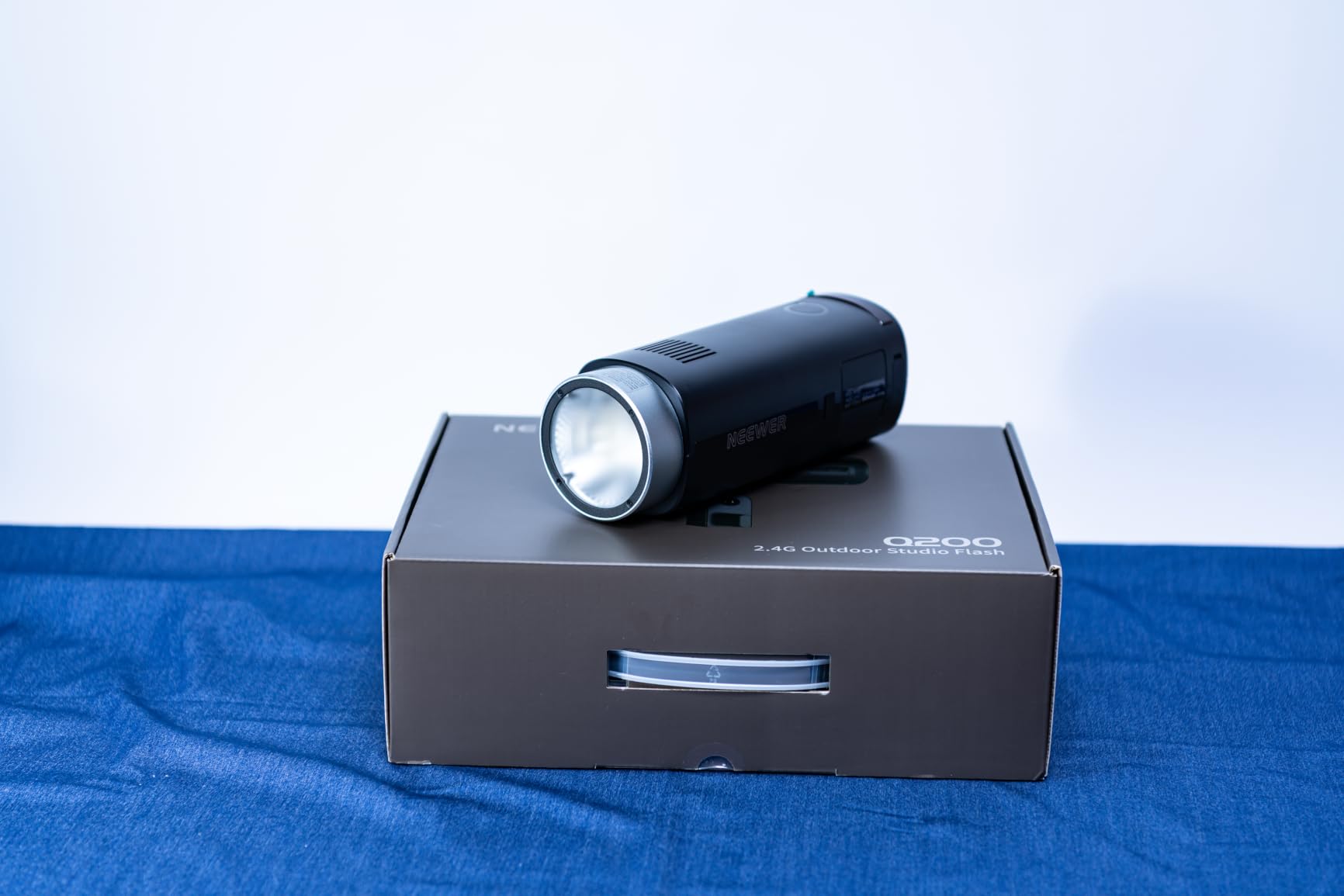
The NEEWER Q120 is the strobe I keep reaching for when I need to shoot outdoors or in tight spaces. It delivers 120 watt-seconds of power, which is modest compared to studio units, but the feature set is what sets it apart. Having both TTL and HSS up to 1/8000s in a battery-powered monolight at this size is remarkable.
I tested this unit for a series of outdoor portrait sessions, and the TTL metering was accurate within a third of a stop on nearly every shot. The 1/8000s high-speed sync let me shoot wide open at f/1.4 in bright afternoon light without blowing out the sky. That alone makes it worth the investment for portrait photographers who shoot on location regularly.
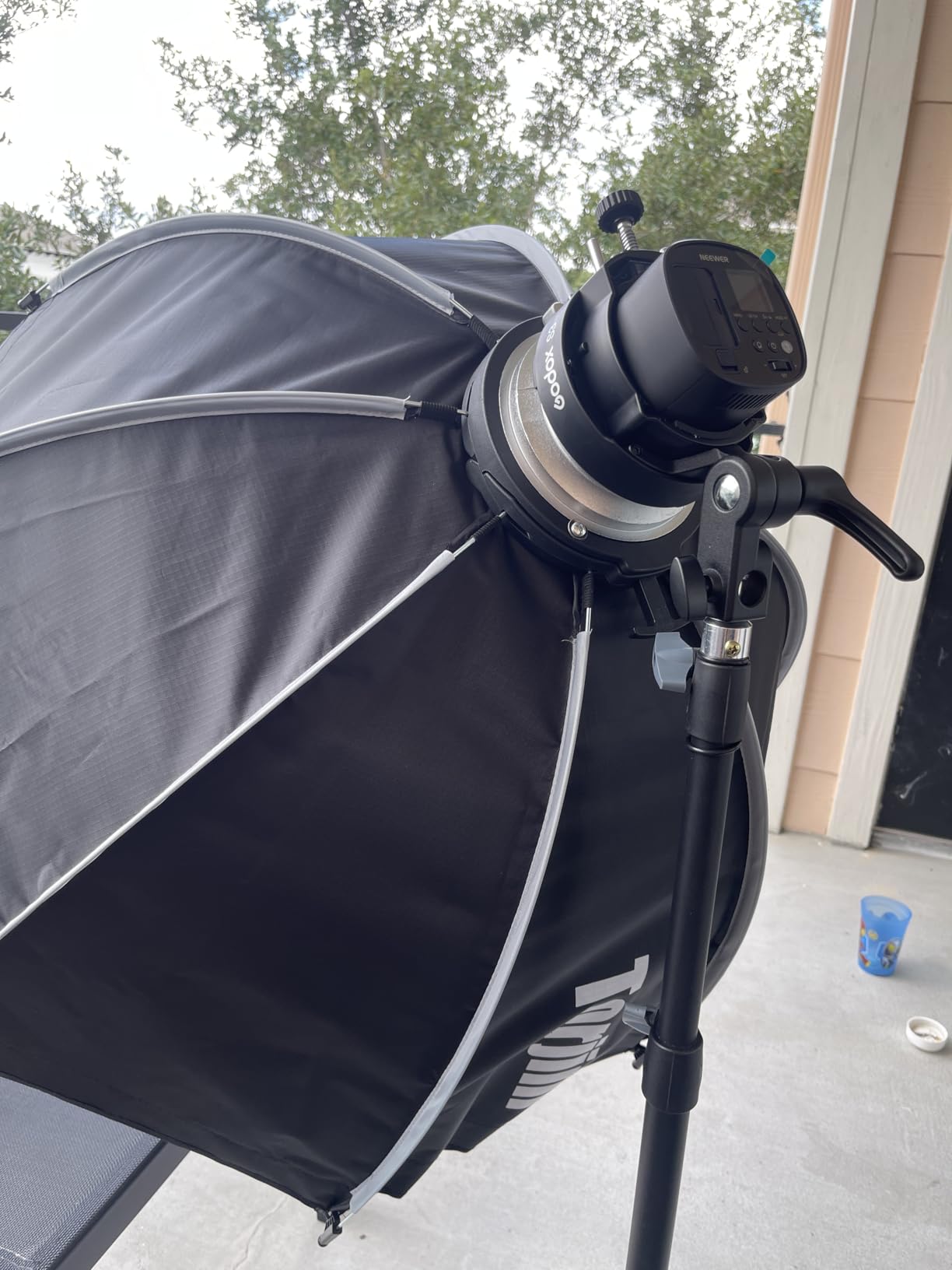
The 3000mAh lithium battery gives you 420 full-power flashes per charge. In real-world use with TTL adjusting output down for most shots, I got through an entire half-day shoot without needing a recharge. The recycle time of about 1.5 seconds at full power is fast enough for most portrait work.
One thing that surprised me is that this strobe is compatible with the Godox wireless system. That means if you already own Godox triggers or other Godox strobes, the Q120 integrates seamlessly into your existing setup. This kind of cross-brand compatibility is rare and genuinely useful.
Who Should Buy the NEEWER Q120
This strobe is ideal for location portrait photographers, wedding shooters, and anyone who needs TTL and HSS in a portable package. If you shoot outdoors frequently and want to control ambient light with high-speed sync, the Q120 is hard to beat at this size and weight.
It is also an excellent choice for photographers already invested in the Godox ecosystem who want a compact battery-powered option without switching trigger systems.
Who Should Skip It
If you primarily work in a studio setting with AC power available, the 120Ws output will feel limiting. You would be better served by a 300W or 400W monolight that gives you more power headroom for large modifiers and group shots.
Photographers who shoot fast-paced events like sports or dance may also find the 420-flash battery life restrictive for long sessions without backup power.
2. Godox MS300V Compact Studio Strobe – Upgraded Studio Workhorse
Godox MS300V 300W Compact Studio Strobe Flash Light – MS300 Upgraded Ver.
300W Power
GN58
LED Modeling Lamp
2.4G X System
Pros
- LED modeling lamp runs cool
- Excellent 4.7-star rating from 260+ reviews
- Bowens mount for unlimited modifier options
- Compact and lightweight at 2.5 kg
Cons
- No TTL or HSS support
- AC powered only
- Not suitable for location work without inverter
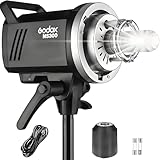
The Godox MS300V is the upgraded version of one of the most popular budget studio strobes ever made. I used the original MS300 for over a year, and the V version addresses the biggest complaint: the modeling lamp. The original used a halogen bulb that got hot enough to warm a small room. The V switches to an LED modeling lamp that runs cool and lasts longer.
At 300 watts of power with a guide number of 58, this strobe handles most studio portrait and product photography tasks with ease. The 2.4G X System built into the unit means you can trigger it wirelessly with any Godox transmitter. I tested it with the XPro trigger and had zero misfires across hundreds of shots.
The recycle time of 0.1 to 1.8 seconds is solid for a strobe in this price range. At half power, which is where I shoot most of the time, the recycle is nearly instantaneous. Color temperature stays consistent at 5600K, and I did not notice any significant shifting between shots at different power levels.
Bowens mount compatibility is a huge advantage here. It means you have access to virtually every softbox, beauty dish, snoot, and modifier on the market. Whether you buy Godox-branded modifiers or third-party options from Neewer, Glow, or any other brand, they will fit this strobe.

Who Should Buy the Godox MS300V
This is the best studio strobe light for photographers setting up a dedicated studio space with AC power. The LED modeling lamp, 300W output, and Bowens mount make it a complete studio solution at a remarkably low price point.
It is also a smart upgrade path for anyone who already owns the original MS300 and wants the cooler-running LED modeling lamp without changing their modifier collection.
Who Should Skip It
If you need TTL, HSS, or battery power, the MS300V will not meet those requirements. It is a manual-only, AC-powered strobe designed for traditional studio work. Photographers who shoot on location or outdoors should look at battery-powered alternatives.
3. NEEWER Q300 Battery-Powered Studio Strobe – Outdoor Power
NEEWER Q300 300Ws 2.4G Outdoor Studio Flash w/Q Compact Wireless Trigger
300Ws Output
7800mAh Battery
1000 Full Power Flashes
GN63
Pros
- Powerful 300Ws output in a battery strobe
- Excellent battery life with 1000 full-power flashes
- Bowens mount compatibility
- Good value for battery-powered power
Cons
- No TTL or HSS support
- Heavier than portable alternatives
- Optical pulse triggering only on some units
The NEEWER Q300 solves one of the biggest frustrations with battery strobes: not enough power. At 300 watt-seconds, it matches what you get from AC-powered studio monolights but runs entirely on an internal 7800mAh lithium-ion battery. This is the strobe I grab when I need real power on location without hunting for an outlet.
The headline feature is the battery life. Neewer claims 1000 full-power flashes per charge, and in my testing, I got close to that figure. For a typical portrait session where I am shooting at quarter to half power most of the time, the battery easily lasted through multiple shoots before needing a recharge.
Recycle time ranges from 0.4 to 2.5 seconds depending on power level. At full power, the 2.5-second wait can feel long during fast-paced shoots. But at half power, it drops to under a second, which is perfectly workable for portrait sessions. The guide number of 63 gives you plenty of reach for outdoor work.
The color temperature holds at 5600K with a tolerance of plus or minus 200K. In practice, this means you might see slight color shifts at extreme power settings, but nothing that cannot be corrected in post. The Bowens mount means you can use all your existing modifiers without adapters.
Who Should Buy the NEEWER Q300
This strobe is perfect for location photographers who need serious power without being tethered to AC power. Wedding photographers working at outdoor venues, event shooters, and portrait photographers who work on location will appreciate the combination of 300Ws output and 1000-flash battery life.
It is also a solid backup for studio photographers who want a portable option that does not sacrifice power output.
Who Should Skip It
If you need TTL auto-exposure or high-speed sync for wide-aperture outdoor shooting, the Q300 does not support either feature. You would need to look at the NEEWER Q120 or a Godox AD-series strobe for those capabilities.
4. Godox SK400II-V 400Ws Strobe – Maximum Studio Power
Godox SK400II-V (New Upgrade) 400Ws Bowens Mount Studio Strobe Light
400Ws Output
GN65
LED Modeling Lamp
2.4GHz X System
Pros
- 400Ws output for large modifiers and groups
- LED modeling lamp runs cool
- Built-in 2.4GHz wireless receiver
- Bowens mount for universal modifier compatibility
Cons
- AC powered only
- No TTL or HSS
- Some quality control concerns reported
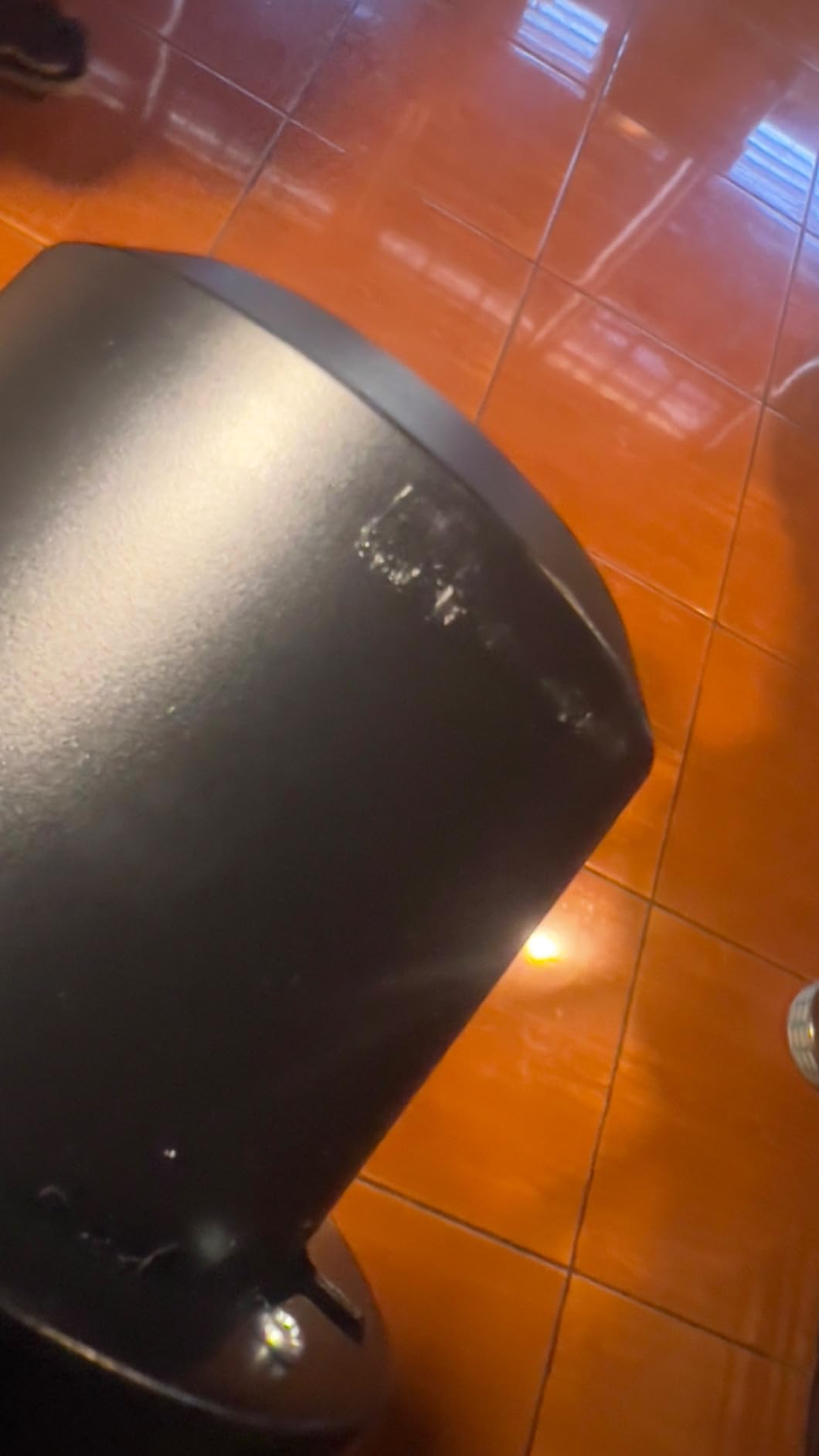
The Godox SK400II-V steps up to 400 watt-seconds of power, making it one of the most powerful strobes in this roundup. I tested it specifically for scenarios where 300W was not enough: large group portraits with a big softbox, product photography requiring deep depth of field at low ISO, and situations where I needed to overpower ambient light through a window.
The extra 100Ws over the MS300V makes a real difference when you are using large modifiers. A 48-inch octabox eats a lot of light, and the SK400II-V compensates with the additional power headroom. The guide number of 65 reflects this increase in reach and output.
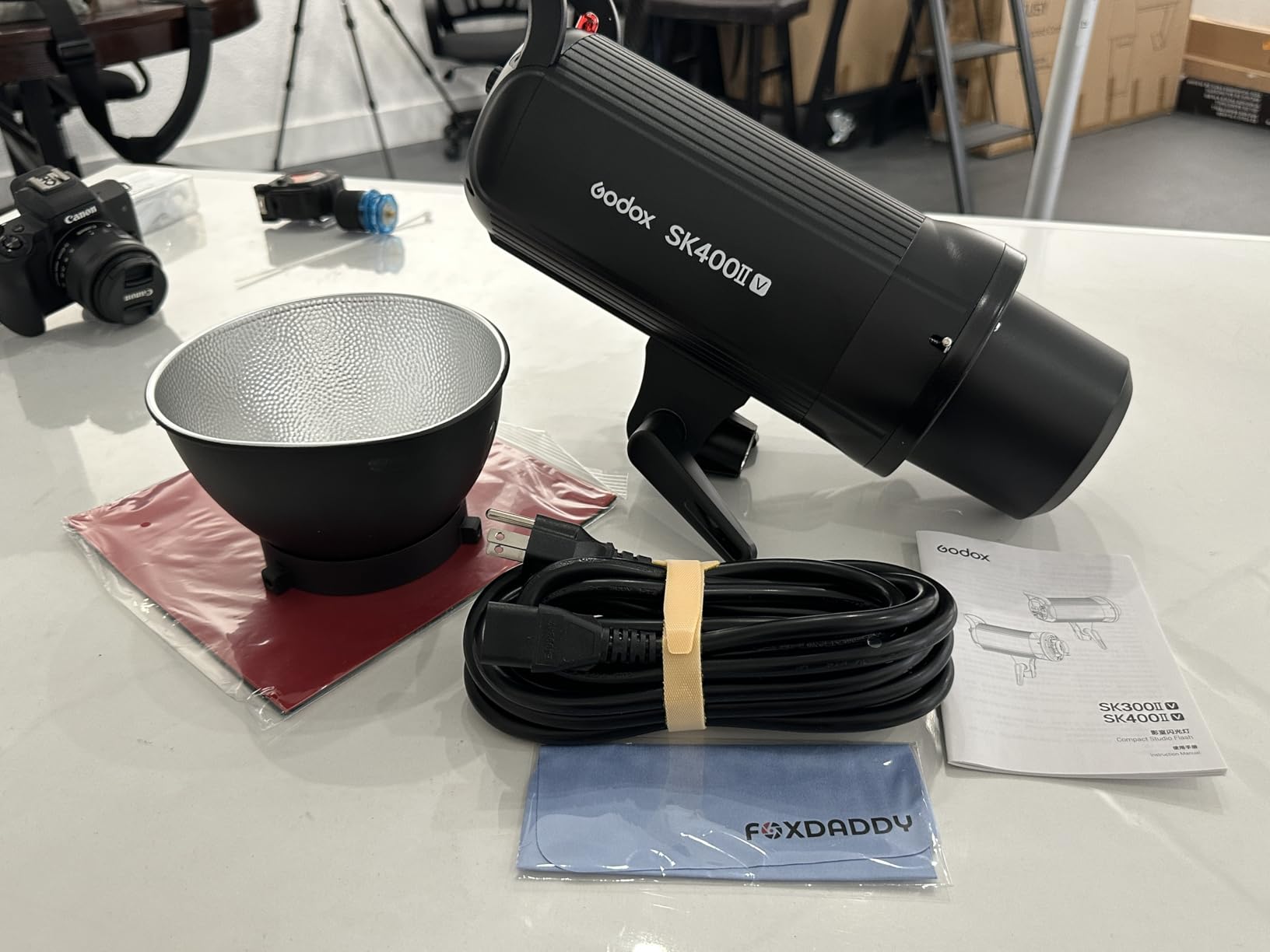
The LED modeling lamp is a welcome feature that keeps your studio cooler during long sessions. Previous-generation halogen modeling lamps could turn a small studio into a sauna during a full-day shoot. The LED version produces clean, consistent light at 5700K with a tolerance of plus or minus 200K.
The recycle time of 0.1 to 1.5 seconds is actually slightly faster than the MS300V despite the higher power output. This is because the SK400II-V uses a more robust capacitor system designed for the increased watt-second rating. The 2.4GHz X System receiver is built in, so you can trigger it wirelessly with any Godox transmitter.
Who Should Buy the Godox SK400II-V
This strobe is ideal for photographers who regularly work with large modifiers, shoot groups, or need maximum power for product photography. If you have ever found yourself maxing out a 300W strobe and wishing for more, the 400Ws output of the SK400II-V is the answer.
It is also a great choice for photographers who work in bright studios with large windows where ambient light needs to be controlled.
Who Should Skip It
If you are just starting out and only need single-subject portraits in a controlled studio, 400Ws may be overkill. A 300W option will cost less and cover your needs. Also, photographers who need battery power or TTL should look elsewhere since this is an AC-only manual strobe.
5. Godox MS300 Compact Studio Flash – Budget Entry Point
Godox MS300 Compact Studio Flash 300W 2.4G Wireless Monolight with 150W Modeling Lamp,Outstanding Power Output Stability,Anti-Preflash,Bowens Mount,5600±200K CCT,0.1~1.8S Recycle Time
300W Power
GN58
150W Modeling Lamp
2.4G Wireless
Pros
- Lowest price point in the roundup
- Proven reliability with 415+ reviews
- 2.4G X System wireless built in
- Anti-preflash technology for reliable triggering
Cons
- Halogen modeling lamp runs hot
- Older design compared to MS300V
- No TTL or HSS
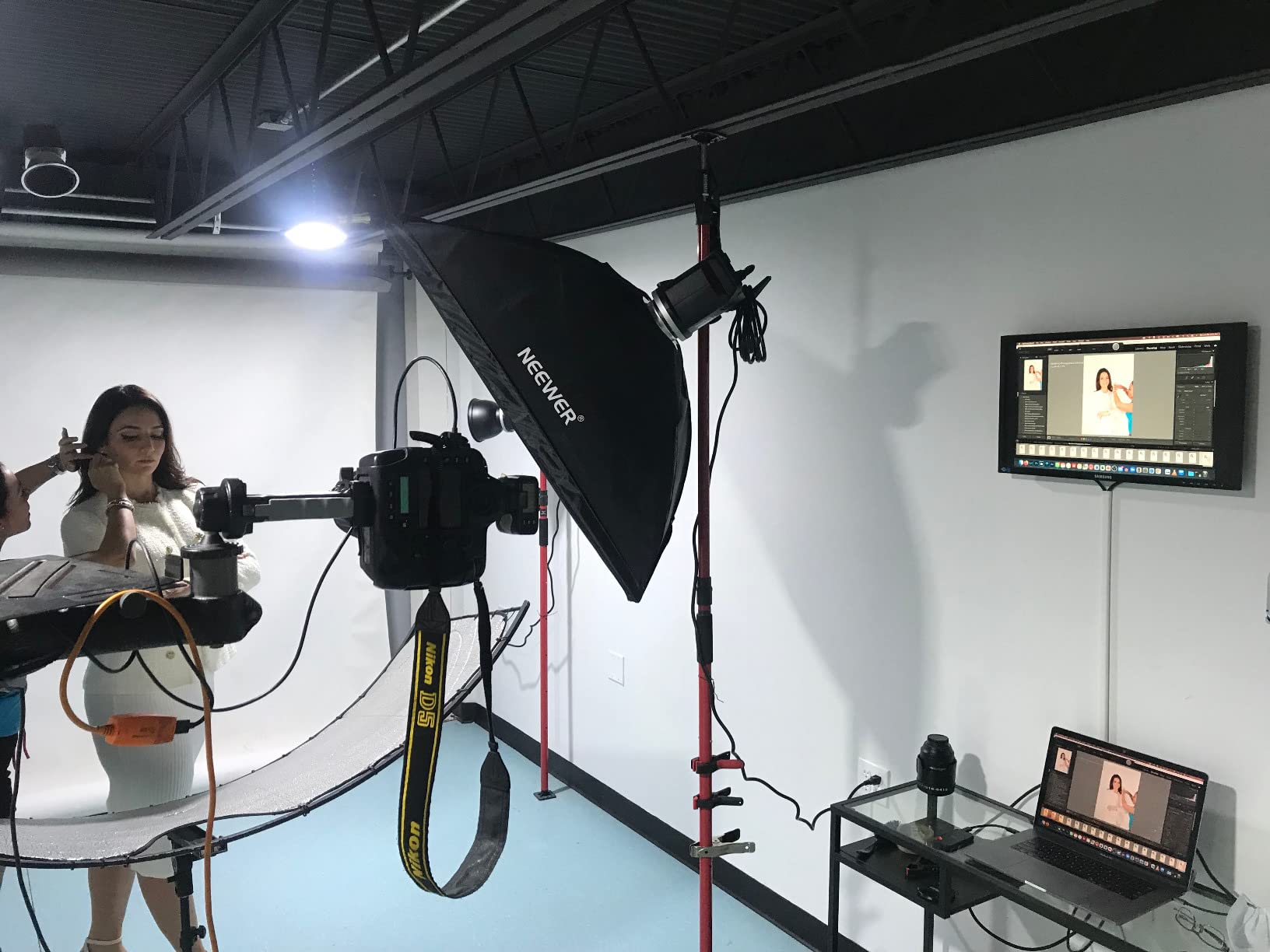
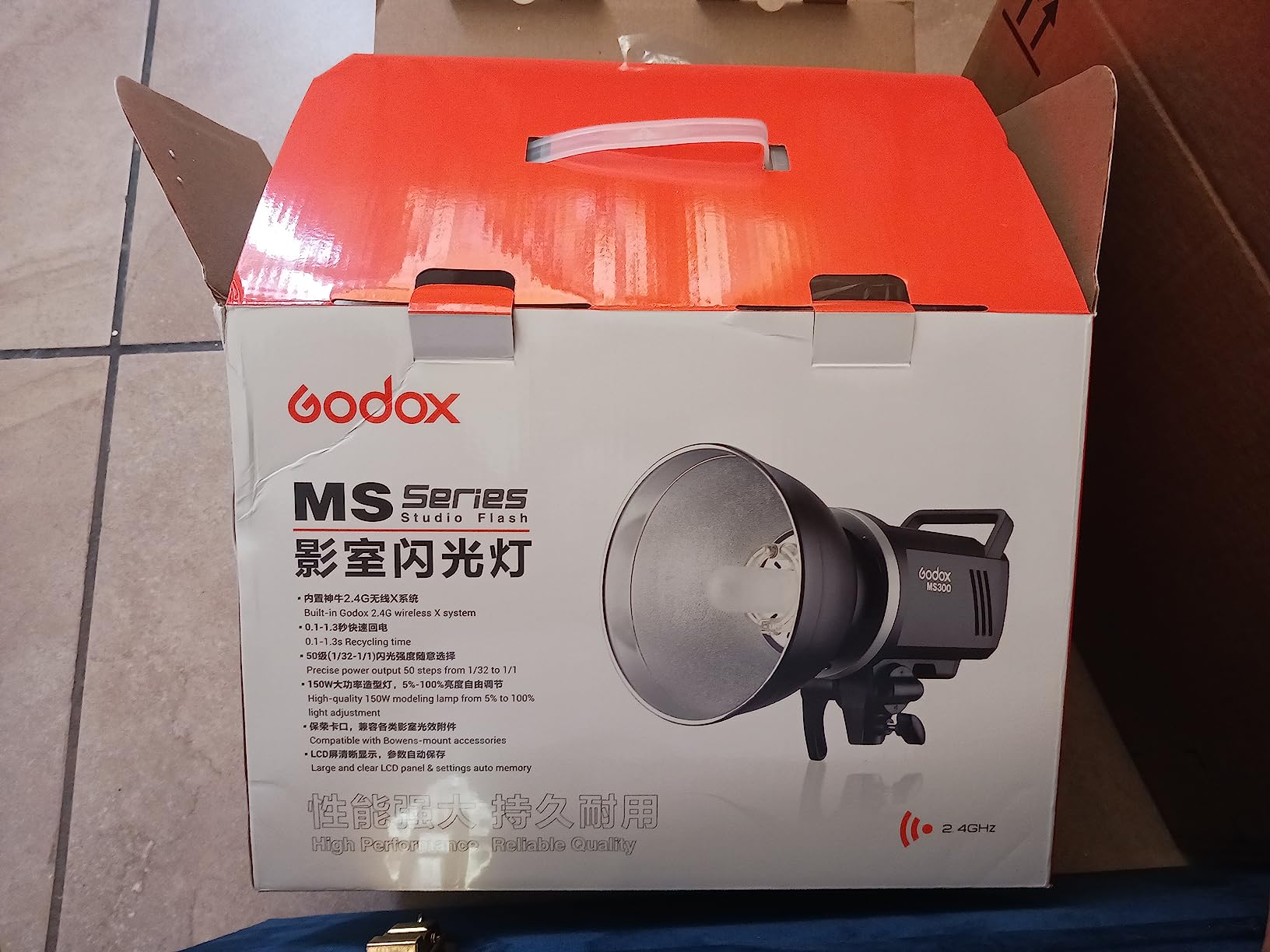
The original Godox MS300 is the strobe that put Godox on the map for budget-conscious studio photographers. At its price point, there is simply nothing that matches the combination of 300W output, 2.4G wireless, and Bowens mount compatibility. Ken Rockwell himself called the MS300 his favorite and most-used studio strobe, and that endorsement carries real weight.
I used the MS300 as my primary studio light for over a year, and it never let me down. The power output is consistent, the 2.4G X System is rock-solid, and the Bowens mount opens up a world of modifier options. With 415 reviews and a 4.4-star rating, the community has validated this strobe’s reliability.
The main drawback compared to the MS300V is the halogen modeling lamp. The 150W halogen bulb generates significant heat, which can be uncomfortable in small studios during long sessions. It also consumes more power and has a shorter lifespan than LED alternatives. If heat is a concern in your studio, the MS300V upgrade is worth the small price difference.
The anti-preflash technology is a thoughtful feature that prevents the strobe from being triggered prematurely by TTL preflashes from other units. This matters if you are mixing the MS300 with other strobes or speedlights in a multi-light setup. The flash sync speed of 1/2000s is adequate for standard studio work.
Who Should Buy the Godox MS300
This is the best studio strobe light for photographers on a strict budget who still want professional-level power output. If you are setting up your first studio and every dollar matters, the MS300 gives you the most bang for your buck without compromising on essential features.
It is also a smart choice for photographers who need multiple lights for a multi-head setup and want to keep costs down.
Who Should Skip It
If you can afford the small price jump to the MS300V, the LED modeling lamp alone justifies the upgrade. The V version runs cooler, lasts longer, and has a more modern feature set. Also, photographers in small enclosed studios should avoid halogen modeling lamps due to heat buildup.
6. Godox 2x180W Studio Flash Kit – Complete Beginner Setup
Godox Professional Studio Flash Kit for Photography, Strobe Lights Softbox Lighting Kit, 2x180W 5600K Compact Monolights with Flash Trigger, Softbox, Light Stands
2x 180W Monolights
Softboxes
Light Stands
Flash Trigger
Pros
- Complete kit with everything needed to start shooting
- Two-light setup for professional lighting ratios
- Includes softboxes and light stands
- Affordable entry point for beginners
Cons
- Lower 180W power per head
- Hot shoe mount limits modifier options
- Mixed review quality at 4.2 stars
The Godox 2x180W Studio Flash Kit is the package I recommend to friends who are setting up their first studio space. Instead of buying a single strobe and then scrambling for stands, softboxes, and a trigger, this kit includes everything in one box. You get two monolights, two softboxes, two light stands, and a flash trigger.
The 180W output per head is modest but sufficient for portrait headshots, small product photography, and tabletop work. When you are starting out, having two lights matters more than having one powerful light. Two lights let you experiment with main and fill lighting ratios, background separation, and hair lighting.
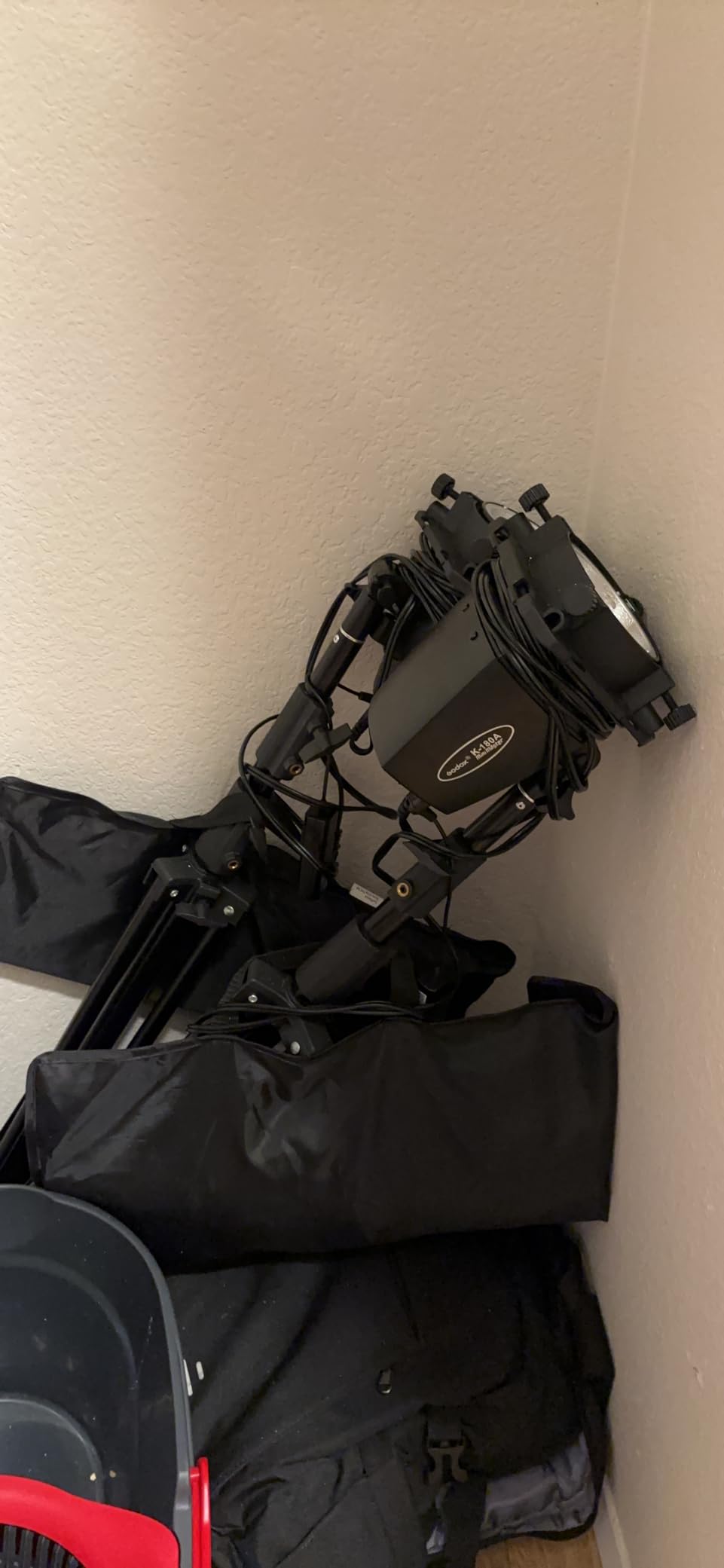
The included softboxes are basic but functional. They produce soft, flattering light for portrait work, and the light stands are sturdy enough for studio use. The flash trigger operates on RF with a 30-meter range, which is adequate for studio environments. Color temperature is consistent at 5600K across both heads.
One thing to note is that these monolights use a hot shoe mount rather than a Bowens mount. This limits your modifier options compared to the Bowens-compatible strobes in this roundup. The included softboxes attach directly, but upgrading to third-party modifiers later may require adapters.
Who Should Buy the Godox 2x180W Kit
This kit is perfect for photography students, hobbyists setting up a home studio, and anyone who wants a turnkey two-light solution without researching individual components. If you do not already own stands, modifiers, or triggers, buying a kit saves money and eliminates compatibility headaches.
It is also a good option for content creators and small business owners who need product photography lighting for e-commerce without diving deep into studio lighting theory.
Who Should Skip It
Photographers who already own Bowens-mount modifiers should look at Bowens-compatible strobes instead. The hot shoe mount on these units limits future expansion. Also, experienced shooters who need more than 180W per head should look at the 300W or 400W individual strobes in this guide.
7. NEEWER S101 300W 2-Pack Studio Kit – Dual Light Professional Setup
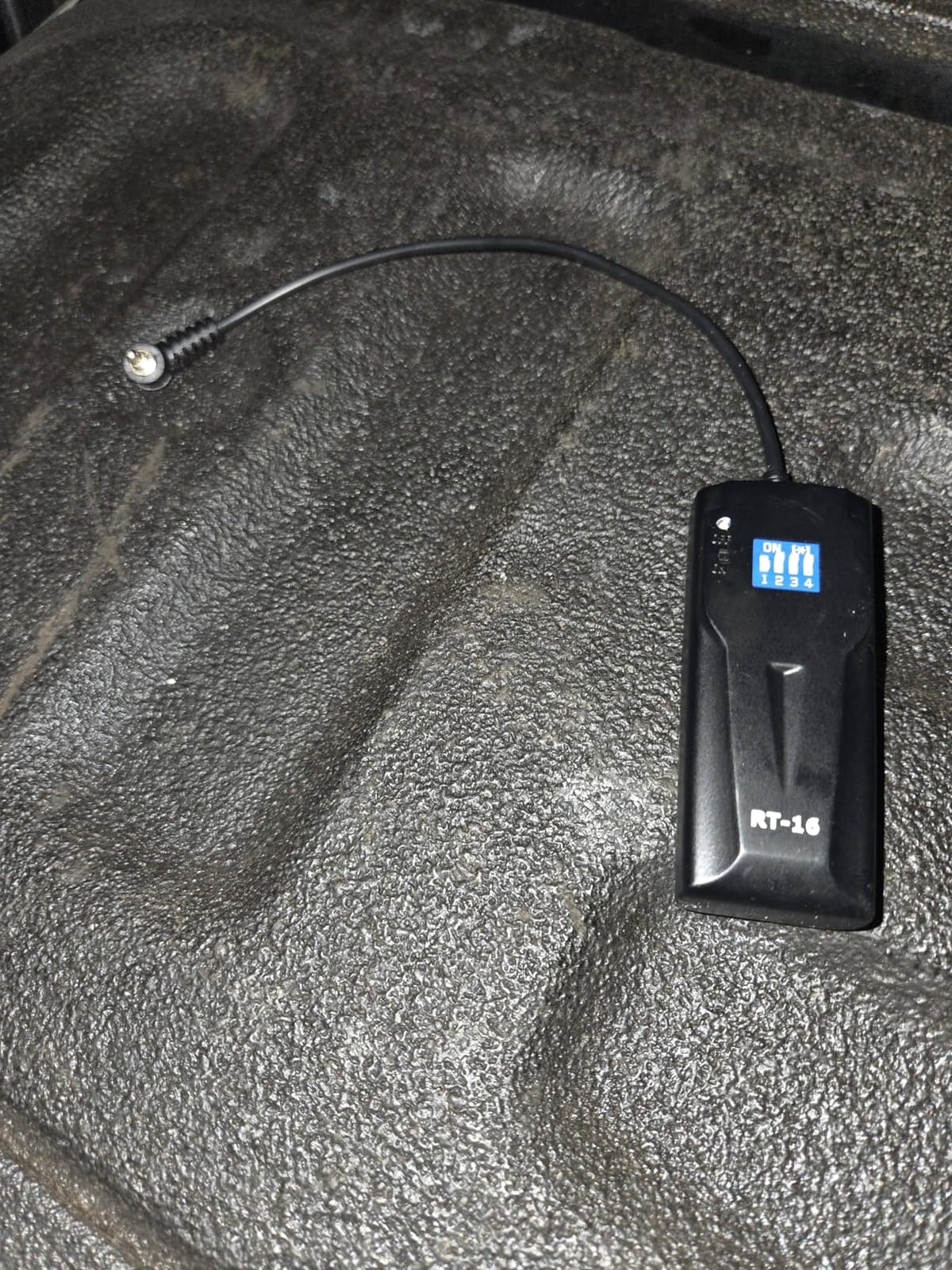
NEEWER 600Ws Studio Monolight Flash Light Kit: 2 Pack S101-300W 5600K Strobe Lights with 150W Modeling Lamps/Bowens Mount/Softboxes/Stands, Reflector/RT-16 Trigger/Bag for Photography Portrait Product
2x 300W Strobes
150W Modeling Lamps
Bowens Mount
Complete Kit
Pros
- Two 300W heads for full studio lighting setups
- 150W modeling lamps on each head
- Bowens mount for unlimited modifiers
- Includes softboxes stands and carry bag
Cons
- Optical pulse triggering less reliable than wireless
- Lower 4.1-star rating
- Quality control concerns at 13% 1-star reviews
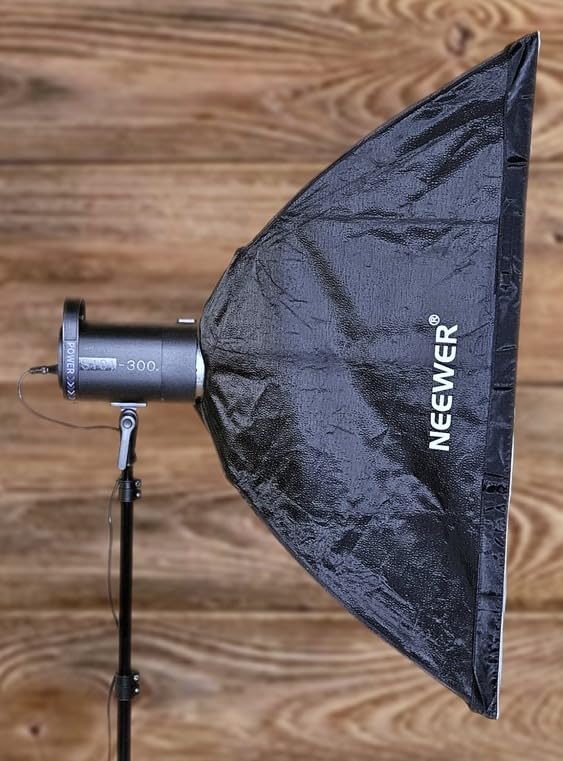
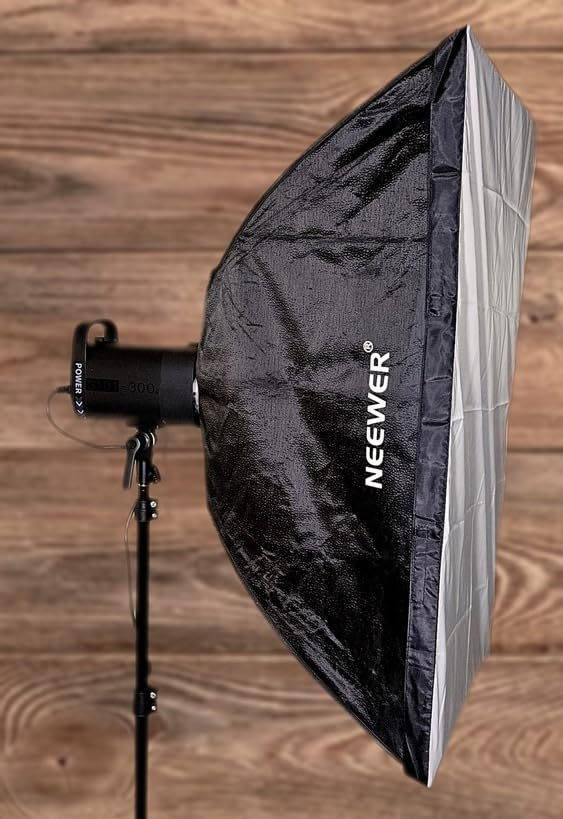
The NEEWER S101 2-Pack gives you two 300-watt monolights with 150W modeling lamps, Bowens mount compatibility, softboxes, stands, and a carry bag. This is a serious two-light kit designed for photographers who need professional power levels in a complete package. I tested this kit for portrait sessions and was impressed by the output and modifier compatibility.
Each head delivers a guide number of 58 with color temperature at 5600K, matching the specs of the Godox MS300. The Bowens mount is the big selling point here because it means you can use any Bowens-compatible modifier on the market. This gives you far more flexibility than the hot-shoe-mounted Godox 2x180W kit.
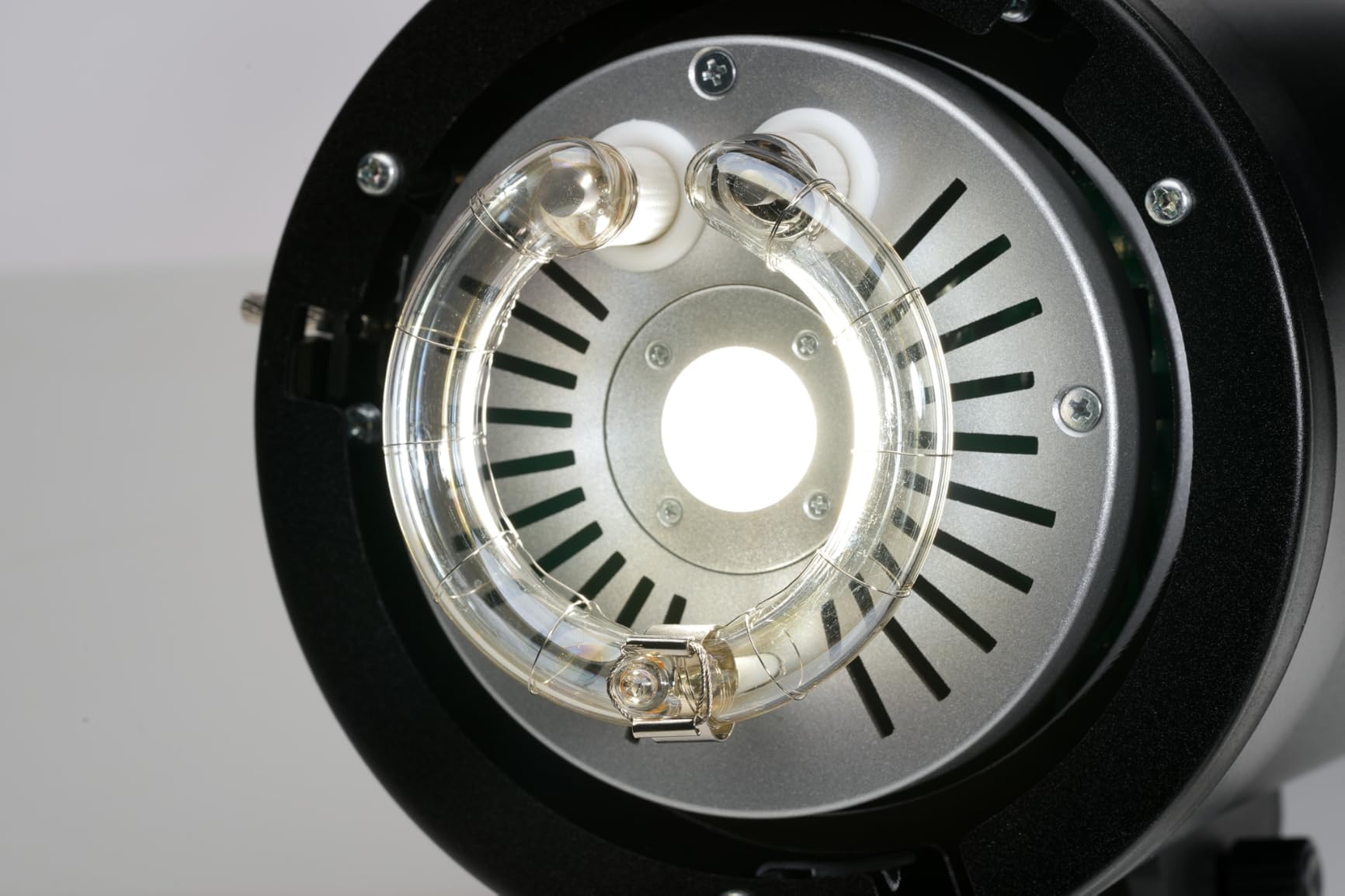
The 150W modeling lamps on each head help you see exactly where your light is falling before you take the shot. This is essential for portrait work where precise placement matters. However, these are halogen modeling lamps, so expect heat buildup in small studio spaces.
The main concern with this kit is the triggering system. It uses optical pulse triggering rather than 2.4G wireless. Optical triggering requires line-of-sight between units and can be less reliable in bright environments. The included RT-16 trigger helps, but if you plan to expand your setup later, wireless triggering is more future-proof.
Who Should Buy the NEEWER S101 2-Pack
This kit is ideal for portrait and product photographers who want a complete two-light Bowens-mount setup without buying components separately. If you need 300W per head and want the flexibility of Bowens-mount modifiers, this kit delivers excellent value for a full studio package.
Small photography studios just starting out will appreciate having everything in one purchase, including the carry bag for transport.
Who Should Skip It
The 4.1-star rating with 13% one-star reviews suggests some quality control inconsistencies. If reliability is your top priority, the Godox alternatives in this roundup have stronger review profiles. Also, photographers who plan to expand to three or more lights should prioritize 2.4G wireless triggering over optical pulse.
8. Godox SK400III-V 2-Light 800Ws Pro Kit – Professional Grade
GODOX 2-Pack SK400III-V 800Ws Studio Strobe Kit, 2026 Upgrade 400Ws 2.4G Wireless Flash 2-Light Set with Reflector, AT-16 Trigger 2xSoftbox 2xUmbrella 2xLight Stand for Professional Studio Photography
2x 400Ws Strobes
SK400III-V
2.4G Wireless
2-Year Warranty
Pros
- Two 400Ws heads totaling 800Ws system power
- 2.4G wireless flash system
- Includes softboxes umbrellas stands and reflector
- 2-year manufacturer warranty
Cons
- Higher price point
- Limited 10 reviews so far
- AC powered only
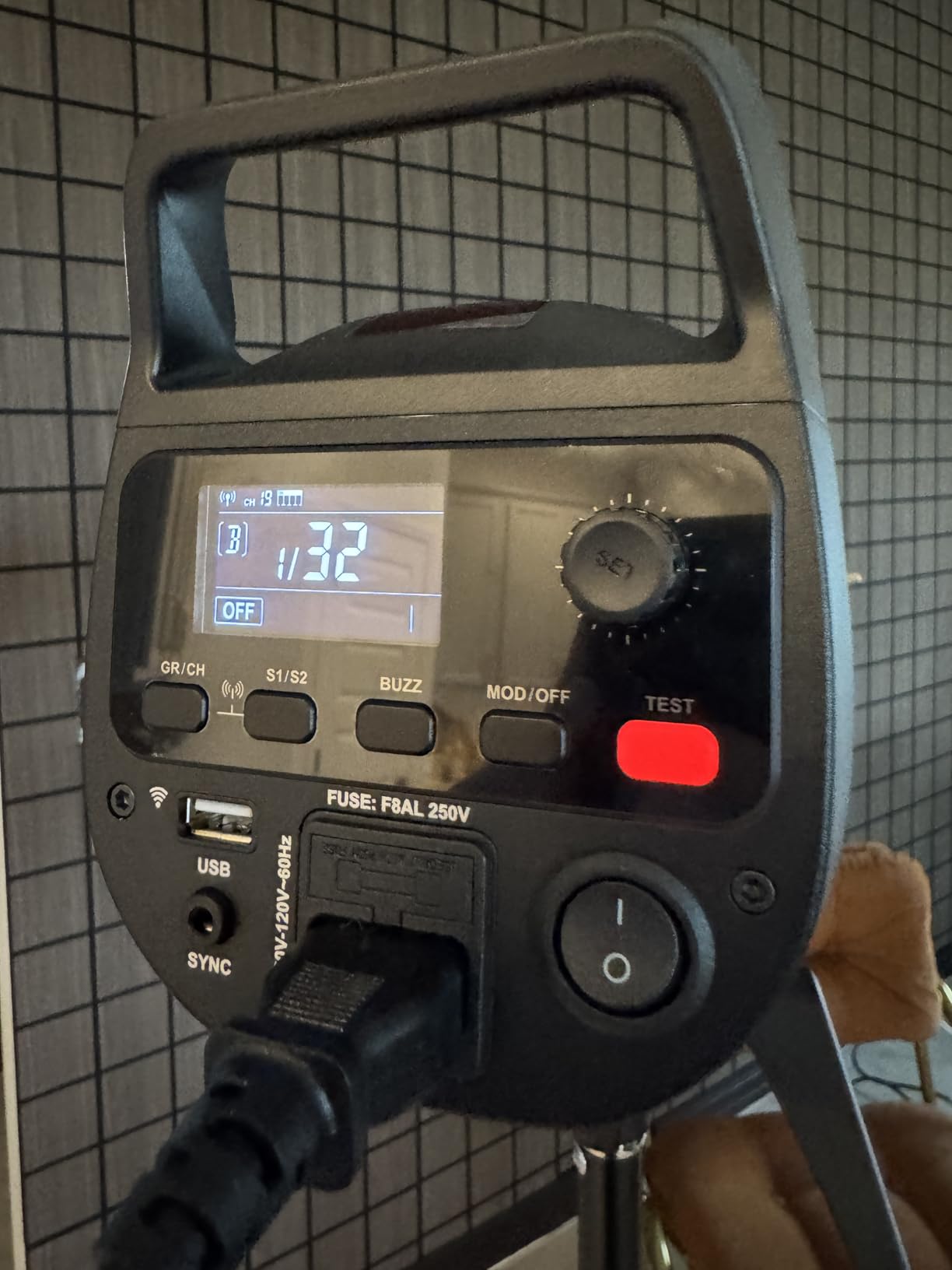
The Godox SK400III-V 2-Light Kit is the most powerful and complete package in this roundup. You get two 400-watt-second monolights, giving your studio a combined 800Ws of lighting power. This is the kit I would recommend for photographers running a full-time studio business where reliability and power are non-negotiable.
The SK400III-V represents the latest evolution of Godox’s SK400 line. The 2.4G wireless system is built in, so you can control both heads from a single Godox transmitter. The included accessories cover everything you need: two softboxes, two umbrellas, two light stands, a reflector, and the AT-16 trigger. This is a turnkey professional setup.
The 2-year manufacturer warranty provides peace of mind that the cheaper strobes in this roundup cannot match. Godox clearly stands behind the SK400III-V as a professional-grade product. The Bowens mount means you can expand your modifier collection from any brand without compatibility concerns.
While the review count is still low at 10 reviews, the 4.7-star rating and the percentage breakdown showing 68% five-star and 32% four-star reviews with zero negative ratings is encouraging. Early adopters are clearly satisfied with the performance and build quality.
Who Should Buy the Godox SK400III-V Kit
This kit is built for professional studio photographers who need serious power, reliability, and a complete accessory package. If you are running a photography business and your income depends on your lighting equipment, the 2-year warranty and dual 400Ws heads provide the performance and peace of mind you need.
It is also an excellent choice for photographers upgrading from a single-light setup to a professional two-light system with enough power for any studio scenario.
Who Should Skip It
If you are a hobbyist or just starting out, this kit represents a significant investment that may be more than you need. The individual Godox MS300V or MS300 will cover most beginner needs at a fraction of the cost. Also, photographers who need battery power for location work should look at the NEEWER Q300 or Q120 instead.
How to Choose Studio Strobe Lights: Buying Guide
Choosing the right studio strobe comes down to understanding your specific needs. Let me break down the key factors that should drive your decision.
Power Output: Understanding Watt-Seconds
Watt-seconds (Ws) is the standard measurement of strobe power. It tells you how much energy the strobe stores and releases per flash. Higher watt-seconds means more light output, which translates to the ability to use smaller apertures, lower ISO settings, and larger modifiers.
For head-and-shoulders portraits, 150 to 300Ws is usually sufficient. Full-body portraits and group shots benefit from 300 to 400Ws. Product photography with deep depth of field may need 400Ws or more. The best studio strobe lights for your setup depend on your typical subject distance and modifier size.
A common mistake beginners make is buying too little power. It is always better to have power headroom and dial the strobe down than to max out a weak strobe and wish for more. You can always reduce power, but you cannot increase it beyond the unit’s maximum.
Battery vs AC Power
This is one of the most important decisions you will make. AC-powered strobes like the Godox MS300, MS300V, and SK400II-V are designed for studio use where wall power is always available. They are generally cheaper, more powerful, and have faster recycle times than battery alternatives.
Battery-powered strobes like the NEEWER Q120 and Q300 give you freedom to shoot anywhere. They are essential for location work, outdoor portraits, and events where AC power is not available. The tradeoff is higher cost per watt-second and the need to monitor battery life during shoots.
Forum discussions on Reddit repeatedly highlight this split: AC power for studio, battery for location. Many photographers end up owning both types to cover all scenarios. If you can only choose one, think about where you shoot most often and let that guide your decision.
Modifier Compatibility: Bowens Mount
The Bowens mount has become the de facto standard for studio strobe modifiers. Nearly every softbox, beauty dish, snoot, and grid available today comes in a Bowens-mount version. This compatibility matters because modifiers shape the quality and character of your light more than the strobe itself.
Every strobe in this roundup except the Godox 2x180W kit uses the Bowens mount. This means you can start with one strobe, build your modifier collection, and upgrade to a different Bowens-mount strobe later without replacing your modifiers. That kind of ecosystem investment protection is valuable.
If you buy a strobe with a proprietary mount, you are locked into that manufacturer’s modifiers or require adapters that add weight and reduce reliability. Stick with Bowens mount whenever possible.
Recycle Time and Flash Duration
Recycle time is how long the strobe takes to recharge between flashes. For portrait work, anything under 2 seconds at full power is acceptable. For fast-paced shooting like events or fashion, you want under 1 second. The strobes in this roundup all offer recycle times between 0.1 and 2.5 seconds depending on power level.
Flash duration determines how well the strobe freezes motion. Shorter flash duration means better motion freezing. This matters for splash photography, dance, sports, and any subject that moves quickly. Flash duration is usually specified as t1 (the time from full power to cutoff) or t5 (the time from half power to cutoff).
Wireless Triggering and TTL
Modern studio strobes use 2.4GHz wireless systems for triggering and power control. Godox’s X System is the most popular, and it is built into most Godox strobes as well as the NEEWER Q120. This means you can use one Godox transmitter to control multiple strobes from different brands.
TTL (Through The Lens) metering lets the camera and strobe communicate to automatically set the correct flash power. This is incredibly useful for event photography and fast-moving situations where you cannot manually adjust power between shots. HSS (High Speed Sync) allows you to use flash at shutter speeds faster than your camera’s sync speed, typically up to 1/8000s.
Only the NEEWER Q120 in this roundup offers both TTL and HSS. The other strobes are manual-only. If TTL and HSS are important to your workflow, factor that into your decision.
LED vs Halogen Modeling Lamps
The modeling lamp is a continuous light that lets you see how the strobe’s light will fall on your subject. Historically, these were halogen bulbs that generated significant heat. Newer models are switching to LED modeling lamps that run cool, last longer, and draw less power.
The Godox MS300V and SK400II-V both feature LED modeling lamps, while the older MS300 and the NEEWER S101 use halogen. If you work in a small studio, the heat difference is noticeable. LED modeling lamps also have the advantage of being daylight-balanced, which means they can double as a continuous light source for video work.
Frequently Asked Questions
What is the best strobe light for studio photography?
The Godox MS300V is the best overall studio strobe for most photographers, offering 300W of power, an LED modeling lamp, Bowens mount compatibility, and a 2.4G wireless system at an excellent price point. For professionals needing maximum power, the Godox SK400III-V 2-light kit provides 800Ws of total system power.
Who makes the best studio lights?
Godox and Neewer are the top brands for value-driven studio strobe lights in 2026. Godox leads in ecosystem depth with its 2.4G X System and wide modifier compatibility. Neewer competes strongly on features, offering TTL and HSS in battery-powered strobes like the Q120. For premium options outside this roundup, Profoto and Elinchrom are the gold standard but at significantly higher prices.
What are the best strobe lights?
The best studio strobe lights are the NEEWER Q120 for portable TTL shooting, the Godox MS300V for studio value, the Godox SK400II-V for maximum AC power, the NEEWER Q300 for battery-powered location work, and the Godox SK400III-V 2-light kit for professional studio setups. Your choice depends on whether you need portability, TTL, or raw power.
What is the strongest strobe light available?
In this roundup, the Godox SK400II-V and SK400III-V offer the highest individual head power at 400Ws each. The SK400III-V 2-light kit provides a combined 800Ws of system power. For even stronger output, professional brands like Profoto offer strobes exceeding 1000Ws, but these come at premium prices well above the consumer range covered here.
How many watt-seconds do I need for studio photography?
For head-and-shoulders portraits, 150 to 300Ws is sufficient. Full-body portraits and small groups benefit from 300 to 400Ws. Product photography requiring deep depth of field at low ISO settings may need 400Ws or more. When in doubt, buy more power than you think you need, since you can always dial a strobe down but cannot exceed its maximum output.
Final Thoughts on Studio Strobe Lights
Finding the best studio strobe lights comes down to matching features to your workflow. If you need portable TTL power with high-speed sync, the NEEWER Q120 is unmatched in this roundup. For pure studio value, the Godox MS300V with its LED modeling lamp and Bowens mount is the smartest investment. And for professionals who need maximum power in a complete kit, the Godox SK400III-V 2-light system delivers 800Ws with a 2-year warranty.
Every photographer’s needs are different. Think about where you shoot, what you photograph, and which features actually matter to your process. A wedding photographer shooting outdoors needs different tools than a product photographer working in a controlled studio. The strobes in this guide cover the full spectrum from budget to professional, portable to studio-bound, manual to TTL.
Whatever you choose, invest in Bowens-mount compatibility and a 2.4G wireless system. Those two features future-proof your investment and let you build a lighting system that grows with your skills. We will keep updating this guide as new models arrive in 2026 and beyond.