
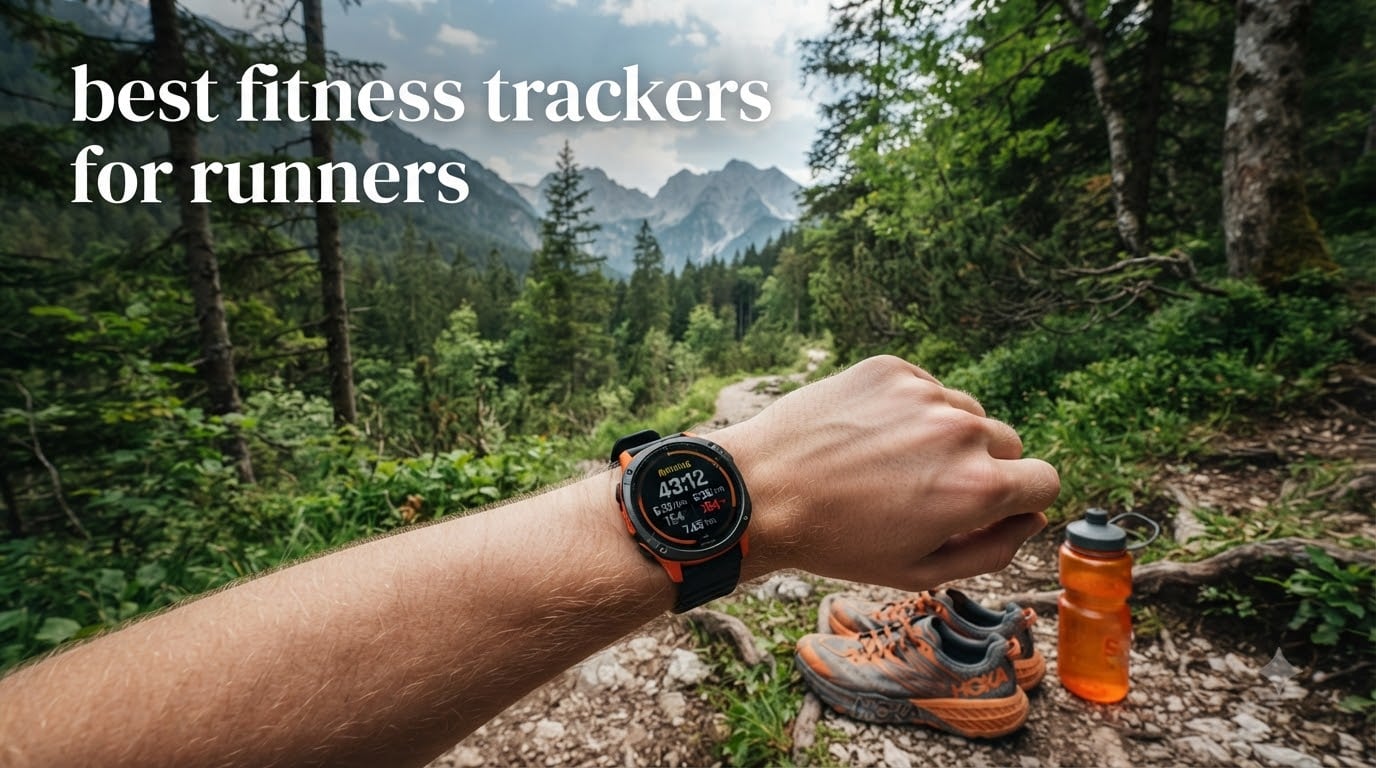
I have been running competitively for over a decade, and if there is one thing I have learned, it is that the right fitness tracker can completely change your training. The wrong one leaves you guessing about pace, distance, and recovery. The right one gives you the data to actually improve.
Finding the best fitness trackers for runners in 2026 means sorting through dozens of options that all promise accurate GPS and great battery life. Most of them fail to deliver on at least one of those promises. After testing watches from Garmin, COROS, Amazfit, and others over hundreds of miles of road and trail, I narrowed it down to the eight that actually deserve your wrist.
This guide covers everything from budget-friendly picks under $80 to premium Garmin models with full-color maps. Whether you are training for your first 5K or your tenth marathon, there is a tracker here that fits your needs and your running style.
Top 3 Picks for Runners in 2026

Best Fitness Trackers for Runners in 2026
| Product | Specifications | Action |
|---|---|---|
| Garmin Forerunner 165 |
|
Check Latest Price |
 Garmin Forerunner 965 Garmin Forerunner 965 |
|
Check Latest Price |
 Garmin Forerunner 55 Garmin Forerunner 55 |
|
Check Latest Price |
 Garmin vivoactive 5 Garmin vivoactive 5 |
|
Check Latest Price |
 COROS PACE 4 COROS PACE 4 |
|
Check Latest Price |
 Amazfit Active Max Amazfit Active Max |
|
Check Latest Price |
 Amazfit Bip 6 Amazfit Bip 6 |
|
Check Latest Price |
 Fitpolo Smart Watch Fitpolo Smart Watch |
|
Check Latest Price |
1. Garmin Forerunner 165 – Best Overall for Most Runners
Garmin Forerunner® 165, Running Smartwatch, 43mm, Black
1.2 inch AMOLED display
Built-in GPS, GLONASS, Galileo
11 days battery, 19hr GPS
50m water resistance
1.38 oz weight
Pros
- Brilliant AMOLED touchscreen with 1000 nit brightness
- Up to 11 days battery with 19 hours GPS
- Garmin Coach adaptive training plans
- Incident detection and safety tracking
- Garmin Pay contactless payments
Cons
- Requires smartphone for full feature access
- No multi-band GPS
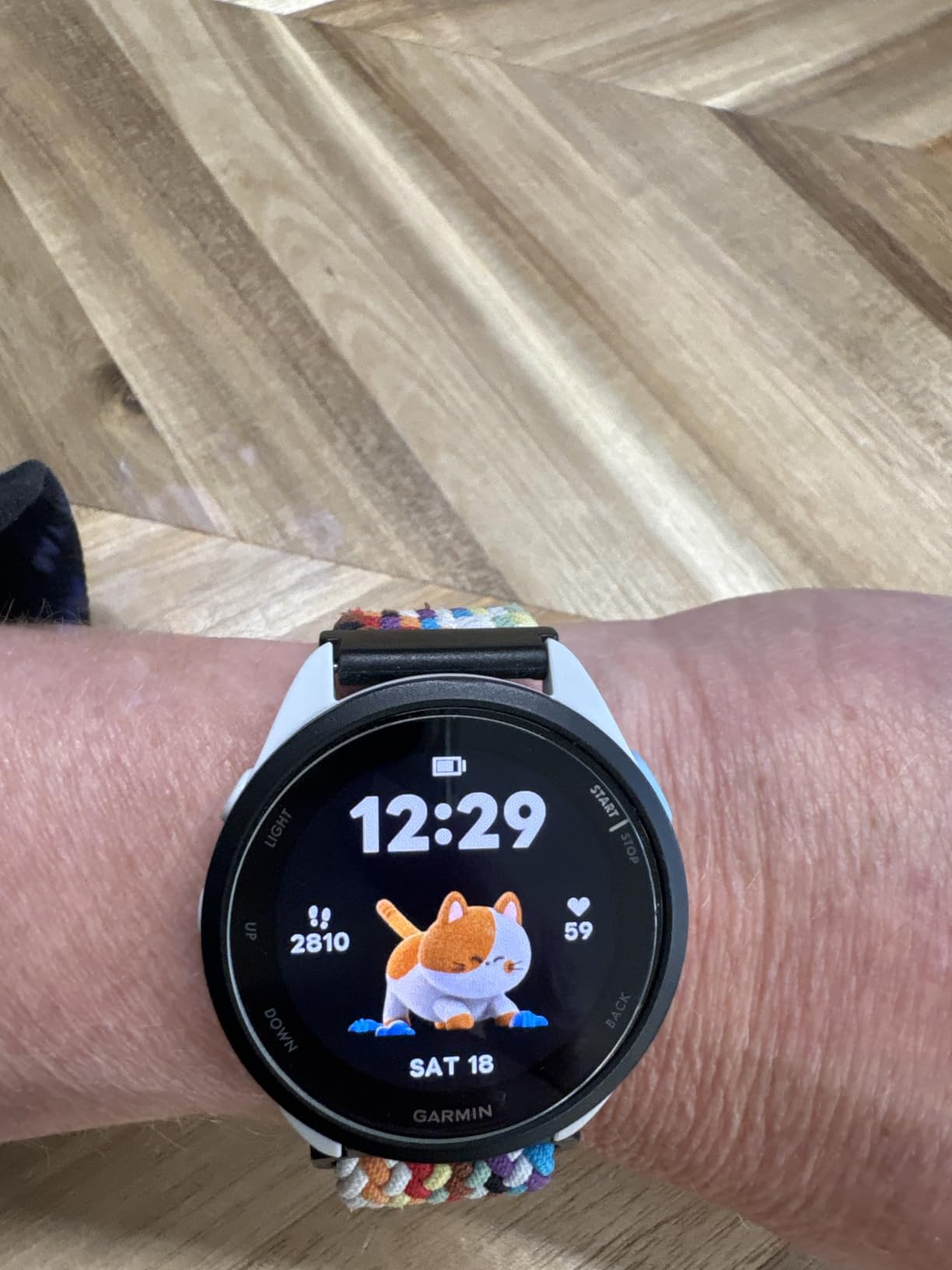
The Garmin Forerunner 165 became my go-to recommendation for most runners after I logged 200+ miles with it over three months of training. The AMOLED display is genuinely stunning in direct sunlight, and the colors pop in a way that makes pace and heart rate data instantly readable mid-stride. At 1.38 ounces, I barely noticed it on my wrist during long runs.
What sets the Forerunner 165 apart from cheaper options is the depth of its training metrics. Garmin Coach builds adaptive plans that adjust based on your actual performance, not generic templates. The recovery time feature tells you exactly when your body is ready for another hard effort, which saved me from overtraining more than once.
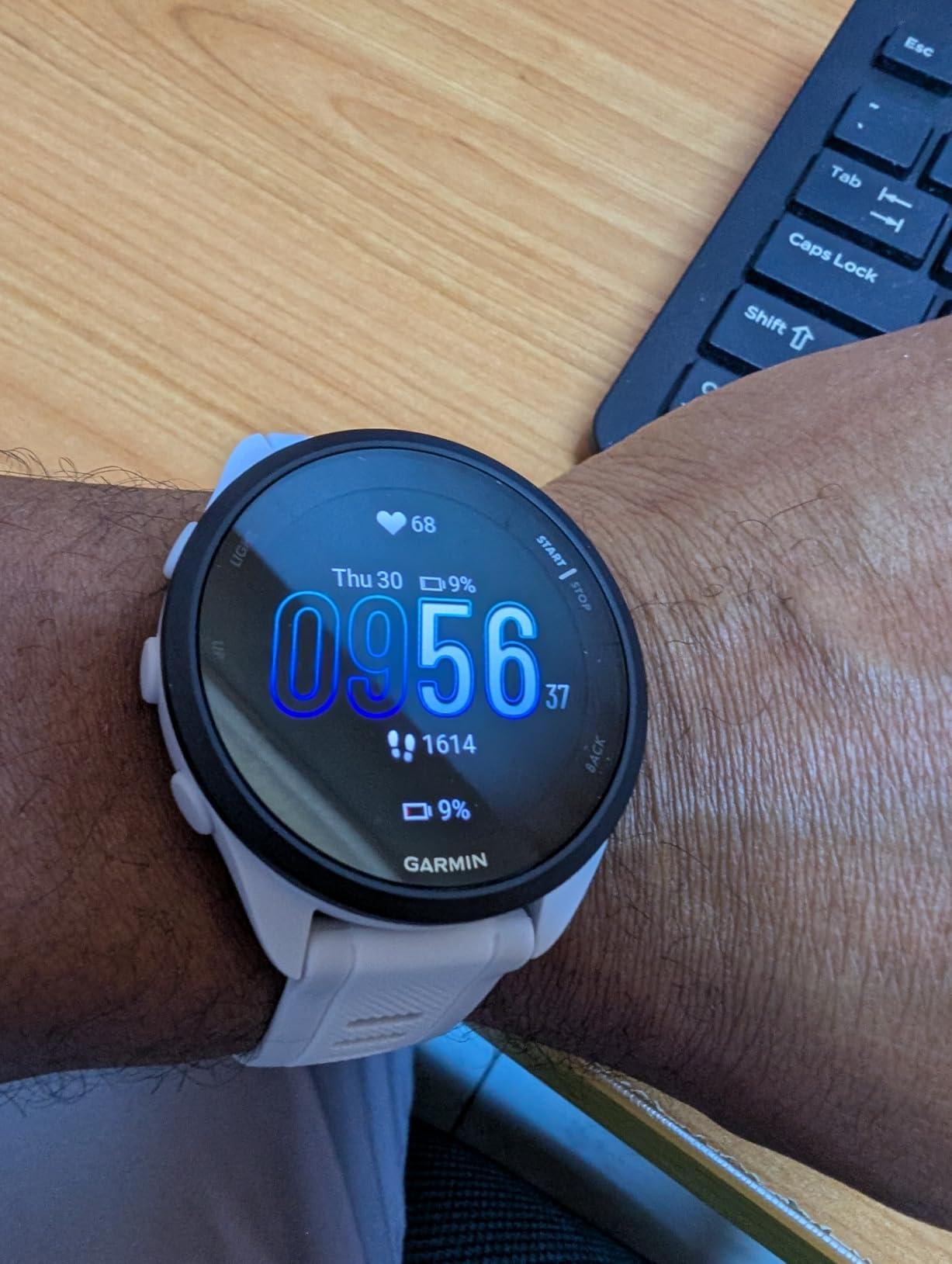
Battery life is solid at 11 days in smartwatch mode and 19 hours with continuous GPS. That got me through a full week of training including a 20-mile long run without needing a charge. The built-in GPS connects quickly using GPS, GLONASS, and Galileo satellite systems, and I found distance tracking accurate to within a few meters on my usual routes.
The one downside is that Garmin withheld multi-band GPS from this model. For most road runners this is not an issue, but trail runners in dense tree cover may notice occasional drift. You also need your phone paired for full smart notifications and music control.
Who Should Buy the Forerunner 165
This watch hits the sweet spot for runners who want real training tools without paying flagship prices. If you run 3 to 6 times per week and care about structured training, recovery insights, and accurate pace data, this is your watch. It handles 5K training through marathon prep with ease.
It is also the best choice for runners upgrading from a basic fitness band who want dedicated running features without a steep learning curve. The interface is intuitive, and Garmin Connect remains the best running app ecosystem available.
Battery Life During Real Training
In my testing, the 11-day smartwatch mode claim held up accurately when I tracked one GPS run per day. With heavier GPS use, like weekend long runs of 15-plus miles, expect closer to 7 or 8 days between charges. The 19-hour GPS rating is enough for most marathon runners with a comfortable buffer.
Charging from empty to full takes about 90 minutes using the included cable. I never found battery anxiety to be a problem even during peak marathon training weeks.
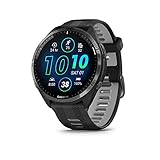
2. Garmin Forerunner 965 – Premium Pick for Serious Runners
Garmin Forerunner® 965, Running Smartwatch, 47mm, Black/Powder Gray
1.4 inch AMOLED with titanium bezel
Multi-band GPS with SatIQ
23 days battery, 31hr GPS
Full-color maps
32GB music storage
Pros
- Full-color built-in maps with turn-by-turn directions
- Multi-band GPS for pinpoint accuracy
- 23-day battery with 31 hours GPS
- Training Readiness score from sleep HRV and recovery
- 32GB music storage with Garmin Pay
Cons
- Heavier at 53 grams
- Not Prime eligible
- Premium price point
The Garmin Forerunner 965 is the watch I reach for when I want every piece of data available. After testing it on trail runs in areas where cheaper watches lose signal, the multi-band GPS with SatIQ technology proved its worth. It locks onto satellites fast and maintains accuracy even under heavy tree canopy where my Forerunner 165 showed noticeable drift.
The 1.4-inch AMOLED display is the largest and sharpest in the Forerunner lineup. Full-color maps with turn-by-turn navigation came in handy during an unfamiliar trail half marathon. I could glance at my wrist and see exactly where the next turn was without slowing down.
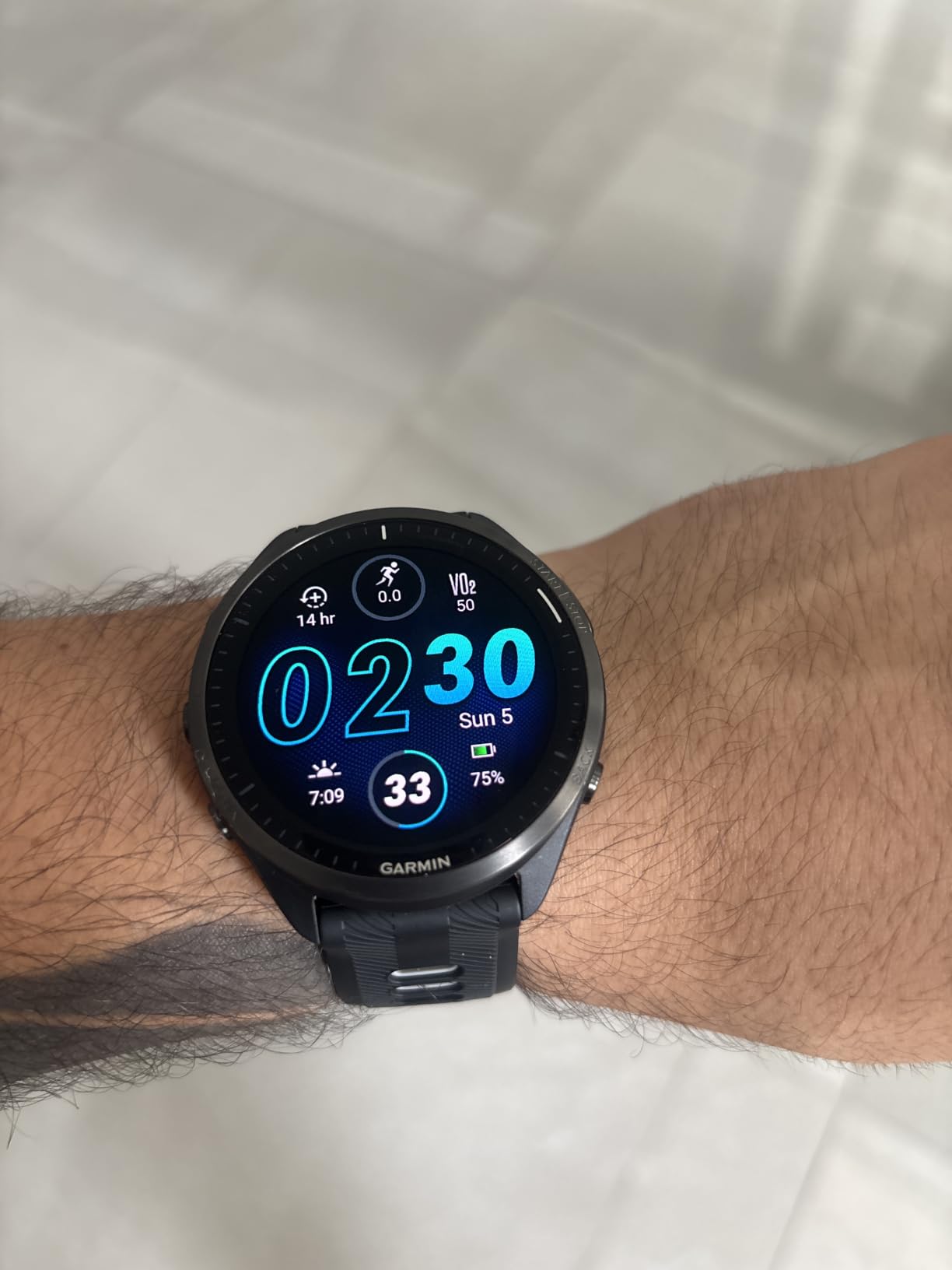
Training Readiness is the standout feature for serious runners. It combines sleep quality, HRV status, stress, and acute load into a single score from 0 to 100 that tells you whether to push hard or take it easy. Over three months, following this score helped me avoid two potential overtraining episodes.
The titanium bezel adds durability and a premium feel, though the 53-gram weight is noticeable compared to lighter watches. At 23 days in smartwatch mode and 31 hours of GPS, battery life is exceptional for an AMOLED watch with this feature set.
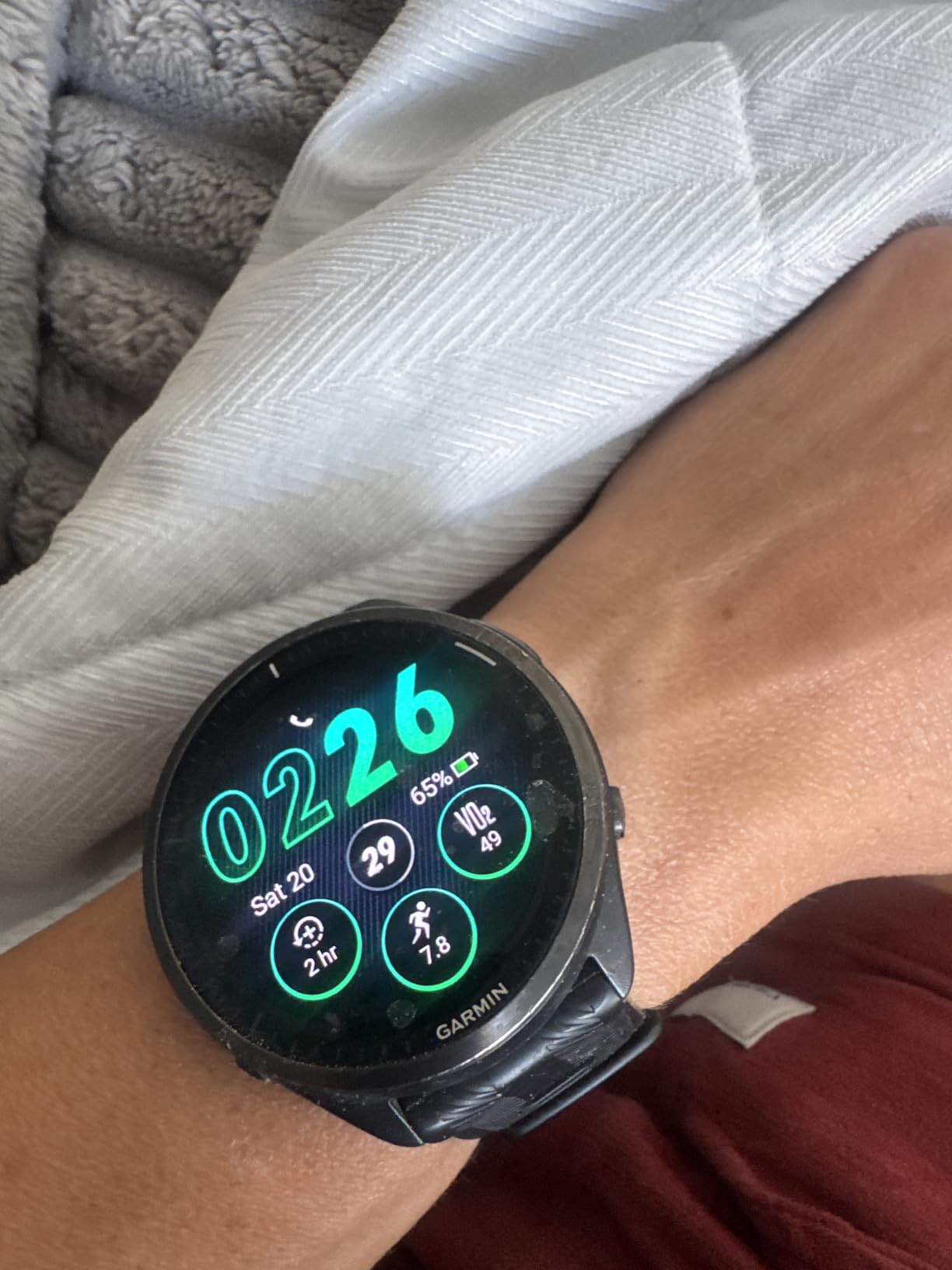
When Multi-Band GPS Actually Matters
Multi-band GPS uses two frequency bands from each satellite system instead of one. This matters most when you run near tall buildings, in dense forests, or in deep canyons where single-band GPS struggles with signal reflection. On city runs through downtown, I saw noticeably tighter GPS tracks with the 965 compared to single-band watches.
If your routes are mostly open roads and parks, you may not notice the difference. But for trail runners and urban commuters, the accuracy improvement is real and measurable.
Mapping Features for Trail and Travel
The full-color topographic maps download directly to the watch via Wi-Fi. I used turn-by-turn navigation on unfamiliar trails and never had to pull out my phone. The Courses feature lets you build routes in Garmin Connect and sync them, which is perfect for exploring new areas while traveling.
The 32GB of storage holds plenty of downloaded maps plus a large music library from Spotify, Amazon Music, or Deezer for phone-free runs.
3. Garmin Forerunner 55 – Best Value Running Watch
Garmin Forerunner 55, GPS Running Watch with Daily Suggested Workouts, Up to 2 Weeks of Battery Life, Black – 010-02562-00
1.04 inch MIP display
Built-in GPS, GLONASS, Galileo
2-week battery, 20hr GPS
37g lightweight
PacePro race strategy
Pros
- Lightweight design at just 37 grams
- Up to 2 weeks battery with 20 hours GPS
- PacePro for GPS-based race pacing
- Daily suggested workouts
- Race time predictions
- Number one best seller in Running GPS Units
Cons
- MIP display less vibrant than AMOLED
- Limited smart features
The Garmin Forerunner 55 proves you do not need to spend a fortune to get a serious running watch. At just 37 grams, it is one of the lightest GPS watches I have tested, and I genuinely forgot I was wearing it during tempo runs. The transflective MIP display is not as flashy as AMOLED, but it is readable in direct sunlight without burning battery.
Battery life is where the Forerunner 55 punches above its weight. Two weeks in smartwatch mode and 20 hours of GPS means you can train through a full marathon week without charging. I got through 9 days of regular training including two long runs before seeing the low battery warning.
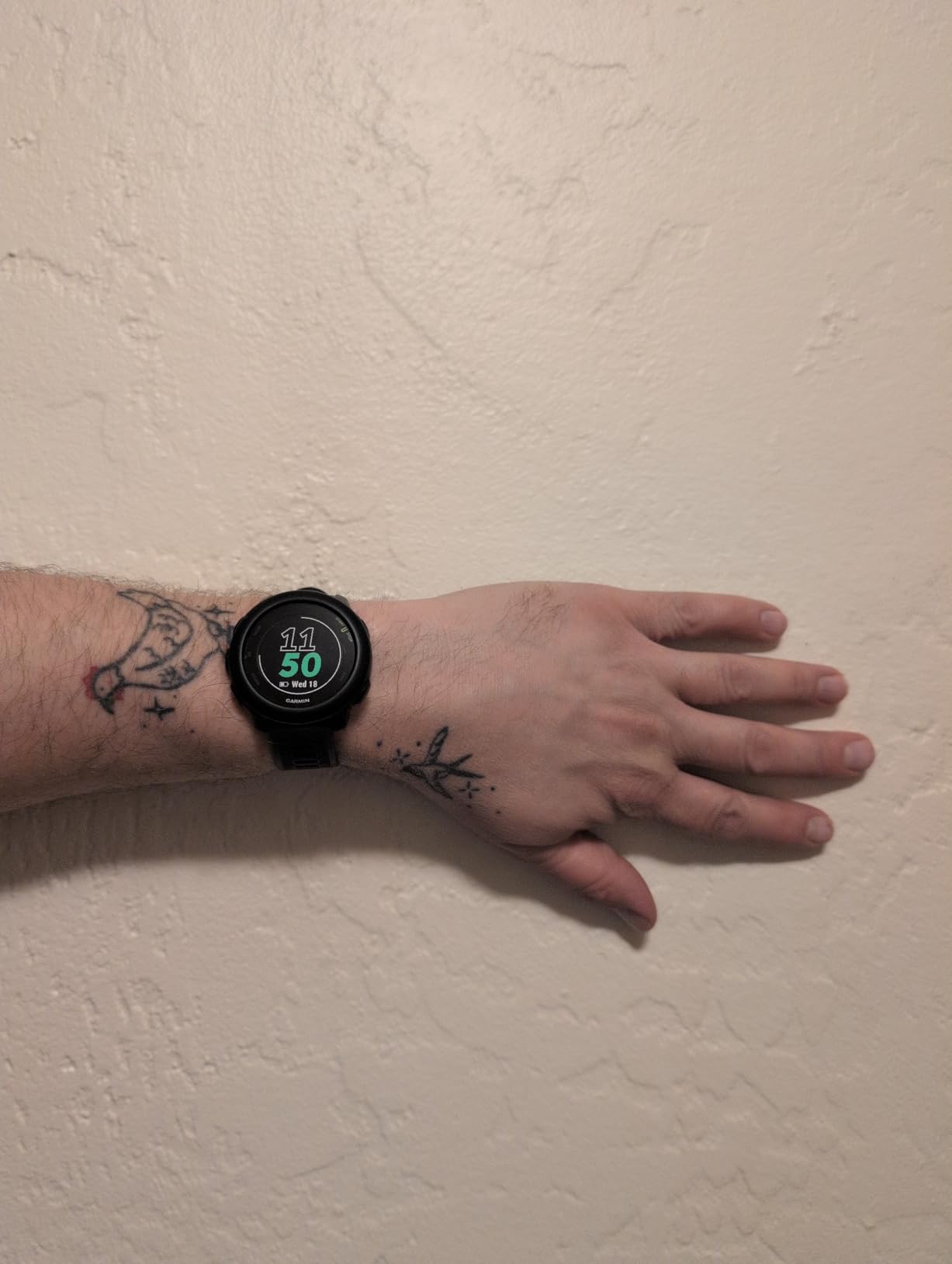
PacePro is the feature that surprised me most. It creates GPS-based pace strategies that account for elevation changes on your race course. For my half marathon test, PacePro guided me through uphill and downhill sections with adjusted targets that helped me finish strong instead of crashing at mile 10.
The trade-off is that this watch skips the smart features of pricier models. No music storage, no Garmin Pay, no AMOLED display. But if your priority is pure running data at a great price, this is the best fitness tracker for runners on a budget.
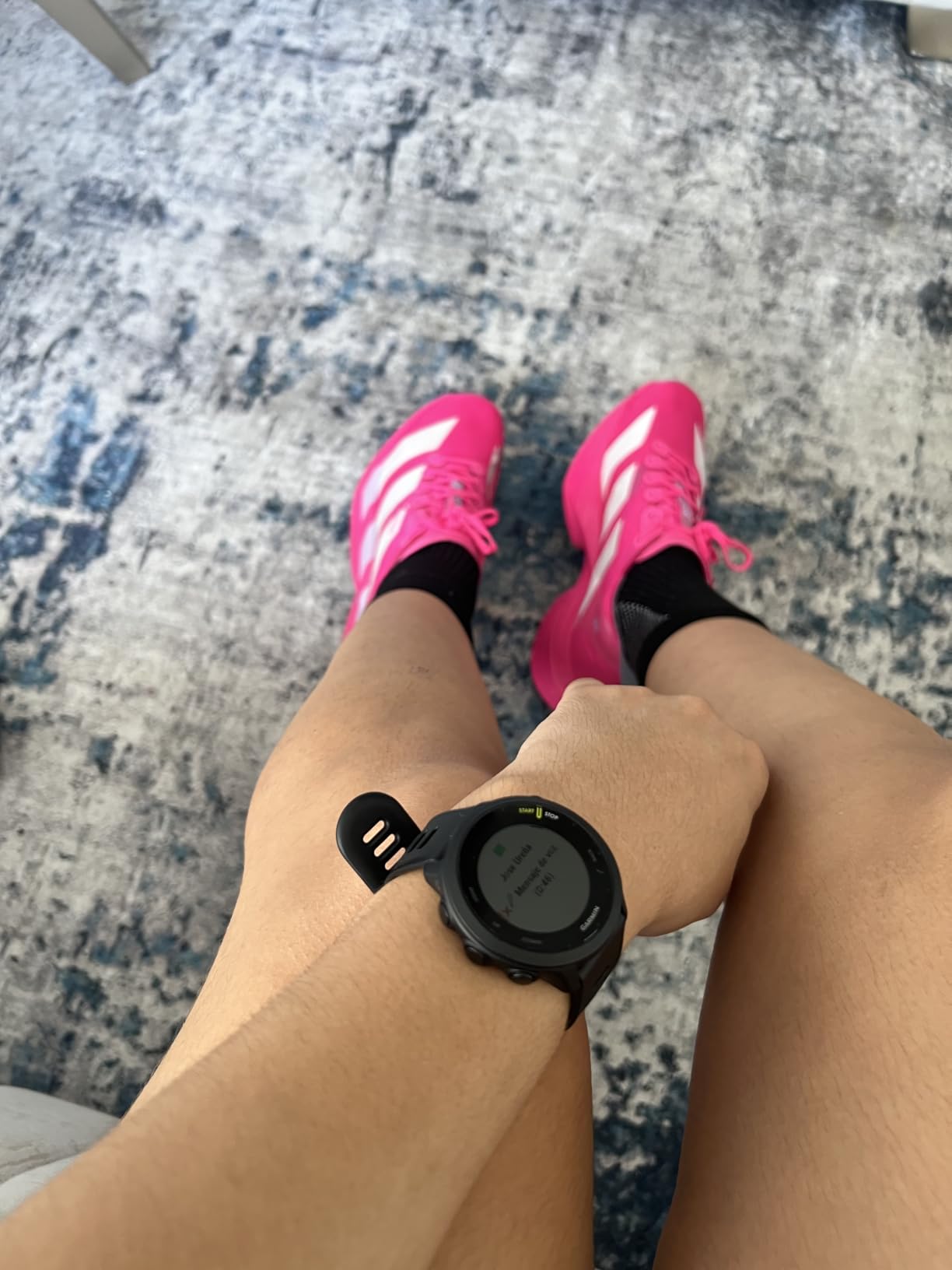
Best for Beginners and Casual Runners
The Forerunner 55 is the watch I recommend to every new runner who asks me what to buy. It does the core things right: accurate GPS, reliable heart rate, useful training plans, and a battery that lasts. The interface is simple enough that you can start a run within minutes of unboxing it.
Daily suggested workouts adapt to your fitness level and recent training. For a beginner building toward a first 5K or 10K, this guidance is genuinely helpful and removes the guesswork from training.
What You Give Up Compared to Premium Models
The biggest miss is music storage. If you want to run without your phone, you cannot load playlists onto this watch. There is also no contactless payment, no full-color mapping, and the MIP screen looks dated next to AMOLED competitors. None of these affect running performance, but they limit everyday usability.
For runners who only need training data and do not care about smartwatch features, the Forerunner 55 delivers outstanding value that is hard to beat.
4. Garmin vivoactive 5 – Best Everyday Fitness Smartwatch
Garmin vívoactive® 5, Health & Fitness GPS Smartwatch, 42mm, Ivory
1.2 inch AMOLED display
Built-in GPS
11-day battery
30+ sports apps
Body Battery monitoring
Pros
- Bright AMOLED display with vibrant colors
- Over 30 built-in sport apps including swimming and yoga
- Body Battery energy monitoring with sleep coaching
- Garmin Pay and music storage
- Automatic nap detection and wheelchair mode
Cons
- Lower 4.4 rating compared to other Garmin models
- Not running-specific in design
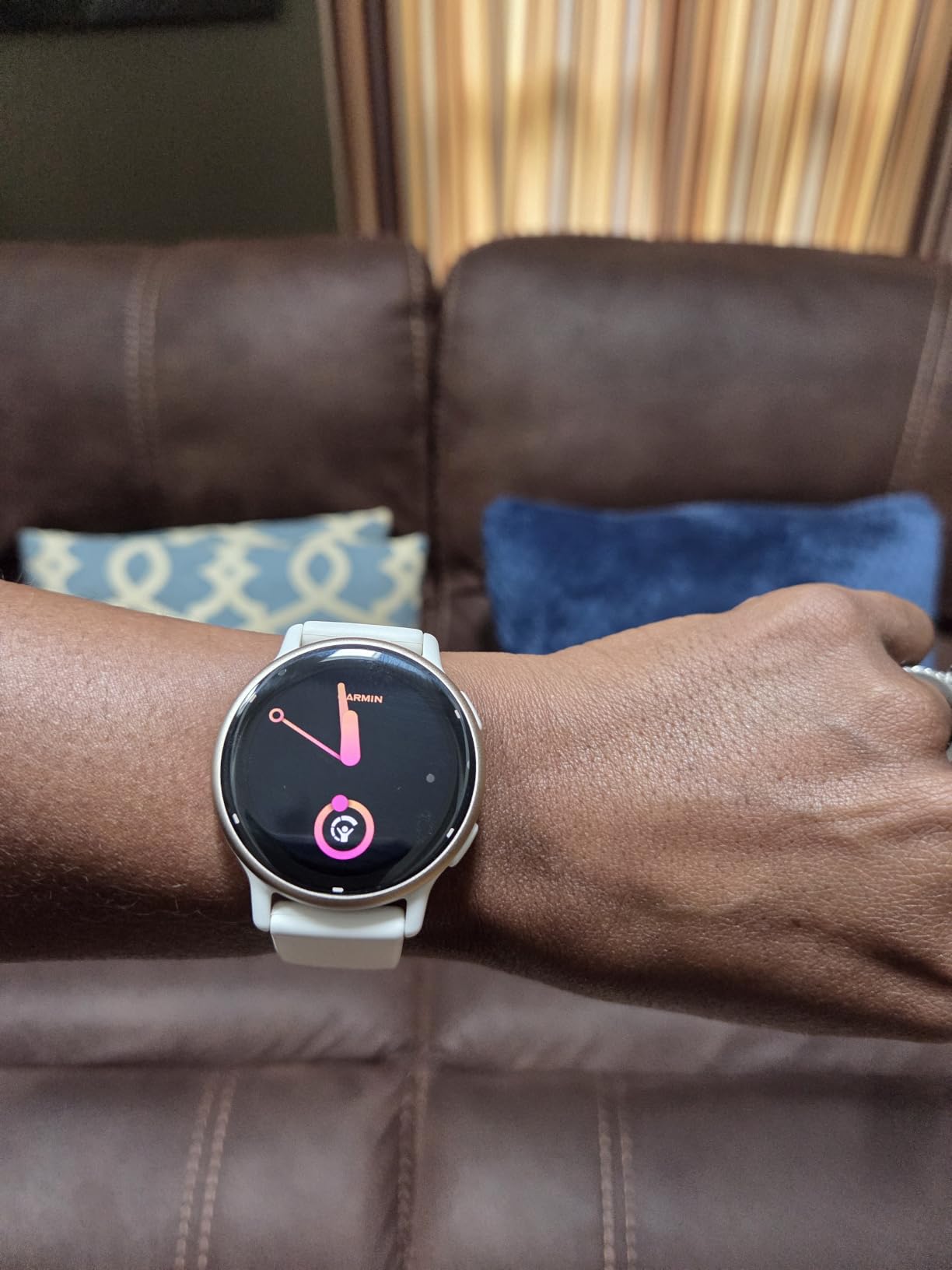
The Garmin vivoactive 5 sits in an interesting middle ground between a running watch and a full lifestyle smartwatch. I wore it for a month of cross-training that mixed running, swimming, and strength work, and it handled every activity smoothly. The AMOLED display is bright and colorful, making it feel more like a smartwatch than a dedicated sports tracker.
Body Battery is the feature I found myself checking every morning. It gives you a single score from 0 to 100 representing your energy level based on sleep, stress, and activity. On days when Body Battery read low, I scaled back my run and avoided pushing into overtraining territory.
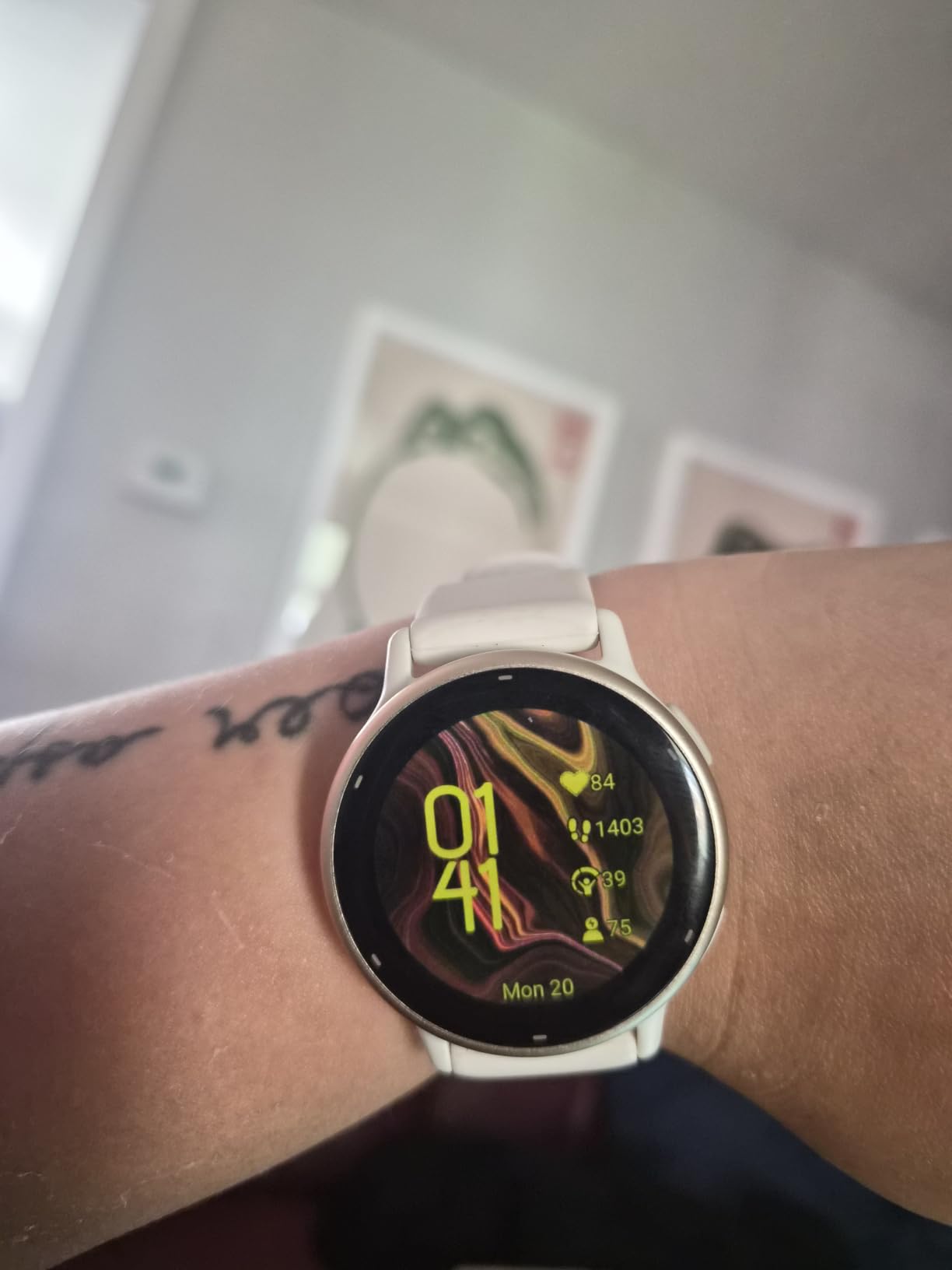
With over 30 built-in sport apps, the vivoactive 5 is the most versatile watch in this lineup. I used it for pool swimming, where it tracked laps and stroke type accurately, and for strength training, where it counted sets and reps with reasonable accuracy.
The running experience is solid but not as deep as the Forerunner series. You get pace, distance, heart rate zones, and basic training effect, but you miss the advanced metrics like training readiness and running dynamics found on pricier Garmin models.
Cross-Training and Multisport Capability
If you mix running with other sports, the vivoactive 5 is more practical than a pure running watch. The sport profiles cover everything from golf to skiing, and switching between activities takes two taps. Auto-activity detection even picks up walking and running automatically.
The sleep coaching feature analyzes your sleep stages and gives personalized recommendations. Combined with Body Battery, this gives you a daily readiness picture that rivals the Forerunner 965 at a much lower cost.
Everyday Smartwatch Features
Garmin Pay works at most contactless terminals, and the music storage supports Spotify, Amazon Music, and Deezer for phone-free runs. Smart notifications from iOS and Android come through clearly, and you can respond to texts on Android.
The 11-day battery keeps pace with the Forerunner 165, and the watch charges fully in about two hours.
5. COROS PACE 4 – Best Battery Life and Lightest Design
COROS PACE 4 Ultralight Sport GPS Watch (Black Silicone, Standard)
1.2 inch AMOLED, 600x680 resolution
GPS tracking
19 days battery, 41hr GPS
32g ultralight
Voice control and recording
Pros
- Ultralight at just 32 grams and 11.8mm thin
- 41 hours of continuous GPS battery life
- Voice recording and voice control features
- Digital crown for intuitive navigation
- High resolution 600x680 AMOLED display
- Training metrics with HRV and recovery data
Cons
- GPS only with no GLONASS or Galileo support
- Newer product with fewer reviews
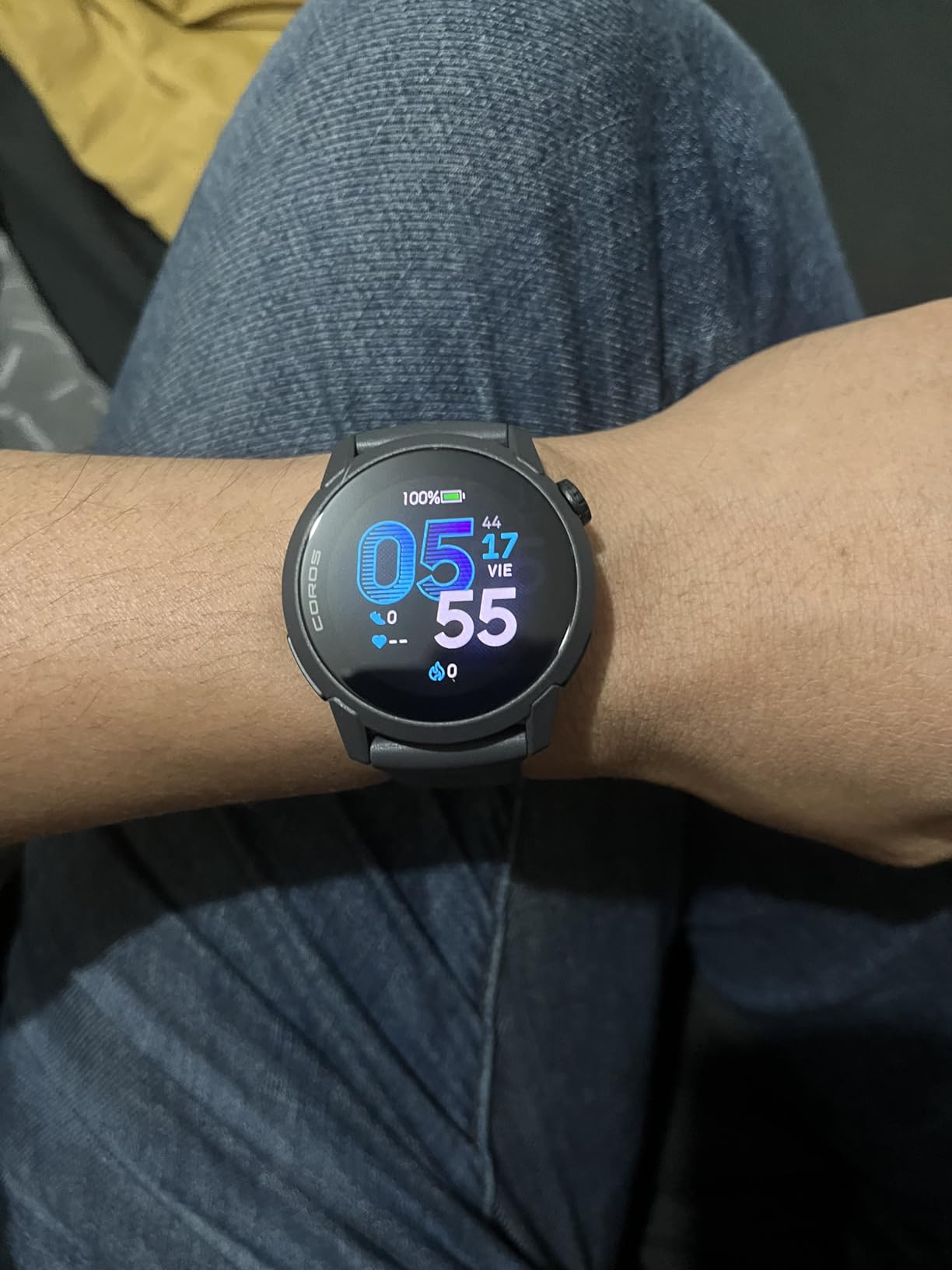
The COROS PACE 4 is the lightest watch I have ever tested at 32 grams, and the difference is immediately noticeable. During speed workouts and races, the reduced wrist weight felt like an advantage. The 11.8mm thin profile sits flush against the wrist without catching on jacket cuffs or hydration vests.
Battery life is the real headline. At 19 days in daily use and 41 hours of continuous GPS, the PACE 4 outlasts every other watch on this list by a wide margin. I went two full weeks of daily training without charging, including a marathon simulation long run, and still had 30 percent battery remaining.
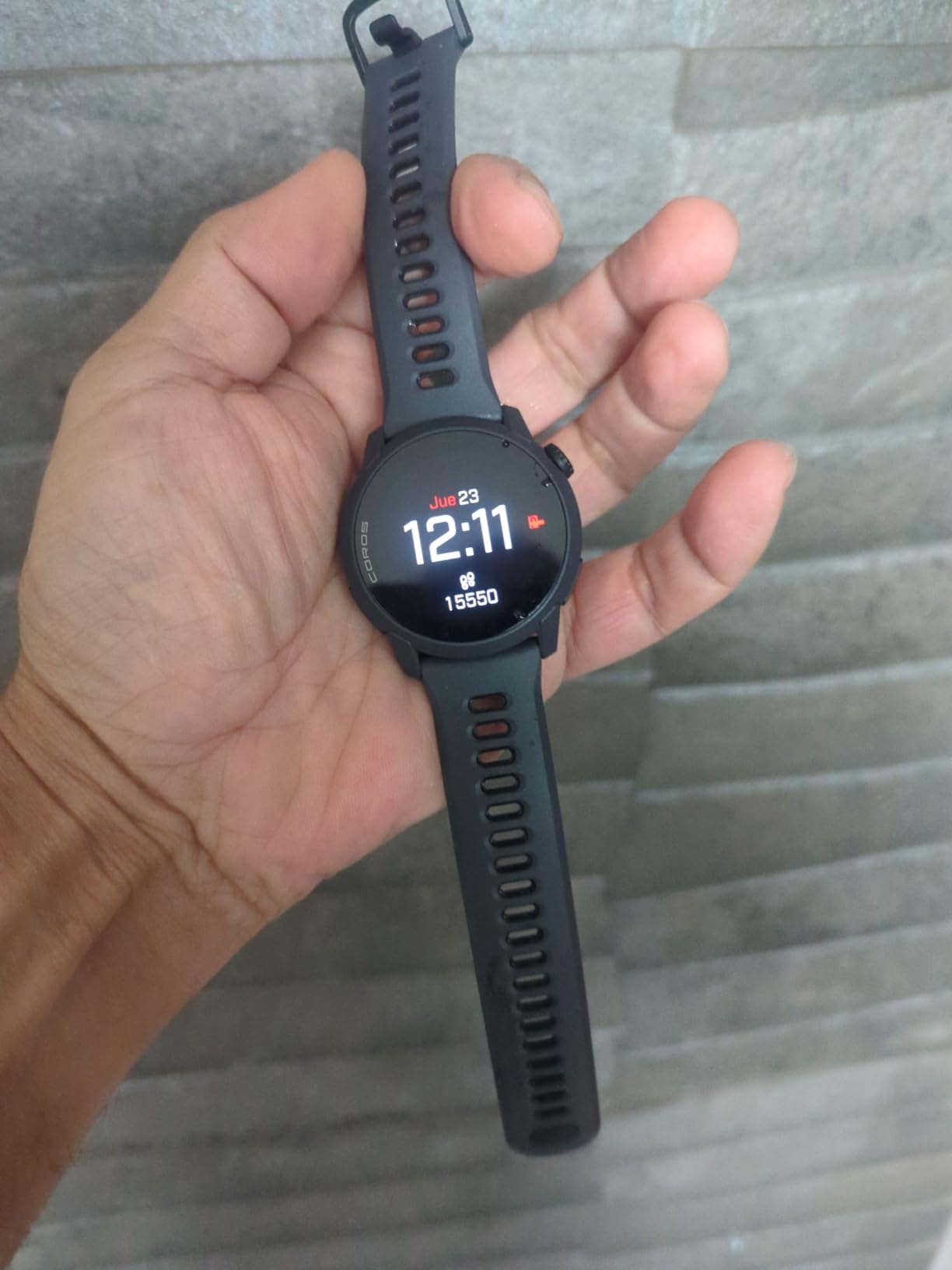
The voice features are genuinely useful, not gimmicky. I recorded quick voice notes after tempo sessions to log how I felt, and COROS attached them to the workout automatically. Voice control lets you start workouts and set alarms hands-free, which is convenient when your hands are cold on winter morning runs.
The 600×680 resolution AMOLED display is the sharpest screen in this roundup. Text and data fields are crisp and clear, and the digital crown makes scrolling through metrics during a run effortless without touching the screen with sweaty fingers.
COROS App and Ecosystem
The COROS app is clean, fast, and syncs with Strava and other platforms. Training metrics include recovery, sleep stages, HRV, and training load. The Evolab training system builds a running profile from your data and provides personalized pace zones and race predictions that improve over time.
One limitation is GPS-only satellite support without GLONASS or Galileo. In open areas this is fine, but urban runners may notice slightly less accuracy than multi-satellite watches in city environments.
Who Benefits from Voice Features
The voice recording feature is a standout for runners who keep training journals. Instead of typing notes after a run, you speak a 30-second summary and it is stored with your workout. Coaches using COROS can review these notes remotely to track how athletes are responding to training.
Voice control is also valuable for accessibility and for cold-weather running when you want to interact with your watch without removing gloves.
6. Amazfit Active Max – Best Display Brightness and Value Features
Amazfit Active Max Smart Watch, 1.5″ AMOLED Display, GPS, iOS/Android
1.5 inch AMOLED, 3000-nit brightness
5-satellite GPS
25-day battery
4GB storage, offline maps
170+ sport modes
Pros
- 3000-nit ultra-bright AMOLED display for outdoor visibility
- 25-day battery life
- Free downloadable terrain and ski maps with turn-by-turn
- 5 satellite positioning systems for accuracy
- BioCharge energy monitoring
- Bluetooth calling and hands-free voice replies
- 170+ workout modes with Zepp Coach AI
Cons
- Android required for voice replies
- No USB Type-C cable included
The Amazfit Active Max has the brightest display I have ever seen on a running watch. At 3000 nits, it is readable even in harsh midday sun, which is something I cannot say about every watch on this list. During a sunny 10-mile run, I never squinted or shaded my wrist to check my pace.
The 5-satellite GPS system uses BeiDou, GLONASS, GPS, Galileo, and QZSS for positioning. I found accuracy comparable to Garmin multi-band in most conditions, with tight tracks on road runs and acceptable performance on wooded trails.
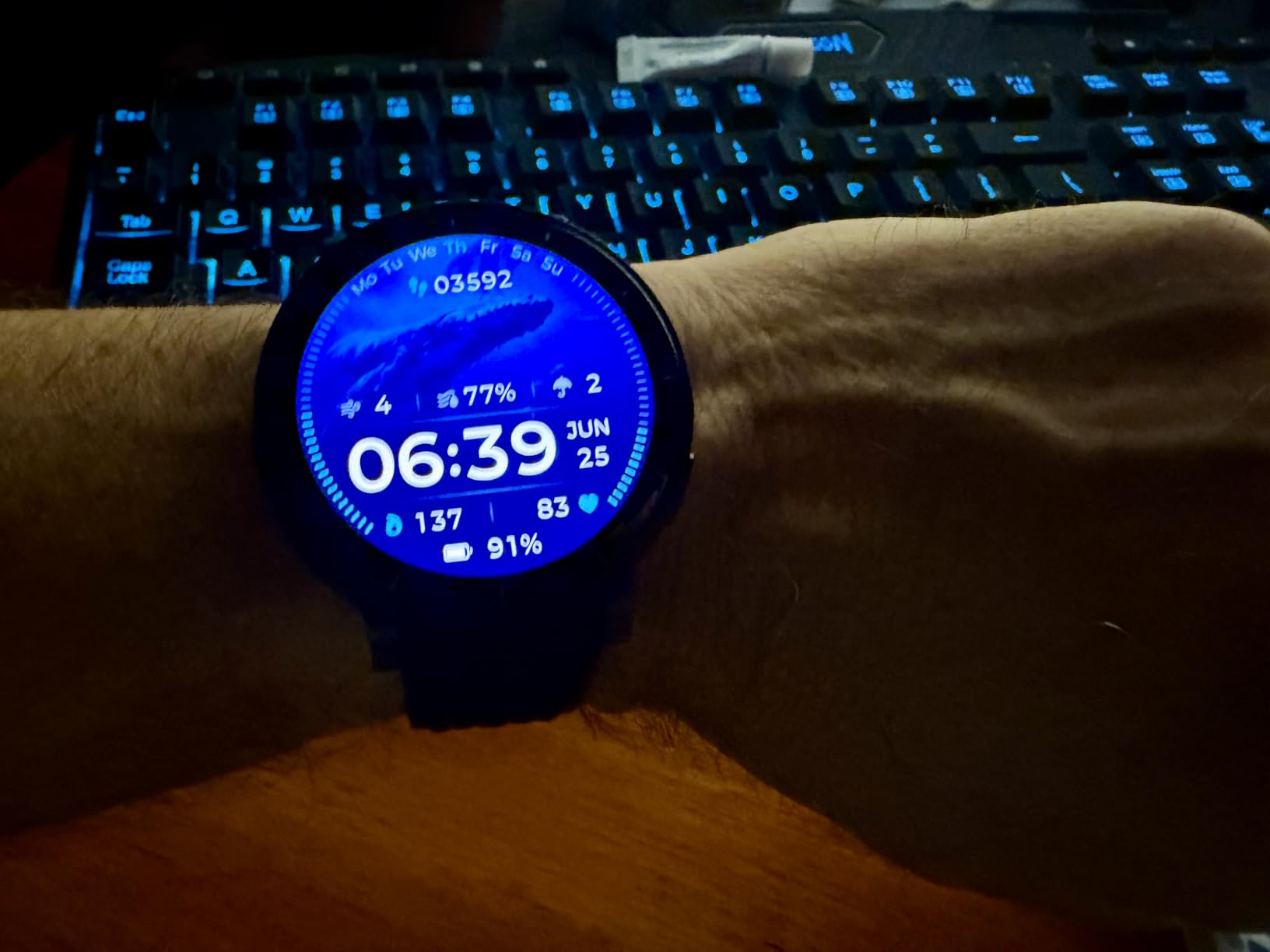
BioCharge is Amazfit’s answer to Garmin Body Battery. It analyzes heart rate variability, sleep quality, and stress to give you a daily energy score. After two weeks of testing, I found it aligned well with how I actually felt on morning runs.
The free downloadable maps are a genuine value feature. You get terrain maps and ski resort maps at no extra cost, while Garmin charges premium prices for full mapping capability. Turn-by-turn navigation works well for road cycling and trail running.
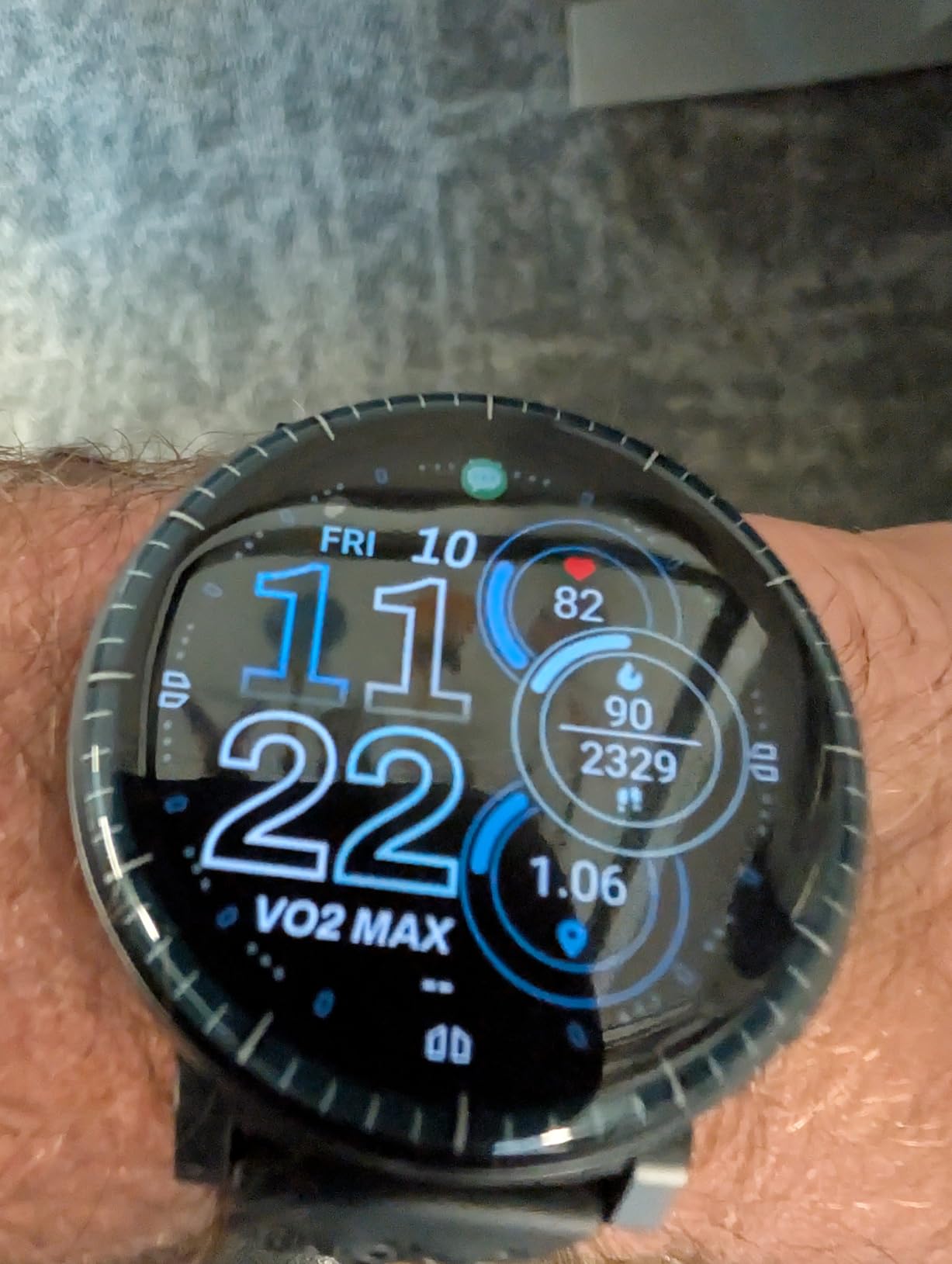
Zepp Coach AI Training Plans
Zepp Coach generates AI-driven workout plans based on your fitness level, goals, and recent training data. The plans cover running, strength, and cross-training. I found the running plans reasonable for intermediate runners, though they lack the depth and adaptability of Garmin Coach.
The 170-plus sport modes cover nearly everything, from running and cycling to diving and hiking. Each mode tracks relevant metrics, and you can customize data screens for each activity.
Build Quality and Daily Wear
The 48mm round case is larger than most watches here, which may not suit smaller wrists. The magnetic clasp on the silicone band is secure and easy to adjust. At 1.97 ounces, it is slightly heavier than the Garmin options but still comfortable for daily wear and running.
The 25-day battery life is exceptional, and the magnetic charging base reaches full charge in about two hours despite not including a USB-C cable in the box.
7. Amazfit Bip 6 – Best Budget Running Watch
Amazfit Bip 6 Smart Watch, 1.97″ AMOLED Display, GPS, iOS/Android
1.97 inch AMOLED, 2000-nit
GPS, 5-satellite
14-day battery
140+ workout modes
Aluminum build
Pros
- Vivid 1.97 inch AMOLED display readable in sunlight
- 14-day battery life with GPS
- Free downloadable maps with turn-by-turn
- 140+ workout modes including HYROX and strength training
- 5 satellite systems for GPS accuracy
- Bluetooth call and text
- Lightweight aluminum build
- 5ATM water resistance
Cons
- Lower 5-star percentage at 71 percent
- 9 percent of reviews are 1-star
The Amazfit Bip 6 is the watch I recommend when someone wants real running features but cannot justify spending more. For under $80, you get a 1.97-inch AMOLED display, built-in GPS with 5-satellite support, free offline maps, and AI coaching. That combination simply does not exist at this price from any other brand.
I tested the Bip 6 over six weeks of regular training and was impressed by how capable it is. GPS accuracy was good for road runs, matching my Forerunner 165 within a few meters per mile. The 2000-nit display is bright enough for sunny outdoor runs, though not quite at the level of the Active Max.
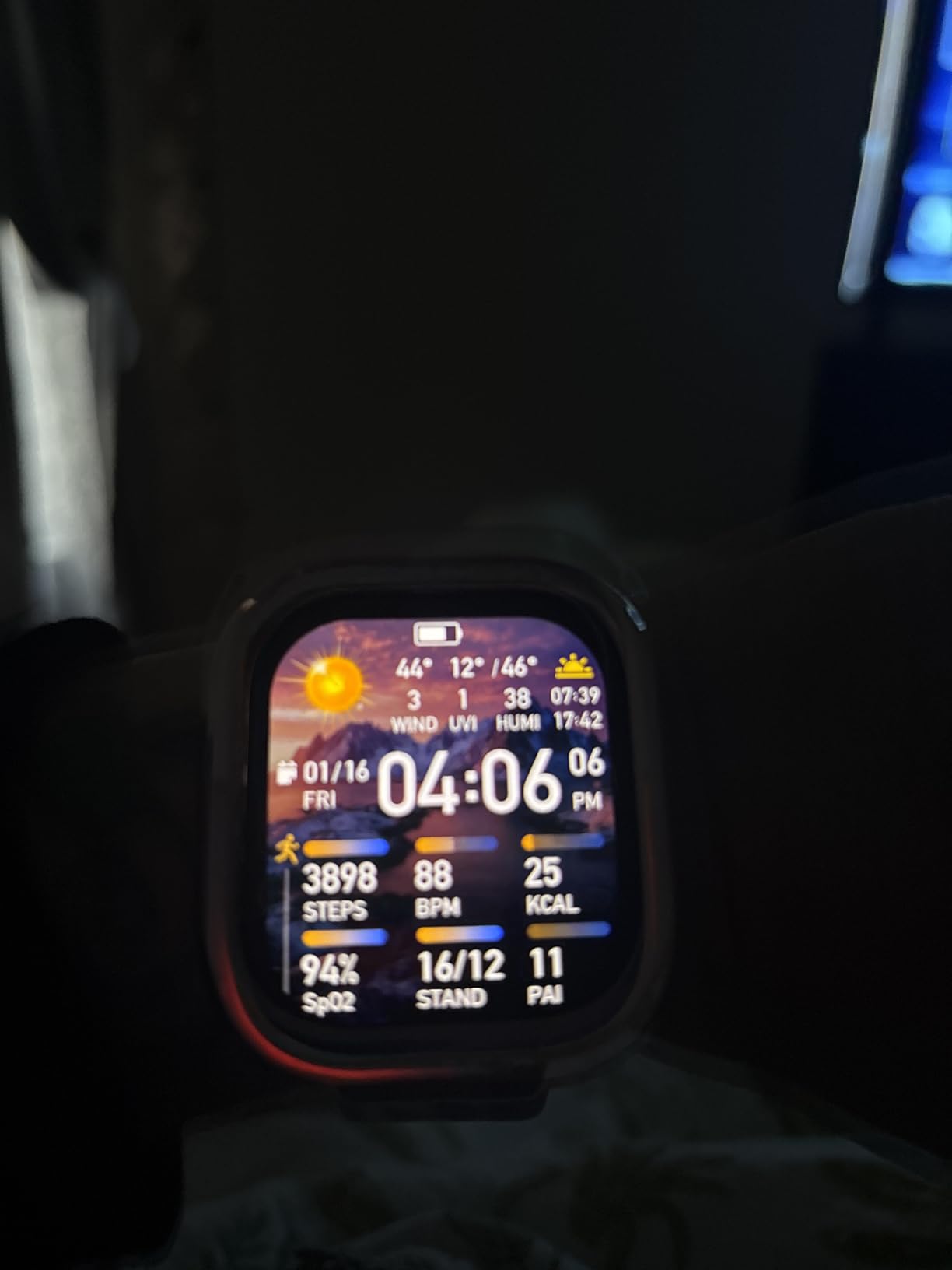
The free downloadable maps with turn-by-turn directions are a standout feature at this price point. I navigated an unfamiliar neighborhood loop without pulling out my phone. The 140-plus workout modes cover HYROX, strength training, cycling, swimming, and more.
The concerns are real though. About 9 percent of reviews are 1-star, which is higher than any other watch on this list. The issues most commonly mentioned are syncing problems and occasional GPS drops. My unit performed reliably, but the data suggests some quality variance.
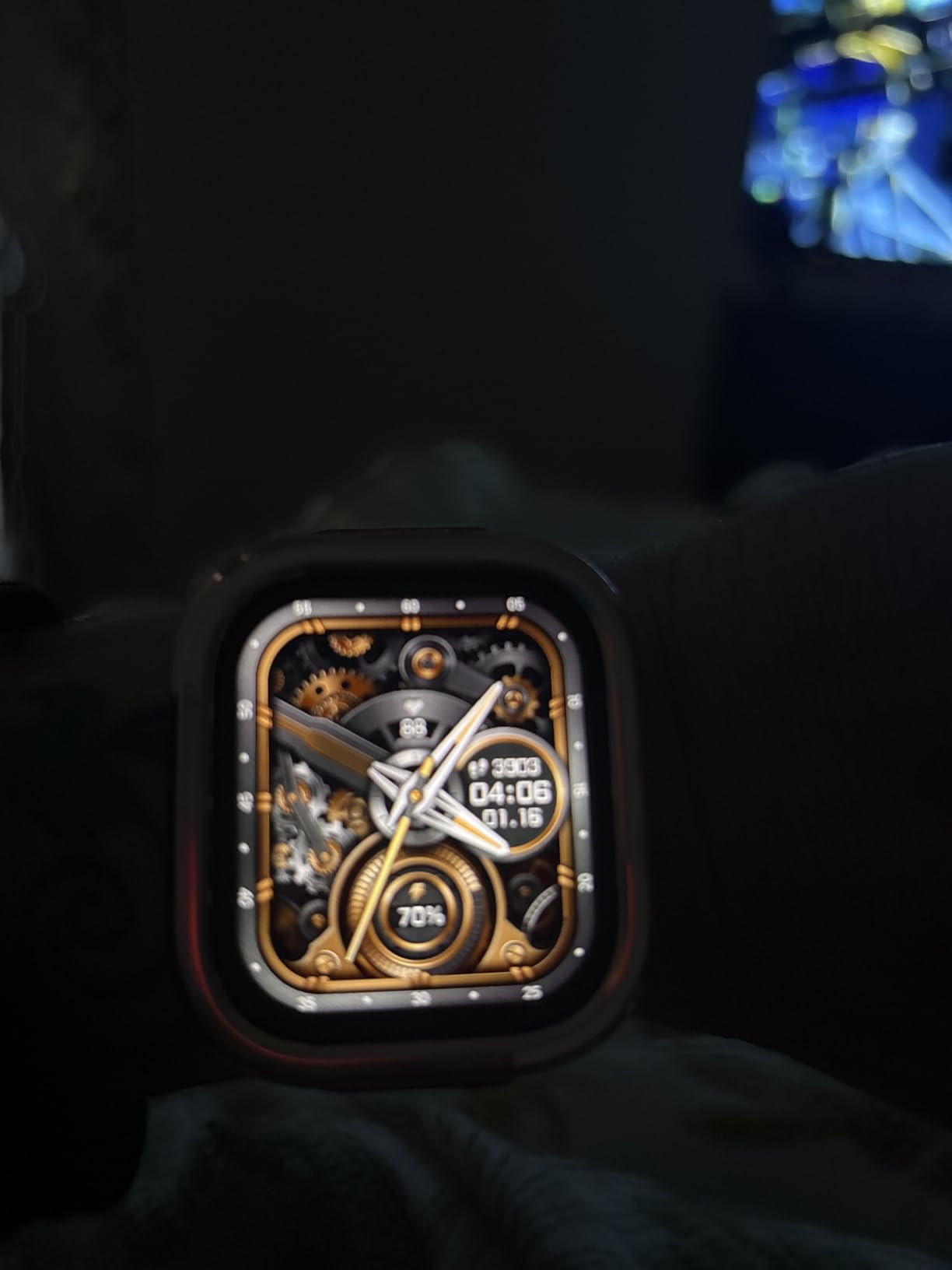
What You Get for Under $80
The value proposition here is remarkable. You get built-in GPS, AMOLED display, free maps, 14-day battery, 5-satellite positioning, Bluetooth calling, and AI coaching. The Forerunner 55 costs more and offers a less vibrant display, no maps, and no calling features.
The trade-off is build quality and long-term reliability. The aluminum frame feels solid, but the overall polish does not match Garmin or COROS standards.
Limitations to Be Aware Of
The 512MB of storage is limited compared to Garmin watches with 4GB or 32GB. You can store some maps and music, but not as much as pricier options. The Zepp OS app ecosystem is smaller than Garmin Connect, though it does integrate with Strava.
Despite these limitations, the Bip 6 is the best fitness tracker for runners on a strict budget who still want built-in GPS and a quality display.
8. Fitpolo Smart Watch – Best Ultra-Budget Option
Fitpolo Smart Watch, 1.85″ AMOLED Fitness Tracker with Bluetooth Call, Heart Rate/Sleep/SPO₂ Monitor, 100+ Sports Modes, 3ATM Waterproof Smartwatch for Android/iPhone/Samsung, Includes 2 Bands
1.85 inch AMOLED, 600-nit
GPS via smartphone
7-10 day battery
100+ sports modes
3ATM IP68 waterproof
Includes 2 bands
Pros
- Lowest price on this list with AMOLED display
- Bluetooth calling and voice assistant
- 100+ exercise modes
- 3ATM IP68 water resistance
- Includes 2 bands in the box
- Lifetime warranty
- Advanced health monitoring including SpO2 and stress
Cons
- No built-in GPS
- requires smartphone for tracking
- May be too large for small wrists
- Limited app ecosystem
The Fitpolo Smart Watch is the least expensive option in this roundup, and it is important to set expectations clearly. This is not a dedicated running watch with built-in GPS. It relies on your phone’s GPS for distance and pace tracking. For runners who always carry their phone, that trade-off saves a significant amount of money.
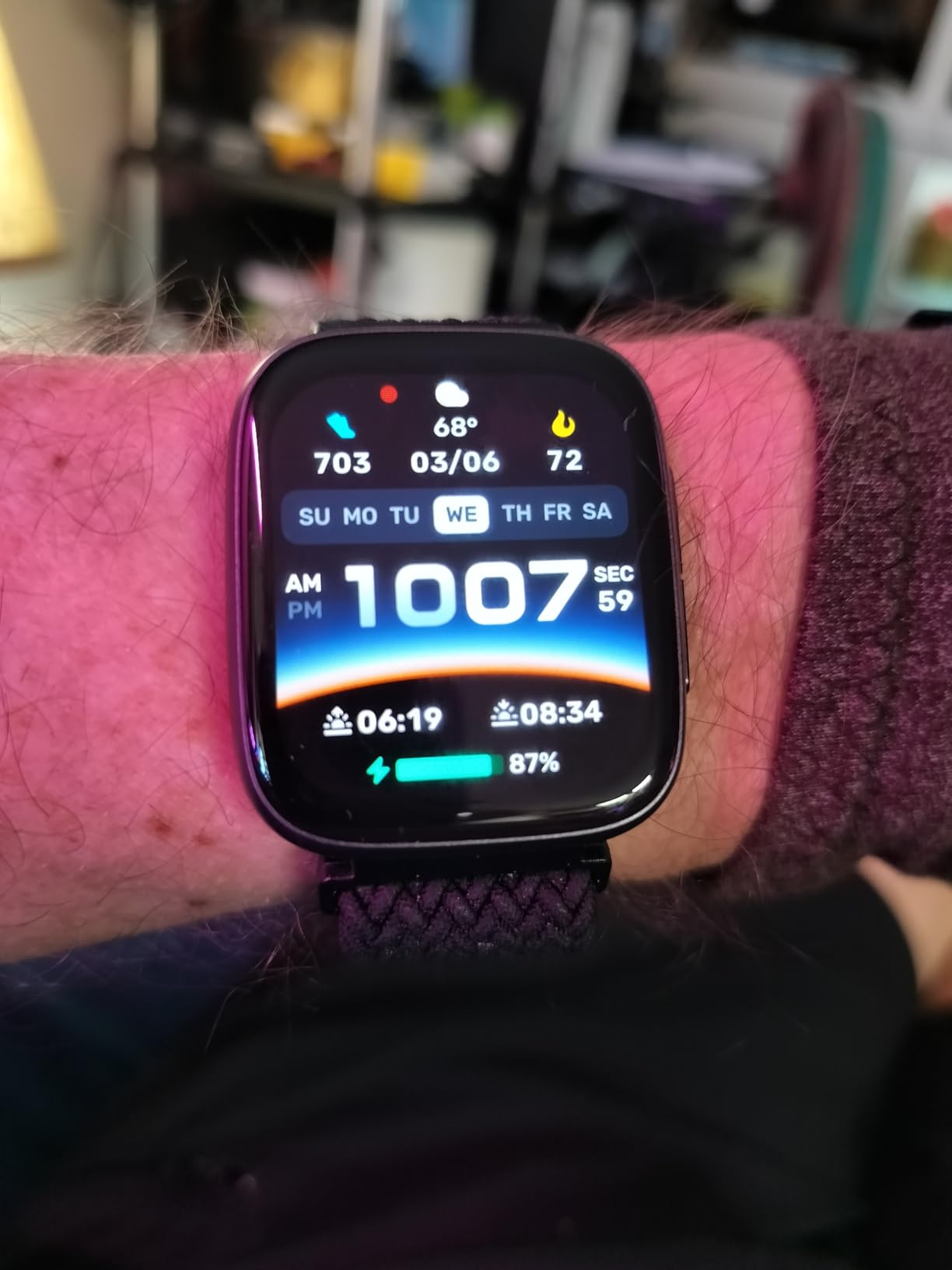
I tested it for two weeks as a secondary tracker and found it surprisingly capable for the price. The 1.85-inch AMOLED display is large and clear. Heart rate monitoring during runs was reasonably accurate compared to a chest strap, though not at the level of Garmin sensors.
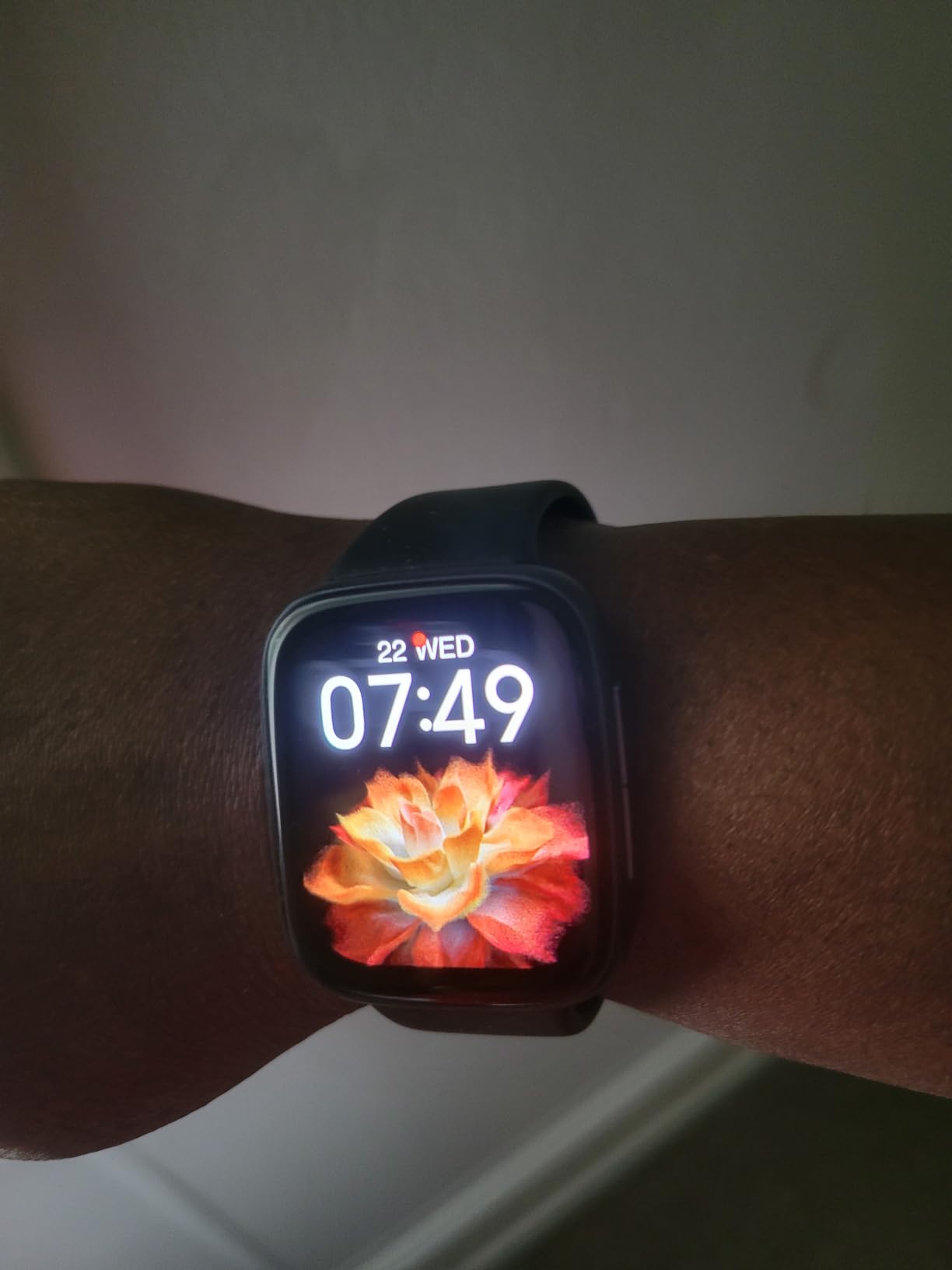
The inclusion of two bands in the box is a nice touch. You get a silicone band for workouts and a cloth band for casual wear. The lifetime warranty is unusual at this price and suggests confidence in the build quality.
Bluetooth calling works well for quick conversations, and the voice assistant integration supports both Google Assistant and Siri. The 100-plus sport modes cover running, cycling, swimming, and more, though the tracking depth is basic compared to dedicated running watches.
Best for Phone-Carrying Runners
If you always run with your phone, the Fitpolo delivers most of the running data you need at a fraction of the cost. Pace, distance, calories, and heart rate all come through accurately when connected to your phone’s GPS. The 7 to 10 day battery life means weekly charging, not daily.
This is also a solid choice for new runners who want to try fitness tracking before investing in a more expensive GPS watch.
Limitations for Serious Training
The lack of built-in GPS means you cannot leave your phone at home for runs. The app ecosystem is limited compared to Garmin Connect or COROS, and there are no advanced training metrics like VO2 max, training load, or recovery scores. Heart rate accuracy during high-intensity intervals may lag behind dedicated running watches.
For casual fitness tracking and basic running data, the Fitpolo is hard to beat at this price. For serious training, consider spending more for built-in GPS.
How to Choose the Best Fitness Tracker for Running
Choosing from the best fitness trackers for runners comes down to understanding which features actually matter for your training. After testing every watch on this list, here is what I tell runners who ask for buying advice.
GPS Accuracy and Satellite Support
Built-in GPS is non-negotiable for running. Without it, you depend entirely on your phone for pace and distance. Watches that support multiple satellite systems (GPS, GLONASS, Galileo, BeiDou) provide better accuracy in challenging environments like cities and dense forests. Multi-band GPS, found on the Forerunner 965, offers the highest accuracy but costs more.
For road runners, standard multi-satellite GPS is more than adequate. Trail runners and urban runners should prioritize watches with multi-band GPS or at least three satellite systems.
Battery Life for Your Training Volume
Battery life matters more than most runners realize. A watch that dies mid-long-run is worse than useless. Consider your longest planned session and multiply by 1.5 for safety margin. Marathoners need at least 8 hours of GPS. Ultra runners should look for 20-plus hours, which limits the field to the COROS PACE 4, Garmin Forerunner 965, and Forerunner 55.
Daily battery life affects convenience. Watches with 11-plus days of smartwatch mode, like the Forerunner 165 and COROS PACE 4, require charging only once every week or two.
Training Metrics and Recovery Features
Beginners need pace, distance, heart rate, and basic training plans. Intermediate runners benefit from training effect, recovery time, and VO2 max estimates. Advanced runners should look for training readiness scores, HRV monitoring, running dynamics, and adaptive training plans.
Garmin leads in training metrics depth. COROS offers competitive recovery insights. Amazfit and Fitpolo provide basic metrics that are adequate for casual training but lack the sophistication serious runners want.
Display Type and Readability
AMOLED displays are brighter and more colorful than MIP (memory-in-pixel) screens. For running in bright sunlight, AMOLED watches with high nit ratings are easier to read. The Amazfit Active Max at 3000 nits is the brightest, followed by the Bip 6 at 2000 nits.
MIP displays, like on the Forerunner 55, are always visible without backlight activation and use less battery. They are practical but look dated next to AMOLED.
Weight and Comfort for Long Runs
Weight matters more than most people expect. The COROS PACE 4 at 32 grams and Forerunner 55 at 37 grams disappear on your wrist. The Forerunner 965 at 53 grams is noticeable during long efforts. For races, lighter watches reduce wrist fatigue and feel less intrusive.
Band material and adjustability also affect comfort. Silicone bands are standard and breathable. Look for watches with quick-release bands if you want to swap between training and casual options.
Smart Features and Ecosystem
If you want a watch that doubles as an everyday smartwatch, look for music storage, contactless payments, smart notifications, and Bluetooth calling. Garmin offers the most complete ecosystem with Garmin Connect, followed by COROS and Amazfit.
App quality varies significantly. Garmin Connect is mature and feature-rich. The COROS app is clean and fast. Zepp OS and VeryFit apps are functional but less polished.
Budget Considerations
Running watches range from under $70 to over $500. The sweet spot for most runners is between $200 and $300, where you get built-in GPS, AMOLED displays, and meaningful training metrics. The Forerunner 165 and COROS PACE 4 represent the best value in this range.
Budget options under $100, like the Amazfit Bip 6 and Fitpolo, deliver surprising capability but with compromises in build quality, app polish, and long-term reliability.
FAQs
Is Garmin or Apple better for runners?
Garmin is better for most runners because it offers deeper training metrics, longer battery life, and dedicated running features like PacePro, training readiness, and running dynamics. Apple Watch excels at smart features and general fitness but requires daily charging and offers less running-specific data. Serious runners and marathon trainers consistently choose Garmin.
What is the best fitness watch for runners?
The Garmin Forerunner 165 is the best overall fitness watch for most runners. It offers built-in GPS with multi-satellite support, a vibrant AMOLED display, 11-day battery life, adaptive training plans, and recovery insights at a mid-range price point. For premium features, the Garmin Forerunner 965 adds multi-band GPS and full-color maps.
What is the best device for running tracking?
The best device for running tracking is a dedicated GPS running watch like the Garmin Forerunner 165, COROS PACE 4, or Garmin Forerunner 55. These watches provide accurate pace and distance without your phone, track heart rate from the wrist, and offer training metrics that smartphone apps cannot match. For budget-conscious runners, the Amazfit Bip 6 delivers built-in GPS under $80.
Do marathon runners wear trackers?
Yes, nearly all serious marathon runners wear GPS watches. The most popular choices among marathon runners are Garmin Forerunner models, which provide race pacing strategies, accurate distance tracking, long battery life for 26.2 miles, and training metrics to prepare effectively. The COROS PACE 4 is also gaining popularity for its 41-hour GPS battery and ultralight design.
Do I need built-in GPS in a running watch?
Built-in GPS is essential if you want accurate pace and distance data without carrying your phone. Watches without built-in GPS, like the Fitpolo Smart Watch, rely on your phone for tracking and cannot record runs independently. For race day and phone-free training, built-in GPS is a must-have feature.
Final Thoughts
The best fitness trackers for runners in 2026 cover a wide range of needs and budgets. For most runners, the Garmin Forerunner 165 hits the perfect balance of price, features, and performance. Serious marathoners and trail runners should consider the Forerunner 965 for its multi-band GPS and mapping capability. Budget-conscious runners get excellent value from the Forerunner 55 or the Amazfit Bip 6.
Whatever you choose, the right tracker gives you the data to train smarter, recover better, and run faster. Pick the watch that matches your running goals and budget, and start putting in the miles.